Categories
ON TELEVISION Pop Culture

Movin’ On Up: New York City as depicted in the opening themes of 1970s TV shows

In honor of the 100th birthday of television icon Norman Lear (creator of All in the Family, The Jeffersons, Good Times and many, many more) I’ve revised and re-edited this, yes, rather strange round-up originally published in 2013 about New York City and television intros and theme songs.

Please play the TV themes as you scroll through this article. Note that a few of the videos can only be watched on YouTube directly.

And now, on with the show….

The camera zooms over the New York City skyline as an earnest pop tune — usually devoid of any rhythm or edginess, but insanely catchy — descends as though sent from outer space.

The next shot focuses on one particular landmark, a bridge or a park, letting you know, see we’re not in some television studio in L.A., we’re really here, the Big Apple!
Then the scene abruptly changes to an interior of an office or a flat, uninteresting living room, the cheerful face of a person about to embark into a series of adventures in that very city.  

We meet the rest of the cast, a wacky bunch of people, urban people, who find themselves in comedic situations.  The city appears again in the background, but we’re already off with our new friends — the stars of 1970s prime time.
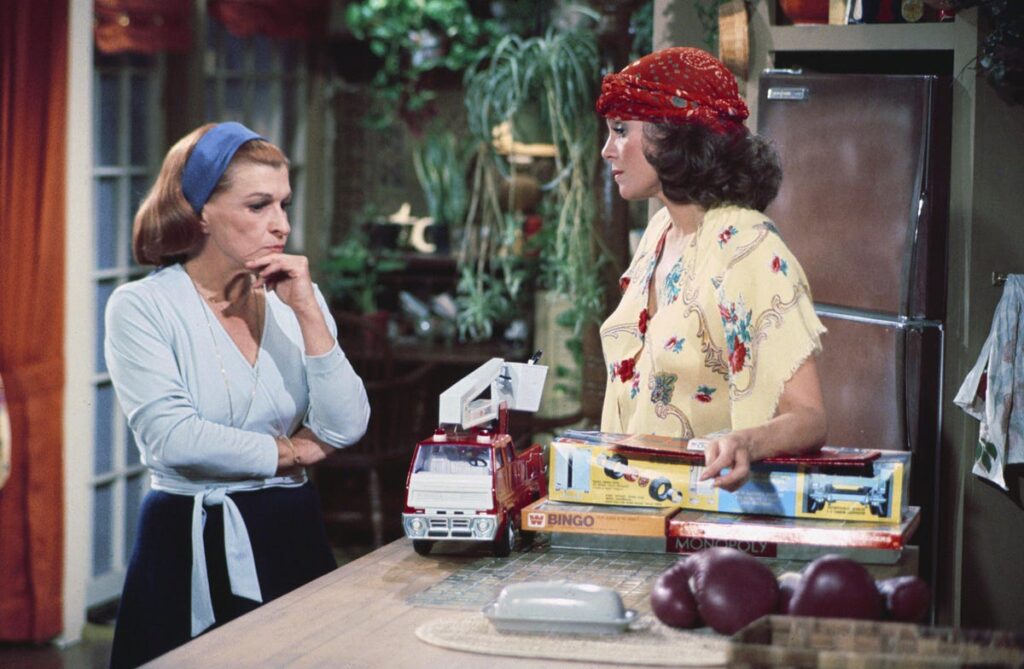
From Rhoda with the great Nancy Walker and Valerie Harper

That’s how a great many television programs began during the 1970s. New York City was heavily represented on television during the decade, an easily identified setting that could be depicted in two or three establishing shots before moving on to introduce the stars.

It popped up in no-nonsense crime dramas and sitcoms alike, an almost singular destination for television characters. After the ‘rural purge‘ of folksy TV shows like Beverly Hillbillies and Green Acres (two shows which lampooned the urban snob), there was little room for small-town America; places like Cincinnati, MilwaukeeChicago and of course Los Angeles filled out the schedule.

In reality, New York was entering a dark period of deteriorating public services, high crime and financial woes. While television news would often dramatically reflect this image out to America, television entertainment would do the opposite.  

Few TV series of the period accurately reflected New York’s troubles outside of a few occasional crime dramas and action shows (like 1977’s Amazing Spiderman).
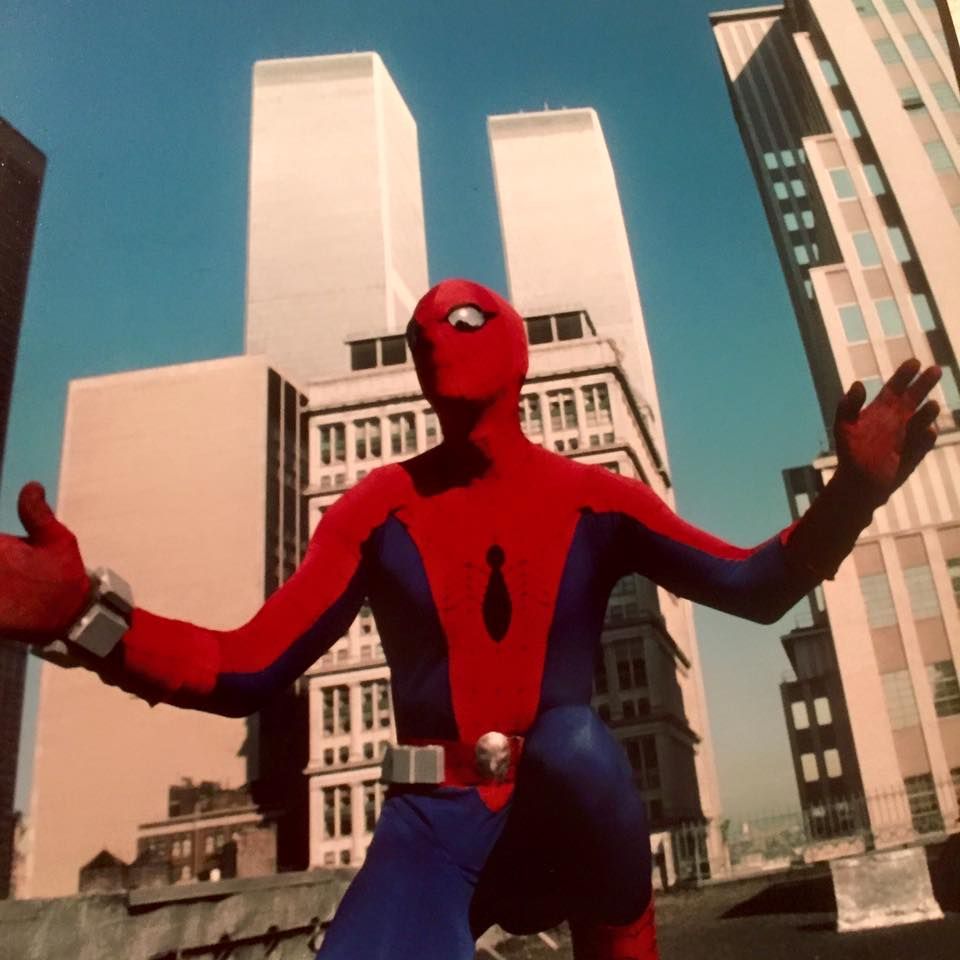
Of course, most television shows about New York City in the 1970s were actually filmed in Los Angeles. And you couldn’t fault sitcom creators for wanting to eschew real-life troubles that would distract from their clean and cheerful worlds of comic misunderstandings.  

Even great detective shows like Kojak pulled their punches, largely because reality was often too graphic to present in prime time.
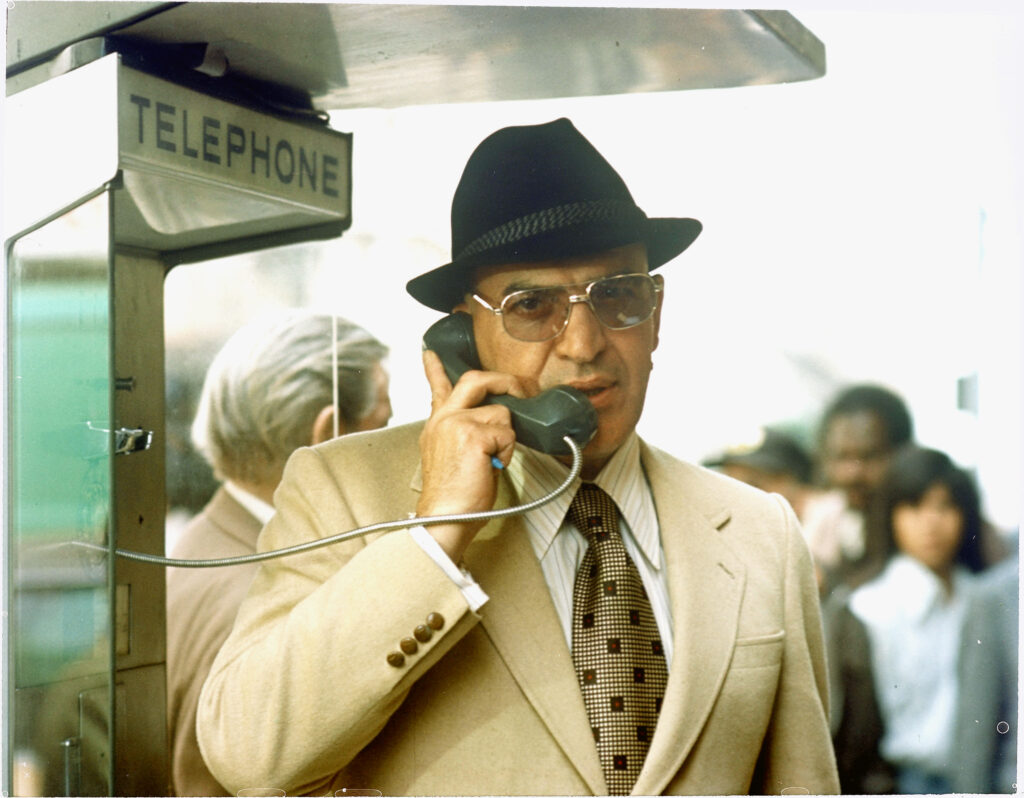
That doesn’t look like a New York City public phone.

But an alternate world emerges from watching a series of television intros from the 1970s, pulled from top sitcom and dramas of the period.  New York City is essentially Midtown and Central Park (but for the few shows that ventured into the other boroughs), glamorous and utterly harmless, without edge.

And in those few shows that did exploit the city’s dangerous side, the intros made clear — through artistically rendered graphics — that the danger was merely of the pulp variety.

A Woman’s Playground

Many shows of the decade presented Manhattan as an aspirational destination, especially for women, even as thousands of people in real life fled the city.  Television was finally focusing on the adventures of single women, but to do so, New York had to be depicted as nearly flawless.

The iconic example of this is That Girl starring Marlo Thomas.  In this 1970 opener, New York is nothing but glamour, shopping, Lincoln Center and Broadway.

The lousy sitcom On Our Own, New York’s variant of Laverne & Shirley, opens with a couple of crazy gals heading to their job at an advertising agency.  The intro actually features a bit of physical violence against one woman, played up for laughs!

Not every show was so blind to the rough edges of New York.  But it required a tough lady like Rhoda, a native New Yorker, to maneuver all those sliding locks and tough-talking cabbies. (The third season intro is below, but the first season intro is probably the more memorable one.)

The Hustle-and-Bustle

As with the On Our Own intro, many workplace comedies chose to contrast their wacky interior antics with the frenetic urban rhythms of New York City.  It’s as though the comedy you were about to see generates from walking through the crazy, chaotic streets of Midtown.

The intro to the Garment District comedy Needles and Pins ratchets the enthusiasm of That Girl‘s intro down to a quiet, confident strut. Yeah, I work here.

A variation of the buzzing energy of New York City being a impetus for comedy is seen in the intros for Saturday Night Live, even to this day.

The Taxi City

One identifying symbol of New York is the taxicab or, more specifically, the cabbie. While films like Taxi Driver were putting an ominous spin on this image, television still relied on the cab as shorthand for the modern urban experience.

And if you could somehow combine it with a basketball court — as with Busting Loose — then you know it’s really, really New York.

The taxi is a vehicle of love in the romantic comedy Bridget Loves Bernie.  There’s no way to see this today as anything other than slightly creepy especially in light of Martin Scorsese’s Taxi Driver (which came out a few years later). This extended intro ticks off all the boxes — cabs, school yards, the Queensboro Bridge, Central Park….

Taxis were so representative of the New York experience that one of the era’s greatest sitcoms was centered around the industry. Taxi survived well into the 1980s showing a more realistic version of New York than other shows of the day.

It also features the Queensboro Bridge, a heavily used symbol for the expanse of the city.  Since shows of the period rarely went downtown, the Queensboro could sit in for the Brooklyn Bridge when long vistas of the East River were required.  (Taxi actually did go downtown; it was set in a garage at Charles and Hudson Streets.)

The Outer Borough

Television shows often went to the other boroughs when they wanted to express the clashes of modern life, contrasted against a more suburban backdrop which many Americans could more easily identify.

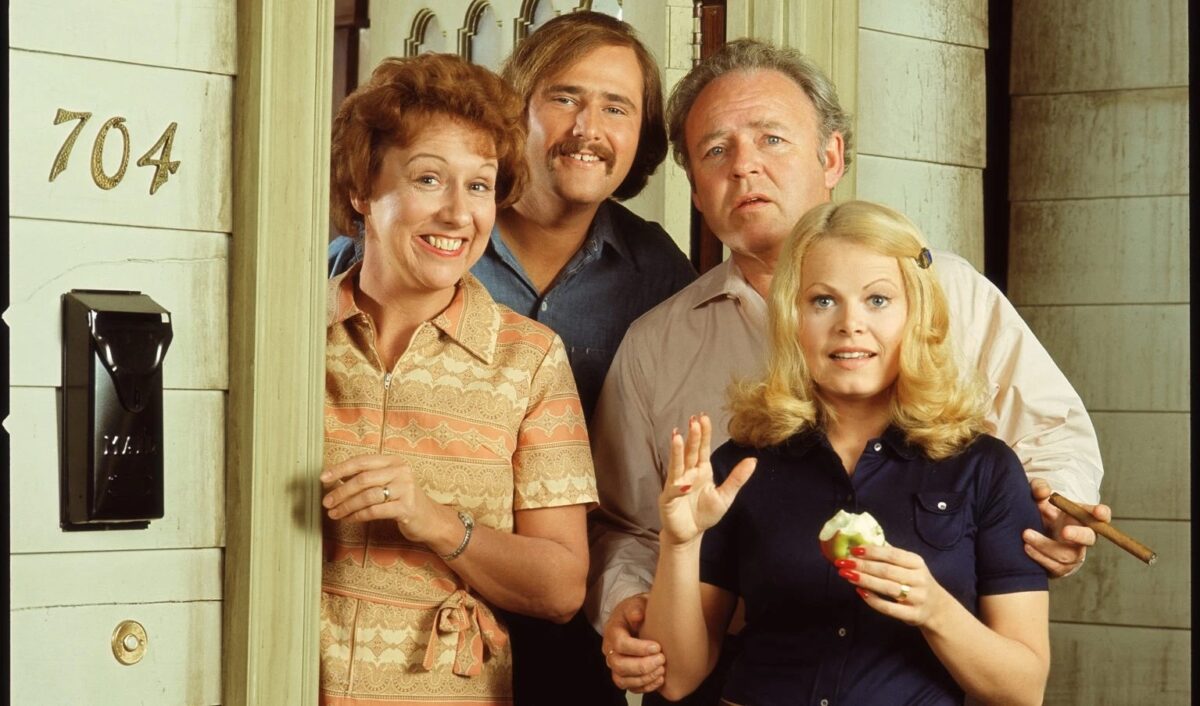
Most everybody knows the iconic theme song from All In The Family as delivered by Carroll O’Connor and Jean Stapleton.  What you may not remember is yet another establishing shot of Manhattan, used to contrast with the rows of Queens homes.  In these few seconds, the intro excellently sets up the conflicts of modernity, a quiet residential present, and a duo that seem stuck in a sheltered past.

The same sort of pull-away from Manhattan is used in O’Connor’s follow-up series, Archie Bunker’s Place, which yanks the viewer away from the skyline, back over the Queensboro Bridge and down Northern Boulevard.  Archie has changed since those years at the piano, and so have his surroundings.  The blocks of uniform homes have been replaced with subway graffiti and bustling street life.

13 Queens Blvd went even deeper into Queens but still relied on the establishing shot of Manhattan to let viewers know how far we are from real urban issues. The show’s situations were driven by the comic misunderstandings within an apartment complex, a little like One Day At A Time (set in Indianapolis) or Three’s Company (set in Santa Monica) perhaps. The show didn’t last long.

Brooklyn was represented in the 1970s by Welcome Back Kotter.  Set in a fictional high school, it is New Utrecht High School that’s used in the opening.  While other sitcoms used a Manhattan establishing shot, Kotter prefers a beat-up sign that announces Brooklyn as the 4th largest city in America.  With its painted trains and lines of laundry, this might be the grittiest depiction of New York in a sitcom, even as its high school students (the Sweathogs) were incredibly unrealistic.

Movin’ On Up

Mostly though, sitcoms preferred the fantasy, Manhattan as an Emerald City. (It was literally depicted as such in the 1970s musical The Wiz.)  No amount of deterioration seemed to supplant the image of Manhattan as having ‘made it’, especially when dealing with African-American television characters.

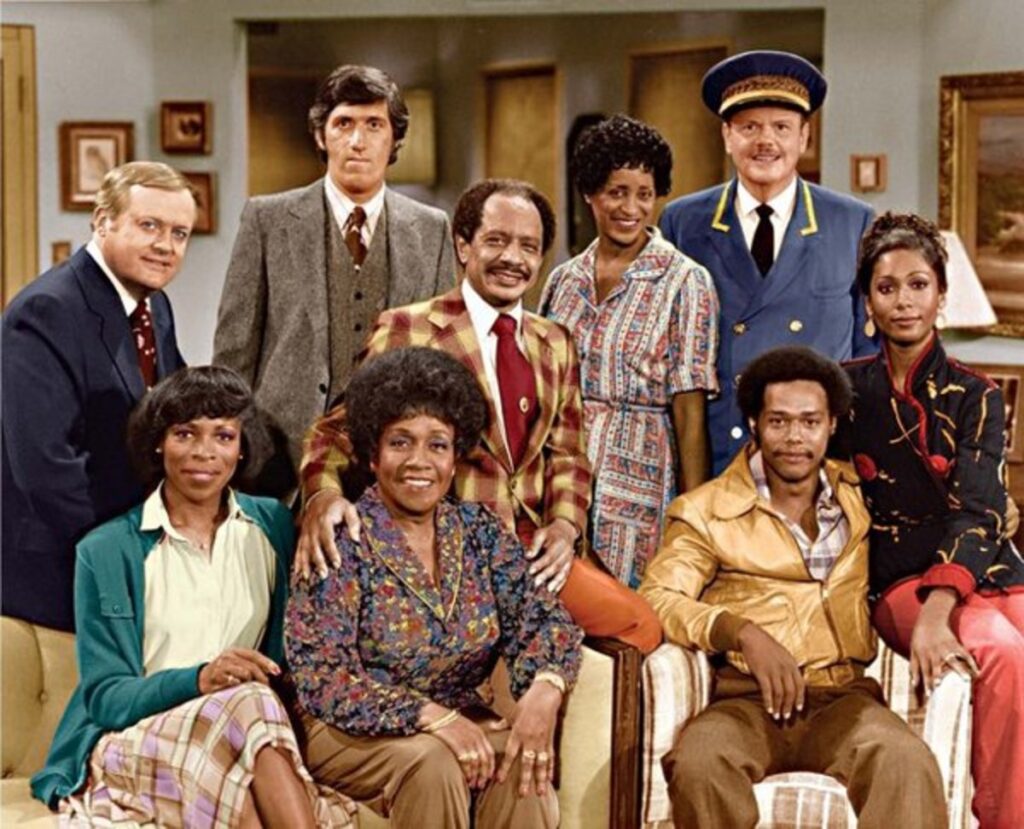
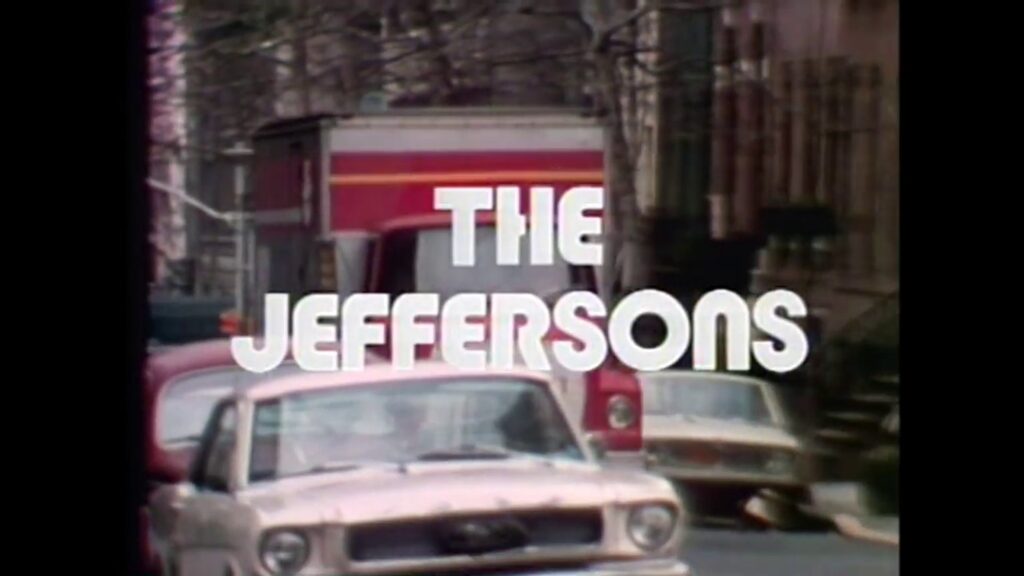
Taxis are again the vehicle of transformation in The Jeffersons, plucking George and Louise Jefferson from the land of Archie Bunker — again, using the Queensboro Bridge — and putting them in a luxury accommodation on the Upper East Side.

Two African-American boys are saved by a wealthy white man in Diff’rent Strokes.  For emphasis in the intro, Arnold and Willis are playing basketball, the de facto symbol in 1970s television of the inner city.

I don’t know if the show was any good, but the intro to the 1970 sitcom Barefoot In The Park seems refreshing in retrospect.  The show, based on the Broadway show, features a young black couple trying to make it though the first years of marriage in Manhattan.  It seems to handle the subject with the same euphoria used in ‘That Girl’.

They’re riding a horse-and-carriage drinking champagne!  It literally does not get cheesier.

Unvarnished New York

There were a few shows that felt embedded within the actual New York experience. Their intros reflect a certain melancholy, a feeling that perhaps the city was not always a whirlwind of breezy excitement. The champagne remains corked.

Barney Miller is one of the few shows actually set in Greenwich Village. Perhaps as a result, its establishing shot of Manhattan is moody, even dreary, a perfect backdrop for a comedy television show about criminal behavior.

In the opening to The Odd Couple, New York is an embodiment of its characters’ anxieties and differences.  There is no establishing shot of Manhattan, no attempt to glamorize the big city.  These two are actually at odds with the city, not each other, as presented here.  The intro ends with a rare pan-up of the two characters with the city looming behind them.

The Wild East

In an opposite reaction to rural shows like Green Acres (where people fled New York), a maverick sensibility came to New York in the 1970s, especially in the detective genre, with iconoclastic characters bringing foreign forms of justice to an ungoverned city.

On McCloud, a New Mexico detective wrangles up a few pimps and car thieves, bringing fun but clumsy cowboy tropes to Times Square.  Unlike sitcoms, detective dramas actually went to 70s Times Square all the time for obvious reasons.  Although most did not bring stagecoaches with them.

Another bizarre crime-fighter to the New York skyline was the Amazing Spider-Man. We get a Manhattan establishing shot here, comically interrupted by Spiderman’s awful costume.  They spend a great amount of time with Spidey on the Empire State Building; in fact most of the show was filmed in L.A.

You didn’t even need a reason to bring in a cowboy. In the 1970 sitcom Mr Deeds Goes To Town, a folksy newspaper editor takes on the big city. The intro lays it on thick.

Groovy 70s Noir

A few crime dramas of the 1970s were actually filmed in New York City and thus could highlight the city a bit more fully in their intros.

The short-lived television version of Serpico features numerous places throughout the city, from the Battery to Times Square. And, yes, the Queensboro Bridge is again represented here via its subway stop.

New York’s greatest television crime fighter of the 1970s was Kojak, so cool that the city is given a trippy noir vibe, peeking from the nooks of swirling graphics.  Of course most of Kojak was filmed in Los Angeles, but, according to writer Burton Armus, the production crew went to New York on occasion for “surrounding shots, background shots, one or two scenes.”

Taking its cue from Kojak in its tone, Eischied was also a bit of a cowboy, bringing some Southern swagger to the mean streets of Manhattan. Its credit sequence is a confused mess.
Categories
Health and Living Podcasts

The Ruins of Roosevelt Island: The macabre history of New York’s “city of asylums”

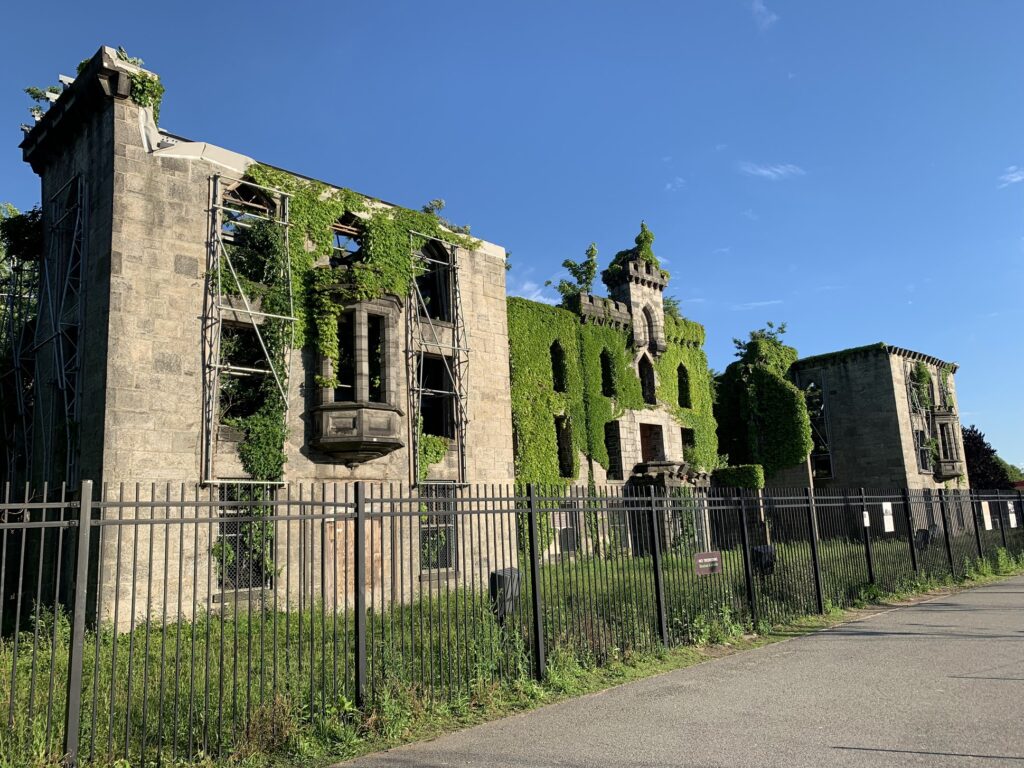
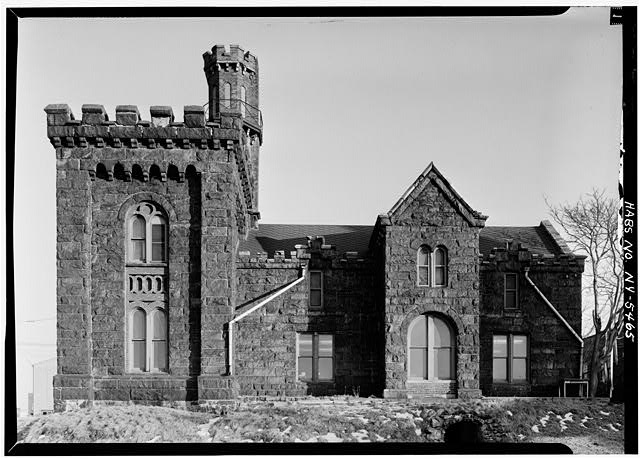
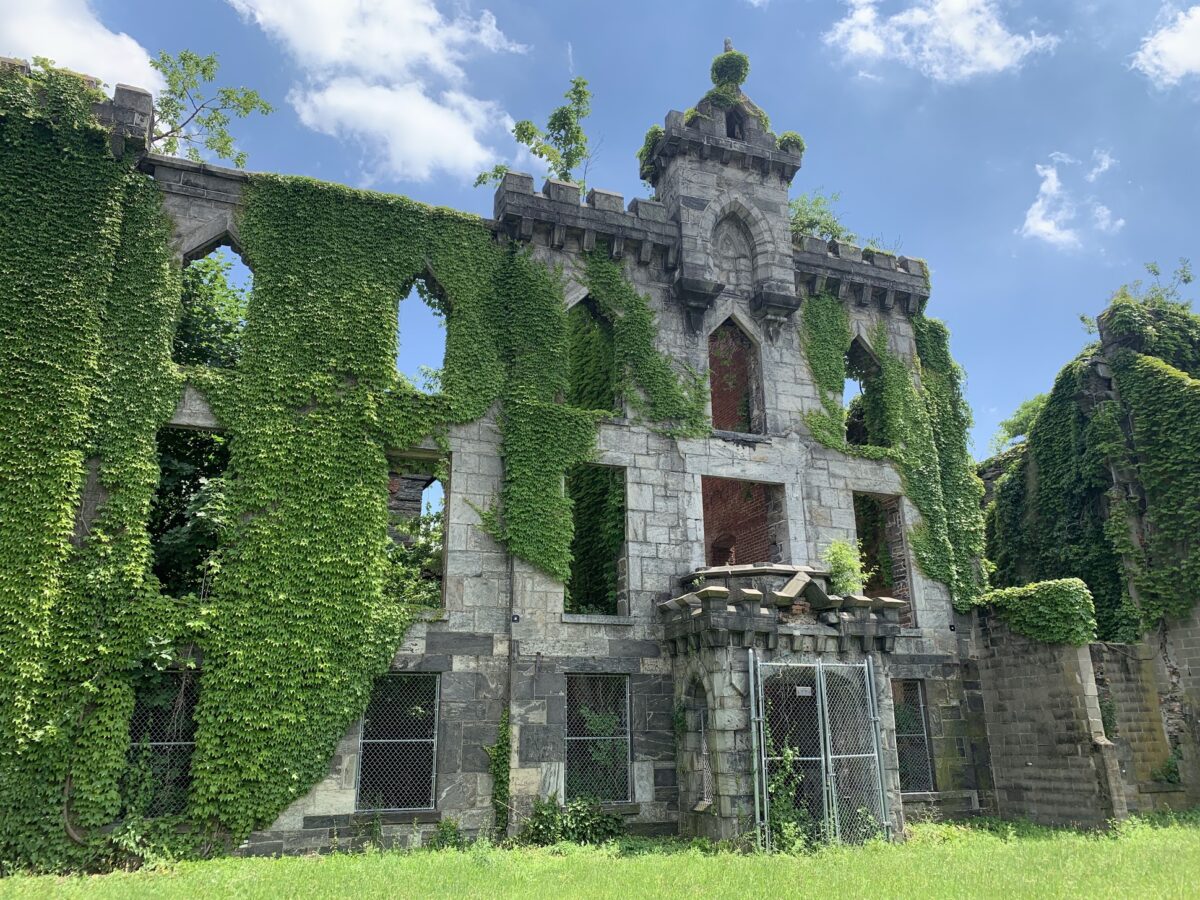
The Renwick Ruin, resembling an ancient castle lost to time, appears along the East River as a crumbling, medieval-like apparition, something not quite believable.

Sitting between two new additions on Roosevelt Island — the campus of Cornell Tech and FDR Four Freedoms Park — these captivating ruins, enrobed in beautiful ivy, tell the story of a dark period in New York City history.

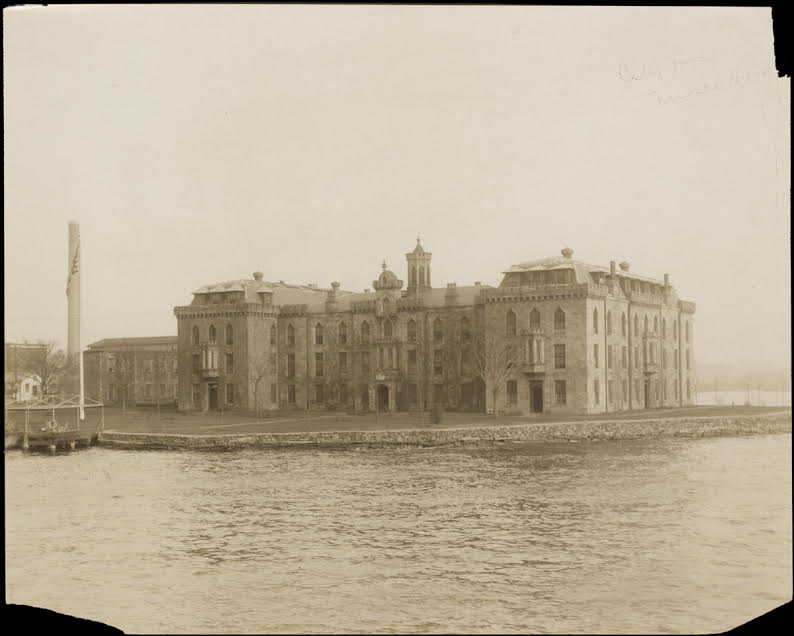
The island between Manhattan and Queens was once known as Blackwell’s Island, a former pastoral escape that transformed into the ominous ‘city of asylums’, the destination for the poor, the elderly and the criminal during the 19th century.

New. York Municipal Archives

During this period, the island embodied every outdated idea about human physical and mental health, and vast political corruption ensured that the inmates and patients of the island would suffer.

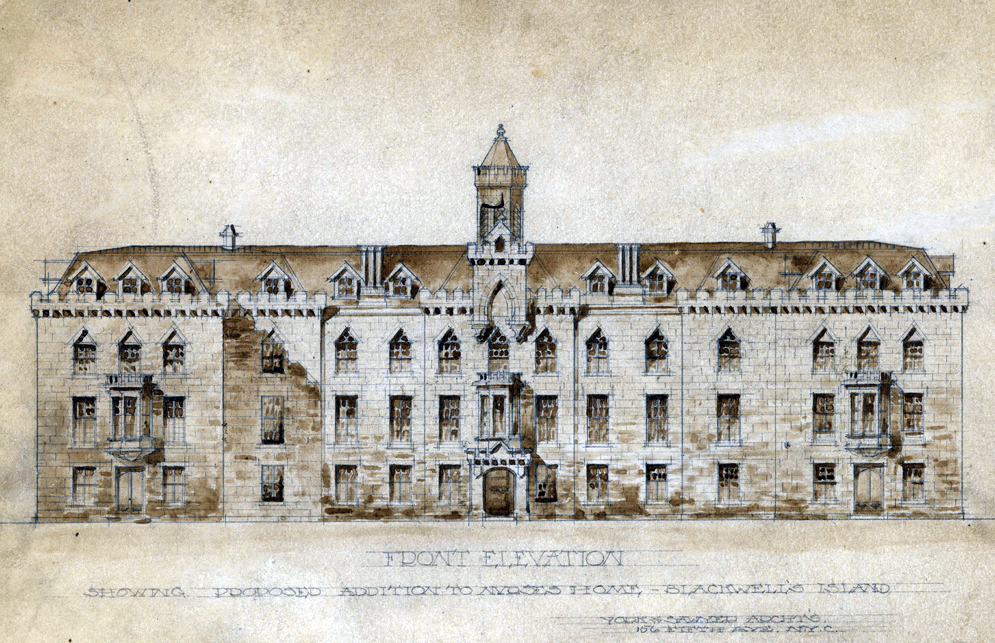
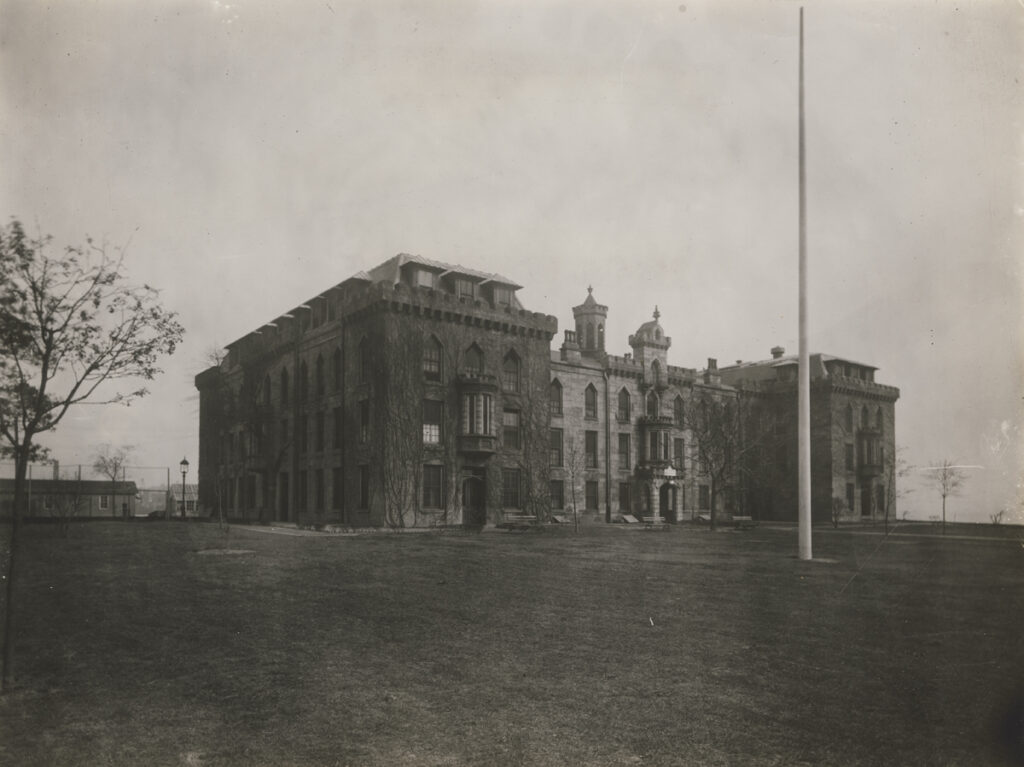
In 1856 the island added a Smallpox Hospital to its notorious roster, designed by acclaimed architect James Renwick Jr (of Saint Patrick’s Cathedral fame) in a Gothic Revival style that captivates visitors to this day — even if the building is in an advanced state of dilapidation.

New York City Municipal Archives

What makes the Renwick Ruin so entrancing? How did this marvelous bit of architecture manage to survive in any form into present day?

PLUS: The grand story of the island — from a hideous execution in 1829 to the modern delights of one of New York City’s most interesting neighborhoods.


For more information on Roosevelt Island history:

Friends of the Ruin

Roosevelt Island Historical Society

I also highly recommend the book Damnation Island: Poor, Sick, Mad, & Criminal in 19th-Century New York by Stacy Horn which tells the story of Blackwell’s Island, institution by institution.

And please check out this great video about Roosevelt Island from 1978:


Historic sites on Roosevelt Island to visit (from north to south):

Roosevelt Island Lighthouse

Nellie Bly Monument “The Girl Puzzle”

The Octagon

Chapel of the Good Shepherd

The Blackwell House

Historic Visitor Center Kiosk and Roosevelt Island Tram

Southpoint Park

Strecker Memorial Laboratory

Smallpox Hospital (aka Renwick Ruin)

FDR Four Freedoms State Park


The entire site of FDR Four Freedoms State Park is located on landfill. Want proof?

New York Municipal Archives
The Renwick Ruin
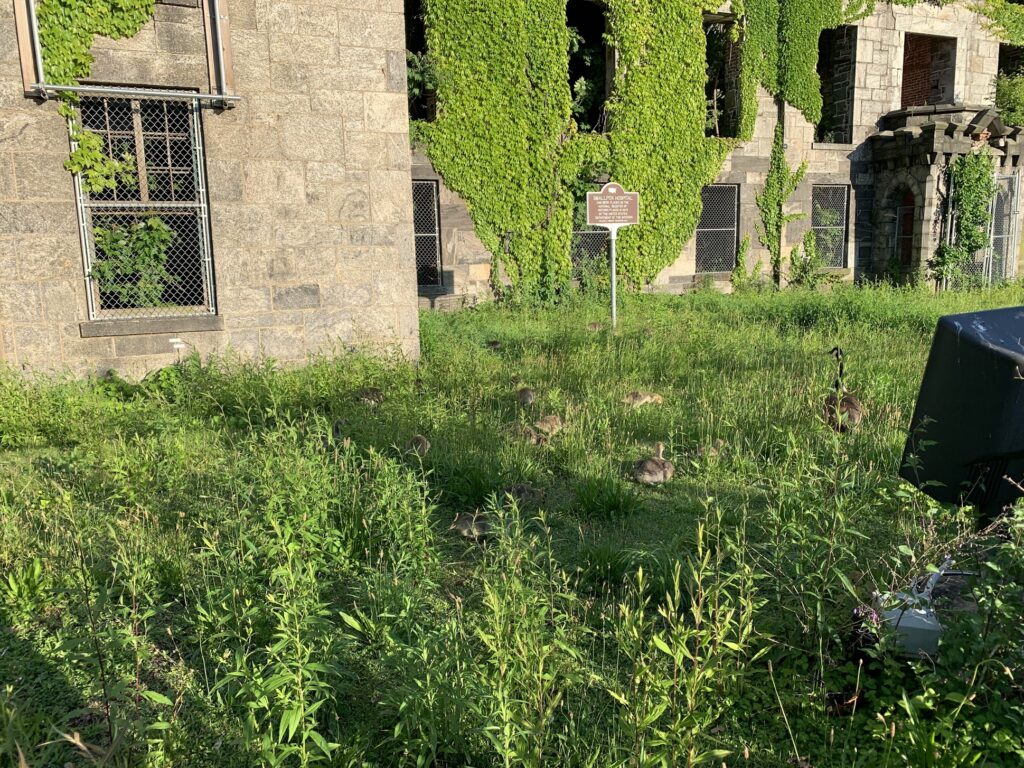
The Smallpox Hospital grounds with grazing geese.
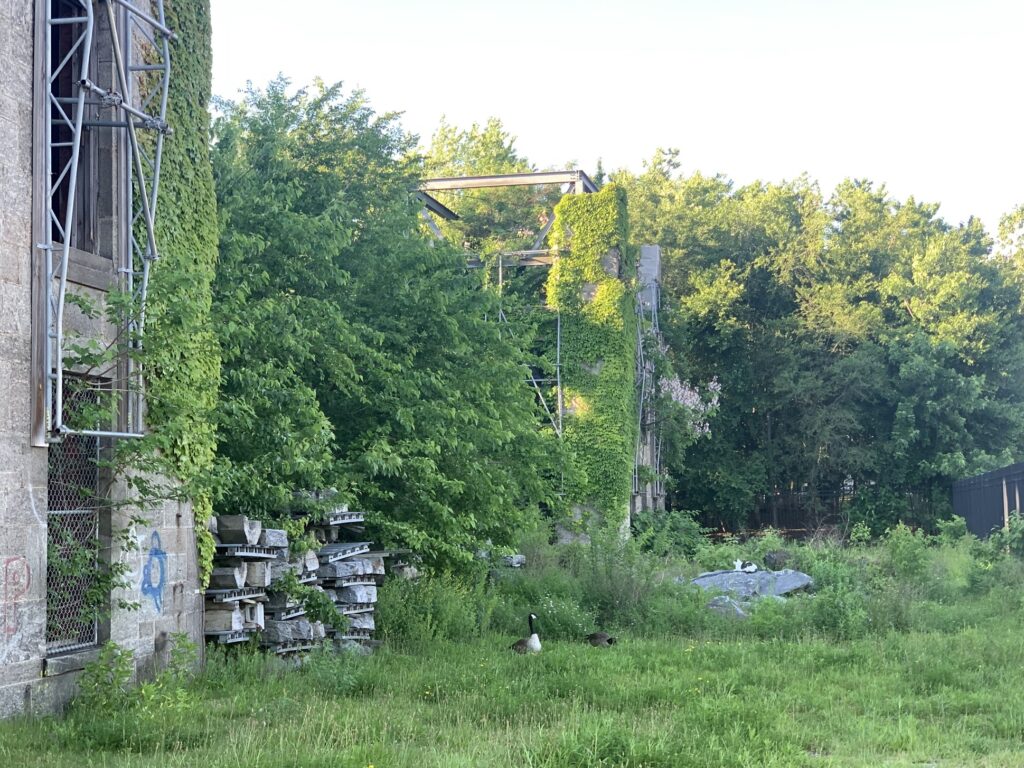
Behind the ruin, guarded by geese and cats.
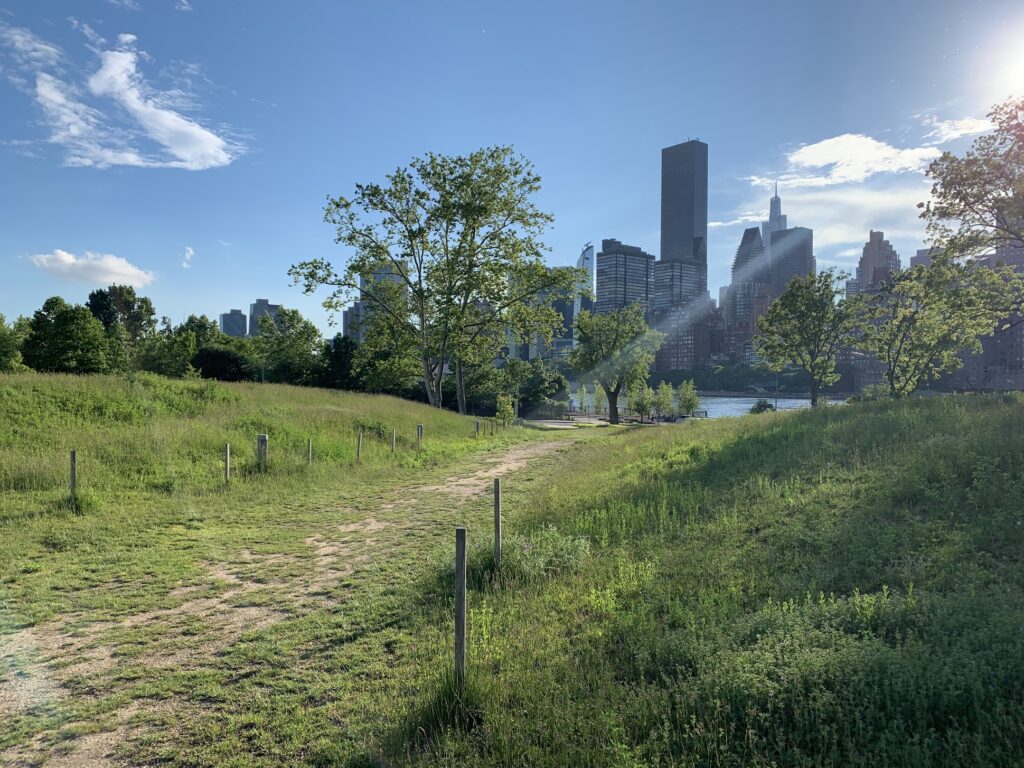
Southpoint Park, photo by Greg Young

FURTHER LISTENING

After listening to this episode on the Renwick Ruin on Roosevelt Island, jump back into these earlier Bowery Boys podcasts which discuss similar themes or situations from the show:


The Bowery Boys: New York City History podcast is brought to you …. by you!

We are producing a new Bowery Boys podcast every other week. We’re also looking to improve and expand the show in other ways — publishing, social media, live events and other forms of media. But we can only do this with your help!

We are creators on Patreon, a patronage platform where you can support your favorite content creators.

Please visit our page on Patreon and watch a short video of us recording the show and talking about our expansion plans. If you’d like to help out, there are several different pledge levels. Check them out and consider being a sponsor.

We greatly appreciate our listeners and readers and thank you for joining us on this journey so far.

Categories
Bridges Podcasts Queens History

The Queensboro Bridge and the Rise of a Borough

“The city seen from the Queensboro Bridge is always the city seen for the first time, in its first wild promise of all the mystery and the beauty in the world.” — F. Scott Fitzgerald

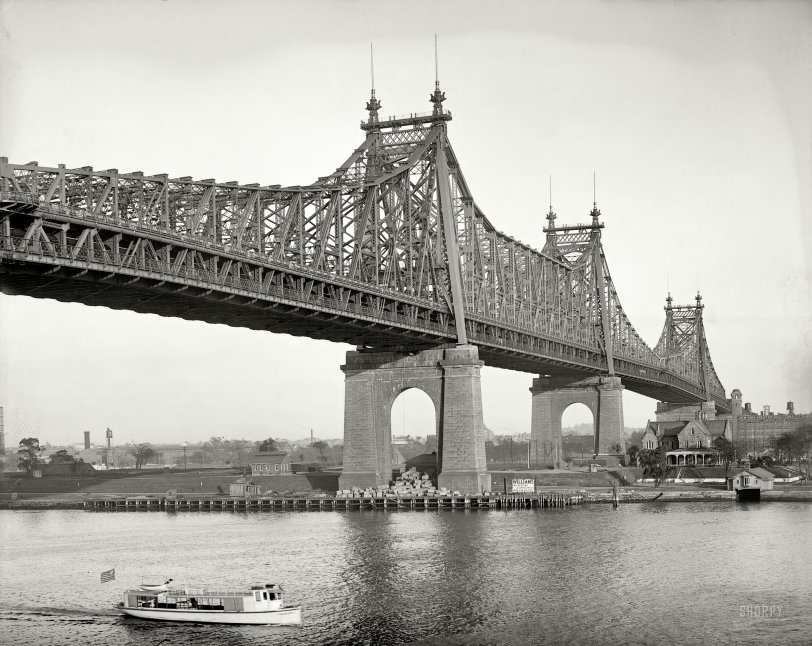
EPISODE 349 This is the story of a borough with great potential and the curious brown-tannish cantilever bridge which helped it achieve greatness.
The Ed Koch Queensboro Bridge (sometimes known as the 59th Street Bridge) connects Manhattan with Queens by lifting over the East River and Roosevelt Island, an impressive landmark that changed the fate of the borough enshrined in its curious name.

In 1898, before the Consolidation of 1898, which created Greater New York and the five boroughs, much of Queens was sparsely populated — a farm haven connected by dusty roads — with most residents living in a few key towns, villages and one actual city — Long Island City.

With Brooklyn and Manhattan already well developed (and overcrowded in some sectors) by the early 20th century, developers and civic leader looked to Queens as a new place for expansion. But in 1900 it had no quick and convenient connections to areas off of Long Island.

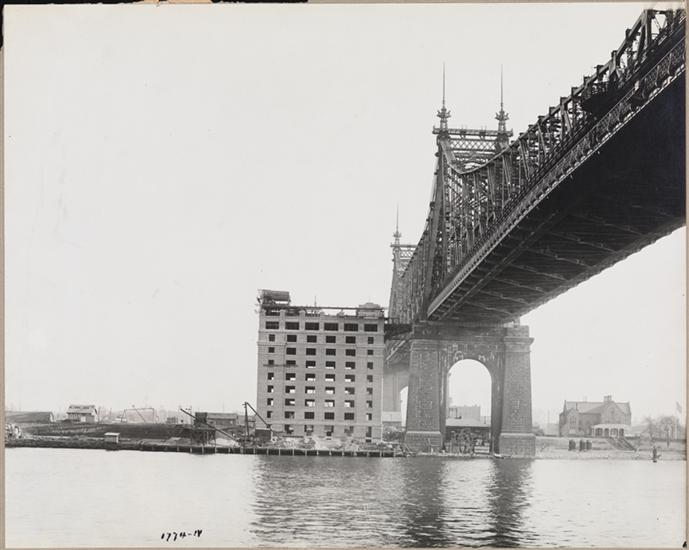
The bridge in 1917 with the elevator storehouse, Museum of the City of New York

With the opening of the bridge in 1909, rich new opportunities for Queens awaited. Communities from Astoria to Bayside, Jackson Heights, Flushing and Jamaica all experienced an unprecedented burst of new development.

Thanks in small part to the bridge so famous that it inspired a classic folk song and became the cinematic backdrop of a 1970s film classic.

Listen here or from your favorite podcast player:


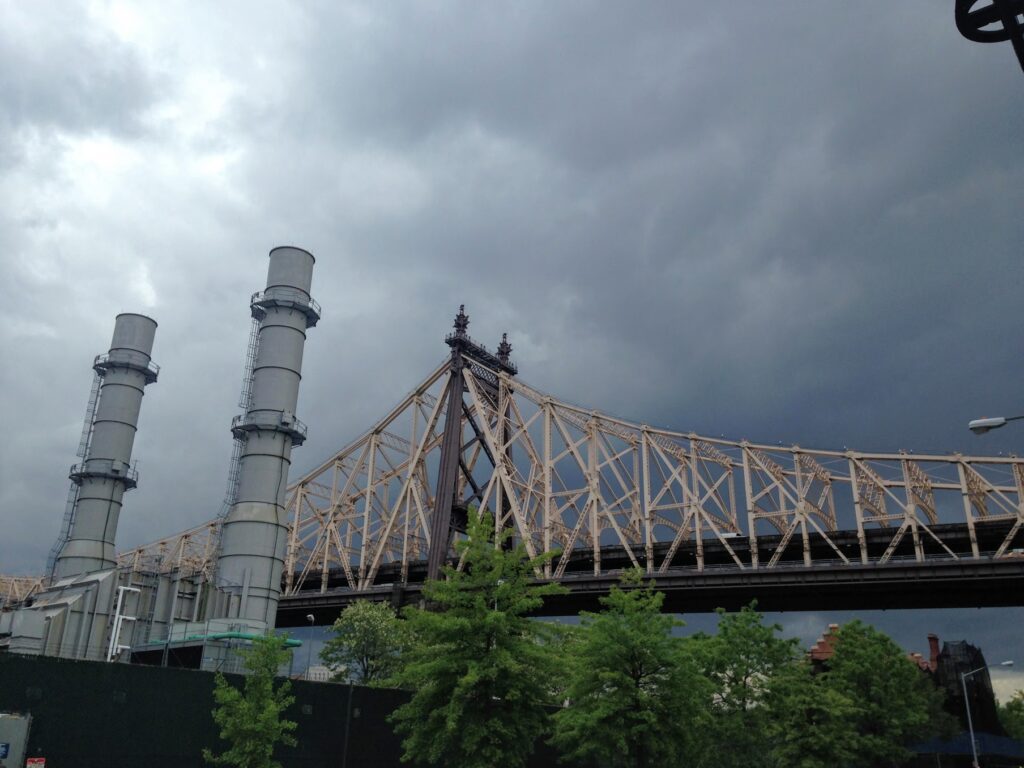
From a stormy Spring day in 2014. Photo by Greg Young
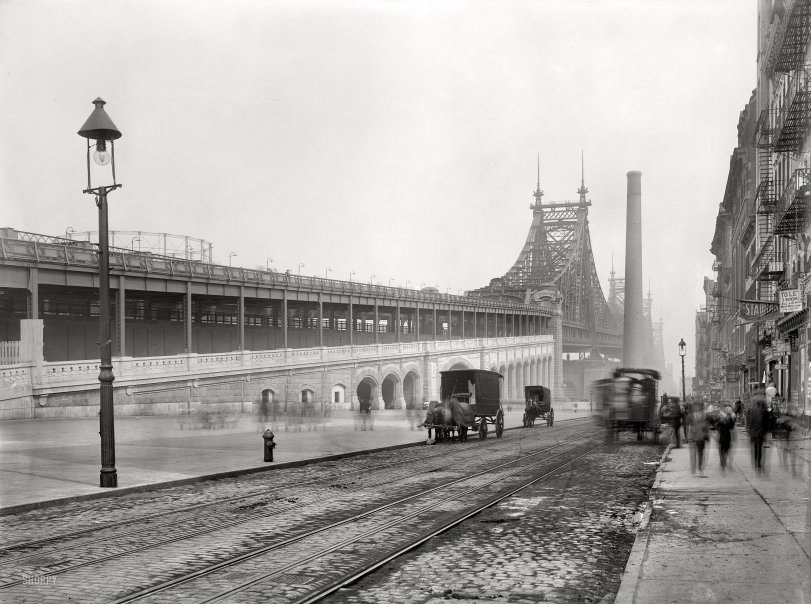
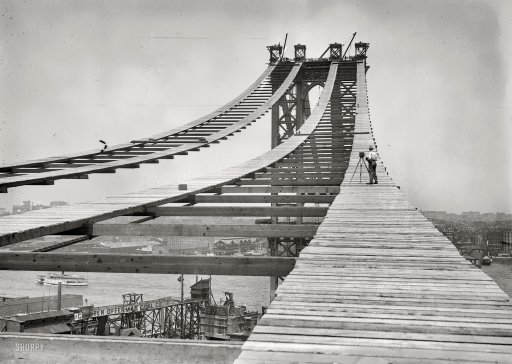
(Courtesy Shorpy)
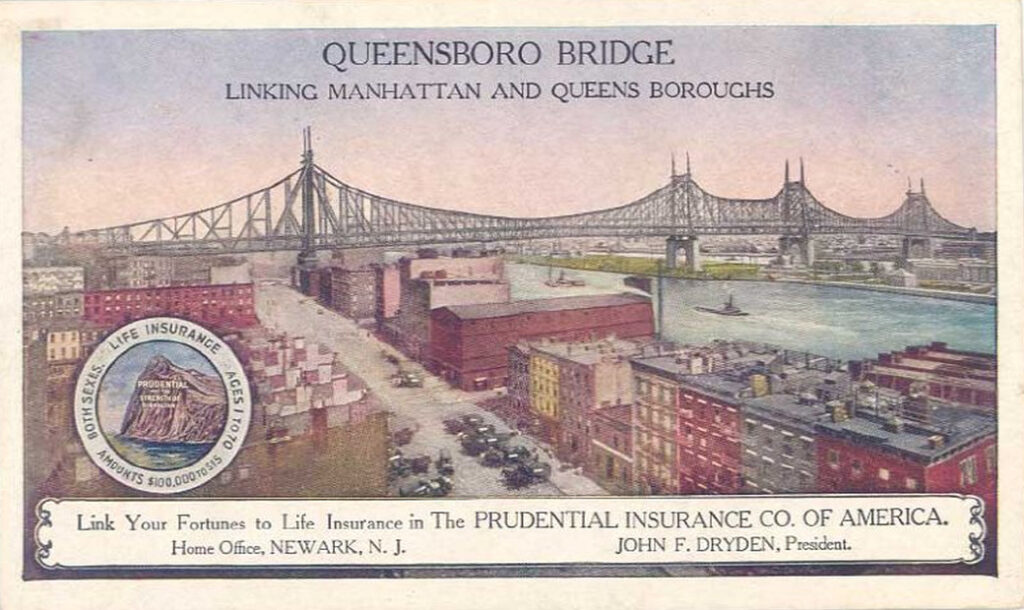
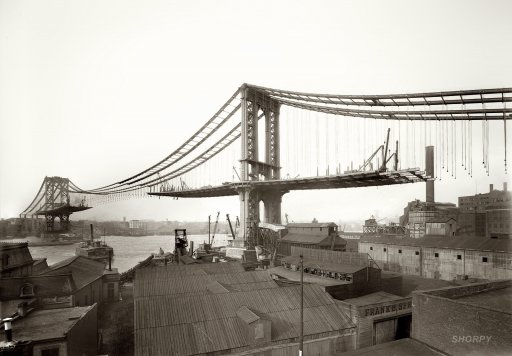
Courtesy Shorpy)
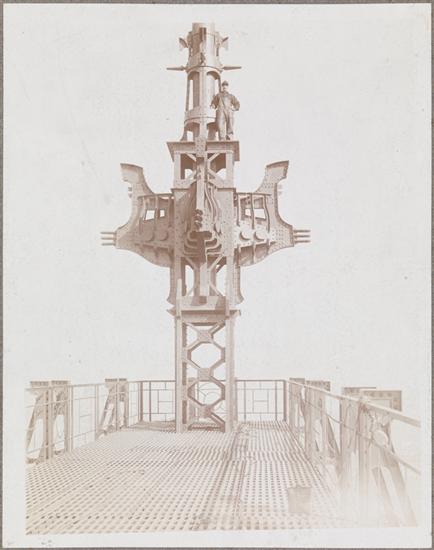
The unique finials at the top of the bridge, 1905. Courtesy Museum of the City of New York
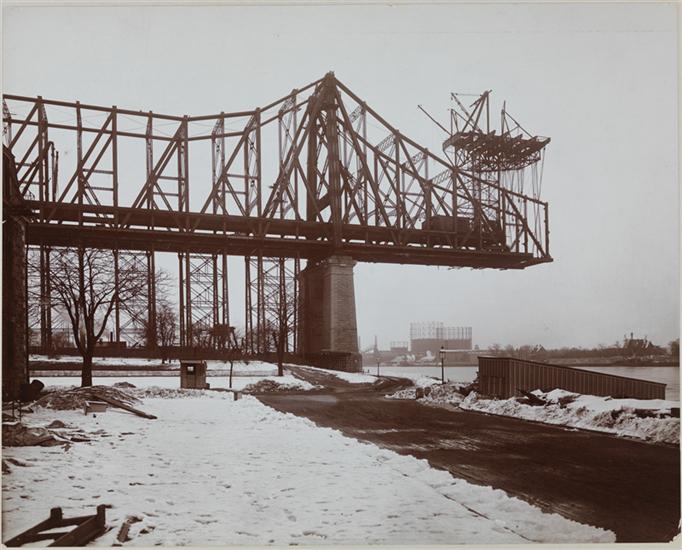
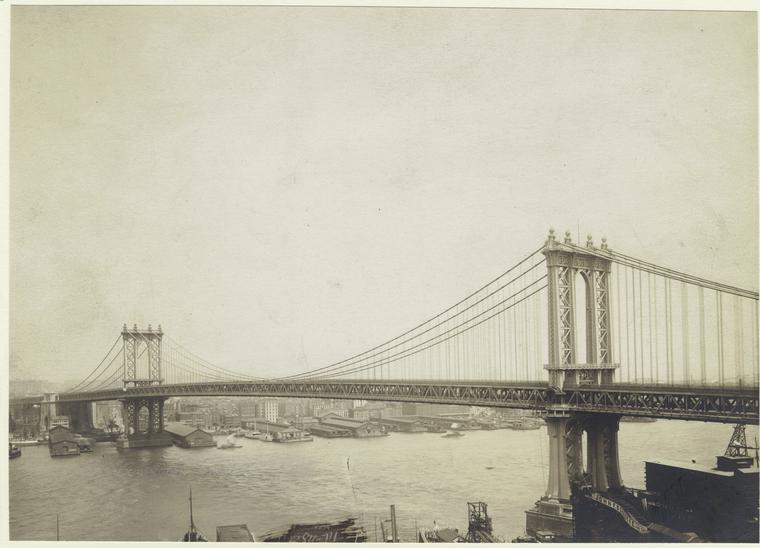
The bridge near complete, 1908. Courtesy the Museum of the City of New York
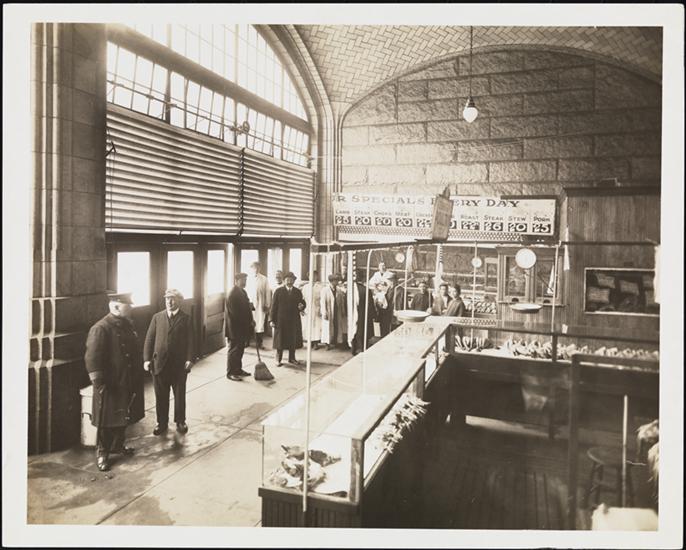
The marketplace with Guastavino tile, 1915. Courtesy Museum of the City of New York

The Bowery Boys: New York City History podcast is brought to you …. by you!

We are now producing a new Bowery Boys podcast every other week. We’re also looking to improve and expand the show in other ways — publishing, social media, live events and other forms of media. But we can only do this with your help!

We are now a creator on Patreon, a patronage platform where you can support your favorite content creators.

Please visit our page on Patreon and watch a short video of us recording the show and talking about our expansion plans. If you’d like to help out, there are six different pledge levels. Check them outand consider being a sponsor.

We greatly appreciate our listeners and readers and thank you for joining us on this journey so far.


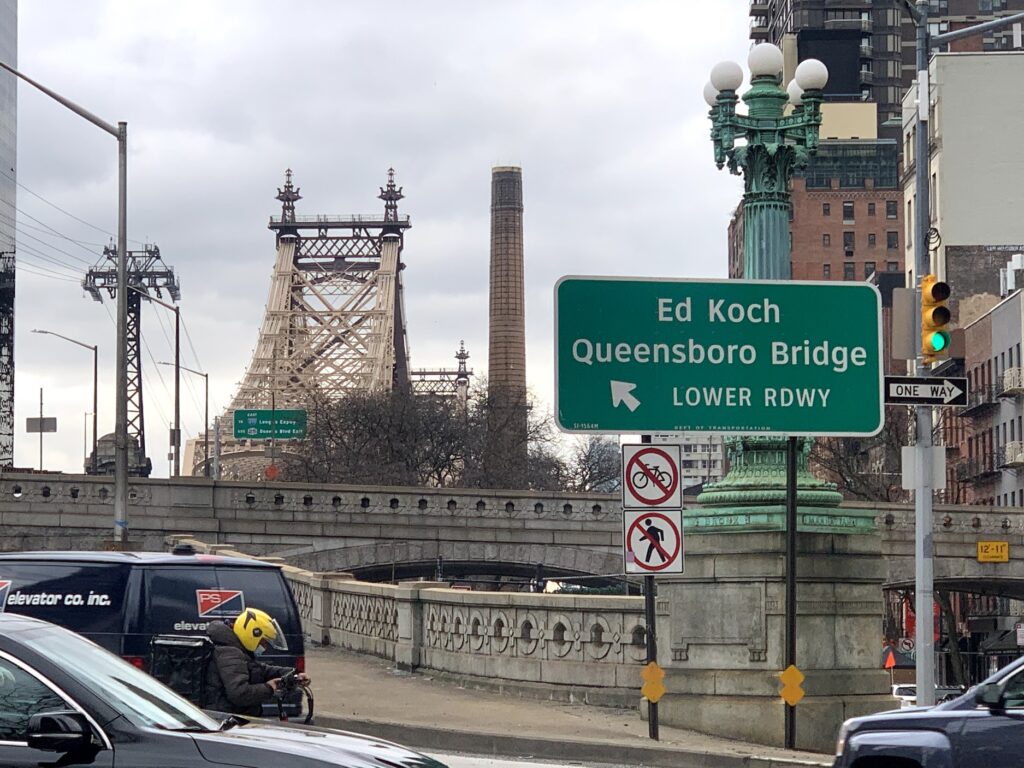
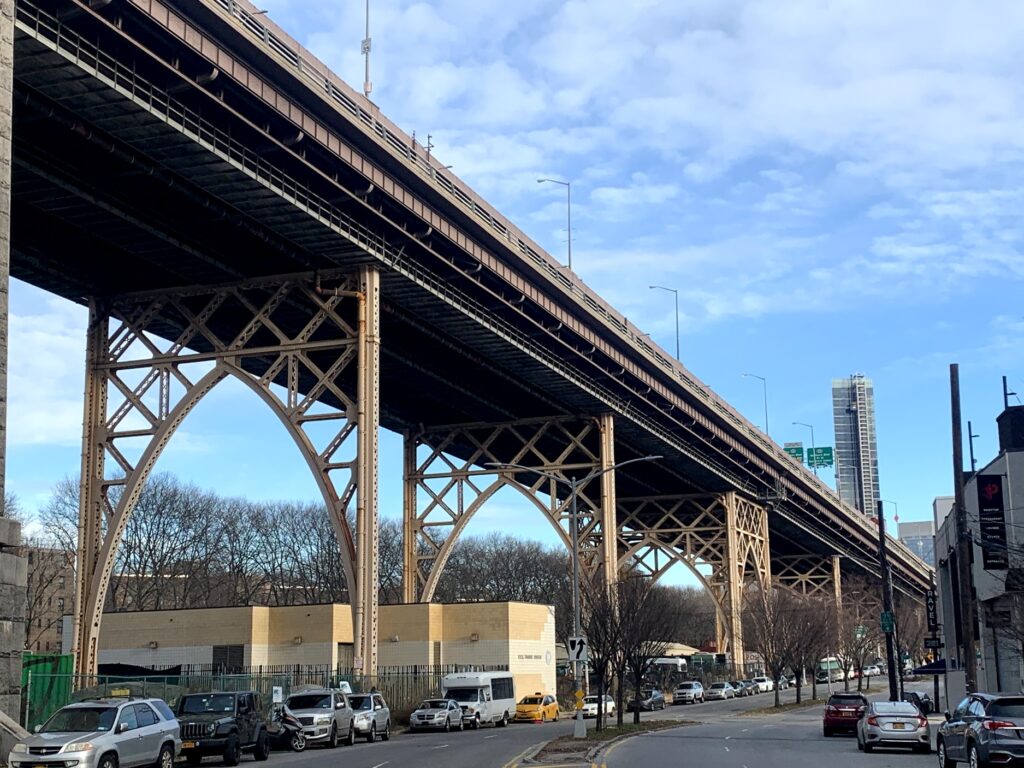
Approaching the bridge at street level on the Manhattan side. Photo Greg Young
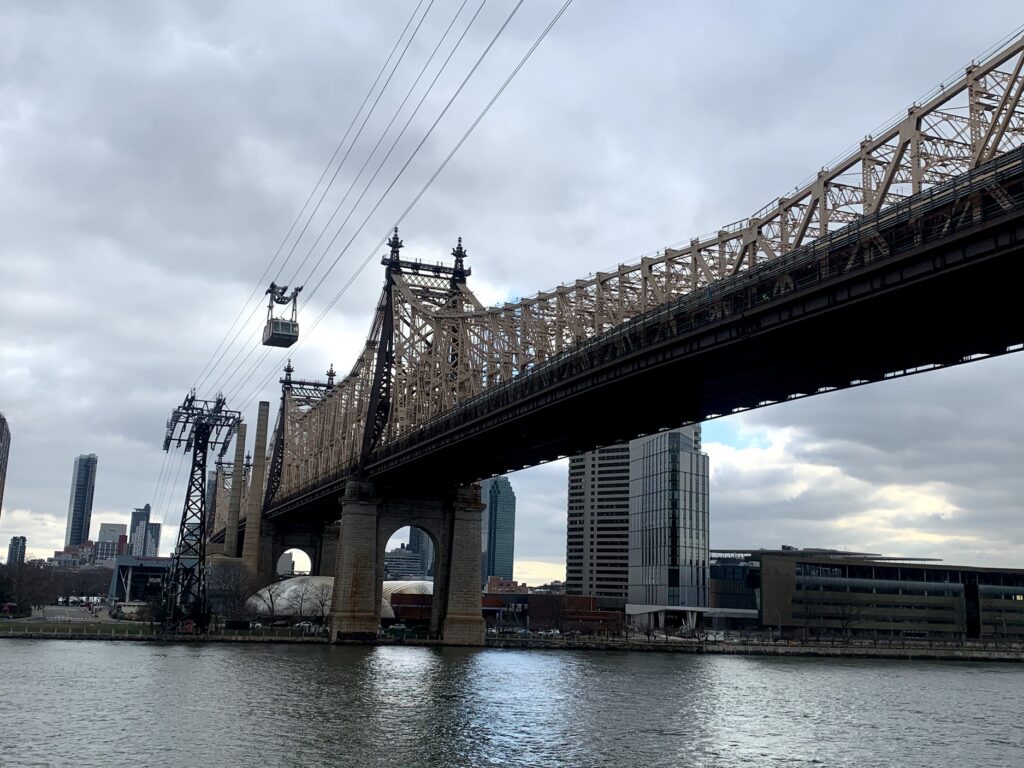
The bridge as the Roosevelt Island Tramway crosses. (GY)
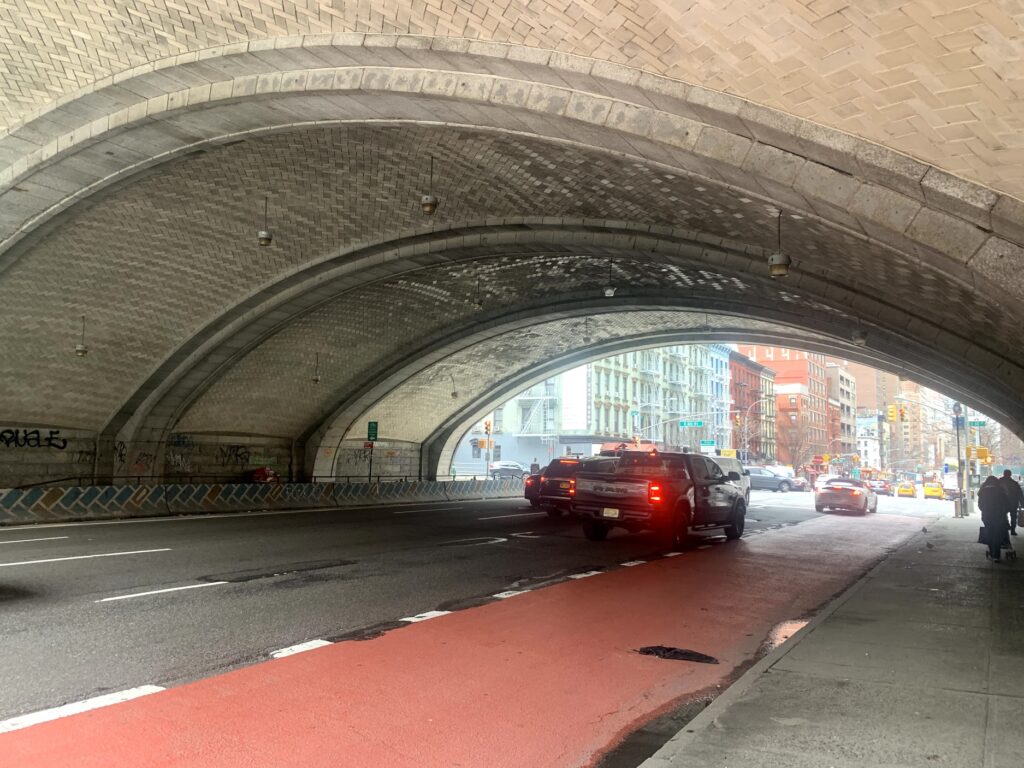
Guastivino tile on the First Avenue archway beneath the bridge. (GY)
Across the bridge….. (GY)
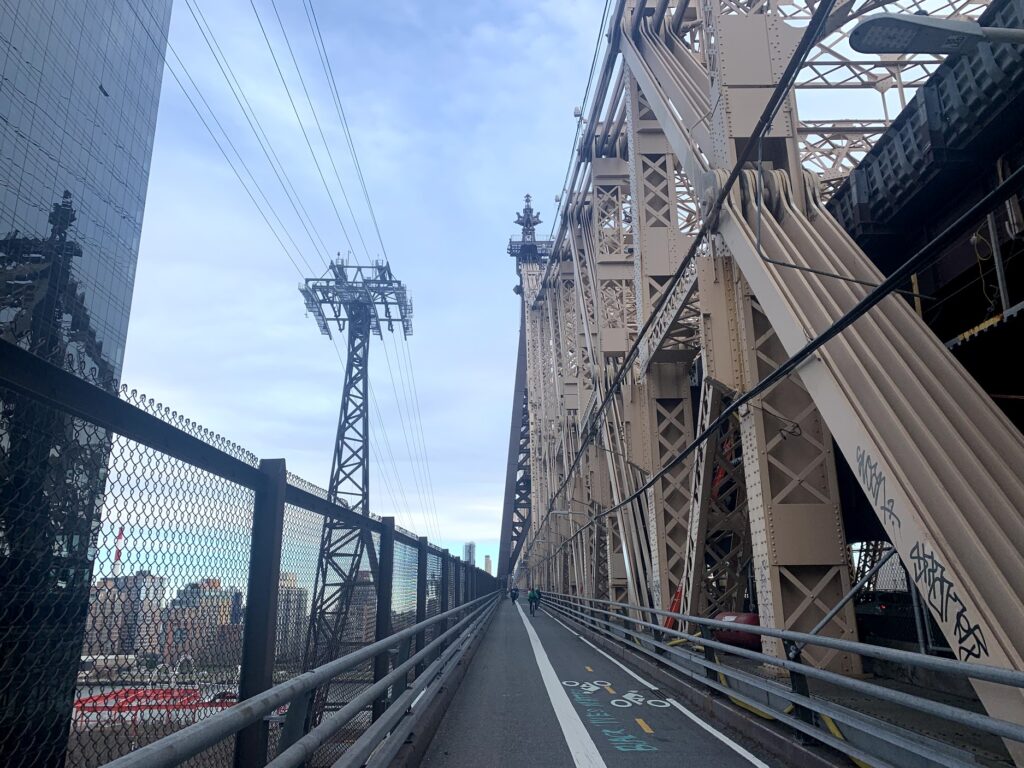
On the Queens side, the bridge takes on a different character, dominating the waterfront blocks. (GY)
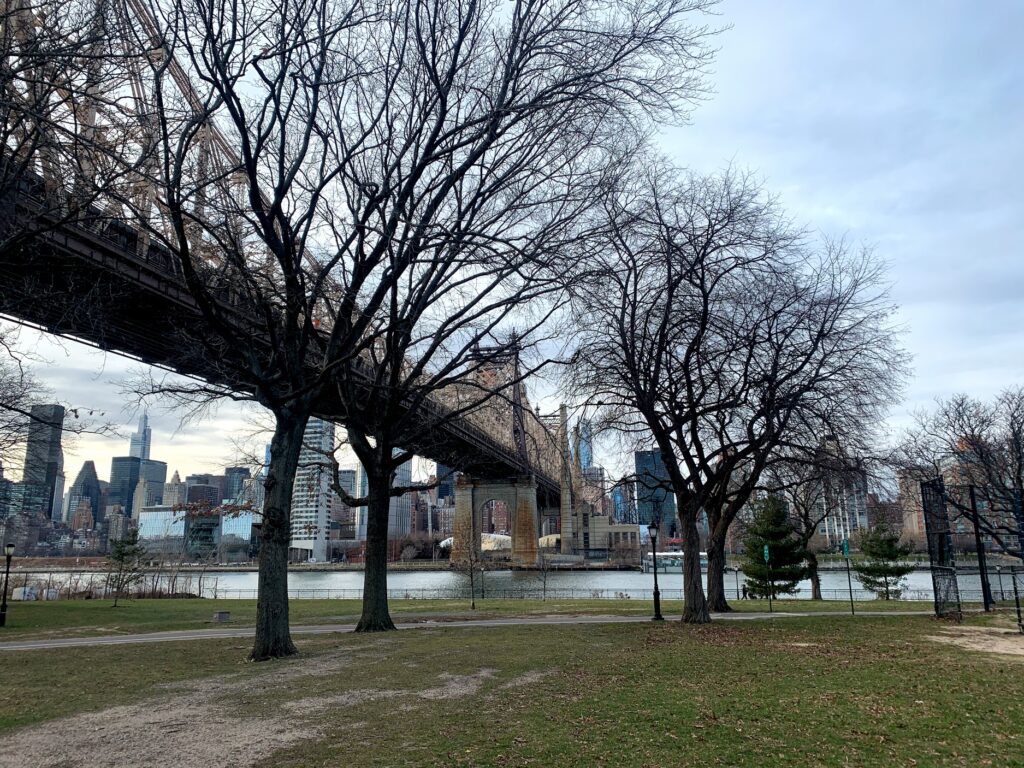
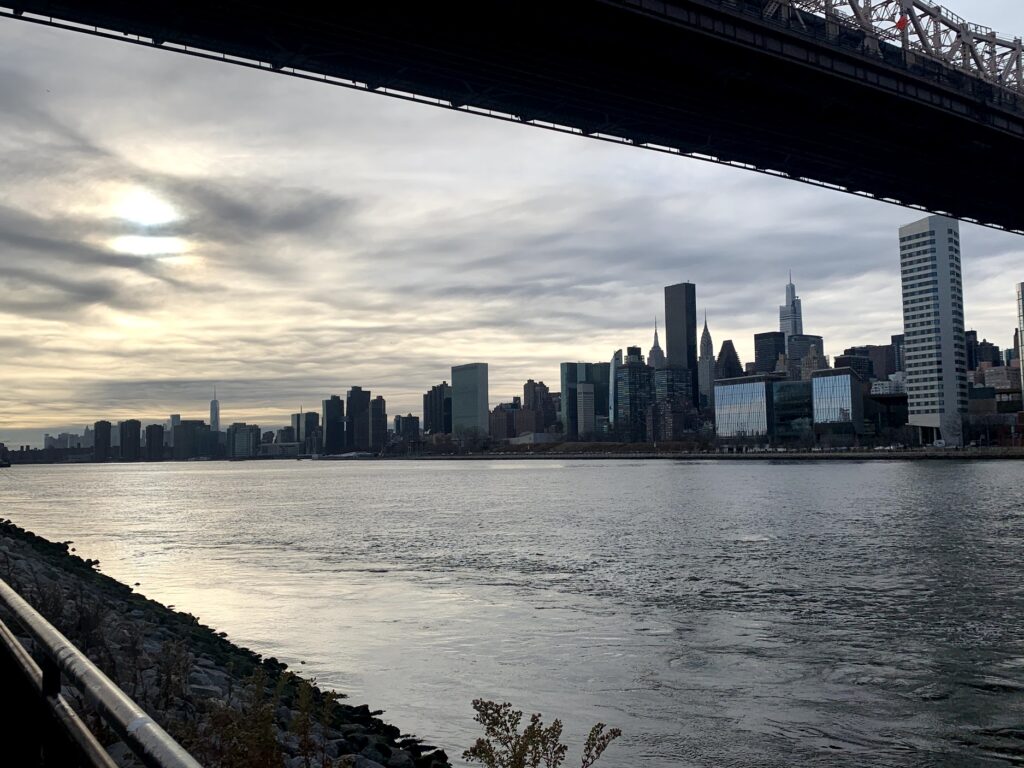
Views from Queensbridge Park. (GY)

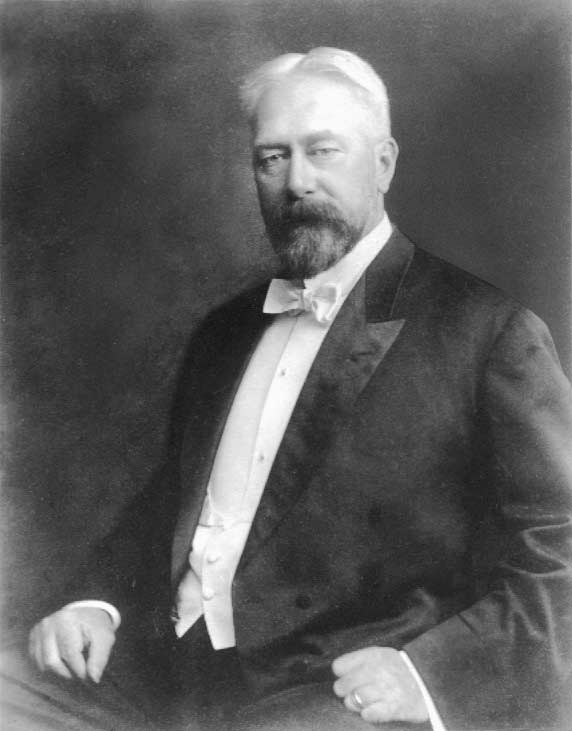
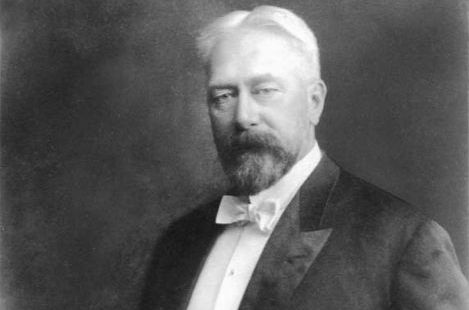
Gustav Lindenthal in 1909, the year the bridge opens.
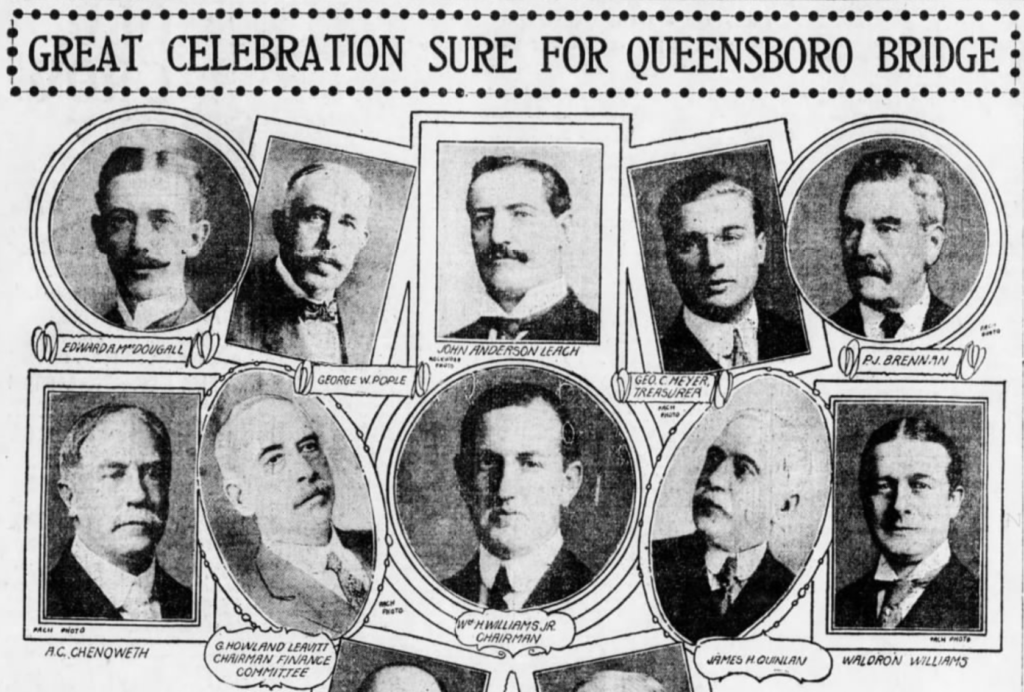
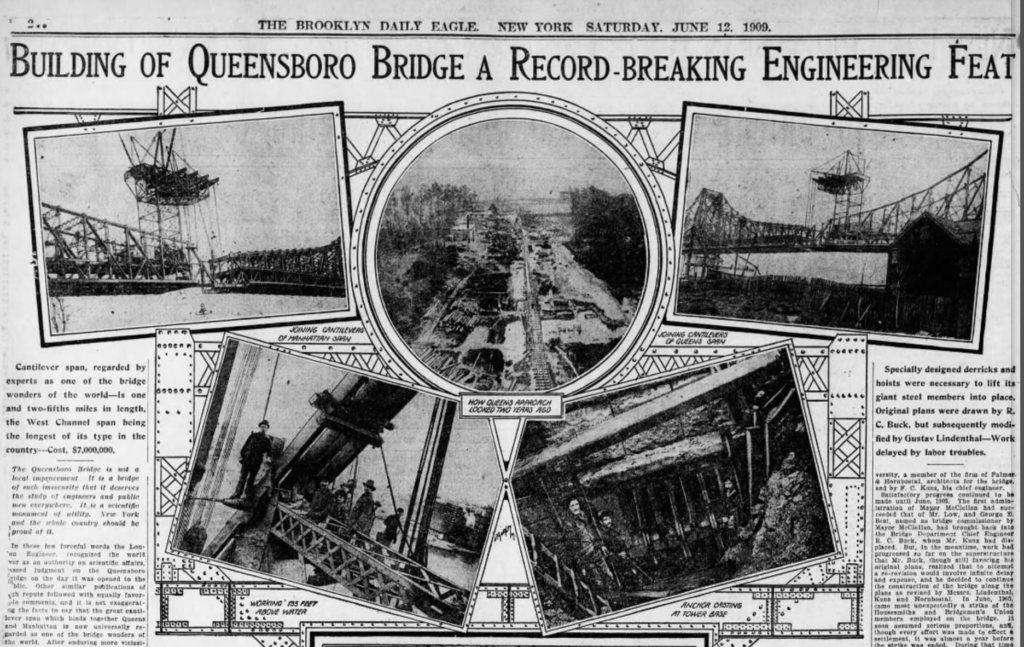
From the June 12, 1909 Brooklyn Daily Eagle

RELATED LISTENING

Categories
Queens History

The Fall of Ravenswood, Old Aristocratic Queens

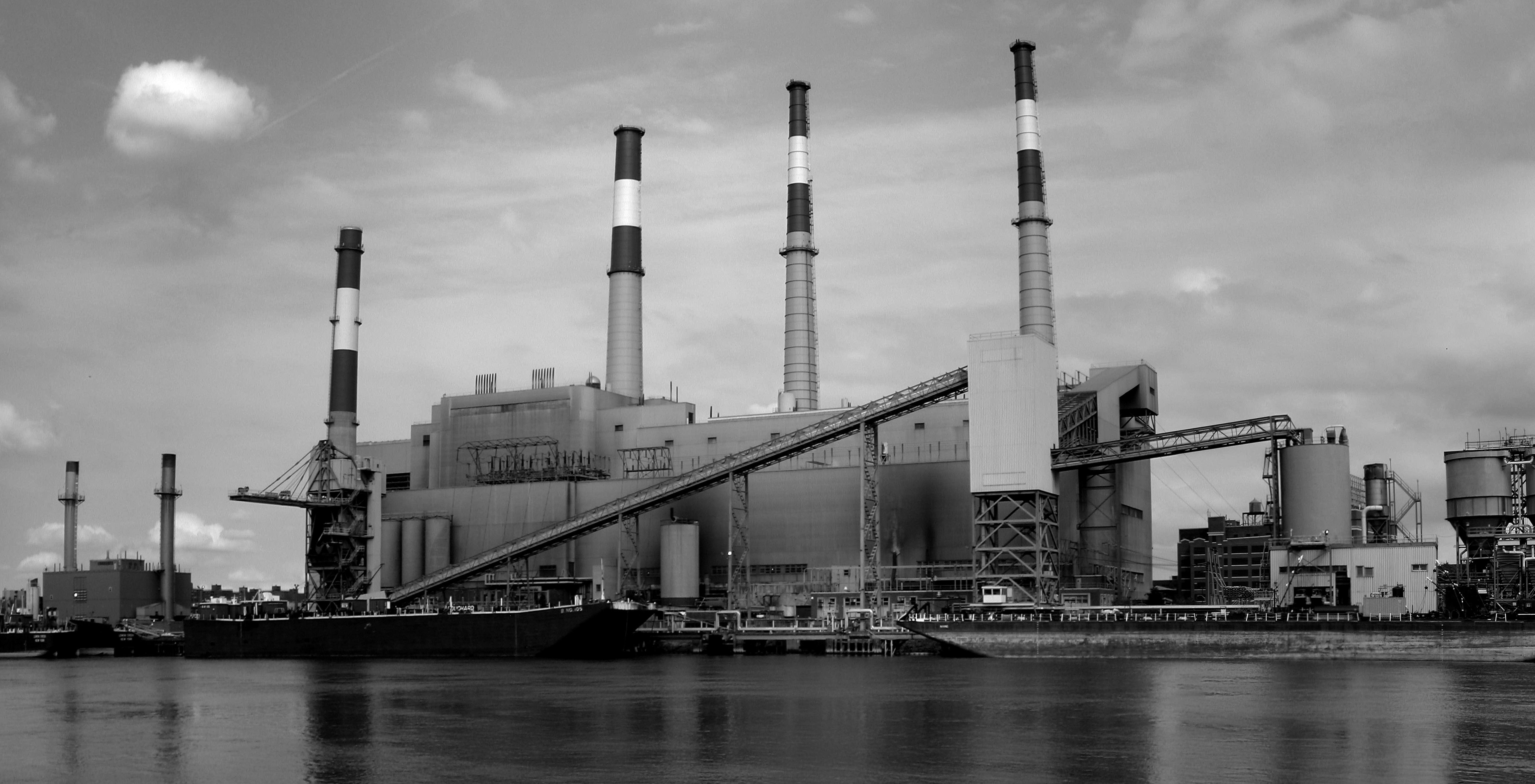
Ravenswood is a dramatic name for a New York City neighborhood and certainly wasted on its primary resident today — Big Allis, the Con Edison generating power station that provides the Queens waterfront with its most unattractive feature.

This pocket district is situated on the western edge of Queens just north of Hunter’s Point. Situated near the power station are two quiet parks — Queensbridge Park and Rainey Park which pay homage to the neighborhoods most striking landmark — the Queensboro Bridge — and the bridge’s most ardent proponent Dr. Thomas Rainey.

There’s little indication of it today, but over 150 years ago, this narrow ridge of land on the East River waterfront was once the most exclusive neighborhood on Long Island. It was indeed a ‘narrow’ stretch for the eastern side was hemmed in by a massive swamp. (The Ravenswood Houses sits on the spot of the old swamp.)

Among the first English settlers, the land was originally owned by Captain John Manning, then by Robert Blackwell. Both men also owned the island in the East River, today’s Roosevelt Island. (In fact, the island wore Blackwell’s name for over two centuries. Listen to our show on Roosevelt Island for more information.) It wasn’t until 1814 that a US mineralogist named Col. George Gibbs bought up this property and begin chopping up the lots for sale to wealthy merchants who desired large estates with a waterfront vista.

Nobody knows definitely where the name came from. One theory suggests it was named for the bishop of North Carolina — John S. Ravenscroft — and later altered. Author Vincent Seyfried gives a couple more romantic suggestions, “that there were a lot of native American ravens in the neighborhood, and that Ravenswood is a name figuring prominently in Sir Walter Scott’s “Bride of Lammermoor”, a historical romance popular in that day.”

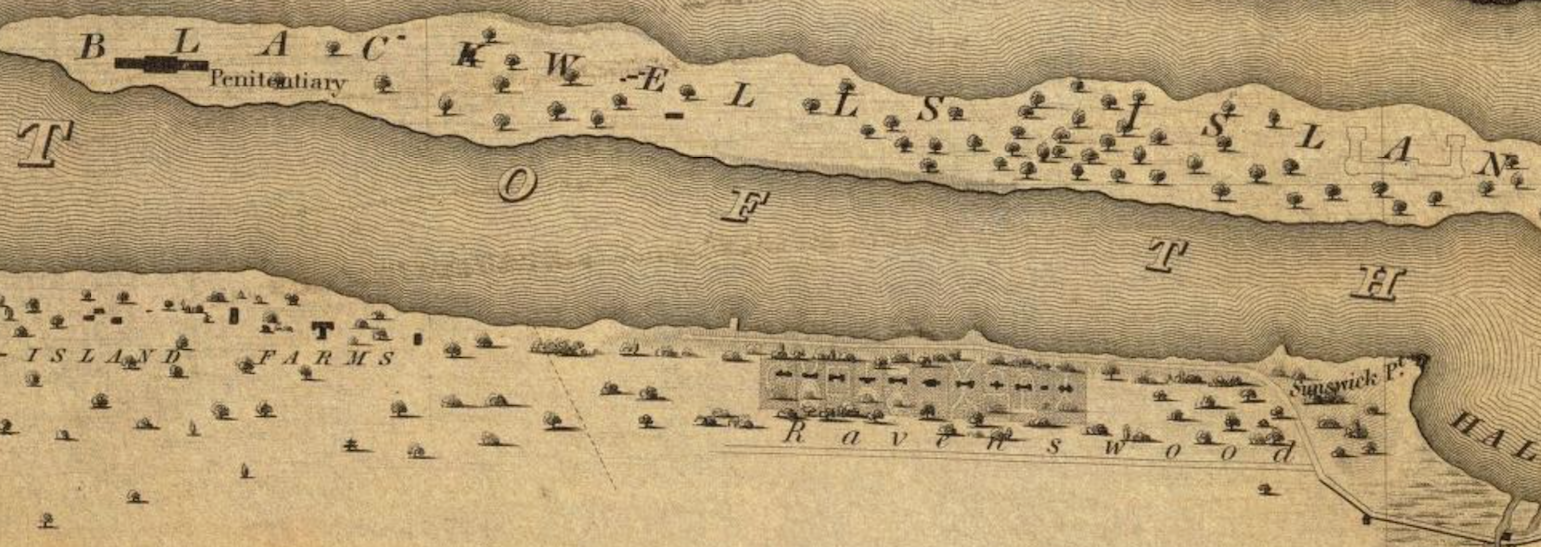
Below: From the David Ramsey Map Collection — a 1836 view of Blackwell’s Island and Ravenswood

By the 1850s, both Blackwell’s Island and Ravenswood were frantic with new construction — Blackwell with new public institutions like the almshouse, Ravenwood with sumptuous estates. From a local newspaper in 1852: “Buildings are going up in every direction and much taste is manifested by the owners in arranging and decorating their grounds. “

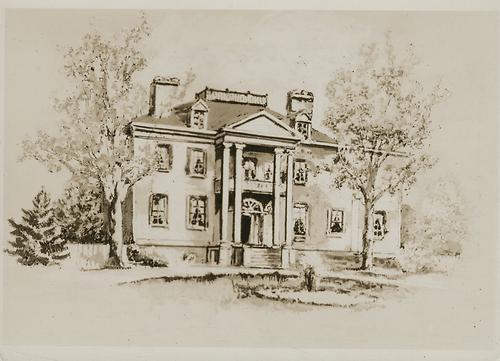
Below: The Delafield house which was owned by George Gibbs

Queens Archives

Most of the new residents were New York merchants enriched with the city’s growing fortunes, stimulated large by the construction of the Erie Canal. Almost none of them came from old families (who had manors in other parts of the region). Looking though a list of Ravenwood landowners from the 1850s, you’ll find mirror manufacturers, grocers, meat packers, doctors, insurance salesmen and Wall Street bankers.

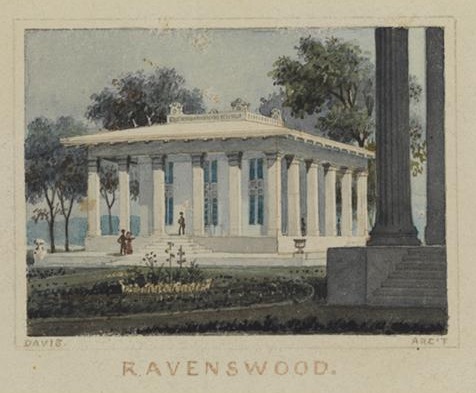
Below: An example of a Ravenswood property, from an engraving by Alexander Jackson Davis (ca. 1836)

From the Queens Gazette, 1953: “Ravenswood —  That beautiful village, so picturesquely located on the banks of the river, is improving rapidly and its present rate of increase will soon complete the chain of city and village which stretches almost from the Narrows to beyond Hell Gate.”

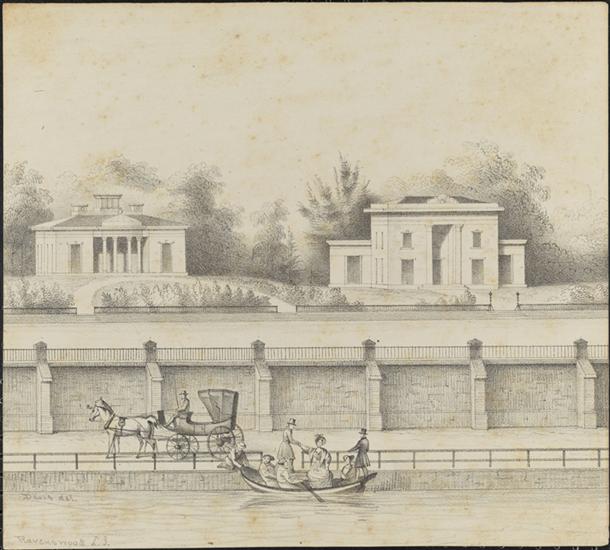
A unique feature of these new development was the public promenade (seen in the map image above). While lots were granted to the edge of the East River, a public walkway was carved into the properties so that neighbors could enjoy the impressive views.

Below: Ravenswood and its promenade, from an engraving by Alexander Jackson Davis (1850)

Courtesy Museum of the City of New York

Of course you might ask — wasn’t the back of Blackwell’s Island an unsightly mess by the late 19th century? It became the home of penitentiaries, asylums, workhouses and various hospitals. Well, by the time it got it got too unfortunate, the era of aristocratic Ravenswood was over.

Hunter’s Point, south of Ravenswood, was rapidly becoming a dense, industrial zone by the 1860s, endangering any bucolic peace that this new mansion row would have enjoyed. The swamp to the east — called Sunswick Swamp or Ravenswood Swamp — and the mosquitos it attracted created a serious health crisis with frequent malaria outbreaks.

Below: A last holdout at Vernon Boulevard and 30th Road (ca. 1937)

Berenice Abbott, courtesy MCNY

In 1870, Ravenswood was absorbed into the district of Long Island City, encompassing all the village and hamlets of northwestern Queens, including Astoria and the new company village of Steinway & Sons. While this incorporation was a great benefit to the region overall — rapidly bringing utilities and municipal support — it eventually destroyed the small residential haven of Ravenswood.

A gas works was constructed in 1875 on the waterfront at 37th and 38th Avenues, the precise spot today of Big Allis. Residents almost immediately began fleeing.

In 1877, the Newtown Register lamented, “The aristocratic neighborhood of Ravenswood is beginning to be invaded by factories. We observe a large brick structure run up which will be devoted to canning fruits. The location of this factory is at the southern end of the neighborhood. The gas house on the water’s edge near the old Blackwell house may be considered another invasion, and like Union Square, New York, we may suppose these temples of industry to be ‘the beginning of the end’. [This is reference to New York’s Gas House District, on the spot of today’s Stuyvesant Town – Peter Cooper Village.]

Already one aristocratic mansion is converted into a summer hotel and restaurant. Such is change, such is life.”

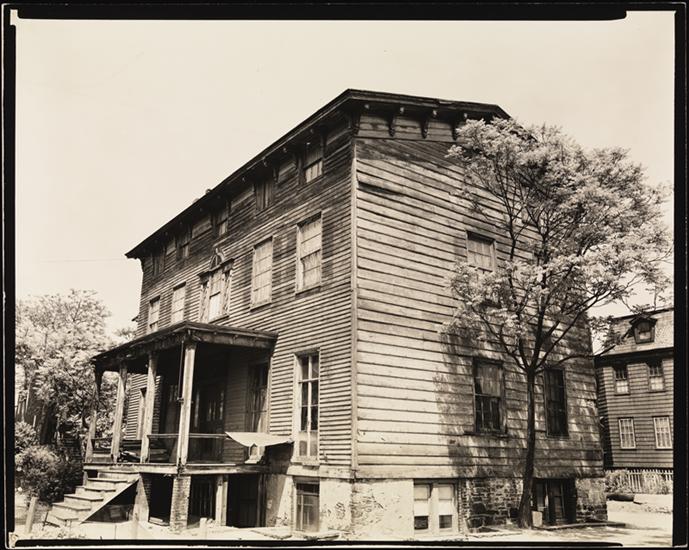
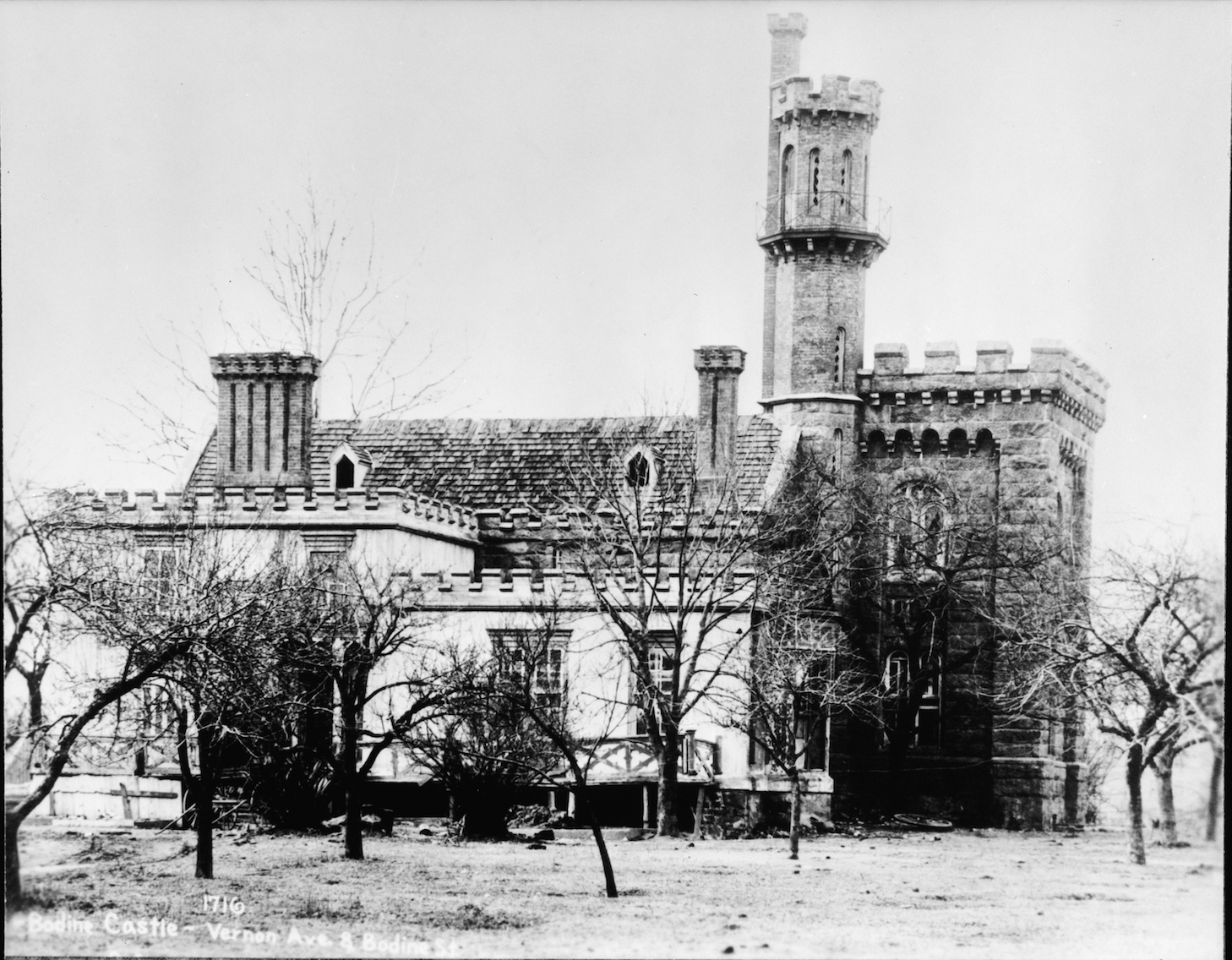
By 1905 even the promenade was gone. All traces of Ravenswood were eliminated save one — Bodine Castle at Vernon Boulevard and 43rd Avenue (pictured below). It too was demolished in 1966.

The area is now best known for this:

Courtesy Harald Kleims/Wikimedia

[My thanks to Vincent F. Seyfried and the Greater Astoria Historical Society for help with this research.]

Categories
Religious History

Happy Pope Day! A history of the holiest of New York tourists

Pope Francis arrives in New York City today — part of his first-ever trip to the United States — and the city is rolling out the red carpet. In fact, all available carpets are being rolled out and even some throw rugs.

New York loves Popes. (Not always of course.) Only the Marquis de Lafayette and the Beatles have been treated to more rapturous displays of welcome by New York City residents.

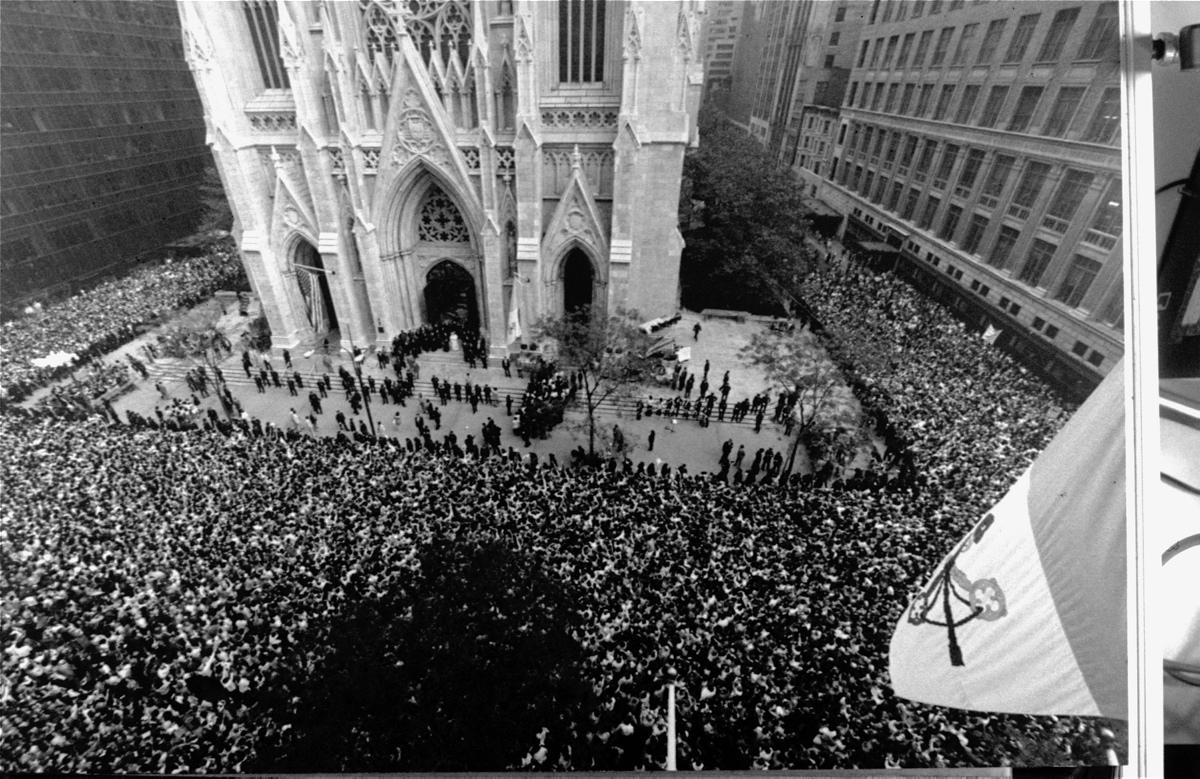
The city has been host to four previous papal visits, and in each case, Saint Patrick’s Cathedral has naturally been the manic center of activity. In fact three such visits have been immortalized on plaques in front of the cathedral.

But with each trip, the pope in question managed to find a couple other unique corners of the city to visit as well.

THE FIRST POPE

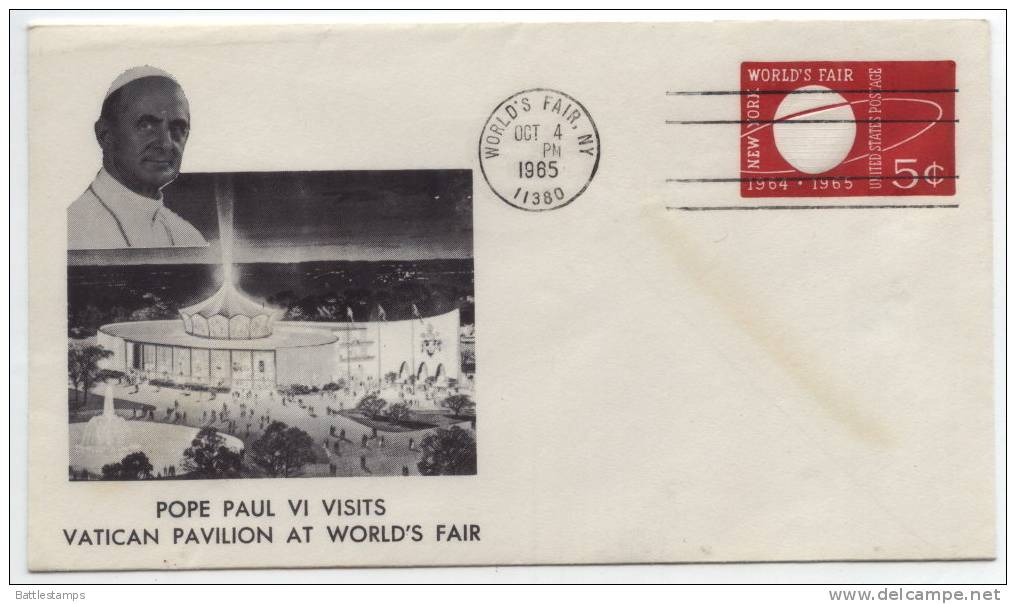
Perhaps the strangest visit of all was the very first — Pope Paul VI, the controversial leader who presided over the Second Vatican Council and made a name for himself traveling all over the world. Finally in an era where a man could be both pope and jetsetter, Pope Paul arrived in New York in October of 1965 and promptly went to visit his old roommate, who was performing in a fair.

Courtesy Delcampe.net

That roommate would be Michelangelo’s Pieta, on loan from St. Peter’s hallways to the Vatican pavilion at the 1964-65 World’s Fair.

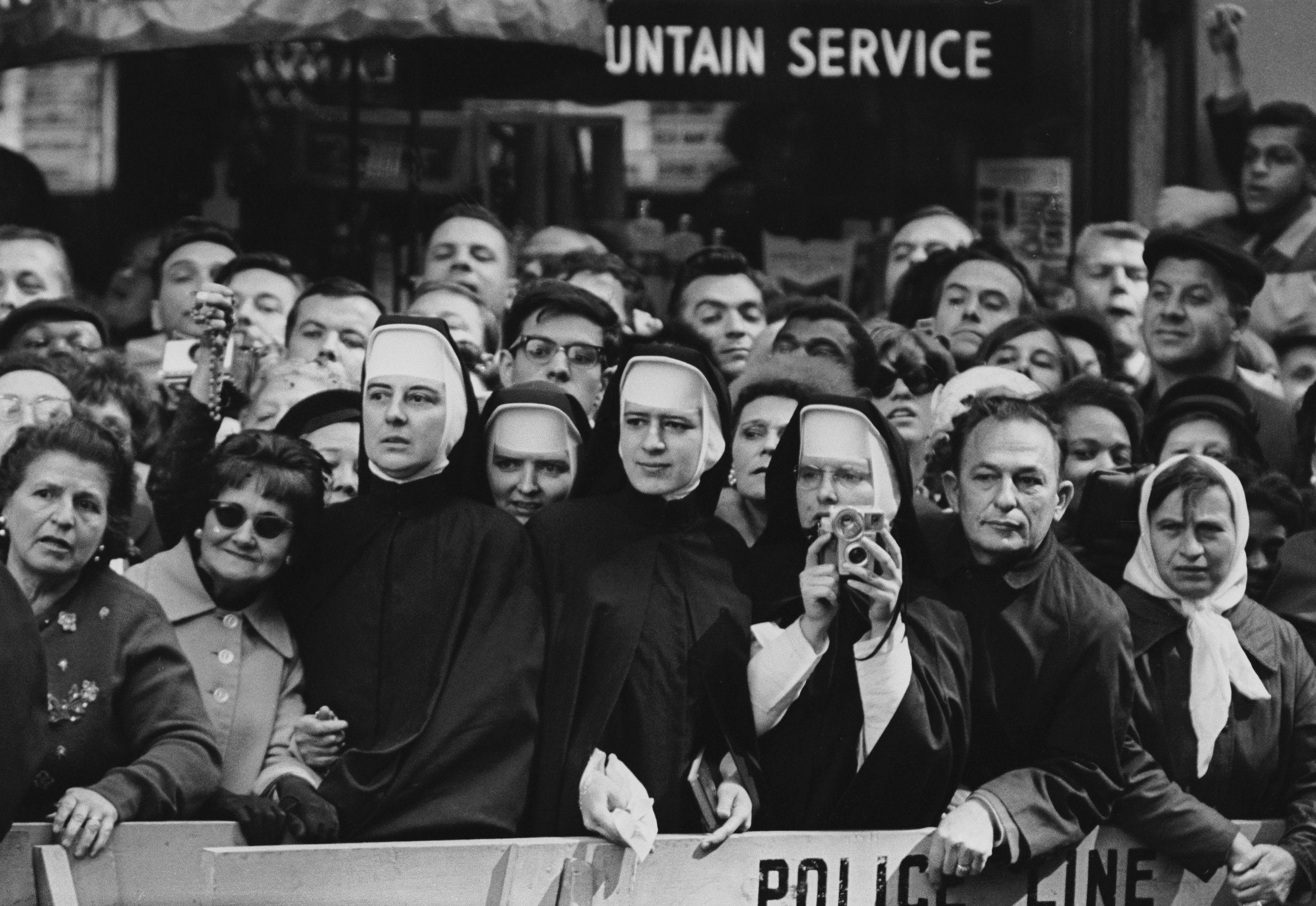
The Pope visited the Fair on October 4, 1965, on a busy day that also included mass at Yankee Stadium (the first papal mass ever in the United States), an address to the United Nations, and a meeting in the city with president Lyndon Johnson at the Waldorf-Astoria.

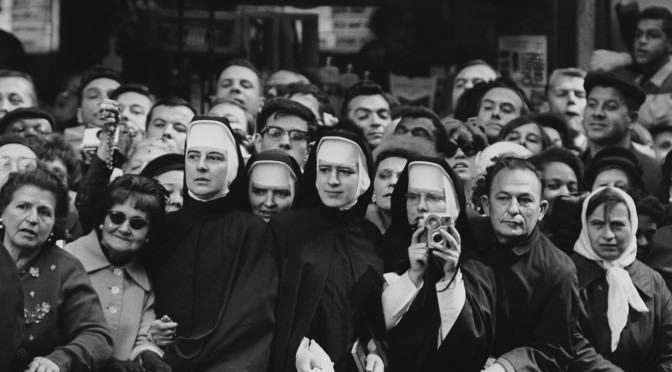
5th October 1965: Photo by Harry Benson/Express/Getty Images

Many will remember the thousands of people who greeted the Pope in the original Pope-mobile (“a closed, bubble-top limousine”) during its 25-mile procession through the city. Here’s a fact to delight your friends and neighbors — the first American bridge ever crossed by a Pope in all of history was the Queensboro Bridge.

Today a rounded bench, or exedra, sits in Flushing Meadows park honoring the moment Pope Paul visited the Pavilion. (It seems that whenever a Pope hovers in a place for more than a few minutes, a plaque or monument springs up in its place.)

By the way, I found this extraordinary page full of great photos about that first Pope-mobile.

Length of his visit: 13 1/2 hours

AP Photo/Courtesy New York Daily News

THE SECOND POPE — FIRST VISIT

But it’s Pope John Paul who’s the real New York favorite; he held the papal throne for so long that he managed two trips to Gotham City — in 1979 and 1995.

His October 1979 trip was like a rock concert tour, also swinging through Philadelphia, Boston, D.C., Chicago and Des Moines. Part of the enthusiasm was because John Paul, at 58 years old, had just been appointed the year before.

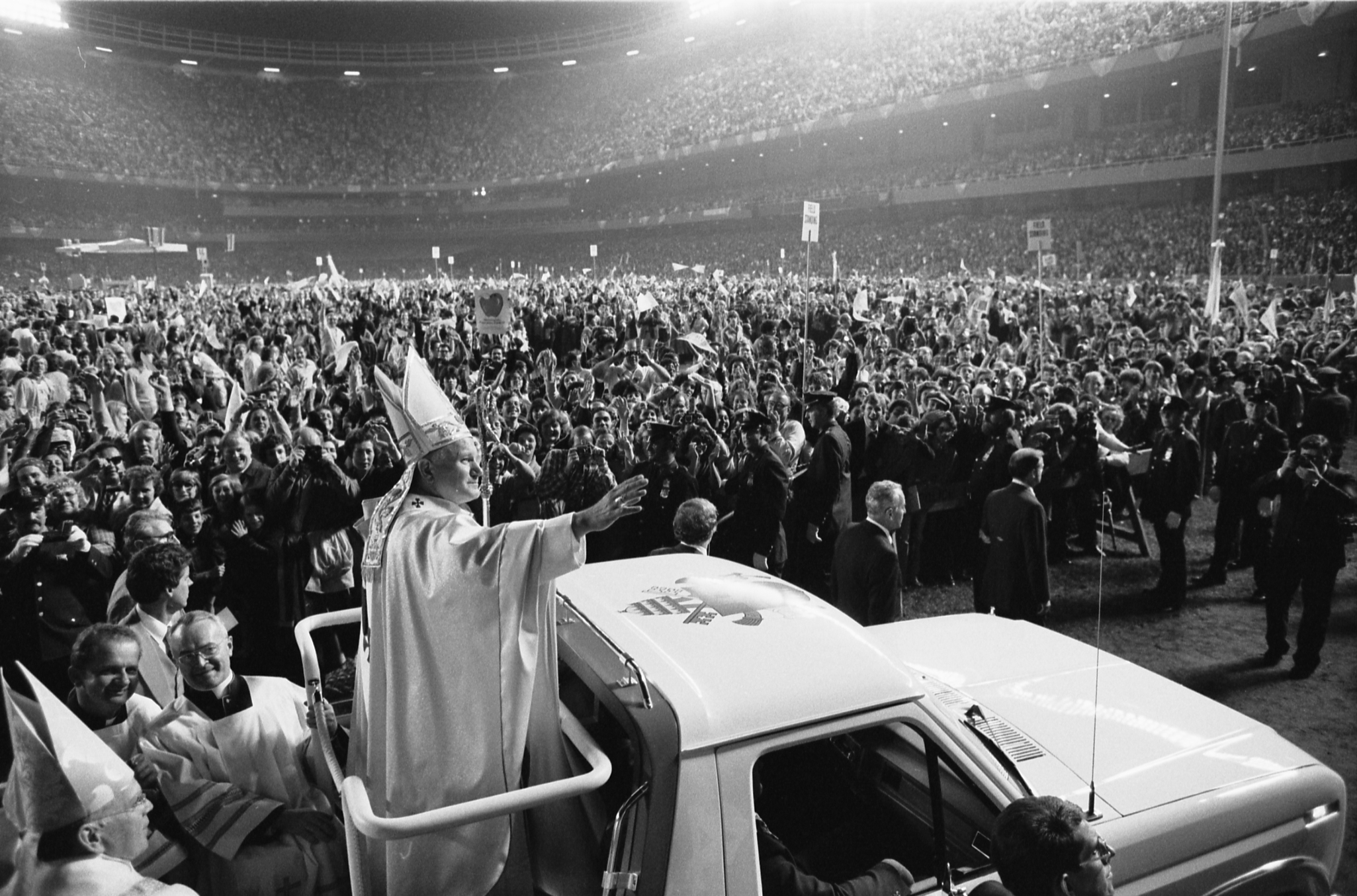
In 1969, as a cardinal, he had held mass at Yankee Stadium, so by the time he did it again on October 2, 1979 — as the Pope — he was as much a fixture as Reggie Jackson. Rain greeted over 9,000 cheering worshippers — or fans — and, according to legend, when the Pope mounted the ballfield to address the crowd, the rain showers stopped. And as a blessing for Mets fans, the next day the Pope also held rapt an audience of 52,000 at Shea Stadium.

Below: the Pope at Yankee Stadium

Courtesy US News and World Report

But like all rock stars, the Pope couldn’t complete his New York odyssey without a performance at Madison Square Garden. Although John Paul also addressed the U.N. and a Saint Patrick’s audience during that trip, he’s best remembered by many for his inspirational address on October 3rd to 19,000 city children.

Saint Patrick’s honored his Holiness’s visit in 1979 by installing a bust. But he would be back. On almost exactly the same day, sixteen years later.

Length of his visit: Almost 48 hours

THE SECOND POPE — THE SECOND VISIT

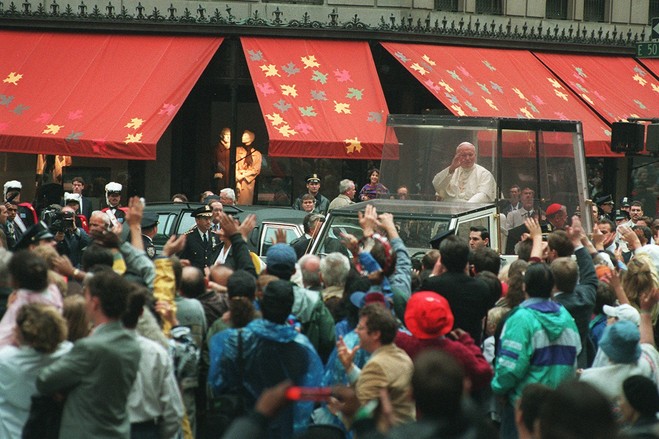
New York City in 1995 was a vastly different city and John Paul returned for a longer visit — four days in total in the entire New York area — on October 4th. This time, instead of just delivering messages to the clergy gathered at Saint Patrick’s, he spontaneously decided he wanted to walk around the block. And why not? You’ve got shopping, Saks, street vendors selling Pope souvenirs!

Below: In the Pope-mobile, riding by Saks Fifth Avenue

Courtesy Wall Street Journal

The Pope also finished off his collection of performing in gigantic venues for mass — holding court in Giants Stadium, the Aquaduct Racetrack in Ozone Park and eventually to 100,000 people on the great lawn in Central Park.

From there, the elderly leader of the Catholic Church gave the city the ultimate shout-out: “This is New York! The great New York! This is Central Park. The beautiful surroundings of Central Park invite us to reflect on a more sublime beauty: the beauty of every human being, made in the image and likeness of God. Then you can tell the whole world that you gave the pope his Christmas present in October, in New York, in Central Park.”

Length of his visit: Almost four days! He couldn’t get enough.

Courtesy Chris Hondros/Getty Images./New York Daily News

THE THIRD POPE

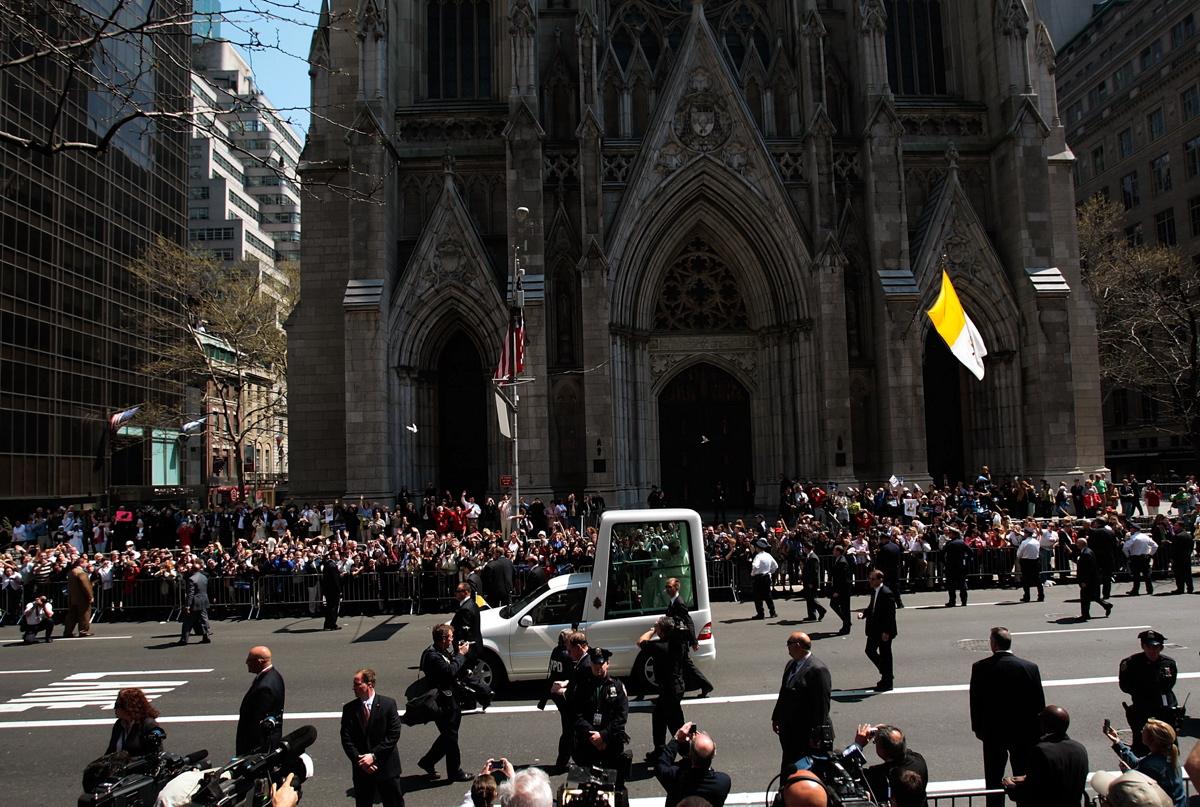
Pope Benedict XVI came to New York for three days, two nights (April 18-20), arriving in Manhattan on a military helicopter and breaking the apparently holy tradition of visiting New York in the early Fall.  (Still would have needed a light sweater or vestment.)  But Benedict, as the cardinal formerly known as Joseph Ratzinger, actually visited the city in that lesser role in 1988, where apparently he was met with protest from gay activists and shunned by some prominent Jewish leaders.

He hit all the “usual” Pope spots — Saint Patricks, the United Nations, Yankee Stadium — but added a couple interesting detours: Park East Synagogue, St Joseph’s Seminary in Yonkers, and the World Trade Center site.

Below: The Pope viewing the World Trade Center site

 April 20, 2008 Courtesy MSNBC
April 20, 2008 Courtesy MSNBC

Length of his visit: Almost 72 hours

THE FOURTH POPE

Pope Francis’ exhausting itinerary can be found here.  He’ll make stops first for evening prayer at Saint Patrick’s Cathedral, then to the residence of the Apostolic nuncio at the United Nations to sleep.

He speaks to the U.N. Assembly in the morning, then down to the National September 11 Memorial & Museum by lunchtime.

Perhaps the most intriguing stop will come in the afternoon, meeting with students from Our Lady Queen of Angels School in East Harlem. Whereas the first Pope to come New York fifty years rode through East Harlem in his covered Pope-mobile, Pope Francis will chat with a third-grade class filled with children who will have quite a story to tell their grandkids.

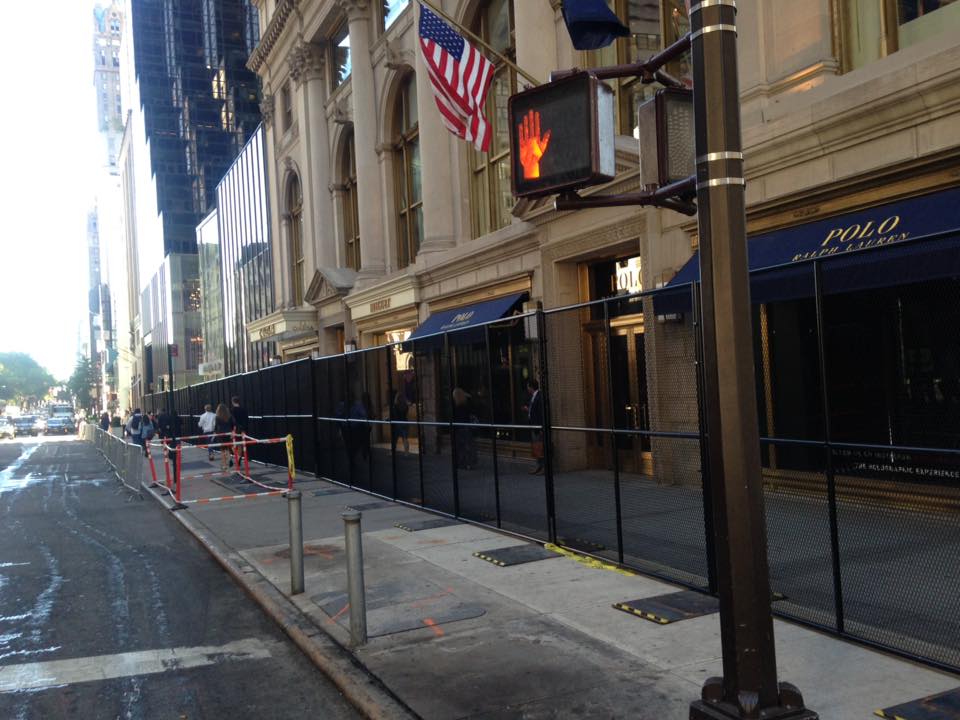
Afterwards he will travel through Central Park and arrive at Madison Square Garden for Mass. At rush hour! Oh right, all the streets are closed. In fact, Fifth Avenue right now is contained in a large fence, easily the tightest security I’ve ever seen here.
12042997_10154366542979852_7760758446010311988_n

But Pope Francis is a man of many surprises. Could he decide that he wants to walk the High Line? And how can he visit New York and not even visit Brooklyn? Is the Pope a Girls fan?
This is a heavily revised version of an article that originally ran in 2008 when Pope Benedict visited New York City.
Categories
Those Were The Days

Housewives demand open markets! One century ago, New York radically changed how people bought groceries

[Manhattan open market.]

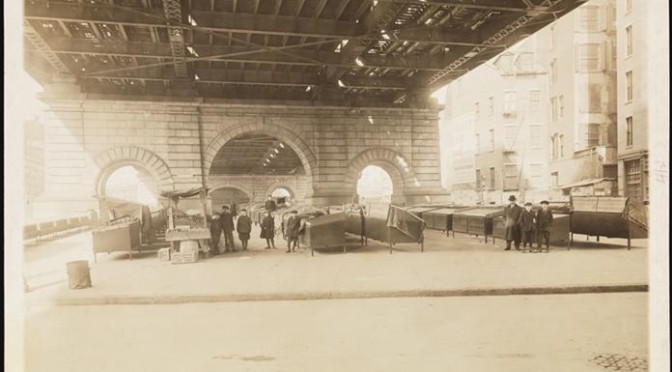
Setting up a market under the Manhattan Bridge. (Courtesy MCNY. Note: This photo may be of an earlier market here, but this gives you an idea of where the 1914-15 markets would have been located.)

Groceries are becoming more expensive as retailers mark up prices due to food shortages (or simple price gouging at perceived shortages). So people are turning to rather unconventional methods of getting fresh meat and produce.  Is this 2014 or 1914?

At the start of World War I, there was an immediate shortage of certain food items at New York grocers. Local distributors greatly took advantage of this special circumstance, marking up a variety of essential items.  “Sugar and flour, which have been increasing in price so rapidly, gave indications of continuing their upward march,” an article from August 19, 1914 proclaimed.

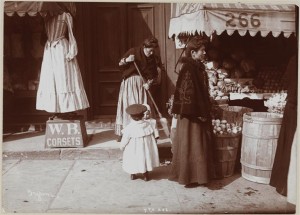
Shopping at a typical New York grocer, 1903 (MCNY): 

266 Seventh Avenue c. 1903.

Fifty years before, New Yorkers could interact with farmers and butchers directly at open-air markets.  But by the 1910s, most transactions were governed by local distributors. Old Washington Market was by this time a thriving indoor wholesale market. Local grocers had limited space with limited selection. The era of the modern supermarket — with greater selections and better values — was still a decade or two in the future. (The first supermarket is often considered to be Piggly Wiggly, which opened in Tennessee in 1916.)

To fend off rising food rates, the city of New York did something rather extraordinary:  it opened its own direct markets (or “open markets”) which cut out the middle-man entirely.

Manhattan Borough President Marcus M. Marks authorized the opening of four such markets in the following open areas — under the Manhattan sides of the Manhattan and Queensboro Bridges, the intersection of 3rd Avenue and 129th Street (today’s Harlem River Park), and the Fort Lee Ferry Terminal (West 139th Street and the Hudson River, near today’s Riverbank State Park).  A similar program was also set up in Tompkinsville, Staten Island.

Below: Interior of the Queensboro Bridge Market, 1915 (MCNY)

[Interior of market under the Queensboro Bridge.]

The markets opened in September 1914 with dozens of Long Island and New Jersey farmers bringing their wares to New York. Pushcart vendors, already spread throughout the city, also set up shop here.  What makes this such a controversial move is that it was a clear attempt to undercut all established grocers, to force distributors to quit gouging price.

They were an immediate hit despite being located in areas quite distant from certain populated areas. The markets appealed to women of many classes, because who doesn’t love a bargain? “At this market were many housewives who came in automobiles to buy from the farmers,” said a report from September 20, 1914. “Baskets filled with fresh vegetables and fruits were on seats, and the legs of more than one chicken projected from paper parcels under the chauffeur’s elbows.”  By 1915, the markets were considered by some “a social affair.”

Below: from an April 1915 profile from the Sun:

 The open markets were so successful that stock was usually emptied out by mid-morning.  Late-arriving women “actually wept when the market was bought out.” [source]

Naturally, retail grocers were angered by the city’s bold move and soon went on the offensive. “There is nothing but politics in this open market game, gentleman, from start to finish,” declared one speaker at a grocers union rally that October.

The city counteracted the grocer’s propaganda by providing ‘bargain days’ for extra values, reeling in the participation of farmers, butchers, poultry brokers and even honey producers.  “A butcher, who will open a new stand, says that he will give a head of cabbage in lieu of trading stamps to every purchaser of a piece of corned beef.” [October 15, source]

The markets lasted only a few months and, strangely enough, it was the city itself that killed them. Obviously bending to pressure from local businessmen, the city began charging high rents for a spot at the markets, and smaller farmers soon fled.  The Evening World noticed rents that would equal up to “$900 a year”. That’s $20,000 in 2014 currency.

In essence, this was one end of New York government attempting to dampen the authority of the other (namely, the borough president’s office).  Vendors had to raise prices to keep their place, and so the usefulness of the markets swiftly faded.

Times Squared: Lovingly nitpicking ‘The Great Gatsby’ trailer

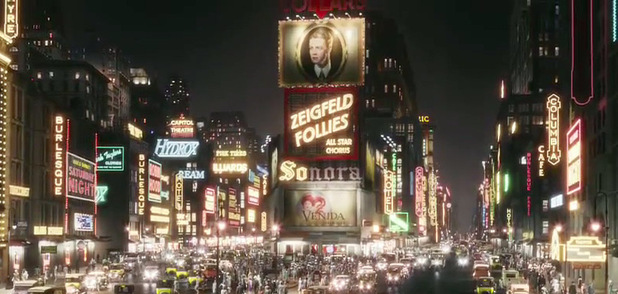
The recent trailer to Baz Luhrmann’s The Great Gatsby, aka ‘Moulin Rouge in Manhattan’, seems to have left everyone in a state of awe (and horror) in its vivid, hyper-electro-glossy depiction of Prohibition-era New York. And it left many feeling slight panic, even apoplexy, especially considering the entire spectacle will be rendered in 3D when it’s released in December. Oh God. Will flappers kick whimsily towards the camera?

So how accurate was Lurhmann in his glamorous take on Times Square of 1922? How accurate was it supposed to be? Many have already taken note of one glaring and unforgivable error — misspelling the name of Florenz Ziegfeld on the sign for the ‘Ziegfeld Follies’. That ridiculous mistake overshadows a possibly smaller error, that the Follies were actually performed down at the New Amsterdam Theatre on 42nd Street in 1922. However, the Follies from the year before were hosted at the Globe Theater on West 46th Street (today’s Lunt-Fontanne Theatre), quite close to this sign. So perhaps they just kept it up.

Here’s the entire trailer:

Clearly, Luhrmann is interpreting New York, not emulating it. ‘Moulin Rouge’, after all, was Paris through a hazy scrim. He’s filtering the glitz of F. Scott Fitzgerald‘s work through his own dreamlike aesthetic and doesn’t need to fact-check every sign and street corner. Still, the trailer does feature some interesting obscure details, and I can’t help myself.  If you saw a different detail, please post about it in the comments section:

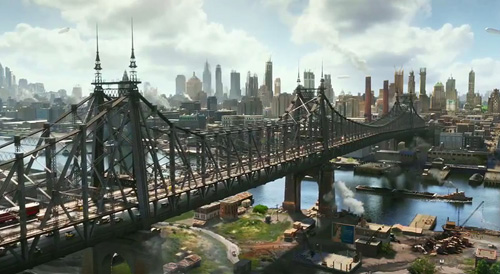
Queensboro Bridge The trailer opens with a spectacular look at the Queensboro Bridge, a potent symbol in the Fitzgerald novel. “Over the great bridge, with the sunlight through the girders making a constant flicker upon the moving cars, with the city rising up across the river in white heaps and sugar lumps all built with a wish out of non-olfactory money.”

The bridge opened in 1909, and it’s a defining image of the Jazz Age, not least of which because the population of Queens almost tripled during the 1920s. There were certainly trains on the Queensboro — it was built to accommodate them — but I’m not sure about that particular train.  Below it sits grimy old Blackwell’s Island, renamed Welfare Island in 1921 and certainly looking the part.

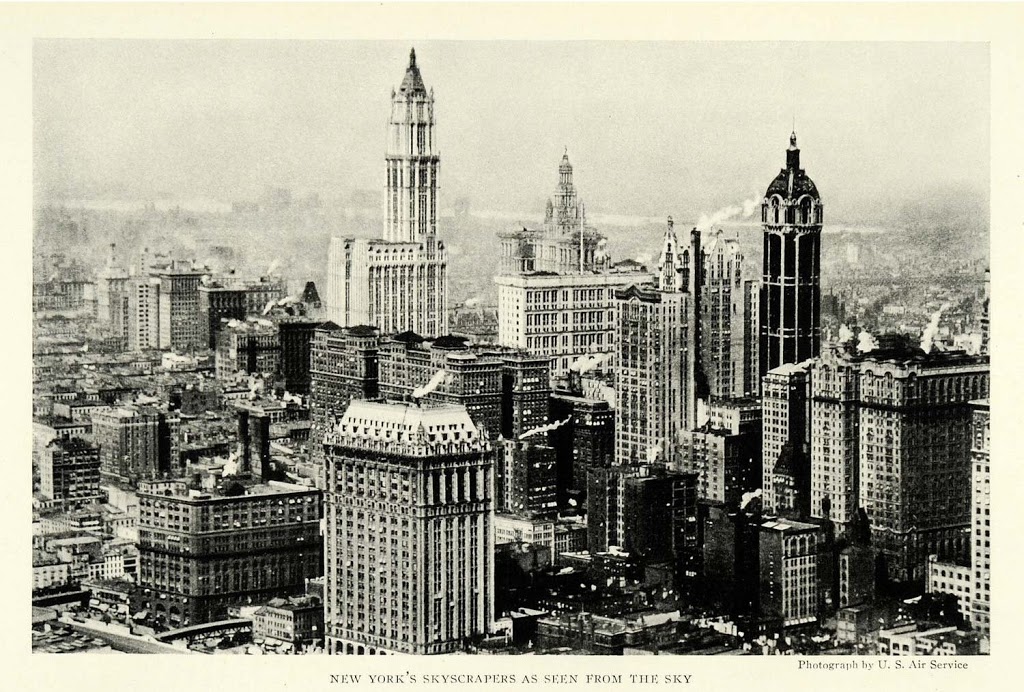
 — Skyscrapers Oh Lord. I don’t think this depicts New York at all but is a composite view of various buildings of the age. Far to the left in the trailer I see structures that look like the Singer Building and the Woolworth Building, but they would not be seen from this angle. Besides, the Woolworth would be taller than the Singer. See below for a size comparison, in a picture from 1922, looking northeast.

There are some vaguely Flatiron Building/Met Life Tower type structures, but they look like they’re on 42nd Street.  And why do I think I can see something that clearly looks like the New York Central Building (later the Helmsley Building) which wasn’t finished until 1929?

Times Square Signs An array of illuminated products logos — in various colorful hues foreign to Times Square in 1922 — gives the Crossroads of the World a mystical glow. The tony Hotel Astor adorned in lights dominates the plaza to the left. Nearby is an ad for Douglas Fairbank‘s ‘Robin Hood’, released in October 1922. It played at the Lyric Theatre. Fairbank’s rival Rudolph Valentino and actress Norma Talmadge created a buzz when they attended the film’s premiere together here.

It’s next to the advertisement for Hydrox (the sandwich cookie which debuted in 1908) and the Capitol Theater, a movie palace which opened in 1919. The tire ad is a nice touch, recalling Times Square’s status as the center of automobile sales and repair during the early 20th century.


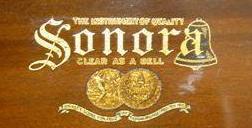
Below the Zeigfeld [sic] Follies sign is an advertisement for Sonora, a phonograph company that began producing radios in 1924. Their slogan ‘Clear As A Bell’ harkens back to the company’s original product line — clock chimes.

To the right of those is a sign for the Columbia Theatre, “the royal palace of burlesque” in the 1920s. The theater opened in 1910 with decor of “Roman gold and and French gray, and the hangings and carpets are of rose du Barry.” It became the Embassy movie theaters in the 1970s.

Later on in the trailer, an ad can be seen for Arrow Collars, the detatchable shirt collar company that went on to spawn America’s first male model type, the ‘Arrow Collar Man’, the sort of debonair type who populates the world of Gatsby. Of course, the demand for collared shirts pretty much killed of this industry by the end of the decade.

Grand Central Oyster Bar There appears to be a brief scene at this lush location with its vaulted ceilings. The Oyster Bar would have indeed been a thriving spot in 1922 and an ideal place to mix business with pleasure. A few years later, so goes the legend, David Sarnoff formed RKO Pictures over a few oysters here with Joseph Kennedy. In 1922, Tin Pan Alley lyricist Al Lubin met his music partner Harry Warren here. They went on to create the film musical 42nd Street in 1933.

Yellow Cab Co.? There are many brief glimpses of taxicabs, including those of the Yellow Cab fleet, which would later be purchased by the Checkered Cab company in 1929. In 1922, the Yellow Cab successfully won a ruling barring other paid-ride automobiles from being painted yellow. ‘1,000 Cabs Face Change of Paint.

Blood And Sand A prominent movie marquee is shown near the trailer’s end for Rudolph Valentino‘s ‘Blood And Sand’, a summer box office smash in 1922. This film debuted at the Rivoli, at 1620 Broadway, at 49th Street. From the New York Times film review on its debut: “Mr. Valentino has not been doing much acting of late. He’s been slicking his hair and posing for the most part. But here he becomes an actor again.” Let’s hope the same can be said of Leonardo DiCaprio, who plays Mr. Gatsby.

By the way, the 1974 version of ‘The Great Gatsby’, starring Robert Redford and Mia Farrow, premiered — with attendees in full ’20s regalia — at the Loews State Theater at 1540 Broadway at 45th Street. “The guests, many of them in Teflon or Daisy white, whatever you want to call it, were greeted by hundreds of celebrity gawkers, reporters and photographers.” [source]

Below: A clip from the Valentino film:


As I rewatch the trailer over the next few days, I may amend this article with further information. If there’s something obvious that I’ve missed, please let me know in the comments below!

Thanks to Michael Raisch, whose Tweet to me last night inspired this article.  Screenshots courtesy of Curbed and Entertainment Weekly.

Categories
Podcasts

Manhattan Bridge: New York City’s dysfunctional classic

[from Flickr, taken by ajagendorf25]

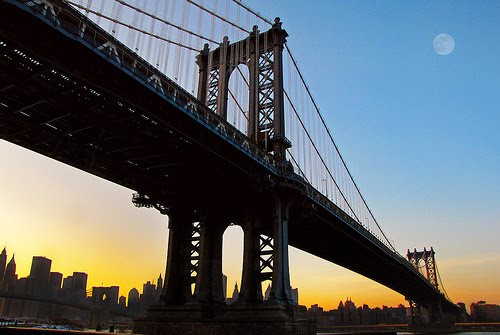
We love the Manhattan Bridge, but there’s no doubt it’s had a rocky history. For one hundred years, it’s withstood more than just comparisons to its far more iconic neighbor, the Brooklyn Bridge.

Built to relieve pressure on the East River’s best known bridge, the Manhattan Bridge went through two different engineers — and a couple different ambitious designs — before finally being completed by another architect, who then went on in 1940 to design one of the WORST bridges in America. And serious design flaw afflicts the bridge to this day?

Listen in and find something to appreciate in this seriously under appreciated marvel of the East River:


I mention many bridge engineers in this podcast — Leffert Lefferts Buck, Gustav Lindenthal and Leon Moisseiff — but due to time constraints on the show this week, the contributions of Henry Hornbostel were left out. Hornbostel was instrumental in the work with Buck on the Williamsburg Bridge and with Lindenthal on the Queensboro. When we do podcasts on those bridges, he will get his fair due.

Preliminary work on the Manhattan Bridge began in 1901 under Buck, with Lindenthal taking reign of the project a year later. When Moisseiff was brought in to rework the bridge in 1904, construction kicked into high gear. Lindenthal’s innovative suggestion to use eyebars was discarded for a more conventional wire structure. [Pics courtesy Life Google images]

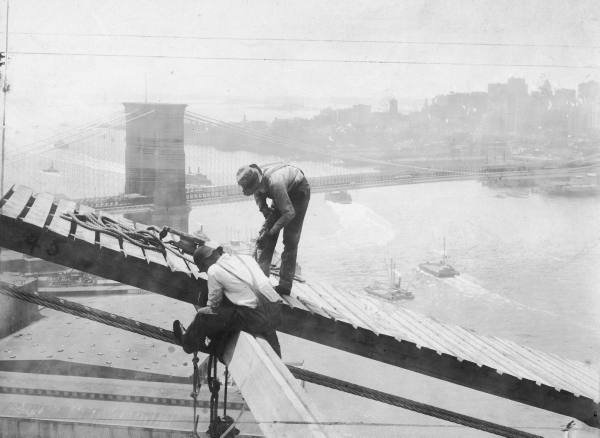
Stringing the cable across the East River took only four months in 1908. Indeed, the traffic snarls on the Brooklyn Bridge demanded them to work quickly. It was also mayor George McClellan’s intention to finish the bridge before he left office. [Photo by GG Bain and cleaned up by Shorpy, see a nifty close-up image here]

Gustav Lindenthal, born in Brno (now in the Czech Republic), came to the United States, built many bridges, and dreamt up many more that were never completed, like the North River Bridge, which would have spanned the Hudson River, and a monumental Manhattan Bridge designed with 14 lanes of traffic.

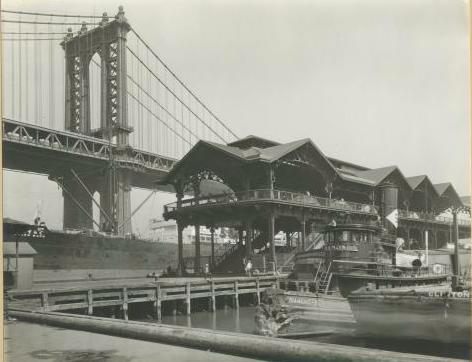
The bridge opened on December 31, 1909, although the pedestrian walkways were not completed and no trains were ready to go over it at that time. Setting it apart from its sister bridges was the flat, blue two-dimensional towers. As you can infer from this photo, facing both sides of the bridge were rows of docks and industrial ports. [Pic courtesy NYPL]

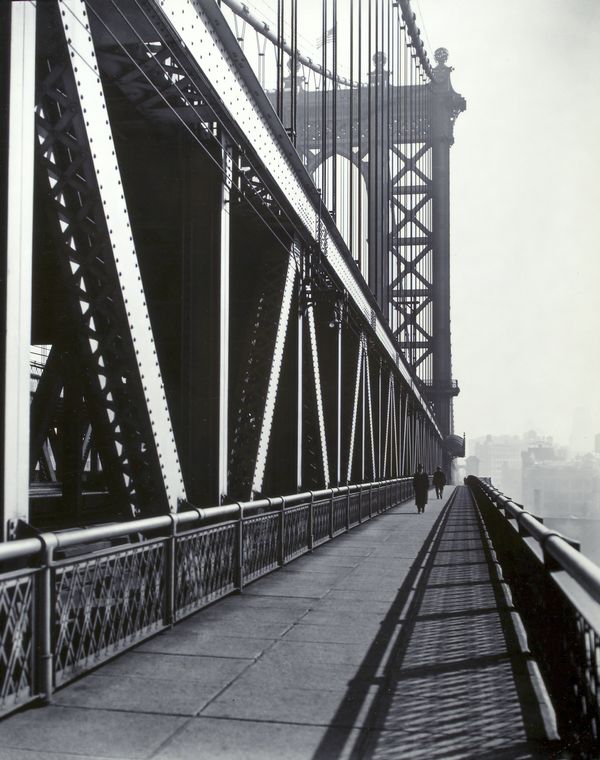
Berenice Abbott has some spectacular views of the Manhattan Bridge, taken in the 1930s. For crisp, dreamlike pictures of Manhattan, you can’t do better than Abbott. [courtesy NYPL]

Speaking of Berniece Abbott, Gothamist has some great shots taken by her of the area below the Manhattan Bridge on the Brooklyn side — today it’s DUMBO, known then as the strangely desolate Irishtown. [Flashback: Brooklyn 1936]

New York’s best performances – Part 3

It’s funny that the decade in which New York is truly at its lowest — crime at its all time high, fiscal crisis, the city’s landmarks falling apart — also happens to be the best decade ever for films about New York. I’ve already listed Taxi Driver and Saturday Night Fever, but you could wax on endlessly about New York films in the 1970s: Three Days of the Condor, Marathon Man, The Godfather, Annie Hall, The Taking of Pelham 1-2-3, Mean Streets, Shaft, All That Jazz, Network, the Panic at Needle Park.

And of course, these three….

Chaos
4. Dog Day Afternoon
Warming up the crowd

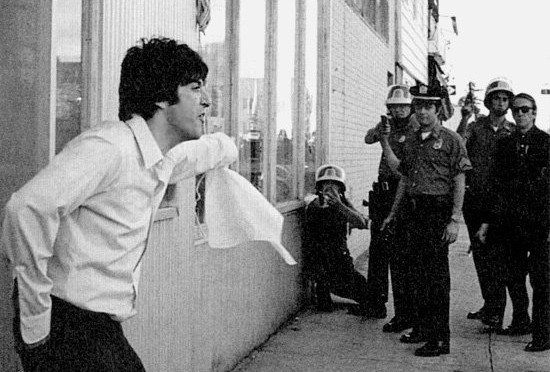
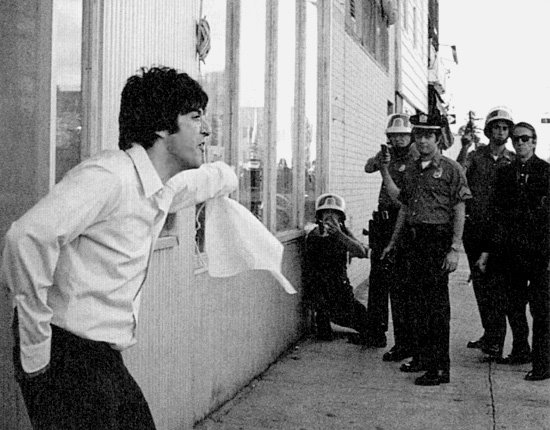
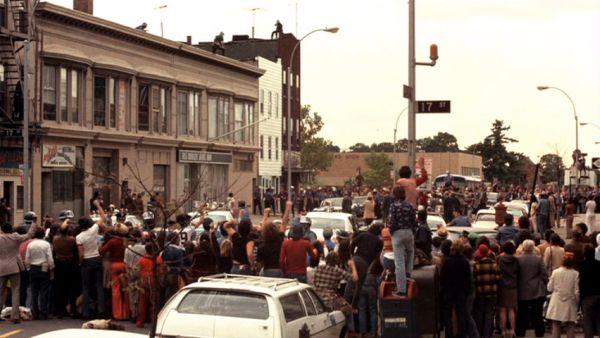
Like Do The Right Thing, this blistering Sidney Lumet flick is based on a real incident, a bank heist in Gravesend, Brooklyn — at 450 Avenue P, to be exact. (The only thing you can steal from there now is a mammography or an ultrasound; it’s the now the Brooklyn Medical Imaging Center.) Lumet moved the action to the Brooklyn neighborhood of Windsor Terrace, at Prospect Park West between 17 and 18th streets. He probably couldn’t have chosen a better block. With the park in the distance, the streets fill with police, random photographers, on-lookers, TV cameramen, buses and shop owners, and the result is like a self-contained swarm.

All to observe Al Pacino, playing Sonny the charming but befuddled bank robber, holding hostages and, in the pivotal scene, rallying the crowd to his side with cries of ‘Attica! Attica!’ (The Attica prison riots, spurred on by accusations of prisoner torture, had just happened, in 1971.)

Sadly the bank and many of the shops on the street have been replaced with — quel suprise! — condominiums.

However, the neighborhood Holy Name Roman Catholic Church (at 245 Prospect Park West), featured in the film, is still hanging around. The bank interiors, although not filmed in the actual bank, were still filmed in Brooklyn — in a nearby warehouse.

Hysteria
3. The French Connection
Chase under a train

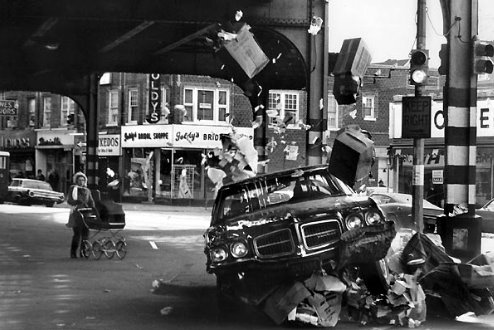
The car chase that defines all car chases zipped under the elevated train from Coney Island for a death-defying 26 blocks. I wrote about the wacky logistics of the filming here . Perhaps with the exception of I Am Legend or The Naked City, this William Friedkin film could be considered the film that most used New York, as scenes were evidentally shot in almost every corner of the city.

Magic
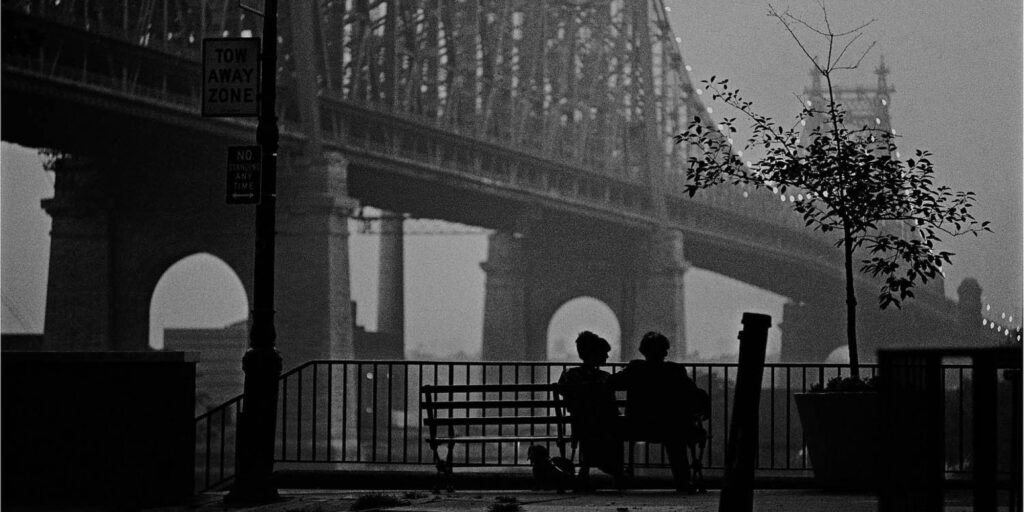
2. Manhattan
Isaac and Mary have a chat

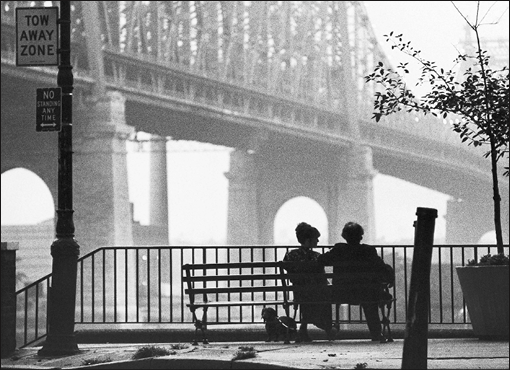
I’m sorry, but Woody Allen’s 59th Street Bridge scene is just him showing off. And that’s why it’s so perfect, the defining shot in what has commonly been called his “love letter” to the city. The quintessential New York director, essentially rendering a rather unromantic bridge into the most beautiful site in the entire city — the entire world, at least you think so while watching it.

“This is just a great city. I don’t care what anybody says,” Woody remarks to Diane. (Their characters are Isaac and Mary, but who cares?)

You’d think it would be easy to recapture this scene yourself, but alas, there’s no longer a bench. By the way, for some reason, ‘Manhattan’ is considered to be Woody Allen’s least favorite film that he’s made. Really Woody? Worse than Scoop? Shadows And Fog? The Jason Biggs-vehicle Anything Else?

Mysteries of Roosevelt Island: Terror on the tram!

We’ve got some more on that wacky, wonderful place called Roosevelt Island! We highlighted some of the spookier stuff last week. Read it all here.

One of the more intriguing aspects to Roosevelt Island is the notion of even getting there at all.

For most of its existence, people used ferries to get to and from Manhattan and Queens. Boatloads of prisoners, smallpox patients, the mentally insane, and, yes, residents of the island crossed the East River daily.

Later, when the Queensboro Bridge sprung up on its north side, a trolley would stop in the middle of the bridge, allowing people to then enter a small elevator which would take them down to the island. According to NY Roads, this was the only way for the public to get to Roosevelt (then Welfare Island) in the 50s. I can’t imagine this inconvenient form of commute brightened the island’s reputation any.

A lift bridge spanning 2,877 feet to Queens was opened in 1955, finally allowing automobiles on the island. Its also the only way you can walk there. Those odd Queensboro elevators were dismantled in 1970.

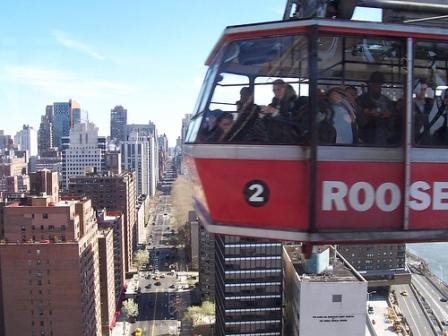
However Roosevelt Island is often defined by its most popular method of conveyance, the Roosevelt Island Tramway. This unique way of getting to and from home, taking less than five minutes one way, is a picturesque and perfectly European way of experiencing the city. The aerial tram, made by the Swiss company Vonroll, is the only one of its kind on North America to be used as actual mass transit. (Many vacation destinations obviously use trams, including mountains in Oregon and New Mexico.)

The Tram was built in 1976 as a temporary relief for residents impatient with the slow development of the subway out to the island. By the time the subway (now the F line) reached Roosevelt in 1989, the Tram had become such a signature of the midtown skyline that it was retained.

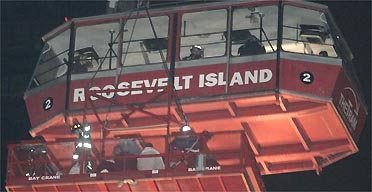
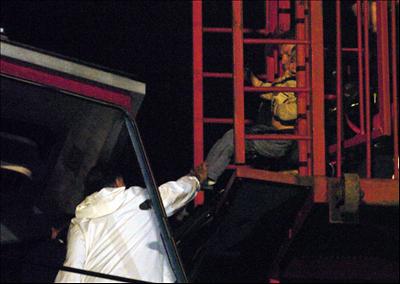
Some passengers in 2006 might have wished they had hopped on the subway. On April 18, 2006, the two operating cars abruptly stopped moving, leaving almost 70 people stranded above the East River. It took almost six hours, well into the early morning, for rescue workers to extract the passengers ten at a time using an industrial crane and rescue gondolas. According to a 12 year old passenger, who had to leap from the tram doorway to the gondola: “I was just a little scared because, one, what if I miss it; two, what if I slip, I might fall into the river.”

(Go to WNBC to see some of the vivid coverage.)

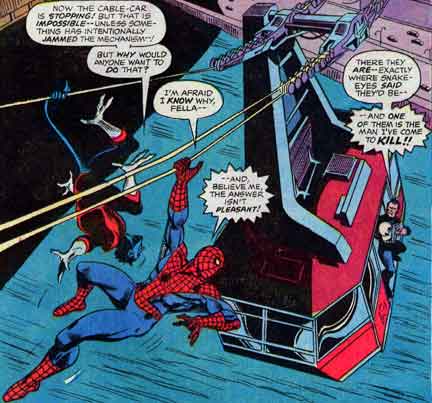
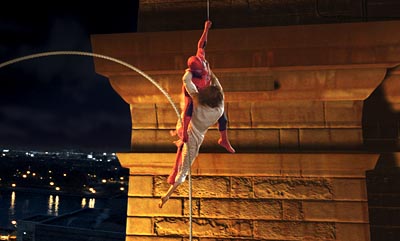
Of course the Tram isn’t foreign to use by malevolent types and rescues by bonafide heroes, at least in the fictional realm. Spider-man seems to be the tramway’s personal security guard, in comic books and in film.

You can take a far safer virtual tram ride with the Roosevelt Islander.

The subway seem to be the easiest way to travel, but even that has an odd distinction — at a little over 100 feet deep, its the second deepest subway stop in the entire city. (That’s still 80 feet shorter than the 191 Street station in Manhattan.) After a series of steps and escalators, it can seem like you’re emerging from a subterranean city.