Categories
Food History Health and Living

Upper West Side’s Astor Market: The future of grocery shopping

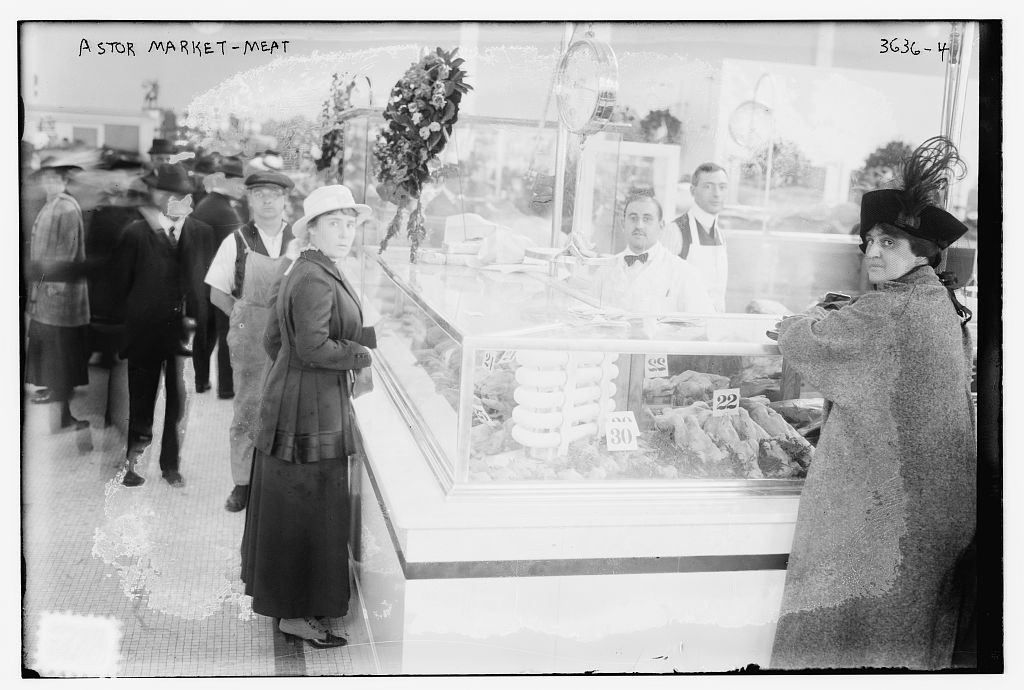
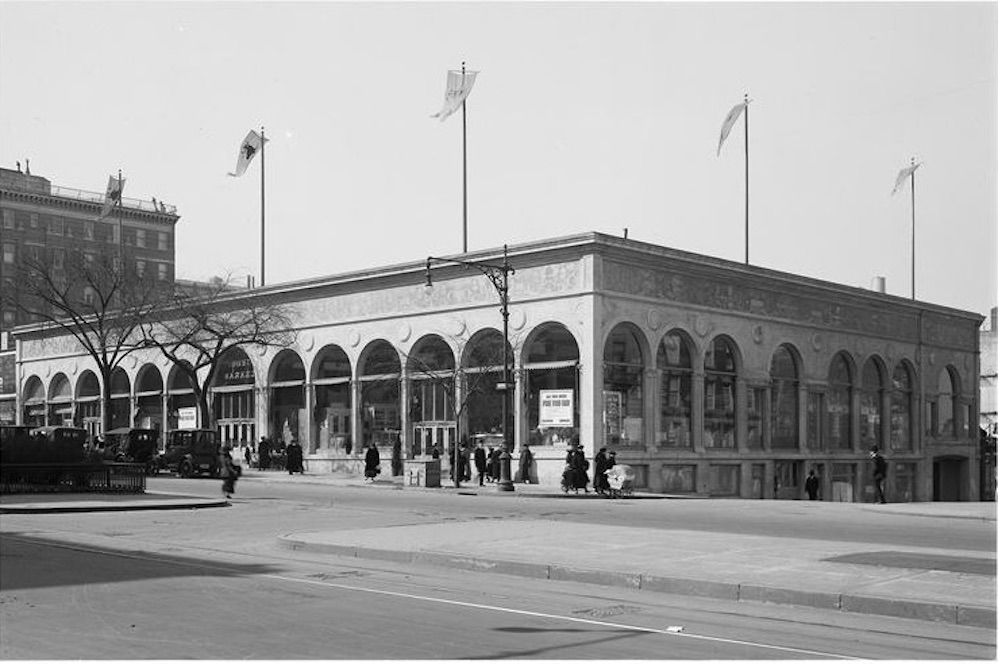
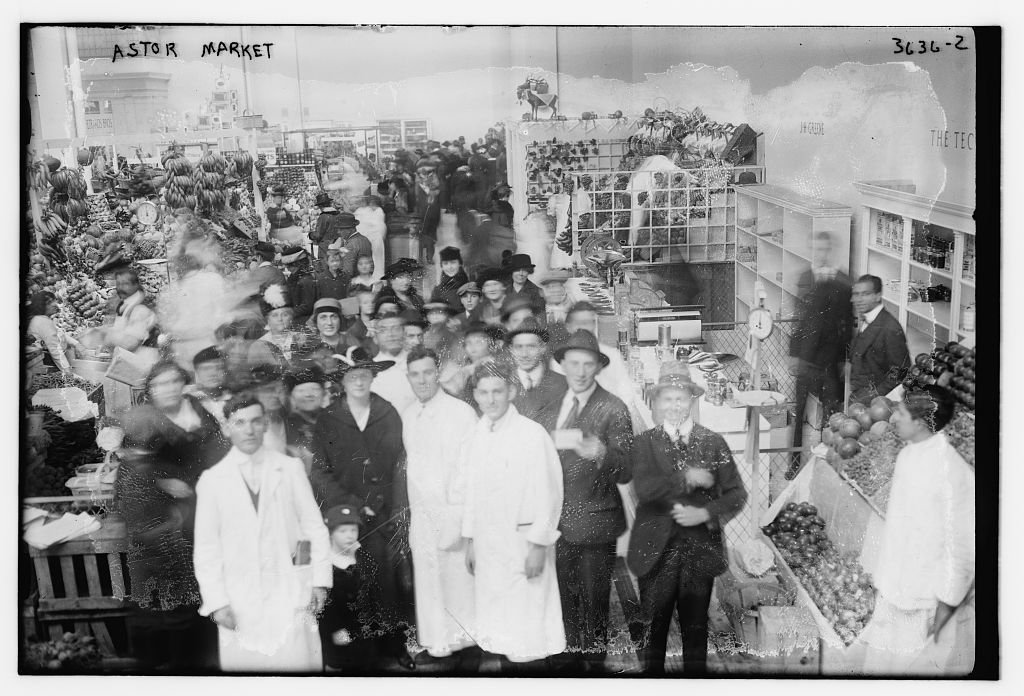
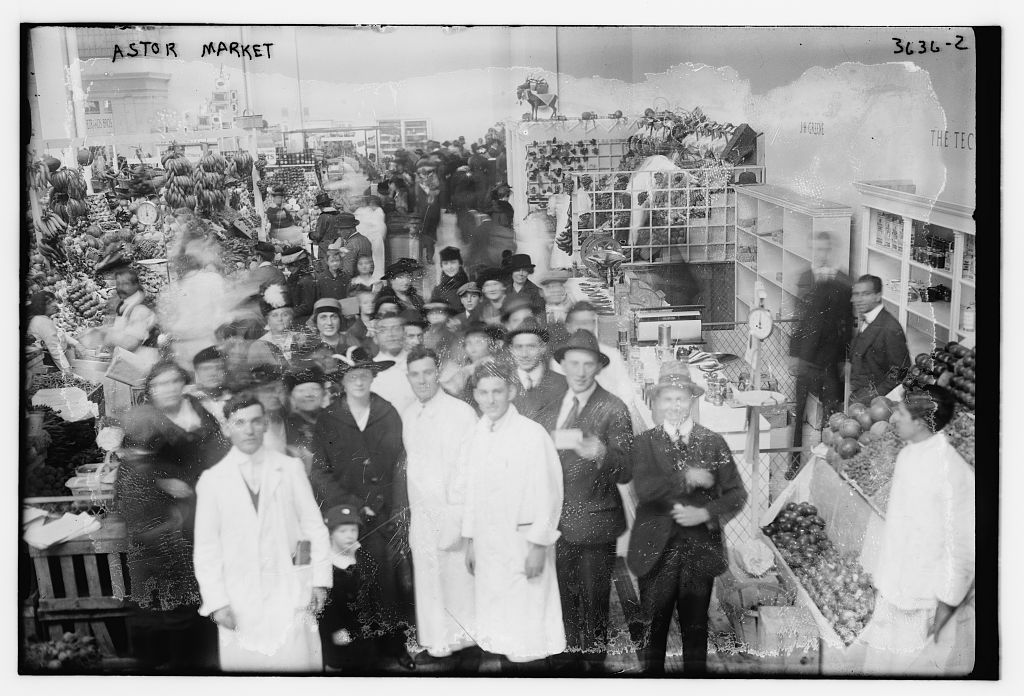
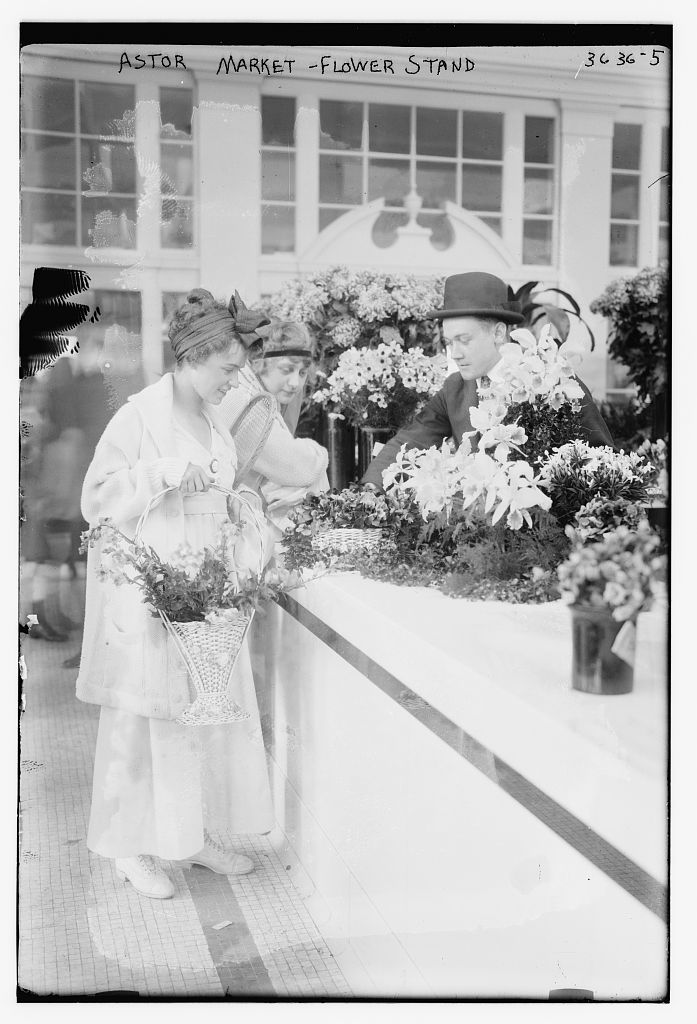
The Astor Market once sat on the corner of 95th Street and Broadway, a ‘model’ market built in 1915, devised by Vincent Astor, son of John Jacob Astor IV (and whose wife Brooke Astor may be better known to you) to combat some of the high food prices brought on by World War I.

Astor was on Mayor John Purroy Mitchel‘s market commission to solve this very problem. (Read more about New York’s wartime market woes here.)

Markets were being heavily re-conceived in New York in the 1910s. Astor would have a guiding hand in the new project. The space was to be both practical and ornate, designed by Tracy & Swartwout, better known by this time for the Yale Club.

According to the New York Times, “under the cornice ran a 290-foot-long frieze by William Mackay depicting a market procession, with farmers and dealers carrying meat, fish, poultry, fruit and vegetables in everything from medieval carts to motor trucks. “
8643409076_365e3de020_o
Library of Congress

It was renown for its ultra-clean interior with nary an insect or vermin to disrupt shopping. “Mr. Tracy, the architect, boasts that a fly would starve in this market.” [source]

The city had great hopes that the Astor Market would set the standard for others in the city. “This is the last word in market building,” said the city’s commissioner of markets.
8642308513_cdeca9ce40_o

Here’s a standard Christmas menu that one could purchase at the market, printed in the 1915 New York Tribune. Coffee for eight cents!
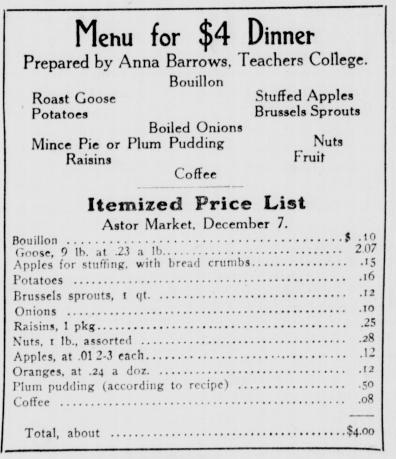
1

The Astor Market is sometimes called the first supermarket. But it was a bit too experimental for its day and the market closed in 1917.

Simply put — people still preferred small and local vs. wide selection at a distance.

“Most people, on account of service and convenience, prefer to buy at the neighborhood corner grocery, with the result that in this country there is one grocery store for every 400 people.” [source]

Grocery stores of massive size would become quite popular of course — sometimes driving those neighborhood corner groceries out of business — once they offered lower prices and most people could get to them in automobiles.

Indeed the shopping revolution had already begun in the South with the opening (in 1916) of the first Piggly Wiggly, considered the first self-service grocery store.

As for the old Astor Market, it was turned into a glamorous restaurant and ice rinkCrystal Carnival Ice Rink and Sunken Galleries Restaurant — owned by Thomas Healy (who developed Pomander Walk nearby).

Today Symphony Space now sits on the spot of the former market.

Here are a few more pictures of this long-forgotten, well-meaning place:
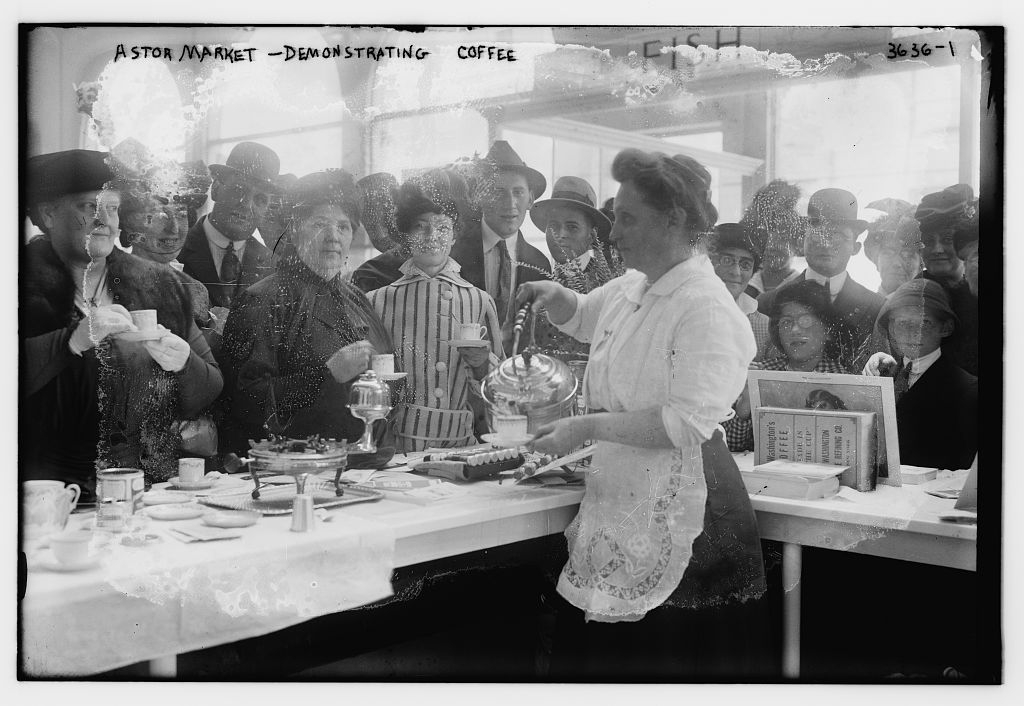
8642307827_61a93e298a_o
8642308311_763bb82cb0_o
Courtesy Museum of New York

Below: As the Symphony Theater. You can clearly see the arches of the original market.
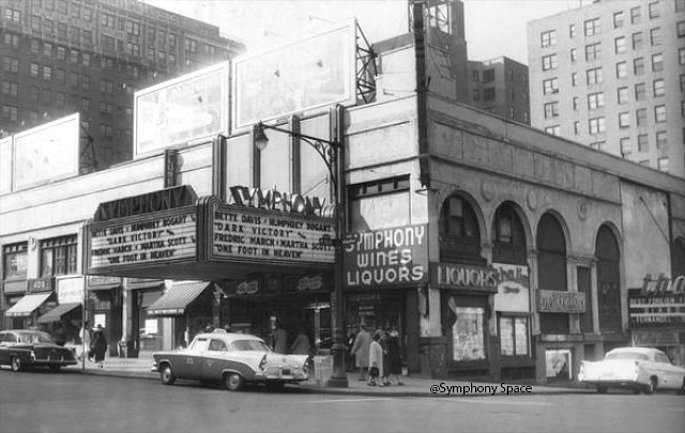
Courtesy Symphony Space
Categories
Those Were The Days

Housewives demand open markets! One century ago, New York radically changed how people bought groceries

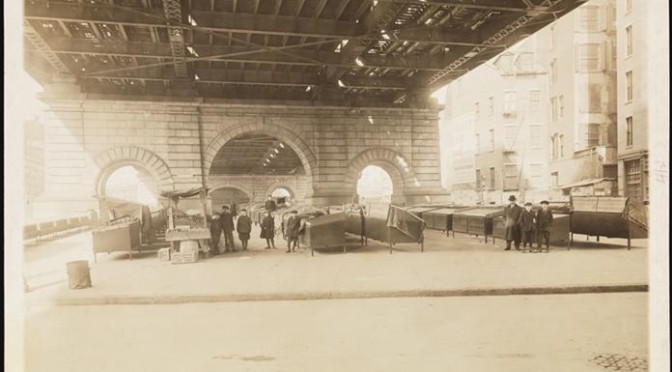
[Manhattan open market.]

Setting up a market under the Manhattan Bridge. (Courtesy MCNY. Note: This photo may be of an earlier market here, but this gives you an idea of where the 1914-15 markets would have been located.)

Groceries are becoming more expensive as retailers mark up prices due to food shortages (or simple price gouging at perceived shortages). So people are turning to rather unconventional methods of getting fresh meat and produce.  Is this 2014 or 1914?

At the start of World War I, there was an immediate shortage of certain food items at New York grocers. Local distributors greatly took advantage of this special circumstance, marking up a variety of essential items.  “Sugar and flour, which have been increasing in price so rapidly, gave indications of continuing their upward march,” an article from August 19, 1914 proclaimed.

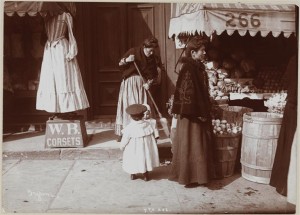
Shopping at a typical New York grocer, 1903 (MCNY): 

266 Seventh Avenue c. 1903.

Fifty years before, New Yorkers could interact with farmers and butchers directly at open-air markets.  But by the 1910s, most transactions were governed by local distributors. Old Washington Market was by this time a thriving indoor wholesale market. Local grocers had limited space with limited selection. The era of the modern supermarket — with greater selections and better values — was still a decade or two in the future. (The first supermarket is often considered to be Piggly Wiggly, which opened in Tennessee in 1916.)

To fend off rising food rates, the city of New York did something rather extraordinary:  it opened its own direct markets (or “open markets”) which cut out the middle-man entirely.

Manhattan Borough President Marcus M. Marks authorized the opening of four such markets in the following open areas — under the Manhattan sides of the Manhattan and Queensboro Bridges, the intersection of 3rd Avenue and 129th Street (today’s Harlem River Park), and the Fort Lee Ferry Terminal (West 139th Street and the Hudson River, near today’s Riverbank State Park).  A similar program was also set up in Tompkinsville, Staten Island.

Below: Interior of the Queensboro Bridge Market, 1915 (MCNY)

[Interior of market under the Queensboro Bridge.]

The markets opened in September 1914 with dozens of Long Island and New Jersey farmers bringing their wares to New York. Pushcart vendors, already spread throughout the city, also set up shop here.  What makes this such a controversial move is that it was a clear attempt to undercut all established grocers, to force distributors to quit gouging price.

They were an immediate hit despite being located in areas quite distant from certain populated areas. The markets appealed to women of many classes, because who doesn’t love a bargain? “At this market were many housewives who came in automobiles to buy from the farmers,” said a report from September 20, 1914. “Baskets filled with fresh vegetables and fruits were on seats, and the legs of more than one chicken projected from paper parcels under the chauffeur’s elbows.”  By 1915, the markets were considered by some “a social affair.”

Below: from an April 1915 profile from the Sun:

 The open markets were so successful that stock was usually emptied out by mid-morning.  Late-arriving women “actually wept when the market was bought out.” [source]

Naturally, retail grocers were angered by the city’s bold move and soon went on the offensive. “There is nothing but politics in this open market game, gentleman, from start to finish,” declared one speaker at a grocers union rally that October.

The city counteracted the grocer’s propaganda by providing ‘bargain days’ for extra values, reeling in the participation of farmers, butchers, poultry brokers and even honey producers.  “A butcher, who will open a new stand, says that he will give a head of cabbage in lieu of trading stamps to every purchaser of a piece of corned beef.” [October 15, source]

The markets lasted only a few months and, strangely enough, it was the city itself that killed them. Obviously bending to pressure from local businessmen, the city began charging high rents for a spot at the markets, and smaller farmers soon fled.  The Evening World noticed rents that would equal up to “$900 a year”. That’s $20,000 in 2014 currency.

In essence, this was one end of New York government attempting to dampen the authority of the other (namely, the borough president’s office).  Vendors had to raise prices to keep their place, and so the usefulness of the markets swiftly faded.