Categories
Health and Living Podcasts

The Ruins of Roosevelt Island: The macabre history of New York’s “city of asylums”

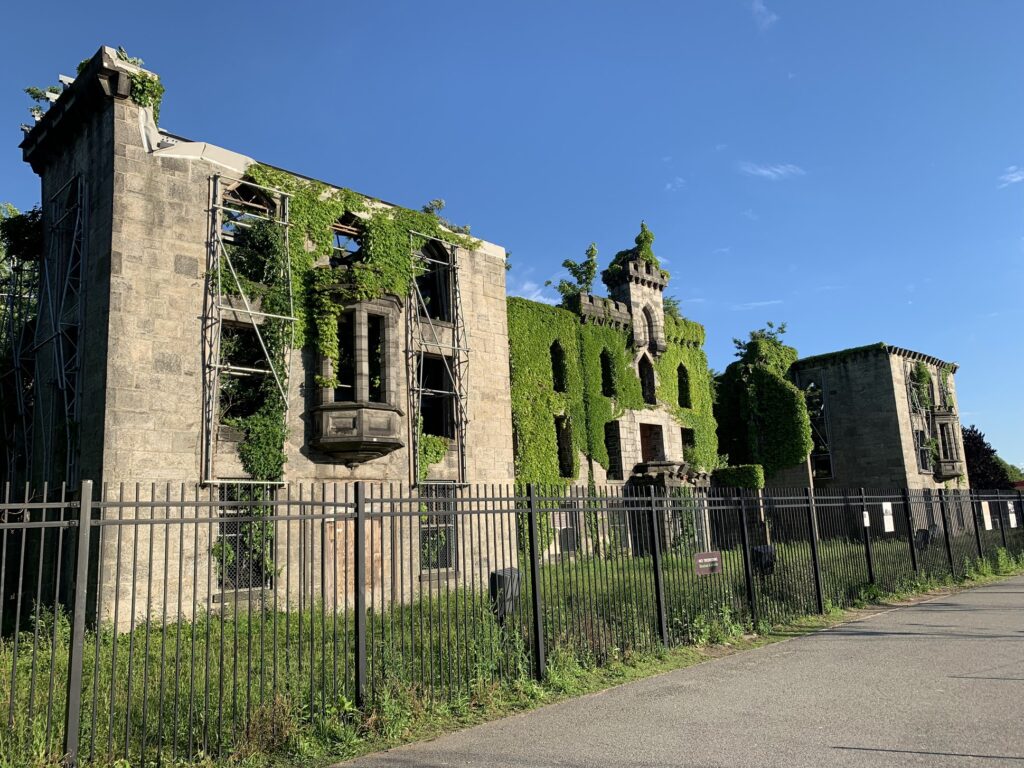
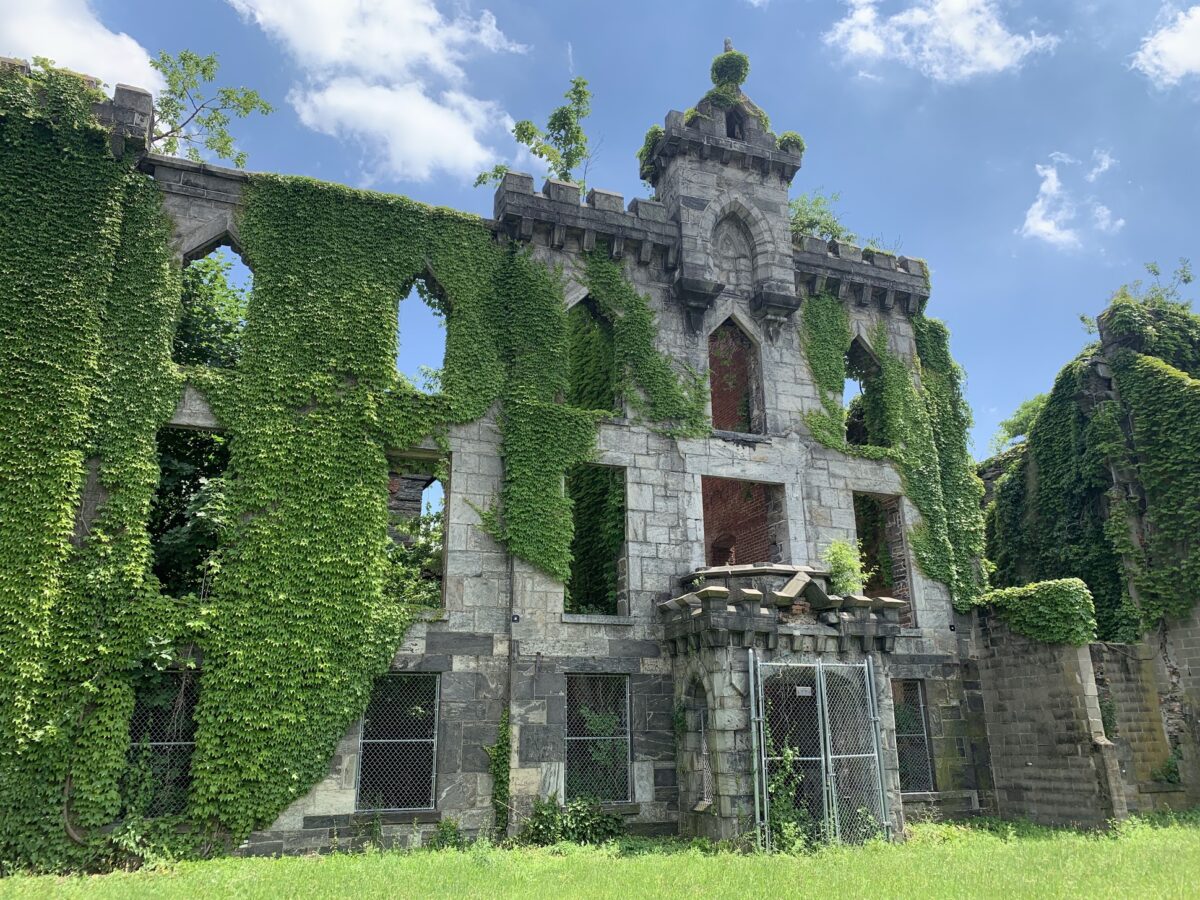
The Renwick Ruin, resembling an ancient castle lost to time, appears along the East River as a crumbling, medieval-like apparition, something not quite believable.

Sitting between two new additions on Roosevelt Island — the campus of Cornell Tech and FDR Four Freedoms Park — these captivating ruins, enrobed in beautiful ivy, tell the story of a dark period in New York City history.

The island between Manhattan and Queens was once known as Blackwell’s Island, a former pastoral escape that transformed into the ominous ‘city of asylums’, the destination for the poor, the elderly and the criminal during the 19th century.
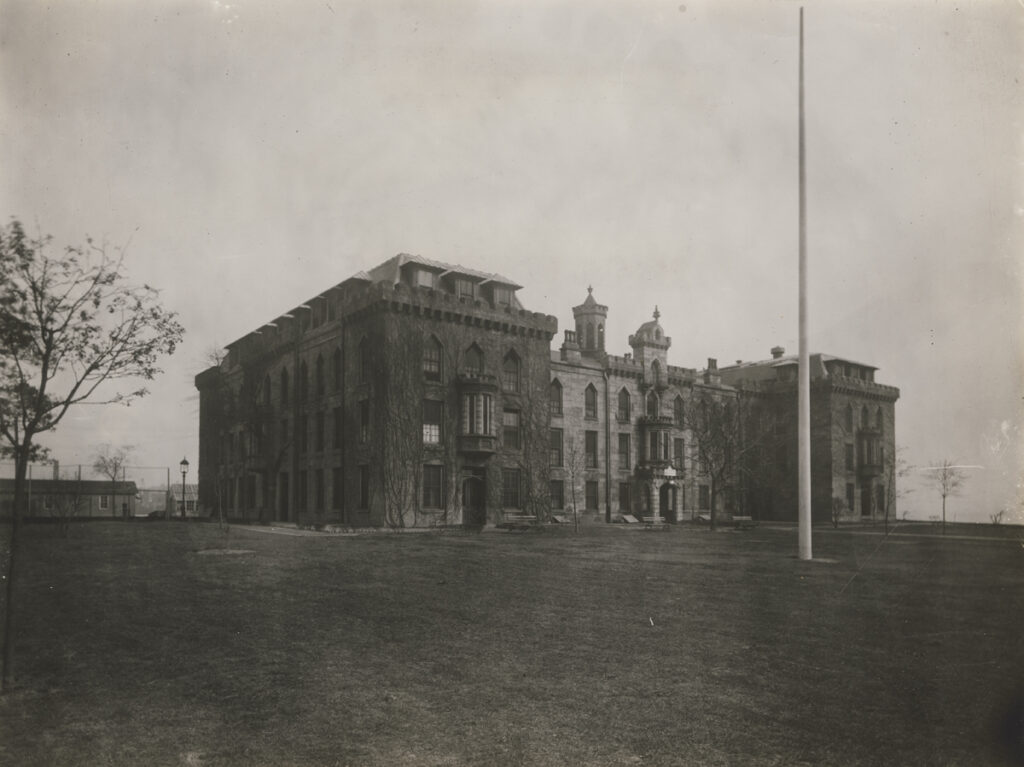
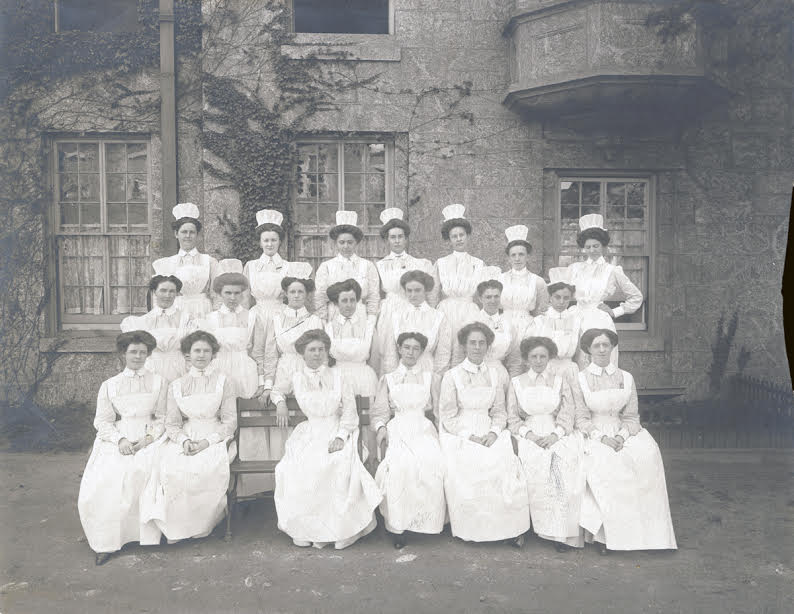
New. York Municipal Archives

During this period, the island embodied every outdated idea about human physical and mental health, and vast political corruption ensured that the inmates and patients of the island would suffer.

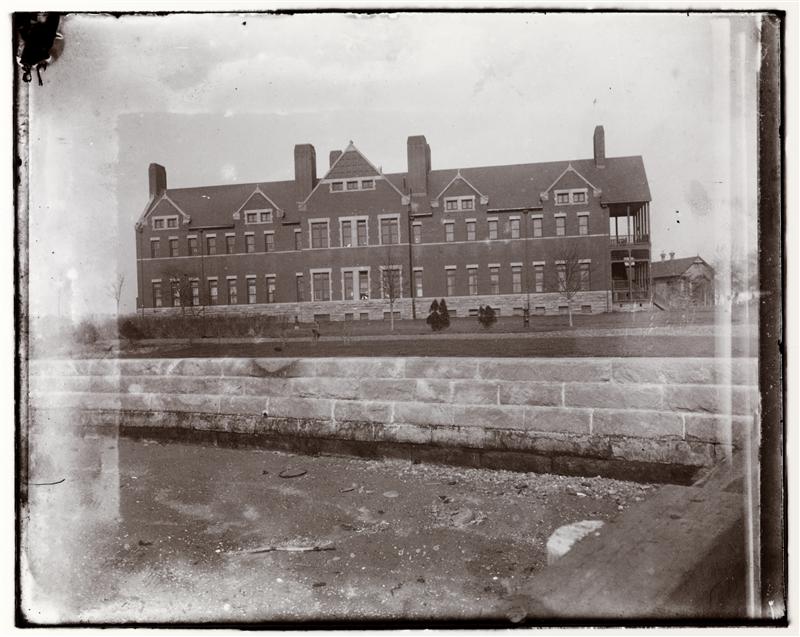
In 1856 the island added a Smallpox Hospital to its notorious roster, designed by acclaimed architect James Renwick Jr (of Saint Patrick’s Cathedral fame) in a Gothic Revival style that captivates visitors to this day — even if the building is in an advanced state of dilapidation.
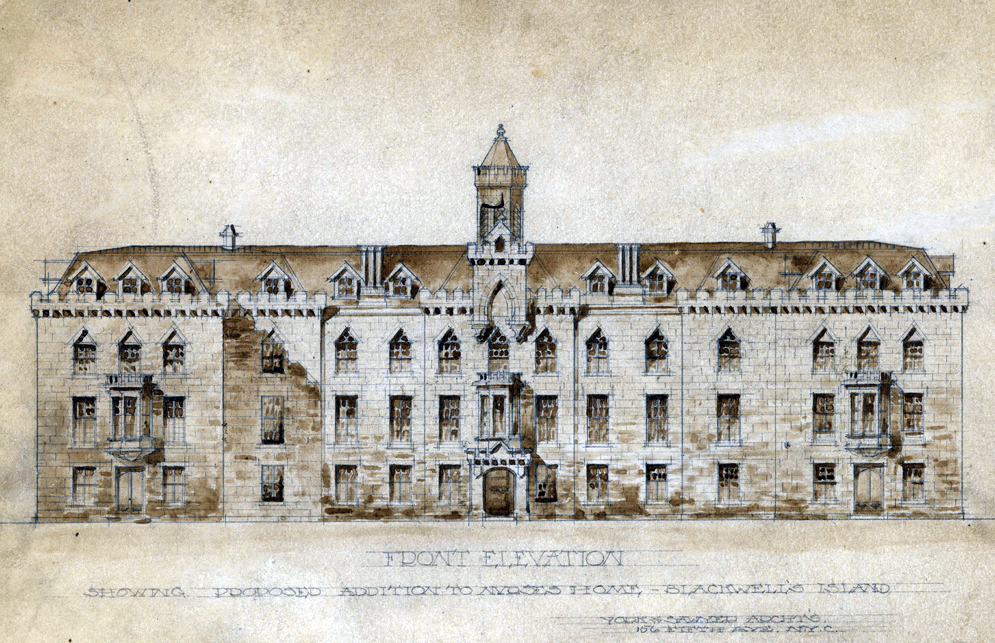
New York City Municipal Archives

What makes the Renwick Ruin so entrancing? How did this marvelous bit of architecture manage to survive in any form into present day?

PLUS: The grand story of the island — from a hideous execution in 1829 to the modern delights of one of New York City’s most interesting neighborhoods.


For more information on Roosevelt Island history:

Friends of the Ruin

Roosevelt Island Historical Society

I also highly recommend the book Damnation Island: Poor, Sick, Mad, & Criminal in 19th-Century New York by Stacy Horn which tells the story of Blackwell’s Island, institution by institution.

And please check out this great video about Roosevelt Island from 1978:


Historic sites on Roosevelt Island to visit (from north to south):

Roosevelt Island Lighthouse

Nellie Bly Monument “The Girl Puzzle”

The Octagon

Chapel of the Good Shepherd

The Blackwell House

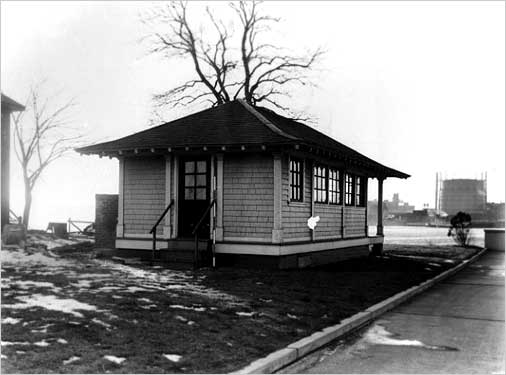
Historic Visitor Center Kiosk and Roosevelt Island Tram

Southpoint Park

Strecker Memorial Laboratory

Smallpox Hospital (aka Renwick Ruin)

FDR Four Freedoms State Park


The entire site of FDR Four Freedoms State Park is located on landfill. Want proof?
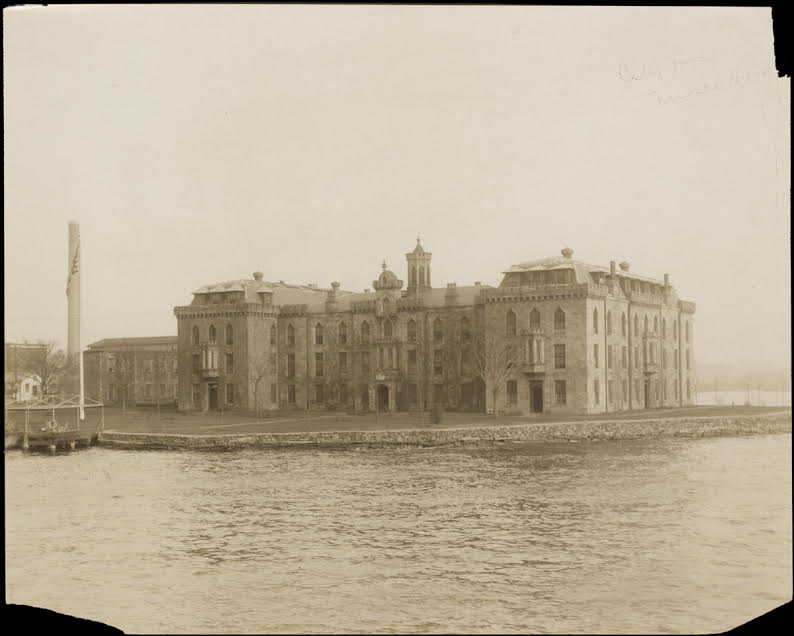
New York Municipal Archives
The Renwick Ruin
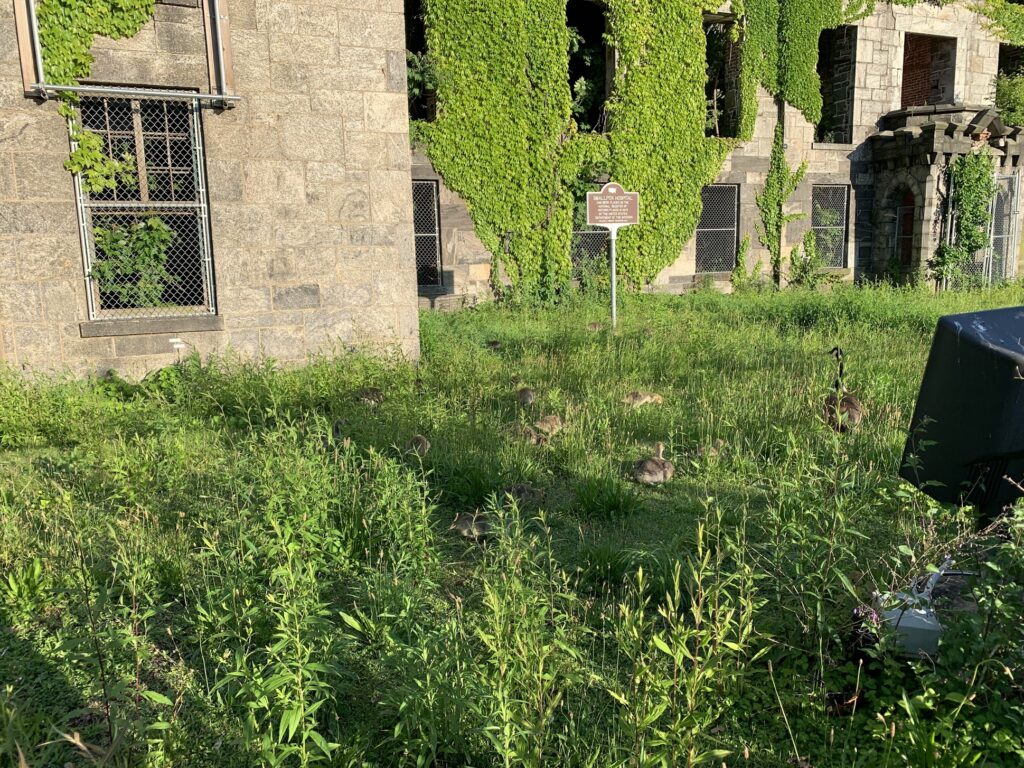
The Smallpox Hospital grounds with grazing geese.
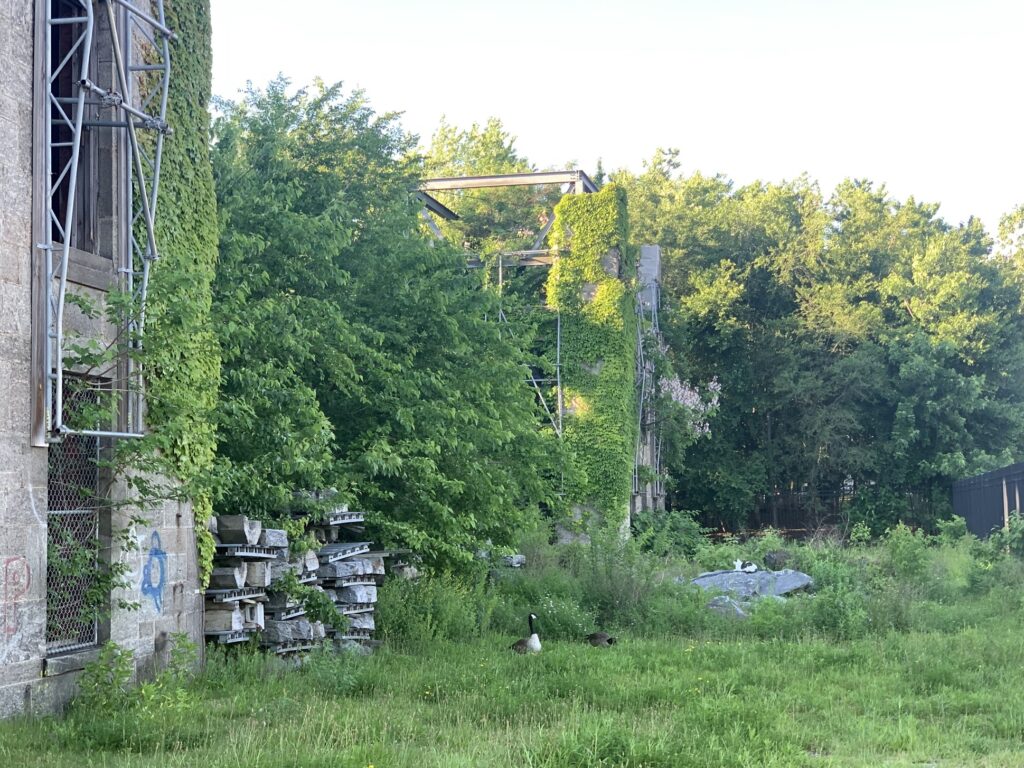
Behind the ruin, guarded by geese and cats.
Southpoint Park, photo by Greg Young

FURTHER LISTENING

After listening to this episode on the Renwick Ruin on Roosevelt Island, jump back into these earlier Bowery Boys podcasts which discuss similar themes or situations from the show:


The Bowery Boys: New York City History podcast is brought to you …. by you!

We are producing a new Bowery Boys podcast every other week. We’re also looking to improve and expand the show in other ways — publishing, social media, live events and other forms of media. But we can only do this with your help!

We are creators on Patreon, a patronage platform where you can support your favorite content creators.

Please visit our page on Patreon and watch a short video of us recording the show and talking about our expansion plans. If you’d like to help out, there are several different pledge levels. Check them out and consider being a sponsor.

We greatly appreciate our listeners and readers and thank you for joining us on this journey so far.
Categories
Health and Living Podcasts

The Curious Case of Typhoid Mary: The Race to Quell an Epidemic

PODCAST An account of a mysterious typhoid fever outbreak and the woman — Mary Mallon, the so-called Typhoid Mary — at the center of the strange epidemic.

American Red Cross 1919, courtesy Library of Congress

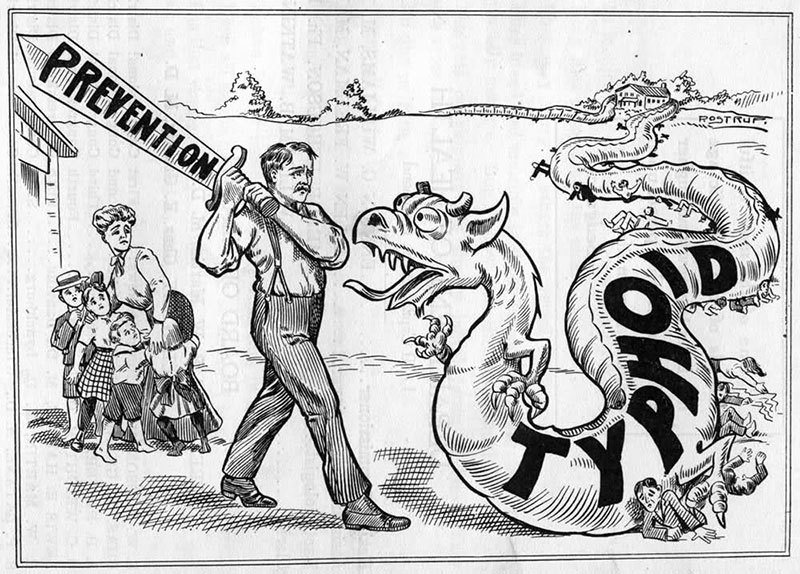
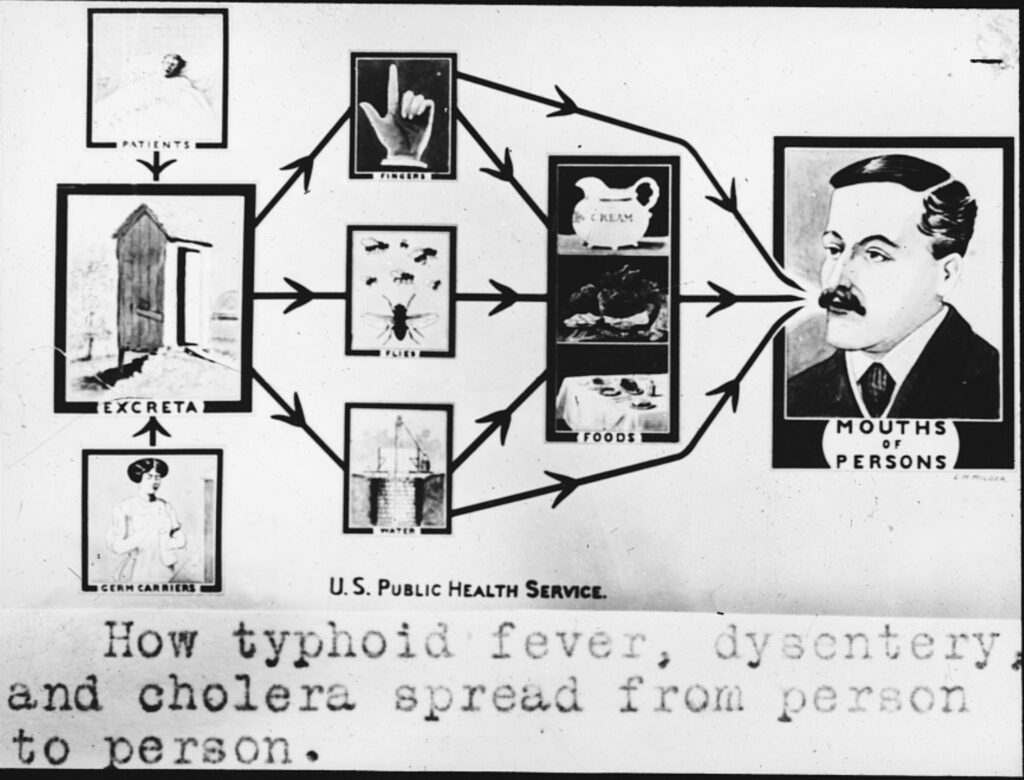
The tale of Typhoid Mary is a harrowing detective story and a chilling tale of disease outbreak at the start of the 20th century.

Why are whole healthy families suddenly getting sick with typhoid fever — from the languid mansions of Long Island’s Gold Coast to the gracious homes of Park Avenue?

Can an intrepid researcher and investigator named George Soper locate a mysterious woman who may be unwittingly spreading this dire illness?

Mary Mallon — is she a victim or an enemy? One of the weirdest and divisive tales of the early 1900s. What side are you on?

Listen today on your favorite podcast player:

_________________________________________________________

The Bowery Boys: New York City History podcast is brought to you …. by you!

We are now producing a new Bowery Boys podcast every week. We’re also looking to improve and expand the show in other ways — publishing, social media, live events and other forms of media. But we can only do this with your help!

We are now a creator on Patreon, a patronage platform where you can support your favorite content creators.

Please visit our page on Patreon and watch a short video of us recording the show and talking about our expansion plans.

If you’d like to help out, there are six different pledge levels.Check them out and consider being a sponsor.

We greatly appreciate our listeners and readers and thank you for joining us on this journey so far.
________________________________________________________

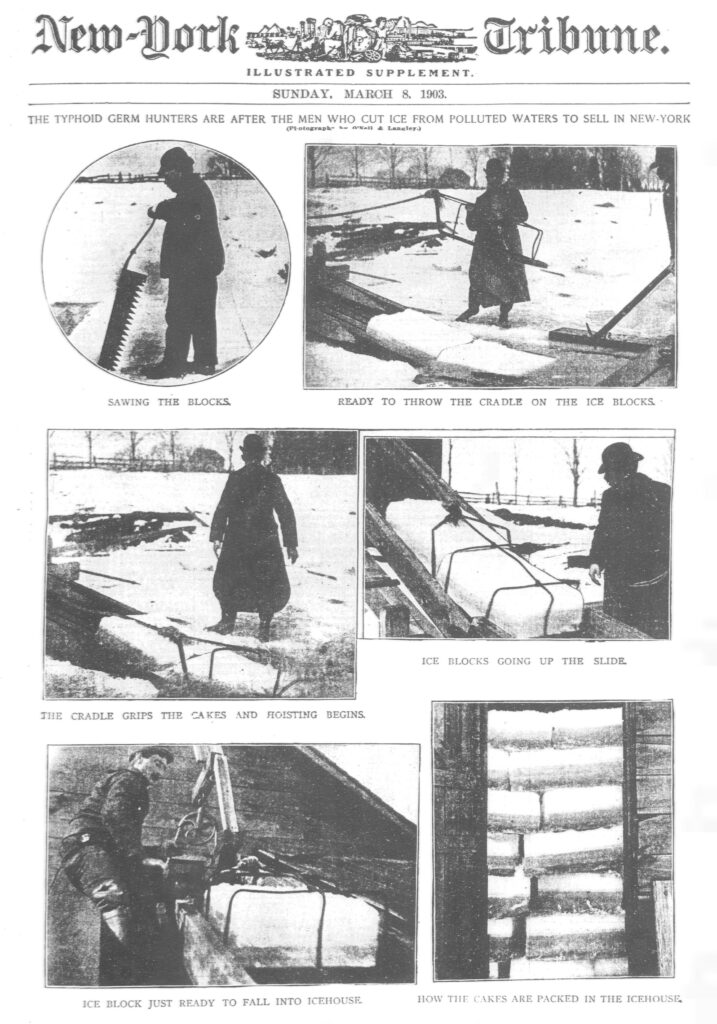
‘The typhoid germ hunters are after the men who cut ice from polluted waters to sell in New York.’ New-York Tribune, March 8, 1903,

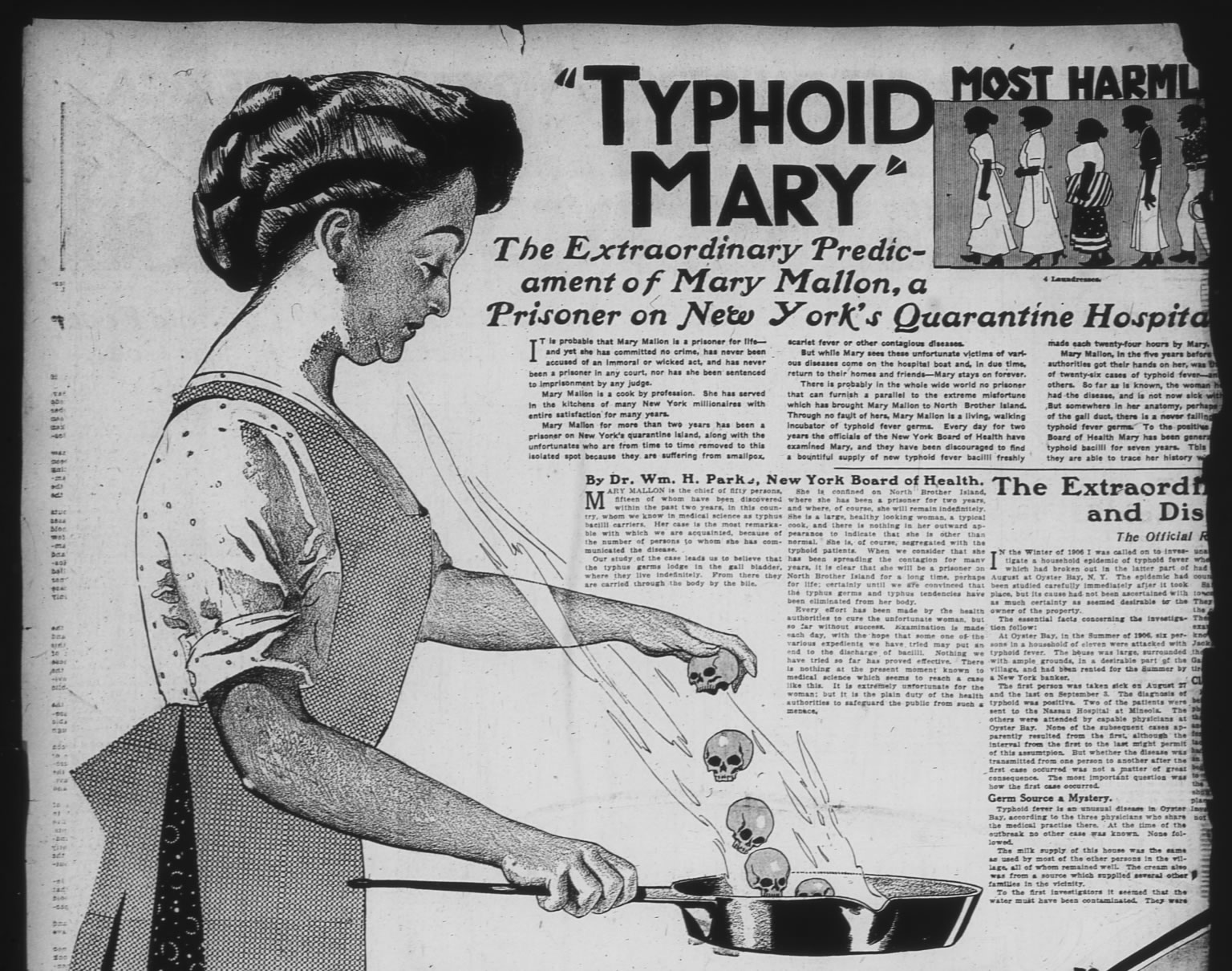
The infamous newspaper article from the New York American (June 30, 1907) which depicts Mary literally seasoning her meals with death.

typhoid-mary-1

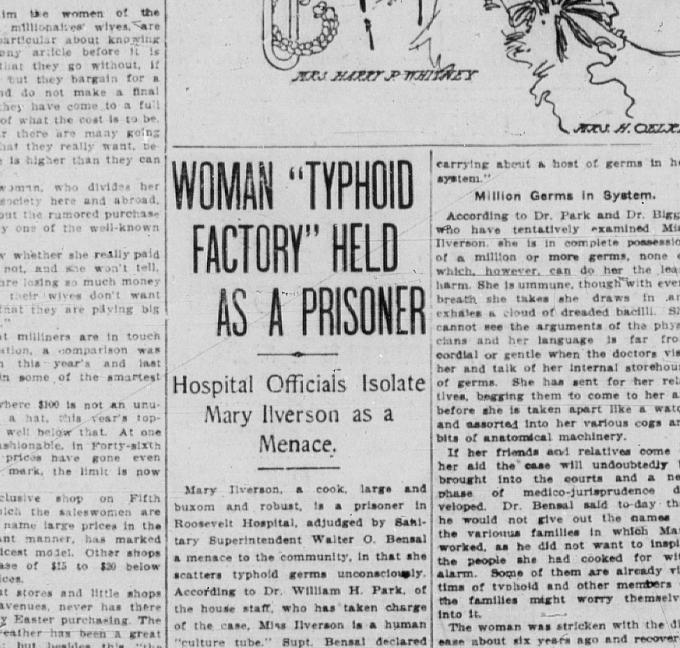
Another newspaper headline from the Evening World, April 1, 1097

image_681x648_from_352,1448_to_1977,2995

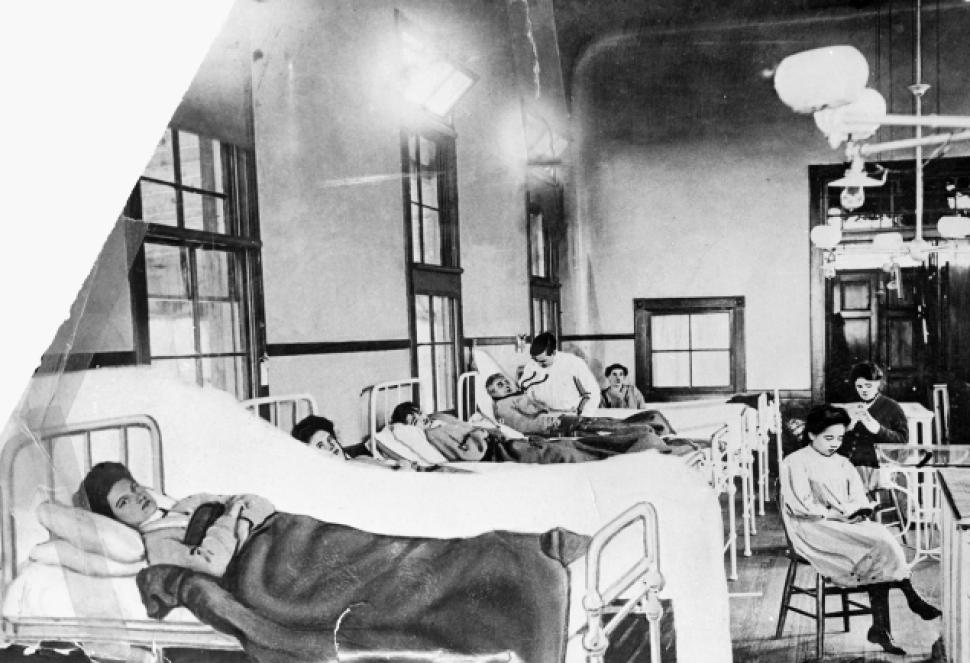
Mary Mallon in a hospital bed at North Brother Island

u1183097inp

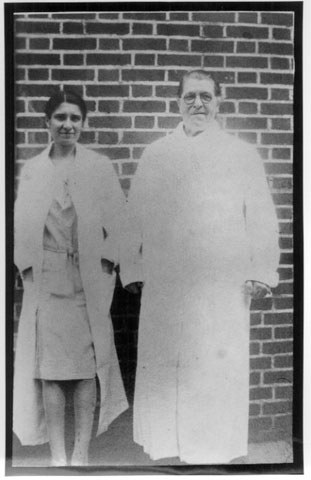
Dr. Emma Sherman standing next to Mary Mallon in the early 1930s. Mary has already spent over 15 years on North Brother Island by this time.

image-01-large

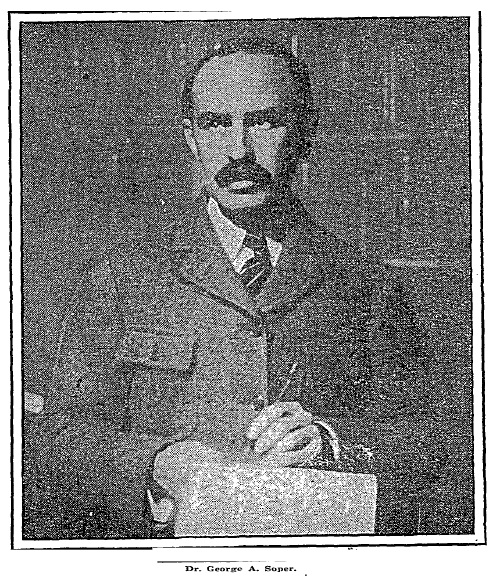
The sanitation engineer (and detective of our story) George Soper who relentlessly tracked down Mary.  (From the New York Times, April 4, 1915)

ny-times-dr-soper-april-4-1915

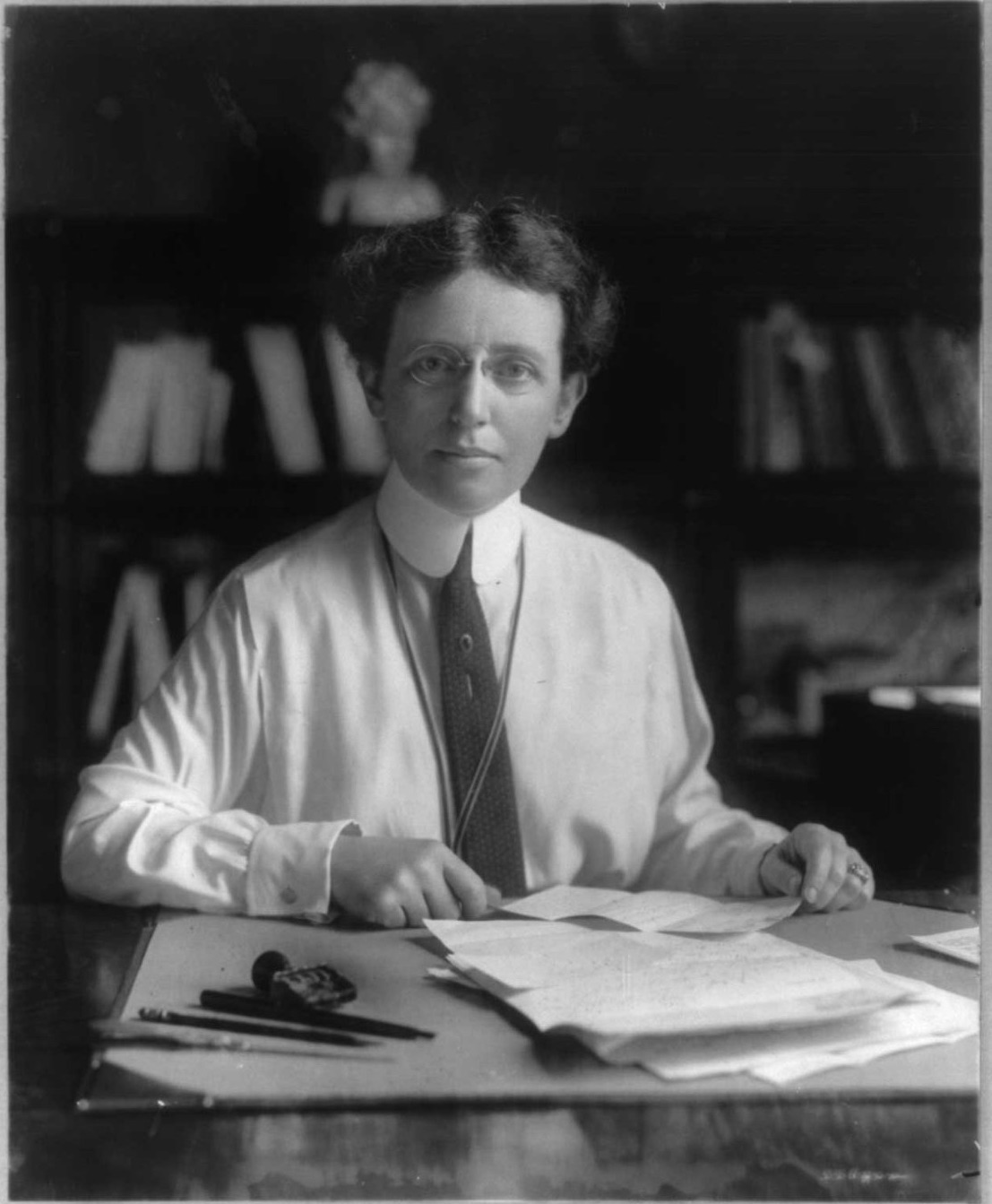
Sara Josephine Baker, the pioneering doctor who was brought in by Soper to (futilely) talk some sense into Mary.

1

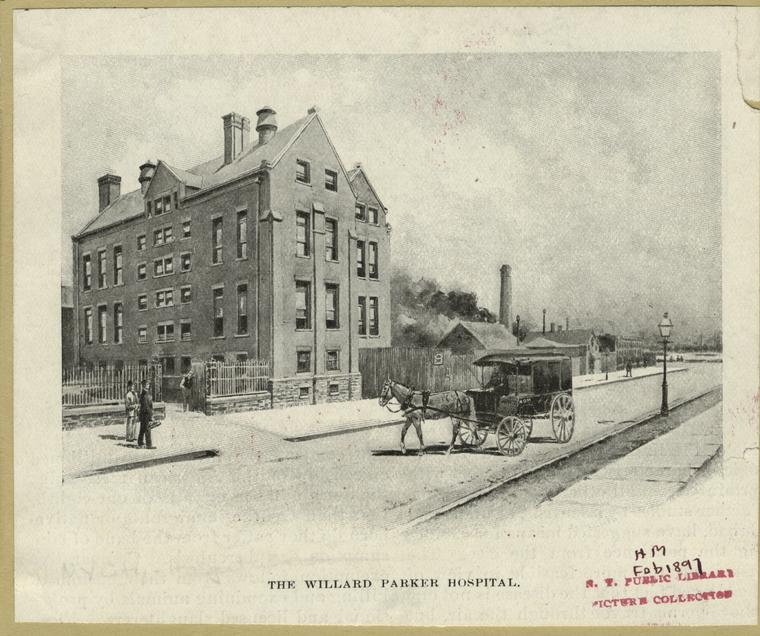
Willard Parker Hospital, formerly at East 16th Street along the East River in the old gashouse district.

Courtesy New York Public Library

The smallpox hospital on North Brother Island.

Photo by Jacob Riis, courtesy Museum of the City of New York

Mary Mallon’s cottage on North Brother Island where she spent the remainder of her life.

typhoid-marys-cottage

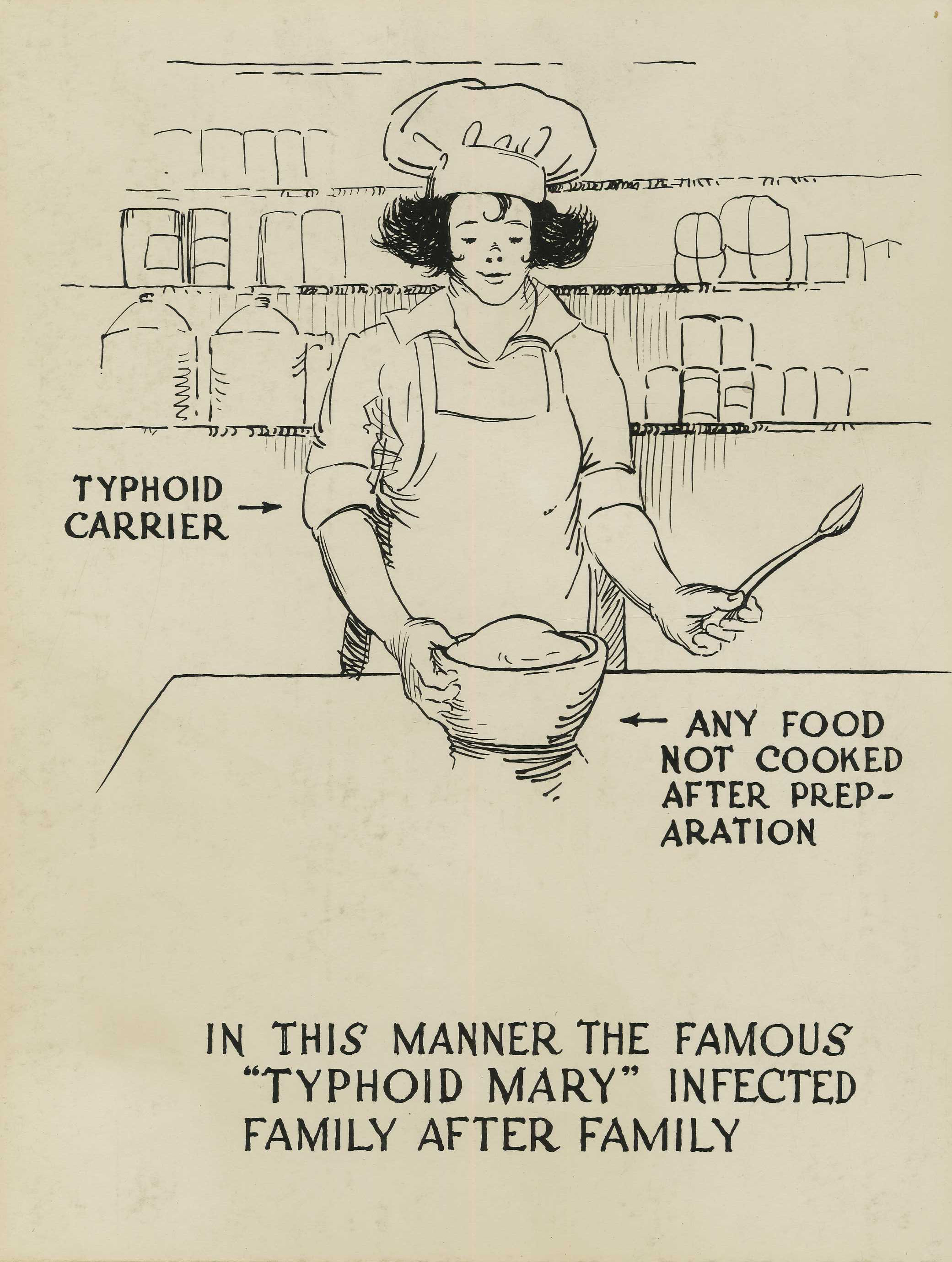
A poster hung in eating establishments following the whole Typhoid Mary fracas.

Otis Historical Archives Nat'l Museum of Health & Medicine
Otis Historical Archives Nat’l Museum of Health & Medicine

FURTHER LISTENING

After listening to this show, take a dive into previous episodes which relate to this subject —

Sara Josephine Baker also appears in this 2019 episode about women health care workers in the Progressive Era:

Many years before North Brother Island, America’s largest quarantine hospital was located on Staten Island. That is, until 1858 when the residents, endangered for decades and ignored by the state, finally took matters in their own hands

Welcome to Bellevue Hospital, New York’s most famous (and infamous) hospital — from ‘pest house’ to execution ground, from a Pathological Museum to New York’s first city morgue

Categories
Health and Living

Dueling ‘perfect babies’ in Brooklyn and Manhattan, pageantry in support of healthy infants in New York

The exaltation of fat, plucky babies via beauty contests stems from a rather grim origin — American infant mortality rates of the 19th century.  During the 1880s, as swelling immigrants and overcrowding in New York created harbors for disease and malnourishment, over one in five infants would die in America, with higher occurrence among poor or minority populations.

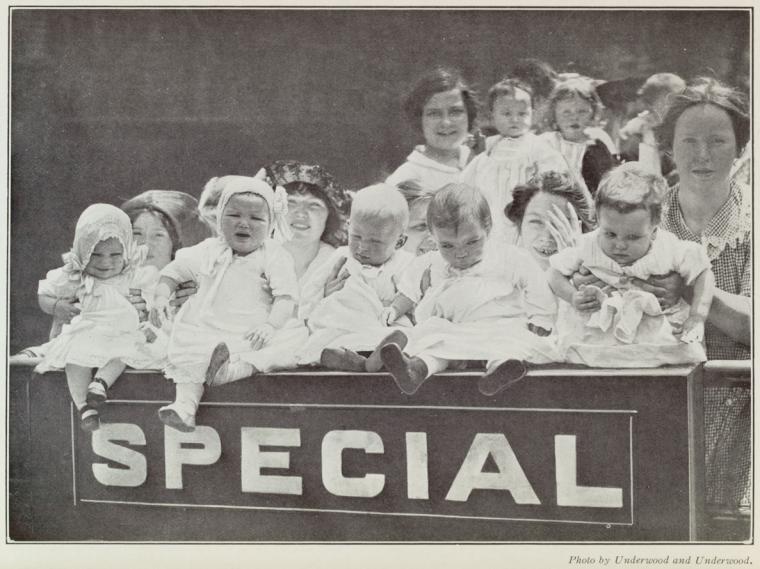
Although people have always adored looking at cute babies, the criteria for a ‘perfect baby’ in 1913 involved body form, fat and general disposition.  Baby pageants were a common place feature in Coney Island parades, with stunned and perplexed infants laid in small floats and pulled along the avenue to great acclaim.  (This second place winner from a 1923 parade doesn’t look too pleased.)

Below: Annoyed babies on display in a June 1914 Grand Automobile Baby Parade.  (This is obviously a photo montage, and, by the way, the original caption for it is super depressing. Read it here if you want.)

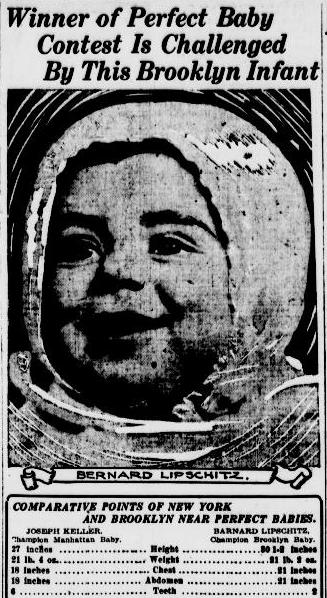
In 1913, with New York City relishing the results of two decades of City Beautiful architecture, so too did they honor the beauty of their offspring.  It even offered an opportunity to rekindle the famous Manhattan-Brooklyn rivalry that so made the Consolidation of 1898 so contentious, when, on April 17, 1913, the New York World declared that the winner of a Manhattan Perfect Baby contest had been challenged by a Brooklyn tot.

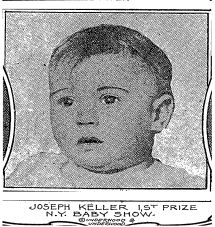
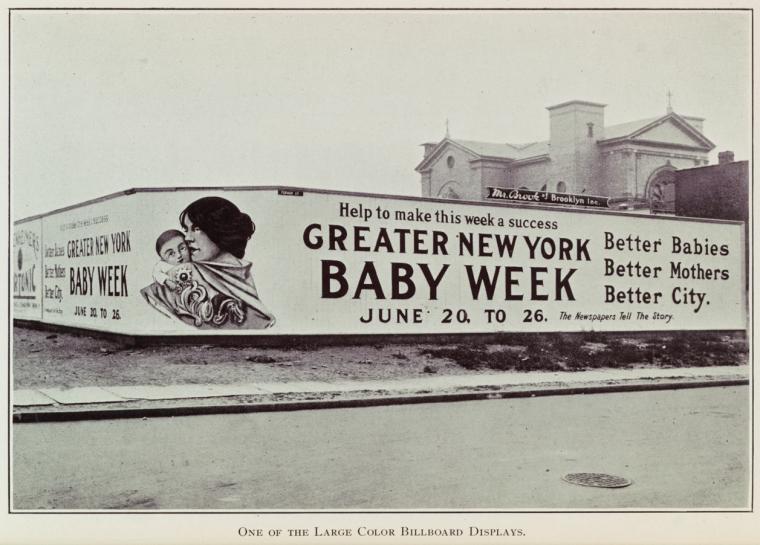
Young nine-month-old Joseph Keller (at right), residing with his German-Irish family at West 136th Street in Manhattan, won a contest held by a local public school, in a culmination of the city’s Better Babies Week, an effort by public health advocates to promote infant health, providing ‘milk stations’ and doctor consultations throughout the city.

The unabashed celebration of gorgeous children — with a mind towards public education — electrified the city.  The program was such a success that it was greatly expanded the following year.  “Baby week has done to New York’s attitude towards babies what a large, active firecracker placed under the chair of a dozing grandfather might be expected to do,” said one journal in 1914.

Keller was chosen from dozens of babies whose mothers showed up at a milk station during Better Babies festivities. Babies were evaluated based on precise guidelines, almost as one judges an animal at the Westminster Dog Show.

According to the New York Times, the scorecard used to judge Keller and the other babies in 1913 included the following criteria:  height, weight, circumference of chest, circumference of abdomen, symmetry, quality of skin and fat, quality of muscles, bones, length of head, shape and size of lips, shape and potency of nose, disposition, energy and attention.

Another article makes note, to the detriment of Mr. Keller, that “it was not the prettiest baby that got the prize” but rather one with the healthiest and most ideal physique.

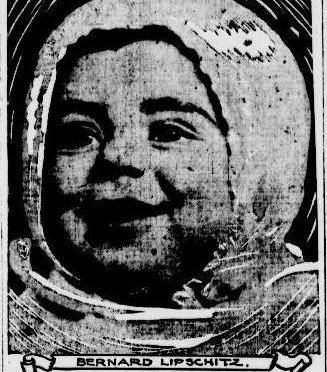
But the mother of Bernard Lipschitz, of 1526 Eastern Parkway in Brooklyn, begged to differ.  “In Brooklyn, there are babies that can equal if not excel the record set by the prize winner Joseph Keller,” she said to the Evening World in an article on April 17, 1913.

“He certainly looks like a prize winner!” the Evening World remarked of Lipschitz, regaling his superior qualifications.  In every aesthetic but one, baby Lipschitz was the superior candidate, with Keller’s only saving grace being his number of teeth — 6 to Bernard’s 2 . “Let Joseph hug that consolation to his soul.” [source]

And now, one hundred years later, what say you — Joseph vs. Bernard?

Below: From the 1914 baby drive, heavily supported by new mayor John Purroy Mitchel.

Pictures courtesy New York Public Library, except for images of Joseph and Bernard.