Categories
Brooklyn History Neighborhoods Podcasts

The Story of Flatbush: Brooklyn Old and New

Over 350 years ago today’s Brooklyn neighborhood of Flatbush was an old Dutch village, the dirt path that would one day become Flatbush Avenue lined with wheat fields and farms.

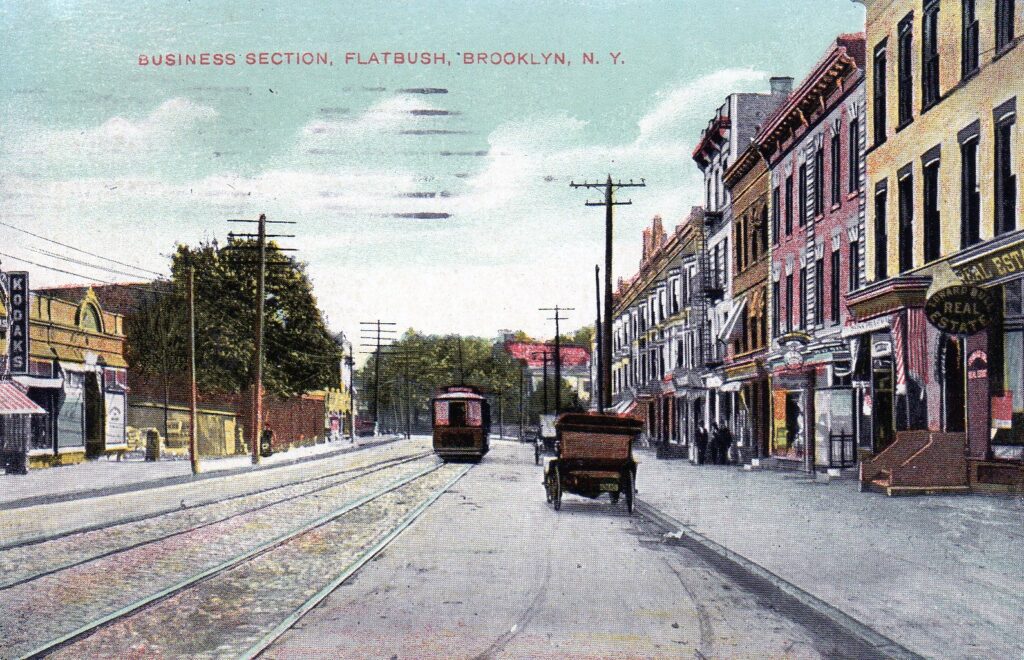
Contrast that with today’s Flatbush, a bustling urban destination diverse in both housing styles and commercial retail shops. It’s also an anchor of Brooklyn’s Caribbean community — Little Caribbean.

There have been many different Flatbushes — rural, suburban and urban. In today’s show we highlight several stories from these phases in this neighborhood’s life.

If you are a Brooklynite of a certain age, the first thing that might come to mind is maybe the Brooklyn Dodgers who once played baseball in Ebbets Field here. Or maybe you know of a famous person who was born or grew up there — Barbra Streisand, Norman Mailer or Bernie Sanders. 

But the story of Flatbush reflects the many transformative changes of New York City itself. And it holds a special place in the identity of Brooklyn — so much so that it is often considered the heart of Brooklyn.

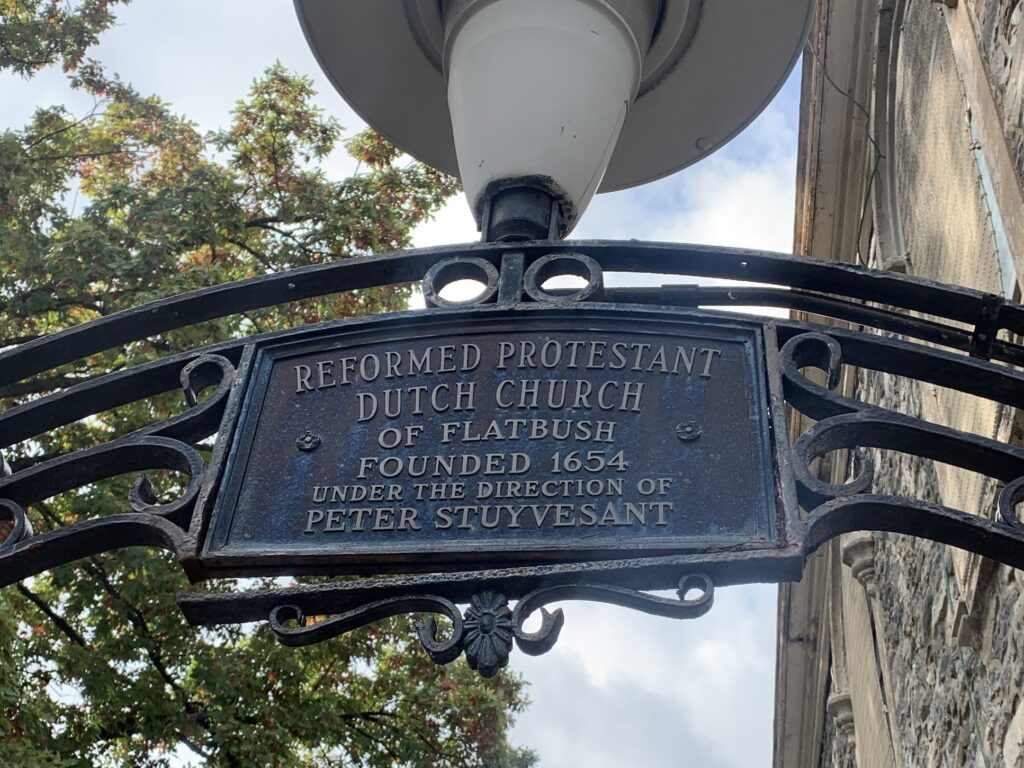
FEATURING STORIES OF Erasmus Hall, the Kings Theater, Lefferts Historic House, the Flatbush African Burial Ground and the Flatbush Dutch Reformed Church.

PLUS We chat with Shelley Worrell of I Am CaribBEING about her work preserving and celebrating the neighborhood’s Caribbean community.

Listen Now — The Story of Flatbush


Thank you to Shelley Worrell for being on the show. For more information on I am CaribBEING, visit their website.

Today (June 17) is One Love Little Caribbean Day, celebrating the Caribbean businesses of Flatbush, Prospect Lefferts Garden and East Flatbush.

And this Sunday (June 19) celebrate National Caribbean-American Heritage Month in Prospect Park with I AM CaribBeing and Prospect Park Alliance

A Juneteenth celebration with live performance by Grammy-Award winning Angela Hunte backed by Da Jerry Wonda Band, peer-to-peer gaming powered by Fun With Friends DJ sets by Gab Soul + Khalil and Little Caribbean artisan vendors.


This episode is brought to you by the Historic Districts Council. Funding for this episode is provided by public funds from the New York City Department of Cultural Affairs in partnership with the City Council and Council Member Benjamin Kallos.


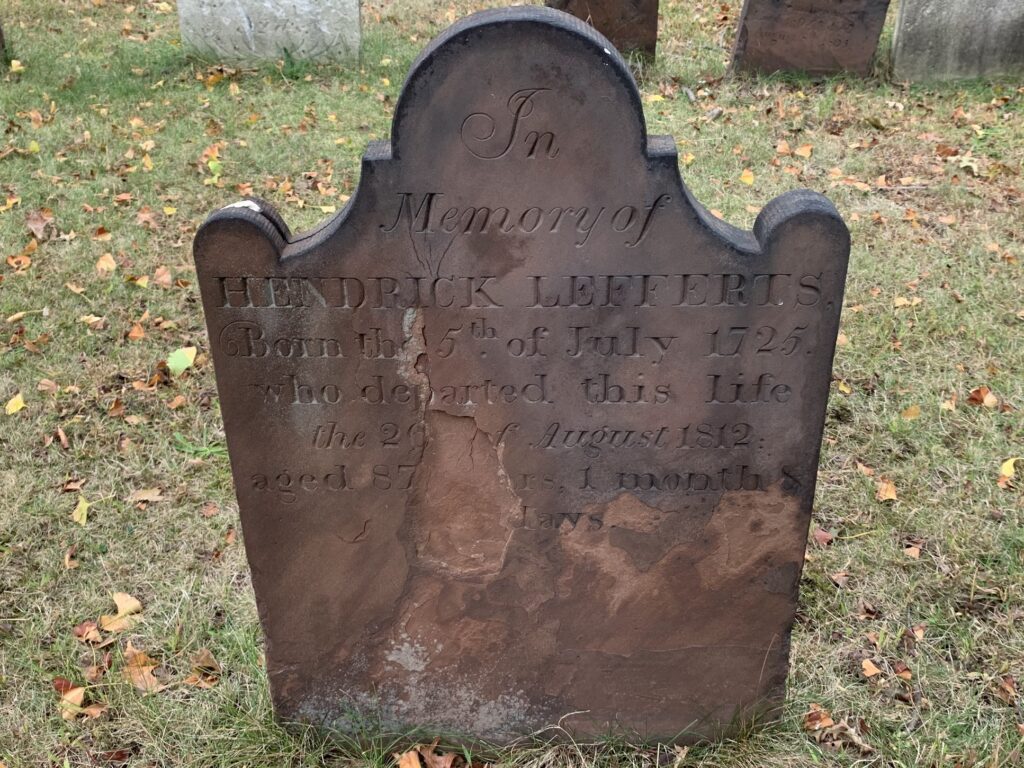
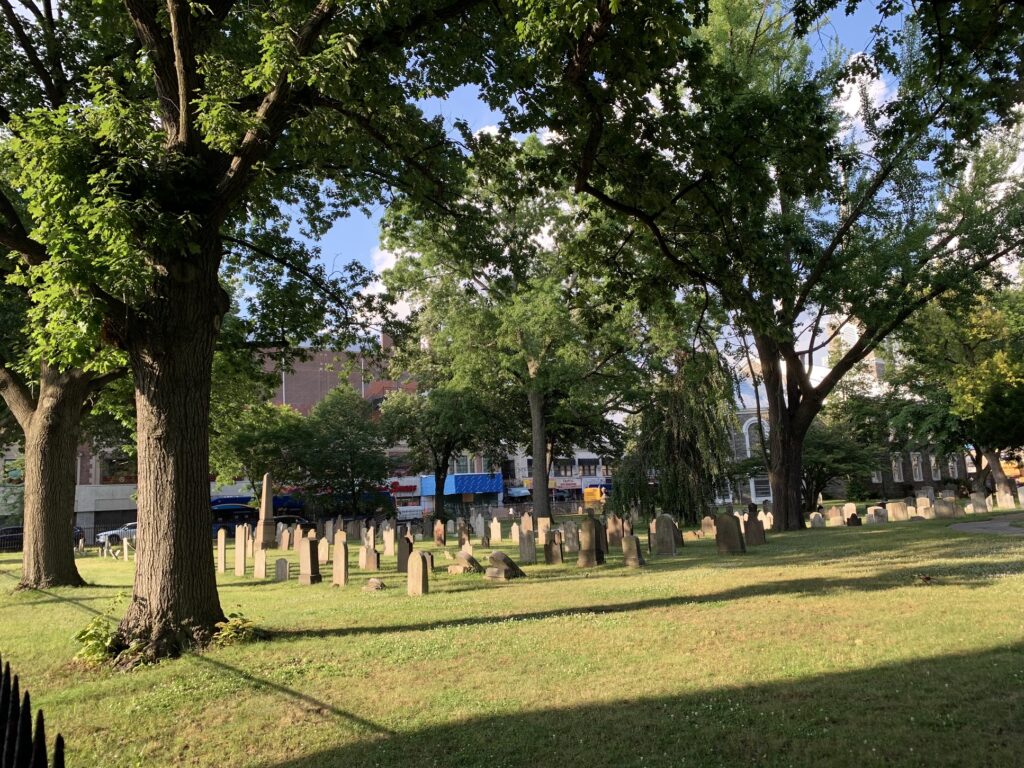
The historic cemetery at Flatbush Dutch Reformed Church
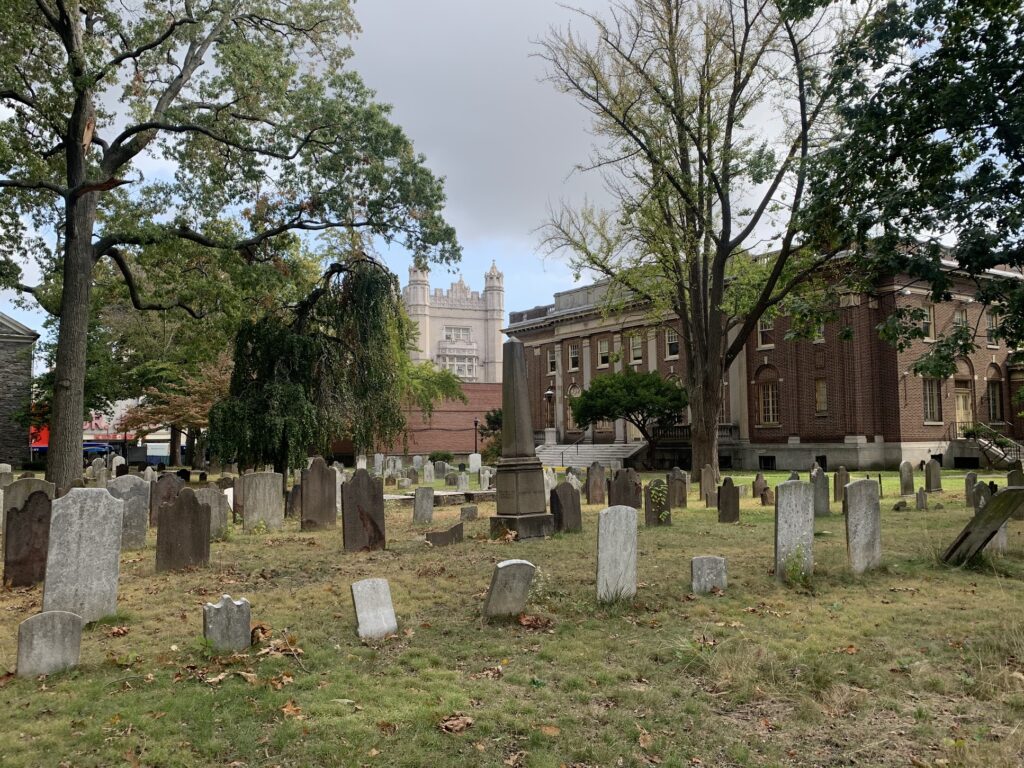
Erasmus Hall High School can be seen from the grounds of the cemetery.
Albemarle–Kenmore Terraces Historic District
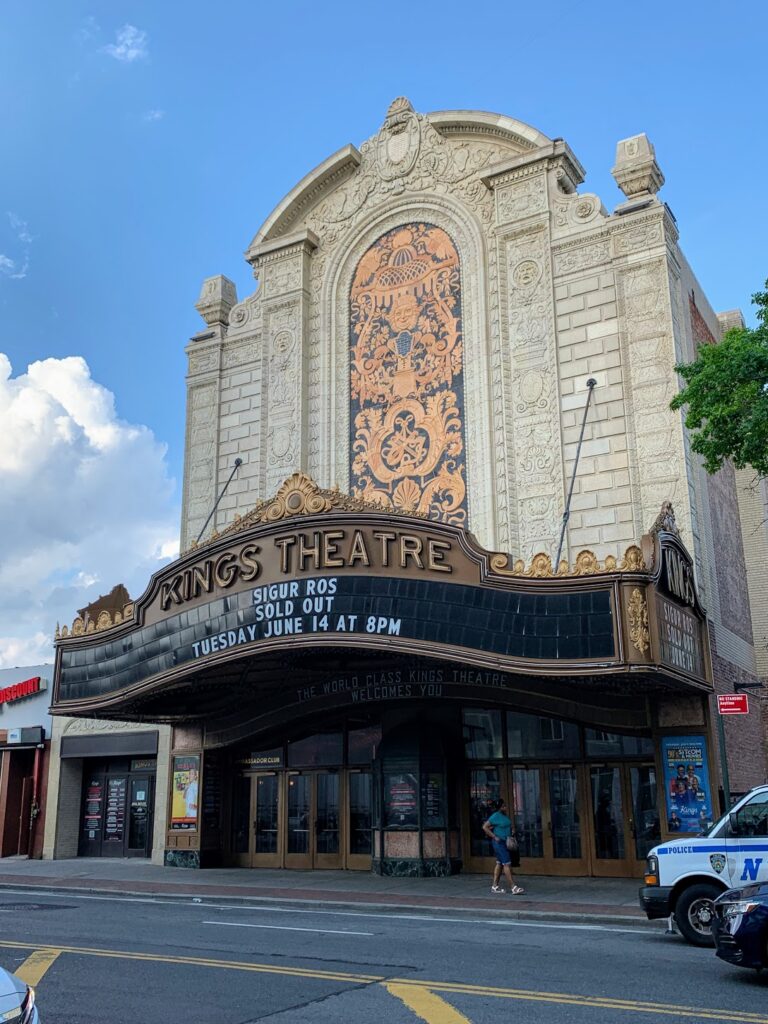
Kings Theatre, a Flatbush landmark since the 1920s
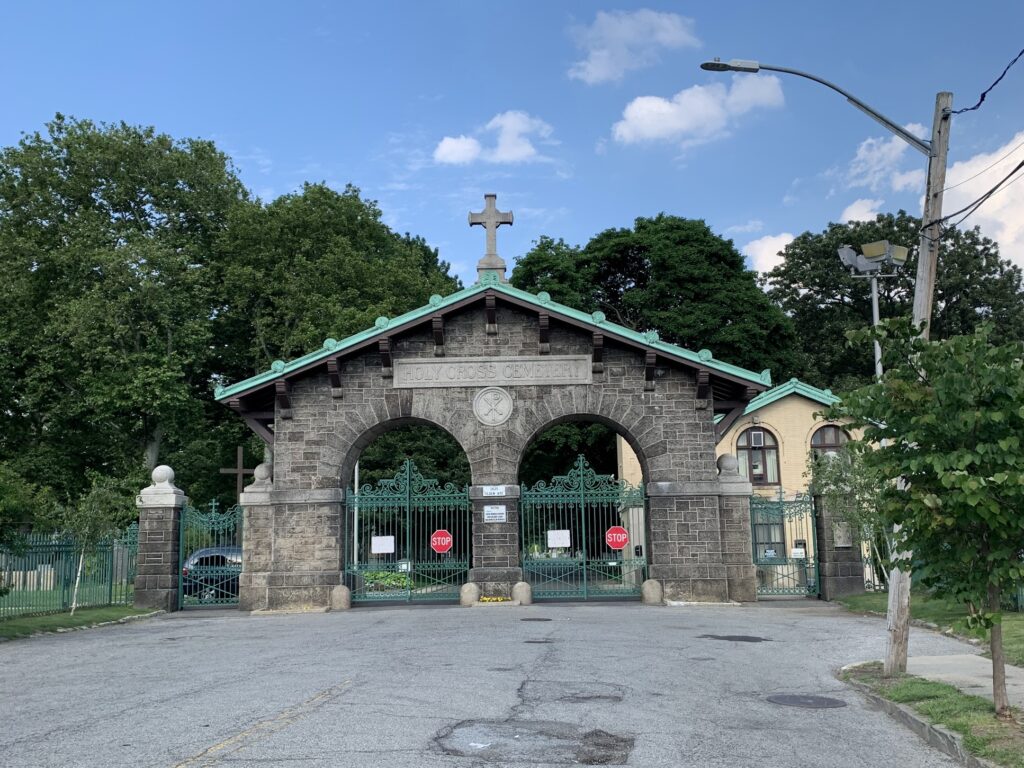
Holy Cross Cemetery in East Flatbush
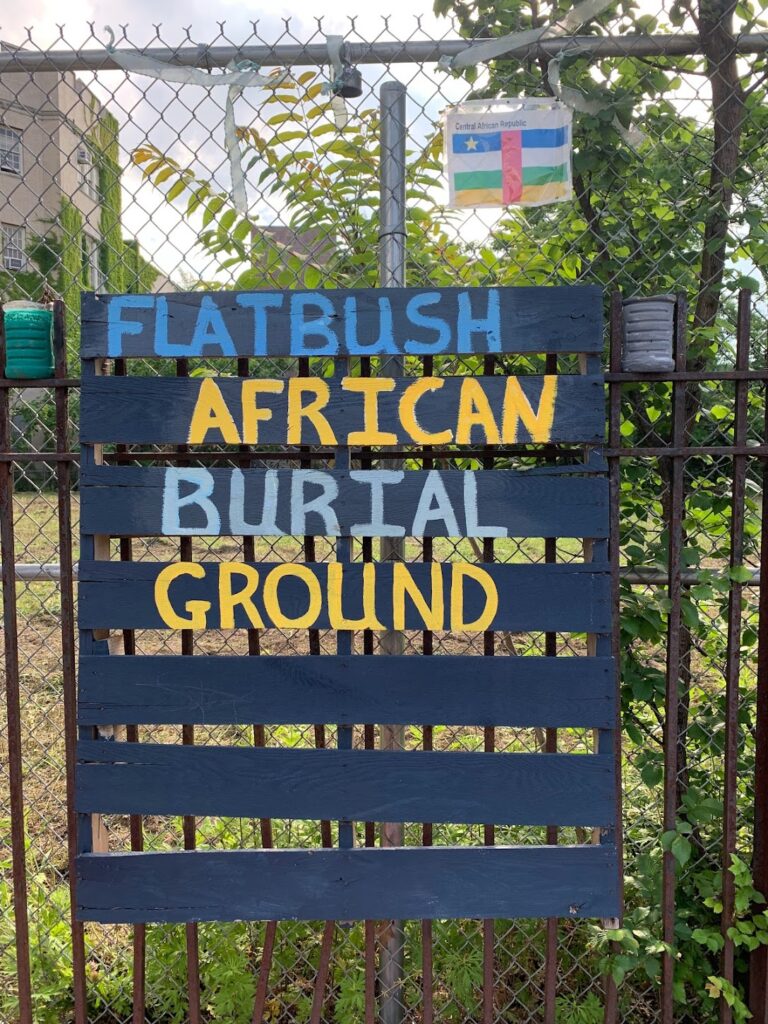
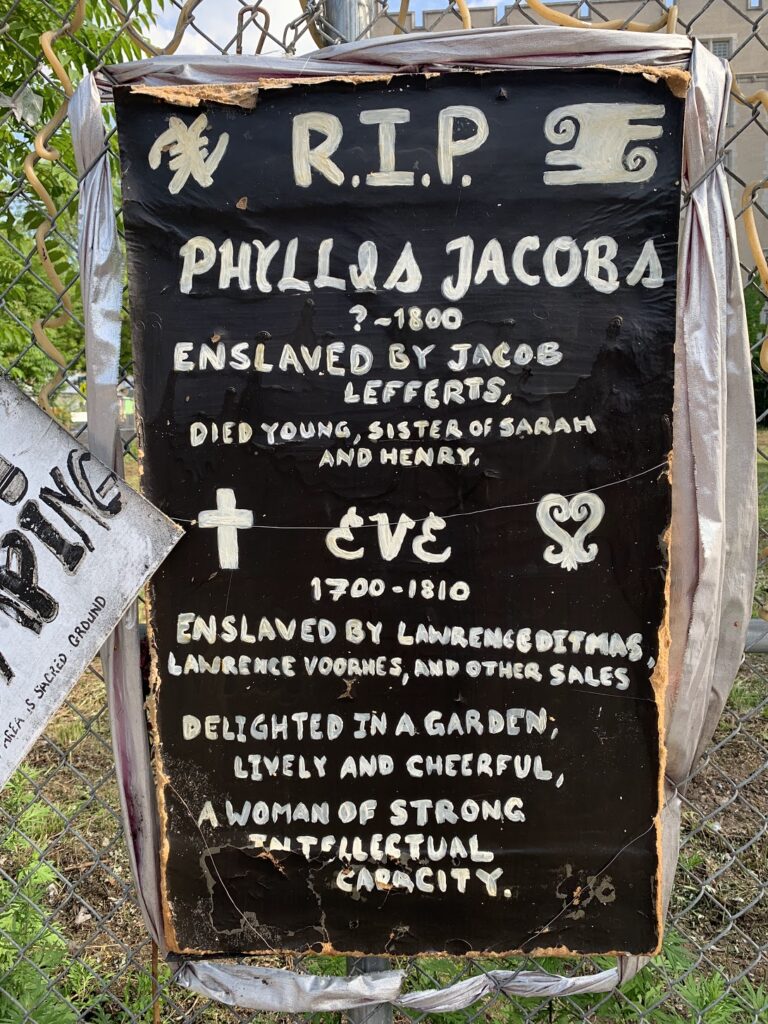
Marker for the Flatbush African Burial Ground and a makeshift tombstone for the two people who were known to be buried here.
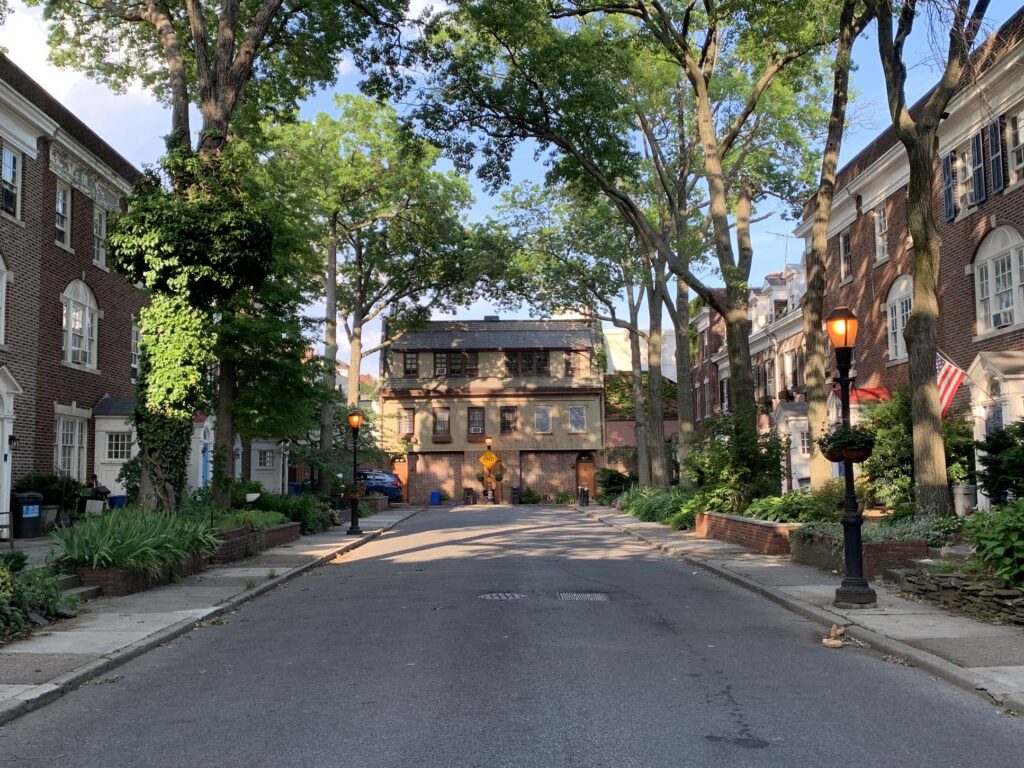
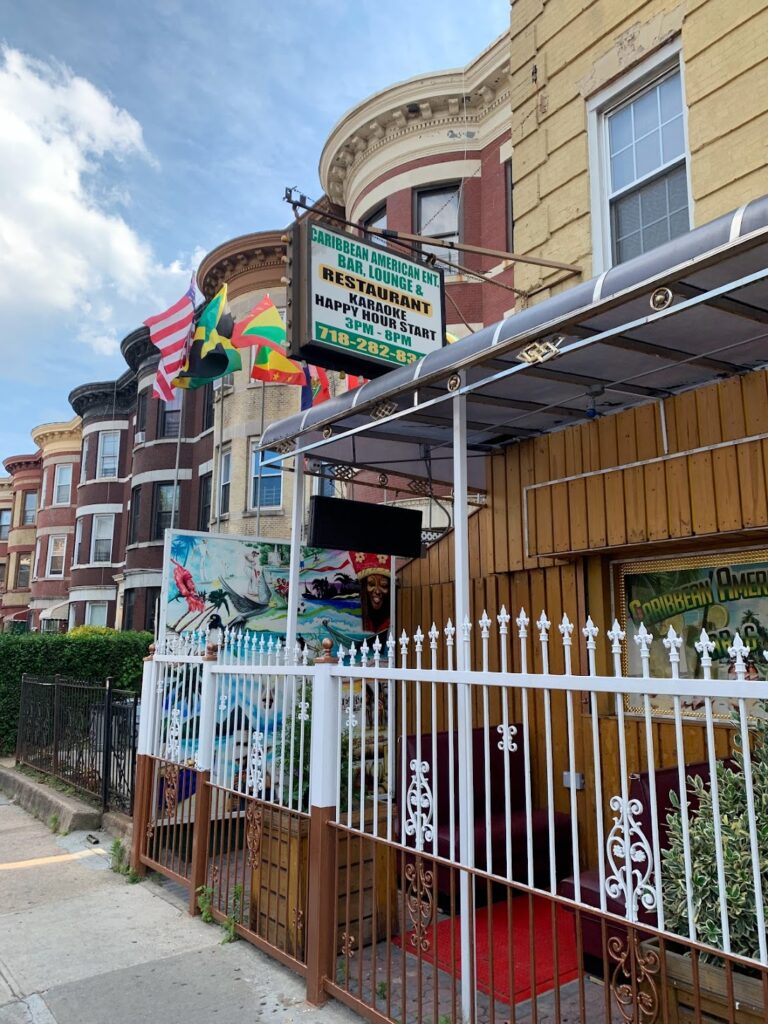
A Caribbean restaurant in East Flatbush amid some excellent examples of rowhouses that are scattered throughout the area.
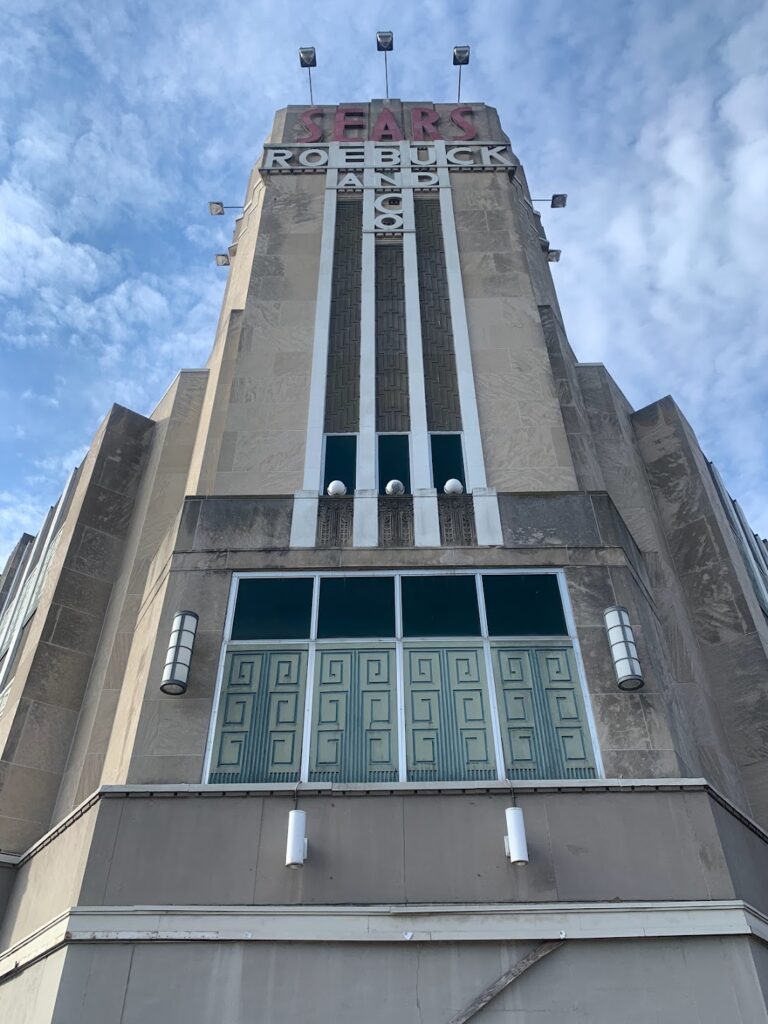
The landmarked Sears Roebuck building, one of the last reminders of the mid-century department stores of Flatbush

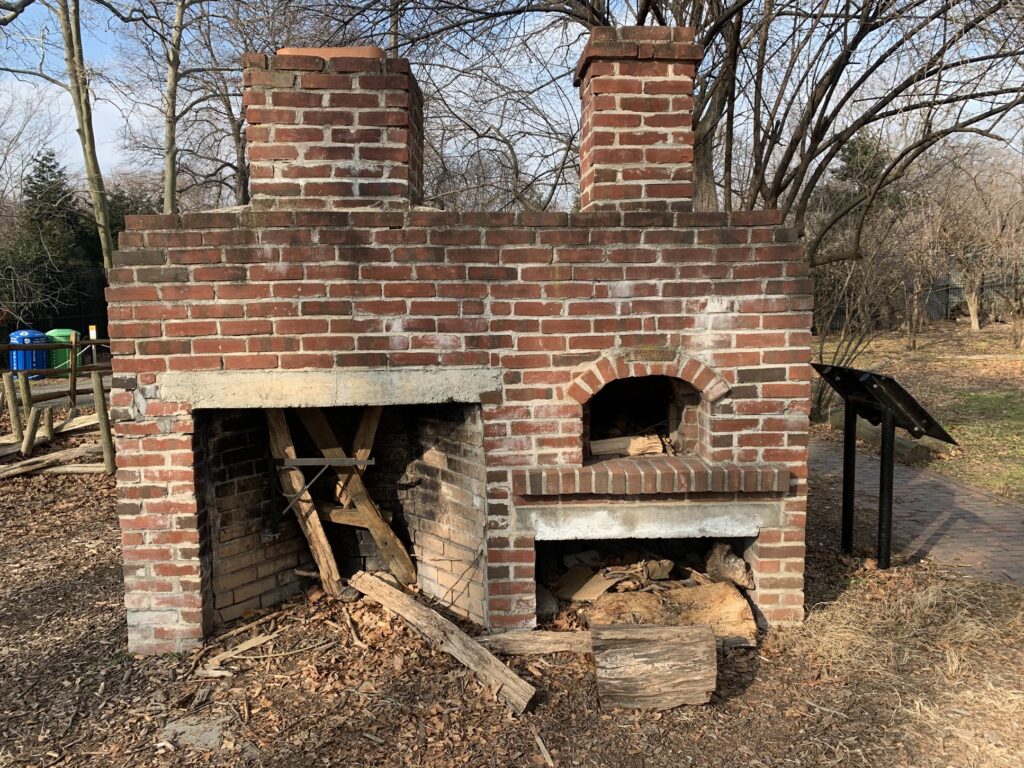
Lefferts Historic House in Prospect Park
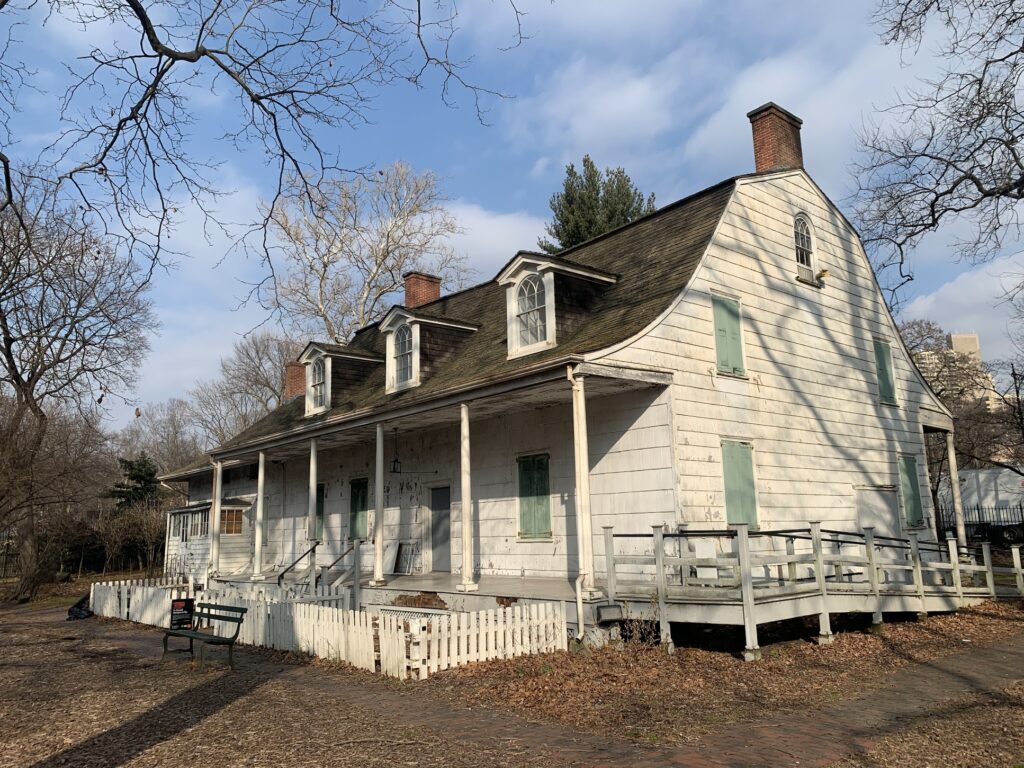
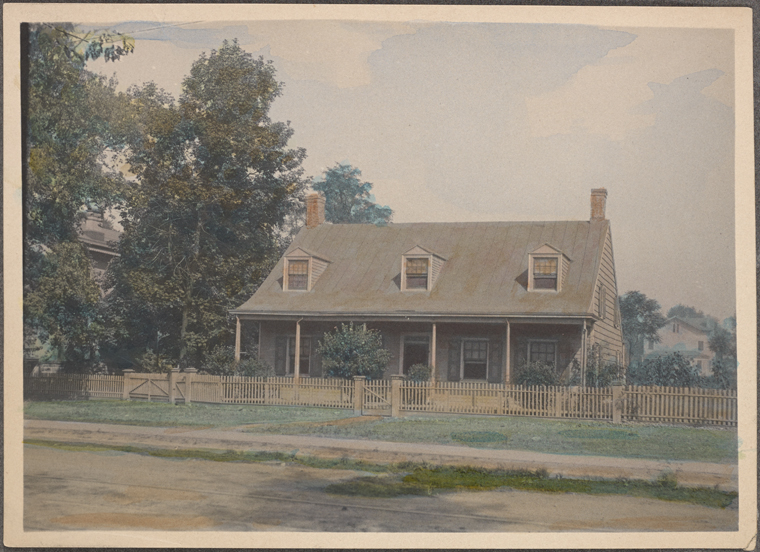
Historic image of the house at its original site (north of Church Avenue) Courtesy New York Public Library

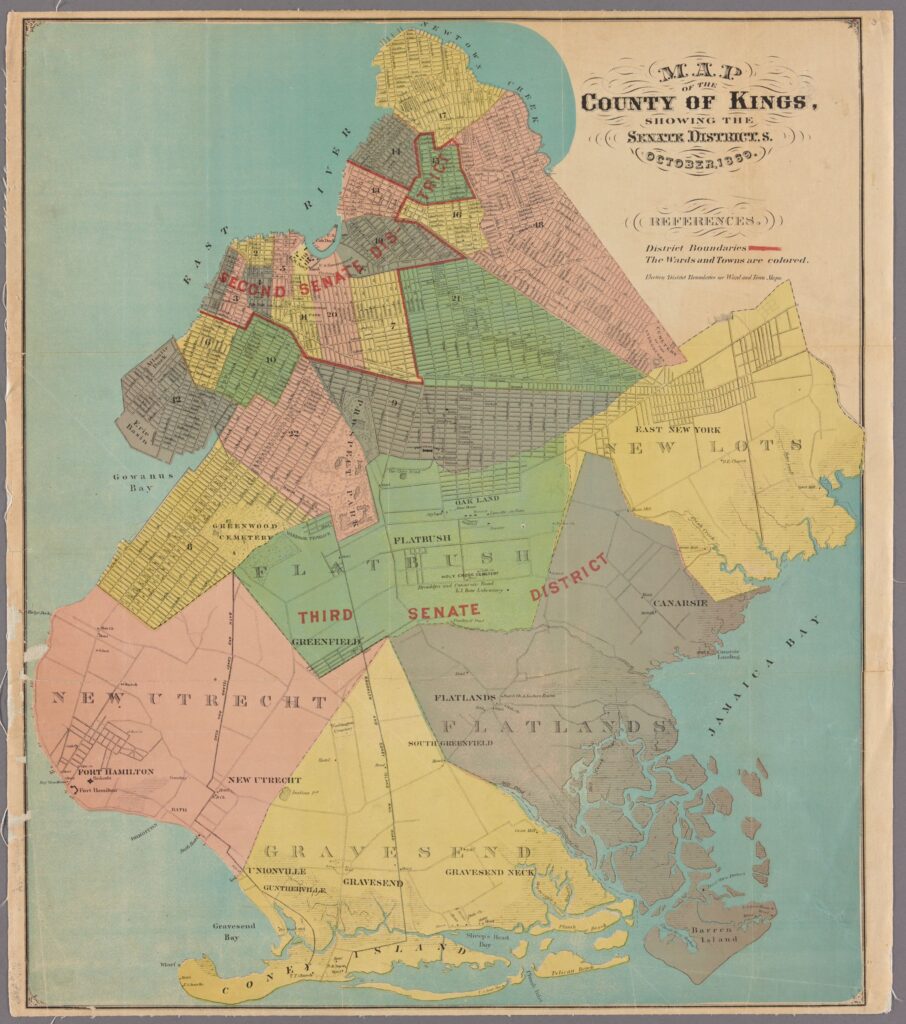
An 1869 map of state senate districts in Kings County. (Courtesy New York Public Library)
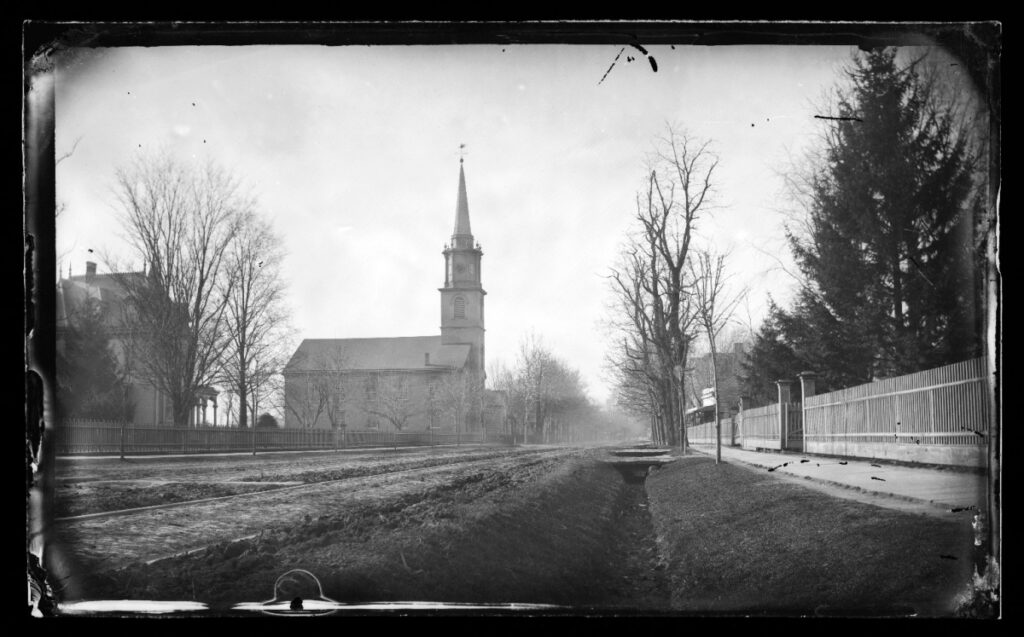
George Bradford Brainerd (American, 1845-1887). Steeple, Flatbush, Brooklyn, ca. 1872-1887. Wet-collodion negative. Prints, Drawings and Photographs. Brooklyn Museum/Brooklyn Public Library, Brooklyn Collection, 1996.164.2-384. (1996.164.2-384_glass_IMLS_SL2.jpg)
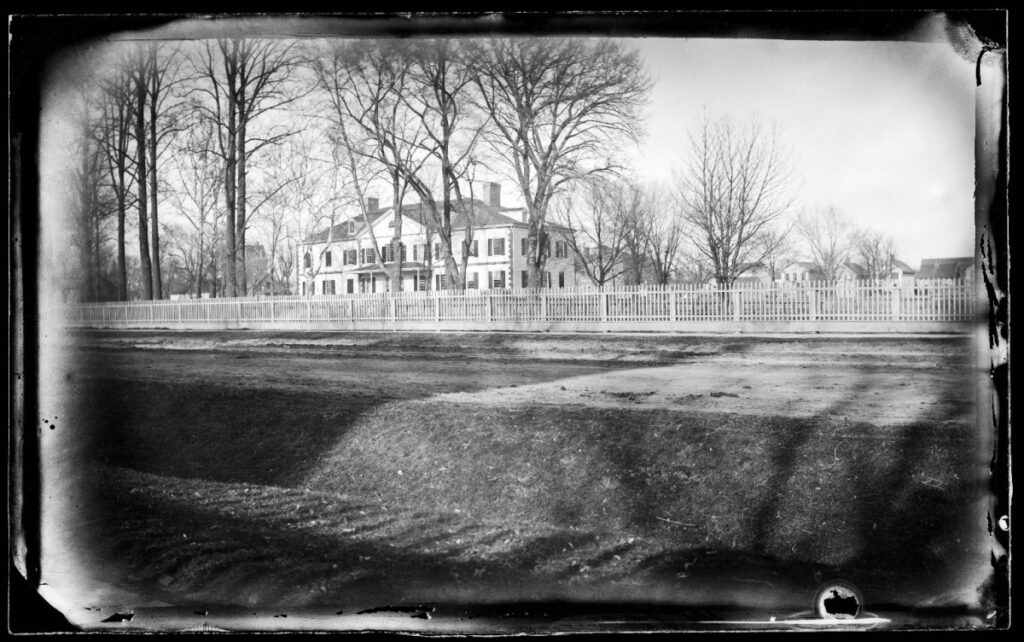
George Bradford Brainerd (American, 1845-1887). Erasmus Hall, Flatbush, Brooklyn, 1879. Wet-collodion negative. Prints, Drawings and Photographs. Brooklyn Museum/Brooklyn Public Library, Brooklyn Collection, 1996.164.2-159. (1996.164.2-159_glass_IMLS_SL2.jpg)
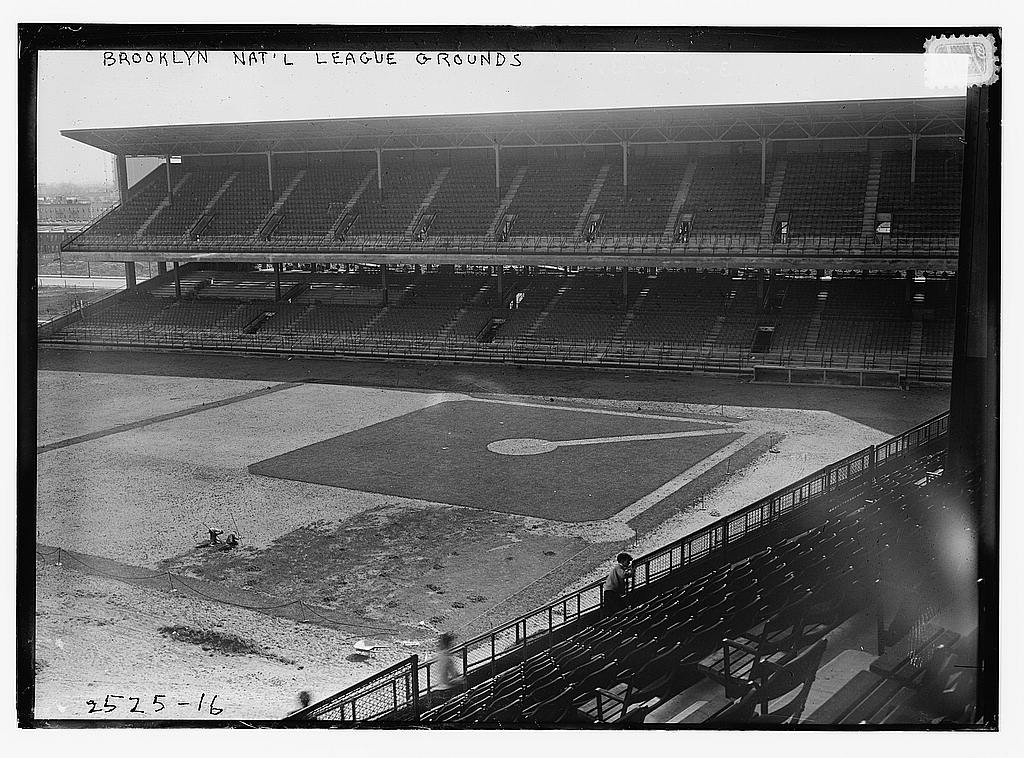
Inside Ebbets Field, 1913, Library of Congress. Here’s an article on their first regular game there.

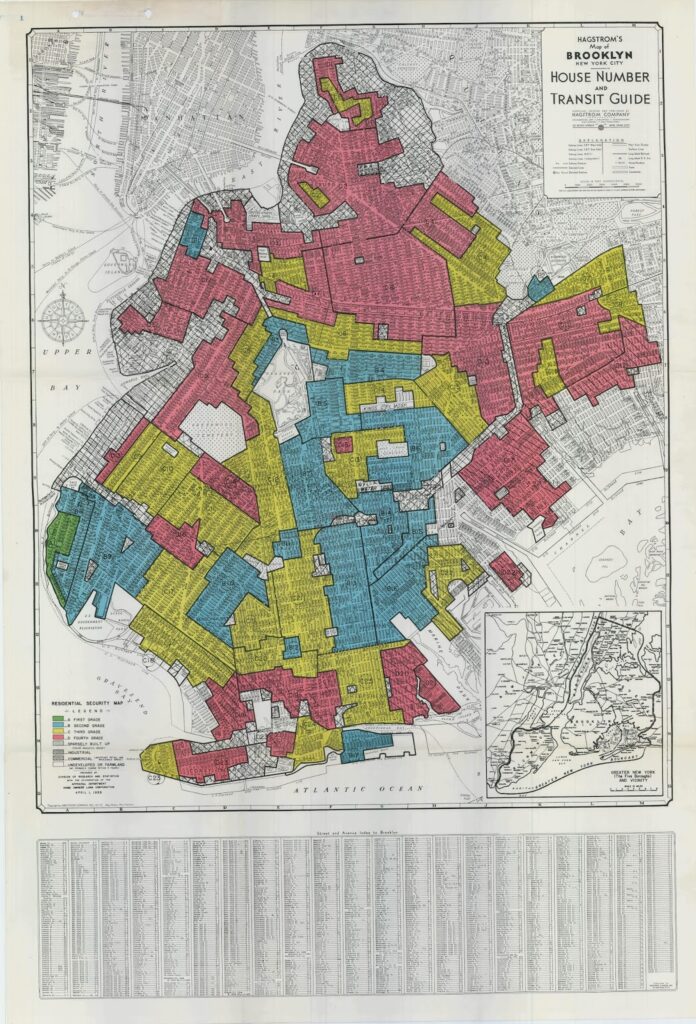
A map of redlined Brooklyn. Flatbush (seen below the Prospect Park white space) has sections in blue, yellow and red.
FURTHER LISTENING

After listening to the story of Flatbush, dive back into these podcasts which touch on some of the themes from this week’s show:
Categories
Parks and Recreation Podcasts Staten Island History

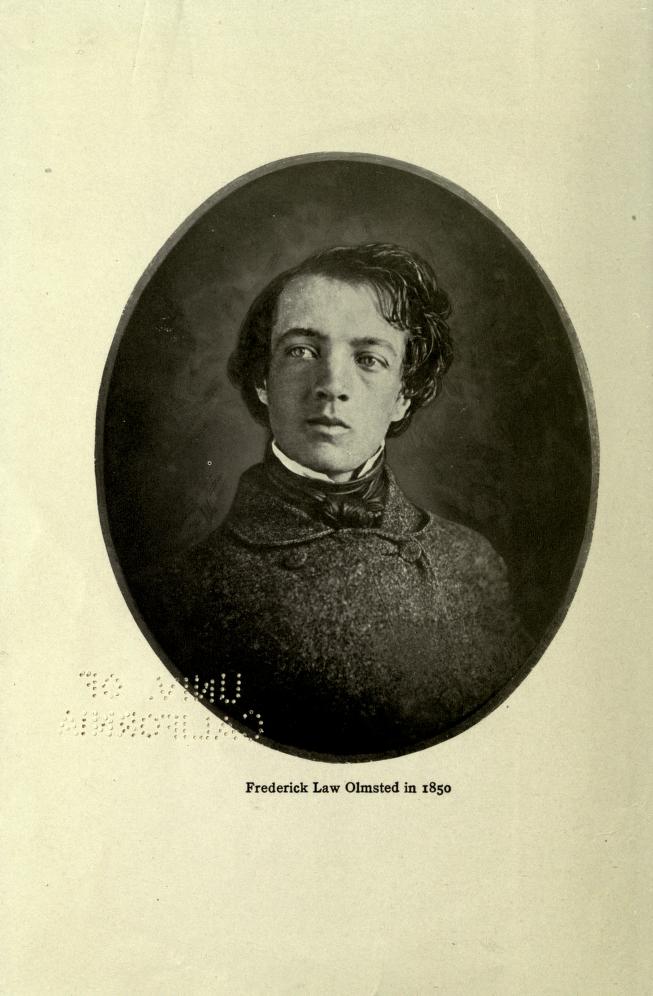
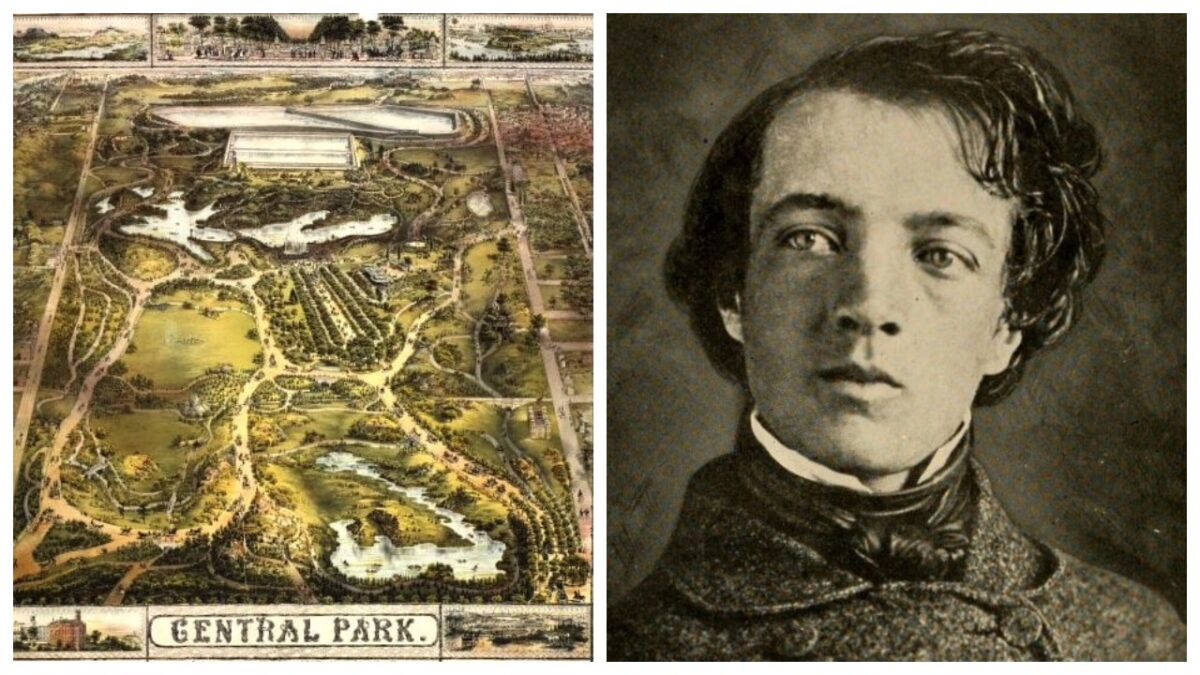
Frederick Law Olmsted and the Plan for Central Park

PODCAST Frederick Law Olmsted, America’s preeminent landscape architect of the 19th century, designed dozens of parks, parkways and college campuses across the country.

With Calvert Vaux, he created two of New York City’s greatest parks — Central Park and Prospect Park.

Yet before Central Park, he had never worked on any significant landscape project and he wasn’t formally trained in any kind of architecture.

In fact, Fred was a bit of a wandering soul, drifting from one occupation to the next, looking for fulfillment in farming, traveling and writing.

This is the remarkable story of how Olmsted found his true calling.

The Central Park proposal drafted by Olmsted and Vaux — called the Greensward Plan — drew from personal experiences, ideas of social reform and the romance of natural beauty (molded and manipulated, of course, by human imagination).

But for Olmsted, it was also created in the gloom of personal sadness. And for Vaux, in the reverence of a mentor who died much too young.

PLUS: In celebration of the 200th anniversary of Olmsted’s birth, Greg is joined on the show by Adrian Benepe, former New York City parks commissioner and president of Brooklyn Botanic Garden.

LISTEN NOW: FREDERICK LAW OLMSTED AND THE PLAN FOR CENTRAL PARK


#Olmsted200

For more information on Olmsted 200 events in your area, check out their website.

And a list of upcoming events here.


Planning a visit to the Brooklyn Botanic Garden? It’s cherry blossom season! Check their website to see where the blossoms are blooming.

Thank you Adrian Benepe for appearing on the show and to everybody over at the Brooklyn Botanic Garden for your help in putting things together.


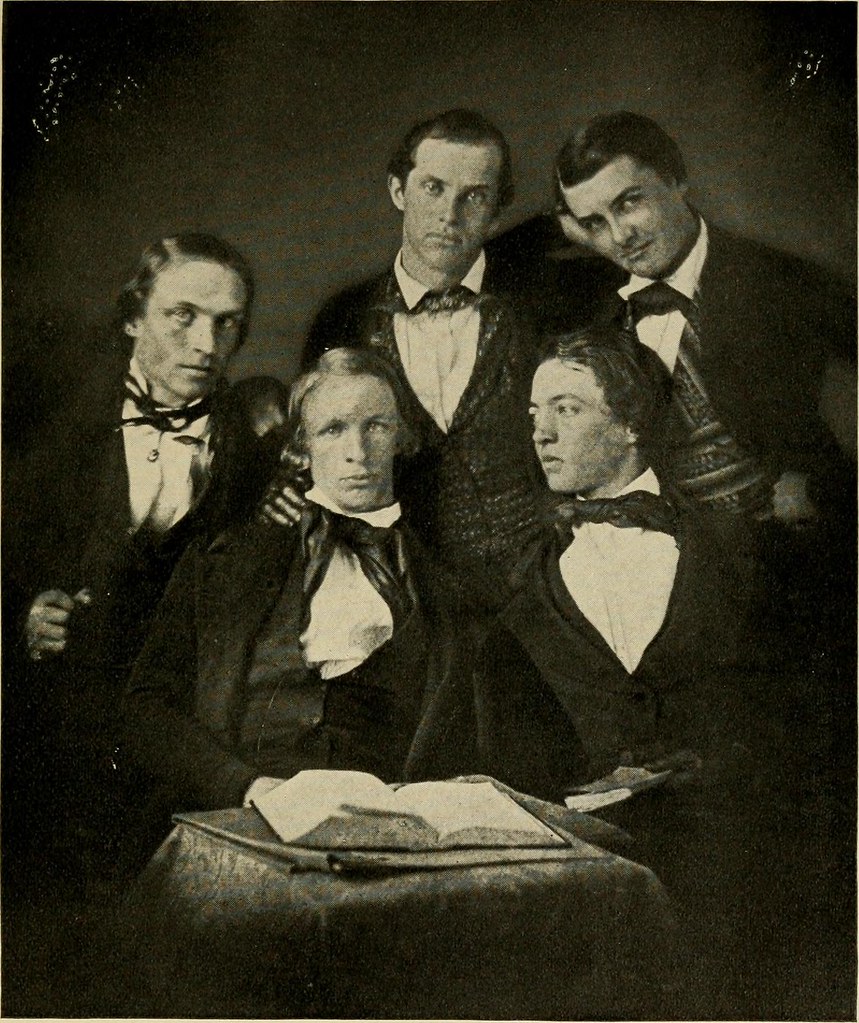
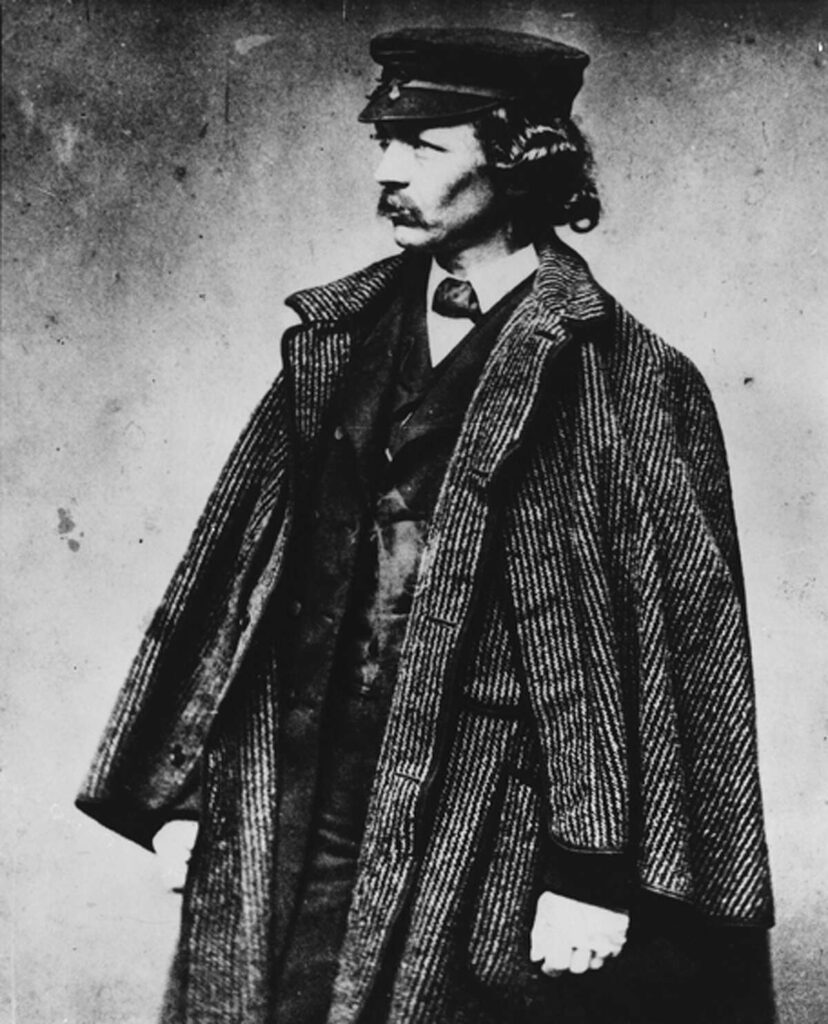
Charles Trask, Charles Loring Brace, Fred Kingsbury, Frederick Law Olmsted, John Hull Olmsted at 1846
Forty Years of Landscape Architecture; being the Professional Papers of Frederick Law Olmsted, Senior. 1922-28. Contributed in BHL from the University of California Libraries.

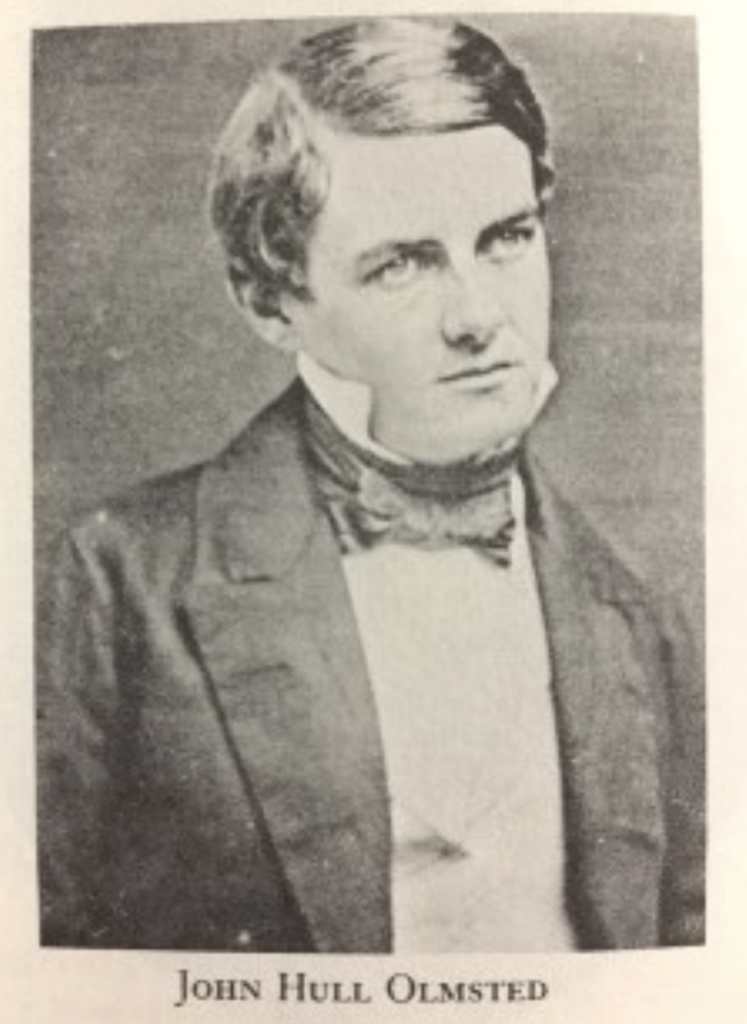
Fred’s brother John Olmsted

From Olmsted’s personal collection of photographs, The Society for the Preservation of New England Antiquities, Boston, Mass. Source

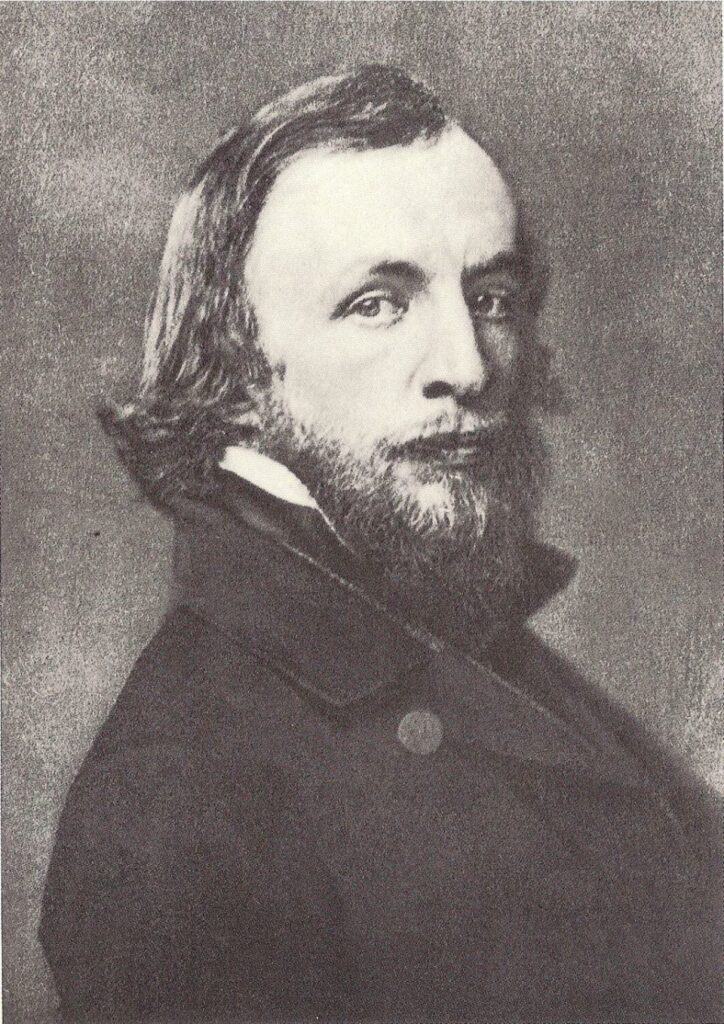
Their friend and traveling companion Charles Loring Brace.


Andrew Jackson Downing

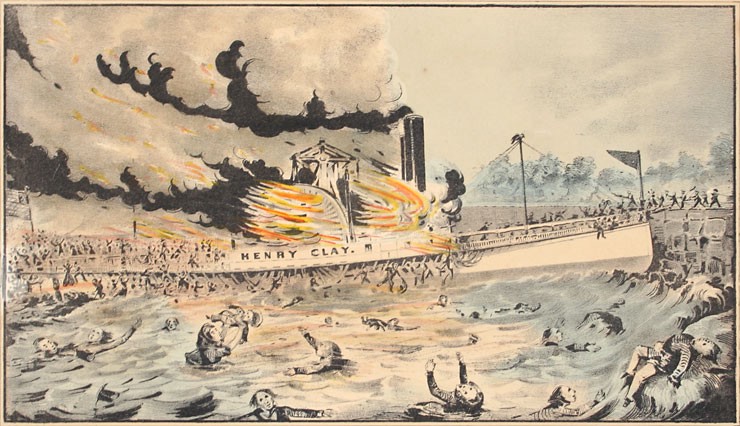
The Burning of the Henry Clay, in a lithograph by Nathaniel Currier, 1852

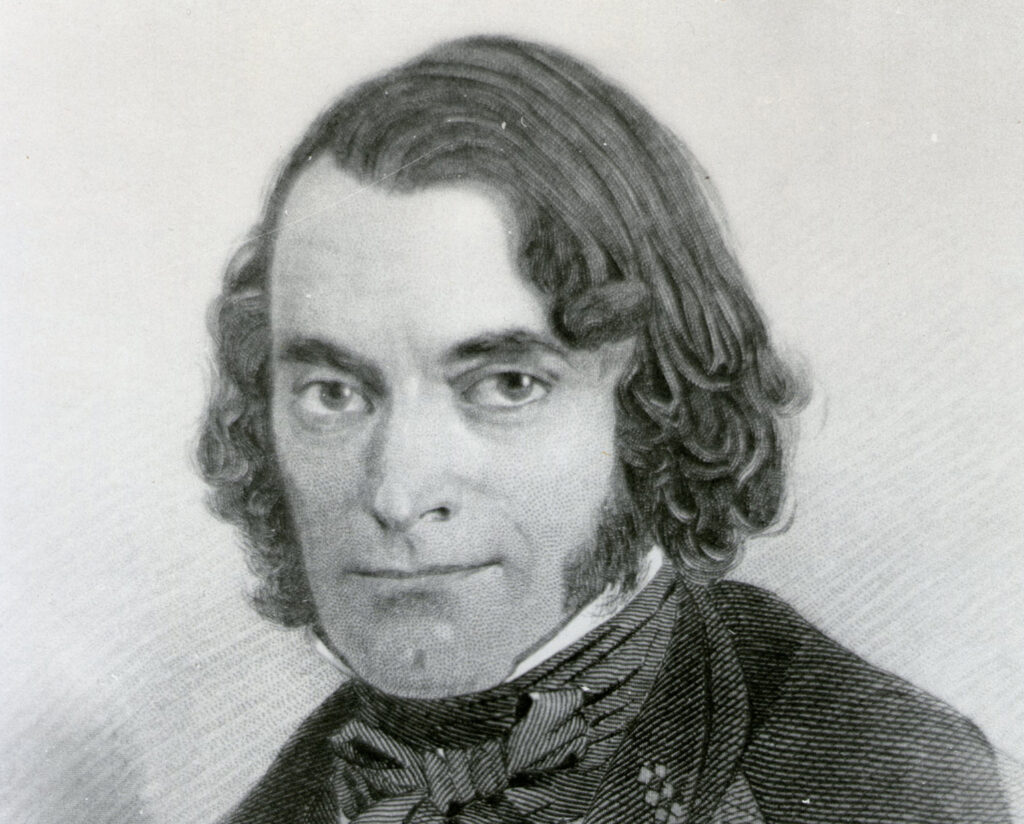
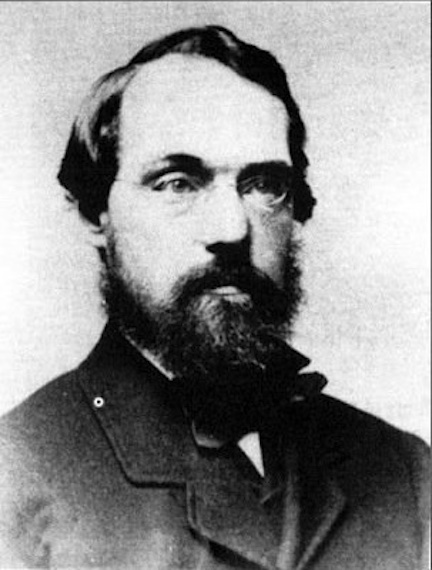
Calvert Vaux

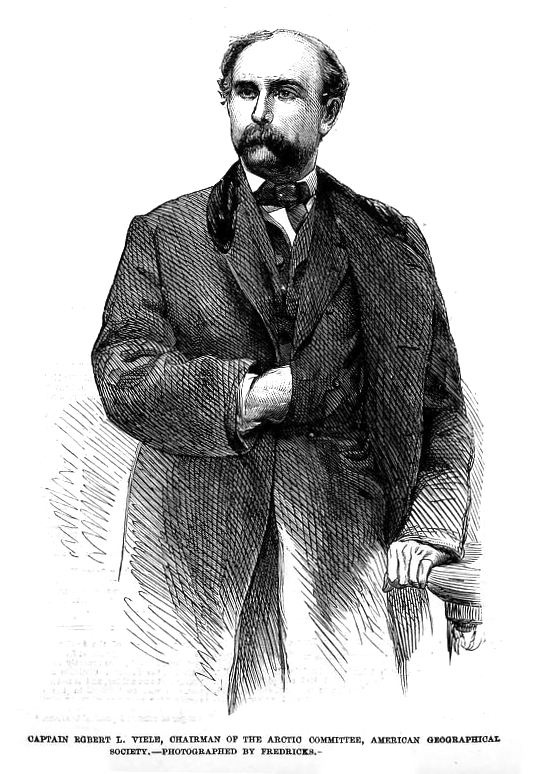
Egbert Ludovicus Viele


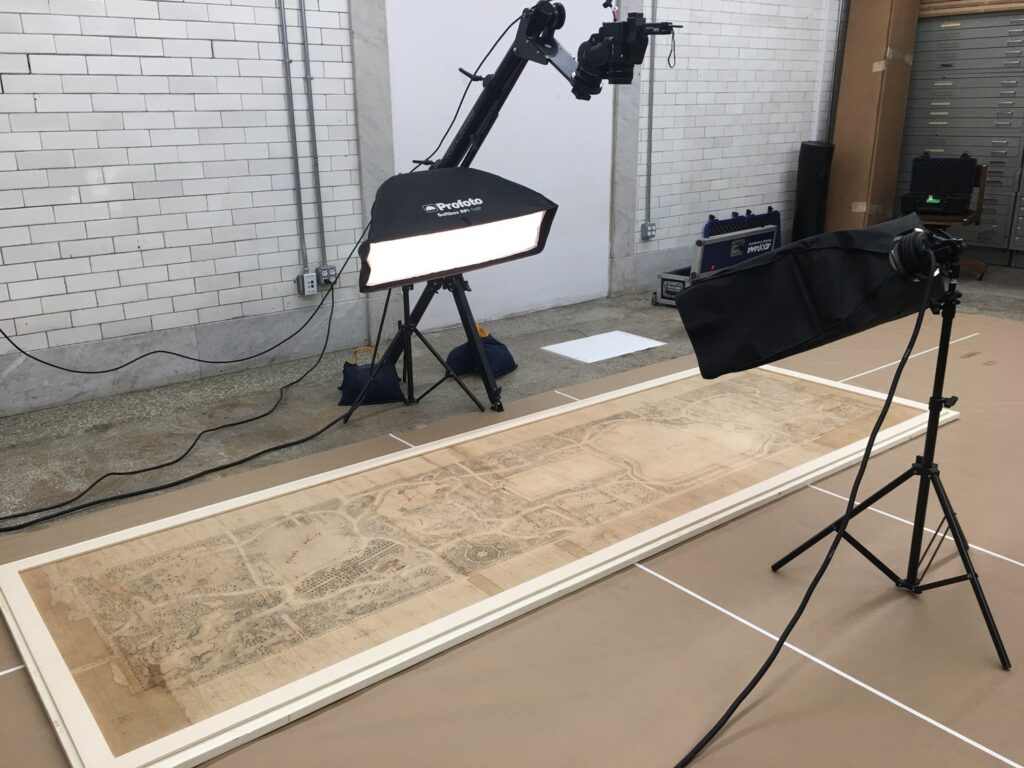
The Greensward Plan will be on display at The New York City Department of Records and Information Services/Municipal Archives Friday, April 22 and Saturday, April 23. 

Get your free tickets here.

Here’s a fascinating article from NYC Department of Records & Information Services about digitizing the Greensward Plan.


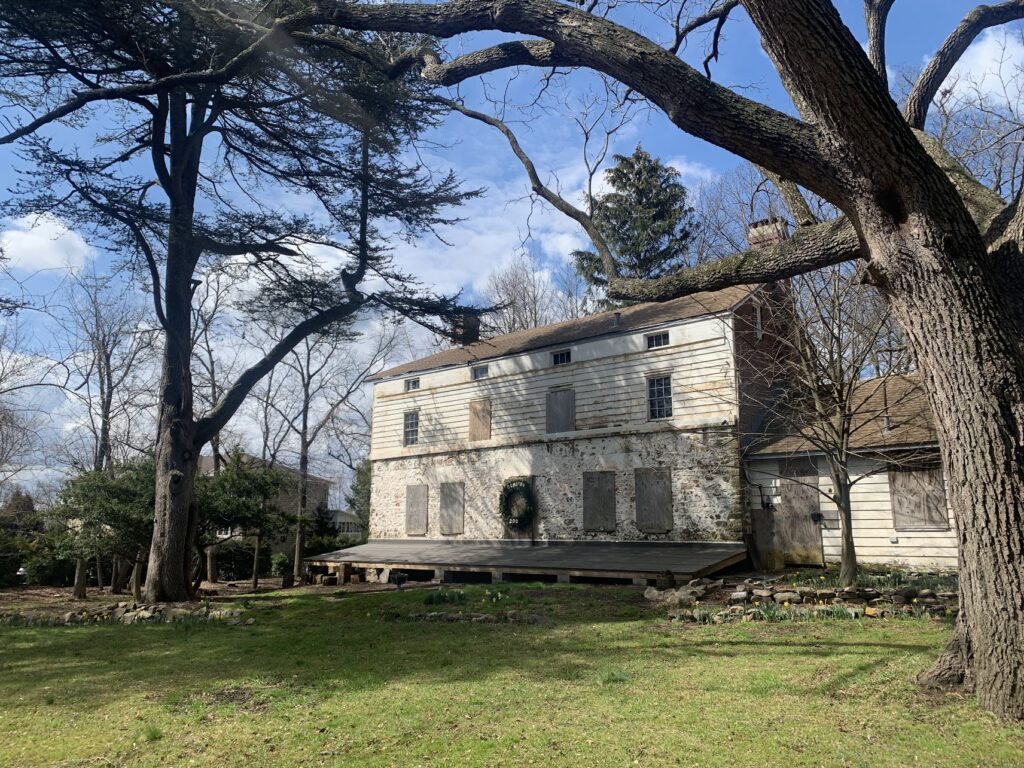
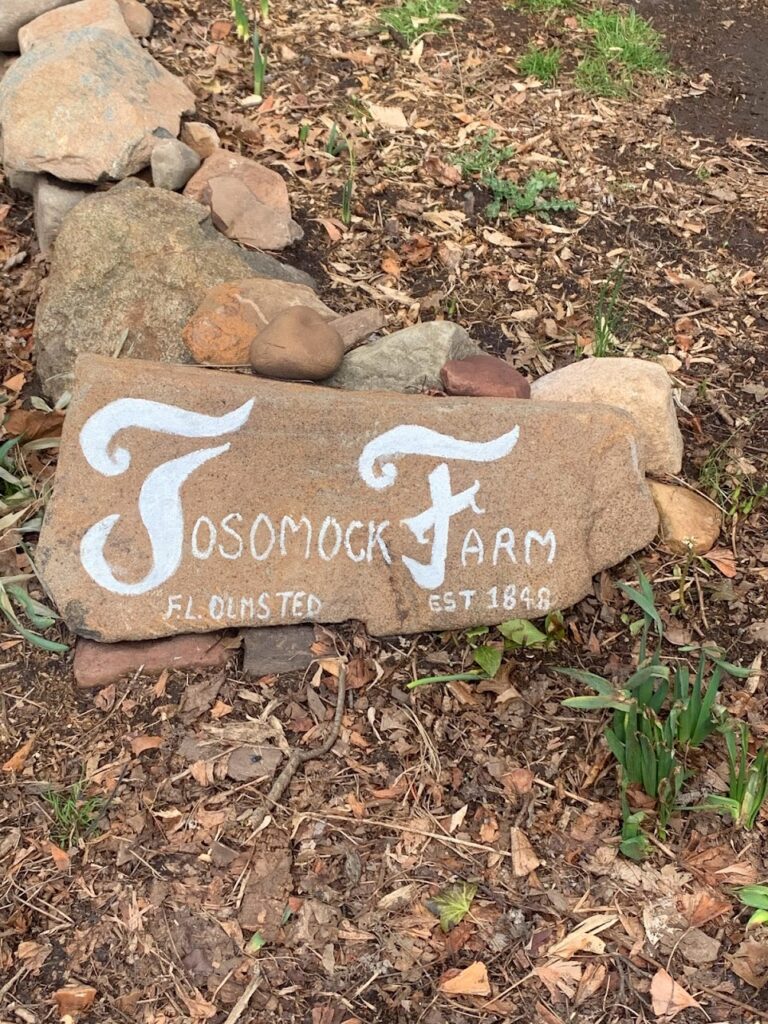
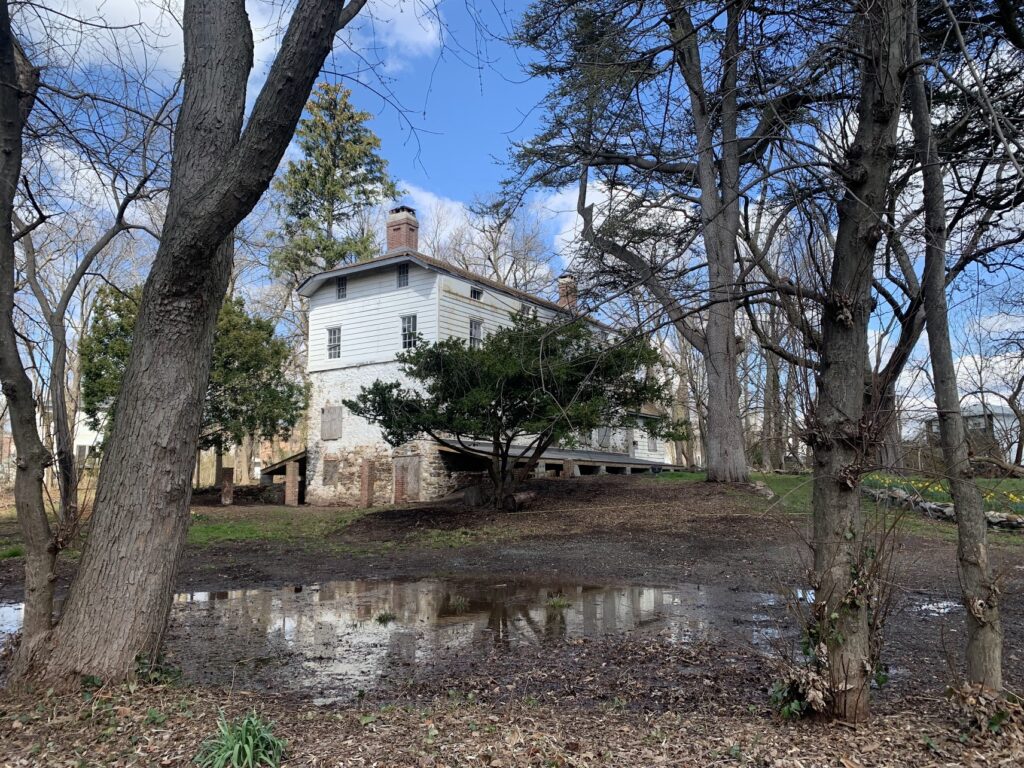
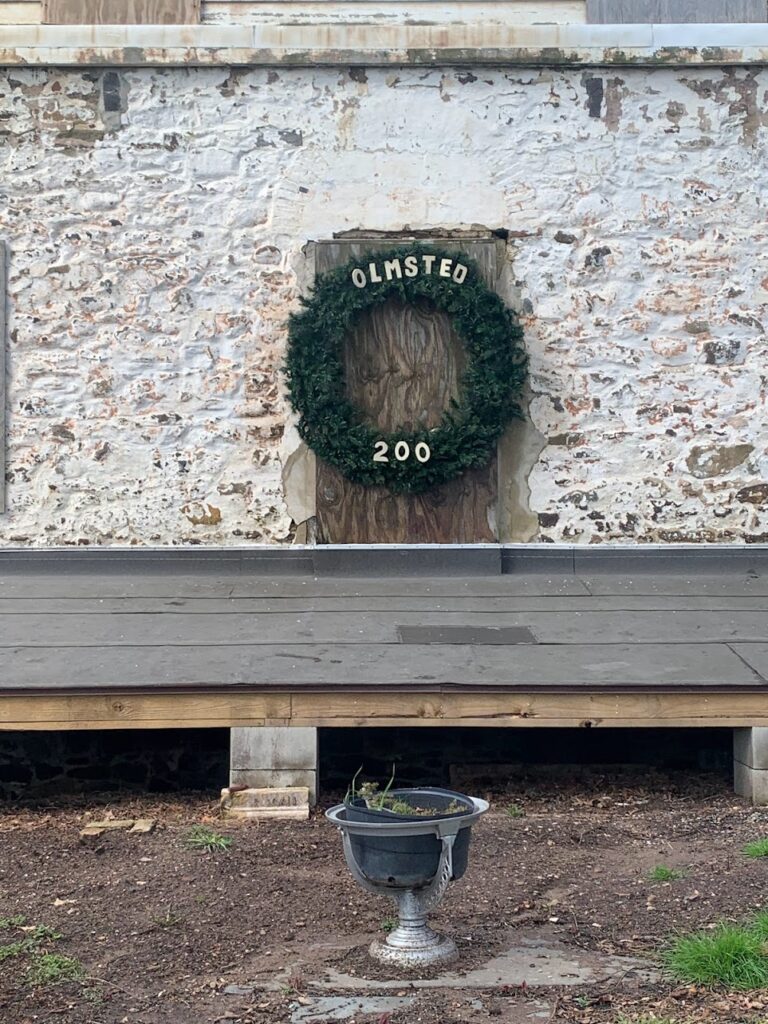
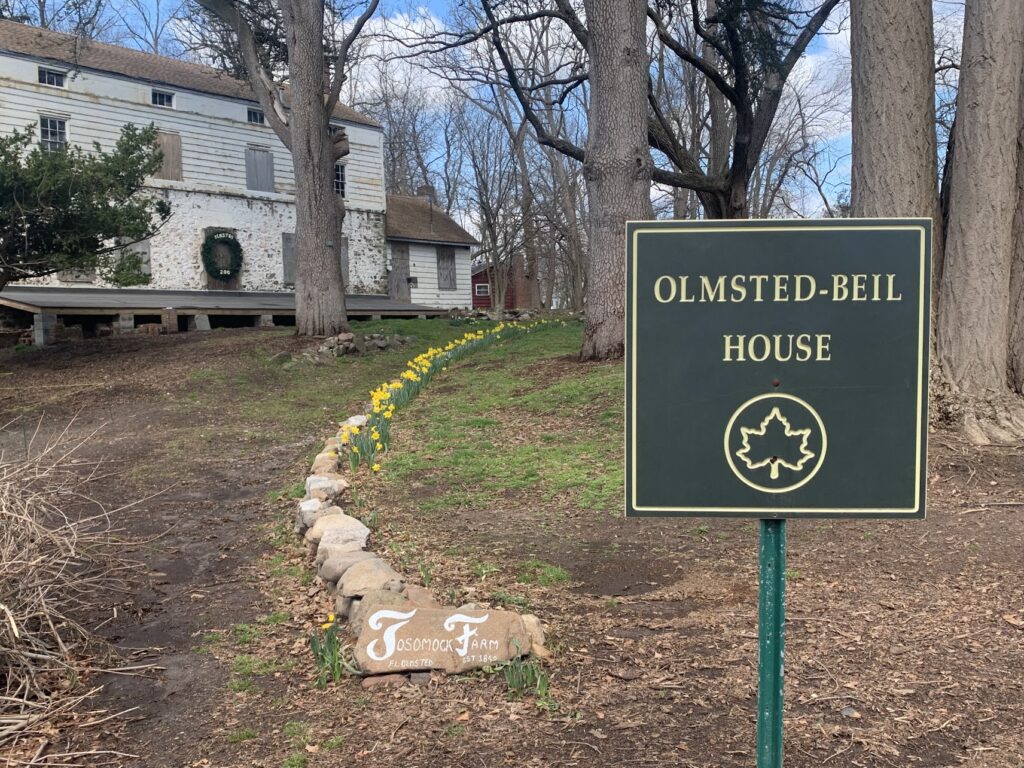
Pictures from my visit to the Olmsted-Beil House on Staten Island:

Photos by Greg Young

FURTHER LISTENING

After listening to this episode of Frederick Law Olmsted, jump back into these earlier Bowery Boys Podcasts which discuss similar themes or situations from the show:
FURTHER READING

The Central Park: Original Designs for New York’s Greatest Treasure / Cynthia S. Brenwell, New York City Municipal Archives
Central Park: The Birth, Decline and Renewal of a National Treasure / Eugene Kinkead
A Clearing in the Distance: Frederick Law Olmsted and America in the 19th Century / Witold Rybczynski
Creating Central Park / Morrison H. Hecksher
Genius of Place: The Life of Frederick Law Olmsted / Justin Martin
Parks for the People: The Life of Frederick Law Olmsted / Julie Dunlap
The Power of Scenery: Frederick Law Olmsted and the Origin of National Parks / Dennis Drabelle

The Bowery Boys: New York City History podcast is brought to you …. by you!

We are producing a new Bowery Boys podcast every other week. We’re also looking to improve and expand the show in other ways — publishing, social media, live events and other forms of media. But we can only do this with your help!

We are now a creator on Patreon, a patronage platform where you can support your favorite content creators.

Please visit our page on Patreon and watch a short video of us recording the show and talking about our expansion plans. If you’d like to help out, there are several different pledge levels. Check them out and consider being a sponsor.

We greatly appreciate our listeners and readers and thank you for joining us on this journey so far

Categories
Parks and Recreation

Ten unusual views of Prospect Park and Grand Army Plaza

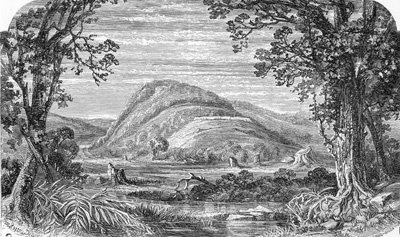
When park designers Frederick Law Olmsted and Calvert Vaux regrouped after the success of Central Park to design another great park for Brooklyn — encompassing Prospect Hill and the Revolutionary War site Battle Pass — they preserved a greater amount of natural topography than they had in Manhattan. But that doesn’t mean that Prospect Park hasn’t gone through a few radical changes of its own since it opened between the years 1867 and 1873.

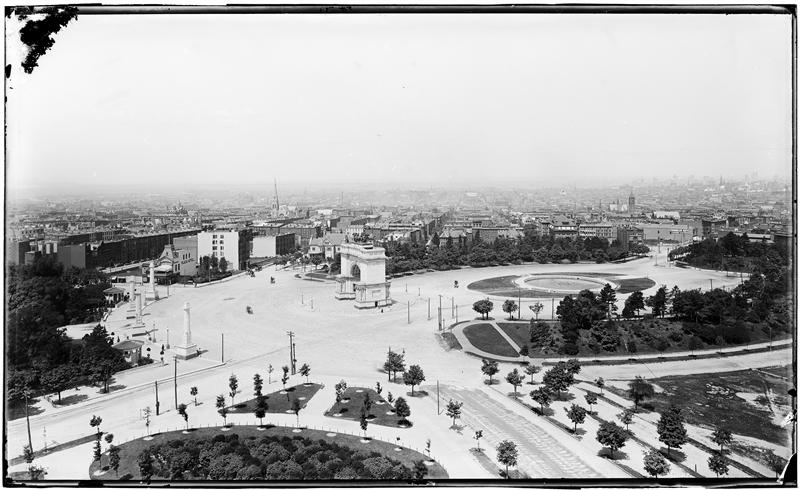
Their Grand Army Plaza has experienced few changes since it opened in those years, but the structures around it have certainly changed, presenting some surprising views at the mighty war monuments.

New York Public LIbrary

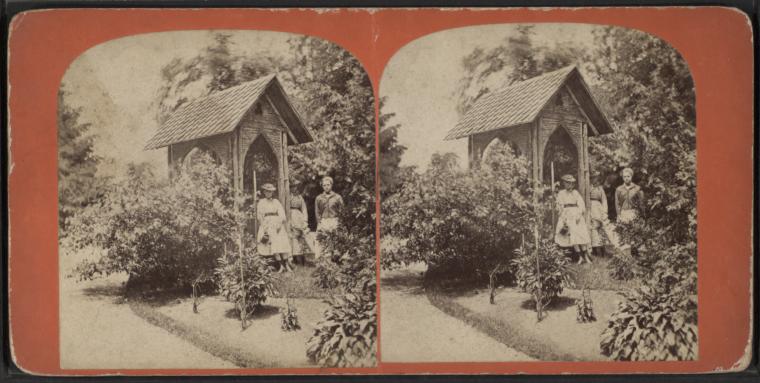
1. Women of the Wellhouse
The caption for this stereoscopic view (taken sometime in the 1870s-80s) calls this a ‘well house’, although it may have also been a a coal storage shed or even an outhouse! Brooklyn’s main reservoir was on Prospect Hill, and the park was constructed partially to protect the water source from encroaching developers.

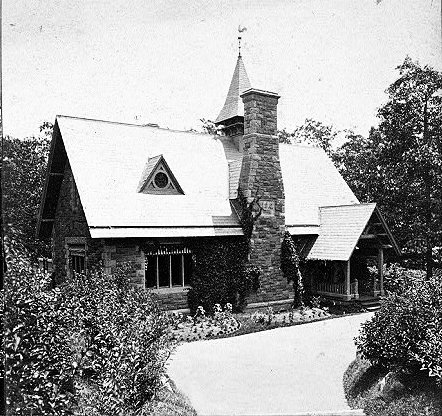
2. Prospect Park Dairy
As they had done in Central Park, Olmsted and Vaux infused the landscape with various romantic, fairytale-like structures, including this dairy house, providing guests with milk straight from the cow. Central Park still has a version of their dairy, but Prospect Park’s was regrettably torn down in the 1930s to make way for the Prospect Park Zoo. (NYPL)

Library of Congress

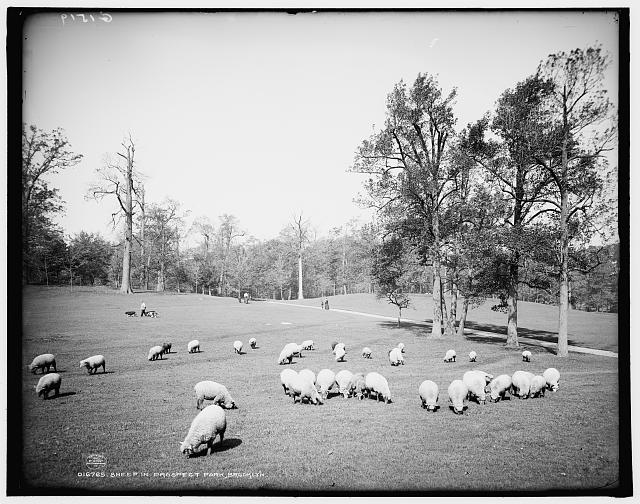
3. Brooklyn Sheep

 Sure, you many know Sheep Meadow in Central Park once had actual sheep grazing — they were considered a rustic design ornament and a natural landscaper — but what happened to the animals after Robert Moses kicked them out in 1934? Like so many trendy things, they moved to Brooklyn! They joined Prospect Park’s already thriving sheep colony (pictured below, from 1903) before moving on to other pastures. (Courtesy LOC)

New York Public Library

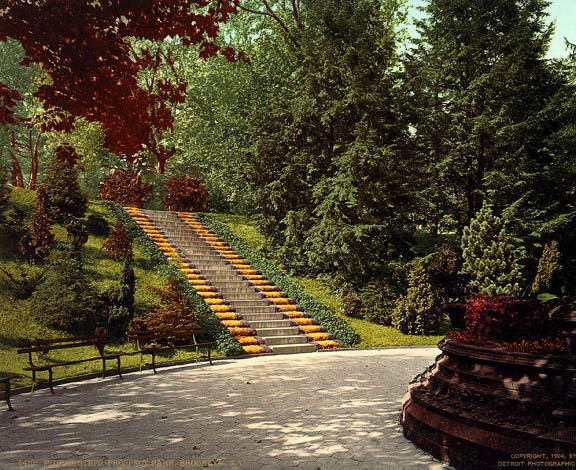
4. Floral Steps, 1904
The manicured flora that grace these steps predates the Brooklyn Botanic Garden by several years. The stairs are still there today, of course, though unadorned.

Courtesy Dept of Records

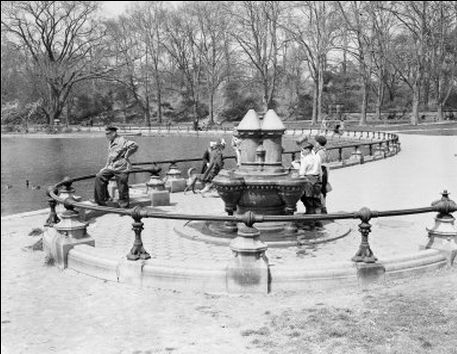
5. Drinking Fountains
With water aplenty, Prospect Park has been dotted with drinking fountains since its inception. This rather unusual fountain, from 1938, may still be around, but I doubt you’ll see anybody drinking from it.

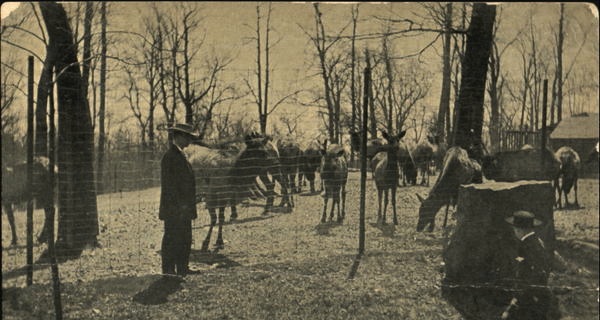
6. Deer Paddock
The zoo also replaced the rather extraordinary Deer Paddock, where the sometimes docile creatures were allowed to wander around. This despite some of them occasionally escaping and running into the surrounding neighborhood (as one adventurous buck did in 1906).

NYPL

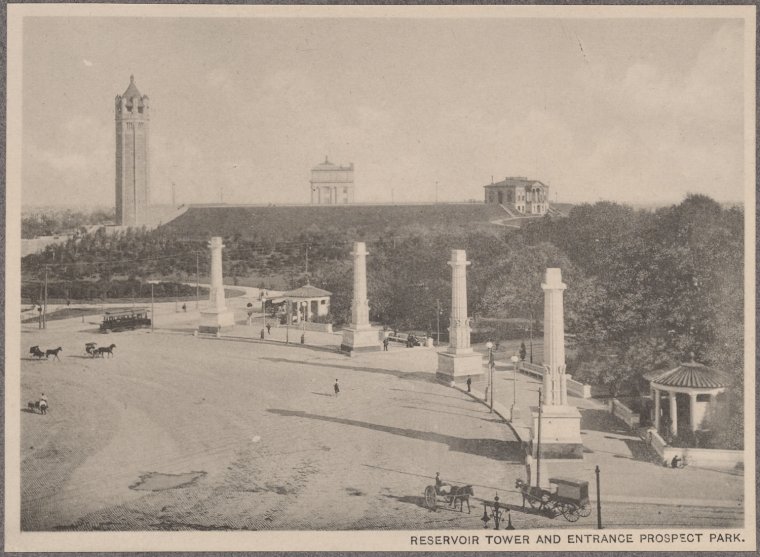
7. Stately Reservoir Tower
High atop Brooklyn’s second highest point on Mount Prospect sits the reservoir tower, only a couple decades old (1893) but looking like a medieval ruin in this image. Date of this picture is unknown, although the ground for the Brooklyn Public Library main branch building was broken in 1912, so it was clearly sometime before then. The Brooklyn Museum is in the distance. [NYPL]

Library of Congress

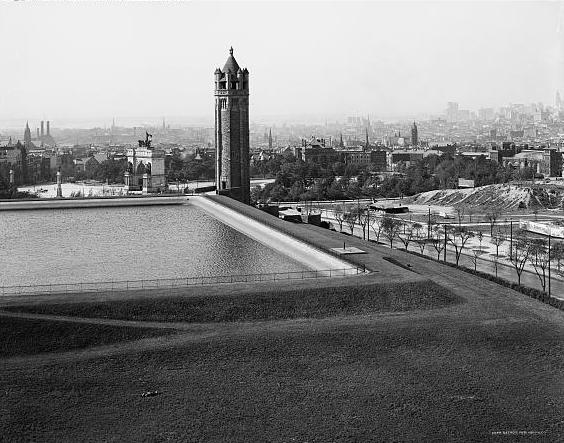
8. And, yes, the Reservoir itself
The reservoir was built here in 1856 and was meant to be included within the park designs. With Flatbush Avenue ultimately cleaving the hill from the rest of the proposal, Olmsted and Vaux left it out. This picture is from between 1910-1920. [LOC]

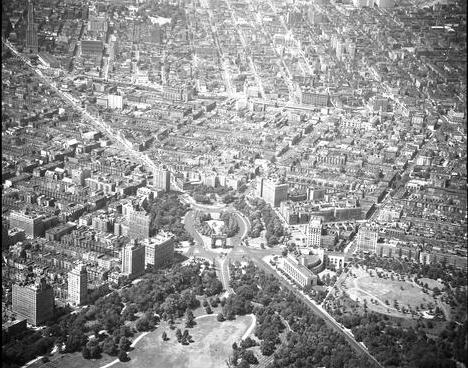
9. From high above
This bird’s eye view from 1951 illustrates the plaza’s similarities to that of the Arc de Triomphe in Paris.


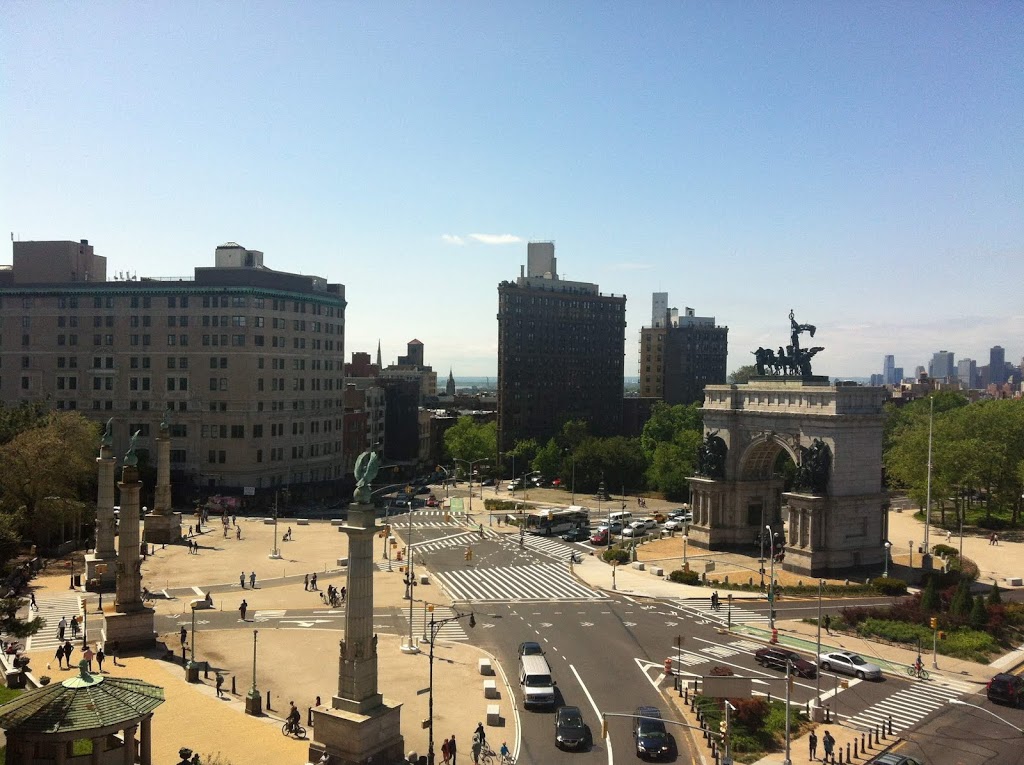
10. Library vista
And this view is from two weeks ago! During the Partners In Preservation Open House, the staff at the Brooklyn Public Library main branch led guided tours to the rooftop, offering a very particular take on the plaza. And if my camera had been better, you would see off in the distance the Statue of Liberty, situated several miles away.


This post originally ran in July of 2017.

Categories
Brooklyn History Podcasts

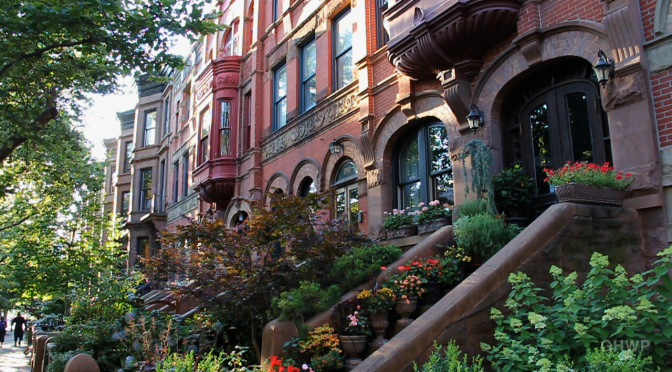
Park Slope and the Story of Brownstone Brooklyn

PODCAST Park Slope — or simply the park slope, as they used to say — is best known for its spectacular Victorian-era mansions and brownstones, one of the most romantic neighborhoods in all of Brooklyn. It’s also a leading example of the gentrifying forces that are currently changing the make-up of the borough of Brooklyn to this day.

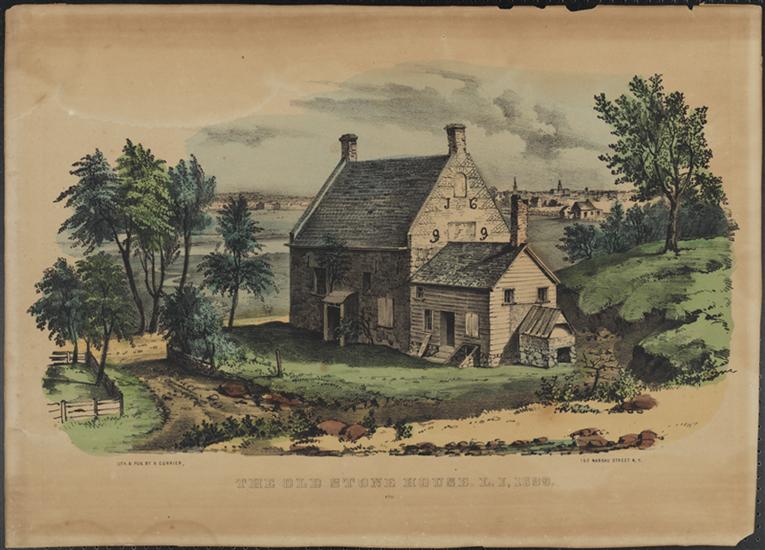
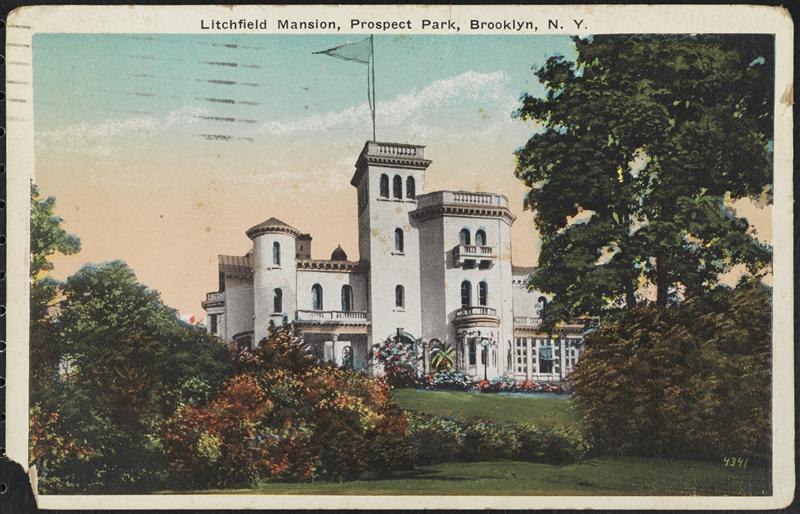
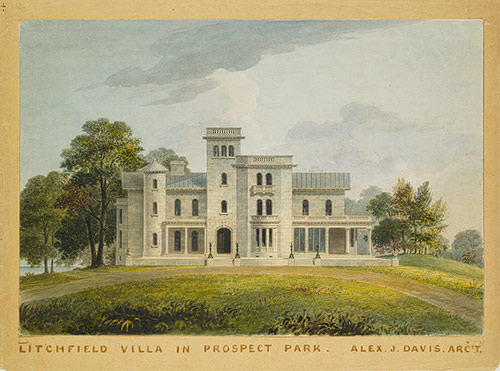
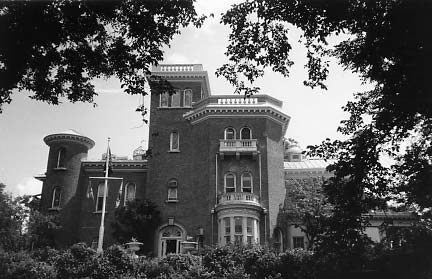
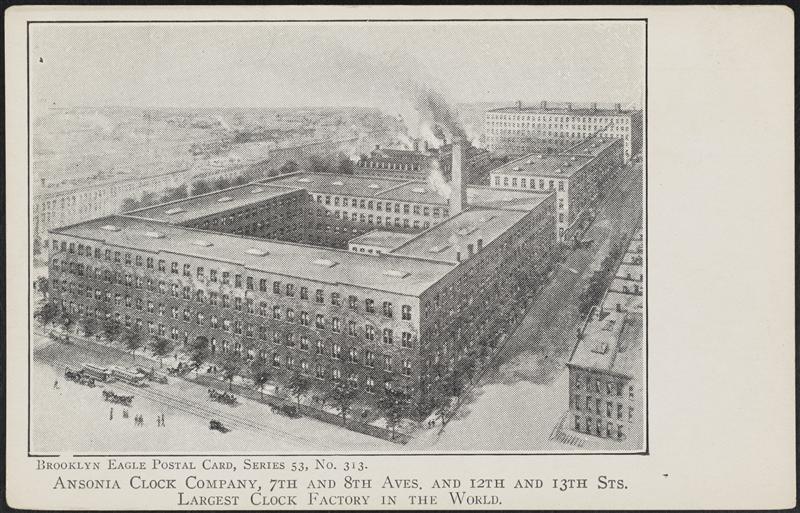
During the 18th century this sloping land was subject to one of the most demoralizing battles of the Revolutionary War, embodied today by the Old Stone House, an anchor of this changing neighborhood. In the 1850s, the railroad baron Edwin Clark Litchfield brought the first real estate development to this area in the form of his fabulous villa on the hill. By the 1890s the blocks were stacked with charming house, mostly for occupancy by wealthy families.

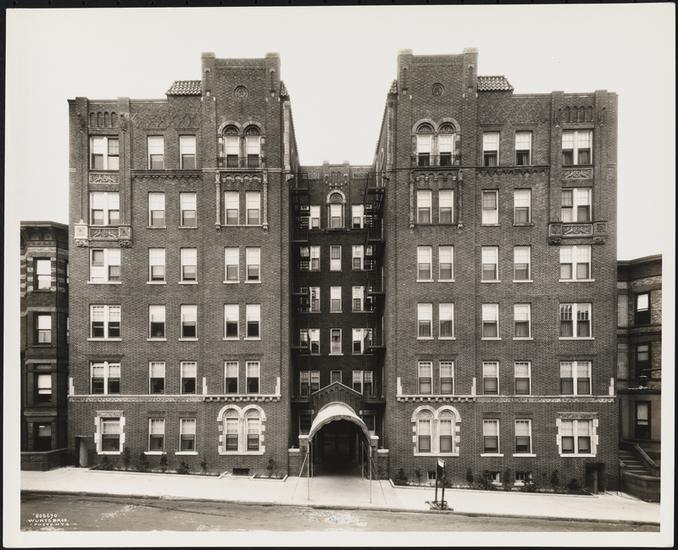
Circumstances during the Great Depression and World War II reconfigured most of these old (and old fashioned) homes into boarding houses and working-class housing. Then a funny thing happens, something of a surprising development in the 1960s: the arrival of the brownstoners, self-proclaimed — pioneers — who refurbished deteriorating homes.

The revitalization of Park Slope has been a mixed blessing as later waves of gentrification and rising prices threaten to push out both older residents and original gentrifiers alike.

PLUS: The terrifying details of one of the worst plane crashes in American history, a disaster that almost took out one of the oldest corners of the neighborhood.

And a special thanks to our guests on this show — Kim Maier from the Old Stone House; Julie Golia, Director of Public History, Brooklyn Historical Society; and  John Casson and Michael Cairl, both of Park Slope Civic Council.


The Bowery Boys: New York City History podcast is brought to you …. by you!

Starting this month, we are doubling our number of episodes per month. Now you’ll hear a new Bowery Boys podcast every two weeks. We’re also looking to improve the show in other ways and expand in other ways as well — through publishing, social media, live events and other forms of media. But we can only do this with your help!

We are now a member of Patreon, a patronage platform where you can support your favorite content creators for as little as a $1 a month.

Please visit our page on Patreon and watch a short video of us recording the show and talking about our expansion plans. If you’d like to help out, there are five different pledge levels (and with clever names too — Mannahatta, New Amsterdam, Five Points, Gilded Age, Jazz Age and Empire State). Check them out and consider being a sponsor.

We greatly appreciate our listeners and readers and thank you for joining us on this journey so far. And the best is yet to come!


The Vechte Cortelyou House (aka the Old Stone House) depicted as it looked in 1699 (from a hand colored lithograph by the firm of Nathaniel Currier, MCNY)

MNY323785

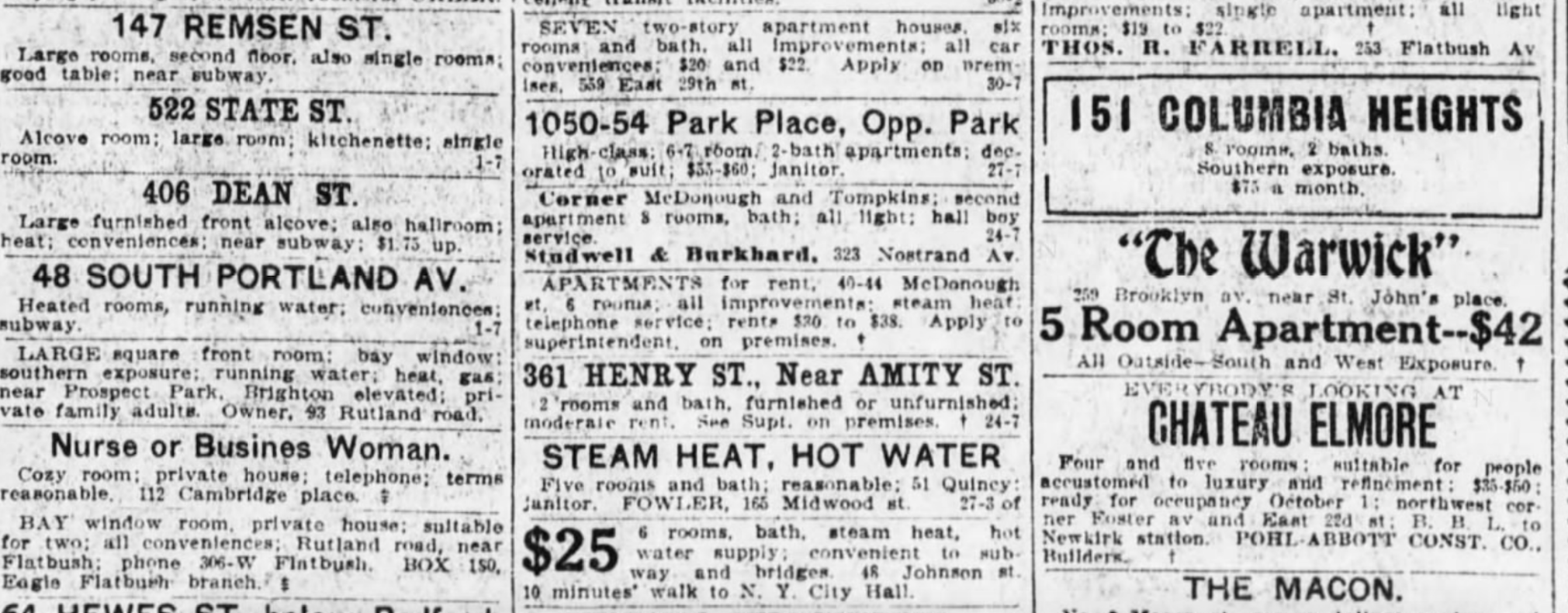
A collection of classified ads from the December 1, 1912 issue of the Brooklyn Daily Eagle, offering several living options in the park slope area.

Screen Shot 2015-05-01 at 9.03.50 AM
 
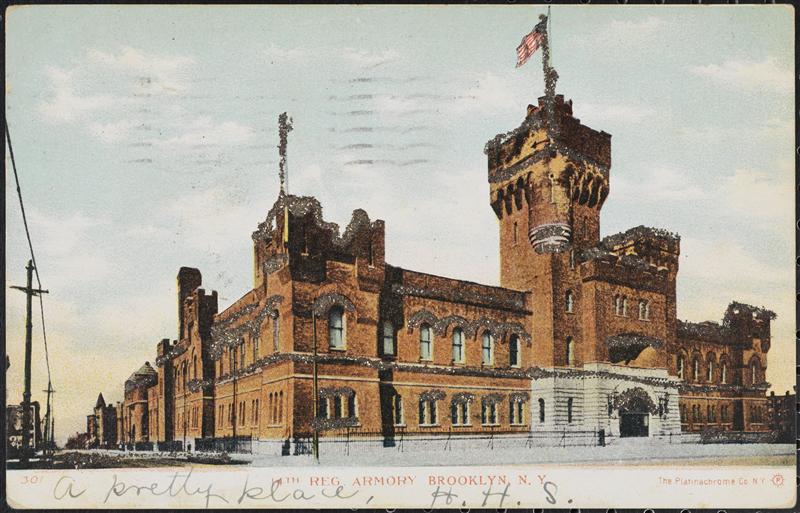
The stark Fourteenth Street Armory, located in the South Slope, depicted here as it looked in 1906 — “a pretty place” (MCNY)
M3Y44090
 
 
Congregation Beth Elohim, pictured here on September 16, 1929, located at Garfield Place and 8th Avenue. (MCNY)
MNY195546

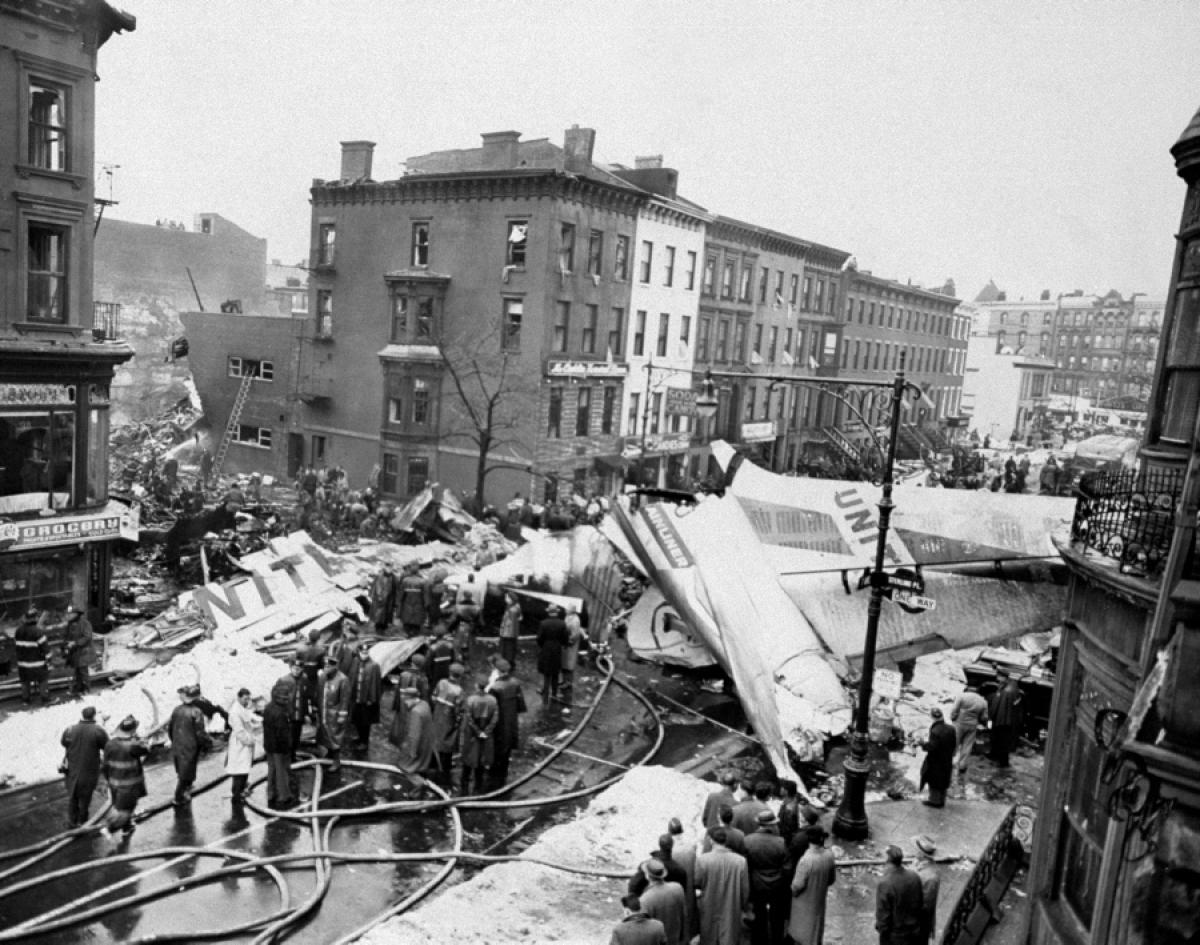
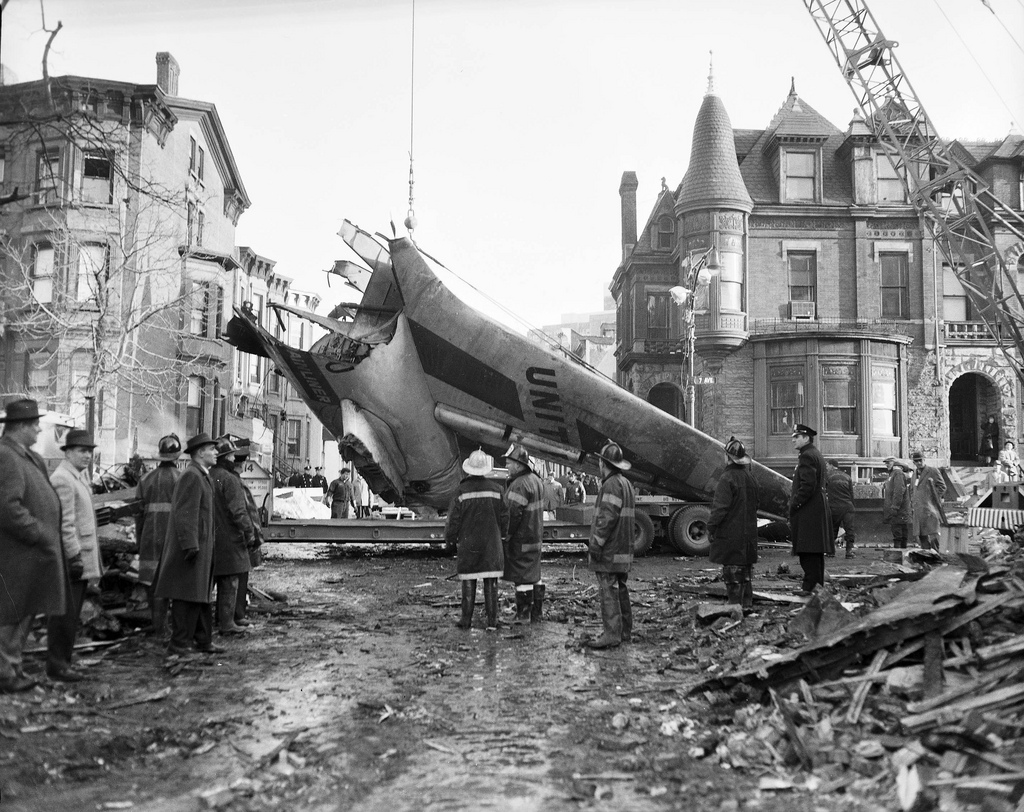
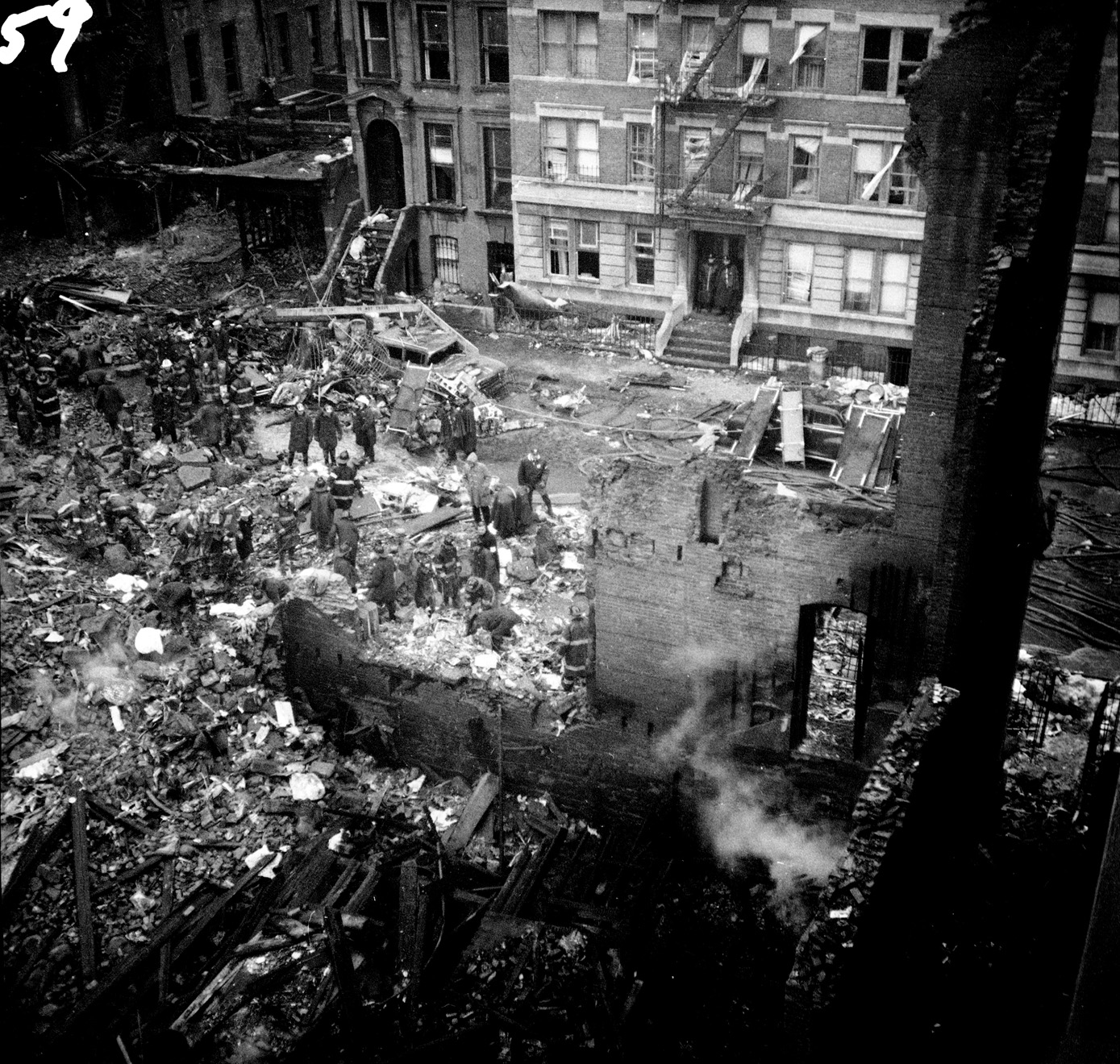
The horrific place crash of December 16, 1960 — United Airlines Flight 826, bound for Idlewild Airport, colliding with Trans World Airlines Flight 266, heading to LaGuardia Airport. 128 passengers were killed, along with six people on the ground. (Top picture courtesy New York Daily News; the two after are from the New York Fire Deparment. You can find further images here)

park-slope-plane-crash-1960
6523090255_8a5f5ab891_b
6523086749_f7564b2665_o

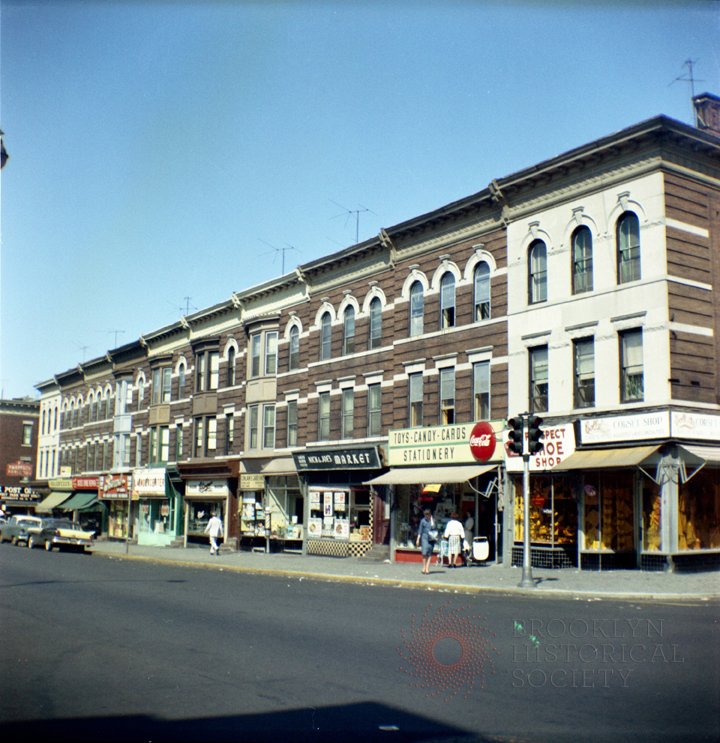
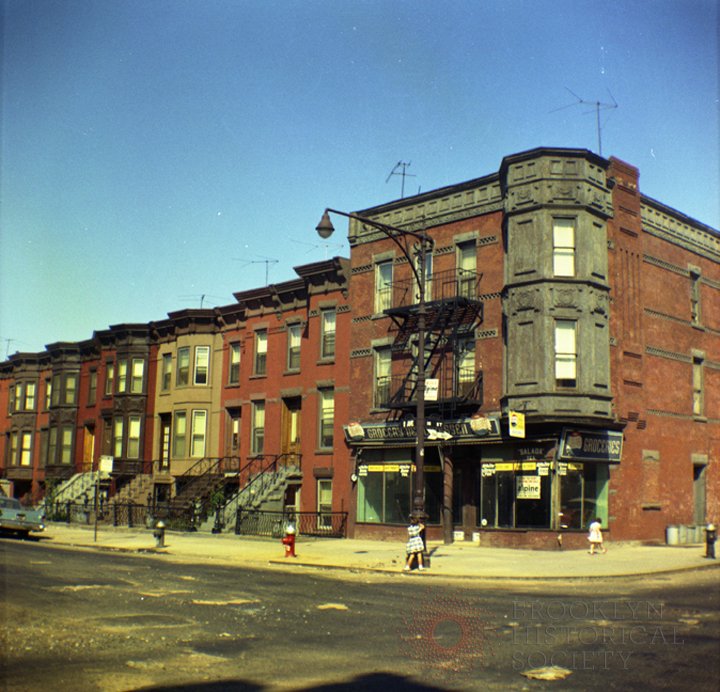
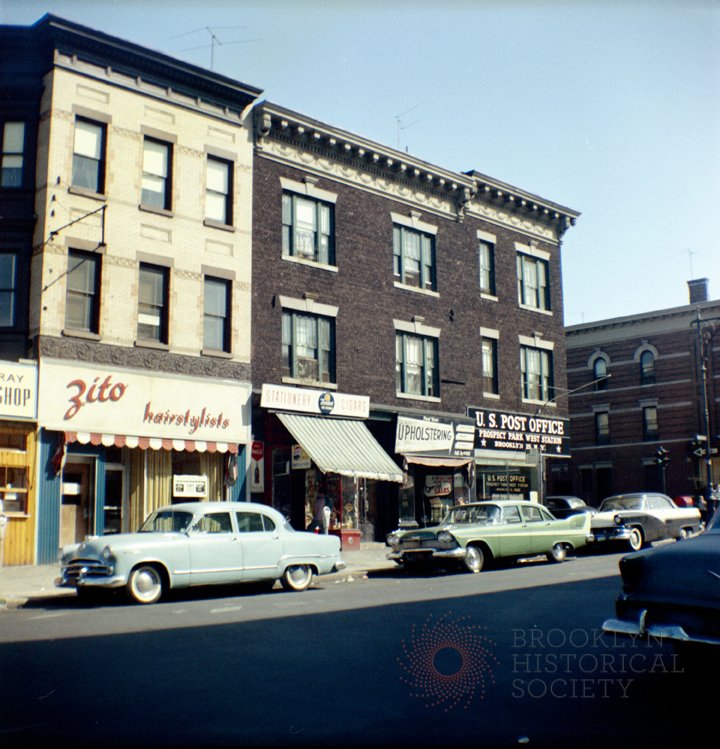
Some images from 1961 by John Morrell from the archives of the Brooklyn Historical Society:

A view along Prospect Park West at and 16th Street and Windsor Place.

V19749246

View of east side of 8th Avenue between 15th and 16th Streets looking north. n.e. cor. 16th Street (right) & 8th Avenue.

V19749250

Prospect Park West looking south toward Prospect Park/branch, U.S. Post Office (at northeast corner of Prospect Park W. & 16th Street).

V19749245

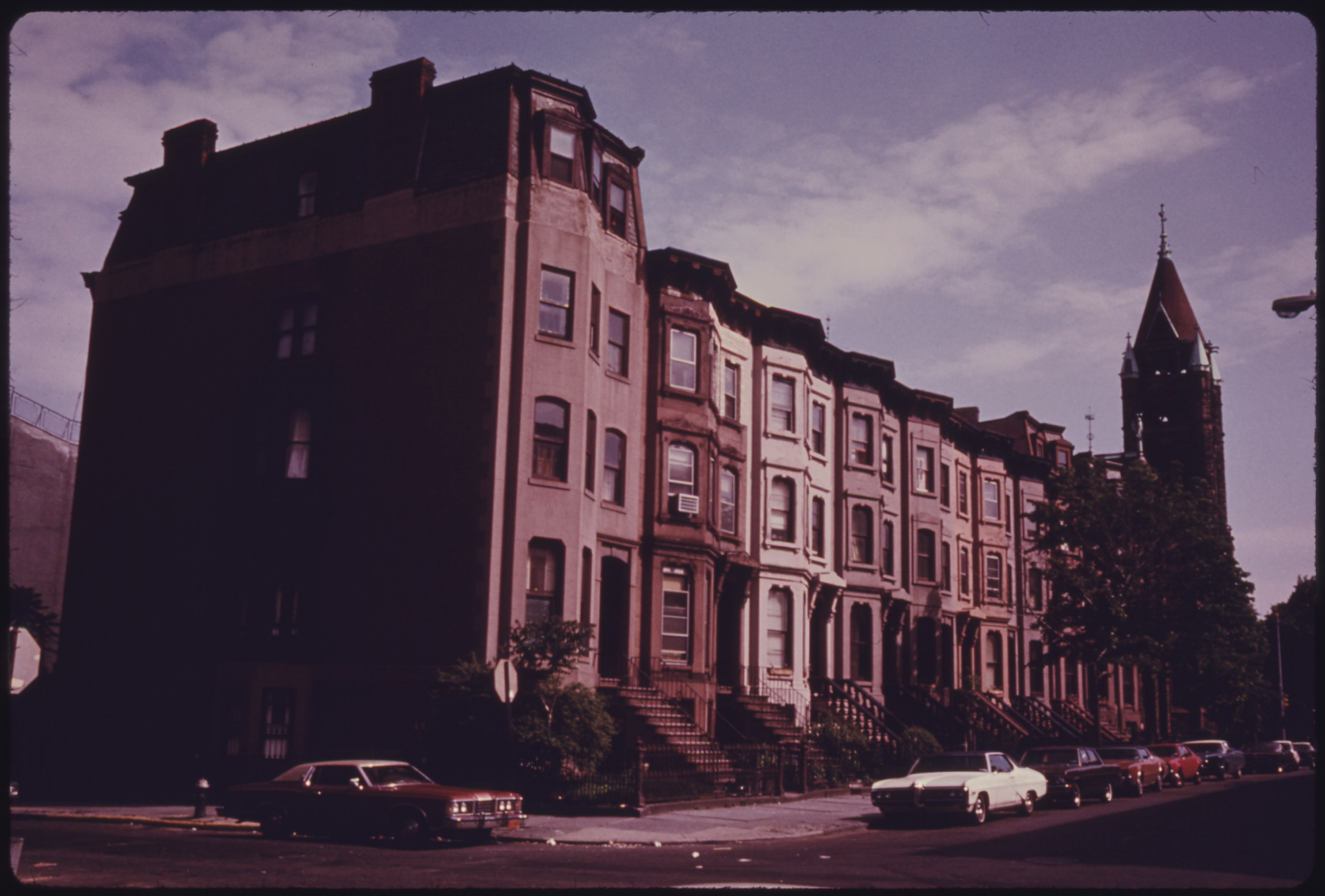
By the 1970s so mansions and brownstones close to the park were getting renovated by ‘pioneers’ with the means to restore these homes to their original splendor.

Landscape

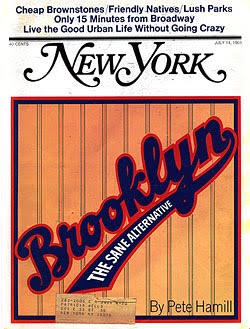
In 1969, New York Magazine touted the ‘radical’ alternative of moving to Brooklyn in an article by Pete Hamill:

1969-0714-cover-250

TOP PHOTOGRAPH by Luci West from Moving Postcard

Categories
Parks and Recreation

Brooklyn’s Forgotten Lake: Pictures of Mount Prospect Reservoir

As you can see, the Bowery Boys: New York City  History blog has gone through some major changes this week.  We have a new URL (boweryboyshistory.com) and a dynamic new layout which will present articles, photographs and podcast audio is a more user-friendly way.  There’s still some backlogged clean up to do so thank you for your patience.  But we think this new format is more reader friendly and makes these old photographs look so much more amazing.

And so, on that note, I thought I’d test out the expanded-image waters here by presenting a few views of one of the most enchanting places from the 19th century, a place that no longer exists — the Mount Prospect Reservoir.

Photographed by Robert Bracklow, courtesy the Museum of the City of New York


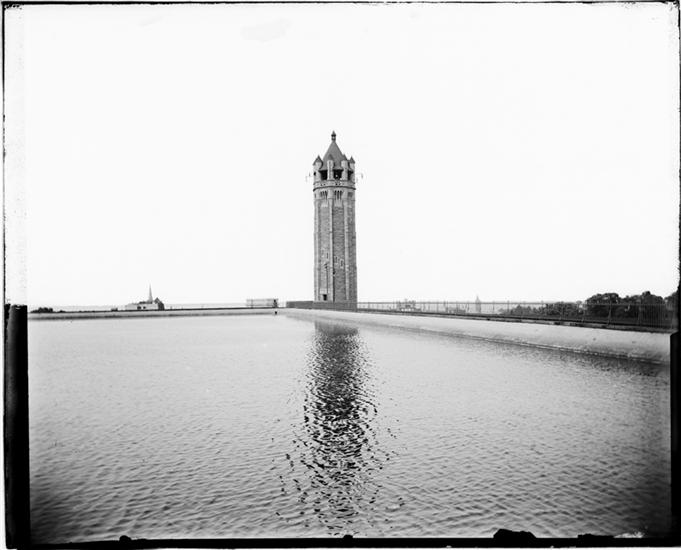
Back when it was an independent city, Brooklyn received most of its drinking water from Long Island, pumped into to a large receiving reservoir in Ridgewood.  Some of that was then send southward to a reservoir built in the late 1850s at the second highest point in Brooklyn — Mount Prospect — rising 200 feet above sea level.

The reservoir was 3 1/2 acres, holding 20 million gallons of water at a depth of 20 feet. Or, according to the Brooklyn Daily Eagle, “containing just about enough water to cook the breakfast of the people of Brooklyn for a week

The elevation was not included in the original design of Prospect Park, conceived in the 1860s as Brooklyn’s own Central Park. ** Especially odd when you consider that Prospect Park takes its name from the hill where the reservoir resided.

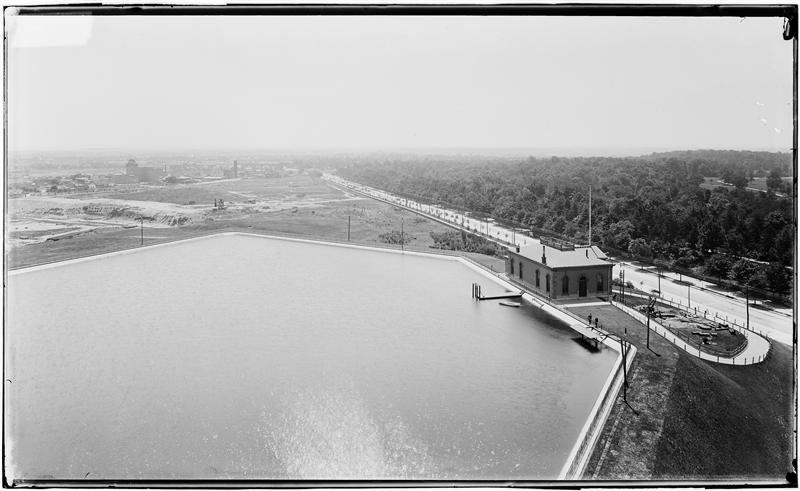
Pump house at the old reservoir on the East Side Lands, with Flatbush Avenue behind it, and Prospect Park in the background.
Pump house at the old reservoir on the East Side Lands, with Flatbush Avenue behind it, and Prospect Park in the background. [Courtesy Museum of the City of New York]
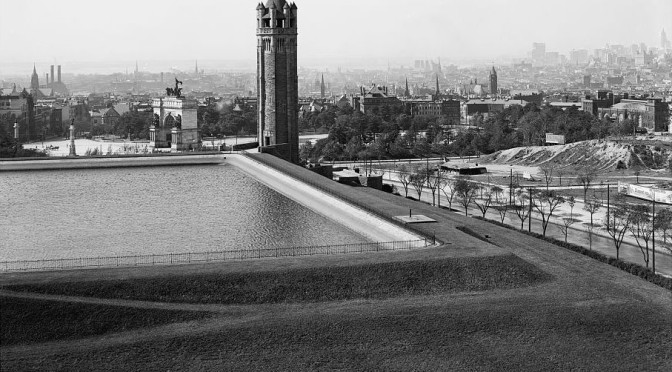
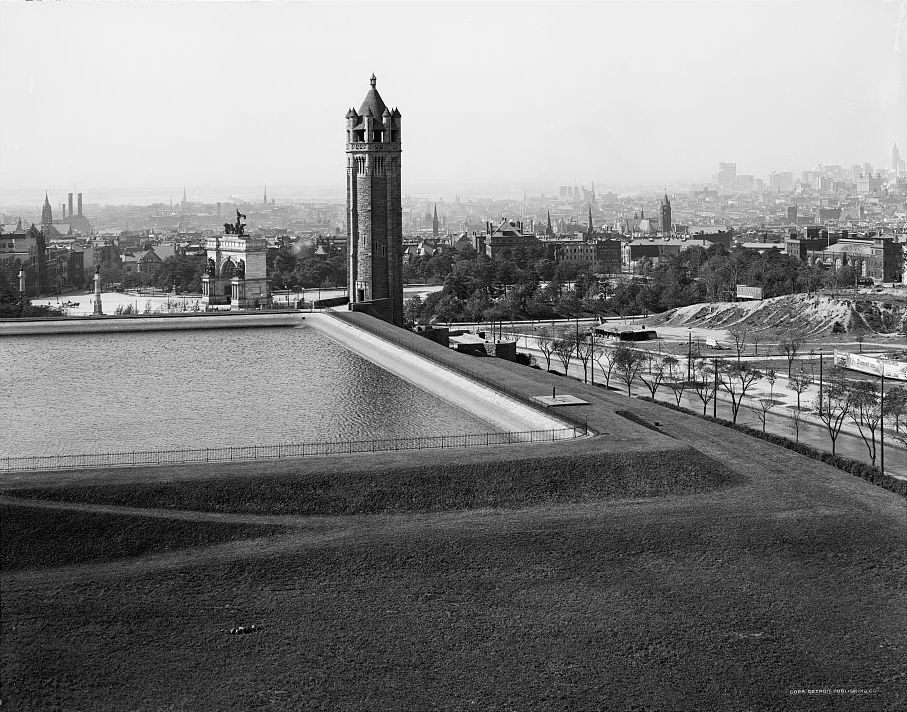
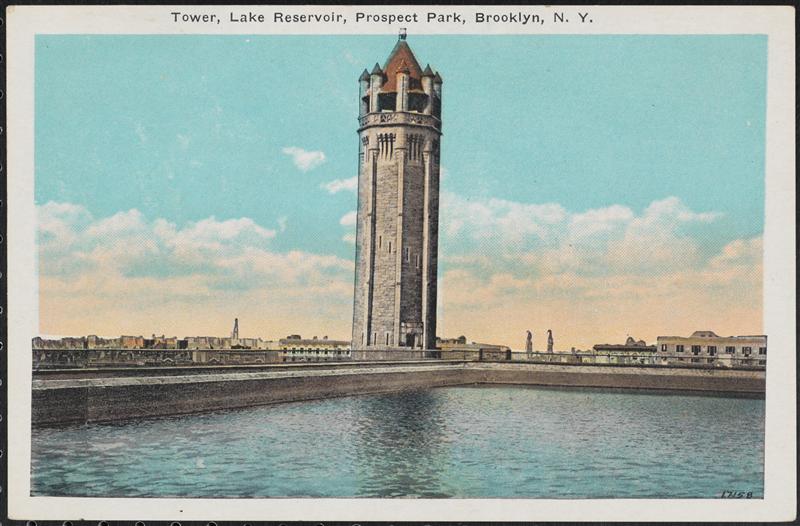
 Standing besides the man made lake was a pumping station and a grand Gothic tower, 30 feet tall. The world could be seen from here. “From the top of the tower … could be afforded a grand view overlooking the Park and City of Brooklyn; south may be seen the Atlantic Ocean; west, Staten Island and New Jersey; north, the Bay and the City of New York; east, the Navy Yard, Williamsburgh and the East River, altogether affording one of the grandest views imaginable.” [source]

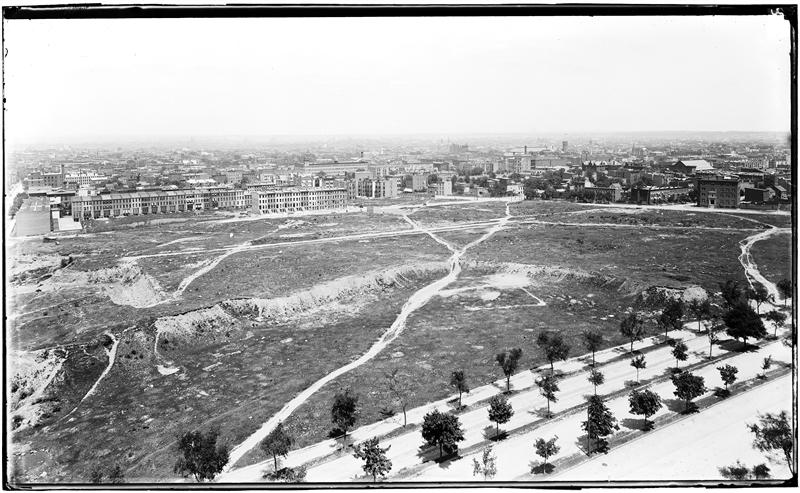
Below: Circa 1900, looking north from the reservoir over Eastern Parkway into what is today’s Prospect Heights neighborhood.  Below that, looking out over Grand Army Plaza. Photos by George Hall and Sons. Courtesy Museum of City of New York
3

4

When Brooklyn was incorporated into the consolidated Greater New York, they also were brought into New  York’s central water system (i.e. the Croton Aqueduct, later blended with the waters of the Delaware and the Catskills).  The Mount Prospect Reservoir was dismantled in 1940 and turned into a park. And the tower was torn down as well when the central branch of the Brooklyn Public Library was constructed.

According to BPL’s blog,  “The wrecking company in charge of tearing it down announced in the Eagle that the Connecticut pink granite used to build the tower would be made freely available to anyone who wanted it.”  So there may be pieces of the old tower incorporated into buildings all across the borough!

Looking over Brooklyn and Manhattan
Looking over Brooklyn and Manhattan (Library of Congress)


Unsurprisingly, the reservoir was a bit of a tourist attraction as evidenced by this postcard. (Courtesy the Museum of the City of New York)


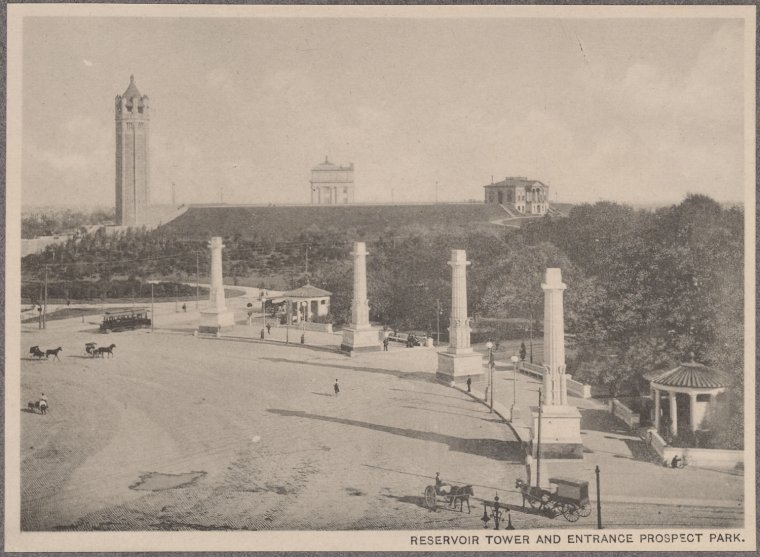
Viewing the entrance to Prospect Park with the reservoir and tower behind it. From this vantage you can see the Brooklyn Museum and the Mount Prospect Laboratory.


** See Matthew’s comment below about Mount Prospect’s appearance in the original Prospect Park plan.

Categories
Podcasts

Bicycle Mania! The story of New York on two wheels, from velocipedes to ten-speeds — with women’s liberation in tow


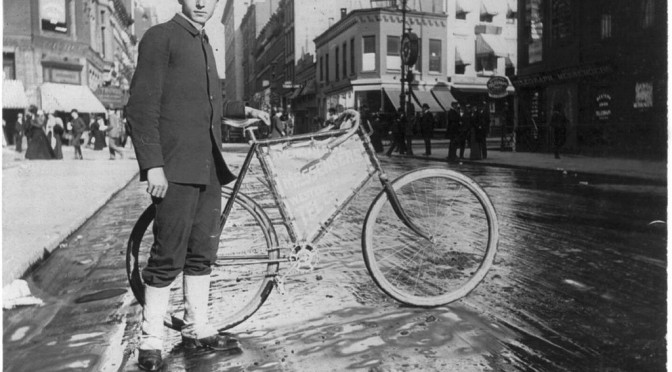
Alice Austen’s iconic photograph of a telegram bike messenger in 1896, a year where many New Yorkers were wild about bikes. Austen even rode one around with her camera. 

PODCAST The bicycle has always seemed like a slightly awkward form of transportation in big cities, but in fact, it’s reliable, convenient, clean and — believe it or not — popular in New York City for almost 200 years.

The original two-wheeled conveyance was the velocipede or dandy horse which debuted in New York in 1819. After the Civil War, an improved velocipede dazzled the likes of Henry Ward Beecher and became a frequent companion of carriages and streetcars on the streets of New York. Sporting men, meanwhile, took to the expensive high-wheeler.

But it was during the 1890s when New Yorkers really pined for the bicycle. It liberated women, inspired music and questioned Victorian morality. Casual riders made Central Park and Riverside Drive their home, while professionals took to the velodrome of Madison Square Garden. And in Brooklyn, riders delighted in New York’s first bike path, built in 1894 to bring people out to Coney Island.

FEATURING:  Robert Moses, Charles Willson Peale, Ed Koch, and New York’s bike thief in bloomers!


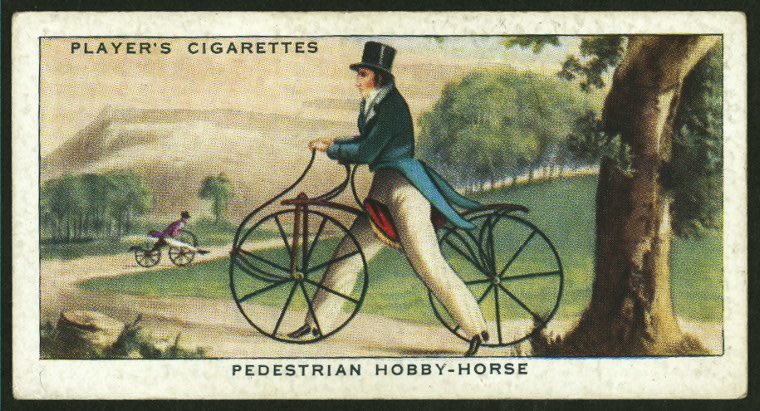
The early velocipede went by several names — the hobby horse, the dandy horse, the draisine. This device made a big splash in 1819 before they were effectively banned from the city. [NYPL]


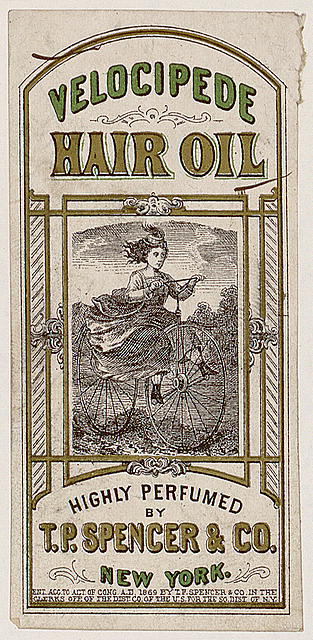
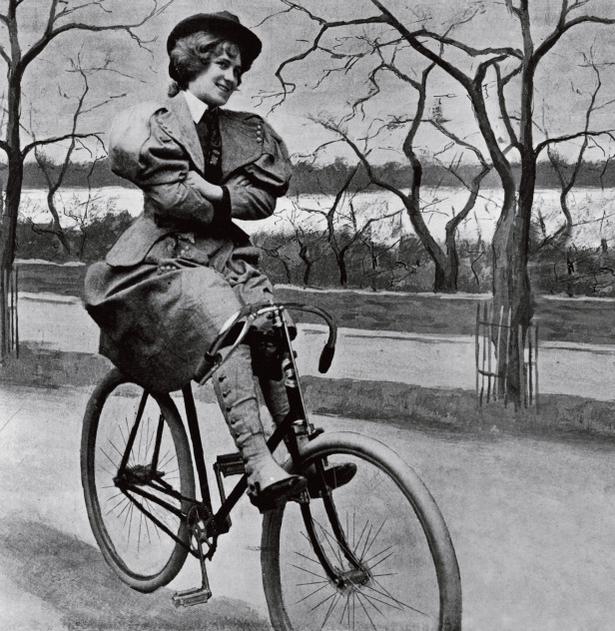
With the velocipede craze of the late 1860s, women attempted to conform to Victorian ideals of fashion with a host of bizarre products to maintain a ladylike presentation. By the 1890s, women riders chucked most of those conformities out the window, introducing more comfortable clothing and embracing the independence offered by the bicycle.

At top: An ad for a hair product, 1869. (LOC) Below: A radical change of costume in a photo illustration from 1890s (courtesy Brain Pickings, accompanying an amusing article of women’s bicycle do’s and don’ts from 1895)
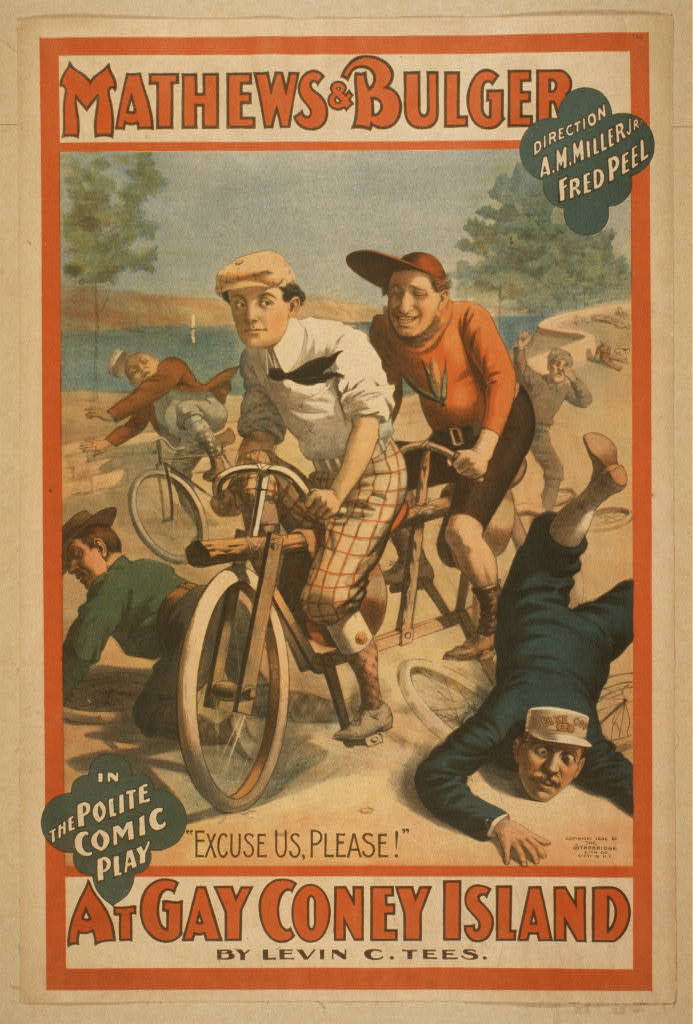
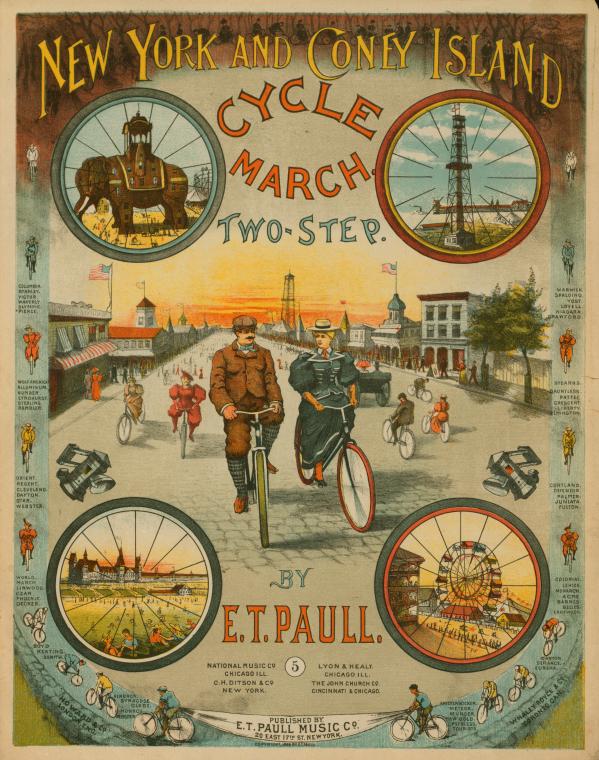
The bicycle didn’t just provide transportation and recreation in the 1890s. It influenced entertainment as well, through the songs of Tin Pan Alley. Below: A ‘comic play’ and a two-steph, both from 1896, and both inspired by the Coney Island Bike Path. (LOC)
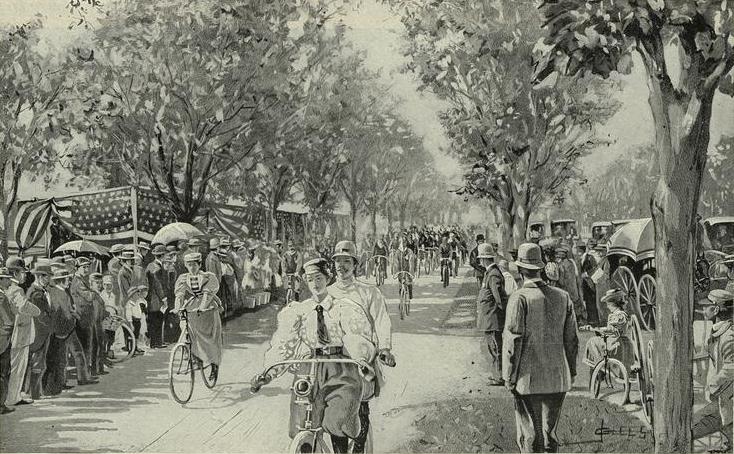
The Coney Island Bike Path in 1896, running up Ocean Parkway to Prospect Park. I believe this illustrates the opening of the return path, as the original path opened in 1894

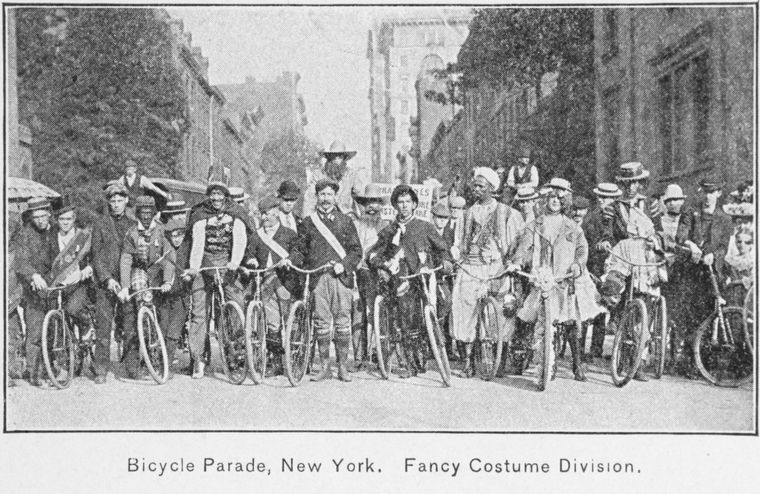
I have absolutely no context for this image, but I love it. Taken sometime between 1894-1901 [NYPL]

Yosemite’s loss: Olmstead between the parks

Hopefully some of you are watching the Ken Burns multi-hour epic documentary The National Parks: America’s Great Idea, a fascinating but rather languid celebration of American preservation of its greatest natural treasures.

I’m assuming that by Wednesday, Burns should get here to New York with discussion of two national monuments (the Statue of Liberty and Castle Clinton) protected through Theodore Roosevelt’s Antiquities Act. And later with the 1966 establishment of the National Register of Historic Places, as well as the 1972 formation of the Gateway National Recreational Area, scattered through Queens, Staten Island and New Jersey.

I was pleasantly pleased to hear the name Frederick Law Olmsted dropped during the first episode. Olmsted was a commissioner for the State of California in 1865, assigned to formulate a plan for Yosemite Valley, America’s first natural area granted money by the United States government.

From our perspective, Olmsted was between his two great New York masterpieces. The creation of Central Park had begun in 1857, but by 1960, Olmsted’s rocky relationship with the city and Tammany Hall got him replaced as superintendent. He fled to Civil War battlefields as secretary of the U.S. Sanitation Commission (prototype of the Red Cross) and eventually made his way to California as the operator of an unsuccessful mining company.

His attempts in Yosemite were not well received. His report to the state of California in 1865 is seen today as a far-sighted explication of the responsibility of government to preserve their natural gifts for the health and well-being of its citizenry. (You can read the entire proposal here.)

California just shrugged. It was their loss, frankly. Faced with this rejection and the failure of his mining practice, Olmsted came back to New York to work once again with his partner Calvert Vaux. A year after Olmsted’s Yosemite rejection, work was underway on their second masterpiece — Prospect Park.

Prospect Park: Montgomery Clift’s final resting place


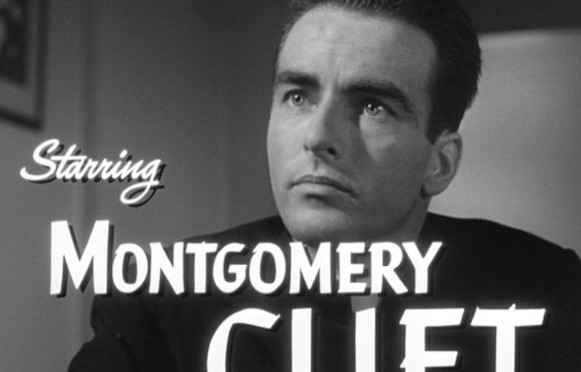
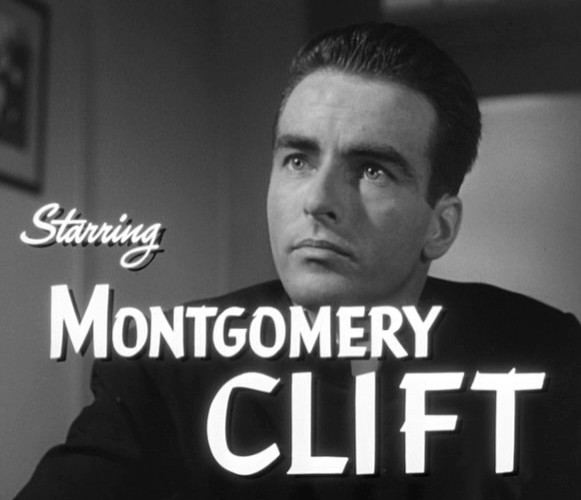
One curious fact we mentioned in our Prospect Park podcast is that classic film actor Montgomery Clift is actually buried here, in a quiet Quaker cemetery near the southwest entrance of the park. As far as I’m aware, entrance to the tombstones is locked, and its so cloistered away in the woods that it’s difficult to find.

So why would a movie star be buried here of all places? The handsome Nebraska-born actor came to prominence in such searing Hollywood films as A Place In The Sun and From Here To Eternity. In 1956, Clift crashed into a tree while leaving the home of Elizabeth Taylor. (Hollywood lore famously suggests Liz raced to the accident scene and fished out broken teeth that were lodged in his throat.) His career was never the same after reconstructive plastic surgery.

Hooked on pain medication and driven to drink, Clift was found dead in his Manhattan townhouse at 217 East 61st Street on July 22, 1966. Clift was allowed to be buried here, quietly and with little fanfare, because his mother Sunny was a practicing Quaker. Still, these were the film actors; actress Nancy Walker planted two hundred crocuses around his tiny tombstone, reportedly designed by the same man who made John F. Kennedy’s marker at Arlington Cemetery.

The hidden cemetery of almost 2,000 graves, on this land long before Prospect Park, used to be larger. The city acquired only part of it however, and thus the graveyard remains the only patch of private land in the park.

Look here for a map of the area.

Categories
Podcasts

Prospect Park and the return of Olmsted and Vaux

Prospect Park, Brooklyn’s biggest public space and home to the borough’s only natural forest, was a sequel for Olmsted and Vaux after their revolutionary creation Central Park. But can these two landscape architects still work together or will their egos get in the way? And what happens to their dream when McKim, Mead and White and Robert Moses get to it?

PODCAST Listen to it for FREE on iTunes or other podcasting services. Or click this link to listen to the show or download it directly from our satellite site

The area of Prospect Park in 1776. This spot, called Flatbush Pass (and later Battle Pass), was the scene of a violent clash between Continental Army soldiers and Hessians employed by the British army. Part of the reason the park was located here was to preserve this hallowed historical war spot.

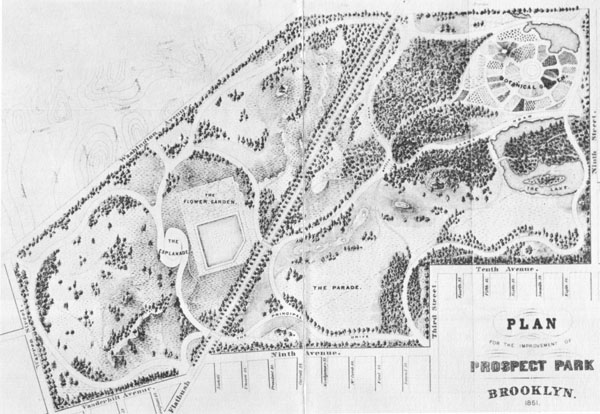
Egbert Viele’s proposed ‘Mount Prospect Park’ blossomed around Flatbush Avenue, which would be arched with pedestrian bridges. This plan would have retained Mount Prospect. But what kind of a park has a major thoroughfare cutting right through it.

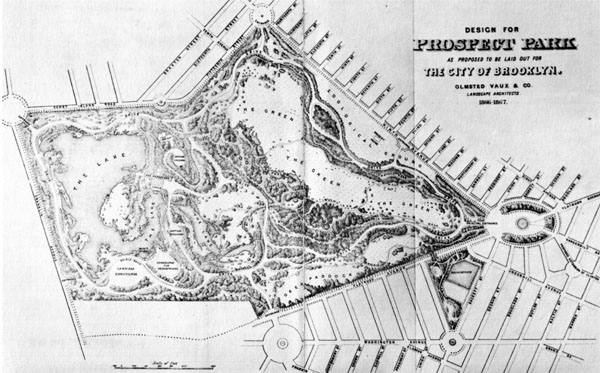
Olmstead and Vaux, meanwhile, opted to eliminate one side of Viele’s plan entirely, expanding it south and west with newly acquired land.

The home of Edwin Litchfield, as it looked back in the day…

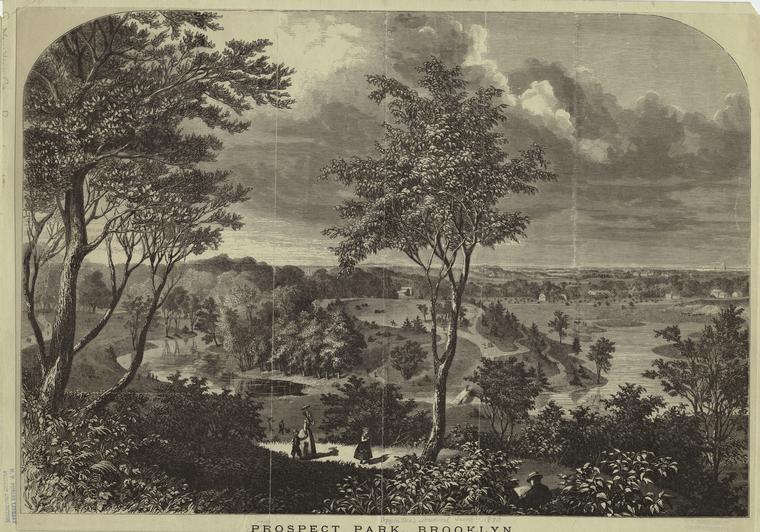
An artist’s depiction of Prospect’s tableaux-style natural foliage. The landscape architects wanted to ‘augment’ the natural beauty of the area. That augmentation included over 70,000 new trees and shrubs.

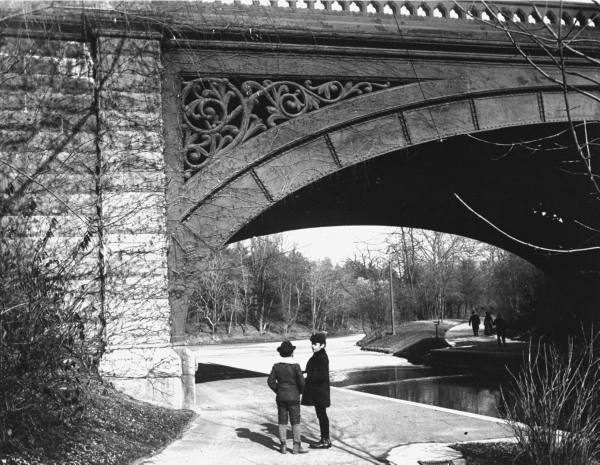
Arches, bridges and overpasses weave throughout the park, often creating fairytale like settings. Photo, taken in 1887 by Wallace G. Levison

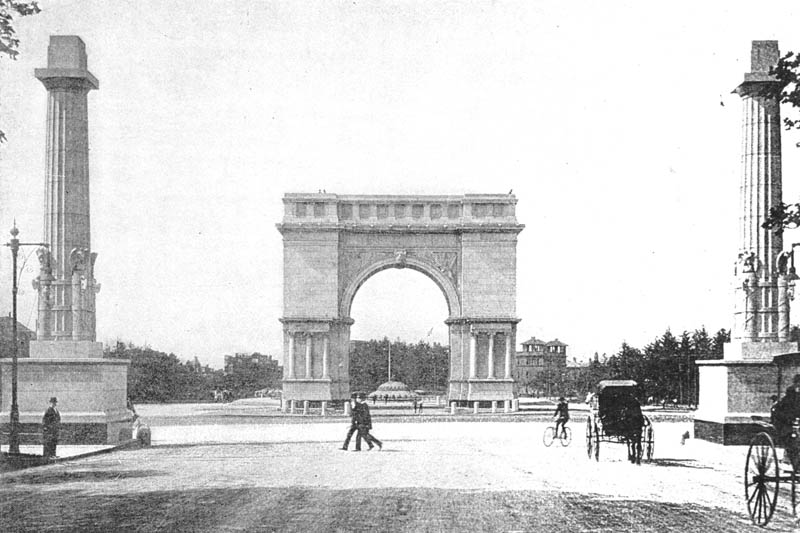
Grand Army Plaza in 1894. More would be added to the plaza, giving it that ornate, triumphal feel — not exactly what Olmsted and Vaux had really intended.

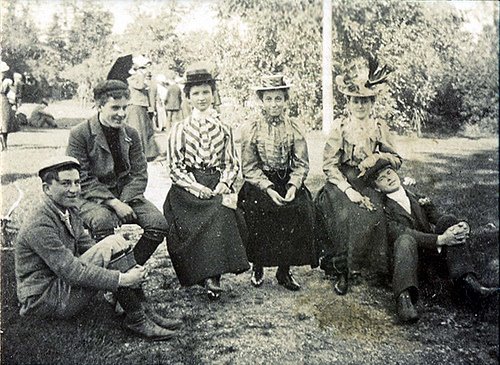
Young adults hangin’ around the park, circa the 1910s

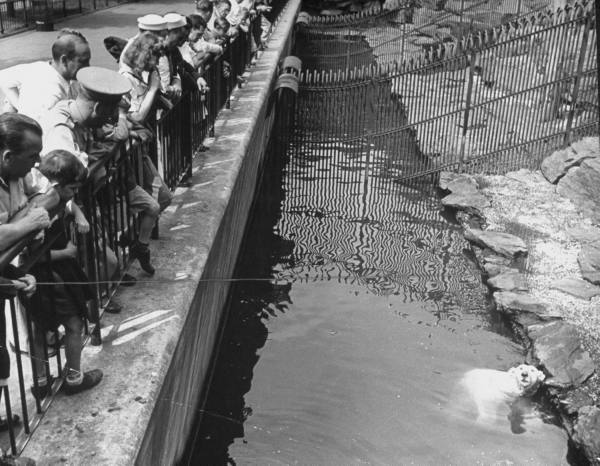
One of Robert Moses’ more beneficial additions: the Prospect Park Zoo (as it looked in 1943)

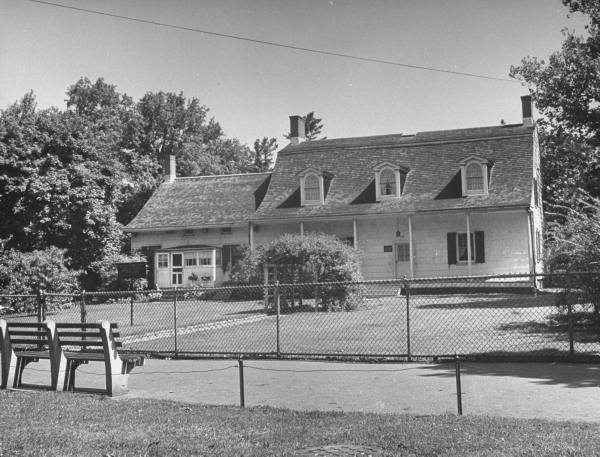
The old Leffert’s homestead did not start out in Prospect Park. It moved there when it was sold to the city in 1918

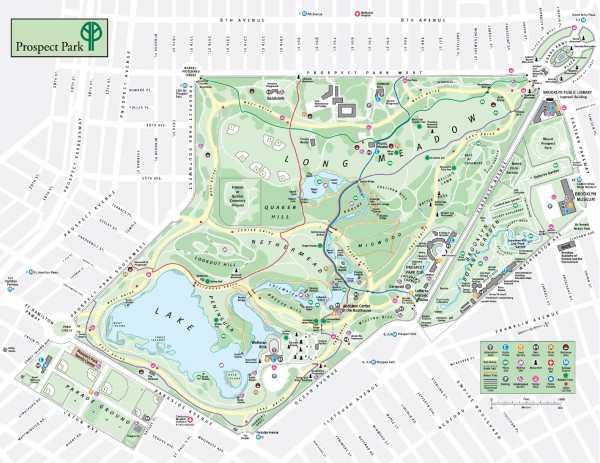
A current map of the park.

A ride around New York’s remaining merry-go-rounds

Carousels aren’t really for kids anymore. Sure, you won’t see many adults truly captivated by the process of mounting a wooden animal and twirling in a circle. But well-preserved models of the famous amusements are nostalgia goldmines; tinkling calliope music and a few flashing light bulbs can sometimes capture a by-gone era more than a multi-million dollar restoration can.

New York City used to have dozens of the swirling entertainments. Today, you can only find them in a few places:

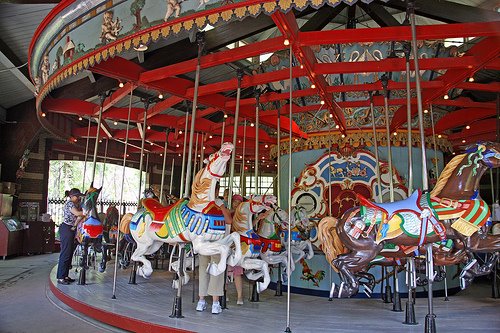
Central Park Carousel (above)
This is perhaps the world’s most famous carousel, but it’s not the original amusement which debuted in 1871. That carousel was controlled by a blind mule that walked around in circle in a dark, underground pit, as upper-class children paid the rather steep ten cent admission for a chance to ride it. It was replaced by an electric carousel in 1924 and was eventually destroyed in fire.

The carousel that whirrs about here today is actually much older, built in 1908 and entertained children during Coney Island’s heyday. Still one of the world’s largest carousels, it moved to this location in 1950.

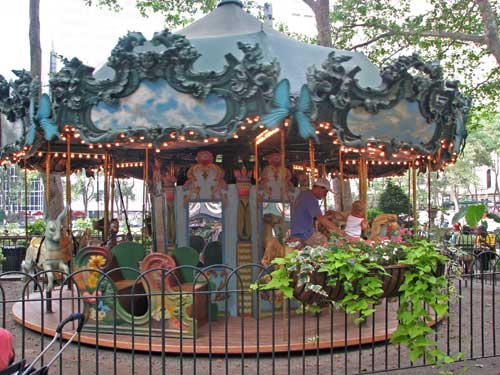
La Carrousel
Given to the park’s symmetrical French landscape design, they call the one in Bryant Park Le Carrousel (ooo la la). Despite seeming very rustic, this miniature wedding-cake was only installed in 2001. I can only imagine what a carousel would have seemed like had it been here during Bryant Park’s days as a hangout for drug addicts.

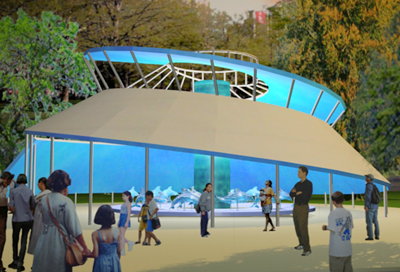
Battery Park SeaGlass
This glittery, futuristic looking thing recalls Battery Park’s past as the home of the New York Aquarium, with horses replaced by creatures of the sea. Oh wait. This carousel’s not built yet.

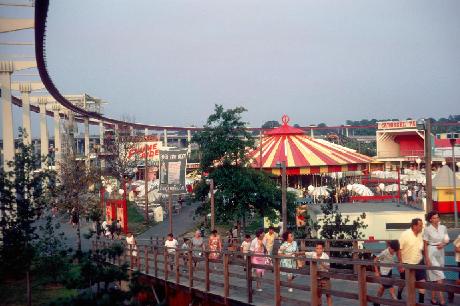
Flushing Meadows-Corona Park ‘Carousel In The Park’
Queens’ only merry-go-round came here from Coney Island, by way of the New York World’s Fair in 1964. Previously, it spent the early part of the century as the official carousel of Stubbman’s Beer Garden until the 1950s, where it moved up to the boardwalk next to the parachute jump and became the Steeplechase Carousel. It was transported to the World’s Fair Lake Amusement area (pictured above) and was left there, donated to the city, long after the Fair left town.

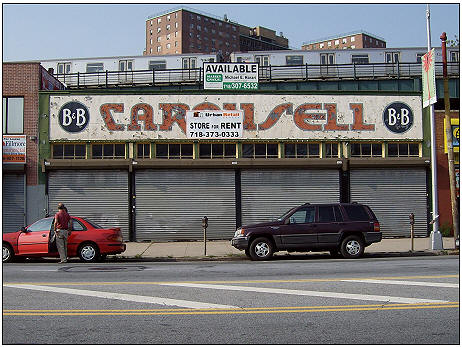
B & B Carousell
Coney Island was the home of dozens of spectacular carousels and could safely be considered the world’s largest assemblage of them. Today there’s only one left — the wonderfully misspelled B & B Carousell, which arrived in 1923. But don’t go looking for it. After being purchased by the city, the Carousell is currently being refurbished in Ohio for the fancy new Steeplechase Plaza, the city’s costly revamp of the Coney Island amusement sector. However its former home still sits, sad and vacant:

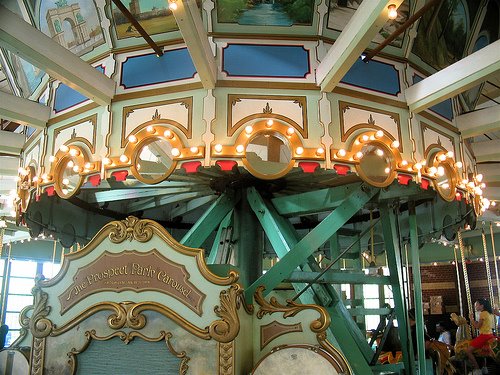
Prospect Park Carousel
Sitting close to the zoo and Leffert’s Homestead, this was also acquired from a Coney Island site in 1952, although the park has had merry-go-arounds since its inception. It stopped running altogether in the 1980s due to mechanical failures but was renovated in 1990. The park has a ‘horse adoption and grooming’ program to keep the carousel in working order.

The Carousel for All Children
This awkwardly named merry-go-round is located at Willowbrook Park in Staten Island’s Greenbelt. Nothing too retro about this ride; a modern model built in Ohio, it was installed here at Willowbrook in 1999. However, some of the horses are reproductions of those of Staten Island’s very first carousel — a version that entertained on Midland Beach Boardwalk from the mid 1910s that was dismantled in 1957.

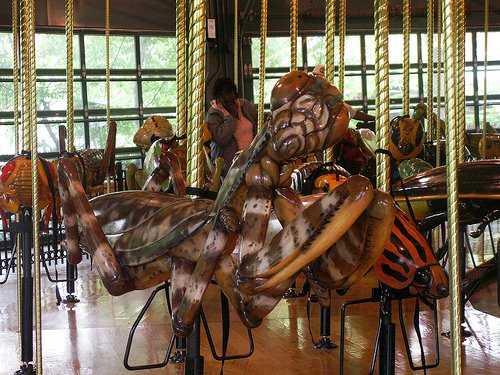
The Bronx Zoo Bug Carousel
The New York area’s newest carousel, debuting in 2005, the Bronx Zoo model is certainly the only one of its kind to be comprised entirely of insects.

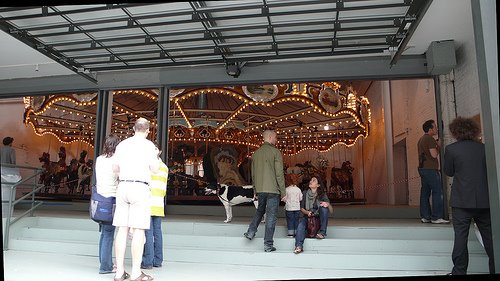
Jane’s Carousel
The strangest carousel in New York is one that unfortunately does not take riders. Jane Walentas, wife of Brooklyn real estate developer David Walentas, keeps a fully restored 1922 carousel (seen below) tucked away in a building on Water Street. Walentas, who purchased the crumbling amusement in 1984 and personally restored it, has been hoping the city would adopt her hobby horse for the expanding Brooklyn Bridge Park. Until then, pop by 56 Water Street to grab a view, if not a ride.

Know of any I might have missed?

New York’s best performances – Part 3

It’s funny that the decade in which New York is truly at its lowest — crime at its all time high, fiscal crisis, the city’s landmarks falling apart — also happens to be the best decade ever for films about New York. I’ve already listed Taxi Driver and Saturday Night Fever, but you could wax on endlessly about New York films in the 1970s: Three Days of the Condor, Marathon Man, The Godfather, Annie Hall, The Taking of Pelham 1-2-3, Mean Streets, Shaft, All That Jazz, Network, the Panic at Needle Park.

And of course, these three….

Chaos
4. Dog Day Afternoon
Warming up the crowd

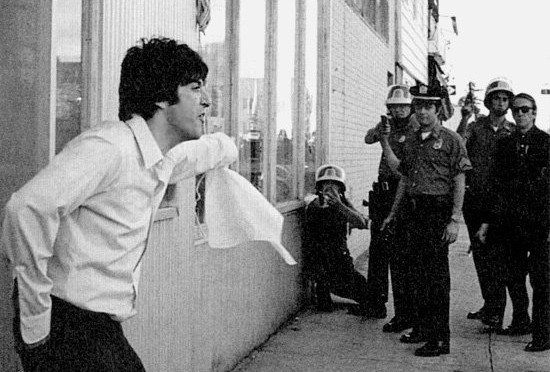
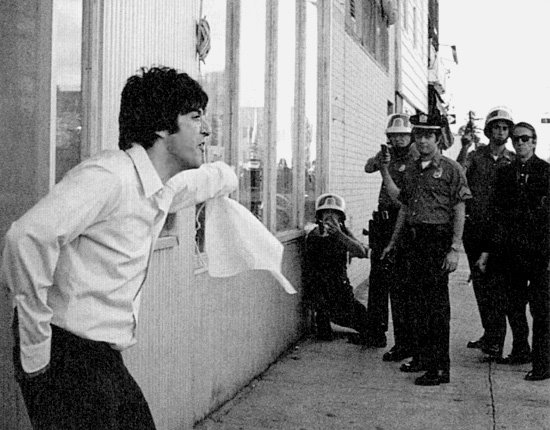
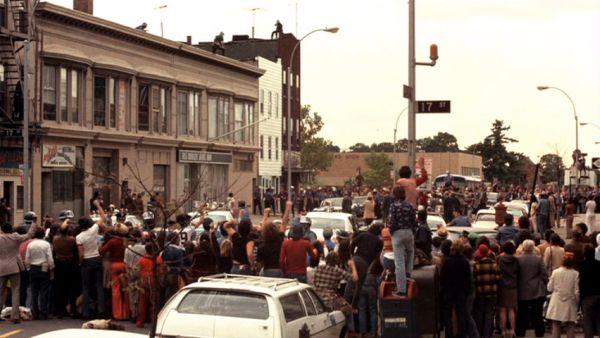
Like Do The Right Thing, this blistering Sidney Lumet flick is based on a real incident, a bank heist in Gravesend, Brooklyn — at 450 Avenue P, to be exact. (The only thing you can steal from there now is a mammography or an ultrasound; it’s the now the Brooklyn Medical Imaging Center.) Lumet moved the action to the Brooklyn neighborhood of Windsor Terrace, at Prospect Park West between 17 and 18th streets. He probably couldn’t have chosen a better block. With the park in the distance, the streets fill with police, random photographers, on-lookers, TV cameramen, buses and shop owners, and the result is like a self-contained swarm.

All to observe Al Pacino, playing Sonny the charming but befuddled bank robber, holding hostages and, in the pivotal scene, rallying the crowd to his side with cries of ‘Attica! Attica!’ (The Attica prison riots, spurred on by accusations of prisoner torture, had just happened, in 1971.)

Sadly the bank and many of the shops on the street have been replaced with — quel suprise! — condominiums.

However, the neighborhood Holy Name Roman Catholic Church (at 245 Prospect Park West), featured in the film, is still hanging around. The bank interiors, although not filmed in the actual bank, were still filmed in Brooklyn — in a nearby warehouse.

Hysteria
3. The French Connection
Chase under a train

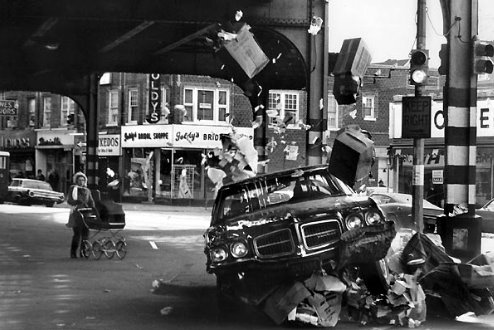
The car chase that defines all car chases zipped under the elevated train from Coney Island for a death-defying 26 blocks. I wrote about the wacky logistics of the filming here . Perhaps with the exception of I Am Legend or The Naked City, this William Friedkin film could be considered the film that most used New York, as scenes were evidentally shot in almost every corner of the city.

Magic
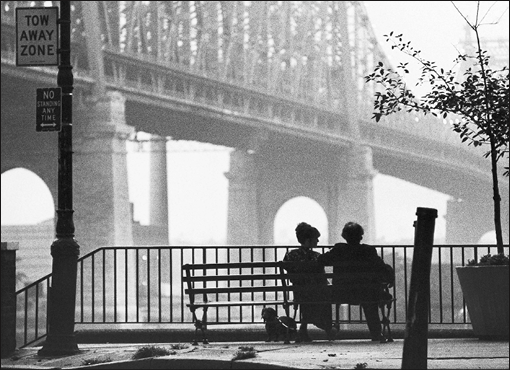
2. Manhattan
Isaac and Mary have a chat

I’m sorry, but Woody Allen’s 59th Street Bridge scene is just him showing off. And that’s why it’s so perfect, the defining shot in what has commonly been called his “love letter” to the city. The quintessential New York director, essentially rendering a rather unromantic bridge into the most beautiful site in the entire city — the entire world, at least you think so while watching it.

“This is just a great city. I don’t care what anybody says,” Woody remarks to Diane. (Their characters are Isaac and Mary, but who cares?)

You’d think it would be easy to recapture this scene yourself, but alas, there’s no longer a bench. By the way, for some reason, ‘Manhattan’ is considered to be Woody Allen’s least favorite film that he’s made. Really Woody? Worse than Scoop? Shadows And Fog? The Jason Biggs-vehicle Anything Else?