Categories
Parks and Recreation

Brooklyn’s Forgotten Lake: Pictures of Mount Prospect Reservoir

As you can see, the Bowery Boys: New York City  History blog has gone through some major changes this week.  We have a new URL (boweryboyshistory.com) and a dynamic new layout which will present articles, photographs and podcast audio is a more user-friendly way.  There’s still some backlogged clean up to do so thank you for your patience.  But we think this new format is more reader friendly and makes these old photographs look so much more amazing.

And so, on that note, I thought I’d test out the expanded-image waters here by presenting a few views of one of the most enchanting places from the 19th century, a place that no longer exists — the Mount Prospect Reservoir.
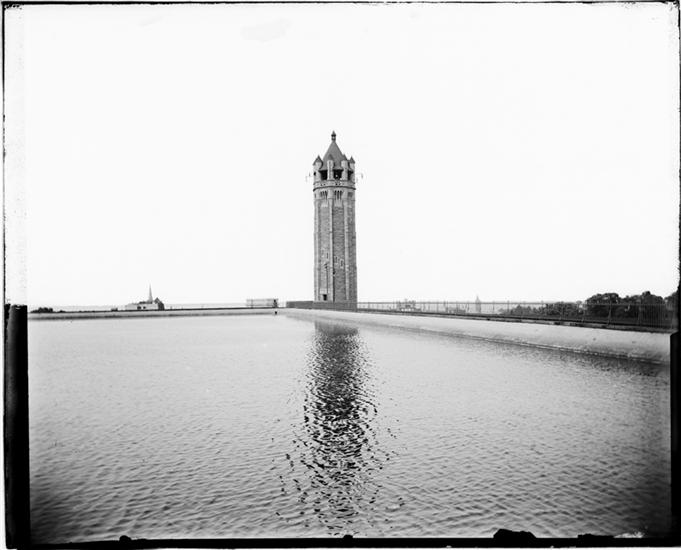
Photographed by Robert Bracklow, courtesy the Museum of the City of New York


Back when it was an independent city, Brooklyn received most of its drinking water from Long Island, pumped into to a large receiving reservoir in Ridgewood.  Some of that was then send southward to a reservoir built in the late 1850s at the second highest point in Brooklyn — Mount Prospect — rising 200 feet above sea level.

The reservoir was 3 1/2 acres, holding 20 million gallons of water at a depth of 20 feet. Or, according to the Brooklyn Daily Eagle, “containing just about enough water to cook the breakfast of the people of Brooklyn for a week

The elevation was not included in the original design of Prospect Park, conceived in the 1860s as Brooklyn’s own Central Park. ** Especially odd when you consider that Prospect Park takes its name from the hill where the reservoir resided.
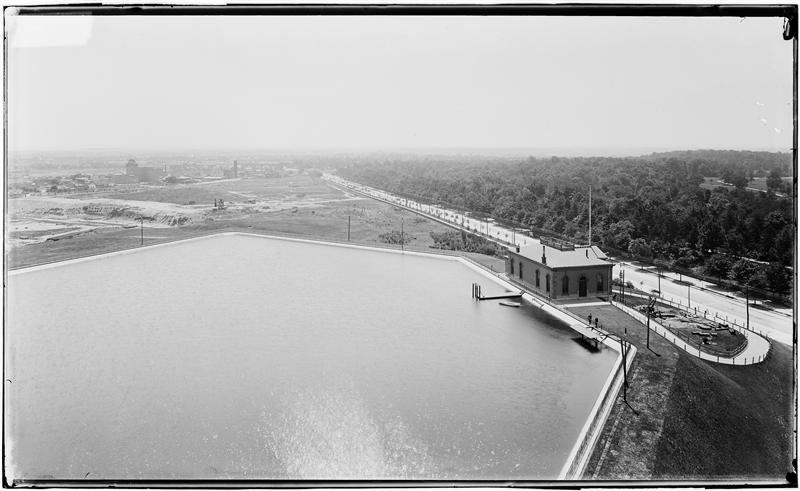
Pump house at the old reservoir on the East Side Lands, with Flatbush Avenue behind it, and Prospect Park in the background.
Pump house at the old reservoir on the East Side Lands, with Flatbush Avenue behind it, and Prospect Park in the background. [Courtesy Museum of the City of New York]
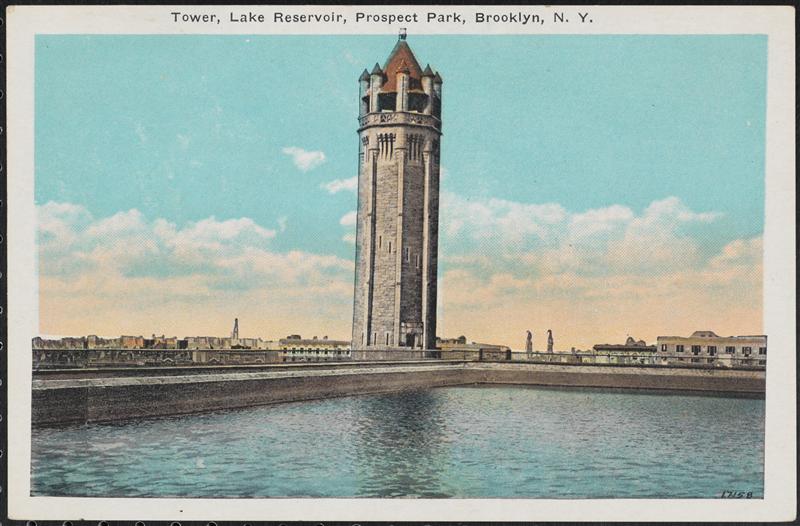
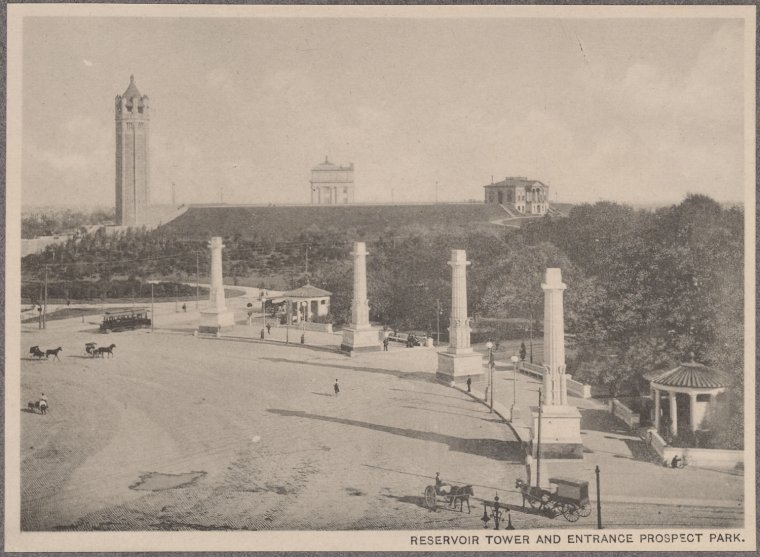
 Standing besides the man made lake was a pumping station and a grand Gothic tower, 30 feet tall. The world could be seen from here. “From the top of the tower … could be afforded a grand view overlooking the Park and City of Brooklyn; south may be seen the Atlantic Ocean; west, Staten Island and New Jersey; north, the Bay and the City of New York; east, the Navy Yard, Williamsburgh and the East River, altogether affording one of the grandest views imaginable.” [source]

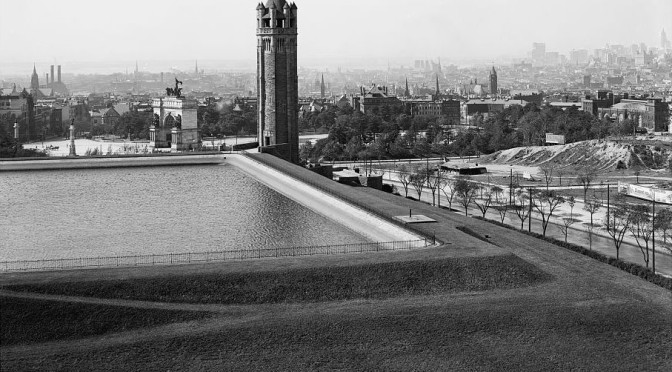
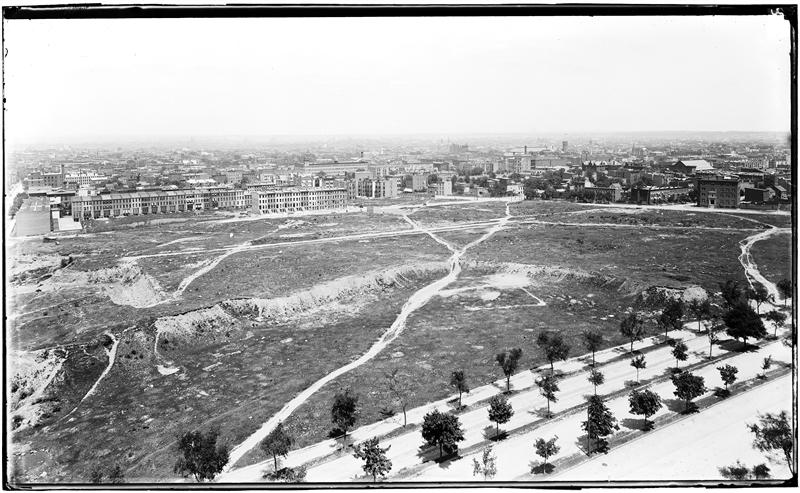
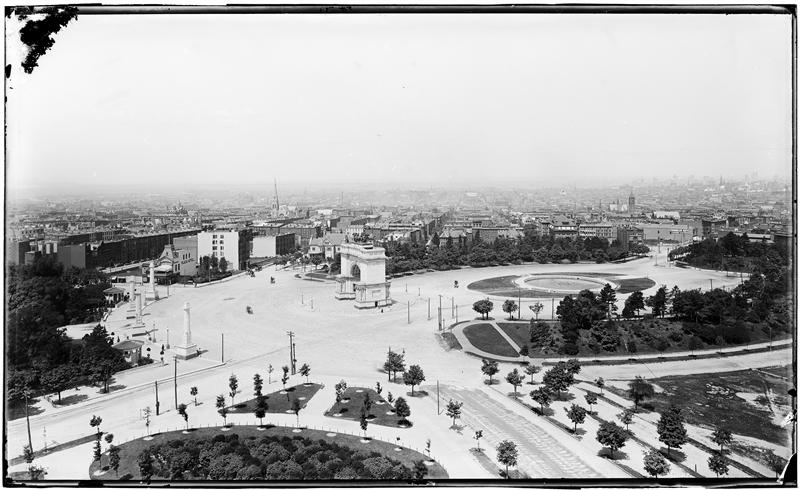
Below: Circa 1900, looking north from the reservoir over Eastern Parkway into what is today’s Prospect Heights neighborhood.  Below that, looking out over Grand Army Plaza. Photos by George Hall and Sons. Courtesy Museum of City of New York
3

4

When Brooklyn was incorporated into the consolidated Greater New York, they also were brought into New  York’s central water system (i.e. the Croton Aqueduct, later blended with the waters of the Delaware and the Catskills).  The Mount Prospect Reservoir was dismantled in 1940 and turned into a park. And the tower was torn down as well when the central branch of the Brooklyn Public Library was constructed.

According to BPL’s blog,  “The wrecking company in charge of tearing it down announced in the Eagle that the Connecticut pink granite used to build the tower would be made freely available to anyone who wanted it.”  So there may be pieces of the old tower incorporated into buildings all across the borough!
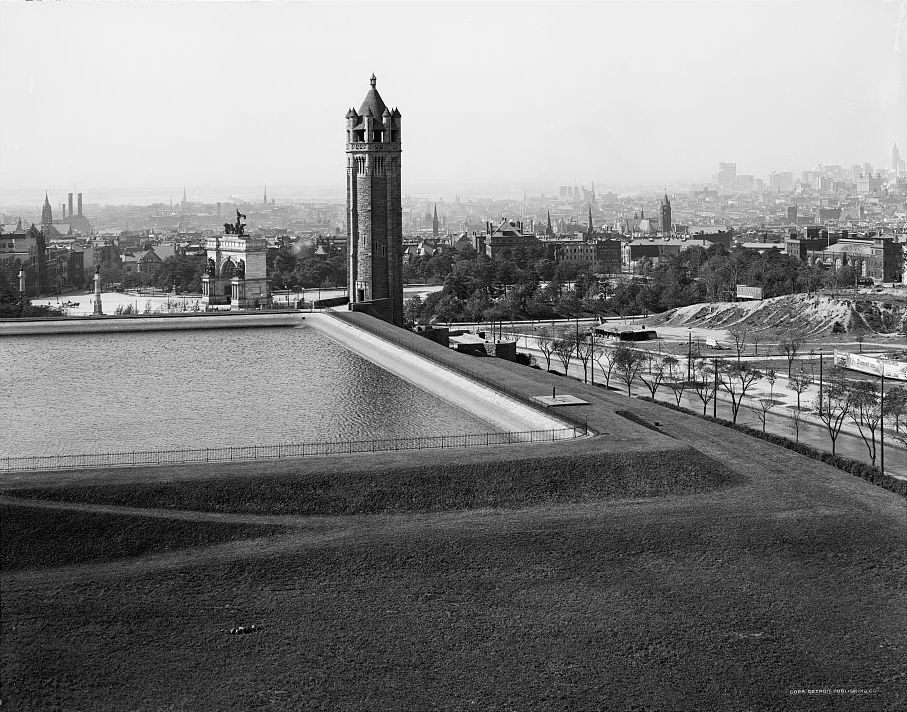
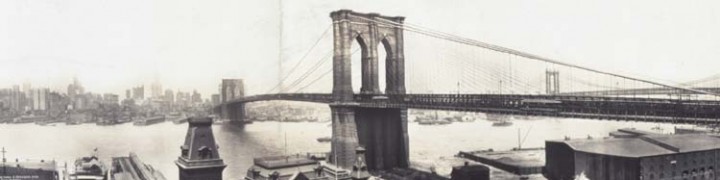
Looking over Brooklyn and Manhattan
Looking over Brooklyn and Manhattan (Library of Congress)


Unsurprisingly, the reservoir was a bit of a tourist attraction as evidenced by this postcard. (Courtesy the Museum of the City of New York)


Viewing the entrance to Prospect Park with the reservoir and tower behind it. From this vantage you can see the Brooklyn Museum and the Mount Prospect Laboratory.


** See Matthew’s comment below about Mount Prospect’s appearance in the original Prospect Park plan.
Odds and ends: Grant winners and a Bowery Boys interview

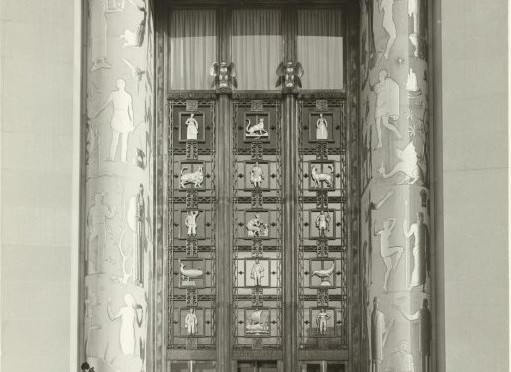
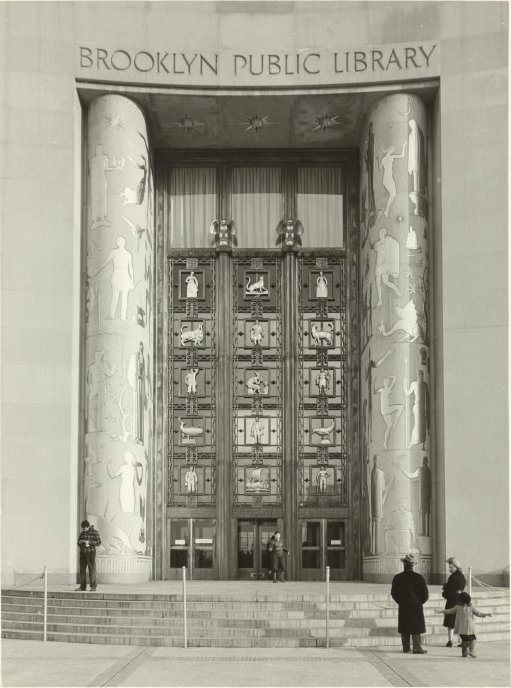
These doors just won a lot of grant money. (Photo by Wurts Brothers, NYPL)

The votes have been counted, and Brooklyn (more specifically, Park Slope) and the Bronx ran away with the Partners In Preservation initiative, sponsored by American Express and the National Trust for Historic Preservation.

 The four locations which received the most votes were the Brooklyn Public Library central branch, the synagogue Congregation Beth Elohim, the New York Botanical Garden and the Bartow-Pell Mansion Museum.

But for the others, there’s good news! The grant proposals for the top four don’t even add up to $1 million, and the initiative will now determine how to distribute the remaining $2.1 million among the other finalists. They will announce the choices in June.

————————————-

I recorded an interview with Andrew Johnstone for the Podcast Squared show (essentially, it’s a podcast about podcasts), discussing the philosophies behind the Bowery Boys: New York City History podcast, as well as some information on how we got started as a look behind the scenes at our process. They also give us a great review!

You can find the show (Episode #99: Golden Age of New York) on iTunes or download it directly from their website.
Or listen to some of it here:

——

Patell and Waterman’s History of New York

Meanwhile, over at Patell and Waterman’s History of New York, they’ve posted my wrap-up interview regarding the Networked New York event from March which was held at New York University. The questions are specifically focused on the relationship of history writing and new digital media, but I talk about the challenges of producing a podcast and the relationship between blogs and newspapers. Check out that interview here.

With the quote: “History enriches peoples’ lives abstractly, of course, but I argue that it does so practically as well. It’s about context. Your pizza tastes a whole lot better when you realize it’s been made in New York’s oldest pizza kitchen. (Whether it actually tastes good is besides the point.) This is the tourist perspective of New York. But to infuse that perspective into a daily experience here is profound. Suddenly, every street corner, every building, has a particular uniqueness. Everything talks back to you.”