Categories
Brooklyn History Neighborhoods Podcasts

The Story of Flatbush: Brooklyn Old and New

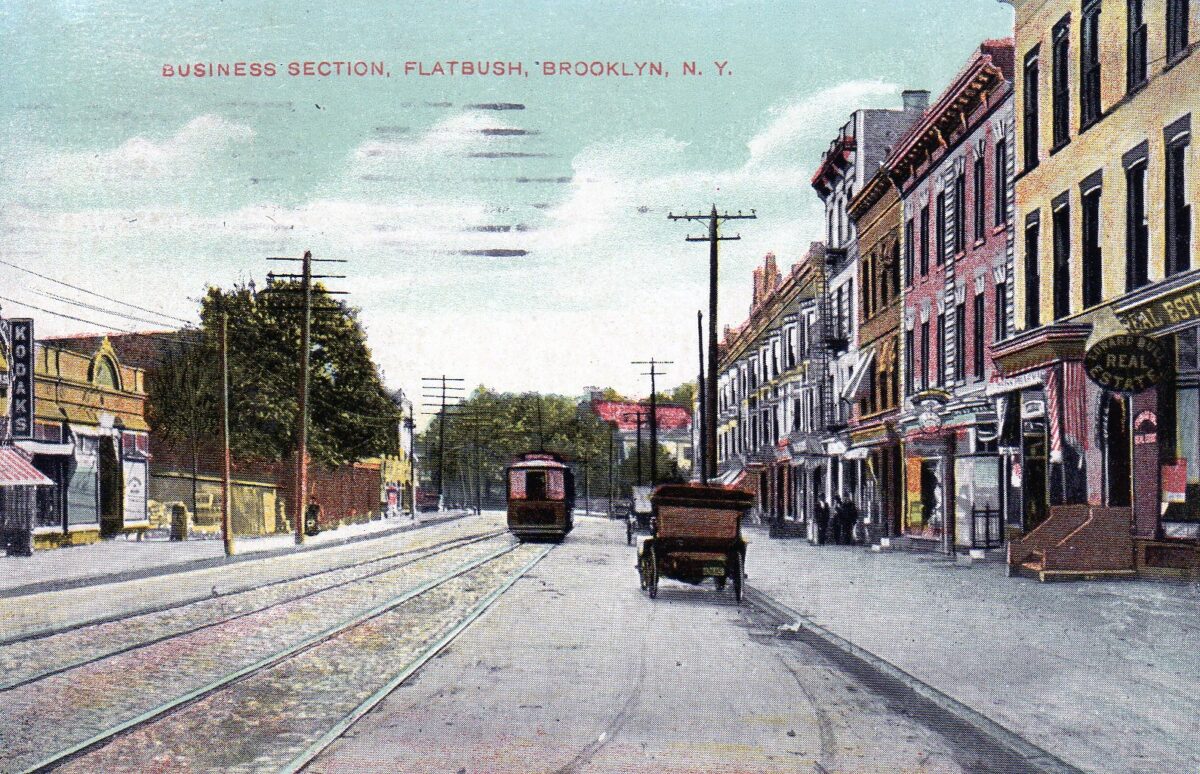
Over 350 years ago today’s Brooklyn neighborhood of Flatbush was an old Dutch village, the dirt path that would one day become Flatbush Avenue lined with wheat fields and farms.

Contrast that with today’s Flatbush, a bustling urban destination diverse in both housing styles and commercial retail shops. It’s also an anchor of Brooklyn’s Caribbean community — Little Caribbean.

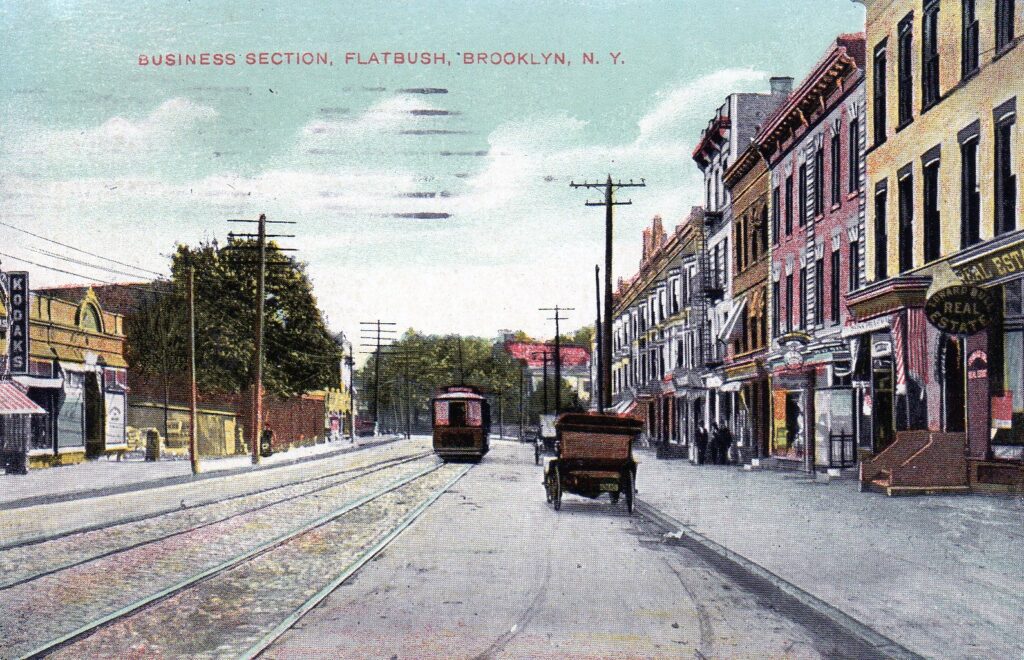
There have been many different Flatbushes — rural, suburban and urban. In today’s show we highlight several stories from these phases in this neighborhood’s life.

If you are a Brooklynite of a certain age, the first thing that might come to mind is maybe the Brooklyn Dodgers who once played baseball in Ebbets Field here. Or maybe you know of a famous person who was born or grew up there — Barbra Streisand, Norman Mailer or Bernie Sanders. 

But the story of Flatbush reflects the many transformative changes of New York City itself. And it holds a special place in the identity of Brooklyn — so much so that it is often considered the heart of Brooklyn.

FEATURING STORIES OF Erasmus Hall, the Kings Theater, Lefferts Historic House, the Flatbush African Burial Ground and the Flatbush Dutch Reformed Church.

PLUS We chat with Shelley Worrell of I Am CaribBEING about her work preserving and celebrating the neighborhood’s Caribbean community.

Listen Now — The Story of Flatbush


Thank you to Shelley Worrell for being on the show. For more information on I am CaribBEING, visit their website.

Today (June 17) is One Love Little Caribbean Day, celebrating the Caribbean businesses of Flatbush, Prospect Lefferts Garden and East Flatbush.

And this Sunday (June 19) celebrate National Caribbean-American Heritage Month in Prospect Park with I AM CaribBeing and Prospect Park Alliance

A Juneteenth celebration with live performance by Grammy-Award winning Angela Hunte backed by Da Jerry Wonda Band, peer-to-peer gaming powered by Fun With Friends DJ sets by Gab Soul + Khalil and Little Caribbean artisan vendors.


This episode is brought to you by the Historic Districts Council. Funding for this episode is provided by public funds from the New York City Department of Cultural Affairs in partnership with the City Council and Council Member Benjamin Kallos.


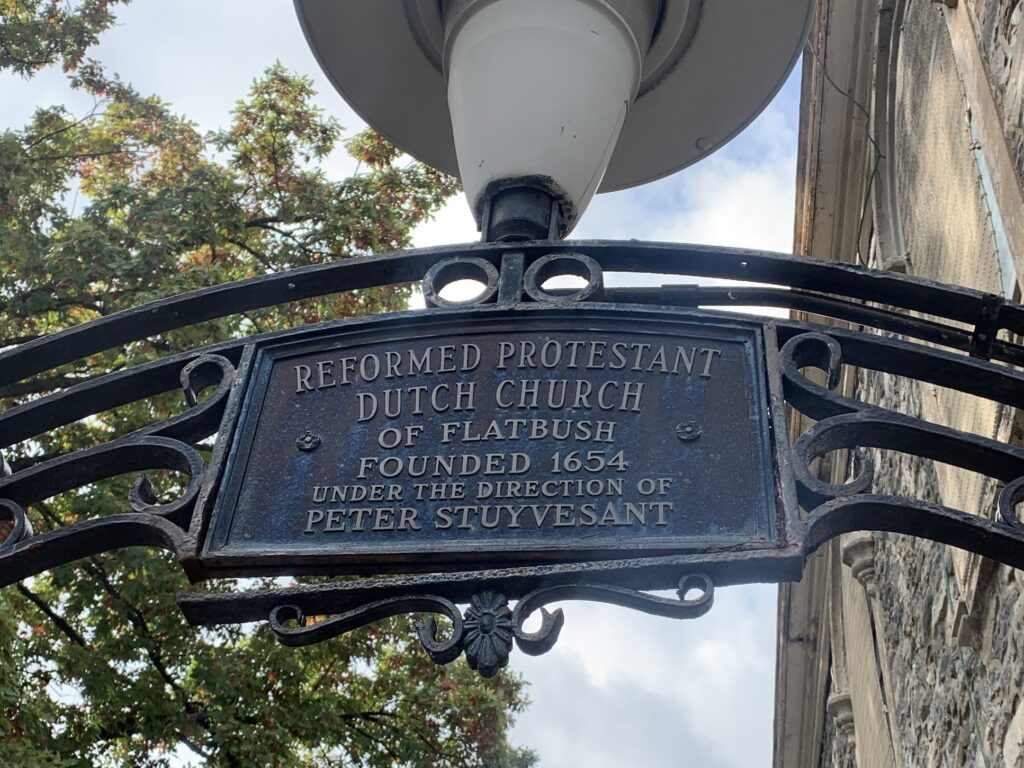
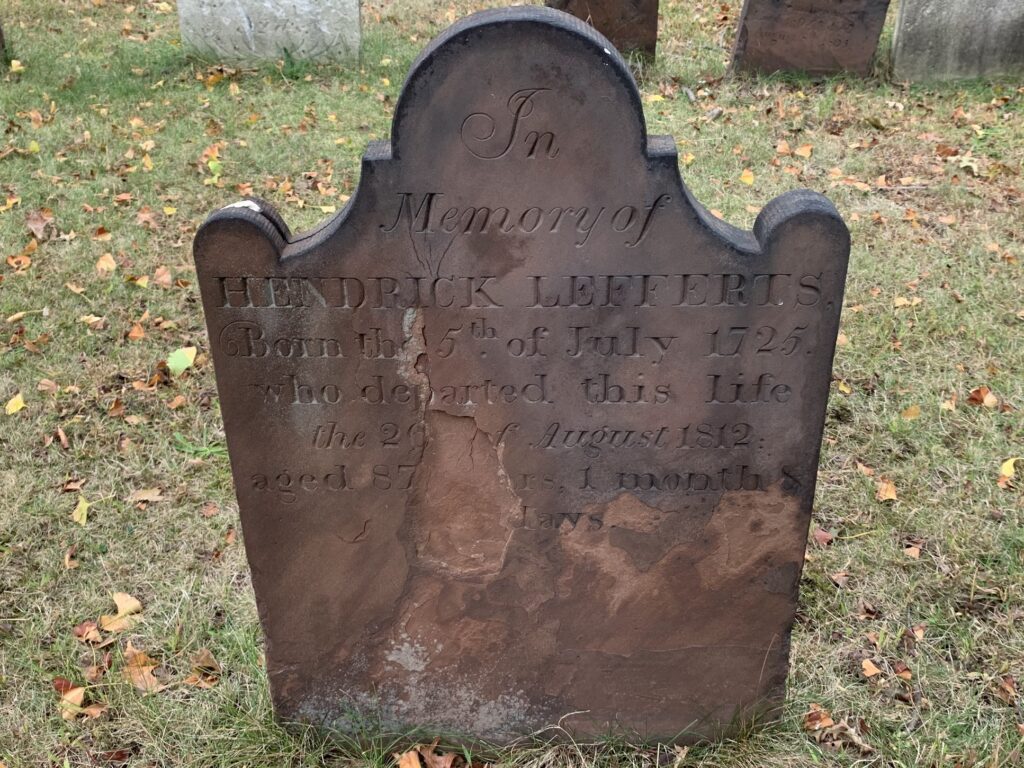
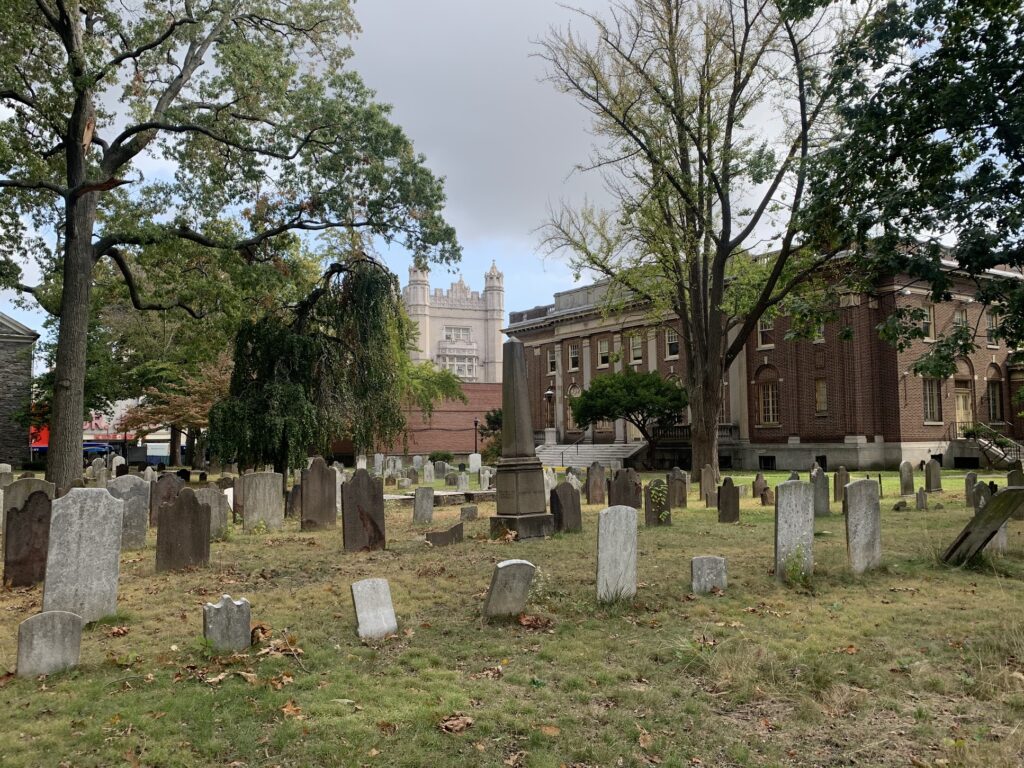
The historic cemetery at Flatbush Dutch Reformed Church
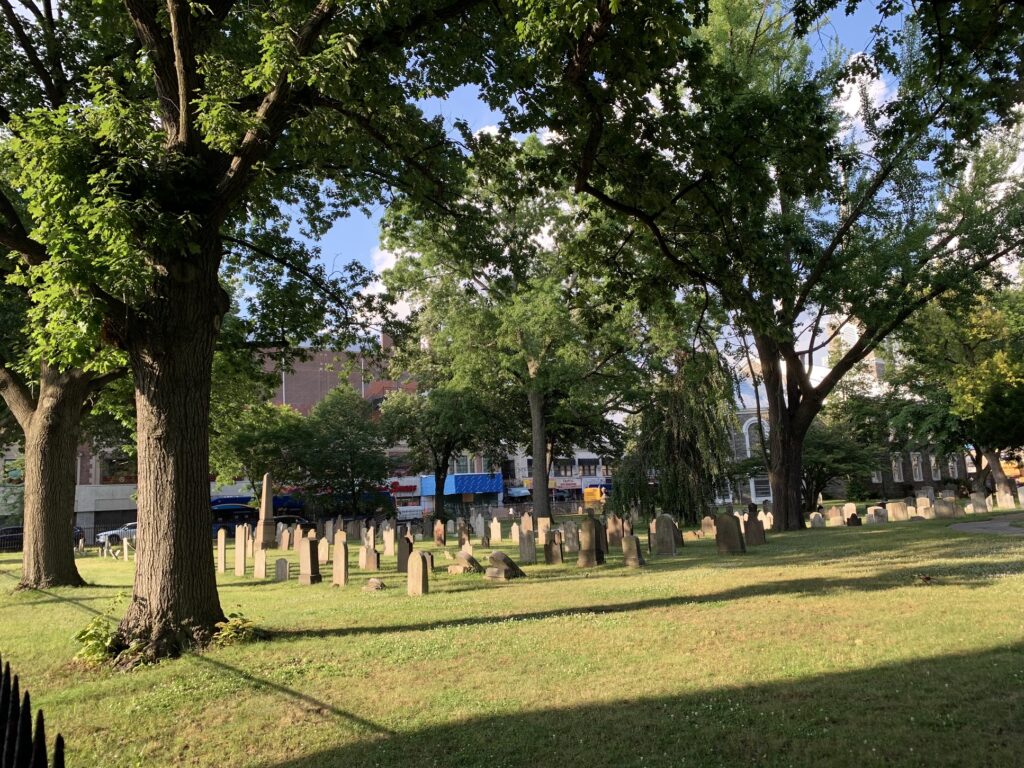
Erasmus Hall High School can be seen from the grounds of the cemetery.
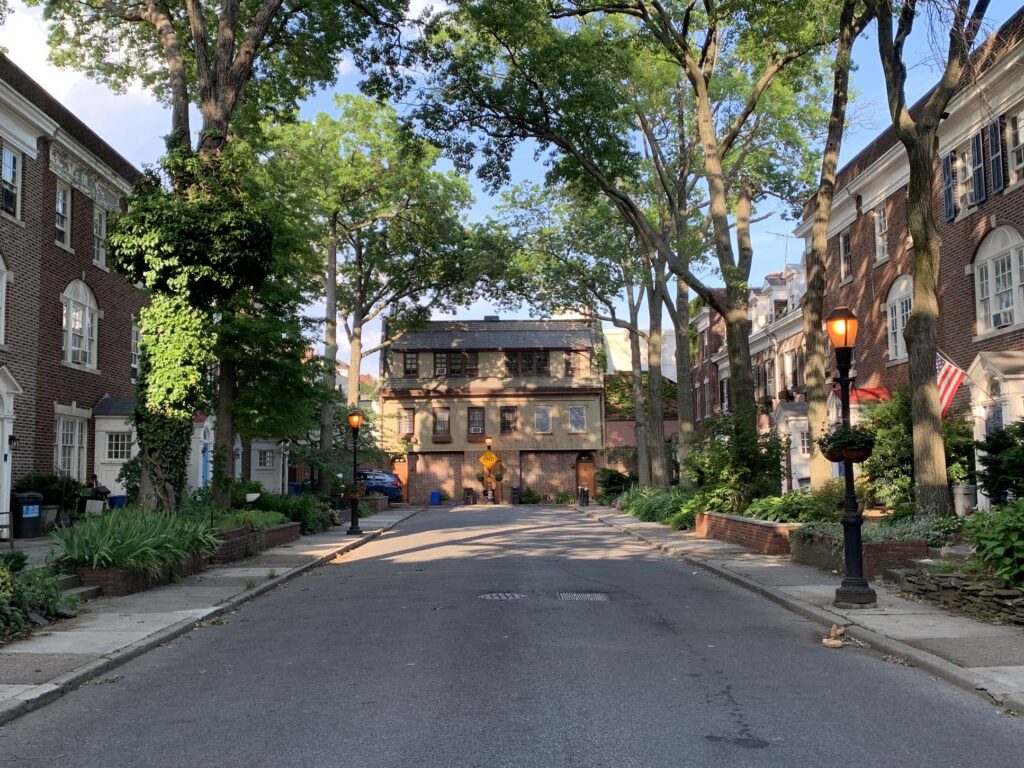
Albemarle–Kenmore Terraces Historic District
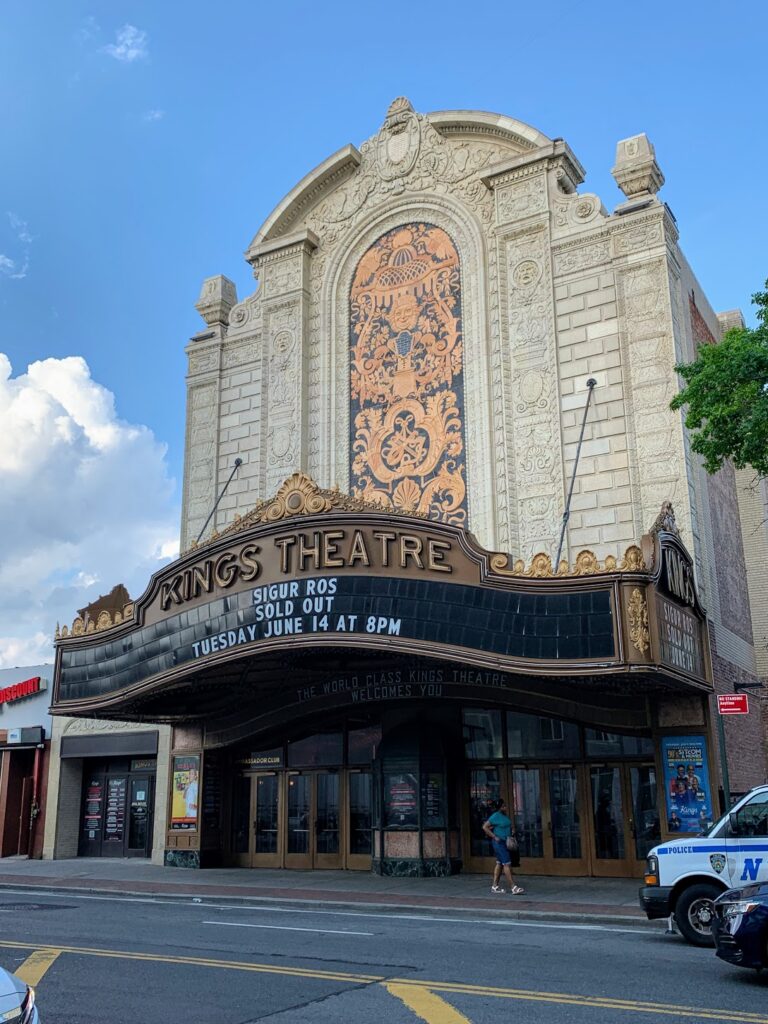
Kings Theatre, a Flatbush landmark since the 1920s
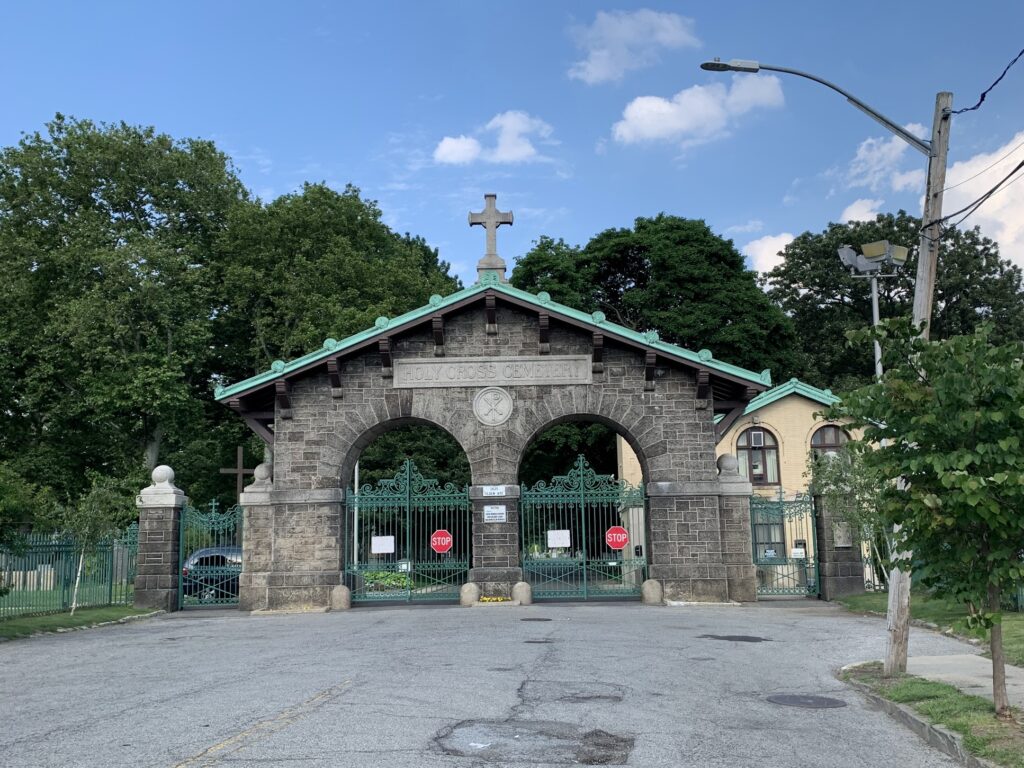
Holy Cross Cemetery in East Flatbush
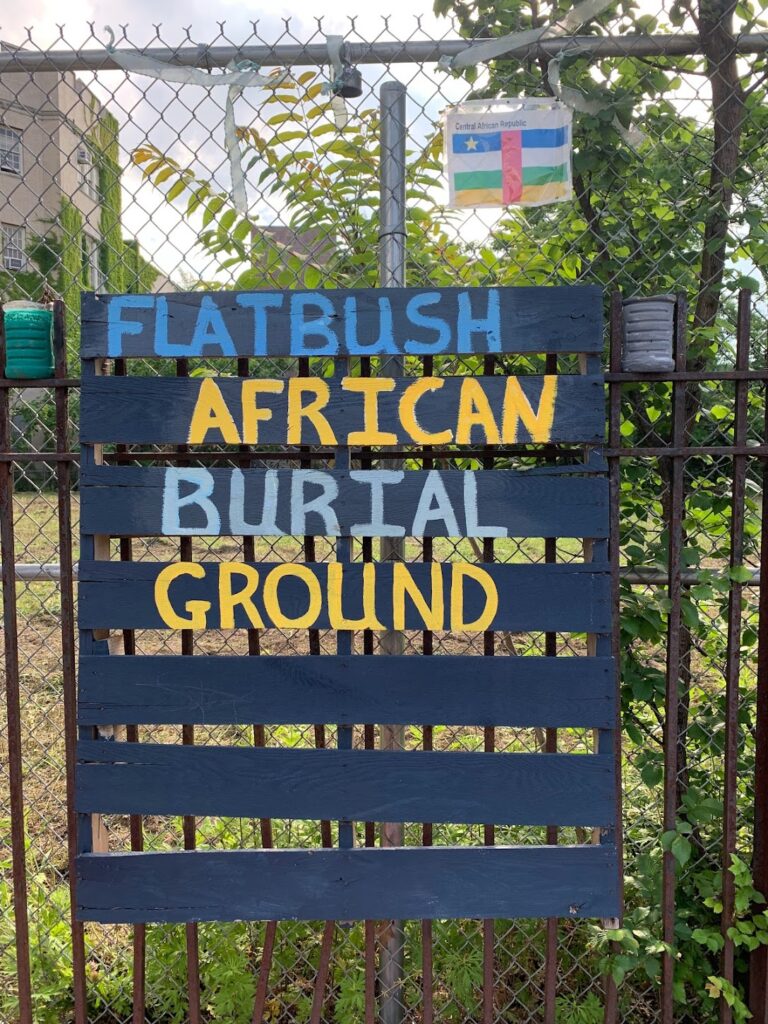
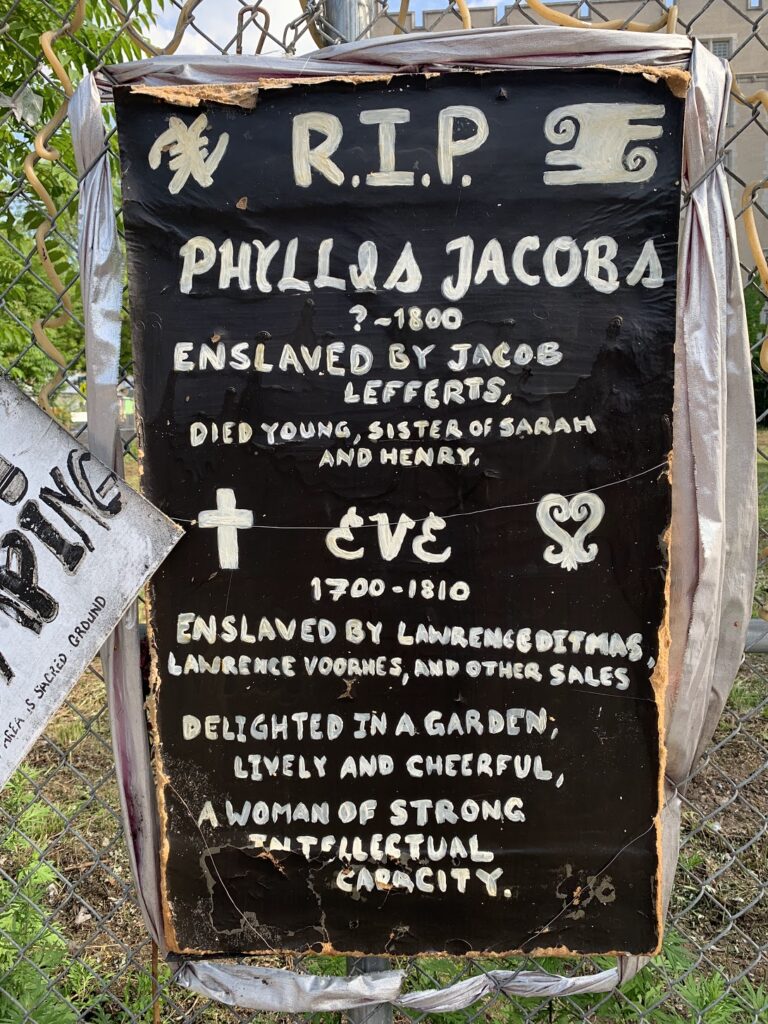
Marker for the Flatbush African Burial Ground and a makeshift tombstone for the two people who were known to be buried here.
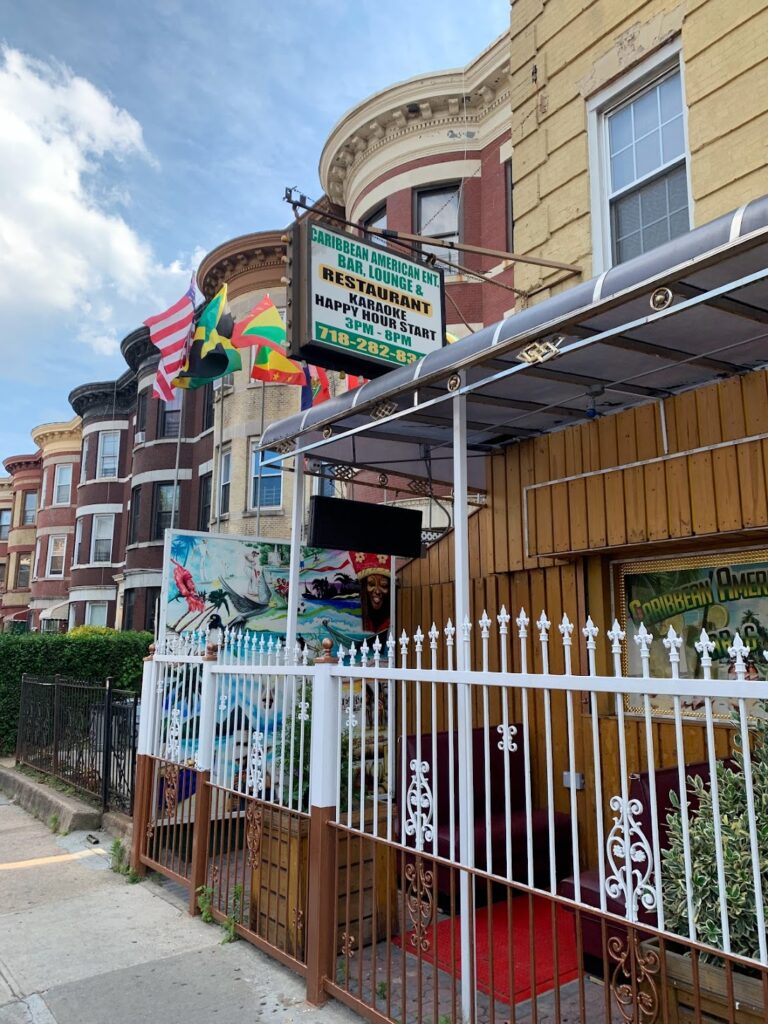
A Caribbean restaurant in East Flatbush amid some excellent examples of rowhouses that are scattered throughout the area.
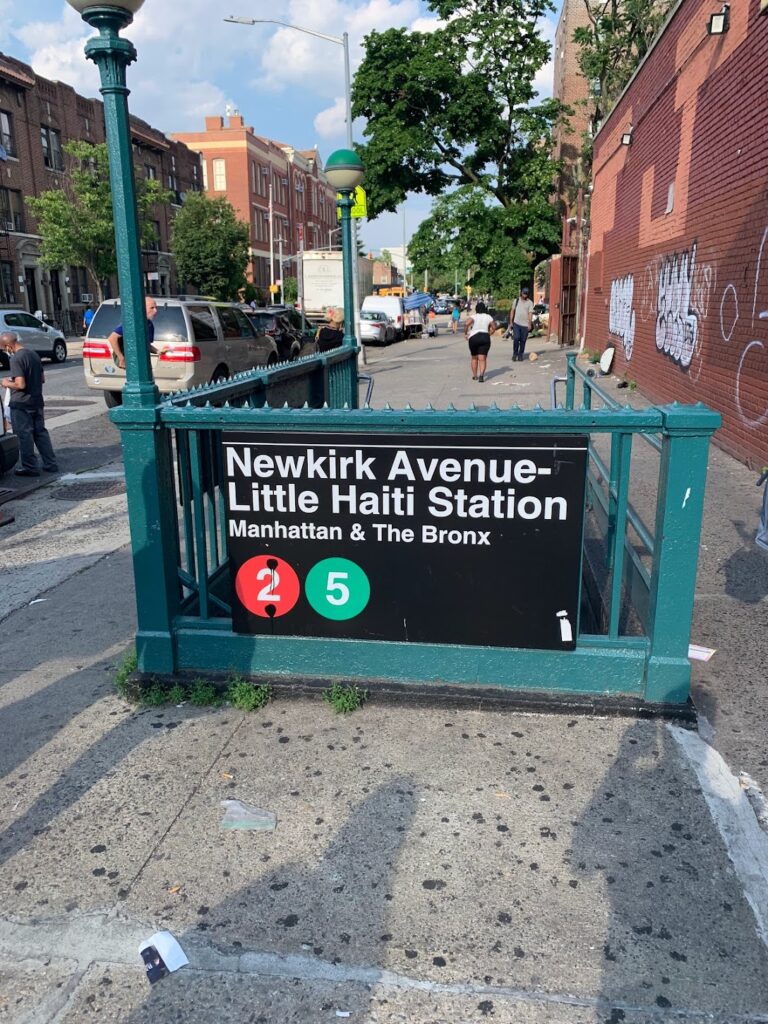
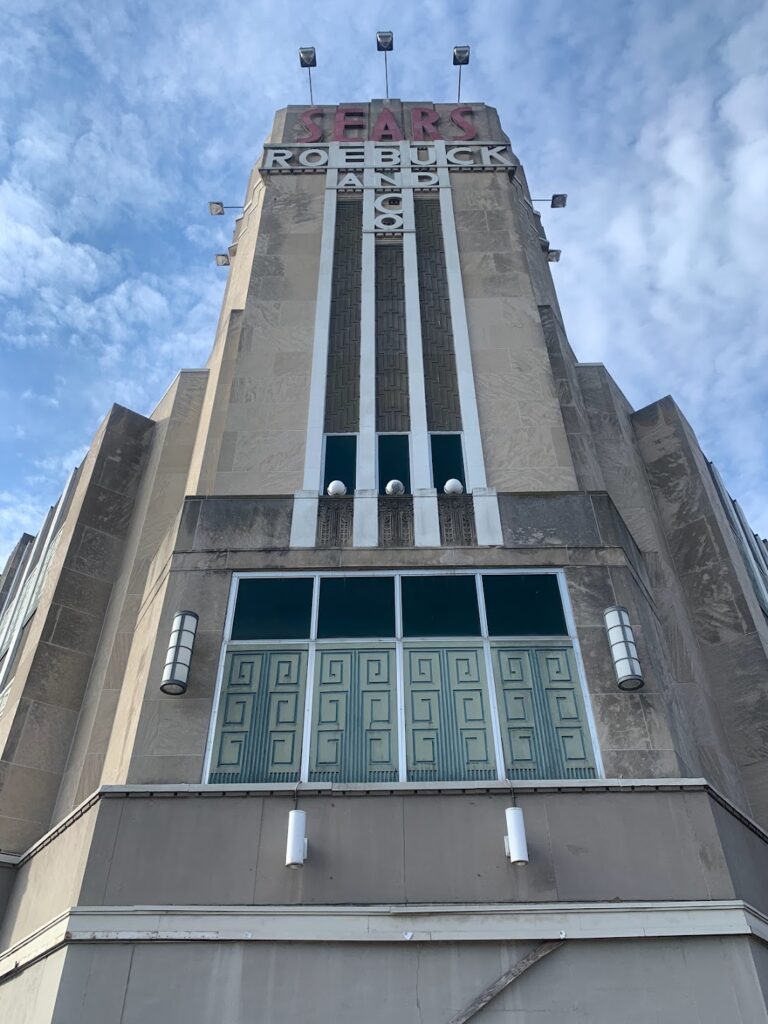
The landmarked Sears Roebuck building, one of the last reminders of the mid-century department stores of Flatbush

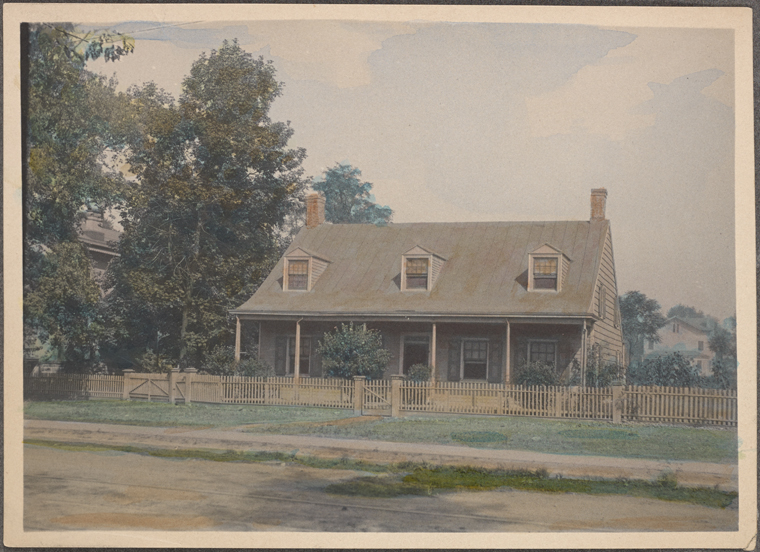
Lefferts Historic House in Prospect Park
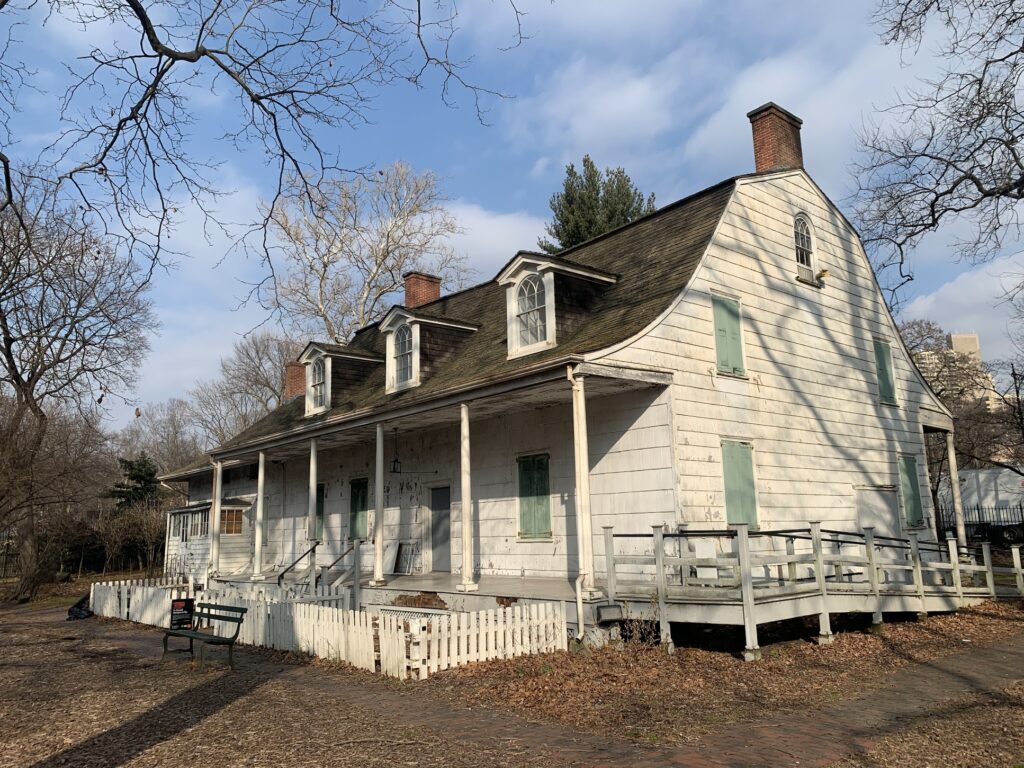
Historic image of the house at its original site (north of Church Avenue) Courtesy New York Public Library

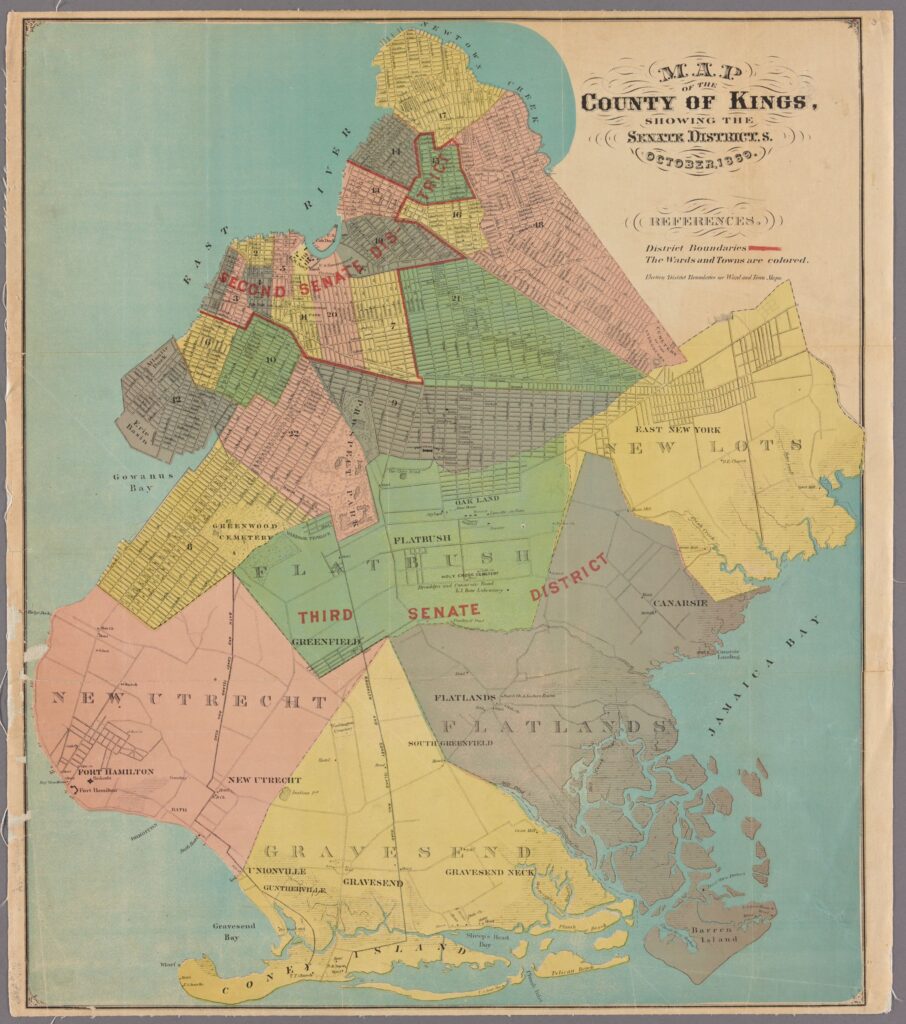
An 1869 map of state senate districts in Kings County. (Courtesy New York Public Library)
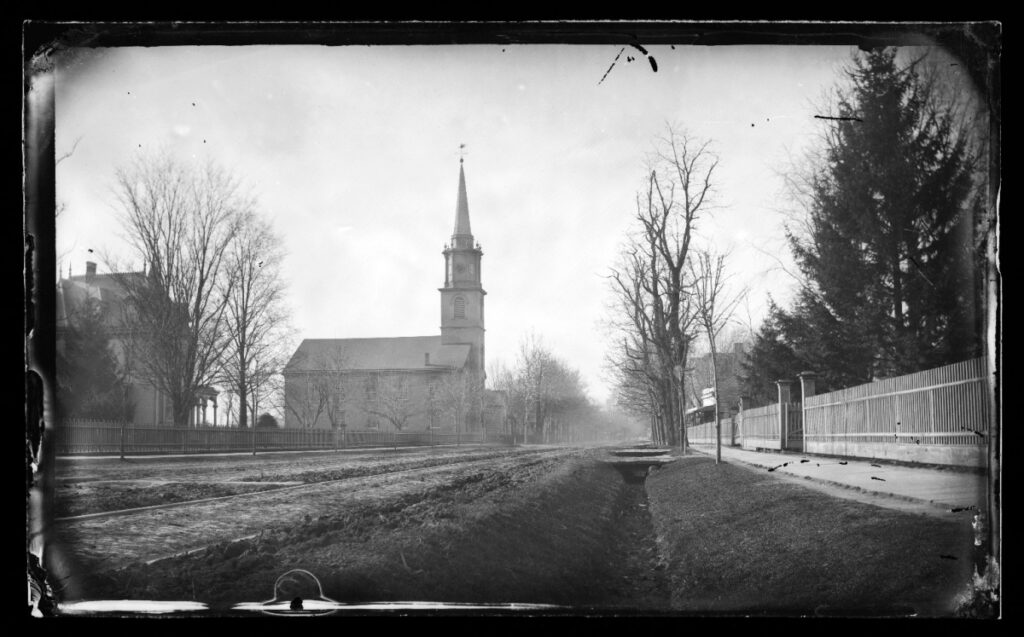
George Bradford Brainerd (American, 1845-1887). Steeple, Flatbush, Brooklyn, ca. 1872-1887. Wet-collodion negative. Prints, Drawings and Photographs. Brooklyn Museum/Brooklyn Public Library, Brooklyn Collection, 1996.164.2-384. (1996.164.2-384_glass_IMLS_SL2.jpg)
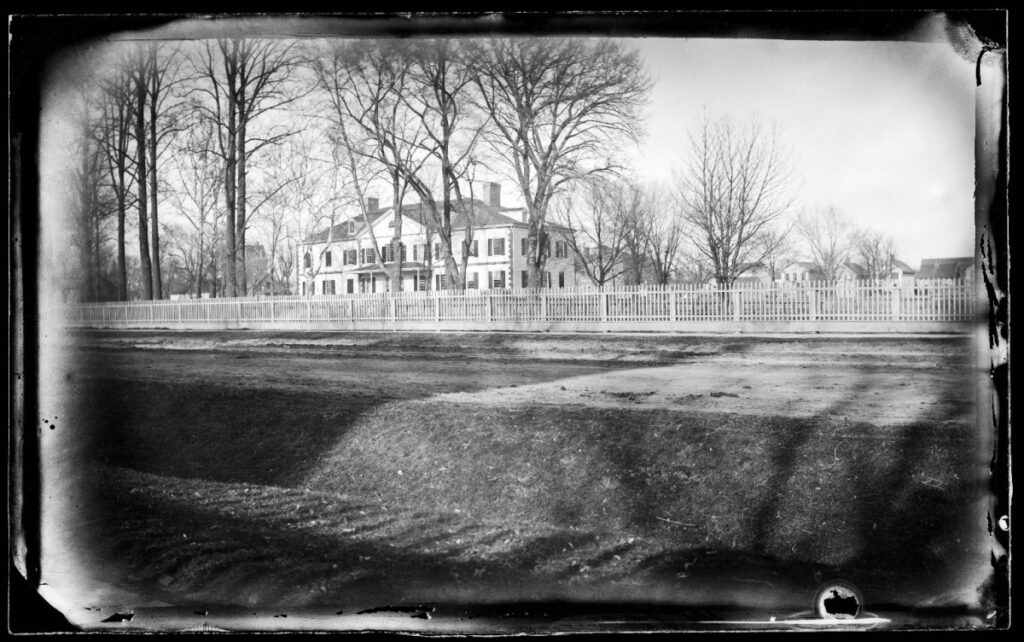
George Bradford Brainerd (American, 1845-1887). Erasmus Hall, Flatbush, Brooklyn, 1879. Wet-collodion negative. Prints, Drawings and Photographs. Brooklyn Museum/Brooklyn Public Library, Brooklyn Collection, 1996.164.2-159. (1996.164.2-159_glass_IMLS_SL2.jpg)
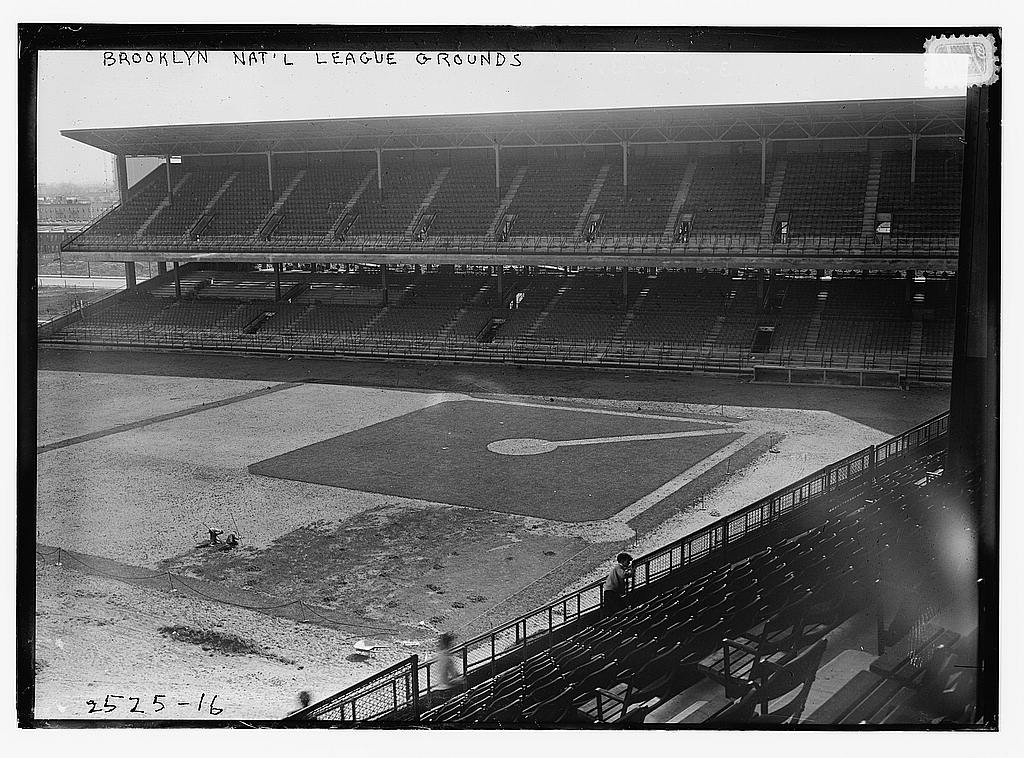
Inside Ebbets Field, 1913, Library of Congress. Here’s an article on their first regular game there.

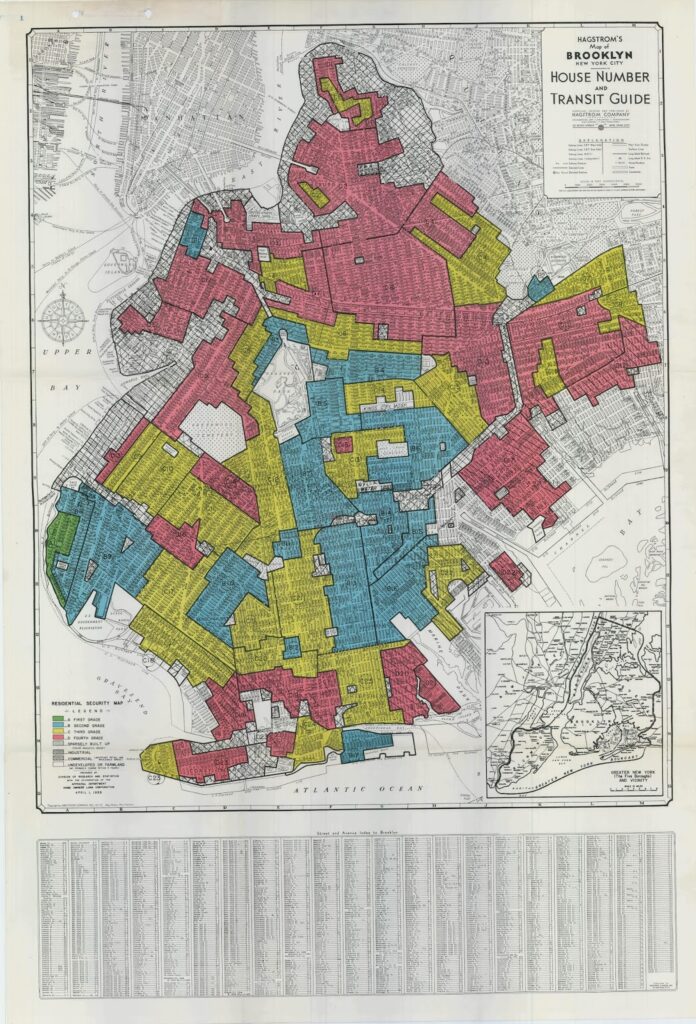
A map of redlined Brooklyn. Flatbush (seen below the Prospect Park white space) has sections in blue, yellow and red.
FURTHER LISTENING

After listening to the story of Flatbush, dive back into these podcasts which touch on some of the themes from this week’s show:
Categories
Parks and Recreation Podcasts Staten Island History

Frederick Law Olmsted and the Plan for Central Park

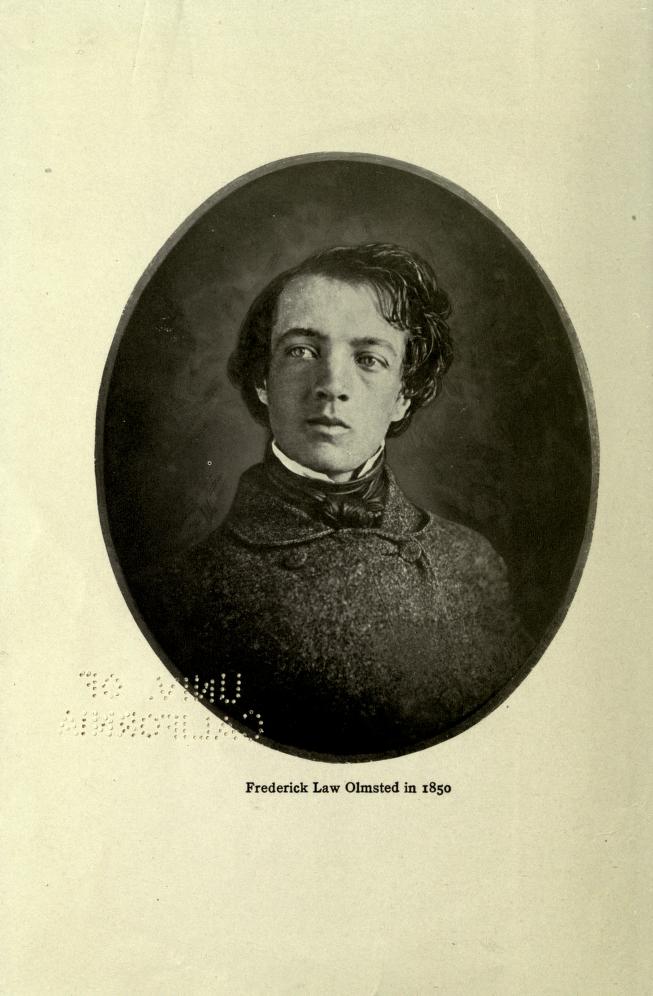
PODCAST Frederick Law Olmsted, America’s preeminent landscape architect of the 19th century, designed dozens of parks, parkways and college campuses across the country.

With Calvert Vaux, he created two of New York City’s greatest parks — Central Park and Prospect Park.

Yet before Central Park, he had never worked on any significant landscape project and he wasn’t formally trained in any kind of architecture.

In fact, Fred was a bit of a wandering soul, drifting from one occupation to the next, looking for fulfillment in farming, traveling and writing.

This is the remarkable story of how Olmsted found his true calling.

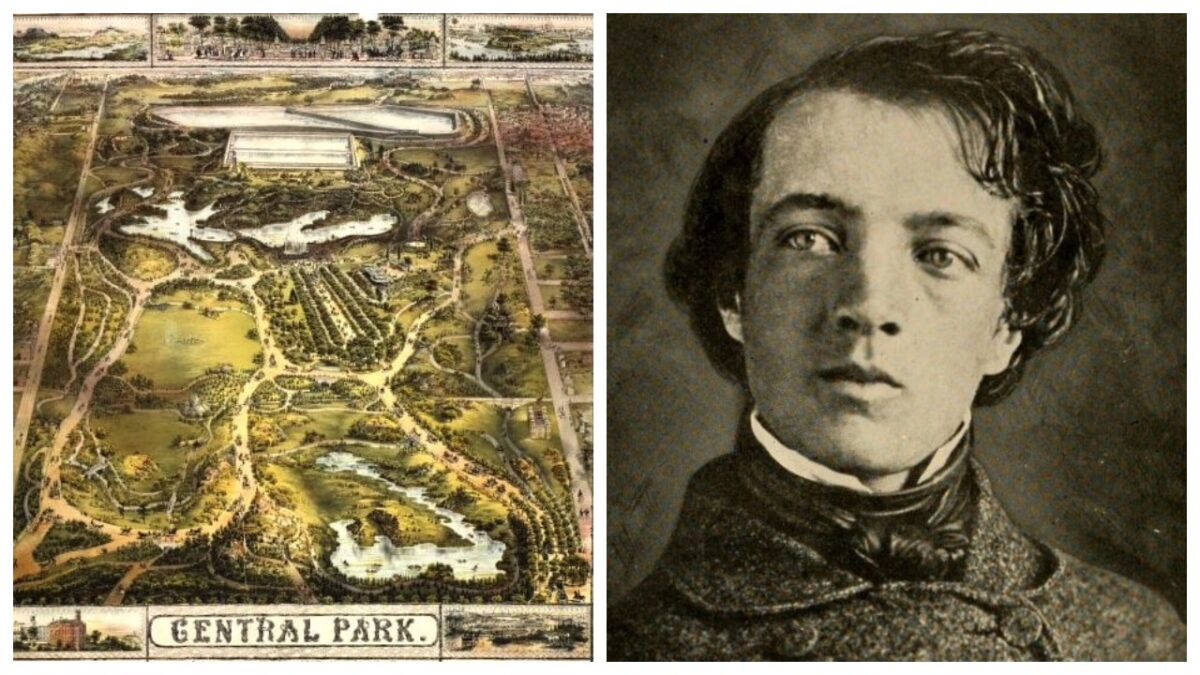
The Central Park proposal drafted by Olmsted and Vaux — called the Greensward Plan — drew from personal experiences, ideas of social reform and the romance of natural beauty (molded and manipulated, of course, by human imagination).

But for Olmsted, it was also created in the gloom of personal sadness. And for Vaux, in the reverence of a mentor who died much too young.

PLUS: In celebration of the 200th anniversary of Olmsted’s birth, Greg is joined on the show by Adrian Benepe, former New York City parks commissioner and president of Brooklyn Botanic Garden.

LISTEN NOW: FREDERICK LAW OLMSTED AND THE PLAN FOR CENTRAL PARK


#Olmsted200

For more information on Olmsted 200 events in your area, check out their website.

And a list of upcoming events here.


Planning a visit to the Brooklyn Botanic Garden? It’s cherry blossom season! Check their website to see where the blossoms are blooming.

Thank you Adrian Benepe for appearing on the show and to everybody over at the Brooklyn Botanic Garden for your help in putting things together.


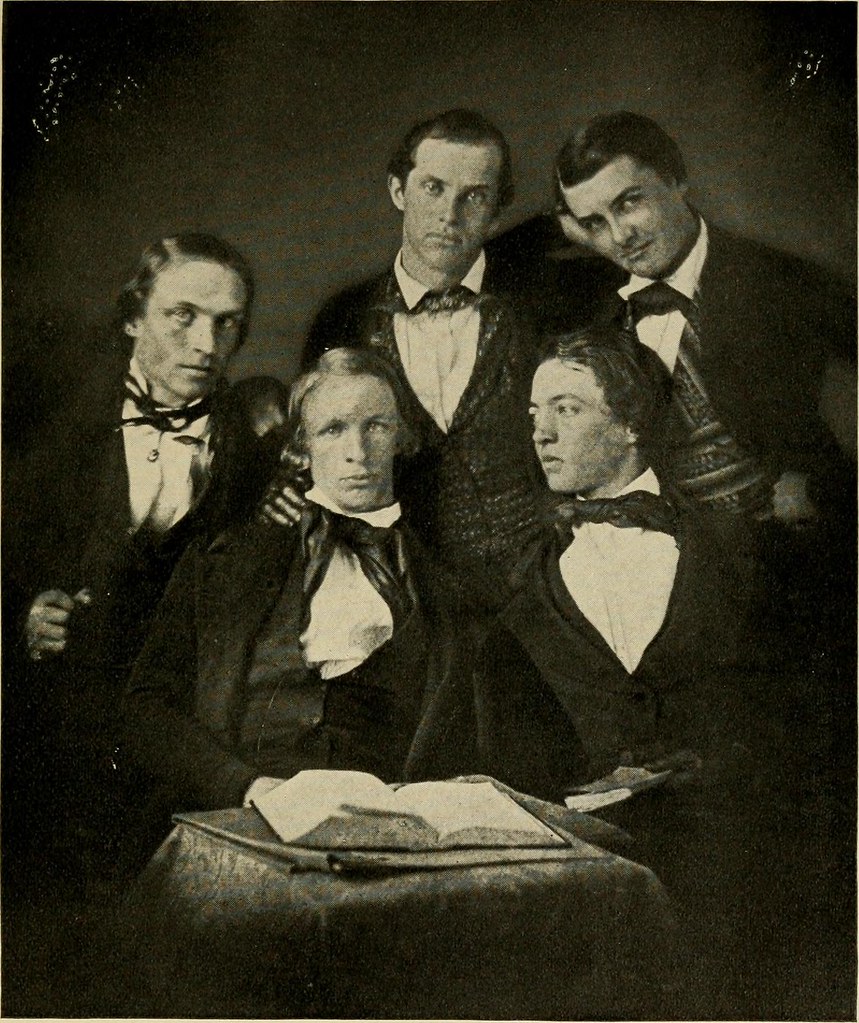
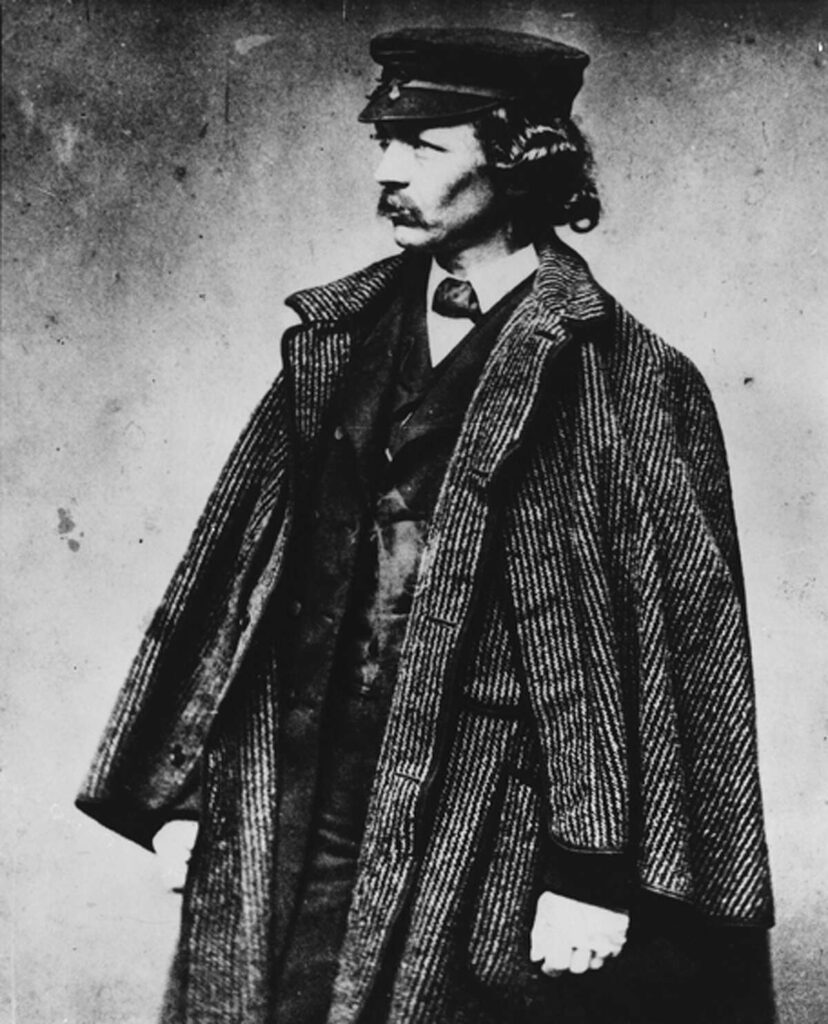
Charles Trask, Charles Loring Brace, Fred Kingsbury, Frederick Law Olmsted, John Hull Olmsted at 1846
Forty Years of Landscape Architecture; being the Professional Papers of Frederick Law Olmsted, Senior. 1922-28. Contributed in BHL from the University of California Libraries.

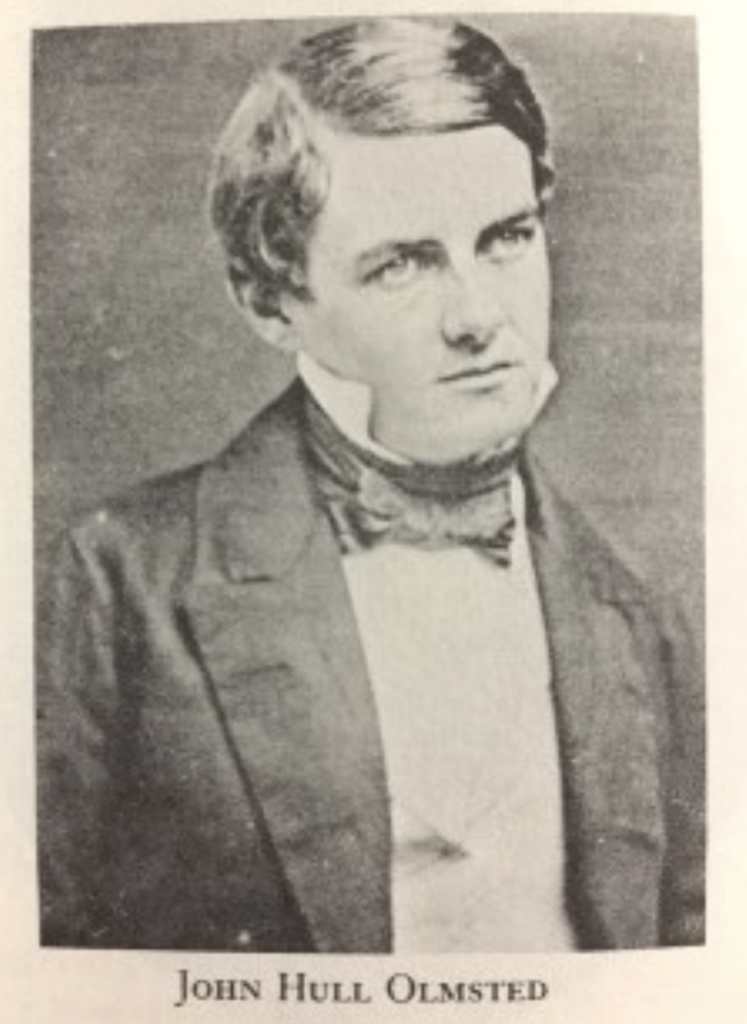
Fred’s brother John Olmsted

From Olmsted’s personal collection of photographs, The Society for the Preservation of New England Antiquities, Boston, Mass. Source

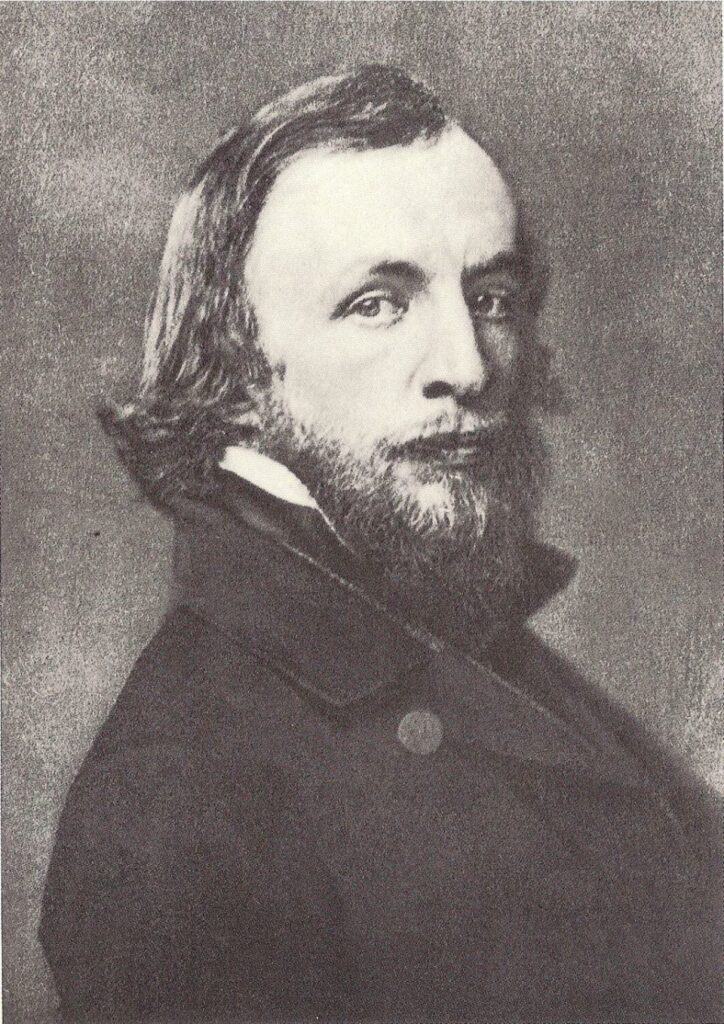
Their friend and traveling companion Charles Loring Brace.


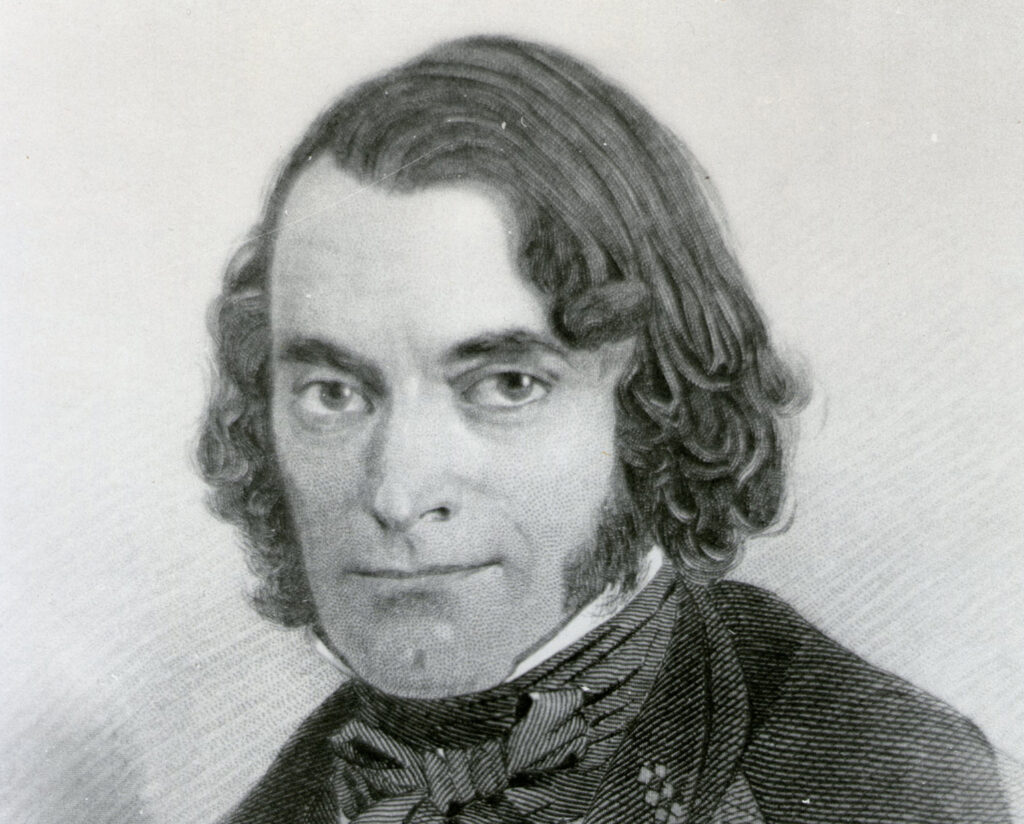
Andrew Jackson Downing

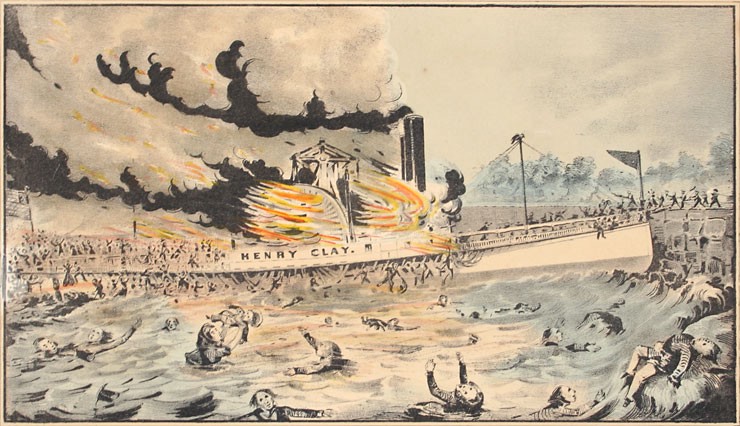
The Burning of the Henry Clay, in a lithograph by Nathaniel Currier, 1852

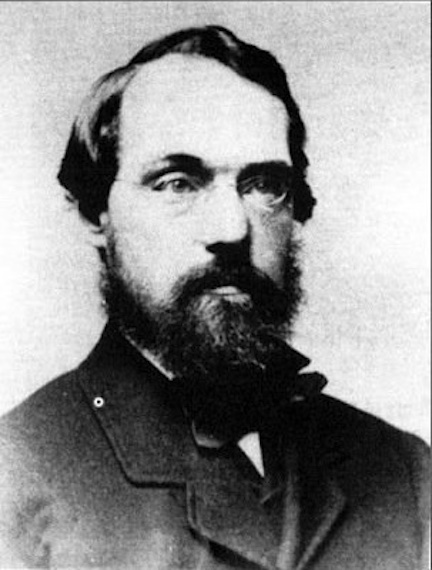
Calvert Vaux

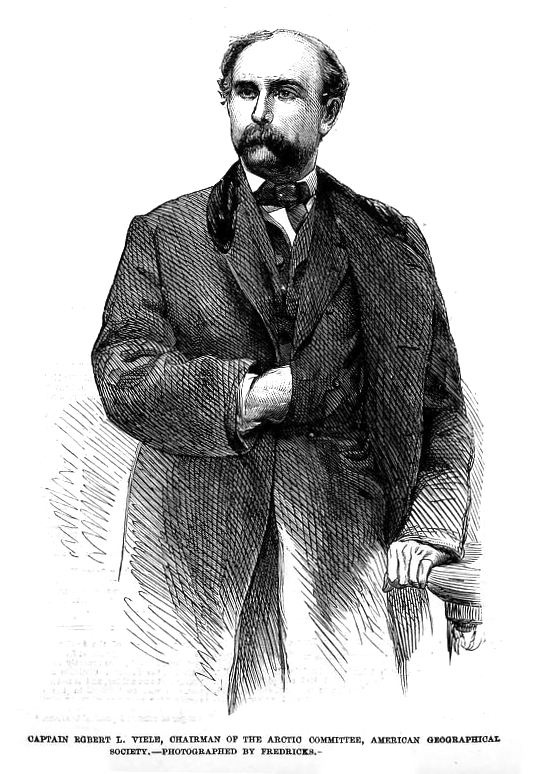
Egbert Ludovicus Viele


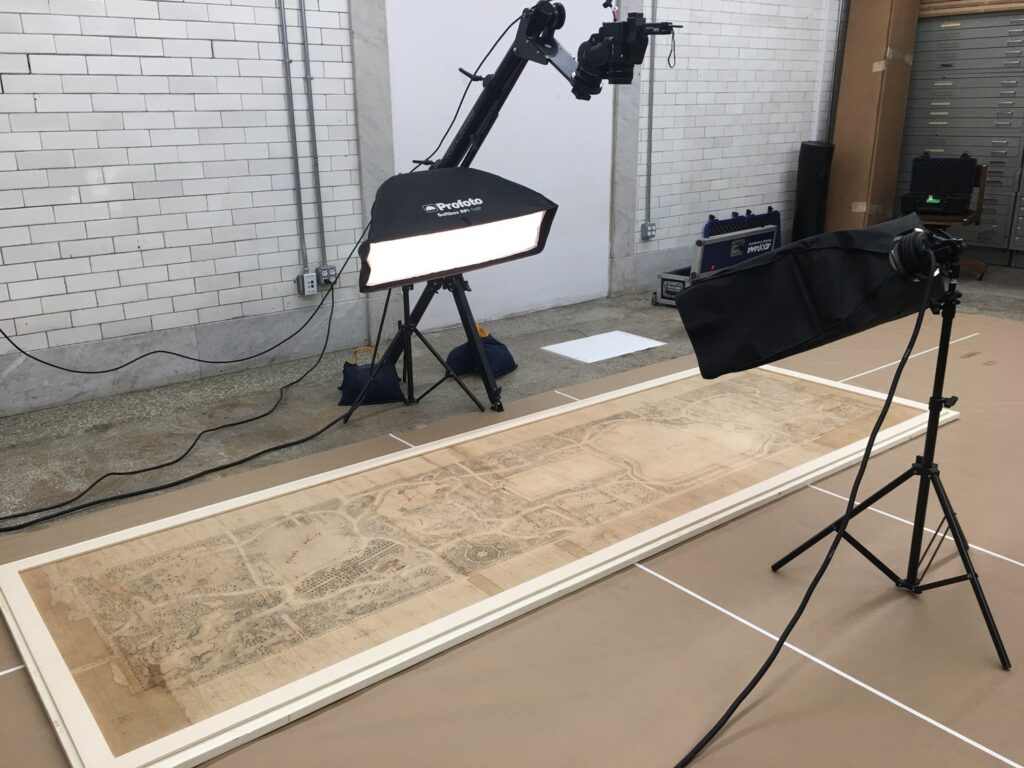
The Greensward Plan will be on display at The New York City Department of Records and Information Services/Municipal Archives Friday, April 22 and Saturday, April 23. 

Get your free tickets here.

Here’s a fascinating article from NYC Department of Records & Information Services about digitizing the Greensward Plan.


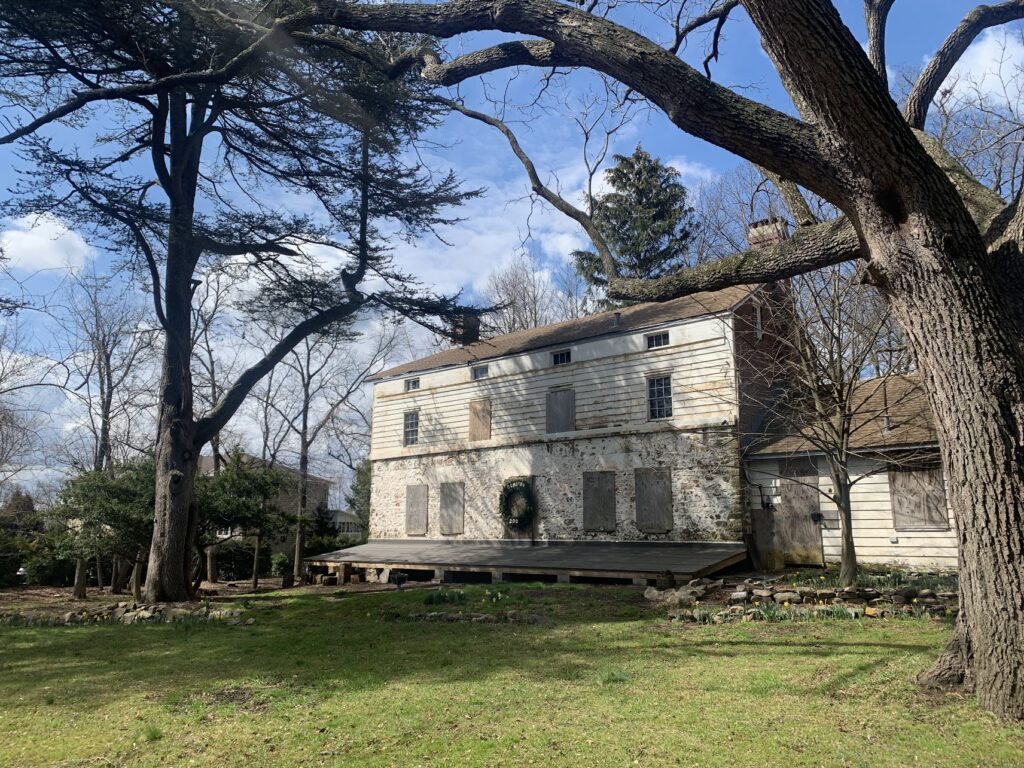
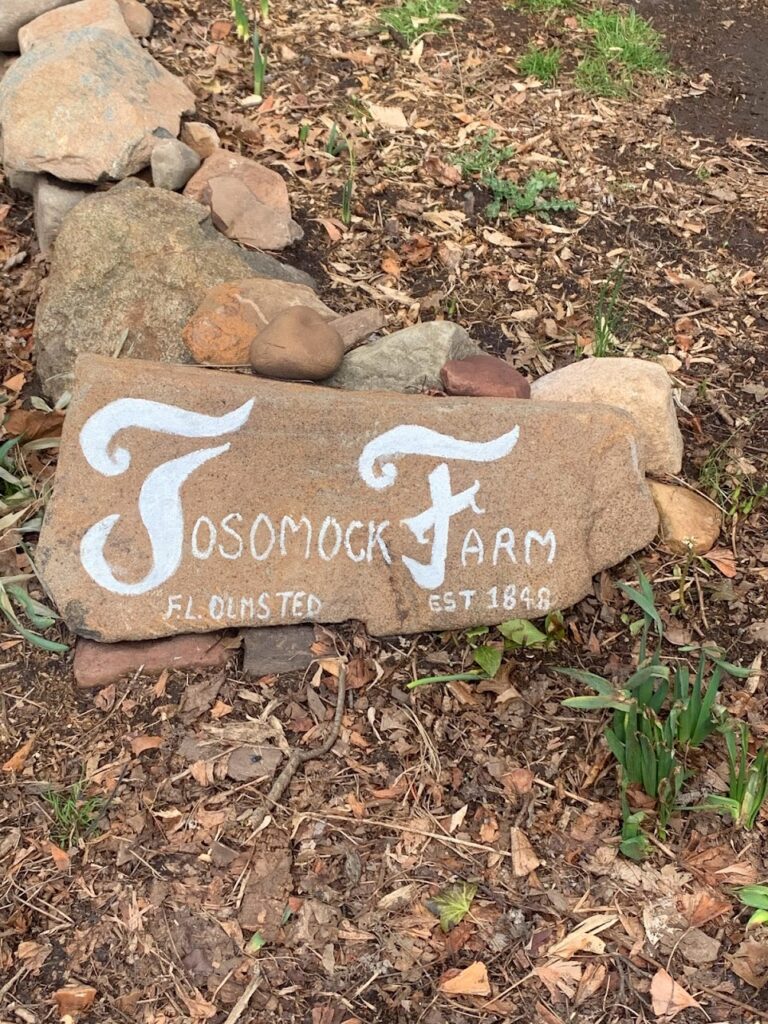
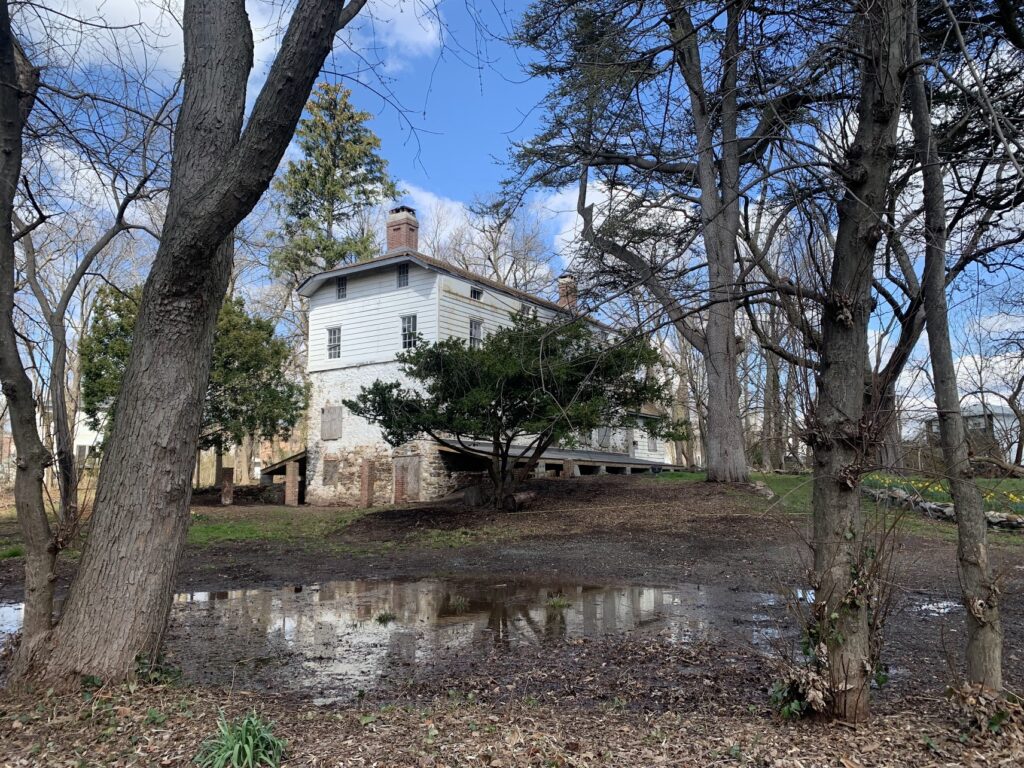
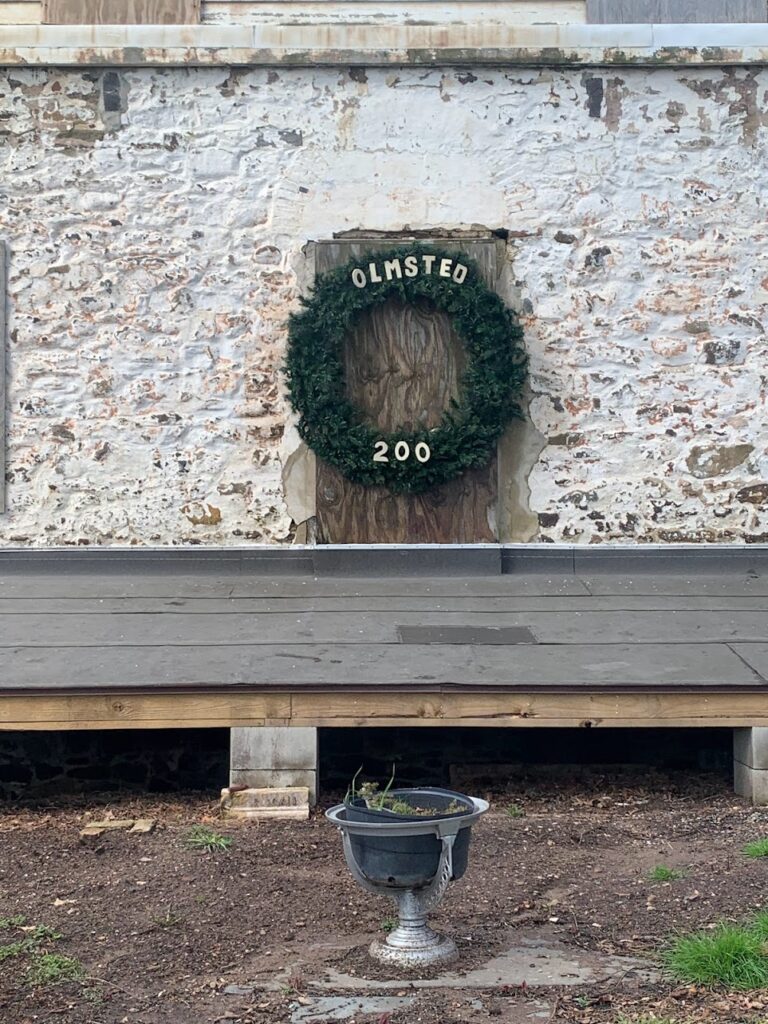
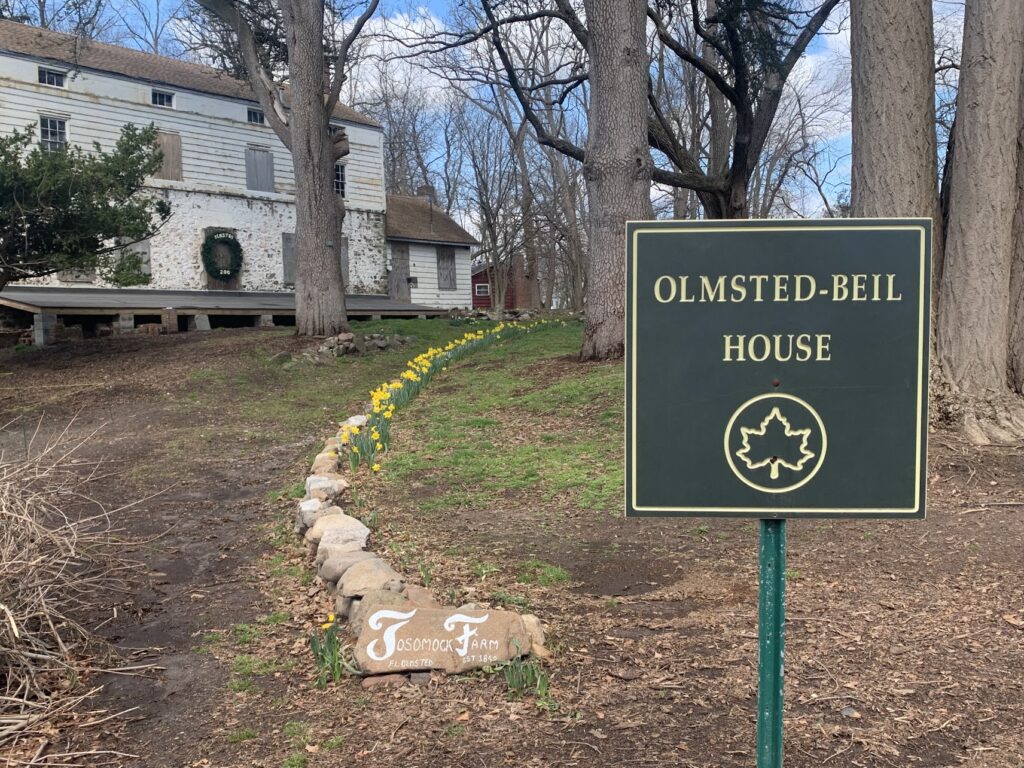
Pictures from my visit to the Olmsted-Beil House on Staten Island:

Photos by Greg Young

FURTHER LISTENING

After listening to this episode of Frederick Law Olmsted, jump back into these earlier Bowery Boys Podcasts which discuss similar themes or situations from the show:

FURTHER READING

The Central Park: Original Designs for New York’s Greatest Treasure / Cynthia S. Brenwell, New York City Municipal Archives
Central Park: The Birth, Decline and Renewal of a National Treasure / Eugene Kinkead
A Clearing in the Distance: Frederick Law Olmsted and America in the 19th Century / Witold Rybczynski
Creating Central Park / Morrison H. Hecksher
Genius of Place: The Life of Frederick Law Olmsted / Justin Martin
Parks for the People: The Life of Frederick Law Olmsted / Julie Dunlap
The Power of Scenery: Frederick Law Olmsted and the Origin of National Parks / Dennis Drabelle

The Bowery Boys: New York City History podcast is brought to you …. by you!

We are producing a new Bowery Boys podcast every other week. We’re also looking to improve and expand the show in other ways — publishing, social media, live events and other forms of media. But we can only do this with your help!

We are now a creator on Patreon, a patronage platform where you can support your favorite content creators.

Please visit our page on Patreon and watch a short video of us recording the show and talking about our expansion plans. If you’d like to help out, there are several different pledge levels. Check them out and consider being a sponsor.

We greatly appreciate our listeners and readers and thank you for joining us on this journey so far

Dr. Johannes La Montagne: Manhattan’s first physician


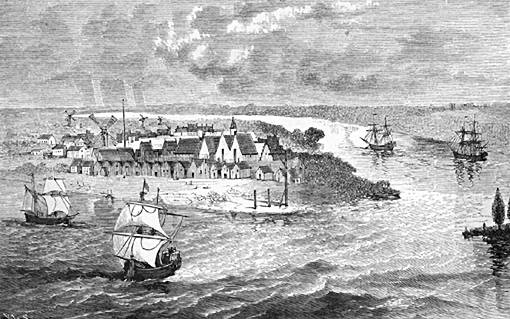
Nothing underscores the harshness of early New Amsterdam more than the notion that the Dutch settlement, which first formed at the tip of Manhattan in 1625, didn’t actually have a trained physician for almost twelve years.

Most likely, in these earliest years, medical emergencies were handled by ship surgeons and non-professionals skilled in a set of rudimentary practices. More practiced professionals eventually came, such as the man who can lay claim to being Manhattan’s first practicing physician Johannes La Montagne (also known as Jean Mousnieer de la Montagne), a Huguenot who arrived in 1637 and initially settled outside the colony in the village of Haarlem.

Johannes soon became “the only doctor in Manhattan in whom the settlers had any confidence,” practicing surprisingly sophisticated innovations in Dutch medicine.

Shockingly, before La Montagne, if one needed actual surgery, one went to the barber. According to one old history, “it might be remarked that at that time barbers were commonly looked upon as surgeons. Any skilled barber was likely to be applied to for surgical procedures.”

These ‘barber-surgeons’, adroit in “performing minor operations“, mostly worked on ships and were hardly skilled in the modern advances of 17th century medicine. Eventually La Montagne was able to regulate these barber-surgeons himself, issuing permits to those practicing in the colony and even those who sailed out of New Amsterdam ports.

Like the millions of doctors who would follow in his footsteps, Johannes would soon benefit handsomely from his expertise, gaining a vote in the first official voting council of the new colony under director-general William Kieft.

Johannes was also the first of many Manhattan physicians who was also versed in the art of networking; within a year he became Kieft’s right hand man and an extension of of the director-general’s wishes, however misguided. He even briefly took over a small farm (around the area of upper Central Park today) maintaining the production of tobacco.

Unfortunately, this devotion to Kieft and the desires of the Dutch West India Company over the needs of the colonists proved to help undermine the new colony, eventually leading to Kieft’s ouster and replacement by Peter Stuyvesant. To his credit, La Montague then won over the steadfast Stuyvesant, who kept him on as a member of his council.

He and his family stayed in the colony after its possession by the British, and it is believed to have spent the remainder of his life in Albany.  Today, descendants of the good doctor have set up their very own genealogical society. 

This article originally ran on May 9, 2009. Original is here