Categories
Parks and Recreation Podcasts Staten Island History

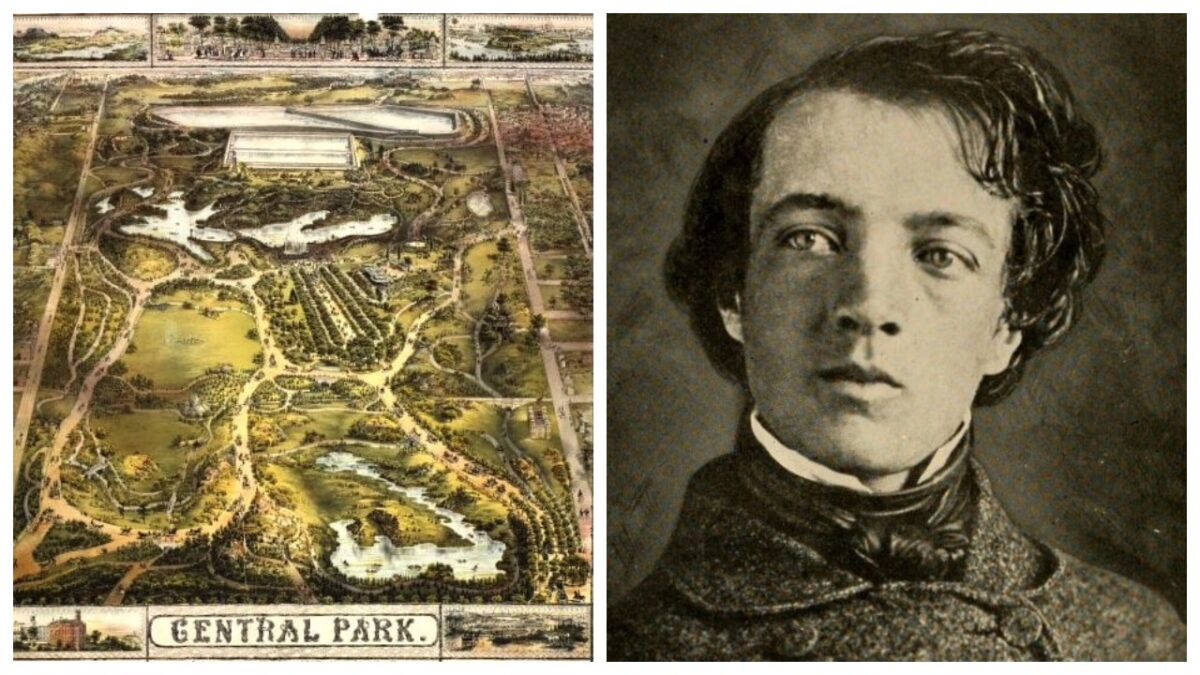
Frederick Law Olmsted and the Plan for Central Park

PODCAST Frederick Law Olmsted, America’s preeminent landscape architect of the 19th century, designed dozens of parks, parkways and college campuses across the country.

With Calvert Vaux, he created two of New York City’s greatest parks — Central Park and Prospect Park.

Yet before Central Park, he had never worked on any significant landscape project and he wasn’t formally trained in any kind of architecture.

In fact, Fred was a bit of a wandering soul, drifting from one occupation to the next, looking for fulfillment in farming, traveling and writing.

This is the remarkable story of how Olmsted found his true calling.

The Central Park proposal drafted by Olmsted and Vaux — called the Greensward Plan — drew from personal experiences, ideas of social reform and the romance of natural beauty (molded and manipulated, of course, by human imagination).

But for Olmsted, it was also created in the gloom of personal sadness. And for Vaux, in the reverence of a mentor who died much too young.

PLUS: In celebration of the 200th anniversary of Olmsted’s birth, Greg is joined on the show by Adrian Benepe, former New York City parks commissioner and president of Brooklyn Botanic Garden.

LISTEN NOW: FREDERICK LAW OLMSTED AND THE PLAN FOR CENTRAL PARK


#Olmsted200

For more information on Olmsted 200 events in your area, check out their website.

And a list of upcoming events here.


Planning a visit to the Brooklyn Botanic Garden? It’s cherry blossom season! Check their website to see where the blossoms are blooming.

Thank you Adrian Benepe for appearing on the show and to everybody over at the Brooklyn Botanic Garden for your help in putting things together.
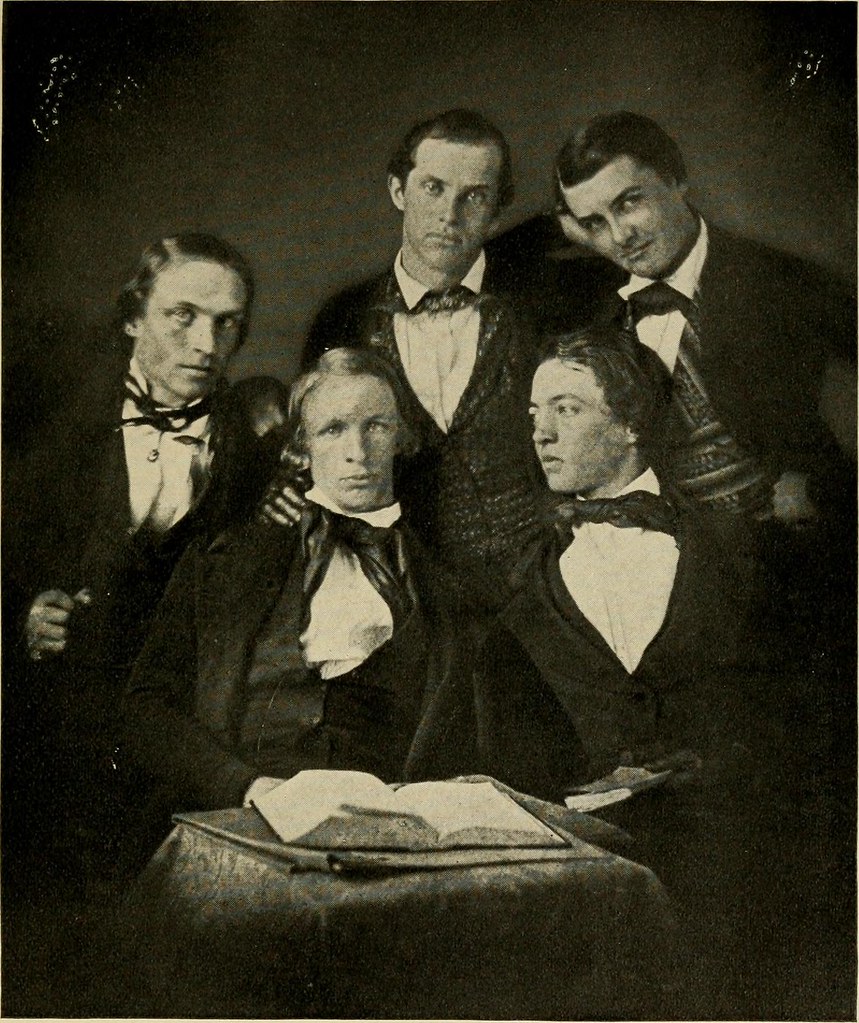
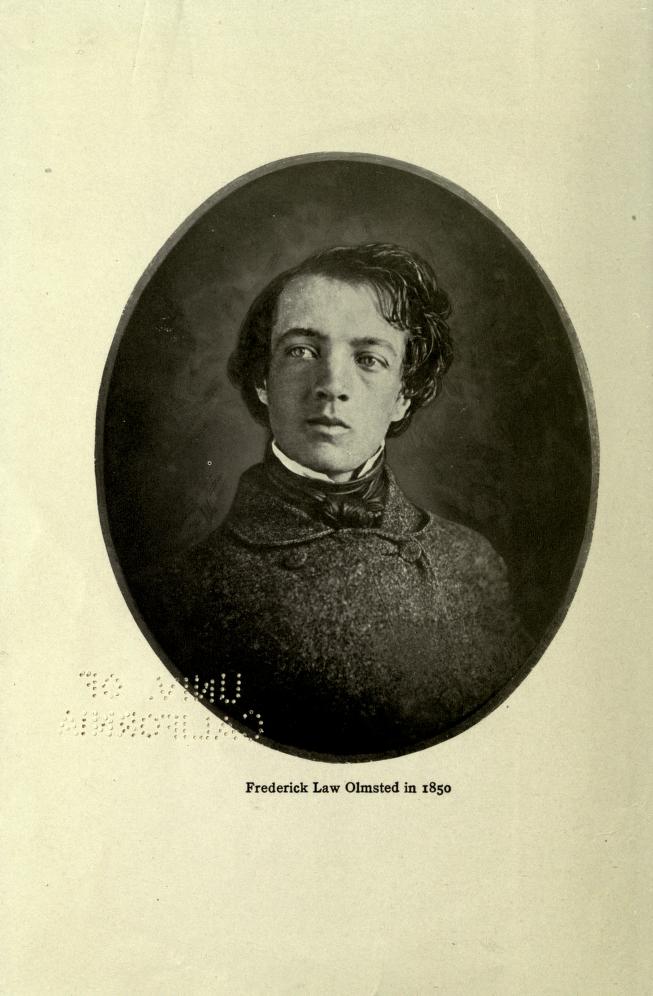
Charles Trask, Charles Loring Brace, Fred Kingsbury, Frederick Law Olmsted, John Hull Olmsted at 1846
Forty Years of Landscape Architecture; being the Professional Papers of Frederick Law Olmsted, Senior. 1922-28. Contributed in BHL from the University of California Libraries.

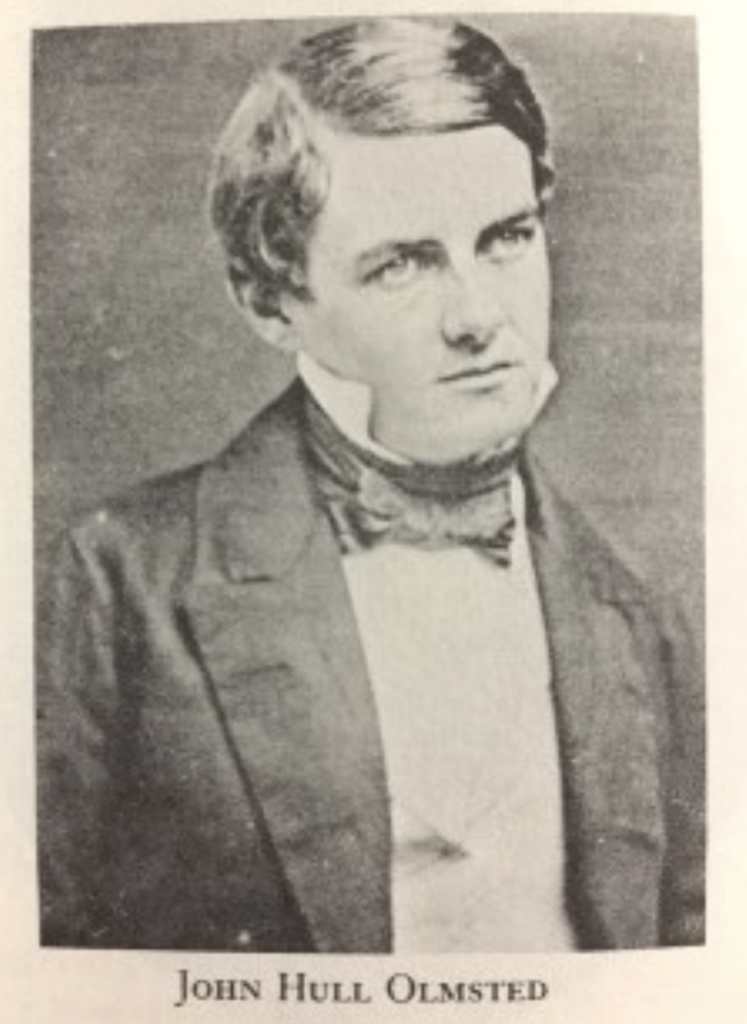
Fred’s brother John Olmsted

From Olmsted’s personal collection of photographs, The Society for the Preservation of New England Antiquities, Boston, Mass. Source

Their friend and traveling companion Charles Loring Brace.
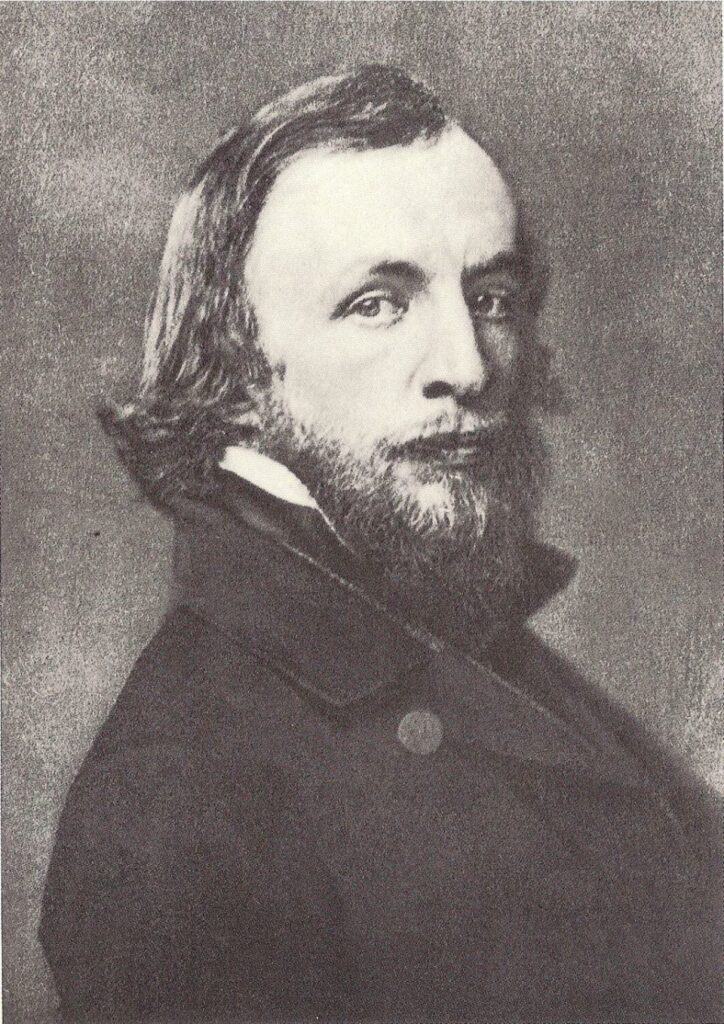

Andrew Jackson Downing
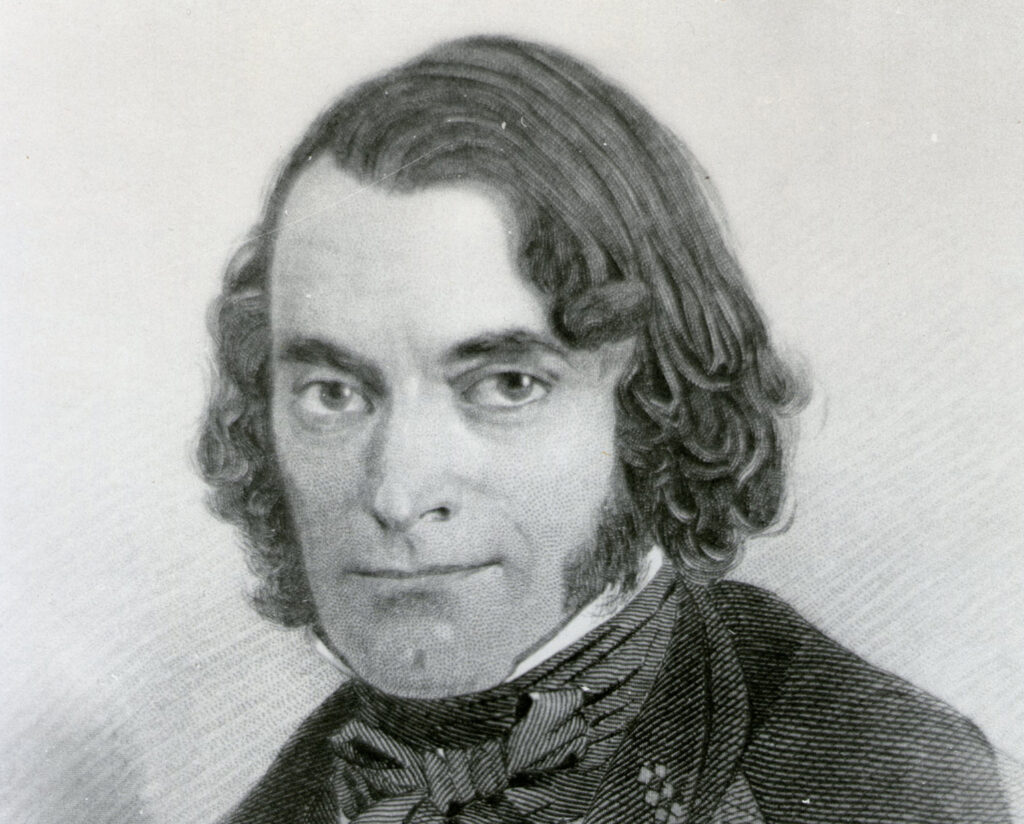
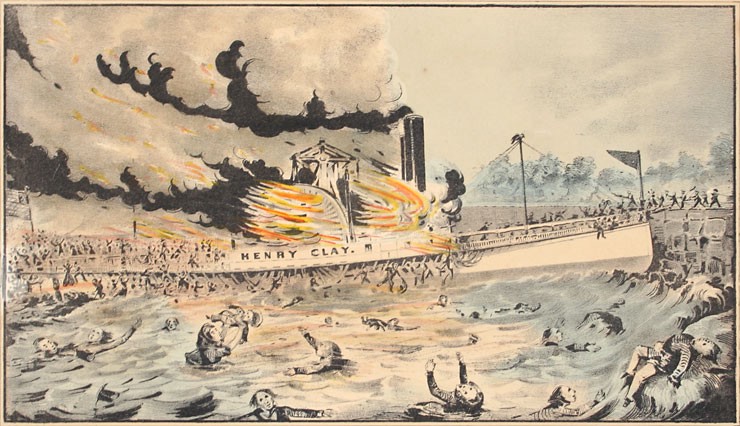
The Burning of the Henry Clay, in a lithograph by Nathaniel Currier, 1852

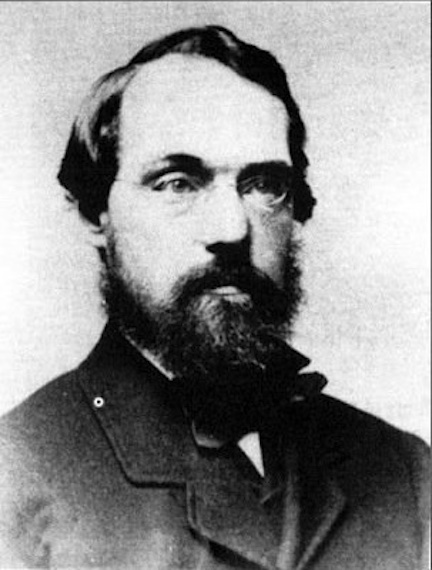
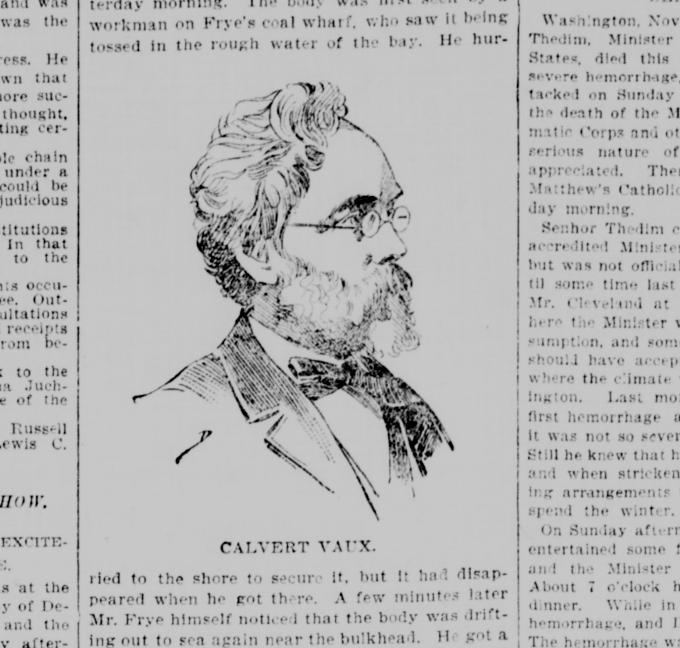
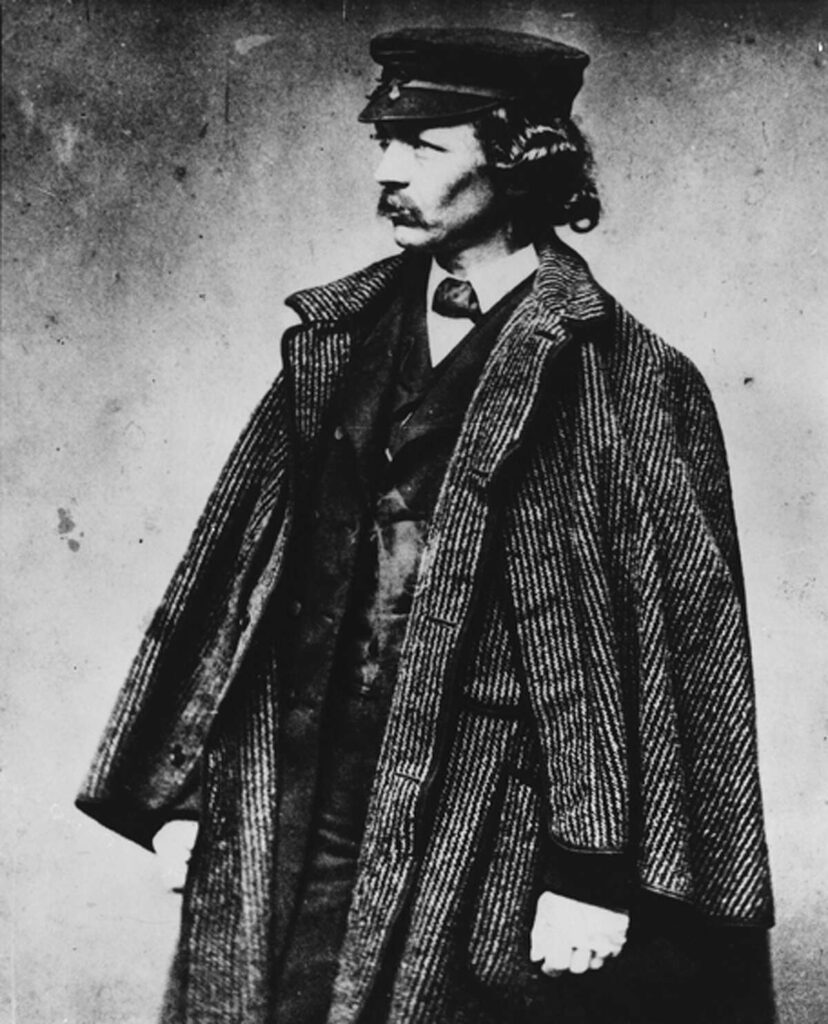
Calvert Vaux

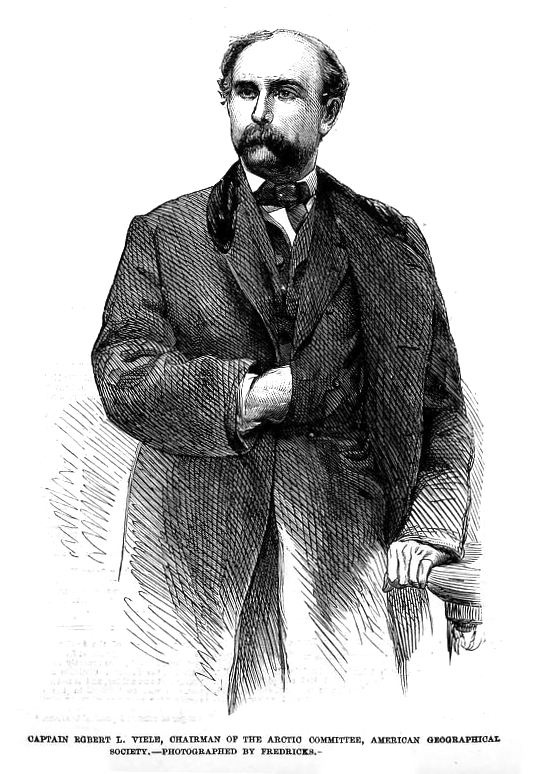
Egbert Ludovicus Viele

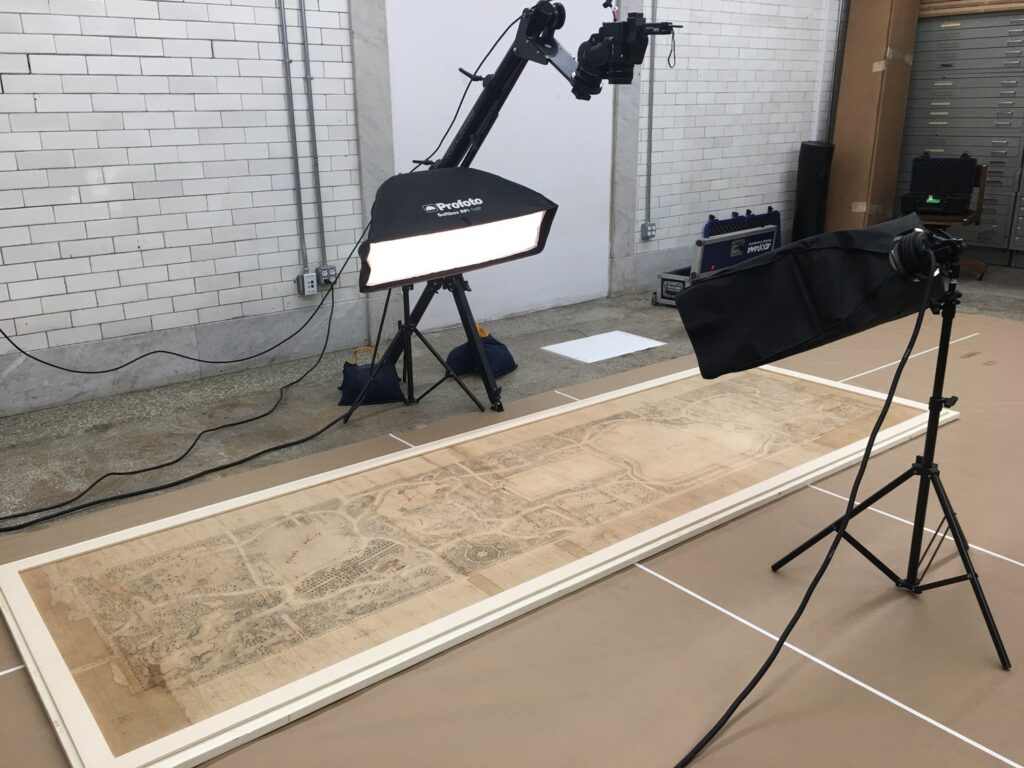
The Greensward Plan will be on display at The New York City Department of Records and Information Services/Municipal Archives Friday, April 22 and Saturday, April 23. 

Get your free tickets here.

Here’s a fascinating article from NYC Department of Records & Information Services about digitizing the Greensward Plan.

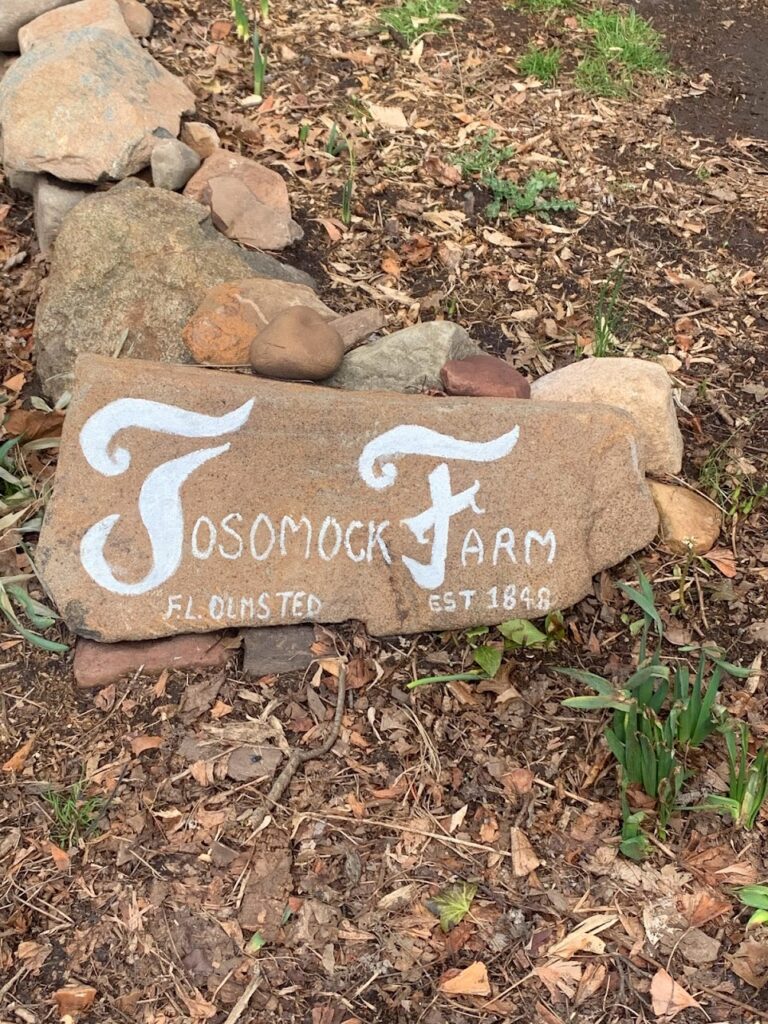
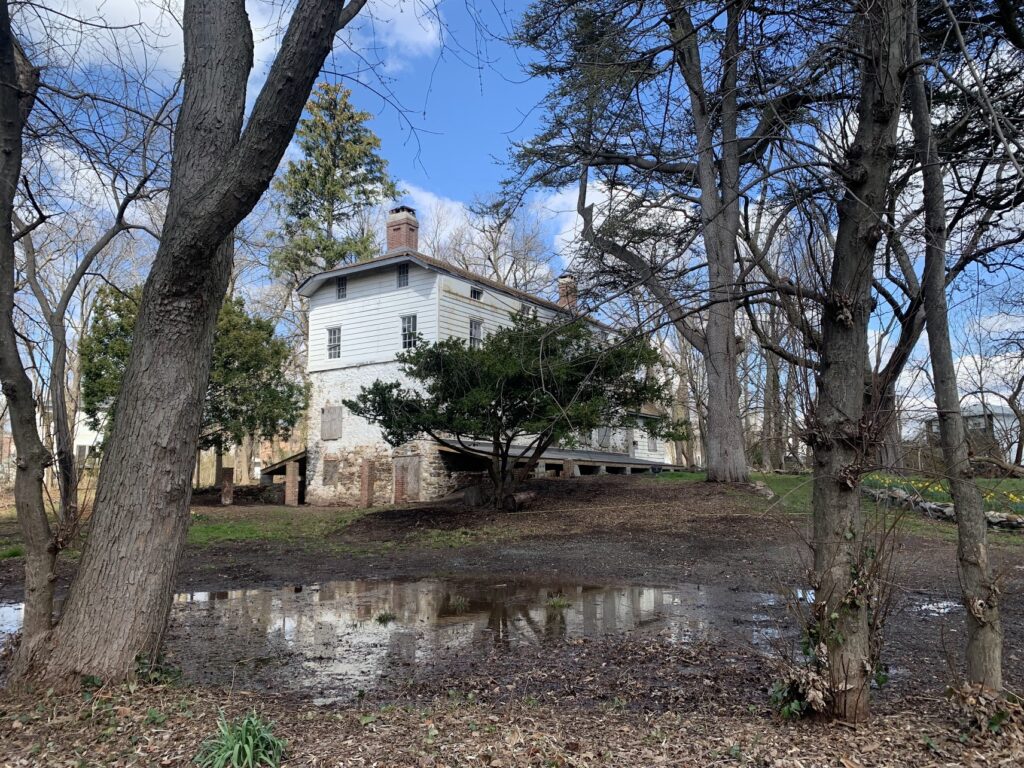
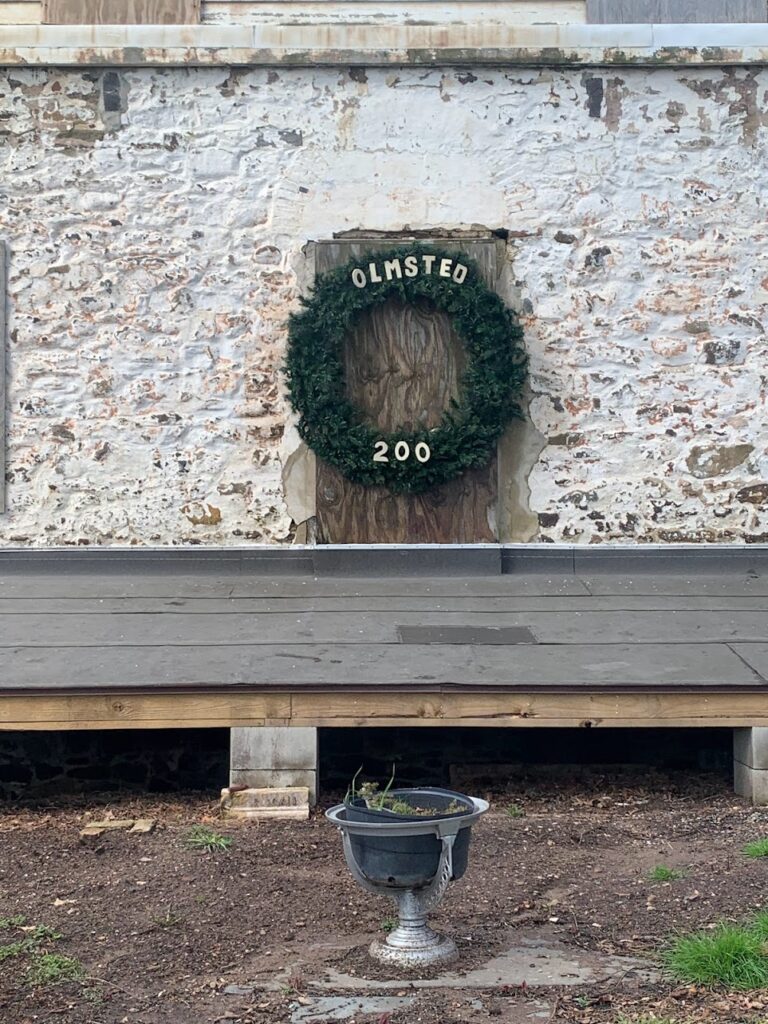
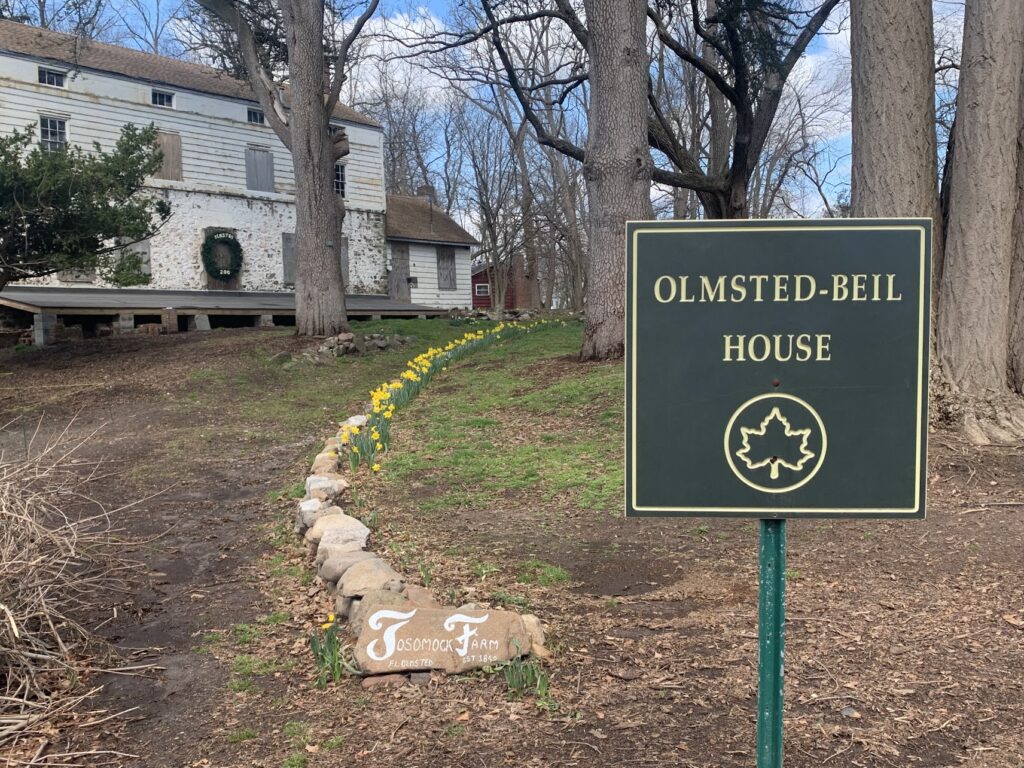
Pictures from my visit to the Olmsted-Beil House on Staten Island:
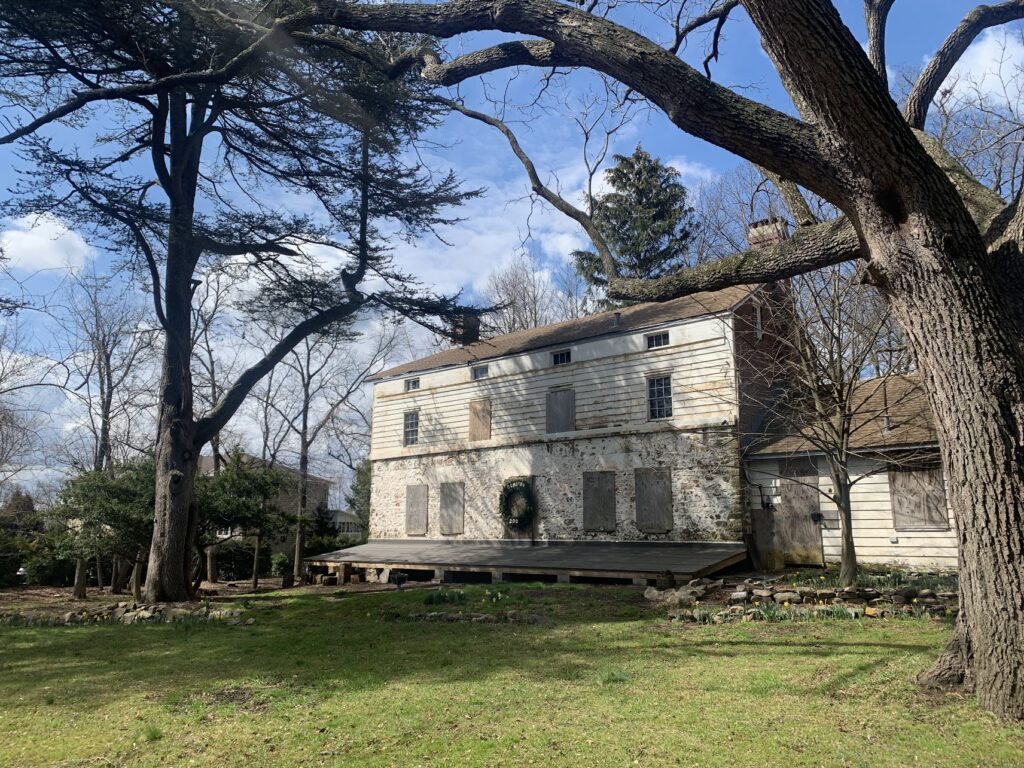
Photos by Greg Young

FURTHER LISTENING

After listening to this episode of Frederick Law Olmsted, jump back into these earlier Bowery Boys Podcasts which discuss similar themes or situations from the show:

FURTHER READING

The Central Park: Original Designs for New York’s Greatest Treasure / Cynthia S. Brenwell, New York City Municipal Archives
Central Park: The Birth, Decline and Renewal of a National Treasure / Eugene Kinkead
A Clearing in the Distance: Frederick Law Olmsted and America in the 19th Century / Witold Rybczynski
Creating Central Park / Morrison H. Hecksher
Genius of Place: The Life of Frederick Law Olmsted / Justin Martin
Parks for the People: The Life of Frederick Law Olmsted / Julie Dunlap
The Power of Scenery: Frederick Law Olmsted and the Origin of National Parks / Dennis Drabelle

The Bowery Boys: New York City History podcast is brought to you …. by you!

We are producing a new Bowery Boys podcast every other week. We’re also looking to improve and expand the show in other ways — publishing, social media, live events and other forms of media. But we can only do this with your help!

We are now a creator on Patreon, a patronage platform where you can support your favorite content creators.

Please visit our page on Patreon and watch a short video of us recording the show and talking about our expansion plans. If you’d like to help out, there are several different pledge levels. Check them out and consider being a sponsor.

We greatly appreciate our listeners and readers and thank you for joining us on this journey so far
Categories
Brooklyn History Parks and Recreation

The disappearance and mysterious death of Calvert Vaux

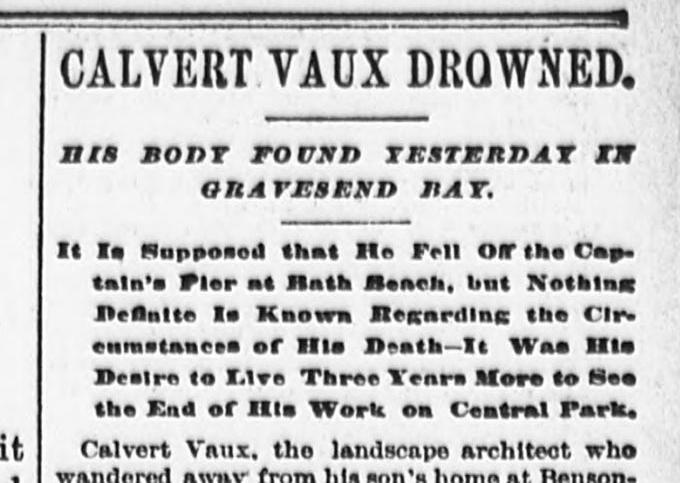
On November 19, 1895,  Calvert Vaux went for a morning walk from his son’s home in Brooklyn. He never returned.

The 70 year old architect had helped to create the greatest parks in the cities of New York and Brooklyn.

His landscape collaborations with Frederick Law Olmsted had given Manhattan its Central Park and Brooklyn its Prospect Park and Fort Greene Park.

His own architectural work could be seen at Jefferson Market Courthouse, the American Museum of Natural History and the Metropolitan Museum of Art. In 1895 he still retained an honorary role as the parks department’s landscape adviser, although he had mostly retired from public life.

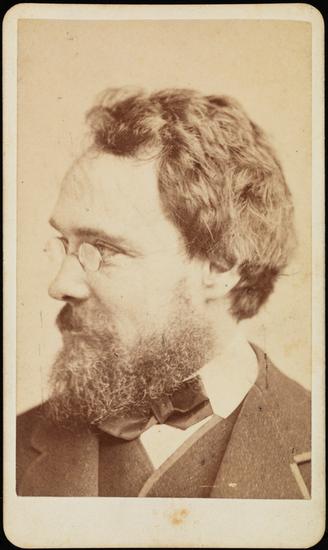
Calvert Vaux, circa 1865-1871

Courtesy Museum of the City of New York

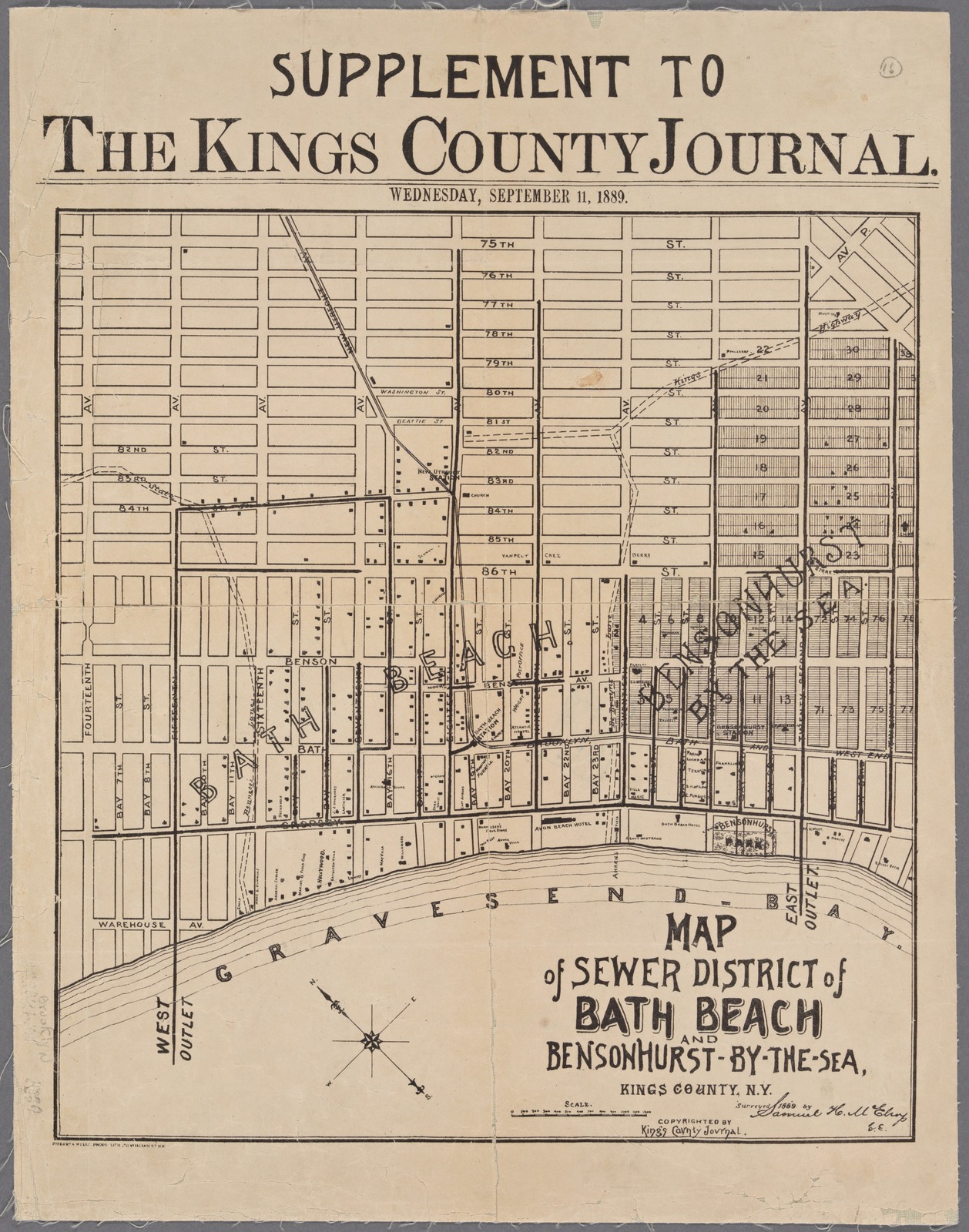
His son Calvert Bowyer Vaux lived in a house on Twentieth Avenue between Bath and Benson Avenues in today’s neighborhood of Bath Beach. The elder Vaux often stayed with his son and was known for taking morning walks along the waterfront

On November 19, 1895, it was gray and foggy on the morning that Vaux departed his son’s home, leaving behind “a gold watch and chain and his vest” with about two dollars in his pocket.

Below: The New York Tribune made a brief mention of Vaux’s vanishing in the following one-sentence bulletin:

Trib Nov 21

At some point during the day he was spotted by a “Captain Ditmar” — possibly Captain Walter Earl Ditmar — on a pier near the water, and the two briefly spoke. Vaux is reported to have said to the captain, “I’m admiring the improvements you’ve made hereabouts.”

The two briefly talked about methods in which to make the beach area more amenable to visitors before Vaux proceeded to walk the piers by himself.

Ditmar was the last person to see Vaux alive.

The architect must have been known for taking very long walks for he was only discovered missing in the late afternoon. 

By the evening his family became worried; the police were called the following morning. All the local hospitals and hotels were checked. While it was well-known that Vaux was a frail man, he was often known to walk up to Prospect Park, several miles from his son’s home. But fears that he may have fallen into the bay were already present.

Below: An 1889 map of the district Vaux’s son lived in. The elder Vaux was last seen along the shoreline depicted here.

1

The following day the body of Calvert Vaux was indeed found in Gravesend Bay at the foot of Bay 17th Street, very close to the site of today’s Bath Beach Park.

As described by the Brooklyn Daily Eagle:

“A workman on Fry’s coal dock [later identified as Benjamin Butler] first saw the body being tossed about in the rough water, but when he rushed to the shore to secure the corpse it disappeared. It was some minutes later before Mr. Fry himself saw it drifting alongside the bulkhead out to sea again. With a boat hook he succeeded in bringing it close to shore.”

Below: Headline from the New York Sun

1

The police were called, bringing Vaux’s son down to the shore to identify the body. He could scarcely bring himself to look into his father’s face, recognizing his father’s well-worn suit before looking away.

“There was a bruise on the head, a slight cut over the eye, and the hat, spectacles and left shoe were missing,” reported the Times.

Given the circumstantial evidence, it seems clear as to what may have happened to Mr. Vaux. While on a walk along the shore, he may have fainted or tripped, falling into the water and drowning in the waves.

Below: An engraving from the New York Tribune:

tribune

The Sun further speculated: “As he was interested in the construction of the pier, it may be that he leaned over the stringpiece to examine the foundation piles. In doing so he may have fallen into the water, as he was ill and feeble, being 70 years old.”

Most press reports of the day made it clear no foul play was suspected. Vaux Jr. brushed away any suggestions of suicide on his father’s part. “The theory of suicide has been disclaimed by his relatives who said that [Vaux] had been cheerful and mentally able the evening before he disappeared.” [source]

But not everybody was convinced, and the Tribune reported that the “theory [of suicide] prevails with some people.”

Weeks earlier Vaux had told his daughter that he wanted to live long enough to see the completion of his plans in Central Park. “If I can only manage to live until 1898, my plans for the improvement of Central Park will be completed, and I won’t worry about any other work.”

Sadly Vaux’s death did have a certain impact on Central Park. Without the dutiful eye of its co-creator, maintenance on the park gradually deteriorated, and it would not be until the installation of Parks Commissioner Robert Moses that the condition of the park would be improved.

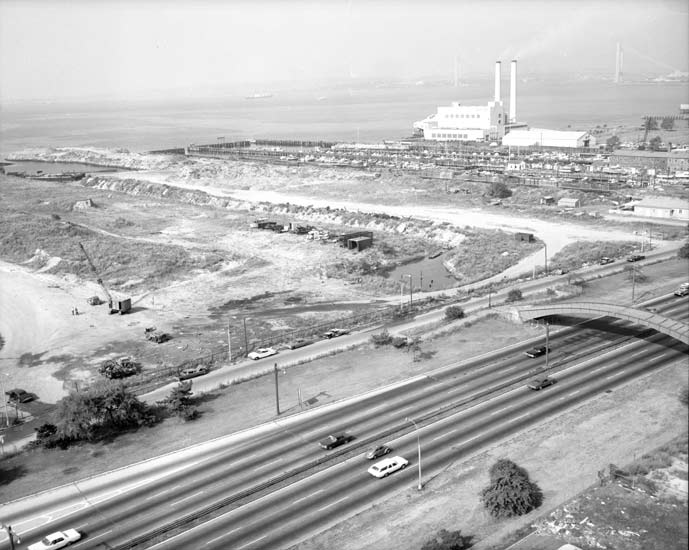
Today, nearby the place where Vaux’s body was discovered, you may enjoy a picnic and a sunset at Calvert Vaux Park in Gravesend.

Below: Calvert Vaux Park (the former Dreier-Offerman Park) has greatly improved since the 1960s when it was essentially an undeveloped mess, linked by a pedestrian bridge. Picture courtesy the New York City Parks Archives

1968

It was once called Dreier-Offerman Park for the former home for unwed mothers which once sat here. It was changed to honor the architect in 1998 when it was radically re-landscaped and improved. Knowing that he died close to here, I kind of think being named after an unwed mother’s home is the less depressing name.

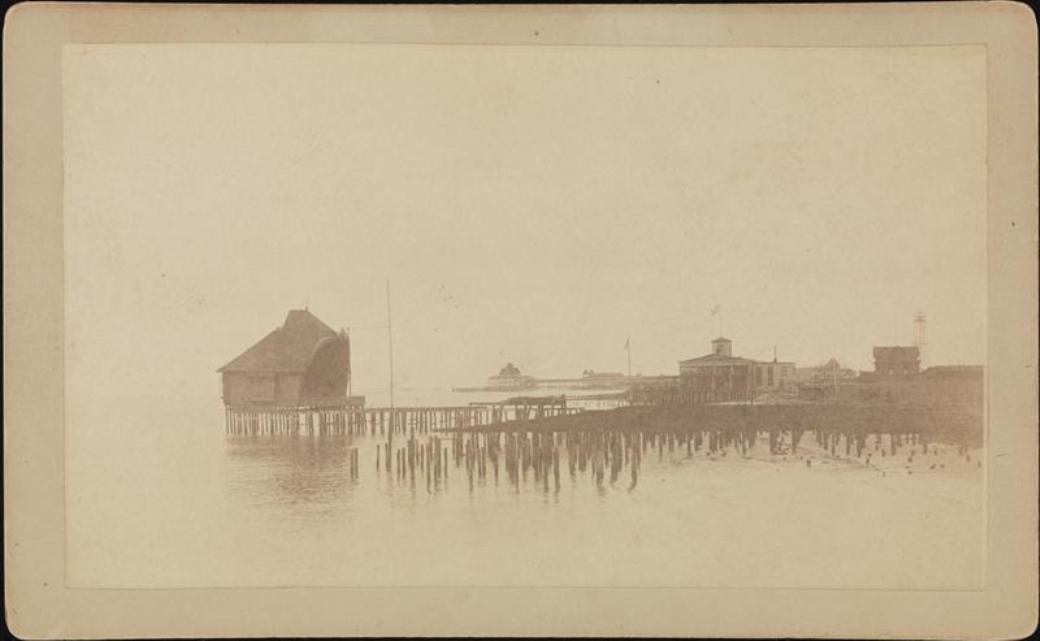
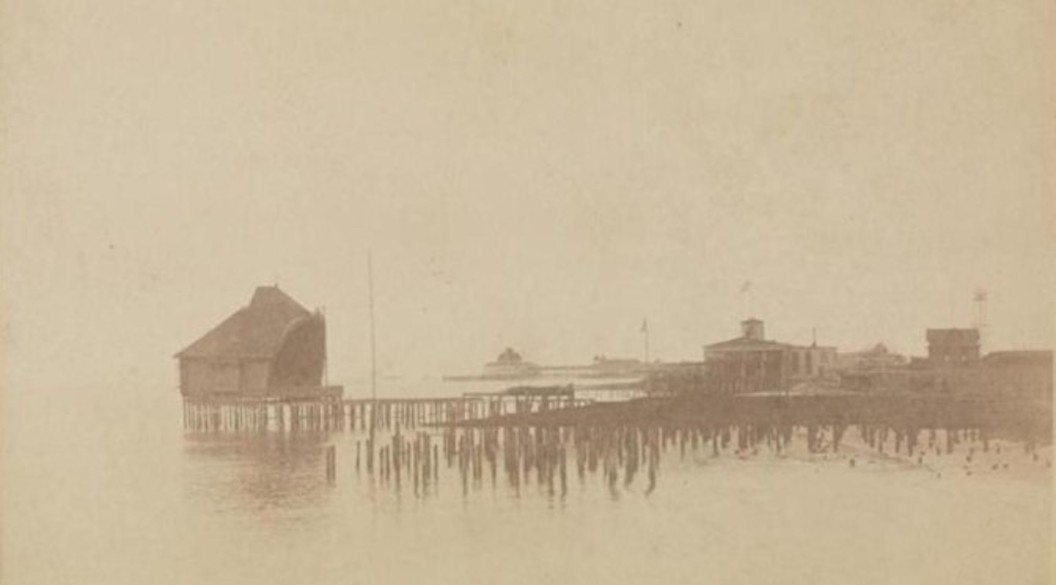
Picture at top: A forlorn pier from 1890, located at West Brighton Beach, Brooklyn.

Photograph by Robert Bracklow. Courtesy Museum of the City of New York

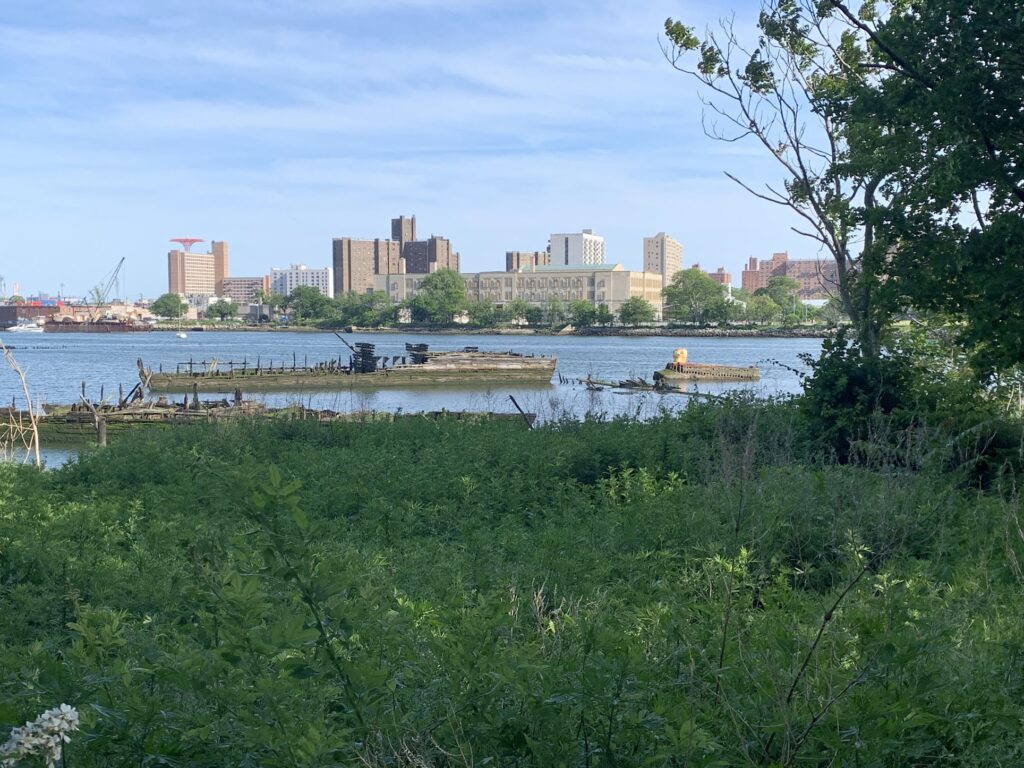
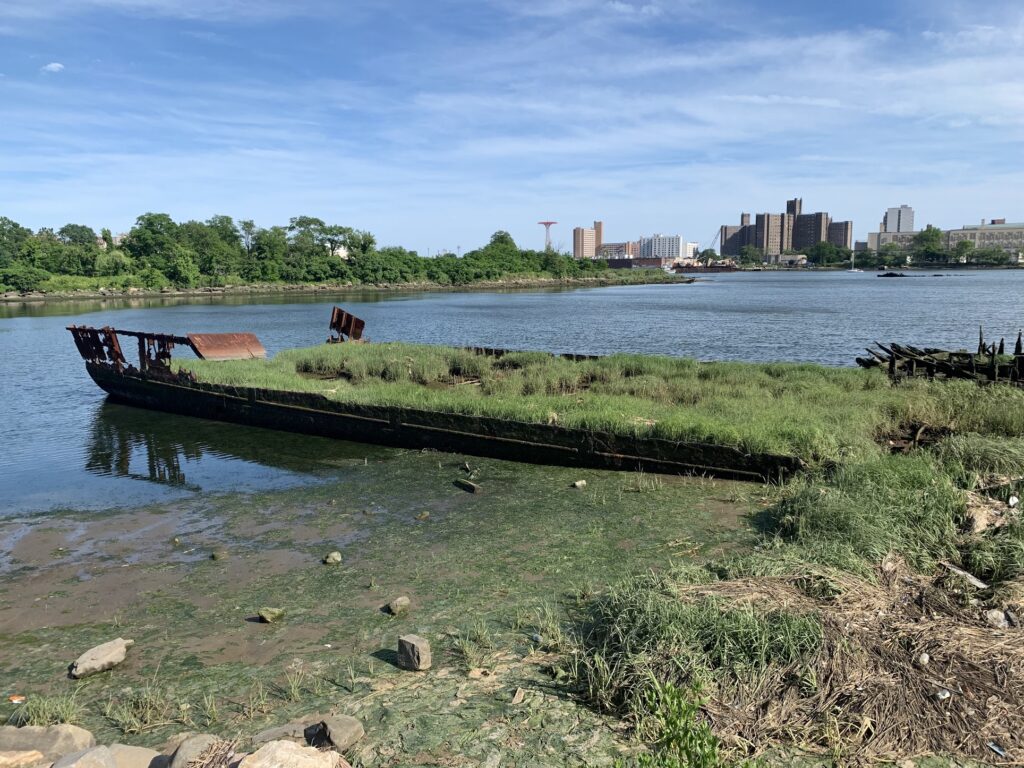
And here are some photographs I took in Calvert Vaux Park from a couple years ago:

This article originally ran in 2015.

Categories
Parks and Recreation

Ten unusual views of Prospect Park and Grand Army Plaza

When park designers Frederick Law Olmsted and Calvert Vaux regrouped after the success of Central Park to design another great park for Brooklyn — encompassing Prospect Hill and the Revolutionary War site Battle Pass — they preserved a greater amount of natural topography than they had in Manhattan. But that doesn’t mean that Prospect Park hasn’t gone through a few radical changes of its own since it opened between the years 1867 and 1873.

Their Grand Army Plaza has experienced few changes since it opened in those years, but the structures around it have certainly changed, presenting some surprising views at the mighty war monuments.

New York Public LIbrary

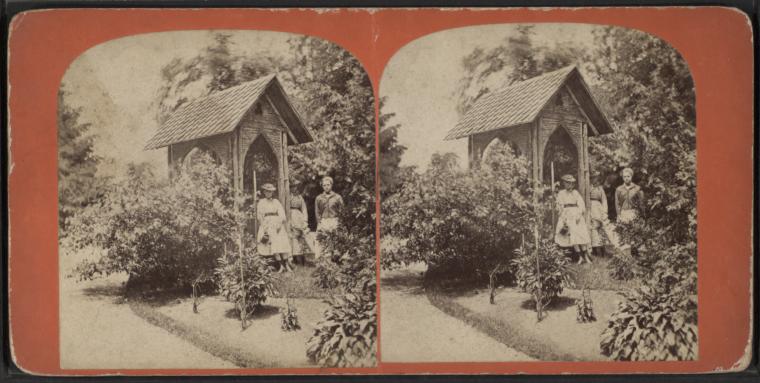
1. Women of the Wellhouse
The caption for this stereoscopic view (taken sometime in the 1870s-80s) calls this a ‘well house’, although it may have also been a a coal storage shed or even an outhouse! Brooklyn’s main reservoir was on Prospect Hill, and the park was constructed partially to protect the water source from encroaching developers.

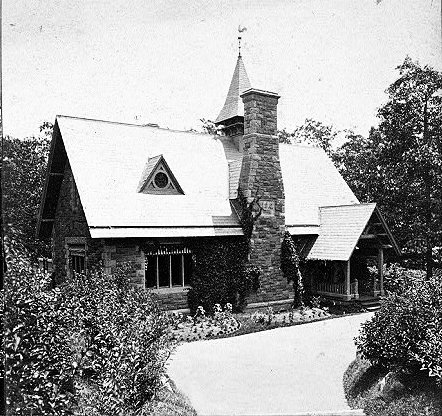
2. Prospect Park Dairy
As they had done in Central Park, Olmsted and Vaux infused the landscape with various romantic, fairytale-like structures, including this dairy house, providing guests with milk straight from the cow. Central Park still has a version of their dairy, but Prospect Park’s was regrettably torn down in the 1930s to make way for the Prospect Park Zoo. (NYPL)

Library of Congress

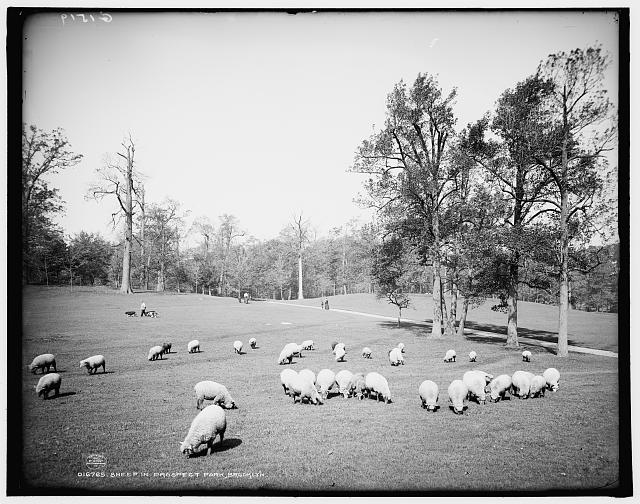
3. Brooklyn Sheep

 Sure, you many know Sheep Meadow in Central Park once had actual sheep grazing — they were considered a rustic design ornament and a natural landscaper — but what happened to the animals after Robert Moses kicked them out in 1934? Like so many trendy things, they moved to Brooklyn! They joined Prospect Park’s already thriving sheep colony (pictured below, from 1903) before moving on to other pastures. (Courtesy LOC)

New York Public Library

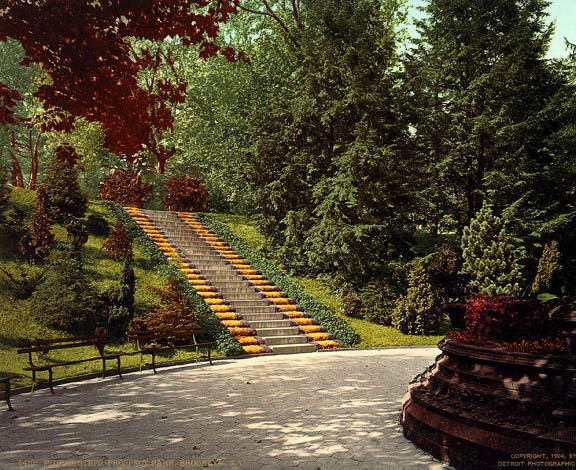
4. Floral Steps, 1904
The manicured flora that grace these steps predates the Brooklyn Botanic Garden by several years. The stairs are still there today, of course, though unadorned.

Courtesy Dept of Records

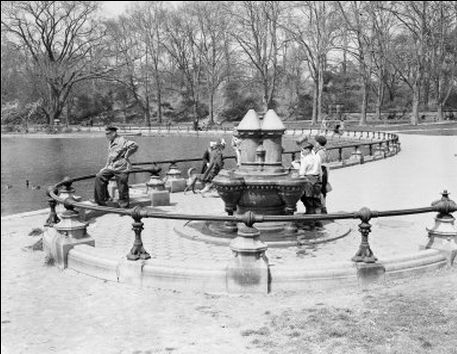
5. Drinking Fountains
With water aplenty, Prospect Park has been dotted with drinking fountains since its inception. This rather unusual fountain, from 1938, may still be around, but I doubt you’ll see anybody drinking from it.

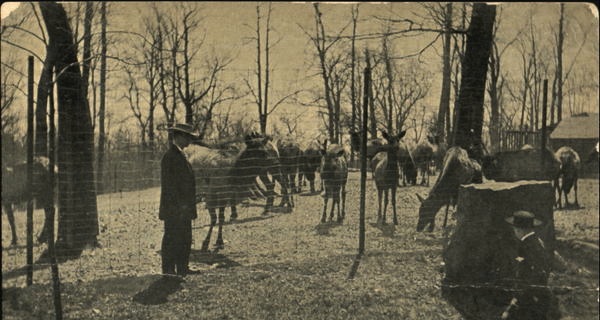
6. Deer Paddock
The zoo also replaced the rather extraordinary Deer Paddock, where the sometimes docile creatures were allowed to wander around. This despite some of them occasionally escaping and running into the surrounding neighborhood (as one adventurous buck did in 1906).

NYPL

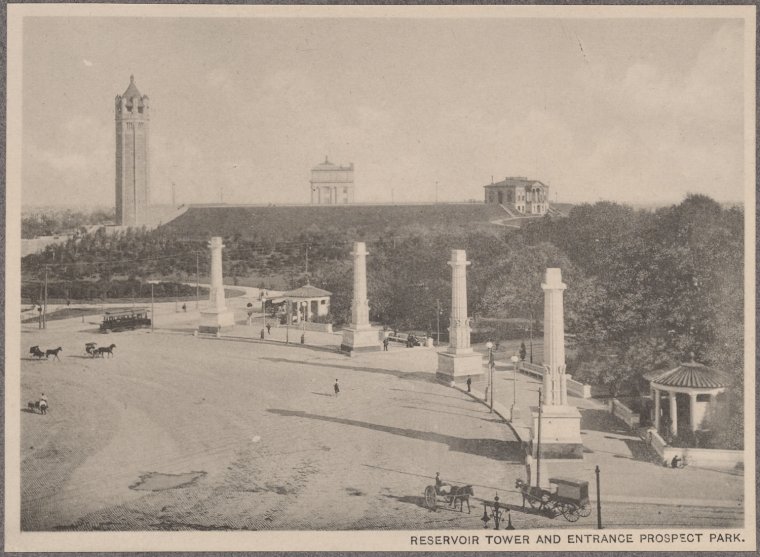
7. Stately Reservoir Tower
High atop Brooklyn’s second highest point on Mount Prospect sits the reservoir tower, only a couple decades old (1893) but looking like a medieval ruin in this image. Date of this picture is unknown, although the ground for the Brooklyn Public Library main branch building was broken in 1912, so it was clearly sometime before then. The Brooklyn Museum is in the distance. [NYPL]

Library of Congress

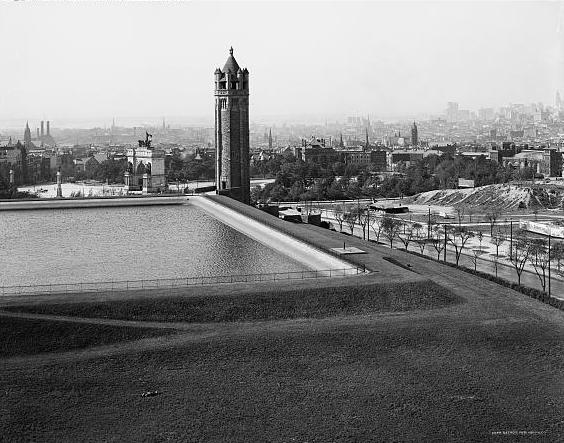
8. And, yes, the Reservoir itself
The reservoir was built here in 1856 and was meant to be included within the park designs. With Flatbush Avenue ultimately cleaving the hill from the rest of the proposal, Olmsted and Vaux left it out. This picture is from between 1910-1920. [LOC]

9. From high above
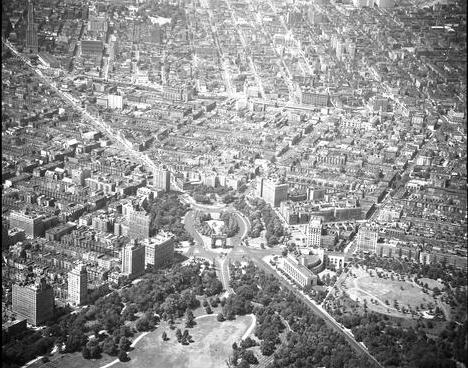
This bird’s eye view from 1951 illustrates the plaza’s similarities to that of the Arc de Triomphe in Paris.


10. Library vista
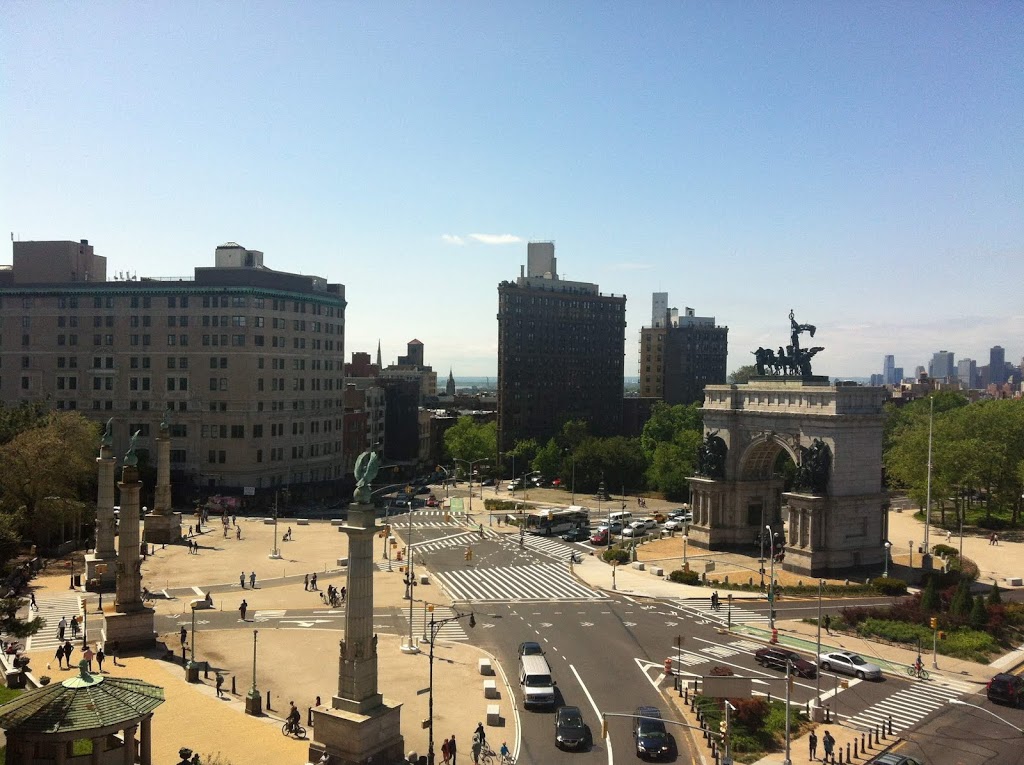
And this view is from two weeks ago! During the Partners In Preservation Open House, the staff at the Brooklyn Public Library main branch led guided tours to the rooftop, offering a very particular take on the plaza. And if my camera had been better, you would see off in the distance the Statue of Liberty, situated several miles away.


This post originally ran in July of 2017.

Categories
Museums

The Metropolitan Museum of Art, when it was smaller

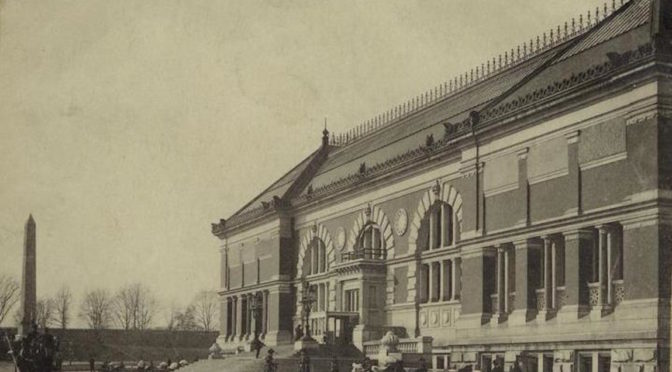
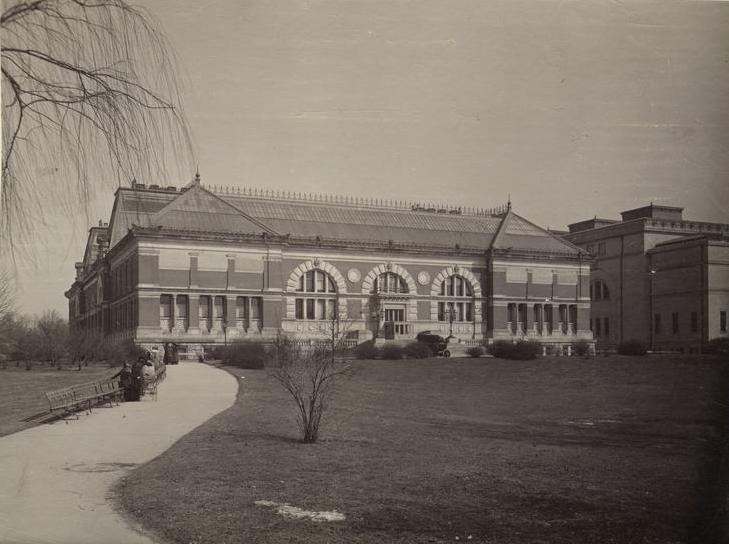
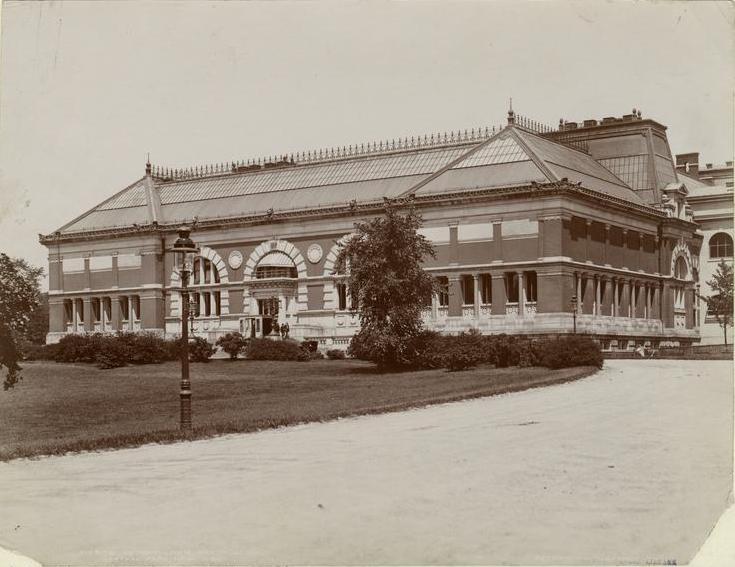
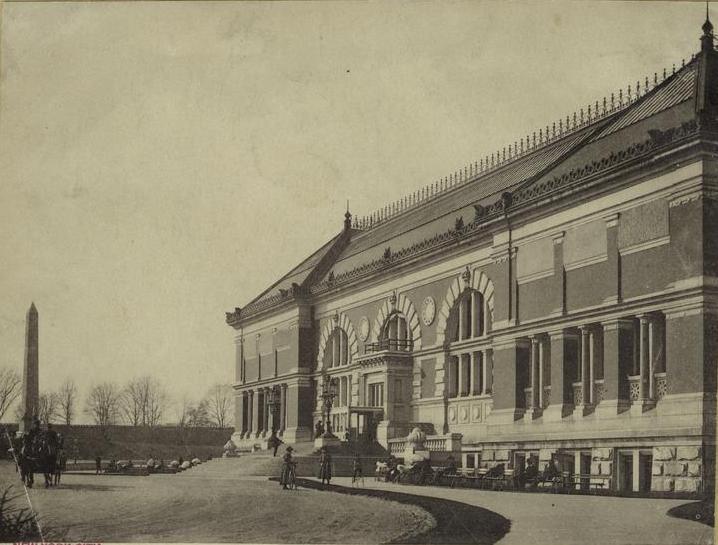
I’m working on a very art-themed podcast which should be ready for release this Friday.  The Metropolitan Museum of Art will be a supporting player in this week’s show, so please enjoy these early photos of the original building, opened in 1880 and designed by Calvert Vaux (to better accentuate his park) and Jacob Wray Mould, of Belvedere Castle fame.

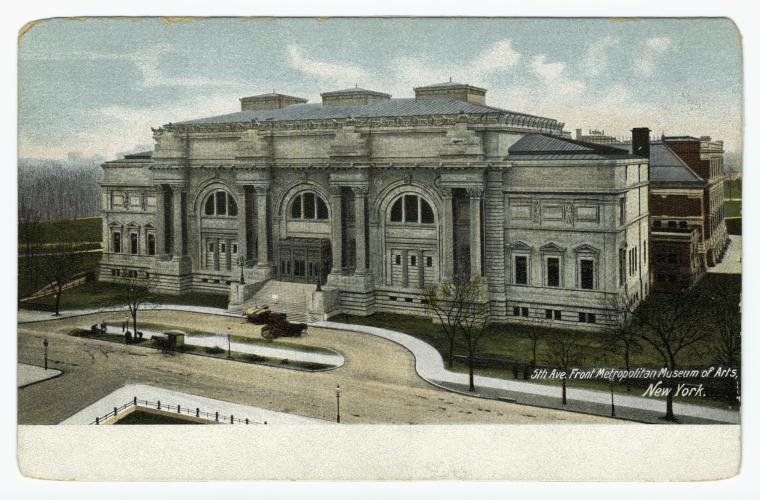
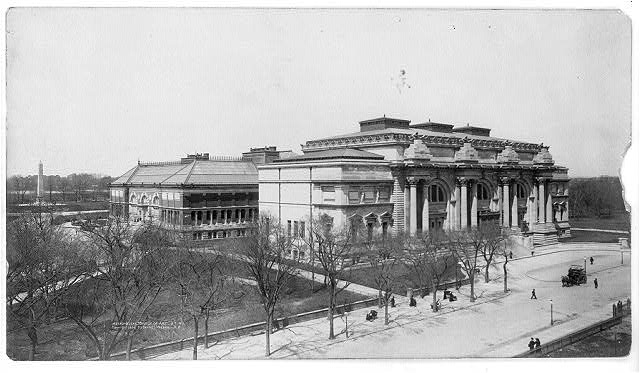
The building was considered out-of-fashion almost as soon as it was finished, and within a couple decades Richard Morris Hunt had created the museum’s more expansive Beaux-Arts facade and wings. What you see here is the old building, next to the new facade, before it was fully consumed by additions.

The postcard and the photo below it gives you a good idea of where the new additions sat in relation to the old building. And this is before the wings were added.

The top four images are courtesy New York Public Library. The last is courtesy Library of Congress.

Categories
Podcasts

The Stuyvesant, New York’s first apartment building: Imported luxury style for a new middle class

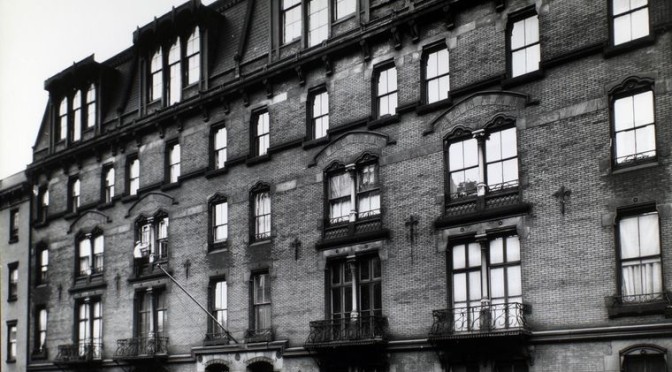
The creation of ‘acceptable’ communal living: The Stuyvesant Flats, at 142 East 18th Street, designed by Richard Morris Hunt, photographed by Berenice Abbott.

PODCAST Well, we’re movin’ on up….to the first New York apartment building ever constructed. New Yorkers of the emerging middle classes needed a place to live situated between the townhouse and the tenement, and the solution came from overseas — a daring style of communal and affordable living called the ‘apartment’ or ‘French flat’.

The city’s first was financed by Rutherford Stuyvesant, an old-money heir with an unusual story to his name. He hired one of the upper class’s hottest architects to create an apartment house, called the Stuyvesant Apartments, with many features that would have been shocking to more than a few New Yorkers of the day.

The building’s first tenants were sometimes well-known, often artists and publishers, and almost all of them with a fascinating story to tell. Listen in to hear about the vanguard first renters of this classic, long-gone building.

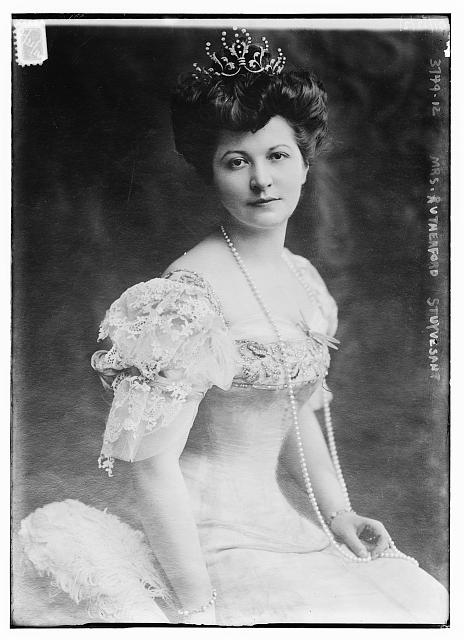
I have been unable to find any portraits of Mr. Rutherford Stuyvesant (aka Stuyvesant Rutherford), the man who financed the Stuyvesant for $100,000. However I have found a picture of Mrs. Rutherford Stuyvesant, who doesn’t look like the kind of lady to mettle around in her husband’s affairs. She would not have found the apartments which bore her name very accomodating. Many, many others did. (Courtesy LOC)

The tenacious Elizabeth ‘Libby’ Custer, photo taken in 1876, the year her husband was killed at the Battle of Little Bighorn. Mrs. Custer moved into Stuyvesant and successfully led her crusade to rehabilitate her husband’s reputation.

Maggie Custer Calhoun, younger sister to General Custer, lived with her sister-in-law at the Stuyvesant before embarking on a successful career as an elocutionist.

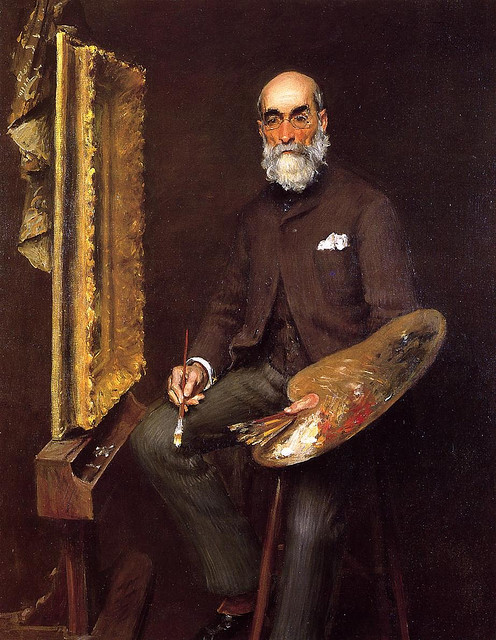
The landscape painter Worthington Whittredge also resided here. In fact, he beamed about it in his autobiography: “I was one of the first to subscribe for an apartment in this house, which was to be erected in 18th Street near Third Avenue and Stuyvesant Square.”

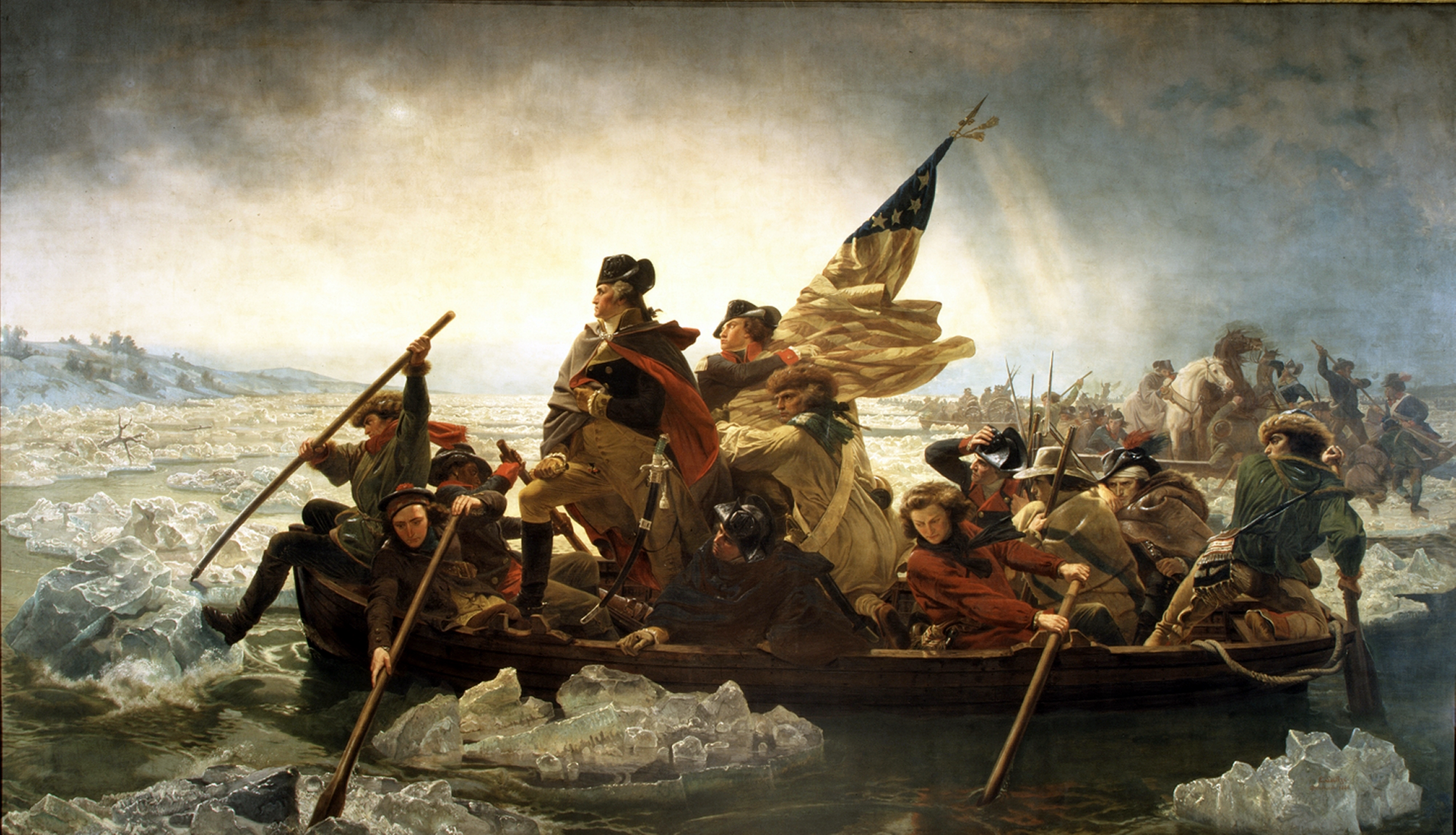
Earlier in his career, Whittredge posed as George Washington while Emanuel Leutze painted ‘Washington Crossing The Delaware’. (Worthington is quite comfortable on both sides of the easel The painting below is by William Merritt Chase.)

In its later years, the Stuyvesant was used as the set for a pivotal scene in the Oscar-nominated film noir ‘Kiss of Death’ starring Richard Widmark. Needless to say, this sort of activity very rarely went on at the Stuyvesant.

View Larger Map

Park life: The anniversary of a name change in Chinatown

Next week begins ‘ghost stories’ week on the blog, but I need to make one more trip to Chinatown, the topic of the last podcast. As I just wrote about Columbus Day last week, I would be remiss if I skipped this very coincidental date in history. It was exactly one hundred years ago yesterday that the name of Mulberry Bend Park was officially changed to Columbus Park.

The park, of course, originally replaced the most decrepit of Five Points’ slums, allowing a sliver of greenery and sunlight to slip into the overly dense neighborhood. It took the city years to wrestle the original rundown tenements from their owners. “In its place will come trees and grass and flowers,” proclaimed its chief proponent Jacob Riis. The placid, English design by Calvert Vaux, typical for its day, insured a park so formal that people weren’t even allowed on the grass. (Today, located at the cusp of Chinatown and the Civic Center, the park is so busy and cluttered that it appears to almost have no grass at all.)

Mulberry Bend Park, named for the infamous hook in Mulberry Street to the park’s east side, opened in 1897. By this time, the area was populated by a mixture of immigrants, the largest group from Italy. Italian Americans soon defined the culture of the park’s surrounding streets, with obvious exception of those streets to the east dominated by Chinese businesses.

In 1911, the city explicitly declared the neighborhood’s changing character, at the behest of the Italian community, by renaming the park for America’s most famous Italian connection, the explorer Christopher Columbus. A crowd of 8,000 people gathered on Columbus Day that year to reopen the park under its new name.

The park now took on a more athletic character, with new track and field facilities, and on that first day with its new name, Columbus Park hosted competitions between boys from local playgrounds. “There were dashes, relay, half mile and potato races, shot puts and high jumps,” reported the Sun. “Five thousand more or less enthusiastic mamas and babies and papas and little mosquitolike boys insinuated their way to the very bars of the park enclosure…and looked on at the games.”

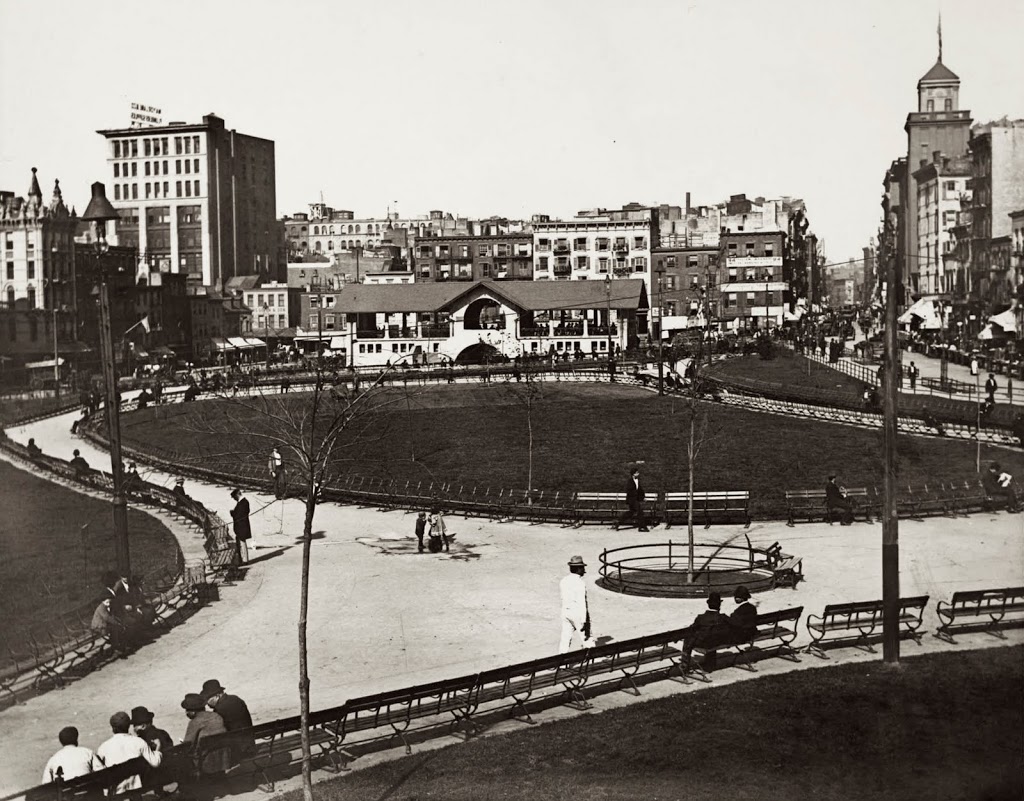
Above: Mulberry Bend Park in 1900