Categories
Holidays Podcasts

A New Year in Old New York: A history of celebration from Times Square to Chinatown

PODCAST The ultimate history of New Year’s celebrations in New York City.

This is the story of the many ways in which New Yorkers have ushered in the coming year, a moment of rebirth, reconciliation, reverence and jubilation.

In a mix of the old and new, we present a history of early New Year’s festivities, before heading to the city’s most famous party — New Year’s Eve in Times Square.

Why did Times Square become the focal point for the world’s reflection on a new calendar year? And how did Times Square’s many changes in the 20th century influence those celebrations? Featuring Dick Clark, Guy Lombardo, Three Dog Night — and Daisy Duke.

THEN Greg brings you the story of the Chinese New Year which has been celebrated in Manhattan’s Chinatown since before there was even a Times Square! The celebration has been at the bedrock of the Chinese experience in New York. But in the 19th century, the customs of the season were met with curiosity, bewilderment and sometimes harsh disapproval.  And what’s up with the fireworks?

Listen Now: A New Year in Old New York Podcast

Or listen to it straight from here:

________________________________________________________

The Bowery Boys: New York City History podcast is brought to you …. by you!

We are now producing a new Bowery Boys podcast every other week. We’re also looking to improve the show in other ways and expand in other ways as well — through publishing, social media, live events and other forms of media. But we can only do this with your help!

We are now a member of Patreon, a patronage platform where you can support your favorite content creators for as little as a $1 a month.

Please visit our page on Patreon and watch a short video of us recording the show and talking about our expansion plans. If you’d like to help out, there are five different pledge levels (and with clever names too — Mannahatta, New Amsterdam, Five Points, Gilded Age, Jazz Age and Empire State). Check them out and consider being a sponsor.

_______________________________________________________

Visit Times Square NYE for details about this Tuesday’s party in Times Square.  For general information about this year’s Chinese New Year, check out this handy web guide.  And visit Better Chinatown for a map of this year’s parade route.

New Years Day celebrations have evolved since the days of New Amsterdam when visitations symbolized a ‘fresh start’ to the year.
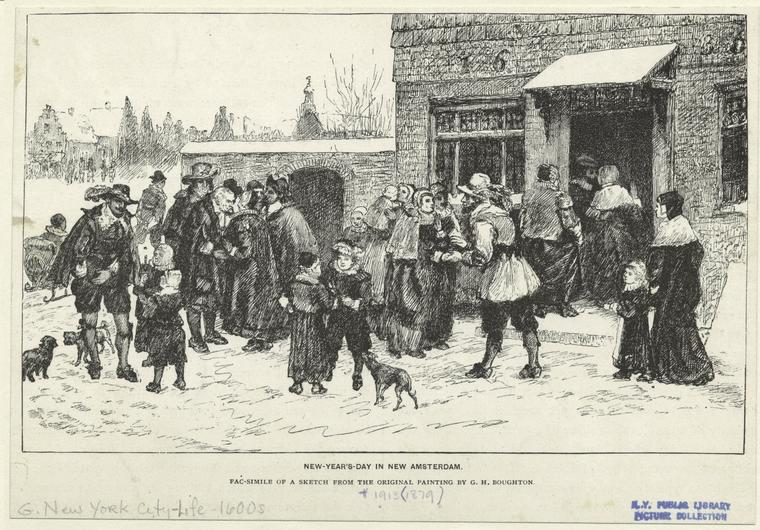
Courtesy NYPL
Courtesy NYPL

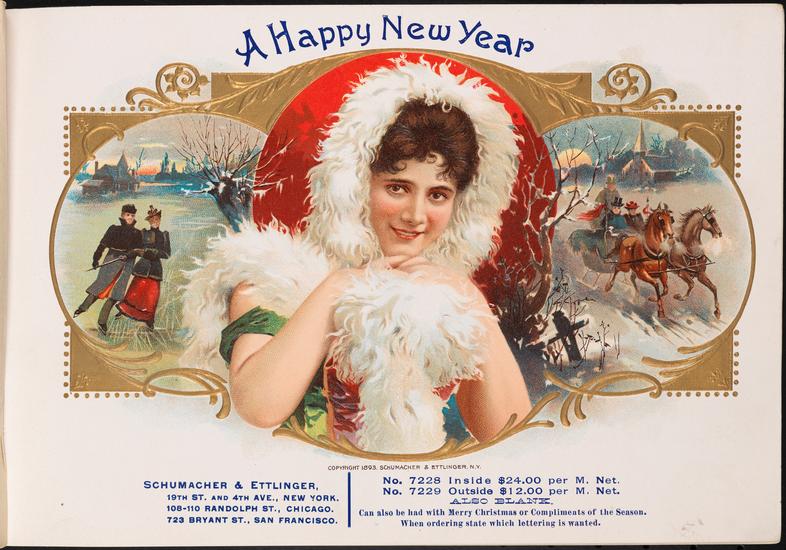
A decorative cigar box from the 1890s, ringing in the new year with a winsome damsel and wholesome scenes of winter beckoning you to smoke a cigar.
Courtesy Museum of the City of New York

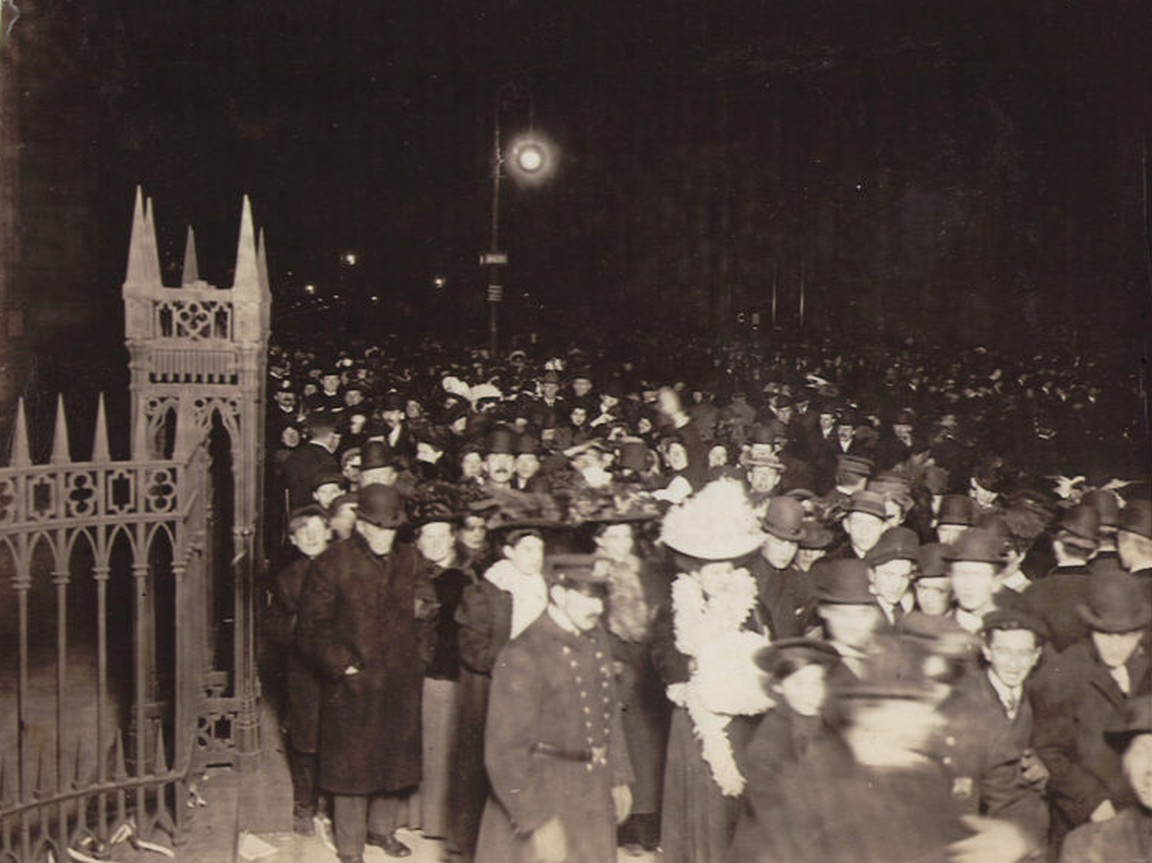
The crowds outside Trinity Church on 1906 gathered to usher in the new year. The church was traditionally the place people gathered before the Times Square celebration took off.
1

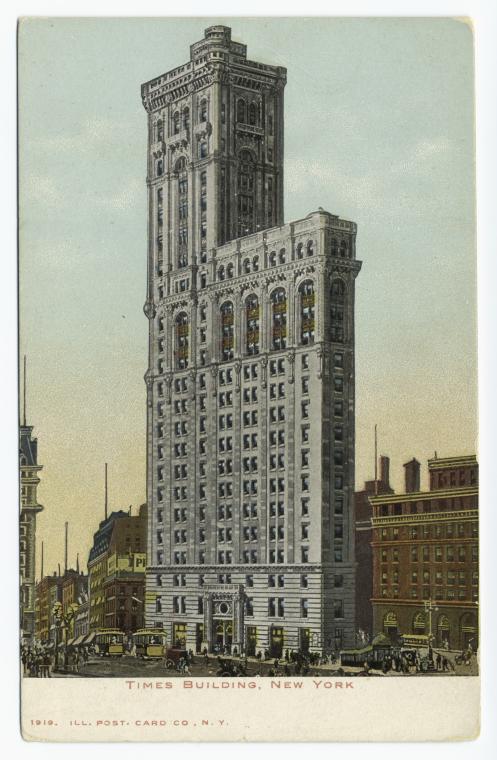
Fated to be the centerpiece of New Years Eve, One Times Square once wore some beautiful architecture until much of it was ripped off to accommodate a frenzy of electronic signs.
Courtesy NYPL
Courtesy NYPL

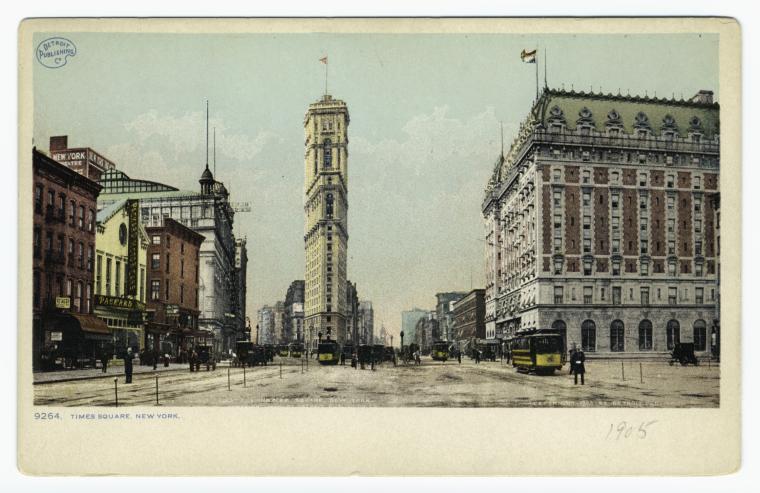
Times Square in 1905 for the very first New Years Eve celebration albeit one with fireworks, not a ball drop.
Courtesy NYPL
Courtesy NYPL

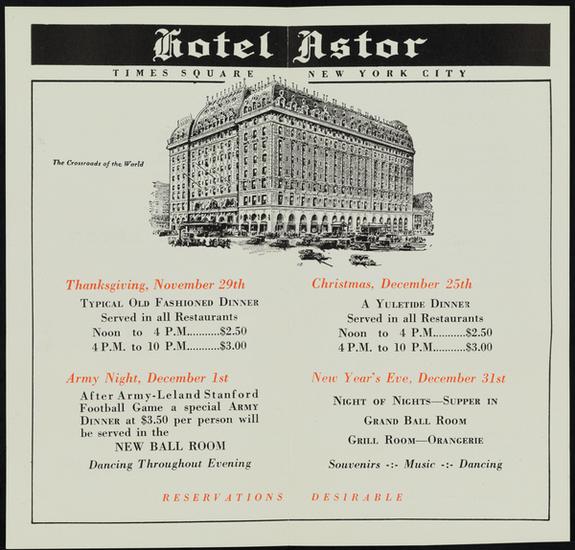
The party offerings at the Hotel Astor in Times Square in 1926.
Courtesy Museum of the City of New York

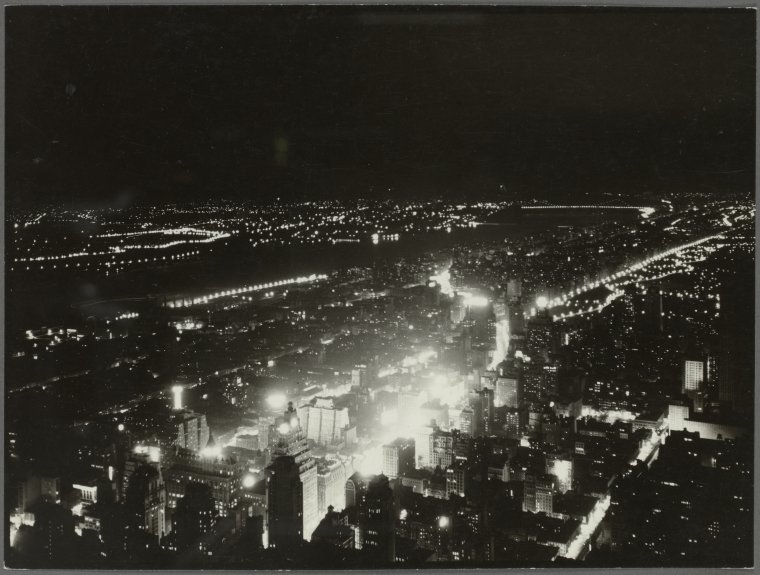
The view of Times Square from the Empire State Building.
Courtesy NYPL
Courtesy NYPL

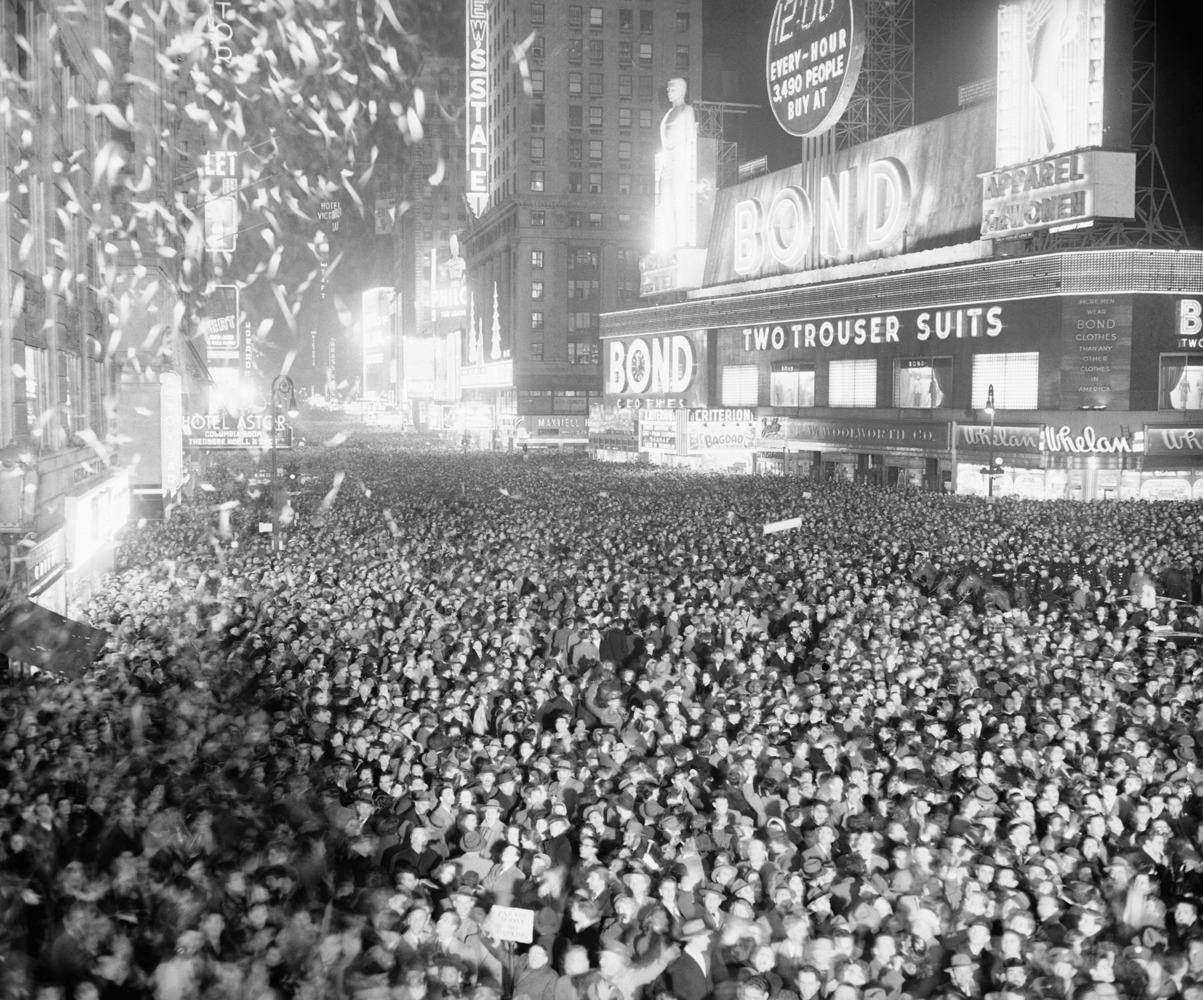
New Years Eve 1938

AP photo
AP photo

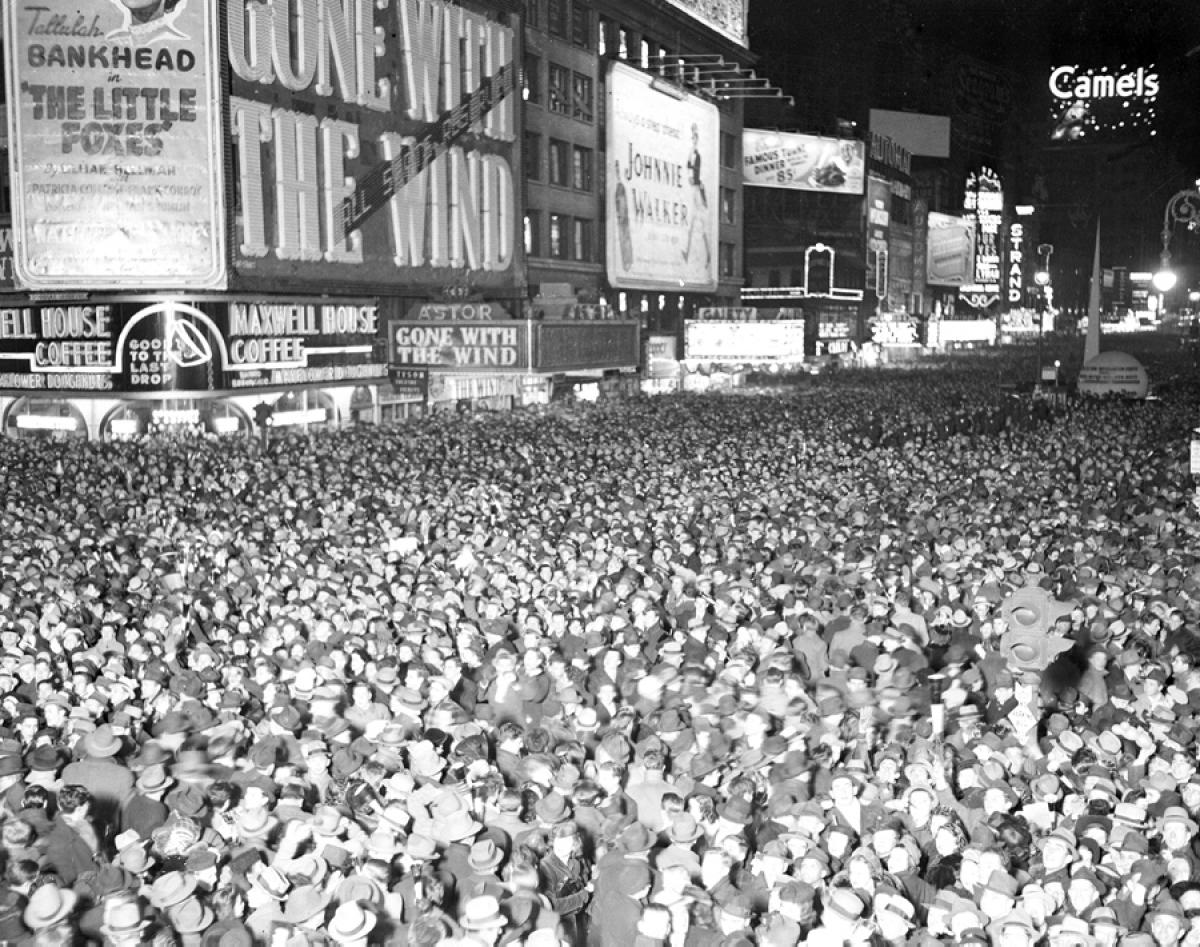
The throngs in 1940 with the Gone With The Wind marquee in the background (not to mention Tallulah Bankhead in the play The Little Foxes!)
Courtesy New York Daily News

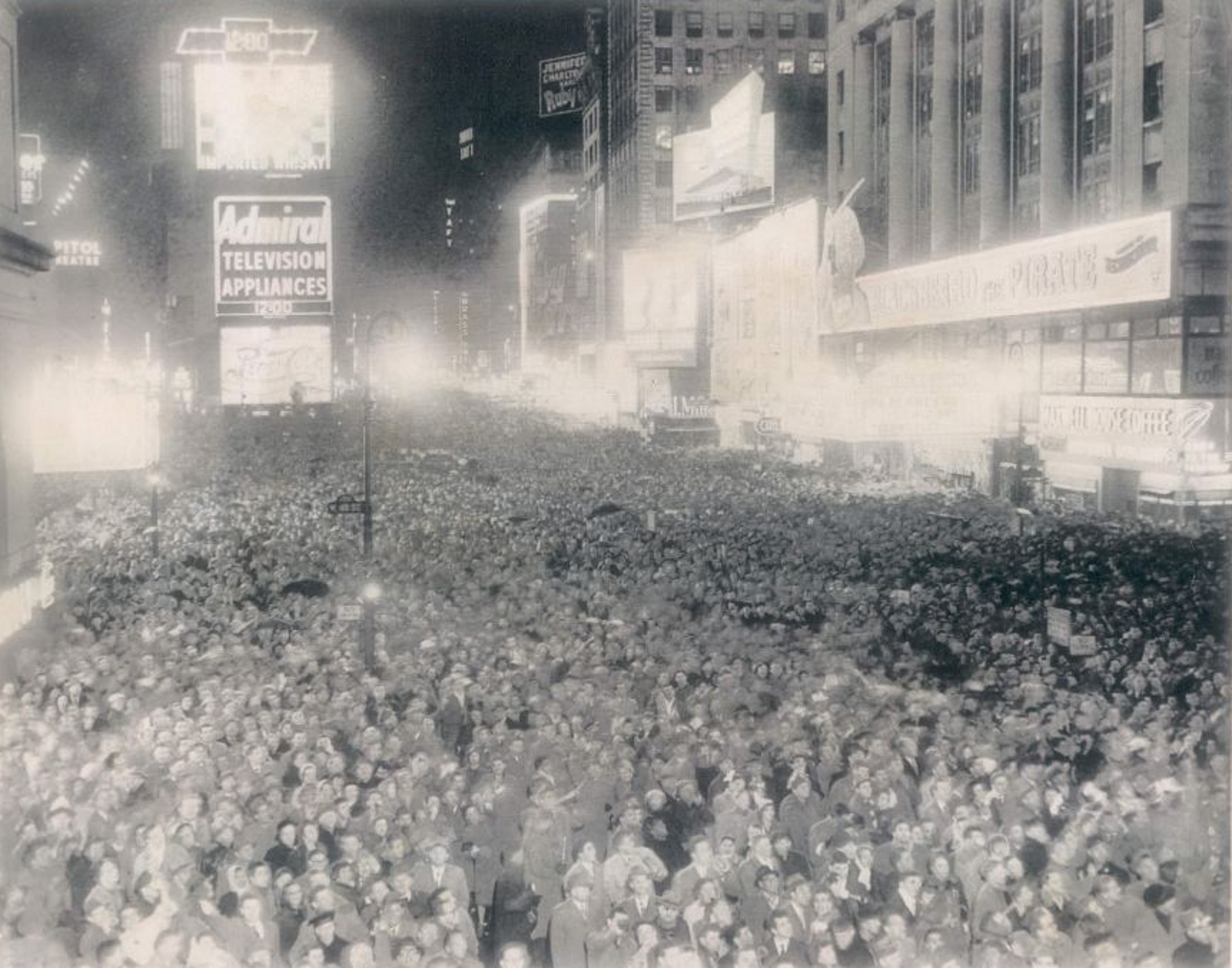
Ushering in 1953:

9

Celebrations were also held for a time in Central Park, like this festive group from 1969:
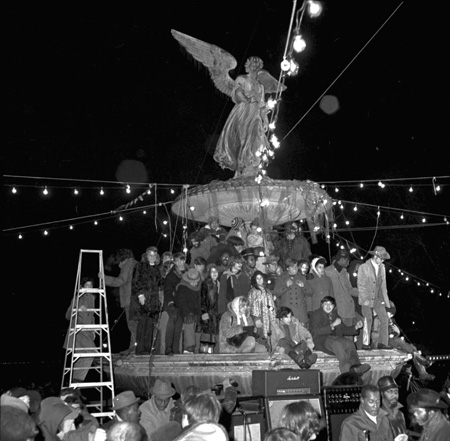
Courtesy New York Parks Department

An electrician from the Artkraft Strauss Sign Corporation tests out the lighting effects that will greet the new year in 1992.
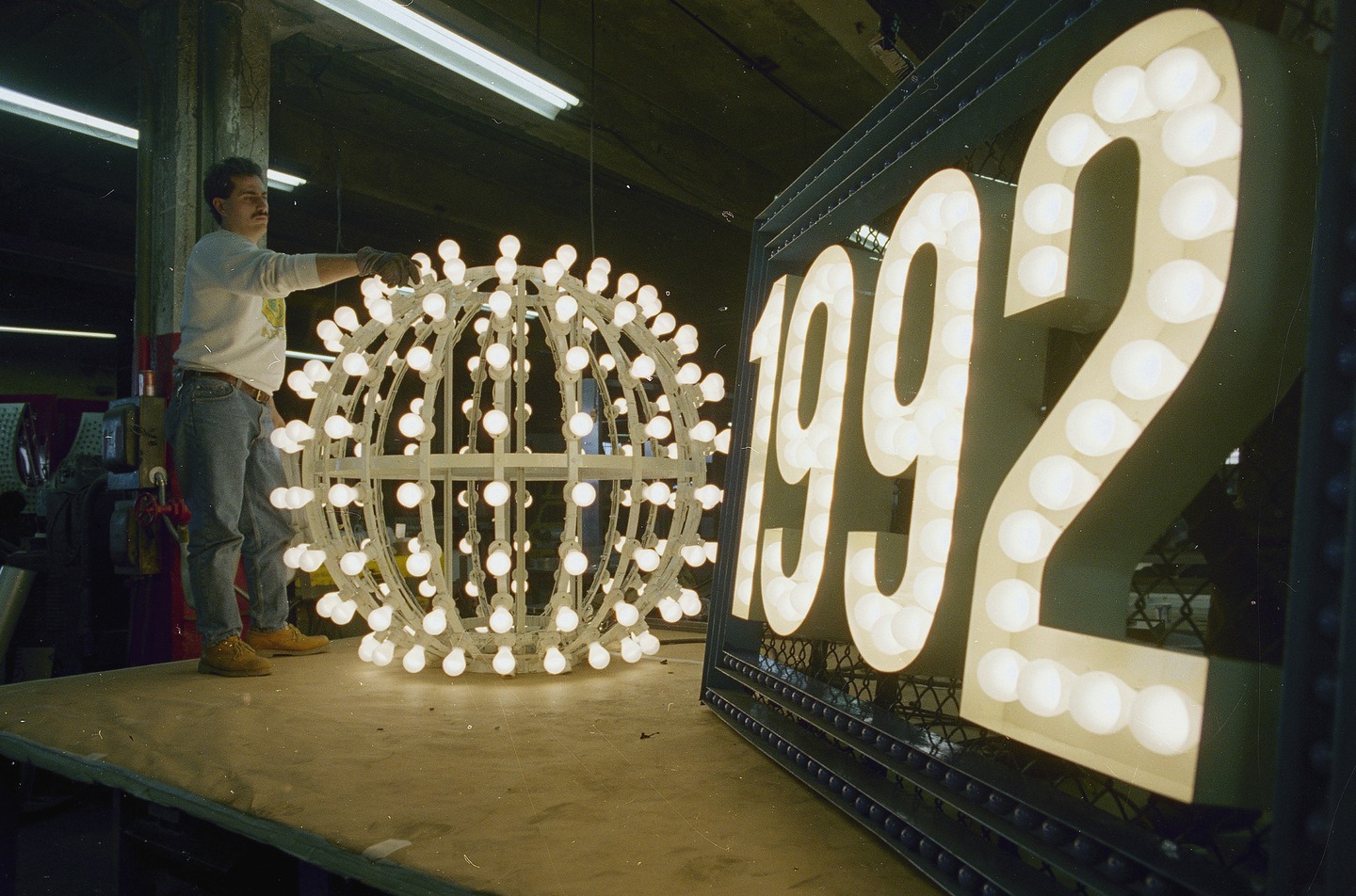
MARTY LEDERHANDLER/ASSOCIATED PRESS

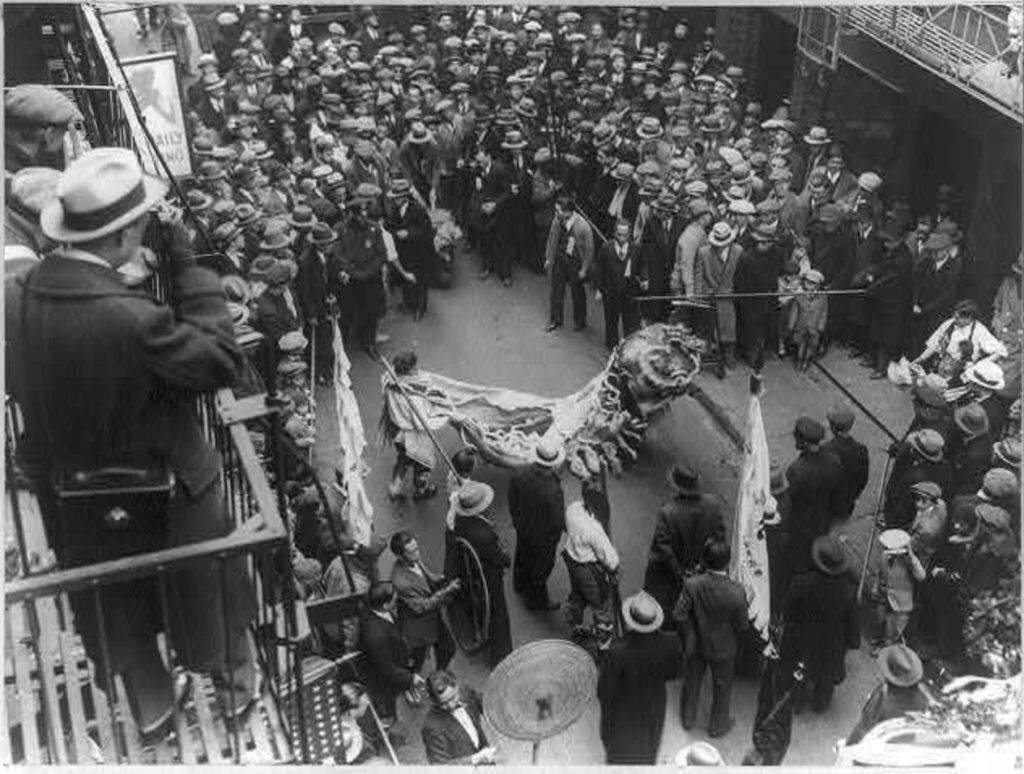
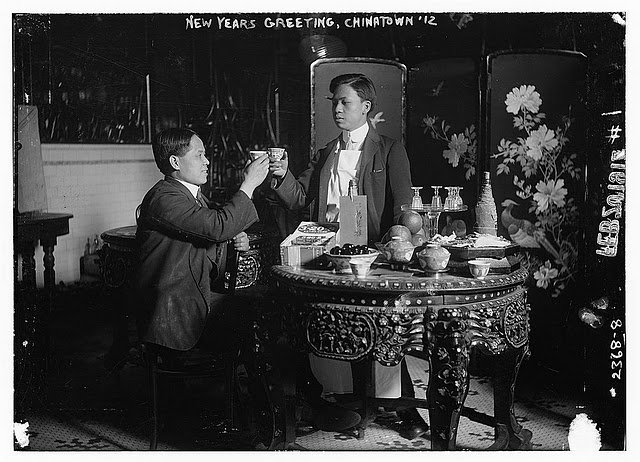
Images of Chinese New Year celebrations in Chinatown from the early 20th century, courtesy the Library of Congress.
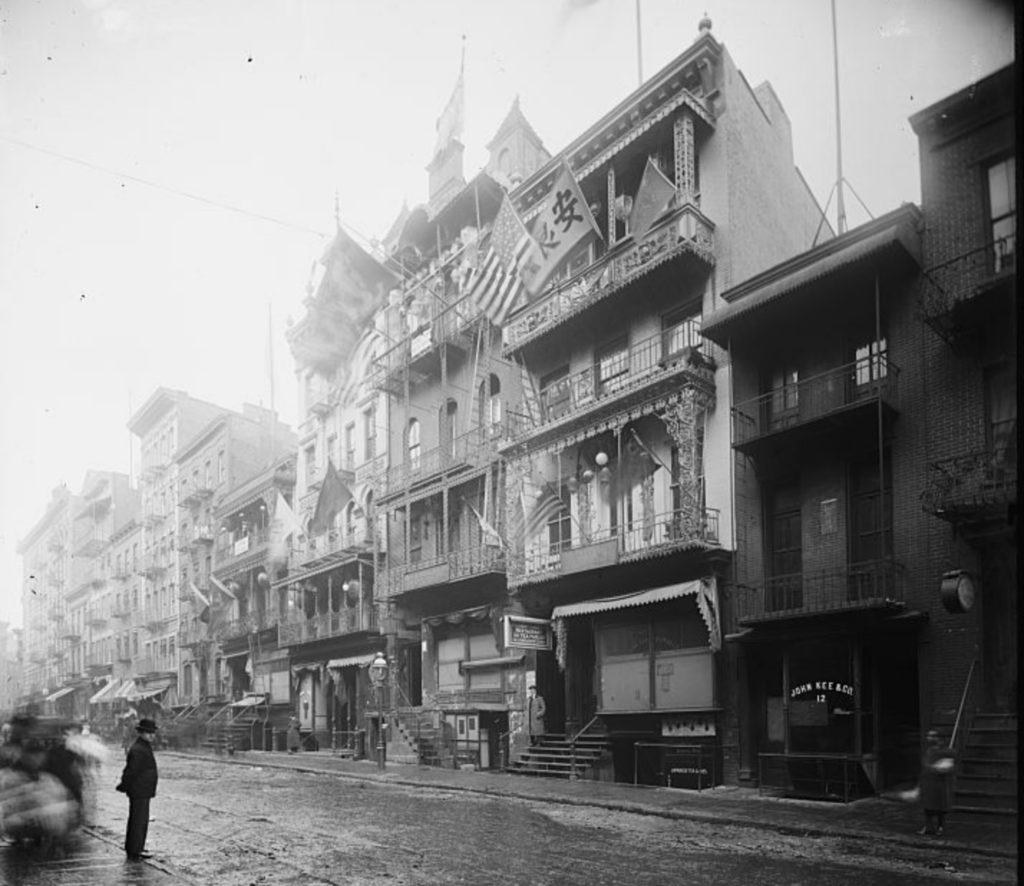
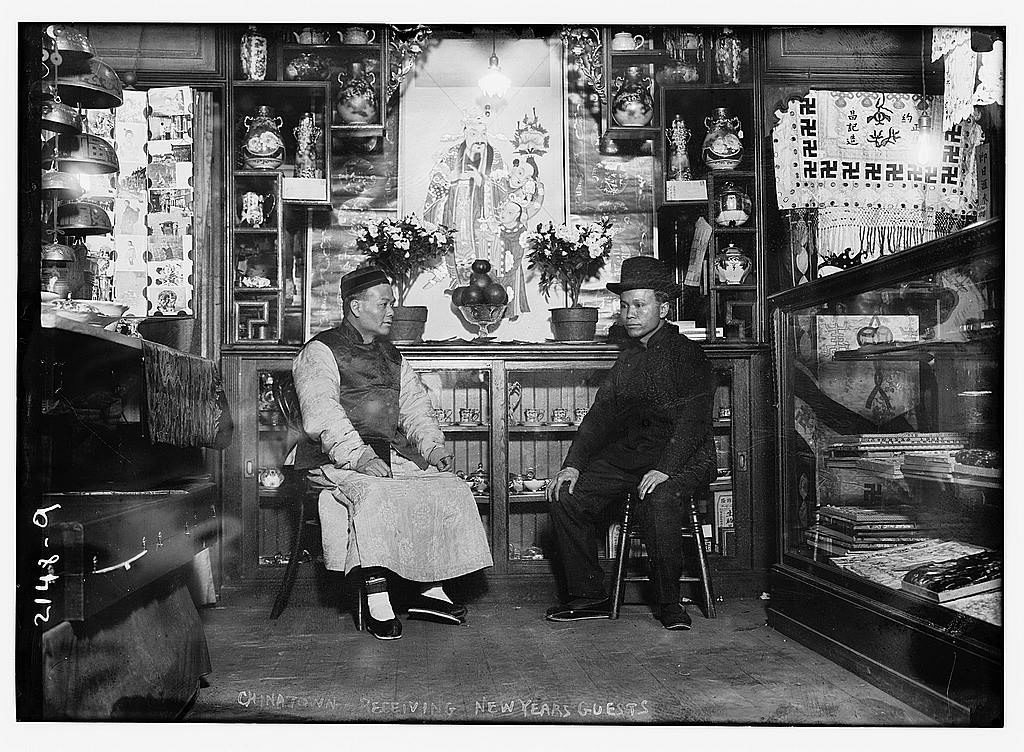
[1900] Library of Congress
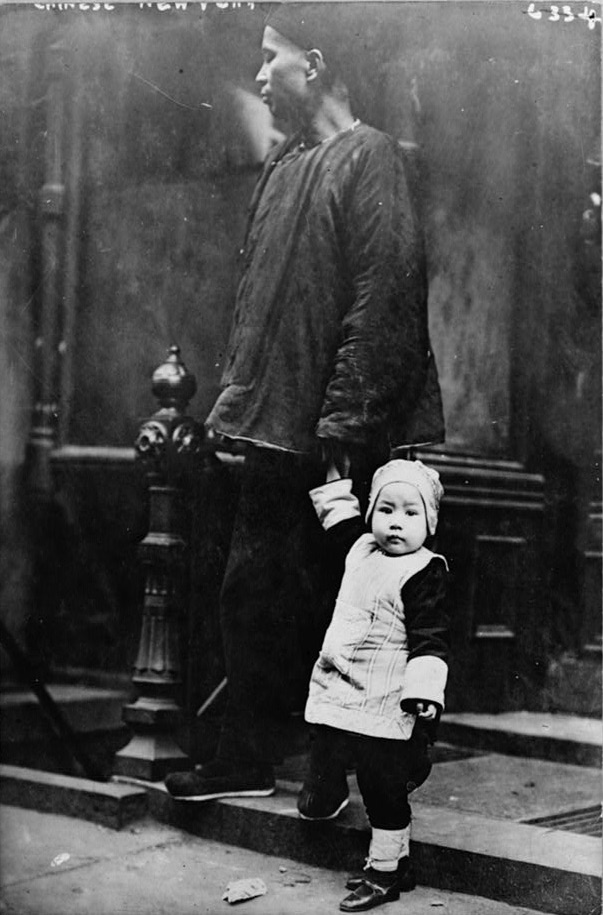
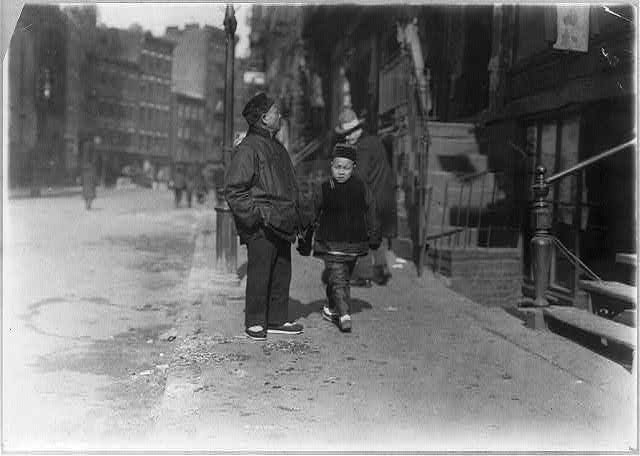
Chinese child with an adult on step outside of building, Chinatown, New York City, 1909. Library of Congress
[Jan. 30 1911] Library of Congress

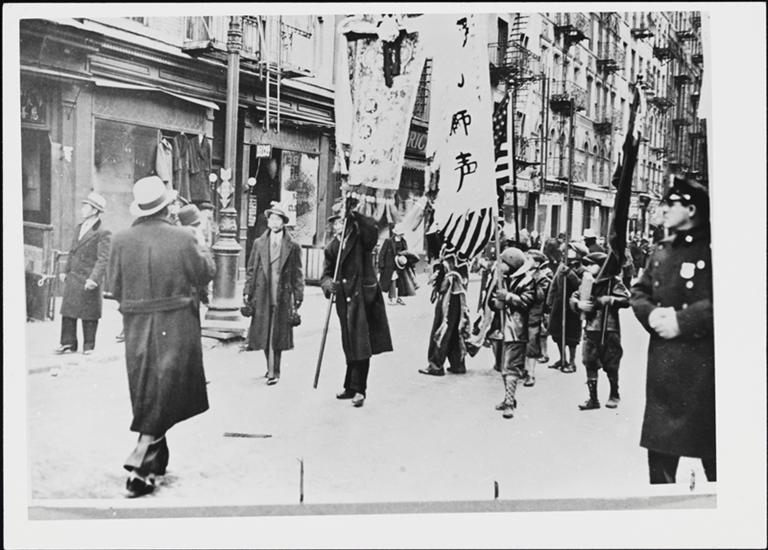
The parade in 1936.

Museum of the City of New York

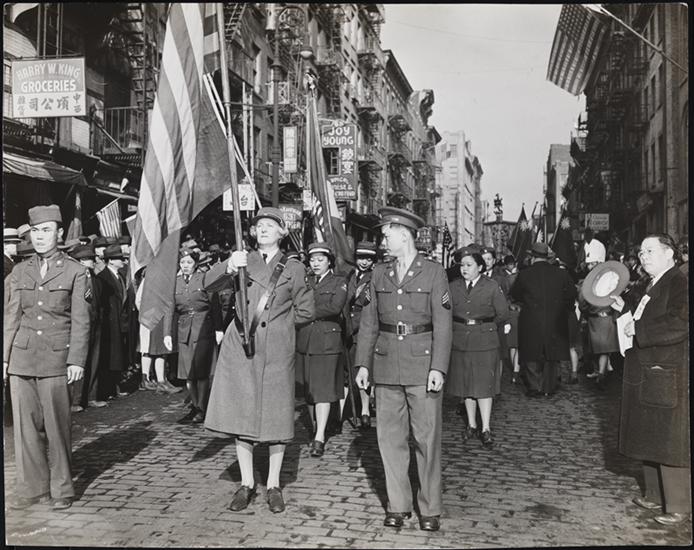
The Chinese New Year Parade of 1943 was decidedly more patriotic
Museum of the City of New York

FURTHER LISTENING
Categories
Holidays

Happy New Year! Photographs from over a century of Chinese New Year celebrations in Manhattan

Head over to Chinatown this Sunday afternoon (February 17, starting at 1pm) for the Lunar New Year Parade and Festival, topping off two weeks of celebrations in honor of the Year of the Pig. (Find the parade route here. And get there early for a great spot.)

[We also did a podcast episode on the history of New Year’s Eve across the neighborhoods in NYC.]

Although this is the 20th anniversary of the Better Chinatown Society‘s involvement with the parade, New Yorkers have been celebrating the Chinese New Year here in Chinatown for over 150 years.

By the early 1860s, a small enclave of Chinese people (mostly men) had settled in the area of Mott Street, slightly east of the notorious Five Points slum. As that neighborhood’s dynamics would change by the 1890s – from Irish to mostly Italian immigrants — the Chinese community would develop a strong foothold as their neighbors here on Mott Street, Bayard Street, Pell Street and, of course, ‘bloody’ Doyers Street.

And it would be here, in the nucleus of modern New York Chinatown, that the first Chinese New Year celebrations would be held.

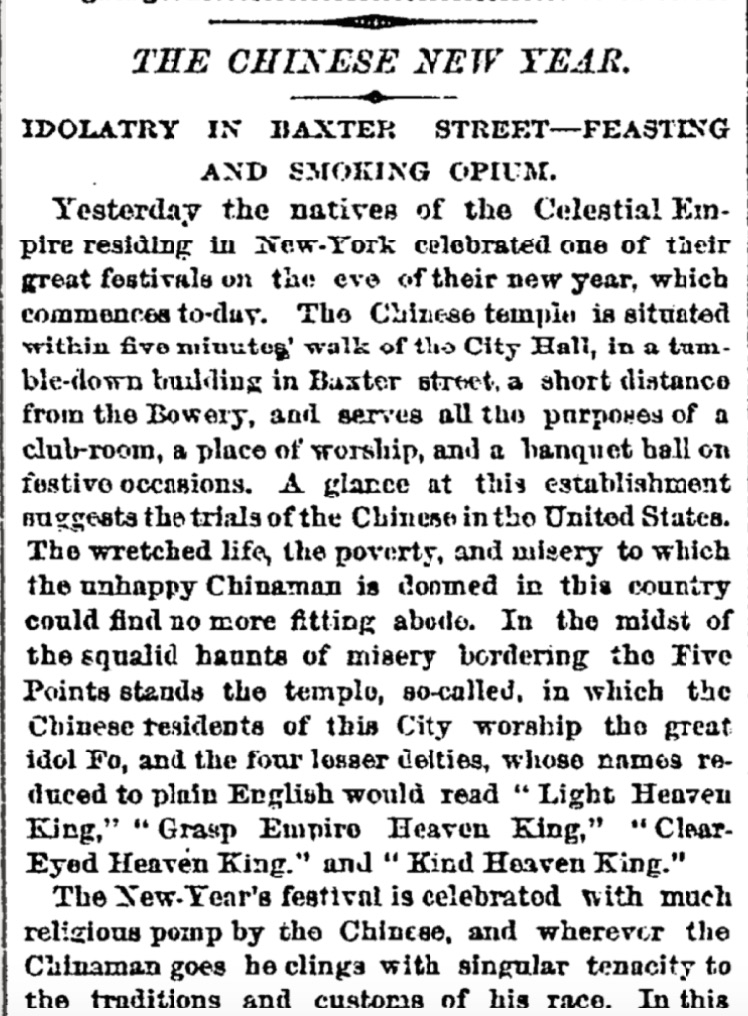
Here’s how the New York Times reported on one such celebration in 1874:

What follows are images of Chinese New Year celebrations in Manhattan’s Chinatown over the years, subtly modernizing while retaining many of the same traditions. Today you can find certain places on Mott Street that still look a bit like these earliest images.

Library of Congress
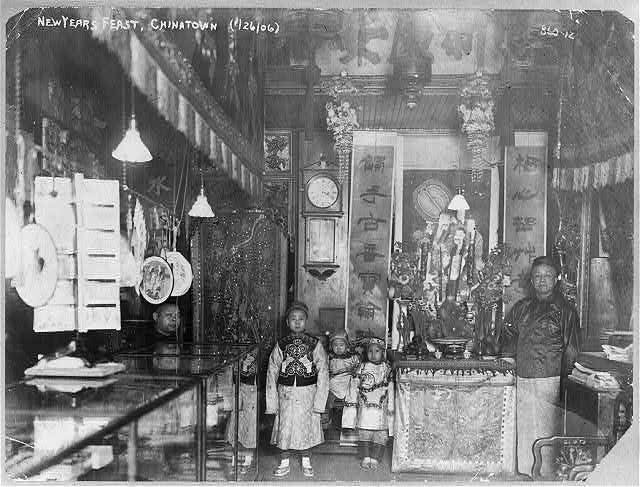
Chinatown, New York City – New Years feast, Jan. 26, 1906/Library of Congress
[1900] Library of Congress
Three people on sidewalk in foreground, Chinatown, Chinese New Year (taken between 1909-1913)
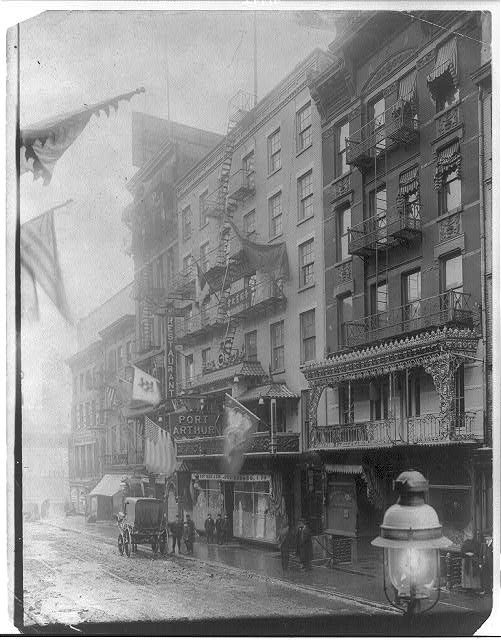
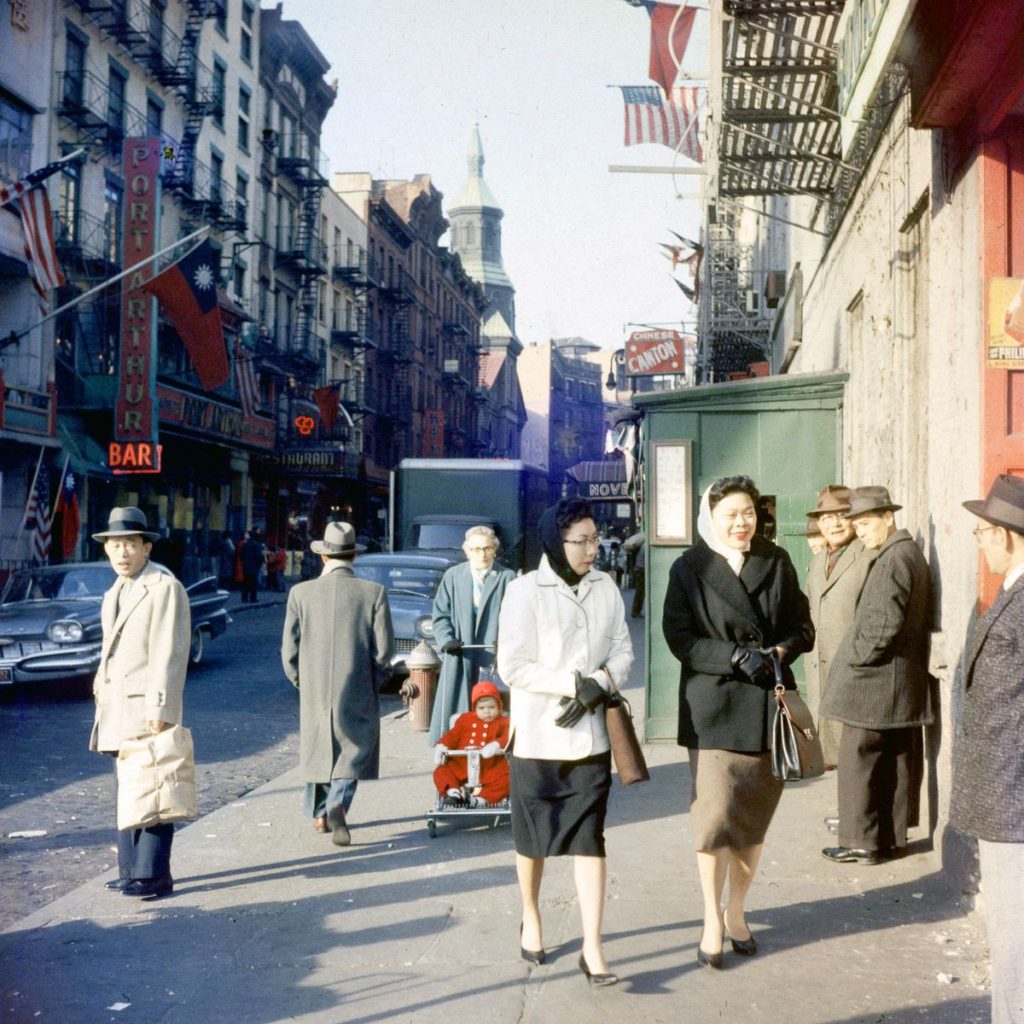
Port Arthur restaurant on Mott Street, decorated for the New Year, Jan. 21, 1909
Chinese child with an adult on step outside of building, Chinatown, New York City, 1909. Library of Congress
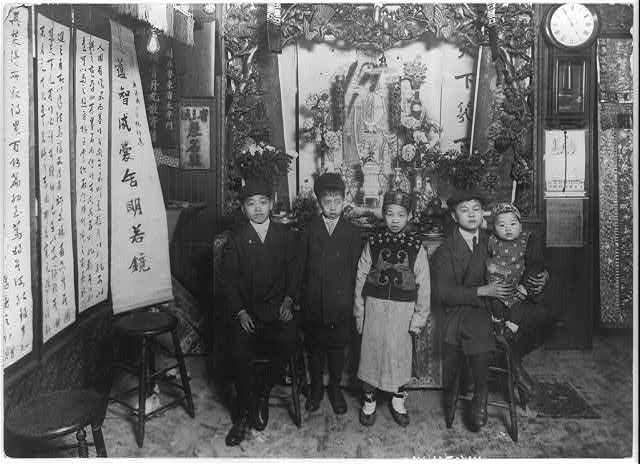
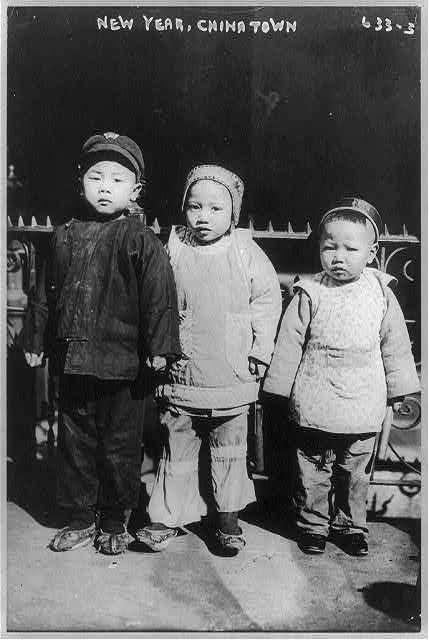
Three children posed, New Year’s Day, 1909//Library of Congress
[Jan. 30 1911] Library of Congress
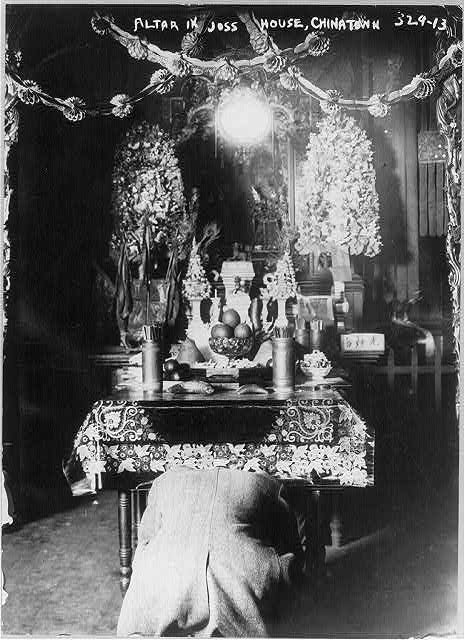
Chinatown, New York City – altar in Joss House, 1911

A rare video of the Chinatown celebration from 1928. Can you identify the street?

Jumping ahead to 1931 and the traditional dragon costume, entertaining a sea of fedoras on Pell Street.

New Year’s dragon in Pell St. of New York City’s Chinatown. 1931.

The parade in 1936.

Museum of the City of New York

The Chinese New Year Parade of 1943 was decidedly more patriotic, reflecting the wartime alliance between China and America. According to the Daily News that year: “American flags were presented with those of the Chinese Republic and American soldiers of Chinese descent marched with Chinatown members of the United States war organizations.”

Museum of the City of New York

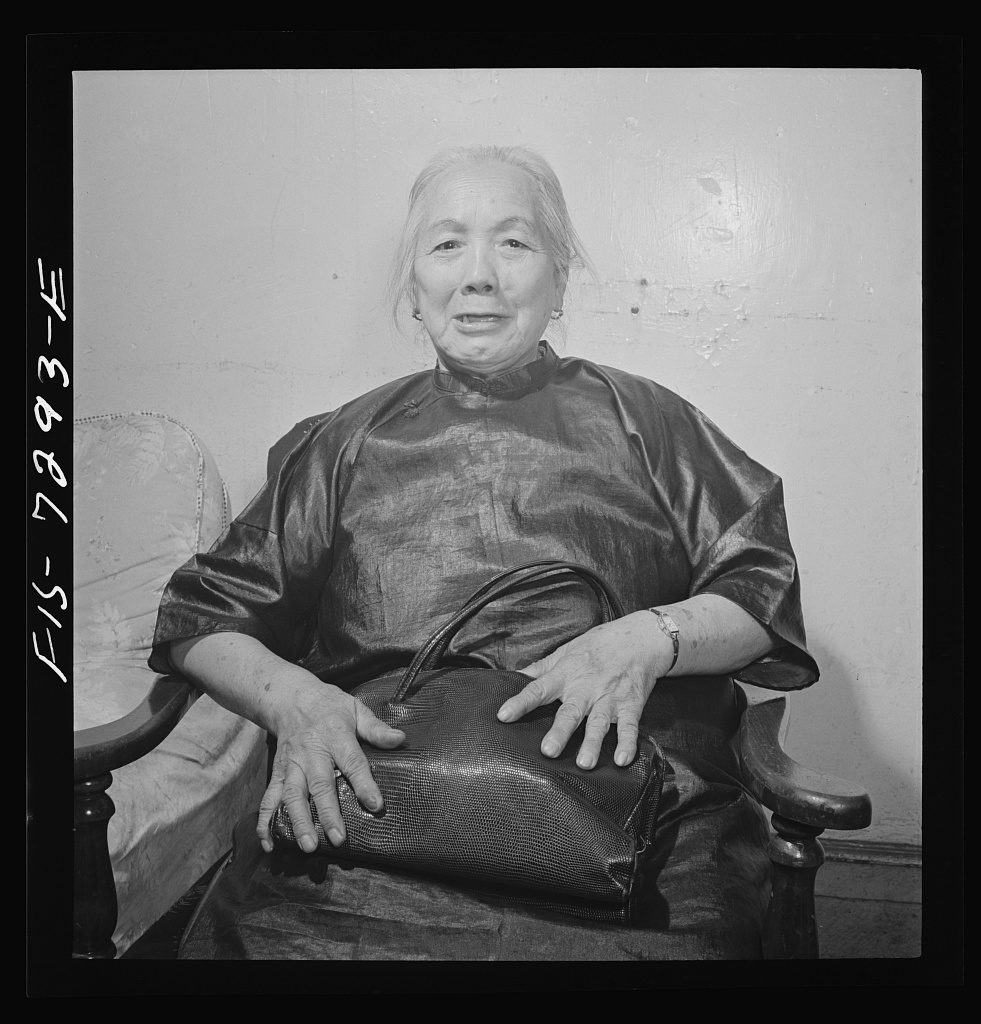
A resident of Chinatown, 1942, photographed by Marjory Collins

Library of Congress/Photographed by Marjory Collins

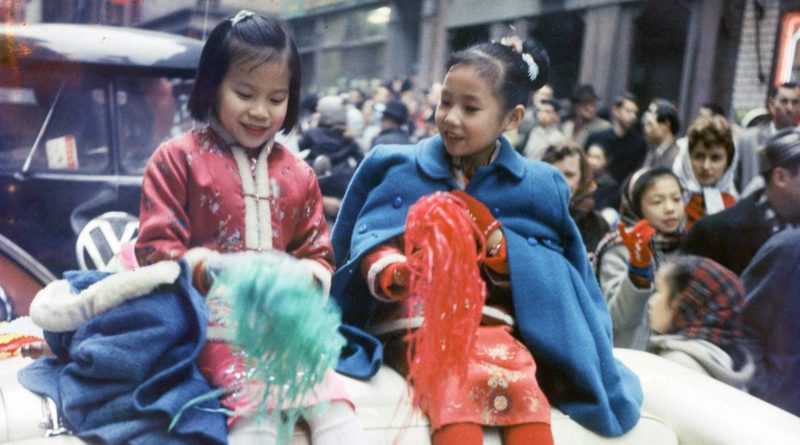
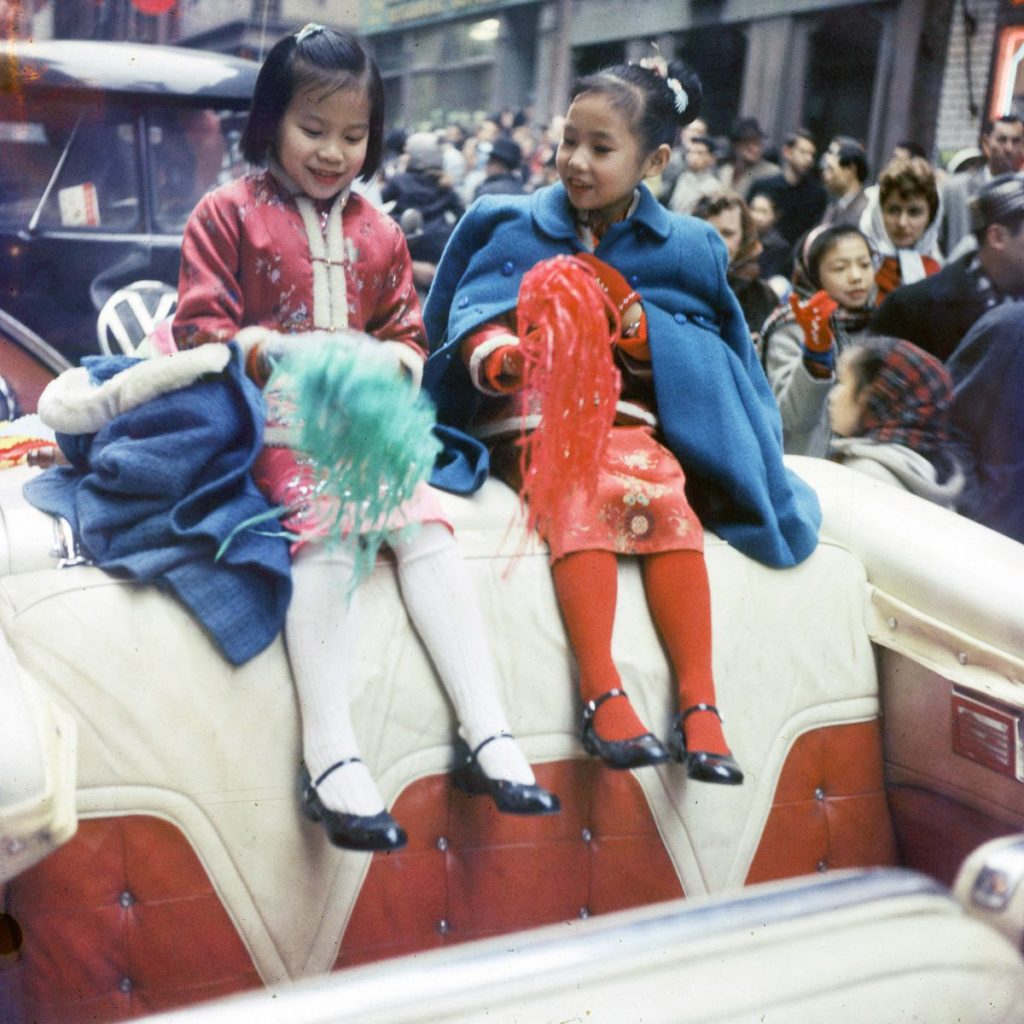
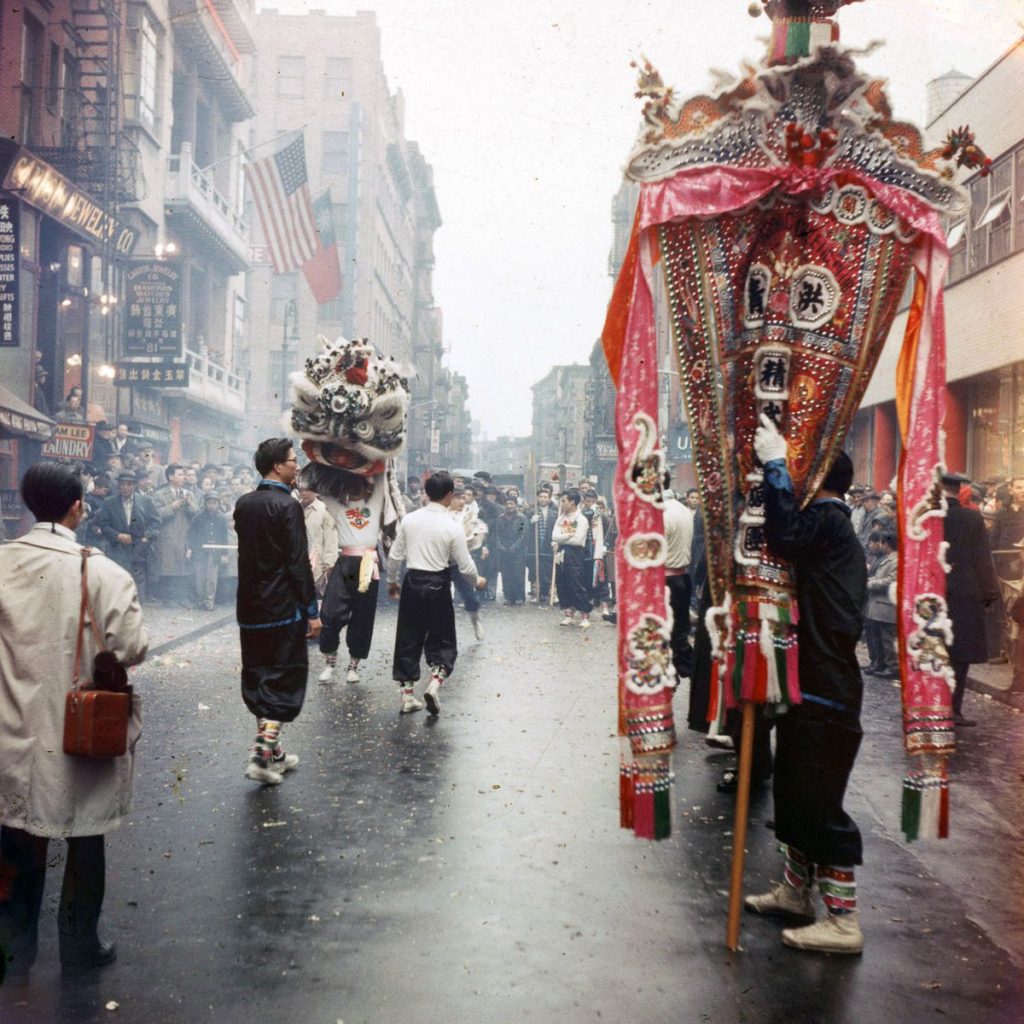
The parades begin draw drawing of thousands of onlookers by the 1950s, enamored of the lions and dragons, the live music, festive costumes, and allure of what had now become some New Yorkers most favorite food. Here’s a selection of images from the 1960 parade. (And you can check out more from this series at Mashable).

BIPS/Getty Images
BIPS/Getty Images
BIPS/Getty Images

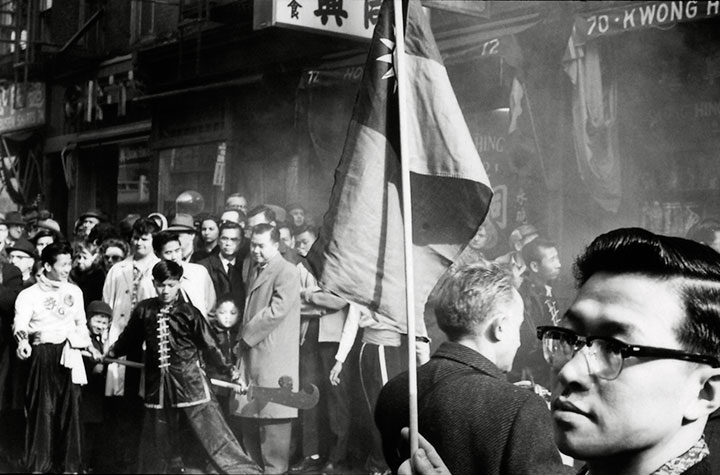
Another image of the festival in the 1960s, in a photograph by Jan Yoors.

Jan Yoors photographer

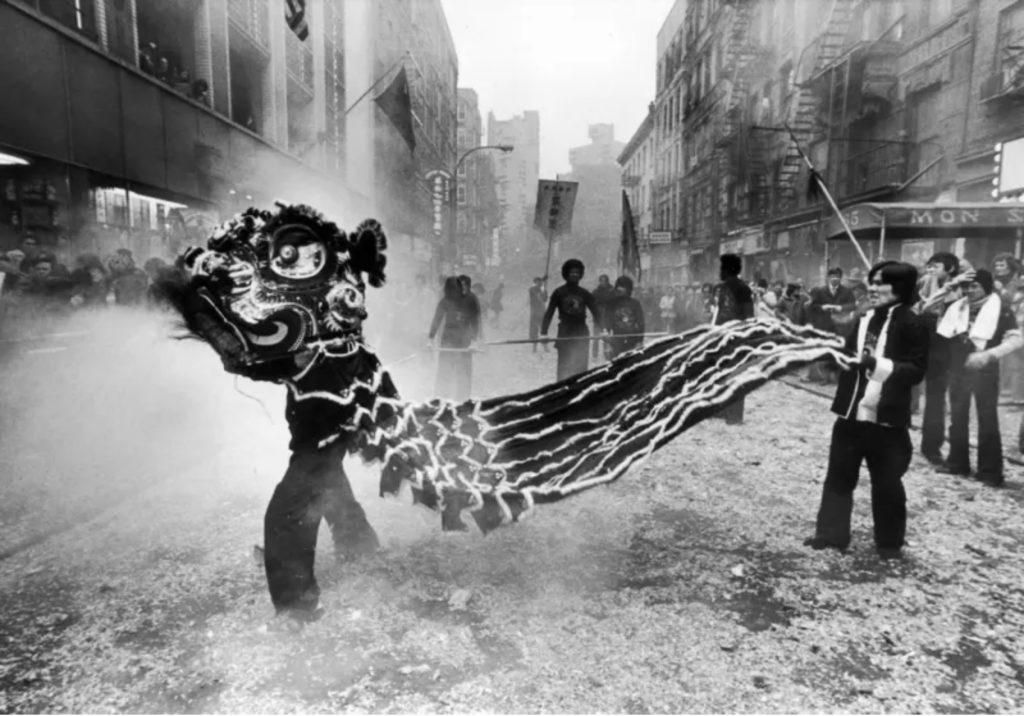
According to Karlin Chan, a lion dancer in the parade during the 1970s, “The city would just close down the streets around here for the New Year, and since every [dancing] group was on their own, it was basically a free for all.” [Read more of his interview with The Villager here.]

Leo Vals / Getty Images

By the 1980s, vibrant Chinatowns has developed in Queens and Brooklyn. And in Manhattan, immigrants from Fuzhou, speaking Mandarin, would develop just west of ‘old’ Chinatown in a neighborhood sometimes called Little Fuzhou today. For those non-fluent in Chinese, it would appear Chinatown as a whole has expanded its original confines on Mott Street, although in reality today’s Chinatown area reflects a multitude of different cultures, languages and customs.

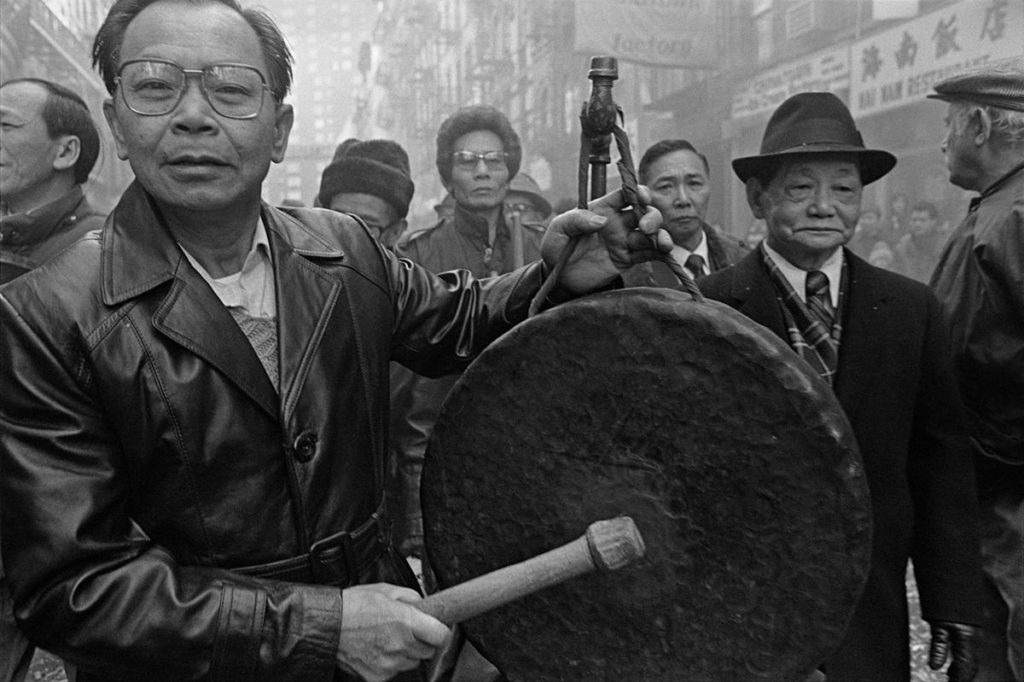
Here’s a New Year’s procession on Bayard Street, 1984:

[You can find more fabulous images of 1980s Chinatown, taken by Bud Glick, here.]

Bud Glick photographer/The Atlantic

You can also get a sampling of Glick’s work here:

A news report from the 2002 parade, held just months after Sept 11, 2001:

And some festive video from the 2010 celebration:

For more information on the history of the Chinese New Year in New York City, listen to our recent show on the history of New Year’s celebrations — A New Year In Old New York

And for more information on the neighborhood, check out our older show on the history of Manhattan’s Chinatown:

Categories
Amusements and Thrills Podcasts

Digital City: New York and the World of Video Games

PODCAST The history of video games and arcades in New York City.

New York has an interesting, complex and downright weird relationship with the video game, from the digital sewers below Manhattan to the neon-lit arcades of Times Square. It’s not all nostalgia and nerviness; video games in the Big Apple have helped create communities and have been exalted as artistry.

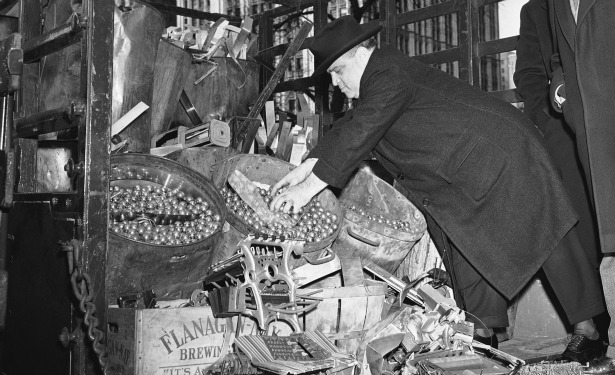
First — the relationship between the city and the arcade itself, once filled with shooting galleries and see ball. When pinball machines were introduced in the 1930s, many saw them as a gateway into gambling. Mayor Fiorello La Guardia personally saw to it that they were taken off the streets.

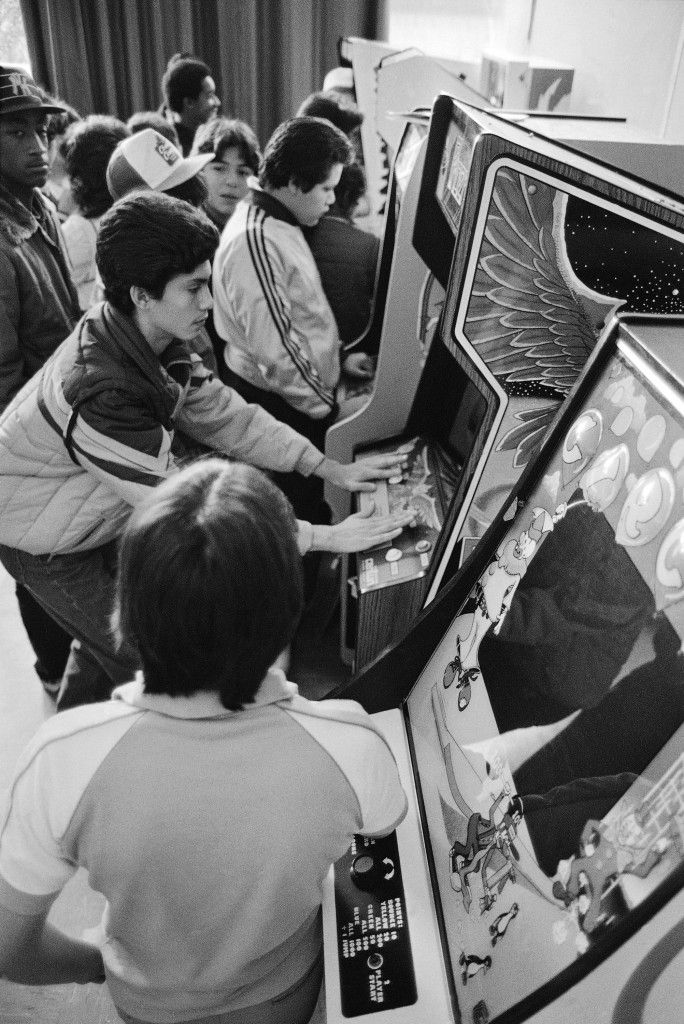
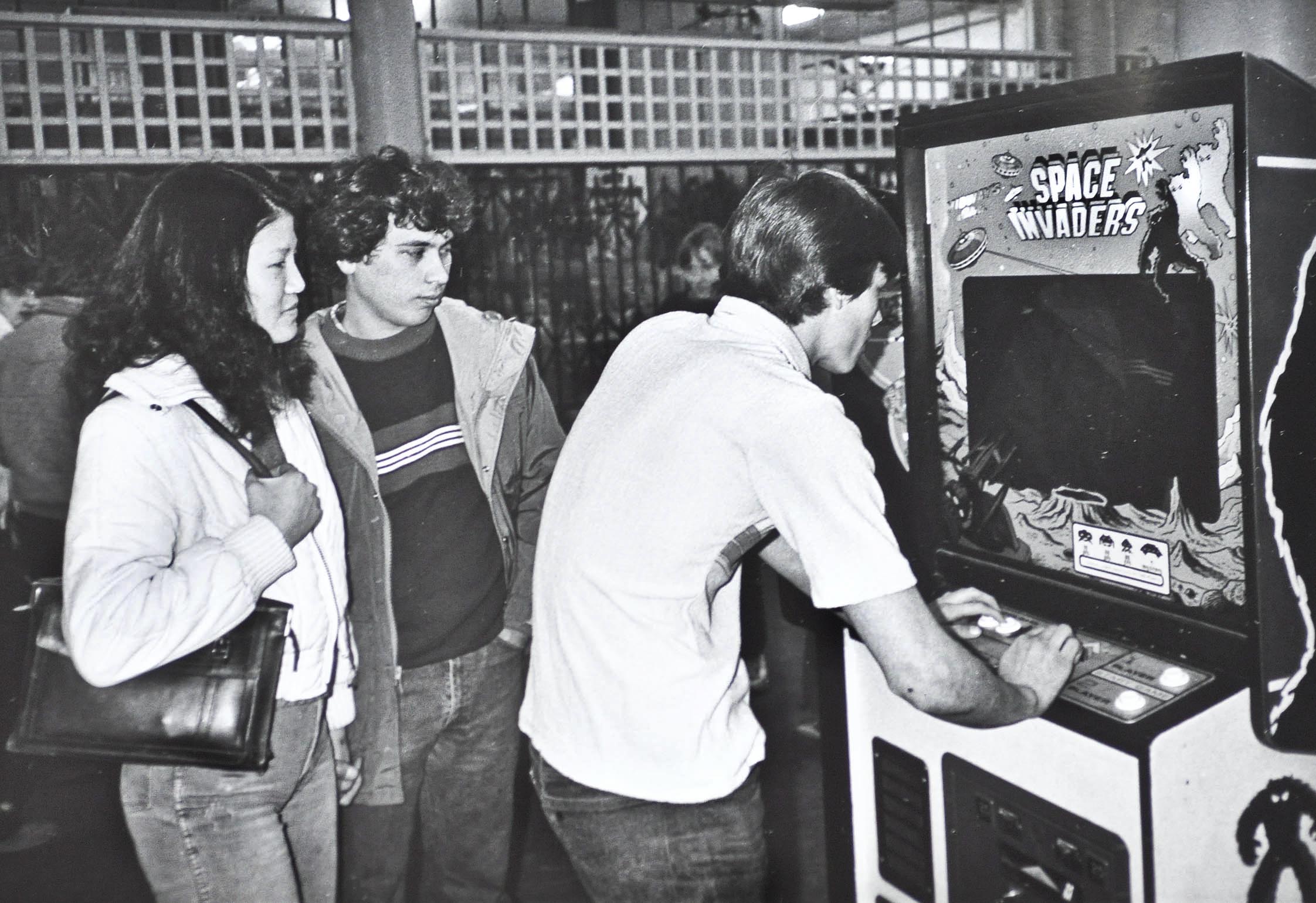
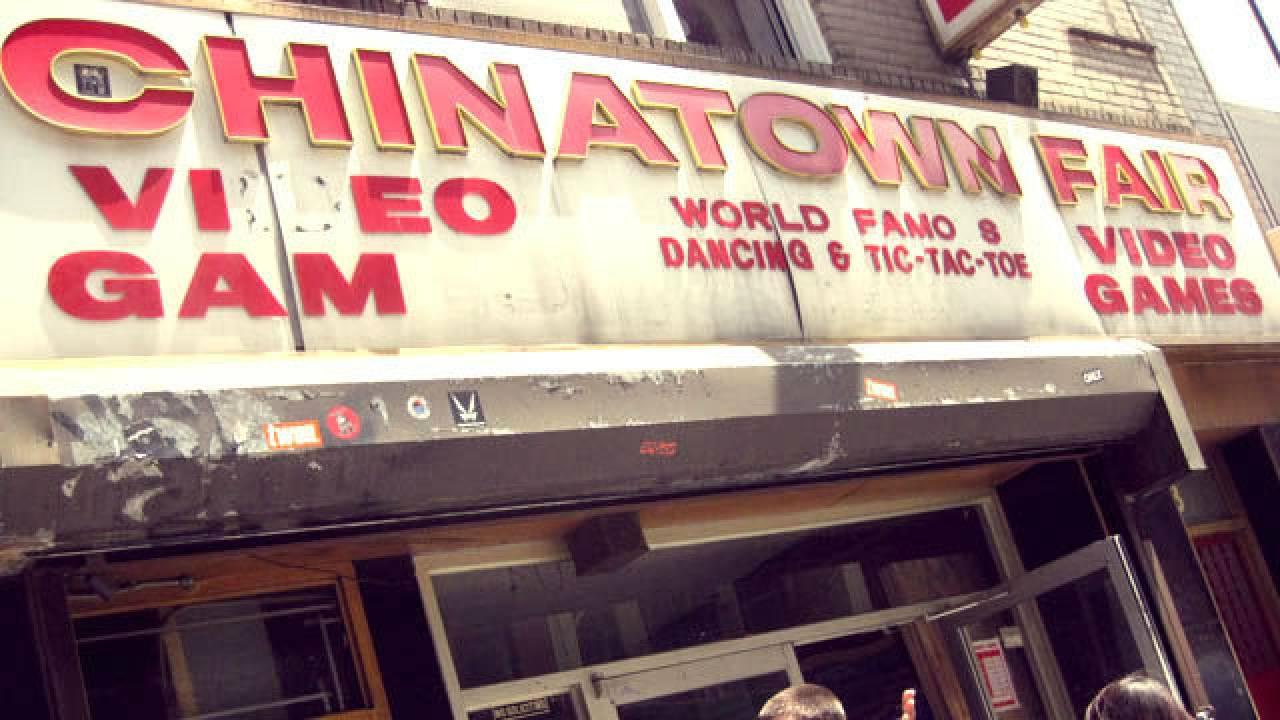
The era of Space Invaders, Pac Man and Donkey Kong descends in New York during its grittiest period – the late 70s/early 80s – and arrives, like an alien presence, into many neighborhood arcades including one of the most famous in Chinatown – an arcade that is still open and the subject of a new documentary The Lost Arcade.

While the video game industry is not something New York City is particularly associated with, the city does in fact set the stage for this revolution of blips and joysticks at the start of the 20th century and from such unconventional places as the West Village and Flushing Meadows-Corona Park.

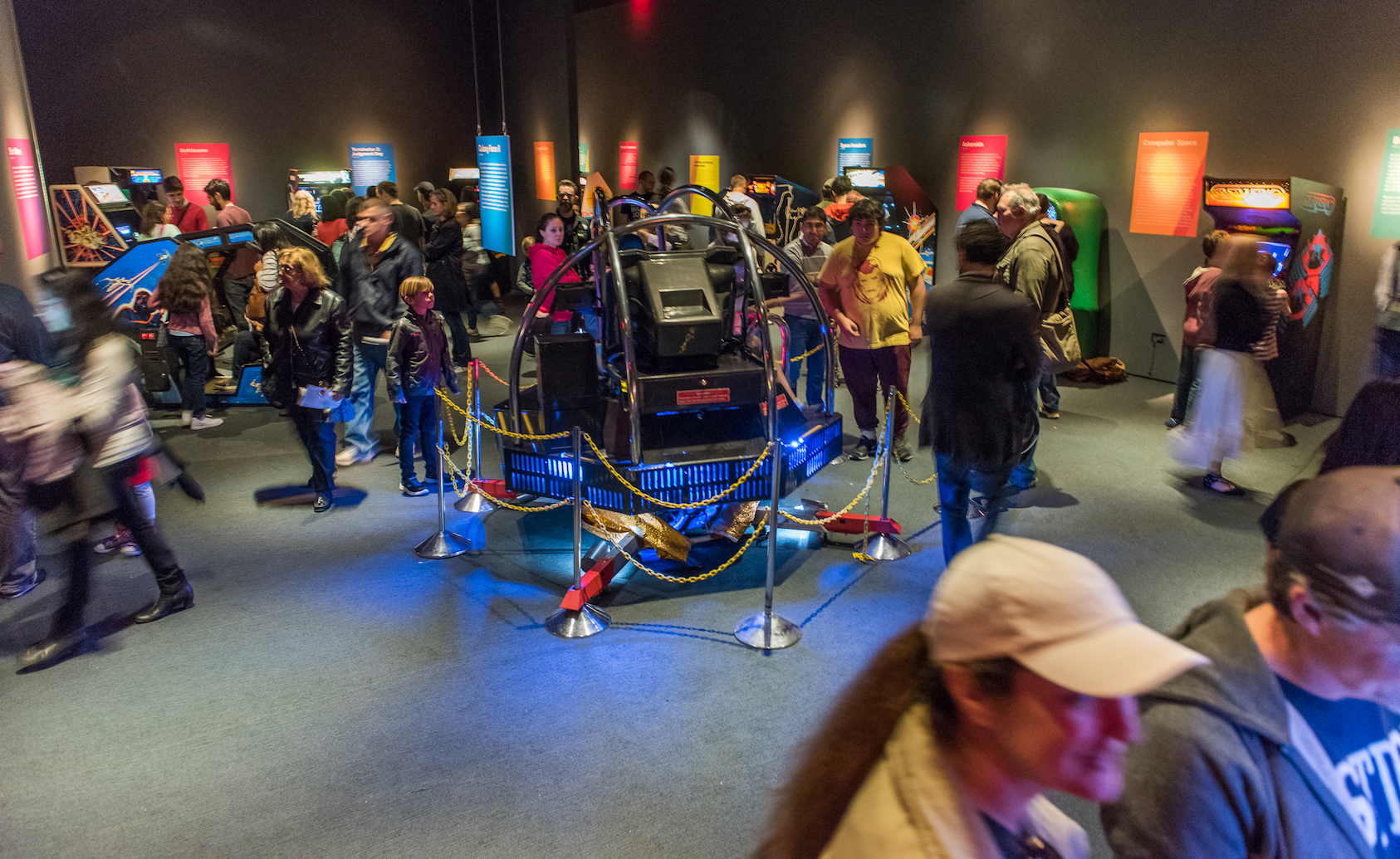
In Queens you’ll find one of America’s great tributes to the video game, in the spectacular arcade collection at the Museum of the Moving Image.

Finally — A look inside the games themselves to explore New York as a digital landscape that continues to be of fascination to game developers and players alike.

So are you ready Player One? Grab your quarters and log in to this New York adventure through the world of video games.


The Bowery Boys: New York City History podcast is brought to you …. by you!

We are now producing a new Bowery Boys podcast every two weeks. We’re also looking to improve the show in other ways and expand in other ways as well — through publishing, social media, live events and other forms of media. But we can only do this with your help!

We are now a member of Patreon, a patronage platform where you can support your favorite content creators for as little as a $1 a month.

Please visit our page on Patreon and watch a short video of us recording the show and talking about our expansion plans. If you’d like to help out, there are five different pledge levels (and with clever names too — Mannahatta, New Amsterdam, Five Points, Gilded Age, Jazz Age and Empire State). Check them out and consider being a sponsor.

We greatly appreciate our listeners and readers and thank you for joining us on this journey so far. And the best is yet to come!


The trailer for The Lost Arcade. It opens today in San Francisco at the Roxie and Friday, August 12, in New York at the Metrograph. Check out their Facebook page for more information about upcoming events and screenings.

The current exhibition at the Museum of the Moving Image — ARCADE CLASSICS: VIDEO GAMES FROM THE COLLECTION — continues until mid-September.

Courtesy Museum of the Moving Image

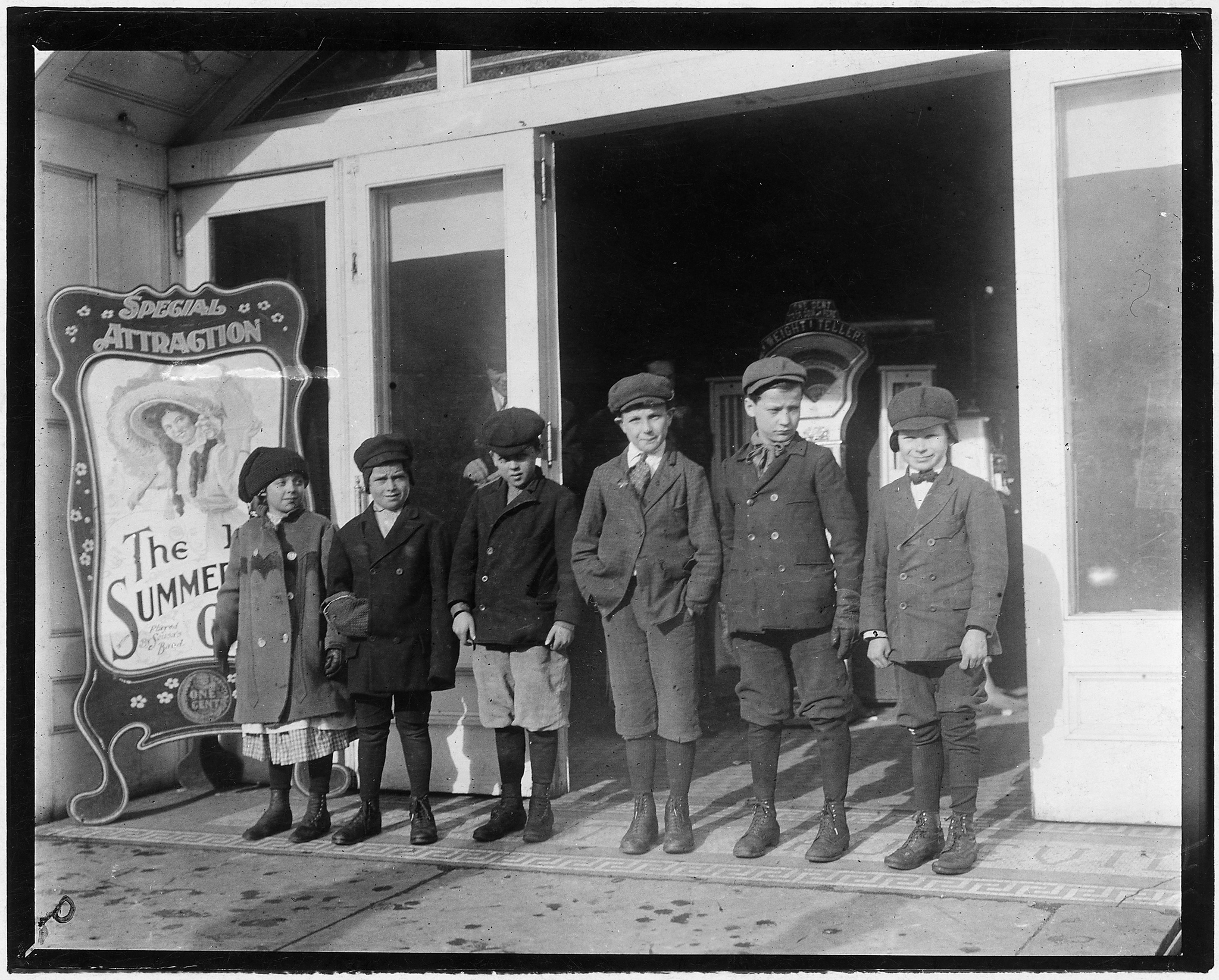
Children at a penny arcade in Schenectady, NY, in 1910

Photo by Lewis Hine, courtesy US National Archives

Mayor La Guardia was not a fan of pinball. Here, in a 1942, he rounds up the pinball balls. Read more in Seth Porges’ article for Popular Mechanics:

laguardiapinball.banner.AP.jpg

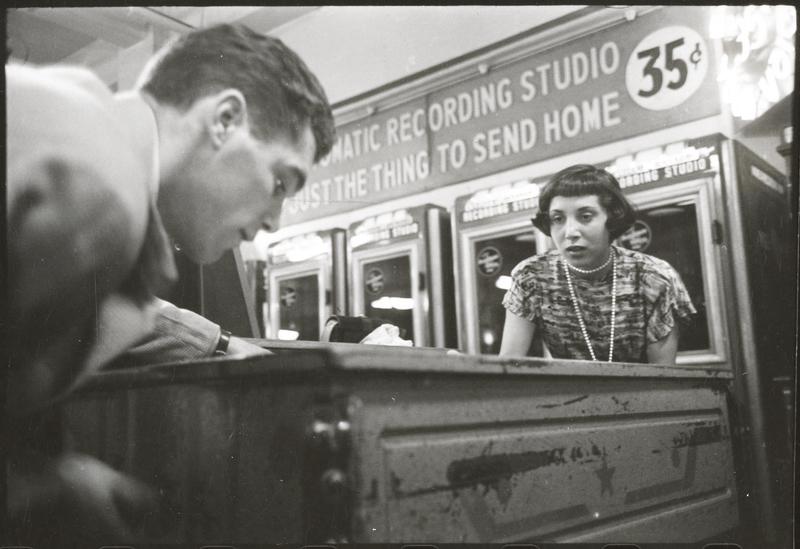
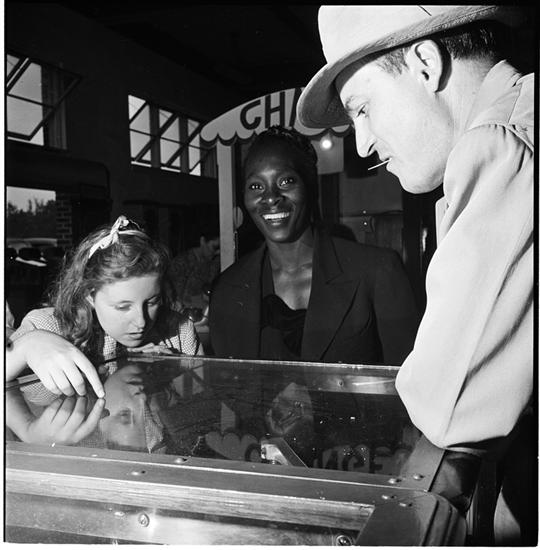
In a photo taken in 1948 by Stanley Kubrick for LOOK Magazine, prizefighter Walter Cartier plays an arcade game with a young woman.

Courtesy MCNY
Courtesy MCNY

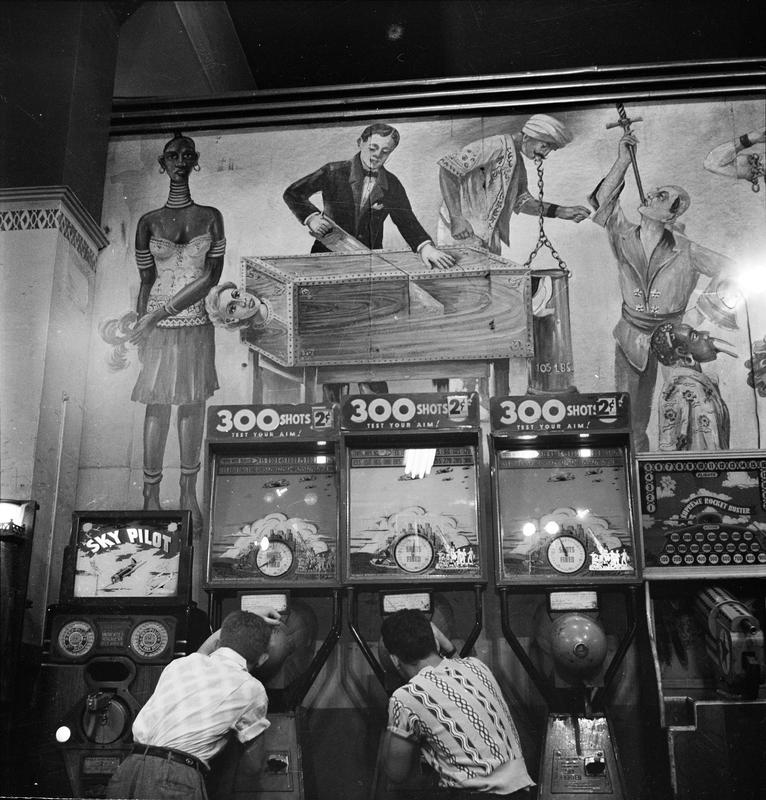
And another by Kubrick, from 1946, at Palisades Amusement Park.

MCNY
MCNY

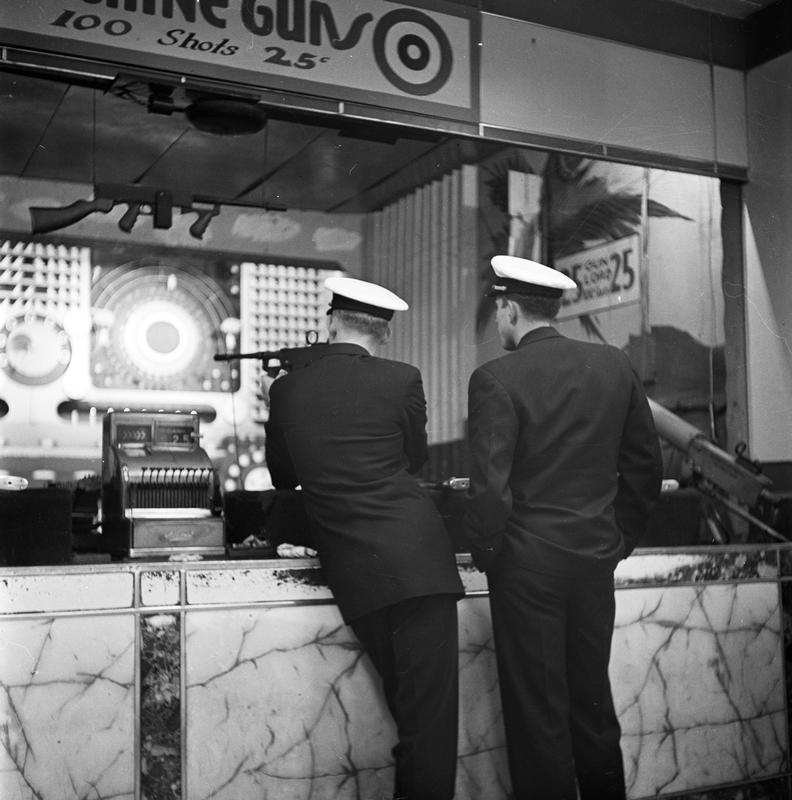
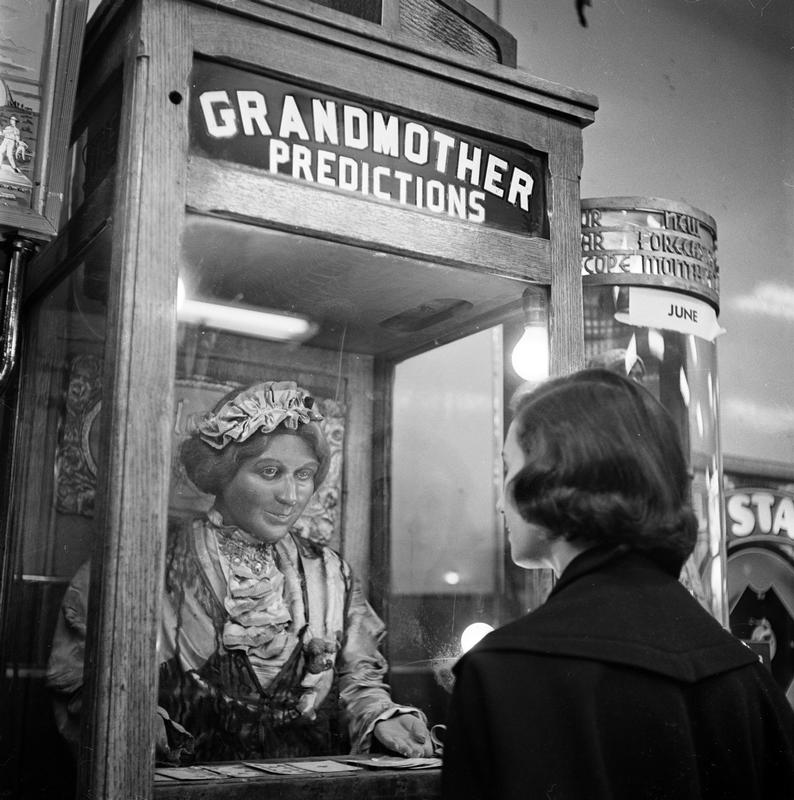
A couple images of a penny arcade and shooting gallery in 1950, photo by Robert Offergeld.

MNY326702

Courtesy MCNY
Courtesy MCNY
Courtesy MCNY
Courtesy MCNY

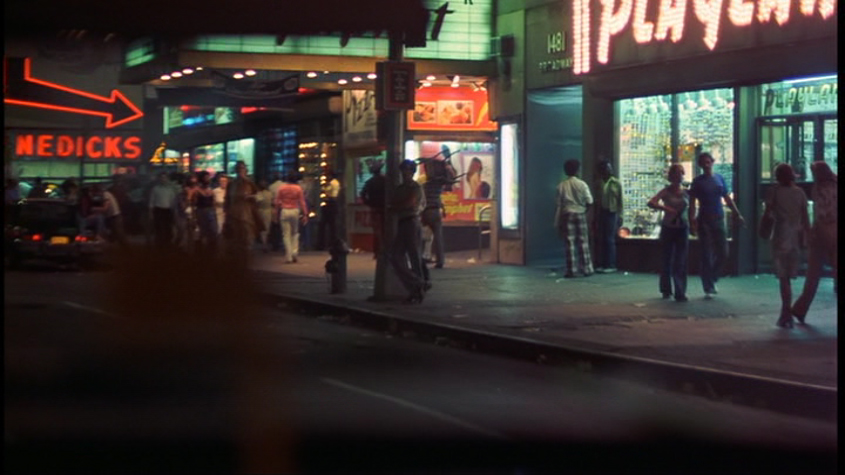
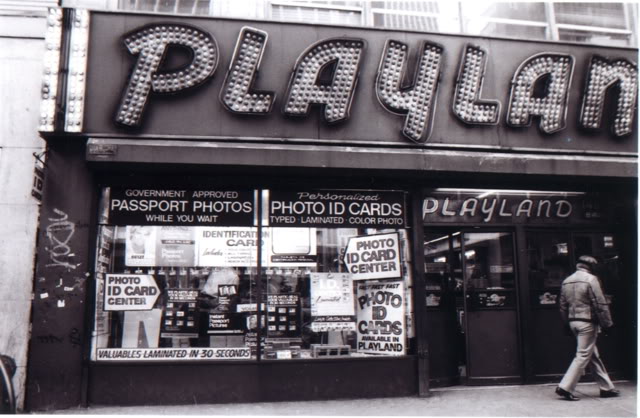
Playland on 42nd Street, courtesy the film Taxi Driver

Courtesy Scouting NY

5334486149_31979077f2_o

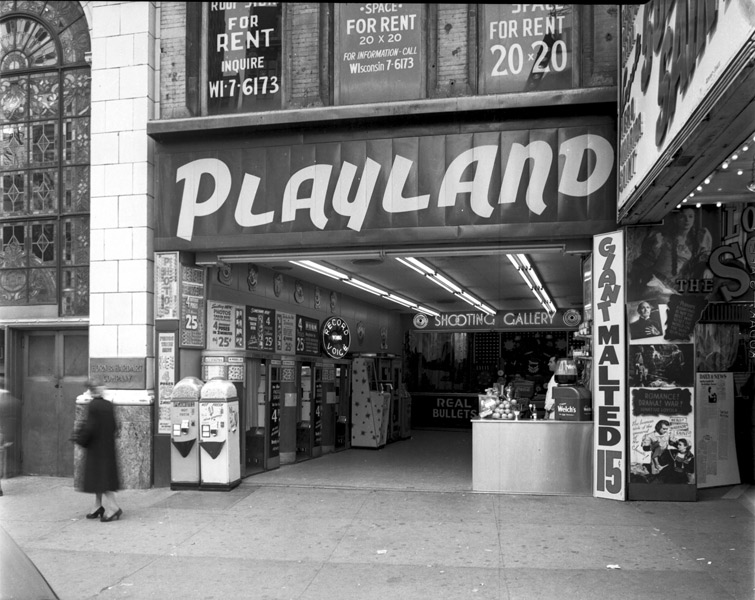
The other Playland at Broadway and 47th Street, pictured here in the 1950s. GIANT MALTED 15 CENTS!

Office for Metropolitan History

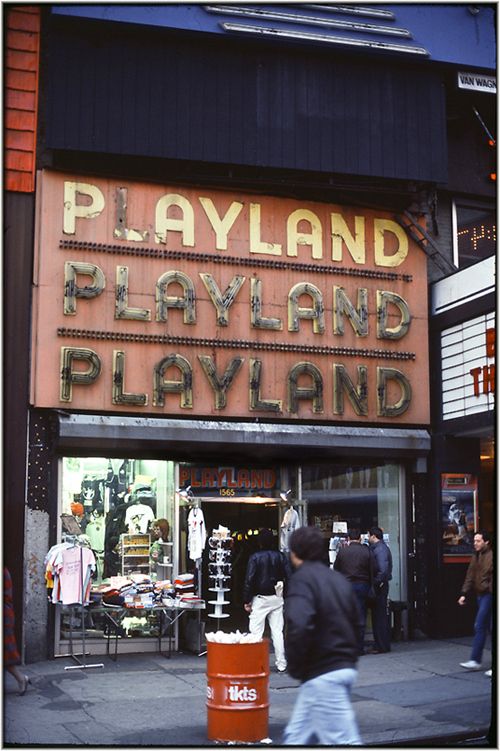
And later from the 1970s….

6a09ef0c0a54d711e169d152edb362b3


New York City arcade, 1981.

8f73ef985c84aa31fb92eff32c8f520e


Courtesy Twin Galaxies

The original Chinatown Fair sign, near its closure in 2011. It reopened the following year, perhaps a bit more family friendly than its precursor.

Courtesy Giant Bomb
Courtesy Giant Bomb

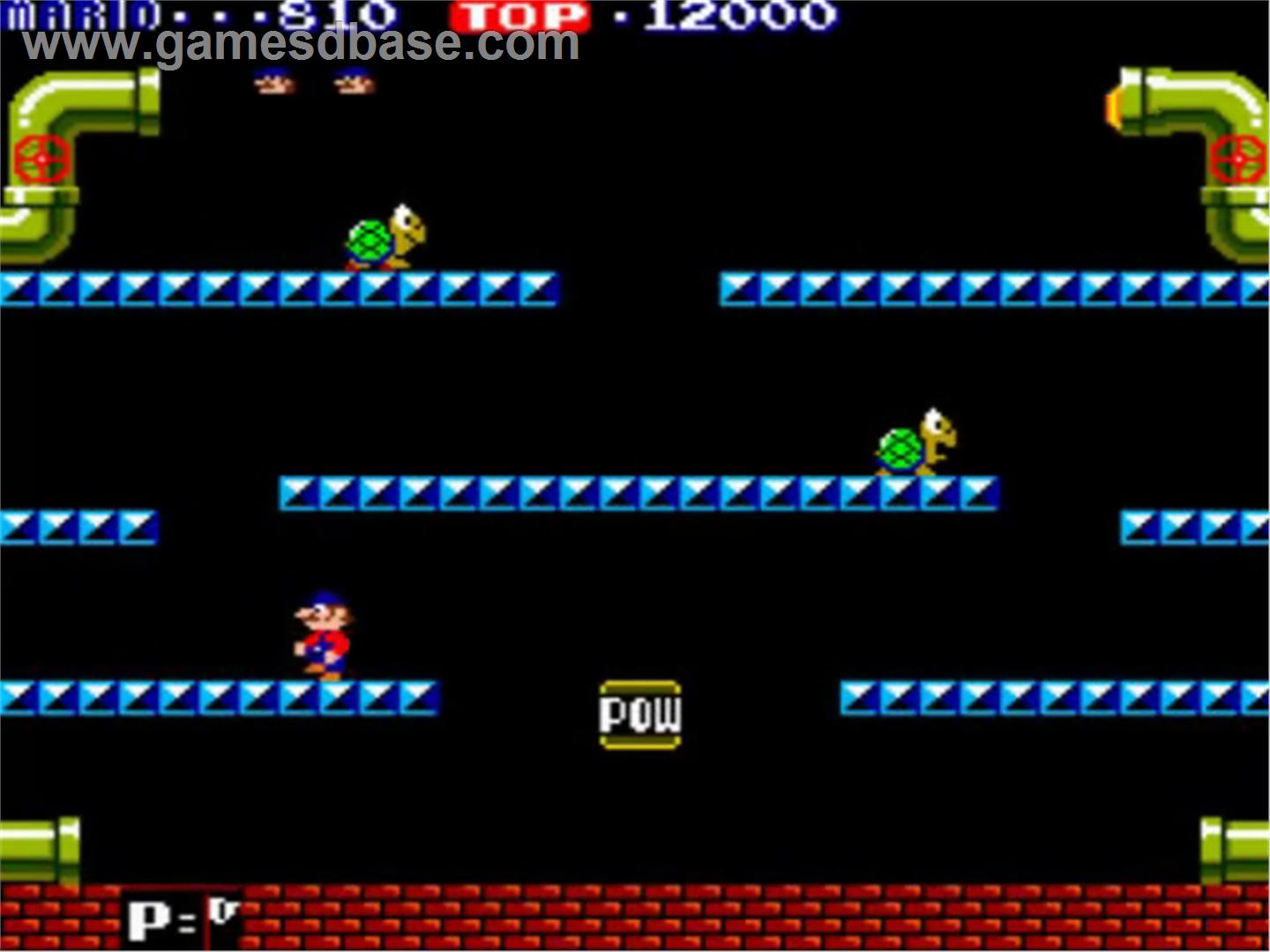
Screenshot from Mario Bros. (1983)

Courtesy GamesDBase
Courtesy GamesDBase


Screenshot from Amnesia (1986)

Courtesy Hazlift
Courtesy Hazlift


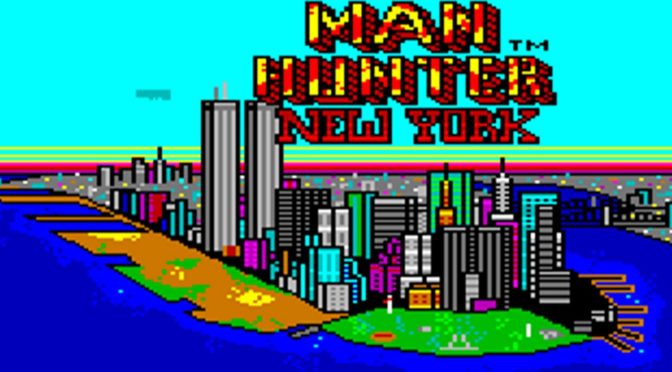
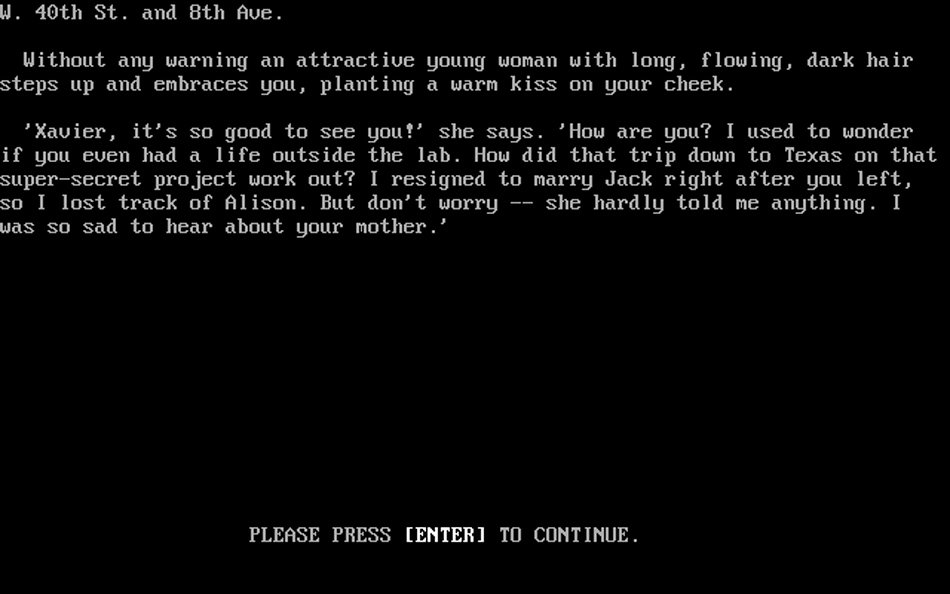
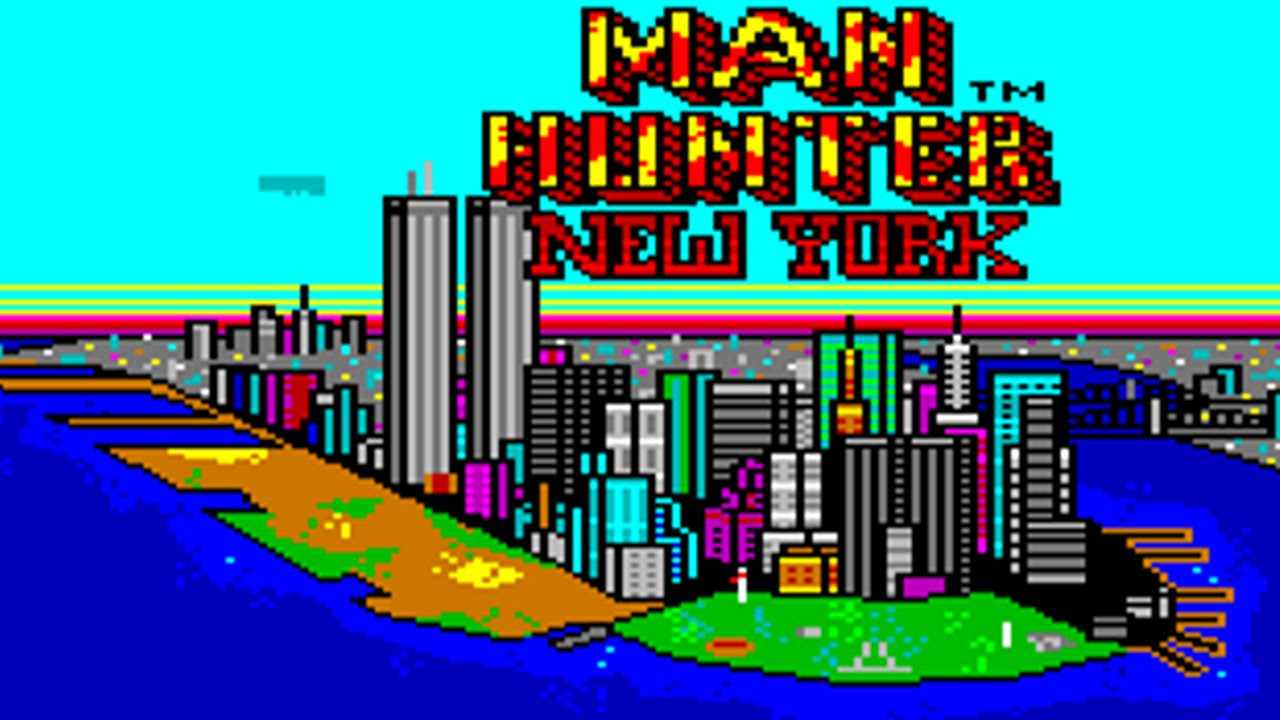
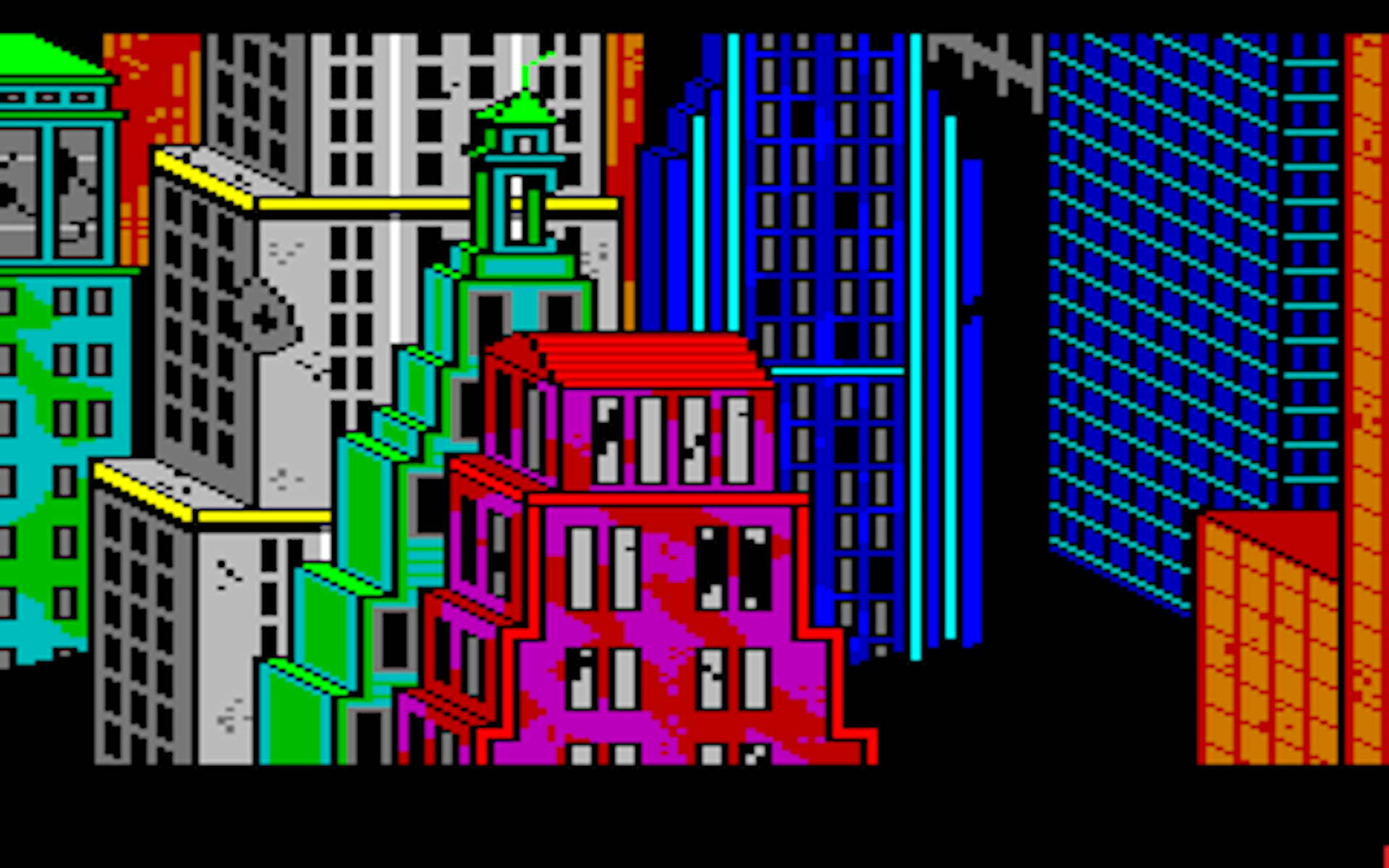
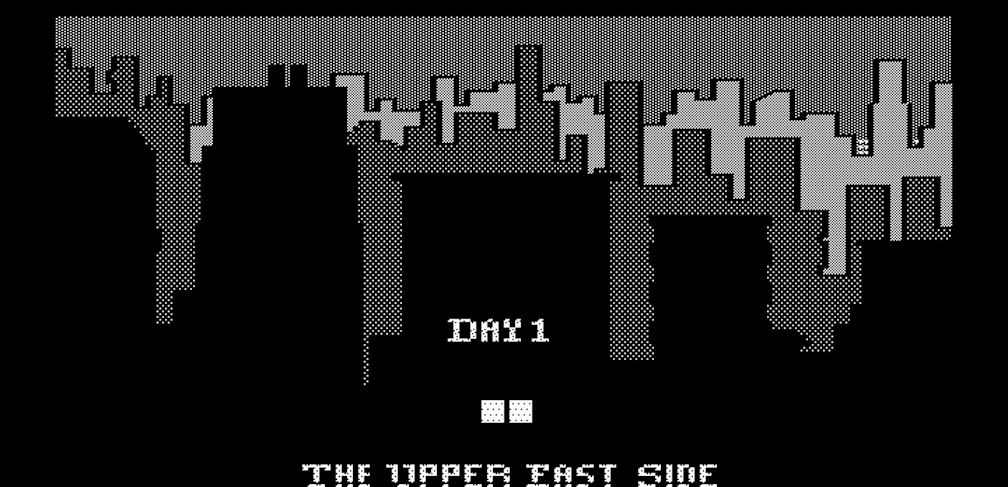
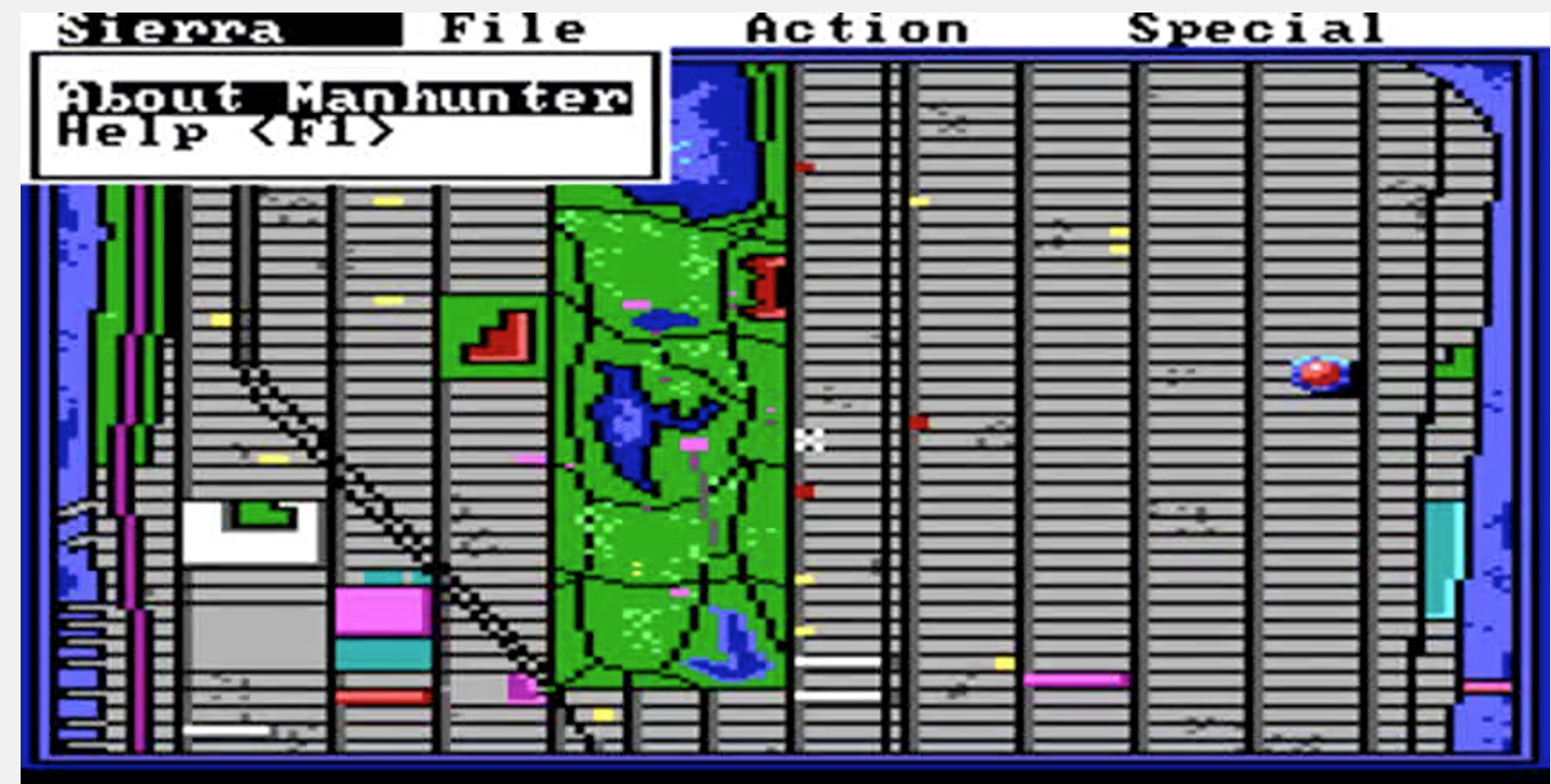
Images from Manhunter: New York (1988)

maxresdefault

335246-manhunter-new-york-amiga-screenshot-intro-new-york-looks-a

181573-manhunter-new-york-dos-screenshot-intro-hercules-graphics

Screen Shot 2016-08-04 at 12.14.12 PM


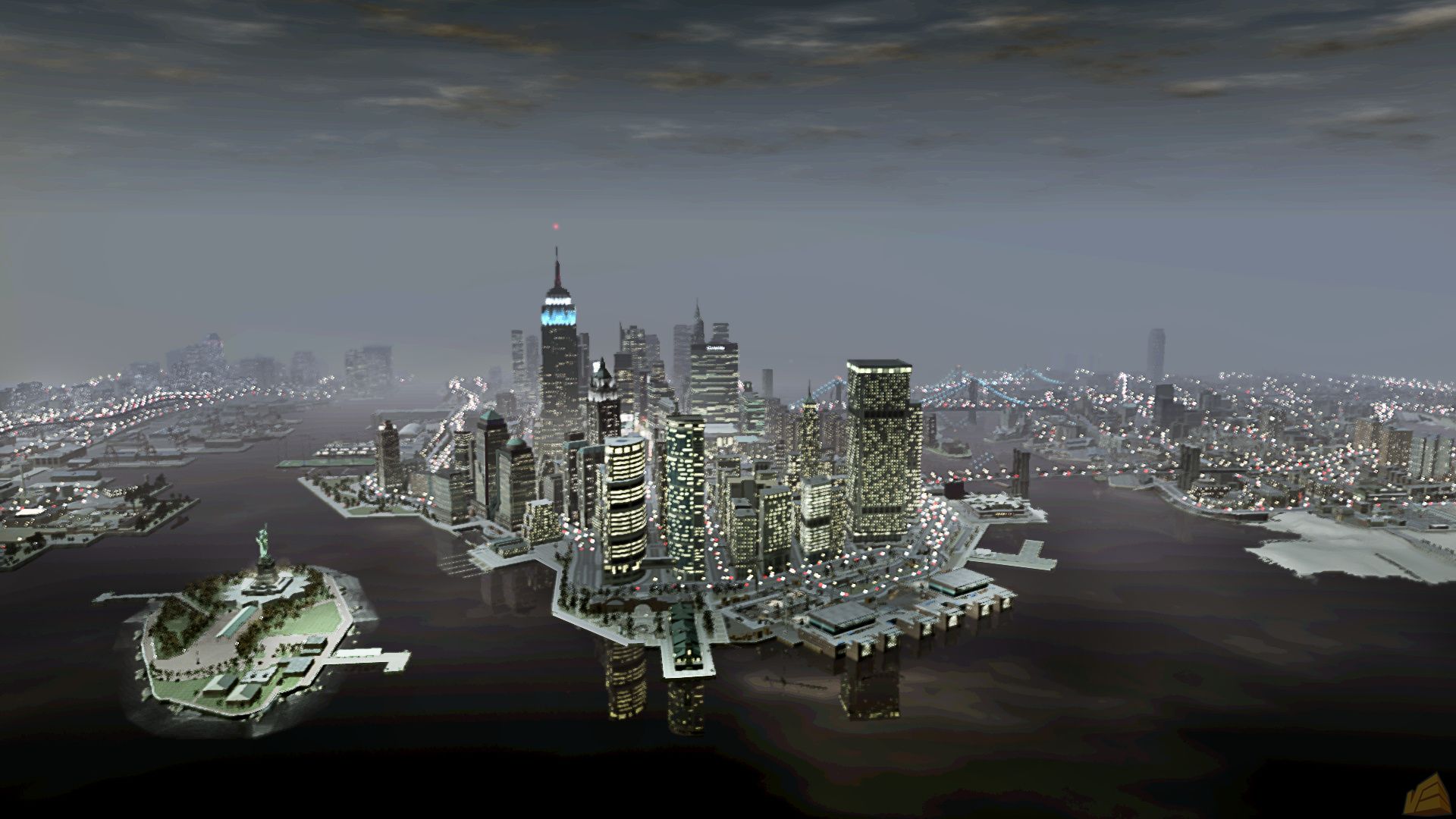
Screenshot from Grand Theft Auto‘s Liberty City

From GTA Wikia
From GTA Wikia

The area of Bowling Green, after the Great Fire of 1776, as depicted in Assassin’s Creed III.

Courtesy Assassin's Creed Wikia
Courtesy Assassin’s Creed Wikia
Categories
Gangs of New York

New Year’s Murder: Return of the Tong Wars 1912


“On New Year’s Day they presented any celebration in Chinatown with fireworks. There have been murders sometimes when the whole joyful populace of the crooked streets of Doyers, Mott and Pell have been patriotically celebrating with gunpowder an historic anniversary.” — New York Times, 1/16/1912

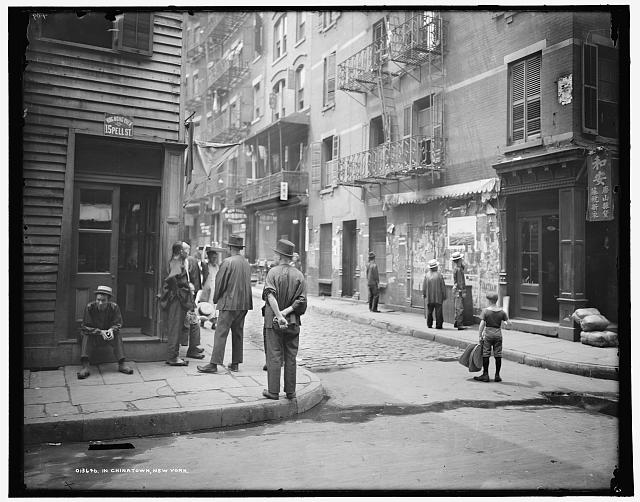
The streets of Chinatown were relatively quiet in 1911, a delicate truce drawn between the neighborhood’s two rival gangs, the On Leong and the Hip Sing tongs. But few strolled down narrow Pell Street without fear that old rivalries might return. Fierce battles had erupted throughout the past decade, culminating in dozens of bloody altercations throughout 1909 and 1910. (We outlined some of the violence in our podcast last year on Manhattan’s Chinatown.)

A committee of Chinese businessmen finally mediated a truce between the two tongs, but few suspected that hostilities would disappear. The control of On Leong Tong, who had once ruled the Chinese underworld for much of the 1890s, had been whittled away by the interloping Hip Sing Tong. Hip Sing’s leader, the flamboyant Mock Duck, often meandered down Pell conspicuously garbed in diamonds and a chain mail vest.

Although Hip Sing was subject to the truce, their allies — and the only other Chinatown tong of significant influence — the Four Brothers, were not. This imbalance of control, favoring Hip Sing and keeping Mock Duck in power, was bound to erupt.


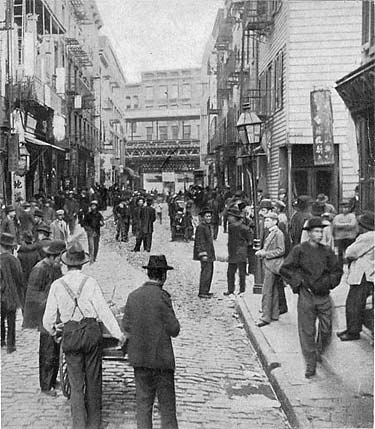
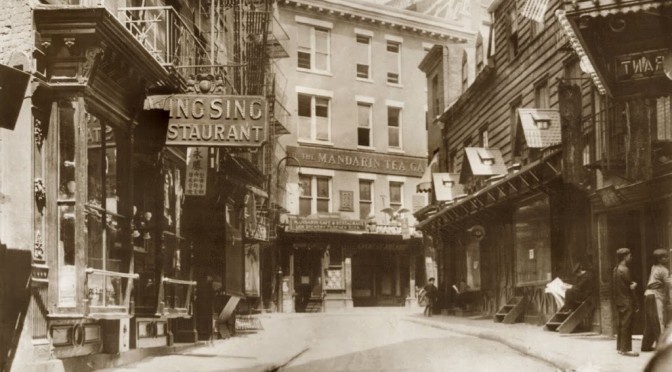
At right: Pell Street in 1899. The address 21 Pell Street is out of frame, just to the right.

And so it did one evening one hundred years ago, on January 5, 1912, at Mock Duck’s fan-tan parlor at 21 Pell Street, today the location of the First Chinese Baptist Church. Members of Hip Sing were gathered there, merrily gambling the night away under the glow of dangling light bulbs when three assassins from the On Leong Tong, armed with their trademark Smith & Wessons, burst in and began shooting.

Mock Duck himself may have been in the room that evening. He was certainly there, calmly sipping tea when police arrived. One of his gang members, Lung You, lay dead on the floor, while another, the ‘president’ of Hip Sing, Chung Pun Sing, was seriously wounded and fled to his home.

Witnesses led police to On Leong’s headquarters at 14 Mott Street. By the end of the day, over two dozen Chinese gangsters and bystanders had been arrested, including Mock Duck himself. He was charged with owning a gambling parlor, a fact that could not have been surprising to anybody at the Elizabeth Street police station. He was quickly released.

Top pic courtesy Library of Congress.

Park life: The anniversary of a name change in Chinatown

Next week begins ‘ghost stories’ week on the blog, but I need to make one more trip to Chinatown, the topic of the last podcast. As I just wrote about Columbus Day last week, I would be remiss if I skipped this very coincidental date in history. It was exactly one hundred years ago yesterday that the name of Mulberry Bend Park was officially changed to Columbus Park.

The park, of course, originally replaced the most decrepit of Five Points’ slums, allowing a sliver of greenery and sunlight to slip into the overly dense neighborhood. It took the city years to wrestle the original rundown tenements from their owners. “In its place will come trees and grass and flowers,” proclaimed its chief proponent Jacob Riis. The placid, English design by Calvert Vaux, typical for its day, insured a park so formal that people weren’t even allowed on the grass. (Today, located at the cusp of Chinatown and the Civic Center, the park is so busy and cluttered that it appears to almost have no grass at all.)

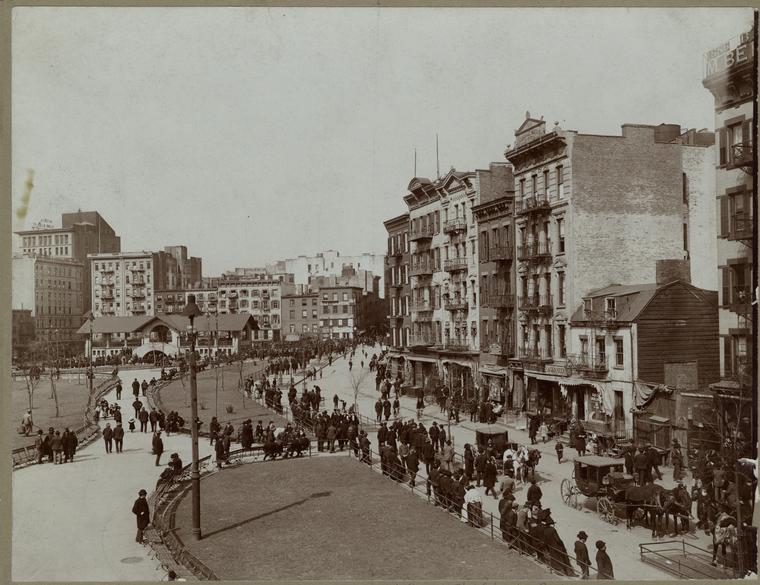
Mulberry Bend Park, named for the infamous hook in Mulberry Street to the park’s east side, opened in 1897. By this time, the area was populated by a mixture of immigrants, the largest group from Italy. Italian Americans soon defined the culture of the park’s surrounding streets, with obvious exception of those streets to the east dominated by Chinese businesses.

In 1911, the city explicitly declared the neighborhood’s changing character, at the behest of the Italian community, by renaming the park for America’s most famous Italian connection, the explorer Christopher Columbus. A crowd of 8,000 people gathered on Columbus Day that year to reopen the park under its new name.

The park now took on a more athletic character, with new track and field facilities, and on that first day with its new name, Columbus Park hosted competitions between boys from local playgrounds. “There were dashes, relay, half mile and potato races, shot puts and high jumps,” reported the Sun. “Five thousand more or less enthusiastic mamas and babies and papas and little mosquitolike boys insinuated their way to the very bars of the park enclosure…and looked on at the games.”

Above: Mulberry Bend Park in 1900

Opium heaven! Fears of Chinatown, immortalized in print

Reading about Chinatown in classic books like ‘Gangs of New York’, one gets a sense that certain mysteries and legends about the neighborhood were already firmly in place. And nothing of these gauzy preconceptions arose to the public consciousness more than the problem of Chinatown’s opium dens. In fact, no other feature of American Chinatowns would resonate more negatively — or in the case of 19th century dime novels, more thrillingly.

The sale of opium may been centered in Chinatown, but it wasn’t new to New York. It’s believed that John Jacob Astor himself, a major trader with the Orient in the 1810s, probably brought Turkish opium to New York. (Edwin G Burrows and Mike Wallace even call him “America’s first large-scale drug dealer.”) But it was mostly associated with the Chinese that arrived in the 1850s and 60s, men from American western territories who brought it with them among their other unique wares.

Opium was a vice of choice for many white New Yorkers, and many became ‘hop fiends’, as described by the scandalized press. It was particularly enjoyed by New York’s small, continental ‘bohemian’ class. By the 1890s there were more opium dens outside of Chinatown than in. Many others experienced the drug via its inclusion in laudanum, prescribed for various medical ills but frequently abused. But no matter; the drug’s foreign, sinister qualities had turned the Chinatown of popular imagination into a devil’s playground.

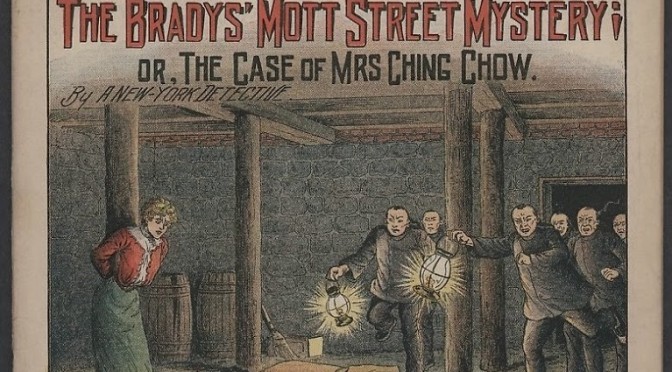
This was reflected most colorfully in the dime novels of the day. A precursor to the pulp novel and the comic book, the dime novel was obtainable entertainment for regular New Yorker, cheaply written and made, filled with adventures that leapt from the stands due to flashy, often brightly hued covers.

The first of these publications was produced a little over 150 years ago with Malaeska, the Indian Wife of the White Hunter. That first story also set the standard for using ‘strange’ ethnic lifestyles as the backdrop for adventure.

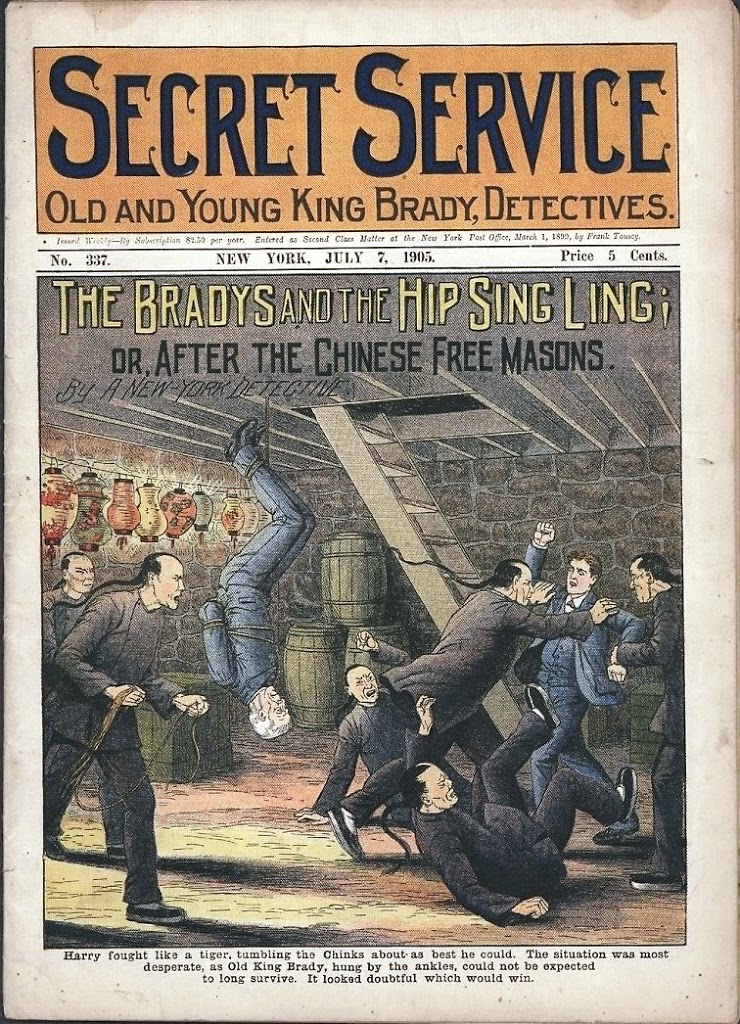
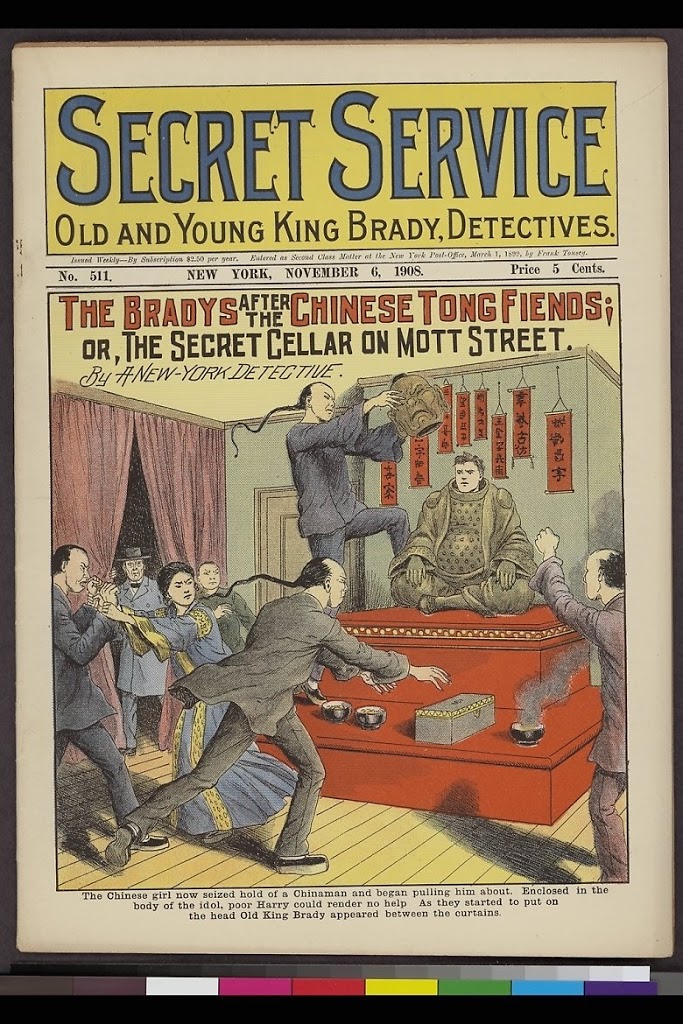
One of the most enduring characters of late 19th century dime-novel industry was Old King Brady, who cracked down on crime in New York’s most vicious and dangerous neighborhoods. Naturally that brought him into contact with Chinatown’s opium world.

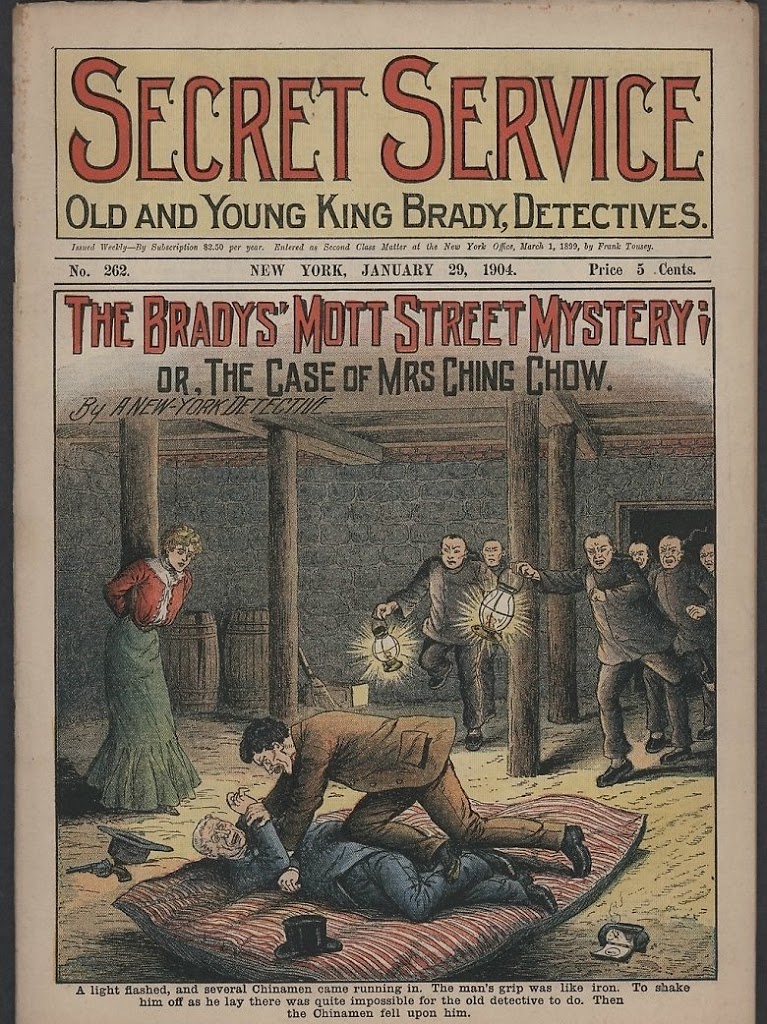
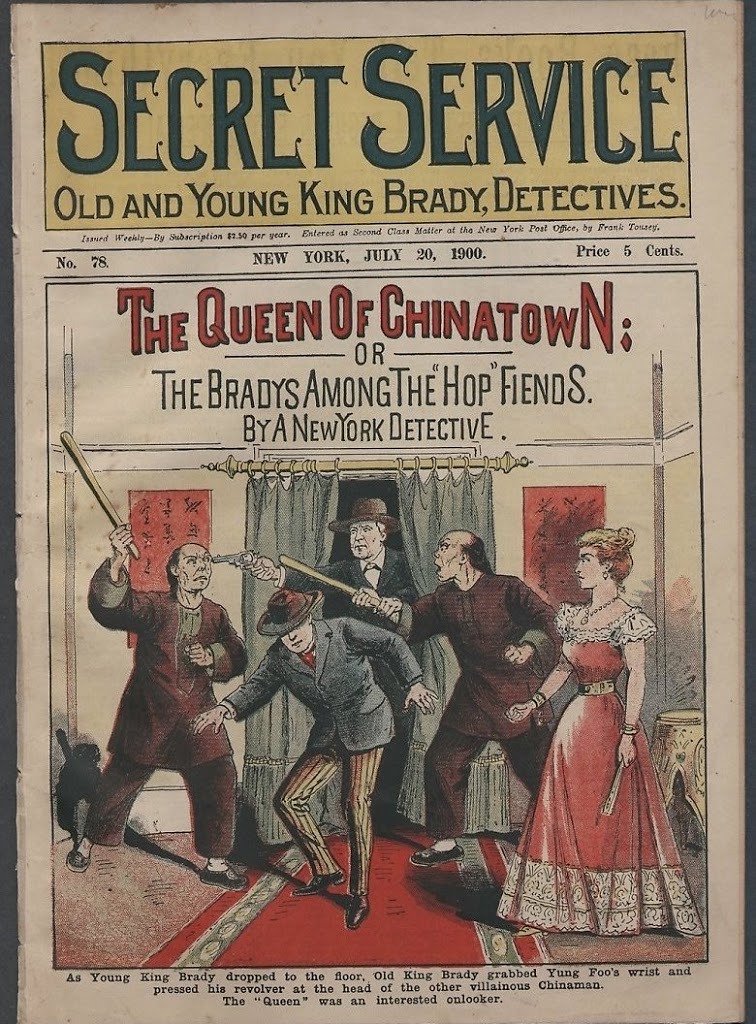
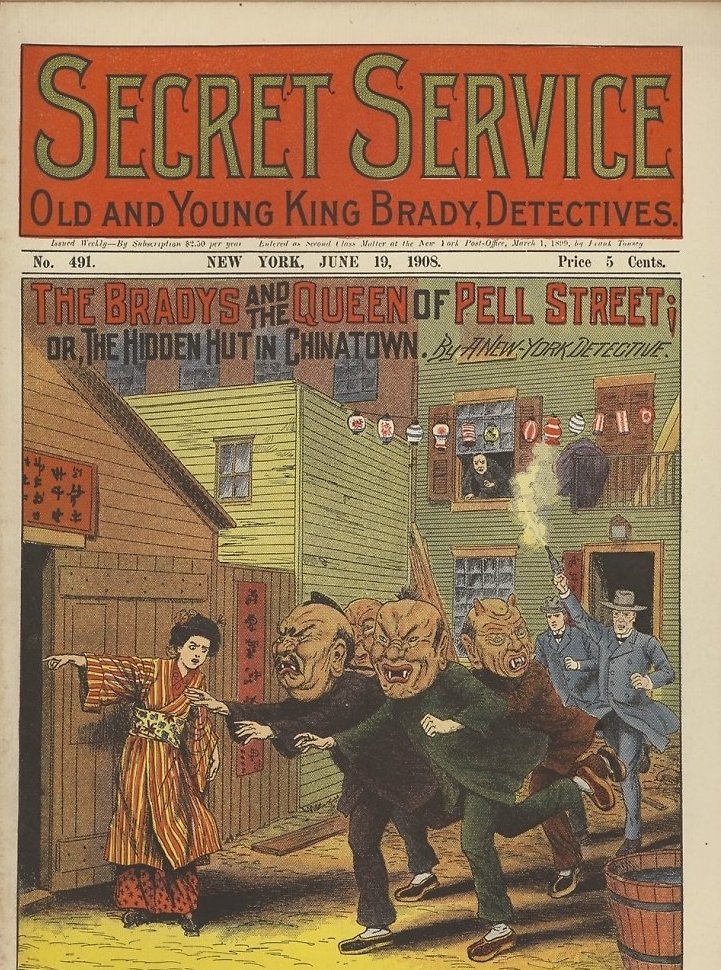
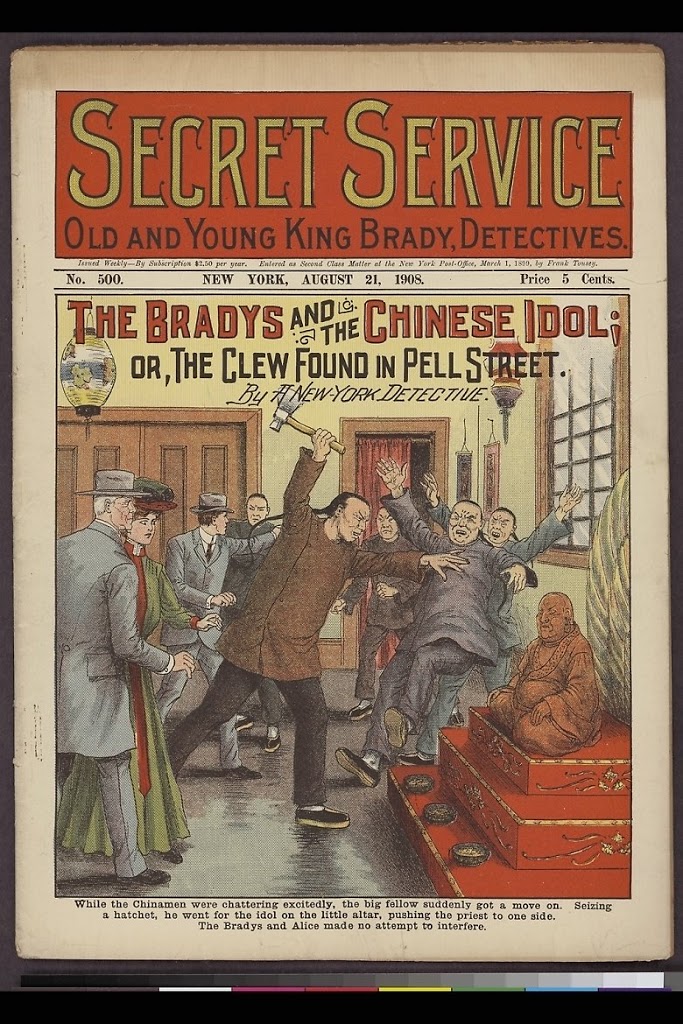
In many issues of ‘Secret Service’, Brady and his young companion would rescue helpless women taken captive in an opium den, with chase scenes through the streets of Chinatown. As you can see from the examples below, depictions of Chinatown were broad, racist and wildly inaccurate. The phrase ‘heathen Chinee’ is often used.

These samples are from the Stanford University collection of dime novels and penny dreadfuls. I highly recommend checking out their website, searchable by themes, including New York street scenes. I’ve chosen a few below which recognizable place names, but there are literally a couple dozen that are specifically set among the ‘Oriental opium world’, often in basements or thickly draped parlors. For some reason, there seems to be a trap door in every story!

NOTE: Be careful before reading some of these captions. Needless to say, there’s some racially insensitive language included within these old books.

This one in particular seems to revel in the highly stereotypical and sensational image of the ‘tong’ member with their wielded hatchets. Below it, a depiction of what may be some variation of the Hip Sing Tong (called ‘ling’ for some reason).

And I won’t even hazard a guess to figure out what is happening here!

Notes from the podcast (#129): Manhattan’s Chinatown

Casual posing at the opening of Doyers Street, circa 1900. (LOC)

I’m so relieved that we finally got to cover a proper New York neighborhood on the podcast. Since reviewing the historic shifts and events of a neighborhood are better covered topically, we hope there wasn’t too much confusion regarding the chronology. Manhattan’s Chinatown was a point of curiosity by the 1870s, but it wasn’t until after the Exclusion Act in 1882 that the community really became a force in the Five Points neighborhood and a destination for some of New York’s better known vices.

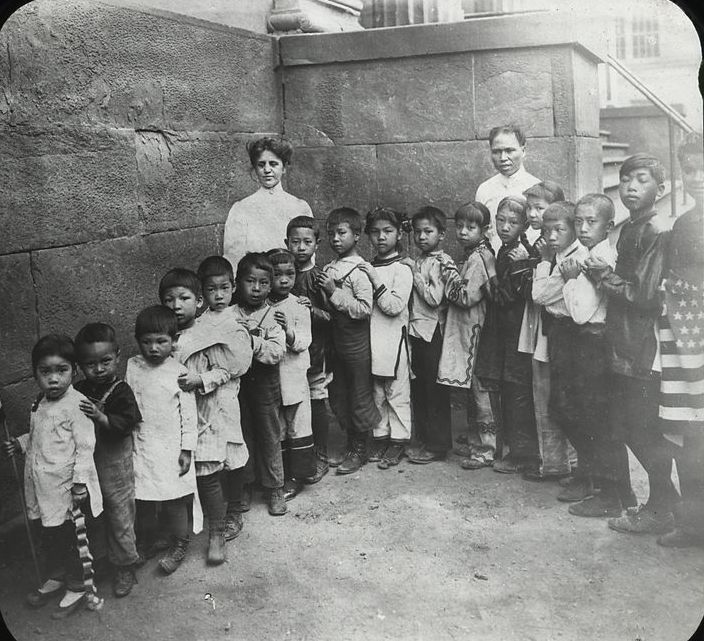
We pretty much hammer home that late 19th century Chinatown was a veritable ‘bachelor’s society’ with few Chinese women. But that does not mean there were no Chinese women. Or for that matter, children, as evidenced in this photograph from 1913. [source]

The caption reads, “Sunday school after a visit to Chatham Square, showing Chinese children lined up by size.” I’m fairly confident this was taken at the Mariner’s Temple at Henry Street.

Pronunciation Proclamation: I’m a New Yawker by way of the Ozarks, so clearly my tongue had a challenge properly pronouncing many early Chinese names. (And Tom had a cold, adding to his difficulty.) Still, I think we did a pretty good job. For certain, I mispronounced Yung Sun Restaurant, the base of operations of one Sister Ping, when I said it the first time, but got it right the second.

For More Information: Speaking of Sister Ping, the best book on modern Manhattan Chinatown history is easily Patrick Radden Keefe‘s “The Snakehead: An Epic Tale of the Chinatown Underworld and the American Dream.” It is a must-read for anybody interested modern New York organized crime.

A perfect summation of late 19th century Chinatown can be found in Tyler Anbinder‘s ‘Five Points’. There are many great books on the early American Chinese experience, the friendliest to read being ‘American Chinatown’ by Bonnie Tsui.

Of our older podcasts, this show would be greatly complemented with a visit to our two most popular podcasts ever: Five Points: Wicked Slum and Five Points: The Fate Of Five Points. If you haven’t listened to them, I recommend downloading the ‘illustrated versions’ of each of these shows, featuring pictures of the things being discussed that pop up on your listening device. You download on iTunes or straight from here and here.

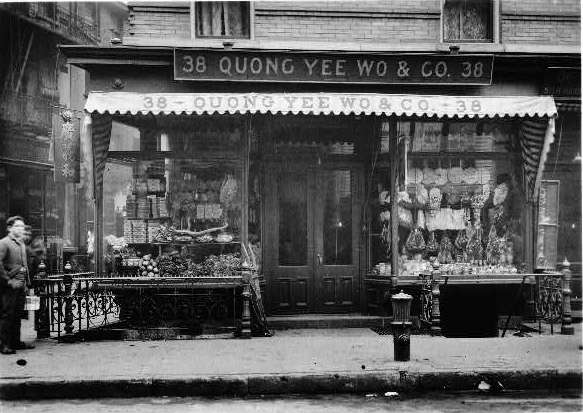
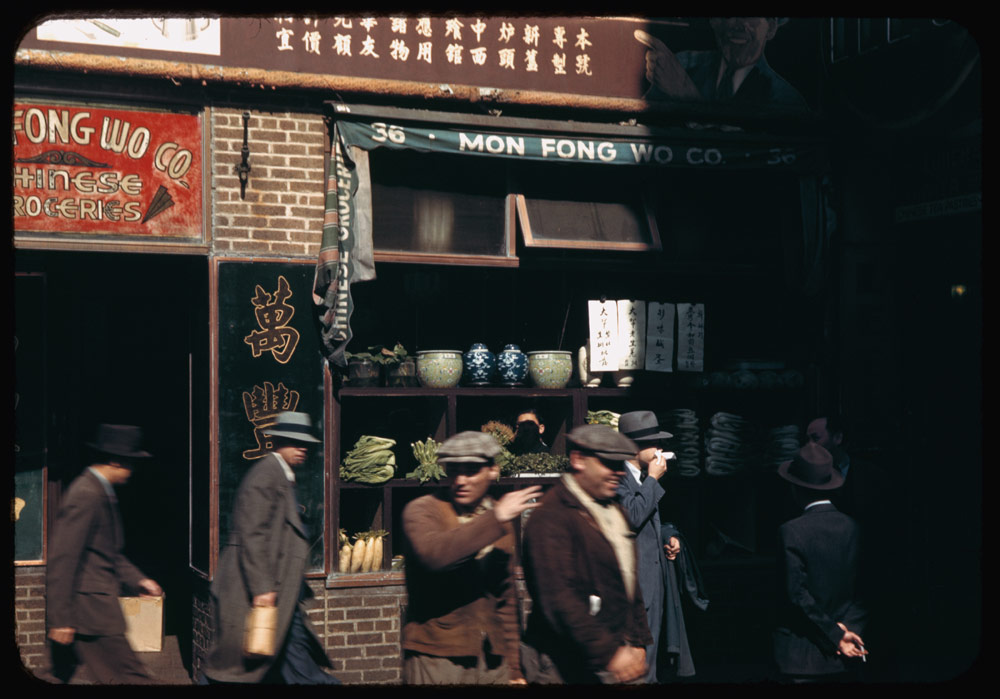
Below: What wares await you at Quong Yee Wo and Co., at 36-38 Doyers Street, corner of Pell Street? [courtesy Library of Congress]

Categories
Podcasts

Manhattan’s Chinatown: a tribute to the old neighborhood, and to the temptations of rich delicacies and basement vices


PODCAST Manhattan’s Chinatown is unique among New York neighborhoods as its origins and its provocative history can still be traced in many of the buildings and streets still in existence. Two hundred years ago, the sight of a Chinese person would have astonished New Yorkers, and the first to arrive in the city were either sailors or the subjects of tacky exhibition.

But with the first Chinese men setting on Mott Street, a new community was born, with thriving variety shops, cigar businesses and gambling dens alongside establishments of a more sensuous nature — opium dens and brothels. This mini-economy produced social clubs and secret societies (the legendary ‘tongs’), and rival gangs soon spilled blood along the neighborhood’s quirkiest lane.

And still today, modern Chinatown hides a few dark, startling secrets of its own.

ALSO: We give you a rundown of addresses along Mott Street and other places nearby. You can use this podcast as your official walking tour of the neighborhood!

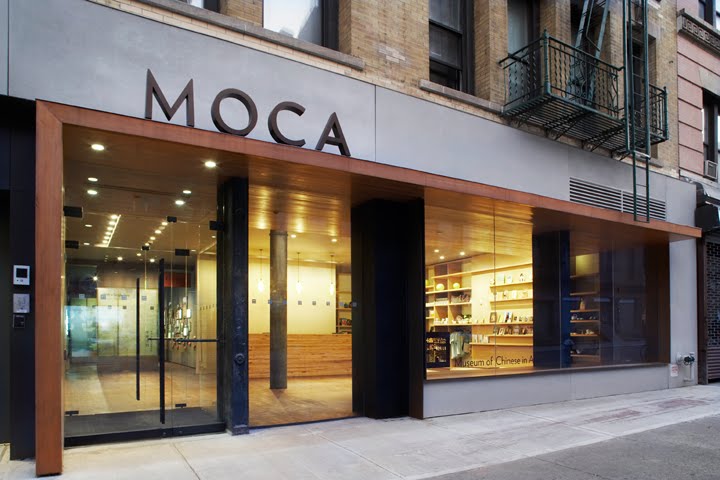
For a lot more information on the Chinese experience in America, I urge you to visit The Museum of the Chinese In America, located at 215 Centre Street. It’s free on Thursday and close to Chinatown. (Photo courtesy CUNY)

And here’s the addresses of places we mentioned in the podcast, as well as a couple other locations of interest. There are other places on these streets of great interest, so please meander freely:

1. 50 Spring StreetQuimbo Appo’s tea shop
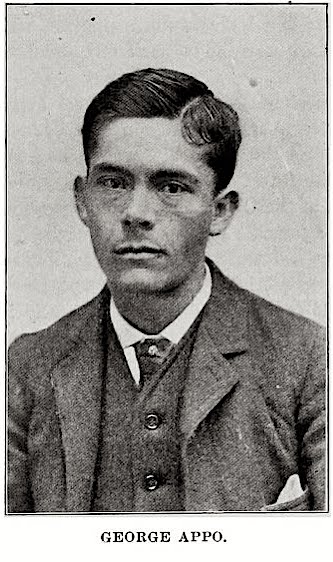
Quimbo, an early Chinese success story in New York was in and out of prisons and mental wards later in his life. His son George Appo (below) was an equally notorious presence in the Five Points slums.

2. 62 Cherry Street Ah Sue’s tobacco and Chinese Candy shop
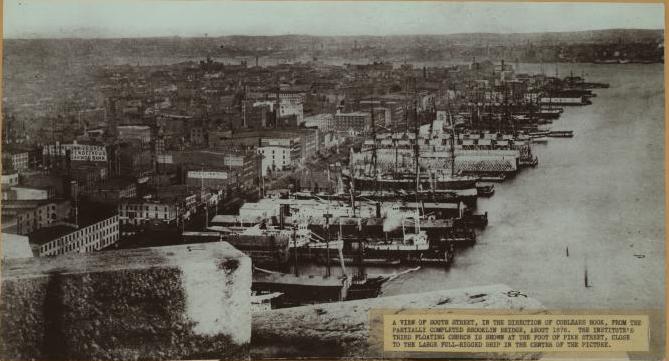
The East River docks stretching to Corlears Hook, where the first Chinese men (sailors) stayed in boardinghouses. This image is from 1876; Ah Sue’s waterfront business was at 62 Cherry Street, near Catherine Slip.

3. Corner of Catherine Street and East Broadway
New York’s first Chinese laundromat

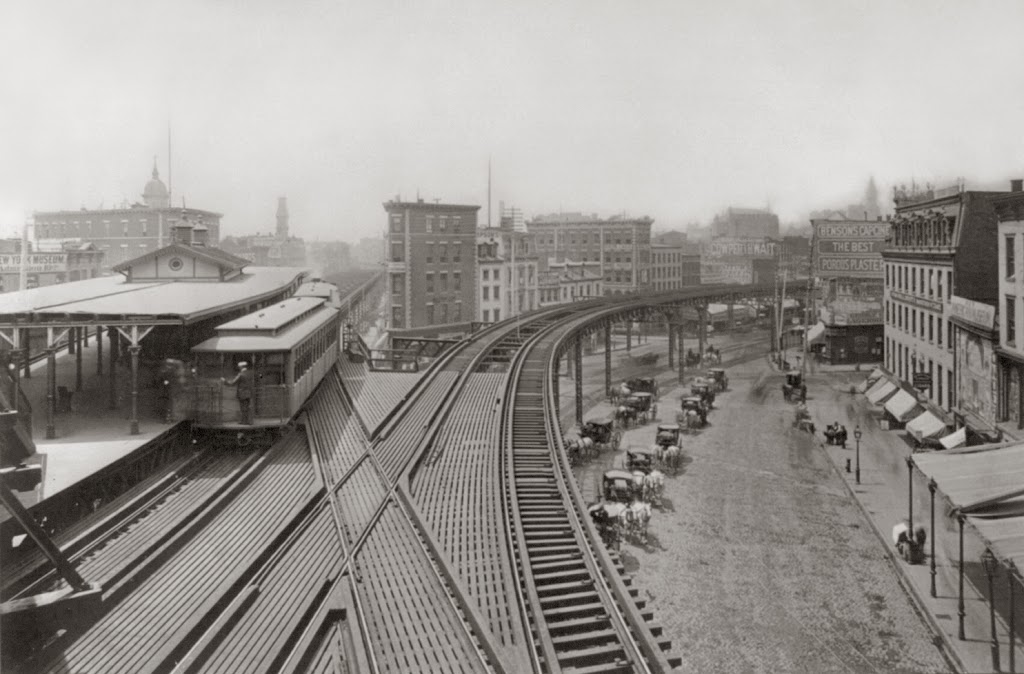
4. Chatham Square
In the 1880s, the open area was consumed with elevated railroad tracks, quite a

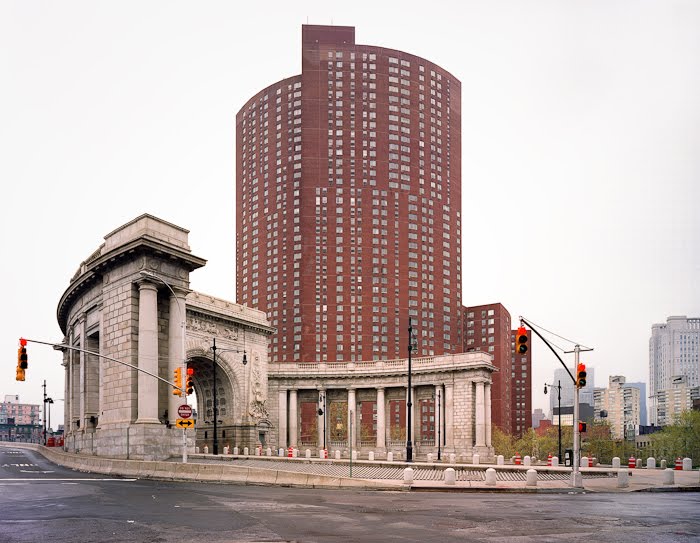
5. Confucius Plaza
Built in 1975 and one of the largest buildings in downtown Manhattan outside of the Financial District. (Picture courtesy the pretty fabulous blog Iconic Facades)

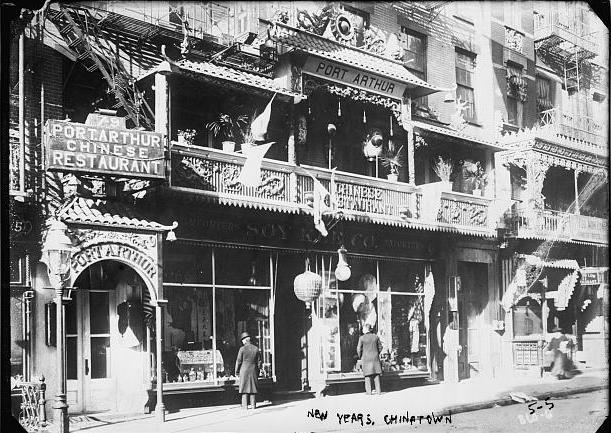
Not mentioned in the podcast, Port Arthur Chinese Restuarant, at 7-9 Mott Street, circa the 1900s, one of the first banquet halls of Chinatown

6. 11 Mott Street – the brothel owned by Tom Lee
7. 16 Mott Street – original home of the Chinese Consolidated Benevolent Association
8. 18 Mott Street – the first Chinese-owned building, and one of the earliest Chinese gambling dens

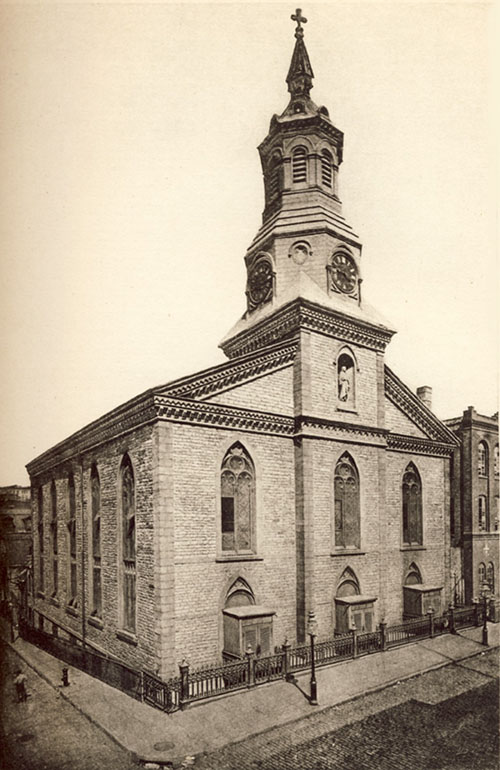
9. 25 Mott StreetChurch of the Transfiguration
Easily the oldest structure in the neighborhood, and home to early congregations that weren’t exactly welcoming to Mott Street’s early Chinese residents.

10. 62 Mott Street — current home of the Chinese Consolidated Benevolent Association, the unofficial ‘town hall’ of Chinatown

Mott Street in 1942: (Courtesy the Charles W. Cushman Photography Archive)

11. Columbus ParkMany of Five Points most decrepit tenements were eliminated to make way for this park created by Calvert Vaux. The park is a lively part of Chinatown today, particularly on the weekends. [source]

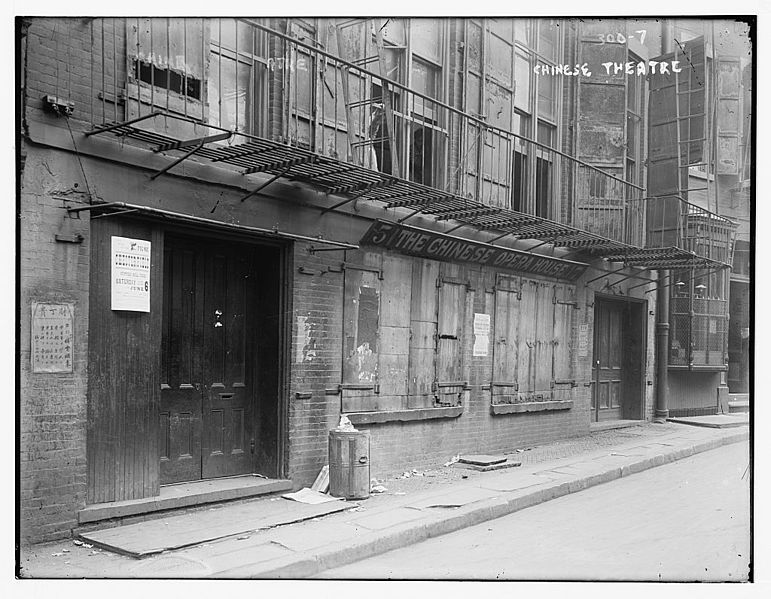
12. 5-7 Doyers Street – Chinese Theater
A regular source of entertainment for locals and the sight of more than few altercations between rival tongs. Bodies were allegedly buried in the basement.

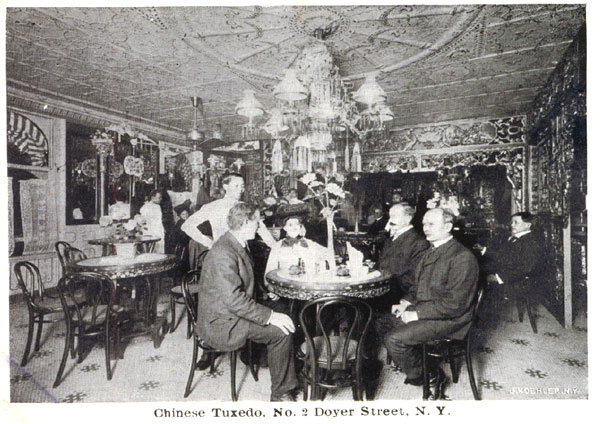
2 Doyers Street — Chinese Tuxedo Restaurant
Chinese had a powerful allure to the non-Chinese and to ‘bohemians’. This restaurant attracted businessmen looking for an ‘exotic’ night on the town. It helped that the Tuxedo was near the elevated train. (Courtesy Flickr/straatis)

13. 9 East Broadway – Former home of the Golden Star Bar
14. 47 East Broadway – Yung Sun Restaurant, once operated by Sister Ping