Categories
Holidays Podcasts

A New Year in Old New York: A history of celebration from Times Square to Chinatown

PODCAST The ultimate history of New Year’s celebrations in New York City.

This is the story of the many ways in which New Yorkers have ushered in the coming year, a moment of rebirth, reconciliation, reverence and jubilation.

In a mix of the old and new, we present a history of early New Year’s festivities, before heading to the city’s most famous party — New Year’s Eve in Times Square.

Why did Times Square become the focal point for the world’s reflection on a new calendar year? And how did Times Square’s many changes in the 20th century influence those celebrations? Featuring Dick Clark, Guy Lombardo, Three Dog Night — and Daisy Duke.

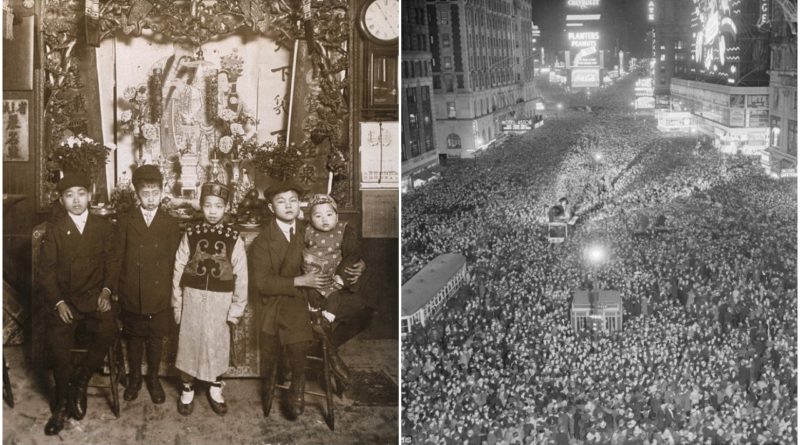
THEN Greg brings you the story of the Chinese New Year which has been celebrated in Manhattan’s Chinatown since before there was even a Times Square! The celebration has been at the bedrock of the Chinese experience in New York. But in the 19th century, the customs of the season were met with curiosity, bewilderment and sometimes harsh disapproval.  And what’s up with the fireworks?

Listen Now: A New Year in Old New York Podcast

Or listen to it straight from here:

________________________________________________________

The Bowery Boys: New York City History podcast is brought to you …. by you!

We are now producing a new Bowery Boys podcast every other week. We’re also looking to improve the show in other ways and expand in other ways as well — through publishing, social media, live events and other forms of media. But we can only do this with your help!

We are now a member of Patreon, a patronage platform where you can support your favorite content creators for as little as a $1 a month.

Please visit our page on Patreon and watch a short video of us recording the show and talking about our expansion plans. If you’d like to help out, there are five different pledge levels (and with clever names too — Mannahatta, New Amsterdam, Five Points, Gilded Age, Jazz Age and Empire State). Check them out and consider being a sponsor.

_______________________________________________________

Visit Times Square NYE for details about this Tuesday’s party in Times Square.  For general information about this year’s Chinese New Year, check out this handy web guide.  And visit Better Chinatown for a map of this year’s parade route.

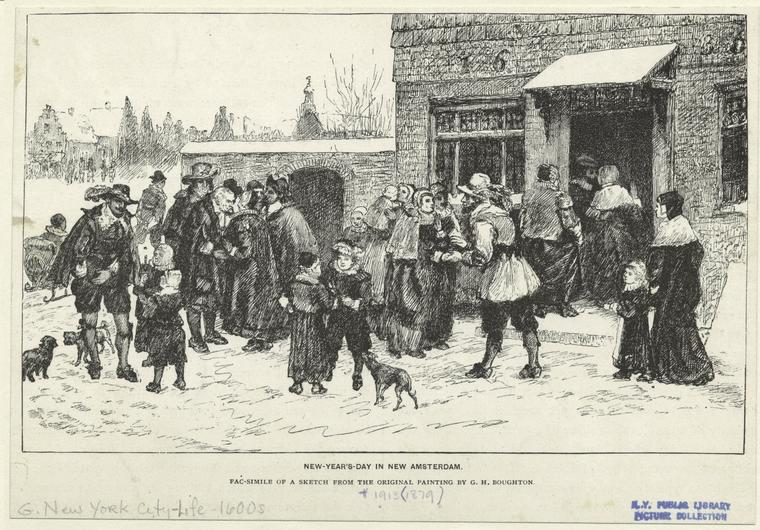
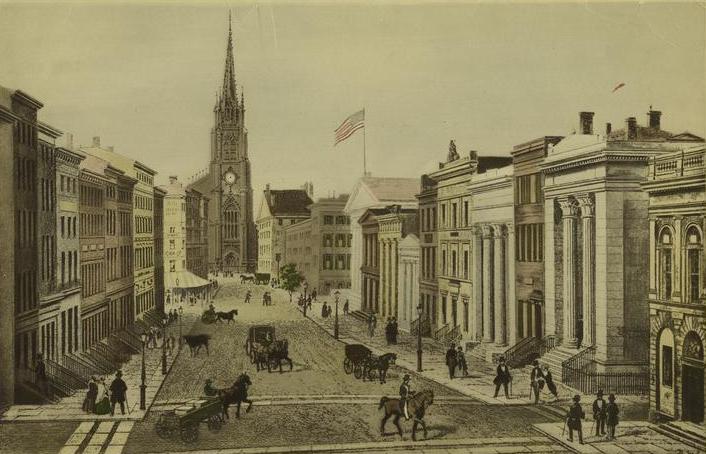
New Years Day celebrations have evolved since the days of New Amsterdam when visitations symbolized a ‘fresh start’ to the year.

Courtesy NYPL
Courtesy NYPL

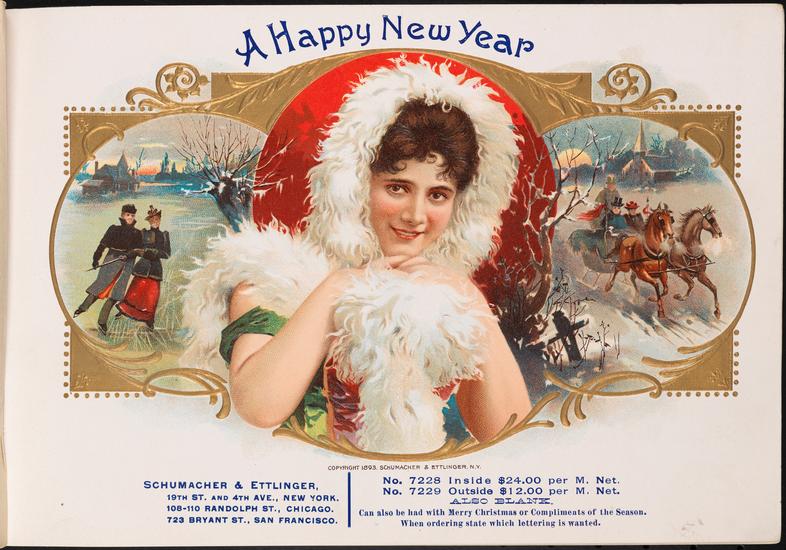
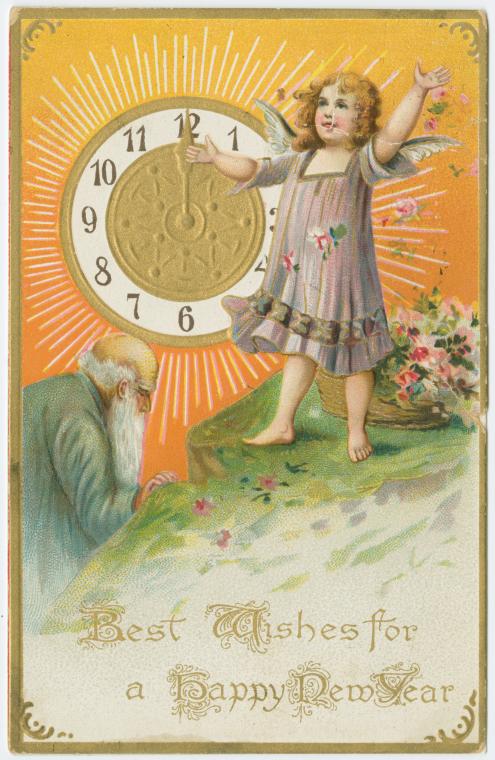
A decorative cigar box from the 1890s, ringing in the new year with a winsome damsel and wholesome scenes of winter beckoning you to smoke a cigar.

Courtesy Museum of the City of New York

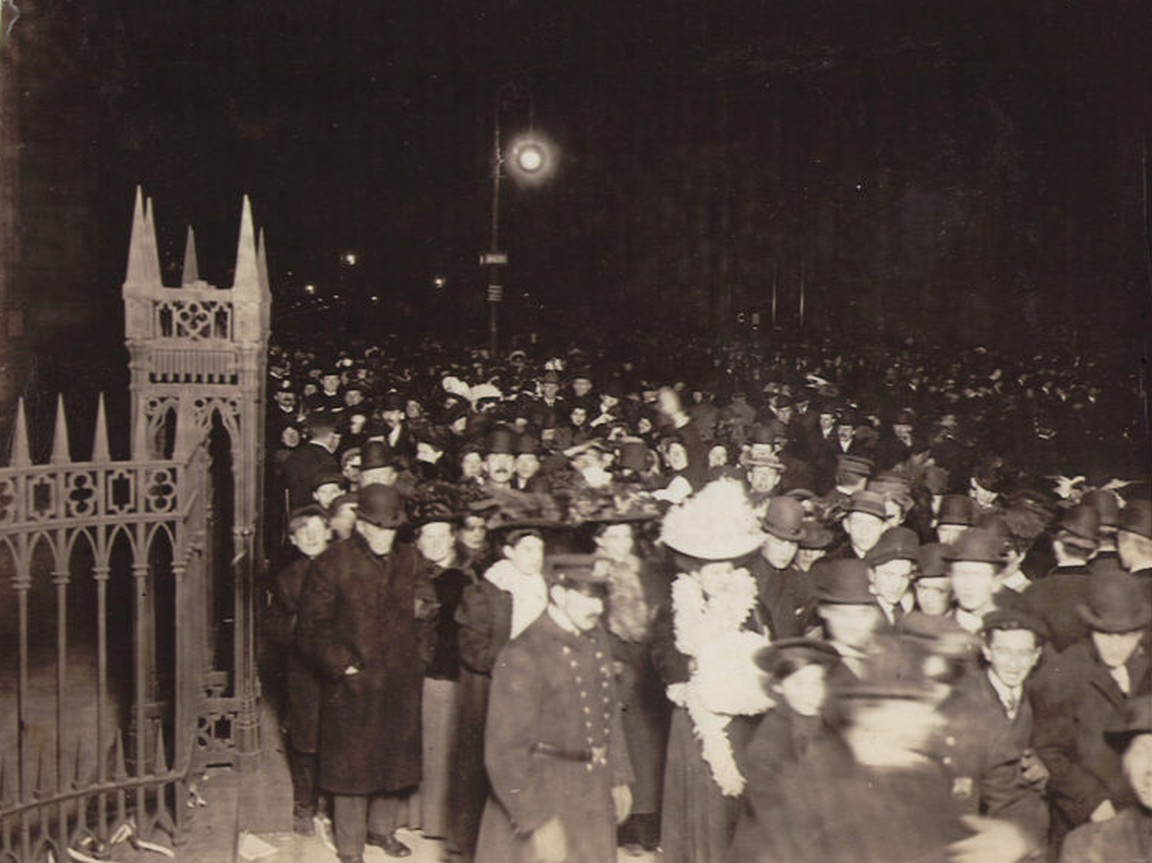
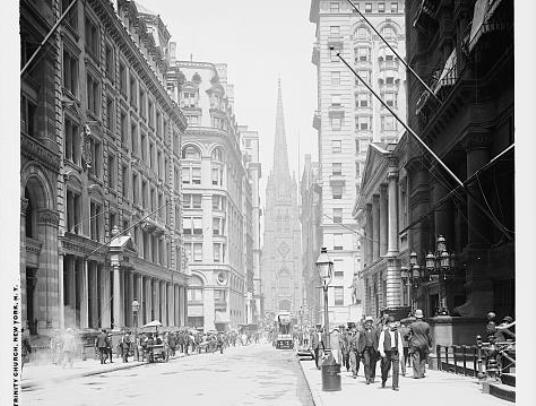
The crowds outside Trinity Church on 1906 gathered to usher in the new year. The church was traditionally the place people gathered before the Times Square celebration took off.

1

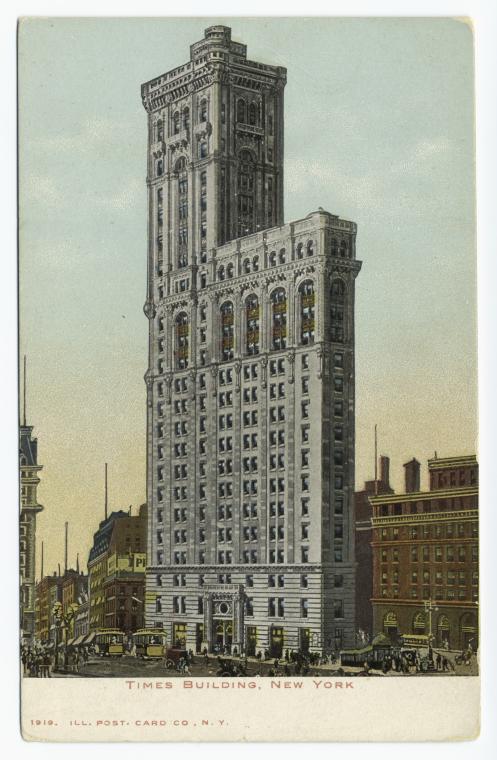
Fated to be the centerpiece of New Years Eve, One Times Square once wore some beautiful architecture until much of it was ripped off to accommodate a frenzy of electronic signs.

Courtesy NYPL
Courtesy NYPL

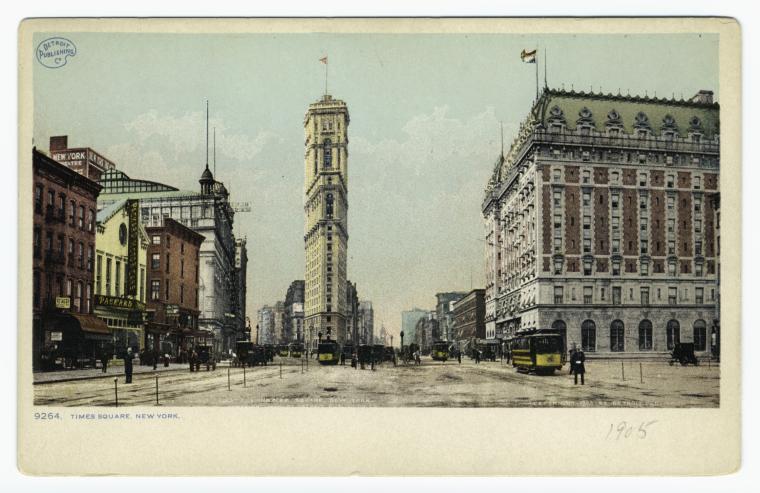
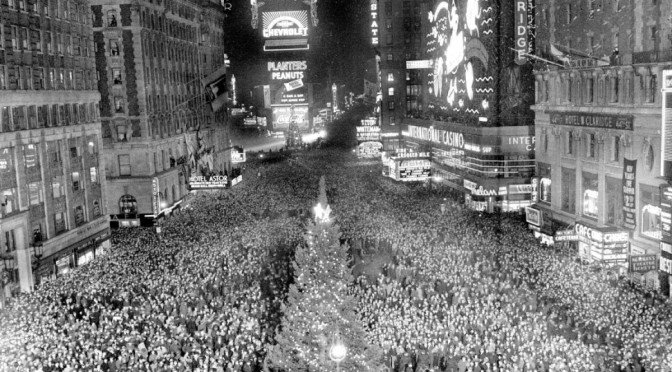
Times Square in 1905 for the very first New Years Eve celebration albeit one with fireworks, not a ball drop.

Courtesy NYPL
Courtesy NYPL

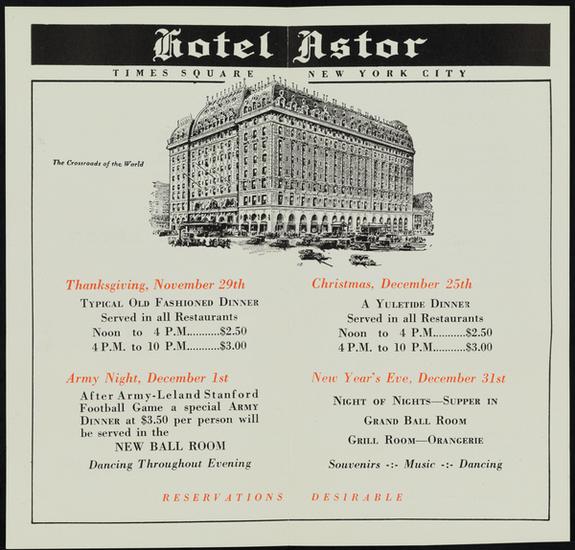
The party offerings at the Hotel Astor in Times Square in 1926.

Courtesy Museum of the City of New York

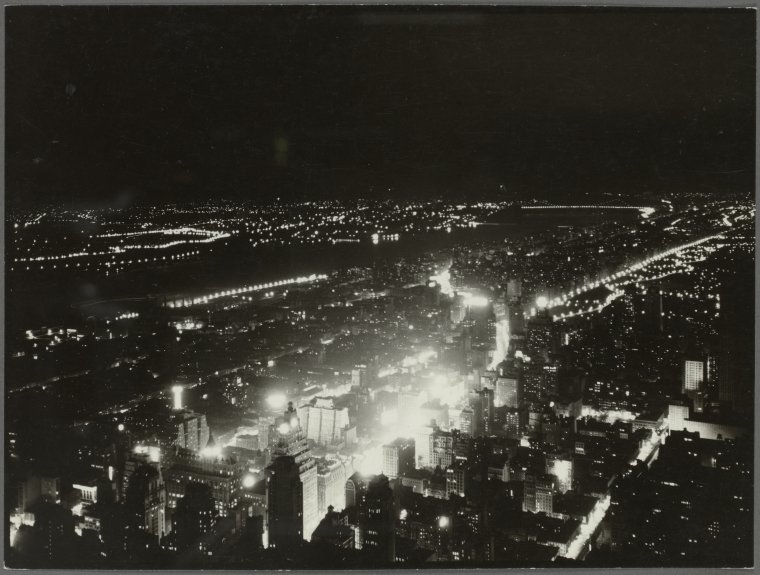
The view of Times Square from the Empire State Building.

Courtesy NYPL
Courtesy NYPL

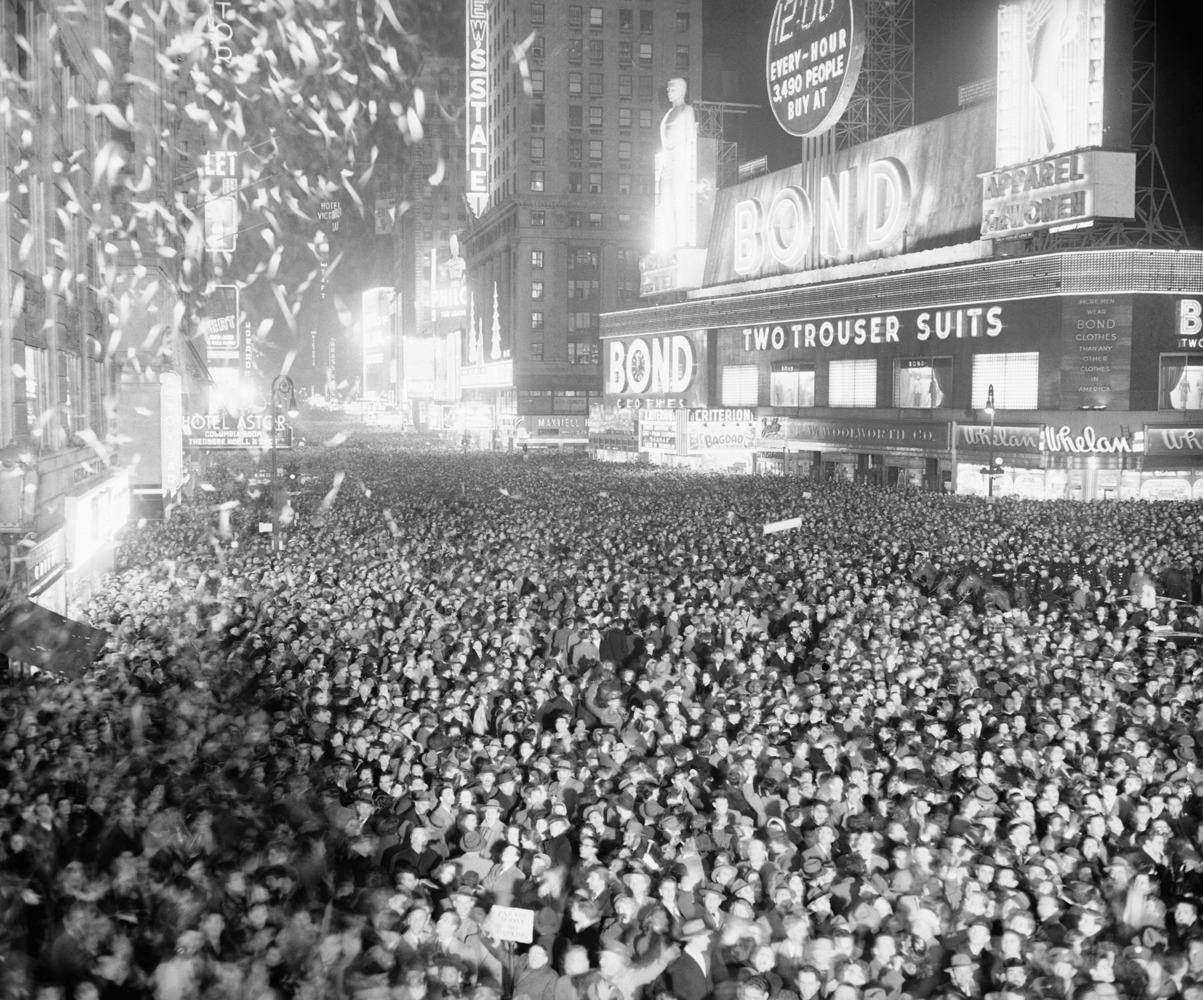
New Years Eve 1938

AP photo
AP photo

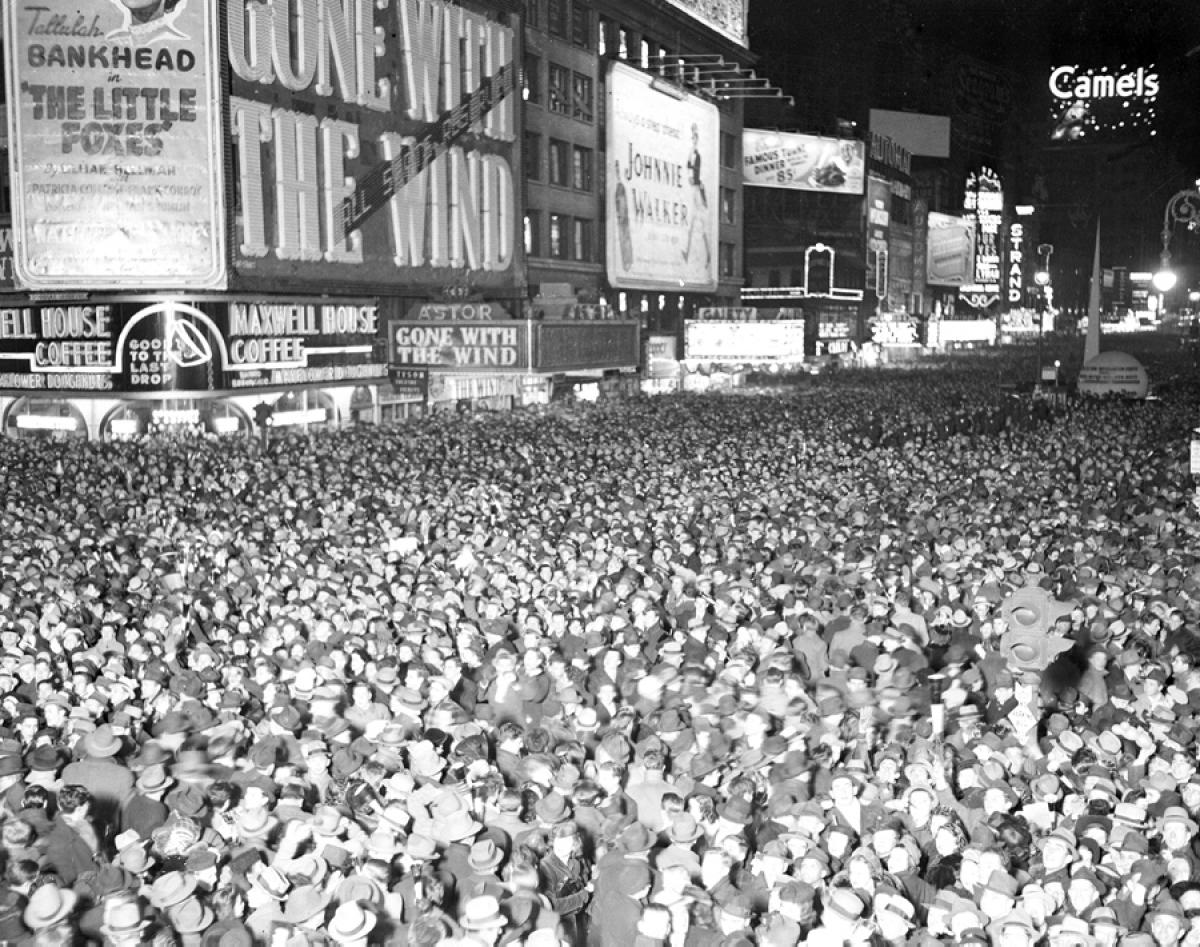
The throngs in 1940 with the Gone With The Wind marquee in the background (not to mention Tallulah Bankhead in the play The Little Foxes!)

Courtesy New York Daily News

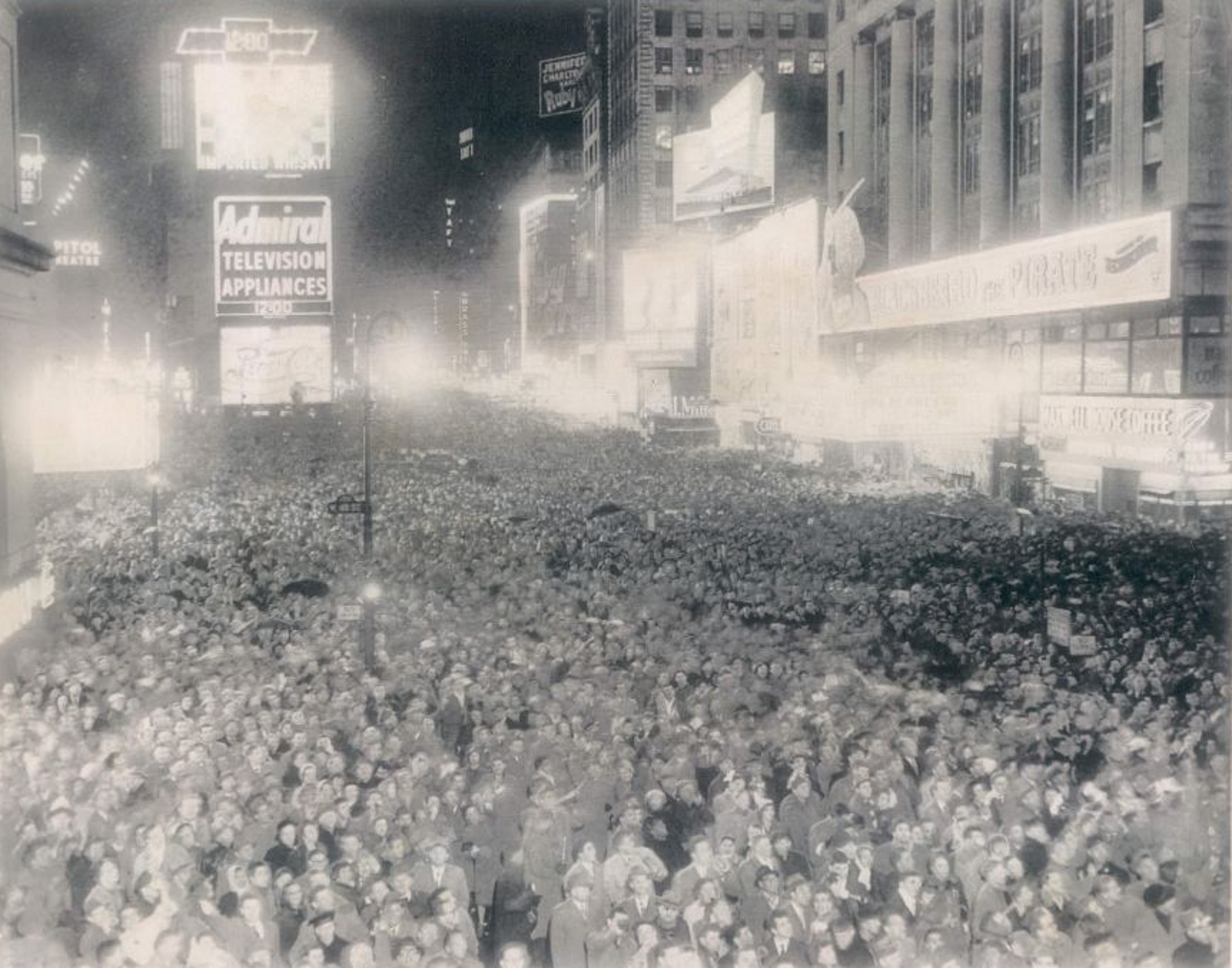
Ushering in 1953:

9

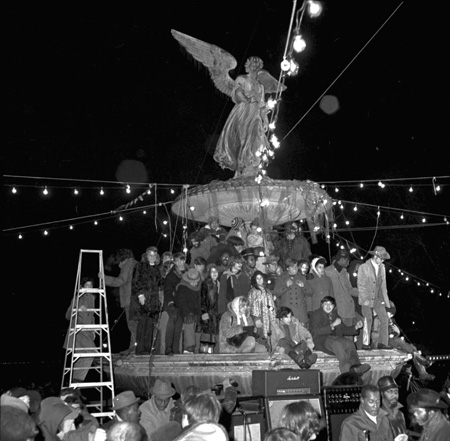
Celebrations were also held for a time in Central Park, like this festive group from 1969:

Courtesy New York Parks Department

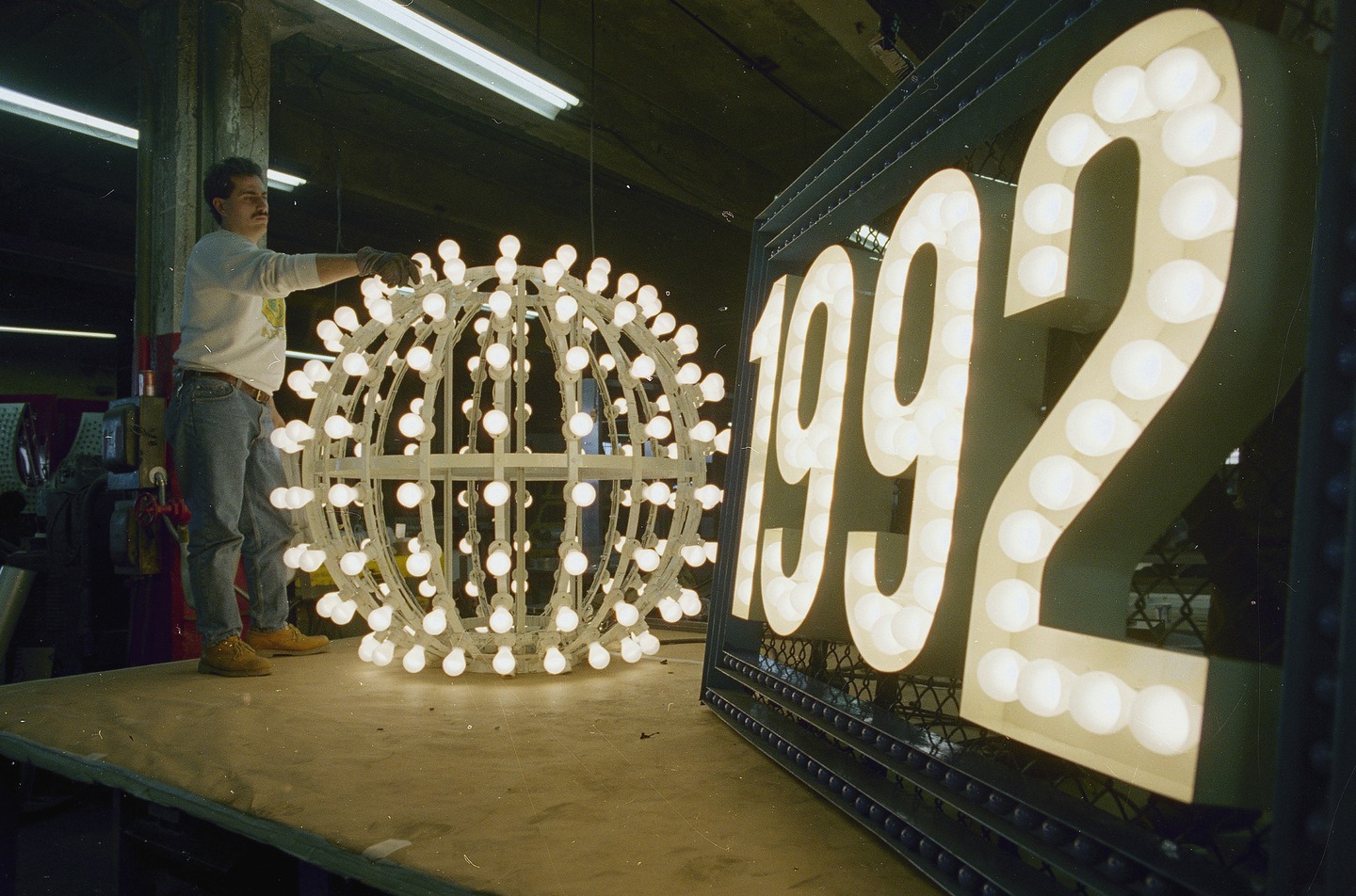
An electrician from the Artkraft Strauss Sign Corporation tests out the lighting effects that will greet the new year in 1992.

MARTY LEDERHANDLER/ASSOCIATED PRESS

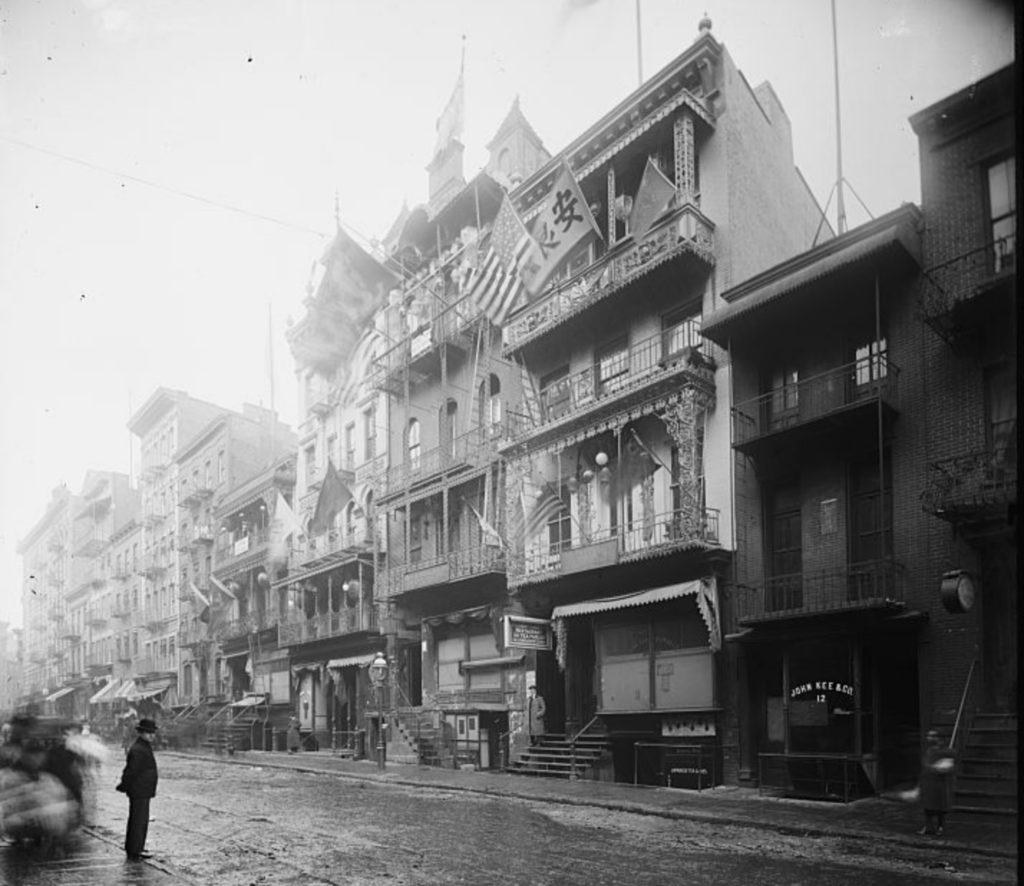
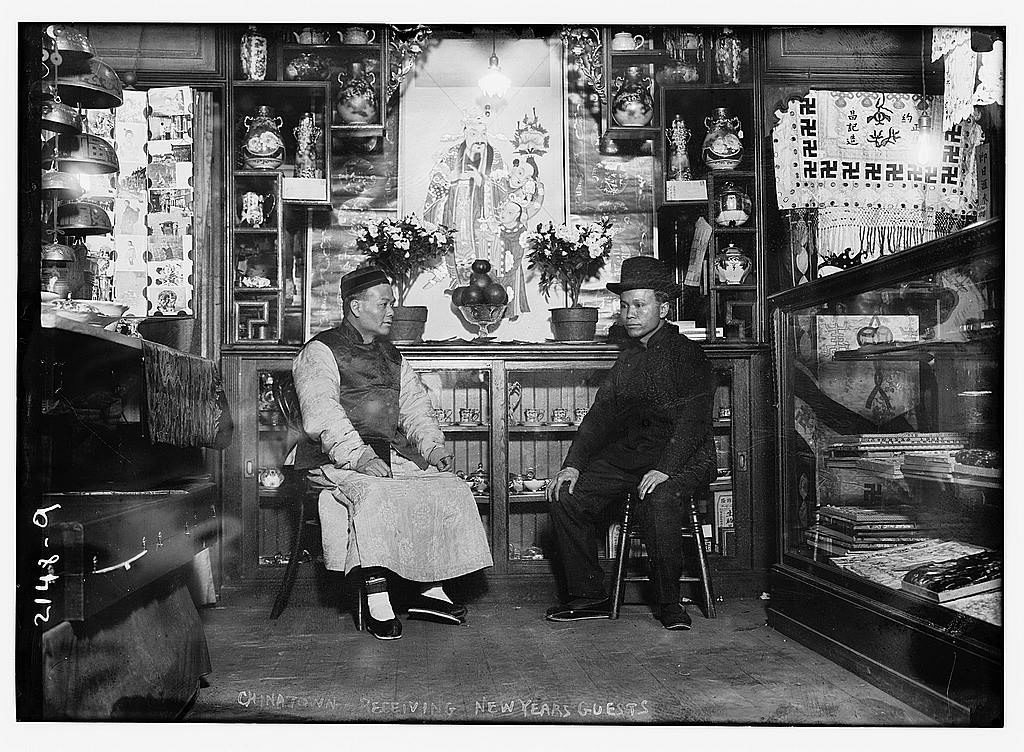
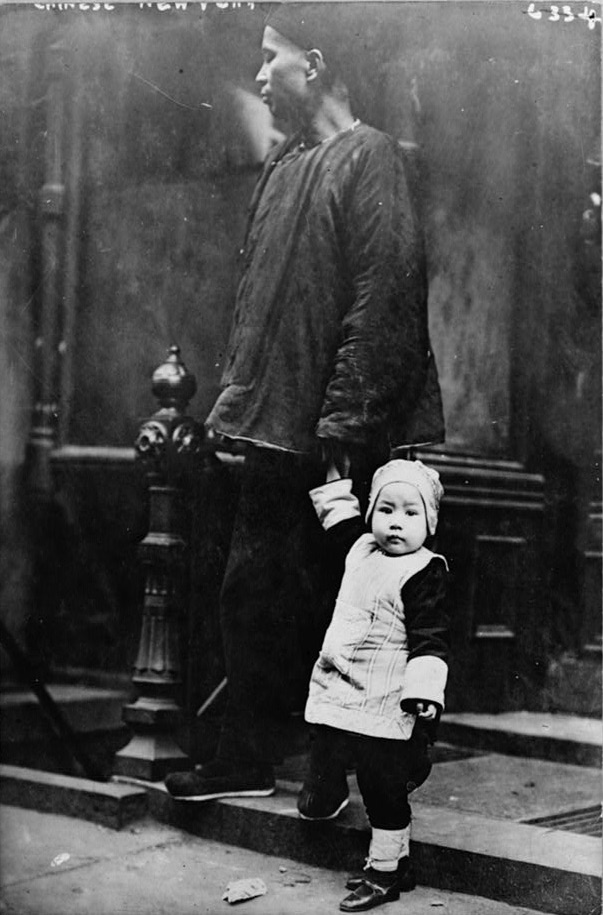
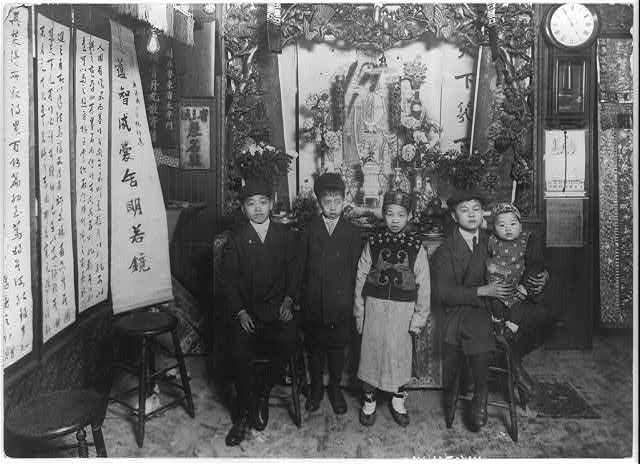
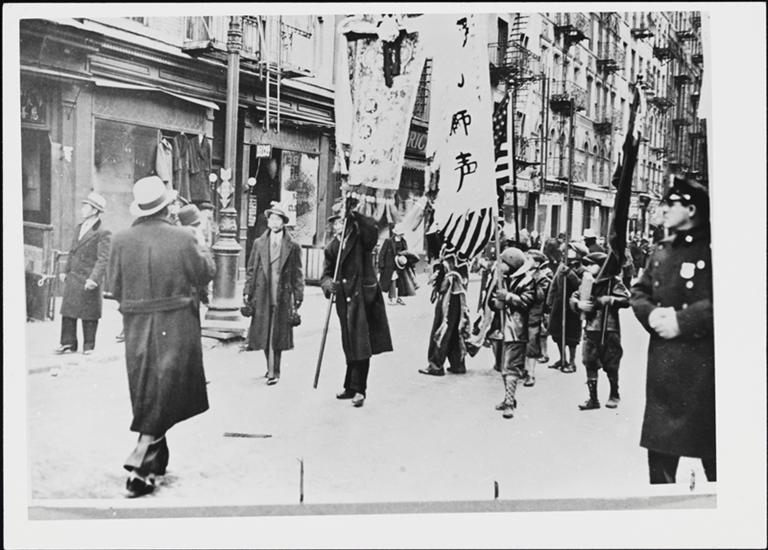
Images of Chinese New Year celebrations in Chinatown from the early 20th century, courtesy the Library of Congress.

[1900] Library of Congress
Chinese child with an adult on step outside of building, Chinatown, New York City, 1909. Library of Congress
[Jan. 30 1911] Library of Congress

The parade in 1936.

Museum of the City of New York

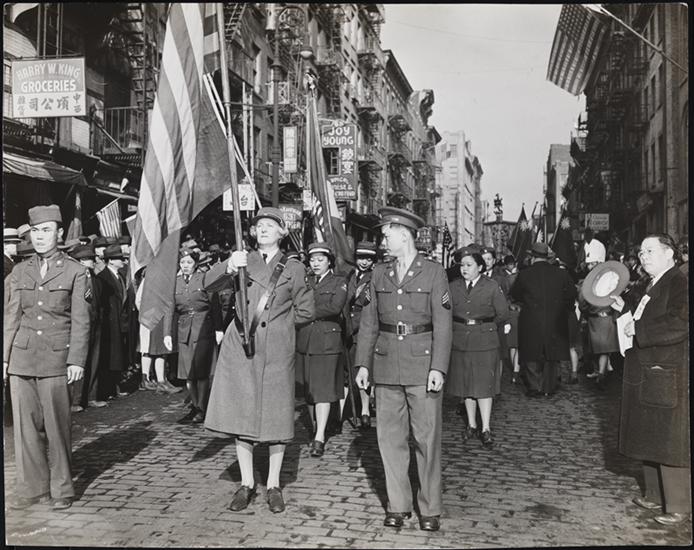
The Chinese New Year Parade of 1943 was decidedly more patriotic

Museum of the City of New York

FURTHER LISTENING

Categories
Podcasts Revolutionary History

Aaron Burr vs. Alexander Hamilton: The terrible consequences of an ugly insult

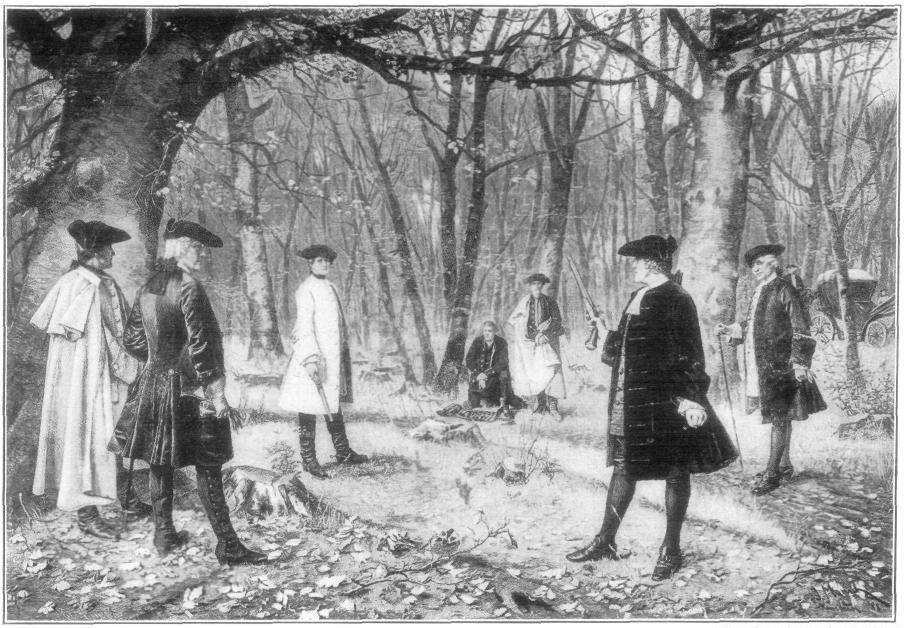
Alexander Hamilton and Aaron Burr met at a clearing in Weehawken, NJ, in the early morning on July 11, 1804, to mount the most famous duel in American history. But why did they do it?

This is the story of two New York lawyers — two Founding Fathers — that so detested each other that their vitriolic words (well, mostly Hamilton’s) led to these two grown men shooting each other out of honor and dignity, while robbing America of their brilliance, leadership and talent.

You may know the story of this duel from history class, but this podcast focuses on its proximity to New York City, to their homes Richmond Hill and Hamilton Grange and to the places they conducted their legal practices and political machinations.

Which side are you on?

ALSO: Find out the fates of sites that are associated with the duel, including the place Hamilton died and the rather disrespectful journey of the dueling grounds in Weehawken.

CORRECTION: Alexander Hamilton had his fateful dinner as the house of Judge James Kent, not John Kent, as I state here.

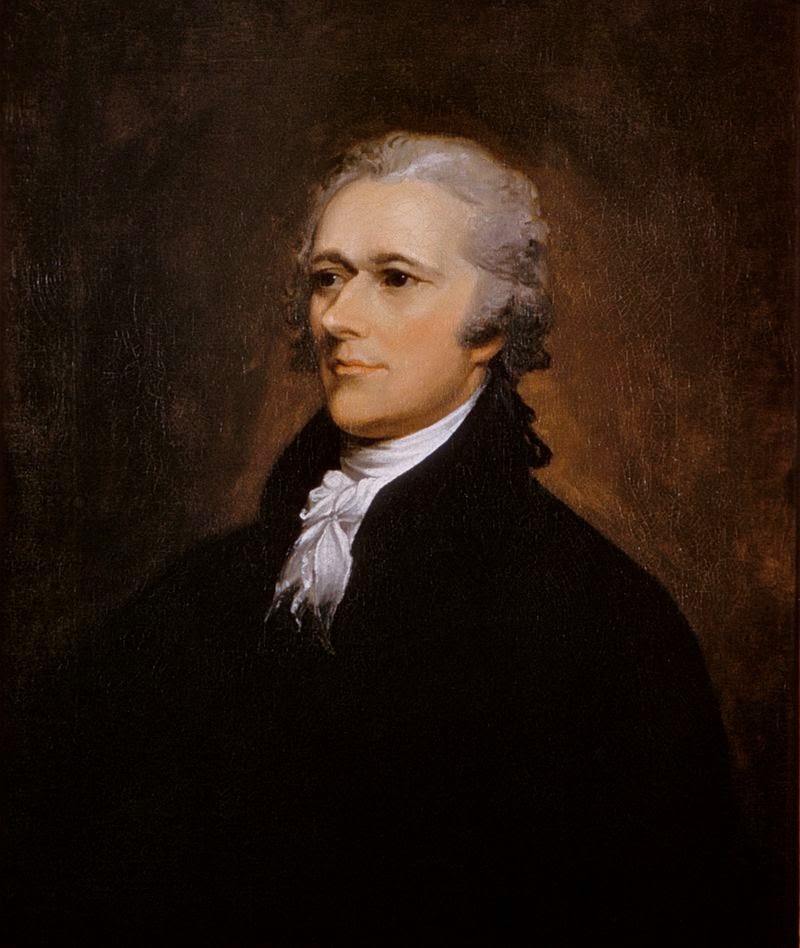
Alexander Hamilton, leader of the Federalists was a played out, stressed out, heavily in debt politician by June 1804. This is John Trumbull’s painting of Hamilton, completed almost over a year after the duel.

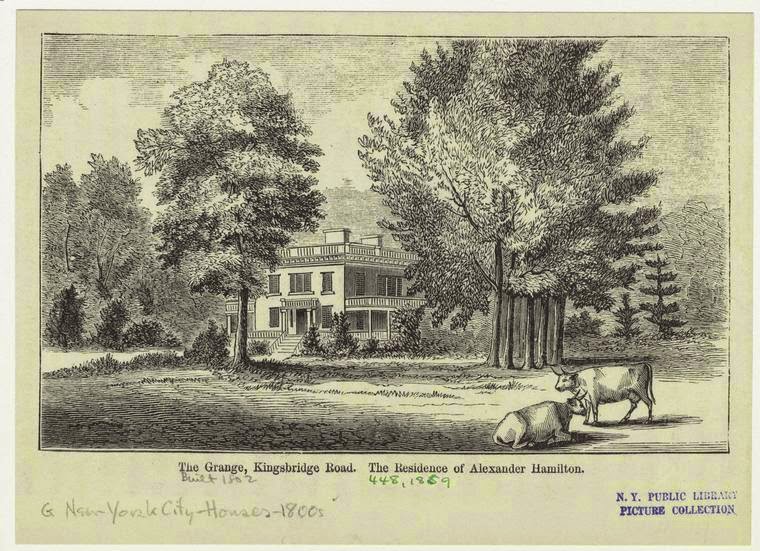
The Hamilton Grange, a beautiful home on the Hudson that Alexander only lived in for a couple years. (NYPL)

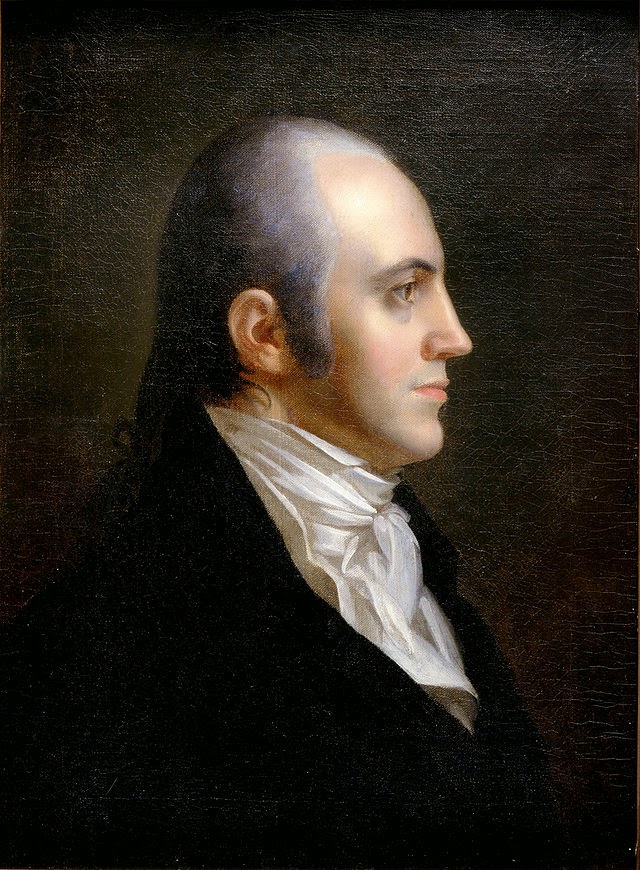
Aaron Burr, Vice President of the United States, was a played out, stressed out, heavily in debt politician by June 1804. This is John Vanderlyn’s portrait of Burr from 1802.

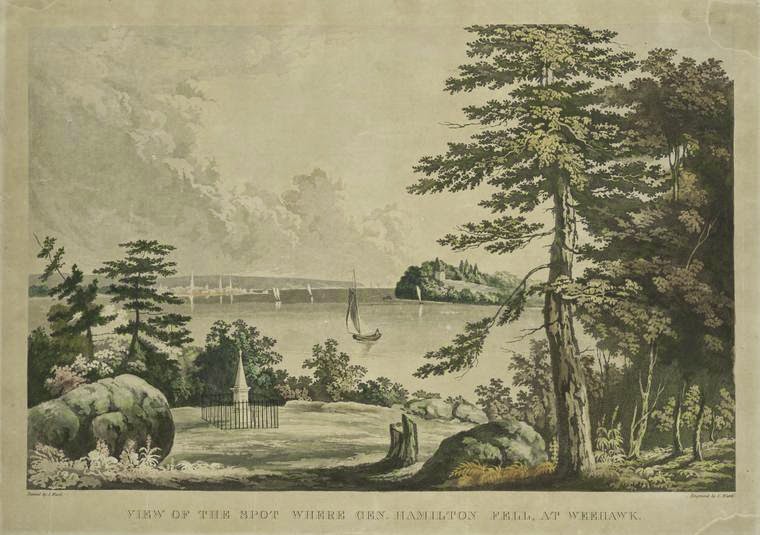
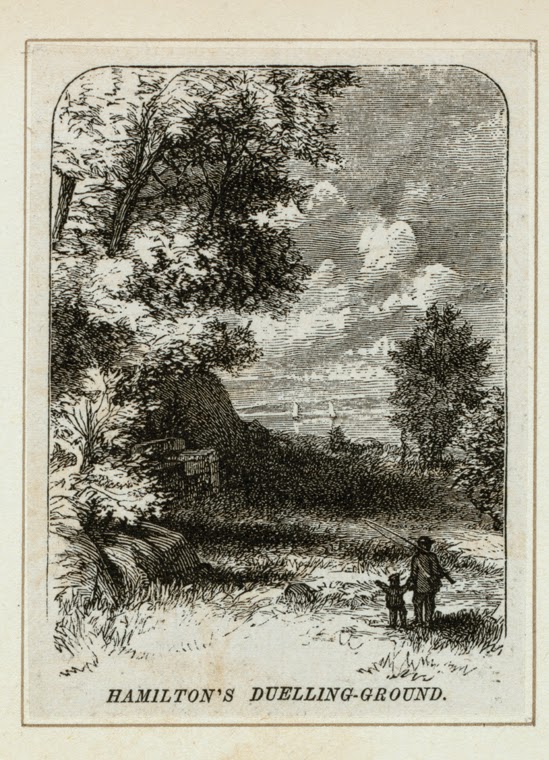
View of the Weekhawken dueling grounds in 1830s.  This area most likely still saw some duels at this period.  Note the small monument/obelisk marking the spot allegedly where Hamilton fell. (NYPL)

Thomas Addis Emmet’s quaint depiction of the dueling grounds was created in 1881, long after the actual grounds were destroyed by railroad construction. (NYPL)

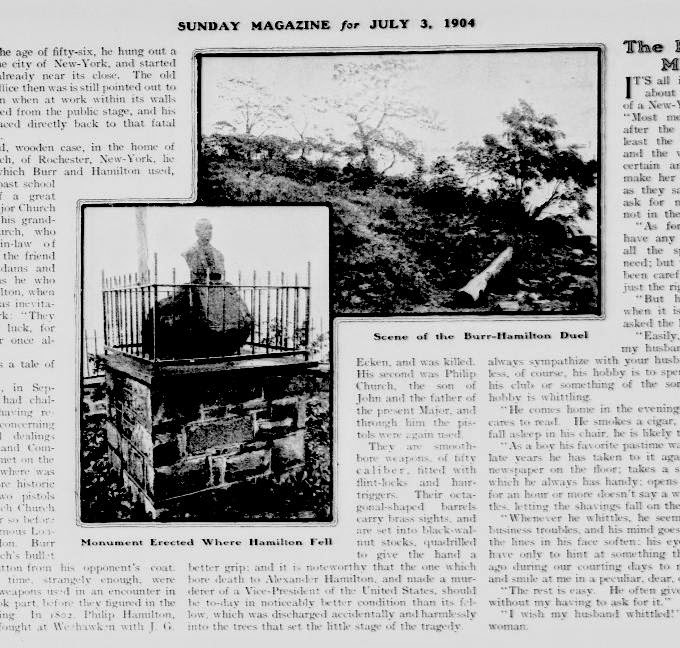
From the New York Tribune, July 1904, a look at the Hamilton bust that once sat in Weehawken.  Several years later, vandals took the bust and hurled it off the cliff.

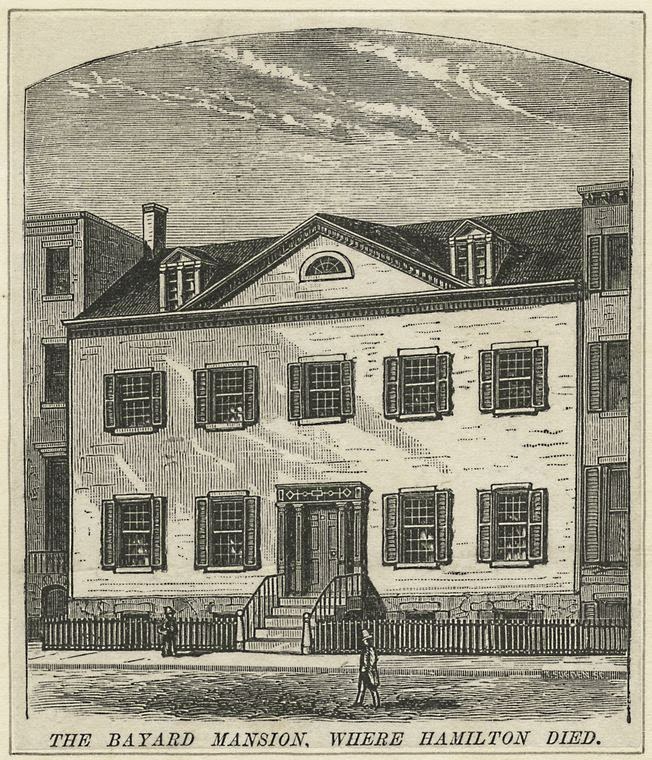
The William Bayard house in later years, with the lots surrounding it obviously sold and built up around it. (NYPL)

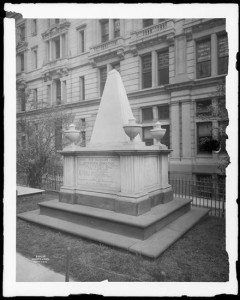
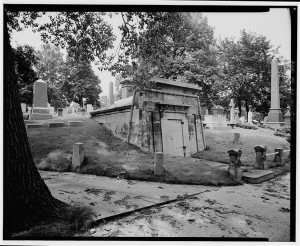
The Hamilton tomb at Trinity Church, picture taken in 1908, although it looks pretty much the same today! (Wurts Brothers, Courtesy MCNY)

Broadway and Wall Street. Tomb of Alexander Hamilton, Trinity churchyard.
Categories
Holidays

‘Twas The Night: A New York Christmas tradition in an uptown cemetery

Clement Clarke Moore, the lord of Chelsea (the manor for which the neighborhood is named), lived a long and distinguished life as an educator and land developer, dying in 1863 at his home in Newport, Rhode Island.

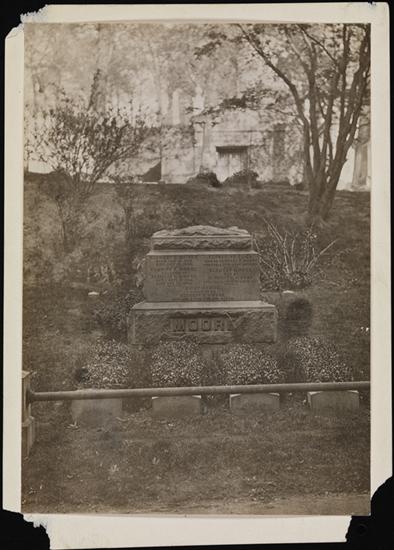
He was originally buried in the churchyard of St. Luke-in-the-Field (pictured below) in the area of today’s West Village.

In 1891 the cemetery was redeveloped and the remains were transferred to Trinity Church’s graveyard in Washington Heights.

What does all this have to do with Christmas you ask?

Moore was a revered scholar, former president of Columbia College (later Columbia University) and the developer of the General Theological Seminary on his old Chelsea property.

But most everybody knows him better as the author of “A Visit from St. Nicholas” or “Twas the Night Before Christmas,” a verse of holiday anticipation penned for his children.

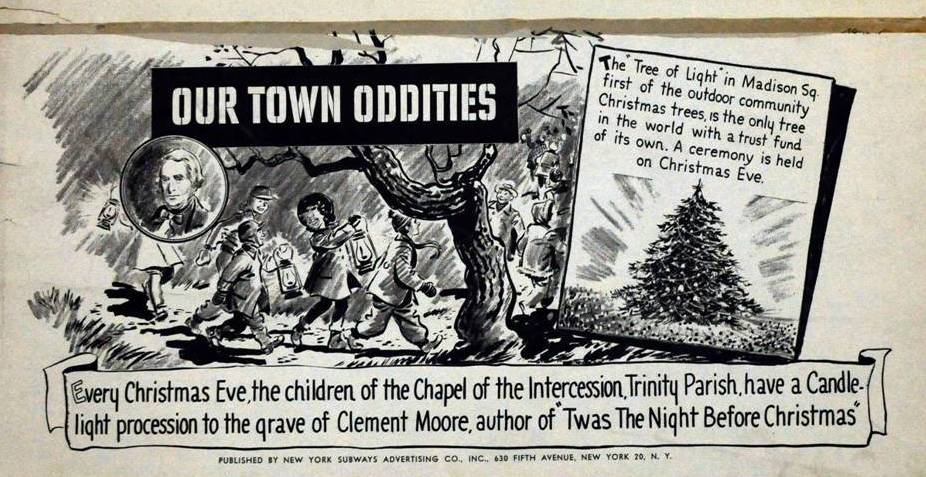
For well over one hundred years an unusual and special ceremony has taken place at Church of the Intercession, the house of worship which sits upon the grounds of Trinity Church Cemetery.

Church of the Intercession

The tradition was apparently initiated by a vicar at the chapel named Milo Hudson Gates.

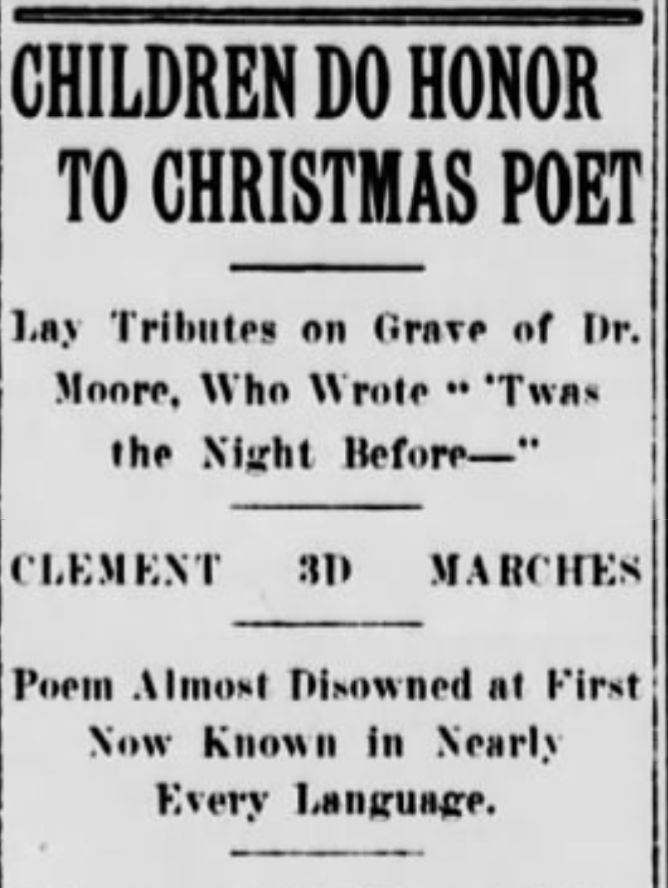
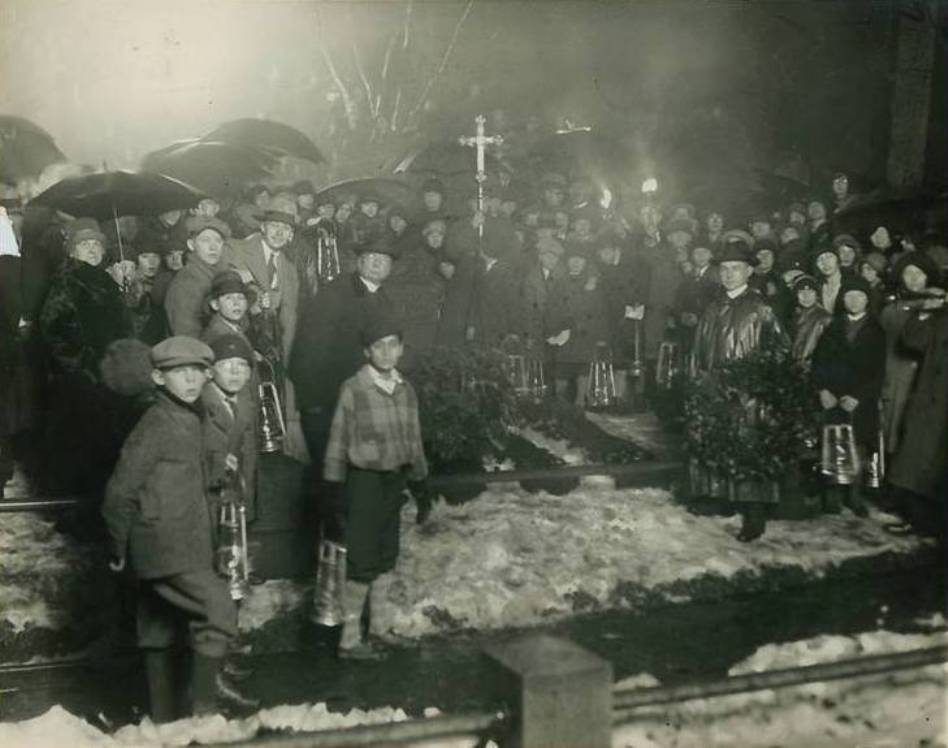
First initiated in 1911, Gates, according to a 1933 New York Daily News report, “and his child parishioners trouped across to Trinity Cemetery to pray and sing at the grave where Dr. Moore’s bones have rested since they were removed from the vault in St. Luke’s Church on Hudson Street.”

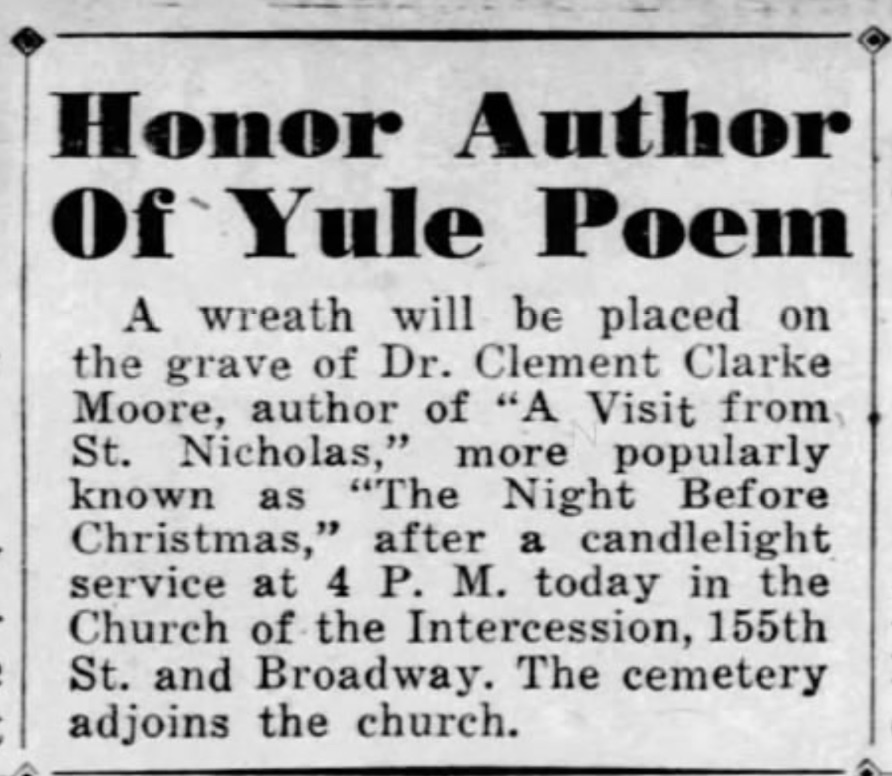
From the 1914 New York Sun

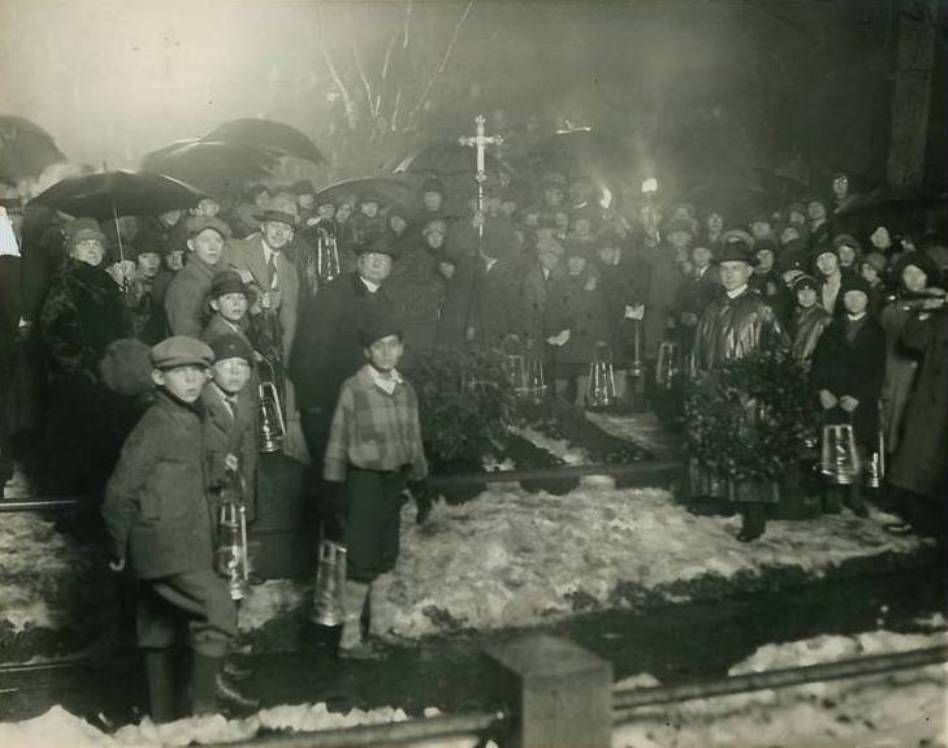
Hundreds of children, carrying lanterns and torches in the old days, have gathered around Moore’s gravestone and sang Christmas songs over the years.

“Carols were sung and wreaths placed on the grave,” according to a 1919 report. The famous poem by Moore was then recited.

“His name was Clement C. Moore. His body sleeps beneath the Christmas trees that grow in Trinity Cemetery.” [December 23, 1918]

Below: Children surrounding the grave of Moore’s, sometime in the 1920s or 1930s (according the church website).

This tradition has survived into modern day with some interesting variations.

New York Daily News 1944

Frequently a person dressed as Saint Nicholas (the saint, not the Santa) leads the procession. In recent decades, a person of some renown reads the poem such as in 2003 when basketball great Isiah Thomas brought Moore’s words to life.

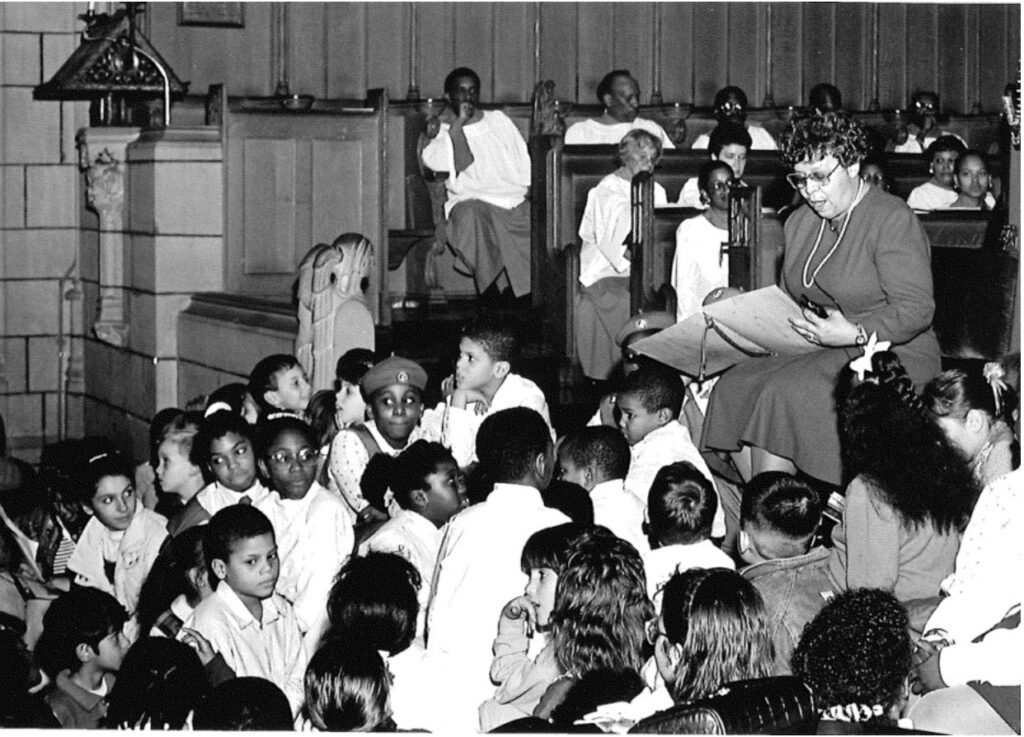
Below: In 1990, Joyce Dinkins, wife of the mayor David Dinkins, was invited to read the poem.

Courtesy Trinity Church

Details of this year’s event from their website:

THE 112TH CLEMENT CLARKE MOORE
MEMORIAL CANDLELIGHT SERVICE
WILL BE HELD ON
DECEMBER 18, 2022 AT 3:00PM

This year, the poem will be read by The Rt. Rev. Catherine S. Roskam, former Suffragan Bishop of New York.

Following the service, we will process out to Trinity Cemetery to lay the wreath on Clement Clarke Moore’s grave and sing “Silent Night” at the Trinity Cemetery and Mausoleum.

Categories
Know Your Mayors Politics and Protest Queens History

Mayor Cadwallader D. Colden: Leading the city over 200 years ago

We’re just months away from a new mayor in New York City so we think it is time that you Know Your Mayors! Become familiar with other men who’ve held the job, from the ultra-powerful to the political puppets, the most effective to the most useless leaders in New York City history.

This longtime feature of this website is being rebooted with new articles and newly researched and refreshed earlier entries in this series. Check back every other week for a new installment. Read past articles here.

Cadwallader D. Colden
Terms: 1818-1821

The most remarkable thing about New York City having a mayor named Cadwallader Colden is the fact that he was not even the most famous New Yorker named Cadwallader Colden.

That distinction goes to his grandfather, an altogether different Cadwallader Colden than his grandson and a rather fascinating Renaissance man.

Well, despite the fact that he was also pro-British, stridently hated among the American rebels and the type of man that would have thrown most of us in jail on sight.

Grandpa Colden

Ole Cadwallader was an Irish physician who came to the American colonies in 1710 (at age 22) to practice medicine.

Establishing his practice in Philadelphia, he later came to New York and in 1743 wrote a now seemingly obvious treatise drawing a connection between New York’s unsanitary conditions and its frequent outbreaks of yellow fever.

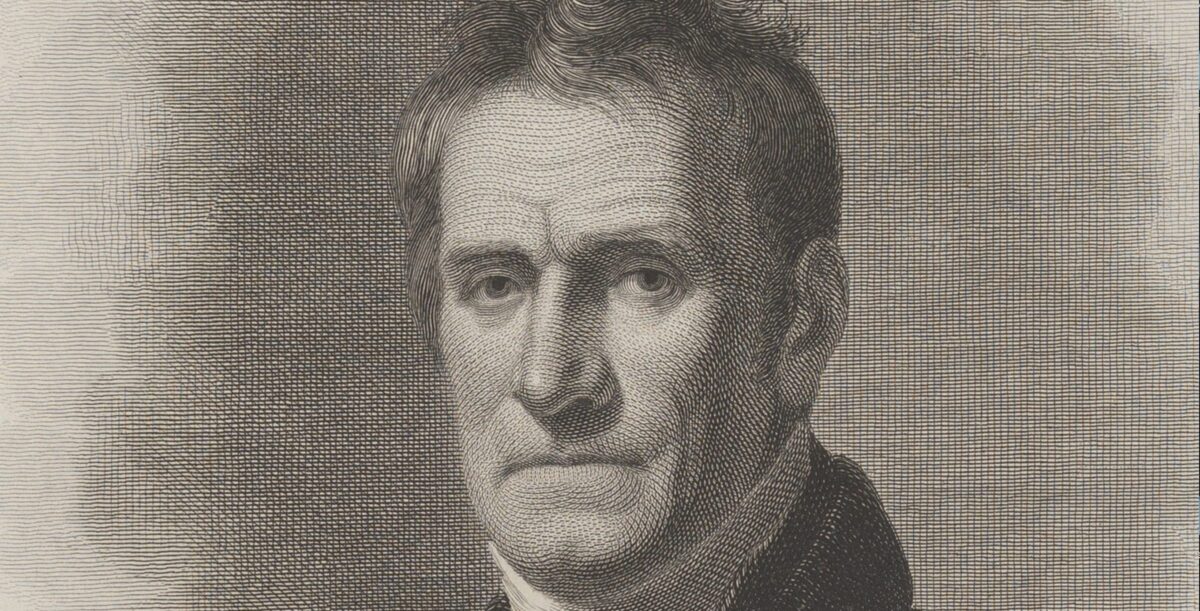
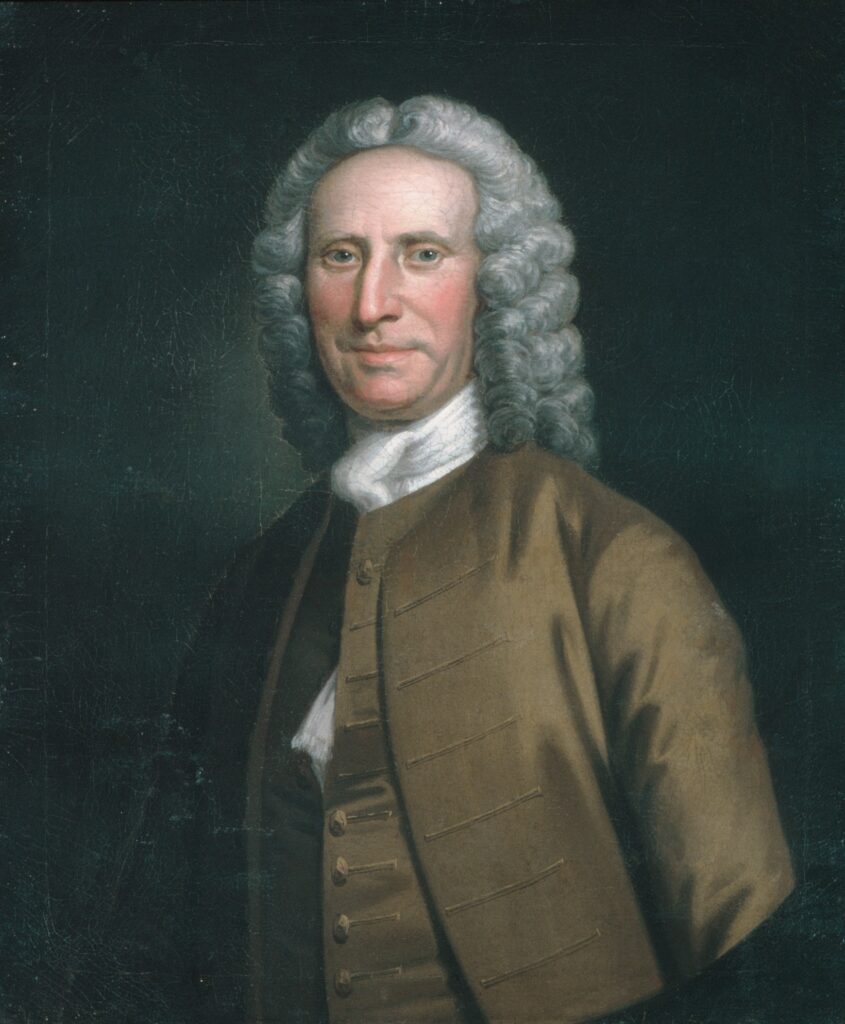
Painting of the Elder Colden by John Wollaston the Younger. Wikimedia Commons

Elder Colden became governor of the New York colony in 1760 and later sparked ire among beleaguered New Yorkers, who burned his effigy over enactment of the Stamp Act.

Colden ultimately represented the losing side of the American Revolution, and due to that, his other accomplishments are often overlooked. He was the first in America to write about Newtonian scientific theories and the first colonist to act as ambassador to the Iroquois Confederacy, the union of five Native American tribes.

Grandson in a New County

Perhaps it’s fitting that Colden died in September 1776, the year of the conflict that would run the British out forever.

He might be scandalized to know that his grandson, born in 1769 in Flushing, Queens County, would become a model American. (The child’s father Cadwallader Colden II was more concerned with governing the family’s lush 3,000 acre estate in Queens and remained essentially neutral during the Revolutionary War.)

Born in the trappings of wealth, Cadwallader David Colden III was shipped off to London for a proper education and returned to New York in 1785 to become a lawyer.

With his high class connections, he quickly acquired an impressive client roster, in particular Robert Fulton and Robert Livingston, assisting in their control of ferry services in New York harbor. He became New York district attorney twice, 1798 and 1810.

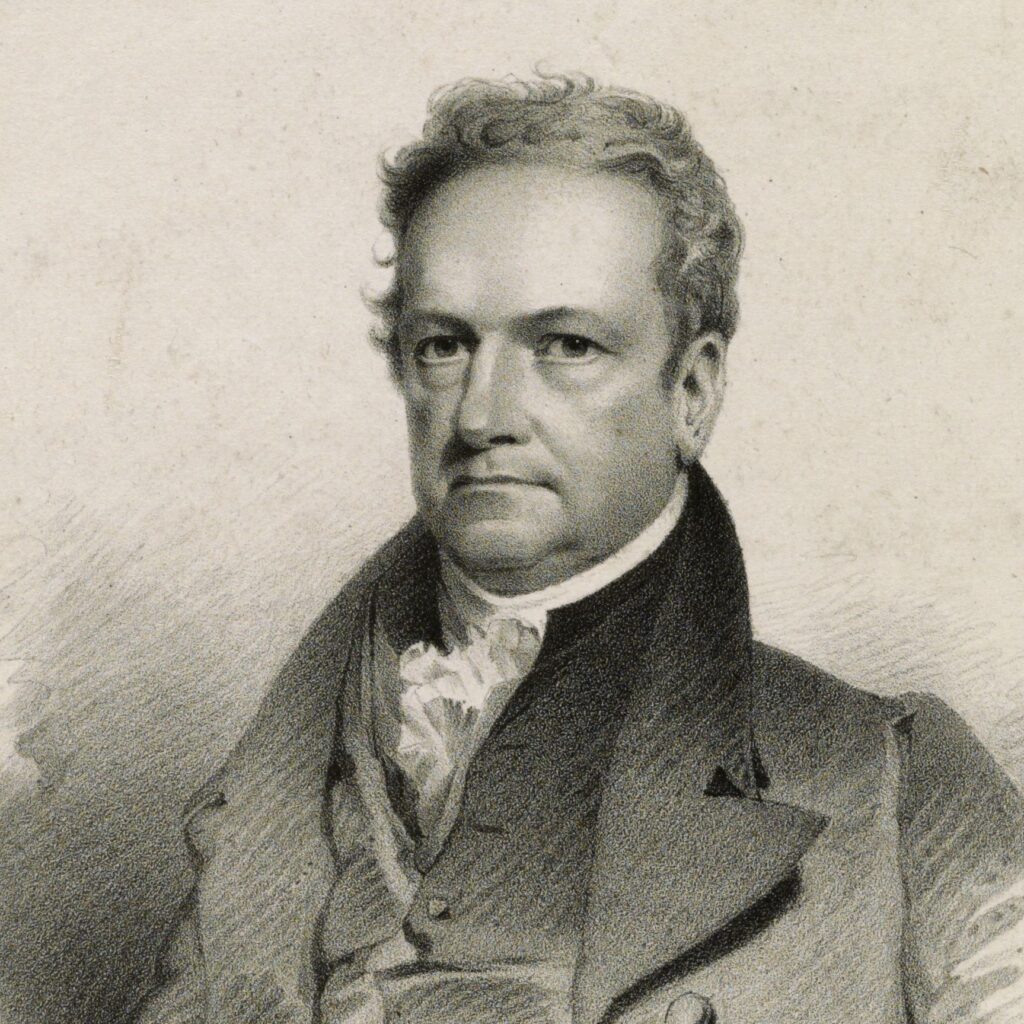
Colden’s good pal DeWitt Clinton

Advantageous Friendships

Colden was a different man from his ancestor; he even fought against the British as a colonel of volunteers in the War of 1812. Surprising given his lineage, Colden was for many years considered a Federalist, the party of Alexander Hamilton. However, he considered as one of his closest friends a rather unlikely ally — anti-Federalist DeWitt Clinton.

How they met probably had less to do with political alliances than membership of a rather notable society — the Freemasons.

In fact, Colden and Clinton were members of the city’s most influential — and still active — Holland Lodge. Within a few years, this affiliation would be political poison, with anti-Freemason candidates characterizing the secret organization as above the law and morally corrupt.

View of North Pearl Street just north of State Street in Albany (1800s), painting by James Eights

At Odds With Tammany Hall

Colden’s ascent into the mayor’s office caught him within some serious political crossfire. Cadwallader’s friend DeWitt became the governor of New York in 1817, making him the head of the Council of Appointments, which selected a mayor for New York, back in the heady days before elections.

Clinton would use his influence to install his friend in the job in 1818, but not without Colden sustaining a little political injury.

One evening, Colden was in Albany and was invited inside a tavern for a glass of wine. He suddenly realized he was in a room filled with members of Tammany Hall, political enemies of the Federalists.

Colden had once been a member of Tammany — during their less politically active days — and in 1793 had even spoke to an assemblage at Saint Paul’s Church.

He was now on the opposite side.

Immediately they pounced, urging him to not seek the mayor appointment. But no, he cried!

“He exclaimed energetically against the trickery, declaring that he had not asked for the office of Mayor, but would only accept it if offered.”

When Clinton did grant him the job, Tammany made sure to make life difficult for him. For the entirely of his three one-year terms, Colden became a pawn in the battle between Governor Clinton and the ascendant Democratic machine.

Colden began work in the spanking new City Hall, the fourth mayor for the new building after Jacob Radcliffe, John Ferguson and, of course, DeWitt Clinton.

Pigs and Prison Reform

First on Colden’s agenda: all those pigs running around.

He declared, “Our wives and daughters cannot walk through the streets of the city without encountering the most disgusting spectacles of these animals indulging the propensities of nature.”

Animals were penned up and steep fines charged to butchers who kept pigs unproperly supervised.

Colden also took a crack at the city’s deeper social problems. Indeed he was governing over a growing city, population 123,706 as of 1820. With a big city came big city problems — poverty, crime, homelessness.

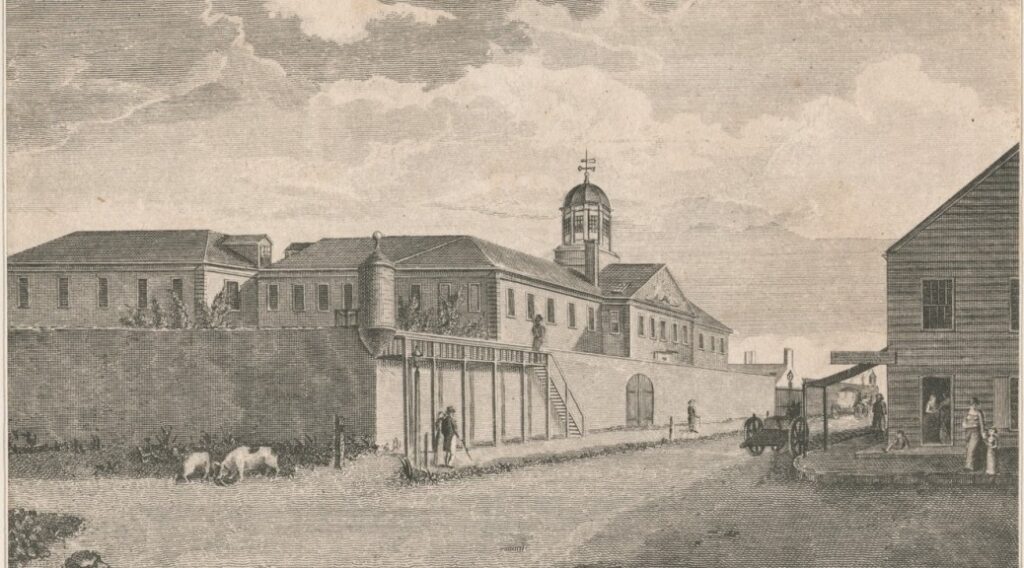
Newgate Prison. Image courtesy New York Public Library

The New York Society for the Prevention of Pauperism, led by the mayor himself, investigated prison conditions throughout the young nation to come up with a local solution.

At the time, the state penitentiary lay in today’s West Village in a place called Newgate Prison. One of their findings was a need to separate younger delinquents from the adult criminals held there.

Colden proclaimed, “It must be obvious that under such circumstances it would be in vain to expect that their punishment will improve their morals: it can hardly fail to have a contrary effect.”

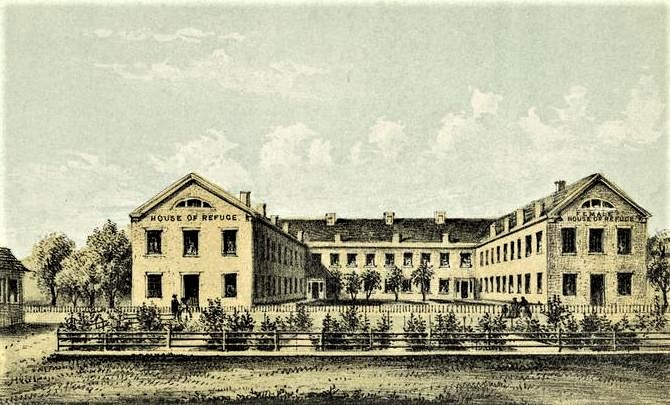
The House of Refuge in 1832 (pic courtesy NYPL)

The mayor set the stage for an innovative experiment: New York’s House of Refuge, in an arsenal at Broadway and 23rd Street, essentially a reform school, built to incarcerate children age 16 and younger.

It later opened in 1825 (after Colden left office) with six boys and three girls as its pupils, many of them guilty only of homelessness and essentially kept here until adulthood. By the early 1830s, the House of Refuge would receive over 1,600 teenagers.

A ‘Kindly’ Anecdote

Like many mayors to follow, Colden also clamped down on liquor sales, even carrying around a ‘red book’ to notate violations and overheard complaints of local tavern owners.

Naturally, Colden would rally behind Clinton’s most ardent cause — the Erie Canal. It opened in 1825, after Colden left office, but his support did indeed pave the way for New York to become, in his own words, “one of the greatest commercial cities in the world.”

He was aristocratic, class-oriented but ultimately open hearted, they say. A reminiscence in the 1843 journal New Mirror quotes this certainly apocryphal story about the mayor’s ‘kindness’.

One rainy night on his way to a dinner party, Cadwallader stepped up to a ‘hackman’, a type of carriage taxi, for a ride.

The driver, “who had some old grudge against Mr. Colden,” rudely sped away, leaving the passenger on the curb. He jotted down the cab driver’s number and summoned him to City Hall.

“Poor Pat (for of course he was Irish)” as the article indicates, “went up the stairs, trembling at the fate which awaited him. When the mayor demanded to know why he was treated so rudely, the driver proclaimed,”you see I looked in your face, and, faith, you looked so like a jontleman I drove twice before that never paid me, I was afraid to thrust him agin!”

Colden laughed, exclaiming, “Your wit has saved you this time!” and excused the driver.

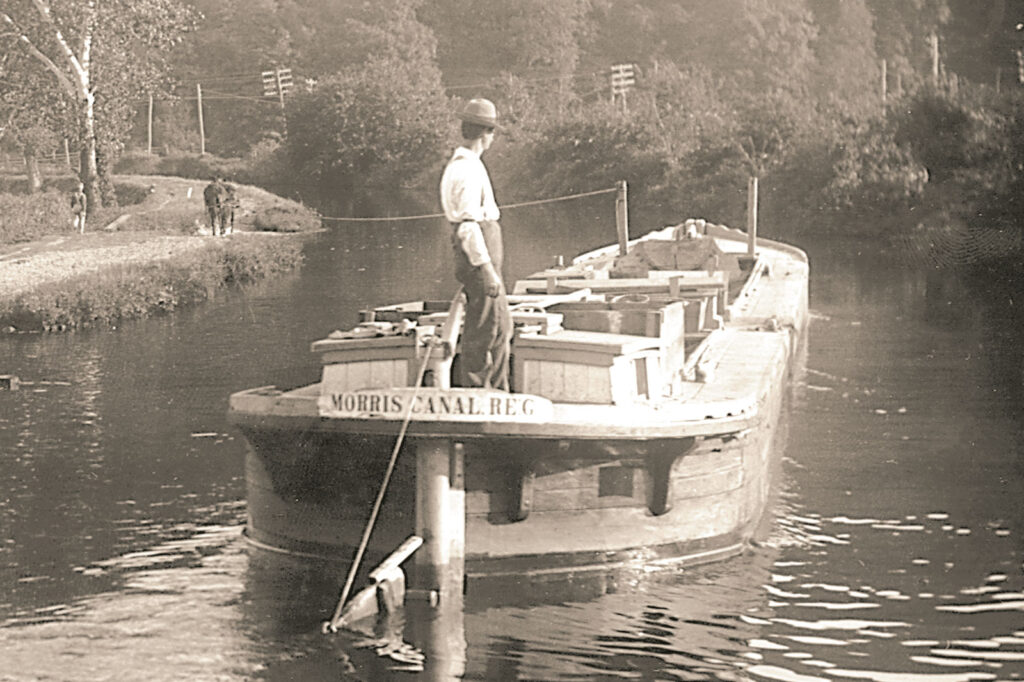
A boat upon the Morris Canal (courtesy the Canal Society of New Jersey)

Colden’s Later Years

Aligning with Clinton eventually became a bad idea. When Clinton was turned out of the governor’s office, so too was Colden from the mayor’s office. But he still remained popular with New Yorkers, becoming a U.S. congressman, then a member of the New York state senate in 1825.

In later life, he engaged in a couple unusual endeavors. The first was the construction of the Morris Canal in northern New Jersey, a conveyor of coal that operated for over a century.

And in 1830, he briefly indulged in the hobby of horse racing, taking over the Union Course in Woodhaven, Queens. The closest you’ll get to visiting Colden’s racetrack is visiting Neir’s Tavern, the oldest tavern in the borough.

Colden died in 1834, in Jersey City.

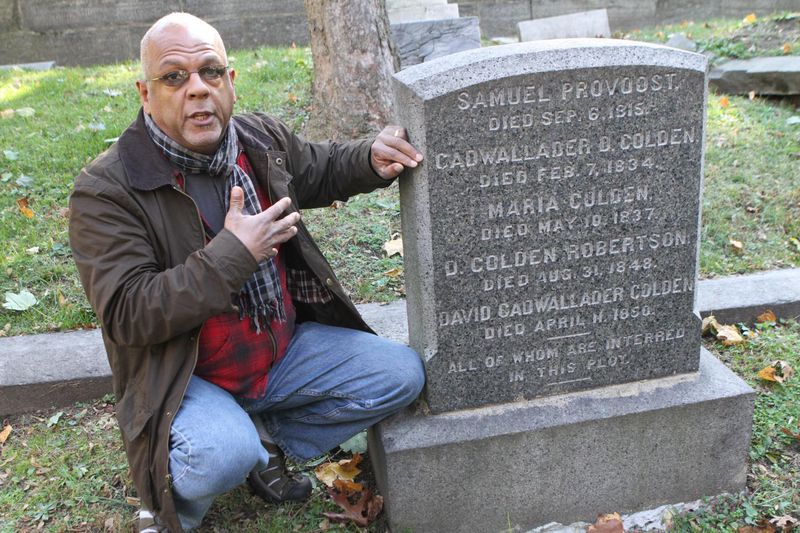
For centuries his gravesite was unknown. But in 2011, historian (and friend of the show) Eric K. Washington discovered his grave at Trinity Church Cemetery.

Washington in front of the new stone in 2011, adding Cadwallader III’s name. (Courtesy Mariela Lombard  of theNew York Daily News)

Revision and expansion of an article which first ran on this website in 2009.

Categories
Adventures In Old New York

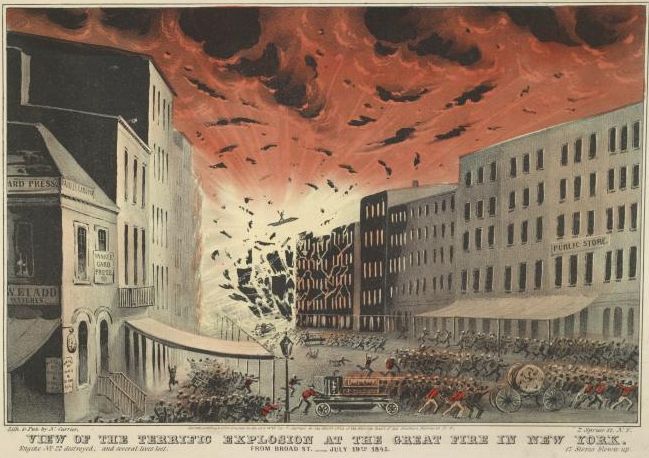
The Great Fire of July 19, 1845: Lower Manhattan in Flames

The devastating results of the monstrous Great Fire of 1835 helped change the course of Manhattan — hastening the residential migration up the island, rewriting the architectural nature of downtown and essentially erasing the past. There would never be another fire of such intensity and magnitude.

But New York didn’t suddenly become fire-proof.

In fact, ten years later came another massive blaze, in almost exactly the same place, that threatened to halt downtown’s rebirth before it even began.

Some distinct circumstances set it apart from the prior, more destructive blaze.

It occurred before the crack of dawn on Saturday, July 19, 1845, on the third floor of an “whale oil store” on New Street — only a couple blocks from where the Great Fire of 1835 had started.  

Normal summertime temperatures, sunlight creeping onto the horizon, and an influx of people going about their early morning business likely might have ensured that the blaze would have been swiftly contained.

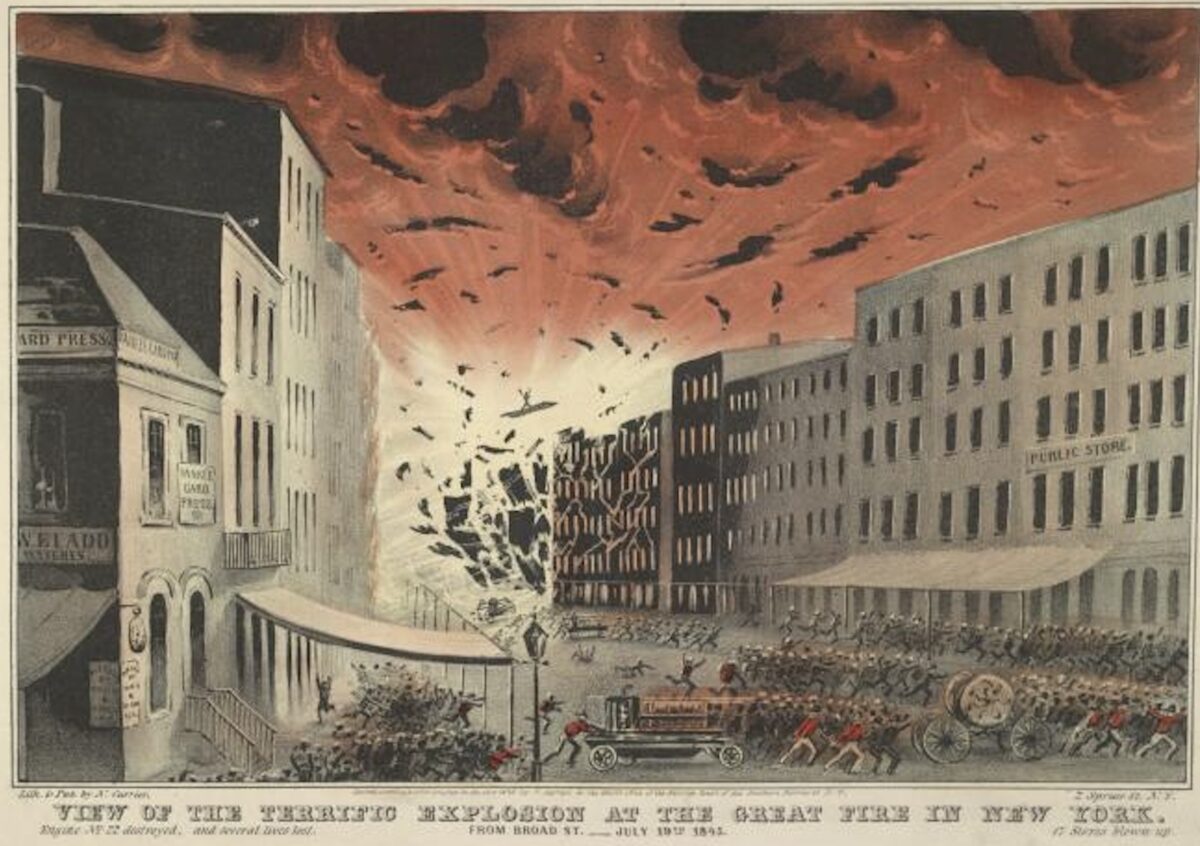
Unfortunately, a warehouse owned by the merchants Crocker & Warren, just a block away at 38 Broad Street, was filled with a new shipment of saltpetre, used for the manufacture of gunpowder.

Fire wafted in through an opening in one of the store’s open iron shutters, and the result was a series of cannon-like bursts of smoke and fire, almost like a volcano, smashing into buildings across the street.

It culminated in a terrible, final explosion, completely engulfing the block. The explosion was heard as far away as Sandy Hook, New Jersey.

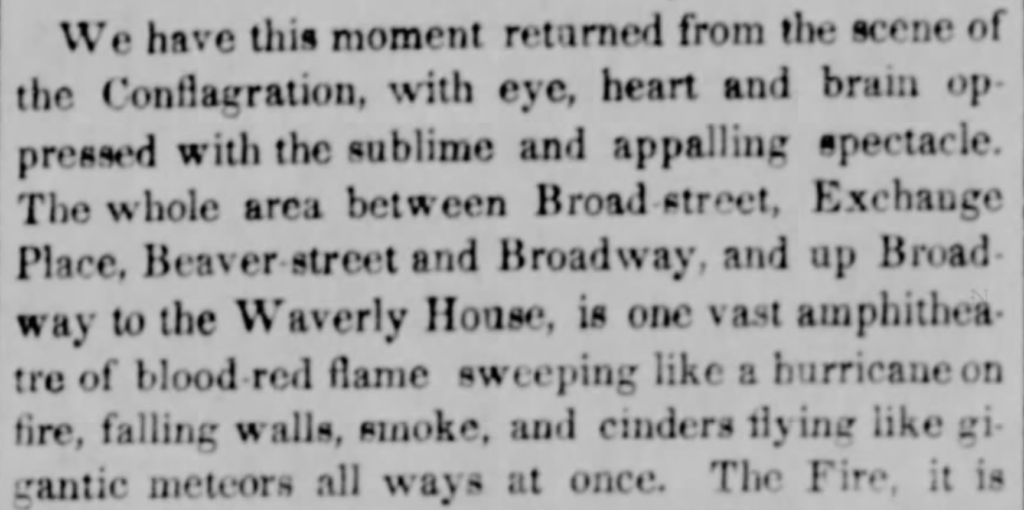
A breathless account in the New York Tribune prints this description — “an amphitheater of blood-red flame”:

An account from 1888 described it as:

“an immense body of flame… it instantly penetrated at least seven buildings, blew in the fronts of the opposite houses on Broad Street, wrenched shutters and doors from buildings at some distance from the immediate scene of the explosion, propelled bricks and other missiles through the air, threw down many individuals who had gone as far as Beaver Street, spread the fire far and wide, so that the whole neighborhood was at once in a blaze, and most unfortunately covered up the [fire company’s] hose…. After this the firemen could with difficulty obtain any control over the conflagration.”

This new blaze spread south, down as far as Bowling Green, in total destroying between 300 and 350 buildings, most of which had been partially damaged by the blaze ten years before.

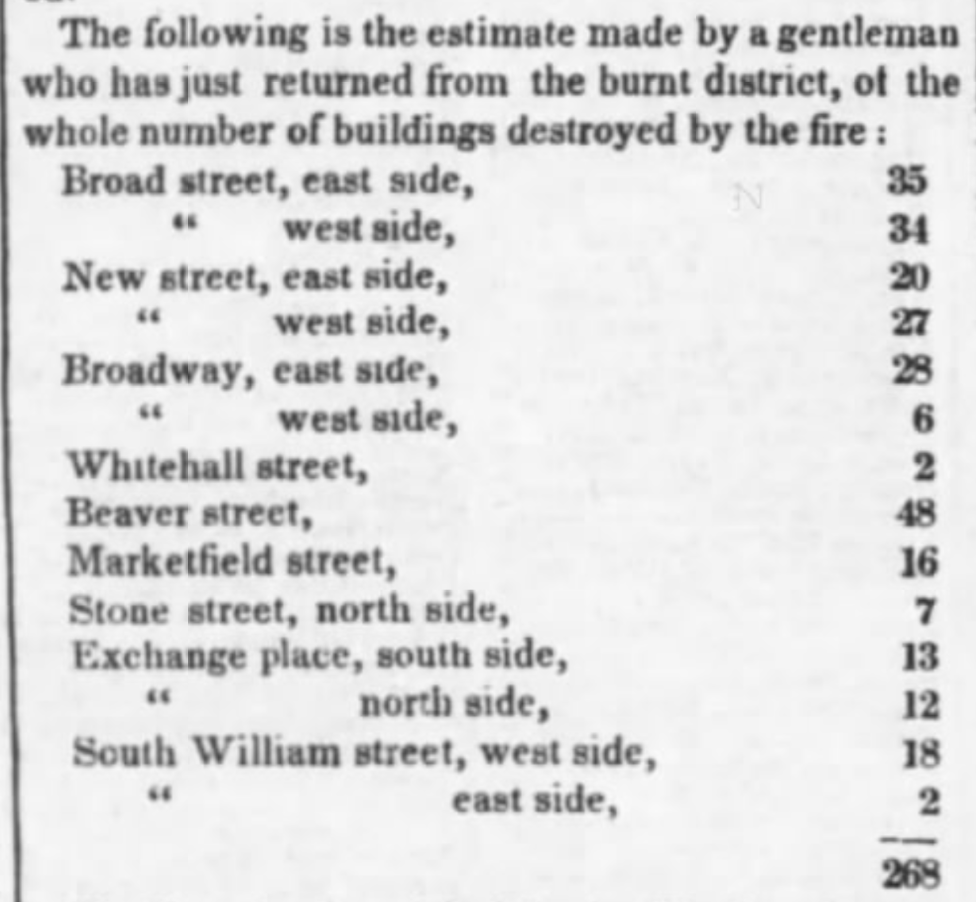
An on-the-spot report from the Evening Post, July 19, 1845, identifying 268 buildings destroyed. Other estimates would count many more. (courtesy newspapers.com)

The financial cost to the city was great, although significantly less than that of the blaze of 1835, somewhere between $6 and $10 million.

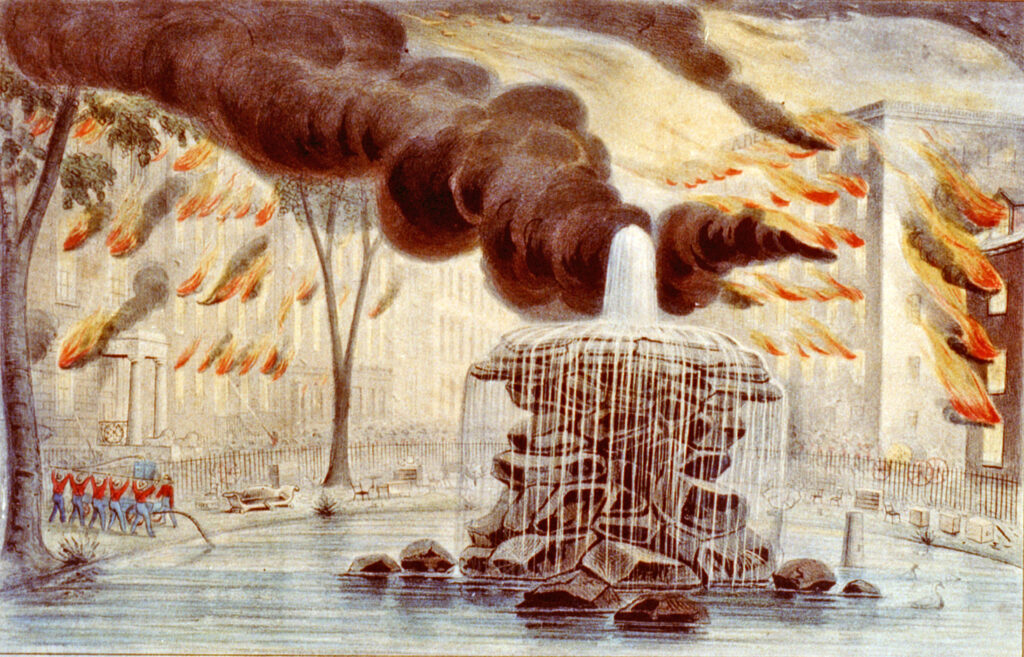
In this Currier & Ives lithograph, the serene fountain in Bowling Green as flames consume buildings all around it.

A guide book from 1877 assesses the damage at $7 million, but interestingly attributes the rebuilding of the affected blocks to a “constant influx of gold from the seeming exhaustless resources of the El Dorado and the Pacific.”

This fire might have grown to swallow up all of downtown had the Croton Reservoir not been completed a few years before, providing a steady stream of water to put out the flames.

However, perhaps due to the awful and sudden explosion, the fire of 1845 bests that of the 1835 inferno in one unfortunate statistic: the number of fatalities.  

Where only two people had died in the larger fire, at least 30 people died that July morning, including a few volunteer firefighters like lawyer Augustus L Cowdrey, whose body was never found.

It’s through Cowdrey’s memory that you can actually find a reminder of the 1845 fire in downtown Manhattan.  

In the graveyard at Trinity Church on Broadway and Wall Street sits a tall obelisk, a fireman’s memorial engraved with the names of many fallen fighters of the 19th century, including that of Cowdrey.

Categories
Neighborhoods

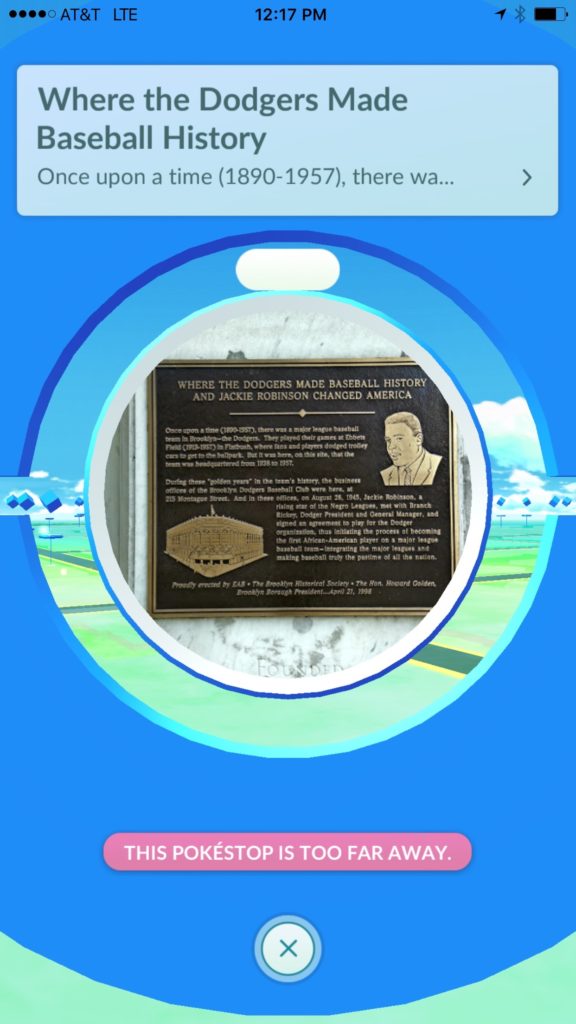
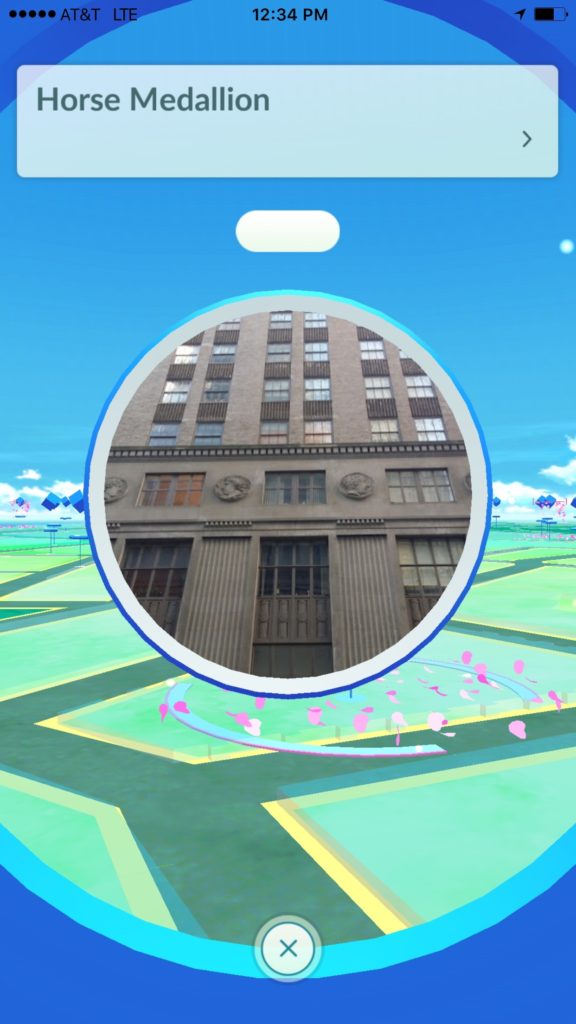
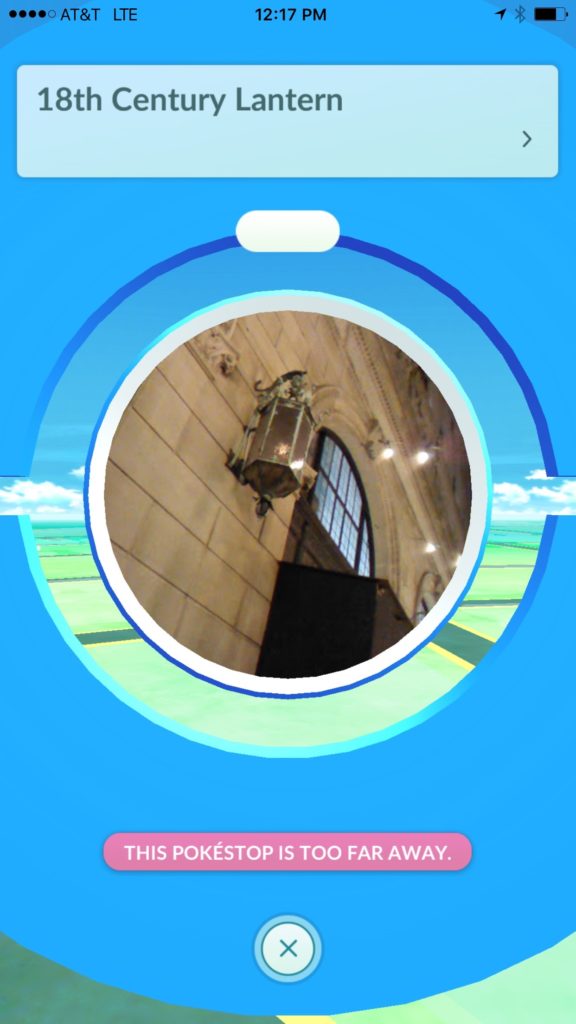
Pokemon Go is indirectly an excellent mobile app for history buffs

This weekend I strolled around Carroll Park in Carroll Gardens, Brooklyn, and observed at least 8 or 9 people staring intently at their phones, occasionally wiping their index fingers rapidly at the screen.

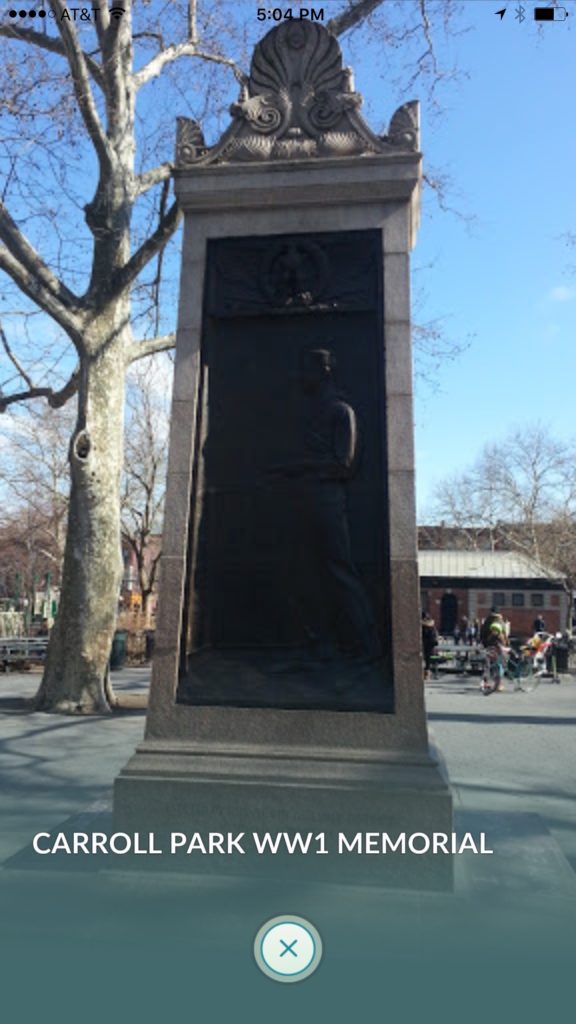
In the center of the park is an 18-foot-tall World War I memorial dedicated in 1921, emblazoned with the names of those from the neighborhood who had died in the war. On one side of this monolith are the words: “THEY FACED THE PERILS / OF THE SEA AND THE / HIDDEN FOE / BENEATH THE / WAVES.”

IMG_9604 (1)

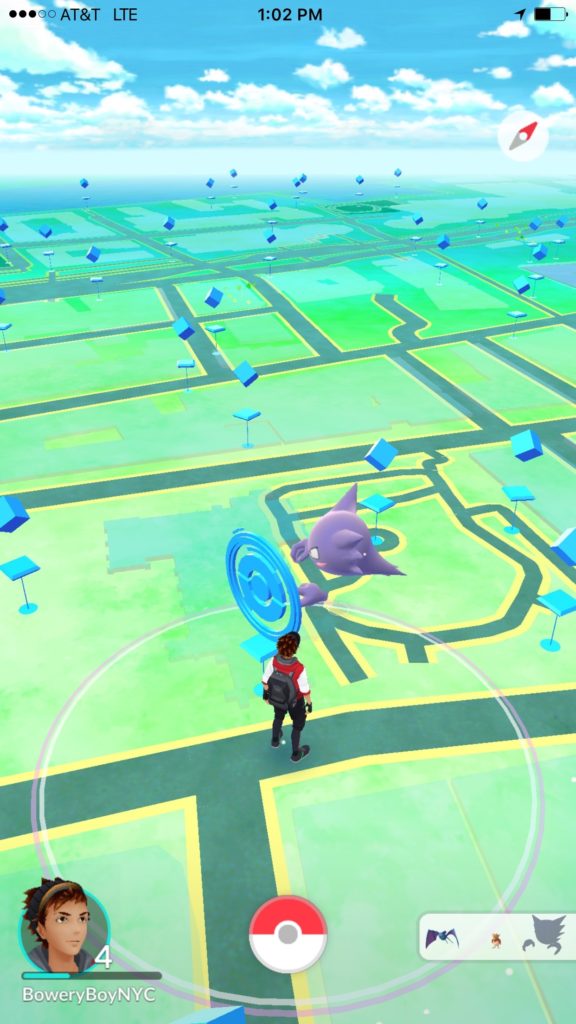
People were gathered here thanks to Pokémon GO, the hot new mobile app that transfers the adventures of the Japanese fantasy franchise into the real world via a nifty GPS location tie-in.

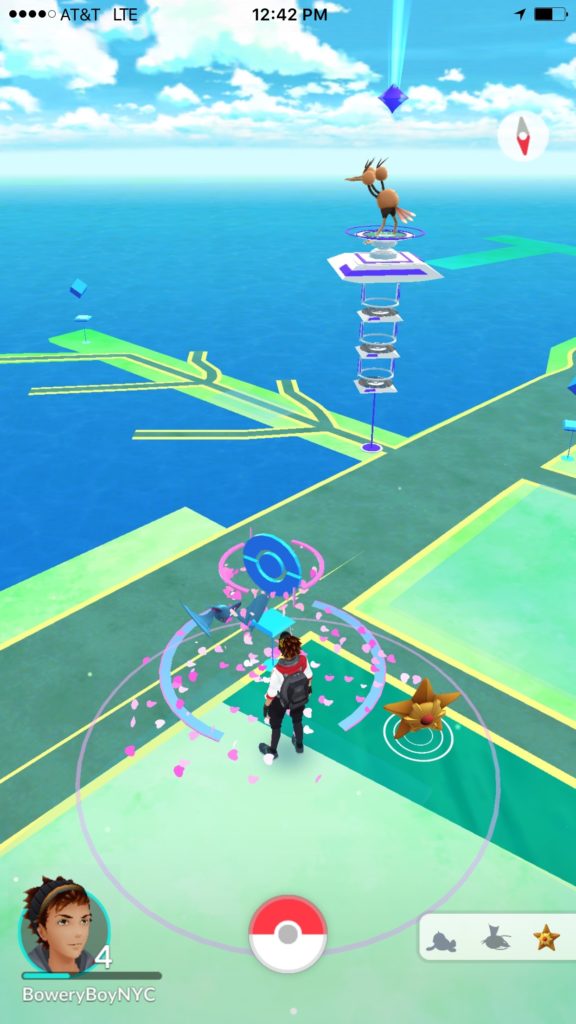
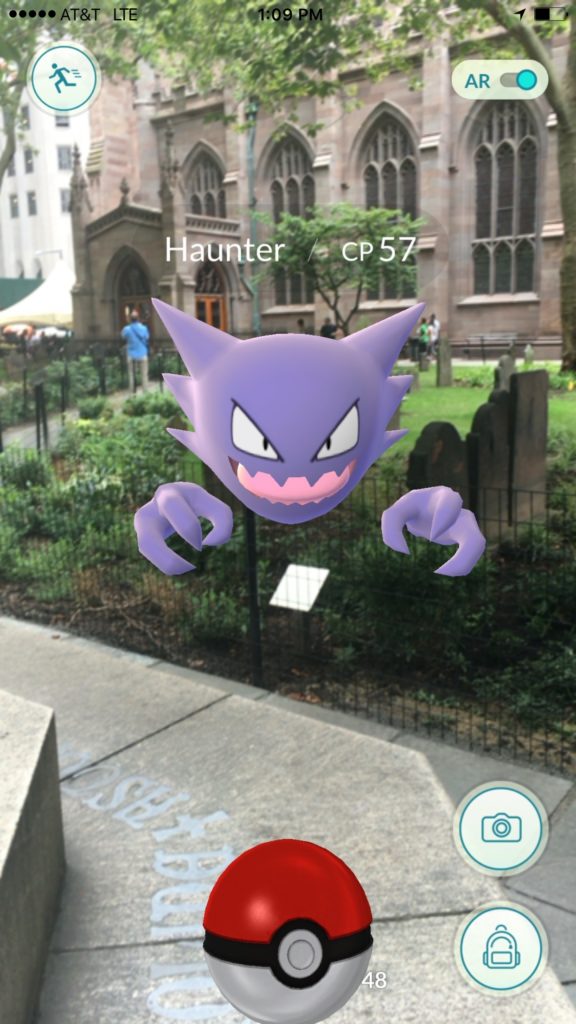
The player’s avatar can now wander the city streets looking for adventure in the form of creatures to capture by throwing Poké Balls at them. The world is rendered as an abstract grid devoid of buildings until you interact with one of the creatures. At that point, both the real and virtual worlds collide. Suddenly it’s as though you have a cognitive ‘third eye’, seeing a beast from another dimension that the rest of the world wanders past indifferently.

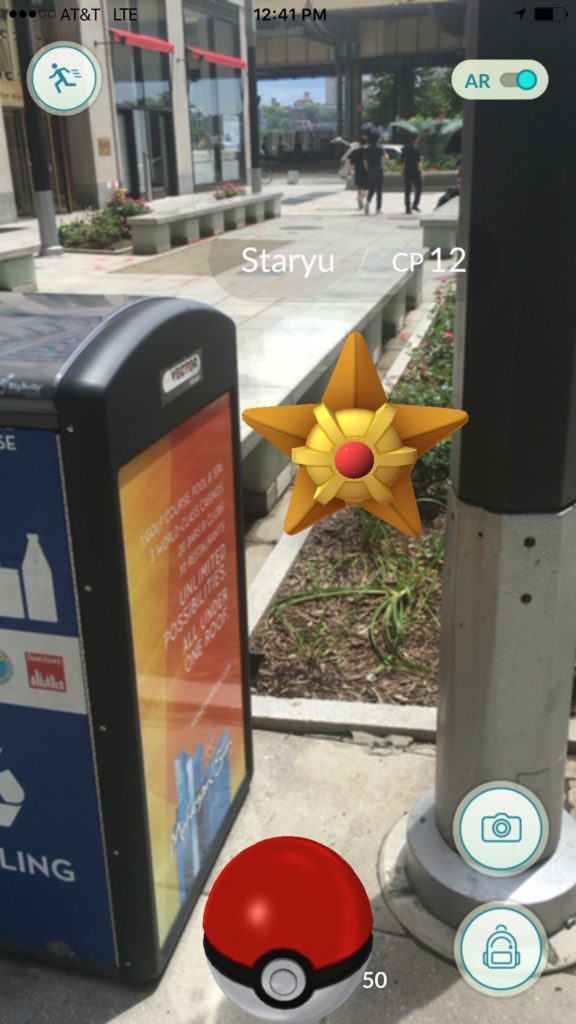
For instance, here’s the corner of Wall Street and South Street

IMG_9589 (1)

At this busy intersection I had a vigorous battle with a starfish-like creature. I was not very good at this game and, at several points, threw virtual Poké Balls that would have caused many injuries had they been real. Finally I was able to successfully rid Wall Street of this terrible menace.

IMG_9587


Several friends recommended this game to me over the weekend due to one particular aspect — its innovative use of landmarks as a critical component of game play. Icons which appear as spinning blue cubes sit over the location of various neighborhood landmarks. These are permanent Pokéstops, magical places where users can grab vital items for the game, like food for your Pokémon. (You see, your captured creatures are trapped in a virtual prison of your own design. Best not to focus too closely on this part of the beloved Pokémon mythology.)

The reason I’m bringing this up — the reason there’s a Pokémon post on this page at all — is this unique game feature. For players to use these Pokéstops,  they must actually visit them.

And that is the wondrous, possibly accidental glory of Pokémon GO — it’s become the best neighborhood and historical landmarks app on the market.

For instance, here was the sight that greeted me yesterday out in front of Trinity Church at Broadway and Wall Street. As tourists were buzzing by and service was just getting out at one of New York’s most famous religious spaces, I was observing the landscape reduced to this:

IMG_9593

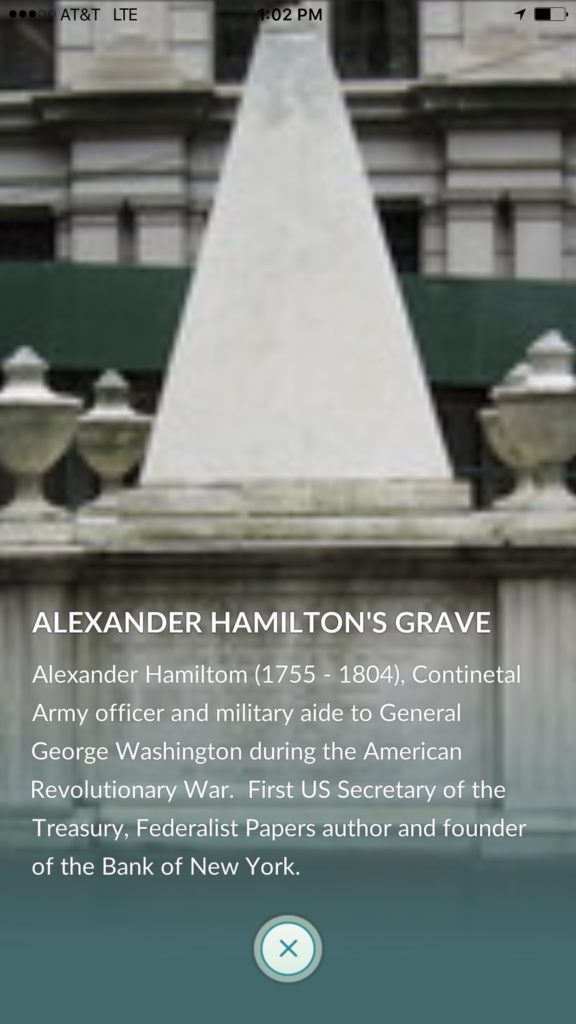
There were several blue squares contained within Trinity Church graveyard. A player could check out those squares from afar but had to actually walk into Trinity and get close to them to seek their rewards.  Even in death, Founding Father and Broadway superstar Alexander Hamilton was providing his countrymen with guidance as one square was hovering over his grave, as though an otherworldly embodiment of his greatness:

IMG_9592

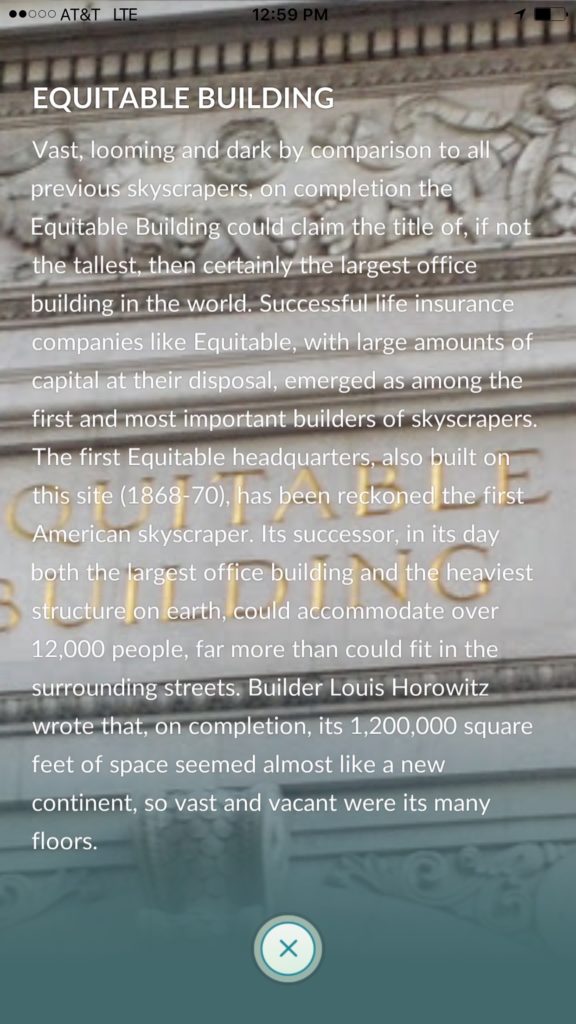
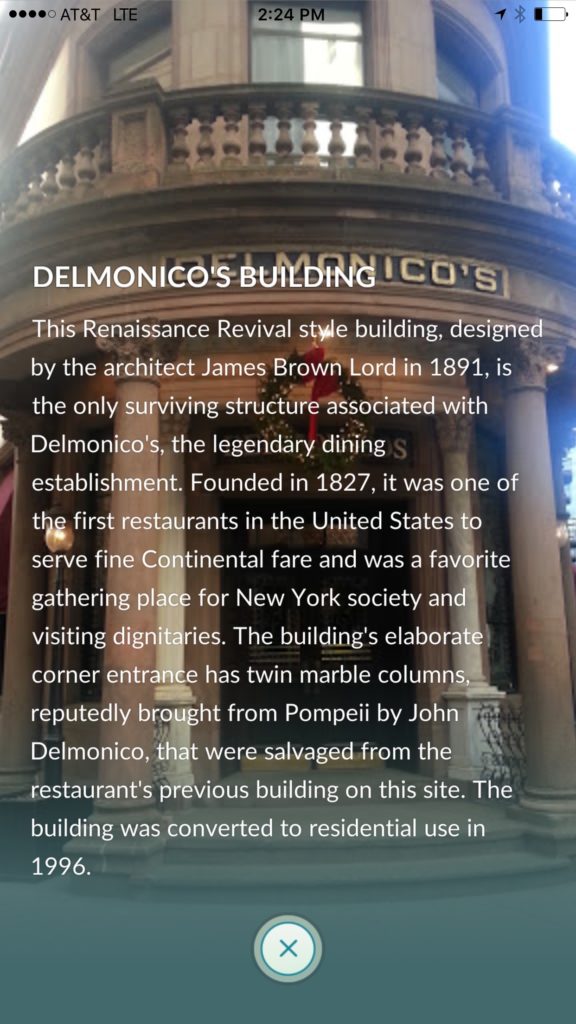
At many sites, a short history is provided with each blue square. Sure, Hamilton is a very popular figure at the moment, so naturally some explanation might be presented here. But how many games primarily geared towards children would have a short history of the building across the street — the Equitable Building?

IMG_9591


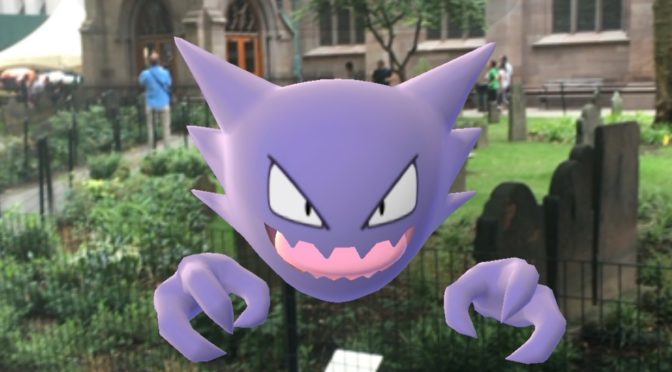
Back in Trinity, a player could stroll the cemetery and check out other blue square and — it is sincerely hoped — the rest of the history of this intriguing place. But as one who lives in the physical realm AND the virtual spirit realm, you have work to do. For within the graveyard is another Pokémon to catch — the arguably inappropriate Haunter, a play on Ghostbusters’ Slimer and, perhaps, Richard Churcher, the six year old who died in 1681 and whose tombstone is the church’s oldest.

IMG_9595


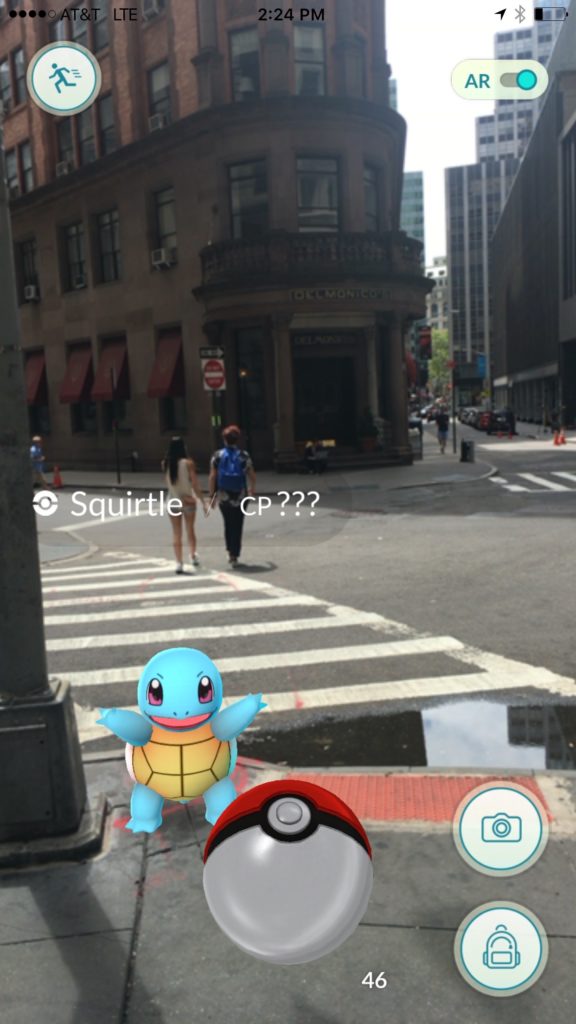
The game provides silly juxtapositions that only history and New York lovers will really appreciate. For instance, it looks like there’s some Squirtle on the menu at old Delmonico’s Restaurant:

IMG_9601

IMG_9602

At this point, you may be wondering — doesn’t this all seem sort of dangerous? People wandering the streets, staring at their phones, swiping rapidly to capture a nonexistent entity ghoulishly hovering upon a sidewalk that actual people are walking? Indeed there are many potential hazards to this game that many people have already identified.

But here’s where I found Pokémon Go an especially valuable tool for exploring New York City. For one, simply stop playing the game! Who cares about capturing Pikachu or Chortlefoot or Poofybee or whatever? Just use the app as a device for finding intriguing places in your neighborhood. Not only is this less stressful — after all, who wants to be tasked with catching monsters on your day off? — but it’s free. (The app has paid features for those who want to go deep into the game’s universe.)

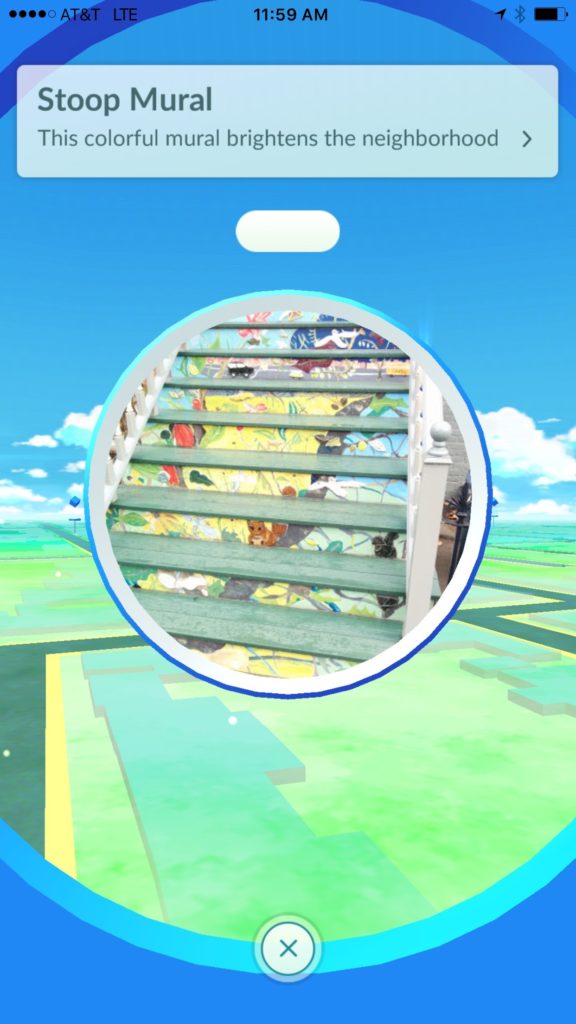
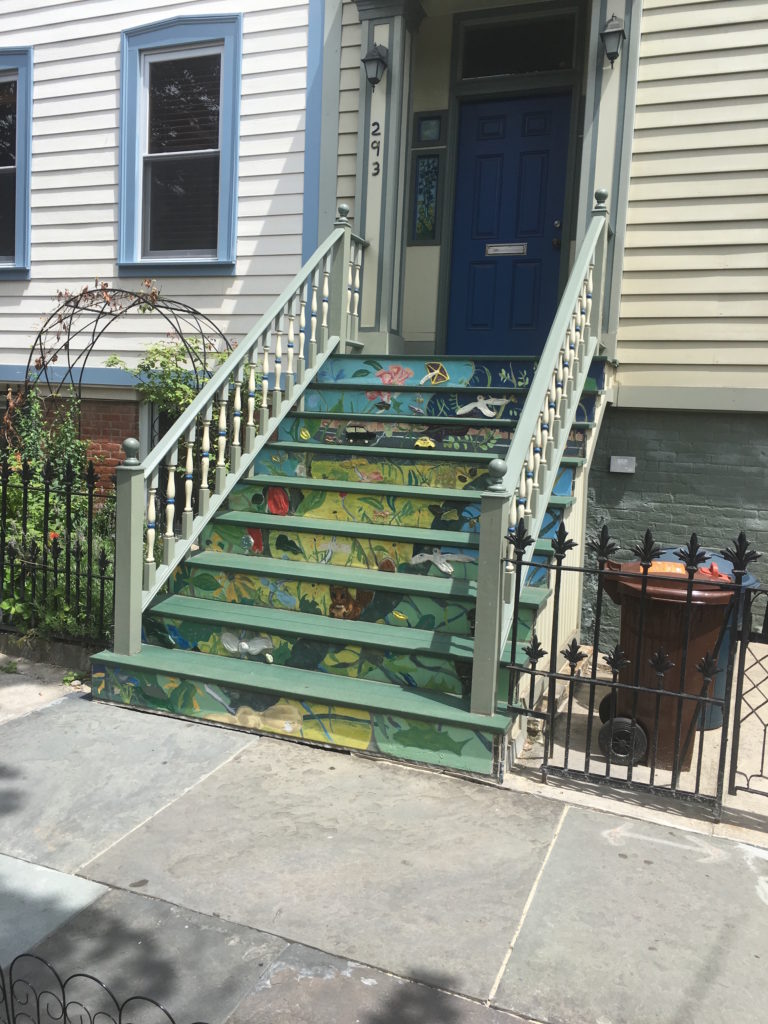
The Pokéstops aren’t merely historical landmarks but beloved neighborhood places as well. For instance, using the app while strolling around Brooklyn elicited many sites and quirky attractions I’d never really noticed before:

On Baltic Street:

IMG_9573

IMG_9574


Near Borough Hall:

IMG_9579

On Flatbush Avenue:

IMG_9606

How did an international game developer identify such specific and locally beloved places for a fantasy game?  Niantic basically took the information from a prior game called Ingress which was created from user submissions.

And that’s what makes this app a particular pleasure for use in a big city, where neighborhoods might have had dozens of users populating Niantic’s databases. (I’d be very curious to see how enjoyable this experience is in a rural area.) Not all the landmarks have historical descriptions attached to them, but almost all were at least identified by a regular visitor to that place, perhaps even a neighbor.

How else to explain such curious oddities as these (from Wall Street and Cadman Plaza, respectively)?

IMG_9581

IMG_9578

Of course, naysayers might immediately point out that the landmarks are only being used for game purposes and users aren’t expected to really interact in any meaningful way. And should we really be encouraging MORE walking and phone gazing? But even if most people just skitter away after collecting their virtual items, a few people may stop and pay attention. At very least, ignoring the gaming aspect entirely and using the app merely for its locations makes for a great scavenger hunt with your friends.

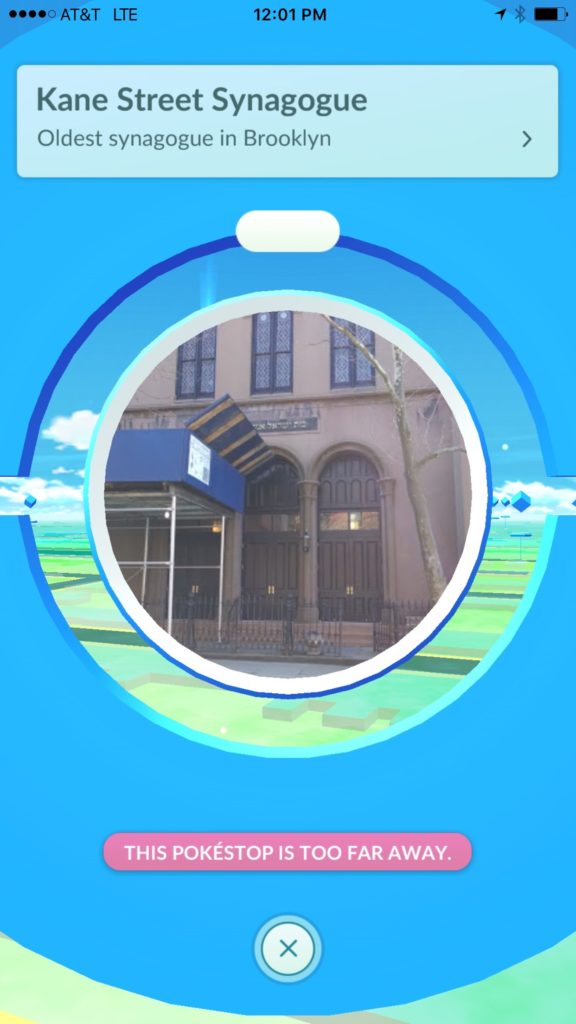
It’s like the Points of Interest section in our book Adventures In Old New York, but without random cuddly monsters populating the streets. I could see it awaken a renewed interest in neighborhood geography. Just yesterday, I saw both a father and son using it to locate one particular Pokéstop which also happened to be Brooklyn’s oldest synagogue.

IMG_9576

(You can actually check out all the blue squares from the comfort of your couch, but they can only be used for gameplay if you’re near, thus the message in pink above.)


Categories
Gilded Age New York

The Boss Tweed connection to St. Sava, the cathedral destroyed by fire

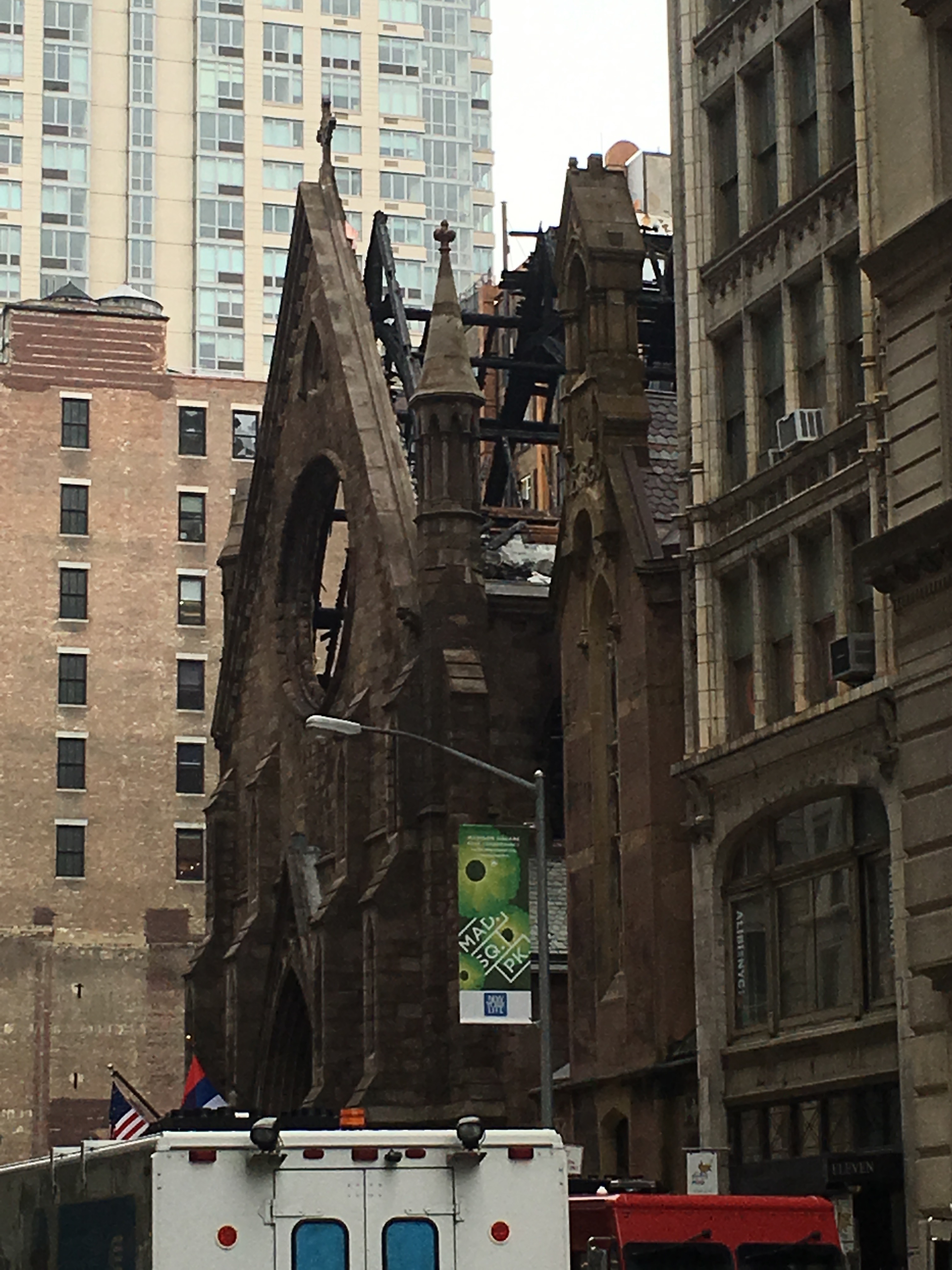
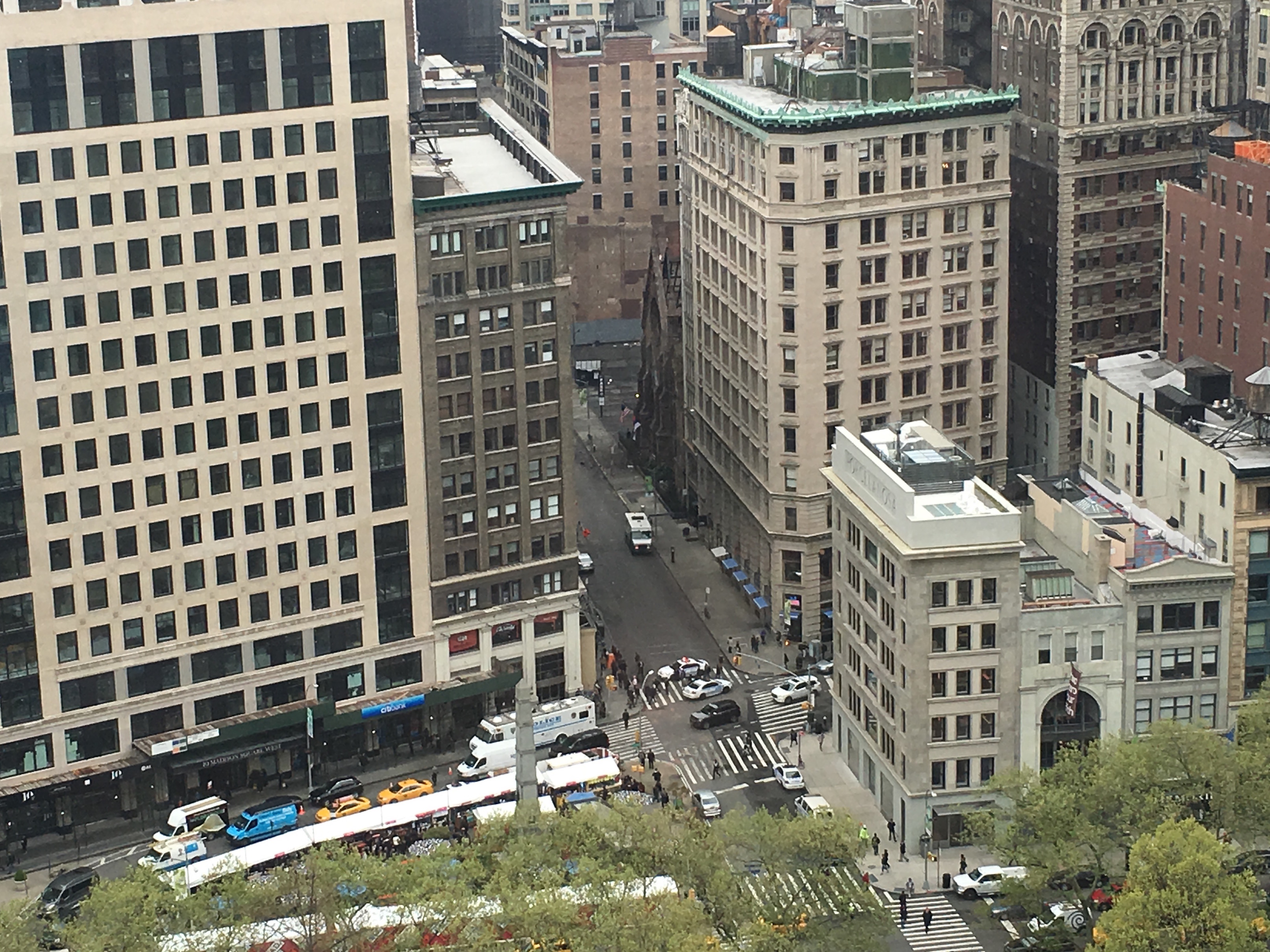
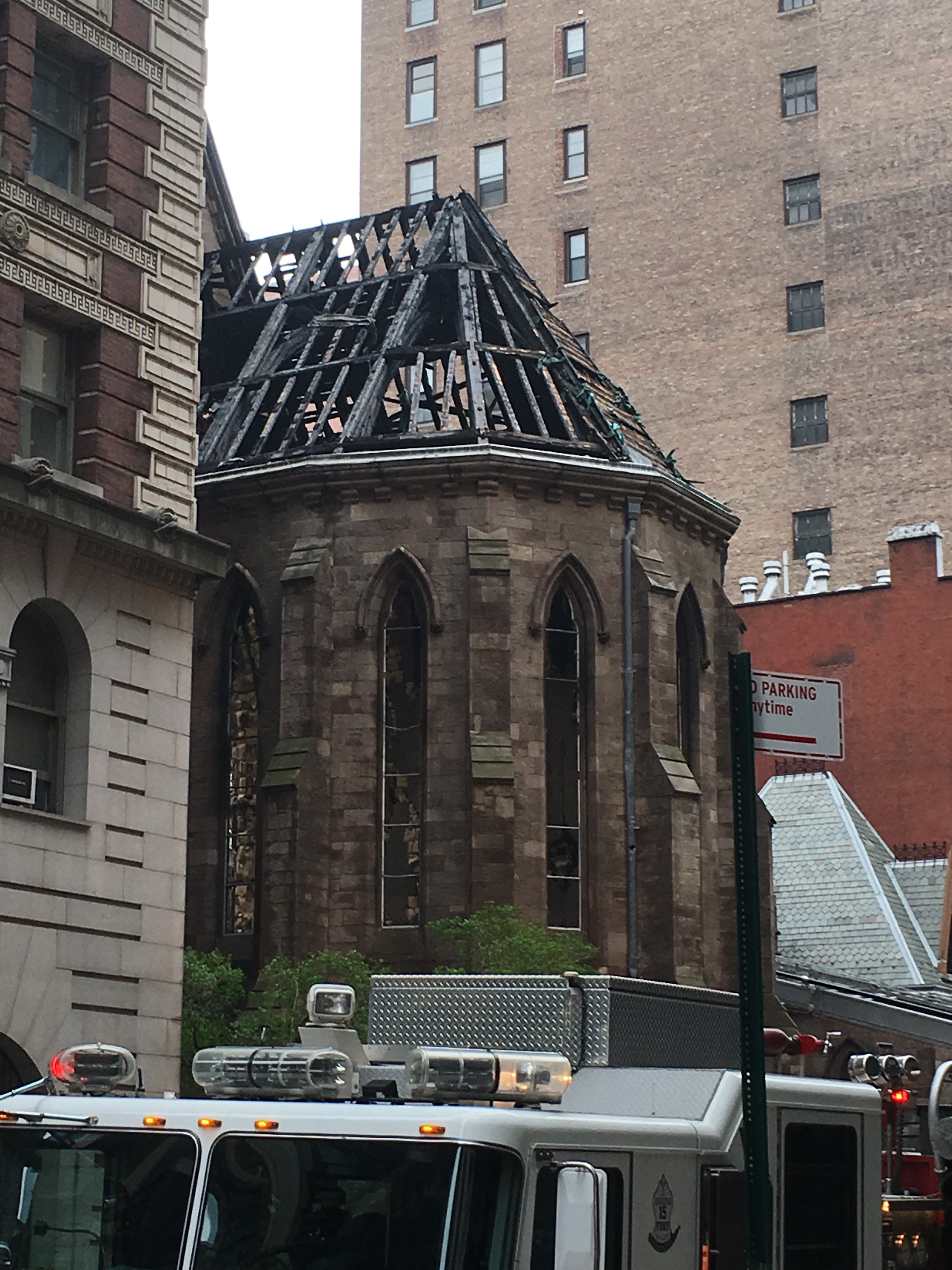
New York City lost a very interesting landmark this past weekend.

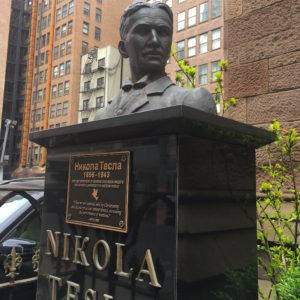
Serbian Orthodox Cathedral of St. Sava, at West 25th and Broadway, was destroyed in a spectacular and mysterious four-alarm fire on Sunday, its windows shattered in shafts of flame, its ceiling reduced to cinders. If you’re a podcast listener, you may know this place from the show we released just last Friday on the life of Nikola Tesla. Sitting in front of St. Sava is a bust of Tesla, placed there by the Tesla Memorial Society of New York. Or was, I suppose. The bust was either moved or did not survive this catastrophic blaze.

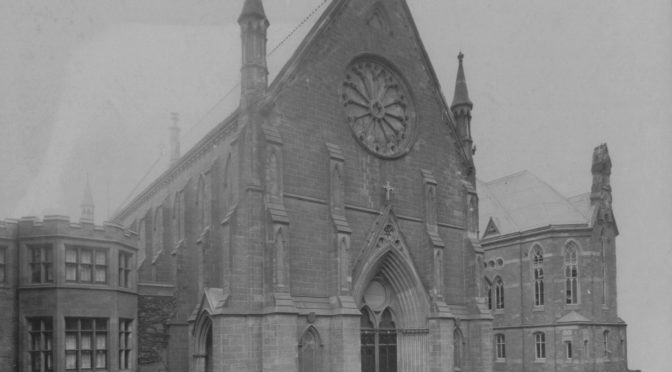
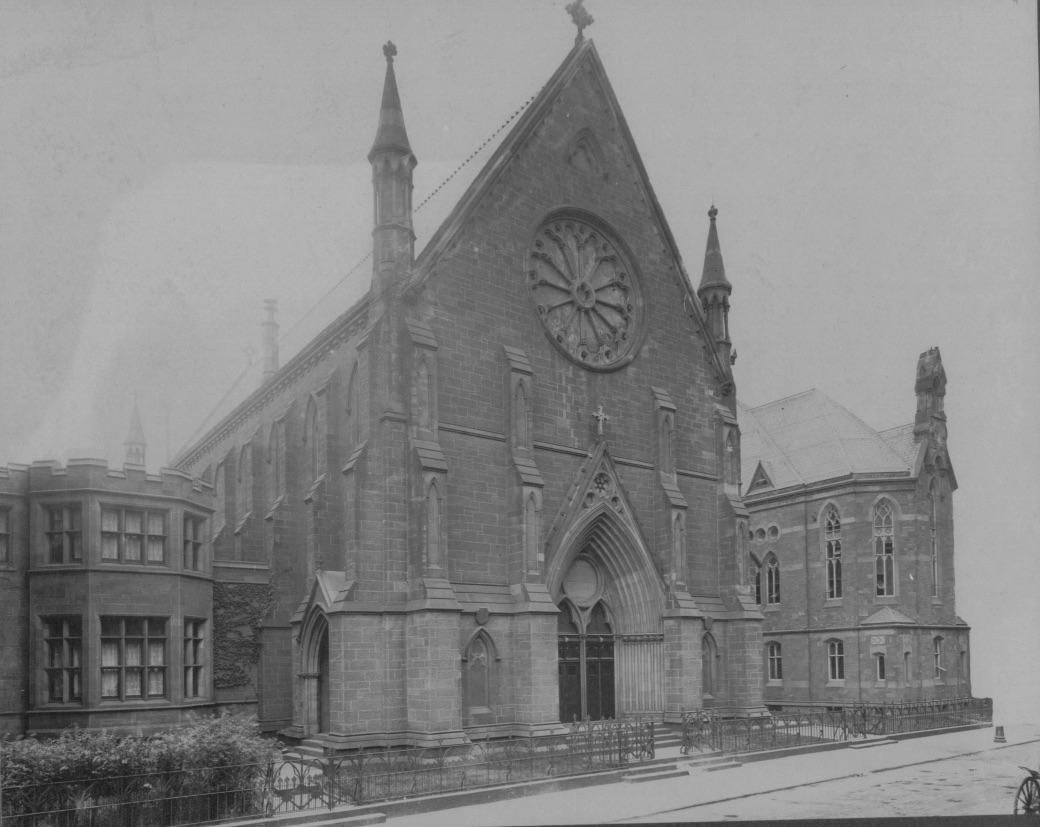
New York has lost an important bit of history. The cathedral was the former Trinity Chapel, an outpost of downtown’s Trinity Church which opened here in 1851 to cater to the elite moving uptown along Fifth Avenue.

The New York Times has a short roundup of some of its most notable events — notably the marriage of Edith Wharton in 1885 and, in 1943, its conversion into an Eastern Orthodox house of worship. The usual fine work of Daytonian In Manhattan highlights the details of its construction.  “It was, as The New York Times called it in 1914, “distinctly fashionable to be married there.'”

1

Picture courtesy Trinity Wall Street

In fact one of the most notorious weddings in New York City history took place here.

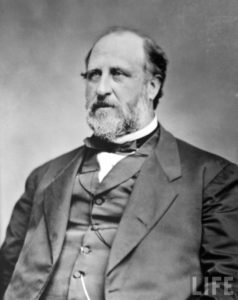
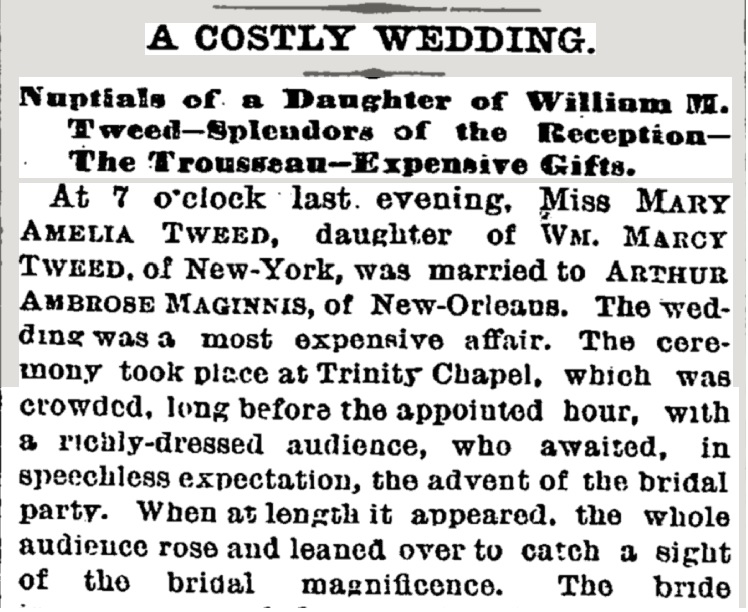
Not because of the bride and groom — Mary Amelia Tweed and New Orleans heir Ambrose MaGinnis — but because of the lavish behavior of the bride’s father William ‘Boss’ Tweed. In another strange bit of coincidence, that fated wedding occurred 145 years ago this month, on May 31, 1871.

William_Magear_-Boss-_Tweed_(1870)

“The streets for blocks around were filled with carriages, while the church was crowded to excess,” said the New York Herald the following day. “The center aisle was reserved for the invited guests and presented a most brilliant spectacle.”

The entire clan was adorned in jewels; “the Tweed family seemed to be a Christmas tree of diamonds,” according to author Alexander B. Callow Jr. Tweed wore his famous diamond pin, while his wife sparkled in so many that she threatened to take attention away from the bride.

Almost, that is. For Tweed’s daughter wore, according to Kenneth Ackerman, a “‘white corded silk, décolleté, with demi-sleeves, and immense court train’ with orange blossoms at her waist and, on her bosom, ‘a brooch of immense diamonds, and long pendants, set with three large solitaire diamonds, sparkled in her ears.’”

It was one of the most ostentatious weddings of the post-Civil War era. The reception was held at the Tweed residence at Fifth Avenue and 43rd Street where hallways were filled with rich fineries. But it was the upstairs rooms — filled with wedding gifts — that would be the focus of future query.

From the New York Herald:

“THE WEDDING PRESENTS, which were displayed in one of the upper rooms, must have amounted to the value of over $700,000 and presented an appearance of brilliancy which can never have been equaled in munificence even in this Empire City.  They comprised all sorts of jewelry with diamonds enough to stock half a dozen stores; silver sets in profusion and almost everything that the ingenuity of the human mind could suggest in the line of presents.”

In today’s money, those gifts would have been worth over $14 million! This lavish ceremony highlighted Tweed’s extravagance at a time when many began questioning his corrupt hold over city affairs. In particular, the New York Times, Tweed’s biggest enemy, delighted in highlighting the garish cost of the ceremony. “The wedding was a most expensive affair.”

tweed


Tweed’s arrogance and extravagance definitely got the better of him, and the wedding at Trinity Chapel would soon become emblematic of the absolute corruption which fueled the city politic of the day.

To select but one example — a 1872 tome by minister Hollis Read called The Foot-Prints of Satan: Or, The Devil In History waxes on for a few pages about the scandalous wedding:

“Weddings are often relentless prodigal of lucre.  A recent one in our great Gotham has attracted some special attention, both on account of the profuse expenditure, and from the character and position of the parties concerned.  It was at the ‘palatial residence’ of the redoubtable ‘Boss Tweed,’ and the happy bride was his daughter.  Here we shall cease to wonder at the extravagant amounts absorbed in grounds, house, stables; and now in profuse expenditures for the wedding, when we are reminded how the ‘Boss’ got his money. For here certain unmistakable ‘footprints’ are, if possible, more apparent in the getting than in the spending.”

Tweed and his notorious Ring (including mayor A. Oakey Hall) would be exposed by the summer, and the Boss was soon thrown into jail (only to promptly be released on bail). He would go to trial for his crimes by 1873 and eventually died at the Ludlow  Street Jail on April 12, 1878.


For more information on Boss Tweed, check out our podcast on William ‘Boss Tweed and the bitter old days of Tammany Hall.

___________________________________________________________________

And here’s a picture of the Tesla bust which I took this past Friday, then the scene at St. Sava as it looked on Monday afternoon.

IMG_9286

IMG_9302 IMG_9307
IMG_9306


Categories
Holidays

Midnight in Times Square: The history of New Year’s Eve in New York City

PODCAST The tale of New York City’s biggest annual party from its inception on New Years Eve 1904 to the magnificent spectacle of the 21st century. 

In this episode, we look back on the one day of the year that New Yorkers look forward. New Years Eve is the one night that millions of people around the world focus their attentions on New York City — or more specifically, on the wedge shaped building in Times Square wearing a bright, illuminated ball on its rooftop.

1

In the 19th century, the ringing-in of the New Year was celebrated with gatherings near Trinity Church and a pleasant New Years Day custom of visiting young women in their parlors. But when the New York Times decided to celebrate the opening of their new offices — in the plaza that would take the name Times Square — a new tradition was born.

Tens of millions have visited Times Square over the years, gazing up to watch the electric ball drop, a time-telling mechanism taken from the maritime tradition. The event has been affected by world events — from Prohibition to World War II — and changed by the introduction of radio and television broadcasts.

ALSO: What happened to the celebration which it reached the gritty 1970s and a Times Square with a surly reputation?

PLUS: A few tips for those of you heading to the New Years Eve celebration this year!


The Bowery Boys: New York City History podcast is brought to you …. by you!

We are now producing a new Bowery Boys podcast every two weeks. We’re also looking to improve the show in other ways and expand in other ways as well — through publishing, social media, live events and other forms of media. But we can only do this with your help!

We are now a member of Patreon, a patronage platform where you can support your favorite content creators for as little as a $1 a month.

Please visit our page on Patreon and watch a short video of us recording the show and talking about our expansion plans. If you’d like to help out, there are five different pledge levels (and with clever names too — Mannahatta, New Amsterdam, Five Points, Gilded Age, Jazz Age and Empire State). Check them out and consider being a sponsor.

We greatly appreciate our listeners and readers and thank you for joining us on this journey so far. And the best is yet to come!


New Years Day celebrations have evolved since the days of New Amsterdam when visitations symbolized a ‘fresh start’ to the year.

Courtesy NYPL
Courtesy NYPL

A decorative cigar box from the 1890s, ringing in the new year with a winsome damsel and wholesome scenes of winter beckoning you to smoke a cigar.

Courtesy Museum of the City of New York

The crowds outside Trinity Church on 1906 gathered to usher in the new year. The church was traditionally the place people gathered before the Times Square celebration took off.

1

Fated to be the centerpiece of New Years Eve, One Times Square once wore some beautiful architecture until much of it was ripped off to accommodate a frenzy of electronic signs.

Courtesy NYPL
Courtesy NYPL

Times Square in 1905 for the very first New Years Eve celebration albeit one with fireworks, not a ball drop.

Courtesy NYPL
Courtesy NYPL

The party offerings at the Hotel Astor in Times Square in 1926.

Courtesy Museum of the City of New York

The view of Times Square from the Empire State Building.

Courtesy NYPL
Courtesy NYPL

New Years Eve 1938

AP photo
AP photo

The throngs in 1940 with the Gone With The Wind marquee in the background (not to mention Tallulah Bankhead in the play The Little Foxes!)

Courtesy New York Daily News

Ushering in 1953:

9

Celebrations were also held for a time in Central Park, like this festive group from 1969:

Courtesy New York Parks Department

An electrician from the Artkraft Strauss Sign Corporation tests out the lighting effects that will greet the new year in 1992.

MARTY LEDERHANDLER/ASSOCIATED PRESS

And here’s some videos of New Years Eve countdown past!

Mr New Years Eve himself — Guy Lombardo — here at the Roosevelt Hotel, ringing in 1958

From 1965-66:

A clip from Dick Clark’s first appearance in Times Square. It cuts away to Three Dog Night in California!

CBS’s New Years Eve program featuring Catherine Bach from The Dukes of Hazzard.

The absolutely bonkers ball drop for the new millennium.

Last year’s commentary by those wacky cards Anderson Cooper and Kathy Griffin.

Categories
Podcasts Skyscrapers

The Tallest Building In New York: A Short History


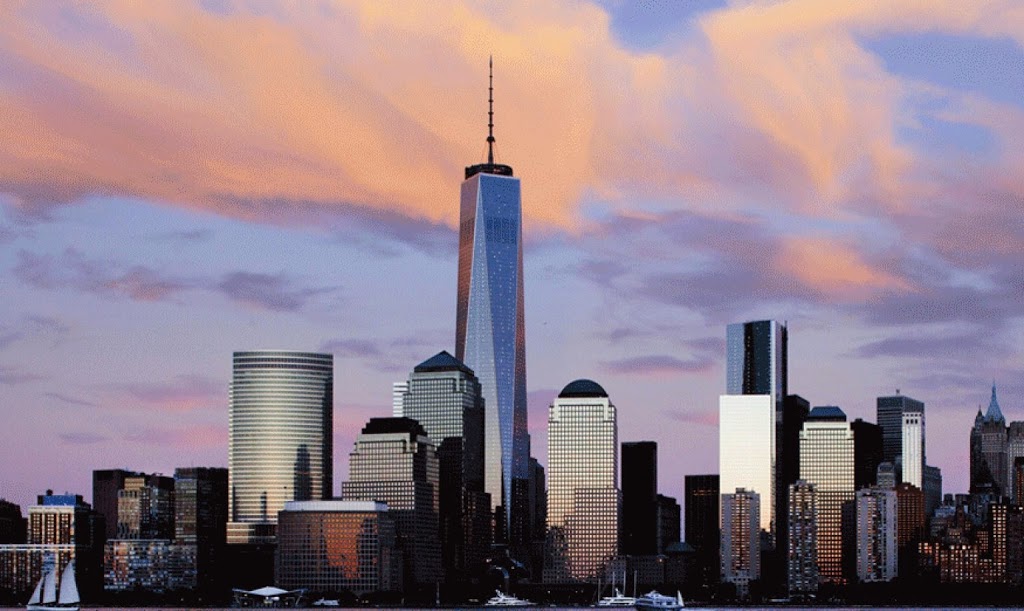
PODCAST One World Trade Center was declared last year the tallest building in America, but it’s a very different structure from the other skyscrapers who have once held that title. In New York, owning the tallest building has often been like possessing a valuable trophy, a symbol of commercial and social superiority. In a city driven by commerce, size matters.

In this special show, I give you a rundown of the history of being tall in New York City, short profiles of the 12 structures (11 skyscrapers and one church!) that have held this title.  In several cases, these weren’t just the tallest buildings in the city; they were the tallest in the world.

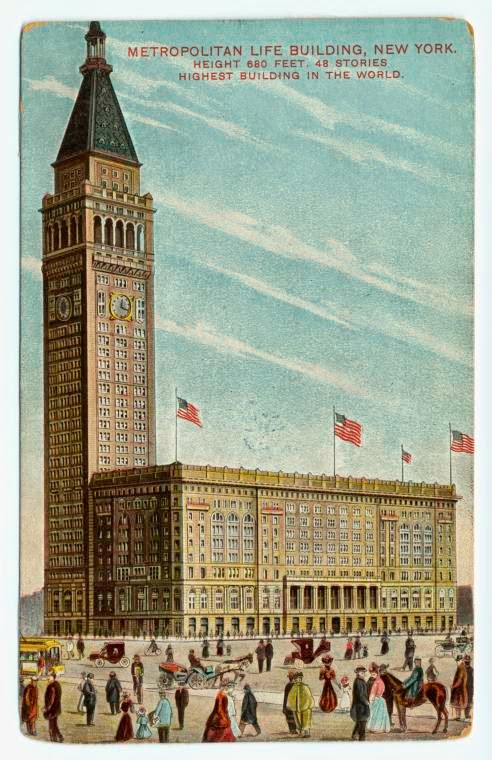
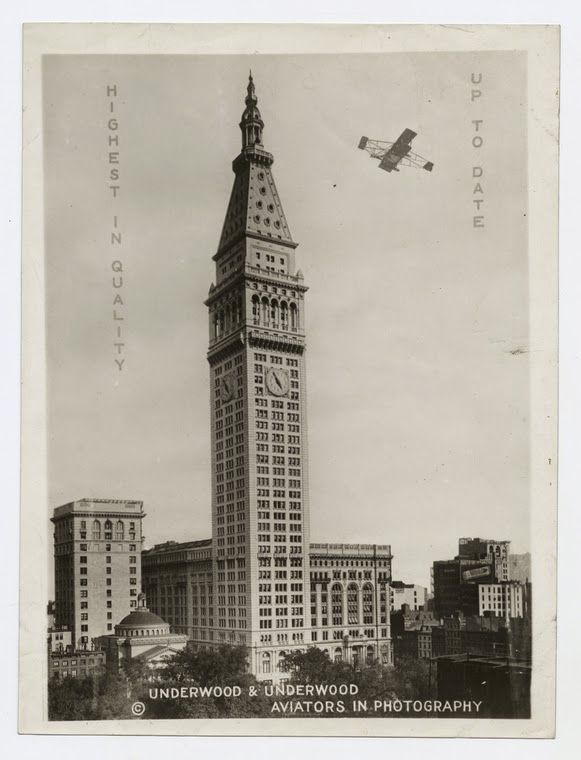
At right: The Metropolitan Life Building, the tallest building in the world in 1909

Skyscrapers were not always well received.  New York’s tallest building in 1899 was derisively referred to as a “horned monster.”  Lower Manhattan became defined by this particular kind of structure, creating a canyon of claustrophobic, darkened streets.  But a new destination for these sorts of spectacular towers beckoned in the 1920s — 42nd Street.

You’ll be familiar with a great number of these — the Woolworth, the Chrysler, the Empire State.  But in the early days of skyscrapers, an odd assortment of buildings took the crown as New York’s tallest, from the vanity project of a newspaper publisher to a turtle-like tower made for a sewing machine company.

At stake in the race for the tallest is dominance in the New York City skyline.  With brand new towers popping up now all over the five boroughs, should be worried that they’ll overshadow the classics? Or should the skyline always be in a constant state of flux?

ALSO: New York’s very first tall buildings and the ominous purpose they were used for during the Revolutionary War!


Photo courtesy Huffington Post

The current tallest buildings in New York City (as of 2020) are

1) One World Trade Center — 1,776 feet
2) Central Park Tower (225 West 57th Street) — 1,550 feet
3) 111 West 57th Street — 1,428 feet
4) One Vanderbilt — 1,401 feet
5) 432 Park Avenue — 1,394 feet
6) 30 Hudson Yards — 1,268 feet
7) Empire State Building — 1,250 feet
8) Bank of America Tower — 1,200 feet
9) Three World Trade Center — 1,171 feet
10) 53W53 (MoMA Tower) — 1,050 feet
11 tie) Chrysler Building — 1,046 feet
11 tie) New York Times Tower — 1,046 feet
12) One57 — 1,005 feet

Statistics courtesy Property Nest


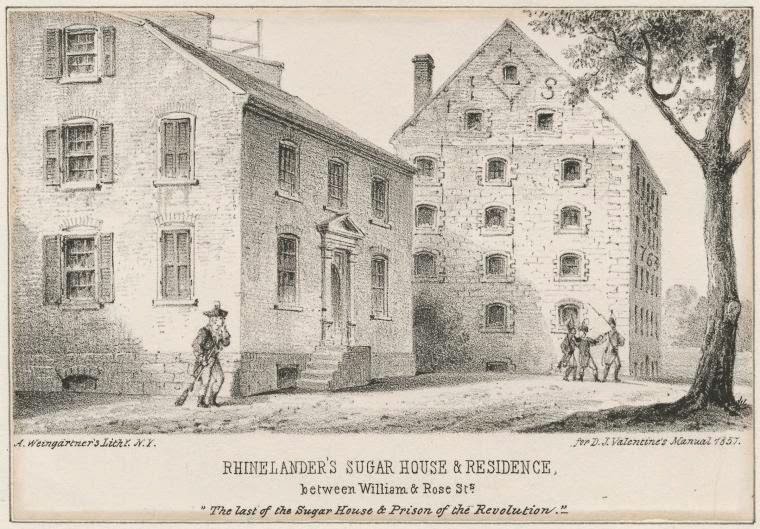
The sugar houses owned by the Rhinelander family. Others owned by the Van Cortlandts and the Livingstons would have all been the tallest structures in the city.

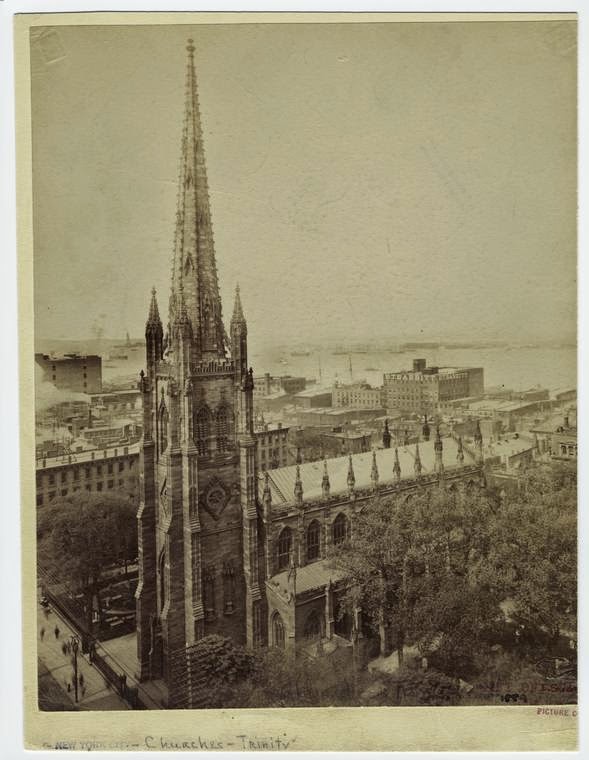
Trinity Church in 1889, the final year that it was the tallest permanent structure in New York City. (NYPL)

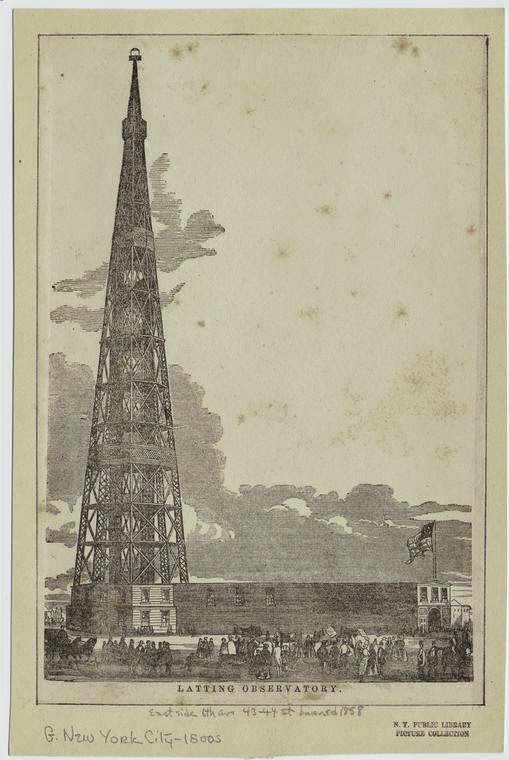
Trinity would be unparalleled in the New York skyline by any permanent buildings for almost 46 years.  But the Latting Observatory at the Crystal Palace Exhibition for a short time allowed New Yorkers the highest vantage on the island.

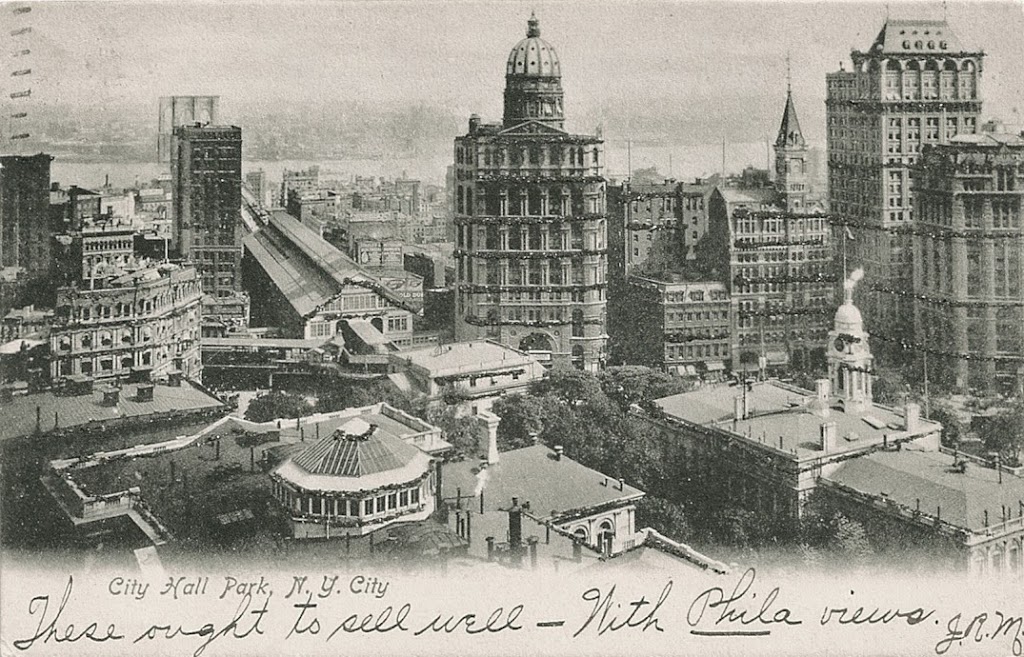
Joseph Pulitzer’s New York World Building, in context with its surroundings, including its proximity to the Brooklyn Bridge. This location would be its undoing, as the building was demolished later to make way for an automobile ramp. (Courtesy Rotograph Project)

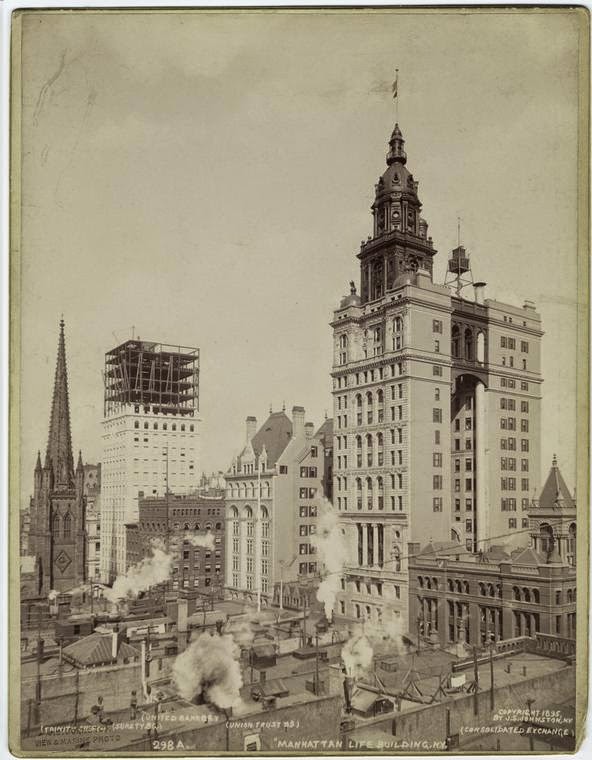
The Manhattan Life Insurance Building became a new neighbor for Trinity Church in 1894.  Its lantern top served as a lighthouse and an office for the New York Weather Bureau. (NYPL)

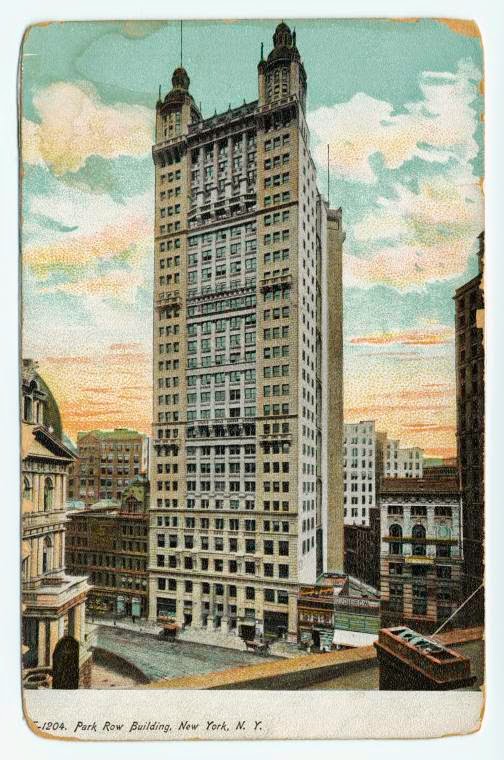
The Park Row Building, the original ‘twin towers’ of lower Manhattan, was criticized for its two-dimensional design but it’s managed to survive into modern times.  It used to host J&R Music World on its ground floor until that business closed last year.

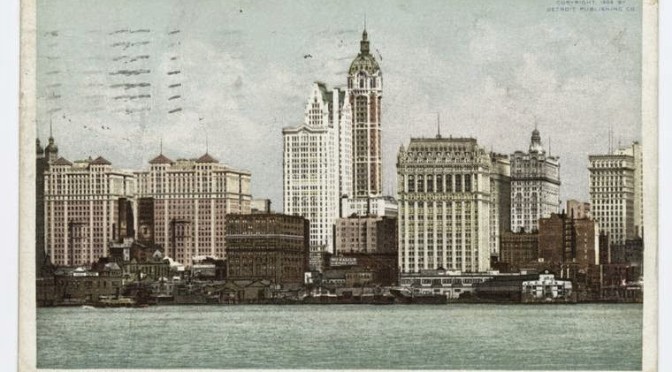
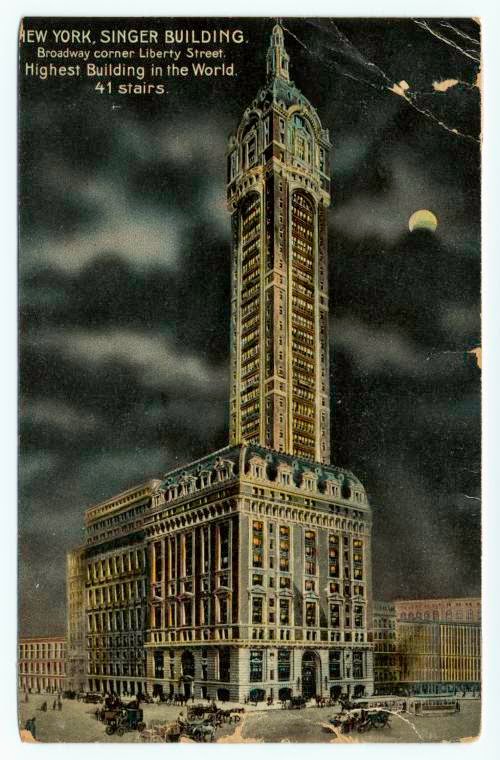
The extraordinarily unusual headquarters for the Singer Sewing Machine Company.  The Singer Building has the rare distinction of being the tallest building every purposefully torn down when it was demolished in the 1960s.

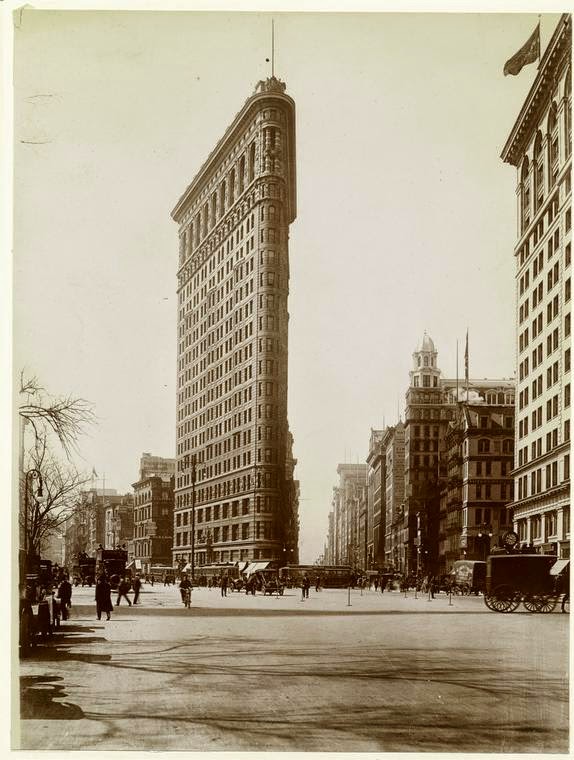
Madison Square was already graced with both the Flatiron Building (below) and Madison Square Garden when it finally got its tallest skyscraper….. (NYPL)

…the Metropolitan Life Insurance Tower, pictured here with an early airplane above it, in a postcard produced by Underwood & Underwood. (NYPL)

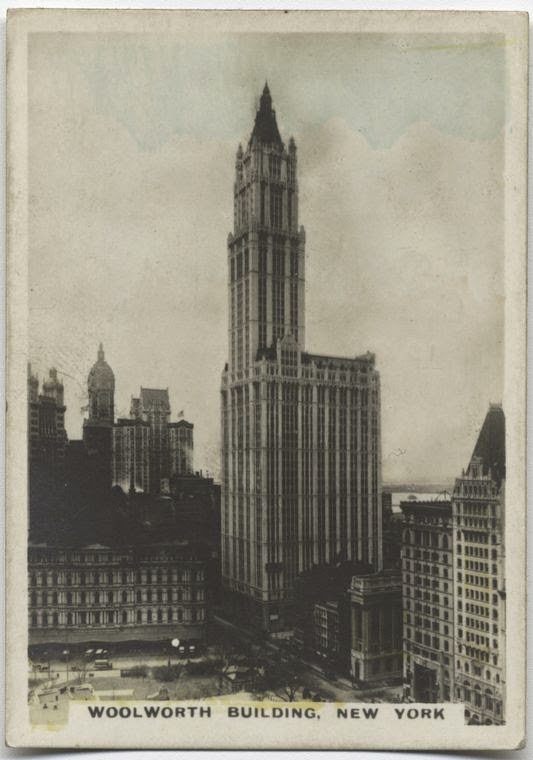
The Woolworth Building (featured here on a cigarette card) is one of the greatest extant examples of pre-zoning law construction with no setbacks along the front side.

 
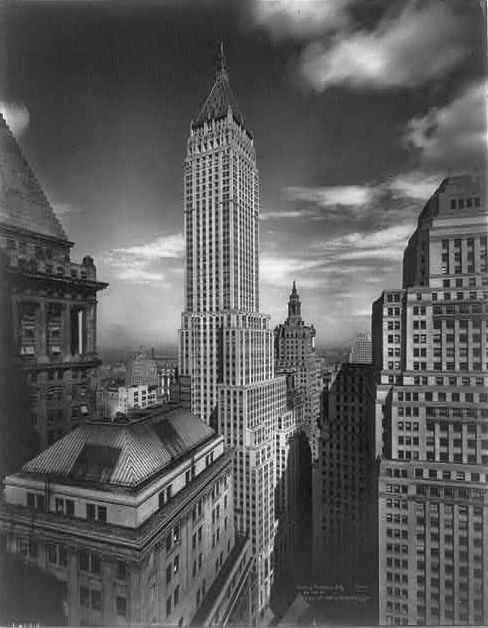
The Manhattan Company Building (or 40 Wall Street) sat among a host of other skyscrapers and was only briefly the city’s tallest building until Walter Chrysler and William Van Alen debuted their surprise uptown.
 

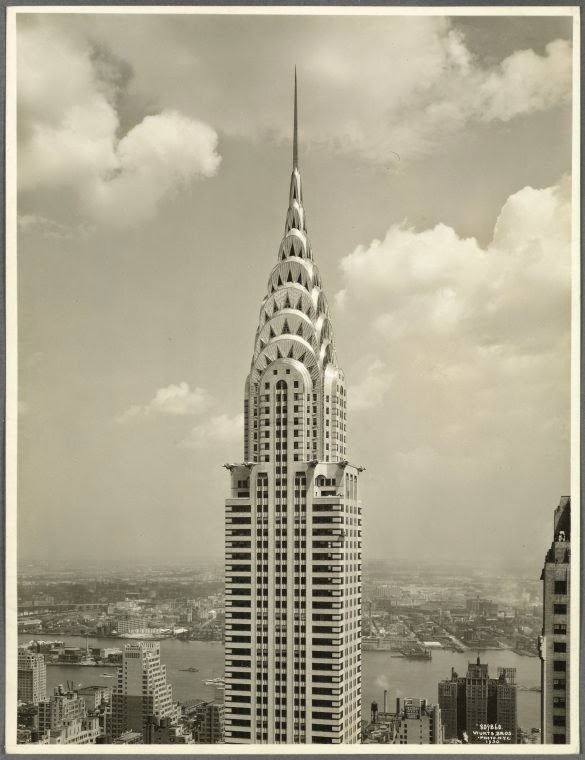
The Chrysler Building in 1930 with its spire freshly attached to the top, making it (for a little over a year) the tallest building in the world.

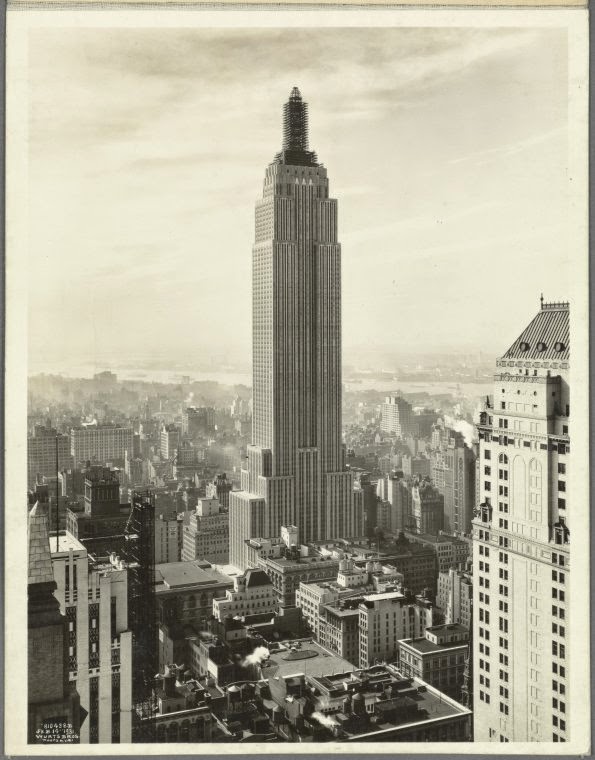
The Empire State Building became the tallest building — and the defining symbol of New York City — thanks to a determined executive from General Motors and Al Smith, the former governor of New York.

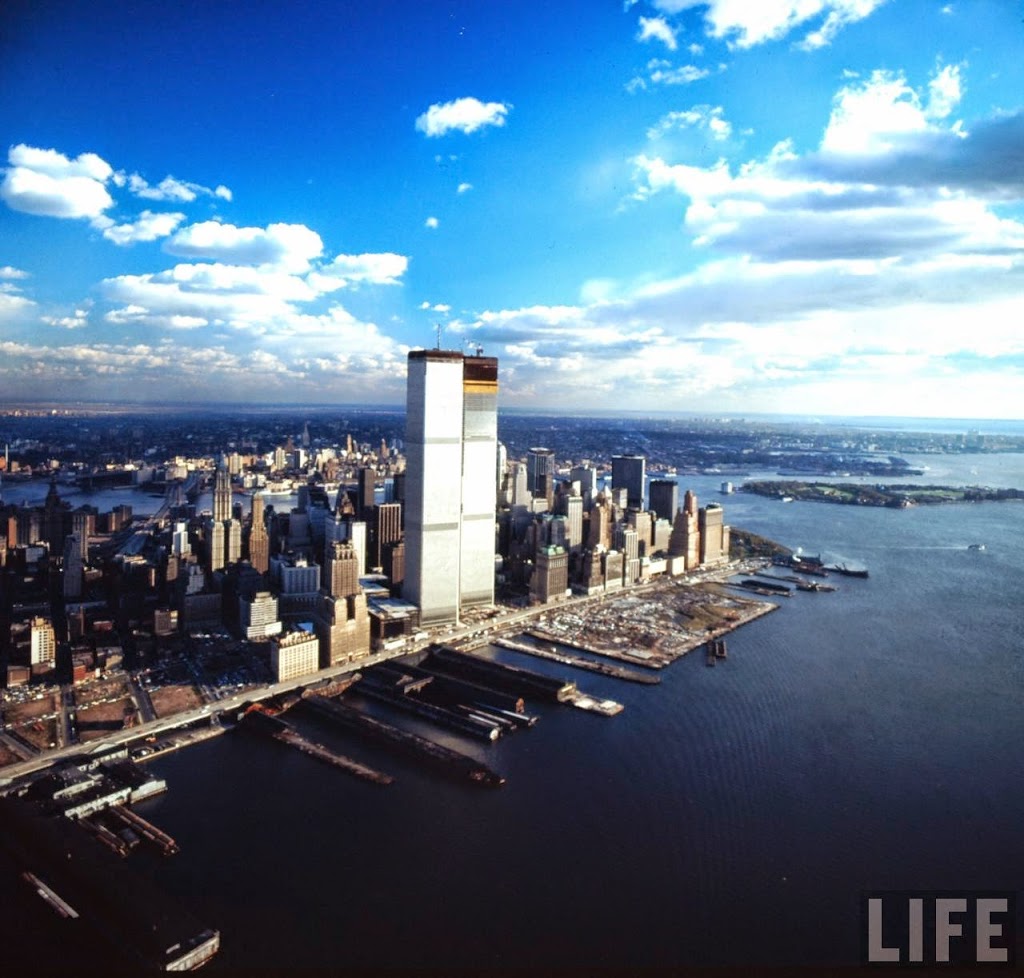
The World Trade Center returned attention to lower Manhattan and set a new record for height, literally leaving other former record holders in its shadow. (Photo courtesy Life Magazine)

SOURCES and RECOMMENDED READING

AIA Guide To New York City 2014
Empire State Building: The Making Of A Landmark — John Tauranac
Higher: A Historic Race to the Sky and the Making of a City — Neal Bascomb
Manhattan Manners — M. Christine Boyer
Pulitzer: A Life In Politics, Print and Power — James McGrath Morris
Rise of the New York Skyscraper — Sarah Bradford Landau
Skyscrapers:A Social History of the Very Tall Building In America — George H. Douglas
Supreme City — Donald Miller
and resources from the Landmark Preservation Commission and the New York Skyscraper Museum

Pictures courtesy New York Public Library

Categories
Neighborhoods

A short history of a short street named Raisin Street

[34-36 Barrow Street]

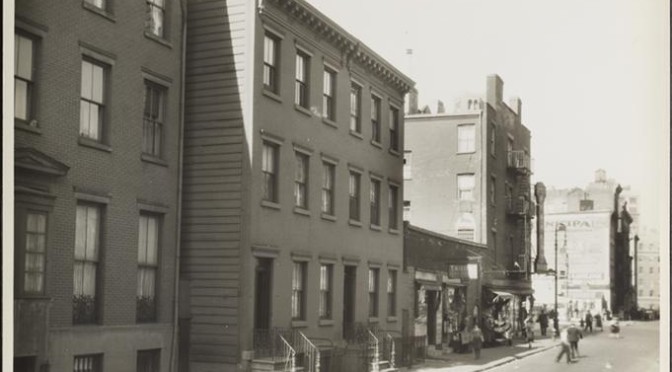
A 1932 photo of 34-36 Barrow Street by Charles Von Urban, courtesy the Museum of the City of New York. Click here to see what this section of the street looks like today

In this week’s Ghost Stories of Old New York podcast, Tom speaks of the ghosts at romantic restaurant One If By Land, Two If By Sea, located in an old carriage house that was moved from its original location to its present home on Barrow Street in today’s West Village.

Barrow Street is a quiet hook of a path, emanating from the southeast side of Sheridan Square, bending west when it meets odd, little Commerce Street, then wanders westward to the water’s edge.  If you’ve ever been lost amid the crooked streets of the West Village — and who hasn’t, at some point — then you’ve certainly stumbled onto Barrow.

The road that became Barrow was close to the estate of Richmond Hill, the esteemed manor that was once home to America’s first two vice presidents, John Adams and Aaron Burr.  In the heady post-Revolution period, this path was originally named Reason Street, for Thomas Paine‘s ‘The Age of Reason’.  Indeed, Paine once lived at a couple nearly locations, at 309 Bleecker Street and 59 Grove Street (where he died).

As legend has it, however, residents soon took to calling it Raisin Street, both as an accented corruption of the original name and a possible insult to Paine (who was not beloved at the time of his death in 1809).

Raisin Street, most notably, became the home of New York’s first ‘Orphan Asylum’ in 1805.  Six orphaned children were placed here under the care “of a pious and respectable man and wife.” [source]

While many streets in New York City are named for healthy fruits — Brooklyn produces Pineapple, Orange and Cranberry Streets, for instance — few are named for shriveled ones.  In 1807, Trinity Church, the principal landowner of Reason/Raisin Street, directed that the street be renamed for Thomas Barrow, a vestryman and agent for the church.

I’m sure it is a happy accident that a principal character in Downton Abbey is also named Thomas Barrow.

Categories
Know Your Mayors

Where are New York’s mayors buried? An (almost) complete list

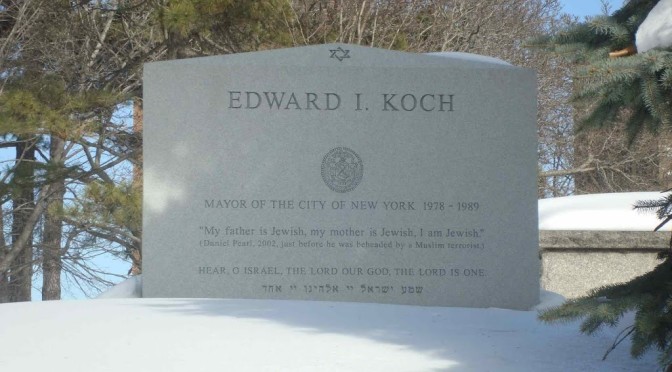
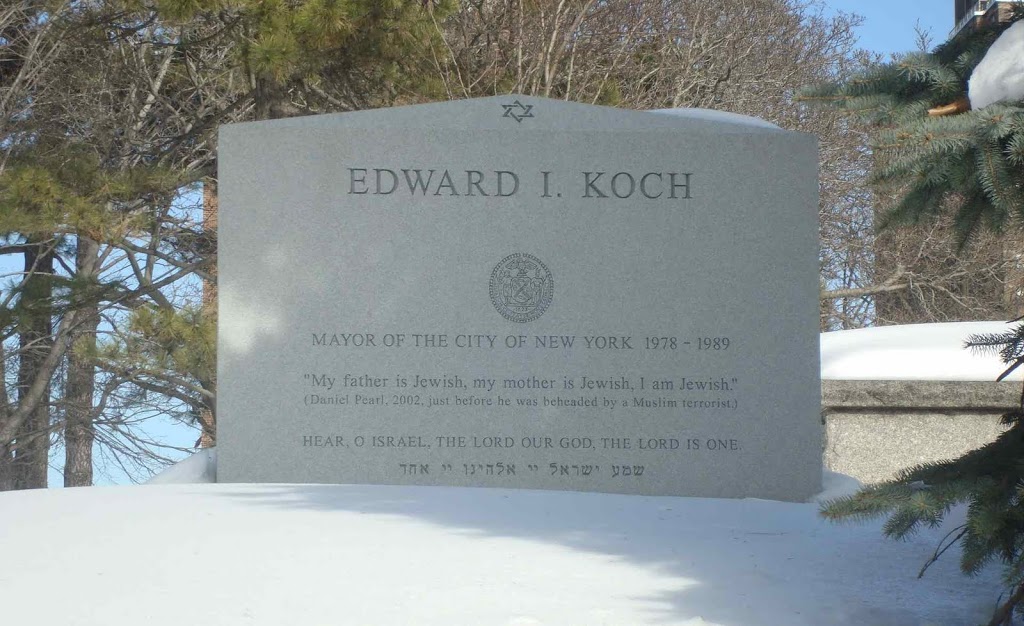
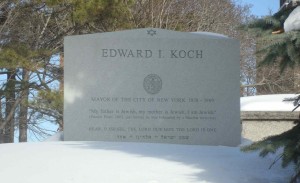
Koch’s tombstone, bearing the inscription: “‘My father is Jewish, my mother is Jewish, I am Jewish.’ (Daniel Pearl, 2002, just before he was beheaded by a Muslim terrorist.)”

Ed Koch likes to get a jump on things. The former mayor, who served as mayor of New York City from 1978 to 1989, went ahead a couple years ago and got himself a plot and a gravestone all arranged at the uptown Trinity Church Cemetery. You can actually visit his grave there and pay your pre-final respects.

He recently recounted his decision for the Huffington Post [What’s On My Tombstone, and Why], and it got me wondering if any other mayors were already buried at Trinity. (There’s two.) That soon developed into an investigation into how many former New York mayors are still buried in Manhattan. (Answer: seven so far.) Which then led to the following admittedly macabre project before you:

Here is a near-complete list of final resting places of (almost) all the mayors of New York City, from 1783 to present, a catalog of the various cemeteries and burial grounds where these former leaders of the city have been entombed, buried or otherwise interred.

Okay, I recognize I’ve gotten a little morbid on the blog recently (what with this and this, for instance), but this survey shouldn’t bum you out. The results of this little scavenger hunt actually say much about the priorities of New Yorkers past, the co-mingling of high society and politics and the rise and fall of egotism and pomp in the celebration of famous figures.

Most all these burial places are within a reasonable traveling distance of the city. Even the men who became mayors in the city’s early days were often tied to the region by familial connections. The one who went the most far afield (Edward Livingston, who made his reputation in Louisiana) came back to his family estate in Rhinebeck at the end of his life.

Only a handful (like Livingston and Dewitt Clinton) ever held a political position more powerful than mayor. Even when they were mayors, many weren’t very powerful at all, mere figureheads of strong political machines. Their business connections made some quite rich and internationally successful. But in the end, most came back to New York or the surrounding region.

I should preface by saying that I did not include any British appointed mayors from before the Revolutionary War. New York really became a new city on Evacuation Day 1783 when the British left the harbor, and the city’s leaders faced fresh challenges as an American port. It truly was a city anew when the first post-British mayor (James Duane) took office.

And practically speaking, it’s difficult to trace the final destinations of mayoral appointees from that far back anyway. Many left the colonies after their tenure. For instance, the British appointed mayor David Matthews, presiding over the city during the entire war (1776-1783), is buried somewhere in Canada, probably Nova Scotia.

There are four mayors I was not able to locate. I list those at the bottom of this post. Some of this data comes from single sources and thus, as with any crush of information like this one, if you see any errors, please email me or send me a comment. I will continue to update this as I discover more information.
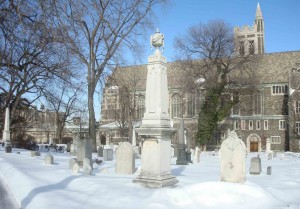

Above: A mighty obelisk to Fernando Wood, a man who once said, “The Almighty has fixed the distinction of the races; the Almighty has made the black man inferior, and sir, by no legislation, by no partisan success, by no revolution, by no military power, can you wipe out this distinction.”

MANHATTAN
Dear ole Ed Koch will have some unique companions at
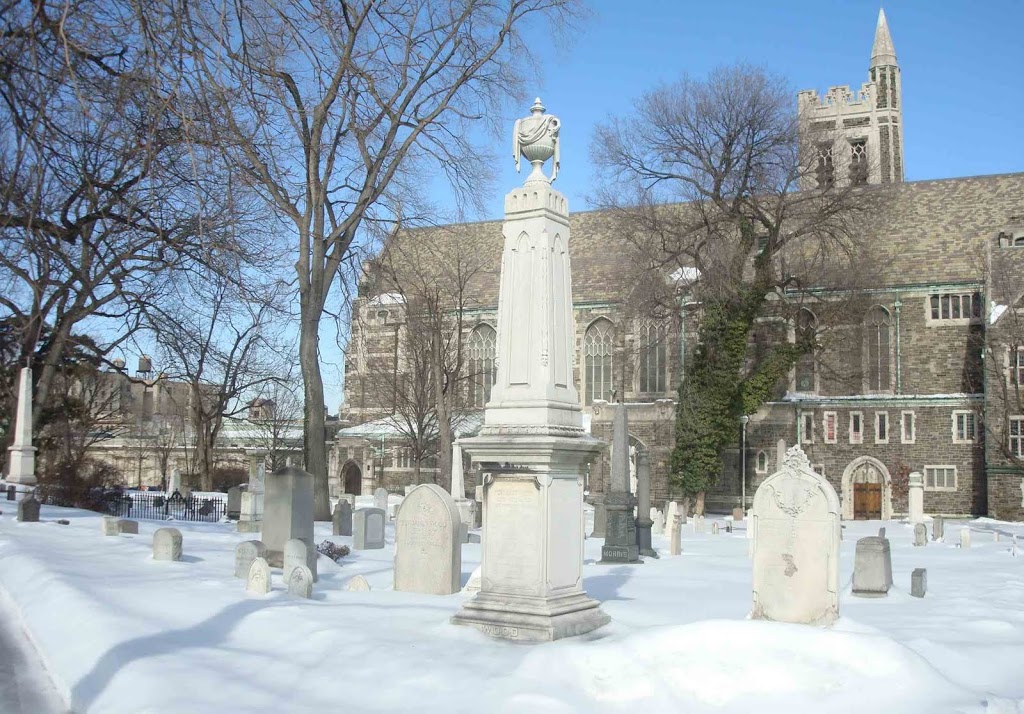
the Trinity Church Cemetery at West 153rd Street, sharing the location with two of New York’s most notorious office holders of all time. Fernando Wood (mayor from 1858-1858 and 1860-62), who famously recommended that the city secede with the South, is interred here, as is ‘Boss’ Tweed’s most elegant right-hand man, Abraham Oakey Hall (1869-1872). Nice company, Ed!

Downtown Manhattan cemeteries keep a few mayors around as well. In the East Village, at the New York Marble Cemetery, the “oldest public non-sectarian cemetery” in the city, you’ll find the remains of Whig representative Aaron Clark (1837-39), while the man who succeeded him as mayor, Isaac Varian, (1839-1841), resides down the street at its similarly named cousin, the New York City Marble Cemetery, along with sailmaker-mayor Stephen Allen (1821-24).

Philip Hone, known more for his observant diaries on New York than for his mayoralty (1826-27), gets a treasured spot at St.Marks-On-The-Bowery, entombed close to the vault of fabulous New Amsterdam tyrant-leader Peter Stuyvesant.

Finally, Trinity’s original churchyard at Wall Street and Broadway — the final home to Alexander Hamilton, Albert Gallatin and Robert Fulton, among others — has one New York mayor among its population: the Revolutionary War hero Marinus Willett (1807-1808). The stone marking his vault, the size of a brick, is quite easy to miss.

BROOKLYN
To the surprise of few, the place which hosts the most deceased New York mayors is
Green-Wood Cemetery, which became the burial place of choice for the upper class in the mid-19th century. But when it first opened in 1838, Brooklyn still felt a bit too bucolic for some. Other families shied from its less than sacred credentials. After all, Green-Wood would become a place for a picnic or a nice stroll on a summer’s day; more pious folk preferred the reverence of a church yard.
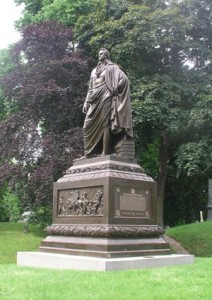
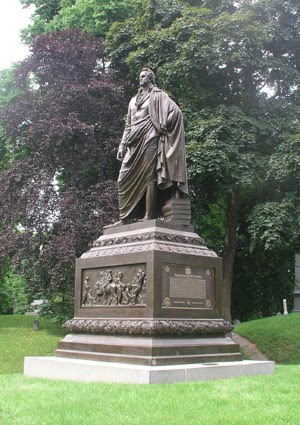
That is, until the body of former New York governor DeWitt Clinton (and mayor of New York from various periods: 1803-1807, 1808-1810, 1811-1815) was transferred from his resting place upstate to Green-Wood. Now a bonafide celebrity lay here: a child of the Founding Fathers’ generation and the driving force behind the Erie Canal. Society felt comfortable leaving their loved ones next to such a charming man for eternity. (Right: Clinton’s monument.)

A host of lesser mayors soon joined Clinton here. First came Andrew Mickle (1846-1847) and the anti-Irish mayor James Harper (1844-45), founder of a publishing empire.

Back-to-back mayors Ambrose Kingsland (1851-53) and shipping magnate Jacob Aaron Westervelt (1853-55) came along in the 1870s. Charles Godfrey Gunther (1864-65), the inspiration for the shortlived Brooklyn neighborhood Guntherville, is buried close to his more famous contemporary, publisher and reformer Horace Greeley.

The close ties between the Cooper and the Hewitt families remains even after death; you’ll find Peter Cooper’s son Edward Cooper (mayor from 1879-80) next to his brother-in-law and early subway proponent Abram Hewitt, the man who beat Theodore Roosevelt to become mayor from 1887-88. Both men were certainly acquainted with another Green-Wood resident, Seth Low, who was mayor of Brooklyn during Cooper’s tenure and eventually the mayor of the consolidated New York City in 1903-4.

Finally, the mayor who survived an assassin’s bullet to the throat, William Jay Gaynor (1910-13), has an odd marker in Green-Wood, according to the cemetery’s website, “a large open granite circle, on the ground. It is a variation on the Victorian symbol for eternity–a globe or circle that has no beginning and no end.”

Brooklyn is the borough with the most deceased New York mayors. And I’m not even counting Brooklyn’s own mayors, from before the 1898 consolidation*! You can find two more in Flatbush at the Catholic Holy Cross Cemetery. I imagine they’re very honored to have New York’s very first Irish Catholic mayor, the business savvy William Russell Grace (1880-82 and 1885-86), as well as the Col. Ardolph Loges Kline, the man who served briefly (a little more than three months in 1914) after Gaynor succumbed from his long-festering bullet wound.

*Brooklyn’s first mayor, George Hall, is buried at Green-Wood, as are several others.

BRONX
Woodlawn Cemetery was developed over 30 years after Green-Wood, but a great many wealthy and well-connected New Yorkers preferred its serene and pastoral setting. It’s the final home for businessmen (Rowland H. Macy), moguls (Jay Gould), authors (Herman Melville) and musicians (Miles Davis). And more than a few mayors.

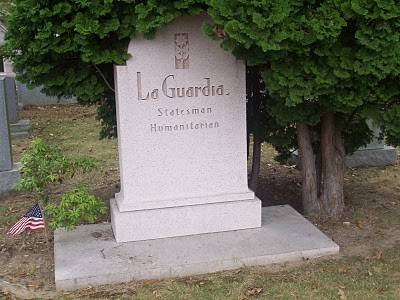
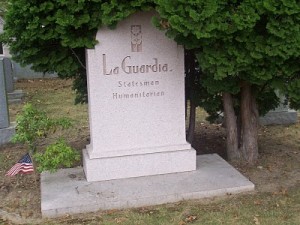
The man sometimes considered the greatest mayor of all, Fiorello LaGuardia (1934-45), is buried here with a modest tombstone hidden under a bush. It makes a striking statement compared to the elaborate and monolithic vaults scattered around it.

Woodlawn also has the unique distinction of containing the burial of Robert Van Wyck (1898-1901), the first mayor of the five-borough New York area. And the last two mayors of pre-consolidated New York (when it was just Manhattan and a few areas of the Bronx) are also around here: the “striking looking” pro-Tammany Thomas Gilroy (1893-94) and stern, anti-Tammany William Strong (1895-97), best known for hiring Theodore Roosevelt as police commissioner.

There are 19th century industrialists galore at Woodlawn, so it’s no surprise to discover Williamsburgh sugar king and three-time New York mayor William Havemeyer (1845-46, 1848-9) here, as is the man who served between Havemeyer’s two terms, William Brady (1847-48).
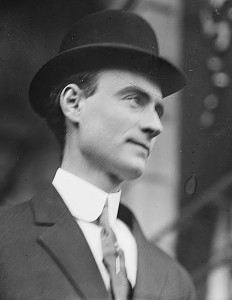

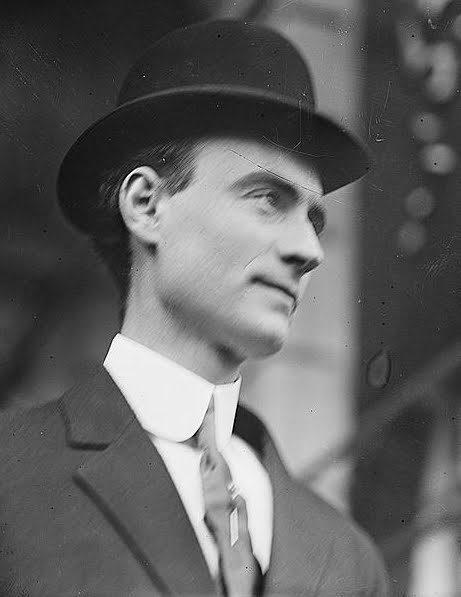
Finally, no visit to this quiet outlet in the Bronx is complete without searching out the ‘boy mayor’ John Purroy Mitchel (1914-17), an enigmatic figure in New York political history, who became mayor at age 35 and tragically fell out of a plane during military training before his 39th birthday. He’s also honored with an unusual gold bust in Central Park near the reservoir. (At left: Mitchel as mayor)

Mitchel’s stone has the curious inscription: “May His angels lead thee into paradise, which is thy home, for in Israel there is corruption.”

Further south from Woodlawn you’ll find Robert Morris** (1841-1844), a member of the famous Morris clan (as in Gouverneur Morris), buried in the family plot at St. Ann’s Episcopal Church in Mott Haven, the oldest church in the Bronx.

**This is something I need to confirm. Morris’ wife Ann Eliza Morris is buried at Green-Wood. There is a Robert Morris buried nearby, but the date of death does not match the former mayor’s.

QUEENS
Calvary Cemetery in Woodside, Queens, is closely tied to the parishioners of Old St. Patrick’s in Manhattan, who purchased a bit of farmland out in Queens County in 1846 to bury members of its large Irish congregation. In the last century, it was made famous for its afterworld connections to organized crime, both real (many famous mafioso are interred here) and imagined (it’s in The Godfather).

Two very different mayors are interred here, both born in Manhattan and both closely aligned with Tammany Hall: New York’s youngest mayor ever, Hugh J. Grant (1889-92), and Robert Wagner Jr. (1954-65).

Go a little ways east to Middle Village and to another Catholic grave site, St. John’s Cemetery, where you’ll find John F. Hylan (1918-25), a man of the railroad world who was pivotal in the creation of the IND, the first rapid transit line wholly owned and operated by the city.

Three other early 19th century mayors from well connected families are found in surrounding neighborhoods. At the small, colonial Grace Church Cemetery in Jamaica, meet up with good ole Cadwallader D. Colden (1818-21) next to a signer of the Constitution (Rufus King). Walter Bowne (1829-33), with deep family connections to the area, is buried at Flushing Cemetery, east of the home of his Quaker ancestor John Bowne.

But the most mysterious site is in Bayside. Here, at a small, sparsely wooded grave site, you can find a cluster of tombstones, many with the same name. The Lawrence Cemetery is on land owned by the family since the Dutch era. A small, bare obelisk marks the place where Cornelius Lawrence (1834-37) lays. He’s the first man every popularly elected mayor; before Lawrence, the job was appointed or voted on only by the Common (City) Council.

LONG ISLAND
Beyond the borders of the city and along the north shore of Long Island, you can locate a few other resting places of past city leaders. From west to east we have:
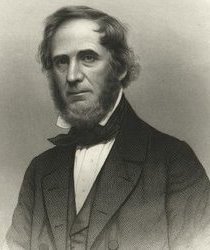
Daniel F. Tiemann (1858-60), “the paint king of New York and a member of the Peter Cooper clan by way of marrying Peter’s niece, is not buried in Green-Wood with the rest of Cooper/Hewitt dynasty. Instead you can find him in the old village of Hempstead, at Greenfield Cemetery. However I’ve not yet figured out why he would be interred all the way out here. (Tiemann at right)

John Lindsay, the ‘fun’ dashing, ambitious and often controversial mayor from 1966-1972, rests along a winding road near Cold Spring Harbor, in a small rustic cemetery near St. John’s Church.

William H. Wickham (1875-76), an anti-Tweed Democrat and an early president of the formative New York Fire Department, was born in Smithtown and was returned for burial there in the town’s small and very lovely cemetery.

Caleb Smith Woodhull (1949-51), who ineffectively looked on during the Astor Place Riots, was a landowner in Miller Place on the north shore and is buried nearby at Ceder Hill Cemetery overlooking the fantastic Port Jefferson. Fun fact: a member of the local historical society dressed as Mr. Woodhull during the burial ground’s 150th anniversary last year. [There’s even a picture!]

UPSTATE
A large number of former statesmen are scattered throughout the state, with a large concentration in the Hudson River Valley, close to the modern borders of the city.

For afficianados of Prohibition era politics, look no further than the Gate of Heaven Cemetery in Westchester Country, which opened in 1917 and quickly attracted some big name interments. One of the first was that of actress Anna Held, former companion of Florenz Ziegfeld. Other iconic New Yorkers like Babe Ruth, James Cagney and Conde Nast are also here.

Jimmy Walker (1926-1932), the posh ‘Beau James’ and symbol of New York’s roaring ’20s, died in 1946 several years after resigning from politics due to corruption charges. He’s buried at Gate of Heaven under a tombstone he might have considered far too modest. Coincidentally, the two men who briefly filled the mayors seat after him, Joseph McKee (1932) and John O’Brien (1933), also followed him here.

Sleepy Hollow contains one of the oldest cemeteries in the country, the rustic Old Dutch Burying Ground, and within it, one mayor of New York, the brigadier general William Paulding Jr. (two terms 1825-26, 1827-29), who fought in the War of 1812. A short drive north is the lovely riverside town of Ossining and its 160-year old Dale Cemetery, the final home for former mayor and governor John Hoffman (1866-68), whose close associations with the Tweed Ring corroded his political career.

Due north, in Rhinebeck, you’ll find the family vaults of the Livingston family, including that of Edward Livingston (1801-03), who reinvented himself after his tenure, becoming the U.S. Secretary of State under Andrew Jackson.

Other old mayors buried throughout the state include leather-maker Gideon Lee (1833-34) in Geneva, NY; Tammany pawn John Ferguson (1815) in Sullivan, NY; and father of the Bronx park system Franklin Edson (1883-84) in Menands, NY, near Albany.

Finally, New York’s first post-British mayor, James Duane (1784-89), the namesake of Duane Street, also gave his name to an entire town, Duanesburg, near Schenectady. Duane had hoped the town would become New York’s capital city, before Albany was chosen in 1797 (the year Duane died). Appropriately, he is interred here, at the rustic, old Christ Episcopal Church.
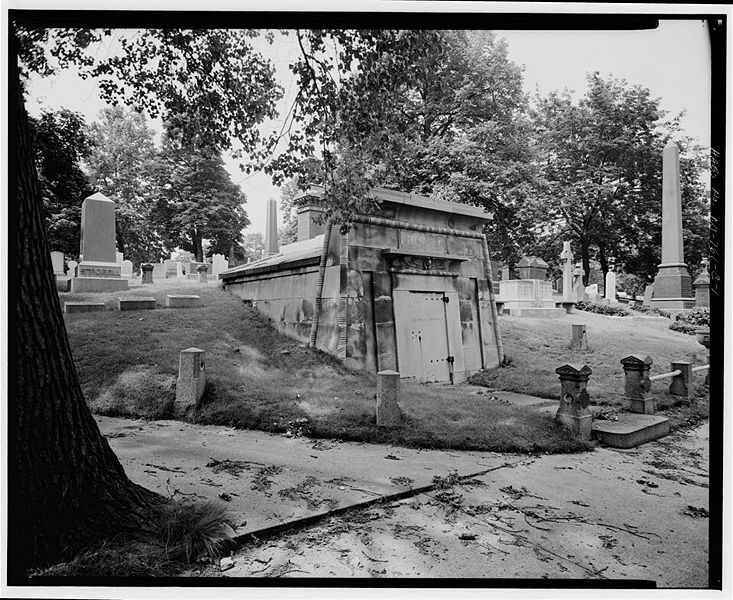
Above: the vault of George Opdyke, in Newark, NJ

OUT OF STATE
Finally, at least six former mayors are buried out of state but remain a short trainride away. For instance, the Sicilian-born Vincent Impellitteri (1950-53), moved to Connecticut after his tenure and is buried in a Catholic cemetery in Derby (Mount St. Peters).

In New Jersey, you’ll find the vault of Civil War mayor George Opdyke (1862-63) at Mt. Pleasant Cemetery in Newark, and the unsuspecting former aide to Benedict Arnold and long-lasting mayoral figure Richard Varick (1789-1801) at the historic First Reformed Dutch Church burial ground in Hackensack.

The slight figure of Smith Ely Jr., may have been New York mayor from 1877-78, but he’s New Jersey born, and he died there one hundred years ago, in 1911. Ely ruled the city the year Boss Tweed died, and he famously refused to lower the flags to half-mast for the Tammany Hall trouble maker. The former mayor and commissioner of Central Park is buried under an imposing monument on his family’s estate, now the Ely Cemetery, in Livingston, NJ.

And finally, we come to two men whose final resting place is the furthest from the city, but its location is an honor indeed — Arlington National Cemetery. William O’Dwyer (1946-1950), actually ran for New York mayor in 1941. When he lost to LaGuardia, he enlisted in the army, becoming a brigadier general, thus making him eligible for burial at Arlington. (I guess they overlooked all that nastiness about his alleged mafia connections.)

George McClellan (1904-09) ruled the roost during the height of New York’s gilded era and was there — literally driving the train — at the opening of the New York subway in 1904. George never fought in any wars, but his father George B. McClellan sure did. And it’s that connection that puts him in the most prestigious cemetery in America.

AND STILL LOOKING FOR….
There are a few that I was unable to locate, and if you have any information regarding any of them, just leave me a note below and I’ll update this article. I’m afraid I may never find the locations of lesser figures like either
Thomas Coman (1868) and Samuel B.H. Vance (1874). Coincidentally, both men were interim mayors, serving only one month apiece.

But two full-term mayors have eluded me as well. One is Jacob Radcliff (1810-11, 1815-18), one of the first true Tammany Hall puppets. And believe it or not, information regarding the location of New York’s first Jewish mayor Abraham Beame (1974-77), who just died in 2001, escapes me.

MAP IT!
I’ve put most of the locations above on a Google map. Most markers are approximate and in the case of some small towns, I’ve placed the marker in town center instead of the cemetery in questions — sometimes hard to find in a satellite view.

View Burial sites of New York City mayors in a larger map

The Limelight – a church, then a nightclub, now a mall!


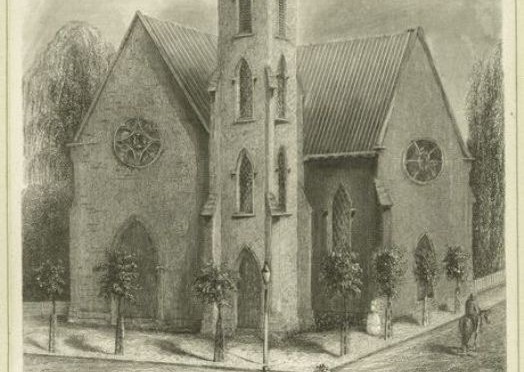
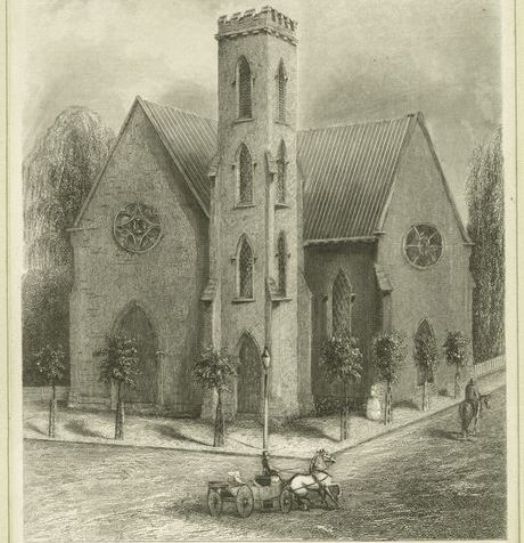
The sanguine days of the Holy Communion, pictured here over 150 years before it would be reconfigured as a shopping mall (from Booth’s History of New York, mid 19th century, courtesy NYPL)

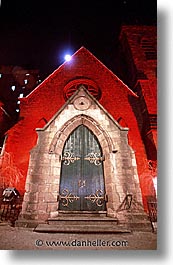
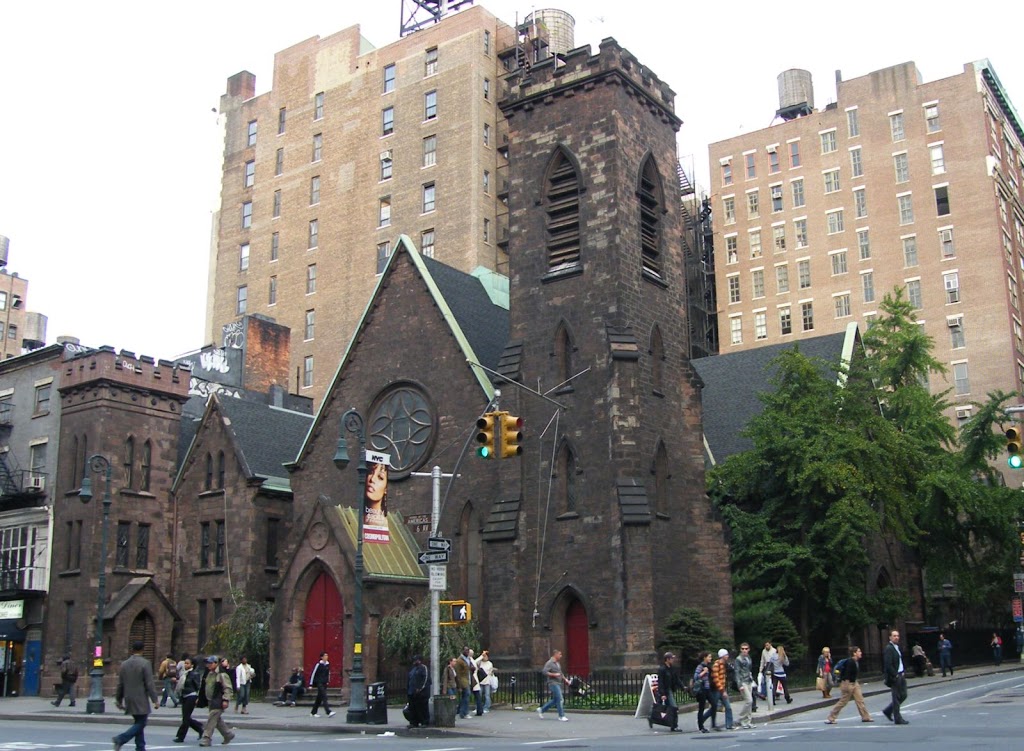
On Friday afternoon, yet another completely implausible transformation will overtake Holy Communion Episcopal Church when it reopens as the Limelight Marketplace, a spacious mall with 60 retailers sitting aside Gothic church features and the ghosts of strung-out club kids.

In honor of this curious transformation, I’m reprinting (with revisions) my history of this building and its later incarnation as the Limelight, one of the most notorious dance clubs of the 1990s. (Originally posted on Aug 10, 2007)


Holy Communion Episcopal Church was never meant to be the gateway to Hell. This lush Gothic style was designed and completed between 1844-1846 by Richard Upjohn, one of early America’s great architects, the master of Gothic Revival style and creator of downtown’s Trinity Church. It was built during a grand time for new churches in the city; in addition to Trinity (which opened in 1846), James Renwick was finishing up work that same year on Grace Church.
Upjohn designed the new chapel for its founder, the Reverend William Muhlenberg, a rector from Flushing, Queens, and known today as the founder of the Episcopal religious school movement. Perhaps the architect could foresee the church’s future tilting towards the bizarre, as it’s the first asymmetrical Gothic church in America. The first! Think of all the uniform symmetry in most churches over 150 years old, and you’ll appreciate its uniqueness.

In its prime, the toast of New York filled its pews, including Cornelius Vanderbilt, John Jacob Astor and Jay Gould. A shadow of its altruistic days can still be seen hovering over St Luke’s Hospital (now St. Luke’s-Roosevelt Hospital Center), which the congregation helped found. To tie this into our podcast on the Dakota Apartments, it was in this hospital that John Lennon died of his wounds sustained at the Dakota.

A convent was added in 1854 where the “Guardians of the Sisterhood of the Holy Communion” — one of the first Anglican orders of nuns — cared for the sick and infirm, well into the new century.

The church fell upon hard times by the mid-century and was eventually sold to a drug rehabilitation center. According to a bishop at the time, there was an implicit understanding that the house of worship was always meant to help the needy. Then Peter Gatien came along, catering to a different kind of need.

Gatien was a club owner who gobbled up nightclub spaces and transformed them into branded clubs called the Limelight — first in Hollywood, Florida, then Atlanta, and London. (He would eventually own many clubs in Manhattan, including the Tunnel, the Palladium downtown, and Club USA.) The Gothic church on 6th Ave proved too enticing — the one in London was also in a former house of worship — and soon Gatien turned the once reverent spot into a house of decadence, opening on November 1983.

From People Magazine’s coverage of the club opening: “Is this consecrated ground?” asked fashion photographer Francesco Scavullo nervously. “Everybody’s having a good time, so I’m not putting it down,” said supermodel Cheryl Tiegs, there with hubby Peter Beard. “Listen,” chimed in Judy Garland’s daughter Lorna Luft, “they’ve been dancing in churches for a long time. Now we’ve just got a little bass added.”

The Limelight distorted Upjohn’s Gothic furnishings through a funhouse mirror. Its labyrinthine hallways and stairwells spilled into ornately designed lounges and dancefloors. Old marble crypts sat next to rows of liquor bottles. The chapel became a VIP lounge. Upstairs, surrealist illustrator HR Giger, famous for his designs of the creatures from the Alien films, created a signature dance floor.

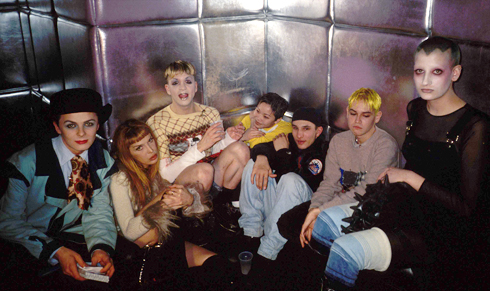
However it was its occupants that made the headlines. In the late 80s and 90s, Peter Gatien and the Limelight helped foster its own buffet of self-made celebrities, the club kid, brightly colored freakshows whose only purpose was to shock and make everybody feel smaller.

Ruler among them was Michael Alig, an extravagent promoter of both his club, his lifestyle and himself. A protege of another nightlife maven James St James, Alig’s wild parties at the Limelight were the stuff of urban legend.

Actual celebrities who frequented the club, like Eddie Murphy and Michael Douglas, were no match for Alig and his menagerie, which often included a few New York celebrities around today — Amanda LaPore, Rupaul and the duo Heatherette, now legitimate fashion designers in their own right.

The avarice of the early ’90s would lead to the downfalls of the Limelight’s main characters. Alig would be charged with murdering fellow club kid Angel Melendez. Gatien was arrested on drug charges in 1996 — by then, the Limelight was a veritable candy store for ecstacy and ‘special k’ — and in 1999 for tax evasion. Alig is in prison, serving a 20-year sentence; Gatien is in Canada, presumably forever.

The Limelight itself? After a dramatic shuttering in 2001, the club was reopened under the name Avalon, and still entertains throngs craving a thumping beat and a really expensive cocktail. The club kids are gone, but ghosts remain, as do the crypts.

You can of course catch a glimpse of the decadence in the film Party Monster, about the kooky days of Alig and the Club Kids, both in documentary and Macauley Culkin-vehicle formats. Harvey Keitel also takes a visit to the club in Bad Lieutenant.

Captain Kidd and his swanky New York waterfront home

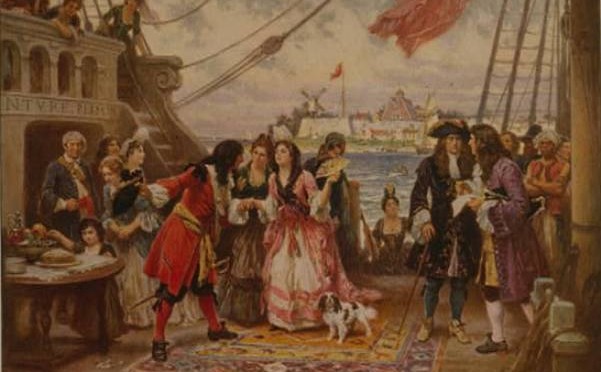
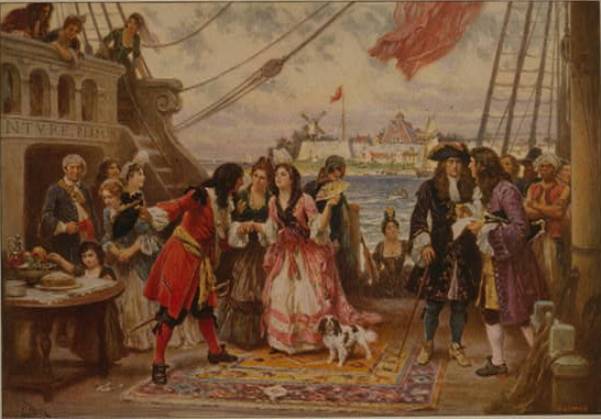
Above: A fanciful painting of Captain Kidd in New York Harbor, by Jean-Leon Gerome Ferris, 1911. Notice Fort James (former Fort Amsterdam) and the adjoining windmill in the background

In this week’s podcast, I refer to New Yorker and Trinity Church benefactor William Kidd as one of the most notorious pirates of the Atlantic Ocean. Now I feel that might have been a bit of slander.

It is true that Kidd, forever known to generations of seafarers as Captain Kidd, was vilified by the British for illicit profiteering and eventually hanged in London on May 23, 1701. But Kidd himself fought off the charges voraciously, and today historians believe Kidd was scapegoated and was himself following orders of the governor of the New York colony himself — Richard Coote, the Earl of Bellomont. Yes, the man who tried to annul the charter of Trinity Church!

I’ll save the details of Kidd’s exploits for various pirate-themed blogs. Kidd may have been prosecuted unfairly, but the legend that arose around his real or imagined exploits makes him one of New York City’s most notorious residents of the 17th century. Not only was Kidd one of early New York’s most wealthy residents, but almost without question he had one of the best views in the city from his bedroom.

According to historian Richard Zacks, New York was “the pirate port of choice in the English colonies in North America” in 1690s, with its rich harbor and its relatively multi-cultural port. Still a volatile colony amongst England’s land possessions, it was easy to walk around without harassment and recruit other like minded scallywags for upcoming jobs.

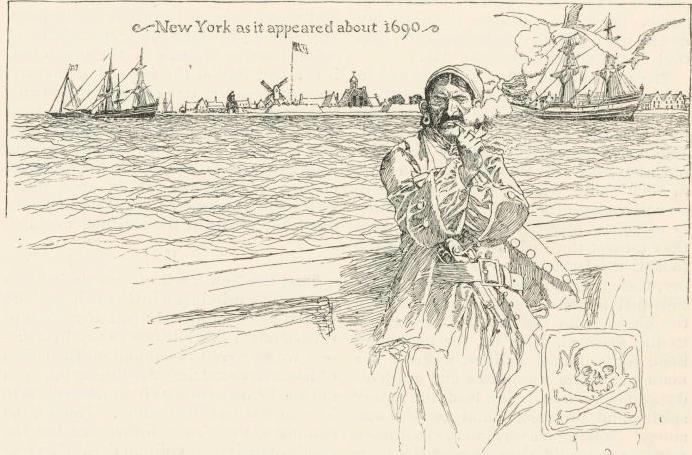
Below: A fanciful sketch by artist Howard Pile (dated Nov. 1894) for Harpers Magazine, with fort and windmill also in background [source NYPL]

Kidd was an employee of the Crown, a privateer essentially hired to capture pirates and any foreign vessels that got in England’s way. He was based in New York for many of the same reasons more illicit sea captains were here — opportunities, money and a suitable harbor for his vessel (Kidd’s was called the Adventure Galley).

He came to New York in 1691 and soon married Sarah Oort, a woman with extraordinary bad luck. Her first two husbands had died, one at sea, and after Kidd’s execution, she would then marry a fourth time. William and Sarah would have two daughters who would marry well into New York society despite their father’s notoriety.

Despite his career, Kidd was considered a respectable New York gentleman — much, I imagine, because of his wife’s standing from her prior two marriages. Also, their digs weren’t bad. Although the Kidds owned several properties (again, thanks to Sarah), their primary residence was at the 119 Pearl Street, at the corner of Hanover and Pearl streets, a location which would have been waterfront property back in the day. It was also closely situated to Hanover Square, New York’s retail district and later home of the colony’s first newspapers.

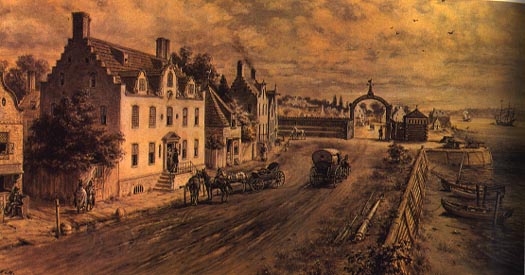
The sizable home was located next to New York’s old wall, a fortification that would be ripped down within the decade and replaced with the street named after it. Kidd’s home is pictured below (i.e. the big white one):

The Kidds home was especially lavish for the time, with “104 ounces of silverware,” a healthy wine cellar and the biggest Turkish carpet in the city. Their wealth would have made them candidates for a pew at the newly built Trinity Church in 1696. Although Kidd provided equipment to help build the church, it appears Kidd himself never worshipped there. (His wife Sarah most likely did.)

Virtually no traces of this era exist in downtown Manhattan today, and the land extension east and the skyscrapers built there eradicate the view the Kidds would have had from their home.

Over a hundred years later, at the same address lived a man named Jean Victor Marie Moreau who would also influence world history: he’s best known as one-time right-hand-man of Napoleon Bonaparte, banished for betrayal in 1804 and sent to America, where he lived for a time at 119 Pearl.

You can read a nice, lengthy piece about Kidd and his New York connections here at Maritime History.

Categories
Podcasts

Trinity Church: anchor of Wall Street, New York’s landlord

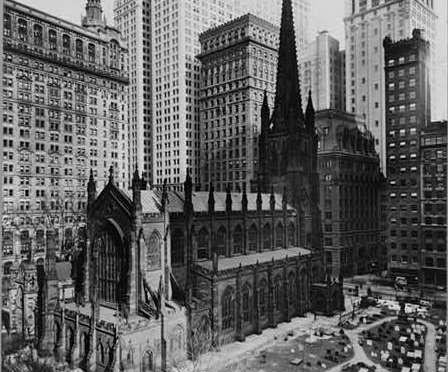
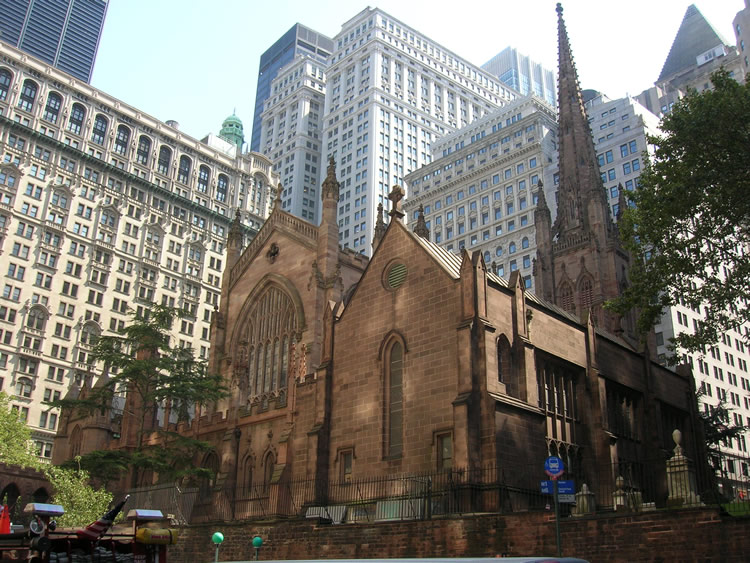
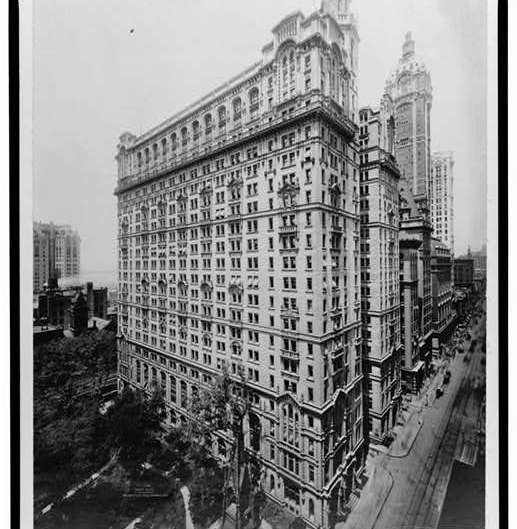
Above: The seemingly unchanged Trinity in 1916, already dwarfed by skyscrapers

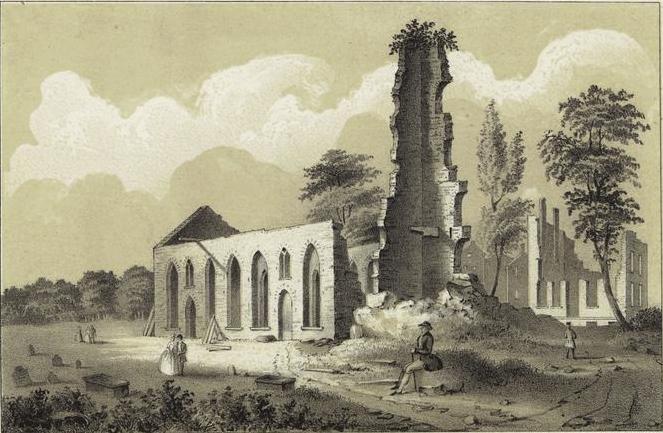
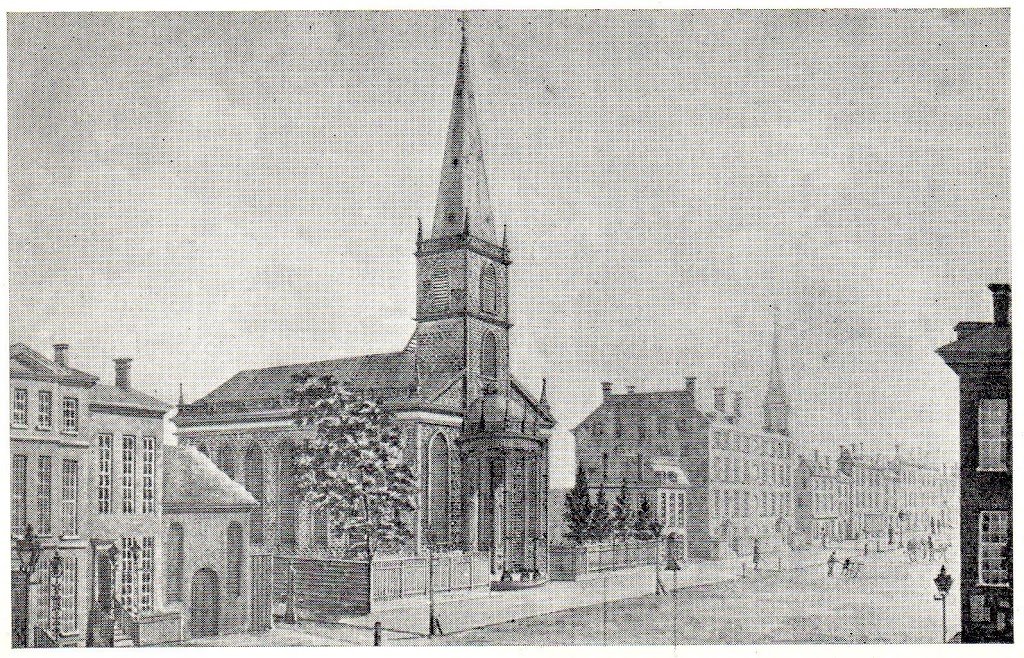
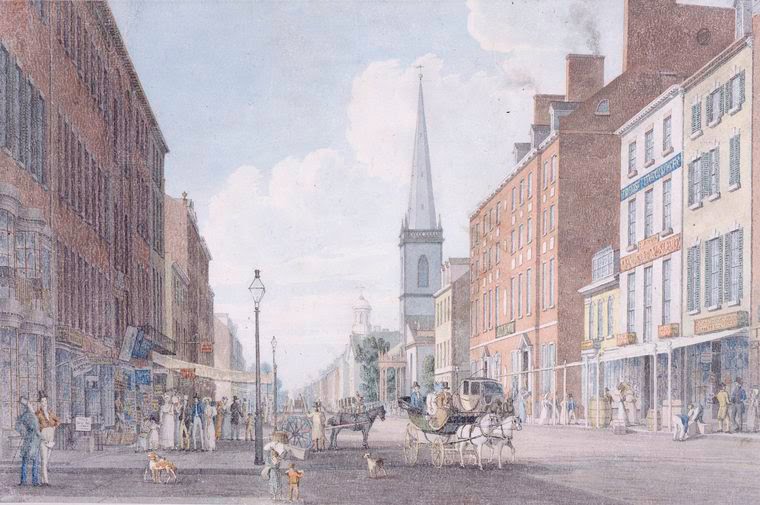
PODCAST Trinity Church, with its distinctive spire staring down upon the west end of Wall Street, is more than just a house of worship. Over three different church buildings have sat at this site, and the current one by architect Richard Upjohn is one of America’s finest examples of Gothic Revival architecture.

The church collected Manhattan’s upper crust for decades and functions as one of the city’s most powerful landowners. Listen to our short history on the New York institution and find out who’s buried in their famous churchyards — Founding Fathers, inventors and a whole lotta Astors.

___________________________________
Clarification: In discussing the religious make-up of late 17th century New York, we failed to clarify that there were many Anglicans that already lived in the city but were not associated with the Church of England. These “English dissenters” belief systems were similar to the Anglicans but they disagreed with state meddling into religious affairs.
___________________________________

Fire Walk With Me: Below is a 19th century illustration of the ruins of the first Trinity Church, gutted in the fire of 1776 which subsequently destroyed one quarter of the entire city. The remains sat for many years undisturbed, and a second church would only be rebuilt after the British were expelled from New York. [NYPL]

___________________________________

Snowed In: The second Trinity church, built on the same spot as the first, sat for over four decades until weight from massive snows during the winter of 1836 weakened the roof to such an extent that the entire structure had to be demolished. [NYPL]

Another view of the second one (dated 1830), looking down Broadway. Trinity’s distinctive spire was already considered the city’s most recognizable landmark.

___________________________________

Third Times A Charm: Richard Upjohn’s Gothic Revival masterpiece was the tallest building in New York from the time it opened in 1847 (the date of this lithograph) until 1890, when it was finally usurped by the New York World building. [NYPL]

The same view, from 1903, as the city morphs rapidly around Trinity.

Witness to the September 16, 1920, terrorist bombing in front of JP Morgan’s….

…and the World Trade Center attack on September 11, 2001. [courtesy Sacred Destinations]
___________________________________

Looking good from all sides. [Courtesy Sound Mind]

___________________________________

Below is the Trinity Building from 1911. This is the replacement of a building that once stood here that is commonly considered New York’s very first office building. That five-story building, also designed by Upjohn, stood here for about fifty years and was demolished in 1904 to make way for the Beaux-Arts beauty standing there today.

For more information, visitin the Trinity Wall Street website for information on tours and afternoon concerts. And as always, thanks to the New York Public Library for use of some of the images above.

New York’s first newspaper — the Gazette


The Trinity Church grave marker of William Bradford, publisher of the New York Gazette.

Dusting off the cobwebs of your high school history curriculum, you might remember the tale of John Peter Zenger, the publisher of the New York Weekly Journal whose libel trial in 1735 marked the beginning of the American discussion of freedom of the press. However, if you were to remember the Journal as New York’s very first newspaper, you would be close, but wrong.

The German-born Zenger came to America in 1710 when he was 13 years old and quickly became an apprentice in the shops of William Bradford, public printer of the New York colony and the city’s best known — and, oh yes, only — real printer at the time. (It was so easy to climb the corporate ladder back in those days.)

The Quaker Bradford was a mouthpiece for the crown but had exhibited a rambunctuous side when he first settled in the spanking new town of Philadelphia in 1682. He was scandalized by the spiritual wanderings of the Quakers farther north in New England and published the political treatise of critic George David effectively denouncing them. For that he was jailed and his printing press taken away.

As a New Yorker, he was far better behaved. At his new press near Fort William (that’s the former Fort Amsterdam and the current site of the Custom House), Bradford took Zenger on as a partner and on November 8, 1725, published Manhattan’s very first newspaper — the New York Gazette.

It was an unspectacular piece of journalism. Author Frank Luther Mott describes it as a “small two-page paper, poorly printed, and containing chiefly foreign news from three to six months old, state papers, lists of ships entered and cleared, and a few advertisements.”

Bradford would continue publishing the Gazette until 1744, never wavering from official crown duties. (The colony would see many newspapers named the New York Gazette over the proceeding years.) But Zenger would start his own press in 1726 and would spawn the Weekly Journal in 1733, which would go on to criticize the oppressive policies of governor William Cosby (pictured above), who Zenger documents as infringing on the “liberties and properties” of the New York colonists.

Meanwhile, Cosby had installed a censor at the Gazette and, apparently, commanded heroic sonnets be published about him, such as this one:

“Cosby the mild, the happy, good and great,
The strongest guard of our little state;
….
He unconcerned will let the wretches roar,
And govern just, as others did before.”

So naturally, that same year Cosby accused Zenger of libel in the very pages of the Gazette, an accusatioin that eventually led to Zenger’s landmark trial in 1735 and eventual acquital.

By the way, believe it or not, you can visit William Bradford. He’s buried at Trinity Church. As for John Peter Zenger, it is believed that he too may also be buried at Trinity — but in an unmarked grave!