Categories
Know Your Mayors Politics and Protest Queens History

Mayor Cadwallader D. Colden: Leading the city over 200 years ago

We’re just months away from a new mayor in New York City so we think it is time that you Know Your Mayors! Become familiar with other men who’ve held the job, from the ultra-powerful to the political puppets, the most effective to the most useless leaders in New York City history.

This longtime feature of this website is being rebooted with new articles and newly researched and refreshed earlier entries in this series. Check back every other week for a new installment. Read past articles here.
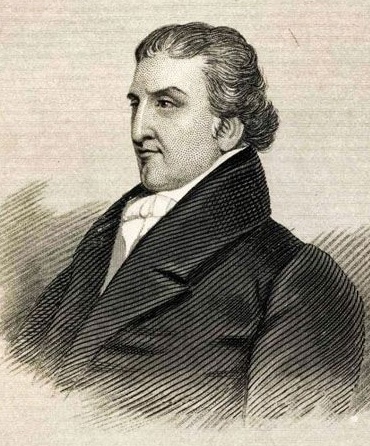
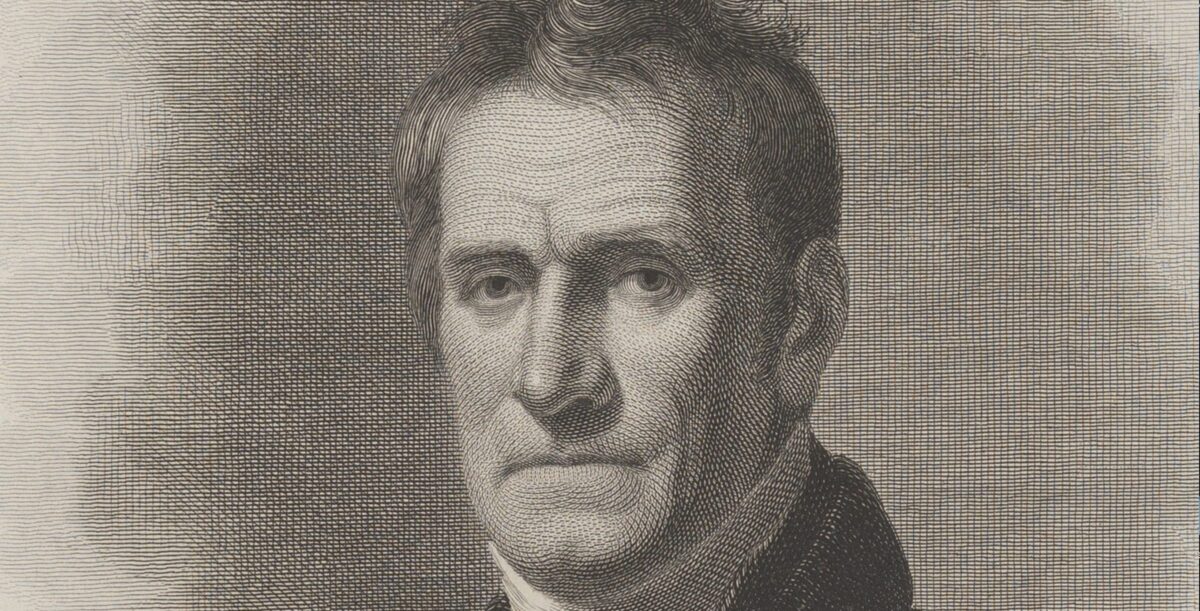
Cadwallader D. Colden
Terms: 1818-1821

The most remarkable thing about New York City having a mayor named Cadwallader Colden is the fact that he was not even the most famous New Yorker named Cadwallader Colden.

That distinction goes to his grandfather, an altogether different Cadwallader Colden than his grandson and a rather fascinating Renaissance man.

Well, despite the fact that he was also pro-British, stridently hated among the American rebels and the type of man that would have thrown most of us in jail on sight.

Grandpa Colden

Ole Cadwallader was an Irish physician who came to the American colonies in 1710 (at age 22) to practice medicine.

Establishing his practice in Philadelphia, he later came to New York and in 1743 wrote a now seemingly obvious treatise drawing a connection between New York’s unsanitary conditions and its frequent outbreaks of yellow fever.
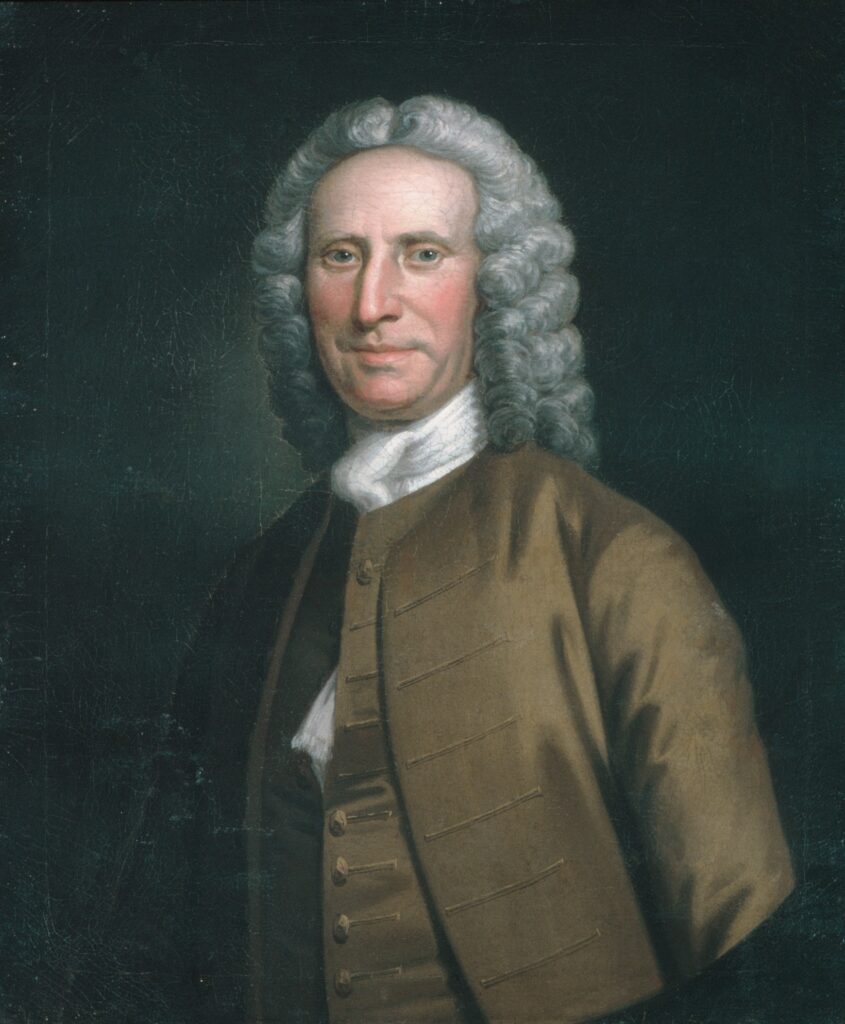
Painting of the Elder Colden by John Wollaston the Younger. Wikimedia Commons

Elder Colden became governor of the New York colony in 1760 and later sparked ire among beleaguered New Yorkers, who burned his effigy over enactment of the Stamp Act.

Colden ultimately represented the losing side of the American Revolution, and due to that, his other accomplishments are often overlooked. He was the first in America to write about Newtonian scientific theories and the first colonist to act as ambassador to the Iroquois Confederacy, the union of five Native American tribes.

Grandson in a New County

Perhaps it’s fitting that Colden died in September 1776, the year of the conflict that would run the British out forever.

He might be scandalized to know that his grandson, born in 1769 in Flushing, Queens County, would become a model American. (The child’s father Cadwallader Colden II was more concerned with governing the family’s lush 3,000 acre estate in Queens and remained essentially neutral during the Revolutionary War.)

Born in the trappings of wealth, Cadwallader David Colden III was shipped off to London for a proper education and returned to New York in 1785 to become a lawyer.

With his high class connections, he quickly acquired an impressive client roster, in particular Robert Fulton and Robert Livingston, assisting in their control of ferry services in New York harbor. He became New York district attorney twice, 1798 and 1810.
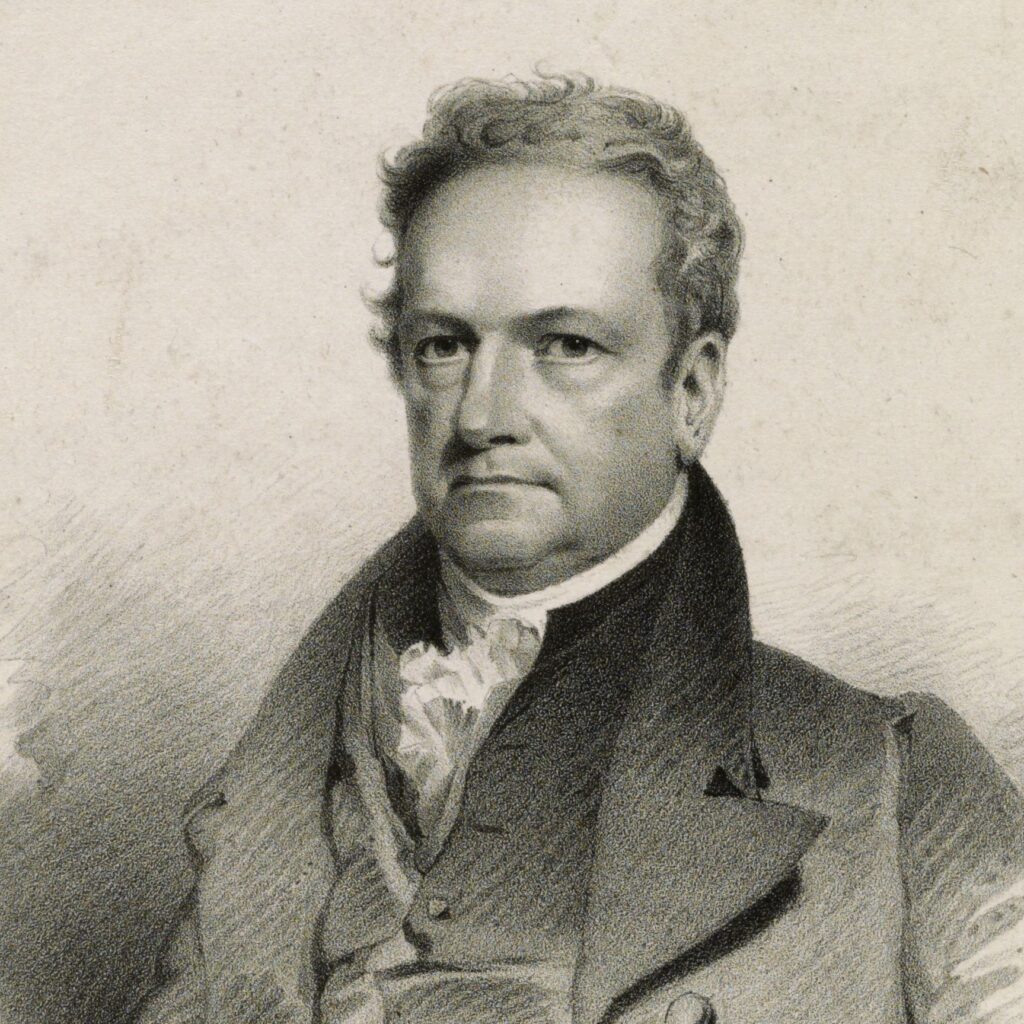
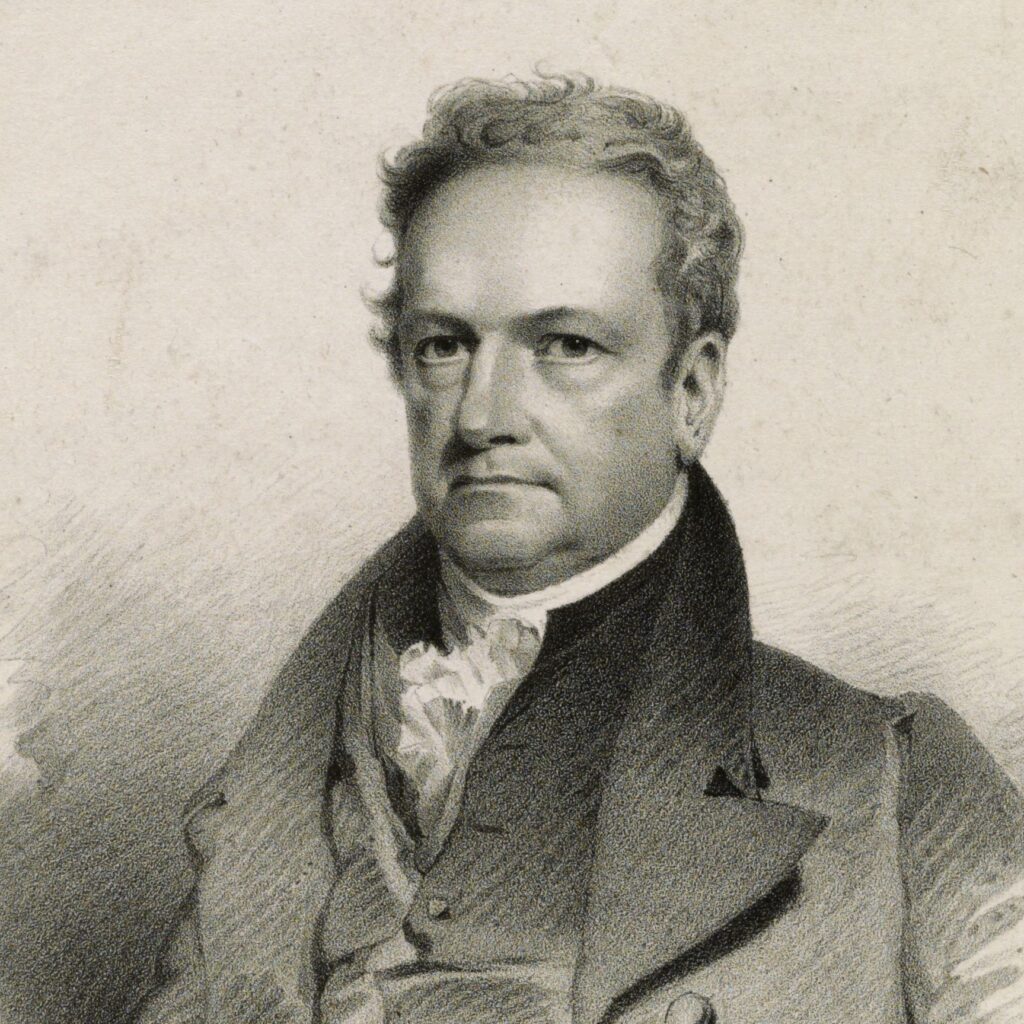
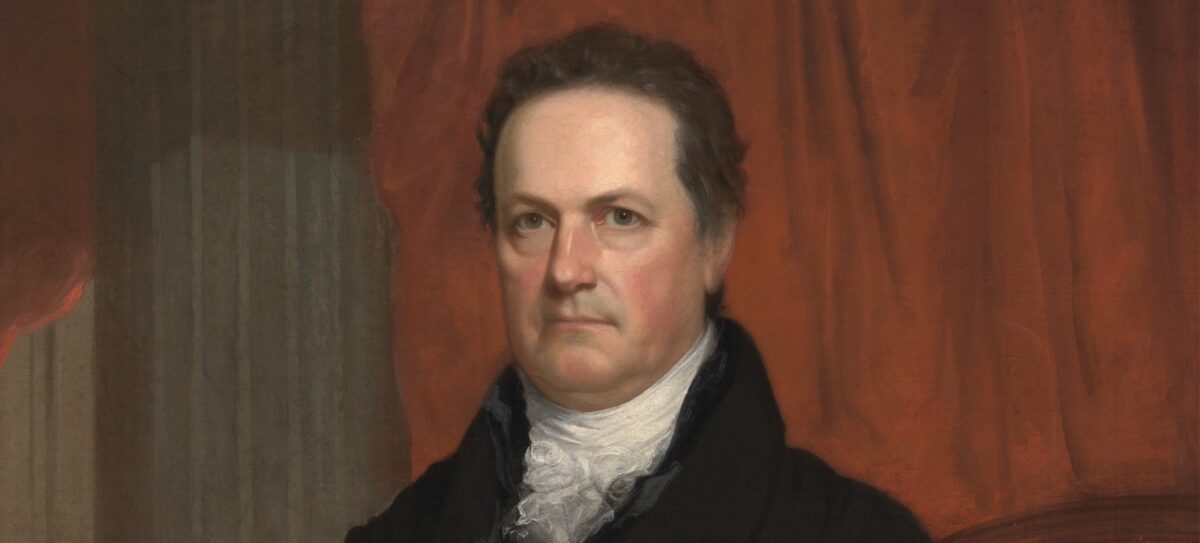
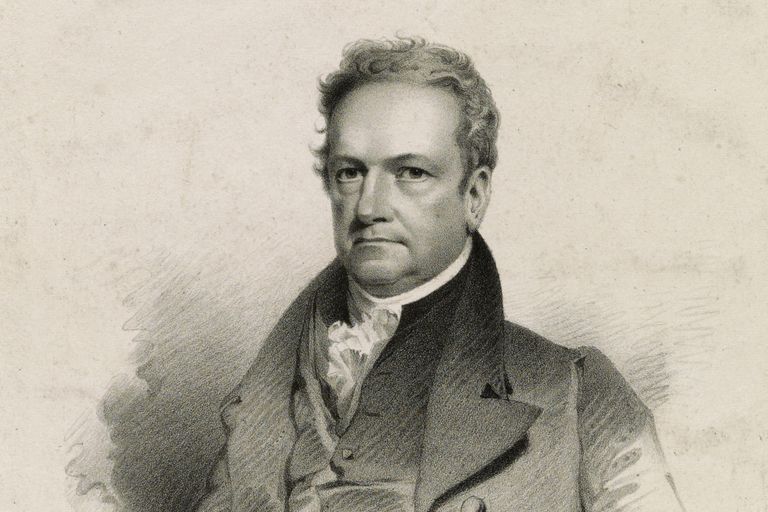
Colden’s good pal DeWitt Clinton

Advantageous Friendships

Colden was a different man from his ancestor; he even fought against the British as a colonel of volunteers in the War of 1812. Surprising given his lineage, Colden was for many years considered a Federalist, the party of Alexander Hamilton. However, he considered as one of his closest friends a rather unlikely ally — anti-Federalist DeWitt Clinton.

How they met probably had less to do with political alliances than membership of a rather notable society — the Freemasons.

In fact, Colden and Clinton were members of the city’s most influential — and still active — Holland Lodge. Within a few years, this affiliation would be political poison, with anti-Freemason candidates characterizing the secret organization as above the law and morally corrupt.
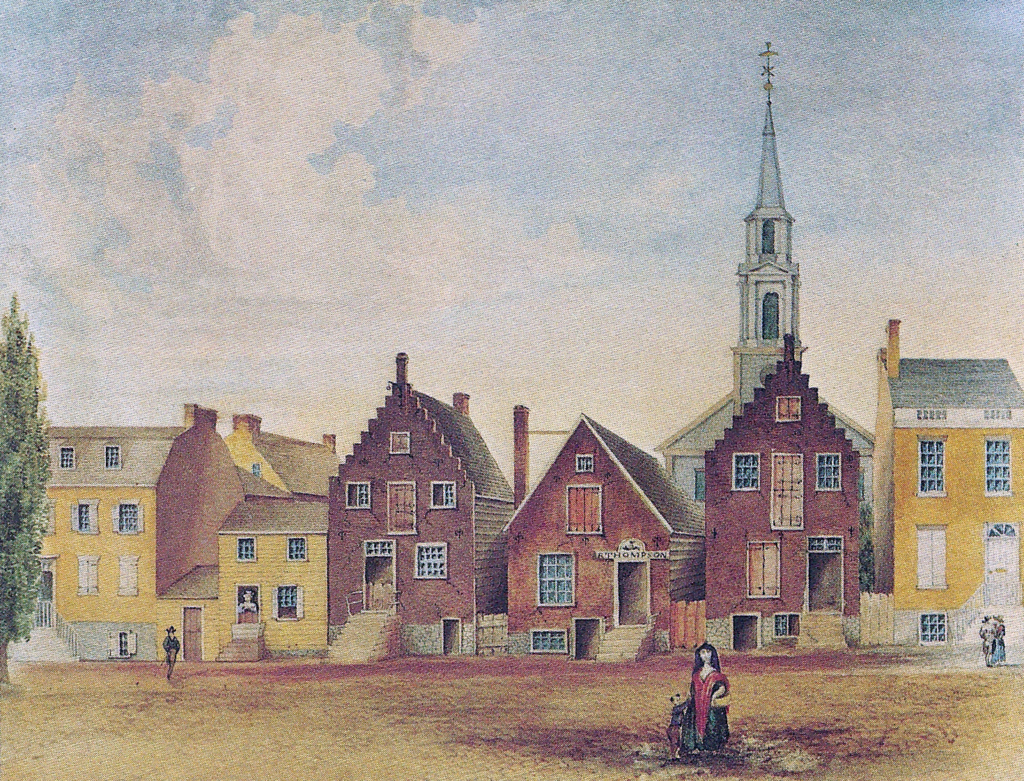
View of North Pearl Street just north of State Street in Albany (1800s), painting by James Eights

At Odds With Tammany Hall

Colden’s ascent into the mayor’s office caught him within some serious political crossfire. Cadwallader’s friend DeWitt became the governor of New York in 1817, making him the head of the Council of Appointments, which selected a mayor for New York, back in the heady days before elections.

Clinton would use his influence to install his friend in the job in 1818, but not without Colden sustaining a little political injury.

One evening, Colden was in Albany and was invited inside a tavern for a glass of wine. He suddenly realized he was in a room filled with members of Tammany Hall, political enemies of the Federalists.

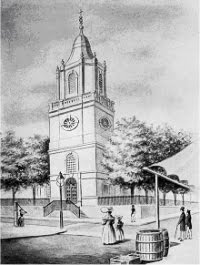
Colden had once been a member of Tammany — during their less politically active days — and in 1793 had even spoke to an assemblage at Saint Paul’s Church.

He was now on the opposite side.

Immediately they pounced, urging him to not seek the mayor appointment. But no, he cried!

“He exclaimed energetically against the trickery, declaring that he had not asked for the office of Mayor, but would only accept it if offered.”

When Clinton did grant him the job, Tammany made sure to make life difficult for him. For the entirely of his three one-year terms, Colden became a pawn in the battle between Governor Clinton and the ascendant Democratic machine.

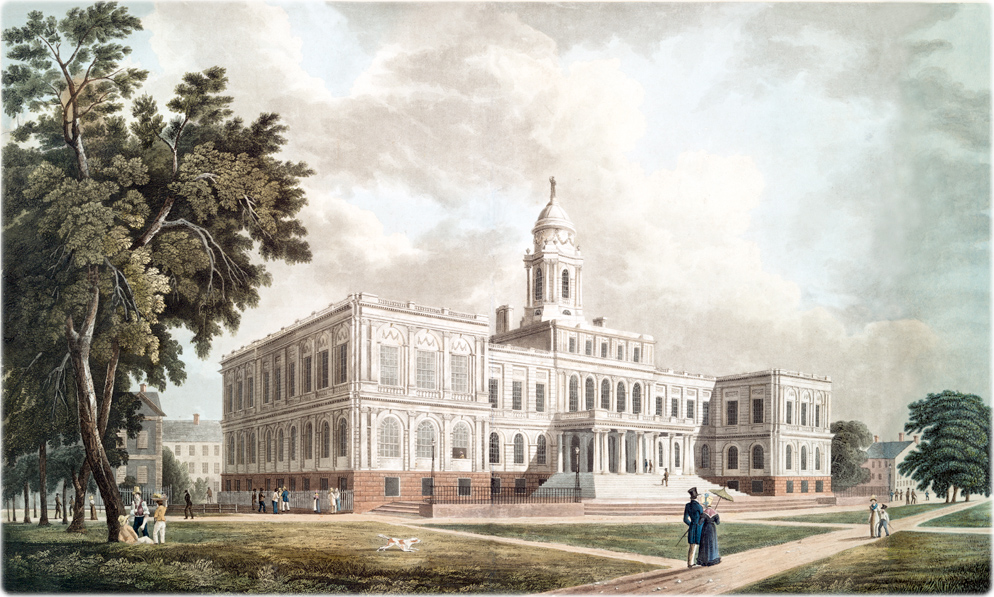
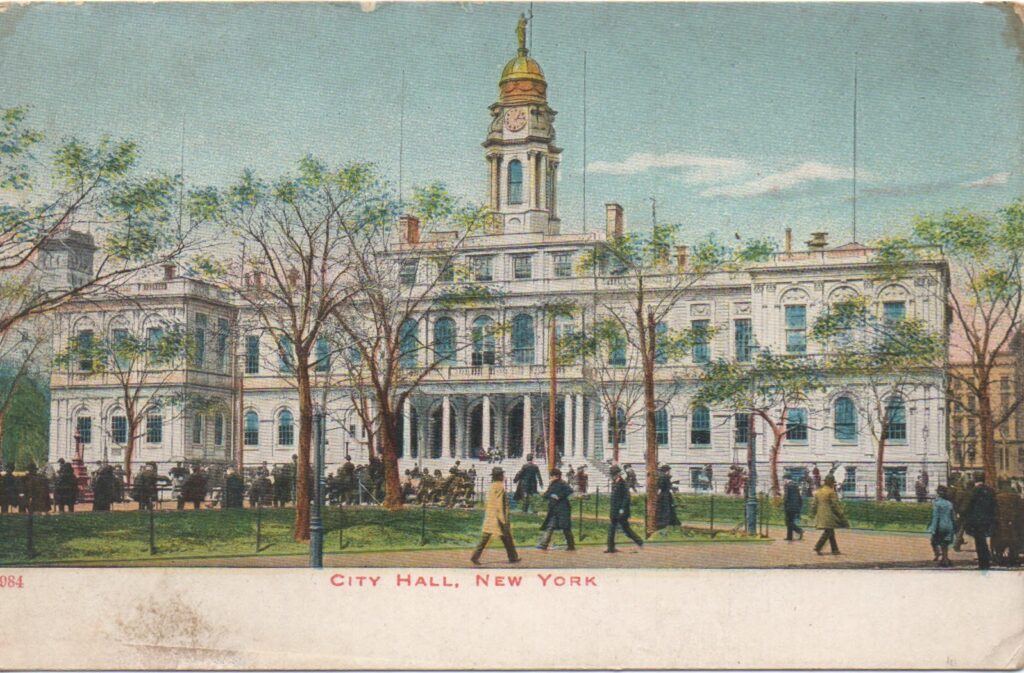
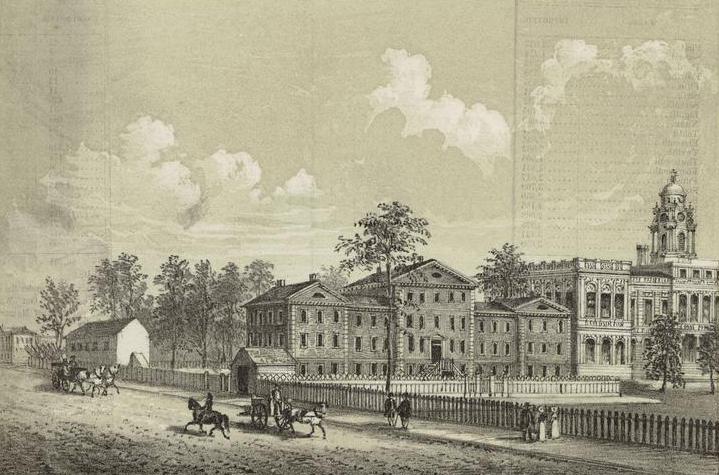
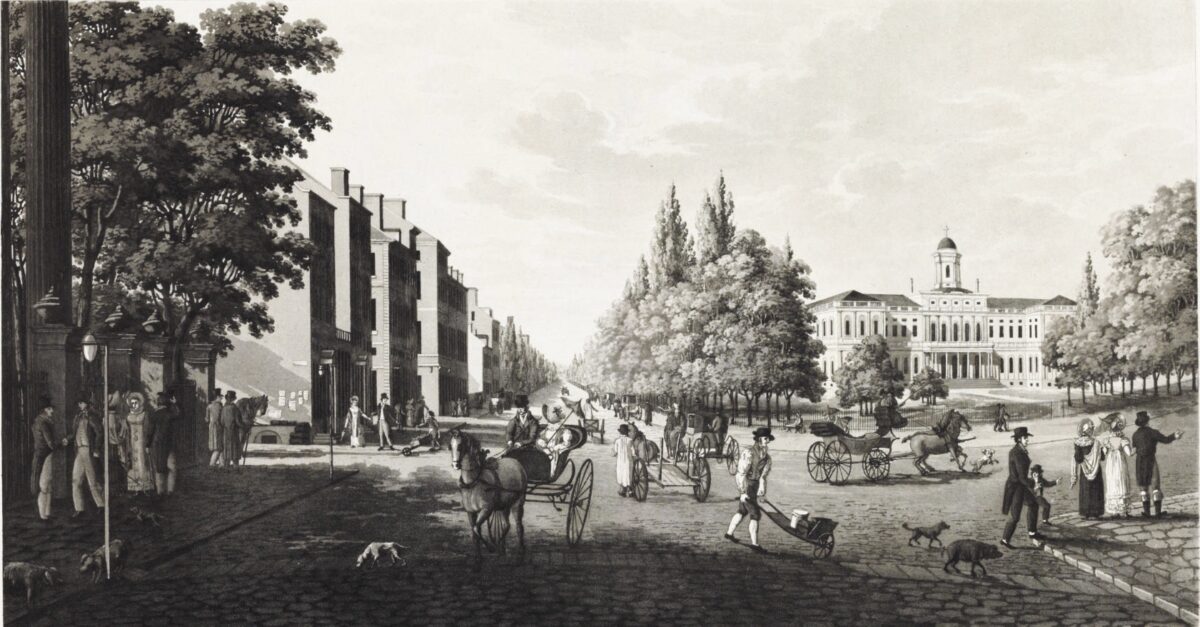
Colden began work in the spanking new City Hall, the fourth mayor for the new building after Jacob Radcliffe, John Ferguson and, of course, DeWitt Clinton.

Pigs and Prison Reform

First on Colden’s agenda: all those pigs running around.

He declared, “Our wives and daughters cannot walk through the streets of the city without encountering the most disgusting spectacles of these animals indulging the propensities of nature.”

Animals were penned up and steep fines charged to butchers who kept pigs unproperly supervised.

Colden also took a crack at the city’s deeper social problems. Indeed he was governing over a growing city, population 123,706 as of 1820. With a big city came big city problems — poverty, crime, homelessness.
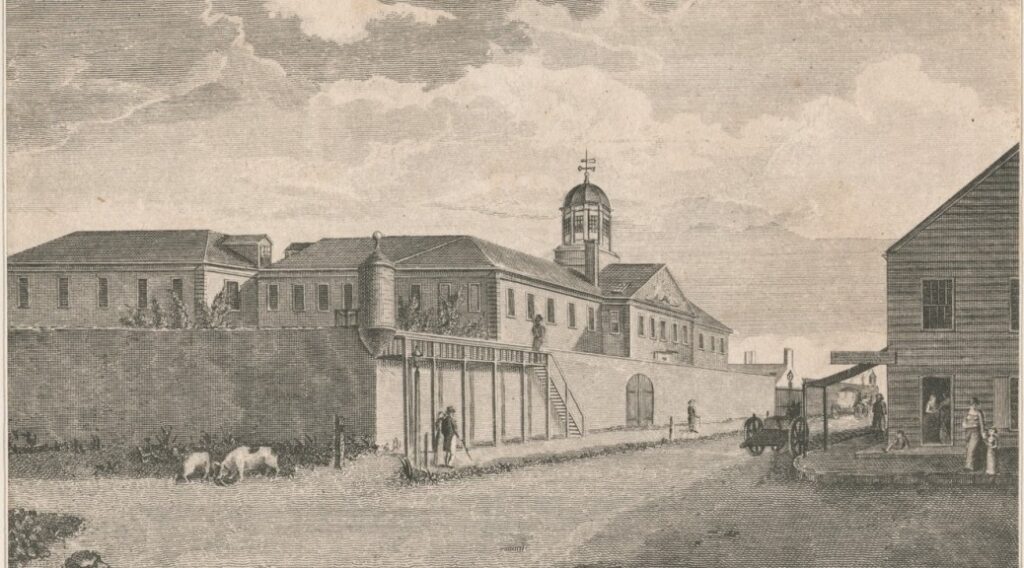
Newgate Prison. Image courtesy New York Public Library

The New York Society for the Prevention of Pauperism, led by the mayor himself, investigated prison conditions throughout the young nation to come up with a local solution.

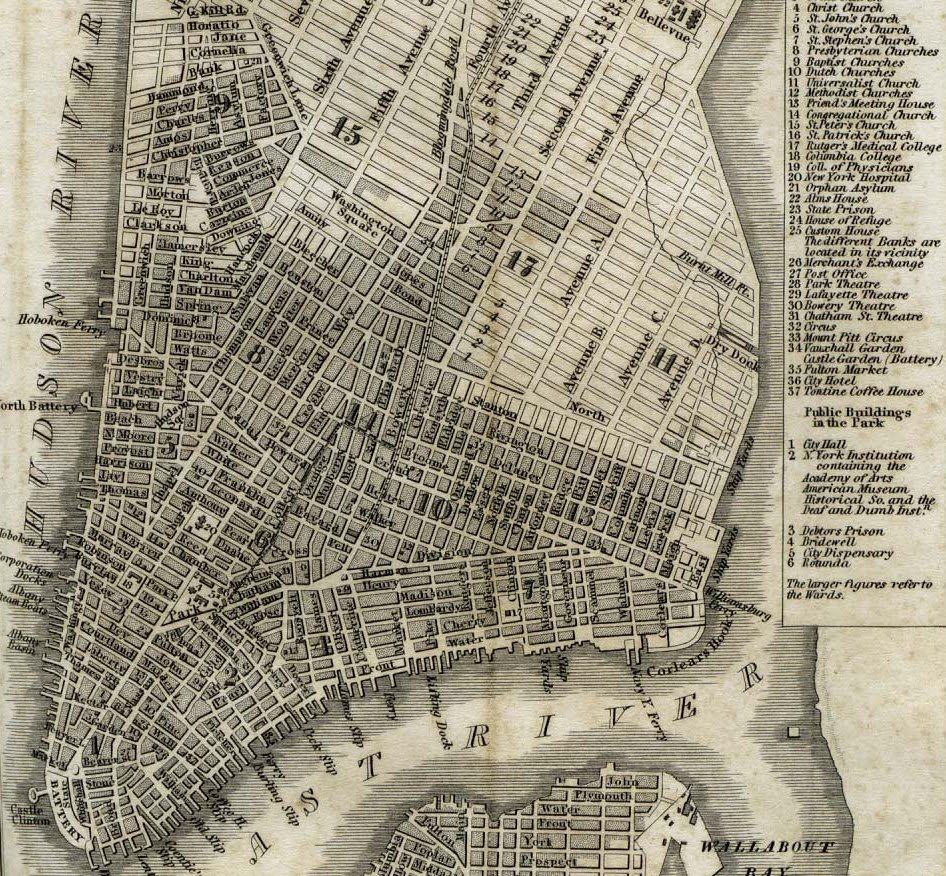
At the time, the state penitentiary lay in today’s West Village in a place called Newgate Prison. One of their findings was a need to separate younger delinquents from the adult criminals held there.

Colden proclaimed, “It must be obvious that under such circumstances it would be in vain to expect that their punishment will improve their morals: it can hardly fail to have a contrary effect.”
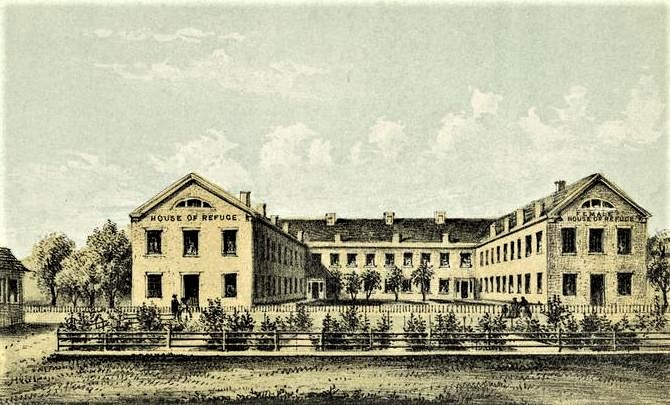
The House of Refuge in 1832 (pic courtesy NYPL)

The mayor set the stage for an innovative experiment: New York’s House of Refuge, in an arsenal at Broadway and 23rd Street, essentially a reform school, built to incarcerate children age 16 and younger.

It later opened in 1825 (after Colden left office) with six boys and three girls as its pupils, many of them guilty only of homelessness and essentially kept here until adulthood. By the early 1830s, the House of Refuge would receive over 1,600 teenagers.

A ‘Kindly’ Anecdote

Like many mayors to follow, Colden also clamped down on liquor sales, even carrying around a ‘red book’ to notate violations and overheard complaints of local tavern owners.

Naturally, Colden would rally behind Clinton’s most ardent cause — the Erie Canal. It opened in 1825, after Colden left office, but his support did indeed pave the way for New York to become, in his own words, “one of the greatest commercial cities in the world.”

He was aristocratic, class-oriented but ultimately open hearted, they say. A reminiscence in the 1843 journal New Mirror quotes this certainly apocryphal story about the mayor’s ‘kindness’.

One rainy night on his way to a dinner party, Cadwallader stepped up to a ‘hackman’, a type of carriage taxi, for a ride.

The driver, “who had some old grudge against Mr. Colden,” rudely sped away, leaving the passenger on the curb. He jotted down the cab driver’s number and summoned him to City Hall.

“Poor Pat (for of course he was Irish)” as the article indicates, “went up the stairs, trembling at the fate which awaited him. When the mayor demanded to know why he was treated so rudely, the driver proclaimed,”you see I looked in your face, and, faith, you looked so like a jontleman I drove twice before that never paid me, I was afraid to thrust him agin!”

Colden laughed, exclaiming, “Your wit has saved you this time!” and excused the driver.
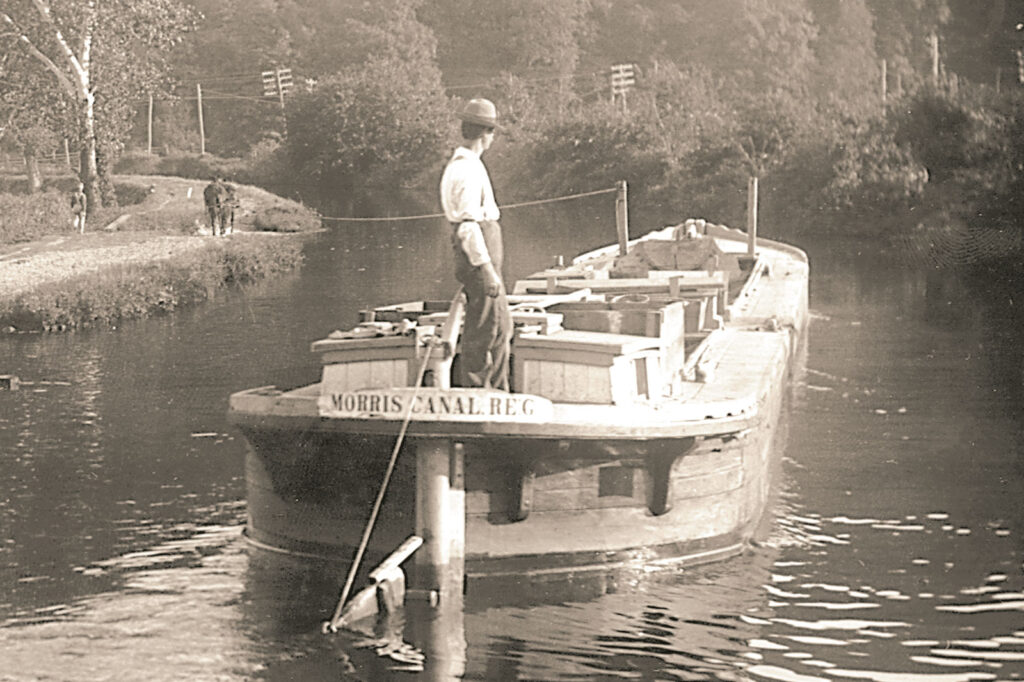
A boat upon the Morris Canal (courtesy the Canal Society of New Jersey)

Colden’s Later Years

Aligning with Clinton eventually became a bad idea. When Clinton was turned out of the governor’s office, so too was Colden from the mayor’s office. But he still remained popular with New Yorkers, becoming a U.S. congressman, then a member of the New York state senate in 1825.

In later life, he engaged in a couple unusual endeavors. The first was the construction of the Morris Canal in northern New Jersey, a conveyor of coal that operated for over a century.

And in 1830, he briefly indulged in the hobby of horse racing, taking over the Union Course in Woodhaven, Queens. The closest you’ll get to visiting Colden’s racetrack is visiting Neir’s Tavern, the oldest tavern in the borough.

Colden died in 1834, in Jersey City.

For centuries his gravesite was unknown. But in 2011, historian (and friend of the show) Eric K. Washington discovered his grave at Trinity Church Cemetery.
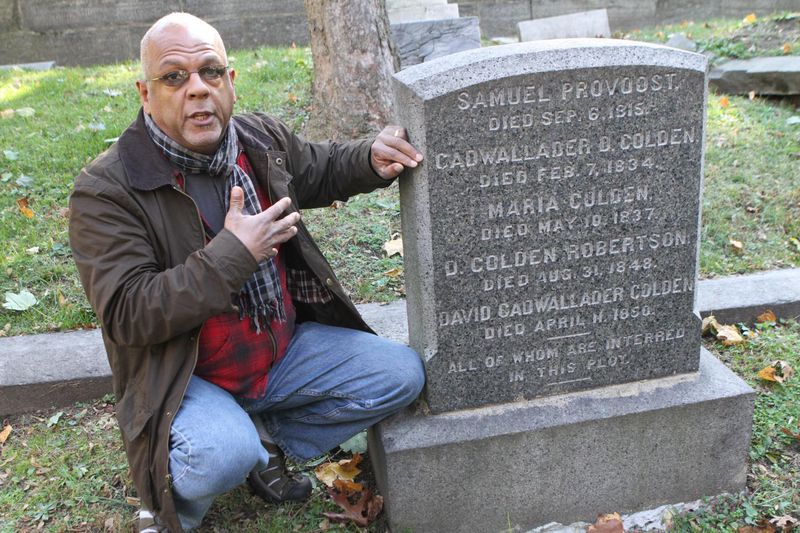
Washington in front of the new stone in 2011, adding Cadwallader III’s name. (Courtesy Mariela Lombard  of theNew York Daily News)

Revision and expansion of an article which first ran on this website in 2009.
Categories
Know Your Mayors Politics and Protest

Meet The Mayors Who First Invited Tammany Hall to City Hall

We’re just months away from a new mayor in New York City so we think it is time that you Know Your Mayors! Become familiar with other men who’ve held the job, from the ultra-powerful to the political puppets, the most effective to the most useless leaders in New York City history.

This longtime feature of this website is being rebooted with new articles and newly researched and refreshed earlier entries in this series. Check back every other week for a new installment. Read past articles here.

The most influential political force in New York City history isn’t an individual but a group of men who wielded power in often corrupt, entirely self-enriching ways. They were elected again and again because — at various times in history — they were able to convince the public that they were a better option than the city’s elites.

And sometimes they actually were. Occasionally they even kept the city running smoothly and served with the needs of their constituents in mind.

Thus is the power of a political machine. And thus was the power of Tammany Hall.

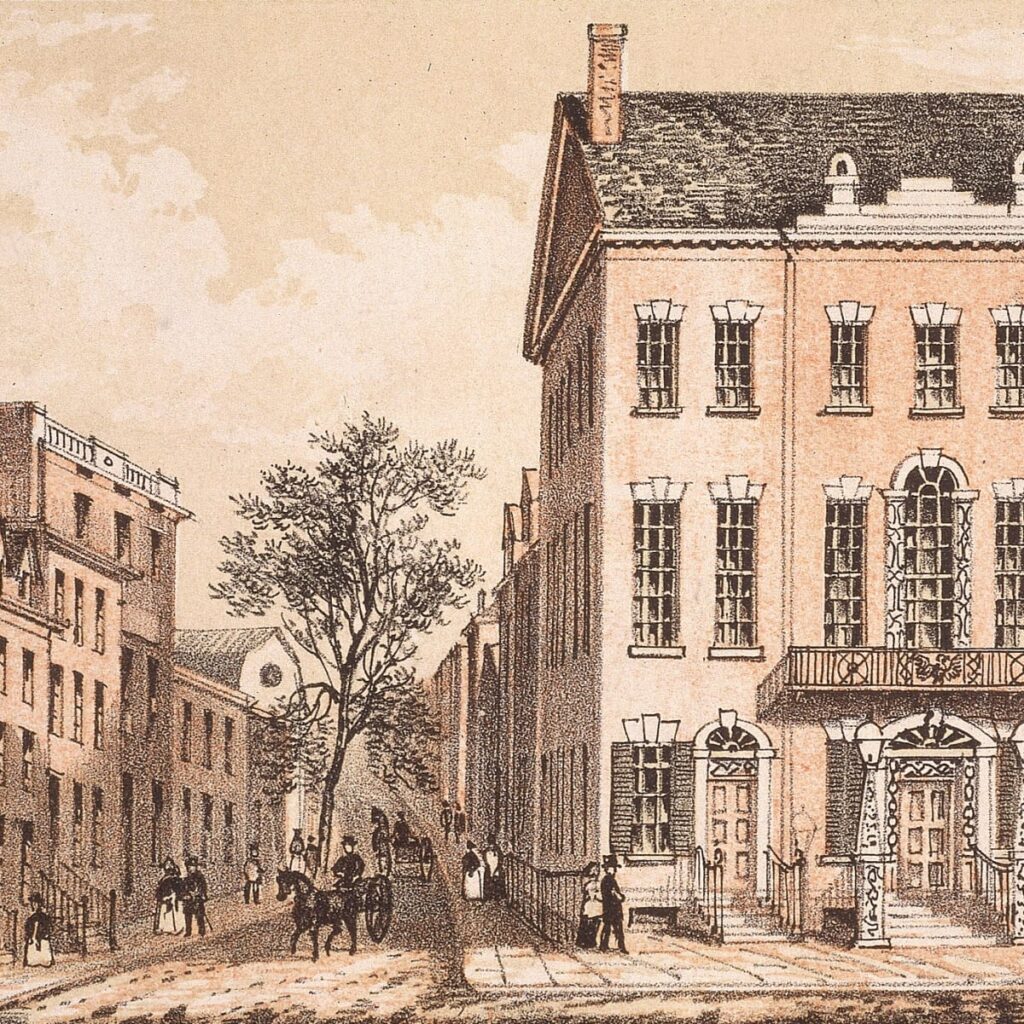
Tammany Hall on 170 Nassau Street

What is Tammany Hall?

The year 1815 marks the real beginning of New York City’s Tammany Hall era. It was the year that the organization first realized its fullest political potential.

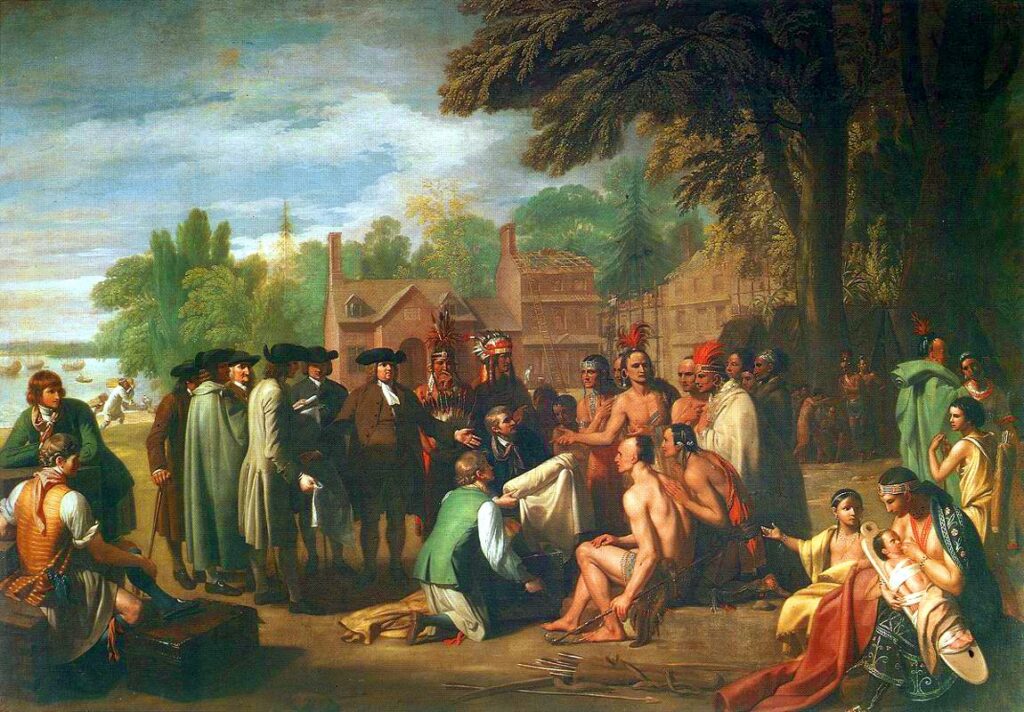
The legendary Democratic political machine had of course been around long before, founded in 1789 as the Tammany Society, a patriotic club formed around the legend of the Lenape leader Tamanend.

These white gentlemen war veterans participated in garish exaggerations of Native American ceremonies, forming a structure of command under a Grand Sachem (leader or, later, Boss).

The Benjamin West painting The Treaty of Penn depicting William Penn negotiating with Lenape chief Tamanend.

Being comprised of well-connected men in high society, the organization soon took on a political character. It would be Aaron Burr that first exploited its political potential as a mechanism to unite the city’s Democratic-Republicans against Alexander Hamilton and his Federalist forces.

In 1800, Burr became the Vice President after an unusual election outcome that almost handed him the presidency instead of Thomas Jefferson. Burr’s suspicious handling of the election put him on the wrong side of some fellow Democratic-Republicans like governor George Clinton.

And the governor’s ambitious nephew Dewitt Clinton.

This meant that the Clintons would gradually become political enemies to those of Burr’s new political tool — the Tammany Society (or Tammany Hall).

Burr would eventually be sidelined in all things political. (Shooting a Founding Father and attempting to form a new country out west will do that to you.) But the political machine he wielded was only just beginning.

Mayor DeWitt Clinton, Library of Congress

Clinton Entanglements

When Clinton finally became mayor of New York starting in 1803 — serving several consecutive one-year terms — Tammany waited for a moment of weakness to strike. (Read about Clinton’s days as mayor here.)

As stated in previous Know Your Mayor articles, the job of New York mayor was not an elected post at this time, but rather chosen by a state-run Council of Appointments, one year at a time.

The ambitious and well connected Clinton would be appointed to this position for several years, since 1803, excepting a single year when he was replaced by Revolutionary War hero Marinus Willett. (Read more about him here.)

He returned to the mayor’s seat in 1808 but his political entanglements had earned him many new enemies by this time.

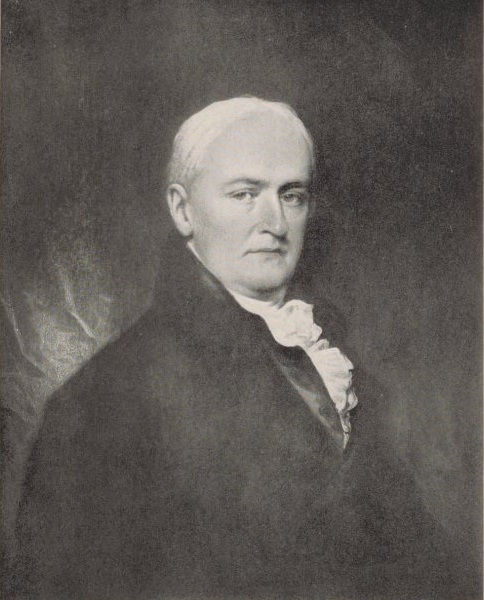
Mayor Radcliff, courtesy New York Public Library

Mayor Jacob Radcliff

Most notably, Clinton, who was a lifelong Democratic-Republican, eventually became an enemy to most of New York’s disenfranchised faction of that party. He was the state’s most popular politician — except with a great many politicians.

Clinton’s political fortunes swung like a pendulum and in 1810 that pendulum swung to the Federalists on the state level.

According to author Oliver Allen, “Tammany plotted circuitously with its leaders to have the Council of Appointment remove Clinton from the mayoralty. The move succeeded but Clinton was only temporarily sidetracked.”

He was replaced with Jacob Radcliff, a former associate of Alexander Hamilton and a justice on the New York Supreme Court whose lasting claim of fame would be as a founding father of the city of Jersey City, New Jersey.

Radcliff was also openly aligned with the Tammany Society and well aware that his new position (more lucrative than a job on the bench) was entirely due to his associations with the nascent political machine.

But the pendulum swung back the following year and Clinton was placed back in the mayor’s seat in 1811. (You think this is confusing so far? Read on.)

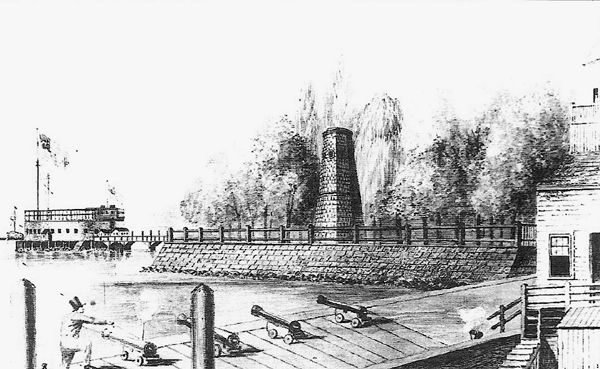
Fort Clinton (later Castle Clinton), named for the mayor and built in anticipation of conflicts from the coming war. [source]

The Brewing War of 1812

Tammany Hall finally gained its more-than-a-century-long foothold over New York City politics with the international crisis known as the War of 1812 — which actually lasted until 1815.

On top of the usual partisan stew of a swiftly growing city, the conflict with England left party affiliations malleable, with Federalists opposing action (even suggesting secession from the United States!) and staunch Democratic-Republicans generally favoring war.

Thus, as you can imagine, it would be difficult to remain balanced in such unstable political waters, even for somebody as saavy and popular a career politician as Clinton.

As war broke out with England in 1812, all political parties and affiliations seemed to disintegrate entirely.

As James Renwick wrote in his biography of Clinton, “On this occasion the old party lines were completely obliterated; no trace of affection for Great Britain remained in any mind, and the very name of federalist only exists to be used as a mode of discrediting a political adversary in the minds of the ignorant.”

As a result, many Federalists jumped ship to join the surging Tammany Democrats. Among their number was the former mayor Radcliff, warmly greeted by Tammany head Grand Sachem John Ferguson.

He would be Tammany’s first ‘boss’ with genuine power.

Mayor Ferguson

John Ferguson, Mayor and Boss

A perfect storm brewed in 1815 when Tammany — in the first robust display of its powers — for the first time controlled the state senate and enjoyed great gains in local elections.

At last! Tammany could really do what it wanted. And what it wanted was to get rid of that old stalwart Clinton. Once and for all.

And who better to replace him than the head of Tammany himself — John Ferguson?

However, whether by intent or sudden whim, Ferguson stepped down after only three months in office to take on the far-more lucrative job of officer of the Port of New York custom house, according to one source, a major center “of federal revenue, political patronage and potential graft.”

And so he was replaced with — Jacob Radcliff again, now a mayoral appointee representing an entirely different political party from the first time he had the job! In 1815 he moved in the city’s new City Hall and would remain in the position until 1818.

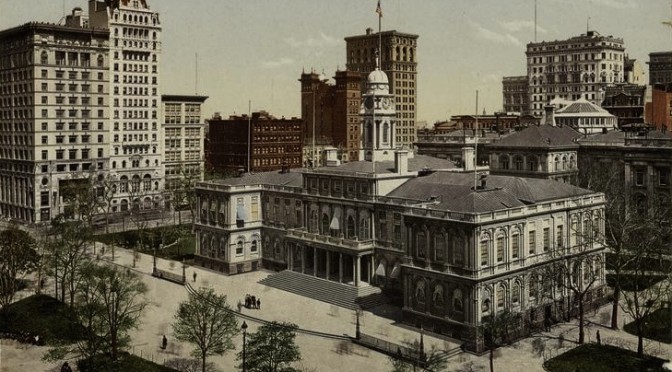
New York City Hall was completed in 1812.

Clinton’s Revenge

Clinton had the last laugh in all of this.

Public support for Clinton was so high by this point that, for political sake alone, “Tammany …. took the utmost pains to represent the removal as only a political exigency” and issued a ‘vote of thanks’ to the former mayor via the Common Council (equivalent of today’s City Council).

Clinton became governor in 1817 and handily swept away his opponents.

Meanwhile, Radcliff was caught up in a scandal when, halfway into his term, he was caught distributing a list of potential Tammany replacements for all still-remaining Federalist Common Council members, a politically insensitive move which galvanized the Council and ensured that 1818 would be Radcliff’s last year ever as mayor.

But it would be tactics like this that would ensure the future of Tammany Hall in local politics.

The political machine was only getting warmed up.


This is an expanded and rewritten version of an article which first ran on this website in 2009.
Categories
Know Your Mayors On The Waterfront Podcasts

Meet Mayor DeWitt Clinton, the man who built New York City’s future

With a new mayoral race on the horizon in New York City we think it is time that you Know Your Mayors! Become familiar with other men who’ve held the job, from the ultra-powerful to the political puppets, the most effective to the most useless leaders in New York City history.

This longtime feature of this website is being rebooted with new articles and newly researched and refreshed earlier entries in this series. Check back every other week for a new installment.

Dewitt Clinton was so much more than a mayor of New York City of course.

He also served as a two-term governor, ran for president against James Madison and helped oversee one of the greatest engineering projects in American history.

He negotiated the choppy waters of early American politics with dexterity, building upon the reputation of his family name to fuel economic and cultural growth in the state he called home.

His greatest achievement was the Erie Canal, the cross-state canal which linked the Hudson River and New York Harbor with the interior of the United States.

No other civic project — with the possible exception, at the start of the 20th century, of the subway system — would affect the fortunes of New York City in such a dramatic and unambiguous way.

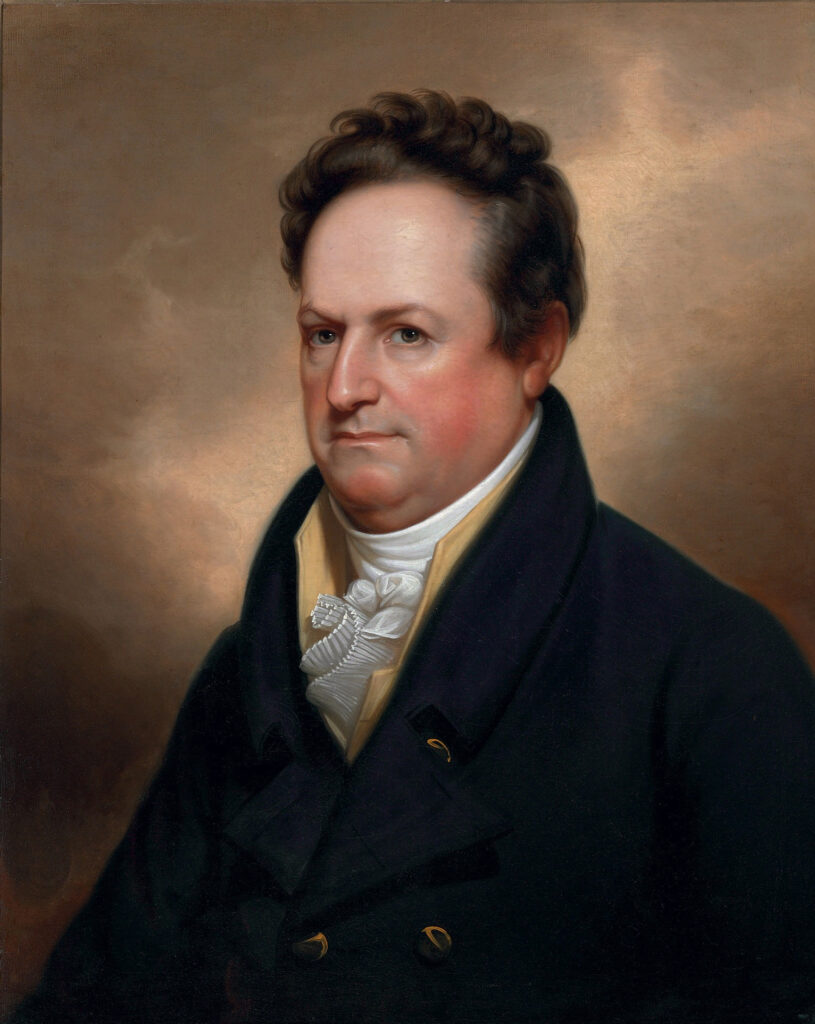
Clinton in a portrait made by Rembrandt Peale

So, yes, the many accomplishments in Clinton’s storied career tend to overshadow his work as the mayor of New York.

Yet most historians place him among the greatest mayors the city has ever employed. He might even be the greatest in terms of his long-term impact.

Clinton served ten one-year terms non-consecutively — 1803-1807, 1808-1810 and 1811-1815 — weaving together an extraordinary period of city growth during tumultuous political times and a potentially deadly foreign war. (Why not consecutive terms? I’ll explain in the next Know Your Mayors column.)

Clinton on the Rise

Dewitt Clinton was born in Little Britain, New York, on March 2, 1769, into one of the most politically important families in America.

Major-General James Clinton, DeWitt’s father, fought next to George Washington during the Revolutionary War (and brutally killed hundreds of Iroquois people during the 1779 Sullivan Expedition). DeWitt’s uncle George Clinton rose the political ranks following the war to become the governor of New York (from 1777-1795 and again from 1801-1804).

By the 1890s, according to author Evan Cornog, “three families presided over New York State politics — the Schuylers, the Clintons and the Livingston.”

So DeWitt Clinton had easy access to the corridors of power — Uncle George even made him his secretary in a bold gesture of nepotism — but he built upon that privilege, instead of resting on it. More importantly, he’s often considered to have the genuine needs of New Yorkers in mind in his accumulation of power, believing the city’s cultural and economic prosperity could be worn as a badge of honor for himself.

His most influential job during this period was as a member of the Council of Appointment, the body charged with appointing all the governmental positions that were not elected. This included the mayor of New York. In fact, he helped appoint the last mayor in our Know Your Mayors series — Edward Livingston.

While the Clintons were aligned with Thomas Jefferson and the Democratic-Republicans, DeWitt held personal animus towards his party’s Aaron Burr, the Vice President, who many believed had attempted to steal the 1800 election from the preordained Jefferson. When Burr killed Alexander Hamilton in 1804, Jefferson replaced him — with George Clinton, DeWitt’s uncle.

By then, DeWitt himself had dabbled in federal office, serving as the Senator from New York for almost two years from 1802 to 1803. But he hated Washington D.C. — which was an unpleasant and barely developed swamp then — and wanted to return to the comforts of New York.

So he resigned and took a new job which was then offered to him — the mayor of New York City.

New York City Hall, dedicated in 1811 and opened for government business by 1812

Setting the Foundations

At first it appeared this was just another step in the political ladder for DeWitt. According to Gotham, Clinton told his uncle that “being mayor was the better job [than being a U.S. senator] because its influence in presidential elections made it ‘among the most important positions in the United States’.”

But he quickly fleshed out the mayor’s role in surprising ways, having the unique political connections that allowed him to expand local government’s role. In later years, these expanded powers would be reduced by the influence of political machines like Tammany Hall.

Among the fledgling organizations he either founded or vigorously supported during his time in office:

New York Board of Health: Clinton entered office with yellow fever the city’s greatest enemy. According to NYC Health, “Led by Mayor De Witt Clinton, the board evacuated stricken neighborhoods and started collecting mortality statistics, to ‘furnish data for reflection and calculation.'”

From this department came a newly created role — city inspector — which expanded to collect data (births, marriages and deaths) on city residents.

New-York Historical Society: Clinton believed in upgrading the city’s cultural life, and the Historical Society, essentially New York’s first museum, allowed the city to celebrate its role in the new American cause and exalt the New Yorkers who fought for independence (which naturally included Clinton’s family).

Clinton was a founding committee member in 1804 and even gave the institution some space at City Hall (then at Wall Street aka Federal Hall).

He also chaired both the American Academy of the Arts and the Literary and Philosophical Society in their early years.

Free School Society: Clinton championed the social education model which eventually became the New York public school system.

According to Evan Cornog, “In 1805, two measures transformed primary education in New York. The first was the allotment by the legislature of 500,000 acres of state lands and three thousand shares of bank stock for the benefit of public school. The second was the establishment of the New York Free School Society, whose president, from its inception to his death, was DeWitt Clinton.”

The Grid Plan: Seeing a need to plan the city’s growth as it galloped up Manhattan island, the city’s Common Council formed a committee — “doubtless at DeWitt Clinton’s instigation” — that would draft up ideas for a possible grid of streets and avenues.

By 1811 Clinton would sign the Commissioner’s Plan into operation.

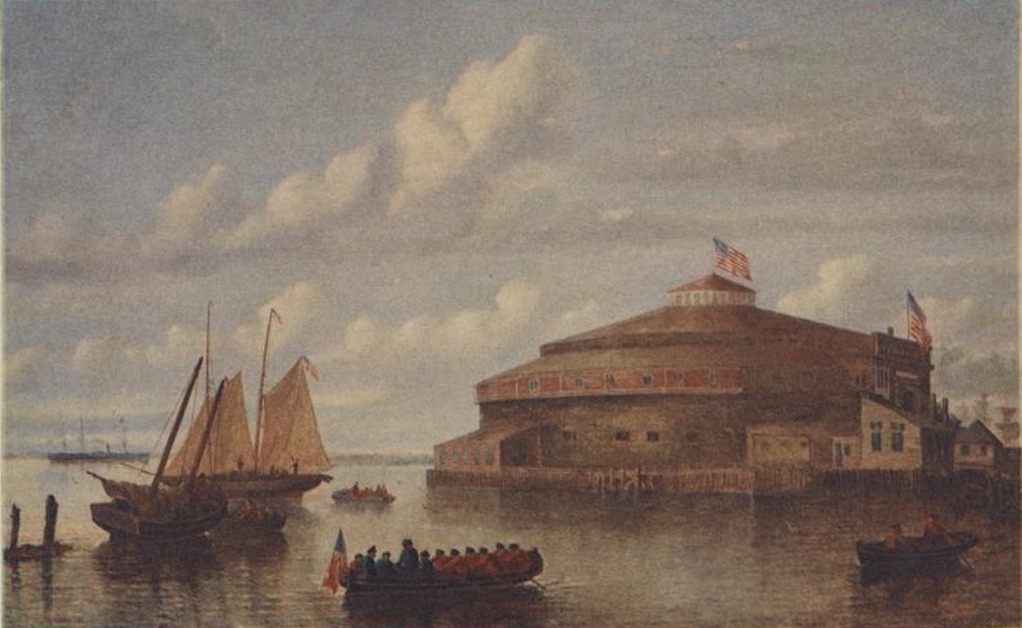
A System of Fortifications: In addition, Clinton faced the impending crisis of a new war with Great Britain. Although the War of 1812 never came to New York City, Clinton oversaw the construction of new fortifications through the city, including a new fort at the Battery which eventually bore his name — Castle Clinton.

Castle Garden (within the old Castle Clinton) courtesy the Museum of the City of New York

A Complicated Record

Clinton innovated a form of governance which can be seen either as forward thinking or incredibly opportunistic (and quite possibly both) — the improved rights of immigrants.

Christian Luswanger, a member of the city’s night watch, became the first officer killed in the line of duty in New York during a Christmas Day anti-Catholic riot in 1806, the most violent of a series of skirmishes aimed at immigrants. New Irish arrivals faced Nativist backlash in a heavily Protestant city.

DeWitt Clinton. Library of Congress

The mayor, however, was a supporter of the Irish, laying the groundwork for one of the most successful collaborations in 19th century New York City politics.

As a U.S. senator, Clinton had supported liberal immigration laws.  As mayor he also supported the elimination of a citizenship test oath for Catholics. As a result, his opponents quickly painted Clinton as a puppet of foreign influence.

But Clinton was no paragon of human rights reform. While he earlier supported the Gradual Emancipation Act of 1799 — and a second Emancipation Act passed in his first year as governor in 1817 — his family had kept enslaved people for decades. And DeWitt himself owned at least a couple people during his years as mayor, including a coachman named Henry.

And many decisions Clinton made did seem more bluntly opportunistic.

He directed that the city’s funds be held by the banks of Manhattan Company, formed in 1799 — by his foe Aaron Burr, no less — to build a water system for the city. But the Company never did fund a truly adequate system, existing only as a bank. (Clinton, by the way, was also a company director. Seems like a conflict of interest!)

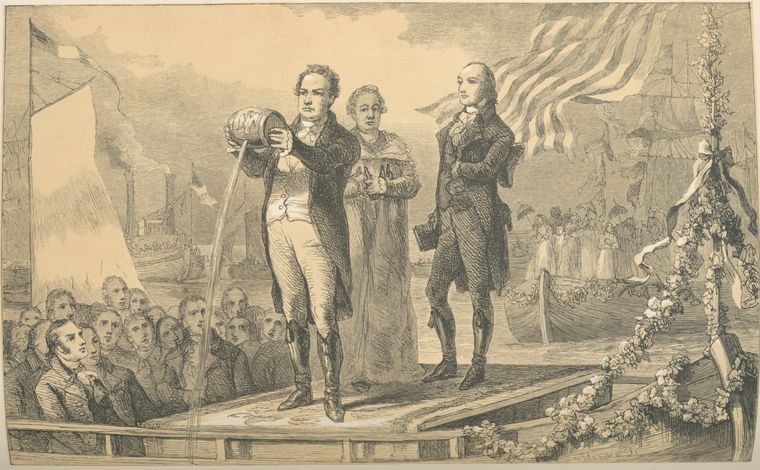
Clinton ceremonially pours water from Lake Erie into the Atlantic Ocean, 1825

The Billion Dollar Idea

For decades, prominent New Yorkers had pondered the idea of an upstate canal system, and even Clinton had considered canal making schemes years before reaching any significant prominence, extending back to his days as a student at Columbia College.

His interest in a massive canal project was renewed during his tenure as mayor (and those years in between his non-consecutive terms). By the time he became the governor of New York in 1817, he was so associated with the canal project that it became known by detractors as Clinton’s Folly.

No folly at all. When the Erie Canal finally opened in 1825, the engineering marvel — one of America’s greatest early achievements — proved genius. It not only created new wealth of New York City, it boosted the economic strength of the entire country.

Clinton had created new opportunities for New York City. The rise of the city as an economic and cultural power begins with him.

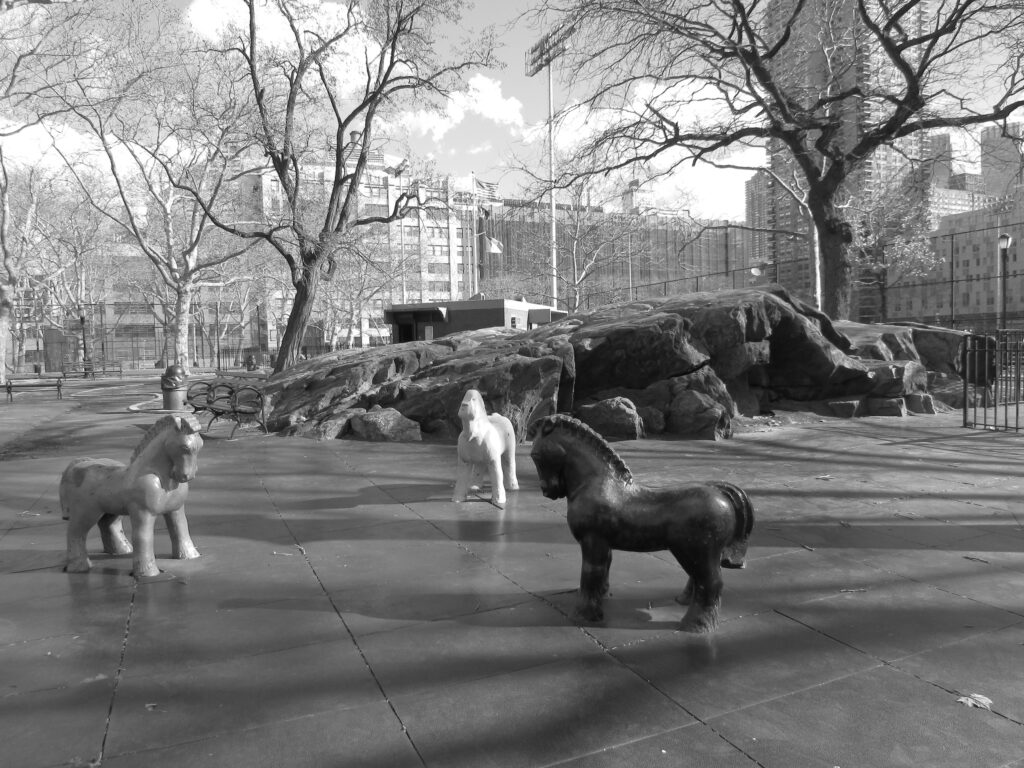
DeWitt Clinton Park in Hell’s Kitchen, photography by Greg Young


For more information on DeWitt Clinton, we have an older show in our catalog on Clinton and his role in creating the Erie Canal:

New York City Hall: Open for business for 200 years!

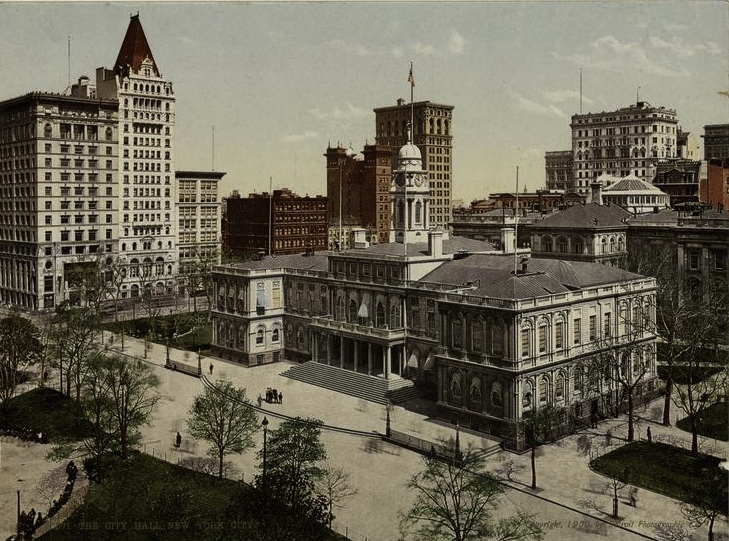
Above: City Hall in 1900 (Courtesy NYPL)

Never have I been more elated to write about a City Council meeting.

At the start of the 19th century, city affairs were still being conducted on Wall Street at Federal Hall. For many years they shared the corridors with George Washington and the first American Congress.  By 1800, the federal offices were long gone, but that ‘old City Hall’ was no longer an adequate structure for the affairs of a fast growing city.

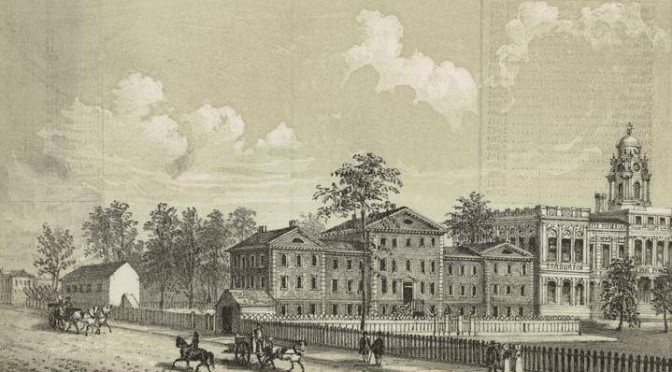
So a new City Hall was planned in 1803 by New York’s most notable designers of the day, Joseph Mangin and John McComb, to be placed at the site of the city’s old common grounds. After years of delays, however, it seems city leaders grew a tad impatient. Although the new City Hall building would not officially be completed until 1812, the mayor and the Common Council moved in anyway.

According to state records, the very first meeting between Mayor DeWitt Clinton and the council was held on August 12, 1811.

“The Common Council met agreeably to adjournment in the new City Hall in the room designed for the Mayor’s office.” Mayor Clinton was joined in his chambers by a recorder and the 17 members of the Common Council, including both Caleb and John Pell, whose family holdings would become the basis of Pelham Bay Park.

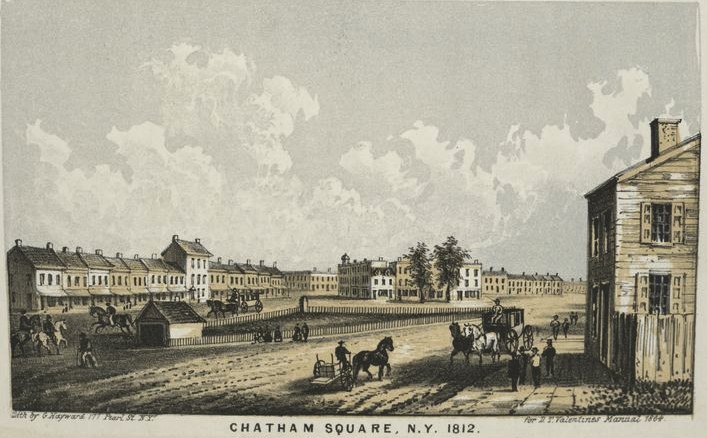
And what, you may ask, was the big item on their agenda? The proposal to fence in Chatham Square.

That open patch of land, on the Bowery and to the west of City Hall, had become an open air livestock market. The famous old Bull’s Head Tavern was located nearby, and farmers from all over Manhattan came to this area to sell their wares to merchants and to factories located around Collect Pond. Some on the council believed a fence around this place of business would constrict farmers attempting to move in and out of the property.

Still, a fence brought the promise of cleanliness. Collect Pond was being drained and levelled, and city leaders expected the land values surrounding it to increase. Thus the fence was approved. You can find a picture of Chatham Square and the newly constructed fence below.

But more importantly, with this decision, two hundred years of civic bureaucracy were well underway!

For more information, check out our podcast on the history of City Hall and City Hall Park (Episode #93).

Courtesy the New York Public Library Digital Image gallery

Categories
Health and Living Podcasts

Building Blocks: The Commissioners Plan of 1811, inventing a New York grid of streets and avenues

The simplicity of the New York grid system, seen overhead in a 1939 classic photo by Margaret Bourke-White.

PODCAST The Commissioners Plan of 1811 How did Manhattan get its orderly rows of numbered streets and avenues? In the early 19th century, New York was growing rapidly, but the new development was confined on an island, giving city planners a rare opportunity to mold a modern city that was orderly, sophisticated and even (they thought at the time) healthy. With the Commissioners Plan of 1811, uniform blocks were created without regards to hills and streams or even to the owners of the property!

Join us as we recount this monumental event in New York’s history — how land above Houston Street was radically transformed and also how the city revolted in many places. What about those avenues A, B, C and D? Why doesn’t the West Village snap to the grid? And why on earth did the early planners not arrange for any major parks?!

ALSO: A podcast within a podcast as we focus on the biography of one of those commissioners. Give it up for Gouverneur Morris, the casanova with Constitutional connections, a Bronx estate and a wooden pegleg.


CORRECTION: Due to my complete misreading of my own handwritten notes and in the flurry of wrapping up the show, I said that Manhattanhenge occurs on March 28 and July 12 or July 13. I meant MAY 28, not March 28. Chalk this one up to my senility. I apologize for the error.

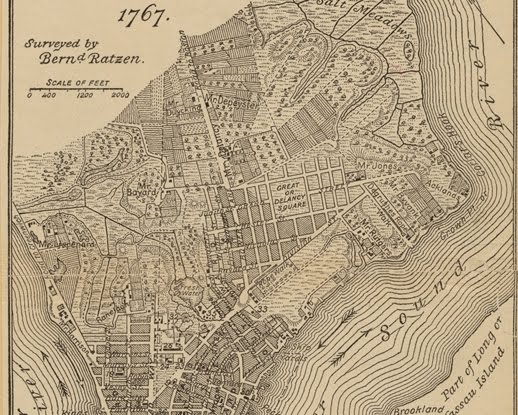
An early view of the area that would one day become the Lower East Side, SoHo and Chinatown: a network of farms and jagged roads, with some organization on individual properties. This map features details of James DeLancey’s farm. That property would be carved up after the war. (You can check out the whole 1767 map here.)

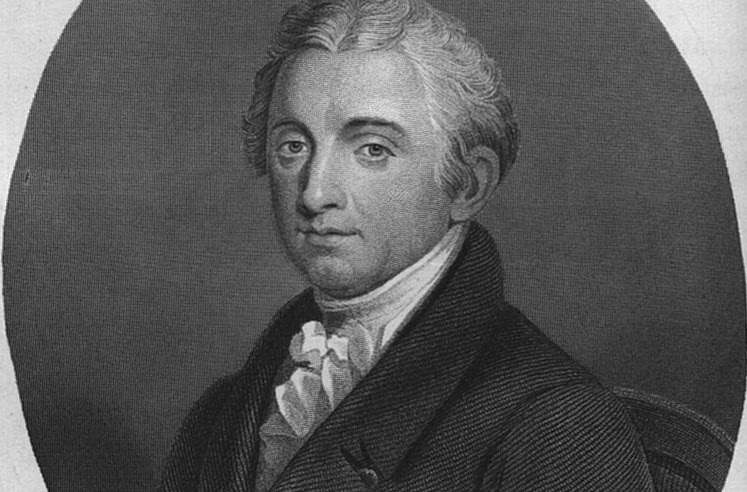
Gouverneur Morris, the Founding Father who led the commission to plan New York’s future streets and avenue.

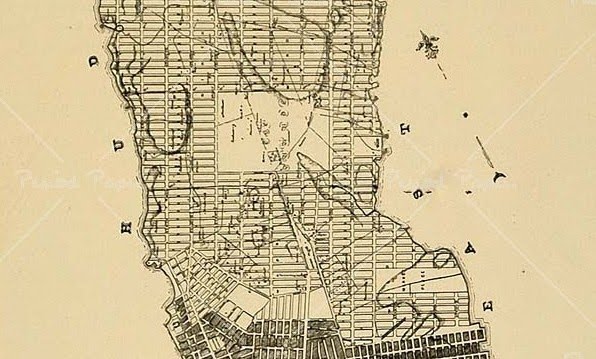
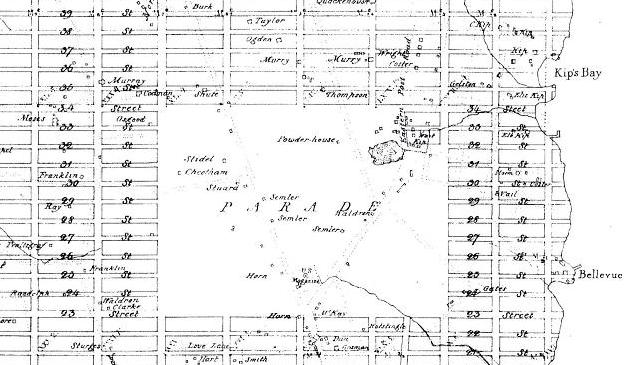
A detail from the original 1811 grid plan map of John Randel. The grid starts at irregular intervals due to keeping Greenwich Village intact, but begins right about Houston Street to the east. As it heads north, two big interupptions were planned — a market place in east around 10th-11th Street and a ‘parade ground’ about 23rd Street.

A close-up on the parade ground.

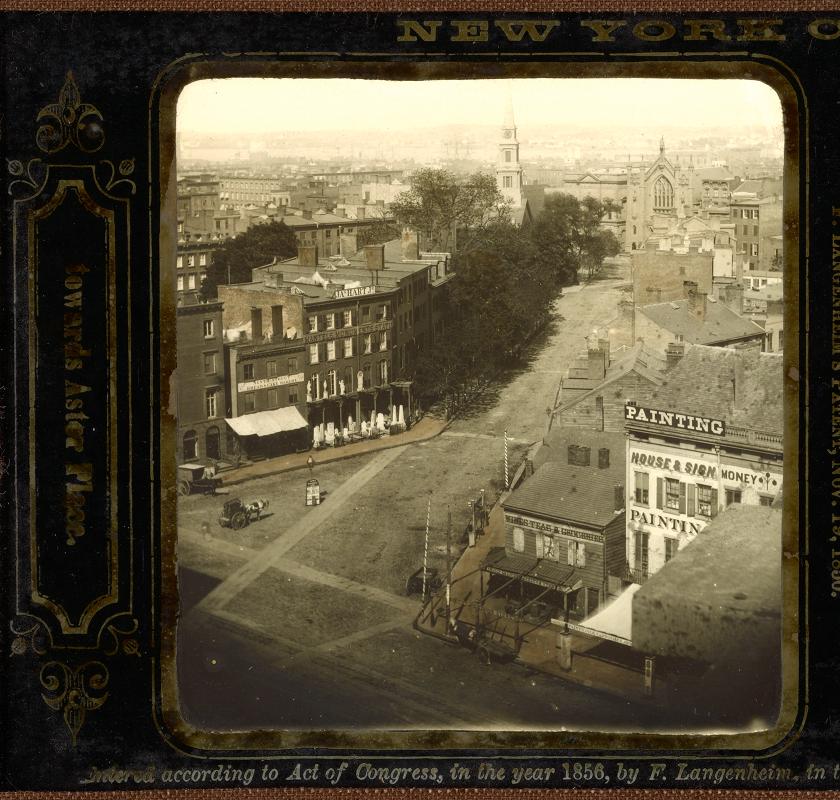
Not everything conforms to the original plan. Take Stuyvestant Street in the East Village. A main thoroughfare into the original estate of the Stuyvesant family, the small road was allowed to break the block between 9th and 10th streets. The street is hardly recognizable in this extraordinary photo from 1856, but the top of St. Mark’s Church gives away the location. (Courtesy East Village Transitions)

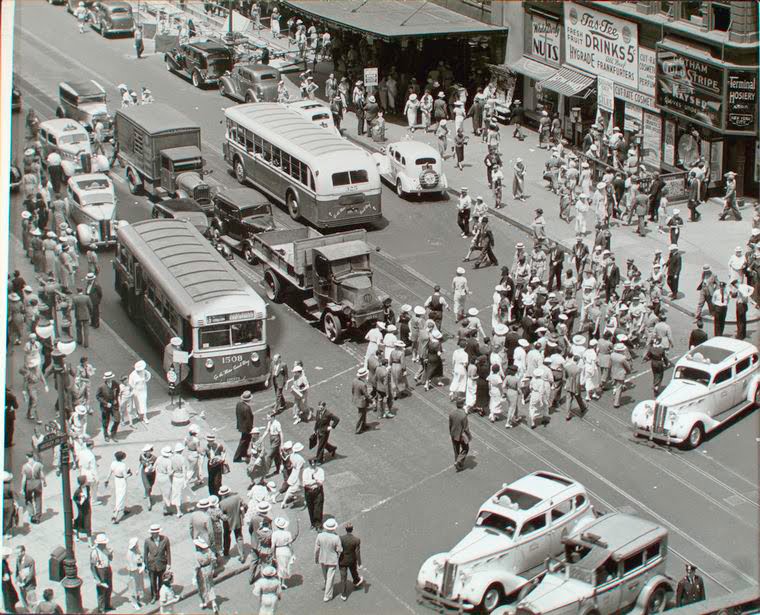
Crossroads: Herald Square, on a hot summers day in 1936. The intersection was partially created by the grid plan (the intersection of 34th Street and Sixth Avenue) and by one feature that later city planners ignored: Broadway which, according to the plan, was never supposed to extend past 23rd Street. (NYPL)

Here’s a look at the entire Randel map in color.

Check out the New York Times wonderful interactive map, overlaying the original plan on top of modern changes to the city.

First officer down: Highbinder riots at St Peter’s Church

Broadway and City Hall, in 1809. The mobs of the so-called ‘Augustus Street Riot’ would have scuffled just to the west of this illustration. (Courtesy NYPL)
According to the Officer Down Memorial Page, there have been 778 New York law enforcement officers who have died in the course of duty. Fourteen of the last fifteen were those men and women who succumbed to 9/11-related illnesses. The last firearm-related death, Omar J. Edwards, came almost a year ago, in a strange, tragic case of mistaken identity.

The official count considers all officers from as far back as 1802 and the days of the New York City watch under the supervision of its renown High Constable Jacob Hays. (See our podcast below for more information.) Hays would be the sole administrator of this early form of law enforcement and would lead the group until the formation of the New York Municipal Police in 1845.

The watch’s first casualty came in 1806. The man’s name was Christian Luswanger, murdered in the line of duty during a very curious riot.

This was still a city shaking off its colonial trappings and still finding its identity. The mayor of New York that year was 37-year-old DeWitt Clinton, the well connected nephew to the former governor of New York and a man with great things in his future. The British had been gone for over two decades, and the city and its port were rapidly growing. But the real jump starts to the city’s economy and expansion — the Erie Canal, the debut of the steamboat, the Commissioners Plan — would come in the next decade.

New York was small but restless. When mayor Edward Livingston formed the night watch in 1801, it required only a handful of men, overseen by a Watch Committee on the city council (or Common Council). By 1806, all watchmen reported to Hays, and the constable reported to the council, who often directly advised on priorities. “The Captains of Watch in the first district [should] be particularly attentive to the neighborhood of Burling Slip,” according to the minutes of one council meeting.

Hays supervised a couple captains for each of New York’s wards — captains with such sturdy names as Magnus Beekman, Nicholas Lawrence, Gad Dumbolton and William Van Wart. Those captains had other men reporting to them, including Christian Luswanger, of which almost nothing is known — regular watchmen didn’t appear in the council payrolls, only the captains — nothing at all, except for the event which took his life. An event sometimes referred to as the Augustus Street Riots*.

In 1806, St Peter’s Church was the only parish in town if you were a practicing Catholic. (The current building, sometimes called Old St. Peter’s, a simple, neo-classical gem near the WTC site, was built over the old structure in 1840.) It’s most famous congregant would be Elizabeth Ann Seton, the first American to be declared a saint.

Built in 1785, the church (at right) was a perpetual target of anti-Catholic sentiment, and violence would erupt here on Christmas morning, 1806. As worshippers gathered for midnight mass, a group of rowdies gathered outside, prepared to disrupt services.

One source, perhaps drawing from a contemporary New York Evening Post article, calls the group of about fifty a ‘gang’ called the Highbinders. However I’m not exactly sure it was any kind of an organized gang. The word ‘highbinder’ would eventually come to mean any kind of gangster and would even be slang for a corrupt politician. The first ‘gang’ of New York is commonly thought to be the Forty Thieves, who wouldn’t surface for at least another twenty years.

Simply consider them a massive of drunken, anti-Catholic thugs — sailors according to one source, “a nativist gang of apprentices and propertyless journeyman butchers” according to Edwin Burrows and Mike Wallace — all looking to cause trouble. Parishioners ran to get their alderman who eventually broke up the crowd. However they returned the next night — Christmas night — far more incensed, only this time the churchgoers were ready, armed with weapons. Certainly the defenders were not merely parishioners than other Irish immigrants who had heard about the prior evening’s altercation and came looking for a fight.

They got one. The two groups clashed through the street, a few dozen men on each side, travelling from the church’s doorsteps up to the Irish neighborhood in the Sixth Ward — many, many years before it would be called Five Points.

In this melee, the watch were called to quell the violence and arrest the rioters. Jacob Hays may have been there; several of his captains certainly were. Watchman Luswanger was called to join them. Somewhere along the way, a rioter stabbed Luswanger, and the watchman died of his injuries. Apparently, this did nothing but bring more rioters into the chaos.

Diarist William Otter presents a vivid recollection of these events, although he does not mention Luswanger: “The church was surrounded with a motley crew of Irish and sailors…engaged in deadly conflict…..The mob fought from the door of the church to Irish town, being the distance of about a fourth of a mile….A great deal of property was destroyed by the mob and a great deal of human blood shed.”

It took most of the night watch and the light of day to dissolve the rioters. Ten men, all Irishmen, were arrested. The mayor offered a reward for any information on Luswanger’s demise, but danced around firm condemnation of either group. I’m gathering from the lack of evidence that the case of who stabbed the watchman remains unsolved.

NOTE: One of my prime sources on this article states that the watchman’s name was Christopher Newfanger, not Christian Luswanger. I believe the latter is correct, and it is the name officially recognized by the police department.

*According to Forgotten New York, Augustus Street “was later called City Hall Place and in 1941 it was again renamed for Patrick Cardinal Hayes who had died in 1938.”

Categories
Podcasts

PODCAST: Green-Wood Cemetery

Green-wood Cemetery is one of New York’s oldest burial grounds, but its development reaches back all the way to the beginning of Brooklyn’s surprising history — in fact, to the founder of Brooklyn Heights.

Find out why it took an inventive city planner with a funny name, a dead New York icon, and a few errant parakeets to make this place a beautiful, richly historical place to visit today.

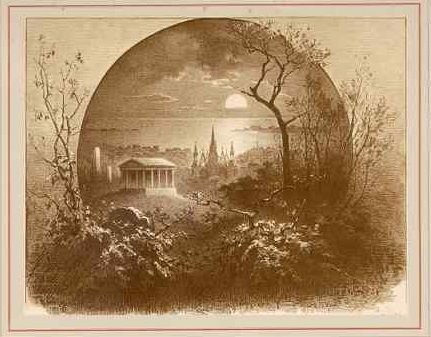
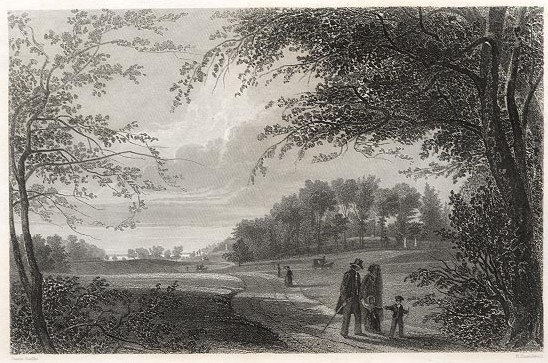
A romantic depiction of Green-wood, with the gate and a serene East River in the background

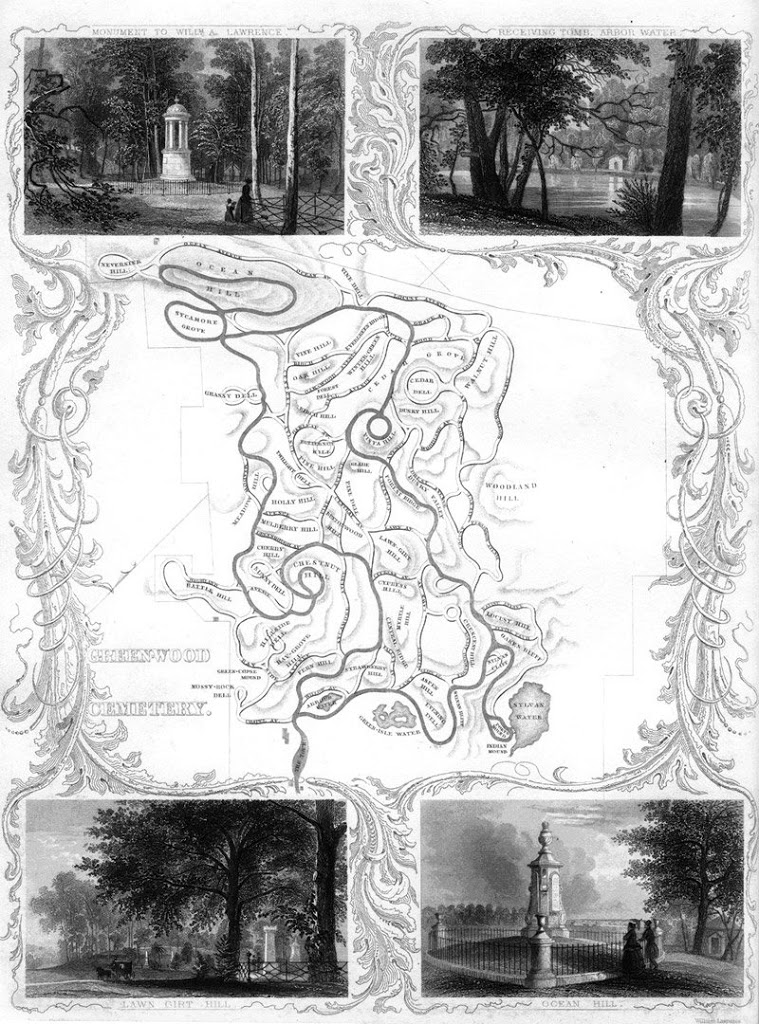
An old, original map of Green-wood. (Click in to see detail.)

Green-Wood was meant to be a place for the living as well as the dead. In fact, this engraving from 1855, I can’t even identify any gravestones! (Pic courtesy Ancestors at Rest)

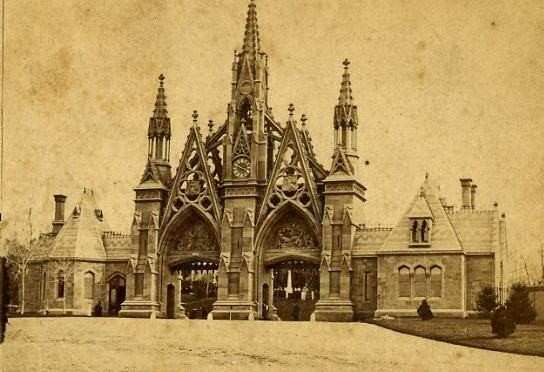
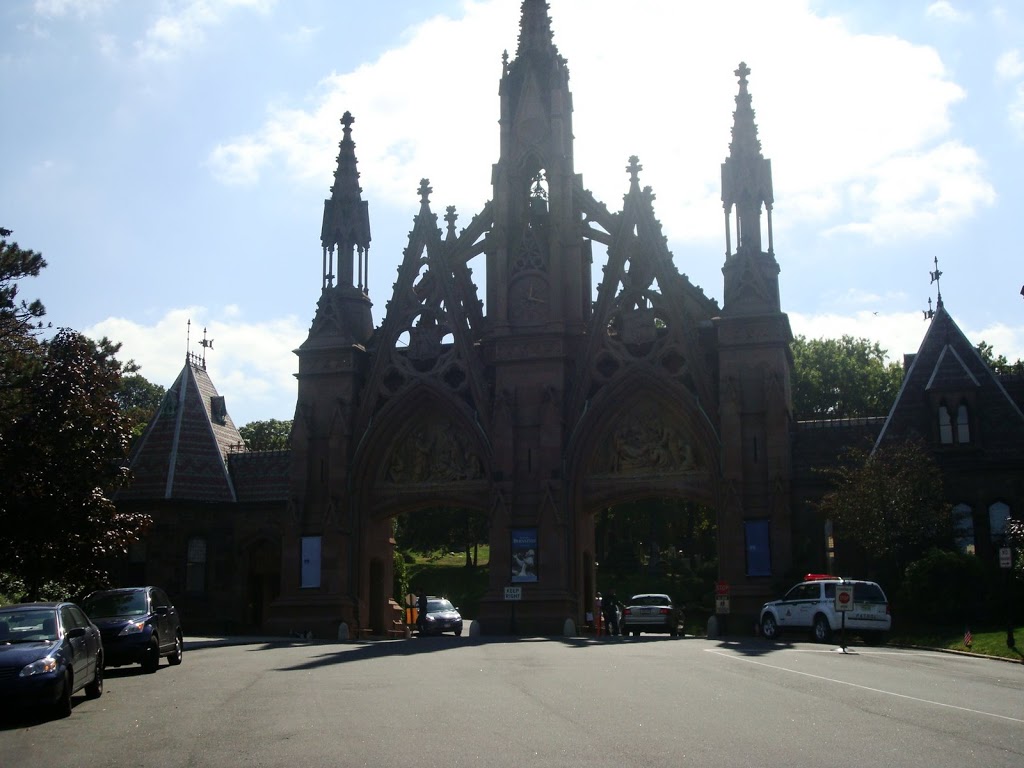
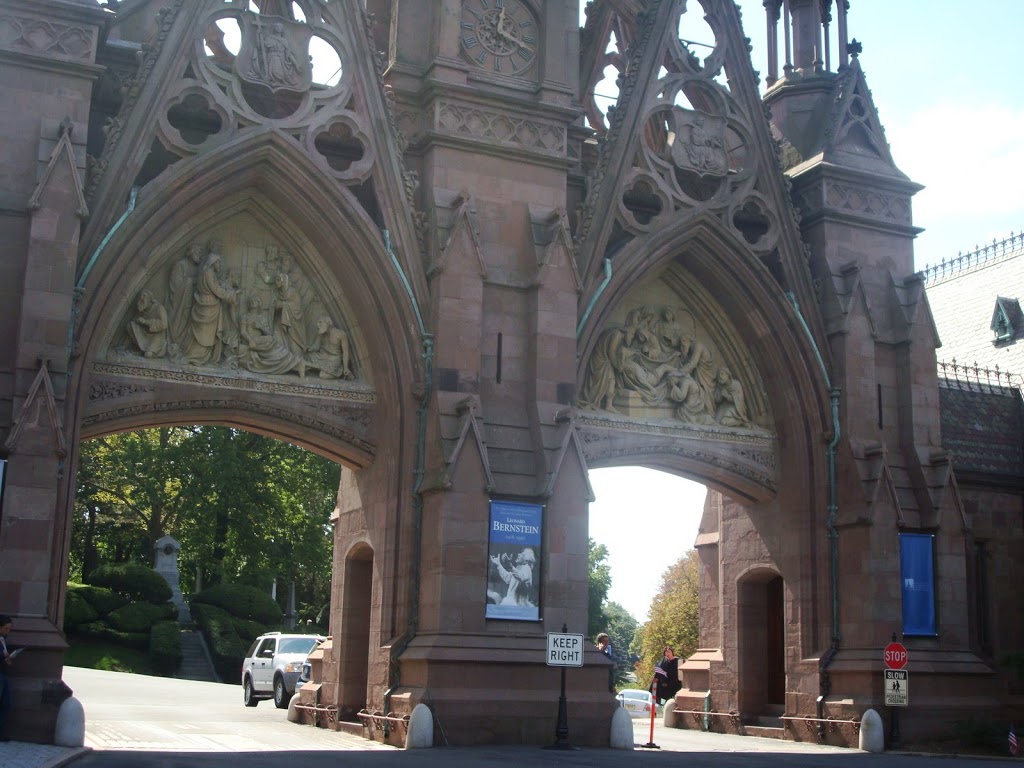
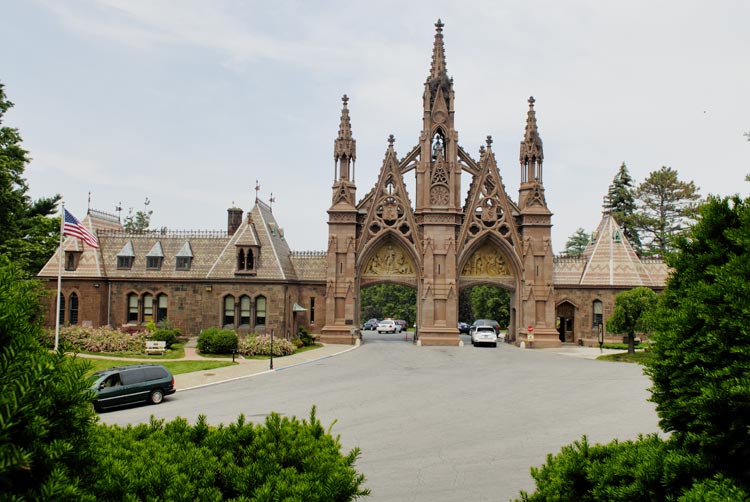
Richard Upjohn’s Gothic revival gate with those two dramatic arches

A great picture of the entire structure (courtesy here)

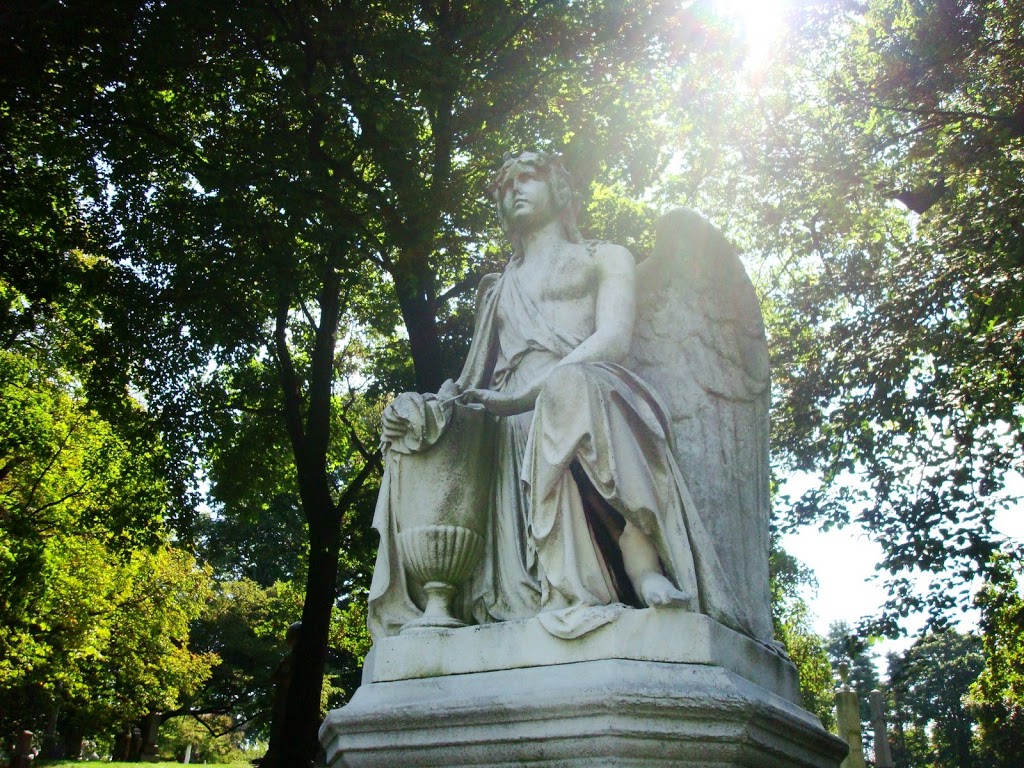
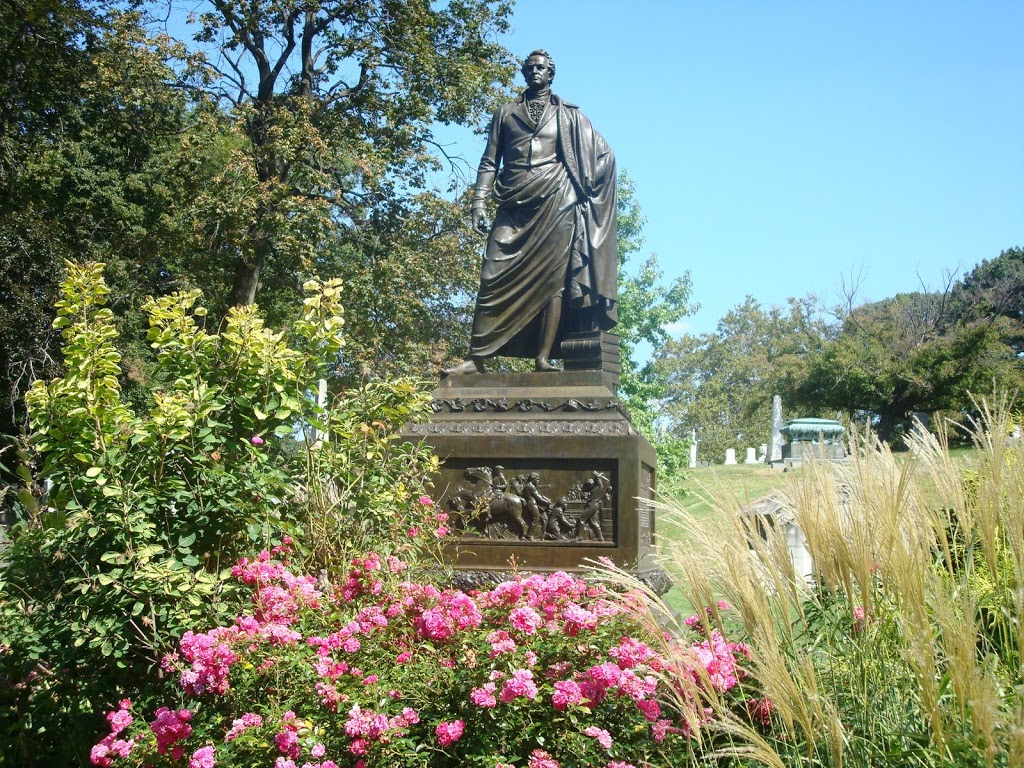
A bold statue marks the spot where DeWitt Clinton was moved in 1844, in an effort to draw the attentions of New Yorkers initially unwilling to be buried at Green-wood

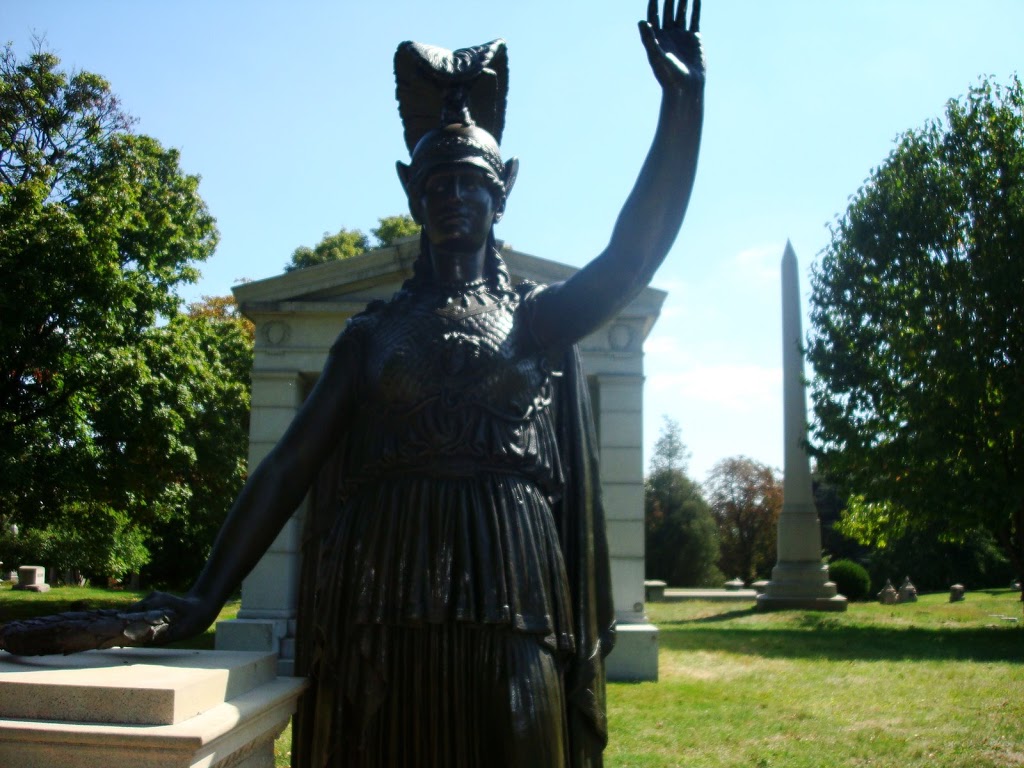
Minverva and the Altar to Liberty, a sculpture erected in 1920 and sculpted F. Wellington Ruxell, faces the East River, and a creative soul could imagine she’s waving at the Statue of Liberty

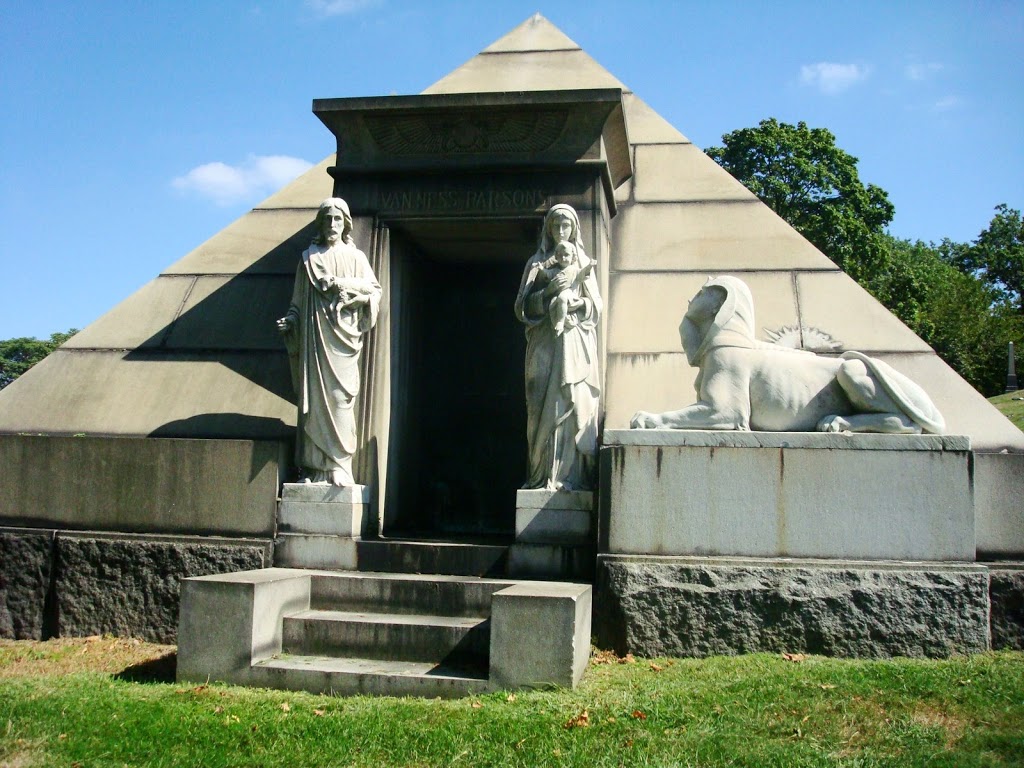
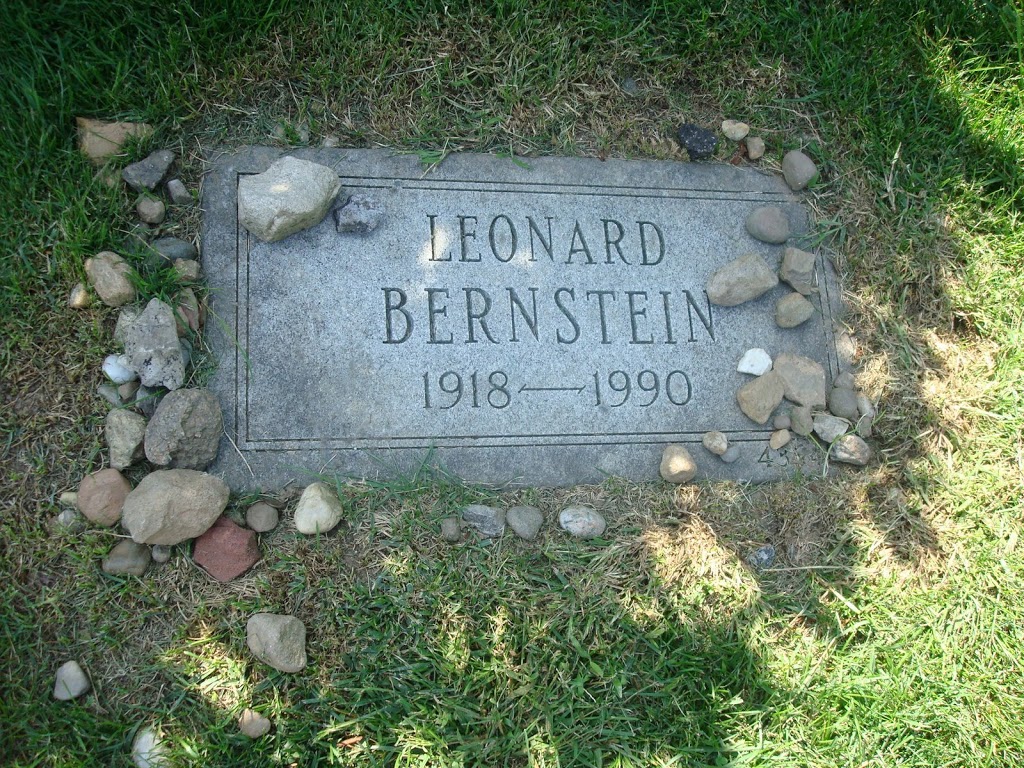
Some spend eternity in ornate, theatrical mausoleums; others are laid to rest in simpler settings.

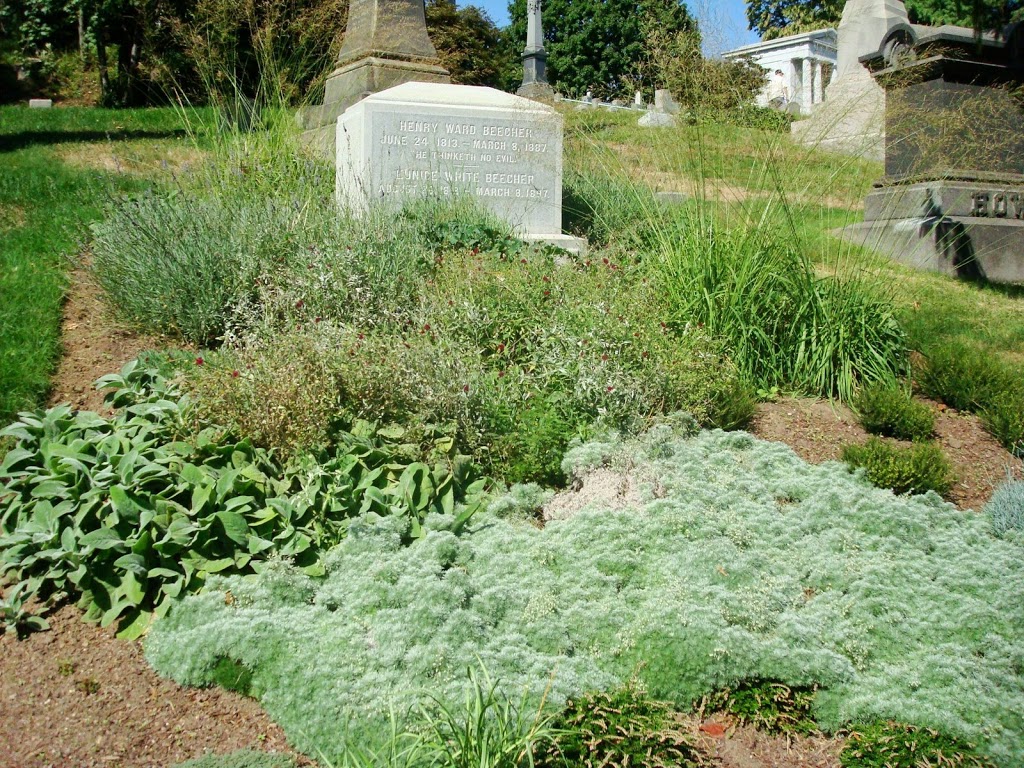
The lush plot of Henry Ward Beecher….

….while a simple stone marks the grave of his mistress Elizabeth Tilden

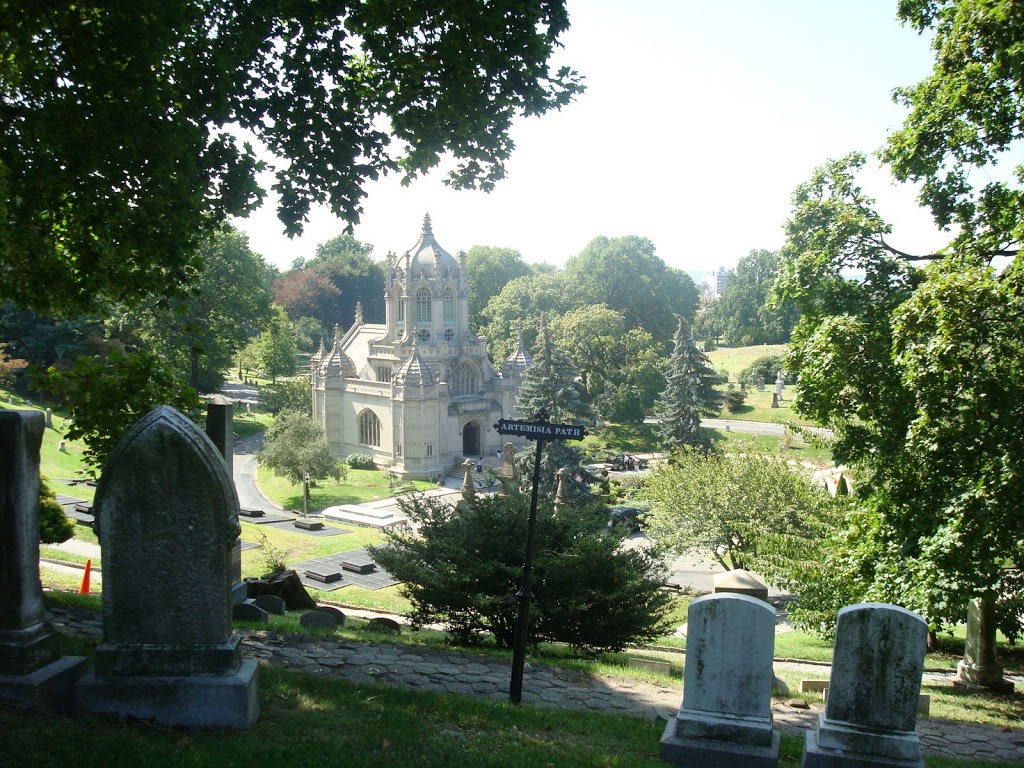
The hilly landscape makes from gorgeous scenery and very winding paths

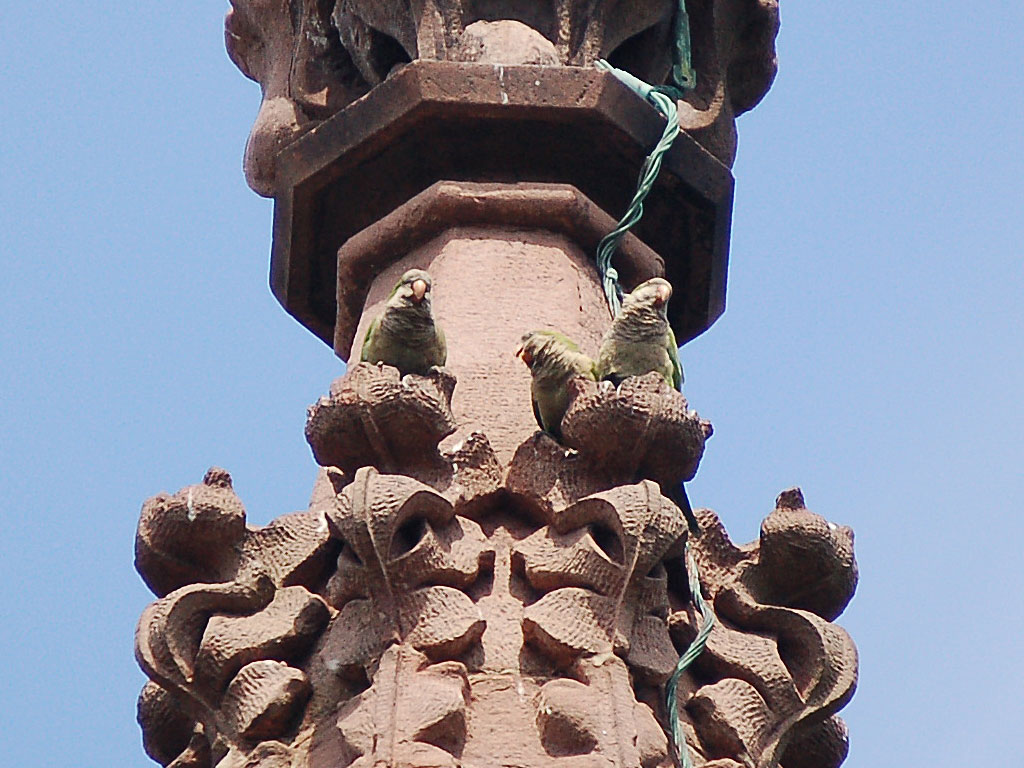
Contrasting the solemn mood at Green-Wood are the flocks of monk parakeets nesting in the Upjohn spires (picture courtesy Brooklyn Parrots, which has a lot of great information the unusual Brookly parrot phenomenon)

Check this out, a great old illustrated book from 1847 of some of the original features of Green-Wood Cemetery.

The official website has more information on upcoming tours and events at Green-Wood. Here’s what’s going on there next Saturday:
“6:15 PM – SATURDAY NIGHT BY MOONLIGHT, FLASHLIGHT, AND FOOTLIGHTS – A WALK. Bring a flashlight, sign a waiver of liability, and you’re all set. This special walk features live accordion music, a visit to the Catacombs, and the light (weather permitting) of a full moon. No reservation necessary. Admission is $20 for the public; $10 for Historic Fund members”

They have great maps at the front gate which indicate some of the most famous residents. You can also try self-guided walking guides by Big Onion and Walking Brooklyn.

There’s also a great new-ish book of photographs by Alexandra Mosca taken at Green-Wood Cemetery, as part of the Images of America series.

McGown’s Pass: the original tavern on the green

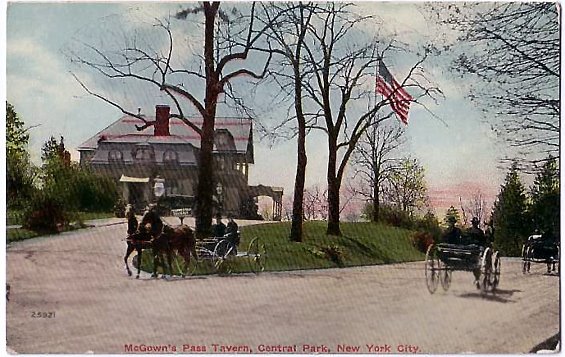
McGown’s Pass Tavern (date unknown, but possibly around 1913

We’re finally moving on from Central Park, but not before observing perhaps its most historically significant area — McGown’s Pass and the Block House.

Located on the northern portion of the park, next to the charming Harlem Meer, are a collection of hills and bluffs left over from its original topography. Not surprisingly, these higher altitudes played a pivotal role during the American Revolution.

A narrow passage between the hills was named McGown’s Pass after Andrew McGown, owner of a popular tavern that sat alongside here. Kept in the McGown family, the tavern was torn down early in the century but rebuilt in the 1880s. In 1895, McGown’s was strangely granted its own election district as, being inside the park, it lay outside normal district boundaries. “There were four voters in this territory last year,” declared the New York Times. “They are four men employed at McGown’s Pass Tavern.” The tavern was eventually torn down in 1917.

It was through McGown’s Pass that George Washington traveled on September 15, 1776. He and a portion of the Continental Army had escaped up to today’s Washington Heights area; when hearing that part of his army had been stopped by the British, Washington rode down the pass and led the remaining troops back up to their fortification in the Heights. He rode back through the pass again seven years later, this time as the victor.

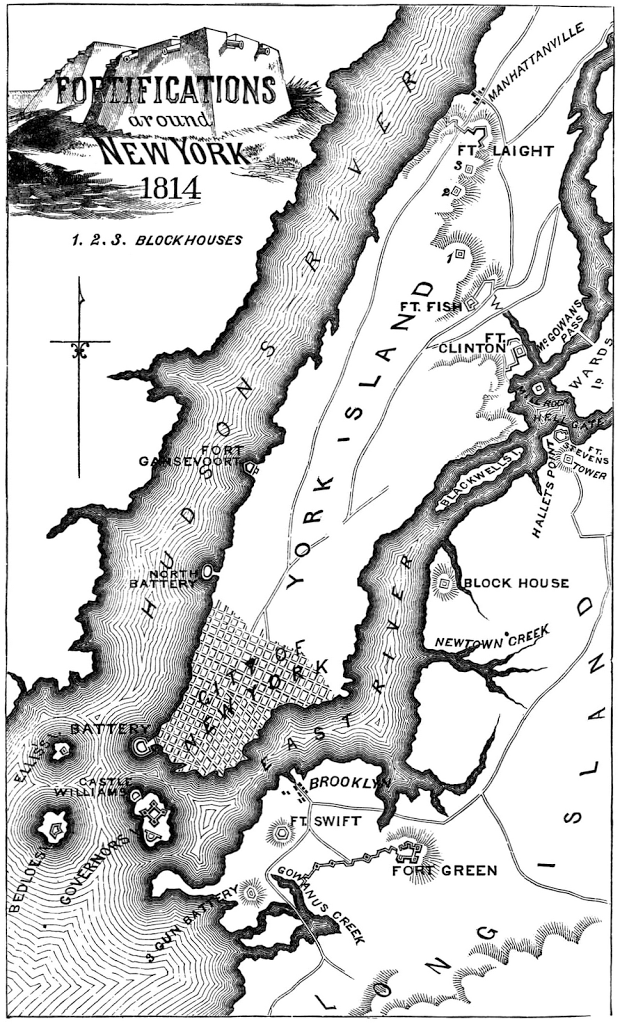
The British and their Hessian mercenaries built forts here to cut Manhattan off from the mainland. Later New Yorkers would seize upon this idea during the early days of the War of 1812. Not willing to become property of the British once again, Manhattan mobilized for any potential battles, building forts all over the island and throughout the harbor. It was here at McGown’s pass that the erected a few fortifications, including Fort Clinton (not to be confused with the fort in Battery Park, although both were named for DeWitt Clinton) and Fort Fish, named after Major Nicholas Fish, father of the New York senator Hamilton Fish.

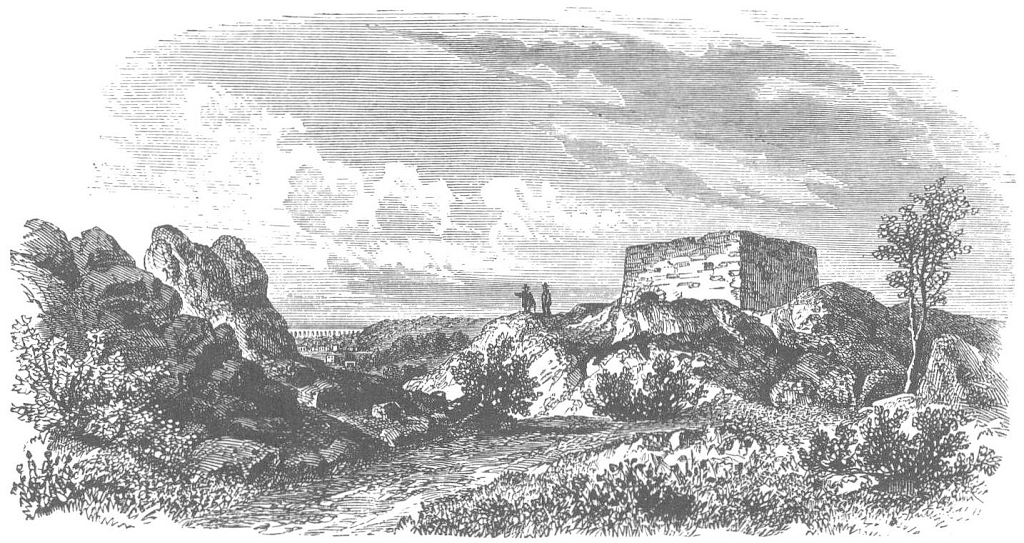
Nothing much remains of these two old forts, which were never used as the War of 1812 never made its way to the city. There are, however, two remaining structures from the early days. A stone ledge overlooking the meer is all that remains of Nutter’s Battery, named after a farmer who owned the property. And nearby stands the Block House, its stone face still fairly solid, once armed with cannons and used to hold ammunition — that was, of course, never needed. The Block House was fairly intact when Olmstead and Vaux included it in their plans for the park, using the building as a ‘picturesque ruin’ covered in vines.

Here’s an illustration of how the Block House looked in 1860:

For a short while, this military site was even used as a convent and hospital. In 1847 the Sisters of Charity of St. Vincent de Paul opened a ‘motherhouse’ and school called the Academy of St. Vincent. The nuns left when the area was incorportated into the park, however the building stood until the 1870s, when it burned down and was replaced with the refurbished new McGown’s Pass Tavern mentioned above. (This site has some great pictures of where the convent once stood.)

This is a bit tangental, but I love this story. A plaque was erected at the old site of Fort Clinton in 1906 and unveiled in a publicized community event for children. It was apparently difficult for some people to find the location and “several chivalrous lads” guided people through the park to the unveiling.

However, the Times reports an incident that might be the only real battle that ever occured at this storied historical spot:

“Among the boys interested in the tablet unveiling were several whose spirit of mischief overcame their sense of the proprieties. These made misleading arrow signs …. and caused a number of persons to go far afield and arrive at the exercises late and angry. These mischievous youngsters were caught at their annoying trick by boys who were more sober and serious. Then there was a short scrimmage, and the mischievous lads scurried away through the Park.”

Finally, from a 19th century book on the War of 1812 comes this spectacular map of the various fortifications built in anticipation of battle. Its dimensions are greatly distorted of course, but it lists the forts and blockhouses that stood in this area as well as those such as Fort Gansevoort and Fort Greene (click on the image to look at it more closely):