Categories
Know Your Mayors Politics and Protest Queens History

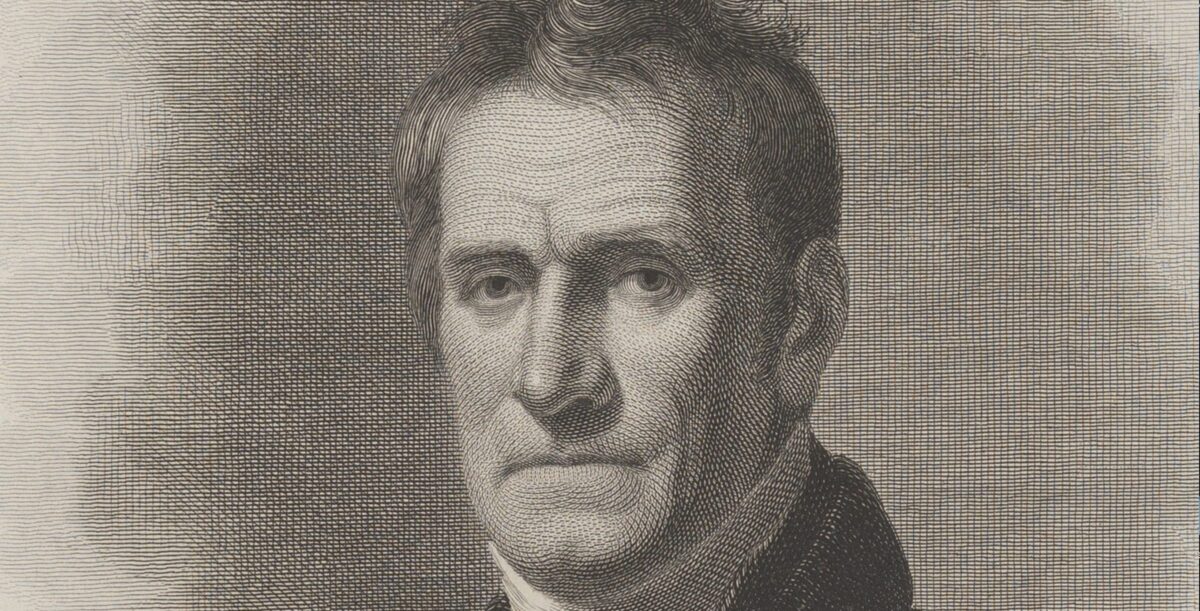
Mayor Cadwallader D. Colden: Leading the city over 200 years ago

We’re just months away from a new mayor in New York City so we think it is time that you Know Your Mayors! Become familiar with other men who’ve held the job, from the ultra-powerful to the political puppets, the most effective to the most useless leaders in New York City history.

This longtime feature of this website is being rebooted with new articles and newly researched and refreshed earlier entries in this series. Check back every other week for a new installment. Read past articles here.
Cadwallader D. Colden
Terms: 1818-1821

The most remarkable thing about New York City having a mayor named Cadwallader Colden is the fact that he was not even the most famous New Yorker named Cadwallader Colden.

That distinction goes to his grandfather, an altogether different Cadwallader Colden than his grandson and a rather fascinating Renaissance man.

Well, despite the fact that he was also pro-British, stridently hated among the American rebels and the type of man that would have thrown most of us in jail on sight.

Grandpa Colden

Ole Cadwallader was an Irish physician who came to the American colonies in 1710 (at age 22) to practice medicine.

Establishing his practice in Philadelphia, he later came to New York and in 1743 wrote a now seemingly obvious treatise drawing a connection between New York’s unsanitary conditions and its frequent outbreaks of yellow fever.
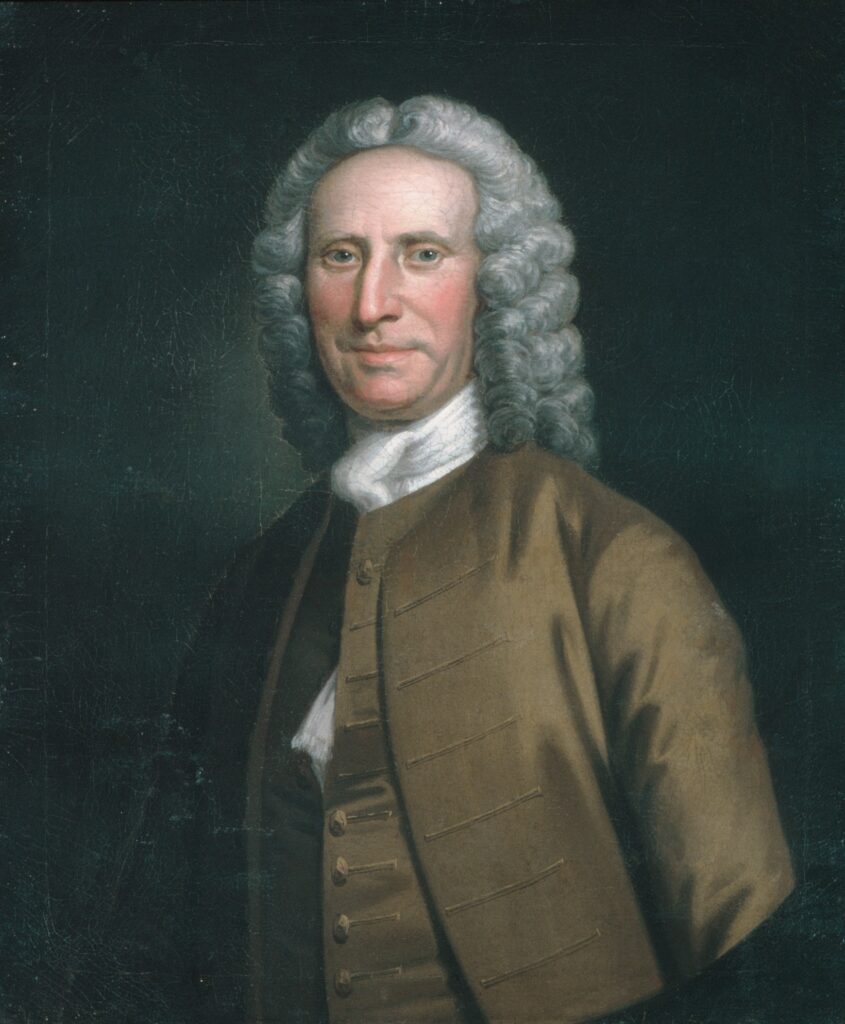
Painting of the Elder Colden by John Wollaston the Younger. Wikimedia Commons

Elder Colden became governor of the New York colony in 1760 and later sparked ire among beleaguered New Yorkers, who burned his effigy over enactment of the Stamp Act.

Colden ultimately represented the losing side of the American Revolution, and due to that, his other accomplishments are often overlooked. He was the first in America to write about Newtonian scientific theories and the first colonist to act as ambassador to the Iroquois Confederacy, the union of five Native American tribes.

Grandson in a New County

Perhaps it’s fitting that Colden died in September 1776, the year of the conflict that would run the British out forever.

He might be scandalized to know that his grandson, born in 1769 in Flushing, Queens County, would become a model American. (The child’s father Cadwallader Colden II was more concerned with governing the family’s lush 3,000 acre estate in Queens and remained essentially neutral during the Revolutionary War.)

Born in the trappings of wealth, Cadwallader David Colden III was shipped off to London for a proper education and returned to New York in 1785 to become a lawyer.

With his high class connections, he quickly acquired an impressive client roster, in particular Robert Fulton and Robert Livingston, assisting in their control of ferry services in New York harbor. He became New York district attorney twice, 1798 and 1810.
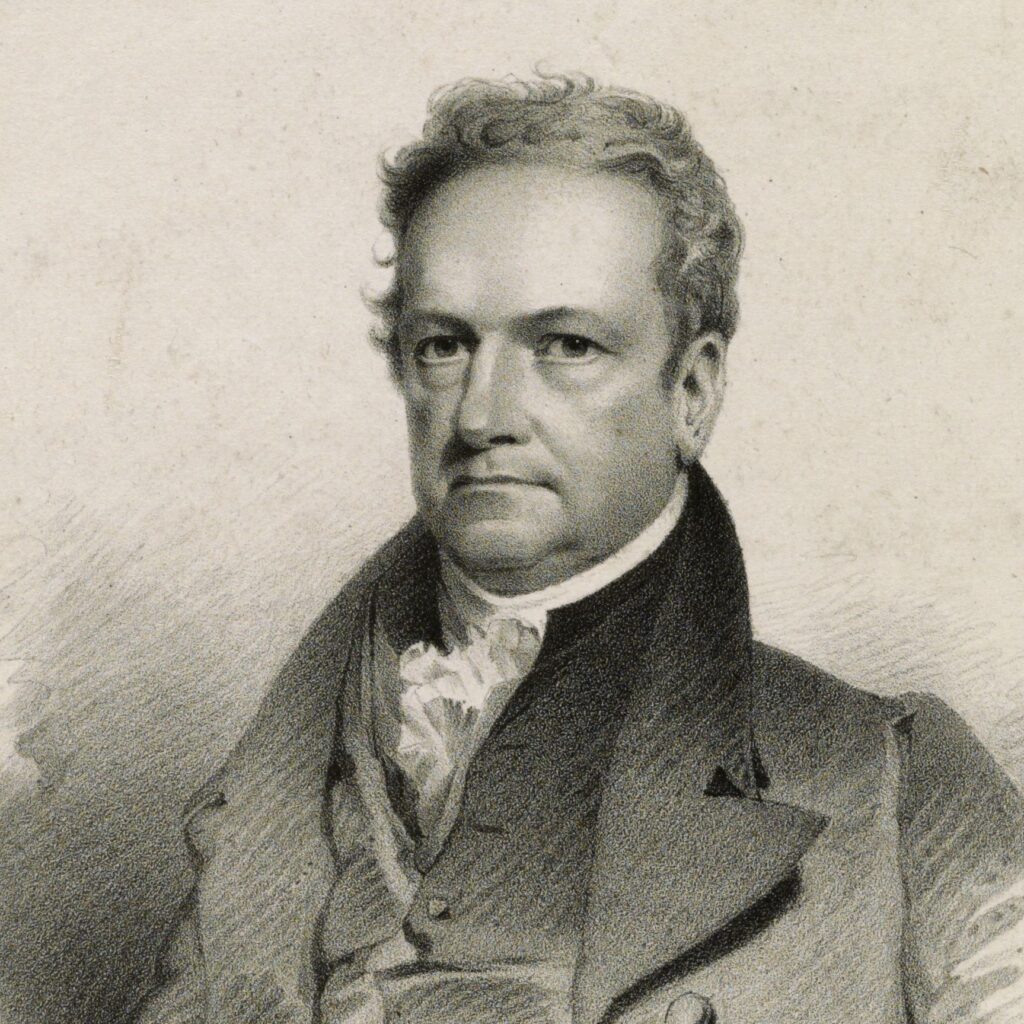
Colden’s good pal DeWitt Clinton

Advantageous Friendships

Colden was a different man from his ancestor; he even fought against the British as a colonel of volunteers in the War of 1812. Surprising given his lineage, Colden was for many years considered a Federalist, the party of Alexander Hamilton. However, he considered as one of his closest friends a rather unlikely ally — anti-Federalist DeWitt Clinton.

How they met probably had less to do with political alliances than membership of a rather notable society — the Freemasons.

In fact, Colden and Clinton were members of the city’s most influential — and still active — Holland Lodge. Within a few years, this affiliation would be political poison, with anti-Freemason candidates characterizing the secret organization as above the law and morally corrupt.
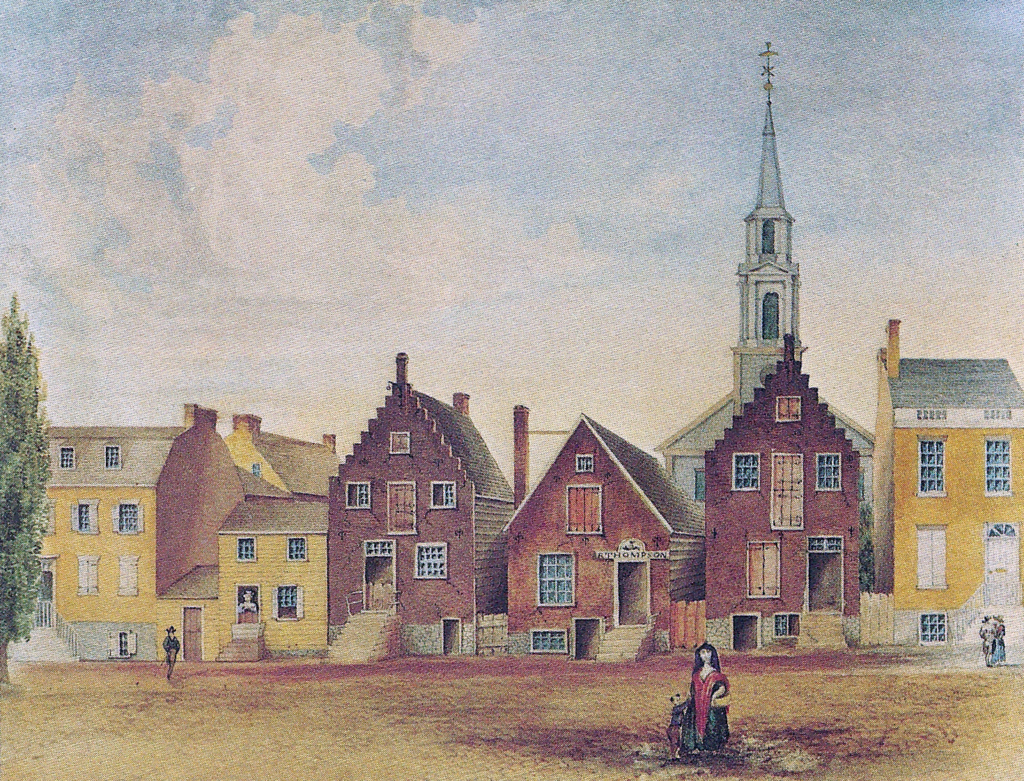
View of North Pearl Street just north of State Street in Albany (1800s), painting by James Eights

At Odds With Tammany Hall

Colden’s ascent into the mayor’s office caught him within some serious political crossfire. Cadwallader’s friend DeWitt became the governor of New York in 1817, making him the head of the Council of Appointments, which selected a mayor for New York, back in the heady days before elections.

Clinton would use his influence to install his friend in the job in 1818, but not without Colden sustaining a little political injury.

One evening, Colden was in Albany and was invited inside a tavern for a glass of wine. He suddenly realized he was in a room filled with members of Tammany Hall, political enemies of the Federalists.

Colden had once been a member of Tammany — during their less politically active days — and in 1793 had even spoke to an assemblage at Saint Paul’s Church.

He was now on the opposite side.

Immediately they pounced, urging him to not seek the mayor appointment. But no, he cried!

“He exclaimed energetically against the trickery, declaring that he had not asked for the office of Mayor, but would only accept it if offered.”

When Clinton did grant him the job, Tammany made sure to make life difficult for him. For the entirely of his three one-year terms, Colden became a pawn in the battle between Governor Clinton and the ascendant Democratic machine.

Colden began work in the spanking new City Hall, the fourth mayor for the new building after Jacob Radcliffe, John Ferguson and, of course, DeWitt Clinton.

Pigs and Prison Reform

First on Colden’s agenda: all those pigs running around.

He declared, “Our wives and daughters cannot walk through the streets of the city without encountering the most disgusting spectacles of these animals indulging the propensities of nature.”

Animals were penned up and steep fines charged to butchers who kept pigs unproperly supervised.

Colden also took a crack at the city’s deeper social problems. Indeed he was governing over a growing city, population 123,706 as of 1820. With a big city came big city problems — poverty, crime, homelessness.
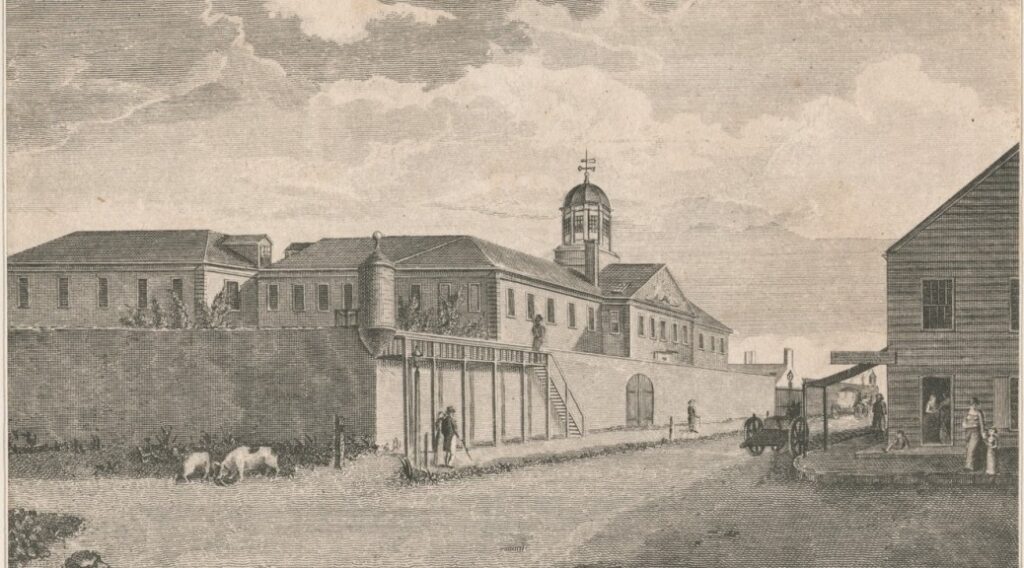
Newgate Prison. Image courtesy New York Public Library

The New York Society for the Prevention of Pauperism, led by the mayor himself, investigated prison conditions throughout the young nation to come up with a local solution.

At the time, the state penitentiary lay in today’s West Village in a place called Newgate Prison. One of their findings was a need to separate younger delinquents from the adult criminals held there.

Colden proclaimed, “It must be obvious that under such circumstances it would be in vain to expect that their punishment will improve their morals: it can hardly fail to have a contrary effect.”
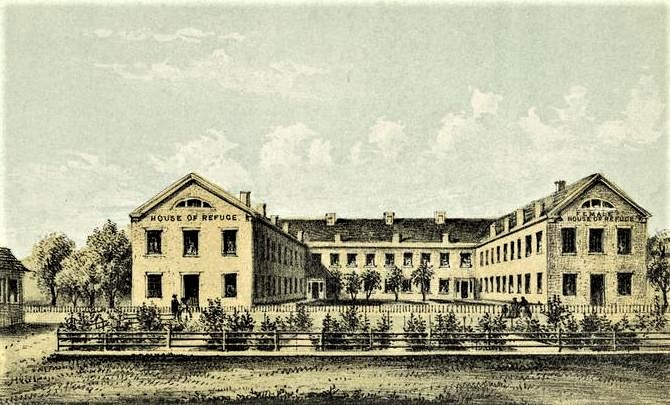
The House of Refuge in 1832 (pic courtesy NYPL)

The mayor set the stage for an innovative experiment: New York’s House of Refuge, in an arsenal at Broadway and 23rd Street, essentially a reform school, built to incarcerate children age 16 and younger.

It later opened in 1825 (after Colden left office) with six boys and three girls as its pupils, many of them guilty only of homelessness and essentially kept here until adulthood. By the early 1830s, the House of Refuge would receive over 1,600 teenagers.

A ‘Kindly’ Anecdote

Like many mayors to follow, Colden also clamped down on liquor sales, even carrying around a ‘red book’ to notate violations and overheard complaints of local tavern owners.

Naturally, Colden would rally behind Clinton’s most ardent cause — the Erie Canal. It opened in 1825, after Colden left office, but his support did indeed pave the way for New York to become, in his own words, “one of the greatest commercial cities in the world.”

He was aristocratic, class-oriented but ultimately open hearted, they say. A reminiscence in the 1843 journal New Mirror quotes this certainly apocryphal story about the mayor’s ‘kindness’.

One rainy night on his way to a dinner party, Cadwallader stepped up to a ‘hackman’, a type of carriage taxi, for a ride.

The driver, “who had some old grudge against Mr. Colden,” rudely sped away, leaving the passenger on the curb. He jotted down the cab driver’s number and summoned him to City Hall.

“Poor Pat (for of course he was Irish)” as the article indicates, “went up the stairs, trembling at the fate which awaited him. When the mayor demanded to know why he was treated so rudely, the driver proclaimed,”you see I looked in your face, and, faith, you looked so like a jontleman I drove twice before that never paid me, I was afraid to thrust him agin!”

Colden laughed, exclaiming, “Your wit has saved you this time!” and excused the driver.
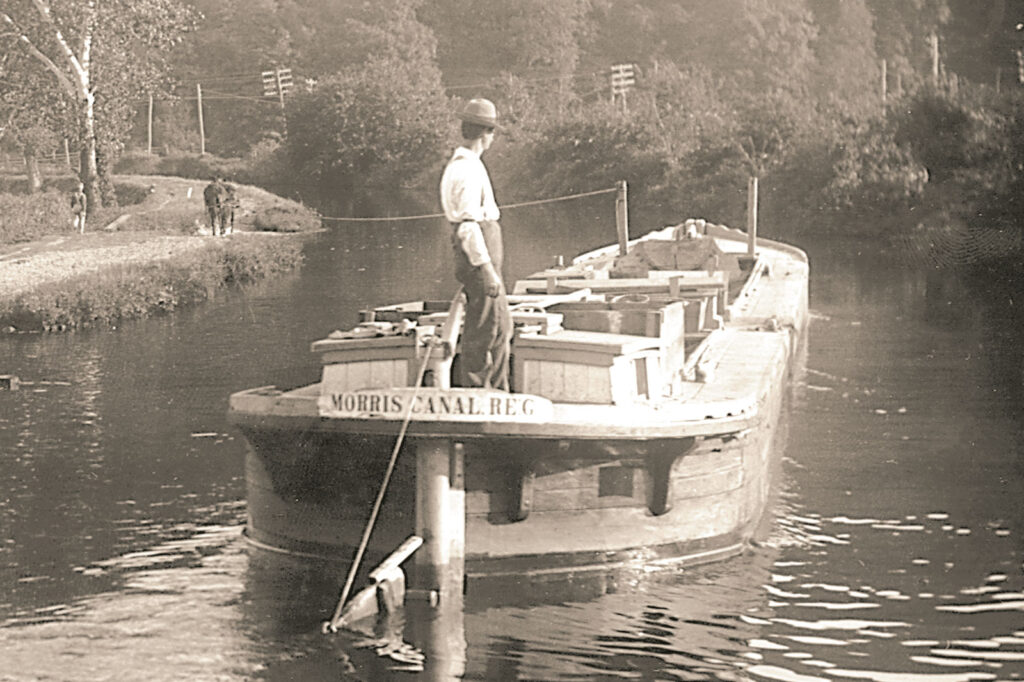
A boat upon the Morris Canal (courtesy the Canal Society of New Jersey)

Colden’s Later Years

Aligning with Clinton eventually became a bad idea. When Clinton was turned out of the governor’s office, so too was Colden from the mayor’s office. But he still remained popular with New Yorkers, becoming a U.S. congressman, then a member of the New York state senate in 1825.

In later life, he engaged in a couple unusual endeavors. The first was the construction of the Morris Canal in northern New Jersey, a conveyor of coal that operated for over a century.

And in 1830, he briefly indulged in the hobby of horse racing, taking over the Union Course in Woodhaven, Queens. The closest you’ll get to visiting Colden’s racetrack is visiting Neir’s Tavern, the oldest tavern in the borough.

Colden died in 1834, in Jersey City.

For centuries his gravesite was unknown. But in 2011, historian (and friend of the show) Eric K. Washington discovered his grave at Trinity Church Cemetery.
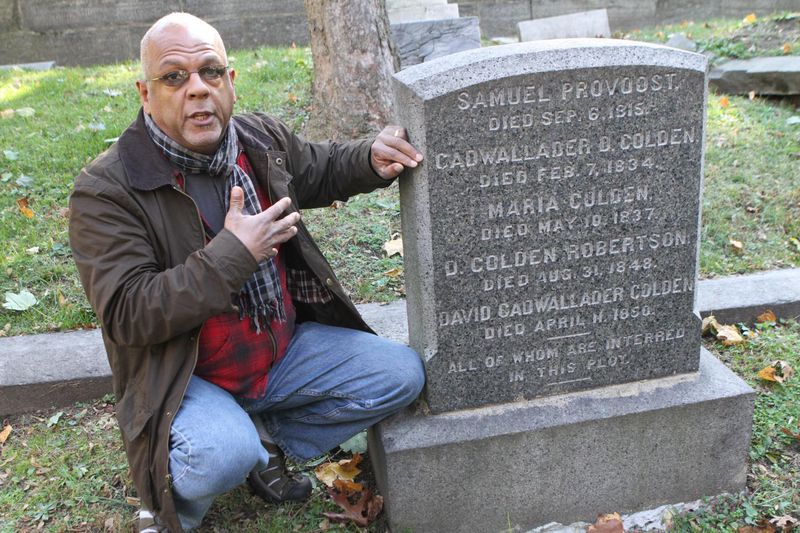
Washington in front of the new stone in 2011, adding Cadwallader III’s name. (Courtesy Mariela Lombard  of theNew York Daily News)

Revision and expansion of an article which first ran on this website in 2009.
Categories
Brooklyn History Neighborhoods

No sheep in Sheepshead Bay, but lots of fish with human teeth

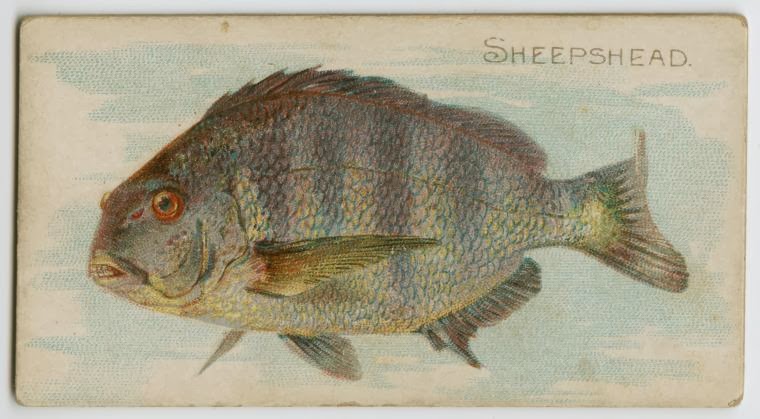
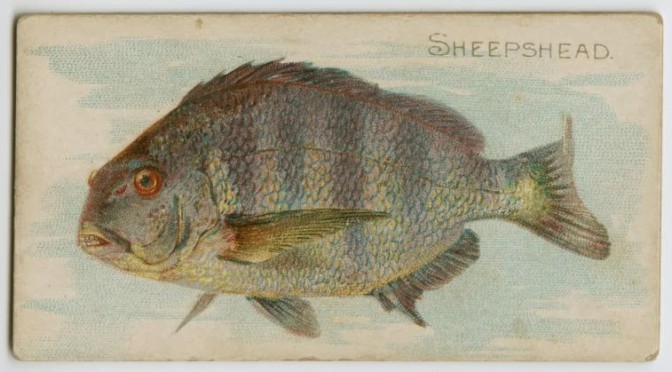
The sheepshead is a common variety marine fish known for its distinctive black stripes and a very scary looking set of teeth.  If you look too long at it, you will have nightmares tonight.  Some believe the fish’s unusual name comes from the notion that its teeth actually look like those of adult sheep.  I personally don’t see it, but you can compare here and here.

What we do know, however, is that the Sheepshead lends its name to one of Brooklyn’s loveliest places — Sheepshead Bay and the adjoining neighborhood.of the same name.

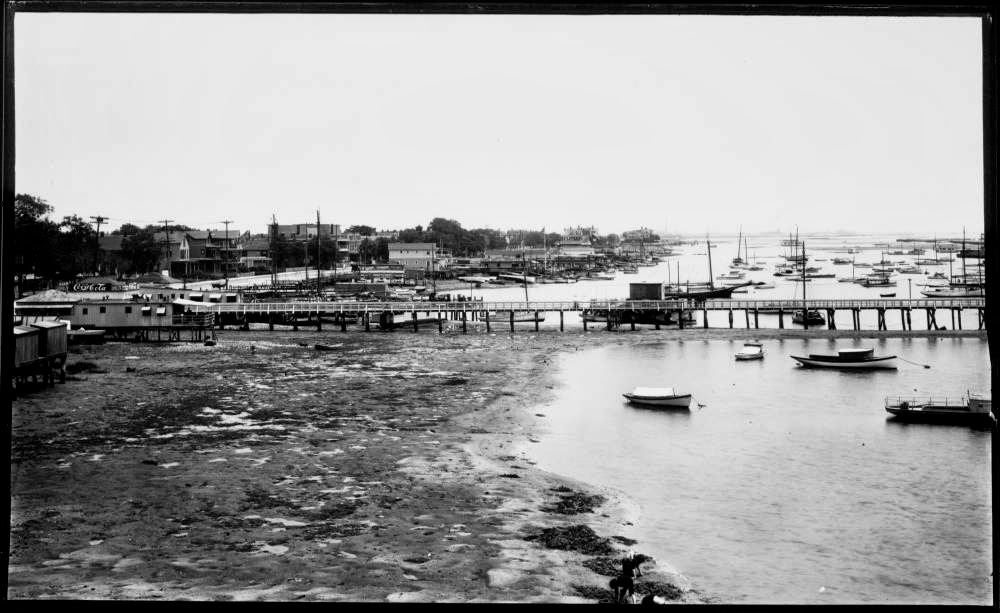
Below: Sheepshead Bay in 1905 (courtesy George Eastman House)

But who thought to name the area after one of its common aquatic residents?  We can probably bestow that honor onto Benjamin Freeman, who owned much of the land around the bay and became one of the first entrepreneurs to open a hotel here in 1844.  He called his establishment The Sheepshead, adorning the front with a large picture of a sheepshead.  This decision by Freeman would forever give the area its unusual name.

During the mid and late 19th century, the bay area would never hold the same luxurious reputation as Brighton Beach and Manhattan Beach to the south.  Its hotels and recreation spots had a less respectable appeal, though not without certain charms.

 A 1870 roundup in the Brooklyn Daily Eagle of Sheepshead Bay offering sings the praises of  the Union, “the largest hotel in the bay,” owned by a Brooklyn congressman Patrick Burns, a place of rambunctious entertainments.  From an 1873 report in the New York Tribune:  “[N]umerous roughs from New York and the Fifth Ward of Brooklyn were leaving in coaches to Burns Hotel in Sheepshead Bay to witness a prize-fight.”

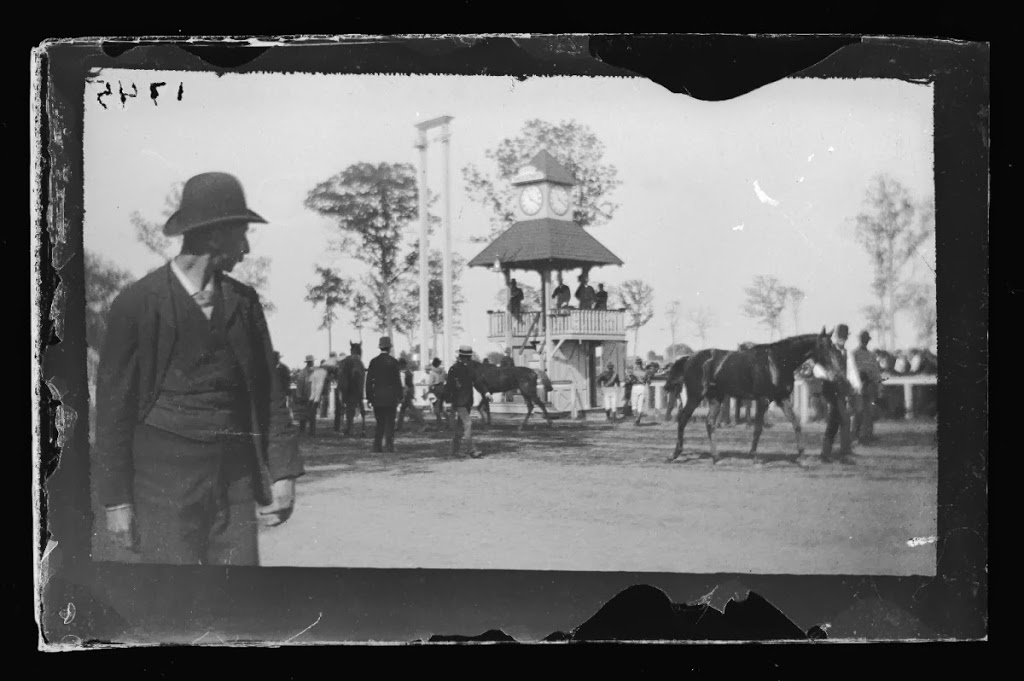
Below: The Sheepshead Bay racetrack, taken by George Bradford Brainard, courtesy the Brooklyn Museum

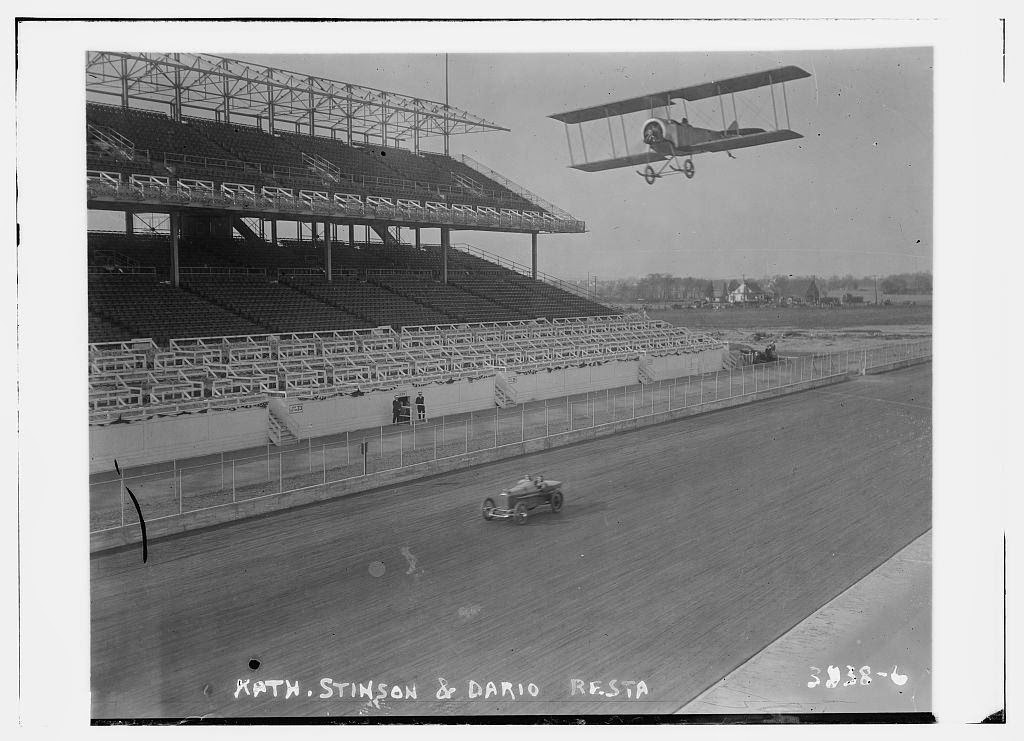
Sports would always define the early recreations of Sheepshead Bay, and not just fishing and boating pleasures.  In 1880, one of America’s great horse-racing tracks was constructed here, a popular draw due to the Gilded Age moguls who funded the venture, including the godfather of horse racing August Belmont Jr.  When racetrack betting became illegal in the 1910s, the track was refitted for auto racing.

And, as you can see below, sometimes stunt airplane acrobatics!  This image, from the Library of Congress, shows a Sheepshead Bay ‘race’ between two very modern devices — an automobile driven by Italian racing legend Dario Resta and an airplane steered by pioneering pilot Katherine Stinson.

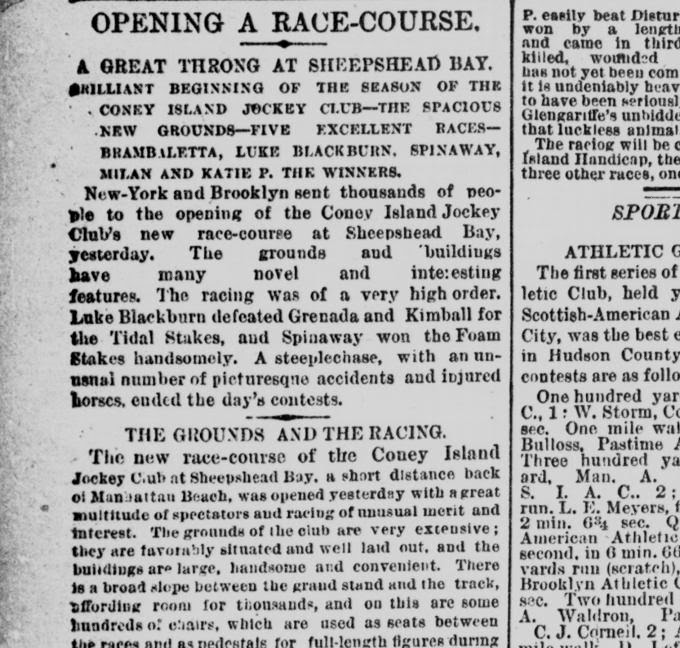
Below: From the June 1880 opening of the Sheepsead Bay Race Track.  Note this disturbing sentence: “A steeplechase, with an unusual number of picturesque accidents and injured horses, ended the days contests.”

Fish picture at top from a cigarette card, courtesy NYPL

Categories
Those Were The Days

Let’s go see the horses at Madison Square Garden!

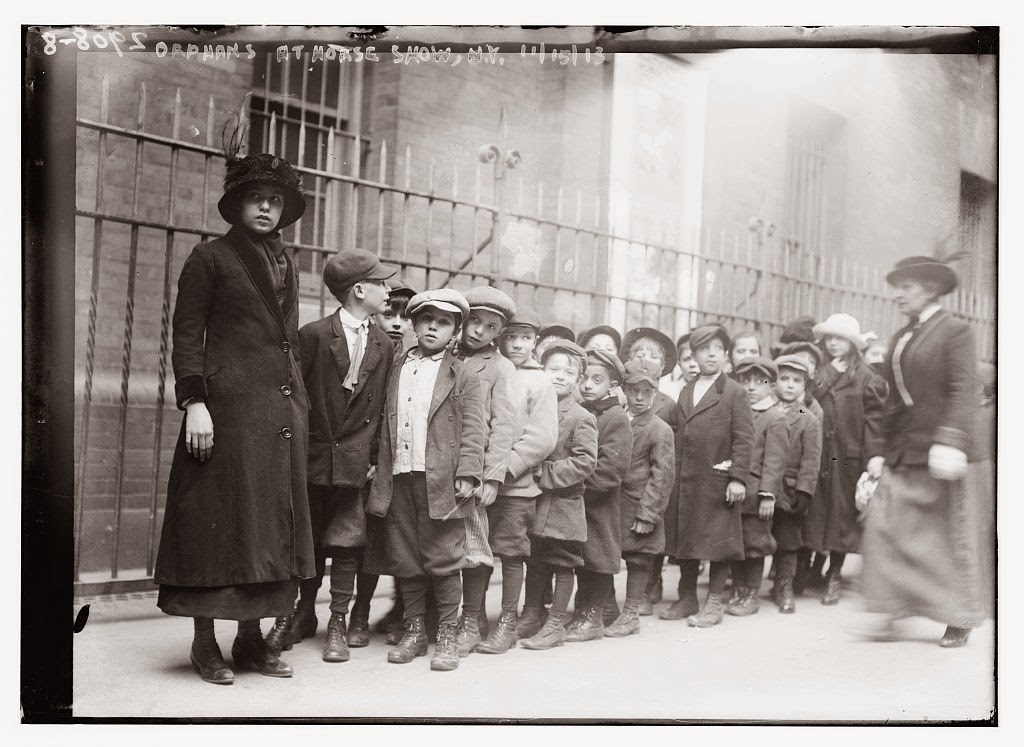
These unbearably cute orphans seen above were lined up to go to the National Horse Show at Madison Square Garden which began on November 15, 1913.  These are of course the days of the Garden down at the northeast corner of Madison Square, the glorious McKim, Mead and White structure topped with a glittering statue of Diana.

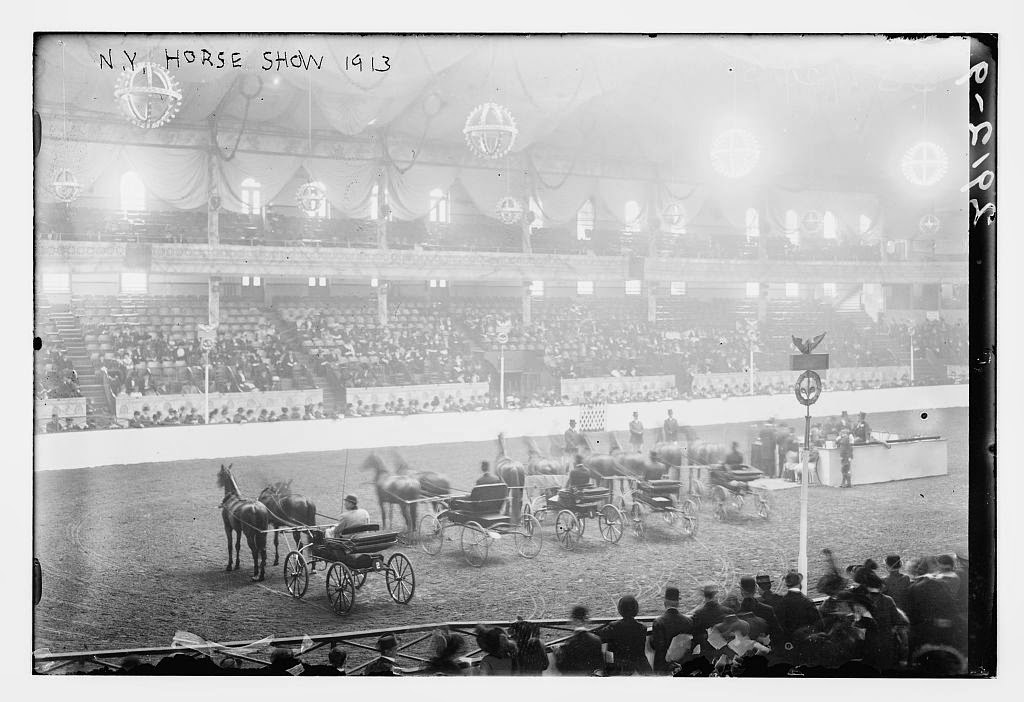
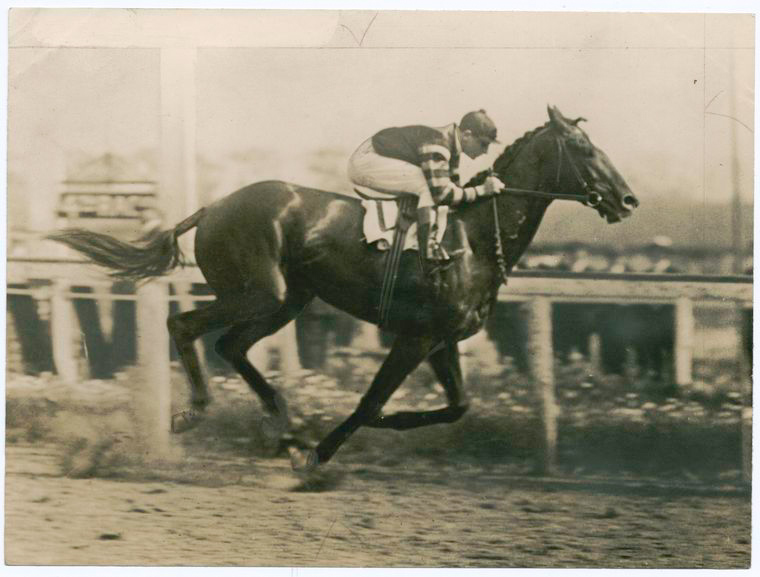
Once inside, the children were witness to a marvelous variety of events, including horse racing, pictured here:

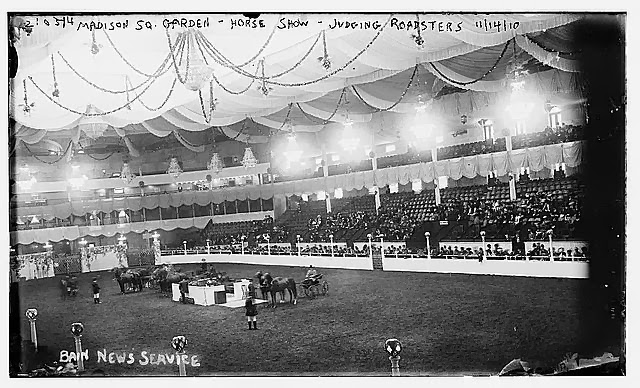
Here’s another view of an earlier event from 1910:

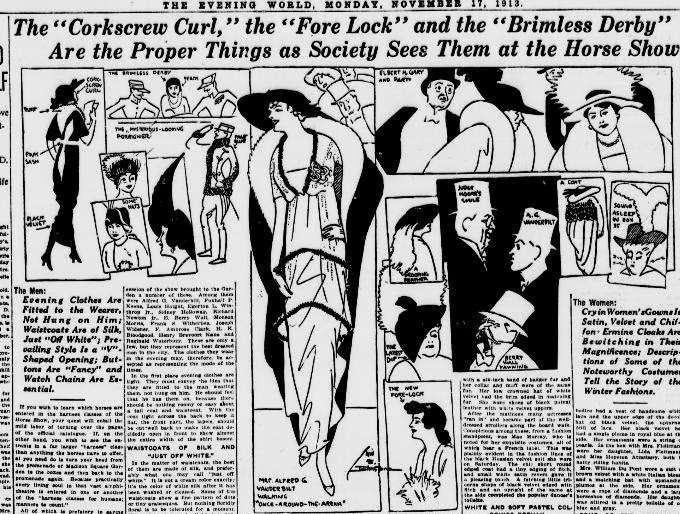
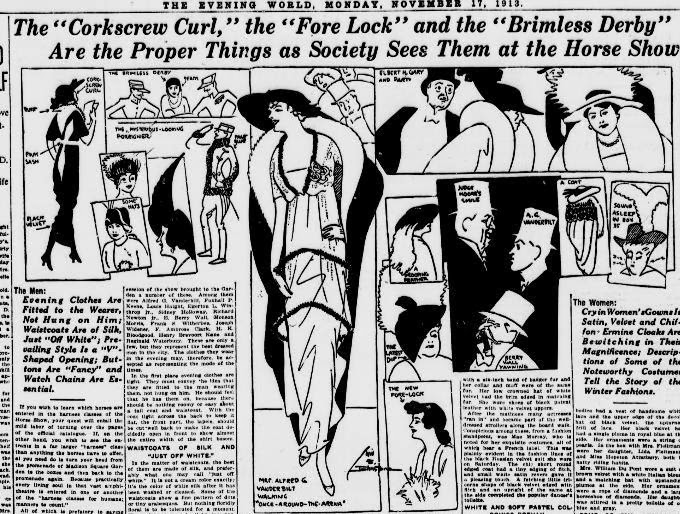
The National Horse Show was one of New York’s big society events, as much a see-and-be-seen spectacle as the opera.  Did anybody care about the dressage, the equestrian excellence?  Perhaps some. But many were just there for the fashion show as society doyennes and big-money mogul strutted the latest styles.

“If you wish to learn which horses are entered in the harness classes of the Horse Show, your quest will entail the mild labor of turning over the pages of the official catalogue.  If, on the other hand, you wish to see the entrants in a far larger “harness” class than anything the horses have to offer, all you need do is turn your head from the promenade of Madison Square Garden to the boxes and then back to the promenade again.”

From the Nov. 17th Evening World

From the Nov. 21st Evening World

So how did a group of poor orphans get invited to high society’s big event? It was a gesture of charity by the Vanderbilt family — Alfred Gwynne Vanderbilt* was president of the horse show — who invited 3,000 orphaned children from around the city to sit in the balconies.

The city’s little wards have looked forward to this occasion for many months.  They always do.  They know Santa Claus Vanderbilt.  After the show each of them will leave the Garden with a substantial present.  It is their Christmas Day.” [source]

* Two years later, Mr. Vanderbilt would die in the sinking of the RMS Lusitania.

Photographs at top courtesy the Library of Congress

Why go to Kentucky? New York’s horseracing history

Above: Man O’ War, racing at Belmont, where one of the world’s greatest thoroughbreds cemented his reputation. The horse was actually owned by the son of Belmont Park namesake August Belmont. (NYPL)

The Kentucky Derby is this Saturday: two minutes of race and a day of fanciful hats, mint juleps and fanning oneself with a program at Churchill Downs. As the event that kicks off horse-racing’s Triple Crown competition, racing fans then gallop to Maryland for the Preakness before finishing in the Belmont Stakes. That final event takes place in New York City (well, kind of, a little bit, see below) at Belmont Park, which officially opened its gates 106 years ago today.

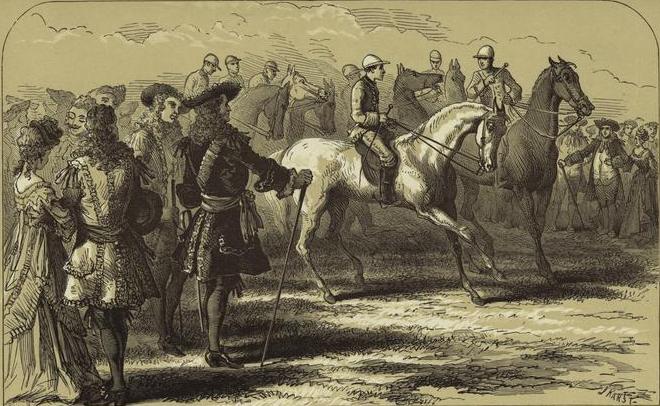
New York City has a healthy horse-racing tradition stretching to its very beginnings. In fact, the very first specially built race track in America was constructed in 1665 by New York’s colonial governor Richard Nicholl. Called Newmarket and located in the Hempstead Plains (just outside today’s border with Queens), it proved an enduring enterprise for colonists over a 100 years later. Smaller tracks were soon built in countryside closer to Manhattan island, some aristocratic British landowners would even built personal tracks on their estates.

Below: The track at Newmarket, “sixteen miles long and four wide, unmarred by stick or stone.” [NYPL]

As it’s often considered today, horseracing represented vice, gambling and drinking among its prime distractions. It was discouraged by the Patriots during the Revolutionary War, but the British, holed up in New York for the entire conflict, blew off a little steam at the racetrack, constructing a new course, appropriately named Ascot Heath, approximately around today’s Brooklyn neighborhood of Flatlands.

New Yorkers threw the British out of the city in 1783 only to immediately indulge in their former oppressors’ racetrack pleasures. Seen as a corrupting British-era vice, horseracing was banned entirely for two decades then later allowed to carry on in one place — Queens County.

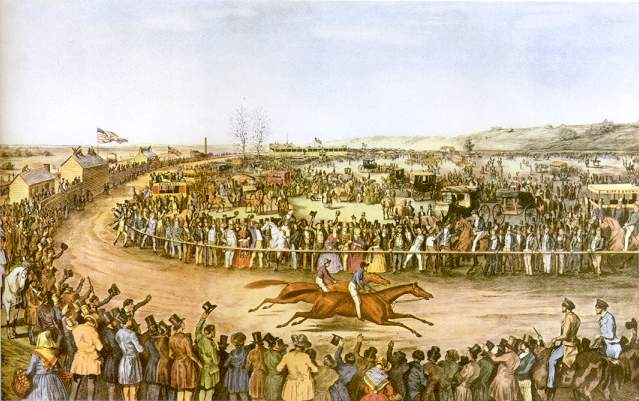
With regional exclusivity, horserace lovers looked to the popular trotting lane along Woodhaven Boulevard and built Union Course there in 1821. It became the most important race track in America and, for moral New Yorkers, a sesspool of sin. By the end of the decade, the track was being managed by former mayor Cadwallader D. Colden, once known for cracking down of alcohol consumption during his tenure.

Below: The galloping goings-on at Union Course, in the future neighborhood of Woodhaven

For those horrified by such vulgar activity, horsetrotting — a more civilized cousin to racing — was also popular in New York by this time, especially among the wealthy, making bucolic Harlem the prime destination for proper horsing around. Financiers and millionaires named Vanderbilt, Gould and Fisk made the upper reaches of Manhattan their own private race tracks, builting lavish stables in the neighborhoods near Harlem Lane.

By the start of a new century, horseracing defined a few region in Brooklyn. When William Engeman carved out some land east of Coney Island and called it Brighton Beach, one method they used of attracting city-goers to his luxury hotel there was building a racetrack. The Brighton Beach Race Course, located between Ocean Parkway and Coney Island Avenue, was soon joined by the nearby Sheepshead Bay Race Track, the product of a wealthy jockey club that included grandson to the Commodore, Willim Kissam Vanderbilt.

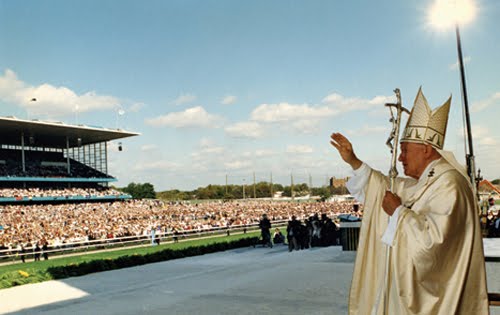
Not to be outdone, a former water conduit in Queens became the Aqueduct Racetrack in 1894 around the time the surrounding undeveloped land became the planned community of Ozone Park. It still enterains sports fans today and is one of the few venues in all of New York City to have hosted a visit by the Pope (the newly beatified Pope John Paul II, in 1995, see below).

The rich might have planted more racetracks for their amusement throughout the city had the the state not banned gambling in 1908. (Off-track betting returned to the city in the 1970s.) Some tracks tried to transition to speed competitions for those newfangled automobiles, but most closed.

Interestingly positioned by 1905 was Belmont Park, a swanky racing track near the original place where Newmarket once stood long ago. The Park is technically in Elmont, Long Island, but it abuts the border of Queens and can be easily reached by the Long Island Railroad. By this time, horseracing was neither the wiling of the rich or the indulgent of the poor, but a pasttime for all. According to the New York Tribute’s coverage of opening day, 106 years ago today, on May 4, 1905:

The attendance, morever, was not restricted to any one locality nor to any one class…. The Bowery and the Avenue mingled in the surging democracy of the betting ring. And both the Bowery and the Avenue wore its best clothes — and went home with them tattered and torn. In the more exclusive precincts of the clubhouse and the paddock there was a tendency to affect the raiment of Goodwood and Ascot, and tall hats and frock coats stood out conspicuously in the picture.”

It was so signficant that even Thomas Edison’s film crew was there to document the big day:

The famous third of the Triple Crown, today held at Belmont Park, became a part of the horseracing tradition in 1866 at the most famous former track in the Bronx — Jerome Park Racetrack, constructed by Belmont friend and racing afficionado Leonard Jerome. After moving briefly to a track in Morris Park, it moved to Belmont in the park’s opening year and has been saddled there ever since.