Categories
Neighborhoods Queens History

The breezy story of Ozone Park, Queens

Ozone Park, a quiet residential Queens neighborhood near Woodhaven, is one of those places created by real estate developers in the 1880s.

It happens to have one of the best neighborhood names in all of New York City. So where did it come from?

Ozone is a gas that exists as part of the Earth’s atmosphere and, more dangerously, as a component of ground-level pollutants like smog and industrial waste.

By all accounts, the word should sit nowhere near the word ‘Park’ where the foul-smelling gas would kill everything.
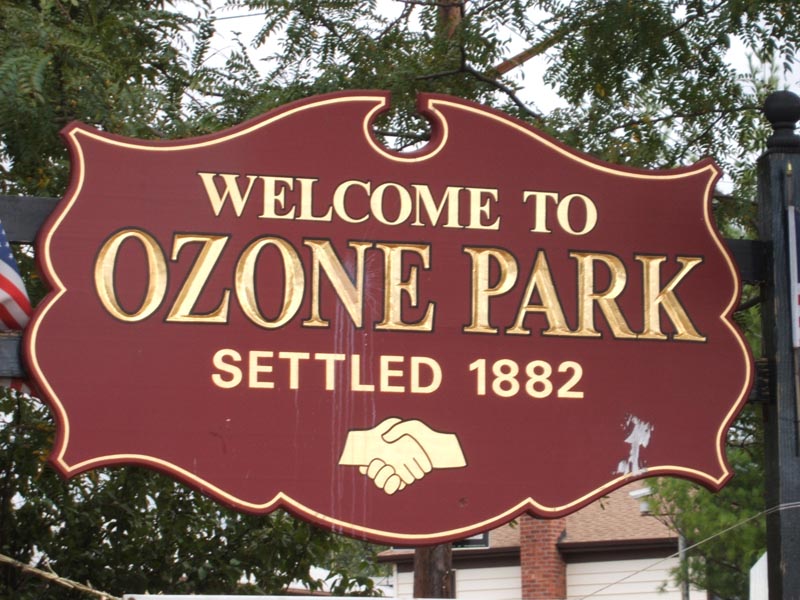
OzonePark
The First Ozone

But when ozone gas was first identified in 1840, its harmful effects were not widely understood. It was associated with fresh air, filled with refreshing recuperative properties.

 One dictionary in particular describes ozone as “clean bracing air as found at the sea side.”

By the 1860s and 70s, beach resorts and hotels were advertising their properties are paradises full of tonic air with all the ozone you could want!

Below: This cigarette card was labeled ‘Ozone is present in the air at the sea-side.” So you have cigarettes and ozone…..
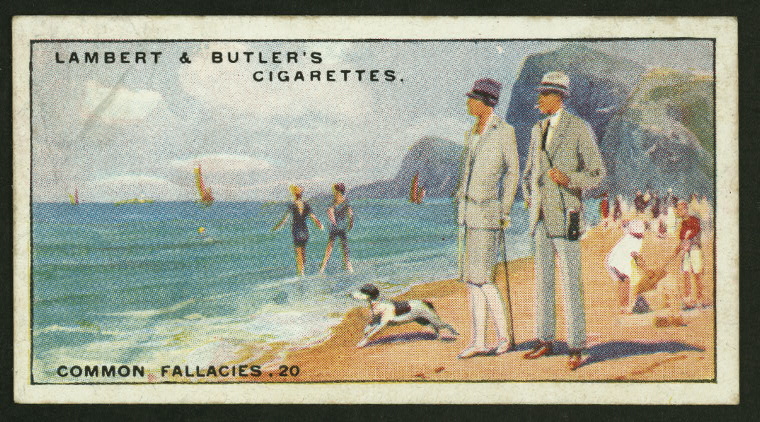
New York Public Library
Lands to Develop

There was no borough of Queens in the 1860s, only the counties of Kings and Queens sitting near each other on the western end of Long Island.

The county of Queens was sparsely populated outside of a few towns further north, including Flushing, Jamaica, Astoria and Newtown (later Elmhurst).

The vast population rise and the improving financial fortunes of the cities of New York and Brooklyn in the 1860s inspired some developers to sweep into under-populated areas with the hopes of developing new communities.

It was in the decades following the Civil War that many new Queens communities sprouted up in this way.

Starts With A Fire

In the 1870s, the cooking and houseware manufacturers Florian Grosjean and Charles Lalance built a large factory near the site of the old Union Course racetrack, long since closed. The company town which sprouted up around the factory became the basis for the Woodhaven neighborhood.

In 1876, the factory was destroyed in a devastating fire, so complete in its destruction that Grosjean, upon seeing his life’s work in flames, fainted to the ground.

But Grosjean rebuilt his massive factory just a bit south of the original site, constructing more new cottages for his workers.

While the factory is long gone today, its distinctive clock tower can still be seen in the neighborhood today. [You can read more about Grosjean’s contribution to the area here.]
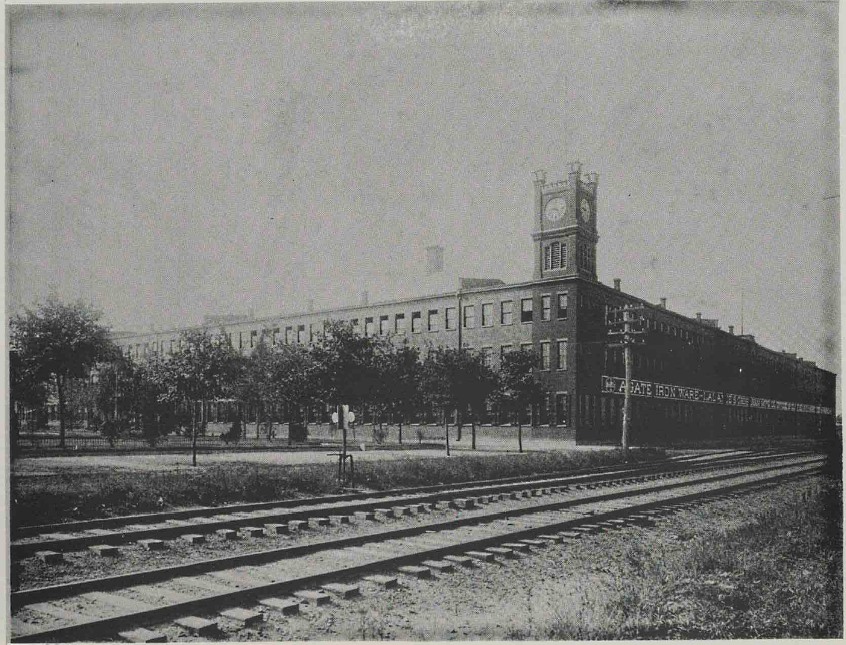
2
Courtesy Project Woodhaven
Making the Ozone

I bring up the origins of Woodhaven because the southern factory opened up new opportunities for some undeveloped land. New employees of Grosjean’s factory would eventually venture into this area needing housing,

In 1880, the Long Island Railroad built a station south of Woodhaven as part of its line from Long Island City to Howard Beach.

Two years later, two speculators Benjamin W. Hitchcock and Charles C. Denton bought up most of the plots of land around the station and began marketing the area as a visionary new neighborhood called Ozone Park!

Hitchcock had made his money in the music publishing business, one of several enterprising Manhattan businessmen who looked to the vast undeveloped spaces of Long Island to make money. He coined the name Ozone Park to promote the area’s proximity to fresh tonic ocean air.

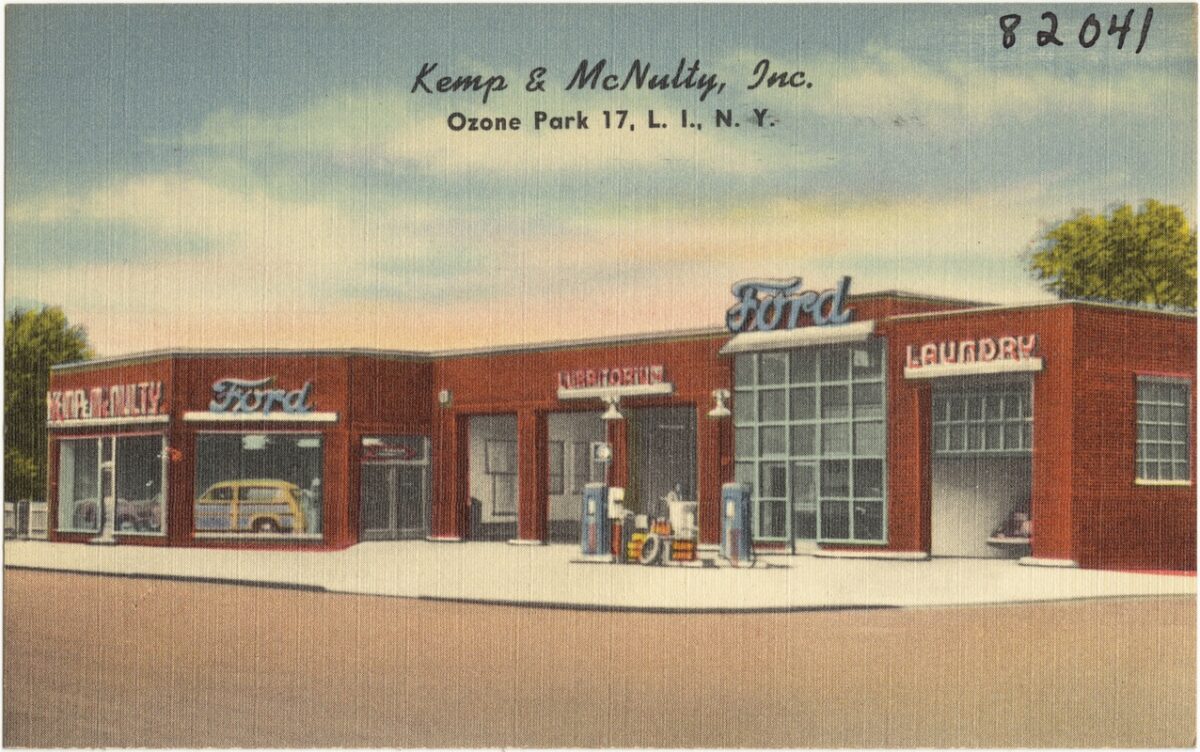
Below: Postcard of an Ozone Park filling station circa 1930s
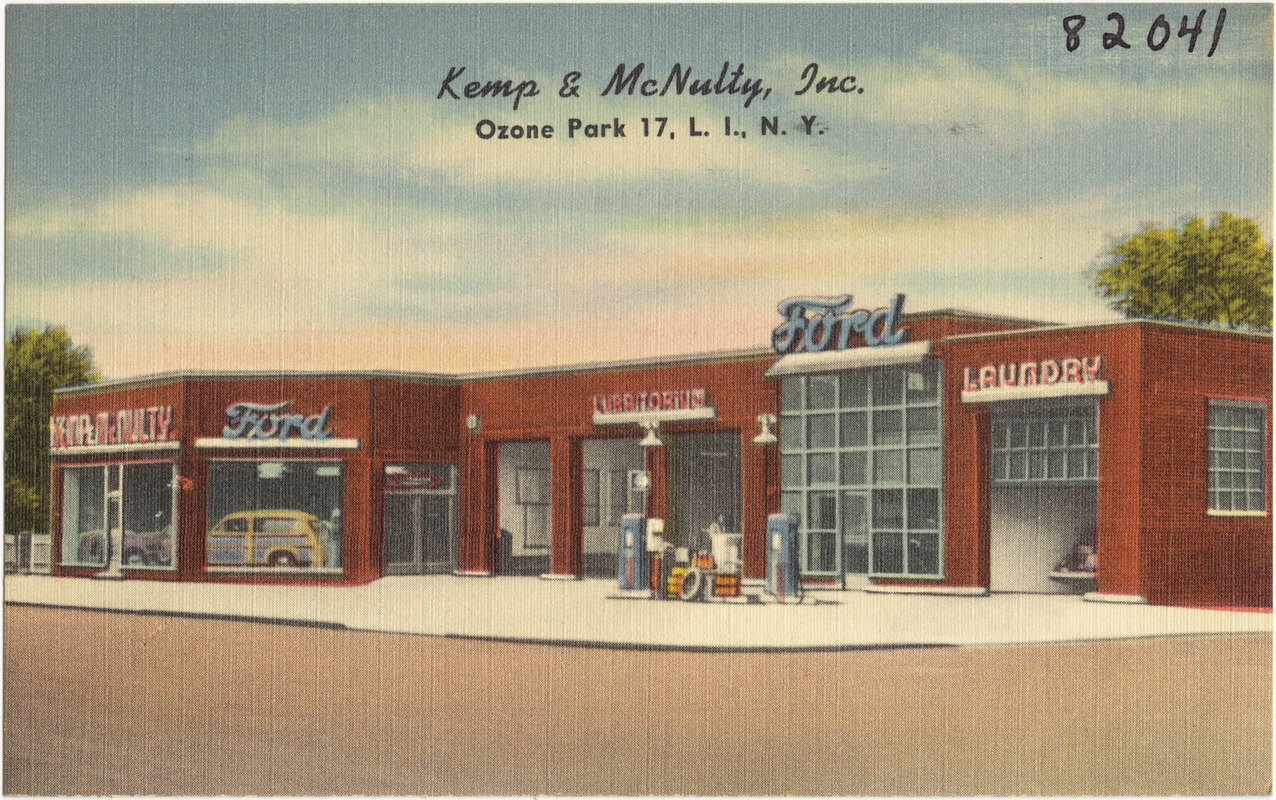
Courtesy Boston Public Library
The “Harlem of Brooklyn”?

Here’s a few examples of advertisements used to lure prospective customers to the area:

From the Brooklyn Daily Eagle (7/9/1882):

“A FREE invitation to visit Ozone Park, on the New York, Woodhaven and Rockaway Railroad, adjoining Woodhaven and Brooklyn, with a view of affording homes to persons of moderate means on easy payments.”
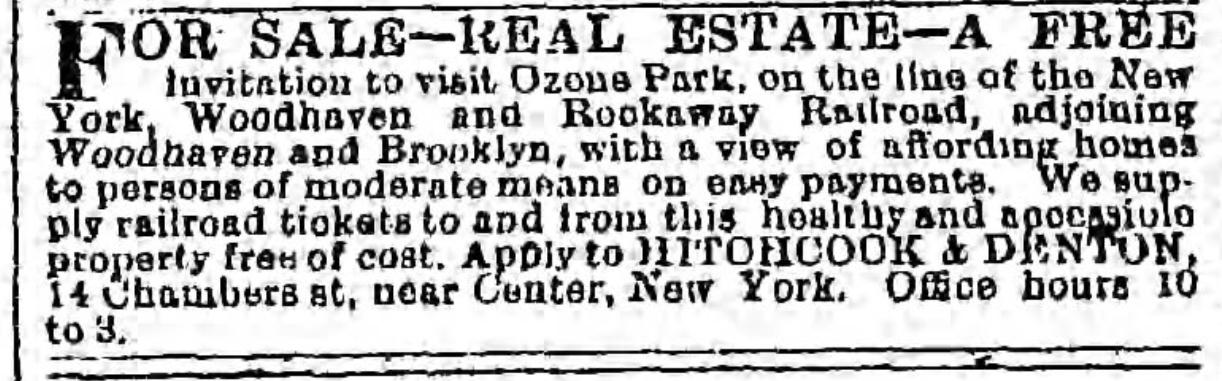
3

From the New York Sun (8/27/1882):

“OWN YOUR HOME at OZONE PARK, And enjoy the pure, life-giving air of the ATLANTIC OCEAN……”
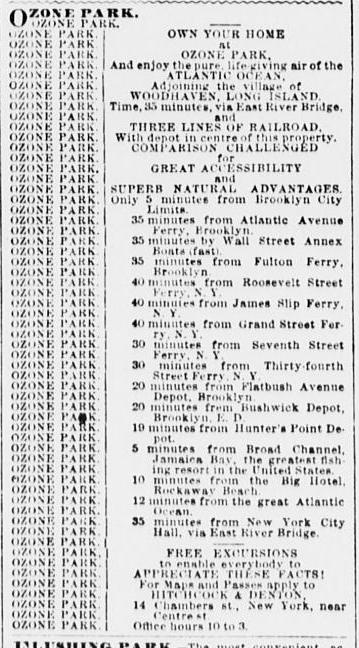
1

From the New York Sun (4/21/1883):

“Save your children! Save your money! Invest and get rich! OZONE PARK is ‘the Harlem of Brooklyn.’ Come and investigate!”
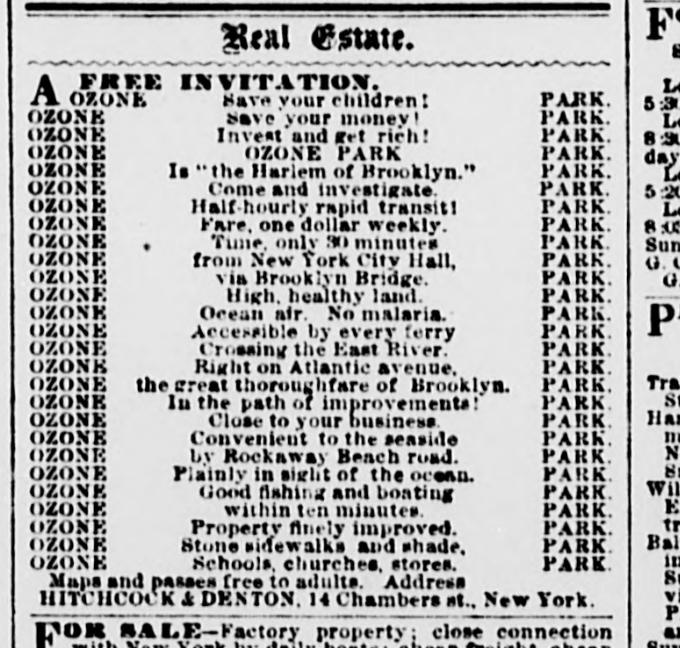
2

Wait — ‘the Harlem of Brooklyn‘? Ozone Park isn’t even in Brooklyn, although it’s near the modern border of the borough.

In the 1880s Harlem was a thriving and newly developed Jewish and Italian neighborhood, a new rowhouses were being built along the routes of elevated rail lines. This is certainly the comparison the developers had in mind with this particular advertisements.
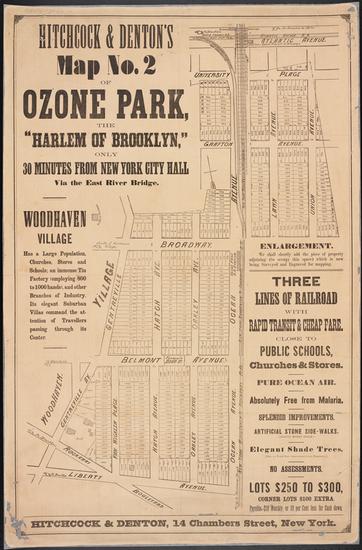
Courtesy Museum of the City of New York

Courtesy Museum of the City of New York

Park Life

By 1884, the developers carved streets to connect the properties. Far from relaxing and ‘tonic’, the area was a fury of building construction.

Five years later there were at least 600 residents living in Ozone Park, enough to merit its very own post office.

The development of South Ozone Park was bolstered with the construction in 1894 of the Aqueduct Racetrack (pictured below in 1941).

When Idlewild Airport (later JFK Airport) was completed in 1948, anything positively “ozone” about the the air quickly evaporated.
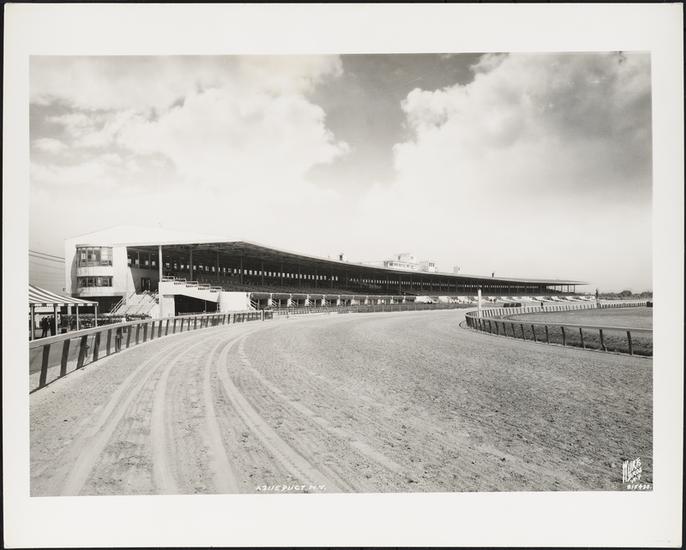
Courtesy Museum of the City of New York

Thank you Project Woodhaven for inspiring this article!
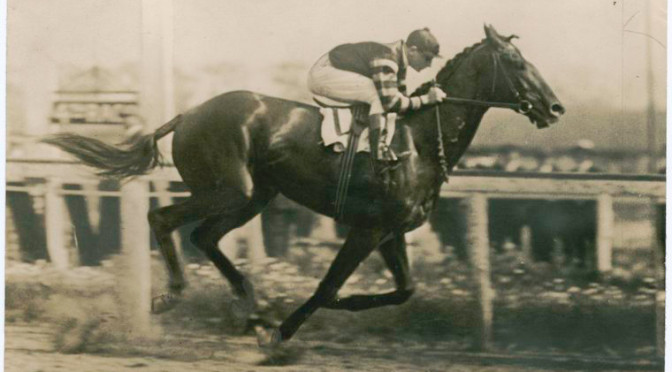
Why go to Kentucky? New York’s horseracing history

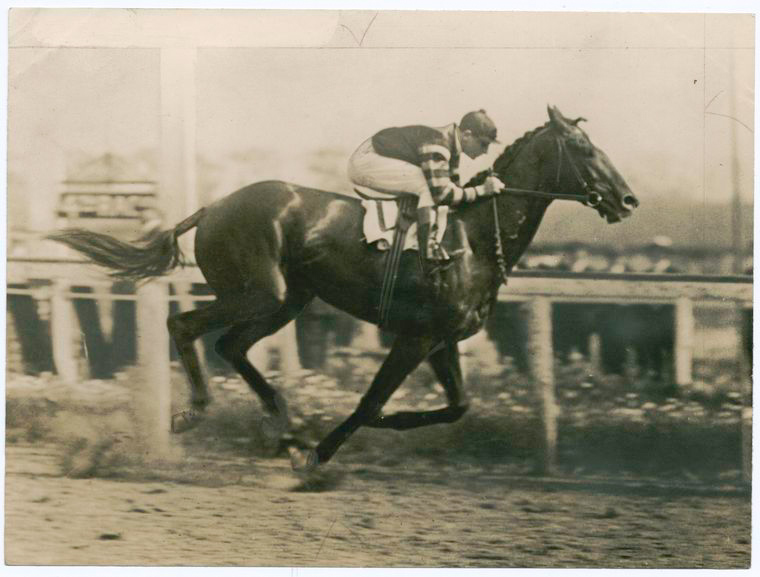
Above: Man O’ War, racing at Belmont, where one of the world’s greatest thoroughbreds cemented his reputation. The horse was actually owned by the son of Belmont Park namesake August Belmont. (NYPL)

The Kentucky Derby is this Saturday: two minutes of race and a day of fanciful hats, mint juleps and fanning oneself with a program at Churchill Downs. As the event that kicks off horse-racing’s Triple Crown competition, racing fans then gallop to Maryland for the Preakness before finishing in the Belmont Stakes. That final event takes place in New York City (well, kind of, a little bit, see below) at Belmont Park, which officially opened its gates 106 years ago today.

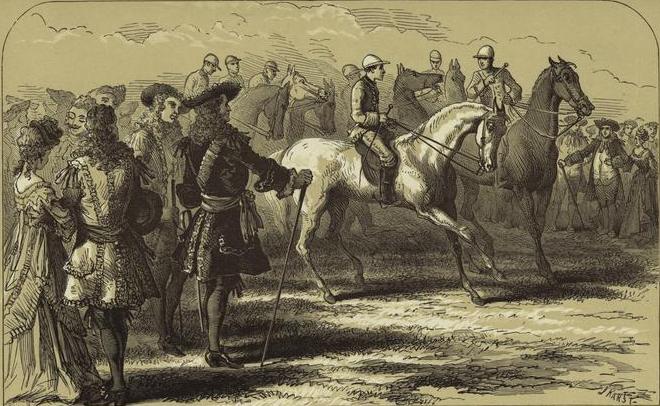
New York City has a healthy horse-racing tradition stretching to its very beginnings. In fact, the very first specially built race track in America was constructed in 1665 by New York’s colonial governor Richard Nicholl. Called Newmarket and located in the Hempstead Plains (just outside today’s border with Queens), it proved an enduring enterprise for colonists over a 100 years later. Smaller tracks were soon built in countryside closer to Manhattan island, some aristocratic British landowners would even built personal tracks on their estates.

Below: The track at Newmarket, “sixteen miles long and four wide, unmarred by stick or stone.” [NYPL]

As it’s often considered today, horseracing represented vice, gambling and drinking among its prime distractions. It was discouraged by the Patriots during the Revolutionary War, but the British, holed up in New York for the entire conflict, blew off a little steam at the racetrack, constructing a new course, appropriately named Ascot Heath, approximately around today’s Brooklyn neighborhood of Flatlands.

New Yorkers threw the British out of the city in 1783 only to immediately indulge in their former oppressors’ racetrack pleasures. Seen as a corrupting British-era vice, horseracing was banned entirely for two decades then later allowed to carry on in one place — Queens County.

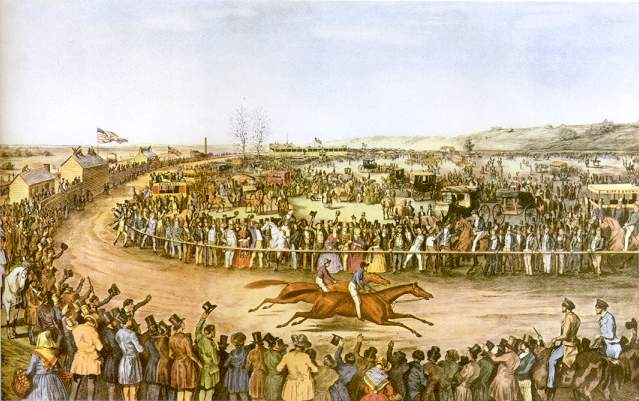
With regional exclusivity, horserace lovers looked to the popular trotting lane along Woodhaven Boulevard and built Union Course there in 1821. It became the most important race track in America and, for moral New Yorkers, a sesspool of sin. By the end of the decade, the track was being managed by former mayor Cadwallader D. Colden, once known for cracking down of alcohol consumption during his tenure.

Below: The galloping goings-on at Union Course, in the future neighborhood of Woodhaven

For those horrified by such vulgar activity, horsetrotting — a more civilized cousin to racing — was also popular in New York by this time, especially among the wealthy, making bucolic Harlem the prime destination for proper horsing around. Financiers and millionaires named Vanderbilt, Gould and Fisk made the upper reaches of Manhattan their own private race tracks, builting lavish stables in the neighborhoods near Harlem Lane.

By the start of a new century, horseracing defined a few region in Brooklyn. When William Engeman carved out some land east of Coney Island and called it Brighton Beach, one method they used of attracting city-goers to his luxury hotel there was building a racetrack. The Brighton Beach Race Course, located between Ocean Parkway and Coney Island Avenue, was soon joined by the nearby Sheepshead Bay Race Track, the product of a wealthy jockey club that included grandson to the Commodore, Willim Kissam Vanderbilt.

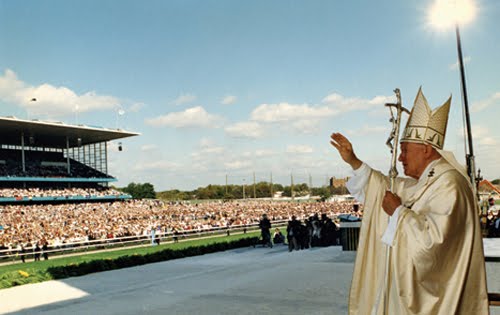
Not to be outdone, a former water conduit in Queens became the Aqueduct Racetrack in 1894 around the time the surrounding undeveloped land became the planned community of Ozone Park. It still enterains sports fans today and is one of the few venues in all of New York City to have hosted a visit by the Pope (the newly beatified Pope John Paul II, in 1995, see below).

The rich might have planted more racetracks for their amusement throughout the city had the the state not banned gambling in 1908. (Off-track betting returned to the city in the 1970s.) Some tracks tried to transition to speed competitions for those newfangled automobiles, but most closed.

Interestingly positioned by 1905 was Belmont Park, a swanky racing track near the original place where Newmarket once stood long ago. The Park is technically in Elmont, Long Island, but it abuts the border of Queens and can be easily reached by the Long Island Railroad. By this time, horseracing was neither the wiling of the rich or the indulgent of the poor, but a pasttime for all. According to the New York Tribute’s coverage of opening day, 106 years ago today, on May 4, 1905:

The attendance, morever, was not restricted to any one locality nor to any one class…. The Bowery and the Avenue mingled in the surging democracy of the betting ring. And both the Bowery and the Avenue wore its best clothes — and went home with them tattered and torn. In the more exclusive precincts of the clubhouse and the paddock there was a tendency to affect the raiment of Goodwood and Ascot, and tall hats and frock coats stood out conspicuously in the picture.”

It was so signficant that even Thomas Edison’s film crew was there to document the big day:

The famous third of the Triple Crown, today held at Belmont Park, became a part of the horseracing tradition in 1866 at the most famous former track in the Bronx — Jerome Park Racetrack, constructed by Belmont friend and racing afficionado Leonard Jerome. After moving briefly to a track in Morris Park, it moved to Belmont in the park’s opening year and has been saddled there ever since.

Pope-fest 2008: The Holy (Sight) See

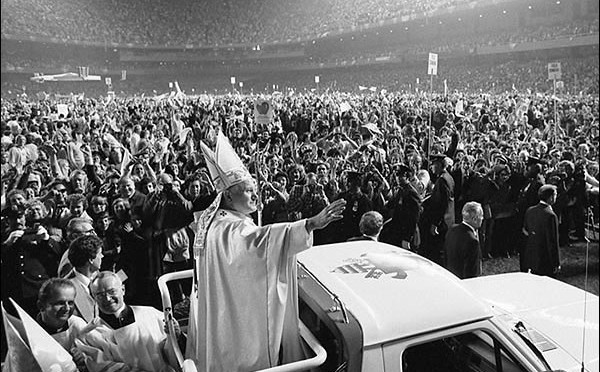
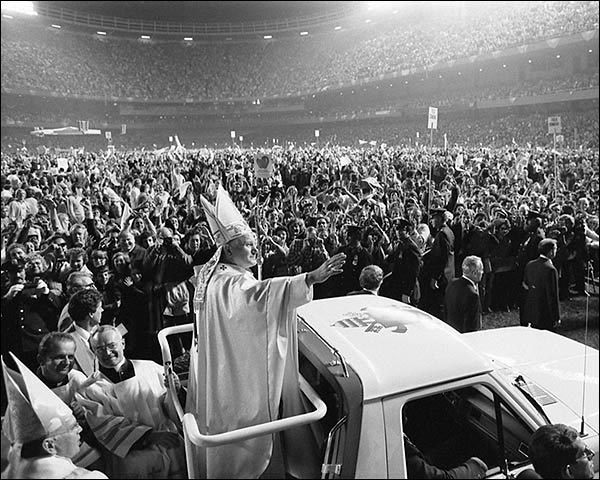
Pope John Paul greets the crowds at Yankee Stadium

Welcome Benedict! I’m not Catholic, but I do love a good papal visit to New York City. Nothing could be more absurd. The leader of the Catholic Church, a man who traces his spiritual lineage all the way back to the apostles — delivering mass at Yankee Stadium, traipsing Fifth Avenue in his sacred robes. I hope that person who dresses as Sesame Street’s Elmo in front of Rockefeller Center waves to Benedict as he enters St. Patrick’s Cathedral on Friday.

Only the Marquis de Lafayette and the Beatles have been treated to more rapturous displays of welcome by New York City residents. The city has been host to three previous papal visits, and in each case, St. Patrick’s has naturally been the manic center of activity. In fact each visit is immortalized on a plaque in front of the cathedral. Although with each trip, the pope in question managed to find a couple other unique corners of the city to visit as well.

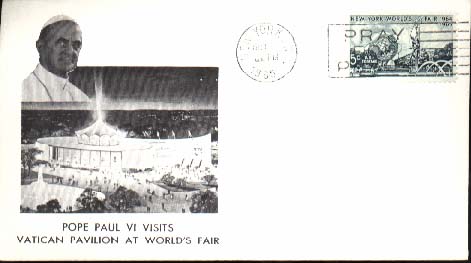
Perhaps the strangest was the very first — Pope Paul VI, the controversial leader who presided over the Second Vatican Council and made a name for himself traveling all over the world. Finally in an era were a man could be both pope and jetsetter, Pope Paul arrived in New York in October of 1965 and promptly went to visit his roommate, who was performing in a fair.

That roommate would be Michelangelo’s Pieta, on loan from St. Peter’s hallways to the Vatican pavilion at the 1964-65 World’s Fair. The Pope visited the Fair on Oct 4, 1965, on a busy day that also included mass at Yankee Stadium (the first papal mass ever in the United States), an address to the United Nations, and a meeting in the city with president Lyndon Johnson at the Waldorf=Astoria.

Today a rounded bench, or exedra, sits in Flushing Meadows park honoring the moment Pope Paul visited the Pavilion. (It seems that whenever a Pope hovers in a place for more than a few minutes, a plaque or monument springs up in its place.)

By the way, I found this extraordinary page full of great photos about the Pope-mobile, the superfine limousine used by the Pope during his visit.

But its Pope John Paul who’s the real New York favorite; he held the office for so long that he managed two trips to Gotham City — in 1979 and 1995.

His October 1979 trip was like a rock concert tour, also swinging through Philadelphia, Boston, D.C., Chicago and Des Moines. Part of the enthusiasm was because John Paul, at 58 years old, had just been appointed the year before.

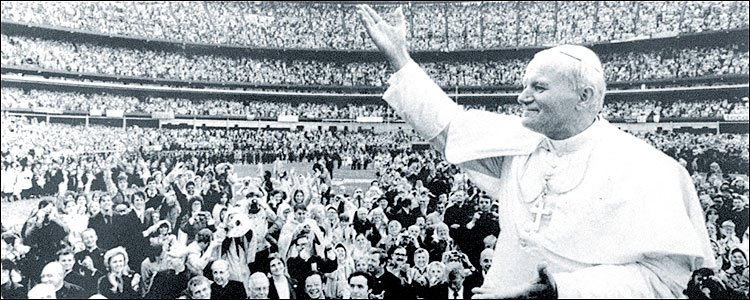
As a cardinal, he had already held mass at Yankee Stadium, so by the time he did it again on October 2, 1979, he was as much a fixture as Reggie Jackson. Rain greeted over 9,000 cheering worshippers — or fans — and, according to legend, when the Pope mounted the ballfield to address the crowd, the rain showers stopped. And as a blessing for Mets fans, the next day the Pope also held rapt an audience of 52,000 at Shea Stadium (pictured below).

But like all rock stars, the Pope couldn’t complete his New York odyssey without a performance at Madison Square Garden. Although John Paul also addressed the U.N. and a St Patrick’s audience during that trip, he’s best remembered by many for his inspirational address on October 3rd to 19,000 city children.

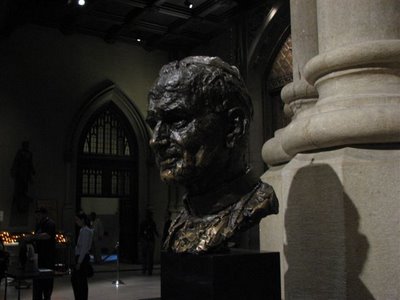
St Patrick’s honored his Holiness’s visit in 1979 by installing a bust (see below). But he would be back. On almost exactly the same day, sixteen years later.

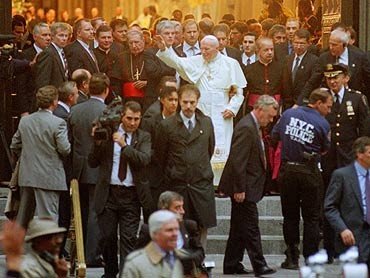
New York City in 1995 was a vastly different city and John Paul returned for a longer visit — four days in total in the entire New York area — on October 4th. This time, instead of just delivering messages to the clergy gathered at St. Patrick’s, he spontaneously decided he wanted to walk around the block. And why not? You’ve got shopping, Saks, street vendors selling Pope souvenirs!

Below: the Pope prepares for his light stroll

The Pope also finished off his collection of performing in gigantic venues for mass — holding court in Giants Stadium, the Aquaduct Racetrack in Ozone Park and eventually to 100,000 people on the great lawn in Central Park.

From there, the elderly leader of the Catholic Church gave the city the ultimate shout-out: “This is New York! The great New York! This is Central Park. The beautiful surroundings of Central Park invite us to reflect on a more sublime beauty: the beauty of every human being, made in the image and likeness of God. Then you can tell the whole world that you gave the pope his Christmas present in October, in New York, in Central Park.”

Pope Benedict, here for two days (April 19-20), has broken the apparently holy tradition of visiting New York in the first week in October. But Benedict, as the cardinal formerly known as Joseph Ratzinger, actually visited the city in that lesser role in 1988, where apparently he was met with protest from gay activists and shunned by some prominent Jewish leaders.

This year, he intends to hit all the “usual” Pope spots — St. Patricks, the United Nations, Yankee Stadium — but has added a couple surprising detours: Park East Synagogue and Ground Zero. At this rate, he might even stop in to see an off-Broadway show! Is Nunsense still playing?