Categories
Neighborhoods Queens History

The breezy story of Ozone Park, Queens

Ozone Park, a quiet residential Queens neighborhood near Woodhaven, is one of those places created by real estate developers in the 1880s.

It happens to have one of the best neighborhood names in all of New York City. So where did it come from?

Ozone is a gas that exists as part of the Earth’s atmosphere and, more dangerously, as a component of ground-level pollutants like smog and industrial waste.

By all accounts, the word should sit nowhere near the word ‘Park’ where the foul-smelling gas would kill everything.
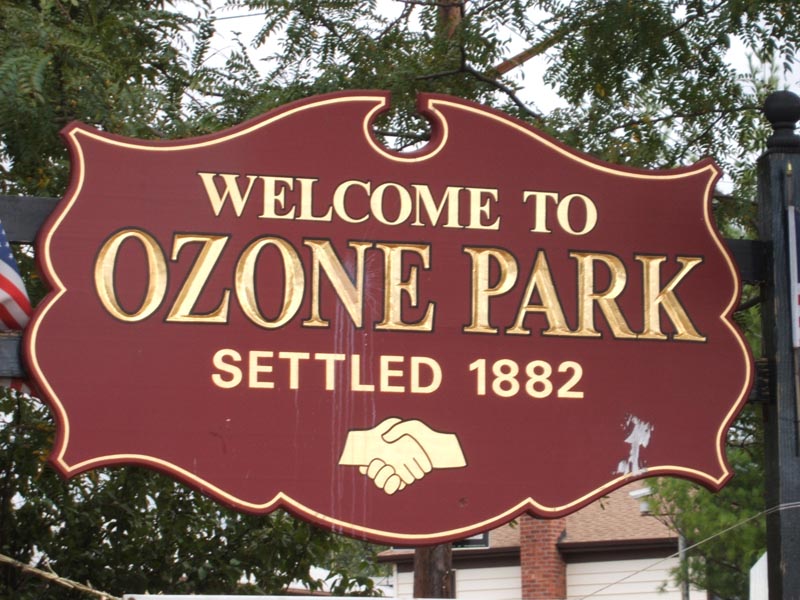
OzonePark
The First Ozone

But when ozone gas was first identified in 1840, its harmful effects were not widely understood. It was associated with fresh air, filled with refreshing recuperative properties.

 One dictionary in particular describes ozone as “clean bracing air as found at the sea side.”

By the 1860s and 70s, beach resorts and hotels were advertising their properties are paradises full of tonic air with all the ozone you could want!

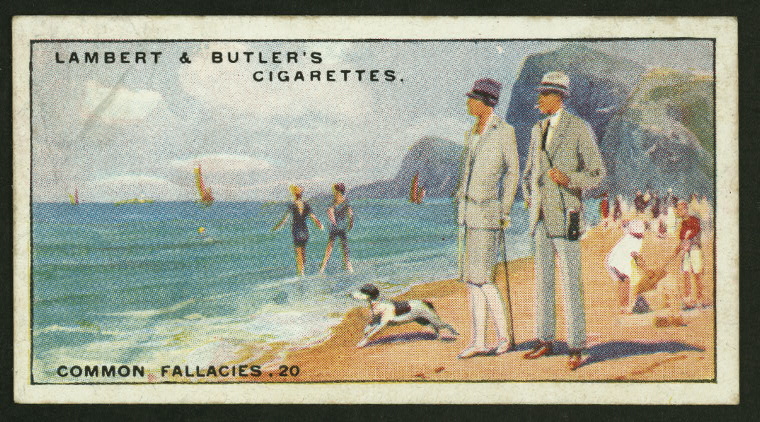
Below: This cigarette card was labeled ‘Ozone is present in the air at the sea-side.” So you have cigarettes and ozone…..
New York Public Library
Lands to Develop

There was no borough of Queens in the 1860s, only the counties of Kings and Queens sitting near each other on the western end of Long Island.

The county of Queens was sparsely populated outside of a few towns further north, including Flushing, Jamaica, Astoria and Newtown (later Elmhurst).

The vast population rise and the improving financial fortunes of the cities of New York and Brooklyn in the 1860s inspired some developers to sweep into under-populated areas with the hopes of developing new communities.

It was in the decades following the Civil War that many new Queens communities sprouted up in this way.

Starts With A Fire

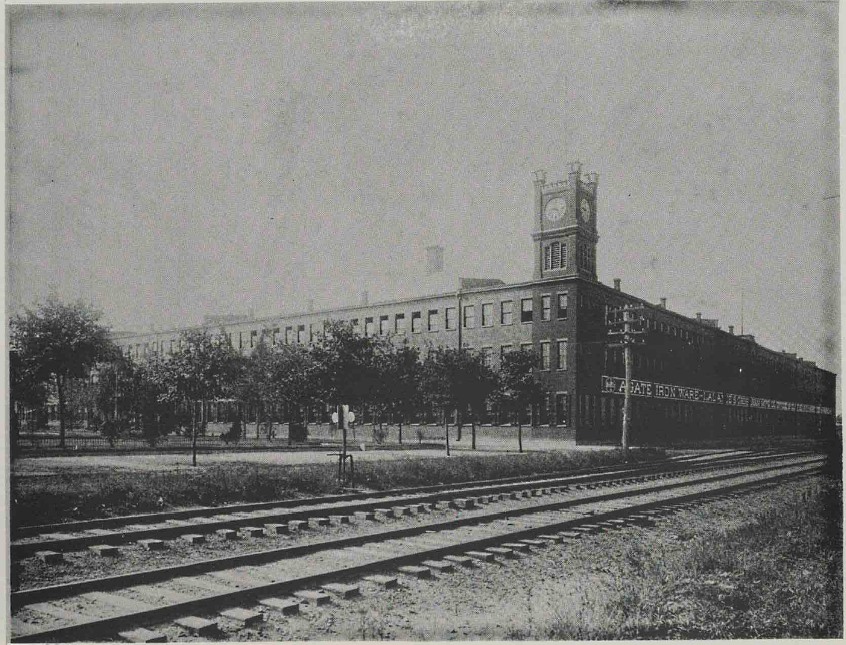
In the 1870s, the cooking and houseware manufacturers Florian Grosjean and Charles Lalance built a large factory near the site of the old Union Course racetrack, long since closed. The company town which sprouted up around the factory became the basis for the Woodhaven neighborhood.

In 1876, the factory was destroyed in a devastating fire, so complete in its destruction that Grosjean, upon seeing his life’s work in flames, fainted to the ground.

But Grosjean rebuilt his massive factory just a bit south of the original site, constructing more new cottages for his workers.

While the factory is long gone today, its distinctive clock tower can still be seen in the neighborhood today. [You can read more about Grosjean’s contribution to the area here.]
2
Courtesy Project Woodhaven
Making the Ozone

I bring up the origins of Woodhaven because the southern factory opened up new opportunities for some undeveloped land. New employees of Grosjean’s factory would eventually venture into this area needing housing,

In 1880, the Long Island Railroad built a station south of Woodhaven as part of its line from Long Island City to Howard Beach.

Two years later, two speculators Benjamin W. Hitchcock and Charles C. Denton bought up most of the plots of land around the station and began marketing the area as a visionary new neighborhood called Ozone Park!

Hitchcock had made his money in the music publishing business, one of several enterprising Manhattan businessmen who looked to the vast undeveloped spaces of Long Island to make money. He coined the name Ozone Park to promote the area’s proximity to fresh tonic ocean air.

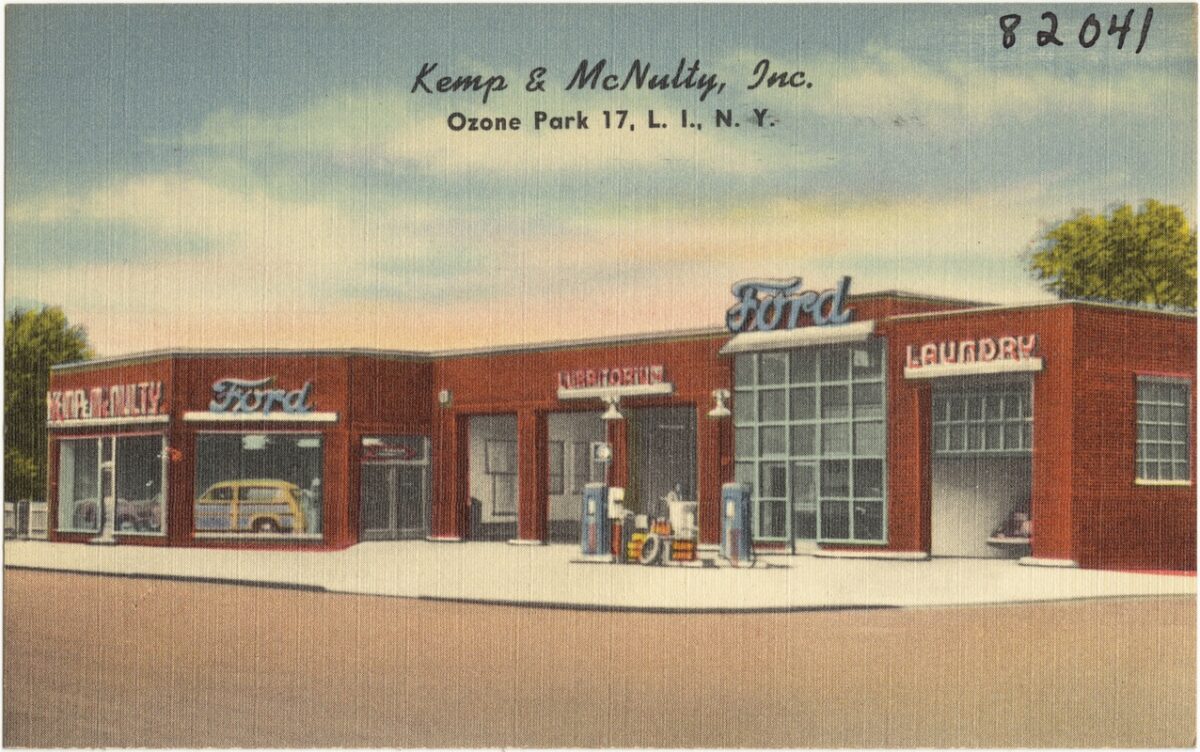
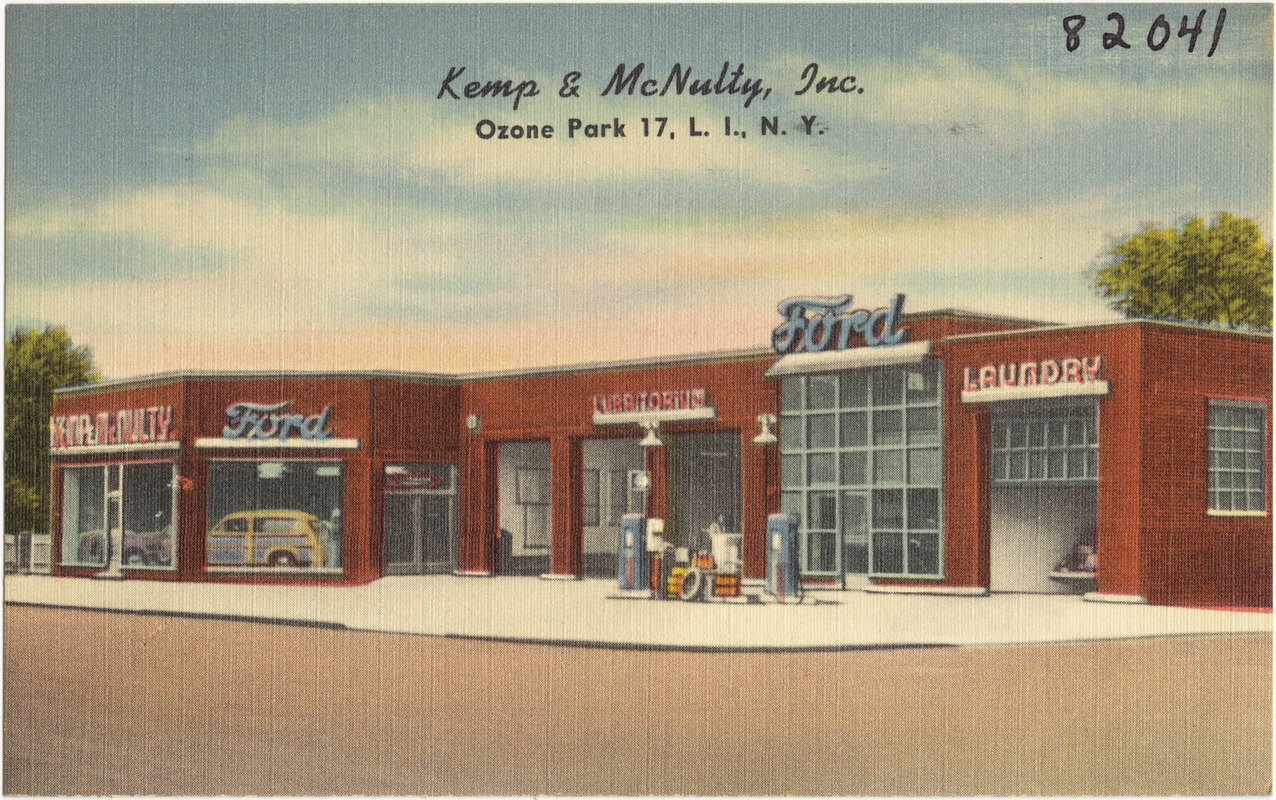
Below: Postcard of an Ozone Park filling station circa 1930s
Courtesy Boston Public Library
The “Harlem of Brooklyn”?

Here’s a few examples of advertisements used to lure prospective customers to the area:

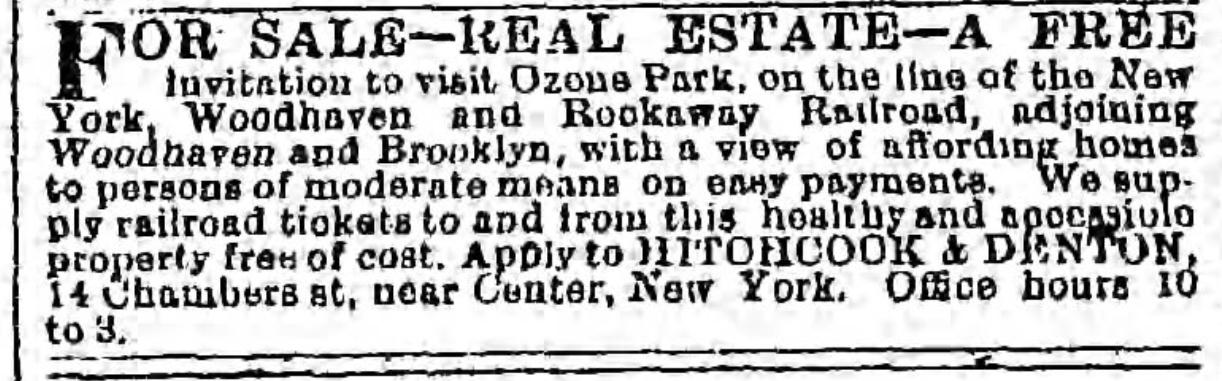
From the Brooklyn Daily Eagle (7/9/1882):

“A FREE invitation to visit Ozone Park, on the New York, Woodhaven and Rockaway Railroad, adjoining Woodhaven and Brooklyn, with a view of affording homes to persons of moderate means on easy payments.”
3

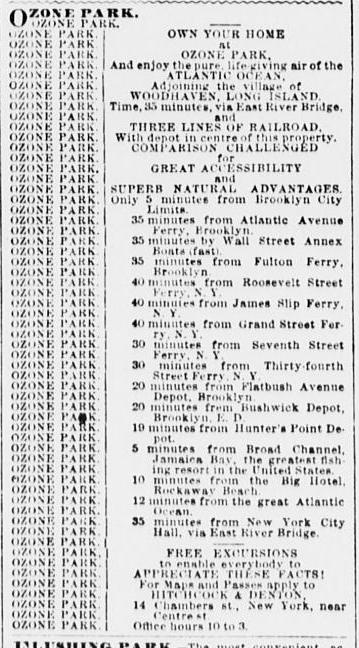
From the New York Sun (8/27/1882):

“OWN YOUR HOME at OZONE PARK, And enjoy the pure, life-giving air of the ATLANTIC OCEAN……”
1

From the New York Sun (4/21/1883):

“Save your children! Save your money! Invest and get rich! OZONE PARK is ‘the Harlem of Brooklyn.’ Come and investigate!”
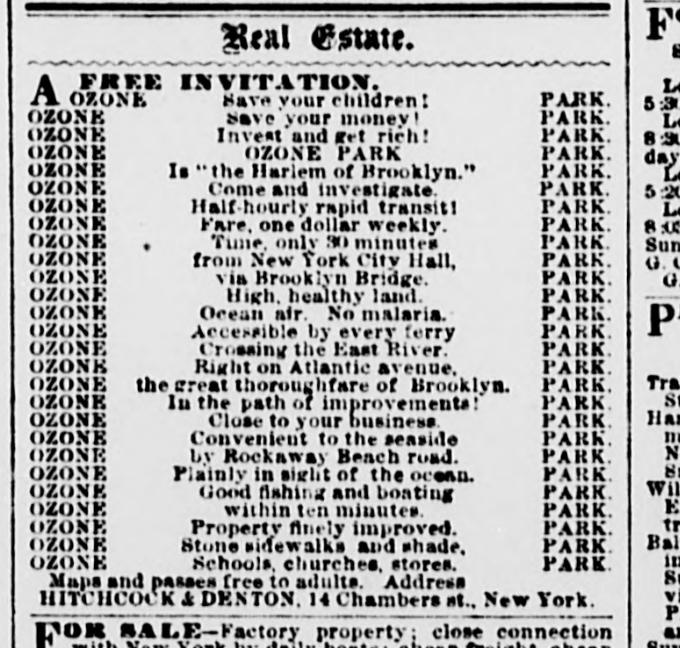
2

Wait — ‘the Harlem of Brooklyn‘? Ozone Park isn’t even in Brooklyn, although it’s near the modern border of the borough.

In the 1880s Harlem was a thriving and newly developed Jewish and Italian neighborhood, a new rowhouses were being built along the routes of elevated rail lines. This is certainly the comparison the developers had in mind with this particular advertisements.
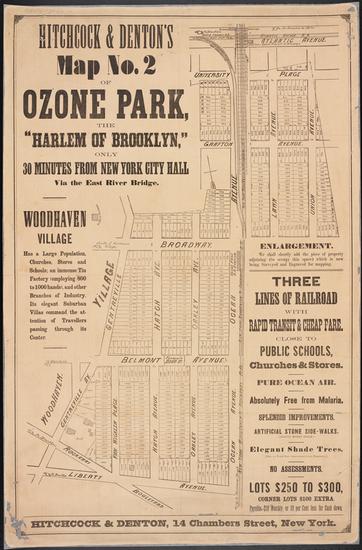
Courtesy Museum of the City of New York

Courtesy Museum of the City of New York

Park Life

By 1884, the developers carved streets to connect the properties. Far from relaxing and ‘tonic’, the area was a fury of building construction.

Five years later there were at least 600 residents living in Ozone Park, enough to merit its very own post office.

The development of South Ozone Park was bolstered with the construction in 1894 of the Aqueduct Racetrack (pictured below in 1941).

When Idlewild Airport (later JFK Airport) was completed in 1948, anything positively “ozone” about the the air quickly evaporated.
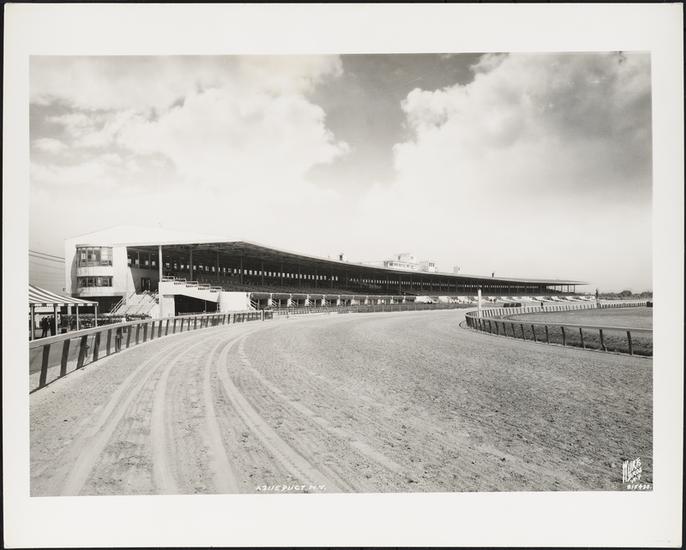
Courtesy Museum of the City of New York

Thank you Project Woodhaven for inspiring this article!
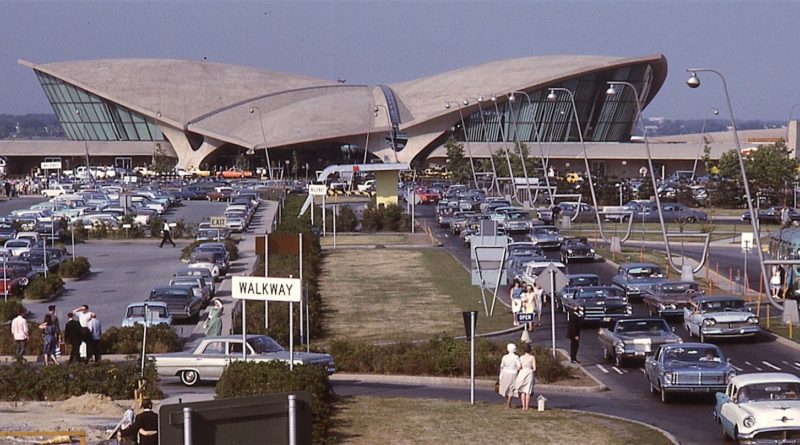
Categories
Uncategorized

Eero Saarinen and his three gifts to New York

A toast to the great 20th-century architect Eero Saarinen! The Modernist icon was born on this date in 1910 in Finland. He immigrated to the United States with his parents when he was thirteen years old. His father Eliel Saarinen was himself a brilliant architect; his son would learn from the best.

Eero Saarinen was a versatile furniture designer and prolific architect, perhaps best known in the states as designer of the St. Louis Gateway Arch, an ambitious and even surreal monument that has come to define the city of St. Louis — and the American Midwest in general. When the Arch opened in 1965, it automatically entered the pantheon of great works of American art.

Saarinen was known as an architectural chameleon of sorts, shifting styles to fit the project. Although he died relatively young, at age 51 of a brain tumor, he gave New York City three very memorable, completely different buildings.

Sadly he did not live to see any of them completed (nor the Gateway Arch for that matter). Work was completed by his firm Eero Saarinen and Associates.

Carlo Fumarola/Flickr

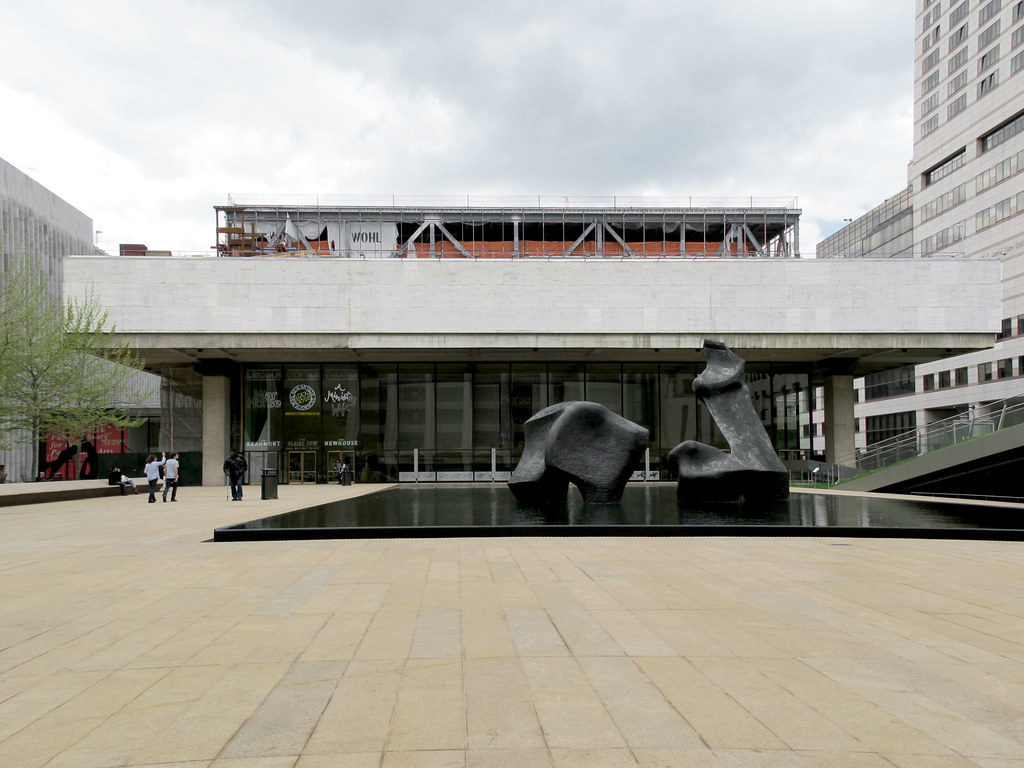
Vivian Beaumont Theater (150 West 65th Street, at Lincoln Center)

Completed four years after Saarinen’s death, the Vivian Beaumont was designed as part of the Lincoln Center complex, thus its concrete and glass containment works in sync with the other buildings in the plaza.

Friendly but formal, this massive theater remains as the only Broadway house outside the traditional Broadway district and has a notable thrust stage that gives performances a virtual in-the-round feel. Last year, New York Magazine ranked the Vivian Beaumont as the second best Broadway theater in New York (after the Richard Rodgers Theatre).

There’s are also two other theaters in the building — the Mitzi E. Newhouse Theater (for off-Broadway productions) and the Claire Tow Theater for off-off productions.

We talked about Saarinen’s involvement with this project in our podcast on Lincoln Center:

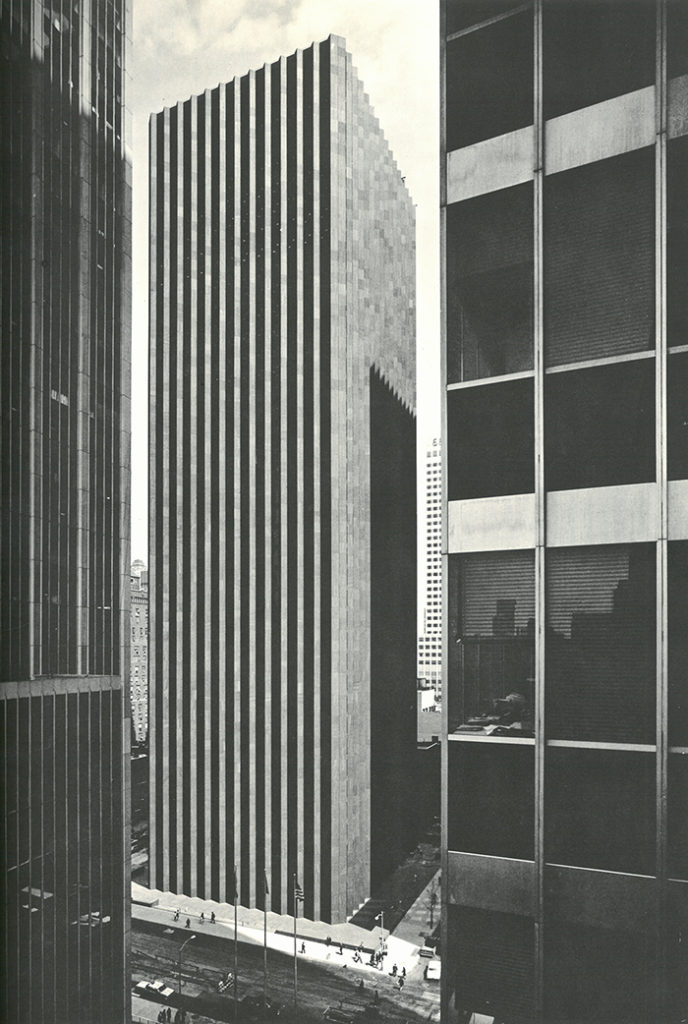
CBS Building (51 West 52nd Street)

Saarinen’s critics accused him lacking a defining aesthetic, something you might believe comparing the Lincoln Center playhouse to this lurching, severe structure on Sixth Avenue, affectionately nicknamed Black Rock.

Both the Vivian Beaumont and the CBS Building opened the same year, 1965. The CBS Building employs a moat of public space, and the building springs out of the crevice like an ominous plant.

On an avenue of steel, the rather scary CBS Building was the first to use reinforced concrete, although it’s draped in black granite.

It remains the headquarters of the CBS Corporation to this day. Black Rock was designated a New York City landmark in 1997.

From its landmark designation report: “When seen directly, the tower’s bays appear open, with relatively narrow granite piers alternating with relatively narrow window bays of single sheets of plate glass, but when viewed from afar and necessarily at an angle, the V-shape of the piers effectively eclipses the view of the glass, creating the effect of a gray granite slab.”

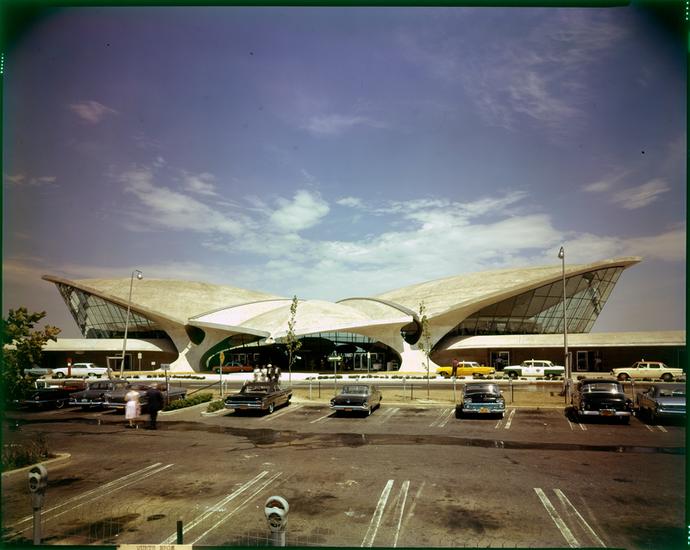
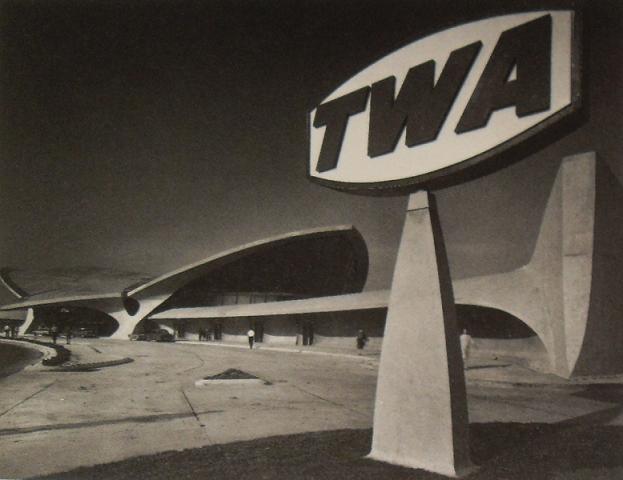
The TWA Terminal in 1962, photographed by the Wurts Brothers. Museum of the City of New York

TWA Flight Center (JFK Airport, Queens)

If you’re gonna write home about a Saarinen building in New York, make it the kooky, sometimes foolish, always imaginative terminal he designed for TWA that was completed in 1962.

It’s a tragedy that he never saw any of his New York buildings — not to mention the Arch itself — in final form. The terminal is so exotic and loopy that it energized arriving passengers.

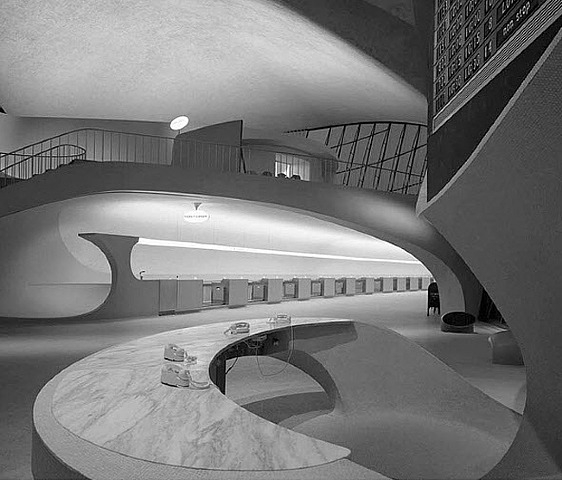
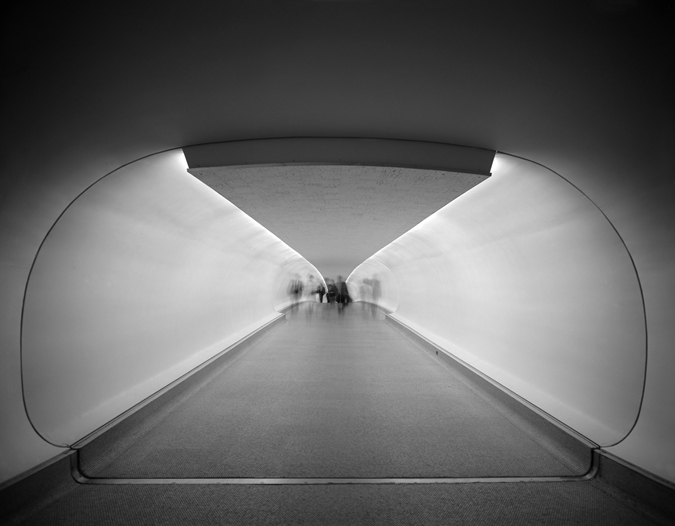
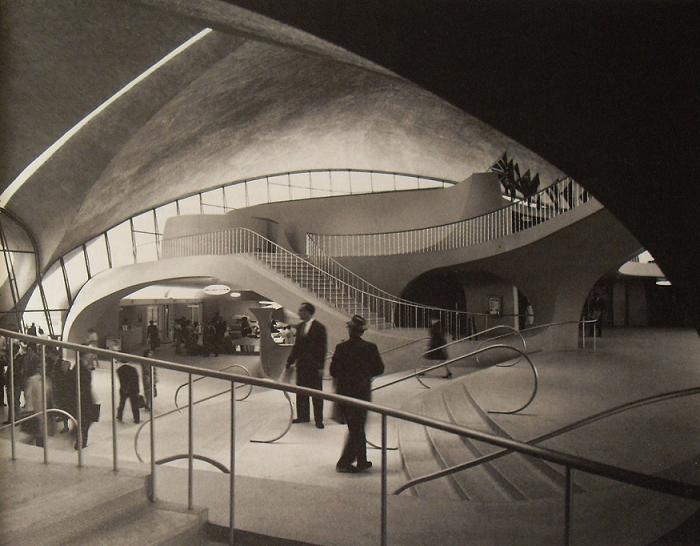
It has the unity of some organic space being, retro-futuristic down to its benches. Or as Saarinen describes: “All the curves, all the spaces and elements right down to the shape of the signs, display boards, railings and check-in desks were to be of a matching nature.”

It outlived TWA, which was bought out in 1991. Thankfully landmarked in 1994 — saving it from any potential urges to demolish its now-dated, spacy halls — it has recently reopened as the swanky retro TWA Hotel at JFK.

To hear more about the details of the TWA Flight Center — and Idlewild/JFK in general — listen to our show on the history of the airport.

Categories
Planes Trains and Automobiles Podcasts

Newark vs. LaGuardia: A story of airports and the first flying machines over New York City skies

PODCAST Newark Liberty International Airport or LaGuardia Airport? Which do you prefer? (Or is the answer — none of the above. Give me JFK!)

In this episode, we present the origin stories of New York City’s airports and airfields. The skies over New York have been graced with aircraft for almost 110 years. In fact the first ‘flying machine’ was flown by no less than Wilbur Wright, the man who (with his brother Orville) invented the airplane.

Yet by the time the U.S. government began regulating the skies — making way for commercial aviation — the city had failed to develop an adequate airport of its own. Meanwhile the thriving city of Newark, New Jersey, had just opened a glistening new airport, and in 1929 it was awarded the government’s coveted airmail contract.

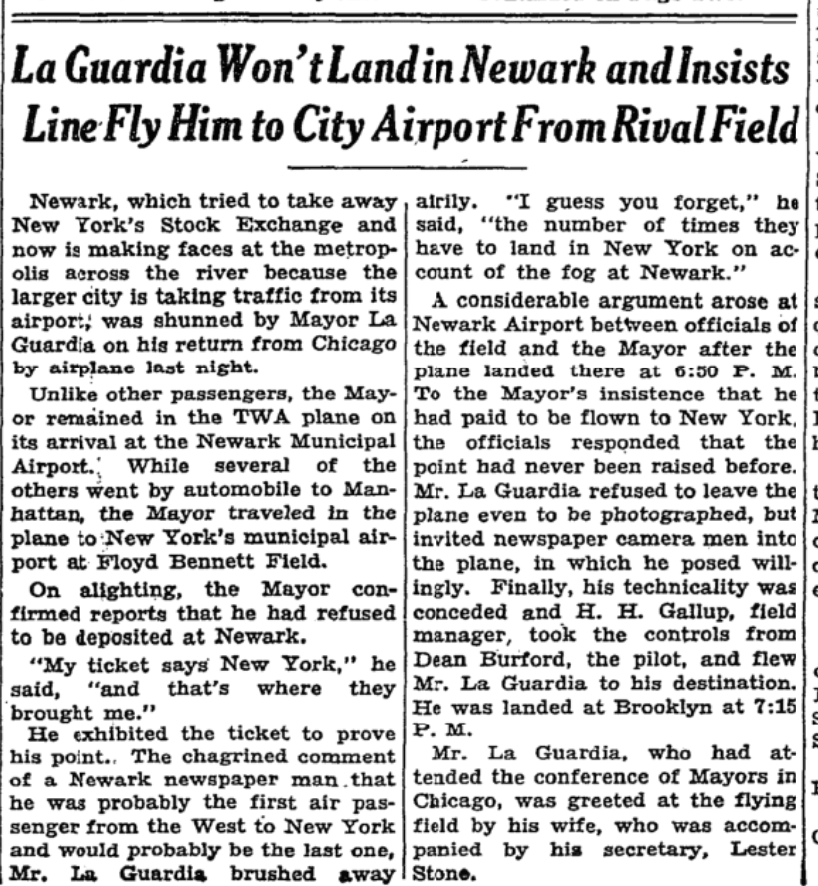
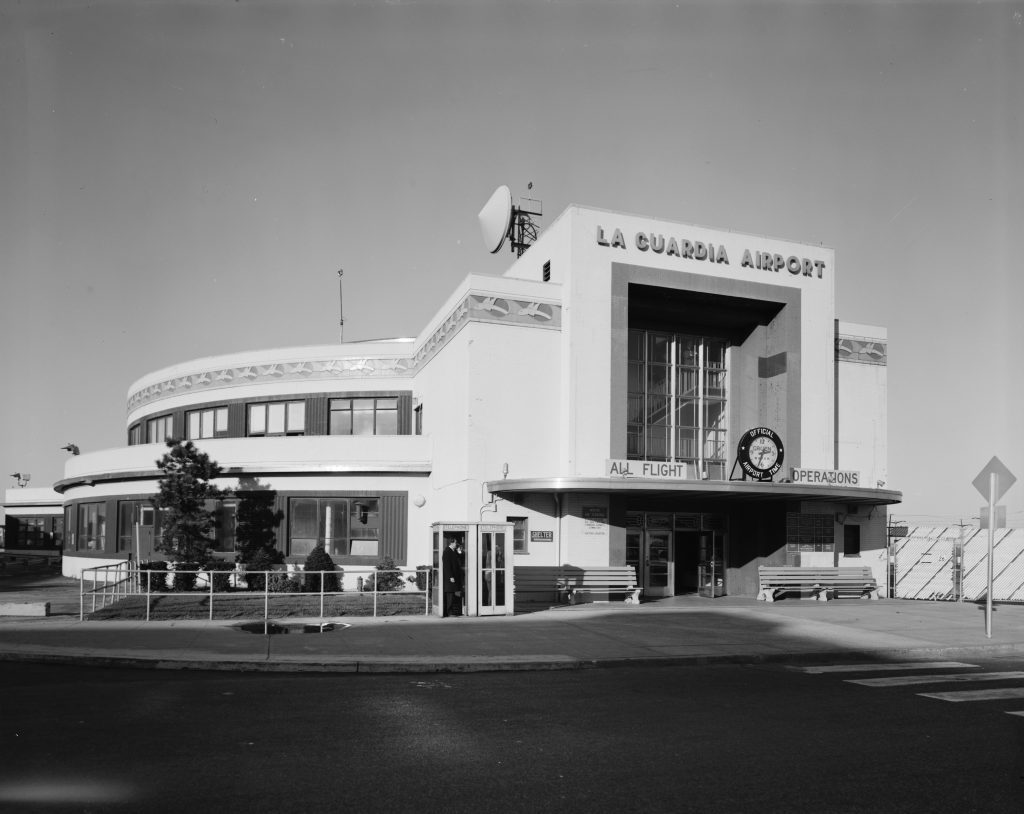
This did not sit well with Mayor Fiorello La Guardia who engineered a spectacular tarmac stunt in 1934, drawing attention to this deficiency. And then he began dreaming of a new airport in northern Queens, one poised to draw customers away from New Jersey.

And thus began a decades-long tug-of-war for supremacy over New York City skies.

LISTEN HERE:

_________________________________________________________

The Bowery Boys: New York City History podcast is brought to you …. by you!

We are now producing a new Bowery Boys podcast every other week. We’re also looking to improve the show in other ways and expand in other ways as well — through publishing, social media, live events and other forms of media. But we can only do this with your help!

We are now a member of Patreon, a patronage platform where you can support your favorite content creators for as little as a $1 a month.

Please visit our page on Patreon and watch a short video of us recording the show and talking about our expansion plans. If you’d like to help out, there are five different pledge levels (and with clever names too — Mannahatta, New Amsterdam, Five Points, Gilded Age, Jazz Age and Empire State). Check them out and consider being a sponsor.

And join us for the next episode of the Bowery Boys Movie Club, an exclusive podcast provided to our supporters on Patreon.

We greatly appreciate our listeners and readers and thank you for joining us on this journey so far.

________________________________________________________

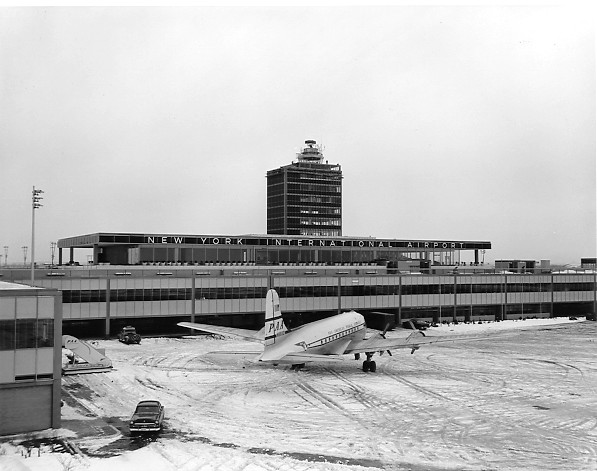
CLARIFICATION: We forgot to mention that the original name of JFK Airport was actually New York International Airport, Anderson Field, almost everybody ended up calling it Idlewild Airport.

CORRECTION: Near the end of this show, Greg says that 18 new gates have opened this month at LaGuardia Airport. It’s actually 11 gates in a concourse that will eventually have 18.

You must check out this extraordinary promotional video for American Airlines from 1933:

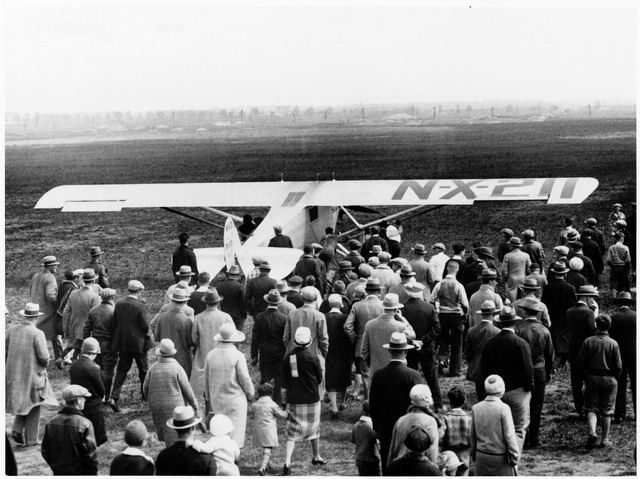
Roosevelt Field 1927 — Charles Lindbergh takes off on his historic flight to France

National Air and Space Museum Archives, Smithsonian Institution

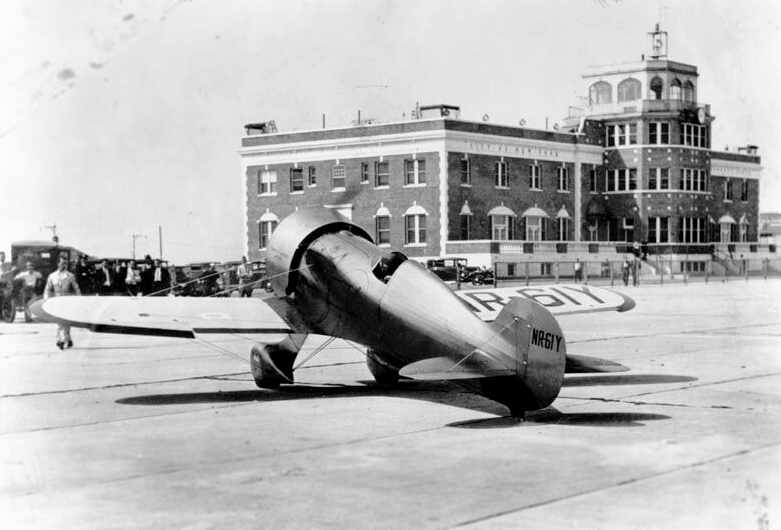
Floyd Bennett Field, September 1, 1934. The plan belongs to pilot Roscoe Turner, who landed at the field after flying from Burbank, CA to New York in 10 hours.

Courtesy Airfields Freeman

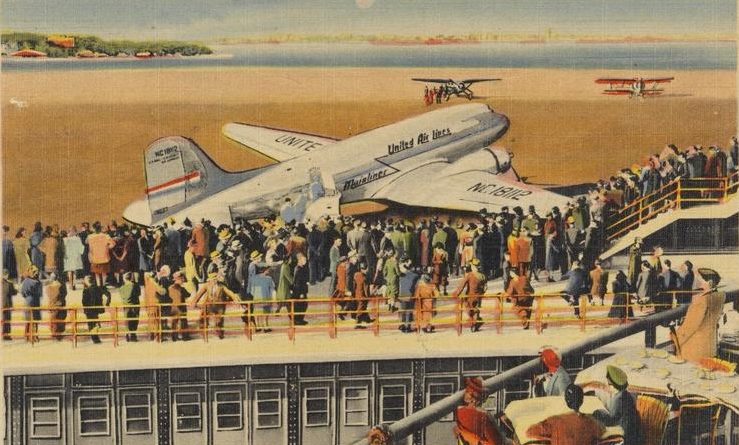
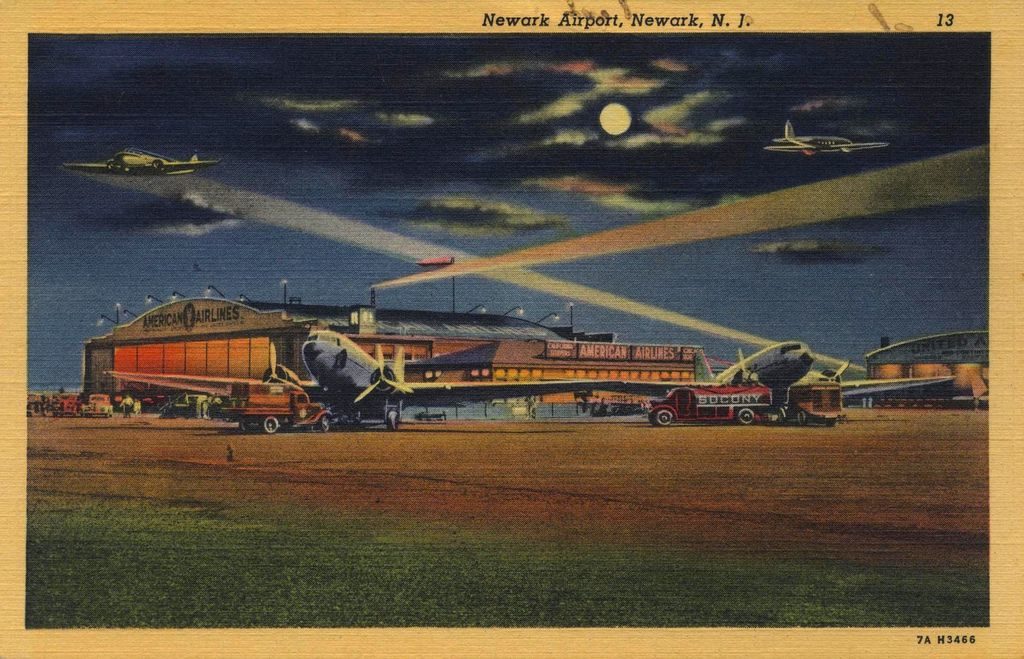
Newark Airport, in a dramatic postcard. American Airlines would eventually move its base of operations to LaGuardia.

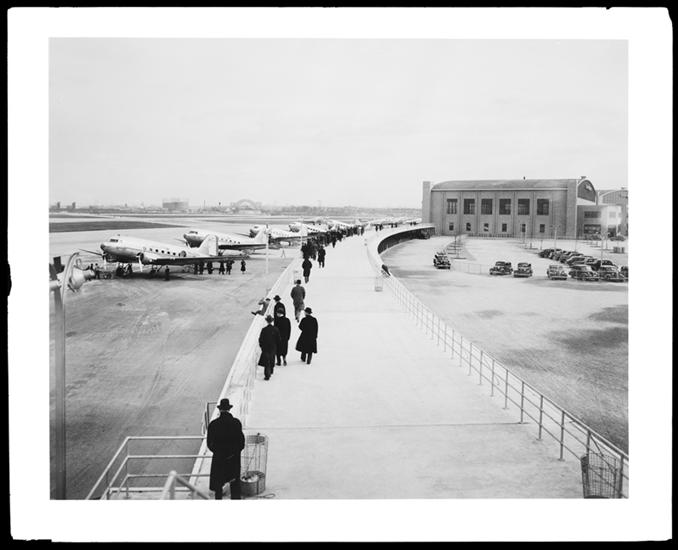
LaGuardia Airport in 1940, a few months after its opening.

Museum of the City of New York

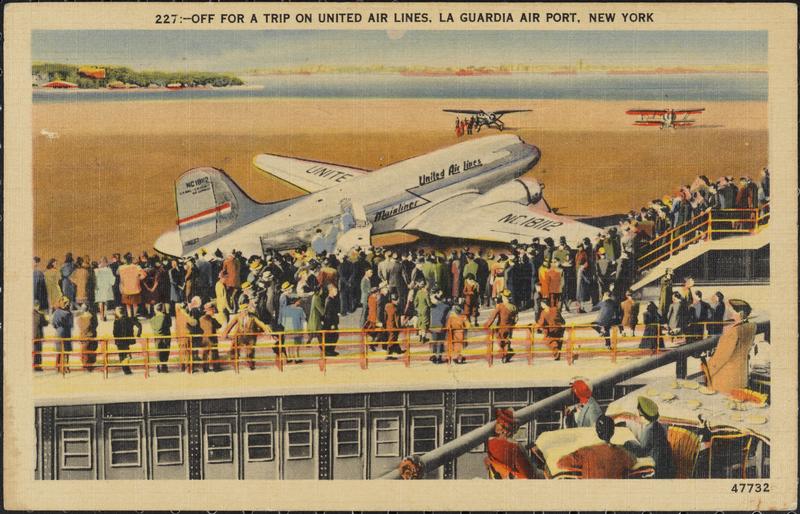
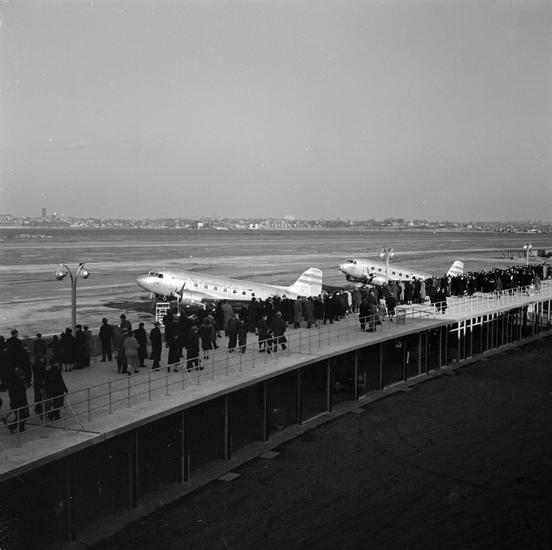
LaGuardia, April 1, 1944: Visitors could stroll a wide promenade, watching airplane activity on the tarmac.

Wurts Bros/ Museum of the City of New York
Wurts Bros/Museum of the City of New York

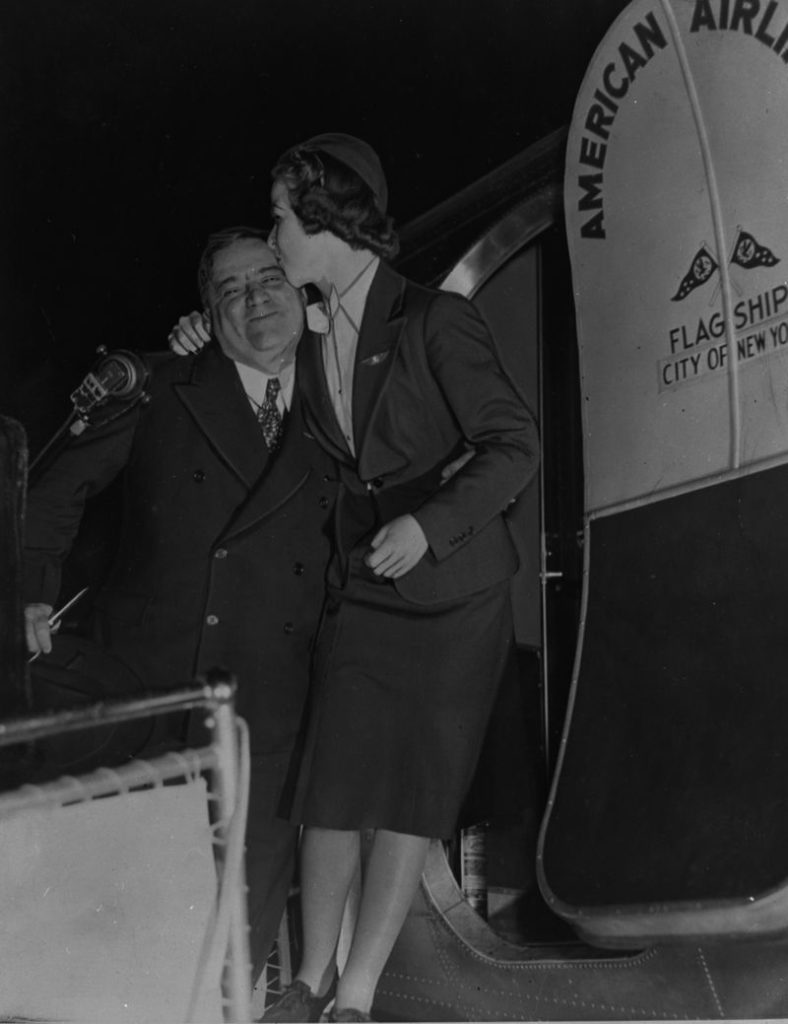
Mayor Fiorello La Guardia gets a kiss from ‘radio actress’ Arlene Blackburn, the first person to disembark from the first plane at LaGuardia Airport.  Photo originally published by the Daily News, Dec. 2, 1939.

New York Daily News

The infamous incident at Newark Airport, as reported in November 25, 1934, issue of the New York Times:

The beautiful, former Marine Air Terminal at LaGuardia Airport. The terminal is still in use (JetBlue Airlines calls it home), making it the oldest active terminal building for commercial use in America.

Courtesy Airport Spotting

FURTHER READING FROM THE BOWERY BOYS WEBSITE

More information about

— The Hudson Fulton Celebration and the famous first flight of Wilbur Wright
— Glenn Curtiss and the first long-distance flight
— One of the more lucrative air contests, held by Gimbels Department Store
— The story of how Idlewild Airport became JFK International Airport
— Did they really think they could build landing strips in the middle of the city? YES THEY DID.

FURTHER LISTENING

This week’s show is basically a prequel for this one, the tale of one of the most impressive airports of the Jet Age:

For a little history on Governors Island’s early years in flight:

We mention the site of Freedomland as being a possible location for an early airport.

Categories
Planes Trains and Automobiles

The story of how Idlewild Airport was renamed for John F. Kennedy

John F. Kennedy, the 35th president of the United States, was memorialized in dozens of ways following his assassination on November 22, 1963. None of these are more vital to the daily lives of New Yorkers than John F. Kennedy International Airport — or Kennedy Airport or simply JFK — the business airport in the northeast.

You may not realize how quickly it was renamed for the fallen president. On November 15, 1963, President Kennedy left Idlewild Airport (the airport’s former name) after a short stay in the city. Six weeks later, that airport would be named after him.

New York joined the nation in mourning following the televised funeral of President Kennedy on November 25, 1963. Thousands watched the ceremony from a large television screen hanging in Grand Central Terminal. Traffic stopped in Times Square and buglers played taps from atop the old Hotel Astor. All airport traffic at Idlewild stopped at noon.

New York Like A Vast Church ran the headline in the New York Times.

Calls immediately rose to memorialize the president in the city. On December 4, less than two weeks after Kennedy’s death, Mayor Robert Wagner announced that he would submit a bill to the city council to honor Kennedy with a name change to the Idlewild.

Unfortunately, these ultimately successful calls to rename New York’s largest airport came at the cost of obliterating the memory of another great American.

Wired New York

Idlewild was the popular name for the airport which opened on July 1, 1948, because it was built upon a former golf course and luxury accommodation of that name. According to the Times, “The name Idlewild is believed to have been inspired by the fact that the site at that time was wild and that the hotel and park constituted a recreational facility for the idle rich.”

But its full, official name was New York International Airport, Anderson Field, named for Major General Alexander E. Anderson, a decorated World War I veteran and Queens businessman. Unfortunately Anderson had few proponents fighting to keep his name on the airport by 1963.

The following week, “[i]n an action marked by solemnity and silent prayer, the City Council voted unanimously yesterday to change the name of New York International Airport at Idlewild, Queens, to the John F. Kennedy International Airport.” [source]

It was revealed then that city officials wished to name the airport after Kennedy even more quickly than that. Indeed, the idea had been unofficially approved hours after Kennedy’s assassination but it had taken the extra time to get the official approval from his widow (and future New York City resident) Jackie Kennedy.

Photographer Meyer Liebowitz/The New York Times

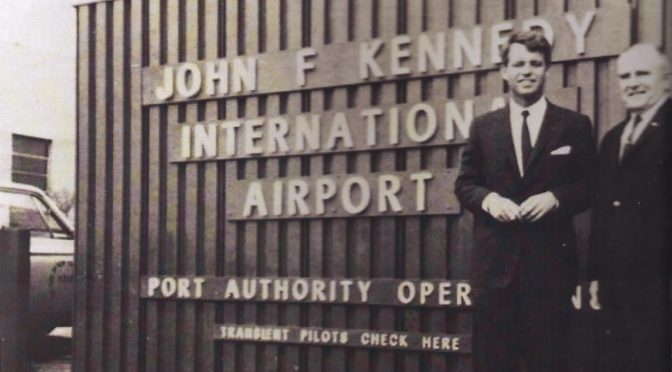
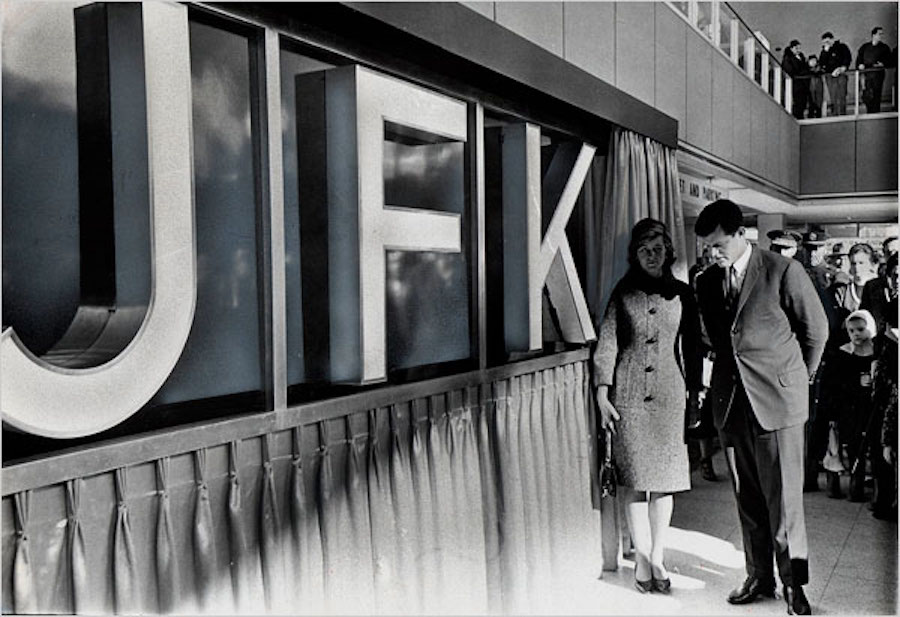
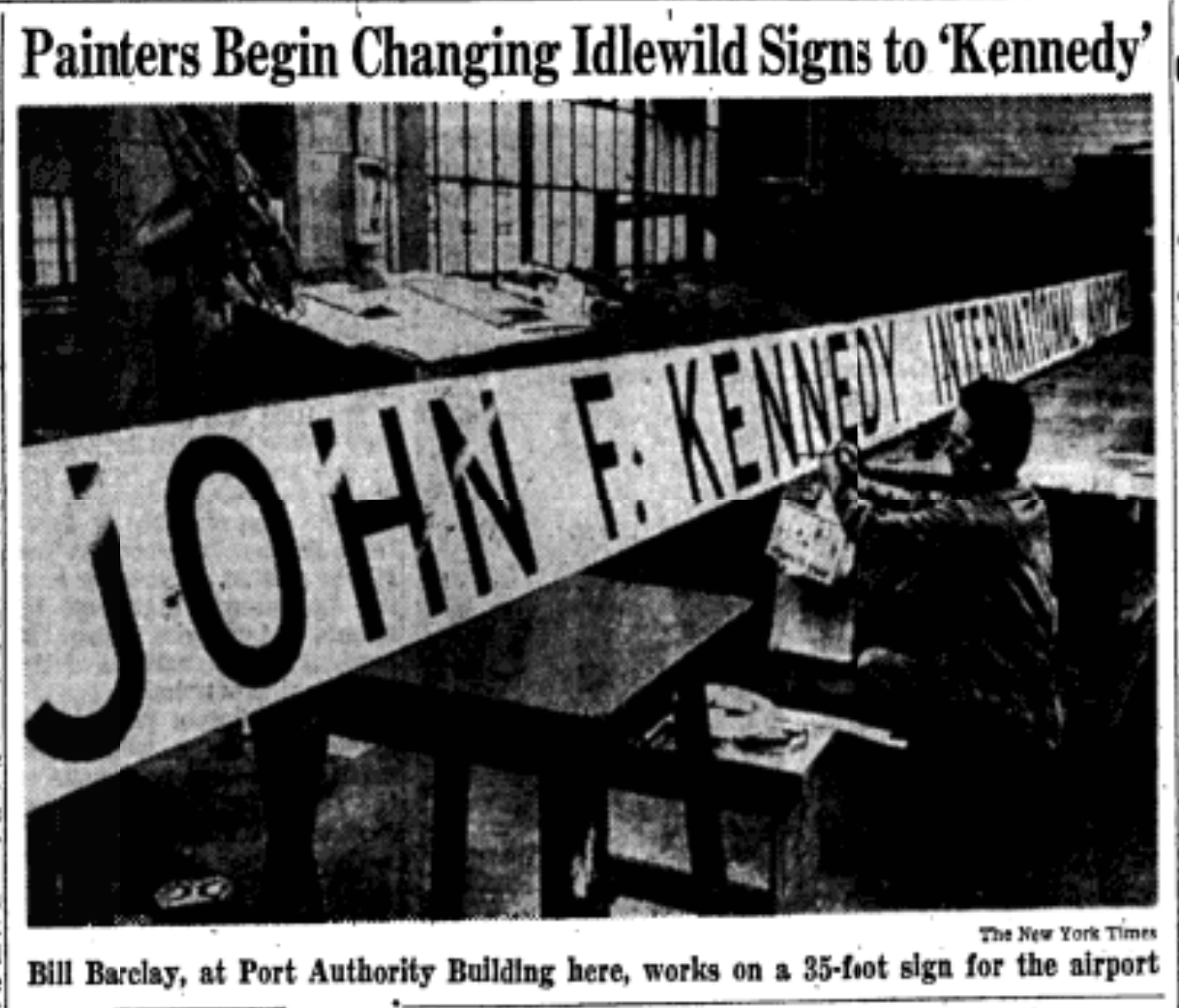
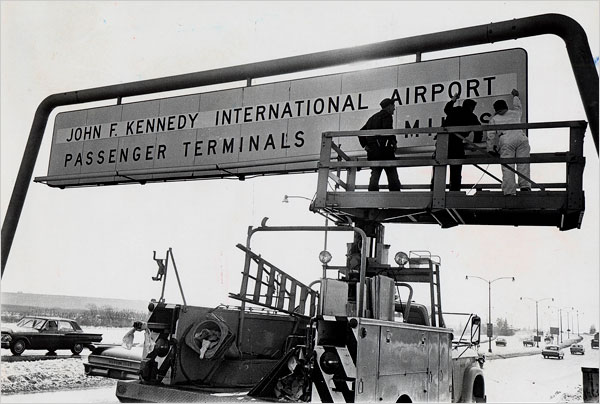
By Wednesday, December 18, the name change had been formally approved and workman busily rushed to change all the signs at the airport. Idlewild officially became John F. Kennedy Airport in a ceremony held on Christmas Eve 1963.

The president’s younger brother Edward Kennedy was in attendance, helping to unveil a 242-foot-long sign emblazoned with the new name. Their brother Robert F. Kennedy was scheduled to attend but canceled.

You would think such a name change to be relatively uncontroversial but this was not the case.

In an editorial which ran a few days after the ceremony, the New York Times remarked: “The speedy change of name — whether it be of an airport or a bridge or a park or a cape — reflects the love that millions of people all over the world had for Present Kennedy; but, as we have previously stated, it is only debasing the subject of our grief to attach his name so hastily to a miscellaneous collection of public works, almost as if we were afraid that without these tangible reminders he would be soon forgotten. “

Meyer Liebowitz/The New York Times

And President Kennedy almost got his name upon a newly built bridge in the New York City area, too.

That same month, a Staten Island politician filed a bill to the New York state legislature to name a new bridge being built in the Narrows after Kennedy. “Assemblyman Edward J. Amann Jr … profiled at Albany for introduction into the Legislature in January a bill calling for changing the name of the Verrazano-Narrows Bridge to the John. F. Kennedy Memorial Bridge.” [source]

The Verrazano kept its tribute to the 16th century European explorer. But New York does have a bridge named for a Kennedy — the Robert F. Kennedy Bridge (the former Triborough Bridge).

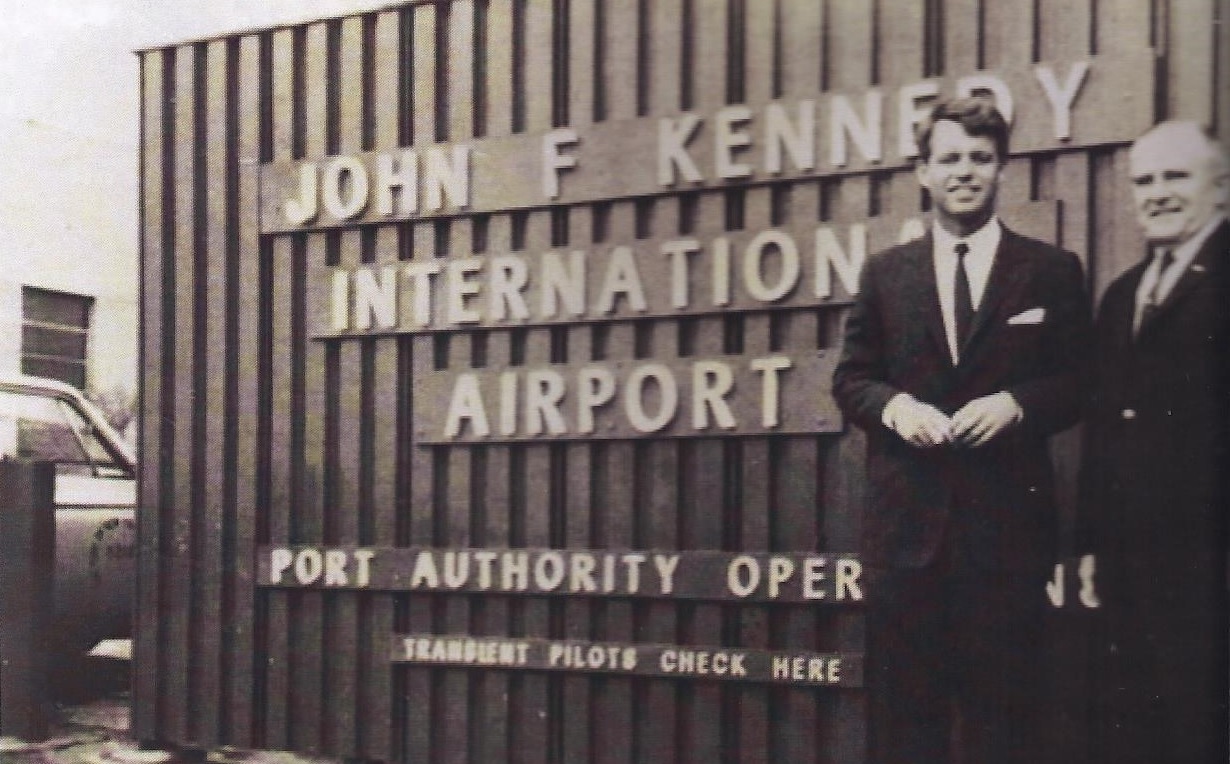
Below: A month after the dedication, Robert did stop by the airport named after his brother. 

JFK International Airport Chamber of Commerce

Notes from the podcast (#124) Idlewild/JFK Airport

If Barbarella were an airport terminal, certainly she would be this one. A traveller’s dilemma: what destination could possibly be as exotic as the airport from which you were leaving?

Scandals: We had a blast talking about JFK Airport this week, and it’s always funny seeing something we just talked about popping up in a major news event the weekend of release. Had we recorded the show this week, perhaps we have mentioned disgraced French politician and International Monetary Fund director Dominique Strauss-Kahn, who was pulled off his flight at JFK Airport and arrested in connection with a sexual assault at a Times Square hotel.

Strangely enough, Tom (a superb French speaker) was walking around with his family in downtown Manhattan this past weekend, and they were interviewed about the scandal by several international news teams, including TV5MONDE, RFI (Radio France International) and TF1. So if you live in France or a French-speaking nation, you probably saw Tom and his family on your national news yesterday!

Correction: I put Roosevelt Field in Hempstead, Long Island, when it’s actually in nearly Garden City. I wasn’t really so far off; Garden City is located in the region once called the Hempstead Plains, which I discussed last week as the location of America’s first racetrack.

Eero Saarinen: Our show was running long, so some of our praise of Saarinen’s other work got left on the cutting room floor. But there are two other Saarinen buildings in New York, and both prominently placed — the monolithic CBS Building on Sixth Avenue and the Vivian Beaumont Theatre at Lincoln Center. You can read more about them here.

Pretty pictures: If you’d like to look at a lot more fantastic pictures of Idlewild’s glory days, visit the forum at Wired New York with lots of postings from airplane buffs. The image above is from there.

The mystery of Idlewild: One of the more frustrating aspects of doing research was the utter lack of information about Idlewild Golf Course, which was purchased by the city to construct the airport. Taking some golf enthusiasts at their word, it appears to have opened in 1930 and remained open for over a decade. But what was that named after? There’s a Idylwylde golf course in Ontario, Canada, that was constructed in 1922. Any connection?

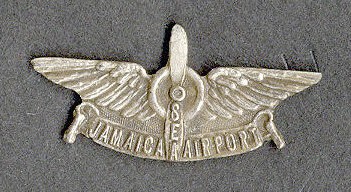
Jamaica Sea-Airport: Some of the acreage LaGuardia bought up by the city to construct Idlewild was actually already being used as a landing strip. The Jamaica Sea-Airport was a tiny airfield off the bay that opened in 1927, using three runways and a small tin hangar. At right: An antique lapel pin from this long forgotten airstrip.

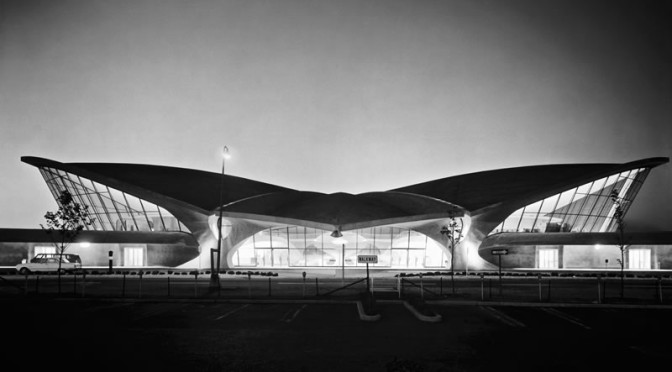
For More Information: Some key books we used for this show include Airports: A Century of Architecture by Hugh Pearman, Naked Airport by Alastair Gordon/ and John F. Kennedy International Airport by Joshua Stoff, from the Images of Aviation series. And I highly recommend the petite photography book The TWA Terminal by acclaimed architectural photographer Ezra Stoller. I’ve put another one of his images below, but the whole book is a perfect capsule history of this strange building.

Categories
Podcasts

Idlewild Airport/John F Kennedy International Airport: from a golf course to a motley crew of classic architecture

PODCAST Come fly with us through a history of New York City’s largest airport, once known as Idlewild (for a former golf course) and called John F. Kennedy International Airport since 1964. Mayor Fiorello LaGuardia wanted a new and improved facility to relieve the pressure from that other Queens airport (you know, the one with his name on it), but a greater challenge faced developers of the Jamaica Bay project — the coming of the jet age and the growth of commercial travel.

The solution for Idlewild was truly unique — a series of vastly different and striking-looking terminals assigned to individual airlines. This arrangement certainly had its critics, but it has provided New York with some of the most inventive architecture found within its borders.

From stained glass to zodiac sculptures, from the out-of-this-world dramatics of the Pan Am WorldPort to the strangely lifting concrete masterpiece by Eero Saarinen, we take you on a tour of the original ’60s terminals and the airport’s peculiar history.

With guest appearances by Robert Moses, Martin Scorsese, the Beatles and a pretty awesome dog named Brandy.

Click on the pictures below to enlarge. And these demand to be enlarged!

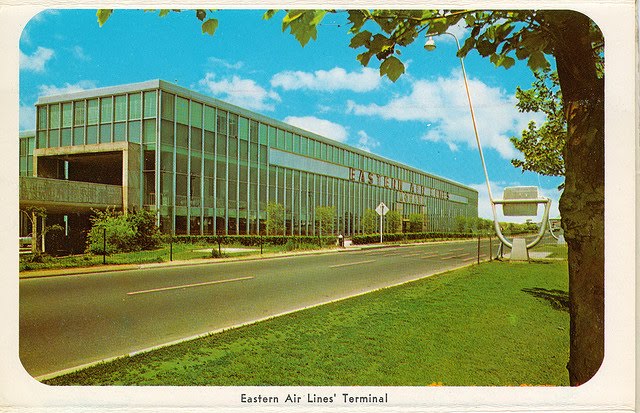
The Eastern Airlines building (“Terminal 1”) for the once-powerful airline that brought Robert Moses an early public defeat in the contentious battle for funding Idlewild Airport.

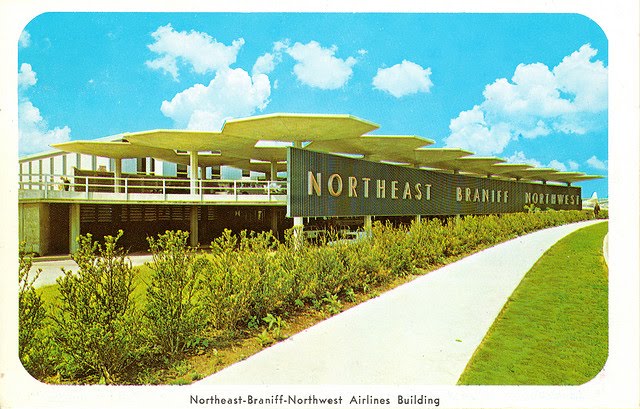
A large sequence of toadstool like concrete awnings adorn the entrance of Terminal 2, which serviced Northwest, Northeast and Braniff airlines.

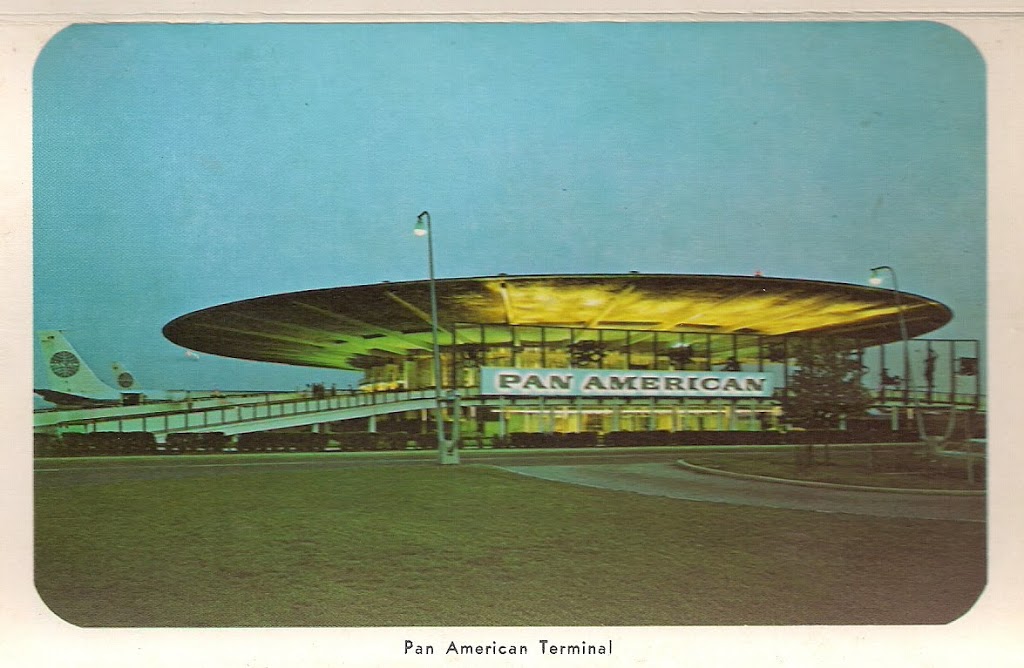
The spaceage Pan American terminal, later called WorldPort. These postcards are courtesy DavideLevine/Flickr. He’s got a great many more JFK postcards to check out as well.

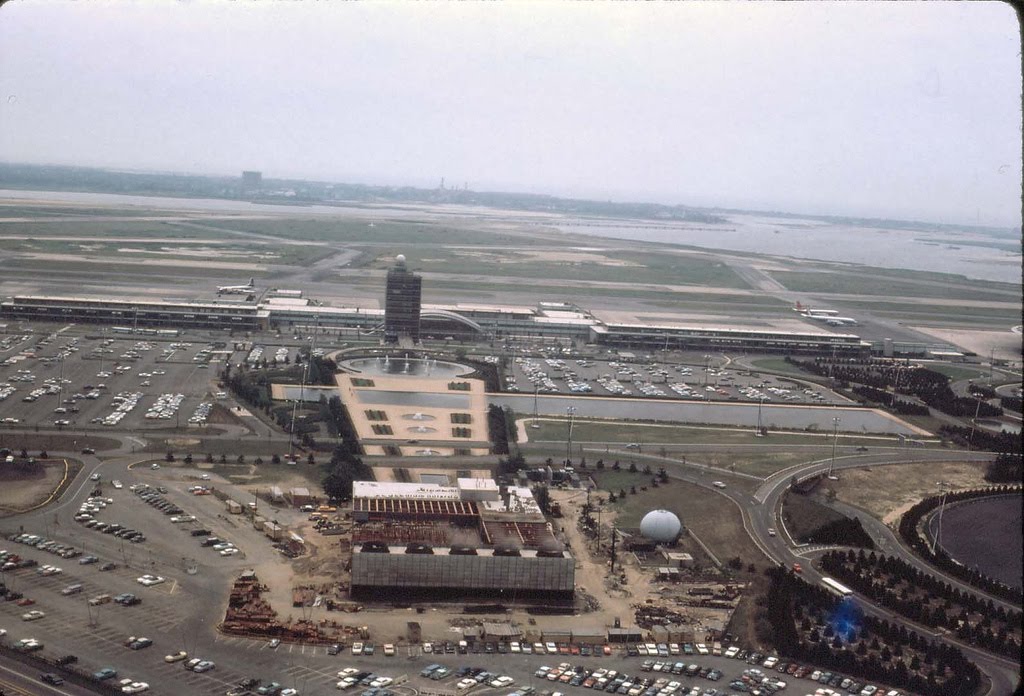
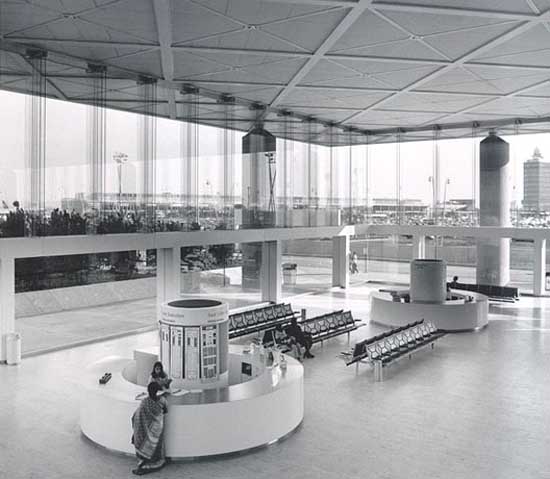
Overlooking the International Arrivals Building. From this vantage, you can see the ‘Versailles’ like gardens and fountain that briefly ruled the airport grounds until the demand for parking became too great. (avaloncm/Flickr)

Outside the International Arrivals Building, 1960 (rjl6955/Flickr)

Inside and outside the TWA Flight Center, designed by Eero Saarinen. Pictures by Ezra Stoller

The interior of I.M. Pei’s Sundrome for National Airlines, with walls that seem to melt away with the sunlight. Currently unused, the building is slated to be demolished.

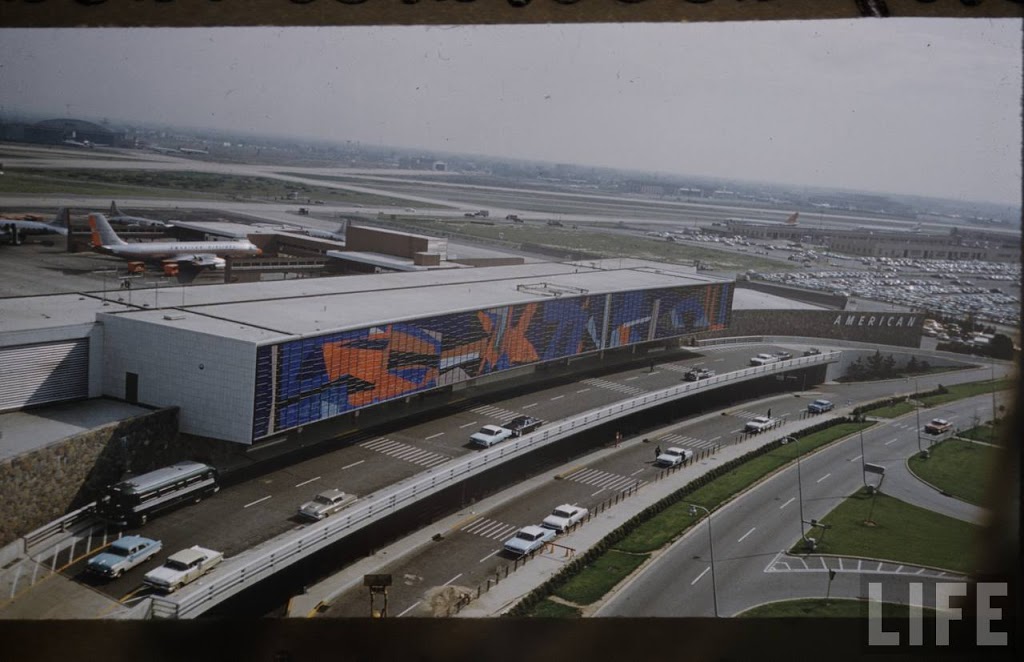
American Airlines terminal, distinguished by its extraordinary face of stained glass. (Photo Dmitri Kessel/Google Life)

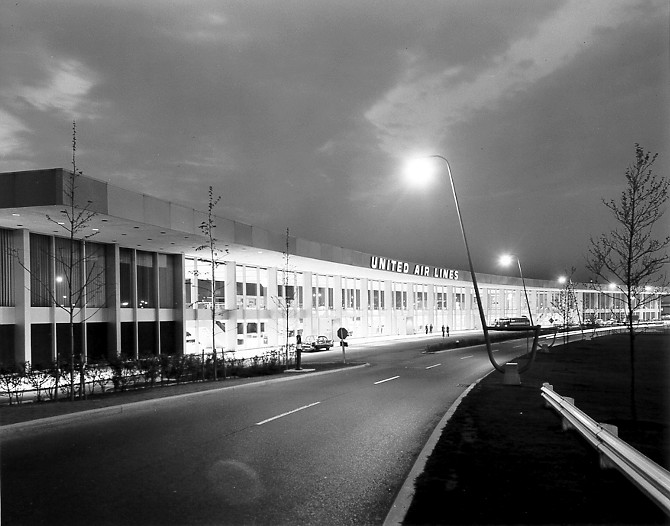
The simple but sleek United Airlines terminal.

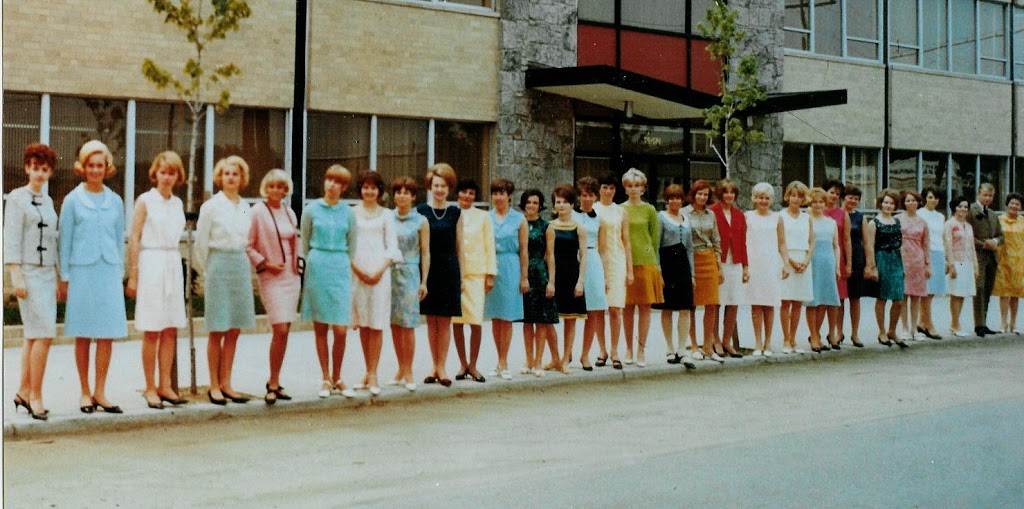
The style of the jet age was partially defined by airline flight attendants. Airlines used sex appeal in their marketing and garbed their female employees in trendy (and often revealing) uniforms. These women were graduates from Overseas National Airways training school in Queens, June 1966. (More information here.)

Idlewild/JFK would see as many movie and music stars than any other location in New York. Here’s Marilyn Monroe and Arthur Miller in 1954…

… and the Beatles arrive at JFK to screaming fanfare, 1964

Children could pretend to be air traffic controllers with this 1968 toy. Many years later, an actual air traffic controller would bring his children in to direct real planes.

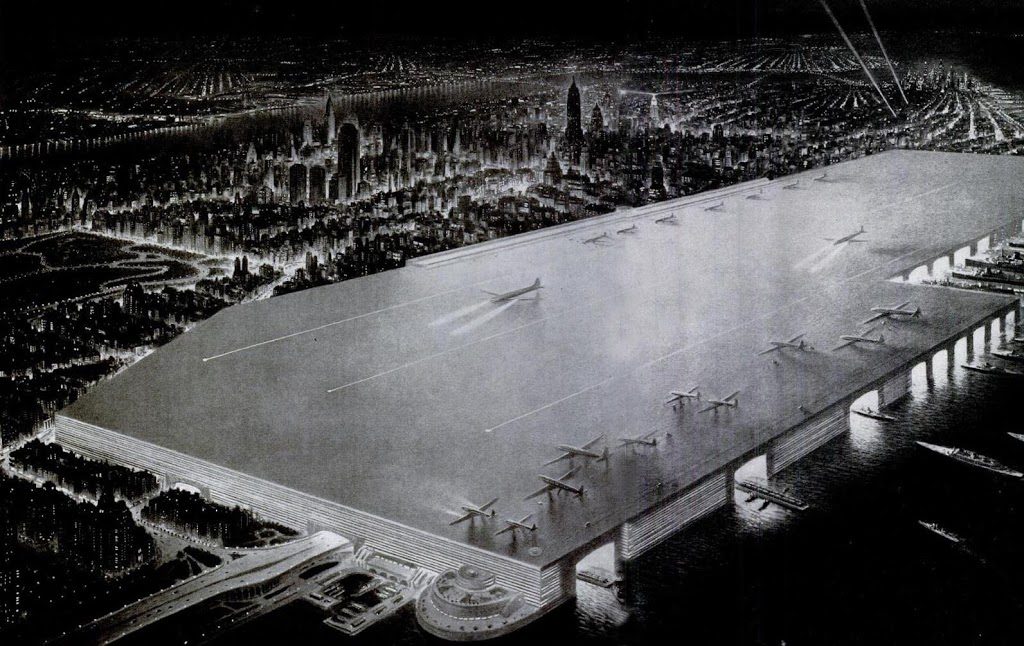
Why not? Let’s build this outlandish Manhattan airport!

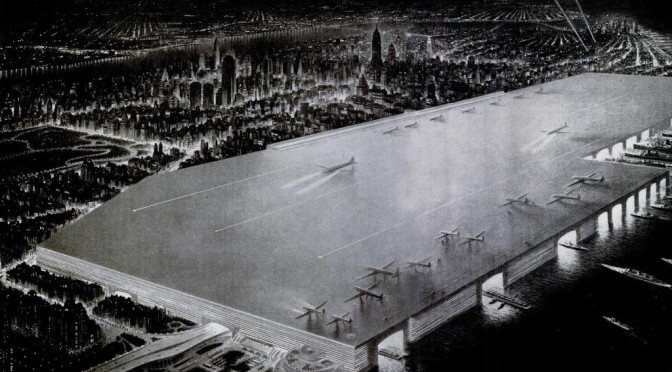
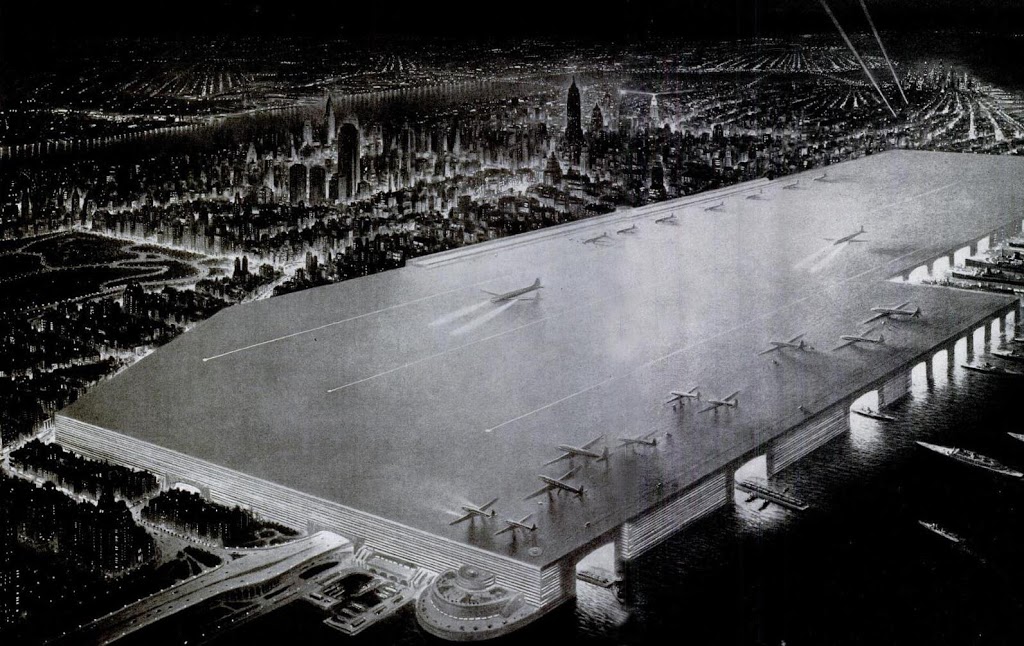
The ultimate terminal for air and sea, if you don’t mind eliminating a few neighborhoods. Goodbye Hell’s Kitchen! (Click image to enlarge)

Are you a Manhattan business professional who’s tired of sitting in maddening traffic to get all the way out to John F. Kennedy Airport? Does LaGuardia Airport seem dreary and dismal to you? And Newark Liberty International? In New Jersey? Fuggedaboutit!

How many times have you thought, “If only they could demolish a significant portion of Manhattan and built an airport here?” Sure enough, visionary New Yorkers are one step ahead of you.

A 1946 issue of Life Magazine, (adorned with a wistful cover of post-war Paris) outlines a proposal by one of the 20th century’s most ambitious land developers, William Zeckendorf. The Hudson River Terminal project would consume Manhattan’s entire westside from Ninth Avenue on to the water, 24th to 71st Street. Chelsea, Hell’s Kitchen and other neighborhoods would cease to exist.

The runway sits atop an all-purpose colossal structure, a mega-dock, able to accomodate both air and river traffic. Ships would anchor at waterfront portals, while a staggering 68 planes an hour (about the number JFK can handle today) would land on the rooftop runway. The planes would then be lowered hangars on multiple floors. No taxiing around wasted empty space here!
But New Yorkers wouldn’t just get a fine runway out of the deal. With connections to both subways and train, the Hudson River terminal would become the ultimate “communications hub.” Naturally, the West Side Highway would burrow through the structure.

Pretty much any New Yorker going anywhere would have to pass through here. Luckily, then, this almost 144-block colossus would house “ticket offices, restaurants, business offices, waiting rooms” and other useful establishments, assuring that you’d never need to go outside.

You can read about this fascinating pipe dream in this issue of Life Magazine, and there’s a couple additional illustrations as well. Thankfully, this travesty never saw the light of day.  Donald Trump’s ‘Television City’ idea, another failed Westside development project, which would have erected a 152-floor building and an elevated parking lot in part of the area affected by Zeckendorf’s proposal, seems like a modest proposal in comparison. (That will be the last time ‘Donald Trump’ and ‘modest’ will be used in a single sentence.)

Zeckendorf was no stranger to riverside annihilation projects. His ambitious plans to built a massive ‘dream city’ on the East River that would have dwarfed Rockefeller Center fell through in the 1940s. The United Nations headquarters sits on the land once earmarked for that purpose.

But people still dream of a Manhattan airport, even in jest. In 2009, the Manhattan Airport Foundation horrified New Yorkers with a plan to replace Central Park with a glorious new airfield. They were joking. Zeckendorf, sixty years earlier, was not.

Images from Life Magazine