Categories
Planes Trains and Automobiles Podcasts

Newark vs. LaGuardia: A story of airports and the first flying machines over New York City skies

PODCAST Newark Liberty International Airport or LaGuardia Airport? Which do you prefer? (Or is the answer — none of the above. Give me JFK!)

In this episode, we present the origin stories of New York City’s airports and airfields. The skies over New York have been graced with aircraft for almost 110 years. In fact the first ‘flying machine’ was flown by no less than Wilbur Wright, the man who (with his brother Orville) invented the airplane.

Yet by the time the U.S. government began regulating the skies — making way for commercial aviation — the city had failed to develop an adequate airport of its own. Meanwhile the thriving city of Newark, New Jersey, had just opened a glistening new airport, and in 1929 it was awarded the government’s coveted airmail contract.

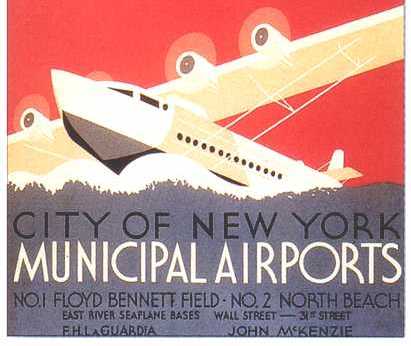
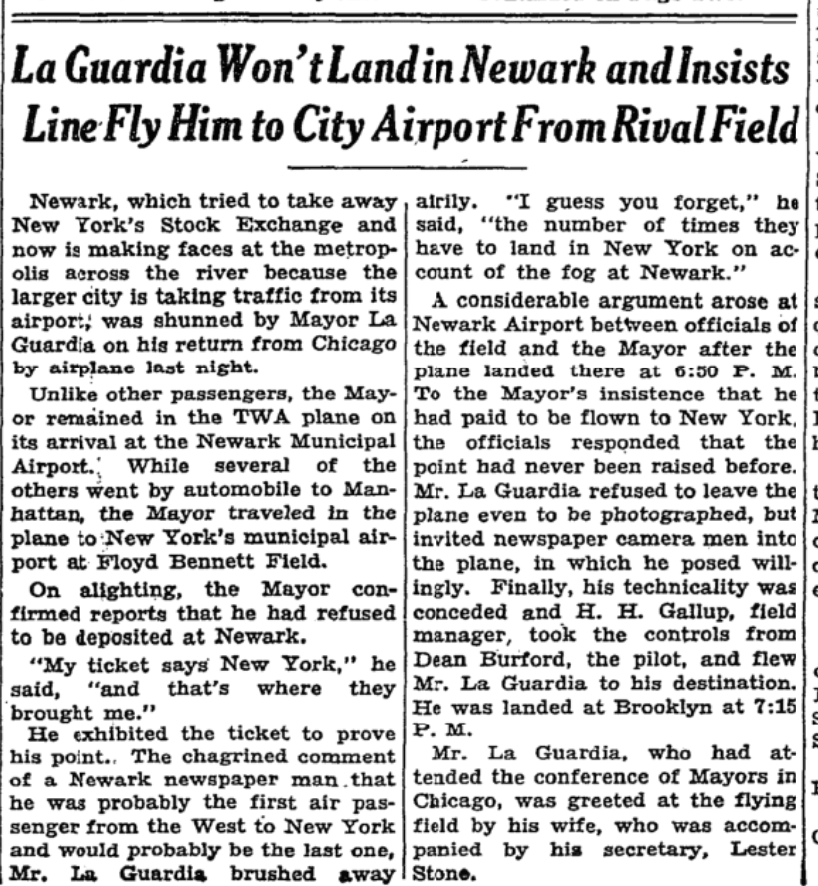
This did not sit well with Mayor Fiorello La Guardia who engineered a spectacular tarmac stunt in 1934, drawing attention to this deficiency. And then he began dreaming of a new airport in northern Queens, one poised to draw customers away from New Jersey.

And thus began a decades-long tug-of-war for supremacy over New York City skies.

LISTEN HERE:

_________________________________________________________

The Bowery Boys: New York City History podcast is brought to you …. by you!

We are now producing a new Bowery Boys podcast every other week. We’re also looking to improve the show in other ways and expand in other ways as well — through publishing, social media, live events and other forms of media. But we can only do this with your help!

We are now a member of Patreon, a patronage platform where you can support your favorite content creators for as little as a $1 a month.

Please visit our page on Patreon and watch a short video of us recording the show and talking about our expansion plans. If you’d like to help out, there are five different pledge levels (and with clever names too — Mannahatta, New Amsterdam, Five Points, Gilded Age, Jazz Age and Empire State). Check them out and consider being a sponsor.

And join us for the next episode of the Bowery Boys Movie Club, an exclusive podcast provided to our supporters on Patreon.

We greatly appreciate our listeners and readers and thank you for joining us on this journey so far.

________________________________________________________

CLARIFICATION: We forgot to mention that the original name of JFK Airport was actually New York International Airport, Anderson Field, almost everybody ended up calling it Idlewild Airport.

CORRECTION: Near the end of this show, Greg says that 18 new gates have opened this month at LaGuardia Airport. It’s actually 11 gates in a concourse that will eventually have 18.

You must check out this extraordinary promotional video for American Airlines from 1933:

Roosevelt Field 1927 — Charles Lindbergh takes off on his historic flight to France
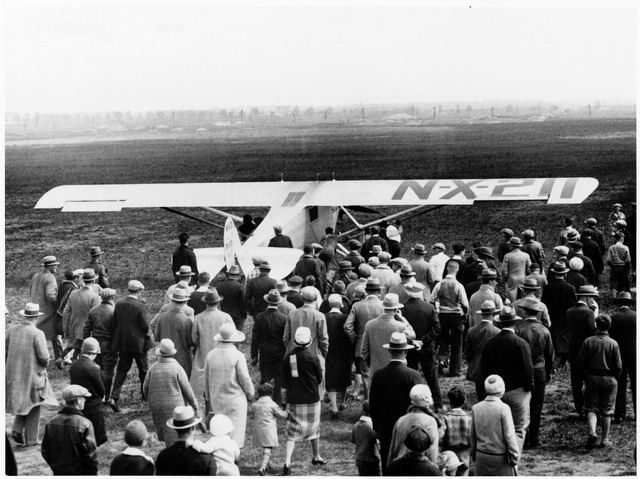
National Air and Space Museum Archives, Smithsonian Institution

Floyd Bennett Field, September 1, 1934. The plan belongs to pilot Roscoe Turner, who landed at the field after flying from Burbank, CA to New York in 10 hours.
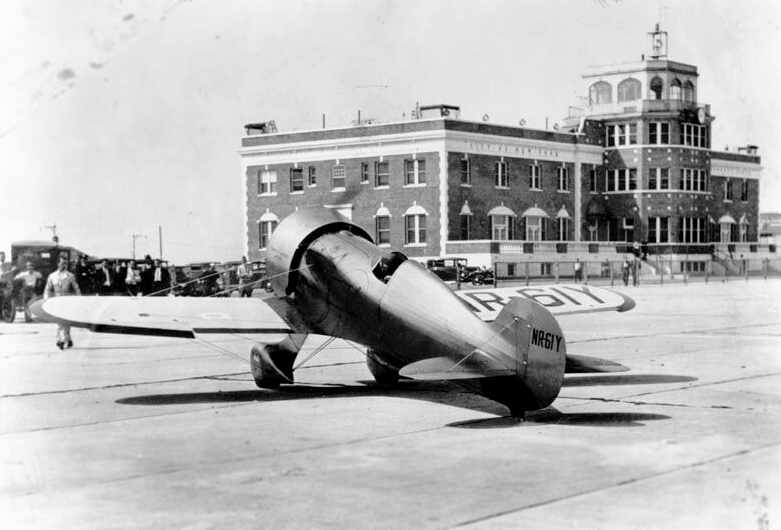
Courtesy Airfields Freeman

Newark Airport, in a dramatic postcard. American Airlines would eventually move its base of operations to LaGuardia.
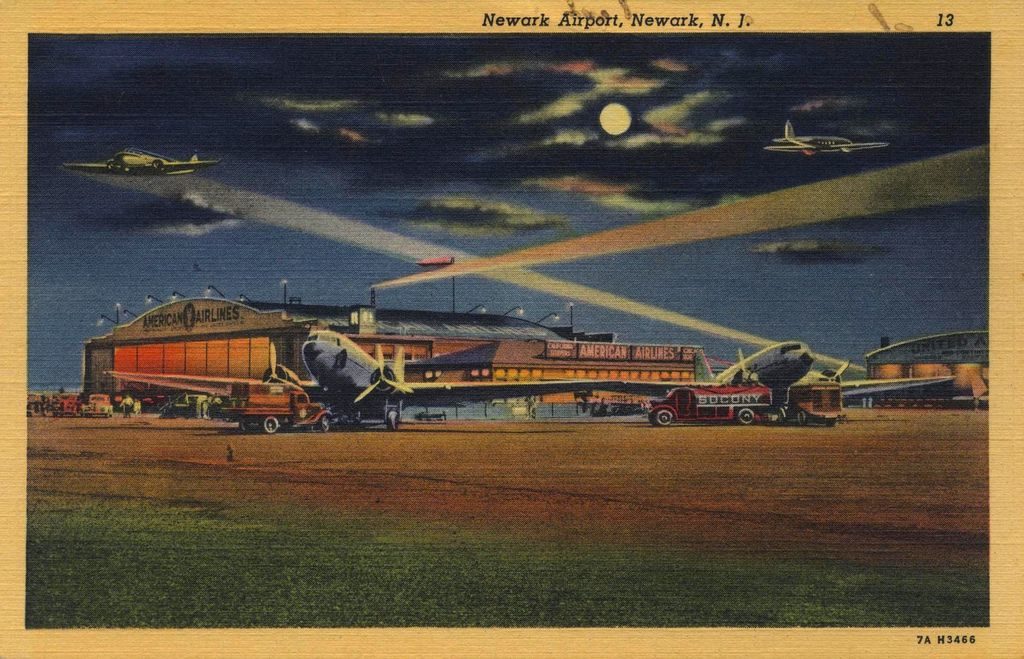
LaGuardia Airport in 1940, a few months after its opening.
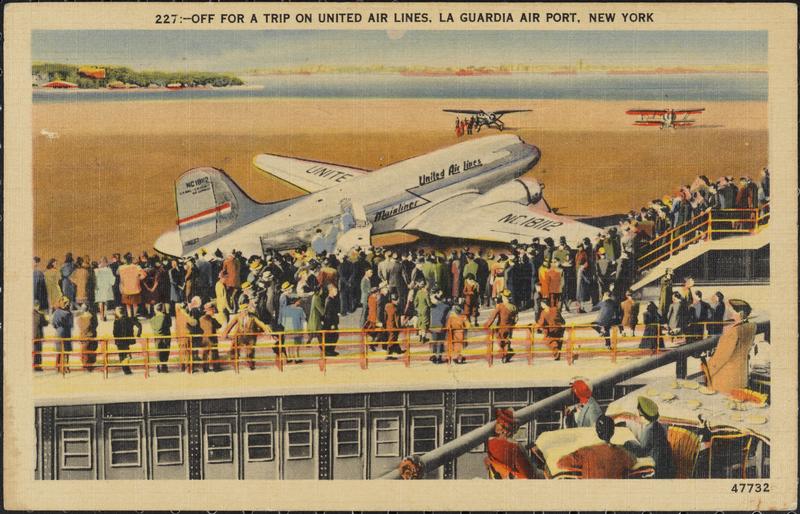
Museum of the City of New York

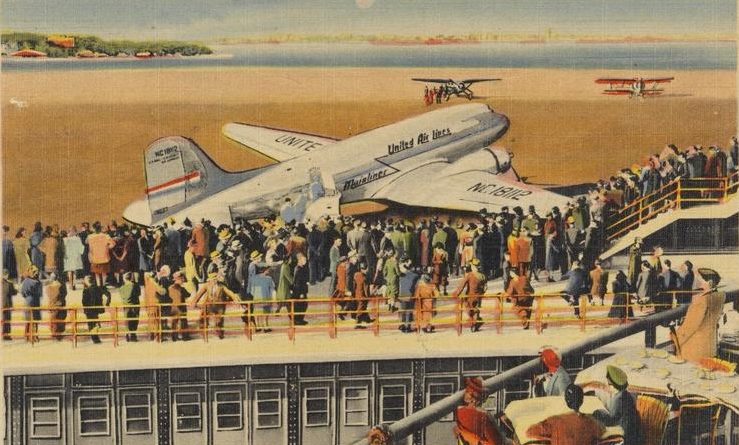
LaGuardia, April 1, 1944: Visitors could stroll a wide promenade, watching airplane activity on the tarmac.
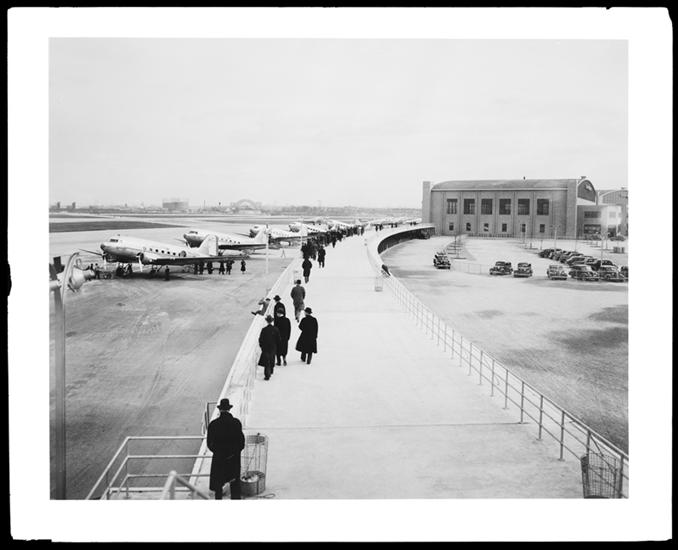
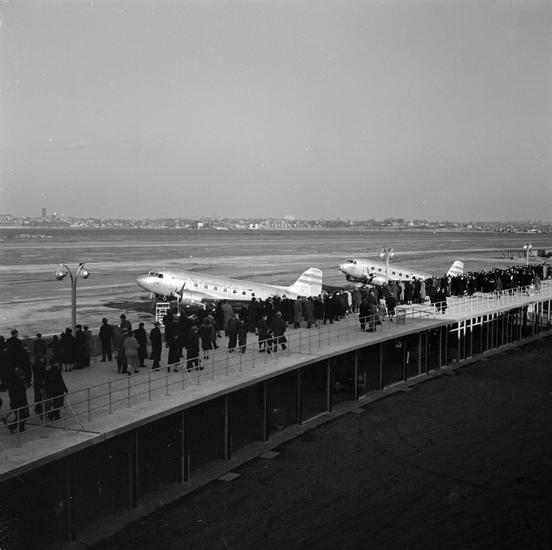
Wurts Bros/ Museum of the City of New York
Wurts Bros/Museum of the City of New York

Mayor Fiorello La Guardia gets a kiss from ‘radio actress’ Arlene Blackburn, the first person to disembark from the first plane at LaGuardia Airport.  Photo originally published by the Daily News, Dec. 2, 1939.
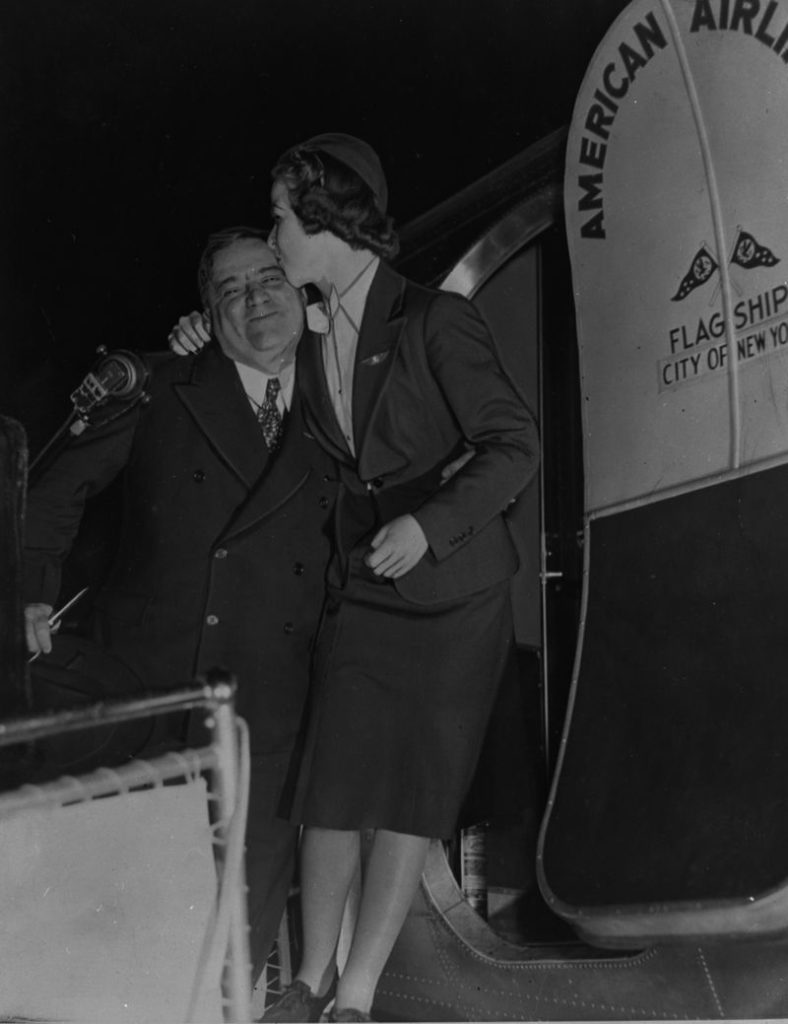
New York Daily News

The infamous incident at Newark Airport, as reported in November 25, 1934, issue of the New York Times:
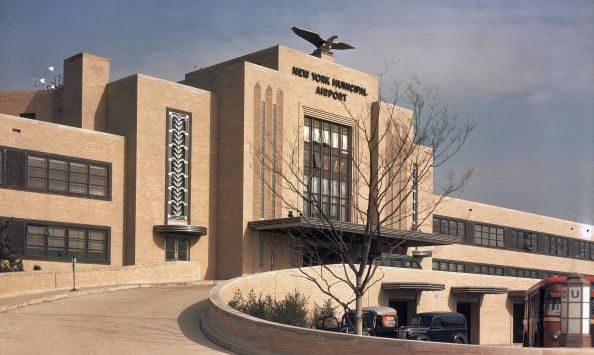
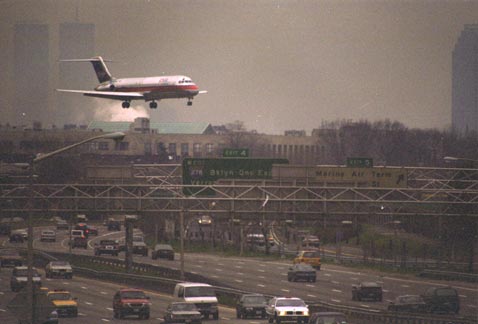
The beautiful, former Marine Air Terminal at LaGuardia Airport. The terminal is still in use (JetBlue Airlines calls it home), making it the oldest active terminal building for commercial use in America.
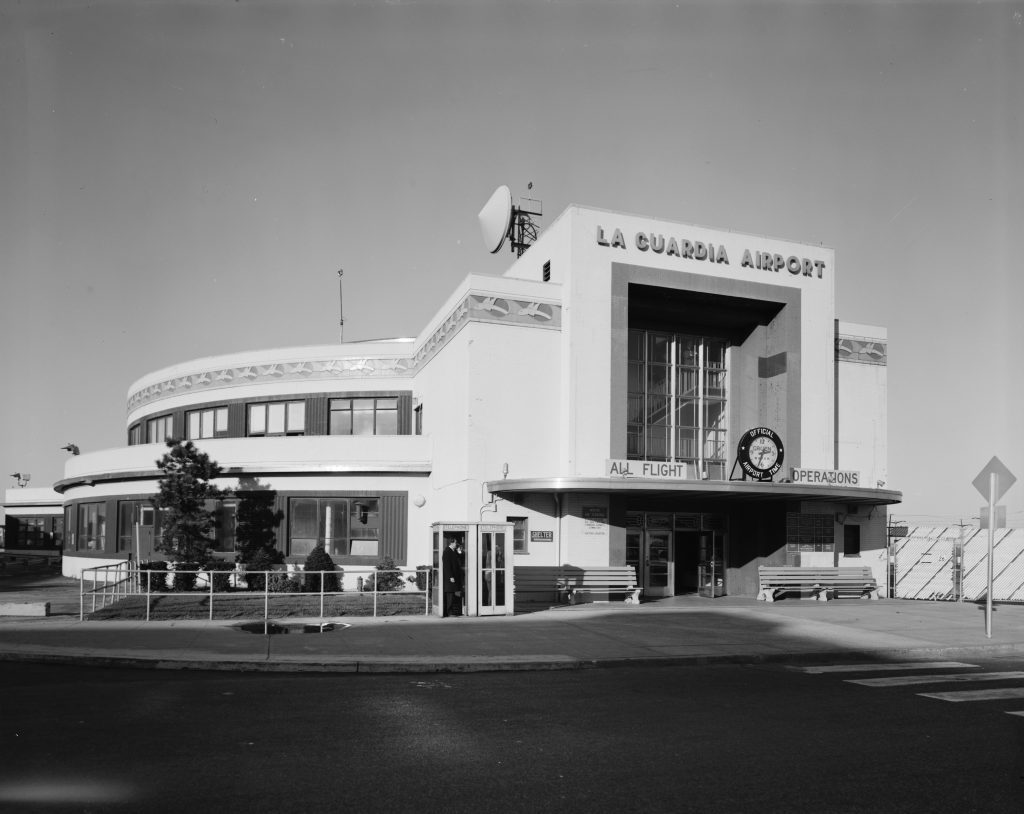
Courtesy Airport Spotting

FURTHER READING FROM THE BOWERY BOYS WEBSITE

More information about

— The Hudson Fulton Celebration and the famous first flight of Wilbur Wright
— Glenn Curtiss and the first long-distance flight
— One of the more lucrative air contests, held by Gimbels Department Store
— The story of how Idlewild Airport became JFK International Airport
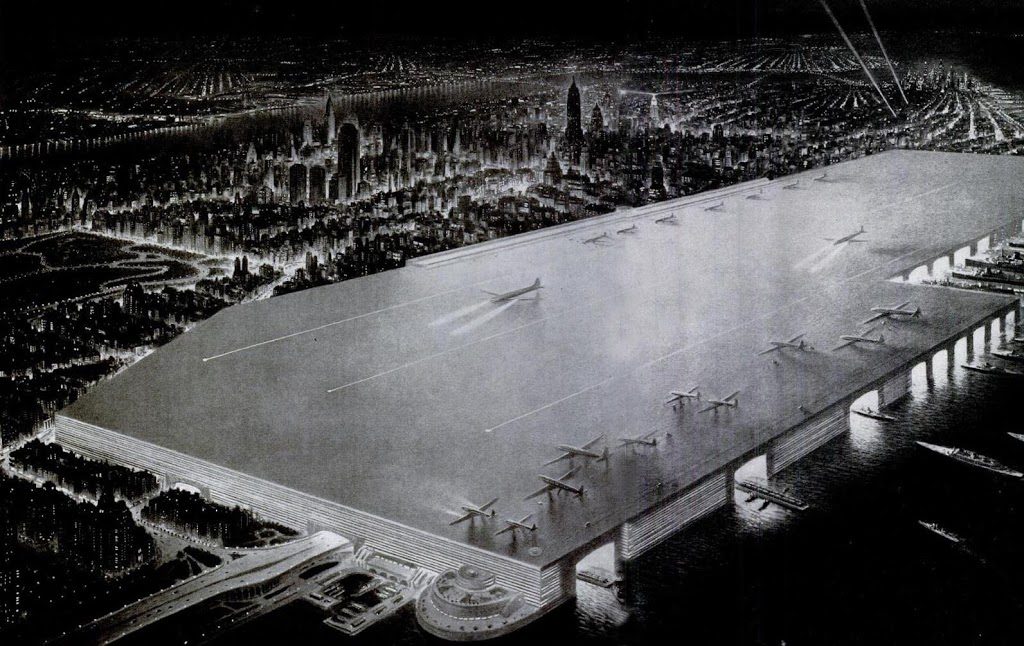
— Did they really think they could build landing strips in the middle of the city? YES THEY DID.
FURTHER LISTENING

This week’s show is basically a prequel for this one, the tale of one of the most impressive airports of the Jet Age:

For a little history on Governors Island’s early years in flight:

We mention the site of Freedomland as being a possible location for an early airport.
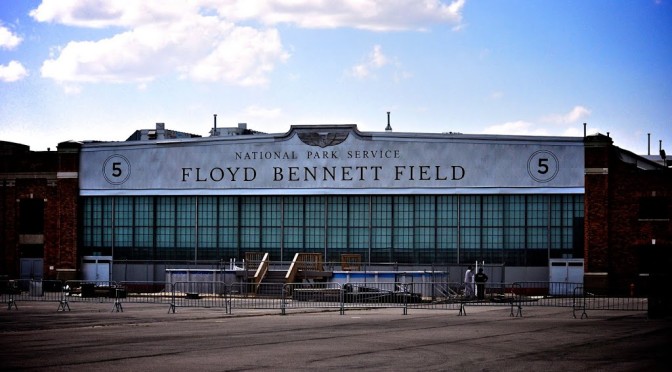
New York City aviation history and the beautiful ruins of Floyd Bennett Field


Photo by Sean Nowicke/Buzzstew Click pic for larger view

Since I’m in a transportation history mindset this summer, I’ll be making it a personal mission to visit a lot of glorious New York ruins with that theme. Staten Island boat graveyard, here I come!

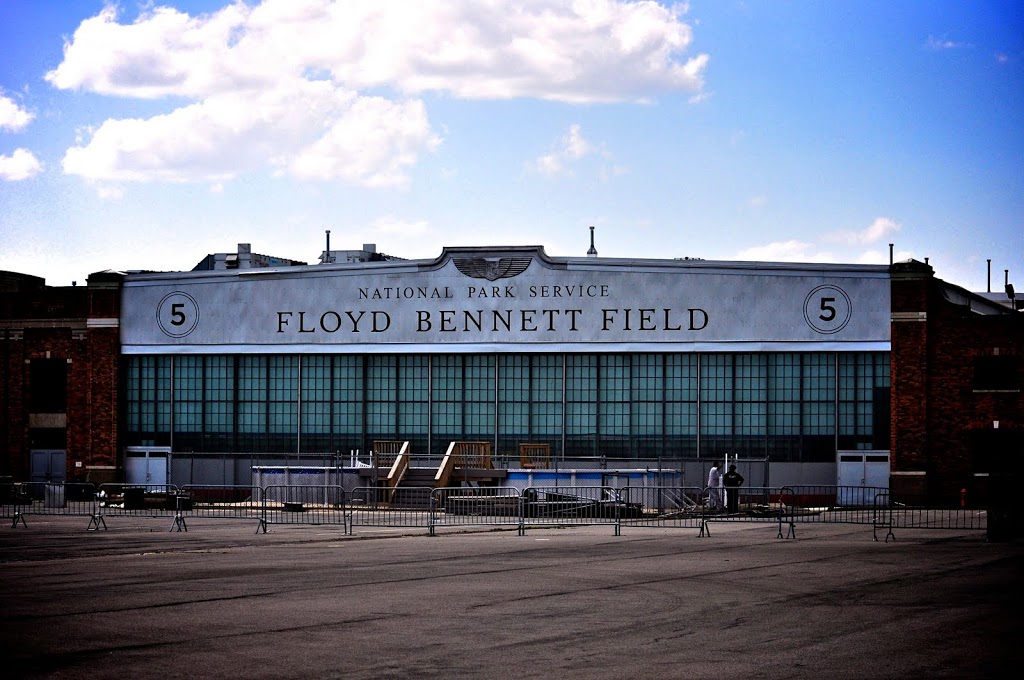
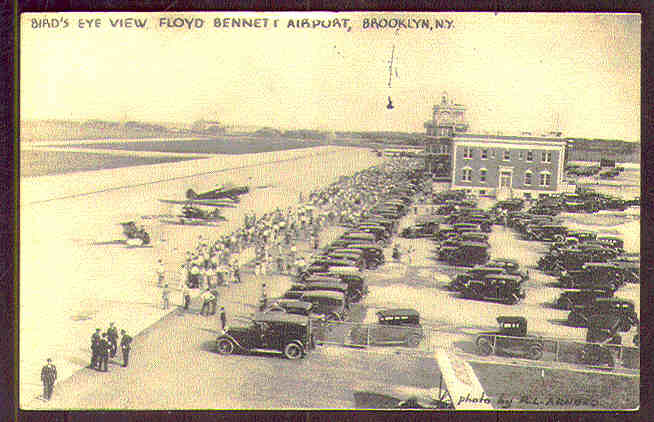
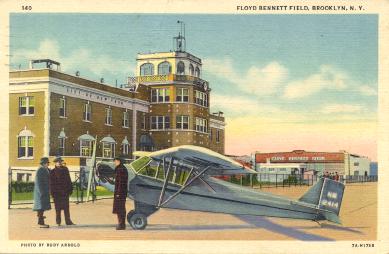
But my first stop was a couple weekends ago, exploring the grounds of Brooklyn’s old Floyd Bennett Field, New York’s original airstrip and the first municipal airport. The area had been a private dirt airstrip for many years before 1930, when aviator Clarence D. Chamberlin received permission from the city to build lavish new facility here.


Photo by Sean Nowicke/Buzzstew

Over the years, the field (named for a Brooklyn pilot and adventurer) saw the greats of aviation — Amelia Earhart, Wiley Post, Howard Hughes, John Glenn — and the most revolutionary of small aircraft. It was later turned into a base for the Marine and Naval Air Reserves and decommissioned and handed over to the national parks department as part of the Gateway National Recreation Area in 1972.

For more information, you can listen to our podcast on LaGuardia Airport and the early years of New York City flight. [Download it here or from iTunes]

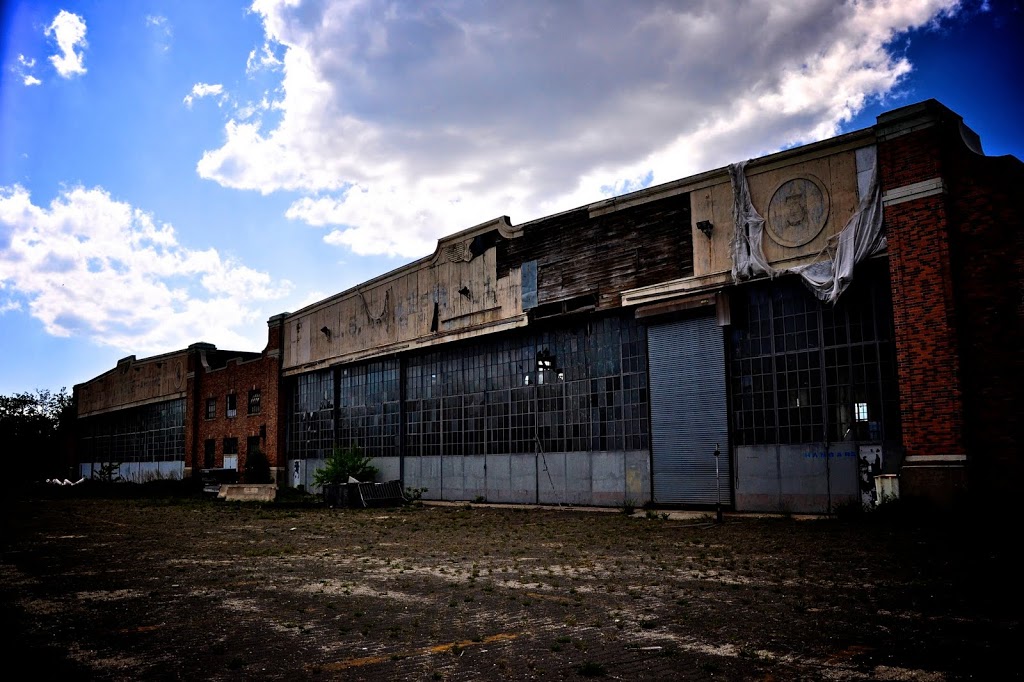
Today many of the old hangars sit like broken, ghostly relics, presiding over empty fields and a vast airstrip slowly being taken over by plant growth. The north end of the field is still very much in use, with a recreation center featuring an ice skating rink, gymnasium and rock climbing wall, and a football field outside. There was a cheesy carnival set up when I visited. And next to the withering airstrip is Brooklyn’s largest community garden.

But the star of the show are those unused hangars filled with strange rubble and unidentifiable, rusted machines, broken windows sending light beams at stark angles. You can’t go inside them, but you can get extraordinarily close.


Photo by Sean Nowicke/Buzzstew

For a lot more information, I recommend checking out Forgotten NY’s detailed exploration of the site. You can check here for directions to the field, including by subway (the 2 train and a bus ride).

The photos on this page are by Sean Nowicke, a wonderful photographer who has more pictures of our trip there on his blog. He’s a world traveler and has a lot of fantastic photos of other places as well — check them out at Buzzstew.

100 Years Ago: Curtiss and the first long-distance flight

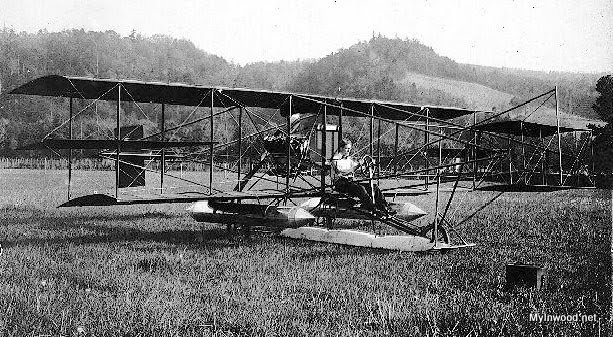
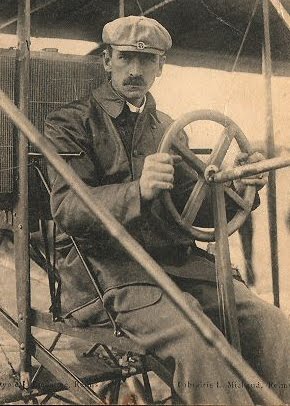
Up In The Air: Glenn Curtiss and his Hudson Flyer
Picture courtesy glenncurtiss.com

In 2010, there will be well over 100 million passengers coming and going from the New York metropolitan area’s three principal international airports. In 1910, you could count the number of passengers on your hand. And the pilot and passenger of the very first long-distance flight to New York was professional aerial derring-do Glenn Curtiss.

There had not even been an airplane over New York skies until the previous year, when Wilbur Wright flew over the length of Manhattan in honor of the Hudson-Fulton Celebration. (Hear more about it in our LaGuardia Airport podcast.) Curtiss, who had proven himself earlier that year in the world’s first air meet in France. was also commissioned to fly alongside Wright in a separate plane from Governor’s Island that October 1909, but his craft barely made it off the ground. A crushing defeat, because he and the Wright Brothers were hardly friends.

In fact, the Wrights were suing Curtiss (and his collaborator, the phone man Alexander Graham Bell) for patent infringement in a New York court in 1910; his early flying machines were similar in design to the Wrights, they claimed. The nasty court proceedings would cost both parties thousands of dollars; Wilbur would even die in 1912 before the case resolved (eventually in the Wright’s favor).

Every flight Curtiss took cost him royalties to the Wrights. Luckily for the speedster, raising money wasn’t difficult for a young daredevil, as newspaper men of this time loved offering prize money for spectacular stunts. News moguls like Joseph Pulitzer and William Randolph Hearst just loved to pay people to create news.

In January, Curtiss would win a speed race in Los Angeles funded by railroad magnate Henry Huntington, who more than made up his $50,000 prize offering when 20,000 spectators took his train to the event. Pulitzer’s New York World would provide a smaller prize ($10,000), but it would have been of great appeal to Curtiss: the cash went to the first person to fly from Albany to New York, about 150 miles, essentially the first long-distance flight between cities ever made. Still smarting from Wilbur’s 1909 Hudson-Fulton victory, Curtiss wanted to make his mark over New York City.

On the morning of May 29, 1910, Curtiss and his newly named Hudson Flier took off from Van Rensselaer Island, just next to Albany, and glided above the Hudson, as a trainload of New York Central passengers (including Curtiss’s wife) followed from below. Pilots would not yet have the fuel capacity to make one continual flight; it was enough I suppose just to make it from one destination to the other in the same plane, in one piece! Curtiss stopped once for a fuel break in Poughkeepsie; an hour later, winds off of Storm King Mountain almost ripped his plane asunder.

Right as Curtiss set his sights on the young Manhattan skyline, his plane began leaking oil and the pilot had to touch down again, unceremoniously landing in New York City — but in Inwood, not the finish line at Governor’s Island. He touched down unannounced on the estate of William B. Isham, where Isham’s daughter Flora and her husband Minturn Post Collins offered the pilot gasoline and oil.

By that time, a crowd of New Yorkers had descended onto the Isham estate to witness this incredible sight. Curtiss thanked Collins and his wife, rolled his plane off the estate and into the air. He coasted along Manhattan’s west side, over the harbor and around the Statue of Liberty, finally landing at Governor’s Island just in time for lunch.

Within the month, Curtiss’ amazing flight would be bested by his friend Charles Hamilton, flying round trip in June 1910 from New York to Philadelphia and also winning a $10,000 prize in the process.

You can read more about Curtiss’ time in Inwood at here.

Categories
Podcasts Uncategorized

PODCAST: LaGuardia Airport

We embark on the tale of the birth of New York City flight — featuring a Wright brother on Governor’s Island, the site of a glue factory turned Brooklyn air strip, Queens’ forgotten first airport, and finally to the baby of mayor Fiorello LaGuardia.

PODCAST TAKEN DOWN TEMPORARILY, WILL BE REPOST SOON!

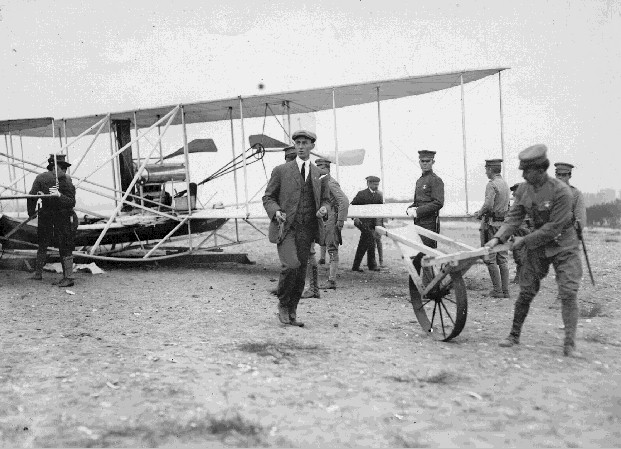
Wilbur Wright on Governor’s Island, preparing his plane for its historic flight

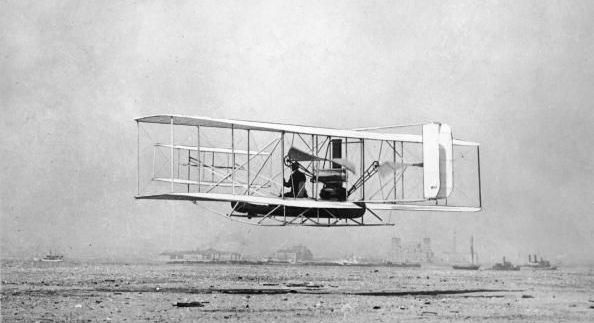
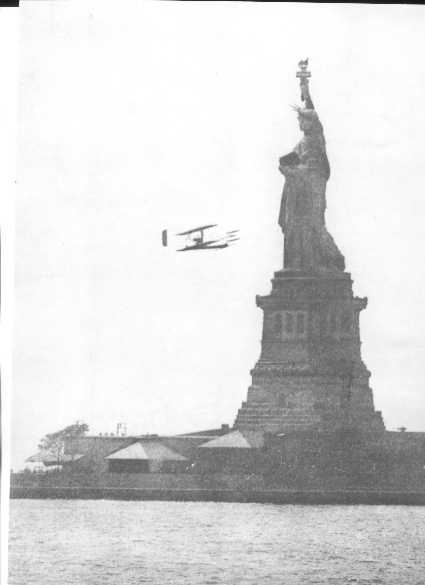
Wilbur Wright flying over New York Harbor. You can clearly see the canoe attached at bottom, the very first lifeboat.
(Photo by Hulton Archive/Getty Images)

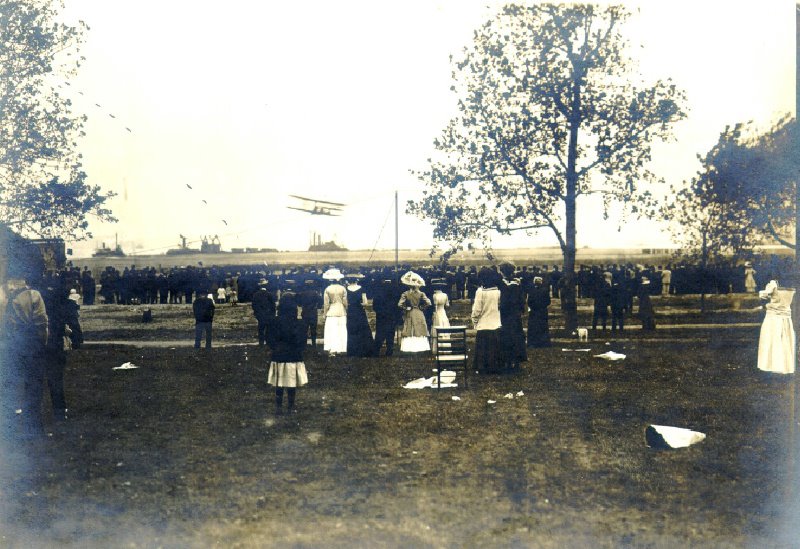
All of New York stood entranced by the waterfront as Wright took to the skies above the city.

Wright’s first flight only took him around the perimeter of the Statue of Liberty. A voyage a few days later took him all the way up the Hudson River to Grant’s Tomb.

You can find a great many more pictures of Wilbur and his first New York flight at the website First To Fly. For more info on visiting Governor’s Island, go to their official website or check out our podcast.

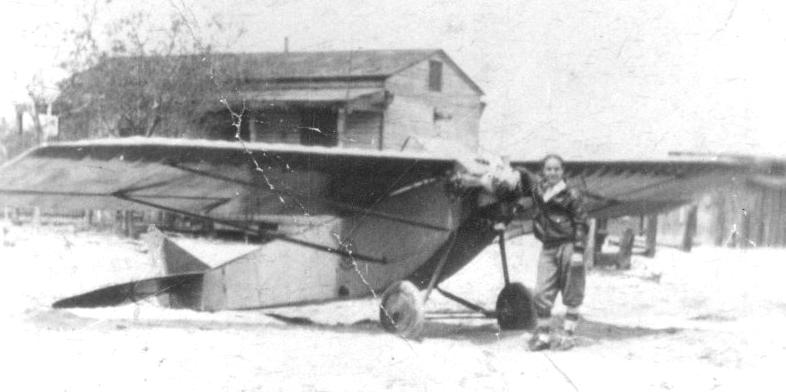
Before it was Floyd Bennett Field, a pilot named Paul Rizzo took joyrides from a tiny dirt airstrip here. This picture, from 1928-29, is of a 1924 monoplane. That may be Rizzo!

Floyd Bennett Field, too small for the growing size of commercial aircraft, but plenty big enough for the daredevils of early American aviation like Amelia Earhart, Wiley Post and ‘Wrong Way’ Corrigan

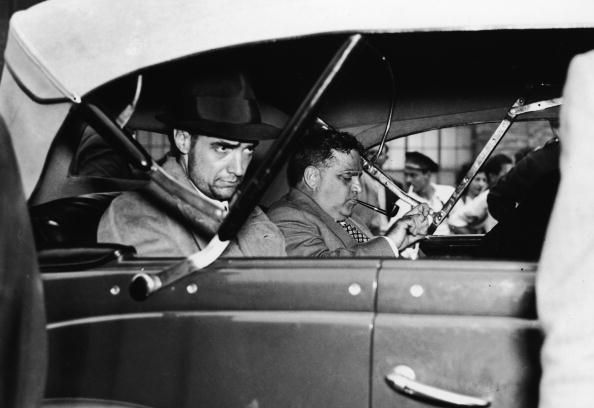
After his deathdefying around the world journey, Howard Hughes is personally escorted from Floyd Bennett Field by mayor Fiorello LaGuardia (Photo by Hulton Archive/Getty Images)

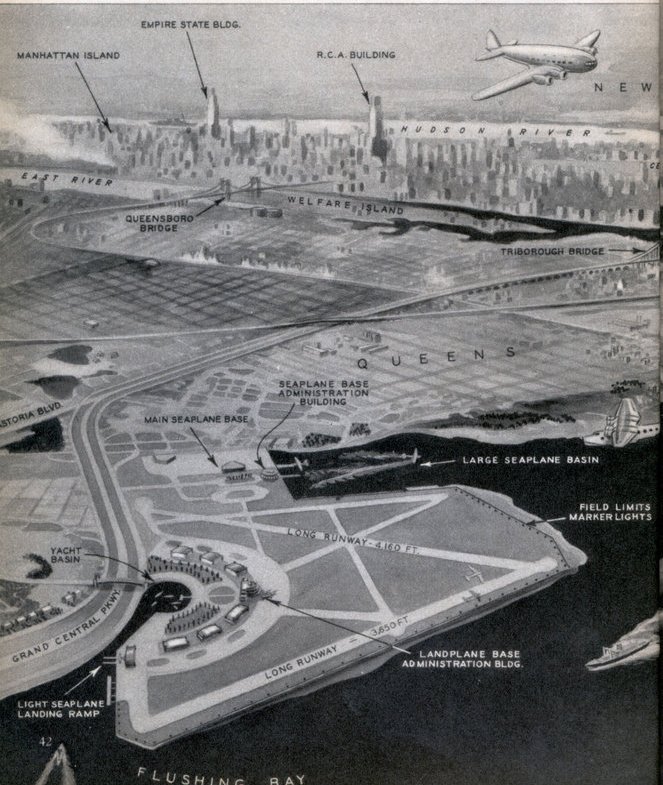
An early illustration from Modern Mechanix extoling the virtues of the new airport in Queens

The old central terminal at LaGuardia, circa 1940

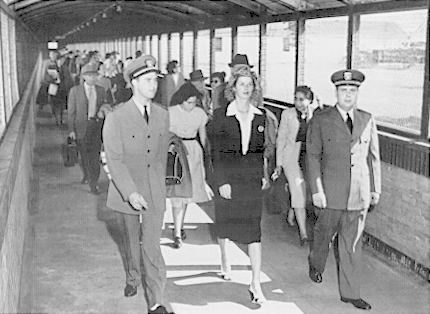
Passengers and crew arrive at a 1947 Laguardia airport terminal

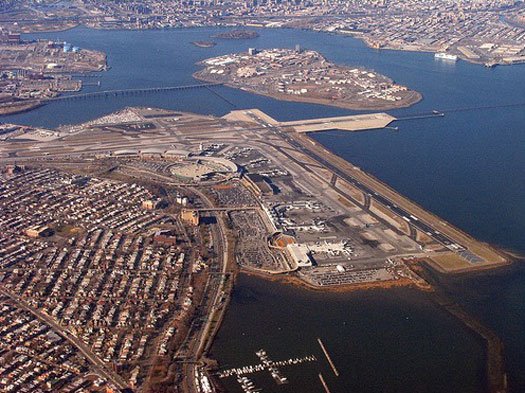
On overhead view of LaGuardia, highlighting its proximity to Rikers Island and the Bronx

A picture that oozes congestion. From OddballNY

Forgotten New York naturally has some terrific photographs of what Flushing Airport and Floyd Bennett Field look like today.

CORRECTION: I have a massive brain freeze and incorrectly state that the RMS Lusitania was torpedoed by Nazis. Clearly, Nazis didnt exist in 1915. It was however, brought down by a German U-20 submarine during World War I. The corrected version is now available for download.

Dinosaurs of the New York skyline

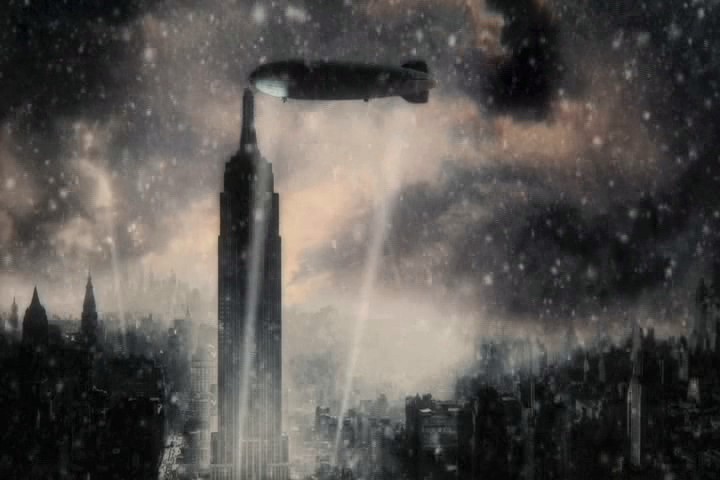
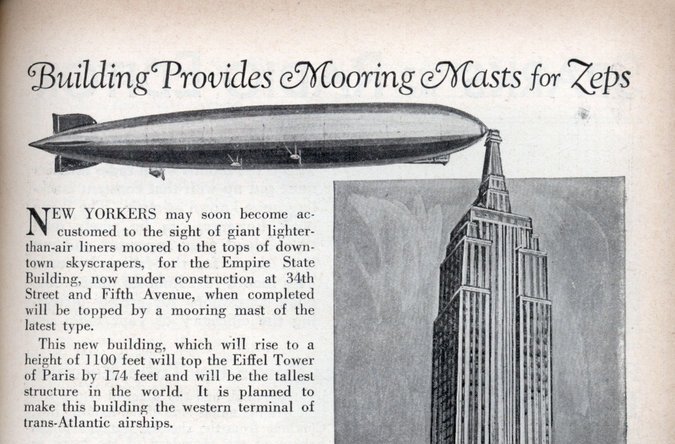
The Empire State Building’s proposed airship dock, as depicted in the movie Sky Captain and the World of Tomorrow

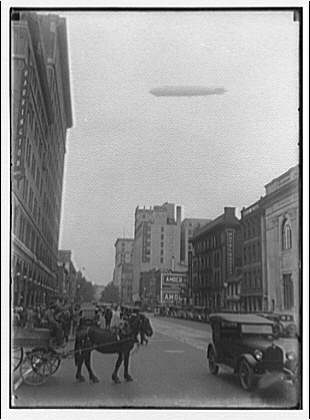
Airships (or dirigibles or Zeppelins, take your pick) were frequent flyers at the start of the century, and naturally many found themselves near or over New York City. In fact this almost defunct form of air travel was nearly (and disastrously) moored to the city’s tallest building.

The air above the city wasn’t as loaded with these flying conveyanes as our run-amok retro-futuristic notions of the city might like to envision. Even in 1911 during what’s considered the “Golden Age of Airships” a single airship above Times Square was enough to make headlines. “250 feet above the lights of Broadway,” proclaims the New York Times, “Frank W. Goodale, a boy aeronaut, in a new dirigible balloon made his third annual night trip to the Times Building through the air last night from the Palaisades Amusement Park, over on the Jersey side.”

And although they look cool in old photographs today, even then they were seen as mostly curiousities, elephants in the sky, compared to the smaller, more extraordinary aeroplanes of Glenn Curtiss and Wilbur Wright, which made their debut on Governor’s Island during the citywide 1909 Hudson-Fulton Celebration. “Aeroplanes fly, Dirigibles fail, in City’s Celebration,” proclaims the New York Press.

In 1924, the Graf Zeppelin, Germany’s rigid-balloon passenger air liner, made such a splash when it arrived over New York at the end of a 12-day voyage that the Graf’s tenacious commander Dr. Hugo Eckener — “the Magellan of the Air” — received his own personal ticker tape parade through downtown Manhattan in celebration.

The most popular docking station for these massive vessls was the port in Lakehurst, New Jersey. However, in one of the more romantic anecdotes of our most famous landmark, the Empire State Building’s majestic spire was originally designed to dock airships.

With the enthusiastic support of former governor Al Smith, the Empire State opened in 1931 installed with wench and docking equipment and fortified to hold large aircraft in place. He even called in the Navy to assist in the high-profile project.

Modern Mechanix extoled the virtues of this aerial midtown terminal.

But the Navy was naturally sceptical, as was Eckener, whose Zeppelins would have used the Empire’s mast. The reason, of course, was the massive windgust created by the buildling canyons from so high up, the release of water ballast onto city streets and the deathdefying route in which passengers would have to disembark.

Eventually no more than a couple airships ever docked at the Empire State Building, and those delivered no human cargo, only newspapers, thrown from the dirigible window.

Had things gone Smith’s way, Eckener’s great Hindenberg might have attempted to dock high above the city on May 6, 1937.

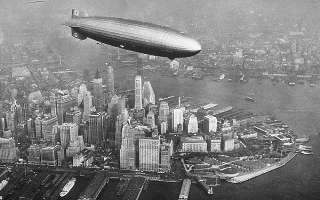
Instead, the destruction of the Hindenberg in Lakehurst, New Jersey, on that day drew a curtain on commercial airship service. Most of us remember the extremely dramatic footage of the Hindenberg melting into flame, and that emotional newscaster. What most don’t know is that the Hindenberg was cruising over Manhattan moments before the terrible explosion (below).

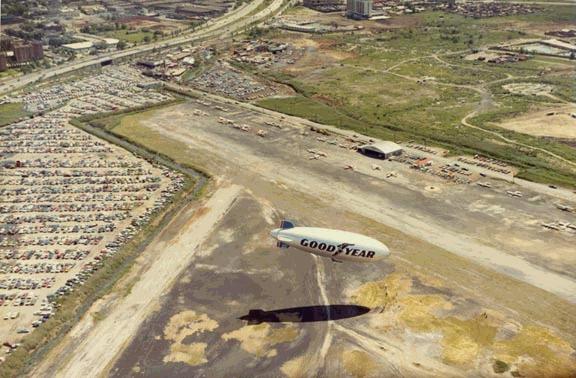
Blimps are still very much an occasional feature of the skies over the city today, mostly over the sports stadiums. The era of the airship is far from over. In fact, out in the Queens neighborhood College Point, location of one of New York’s first airports Flushing Airport, a blimp company is proposing to built the world’s first blimp port.

A spectacular shot of the Goodyear Blimp hovering over Flushing Airport, from 1976. Goodyear still makes blimps, but Flushing Airport has long since closed: