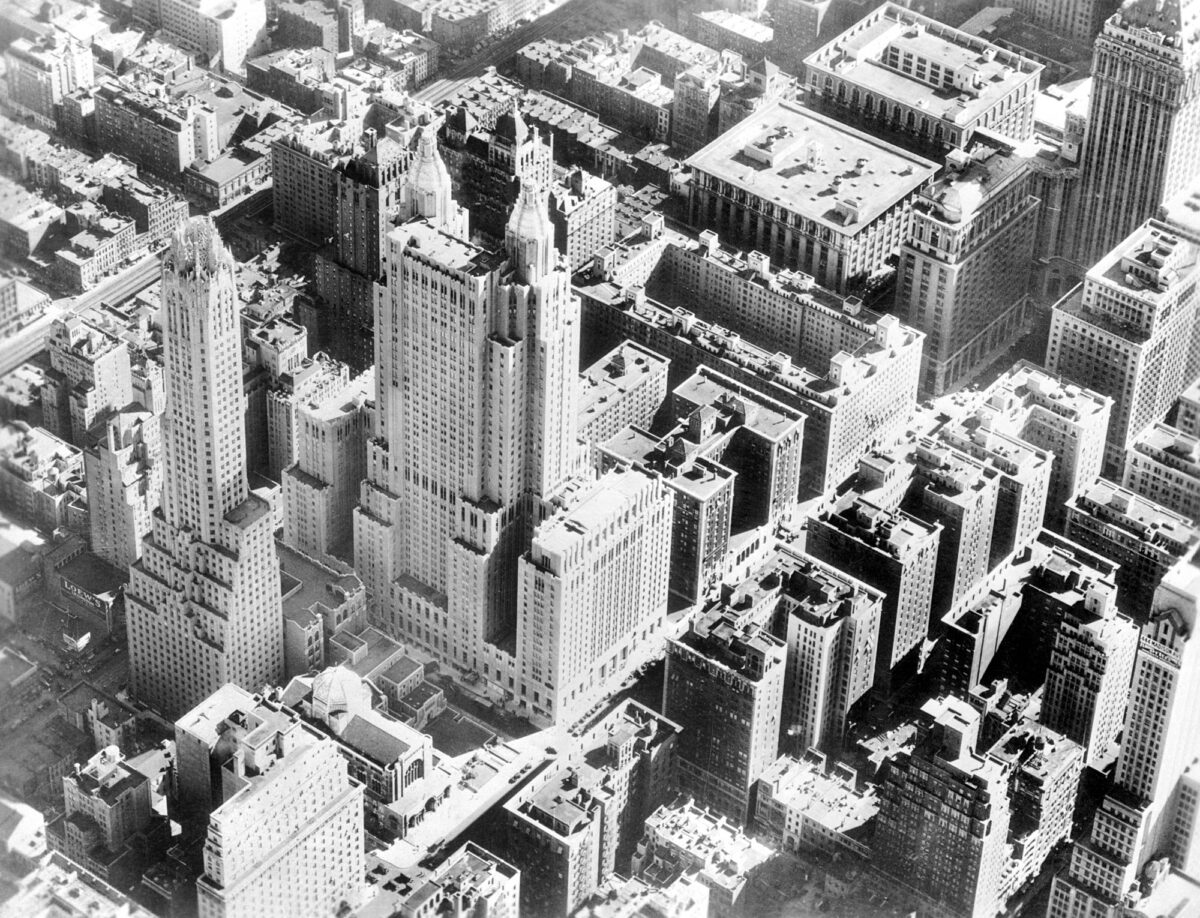
PODCASTA star of the New York City skyline is reborn — the Waldorf Astoria is reopening in 2025!
And so we thought we’d again raise a toast to one of the world’s most famous hotels, an Art Deco classic attached to the Gilded Age’s most prestigious name in luxury and refinement.
Now, you might think you know this story — the famous lobby clock, Peacock Alley, cocktail bars! — but do we have some surprises for you.
The Waldorf Astoria — once the Waldorf-Astoria and even the Waldorf=Astoria — has been a premier name in hotel accommodations since the opening of the very first edition on 34th Street and Fifth Avenue (the location of today’s Empire State Building).
But the history of the current incarnation on Park Avenue contains the twists and turns of world events, from World War II to recent diplomatic dramas. In essence, the Waldorf Astoria has become the world’s convention center.
Step past the extraordinary Art Deco trappings, and you’ll find rooms which have hosted a plethora of important gatherings, not to mention the frequent homes to Hollywood movie stars.
But its those very trappings — some of it well over a century old — that finds itself in danger today as recent changes threaten to wipe away its glamorous interiors entirely.
LISTEN NOW: THE RETURN OF THE WALDORF ASTORIA
The Bowery Boys: New York City History podcast is brought to you …. by you!
We are now producing a new Bowery Boys podcast every two weeks. We’re also looking to improve the show in other ways and expand in other ways as well — through publishing, social media, live events and other forms of media. But we can only do this with your help!
We are now a member of Patreon, a patronage platform where you can support your favorite content creators for as little as a $1 a month.
Please visitour page on Patreon and watch a short video of us recording the show and talking about our expansion plans. If you’d like to help out, there are five different pledge levels (and with clever names too — Mannahatta, New Amsterdam, Five Points, Gilded Age, Jazz Age and Empire State). Check them out and consider being a sponsor.
We greatly appreciate our listeners and readers and thank you for joining us on this journey so far. And the best is yet to come!
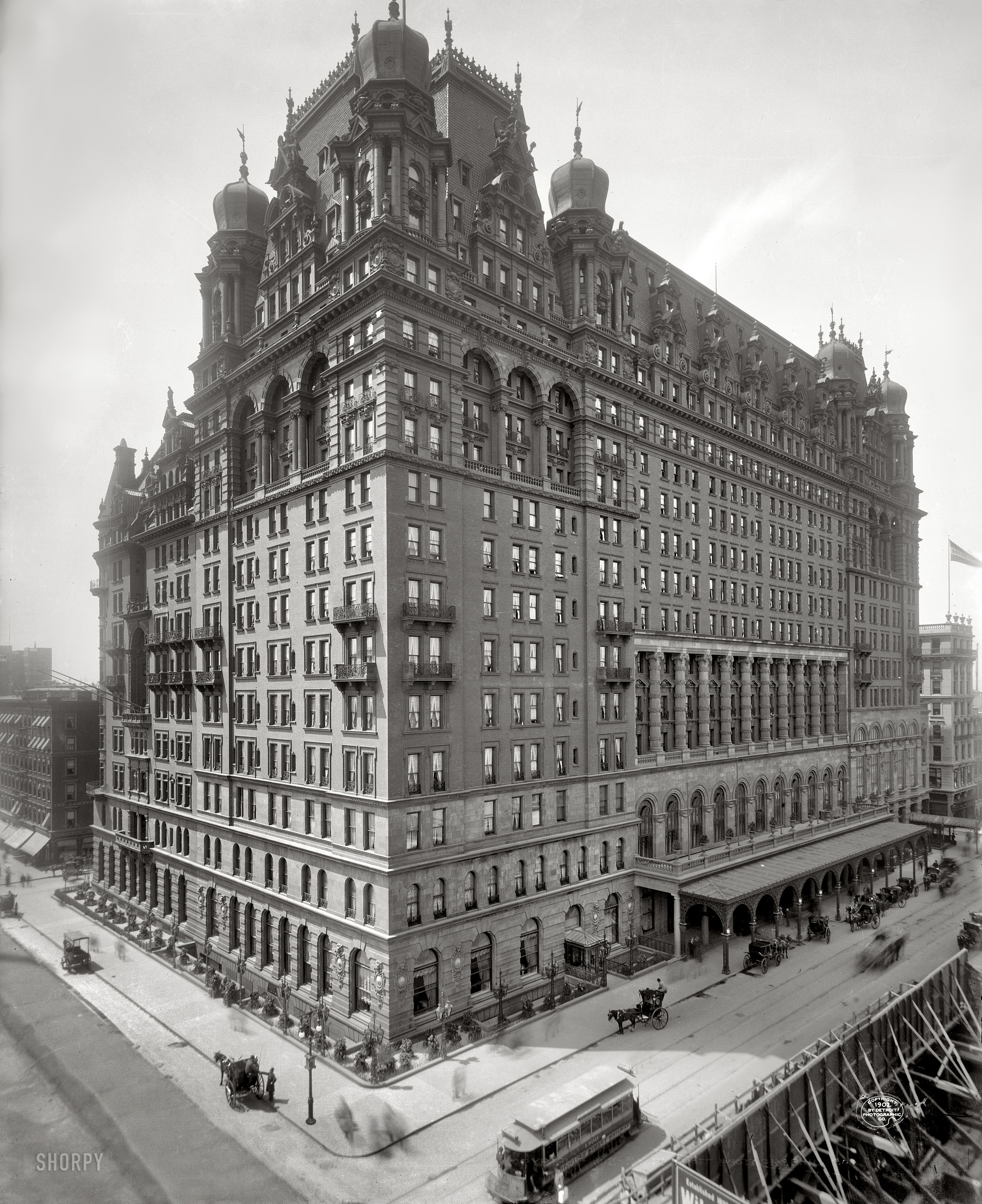
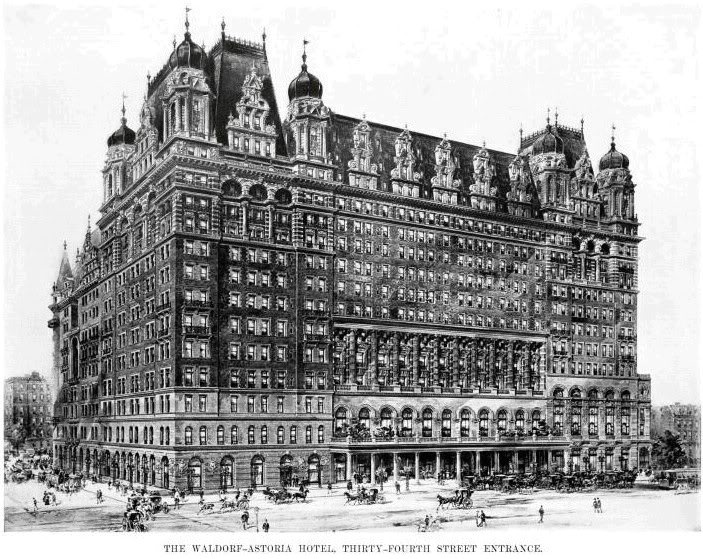
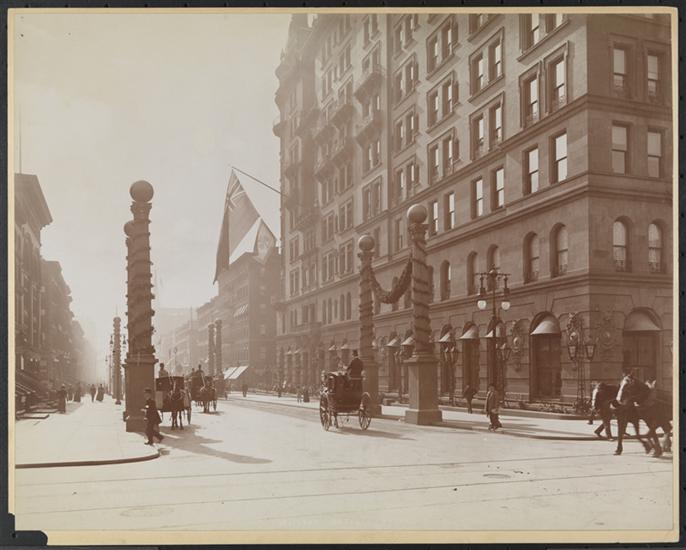
The original Waldorf-Astoria which once sat at 34th Street and Fifth Avenue. The first hotel, the Waldorf, is the shorter one facing 33rd Street.
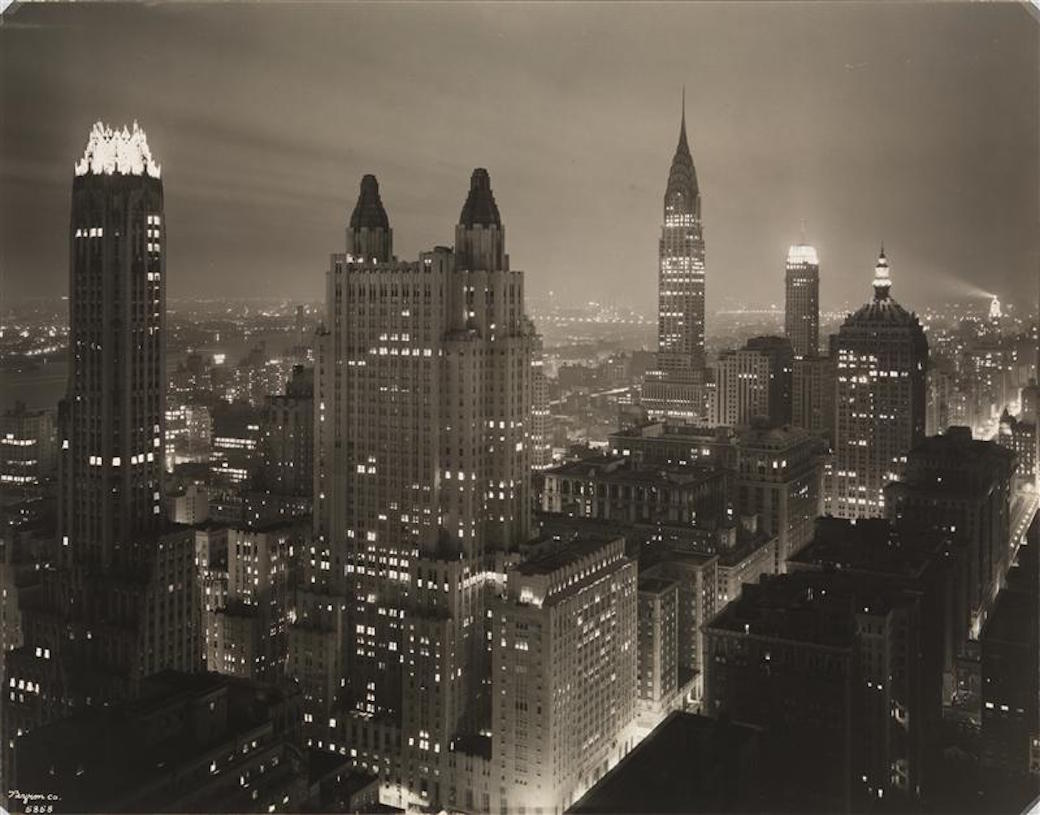
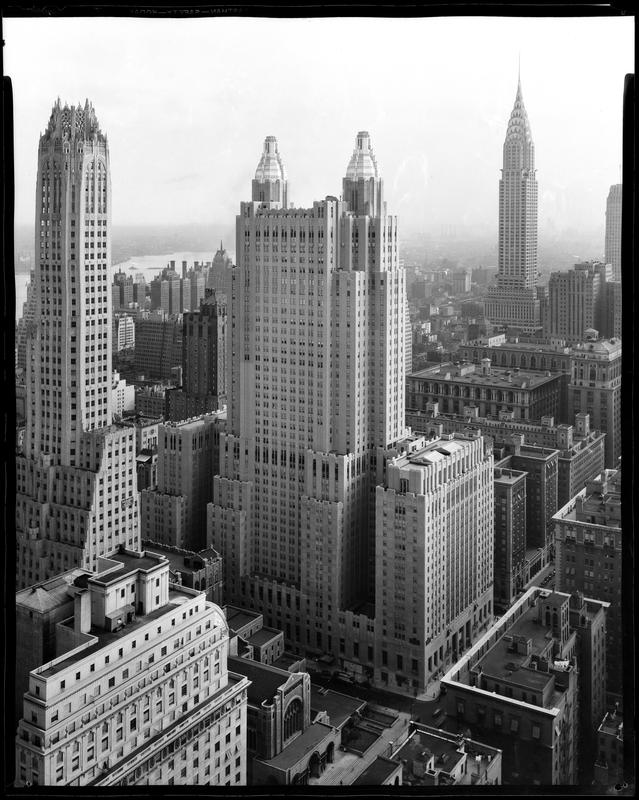
Park Avenue at nighttime, 1937. Seen here: 515 Mad. Ave, Gen. Electric, the Waldorf Astoria, the Chrysler Building, the Chanin Building, and the New York Central Building.
Museum of the City of New York
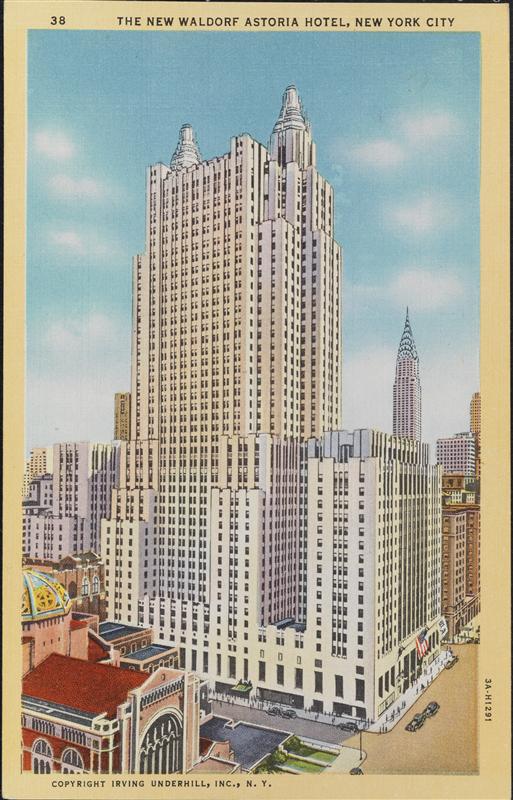
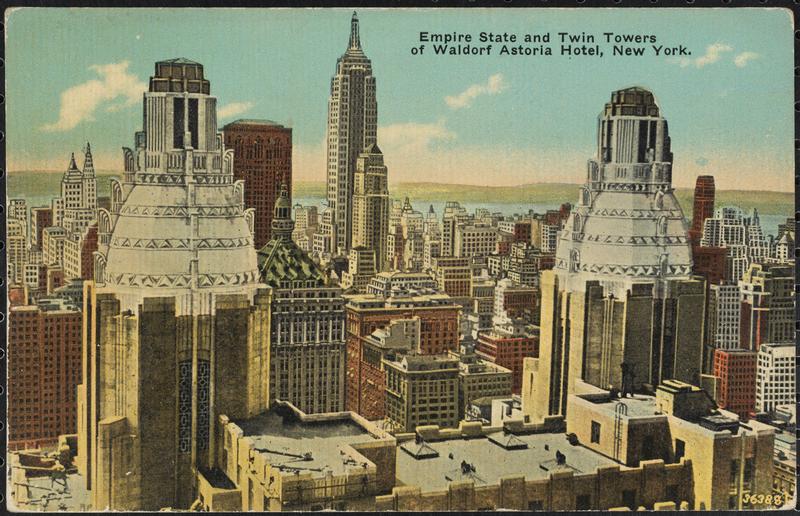
A 1931 postcard announcing the debut of the Waldorf Astoria with the Chrysler in the background.
Courtesy MCNY
MCNY
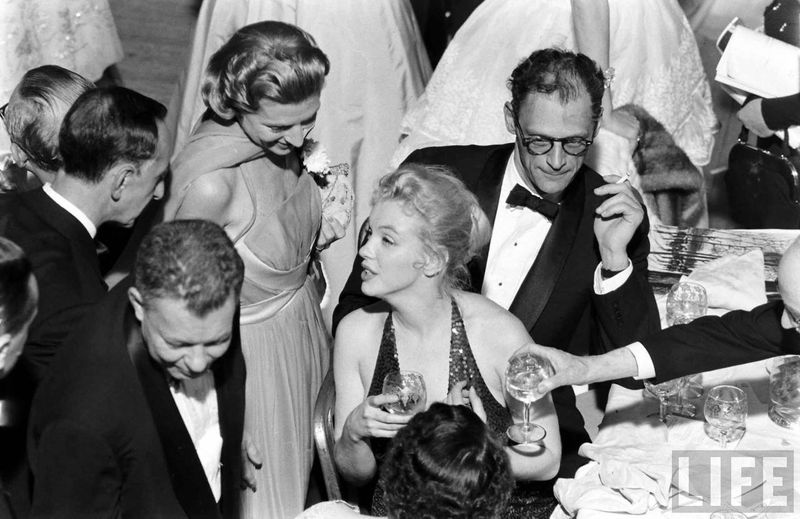
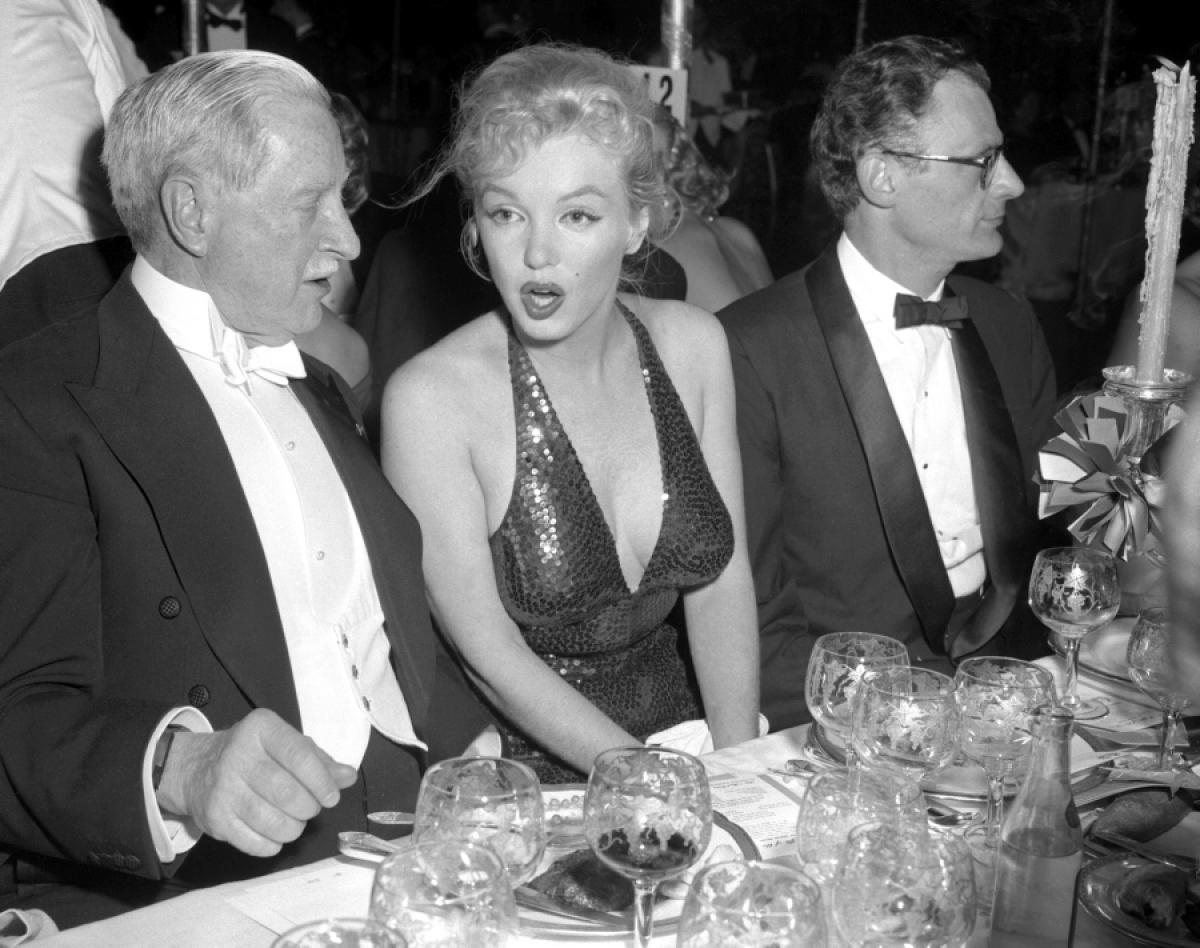
Marilyn Monroe at the Waldorf, her home in 1955. Here she is at the April In Paris ball with her then-husband Arthur Miller.
Courtesy New York Daily News
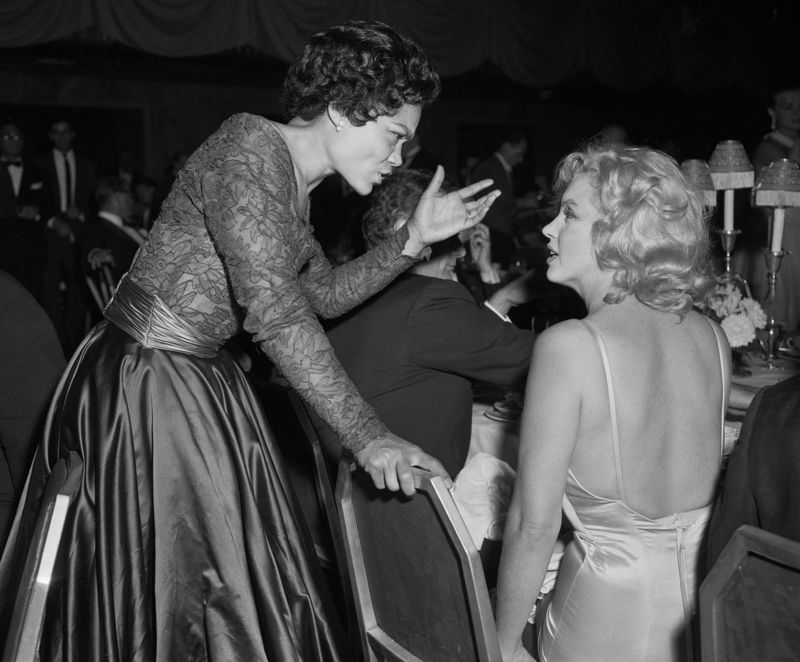
And at another function, this time chatting with Eartha Kitt.
A photo posted by Gregory Young (@boweryboysnyc) on
More information here on the Historic District Council’s efforts to help save the interior decor of the Waldorf Astoria.
CORRECTION: There are a few classic photographs of Marilyn Monroe at the Waldorf-Astoria; however the one that Greg described on the show is actually taken at the Ambassador Hotel, a couple blocks north of the Waldorf. (It was torn down in the 1960s.)
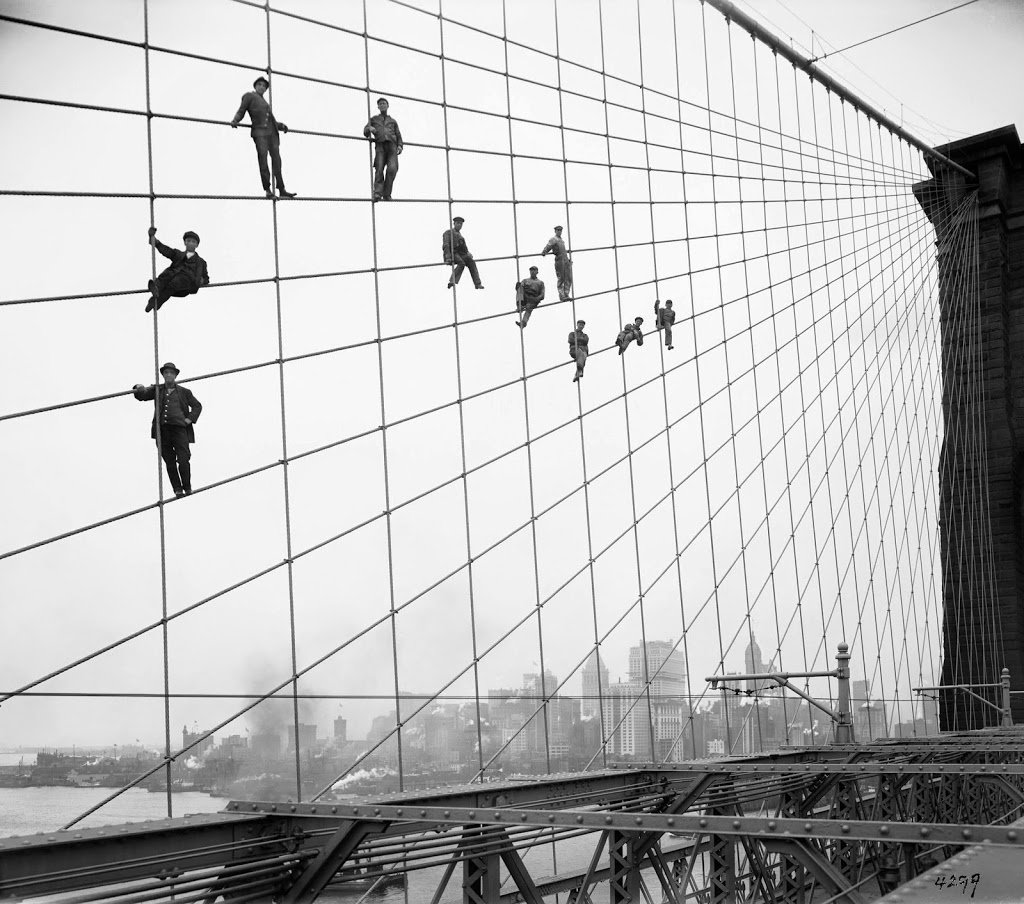
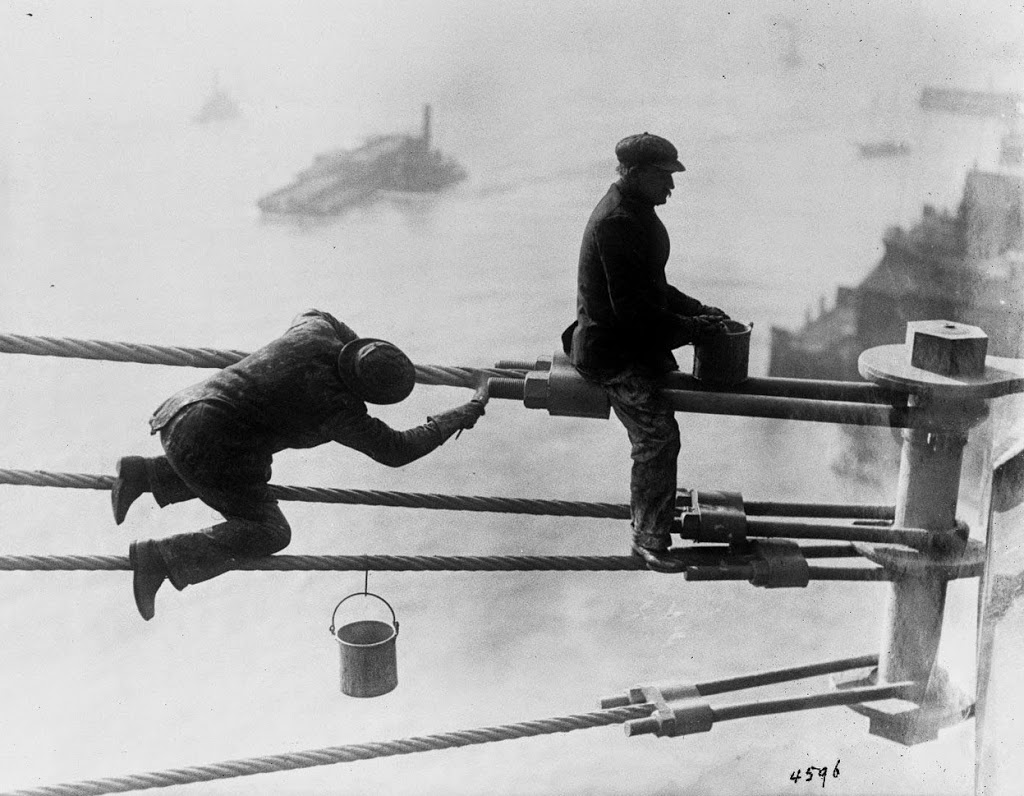
The photograph above (officially called “Brooklyn Bridge showing painters on suspenders”) is perhaps the best-known image taken by Eugene de Salignac, a city employee who took municipal photography of most major New York structures during the early 20th century.
His work had never appeared in a gallery until 2007, almost 65 years after his death.
His exquisite eye rendered otherwise ordinary shots with a captivating grandeur; this was certainly beyond the call of duty of his responsibilities for the Department of Bridges (later named the Department of Plant and Structures) for which he worked from 1906 to 1934.
In all, it’s estimated the city owns about 20,000 glass-plate negatives taken by de Salignac.
Another striking view of the Brooklyn Bridge, taken by de Salignac on May 6, 1918. / Municipal Archives of the City of New York
On September 22, 1914, de Salignac headed to the Brooklyn Bridge to observe workers painting the bridge’s steel-wire suspension. Perhaps a bit inspired by modern artistic photography of the day, the normally workaday photographer returned to the bridge a couple weeks later, on October 7.
To quote Aperture: “The image was obviously planned, as evidenced by the relaxed nature of these fearless men who appear without their equipment and are joined, uncustomarily, by their supervisor.”
It was, generally speaking, an unspectacular day for the 31-year-old bridge.
It’s believed that the original color of the Brooklyn Bridge was ‘Rawlins Red’ although by this time, the vibrant color might have been replaced with the less dramatic ‘Brooklyn Bridge Tan.’
Can you imagine what this image would have looked like in color?
I would like to think de Salignac took some inspiration from photographers like Paul Strand who were beginning to see New York City as a set of geometric abstracts.
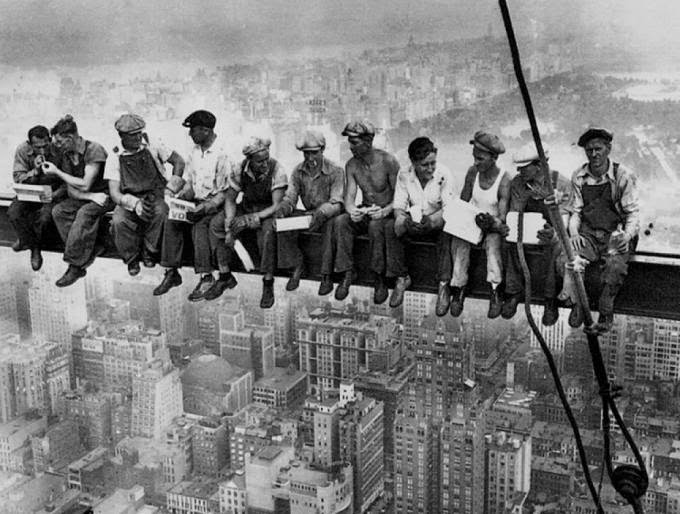
The spirit of this photograph echoes into the work of Berenice Abbott and especially Charles C Ebbets. In 1932, while de Salignac was still employed by the city, Ebbets was hired by Rockefeller Center to document the construction of the RCA Building.
In one photo, workers were posed in a way that eventually became quite iconic:
Most likely, none of those other photographers saw de Salignac’s Brooklyn Bridge picture. It was essentially lost among the thousands of archives pictures until the 1980s.
For his first film for PBS, Ken Burns used the photograph in his Brooklyn Bridge documentary which went on to snag an Academy Award nomination. In 2007, de Salignac was belatedly honored with an exhibition at the Museum of the City of New York.
De Salignac returned to the bridge to several times to catch more workers in the act of maintaining the bridge. Such as this photograph the following year:
Want to get lost for an hour or so? Check on the New York Municipal Archives vast trove of Eugene de Salignac photographs directly.
**This famous picture Lunch atop a Skyscraper was attributed first to Lewis Hine, then to Charles C Ebbets. Thank you to Michael Lorenzini for pointing this out!
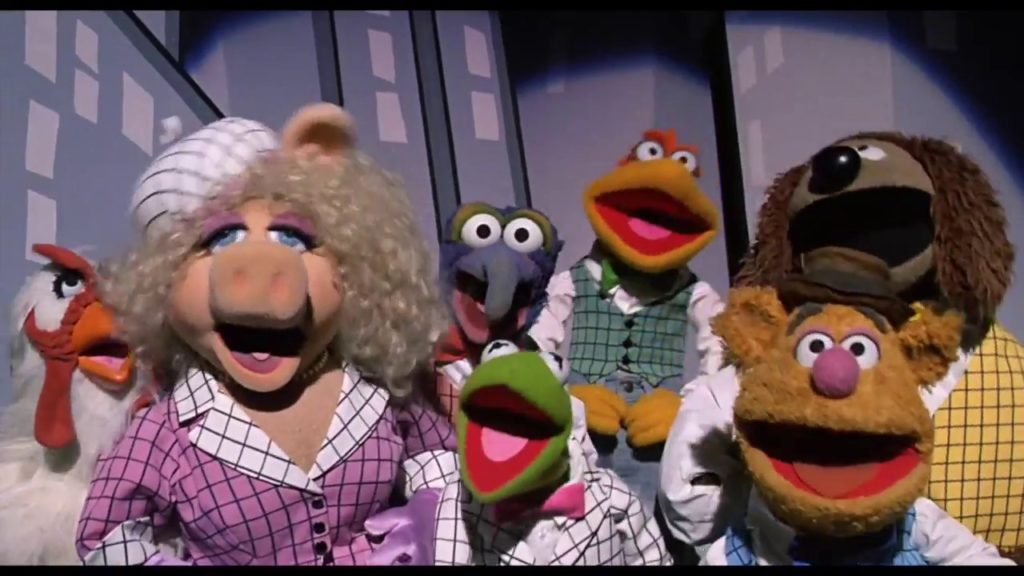
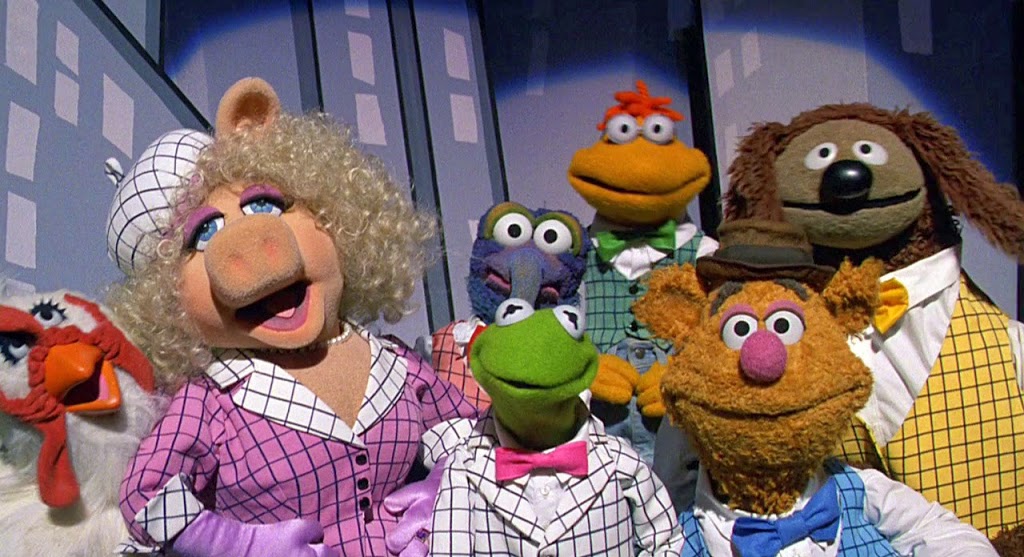
It’s spring in New York City and time for some frivolity! So we’ve just released an unusually whimsical episode of Bowery Boys Movie Club to the general Bowery Boys Podcast audience, exploring the 1984 comedy treat The Muppets Take Manhattan.
And that’s not all! Sticking to the theme of 1980s New York City, the latest episode of theBoweryBoysMovieClub explores the film Coming To America and its rich historical details. An exclusive podcast for those who support us on Patreon.
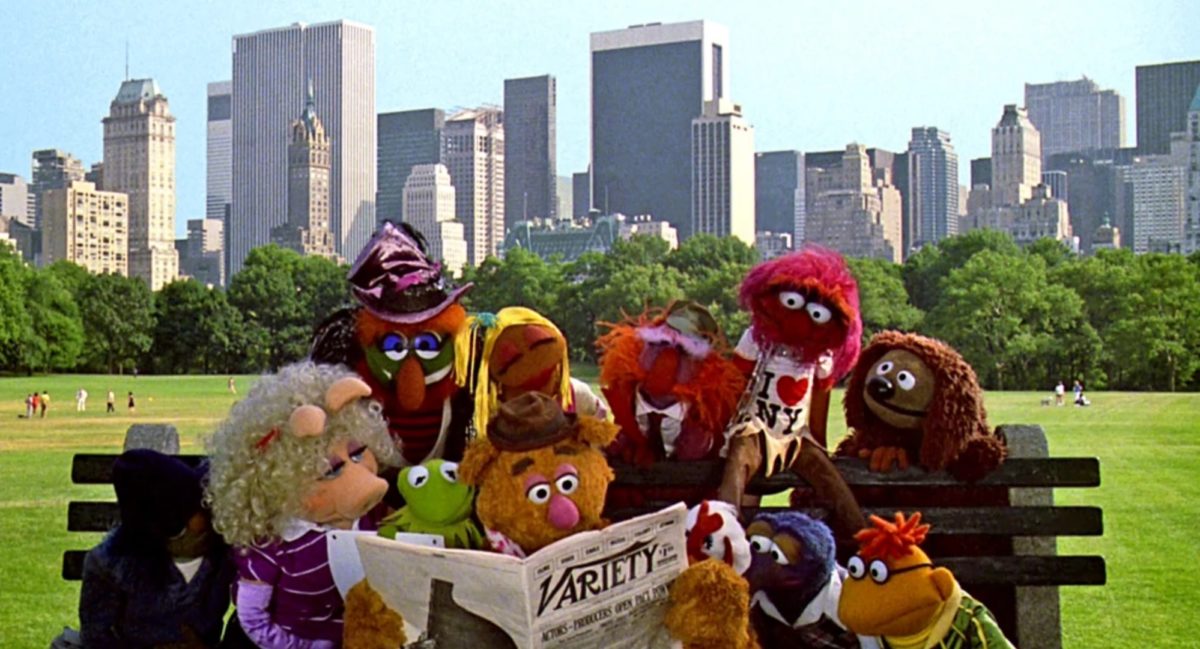
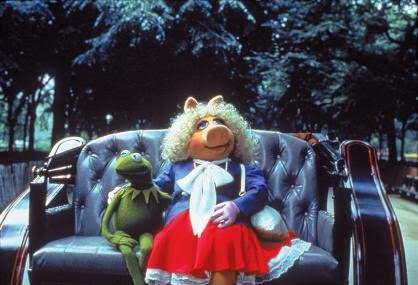
TOGETHER AGAIN! In 1984, Jim Henson brought his world-famous Muppets to New York for a wacky musical comedy that satirized the gritty, jaded environment of 1980s Manhattan while providing fascinating views of some of its most glamorous landmarks.
Listen in as Greg and Tom recap the story and explore the many real New York City settings of the film — from the Empire State Building and Central Park to the corner booth at Sardi’s Restaurant and certain luncheonette in the area of today’s Hudson Square.
The Muppets Take Manhattan expresses an unfiltered enthusiasm for the promise of New York City at a time when national headlines were filled with tales of the city’s high crime and budget problems.
Can Kermit and Miss Piggy (and their roster of guest stars like Art Carney and Joan Rivers) bring magic back to the Big Apple?
HowdoIlistento all episodes of theBoweryBoysMovieClub? Once you’re signed in on Patreon, you’ll see a private RSS link that can be put directly into your favorite podcast player. Even easier, it can also be played directly from the Patreonapp if you’re signed in.
Your support on Patreon assists us in producing our podcast and website and it helps as we endeavor to share our love of New York City history with the world.
Shouldyouwatchthemoviebeforeyoulistentothisepisode? This podcast can be enjoyed both by those who have seen the film and those who’ve never even heard of it.
We think our take on The Muppets Take Manhattan might inspire you to look for the film’s many fascinating (but easy to overlook) historical details, so if you don’t mind being spoiled on the plot, give it a listen first, then watch the movie! Otherwise, come back to the show after you’ve watched it.
This episode was inspired by an ‘obsessive guide’ post that Greg wrote a few years ago. That article is presented here in its entirety, featuring many additional New York City details from the film.
“We did our first film in Los Angeles and our second in London. I thought it would be nice to do the next one in our hometown.” — Jim Henson
In The Muppets Take Manhattan, our friendly assortment of animal and animal-esque protagonists arrive in New York City to put on a variety show. But, of course, Jim Henson and his creations had been here for over a decade already, the critical ingredient of PBS’s Sesame Street, which originally filmed on the Upper West Side.
By 1982, production on the children’s show had moved to 55th Street and Ninth Avenue, but the Muppets had gone global — with a successful syndicated variety show (The Muppet Show, from 1976 to 1981, produced in England) and two box office hits, The Muppet Movie and The Great Muppet Caper.
Given the theatrical nature of their own weekly show — set in a theater, after all — it made sense to return the Muppets to New York, to finally bring the beloved characters to a cinematic Broadway stage.
Below are 21 often trivial, mostly historical points of interest from Henson’s zany, most exuberant homecoming:
NOTE ON TIME AND SETTING: The Muppets Take Manhattan, directed by Frank Oz, was released in the summer of 1984 and filmed the previous summer in a variety of New York and New Jersey locations, with interior shots at Empire Stages in Long Island City (today Paris Film Productions). However it’s set sometime in the summer of 1982, judging from flying calendar pages that set September 1 on a Wednesday.
“Broadway? But this show isn’t good enough for Broooadway!”
1. The film opens with some terrific overhead shots of Manhattan, before taking us over bridges to Poughkeepsie, NY, the home of the fictional Danhurst College (as played by Vassar College). The Muppets are on stage, delighting an over-enthusiastic crowd with their new variety show ‘Manhattan Melodies’. With charming naivety, they decide to bring the show to New York City.
‘Manhattan Melodies‘ was actually the name of a successful New York radio show in 1932, broadcast by WOR from Times Square.
History was made with a unique multi-location broadcast featuring The Do Re Mi Trio, three voices recorded from three different skyscrapers. “‘Do’ was on the Empire State [Building], eighty-six stories in the air, ‘Re’ was on the seventy-first floor of the Chrysler Building, and ‘Mi’ was on the roof of the Manhattan Bank Building [aka 40 Wall Street].” [source]
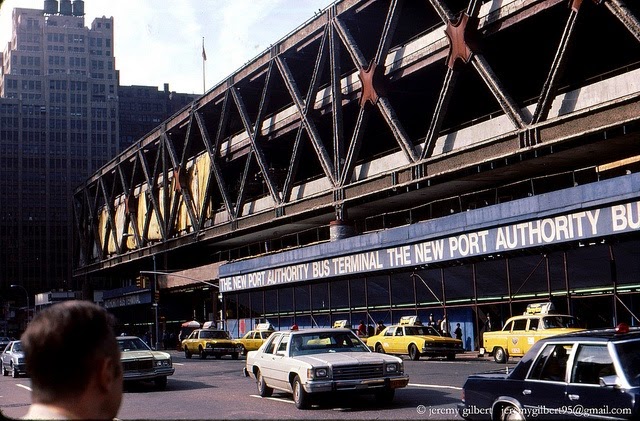
2. The Muppets arrive through the unglamorous hallways of the Port Authority Bus Terminal. In the early 1980s, this was considered one of the most crime infested areas of Midtown, a marketplace for prostitution and crack dealers. The bus terminal was “an ideal place for these illegal activities” during this period due to a recent expansion that left many corridors unguarded at night. Crime here “escalated to an uncontrollable level.”
Despite this, the Muppets decide to move into a wall of lockers. “I’ll trade with anybody who has a Jacuzzi!” says the free-spirited Janice.
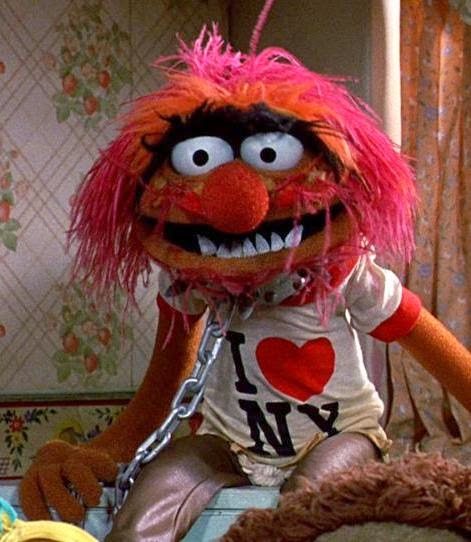
3. Animal wears an I HEART NEW YORK T-shirt throughout the film. This was a rather new emblem then, created in 1977 by graphic designer Milton Glaser. The irony of loving a particular city that was in a serious social and financial crisis was not lost on the designer.
“It was the mid-seventies, a terrible moment in the city. Morale was at the bottom of the pit,” Glaser said in an interview with The Believer. “….[T]hen suddenly the city simultaneously got fed up and said, ‘It’s our city, we’re going to take it back, we’re not going to allow this stuff to happen.” And part of that was this campaign.”
He gave away the rights to the design, so he gets paid nothing for the use — in the film, on tourist T-shirts, or anyplace else.
4. With Variety Magazine in hand, the Muppets venture off to pitch the show to big Broadway producers. The first, disreputable Martin Price (Dabney Coleman), has offices at the Paramount Building (1501 Broadway) in Times Square.
Originally built for the film company Paramount Famous Lasky Corporation in 1926, it rapidly became a key center for Broadway theater wheeling-and-dealing, “a hive of suites where ideas are hatched, partnerships forged, contracts signed, legends born,” according the New York Times.
Between 1979 and 1982, there were over 7,000 reported murders in New York City. (In comparison, there were less than 2,000 between 2009-2012.). This partially explains the dialogue exchange between Kermit and Price: “Well, it’s all about life in the big city.” “The big city? Cops, shootings, car chases — that kind of stuff?“
6. Rizzo the Rat delivers a hamburger with no patty to a customer. He turns and shouts to Pete: “Hey Pete. Where’s the beef?” The first Wendy’s commercial featuring the ‘Where’s The Beef’ lady Clara Pellerdebuted in January 1984 — after principal filming was completed — so this is most likely a weird coincidence.
7. Hopeless that their musical will ever be produced, everyone decides to leave town except Kermit. Scooter bikes away through New Jersey, Fozzie hops a train hobo-style, and Dr. Teeth and the Electric Mayhem hitch a ride to the Pennsylvania Turnpike. But, no surprise, Miss Piggy’s departure is the most glamorous, taking one ofThomas Edison’s original 1930 electric traincars from Hoboken Terminal.
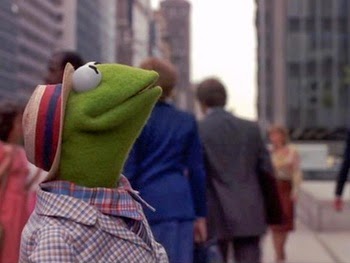
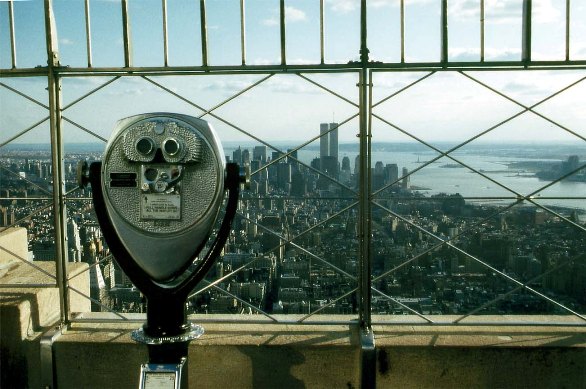
“You hear me, New York? We’re going to be on Broadway. You hear that, New York? I’m staying here! The Frog is staying!” 8. A dejected Kermit the Frog finds some renewed encouragement when he visits the Empire State Building‘s observation deck, looking north over the darkened city. To the right is the Pan Am Building which would remain branded with the airline’s logo until 1992, when it would become the Met Life Building.
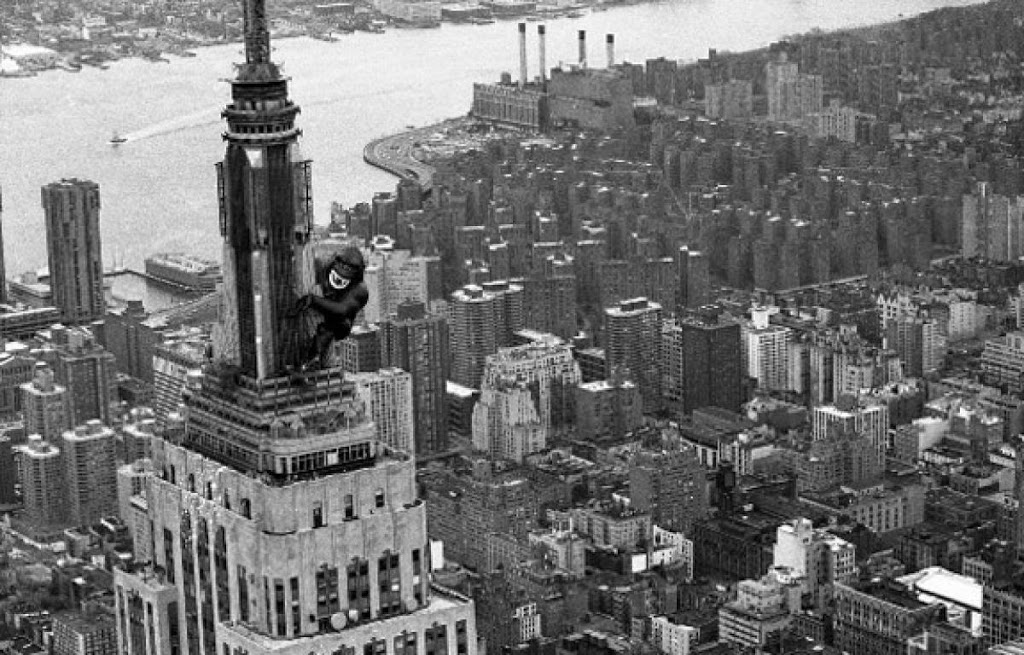
However, presuming this scene was filmed in 1983, Kermit would not have been the only animal superstar on the Empire State Building. In celebration of the 50th anniversary of the movie King Kong, a 3,000 lb nylon King Kong balloon was attached to the top of the building. (Photo courtesy Hamburg News/New York Daily News)
9. Kermit meets up with Pete’s daughter Jenny, a wanna-be fashion designer, in front of the Plaza Hotel, with everything inGrand Army Plazalooking almost the same as it does today.
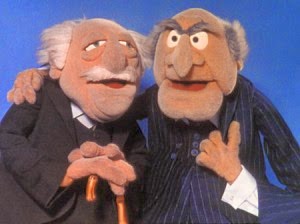
For some reason, those grumpy curmudgeons Statler and Waldorf are sitting on a bench, sunning themselves. The duo has a rather profound link to New York City history; they’re both named for classic New York hotels — the Statler (today’s Hotel Pennsylvania) and the Waldorf Astoria. And, yes, Waldorf’s wife is actually named Astoria. She appeared in this 1979 episode of The Muppet Show starring Dizzy Gillespie.
10. Miss Piggy is spying on Kermit from under a scaffolding in front of Bergdorf Goodman. (Just as we missed out on a shot of the Film Forum earlier, so too is Bergdorf’s neighbor The Paris Theater cut from view.) It’s later revealed she’s working at a perfume and makeup counter with Joan Rivers. This was not far-fetched casting; before making it big as a comic, Rivers worked as a fashion consultant for Bond Clothing Stores and even designed window displays for Saks Fifth Avenue and Lord and Taylor.
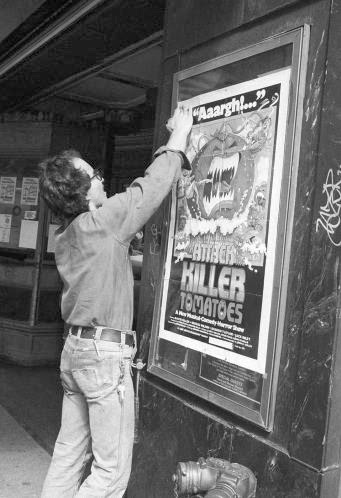
11. What are the rest of the Muppets up to? Scooter works at a Cleveland movie theater, with the Swedish Chef manning concessions. The film playing there is Attack of the Killer Fish in 3D, an obvious parody of 1978’s Attack of the Killer Tomatoes.
Believe it or not, Killer Tomatoes owes a small New York film festival for some of its cult cred. Two years after it was produced, the film piqued the curiosity of the media when it screened at the World’s Worst Film Festival at the Beacon Theatre in 1980, co-hosted by movie critic Michael Medved.
The film festival was a de facto Woodstock for schlock cinema, with Killer Tomatoes a star attraction. Said co-writer John DeBello, “The Wall Street Journal had the poster on its front page, the CBS Evening News used the song to close their credits. When people heard the title, just like when I heard the title, people loved it.” At right: Killer Tomatoes at the Beacon Theatre.
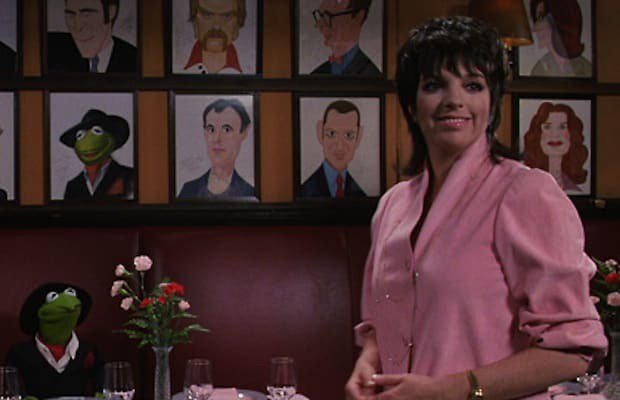
12.Sardi’s Restaurant takes center stage of perhaps the film’s most famous scene, as Kermit, disguised as an elegant producer, sends Rizzo’s rat friends in to create a ‘whisper campaign’ about his new musical.
Sardi’s has been inextricably linked to the Broadway industry since its opening in 1927, hosting hundreds of cast parties, business meetings and probably a few professional break-ups. It even gave birth to the Tony Awards. (You can listen to the whole fabulous tale of Sardi’s in our 2011 podcast.)
Vincent Sardi Jr., who appears in the film (see below), hosted the glittering greats of Broadway for over a half-century. He was considered the unofficial “Mayor of Broadway.“
Kermit also squeezes his own likeness onto Sardi’s famous wall of caricatures. To do so, he must take down that of Liza Minelli, which does not please her.
In fact, not only does Liza’s caricature still appear at Sardi’s, Kermit’s is still there too. (At least last time I checked!) Liza’s is by Brooklyn artist Richard Baratz. Look for his other likeness of Robert De Niro, Dustin Hoffman, Al Pacino, Whoopi Goldberg and dozens more. Kermit’s? No one knows who drew that.
13. Jenny consoles Kermit in Central Park, somewhere on Cherry Hill, next to Bethesda Fountain. Near this spot was the site of New York City’s first-ever frog jumping competition in 1935, inspired by Mark Twain’s short story “The Notorious Jumping Frog of Calavaras County.”
Local children’s organizations could sponsor one of 175 frogs shipped in from Louisiana. But this was not a trivial event. Ten thousand people took part, with former governor Al Smith presiding over the event and boxer Jack Dempsey serving as referee. The winner was a female frog named Abbie Villaret. (You can see a picture here.)
14.Central Park is depicted as a destination for people in exercise clothes and a place to ride through in carriages. Oh, and the place you get mugged. While Piggy is spying on Kermit, a mugger grabs her purse. (The mugger is played by Gary Tacon. Today he’s an accomplished stuntman and was recently in The Wolf of Wall Street.)
Crime was a factor people assumed was a regular component of New York’s most famous park. In 1982, the year it set an attendance record of 14.2 million, there were 22 reported rapes and over 700 robberies. [source] Although it would take several years to meaningfully reduce crime, the park’s infrastructure steadily improved, thanks to the efforts of the Central Park Conservancy.
Oh, by the way, Piggy borrows roller-skates from Gregory Hines, chases down her assailant and retrieves her purse. Here’s a video of some fine roller-skating style exhibited in the park during the 1980s:
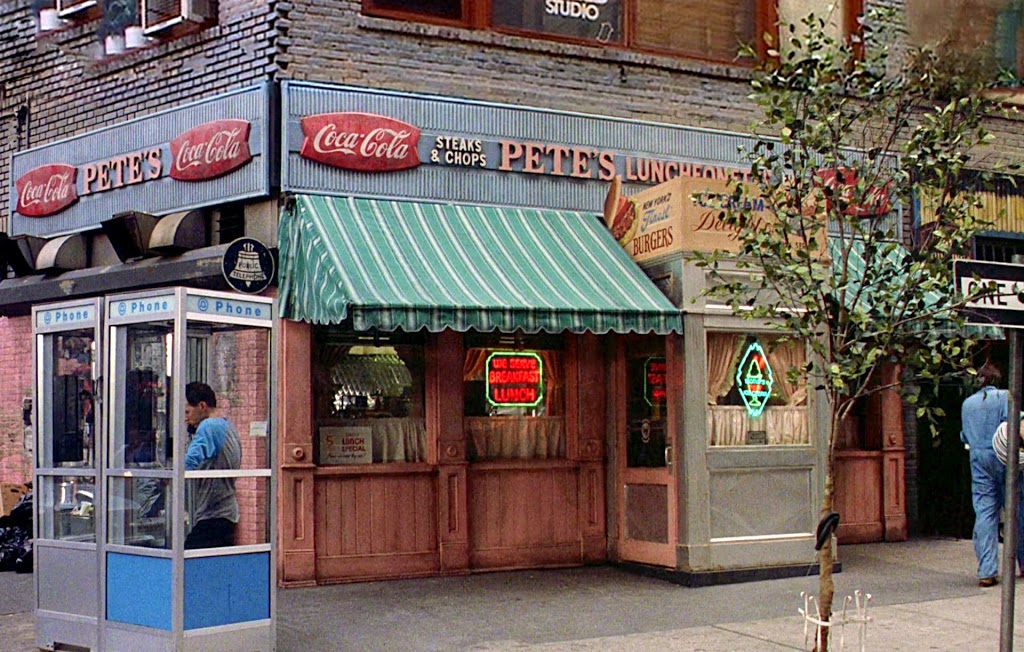
15. Of the many special guests who appear in the film, the hottest star of the moment was perhaps Brooke Shields. The Blue Lagoon star filmed this cameo at Pete’s Luncheonette a few months before entering Princeton:
Masterson the Rat: Do you believe in interspecies dating? Brooke: Well, I’ve gone out with a few rats if that’s what you mean. In 1982, Shields briefly dated John F. Kennedy Jr. and took Ted McGinley to her prom.
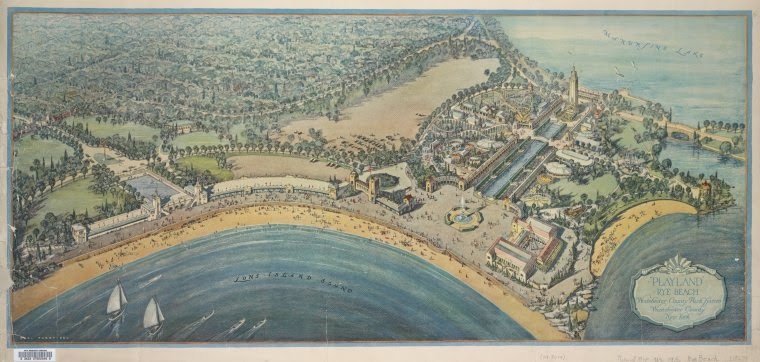
16. Meanwhile where’s Gonzo? He’s trying to make a living on the road, performing in an aquacade in Michigan. But these acrobatic scenes were actually filmed closer to home — Rye Playland, the historic amusement park overlooking the Long Island Sound. Gonzo’s fiery derring-do takes place by the Playland Lake (in the top right corner of the 1927 picture below, courtesy NYPL).
Four years after Gonzo conquers the park, a young boy consults an arcade fortune teller here at Rye Playland and becomes Tom Hanks in the movie Big.
“Just because the whole thing is crazy doesn’t mean it won’t make it on Broadway!”
17. Finally, somebody’s interested in ‘Manhattan Melodies’! Playing esteemed producer Bernard Crawford is Art Carney, who had acted on Broadway for almost thirty years by this time, not to mention, of course, his performance as Ed Norton on The Honeymooners.
But it’s Bernard’s son Ronnie who takes on Kermit’s script to produce and direct. He’s played by Lonny Price in a role that would almost precisely predict his future.
Price was an in-demand theater actor (best known for Broadway’s “Master Harold”…and the Boys) before Muppets. Afterwards, he became an in-demand theater director, recently helming 110 in the Shade with Audra McDonald and a new variation of Camelot with the New York Philharmonic.
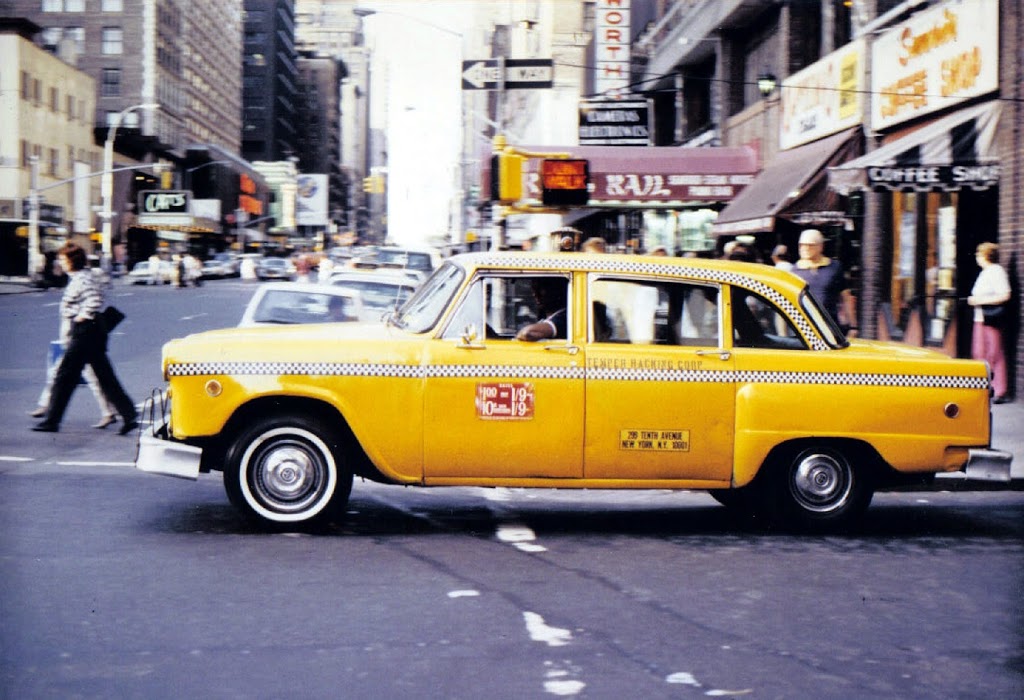
18. Things are looking up for Kermit when he is suddenly hit by a cab in front of Madison Square Garden. And not just any cab, but a Checker Taxi, which had actually ceased manufacturing in 1982. They stayed on city streets for several years after. According to the New York Times, there were ten left in 1993. The final one left service in 1999. Photo above courtesy Inside New York.
19.Kermit’s accident gave him amnesia, and confused about his identity, he gets a job at Mad Ave Advertising, a Madison Avenue advertising firm. Decades before Mad Men, Kermit is immediately thrown into pitch meetings, displaying a Don Draper-like salesmanship. Unlike the offices of Sterling Cooper, female frogs seem to be treated equally. (At least in name — Bill, Gil and Jill.)
1982 was a turbulent year for New York advertising firms with dozens of buyouts and mergers, including one between Madison Avenue’s two largest firms — Saatchi and Saatchi and Compton Advertising — worth over a billion and a half dollars. Given that Mad Ave Advertising is seeking the assistance of an amnesia patient, it doesn’t seem like this firm will be long for this world.
20. The Muppets tear through Manhattan, looking for Kermit. Scooter races his bike by the Shubert Theater and its smash hit A Chorus Line. In September 1983, the show became Broadway’s longest-running show of its day. By the time The Muppets Take Manhattan opened in movie theaters, a movie version of Chorus was already begun filming in New York.
Other Muppets search the New York Public Library, Central Park, even the sewer.
But it’s Gonzo that gets the privilege of interrupting Mayor Ed Koch during a press conference at Gracie Mansion.
Gonzo: I’m looking for a frog that can sing and dance! Koch: If he can also balance the budget, then I’ll hire him.
Koch had a special affection for Gracie Mansion, throwing weekly dinner parties there and organizing press conferences on the porch. Having the mayor of New York live elsewhere, said Koch, would be “like asking the president not to live at the White House.” [source]
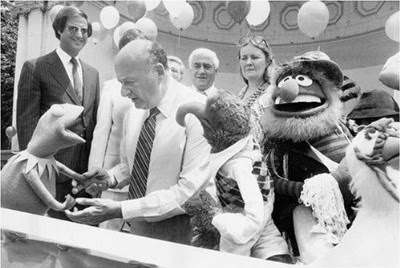
The mayor made several appearances with the Muppets throughout his tenure. The mayor’s itinerary from June 28, 1984 reads as follows: “Courtesy call with Yasushi Oshima, Mayor of Osaka, Japan; views new uniforms for Taxi and Limousine Commission inspectors; accepts check for $500,000 donated by Mobil Corporation for the Summer Youth Employment Program’s Clean Team; attends Financial Control Board meeting; drops in at reception celebrating the opening of The Muppets Take Manhattan.”
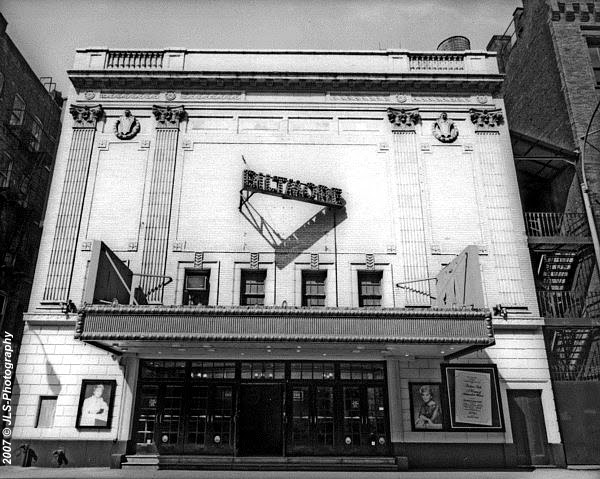
The Biltmore Theater in 1944
21. Finally, Manhattan Melodies opens! And on a swanky stage too — the Biltmore Theater. A stage that unfortunately is on its last legs in the film.
The Biltmore opened in 1925 and hosted dozens of shows in Broadway’s golden years. After briefly becoming a CBS television studio, it reverted back to live theater and was most notably the home for the Broadway transfer of Hairin 1968. The line-up of shows that appeared here in the early 1980s include Deathtrap with Victor Garber and the Garry Trudeau-written musical Doonesbury.
However, in 1987, the theater was ravaged by fire, most likely arson. According to the New York Times report, “Hypodermic needles were found inside the theater, indicating that drug users may have been using it as a shooting gallery, and storage lockers had been rifled.”
The theater finally reopened in 2008 — under the ownership of the Manhattan Theatre Club — as the Samuel J. Friedman Theatre, named for the renown Broadway publicist.
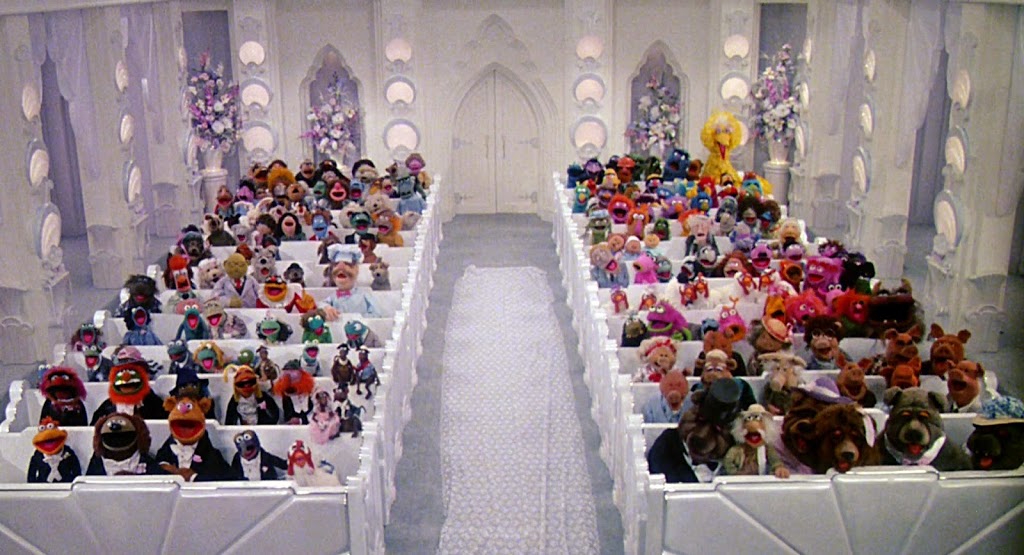
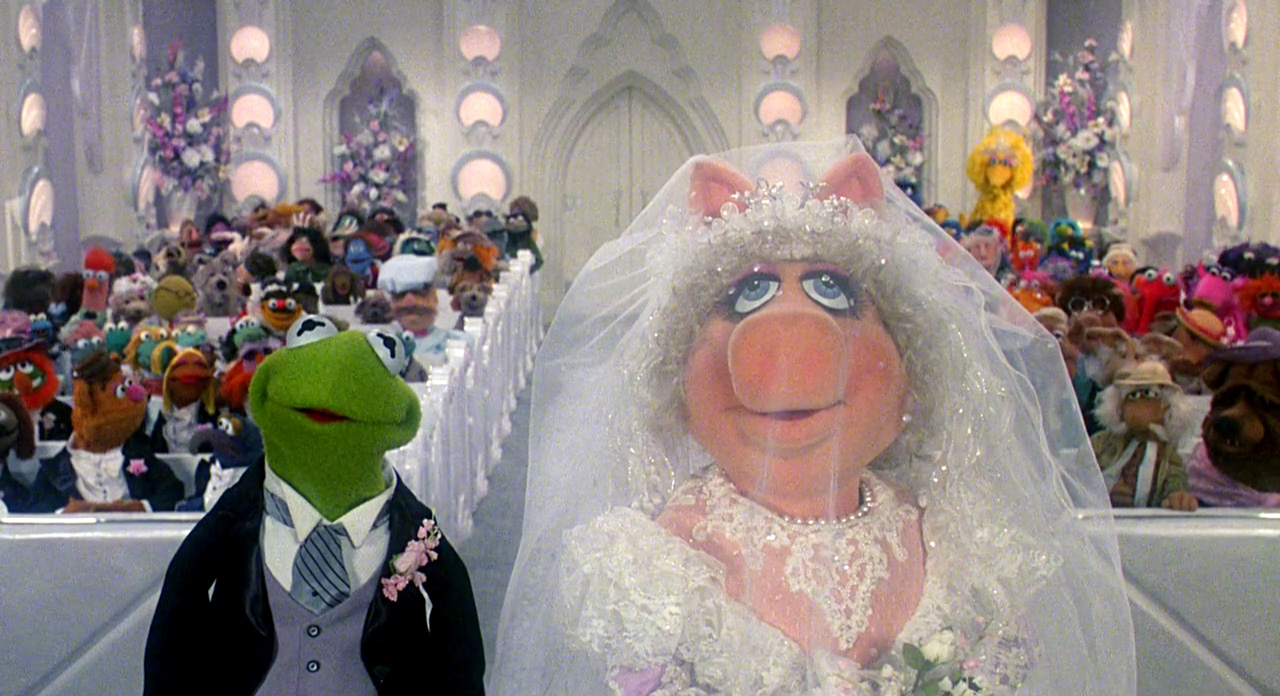
As quickly as the show begins, however we cut to a shot of a wedding chapel for the nuptials of Kermit and Piggy. Nearly all the existing Muppets appear in this scene. (Muppets Wiki actually has a complete seating chart.) Piggy’s gown gives a subtle nod to that of Princess Diana’s when she wed Charles in 1981.
AFTERWORD: The Muppets Take Manhattan was a modest box office success when it opened in July 1984. The film was up for the Academy Award for Best Music, Original Song Score. But the film lost the award to Prince for Purple Rain.
The artist took to the stage wearing a garment which Miss Piggy would have desperately coveted:
My thanks to the Muppets Wiki for the inspiration for this article.. All images are courtesy Tri-Star Pictures/Jim Henson
PODCASTThe history of the Empire State Building revealed!
Start spreading the news …. the Bowery Boys are finally going to the Empire State Building!
New York City’s defining architectural icon is greatly misunderstood by many New Yorkers who consider its appeal relegated to tourists and real estate titans.
But this powerful and impressive symbol to American construction has a great many secrets among its 102 (or is that 103?) floors.
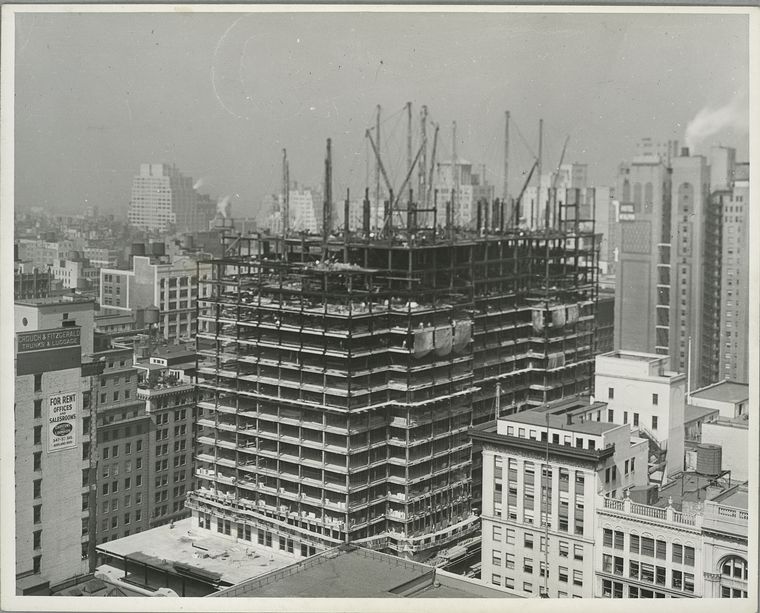
The Empire State Building project was announced in 1929 by former New York governor Al Smith. The group of wealthy investors he fronted were clear in associating the building with his image (the Empire State itself), and Smith was even there at the demolition of the building it would replace — the Waldorf-Astoria Hotel.
A few weeks after the announcement, however, the stock market crashed.
In this podcast, we look at how this magnificent skyscraper was built with incredible speed and efficiency, to tower over a city entering the Great Depression. It quickly became a beacon of hope for many — a symbol of American skill and the embodiment of the New York City spirit.
Tourists would indeed flock to it, enamored of the extraordinary views it offered for the very first time. (Most of its early visitors had never been in an airplane.) It would eventually become an object of great value and the subject of tabloid headlines — many featuring the current President of the United States — but it would never, ever lose its luster.
In fact, that luster, over the years, would become very well lit…..
The Bowery Boys: New York City History podcast is brought to you …. by you!
We are now producing a new Bowery Boys podcast every week. We’re also looking to improve the show in other ways and expand in other ways as well — through publishing, social media, live events and other forms of media. But we can only do this with your help!
We are now a member of Patreon, a patronage platform where you can support your favorite content creators for as little as a $1 a month.
Please visitour page on Patreon and watch a short video of us recording the show and talking about our expansion plans. If you’d like to help out, there are five different pledge levels (and with clever names too — Mannahatta, New Amsterdam, Five Points, Gilded Age, Jazz Age and Empire State). Check them out and consider being a sponsor.
We greatly appreciate our listeners and readers and thank you for joining us on this journey so far.
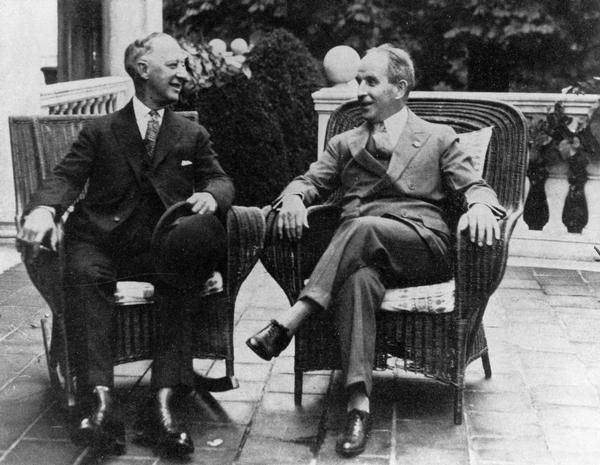
Al Smith, 1928 Democratic nominee for President of the United States, and John J. Raskob, chairman of the Democratic National Committee, were the two men most responsible for the idea of the Empire State Building.
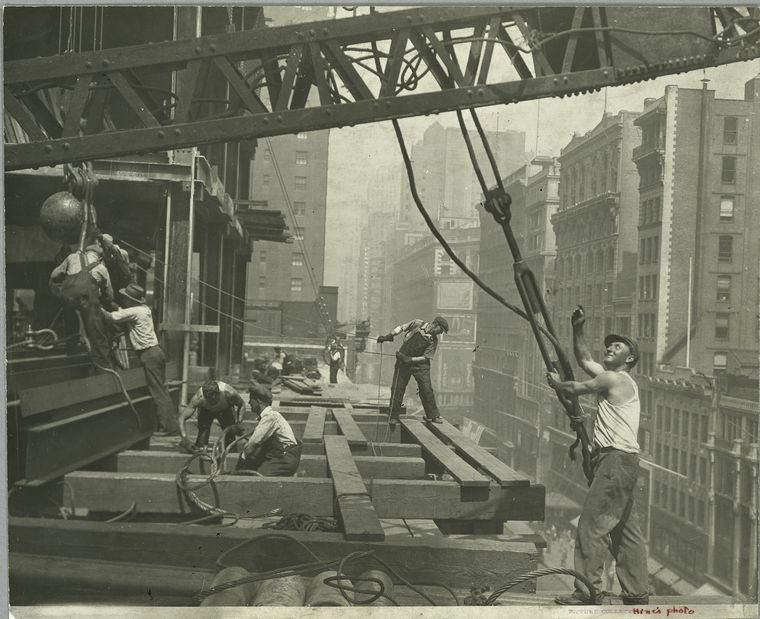
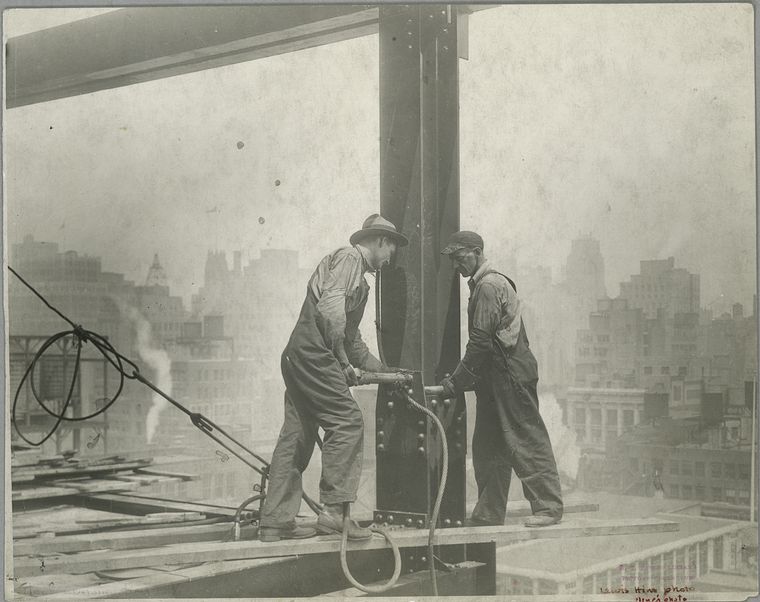
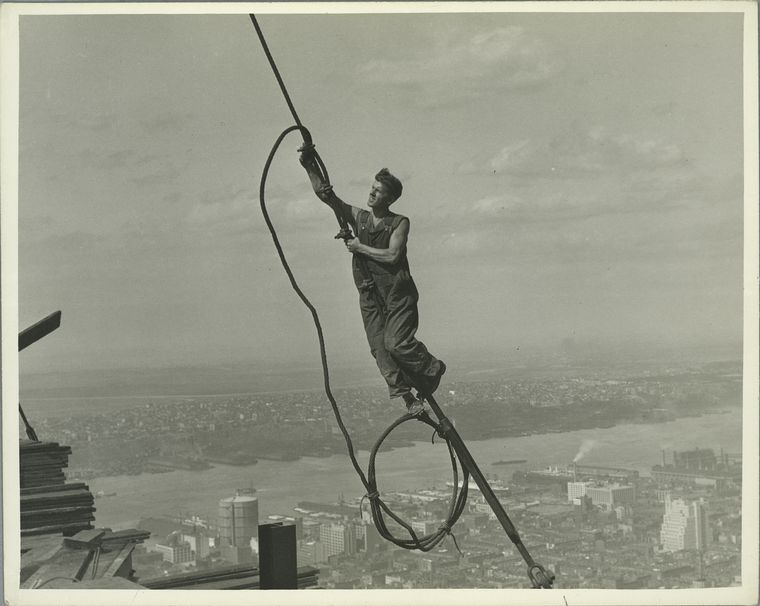
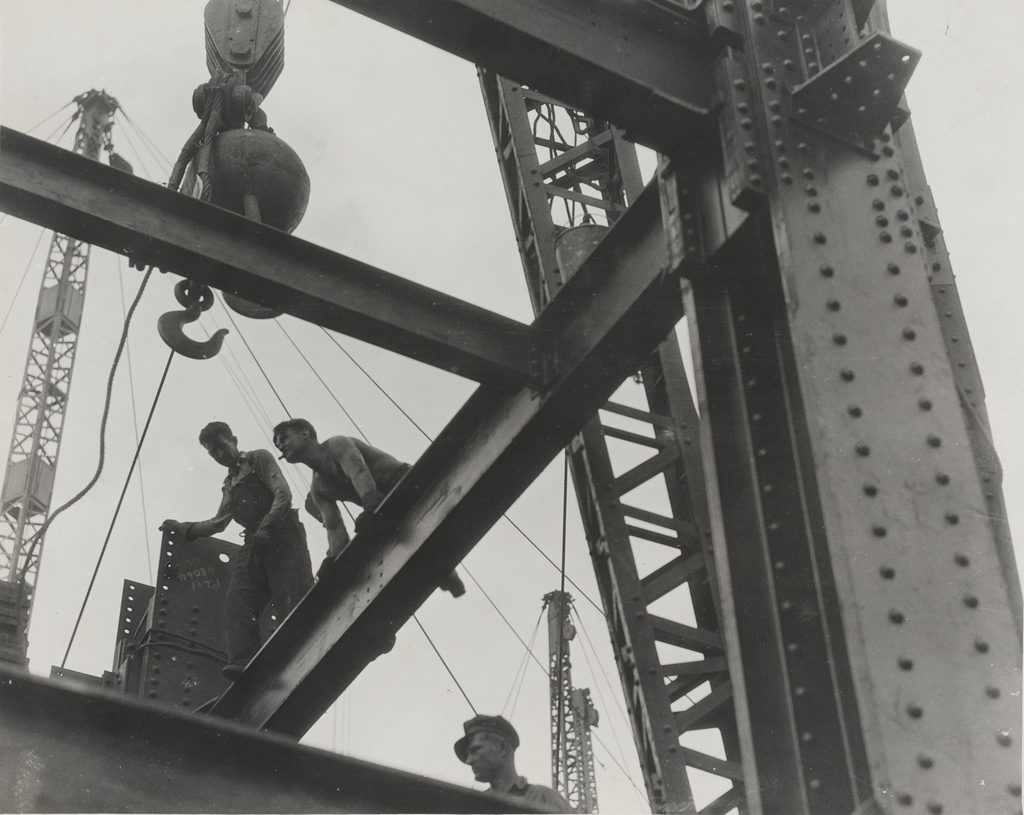
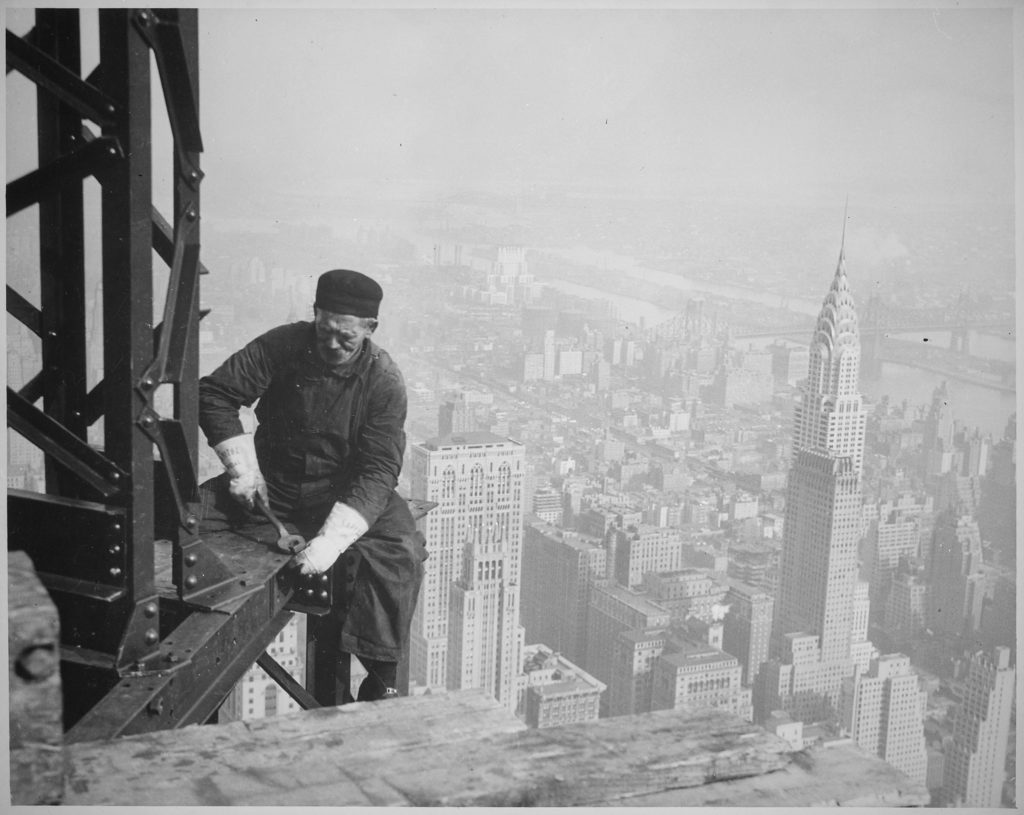
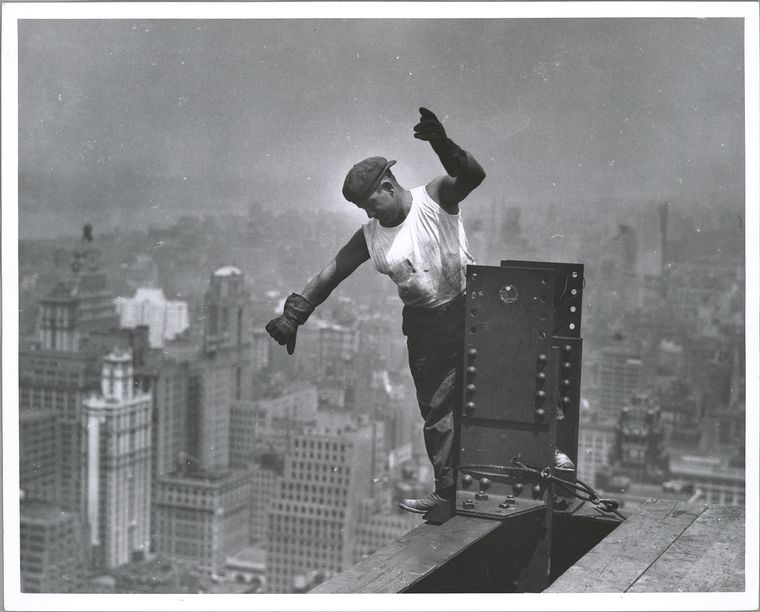
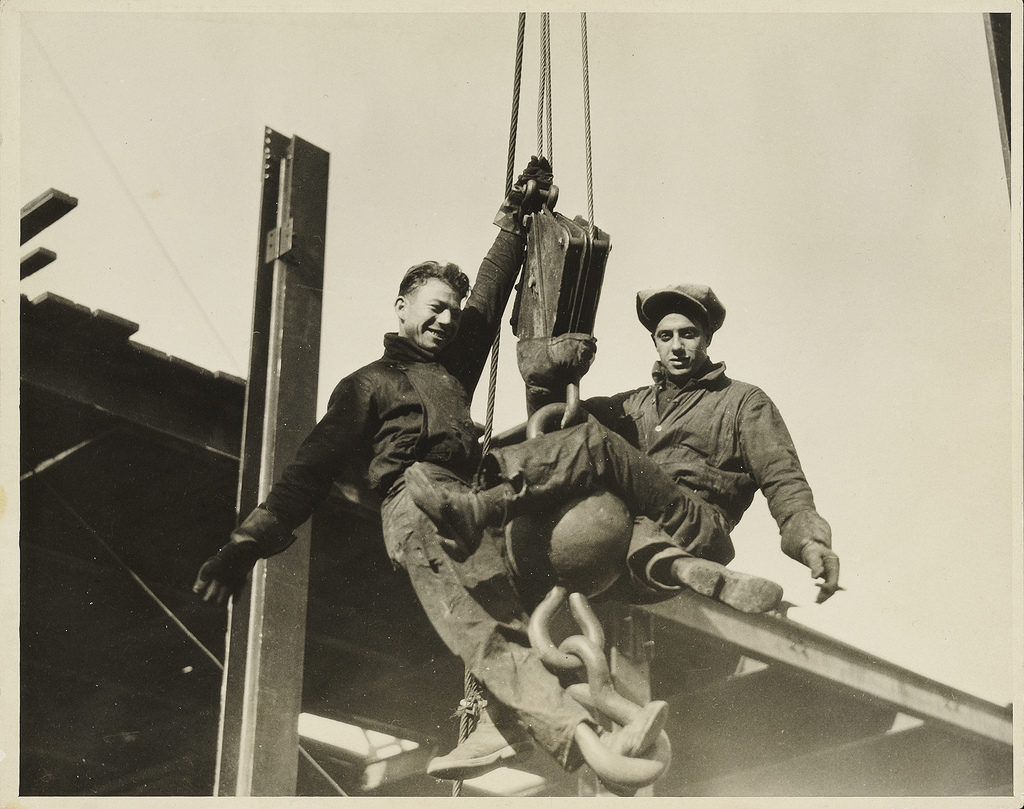
From the New York Public Library (except here noted): Photographs taken by Lewis Hine of the construction of the Empire State Building:
NYPL
NYPL
Preus Museum
U.S. National Archives
Preus Museum
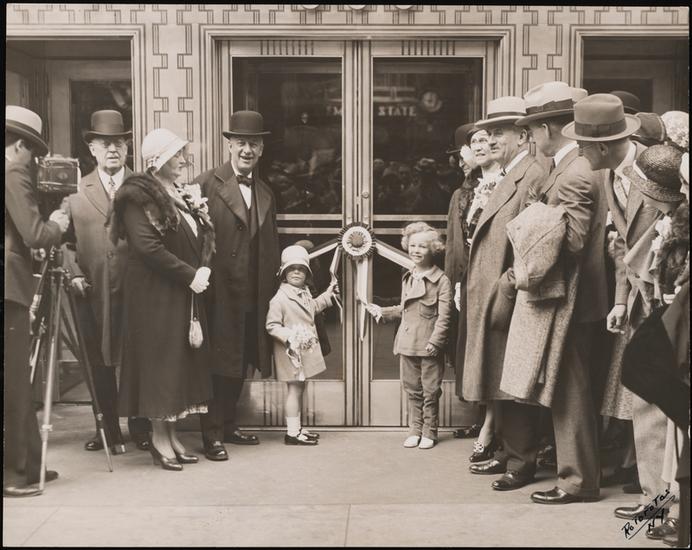
Al Smith — with his children — at the opening ceremony of the Empire State Building.
MCNY
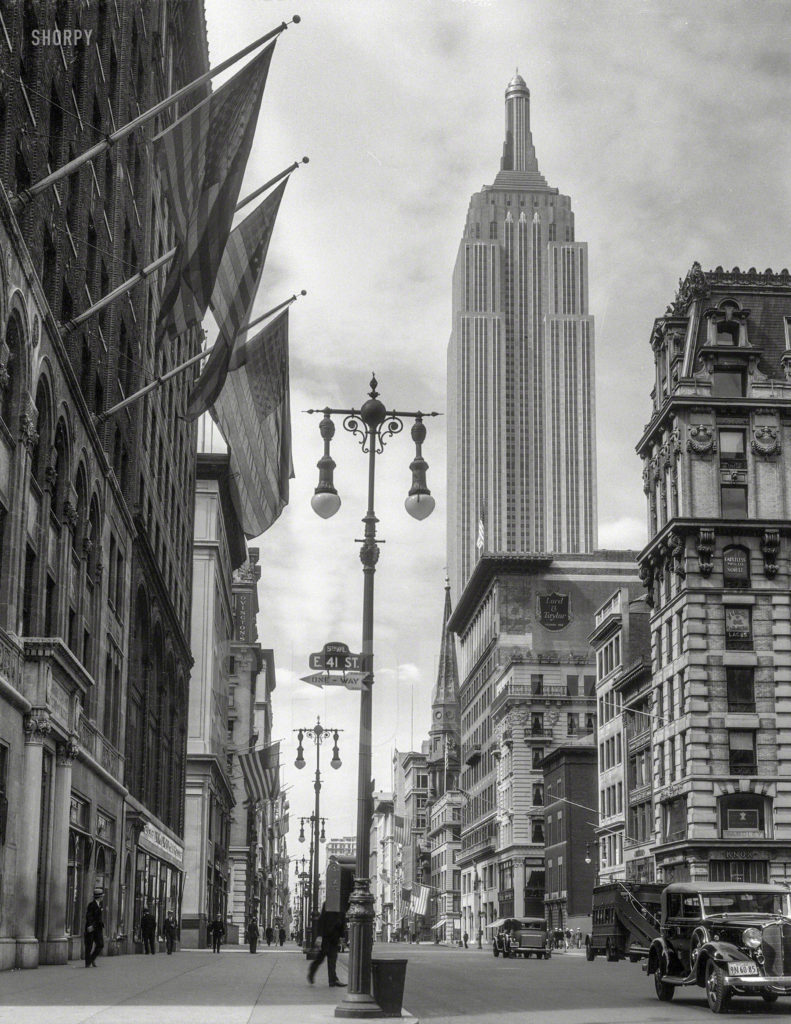
The Empire State in 1933, looking like a futuristic rocket standing over a city of Beaux-Arts architecture.
Library of Congress, cleaned up image Shorpy
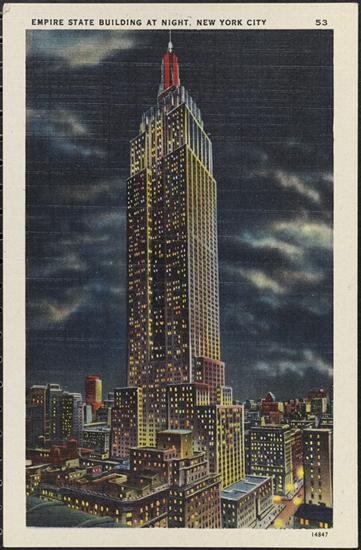
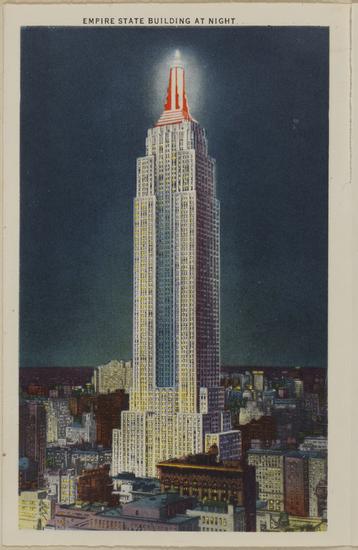
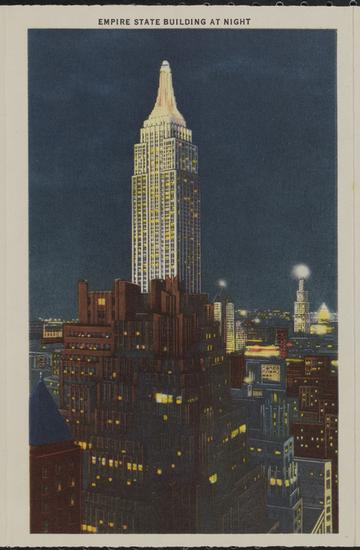
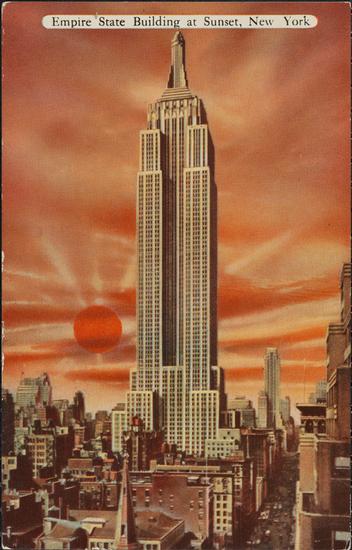
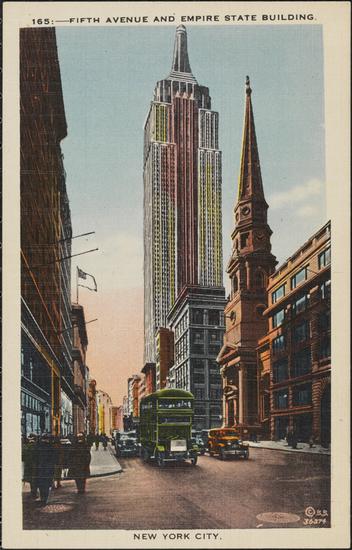
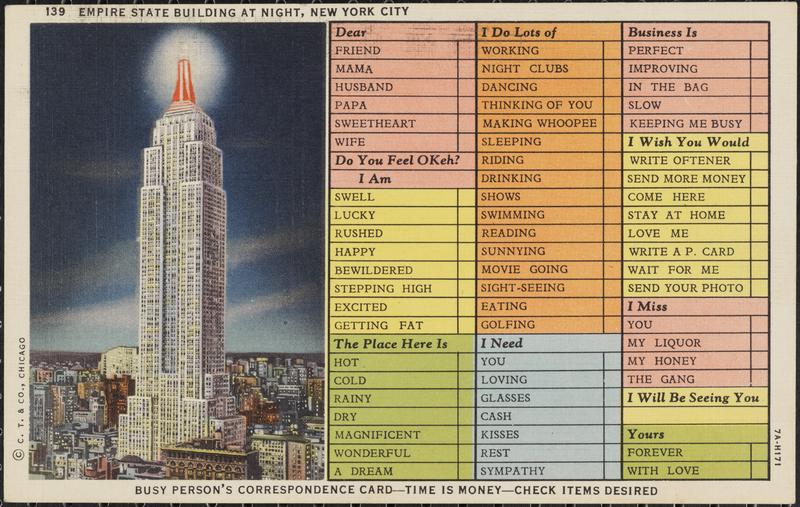
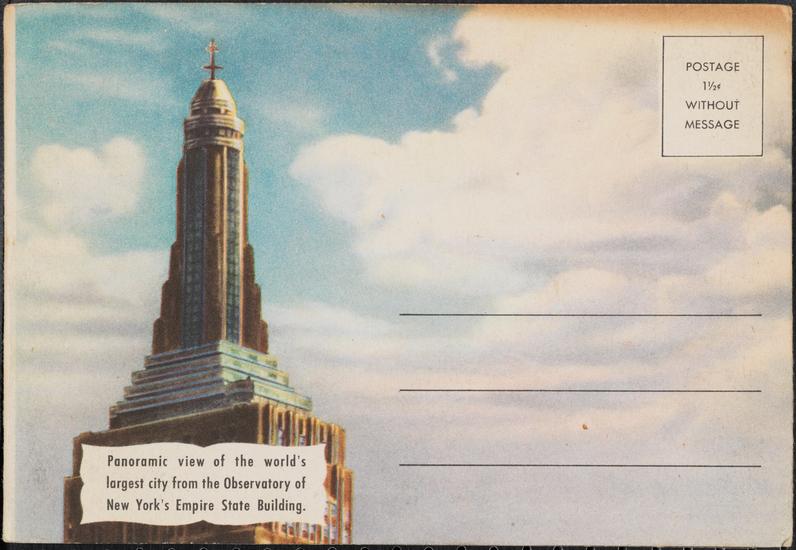
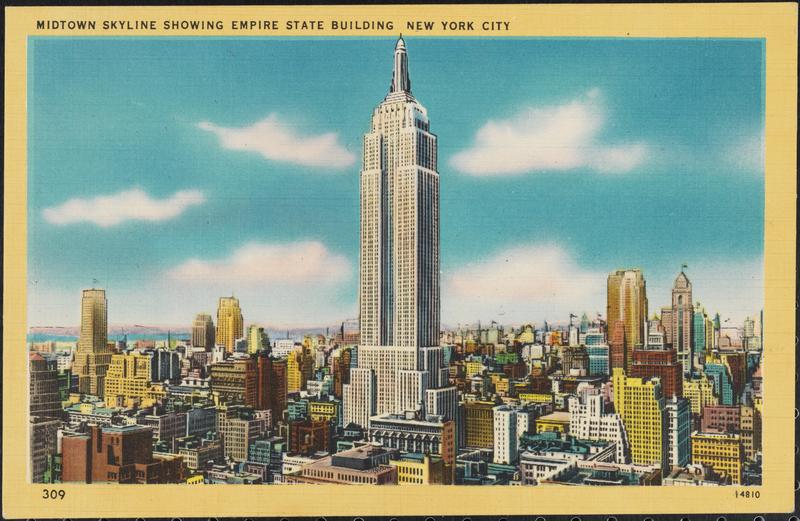
The Empire State Building — in postcards! (From the collection at the Museum of the City of New York.) You could buy these in the gift shop, available for purchase for the first day the building opened.
MCNY
MCNY
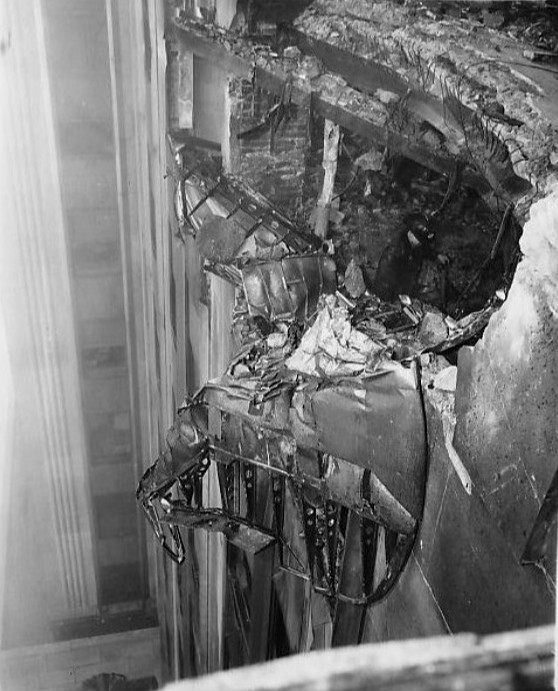
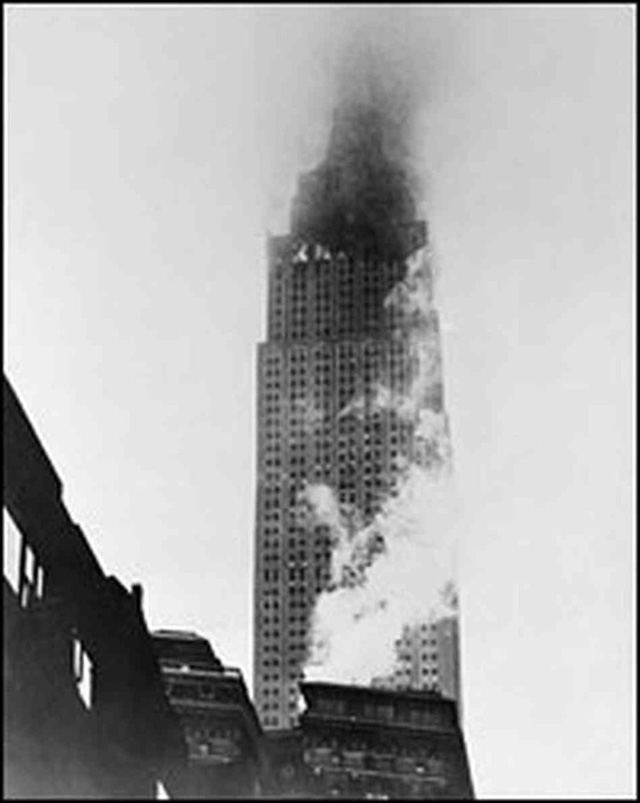
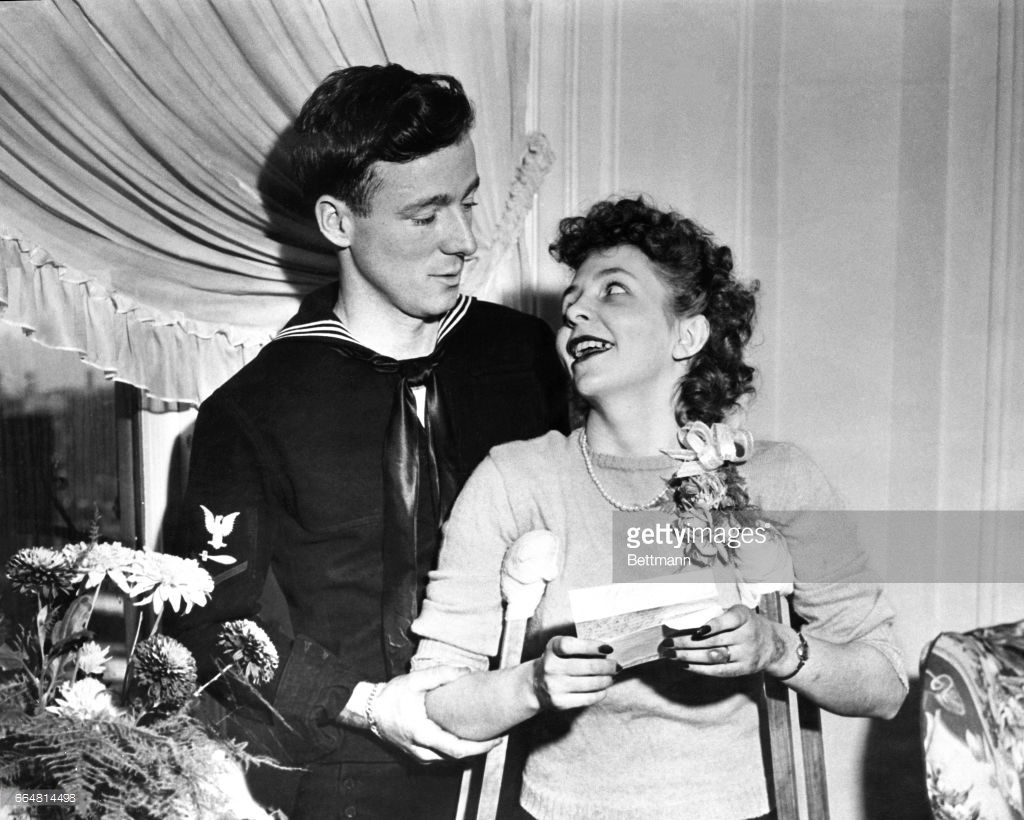
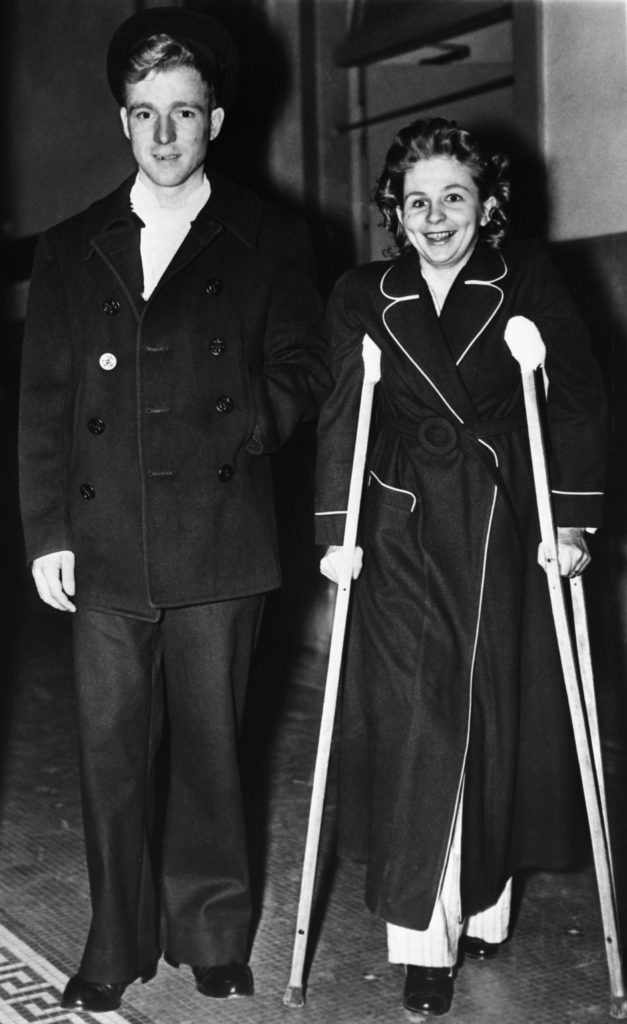
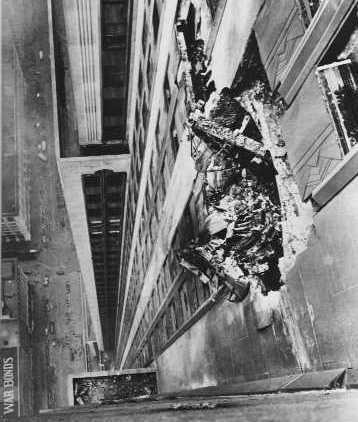
The tragic plane crash into the Empire State Building on July 28, 1945 caused 14 deaths. Injured elevator operator Betty Lou Oliver managed to survive a terrible plunge of 75 stories when the elevator she was been transported in plummeted.
Betty Lou Oliver on crutches, being consoled by her Navy husband Oscar Oliver.
The Empire State Building on film:
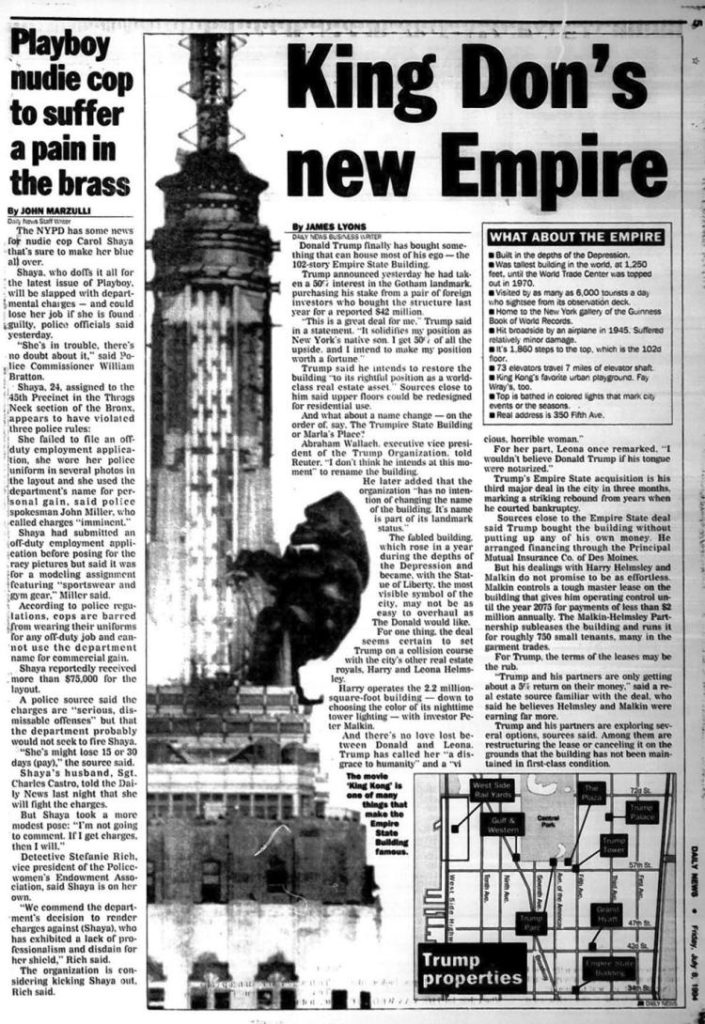
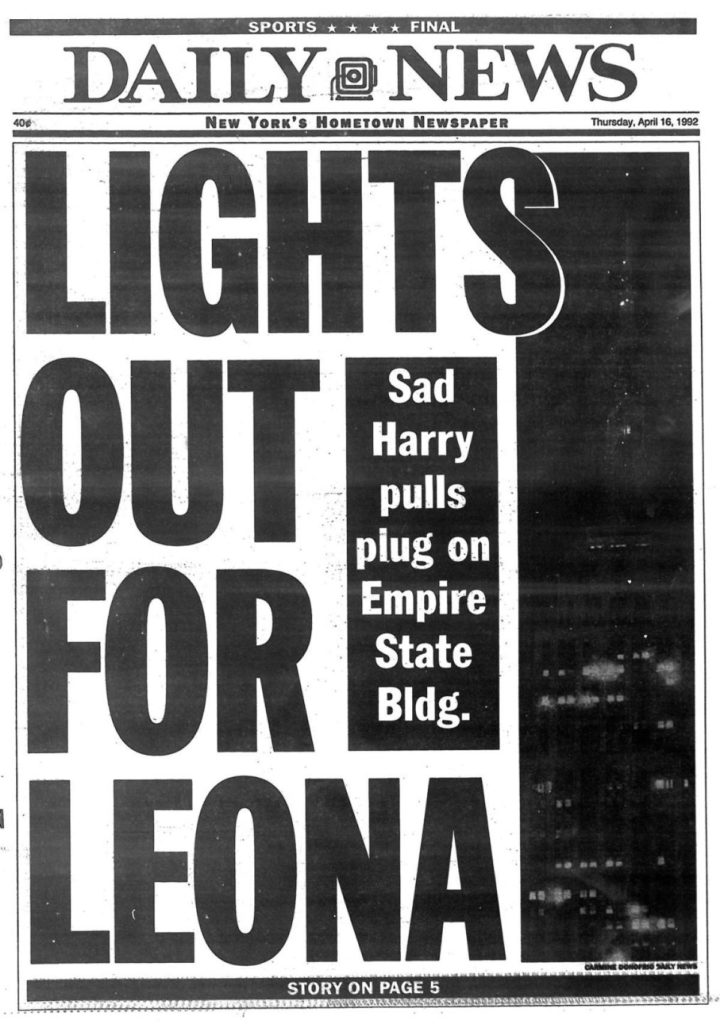
Some amusing tabloid headlines from the 1990s featuring Donald Trump and Leona Helmsley
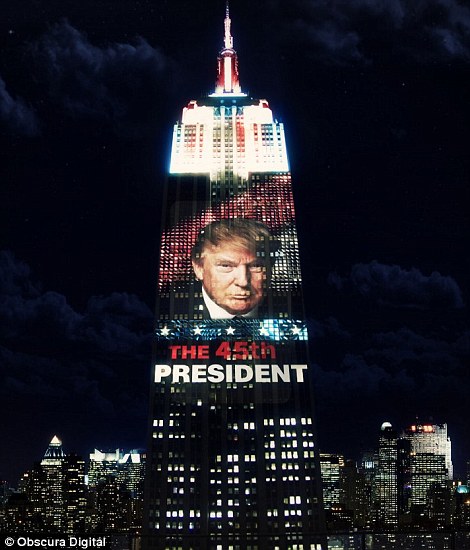
The Empire State Building projected the winner of the 2016 presidential election — thanks to its state-of-the-art lighting technology
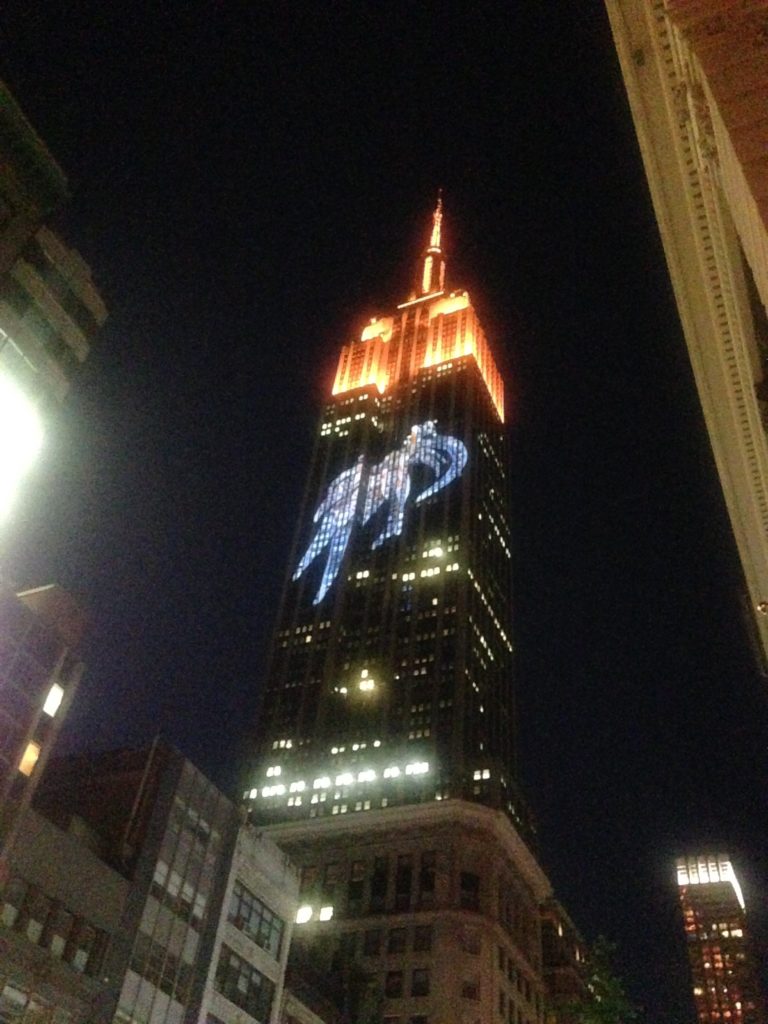
More dazzling were the endangered species projected upon it during the summer of 2015:
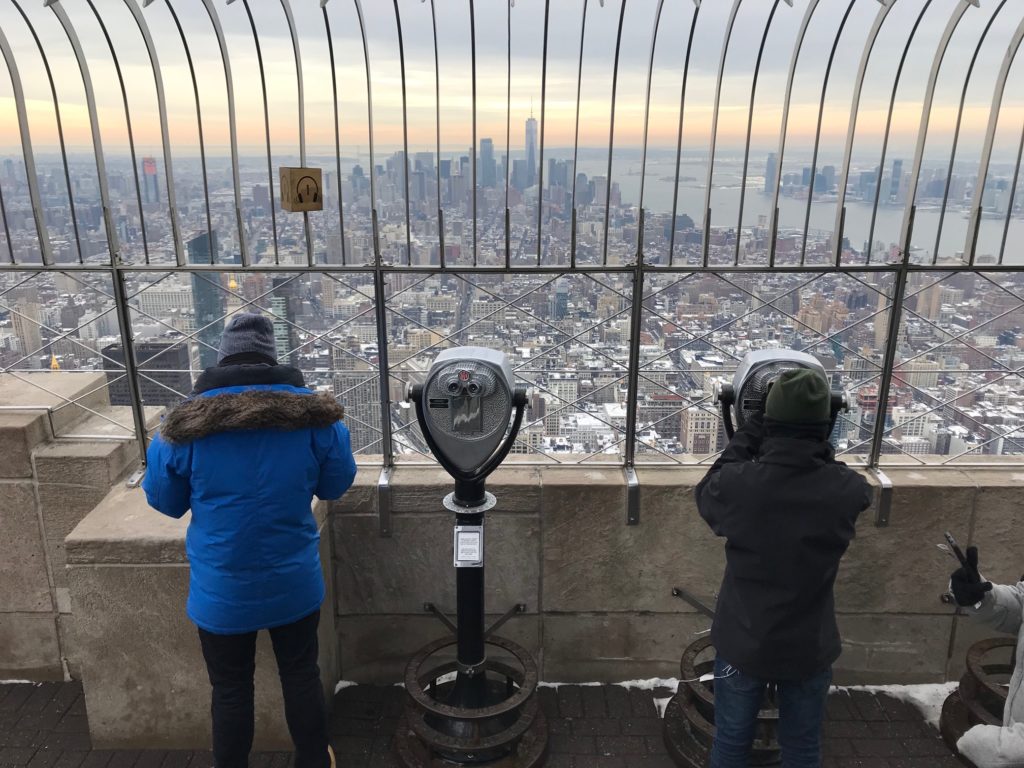
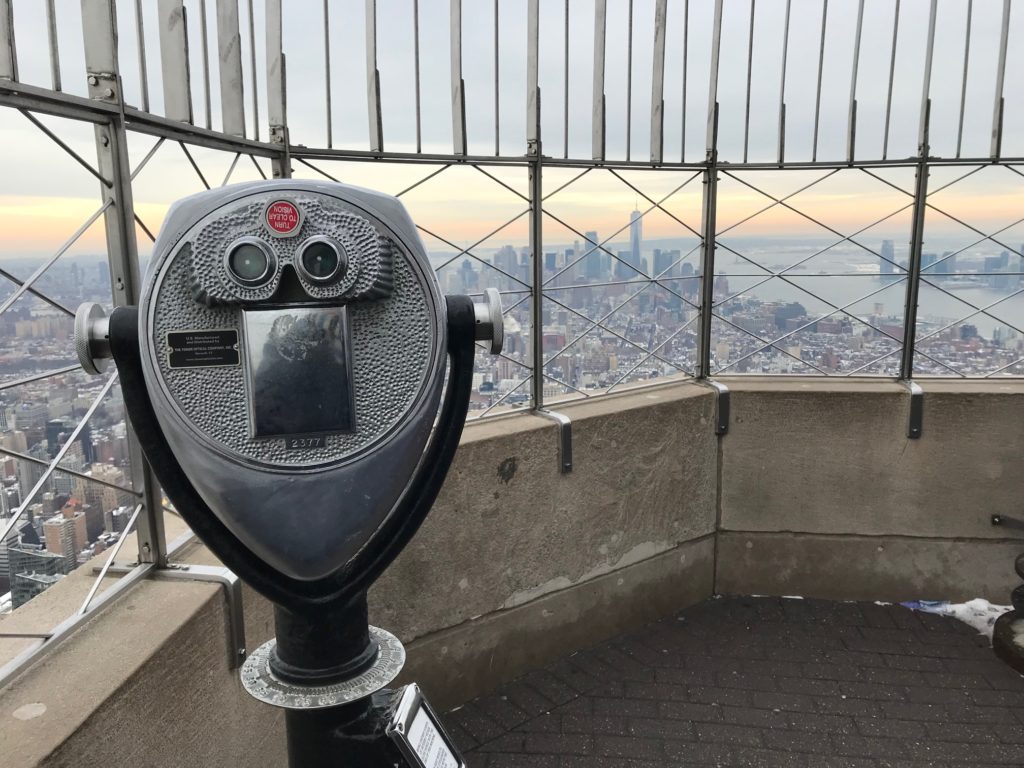
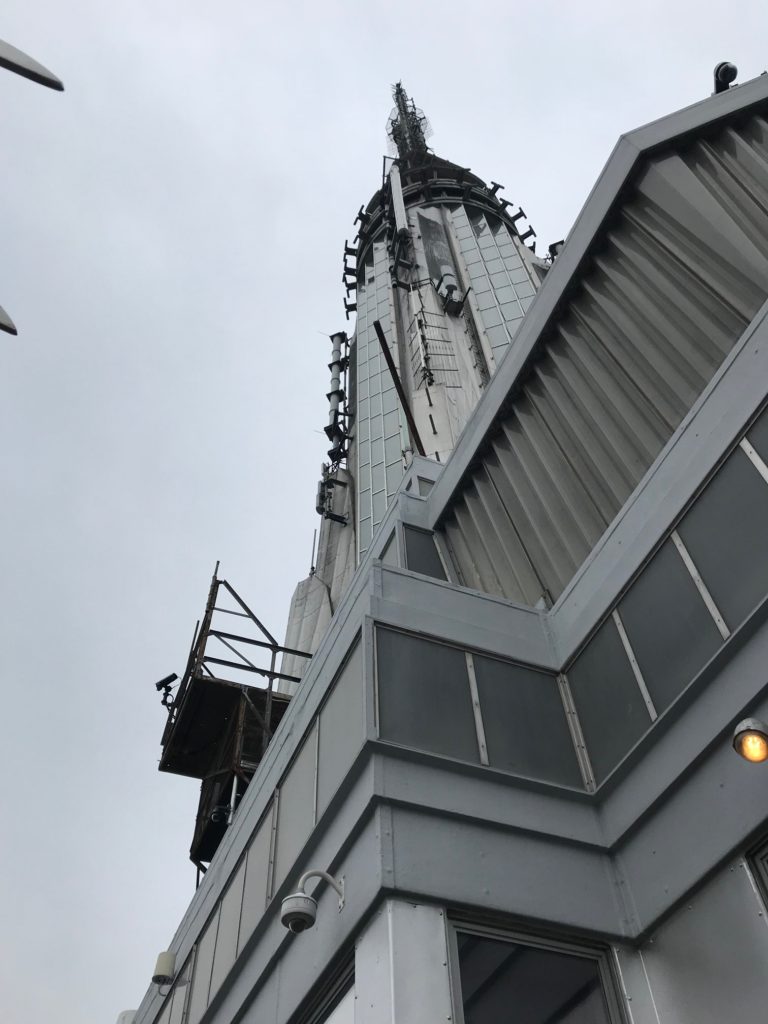
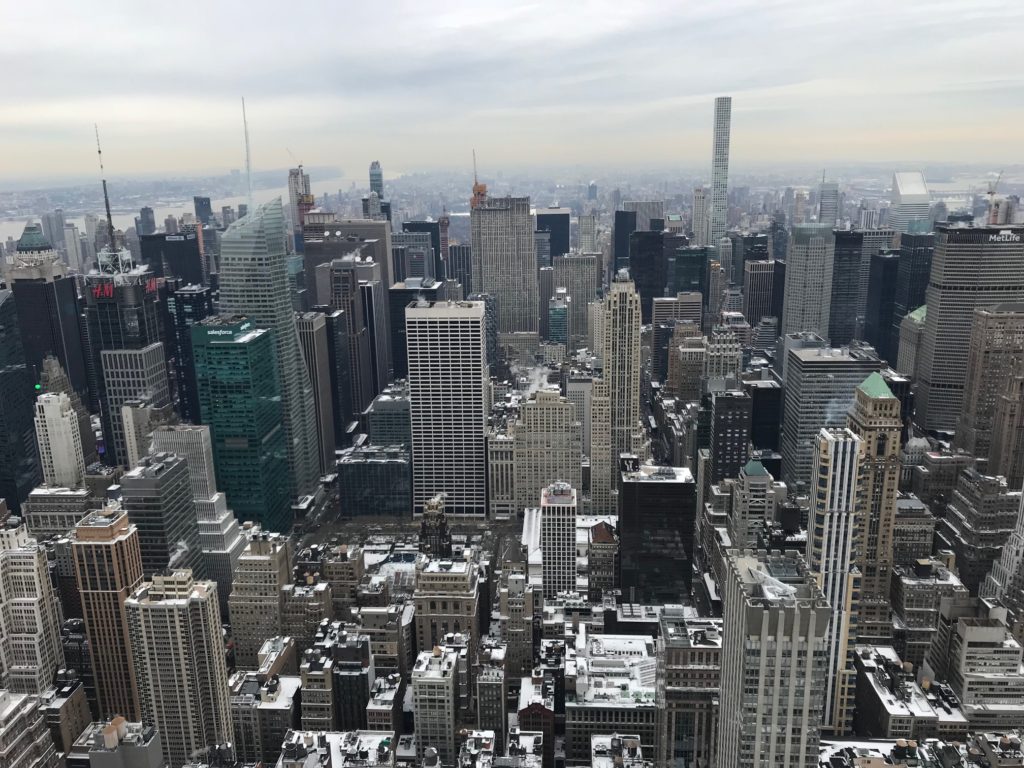
Some additional images from this week’s visit to the ESB:
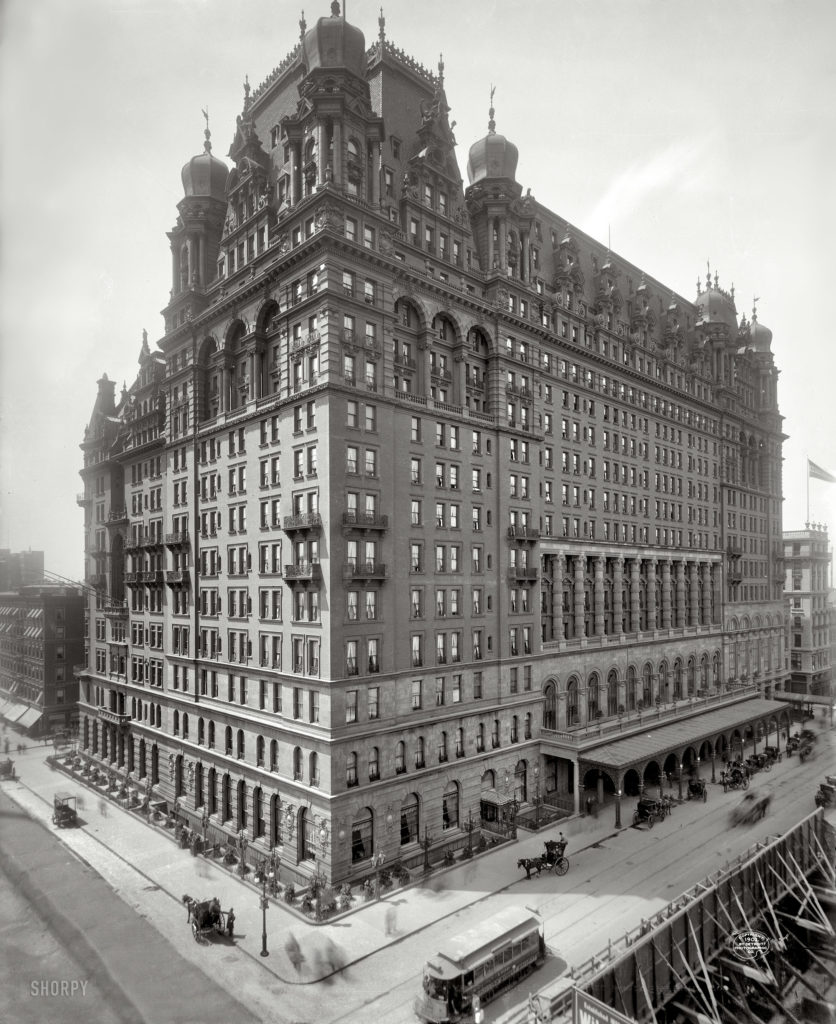
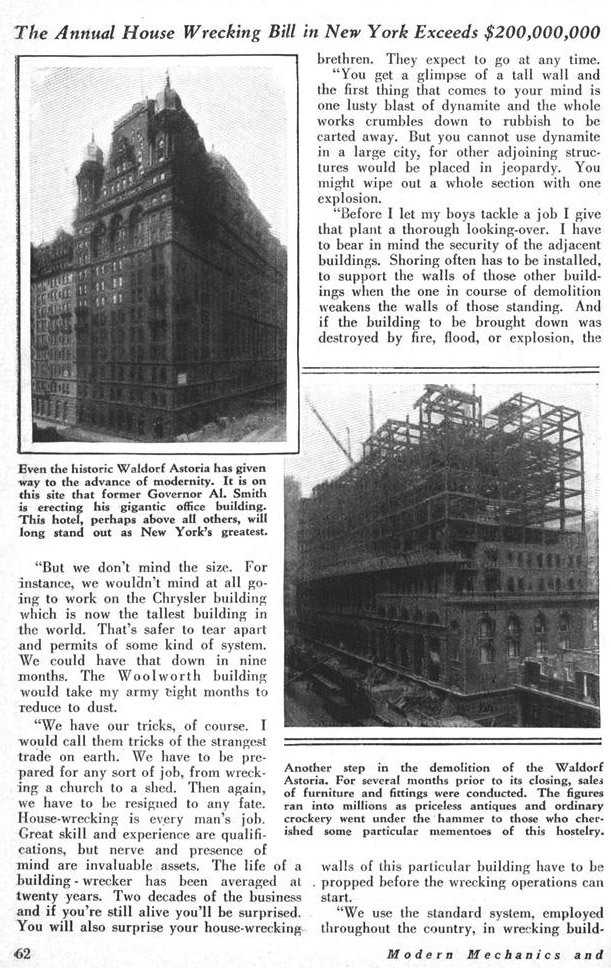
The original Waldorf-Astoria Hotel, the ultimate symbol of the Gilded Age, was demolished in the fall and early winter of 1929 to make way for a new building project.
That the building project in question happened to be the Empire State Building does not make the loss of the Waldorf-Astoria any less regretful. The storied hotel, borne from the rivalry of two factions of the Astor family, was the delight of New York’s upper crust from the moment the Waldorf Hotel opened in 1893. (The Astoria side opened four years later.)
Cleaned-up version of public domain photo courtesy Shorpy
But the fashions of New York had passed the Waldorf-Astoria by in the 1920s, and the land was sold to a collective of businessmen — led by former New York governor Al Smith — who wished to build the world’s tallest office building on the spot.
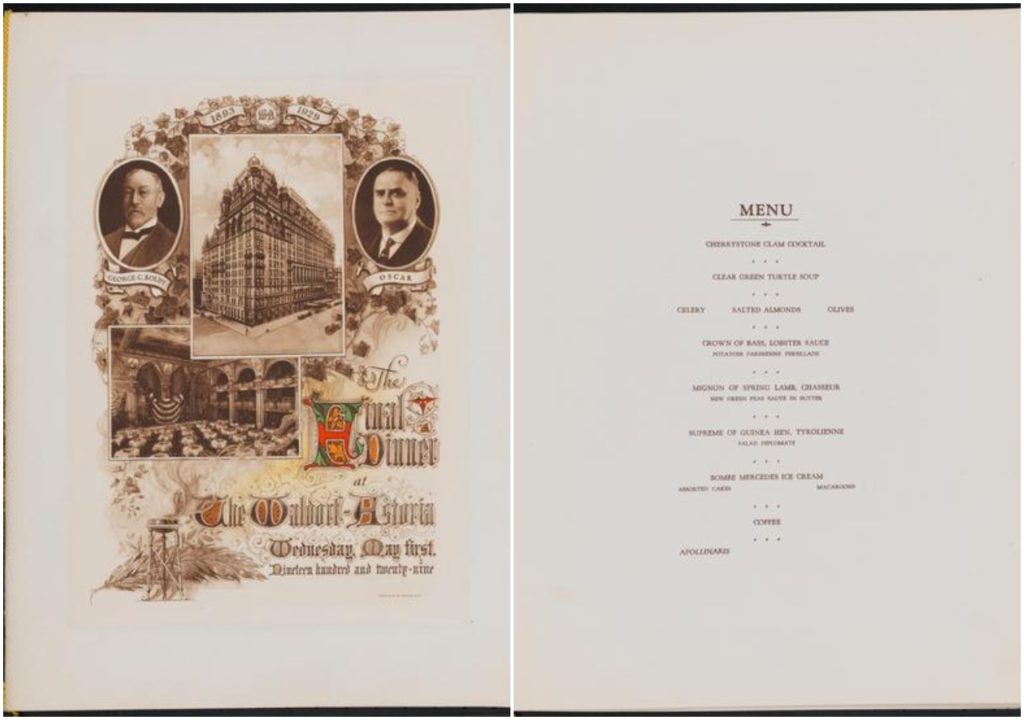
Below: The final menu served at the Waldorf-Astoria — May 1, 1929
Museum of the City of New York
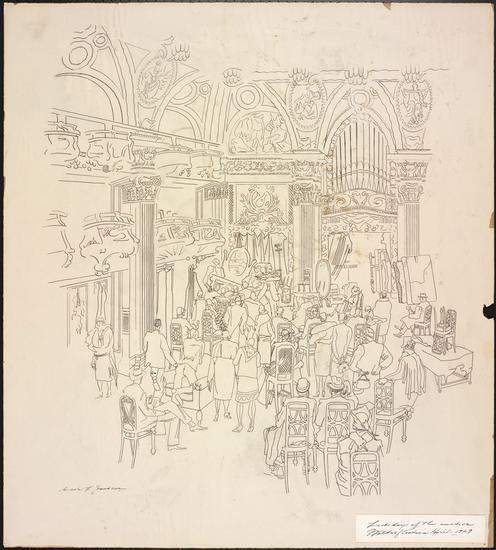
Following a final dinner party on May 1, objects from the hotel were sold at auction. The relinquishing of the hotel’s possession was so captivating that the auction was even broadcast on the radio, a fairly revolutionary idea for its day. “The famed bronze pair [of statues], a large bull and a big bear, which stood on the bar in the hotel for so many years, went to Charles Gutradt & Son, art dealers, for $225 each.” [source]
This was not a building that was dispensed with lightly. The year 1929 was crammed with newspaper and magazine reminders of the hotel’s greatness. “Histories will keep its fame and name alive, for it marked an epoch in the development of an empire city. In its day it gathered together a remarkable clientele; at its banquets the wit and wisdom of the New World and the Old intermingled, stimulated by savory viands and sparkling winds (in pre-prohibition days) from a well-stocked cellar.” [source]
An illustration of one auction of Waldorf-Astoria objects from 1929:
Museum of the City of New York
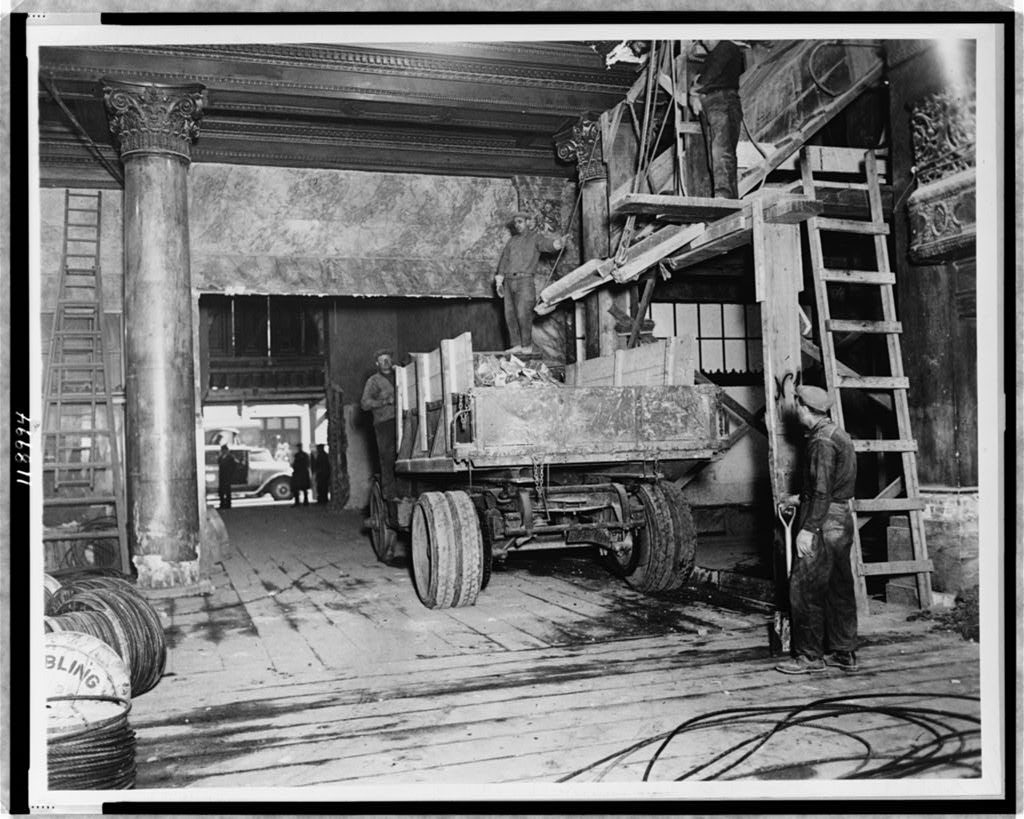
Demolition of the Waldorf-Astoria would take a couple months, owing to difficulties of dismantling the especially sturdy materials holding up the hotel. The process began on October 1st with a somber ceremony on the rooftop, officiated by Smith and his business partners.
He was quoted as saying. “This historic building, known all over the world, must come down in the northward march of progress.”
From the New York Times: “Yawning holes mark the doorways where livered attendants greeted distinguished guests. Men in overall bustle about amid dust and debris in Peacock Alley. The men’s cafe, once a favorite haunt of millionaires, and the giant ballrooms are bare.”
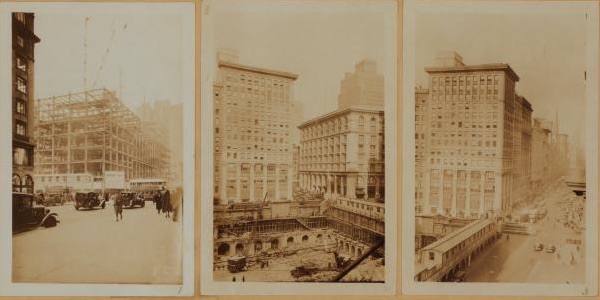
Work began on the Empire State Building on March 17, 1930, despite the fact that America (following the stock market crash of 1929) was on the precipice of the Great Depression. Meanwhile a new Waldorf-Astoria would open uptown, on Park Avenue, on October 1, 1931. The Empire State Building had opened (in record time, it must be said) exactly five months before, on May 1, 1931. New York City had itself two new impressive landmarks.
Trucks emptying the Waldorf-Astoria ballroom:
Library of Congress
NYPL
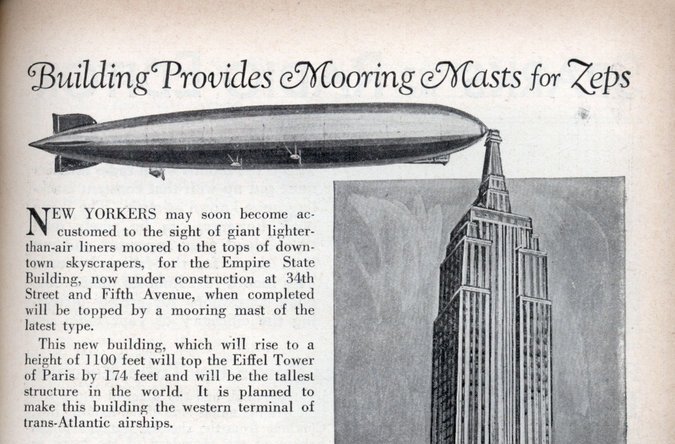
From Modern Mechanics magazine:
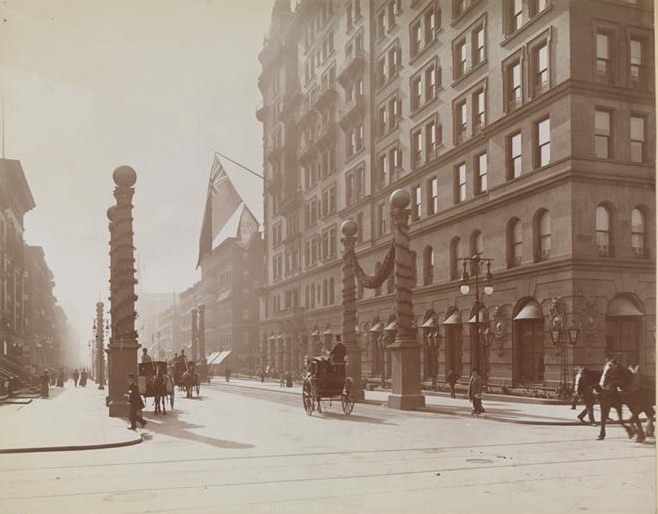
At top: The decorations for the Dewey Parade in front of the Waldorf-Astoria Hotel at 33rd Street and 5th Avenue, 1899.
MCNY
For more information on the new Waldorf-Astoria hotel, listen to our 2016 show:
PODCAST The era of the Zeppelin, how it shaped the New York skyline and the disastrous crash of the Hindenburg on an airfield in New Jersey.
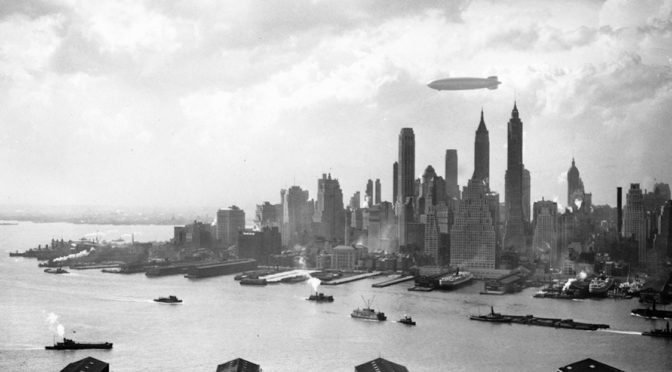
On the afternoon of May 6, 1937, New Yorkers looked overhead at an astonishing sight — the arrival of the Hindenburg, the largest airship in the world, drifting calmly across the sky.
In size and prominence, the Hindenburg would prove to be the greatest airship of all. It was the Concorde of its day, providing luxurious transatlantic travel for the rich and famous. In Germany, the airship was used as a literal propaganda machine for the rising Nazi government of Adolf Hitler. New York City was already in the throes of ‘Zeppelin mania’ by then. These rigid gas-filled airships, largely manufactured by Germany, were experiencing a Jazz Age rediscovery thanks in part to the Graf Zeppelin, a glamorous commercial airship which first crossed the ocean in 1928. Its commander and crew even received two ticker-tape parades through lower Manhattan.
But dreams of Zeppelin-filled skies were quickly vanquished in the early evening hours of May 6, 1937, over a landing field in Lakehurst, New Jersey. Its destruction would be one of the most widely seen disasters in the world, marking an end to this particular vision of the future.
But a mark of the Zeppelin age still exists on the New York City skyline, atop the city’s most famous building!
The Bowery Boys: New York City History podcast is brought to you …. by you!
We are now producing a new Bowery Boys podcast every two weeks. We’re also looking to improve the show in other ways and expand in other ways as well — through publishing, social media, live events and other forms of media. But we can only do this with your help!
We are now a member of Patreon, a patronage platform where you can support your favorite content creators for as little as a $1 a month.
Please visitour page on Patreon and watch a short video of us recording the show and talking about our expansion plans. If you’d like to help out, there are five different pledge levels (and with clever names too — Mannahatta, New Amsterdam, Five Points, Gilded Age, Jazz Age and Empire State). Check them out and consider being a sponsor.
We greatly appreciate our listeners and readers and thank you for joining us on this journey so far. And the best is yet to come!
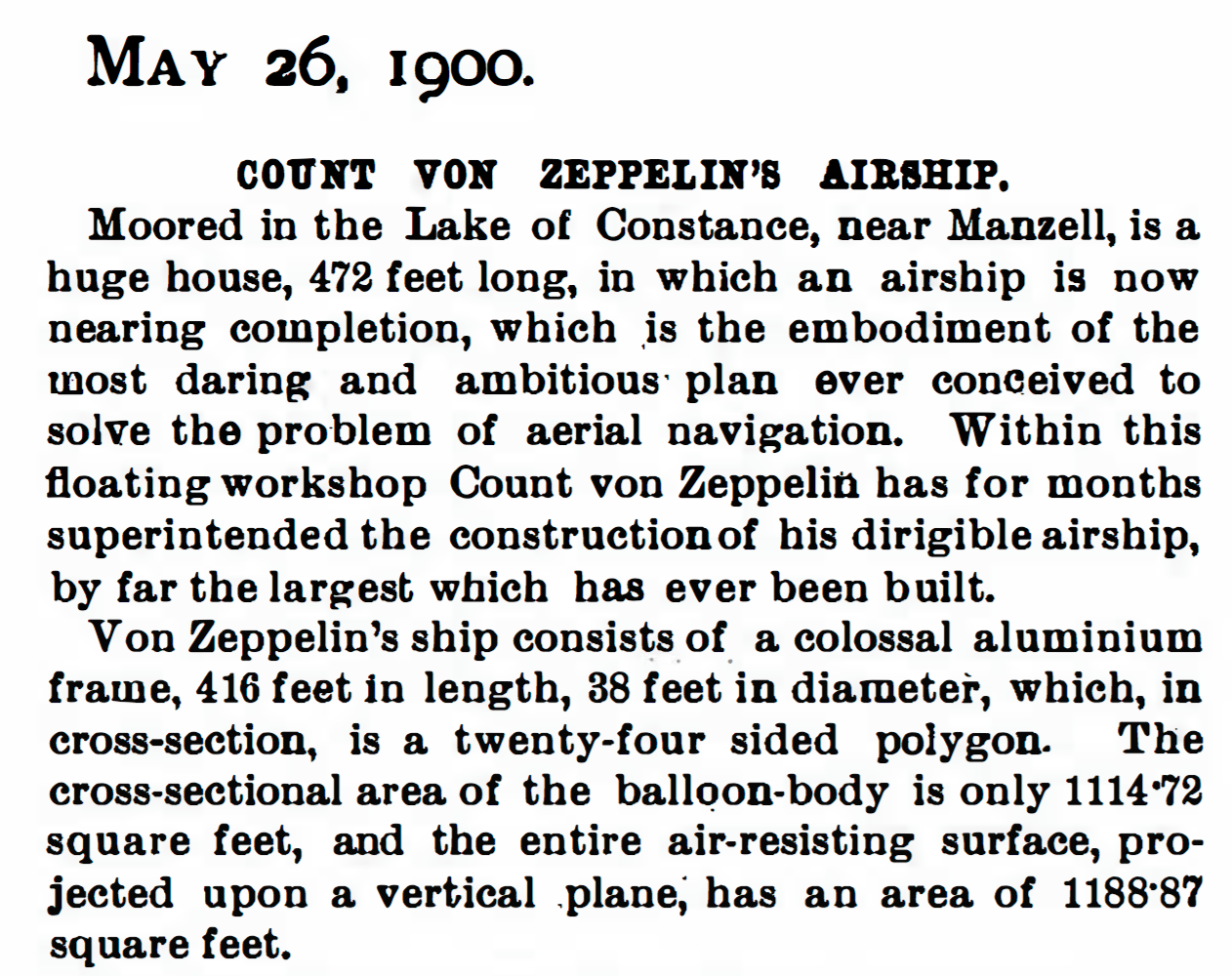
An announcement in Scientific American of the first airship designed by Count von Zeppelin.
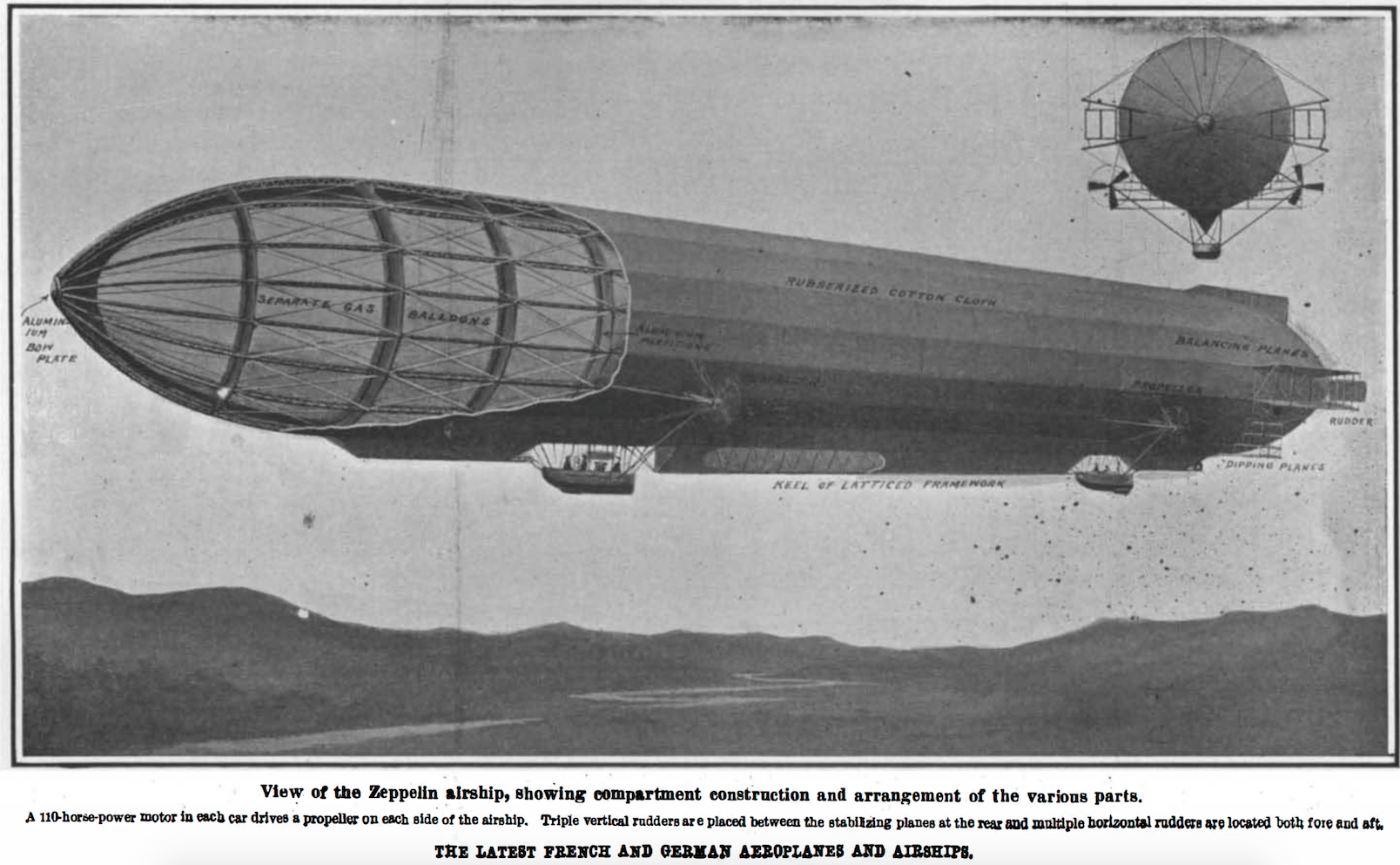
An early illustration from Scientific American (June 26, 1909) showing an early prototype of the Zeppelin airship.
Scientific American
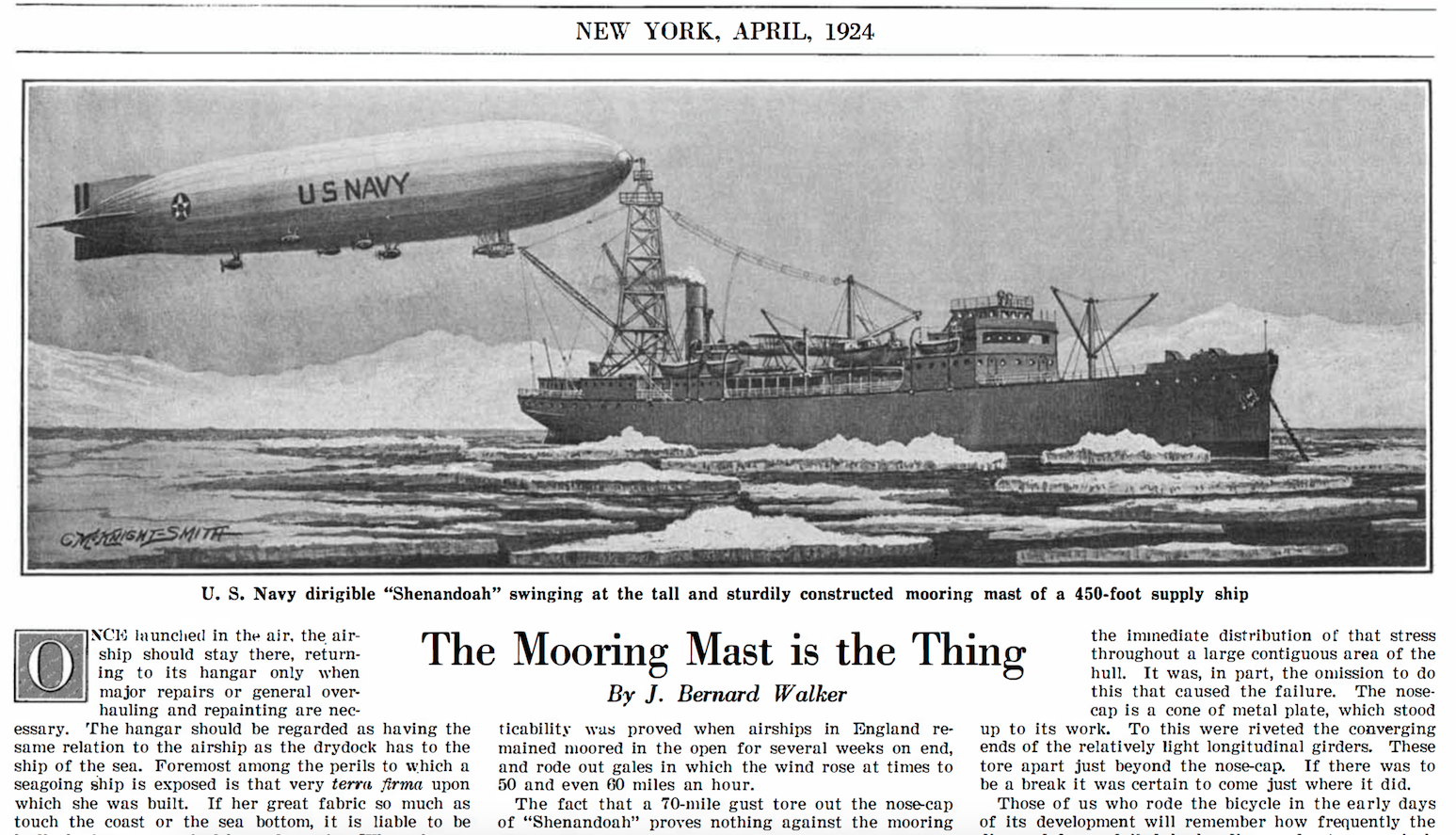
In the 1920s people imagined putting mooring masts on everything!
Scientific American
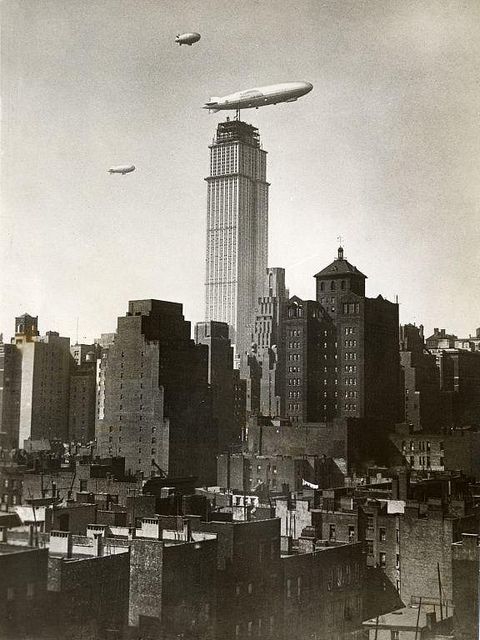
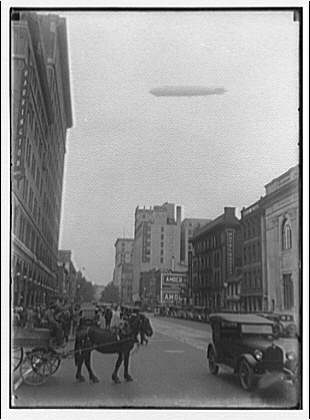
The ZR3 Los Angeles, made for America by the Germans as part of post-war reparations, flies over New York, above the construction of the Empire State Building.
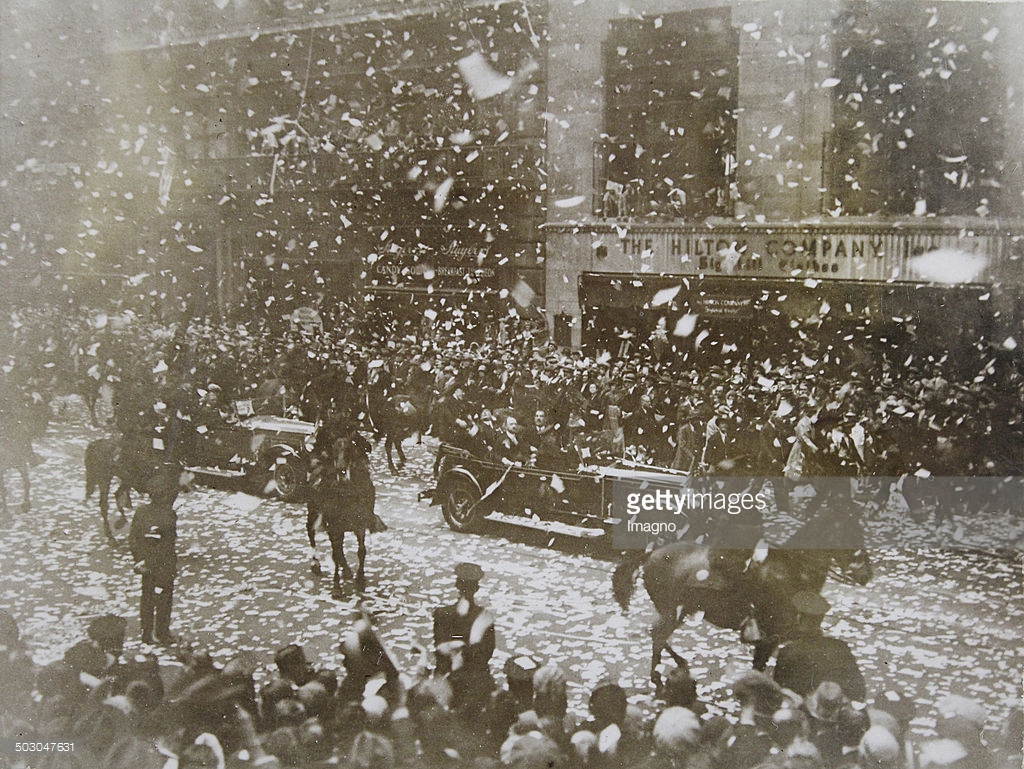
Dr Hugo Eckener and the crew of the Graf Zeppelin receive ticker tape parade in lower Manhattan.
Getty Images
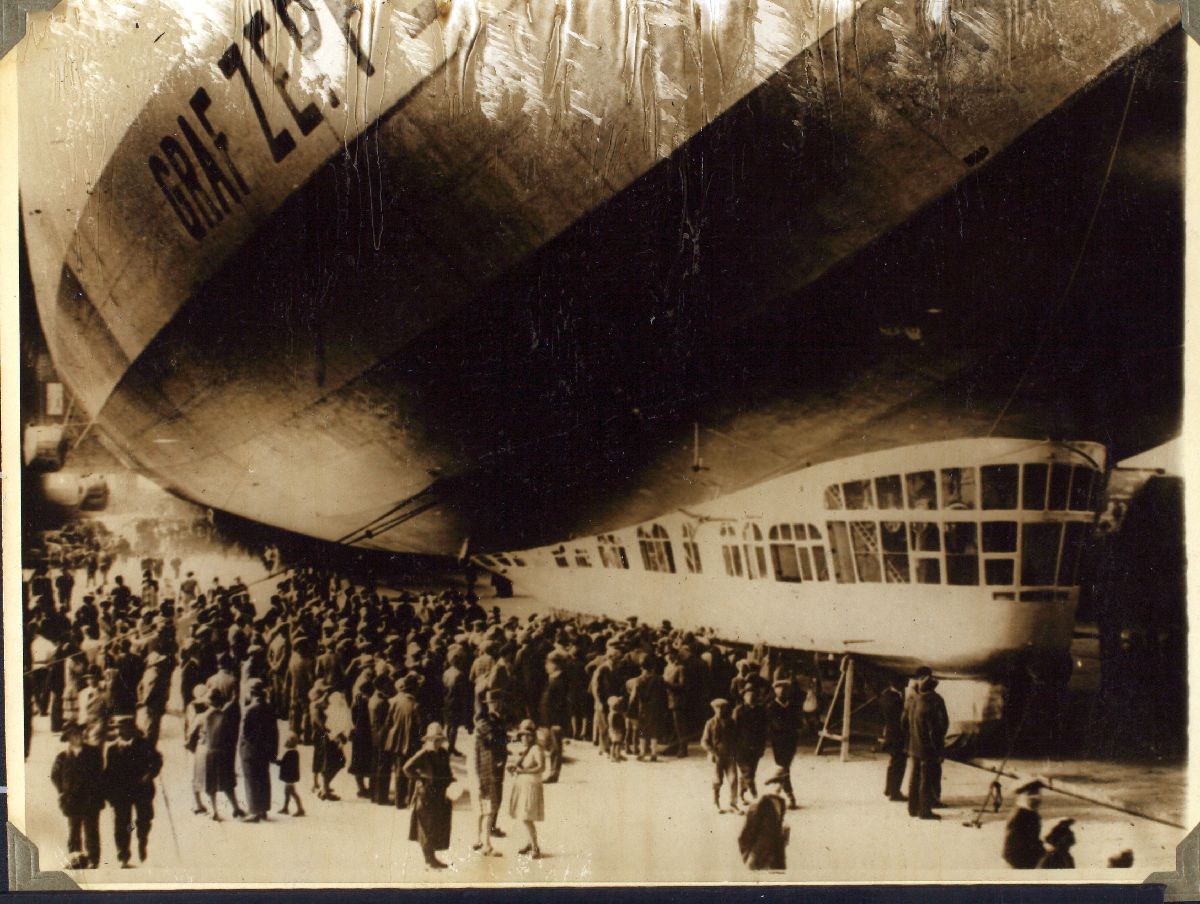
People gather around the Graf Zeppelin in an old file photo. Perhaps they’re boarding or are simply gathering in awe to view the marvelous airship.
SDASM Archives
Video of the Graf Zeppelin entering over the skies of New York, photographing the city.
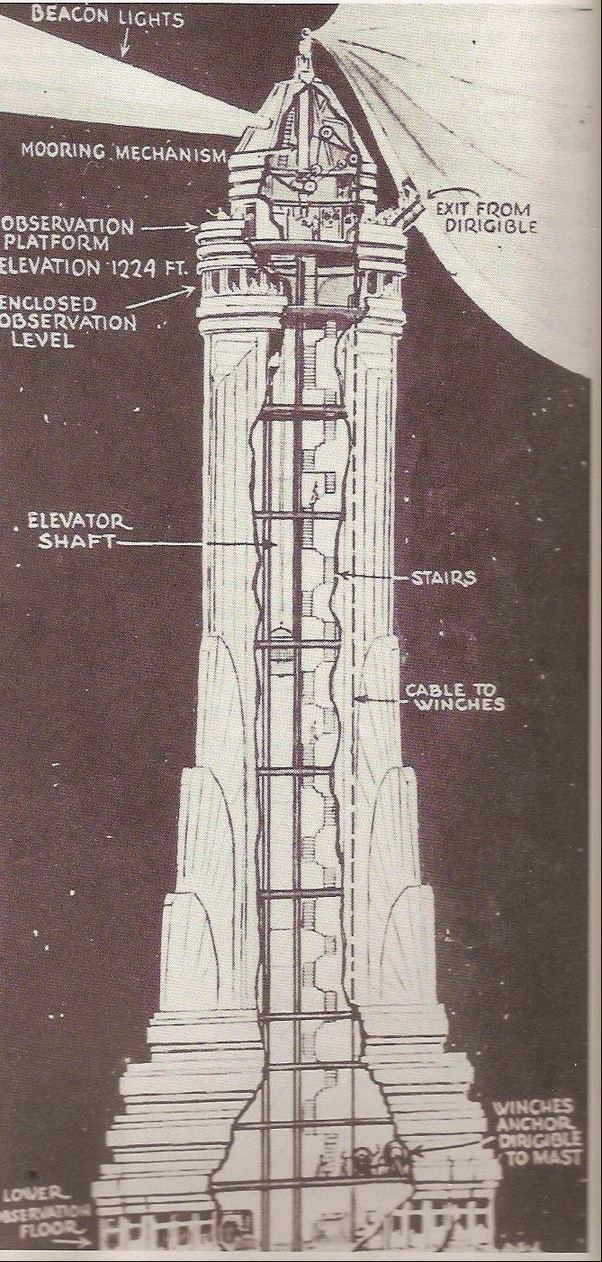
A diagram of the mooring mast atop the Empire State Building — at least as it was supposed to have worked.
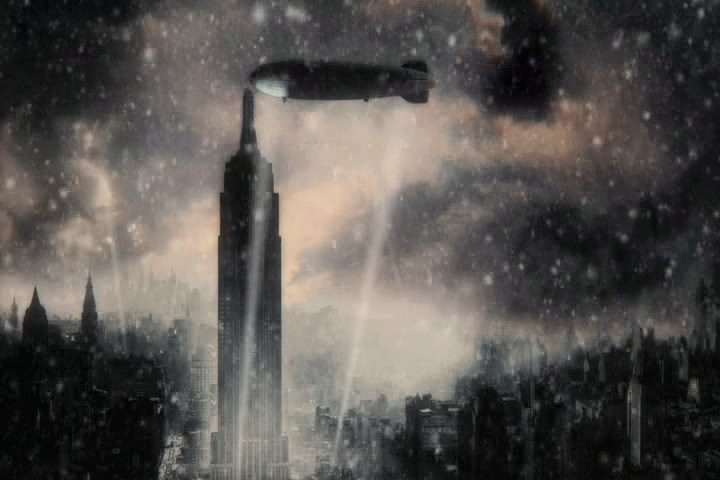
In Sky Captain and the World of Tomorrow, a retro-futuristic film, the mooring mast is effectively used to deposit Gwyneth Paltrow on top of the Empire State Building.
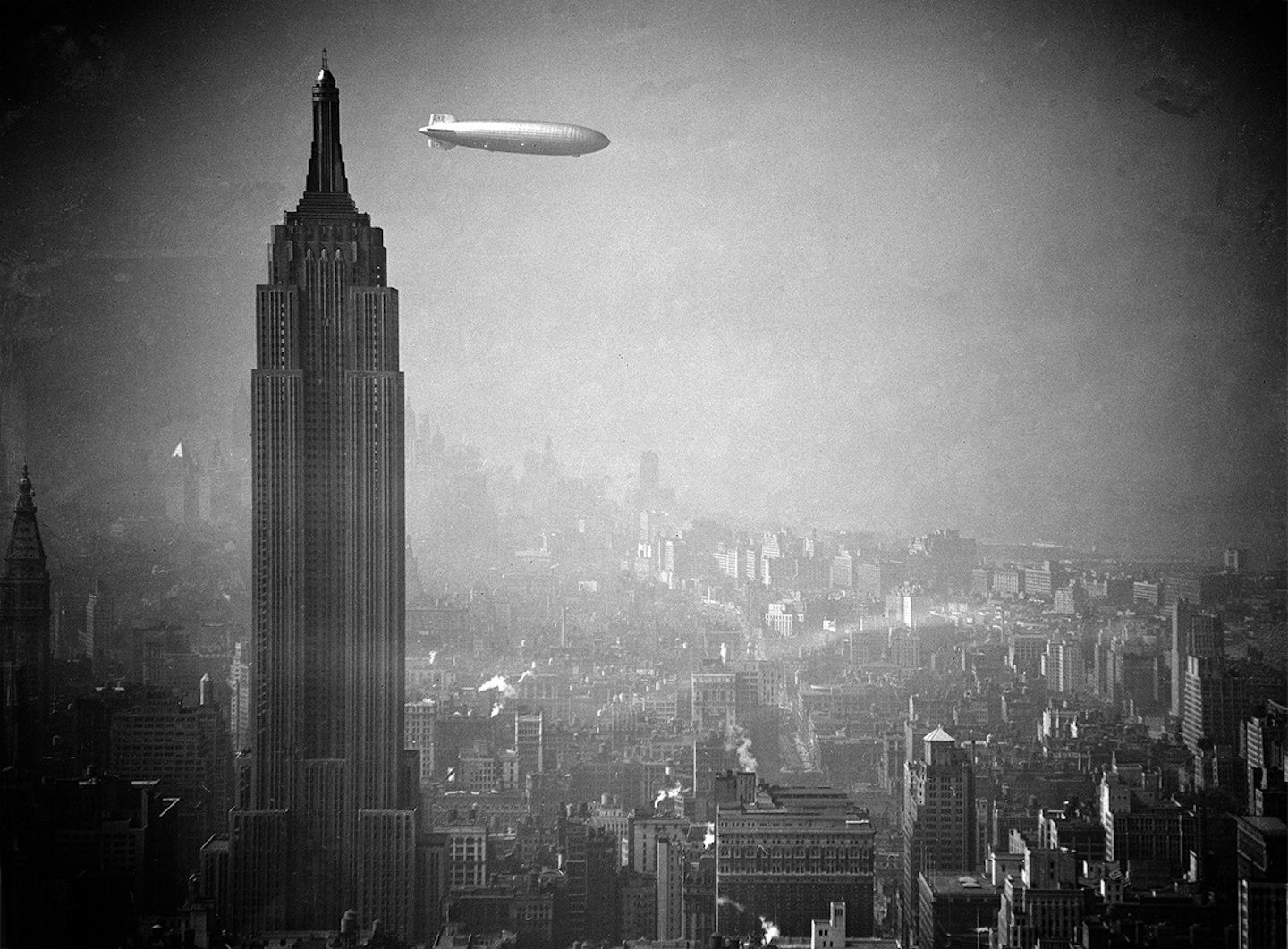
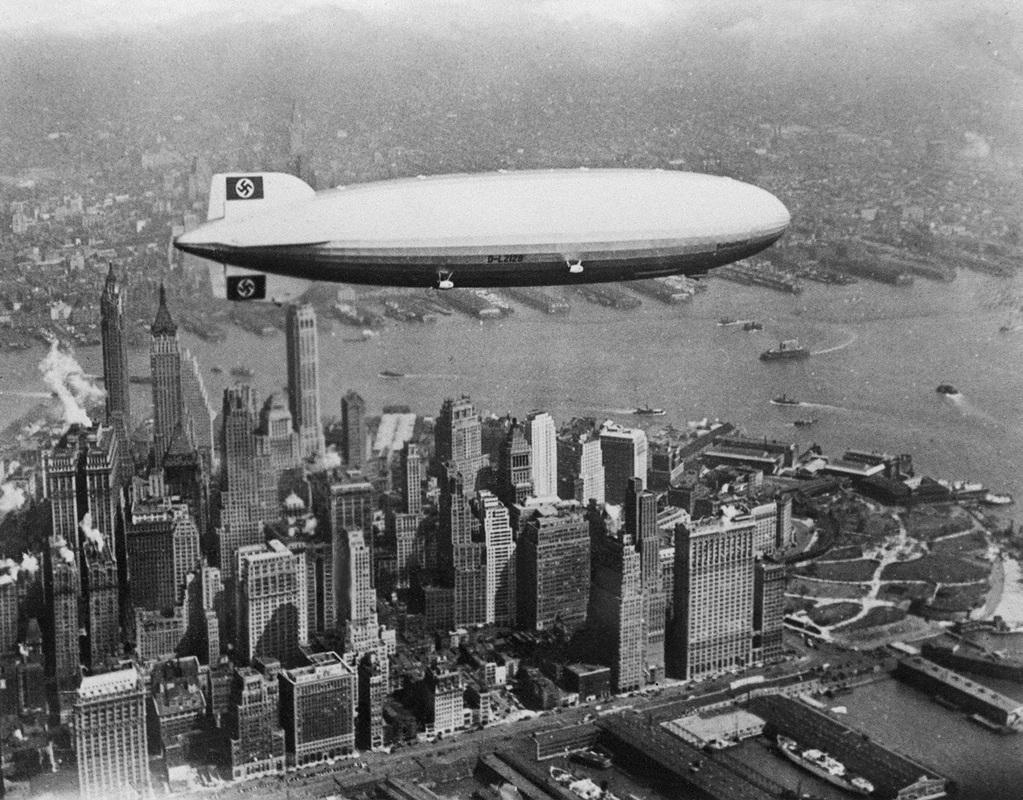
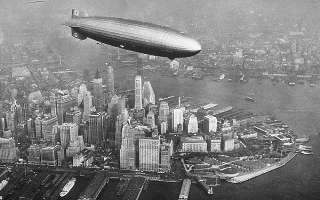
The Hindenburg flew over Manhattan on a few occasions. The photograph below is from August 8, 1936.
Courtesy AP
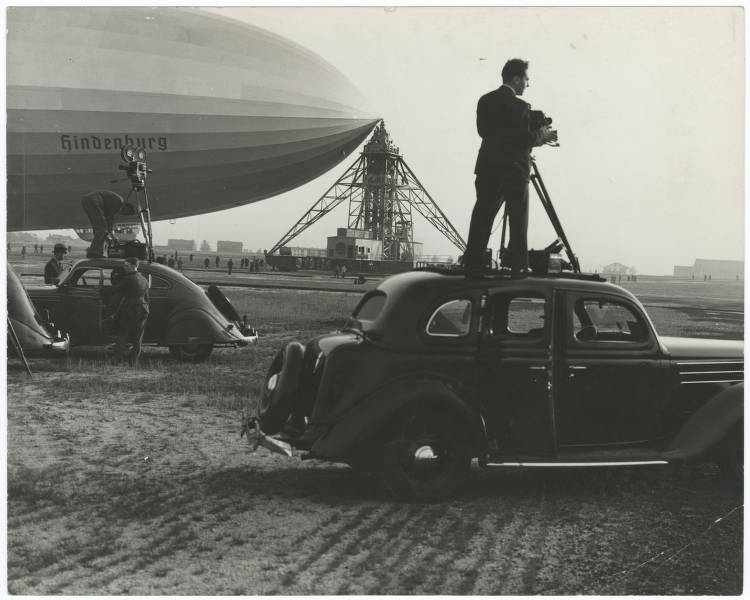
The Hindenburg had actually safely docked at the Lakehurst facility a few times in 1936. From the photo caption: “Various news crews covering the landing of the Hindenburg, in 1936, in Lakehurst, New Jersey. The man perched atop the vehicle on the left is Albert Emanuel ‘Al’ Gold, of Fox Movietone News, who would eventually capture footage of the famous Hindenburg disaster, in 1937.”
Source: Amanda Emily, Looking Back: The Lesson of Lakehurst, TV News Storytellers, August 5, 201
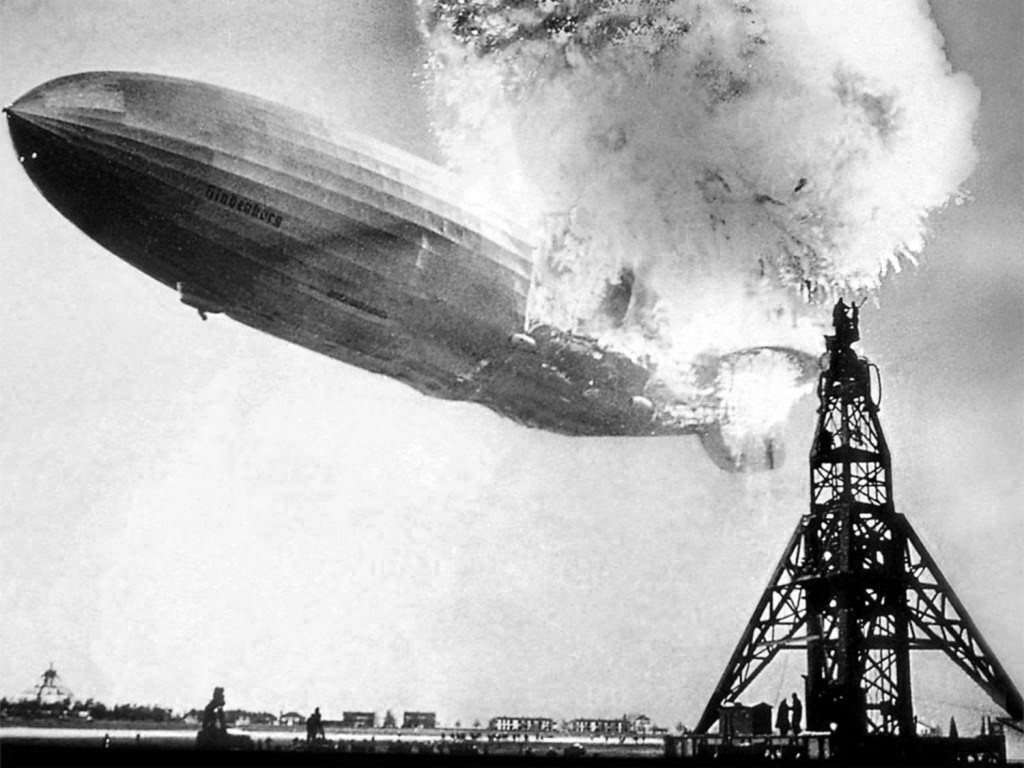
The Hindenburg ignites over Lakehurst and so hurtles to the ground in a horrifying burning mass.
Newsreels featuring the Hindenburg and Herbert Morrison’s distraught play-by-play.
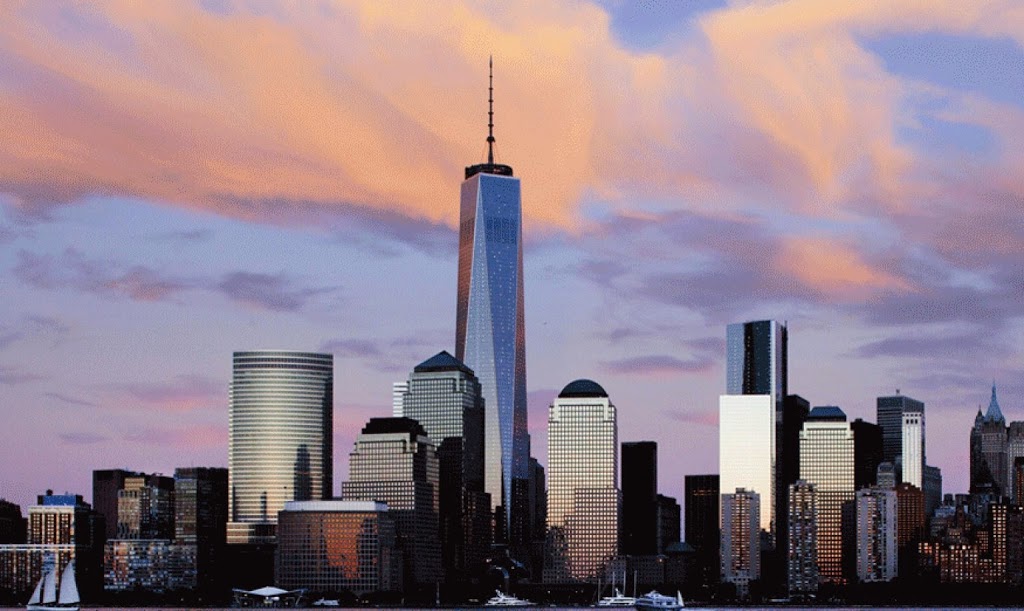
PODCAST One World Trade Center was declared last year the tallest building in America, but it’s a very different structure from the other skyscrapers who have once held that title. In New York, owning the tallest building has often been like possessing a valuable trophy, a symbol of commercial and social superiority. In a city driven by commerce, size matters.
In this special show, I give you a rundown of the history of being tall in New York City, short profiles of the 12 structures (11 skyscrapers and one church!) that have held this title. In several cases, these weren’t just the tallest buildings in the city; they were the tallest in the world.
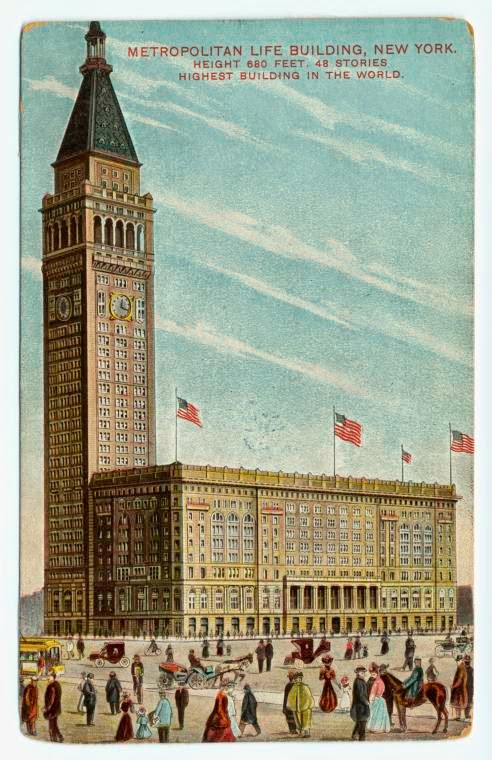
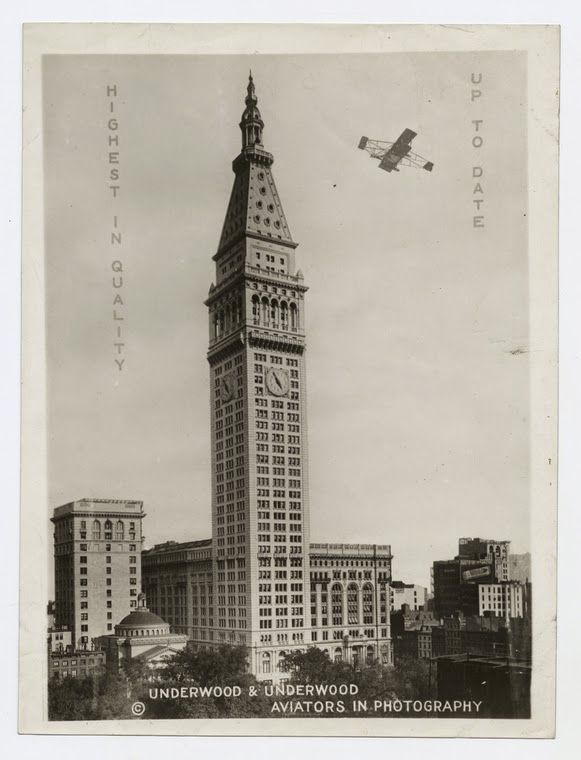
At right: The Metropolitan Life Building, the tallest building in the world in 1909
Skyscrapers were not always well received. New York’s tallest building in 1899 was derisively referred to as a “horned monster.” Lower Manhattan became defined by this particular kind of structure, creating a canyon of claustrophobic, darkened streets. But a new destination for these sorts of spectacular towers beckoned in the 1920s — 42nd Street.
You’ll be familiar with a great number of these — the Woolworth, the Chrysler, the Empire State. But in the early days of skyscrapers, an odd assortment of buildings took the crown as New York’s tallest, from the vanity project of a newspaper publisher to a turtle-like tower made for a sewing machine company.
At stake in the race for the tallest is dominance in the New York City skyline. With brand new towers popping up now all over the five boroughs, should be worried that they’ll overshadow the classics? Or should the skyline always be in a constant state of flux?
ALSO: New York’s very first tall buildings and the ominous purpose they were used for during the Revolutionary War!
Photo courtesy Huffington Post
The current tallest buildings in New York City (as of 2020) are
1) One World Trade Center — 1,776 feet 2) Central Park Tower (225 West 57th Street) — 1,550 feet 3) 111 West 57th Street — 1,428 feet 4) One Vanderbilt — 1,401 feet 5) 432 Park Avenue — 1,394 feet 6) 30 Hudson Yards — 1,268 feet 7) Empire State Building — 1,250 feet 8) Bank of America Tower — 1,200 feet 9) Three World Trade Center — 1,171 feet 10) 53W53 (MoMA Tower) — 1,050 feet 11 tie) Chrysler Building — 1,046 feet 11 tie) New York Times Tower — 1,046 feet 12) One57 — 1,005 feet
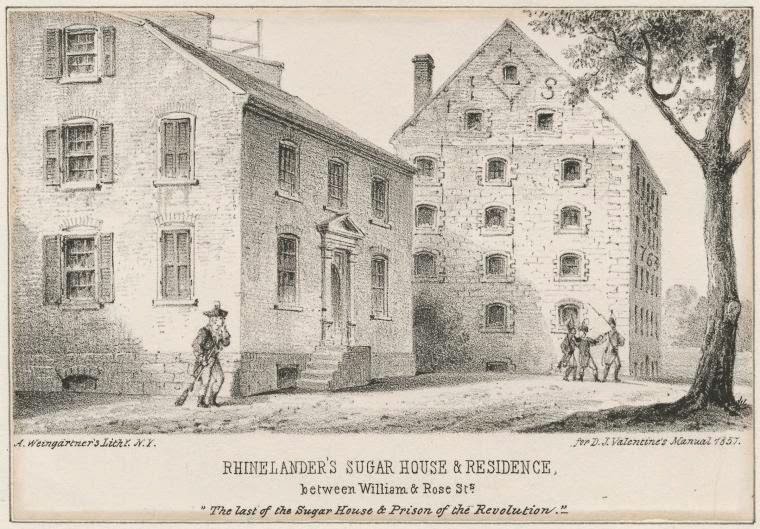
The sugar houses owned by the Rhinelander family. Others owned by the Van Cortlandts and the Livingstons would have all been the tallest structures in the city.
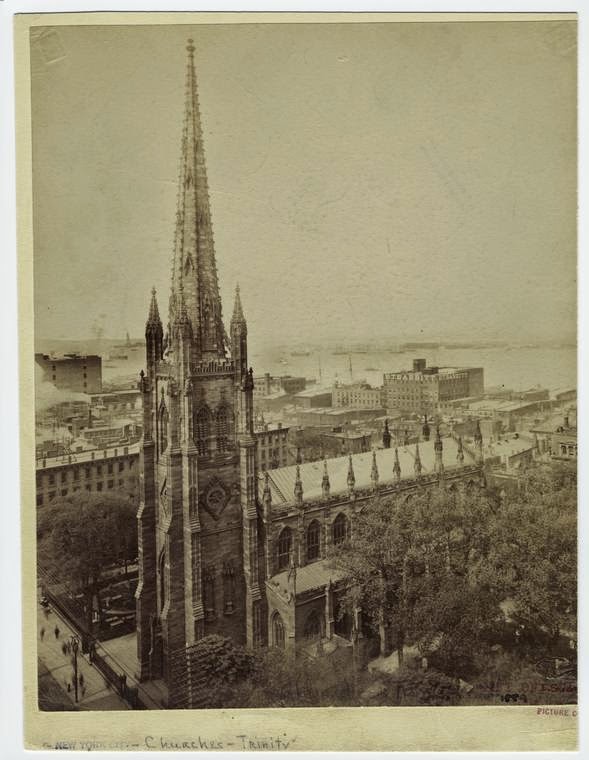
Trinity Church in 1889, the final year that it was the tallest permanent structure in New York City. (NYPL)
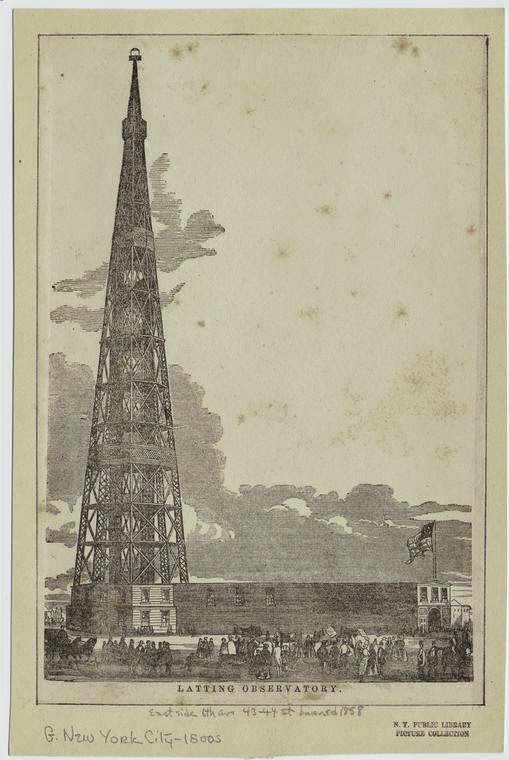
Trinity would be unparalleled in the New York skyline by any permanent buildings for almost 46 years. But the Latting Observatory at the Crystal Palace Exhibition for a short time allowed New Yorkers the highest vantage on the island.
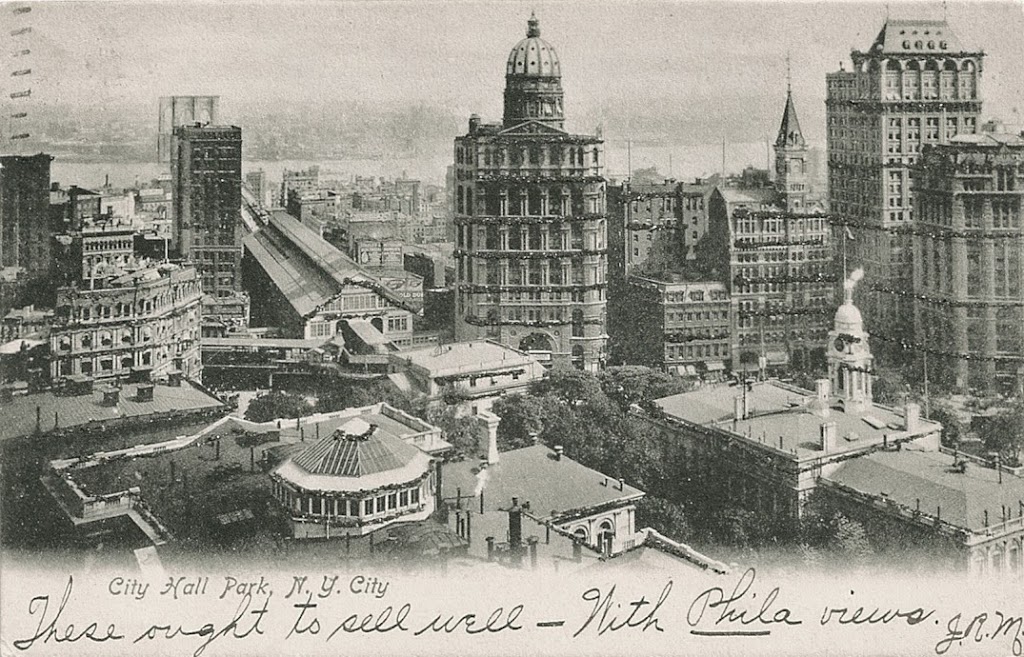
Joseph Pulitzer’s New York World Building, in context with its surroundings, including its proximity to the Brooklyn Bridge. This location would be its undoing, as the building was demolished later to make way for an automobile ramp. (Courtesy Rotograph Project)
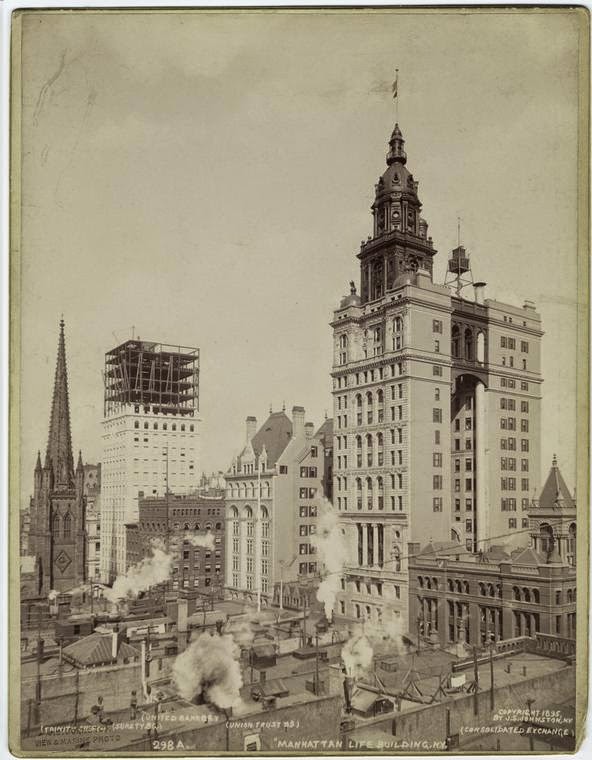
The Manhattan Life Insurance Building became a new neighbor for Trinity Church in 1894. Its lantern top served as a lighthouse and an office for the New York Weather Bureau. (NYPL)
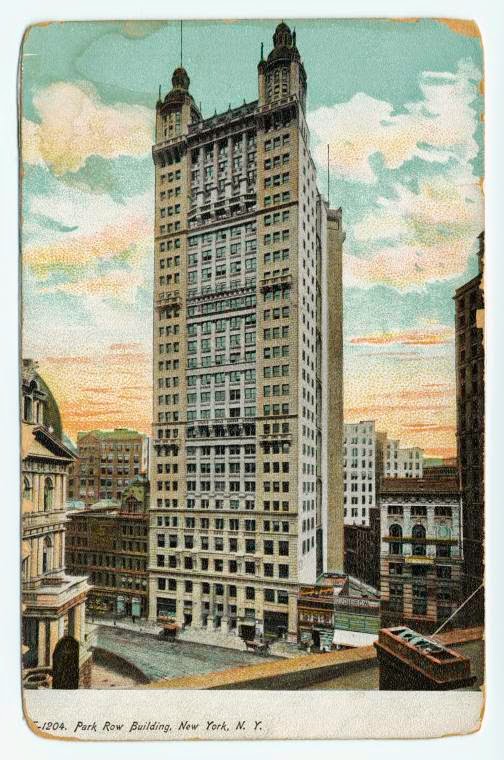
The Park Row Building, the original ‘twin towers’ of lower Manhattan, was criticized for its two-dimensional design but it’s managed to survive into modern times. It used to host J&R Music World on its ground floor until that business closed last year.
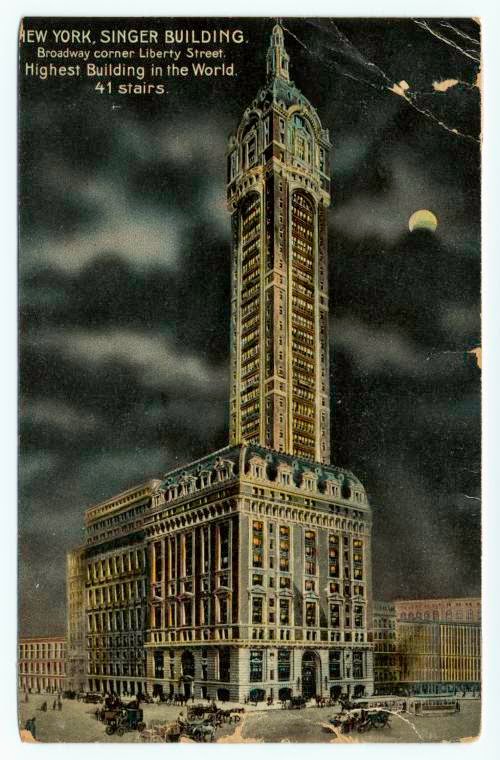
The extraordinarily unusual headquarters for the Singer Sewing Machine Company. The Singer Building has the rare distinction of being the tallest building every purposefully torn down when it was demolished in the 1960s.
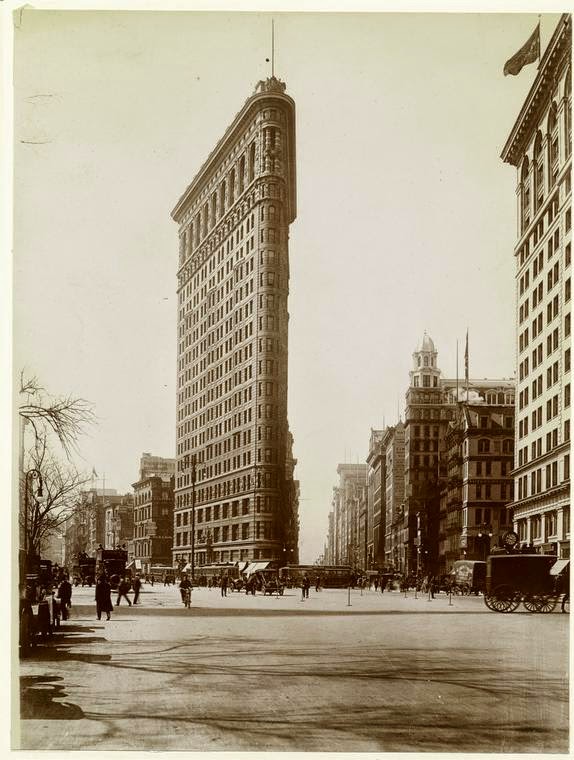
Madison Square was already graced with both the Flatiron Building (below) and Madison Square Garden when it finally got its tallest skyscraper….. (NYPL)
…the Metropolitan Life Insurance Tower, pictured here with an early airplane above it, in a postcard produced by Underwood & Underwood. (NYPL)
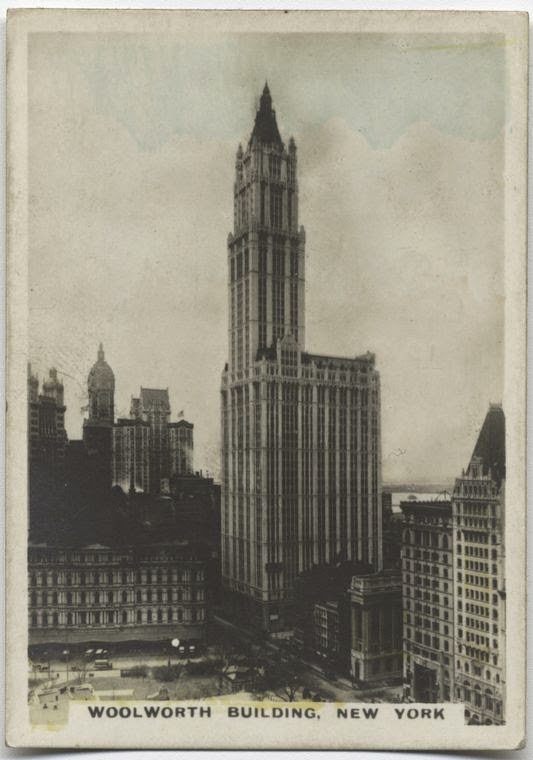
The Woolworth Building (featured here on a cigarette card) is one of the greatest extant examples of pre-zoning law construction with no setbacks along the front side.
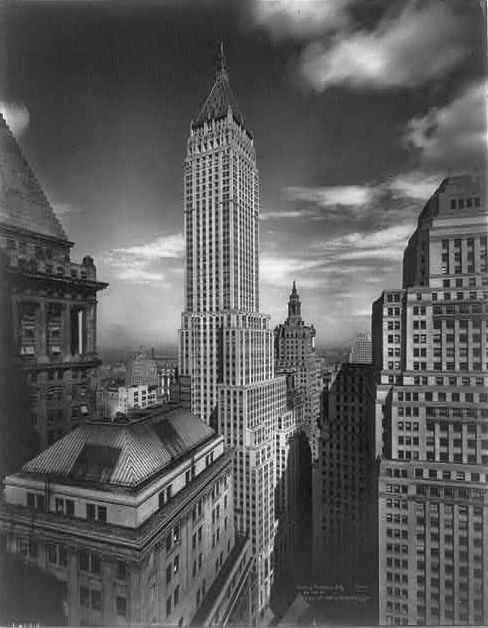
The Manhattan Company Building (or 40 Wall Street) sat among a host of other skyscrapers and was only briefly the city’s tallest building until Walter Chrysler and William Van Alen debuted their surprise uptown.
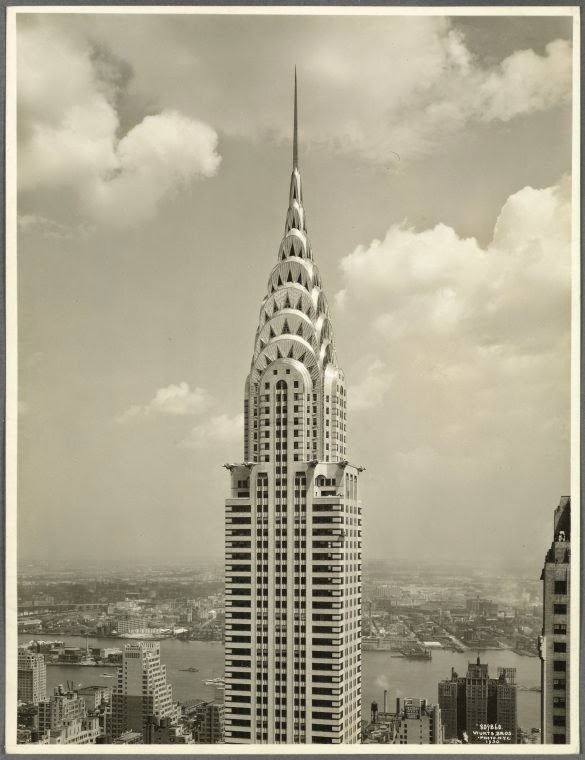
The Chrysler Building in 1930 with its spire freshly attached to the top, making it (for a little over a year) the tallest building in the world.
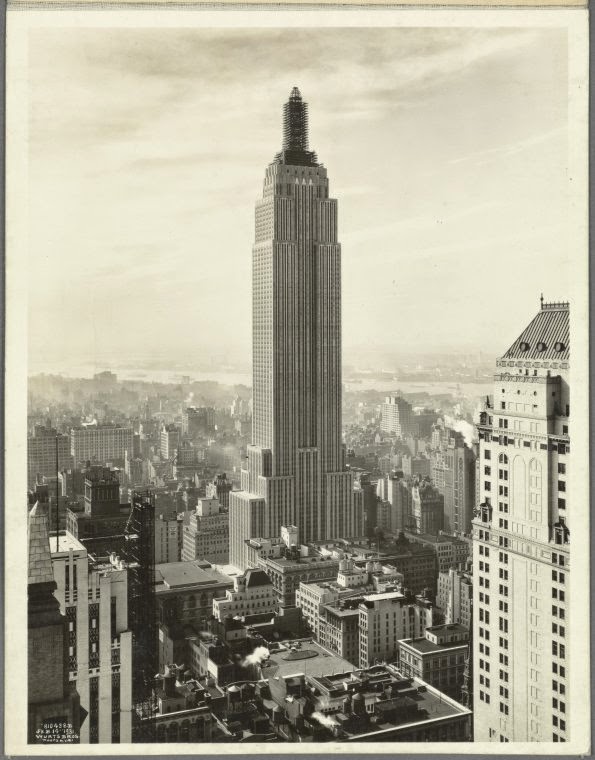
The Empire State Building became the tallest building — and the defining symbol of New York City — thanks to a determined executive from General Motors and Al Smith, the former governor of New York.
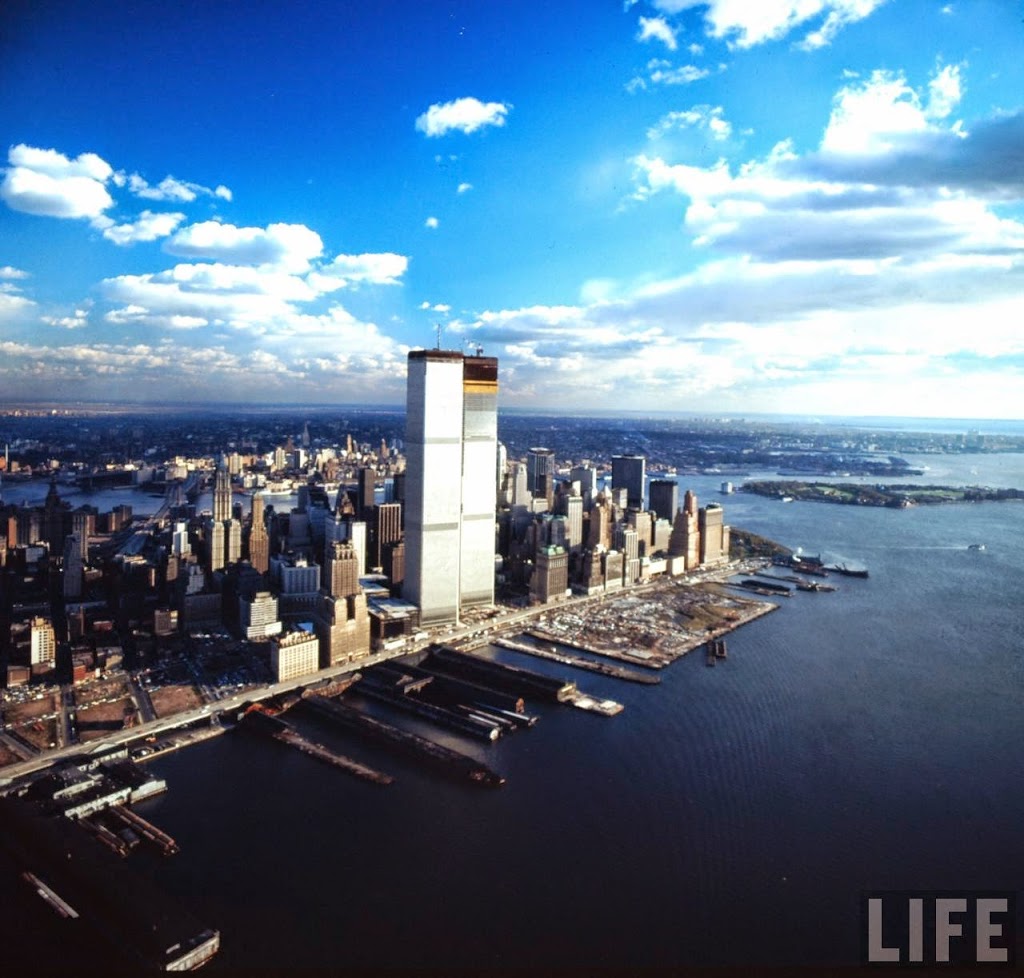
The World Trade Center returned attention to lower Manhattan and set a new record for height, literally leaving other former record holders in its shadow. (Photo courtesy Life Magazine)
SOURCES and RECOMMENDED READING
AIA Guide To New York City 2014 Empire State Building: The Making Of A Landmark — John Tauranac Higher: A Historic Race to the Sky and the Making of a City — Neal Bascomb Manhattan Manners — M. Christine Boyer Pulitzer: A Life In Politics, Print and Power — James McGrath Morris Rise of the New York Skyscraper — Sarah Bradford Landau Skyscrapers:A Social History of the Very Tall Building In America — George H. Douglas Supreme City — Donald Miller and resources from the Landmark Preservation Commission and the New York Skyscraper Museum
Did you see the spectacular debut of the Empire State Building‘s new LED lights last night, choreographed to the music of Alicia Keys, being simultaneously broadcast on four New York radio stations?
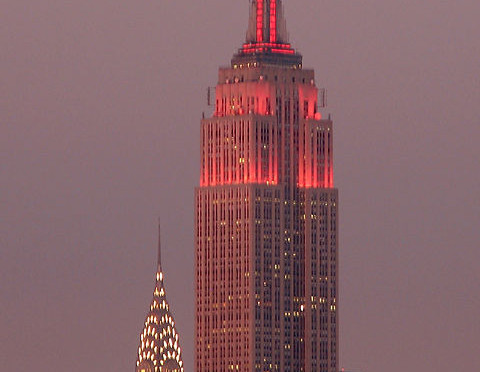
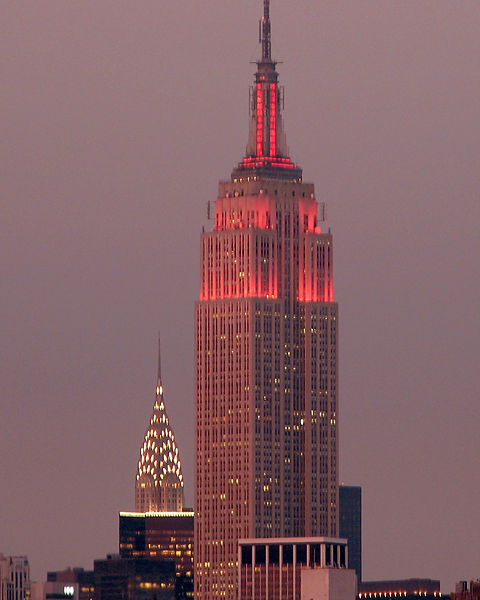
The allure of the Empire State Building as a glamorous light spectacle has been around almost since the mast — originally designed, but never used, as a mooring mast for zeppelins — was raised in 1931.
Nearby Times Square was bathed in the light of neon advertisement, and its master of manipulation was lighting designer Douglas Leigh. The iconic beacon would have been irresistible to Leigh, and in 1941, he proposed for the top of the Empire State something that would have been easily his most ambitious, most striking lighting display to date — an illuminated bottle of Coca-Cola.
According to author John Tauranac, the famous curvaceous bottle would have sat along the spire, changing color based upon the weather. It was one of several potential Empire State Building/Coke tie-ins planned, including a Coke-sponsored performance by the orchestra of Andre Kostelanetz performed at the top, broadcast nationwide on the radio. Coke products would have featured “a small guide to decipher the colors.“
The Empire State Building could have used this publicity at this time, as owners were scrambling to fill vacancies within the building. With Rockefeller Center, the Chrysler Building and dozens of other towers now constructed, midtown Manhattan was experiencing a glut of office space. A Coke sponsorship would have given the Empire State Building free publicity, not to mention sizable rental fees.
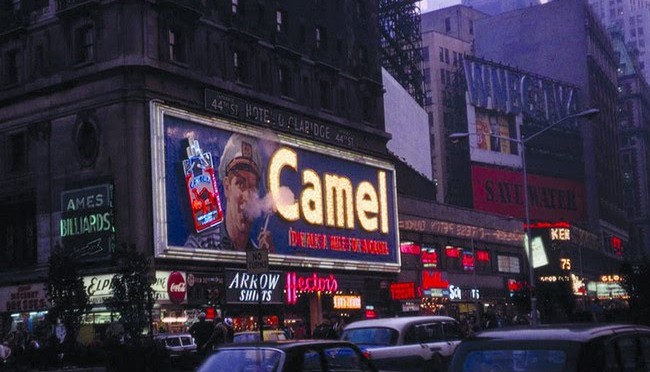
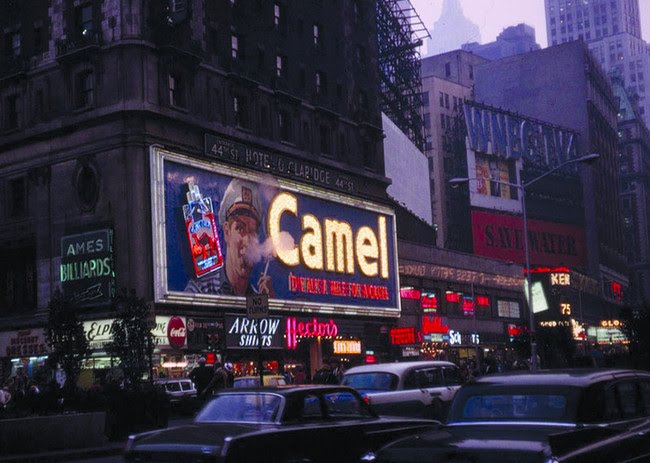
Below: Leigh’s famous smoking Camel ad in midtown Manhattan. The Empire State Building can be seen up in the corner.
But Leigh’s timing was terrible; even as the plan was being drafted, Pearl Harbor was attacked, and America entered World War II. During the war, there would be no lights at all atop the building or in its upper floors.
A few years later, in July 1945, a B-25 bomber would crash into the Empire State Building, killing the pilot and several within the building. More amazing facts about that tragic accident here.
Leigh never gave up his dream of transforming the Empire State Building. After the war, Leigh told Life Magazine he wanted to put a gigantic, lighted cigarette on the building. [source] Many decades later, Leigh would finally get his chance — albeit without product placement — designing a new, colorful lighting system in time for the country’s 1976 Bicentennial celebration.
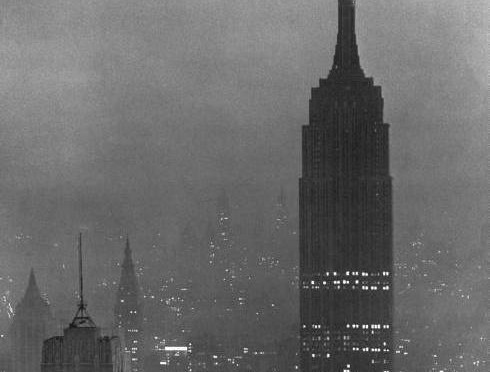
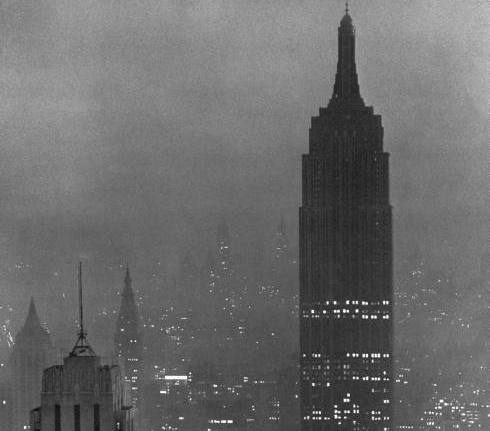
Above: War-time Empire State Building, circa 1943. The upper floors would dim at night to conserve energy costs (Photo Andreas Feininger)
Sixty-four years ago today, July 28, 1945, a B-25 bomber on its way to Newark Airport accidentally meandered over the foggy city and smashed into the Empire State Building. Some rather startling details of the event:
— The pilot, Lt. Colonel William Smith, was simply on his way to pick up his commanding officer
— Finding himself off-course and over the city, Smith managed to avoid crashing into the Chrysler Building, Rockefeller Center and the New York Central building (today’s Helmsley Building).
— It was impenetrably foggy that morning, which would explain his final words: “From where I’m sitting, I can’t see the top of the Empire State Building”
— It was a Saturday, however a few businesses were open that day. As a result 11 people in the building died that day, on top of the three crewmen in the plane. Eight employees of the Catholic War Relief Office, on the 79th floor, were killed.
— One engine crashed through the entire length of the building and came out the other side to land and promptly destroy the penthouse apartment (and thousands of dollars of artwork) of sculptor Henry Herring at 10 W. 33rd Street, a building owned by Vincent Astor.
— Betty Lou Oliver, on the 80th floor, barely escaped the crash, but when rescuers attempted to lower her out of the building via the elevator, the cables snapped and she and the elevator car plummeted 75 stories (over 1,000 feet). She survived.
— The Army ended up shelling out payments for damage, including compensation for a restaurant plate-glass window that had been blown out over ten blocks away.
(Above: Ernie Sisto’s famous front-page photograph of the wreckage for the New York Times)
Yesterday the media reported the grim news that a woman committed suicide by leaping out a 39-story window of the Empire State Building. The woman was an employee in the building; however New York’s most recognizable symbol, and its 102 floors, has been the final destination for over 30 people since it opened its doors in 1931. (According to one source, 35 as of 2006. Make that 36, I guess.)
Why do people choose famous places to leap from? Is it simply to grab attention, to attach a sense of the iconic to your final moment? Are they hoping they get caught before leaping? The Empire State, destined to represent the city’s promise and pure ambition, has also been a magnet for morbid thoughts even during its construction.
A construction worker, laid off in a swath of Great Depression job cuts, jumped from the building before it was even completed. (He chose to go in a different direction : the elevator shaft.) In 1947, a 23 year old woman jumped from the building to hit a United Nations limousine, resulting in an extremely famous Life Magazine photograph. (Go ahead, look. It’s strangely serene.) In fact, there were a rash of suicide attempts from the observation deck in 1947, including one jumper who seriously injured a pedestrian walking in the street below.
According to a paper by the New York Academy of Medicine, midtown Manhattan has seen dozens of suicides over the years, particularly from non-residents of the city, combining fantasies of their own ends with those of the city’s grandeur. This has of course caused safety concerns for people on the ground — “They said the man landed on a van parked on 33d Street” says a New York Times account of one event in 1981 — to the extent that the Empire State Building has had ‘suicide fences’ on its observation deck for many years. (Since, no surprise, 1947.)
However, believe it or not, somebody did survive a leap from the Empire State Building. She just didn’t fall very far.
As the story goes, in 1979, a depressed woman Elvita Adams jumped from the 86th floor to end her life. Yet the wind gusts can be quite powerful that high up and, unfortunately for her, one powerful gust actually blew her back into the building one floor below, breaking her hip. She was apprehended before she could try again. (And really, if something that extraordinary happens, she might have wanted to reconsider it anyway.)
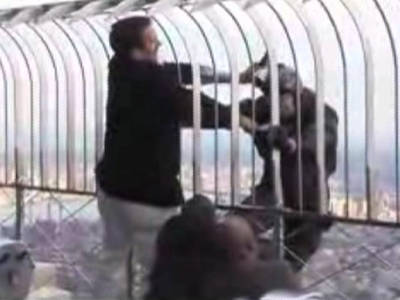
Of course, not everybody who attempts this horrible leap has a deathwish. Stunt aficionado Jeb Corliss was arrested in April 2006 when he tried to leap from the building wearing a parachute. Some of you may remember the heart stopping video of the man being apprehended from the other side of the fences. (A screenshot is below.)
Having just written all of that, I almost feel required to put information for the New York Suicide and Crisis Hotline. You may now return to enjoying the Empire State Building as the vibrant, living, joyous icon of the city.
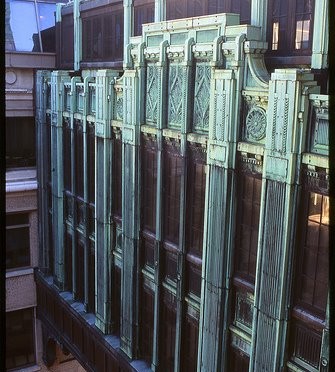
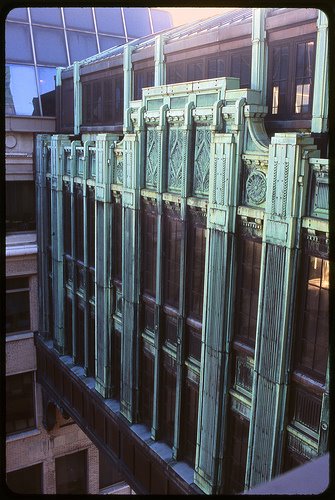
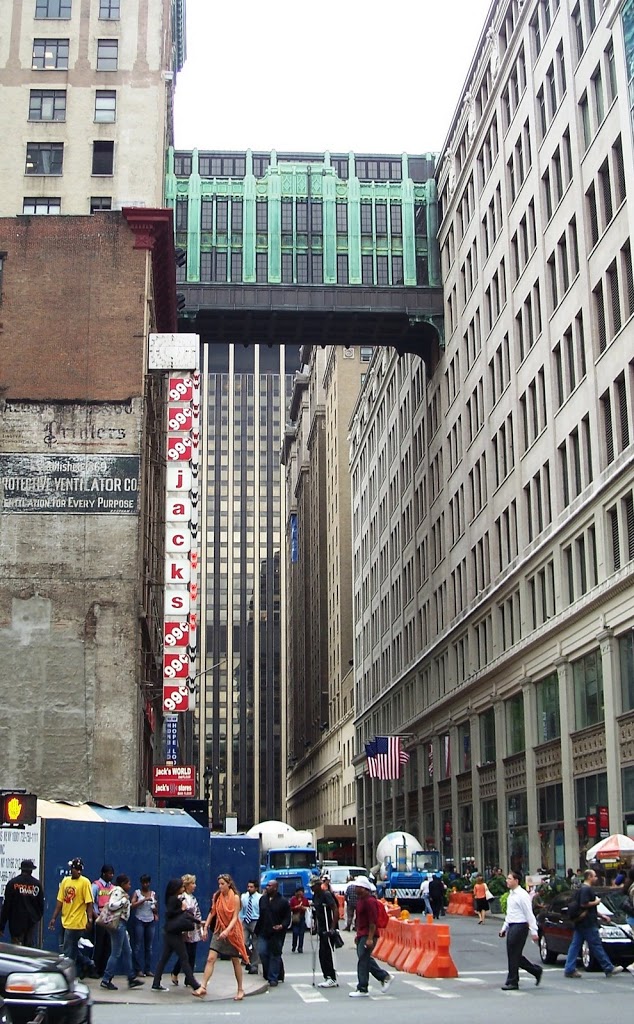
The blocks just south of Herald Square are pretty grim. Malls full of chain stores, bland electronic store fronts and fast food restaurants disguise a once vibrant shopping outpost, as department-store competitors of Macy’s flocked to the neighborhood in the early part of the 20th century. One strange vestige of this retail nostalgia still exists, in the form of a fabulous green copper traverse above 32nd Street.
Gimbels was a more than worthy adversary of nearby Macy’s. The two were Coke and Pepsi of early American shopping, with an early, antiquated catchphrase ‘Well, would Macy’s tell Gimbels?’ exemplifying the top-secret, competitive tactics of the business world.
Yet Macy’s was always the more respectable brand. Gimbels arrived in the Herald Square area in 1910 with a lackluster building by no less than Daniel Burnham (of Flatiron Building fame) who was clearly having an off-day. Despite (or perhaps, because of) innovations such as the first ‘bargain basement’, Gimbels never reached the same hallmarks of class and reputation that Macy’s did.
One way in which the Gimbel family did one-up its competitor was branching to a more fashionable street — Fifth Avenue. It did that by merging with its neighbor, Saks Thirty-Fourth Street, in 1922. Two years later, Saks Fifth Avenue, a joint venture of the Gimbels and the Saks, opened uptown and one block over.
Symbolically bridged to more desirable Fifth Avenue, Gimbels decided to link its Herald Square store more literally with a recently acquired annex across the street, building a custom traverse in 1925, a beautiful copper bridge, three story tall, created by the Richmond Shreve and William Lamb, a teeth-cutting project for two young architects who would go on to help design the Empire State Building.
Both the original Gimbels store and its annex have been horribly modified over the years, becoming Manhattan’s saddest mall. Yet, for some amazing reason, the copper bridge has been left virtually intact. Until the 1990s, both ends of the bridge were completely walled off and were only reopened to replace the bridge windows. Despite some fears that it might be getting ripped down, the musty but still beautiful sky bridge still hangs high above shopper’s heads, a reminder of a universe of cut-throat department-store wars.
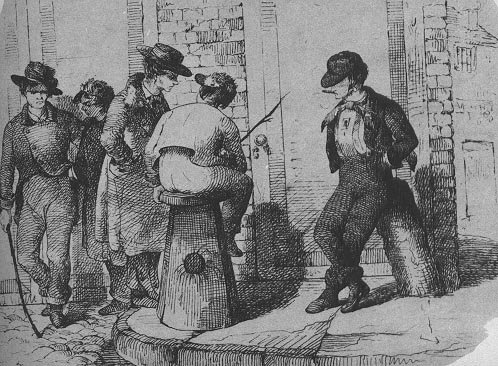
Early engraving of some Bowery b’hoys lolling about a fire hydrant, up to no good
Tomorrow is the one year anniversary of our very first podcast. We just want to say thank you to everybody who has subscribed on iTunes and other podcast services. Our first year has been a huge success and we have a lot of exciting plans coming up for year two!
I know we have some rather massive topics that we’ve yet to cover (Empire State Building, the subway system, Central Park) but we’ll get to most of them in the coming months, as well as experimenting with some more obscure topics.
I’ll try and keep updating this blog 4-5 times a week depending on my schedule.
Again, it’s been a blast so far and we’ve got lots of great ideas to keep improving the show. Thanks for letting us go ballistic geeky about this city that we love.
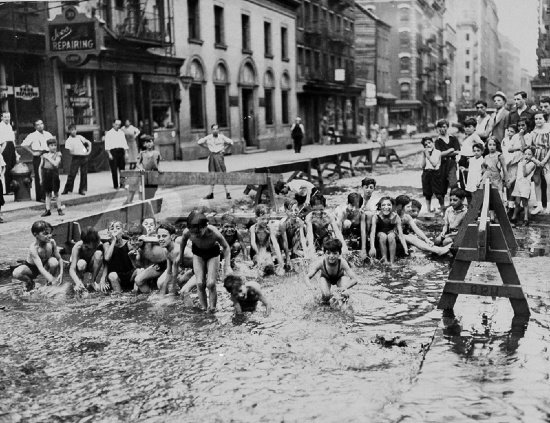
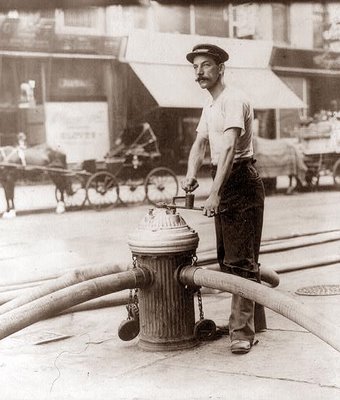
And now, more old New York City fire hydrant pictures. Why you ask? This year is the 200th anniversary of the very first hydrant in the city. Go here for a fairly comprehensive history of these invaluable street features:
Below: more fire hydrant shenanigans, this time from some wacky Lower East Side kids, picture dated July 9, 1936
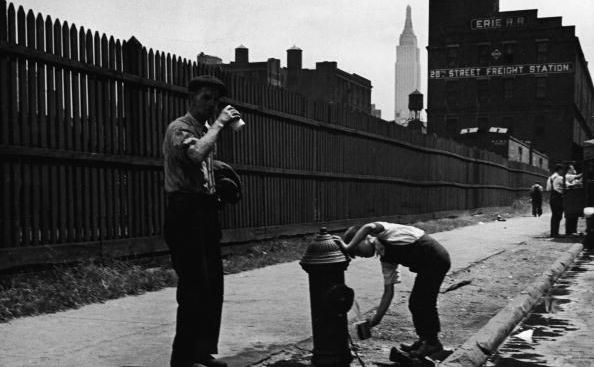
Also from the 30s, a more sedate usage of a hydrant, a father and his son take a sip with the five-year-old Empire State Building in the background
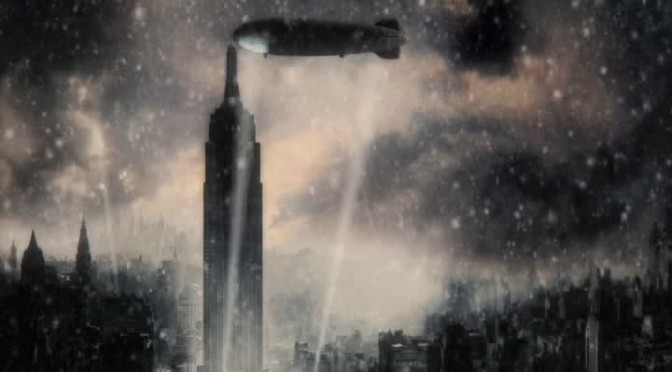
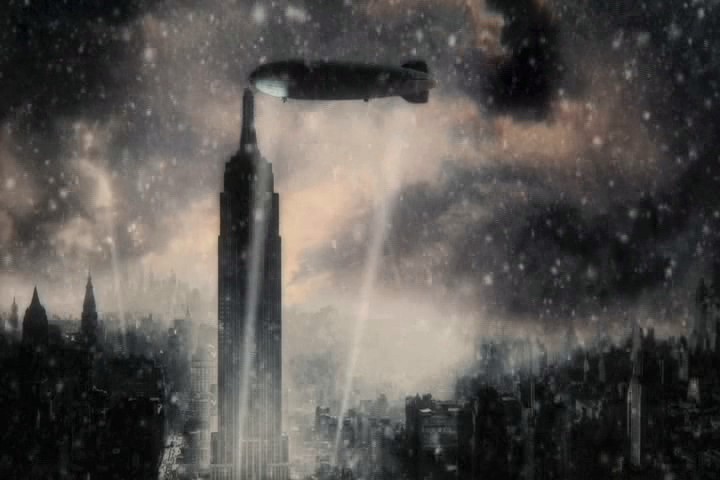
The Empire State Building’s proposed airship dock, as depicted in the movie Sky Captain and the World of Tomorrow
Airships (or dirigibles or Zeppelins, take your pick) were frequent flyers at the start of the century, and naturally many found themselves near or over New York City. In fact this almost defunct form of air travel was nearly (and disastrously) moored to the city’s tallest building.
The air above the city wasn’t as loaded with these flying conveyanes as our run-amok retro-futuristic notions of the city might like to envision. Even in 1911 during what’s considered the “Golden Age of Airships” a single airship above Times Square was enough to make headlines. “250 feet above the lights of Broadway,” proclaims the New York Times, “Frank W. Goodale, a boy aeronaut, in a new dirigible balloon made his third annual night trip to the Times Building through the air last night from the Palaisades Amusement Park, over on the Jersey side.”
And although they look cool in old photographs today, even then they were seen as mostly curiousities, elephants in the sky, compared to the smaller, more extraordinary aeroplanes of Glenn Curtiss and Wilbur Wright, which made their debut on Governor’s Island during the citywide 1909 Hudson-Fulton Celebration. “Aeroplanes fly, Dirigibles fail, in City’s Celebration,” proclaims the New York Press.
In 1924, the Graf Zeppelin, Germany’s rigid-balloon passenger air liner, made such a splash when it arrived over New York at the end of a 12-day voyage that the Graf’s tenacious commander Dr. Hugo Eckener — “the Magellan of the Air” — received his own personal ticker tape parade through downtown Manhattan in celebration.
The most popular docking station for these massive vessls was the port in Lakehurst, New Jersey. However, in one of the more romantic anecdotes of our most famous landmark, the Empire State Building’s majestic spire was originally designed to dock airships.
With the enthusiastic support of former governor Al Smith, the Empire State opened in 1931 installed with wench and docking equipment and fortified to hold large aircraft in place. He even called in the Navy to assist in the high-profile project.
Modern Mechanix extoled the virtues of this aerial midtown terminal.
But the Navy was naturally sceptical, as was Eckener, whose Zeppelins would have used the Empire’s mast. The reason, of course, was the massive windgust created by the buildling canyons from so high up, the release of water ballast onto city streets and the deathdefying route in which passengers would have to disembark.
Eventually no more than a couple airships ever docked at the Empire State Building, and those delivered no human cargo, only newspapers, thrown from the dirigible window.
Had things gone Smith’s way, Eckener’s great Hindenberg might have attempted to dock high above the city on May 6, 1937.
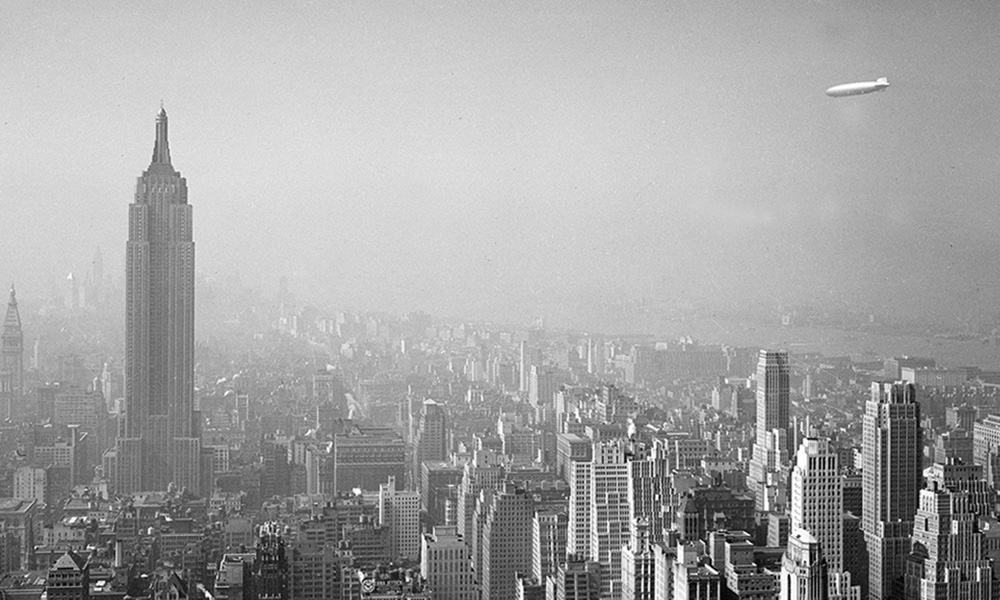
Instead, the destruction of the Hindenberg in Lakehurst, New Jersey, on that day drew a curtain on commercial airship service. Most of us remember the extremely dramatic footage of the Hindenberg melting into flame, and that emotional newscaster. What most don’t know is that the Hindenberg was cruising over Manhattan moments before the terrible explosion (below).
Blimps are still very much an occasional feature of the skies over the city today, mostly over the sports stadiums. The era of the airship is far from over. In fact, out in the Queens neighborhood College Point, location of one of New York’s first airports Flushing Airport, a blimp company is proposing to built the world’s first blimp port.
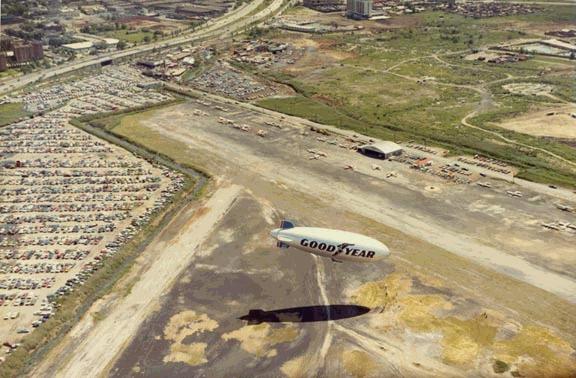
A spectacular shot of the Goodyear Blimp hovering over Flushing Airport, from 1976. Goodyear still makes blimps, but Flushing Airport has long since closed:
I apologize for the second post in a row about films, but I had to ask the question, when did destroying New York become hot again?
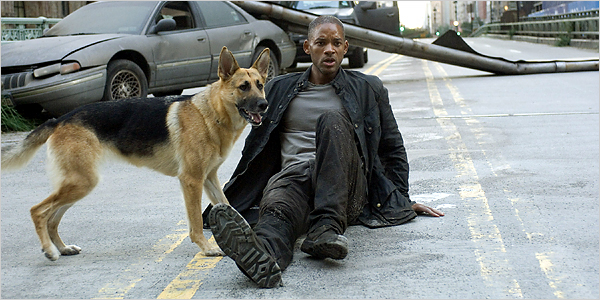
This Friday is the opening of I Am Legend, an adaptation of Richard Matheson’s classic thriller about the last non-zombiefied human being alive. In this case, he resides in New York City, the population wiped out by a virus. Nice to know that the last representative of the human race is charming, witty, and a former rapper.
If that’s not enough doomsday for you, JJ Abrams brings us Cloverfield next month, about a sea monster ‘the size of a skyscraper’ ravaging New York. I almost breathed a sigh of relief when I found out that M. Night Shyamalan’s The Happening releasing next spring, takes out Philadelphia.
Tokyo may be the one with the most movie monsters attacking it in film history, but New York has taken it pretty hard from a variety of fictional sources. Here’s the top ten (I left out films that actually destroy the whole earth):
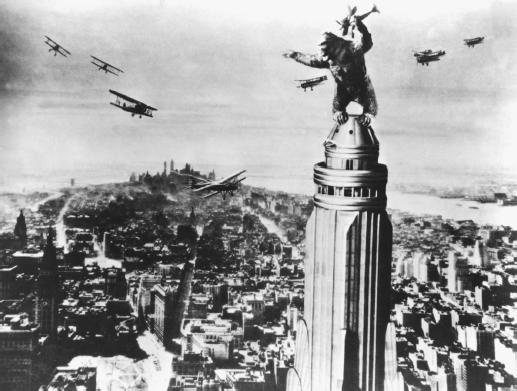
1. King Kong (1933) Sure, they destroy more in a run-of-the-mill Fantastic Four or Spider-man movie these days than ole Kong does here, but the sheer novelty at the time of urban carnage was enough to petrify audiences. His attack on the elevated train is still terrifying. Thank God he merely climbs the Empire State Building.
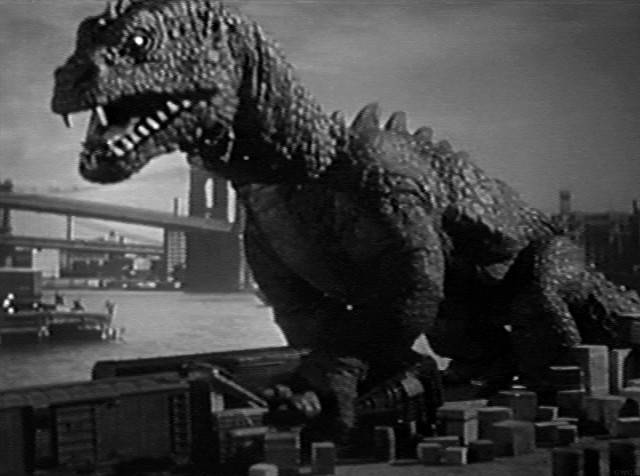
2. Beast From 20,000 Fathoms (1953) Atomicly-woken prehistoric beastie with germ-infested blood plays tourist in Manhattan, eventually finding a suitable lodging at a roller-coaster in Coney Island. The movie is flat and plotless, but love that Ray Harryhousen stop-motion monster. If it wasn’t so destructive, the monster might be a little lovable.
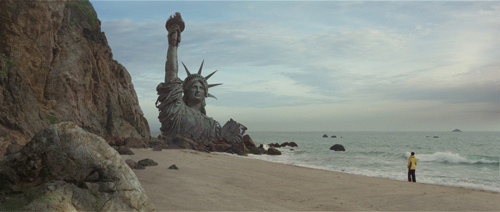
3. Planet of the Apes (1968) By placing it on this list, I suppose I’ve spoiled the ending for you.
4. Escape From New York (1981) John Carpenter takes a different approach to the Manhattan destruction theme — turning it into a gigantic prison — and along the way, makes a potent comment about New York in the late 70s.
5. Ghostbusters (1984) New York City has seen its share of monsters. From the skies, we’ve had Q: the Winged Serpent. From below, C.H.U.D. And in our elevators, those damned Gremlins! Even Godzilla‘s taken a snack by the Flatiron Building, years before the opening of the Shake Shack. But no big baddie comes closer to the hearts of New Yorkers than the sugary goodness of this sweet ectoplasmic ogre, successfully dispatched by Dan Ackroyd and Bill Murray.
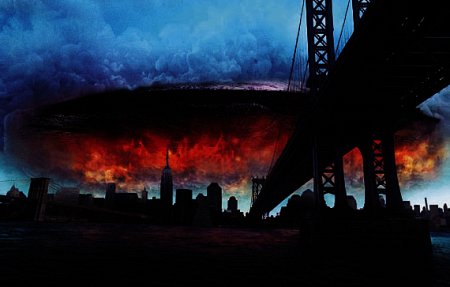
6.Independence Day (1996) Destroying New York City really came into its own cinematically in the 90s. The unease at seeing our fair city blown to smithereens by alien blasts is offset by the cries of joy of future architects and city planners at the alien’s first target — the Pan Am/Met Life building. It is sort of awful seeing Park Avenue South wiped away by flames. Some great restaurants, gone in a flash!
7. The Siege (1998) Technically the only movie on the list that really ‘could’ happen, however the filmmakers glee is killing off mass groups of New Yorkers is just plain sadistic. The bombing of a Broadway theater — look, that rich woman is missing her arm! — is of particular poor taste. Maybe it would have been easier to swallow had the movie been actually, you know, good.
8. AI: Artificial Intelligence (2001) Steven Spielberg creates some graceful carnage — waterfalls and flocks of birds among toppled buildings — and includes a vision of a destroyed Twin Towers in a rather unfortunate year of release. Don’t get too depressed however; his recollection of the city is hardly too accurate. One of the buildings is literally just a Apple computer subwoofer dressed up to look like a building.
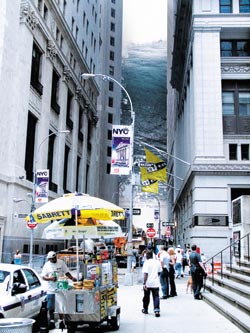
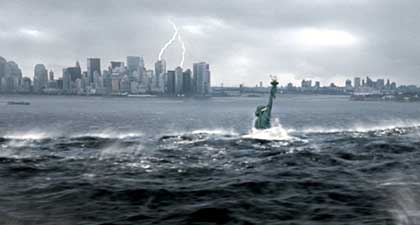
9. Deep Impact (1998) and Day After Tomorrow(2004) These two films are pretty abysmal, but the creative ways in which they treat New York City like children’s toys in the hands of natural catastrophe is at least notable. Heck, and even I’ll throw in the meteor madness of Armageddon (1998), which dares to take specific note to flatten the Chrysler Building along with everything else. And for the sheer cheese factor, I cant forget to mention the 1999 made for TV Aftershock: Earthquake in New York.
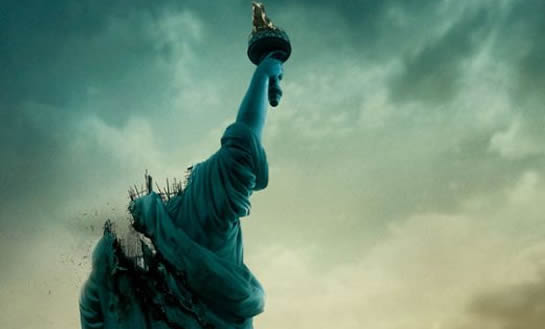
*sigh* Lady Liberty, just can’t catch a break…
10. King Kong (2005) In the rather campy remake from 1976, Kong tackles the World Trade Center. By the time Peter Jackson got around to remaking it, he’s back on top of the Empire State and wrecking a bit more havoc than his prior incarnation.
Honorable Mention: New Yorkers should be honored to know that in the Japanese monster classic Destroy All Monsters (1968) set in the future (aka 1999), New York City is in fact destroyed by Godzilla before he gets to Tokyo.
BOWERY BOYS RECOMMEND is an occasional feature whereby we find an unusual movie or TV show that — whether by accident or design — uniquely captures an era of New York City better than any reference or history book.
By the early 80s, New York City has already seen its absolute nadir as a fiscally and morally bankrupt urban center and was fully comfortable with its place in the gutter. The crime rate wouldn’t improve for another decade, but at least Wall Street was picking up the city’s financial fortunes by the lapels. Punk is strangling disco in the back alley, the city struggles through transit strikes, smog and a sudden rise in homelessness.
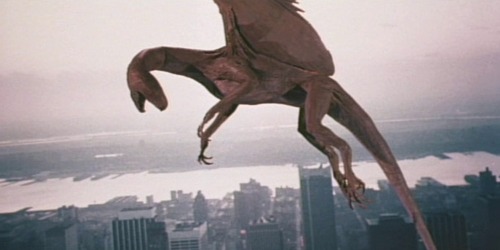
So it is in that light in which the piece of glorious grade-A schlock “Q: The Winged Serpent,” released in 1982, must be judged.
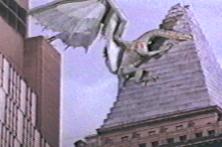
Chrysler Building architect William Van Alen would be horrified to learn that the graceful tapering top hat of his most famous building becomes home of a loathsome flying dragon and a gigantic nest of eggs. As if possessed with a little of Van Alen’s spite at being quickly overtaken in less than a year by the taller Empire State Building, the first scene of “Q” involves the dragon popping over and snatching off the head of an Empire State window washer.
Q swiftly makes a go at New Yorkers sunning themselves on rooftops or in private swimming pools, an inverted Jaws scenario. As such, her victims are mostly upper class, young and rich. There’s a perverse joy at seeing a montage of New Yorkers staring into the sky and being slathered in fake looking blood.
Q also has a ball hanging around the pyramid-topped Bankers Trust building in the financial district. Curiously, few New Yorkers notice this massive monster jetting between uptown and down.
Just how did a winged serpent (it really looks like a dinosaur from Land of the Lost) get to Manhattan? According to the ham-fisted plot, it involves an ancient sacrificial cult, located at the Museum of Natural History, who have summoned the Aztek god Quetzlcoatl via a trail of skinned, sacrificial bodies.
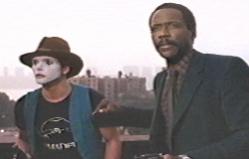
David Carradine and Richard Roundtree (Kung Fu and Shaft) lead the investigation, in a depiction of the New York police force that is hardly flattering. Michael Moriarty is a sad-sack conman — roughed up down by South Street Seaport — who discovers the serpent hideaway during a completely superfluous chase scene through the Chrysler.
And, oh, did I mention the cop dressed as a mime who stays in makeup for the whole film? Whatever happened to the good old fashioned New York mime, I ask you?
By sheer function of the story, “Q” happens to be one of the best depictions of New York City in the early 1980s. That’s because the ‘serpent’, in all its cheesy stop-motion glory, frequently soars over New York midtown, allowing the viewer to soak in its former splendor. I had a blast freezeframing these scenes and trying to figure out what I was looking at; given the swift makeover of midtown Manhattan, its harder than you think.
Director Larry Cohen, known for other B-movie fare like ‘Black Caesar’ and ‘It’s Alive’, supposedly got the entire idea for the film by looking up at the Chrysler and thinking, “That’d be the coolest place to have a nest.” Probably not the reaction Walter Chrysler wanted when he first commissioned it.
“Q: the Winged Serpent” is currently available on DVD and is probably shamelessly gathering dust at your local video store.
By the way, should we be surprised that the Natural History museum is currently hosting an exhibit called Mythic Creatures that actually features Quetzlcoatl?