Categories
Health and Living Newspapers and Newsies

The hottest day in New York City history

These days of low-to-mid 90s F, high humidity temperatures got you down? Why that’s nothing!

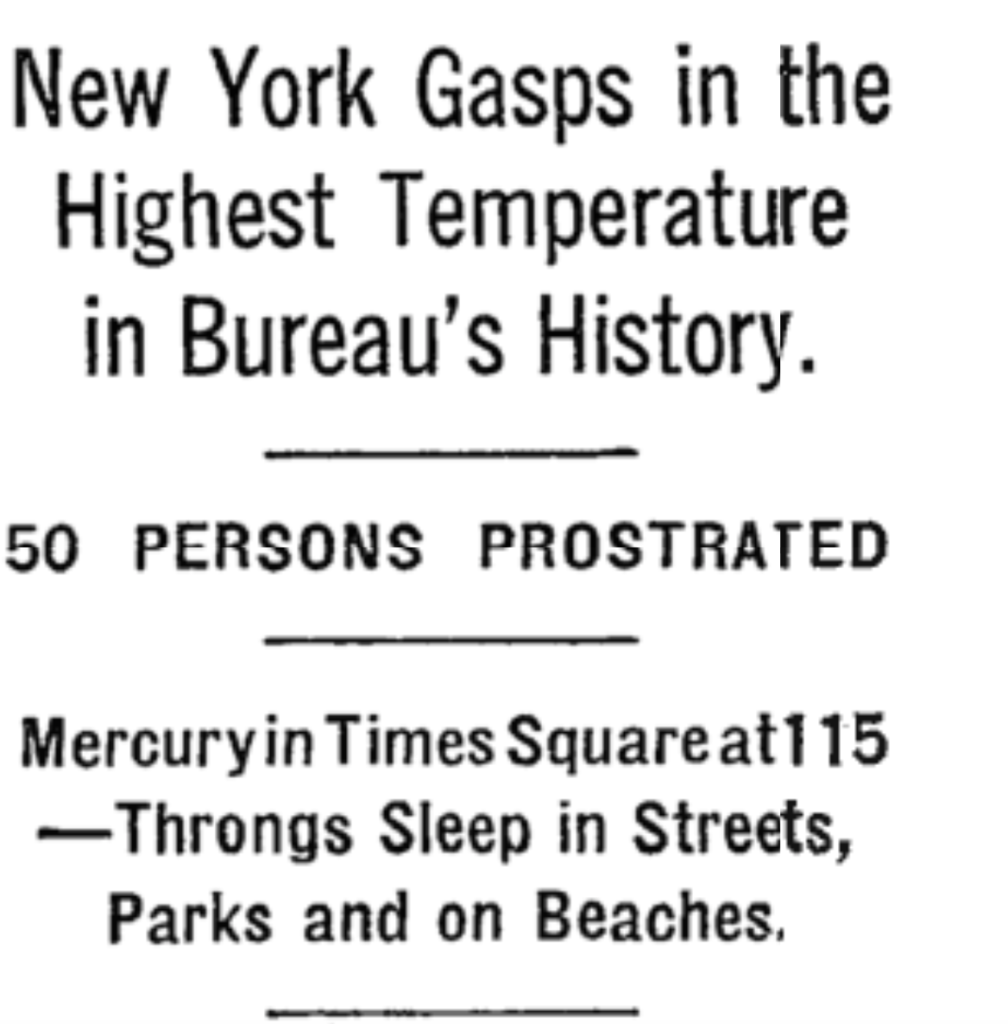
The hottest day in New York City history was eighty-five years ago last week — on July 9, 1936, when temperatures reached an agonizing 106 degrees, measured from the Central Park weather observatory.

New York Times, July 19, 1936

This broke the record set on August 7, 1918 when New Yorkers experienced a catastrophic 104 degrees. (As if World War One and the Spanish Flu weren’t enough to suffer through that year.)

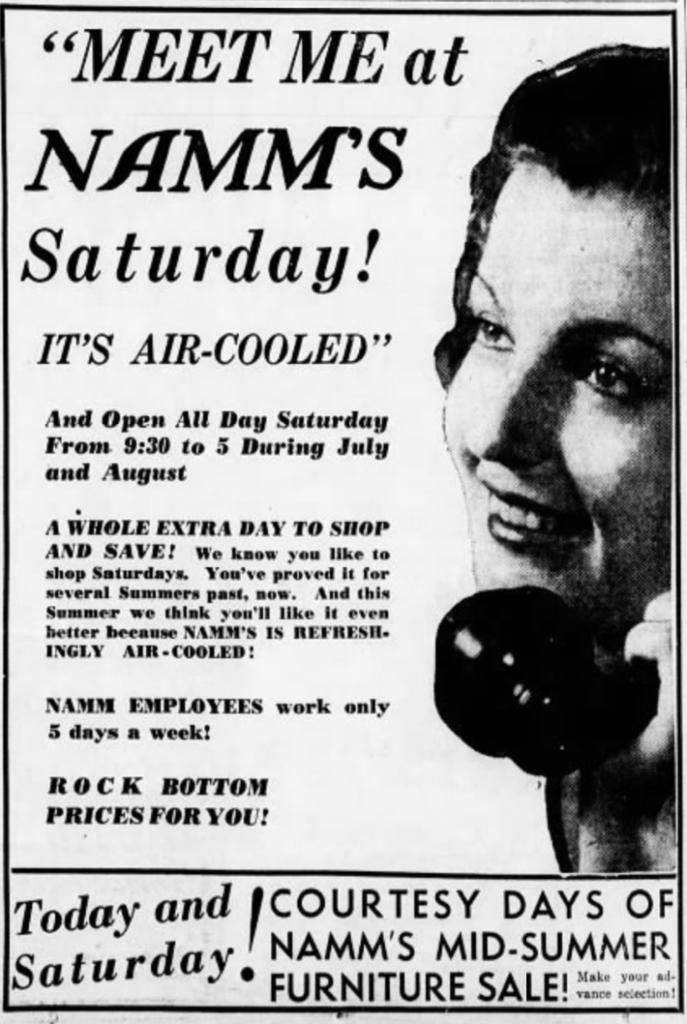
In neither of these years was there widespread air conditioning although the concept was quite familiar to those during the Great Depression. Upscale movie theaters and restaurants had a form of air conditioning by the mid 1930s but home use was too expensive at this time.

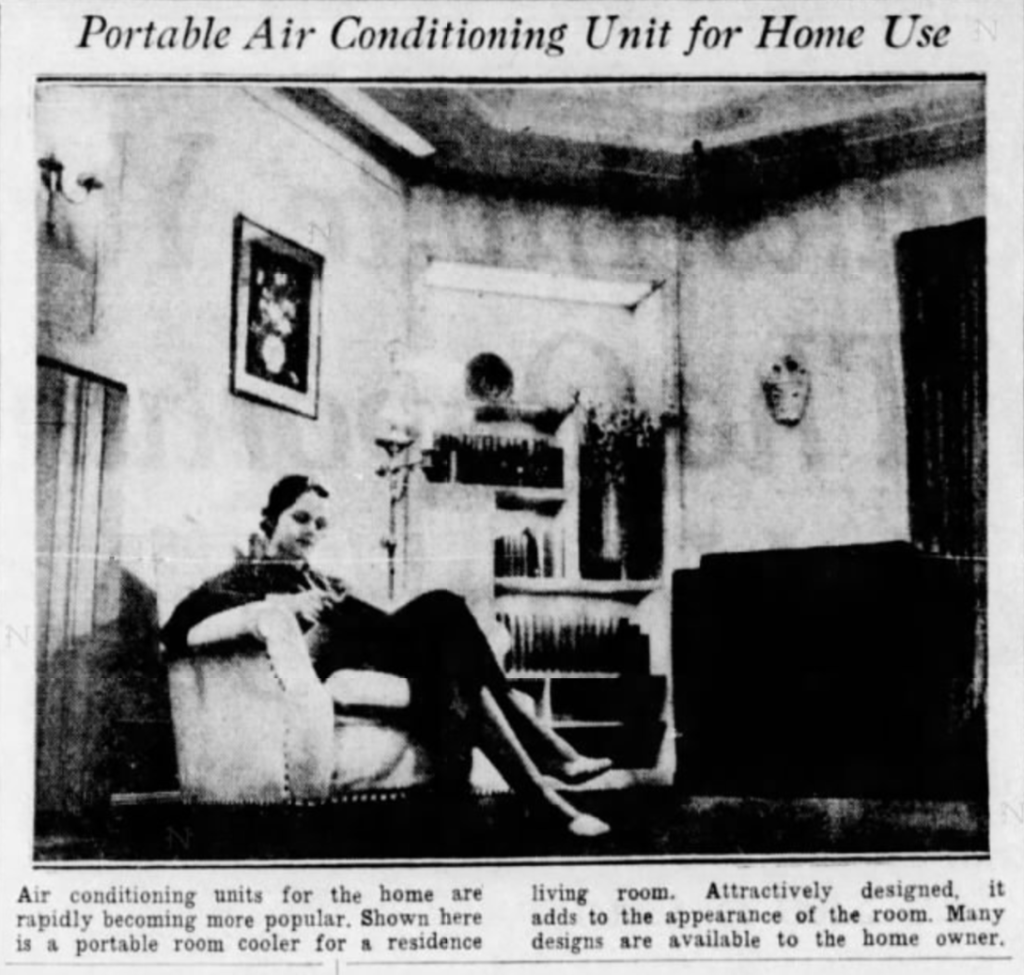
This photograph from 1935 accompanied an article about the novel concept of home air conditioning, making sure to point out that air conditioners can look ‘attractive’.
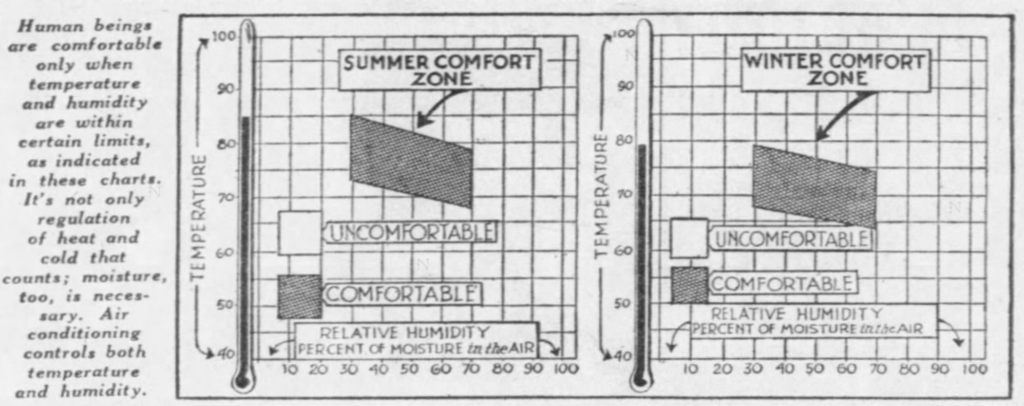
In 1937 the New York Daily News ran this unusual graphic about the newly emerging innovation of air conditioning.

So on the hottest day in New York City history, most people had to forge through the day anyway they could — without the luxury of artificially cooled air.

That 106 number was hit after a series of thermometer-breaking days that week.

According to the New York Daily News, “heat was humanly bearable only because the humidity, at 44 percent, was low. If it were twice as high … human life would be almost impossible.”

And the New York Times chimed in with a startling visual. “In the canyons of the financial district men and women reported the heat waves visible.”

The Brooklyn Daily Eagle, July 9, 1936

Hundreds did die throughout the northeast United States that week due to the heat as well as several in the city, including two boys who drowned in the park lakes on July 10.

It was so hot that Mayor Fiorello La Guardia let out all city employees from work at 1:45 pm and thousands of WPA workers were given a half-day.

Fire hydrants were pried open in every neighborhood. In Red Hook, Brooklyn and in many other places, the hydrants lowered the water pressure so much that residents above the second floor were unable to get water in their homes.

And on Park Avenue “so many hydrants were in emergency use that the waters mounted above the curb and the cars splashed through six and eight inches of it.” [Times]

“In the great shopping districts in the Thirties [Herald Square], the pavements became so soft in the late afternoon that the crosswalks were dotted with rubber heals that were caught in the asphalt and tar as women passed by. In some spots the asphalt blistered.” [Times, 9/10/36]

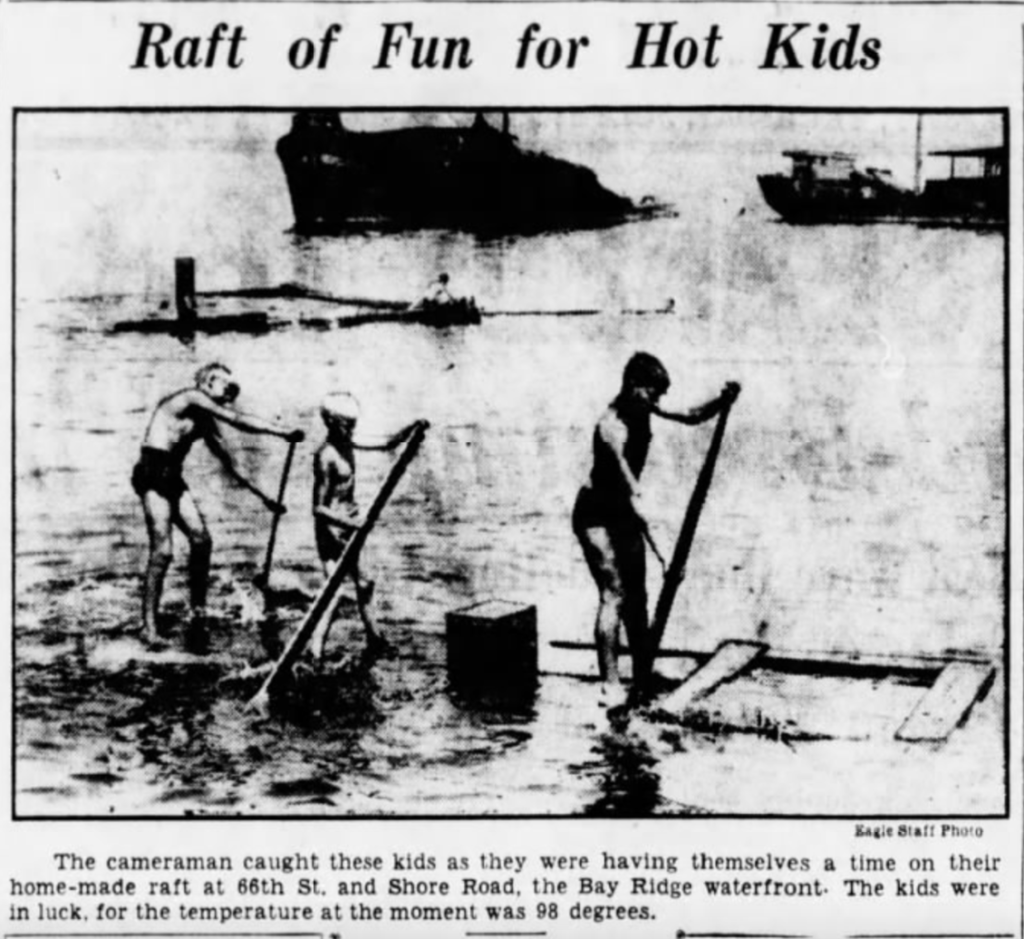
From the July 10, 1936 issues of the Brooklyn Daily Eagle

The only relief seemed to be the city parks and beaches which people duly exploited — day or night. “Coney Island, the Rockaways and other metropolitan beaches again had their hundreds of thousands of city folks cooling off in salt water, and they including thousands who had remained all night on the Bach sand.”

In fact tens of thousands of New Yorkers, looking for relief, slept in city parks throughout the night. The mayor authorized most parks to remain open and police were directed not to harass people who slept on benches or on the ground.

And even Robert Moses flew in for the rescue, authorizing that all city swimming pools remain open until midnight.

From the July 10, 1936 issues of the Brooklyn Daily Eagle

From the Times: “On the Lower East Side traffic was seriously impeded as small armies of persons emerged from tenement houses with chairs, boxes and even beds which they set up in the streets. Other thousands, including young children usually in bed by 9 o’clock, lined the East River waterfront.”

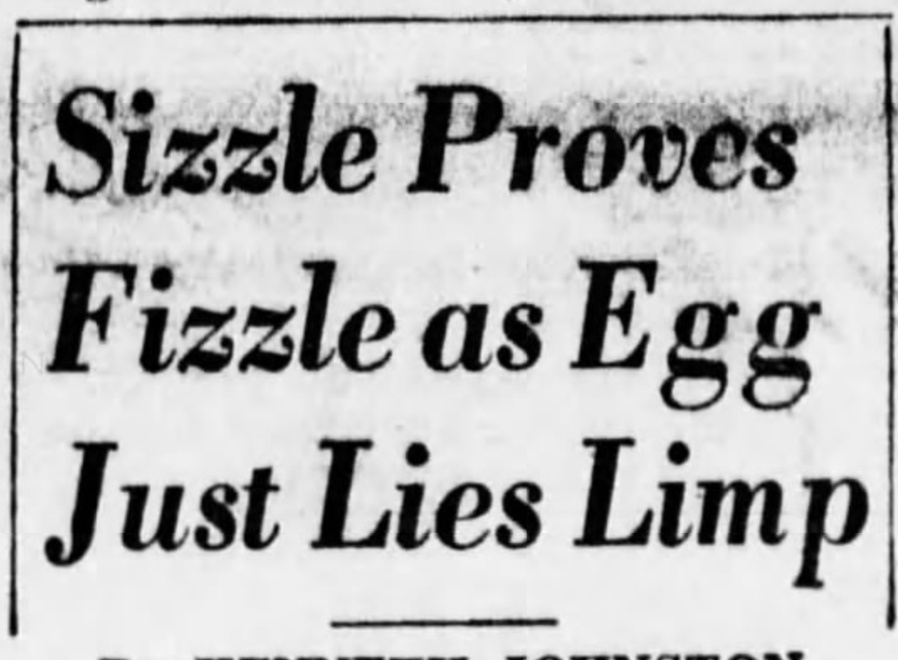
One jokester at the Daily News tried a bit of stunt journalism on that hot day by trying to fry an egg on the sidewalk in front of Queens Borough Hall. After watching the broken egg on the sidewalk for 15 minutes — runny and uncooked — the crowd left dejected.

Categories
Podcasts The First

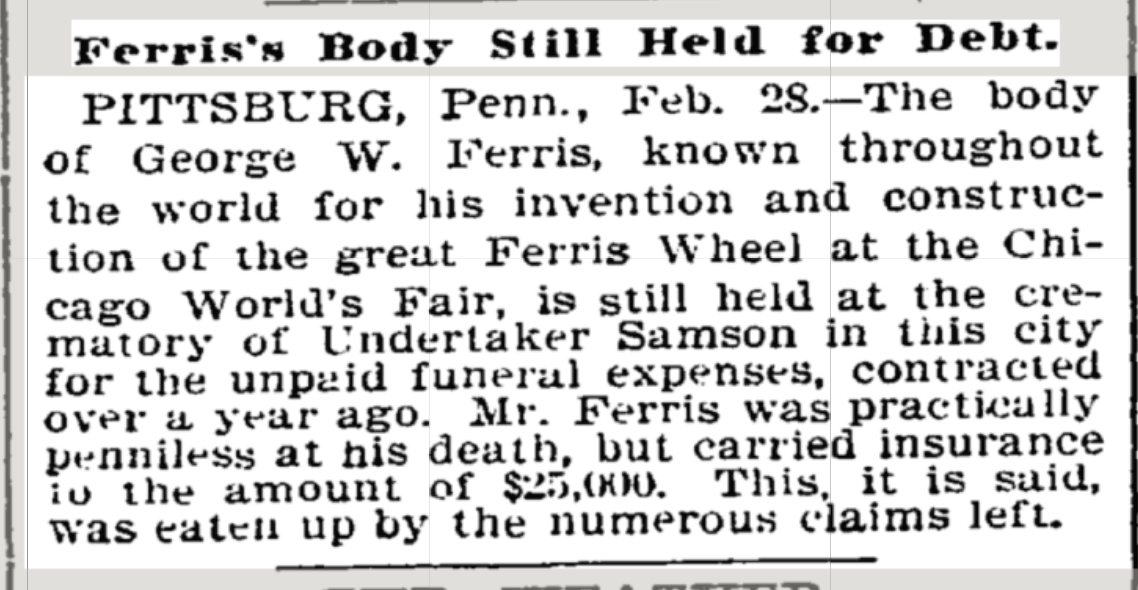
The Wheel: Ferris’ Big Idea (Special Preview of The First Podcast)

This is a special preview for the new Bowery Boys spin-off podcast series The First: Stories of Inventions and their Consequences, brought to you by Bowery Boys host Greg Young.

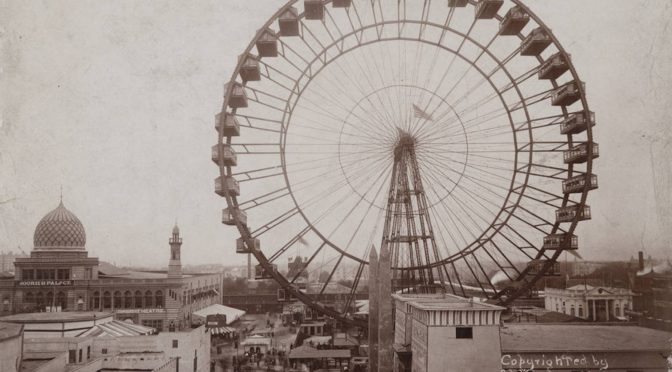
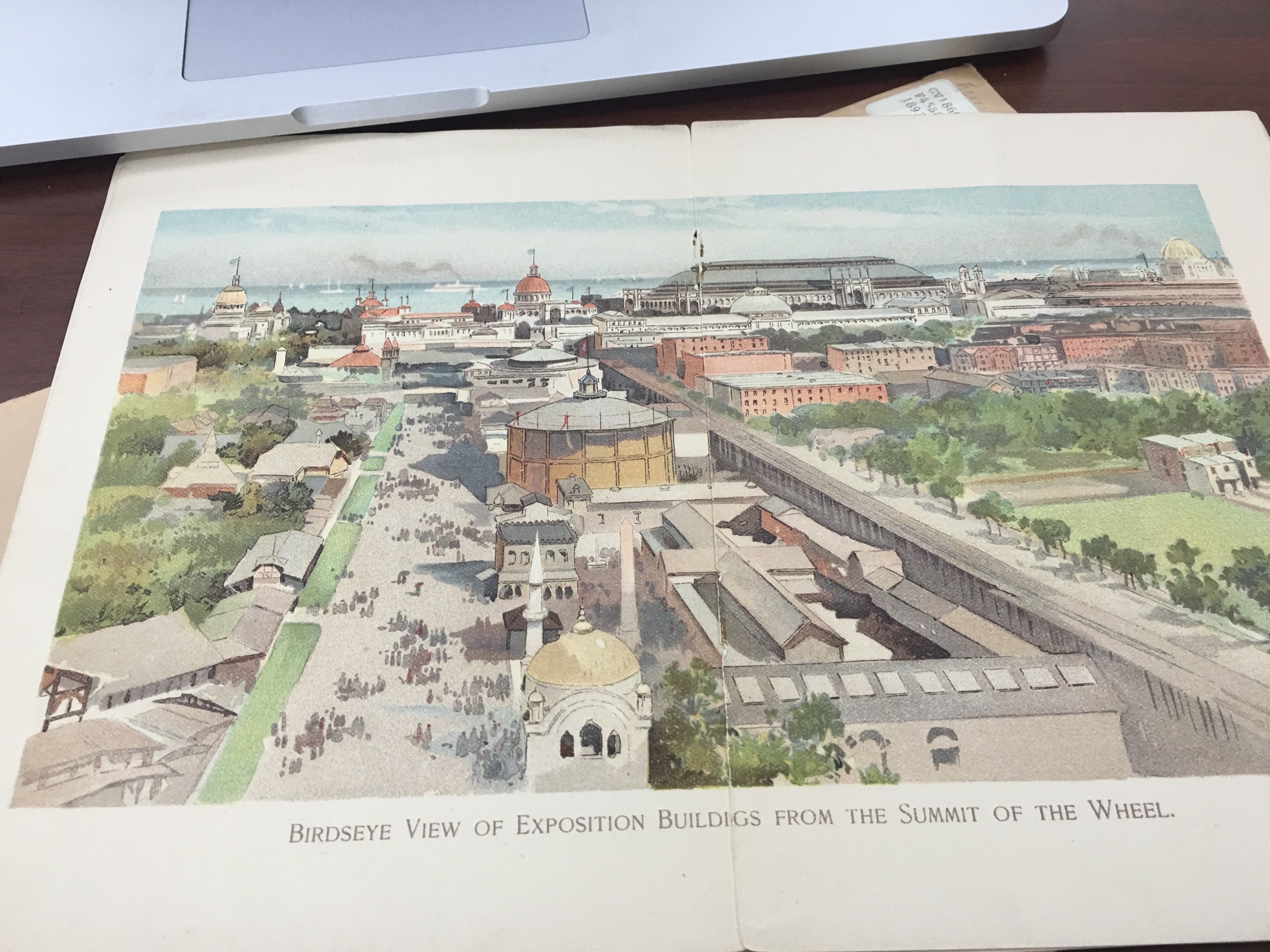
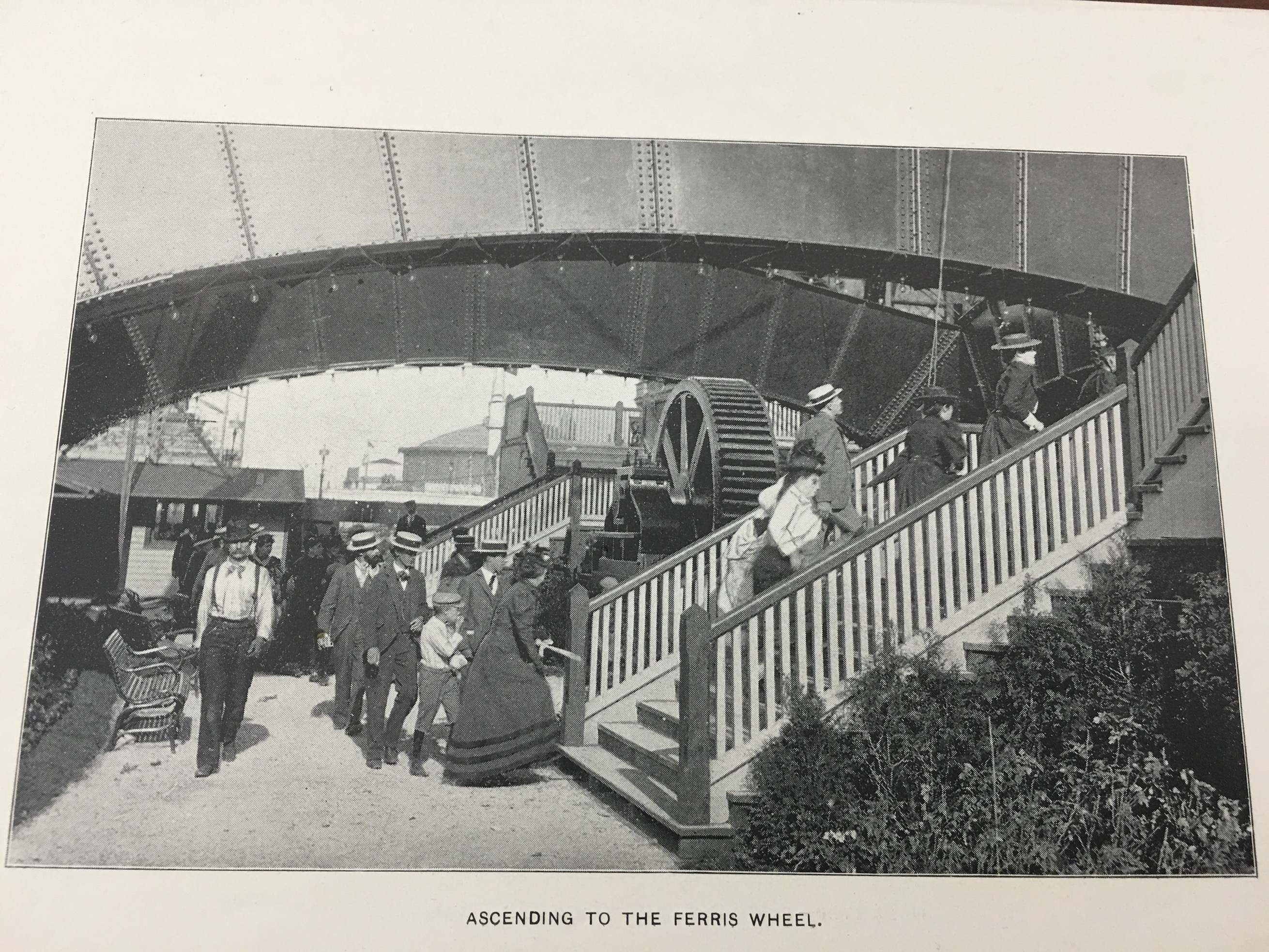
01: The first Ferris Wheel was invented to become America’s Eiffel Tower, making its grand debut at the Chicago World’s Fair of 1893. The wheel’s inventor George Washington Gale Ferris was a clever and optimistic soul; he did everything in his power to ensure that his glorious mechanical ride would forever change the world.

That it did, but unfortunately, its inventor paid a horrible price.

FEATURING a visit the Wonder Wheel at Coney Island, one of the most famous wheels in the world, and a trip to one of Chicago’s newest marvels — the Centennial Wheel at Navy Pier.


The Bowery Boys: New York City History podcast is brought to you …. by you!

We are now producing a new Bowery Boys podcast every two weeks. We’re also looking to improve the show in other ways and expand in other ways as well — through publishing, social media, live events and other forms of media. But we can only do this with your help!

We are now a member of Patreon, a patronage platform where you can support your favorite content creators for as little as a $1 a month.

Please visit our page on Patreon and watch a short video of us recording the show and talking about our expansion plans. If you’d like to help out, there are five different pledge levels (and with clever names too — Mannahatta, New Amsterdam, Five Points, Gilded Age, Jazz Age and Empire State). Check them out and consider being a sponsor.

We greatly appreciate our listeners and readers and thank you for joining us on this journey so far. And the best is yet to come!


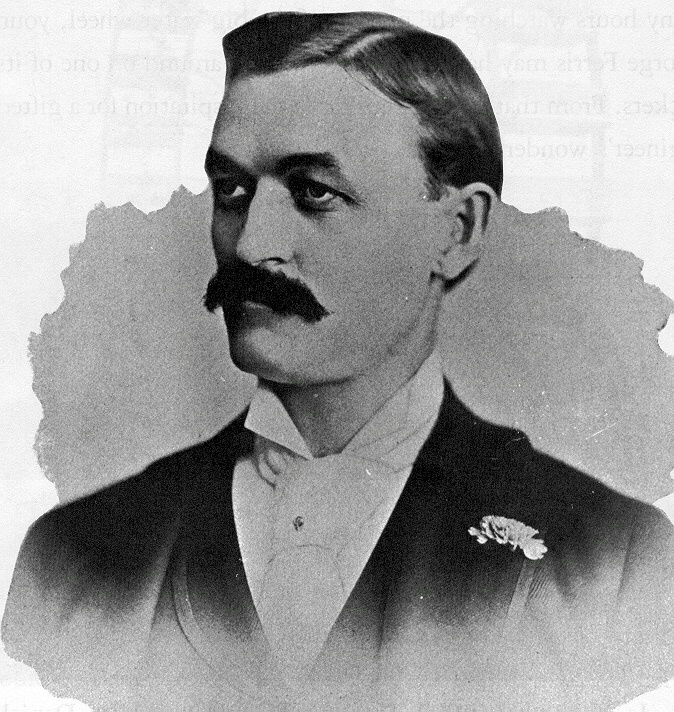
The star of the show — George Washington Gale Ferris:

gwferris

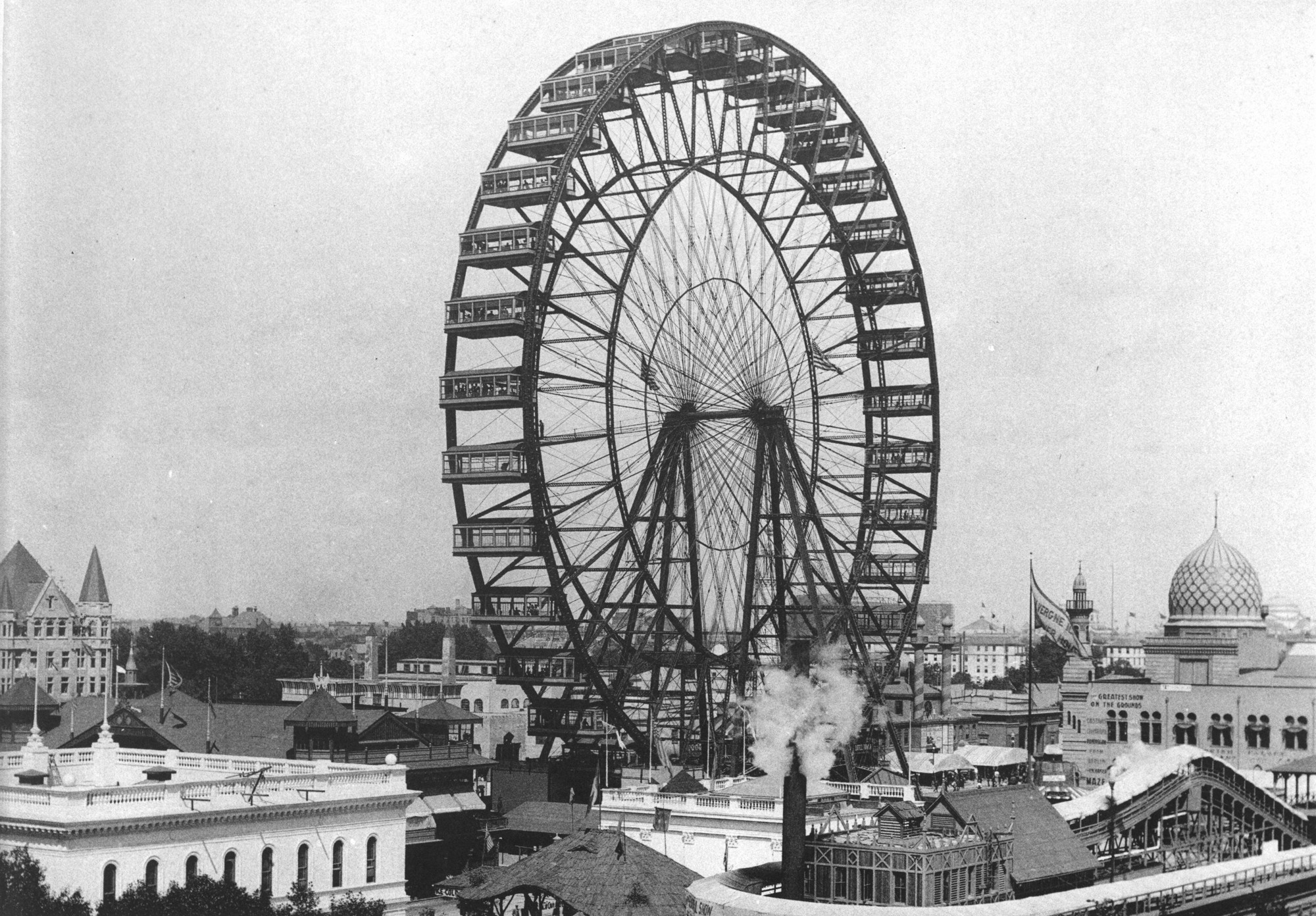
… and the Ferris Wheel at the World’s Fair!

chicago-worlds-fair-1893-chicago-history-museum-01-2


Courtesy Chicago History Museum

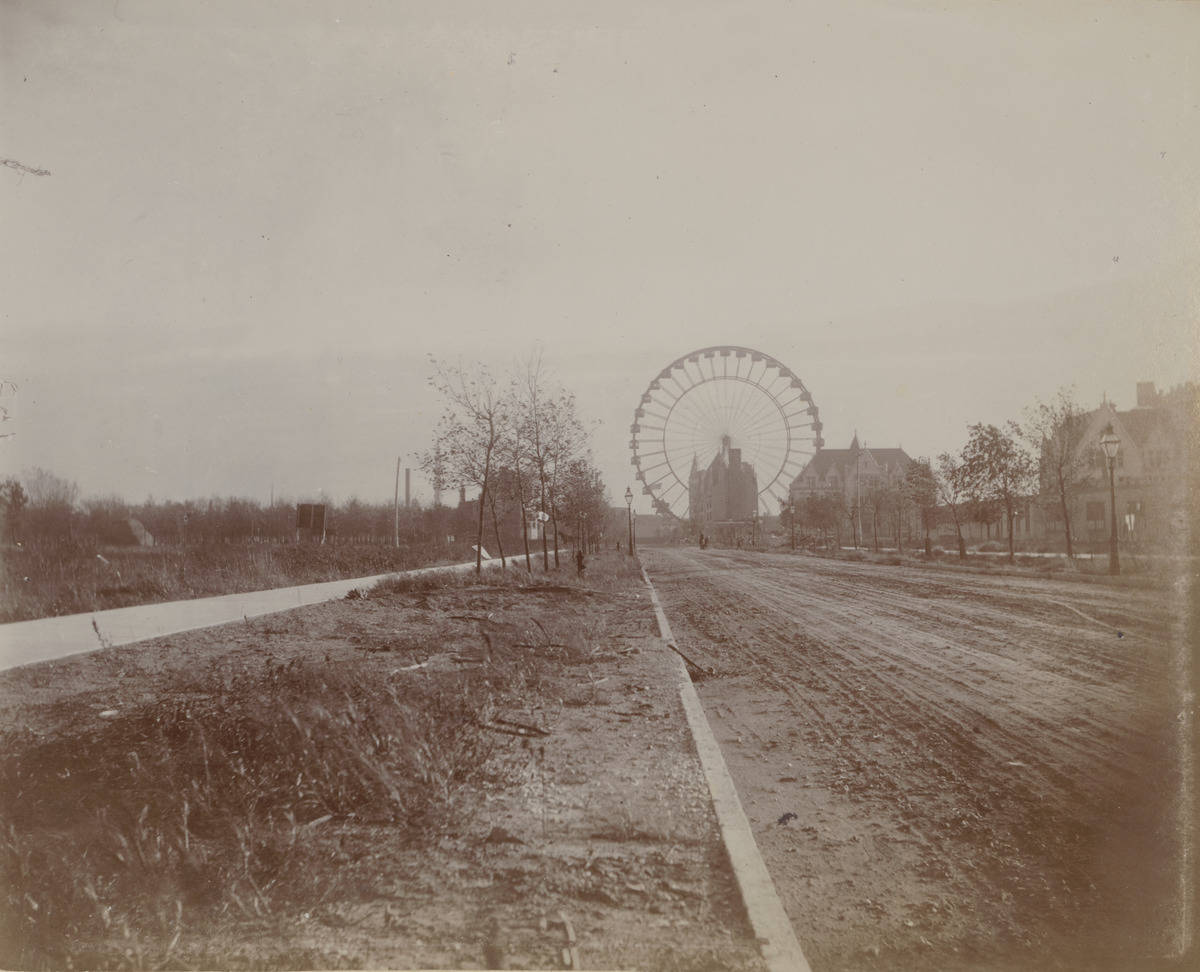
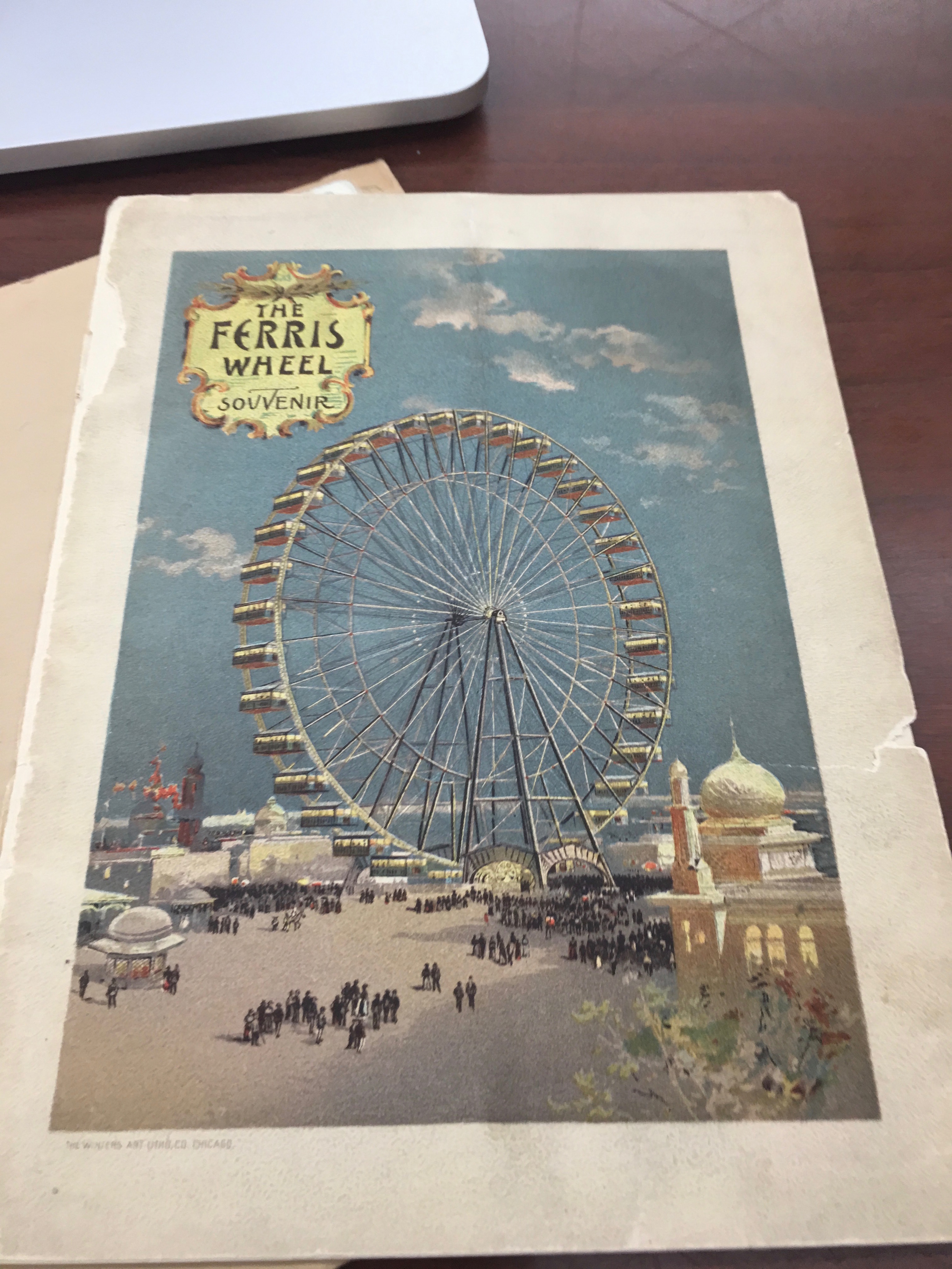
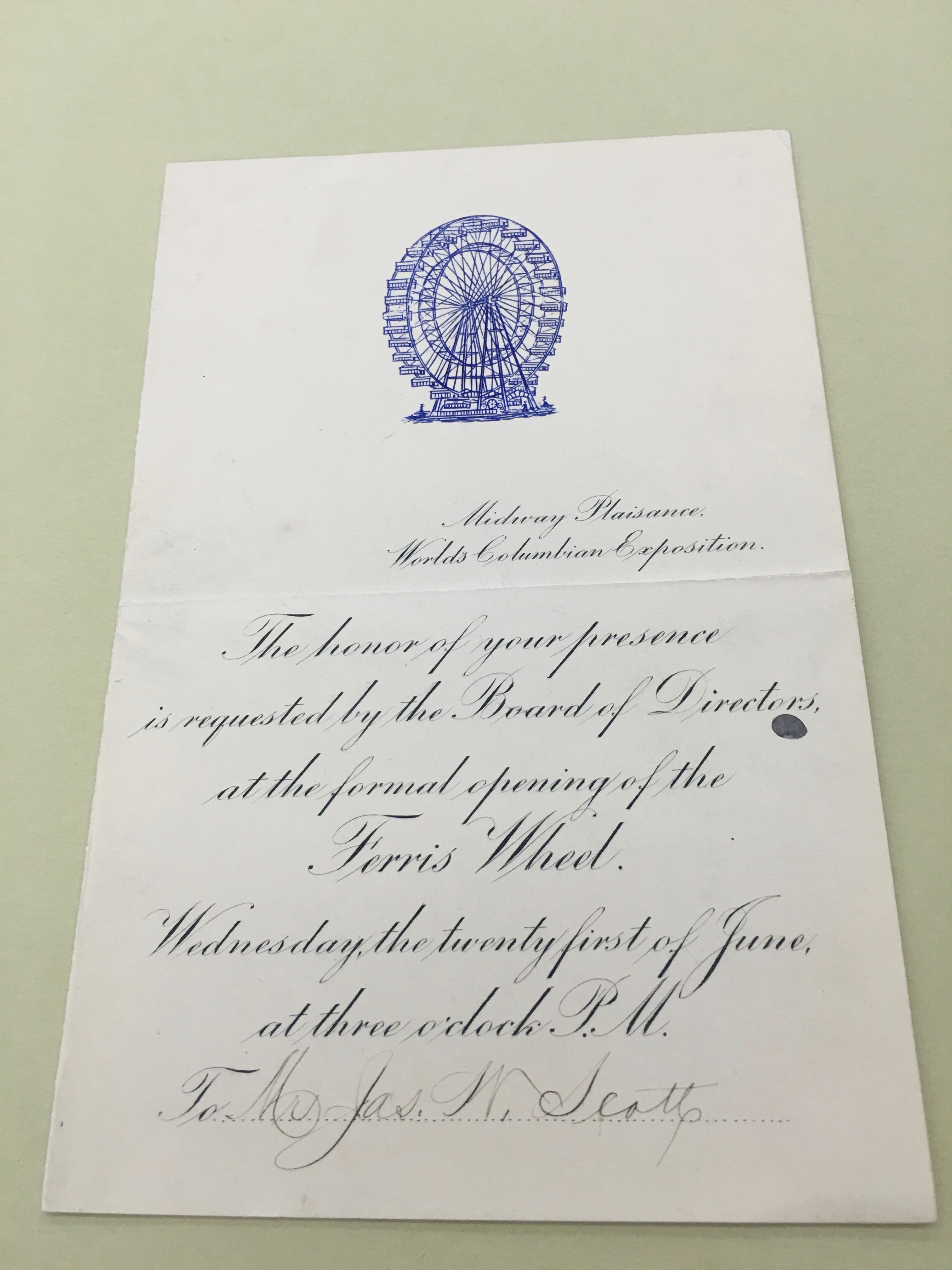
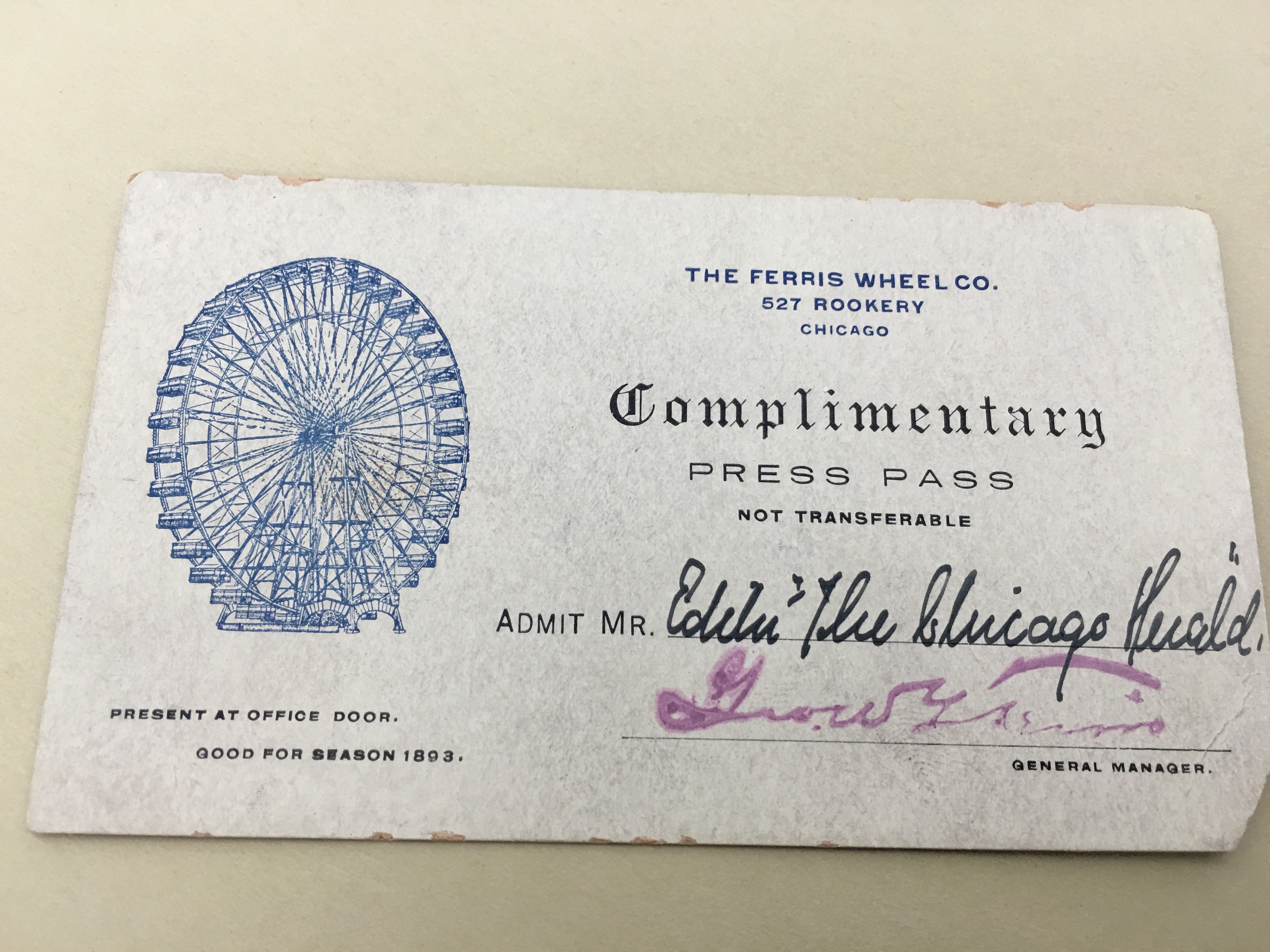
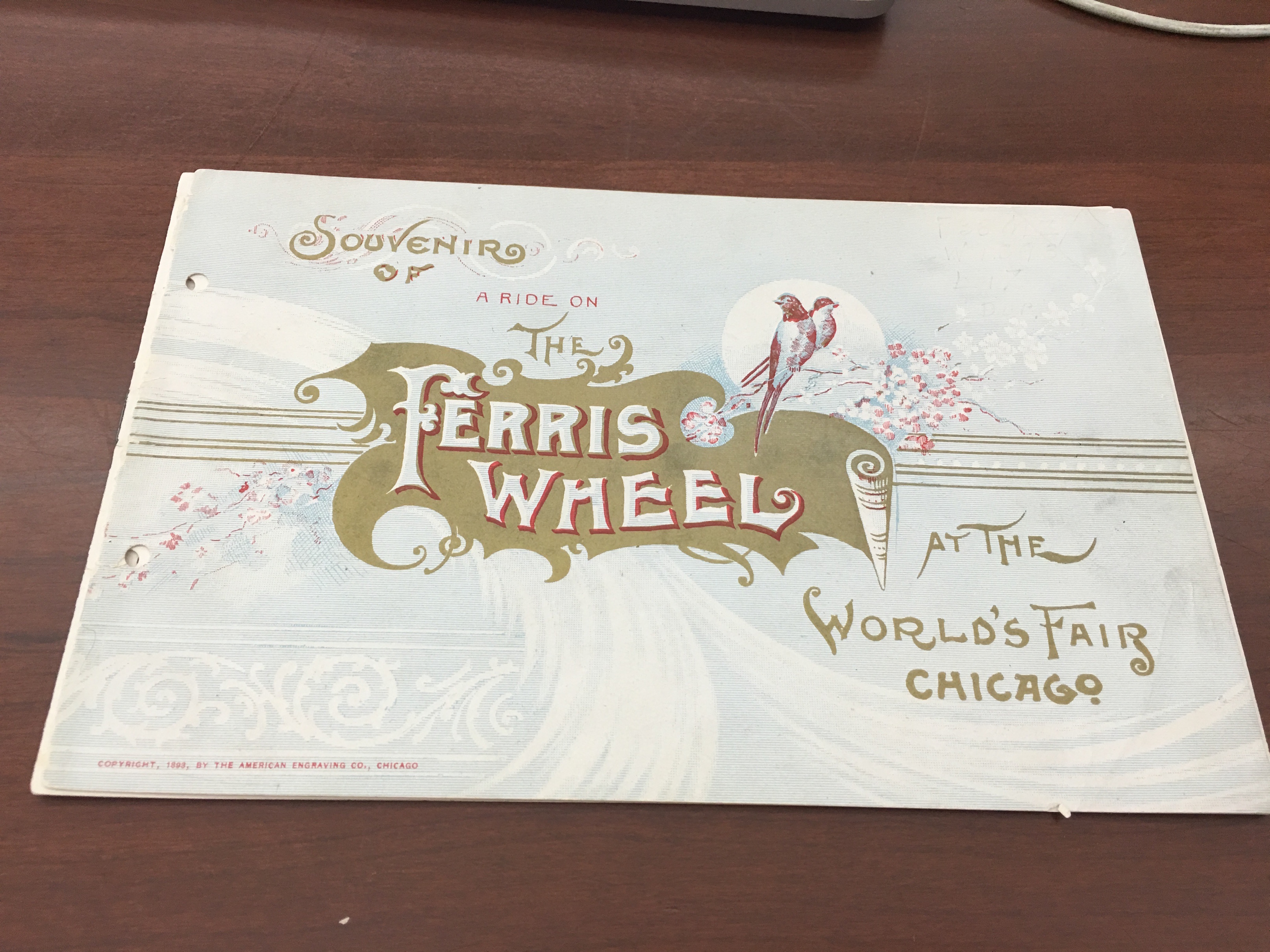
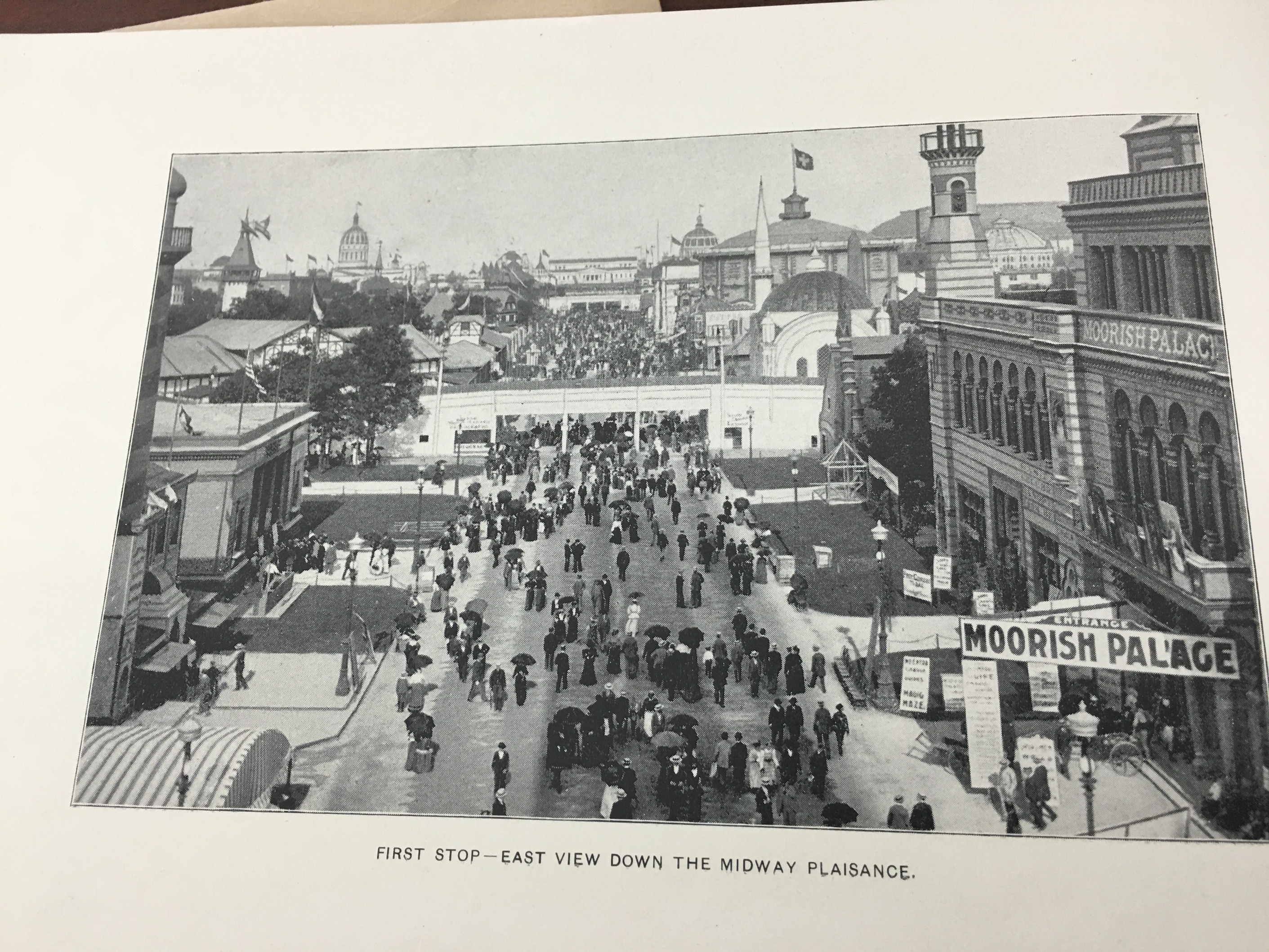
Some intriguing finds I made while researching at the Chicago History Museum and the National Archives:

img_0201

img_0206

img_0212

img_0225

img_0229

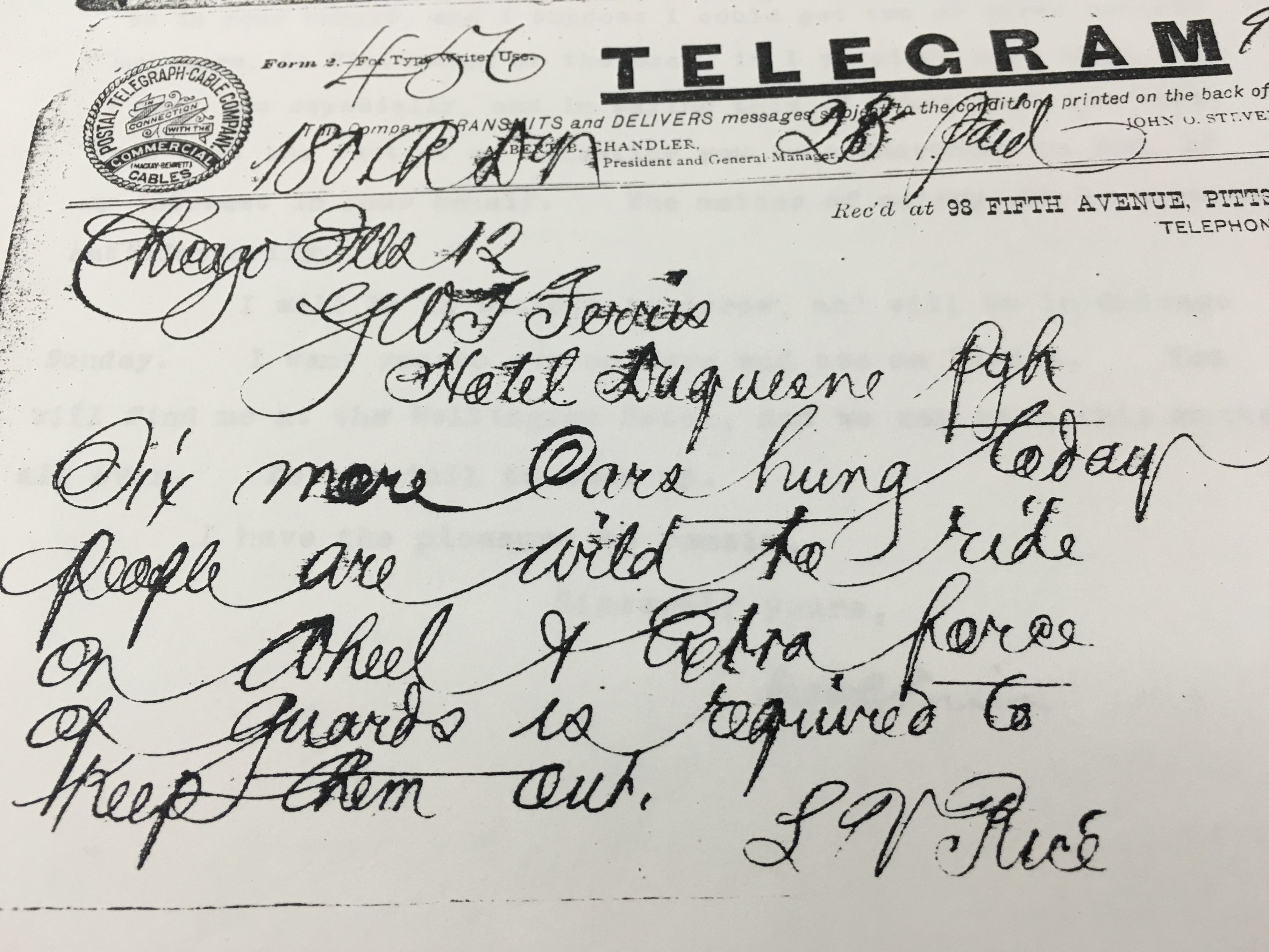
The telegram from Luther Rice to George Washington Ferris that was read on the show:

img_0239

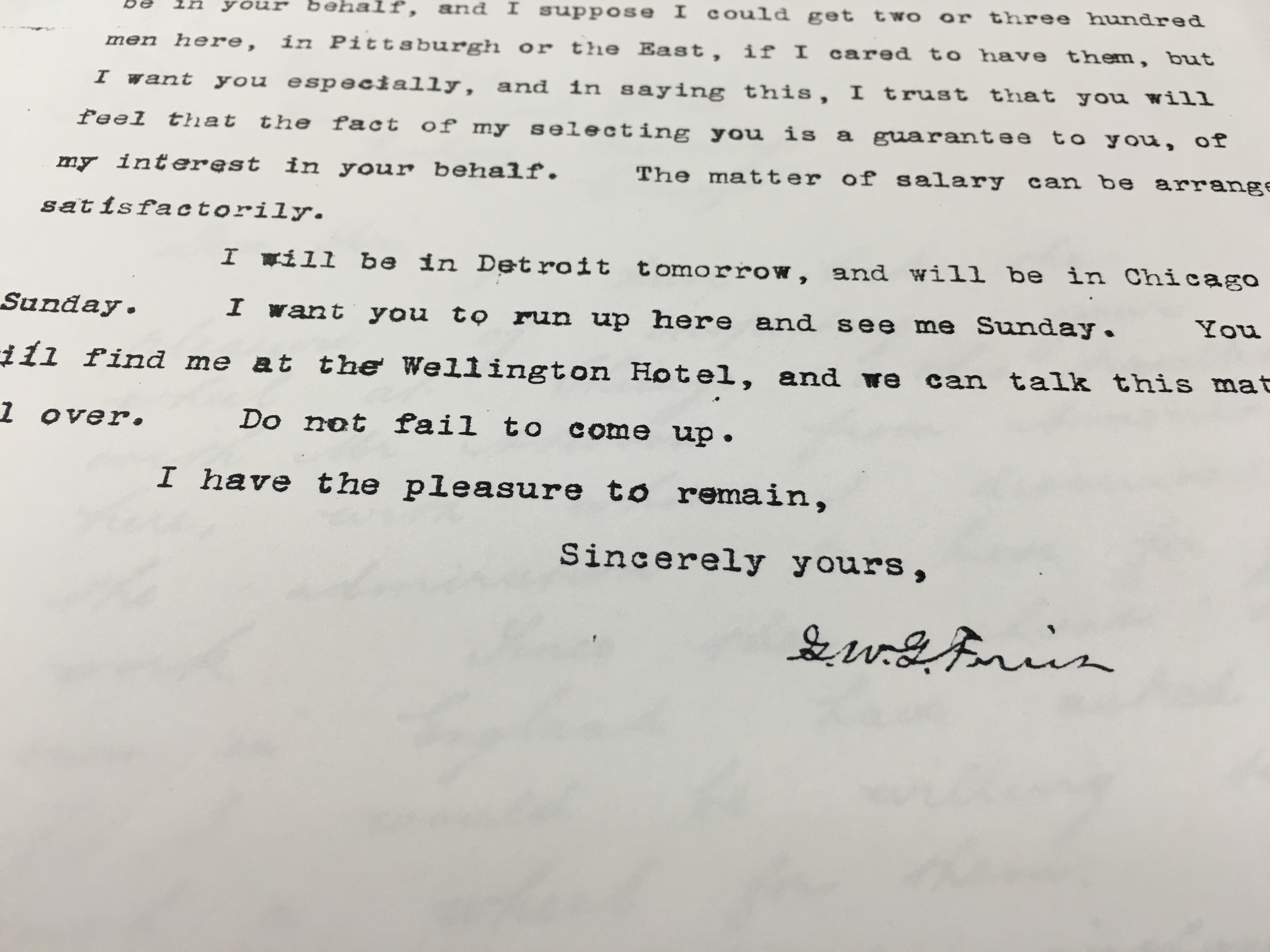
This was also featured on the show — the passionate letter from Ferris, asking Rice to join the project

img_0240

img_0232

img_0233

img_0234

img_0235

img_0236

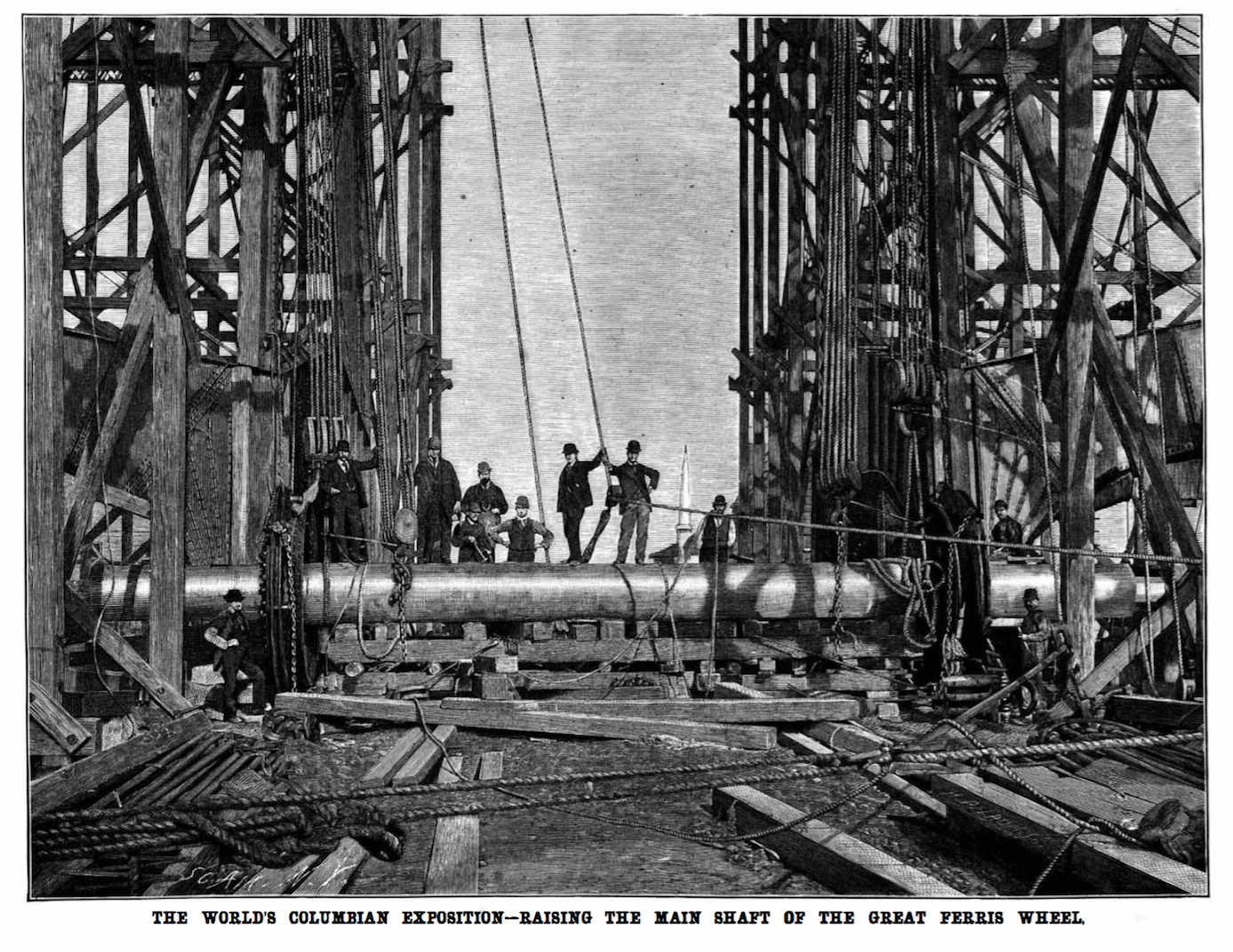
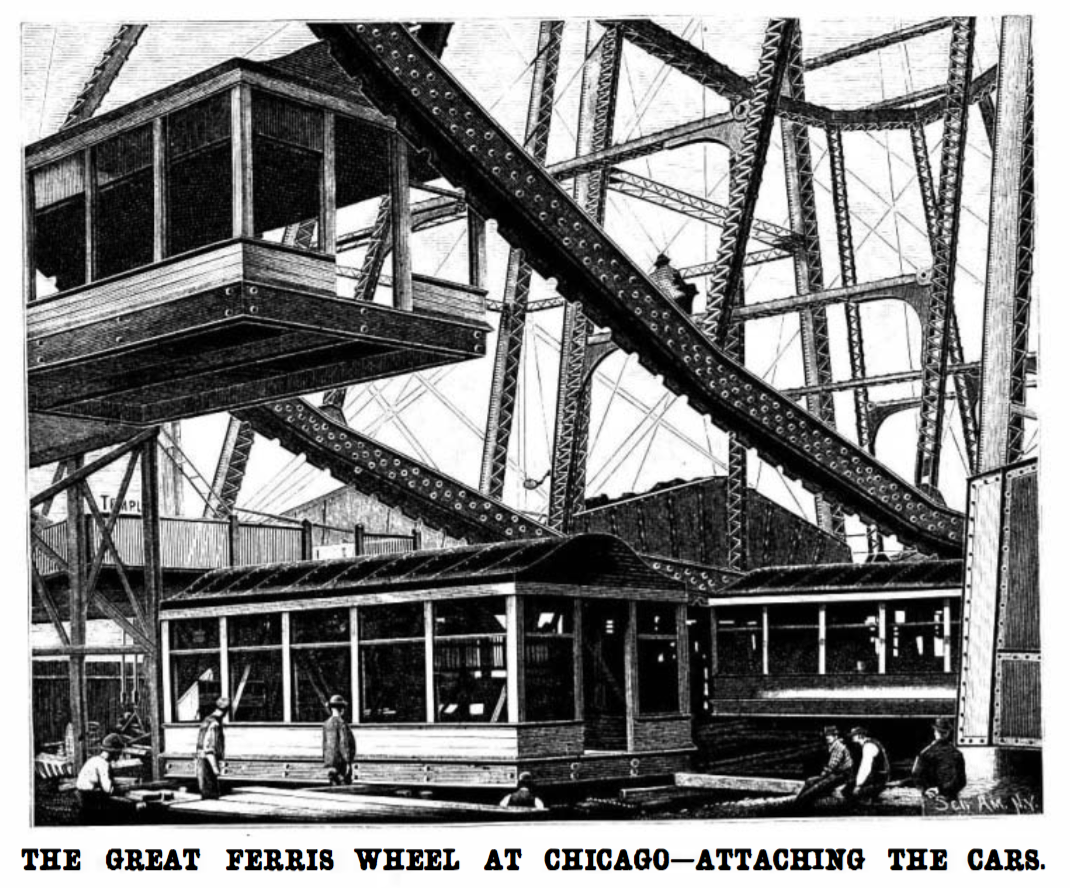
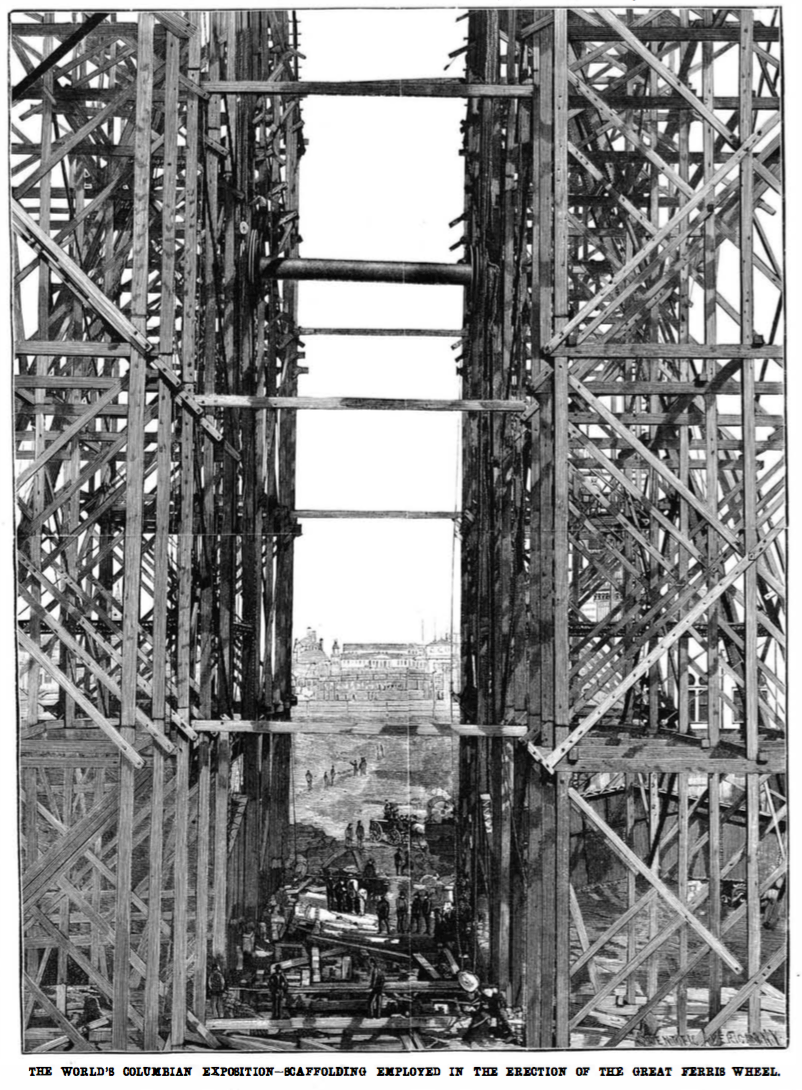
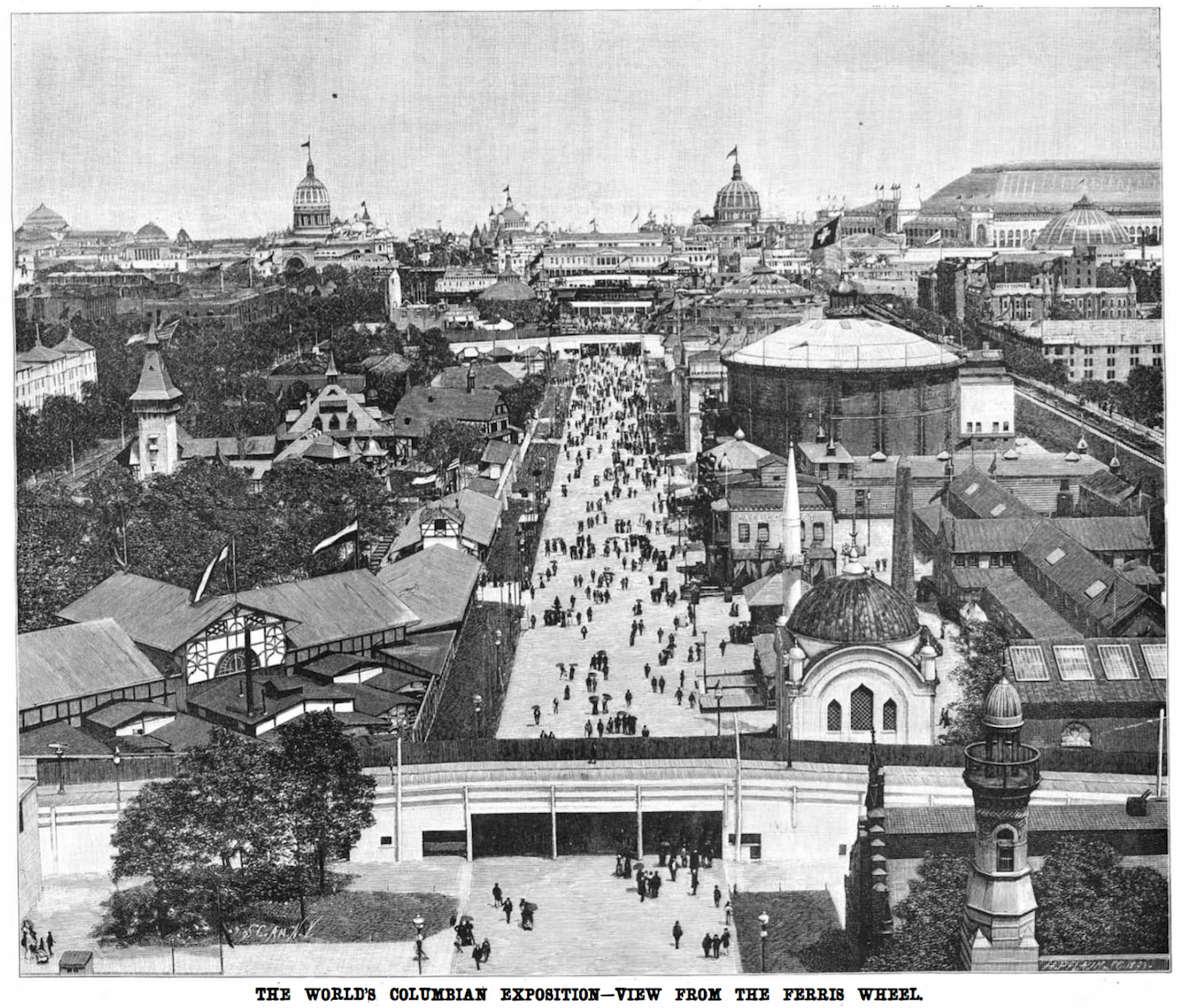
Images of wheel construction courtesy Scientific American.

Courtesy Scientific American

New York Times, May 13, 1894 — This article mentioned the plan to move the Ferris Wheel to New York (but the plan fell through)

screen-shot-2016-10-28-at-9-25-28-am

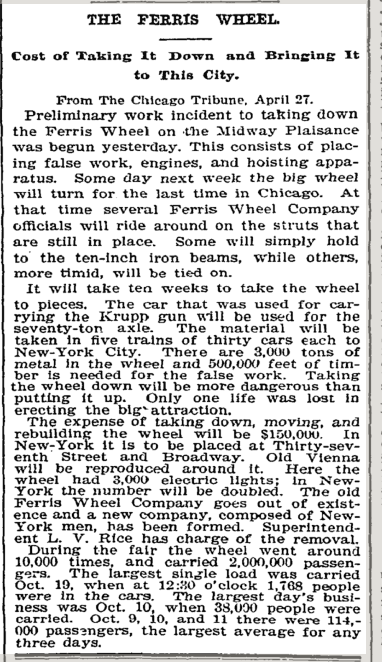
From the New York Times, March 1, 1898

screen-shot-2016-10-28-at-9-22-44-am

PLACES TO VISIT:

The Chicago Navy Pier (featured on the show)

Chicago History Museum (featured on the show)

The Midway Pleasance and Jackson Park, Chicago

The Ferris House in Pittsburgh, PA

The Sears-Ferris House in Carson City, Nevada

The Wonder Wheel and Deno’s Wonder Wheel Amusement Park, Coney Island, Brooklyn (featured on the show)

The High Roller, Las Vegas, Nevada

Weiter Riesenrad (Vienna’s Giant Ferris Wheel), Vienna, Austria

THINGS TO READ:

Ferris Wheels: An Illustrated History by Norman Anderson

Circles In the Sky: The Life and Times of George Ferris by Richard G. Weingardt

Six Months at the Fair by Mrs Mark Stevens

ARTWORK FOR THE FIRST DESIGNED BY THOMAS CABUS. CHECK OUT HIS PORTFOLIO OF OTHER WORK HERE.

the-first-itunesart_1400x1400

Categories
Christmas Pop Culture

The real ‘Miracle On 34th Street’: 21 great historical details from New York City’s most famous Christmas movie


The Bowery Boys Obsessive Guides look very, very closely at a classic movie filmed in New York City, finding buried history, additional context and a few secrets within various scenes and plot points. Filled with film spoilers so read this after you’ve seen the movie — or use it to follow along as you watch it!  Check out my previous guides for Midnight CowboyGhostbusters and The Muppets Take Manhattan.

“Oh, Christmas isn’t just a day, it’s a frame of mind… and that’s what’s been changing. That’s why I’m glad I’m here, maybe I can do something about it.” 

— Kris Kringle (Edmund Gwynn)

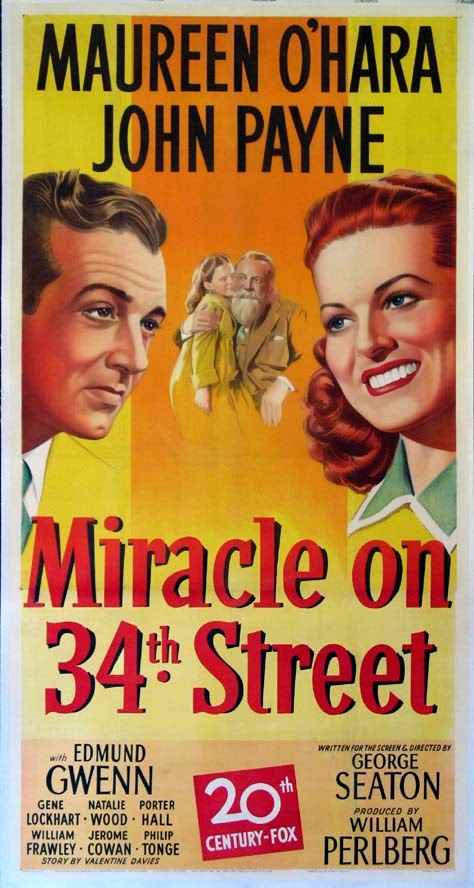
Miracle on 34th Street is the most famous New York City Christmas movie ever made, a celebration of post-war prosperity that happily substitutes Herald Square for the North Pole.

The movie is a complete inventory of the commercial Christmas experience. It treats the Macy’s Thanksgiving Day Parade like a starting gate — Thanksgiving? What’s that? — and, like many Americans, spends much of its entire running time in department stores.

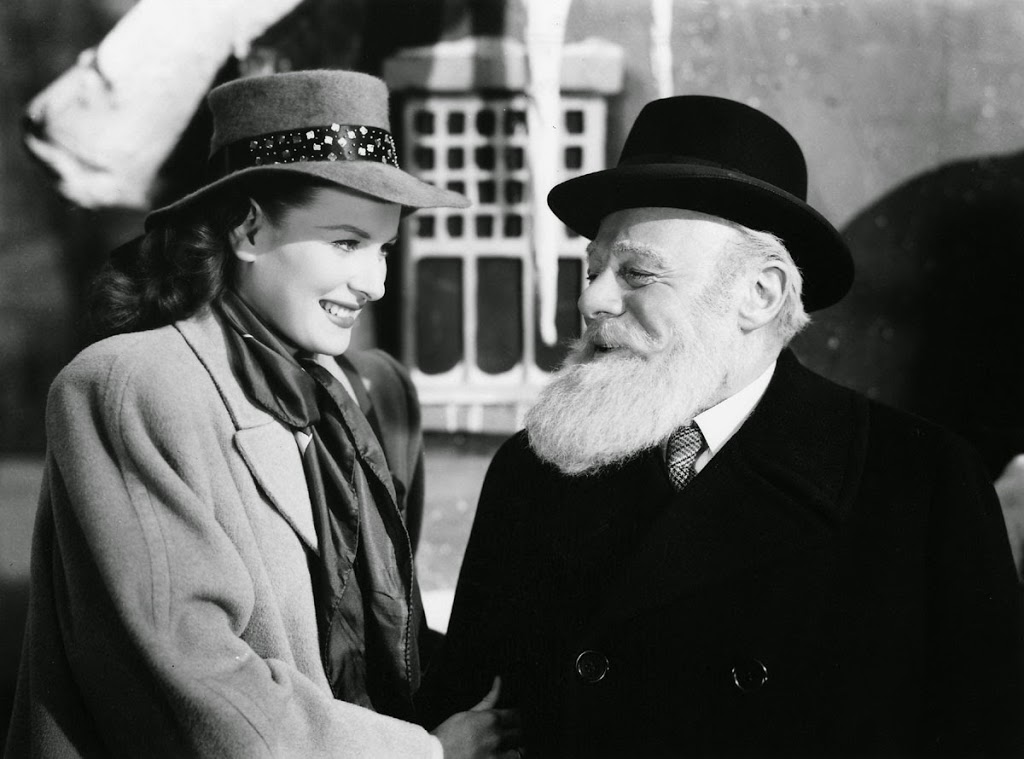
The central question posed by this 1947 classic is whether Macy’s newly hired Santa Claus (played by Edmund Gwenn) is actually the Santa Claus or just some crazy person. At stake is not only the entire world’s celebration of Christmas, but the heart of young Susan (played by Natalie Wood) who never believed in Santa, thanks to her mother Doris (Maureen O’Hara).

Manhattan is perpetually bustling, from the Upper West Side down to Foley Square. Despite its reputation as a saccharine sweet take on the materialistic component of the holiday, the film is really quite cynical, even dark, at times.  Throwing an old man into the Bellevue Hospital psychiatric ward in the 1940s is hardly what I call a warm and fuzzy image.

I recently dug deep into the film and found a great many fascinating details, many involving people and places that lived in New York City at that time.  Here’s my obsessive guide to what normally stuffy critic Bosley Crowther originally called “the freshest little picture in a long time and maybe even the best comedy of the year.”

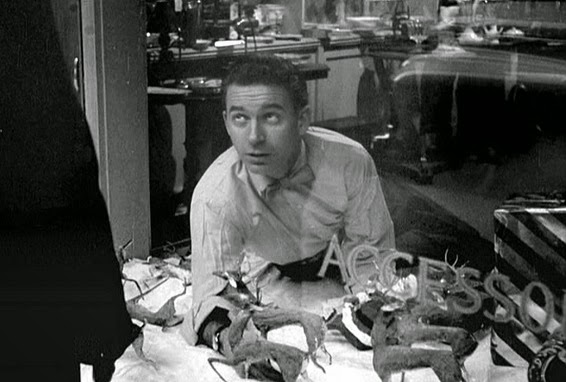
1) Arranging Reindeer  The film opens with Kris Kringle walking south down Madison Avenue. Get it? He’s Santa. He’s from the north! Along the way he passes several long-vanished New York businesses — Rosenberg & Grief furrier, Janice Carol salon, Liszt jeweler (or possibly pawn shop?)

He stops to chastise a store clerk on 19 East 61st Street about the placement of reindeer in the shop windows. That shop belonged to the interior designer Lillian Schary Waldman, often employed by high society and responsible for the homes of a few celebrities including Danny Kaye.  

By the way, you’ll notice there’s no Rudolph in the Christmas display.  The red nosed reindeer was created in 1939, within a coloring book produced by Montgomery Ward (at right), but not popularly considered part of Santa’s team until the 1964 Rankin-Bass animated special. (EDIT: Thanks to the commenter for reminding me of Rudolph’s real coming out –the song “Rudolph the Red-Nosed Reindeer,” recorded by Gene Autry and Bing Crosby in successive years.)

2) Old Newsprint  The film occasionally uses the technique of turning newspaper pages as a way of setting the scene. Notice the first time this is used, before the parade. The prop designer constructed a phony newspaper but used real news articles from the New York Times. Here’s the catch — most of the stories are well over a decade old! Some examples:  “NEW FRENCH CABINET UPHELD BY DEPUTIES” – Dec 23, 1932, “OUR SPEED PRAISED IN CHILD LABOR BAN” – July 20, 1933, and “EARTHS FORCES LAID TO COSMIC IMPULSE” – July 24, 1933

The curious Deitrich Knickerbocker balloon from the 1936 parade. (Courtesy Smithsonian)

3) The Real Parade Santa Claus has appeared in the Macy’s Thanksgiving Day Parade since the very first parade in 1924. One detail that did not quite make it into the modern era — knights in shining armor. Santa arrived in Herald Square “in state. The float upon which he rode was in the form of a sled driven by reindeer over a mountain of ice. Preceding him were men dressed like the knights of old, their spears shining in the sunlight.” [source]

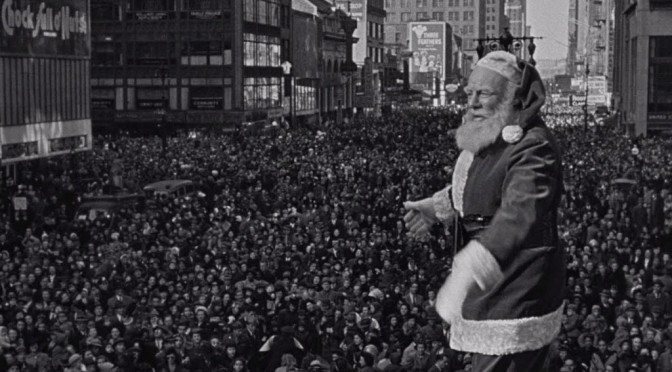
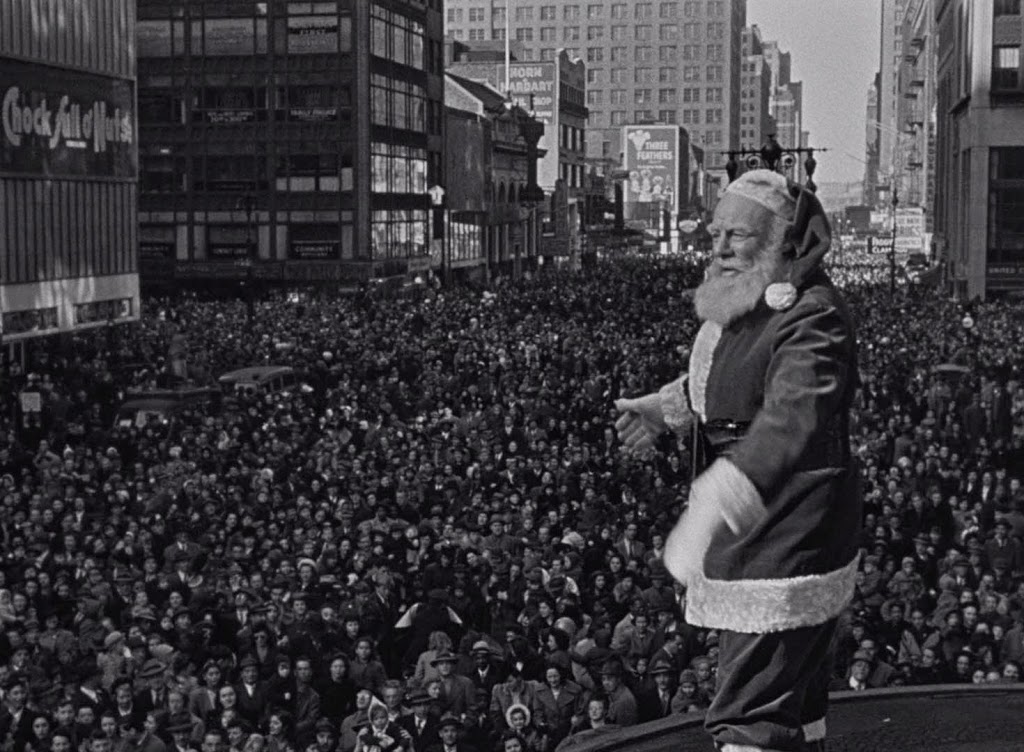
The scenes of the Thanksgiving Day parade in Miracle are real, taken from the 1946 parade. This mixing of live events and fictional set pieces (filmed in Hollywood) was rather unusual for the day.  “Scenes shot in actual New York settings add credibility to the film,” said Crowther. Gwenn was even the parade’s real Santa!  “A somewhat frostbitten Santa Claus, in the person of Edmund Gwenn, the actor, gingerly climbed off his high perch and unveiled Macy’s mechanical windows….” [source]
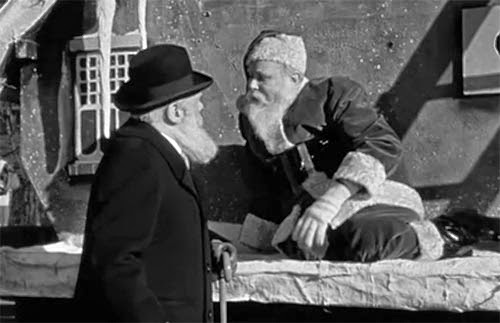
4) Bad Santas  “These pants are gonna fall off in the midst of Columbus Circle,” said the unfortunately inebriated Santa, who is relieved of his duties and replaced by Gwenn’s Santa. Several decades before Santacon, newspapers would occasionally make note of a Santa who would come to work “with liquor on his breath.” It seems there were all sorts of lecherous Santas! In 1948, the year after Miracle, the New York Times Magazine notes a Santa who “grabbed a trim young mother, set her on his knee and suggested that they both go out and have a drink.”

5) Behind The Beard  Edmund Gwenn, the film’s jovial Kris Kringle, went on to win the Academy Award for Best Supporting Actor. (Unfortunately, he beat Richard Widmark‘s work in the film Kiss of Death, widely considered to be one of the greatest film noir performances.)

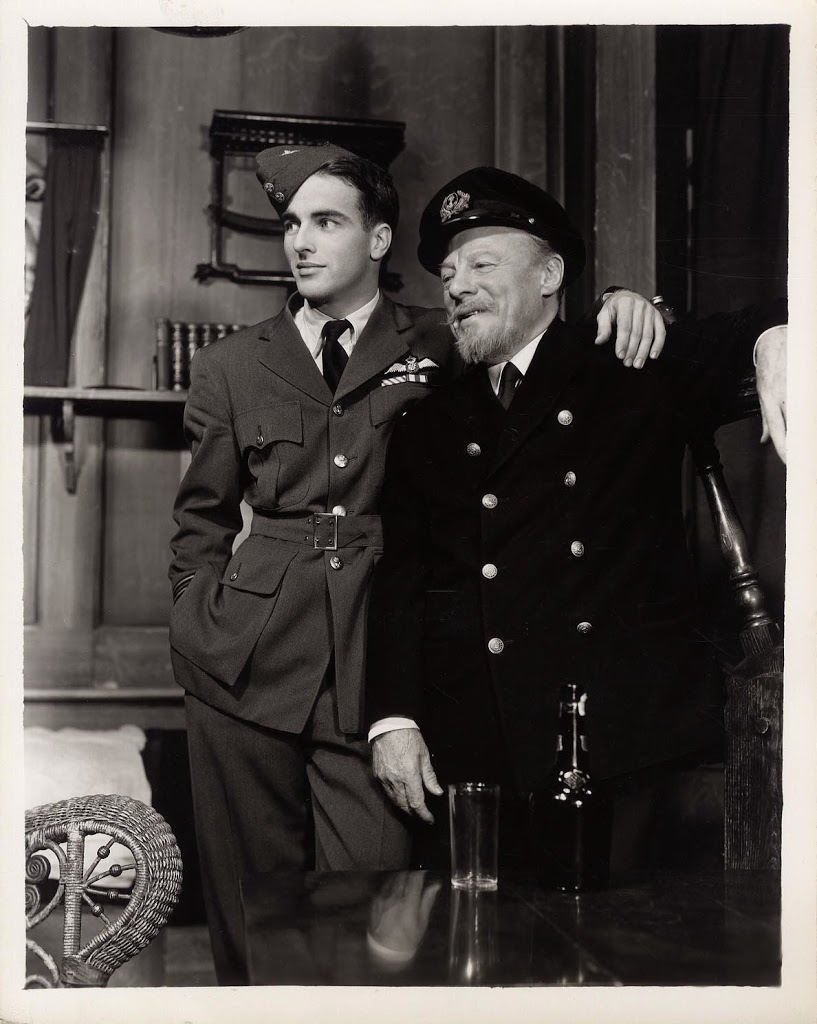
Although he had made dozens of films, the British actor was known for his work on the stage. In fact, right before starting work on Miracle, he gave what would be his last performance on the New York stage — the play You Touched Me with upcoming young star Montgomery Clift.

Above: Clift and Gwenn from their Broadway production of You Touched Me (Courtesy WalterFilm)

6) D-I-V-O-R-C-E  Miracle is unique in that its heroine is a divorced woman, but she’s badly treated by the film’s screenplay. Note the look of shock on the face of Fred Galley (John Payne) when little Susan casually mentions that her mother and father are divorced.

After World War II, divorce rates skyrocketed in America as servicemen returned from war to changed domestic situations. Divorces were only “fault-based” at the time; “typical grounds were adultery, desertion, habitual drunkenness, conviction of a felony, impotence … and, most used by divorcing parties, ‘cruel and inhuman treatment’.” [source]

The film makes some unsubtle commentary — Doris (which even sounds like divorce) is depicted as a cold, cynical woman, lacking little joy. I mean, she’s the director of the Macy’s Thanksgiving Day Parade and she doesn’t even bother to stay and watch it?

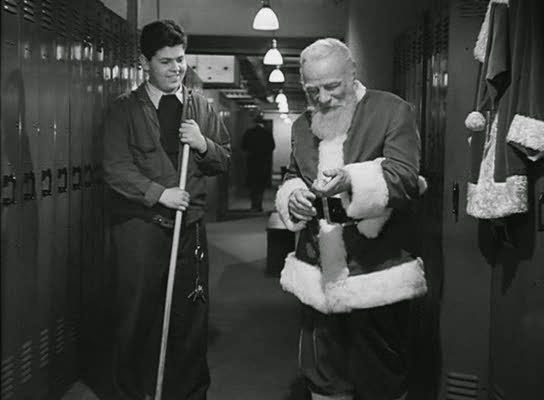
7) Locker Room Talk  We’re granted many scenes of Macy’s work spaces that customers don’t get to see, such as the locker room, where Kringle meets Alfred, the sometimes store Santa “with extra padding” and a thick Brooklyn accent — “just troo ’em on the floor!”

Macy’s was actually once renown for its locker room! From a report in 1913: “At Macy’s there are vast locker rooms containing expanded individual metal lockers for the majority of the employees and some smaller ones for certain groups. Never are two required to use one locker, except during Christmas rush. This is an exceedingly liberal policy, considering the size of the establishment, and a most desirable one.”

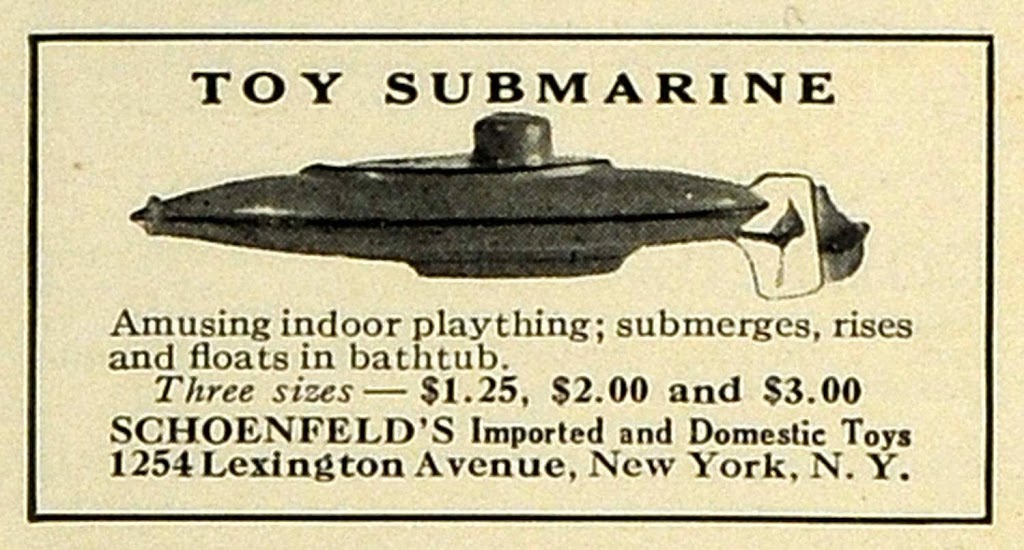
8) Toy Stores We get to the crux of the tale when Kringle, now hired as Macy’s Santa, begins sending customers to other department stores in the city. Most notably he sends a thankful mother (played by Thelma Ritter, in her debut film role) to Macy’s big rival Gimbels and another to a toy store called Schoenfeld’s, in Yorkville, at 1254 Lexington Avenue.

Here’s an ad for a toy submarine that was sold at Schoenfeld’s in 1927.

9) Cutthroat Business Macy’s and Gimbel’s were the two biggest department stores in Herald Square and one of New York’s best known rivalries. “Would Macy’s tell Gimbels?” was a popular expression of the time, expressing the fierce secrecy in sales and marketing practices. In Miracle, after Macy’s embraces Kringle’s policy of recommending items for sale at other stores, Gimbals tries to one-up their rival by adhering to the same policy and spread it to their stores across the country.

According to Gimbels lore, the company chairman Bernard Gimbel was asked to take the role of Kringle in Miracle. (I personally find this very hard to believe.) Such a request would not have been made of Macy’s founder Rowland Hussey Macy as he had died almost 70 years before.

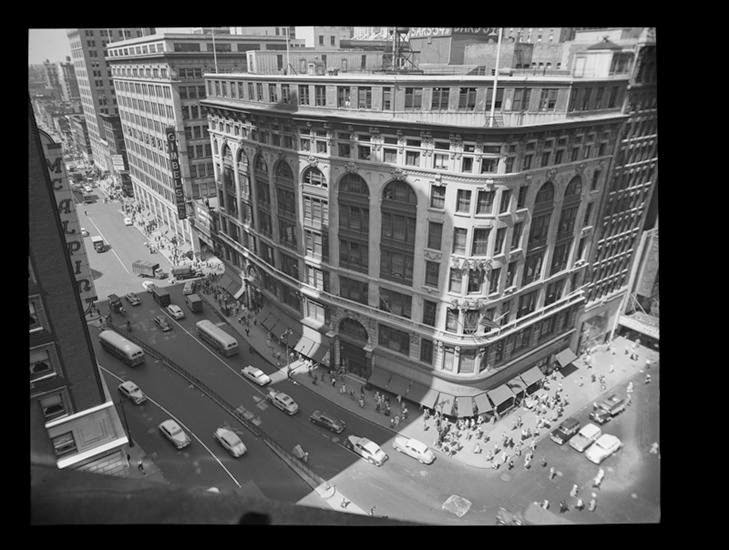
Below: Gimbels Department Store in Harold Square, taken in 1915, from the vantage of the Marbridge Building (Photo by the Wurts Brothers, courtesy Museum of City of New York)

10) Home Away From Home When not at the North Pole, Kris Kringle resides at Brooks Memorial Home for the Aged at 126 Maplewood Dr, Great Neck, Long Island. That’s a real address although you won’t find the grand exterior that was used in the film. Why would they put Kringle in a nursing home in Great Neck? Perhaps it was a literary illusion to another great New York City fictional tale — Great Neck is called West Egg in The Great Gatsby, written only twenty-two years previous.

11) Santa Gets It Wrong Kringle is taken in for a psychological evaluation to prove his competence. He’s fully prepared, of course, seeing as he’s frequently accused of being crazy.

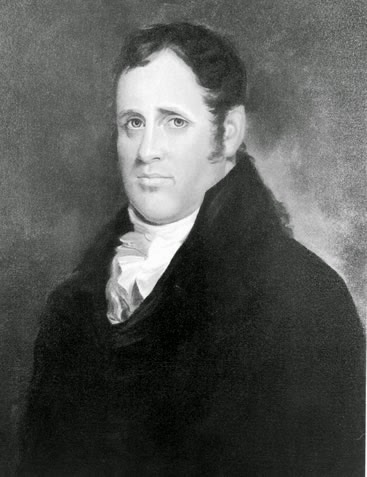
He rattles off a list of questions that might be thrown his direction during the mental examination. The trickiest? “Who was the vice president under John Quincy Adams? Daniel D Tompkins. And I’ll bet your Mr Sawyer doesn’t know that!”

Tompkins was a great many things in his day. Today he’s the namesake of Tompkins Square Park and Tompkinsville, Staten Island. But one thing he was not — he was never vice president under John Quincy Adams. That was John C. Calhoun. Tompkins served under President James Monroe.

So what accounts for this obvious error? Is it a true gaffe or an insight into Kringle’s character? Maybe he was crazy! Or just in need of an encyclopedia.

By the way, the psychiatrist Sawyer is taking his examination cues from a 1946 book called Mastering Your Nerves: How To Relax Through Action.

12) Working Delusion The handsome Doctor Pierce from the Brooks Memorial Home is sure the old man is suffering from a deeply held delusion. But so what?

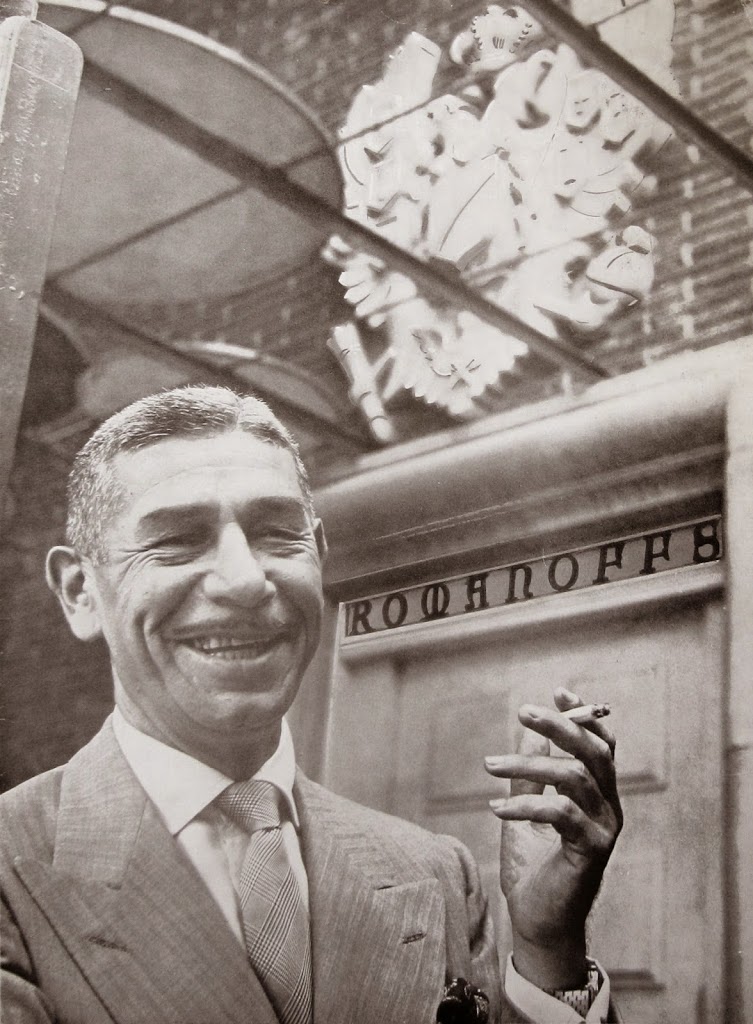
“Why there are thousands of people walking around with similar delusions, living perfectly normal lives in every other respect. A famous example is that fellow — I cant think of his name — but for years he’s insisted he’s a Russian prince. He owns a famous restaurant in Hollywood and is a highly respected citizen.”

Pierce is referencing an actual person named Michael Romanoff (at right), a noted ‘professional imposter’, who once walked the streets of New York City claiming he was Prince Michael Dimitri Alexandrovich Obolensky-Romanoff, nephew of Tsar Nicholas II.

In 1941 he opened the restaurant Romanoff’s in Los Angeles on North Rodeo Drive, enjoying newly found success in a town noted for its impostors. The famous photograph of Sophia Loren and Jayne Mansfield is taken at Romanoff’s.

13) Martini Time! In a delightfully throw-away scene, Shellhammer, the head of Macy’s toy department, tries to convince his wife to let Kringle stay at their home. In order to get her to agree, he gets her wasted on martinis. “We always have martinis before dinner. I’ll make them double-strength tonight.”

We have Prohibition to thank for martini hour in many American homes. Driving alcohol consumption into private dwellings, the cocktail hour was firmly entrenched by the 1930s. It was properly solidified by the world’s most famous martini drinker after James Bond — Franklin Delano Roosevelt. “Before dinner we usually had martini cocktails made by the President’s own hands,” said one cabinet member. Many remembered that Roosevelt made very, very bad martinis, preferring to enhance them with a few drops of absinthe.
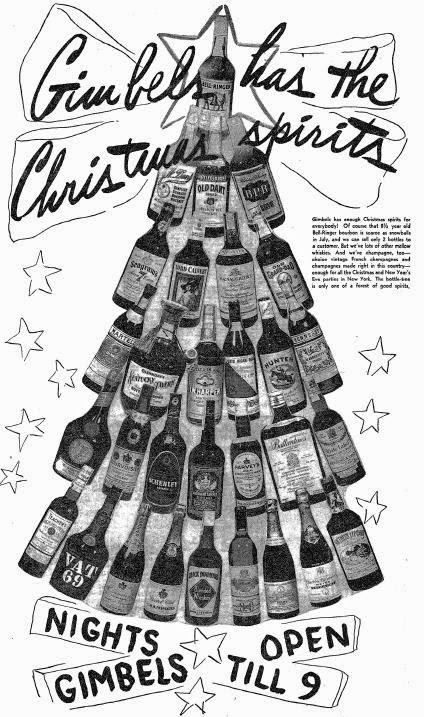
At right: A festive Gimbels ad which ran in the New York Times in 1946

14) Advertising Blitz Macy’s fully embraces the altruistic policy of directing shoppers to other stores if they are looking for an item that is not stocked. In a montage, we get to see some of the other department stores benefiting from Macy’s new rules — Bloomingdales, Hearn’s, Gimbels, Stern’s and McCreery’s. 

These stores were situated very close to one another during the 1940s and had followed each other up the island of Manhattan, beginning their existence in lower Manhattan, then moving to Ladies Mile in the late 19th century, then to Midtown by the new century. For instance, Hearn’s went from Broadway and 8th Street, then to 14th Street between Fifth and Sixth Avenue (very near Macy’s old home).

McCreery’s made its Ladies Mile home at Sixth Avenue and 23rd Street. Today it’s occupied by another building with a Best Buy on the bottom floor. It later moved to 34th Street and Fifth Avenue.

For more information about the department store scene, check out our podcast on Ladies Mile.

15) Vintage Lunch We see Alfred and Kris Kringle in another space for Macy’s employee’s — the cafeteria. This was obviously filmed on location as evidenced by this picture of the cafeteria from 1948 (photo by Nina Leen):

16) The Nut House Kris Kringle purposefully fails a mental exam — heartbroken by what he believes is a betrayal by Doris — and gets thrown into Bellevue Hospital for a few days. Kringle is seen in a relatively safe environment although the hospital’s reputation was less than rosy during this period. This is the era of shock therapy and other controversial treatments. In one experiment at Bellevue from the mid-1940s, almost one hundred children with diagnosed schizophrenia were given shock treatments six days a week.

Bellevue was also famous during this period for its alcohol rehabilitation center. In 1945, the film The Lost Weekend detailed one alcoholic’s “staggering ugly treatment” here.

17) Kooky Headlines In another swirl of headlines, we’re alerted to Kringle’s upcoming court trial to determine his true status. Among the many headlines we see is one that makes a total assault upon the English language — KRIS KRINGLE KRAZY? KOURT KASE KOMNG “KALAMITY” KRY KIDDIES
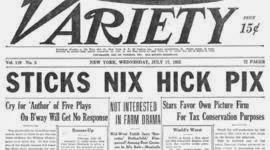
This is a gag directed squarely at Daily Variety, who specialized in absurdist headlines as early as the 1930s. In 1935 they went with the mind-boggling STICKS NIX HICK PIX, a headline later made famous in the 1942 film Yankee Doodle Dandy.

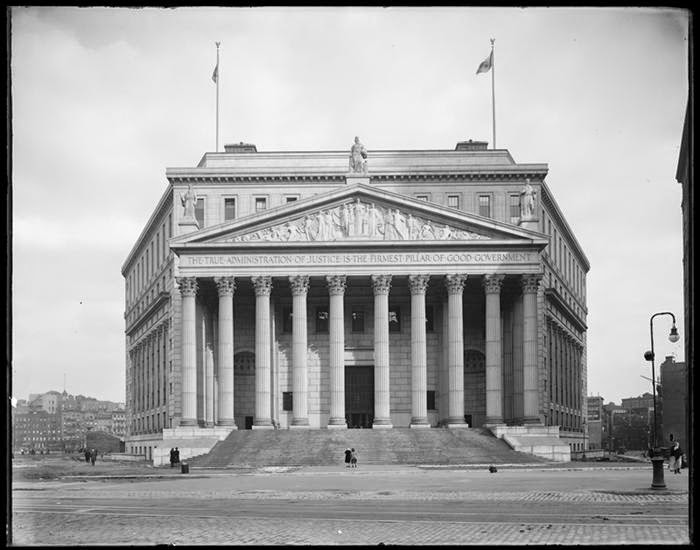
18) Historical Spot The climax of the film arrives at a peculiar place — Foley Square and the New York County Courthouse, one of the pillars of this civic district. The building was a little over 20 years old at the time of this film, and it looks pretty much the same as it does today. Along the top of the structure you can make out a carving of a 1789 quotation by George Washington — “The True Administration of Justice is the Firmest Pillar of Good Government.”

This building sets near the infamous intersection of Five Points and almost exactly on the spot were old Collect Pond once sat!

Below: New York County Courthouse, where Kringle’s fate is decided. (Photo from 1927, Wurts Brothers, courtesy Museum of the City of New York)

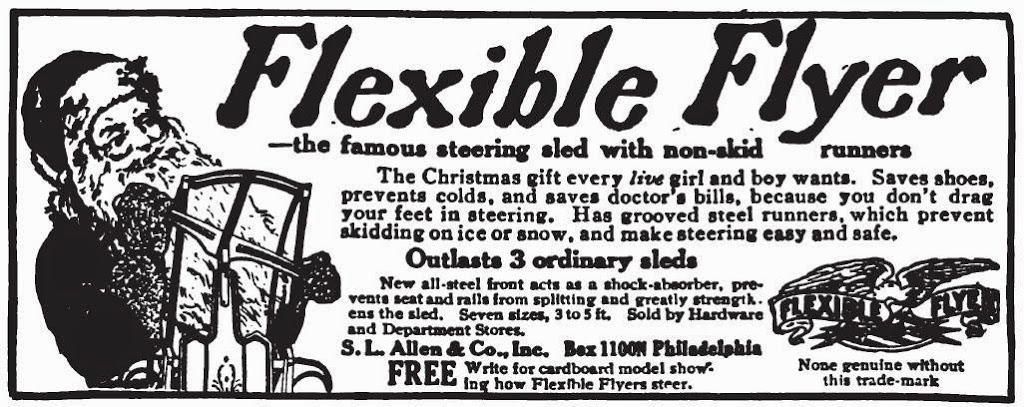
19) Kids Court  In an effort to prove the existence of Santa Claus, the son of the prosecutor is called to the stand. His name is Tom Marrah (you know, because he’s the future — tomorrow) and he is questioned about his beliefs on Old Saint Nick. “He gave me a brand-new flexible flyer sled last year,” he proclaims, then proceeds to point out Kringle from the stand.

The scene is an amusing twist on the great tale of “Yes Virginia there is a Santa Claus,” the famous confirmation of Santa’s existence that was published in the New York Sun fifty years earlier. The Virginia in question was also the child of a city employee — the coroner’s assistant — whose letter was answered by Sun editor Francis Pharcellus Church. In the case of Miracle, it is a more assured child that confirms his identity.  Judge Henry X Harper — a Democrat, we learn — affirms Kringle’s existence to curry favor from the electorate.

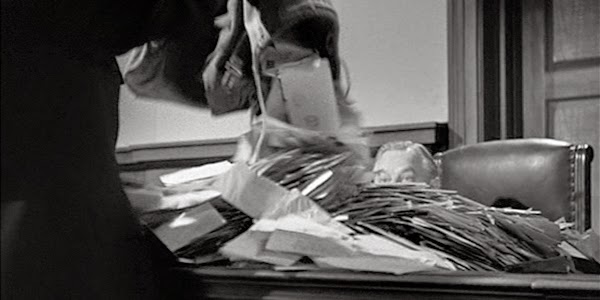
20) Dear Santa The final proof arrives, deus ex machina style, in the form of thousands of letters, re-routed from New York’s mail processing center to Foley Square. Kringle’s lawyer Galley then proceeds to regale the hall with a brief history of the U.S. post office. Galley informs the judge that the mail service was created in 1776 — technically it was 1775 — by the Second Continental Congress. Benjamin Franklin was indeed the first postmaster general.

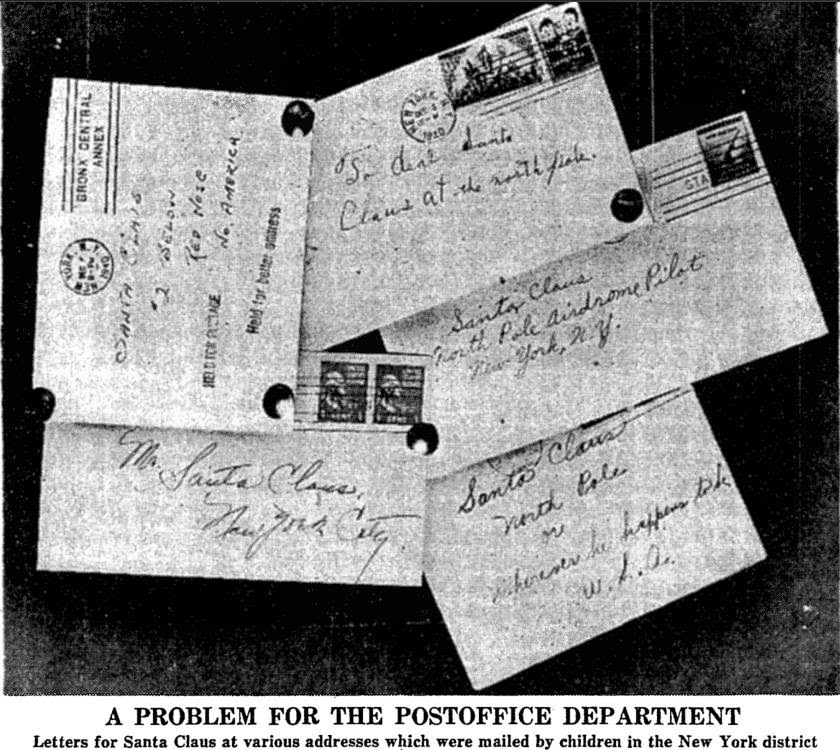
So how many letters does Santa really get a year? In 2013 — even in the era of emails — there were over one million letters from American children alone. [source]  Back in 1940, the postmaster’s office was inundated with correspondence. Letters address to Santa were “opened and read so that ‘the real worthy ones’ can be set aside from those which were childish requests.” Because how dare a child ask Santa a childish request.

The film may have played a hand into an increase of Dear Santa letters in 1947 — “up 25% over 1946,” according to reports.

From the 1940s article:

21) Christmas In June Miracle on 34th Street may be set during Christmastime, but it was originally released in the late spring, June 2, 1947. The film made its New York debut at the Roxy Theatre in a program that also featured comedian Jerry Lester, singer Art Lund, a puppet show and “the Gae Foster Roxyettes,” which replaced the original Roxyettes after they moved to Radio City Music Hall.

As part of the promotion for the film, Macy’s sent an undercover shopper into Gimbel’s to report for Macy’s-owned radio station WOR. It’s doubtful that either department store took Santa’s advice and recommended visiting their competitor.

Categories
Neighborhoods

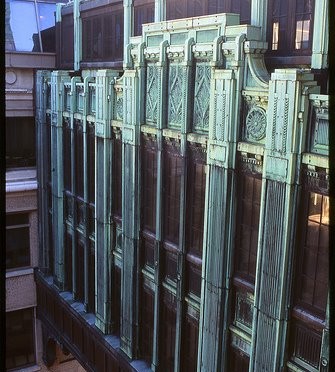
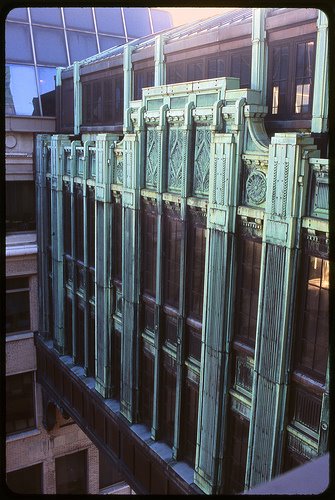
Inside Gimbels traverse, the secret perch near Herald Square

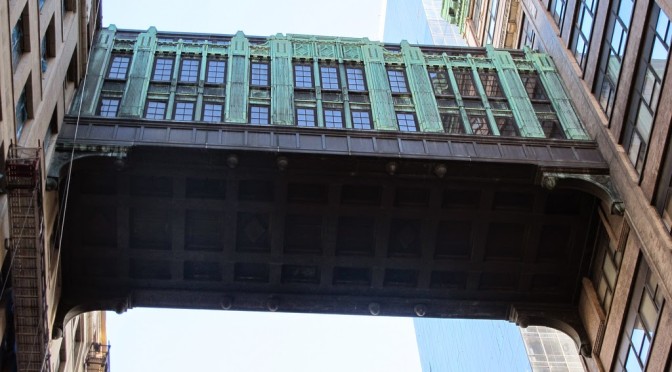
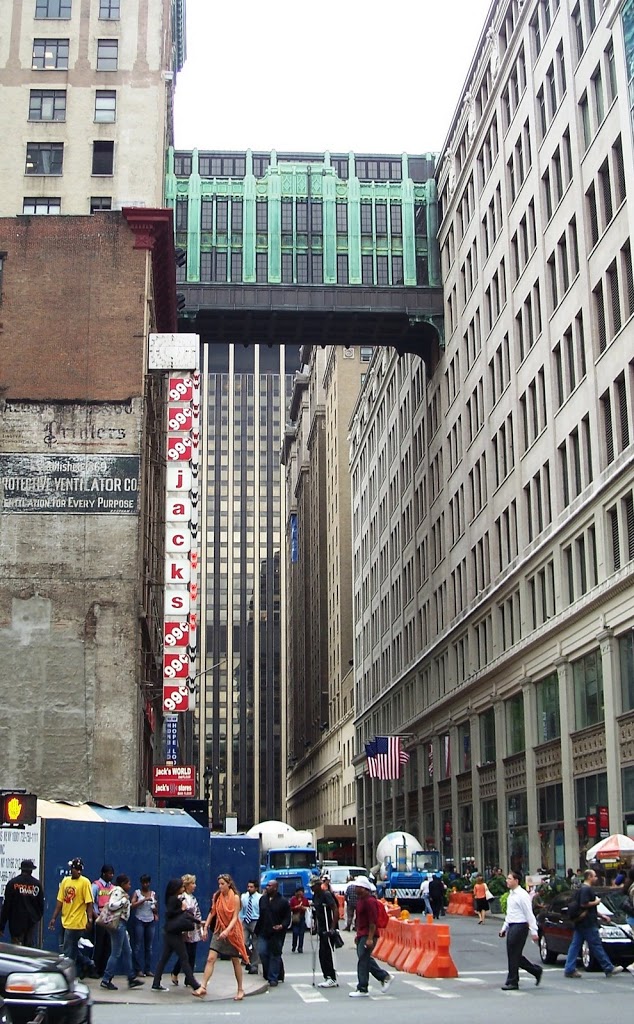
Looking up to the Gimbels traverse overhead on 32nd Street (Flickr/Docking Bay 93)

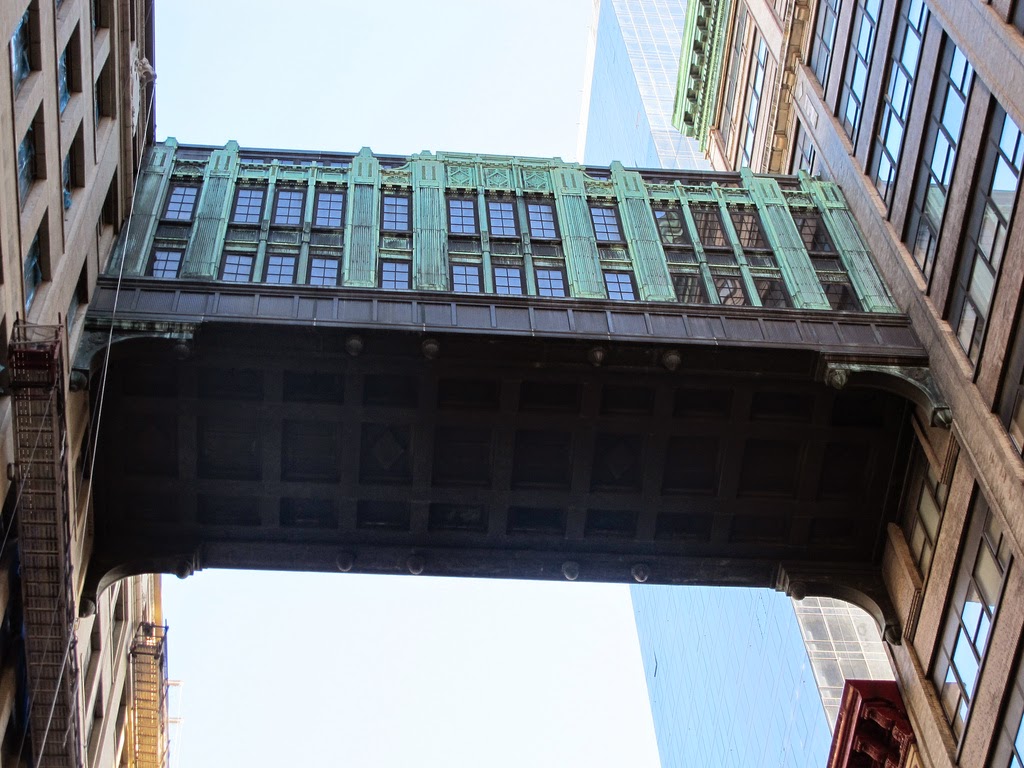
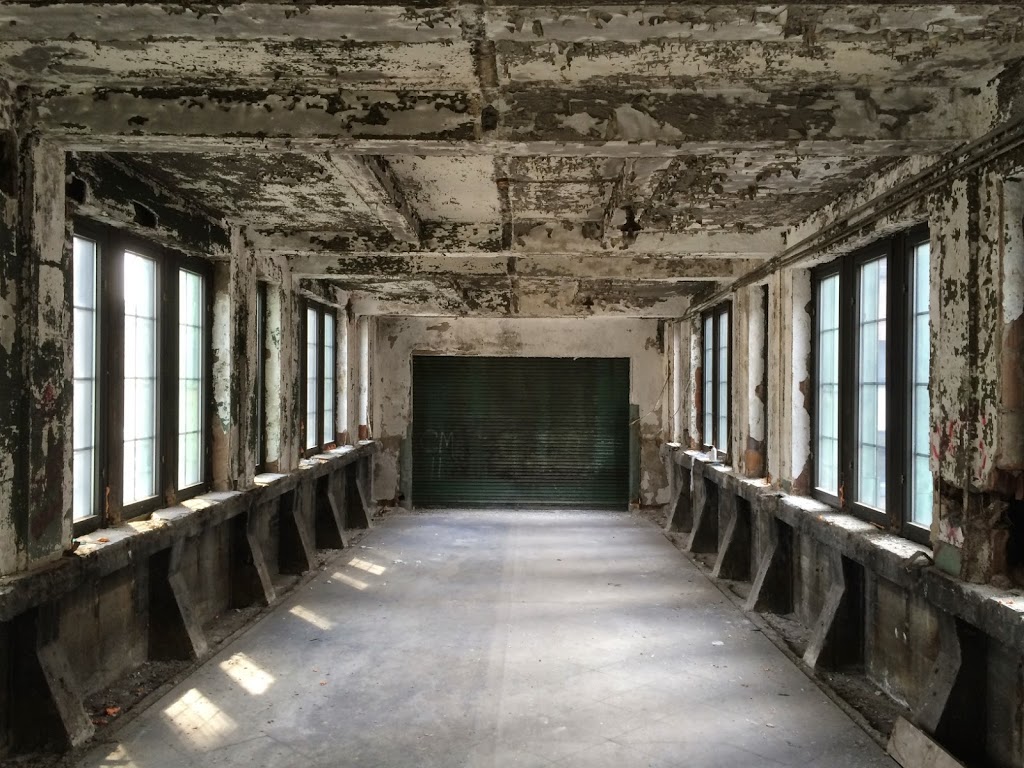
One of our podcast listeners Alexander Rea sent over the following photographs of a tucked-away place in one of the busiest areas of New York City — the Gimbels traverse on W. 32nd Street, in the Herald Square shopping district.

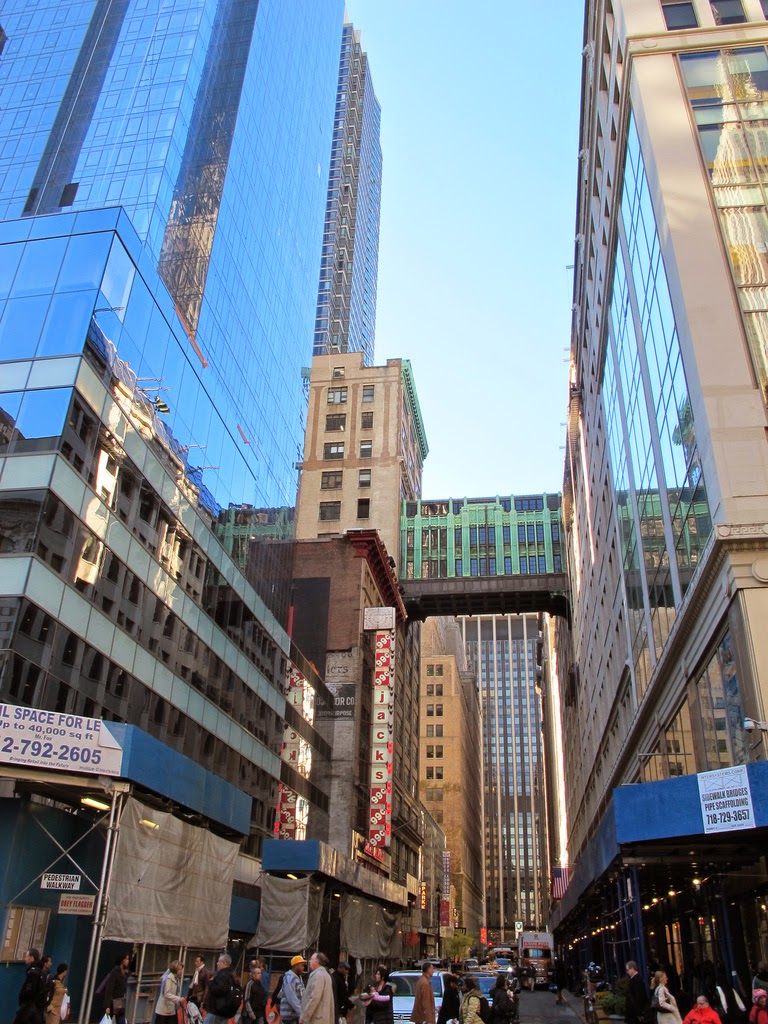
No doubt you’ve walked around the city and seen other sorts of traverses, those overhead bridges that link two buildings together, several stories up.  But the Gimbels traverse is perhaps the most interesting and the most beautiful in New York.  Today, this ornate treasure amusingly hangs right over Jack’s 99 Cent Store.  Here’s a bit of its history, revised from something I wrote a few years ago:

Macy’s kicked off the Herald Square department store district when it transferred here from its original 14th Street home in 1902.  [Listen to our Ladies’ Mile podcast for more information.]  Soon other department-store competitors of Macy’s flocked to the neighborhood in the early part of the 20th century. One strange vestige of this retail nostalgia still exists, in the form of a fabulous green copper traverse above W. 32nd Street.

Gimbels arrived in the Herald Square area in 1910 with a building designed by no less than Daniel Burnham (of Flatiron Building fame).  Gimbels was a more than worthy adversary of nearby Macy’s.  The early catchphrase ‘Well, would Macy’s tell Gimbels?’ exemplified the top-secret, competitive tactics of the two retail giants

Gimbels vied for attention with such wacky publicity stunts as sponsorship of a daredevil airplane race that sailed over the department store in 1911.  But despite (or perhaps, because of) other innovations such as the first ‘bargain basement’, Gimbels never reached the same hallmarks of class and reputation that Macy’s did.

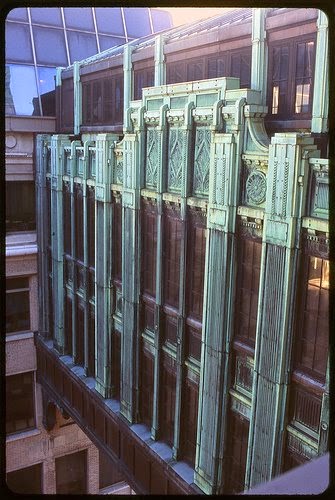
In 1925, Gimbels decided to link its Herald Square store to a recently acquired annex across the street, via a custom traverse, a beautiful copper bridge, three stories tall, created by Richmond H. Shreve and William F. Lamb, a teeth-cutting project for two young architects who would go on to help design the Empire State Building.

Both the original Gimbels store and its annex have been radically modified over the years. Thankfully, the copper bridge (now, like the Statue of Liberty, in bright verdigris) has been left virtually intact.  Despite some fears that it might be getting ripped down, the musty but still beautiful sky bridge still hangs high above shopper’s heads, a reminder of a universe of cut-throat department-store wars.  (Inset pictures courtesy Flickr/moufle, Docking Bay 93)

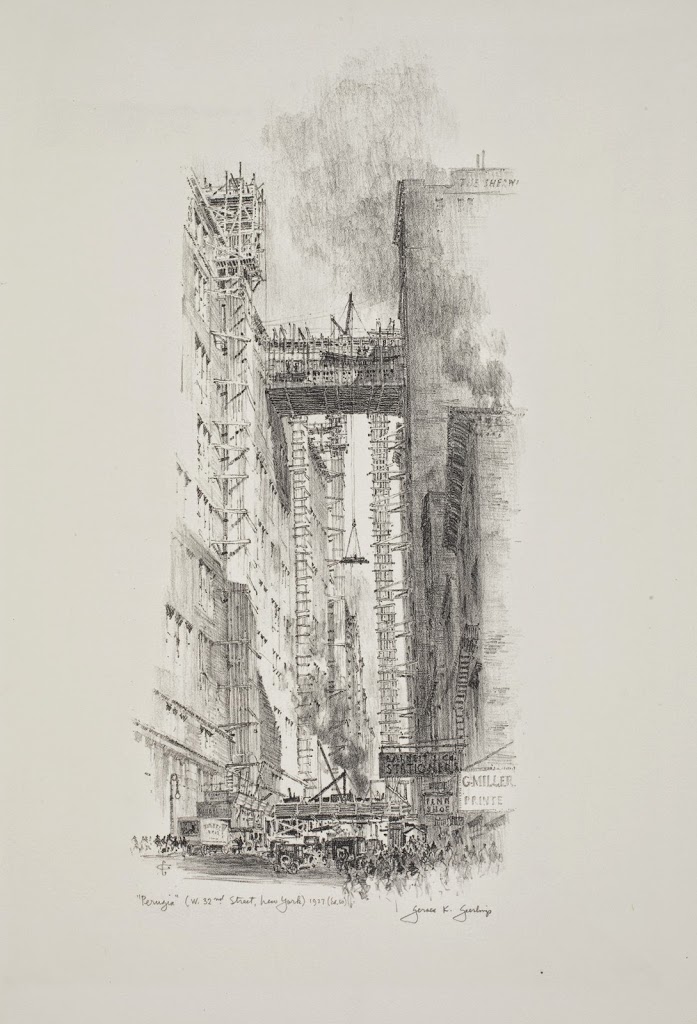
Below: A sketch, dated 1927, by Gerald K Geerlings, showing the construction of the Gimbels traverse. Courtesy the Museum of the City of New York


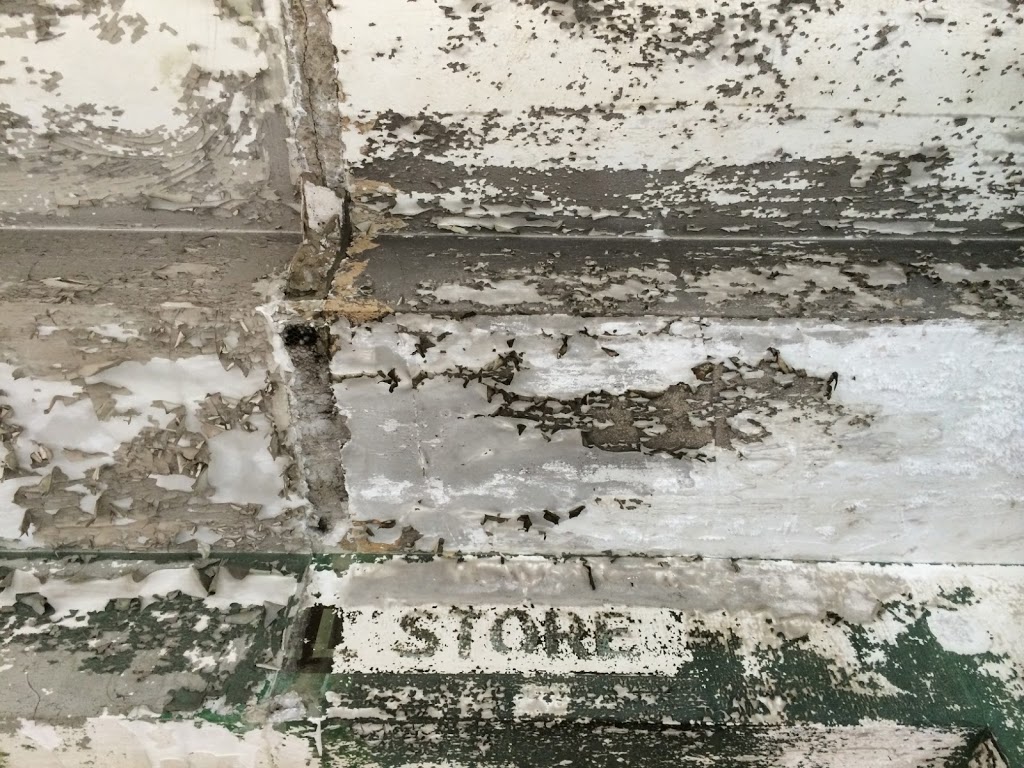
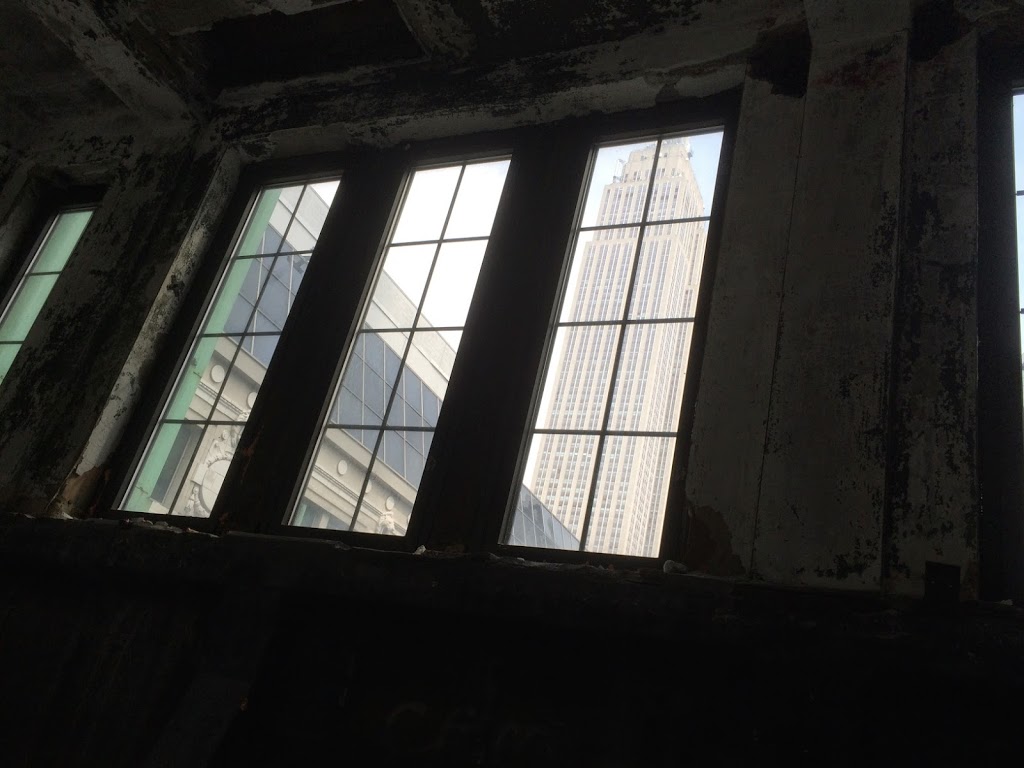
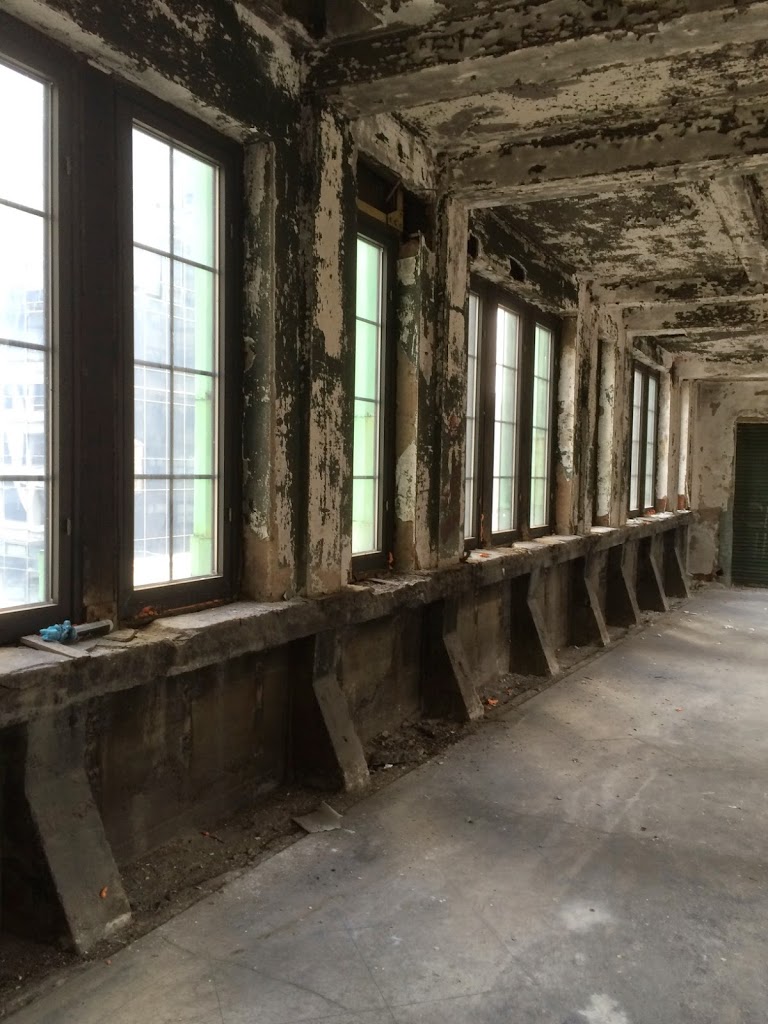
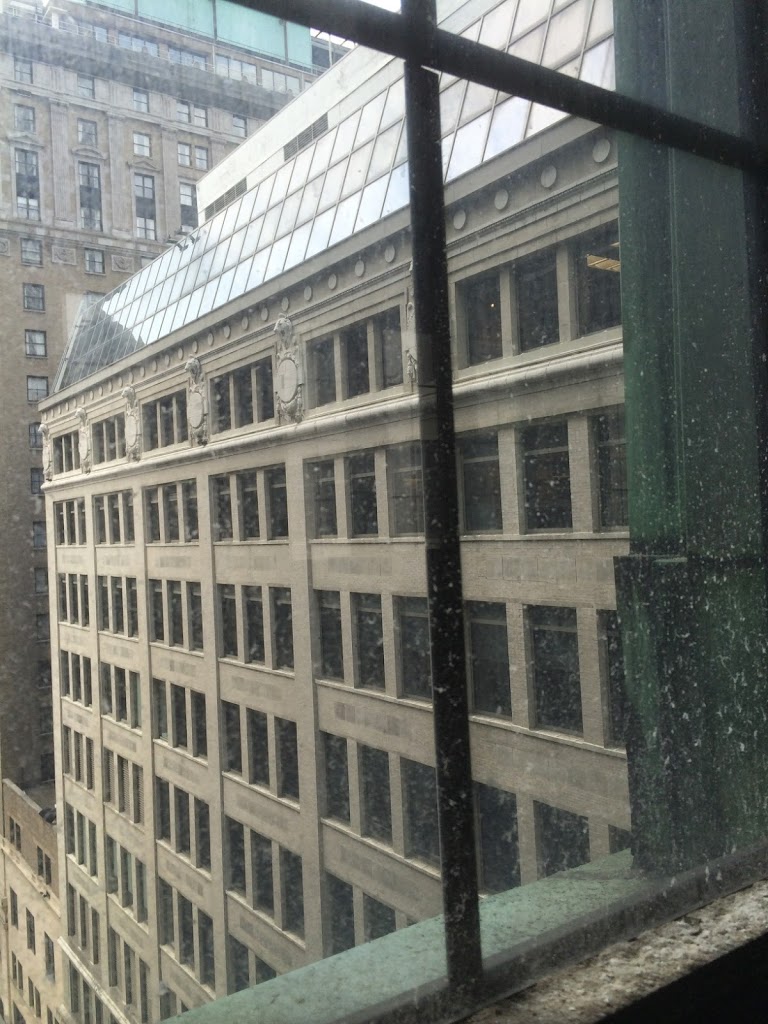
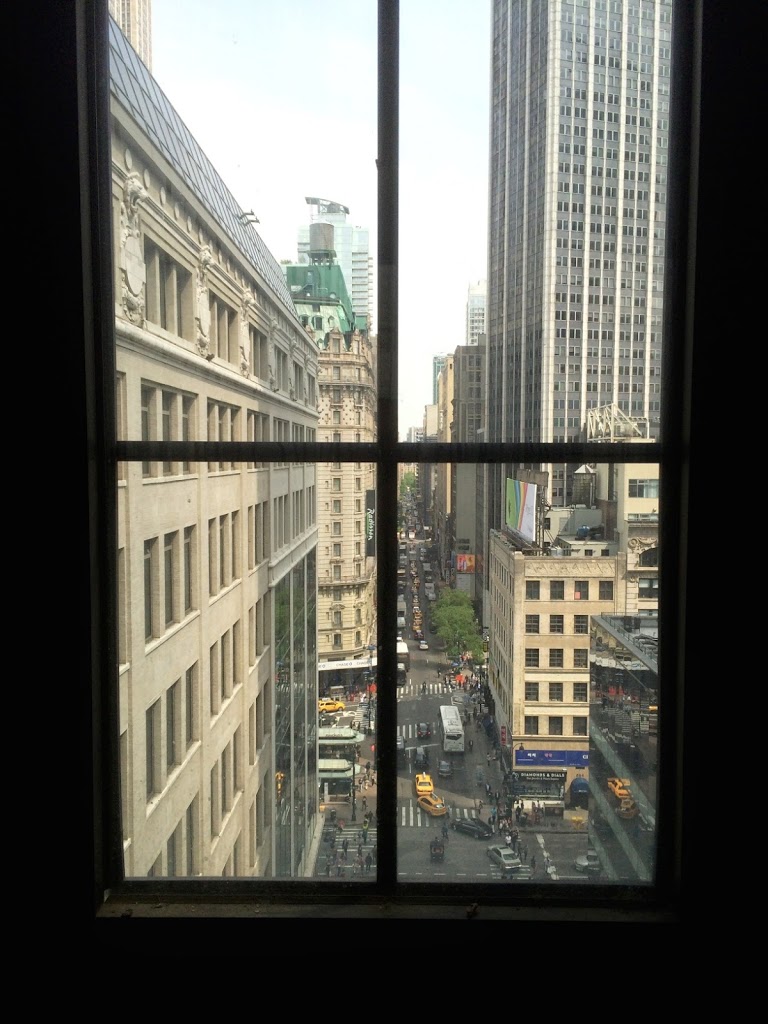
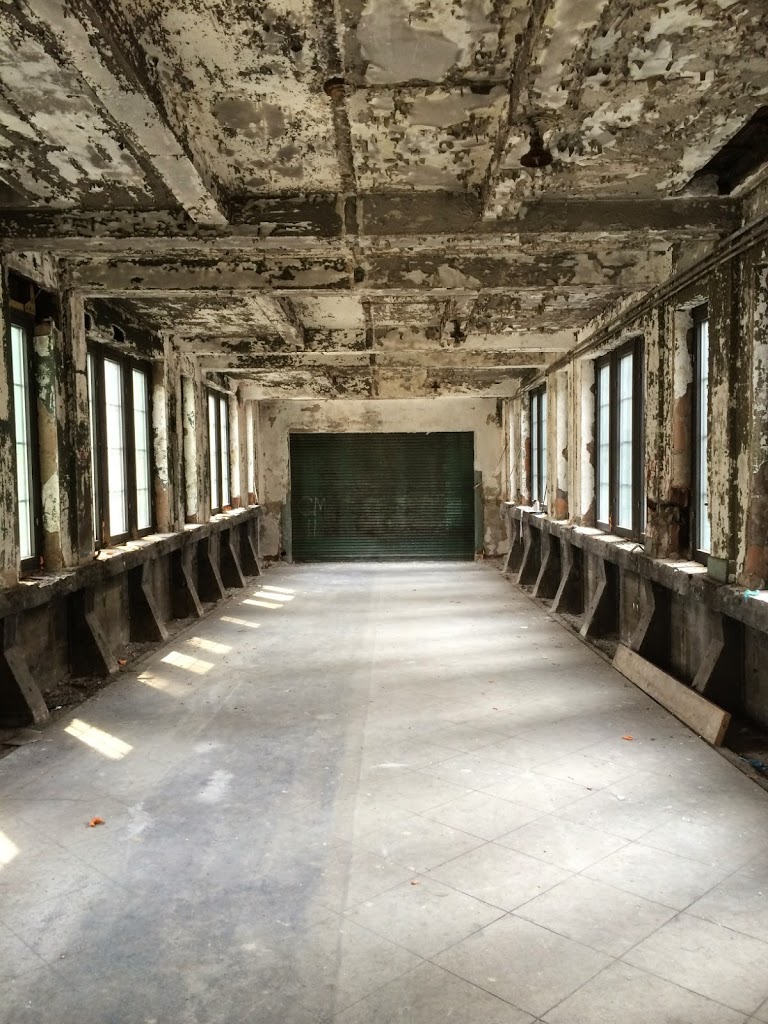
Rea, who works in the old Gimbels building (today the Manhattan Mall), was recently granted brief access into the traverse, which spends most its existence sealed off and empty.  Here are some of the images he was able to capture in his brief time inside, revealing some old signage and the world outside from this rare vantage.  Thanks for sharing, Alexander!

Categories
Those Were The Days Wartime New York

The adventures of Tony Pizzo, the sailor handcuffed to a bike

It’s Fleet Week!  The streets of New York are filled with hundreds of Marines and sailors who arrived yesterday in New York Harbor.  I’m pretty sure, however, that none of them hit the streets handcuffed to a bicycle.

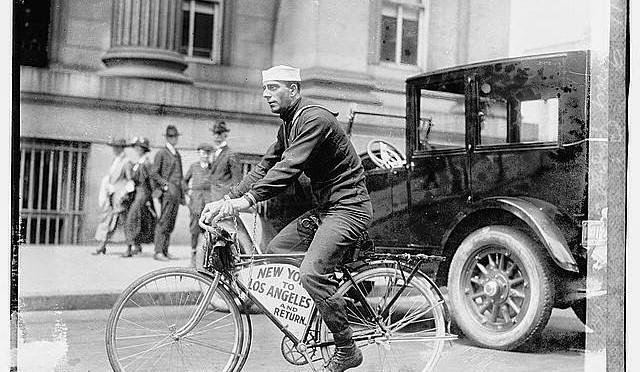
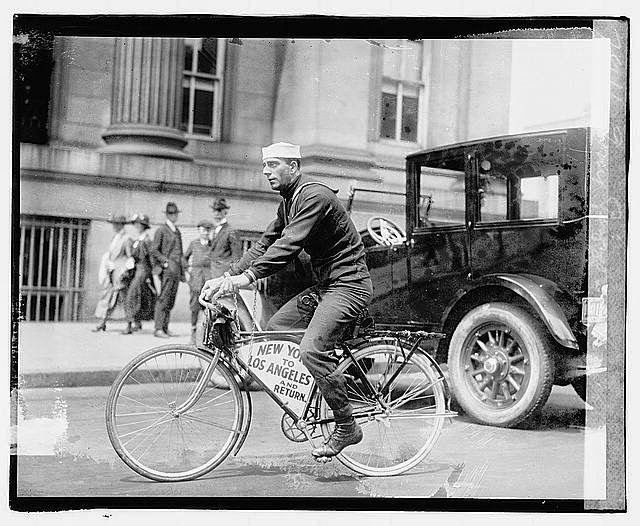
That distinction goes to the enigmatic Tony Pizzo who, in 1919, rode his bicycle from Los Angeles to New York City.  And then, the following year, he rode it back again.

Pizzo set off from Los Angeles in grand style 95 years ago this week (May 21, 1919), joined by fellow sailor C.J. Devine who was attached to another bicycle.  The men were handcuffed to these specially designed bikes during a ceremony in Venice Beach by none other that Hollywood’s greatest star — Fatty Arbuckle.

Pizzo embarked on the trip as a dare from Arbuckle, who wagered the sailor $3,500 that he couldn’t make it to New York by November 1.  Why a military man was wiling away his time doing this in the months after World War I is beyond me.  (One press clipping describes him as “a discharged sailor.”)  In reality this was an elaborate advertising stunt.  One newspaper reports that “[t]he men were advertising the Fisk tire, Morrow brakes and Crown bicycles.”

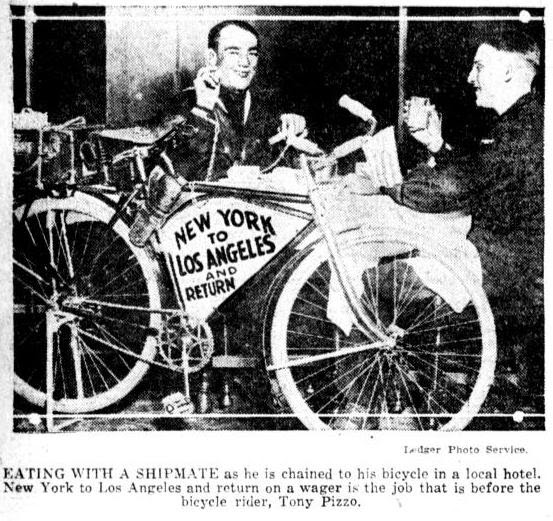
“One can hardly realize the trouble that these two riders were put to,” remarked the League of American Wheelmen, “for they had to eat, drink, wash and take care of themselves generally while handcuffed to their wheels.”

The two men made their way across America, selling souvenir postcards to fund their cross-country journey.  Unfortunately, in Kansas, Devine was hit by a car, so Pizzo went the rest of the way alone.

He finally arrived in New York on October 30, greeted by guests at the Hotel McAlpin in Herald Square. He checked into a room still handcuffed to his bicycle and was only separated from the device a day later by Mayor John Hylan.

Pizzo “regarded his bicycle with dislike,” according to the New York Times. “[H]e would not do it again for one million dollars.”

But, in fact, he did do it again, re-chained to the same bike, riding back to Los Angeles the following year.  Fortunately, Devine had recovered from his injuries and accompanied Pizzo as his manager.
Below: From a Philadelphia newspaper, May 1, 1920

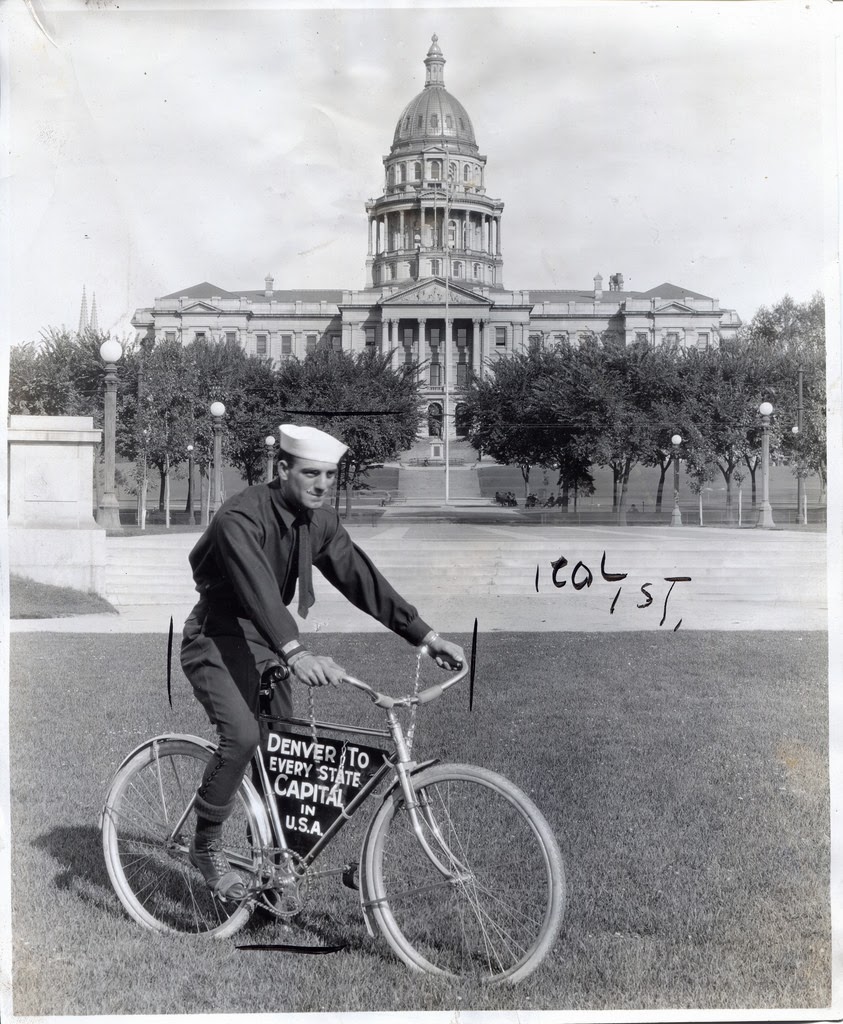
Apparently Pizzo just couldn’t stop biking.  In 1921, he embarked on another dare, the intent of which is indicated on his retooled bicycle below — to visit the governors of all 48 states. (picture courtesy Flickr/Zaz von Schwinn)

Categories
Mysterious Stories

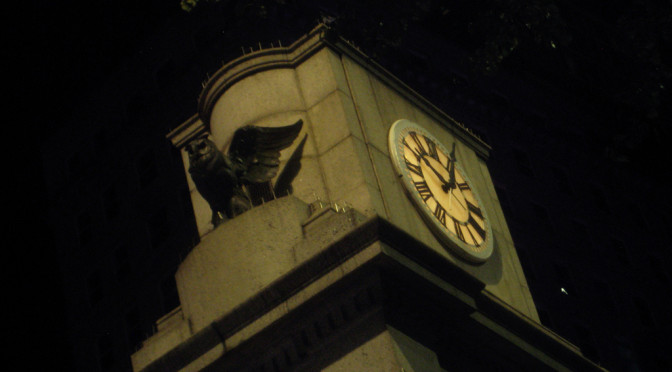
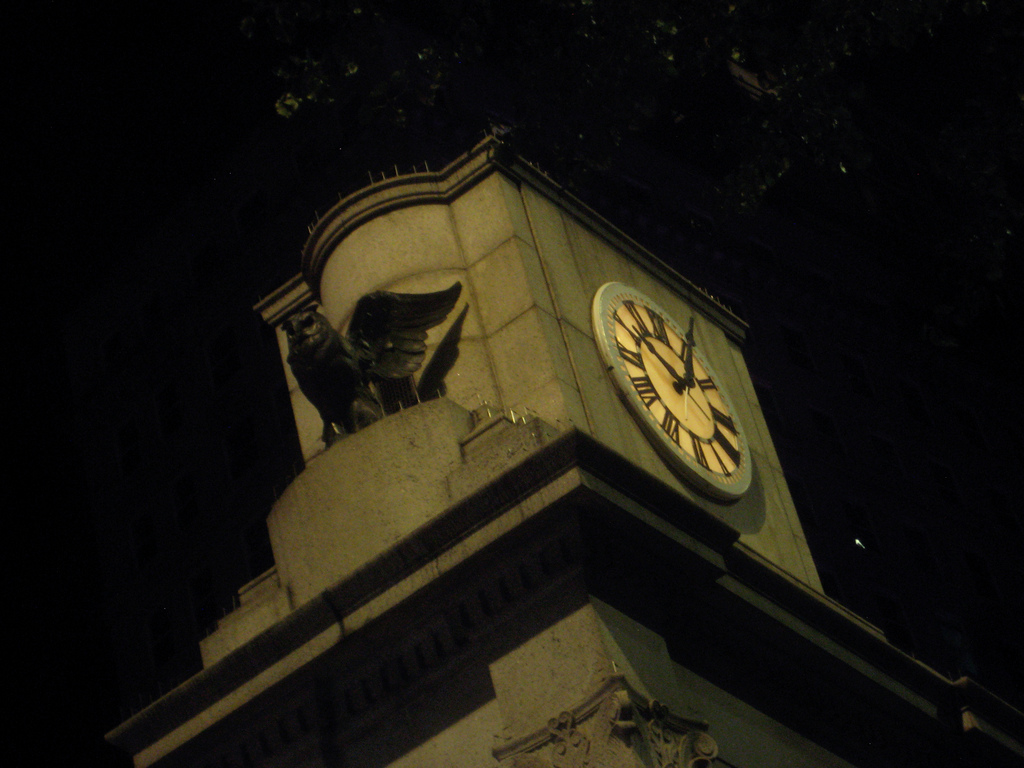
The owls are not what they seem: It appears the clock in Herald Square may not be a portal for the Illuminati after all


Pic courtesy Brecthbug/Flickr
Bummer. I so wanted the spectacular owl-infested Herald Square clock, once perched atop the offices of the New York Herald across the street, to be a secret meeting portal for the Illuminati.

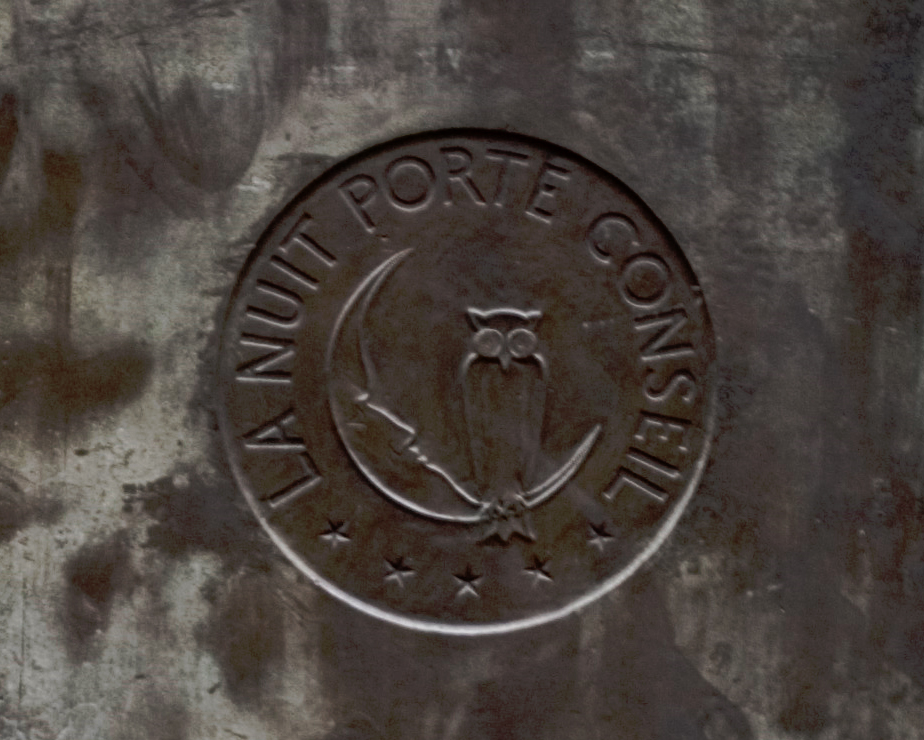
I facetiously brought up the theory in our December podcast on the history of Herald Square.  Upon the door of the clock, which sits in the northern portion of the plaza, is a strange symbol featuring an owl and stars:

Picture courtesy entrance/Flickr

The extravagant James Gordon Bennett Jr., the Herald’s editor at the end of the 19th century, has frequently been linked to the Illuminati.  They say the shadowy, all-powerful organization, with alleged ties to some of the darkest secrets from ancient history, gather to manipulate world affairs only at night. And thus their insignia features the owl — ever vigilant, mysterious and wise.

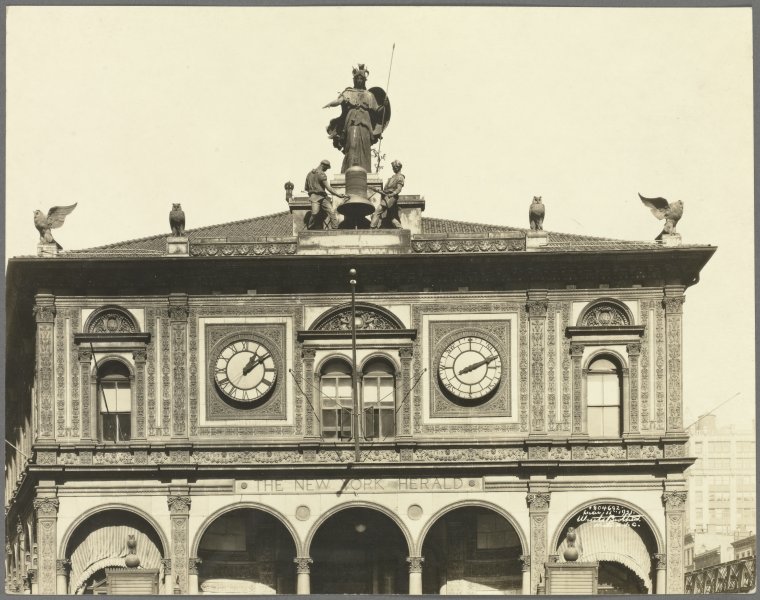
Bennett was obsessed with owls and festooned his lavish newspaper offices with the bird, many with glowing eyes.  Below: Roof decorations on the old Herald Building, pic courtesy NYPL

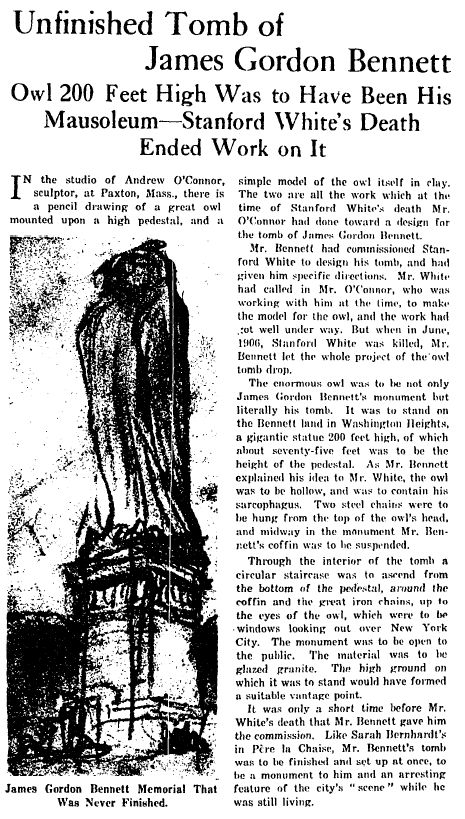
In fact, Bennett had commissioned Stanford White to design a lofty mausoleum for Bennett at his death, featuring an owl 200 feet high, to be placed in Washington Heights!  But when White was murdered on the rooftop of Madison Square Garden in 1906, Bennett’s grandiose plans were scrapped.

Below: The article from the New York Times, featuring a pencil sketch of the proposed owl monument.

The Herald clock features the goddess Minerva and her trademark companion — of course, an owl.  Like the owl, Minerva herself is frequently represented in Illuminati symbolism.  Adding to the mystery are the names of the two bell-ringers below here, Gog and Magog — entities from the biblical era and mentioned in the Book of Revelation. “When the thousand years are over, Satan will be released from his prison and will go out to deceive the nations in the four corners of the Earth—Gog and Magog—and to gather them for battle.”

So you can just imagine how this has stirred the conspiracy theorist community over the years.  It’s all practically begging for a Dan Brown novel or a Nicolas Cage film.  After all, if miles of underground passages exist underneath Trinity Church in ‘National Treasure’, what could possibly lurk here in Herald Square, beneath Bennett’s old symbol-laden clock?

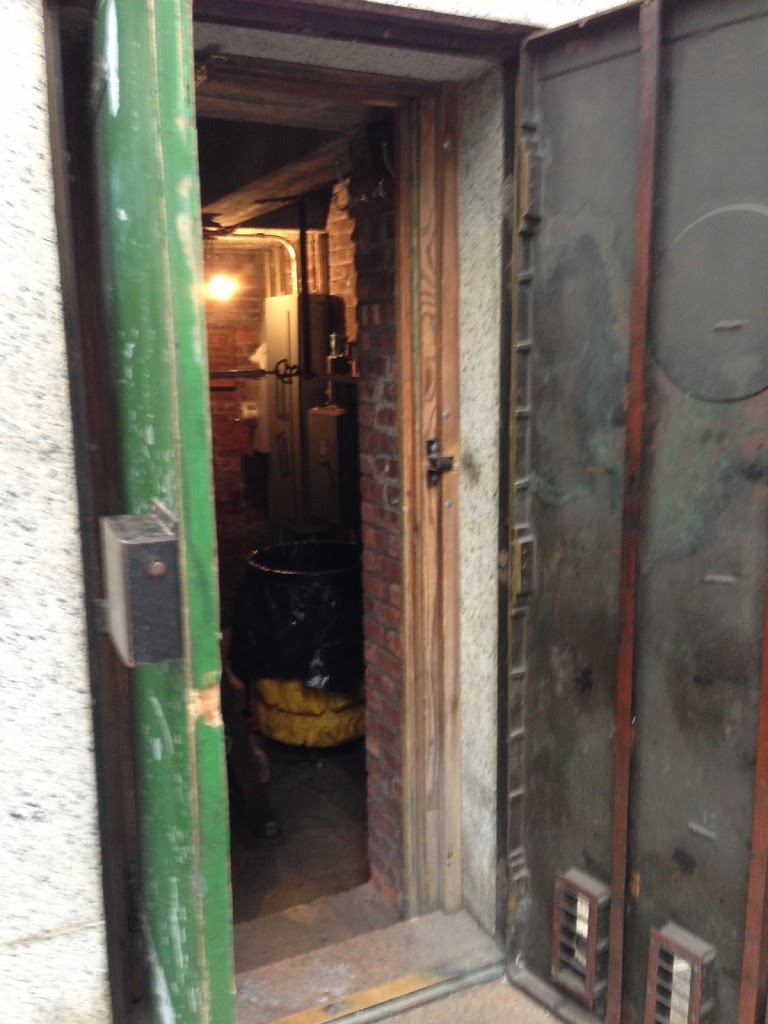
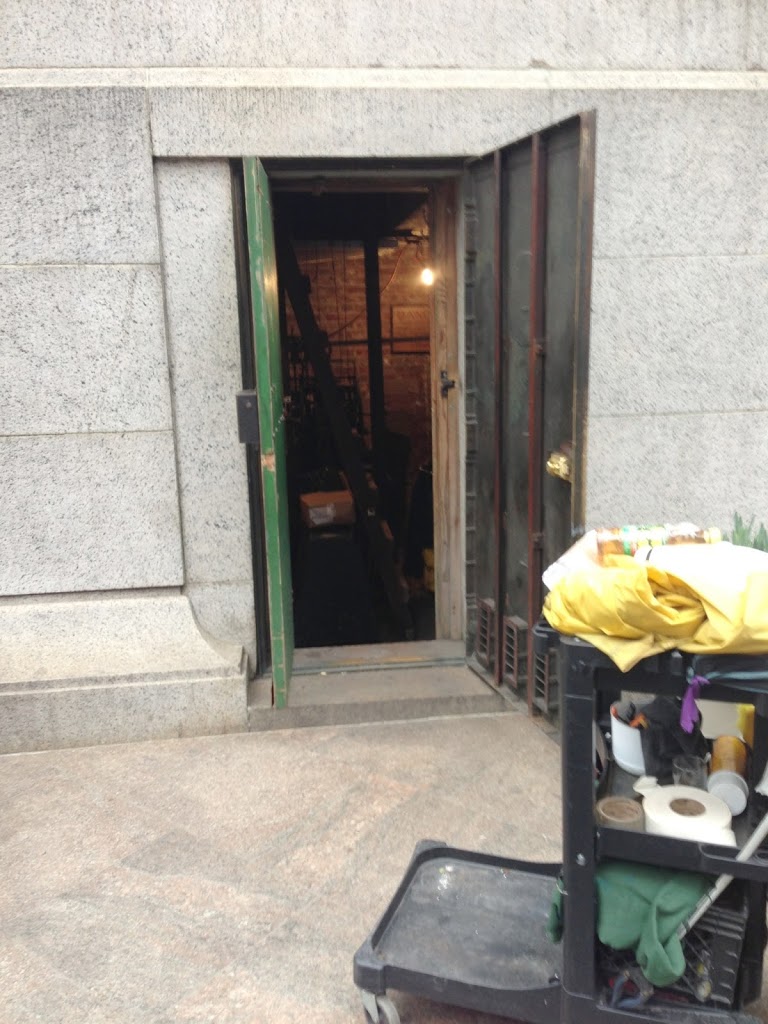
Alas, one of our listeners Ryan Cox has dispelled the existence of any clandestine passageways with a few well-timed photographs. It seems the door is nothing more than a custodian’s closet!

Okay, I mean the realists among you probably assumed this the whole time.

But what if there’s a secret passage behind all the hoses and brooms?  What if Illuminati members step over the mop bucket to get there?

Four New York City landmarks turn 100 years old this year

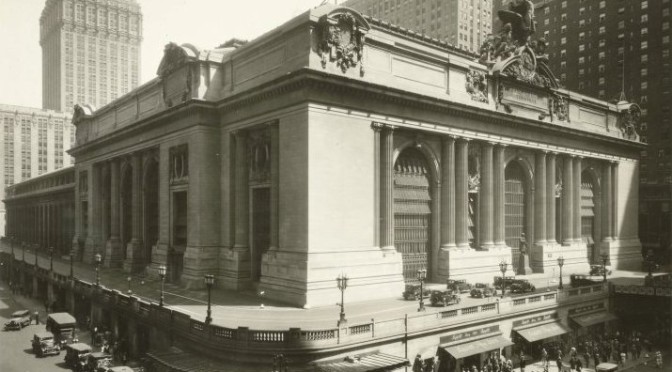
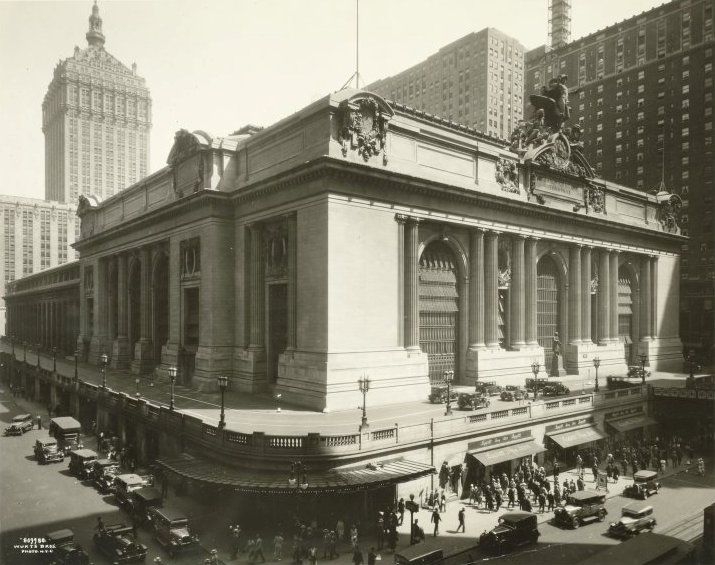
1) Grand Central Terminal
The Grand Central Depot was first built at 42nd Street in 1871 as a hub for Cornelius Vanderbilt’s railroad operations. It was greatly expanded at the turn of the century. and by this time, the tracks headed north were electrified and buried, creating Park Avenue.

The present terminal was conceived in 1903 by two teams of architects and took a decade to construct. Meanwhile, the tracks heading north, now sunken and electrified, were covered with a new street and its air rights sold to become Park Avenue.

The ne plus ultra of Beaux-Arts New York opened in February 1, 1913, and its first train, the Boston Express, left the station two days later.

For more information, listen to our podcast on Grand Central Terminal (Episode #45)

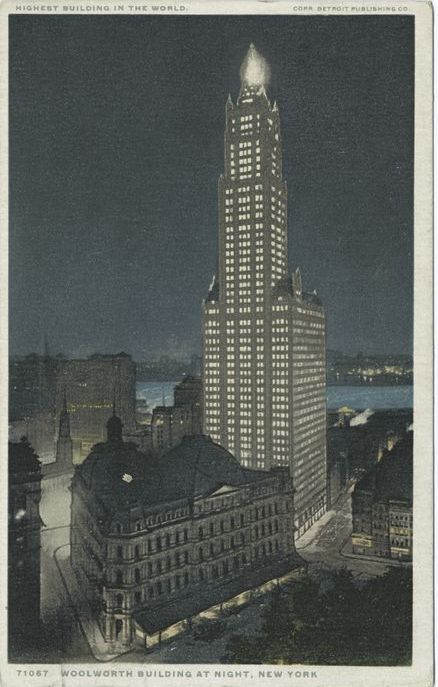
2) Woolworth Building
The Woolworth Building and the current One World Trade Center are separated by a couple blocks — and one century. Just as New Yorkers marveled last year at what will be the city’s tallest building as it began to tower over downtown Manhattan, so too did the New Yorkers of 1912, at the ornate Cass Gilbert structure rising near City Hall. In January of 1912, newspapers were already proclaiming Woolworth the crown of “:the world’s greatest construction era.”

One World Trade Center will open later in 2013. The Woolworth opened on April 24, 1913 as New York’s tallest building until 1930. As you can tell from the 1910s postcard above, it rose next to the garish old New York Post Office at the foot of City Hall Park.

For more information, listen to our podcast on the Woolworth Building (Episode #76)

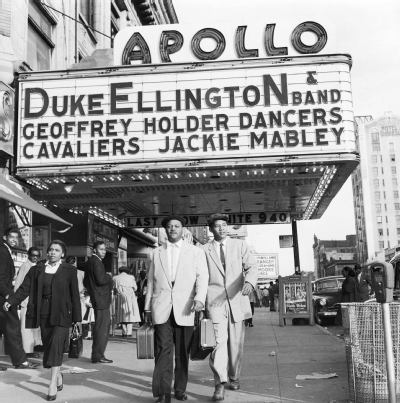
3) The Apollo Theatre
The theater that eventually became one of America’s top spotlight for new entertainers was constructed in 1913 — its architect, George Keister, designed many great theaters of the day, including the Belasco — and quickly became a home for Harlem burlesque acts under the name Hurtig and Seamon’s New Burlesque Theater.  While far from Times Square’s Broadway district, its stage has actually outlasted most of the theaters there.

It reopened in 1933 as the 125th Street Apollo Theater. It was around this time that the doors were opened to African-American entertainers.  Its ‘amateur nights’ would soon become world-famous for discovering major talent.

For more information, listen to our podcast on the Apollo Theatre (Episode #15)

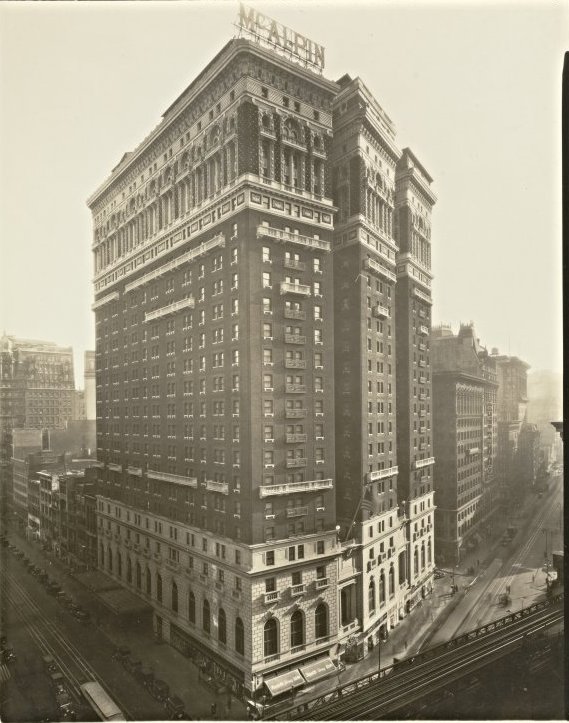
4) Hotel McAlpin
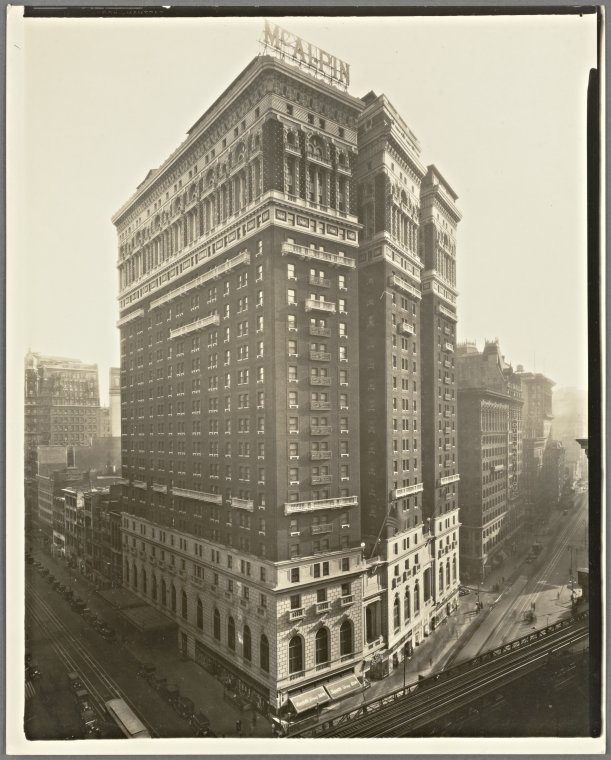
New Yorkers got a look at Herald Square’s Hotel McAlpin — the tallest hotel in the world at the time — in a lavish open house on December 29, 1912.  Thousands marveled at its almost absurd size, suitable for 2,500 guests and 1,500 employees.  It was ready to welcome guests with the new year.

“The McAlpin has many features peculiar to it among hotels,” proclaimed the New York Times. “For one thing there is a woman’s floor to which no men are permitted and where even the clerks are women …The twenty-second floor is devoted exclusively to men.” And the 16th floor was known as the ‘Sleepy Sixteenth’, the silent floor.
Today the Hotel McAlpin is an apartment complex, the Herald Towers.

For more information, listen to our last podcast on the history of Herald Square (Episode #146)

Note: I don’t think the McAlpin is officially landmarked, only one in the historical sense.

Courtesy 1) Wurts Brother/NYPL; 2) NYPL; 3) Long Wharf Theatre; 4) NYPL

Eleven breathtaking views of the New York Herald Building, one of midtown Manhattan’s earliest tourist attractions

Click into the images within this post for a more closeup view!

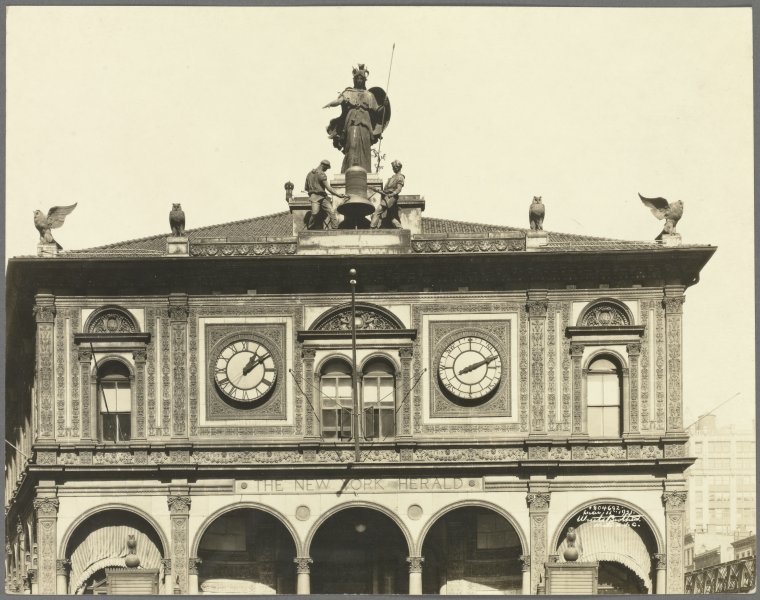
When the extravagant James Gordon Bennett Jr. decided to move the offices of the New York Herald from grimy, old Park Row to the frenzy of uptown Manhattan, he wanted something spectacular and eye-catching.  As we mentioned in our newest podcast on the history of Herald Square, Bennett went the opposite direction of newspaper publisher Joseph Pulitzer, who remained on on Park Row and put his publication in the tallest building in the world (the New York World tower, completed in 1890).
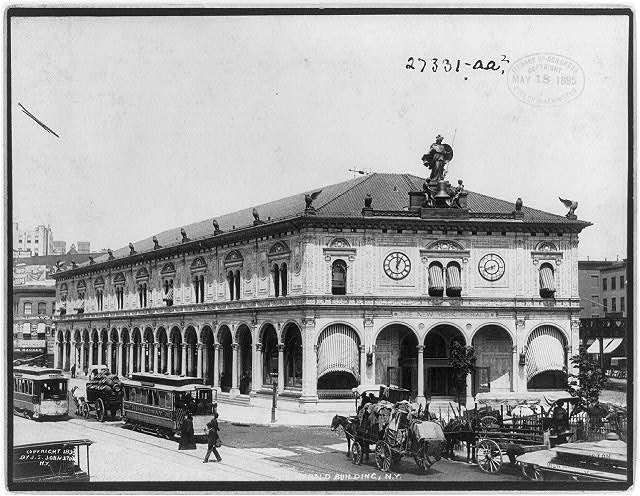
Bennett’s New York Herald Building, completed in 1894, sat at 35th Street between Sixth Avenue and Broadway, on the north side of the square his building would soon give its name. He wanted the structure to align with the theaters and hotels of the area; as designed by Stanford White, the New York Herald Building doesn’t tower over the neighborhood.

He wanted the newspaper to be essential to the rhythm and energy of this bustling intersection. It does so with its mysterious and fanciful ornamentation, its spooky owls, its ornate clock tower and its mechanical bell-ringers.

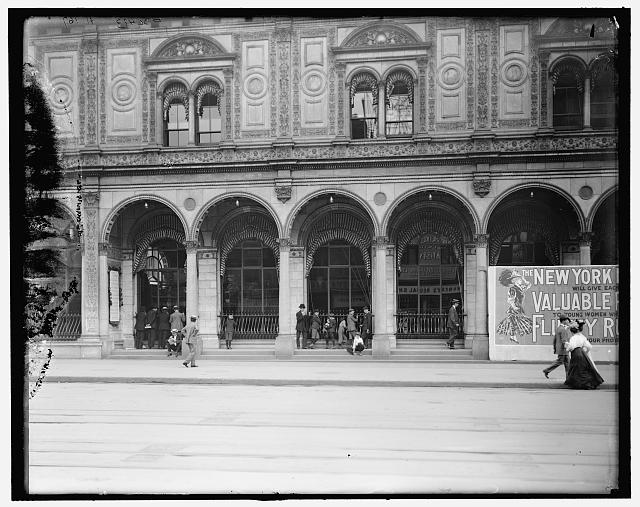
Below: the New York Herald Building, at 35th Street, between Sixth Avenue and Broadway, a frilly Italian-style structure at the nexus of a growing New York in the 1890s. [LOC]

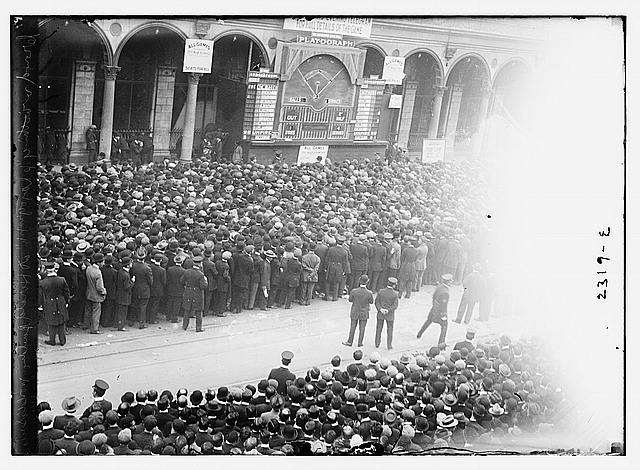
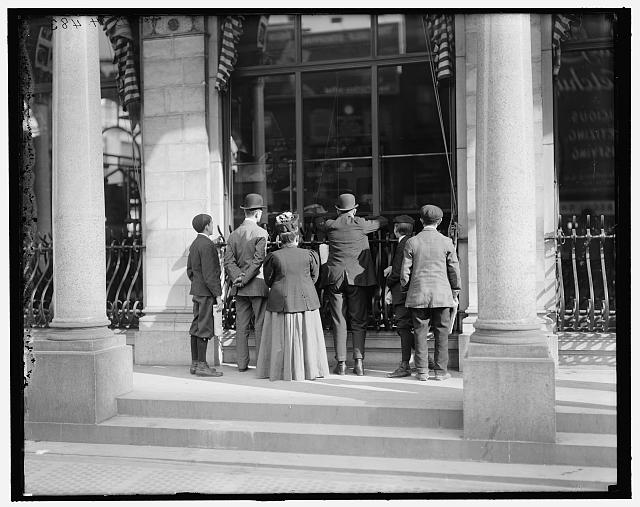
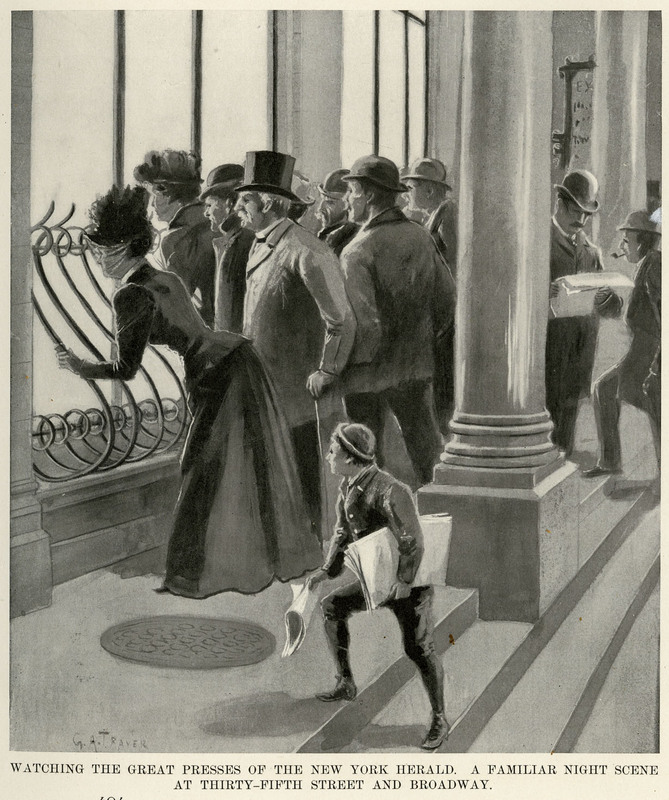
But the building became a component of the square with its open windows displaying the printing presses inside. Visitors would stand gawking as the presses furiously went about print the late-day editions. In the era before radio and television, the results of sporting events would be displayed on a billboard or “Play-o-Graph” that would attract thousands. It would be here that thousands of New Yorkers would gather to get the results of the World Series between the Red Sox and the Giants — occurring just uptown at the Polo Grounds!

The New York Herald Building became one of midtown Manhattan’s first big draws for regular New Yorkers and visitors to gather, get news, set their watches, dazzle at modern technology and ogle at the curious mix of high and low culture that sped through here. One decade later, Times Square would bring the same kind of excitement to another Broadway intersection.

Here are some additional views of the Herald Building, many romantic, most unbelievable, especially if you consider what sits there today:

Thousands of men gather to watch the results of the 1911 World Series — between the New York Giants and the Philadelphia Athletics — displayed on a “Play-o-Graph” at Herald Building. Sports results were telegraphed from inside the building, and a mini baseball diamond was regularly updated, mirroring the real time action. [LOC]

Spectators watch the Herald presses in action. {LOC}

From the Appleton publication The New Metropolis, 1899 (courtesy CUNY)

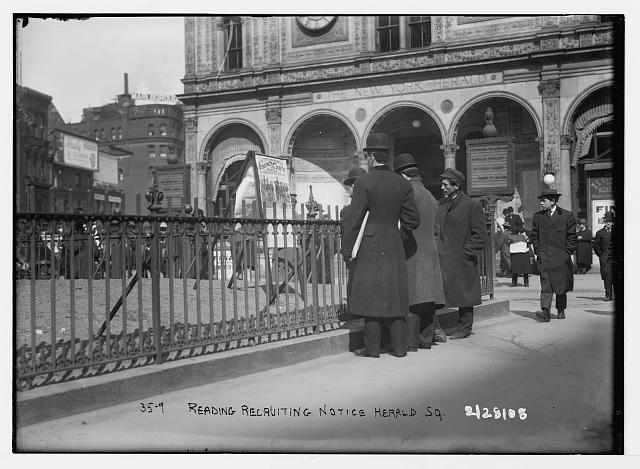
The square in front of the Herald Building would also be used for immediate announcement, often taken right from the telegraph. These men are reading a military recruitment advertisement. [LOC]

A closeup of the ornate clock, with the goddess Minerva, its two bell ringers Scruff and Guff, and the series of owls perched at various spots around the building. From March 1921 (Courtesy NYPL)

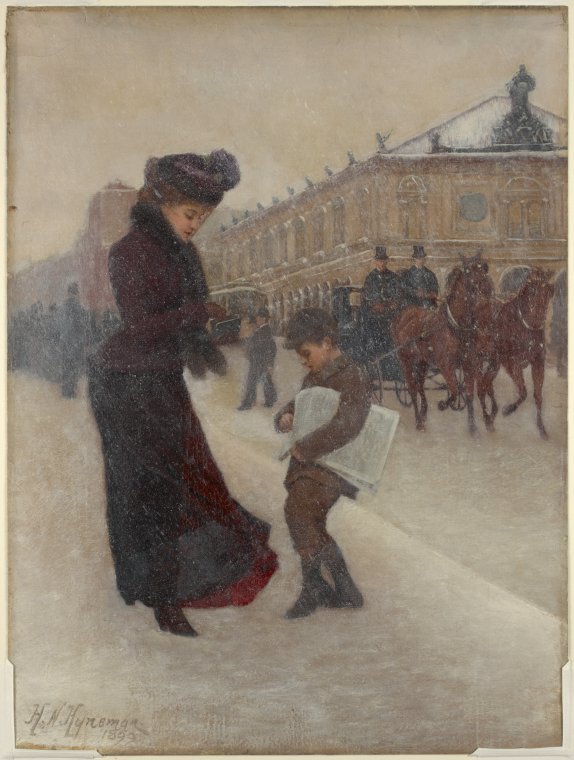
A painting by Herman Hyneman from 1899, depicting a Herald newsie and a customer in the snow. [NYPL]

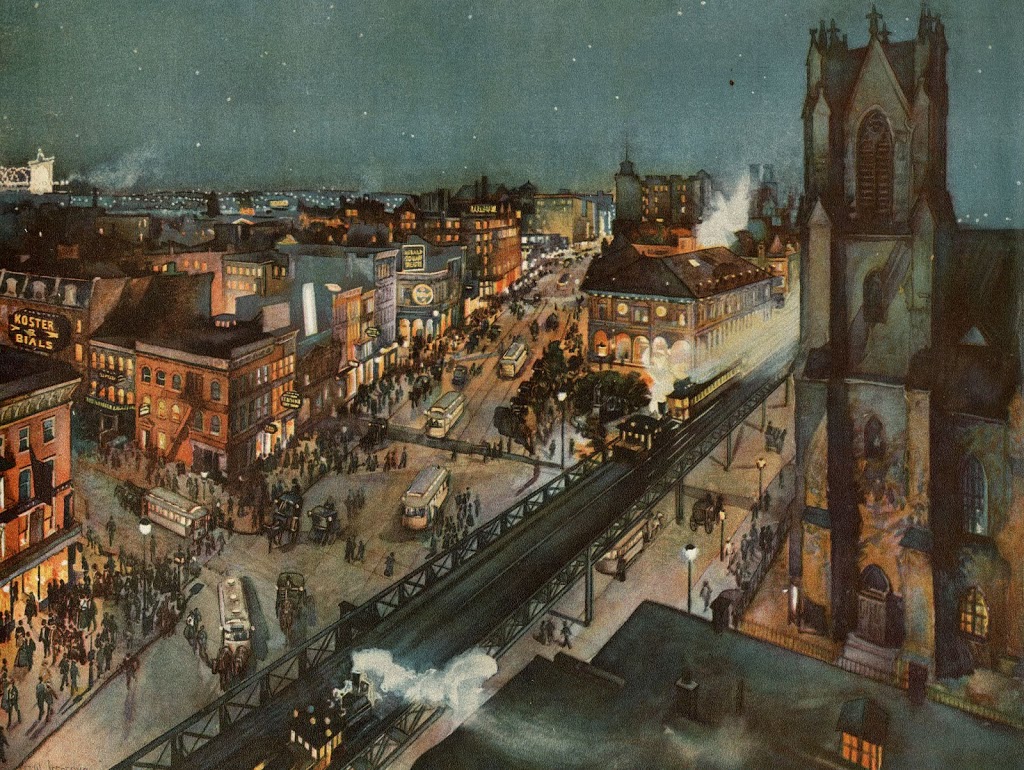
Also from The New Metropolis, an owl’s-eye view of Herald Square, from 1899.  The caption: “This is a vibrant reproduction of a color print by Canadian-born artist Charles William Jefferys (1869-1951) who once worked at the New York Herald. The Broadway Tabernacle Church, the 6th Avenue elevated train, the Herald Building and several theatres, including Koster and Bial’s, are depicted. The streets are teaming with cable cars, horse drawn vehicles and pedestrians.” Courtesy CUNY

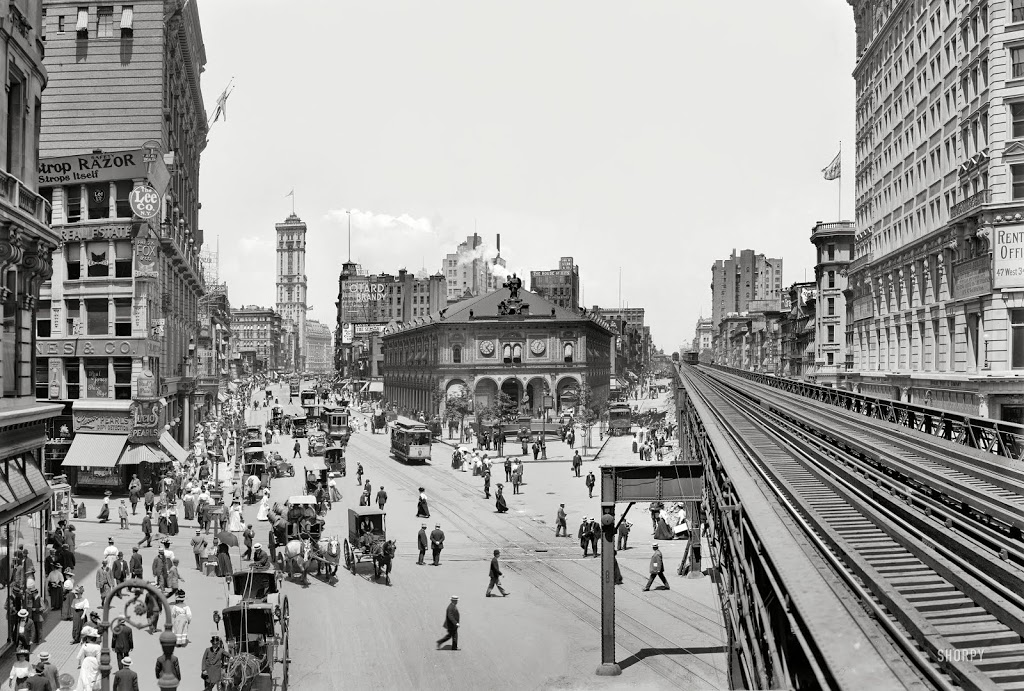
And finally, an overhead view of the entire square. This is an image that was cleaned up and published by the great photo blog Shorpy. Click into the picture to see a rather magnificent view of the surroundings. Trust me, you may waste five minutes just looking at this one….

Categories
Podcasts

A whirlwind tour of Herald Square: More than just Macy’s, the intersection of publishing, theater and debauchery

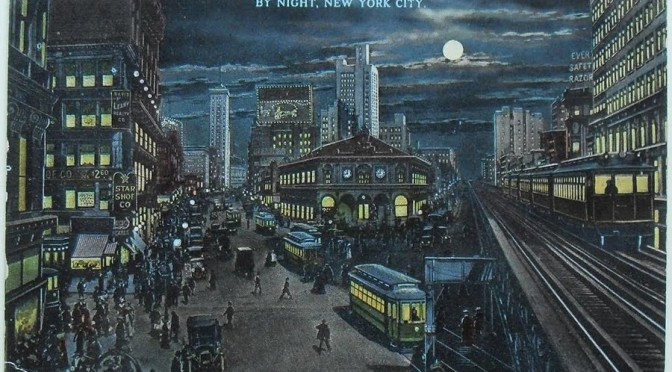
Herald Square at night, 1910, with the flurry of shoppers, the churn of printing presses, the clanking and soot exhaust of the elevated train, the rush of the streetcar. The theaters, the drinking, the dancing. (Courtesy the blog Ajax All Purpose Blog)

PODCAST Welcome to the secret history of Herald Square, New York City’s second favorite intersection — after Times Square, of course, just a few blocks north. But we think you may find this intersection at 34th Street, Sixth Avenue and Broadway perhaps even more interesting.

This is a tale of the Tenderloin, an entertainment and vice district which dominated the west side of midtown Manhattan in the late 19th century, and how it abutted the great cultural institutions that soon became attracted to Herald Square, from cheap aquariums to New York’s greatest opera house.

By the 1890s, newspapers arrived to the area, including the one that gives Herald Square its name. A remnant of the New York Herald Building still sits in Herald Square and is the cause of some serious conspiracy. (Especially if you’re afraid of owls!) But the Herald wasn’t the only publication that got its start here; in fact, one of America’s most famous magazines began in a curious office-slash-bachelor apartment facility just close by.

The department stores came at the start of the 20th century, and we bring you the tales of Macy’s, Saks and Gimbels, not to mention their later incarnations, the Herald Center and the Manhattan Mall.

ALSO: Where on 32nd Street were crazy parties featuring a who’s who of New York’s greatest freak show performers? Where did a silent fim stunt man meet his end? And where in New York can you get the best in Korean pop music?


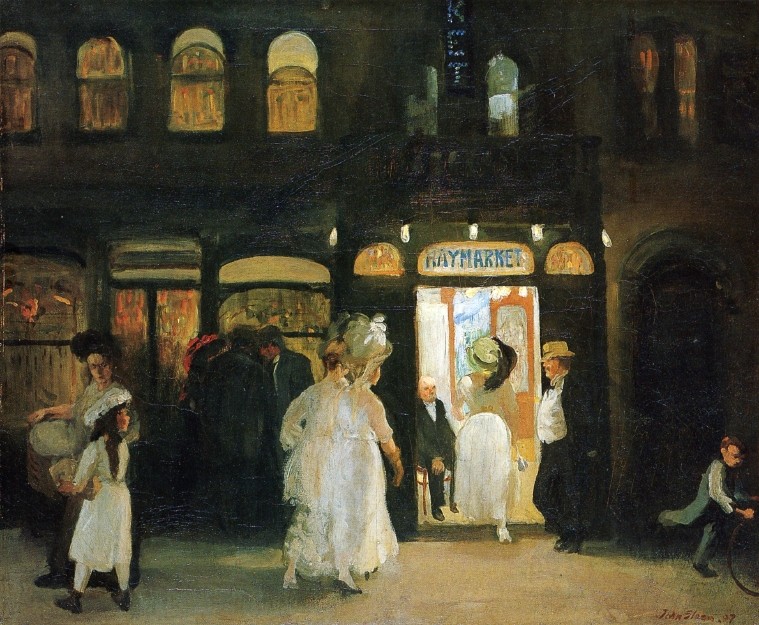
The bawdy Haymarket dance hall, at 30th Street and Sixth Avenue, in a magnificent painting by John Sloan (1907) that conjures up the glamour and winks at its secret pleasures. Several of Sloan’s works depict places located in the Tenderloin, a wide area of entertainment and vice west of Broadway. The original painting hangs in the Brooklyn Museum.

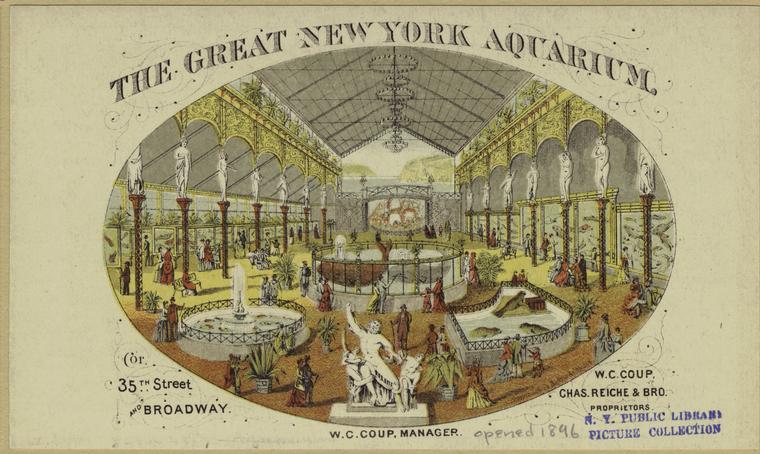
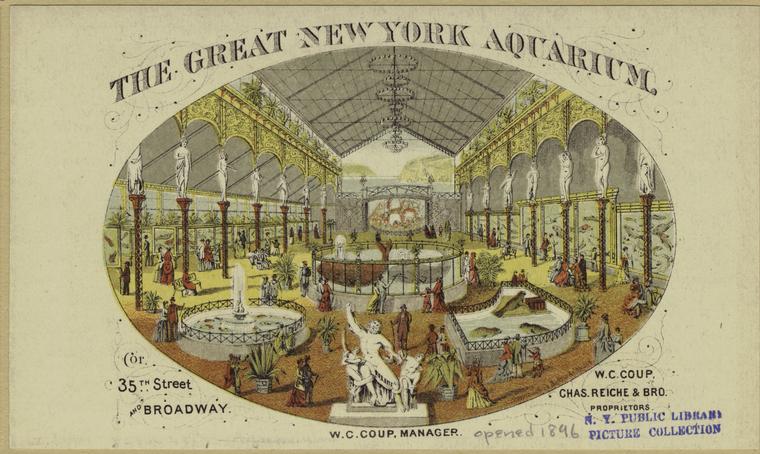
The Great New York Aquarium of W.C. Coup, bringing sea creatures to the corner of Broadway and 35th Street. (NYPL)

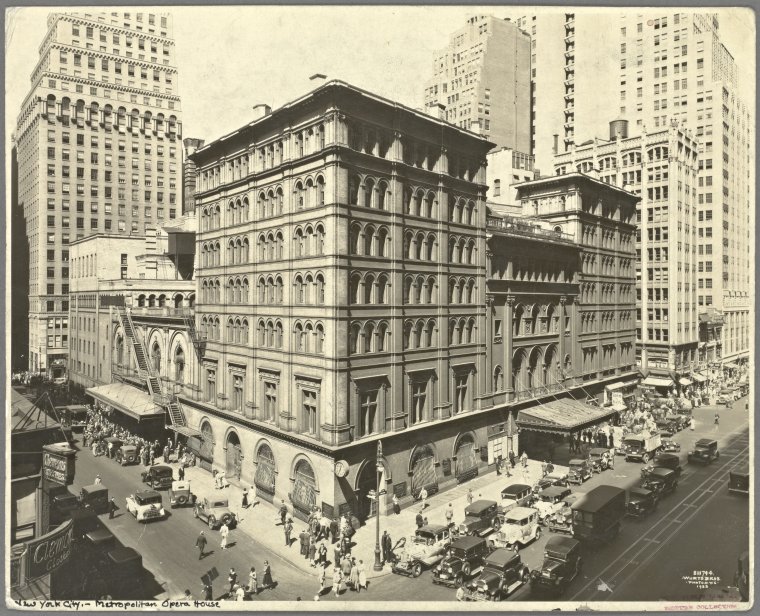
The character of Broadway between the intersections of 34th Street and 42nd Street (before they were known as Herald Square and Times Square, respectively) was changed forever with the construction of the Metropolitan Opera House, a vanity project for New York’s new wealthy class. It was all for show; there were plenty of loges for the rich, but so little backstage room that set pieces were stored on the street. (NYPL)

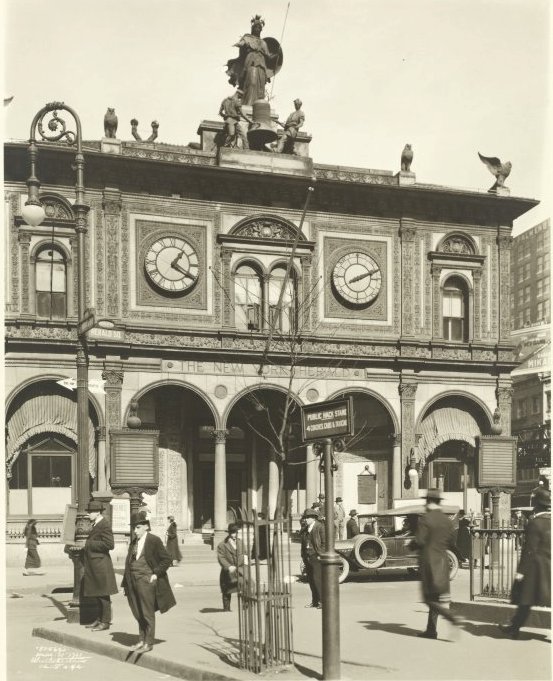
The front of the New York Herald building, with its ornate clock face and Minerva statue. Please note the owls on the corners. (NYPL)

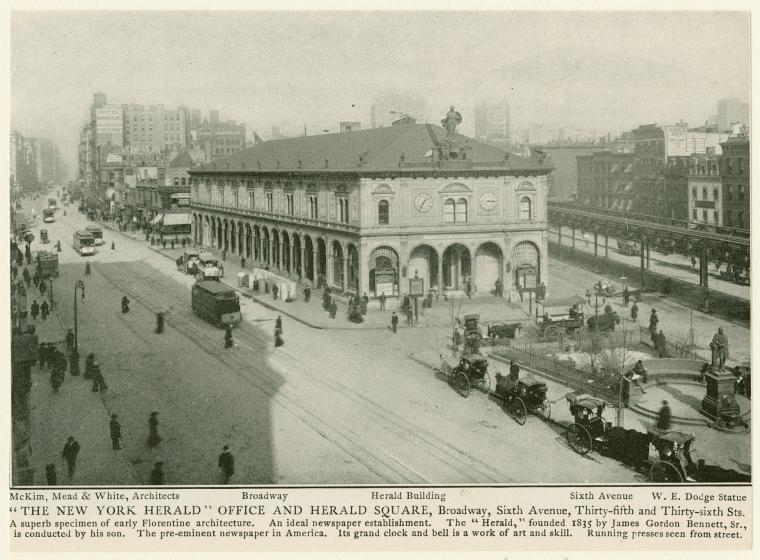
The two most dominant structures in Herald Square in the 1890s — the Sixth Avenue Elevated and Stanford White’s Herald building. “Running presses seen from street.” (NYPL)

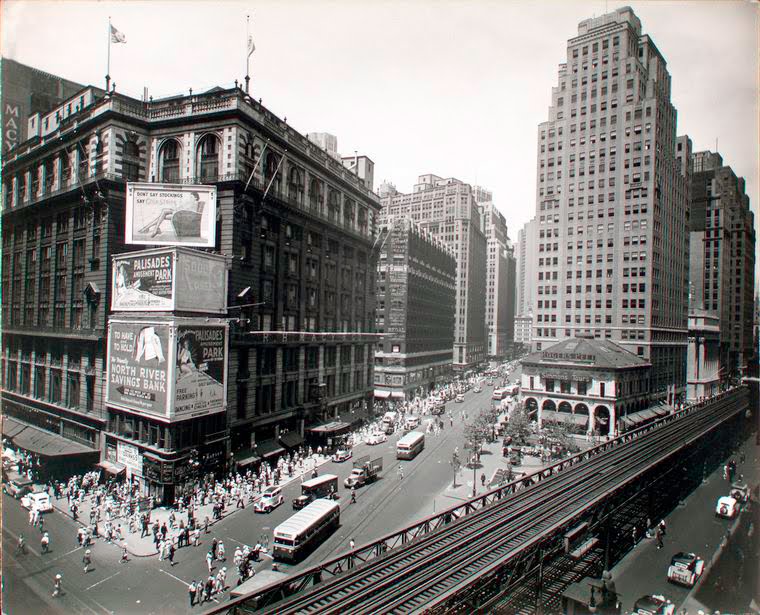
The Elevated and the Herald Building from another angle in 1936, with the new addition of Macy’s — and the little building which prevented Macy’s from taking up the entire block! Today, that’s still a Sunglass Hut. You can also see that the back of the Herald offices has already been demolished and replaced with an office building. The front would survive a bit longer and then too would be destroyed. (NYPL)

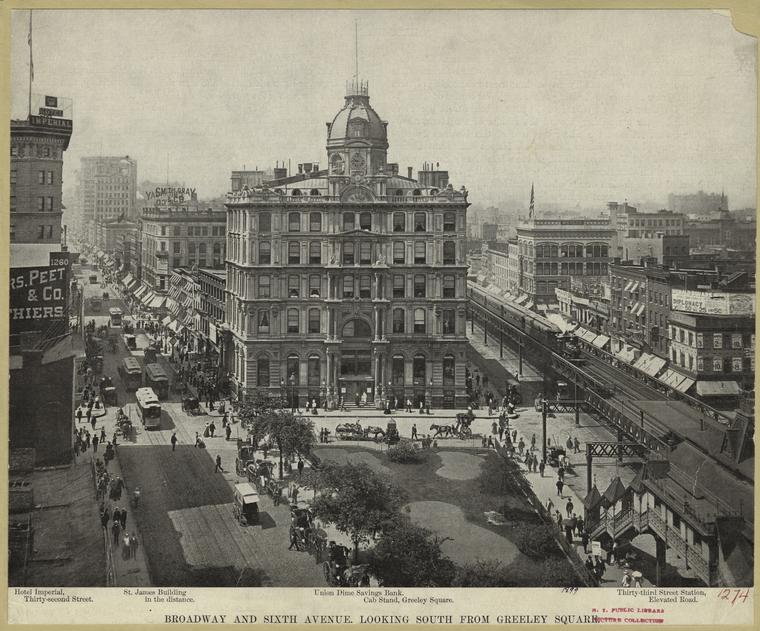
A view of Greeley Square, with the elevated to the right. This building is the Union Dime Saving Bank. The counting offices of the New York World were on the ground floor, however I’m not certain if they are there in the year this picture was taken (1899).

Now here’s a mystery for you — this is Greeley Square, named for the statue of Horace Greeley which was definitely installed in 1894. Hmm, but where is it?

The Hotel McAlpin, at the southeast corner of 34th Street, the largest hotel in the world when it was built in 1912! Happy 100th anniversary to this accommodation, pivotal in New York City history.

Herald Square in an early (1896!) clip from Edison.

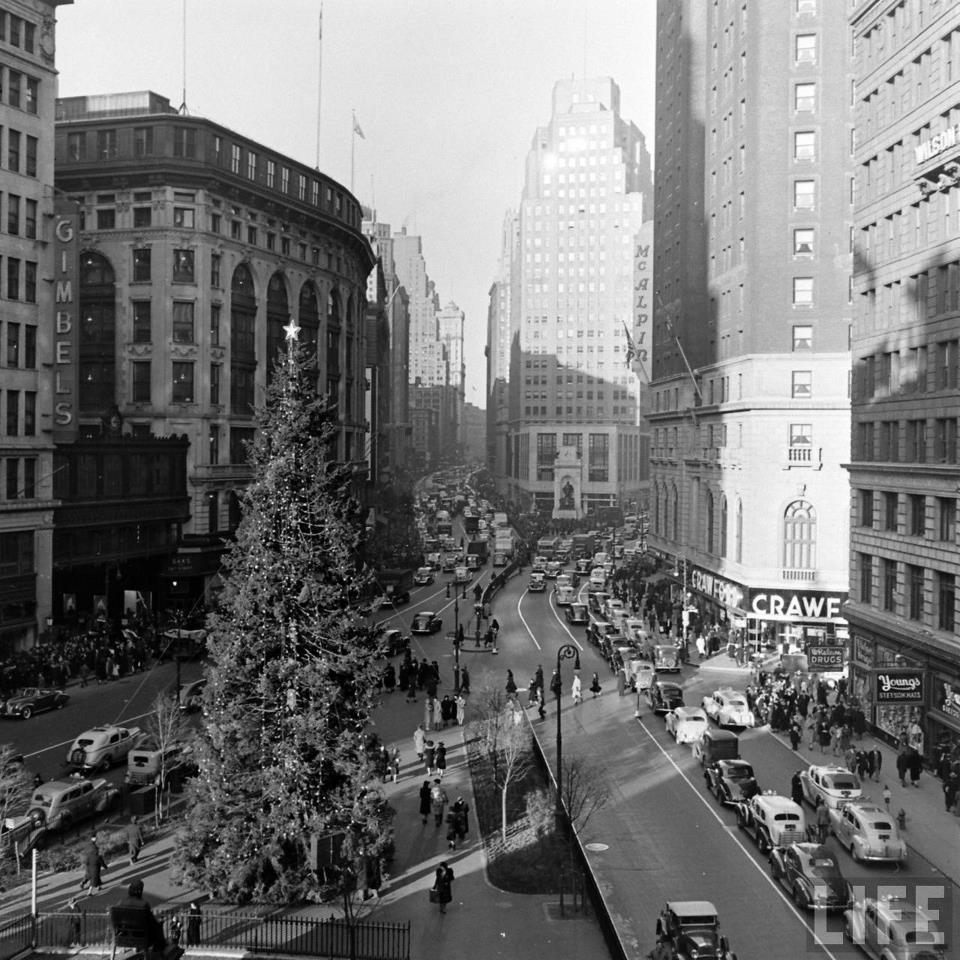
And an image for the holidays, from the 1940s! Courtesy Life Magazine

Will an aquarium come to midtown Manhattan– again?

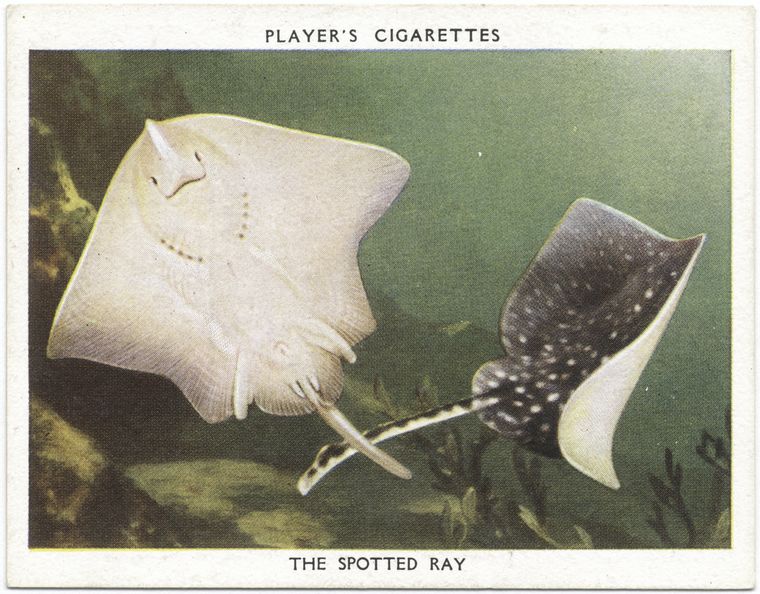
From a pack of old, aquatic themed ‘cigarette cards’, naturally [NYPL]

Yesterday the Wall Street Journal reported that a Canadian developer may bring a luxury, multi-floor aquarium to a new skyscraper in Times Square. The proposed aquatic amusement, to feature “sharks, rays, penguins, otters” and a pirate museum, would liven up the freshly built, so-called 11 Times Square, at the corner of 42nd and 8th Avenue, a corner once famous as a place for picking up male hustlers.

This would not be the first time an aquarium graced midtown Manhattan. In fact, the first aquarium in this region was also a privately run endeavor — The Great New York Aquarium, located at 35th Street and Broadway, the latest escapade by William Cameron “W.C.” Coup, a former employee of P.T. Barnum.

Coup knew something about spectacle as manager of the earliest incarnation of Barnum’s greatest contribution — P.T. Barnum’s Great Traveling Museum, Menagerie, Caravan, and Hippodrome, soon to the alleged ‘Greatest Show On Earth’, the first travelling circus. The show would soon make its home in Manhattan in 1874 on the site of an old train depot off Madison Square, a block that would later be built up to become the very first Madison Square Garden.

The Great New York Aquarium, glorious and rather tragic (for the aquatic captives, that is). Pic courtesy NYPL

For his next feat, opening on October, 11, 1876, Coup would bring the oceans to Manhattan. Of course, 35th Street was hardly “midtown” then; Central Park had only been completed a few years prior, Macy’s was still on 14th Street, and Longacre Square (future Times Square) was still the smelly home of horse stables and carriage houses. But theaters and concert halls, newspapers and restaurants, all of New York society was booming from Union Square to 34th Street, and thus Coup’s aquarium would have been nicely situated.

This was no ordinary aquarium. Like many museums and other ‘well-meaning’ spectacles of the time, the Aquarium mixed the outlandish with the intellectual, with libraries and laboratories on site, as much to give the joint credibility as for actual research.

The centerpiece was a gigantic tank fit for a whale; too bad the whale died in transit, sitting empty for opening day. Displays for porpoises, sharks and sea lions were scattered around it, swimming in small tanks with painted backgrounds featuring the creature’s native flora and fauna.

Like aquatic displays before it — such as the basement of Barnum’s American Museum — the environment was probably not very healthy for sea creatures. However, Coup did feature a set of fish hatcheries for display, possibly the first such nurseries ever featured in a public aquarium.

Coup’s venture was an immediate success, and he soon opened a smaller outlet in Coney Island. He was not long for the Great New York Aquarium however; after financial disagreements with his partner, animal importer Henry Reiche, Coup left to pursue other bizarre projects, including something called The New United Monster Shows.

Reiche, for his part, had made quite a name for himself in animal trade. He and his brother Charles had a pet store at 55 Chatham Street (that street is now Park Row today), equipped with a backyard pen for lions, monkeys and even gnus — all for sale to private collectors. (This helps explain the founding of places like the Central Park Zoo, formed from discarded animals left in the park.)

Reiche gnu, er, knew his animals, but he didn’t know business. An expensive endeavor to maintain and to import new creatures, Reiche attempted to draw audiences with theatrical performances and even pigeon shows set among the glowing tanks. Nothing worked, and so in 1881, the aquarium’s contents were auctioned off. I can’t imagine the creatures displayed here benefited well from this.

Of course, New York City would get its very first official aquarium many years later, in 1896, with the opening of one at Castle Garden (the once and future Castle Clinton). When Robert Moses drove it out of here in 1941, the city aquarium took up residence in Coney Island, where it remains today.

100 Years Ago: The Brooklyn Botanic Garden opens


Photo by Louis Buhle (1915), courtesy of the BBG

The Brooklyn Botanic Garden is celebrating its 100th anniversay this year. Like Flushing Meadow-Corona Park in Queens, the Garden was created out of an ash dump, landscaped by the Olmsted Brothers (later of Fort Tryon fame), “for the advancement and diffusion of a knowledge and love for plants.” The garden’s patron saint is most certainly Alfred Tredway White, whose name you’ll most likely see a few times as you wander the various gardens; White was an enlightened Brooklyn tenement owner and philanthropist who lobbied for and later helped fund the garden’s creation and maintenance.

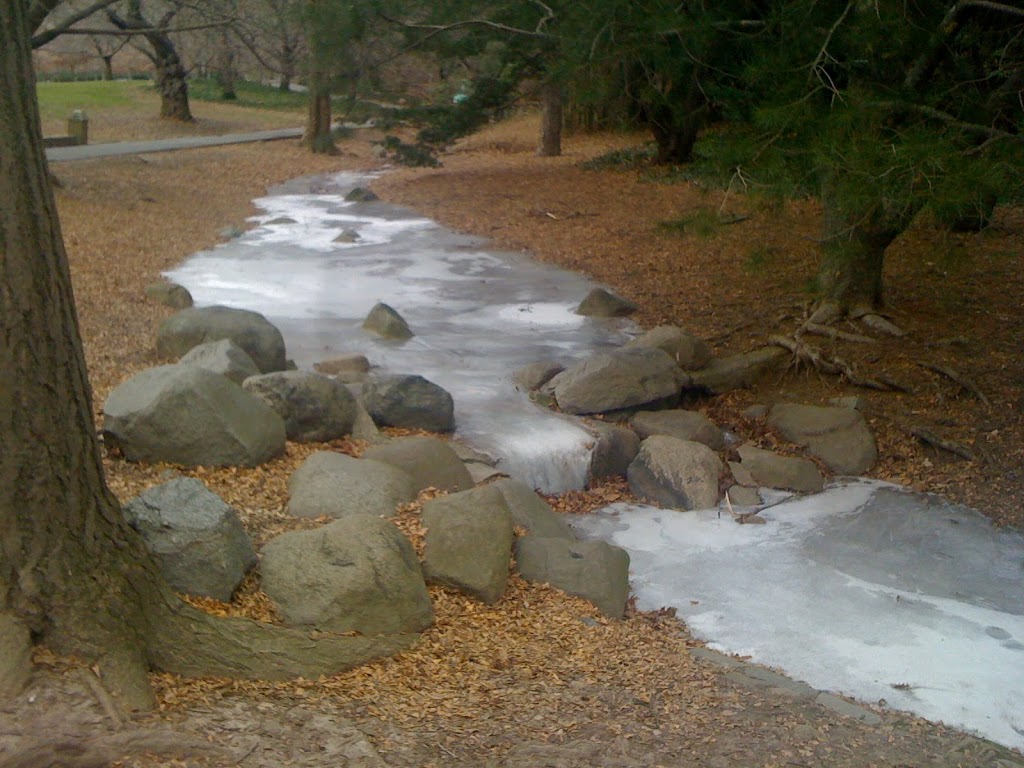
They’re currently offering free weekday access to the grounds, an offer I took them up on yesterday. Obviously, the dead of winter is not the most ideal time to visit a public garden, however the greenhouses are still open, and the ice and cold provides some rather unusual natural phenomena, like the frozen brook below:

The Steinhardt Conservatory Gallery at the garden’s greenhouses is currently featuring a small show of photos from the BBG’s past.

Also debuting exactly 100 years ago:

Yonah Schimmel’s Knishery begins selling their famous, hearty potato treats. We highlighted them couple years ago in our Katz Delicatessen podcast.

— Jacob Gimbels opens his Gimbels Department Store in 1910 in a space originally designed by Daniel Burnham, just a block away from Macy’s. Today, that department store space has the distinction of being the wretched Manhattan Mall. However Gimbels did build that spectacular copper pedestrian bridge — which is still hanging over 32nd Street.

And if you’ve be interested in these ‘100 Years Ago’ columns over the last few days, you should check out a recent article in the Brooklyn Eagle Looking Back to 1910.

Categories
Podcasts

PODCAST: Saks Fifth Avenue

A podcast that’s “very Saks Fifth Avenue,” we get to the origins of the famous upscale retailer, follow its path from Washington D.C. to Heralds Square and then to “the most expensive street in the world,” and tell you a little about a glamorous milliner.

Listen to it for free on iTunes or other podcasting services. Or you can download or listen to it HERE

A slight clarification on this week’s episode: I describe one style used in the creation of Saks Fifth Avenue as Art Moderne, which is a variation of Art Deco using curved, streamlined surfaces. This clearly describes the inside of Saks, not the outside, which is a bit more formal.

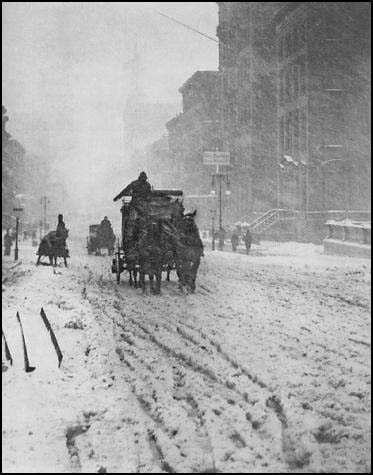
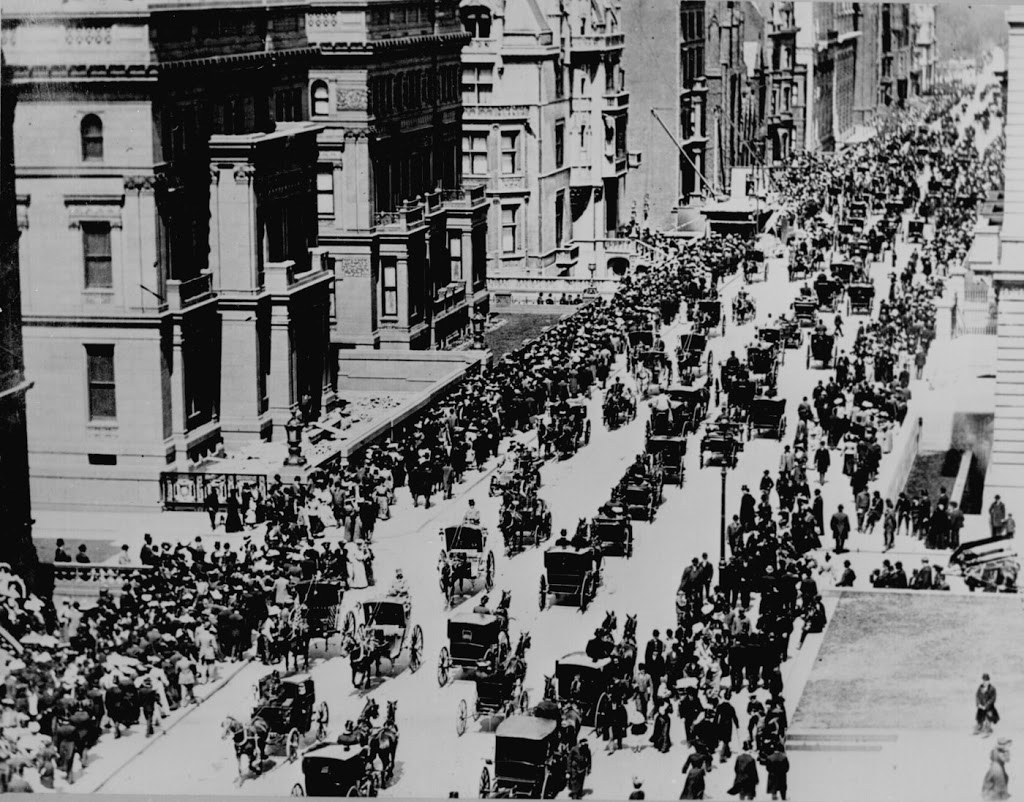
A few historical pictures of old Fifth Avenue — back when it was primarily residential, on the cusp of becoming New York’s center for retail

Alfred Stieglitz’s 1893 classic photo ‘Winter on Fifth Avenue’

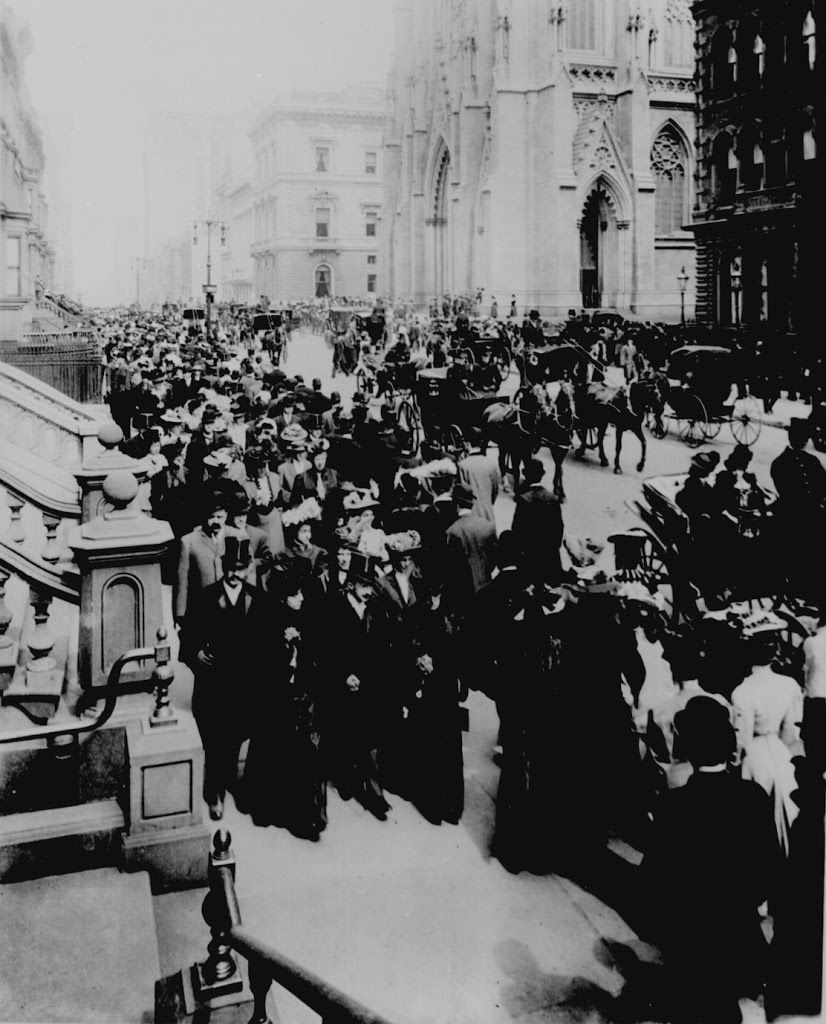
Glorious Fifth Avenue in 1901, Easter morning. The streets are filled with people on their way to church, passing block after amazing block of private homes. Although there is not a retailer in sight, the sidewalks look pretty much the same as they do today though!

Fifth Avenue in 1906 — this is on the west side of the street to the lot that would soon hold Saks Fifth Avenue. (You can see St. Patricks Cathedral in the background.) Photos are from the National Archives.

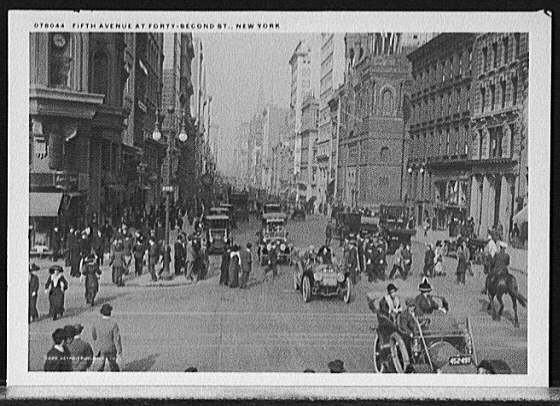
This is definitely the corner of Fifth Avenue and 42st Street, although I’m not to sure of the date, most likely around 1910.

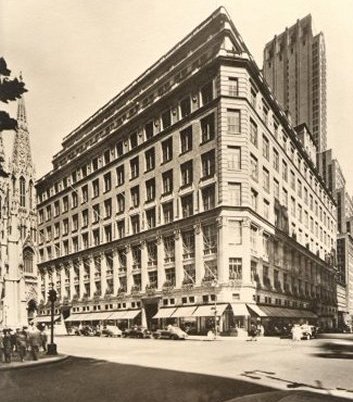
The Fifth Avenue store, circa the 1940s, designed by Starrett and Van Vleck

The glamorous workaholic Tatiana Du Plessix, who almost singlehandedly outfitted New York’s society ladies with hats. (Tatiana wasn’t glamorous to everyone, as a recent biography by her daughter takes pains to note.)

The following shots are from the Google Life archive of interiors of Saks from 1960 by photgrapher Alfred Eisenstaedt.

Adam Gimbel in 1962. He took over the company after the deaths of Horace Saks and Bernard Gimbel and helped create its mid-century upscale image. (Photographer Yale Joel)

A Saks window in 1937, employing subtlety and grace instead of cramming the window with items

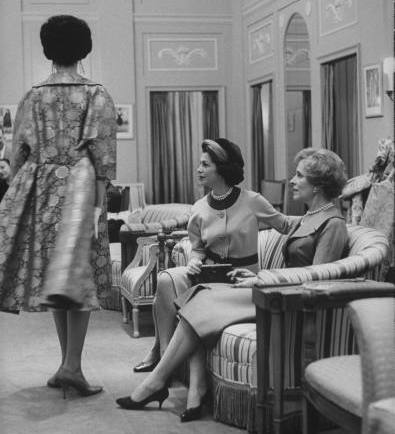
“Sophie of Saks,” Adam’s wife and the in-house designer for Saks Five Avenue, sits far right as a model displays a design to a customer. (1960/Peter Stackpole)

Gimbels Bridge over troubled shoppers

The blocks just south of Herald Square are pretty grim. Malls full of chain stores, bland electronic store fronts and fast food restaurants disguise a once vibrant shopping outpost, as department-store competitors of Macy’s flocked to the neighborhood in the early part of the 20th century. One strange vestige of this retail nostalgia still exists, in the form of a fabulous green copper traverse above 32nd Street.

Gimbels was a more than worthy adversary of nearby Macy’s. The two were Coke and Pepsi of early American shopping, with an early, antiquated catchphrase ‘Well, would Macy’s tell Gimbels?’ exemplifying the top-secret, competitive tactics of the business world.

Yet Macy’s was always the more respectable brand. Gimbels arrived in the Herald Square area in 1910 with a lackluster building by no less than Daniel Burnham (of Flatiron Building fame) who was clearly having an off-day. Despite (or perhaps, because of) innovations such as the first ‘bargain basement’, Gimbels never reached the same hallmarks of class and reputation that Macy’s did.

One way in which the Gimbel family did one-up its competitor was branching to a more fashionable street — Fifth Avenue. It did that by merging with its neighbor, Saks Thirty-Fourth Street, in 1922. Two years later, Saks Fifth Avenue, a joint venture of the Gimbels and the Saks, opened uptown and one block over.

Symbolically bridged to more desirable Fifth Avenue, Gimbels decided to link its Herald Square store more literally with a recently acquired annex across the street, building a custom traverse in 1925, a beautiful copper bridge, three story tall, created by the Richmond Shreve and William Lamb, a teeth-cutting project for two young architects who would go on to help design the Empire State Building.

Both the original Gimbels store and its annex have been horribly modified over the years, becoming Manhattan’s saddest mall. Yet, for some amazing reason, the copper bridge has been left virtually intact. Until the 1990s, both ends of the bridge were completely walled off and were only reopened to replace the bridge windows. Despite some fears that it might be getting ripped down, the musty but still beautiful sky bridge still hangs high above shopper’s heads, a reminder of a universe of cut-throat department-store wars.

Picture courtesy Flickr/moufle

Categories
Holidays Podcasts

PODCAST: Macy’s – the Man, the Store, the Parade

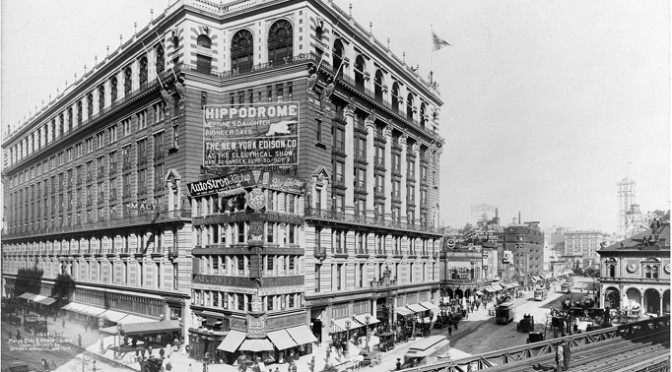
What year is this picture taken? (Click on it to view details.) Note the elevated rail line, no automobiles, and the New York Herald building still standing. You can also tell that the building’s later additions have not yet extended it down towards 7th Avenue. A little research on the Hippodrome and when the shows ‘Neptune’s Daughter’ and ‘Pioneer Days’ performed there reveals this picture was taken in Feb-March 1907 — a little over one hundred years ago.

PODCAST Did you know that the man whose name adorns one of the most successful department stores in the world was a sailor turned failed businessman? Or why Macy’s Department Store ALMOST takes up an entire city block? Or how many clowns have been in the Macy’s Thanksgiving Day parade? The Bowery Boys let you in on those answers and lots of other fun facts about one of New York City’s premier retailers.

Listen to it for free on iTunes or other podcasting services. Or you can download or listen to it HERE

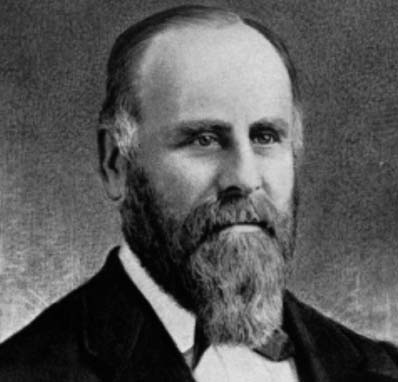
The man who started it all — Rowland Hussey Macy

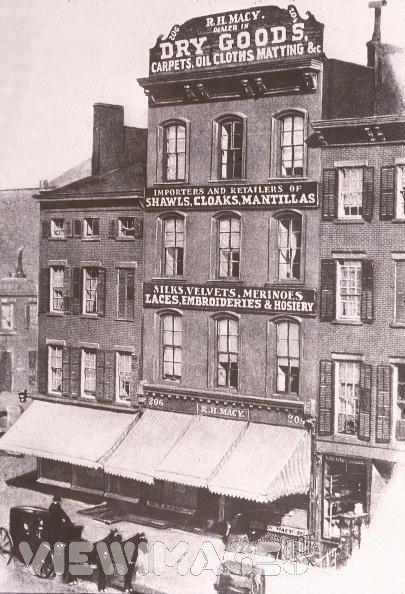
The first Macy’s store in Manhattan — 204-206 14th street, near 6th Avenue

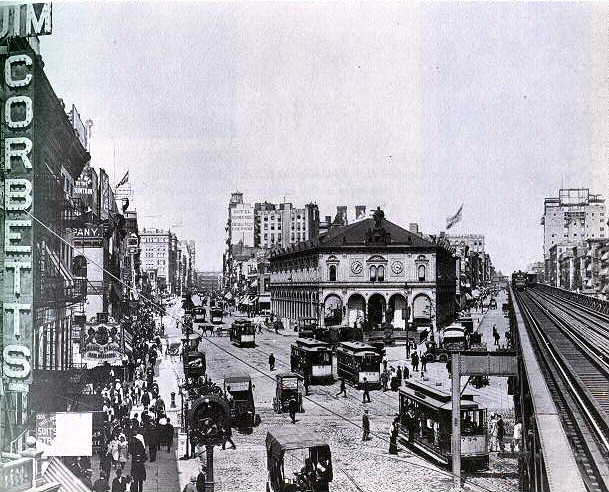
Herald Square….before Macy’s, circa 1893. The Sixth Avenue elevated train dominates the right and a cable car cuts down Broadway. What we know as the park in Herald Square is nothing but a traffic triangle; however the Bell Ringer’s monument sits anew on top of the New York Herald building. Macy’s would soon sit wheter that sign with the coat of arms hangs.

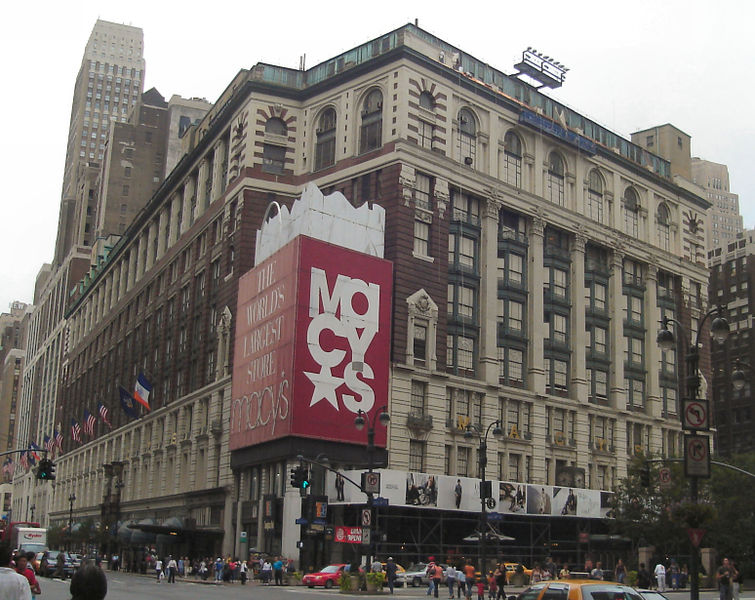
A gigantic Macy’s bag conceals the building which prevented the Straus brothers from expanding the store over the entire city block. It is probably the most advantageously placed Sunglass Hut in the entire world.

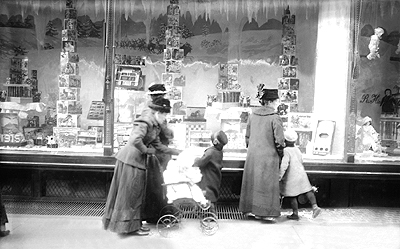
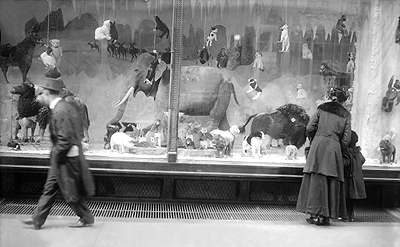
Macy’s holiday windows, circa 1915

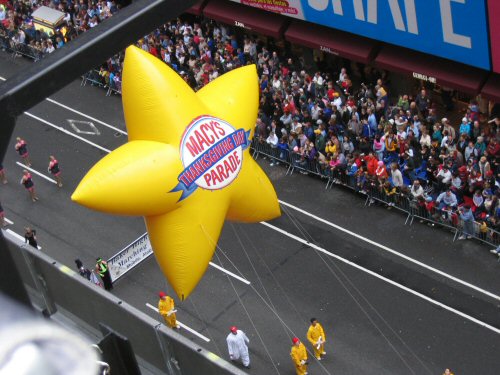
The Macy’s famous star logo — derived from the tattoo that founder Rowland Macy received during his stint as a sailor

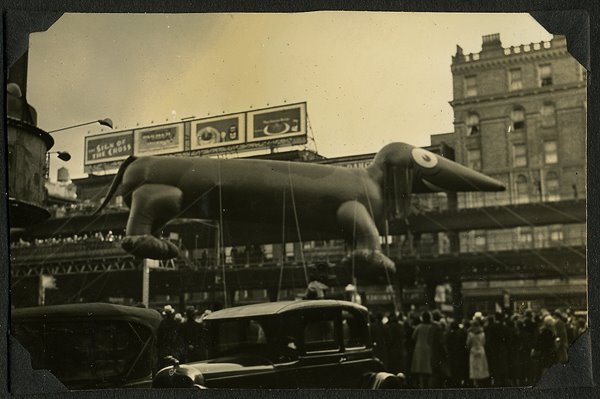
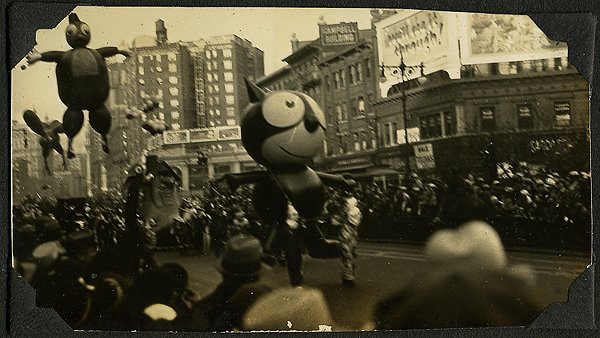
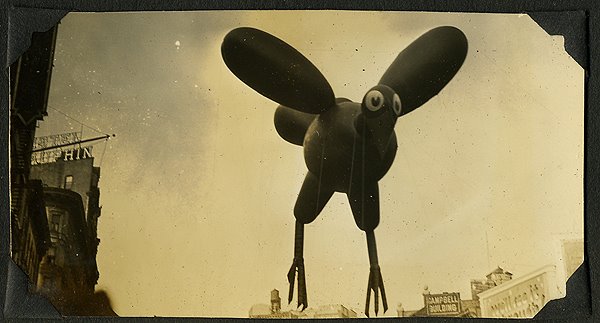
Below, some funky looking balloons from the 1932 parade. Swapatorium has many, many more from this period that are simply breathtaking.

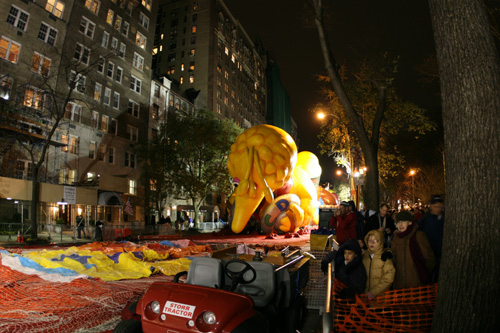
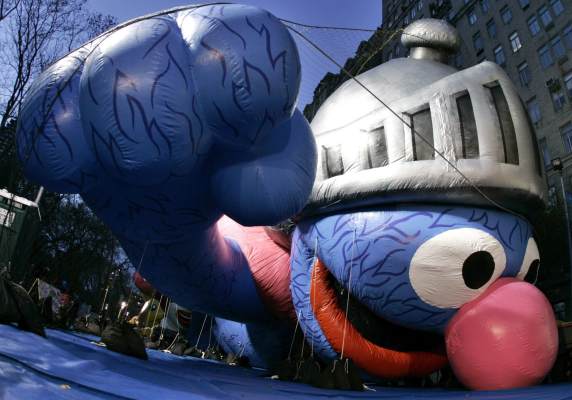
A wonderful tradition that we forgot to mention happens the night before the parade, in the grounds of the Natural History museum, as hundreds gather to watch the balloons being inflated. (Here’s Grover and Big Bird being blown up.)

Forgotten NY explores the remnants of Macy’s first store, as well as the gives you a birds eye view on Macy’s wooden escalators. We talk more about some of the more dog-shaped parade balloons in this podcast. The Macy’s Parade website has the details on times and route.

The City Room reports that this year’s balloons got a trial run in Queens this week. Meanwhile, some people aren’t happy with Macy’s swallowing up the Marshall Field’s department store brand.

Fun fact: Wartime demand in the 1940s halted the production of women’s nylon pantyhose. When retailers were allowed to resell them, Macy’s restocked their shelves with almost 50,000 pairs, all of which were sold in six hours.

A goddess in Herald Square gets a makeover

Lovely Herald Square once again becomes the center of manic activity next week for next week’s Macy’s Thanksgiving Day Parade. Few realize that Santa Claus, the Rockettes, and a throng of tourists share the square with a Roman goddess and two fellows named after Hebrew demons. Or that this year, said goddess and demons will probably be the best looking partygoers there.

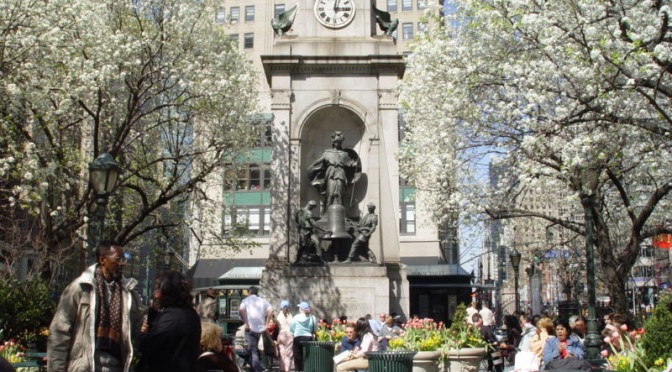
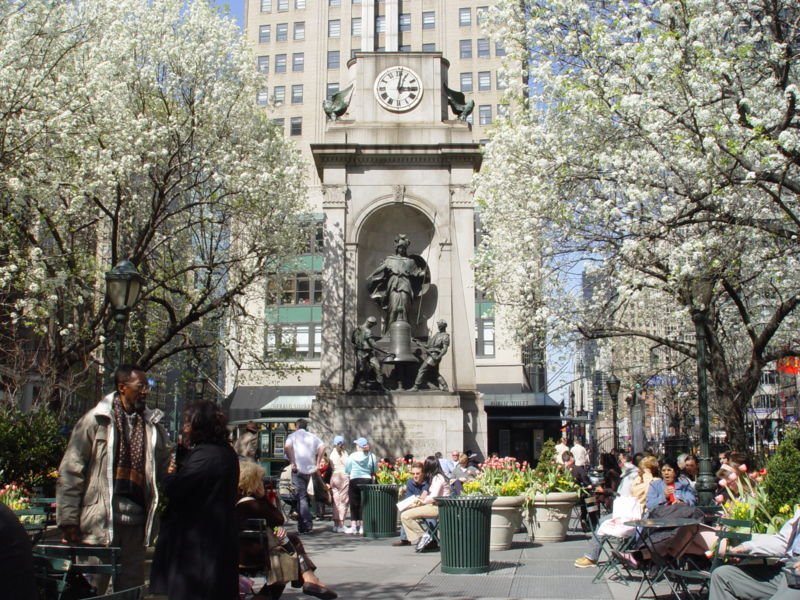
The James Gordon Bennett monument, or Bell Ringer’s Monument as it’s often called, with illuminated clock, friendly bell that chimes on the hour and owls with glowing eyes, has been a solid fixture of Herald Square since November 1940.

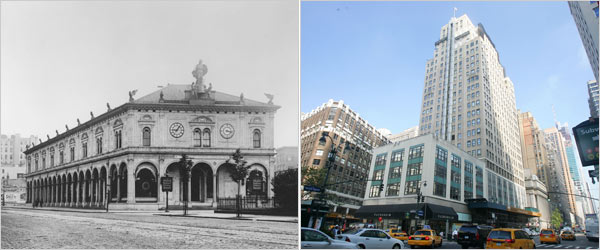
Bennett Jr. was the publisher of the New York Herald in 1894 — Bennett Sr. actually founded the paper in 1835 — when they moved from downtown Park Row up to 35th Street, immediately north to where the monument now stands. The two story Herald building, in an Italian palazzo style by the great McKim, Mead & White, was topped by the sculpture designed by French sculptor Jean-Antonin Carles. The Herald later merged with another newspaper the New York Tribune, and the Herald building was torn down in 1921. But the monument, popular with New Yorkers due to its glowing timepiece, was reinstalled in the park below.

The primary figure is the goddess Minerva, Roman deity of poetry and music, often analogous to the Greek goddess Athena. More curiously are the bell ringer’s below her, who have two sets of names. Stuff and Guff are the cutesy names; Gog and Magog, also known as early demonic beings from the Old Testement, are rather less cute. Minerva’s companions in classical literature are owls, which explain the birds with eyes that glow upon the hour, as though lasers are about to incinerate passers-by below.

The monument has always been a mystery for some. A mysterious door on the 35th side is inscribed with the phrase “La Nuit Porte Conseil(‘Nighttime Brings Advice’ or ‘Let’s Sleep On It’)” which has never been adequetely explained. A website on magic maintains the Herald Square statuary is loaded with mystical, even demonic iconography.

The bell ringers don’t actually ring the bell but merely go through the motions, with a mallet inside timed to make the hourly chime. That is, the ringers never did until a few years ago. The condition of the monument had deteriorated to an extent that one of the ringer’s mechanisms were beginning to actually scrape the side of the bell. The overall condition of the monument was pitiful, covered in bird droppings and weakened by the elements. Its granite base has even begun to crack.

So just this year, the Municipal Arts Society funded an impressive $200,000 restoration, encasing the monument in scaffolding for four months to repair it in time for its annual showcase to the world during the parade. It was unveiled in September, and Minerva and her pals look as good as new.

Below: The Herald building (with Minerva on top) and how it looks today, photo from the New York Times