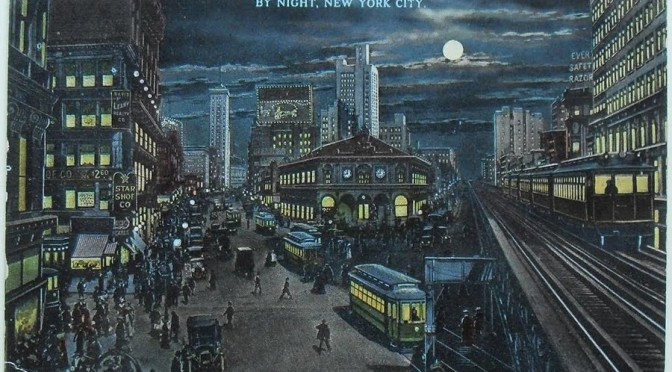
Herald Square at night, 1910, with the flurry of shoppers, the churn of printing presses, the clanking and soot exhaust of the elevated train, the rush of the streetcar. The theaters, the drinking, the dancing. (Courtesy the blog Ajax All Purpose Blog)
PODCAST Welcome to the secret history of Herald Square, New York City’s second favorite intersection — after Times Square, of course, just a few blocks north. But we think you may find this intersection at 34th Street, Sixth Avenue and Broadway perhaps even more interesting.
This is a tale of the Tenderloin, an entertainment and vice district which dominated the west side of midtown Manhattan in the late 19th century, and how it abutted the great cultural institutions that soon became attracted to Herald Square, from cheap aquariums to New York’s greatest opera house.
By the 1890s, newspapers arrived to the area, including the one that gives Herald Square its name. A remnant of the New York Herald Building still sits in Herald Square and is the cause of some serious conspiracy. (Especially if you’re afraid of owls!) But the Herald wasn’t the only publication that got its start here; in fact, one of America’s most famous magazines began in a curious office-slash-bachelor apartment facility just close by.
The department stores came at the start of the 20th century, and we bring you the tales of Macy’s, Saks and Gimbels, not to mention their later incarnations, the Herald Center and the Manhattan Mall.
ALSO: Where on 32nd Street were crazy parties featuring a who’s who of New York’s greatest freak show performers? Where did a silent fim stunt man meet his end? And where in New York can you get the best in Korean pop music?
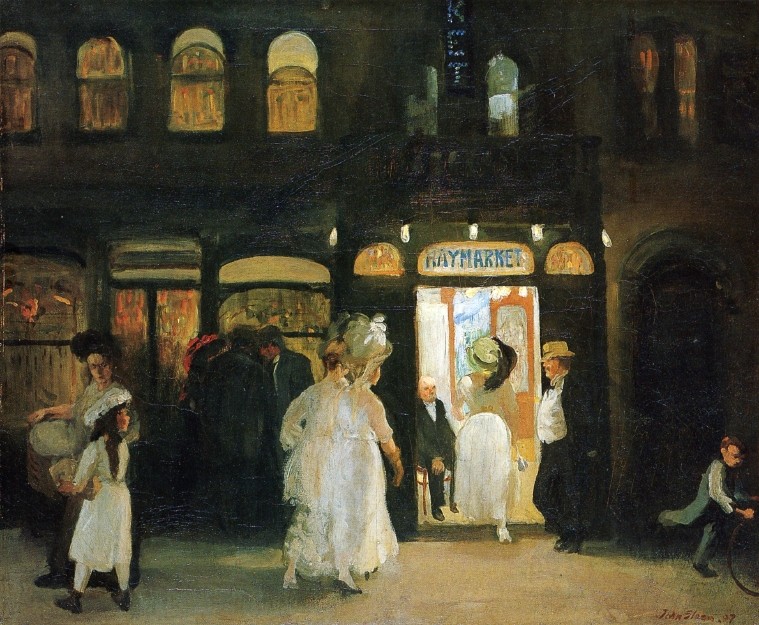
The bawdy Haymarket dance hall, at 30th Street and Sixth Avenue, in a magnificent painting by John Sloan (1907) that conjures up the glamour and winks at its secret pleasures. Several of Sloan’s works depict places located in the Tenderloin, a wide area of entertainment and vice west of Broadway. The original painting hangs in the Brooklyn Museum.
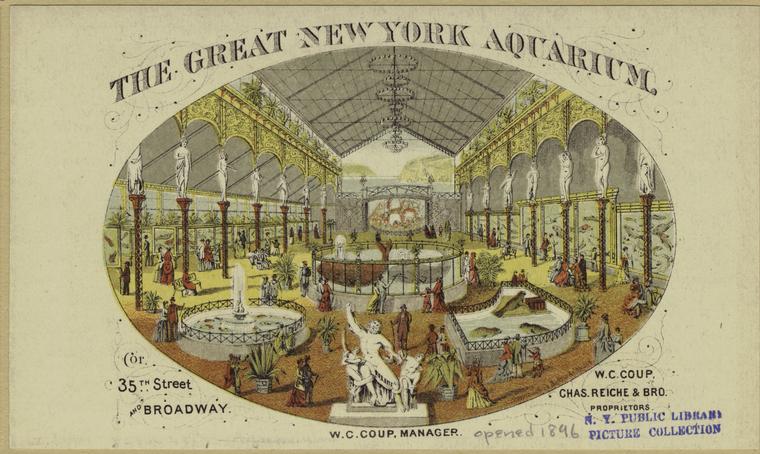
The Great New York Aquarium of W.C. Coup, bringing sea creatures to the corner of Broadway and 35th Street. (NYPL)
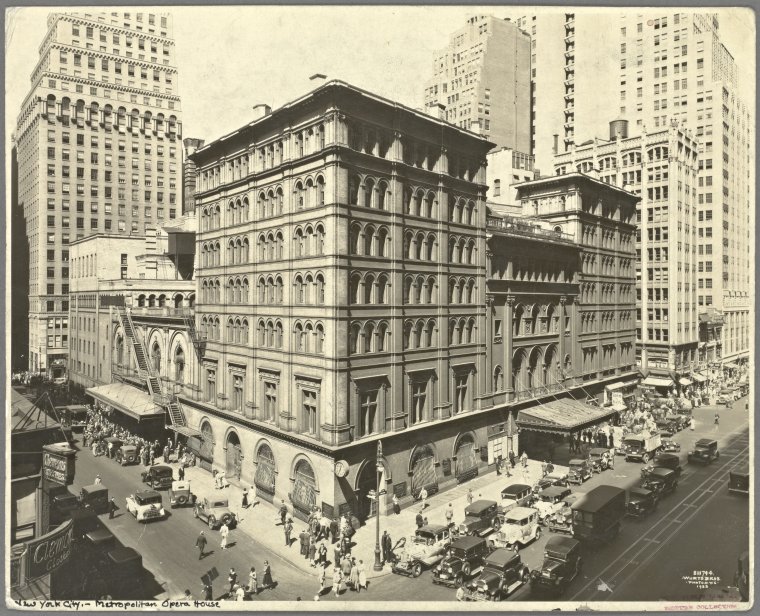
The character of Broadway between the intersections of 34th Street and 42nd Street (before they were known as Herald Square and Times Square, respectively) was changed forever with the construction of the Metropolitan Opera House, a vanity project for New York’s new wealthy class. It was all for show; there were plenty of loges for the rich, but so little backstage room that set pieces were stored on the street. (NYPL)
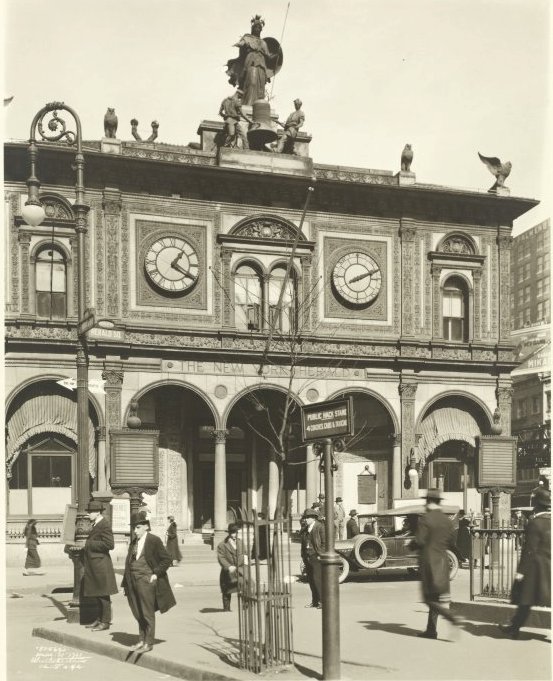
The front of the New York Herald building, with its ornate clock face and Minerva statue. Please note the owls on the corners. (NYPL)
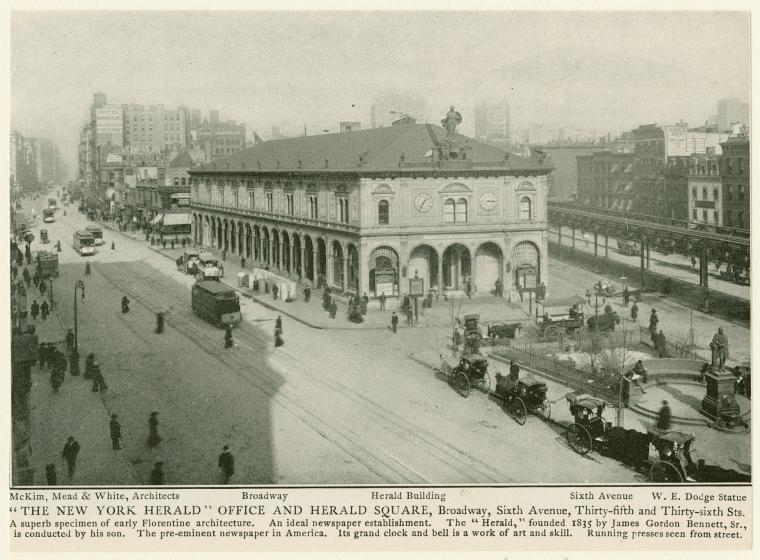
The two most dominant structures in Herald Square in the 1890s — the Sixth Avenue Elevated and Stanford White’s Herald building. “Running presses seen from street.” (NYPL)
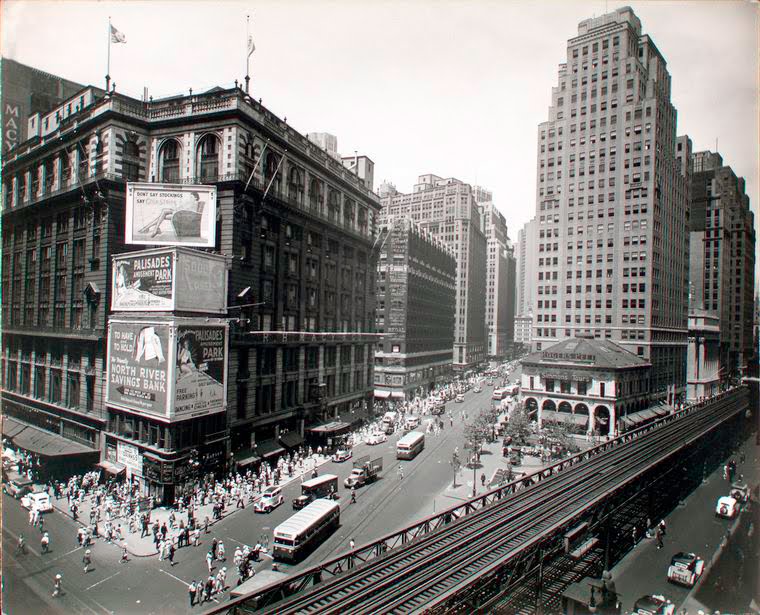
The Elevated and the Herald Building from another angle in 1936, with the new addition of Macy’s — and the little building which prevented Macy’s from taking up the entire block! Today, that’s still a Sunglass Hut. You can also see that the back of the Herald offices has already been demolished and replaced with an office building. The front would survive a bit longer and then too would be destroyed. (NYPL)
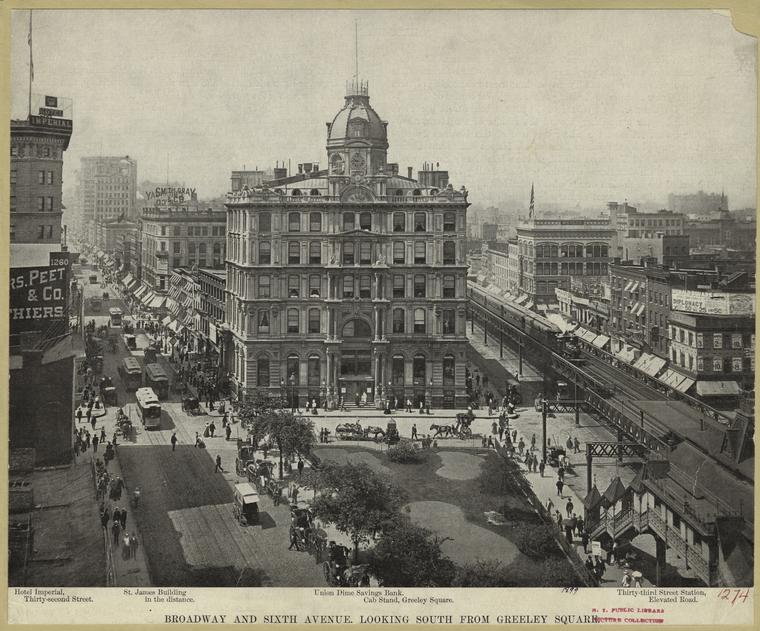
A view of Greeley Square, with the elevated to the right. This building is the Union Dime Saving Bank. The counting offices of the New York World were on the ground floor, however I’m not certain if they are there in the year this picture was taken (1899).
Now here’s a mystery for you — this is Greeley Square, named for the statue of Horace Greeley which was definitely installed in 1894. Hmm, but where is it?
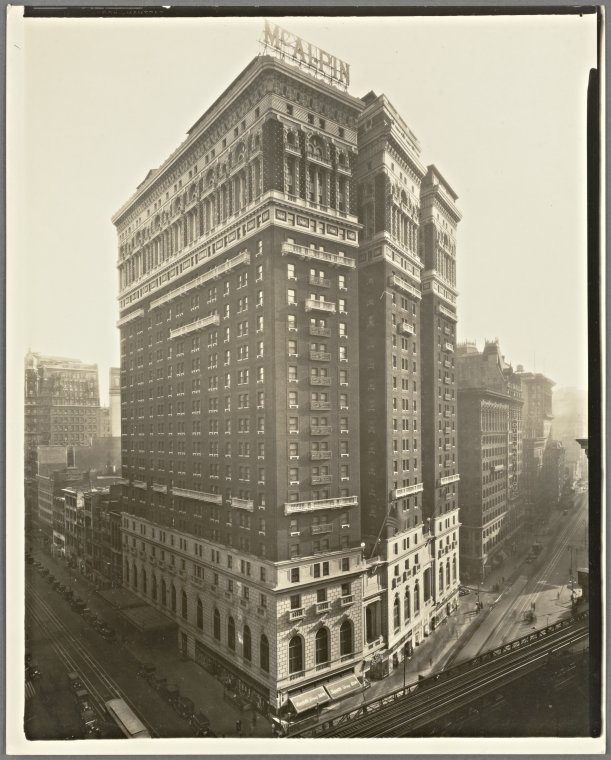
The Hotel McAlpin, at the southeast corner of 34th Street, the largest hotel in the world when it was built in 1912! Happy 100th anniversary to this accommodation, pivotal in New York City history.
Herald Square in an early (1896!) clip from Edison.
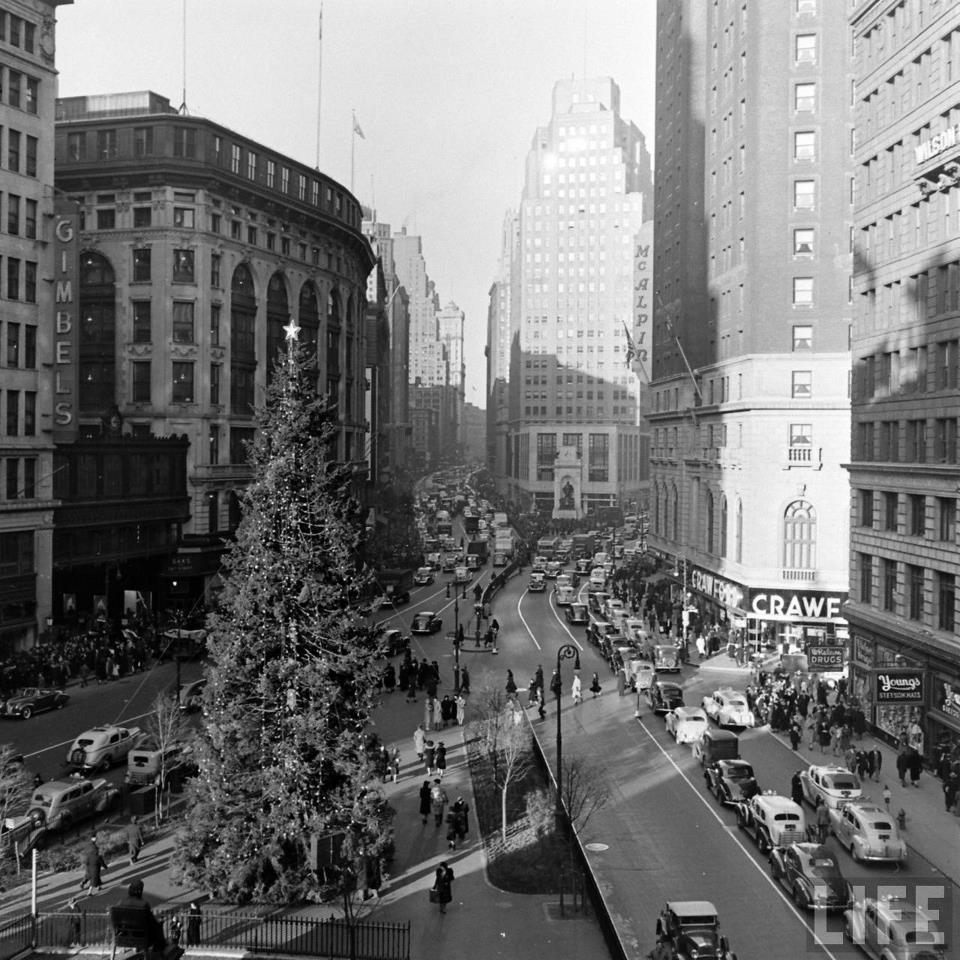
And an image for the holidays, from the 1940s! Courtesy Life Magazine
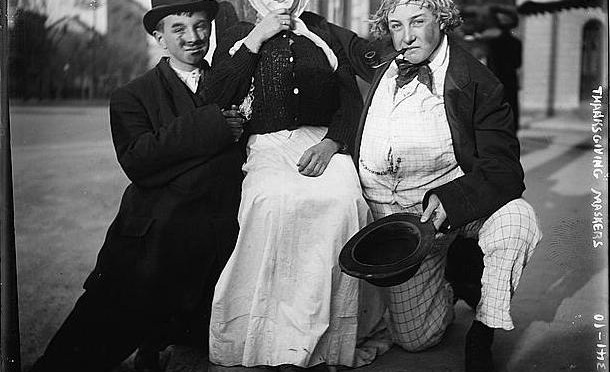
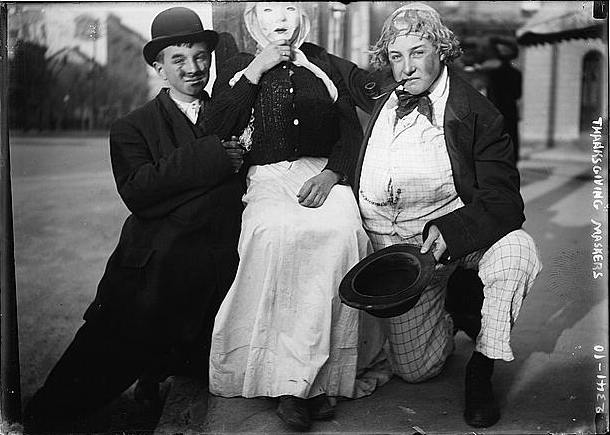
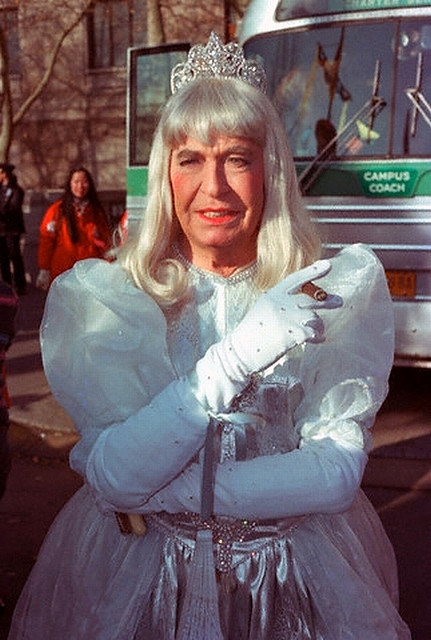
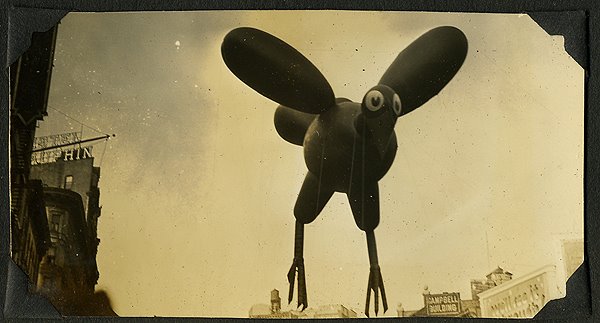
Turkey anyone? Thanksgiving maskers, in New York, taken sometime between 1910-15. Whatever you do, don’t look the ‘lady’ directly in the eye!
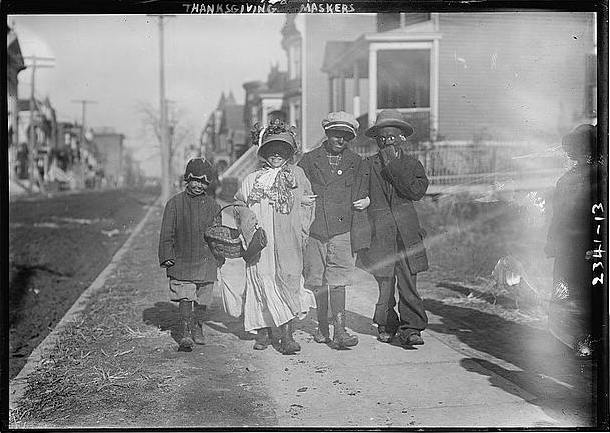
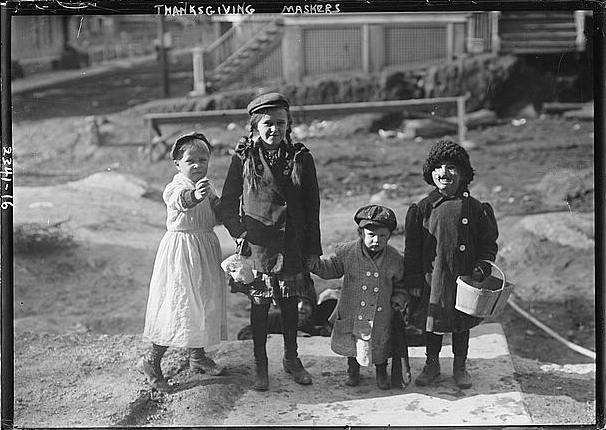
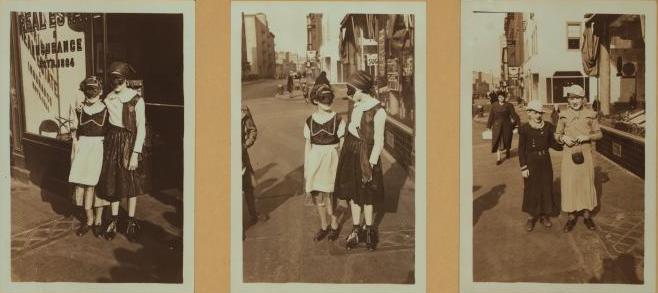
My new column for the Huffington Post is live, and the topic is a strange, forgotten holiday custom called Thanksgiving masking, popular among New York kids from the 1890s-1930s. Children dressed as exaggerated versions of poor people! Boys in their sisters’ clothes! I wrote about this last year at this time, but this article is newly expanded, and I’ve done a bit more research on the origins of this very odd tradition.
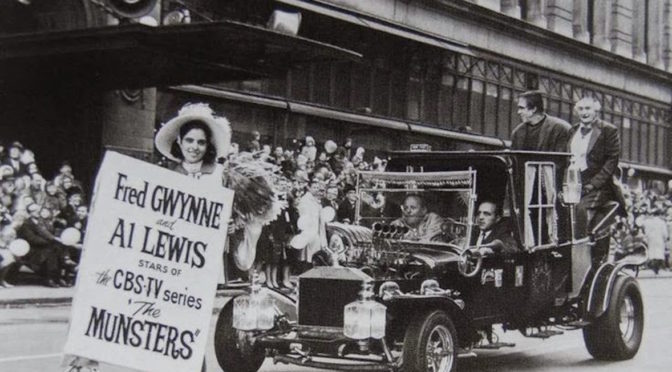
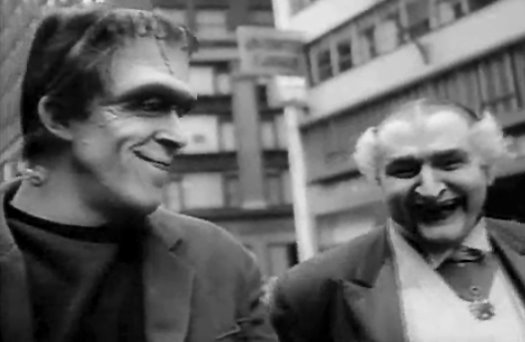
Beautiful monsters: The stars of The Munsters are predictably not on their best behavior during the Macy’s Thanksgiving Day parade of 1964 (Photo courtesy Frankensteinia)
Macy’s Thanksgiving Day Parade is a fixture of the American holiday, as integral as the elements which comprise a standard turkey dinner. Don’t you get in the mood the moment you turn on the TV and hear the sound of marching bands echoing through the corridor of buildings on Broadway?
Since the parade’s debut in 1924, it has helped define Thanksgiving tradition for many people despite touching only occasionally on the whole point of the holiday itself. These days, you are far more likely to see a musical number from ‘Annie’ than a frank depiction of early Puritan life.
But in letting the show into your home — inviting in the floats and balloons, the falloons and the balloonicles, the never ending procession of clowns — you’re also inviting in a blistering microcosm of celebrities that have slowly come to define the event’s jovial interworkings. What was once a simple and earnest celebration by regular Macy’s employees in 1924 is now an event whereby any float can contain any number of unrelated celebrities, in most cases lip syncing to a pre-recorded Christmas track.
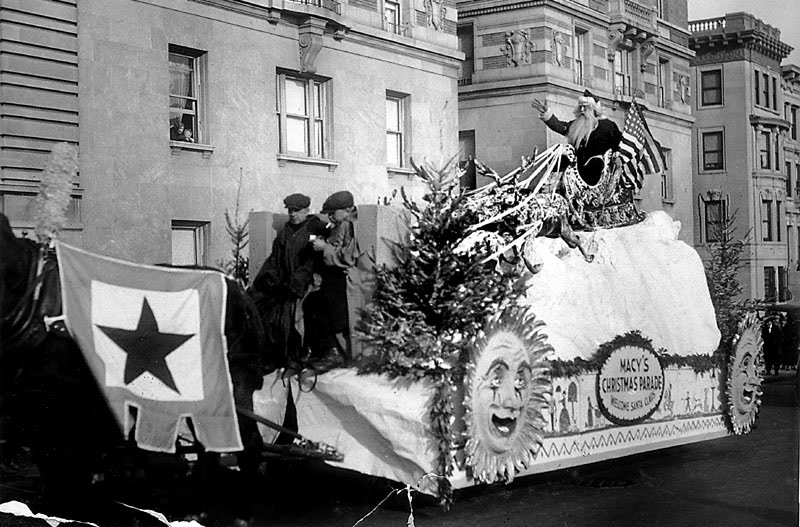
Santa, on his first Macy’s float, in 1924 (pic courtesy Smithsonion)
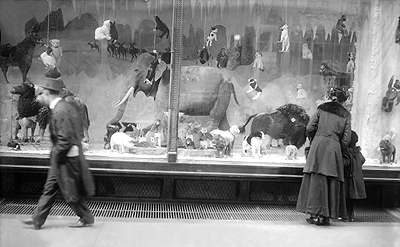
The Early Years The first parade in 1924 was a labor of love, with employees in gaily colored costumes accompanied by four marching bands, a live animal procession, and modest floats celebrating a host of nursery rhymes figures. The only celebrities were some notable animals borrowed from the Central Park Zoo — this potentially bad idea was scrapped when the balloons came — and Santa Claus, who arrived in Herald Square to unveil the Christmas windows.
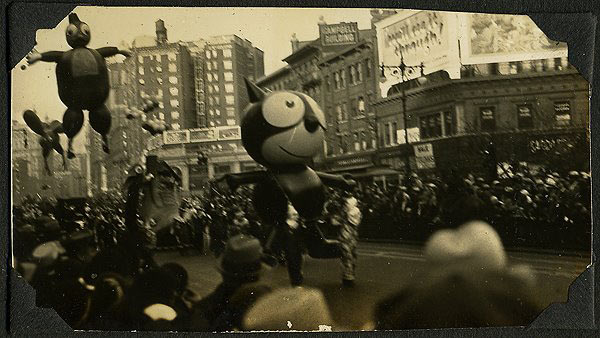
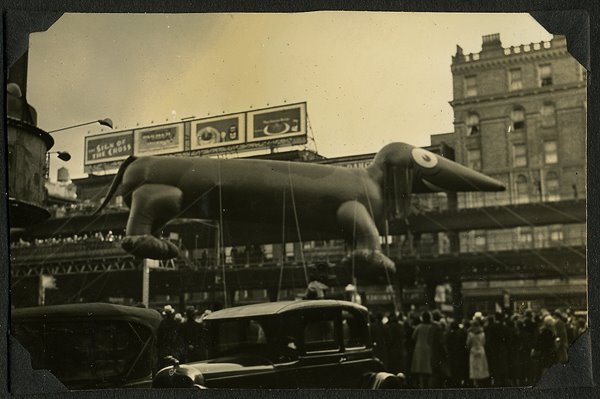
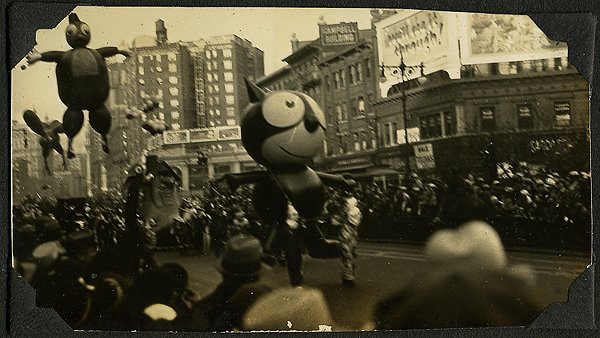
The inflatable balloons debuted in 1927, and along with the nameless dinosaur and dachshund floatables came Felix the Cat, the art-deco feline who had received his own comic strip four years previous. This would make Felix the first non-Macy’s related celebrity (albeit a drawn one) to appear in the parade with something to promote.
Nobody was really paying attention to the humans below, especially in the days before television. Perhaps that’s why the first human celebrities were accompanied by balloon versions of themselves. Eddie Cantor, who made his first parade appearance in 1935, was a comic song-and-dance man who had appeared in the Ziegfeld Follies and strummed along in silly, Hollywood toe-tappers like ‘Kid Millions’ and ‘Ali Baba Goes To Town’.
In 1940, Cantor made another appearance, in person and, this time, in balloon form (at right). He might have been using the parade to bolster his reputation. The year previous, Cantor had criticized the rants of Hitler sympathizer and Catholic priest Father Charles Edward Coughlin and lost his endorsement deal with Camel cigarettes in the process. It seems that criticizing a priest (even an anti-Semitic one) was not a boost professionally. The parade (and famous friends like Jack Benny) helped resuscitate his career.
It was quite hard to compete with balloons if you were a star. The performances of Eddy Duchin and Dinah Shore were broadcast on the radio, and band leaders like Paul Whiteman and Kay Kyser led their orchestras at the parade’s finish line in Herald Square. But a few celebrities actually braved the parade itself, such as comedian Harpo Marx. In the days before cameras, most of the crowd would never know these famous folk were there, although in 1935 the zany Harpo climbed atop the Macy’s marquee to get noticed. Harpo also brought along a balloon in his likeness, carried along by Macy’s employees dressed like the other Marx Brothers.
Sadly, neither Marx nor Cantor are featured in this newsreel film from 1935:
One of the most notable celebrity appearances in the 1940s was done in disguise. Edmund Gwenn, who played Kris Kringle in the classic ‘Miracle on 34th Street’, a film set partially in Macy’s department store, dressed as Santa Claus for the 1946 event. Footage of his appearance was used in the film; most of the audience was none the wiser. Gwenn would go on to win an Oscar for that role.
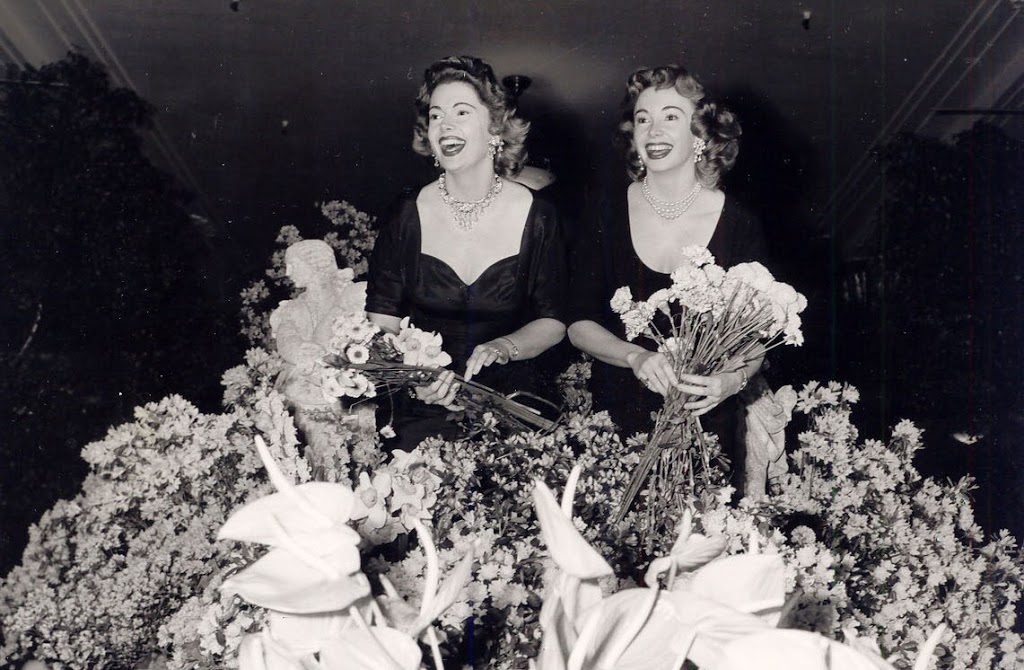
Audrey and Jayne Meadows atop a lavish float, probably 1952 (photo courtesy Macys)
The Debut of Television
The first television broadcast, believe it or not, was in 1939, from a camera mounted atop the American Museum of Natural History. Of course, few had televisions to watch it, and it was shown only locally. But in the years following World War II, America embraced television, and television embraced the parade. CBS would take the first crack at broadcasting the extravaganza nationwide in 1952. NBC took over in 1955.
With cameras come celebrities, and they came in droves in the 1950s. Shirley Temple, well into her 20s, graced the parade, as did Jimmy Durante, Abbott and Costello, Roy Rogers and Dale Evans, Boris Karloff, and arguably one of television’s biggest stars Jackie Gleason, who was grand marshal in 1952.
That year was the debut of Jackie Gleason’s eponymous show on CBS — his TV wife Audrey Meadows also stopped by (see above) — and the comedian’s appearance opened the floodgate for a new breed of small-screen stars that used the parade to cross-promote new projects debuting on the very box broadcasting the parade into American homes.
Danny Kaye, Howdy Doody, Hopalong Cassidy, even the Lone Ranger and Tonto, all made appearances in the parade. The first TV celebrities were clearly those that appealed to children, the key audience of a morning program that featured large buoyant cartoon characters and floats. But that distinction would soon be blurred as the parade began reaching adults as well.
As the volume of celebrities increased, they became embedded in floating dioramas. That wasn’t just Cinderella waving at you; that was Connie Francis dressed as Cinderella, in 1959.
Stars of the Small Screen
In 1961, NBC made the critical decision to expand coverage to two hours. By the end of the decade, the entire parade was broadcast, from start to finish. With all this time to fill — and broadcast technology advanced enough to comfortably record live outdoors — the floodgates opened and a phalanx of small-time stars filled the parade route.
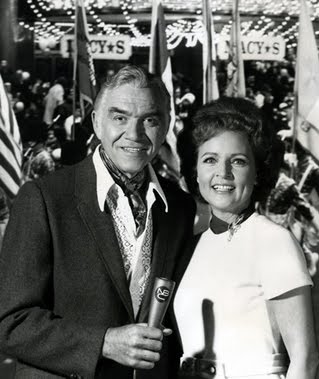
Key in this invasion was NBC’s presentation of the event. The parade was hosted in the 1960s by Bonanza star Lorne Greene and an attractive young comedienne by the name of Betty White (at right). Both achieved their fame from television work, not film. There was little fear that the big stars of that other world (the movies) would spill into frame. Parade entertainment would be gleaned from other places — TV shows, Broadway musicals, cabaret lounges. Even old radio and vaudeville stars would be dusted off and given a go.
In the early 1960s alone, the parade featured such luminaries as Ray Bolger, Gene Krupa, Mitch Miller, Jack Palance, Troy Donahue, Annette Funicello and Greene’s young co-star Michael Landon. Young and old stars, mingling among the clowns, mugging for the cameras.
The stars were mostly well-behaved, with some notable exceptions. Fred Gwynne and Al Lewis, stars of The Munsters, appeared in the 1964 parade in their ghoulish costumes, riding along in their ‘Munster Koach’ car. Neither star was very amused. Gwynne was high on ‘nerve medicine’ and began cursing at the crowd. Passing the hosts Greene and White in the media box, Herman Munster fired off a rude expletive in their direction.
The video below captures them in a more sober mood:
Another trend manifested in 1965, when the fledgling McDonalds restaurant opted to sponsor the parade and debut its new mascot on national television — Ronald McDonald. (The man who regularly performed as Ronald — Willard Scott — was not used for the TV debut, which is unfortunate, as Scott would return as host of the parade in the late 1980s.)
Parade goers could greet William Shatner, star of Star Trek, in 1968, and Neil Armstrong, star of an actual space adventure, in 1969. Music, for the most part, was still saccharine, performed by artists like Jack Greene, Bobby Vinton and Dionne Warwick. Although Aretha Franklin brought a bit of soul on her own personal float in 1967.
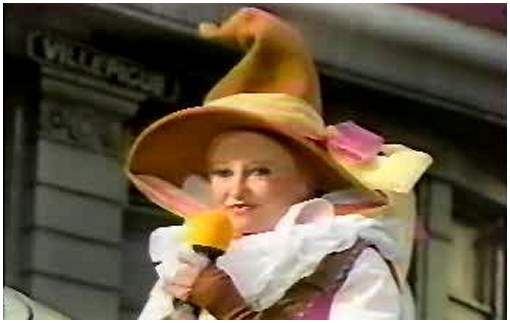
Phyllis Diller as Mother Goose, 1985. Photo courtesy X Entertainment
The Advent of the Super Float
Encouraging celebrity appearances perhaps even more than NBC was the debut of flashy, blockbuster floats into the parade in 1969. Before this, decorative vehicles and floats of modest proportion were interspersed among the bands and balloons. In 1969, parade designer Manfred Bass began construction of giant floats at the Parade Studio in Hoboken — elaborate, multi-staged platforms requiring multiple performers and specifically created to be showcased for television. To that end, these newly introduced floats made ideal platforms to display even more celebrity entertainment.
By the 1970s, television had produced hordes of stars, and the parade became a virtual Hollywood Squares of B-list talents. If you were a sitcom star of the 70s and 80s, it’s possible you were even contractually required to make an appearance. Making this doubly appealing for NBC and parade organizers was the possibility of float sponsorship by third-party products, such as Ocean Spray, who produced a Cranberry themed float and randomly threw ‘Buck Rogers In The 25th Century’ hunk Gil Gerard upon it for good measure.
The biggest television stars of 1976, Laverne and Shirley’s Penny Marshall and Cindy Williams, made a splash in their first appearance that year. According to Williams, “Suddenly there was all this screaming. We looked around to see who they were carrying on about, and it was us!”
The cultural changes of the ’70s hit the parade full force. Early in the decade, lite pop performers like the Fifth Dimension engaged the crowd. But the rising popularity of ’70s country music with pop overtones delivered notable performances, including George Jones and Tammy Wynette singing “We’re Gonna Hold On†in 1973, and a young Dolly Parton bringing “Love Like A Butterfly in 1974.
And then there was disco. Borne of decadent nightclubs that could be found just a few blocks from the parade, disco music slithered from the dance floor into the sunlight, walked upright and became mainstream in the mid-1970s. This would explain the appearances of Gloria Gaynor singing you-know-what-song in 1977 atop a Doodle Bug float, and a vibrant performance by the Village People in 1978. The following year, Diana Ross rode a gigantic apple while wrapped in a fur coat.
But the musical genre of choice was and continues to be Broadway, and further broadcast sophistication allowed whole production numbers to be presented. Perhaps the most unusual of all came in 1980, when the unorthodox Public Theater production of ‘The Pirates of Penzance’, starring later Solid Gold host Rex Smith and Linda Rondstadt.
The clip below also underscores the disastrous relationship such performances have with the television requirement to lip sync:
The Surreal Show By the 1980s and 1990s, the parade broadcast has become a full-fledged beast of absurdity, a colorful swath of product placement, celebrity promotional events, and bleached out entertainment. Now it was the balloons and the marching bands’ turn to compete with the increasingly over-the-top celebrity appearances and elaborate Broadway routines, now bolstered with dated camera effects, such as the ones demonstrated in this 1981 performance by Donny Osmond (click here to view).
Further staged combinations hurled the proceedings into the land of the nonsensical. What was going through the mind of Broadway star and pop singer Melba Moore when she was asked to perform a hit by Bonnie Tyler while being accompanied by dancing, gyrating Marvel Comics characters in 1989?
It was now possible to perform in the parade without even being there. Oh, to have beheld the faces of children as they turned on the television sets in 1993 and witnessed this abstract performance by Chita Rivera from the show Kiss Of The Spider Woman:
Ultimately, what may have prevented the parade from degenerating into a pure mockery of its former self was the regular appearances of older, seasoned stars like Milton Berle (in drag, seen above), Sammy Davis Jr, and Phyllis Diller garbed as Mother Goose, in 1986.
As a counterpoint to old Hollywood, music artists popular with the parade’s core audience were interspersed to keep the proceedings relevant. Chief among these acts were boy bands like N Sync and the Backstreet Boys and, performing a few years earlier, their precursor, New Kids On the Block, in 1989:
Gone were the rational and linear selection of big band and film celebrities of the 1930s and 40s. Sixty years after Harpo Marx made his first appearance on the Macy’s marquee, in 1995, the parade welcomed a professional grab-bag of entertainers — LL Cool J, Brady Bunch maid Ann B. Davis, Shari Lewis and Lambchop, skating diva Oksana Baiul, country star Shania Twain, Kelsey Grammar, Matthew Broderick, Carol Channing, Stevie Wonder and the cast of Smokey Joe’s Cafe.
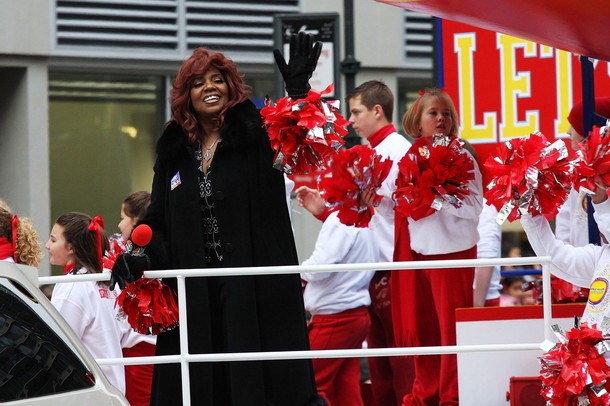
Never Can Say Goodbye: Gloria Gaynor makes another Macy’s Thanksgiving Day Parade appearance in 2009. Photo courtesy Day Life
Today’s multi-million dollar procession is as chock-full of stars than ever before and is the only place on television where you can see, for example, British songbird Sarah Brightman and rapper Ne-Yo in the same place (as you could in 2007). Perhaps the key is to simply embrace the absurdity and take in the dizzying, mind-dulling array of entertainment like a virtual dose of strong coffee. And perhaps quietly note that the performers themselves recognize how odd everything seems, as referenced quite nicely in this performance from 2008, featuring the twisted stars of Foster’s Home For Imaginary Friends and a special musical guest:
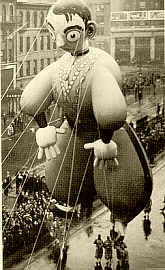
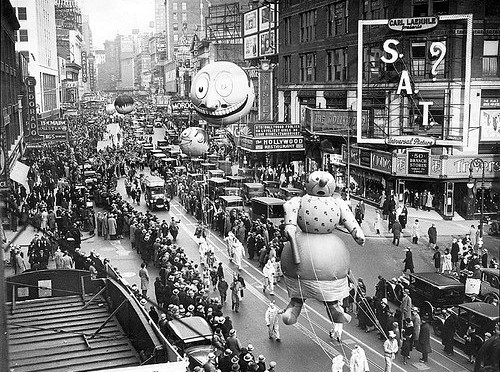
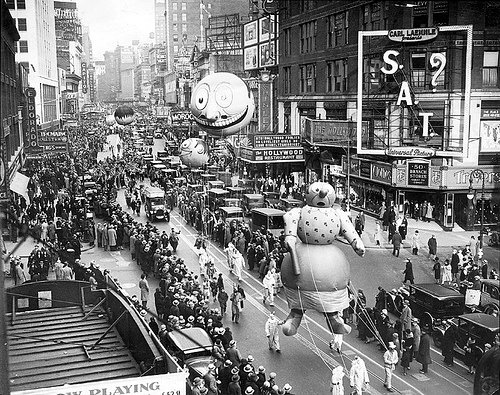
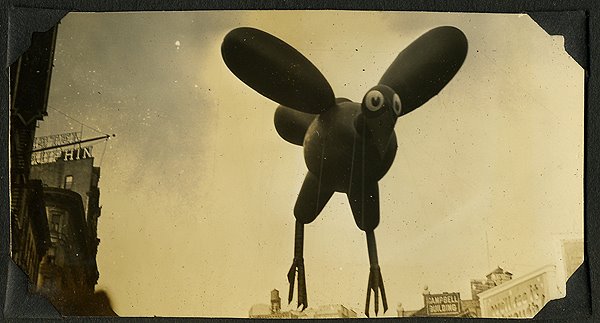
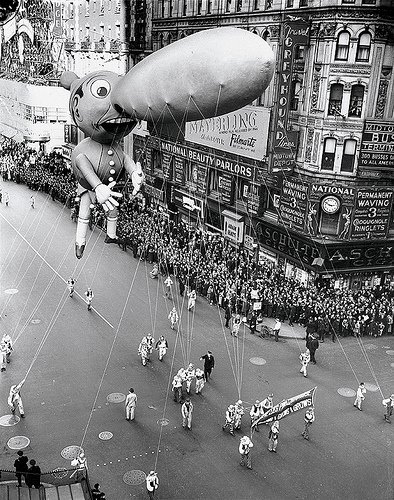
Above: The parade in the 1930s was a veritable freakshow of oddball balloon creatures
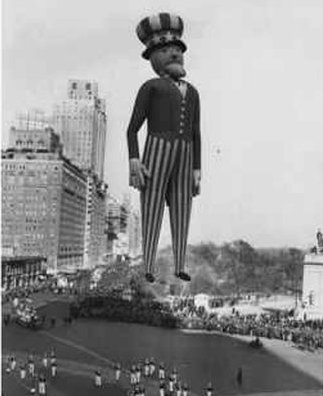
Not every balloon in the Macy’s Thanksgiving Day Parade latches on to your memories like Underdog, Charlie Brown and Snoopy do. Below are a few examples of Macy’s stranger offerings over the years:
This Thing (Turkey?) 1932 I swear, if I saw that coming at me and I was eight years old, I would never celebrate Thanksgiving again. Clearly, the art of massive balloon making was still being perfected. Balloons had only been in the parade at this time for only five years and were still being released into the air at the end of the parade, for people to capture and return for reward money. This dangerous practice was stopped in 1933.
Pinocchio 1935 This depiction of the wooden puppet, with his 44-foot nose, is just illconceived on many levels.
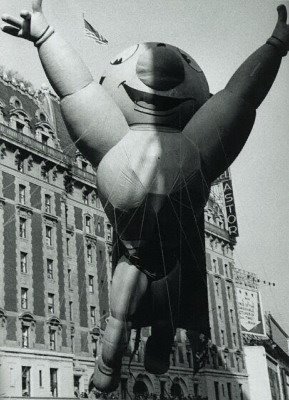
Uncle Sam 1939 Today’s Uncle Sam balloon is made of sterner material to fly upright, so I applaud their efforts to keep this older one standing along the parade route. This version of Sam flew from 1938-40.
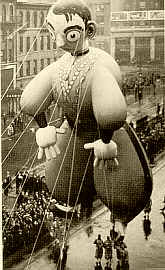
Eddie Cantor 1940 Few living human beings are immortalized in balloonery — the Marx Brothers also come to mind, but the balloon celebrating Broadway and radio star Cantor is distinctive for being completely misshapen and almost horrifying.
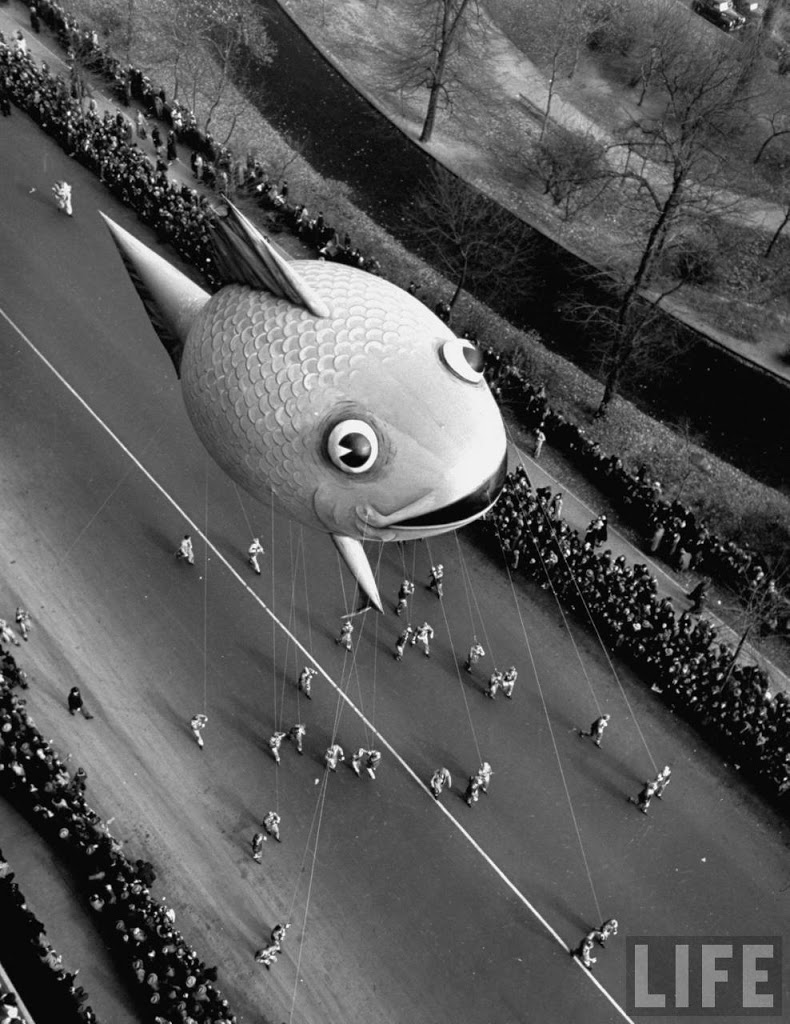
Fish Balloon 1941 This is actually one of the most beautiful pictures I’ve ever seen of a Thanksgiving Day balloon. The balloon was artistic and graceful, and for 1941, that definitely makes it strange. (Courtesy of Google Life stock photos)
Mighty Mouse 1954 Do kids know Mighty Mouse anymore? Anyway, the flexing pose of the balloon always made the strangest images on television. From the picture above, he looks to be on steroids
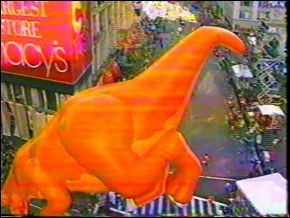
Rex the Dinosaur 1993 It wasn’t that Rex was a bad balloon. It was the fact that, halfway through, his head popped off and they kept the behemoth floating down the street, the camera uncomfortably cutting away.
By this way, the above picture is from this website, which relays every excrusiating detail of the 1993 parade, apparently one of the worst in Macy’s history (thanks to crazy winds and bad Katie Couric fashions). The descriptions are hilarious
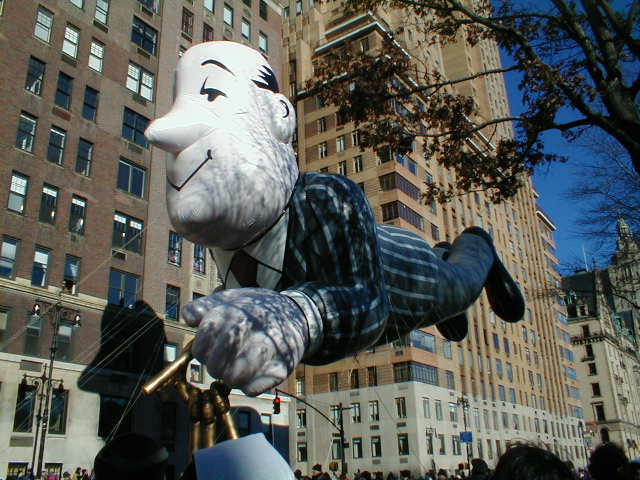
Ask Jeeves 2001 What could be more sad than seeing a discarded mascot for a dot.com floating down the street? A mascot that happens to be in the shape of a middle-age butler.
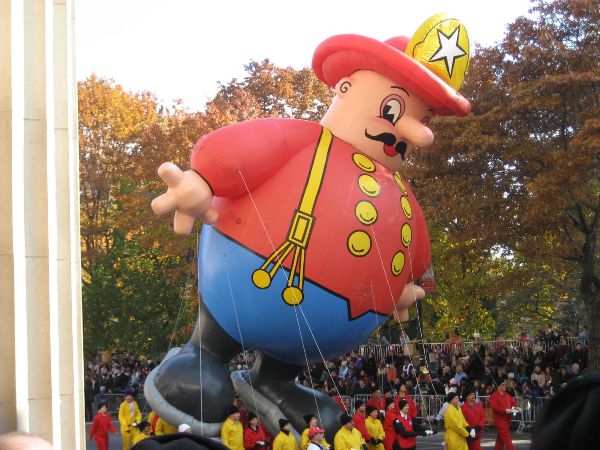
Harold the Fireman 2007 Way before Joe the Plumber, Harold’s been with the parade since 1958, an old perennial. He makes the list because after all these years, you’d think a man in his profession would have lost some weight. Believe it or not, Harold has been in the parade in different garb — as a clown in 1945, baseball player in 1946 and a cop in 1947 — before finally settling on a job he liked.
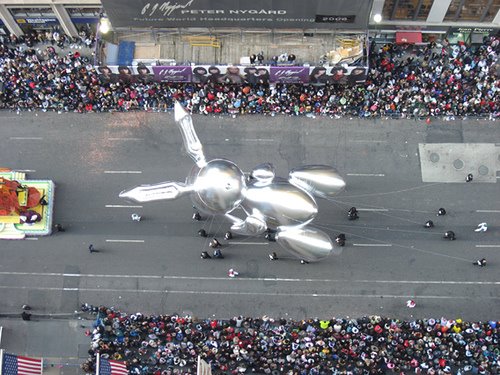
Rabbit 2007 Pop artist Jeff Koons took a 1986 work — a table-top stainless-steel bunny — and literally blew it up for the parade last year, perhaps the only floating object that could conceivably be displayed at the Museum of Modern Art (if they had room for it.
And just for fun, some Macy’s excitement from 1984: Tom Turkey and Dionne Warwick!
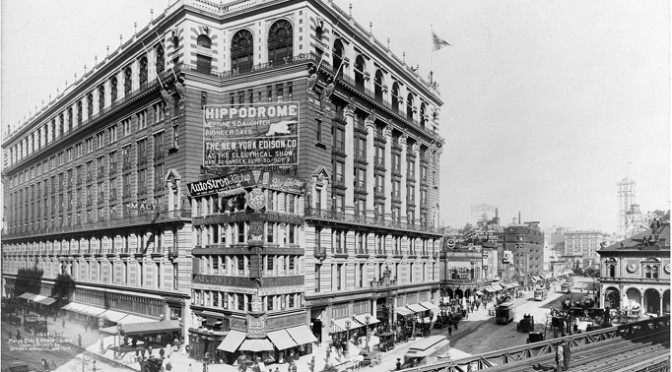
What year is this picture taken? (Click on it to view details.) Note the elevated rail line, no automobiles, and the New York Herald building still standing. You can also tell that the building’s later additions have not yet extended it down towards 7th Avenue. A little research on the Hippodrome and when the shows ‘Neptune’s Daughter’ and ‘Pioneer Days’ performed there reveals this picture was taken in Feb-March 1907 — a little over one hundred years ago.
PODCAST Did you know that the man whose name adorns one of the most successful department stores in the world was a sailor turned failed businessman? Or why Macy’s Department Store ALMOST takes up an entire city block? Or how many clowns have been in the Macy’s Thanksgiving Day parade? The Bowery Boys let you in on those answers and lots of other fun facts about one of New York City’s premier retailers.
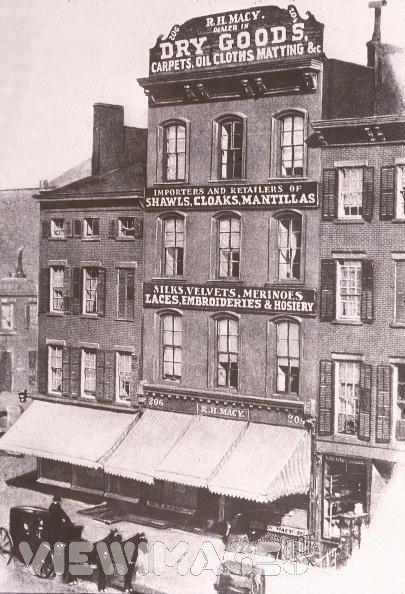
The first Macy’s store in Manhattan — 204-206 14th street, near 6th Avenue
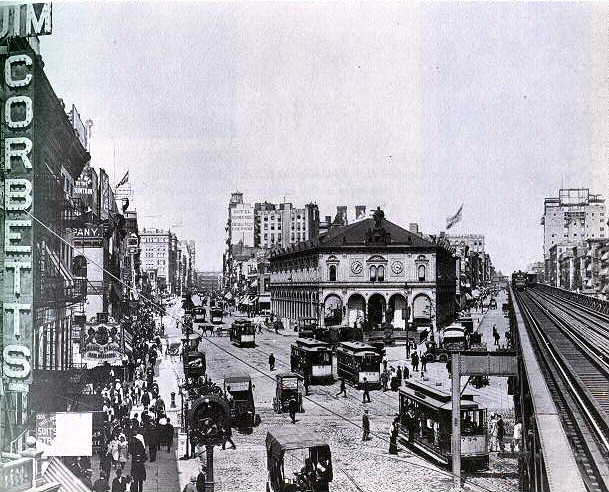
Herald Square….before Macy’s, circa 1893. The Sixth Avenue elevated train dominates the right and a cable car cuts down Broadway. What we know as the park in Herald Square is nothing but a traffic triangle; however the Bell Ringer’s monument sits anew on top of the New York Herald building. Macy’s would soon sit wheter that sign with the coat of arms hangs.
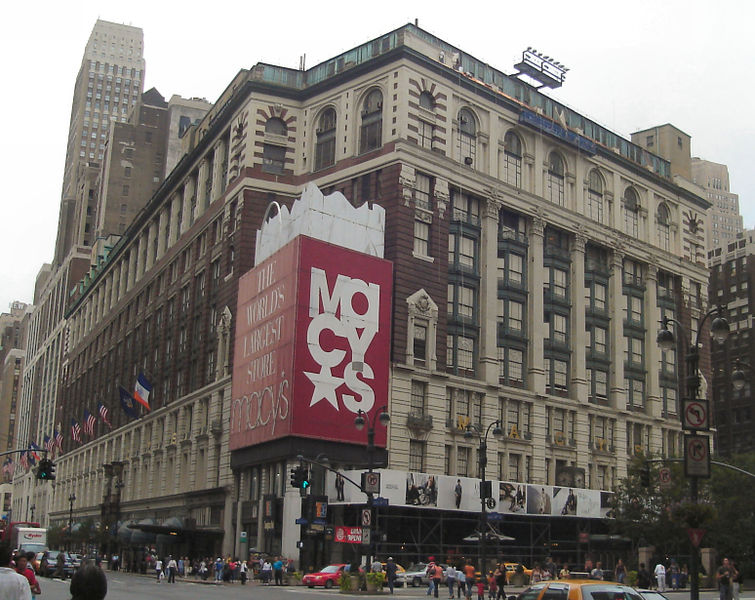
A gigantic Macy’s bag conceals the building which prevented the Straus brothers from expanding the store over the entire city block. It is probably the most advantageously placed Sunglass Hut in the entire world.
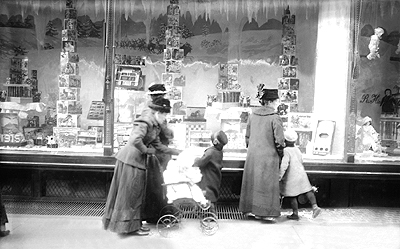
Macy’s holiday windows, circa 1915
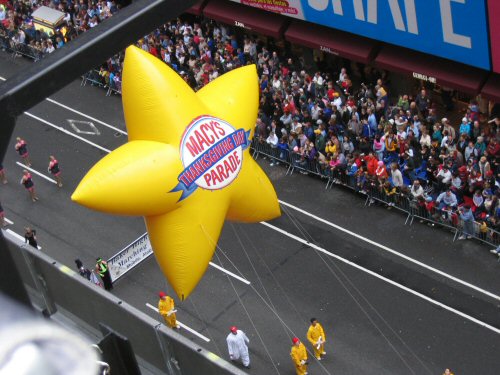
The Macy’s famous star logo — derived from the tattoo that founder Rowland Macy received during his stint as a sailor
Below, some funky looking balloons from the 1932 parade. Swapatorium has many, many more from this period that are simply breathtaking.
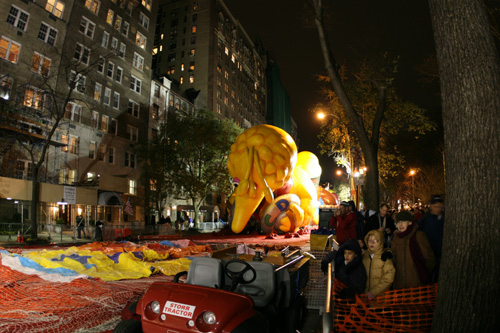
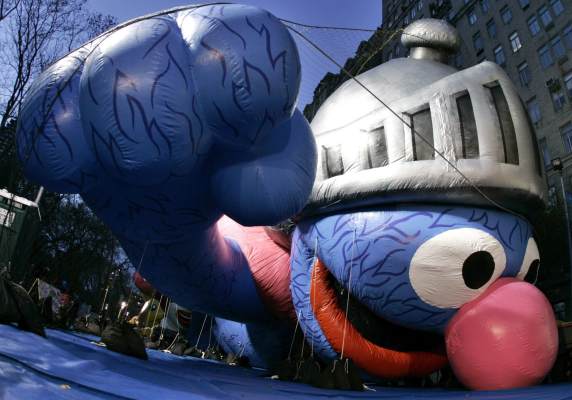
A wonderful tradition that we forgot to mention happens the night before the parade, in the grounds of the Natural History museum, as hundreds gather to watch the balloons being inflated. (Here’s Grover and Big Bird being blown up.)
The City Room reports that this year’s balloons got a trial run in Queens this week. Meanwhile, some people aren’t happy with Macy’s swallowing up the Marshall Field’s department store brand.
Fun fact: Wartime demand in the 1940s halted the production of women’s nylon pantyhose. When retailers were allowed to resell them, Macy’s restocked their shelves with almost 50,000 pairs, all of which were sold in six hours.
Lovely Herald Square once again becomes the center of manic activity next week for next week’s Macy’s Thanksgiving Day Parade. Few realize that Santa Claus, the Rockettes, and a throng of tourists share the square with a Roman goddess and two fellows named after Hebrew demons. Or that this year, said goddess and demons will probably be the best looking partygoers there.
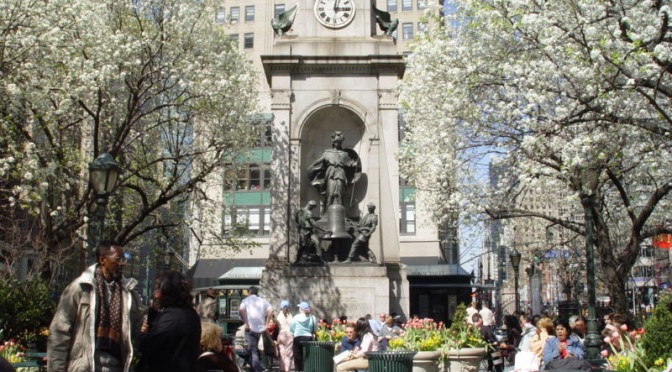
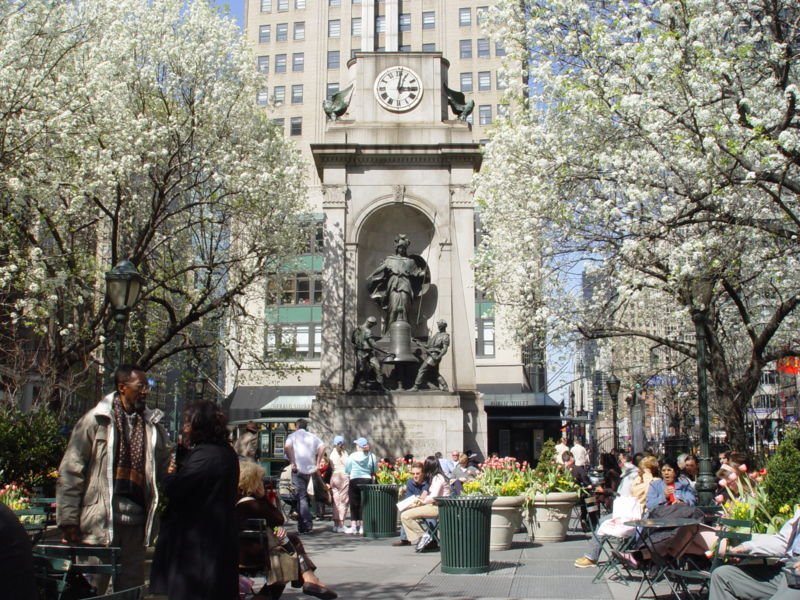
The James Gordon Bennett monument, or Bell Ringer’s Monument as it’s often called, with illuminated clock, friendly bell that chimes on the hour and owls with glowing eyes, has been a solid fixture of Herald Square since November 1940.
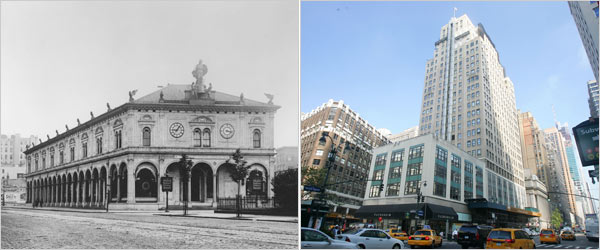
Bennett Jr. was the publisher of the New York Herald in 1894 — Bennett Sr. actually founded the paper in 1835 — when they moved from downtown Park Row up to 35th Street, immediately north to where the monument now stands. The two story Herald building, in an Italian palazzo style by the great McKim, Mead & White, was topped by the sculpture designed by French sculptor Jean-Antonin Carles. The Herald later merged with another newspaper the New York Tribune, and the Herald building was torn down in 1921. But the monument, popular with New Yorkers due to its glowing timepiece, was reinstalled in the park below.
The primary figure is the goddess Minerva, Roman deity of poetry and music, often analogous to the Greek goddess Athena. More curiously are the bell ringer’s below her, who have two sets of names. Stuff and Guff are the cutesy names; Gog and Magog, also known as early demonic beings from the Old Testement, are rather less cute. Minerva’s companions in classical literature are owls, which explain the birds with eyes that glow upon the hour, as though lasers are about to incinerate passers-by below.
The monument has always been a mystery for some. A mysterious door on the 35th side is inscribed with the phrase “La Nuit Porte Conseil(‘Nighttime Brings Advice’ or ‘Let’s Sleep On It’)” which has never been adequetely explained. A website on magic maintains the Herald Square statuary is loaded with mystical, even demonic iconography.
The bell ringers don’t actually ring the bell but merely go through the motions, with a mallet inside timed to make the hourly chime. That is, the ringers never did until a few years ago. The condition of the monument had deteriorated to an extent that one of the ringer’s mechanisms were beginning to actually scrape the side of the bell. The overall condition of the monument was pitiful, covered in bird droppings and weakened by the elements. Its granite base has even begun to crack.
So just this year, the Municipal Arts Society funded an impressive $200,000 restoration, encasing the monument in scaffolding for four months to repair it in time for its annual showcase to the world during the parade. It was unveiled in September, and Minerva and her pals look as good as new.
Below: The Herald building (with Minerva on top) and how it looks today, photo from the New York Times
Take a stroll with us as we chart New York’s most famous canine crusaders, from a Central Park icon to the biggest star on Broadway history ever found in a kennel. Oh and watch where you step.