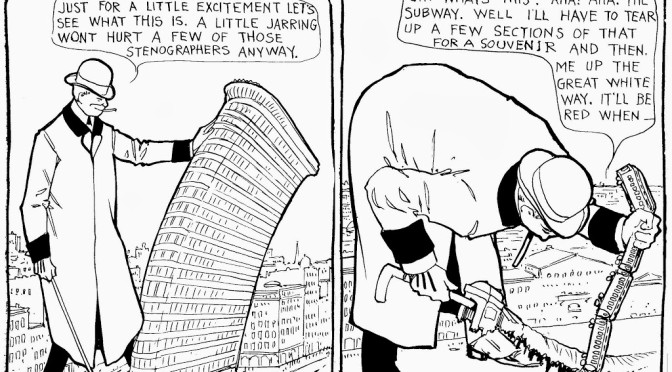
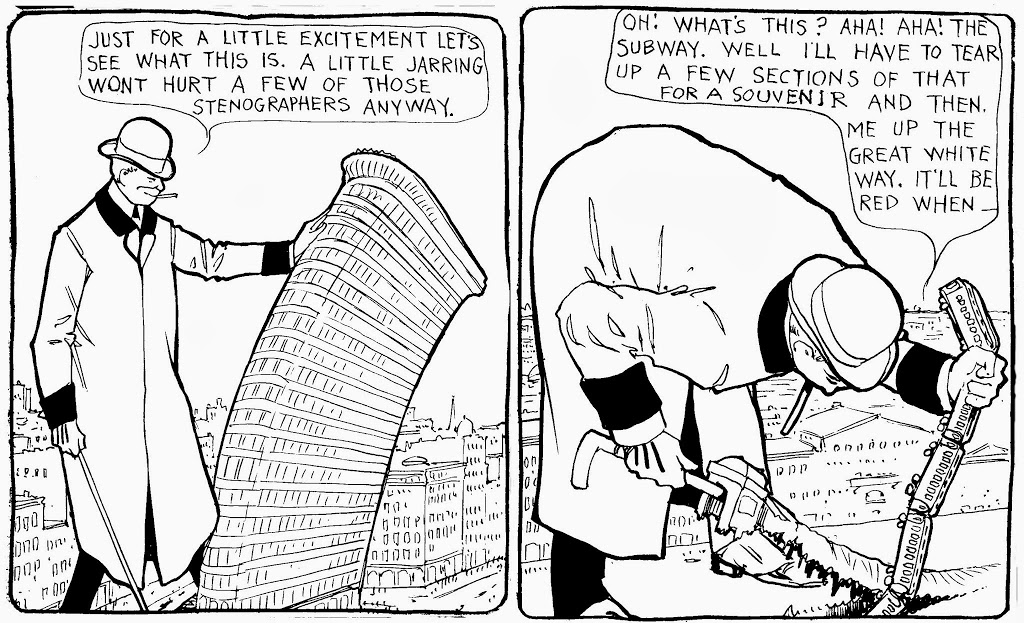
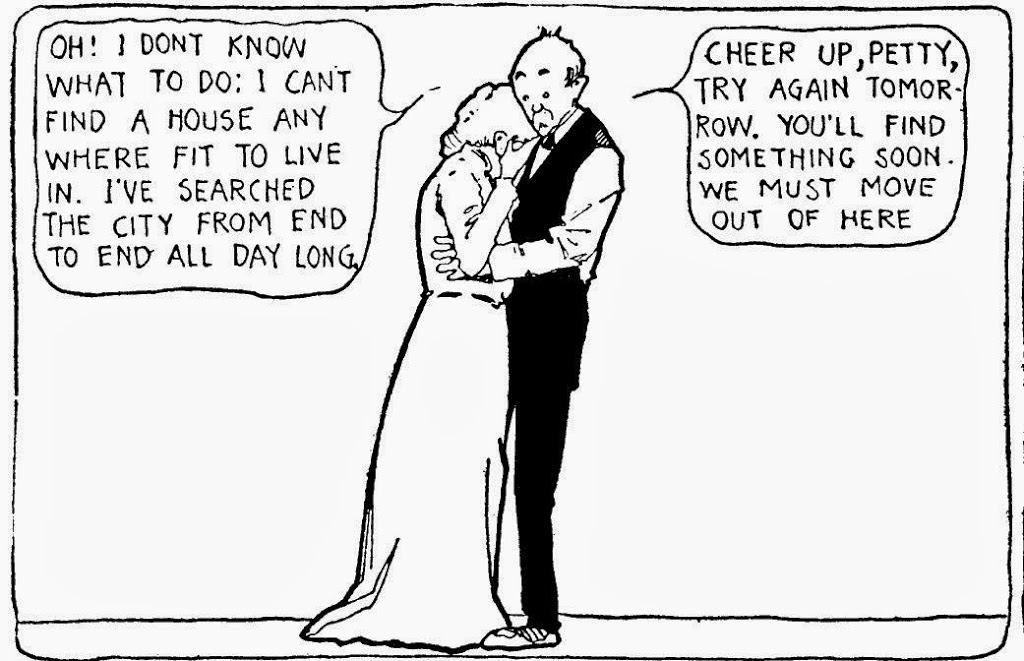
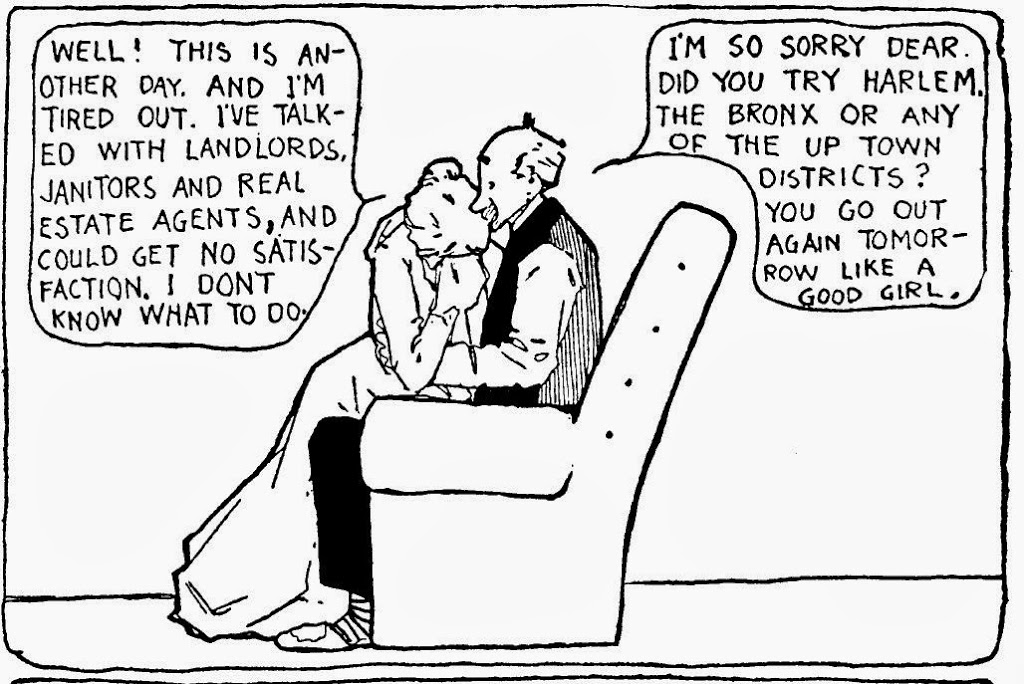
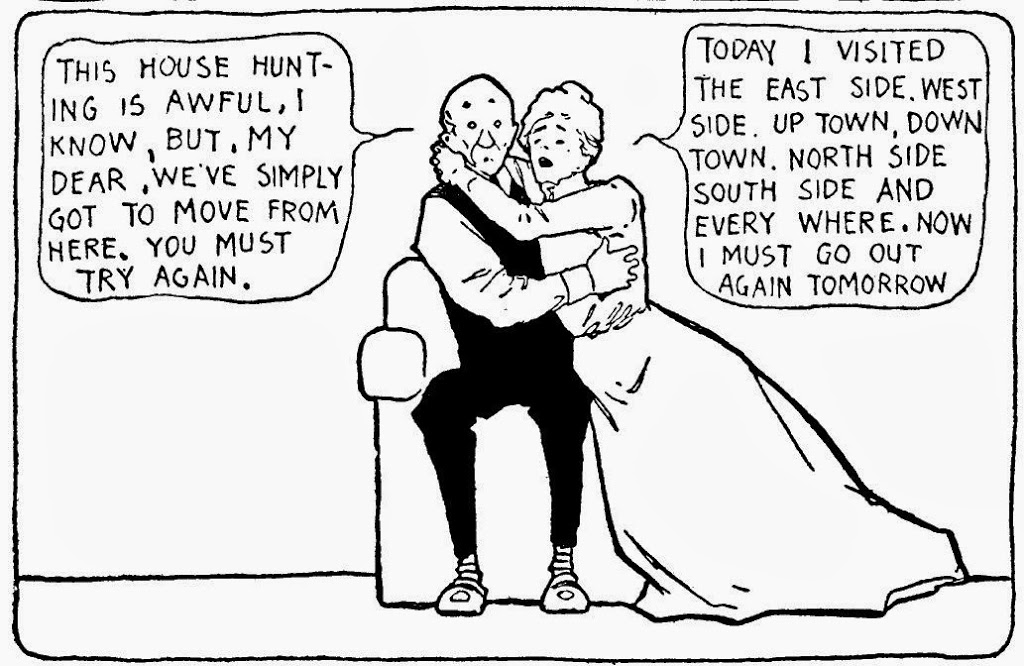
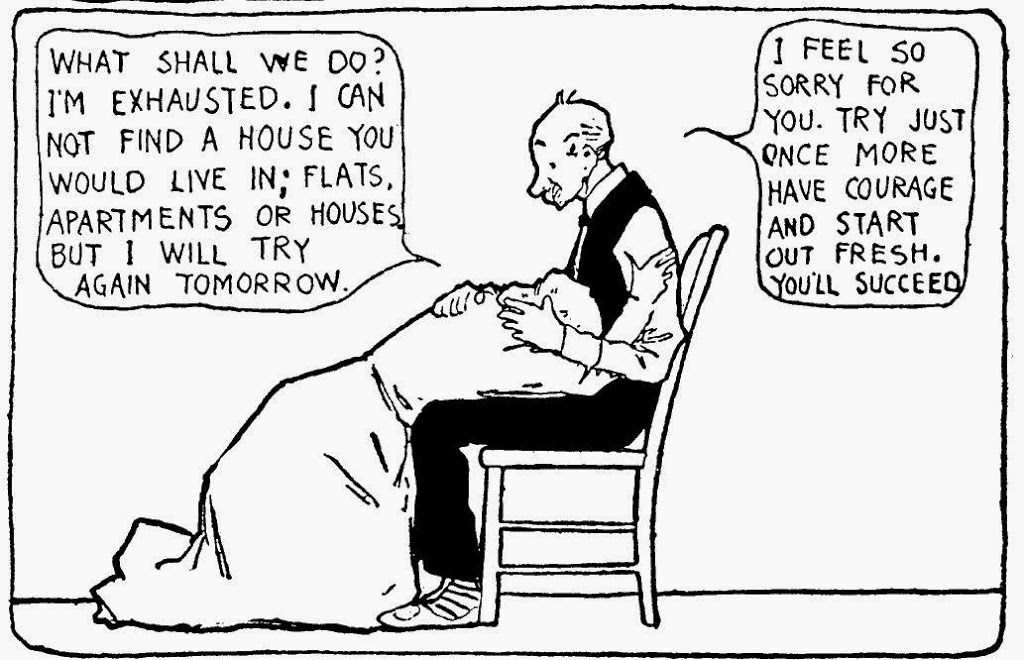
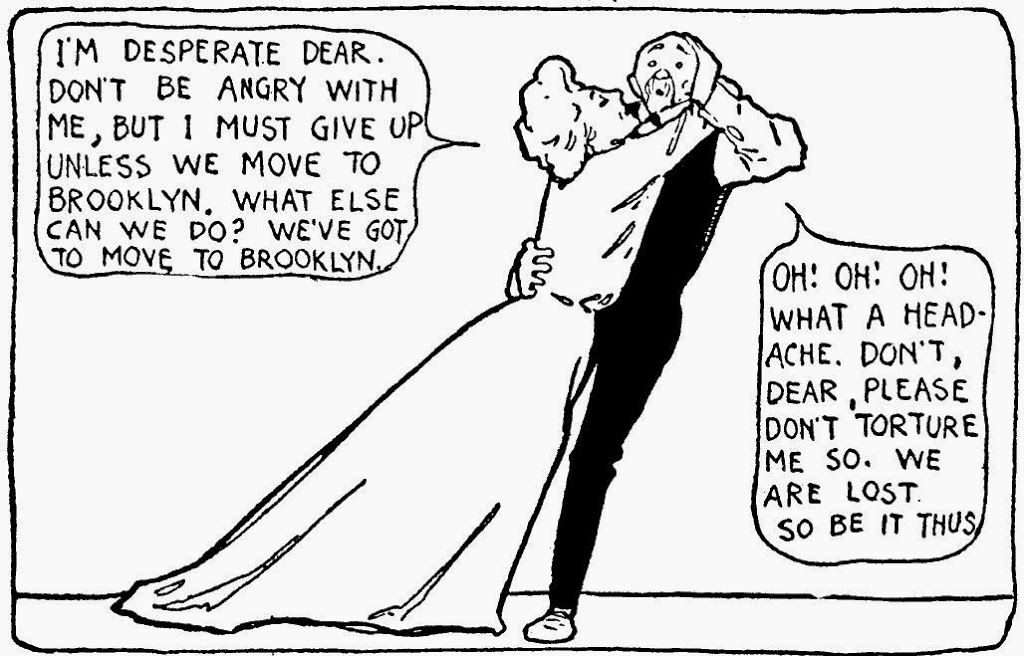
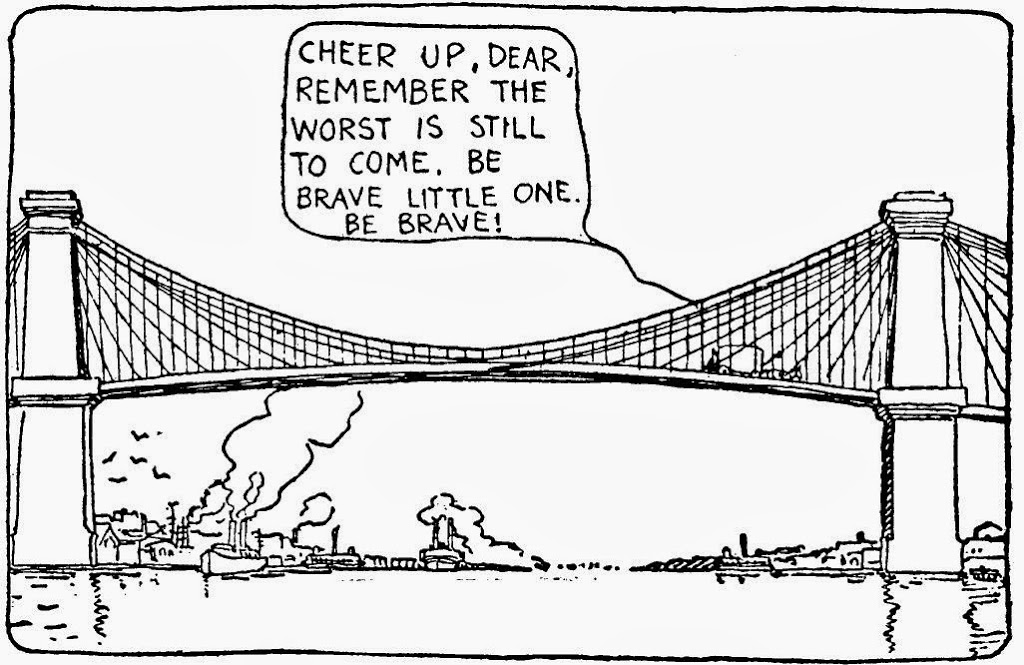
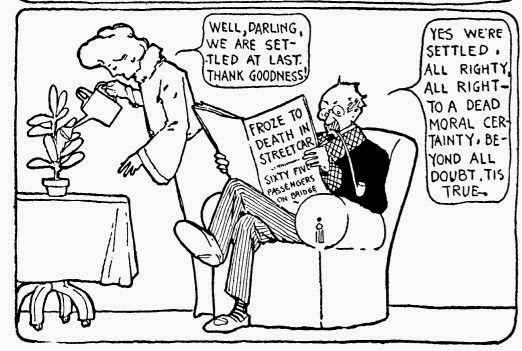
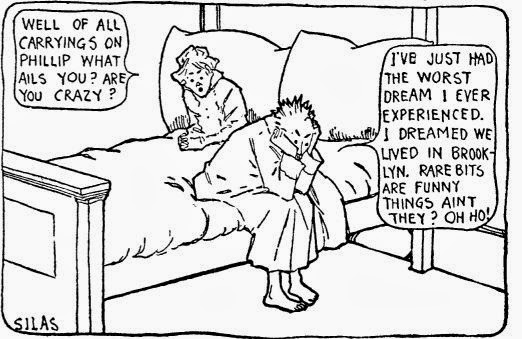
Above: Food can do strange things to you at night: an excerpt from McCay’s January 7, 1905 strip, published two days after the one printed in full below.
Dream of the Rarebit Fiend was one of America’s first great comic strips and easily one of the weirdest. Each eight-panel or nine-panel strip featured an individual trapped within a situation nightmarish for its day, only to be woken up in the final panel. The cause for the dream was almost always the same — a meal of rarebit the night before.
Written by Winsor McCay (of Little Nemo fame), this extraordinary oddity ran in various New York newspapers starting in 1904, with various spin-offs and revivals well into the 1920s. McCay was a favorite of publisher William Randolph Hearst, who often stifled the illustrator’s unrelated endeavors to keep the popular artist loyal to Hearst’s publications.
You can find the entire collection of these fascinating little adventures here.
Rarebit — a hot cheesy sauce poured over toasted bread — seems to have had profound effects on the subconscious. It was able to vividly extract the fears of New Yorkers at night. While most were magnificently surreal, others touched on modern issues like crowded trains, uncontrollable automobiles and fast streetcars.
In 1888, the New York Herald ran this poem by the great Walt Whitman:
The First Dandelion
Simple and fresh and fair from winter’s close emerging, As if no artifice of fashion, business, politics, had ever been, Forth from its sunny nook of shelter’d grass— innocent, golden, calm as the dawn, The spring’s first dandelion shows its trustful face
Whitman was a living legend by this point. The infirm 78-year old writer lived in Camden, New Jersey, and rarely left his home. His most notable appearance in New York the previous year had been as a lecturer at the Madison Square Theater, discussing the legacy of Abraham Lincoln to an audience which included Mark Twain and Augustus Saint-Gaudens.
A poem by Whitman would have been reason alone to buy an edition of the New York Herald. And indeed, as the Herald’s ‘poet laureate’, several of his most notable works had debuted there. “Mannahatta,” for instance, debuted in the Herald on February 27 that year.
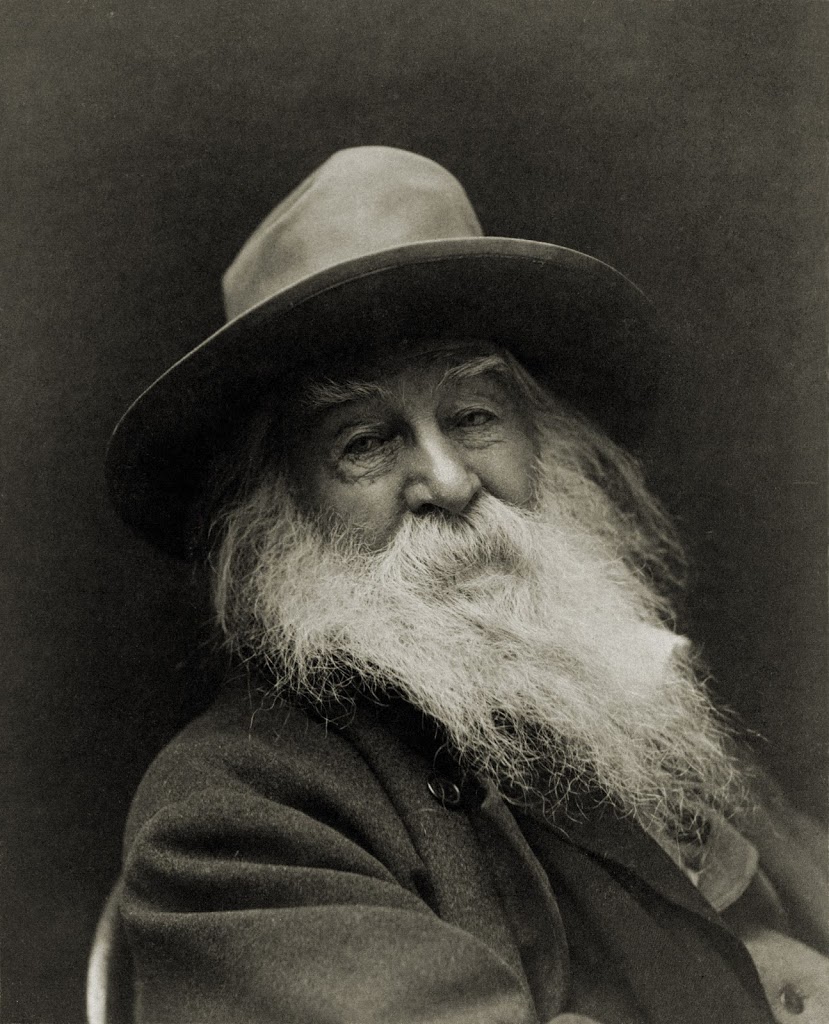
At right: Walt Whitman in 1887, taken in New York by George C. Cox
Unfortunately, “The First Dandelion,” a little ode to the coming spring, ran on March 12, 1888, the worst day of theBlizzard of 1888, a day when several feet of show and deathly winds were making the American northeast a very unpleasant place to be. The poem “made its appearance at a most unfortunate time,” said the journal Illustrated American in 1892.
Nobody wanted to read about a gentle dandelion that day. And in proceeding issues of the Herald, the poem was roundly mocked with parody verse. Two days later, ran a verse below, signed simply “After Walt Whitman.”
The First Blizzard
Simple and fresh and fierce, from Winter’s close emerging, As if no artifice of summer, business, politics had ever been, Forth from its snowy nook of shivering glaciers– innocent, silver, pale as the dawn, The Spring’s first blizzard shows its wryful face.
Not quite finished, the Herald ran another mocking poem the following day:
Served Him Right
The poet began an ode to Spring– “Hail, lusty March! Thy airs inspire My muse of flowers and love to sing–“ And then the blizzard struck the lyre
Neither the Herald nor its readership held it against Whitman personally. Four days later, the paper published “The Wallabout Martyrs,” his tribute to those held capture aboard prison ships during the Revolutionary War.
And the reputation of “The First Dandelion” was saved when it appeared in the ‘deathbed’ edition of Whitman’s Leaves of Grass, where its beauty was better appreciated.
Click into the images within this post for a more closeup view!
When the extravagant James Gordon Bennett Jr. decided to move the offices of the New York Herald from grimy, old Park Row to the frenzy of uptown Manhattan, he wanted something spectacular and eye-catching. As we mentioned in our newest podcast on the history of Herald Square, Bennett went the opposite direction of newspaper publisher Joseph Pulitzer, who remained on on Park Row and put his publication in the tallest building in the world (the New York World tower, completed in 1890).
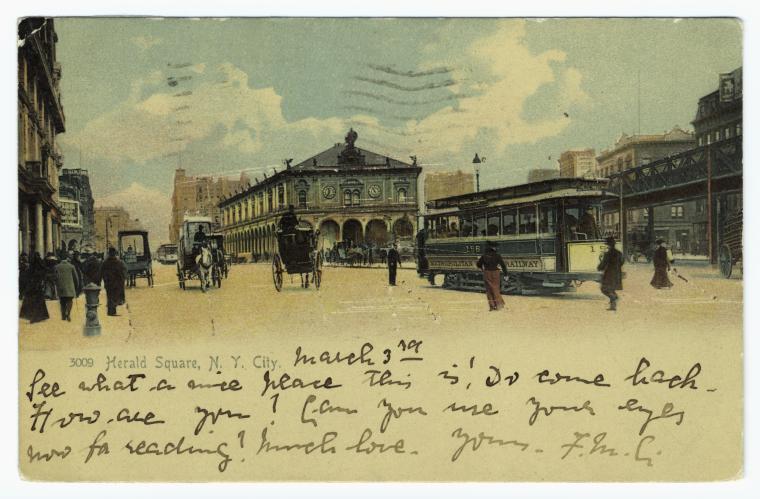
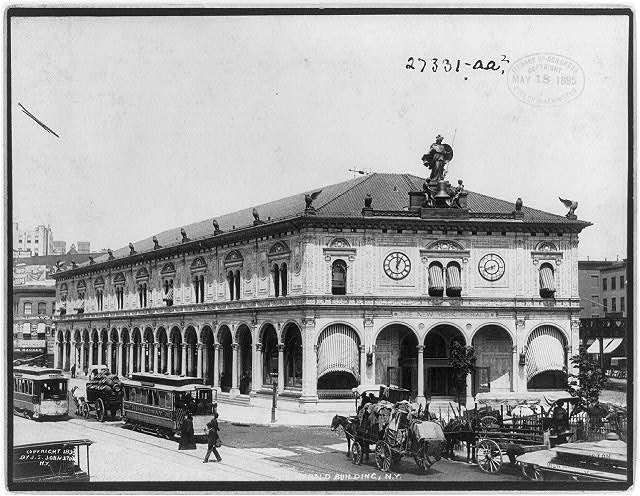
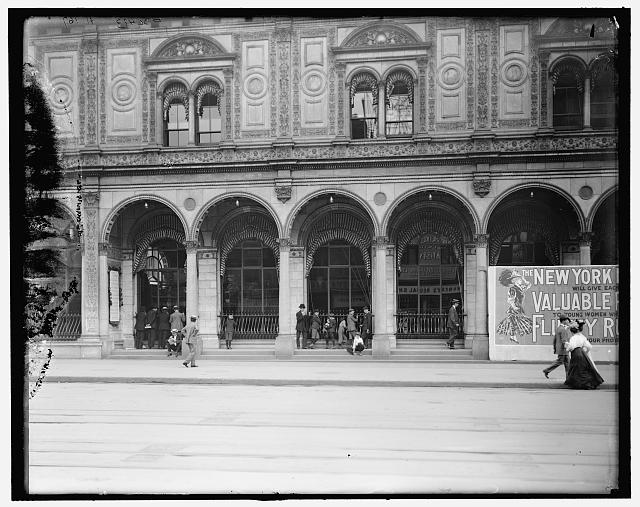
Bennett’s New York Herald Building, completed in 1894, sat at 35th Street between Sixth Avenue and Broadway, on the north side of the square his building would soon give its name. He wanted the structure to align with the theaters and hotels of the area; as designed by Stanford White, the New York Herald Building doesn’t tower over the neighborhood.
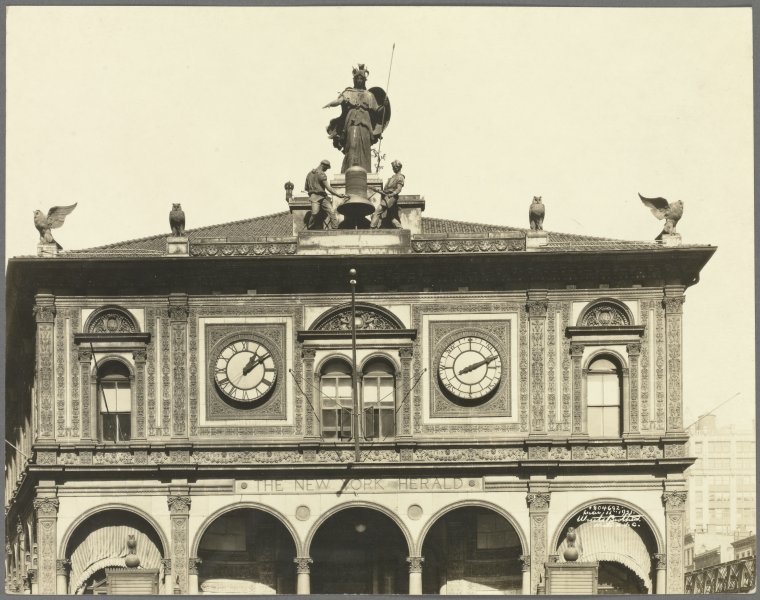
He wanted the newspaper to be essential to the rhythm and energy of this bustling intersection. It does so with its mysterious and fanciful ornamentation, its spooky owls, its ornate clock tower and its mechanical bell-ringers.
Below: the New York Herald Building, at 35th Street, between Sixth Avenue and Broadway, a frilly Italian-style structure at the nexus of a growing New York in the 1890s. [LOC]
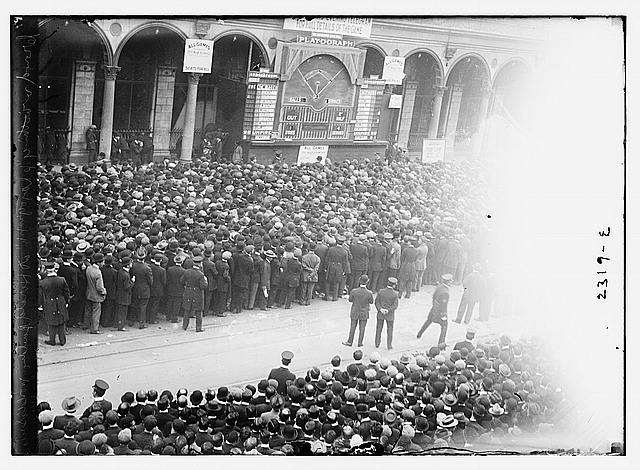
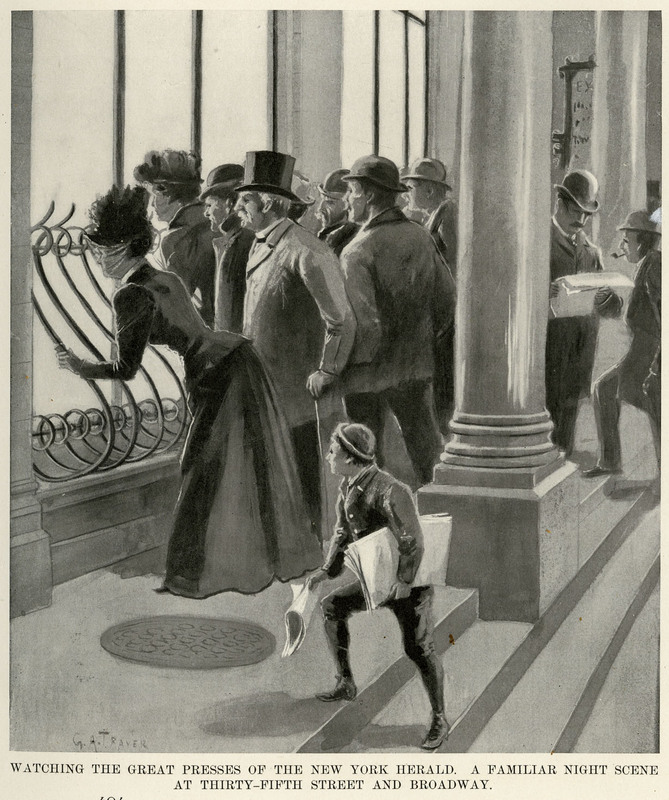
But the building became a component of the square with its open windows displaying the printing presses inside. Visitors would stand gawking as the presses furiously went about print the late-day editions. In the era before radio and television, the results of sporting events would be displayed on a billboard or “Play-o-Graph” that would attract thousands. It would be here that thousands of New Yorkers would gather to get the results of the World Series between the Red Sox and the Giants — occurring just uptown at the Polo Grounds!
The New York Herald Building became one of midtown Manhattan’s first big draws for regular New Yorkers and visitors to gather, get news, set their watches, dazzle at modern technology and ogle at the curious mix of high and low culture that sped through here. One decade later, Times Square would bring the same kind of excitement to another Broadway intersection.
Here are some additional views of the Herald Building, many romantic, most unbelievable, especially if you consider what sits there today:
Thousands of men gather to watch the results of the 1911 World Series — between the New York Giants and the Philadelphia Athletics — displayed on a “Play-o-Graph” at Herald Building. Sports results were telegraphed from inside the building, and a mini baseball diamond was regularly updated, mirroring the real time action. [LOC]
Spectators watch the Herald presses in action. {LOC}
From the Appleton publication The New Metropolis, 1899 (courtesy CUNY)
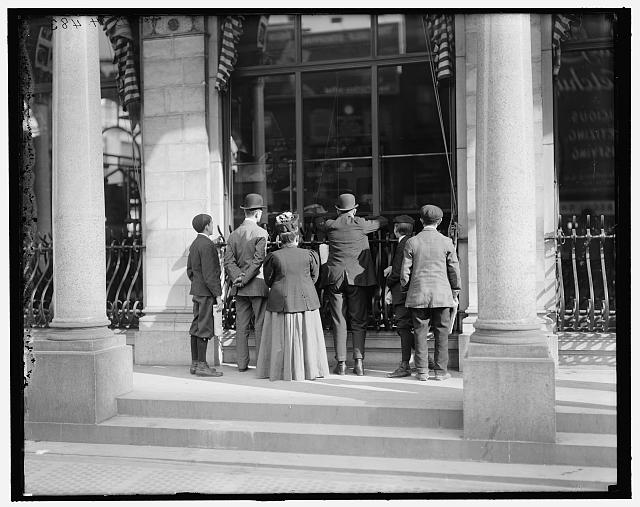
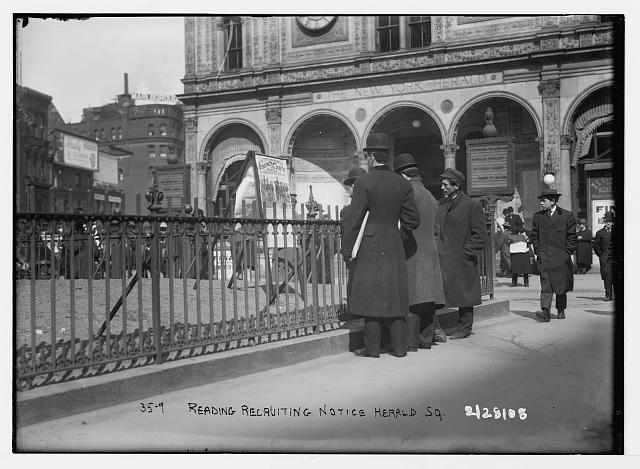
The square in front of the Herald Building would also be used for immediate announcement, often taken right from the telegraph. These men are reading a military recruitment advertisement. [LOC]
A closeup of the ornate clock, with the goddess Minerva, its two bell ringers Scruff and Guff, and the series of owls perched at various spots around the building. From March 1921 (Courtesy NYPL)
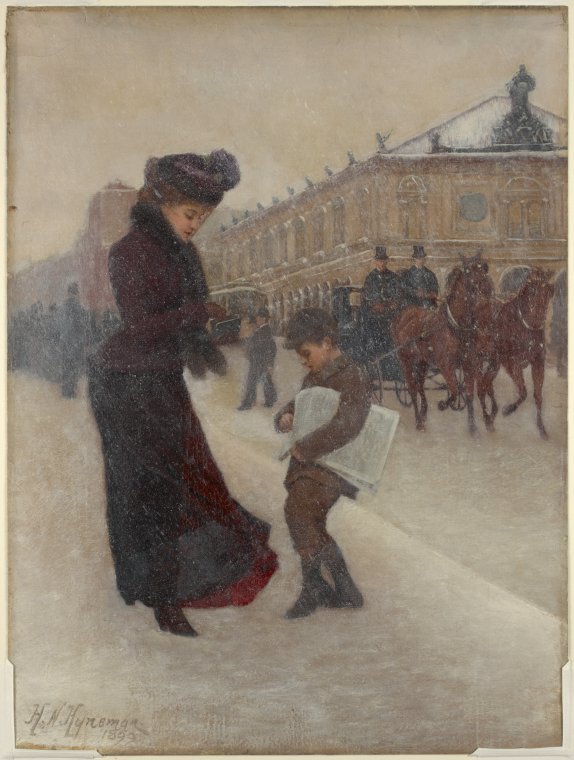
A painting by Herman Hyneman from 1899, depicting a Herald newsie and a customer in the snow. [NYPL]
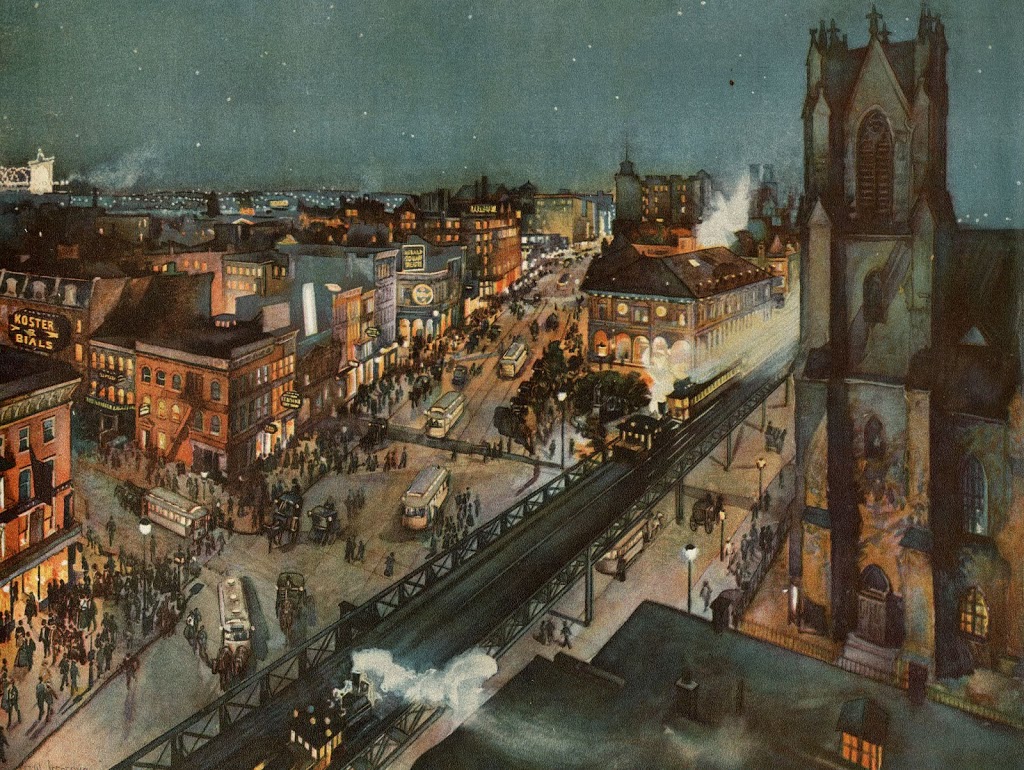
Also from The New Metropolis, an owl’s-eye view of Herald Square, from 1899. The caption: “This is a vibrant reproduction of a color print by Canadian-born artist Charles William Jefferys (1869-1951) who once worked at the New York Herald. The Broadway Tabernacle Church, the 6th Avenue elevated train, the Herald Building and several theatres, including Koster and Bial’s, are depicted. The streets are teaming with cable cars, horse drawn vehicles and pedestrians.” Courtesy CUNY
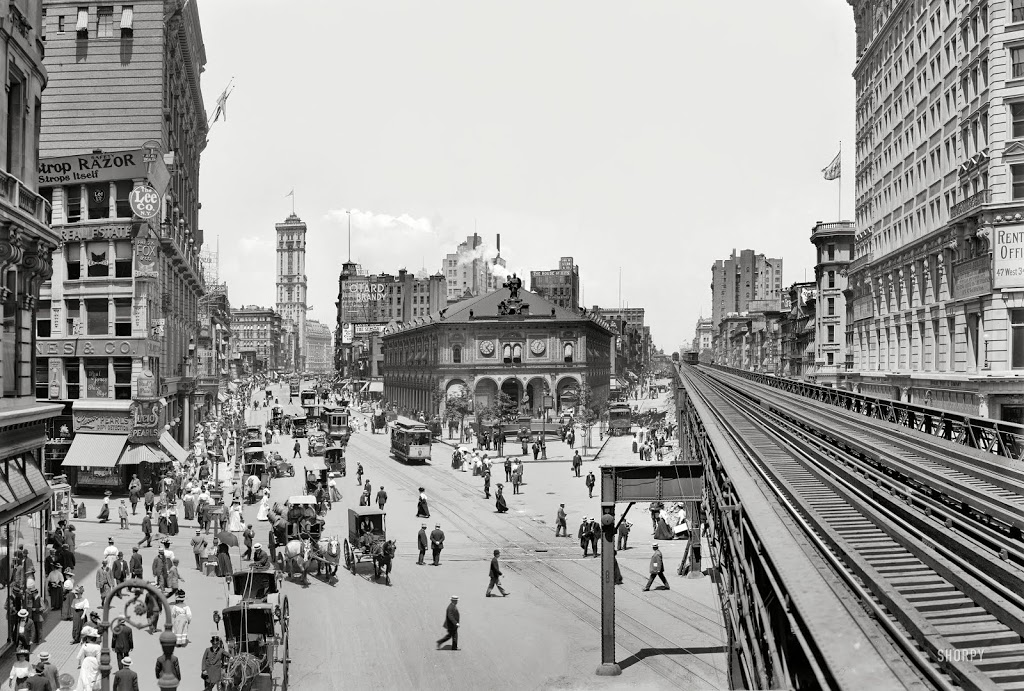
And finally, an overhead view of the entire square. This is an image that was cleaned up and published by the great photo blog Shorpy. Click into the picture to see a rather magnificent view of the surroundings. Trust me, you may waste five minutes just looking at this one….
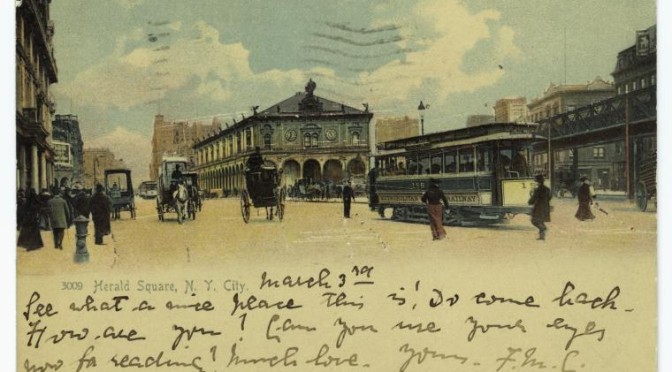
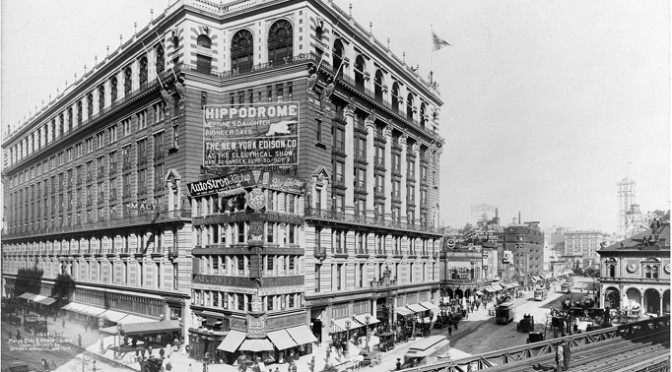
What year is this picture taken? (Click on it to view details.) Note the elevated rail line, no automobiles, and the New York Herald building still standing. You can also tell that the building’s later additions have not yet extended it down towards 7th Avenue. A little research on the Hippodrome and when the shows ‘Neptune’s Daughter’ and ‘Pioneer Days’ performed there reveals this picture was taken in Feb-March 1907 — a little over one hundred years ago.
PODCAST Did you know that the man whose name adorns one of the most successful department stores in the world was a sailor turned failed businessman? Or why Macy’s Department Store ALMOST takes up an entire city block? Or how many clowns have been in the Macy’s Thanksgiving Day parade? The Bowery Boys let you in on those answers and lots of other fun facts about one of New York City’s premier retailers.
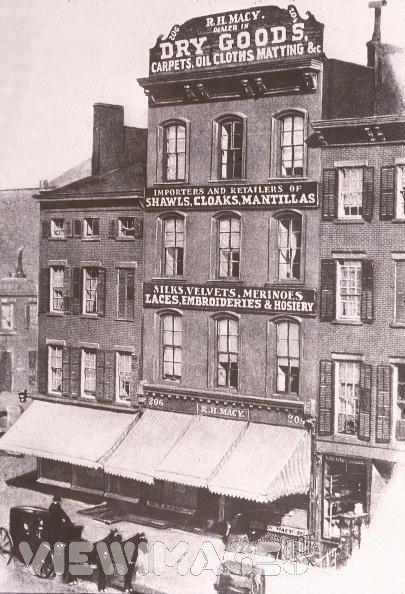
The first Macy’s store in Manhattan — 204-206 14th street, near 6th Avenue
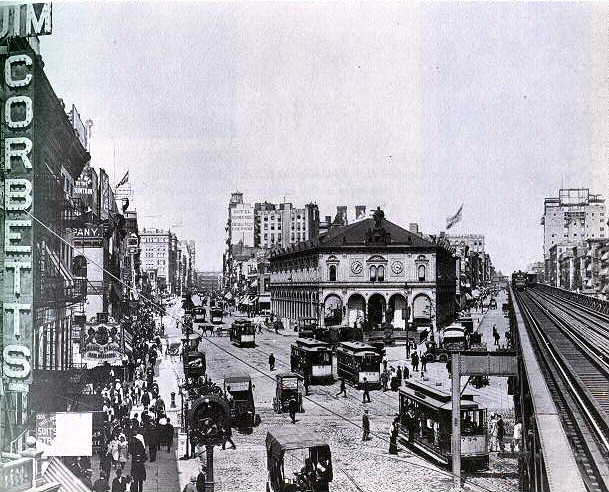
Herald Square….before Macy’s, circa 1893. The Sixth Avenue elevated train dominates the right and a cable car cuts down Broadway. What we know as the park in Herald Square is nothing but a traffic triangle; however the Bell Ringer’s monument sits anew on top of the New York Herald building. Macy’s would soon sit wheter that sign with the coat of arms hangs.
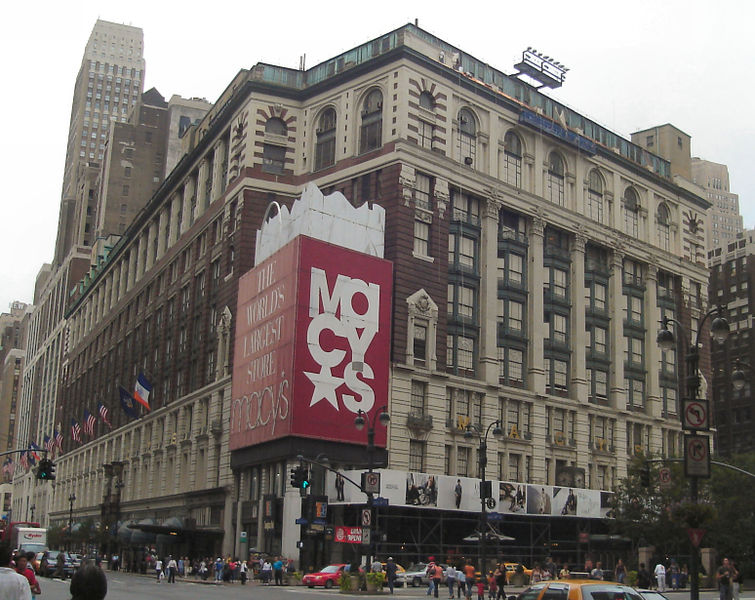
A gigantic Macy’s bag conceals the building which prevented the Straus brothers from expanding the store over the entire city block. It is probably the most advantageously placed Sunglass Hut in the entire world.
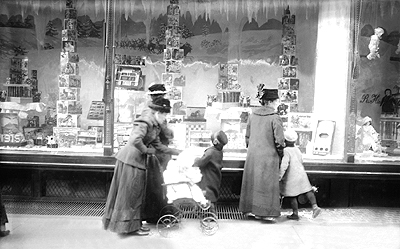
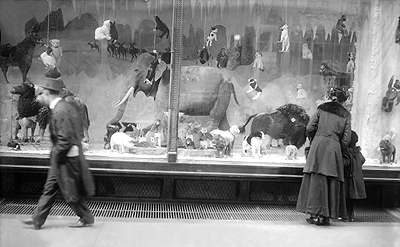
Macy’s holiday windows, circa 1915
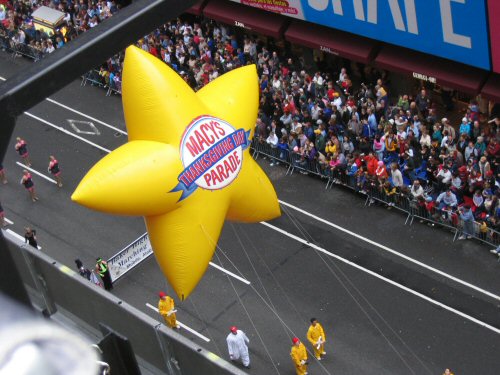
The Macy’s famous star logo — derived from the tattoo that founder Rowland Macy received during his stint as a sailor
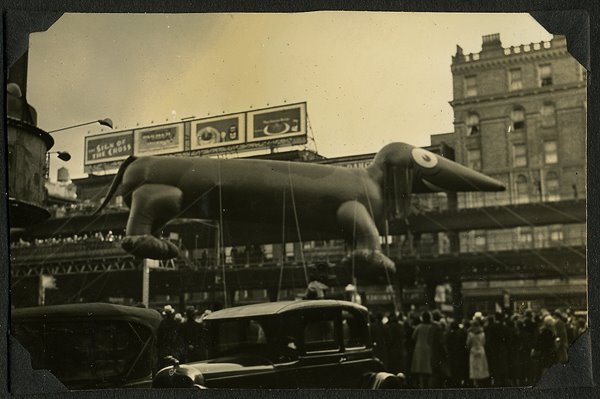
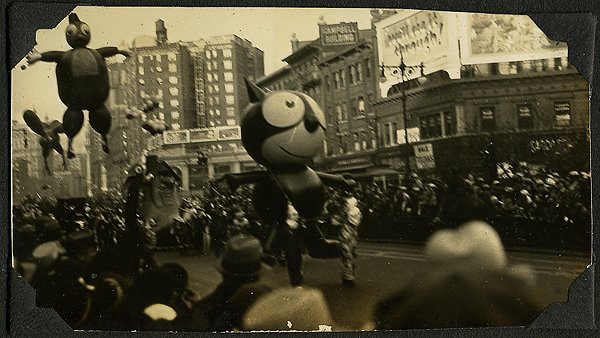
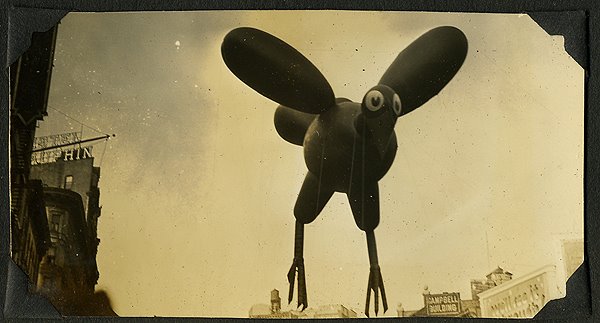
Below, some funky looking balloons from the 1932 parade. Swapatorium has many, many more from this period that are simply breathtaking.
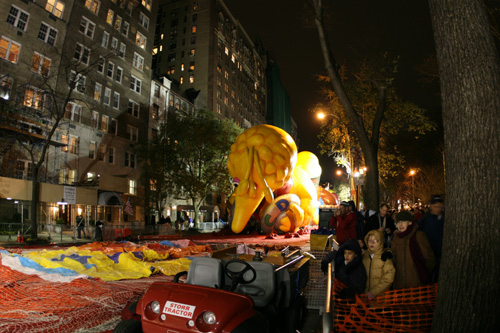
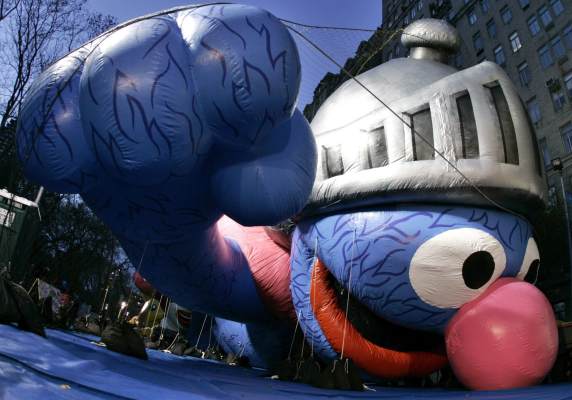
A wonderful tradition that we forgot to mention happens the night before the parade, in the grounds of the Natural History museum, as hundreds gather to watch the balloons being inflated. (Here’s Grover and Big Bird being blown up.)
The City Room reports that this year’s balloons got a trial run in Queens this week. Meanwhile, some people aren’t happy with Macy’s swallowing up the Marshall Field’s department store brand.
Fun fact: Wartime demand in the 1940s halted the production of women’s nylon pantyhose. When retailers were allowed to resell them, Macy’s restocked their shelves with almost 50,000 pairs, all of which were sold in six hours.
Lovely Herald Square once again becomes the center of manic activity next week for next week’s Macy’s Thanksgiving Day Parade. Few realize that Santa Claus, the Rockettes, and a throng of tourists share the square with a Roman goddess and two fellows named after Hebrew demons. Or that this year, said goddess and demons will probably be the best looking partygoers there.
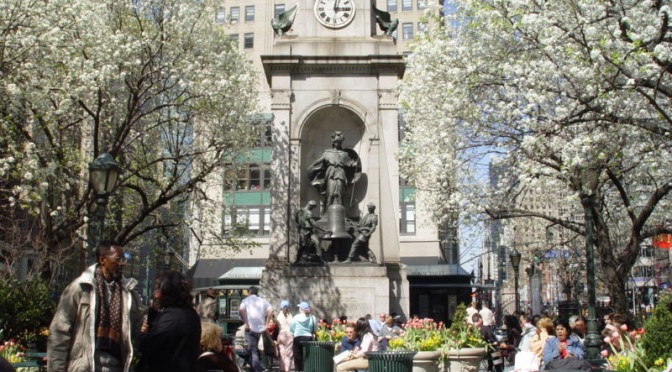
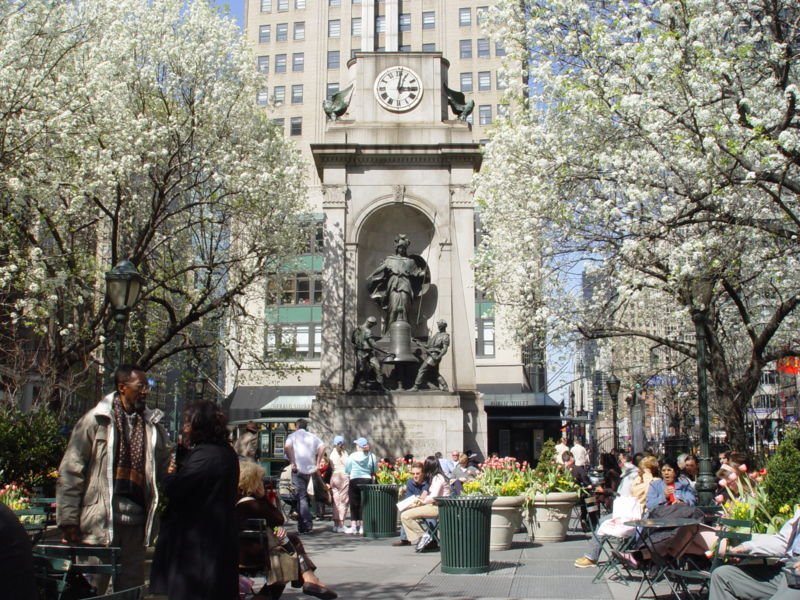
The James Gordon Bennett monument, or Bell Ringer’s Monument as it’s often called, with illuminated clock, friendly bell that chimes on the hour and owls with glowing eyes, has been a solid fixture of Herald Square since November 1940.
Bennett Jr. was the publisher of the New York Herald in 1894 — Bennett Sr. actually founded the paper in 1835 — when they moved from downtown Park Row up to 35th Street, immediately north to where the monument now stands. The two story Herald building, in an Italian palazzo style by the great McKim, Mead & White, was topped by the sculpture designed by French sculptor Jean-Antonin Carles. The Herald later merged with another newspaper the New York Tribune, and the Herald building was torn down in 1921. But the monument, popular with New Yorkers due to its glowing timepiece, was reinstalled in the park below.
The primary figure is the goddess Minerva, Roman deity of poetry and music, often analogous to the Greek goddess Athena. More curiously are the bell ringer’s below her, who have two sets of names. Stuff and Guff are the cutesy names; Gog and Magog, also known as early demonic beings from the Old Testement, are rather less cute. Minerva’s companions in classical literature are owls, which explain the birds with eyes that glow upon the hour, as though lasers are about to incinerate passers-by below.
The monument has always been a mystery for some. A mysterious door on the 35th side is inscribed with the phrase “La Nuit Porte Conseil(‘Nighttime Brings Advice’ or ‘Let’s Sleep On It’)” which has never been adequetely explained. A website on magic maintains the Herald Square statuary is loaded with mystical, even demonic iconography.
The bell ringers don’t actually ring the bell but merely go through the motions, with a mallet inside timed to make the hourly chime. That is, the ringers never did until a few years ago. The condition of the monument had deteriorated to an extent that one of the ringer’s mechanisms were beginning to actually scrape the side of the bell. The overall condition of the monument was pitiful, covered in bird droppings and weakened by the elements. Its granite base has even begun to crack.
So just this year, the Municipal Arts Society funded an impressive $200,000 restoration, encasing the monument in scaffolding for four months to repair it in time for its annual showcase to the world during the parade. It was unveiled in September, and Minerva and her pals look as good as new.
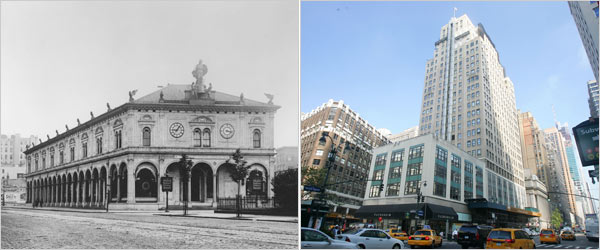
Below: The Herald building (with Minerva on top) and how it looks today, photo from the New York Times
From an odd assortment of abandoned creatures, to one of the most notorious zoos in the world, take a tour with us through Central Park’s storybook zoo.
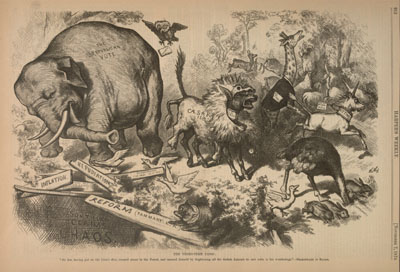
In the podcast I erroneously stated that a famous political cartoon using the Central Park Zoo as a political metaphor also featured Ulysses S Grant depicted as an ass. Perhaps that was some sort of Freudian partisan comment, because Grant himself is not in the cartoon, although it is about his alleged ‘Caesarism’, running for president for a third term back when it was constitutionally possible — but untraditional — to do so.
The ass in the cartoon below actually represents the New York Herald, the flagrant publication which ran the article on the Central Park Hoax as well as coining the phrase ‘Caesarism’.
The cast of the Zoo is featured (hmm, I didnt realize the Zoo had unicorns), as well as an elephant representing the republican vote, being scared off by the Herald’s bombastic opinions on Grant. This is the origin of the elephant as the symbol of the Republican Party:
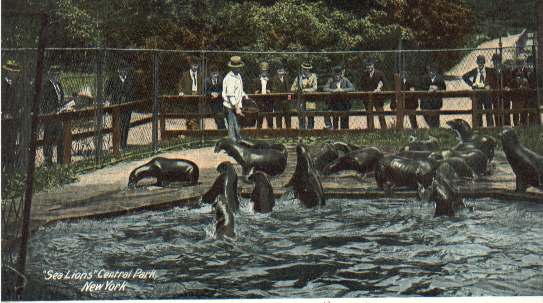
Now, onto the Menagerie! This postcard nicely displays the early collection’s unplanned evolution:
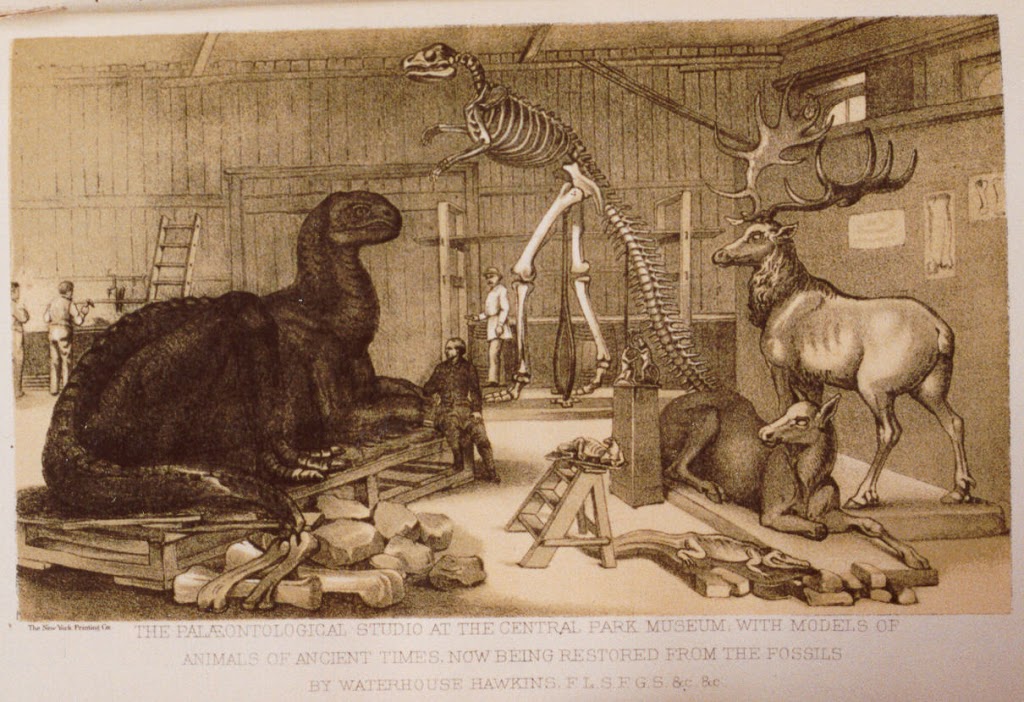
Before the Arsenal served as headquarters of the city park service and anchor to the Zoo, it was the temporary location of the Natural History Museum as well as workspace for paleontologists and their dinosaur skeletons.
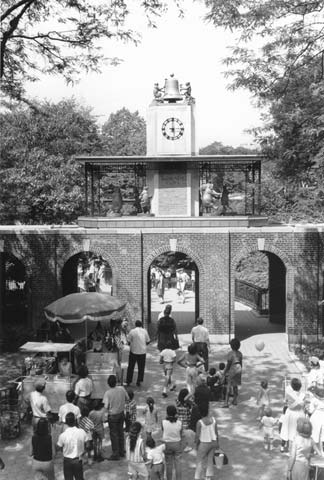
Part of the zoo’s rebirth in the 80s included the restoration of the Delacorte Clock, a throwback to grandiose European clock design that greets each hour with a parade of dancing animals and tinkling music. It was a gift of George Delacorte, founder of Dell Publishing Company, who also graced Central Park with a theatre and statuary depicting Alice In Wonderland. Over forty years old, the clock and its tinny nursery rhymes can be actually be heard from Fifth Avenue if you listen closely enough.
Although close in style, the nearby Dancing Goat fountain sculpture and its companion Honey Bear are actually from the 1930s, where they once flanked a lavish cafeteria inside the zoo that was demolished in the 80s to make way for the rain forest.
And a couple of our celebrity stars of the zoo:
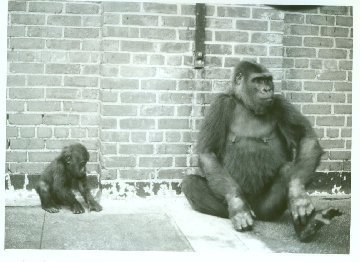
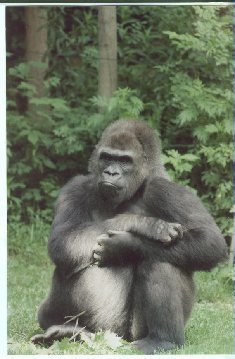
Patty Cake and her mother were quite the sensation in the early 70s. The first gorilla ever born at New York, she was named in a much publicized newspaper competition, and ever since, she has unquestionably been the city’s most famous gorilla.
Most baby gorillas are actually taken from their parents to be nursed, however Patty was cared for by both her parents, Lulu and daddy Kongo. Her father eventually fell on her, breaking her arm, and she was eventually transferred for a time to the Bronx Zoo. Her custody battle between the two zoos was even covered by Time Magazine.
Now as a permanent resident of the Bronx Zoo, queen of the Congo Gorilla Forest, at age 35, Patty is a proud mother of nine, including two rare twins, Nngoma and Tambo. And like any New York society diva, she’s also had four husbands.
In spirit, she’s also doing her share to stop gorilla poaching in Africa, through a charity called ‘The Pattycake Fund’.
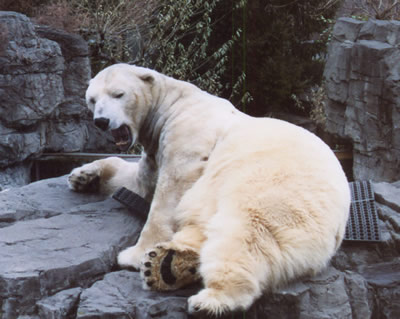
Gus, the no-longer-depressed polar bear, was really diagnosed by an animal behaviorist with psycotic tendencies, and the animals plight was so publicized that he made the cover of Newsday, significant coverage on CNN, and somebody actually wrote a play about him. Changes to Gus’ habitat were soon made, including better water circulation, and Gus’ mood has improved substantially. And anyway, why should he be depressed? He has two wives — Ida and Lily.
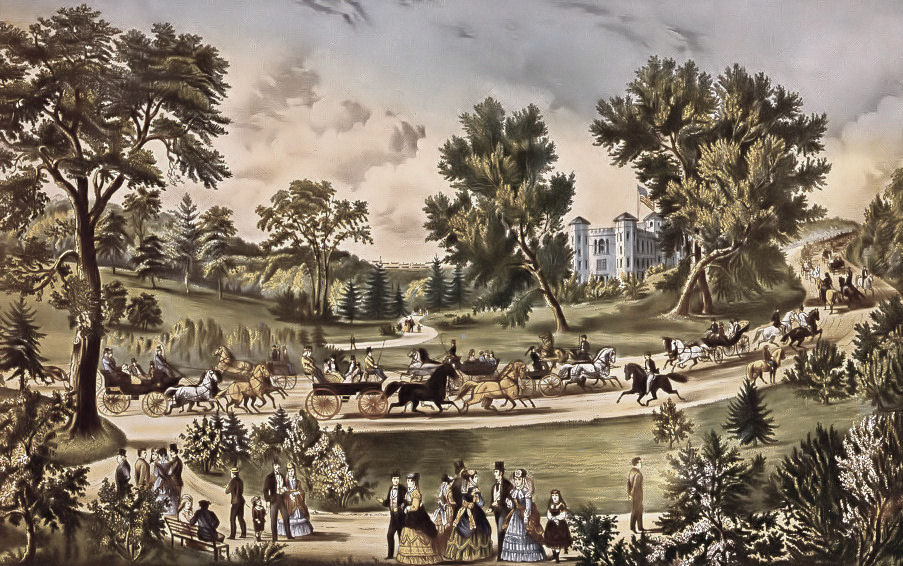
And finally take a gander at this painting from the mid 19th century of Central Park in its wilder days. The building in the back is the castle-like Arsenal, before a menagerie started appearing.