Categories
Podcasts Science

Dinosaurs and Diamonds: Stories from the American Museum of Natural History

PODCAST Ancient space rocks, dinosaur fossils, anthropological artifacts and biological specimens are housed in New York’s world famous natural history complex on the Upper West Side — the American Museum of Natural History!
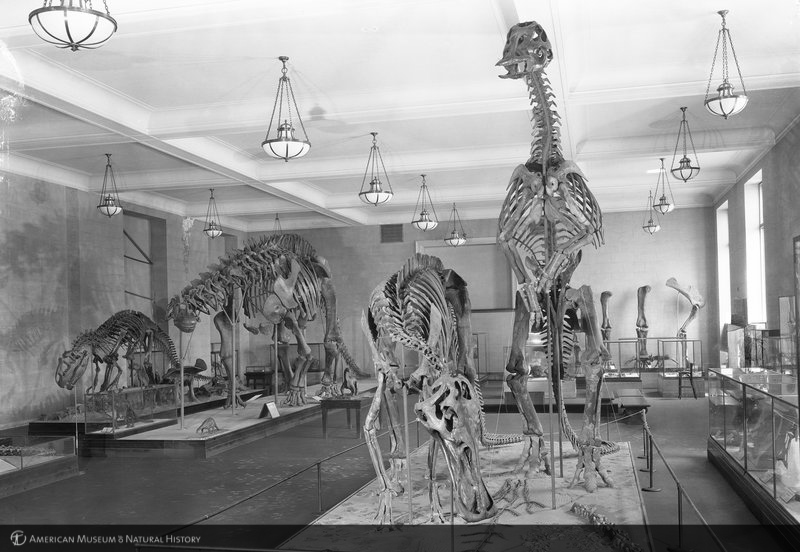
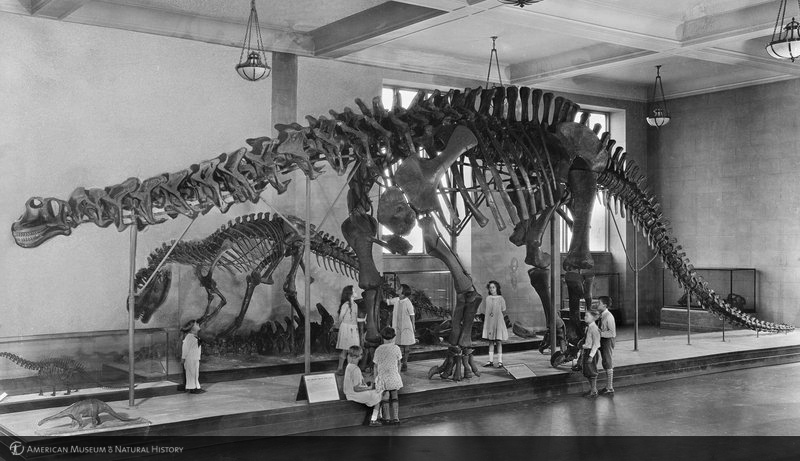
Trachodon Group, Brontosaurus and Allosaurus, Dinosaur Hall, 1927. Courtesy the American Museum of Natural History

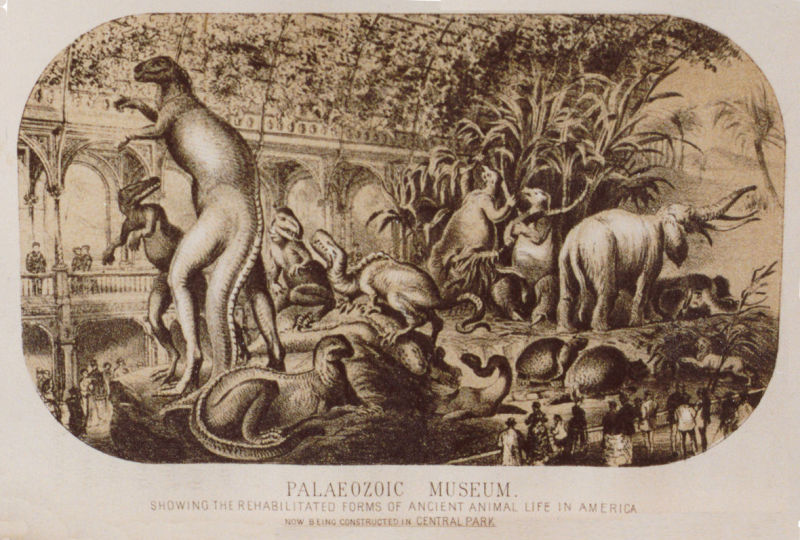
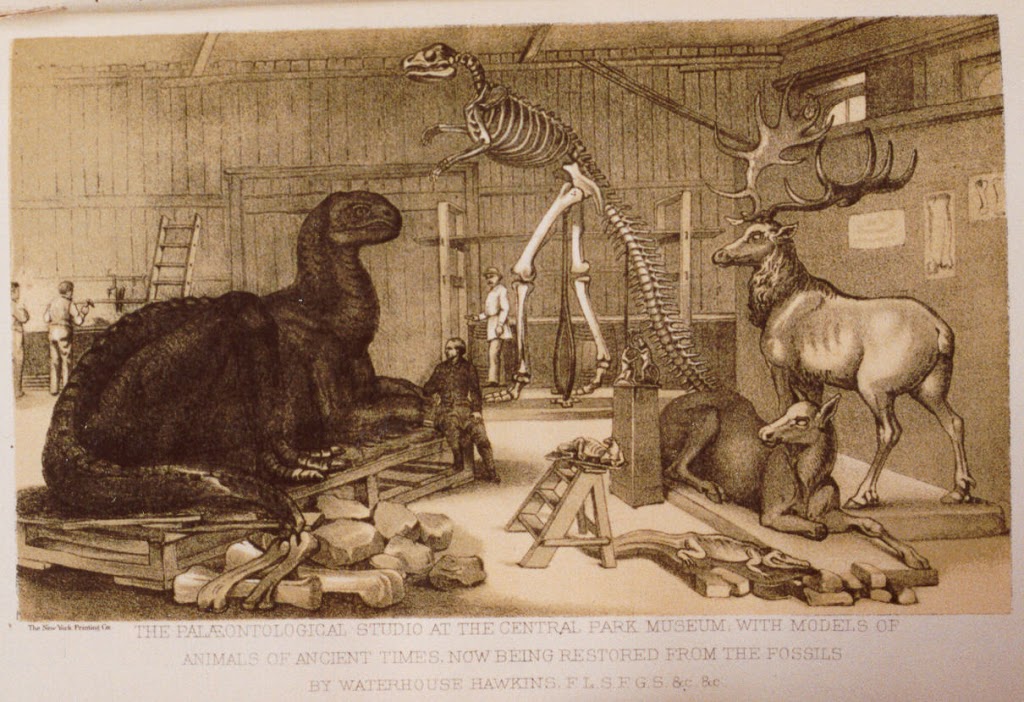
Throughout the 19th century, New Yorkers tried to establish a legitimate natural history venue in the city, including an aborted plan for a Central Park dinosaur pavilion.

With the creation of the American Museum of Natural History, the city finally had a premier institution that celebrated science and sent expeditions to the four corners of the earth.

Tune in to hear the stories of some of the museum’s most treasured artifacts and the fascinating folks behind the collection — including one explorer who might have inspired a famous movie hero.

But there’s also a dark side to the museum’s history, one that includes the tragic tale of Minik the Inughuit child, subject by museum directors to a bizarre and cruel lie.

PLUS: How exactly do you display a 68,100 lb meteorite?

AND: An update involving that rather controversial equestrian statue of Theodore Roosevelt.

This is a re-broadcast of a show originally released on November 24, 2010 with bonus material recorded in 2020. 


Listen today on your favorite podcast player or just press play here:


The website of the American Museum of Natural History has all the details you need for your visit — including information on safety. On top of suggested admission, there are additional costs for the special exhibits, including the planetarium.

ALSO: You must check out their dazzling digital photography collection
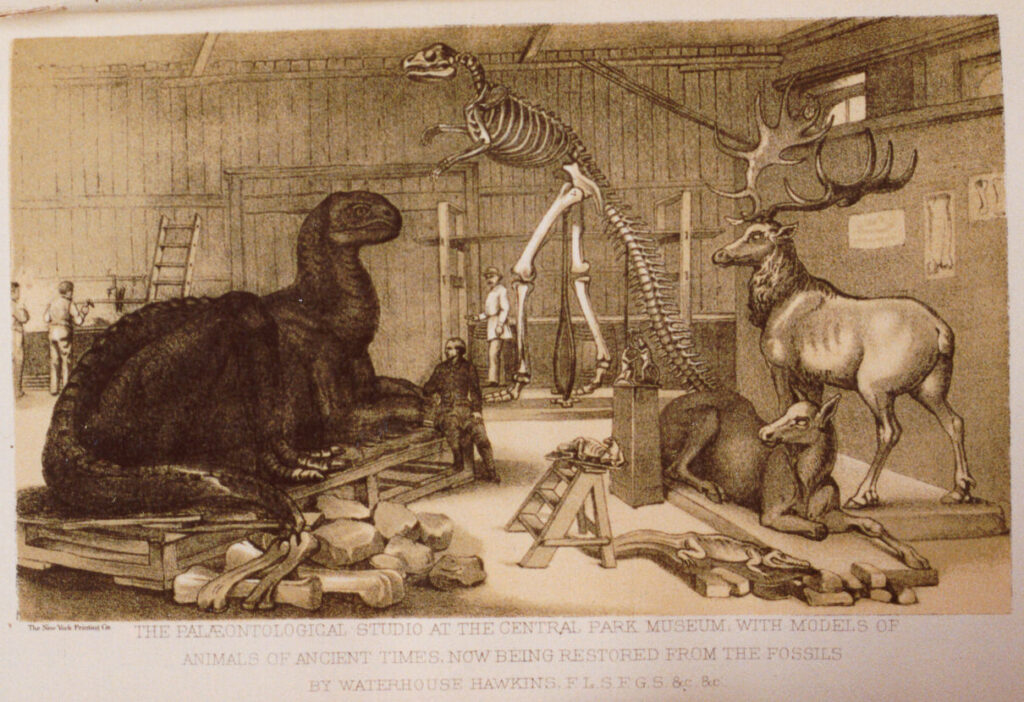

The Arsenal studio of Benjamin Waterhouse Hawkins, 1869.

A sketch of what the Paleozoic Museum might have looked like, had construction not been stopped by the cronies of Boss Tweed.
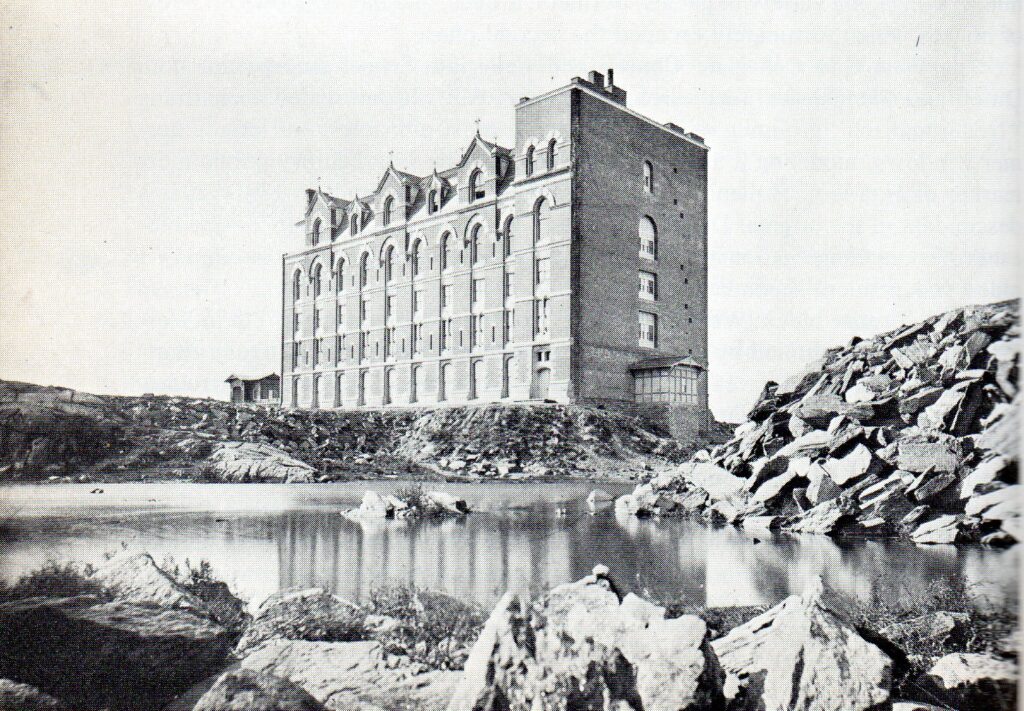
The lonely little first building of New York’s natural history museum, pictured in the early 1870s, placed on an unspectacular lot of land alongside Central Park called Manhattan Square.
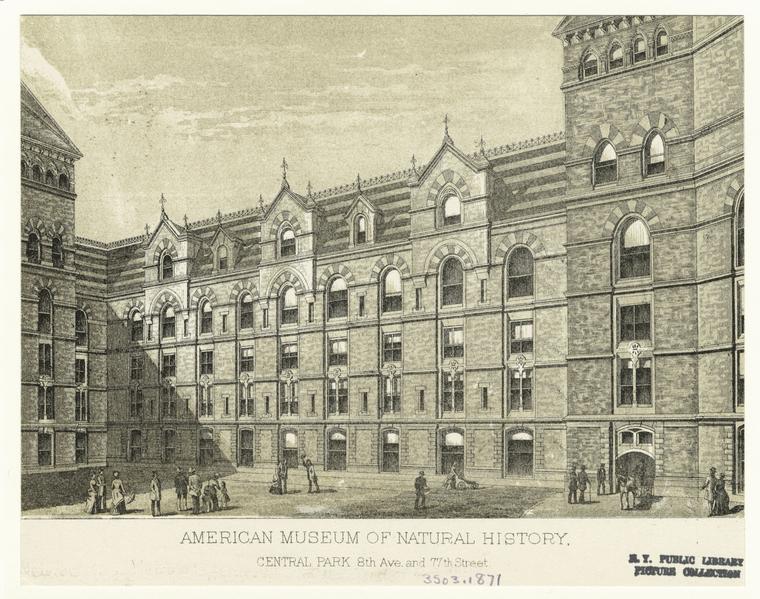
New York Public Library

This illustration of the building from 1871 above displays the particular touches of Jacob Wray Mould, in the whimsical window design. What it doesn’t show is the vibrant, robust color of the building.

Although subsumed by later additions, some areas of the original walls are still peeking out within the larger structure today. [source NYPL}
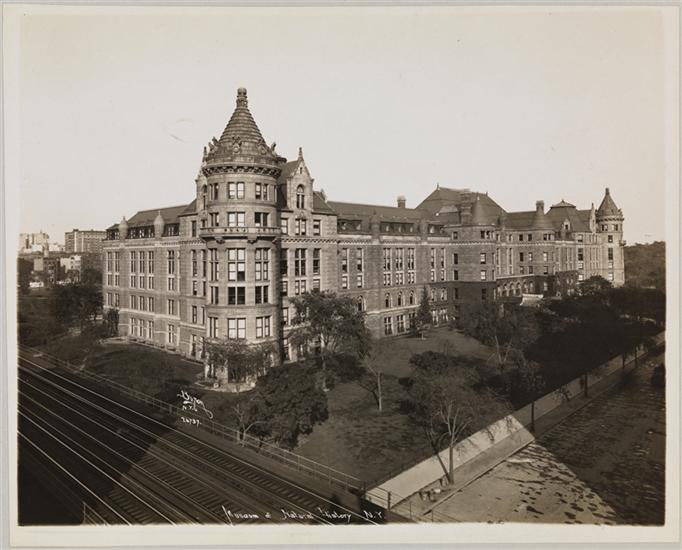
The grandeur of the museum in 1908. Note the elevated tracks running along Columbus Avenue. (Museum of the City of New York)
Library of Congress

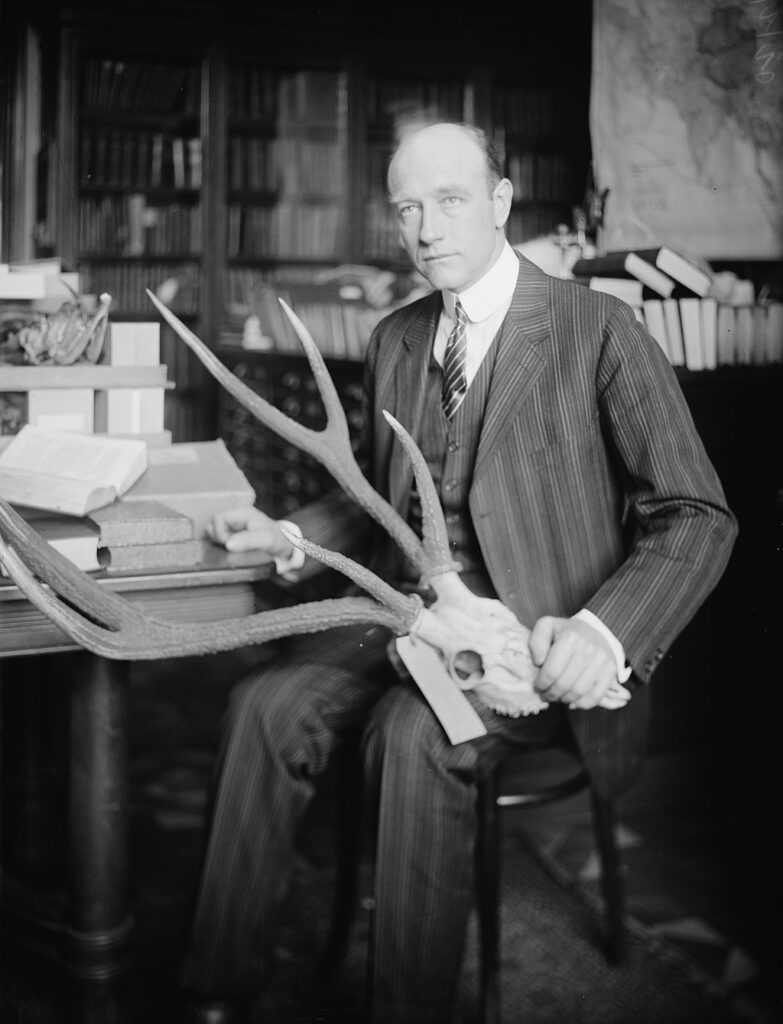
Roy Chapman Andrews, the dashing adventurer who became one of the museum’s most valuable explorers. It’s rumored that Andrews was the inspiration for the character of Indiana Jones.
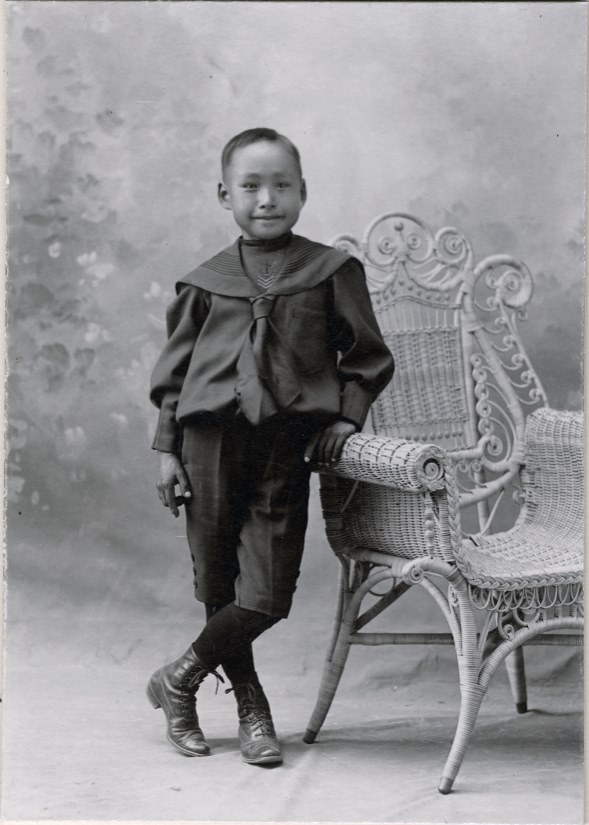
Minik Wallace, the Inuit boy brought to New York with his father in 1897. Minik was subject to one of the most bizarre and tragic cover ups in the museum’s history.
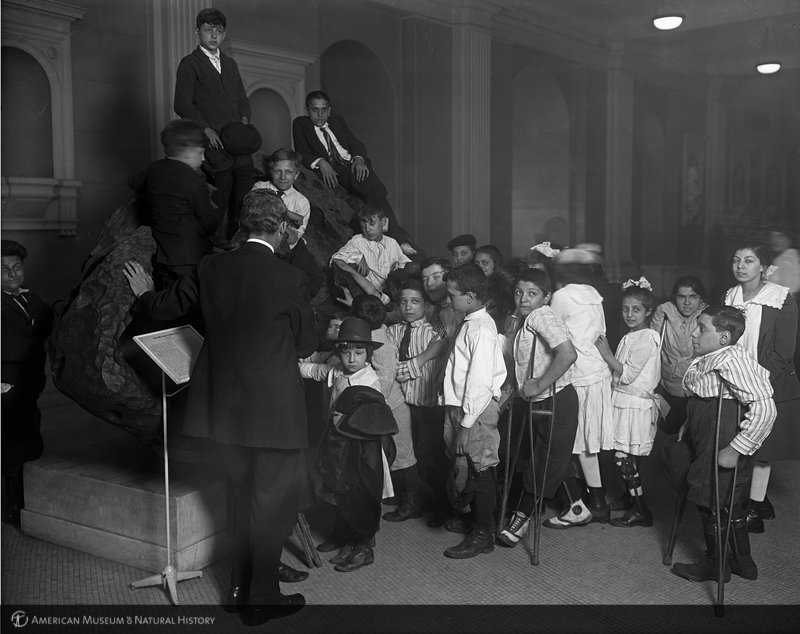
Children viewing the Williamette meteorite, 1920 (AMNH)
Children viewing Brontosaurus (Apatosaurus) exhibit, 1927, courtesy the American Museum of Natural History
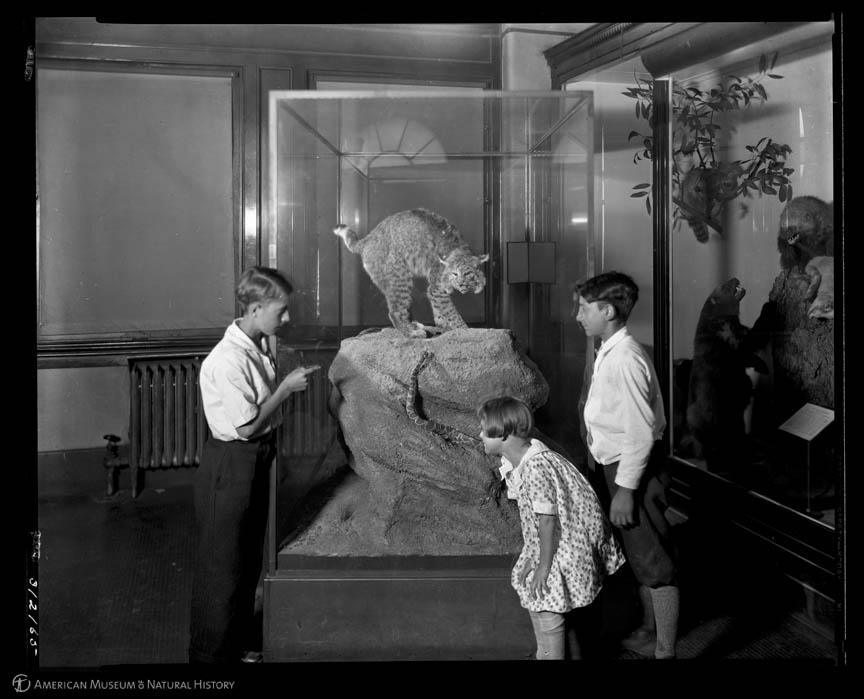
Children viewing Wild Cat Group, 1927, courtesy AMNH
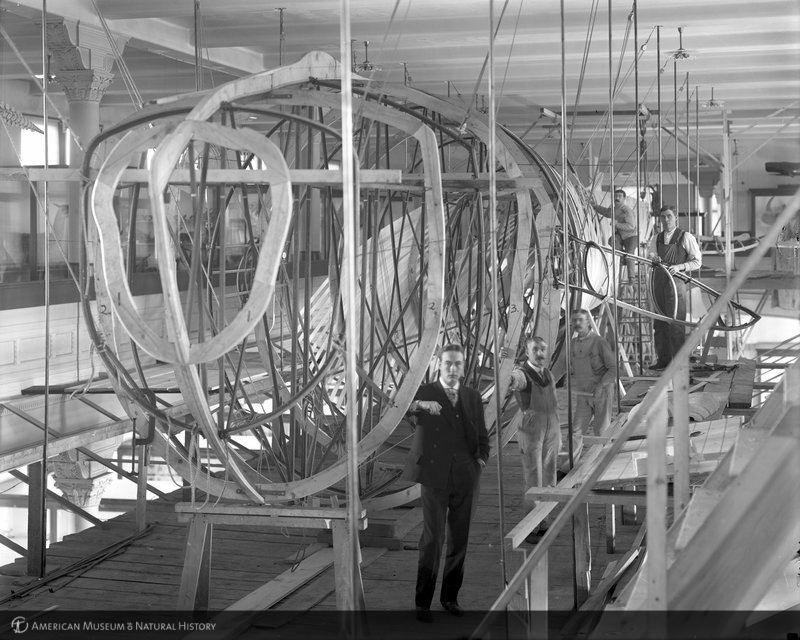
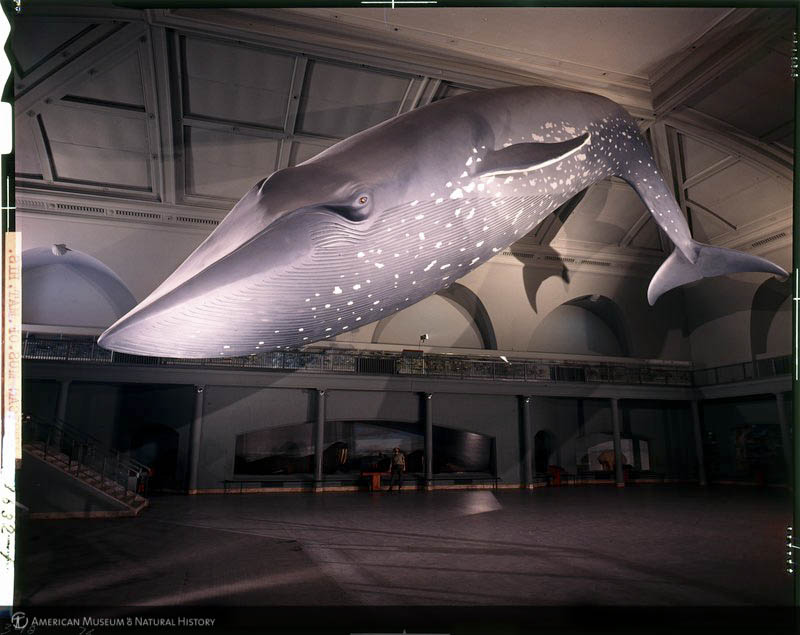
Roy Chapman Andrews with frame for model of sulphur bottom [blue] whale, November, 1906. (Courtesy AMNH). But this is not the whale you know and love! According to the Museum: “The Museum’s iconic blue whale model, first constructed in the mid-1960s, was based on photographs of a female blue whale found dead in 1925 off the southern tip of South America.” It was resculpted in 2001 based on more modern research and made with foam and fiberglass.
The Blue Whale as it appeared in 1969. (Courtesy AMNY)

A little song and dance while you’re marveling at the natural marvels:


The Bowery Boys: New York City History podcast is brought to you …. by you!

We are now producing a new Bowery Boys podcast every week. We’re also looking to improve and expand the show in other ways — publishing, social media, live events and other forms of media. But we can only do this with your help!

We are now a creator on Patreon, a patronage platform where you can support your favorite content creators.

Please visit our page on Patreon and watch a short video of us recording the show and talking about our expansion plans.

If you’d like to help out, there are six different pledge levels.Check them out and consider being a sponsor.

We greatly appreciate our listeners and readers and thank you for joining us on this journey so far.
Categories
Podcasts

PODCAST: Central Park Zoo

From an odd assortment of abandoned creatures, to one of the most notorious zoos in the world, take a tour with us through Central Park’s storybook zoo.

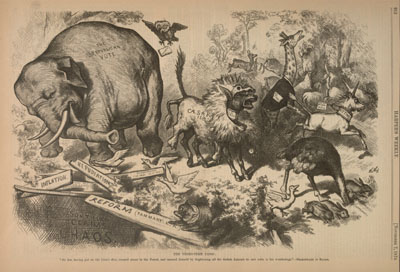
In the podcast I erroneously stated that a famous political cartoon using the Central Park Zoo as a political metaphor also featured Ulysses S Grant depicted as an ass. Perhaps that was some sort of Freudian partisan comment, because Grant himself is not in the cartoon, although it is about his alleged ‘Caesarism’, running for president for a third term back when it was constitutionally possible — but untraditional — to do so.

The ass in the cartoon below actually represents the New York Herald, the flagrant publication which ran the article on the Central Park Hoax as well as coining the phrase ‘Caesarism’.

The cast of the Zoo is featured (hmm, I didnt realize the Zoo had unicorns), as well as an elephant representing the republican vote, being scared off by the Herald’s bombastic opinions on Grant. This is the origin of the elephant as the symbol of the Republican Party:

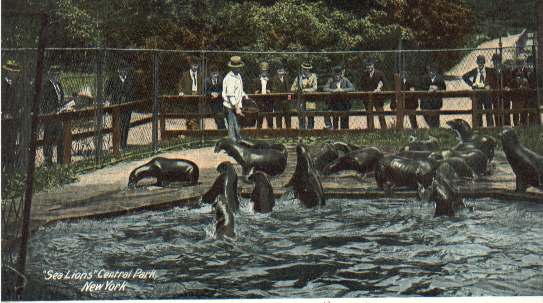
Now, onto the Menagerie! This postcard nicely displays the early collection’s unplanned evolution:

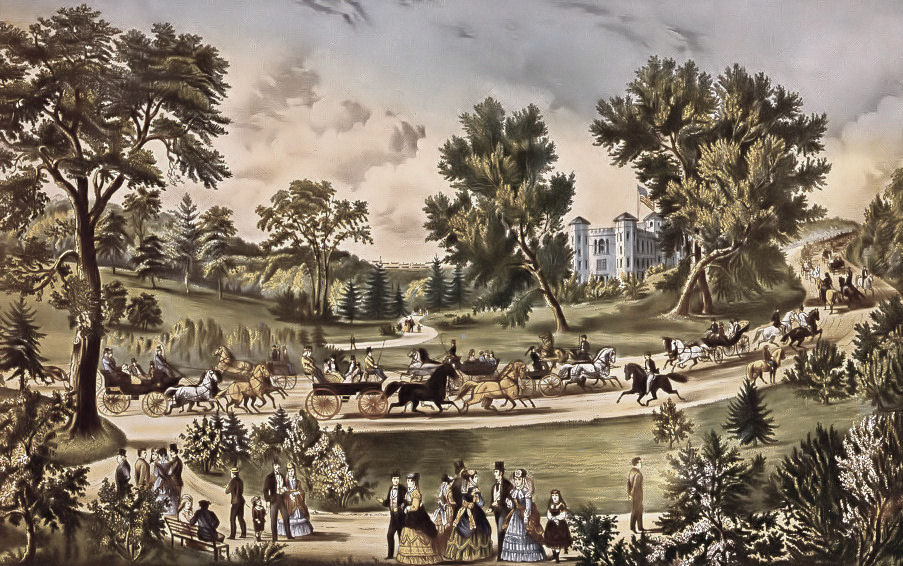
Before the Arsenal served as headquarters of the city park service and anchor to the Zoo, it was the temporary location of the Natural History Museum as well as workspace for paleontologists and their dinosaur skeletons.

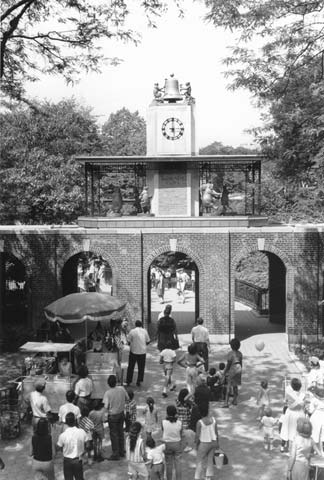
Part of the zoo’s rebirth in the 80s included the restoration of the Delacorte Clock, a throwback to grandiose European clock design that greets each hour with a parade of dancing animals and tinkling music. It was a gift of George Delacorte, founder of Dell Publishing Company, who also graced Central Park with a theatre and statuary depicting Alice In Wonderland. Over forty years old, the clock and its tinny nursery rhymes can be actually be heard from Fifth Avenue if you listen closely enough.

Although close in style, the nearby Dancing Goat fountain sculpture and its companion Honey Bear are actually from the 1930s, where they once flanked a lavish cafeteria inside the zoo that was demolished in the 80s to make way for the rain forest.

And a couple of our celebrity stars of the zoo:

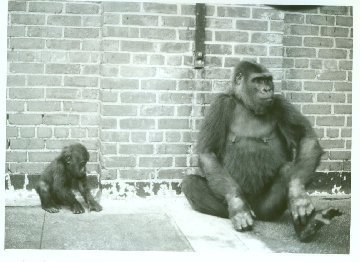
Patty Cake and her mother were quite the sensation in the early 70s. The first gorilla ever born at New York, she was named in a much publicized newspaper competition, and ever since, she has unquestionably been the city’s most famous gorilla.

Most baby gorillas are actually taken from their parents to be nursed, however Patty was cared for by both her parents, Lulu and daddy Kongo. Her father eventually fell on her, breaking her arm, and she was eventually transferred for a time to the Bronx Zoo. Her custody battle between the two zoos was even covered by Time Magazine.

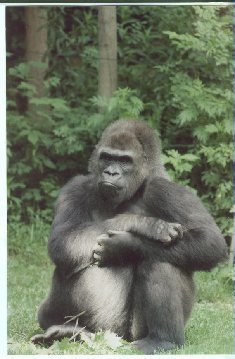
Now as a permanent resident of the Bronx Zoo, queen of the Congo Gorilla Forest, at age 35, Patty is a proud mother of nine, including two rare twins, Nngoma and Tambo. And like any New York society diva, she’s also had four husbands.

In spirit, she’s also doing her share to stop gorilla poaching in Africa, through a charity called ‘The Pattycake Fund’.

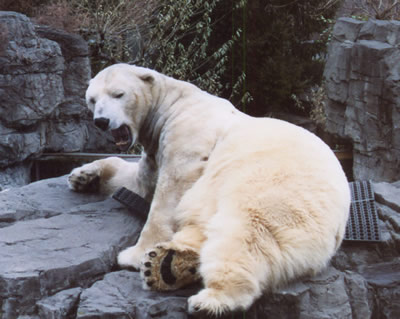
Gus, the no-longer-depressed polar bear, was really diagnosed by an animal behaviorist with psycotic tendencies, and the animals plight was so publicized that he made the cover of Newsday, significant coverage on CNN, and somebody actually wrote a play about him. Changes to Gus’ habitat were soon made, including better water circulation, and Gus’ mood has improved substantially. And anyway, why should he be depressed? He has two wives — Ida and Lily.

And finally take a gander at this painting from the mid 19th century of Central Park in its wilder days. The building in the back is the castle-like Arsenal, before a menagerie started appearing.