Categories
Those Were The Days

Fun money: The Buffalo nickel, 100 years old this month, makes Wall Street messenger boys rich (for a couple hours)


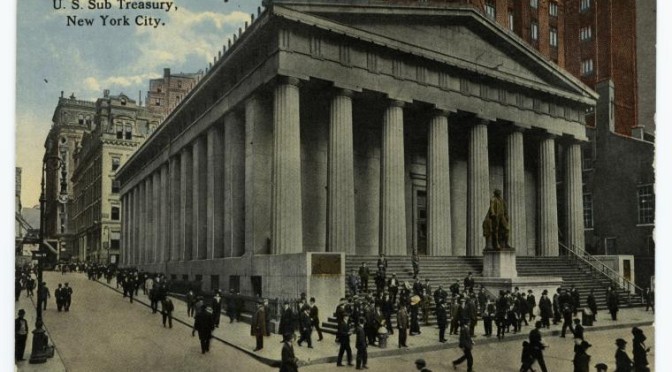
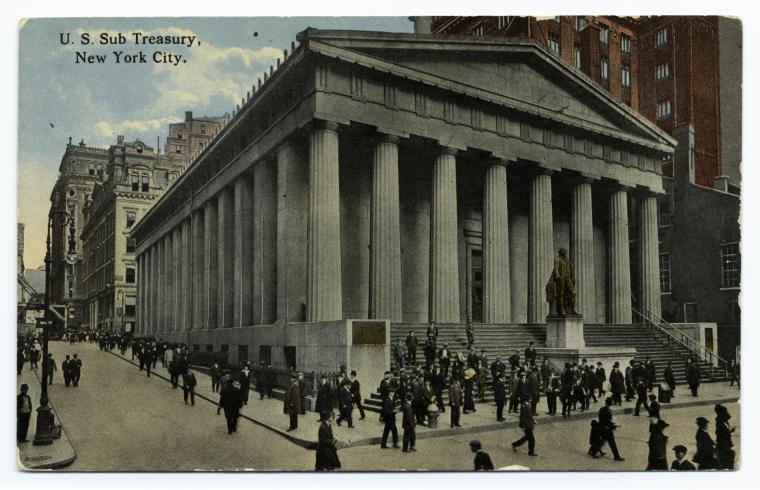
The U.S. Sub Treasury Building — today’s Federal Hall — as it appeared in a colorized postcard in the 1900s (courtesy NYPL)


“Hey! Getcha buffalo nickels here. Only 15 cents!”
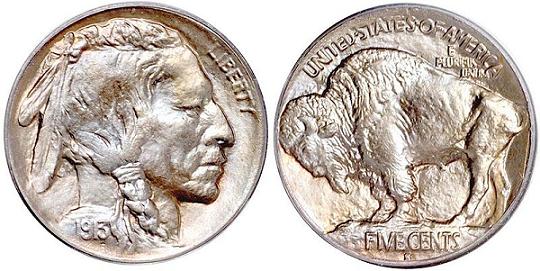
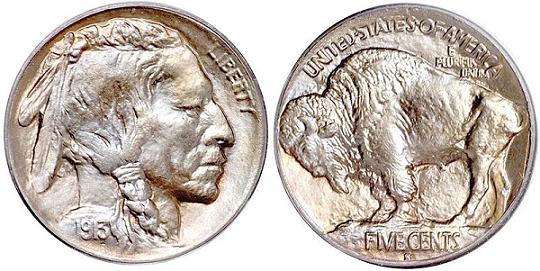
On March 1, 1913, the usual bustle of Wall Street was enlivened with the voices of young men — mostly messenger boys, bank runners and peddlers, according the Evening World — with handfuls of shiny new nickels, the first run of what would become known as the Indian Head nickel or the Buffalo nickel.  And in these heady morning hours, many managed to sell the five-cent piece for triple its value.

“The down-at-the-heels men, who sell picture postcards and neckties from pushcarts on Ann Street, scented a bargain and hurried to the Pine Street El Dorado to sink their little capital in nickels.”   The “Pine Street El Dorado” in that quote refers the New York Sub Treasury building, later referred to as Federal Hall.  (It’s second entrance is on Pine Street.)  The Sub Treasury received $10,000 worth of new nickels in ten wooden kegs.

Unfortunately for these budding young nickel entrepreneurs, the novelty wore off by noon and the Buffalo nickel sunk back down to its original face-value cost.
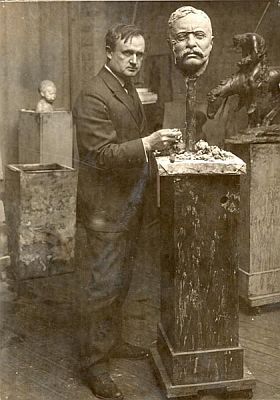
The new nickels were designed by the sculptor James Earle Fraser, a former assistant of the estimable Augustus Saint-Gaudens and best known in New York perhaps for his equestrian statue of Theodore Roosevelt outside the American Museum of Natural History.

Fraser, a professor at the Art Students League, designed the new coin from a studio at 3 MacDougal Alley, off of Washington Square Park.  An admirer of Western and Native American imagery, Fraser used a series of models for the noble Indian profile on the front of the coin.  For the buffalo on the reverse side, Fraser reportedly went to Central Park Zoo and used their old buffalo Black Diamond for a model.

At right: James Earle Fraser in 1912 with a clay model of a Theodore Roosevelt bust (courtesy National Cowboy Museum)

Or at least, Black Diamond has always been considered the model for the buffalo nickel.  In fact, Fraser may also have used specimens from the Bronx Zoo including a fiesty beast named, appropriately, Bronx.  Given the renown of the Bronx Zoo collection — the institution essentially saved the buffalo from extinction — it might have made more sense to use their animals as models.
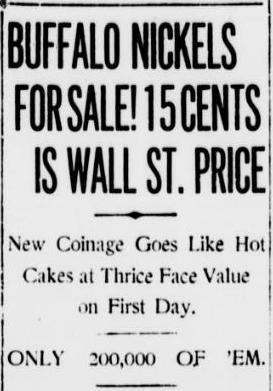
Despite outcries from manufacturers of coin operated devices — who claimed the new five-cent piece would not fit in their machines — the buffalo nickel was minted in February 1913, replacing the Liberty Head nickel that year.  (A small handful of Liberty Heads were made in 1913, becoming some of the most prized coinage among the numismatic set.)  Americans got a preview of the new coin when a small number were distributed by President William Howard Taft at the groundbreaking for the National American Indian Memorial in Staten Island, a monument that was ultimately never built.

A week later, on the first day of March, rolls of the new buffalo nickels were distributed to New Yorkers on Wall Street, and millions more sent across the country for distribution.

Perhaps Fraser’s design was a tad too whimsical for some.  The term ‘buffalo nickel’ soon became slang for something nearly worthless.  Just a month later, the New York Sun reported, “[T]he $1,500 mathematical job didn’t mean anymore to him yesterday afternoon than a buffalo nickel.”

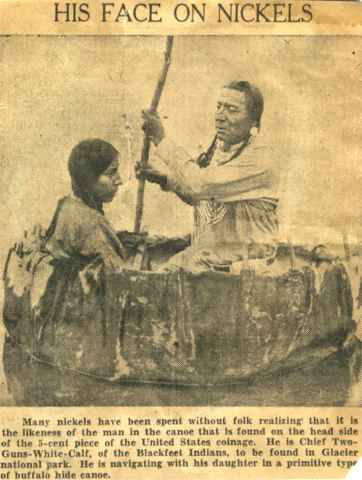
In 1921, one of Fraser’s human models, the chieftain Two Guns White Calf, pitched his teepee atop the luxury Hotel Commodore next door to Grand Central Terminal in a publicity stunt.

The buffalo nickel was replaced in 1938 by the more familiar Thomas Jefferson model.

Below: A news clipping featuring an image of Two Guns White Calf with his daughter. (Courtesy Flickr/sharknose)
Coin image courtesy Coin Collecting For Beginners
Categories
Podcasts

The Bronx Zoo: the tale of NYC’s biggest animal house

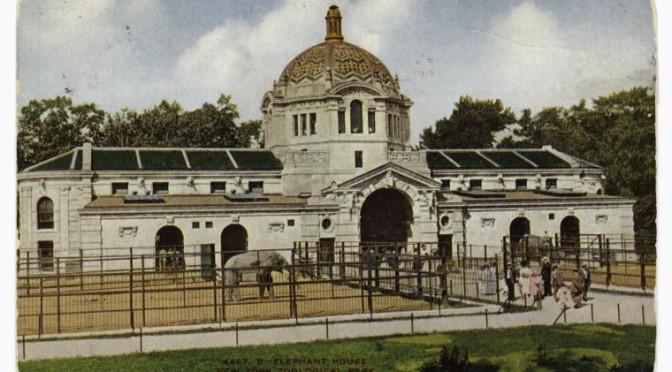
Postcard of the elephant house, now the central Zoo Center — and home today to a baby rhino below. (Courtesy NYPL)

PODCAST New York City’s most exotic residents inhabit hundreds of leafy acres in the Bronx at the once-named New York Zoological Park.

Sculpted out of the former DeLancey family estate and tucked next to the Bronx River, the Bronx Zoo houses hundreds of different species from across the globe, many endangered and quite foreign to most American zoos.

The well meaning attempts of its founders, however, have sometimes been mired in controversy. The highlight of the show — and the institution’s lowest moment — is the sad tale of Ota Benga, the pygmy once put on display at the zoo in 1906!

ALSO: We take you on a tour of the zoo grounds, unfurling over 110 years of historical trivia, from the ancient Rocking Stone to the tale of Gunda, the Indian elephant who may also have been a poet.

CLICK INTO PICTURES BELOW FOR GREATER DETAIL

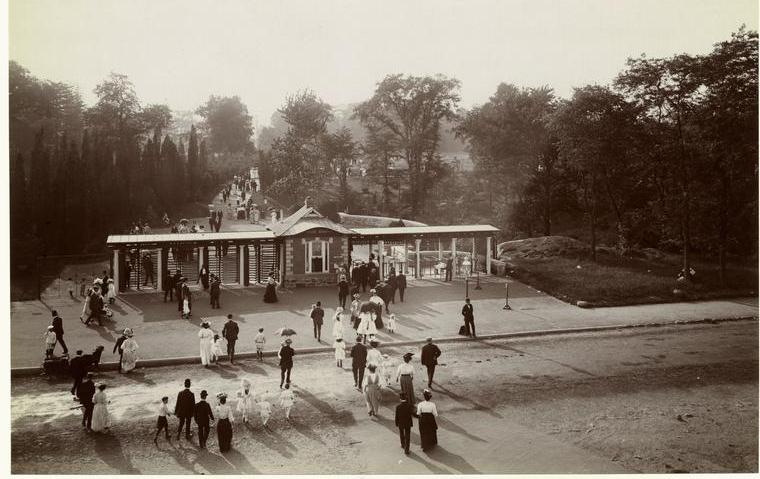
Well-dressed families arrive at the south zoo entrance in 1911. (NYPL)

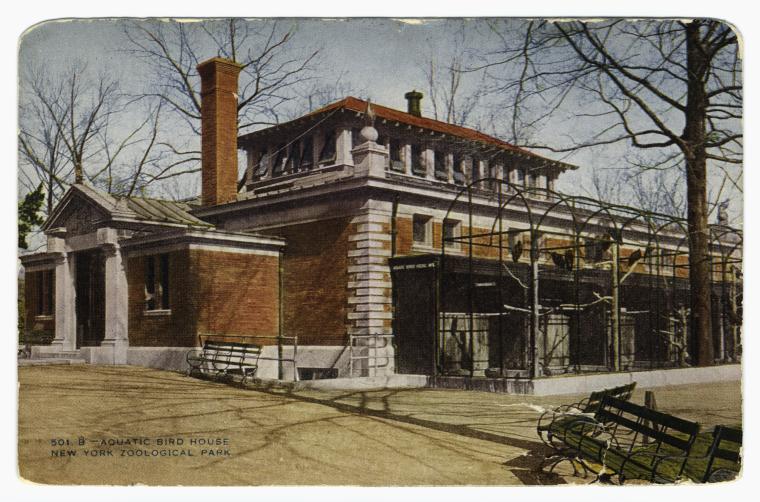
The aquatic bird house, one of the first buildings completed when the zoo opened in 1899. Another building from this date, the House of Reptiles, still stands and you can see it further below. (NYPL)

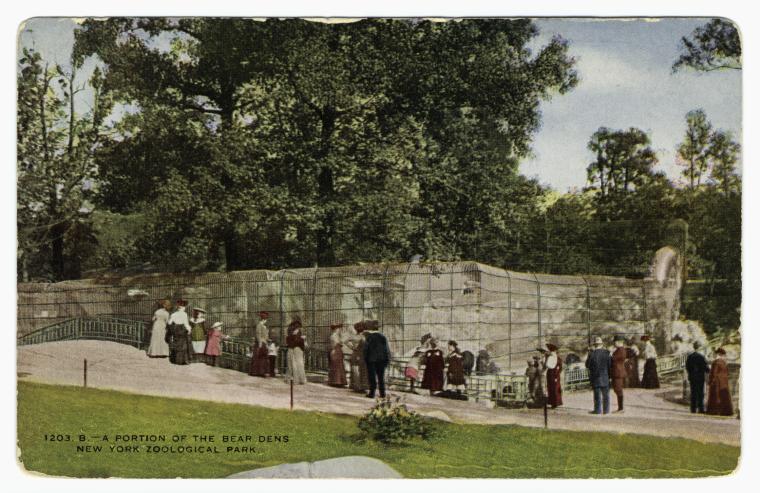
Bears behind fences. Zoo planners used Bronx Park’s natural topography to build enclosures into the very rocks themselves.
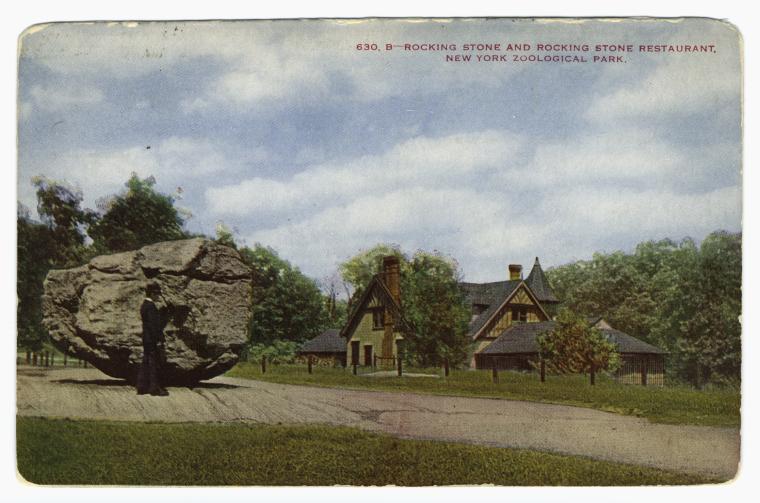
The mysterious Rocking Stone, next to the Rocking Stone Restaurant. Today there’s a World of Darkness exhibit there (presently closed to visitors).

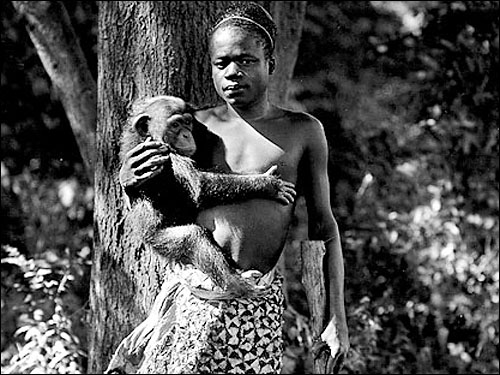
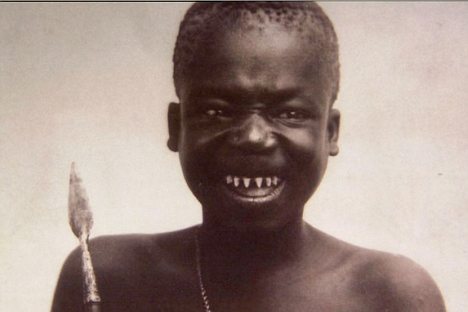
Ota Benga at the Bronx Zoo. The Congolese pygmy once lived at the Museum of Natural History (where he was forced to wear a duck costume!) before being scandalously exhibited for a short time in the Bronx Zoo monkey house in 1906.

Part of his allure to shocked New Yorkers were his filed teeth and his size (4’11’).

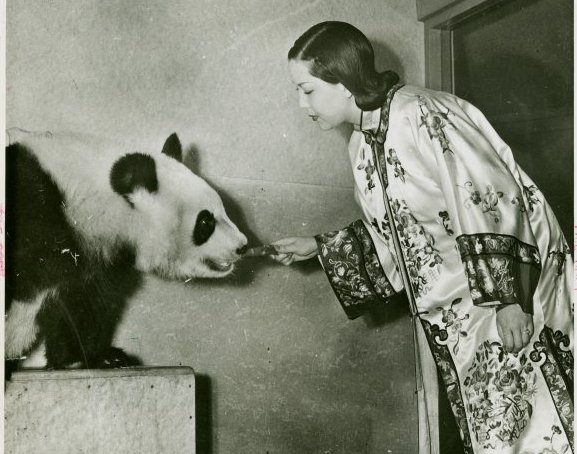
Pandora, the zoo’s first panda bear, from 1938. Pandas never lived for very long at the Bronx Zoo, and they stopped regularly keeping them. Pandas Ling Ling and Yun Yun were briefly housed here in the 1980s.

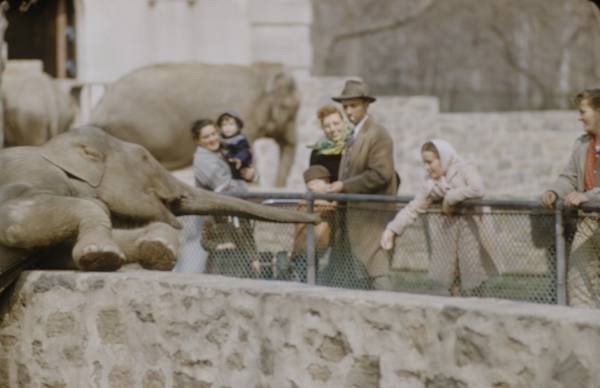
The elephant exhibit, circa the 1960s. The Bronx Zoo’s population of elephants has dwindled to just three animals. Very soon there may be none. (Photo courtesy Life Images, Nina Leen photgrapher)

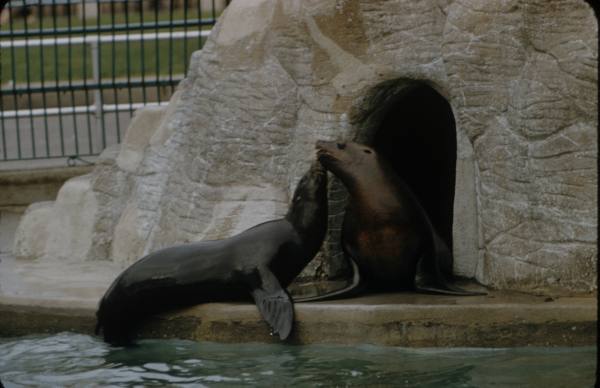
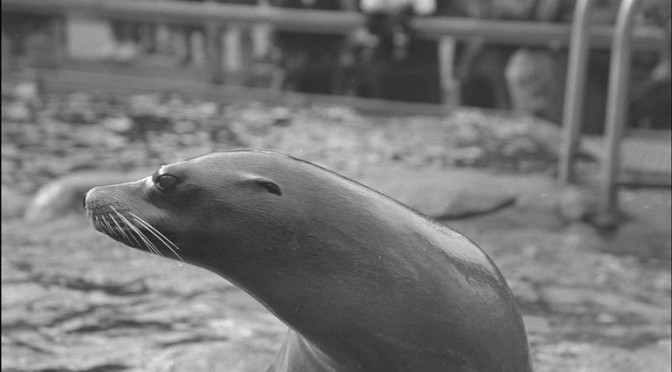
From the same time period as the picture above, but pretty timeless. The sea lions have been the centerpiece of the zoo since it opened in 1899. (Nina Leen)

Some pics from my trip last week are below. The zoo is one of the greatest places to see the spectacle of the Bronx River. (Click into them to see the detail.)

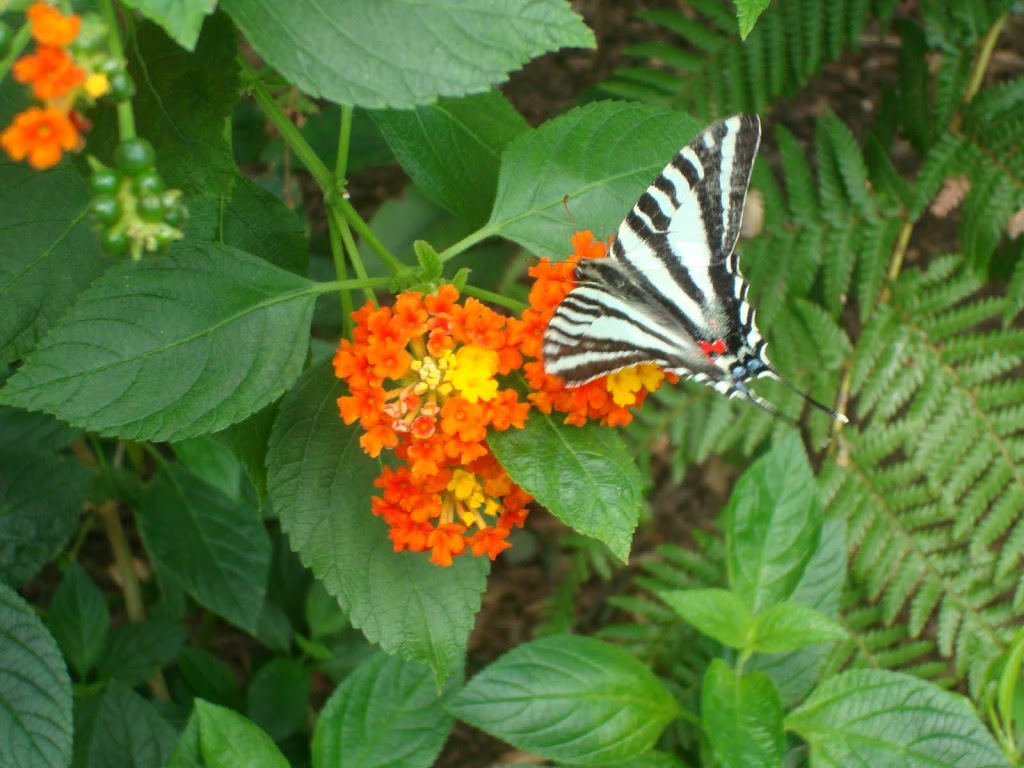
The Butterfly Garden is one of the newer exhibitions, an intimate greenhouse featuring dozens of varieties of butterflies flying all around you (and sometimes, even on you).

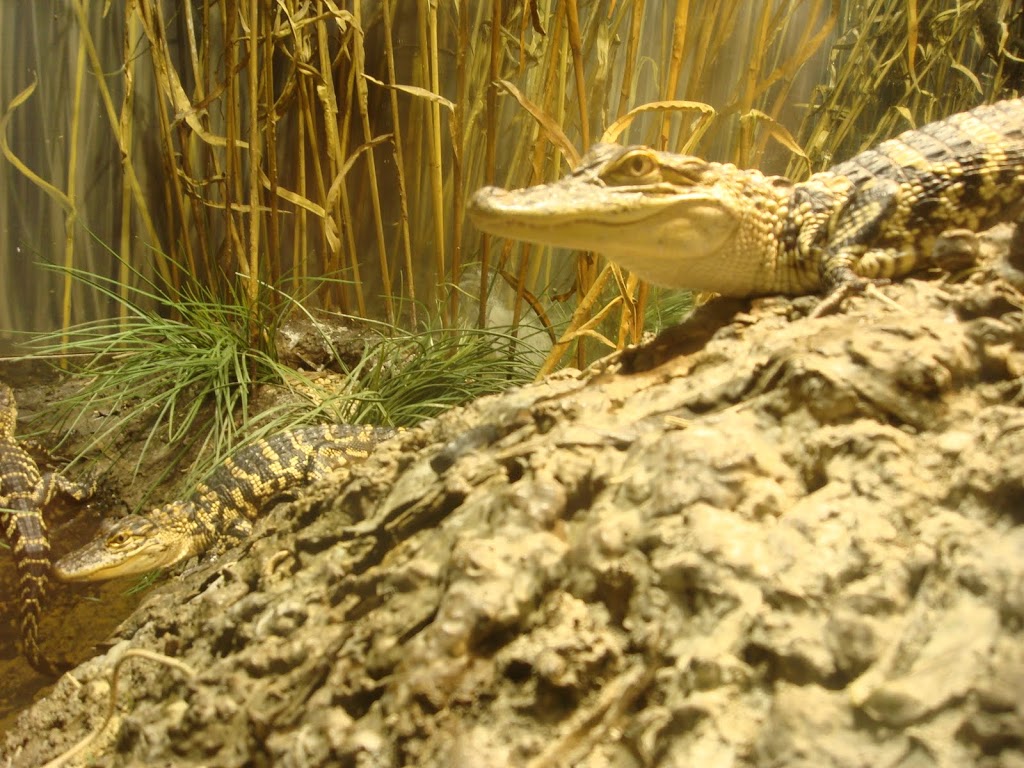
American allligators, the small, unthreatening kind. For something more severe, visit the nile crocodile in the Madagascar exhibit.

A display of some of the zoo’s marvelous, cheeky fontage.

The House of Reptiles, one of the zoo’s oldest structures, from 1899.

The brutalist wonder that is the House of Birds.

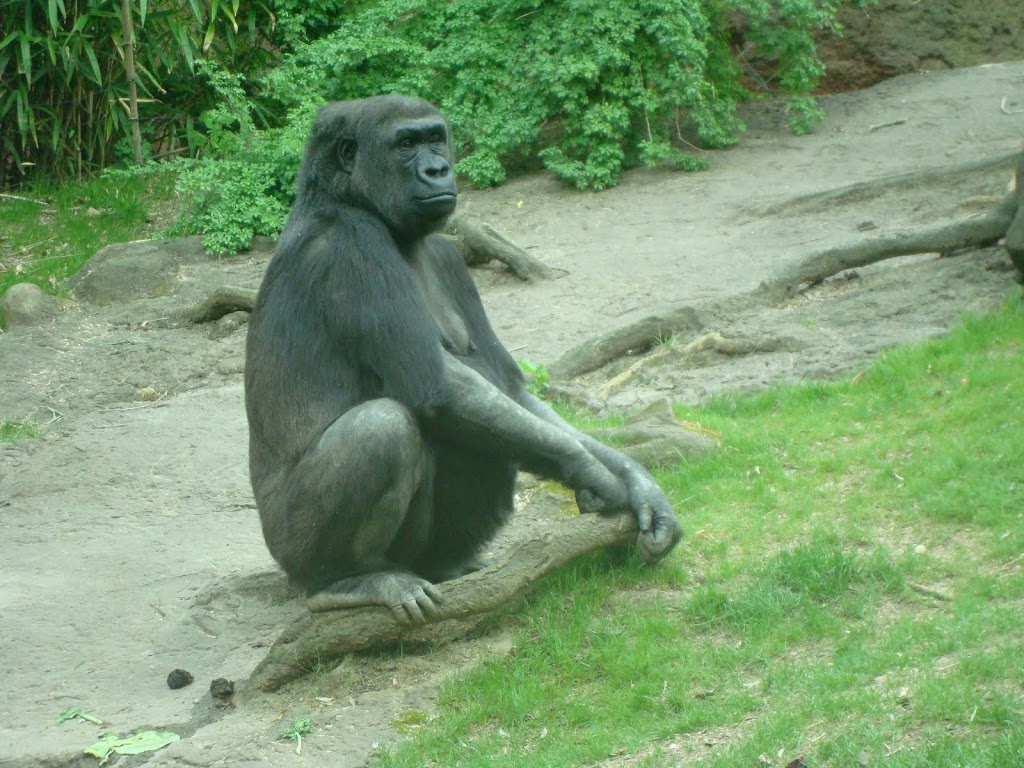
A young female gorilla, one of several who look on at gawking zoo visitors in curiousity and confusuion.

From the Madagascar exhibit:

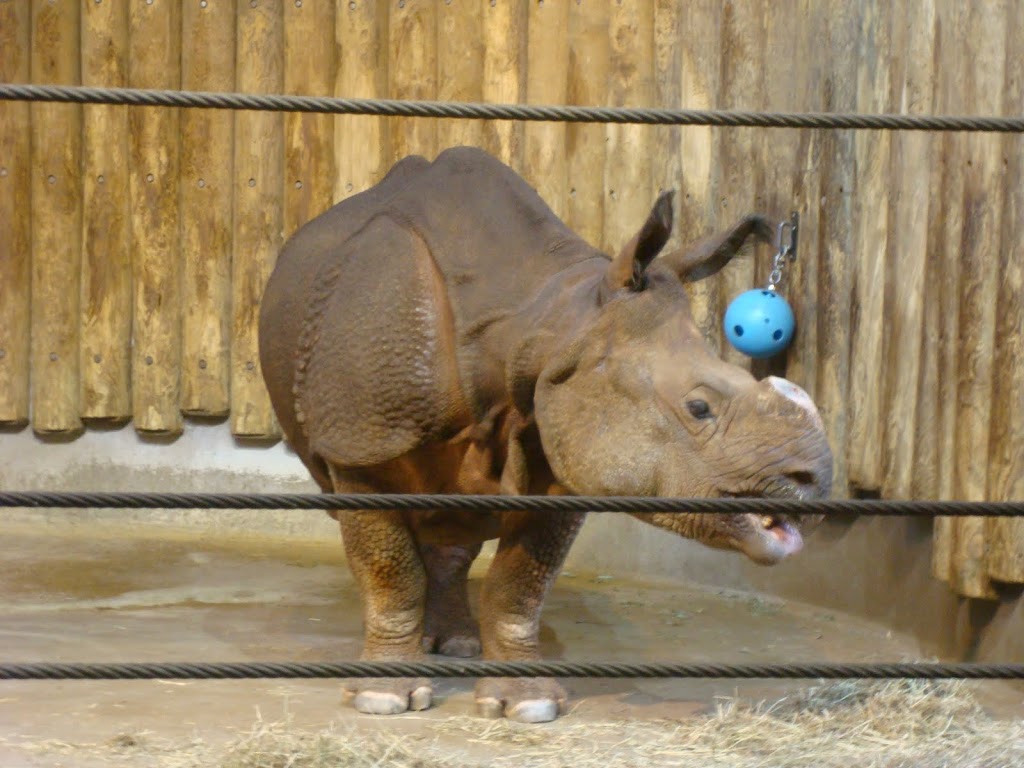
You can find a baby Asian one-horned rhinoceros named Krishnan at the Zoo Center.

And finally, the Bronx Zoo movie star Andy the orangutan in his feature debut Andy’s Animal Alphabet:

Rewind: The Evolution of Central Park

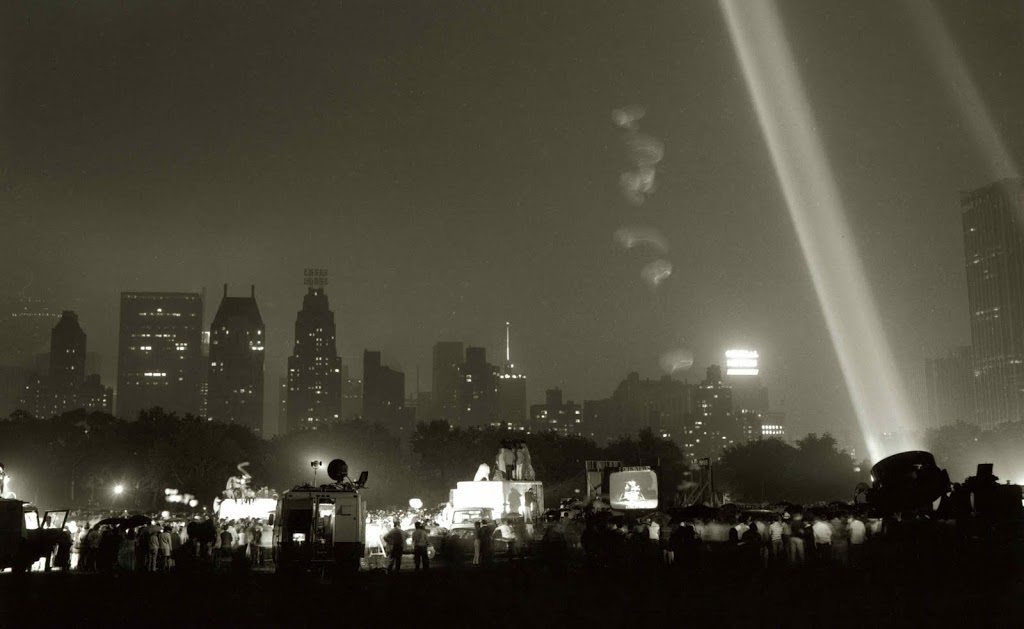
ABOVE: 1969 — Central Park’s Sheep Meadow was transformed into ‘Moon Meadow’, a celebration for people watching the Apollo 11 moon landing.

We don’t have any regular podcast this week; however I am reposting the second part our Central Park show called ‘The Evolution of Central Park, re-launching it in our secondary feed NYC History: Bowery Boys Archive. Images of some of the things we talk about now pop up on your media player while you listen. So if you’ve heard this one already, you might want to give it another go.

When last we left the Central Park, it was the embodiment of Olmstead and Vaux’s naturalistic Greensward Plan. Then the skyscrapers came. Also, how did all those playgrounds, a swanky nightclub, a theater troupe and all those hippies get here?

PODCAST Download this show it for FREE on iTunes or other podcasting services. Click this link to download it directly from our satellite site. You can also still download the old, non-imaged version here.

Stopping time: Enrico Caruso’s Plaza tantrum


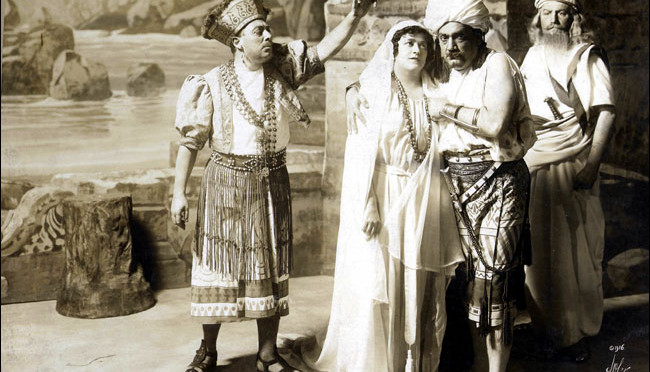
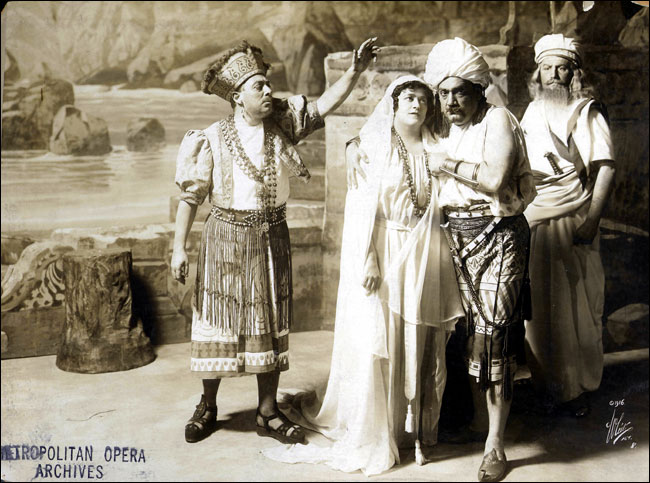
Caruso, wearing the big white turban, during the 1916-17 performance at the Met

The Plaza Hotel might have been built on the fortunes of a barbed-wire magnate, but its continued existence throughout the years partially stems from its popularity amongst the bold-print set. Celebrities, however, come with a drawback. Along with their famous name and the press and attention that comes with it, so too comes the occasional diva behavior, the irrational requests, the vituperative red-faced conniption.

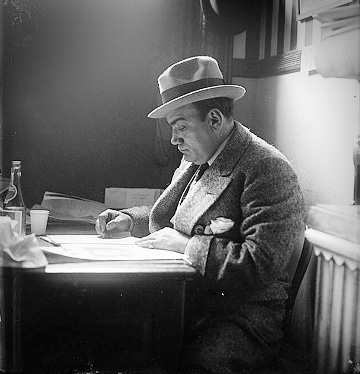
This famous hotel has seen its share, but none more famous than the one thrown by its first superstar guest — Enrico Caruso.

At the beginning of the century, there were few more famous than Caruso, an internationally-renown Italian tenor and the world’s first recording star. He performed with the Metropolitan Opera for 17 years. And at least at the very beginning would stay at the Plaza. (Over time, he would prefer the late Knickerbocker Hotel in Times Square instead.)

Caruso was a fabulous, eccentric character, exceptionally gifted, occasionally erratic. In 1906, he was accused of molesting women in the monkey house at the Central Park Zoo, and the details of ensuing — and highly publicized — trial stretches far into the realm of the absurd. (It involves trenchcoats with holes in the pockets, an alleged “sexual free-for-all” and a monkey named Knocko.) He was fined $10 for the incident.

One night after a performance at the Met in 1907, Caruso returned to his luxurious corner room at the Plaza to sleep. However, throughout the evening he was kept awake by the sound of ticking electric Magneta clock on the mantel. Tormented by the device’s rhythmic tick-tock, he erupted in the middle of the night and attacked the clock, in some accounts with a knife, in others, destroying the timepiece with his own shoe.

The problem with this particular tantrum, however, was that the entire hotel was fitted with these Magneta clocks, and all the clocks were wired to each other. Caruso had not only taken out his own clock, but effectively broke every clock in the hotel.

According to Curtis Gathje, the hotel managers responded with extraordinary restraint, instead sending Caruso complimentary champagne as an apology for inconveniencing him. Certainly, this would not become the model for handling later tempestuous musicians who trash their hotel rooms.

By the way, did you know the Enrico Caruso museum is in Brooklyn?

Categories
Podcasts

PODCAST: Central Park Zoo

From an odd assortment of abandoned creatures, to one of the most notorious zoos in the world, take a tour with us through Central Park’s storybook zoo.

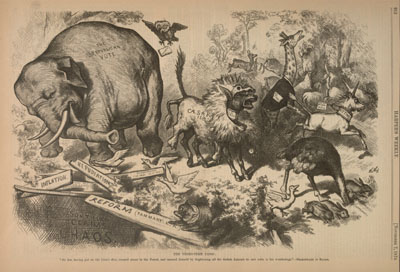
In the podcast I erroneously stated that a famous political cartoon using the Central Park Zoo as a political metaphor also featured Ulysses S Grant depicted as an ass. Perhaps that was some sort of Freudian partisan comment, because Grant himself is not in the cartoon, although it is about his alleged ‘Caesarism’, running for president for a third term back when it was constitutionally possible — but untraditional — to do so.

The ass in the cartoon below actually represents the New York Herald, the flagrant publication which ran the article on the Central Park Hoax as well as coining the phrase ‘Caesarism’.

The cast of the Zoo is featured (hmm, I didnt realize the Zoo had unicorns), as well as an elephant representing the republican vote, being scared off by the Herald’s bombastic opinions on Grant. This is the origin of the elephant as the symbol of the Republican Party:

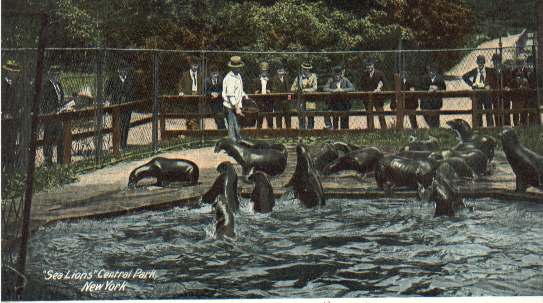
Now, onto the Menagerie! This postcard nicely displays the early collection’s unplanned evolution:

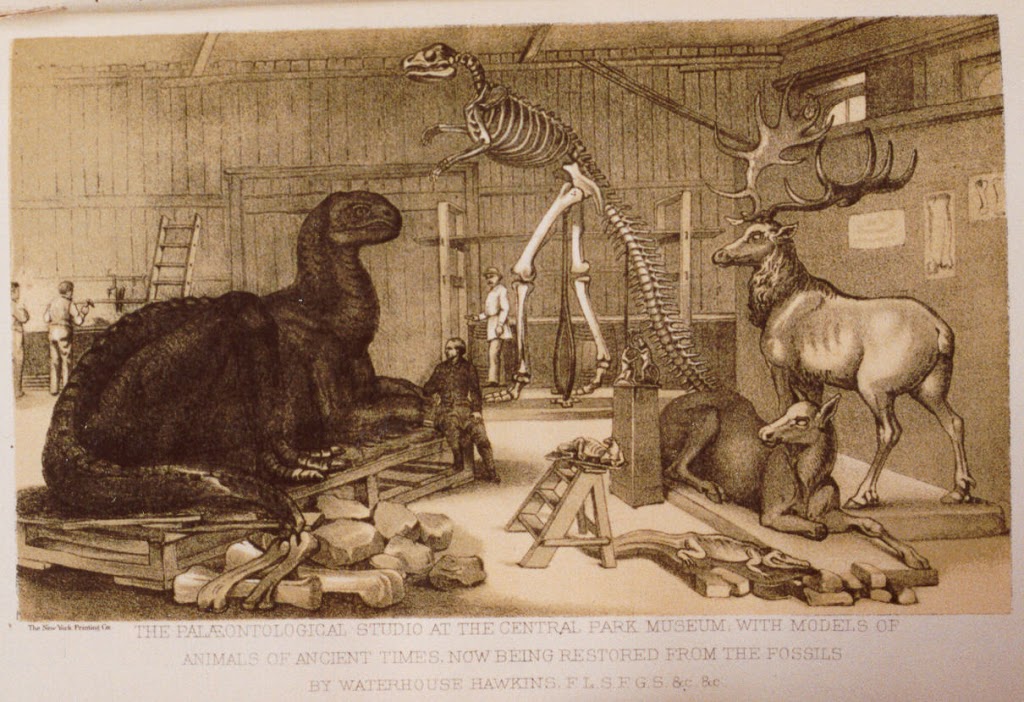
Before the Arsenal served as headquarters of the city park service and anchor to the Zoo, it was the temporary location of the Natural History Museum as well as workspace for paleontologists and their dinosaur skeletons.

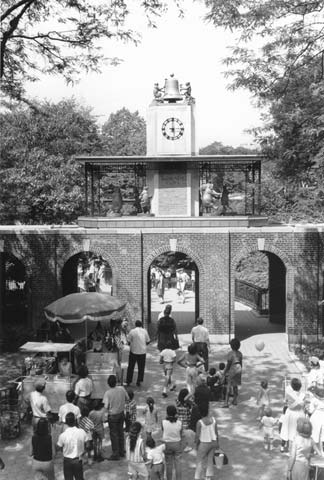
Part of the zoo’s rebirth in the 80s included the restoration of the Delacorte Clock, a throwback to grandiose European clock design that greets each hour with a parade of dancing animals and tinkling music. It was a gift of George Delacorte, founder of Dell Publishing Company, who also graced Central Park with a theatre and statuary depicting Alice In Wonderland. Over forty years old, the clock and its tinny nursery rhymes can be actually be heard from Fifth Avenue if you listen closely enough.

Although close in style, the nearby Dancing Goat fountain sculpture and its companion Honey Bear are actually from the 1930s, where they once flanked a lavish cafeteria inside the zoo that was demolished in the 80s to make way for the rain forest.

And a couple of our celebrity stars of the zoo:

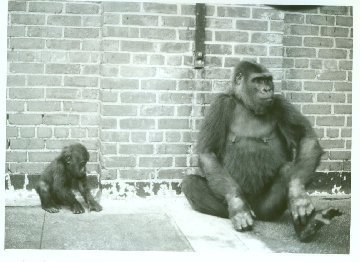
Patty Cake and her mother were quite the sensation in the early 70s. The first gorilla ever born at New York, she was named in a much publicized newspaper competition, and ever since, she has unquestionably been the city’s most famous gorilla.

Most baby gorillas are actually taken from their parents to be nursed, however Patty was cared for by both her parents, Lulu and daddy Kongo. Her father eventually fell on her, breaking her arm, and she was eventually transferred for a time to the Bronx Zoo. Her custody battle between the two zoos was even covered by Time Magazine.

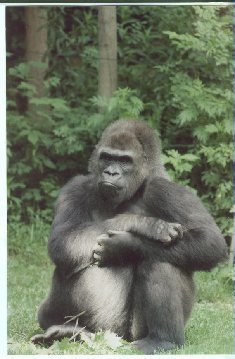
Now as a permanent resident of the Bronx Zoo, queen of the Congo Gorilla Forest, at age 35, Patty is a proud mother of nine, including two rare twins, Nngoma and Tambo. And like any New York society diva, she’s also had four husbands.

In spirit, she’s also doing her share to stop gorilla poaching in Africa, through a charity called ‘The Pattycake Fund’.

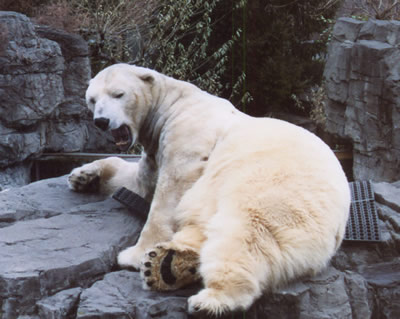
Gus, the no-longer-depressed polar bear, was really diagnosed by an animal behaviorist with psycotic tendencies, and the animals plight was so publicized that he made the cover of Newsday, significant coverage on CNN, and somebody actually wrote a play about him. Changes to Gus’ habitat were soon made, including better water circulation, and Gus’ mood has improved substantially. And anyway, why should he be depressed? He has two wives — Ida and Lily.

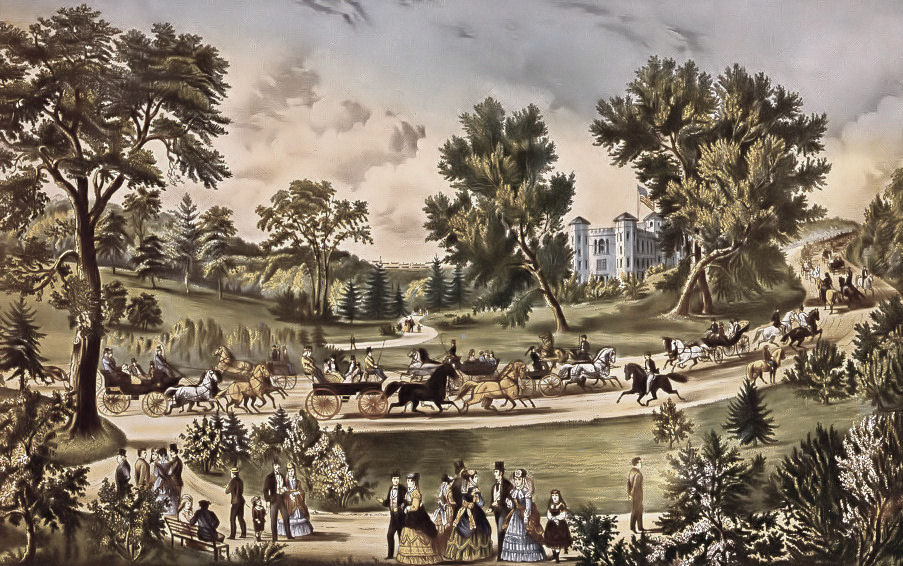
And finally take a gander at this painting from the mid 19th century of Central Park in its wilder days. The building in the back is the castle-like Arsenal, before a menagerie started appearing.