Categories
Gilded Age New York Landmarks Podcasts

Mr. Morgan and His Magnificent Library: A ‘Bookman’s Paradise’ on Madison Avenue

Does your personal library overwhelm your home? Are there too many books in your life — but you’ll never get rid of them? Then you have a lot in common with Gilded Age mogul J.P. Morgan!

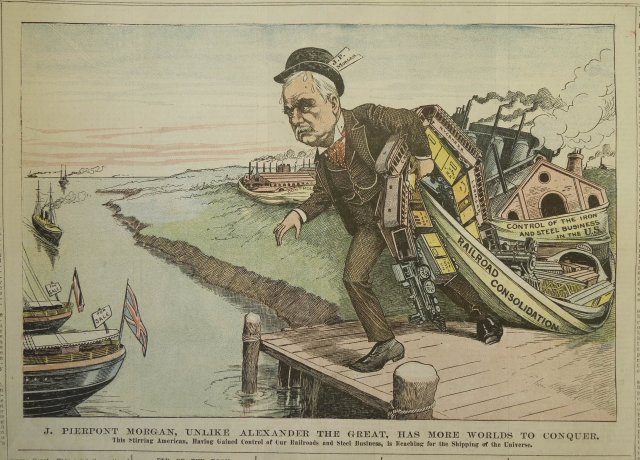
Morgan was a defining figure of the late 19th century, engineering corporate mergers and crafting monopolies from the desk of his Wall Street office. His vast control over the steel and railroad industries paired with his connections in international banking granted him great power over American life and helped fuel the great economic disparities of the Gilded Age.

In the process Morgan became one of the wealthiest men in America — but he did not tread the traditional path through New York high society. He preferred yachts over ballrooms.

And books! For decades he collected thousands of rare books, letters, paintings and manuscripts from Gutenberg bibles to medieval illuminated tomes. So many books, in fact, that Morgan decided to start the new century with his own personal project — the construction of a library.
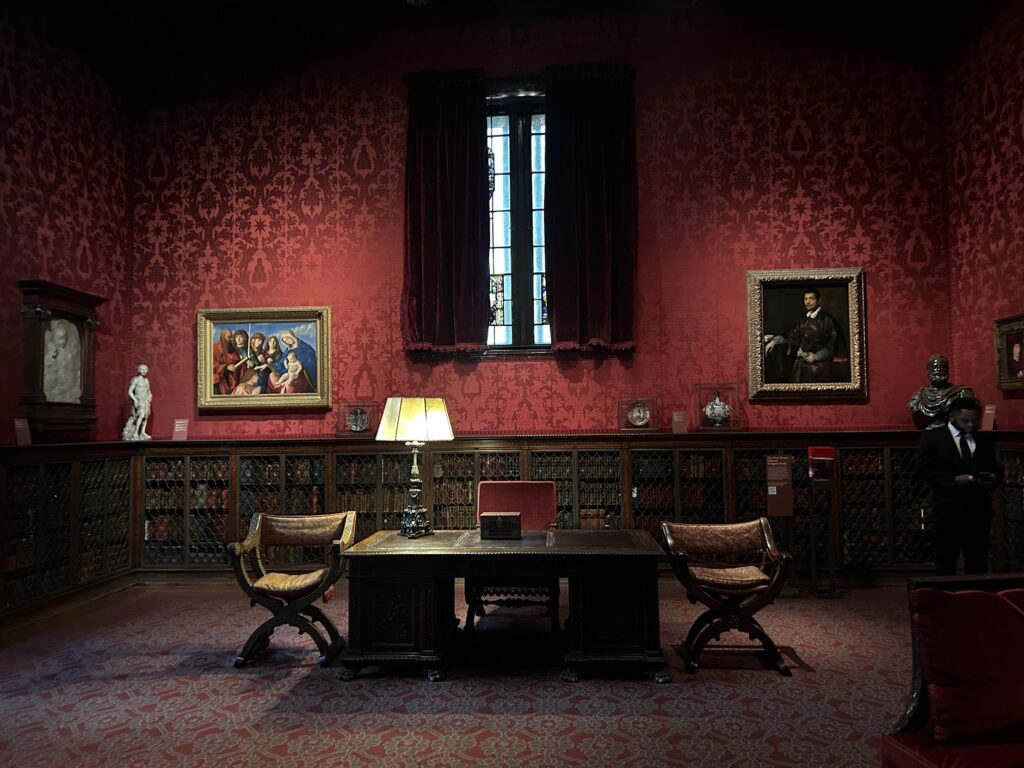
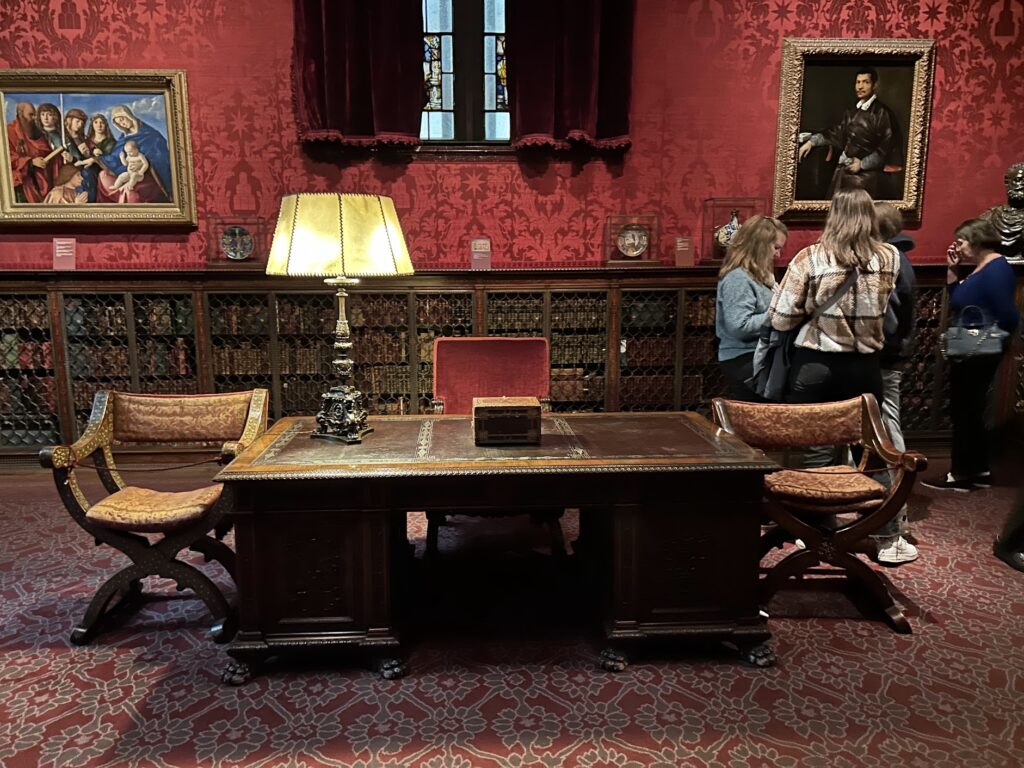
Morgan’s study

Today the Morgan Library and Museum is open to the public and, as an active and thriving institution, continues to highlight the world’s greatest examples of the printed word — from Charles Dickens manuscript for A Christmas Carol to past exhibitions on Beatrix Potter, James Joyce and even The Little Prince.

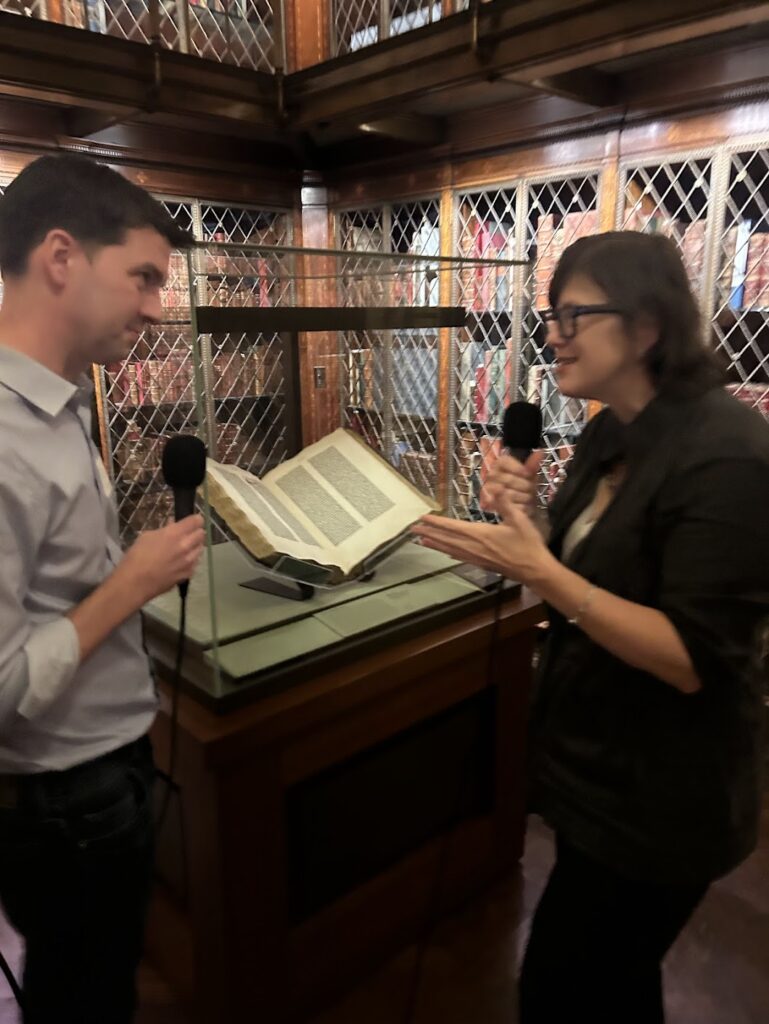
Tom and Greg explore the biography of J. Pierpont Morgan then head to the Morgan Library to speak with Jennifer Tonkovich, the Eugene and Clare Thaw Curator of Drawings and Prints.

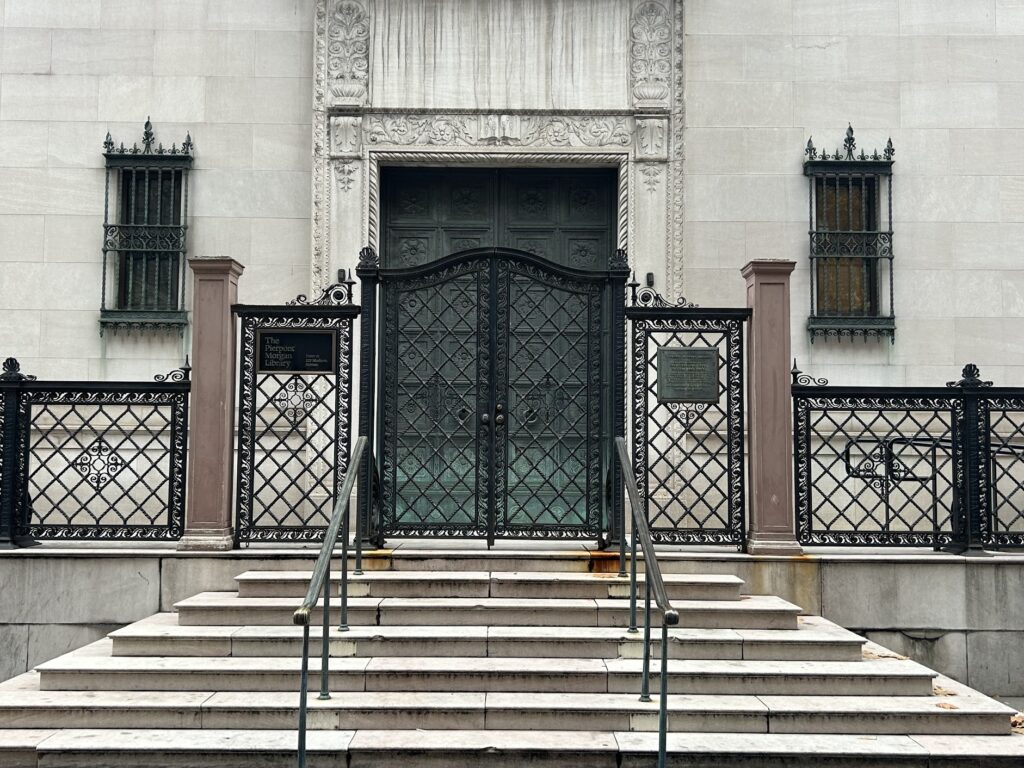
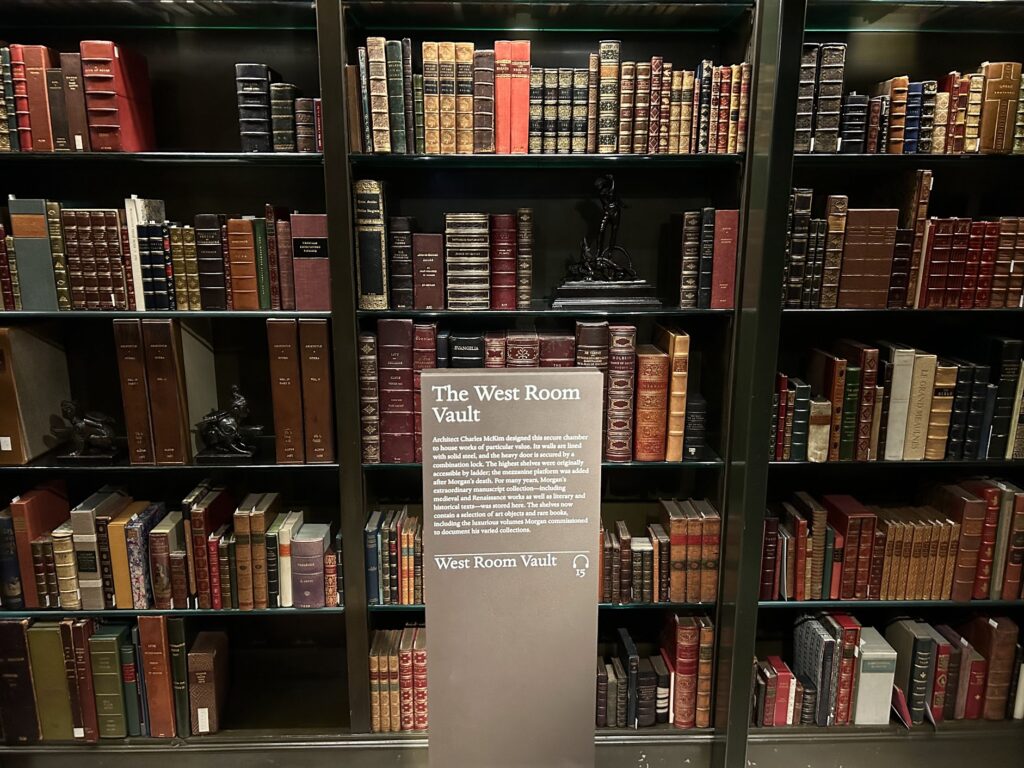
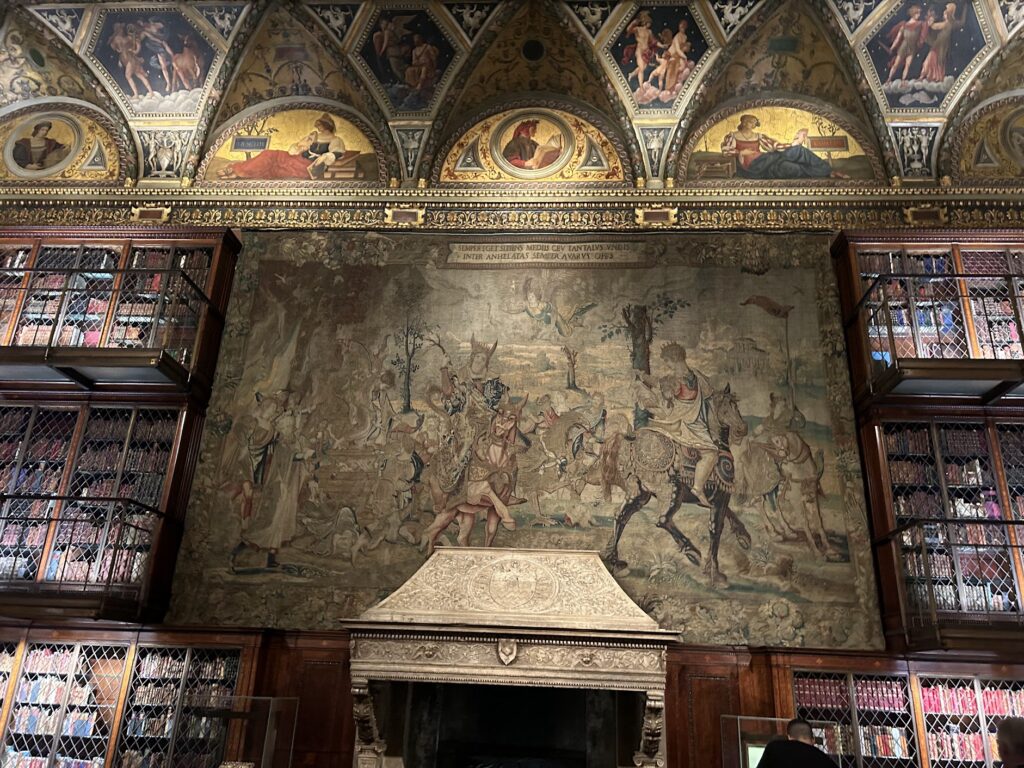
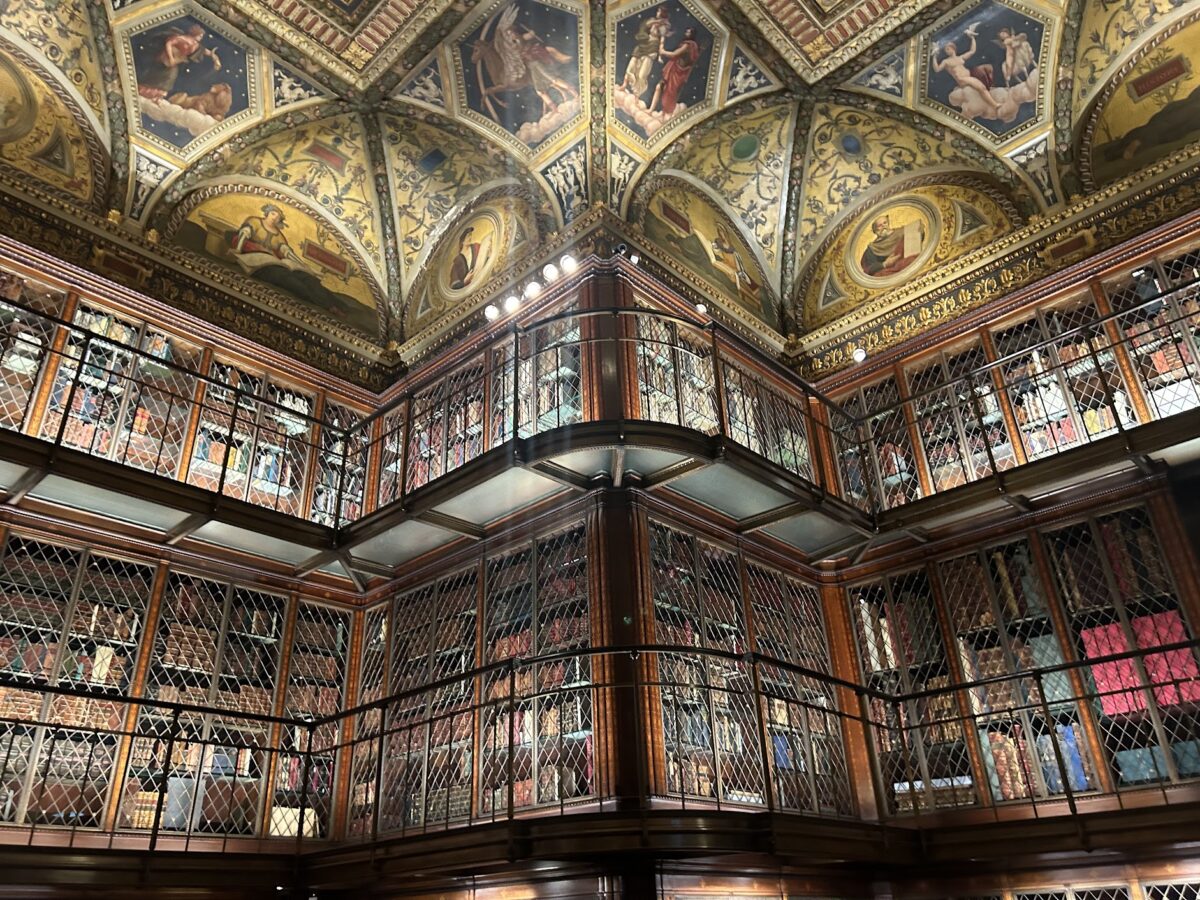
And then they wander through the winding connections of buildings which comprise the Morgan Library & Museum — from Morgan’s study (and its ‘hidden’ vault of books) to the glorious main stacks, lined with triple tiers of bookcases fashioned of bronze and inlaid Circassian walnut.

LISTEN NOW: MR. MORGAN AND HIS MAGNIFICENT LIBRARY


Join us on Patreon for extra podcasts and lots of other goodies

Share your love of the city’s history with a Bowery Boys Walks gift certificate! Our digital gift cards let your loved ones choose their perfect tour and date.

Grab a Bowery Boys tee-shirt, mug or water bottle at our merchandise store.


1903 portrait by Fedor Encke
Saturday Globe, 1901
From the vaulted room in Morgan’s study
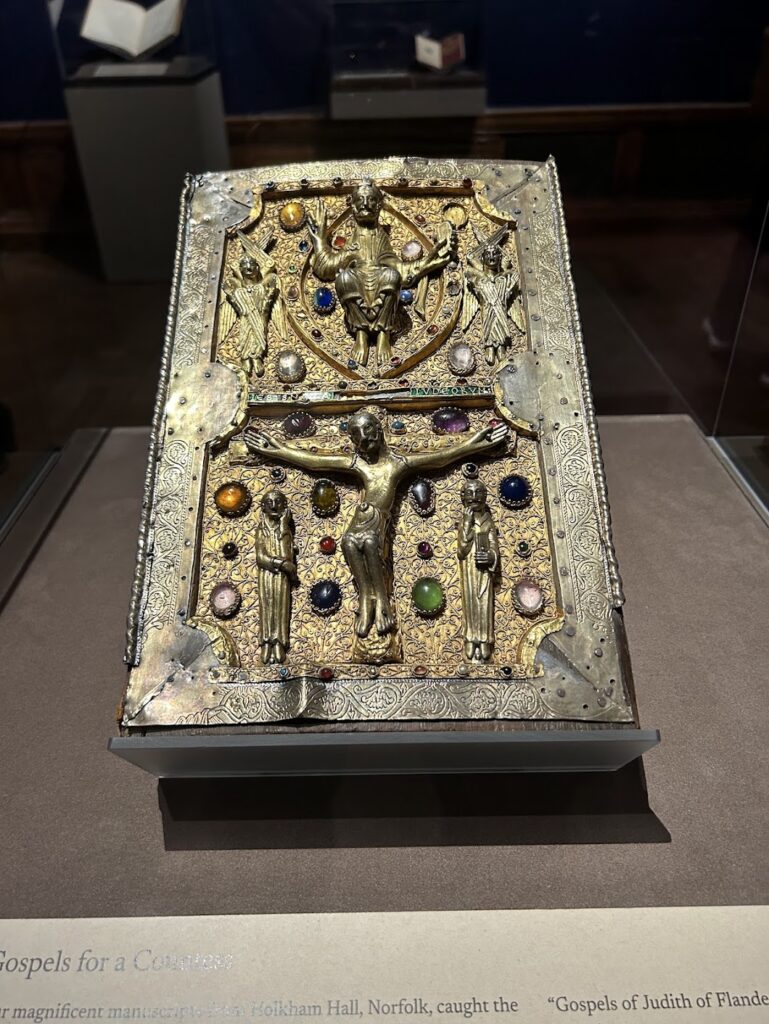
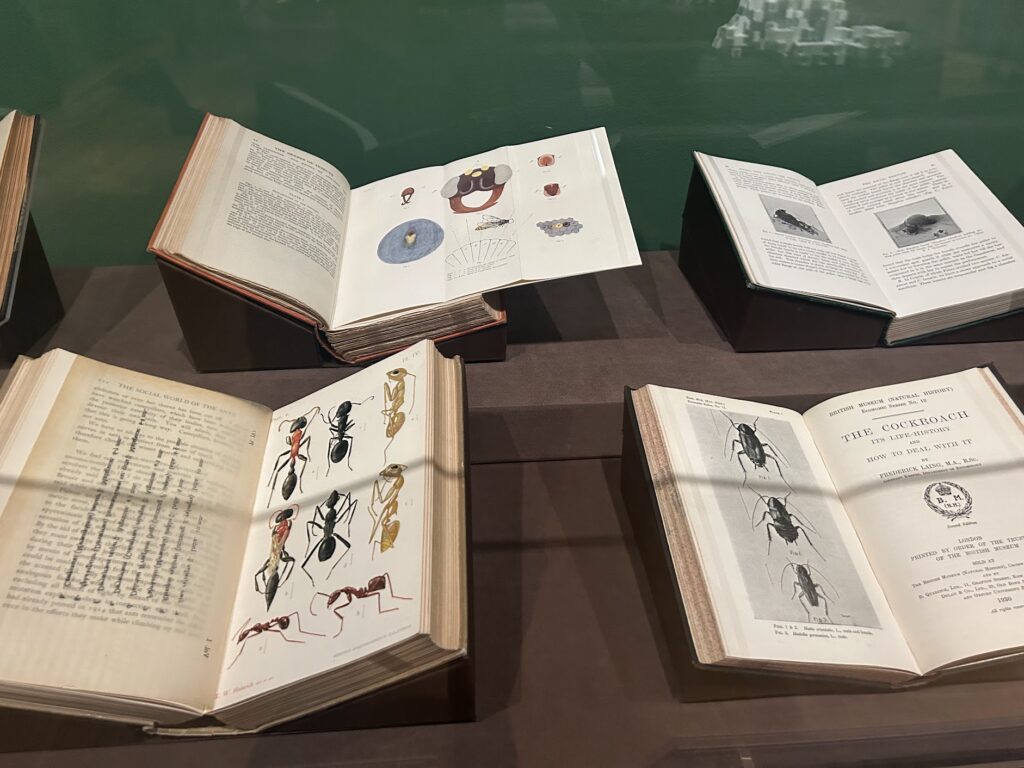
From the Franz Kafka show
The tapestry of gluttony

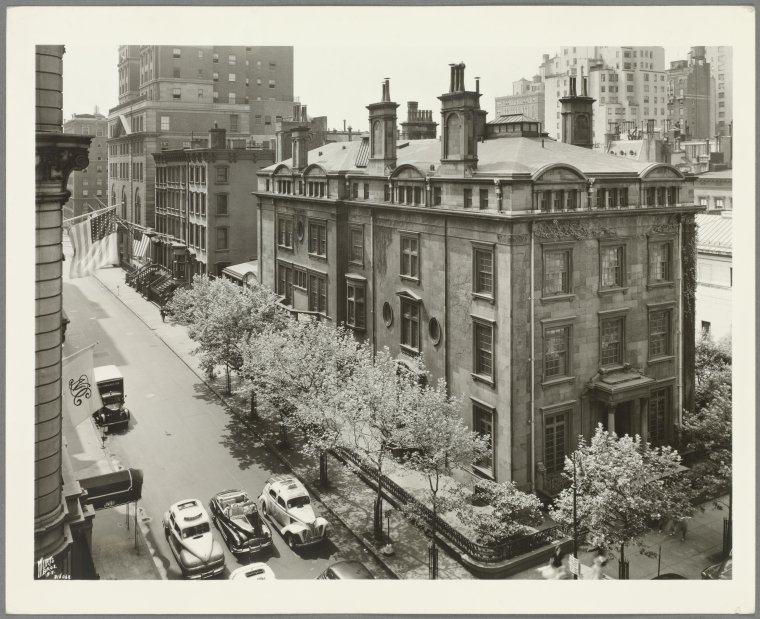
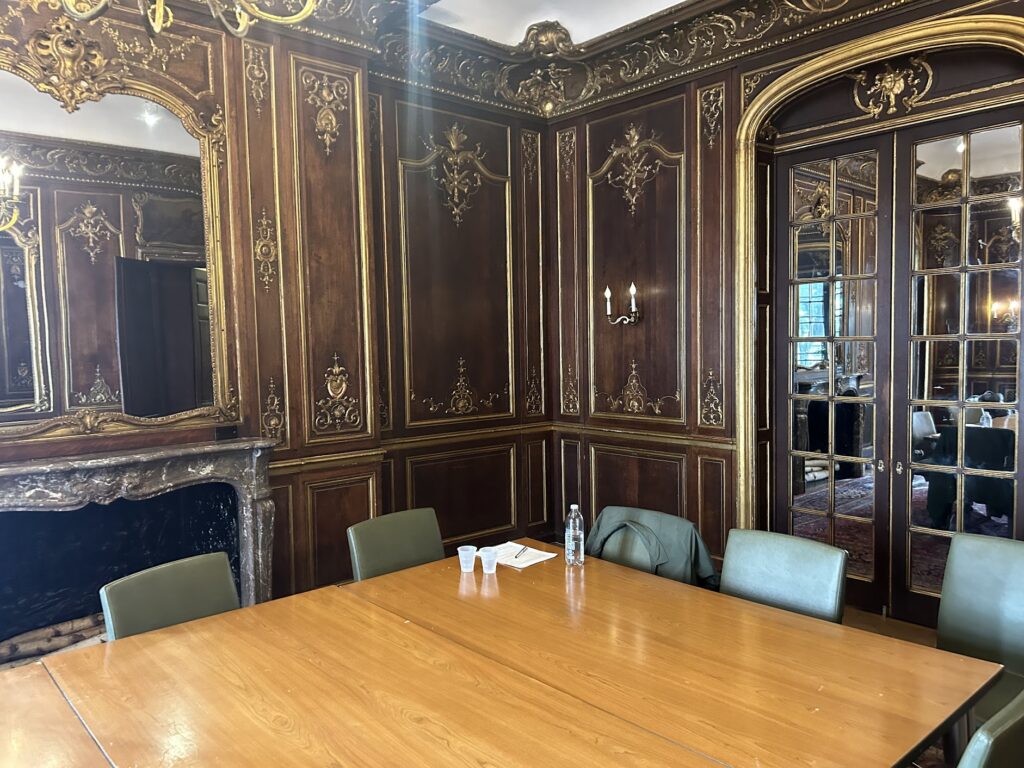
JP Morgan Jr’s brownstone which is today a part of the whole Morgan Library complex. In fact we recorded a portion of the show from its music room!
New York Public Library
The music room where we recorded a portion of the show.

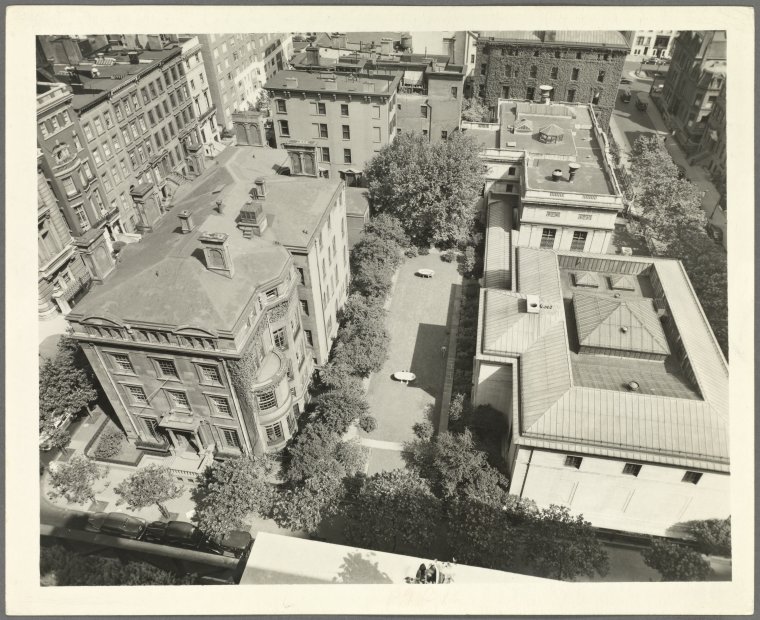
The Morgan Library and Museum from above. The slender garden in the middle was replaced in 2006 by a lavish hall designed by Renzo Piano.
New York Public Library

FURTHER READING

J. Pierpont Morgan’s Library: Building the Bookman’s Paradise / The Morgan Library and Museum
The Hour of Fate: Theodore Roosevelt, JP Morgan and the Battle to Transform American Capitalism / Susan Berfield
The House of Morgan: An American Banking Dynasty and the Rise of Modern Finance/ Ron Chernow
J.P. Morgan – The Life and Deals of America’s Banker / J.R. MacGregor
Morgan: American Financier / Jean Strouse

From the website:
Edgar Allan Poe at the Morgan Library
JP Morgan Jr Rides The Subway
Remembering the Wall Street Bombing 1920
Terror Spree: Harvard Professor Bombs Capitol, Shoots JP Morgan
Categories
Those Were The Days

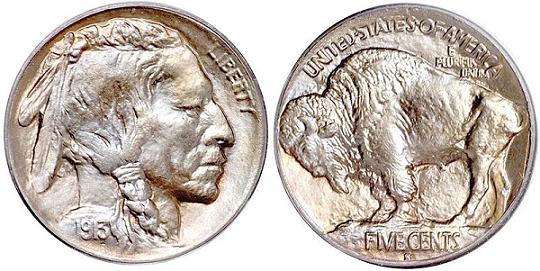
Fun money: The Buffalo nickel, 100 years old this month, makes Wall Street messenger boys rich (for a couple hours)


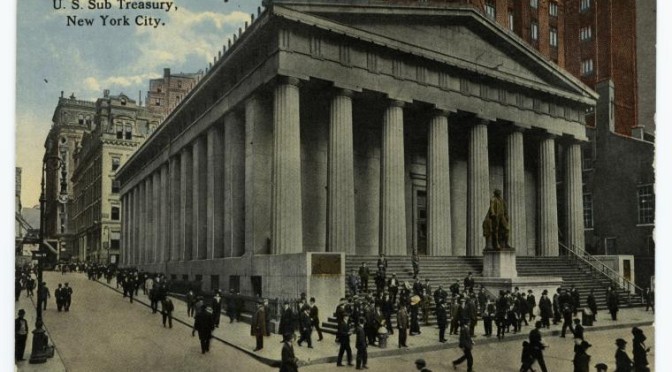
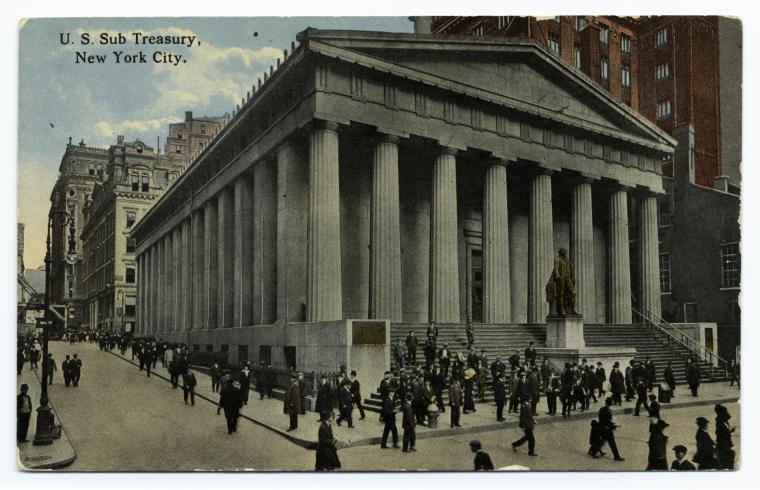
The U.S. Sub Treasury Building — today’s Federal Hall — as it appeared in a colorized postcard in the 1900s (courtesy NYPL)


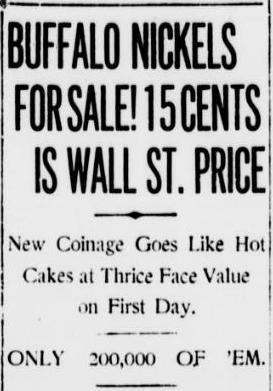
“Hey! Getcha buffalo nickels here. Only 15 cents!”

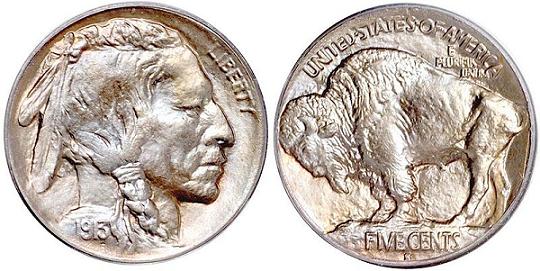
On March 1, 1913, the usual bustle of Wall Street was enlivened with the voices of young men — mostly messenger boys, bank runners and peddlers, according the Evening World — with handfuls of shiny new nickels, the first run of what would become known as the Indian Head nickel or the Buffalo nickel.  And in these heady morning hours, many managed to sell the five-cent piece for triple its value.

“The down-at-the-heels men, who sell picture postcards and neckties from pushcarts on Ann Street, scented a bargain and hurried to the Pine Street El Dorado to sink their little capital in nickels.”   The “Pine Street El Dorado” in that quote refers the New York Sub Treasury building, later referred to as Federal Hall.  (It’s second entrance is on Pine Street.)  The Sub Treasury received $10,000 worth of new nickels in ten wooden kegs.

Unfortunately for these budding young nickel entrepreneurs, the novelty wore off by noon and the Buffalo nickel sunk back down to its original face-value cost.

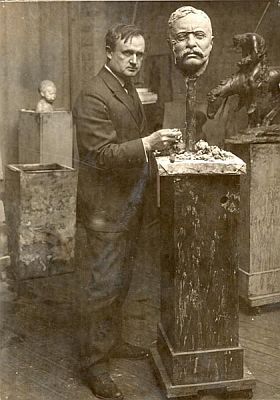
The new nickels were designed by the sculptor James Earle Fraser, a former assistant of the estimable Augustus Saint-Gaudens and best known in New York perhaps for his equestrian statue of Theodore Roosevelt outside the American Museum of Natural History.

Fraser, a professor at the Art Students League, designed the new coin from a studio at 3 MacDougal Alley, off of Washington Square Park.  An admirer of Western and Native American imagery, Fraser used a series of models for the noble Indian profile on the front of the coin.  For the buffalo on the reverse side, Fraser reportedly went to Central Park Zoo and used their old buffalo Black Diamond for a model.

At right: James Earle Fraser in 1912 with a clay model of a Theodore Roosevelt bust (courtesy National Cowboy Museum)

Or at least, Black Diamond has always been considered the model for the buffalo nickel.  In fact, Fraser may also have used specimens from the Bronx Zoo including a fiesty beast named, appropriately, Bronx.  Given the renown of the Bronx Zoo collection — the institution essentially saved the buffalo from extinction — it might have made more sense to use their animals as models.

Despite outcries from manufacturers of coin operated devices — who claimed the new five-cent piece would not fit in their machines — the buffalo nickel was minted in February 1913, replacing the Liberty Head nickel that year.  (A small handful of Liberty Heads were made in 1913, becoming some of the most prized coinage among the numismatic set.)  Americans got a preview of the new coin when a small number were distributed by President William Howard Taft at the groundbreaking for the National American Indian Memorial in Staten Island, a monument that was ultimately never built.

A week later, on the first day of March, rolls of the new buffalo nickels were distributed to New Yorkers on Wall Street, and millions more sent across the country for distribution.

Perhaps Fraser’s design was a tad too whimsical for some.  The term ‘buffalo nickel’ soon became slang for something nearly worthless.  Just a month later, the New York Sun reported, “[T]he $1,500 mathematical job didn’t mean anymore to him yesterday afternoon than a buffalo nickel.”

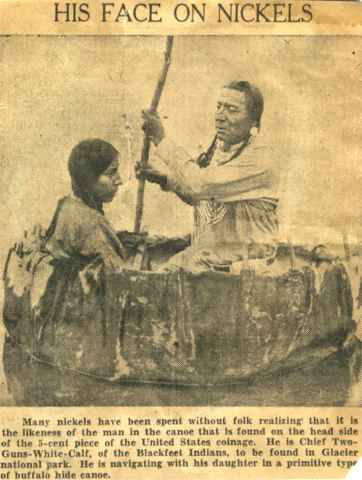
In 1921, one of Fraser’s human models, the chieftain Two Guns White Calf, pitched his teepee atop the luxury Hotel Commodore next door to Grand Central Terminal in a publicity stunt.

The buffalo nickel was replaced in 1938 by the more familiar Thomas Jefferson model.

Below: A news clipping featuring an image of Two Guns White Calf with his daughter. (Courtesy Flickr/sharknose)

Coin image courtesy Coin Collecting For Beginners