Categories
Gilded Age New York Landmarks Podcasts

Mr. Morgan and His Magnificent Library: A ‘Bookman’s Paradise’ on Madison Avenue

Does your personal library overwhelm your home? Are there too many books in your life — but you’ll never get rid of them? Then you have a lot in common with Gilded Age mogul J.P. Morgan!

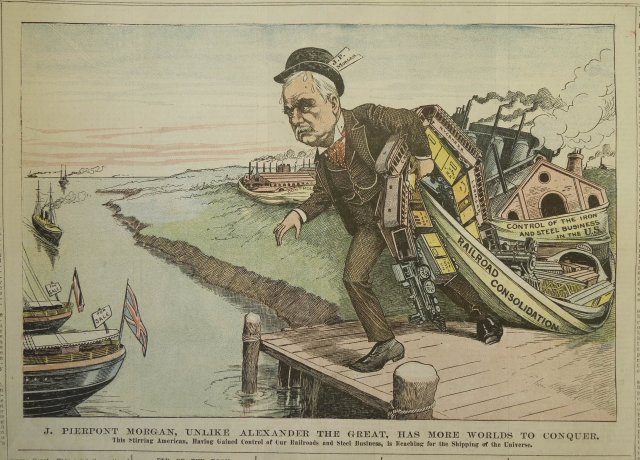
Morgan was a defining figure of the late 19th century, engineering corporate mergers and crafting monopolies from the desk of his Wall Street office. His vast control over the steel and railroad industries paired with his connections in international banking granted him great power over American life and helped fuel the great economic disparities of the Gilded Age.

In the process Morgan became one of the wealthiest men in America — but he did not tread the traditional path through New York high society. He preferred yachts over ballrooms.

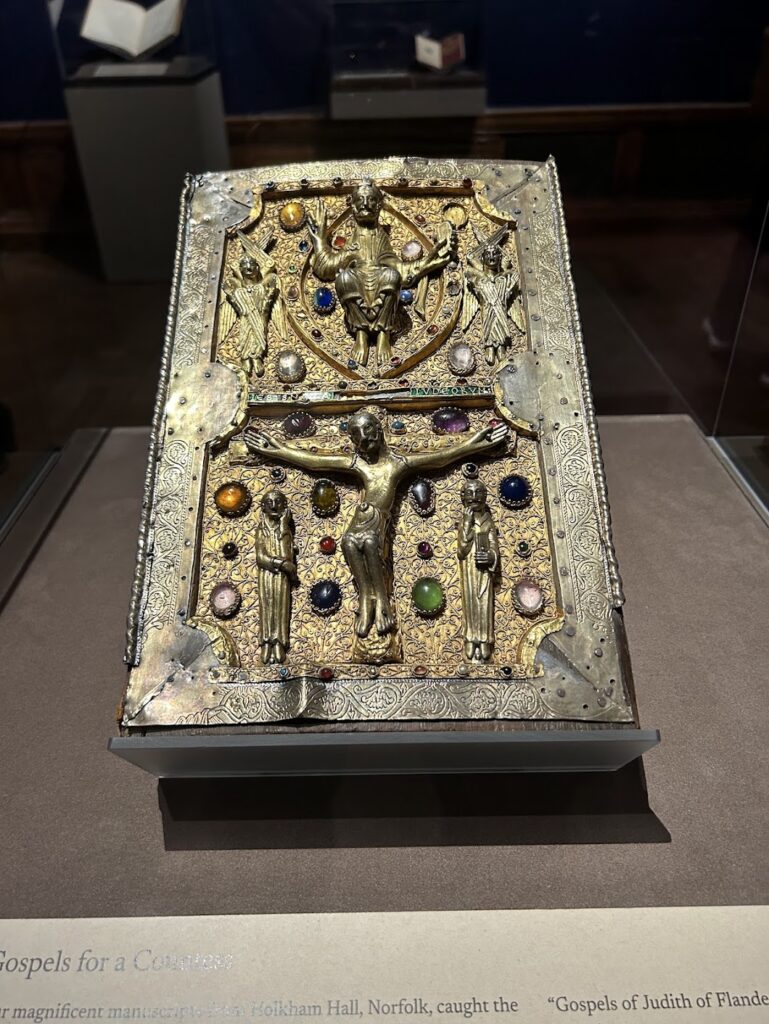
And books! For decades he collected thousands of rare books, letters, paintings and manuscripts from Gutenberg bibles to medieval illuminated tomes. So many books, in fact, that Morgan decided to start the new century with his own personal project — the construction of a library.
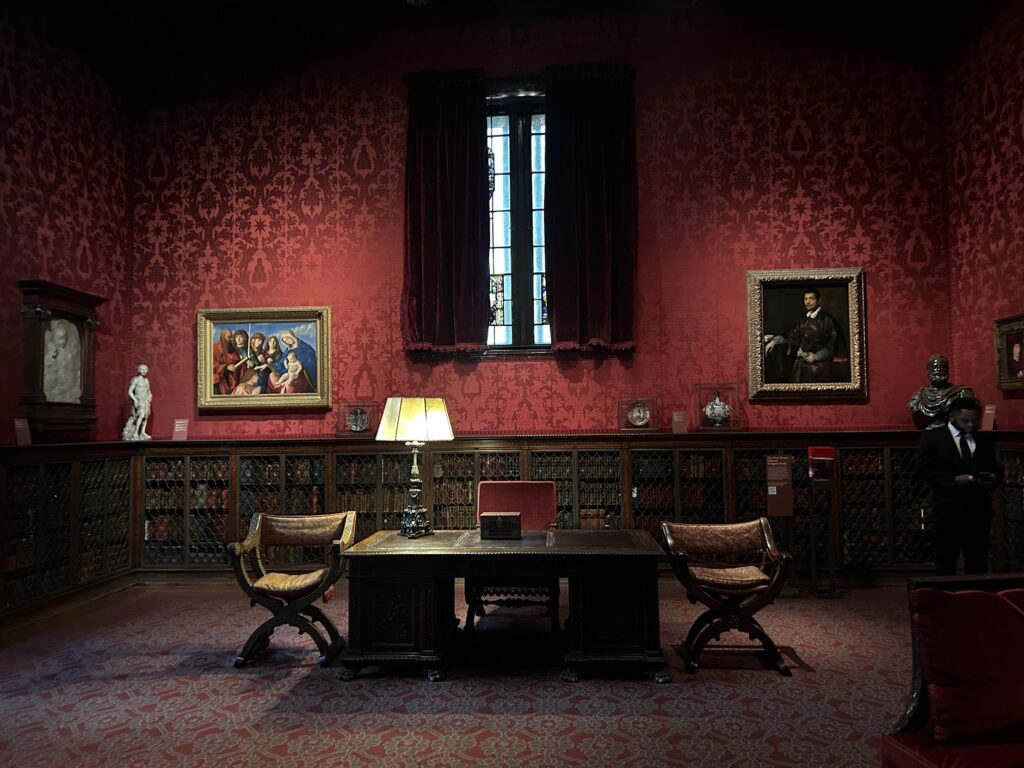
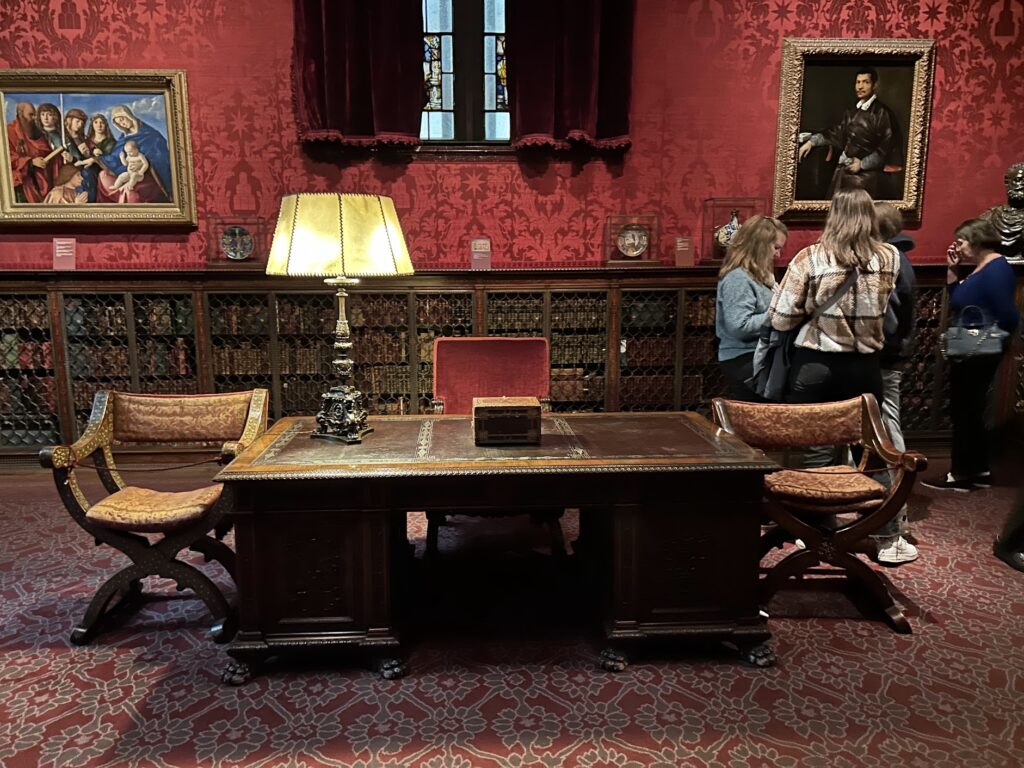
Morgan’s study

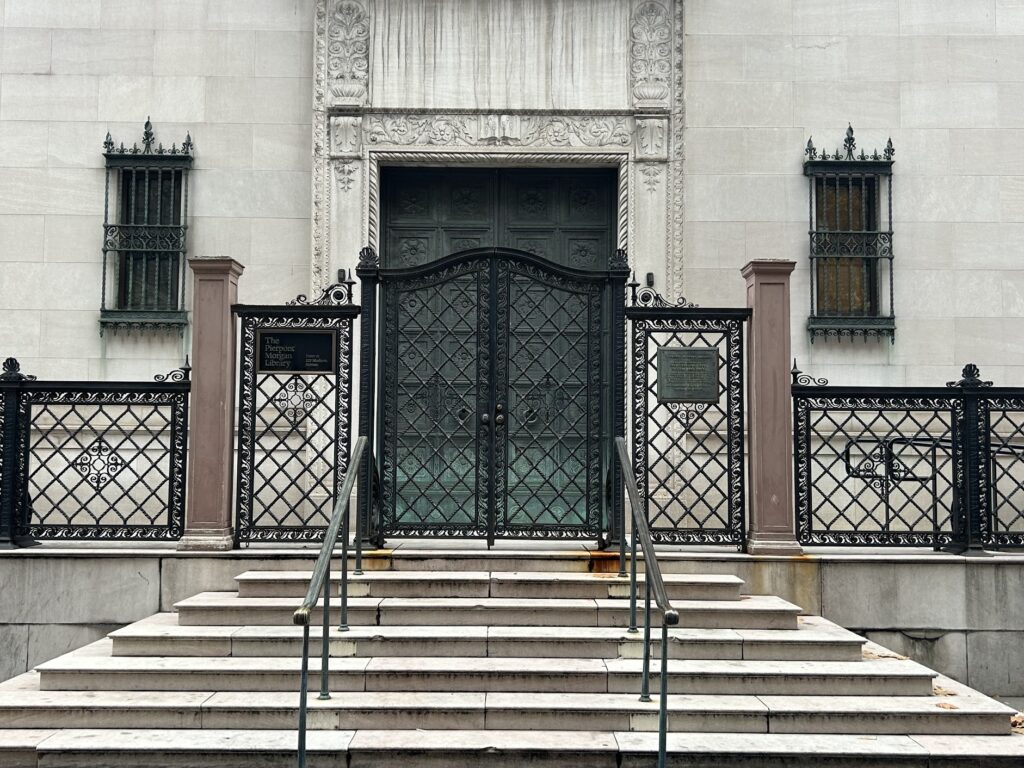
Today the Morgan Library and Museum is open to the public and, as an active and thriving institution, continues to highlight the world’s greatest examples of the printed word — from Charles Dickens manuscript for A Christmas Carol to past exhibitions on Beatrix Potter, James Joyce and even The Little Prince.

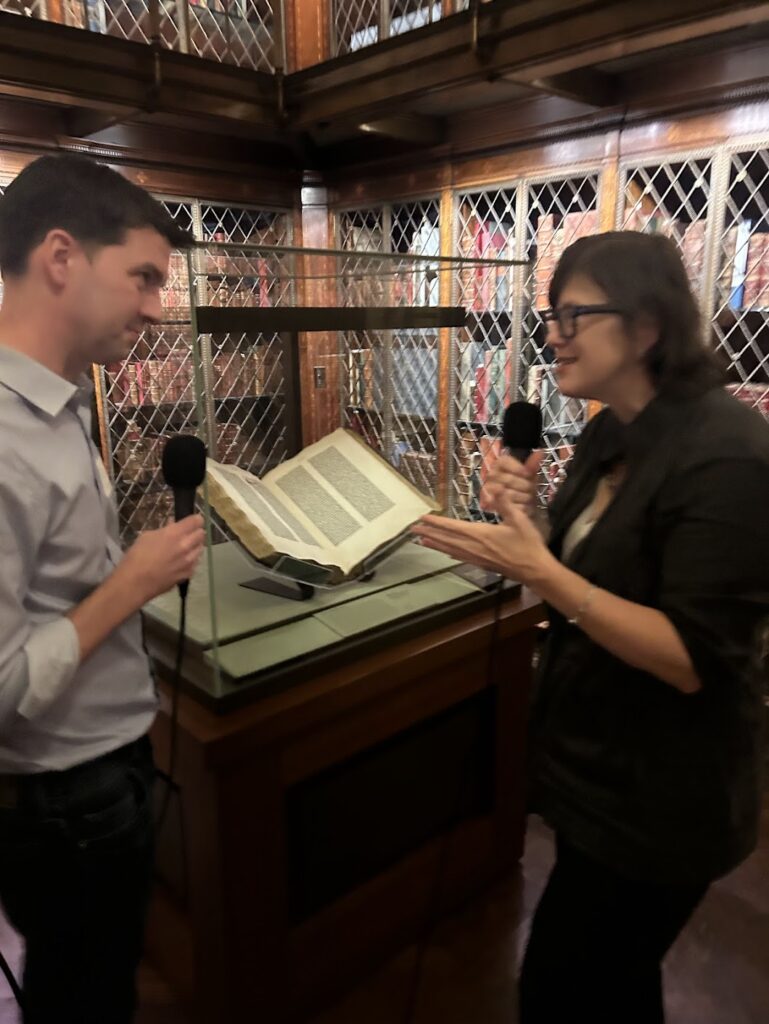
Tom and Greg explore the biography of J. Pierpont Morgan then head to the Morgan Library to speak with Jennifer Tonkovich, the Eugene and Clare Thaw Curator of Drawings and Prints.

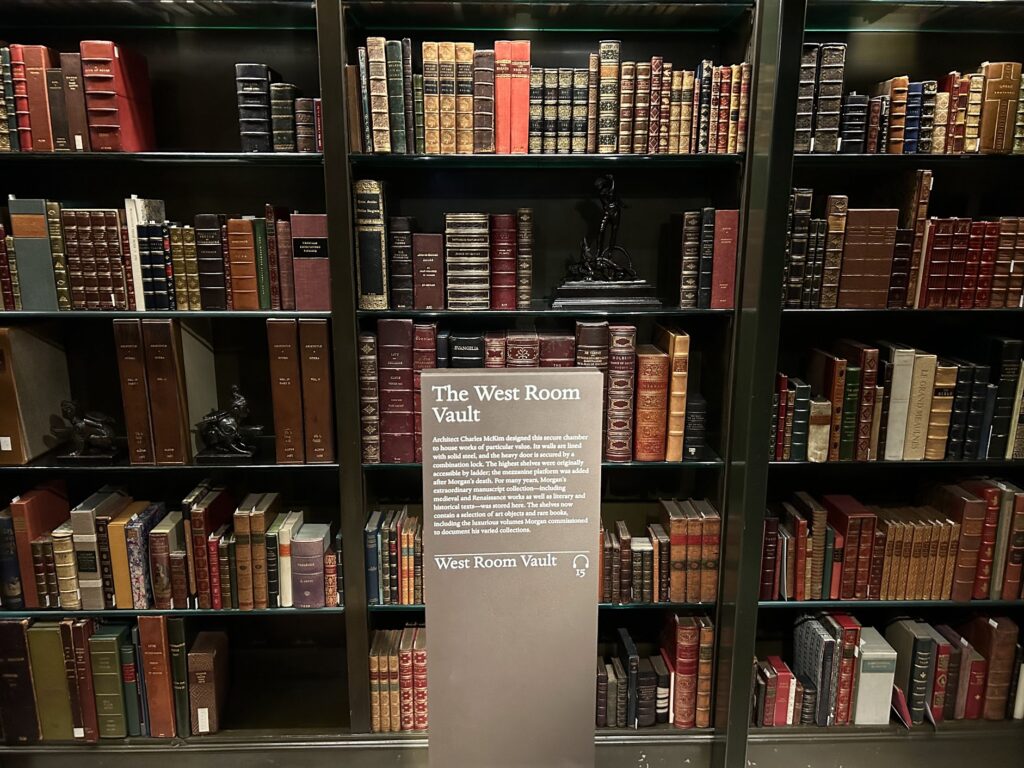
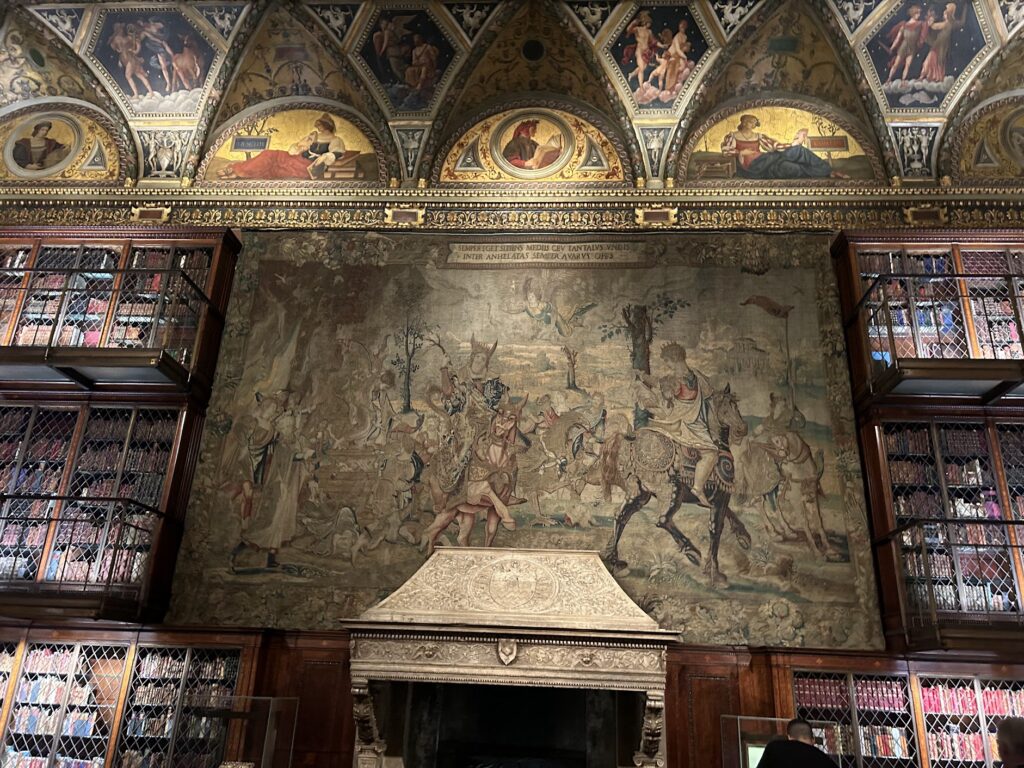
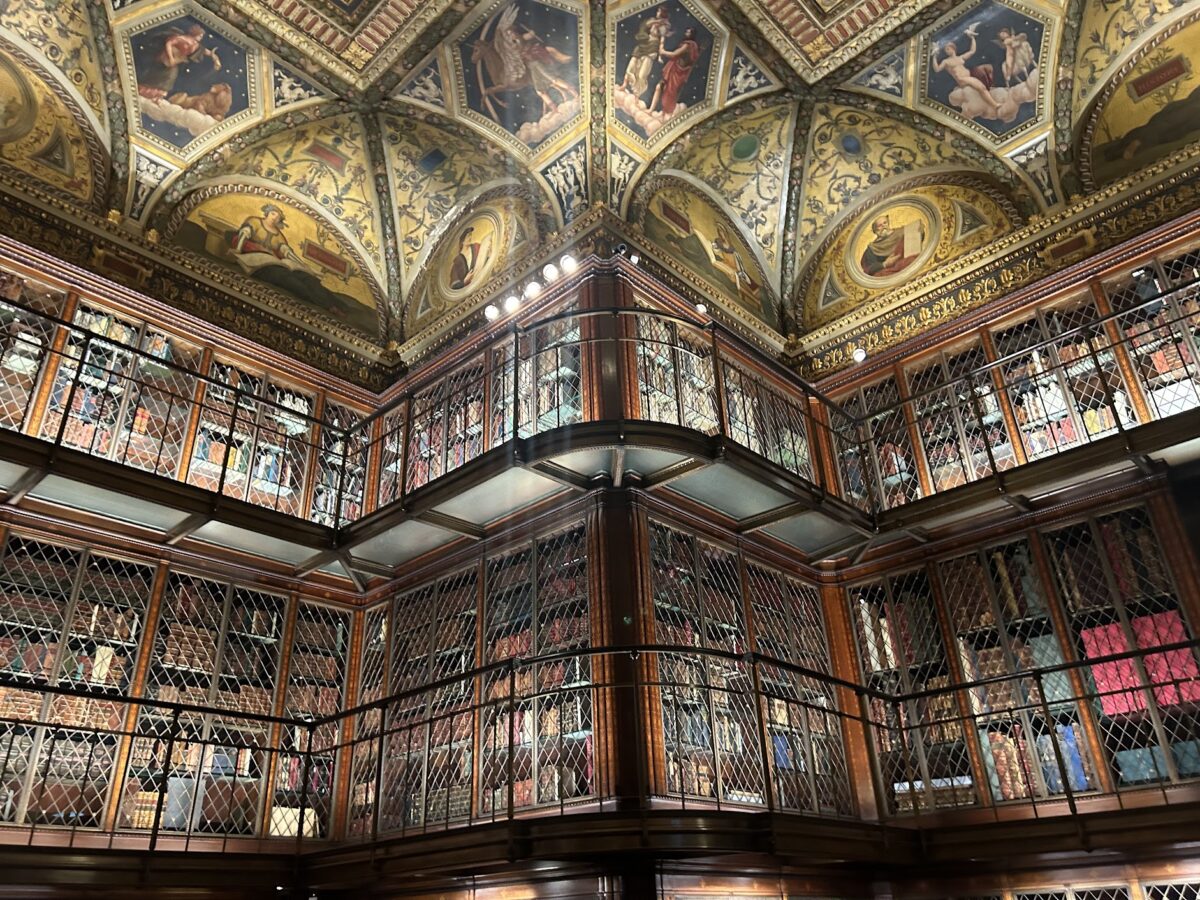
And then they wander through the winding connections of buildings which comprise the Morgan Library & Museum — from Morgan’s study (and its ‘hidden’ vault of books) to the glorious main stacks, lined with triple tiers of bookcases fashioned of bronze and inlaid Circassian walnut.

LISTEN NOW: MR. MORGAN AND HIS MAGNIFICENT LIBRARY


Join us on Patreon for extra podcasts and lots of other goodies

Share your love of the city’s history with a Bowery Boys Walks gift certificate! Our digital gift cards let your loved ones choose their perfect tour and date.

Grab a Bowery Boys tee-shirt, mug or water bottle at our merchandise store.


1903 portrait by Fedor Encke
Saturday Globe, 1901
From the vaulted room in Morgan’s study
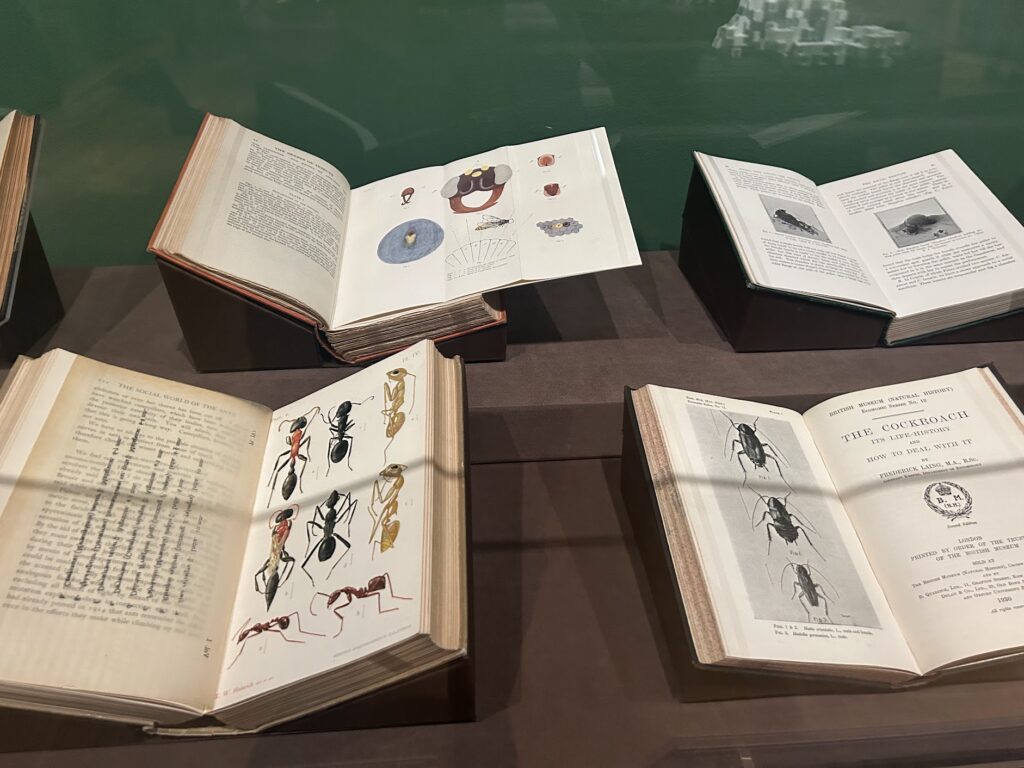
From the Franz Kafka show
The tapestry of gluttony

JP Morgan Jr’s brownstone which is today a part of the whole Morgan Library complex. In fact we recorded a portion of the show from its music room!
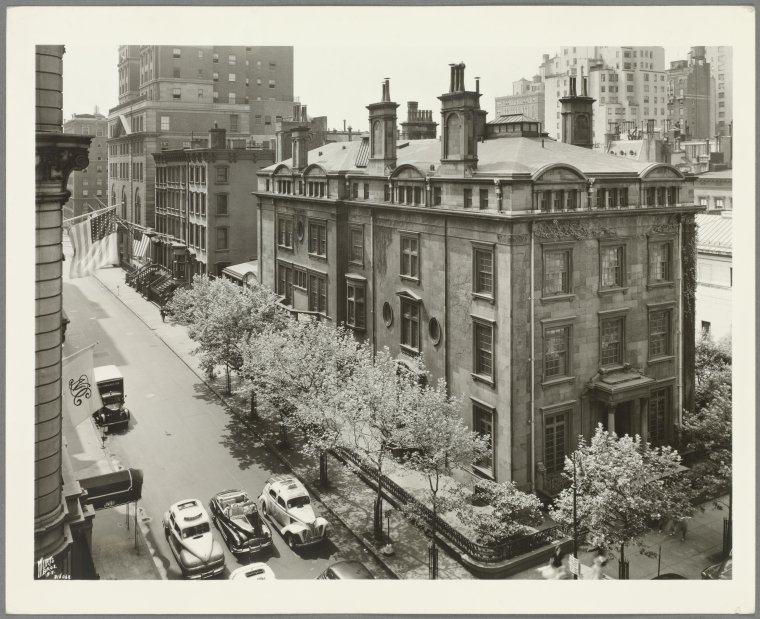
New York Public Library
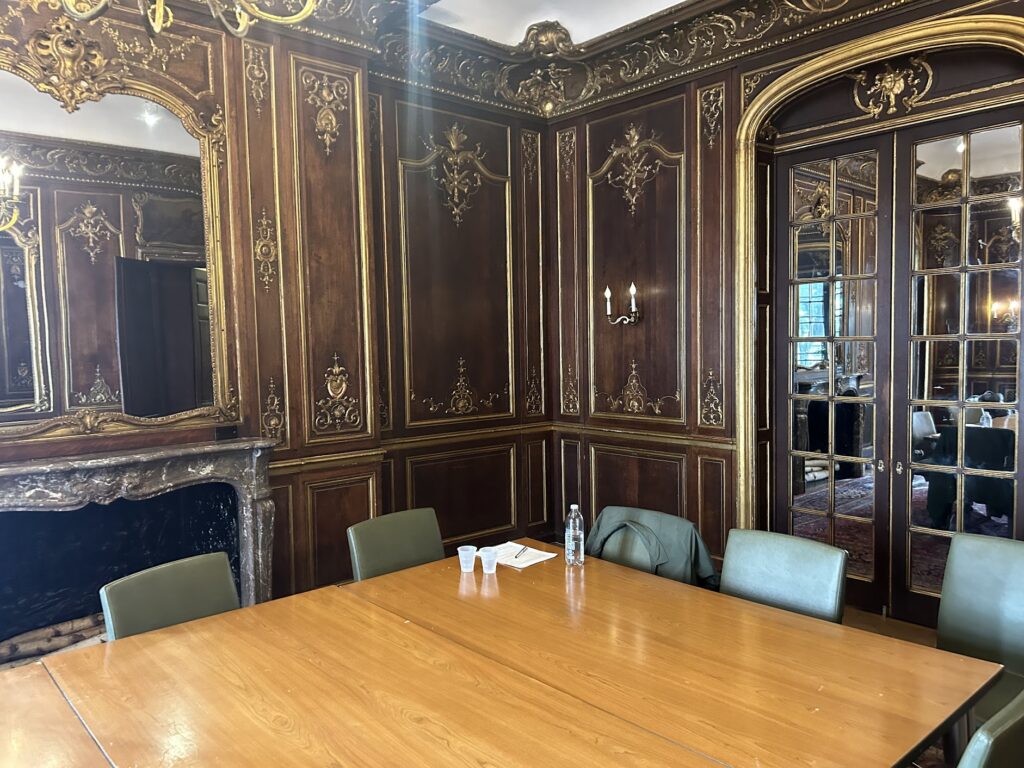
The music room where we recorded a portion of the show.

The Morgan Library and Museum from above. The slender garden in the middle was replaced in 2006 by a lavish hall designed by Renzo Piano.
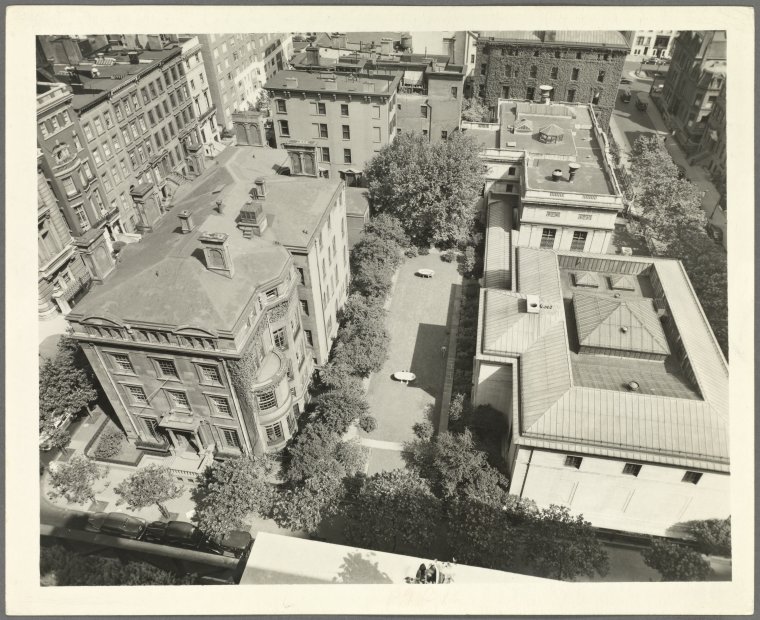
New York Public Library

FURTHER READING

J. Pierpont Morgan’s Library: Building the Bookman’s Paradise / The Morgan Library and Museum
The Hour of Fate: Theodore Roosevelt, JP Morgan and the Battle to Transform American Capitalism / Susan Berfield
The House of Morgan: An American Banking Dynasty and the Rise of Modern Finance/ Ron Chernow
J.P. Morgan – The Life and Deals of America’s Banker / J.R. MacGregor
Morgan: American Financier / Jean Strouse

From the website:
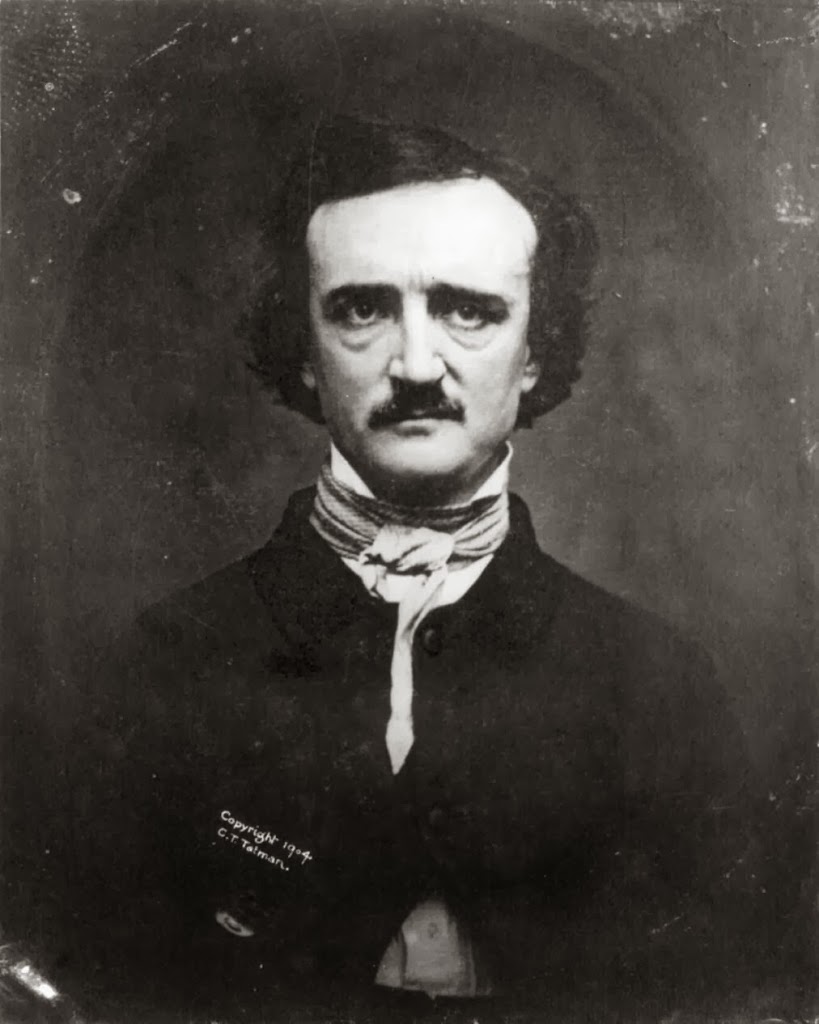
Edgar Allan Poe at the Morgan Library
JP Morgan Jr Rides The Subway
Remembering the Wall Street Bombing 1920
Terror Spree: Harvard Professor Bombs Capitol, Shoots JP Morgan
Categories
Bowery Boys Bookshelf Museums

Edgar Allan Poe: Terror of the Soul at the Morgan Library: Genius from a dark place, his strange torment on display

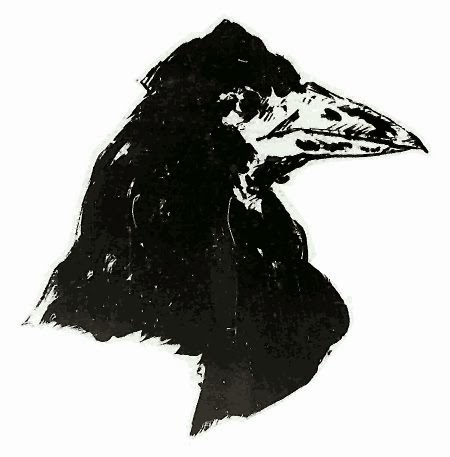
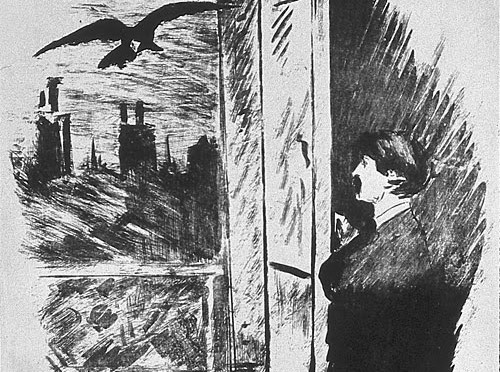
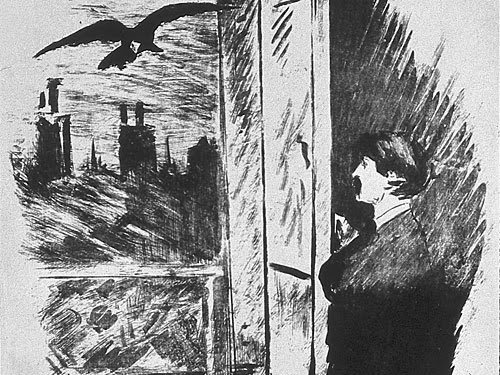
An illustration by Eduardo Manet from a 1875 French reprinting of “The Raven”

We are all too comfortable with Edgar Allan Poe in the abstract.  His fingerprints seem to be on everything these days.  His morbid tastes and the flowering dark genres he helped create appear just underneath much of American pop culture in the 21st century, from crime procedurals to teen supernatural romances.  He inspired the modern detective novel (and, by extension, film noir) and an uncountable number of American mystery and horror stories.

But do you dare get closer to the man, to the stained papers and morbid inner thoughts of a writer who practically cornered the market on early 19th century American perversity?  In Edgar Allan Poe: Terror of the Soul, the brilliant new show at the Morgan Library & Museum, you are trapped in a bloodred box with the writer, his letters, notes and original publications in an intimate and vaguely disturbing setting.

Yes, the room is actually painted red.  And a silhouette of Edgar’s haggard face glares down at you as you huddle in a perfectly awkward closeness over evidence of Poe’s brilliance, fame and madness.  Terror of the Soul is an autopsy of a strange career, revealed through first edition volumes and original newspaper clippings, then confirmed through bold, occasionally terse letters from the author himself.  A vivid portrait of the public Poe emerges — erratic, rarely satisfied — allowing you to speculate upon his private, tormented side.

Among the treasures here is a copy of Poe’s first book of poetry Al Aaraaf, Tamerlane and Minor Poems, published in 1829, a book so rare that it inspired one of the 20th century’s great book thefts.  Nearby sits the first publication of “The Raven,” next to handwritten notes from Poe about changes to be made in future reprintings.

Terror of the Soul is as much about other people’s perception of Poe as it is about the writer himself.  Eduardo Manet‘s expressive lithographs from a 1875 French edition of “The Raven” are a highlight of the show, a perfect synthesis of elegance and gloom.  A selection of sketches, daguerreotypes, photographs and even a bust of Poe are on display, his hollow face in an array of contortions and somber moods.

Most of the objects here require you to move closer, your eyes peering over old text of a sometimes unsettling nature.  Often the format is downright alien, as in the odd, mysterious scroll on which he chose to lavishly transcribe his poem “The Bells” in 1849, one month before his death.  The scroll has pencilled changes along the margins; in one change, he ponders using the word ‘menace’ over ‘meaning’.  Along the edges of the scroll is evidence that it had been set on fire at some point.

There are many such tiny mysteries among the artifacts of Edgar Allan Poe: Terror of the Soul, a show with more horrors contained within it than any Halloween-inspired haunted house could ever provide.

Edgar Allan Poe: Terror of the Soul, at the Morgan Library & Museum, through January 26, 2014.  Visit their website for more information.