Categories
Gilded Age New York

“The First Dandelion” and Walt Whitman’s very bad timing

In 1888, the New York Herald ran this poem by the great Walt Whitman:

                                         The First Dandelion

                                         Simple and fresh and fair from winter’s close 
                                                    emerging, 
                                        As if no artifice of fashion, business, politics, 
                                                   had ever been, 
                                       Forth from its sunny nook of shelter’d grass— 
                                                  innocent, golden, calm as the dawn, 
                                      The spring’s first dandelion shows its trustful 
                                                  face 

Whitman was a living legend by this point.  The infirm 78-year old writer lived in Camden, New Jersey, and rarely left his home.  His most notable appearance in New York the previous year had been as a lecturer at the Madison Square Theater, discussing the legacy of Abraham Lincoln to an audience which included Mark Twain and Augustus Saint-Gaudens.
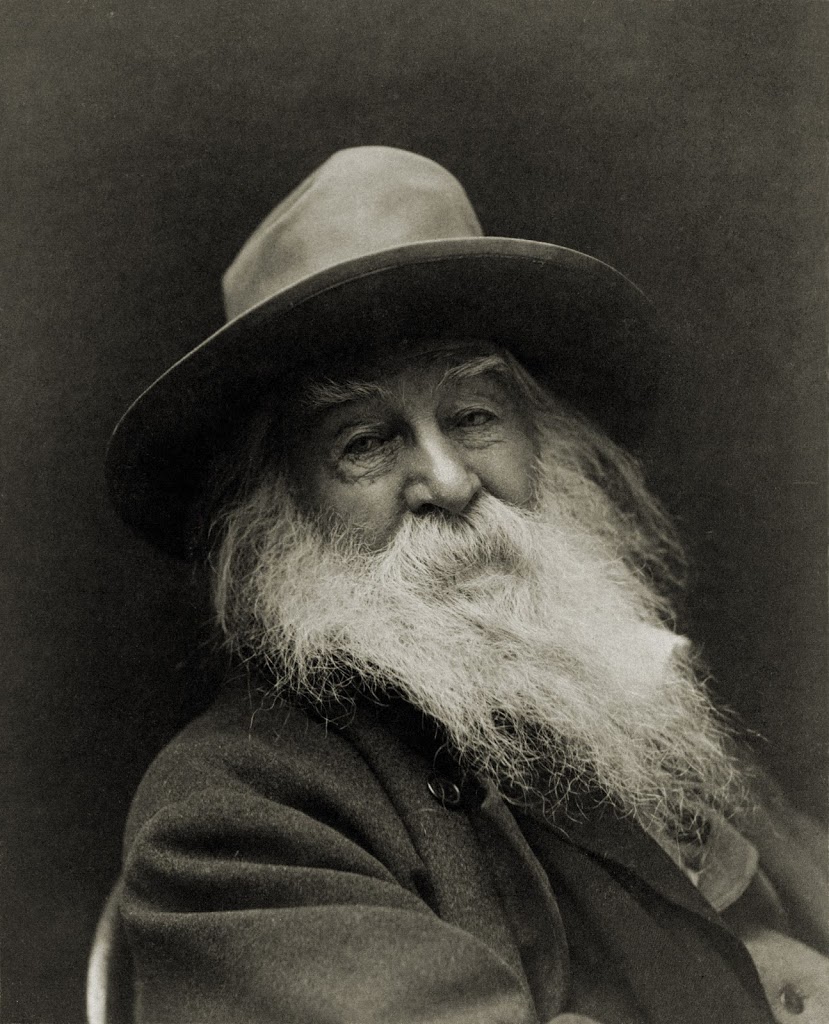
A poem by Whitman would have been reason alone to buy an edition of the New York Herald. And indeed, as the Herald’s ‘poet laureate’, several of his most notable works had debuted there.  “Mannahatta,” for instance, debuted in the Herald on February 27 that year.

At right: Walt Whitman in 1887, taken in New York by George C. Cox

Unfortunately, “The First Dandelion,” a little ode to the coming spring, ran on March 12, 1888, the worst day of the Blizzard of 1888, a day when several feet of show and deathly winds were making the American northeast a very unpleasant place to be. The poem “made its appearance at a most unfortunate time,” said the journal Illustrated American in 1892.

Nobody wanted to read about a gentle dandelion that day.  And in proceeding issues of the Herald, the poem was roundly mocked with parody verse.  Two days later, ran a verse below, signed simply “After Walt Whitman.”

                                     The First Blizzard

                                     Simple and fresh and fierce, from Winter’s close 
                                          emerging, 
                                    As if no artifice of summer, business, politics 
                                         had ever been, 
                                   Forth from its snowy nook of shivering glaciers– 
                                        innocent, silver, pale as the dawn, 
                                  The Spring’s first blizzard shows its wryful 
                                         face. 

Not quite finished, the Herald ran another mocking poem the following day:

                                  Served Him Right

                                  The poet began an ode to Spring–
                                 “Hail, lusty March! Thy airs inspire
                                 My muse of flowers and love to sing–“
                                 And then the blizzard struck the lyre

Neither the Herald nor its readership held it against Whitman personally. Four days later, the paper published “The Wallabout Martyrs,” his tribute to those held capture aboard prison ships during the Revolutionary War.

And the reputation of “The First Dandelion” was saved when it appeared in the ‘deathbed’ edition of Whitman’s Leaves of Grass, where its beauty was better appreciated.
Categories
Gilded Age New York Podcasts

Frozen in time: The Blizzard of 1888 knocks New York City off its feet, creating the deadliest commute in history

PODCAST This year is the 125th anniversary of one of the worst storms to ever wreak havoc upon New York City, the now-legendary mix of wind and snow called the Great Blizzard of 1888.

Its memory was again conjured up a few months ago as people struggled to compare Hurricane Sandy with some devastating event in New York’s past. And indeed, the Blizzard and Sandy have several disturbing similarities. But the battering snow-hurricane of 1888, with freezing temperatures and drifts three stories high, was made worse by the condition of New York’s transportation and communication systems, all completely unprepared for 36 hours of continual snow.

The storm struck in the early hours of Monday, and many thousands attempted to make their way to work, not knowing how severe the storm would be. It would be the worst commute in New York City history! Fallen telephone and telegraph poles became a hidden threat under the quickly accumulating drifts.

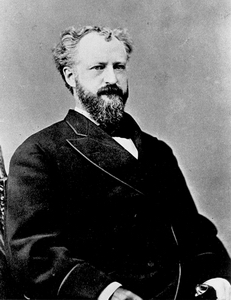
Elevated trains were frozen in place, their passengers unable to get out for hours. Many died simply trying to make their way back home on foot, including Roscoe Conkling (at right), a power broker of New York’s Republican Party.

But there were moments of amusement too. Saloons thrived, and actors trudged through to the snow in time for their performances, And for P.T. Barnum, the show must always go on!

STARRING: Hugh Grant (although maybe not the one you’re thinking)


NOTE: And, yes, we can’t believe the timing of this one, releasing on the same date of an ACTUAL blizzard. We really had this one planned for awhile, delayed it a bit because it seemed too eerie to do it so close after Hurricane Sandy.

So if you’re in New York or the northeast United States, stay inside, stay safe and let this podcast be the only dangerous snow drifts you experience this week!


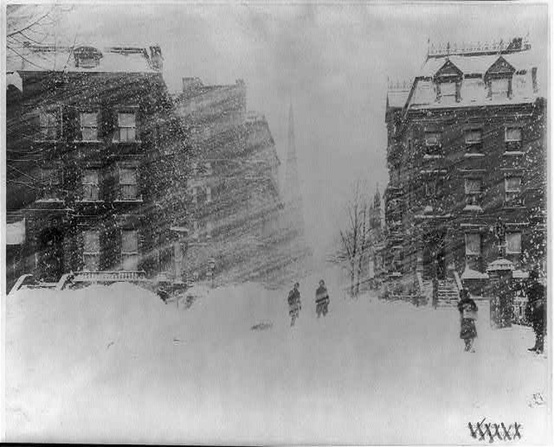
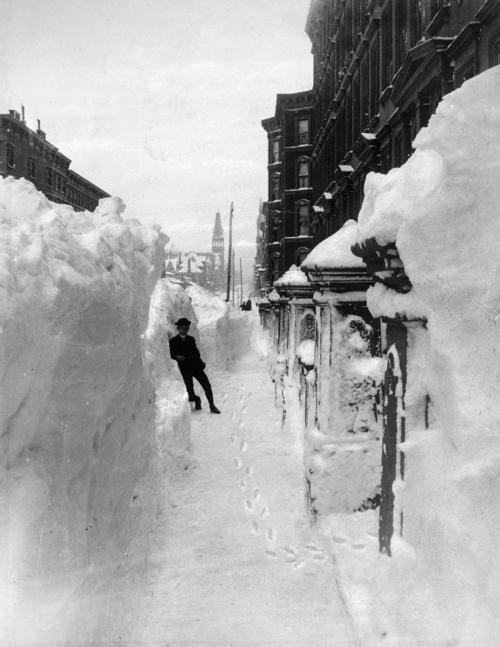
In the blizzard of 1888, the streets disappeared and the snow came down almost horizontally. Imagine being trapped at work, several miles from your home. This was the plight experienced by thousands of New Yorkers (and others throughout the northeast) that Monday. (Library of Congress)

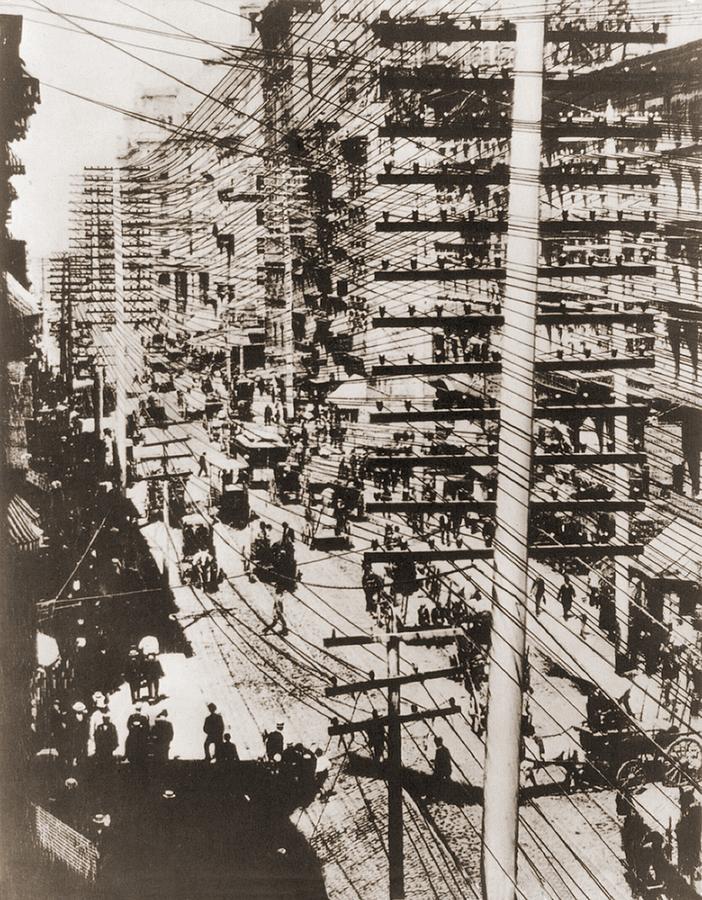
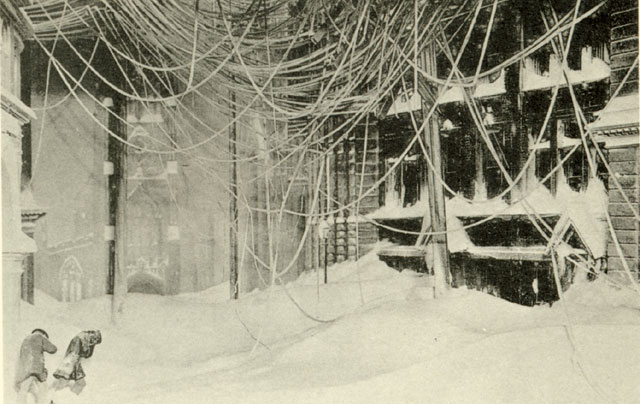
Why did the 1888 blizzard become such a hazard for New Yorkers? Let this picture be your first clue. The city was a cobweb of elevated telegraph, telephone and electric wires. This picture is from 1887. (LOC)


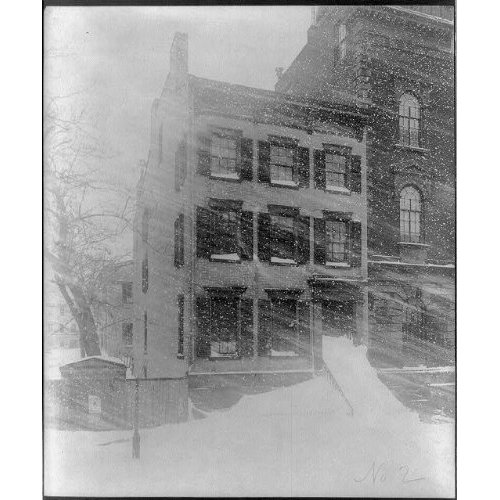
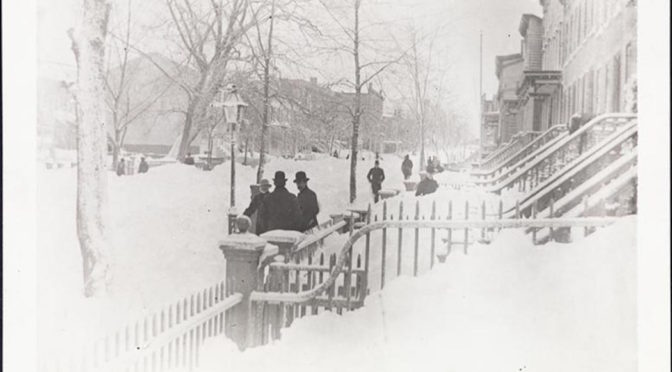
One example of a terrible (although minor) snow drift that might have kept this family in their home all day. Because of the unpredictable changes in wind, some houses might have been drift-free, while others close by completely locked in with snow. (LOC)

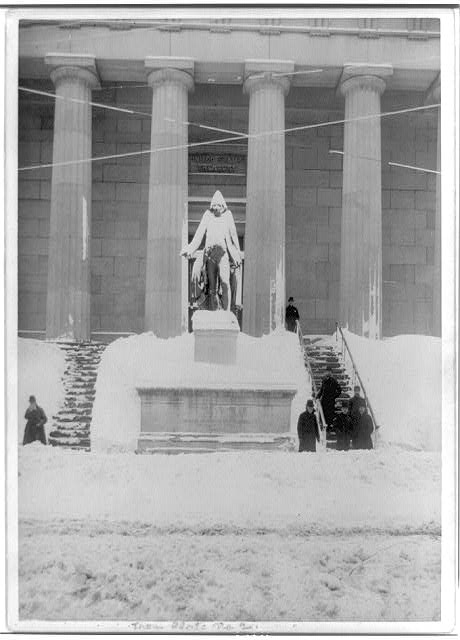
George Washington at the Sub-Treasury Building (today Federal Hall). I ran this photo a few weeks ago, but it’s so bizarre that I think it needs a second posting.

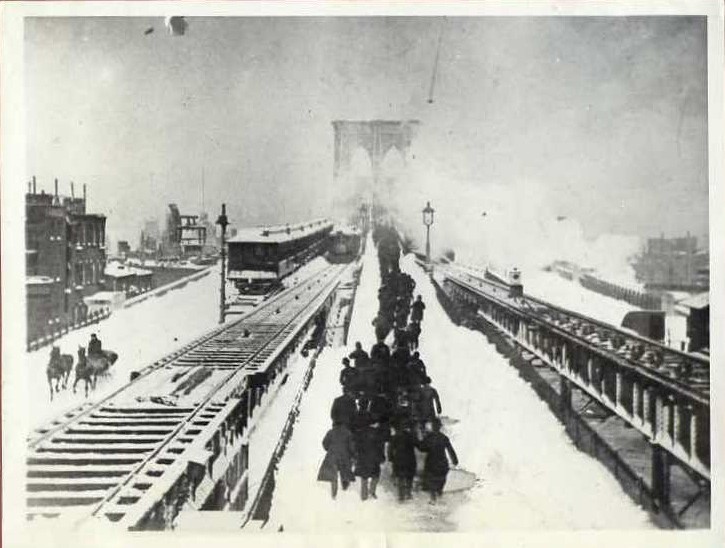
The Brooklyn Bridge, not even five years old, weathered the winds quite well, but became a hazard due to ice. In this picture, people are crossing over as there was no other way to get between Manhattan and Brooklyn. It’s not clear if any of the trains are operating in this picture.

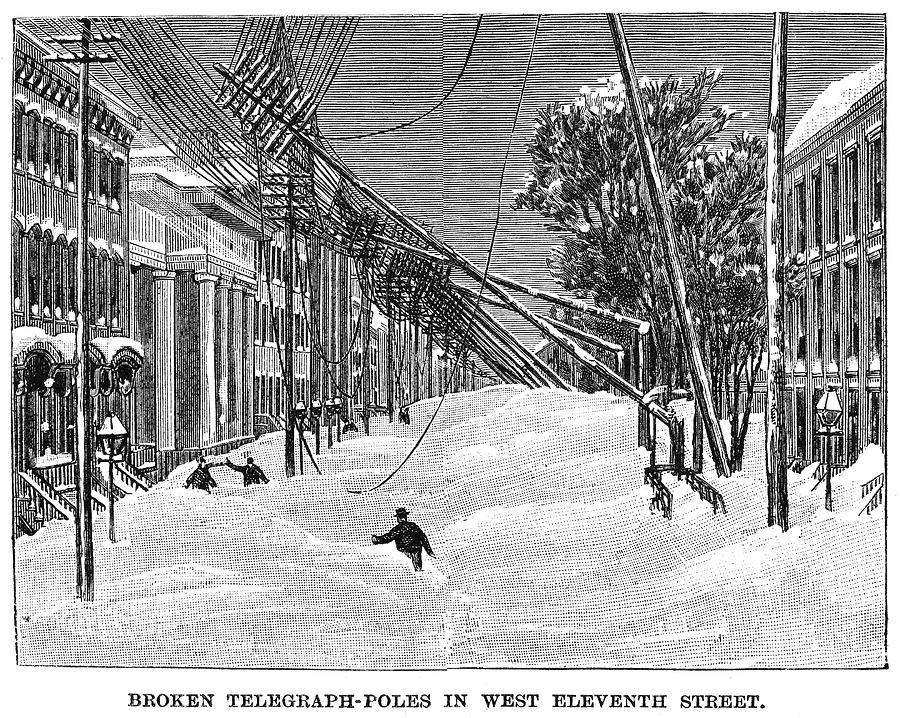
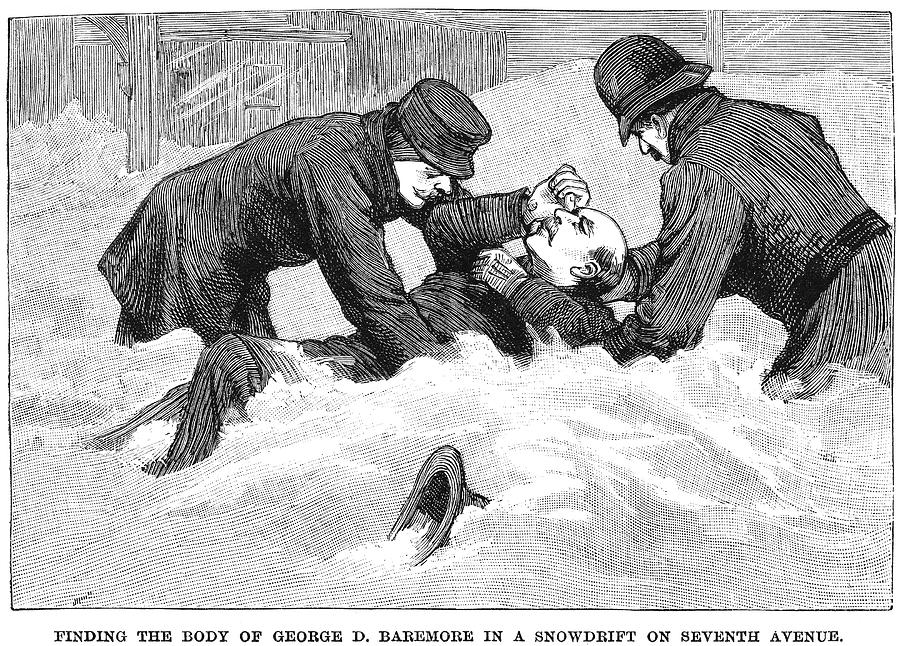
The biggest danger for those venturing outside were the hundreds of downed telegraph, telephone and electrical poles, no match for the intense gusts. The poles would quickly fall then get covered with snow, creating deadly hazards for people walking past. The snow would just as quickly cover over an unconscious individual; many New Yorkers froze to death when they fell and were instantly shrouded.


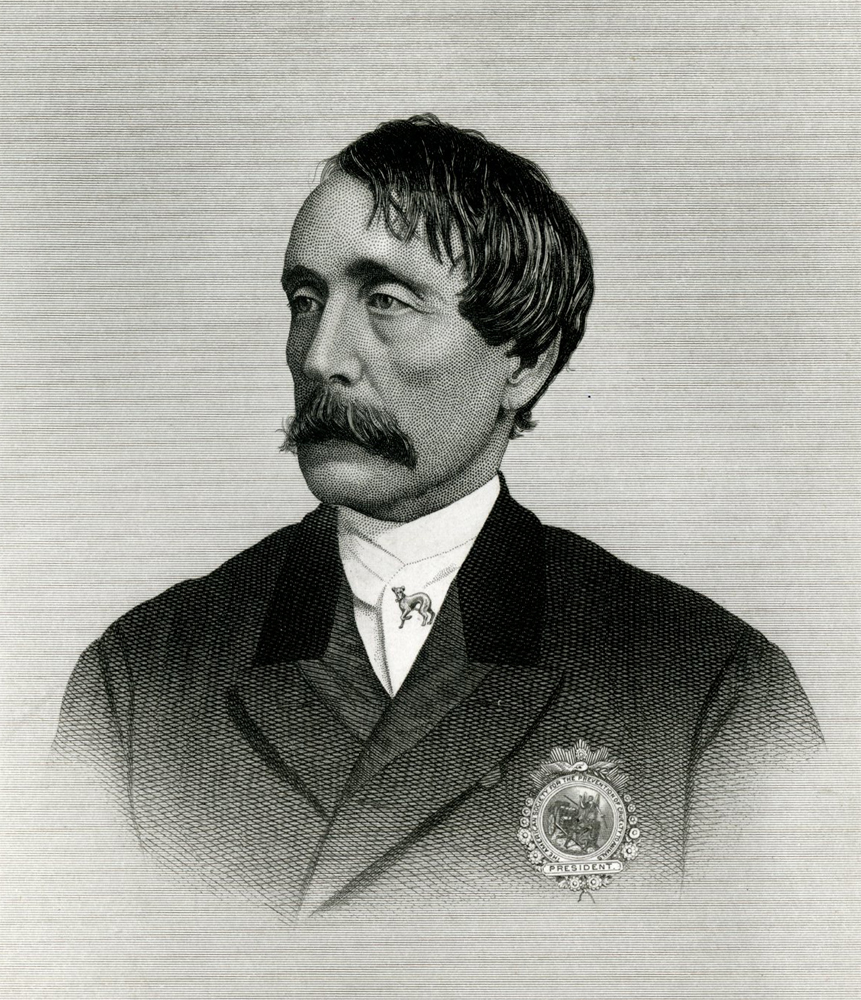
Henry Bergh, founder of the American Society for the Prevention of Cruelty to Animals. He did not survive the blizzard. (NYHS)

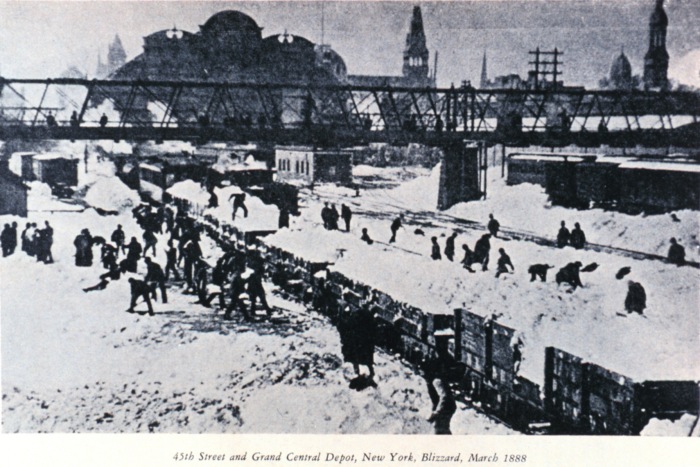
Transportation in and out of the city was at a complete standstill for half the week. Here workers frantically try to clear the way for trains going into Grand Central Depot.


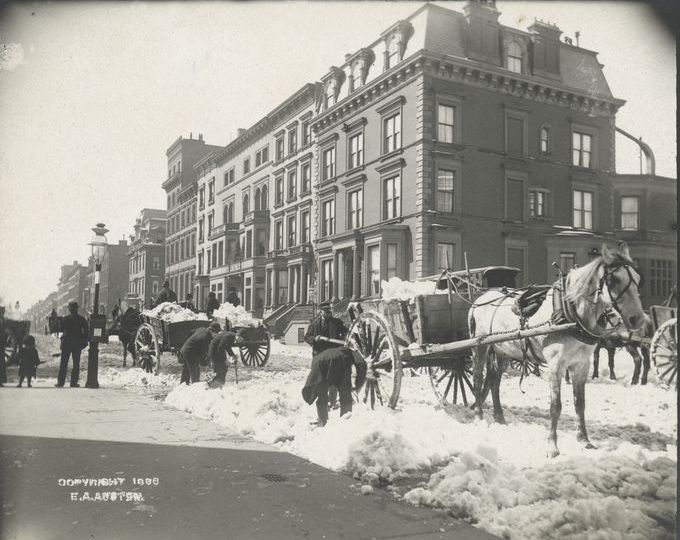
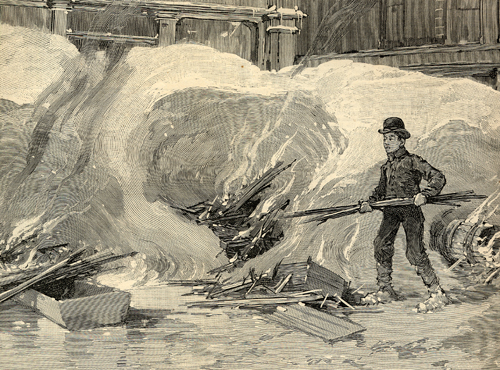
Clean-up was truly chaotic, a feeble effort by the city paired with private contractors with horses, shovels and carts. The piles of snow were taken to water’s edge and dumped, or, in a few less preferred cases, people just started bonfires and melted it away. (For a great picture of a snow dump in the river, see this photo at Shorpy of a blizzard from 1899.) Top pic courtesy LOC, at bottom Maggie Blanck.


The cover of Frank Leslie’s Illustrated Newspaper, usually one of the more sensational pieces of journalism people might have found at their newsstand.

“Not since the Great Blizzard!” “Bigger than 1821!” Hurricane Sandy inspires historical superlatives

When things get really, really bad, history provides validation and context.   The aftermath of Hurricane Sandy has already inspired newscasters, meteorologists and journalists to reach to the greatest disasters in New York City history for comparison.

These can seem very hyperbolic at times and even a little weird. (‘7 Devastating Hurricanes: Where Will Sandy Rank?‘ as though she were an American Idol contestant.)  It will be days before we really know if this was truly “the greatest disaster in New York history.”  But I do think the comparisons can not only bring home the severity of the current situation, they can also bring to life past traumas in a way that no faded black-and-white image ever could.

Here’s a few historical comparisons I’ve heard thus far, and I’m adding a couple of my own, events that popped into mind as I watched some of the terrifying images on television:

Worst Subway Shutdown Ever — The subways often flood after rainstorms, but snowstorms have also been a menace, particularly the blizzard of 1947 and one in 2006.  However, after Sandy, the MTA declared “The New York City subway system is 108 years old, but it has never faced a disaster as devastating as what we experienced last night.”  Last year’s Hurricane Irene was the first time the subway was ever preemptively shut down.  The decision this year proved wise indeed. [source]
 
Great Norfolk and Long Island Hurricane of 1821 — The Battery experienced high water levels of 11.2 feet during this 1821 event, still the only hurricane to ever directly hit New York. Last night, water levels surged to 13.88 feet, setting a new, disturbing record. Also known as the Great September Gale.

The Great New York Fire of 1835 — The images of runaway fires in Queens, mixed with the utter devastation of lower Manhattan, might remind you of the December blaze of 1835 which destroyed hundreds of buildings downtown. However, that exploding transformer on 14th Street — which caused a blackout to thousands of residents last night — also recall a series of explosions which occurred in New York in 1845, affectionately called the Great Explosion of 1845.  (Boy, they can really overuse a word like ‘great’.)

The Great Blizzard of 1888 — Sandy forced the shutdown of the New York Stock Exchange for a second day today, although the storm did not flood it, as rumors Monday night proclaimed. This was the first time the exchange has shut down for more than one day since the pulverizing snowstorm of 1888 paralyzed city transportation.

The Rockaway Fire of 1892 — One of the hardest hit areas in New York was Rockaway Beach, with its boardwalk destroyed and dozens of homes destroyed by fire over in Breezy Point.  The frightening images reminded me of something from our Rockaways podcast from this summer, a great fire which broke out in September of 1892 which destroyed most of the neighborhood of Seaside.

The Big Wind of 1912 — If contemporary sources are to be believed, the frozen windstorm which struck New York on February 22, 1912, blew at speeds more than double those of Sandy. The ‘giant among gales’ even stirred up a huge blaze in Red Hook, Brooklyn, and tested the steel of recently built skyscrapers.

The Long Island Express (New England Hurricane of 1938) — This powerful hurricane slammed into New England and Long Island in September of 1938.  It remains the most powerful storm to ever ravage the New England states.  According to Jeff Masters of Weather Underground, Sandy’s barometric pressure ties that of the Long Island storm, at 946 millibars.

The Ash Wednesday Hurricane of 1962 — Due to the ‘Frankenstorm‘ aspect to Sandy, another metric experts have used is the similarly formed, long-lingering March 1962 storm which hammered North Carolina, New Jersey and Long Island.

Hurricane Andrew 1992 —  Comparisons to this catastrophe are still out, as it’s mostly evoked due to the federal government’s poor disaster response. Another question left lingering is whether the cost of Sandy will rival that of Andrew, the third most expensive hurricane in American history (after Katrina and Ike).

September 11, 2001 — Then, of course, due to the shutdown of lower Manhattan, one can’t help but recall the attack on the World Trade Center, which actually was the worst thing to ever happen to New York City.

Crane Collapse at 303 East 51st Street 2008 — Anybody seeing the images of the broken crane which hung precariously at the construction site of One57 on West 57th Street might have remembered the horror which occurred at another midtown Manhattan site just four years ago, a crane collapse on East 51st Street which killed seven people. To this day, the uncompleted building stands as a reminder to this tragedy.

If you’ve heard any other historical comparisons used on your local newscast, please put them in the comments.