Categories
Those Were The Days Women's History

The New York Monkey Fad of 1907

In an absolutely inhumane and totally unwise moment in New York City history, wild and exotic animals were once considered pets, roaming around the city streets with their owners.

The wealthiest classes collected all sorts of unusual beasts for their amusement during the 19th century.  So many in fact that the Central Park Zoo — or Menagerie, as it was called then — was created as a repository for all those unusual creatures abandoned by their owners.
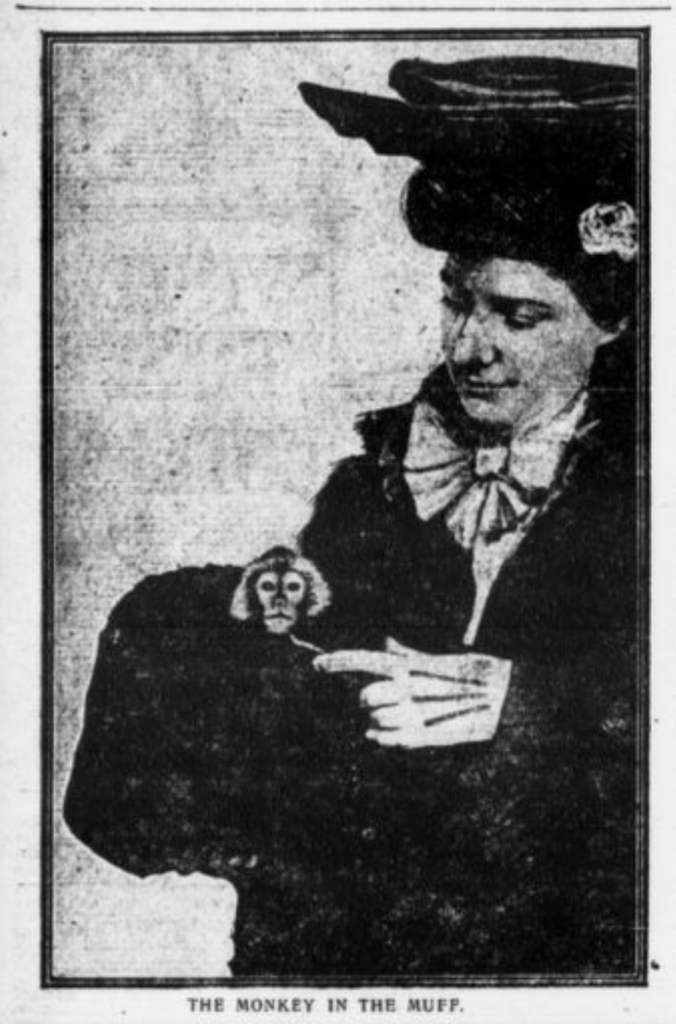
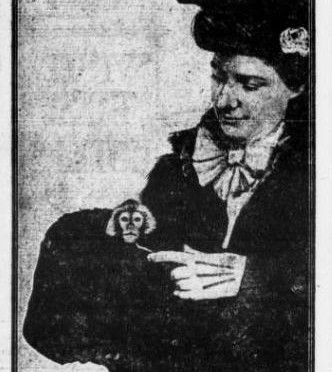
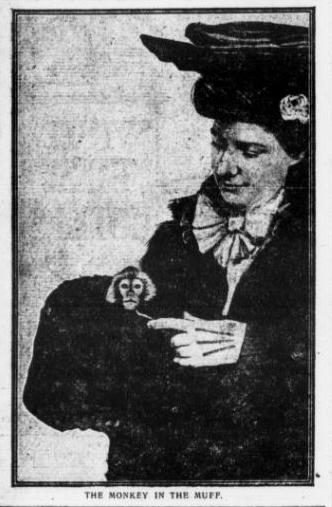
From the 1907 Sun article, a lady with her pet monkey (courtesy LOC)

Primal Luxury

A bizarre New York Sun article from March 1907 found an interesting correlation between elegant women and their companion monkeys. They were such hot commodities with finer New York ladies that year that the animals were almost considered luxuries.

Monkeys rode snugly amid the elegant furs and finery of a modern woman. “Out of ermine muffs, carried by smartly dressed women along Fifth Avenue, hideous grinning little faces peep out of you.”  

The best examples of woman-monkey companionship were the talk of the town; one New York lady had her monkey trained to “manicure himself, don the right clothes at the right hour, eat daintily with his fork, pretend to smoke his after dinner cigarette and go to bed in a little iron bedstead.”

“It is impossible to import enough monkeys to fill the present demand,” one animal importer told the Sun. “An installment of marmosets or ringtails no sooner reaches port than they are shipped to women all over the country.”
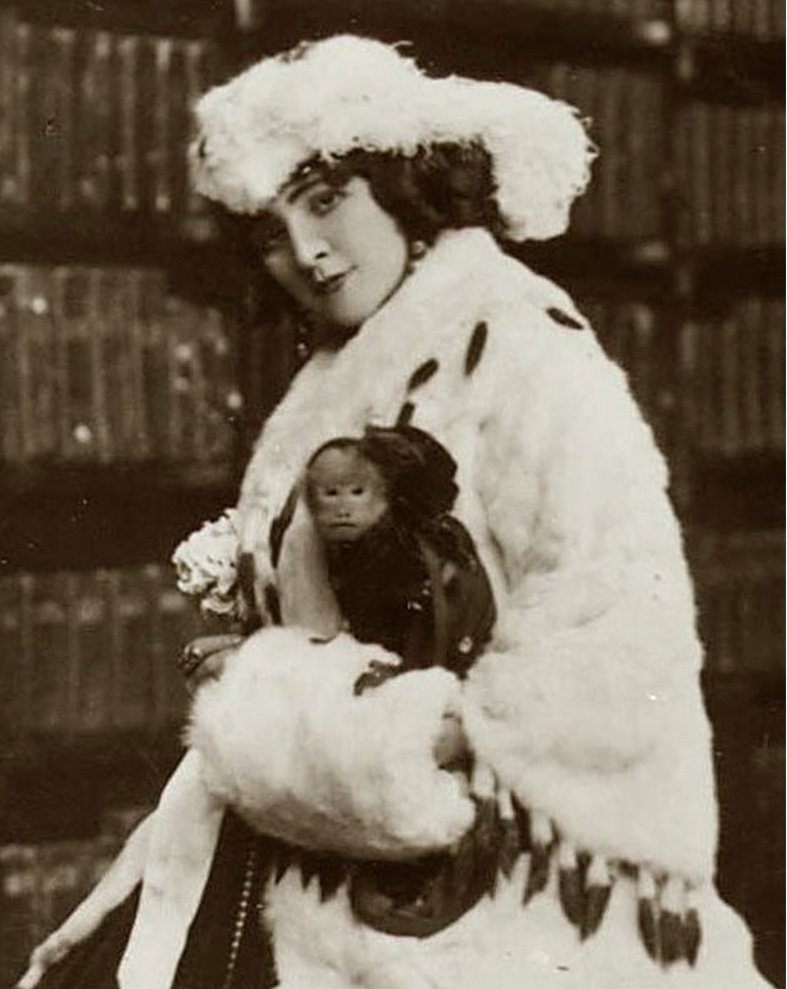
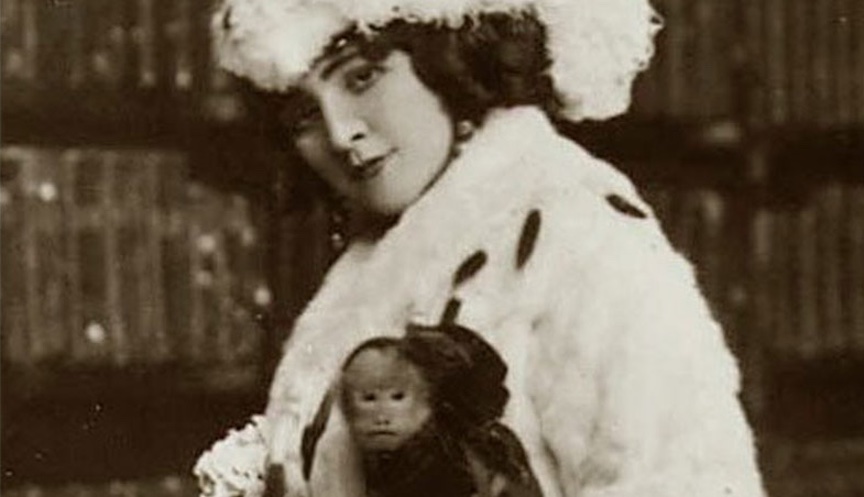
Actress Doris Keane with her pet monkey (Courtesy Wiener Museum)

Monkey See, Monkey Do

It was an unorthodox but very charismatic choice, popular with actresses, princesses and rich ladies of a certain progressive bent.  

The pet monkey was prepared to do the unthinkable in 1907 — replace the yapping dog as the woman’s preferred companion.  

From the same article: “To those who do not like monkeys, the popularity of the beast seems more objectionable than any other recent fad. The horse fad, the dog fad, the cat fad, the automobile fad, the ping pong fad, the bridge fad, the chameleon fad are more excusable to such people.”

The popularity of the pet monkey, once associated with immigrant organ grinders on the streets of Five Points in the late 19th century, arose from increased scholarship on the animal, from stories of African safaris, and from seeing them in action at the House of Primates in the Bronx Zoo.
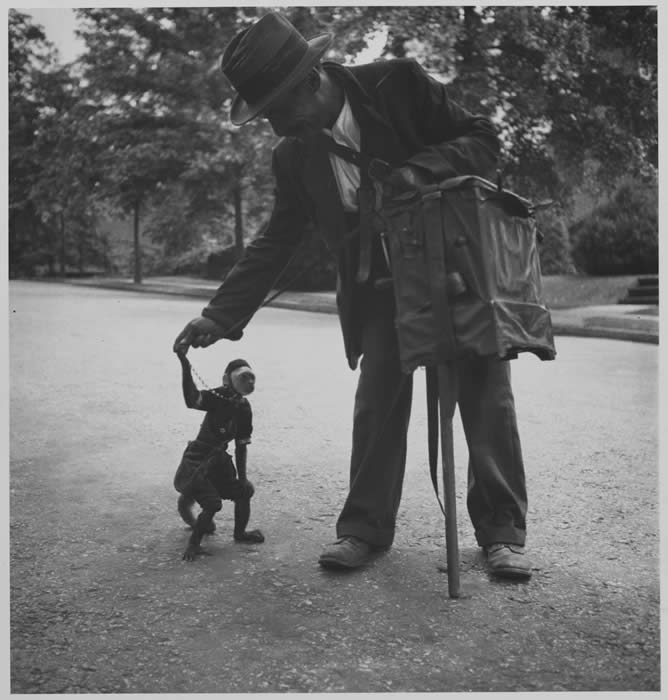
Organ grinder and monkey in 1935. Mayor LaGuardia outlawed organ grinders shortly after this picture. Photograph by Samuel H. Gottscho. Courtesy Museum of the City of New York

The Monkey Business

The animals were brought over on trading ships, basketfuls scooped up off the coasts of South America or even as far away as South Africa. A boatload of 1,000 monkeys arrived in New York in 1909, a cargo which also included hundreds of exotic birds and a couple dozen pythons.

 If they survived, they were given to importers throughout the city or sometimes sold right of the dock.

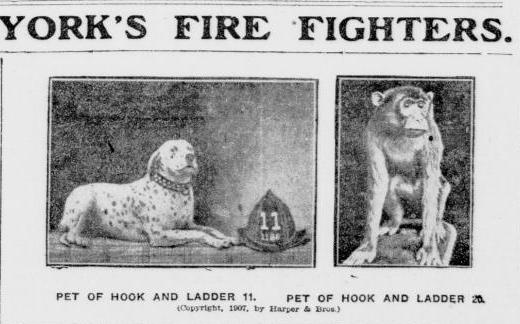
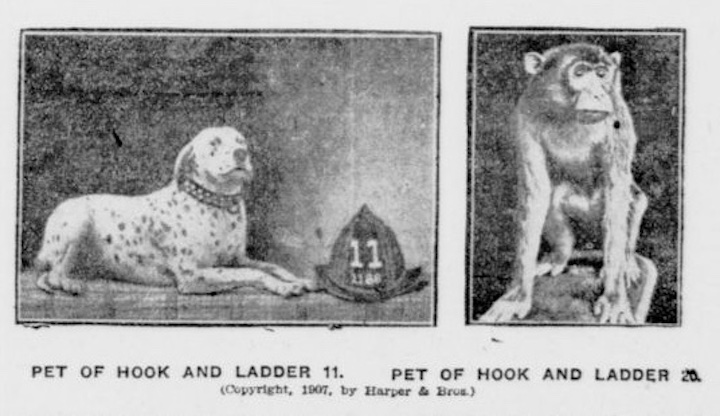
Monkeys even found themselves in the service of New York area fire departments. In 1907, a Mercer Street crew enjoyed the alertness of a monkey named Jenny (pictured below), who once warned her fellow firefighters of a blaze by tossing pool balls down an iron stairway.

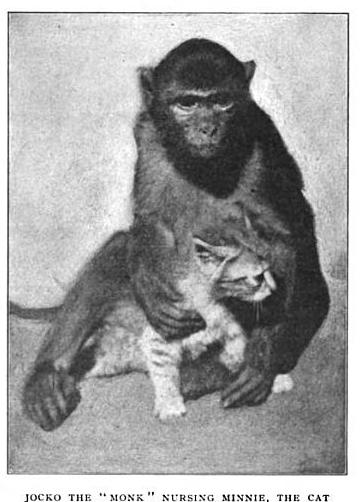
And a fire crew in Rockaway Beach was well-known for their monkey mascot Jocko (pictured at left, with fellow mascot, kitten Minnie) who occasionally attacked Italian peanut vendors.
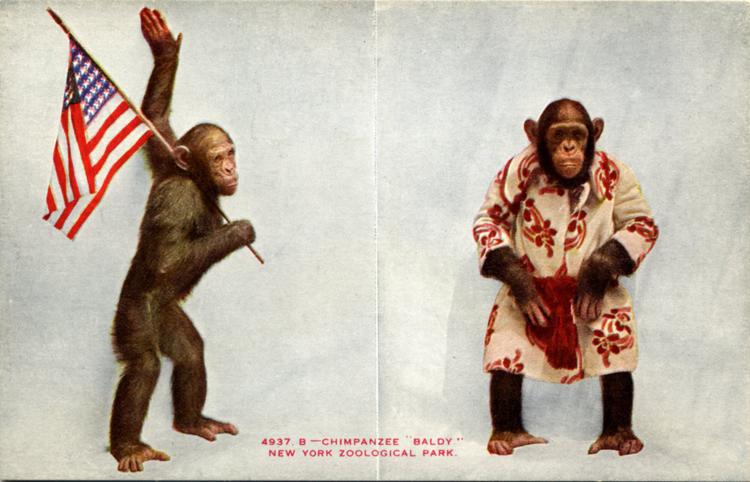
Chimpanzee in a patriotic pose, 1910, Bronx Zoo postcard

Swingers

It seems impossible to comprehend how nonchalant pet owners were regarding disease and injury.

 The Sun article runs through some helpful hints about how to personally select your monkey from a writhing litter right off the boat:  “If the skin is yellow do not invest your money, for you may be quite sure that the monkey has tuberculosis. If the skin is black the monkey has blood poisoning.”

Inevitably, the more untamed of these creatures did cause mayhem. In just one example from 1907, a Sixth Avenue monkey named Pete hurled flower pots at pedestrians, almost killing a woman.  On July 4, 1908, a Brooklyn, monkey named Nimbo set a house on fire by lighting fireworks.

And sadly, the monkey too soon fell victim to the inevitability of a passing fad.  By 1908, the New York Times was already proclaiming the Pomeranian as the new “hot” pet.

Below: From the Nov. 17, 1907 New York Tribune, Jenny the pool ball-hurling monkey mascot of the Mercer Street fire crew.
A version of this article first appeared on this website in November 2012.
Categories
Amusements and Thrills Health and Living

The Bowery Boys New York City swimsuit edition, 1880-1920

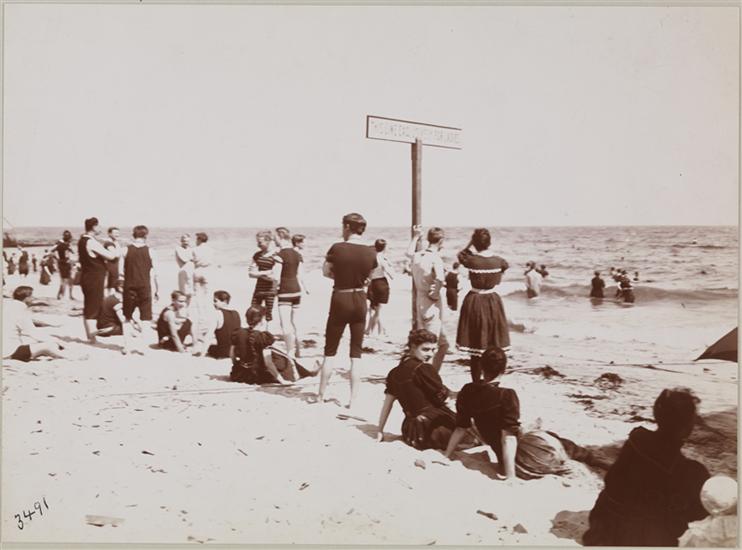
 The notion of organized ‘ocean bathing’ — actually going into the water for health, relaxation and enjoyment — was really a 19th century invention, first popularized in the United States during the 1830s at the Marine Pavilion on the Rockaway Peninsula.

Bathing beauty: Diver Maggie Ward prepares for a jump into the waters of Coney Island, in the summer of 1888

For propriety’s sake, people would enter a bathing hut hitched to a horse and ride the container as it was backed into the water, exiting from the hut in their full-body swimming apparel only when safely immersed in the water. No risk of seeing wet fabric clinging seductively to the human form!

Fifty years later, bathers would dare walk to the beach sans horse-drawn hut. But their beach apparel still matched the modesty of their regular wear.

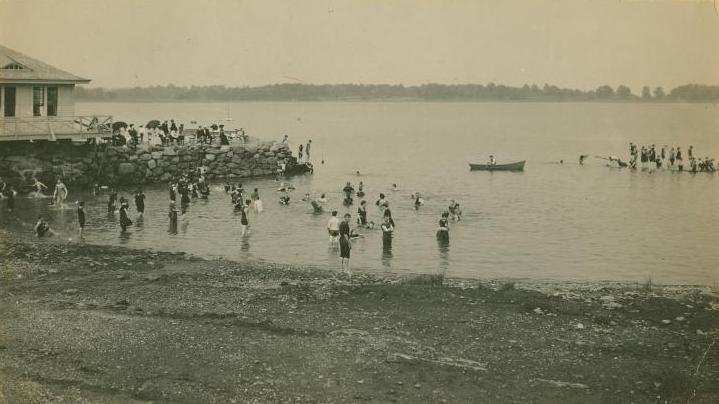
Here are a few examples of garments — for sunbathing, swimming or just relaxing — worn at some of New York’s most popular beaches of the late 19th-early 20th century.

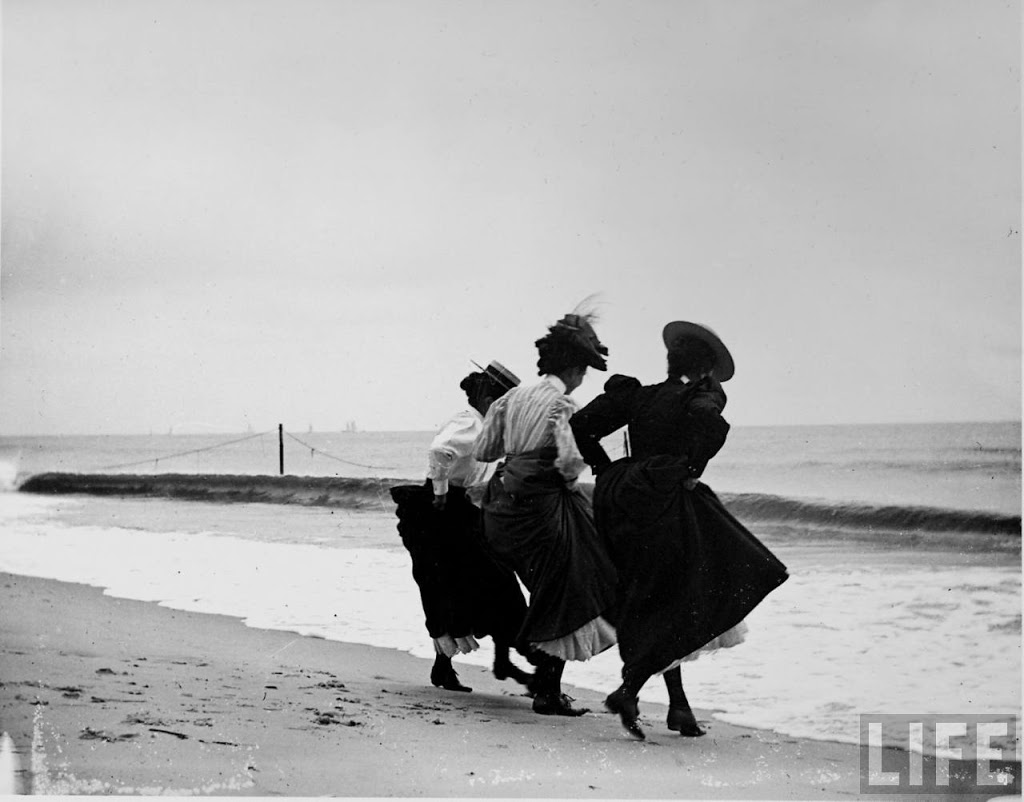
Why needs a bikini? Daring ladies risk the surf in regular wear on the Rockaway beachfront, 1897 (Courtesy Life Magazine)

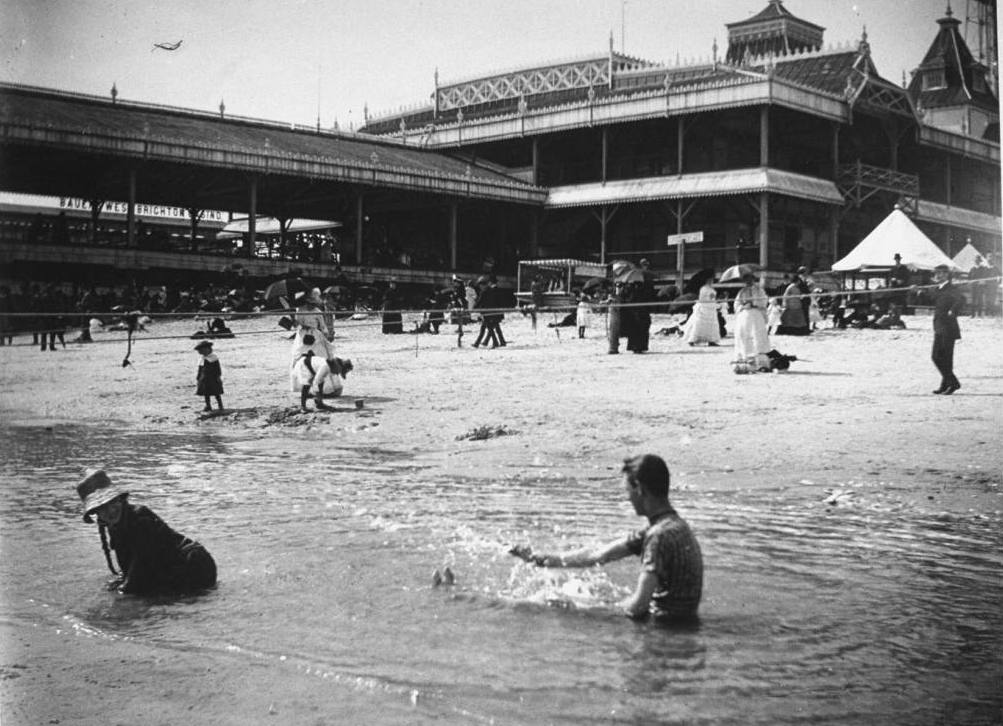
Serving up shenanigans in the waters of Brighton Beach, 1886
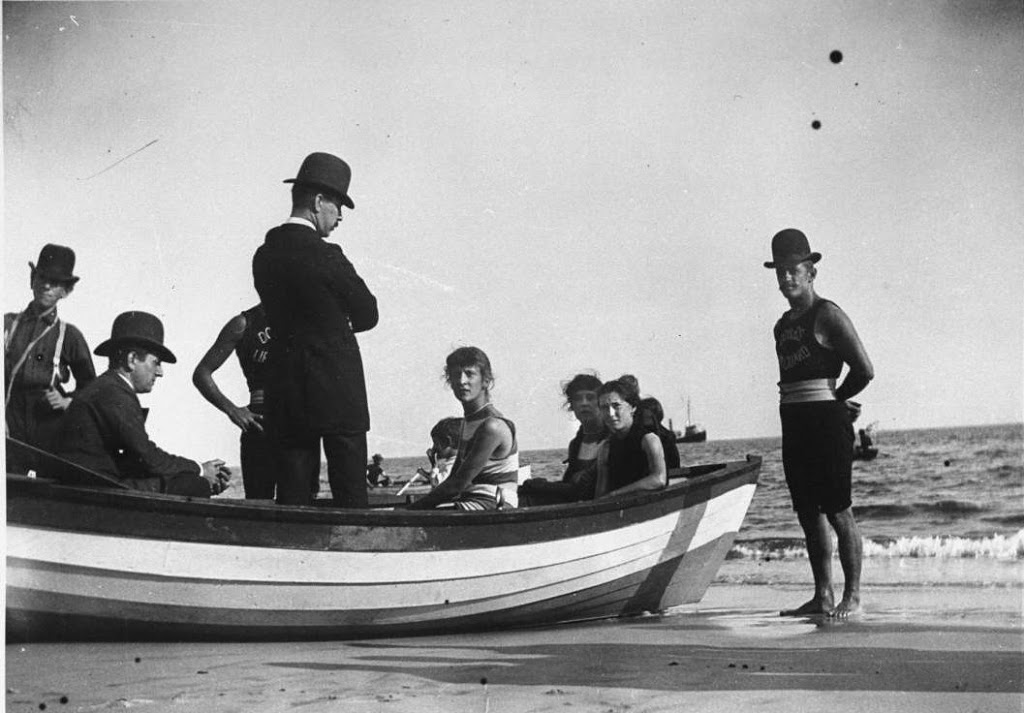
Three female athletes, readying for a ocean swimming match out at Coney Island, await the competition with a few oddly fully clothed men, 1887 (Life Magazine)
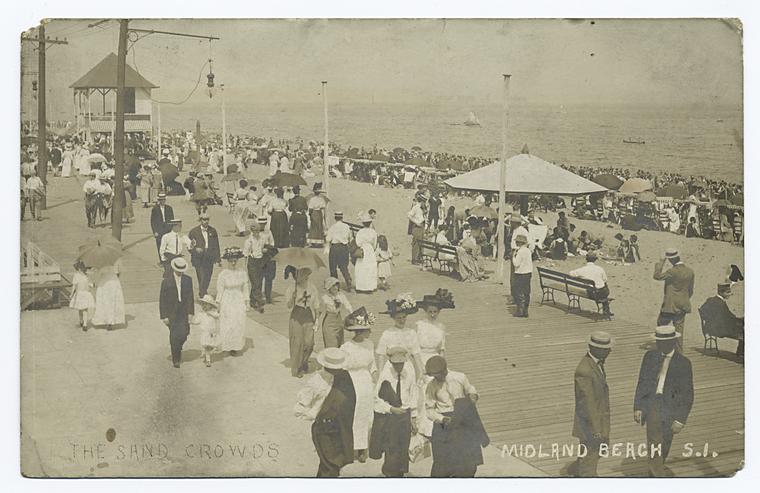
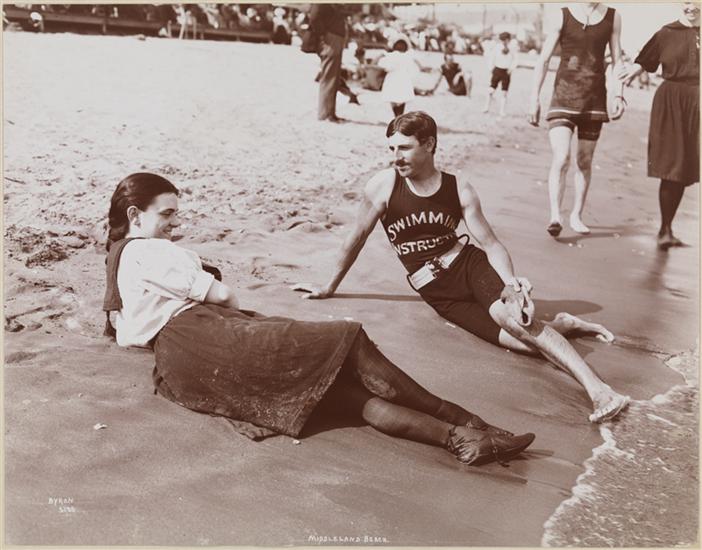
Classing it up a little with the ‘sand crowds’ along the Midland Beach boardwalk in Staten Island, no date, but probably between 1900-1910. (New York Public Library)
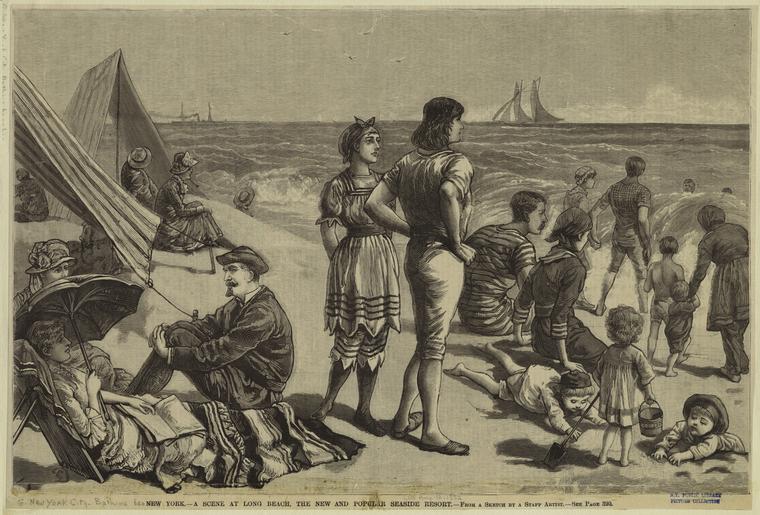
The dapper sea threads adorning the trendy beachgoers at Long Beach, 1882. Okay, this is technically in Nassau County, not New York City proper, but how could I not give these styles a showcase? (New York Public Library)
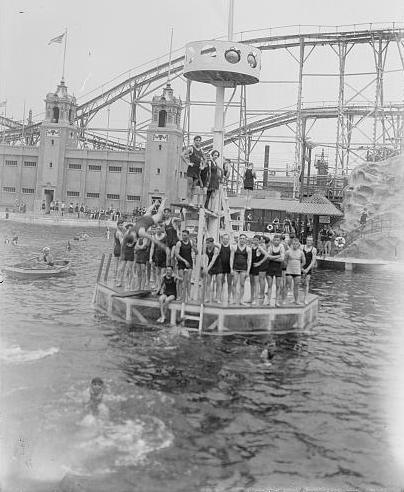
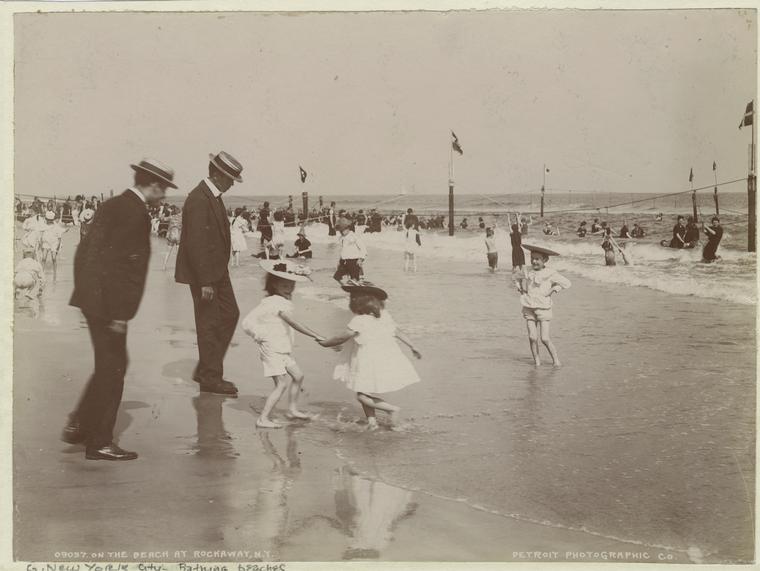
Check out little Minnie Pearl and her fine hatted friends at Rockaway, date unknown. (New York Public Library)
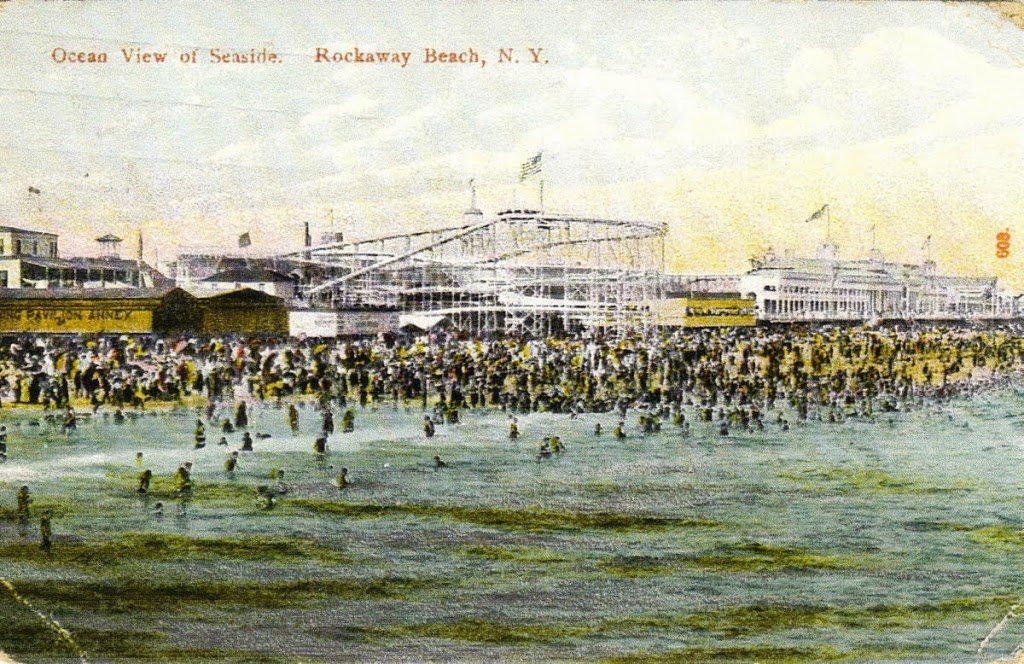
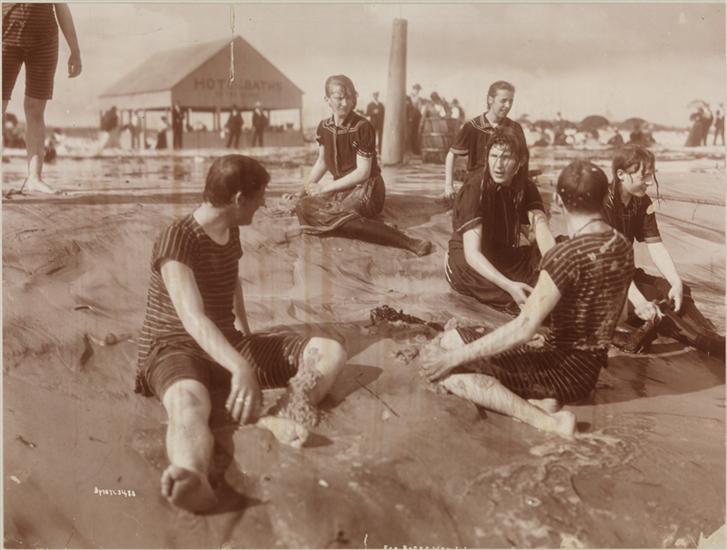
Frolicking in the sand in Far Rockaway, 1897. In the distance is a Hot Baths pavilion. (Courtesy Museum of the City of New York)
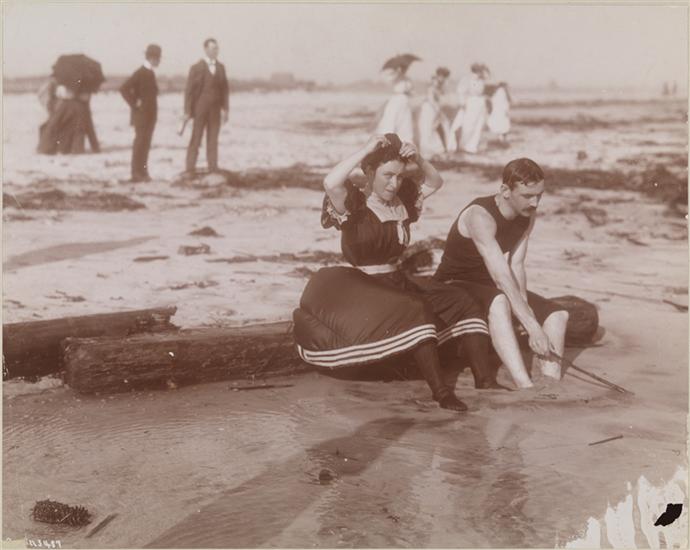
A dynamic duo hitting the beach of Far Rockaway, 1896. (Courtesy Museum of the City of New York)
Another image of Far Rockaway, 1897. featuring a whole array of bathing-suit options. (Courtesy Museum of the City of New York)
Bathers in black luxuriate in a swimming hole in Pelham Bay, 1903 (New York Public Library)
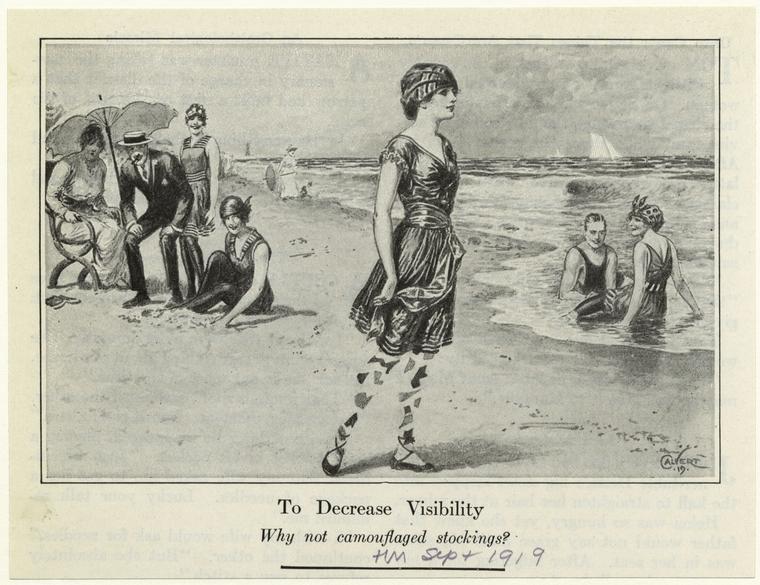
And finally, I’m not quite sure this avant garde look ever made it onto the beach. But if you want to look like you’re floating over the beach without legs, why not try these camouflage beach leggings, advertised in Harper’s Magazine in September 1919? (New York Public Library)
Basking in the surf at Midland Beach, 1898 (Courtesy Museum of the City of New York)
Categories
Uncategorized

The New York monkey fad of 1907: From Fifth Avenue to the fire department, primates were fashionable companions

The wacky IKEA monkey story of the past few days got me to wondering about wild animals as pets here in New York. After all, the wealthiest classes collected all sorts of unusual beasts for their amusement during the 19th century.  So many in fact that the Central Park Zoo — or Menagerie, as it was called then — was created as a repository for all those unusual creatures abandoned by their owners. (The Central Park Zoo was the topic of one of our first podcasts, all the way back in August 2007!)

A bizarre New York Sun article from March 1907 found an interesting correlation between elegant women and their companion monkeys.  They were such hot commodities with finer New York ladies that year that the animals were almost considered luxuries.

Monkeys rode snugly amid the elegant furs and finery of a modern woman.  “Out of ermine muffs, carried by smartly dressed women along Fifth Avenue, hideous grinning little faces peep out of you.”  The best examples of woman-monkey companionship were the talk of the town;  one New York lady had her monkey trained to “manicure himself, don the right clothes at the right hour, eat daintily with his fork, pretend to smoke his after dinner cigarette and go to bed in a little iron bedstead.”

At right: From the 1907 Sun article, a lady with her pet monkey (courtesy LOC)

“It is impossible to import enough monkeys to fill the present demand,” one animal importer told the Sun.  “An installment of marmosets or ringtails no sooner reaches port than they are shipped to women all over the country.”

It was an unorthodox but very charismatic choice, popular with actresses, princesses and rich ladies of a certain progressive bent.  The pet monkey was prepared to do the unthinkable in 1907 — replace the yapping dog as the woman’s preferred companion.  “To those who do not like monkeys, the popularity of the beast seems more objectionable than any other recent fad. The horse fad, the dog fad, the cat fad, the automobile fad, the ping pong fad, the bridge fad, the chameleon fad are more excusable to such people.”

The popularity of the pet monkey, once associated with immigrant organ grinders on the streets of Five Points in the late 19th century, arose from increased scholarship on the animal, from stories of African safaris, and from seeing them in action at the House of Primates in the Bronx Zoo.

The animals were brought over on trading ships, basketfuls scooped up off the coasts of South America or even as far away as South Africa. (A boatload of 1,000 monkeys arrived in New York in 1909, a cargo which also included hundreds of exotic birds and a couple dozen pythons.)  If they survived, they were given to importers throughout the city or sometimes sold right of the dock.

Monkeys even found themselves in the service of New York area fire departments. In 1907, a Mercer Street crew enjoyed the alertness of a monkey named Jenny (pictured below), who once warned her fellow firefighters of a blaze by tossing pool balls down an iron stairway.

And a fire crew in Rockaway Beach was well-known for their monkey mascot Jocko (pictured at left, with fellow mascot, kitten Minnie) who occasionally attacked Italian peanut vendors.

It seems impossible to comprehend how nonchalant pet owners were regarding disease and injury.  The Sun article runs through some helpful hints about how to personally select your monkey from a writhing litter right off the boat:  “If the skin is yellow do not invest your money, for you may be quite sure that the monkey has tuberculosis. If the skin is black the monkey has blood poisoning.”

Inevitably, the more untamed of these creatures did cause mayhem. In just one example from 1907, a Sixth Avenue monkey named Pete hurled flower pots at pedestrians, almost killing a woman.  On July 4, 1908, a Brooklyn, monkey named Nimbo set a house on fire by lighting fireworks.

And sadly, the monkey too soon fell victim to the inevitability of a passing fad.  By 1908, the New York Times was already proclaiming the Pomeranian as the new “hot” pet.

Below: From the Nov. 17, 1907 New York Tribune, Jenny the pool ball-hurling monkey mascot of the Mercer Street fire crew.

“Not since the Great Blizzard!” “Bigger than 1821!” Hurricane Sandy inspires historical superlatives

When things get really, really bad, history provides validation and context.   The aftermath of Hurricane Sandy has already inspired newscasters, meteorologists and journalists to reach to the greatest disasters in New York City history for comparison.

These can seem very hyperbolic at times and even a little weird. (‘7 Devastating Hurricanes: Where Will Sandy Rank?‘ as though she were an American Idol contestant.)  It will be days before we really know if this was truly “the greatest disaster in New York history.”  But I do think the comparisons can not only bring home the severity of the current situation, they can also bring to life past traumas in a way that no faded black-and-white image ever could.

Here’s a few historical comparisons I’ve heard thus far, and I’m adding a couple of my own, events that popped into mind as I watched some of the terrifying images on television:

Worst Subway Shutdown Ever — The subways often flood after rainstorms, but snowstorms have also been a menace, particularly the blizzard of 1947 and one in 2006.  However, after Sandy, the MTA declared “The New York City subway system is 108 years old, but it has never faced a disaster as devastating as what we experienced last night.”  Last year’s Hurricane Irene was the first time the subway was ever preemptively shut down.  The decision this year proved wise indeed. [source]
 
Great Norfolk and Long Island Hurricane of 1821 — The Battery experienced high water levels of 11.2 feet during this 1821 event, still the only hurricane to ever directly hit New York. Last night, water levels surged to 13.88 feet, setting a new, disturbing record. Also known as the Great September Gale.

The Great New York Fire of 1835 — The images of runaway fires in Queens, mixed with the utter devastation of lower Manhattan, might remind you of the December blaze of 1835 which destroyed hundreds of buildings downtown. However, that exploding transformer on 14th Street — which caused a blackout to thousands of residents last night — also recall a series of explosions which occurred in New York in 1845, affectionately called the Great Explosion of 1845.  (Boy, they can really overuse a word like ‘great’.)

The Great Blizzard of 1888 — Sandy forced the shutdown of the New York Stock Exchange for a second day today, although the storm did not flood it, as rumors Monday night proclaimed. This was the first time the exchange has shut down for more than one day since the pulverizing snowstorm of 1888 paralyzed city transportation.

The Rockaway Fire of 1892 — One of the hardest hit areas in New York was Rockaway Beach, with its boardwalk destroyed and dozens of homes destroyed by fire over in Breezy Point.  The frightening images reminded me of something from our Rockaways podcast from this summer, a great fire which broke out in September of 1892 which destroyed most of the neighborhood of Seaside.

The Big Wind of 1912 — If contemporary sources are to be believed, the frozen windstorm which struck New York on February 22, 1912, blew at speeds more than double those of Sandy. The ‘giant among gales’ even stirred up a huge blaze in Red Hook, Brooklyn, and tested the steel of recently built skyscrapers.

The Long Island Express (New England Hurricane of 1938) — This powerful hurricane slammed into New England and Long Island in September of 1938.  It remains the most powerful storm to ever ravage the New England states.  According to Jeff Masters of Weather Underground, Sandy’s barometric pressure ties that of the Long Island storm, at 946 millibars.

The Ash Wednesday Hurricane of 1962 — Due to the ‘Frankenstorm‘ aspect to Sandy, another metric experts have used is the similarly formed, long-lingering March 1962 storm which hammered North Carolina, New Jersey and Long Island.

Hurricane Andrew 1992 —  Comparisons to this catastrophe are still out, as it’s mostly evoked due to the federal government’s poor disaster response. Another question left lingering is whether the cost of Sandy will rival that of Andrew, the third most expensive hurricane in American history (after Katrina and Ike).

September 11, 2001 — Then, of course, due to the shutdown of lower Manhattan, one can’t help but recall the attack on the World Trade Center, which actually was the worst thing to ever happen to New York City.

Crane Collapse at 303 East 51st Street 2008 — Anybody seeing the images of the broken crane which hung precariously at the construction site of One57 on West 57th Street might have remembered the horror which occurred at another midtown Manhattan site just four years ago, a crane collapse on East 51st Street which killed seven people. To this day, the uncompleted building stands as a reminder to this tragedy.

If you’ve heard any other historical comparisons used on your local newscast, please put them in the comments.

Notes from the podcast (#140) Rockaway Beach

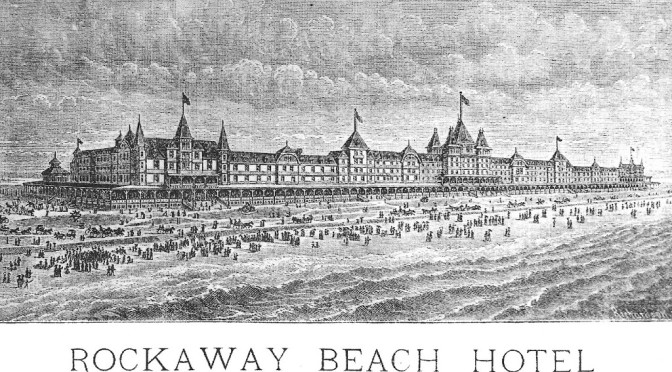
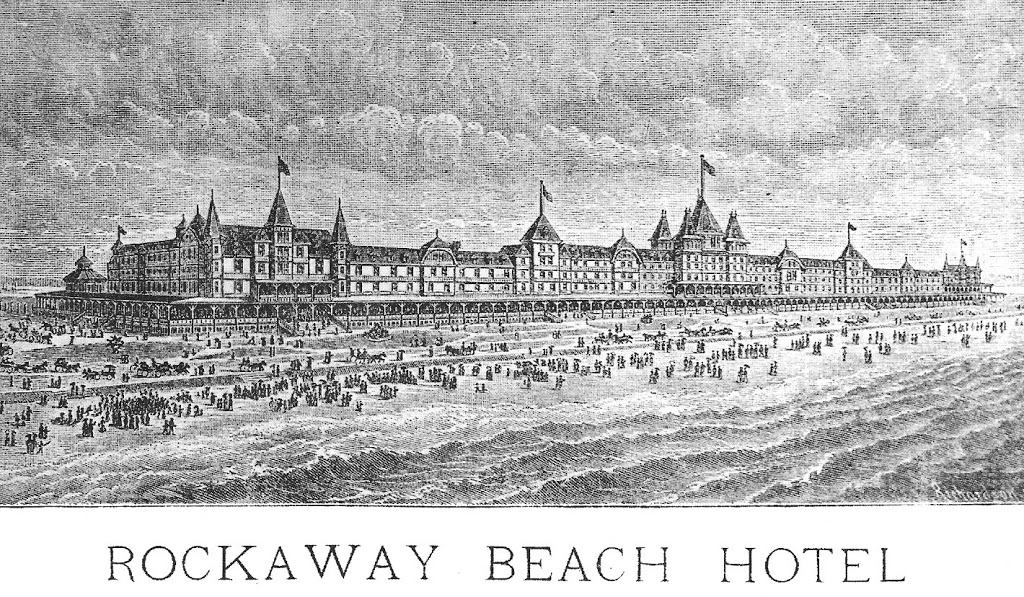
Behold the insanity: (Above) A lithograph of the Rockaway Beach Hotel, one of the most notorious failures in American history

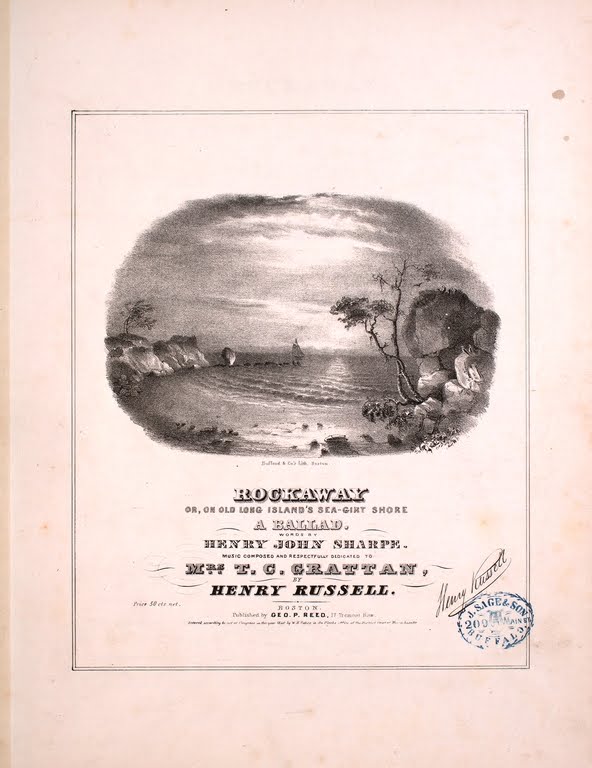
A Song About Brooklyn: I gave you a little taste of a poem about the Rockaways by balladeer Henry John Sharpe. Yes, that’s right, this is actually a song, with music by Henry Russell. Click here to listen to the entire melody.

Rockaway, or, On Long Island’s Sea-Girt Shore. A Ballad

ON old Long Island’s sea-girt shore,

 Many an hour I ’ve whiled away,
 In listening to the breakers’ roar
 That wash the beach at Rockaway.
Transfixed I ’ve stood while Nature’s lyre
In one harmonious concert broke,
And catching its Promethean fire,
 My inmost soul to rapture woke.


To hear the startling night-winds sigh,
 As dreamy twilight lulls to sleep;
While the pale moon reflects from high
 Her image in the mighty deep;
 Majestic scene where Nature dwells,
 Profound in everlasting love,
While her unmeasured music swells, 
The vaulted firmament above.

CORRECTION: We implied that Robert Moses had something to do with the naming of Jacob Riis Park, when in fact it appears to have already had this name applied to it by the time Moses came along to revitalize it in the early 1930s. It was much smaller, of course, and in the 1920s, the Naval Air Station actually wanted to take it over to expand their airfields.

The New York Times thundered in 1922: “By this time the Navy Department must be aware that the people of New York are opposed to the cession to the United States Government of a large part of the Jacob Riis Park at Rockaway Point for a permanent aviation base.” As it turned out, a decade later, it would be the station that closed, and Jacob Riis Park became a mini-Jones Beach.


FURTHER READING: I do think we rather glossed over the later, sadder years of Rockaways history, simply because the causes of the area’s many unusual changes starting in the 1950s are still being debated.

For more information, I must turn your attention to an amazing, if very sobering, book on the subject of the Rockaway’s recent history — Between Ocean And City: The Transformation of Rockaway, New York by Lawrence Kaplan and Carol P. Kaplan. It’s a hearty, in-depth grasp of the social changes of the area and give a nuanced analysis of Robert Moses’ role in the peninsula’s transformation from daytripping destination to a place of inadequate permanent residency for some New Yorkers.

For a stodgy but earnest throwback, you can download a copy of the 1918 book History of the Rockaways from the year 1685 to 1917 by Alfred Henry Bellot. Sandwiched between the lists of names and descriptions of churches that are no longer there are lots of lovely little anecdotes.

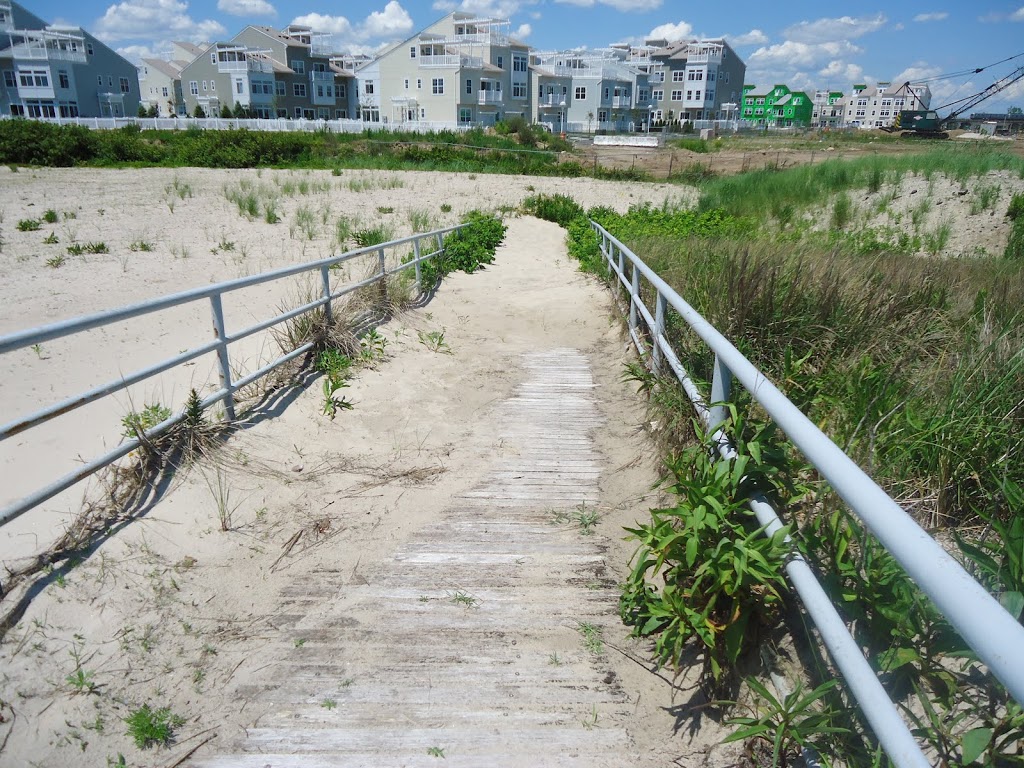
But the best way to explore the history of the Rockaways is to simply roam around the boardwalk. Hints of its glory days — and reminders of its less storied era — can be found scattered all along the way. You’ll see new beach housing that feels like a ghost town, sad 1970s style housing projects, Robert Moses-era storm shelters, surfers, convalescent homes, beach shacks, oddly placed municipal structures, quiet bird sanctuaries, trendy restaurants and rundown pizza joints.

Categories
Podcasts

The Rockaways and Rockaway Beach: The strange fortunes of New York’s former resort oasis and amusement getaway

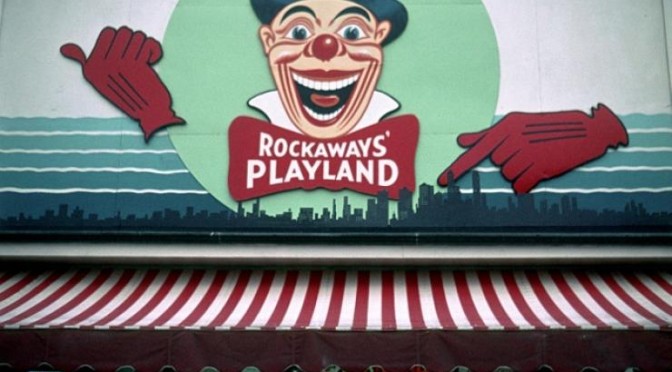
The entrance to Rockaways’ Playland in the 1960s, one of the more nostalgic reminders of an era in the Rockaways gone by. (Image courtesy the blog Sand In Your Shoes)


PODCAST The Rockaways are a world unto its own, a former resort destination with miles of beach facing into the Atlantic Ocean, a collection of diverse neighborhoods and a truly quirky history.

Retaining a variant of its original Lenape name, the peninsula remained relatively peaceful in the early years of New York history, aland holding of the ancestral family of a famous upstate New York university.

The Marine Pavilion, a luxury spa-like lodging which arrived in 1833 featuring the new trend of ‘sea bathing’, opened up vast opportunities for recreation on the peninsula, and soon Rockaway Beach was dotted with dozens of hotels, thousands of daytrippers and a even a famous amusement park.

Not even the fiasco known as the Rockaway Beach Hotel could drive away those seeking recreation here, including a huge population of Irish immigrants who helped define the unique spirit of the Rockaways.

The 20th century brought Robert Moses and his usual brand of reinvention, setting up the Rockaways for an uncertain century of decreased tourism, urban blight and uncommon solutions to preserve its unique identity.


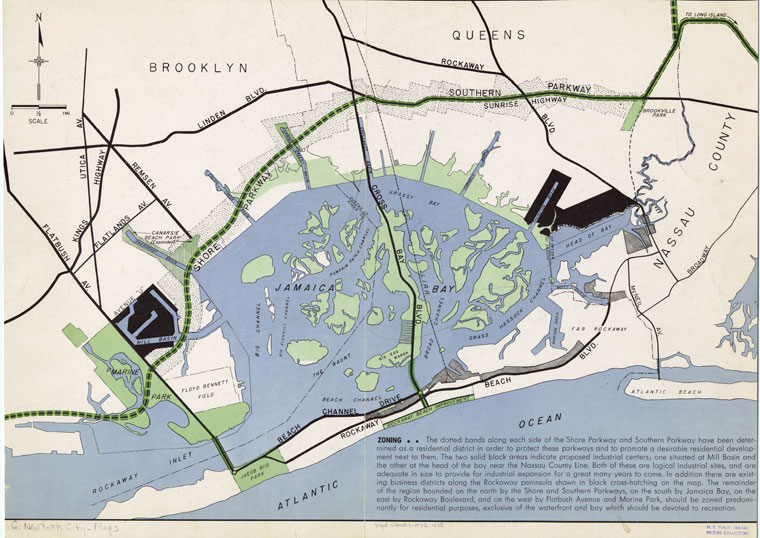
A zoning map of the Jamaica Bay region from 1937, featuring the Rockaway peninsula. A few interesting things to note about this, including: 1) no Idlewild Airport at this time, but Floyd Bennett Field was still in operation, 2) Rockaway Beach Improvement, 3) Everything west of Jacob Riis Park is basically ignored. [source]


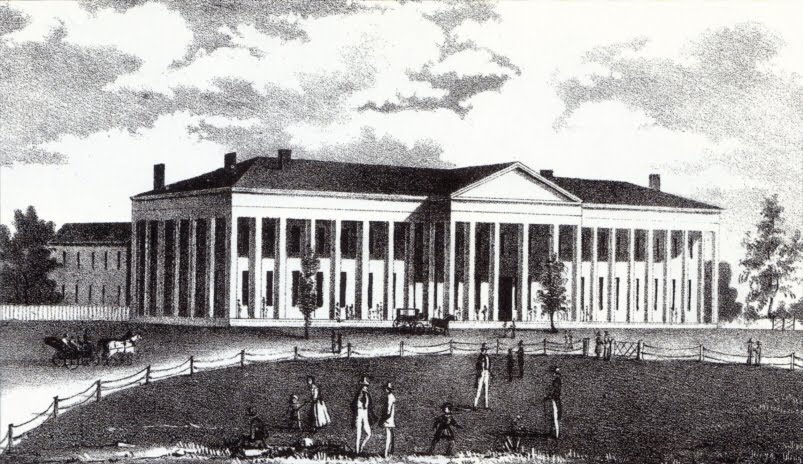
The Marine Pavilion, the first significant resort destination in the Rockaways, introduced the notion of sea bathing to New Yorkers and attracted famous writers and actors to this peaceful area. [Courtesy Rockaway Memories]


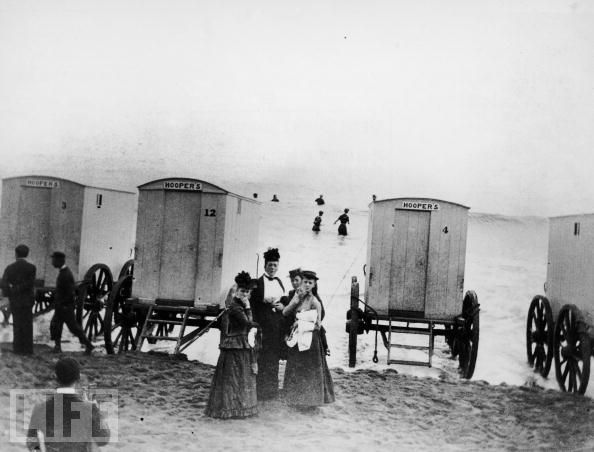
This is not an image from the Rockaways, but ‘bathing machines’ like these were most certainly used in the early days of Rockaway Beach.
 
 
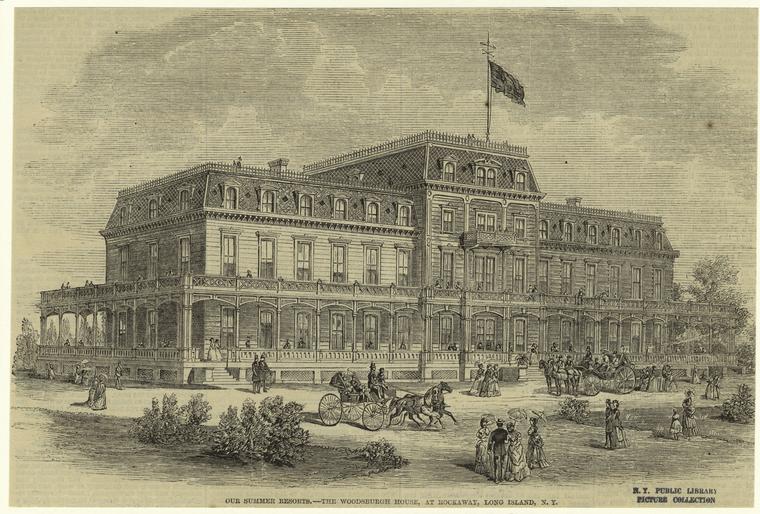
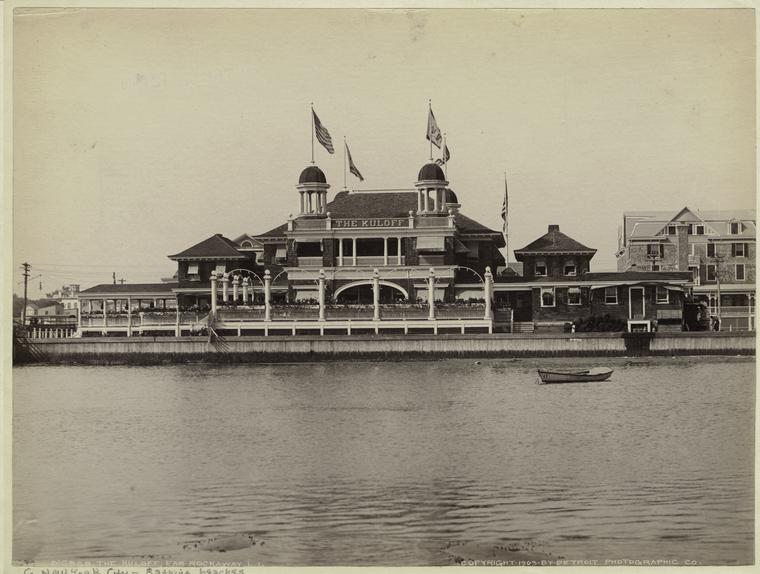
A couple examples of hotels that once filled the peninsula during the late 19th century, early 20th century, the Woodburgh House (at top) from 1870, the Kuloff (at bottom) from 1903.
 

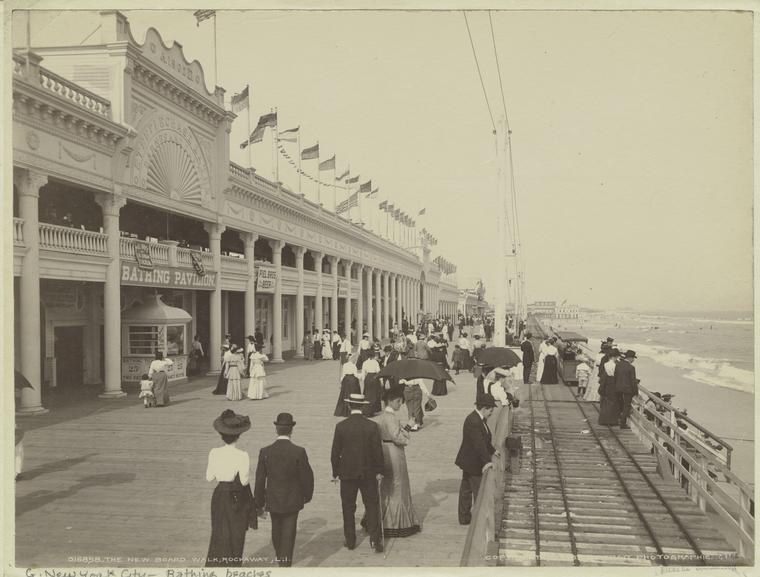
The boardwalk from 1903 in front of or near a section of Steeplechase Park, I believe, judging from the mini-railroad tracks along the side. [source]


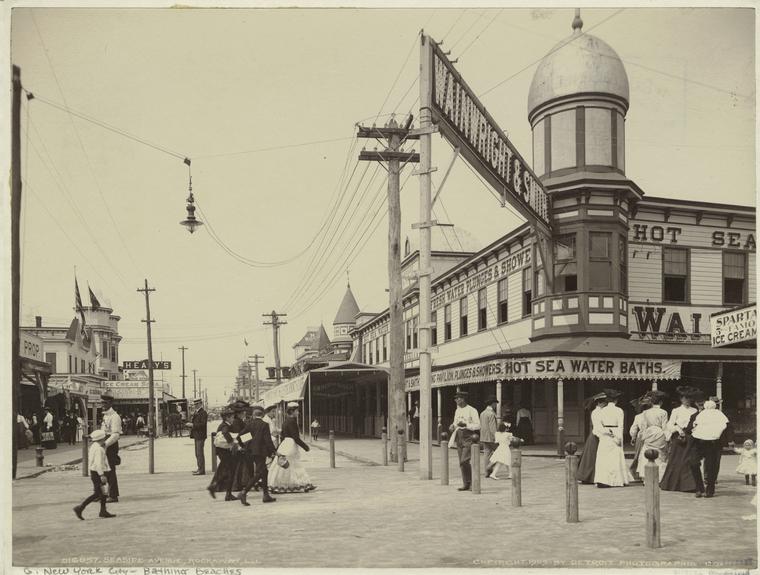
Along Seaside Avenue, possibly depicting an area of ‘Irishtown’, in 1903, rebuilt after a devastating fire the decade previous.

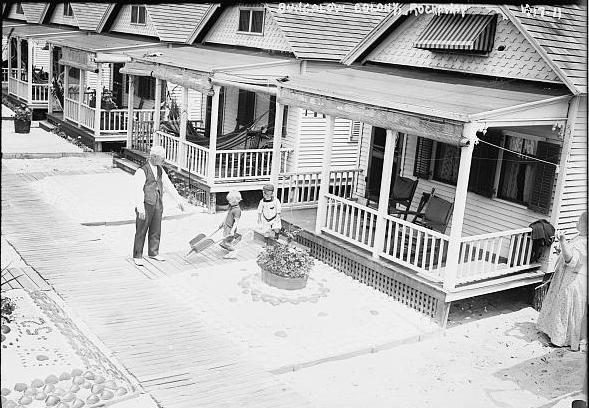
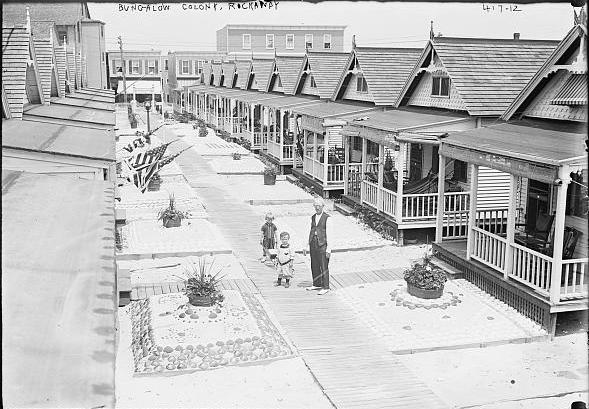
The bungalows of Rockaway. (Courtesy Library of Congress)


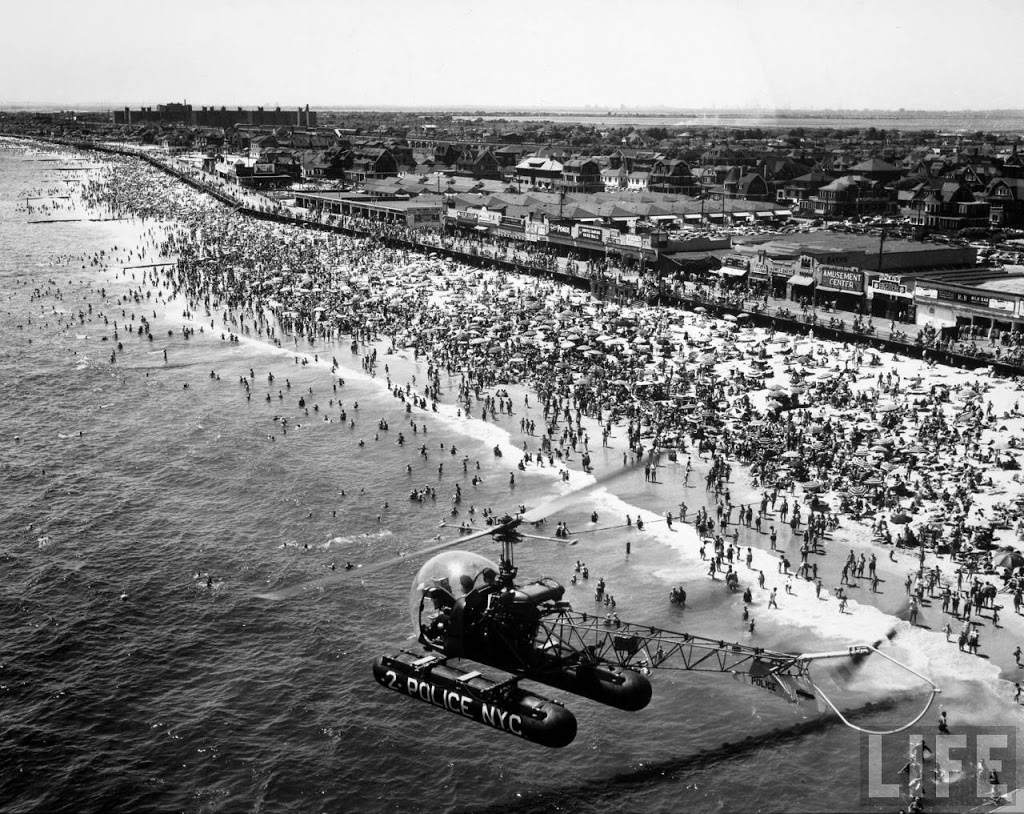
The 1950s began a long era of difficulties for the Rockaways, but you wouldn’t know it from this summertime Life Magazine photo from 1956. Click into the image to inspect some of the interesting and long-vanished shops and amusements along the boardwalk.


This almost-ghostly skeleton of a high-rise housing development never built stood for years as the residents of neighboring Breezy Point successfully fought to kill that project and other intrusive plans by the city in the late 1960s. Picture courtesy Arthur Tress/US National Archives.

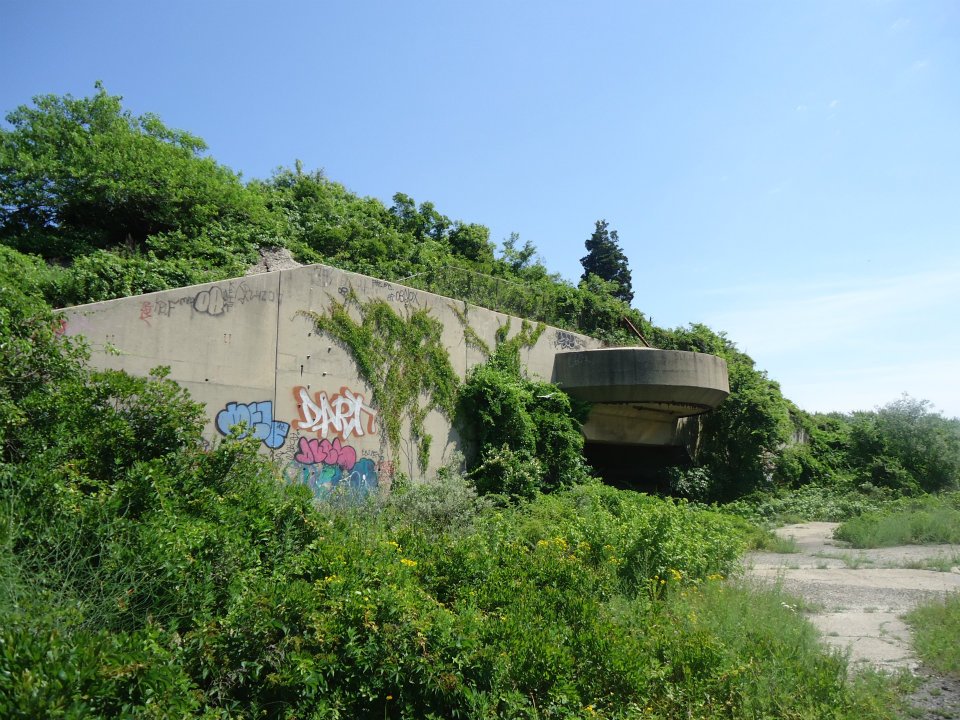
The mysterious remains of old Fort Tilden, now part of the Gateway Recreation Area and completely taken over by nature. For many more pictures of this area, please visit our Facebook page and check out my photo album on the ruins of Fort Tilden.

The thrashing waves of Rockaway make for good surfing:

And, what posting about the Rockaways would be complete without:

Eight forgotten roller coasters from all five boroughs!

If you’re ever attempting to make the case that New York isn’t as fun as it used to be, just use the following post as an illustration. The New York City area was once home to dozens of roller coasters, set up at major amusement destinations around the city, in every borough. Even Manhattan!

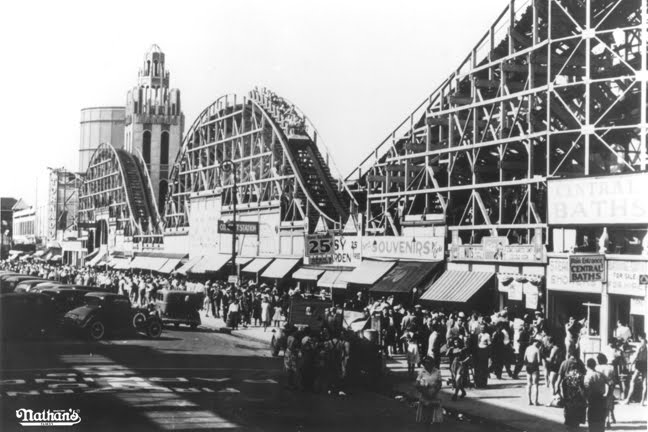
Coney Island’s Switchback Railway (1884) is often considered the first ‘real’ roller coaster. Not only was its size key to the stomach-churning thrill, but amusement parks soon relied on its proportions and sweeping shapes as a kind of branding backdrop, an immediate identifier as a destination of instant fun and relaxation. It was the first thing people saw as they approached the area; the cranking of the wheels and screams of its victims, heard from a mile away, set the rhythm for early 20th century beaches.

Not only are all these roller coasters gone, but the resort districts that hosted them have been radically transformed. Only Coney Island — the home to America’s very first roller coasters — remains.

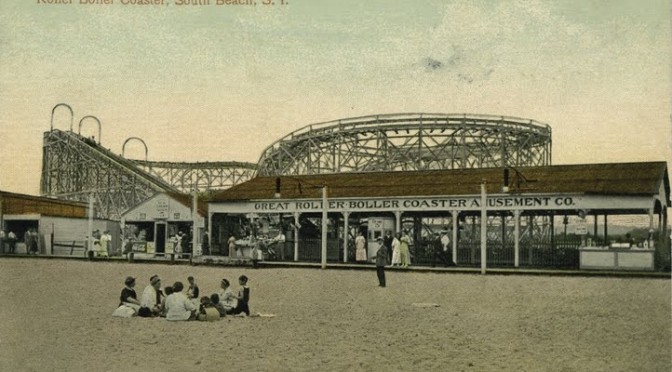
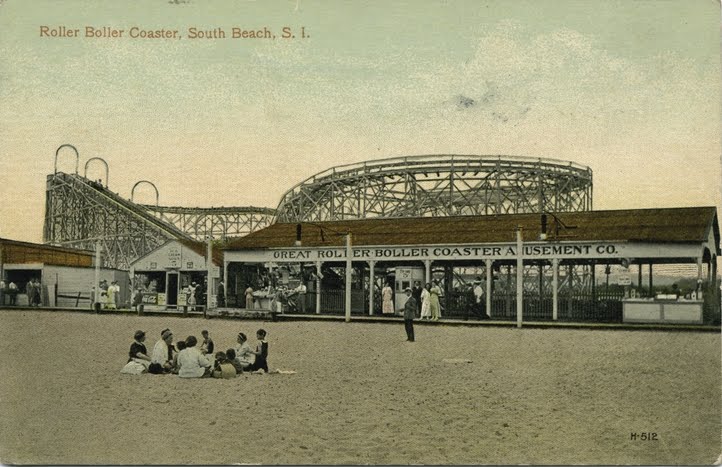
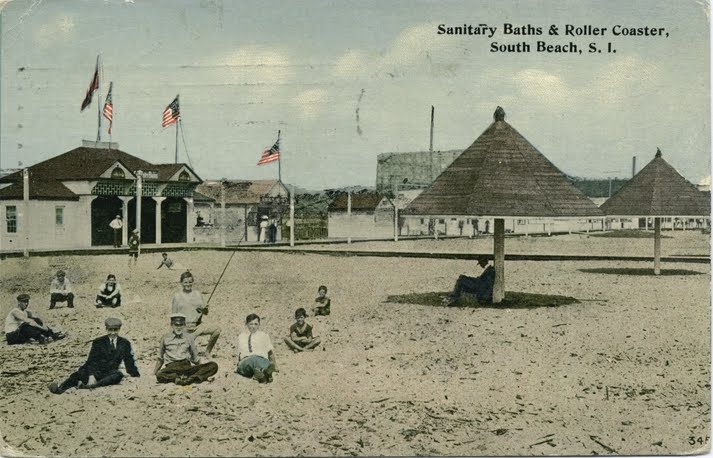
Roller Boller Coaster (seen above and in the background below)
Staten Island (South Beach)
In operation: Unknown, but probably lasted until late 1910s
South Beach popular thrived around the same time as Coney Island’s did. Likewise, its amusement parks (like Happyland) were similarly felled by fire.


Pic Courtesy NYPL

Starlight Park Rollercoaster 
The Bronx (West Farms)
In operation: 1918-early 1930s
Starlight’s rollercoaster was abandoned even the park limped along for most of the 1930s. In 1932, the coaster caught fire, the victim of rampant bonfires set along the Bronx River. (More information on my blog post about Starlight Park)

Wolz’s Thriller and the Atom Smasher
Queens (Rockaway Beach)
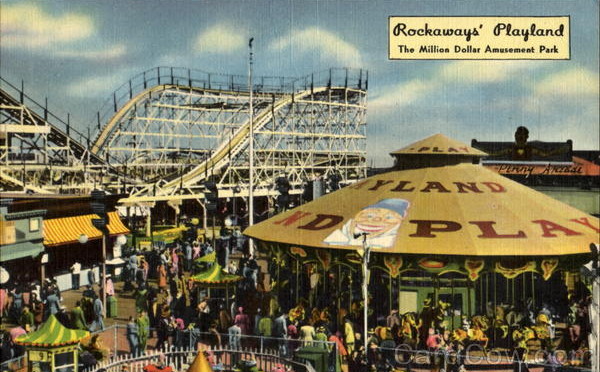
In operation: Thriller 1916-1937; Atom Smasher 1938-1985
A ‘dollar’s worth of ride for just ten cents’, the Thriller (top picture) was a backbone of Rockaway’s early amusement industry, one of ten rollercoasters eventually built for the resort area. Perhaps Rockaway’s most famous rollercoaster was the Atom Smasher (at bottom), the anchor of Playland. Rockaway lost all its amusements in the 1980s.

Courtesy Rockaway Memories


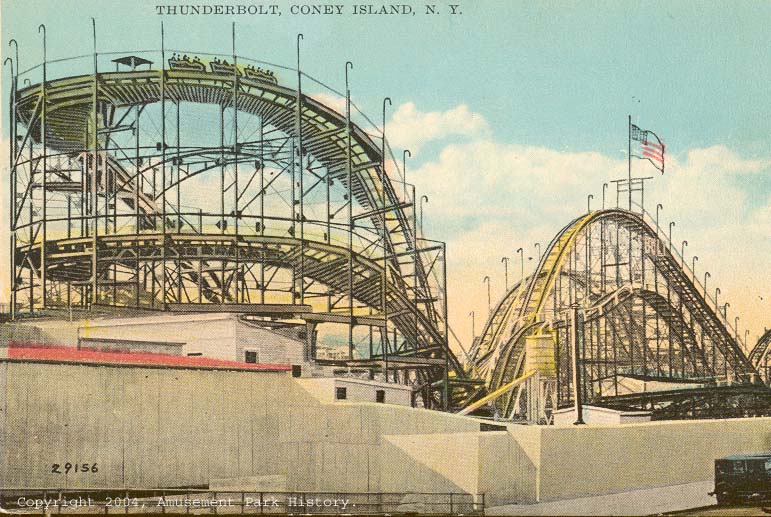
Thunderbolt and the Tornado
Brooklyn (Coney Island)
In operation: Thunderbolt 1925-1982; Tornado 1926-1977
Brooklyn has had more rollercoasters than any other borough. In fact, thanks to Coney Island, it’s had more coasters than most American states — 47 by the count of the Roller Coaster Database.

While the still-extant Cyclone is the granddaddy of them all, amusement lovers recall fondly the Thunderbolt , made famous in Woody Allen’s Annie Hall, which stood as a ruin for almost two decades. It outlasted its cousin the Tornado (at bottom), considered a marvel of engineering with its almost 3,000 feet of track undulating at a relatively low height.

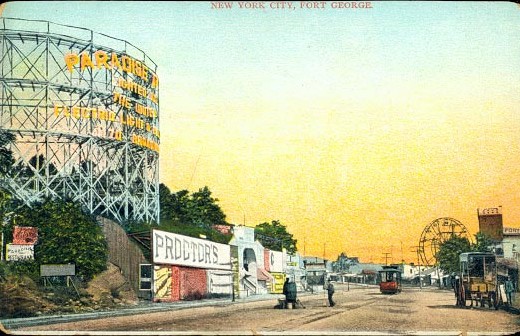
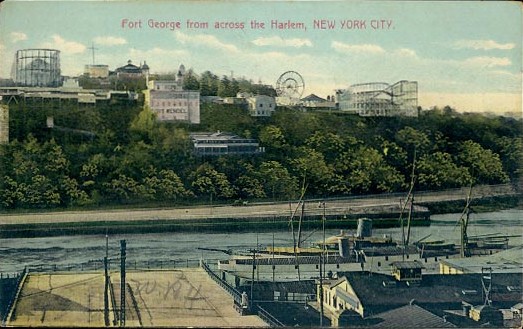
Paradise Park Roller Coasters
Manhattan (Inwood)
In operation: 1895-1914
Yes, there was a roller coaster in Manhattan! Although this appears to be the only place the island has ever had them, located in an amusement park camped out in today’s Highland Park. This amusement park actually had a couple roller coasters, according to one source. Yes, it eventually burned down as well, but its owners moved across the Hudson and opened the Palisades Amusement Park. (Courtesy myinwood.nethttp://myinwood.net/fort-george-amusement-park/)

Some dates above verified from the Rollercoaster Database

Rockaway Playland: all our toys are gone

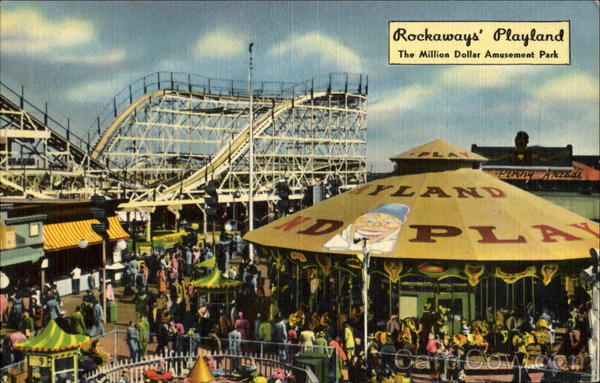
ABOVE: The long-gone Rockaway Playland, Queens answer to Coney Island at Rockaway Beach that was wiped away for condo developments in 1987. A friendly reminder of what could have happened to Coney Island.

Look here for a huge selection of postcards remembering this forgotten Queens amusement park.

Below: Color saturated nighttime, circa 1939