Categories
Those Were The Days Women's History

The New York Monkey Fad of 1907

In an absolutely inhumane and totally unwise moment in New York City history, wild and exotic animals were once considered pets, roaming around the city streets with their owners.

The wealthiest classes collected all sorts of unusual beasts for their amusement during the 19th century.  So many in fact that the Central Park Zoo — or Menagerie, as it was called then — was created as a repository for all those unusual creatures abandoned by their owners.
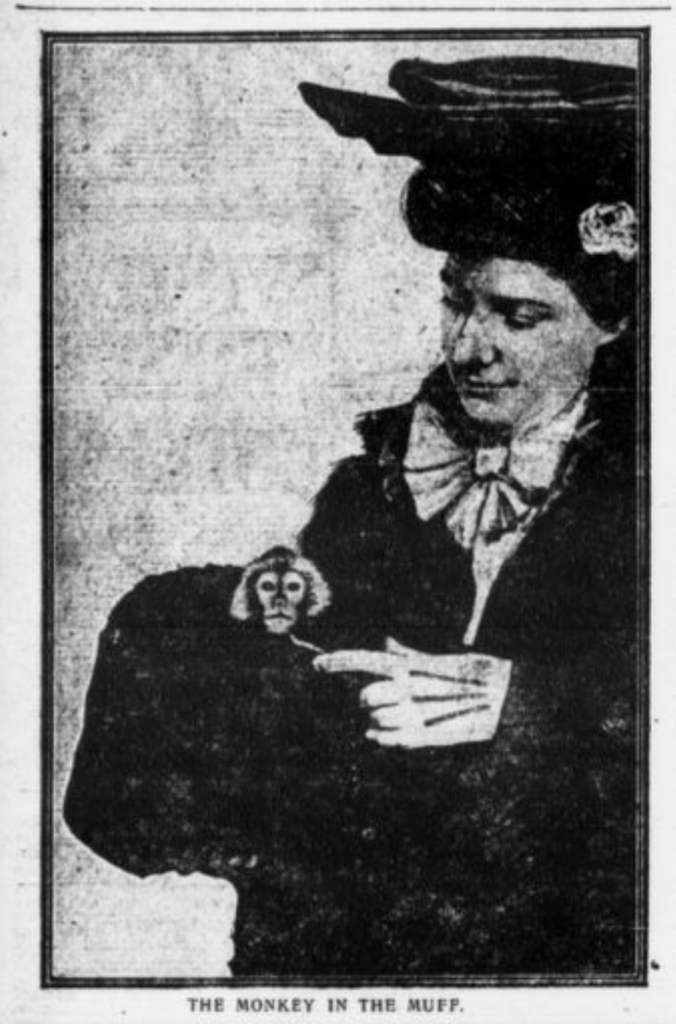
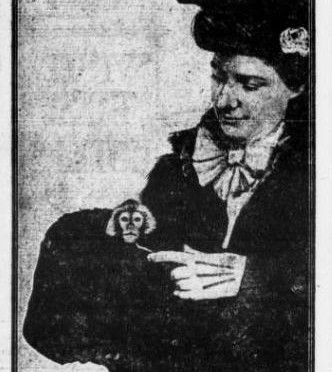
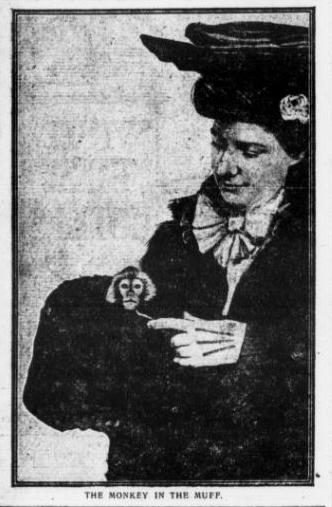
From the 1907 Sun article, a lady with her pet monkey (courtesy LOC)

Primal Luxury

A bizarre New York Sun article from March 1907 found an interesting correlation between elegant women and their companion monkeys. They were such hot commodities with finer New York ladies that year that the animals were almost considered luxuries.

Monkeys rode snugly amid the elegant furs and finery of a modern woman. “Out of ermine muffs, carried by smartly dressed women along Fifth Avenue, hideous grinning little faces peep out of you.”  

The best examples of woman-monkey companionship were the talk of the town; one New York lady had her monkey trained to “manicure himself, don the right clothes at the right hour, eat daintily with his fork, pretend to smoke his after dinner cigarette and go to bed in a little iron bedstead.”

“It is impossible to import enough monkeys to fill the present demand,” one animal importer told the Sun. “An installment of marmosets or ringtails no sooner reaches port than they are shipped to women all over the country.”
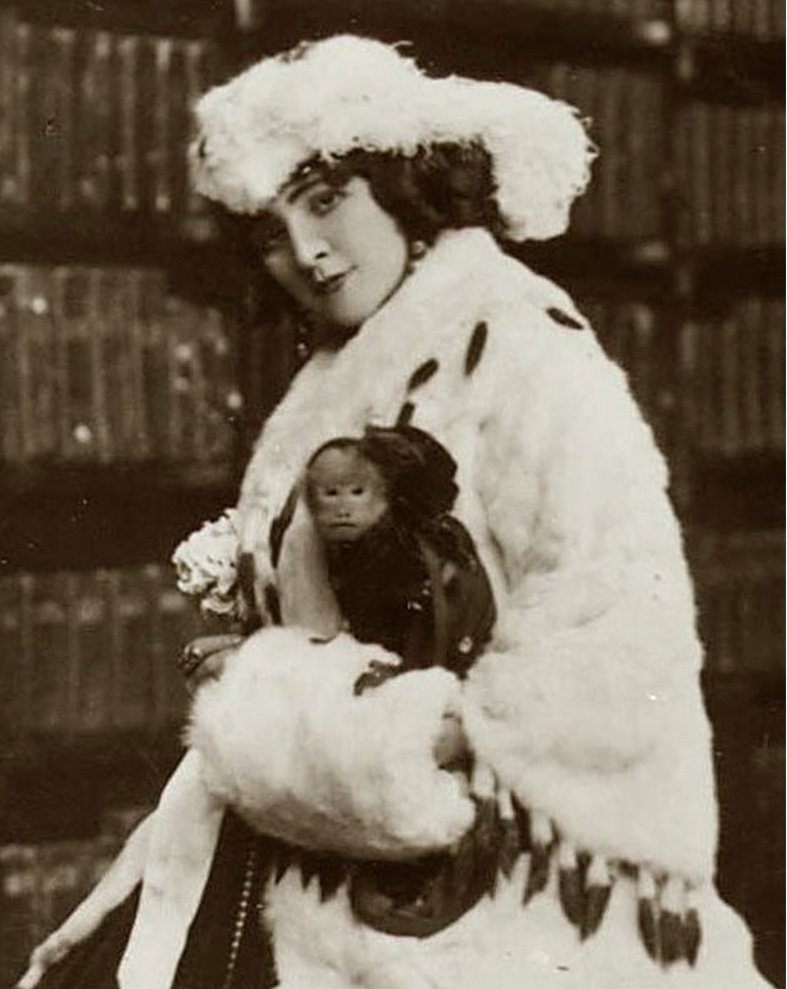
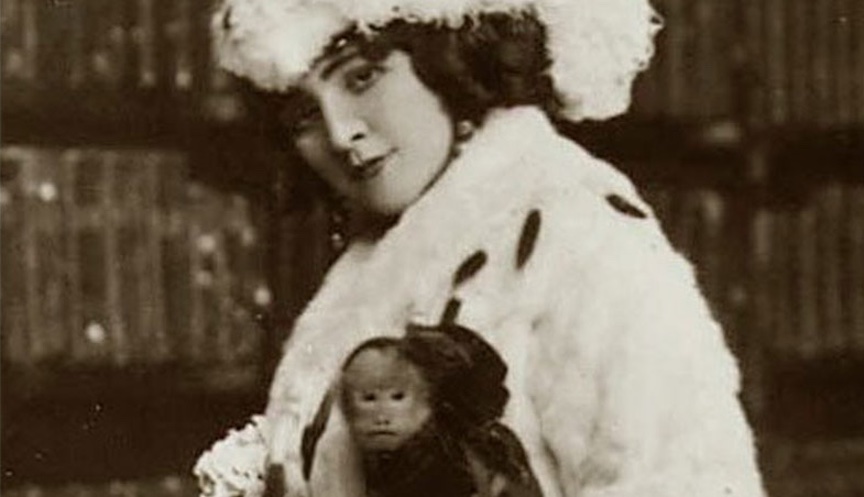
Actress Doris Keane with her pet monkey (Courtesy Wiener Museum)

Monkey See, Monkey Do

It was an unorthodox but very charismatic choice, popular with actresses, princesses and rich ladies of a certain progressive bent.  

The pet monkey was prepared to do the unthinkable in 1907 — replace the yapping dog as the woman’s preferred companion.  

From the same article: “To those who do not like monkeys, the popularity of the beast seems more objectionable than any other recent fad. The horse fad, the dog fad, the cat fad, the automobile fad, the ping pong fad, the bridge fad, the chameleon fad are more excusable to such people.”

The popularity of the pet monkey, once associated with immigrant organ grinders on the streets of Five Points in the late 19th century, arose from increased scholarship on the animal, from stories of African safaris, and from seeing them in action at the House of Primates in the Bronx Zoo.
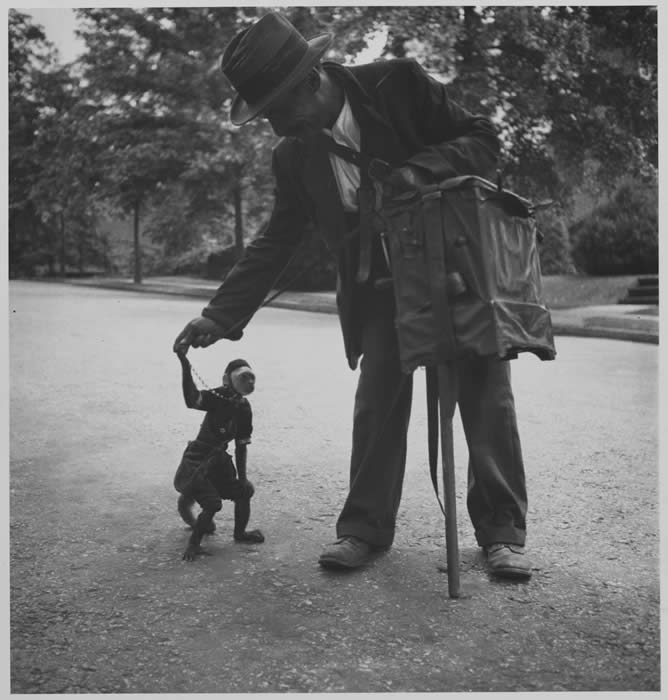
Organ grinder and monkey in 1935. Mayor LaGuardia outlawed organ grinders shortly after this picture. Photograph by Samuel H. Gottscho. Courtesy Museum of the City of New York

The Monkey Business

The animals were brought over on trading ships, basketfuls scooped up off the coasts of South America or even as far away as South Africa. A boatload of 1,000 monkeys arrived in New York in 1909, a cargo which also included hundreds of exotic birds and a couple dozen pythons.

 If they survived, they were given to importers throughout the city or sometimes sold right of the dock.

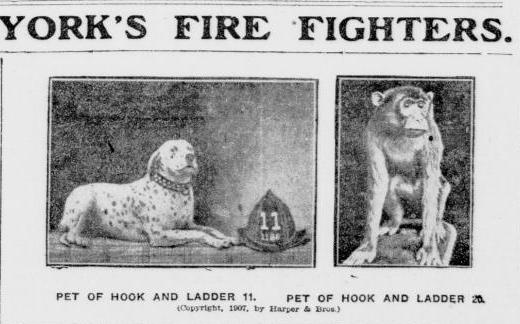
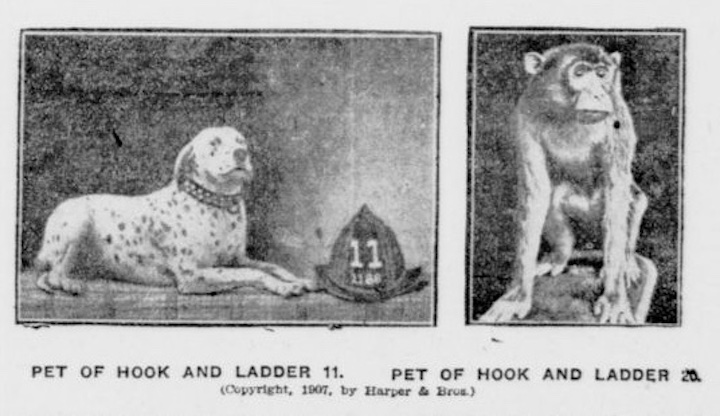
Monkeys even found themselves in the service of New York area fire departments. In 1907, a Mercer Street crew enjoyed the alertness of a monkey named Jenny (pictured below), who once warned her fellow firefighters of a blaze by tossing pool balls down an iron stairway.

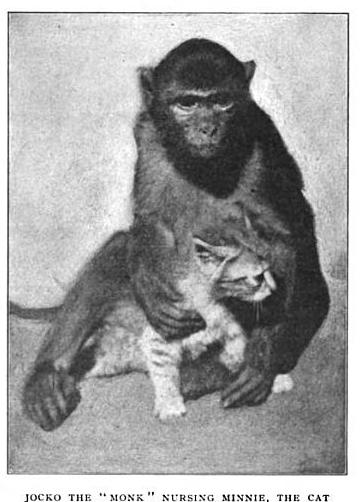
And a fire crew in Rockaway Beach was well-known for their monkey mascot Jocko (pictured at left, with fellow mascot, kitten Minnie) who occasionally attacked Italian peanut vendors.
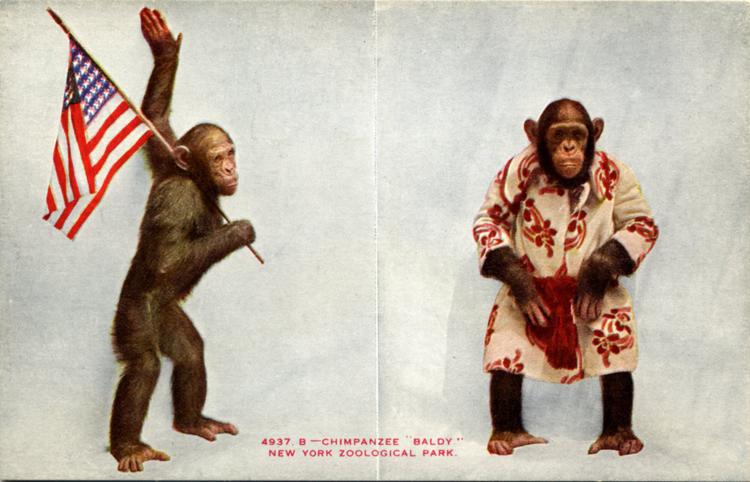
Chimpanzee in a patriotic pose, 1910, Bronx Zoo postcard

Swingers

It seems impossible to comprehend how nonchalant pet owners were regarding disease and injury.

 The Sun article runs through some helpful hints about how to personally select your monkey from a writhing litter right off the boat:  “If the skin is yellow do not invest your money, for you may be quite sure that the monkey has tuberculosis. If the skin is black the monkey has blood poisoning.”

Inevitably, the more untamed of these creatures did cause mayhem. In just one example from 1907, a Sixth Avenue monkey named Pete hurled flower pots at pedestrians, almost killing a woman.  On July 4, 1908, a Brooklyn, monkey named Nimbo set a house on fire by lighting fireworks.

And sadly, the monkey too soon fell victim to the inevitability of a passing fad.  By 1908, the New York Times was already proclaiming the Pomeranian as the new “hot” pet.

Below: From the Nov. 17, 1907 New York Tribune, Jenny the pool ball-hurling monkey mascot of the Mercer Street fire crew.
A version of this article first appeared on this website in November 2012.
Categories
Health and Living

America’s first free animal hospital, at 350 Lafayette Street, with a roof garden for sick horses

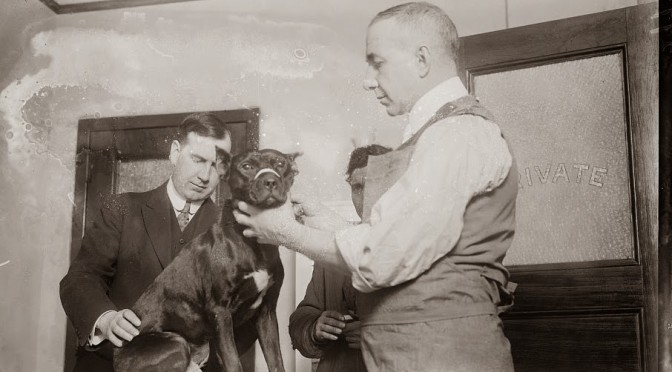
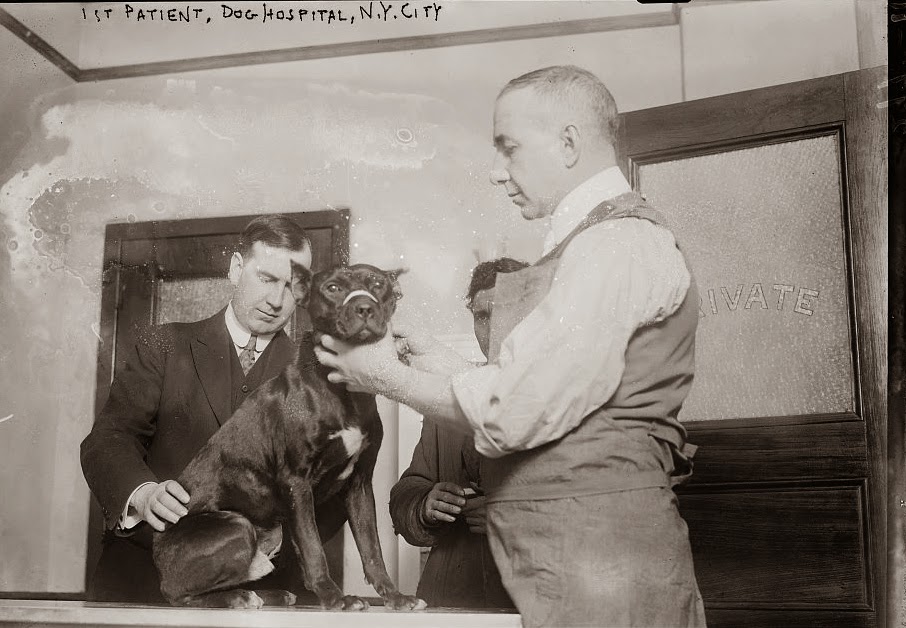
The first official patient of the Free Hospital and Dispensary for Animals at 350 Lafayette Street, under the care of veterinarian Bruce Blair.

The American Society for the Prevention of Cruelty to Animals (ASPCA) was formed in 1866 by philanthropist Henry Bergh.  Eight years later, he helped co-found the New York Society for the Prevention of Cruelty to Children.

Yes, animals came first.  Animals were not only better understood than children, they were instrumental to the daily flow of the city.  Almost every vehicle on the street was horse powered.  The skills of animal husbandry and veterinary medicine were adequately developed in a country that was mostly rural, while the psyches of the human adolescent were only just being appreciated.

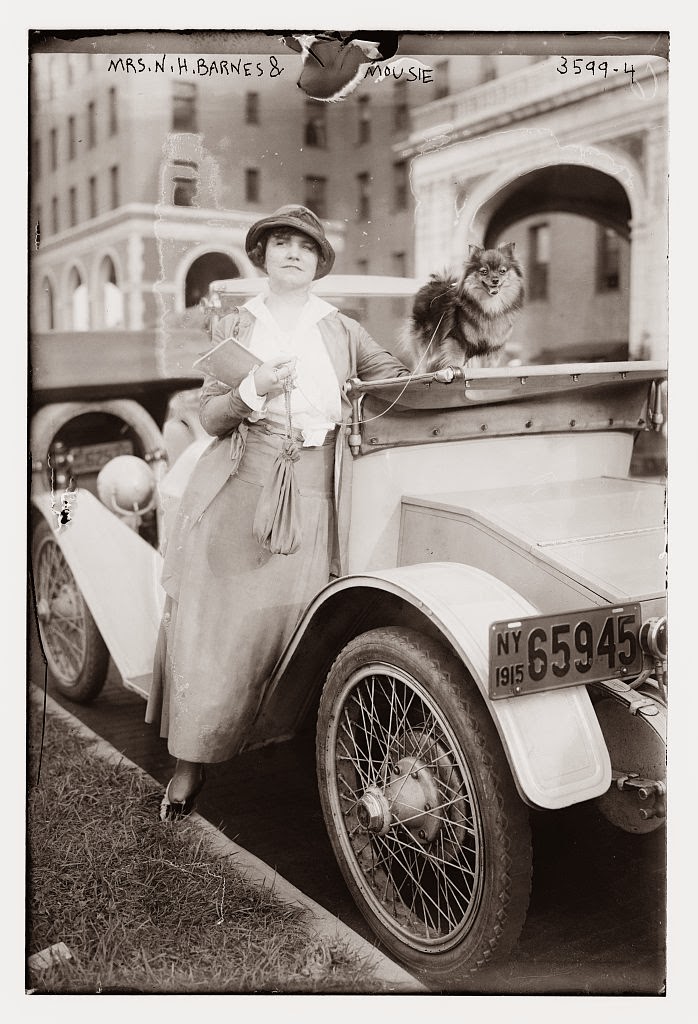
At right: Mrs. N.H. Barnes and her dog Mousie, circa 1910-1915, courtesy Library of Congress

And don’t underestimate the power of the upper crust and their favorite luxury items — exotic pets.  New Yorkers were perhaps empathizing with animals, if not exactly knowing how to treat them.

After all, the menagerie of the Central Park Zoo was created from the bad decisions made by wealthy people, regretting their decisions in bringing unusual animals into their homes.  In 1907, New York even experienced a bit of a monkey craze, with dozens of small primates becoming adorably mischievous fashion accessories.

Animal rights became an interesting tangent of New York’s progressive movement, a focus on the well-being of four-legged creatures that culminated, one century ago this week, in the opening of the Free Hospital and Dispensary for Animals (at 350 Lafayette Street), the first institution of its type in the United States.

Like many progressive institutions of the day, the animal hospital was a life’s ambition for a wealthy socialite — in this case, Ellin Prince Speyer, the wife of railroad banker James Speyer (founder of the Provident Loan Society.)

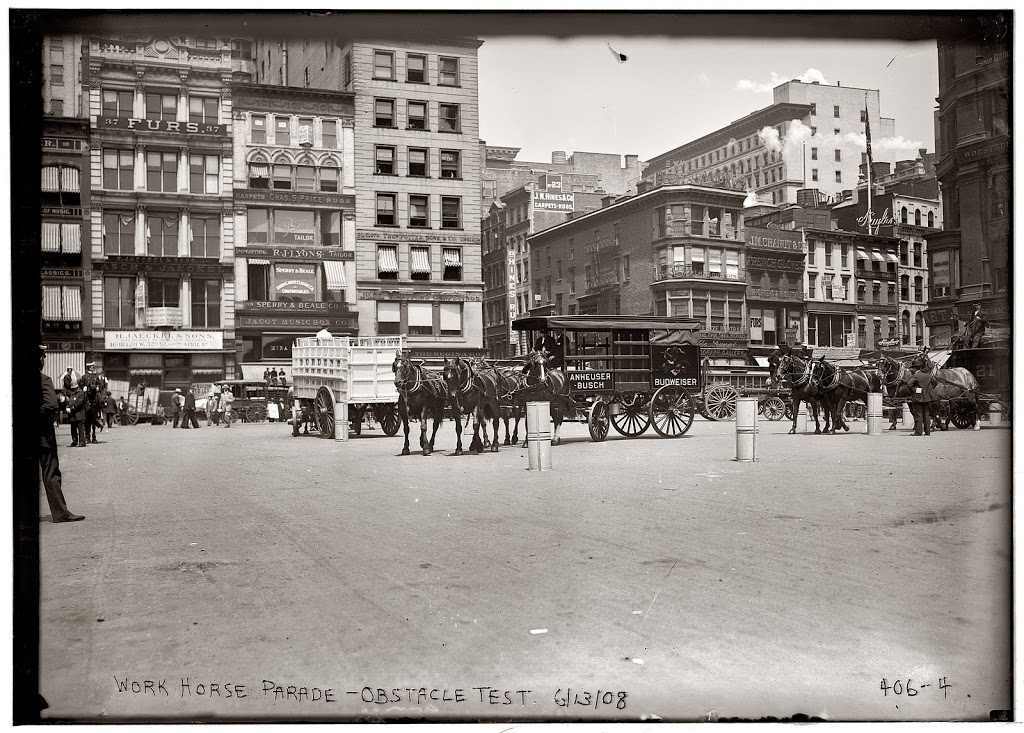
Above: Work horses compete in an obstacle course in Union Square, during the Work Horse Parade of 1908. Picture courtesy Shorpy

Speyer formed a Women’s League of the ASPCA in 1906 and quickly organized public displays that would bring attention to the plight of work animals.  The following year, on Memorial Day, she organized the first annual Work Horse Parade with contests and exhibitions, all in an effort to bring attention to the condition of horses on city streets.

People were given prizes if their old horses were in good shape!  “An effort has been made to induce the peddlers and hucksters of the city to enter,” said the New York Times.

The Women’s League provided watering station for horses during the summer and even free “horse vacations,” renting a farm in upstate New York for the care of older animals.

But the League was concerned with the health of all animals, not just horses.  (Indeed, the New York Sun takes note of Mrs. Speyer’s favorite animal — “the life saving Japanese spaniel Trixie.”)  Members visited area schools to lecture on the proper care and feeding of pets, speaking to the young owners of dogs, cats and birds.

They believed that beneficence to the animal kingdom was a signal to a healthy, moral household.  “You don’t find wife-beaters who are fond of pets and lovers of animals,” said the League in an editorial in 1912.

This sophisticated devotion to animal care was considered truly unique. For instance, when an impressive animal clinic opened at Cornell University in 1911, the New York Times replied with the headline, “Where Sick Animals Are Cared For Like Humans.

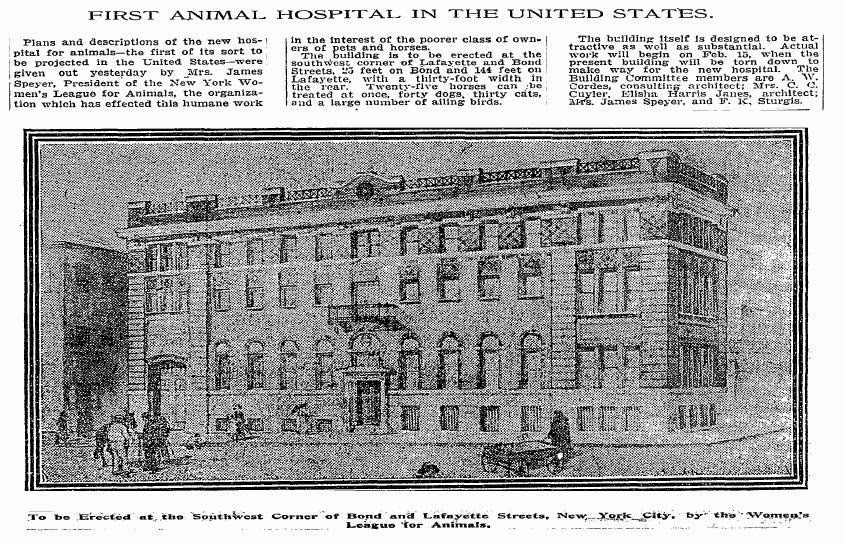
From the New York Times, February 1913

Speyer opened a small animal clinic in New York that same year, but it was woefully inadequate to the needs of New York’s animal population.  So, with the help of lavish benefits and donations from other wealthy families (including many of her banking friends), the Women’s League raised $50,000 and opened up a proper animal hospital on March 14, 1914, the first animal hospital of its kind in the United States.

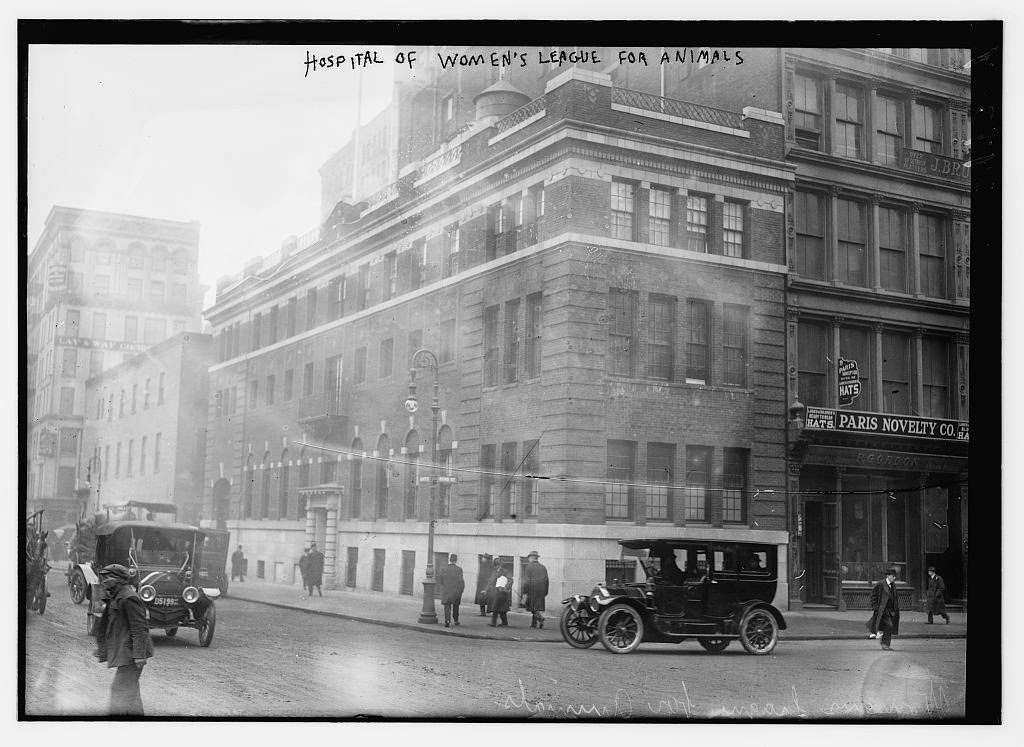
The five-story building is still there today.  New York’s first free animal hospital could accommodate fifty horses and 150 cats and dogs. “There are also operating rooms where every modern appliance for animal surgery is at hand.” [source]

Horses were mostly kept and operated upon on the second floor.  But a rooftop garden accommodated the most sickly horses in need of fresh air and sunshine, lifted there by a large, state-of-the-art elevator.  I suppose it was also used for patients from the third floor — dogs, cats and birds.  Autopsies were also conducted on the roof, and dead animals were disposed of in a basement incinerator. (The Times actually calls it ‘the death room.’)

Perhaps most curious of all — an entire floor was given over to a new apartment for the hospital’s lead veterinarian Dr. Bruce Blair (pictured at top) and his new bride.

On its opening on March 14, Speyer showed the waiting dignitaries a mysterious envelope which contained a $1,000 bill, anonymously donated for the purposes of buying the hospital’s first animal ambulance.

Perhaps the hospital’s most famous patient on opening day was not not a horse, but a green parrot named Abe, who was a bit of a minor film star in 1914.  I believe this was the star of the 1914 Oliver Hardy film The Green Alarm.

Today, the Animal Medical Center  traces its lineage to this first animal hospital and to Speyer’s organization.  It moved to its current location on the Upper East Side in 1962. (You can read more about their history here.)

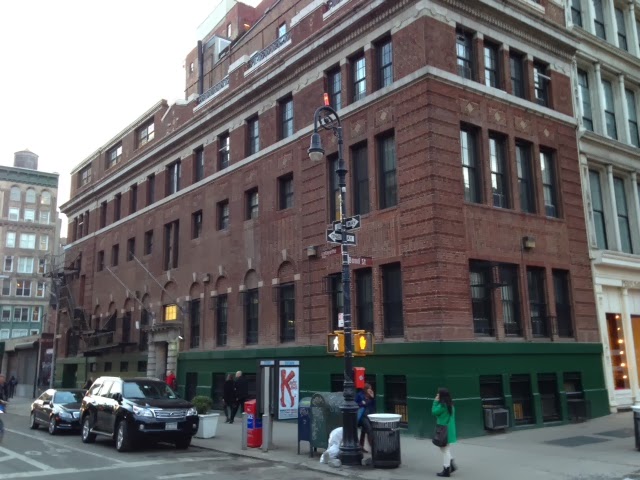
Here’s the building as it looks today:

Categories
Uncategorized

The New York monkey fad of 1907: From Fifth Avenue to the fire department, primates were fashionable companions

The wacky IKEA monkey story of the past few days got me to wondering about wild animals as pets here in New York. After all, the wealthiest classes collected all sorts of unusual beasts for their amusement during the 19th century.  So many in fact that the Central Park Zoo — or Menagerie, as it was called then — was created as a repository for all those unusual creatures abandoned by their owners. (The Central Park Zoo was the topic of one of our first podcasts, all the way back in August 2007!)

A bizarre New York Sun article from March 1907 found an interesting correlation between elegant women and their companion monkeys.  They were such hot commodities with finer New York ladies that year that the animals were almost considered luxuries.

Monkeys rode snugly amid the elegant furs and finery of a modern woman.  “Out of ermine muffs, carried by smartly dressed women along Fifth Avenue, hideous grinning little faces peep out of you.”  The best examples of woman-monkey companionship were the talk of the town;  one New York lady had her monkey trained to “manicure himself, don the right clothes at the right hour, eat daintily with his fork, pretend to smoke his after dinner cigarette and go to bed in a little iron bedstead.”

At right: From the 1907 Sun article, a lady with her pet monkey (courtesy LOC)

“It is impossible to import enough monkeys to fill the present demand,” one animal importer told the Sun.  “An installment of marmosets or ringtails no sooner reaches port than they are shipped to women all over the country.”

It was an unorthodox but very charismatic choice, popular with actresses, princesses and rich ladies of a certain progressive bent.  The pet monkey was prepared to do the unthinkable in 1907 — replace the yapping dog as the woman’s preferred companion.  “To those who do not like monkeys, the popularity of the beast seems more objectionable than any other recent fad. The horse fad, the dog fad, the cat fad, the automobile fad, the ping pong fad, the bridge fad, the chameleon fad are more excusable to such people.”

The popularity of the pet monkey, once associated with immigrant organ grinders on the streets of Five Points in the late 19th century, arose from increased scholarship on the animal, from stories of African safaris, and from seeing them in action at the House of Primates in the Bronx Zoo.

The animals were brought over on trading ships, basketfuls scooped up off the coasts of South America or even as far away as South Africa. (A boatload of 1,000 monkeys arrived in New York in 1909, a cargo which also included hundreds of exotic birds and a couple dozen pythons.)  If they survived, they were given to importers throughout the city or sometimes sold right of the dock.

Monkeys even found themselves in the service of New York area fire departments. In 1907, a Mercer Street crew enjoyed the alertness of a monkey named Jenny (pictured below), who once warned her fellow firefighters of a blaze by tossing pool balls down an iron stairway.

And a fire crew in Rockaway Beach was well-known for their monkey mascot Jocko (pictured at left, with fellow mascot, kitten Minnie) who occasionally attacked Italian peanut vendors.

It seems impossible to comprehend how nonchalant pet owners were regarding disease and injury.  The Sun article runs through some helpful hints about how to personally select your monkey from a writhing litter right off the boat:  “If the skin is yellow do not invest your money, for you may be quite sure that the monkey has tuberculosis. If the skin is black the monkey has blood poisoning.”

Inevitably, the more untamed of these creatures did cause mayhem. In just one example from 1907, a Sixth Avenue monkey named Pete hurled flower pots at pedestrians, almost killing a woman.  On July 4, 1908, a Brooklyn, monkey named Nimbo set a house on fire by lighting fireworks.

And sadly, the monkey too soon fell victim to the inevitability of a passing fad.  By 1908, the New York Times was already proclaiming the Pomeranian as the new “hot” pet.

Below: From the Nov. 17, 1907 New York Tribune, Jenny the pool ball-hurling monkey mascot of the Mercer Street fire crew.