Categories
Planes Trains and Automobiles Podcasts

The New York Parking Wars: How Cars Took Over The Curb

Take a look at a vintage photograph of New York from the 1930s and you’ll see automats, newsies, elevated trains and men in fedoras. What you won’t see — dozens and dozens of automobiles on the curb.

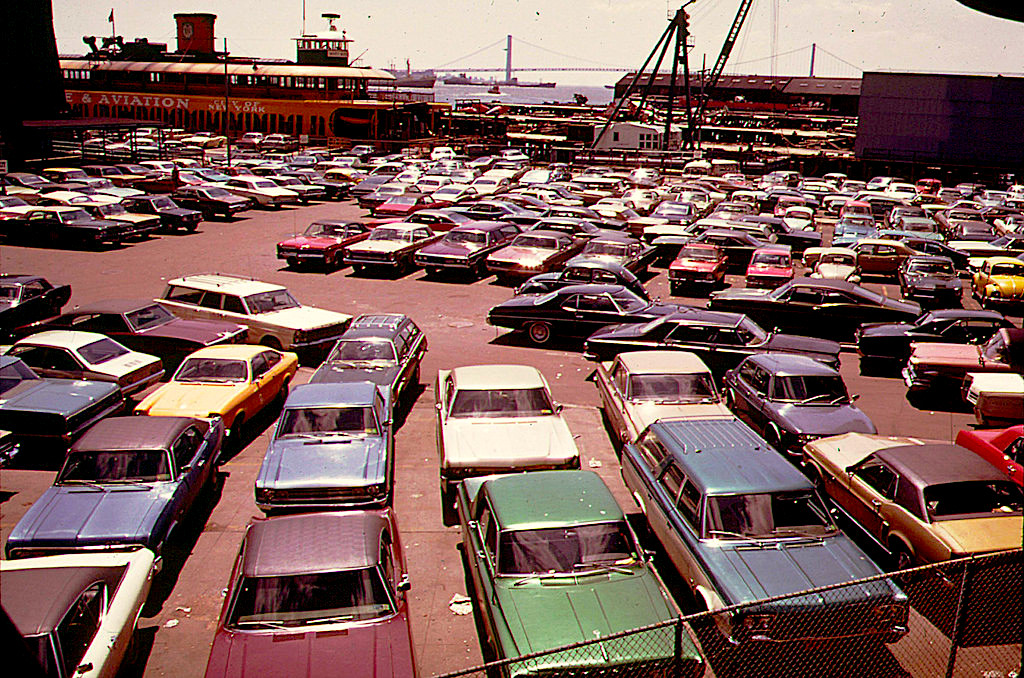
In a city with skyrocketing real estate values, why are most city streets still devoted to free car storage? It’s a situation we’re all so used to that we don’t think twice about it. Whatever happened to the curb?

Long-term and overnight parking used to be illegal in the early 20th century. The transition from horse-drawn carriages to gas-powered automobiles transformed neighborhoods like Times Square and reconfigured everyday life on the street.

But before the 1920s, parking those glamorous new Model Ts on the street was tolerated only in short-term situations.

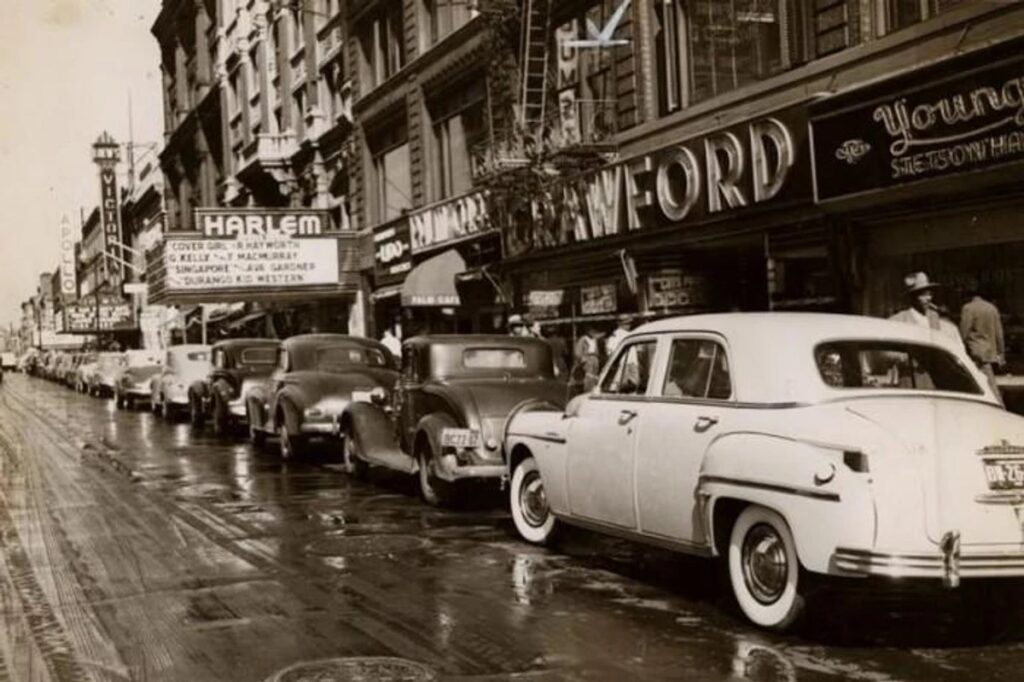
Harlem, 125th Street, 1949 — the year before alternate side parking is enacted

By the 1940s, however, New Yorkers were simply too reliant on the automobile, and the city’s parking lots and garages were simply not adequate. (For many New Yorkers, like Seinfeld’s George Costanza, they’re still not acceptable).

Street parking was de facto legalized with the advent of alternate-side parking rules, and soon parking meters and ‘meter maids’ were attempting to keep a handle on the chaotic situation.

Eventually the car took over. Will it always be this way?

In this special episode, Tom and Greg are joined by Slate Magazine writer Henry Grabar, author of Paved Paradise: How Parking Explains The World, who exposes some shocking parking violations and even offers a few couple solutions for the future.

LISTEN NOW: THE NEW YORK PARKING WARS


Our thanks to Henry Grabar for joining us on the show today. You can find all his work from Slate Magazine here. You might also like to hear him on a couple of our favorite podcasts — Decoder Ring and 99 Percent Invisible.


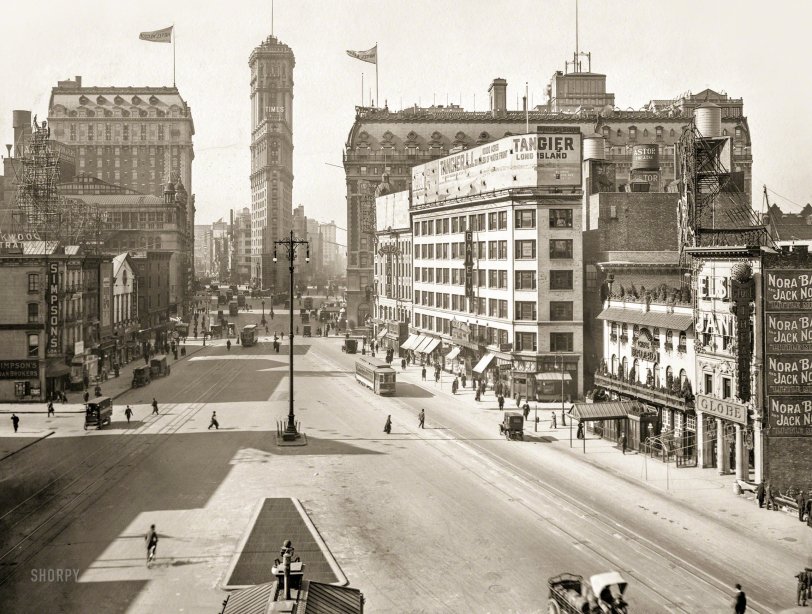
Times Square: The original ‘automobile district’, 1911 (cleaned up shot courtesy Shorpy)
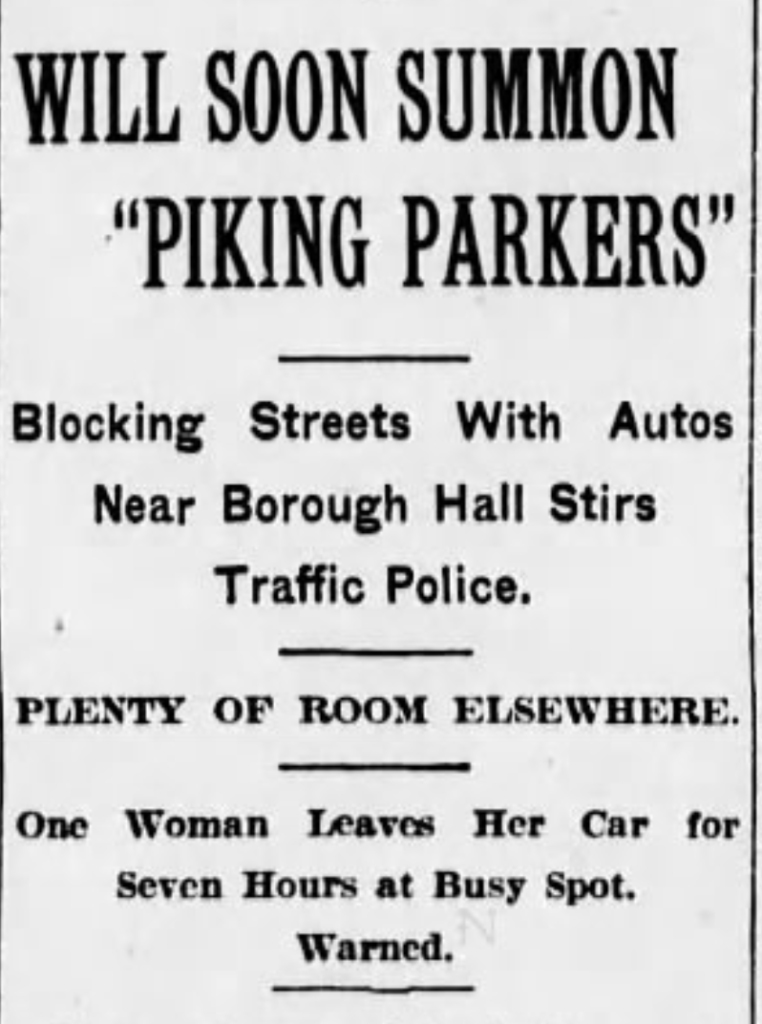
Brooklyn Daily Eagle, 1918
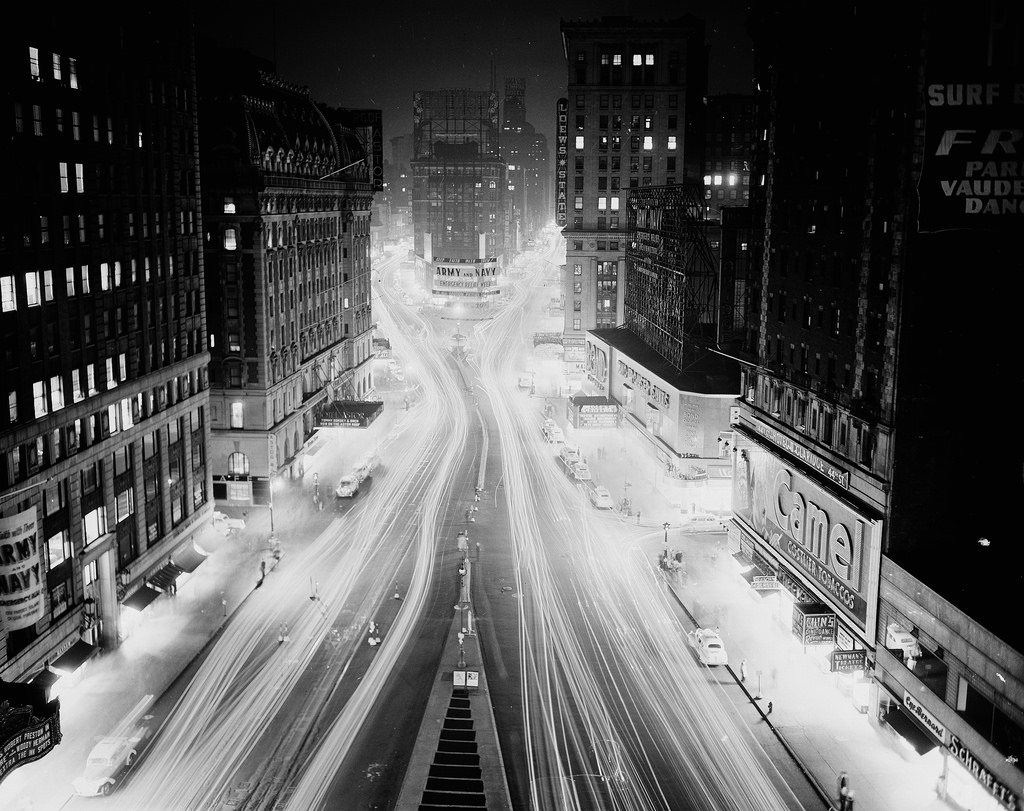
Times Square in the 1930s. Although this is certainly taken late night, there are very few cars at the curb.
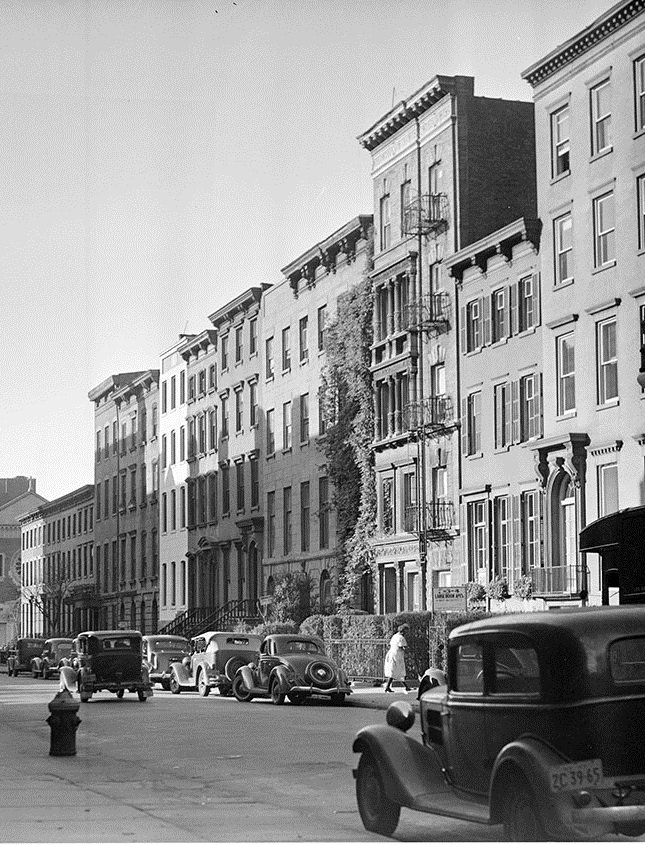
Washington Square North,: 1937. Courtesy WPA-FWP Collection, NYC Municipal Archives.
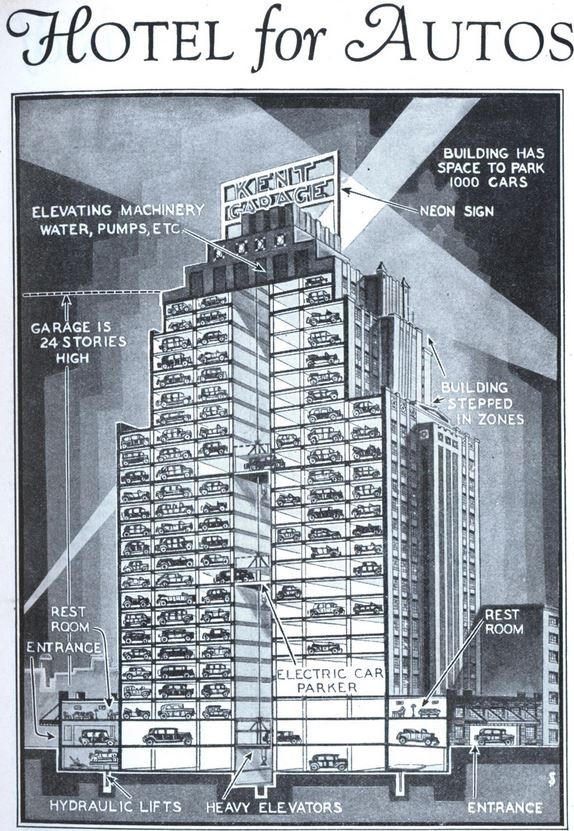
A 1930s motor hotel, courtesy Modern Mechanix
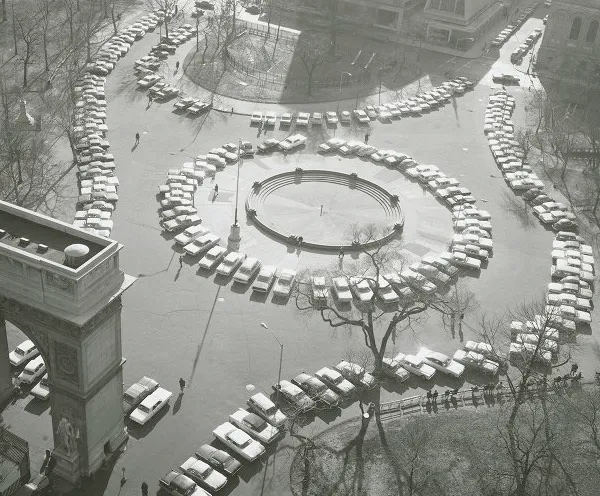
Cars, Washington Square Park, Aerial View, 1960s
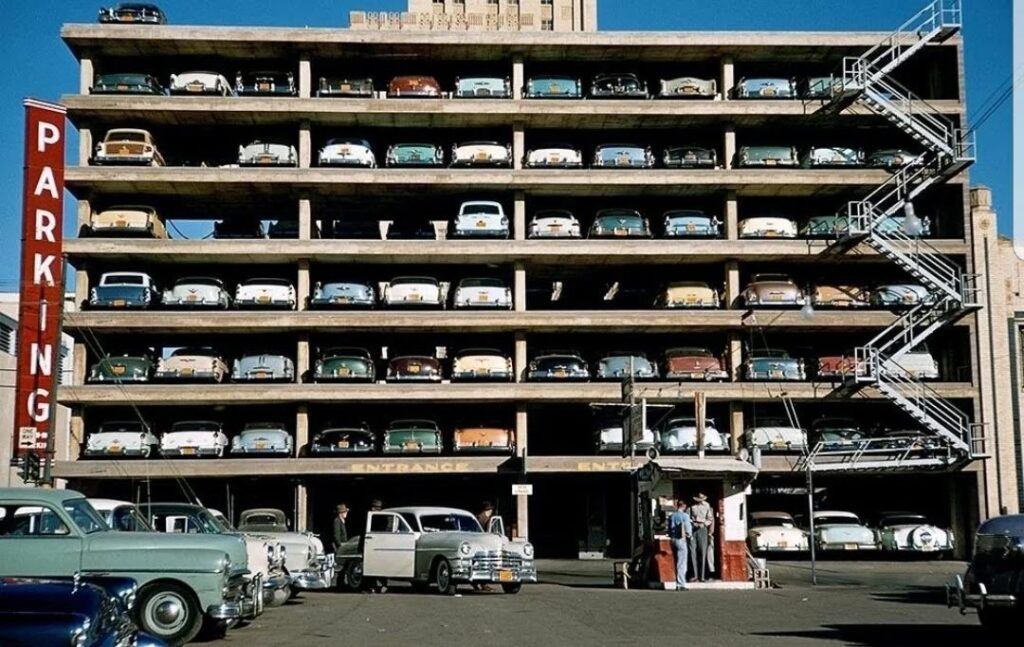
New York City parking garage, photograph by Marvin E Newman, taken in 1955.
The stacked parking solution, photo taken 2010, Jérôme from Wikimedia Commons
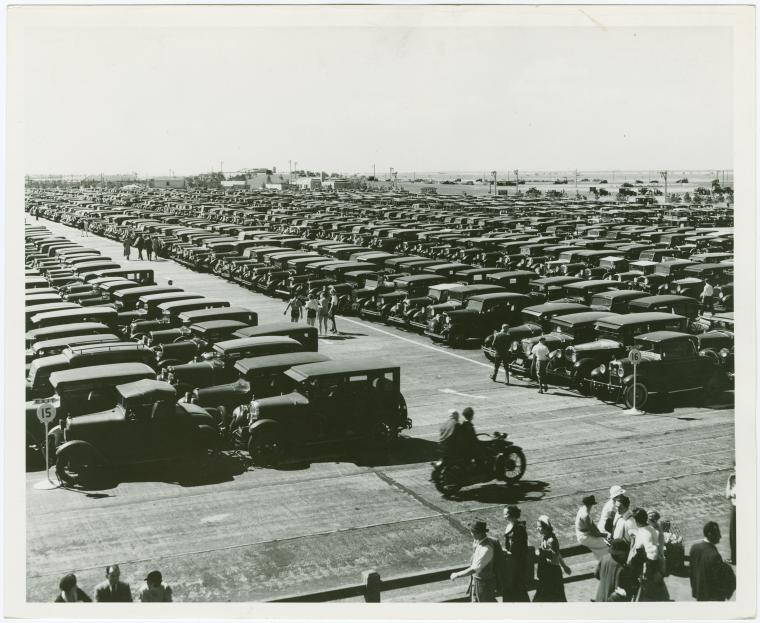
Jones Beach parking lot then (as in 1934, courtesy New York Public LIbrary)
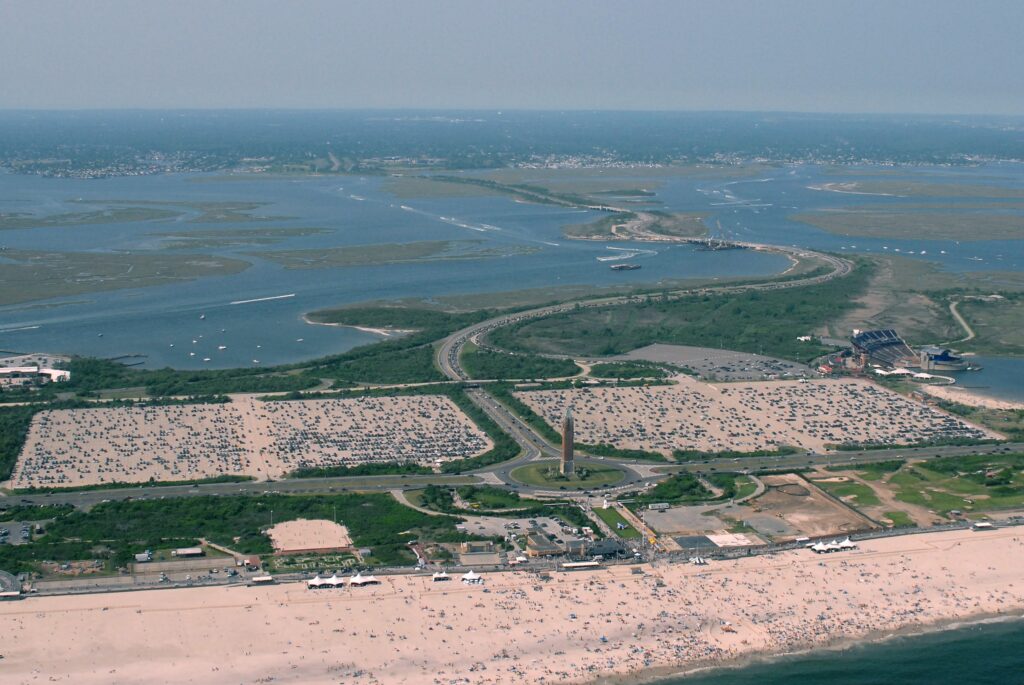
Jones Beach parking lot now

Seinfeld clips which pertain to this week’s show

FURTHER LISTENING:

After you’re done with this show on the history of parking, check out these shows from our back catalog with similar themes.

Categories
Those Were The Days

Lovely photos of the horrible New York garbage strike of 1911

New York street cleaners and garbage workers (sometimes referred to as ‘ashcart men’) went on strike on November 8, 1911, over 2,000 men walking off their jobs in protest over staffing and work conditions.

More importantly, that April, the city relegated garbage pickup to nighttime shifts only, and cleaners often worked solo. This may have been acceptable in warmer weather, but winter was approaching.

At a union rally that evening, a union representative proclaimed, “A 200-pound can was a mighty big load for one man to lift into a garbage wagon ……. [Our] men are already falling ill with pneumonia and rheumatism and … they demanded the right to work in the sunlight and the warmer weather of the daytime.”

In total, almost over 2,000 workers left their jobs in retaliation, “because they didn’t like to work in the dark,” said the New York Sun, derisively. [source]

By Nov. 11, garbage was heaped along street corners, and coal ash swirled into the street, creating a blackened, smelly stew along the cobblestones.

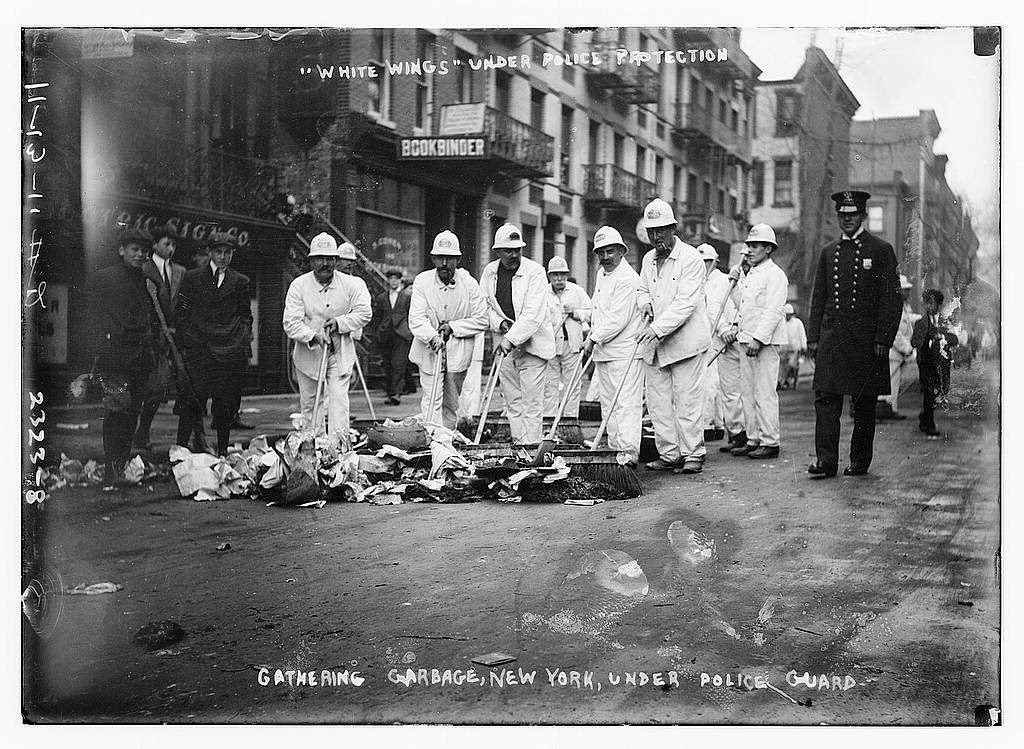
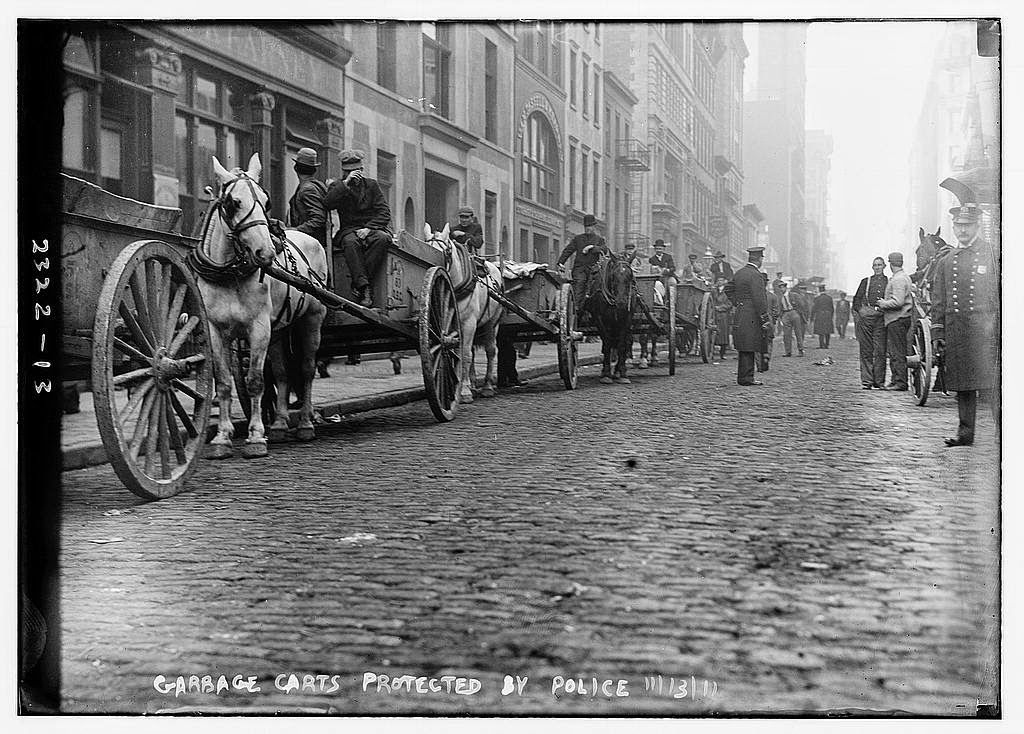
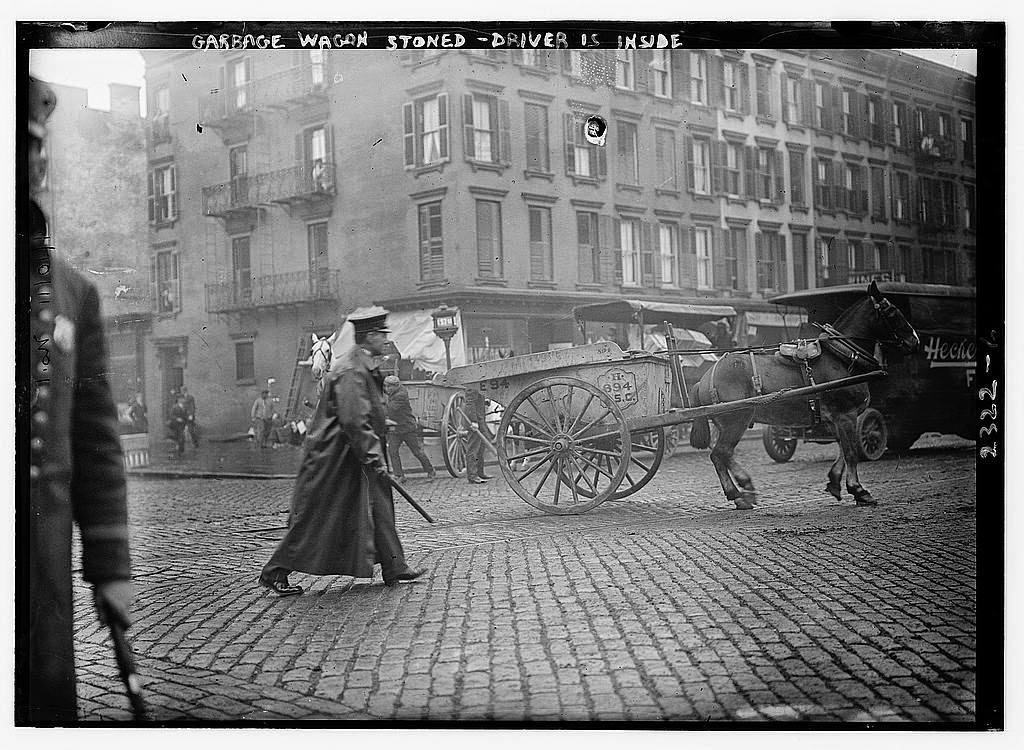
The city brought in temporary workers to carry off the more egregious piles of filth away, but harangues and violence by union protesters –“mobs assaulting and stoning drivers” — required they be protected by police.

New Yorkers had lived through such a strike before, as recently as 1907, but strikers found little public support this time around.

Newspapers, little sympathetic to the strikers, highlighted the growing threat of disease and the perceived selfishness of the workers.

“The right to strike of public employees, who enjoy the advantage of being listed in the civil service, is more than doubtful,” said the New York Times.

During bouts between strikebreakers and police, over two dozen people were injured and one man was even killed by a falling chimney.

Meanwhile, Mayor William Jay Gaynor was resolute in rejecting the cleaners demands. The efforts of the workers failed, and many went back to their jobs the next week, some heavily penalized for their participation in the strike.

Here are a few images from those foul-smelling days. These photographs are far more pleasant to look at than they must have been to shoot:

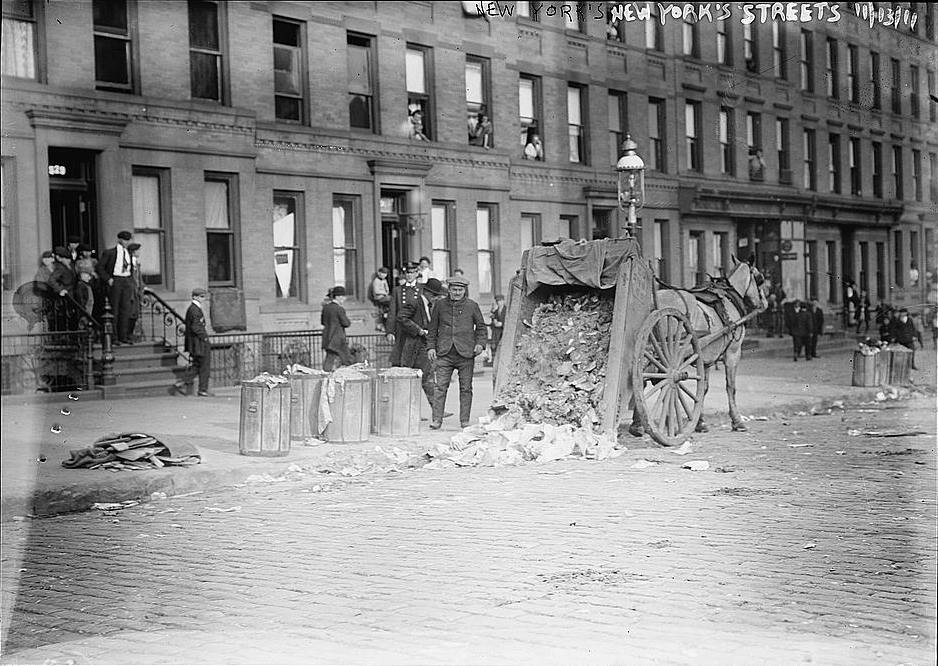
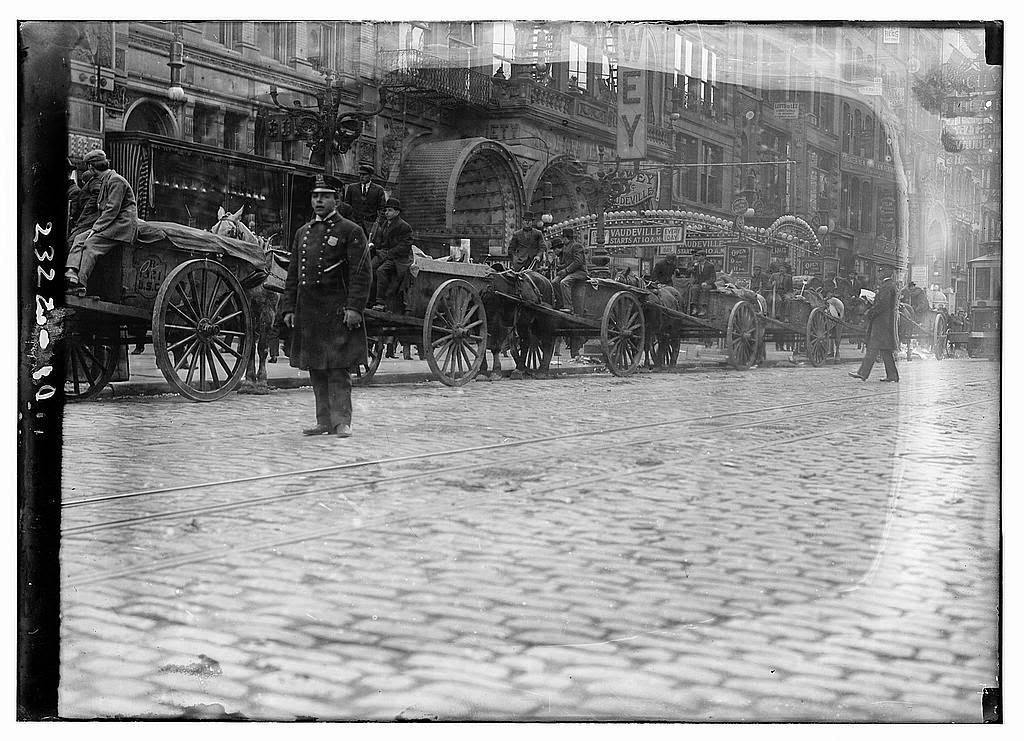
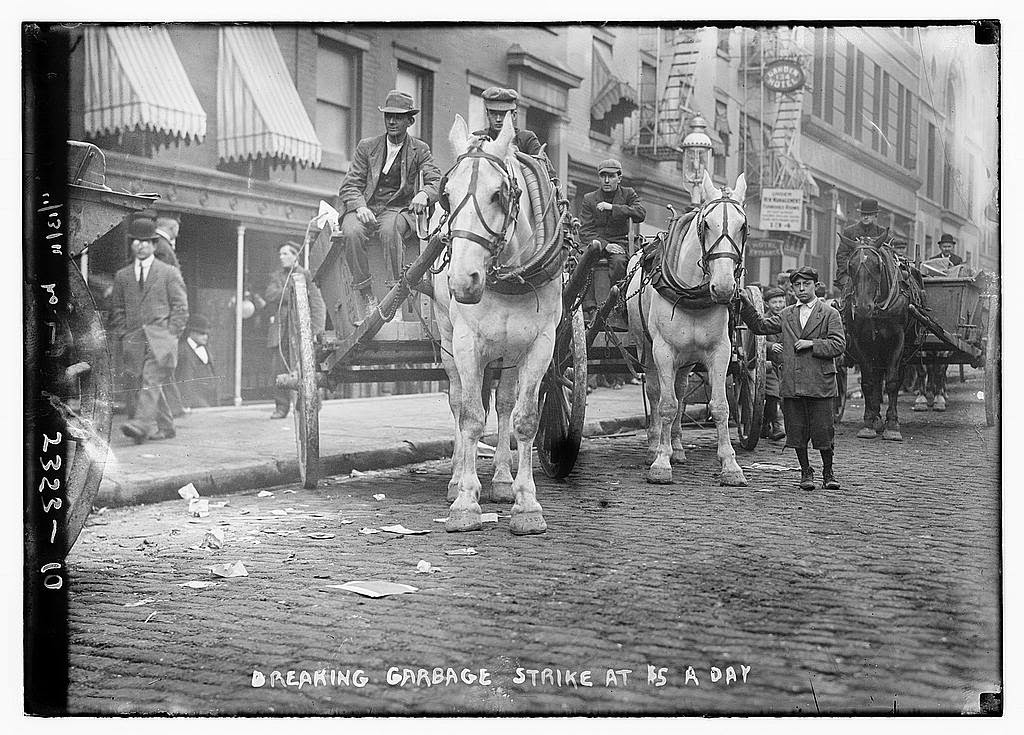
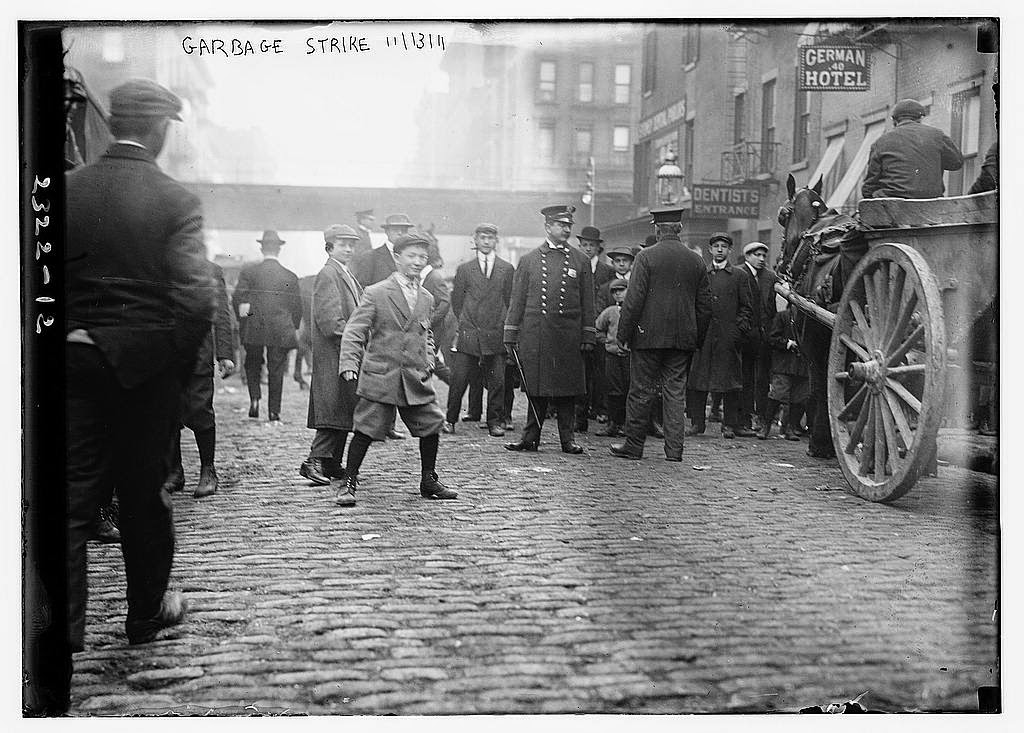
Horse-drawn garbage wagons collect trash during the four-day garbage strike.

Police protection those who broke from the strikers to clean the city streets.

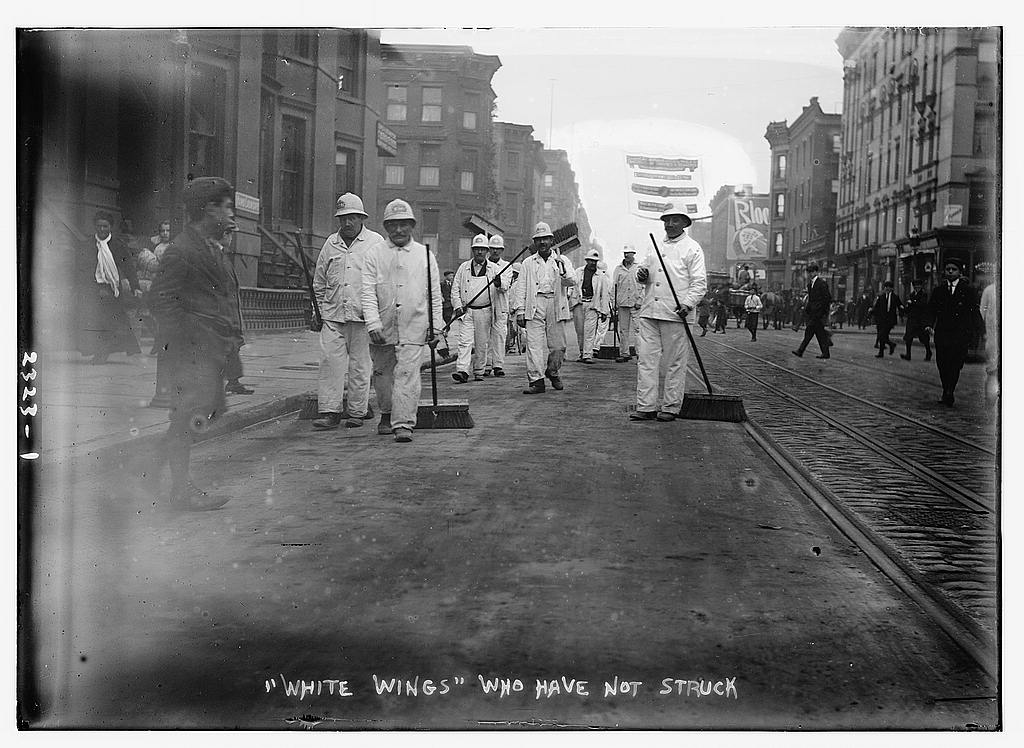
The city shipped in workers from out of town to sweep the streets during the strike

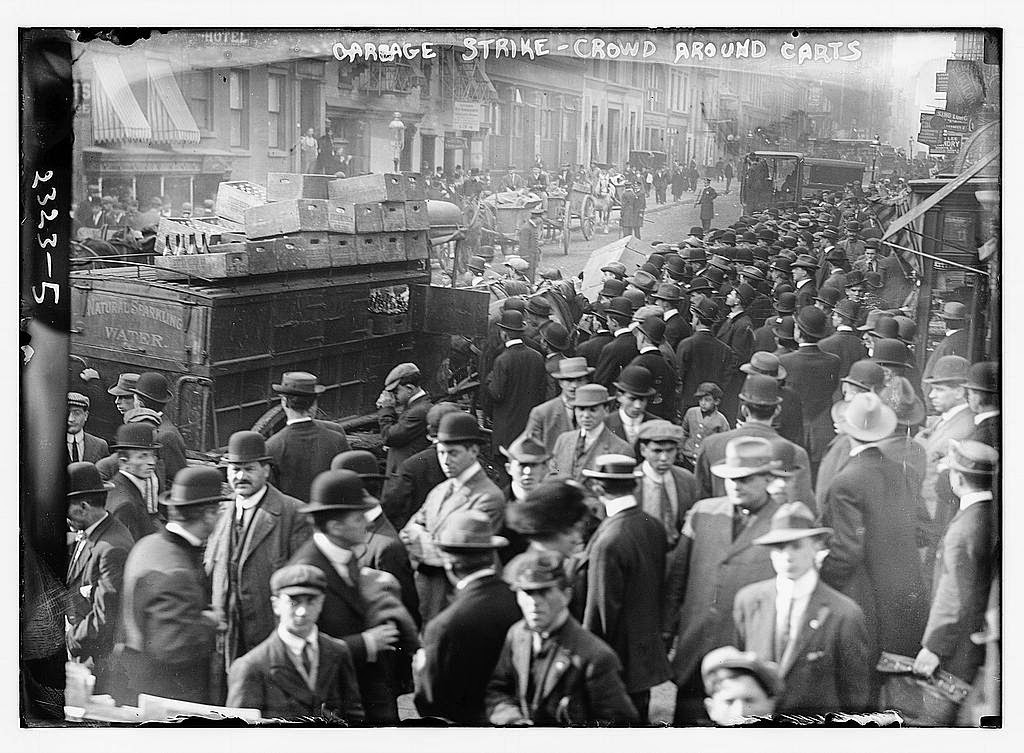
Crowds form in the streets watching the garbage carts go by. I don’t know whether these are strikers or just curiosity seekers

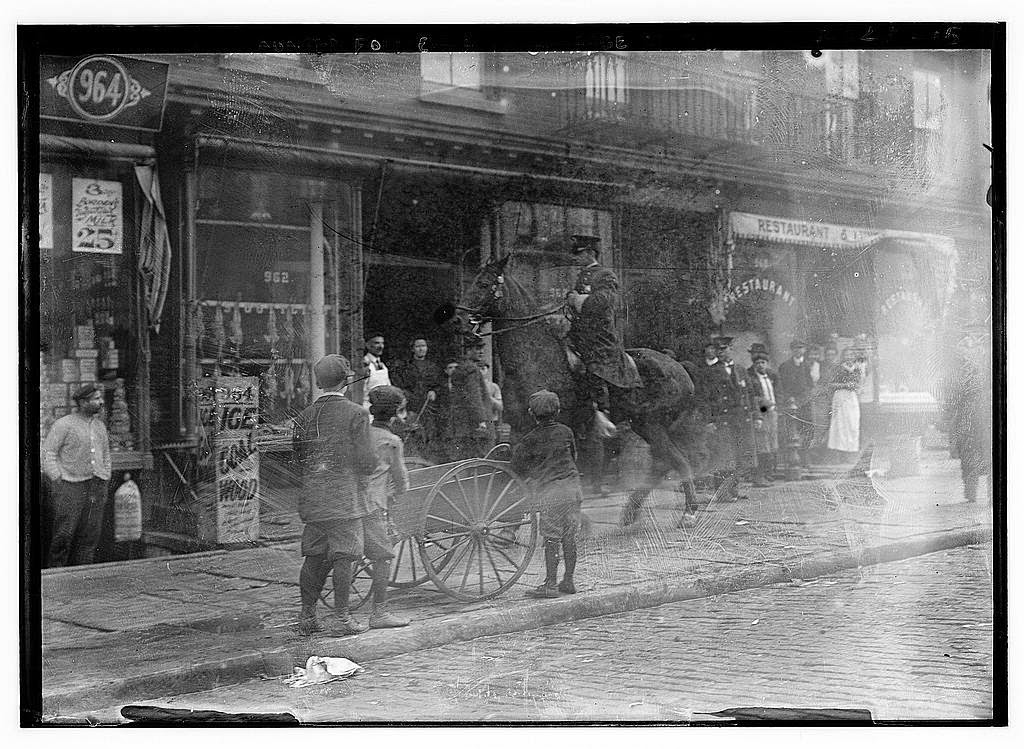
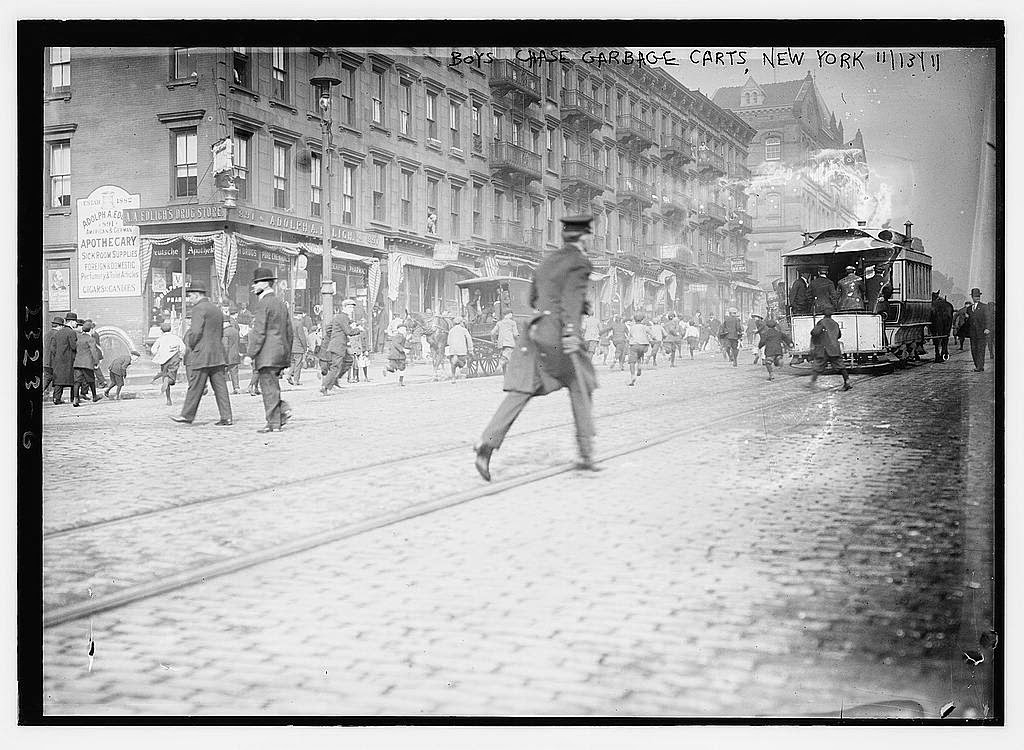
Boys captivated by the mounted police guarding the garbage carts. In the second photograph, a couple rowdy boys are actually chasing after a garbage cart.

This vehicle is pelted with stones at the corner of East 57th Street.

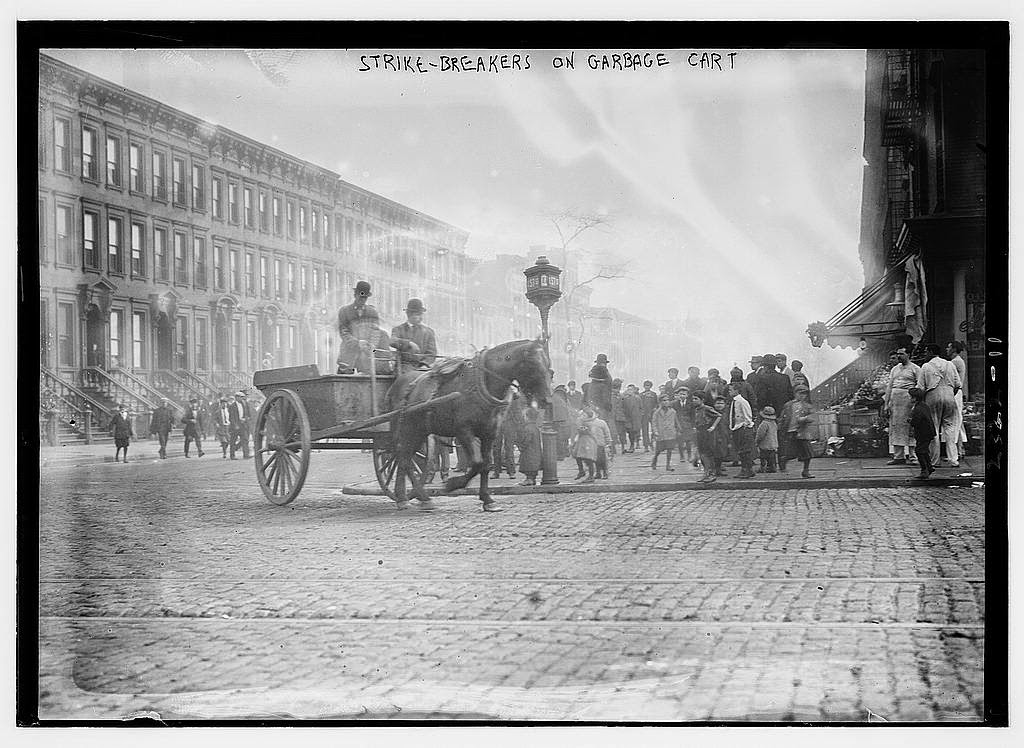
Another set of strike breakers rush by this street corner in their garbage cart.

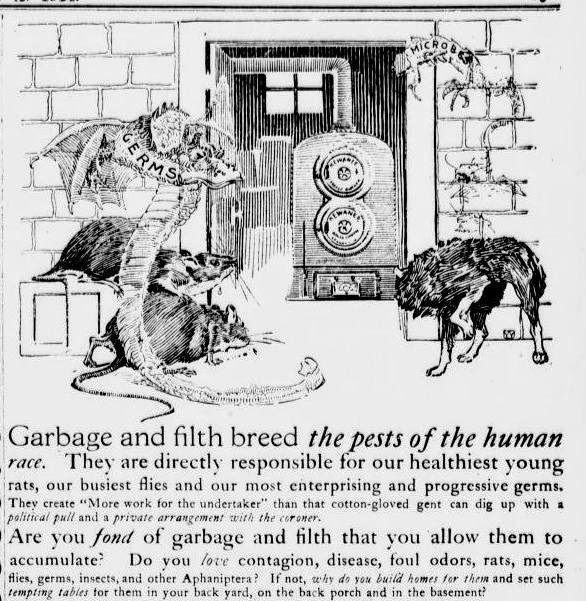
Meanwhile, a boiler company took advantage of the strike to run this grim advertisement for their garbage burners in the New York Sun.

This photo series courtesy the Library of Congress.

Categories
Gilded Age New York Podcasts

The Man Who Saved the Horses: Henry Bergh’s Fight for Animal Rights

PODCAST “Men will be just to men when they are kind to animals.” – Henry Bergh

Today’s show is all about animals in 19th-century New York City. Of course, animals were an incredibly common sight on the streets, market halls, and factories during the Gilded Age, and many of us probably have a quaint image of horse-drawn carriages.

But how often do we think about the actual work that those horses put in every day?

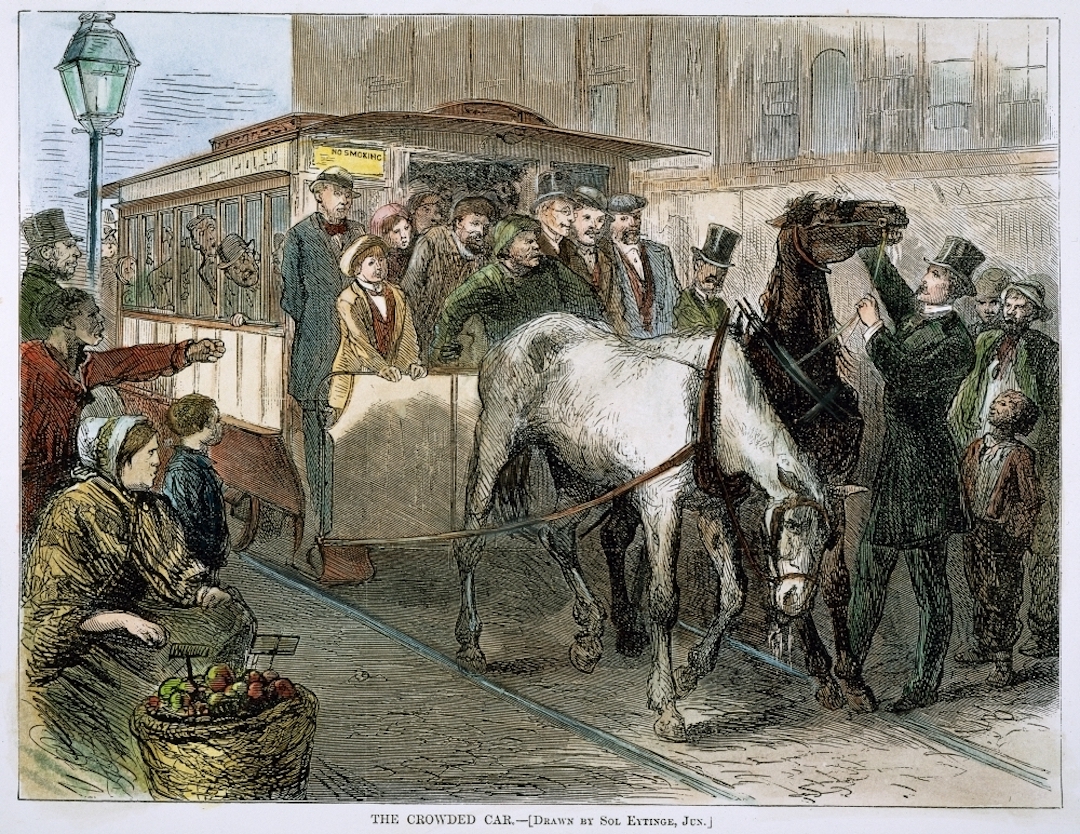
The stress of pulling those private carriages — or, much worse, pulling street trolleys, often overloaded with New Yorkers trying to get to work or home?

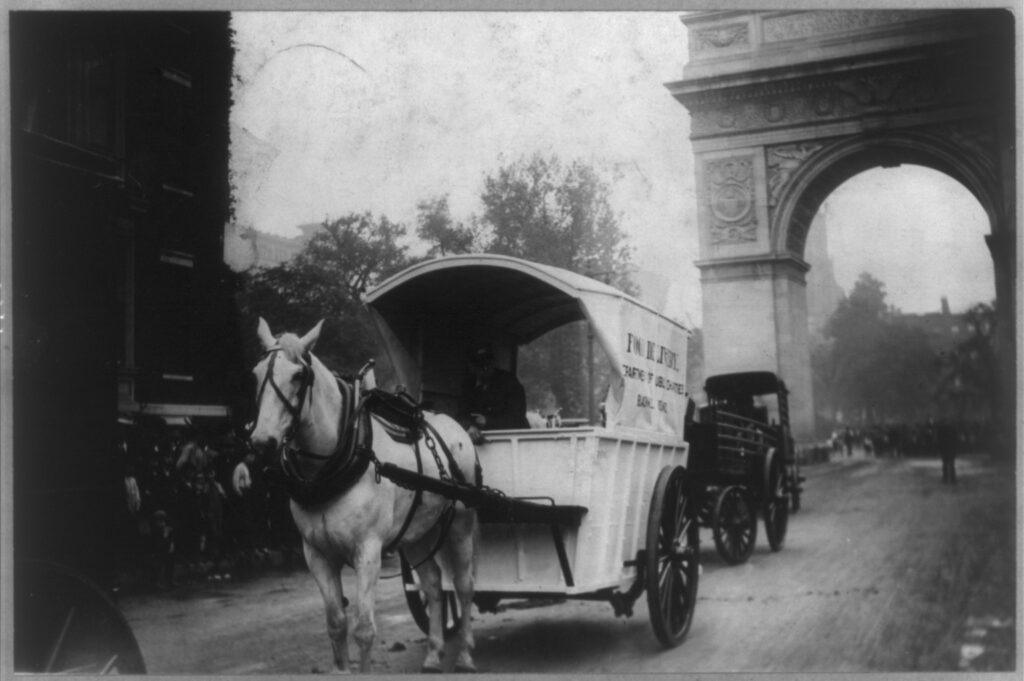
Work Horse parade, New York City: horse and delivery wagon, 1908. Courtesy Library of Congress

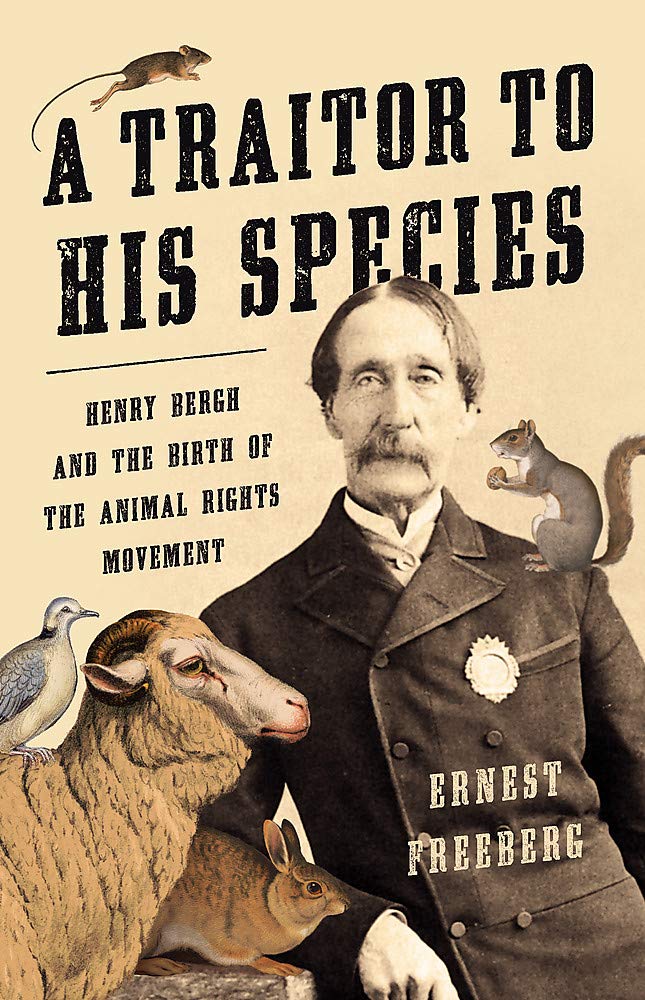
In the book A Traitor to His Species: Henry Bergh and the Birth of the Animal Rights Movement, author Ernest Freeberg (who joins Tom on this week’s show) tells the story of these animals — and of their protector Henry Bergh, the founder of the American Society for the Prevention of Cruelty to Animals (ASPCA).

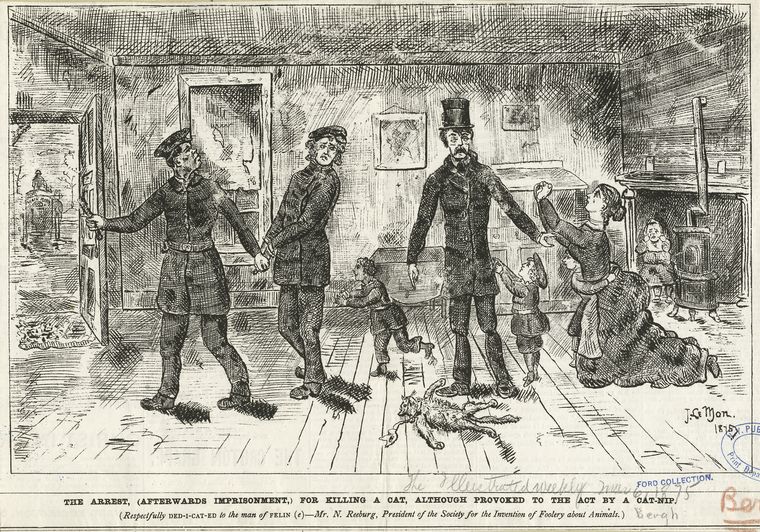
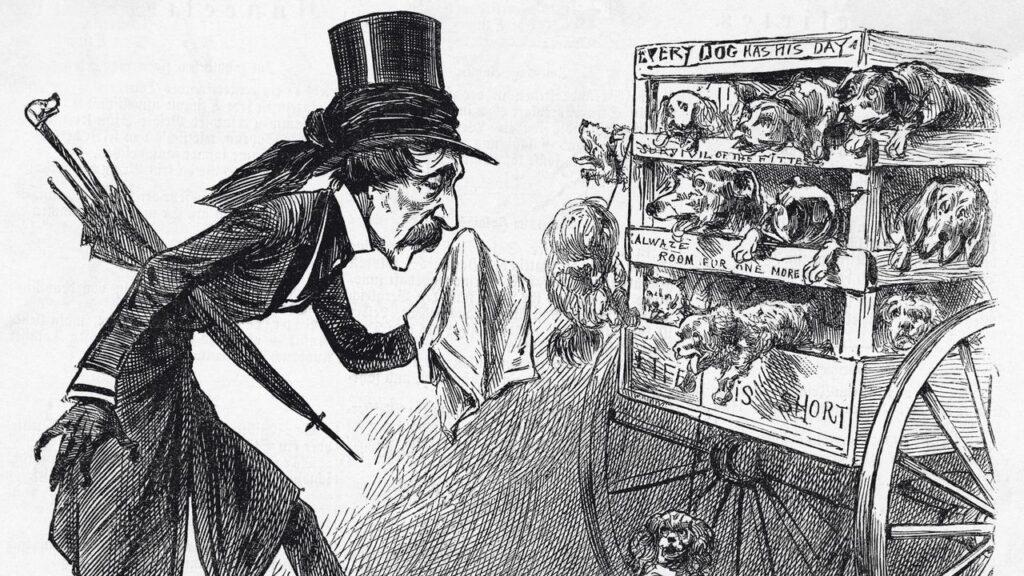
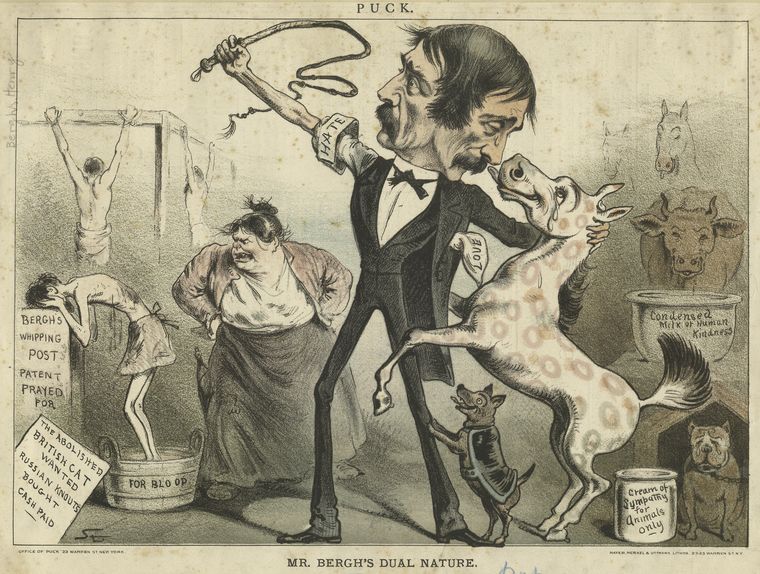
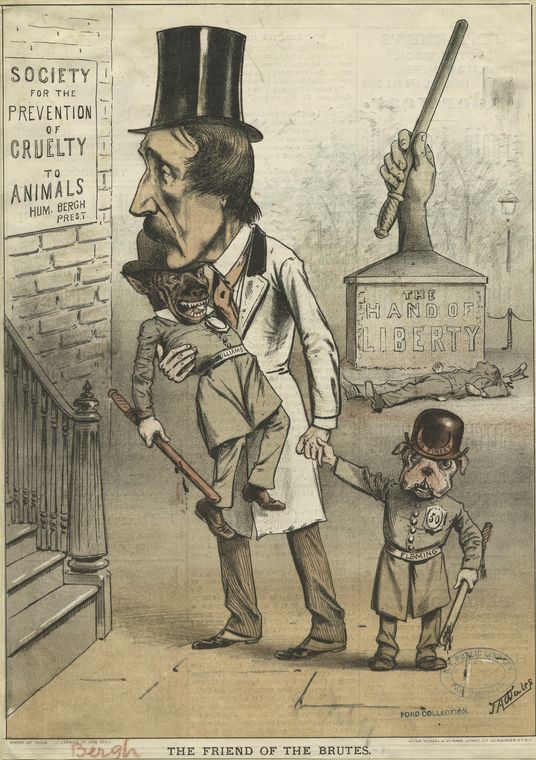
He ran the organization from the 1860s to the 1880s, and was a celebrity in his day — widely covered, and widely mocked for his unflinching defense of the humane treatment of all animals, even the lowliest pesky birds or turtles.

His story is full of surprising turns, and offers an inside account of the early fight for animal rights, and engrossing tales of Gilded Age New York from a new perspective — the animal’s perspective.

Featuring an interview with Ernest Freeberg, a distinguished professor of humanities and head of the history department at the University of Tennessee.

Listen Now – Henry Bergh’s Fight for Animal Rights

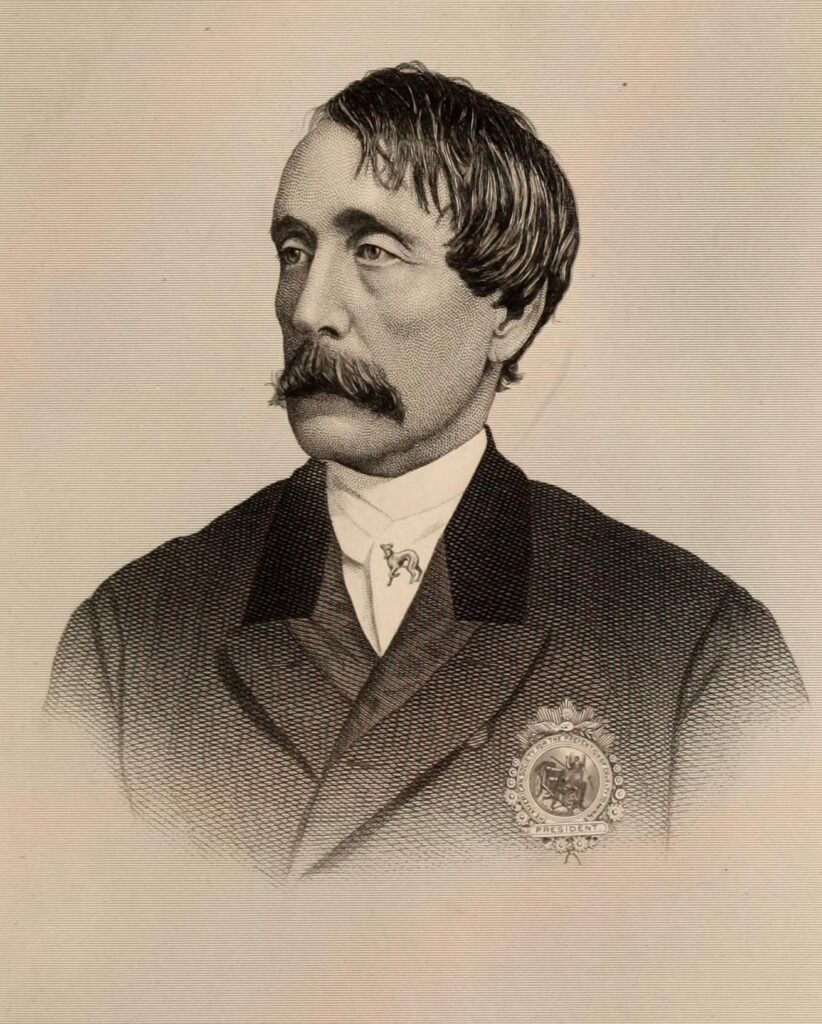
Bergh in an illustration by George E Perine
“The arrest, (afterwards imprisonment), for killing a cat, although provoked to the act by a cat-nyp.” New York Public Library
Caricaturist James Albert Wales lampooning Mr. Bergh. PHOTO: BETTMANN ARCHIVE/GETTY IMAGES
Bergh made an easy target for satire magazines like Puck
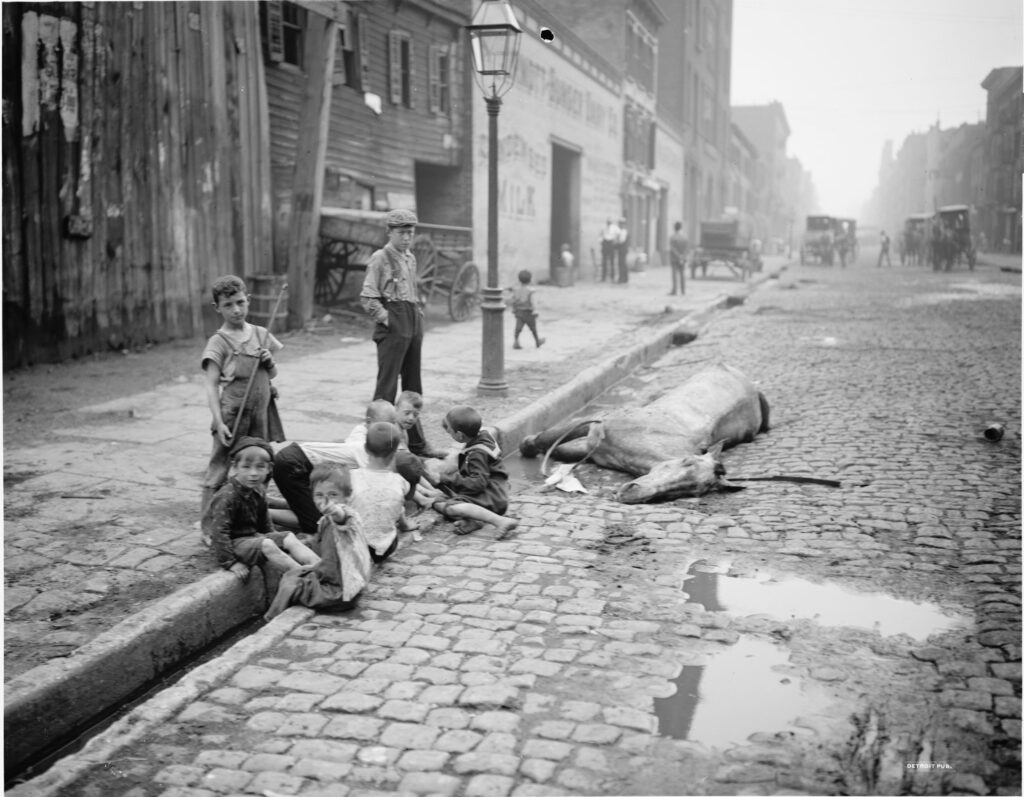
Jacob Riis captured this tragic image in 1900.
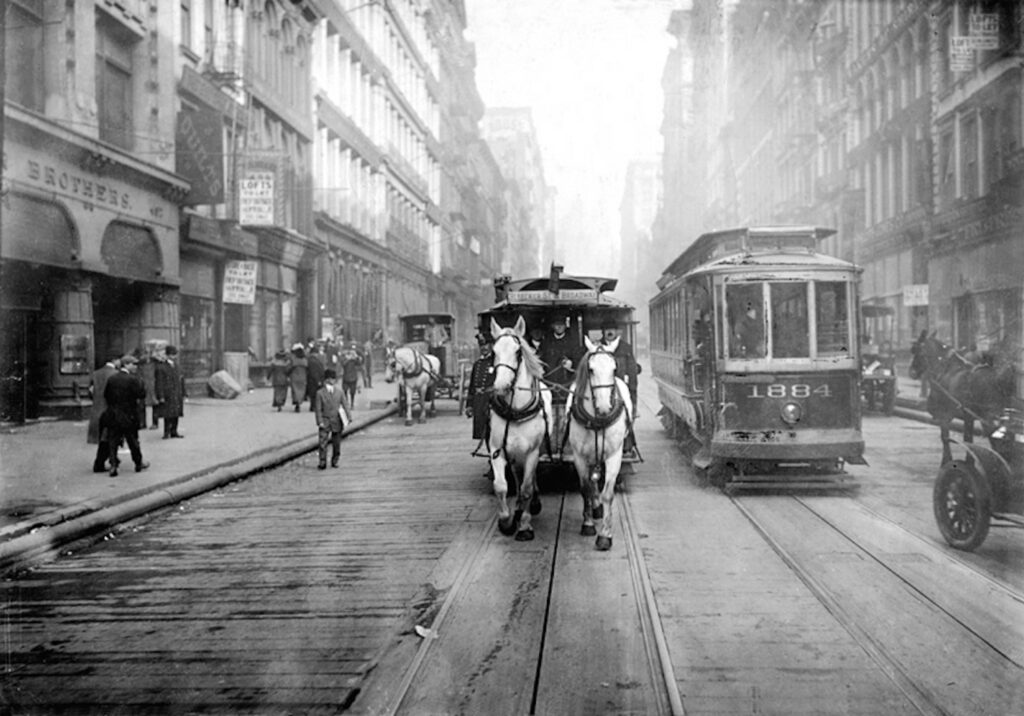
Ini 1917 horses were sharing the street with automobiles and streetcars.
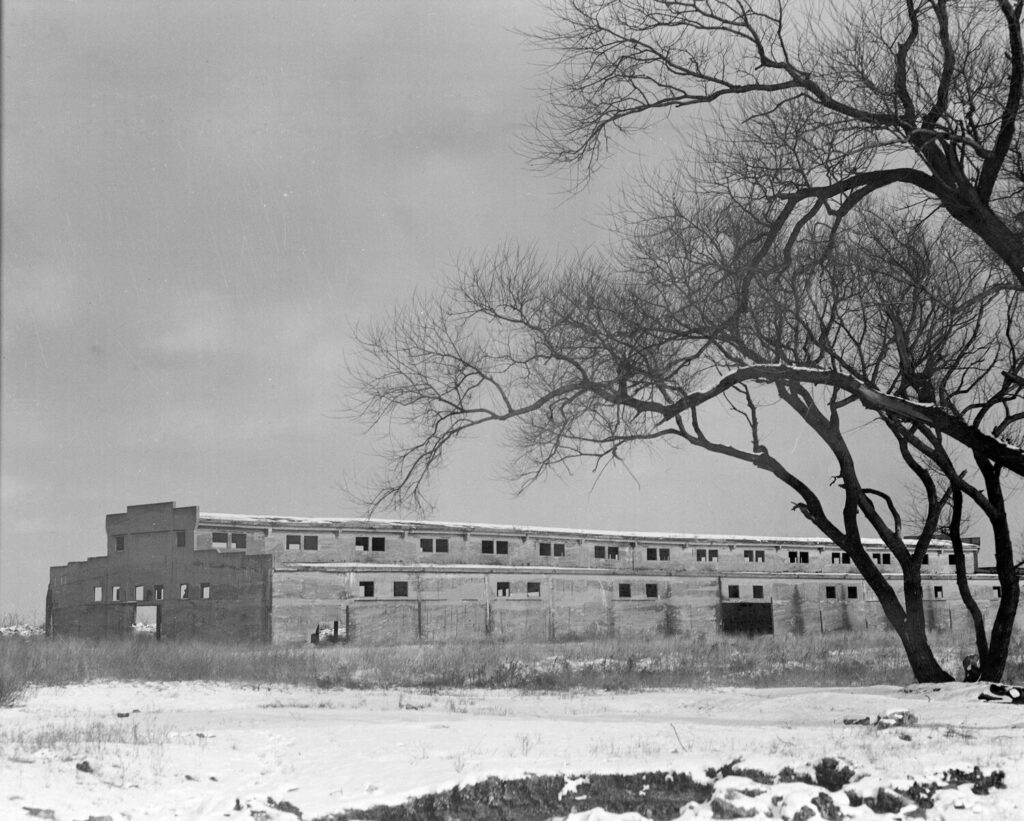
The rendering factory on Barren Island, Brooklyn. It was abandoned by the time of this photograph — January 1938. Photographer: Sam Brody. WPA Federal Writers’ Project Collection, NYC Municipal Archives..

FURTHER READING

FURTHER LISTENING

After you’ve listened to this show on Henry Bergh and the animals rights movement, dive back into the back catalog and listen to these shows with similar themes:


The Bowery Boys: New York City History podcast is brought to you …. by you!

We are now producing a new Bowery Boys podcast every other week. We’re also looking to improve and expand the show in other ways — publishing, social media, live events and other forms of media. But we can only do this with your help!

We are now a creator on Patreon, a patronage platform where you can support your favorite content creators.

Please visit our page on Patreon and watch a short video of us recording the show and talking about our expansion plans. If you’d like to help out, there are several different pledge levels. Check them out and consider being a sponsor.

We greatly appreciate our listeners and readers and thank you for joining us on this journey so far.

Categories
Neighborhoods

A look back at Lord & Taylor’s splashy move to Fifth Avenue in 1914

UPDATE FOR 2020: It was announced today that Lord & Taylor, America’s first department store, has announced it will go out of business after 193 years. It began in 1826 as women’s clothing store in Lower Manhattan.

In tribute, we are bumping up this article from 1914, framed around its 1914 move to the Fifth Avenue shopping district.

Thank you Lord & Taylor — for the glamour, for the Christmas windows, for legacy that reaches back to the earliest year of New York retail history.


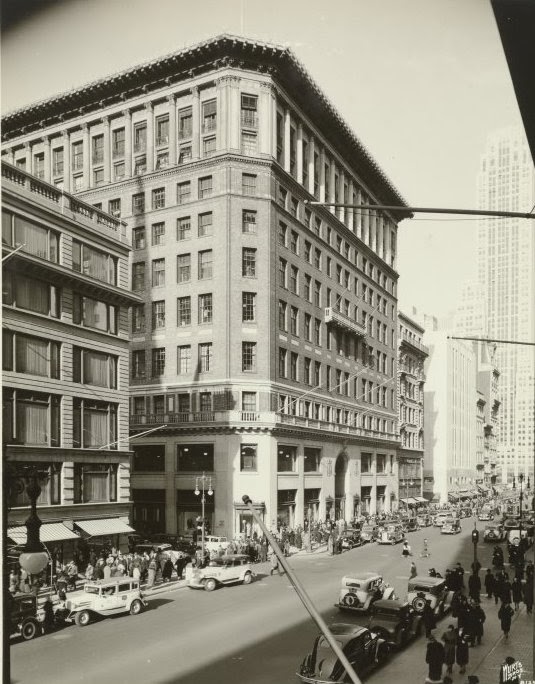
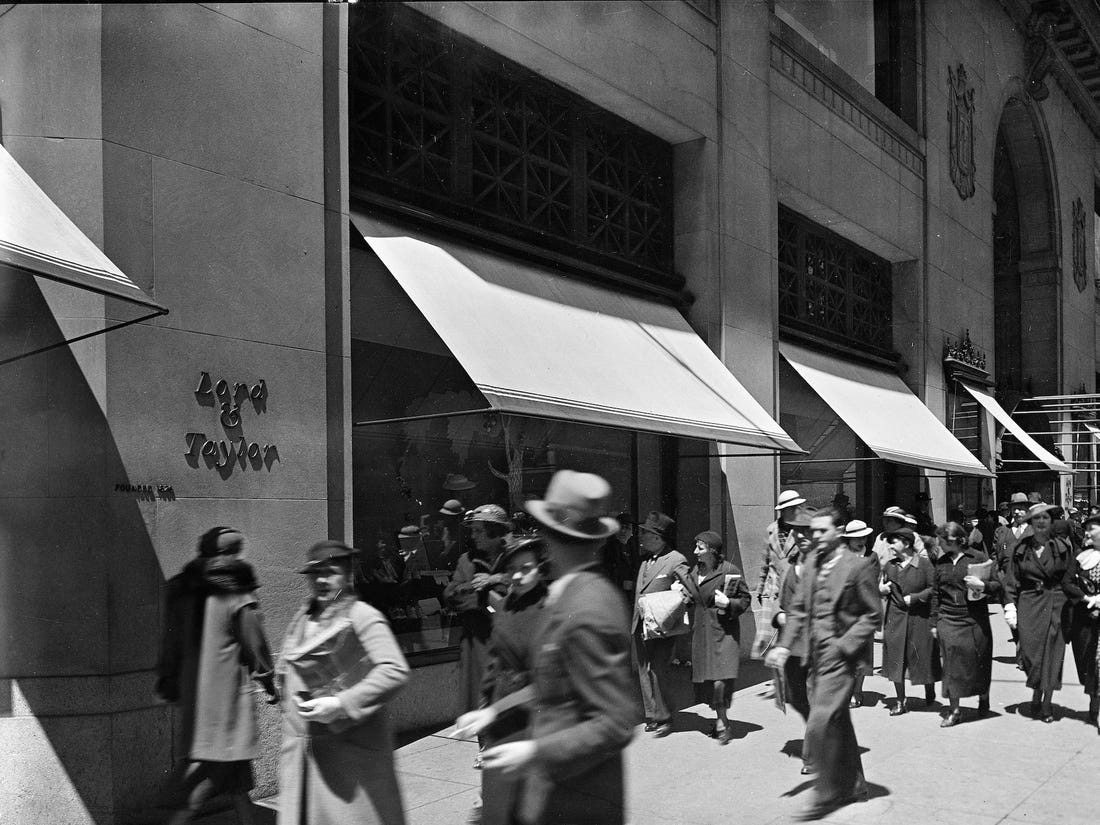
Lord & Taylor’s at Fifth Avenue and 38th Street, in the 1920s, photo by the Wurts Brothers (courtesy NYPL)

Loehmann’s, the once-great Brooklyn-based department store, closes all their locations for good tomorrow, another causality of the changing economy and people’s changing tastes in shopping.

But let’s not dwell on the decline of the department store. Let’s revisit the heyday, shall we?


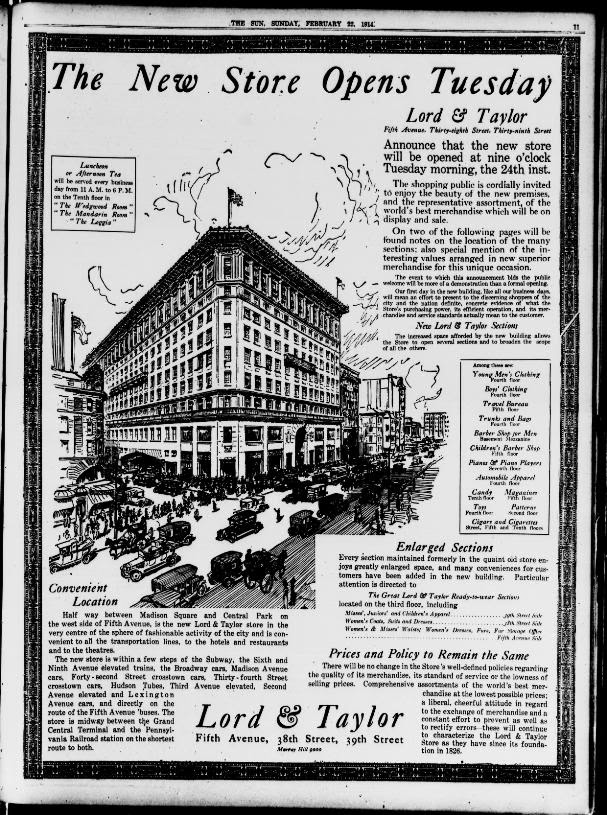
Lord and Taylor Department Store opened the doors to their tony Fifth Avenue address one hundred years ago yesterday, on February 24, 1914.

“Half way between Madison Square and Central Park on the west side of Fifth Avenue, is the new Lord & Taylor store in the very centre of the sphere of fashionable activity of the city and is convenient to all the transportation lines, to the hotels and restaurants and to the theatres.”

The store traces its lineage to a three-story women’s clothing store on 47 Catherine Street, which was opened in 1826 by Samuel Lord and George Washington Taylor.  Nearby, men could find equally fine fashions at the clothier of H & D.H.. Brooks (today Brooks Brothers) at Catherine and Cherry Streets.  Catherine Street is hardly a place where you would look for high-end brands today, located between the Manhattan and Brooklyn Bridges.

Lord & Taylor had subsequent locations in Manhattan at Broadway and Grand Street and, later, at Broadway and 20th Street on Ladies Mile.

Flash forward to 1914 — the new store was an automated wonder, according to the New York Sun, equipped with a system of conveyor belts.  “[T]he human equation has been eliminated wherever possible and machinery performs its part quietly and out of sight.”

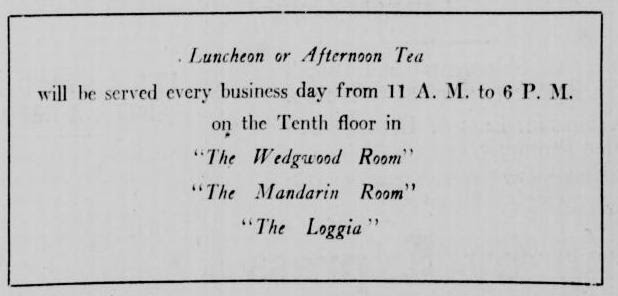
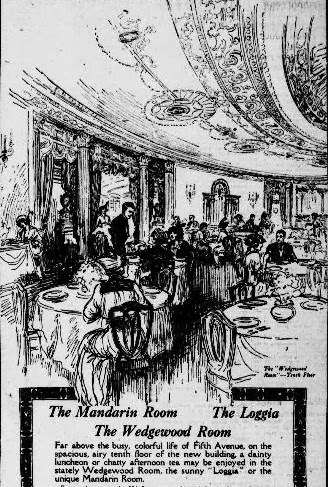
Shoppers could also escape to the tenth floor for “a dainty luncheon” or some afternoon tea:

The building is in the go-to architectural style for department stores — Italian Renaissance Revival — and, apparently, the go-to architectural firm for such places, Starrett and Van Vleck, also known for Bloomingdale’s and Saks Fifth Avenue.

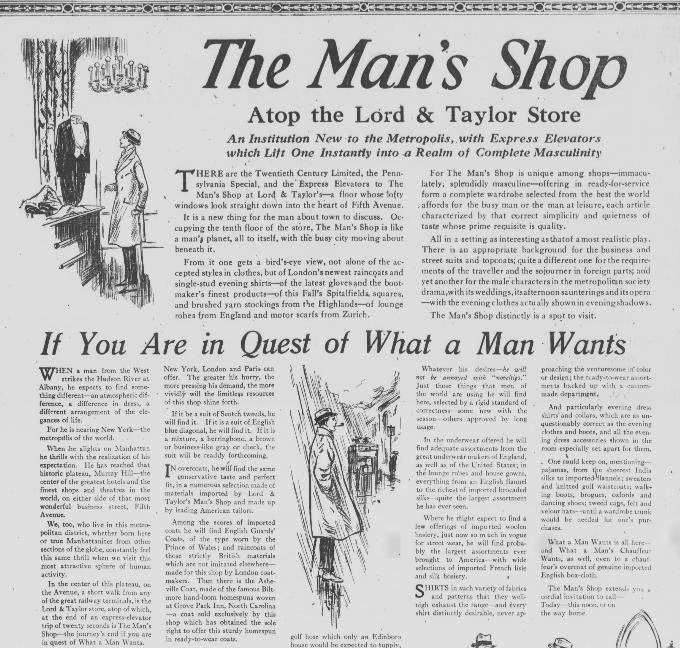
The new store made a unique appeal to the male shopper with its tailored men’s department, “a realm of complete masculinity”.  There was a men’s-only entrance on the 38th Street side where gentlemen could access the Manicuring Parlor.  “[M]ake your purchases, be shaved and manicured, change your clothing, if you like, and leave without passing through any of the departments where women’s goods are sold.”  In addition, the entire fourth floor was “devoted to men’s apparel and accessories for motoring.”

The store also had featured an Equestrienne Section, including “a mechanical horse, duplicating the actual motion of walking, trotting, or cantering.”

In 2007, the Lord & Taylor building was made an official New York landmark.

Categories
Health and Living Podcasts

Moving Day! Mayhem and Madness in Old New York

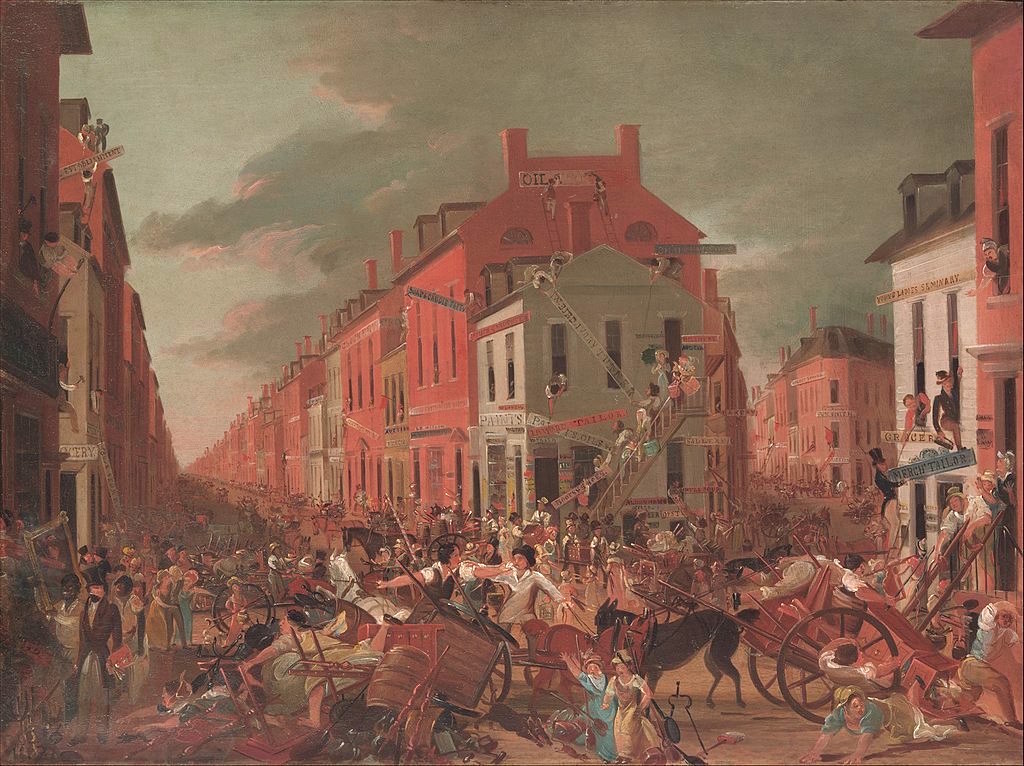
EPISODE 324 At last! The Bowery Boys: New York City History podcast looks at one of the strangest traditions in this city’s long history — that curious custom known as Moving Day.

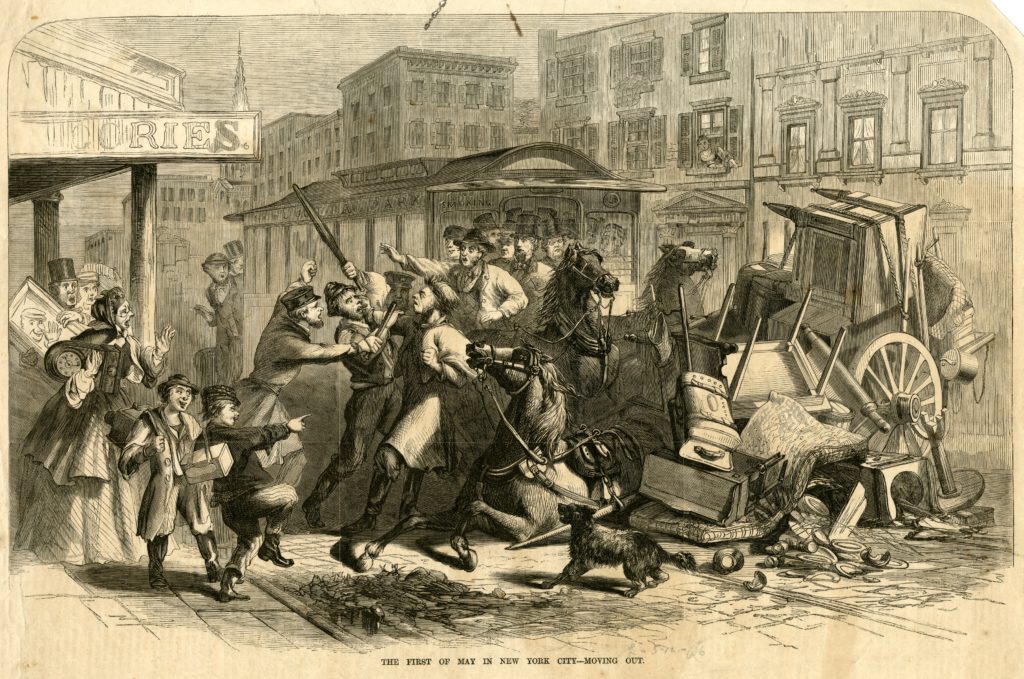
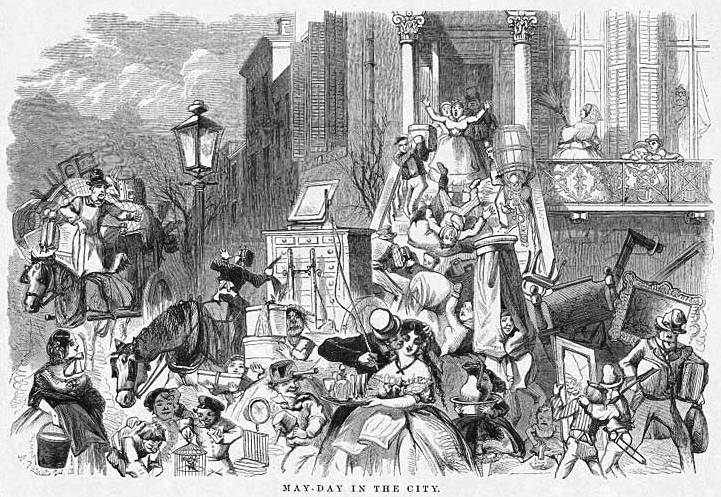
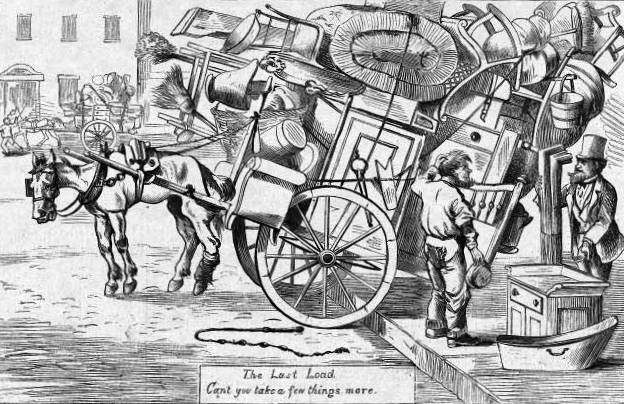
Every May 1st, for well over two centuries, from the colonial era to World War II, rental leases would expire simultaneously, and thousands of New Yorkers would pack their possessions into carts or wagons and move to new homes or apartments. 

Of course, for the rest of the world May 1 would mean all different things – a celebration of spring or moment of political protest. And it would mean those things here in New York – but on a backdrop of just unbelievable mayhem in the streets.

There are a few theories about the origin of Moving Day but most of them trace back the Dutch colony of New Netherlands. So why did New Yorkers continue the custom for centuries?

FEATURING Davy Crockett, Lydia Maria Child, The Jeffersons, Mickey Mouse and an amazing New Yorker named Amy Armstrong with a really stubborn husband.

PLUS: Greg reads a poem.

To get this episode, simply stream or download it from your favorite podcast player.

Or listen to it straight from here:
MOVING DAY! MAYHEM AND MADNESS IN OLD NEW YORK


Moving Day (in Little Old New York), 1827, Unknown Painter (Met Museum)
Harry T. Peter’s Collection of Pictorial Newspaper Illustrations, The First of May in New York City – Moving Out. Courtesy New-York Historical Society Library
Newspaper illustration 1869
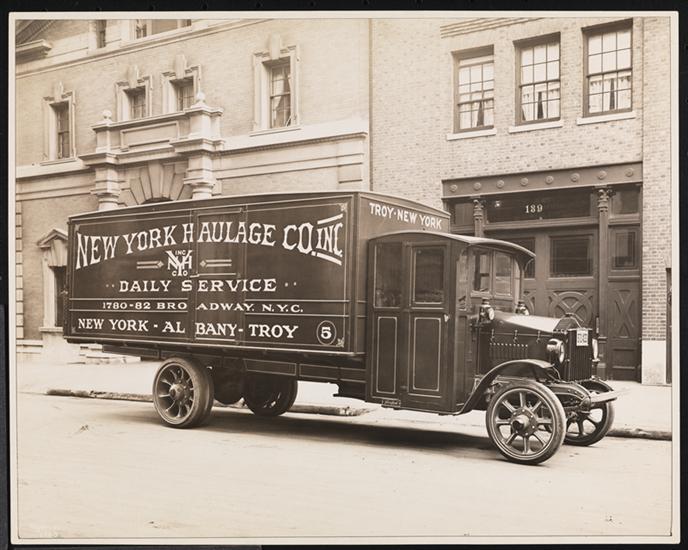
A circa 1921 Pierce Arrow moving van parked on the street, Byron Company. 1921. Courtesy the Museum of the City of New York
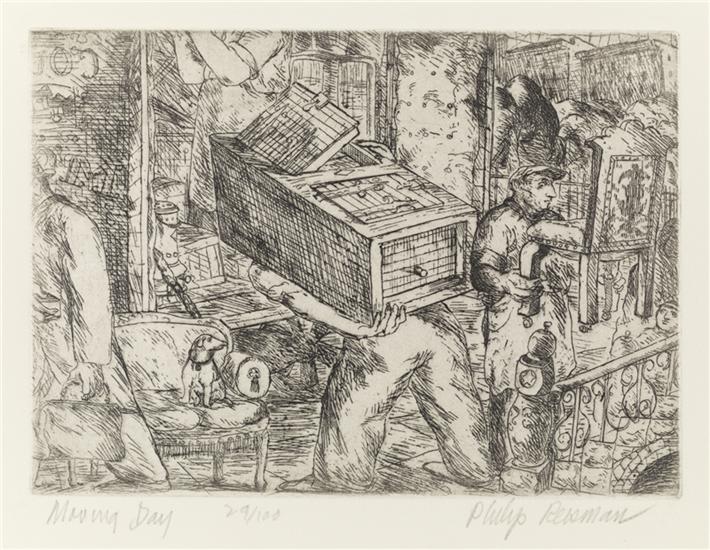
An illustration by Philip Reisman, 1929, courtesy the Museum of the City of New York
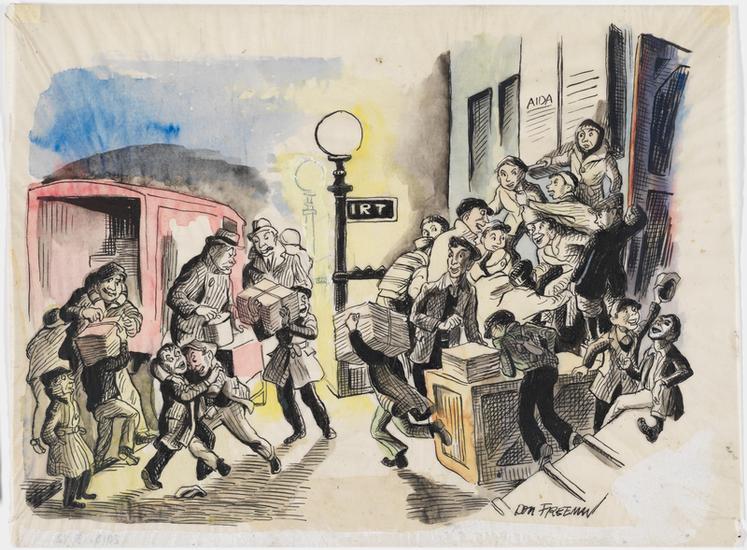
Moving Day 1936 in an illustration by painter and cartoonist Don Freeman. Courtesy the Museum of the City of New York

The Bowery Boys: New York City History podcast is brought to you …. by you!

We are now producing a new Bowery Boys podcast every other week. We’re also looking to improve and expand the show in other ways — publishing, social media, live events and other forms of media. But we can only do this with your help!

We are now a creator on Patreon, a patronage platform where you can support your favorite content creators.

Please visit our page on Patreon and watch a short video of us recording the show and talking about our expansion plans. If you’d like to help out, there are six different pledge levels. Check them out and consider being a sponsor.

We greatly appreciate our listeners and readers and thank you for joining us on this journey so far.

Categories
Health and Living

America’s first free animal hospital, at 350 Lafayette Street, with a roof garden for sick horses

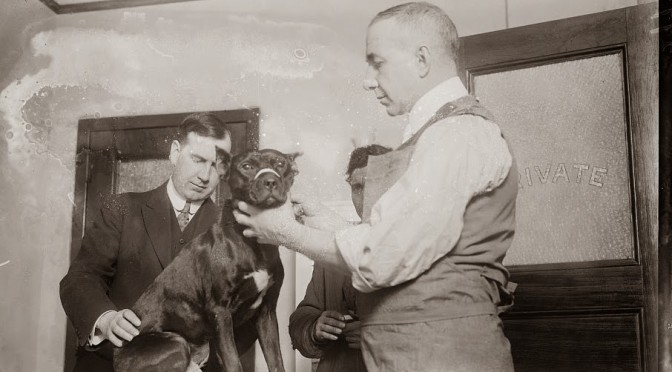
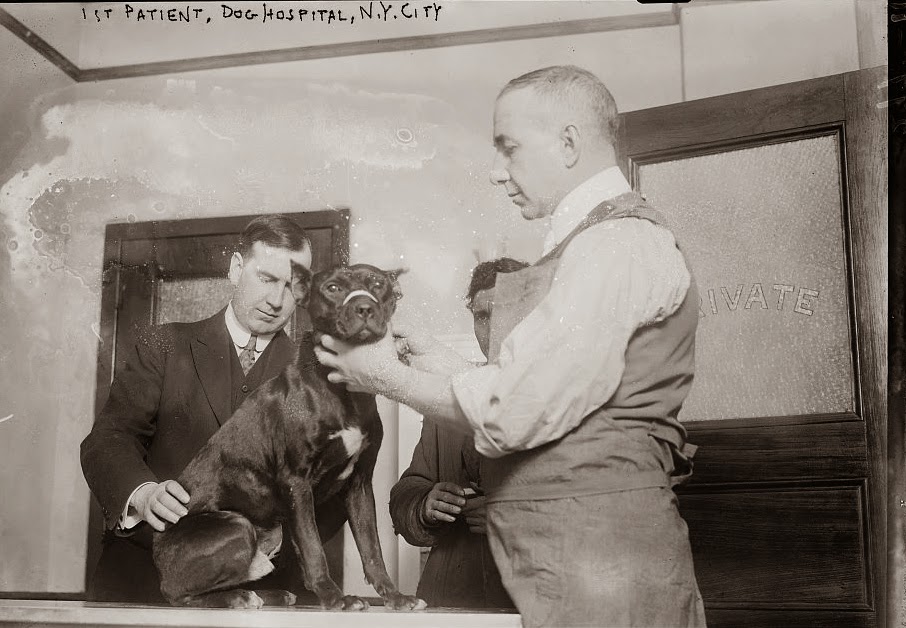
The first official patient of the Free Hospital and Dispensary for Animals at 350 Lafayette Street, under the care of veterinarian Bruce Blair.

The American Society for the Prevention of Cruelty to Animals (ASPCA) was formed in 1866 by philanthropist Henry Bergh.  Eight years later, he helped co-found the New York Society for the Prevention of Cruelty to Children.
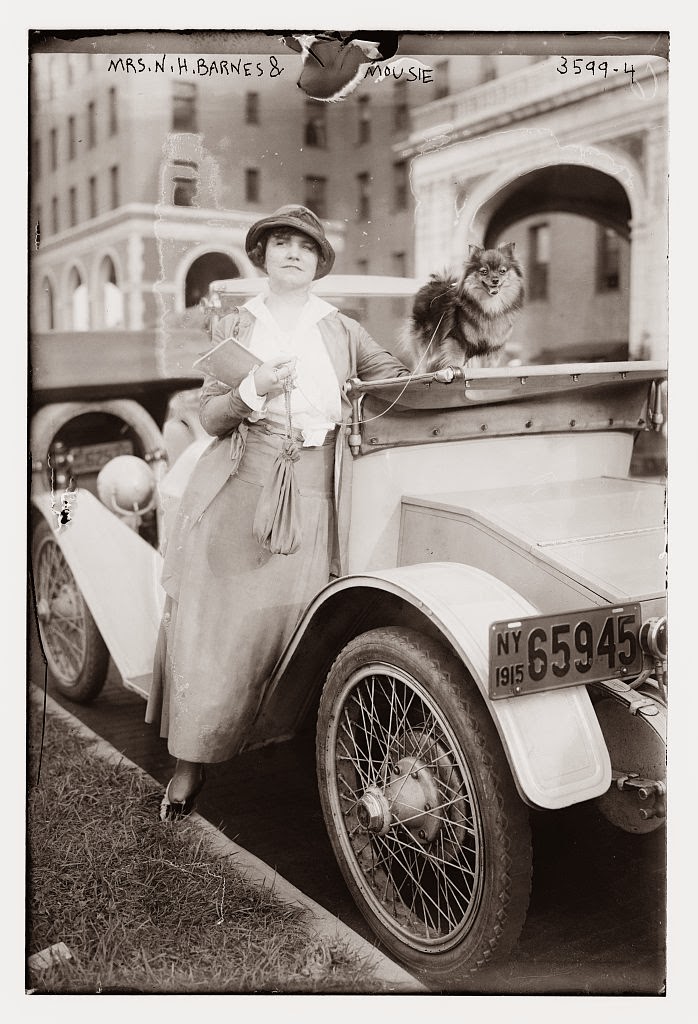
Yes, animals came first.  Animals were not only better understood than children, they were instrumental to the daily flow of the city.  Almost every vehicle on the street was horse powered.  The skills of animal husbandry and veterinary medicine were adequately developed in a country that was mostly rural, while the psyches of the human adolescent were only just being appreciated.

At right: Mrs. N.H. Barnes and her dog Mousie, circa 1910-1915, courtesy Library of Congress

And don’t underestimate the power of the upper crust and their favorite luxury items — exotic pets.  New Yorkers were perhaps empathizing with animals, if not exactly knowing how to treat them.

After all, the menagerie of the Central Park Zoo was created from the bad decisions made by wealthy people, regretting their decisions in bringing unusual animals into their homes.  In 1907, New York even experienced a bit of a monkey craze, with dozens of small primates becoming adorably mischievous fashion accessories.

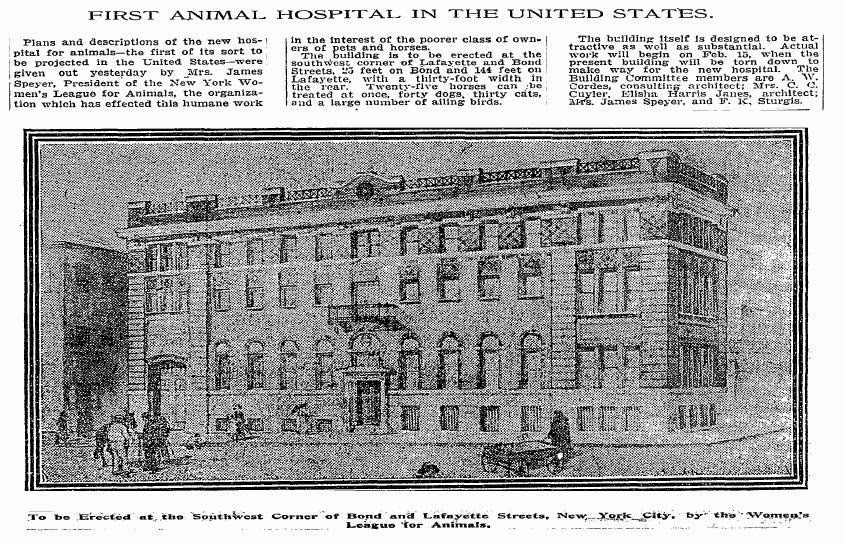
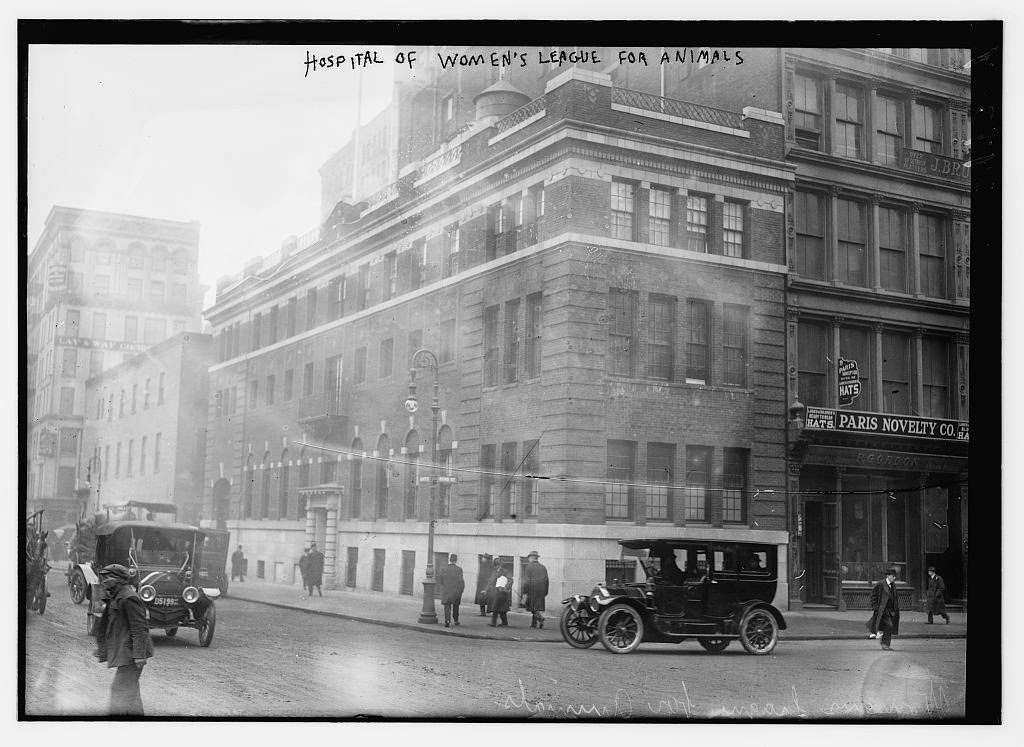
Animal rights became an interesting tangent of New York’s progressive movement, a focus on the well-being of four-legged creatures that culminated, one century ago this week, in the opening of the Free Hospital and Dispensary for Animals (at 350 Lafayette Street), the first institution of its type in the United States.

Like many progressive institutions of the day, the animal hospital was a life’s ambition for a wealthy socialite — in this case, Ellin Prince Speyer, the wife of railroad banker James Speyer (founder of the Provident Loan Society.)

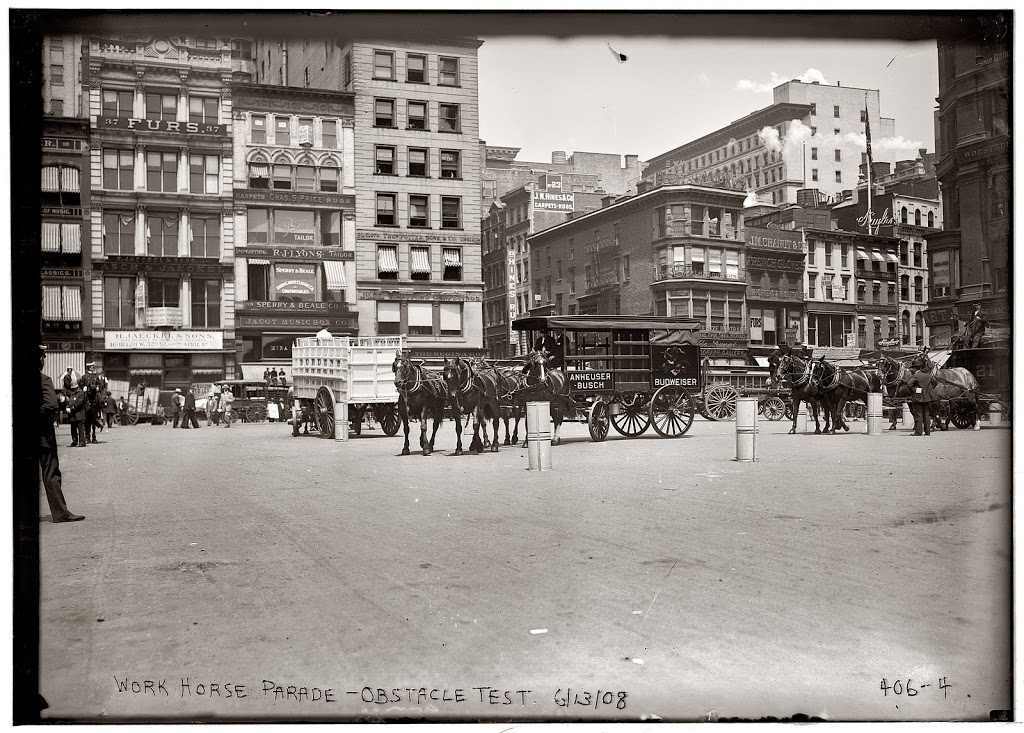
Above: Work horses compete in an obstacle course in Union Square, during the Work Horse Parade of 1908. Picture courtesy Shorpy

Speyer formed a Women’s League of the ASPCA in 1906 and quickly organized public displays that would bring attention to the plight of work animals.  The following year, on Memorial Day, she organized the first annual Work Horse Parade with contests and exhibitions, all in an effort to bring attention to the condition of horses on city streets.

People were given prizes if their old horses were in good shape!  “An effort has been made to induce the peddlers and hucksters of the city to enter,” said the New York Times.

The Women’s League provided watering station for horses during the summer and even free “horse vacations,” renting a farm in upstate New York for the care of older animals.

But the League was concerned with the health of all animals, not just horses.  (Indeed, the New York Sun takes note of Mrs. Speyer’s favorite animal — “the life saving Japanese spaniel Trixie.”)  Members visited area schools to lecture on the proper care and feeding of pets, speaking to the young owners of dogs, cats and birds.

They believed that beneficence to the animal kingdom was a signal to a healthy, moral household.  “You don’t find wife-beaters who are fond of pets and lovers of animals,” said the League in an editorial in 1912.

This sophisticated devotion to animal care was considered truly unique. For instance, when an impressive animal clinic opened at Cornell University in 1911, the New York Times replied with the headline, “Where Sick Animals Are Cared For Like Humans.

From the New York Times, February 1913

Speyer opened a small animal clinic in New York that same year, but it was woefully inadequate to the needs of New York’s animal population.  So, with the help of lavish benefits and donations from other wealthy families (including many of her banking friends), the Women’s League raised $50,000 and opened up a proper animal hospital on March 14, 1914, the first animal hospital of its kind in the United States.

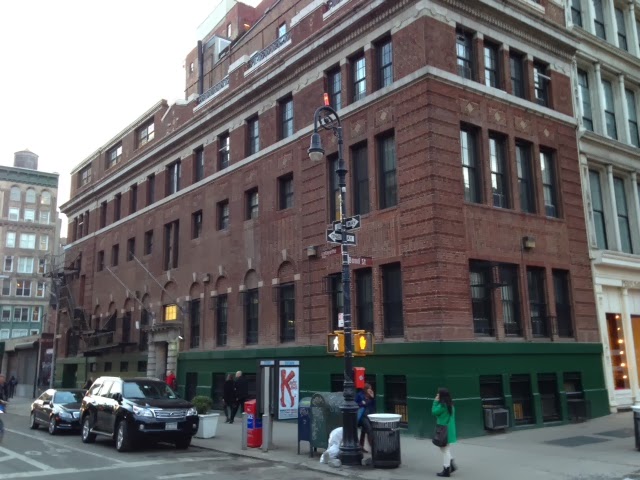
The five-story building is still there today.  New York’s first free animal hospital could accommodate fifty horses and 150 cats and dogs. “There are also operating rooms where every modern appliance for animal surgery is at hand.” [source]

Horses were mostly kept and operated upon on the second floor.  But a rooftop garden accommodated the most sickly horses in need of fresh air and sunshine, lifted there by a large, state-of-the-art elevator.  I suppose it was also used for patients from the third floor — dogs, cats and birds.  Autopsies were also conducted on the roof, and dead animals were disposed of in a basement incinerator. (The Times actually calls it ‘the death room.’)

Perhaps most curious of all — an entire floor was given over to a new apartment for the hospital’s lead veterinarian Dr. Bruce Blair (pictured at top) and his new bride.

On its opening on March 14, Speyer showed the waiting dignitaries a mysterious envelope which contained a $1,000 bill, anonymously donated for the purposes of buying the hospital’s first animal ambulance.

Perhaps the hospital’s most famous patient on opening day was not not a horse, but a green parrot named Abe, who was a bit of a minor film star in 1914.  I believe this was the star of the 1914 Oliver Hardy film The Green Alarm.

Today, the Animal Medical Center  traces its lineage to this first animal hospital and to Speyer’s organization.  It moved to its current location on the Upper East Side in 1962. (You can read more about their history here.)

Here’s the building as it looks today:

Categories
Those Were The Days

Let’s go see the horses at Madison Square Garden!

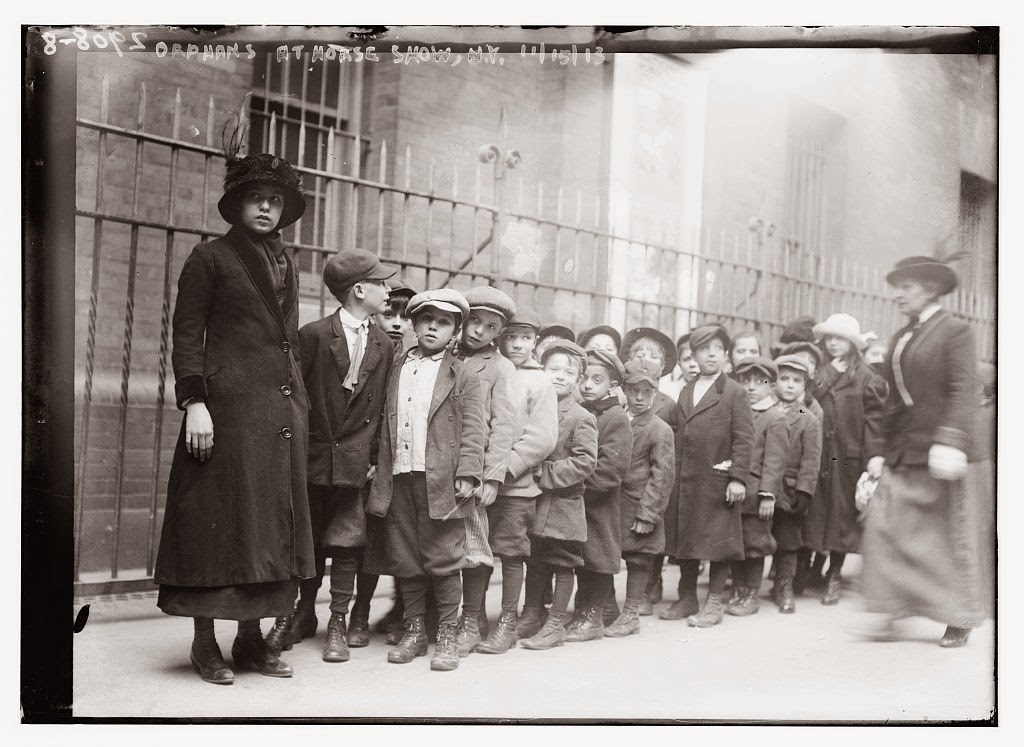
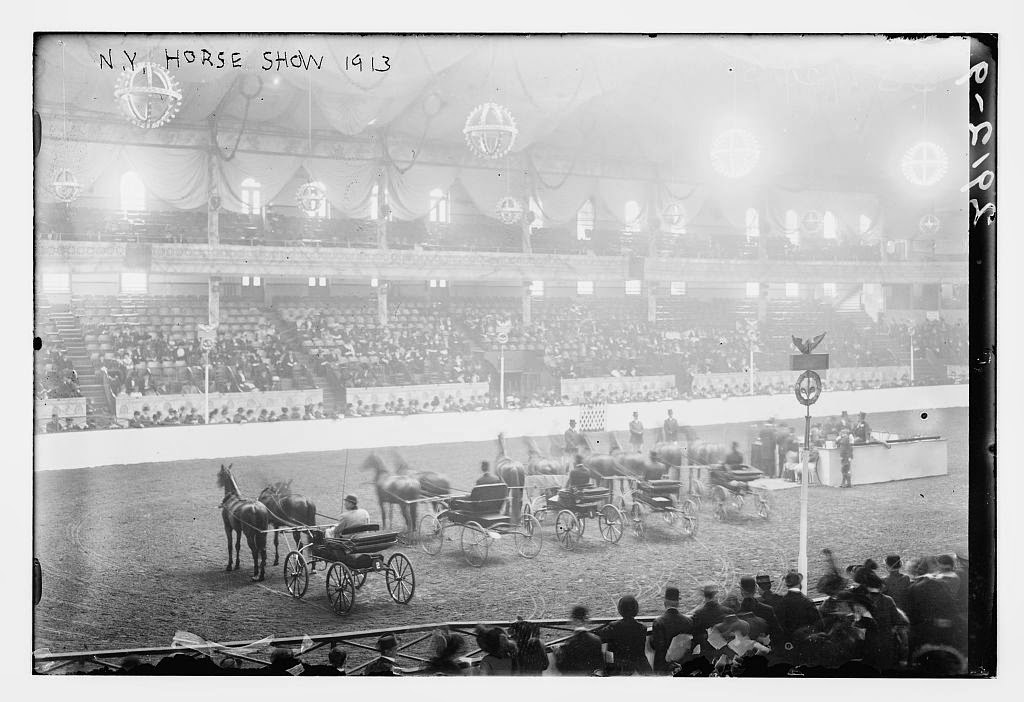
These unbearably cute orphans seen above were lined up to go to the National Horse Show at Madison Square Garden which began on November 15, 1913.  These are of course the days of the Garden down at the northeast corner of Madison Square, the glorious McKim, Mead and White structure topped with a glittering statue of Diana.

Once inside, the children were witness to a marvelous variety of events, including horse racing, pictured here:
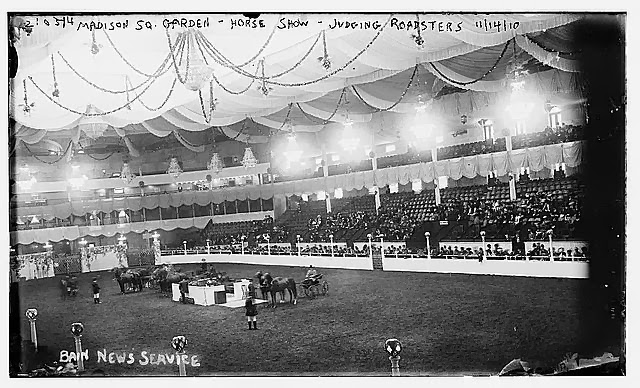
Here’s another view of an earlier event from 1910:

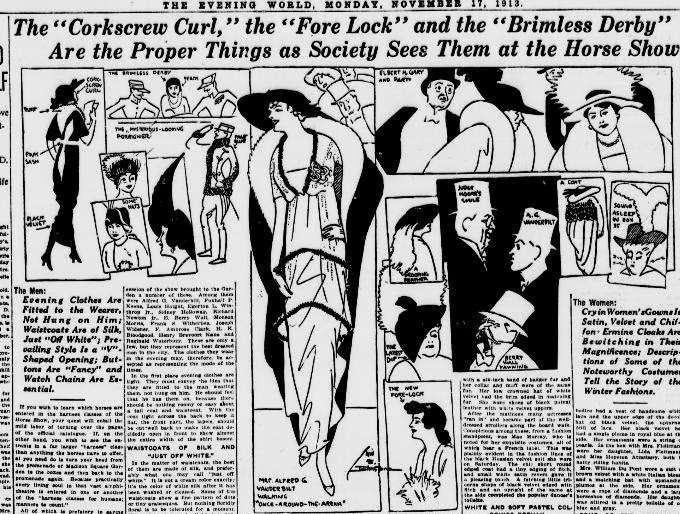
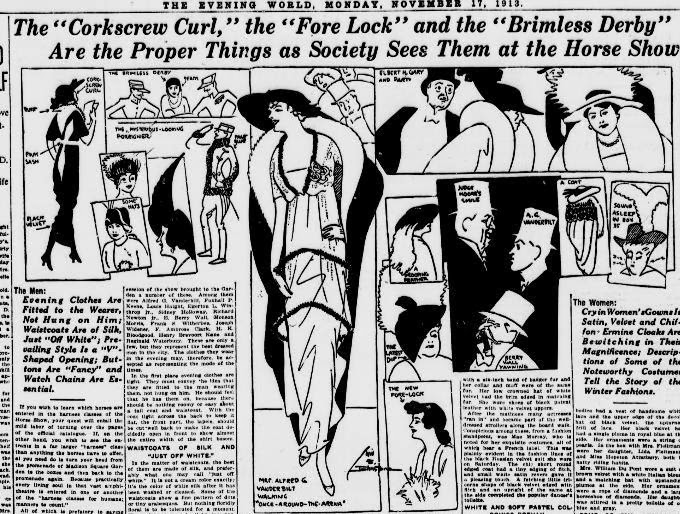
The National Horse Show was one of New York’s big society events, as much a see-and-be-seen spectacle as the opera.  Did anybody care about the dressage, the equestrian excellence?  Perhaps some. But many were just there for the fashion show as society doyennes and big-money mogul strutted the latest styles.

“If you wish to learn which horses are entered in the harness classes of the Horse Show, your quest will entail the mild labor of turning over the pages of the official catalogue.  If, on the other hand, you wish to see the entrants in a far larger “harness” class than anything the horses have to offer, all you need do is turn your head from the promenade of Madison Square Garden to the boxes and then back to the promenade again.”

From the Nov. 17th Evening World

From the Nov. 21st Evening World

So how did a group of poor orphans get invited to high society’s big event? It was a gesture of charity by the Vanderbilt family — Alfred Gwynne Vanderbilt* was president of the horse show — who invited 3,000 orphaned children from around the city to sit in the balconies.

The city’s little wards have looked forward to this occasion for many months.  They always do.  They know Santa Claus Vanderbilt.  After the show each of them will leave the Garden with a substantial present.  It is their Christmas Day.” [source]

* Two years later, Mr. Vanderbilt would die in the sinking of the RMS Lusitania.

Photographs at top courtesy the Library of Congress