Categories
Gilded Age New York Podcasts

The Man Who Saved the Horses: Henry Bergh’s Fight for Animal Rights

PODCAST “Men will be just to men when they are kind to animals.” – Henry Bergh

Today’s show is all about animals in 19th-century New York City. Of course, animals were an incredibly common sight on the streets, market halls, and factories during the Gilded Age, and many of us probably have a quaint image of horse-drawn carriages.

But how often do we think about the actual work that those horses put in every day?

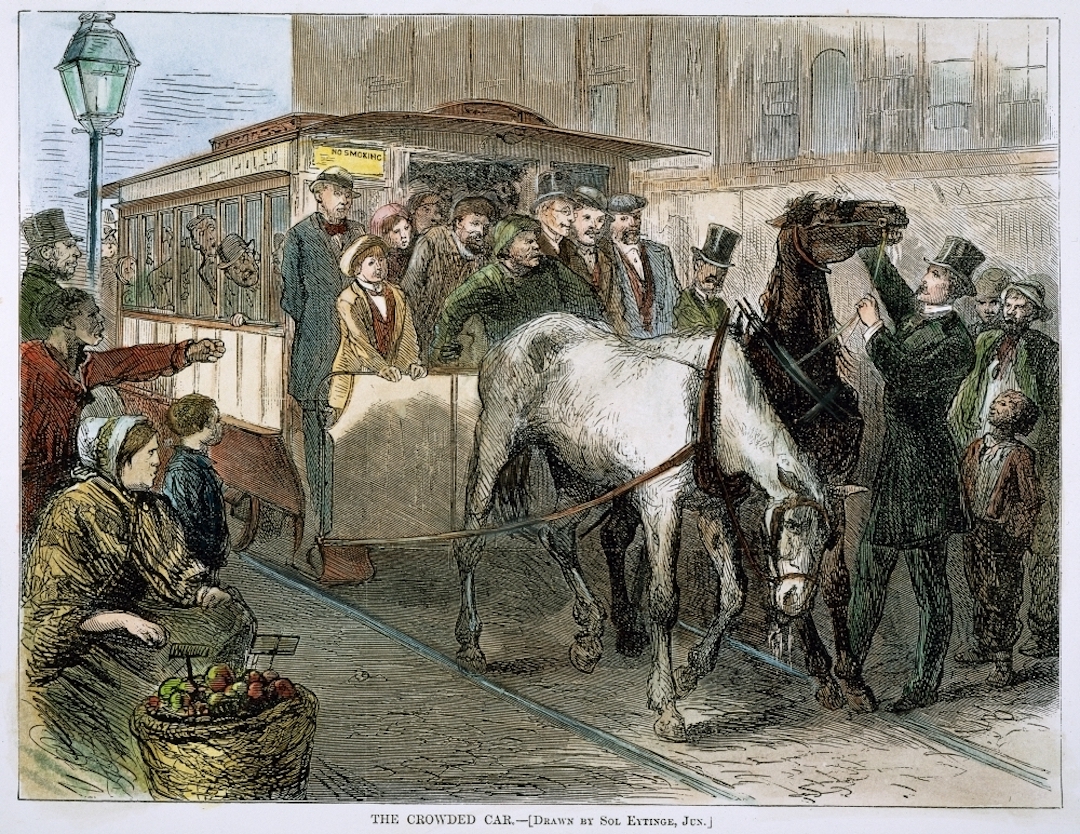
The stress of pulling those private carriages — or, much worse, pulling street trolleys, often overloaded with New Yorkers trying to get to work or home?
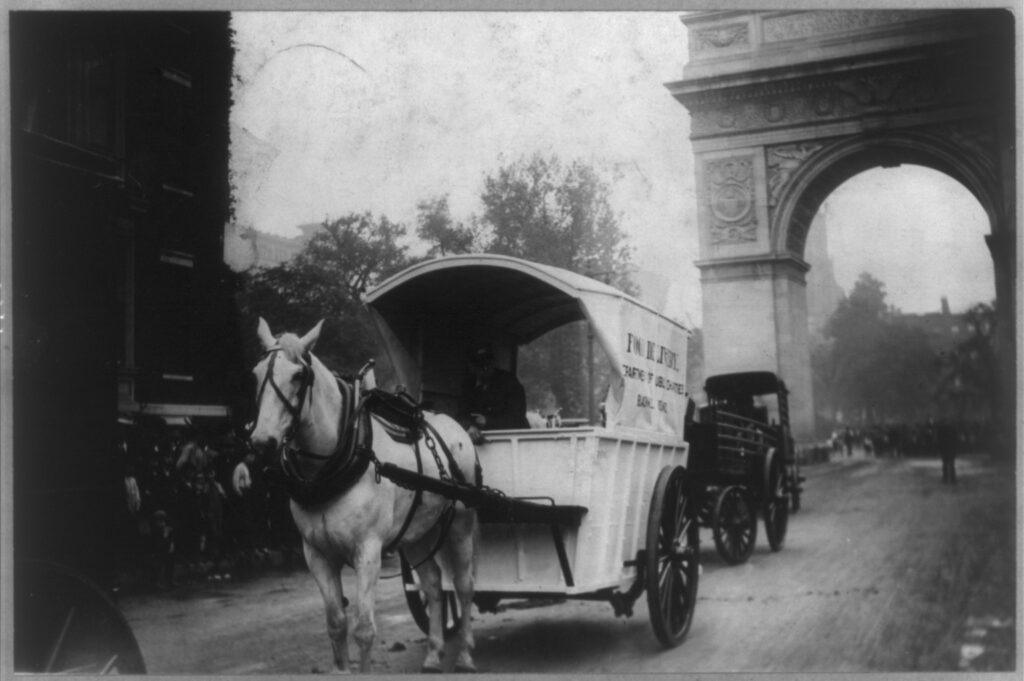
Work Horse parade, New York City: horse and delivery wagon, 1908. Courtesy Library of Congress

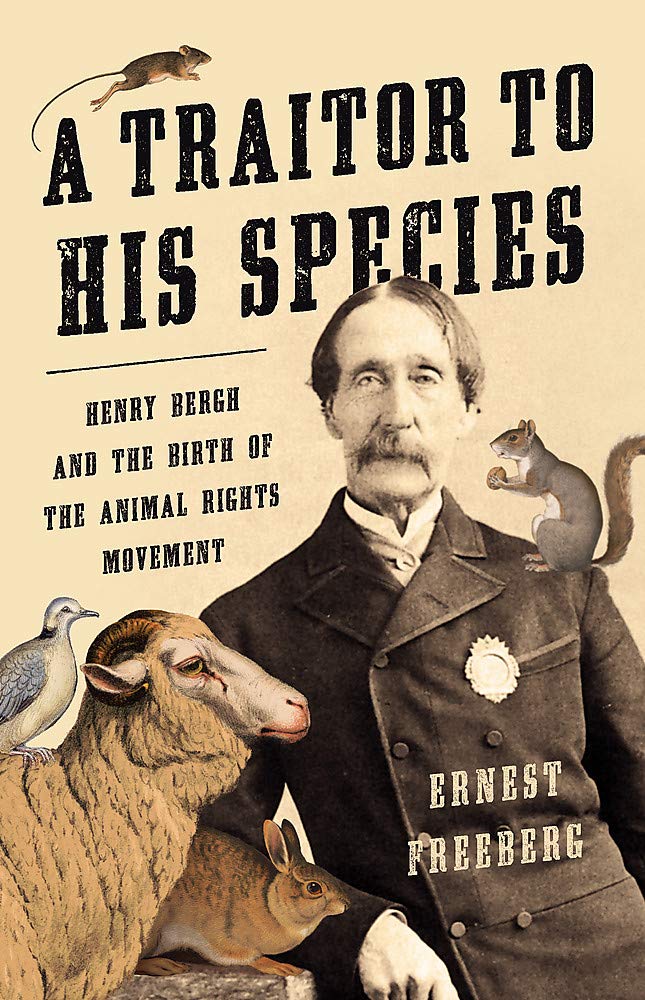
In the book A Traitor to His Species: Henry Bergh and the Birth of the Animal Rights Movement, author Ernest Freeberg (who joins Tom on this week’s show) tells the story of these animals — and of their protector Henry Bergh, the founder of the American Society for the Prevention of Cruelty to Animals (ASPCA).

He ran the organization from the 1860s to the 1880s, and was a celebrity in his day — widely covered, and widely mocked for his unflinching defense of the humane treatment of all animals, even the lowliest pesky birds or turtles.

His story is full of surprising turns, and offers an inside account of the early fight for animal rights, and engrossing tales of Gilded Age New York from a new perspective — the animal’s perspective.

Featuring an interview with Ernest Freeberg, a distinguished professor of humanities and head of the history department at the University of Tennessee.

Listen Now – Henry Bergh’s Fight for Animal Rights
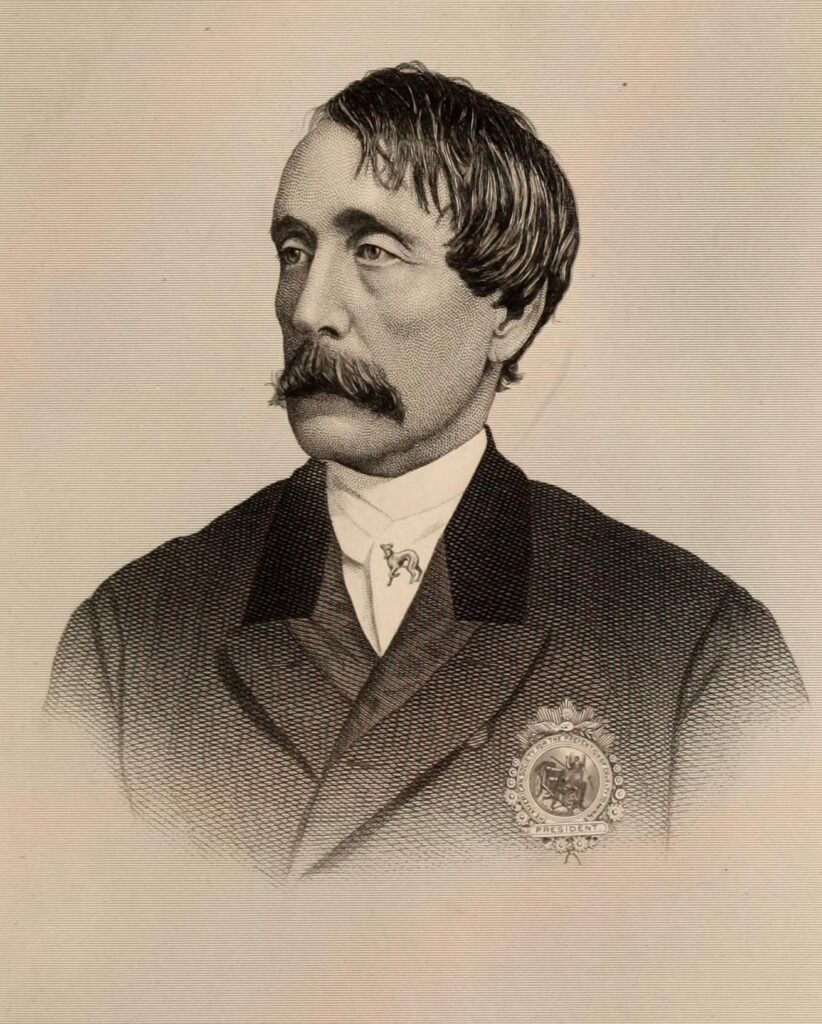
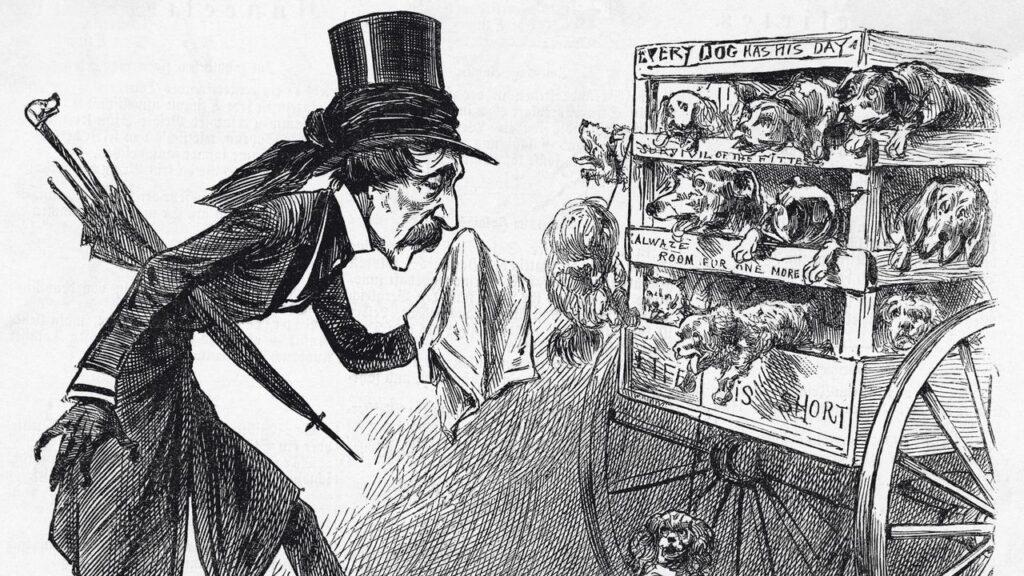
Bergh in an illustration by George E Perine
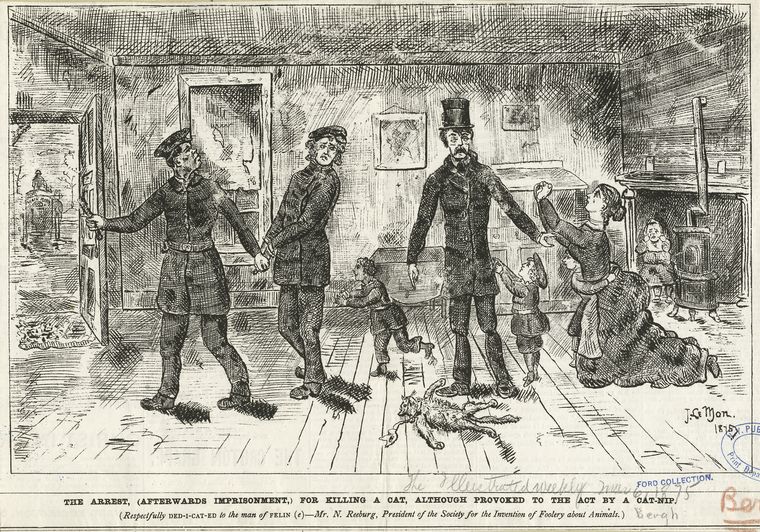
“The arrest, (afterwards imprisonment), for killing a cat, although provoked to the act by a cat-nyp.” New York Public Library
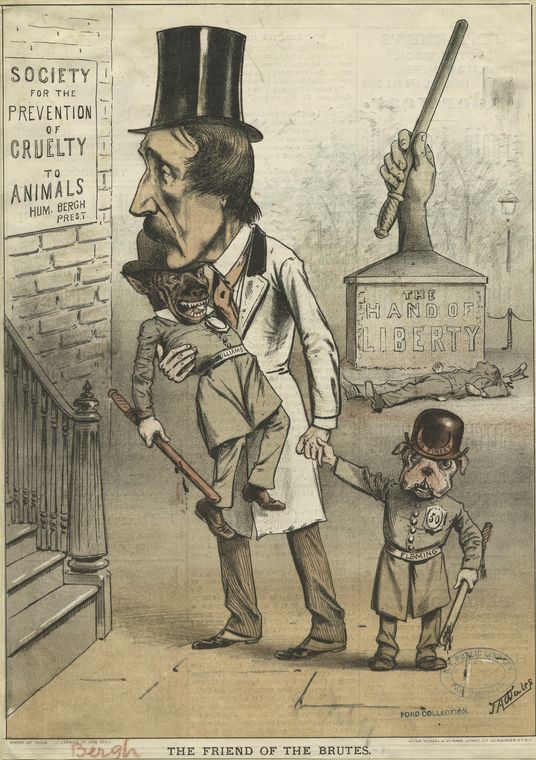
Caricaturist James Albert Wales lampooning Mr. Bergh. PHOTO: BETTMANN ARCHIVE/GETTY IMAGES
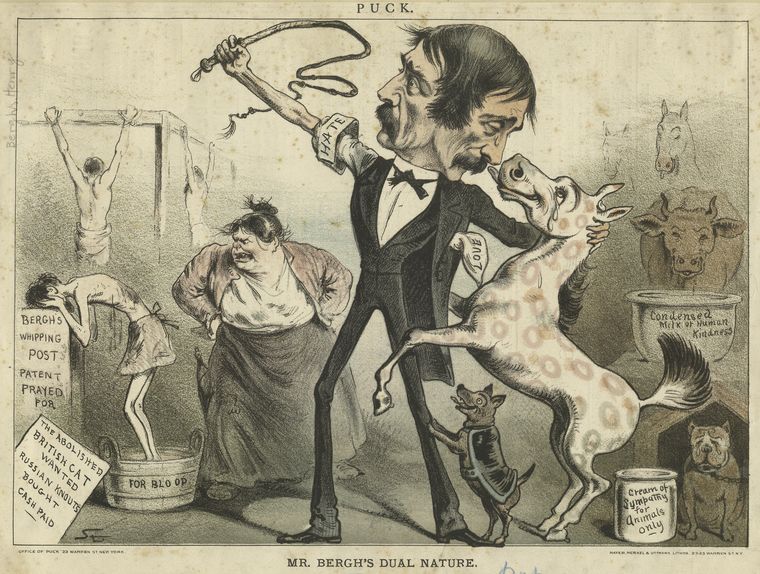
Bergh made an easy target for satire magazines like Puck
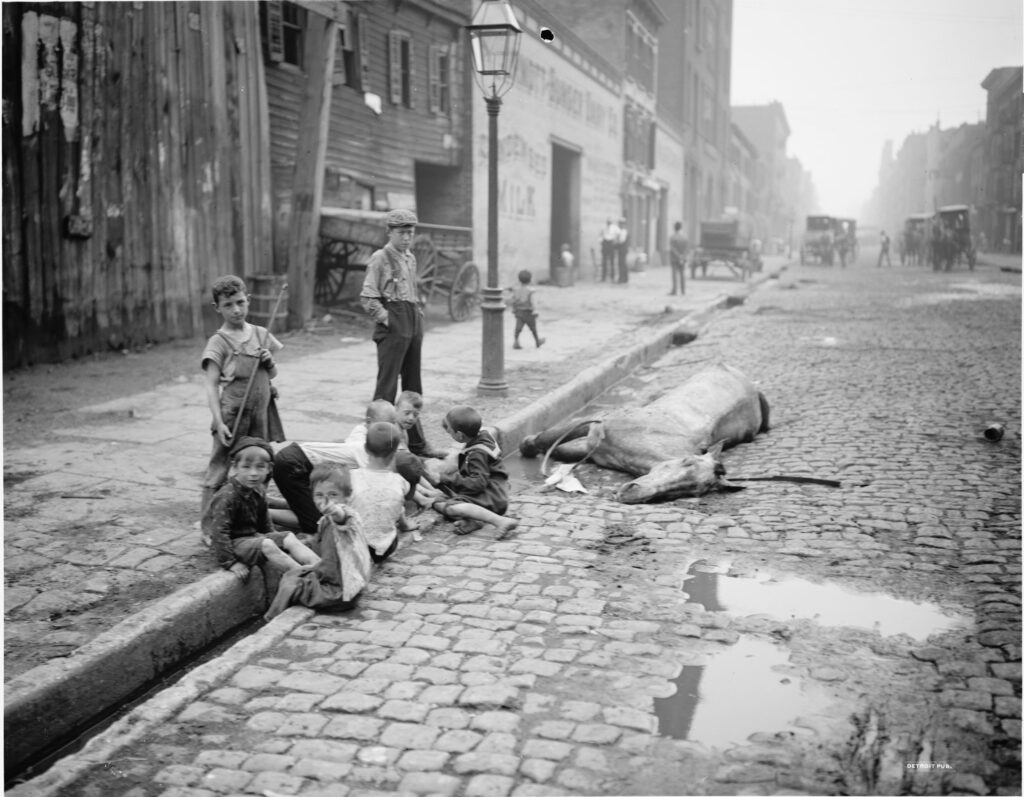
Jacob Riis captured this tragic image in 1900.
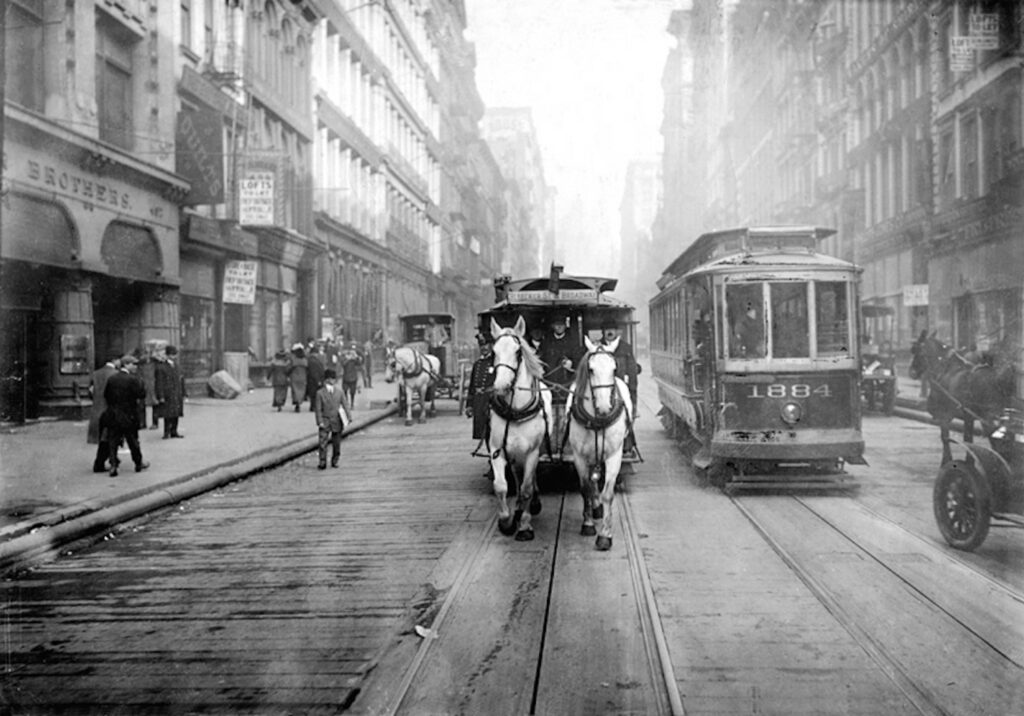
Ini 1917 horses were sharing the street with automobiles and streetcars.
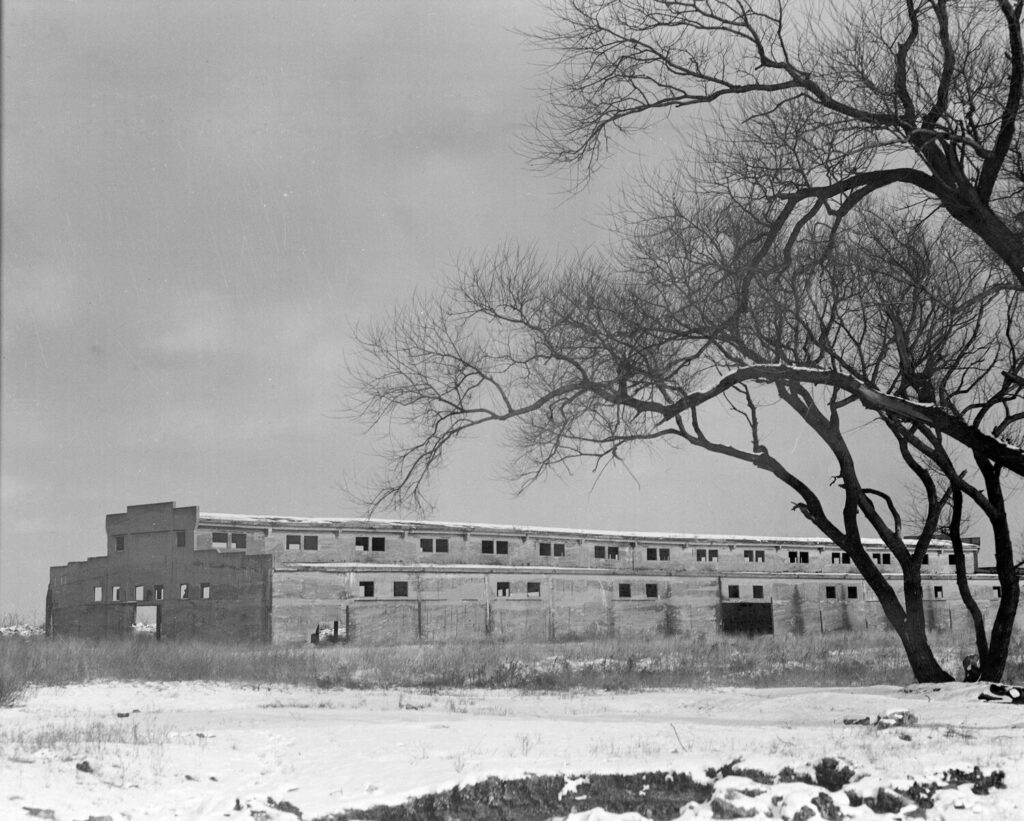
The rendering factory on Barren Island, Brooklyn. It was abandoned by the time of this photograph — January 1938. Photographer: Sam Brody. WPA Federal Writers’ Project Collection, NYC Municipal Archives..

FURTHER READING

FURTHER LISTENING

After you’ve listened to this show on Henry Bergh and the animals rights movement, dive back into the back catalog and listen to these shows with similar themes:


The Bowery Boys: New York City History podcast is brought to you …. by you!

We are now producing a new Bowery Boys podcast every other week. We’re also looking to improve and expand the show in other ways — publishing, social media, live events and other forms of media. But we can only do this with your help!

We are now a creator on Patreon, a patronage platform where you can support your favorite content creators.

Please visit our page on Patreon and watch a short video of us recording the show and talking about our expansion plans. If you’d like to help out, there are several different pledge levels. Check them out and consider being a sponsor.

We greatly appreciate our listeners and readers and thank you for joining us on this journey so far.

Categories
Bowery Boys Bookshelf

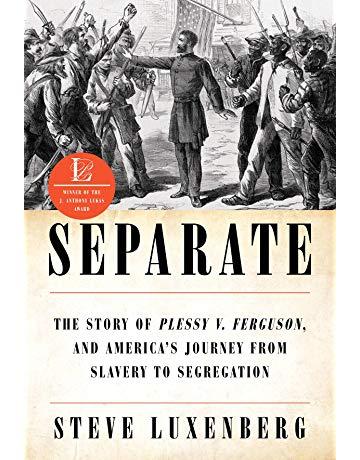
‘Separate’: The origins of a catastrophic and disgraceful Supreme Court decision

The 1896 landmark Supreme Court decision Plessy v. Ferguson embedded and legitimized the practice of “separate but equal” into American life in the 20th century.

The decision built racism into the fiber of everyday activities — schooling, housing, medical care, public transportation — and elevated personal prejudices into the realm of legality. It raised white and black children in separate environments, entrenching prejudice so deeply that we, in 2019, are still reeling from its consequences.

Steve Luxenberg’s captivating history SeparateThe Story of Plessy v. Ferguson, and America’s Journey From Slavery to Segregation is a slow-build up to the case itself. (Homer Plessy, the Creole plaintiff who attempted to sit in a railroad car for white passengers, comes into the story 60 pages before the end.) Luxenberg is more concerned with the legal and social entanglements that led up to the case, a myriad of state-specific practices upon a wide spectrum of public prejudice.

Separate follows the lives of three men crucial to the outcome of the decision — the firebrand white Northern journalist Albion Tourgée and Supreme Court justices Henry Billings Brown and John Marshall Harlan. From different states and backgrounds, the stories of these three men hurtle towards that fated moment in 1896 when their collective experiences lead to a damaging climax.

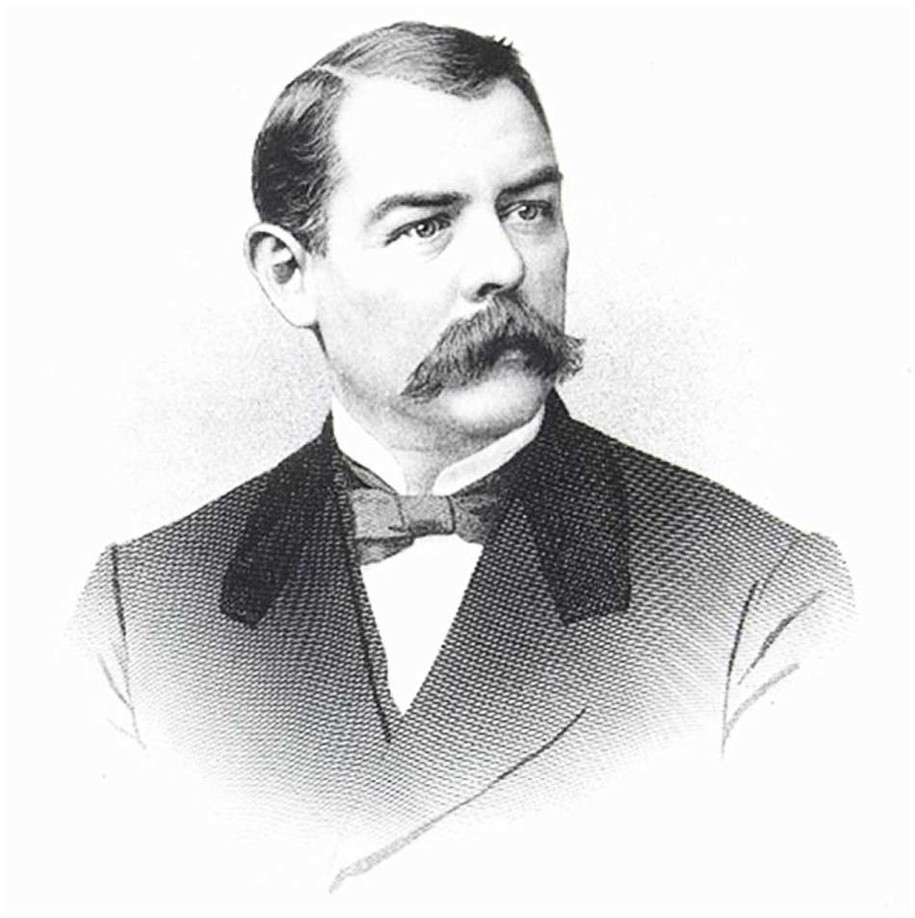
Albion Tourgéwho litigated for Homer Plessy in front of the Supreme Court. (Library of Congress)

The fourth protagonist — and certainly the most interesting — are the people of color in New Orleans in the late 19th century.

‘Separate but equal’ policies were commonplace on the state level throughout the South and especially contentious when it came to public transportation — streetcar and railroad passenger cars. Drivers and ticket takers had to determine on the spot the race of a passenger, guide them to the ‘proper’ section and enforce the separation should there be conflict.

But in Louisiana, there were thousands of residents of color who had never been enslaved people, les gens de couleur libres with a mix of European and African ancestry. (An excerpt of a 1853 New Orleans divvied its population into eight different ‘grades’.) Passengers could be labeled black one day, white the next, depending on the railroad or streetcar employee making the determination.

Plessy was indeed a mixed race gentlemen from New Orleans, and his ‘test case’, destined for the high court, would be shepherded through the system by Tourgée, a nationally known columnist, and Louis Martinet, a Creole attorney with interesting challenges to his own career.

In the stories of Brown and Harlan, another fascinating subplot emerges, that of wavering and unexpected shifting views on slavery and racial relationships, inspired by unique state issues following the Civil War.

And even enlightened views can be reached narrowly. Harlan, the ‘lone dissenter’ in the case of Plessy vs. Ferguson, was once a proud member of the anti-immigrant Know Nothing Party and was a full-throated supporter of the Chinese Exclusion Act.

For many legal minds in the late 19th century, equality in a legal sense did not mean social equality. An American, white or black, may share the same rights as upheld by the U.S. Constitution, but in everyday matters, there was no urgent need to include all people in the same public spaces.

Of course this would prove dysfunctional and absurd, a fallacy based on an unenforceable belief that every actor at every level of public life would truly provide ‘equal’ options to Americans of any color. Separate lays out the course for how this thinking became the law of the land.

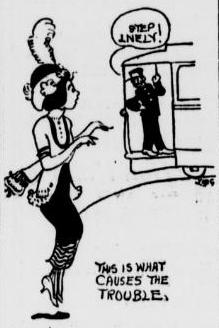
New York transit system stymied by women’s skirt styles

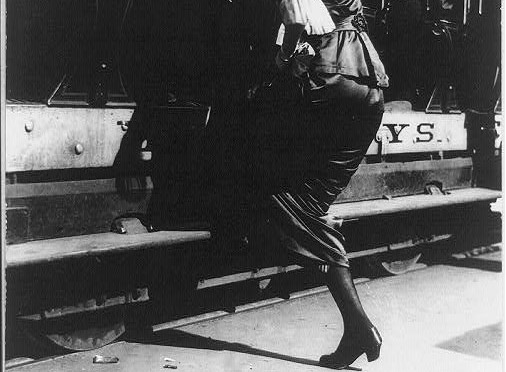
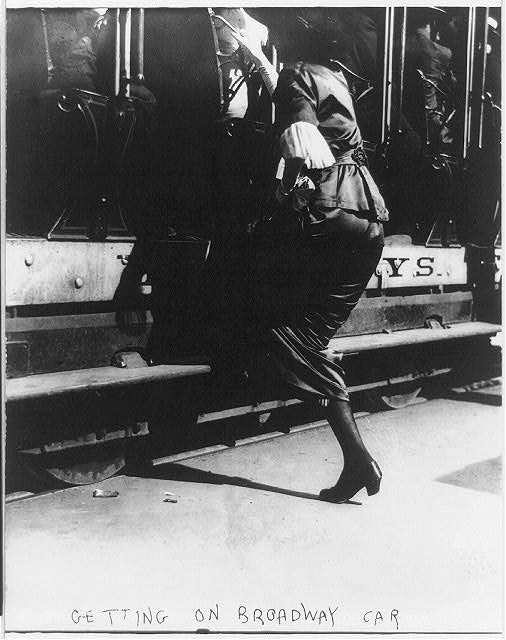
A lady in a relatively normal skirt boards a Broadway streetcar in July 1913. Now imagine trying this in a hobble skirt! (Courtesy Library of Congress)

A serious cry (mostly from men) rang out through the city one hundred years ago about the ever-expanding transit system and the scandalous style of women’s skirts. Were frocks getting caught in doorways? Were dress lengths causing women fall down stairs?

Perhaps, but that wasn’t the issue. The latest fashion trend, the hobble skirt, was slowing the progress of women onto and off of streetcars, causing frustrating delays.

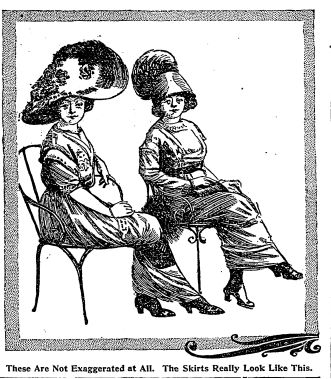
The Parisian-style hobble skirt, with its bunched hem near the bottom to create a mermaid-like appearance, made its appearance on New York streets in the early 1910s. The new gowns required ladies to walk more elegantly and, thus, more slowly, a throwback to the Victorian gait. “[T]he mannish stride of the women of today was taken for granted as a permanent thing. Nobody expected it to change, for nobody saw the hobble skirt on the horizon.” [New York Times, January 1912]

Above: Some sass from the Times fashion pages, June 12, 1910

After a millenia of unfettered skirts, this new silhouette must have seemed positively strange to elder fashionistas.

“‘The hobble’ is the latest freak in women’s fashions,” warned the Times upon their arrival in 1910.  “The hobble skirt suits none. But many, too many, women will wear what the fashion authorities decree.”

Aesthetics aside, the hobble skirt created a practical problem. While measured, graceful walking might be fine on Ladies Mile or strolling along Fifth Avenue, it was an encumbrance upon the ever-moving streetcar system.

An executive of the Interborough Transit System (New York’s first subway operator) grumbled to the Evening World in 1912 about the extra burden the hobble skirt created upon city transportation and called for the fashion trend to be abolished.

“Often hundreds of people will be forced to stand aside patiently waiting for some women to raise her skirts sufficiently to allow her to step into the car,” said George Keegan, general superintendent.

A special ‘step-less’ car had even been designed with the fashionable lady in mind. The first of these “hobble-skirt, hygenic, fool proof” cars debuted on the streets of New York in the spring of 1912.

Meanwhile, underground, fashionable ladies were finding difficulty clearing the gap between the platform and subway cars. “Nearly all of the accidents in the subway are due to the fact that women wear hobble skirts,” said Keegan, a claim which could not possibly have been true.

The Pennsylvania Railroad, fearful of complaints and potential lawsuits, acted upon the crisis the following year by requiring train conductors to note skirt styles and “height of heel” and report all data to their central office. “If women passengers on the Pennsylvania Railroad insist on wearing such mantraps, or rather womantraps, as hobble skirts and high heels they cannot hold this company responsible for accidents which may happen to them,” claimed the railroad.

But all these railroad executives really needed to do was simply wait — trends subside, to replaced with other, more objectionable wear.

By the time Mr. Keegan was complaining about the hobble skirt, the Evening World fashion section was already clutching its pearls in disbelief about another fashion abomination. “The high note of feminine folly has been struck.  The harem skirt is to succeed the hobbled horror which has made women hideous and ridiculous during the past year.”

But, leaving taste aside, at least you could ride the subway in a harem skirt!

Illustration above is from the August 9, 1912 edition of the Evening World which accompanied the Keegan article

Categories
Health and Living Podcasts

Notes from the podcast (#131) The First Apartment Building

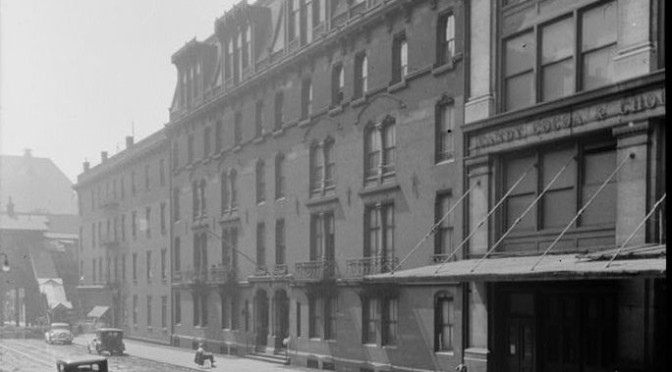
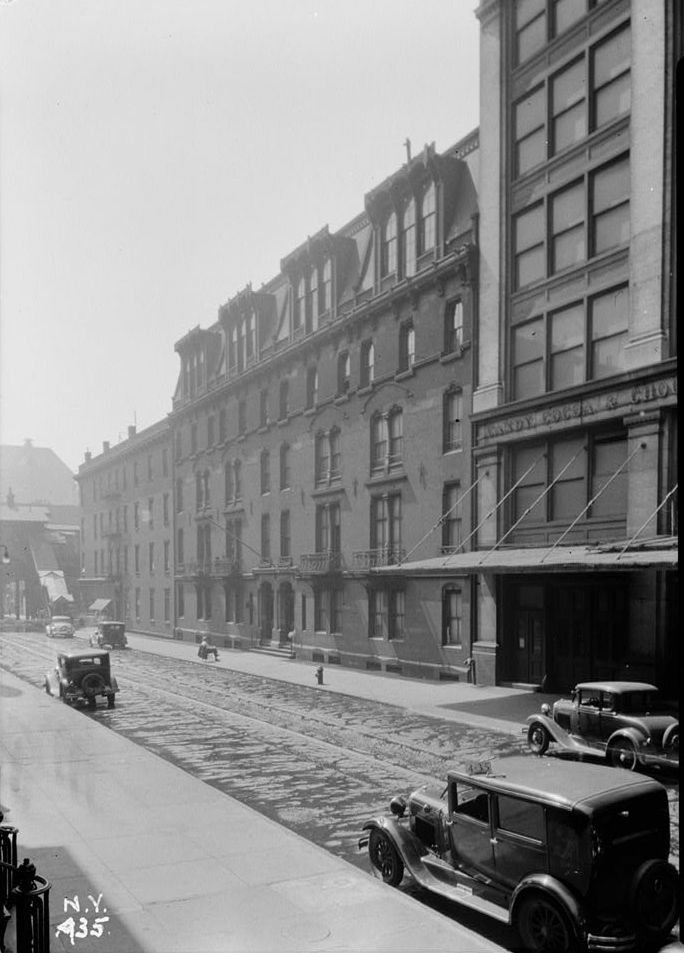
The Stuyvesant Apartments in 1934, already being dwarfed with a newer structure on the right. Please note the ornate entrance to the Third Avenue elevated train to the left of the picture, as well as the streetcar tracks, no longer in use along East 18th Street in 1934, running down the cobblestone street. And I’m fairly sure that’s a taxicab in the foreground.

Here are some notes on podcast #131: The First Apartment Building. To listen to the show, download it from iTunes or from here. And for those who have listened, thanks for making it one of iTunes top three individual programs in the travel/places podcasts section this weekend!

The Distinction of the ‘First’
How did the Stuyvesant Apartment become known as the true ‘first’ apartment? After all, it’s not like there was a banner over the door proclaiming “Welcome to the first apartment building ever! Come inside!” Urban dwellings were being developed of all shapes and sizes. As I mentioned, there’s not much that technically separates a tenement from an apartment, if you subtract social class and building amenities. There were indeed ‘fancy’ tenements. Some of those buildings are still around today and serve as rather lovely renovated apartments.

Author Elizabeth Collins Cromley (more on her later) suggests there were a couple other buildings in New York City that could have held this title built earlier, including another that Richard Morris Hunt built on Wooster Street. Those candidates, however, were smaller and less profitable. (One was even refashioned as a hotel.) The Stuyvesant was ambitious in size, glorious in architecture and glittering in its notable residents.

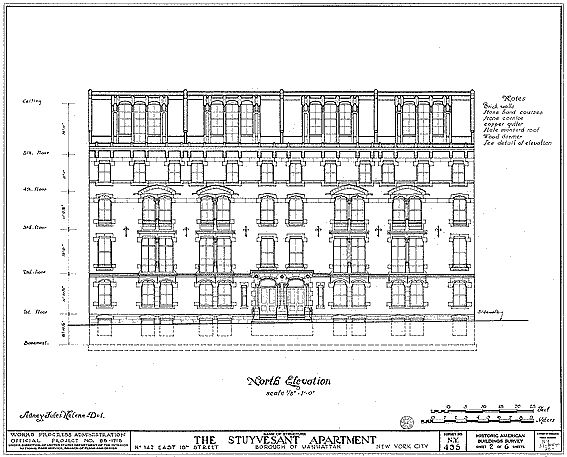
Below: Original drawings of the Stuyvesant Apartments, done by the Historic American Buildings Survey, courtesy Library of Congress

The Other Stuyvesant?
The research for this show became trickier once I realized there was another apartment building that was sometimes referred to the Stuyvesant just a few blocks away, and some scholars have confused the two in their research. For instance, I was quite excited to learn that Clara Clemens, the daughter of Mark Twain, lived at the Stuyvesant until I realized it was most likely the other Stuyvesant. (This author erroneously combines the two structures.)

The second building is right off of Stuyvesant Square, originally addressed 17 Livingston Place. That street no longer exists. Or to quote the wonderful Old Streets blog:  “On December 3, 1953, in one of the goofier acts of the City Council, it changed the name of Livingston Place (on the east side of Stuyvesant Square) to Nathan D. Perlman Place and simultaneously–perhaps to mollify any offended Livingston descendants–changed the name of Birmingham Street to Livingston Place. The compensation was short-lived. The new Livingston Place was demapped in 1962.”

That building at 17 Livingston Place (valued at drastically less than the Stuyvesant) was apparently demolished too; Beth Israel Medical Center facilities have taken up that side of the square since the late 1910s.

That Stuyvesant Name!
The apartment structure was constructed on old Stuyvesant property. Check out this map of the borders of Stuyvesant farm, which consumes much of today’s East Village and the area dominated by Stuyvesant Town/Peter Cooper Village.

Rutherford Stuyvesant, creator of this luxury apartment, died in Paris, on July 4, 1909. His first wife, a member of the influential Brooklyn clan the Pierreponts, died a few years after the construction of the Stuyvesant Apartments. In 1902 Rutherford took a second wife whose name certainly equaled his own in terms of drama — the Countess Mathilde Elizabeth de Wassanaer [More bio details here]

Stuyvesant built a lavish mansion near Allamuchy, New Jersey called Tranquility Farms, populating the surrounding land with imported trees and animals. The mansion was consumed in fire in 1959. Although the ruins were demolished, many other ancient buildings on the property remain intact. Rusty Tagliareni has taken some fascinating, haunting photos earlier this year of the ruined area. Take a gander here.

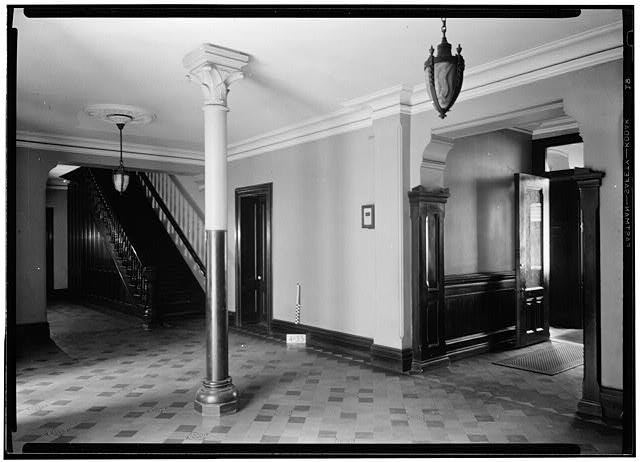
Below: Inside the lobby of the Stuyvesant, circa 1934.

For further reading
There’s a great many books on the history of New York real estate. Definitely invaluable to me this time was Elizabeth Collins Cromley’s ‘Alone Together: A History of New York’s Early Apartments’ and also Steven Gaines’ ‘The Sky’s The Limit’. I learned about the inestimable Mrs. Custer from Shirley A. Leckie’s book ‘Elizabeth Bacon Custer and the Making of a Myth.’

Photos above courtesy the Library of Congress