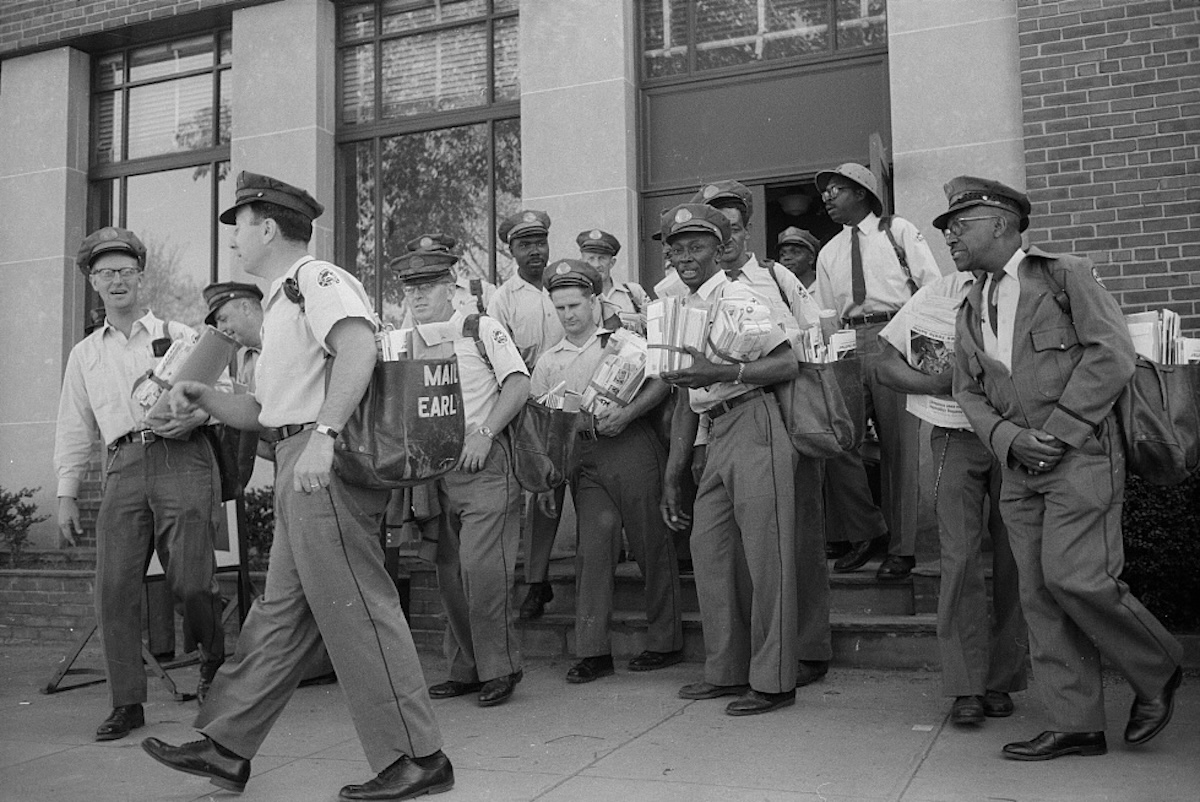
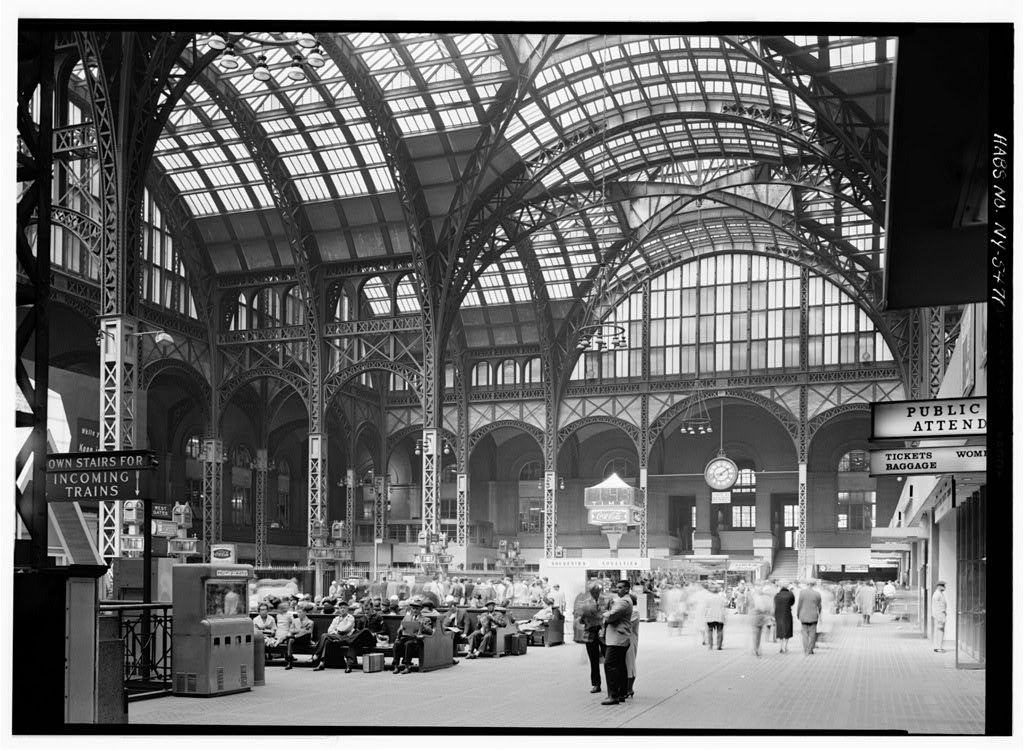
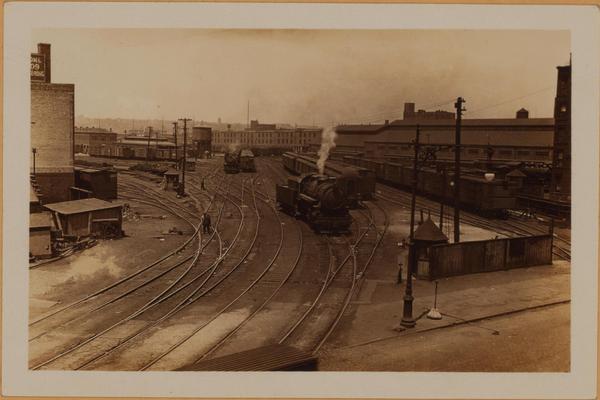
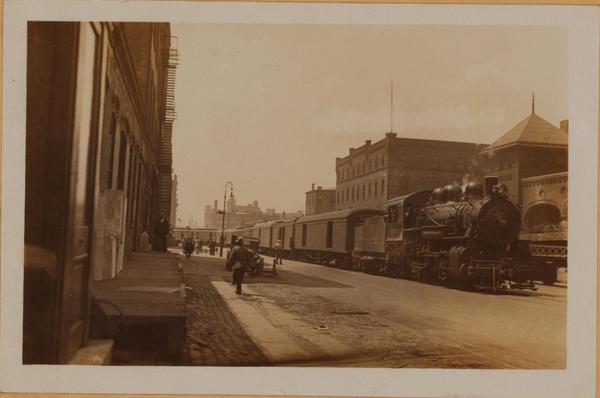
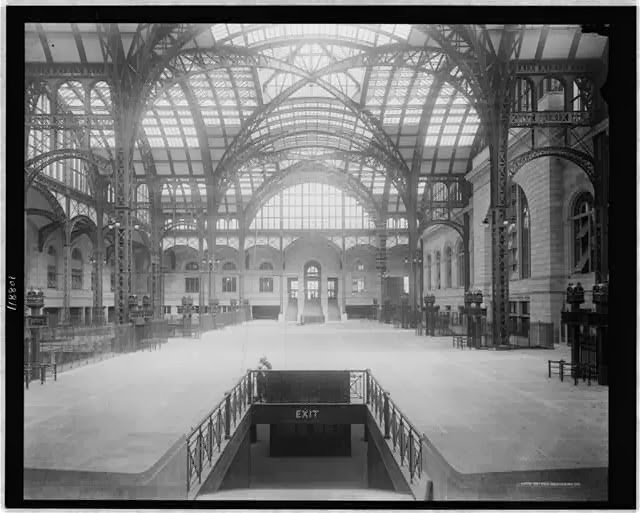
O'Halloran, Thomas J, photographer. New York Post Office. , 1957. Library of Congress
The history of the United States Postal Service as it plays out in the streets of New York City — from the first post road to the first postage stamps.
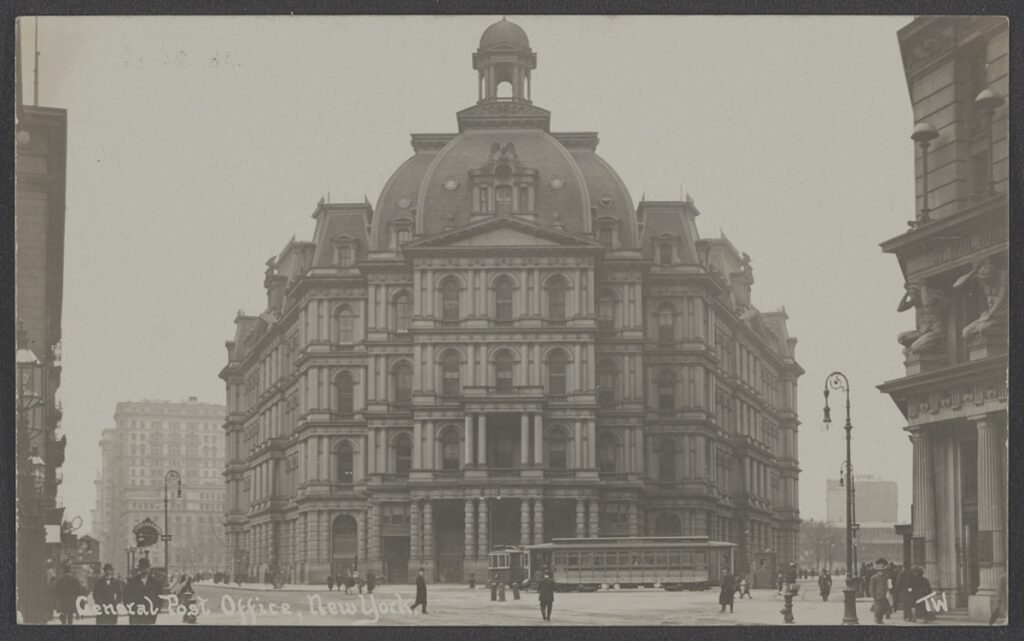
From the most beautiful post office in the country to the forgotten Gilded Age landmark that was once considered the ugliest post office.
The postal service has always served as the country’s circulatory system, linking the densest urban areas to the most rural outposts, a necessary link in moments when the country feels very far apart in other ways. The early American colonies knew this. Benjamin Franklin knew this The Founding Fathers who placed the postal service within the Constitution knew this.
And inventions such as the stagecoach, the steamship, the railroad, the pneumatic tube and even the electric car have helped keep the mail steadily flowing over the centuries.
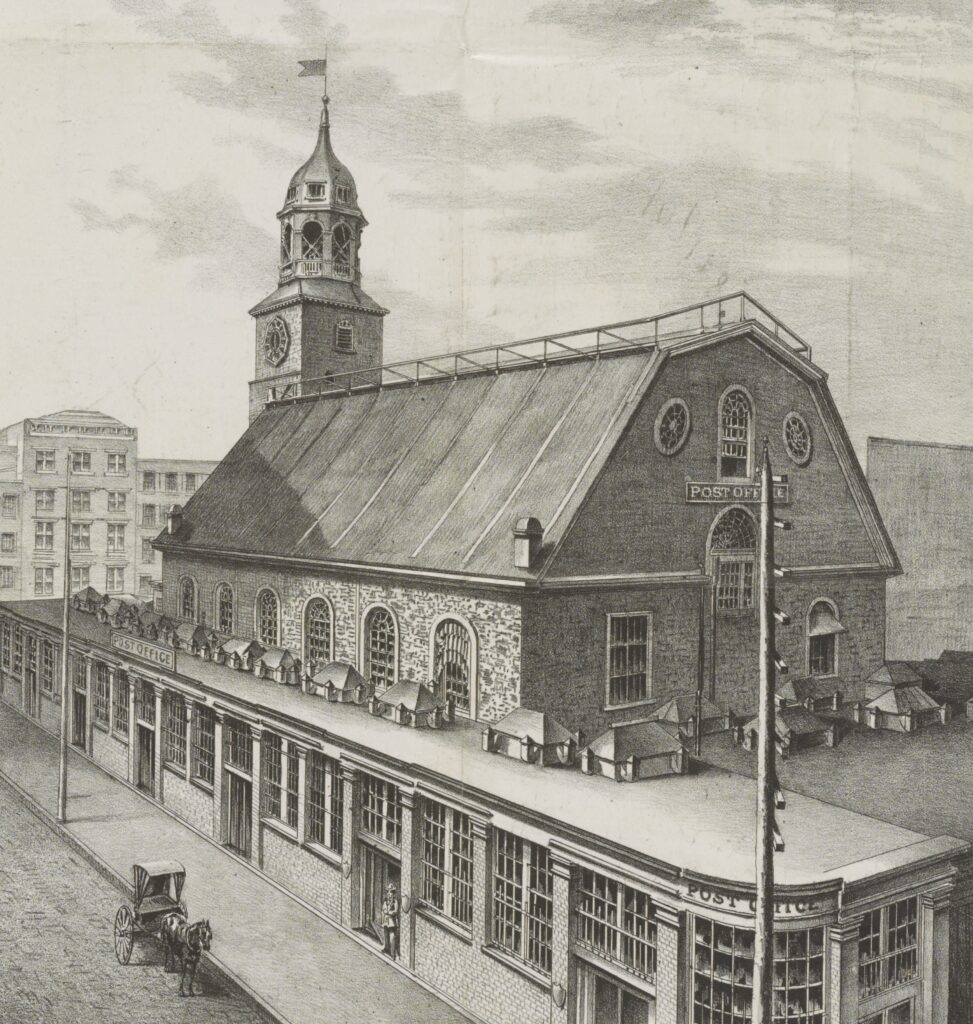
The City Hall Post Office at the southern tip of City Hall Park
New York has even played a pivotal role in the development of the American mail service, from the creation of the Boston Post Road (the first mail road which snaked through Manhattan and the Bronx) to the first mail boxes. Even the first postage stamps were sold in New York — within former church-turned-post office in lower Manhattan.
Why are there so many post offices from the 1930s? Why is New York’s largest post office next to Penn Station? And why does New York City have so many individual ZIP codes? And who, pray tell, is Barnabas Bates?
LISTEN NOW: A HISTORY OF THE POST OFFICE IN NEW YORK
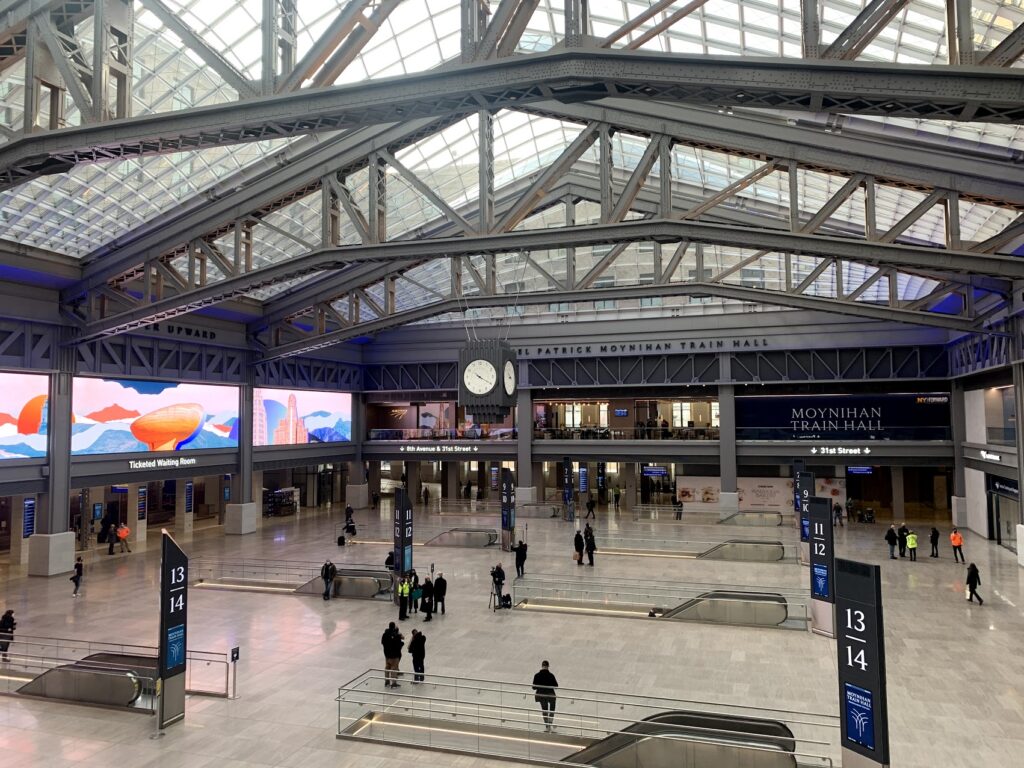
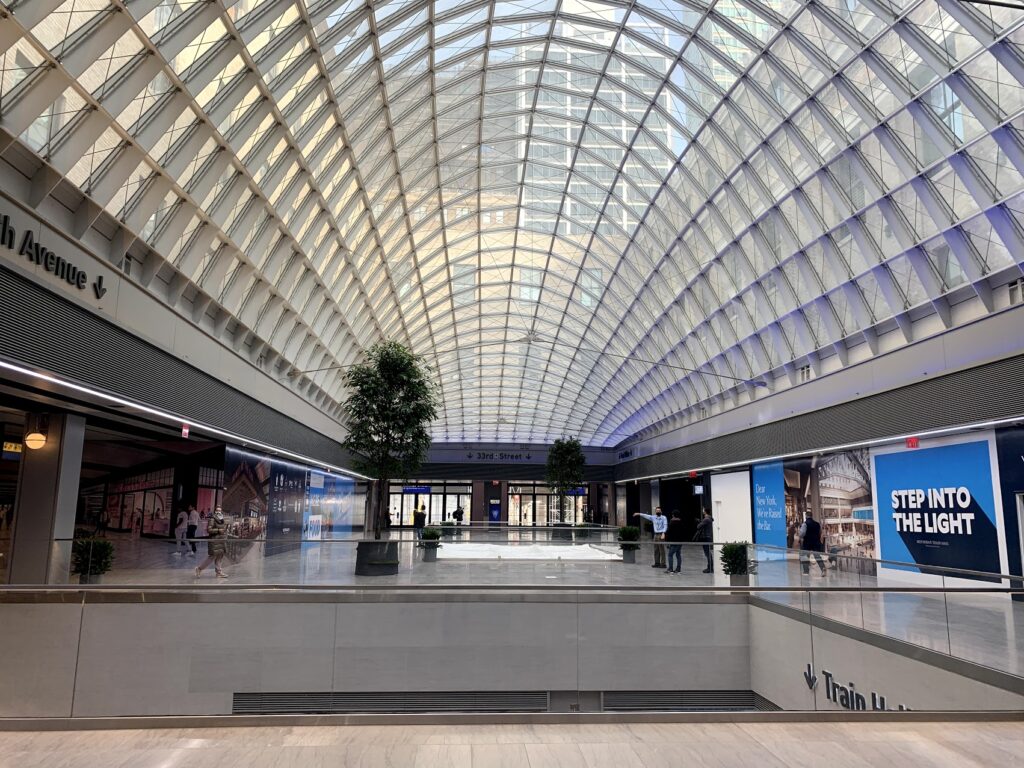
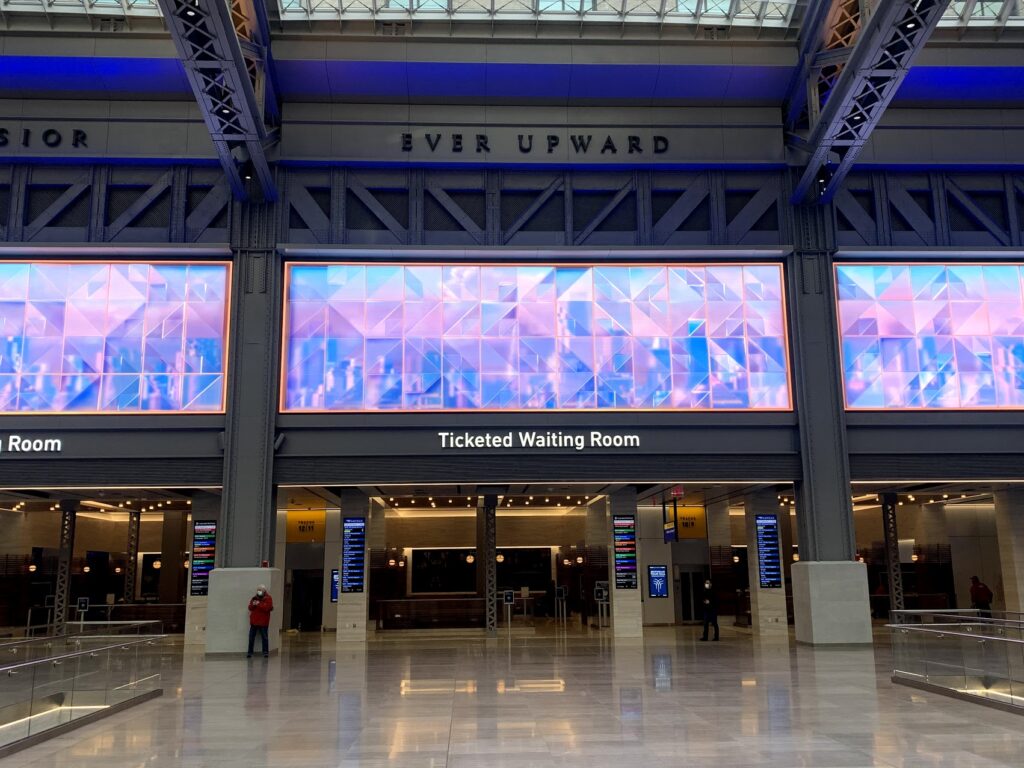
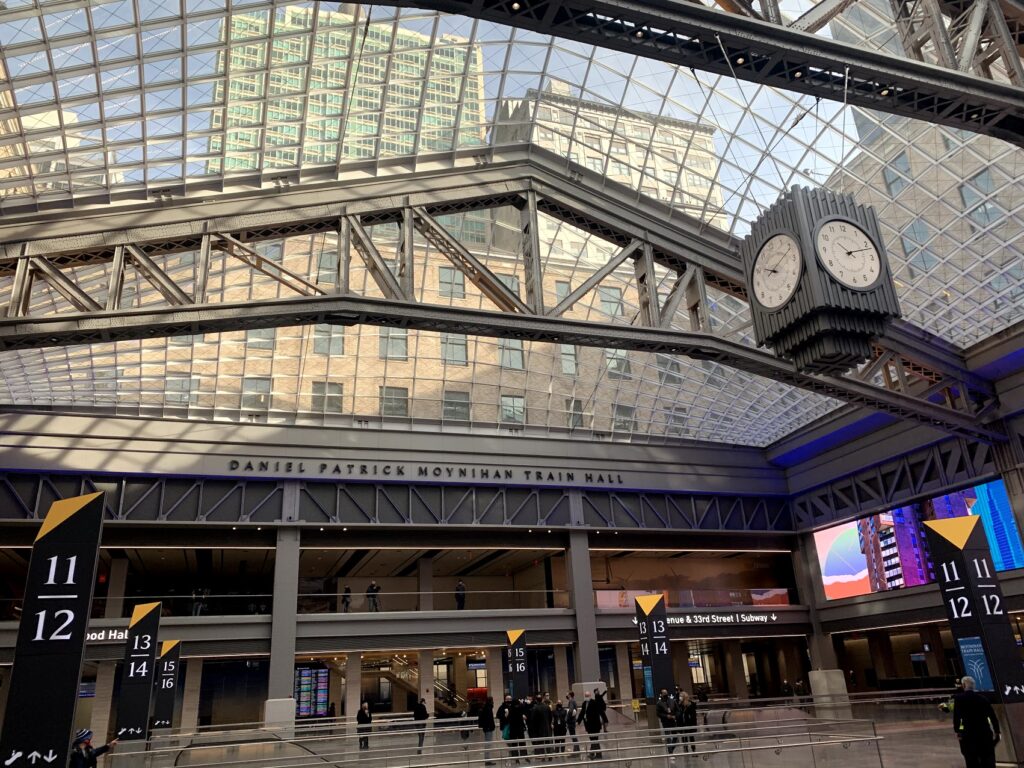
On January 1, 2021 Moynihan Train Hallofficially opens to the public, a new commuters’ wing catering to both Amtrak and Long Island Railroad train passengers at New York’s underground (and mostly unloved) Penn Station.
To celebrate this big moment in New York City transportation history, we’re going to tell the entire story of Pennsylvania Station and Pennsylvania Railroad over two episodes, using a couple older shows from our back catalog.
PODCAST The story of Pennsylvania Station involves more than just nostalgia for the long-gone temple of transportation as designed by the great McKim, Mead and White. It’s a tale of incredible tunnels, political haggling and big visions.
Pennsylvania Railroad was the largest railroad in the world by the 1880s, but thanks to Cornelius Vanderbilt’s New York Central Railroad, one prize was strategically out of their grasp — direct access to Manhattan.
An ambitious plan to link New Jersey to New York via a gigantic bridge fell apart, and it looked like Pennsylvania passengers would have to forever disembark in Jersey City.
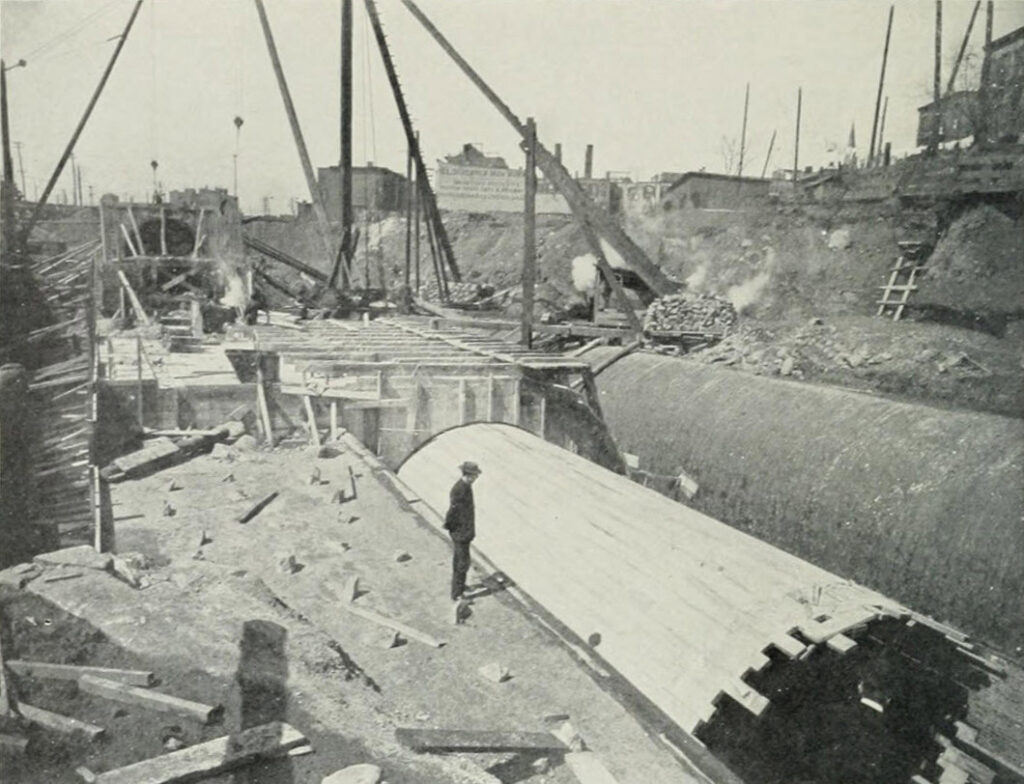
North River Tunnels of the Pennsylvania Railroad: Tunnel C crossing Tunnel B West of Sunnyside Yard as seen during cut-and-cover construction, 1909
But Penn Railroad president Alexander Cassatt was not satisfied. Visiting his sister Mary Cassatt — the exquisite Impressionist painter — in Paris, Cassatt observed the use of electrically run trains in underground tunnels. Why couldn’t Penn Railroad build something similar?
One problem — the mile-wide Hudson River (or in historical parlance, the North River).
This is the tale of an engineering miracle, the construction of miles of underground tunnels and the idea of an ambitious train station to rival the world’s greatest architectural marvels.
Listen to the show here or on your favorite podcast player:
THIS SHOW WAS ORIGINALLY RELEASED AS EPISODE 80 — APRIL 10, 2009
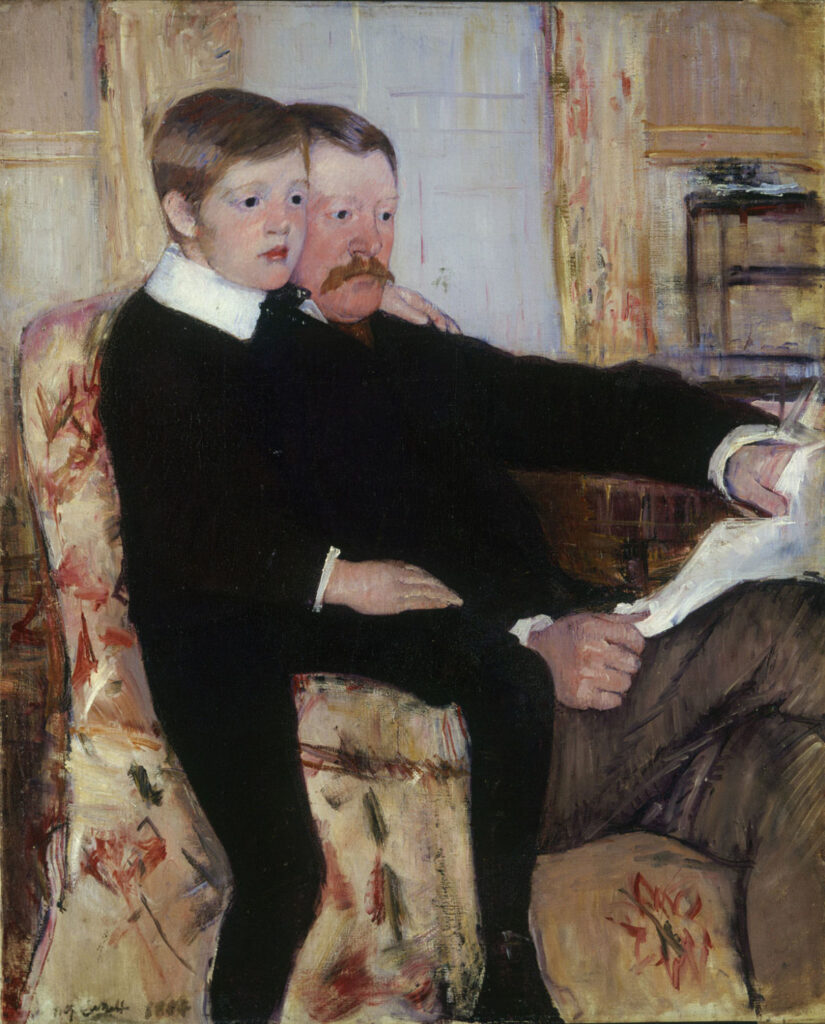
Alexander Cassatt and his son Robert, as painted in 1884 by Mary Cassatt
The Bowery Boys: New York City History podcast is brought to you …. by you!
We are now producing a new Bowery Boys podcast every other week. We’re also looking to improve and expand the show in other ways — publishing, social media, live events and other forms of media. But we can only do this with your help!
We are now a creator on Patreon, a patronage platform where you can support your favorite content creators.
Please visit our page on Patreon and watch a short video of us recording the show and talking about our expansion plans. If you’d like to help out, there are six different pledge levels. Check them outand consider being a sponsor.
We greatly appreciate our listeners and readers and thank you for joining us on this journey so far.
Old Penn Station vs the new Moynihan Train Hall
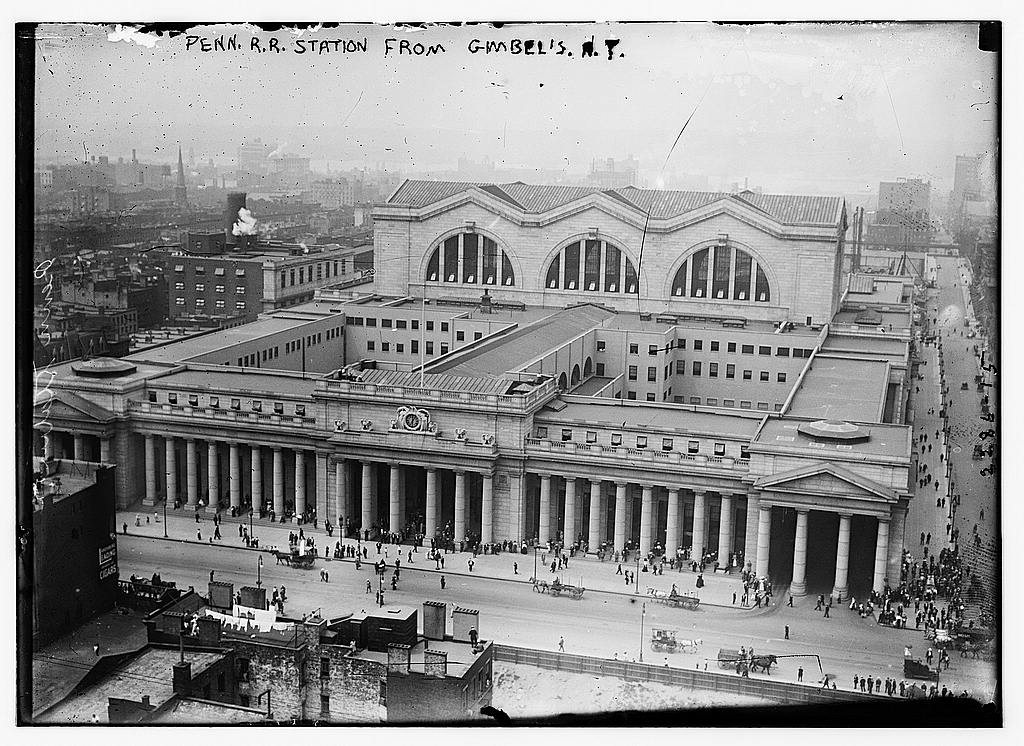
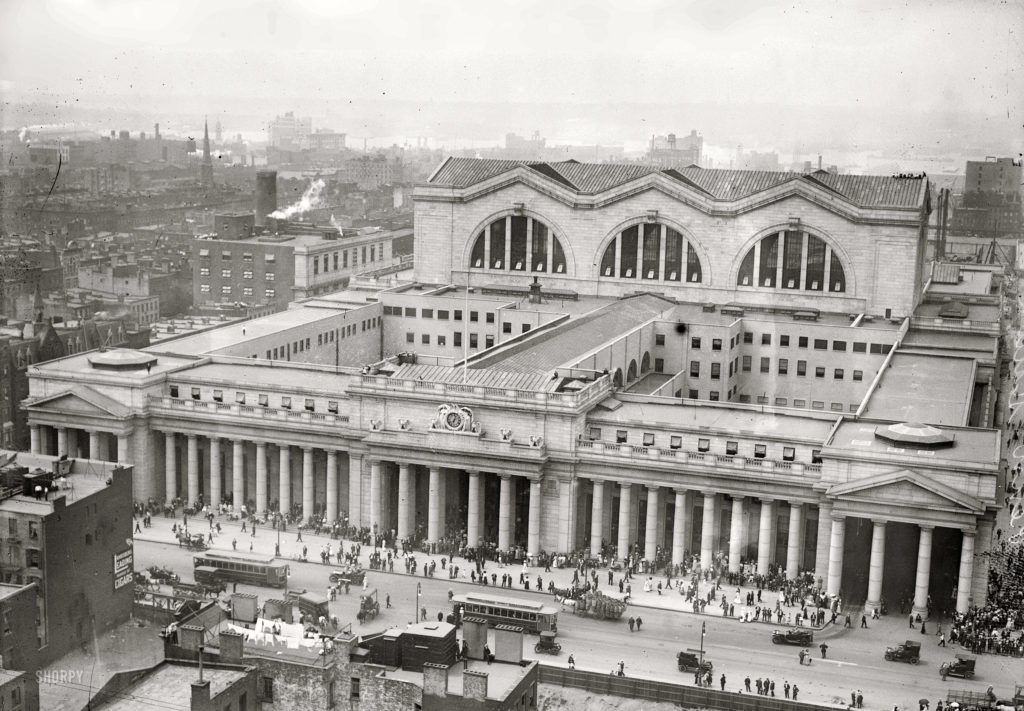
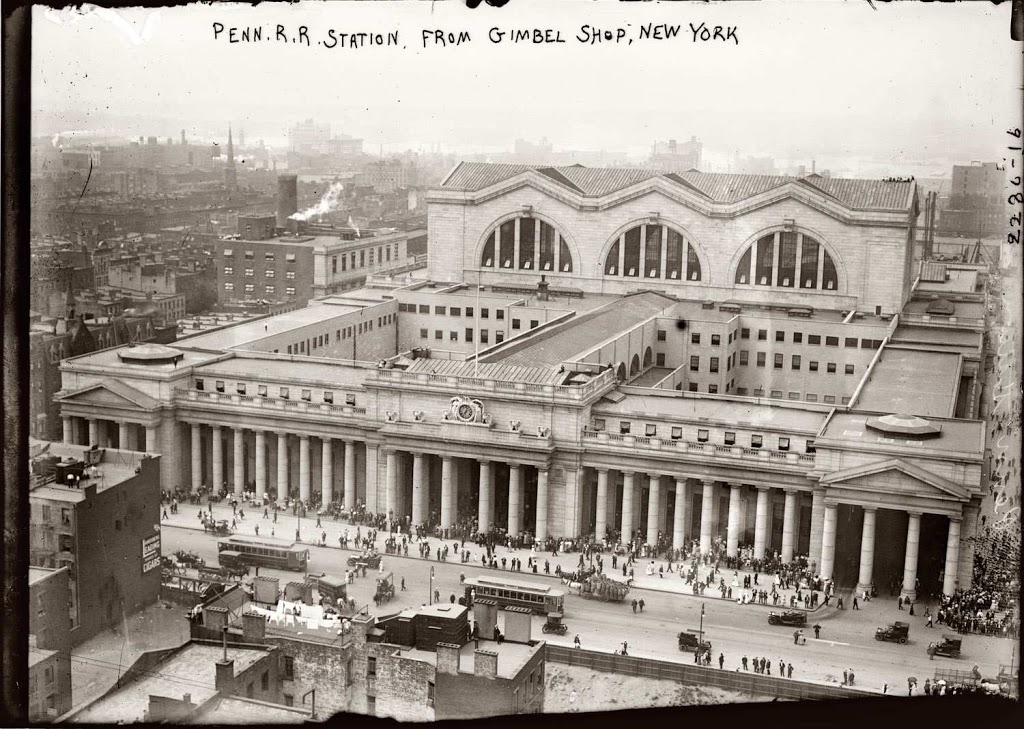
The view of Penn Station from the roof of Gimbels Department Store.
Library of Congress
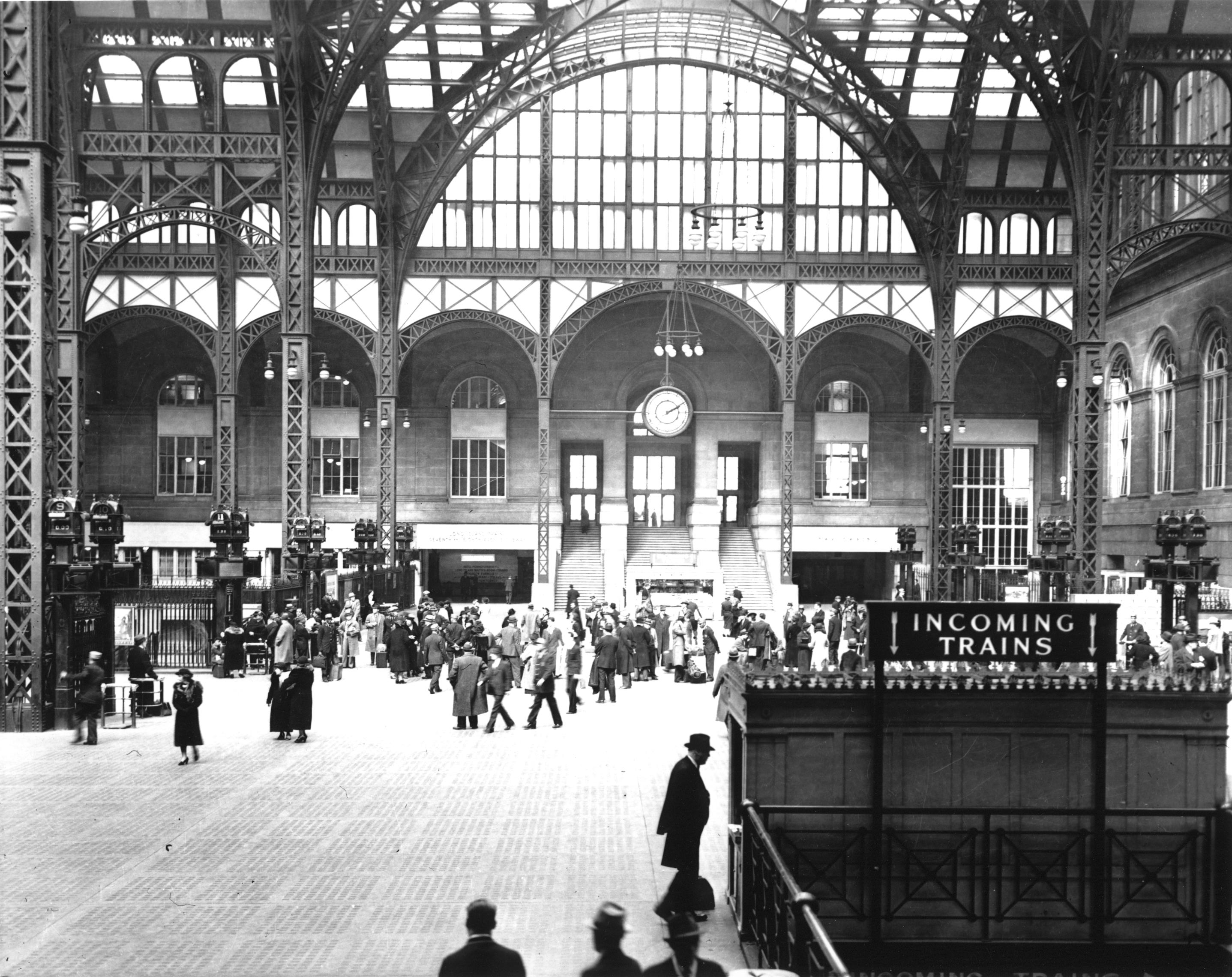
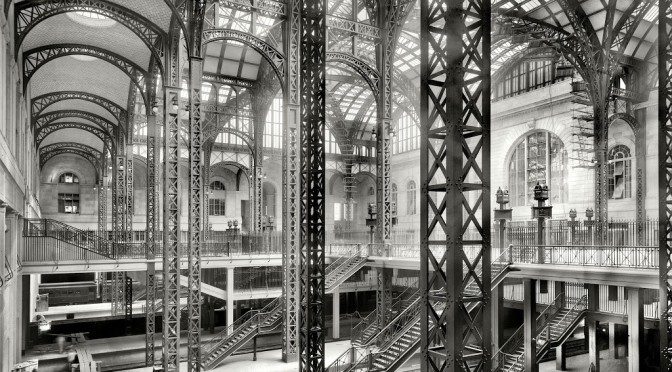
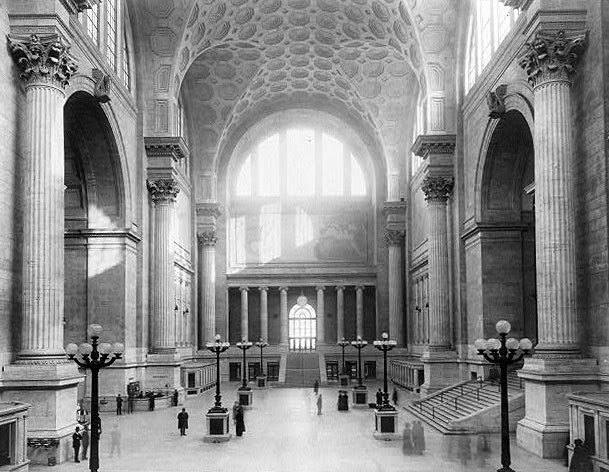
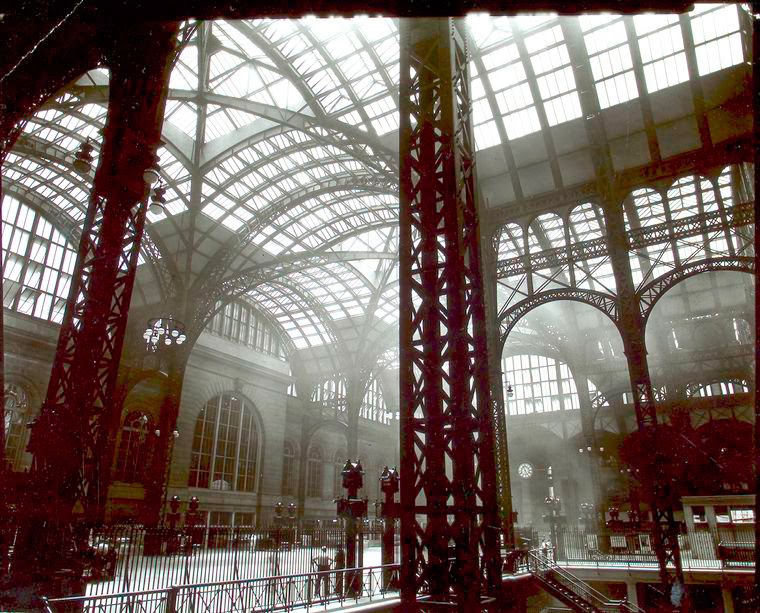
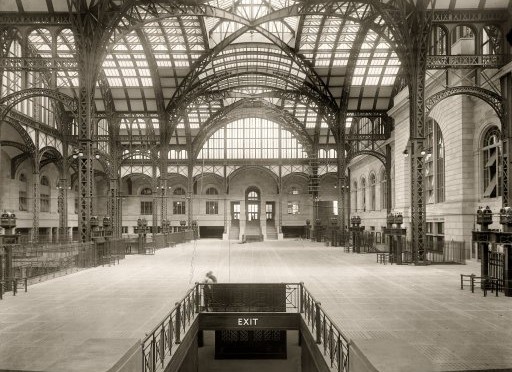
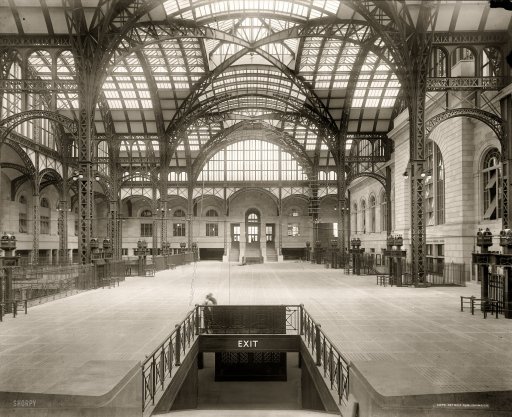
For this round of photographs, let’s focus on the inside of the station, shall we?
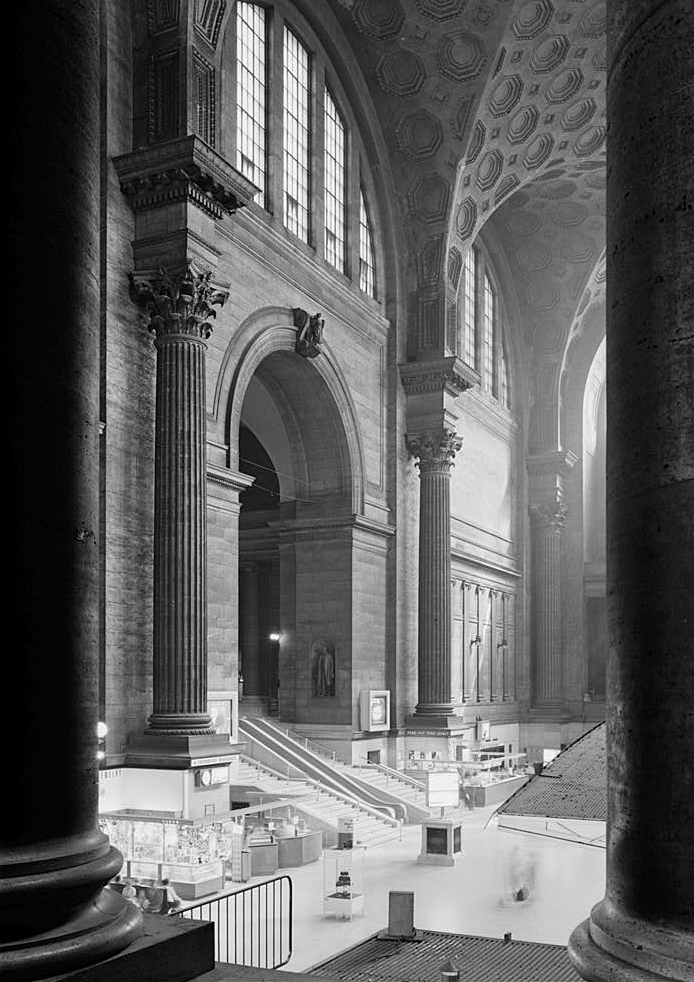
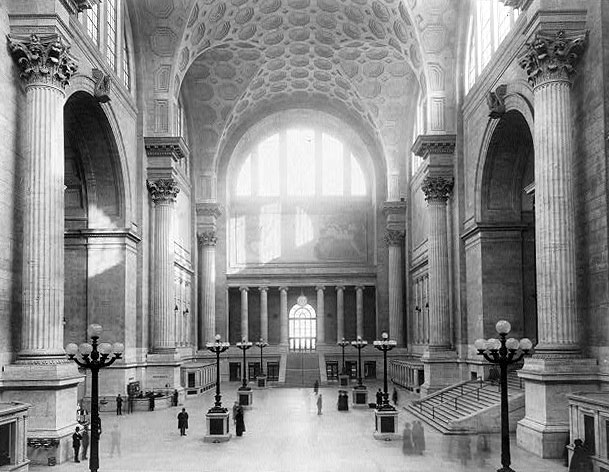
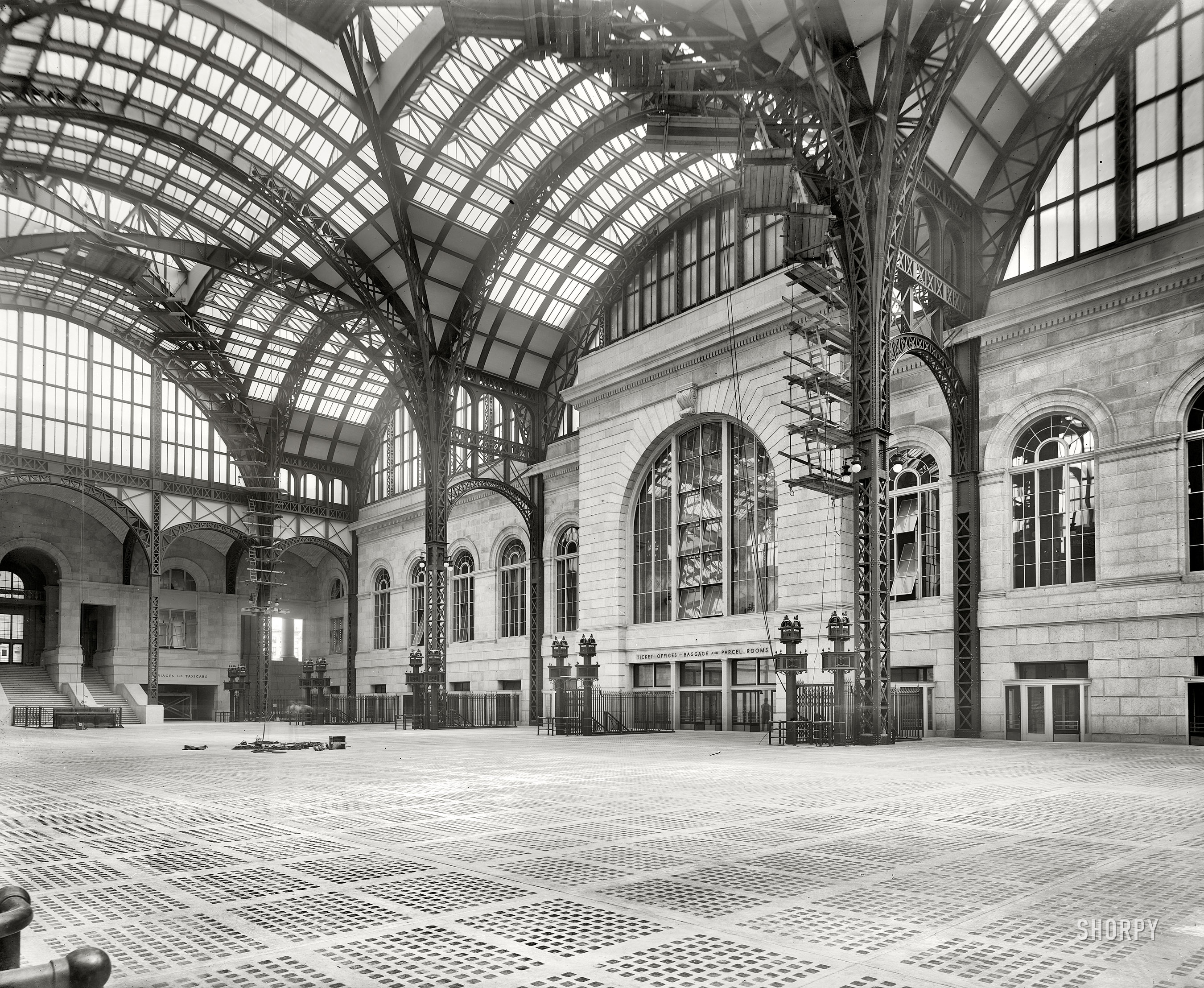
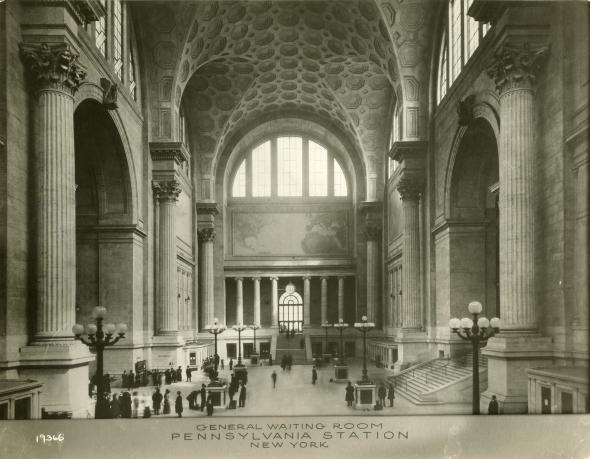
Images of the spectacular main waiting room and the classical Corinthian columns. Read here about something very mysterious and tragic which occurred near here in 1914.
Library of Congress
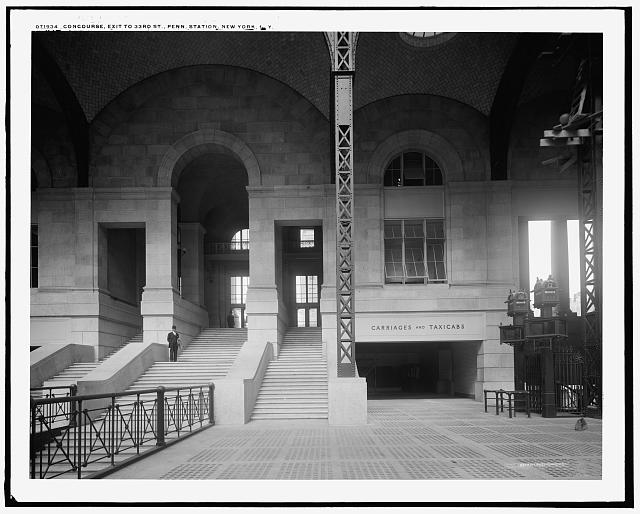
This is what greeted you as you got off the train and headed for 33rd Street.
Library of Congress
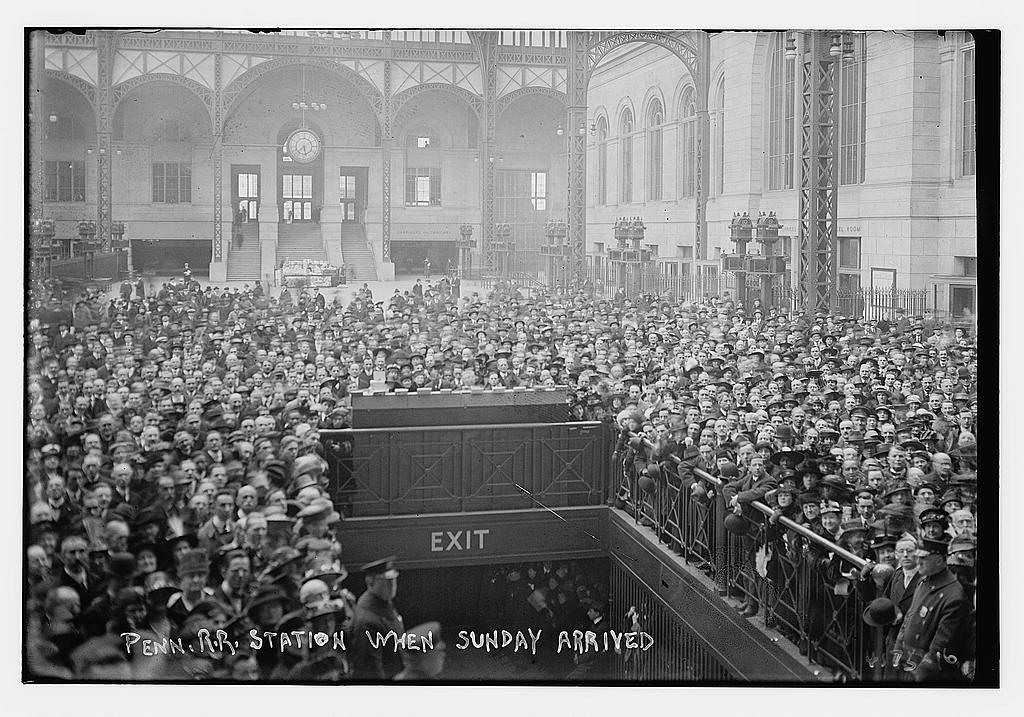
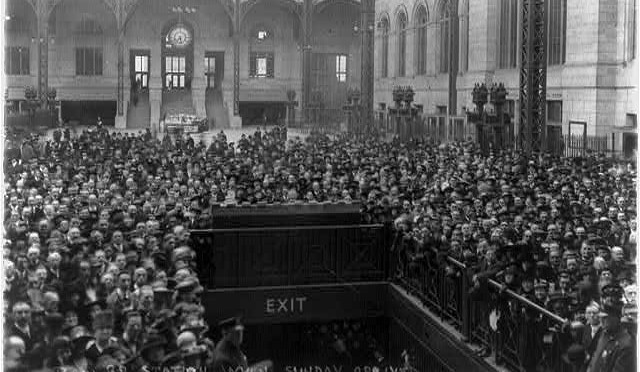
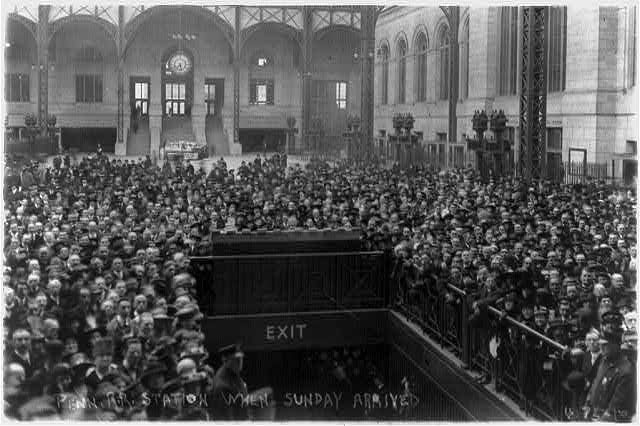
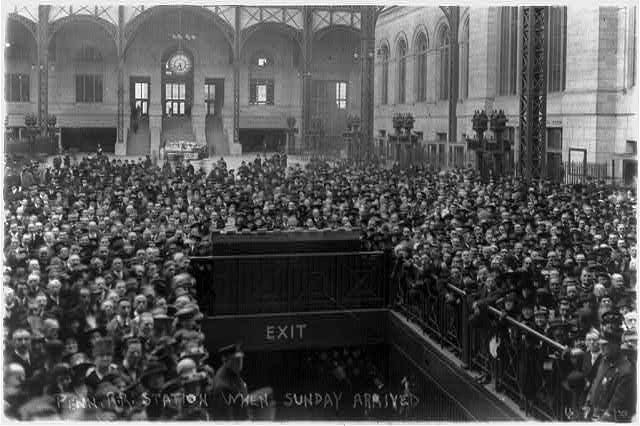
Crowds await the arrival of superstar preacher Billy Sunday in 1917. Read all about his visit here.
Library of Congress
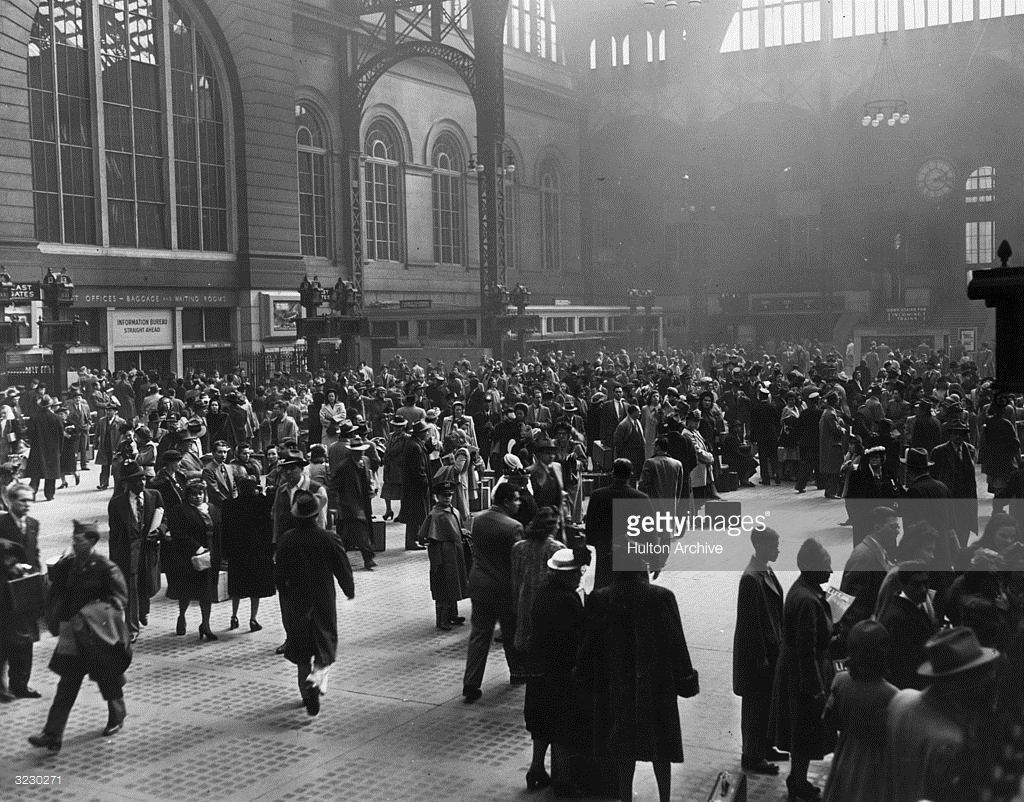
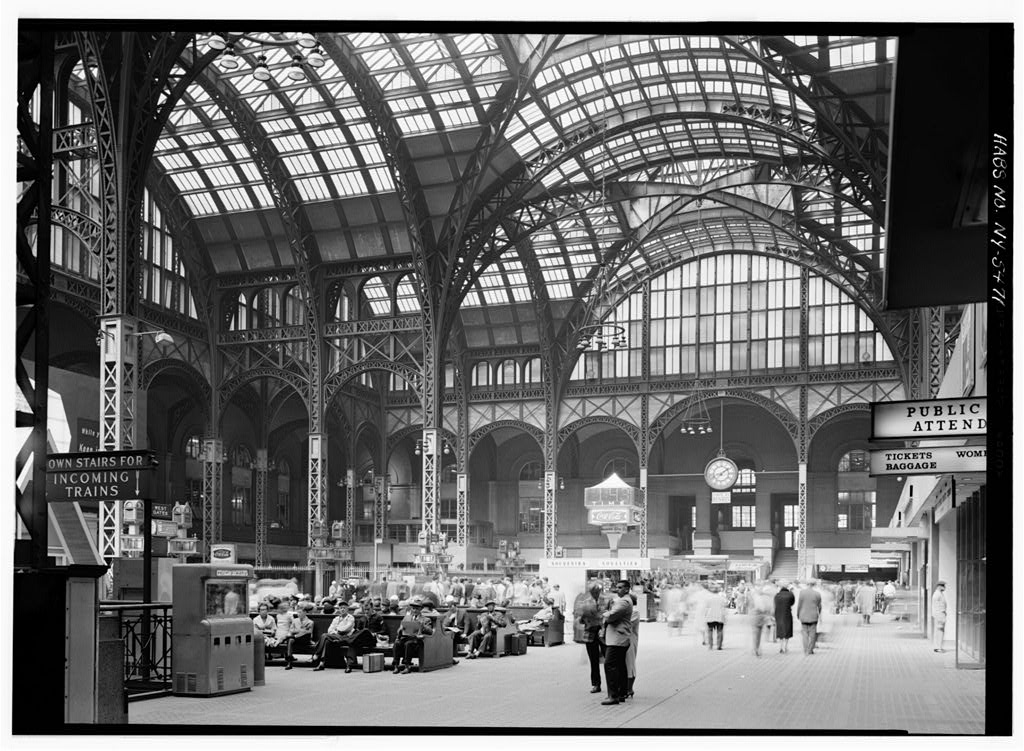
The interior from the 1950s during rush hour. Getty has a terrific collection of Penn Station photographs over the years.
Getty Images
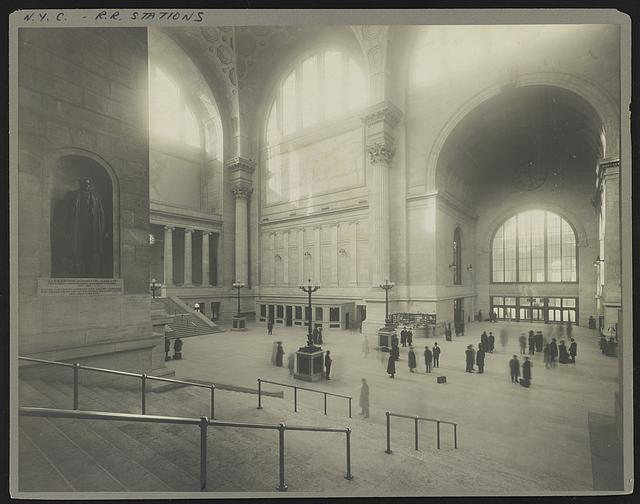
From this angle of the waiting room (taken in the station’s early days) you can see a statue of Alexander Cassatt, Penn Railroad’s former president, in its wall niche. Cassatt, brother of impressionist painter Mary Cassatt, never got to see the completed station, as he died in 1906. (The station opened in 1910.)
Library of Congress
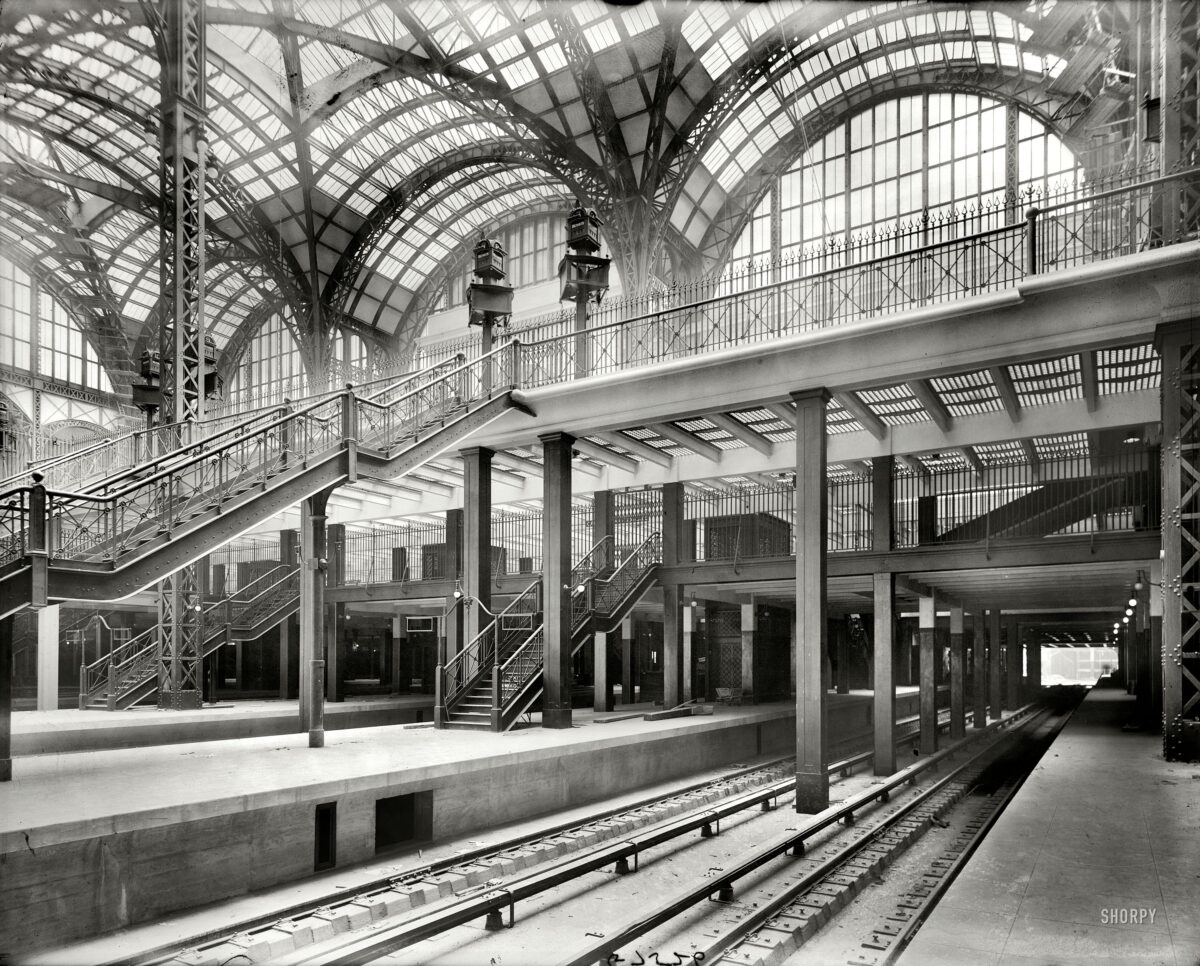
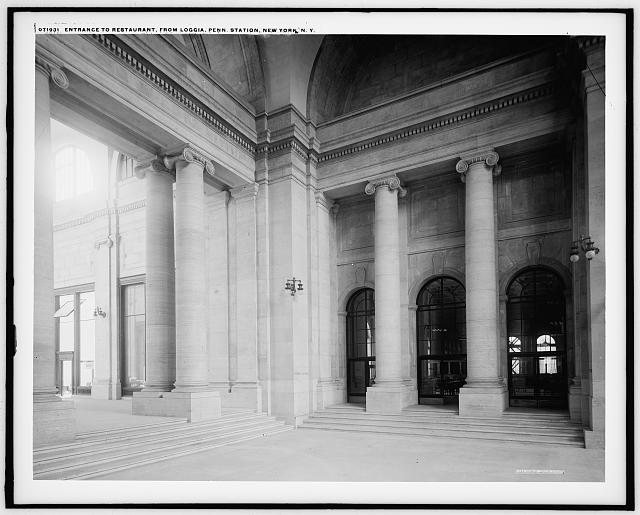
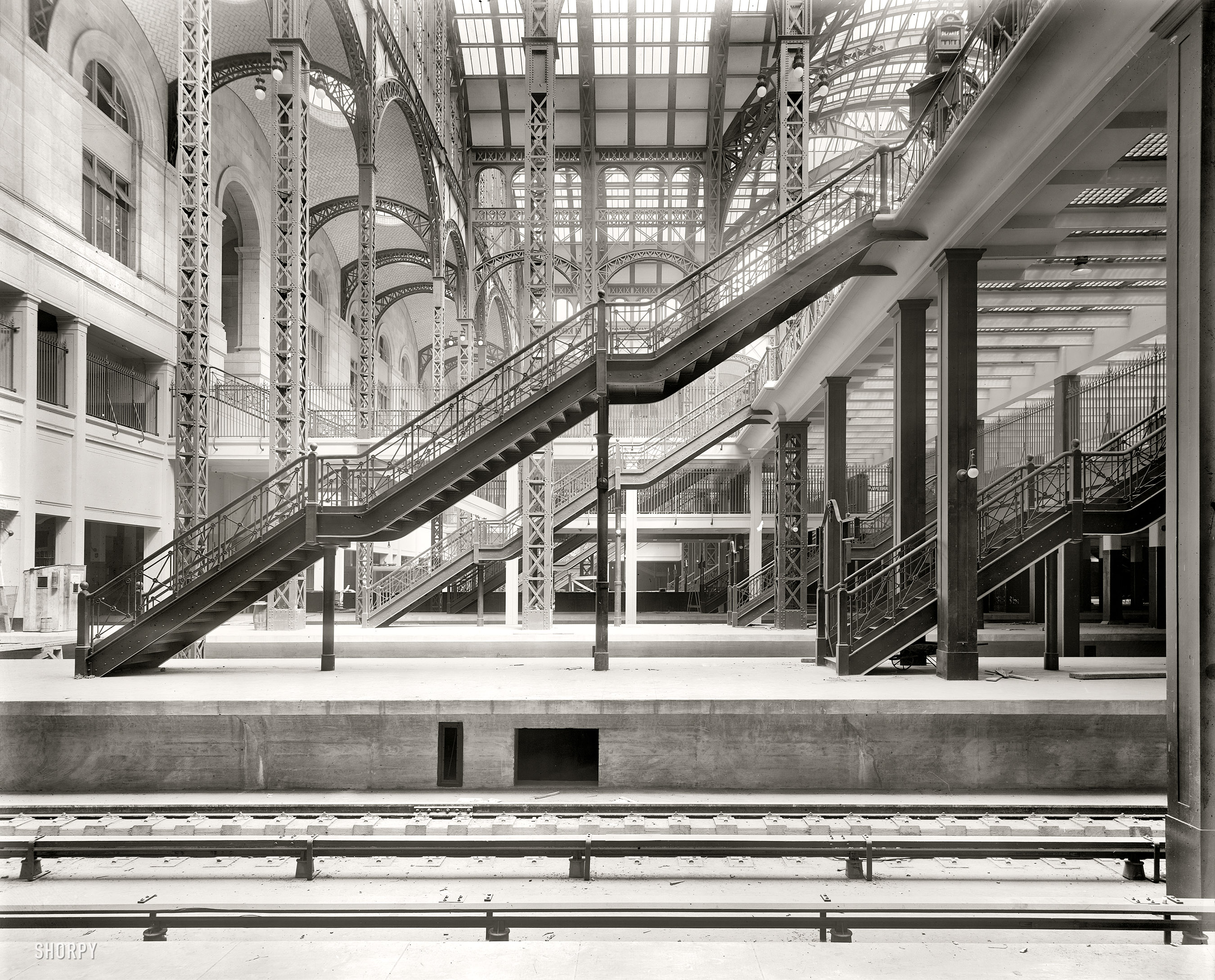
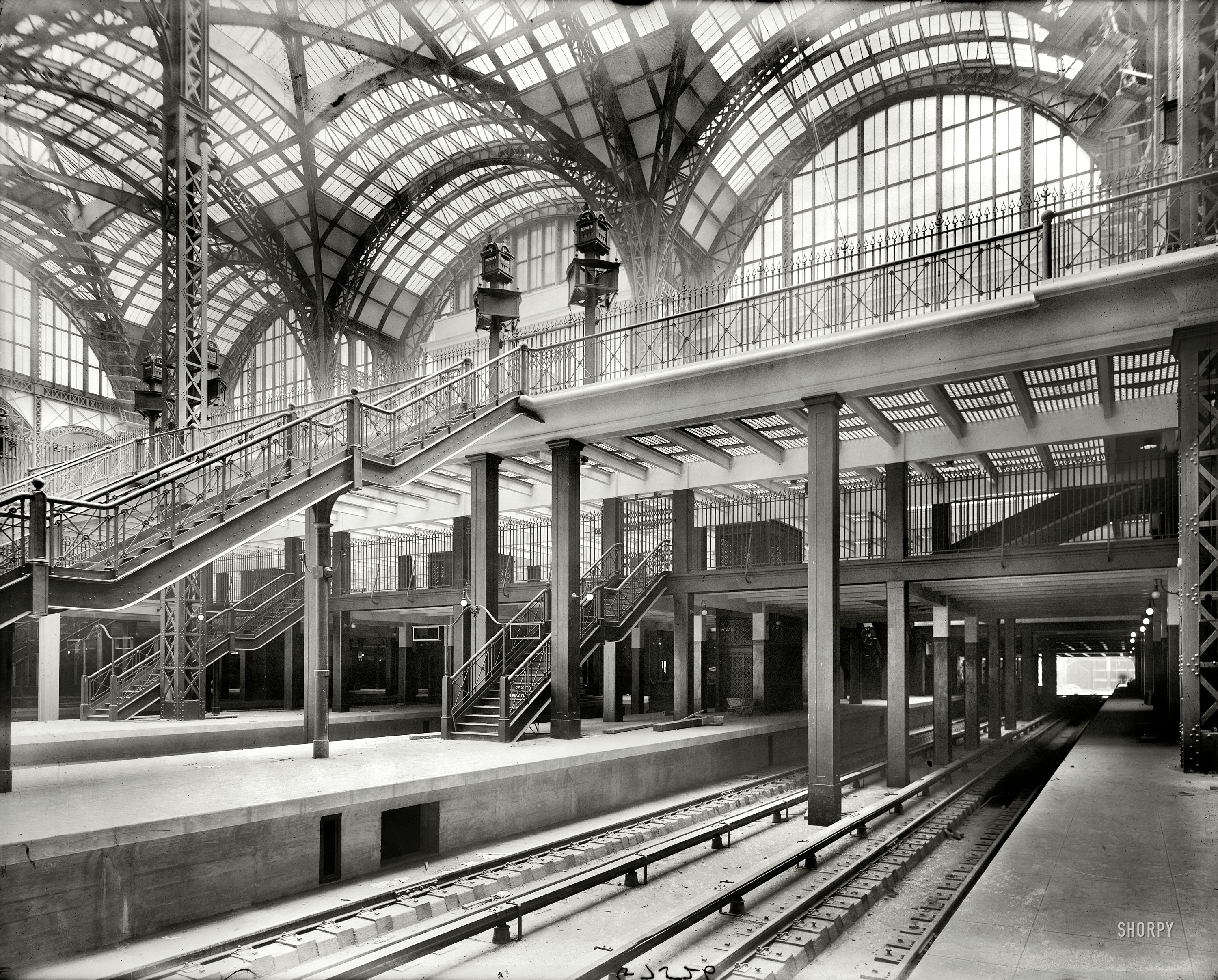
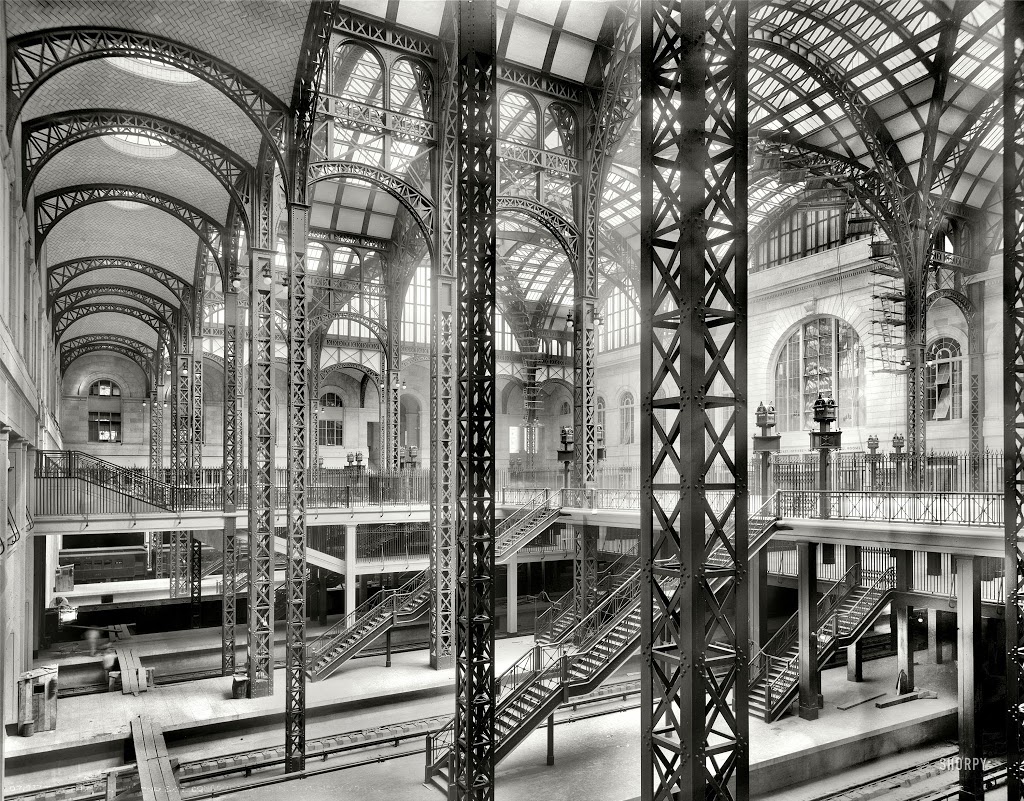
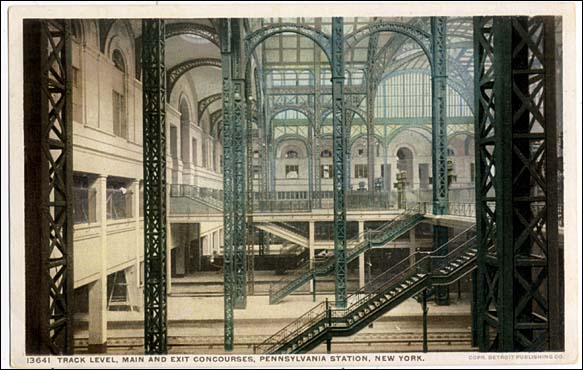
From this angle, you can really see the relation of the train platforms with one of the entrances. Seems easier to navigate than the current Penn Station, don’t you think?
Here are a few ‘cleaned up’ hi-res images from the fine folks over at Shorpy, who have a bit of a thing apparently for old Penn Station. Go over to their blog to check out the rest of their work.
PODCAST All the history that came before the development of Hudson Yards, Manhattan’s skyline-altering new project.
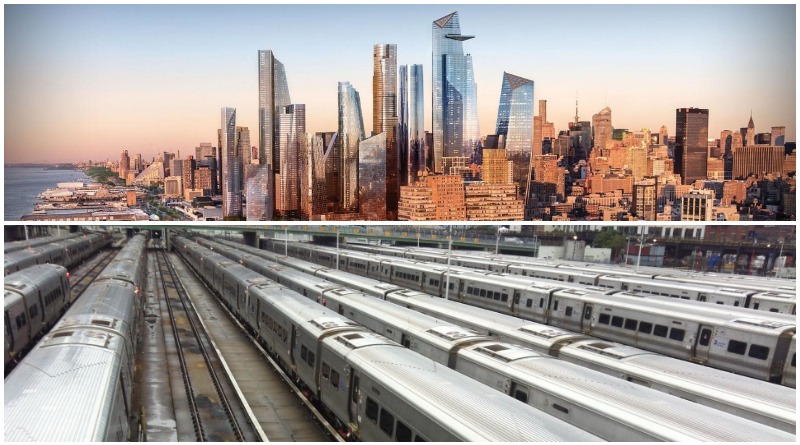
Hudson Yards is America’s largest private real estate development, a gleaming collection of office towers and apartments overlooking a self-contained plaza with a shopping mall and a selfie-friendly, architectural curio known as The Vessel.
By design, Hudson Yards feels international, luxurious, non-specific. Are you in New York City, Berlin, Dubai or Tokyo? Yet the mega-development sits on a spot important to the transportation history of New York City. And in the late 20th century, this very same spot would vex and frustrate some of the city’s most influential developers.
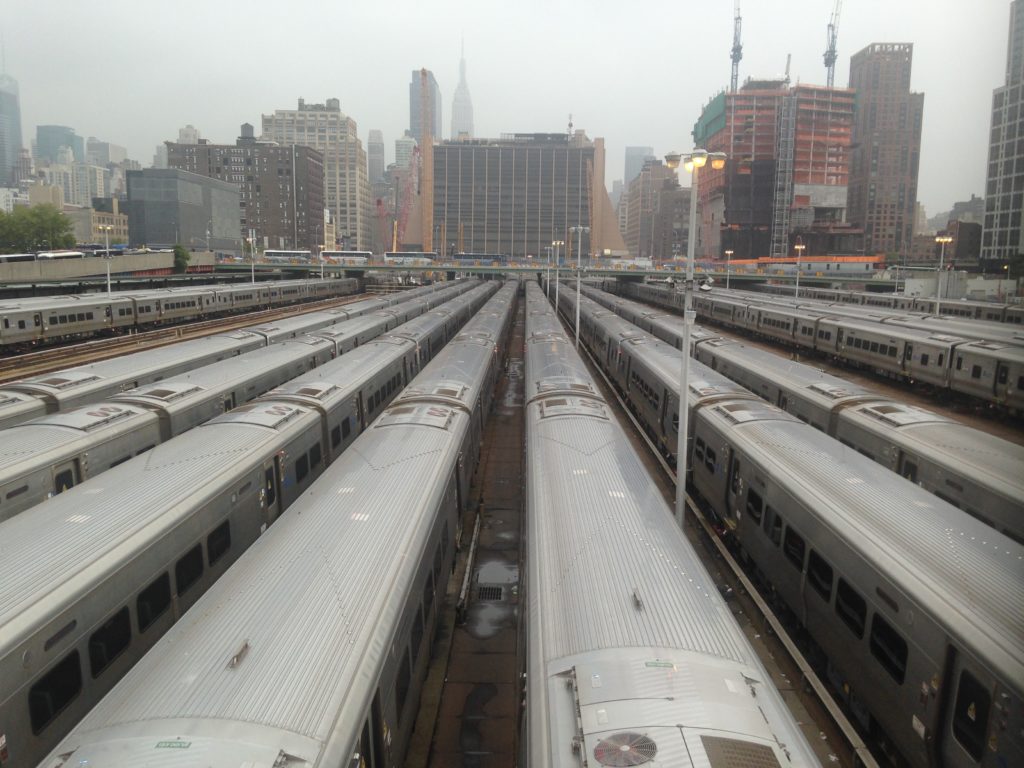
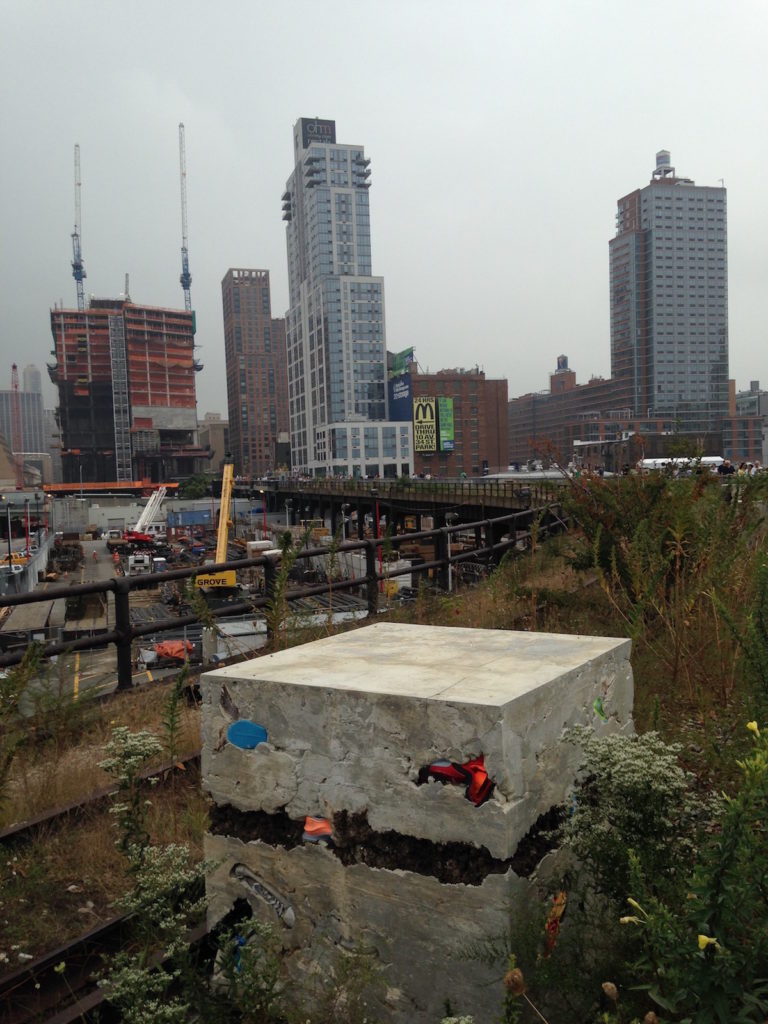
The key is that which lies beneath — a concealed train yard owned by the Metropolitan Transit Authority. (Only the eastern portion of Hudson Yards is completed today; the western portion of the Yards is still clearly on view from a portion of the High Line.)
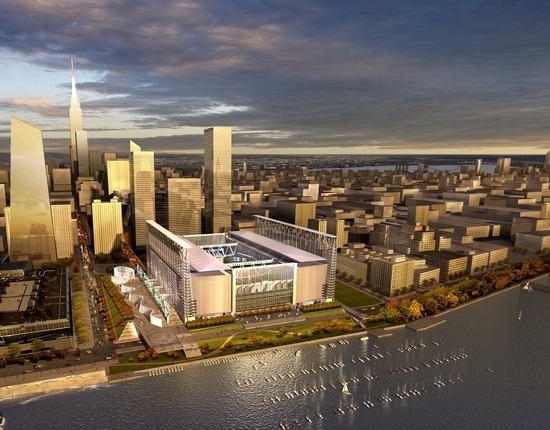
Prepare for a story of early railroad travel, historic tunnels under the Hudson River, the changing fate of the Tenderloin neighborhood, and a list of spectacular and sometimes wacky derailed proposals for the site — from a new home for the New York Yankees to a key stadium for New York City’s bid for the 2012 Olympic Games.
PLUS: Trump Convention Center — it almost happened!
The Bowery Boys: New York City History podcast is brought to you …. by you!
We are now producing a new Bowery Boys podcast every other week. We’re also looking to improve the show in other ways and expand in other ways as well — through publishing, social media, live events and other forms of media. But we can only do this with your help!
We are now a member of Patreon, a patronage platform where you can support your favorite content creators.
Please visit our page on Patreon and watch a short video of us recording the show and talking about our expansion plans. If you’d like to help out, there are six different pledge levels (New Amsterdam, Five Points, Gilded Age, Jazz Age, Empire State and Greater New York). Check them out and consider being a sponsor.
And join us for the next episode of the Bowery Boys Movie Club, an exclusive podcast provided to our supporters on Patreon.
We greatly appreciate our listeners and readers and thank you for joining us on this journey so far.
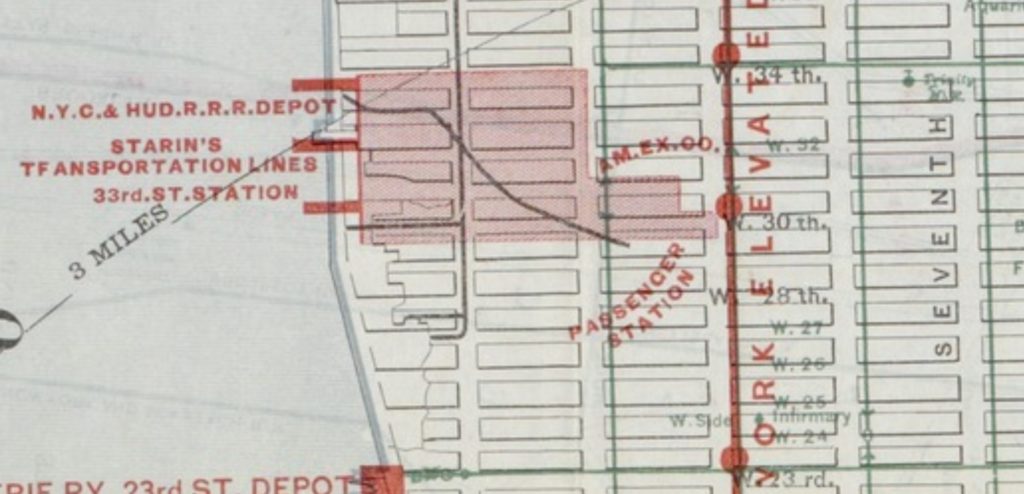
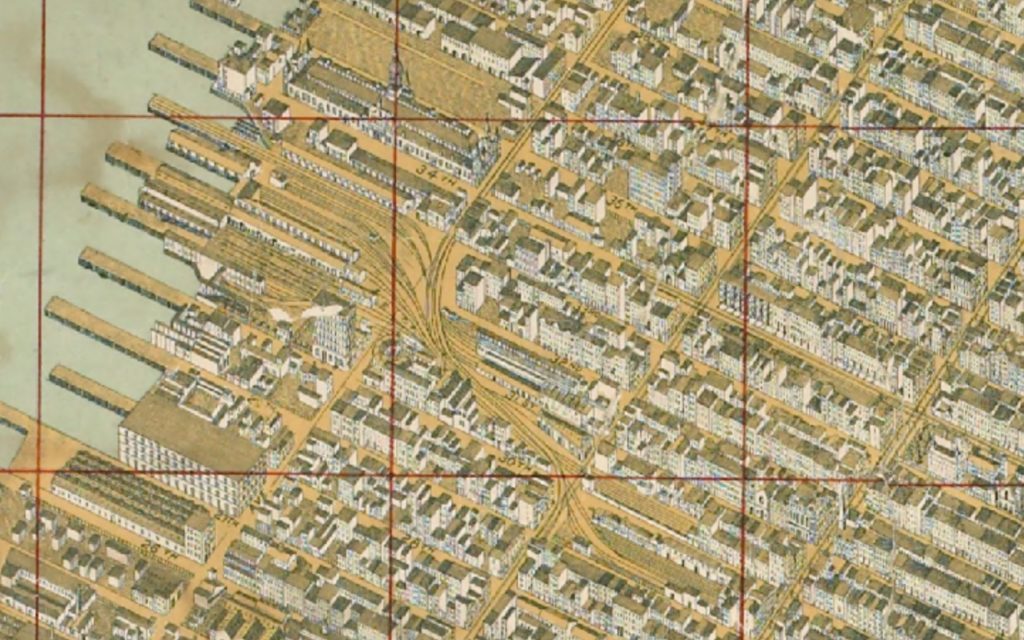
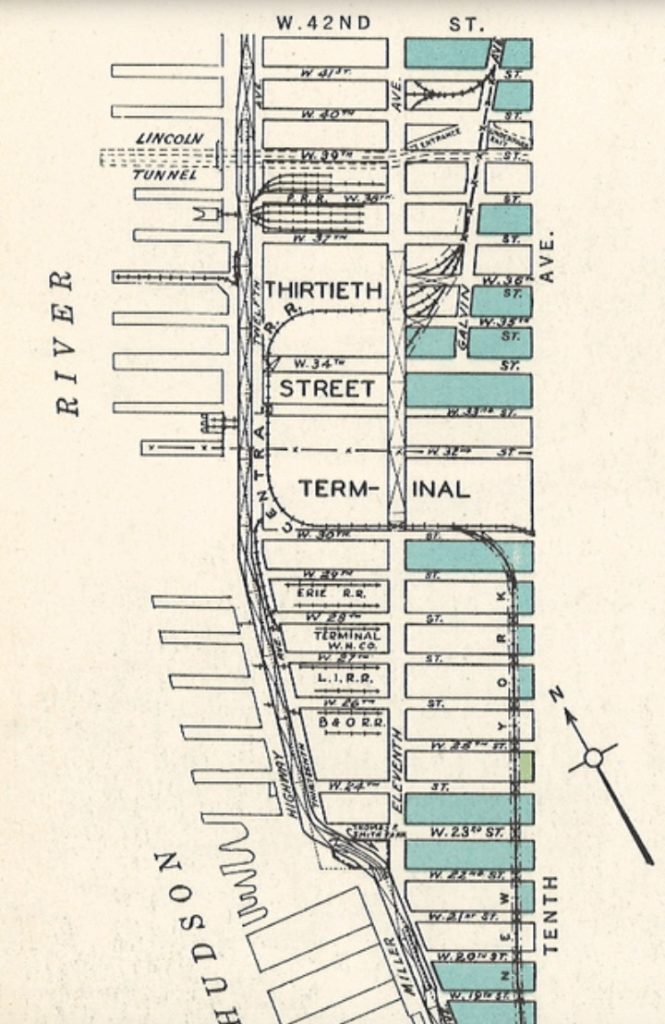
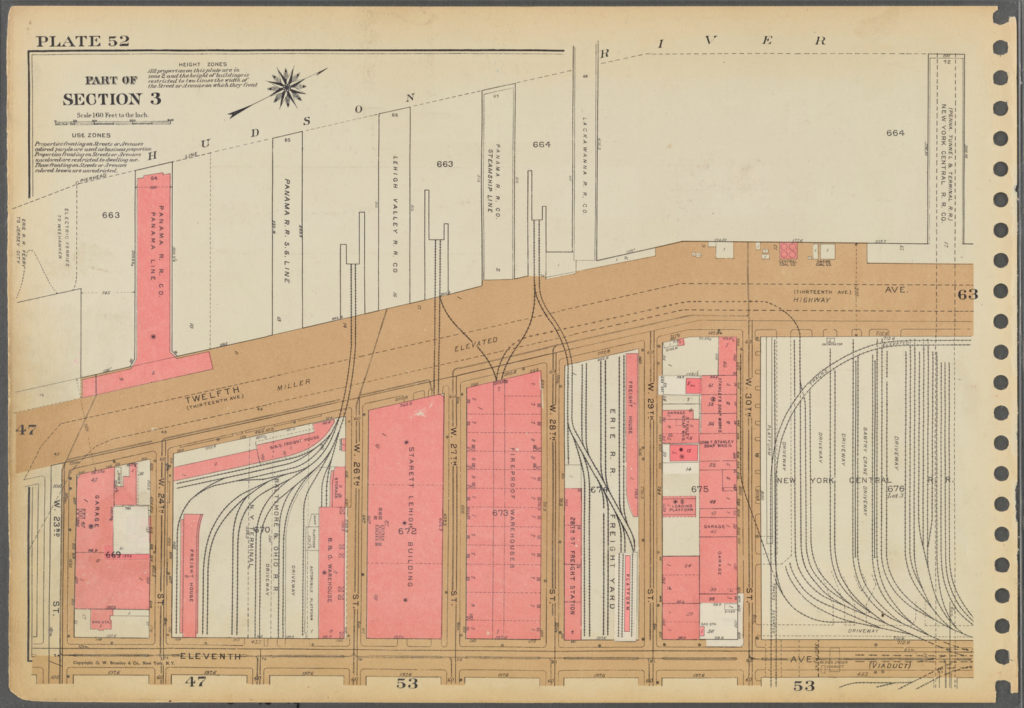
The West Side Yards area as it appeared on maps throughout the decades:
1879190019431955 New York Public Library
Pennsylvania Station, constructed between Seventh and Eighth Avenues, allowing for trains from New Jersey to arrive via tunnels which were dug under the Hudson River and the New York Central and Hudson River Railroad site on the waterfront.
Bain Collection/Library of Congress. Clean-up version courtesy Shorpy
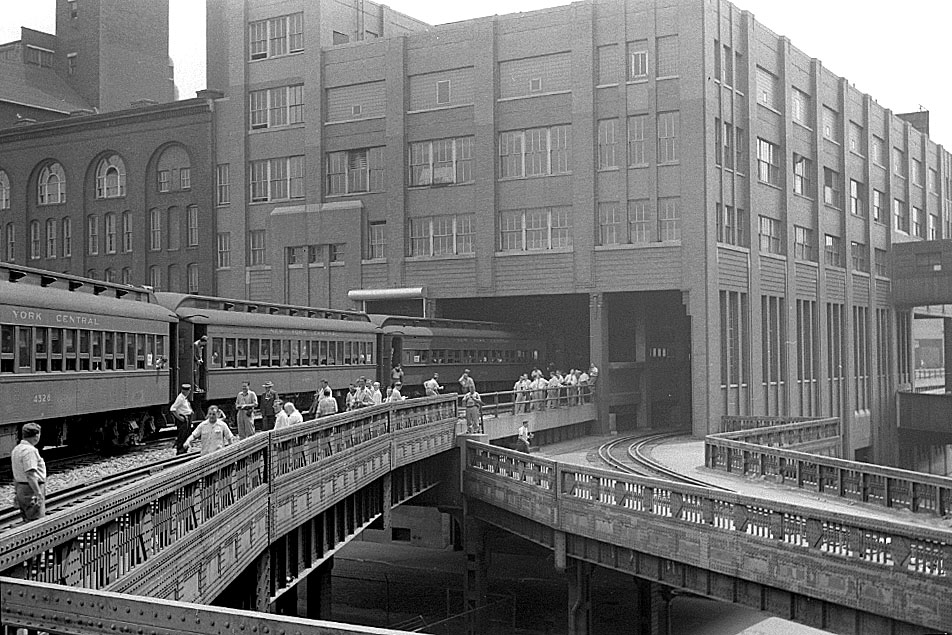
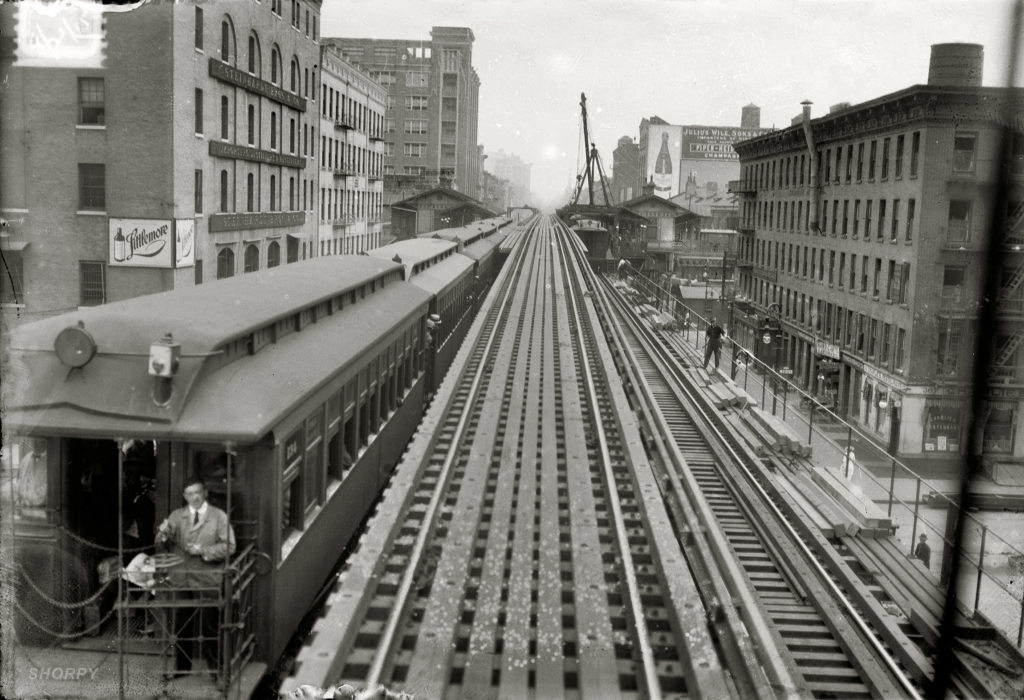
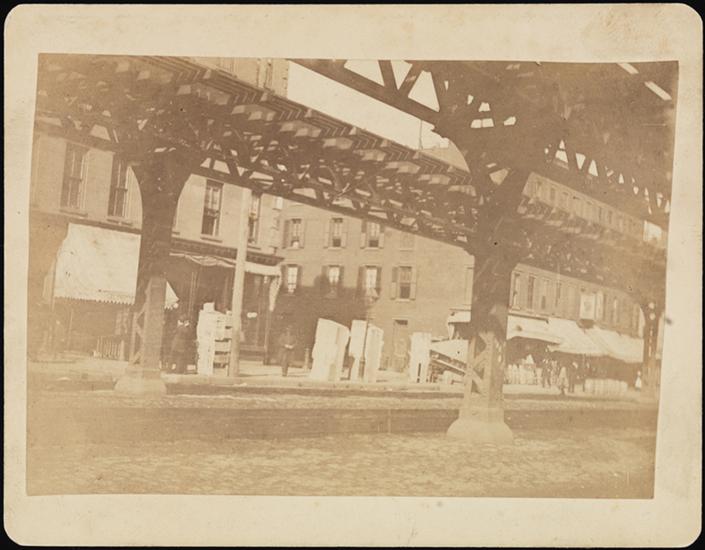
The West Side Elevated Freight Railroad lifted trains off the street and sometimes dropped off cargo right into the buildings themselves.
The elevated freight railroad enters the National Biscuit Company, between W. 15th and 16th streets, July 30, 1950.
August 21, 1915. “Express track, 9th Avenue ‘L’.” Construction along the Ninth Avenue elevated tracks at West 13th Street in New York. On the corner: Charlie’s Restaurant. 5×7 glass negative by George Grantham Bain/Cleaned up version courtesy Shorpy
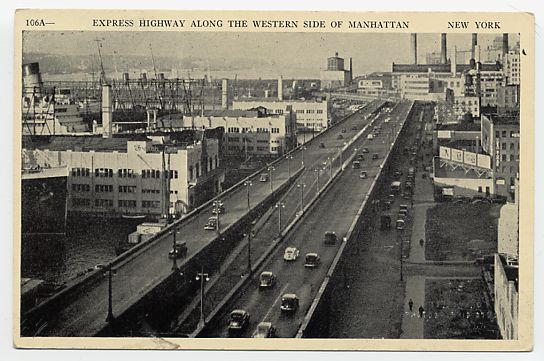
And finally, for automobile traffic, the West Side Elevated Highway (or Miller Highway) was constructed in stages during the mid 20th century, further separating the waterfront from the east. By the last 1980s, most of this highway was dismantled.
Date unknown, image courtesy NYC Architecture
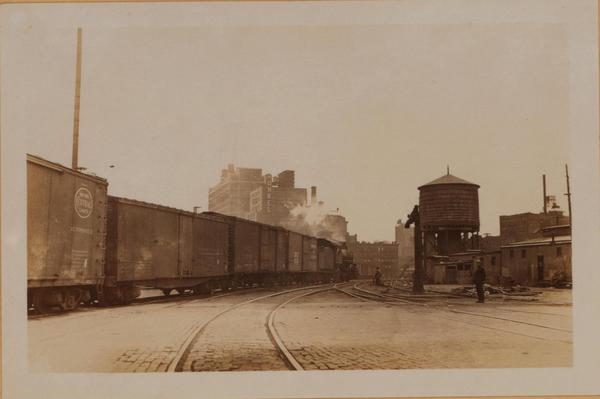
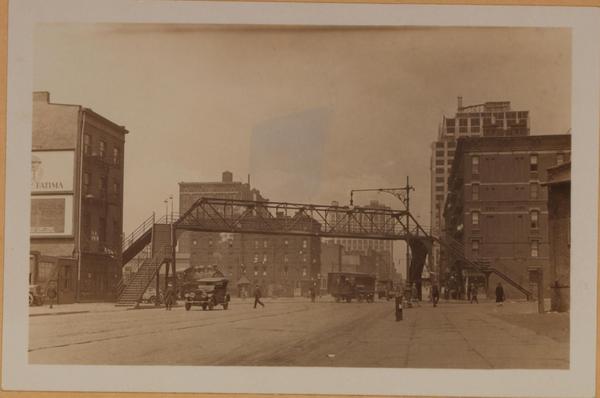
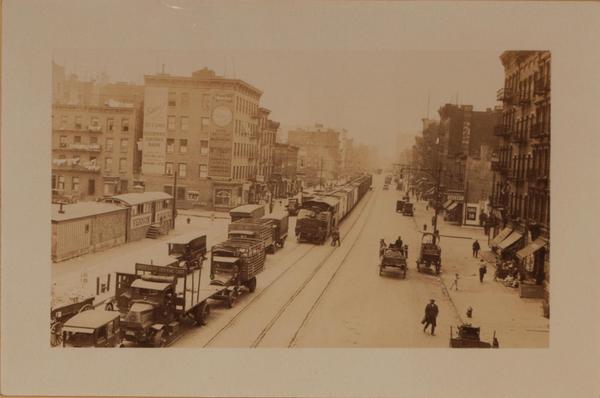
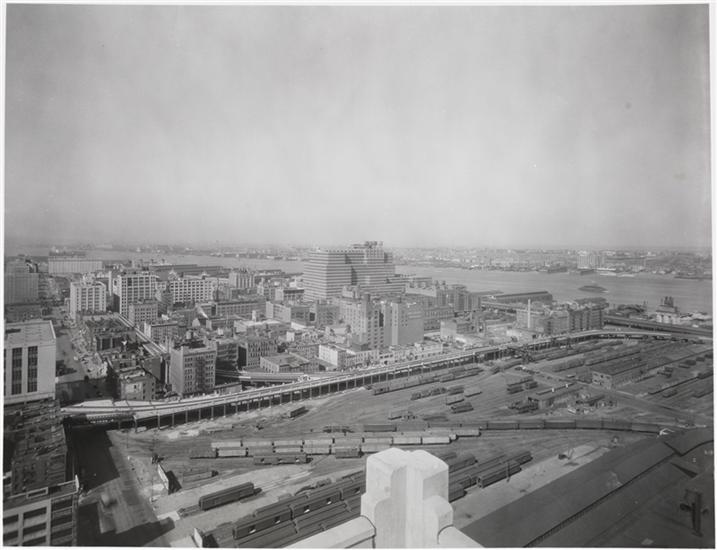
From the New York Public Library digital collection — a look at the ‘West Side Yards’ area in the late 1920s, before the construction of the elevated freight railroad (aka the High Line) and the elevated automobile highway along the west side. (Captions are those from the original images.)
Eleventh Avenue between 31st and 32nd Streets, showing New York Central freight yards. May 17, 1927. P.L. Sperr, Photographer.Tenth Avenue, south from a point slightly above West 30th Street, showing prominently the pedestrian bridge over the Avenue at that thoroughfare. This was erected by the New York Central Railroad because of the danger involved by the use of the street bed by their trains. Popularly this was called “Death Avenue”. To the left are the milk shed yards. May 17, 1927Tenth Ave., south from, but not including West 30th Street. This view is as seen from the pedestrian bridge, at West 30th Street. May 17, 1927.enth Ave., west side, north from, but not including West 30th to, but not including 31st Streets. The view shows the yards of the N. Y. Central and Hudson River R.R. Company. May 17, 1927.South on Eleventh Avenue from 35th Street. May 17, 1929.Pennsylvania Station Excavation from 9th Avenue and 31st Street, ca. 1900 — Museum of the City of New YorkThe 9th Avenue Elevated Railroad at 37th Street, 1910 — Museum of the City of New York
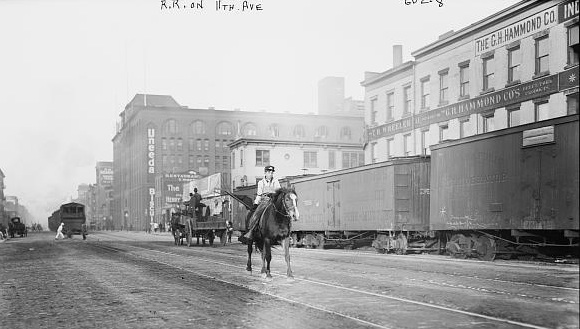
The ‘Death Avenue’ cowboys, guiding dummy engines down the avenue for the protection of pedestrians and horse-drawn vehicles.
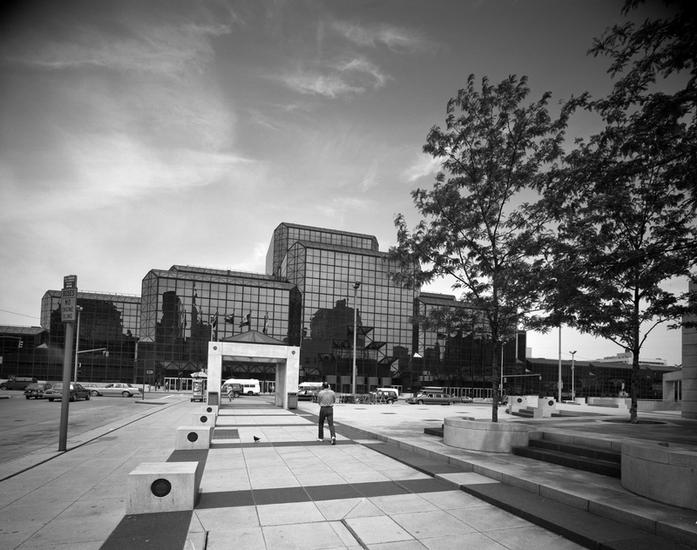
1940, courtesy Museum of the City of New York — Taken from approximately 10th Avenue between 33rd-34th Streets, looking south.Javits Center, c. 1990 — Edmund Vincent Gillon, courtesy Museum of the City of New York
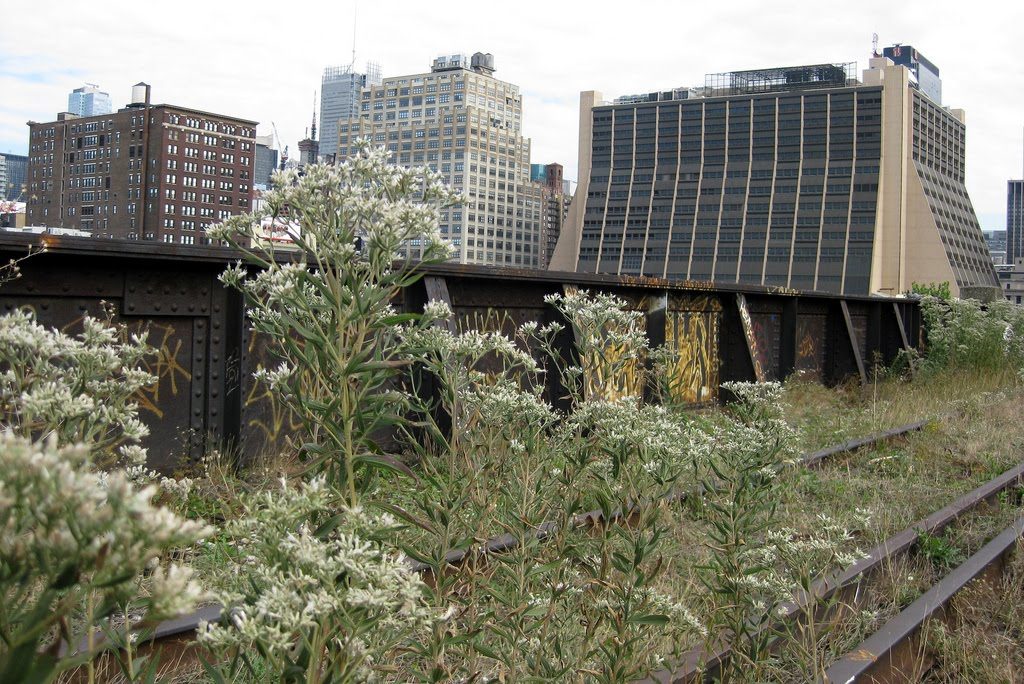
The elevated freight railroad in the early 2000s, before it became the High Line and before the area adjacent to it became Hudson Yards.
wally g/FlickrLooking over the West Side Yards, 2014, photo courtesy Greg Young. To the right, the first Hudson Yards building is being constructed.courtesy Greg YoungA rendering of the West Side Stadium, courtesy Kohn Pedersen Fox Associates
Images of the new Hudson Yards development, from opening day, March 15, 2019. Photos taken by Greg Young.
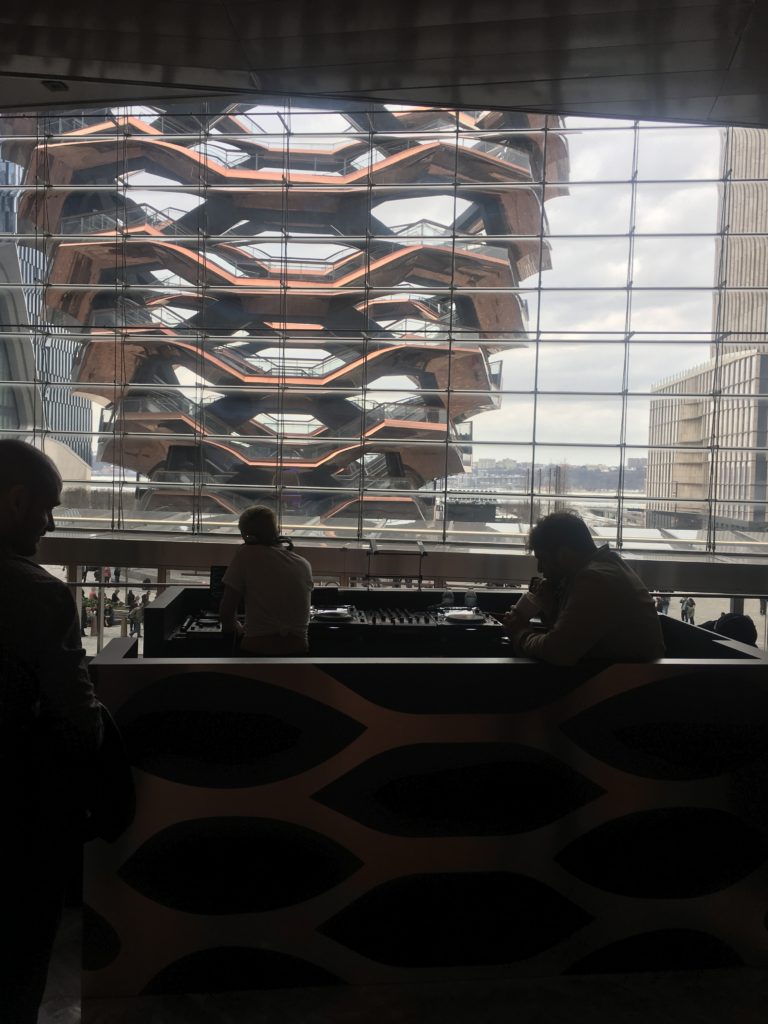
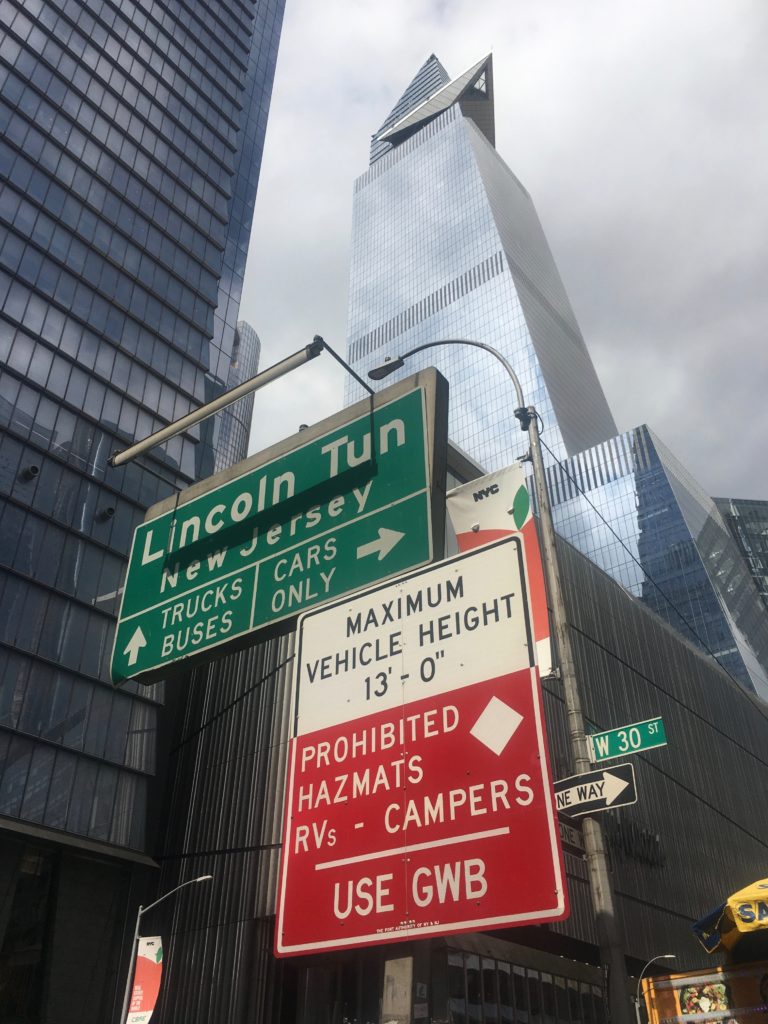
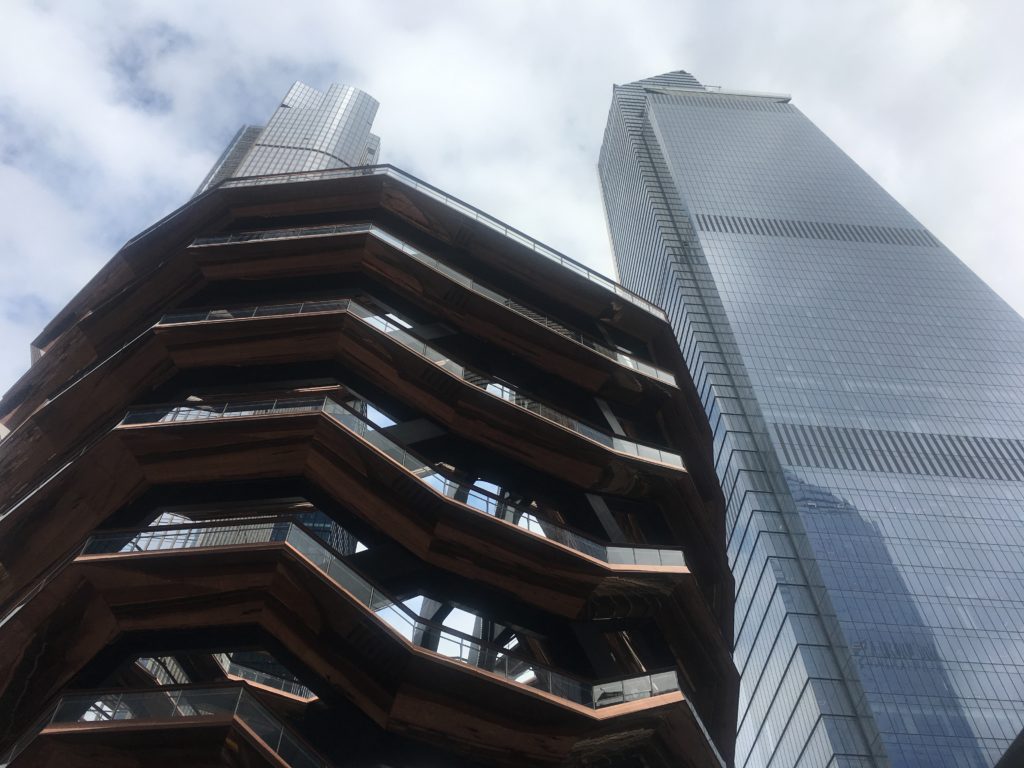
From the second floor, behind the deejay booth. Yes there is a deejay booth in the shopping center.An observation deck over New York as traffic passes by on its way through to the Lincoln Tunnel.Looking up at The Vessel and the towers behind it.
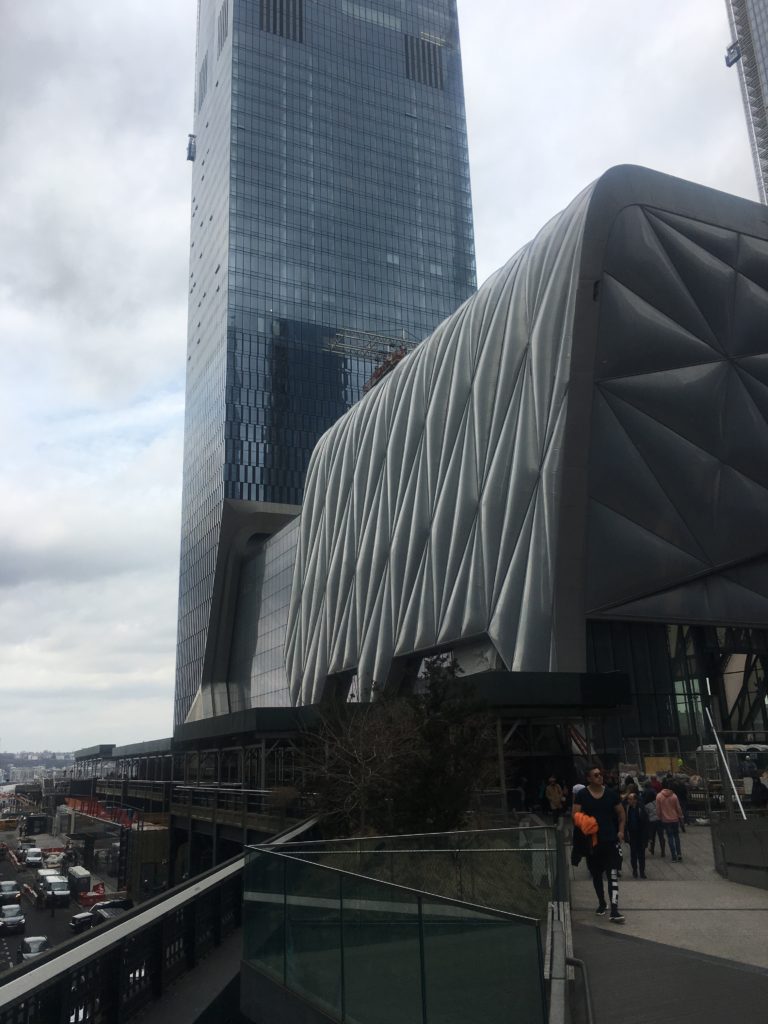
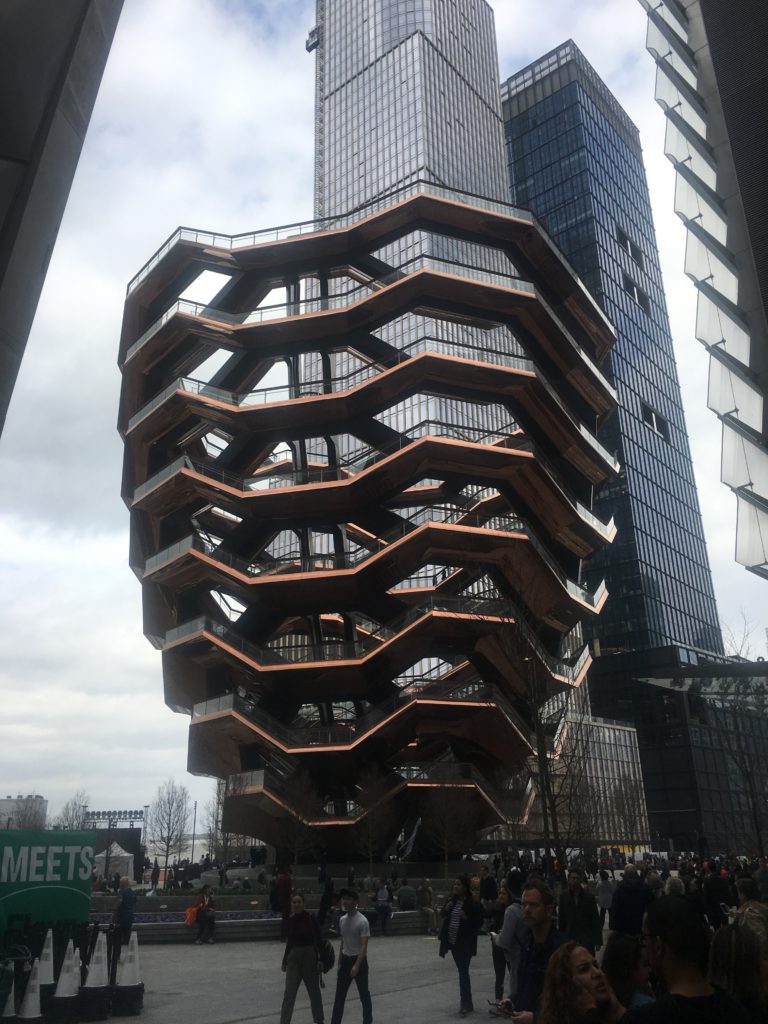
The Shed, a performance space that will be one of the primary draws for most locals.The Vessel, designed by Thomas Heatherwick
FURTHER LISTENING
For more information about this topic, check out these early Bowery Boys podcast episodes:
The halls of Pennsylvania Station, conjuring the grandeur of a Roman temple, would have created an otherworldly echo at rush hour on January 22, 1914. Thousands of commuters hurrying across the marble floors of McKim, Mead and White’s steel-latticed terminal, rushing to arriving trains pulling into the sunken boarding area from deep tunnels beneath Manhattan and the Hudson River.
It was in the cavernous waiting room of Penn Station at rush hour that a gentleman was seen nervously pacing the floor — “a well-dressed man of 40 years, with a high forehead and black curly hair.” [source] He wore a dark grey overcoat, his pockets full. He was taller than most around him, and his brow was furrowed in anxiety beneath a gray plaid hat. The man had just come in from Philadelphia, judging from the newspaper clippings on his person.
The Penn Station waiting room:
Precisely at 6 pm, the curly-haired gentlemen left the waiting area and entered the men’s washroom. It was here that he reached inside his coat, pulled out a revolver and shot himself twice in the head.
Almost any sound made in old Penn Station dramatically amplifies under its high vaulted ceilings. Two gunshots during rush hour certainly must have stopped foot traffic, if only for a moment. The gentleman was discovered by Penn Station’s chief detective and taken to the West 37th Street Police Station where officers inspected the body for signs of identification. None were found outside of the address for a gas company in Newark, NJ. Did he work there? Did he owe them money?
More disturbing was a hand-written suicide note, which read:
“It is time that I end this useless existence. I’ve taken all the facts into consideration and have concluded that death is the only way to get out of this hypocritical and swindling world. I hope to make a good job of it.” On the other side of this note was written a more direct meaning for this gentleman’s grief — “Out of work and funds.”
Investigators also found a whisky flask, a few quotations from Shakespeare and a grand total of 47 cents. But perhaps the oddest possession in his pocket was a magazine clipping featuring the writings of Maurice Maeterlinck, the Belgian intellectual who had won the Nobel Prize for Literature just two years previous. It’s not surprising that a person in the depths of depression would turn to Maeterlinck, a playwright known for exploring the enterprise of death. (Later in life, Maeterlinck would also be accused of being a towering plagiarist.)
The New York Sun made note of the fact that the Maeterlinck clipping featured several underlined passages in an article headlined ‘Death’, including this one: “In any case, it seems fairly certain that we spend in this world the only narrow, grudging, obscure and sorrowful moments of our destiny.”
While this man’s sad demise made the front sections of all the local newspapers — after all, you can’t shoot a revolver in Penn Station without some notice — I was unable to find any further follow-up to this man’s identity. And so, on the one hundredth anniversary of this stranger’s passing, he joins the many other ghosts of this legendary old building, itself nothing more than a memory.
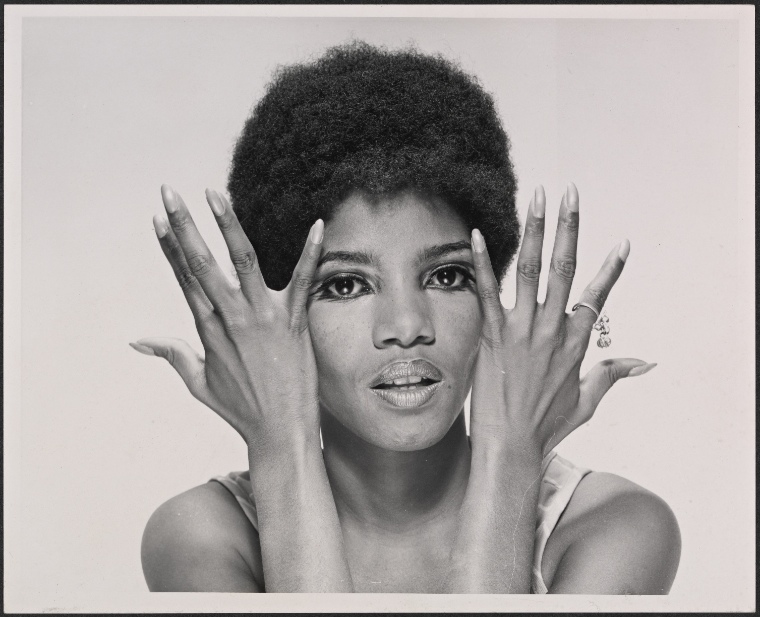
A press photo from Hair, the hottest show in town in early 1968, photographer Kenn Duncan WARNING The article contains a couple light spoilers about last night’s ‘Mad Men’ on AMC. If you’re a fan of the show, come back once you’re watched the episode. But these posts are about a specific element of New York history from the 1960s and can be read even by those who don’t watch the show at all. You can find other articles in this series here.
Don Draper and the gang were too busy with their mistresses and their ‘self-immolating’ pitch meetings to properly react to the headlines of the day on January 31, 1968. Word of the U.S. military’s devastating setback — today called the Tet Offensive — only briefly interrupted dinner conversation; by the time Draper’s dinner companion ordered steak diavolo, the subject had floated to another table.
In the year 1968, it will be become increasingly difficult to tune out the world. Pete Campbell, with blank eyes, tunes into Johnny Carson, who has devoted his entire show that evening debating New Orleans district attourney Jim Garrison regarding the assassination of JFK. Garrison was readying a case against Clay Shaw for conspiracy to kill the president (he was acquitted):
The most vibrant movements in the city involved protest and aggravation. The hottest show off-Broadway, Hair, was prepping for its official Broadway opening that April. Hair was the very first musical to ever transfer from off-Broadway to Broadway.
What else is going on in January 31, 1968?
— The finishing touches are placed on the new Madison Square Garden which will open a couple weeks later, on February 11. A few seasons ago, the admen of Sterling Cooper took to wooing the organizers of MSG who were prepping the destruction of Penn Station. All traces were gone by 1968, replaced with the drab concrete cylinder which presently sits at 34th Street.
— And things were brewing below it as well. The following day, New York’s two largest train companies — Pennsylvania Railroad and New York Central Railroad — announced their merger to form the eventually-named Penn Central. This would eventually incorporate other services, including Pete Campbell’s favorite train. And it would all go bankrupt by 1970!
— The number one film that week was the throwback Western Firecreek. This was a rare lapse into the traditional, as most filmgoers were talking about two other big releases — Planet of the Apes and The Graduate.
— In a sign of protest (and grim foreboding), the head of the city’s anti-poverty programs George Nicolau resigned out of frustration with lack of support from the federal government. [source]
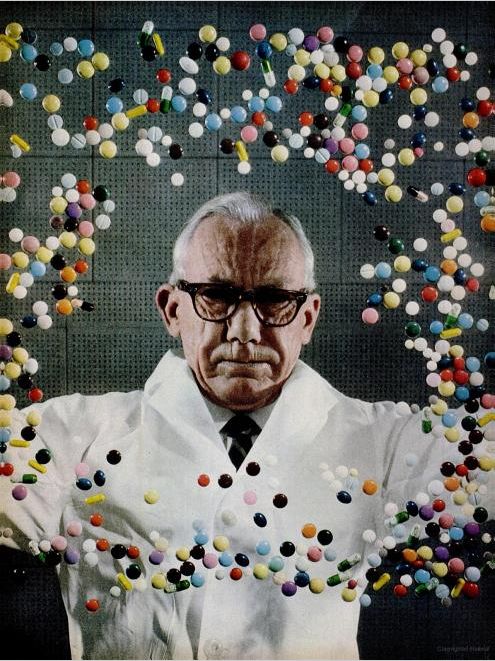
— Has somebody shown this to Betty? The cover of Life Magazine that week presented an expose on ‘dangerous diet pills‘. The picture below grandly illustrates the problem. (This issue from the week before is actually seen on a coffee table in this episode.)
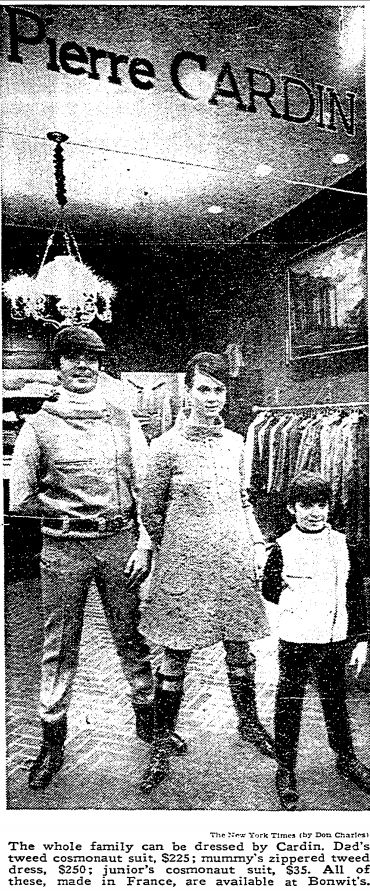
— But never fear. The New York Times fashion section announces a fabulous trend — dress the entire family as cosmonauts, courtesy Pierre Cardin! “The era of the fully fashion-coordinated family is at hands,” they declare. You could buy this extraordinary set of garments at Bonwit Teller at the corner of Fifth Avenue and 56th Street
(Edit: A prior version of this story listed the address at Fifth Avenue and 38th Street, next to the still-surviving Lord & Taylor. It was indeed there for two decades, but by 1930, it had moved to the tonier uptown address.) [source]
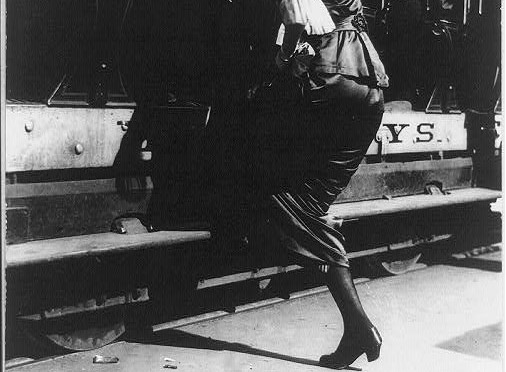
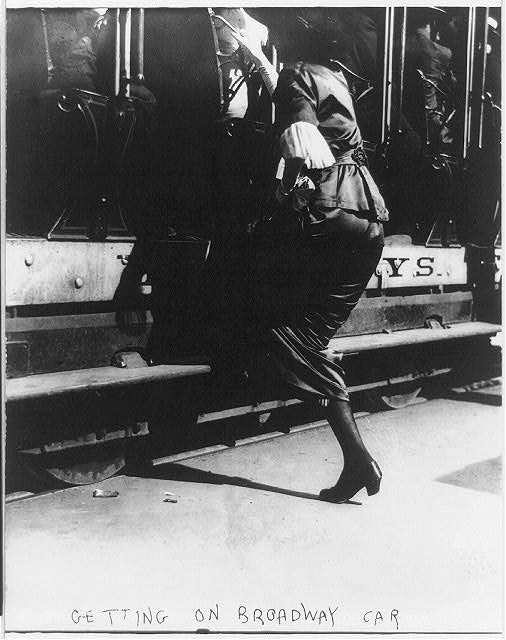
A lady in a relatively normal skirt boards a Broadway streetcar in July 1913. Now imagine trying this in a hobble skirt! (Courtesy Library of Congress)
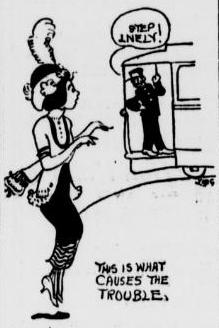
A serious cry (mostly from men) rang out through the city one hundred years ago about the ever-expanding transit system and the scandalous style of women’s skirts. Were frocks getting caught in doorways? Were dress lengths causing women fall down stairs?
Perhaps, but that wasn’t the issue. The latest fashion trend, the hobble skirt, was slowing the progress of women onto and off of streetcars, causing frustrating delays.
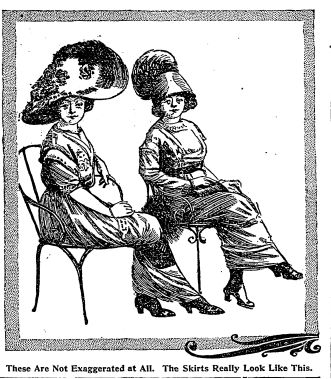
The Parisian-style hobble skirt, with its bunched hem near the bottom to create a mermaid-like appearance, made its appearance on New York streets in the early 1910s. The new gowns required ladies to walk more elegantly and, thus, more slowly, a throwback to the Victorian gait. “[T]he mannish stride of the women of today was taken for granted as a permanent thing. Nobody expected it to change, for nobody saw the hobble skirt on the horizon.” [New York Times, January 1912]
Above: Some sass from the Times fashion pages, June 12, 1910
After a millenia of unfettered skirts, this new silhouette must have seemed positively strange to elder fashionistas.
“‘The hobble’ is the latest freak in women’s fashions,” warned the Times upon their arrival in 1910. “The hobble skirt suits none. But many, too many, women will wear what the fashion authorities decree.”
Aesthetics aside, the hobble skirt created a practical problem. While measured, graceful walking might be fine on Ladies Mile or strolling along Fifth Avenue, it was an encumbrance upon the ever-moving streetcar system.
An executive of the Interborough Transit System (New York’s first subway operator) grumbled to the Evening World in 1912 about the extra burden the hobble skirt created upon city transportation and called for the fashion trend to be abolished.
“Often hundreds of people will be forced to stand aside patiently waiting for some women to raise her skirts sufficiently to allow her to step into the car,” said George Keegan, general superintendent.
A special ‘step-less’ car had even been designed with the fashionable lady in mind. The first of these “hobble-skirt, hygenic, fool proof” cars debuted on the streets of New York in the spring of 1912.
Meanwhile, underground, fashionable ladies were finding difficulty clearing the gap between the platform and subway cars. “Nearly all of the accidents in the subway are due to the fact that women wear hobble skirts,” said Keegan, a claim which could not possibly have been true.
The Pennsylvania Railroad, fearful of complaints and potential lawsuits, acted upon the crisis the following year by requiring train conductors to note skirt styles and “height of heel” and report all data to their central office. “If women passengers on the Pennsylvania Railroad insist on wearing such mantraps, or rather womantraps, as hobble skirts and high heels they cannot hold this company responsible for accidents which may happen to them,” claimed the railroad.
But all these railroad executives really needed to do was simply wait — trends subside, to replaced with other, more objectionable wear.
By the time Mr. Keegan was complaining about the hobble skirt, the Evening World fashion section was already clutching its pearls in disbelief about another fashion abomination. “The high note of feminine folly has been struck. The harem skirtis to succeed the hobbled horror which has made women hideous and ridiculous during the past year.”
But, leaving taste aside, at least you could ride the subway in a harem skirt!
Illustration above is from the August 9, 1912 edition of the Evening World which accompanied the Keegan article
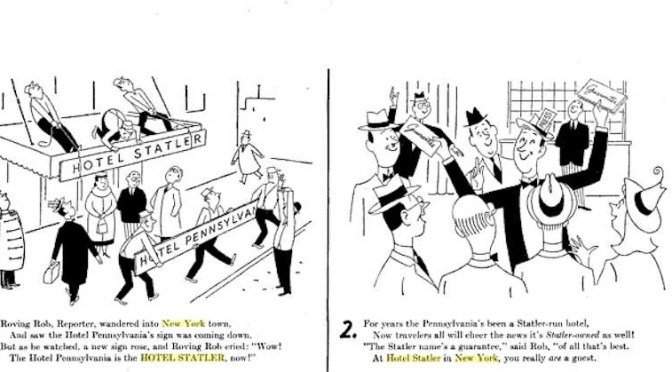
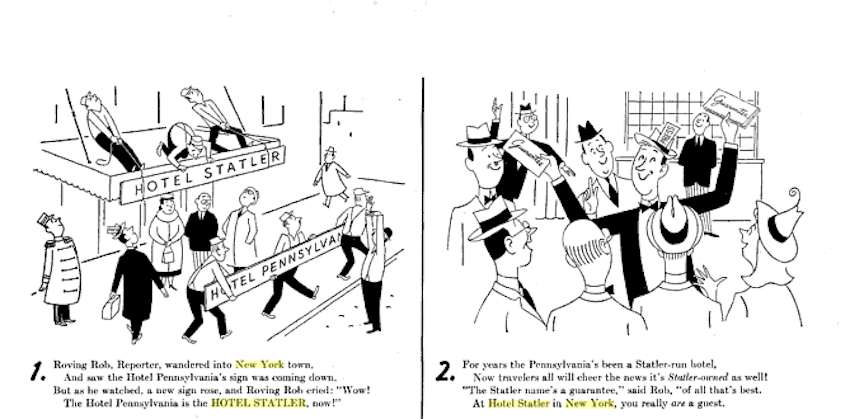
From a Statler Hotel advertisement in Life Magazine, dated January 10, 1949. Click in to the illustration to read the text
Every Monday I’ll try and check in with the Mad Men episode from the night before and focus in on one or two historical references made on the show. Spoilers aplenty, so read no further if you don’t want to know….
The offices of Sterling Cooper Draper Pryce were so busy imploding this episode that the characters barely left their offices. Except of course for Roger Sterling, in the midst of a game-changing lie and scrambling to save face. He was supposed to be in Raleigh, NC, convincing his number one client, Lucky Strike, not to leave the agency. But he knows that conversation is futile, so Roger is literally hiding out in Manhattan, “at the Statler.”
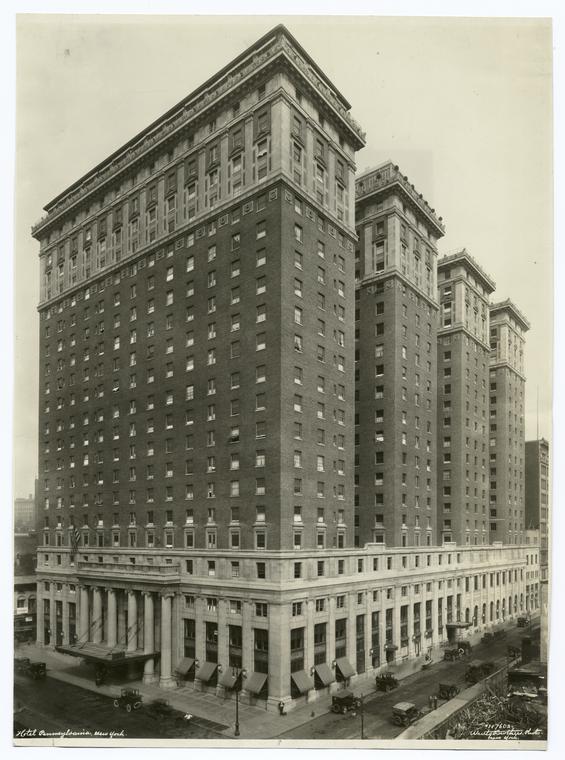
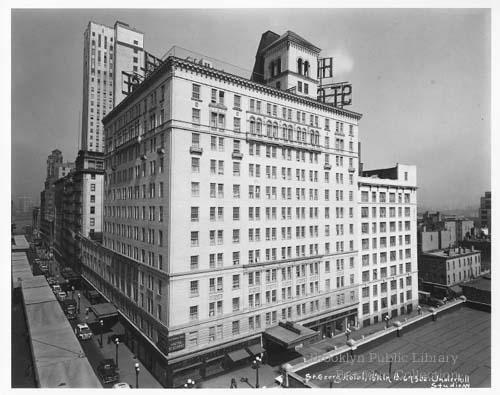
You may know this hotel by its first name — which also happens to be its current name: the Hotel Pennsylvania. The grand, columned 22-floor accommodation was built in 1919 across the street from the newly built Pennsylvania Station and also shared the firm of McKim, Mead and White as its architect.
It was a Statler property from the start. Ellsworth Statler, a hotelier from Buffalo, leased the property from the Pennsylvania Railroad and managed it until his death in 1928. His company kept expanding, however, and in 1948 bought the hotel from the financially ailing Penn Railroad and placed their name over the awning. An easy decision: the Statler brand had built itself a sterling reputation by the 1940s.
Its most valuable asset was certainly the elegant Cafe Rouge ballroom which hosted the very finest in Big Band performers, most famously the orchestras of Glenn Miller and Tommy Dorsey.
By the 1950s, the Statler organization merged with the ascendant Hilton chain. And thus the Hotel Statler became the Hotel Statler Hilton until the 1980s. After a couple more managerial changes, it brought back the Hotel Pennsylvania name in the early 1990s.
Despite its longevity and glamorous reputation during the ’30s and ’40s — its phone number is the subject of the classic song “Pennsylvania 6-5000” — the hotel was rarely considered the highest standard of luxury accommodation.
In 2007, the building’s owner Vornado announced it was ripping down the Hotel Pennsylvania and hoisting up a vast tower that would rival the Empire State Building in the midtown skyline.
You would think that demolishing a McKim, Mead and White creation with the word ‘Pennsylvania’ in its name would rankle preservationists, but it seems there is little interest in saving it.
Preserving that hotel, which has become very seedy, is not anywhere near as important as reusing the Farley building and creating a new rail station. And that’s from an interview with the president of the Municipal Art Society.
The battle for Hotel Pennsylvania’s fate is still ongoing. I would recommend checking out Curbed NY’s coverage for the latest.
Incidentally, the Statler name has been immortalized with a Muppet, namely in the crotchety old men who sit in the theater balcony Statler and Waldorf.
Over the next few posts, I’m turning back to exactly one hundred years ago, to contrast the beginning of 2010 with the events of 1910. New York City was in the midst of its Gilded Age, at the beginning of the skyscraper era, more confident as a worldwide center of finance, media and power even as it was still learning to provide for a massive, increasingly multi-cultural population.
One of New York City’s most important historical events of 1910 was the opening of old Pennsylvania Station, the hallmark of Beaux-Arts grandeur and Manhattan’s most impressive building. However its impact would be felt more importantly in a borough it wasn’t even in: Queens.
Queens was brought into New York City with consolidation of the five boroughs in 1898, an assemblage of small towns, village and farmland once united only by county designation. There was certainly no Queens identity, and the population was sparse, the second-least populated after Staten Island. Population numbers in 1900 place 152,999 residents of the borough versus 1,850,093 in Manhattan (or just 8.3% of Manhattan’s total). Today, Queens has a greater population than Manhattan.
The slow beginning of that shift started with two neatly parallel events from 1909 and 1910. First was the opening of the Queensboro Bridge on March 30, 1909. Over a year later came something arguably more significant — the opening of the Penn Station tunnels on September 8, 1910, connecting with the Long Island Railroad, now owned by Penn Central Railroad. Residents of Queens could now commute directly into the city, while the borough became an option for Manhattan residents who wanted to escape the city.
With convenient passage between an over-populated island and its new, sparsely populated sister borough assured by 1910, it’s no surprise that the decade has been referred to Queens’ ‘construction period’, becoming the fastest growing borough of the decade.
Other events in Queens history from the year 1910:
— Presaging the population growth, the Neponsit Realty Company bought a stretch of land on the Rockaway Peninsula in January 1910 and formed the wealthy outpost neighborhood of Neponsit. Today it’s still row upon row of large homes, most dating from the 1920s and 30s.
— In 1910, the descendants of Albon P. Man, whose lavish estate dominated central Queens during the 19th century, began parceling out pieces of the estate to small landowners and developers, having decided to call the area Kew Gardens after London’s botanical garden complex.
As for Penn Station, regularly timed train service was finally initiated in November 27th of that year. According to Jill Jonnes, “By nine o’clock, excited New Yorkers, bundled up against intimations of snow or freezing rain, were converging upon the station’s Doric colonnades,” creating a mob scene on the new platforms. The hottest ticket in town that year was, strangely enough, a ticket outta town.
Penn Station was the most significant but hardly the only opening of 1910. The Madison Avenue Bridge, connecting Manhattan with the Bronx, opens that year, as do the Ritz-Carlton Hotel at 46th and Madison, and Liberty Tower at 55 Liberty Street. Also this year, work begins on the Woolworth Building.
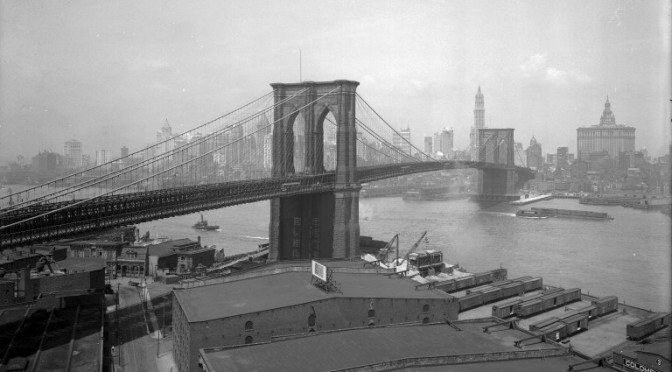
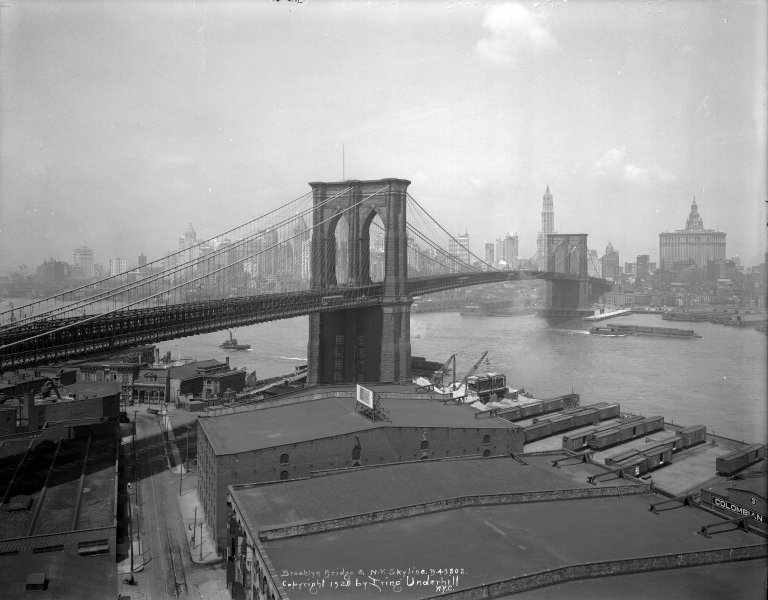
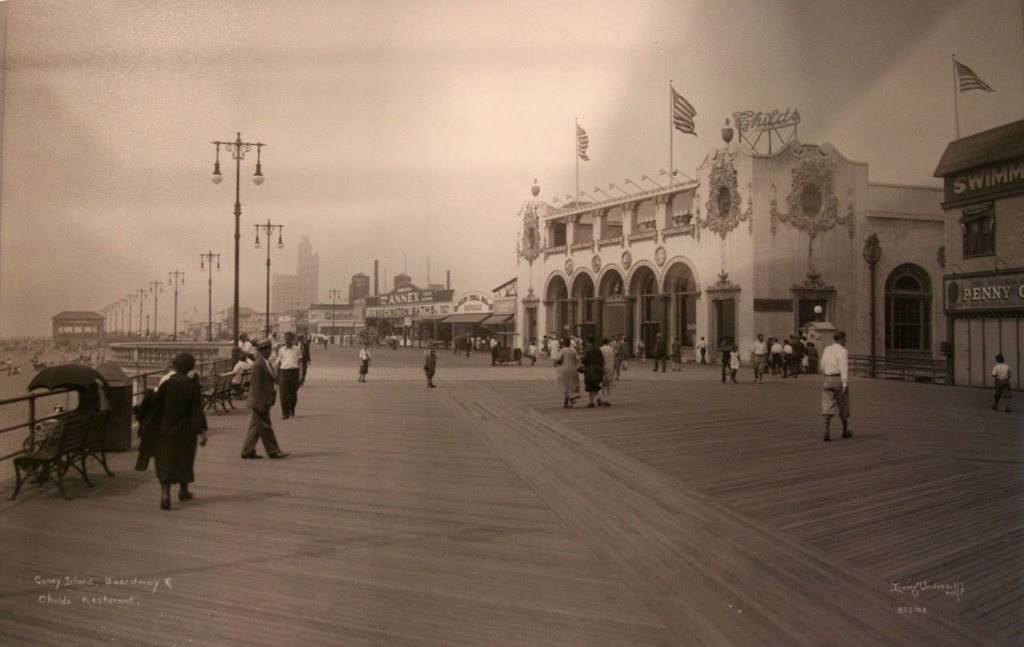
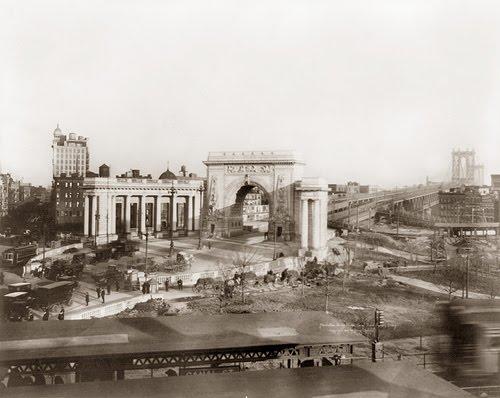
Top: the Brooklyn Bridge in 1925. Bottom: Underhill on the boardwalk: the photographer captures a seemingly meloncholy day in Coney Island, with Childs Restaurant at right
Nobody in New York’s early history captures the romance of early city life more than the first photographers — the men and women who wiled away with expensive, limited and time-consuming photographic processes, bulky and decidedly unportable cameras, and a medium that was still struggling to find purpose.
New York’s first master photographer Matthew Brady, famous for his Civil War battle images and unappreciated in his time, chose the city for the location of his studio but turned his camera over mostly to intimate subjects. Jacob Riis used his lense to expose social disparity in lower Manhattan. And the social fabric of the city was documented by Alice Austen, who balanced intimate images of neighborhood life with candids of big city bustle.
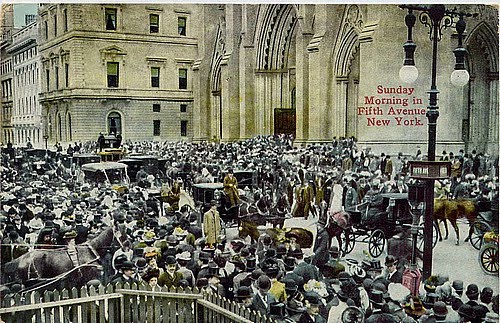
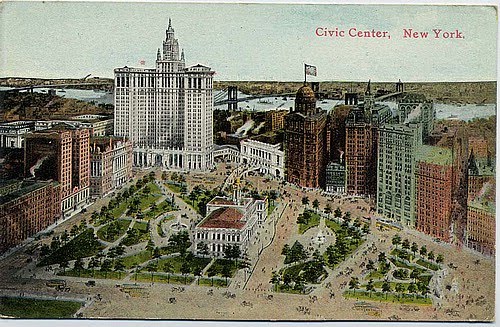
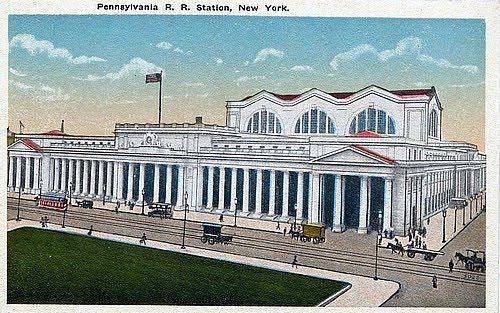
But the real glamour shots of the city most often came from big studio photographers, working not to present any kind of social illumination but for a profit. One of these was Irving Underhill (1872-1960), a successful photographer who also took pictures to be rendered as colored postcards or “souvenir cards”.
More of his postcards can be found here. They’re certainly pretty, with their saturated color turns regular New York scenes into unusual and cartoonish pastel paintings. The real beauty of New York comes alive in Underhill’s regular, clean photographic documentation of basic city structures.
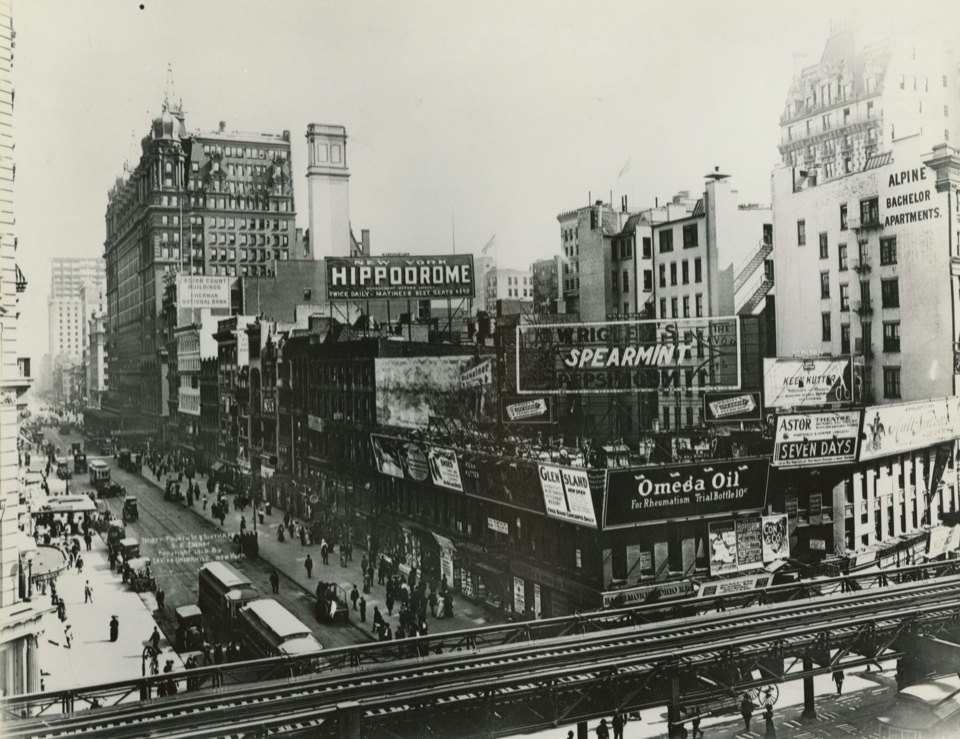
1910: 34th Street and 6th Avenue, shot from the roof of Macy’s, looking east
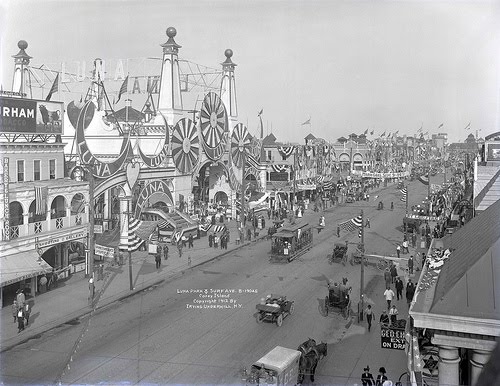
1912: Luna Park along Surf Avenue in Coney Island
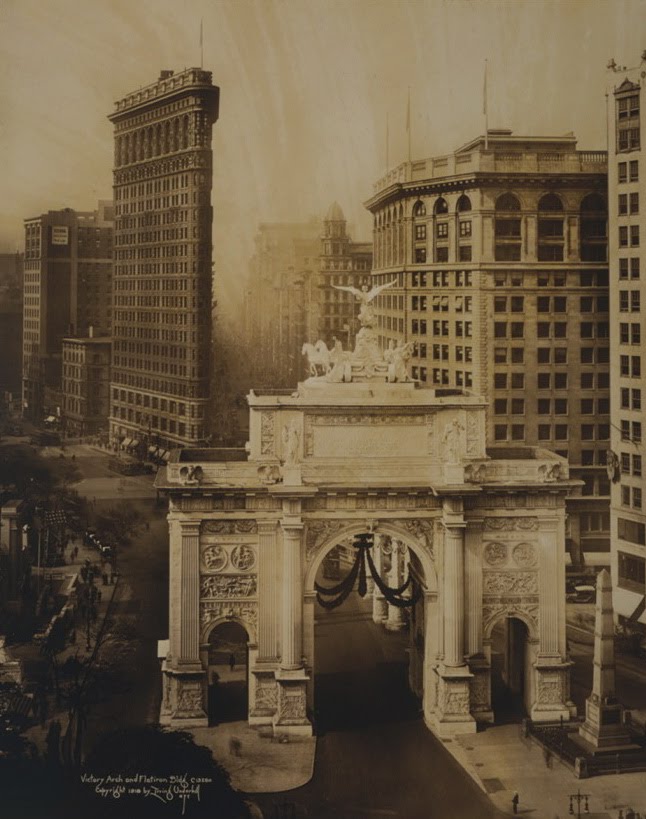
1919: Madison Square Park and the Flatiron Building, with the newly erected ‘Victory Arch’ celebrating the end of World War I
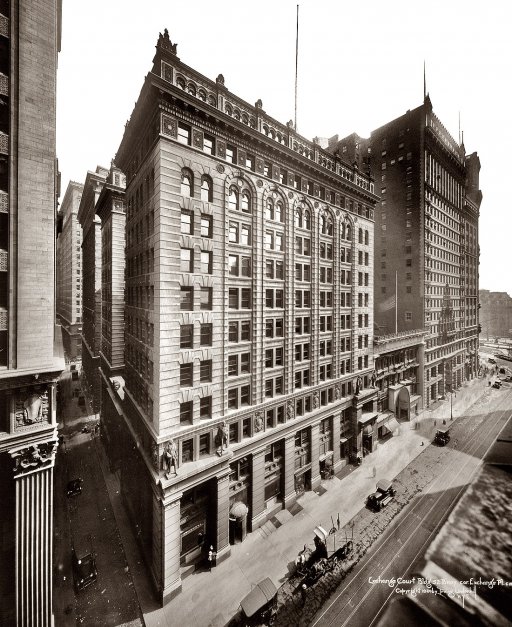
1920: Exchange Court building at 52 Broadway, one of dozens of Underhill subjects either radically revamped or demolished completely
The Hotel St. George in Brooklyn Heights, date of photograph unknown
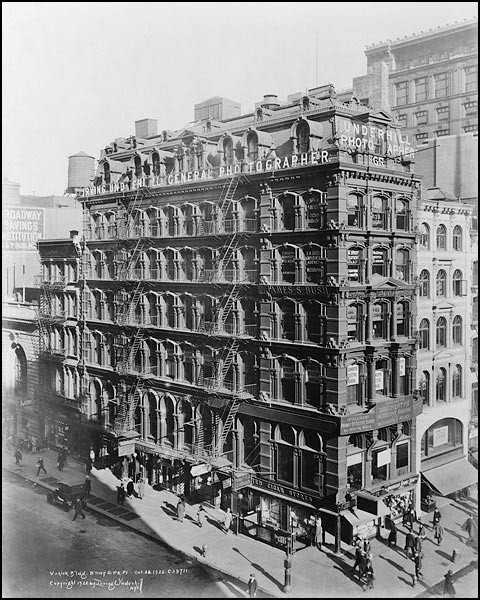
He was so successful that his agency received exclusive commissions to photograph and promote new buildings like the Woolworth Building, which he would capture in timed intervals to track the construction process. Many years later, his name could be seen from blocks away, plastered along the top of his studios at Broadway and Park Place. You can see the words ‘Irving Underhill, General Photographer’ along the top of the image here, taken in 1922.
Underhill’s early portfolio was printed in the 1904 book One Hundred And Sixty Glimpses of Greater New York, an incredible array of black and white images detailing city architecture in the midst of the gilded era. Each page is cleanly labeled and visual detectives will enjoy matching the images to what stands in these places today. You can look at most of the book on Google Books.
ANATOMY OF A PHOTOGRAPH An occasional feature where we take a closer look at an old photo of New York City, to give the image some historical context and piece together the situations that led up to it.
I ran the photograph above on Friday in reference to the early days of Pennsylvania Station. But the people cramming onto Penn Station’s platforms aren’t waiting for a train. They’re waiting for Sunday.
Billy Sunday, that is, America’s preeminent evangelical preacher in the 1910s.
Sunday was an outsized gospel celebrity, a former baseball star turned preacher who gloried in proselytizing to large audiences, a perfect spiritual fit to the Gilded Age.
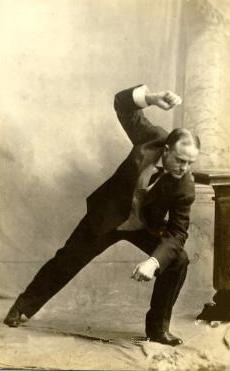
By 1917, Sunday was 65 years old and the most popular religious voice in America. He traveled with his wife Helen — and a staff of over 35 people — to many major cities in the United States in high profile spiritual ‘campaigns’. In an era without microphones and sound systems, Sunday electrified audiences with hyperactive body movements, violent eruptions of fire and brimstone, and elaborate presentations featuring ecstatic choirs and even chair smashing.
Chair smashing? Of course New Yorkers were excited. Sunday pulled into Penn Station on April 1917, for a series of highly publicized revivals that would run ten weeks. His arrival in a private Pullman car was greeted by almost five thousand people.
Sunday at first didn’t care for New York — calling it a ‘graveyard for evangelism’ — but New Yorkers certainly loved their Billy, as evidenced in the photo above. Eventually Sunday came to appreciate the New Yorker as well: “I think New Yorkers are keener than country folk. They are more used to seeing and hearing new things; they catch on quicker. I couldn’t give them any Class B stuff; not even when I was tired or wanted to.”
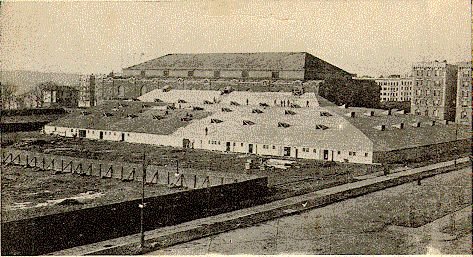
Sunday actually had his very own temporary tabernacle built for him, on Broadway and 168th Street (See below), on the site of Hilltop Park, former home of the New York Highlanders (later to become the New York Yankees). Sunday’s wife had spent the months before her husband’s arrival rallying the attentions of New York’s wealthiest businessmen, including John D. Rockefeller Jr., to assist in building the 16,000-seat arena.
The Sunday tabernacle was specially built “to fit his voice,” according to the New York Times, and also included a private bath for the preacher, “as the physical exertion of his speaking compel him to make an entire change of clothing after each service.”
From April 8 until June 19, 1917, Sunday engaged thousands with his messages and wild, half crazed performances. Naturally one of his pet causes was temperance; within two years, Congress would prohibit the sale of alcohol with the Eighteenth Amendment, something Sunday was instrumental in promoting.
Also factoring into Sunday’s success: America entered World War I that April, fueling attendance records. “If Hell could be turned upside down, you would find stamped on the bottom ‘Made in Germany,” he famously cried from the pulpit.
Sunday’s final assessment of the city: “New York has shown me that its Great White Way is not the pathway to hell that many believe. I know that many who walk the pavements of Broadway are as close to God as I am.”
New York was the culmination of Sunday’s success. America would swiftly outgrow Sunday’s hammy style by the 1920s and he would soon return to small town chapels and backwoods revival tents.
Of course, New Yorkers haven’t lost their interest in high-profile religious figures. Ninety-two years after Sunday took to a former Yankees playing field, pastor and author Joel Osteen comes to town on April 25th … rallying his flock at the new Yankees Stadium.
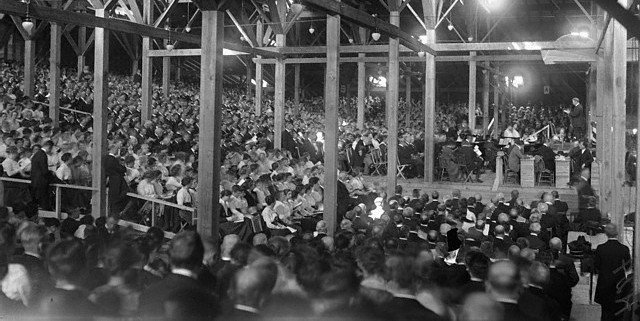
BELOW: Billy in his New York tabernacle on Palm Sunday
PODCAST: The story of Penn Station involves more than just nostalgia for the long-gone temple of transportation as designed by the great McKim, Mead and White.
It’s a tale of incredible tunnels, political haggling and big visions. Find out why the original Penn Station was built to look so classical, why it was then torn down, and what strange behaviors the tunnels that connect it to New Jersey exhibit every night.
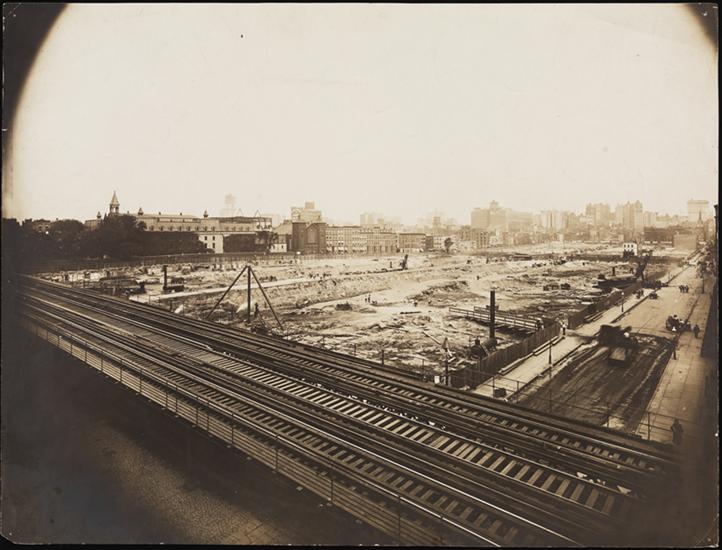
The grandeur and size of Penn Station shocked New Yorkers as it rose from the massive pit excavated by workmen employed by Penn Railroad. McKim, Mead and White’s Roman homage expressed the scope of their client’s ambitions; even more impressive than the station were the miles of tunnels under Manhattan. The image below was taken from Gimbels department store (Click the picture below for greater detail. Pic courtesy Shorpy)
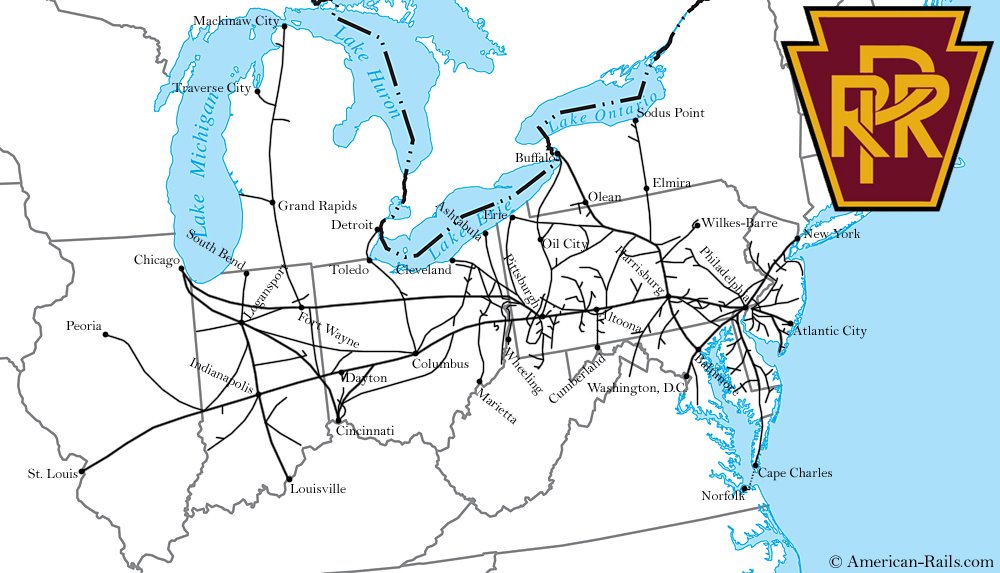
The empire of the Pennsylvania Railroad, extending through most of the northeast, but unable to reach Manhattan until 1910. (Map courtesy American Rails.)
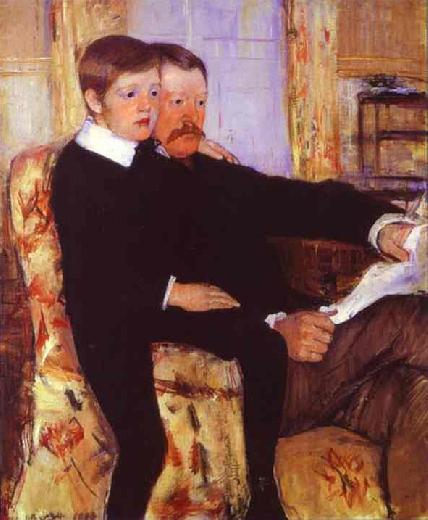
Mary Cassatt’s acclaimed painting of her brother Alexander, the president of Penn Railroad from 1899 to his death in 1906, seated here with his young son Robert
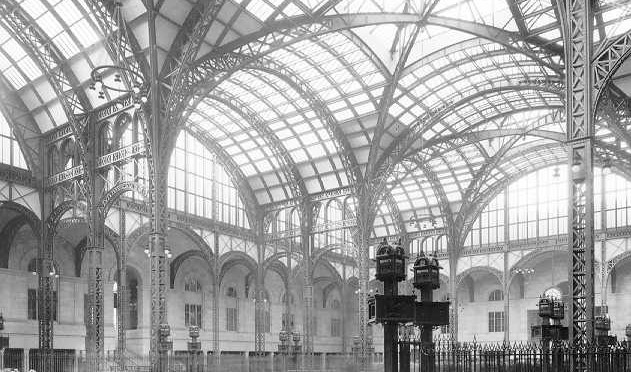
The breathtaking waiting room, with a ceiling that rivaled the greatest buildings of ancient Rome. Even if you were late for your train, how could you not stop for a second to marvel at it?
Charles McKim’s glass ceilings gave Penn its unique appeal, rays of light greeting customers who have just spent part of their commute underground.
A crush of people along the concourse in 1917. They’re actually not commuters though; they’re fans of appropriately named evangelist Billy Sunday, waiting for his train to arrive.
This postcard illustrates how especially sunken the tracks were, coming from deep tunnels from both the west and east sides. The building itself seems ethereal by comparison.
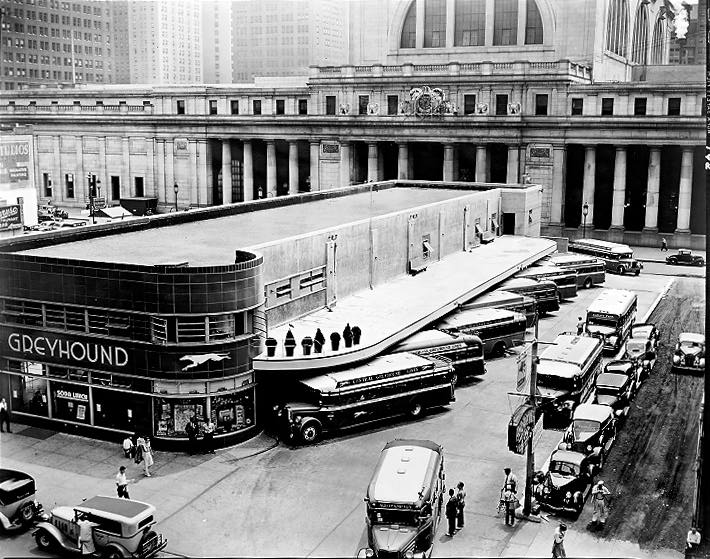
Across the street from Penn was this swanky Greyhound Bus Terminal, which opened in 1935 (Photographed by Berenice Abbott)
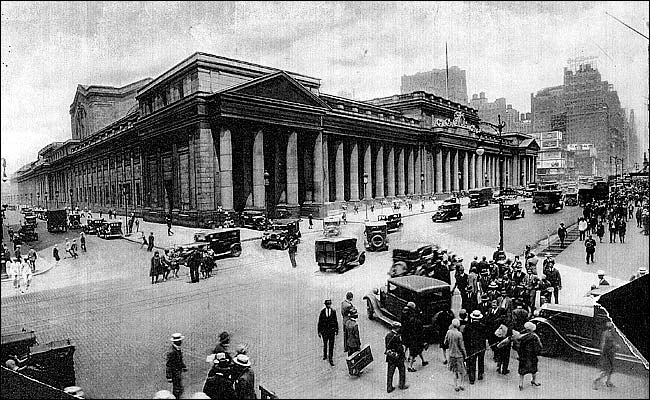
From this view, you get a sense of its massive size and effect on the neighborhood….
While, from street view, the building seemed to continue well into the horizon.
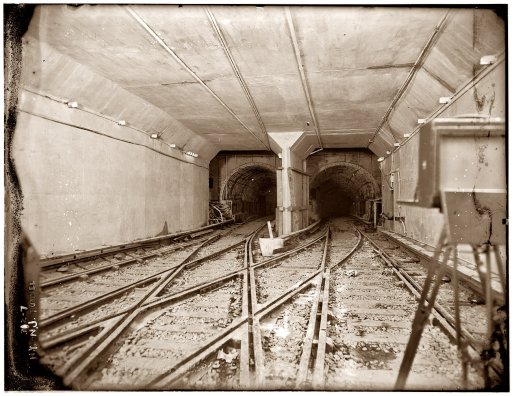
The Hudson River tunnels, a stunning engineering feat that required some truly exact measurements; digging started from both sides of the Hudson River and met in the middle.
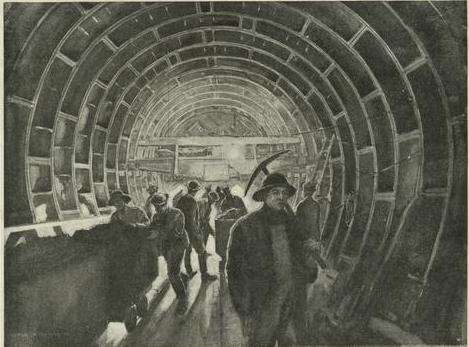
The ambiance inside a tunnel compressed-air chamber. ‘Sandhogs’ spent months boring under the Hudson and East rivers, with the constant fear of flooding, cave-ins and ‘the bends’.
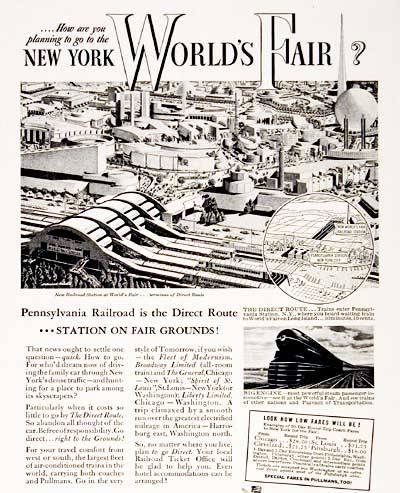
An ad for the World’s Fair of 1939-40 in Flushing Meadows, Queens — a short distance from Penn’s train yards.
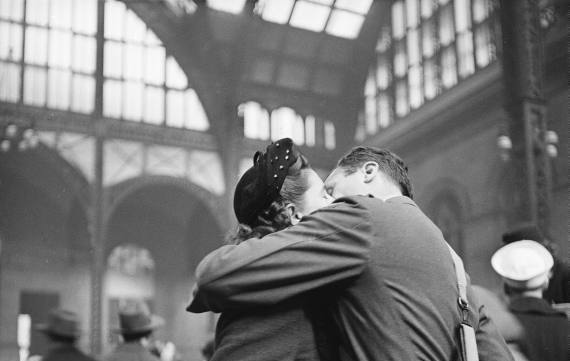
The scene of more than a few emotional departures and arrivals during World War II.
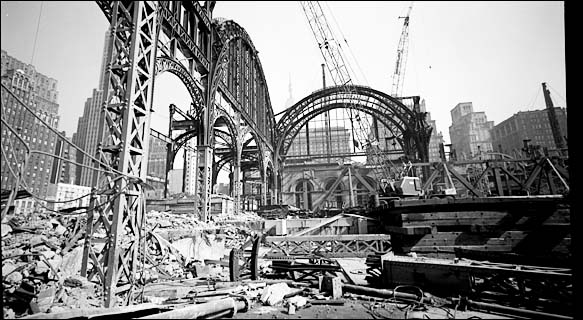
Penn is ungraciously torn down starting in October 1963. The sight stunned New Yorkers, many who thought nobody would ever go through with wrecking the monument. Its demise galvanized architects and preservationists; the sacrifice of Penn most likely helped save dozens of other buildings from a similar fate.
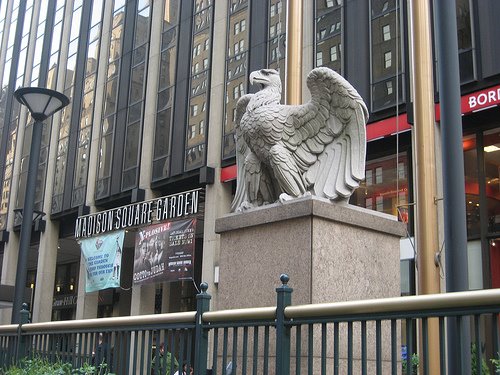
Eagles from the original Penn Station still grace the front of Madison Square Garden.
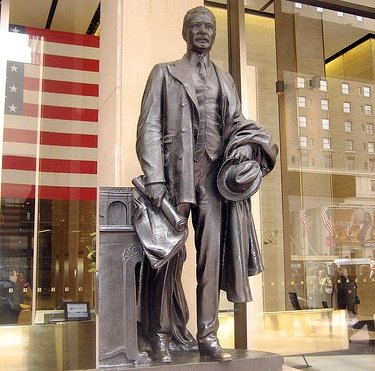
Nearby also stands a statue of Samuel Rea, president of Penn Railroad from 1913-1925