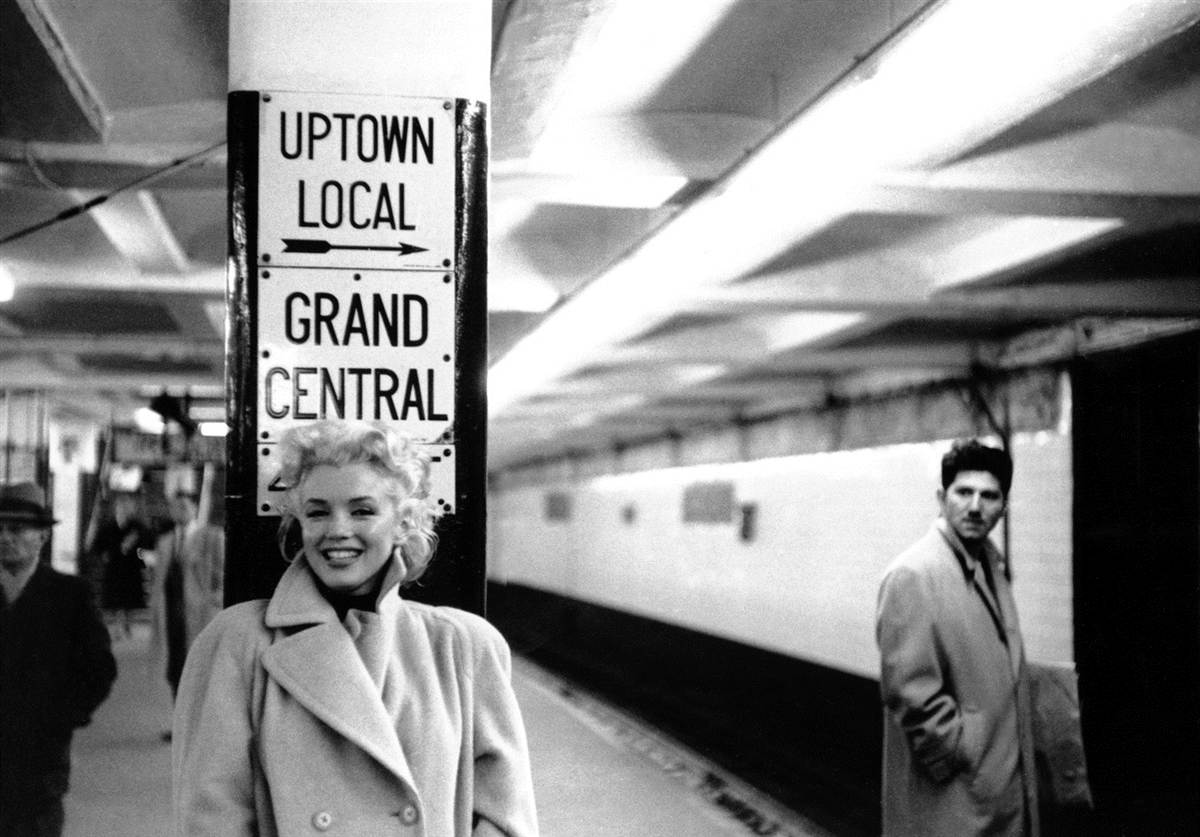
Marilyn Monroe was born Norma Jeane Mortenson 100 years ago on June 1, 1926.
In late 1954, on the cusp of major Hollywood stardom, Marilyn moved to New York City on a quest to become a better actress and to find a little peace on streets where she could sometimes go unnoticed.
The year 1955 was one of discovery for the star of The Seven-Year Itchand Gentlemen Prefer Blondes — exploring the city, working on her craft and generally being the toast of the town.
In particular, she came to New York to become a better actress via the Actors Studio and the influence of Lee Strasberg. But she also managed to see the most glamorous corners of New York.
That deep connection she made with New York City never left her.
We’re big old movie buffs here on the Bowery Boys, and to celebrate a century of Marilyn, we’ve remastered and re-edited a show we recorded on Marilyn’s New York back in 2022. So raise a toast to Marilyn tonight — and put on something a little extra glamorous for fun.
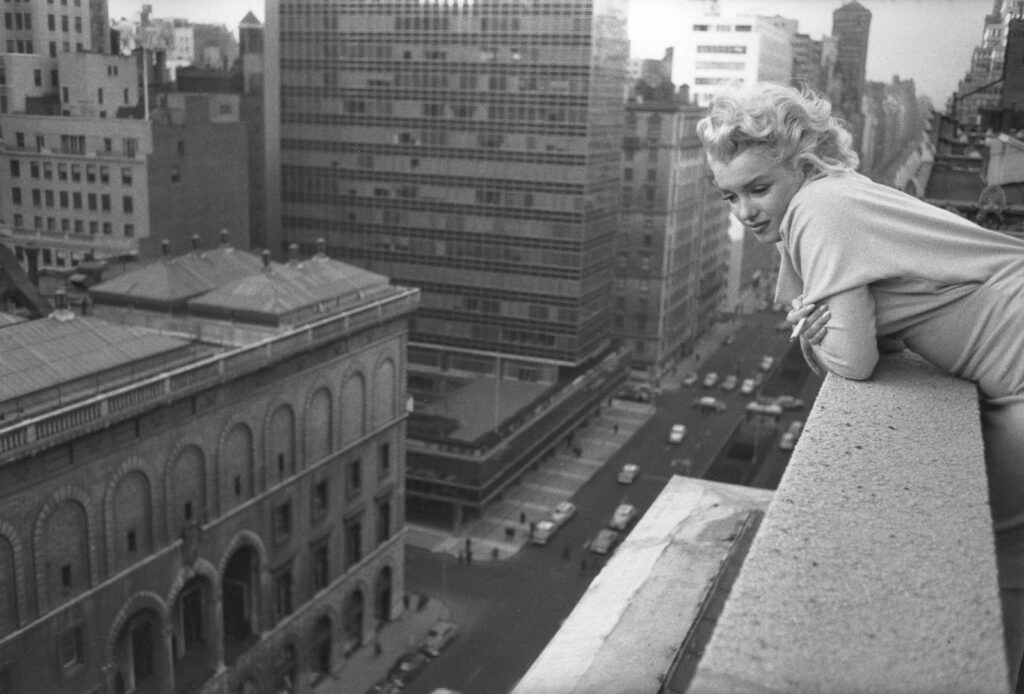
Marilyn Monroe overlooking Park Avenue from the roof of the Ambassador Hotel at Park and 51st. (The hotel was demolished in 1966). From here you can also see the Racquet and Tennis Club (1918) and the Lever House (1952). Photograph by Ed Feingersh, taken 1955.
FEATURING: New York in the 1950s with Frank Sinatra, Marlon Brando, Marlene Dietrich and many others.
PLUS: As an extra treat, Greg and Tom are joined on the show by Alicia Malone of TCM (and Tom’s co-host on “The Official Gilded Age Podcast”) and author of the book Girls on Film: Lessons from a Life of Watching Women in Movies to discuss how the city changed her career and performances.
Alicia Malone/TCM
LISTEN NOW: MARILYN MONROE AT 100: HER LIFE IN NEW YORK CITY
This episode was remastered by Kieran Gannon.
FURTHER READING
Lois Banner Marilyn: The Passion and the Paradox Isaac Butler The Method: How The Twentieth Century Learned to Act Carl E Rollyson Marilyn Monroe: A Life of the Actress Donald Spoto Marilyn Monroe Gloria Steinem and George Barris Marilyn: Norma Jeane Anthony Summers Goddess: The Secret Lives of Marilyn Monroe Elizabeth Winder Marilyn in Manhattan: Her Year of Joy Donald H. Wolfe The Last Days of Marilyn Monroe
Our epic ‘road trip’ to the Netherlands is at an end and it was mission accomplished! We learned so much about New York’s Dutch roots — from the settlement of New Amsterdam to the European settlers who first populated the island which would become Manhattan.
Along the way we also found interesting connections — and great contrasts — between America and the Netherlands. We’ll certainly never look at a bike lane the same way.
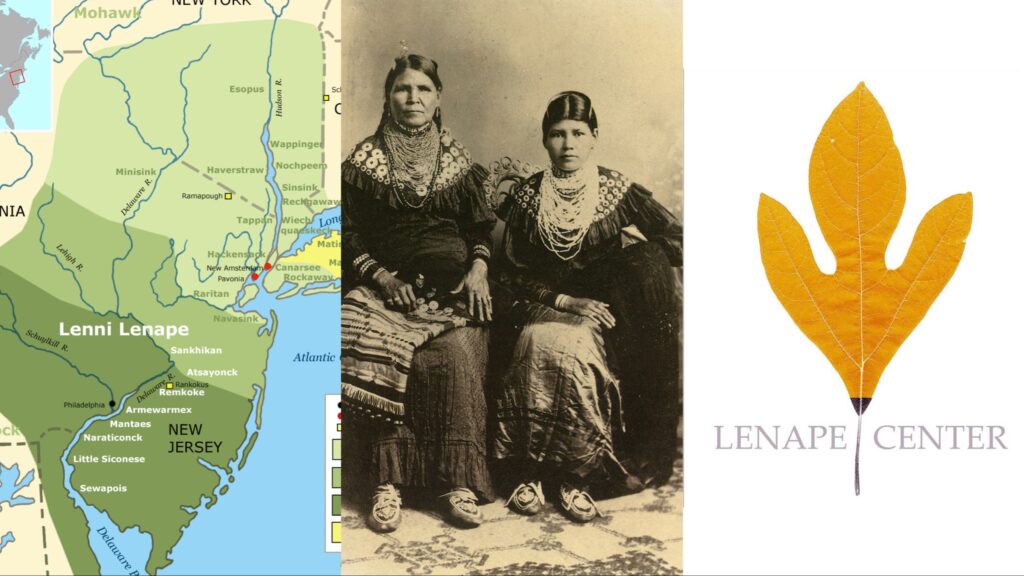
All five episodes of our Adventures in the Netherlands series are now available. Make that six actually — our show The Lenape Nation serves as an excellent prologue and reminder of the people who were already here when the Dutch arrived in 1624.
Here’s the trailer for the whole series:
The shows were designed so they the end of one show rolls into the next one, so the series makes an excellent summer binge listen! Better yet, take them with you on your own adventure someplace.
The Lenape were among the first in northeast North America to be displaced by white colonists — the Dutch and the English. By the late 18th century, their way of life had practically vanished upon the island which would be known by some distorted vestige of a name they themselves may have given it – Manahatta, Manahahtáanung or Manhattan.
But the Lenape did not disappear. Through generations of great hardship they have persevered.
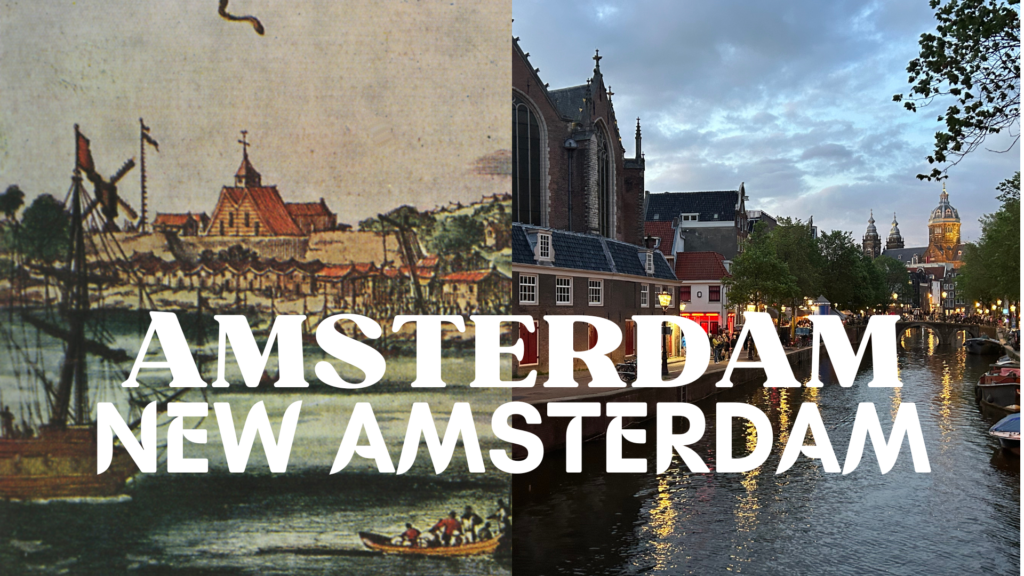
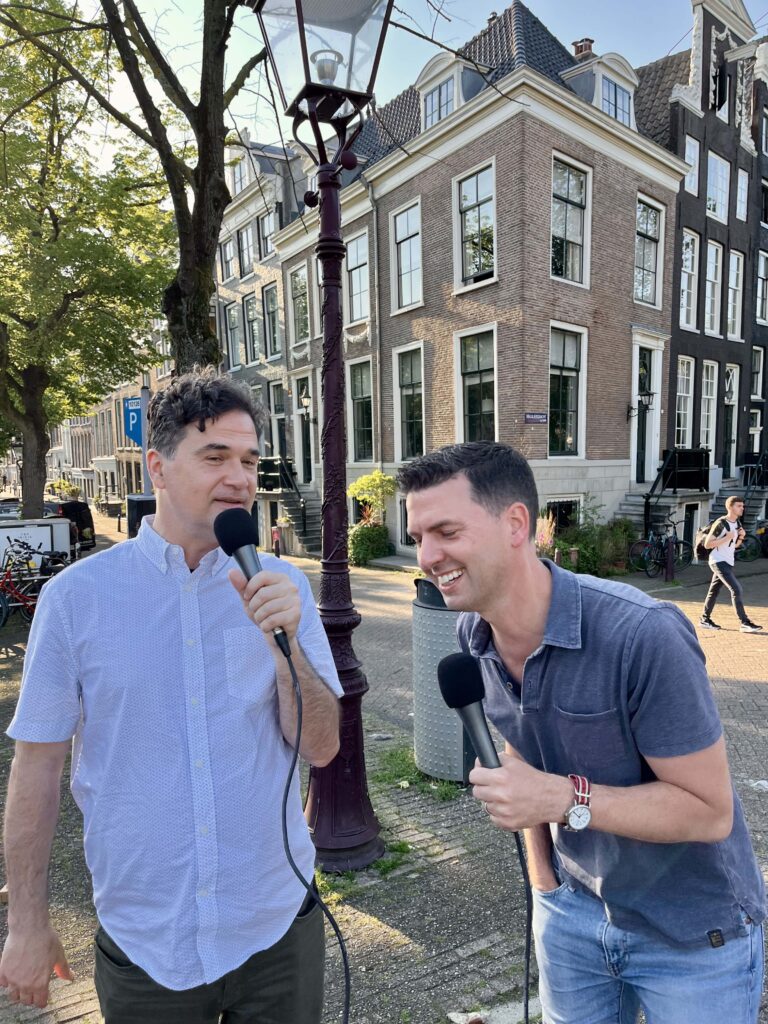
The Bowery Boys Podcast is headed to Amsterdam and other parts of the Netherlands for a very special mini-series, marking the 400th anniversary of the Dutch first settling in North America in the region that today we call New York City.
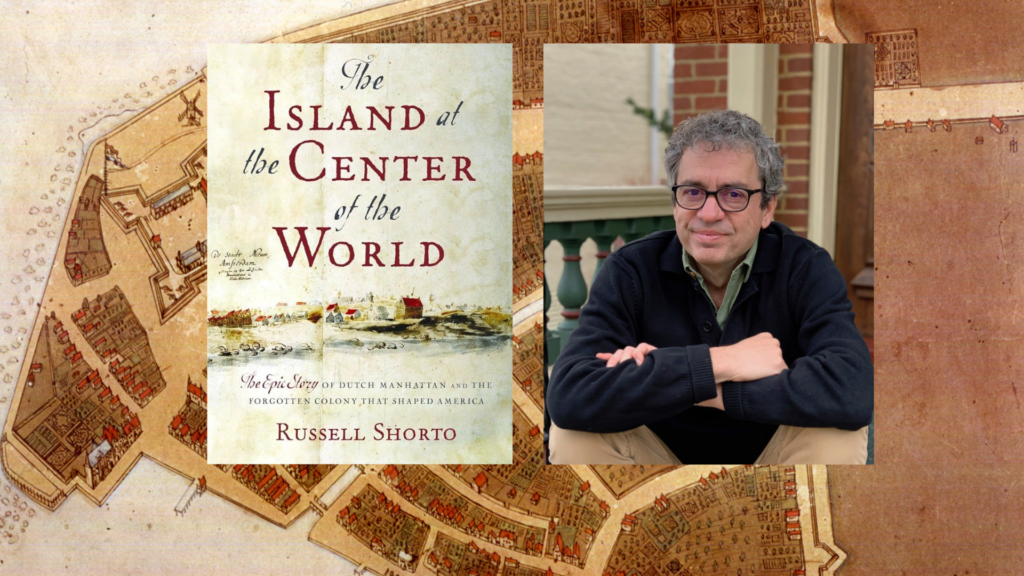
But before they go, they’re kicking off their international voyage with a special conversation — with Russell Shorto, author of The Island At The Center of the World, the man who inspired the journey.
We begin our journey at Amsterdam’s Centraal Station and spend the day wandering the streets and canals, peeling back the centuries in search of New York’s roots.
Our tour guide for this adventure is Jaap Jacobs, author of The Colony of New Netherland: A Dutch Settlement in Seventeenth-Century America.
Jaap takes us around to several spots within the old medieval city — Centrum, including the Red Light District — weaving through the canals and along the harbor, in search of connections to New York’s (and by extension, America’s) past.
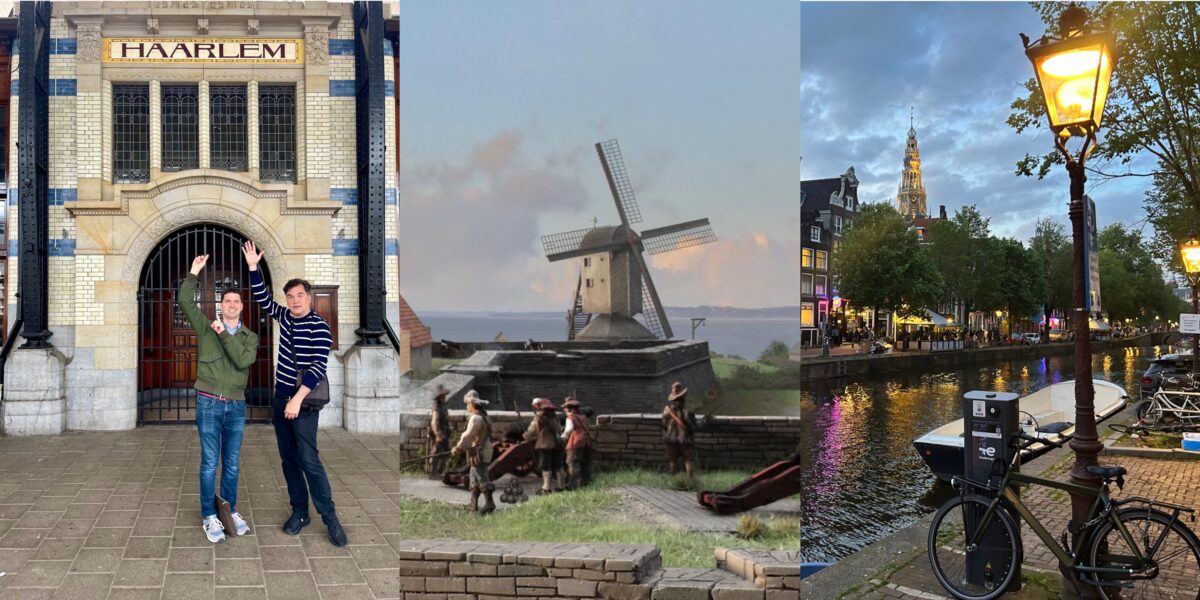
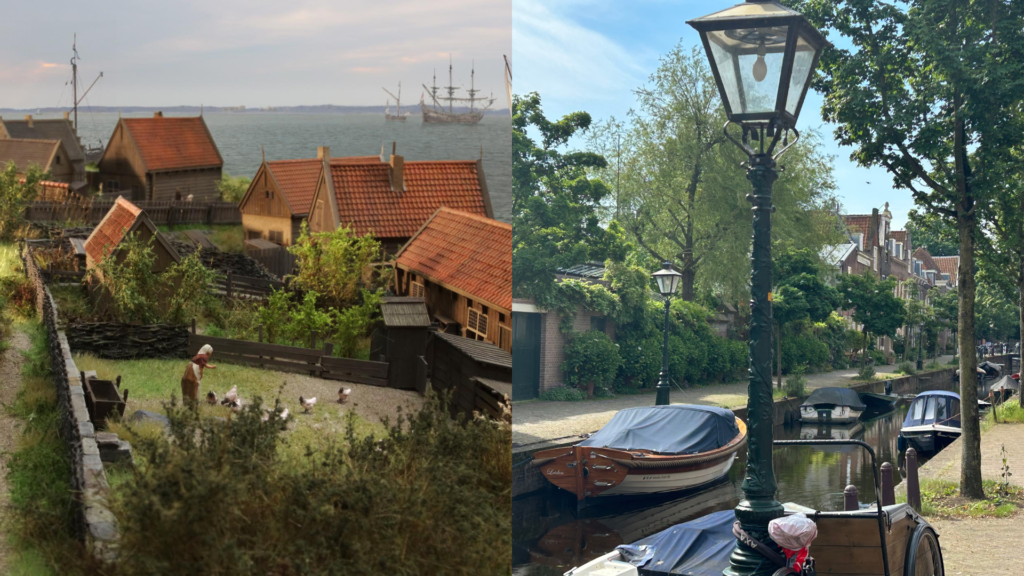
A look at the New Amsterdam miniature and a scene of full-size Leiden
Our adventure in the Netherlands continues with a quest to find the Walloons, the French-speaking religious refugees who became the first settlers of New Netherland in 1624. Their descendants would last well beyond the existence of New Amsterdam and were among the first people to call themselves New Yorkers.
But you can’t tell the Walloon story without that other group of American religious settlers — the Pilgrims who settled in Massachusetts four years earlier.
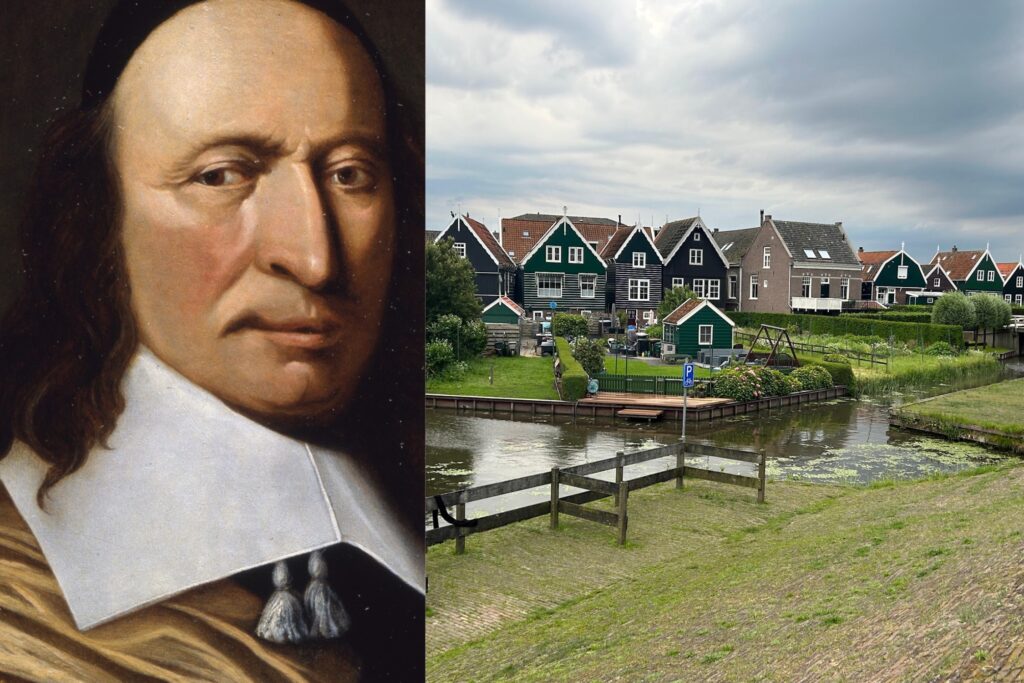
In our last days in Amsterdam (before heading to other parts of the Netherlands), we spend their time getting to know Peter Stuyvesant, the last director-general of New Amsterdam.
The name Stuyvesant can be found everywhere in New York City. — in the names of neighborhoods, apartments, parks and high schools. He’s a hero to some, a villain to others — and probably a caricature to all. What do we really know about Peter Stuyvesant?
And outside the mayor’s residence in Amsterdam’s exclusive Gouden Bocht (Golden Bend), we meet up with Jennifer Tosch of Black Heritage Tours to investigate the story of New Amsterdam and the Dutch slave trade.
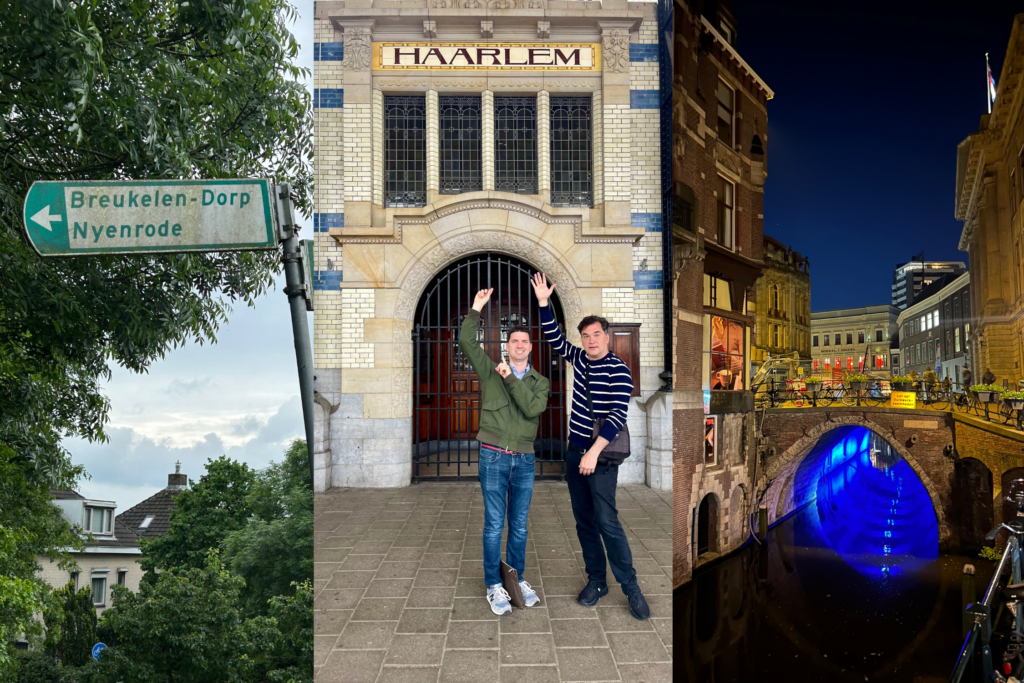
Follow along with us in this travelogue episode as we visit several historic cities and towns in the Netherlands — Utrecht, De Bilt, Breukelen and Haarlem— wandering through cafe-filled streets and old cobblestone alleyways, the air ringing with church bells and
But of course, our mission remains the same as the past three episodes. For there are traces of Dutch culture and history all over New York City — through the names of boroughs, neighborhoods, streets and parks.
Over On Patreon
We released a series of daily shows while on the streets of the Netherlands! These are true behind-the-scenes episodes and we let you in on the unique processes of putting these shows together. You can check out those shows — and the many other benefits of being a Bowery Boys patron — by supporting the show at Patreon.
And on Instagram
We’ve been going wild with the Instagram Reels to show you videos of our adventures. Follow us on Instagram to follow our journey. Here’s just a sampling:
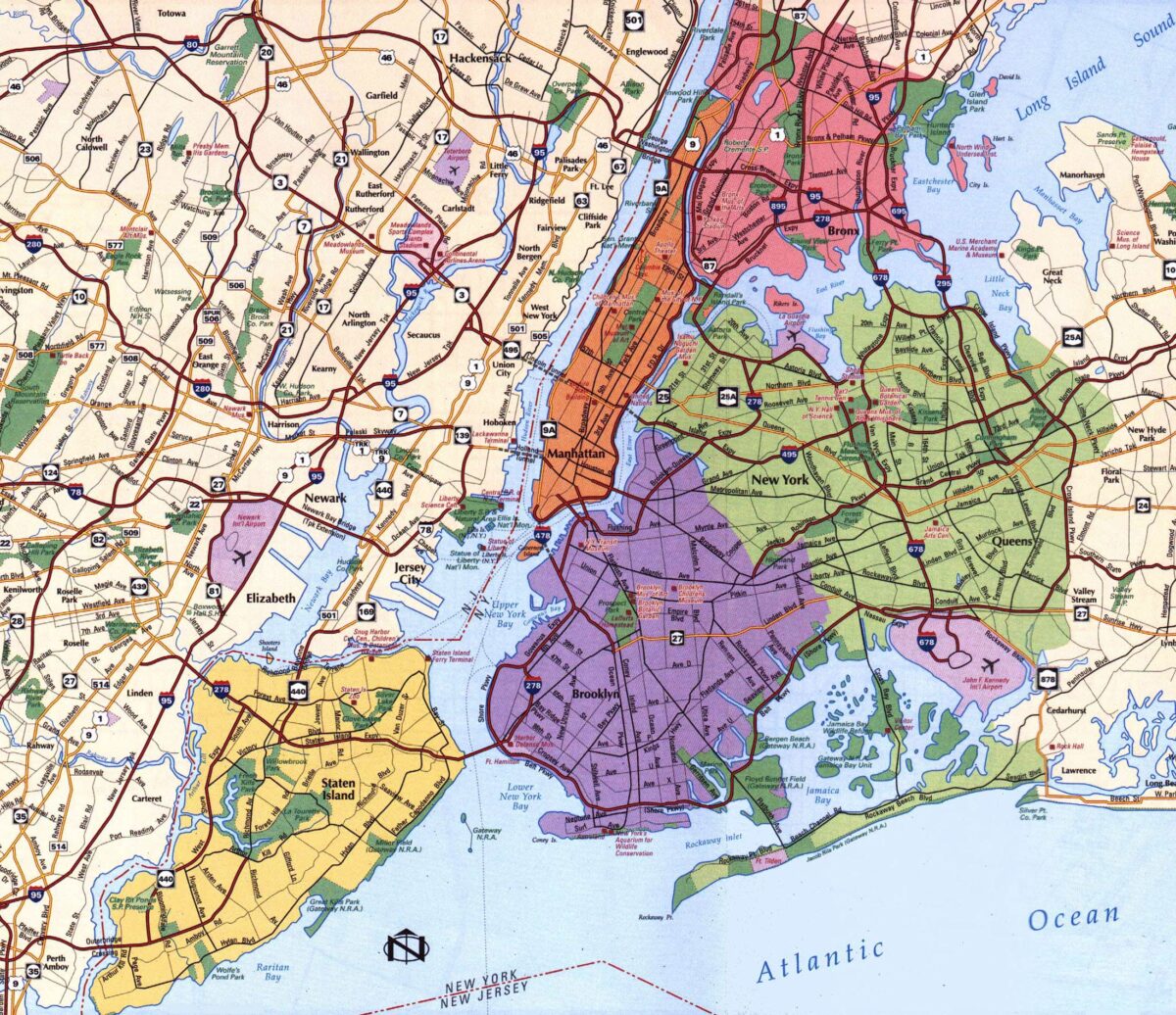
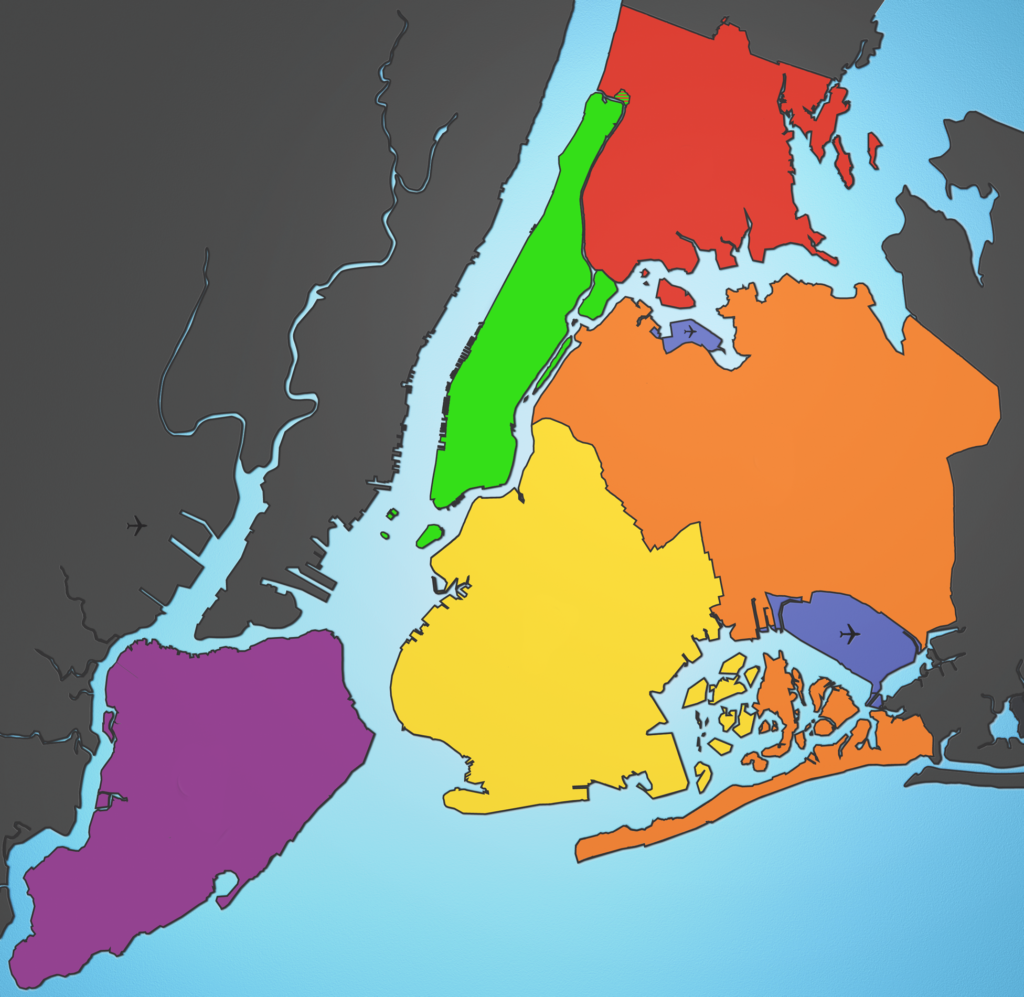
On January 1, 2023, New York City will celebrate a special moment, the 125th anniversary of the formation of Greater New York and the creation of the five boroughs — The Bronx, Brooklyn, Manhattan, Queens and Staten Island.
In honor of this special moment in New York City history, we are celebrating a bit early, reissuing our episode (originally #150) on the Consolidation and the formation of the boroughs, with a new introduction.
And stay tuned for new episodes of the Bowery Boys Podcast for the rest of the year!
Artwork Julius Schorzman; modified by Astuishin, courtesy Wikimedia Commons
Here’s the story of how two very big cities and a whole bunch of small towns and villages — completely different in nature, from farmland to skyscraper — became the greatest city in the world.
This is the tale of Greater New York, the forming of the five boroughs into one metropolis, a consolidation of massive civic interests which became official on January 1, 1898. But this is not a story of interested parties, united in a common goal.
In fact, Manhattan (comprising, with some areas north of the Harlem River, the city of New York) was in a bit of a battle with anti-consolidation forces, mostly in Brooklyn, who saw the merging of two biggest cities in America as the end of the noble autonomy for that former Dutch city on the western shore of Long Island. You’ll be stunned to hear how easily it could have all fallen apart!
In this podcast is the story of Manhattan, Brooklyn, the Bronx, Queens and Staten Island (or Richmond, if you will) and their journey to become one. And how, rather recently in fact, one of those boroughs would grow uncomfortable with the arrangement.
LISTEN NOW: BIRTH OF THE FIVE BOROUGHS
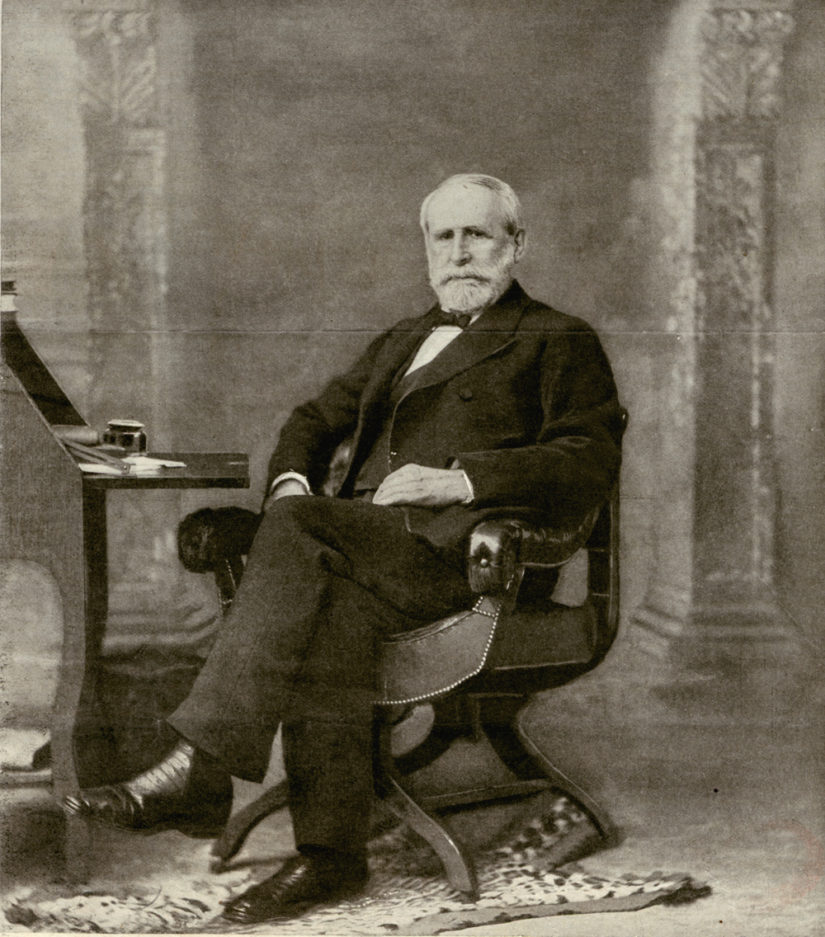
The hero of our story — Andrew Haswell Green
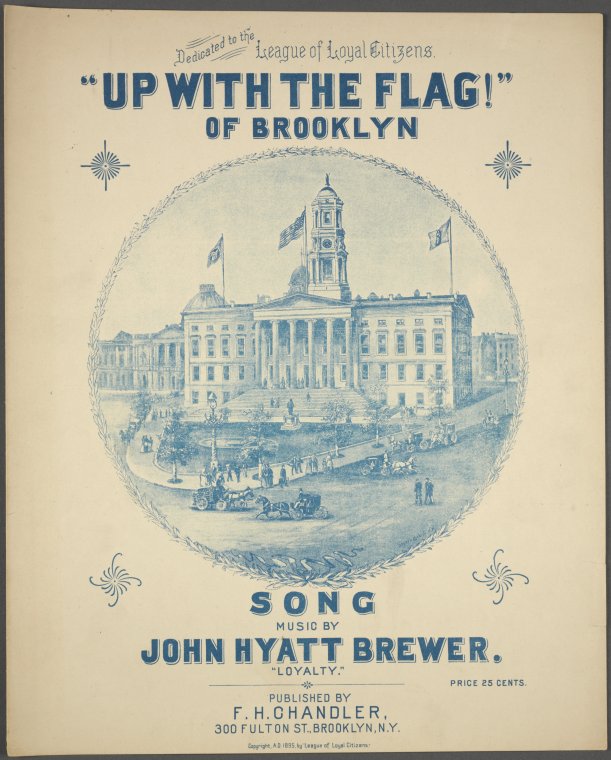
Below the prize-winning anti-Consolidation song mentioned in the podcast (courtesy NYPL):
Style: “Music_Sep4E”
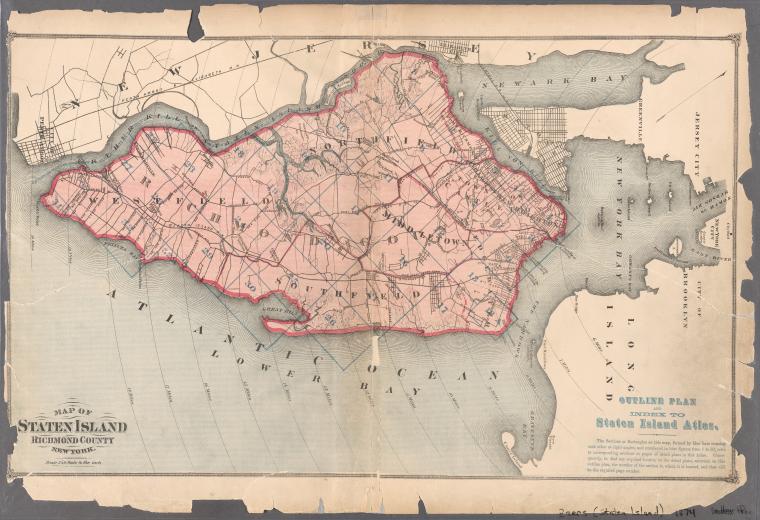
A map of Richmond from 1874
FURTHER LISTENING
This show was recorded in 2013 and since then, many aspects of this story have been turned into their own podcasts. After listening to this show, dive back into these episodes:
On November 19, 1895, Calvert Vaux went for a morning walk from his son’s home in Brooklyn. He never returned.
The 70 year old architect had helped to create the greatest parks in the cities of New York and Brooklyn.
His landscape collaborations with Frederick Law Olmsted had given Manhattan its Central Park and Brooklyn its Prospect Park and Fort Greene Park.
His own architectural work could be seen at Jefferson Market Courthouse, the American Museum of Natural History and the Metropolitan Museum of Art. In 1895 he still retained an honorary role as the parks department’s landscape adviser, although he had mostly retired from public life.
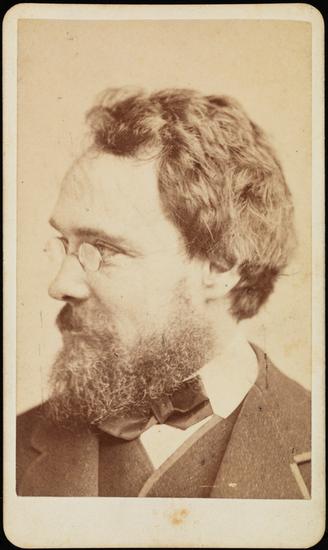
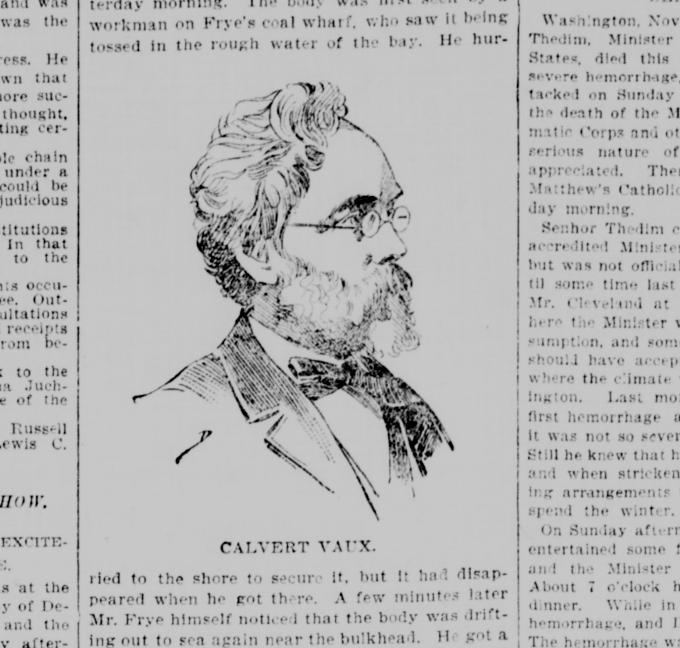
Calvert Vaux, circa 1865-1871
Courtesy Museum of the City of New York
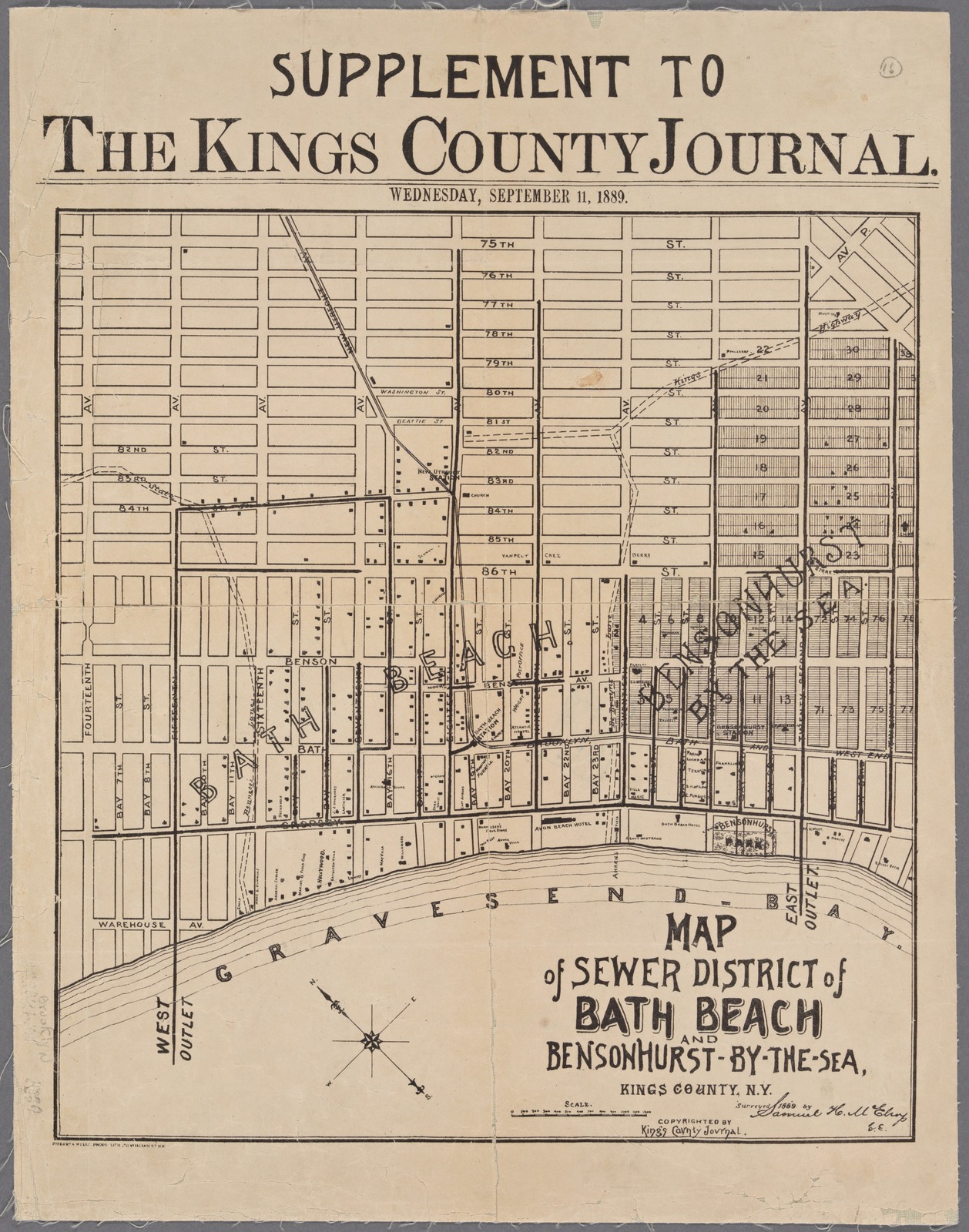
His son Calvert Bowyer Vaux lived in a house on Twentieth Avenue between Bath and Benson Avenues in today’s neighborhood of Bath Beach. The elder Vaux often stayed with his son and was known for taking morning walks along the waterfront
On November 19, 1895, it was gray and foggy on the morning that Vaux departed his son’s home, leaving behind “a gold watch and chain and his vest” with about two dollars in his pocket.
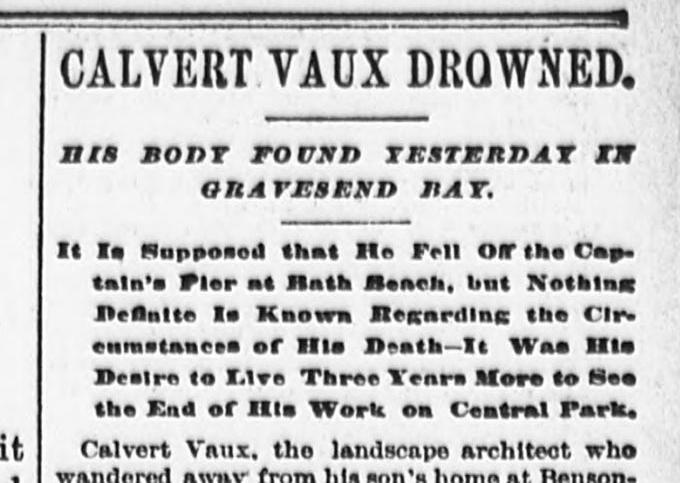
Below: The New York Tribune made a brief mention of Vaux’s vanishing in the followingone-sentence bulletin:
At some point during the day he was spotted by a “Captain Ditmar” — possibly Captain Walter Earl Ditmar — on a pier near the water, and the two briefly spoke. Vaux is reported to have said to the captain, “I’m admiring the improvements you’ve made hereabouts.”
The two briefly talked about methods in which to make the beach area more amenable to visitors before Vaux proceeded to walk the piers by himself.
Ditmar was the last person to see Vaux alive.
The architect must have been known for taking very long walks for he was only discovered missing in the late afternoon.
By the evening his family became worried; the police were called the following morning. All the local hospitals and hotels were checked. While it was well-known that Vaux was a frail man, he was often known to walk up to Prospect Park, several miles from his son’s home. But fears that he may have fallen into the bay were already present.
Below: An 1889 map of the district Vaux’s son lived in. The elder Vaux was last seen along the shoreline depicted here.
The following day the body of Calvert Vaux was indeed found in Gravesend Bay at the foot of Bay 17th Street, very close to the site of today’s Bath Beach Park.
As described by the Brooklyn Daily Eagle:
“A workman on Fry’s coal dock [later identified as Benjamin Butler] first saw the body being tossed about in the rough water, but when he rushed to the shore to secure the corpse it disappeared. It was some minutes later before Mr. Fry himself saw it drifting alongside the bulkhead out to sea again. With a boat hook he succeeded in bringing it close to shore.”
The police were called, bringing Vaux’s son down to the shore to identify the body. He could scarcely bring himself to look into his father’s face, recognizing his father’s well-worn suit before looking away.
“There was a bruise on the head, a slight cut over the eye, and the hat, spectacles and left shoe were missing,” reported the Times.
Given the circumstantial evidence, it seems clear as to what may have happened to Mr. Vaux. While on a walk along the shore, he may have fainted or tripped, falling into the water and drowning in the waves.
The Sun further speculated: “As he was interested in the construction of the pier, it may be that he leaned over the stringpiece to examine the foundation piles. In doing so he may have fallen into the water, as he was ill and feeble, being 70 years old.”
Most press reports of the day made it clear no foul play was suspected. Vaux Jr. brushed away any suggestions of suicide on his father’s part. “The theory of suicide has been disclaimed by his relatives who said that [Vaux] had been cheerful and mentally able the evening before he disappeared.” [source]
But not everybody was convinced, and the Tribune reported that the “theory [of suicide] prevails with some people.”
Weeks earlier Vaux had told his daughter that he wanted to live long enough to see the completion of his plans in Central Park. “If I can only manage to live until 1898, my plans for the improvement of Central Park will be completed, and I won’t worry about any other work.”
Sadly Vaux’s death did have a certain impact on Central Park. Without the dutiful eye of its co-creator, maintenance on the park gradually deteriorated, and it would not be until the installation of Parks Commissioner Robert Moses that the condition of the park would be improved.
Today, nearby the place where Vaux’s body was discovered, you may enjoy a picnic and a sunset at Calvert Vaux Park in Gravesend.
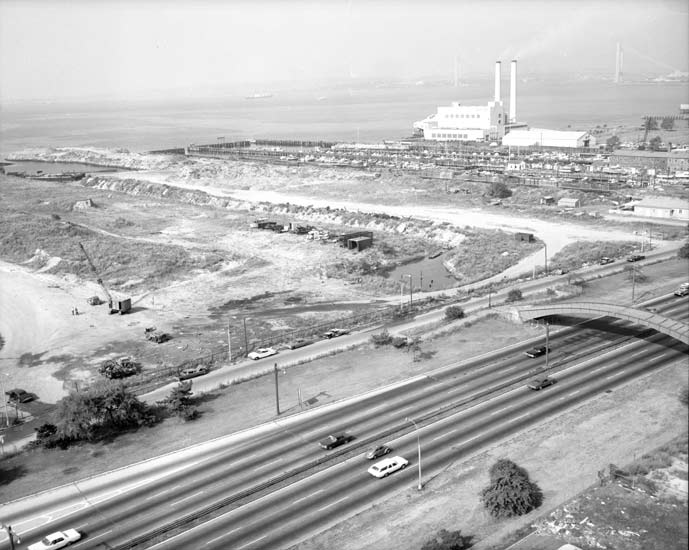
Below: Calvert Vaux Park (the former Dreier-Offerman Park) has greatly improved since the 1960s when it was essentially an undeveloped mess, linked by a pedestrian bridge. Picture courtesy the New York City Parks Archives
It was once called Dreier-Offerman Park for the former home for unwed mothers which once sat here. It was changed to honor the architect in 1998 when it was radically re-landscaped and improved. Knowing that he died close to here, I kind of think being named after an unwed mother’s home is the less depressing name.
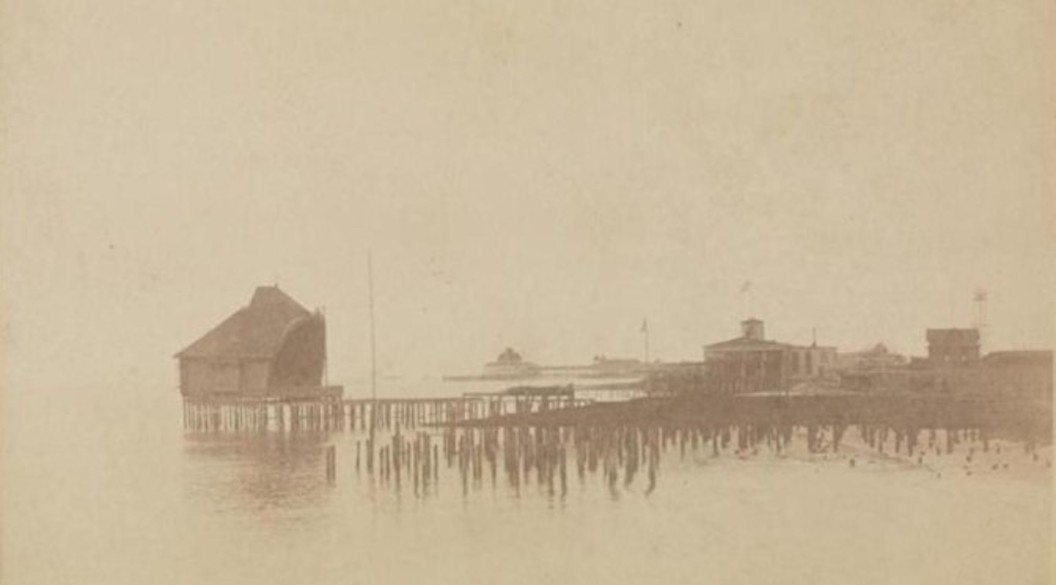
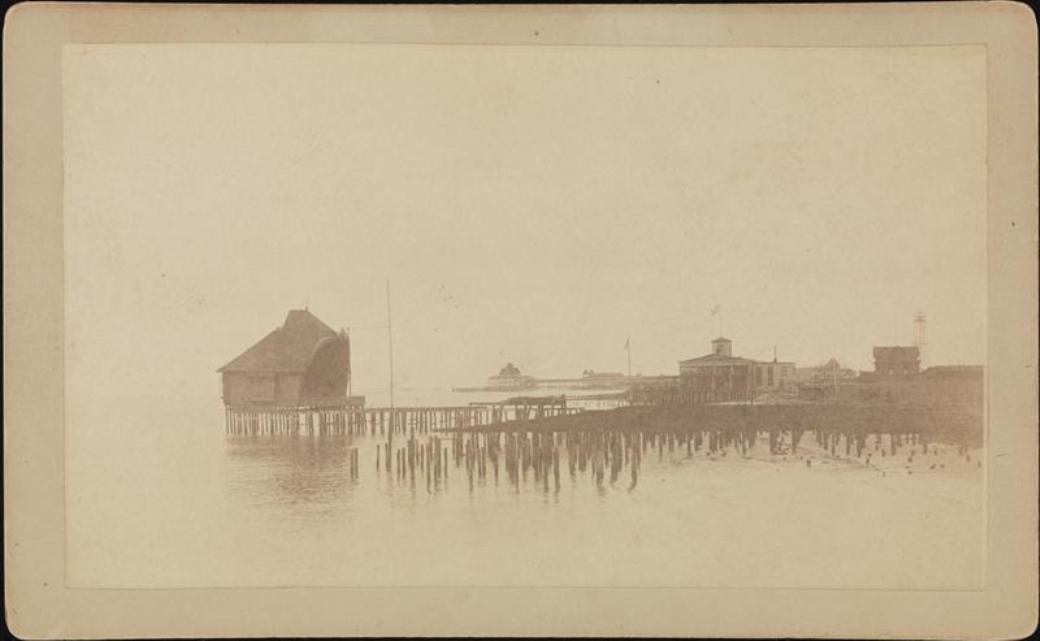
Picture at top: A forlorn pier from 1890, located at West Brighton Beach, Brooklyn.
Photograph by Robert Bracklow. Courtesy Museum of the City of New York
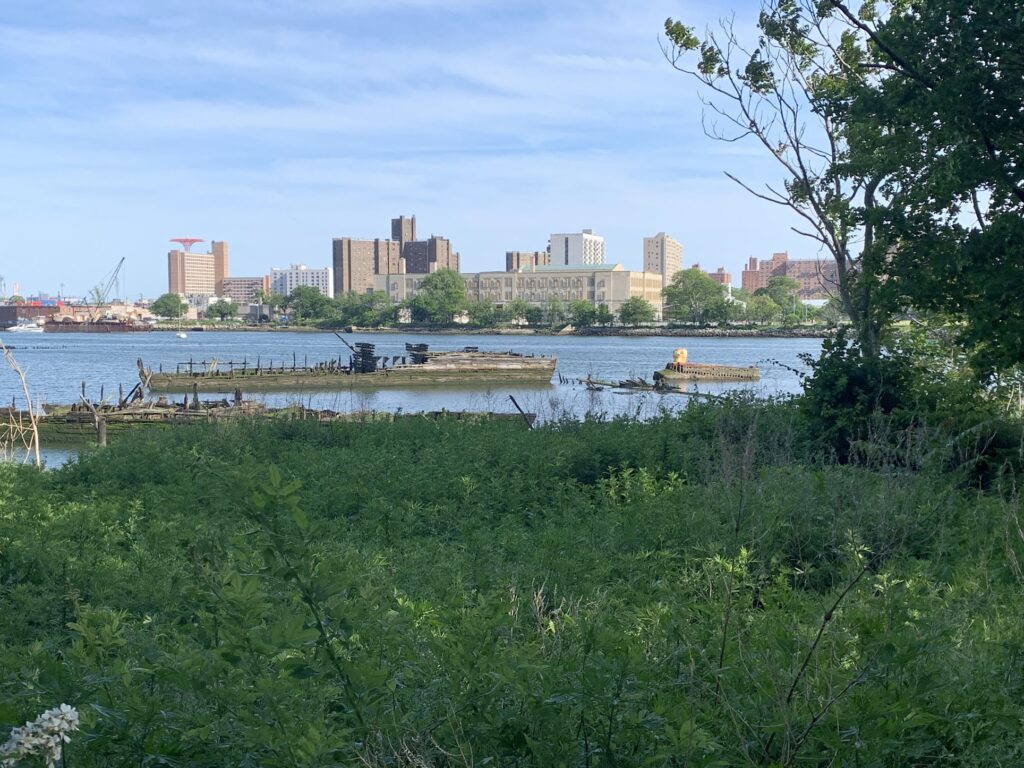
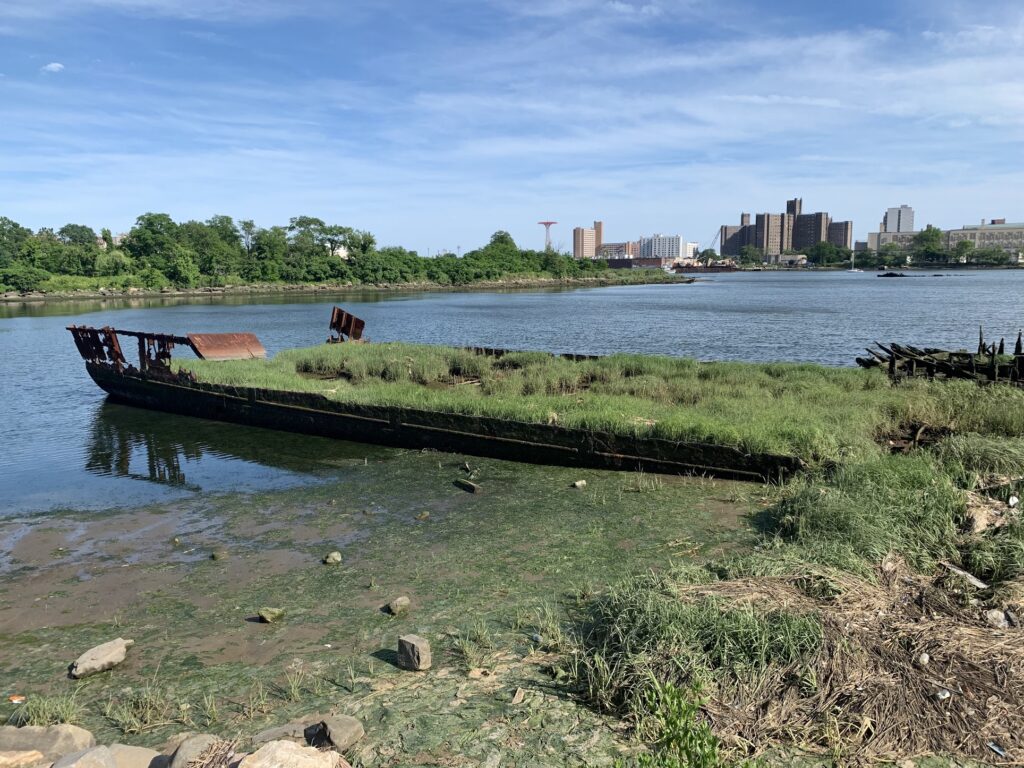
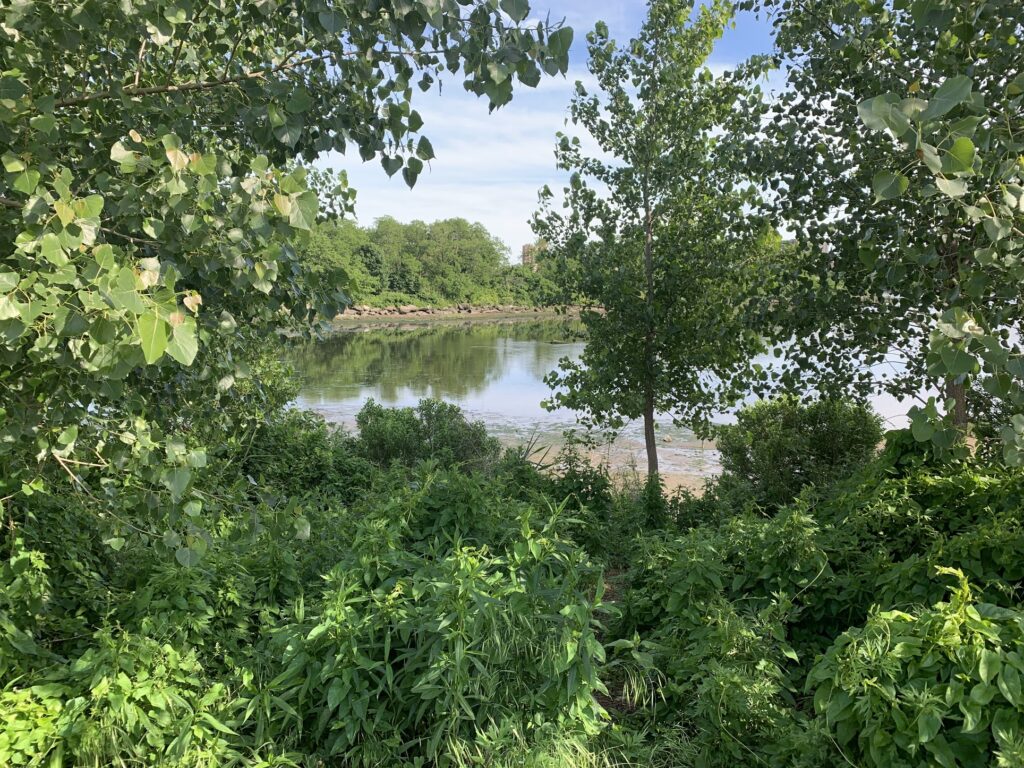
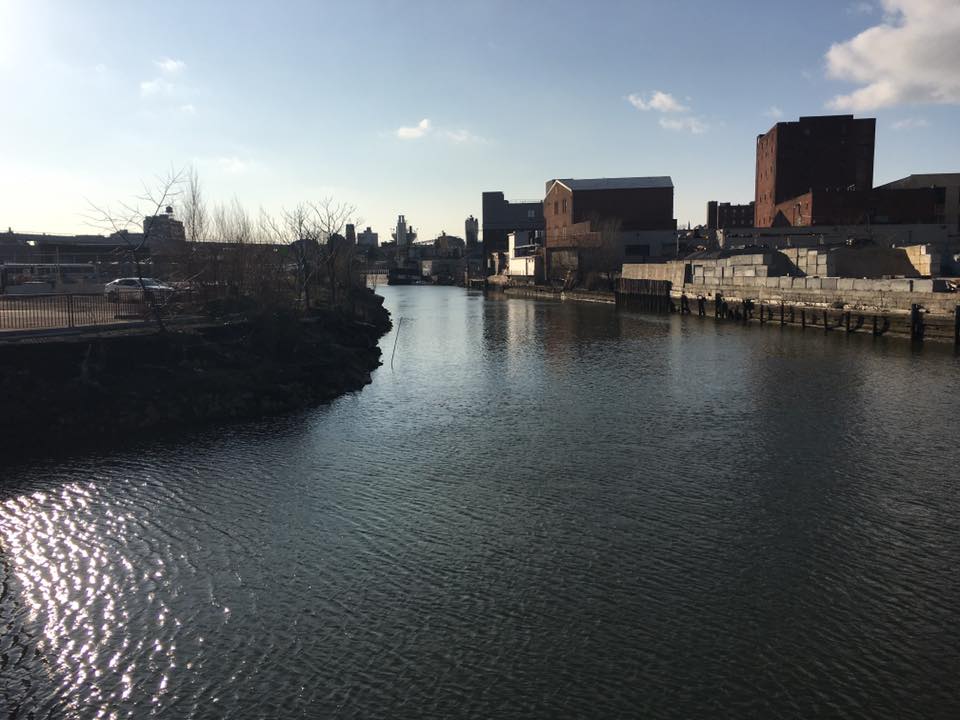
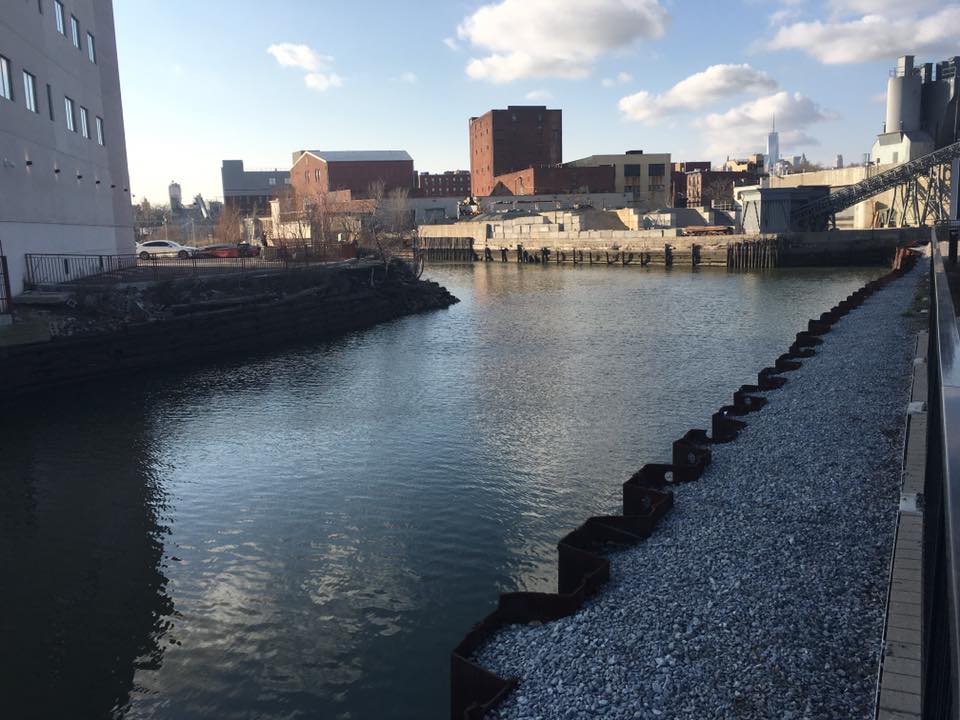
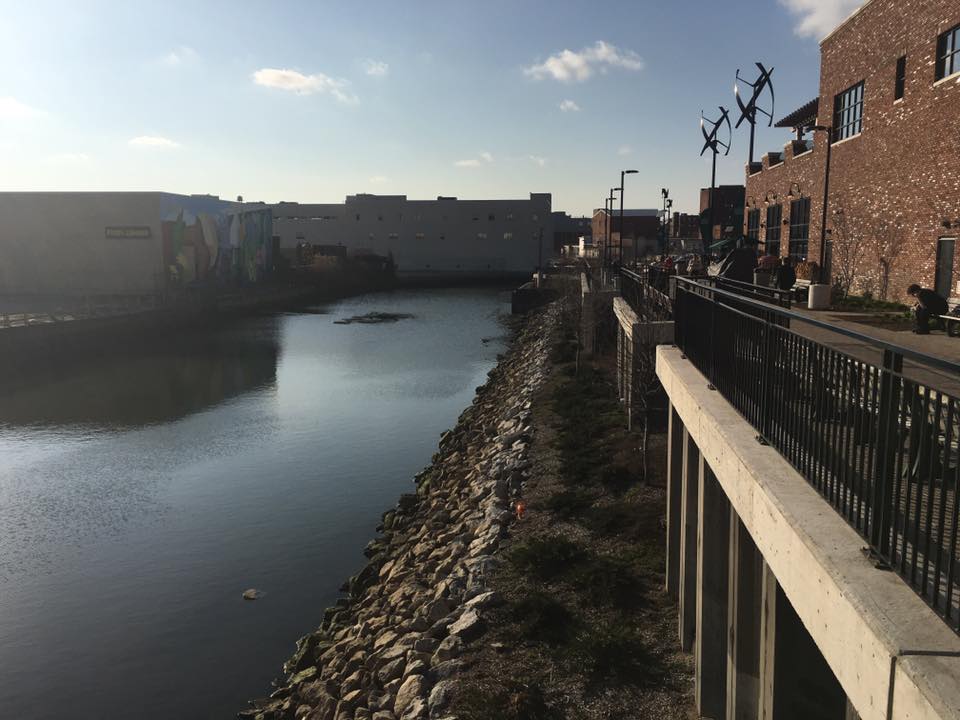
And here are some photographs I took in Calvert Vaux Park from a couple years ago:
PODCAST: The history of the Dyker Heights Christmas lighting extravaganza, Brooklyn’s fabulous and flashy celebration of the holiday season.
EPISODE 305 There’s a special kind of magic to Christmas in New York City. From that colossal Christmas tree in Rockefeller Center to the fanciful holiday displays in department store windows.
But in the past three decades, a new holiday tradition has grown in popularity and in a surprising quarter — the quiet residential neighborhood of Dyker Heights in Brooklyn.
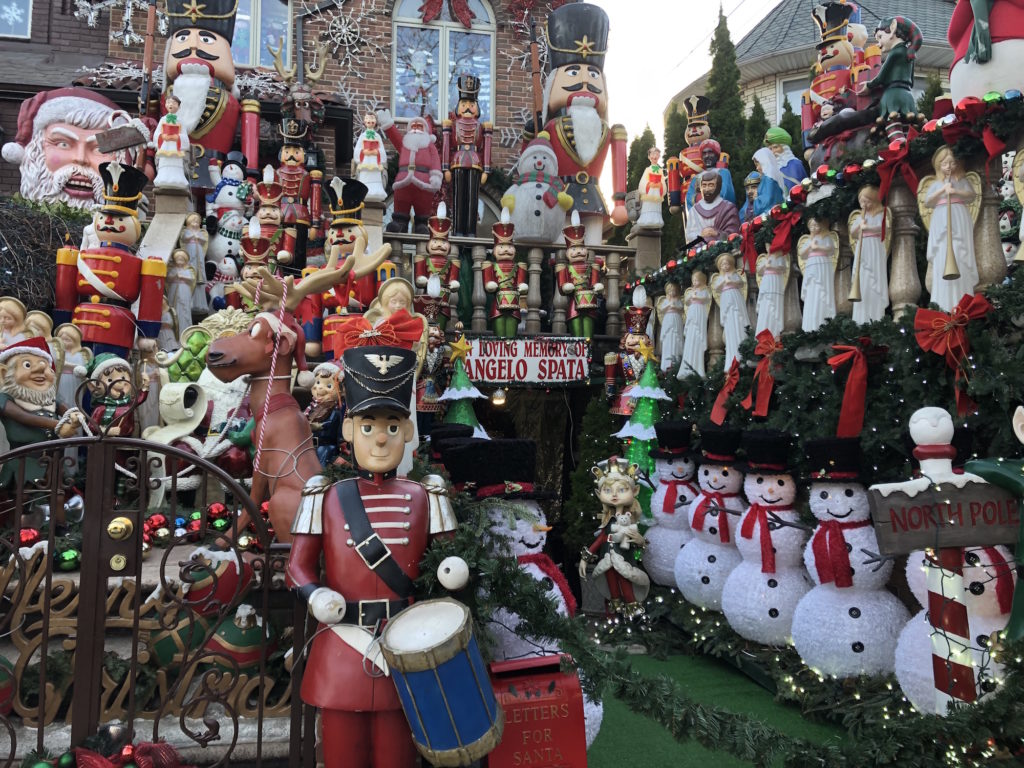
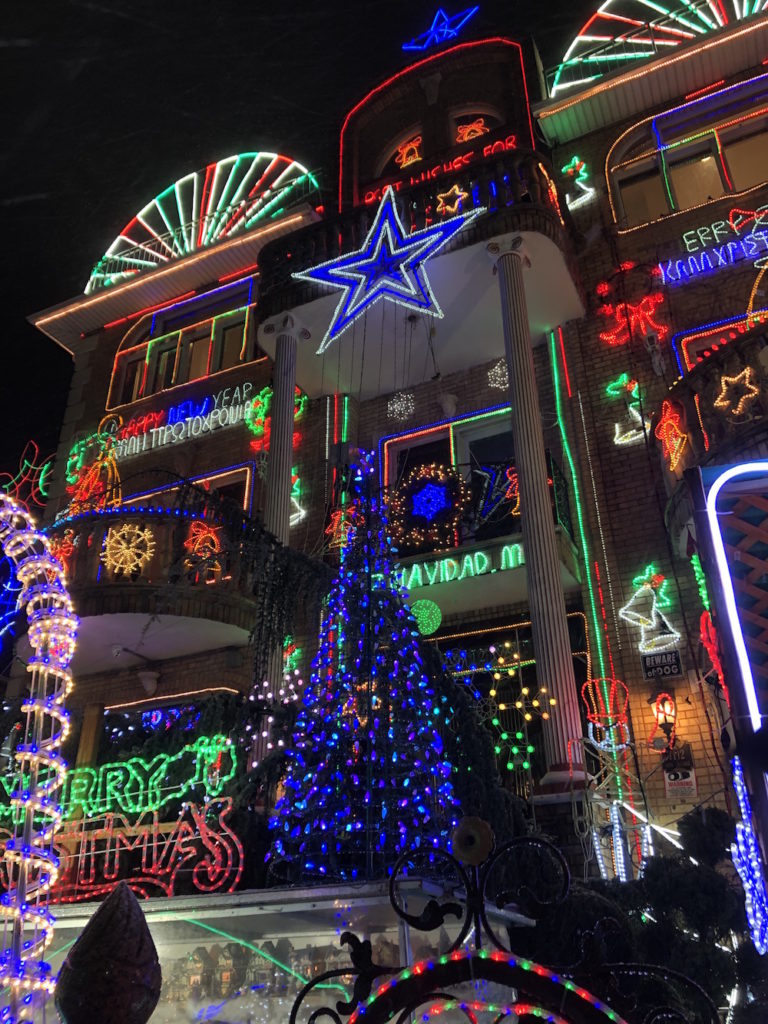
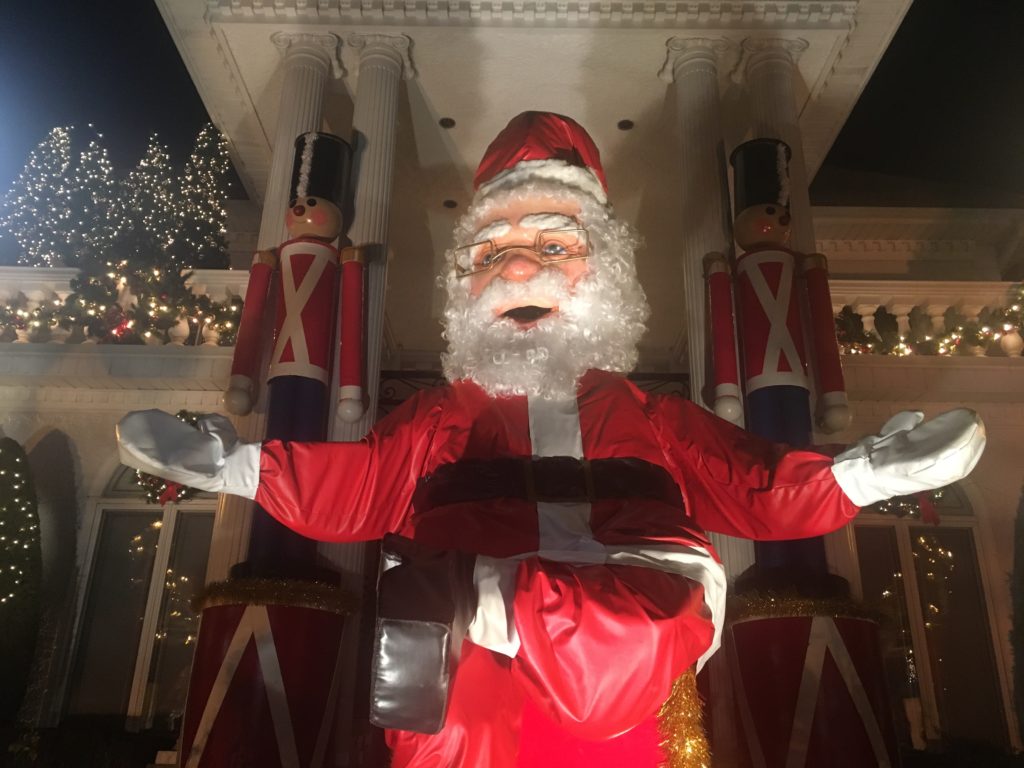
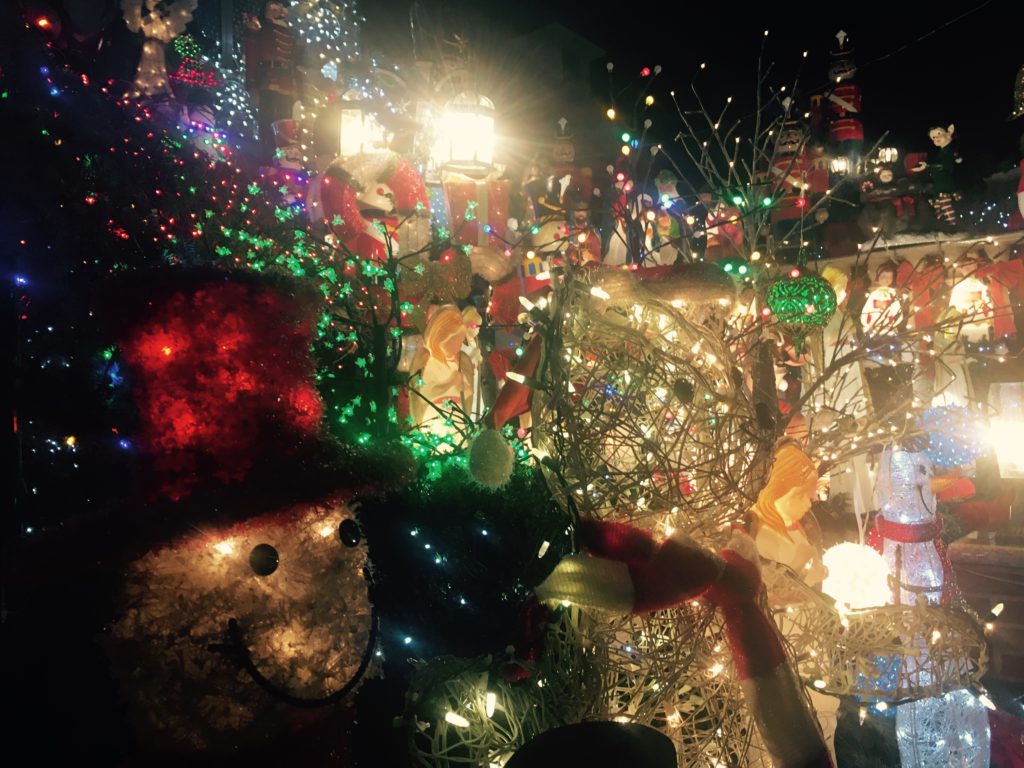
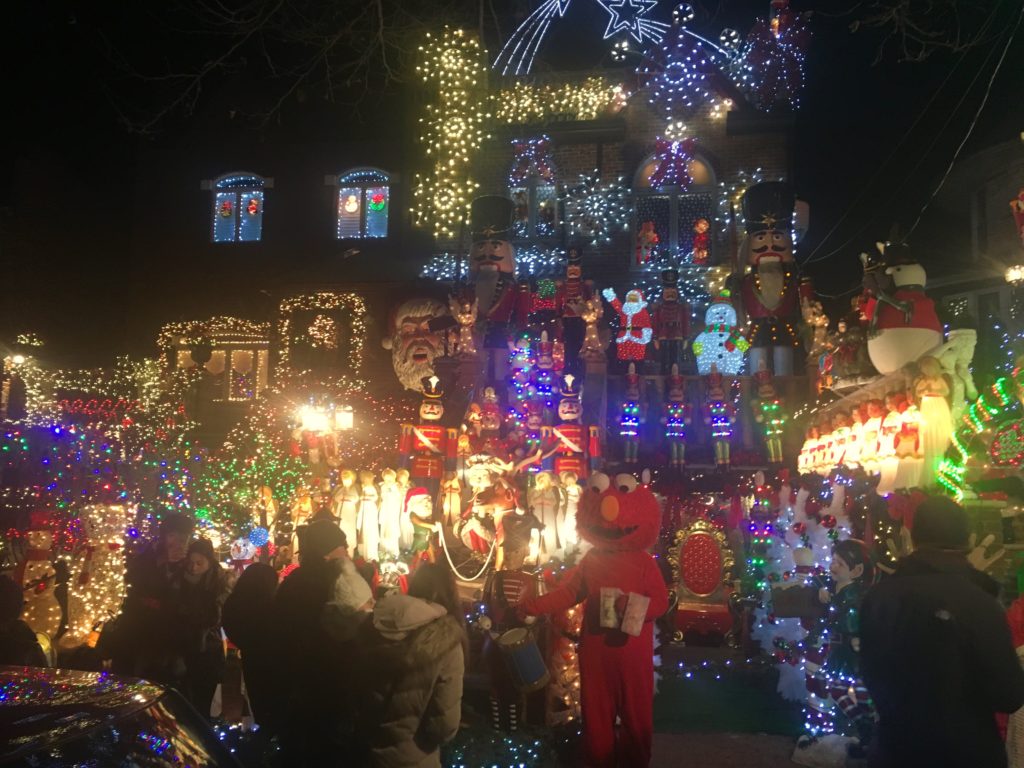
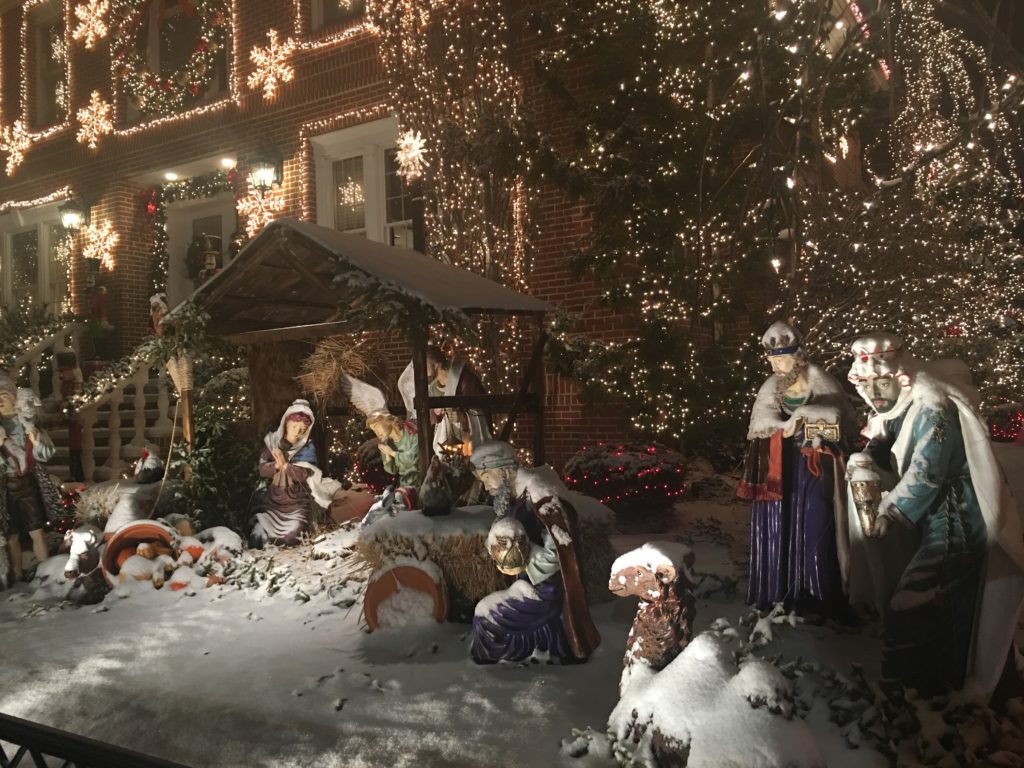
Every December many residents of this area of southwestern Brooklyn ornament their homes in a wild and brilliant parade of Christmas lights and decorations. From gigantic animatronic Santas to armies of toy soldiers!
This electrical spectacle draws thousands of tourists this year, attracted to this imaginative mind-blowing display of Christmas spirit.
In this episode, we look at the lights of Dyker Heights from a few angles. First we explore the history of Christmas lighting in New York City and how such displays brought Christmas into the secular public sphere.
Then we look at the history of Dyker Heights, tracing back to one of the first Dutch settlements and a neighborhood which has developed into a stable Italian community.
Finally, we send our researcher and producer Julia Press on an excursion into Dyker Heights to reveal the origin of the Christmas display extravaganza. Featuring an interview with one of the residents who started it all!
LISTEN NOW — CHRISTMAS IN NEW YORK: THE LIGHTS OF DYKER HEIGHTS
A bonus after-show podcast for those who support us on Patreon. Greg and Tom (and Julia) continue their conversation about the story of the Dyker Heights Christmas tradition.
A big thank you to Lucy Spata and Tony Muia of A Slice of Brooklyn Bus Tours for allowing us to record at the synagogue. And of course HUGE THANKS to Julia Press for contributing to this show and helping up over the past few months. Please check out her website for more links to her past work.
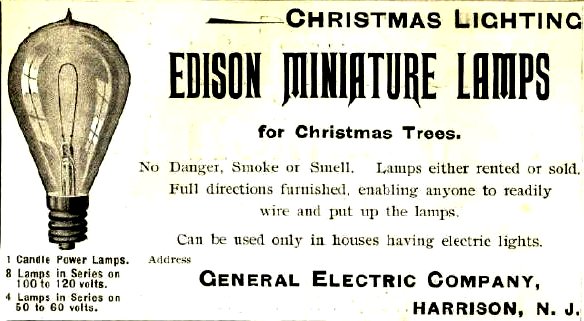
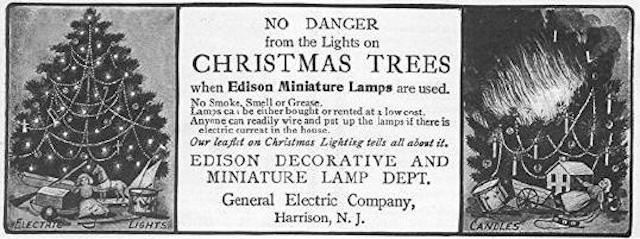
FURTHER LISTENING: This episode was partially inspired by Greg’s episode of The First podcast on the history of electric Christmas lighting. Makes great companion listening to this one:
The home of the Spatas, photo by Julia Press
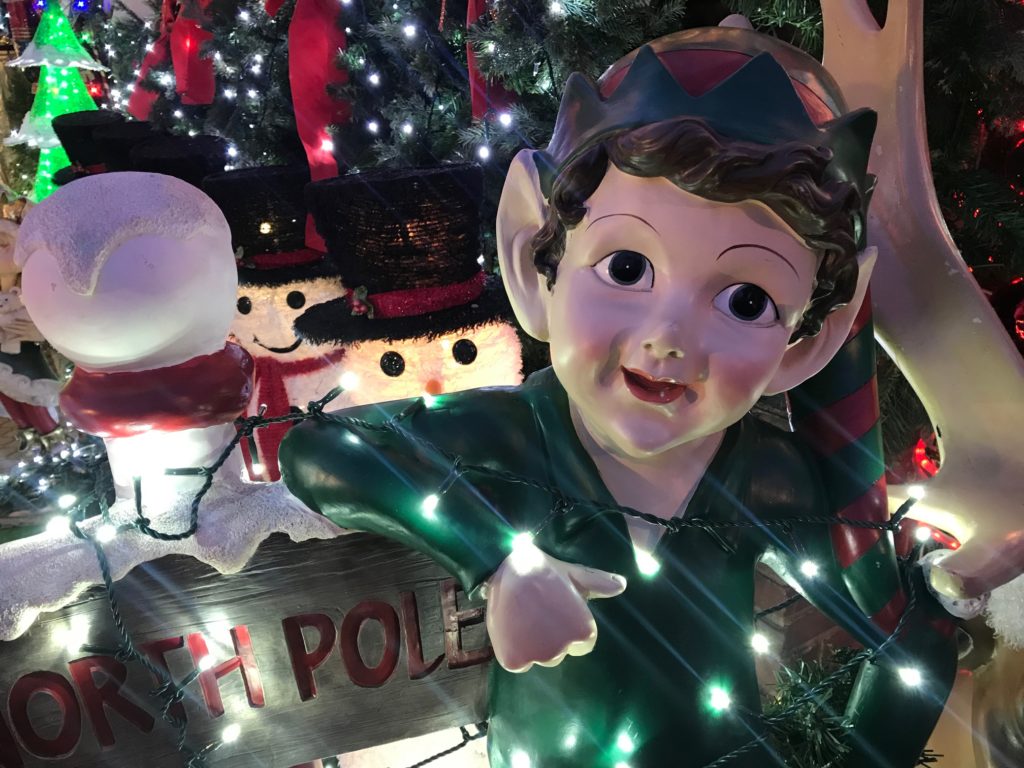
It’s like Las Vegas and Christmas — but in Brooklyn! Photo by Julia Press
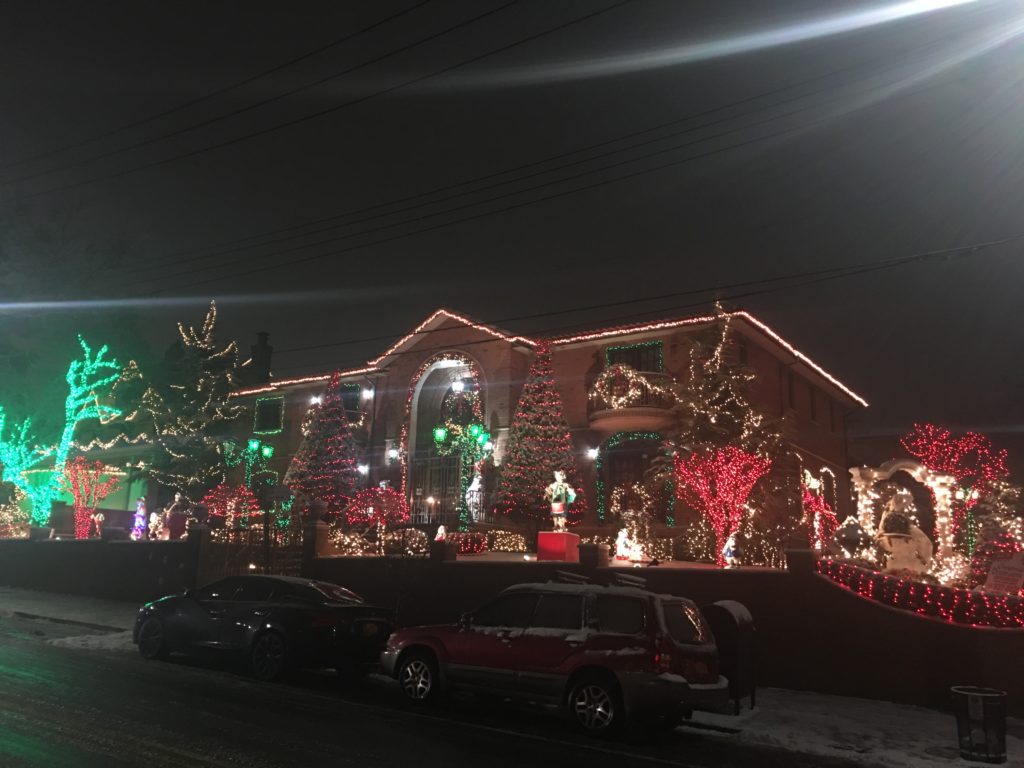
A few images from the 2017 extravaganza — when a nice layer of snow added to the festive spirit.
Further images from the podcast:
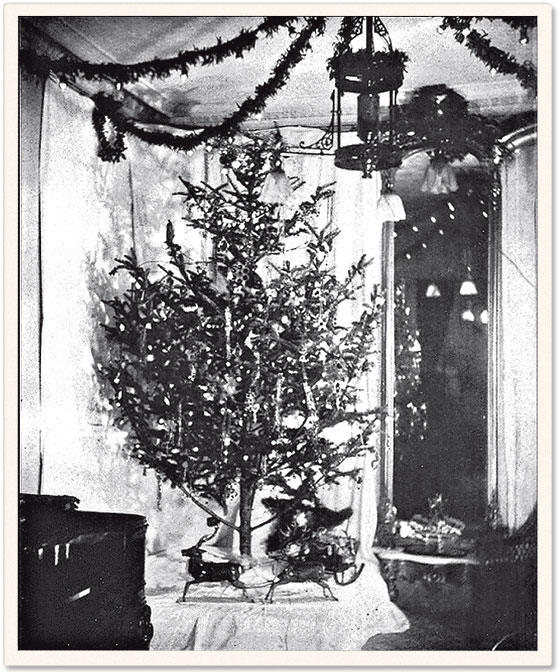
The marvelous rotating Christmas tree of Edward H. Johnson, the first tree with Christmas lights.
Thomas Edison Museum
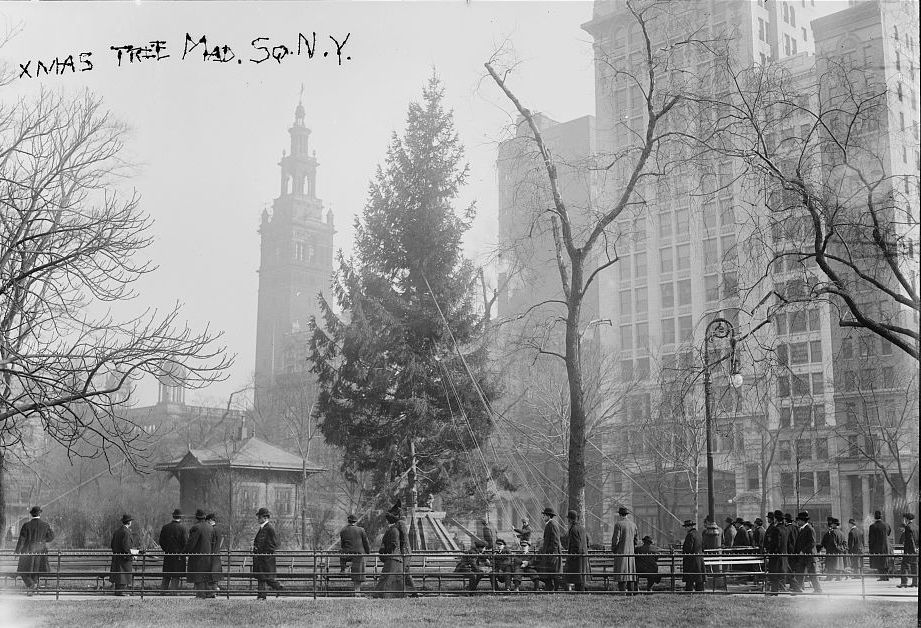
The nation’s first ‘community Christmas tree’ in Madison Square in New York City. Read more about it here.
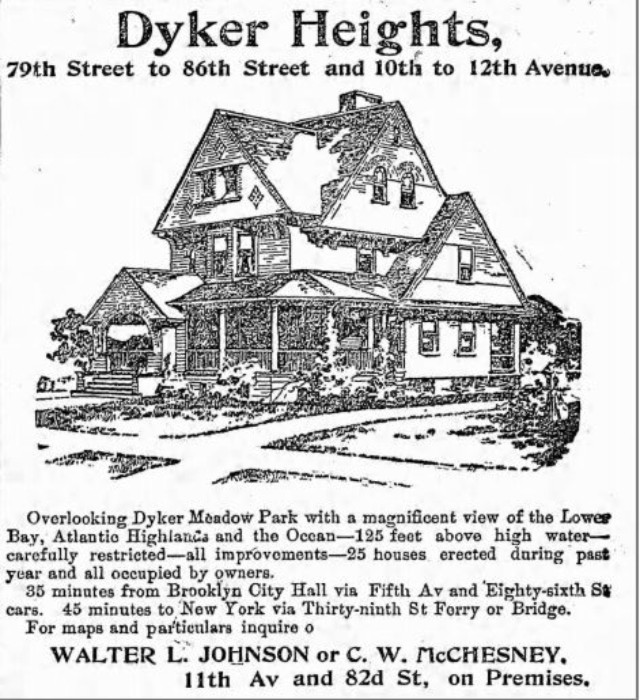
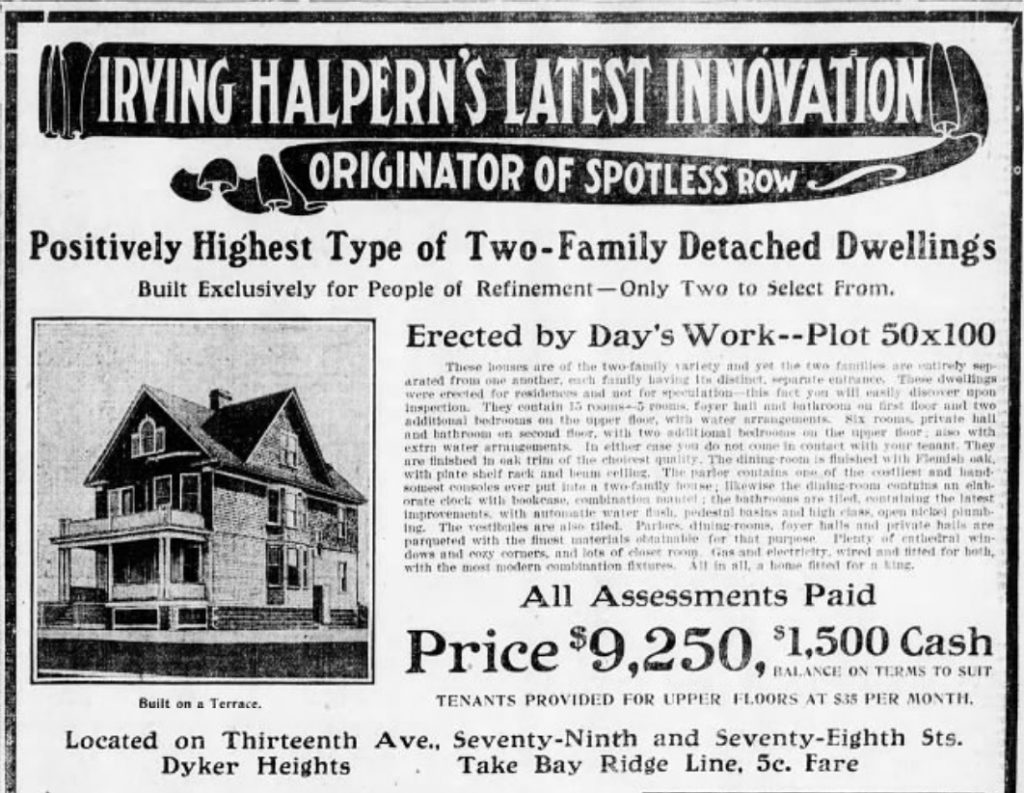
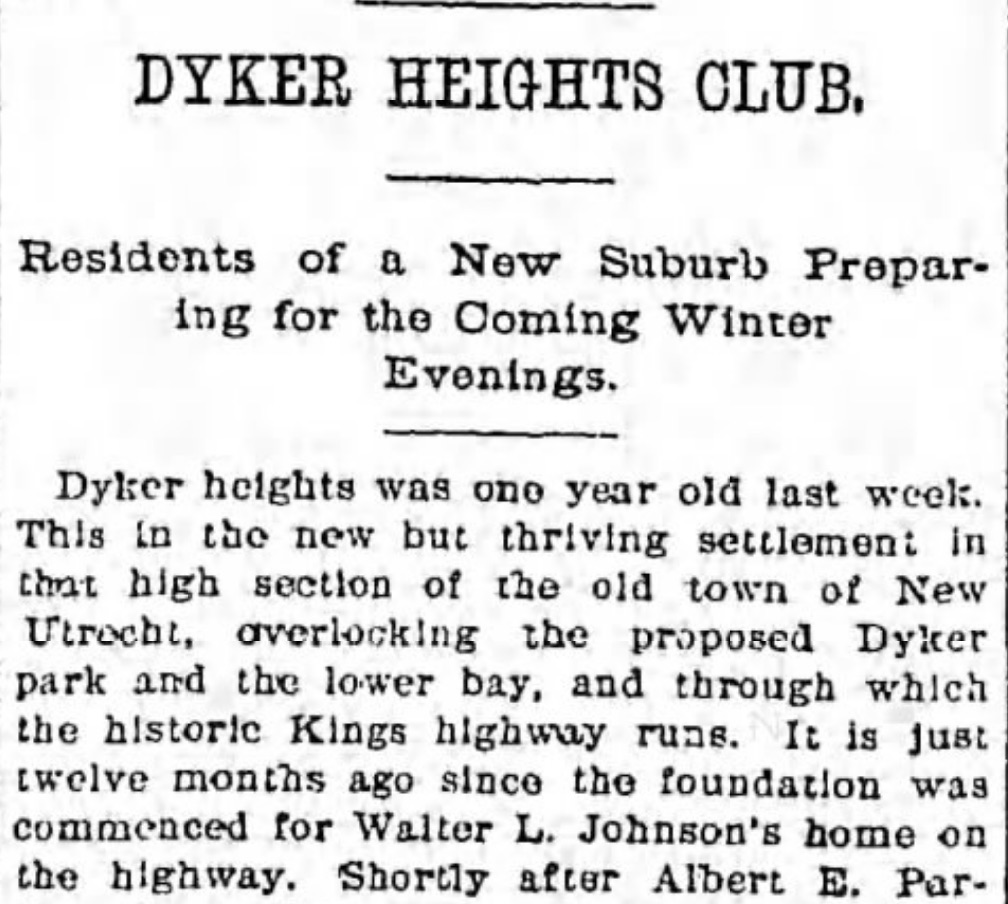
Ads from the early years of Dyker Heights development, Courtesy BrownstonerFrom April 1909 Brooklyn Daily EagleBrooklyn Daily Eagle, October 12, 1896
The Bowery Boys: New York City History podcast is brought to you …. by you!
We are now producing a new Bowery Boys podcast every other week. We’re also looking to improve and expand the show in other ways — publishing, social media, live events and other forms of media. But we can only do this with your help!
We are now a creator on Patreon, a patronage platform where you can support your favorite content creators.
Please visit our page on Patreon and watch a short video of us recording the show and talking about our expansion plans. If you’d like to help out, there are six different pledge levels. Check them out and consider being a sponsor.
ALL patrons at all levels will receive many benefits include the next episode of the Bowery Boys Movie Club, an exclusive podcast (released every 6-8 weeks) celebrating New York City in the movies. And patrons at the Five Points ($5) level and up will get our other exclusive podcast — The Bowery Boys: The Takeout — released every two weeks.
We greatly appreciate our listeners and readers and thank you for joining us on this journey so far.
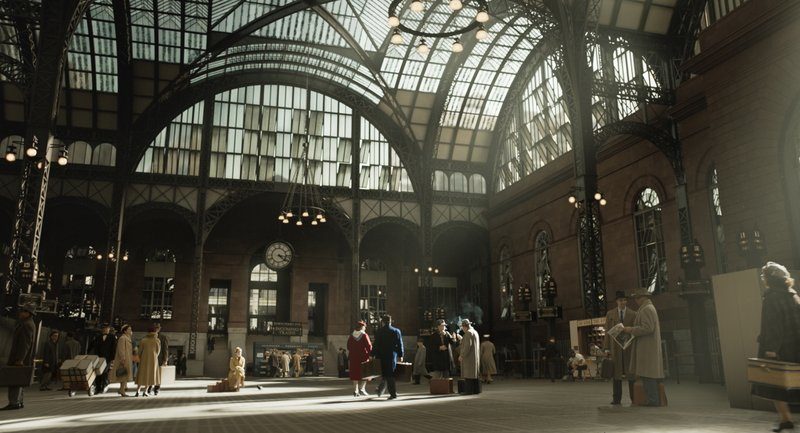
Penn Station as recreated in Warner Bros. Pictures’ drama “MOTHERLESS BROOKLYN,” a Warner Bros. Pictures release.
Motherless Brooklyn, a radical retro transformation of Jonathan Lethem’s book of the same name, refits the bright noir of the movie Chinatown into 1950s New York City. Edward Norton, who wrote and directed this adaptation, also stars as its central figure — Lionel Essrog or simply Brooklyn, a detective with Tourette syndrome and a photographic memory.
The film is a lot. Its success for you will depend on your tolerance for Norton’s performance as Brooklyn, who explodes with spontaneous verbal tics while on a labyrinthine case nodding (often blatantly, sometimes brilliantly) to dozens of classic detective tropes.
I saw it a week ago and I’m still not sure whether I loved it or detested it. It’s a movie full of wonderful concepts, fascinating history and a few failed ideas.
But if you’ve ever listened to our podcast — or spent more than five minutes on this website — then I’m pretty sure you’ll find something to admire in Motherless Brooklyn.
The list below contains no big spoilers pertaining to the film’s plot, but prepare to recognize the following historical figures and concepts. In fact you might like to listen to a podcast or two before or after you view the film. Some listening suggestions are below:
THE POWER BROKER
In many ways Motherless Brooklyn is as much an adaptation of The Power Broker as it is Lethem’s detective novel. (There are at least three character monologues that feel like information dumps from the book.)
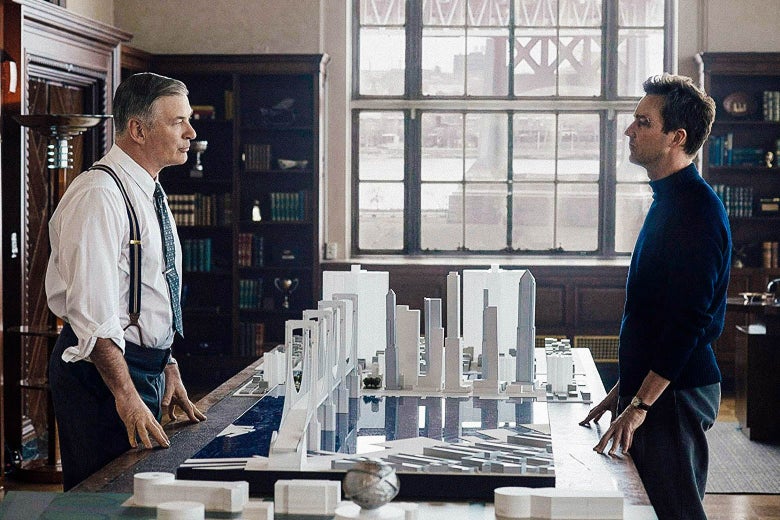
The central antagonist Moses Randolph (Alec Baldwin) stands in for Robert Moses, the unelected city official who amassed great power during the 1940s and 50s, shaping the city to his whims. By the ’50s, Moses has collected several job titles, lording over weak mayors and determining the city’s fate — with little consideration for individual community needs.
Warner Bros
TRIBOROUGH BRIDGE AND TUNNEL AUTHORITY
In Motherless Brooklyn, Moses’ instrument for change is actually called the Borough Authority, but its headquarters are located in the same place as Moses’ — Randall’s Island. Originally commissioned by the state to construct the Triborough Bridge, the authority’s merged with other city agencies under Moses.
THE GREAT MIGRATION
Thousands of African-Americans moved out of the South in the first half of the 20th century — escaping the dominance of Jim Crow laws — and many came to New York City, only to find a familiar tenor of discrimination here. By the 1940s, housing shortages in black communities like Harlem vexed African-Americans who were unable to rent from many landlords in mostly white neighborhoods.
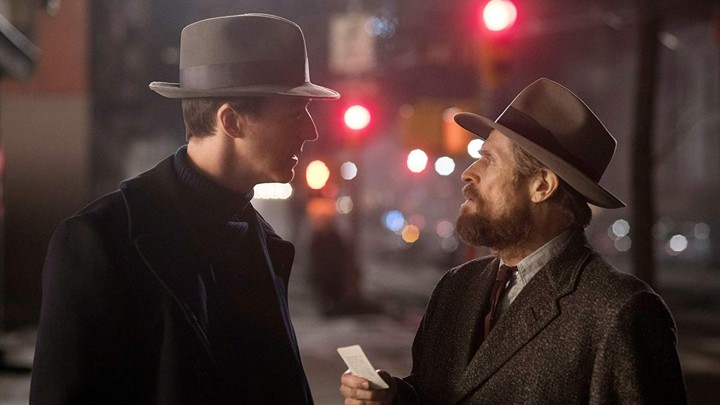
Norton with Willem Dafoe in a stand-out performance. Courtesy Warner Bros
REDLINING
The process by which banks and insurance companies, with de facto approval by the city, denied loans and mortgages to residents in predominantly minority neighborhoods, leading to the deterioration of those neighborhoods, leading them to be labeled ‘slums’. When then led to….
SLUM CLEARANCE
An urban renewal strategy popular in the mid-20th century — Robert Moses was its maestro — involving the complete demolition of neighborhoods labeled slums and relocating its displaced residents to public housing in far off (less valuable) quadrants of the city. In many cases, those neighborhoods were not ‘slums’ at all; that is, they were thriving places that just happened to be homes to black, Hispanic or Jewish residents.
EAST TREMONT
A neighborhood in the South Bronx, largely populated with working class Jewish residents, decimated by the construction of the Cross Bronx Expressway in the 1940s and 50s. From The Power Broker: “The one mile of the Cross-Bronx Expressway through East Tremont was completed in 1960. By 1965, the community’s “very good, solid housing stock,” the apartments that had been so precious to the people who had lived in them, were ravaged hulks.
Glen Wilson/Warner Bros.
JANE JACOBS
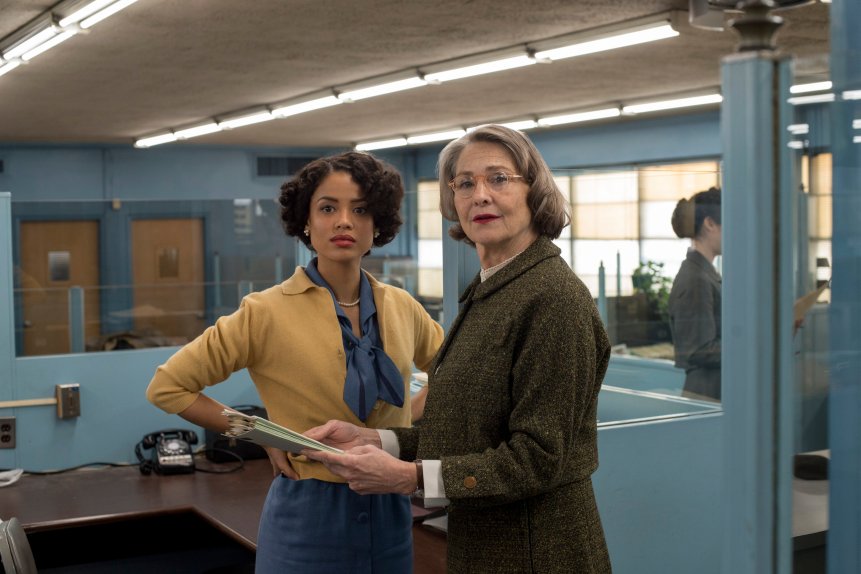
Cherry Jones plays Gabby Horowitz, a community activist very much in the mold of Greenwich Village crusader Jane Jacobs. There’s even an interesting nod to her work in Washington Square and a notable rally which took place there in 1958.
HARLEM JAZZ
Harlem’s glorious jazz-club tradition is vividly illustrated in one set piece — a smoky club called the King Rooster. The film used the actual St. Nick’s Pub (St. Nicholas Avenue at West 149th Street) which dated back to the 1930s. Sadly the club burned down in 2018 in a tragic blaze which killed a firefighter.
THE ORIGINAL PENNSYLVANIA STATION
By the 1950s, the first Pennsylvania Station — above ground, designed by McKim, Meade and White — was just a few years away from demolition. It was deteriorating and not very clean by then, but Norton thankfully recreates a fantasy, photo-perfect version of Penn Station. It’s genuinely breathtaking.
SWIMMING
Robert Moses was a champion swimmer and even let his hobby influence early policy, constructing ten massive swimming pools during the 1930s with Work Progress Administration funding. Quoting Caro: “Moses gave each of his pools … his personal attention. Under his prodding, his architects adorned them with masterful little touches; over the entrance which divided men from women as they entered the bathhouse at the Corona Pool complex sat a stork wearing an expression that made him look as if he were puzzling over the physical differences in the creatures he had brought into the world.”
HISTORY BEHIND THE SCENE What’s the real story behind that historical scene from your favorite TV show or feature film? A semi-regular feature on the Bowery Boys website, I’ll be reviving this series as we follow along with TNT’s limited series The Alienist. Look for other articles here about other historically themed television shows (Mad Men, The Knick, The Deuce, Boardwalk Empire and Copper). And follow along with the Bowery Boys on Twitter at @boweryboys for more historical context of your favorite shows. See the bottom of this article for more information on how to watch more episodes of The Alienist.
The Alienist begins — as it does in Caleb Carr‘s best-seller — with a bizarre and gruesome discovery one frozen evening in 1896: the violently mutilated body of a young man.
New Yorkers occasionally found such nasty sights along the waterfront; drunken sailors fell from their ships from time to time. But these human remains were seemingly displayed, laid upon “an elaborate maze of steel supports,” adjacent to the old creaking seaport.
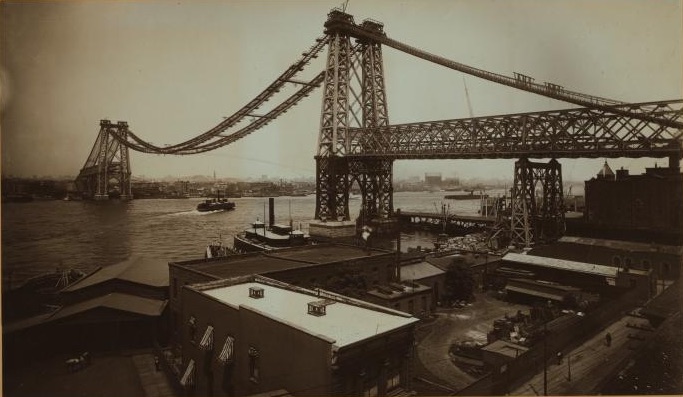
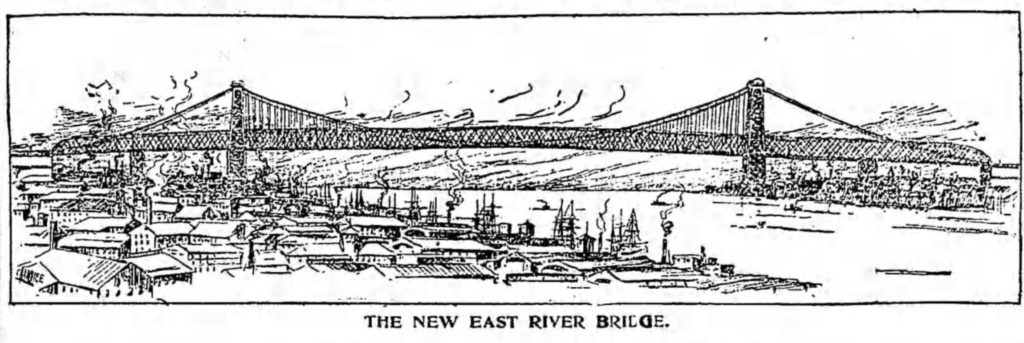
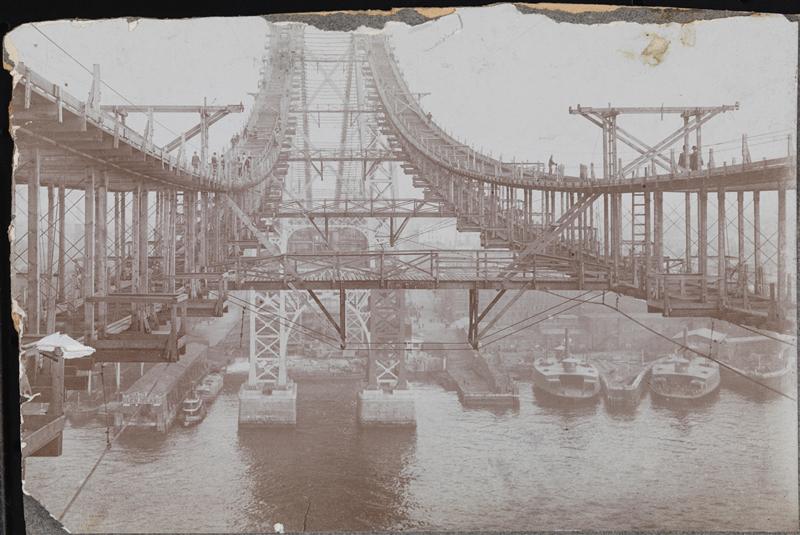
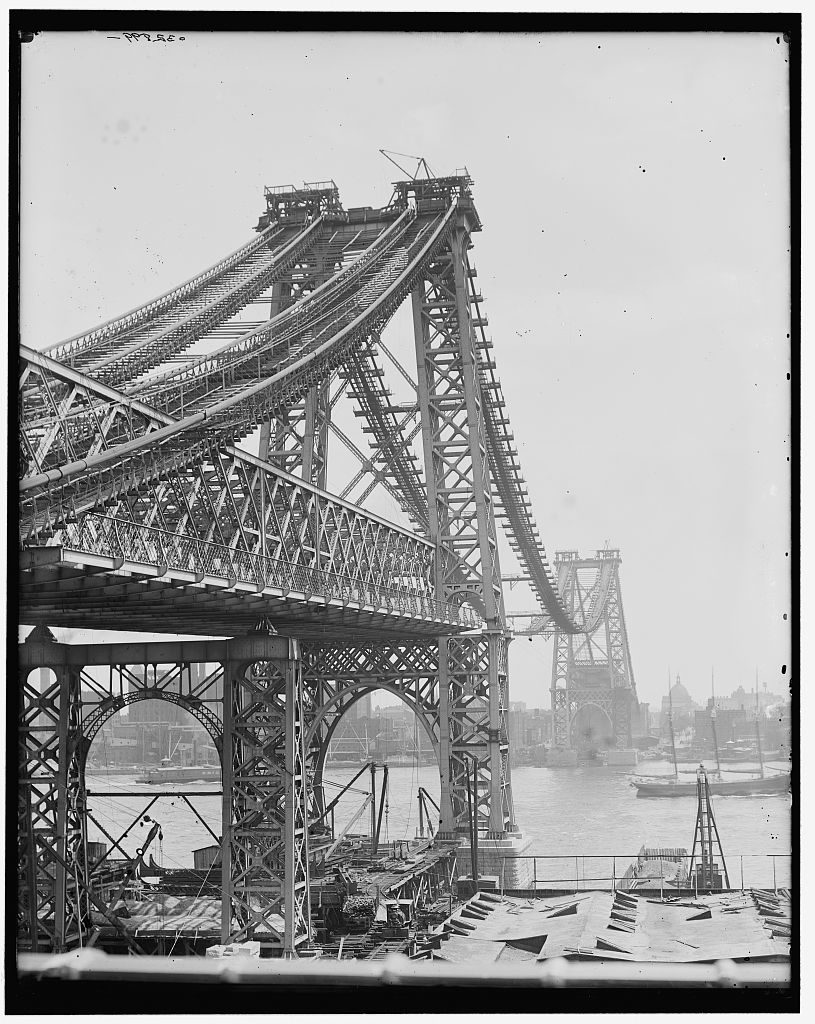
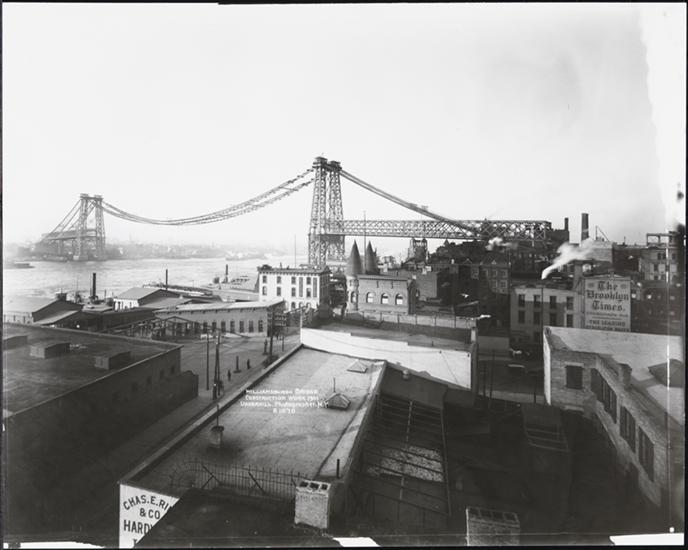
The supports depicted in this scene were but the first steps in the construction of one of New York’s last great engineering projects of the 19th century — the New East River Bridge a.k.a the Williamsburg Bridge.
This bridge, the second to ever span the East River, is truly under appreciated, dwarfed of course in architectural achievement by the first — the Brooklyn Bridge. But the start of its construction in the waning months of 1896 marked a bold and exciting turning point for the city of New York.
Here’s some details about the bridge:
from the Brooklyn Daily Eagle, May 3, 1896
— The bridge that would be called the Williamsburg Bridge was started (in 1896) when Brooklyn was an independent city and completed (in 1903) when Brooklyn was part of Greater New York. When it opened in 1883, the Brooklyn Bridge linked two of America’s biggest cities — New York and Brooklyn.
But city planners like Andrew Haswell Green hoped to unite the entire region as one thriving metropolis, sharing vital resources.
Despite great resistance by many powerful Brooklynites, plans to unite the two cities — along with areas of Queens County, Richmond County (Staten Island) and portions of Westchester County (the Bronx) — were well in place by 1896. By January 1, 1898, it would all officially become Greater New York.
— But technically it was a bridge to yet another former city — Williamsburgh. In 1883, the Brooklyn Bridge linked the heart of New York civic life with the center of the City of Brooklyn — from New York City Hall to Brooklyn City Hall (what became Brooklyn Borough Hall). Upon its wildly successful opening, many began plotting a second bridge across the East River.
This second bridge, however, would link an area of Brooklyn north of the city’s center — in an area called the Eastern District.
Why was the eastern section of Brooklyn considered apart from the rest? Because at one point, for a brief period between 1852 to 1855, Williamsburg (or Williamsburgh, see below) was its own city, comprised of the modern neighborhoods of Williamsburg and Greenpoint. In 1855 it was absorbed — along with the Town of Bushwick — into the expanding city of Brooklyn and these new additions, more industrial and immigrant in nature, were referred to as the Eastern District.
(For more information, listen to our podcast on the history of Greenpoint, Brooklyn.)
Below: Above the East River, the bridge under construction, 1900
Museum of the City of New York
— Brooklyn could thank one very powerful politician for the bridge. The namesake of Williamsburg’s popular McCarran Park — State Senator Patrick McCarran — is largely responsible for getting the new bridge placed in the Eastern District on the Williamsburg waterfront. According to one glowing eulogy, “The bridges, the parks, the improved means of transit, the better paved and lighted streets by which the Brooklyn of to-day is distinguished are due more to the legislative efficiency of Senator McCarren than to the influence of any other individual.” Of course he was also a bit of a corrupt scoundrel, but weren’t most politicians just a little bit dirty back then?
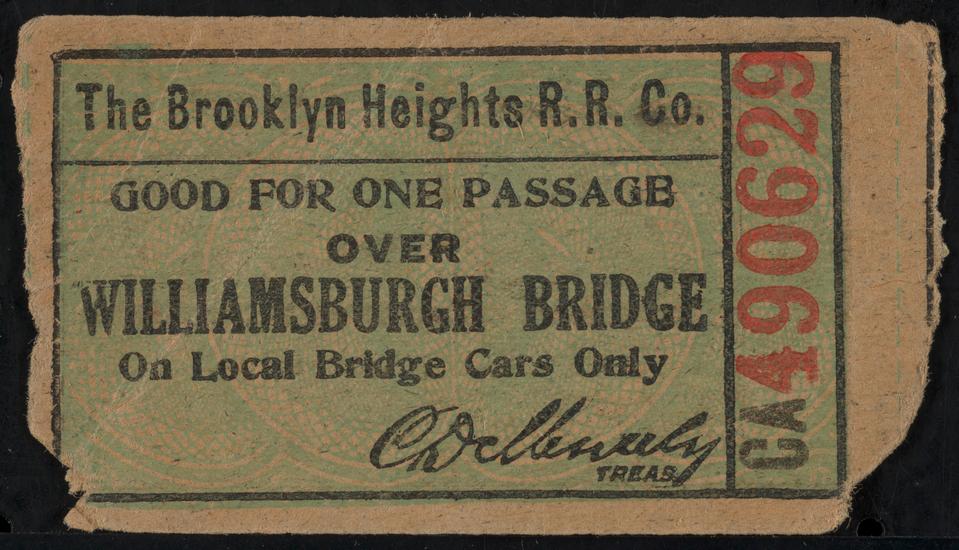
— Excuse me, that’s the Williamsburgh Bridge (with an H) The original village of Williamsburgh was named after the esteemed Lt Col. Jonathan Williams, former Secretary of War and grand-nephew of Benjamin Franklin, who surveyed the land along the Bushwick shore. In its early days there was an H affixed to the area’s name, but by the completion of the bridge in 1903, many references to the neighborhood dropped it. Nobody really knows why this happened, but it probably has something to do with the better known Williamsburg in Virginia.
By the time the bridge was completed, it was commonly known as the Williamsburg Bridge although a plaque on the bridge preserves the original spelling.
Museum of the City of New York
— On the New York side, planners were using the project as a way to clear away one of its most notorious districts –Corlears Hook.
Where Manhattan juts the furthest into the East River, Corlears Hook once had the greatest concentration of shipbuilding businesses in the nation, and the shoreline was completely obscured with piers, ships, and vessels of all sorts. In the 1830s, it had become a notorious red-light district, with “ladies of the night” setting up shop in the neighborhood’s saloons and cellars. (As popular legend would have it, the ladies of the Hook would give the oldest profession a new name: hookers.)
But by the 1880s, however, New York was in the throes of civic reform, clearing away slum neighborhoods and replacing them with parks or grand architectural projects. The old neighborhood of Five Points became Columbus Park and New York’s Civic Center. Even the Brooklyn Bridge cleared away the decrepit tenements of the old waterfront.
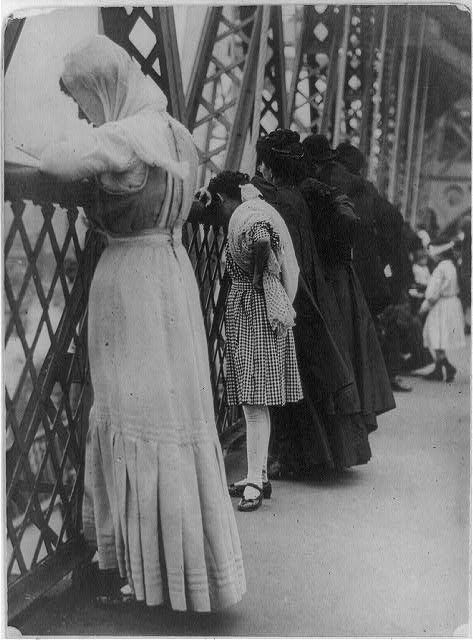
— The bridge is central to the growth of New York’s immigrant (and particularly Jewish) communities. While its construction did displace thousands of people, the bridge would actually facilitate better living conditions for Lower East Side immigrant groups by encouraging migration to less populated Brooklyn neighborhoods.
The New York Herald even called it the “Jews Highway” as those of Eastern European and Russian Jewish heritage transplanted to Williamsburg.
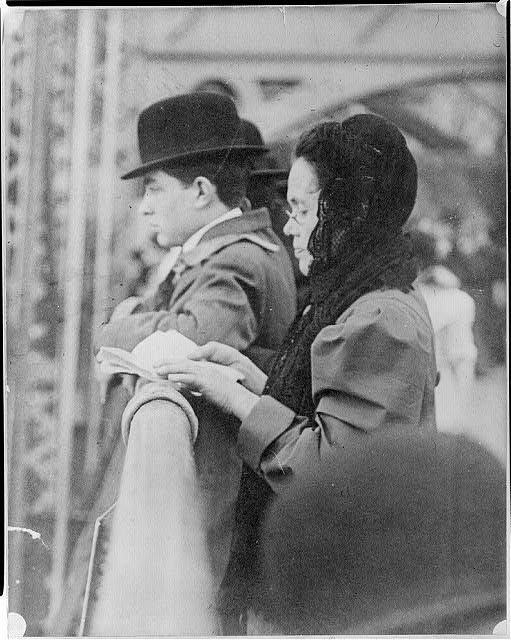
Below: Jewish women praying on the Williamsburg Bridge (1909)
Library of Congress
Library of Congress
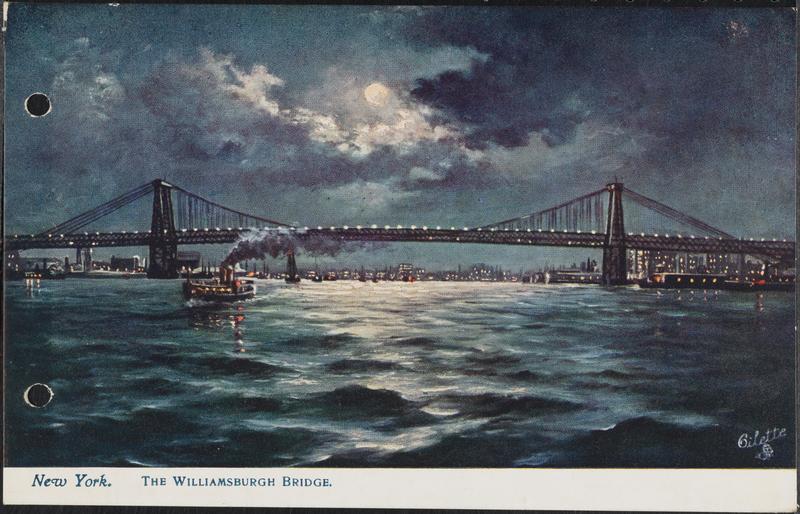
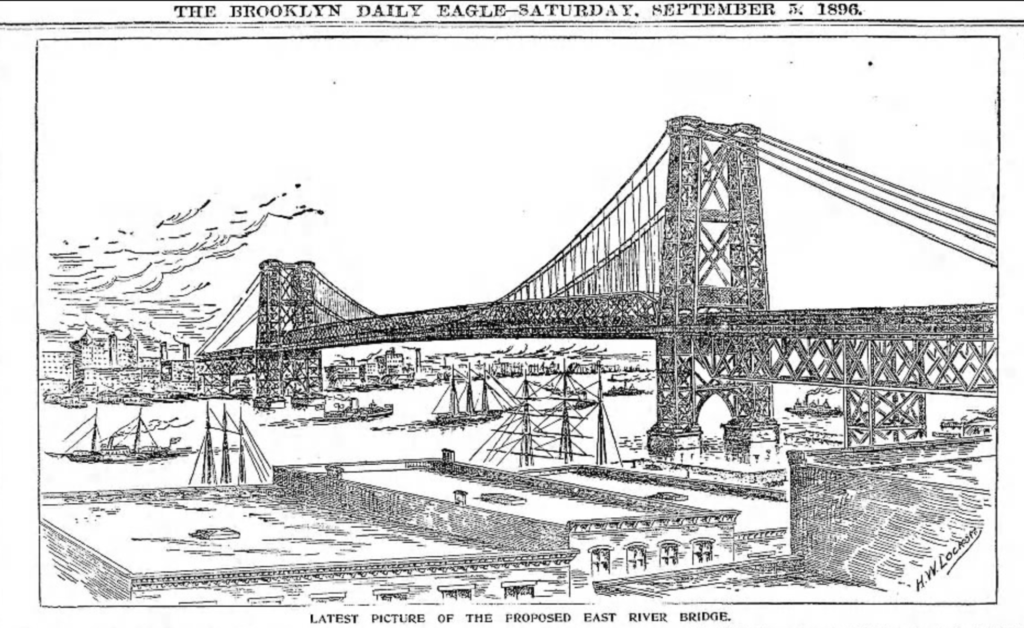
How they envisioned the bridge in the fall of 1896 ….
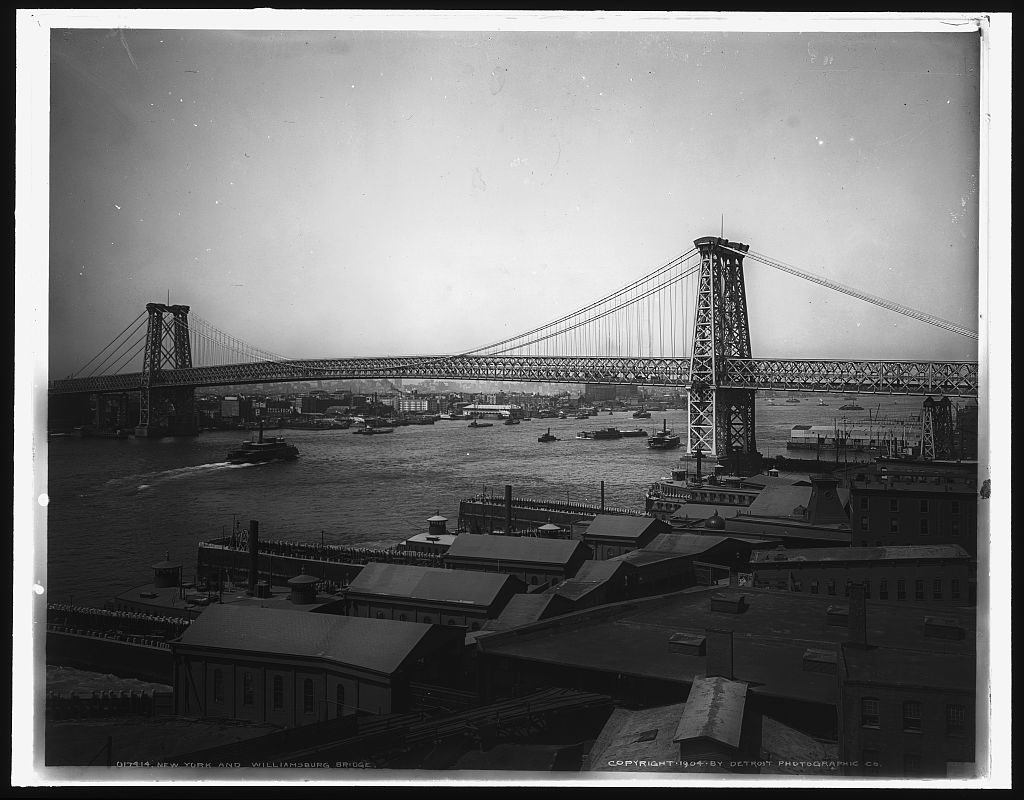
…and how it looked at completion.
Library of Congress
Believe it or not, the opening of the Williamsburg Bridge was actually captured on film by the Edison company.
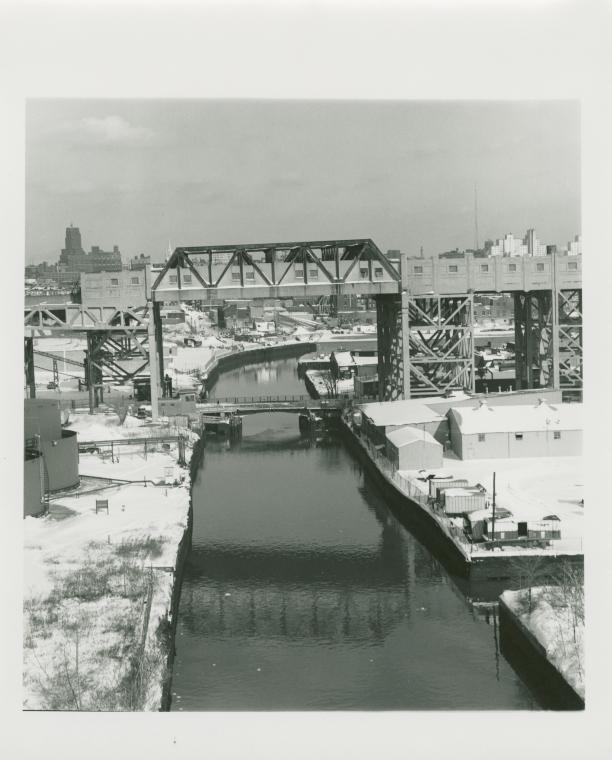
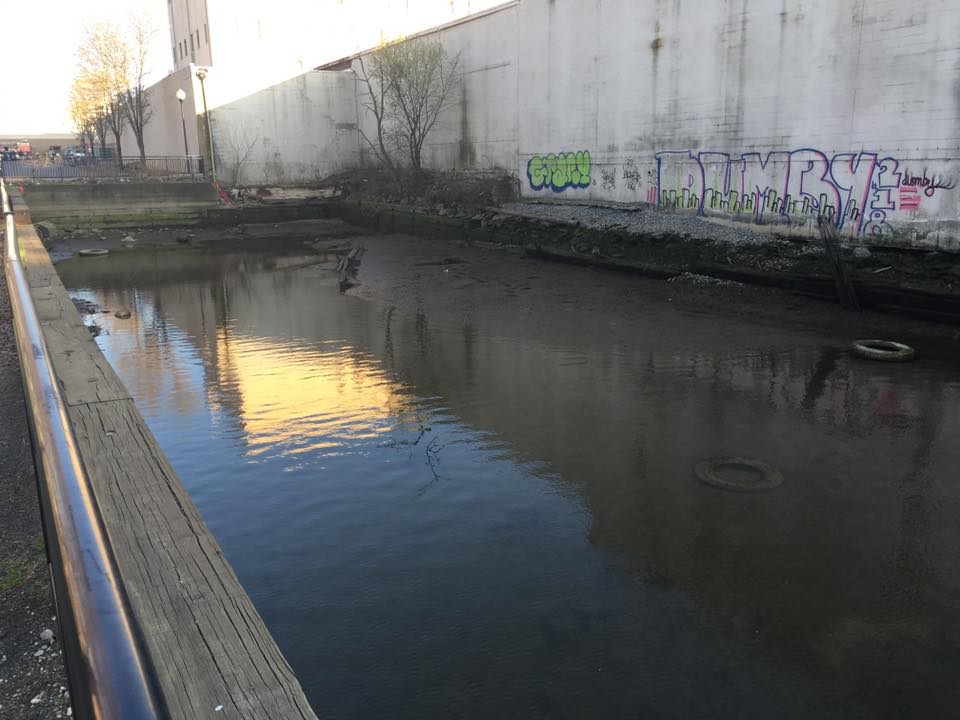
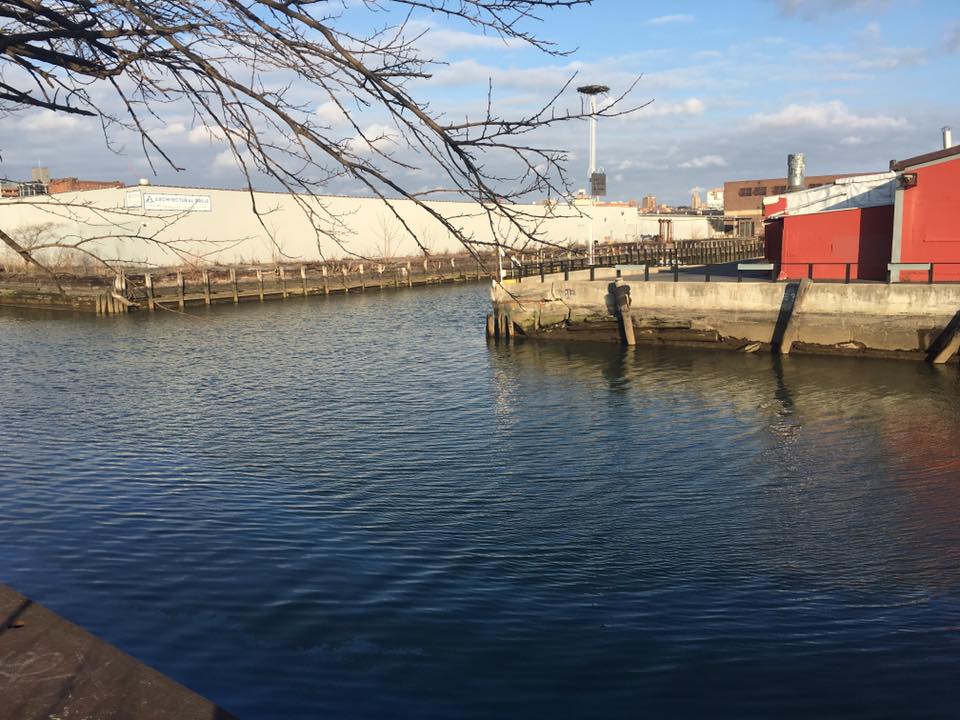
PODCAST The history of the Gowanus Canal, at the heart of a trendy Brooklyn neighborhood today, once used to be quite beautiful and non-toxic.
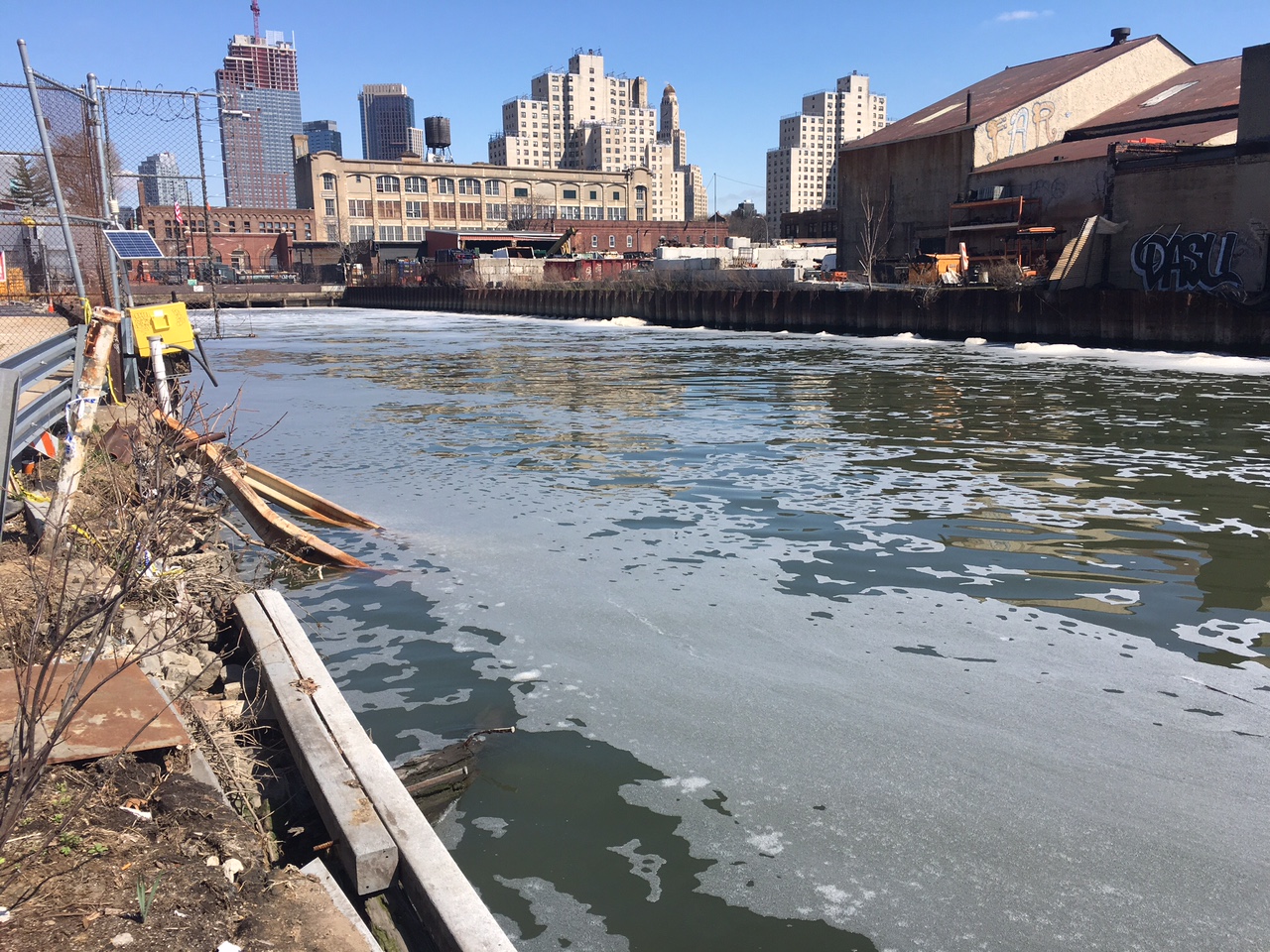
Brooklyn’s Gowanus — both the creek and the canal — is one of the most mysterious and historically important waterways in New York City. By coincidence, it also happens to be among its most polluted, shrouded in frightening tales of dead animals (and a few unfortunate humans) floating along its canal shores. Its toxic mix is the stuff of urban legends (most of which are actually true).
But this was once the land of delicious oysters. This was the site of an important Revolutionary War battle. This was part of the property of the man who later developed Park Slope.
But, in current times, it ALSO happens to be one of New York City’s hottest neighborhoods for real estate development. How does a neighborhood go from a canal of deadly constitution to a Whole Foods, condos and shuffleboard courts?
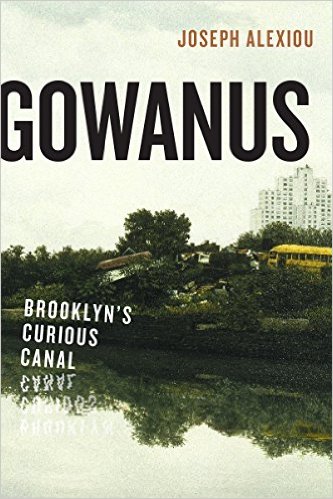
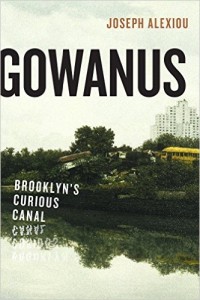
With the Gowanus’ many personalities (and with Tom gone this week) I needed a special guide for this fraught and twisted journey — writer and historian Joseph Alexiou, author of Gowanus: Brooklyn’s Curious Canal, bringing his expertise to help me wade through the most toxic portion of the show.
The Bowery Boys: New York City History podcast is brought to you …. by you!
We are now producing a new Bowery Boys podcast every two weeks. We’re also looking to improve the show in other ways and expand in other ways as well — through publishing, social media, live events and other forms of media. But we can only do this with your help!
We are now a member of Patreon, a patronage platform where you can support your favorite content creators for as little as a $1 a month.
Please visitour page on Patreon and watch a short video of us recording the show and talking about our expansion plans. If you’d like to help out, there are five different pledge levels (and with clever names too — Mannahatta, New Amsterdam, Five Points, Gilded Age, Jazz Age and Empire State). Check them out and consider being a sponsor.
We greatly appreciate our listeners and readers and thank you for joining us on this journey so far. And the best is yet to come!
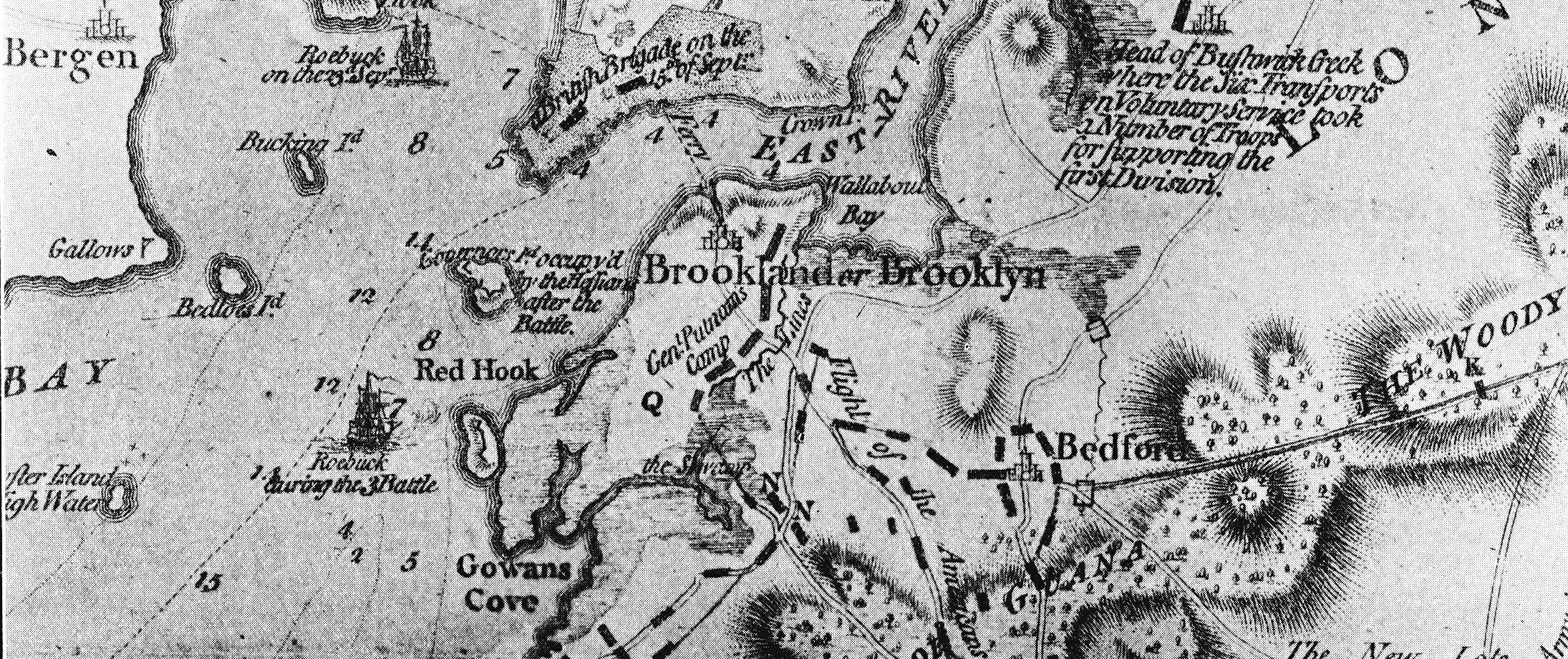
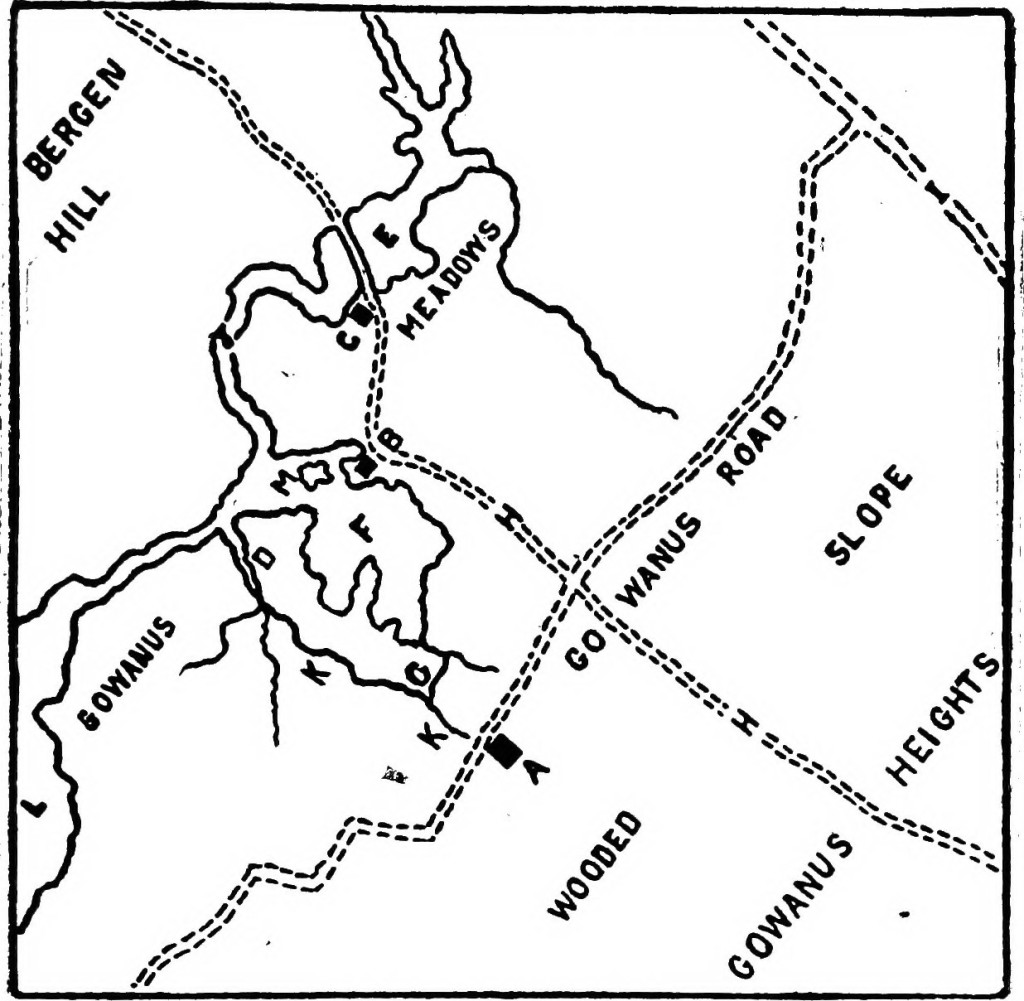
Further to that Lord of the Rings comparison, here’s a map from a 1909 history of the Old Stone House, documenting the moves of British troops in the summer of 1776.
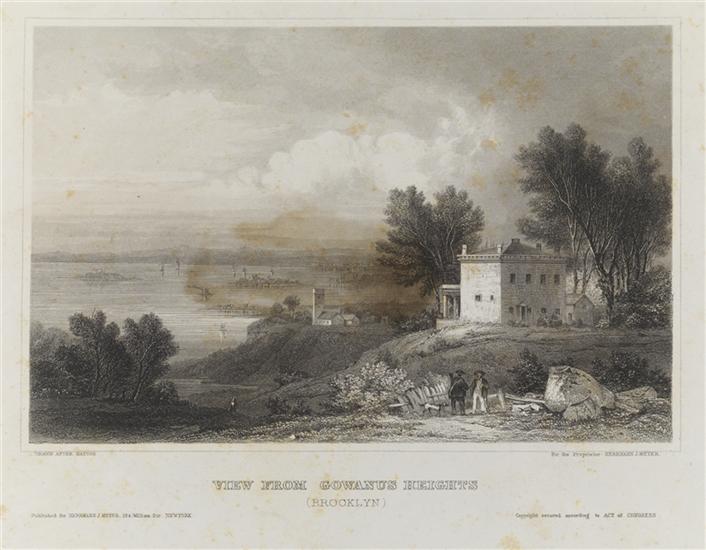
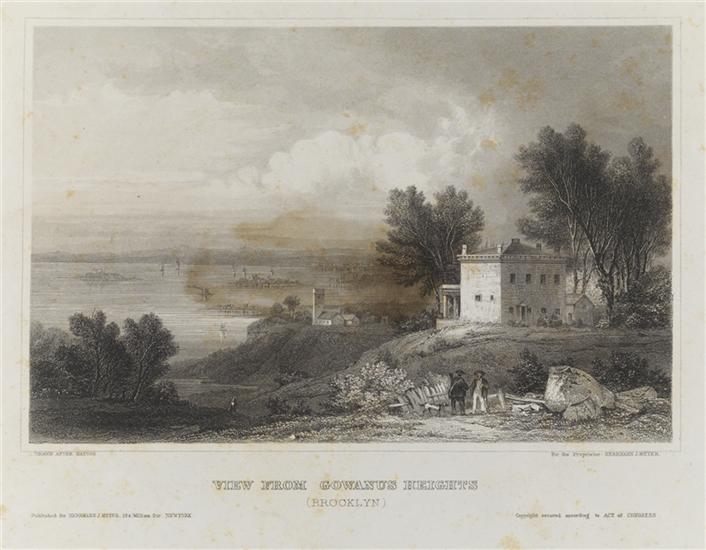
The view from Gowanus Heights, or the Heights of Guan. Print by Hermann Julius Meyer, 1840.
Courtesy Museum of the city of New York
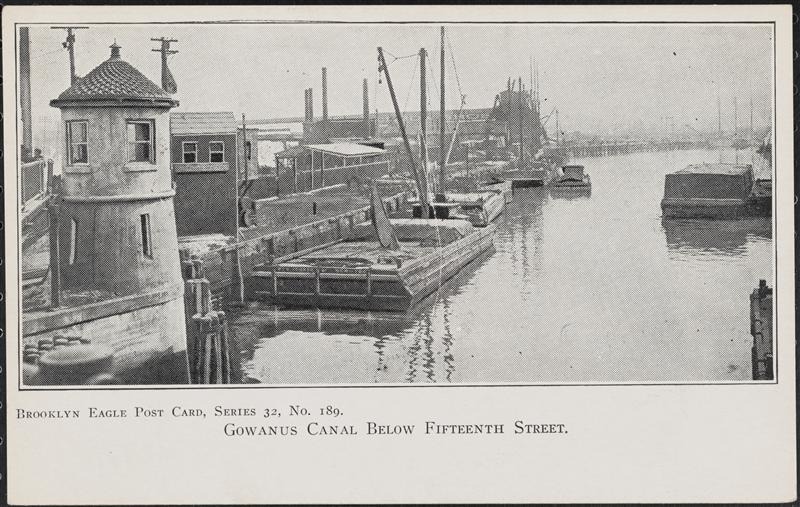
By 1910, the banks of the Gowanus were no more natural than the dankest tenement slum.
Courtesy Museum of the City of New York
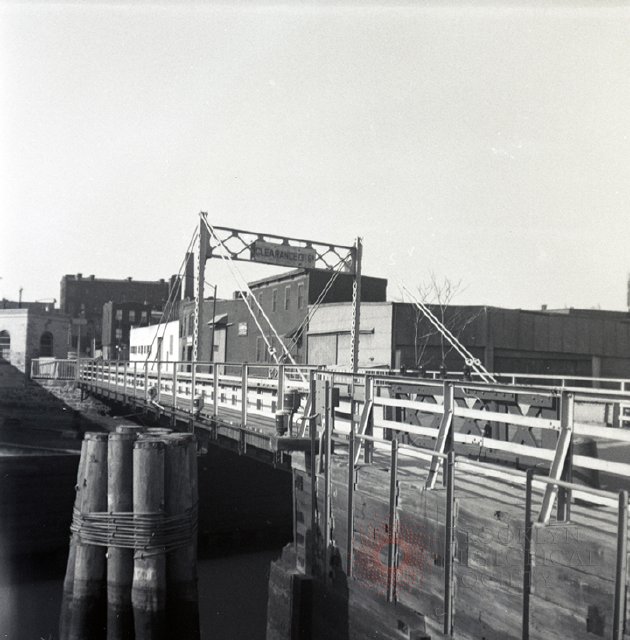
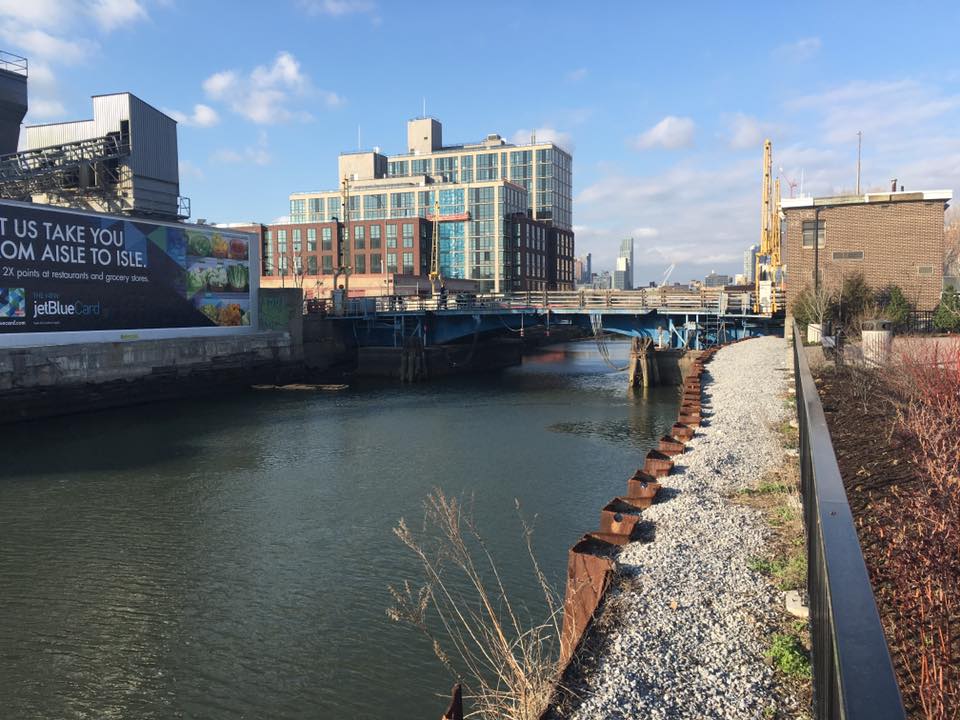
The Carroll Street Bridge, pictured here in 1960, originally built in 1889. It’s one of only two retractable bridges in New York City.
Brooklyn gentrification has reached a curious impasse — the Gowanus Canal.
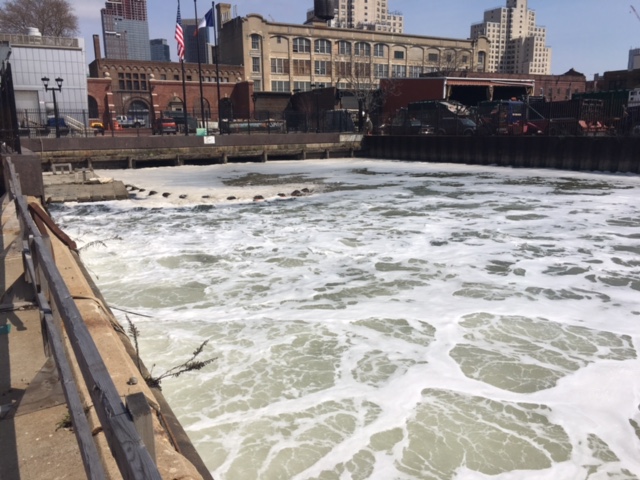
The neighborhood surrounding it thrives with new housing developments, trendy restaurants and bars, music venues, shuffleboard clubs and even a Whole Foods. Curbed just named it neighborhood of the year. It’s now a destination for foodies. Pity about that fetid and uniquely aromatic body of water then, a SuperFund site since 2010 and a problem that has vexed Brooklyn for decades. (Black mayonnaise anyone?)
The Gowanus is also pivotal to the history of Brooklyn — and all of New  York City — as enjoyably laid out by author Joseph Alexiou in his new book Gowanus: Brooklyn’s Curious Canal.
The shores of Gowanus Creek have been critical to Brooklyn’s growth since the early Dutch days.  Its story is surprisingly thrilling and robust, from the bloody Revolutionary War battle fought on its shores to its transformation into an artery for industry.  Residents  have struggled with the Gowanus’ toxic qualities — both in the water itself and the criminal life it seems to regularly attract — for over a century and a half.
I wish there was a book like this for every foul, troublesome thing in New York.  Gowanus feels like a biography with an engaging protagonist — plucked from innocence and slowly corrupted — that you want to help save by the end.
Given the current situation in the neighborhood — anybody looking for a cheap apartment? — Gowanus is an important and urgent read.  Plus the book is nominated for a GANYC Apple Award for outstanding achievement in non-fiction book writing! (Check out the full list of nominees here.) On the eve of the awards ceremony this Monday, I asked Alexiou a few questions about his experiences researching this curious creek:
Greg Young: What’s your particular connection to the Gowanus? How did you decide to develop this as a book subject?
Joseph Alexiou: I lived in Gowanus from 2006–2011, and happened upon the canal quite by accident, but it was love at first sight. I spent  several years  in the neighborhood  before making my foray into freelance writing, when I realized the area was a goldmine of funny stories and and weird characters.
The pollution was also so extreme and kind of surprising, which I learned about thanks to the appearance of Sludgie the Whale in 2007. Eventually, I ended up in journalism school, where my obsessions and nerdish love of history became the subject for a book proposal class.
Â
GY: Since your book is really arranged like a biography of the Gowanus, what would say has been its personality over the decades?
JA: The Gowanus has always been stubborn and dependable, and muddy. Definitely thoughtful— a calm, earthly reminder of the powers of nature with that occasional tendency to overflow. But the beginning it was a lot more crunchy and pastoral, full of wildlife and pleasant breezes. But as industry arrived, the Gowanus became stinky, smelly, exciting and unsavory—perhaps just a little bit dangerous. The foreboding sense of doom was its personality for a long time. But with the dynamic nature of cities and waterways, that grittiness is evolving yet again.
GY: Were you surprised to find how important the Gowanus has been to the overall history of Brooklyn? It seems like its story reflects many of the changes that have happening to the city (and borough) over the decades?
JA: When I discovered that the name “Gowanus” appeared in some of the oldest documented history of New York—dating back to 1636—that’s how I knew there was a particular history to be told. It was a surprise, but also a relief when I discovered how often the name “Gowanus” appeared across newspaper pages and old documents, once I had started really researching the book. So many people used it for business, pleasure, crossed its banks, complained about the traffic, fell into it!
It’s a really unique kind of New York waterway—naturally occurring, then industrialized, then neglected. It’s difficult to move and get around, and often caused much trouble because of the flooding. So many people have invested in it, cursed it, pondered its existence, and written about Gowanus throughout history because it was weird and offbeat, a wrinkle in the map. That proved to be quite a boon, and a great vantage point from which to observe the history of Brooklyn.
GY: Is there anything truly ‘natural’ about the Gowanus anymore? I confess to strolling around it sometimes, trying to picture it as a natural body of water. Is there anything about it at all that remotely resembles the creek that you introduce us to at the beginning?
JA: Well, the rise and fall of the tide is one of the remaining original aspects of the canal. There’s no real wetland left around the canal, although if the walls were knocked down it would start to rebuild itself. Perhaps I should give a nod to little snippets of nature that pop up at street ends (Second Avenue comes to mind) that sort of mimic the original landscape. But imagination is helpful!
View from Gowanus Heights, Brooklyn, 1840, painted by Herrmann Julius Meyer (courtesy Museum of the City of New York)
GY: The community has a fondness and love for the Gowanus, even considering the health concerns that have vexed it for decades. What do you think is the specific appeal to living near here?
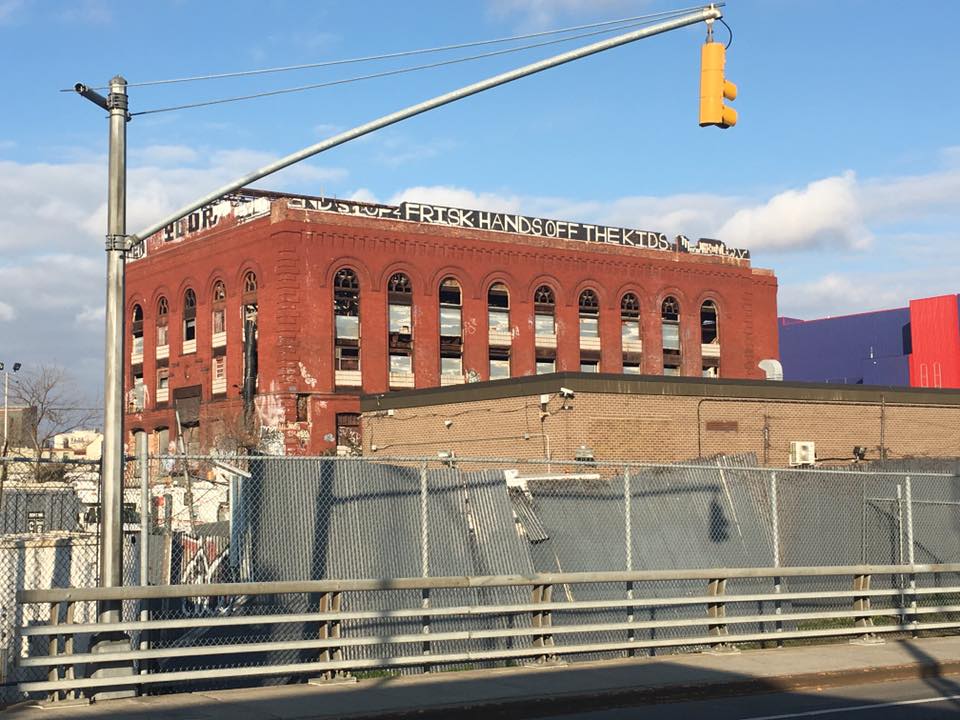
JA: For a very long time it was simply that it didn’t cost very much. But lately, for the more visually-minded, the neighborhood has a unique shape apart from the grid. The industrial architecture, bridges, funny signs, graffiti—all of this gives the neighborhood great character and personality. A soaring warehouse building or an unusual edifice gives a break from the monotony of endless streets. It’s very Jane Jacobsian, but strange breaks in the city grid, or old buildings repurposed, allow for newly creative use and exploration. This particular appeal has long existed in contemporary Gowanus.
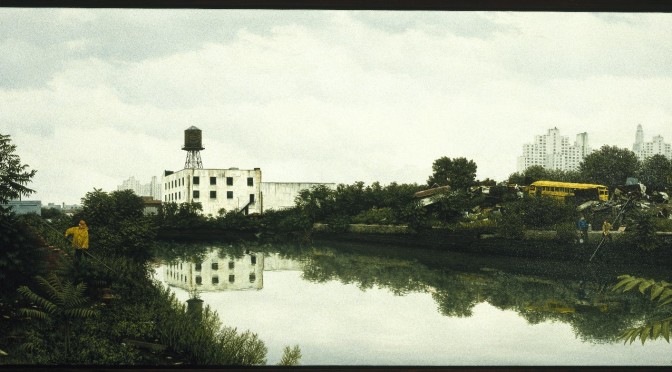
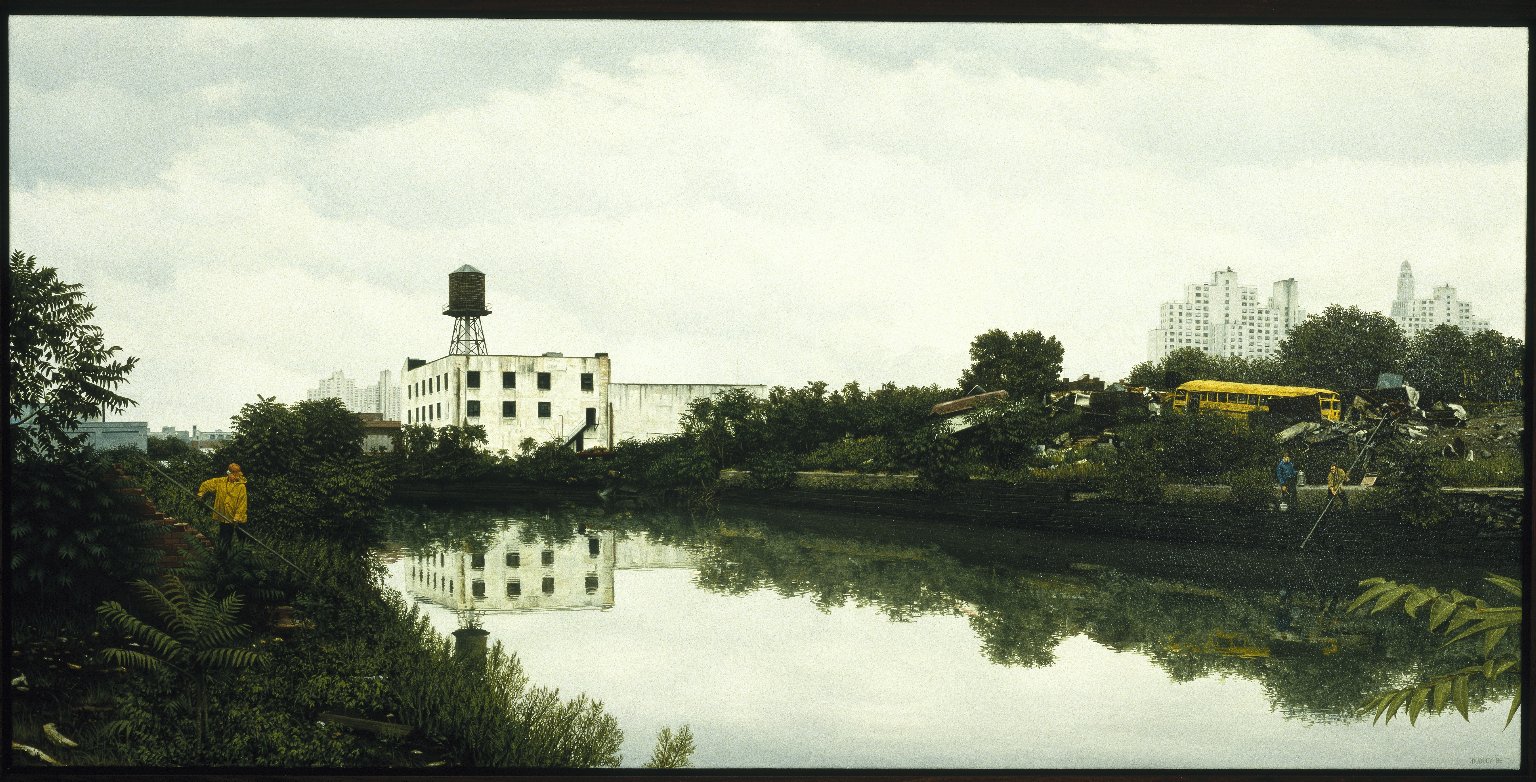
 Gowanus Canal from Second Street, 1986, Randy Dudley, from the Brooklyn Museum collection
GY: Your book explores the struggles to clean up the Gowanus over the decades. There’s obviously a great urgency now due to the residential boom in the neighborhood. Do you think it’s really possible to rehabilitate the Gowanus at this point, at least in a cost effective way? Do you think it will ever be considered ‘safe’ in our lifetimes?
JA: “Safe” is a relative term, and within the next two decades I do believe it will become much cleaner, and safer. I don’t know if the canal will ever be swimmable though, as raw sewage will always be in danger of spilling into the water (albeit much less than now, if the EPA plans go accordingly)—some problems are just too immense to totally solve.
GY: And, out of concern for your safety – just how much time did you actually have to spend near the Gowanus itself? God forbid you didn’t actually go anywhere close to the water?!
JA: I’ve been down to the Gowanus quite a bit, and gone out on a boat, no less than three times! I can’t say I felt totally safe during any of the voyages, but it was exhilarating! It’s a fantastic and totally unique way of seeing Brooklyn, and the city!
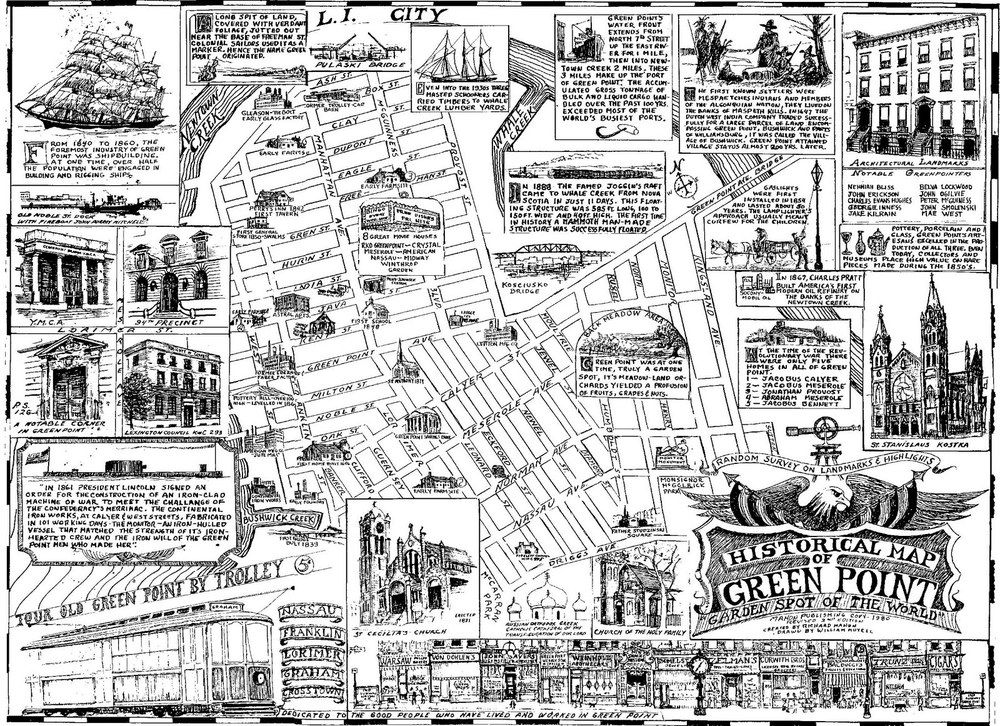
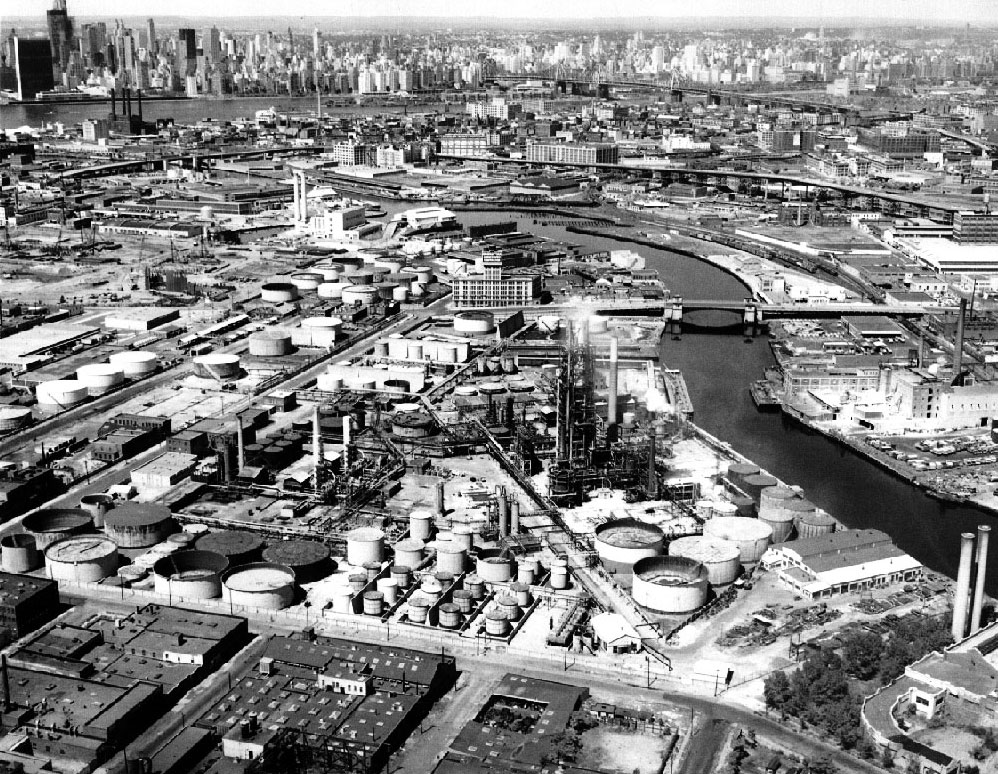
PODCAST The history of the Brooklyn neighborhood of Greenpoint and the oft-polluted Newtown Creek.
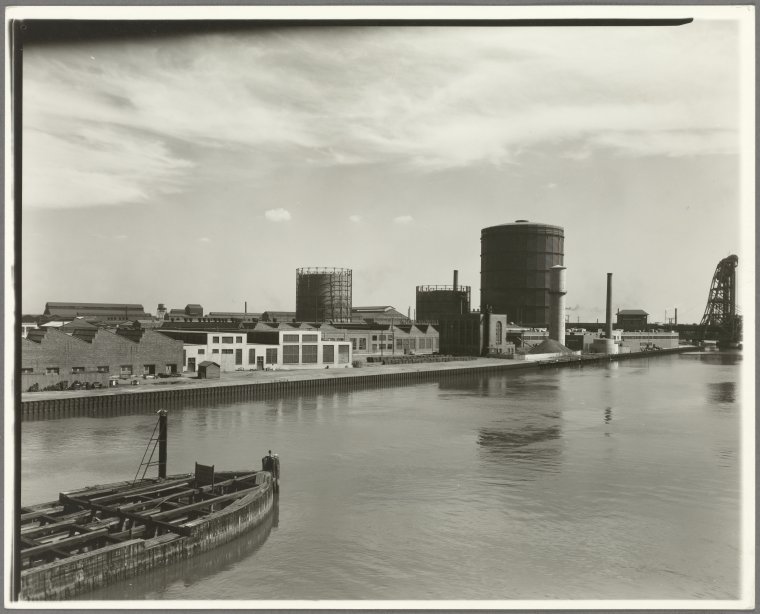
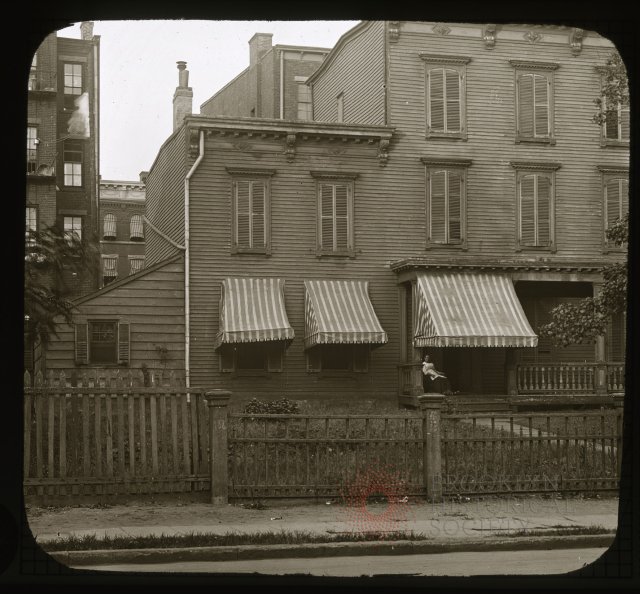
Greenpoint, Brooklyn, has a surprising history of both bucolic green pastures and rancid oil patches. Before the 19th century this corner of Brooklyn was owned by only a few families with farms (and the slaves that tended them).
But with the future borough of Brooklyn expanding at a great rate, Greenpoint (or Green Point, as they used to call it) could no longer remain private.
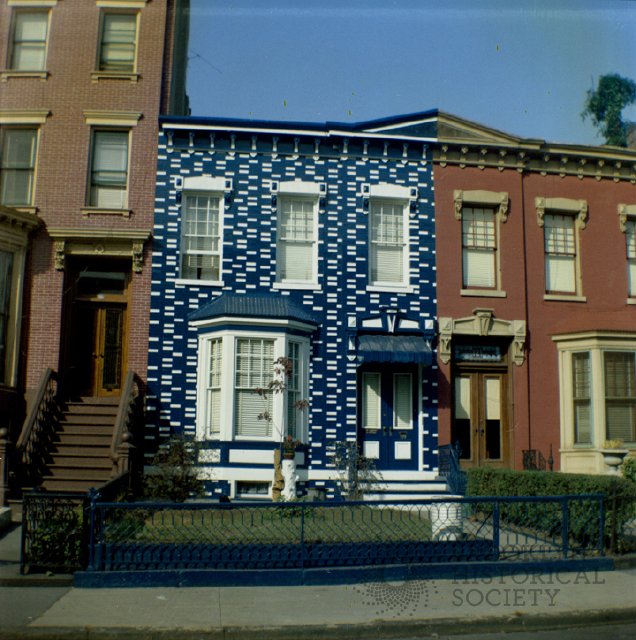
Industries like ship building and petroleum completely changed the character of Greenpoint’s waterfront, while its unique, alphabetically-named grid of streets held an extraordinary collection of townhouses.
By the late 19th century, Polish immigrants would move on the major avenues, developing a ‘Little Poland’ that still characterizes the neighborhood.
Today big changes are coming to Greenpoint thanks to new housing developments. How will these new arrivals fare next to the notoriously toxic Newtown Creek, a body of water heavily abused by industry?
FEATURING: Charles Pratt, Margaret Wise Brown, Pat Benetar and the alarming smell of cinnamon toast!
The Bowery Boys: New York City History podcast is brought to you …. by you!
We are now producing a new Bowery Boys podcast every two weeks. We’re also looking to improve the show in other ways and expand in other ways as well — through publishing, social media, live events and other forms of media. But we can only do this with your help!
We are now a member of Patreon, a patronage platform where you can support your favorite content creators for as little as a $1 a month.
Please visit our page on Patreon and watch a short video of us recording the show and talking about our expansion plans. If you’d like to help out, there are five different pledge levels (and with clever names too — Mannahatta, New Amsterdam, Five Points, Gilded Age, Jazz Age and Empire State). Check them out and consider being a sponsor.
We greatly appreciate our listeners and readers and thank you for joining us on this journey so far. And the best is yet to come!
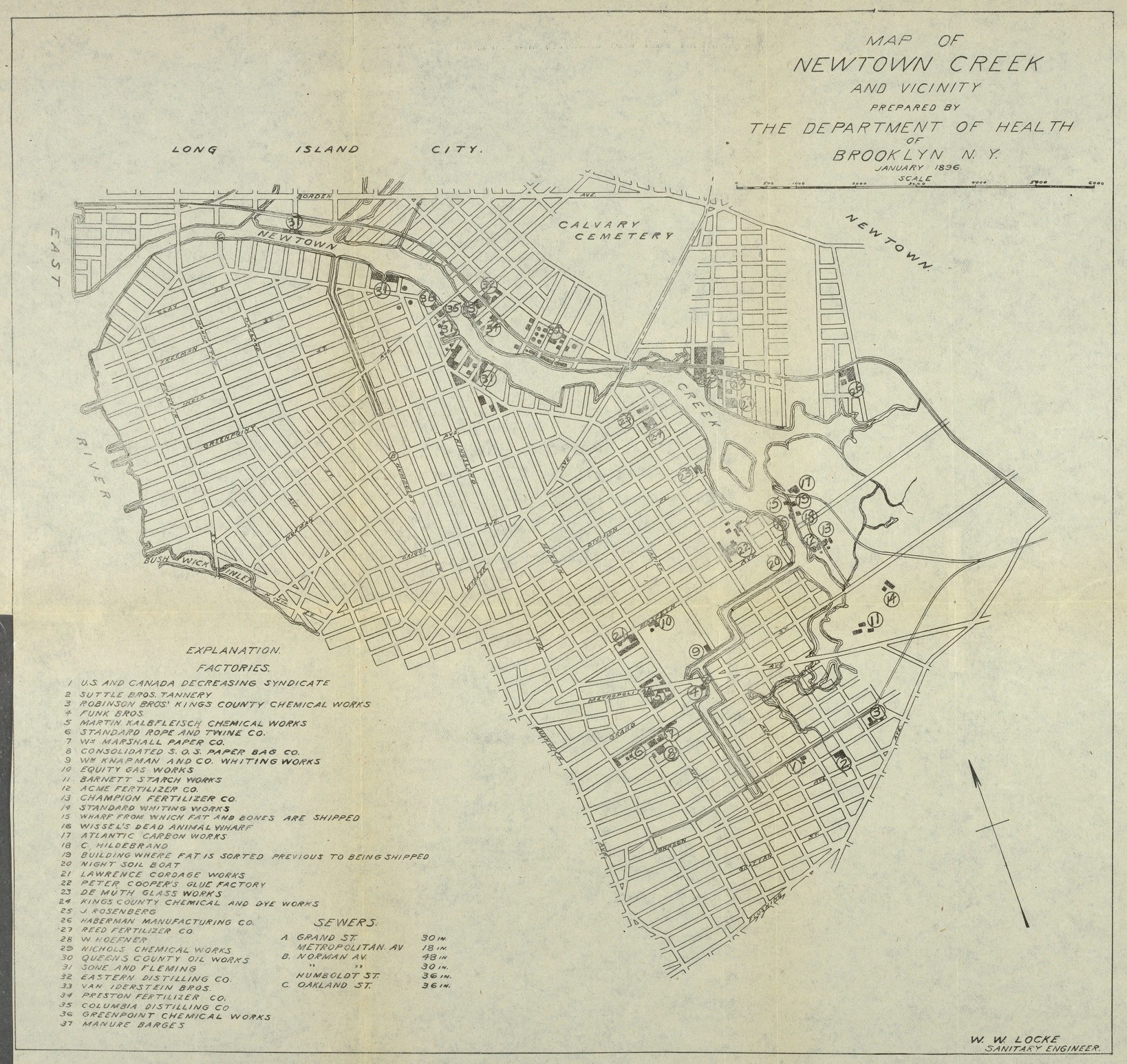
A map of Greenpoint from an 1896 survey. A list of industries are marked along the waterfront including tanneries, rope and twine manufacturers, a glue factory, glass works and “Wissel’s Dead Animal Wharf.”
Courtesy New York Public LIbrary
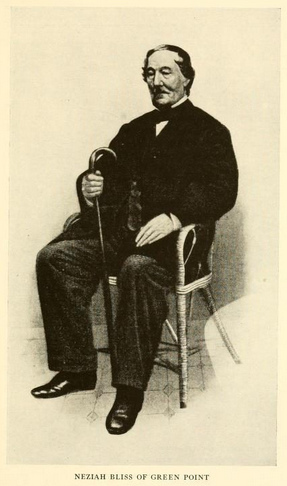
Neziah Bliss, the ‘godfather’ of Greenpoint due to his marriage into the Meserole family and subsequent development of their former farm and shoreline property.
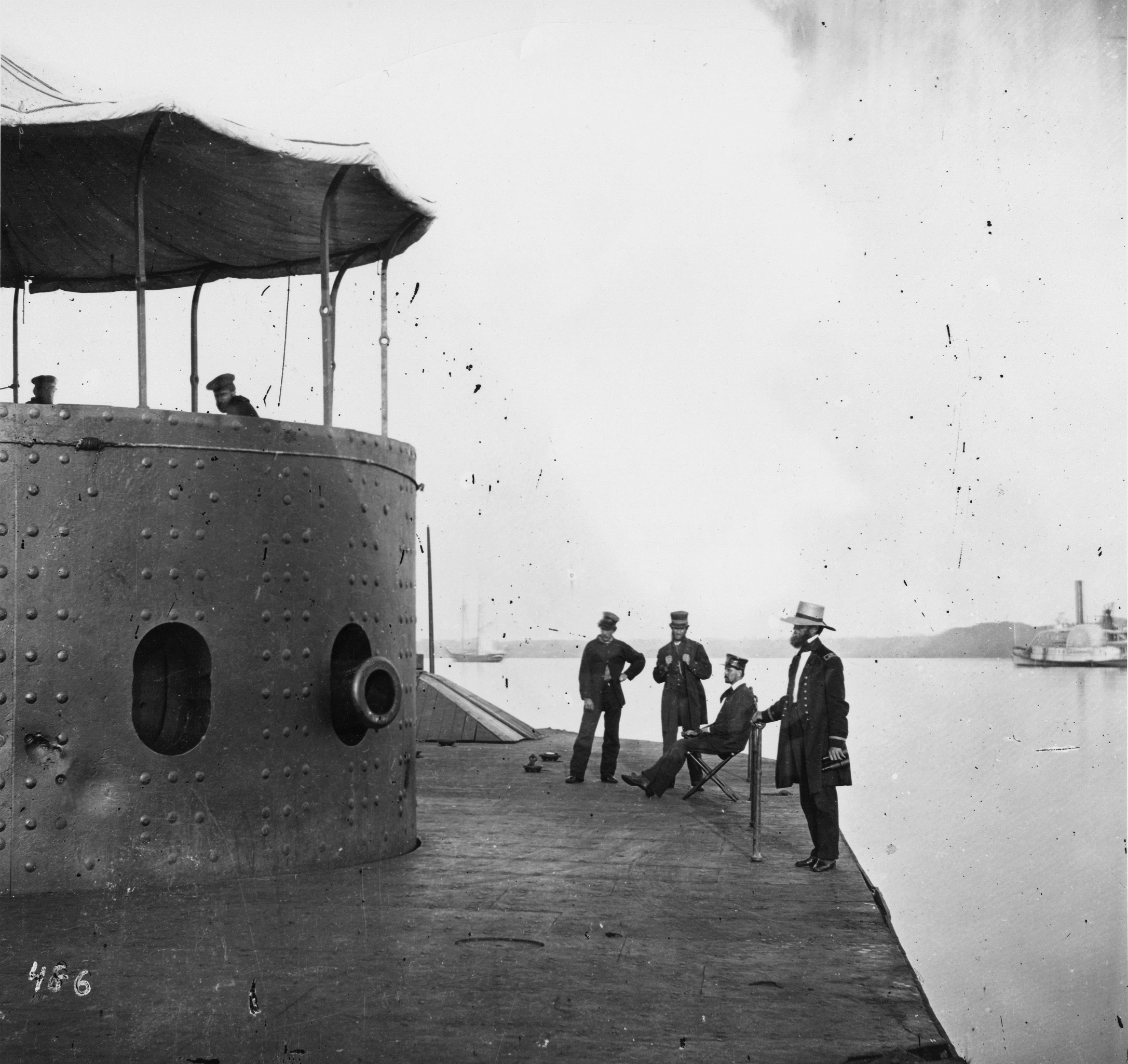
The USS Monitor, made at an iron works in Greenpoint, pictured here July 9, 1862, by Union photographer James F. Gibson.
It was a pretty spectacular year for history lovers in pop culture this year as the year’s best film, television and theater all seemed to take inspiration from the New York City of old. Â Here are ten moments that I particularly loved that expressed the unending bounty of ideas from the people, places and events of this big ole city:
“I wish that I could stop feeling that I want to be an Irish girl in Ireland.”
1 BROOKLYN
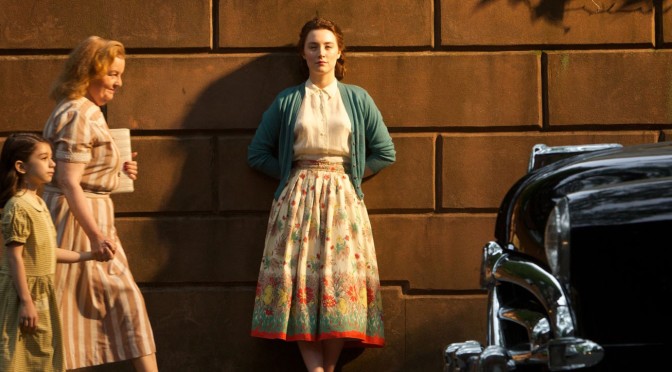
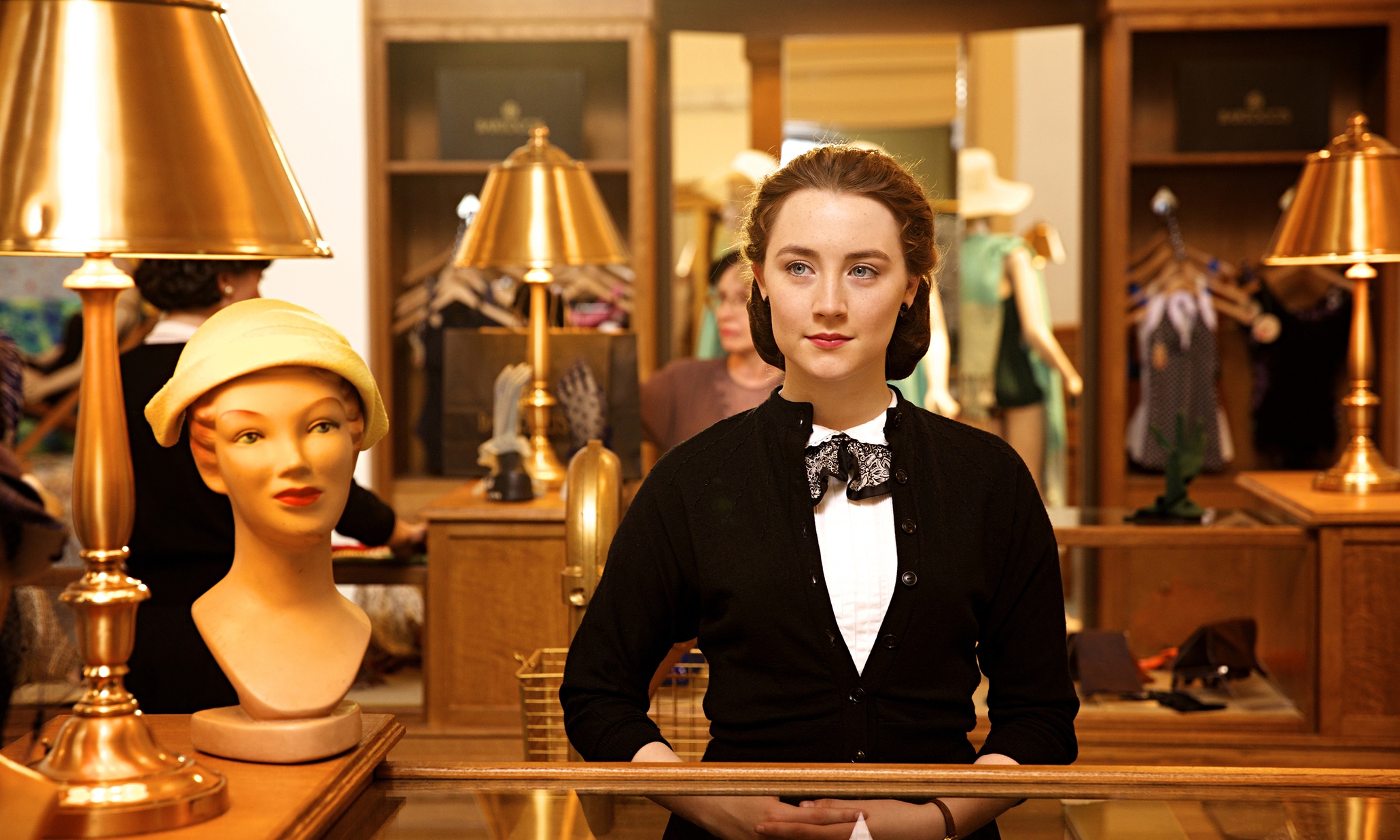
A rich and appealing look at one of New York’s greatest resources — its immigrants. A young Irish woman (Saoirsie Ronan) leaves behind her family to find work in a Brooklyn department store. She is quickly torn between an engaging Italian boyfriend (Emory Cohen) and obligations back home. This is not a story merely about the struggles of foreign transplants but relates to pretty much anybody who’s ever been stuck between two worlds. My favorite movie of the year.
Sara Krulwich/The New York Times
“I may not live to see our glory! But I will gladly join the fight! And when our children tell our story, they’ll tell the story of tonight.”
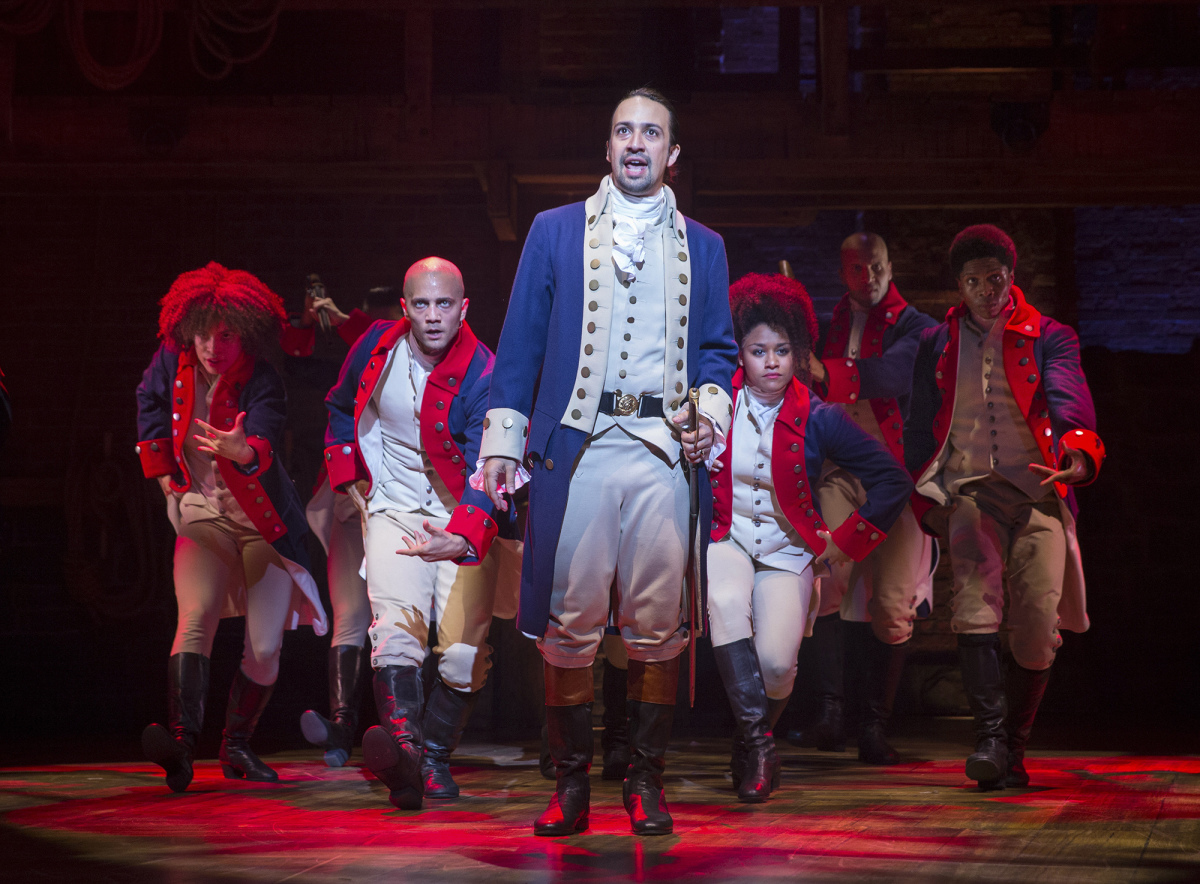
2 HAMILTON
The sound and the fury of the world’s hottest musical, from the genius mind of Lin-Manuel Miranda, changed not only the fate of Broadway, but the perception of the Founding Fathers and even the notion of biography itself. Can you stay true to a person’s memory and core beliefs while making a clear and ambitious statement on his time period with a multi-cultural cast, an innovative music style and pop cultural references? Yes you can.
NOTE: This is not number one on my list because I actually haven’t seen it. (Hey, don’t judge; we were busy writing a book this year!)
“I’m jealous of your ability to be sentimental about the past. I’m not able to do that. I remember things as they were.”
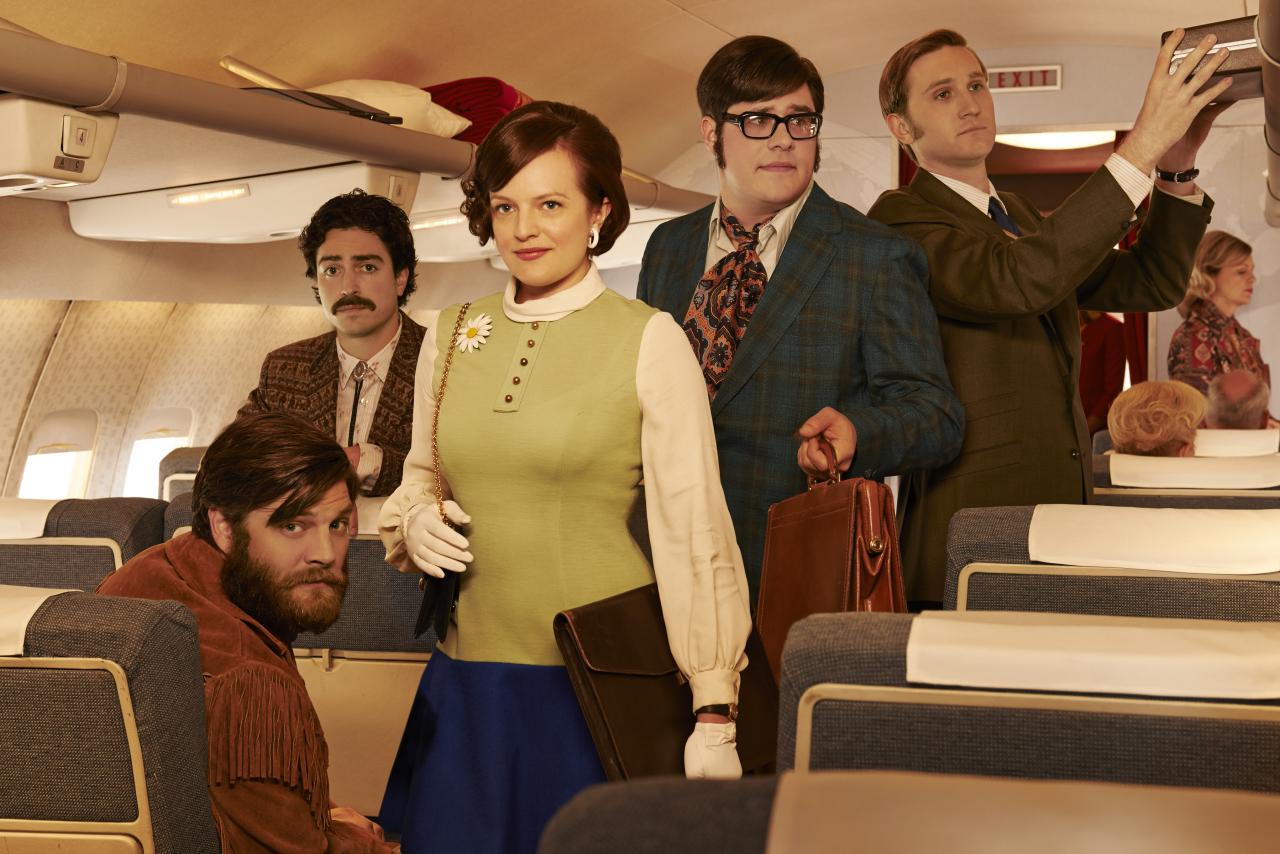
3 MAD MEN – FINAL SEASON
By the end, the deck had been reshuffled, but Don Draper was somehow still king. A beautiful ending for the irritable drunks and stiffs we’ve come to love over the years. Â And who knew it would be Betty Draper that would get the most beautiful most perfectly heartfelt send off?
“Just when it can’t get any worse, you run out of cigarettes.”
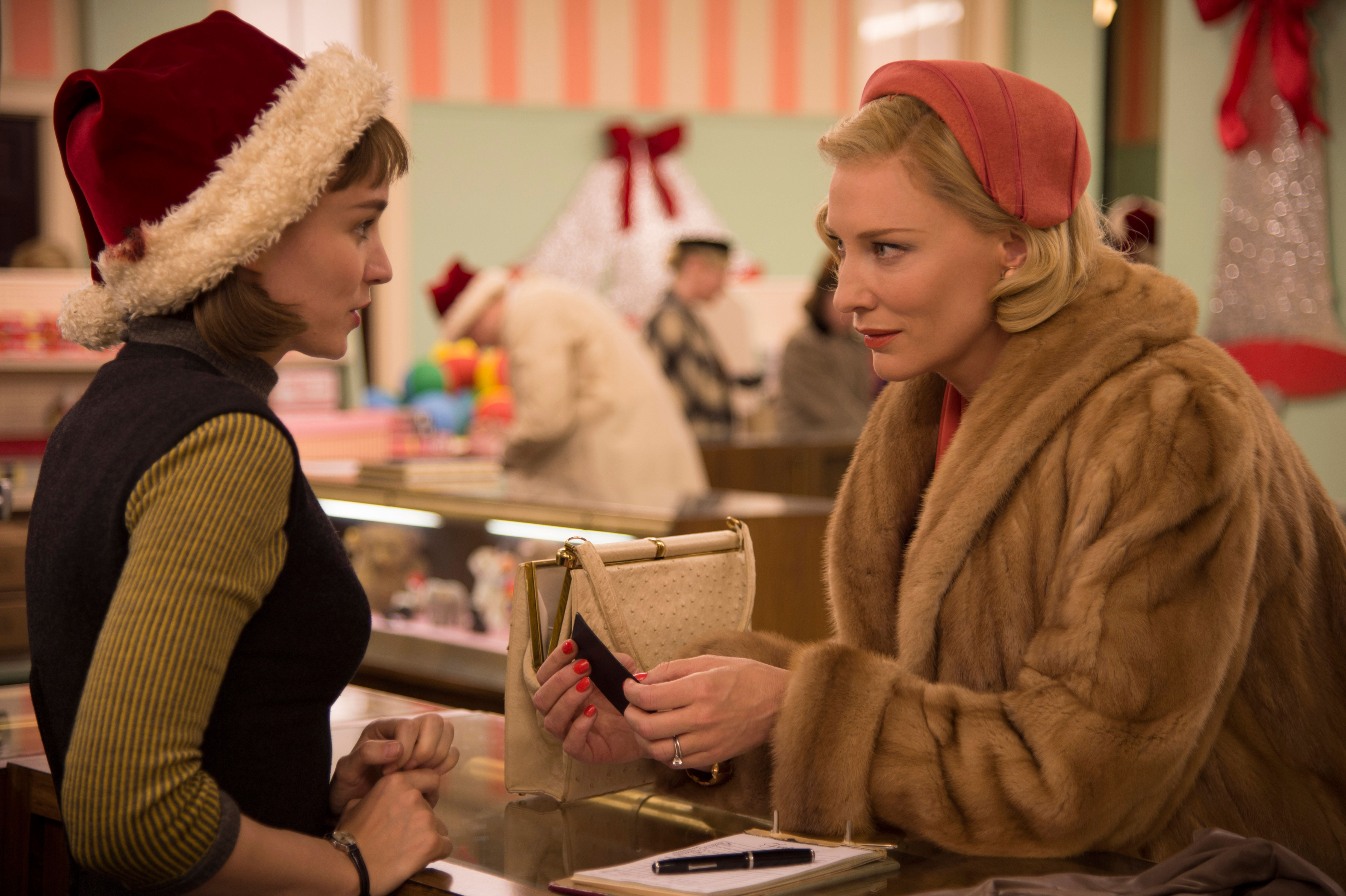
4 CAROL
This romance between a shop girl (Rooney Mara) and an older woman (Cate Blanchett) in a broken marriage meticulously recreates 1950s Brooklyn.  (I suspect that Ronan’s character from Brooklyn works in another department.) Everything has a graceful, considered touch, less bright than Brooklyn perhaps but perfectly in place. New York in this movie curiously represents the status quo here, middle America being the place for exploration and personal discovery.
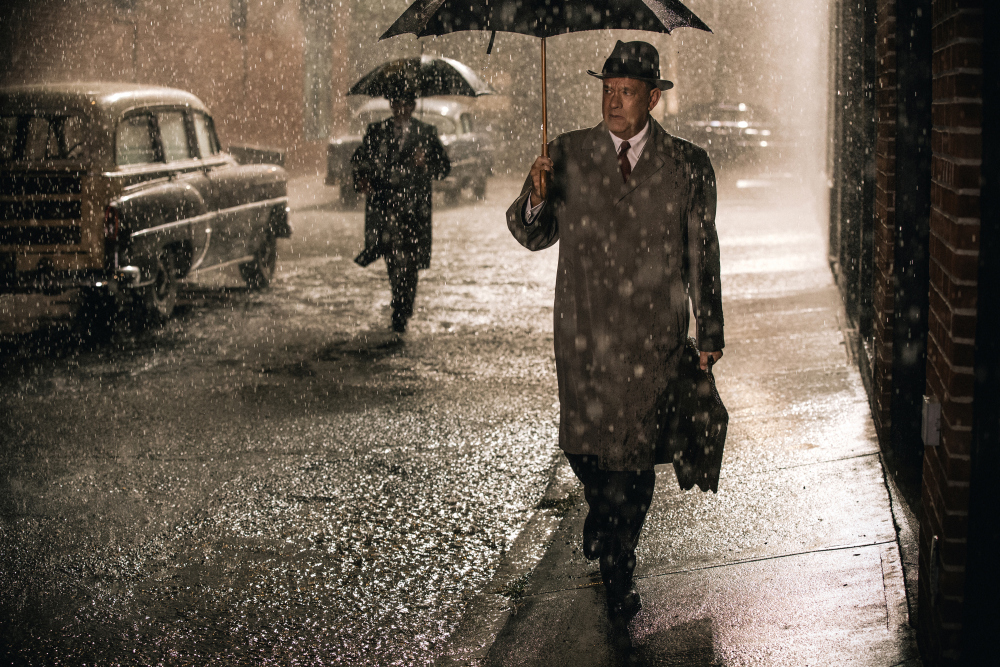
Brooklyn lawyer James Donovan (Tom Hanks) is an ordinary man placed in extraordinary circumstances in DreamWorks Pictures/Fox 2000 PIctures’ dramatic thriller BRIDGE OF SPIES, directed by Steven Spielberg.
“Standing there like that you reminded me of the man that used to come to our house when I was young. My father used to say: “watch this man”, so I did, every time he came. And never once did he do anything remarkable.”
5 BRIDGE OF SPIES
This is the year for 1950s Brooklyn in amazing films! In this case the year is 1957, and James Donovan, the Brooklyn insurance attorney played by Tom Hanks, is assigned to represent a captured KGB spy in a case that made its way to the U.S. Supreme Court. But the first third of the film uses Brooklyn Heights in some of the best location shooting of the year.  This one of Steven Spielberg’s best films in years.
“There’s no point in going through all my wrongs. Besides, God’s already seen them.”
6 THE KNICK
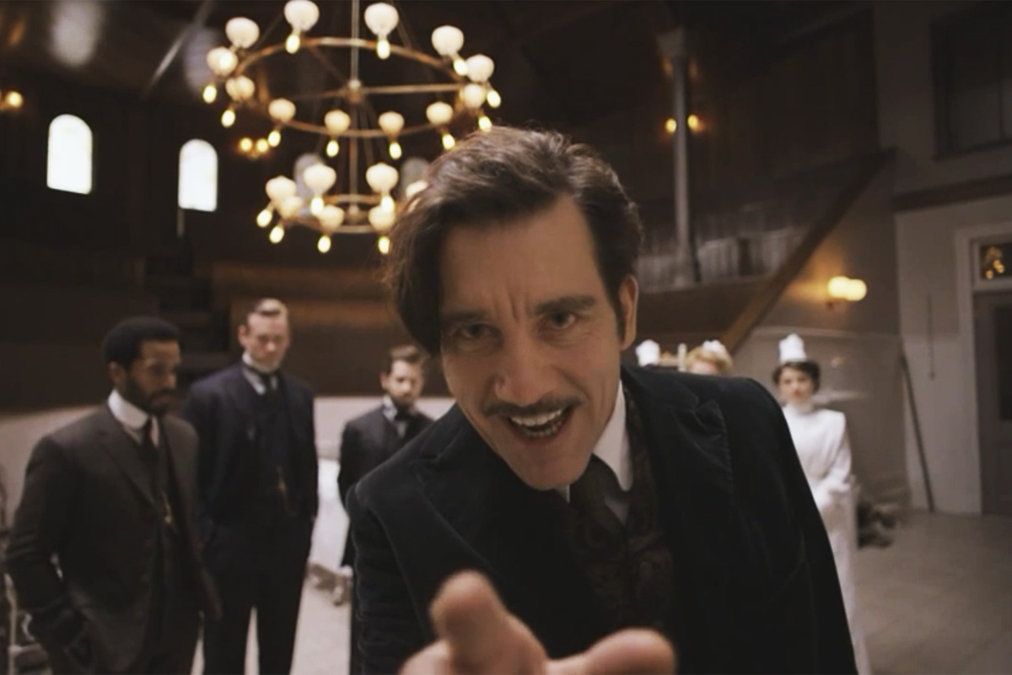
Everything perfectly wicked and bad about 1901 came roaring into the lives of the staff of Knickerbocker Hospital.  Dr William Thackery (Clive Owen) both battled and studied his own addictions, Dr Algernon Edwards (Andre Holland) further attempted to negotiate through the racism inside the hospital rank-and-file, and Cornelia Robinson (Juliet Rylance) does a little detective work and uncovered some political corruption close to home.
“I wanted to write a whole book about New York that would never appear in the history books.â€
7 CAPITAL
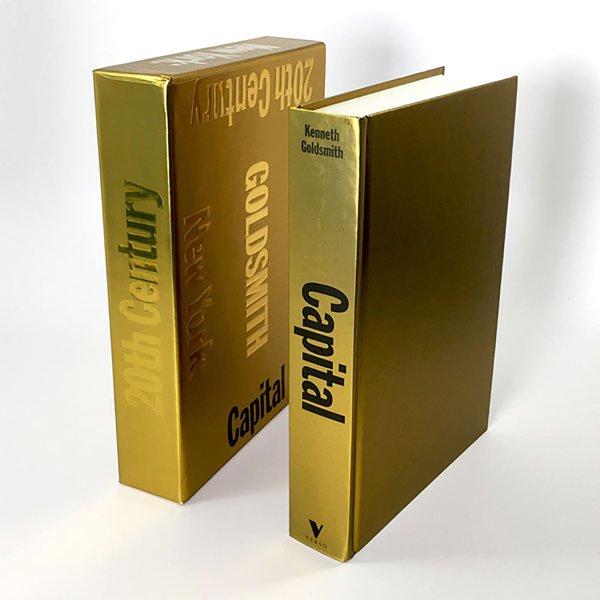
What is Kenneth Goldsmith’s Capitalyou ask? Almost four pounds, for one.  It’s also a mysterious, rambling look at New York City history from the pauses and discards, bits and pieces of recollections, wisdom and kitsch all tossed together like a salad.  It’s endlessly fascinating and annoying all once. Yet I can’t help love it not as a book, but as a terrific experiment in evaluating history (well, mostly counter-culture 20th century history) through a visual representation of information overload.
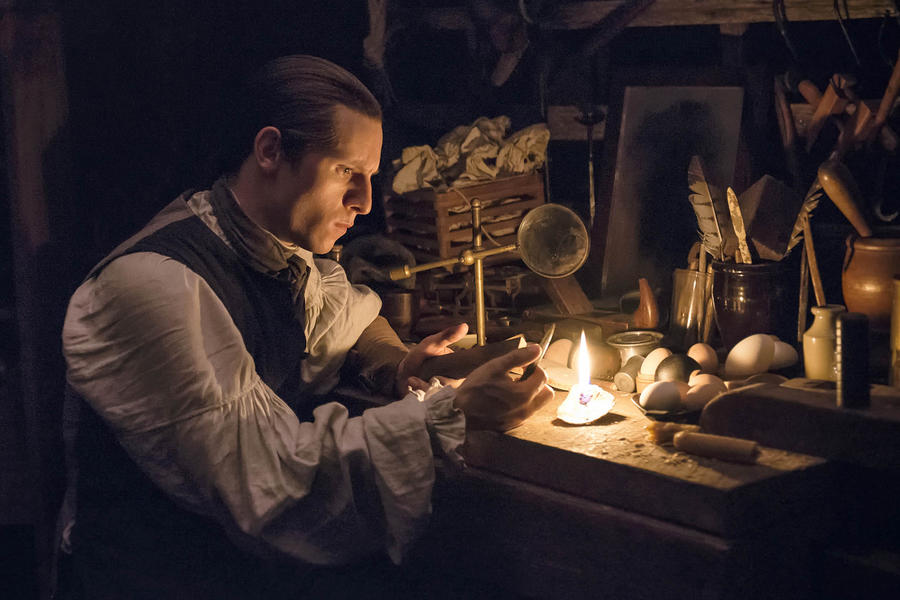
Jamie Bell as Abe Woodhull – TURN: Washington’s Spies _ Season 2, Episode 4 – Photo Credit: Antony Platt/AMC
8 TURN: WASHINGTON’S SPIES
The Revolutionary War as a messy game of cat-and-mouse, cloak-and-dagger intrigue with more bodice ripping sexual intrigue than you were taught in high school. Turn continues to do a great job weaving the actual events of the Revolution into an imagined parallel dramas of Abraham Woodhull (Jamie Bell).  Thankfully it had no problem presenting a real George Washington, situated far from the iconic image later generations would render him.
“I don’t want our kids walking home from school and talking about the different street corners where this one was killed and that one was stabbed.”
9 PUBLIC MORALS
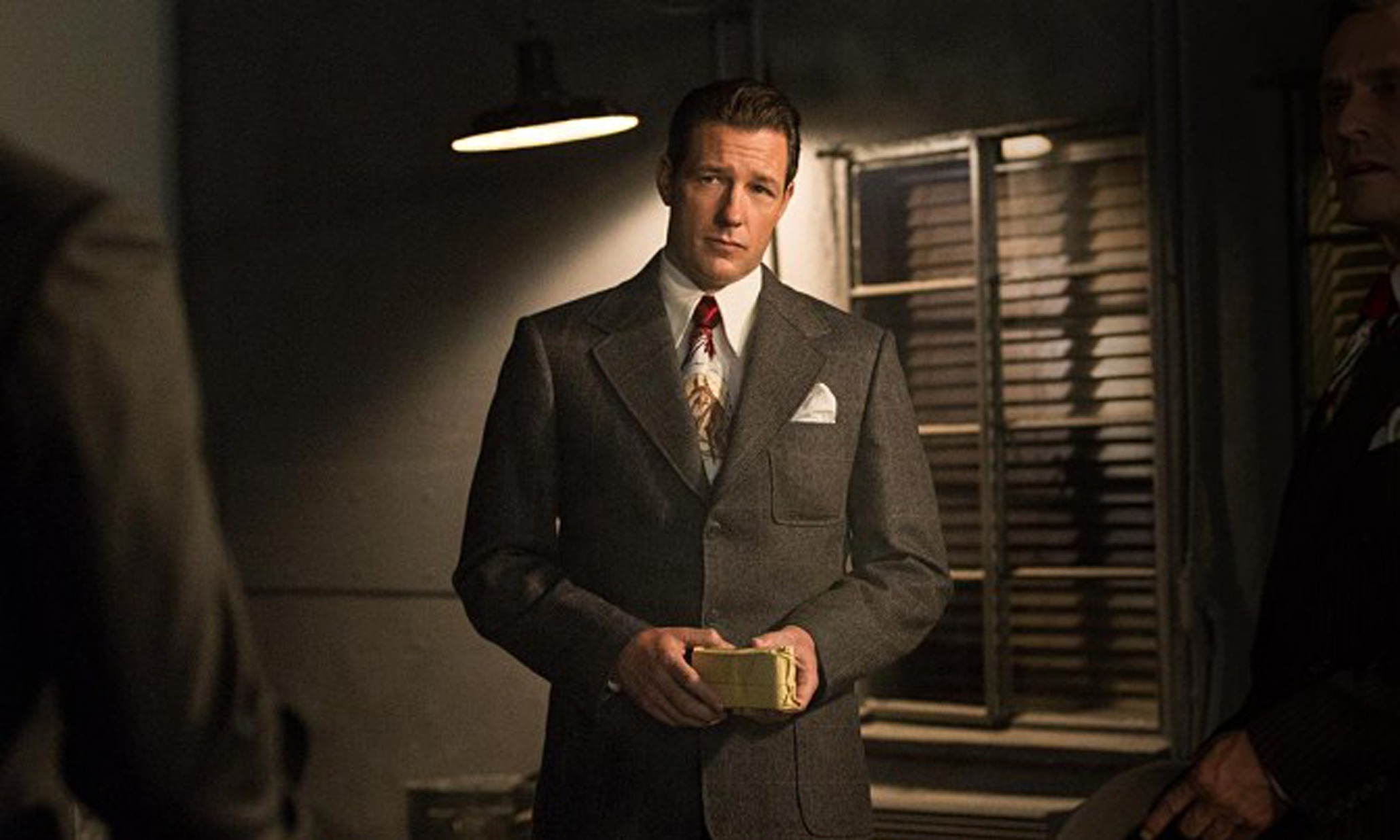
Well, it got cancelled so we’ll never see the 1960s New York Public Morals division tackle encroaching Times Square prostitution or the events of Stonewall. But for what it’s worth, Edward Burns’ well-acted look at crime fighting against the ethnic backdrop of Hell’s Kitchen had some of the best looking cars I’ve ever seen in a TV show. And unlike most depictions of old New York City (namely, almost everything on this list) it actually filmed on the streets of New York.
“The map of Sapokanikan is sanded and beveled, the land lone and leveled”
10 SAPOKANIKAN
And finally Joanna Newsom takes inspiration from the Lenape Indians with a song title that named for an old Lenape village, meaning ‘where the tobacco grows’.
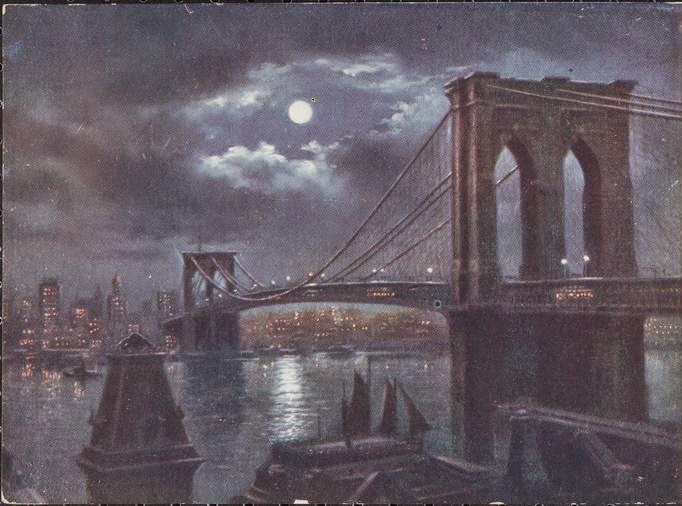
Dark skies over the Brooklyn Bridge, from a 1905 postcard (courtesy MCNY) PODCAST Brooklyn is the setting for this quartet of classic ghost stories, all set before the independent city was an official borough of New York City. This is a Brooklyn of old stately mansions and farms, with railroad tracks laid through forests and large tracks of land carved up, awaiting development. These stories also have another curious resemblance — they all come from local newspapers of the day, reporting on ghost stories with amusement and more than a little skepticism.
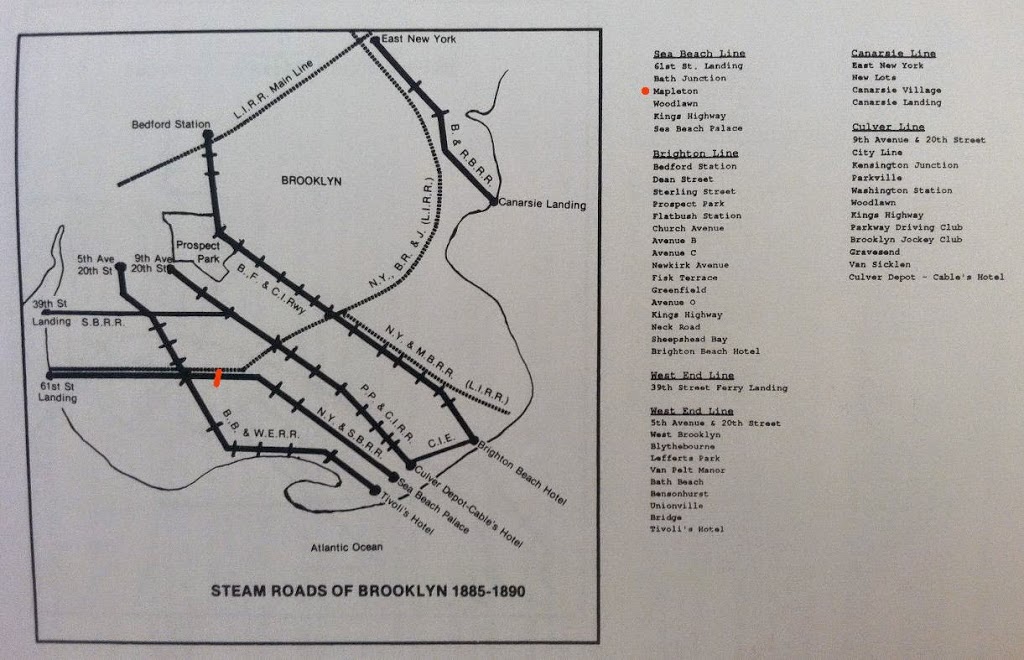
1) The Coney Island and Sea Beach Railroad took passengers to and from Brooklyn’s amusement district. But nobody was particularly amused one evening to be stopped by a horrific, gangly ghost upon the tracks near Mapleton.
2) In Clinton Hill, a plantation-style house built in the early years of the Brooklyn Navy Yard has survived hundreds of unusual tenants over the years, but certainly the scariest days in this historic home occurred in 1878 with a relentless, invisible hand that would not stop knocking.
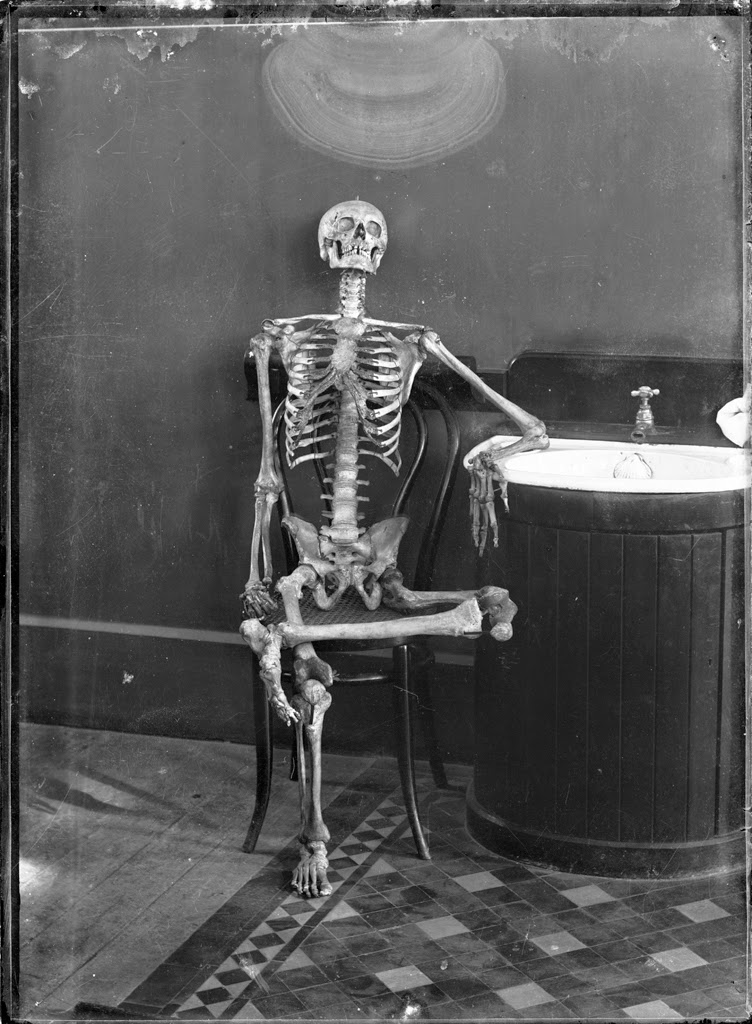
At right: Death will not deter this Brooklynite from ordering a great craft beer. (courtesy Powerhouse Museum)
3) The Oceanic Hotel was one of Coney Island’s first great hotels, an accommodation for almost 500 near the increasingly popular beaches of Brighton Beach. But in 1894, the hotel was virtually emptied out and reportedly haunted. Did it have something to do with the murder upstairs in Room 30?
4) And finally, the area of Bushwick nearest the Queens border are populated with various burial grounds like the Evergreens Cemetery, borne of the rural cemetery movement which transplanted thousands of previously buried bodies from Manhattan to Brooklyn.
In 1894, with Bushwick prepared for a spate of new development, the sudden appearance of an oddly dressed spirit threatens to disrupt the entire neighborhood. During one evening, a drunken party of 300 ghost hunters, brandishing swords and revolvers, come across one terror that proved to be very real indeed.
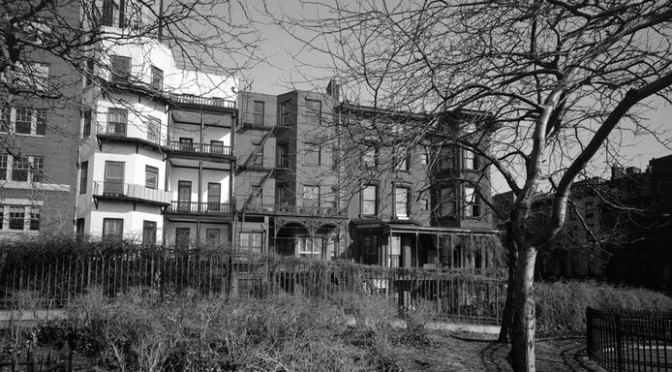
ALSO: Secrets of The Sentinel, a 1977 horror film set in an old house along the Brooklyn Promenade.
10 Montague Terrace, setting for the 1970s horror film The Sentinel, sits at the end of this elegant block on the Brooklyn Promenade.
The theatrical trailer to The Sentinel
1) MIDNIGHT TRAIN TO TERROR Phenomena reported August 1894 in several publications, including the New York Evening World
The incident in question occurred near the Mapleton station along the Coney Island and Sea Beach Railroad (Map of Brooklyn railroad lines courtesy The Weekly Nabe who has more information on the early days of Mapleton.)
2) WHO’S KNOCKING AT MY DOOR?
Phenomena reported December 1878 in several publications, including the New York Sun
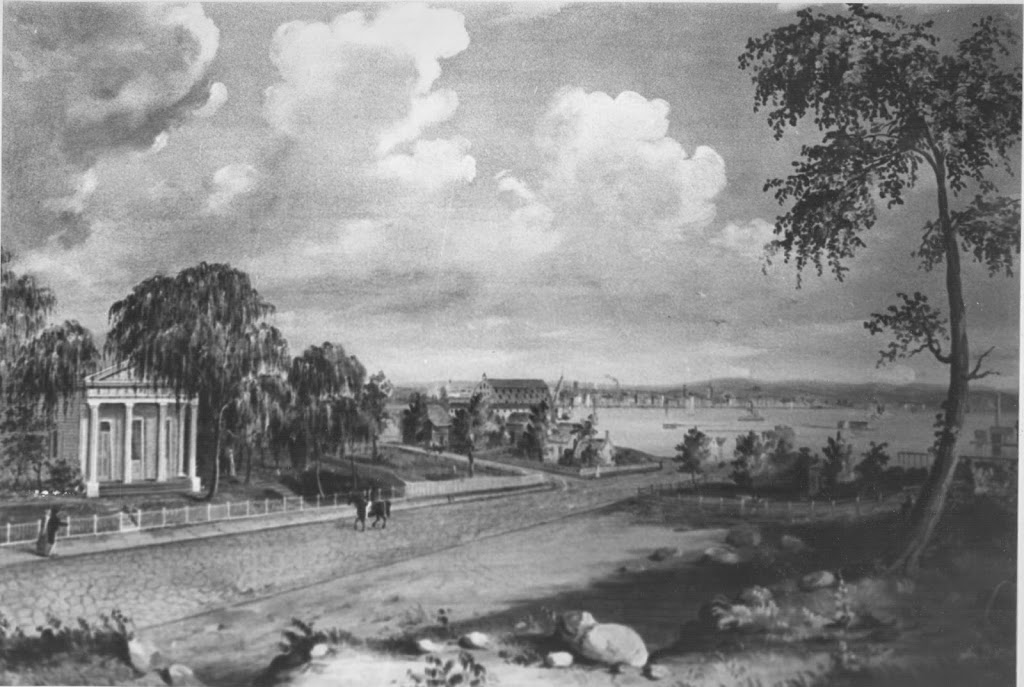
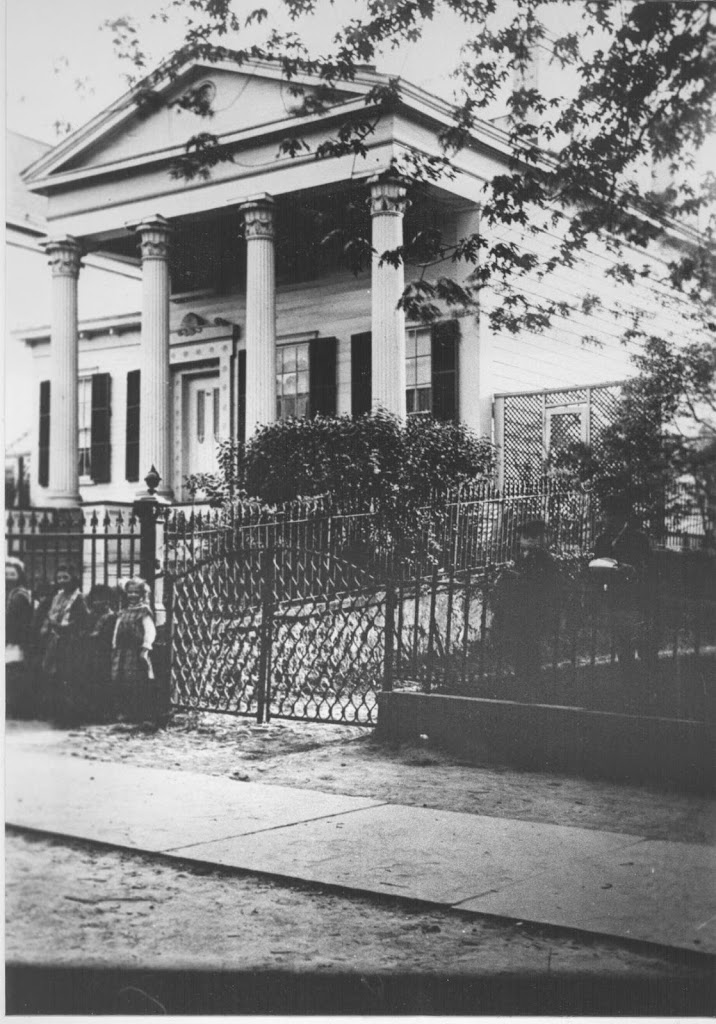
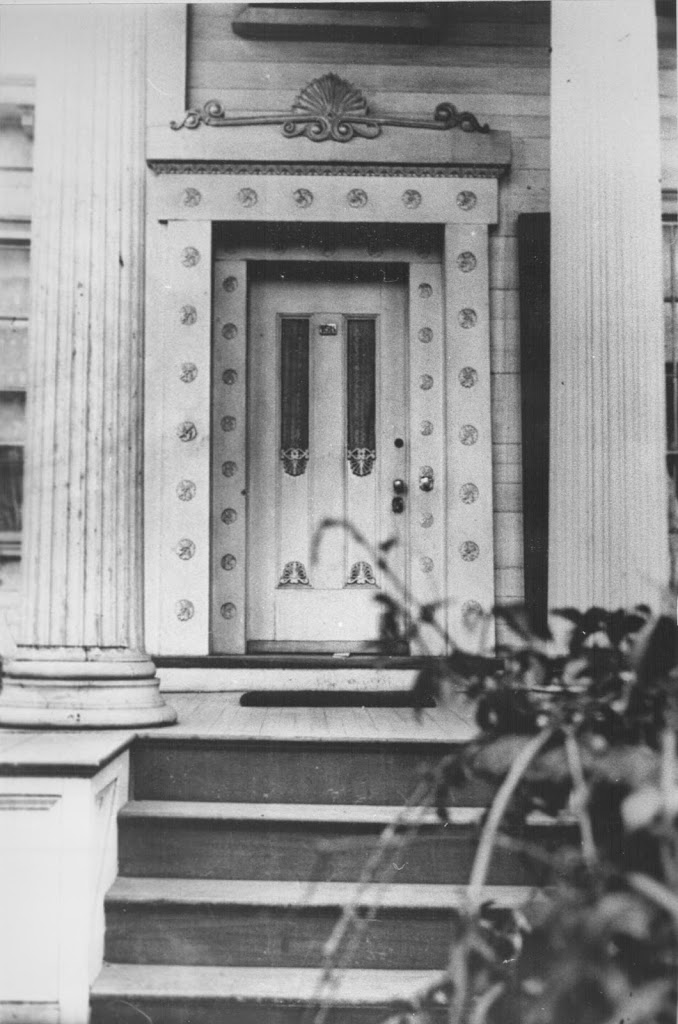
A view of Wallabout Bay and the land which became the Brooklyn Navy Yard, circa 1830s. That would appear to 136 Clinton Avenue (the oldest house in the area) however the general proportion of the region looks a bit off. Below it, two pictures of the house on Clinton Avenue, including a close-up of the infamous door. (Pics courtesy Flickr/sjcny and Long Island Historical Society)
3) THE GHOSTLY GUEST IN ROOM 30 Phenomena reported August 1892 in several publications, including theBrooklyn Daily Eagle
The haunted Oceanic Hotel, located at Neptune Avenue and W. 6th Street. Perhaps this looks surprising for a 500-room hotel, but out of frame are bungalows and other adjoined buildings. But you can see how this sort of accommodation went out of fashion rather quickly.
4) THE GHOST OF KNICKERBOCKER AVENUE Phenomena reported November 1894 in several publications, including the New York Times
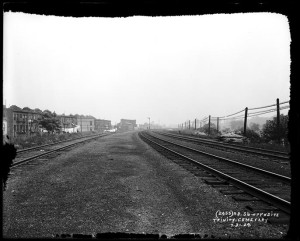
1924 — A view of the tracks which separate Bushwick from a cluster of cemeteries. Buildings to the left sit in the vacant lots which were mentioned in this story. The cemetery nearest this photograph is Most Holy Trinity Cemetery. You may remember the name Most Holy Trinity for it was this Bushwick congregation that was featured in a ghost story a couple years ago in the show ‘Haunted Histories of New York.’
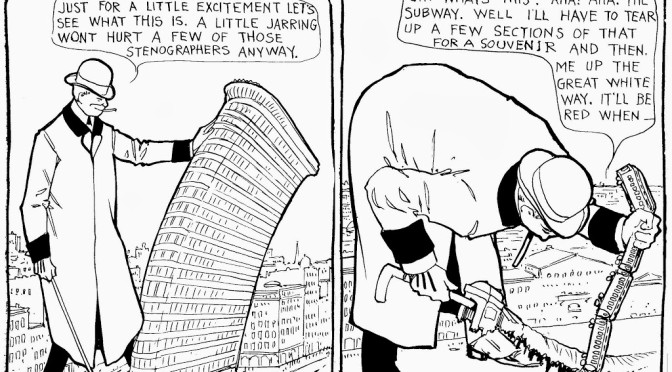
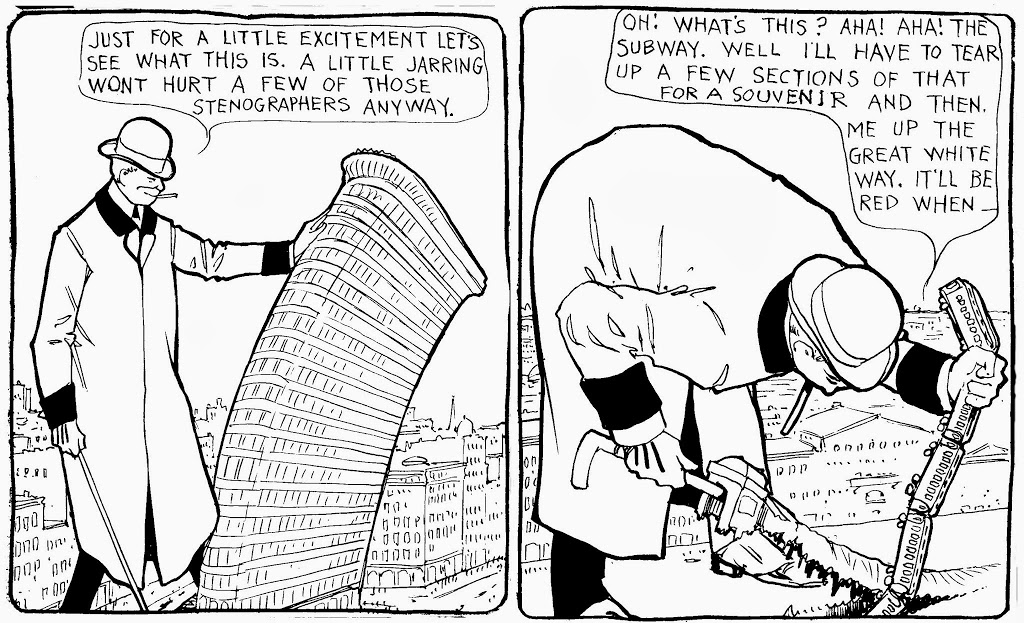
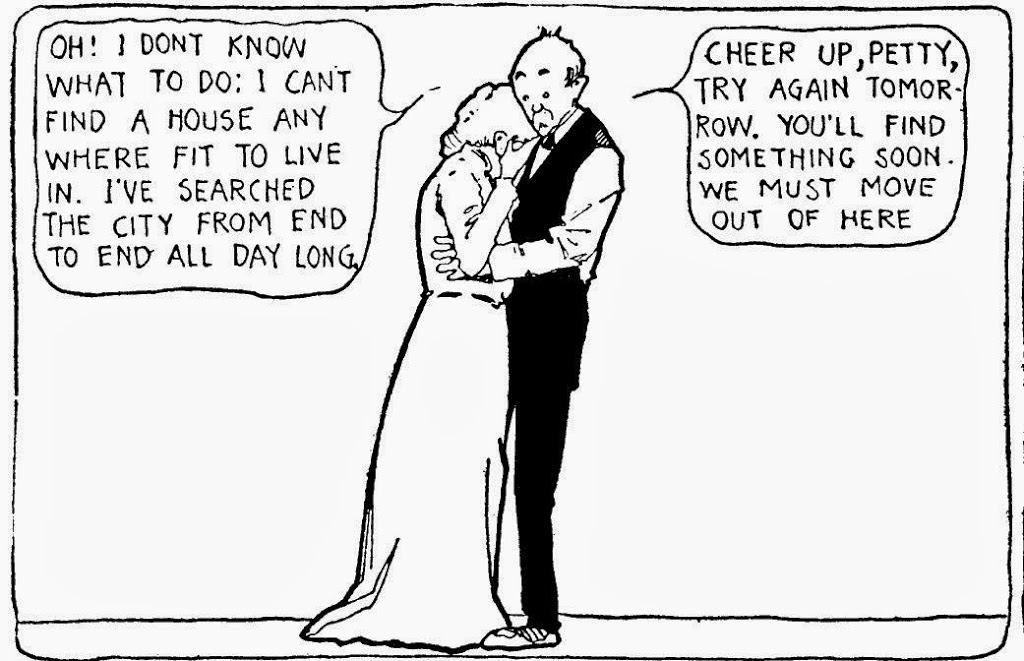
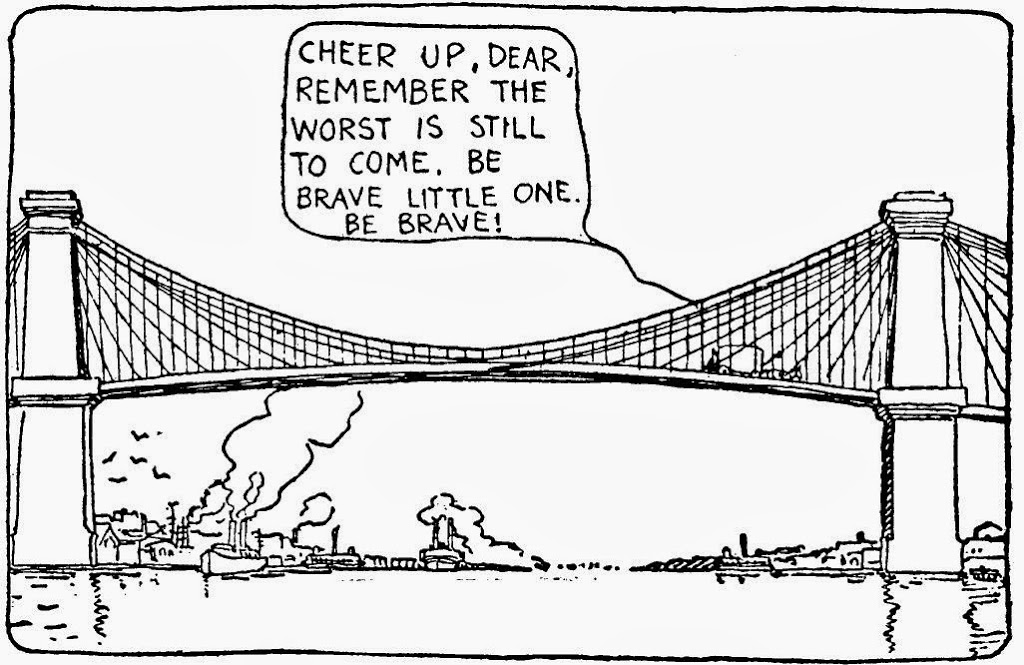
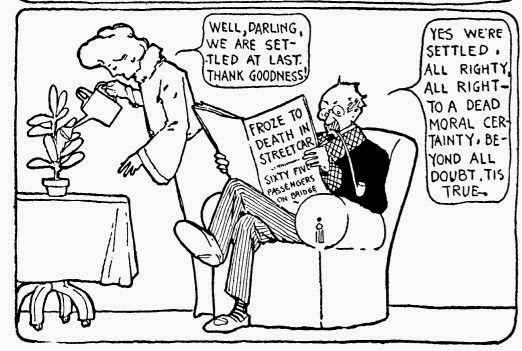
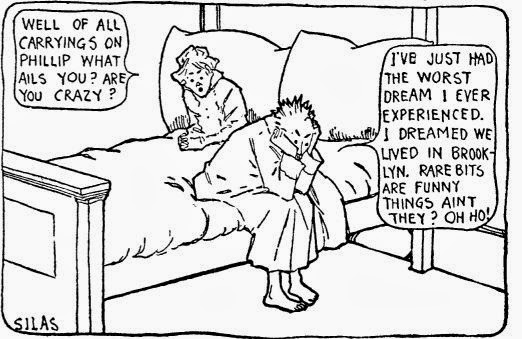
Above: Food can do strange things to you at night: an excerpt from McCay’s January 7, 1905 strip, published two days after the one printed in full below.
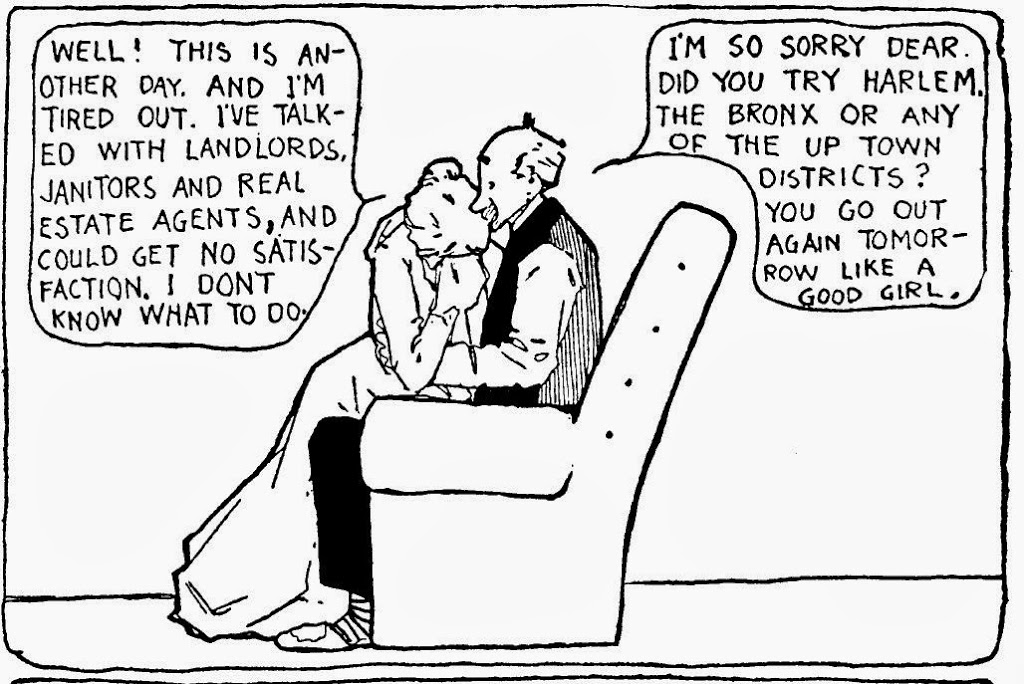
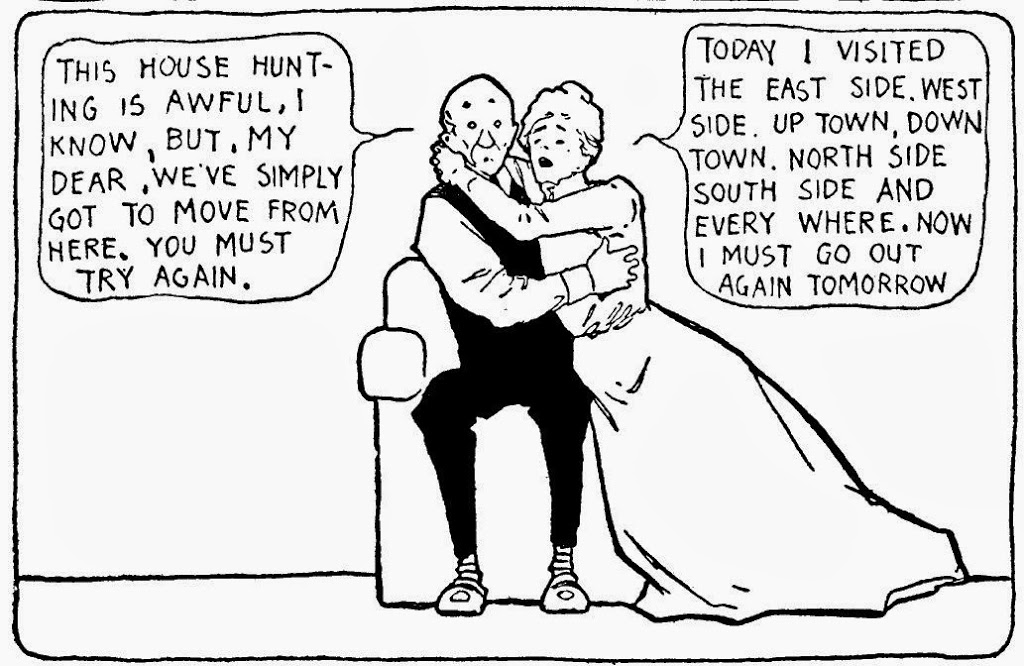
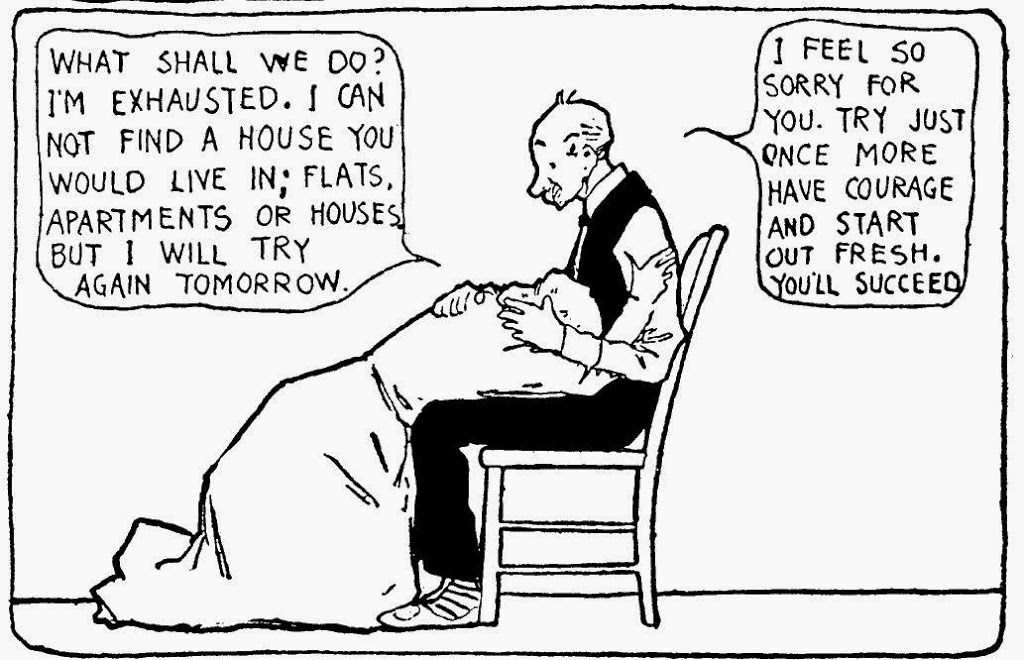
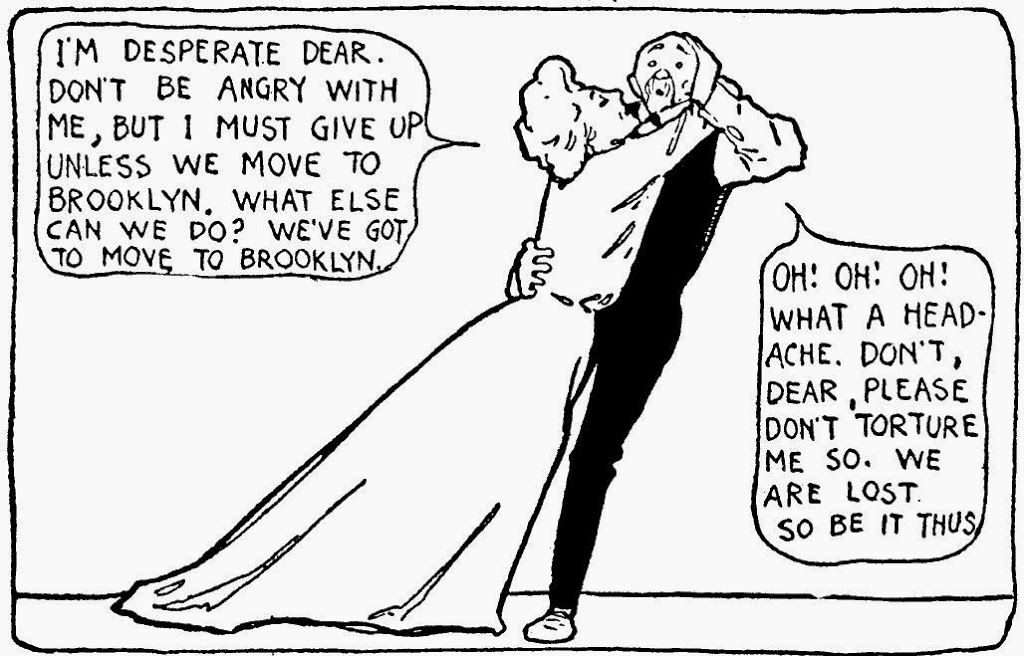
Dream of the Rarebit Fiend was one of America’s first great comic strips and easily one of the weirdest. Each eight-panel or nine-panel strip featured an individual trapped within a situation nightmarish for its day, only to be woken up in the final panel. The cause for the dream was almost always the same — a meal of rarebit the night before.
Written by Winsor McCay (of Little Nemo fame), this extraordinary oddity ran in various New York newspapers starting in 1904, with various spin-offs and revivals well into the 1920s. McCay was a favorite of publisher William Randolph Hearst, who often stifled the illustrator’s unrelated endeavors to keep the popular artist loyal to Hearst’s publications.
You can find the entire collection of these fascinating little adventures here.
Rarebit — a hot cheesy sauce poured over toasted bread — seems to have had profound effects on the subconscious. It was able to vividly extract the fears of New Yorkers at night. While most were magnificently surreal, others touched on modern issues like crowded trains, uncontrollable automobiles and fast streetcars.
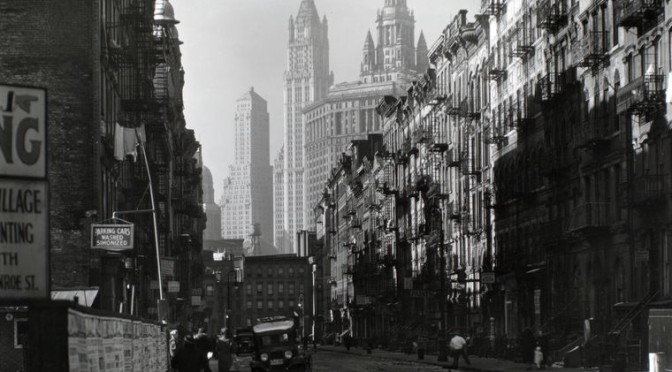
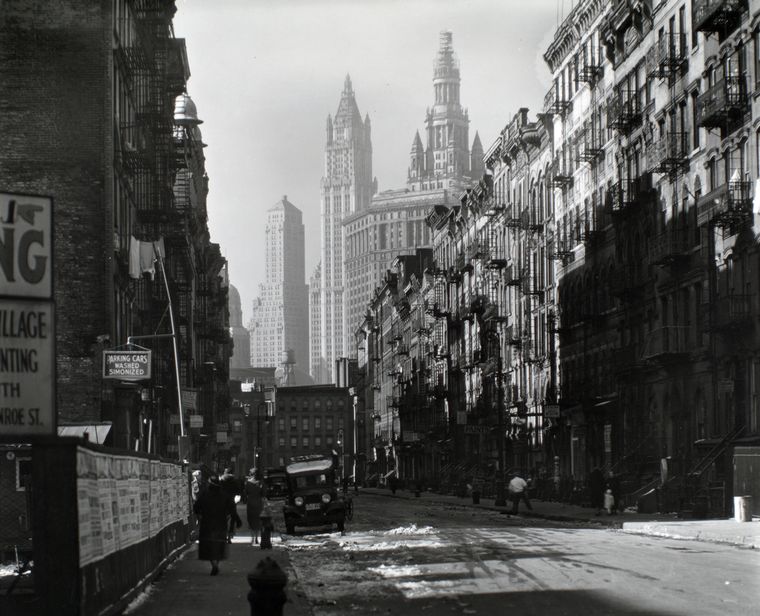
Manhattan’s Henry Street looking south, 1935, photo by Berenice Abbott (NYPL)
Since Manhattan and Brooklyn developed as two separate cities before they were intertwined within consolidated New York City in 1898, it’s not surprising to see similar street names in both boroughs, deriving from different origins. But the Henrys being honored in these street names are quite different:
Henry Street (Manhattan) is named for Henry Rutgers, the Revolutionary War hero and the financial savior of Queen’s College in New Jersey, who thanked him by renaming themselves Rutgers College (later University). You’ll find a Rutgers Street in the Lower East Side too; in fact, it intersects with Henry Street. I wonder if he had a middle name?
This of course the Henry Street of Henry Street Settlement, the pivotal health and social services provider which opened on this street in 1895.
Henry Street (Brooklyn), however, is named for Dr. Thomas W. Henry, a prominent physician in the 1820s who treated the early aristocracy of Brooklyn Heights.
Although Henry was president of the Medical Society of the County of Kings from 1831-32, it doesn’t seem like he was a name for the annals of medical history. The reason he got his own street has to do with one of the families he treated — the Middaghs.
Lady Middagh, as legend has it, wanted more colorful names for her neighborhood and led a movement to rename certain streets for pieces of fruit — which is why Brooklyn Heights has a Cranberry Street, an Orange Street and a Pineapple Street.
Despite her aversion to pompous street names, one street is actually named for her own family (Middagh Street) and, of course, one for her beloved doctor.
North Henry Street (Brooklyn)was just regular Henry Street in the independent town of Greenpoint. But that changed in 1855, when Greenpoint — and its neighbors Williamsburg(h) and Bushwick — were annexed into the city of Brooklyn.
Dozens of old street names were changed when the annexation took place. Here’s a lengthy list of other altered names. Since the southern Henry Street was the ‘original’ Henry Street of Brooklyn, this one got a North stuck to it.
It’s not clear to me which Henry this is named after, but it’s possible that it took its name from Revolutionary War hero Patrick Henry.
If so, it would have shared this trait with one of Brooklyn’s greatest politicians, Patrick Henry McCarren, who represented the Williamsburg(h) and Greenpoint areas during the years of the Gilded Age.
Interestingly, none of these Brooklyn Henry Streets are named afterHenry Ward Beecher, although his pulpit at Plymouth Church sits near the ‘original’ Henry Street.
Henry Place(Staten Island) is in the neighborhood of South Beach. I’m not sure of the origin of the name, but one possibility could be a farmer named Henry Bedell, whose mill gives its name to Mill Creek, or even Henry Hudson, who landed here in 1609 before heading over to Mannahatta.
But according to this census report from 1930, Staten Island had a great many more streets named for Henry! As this borough was a collection of small villages — and still feels that way in some areas there today — there were various Henrys that had to be eliminated for the ease of mail delivery and mapping.
If you have any information on the more unknown Henry Streets, any speculation, or if I missed any Henry Streets, please leave a comment below or email me at greg@boweryboyspodcast.com.
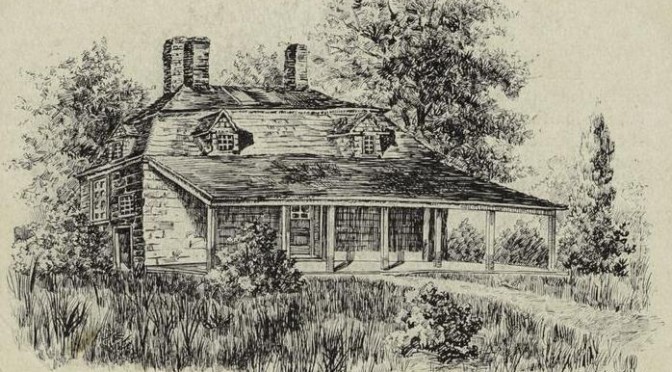
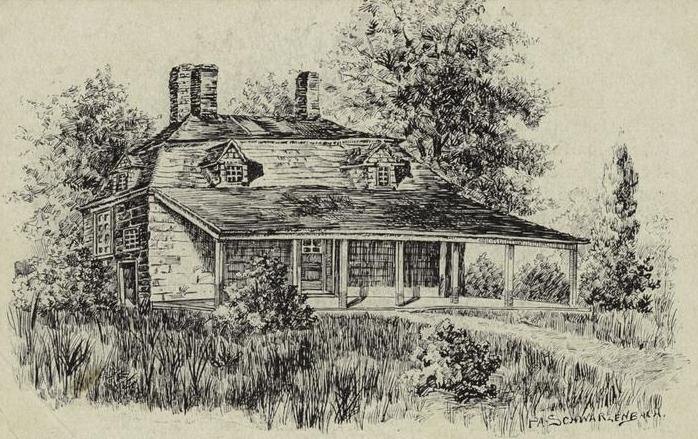
Above: While this is the old Brooklyn Schermerhorn house, it’s of a similar type to one that Ms. Melmoth may have owned, quickly becoming a tavern after her death.
Less than two hundred years ago, in the area approximate to the neighborhood of Carroll Gardens today, there was a very, very rowdy tavern.
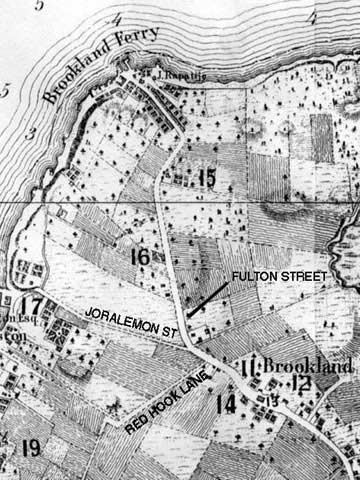
It was located east of Red Hook Lane, “in a retired and beautiful spot, near the line of the present Carroll, between Clinton and Henry street,” a place of intense merriment and gluttony, partaking of beer and hunted game, devouring buckets of oysters taken from the shore. (Many years later, perhaps in penance, St. Paul’s Episcopal Church would be built near this spot.)
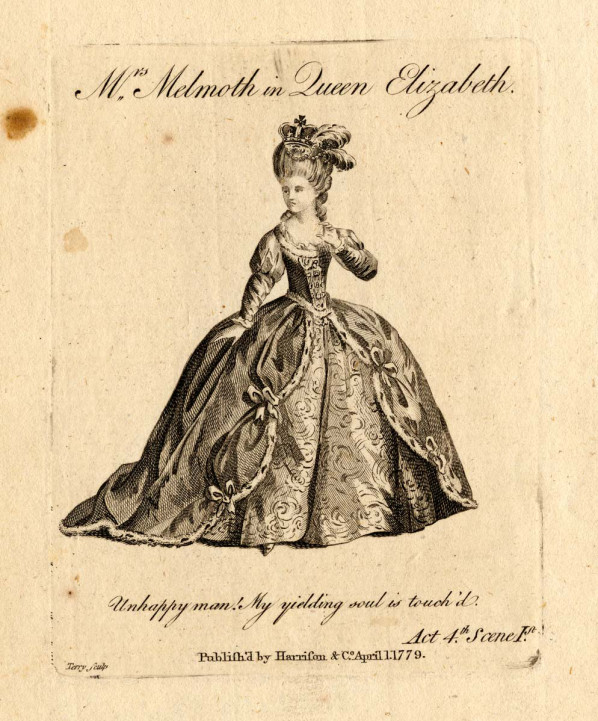
The tavern had once been the home of the famous British stage actress Charlotte Melmoth (depicted at right, in one of her finest roles as Queen Elizabeth). She retired in 1812 to this grand home off Red Hook lane and spent her last days instructing the children of wealthy Brooklyn families. Although an actress (hardly the most respected field of work in the early 19th century), her skills of etiquette and elocution brought up the next generation of Pierreponts and Cornells and Luquers.
However, when she died in 1826, her once-proper home took a detour into the debauched, becoming a popular location for young revelers. Melmoth, buried at St. Patrick’s Old Cathedral on Mott Street, certainly rolled in her grave.
The secluded, wooded tavern attracted young men, farmers and sailors, “their orgies being carried on with a freedom to which the retired character of the spot was particular conducive.” [source]
The gridded streets had not yet been cut through the wooded areas. Slightly north, in the distance, sat the ruins of old Cobbleshill Fort, the hill itself leveled decades ago by the British. The fort was briefly refurbished for possible conflict due to the War of 1812 — old Fort Swift, they called it — by the late 1820s, much of the stone would have been covered with dense overgrowth.
According to legend, one evening at around 11 p.m., the men at the converted tavern discovered they had run out of brandy. Unacceptable, of course, to a bunch of rowdy drunks! To replenish their supply, somebody needed only to run down Red Hook Lane to the Brooklyn ferry and retrieve more.
Less than a half-mile walk, of course, but one that passed by the old ruined fort, approximately near the intersection of today’s Court and Pacific streets. Sitting near to the fort was “a ghost-haunted spot,” a frightening, decrepit place well-known to locals, “about which dreadful stories are whispered, which lent wings to the feet of such unwary village urchins as chanced to pass it after dark.”
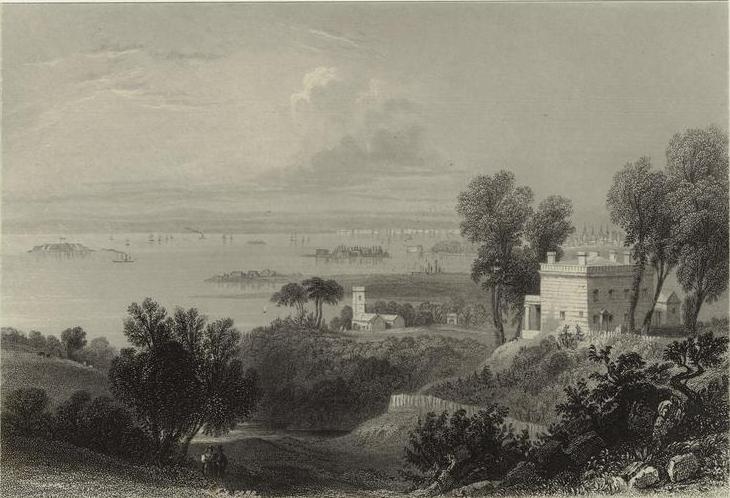
Below: Brooklyn and the East River in the early 1800s, from Gowanus Heights (today’s Green-Wood Cemetery), from an original painting by W. Bartlett. This is a bit south of the events described but gives you a good (if romanticized) idea of the still-verdant countryside that defined the area.
Nobody wanted to admit they were frightened to venture out alone, and yet despite their incredible thirst, nobody volunteered for the task. Finally, a man named Boerum, thirsty and bold, declared he would head to the ferry and retrieve the brandy. And if he happened to run into a ghost, all the better, he proclaimed!
It’s safe to assume this Boerum (whose first name is not given) is of the same Dutch Boerum clan which gives the neighborhood Boerum Hill its name. Sadly for this fellow, he would not live long to carry on his family’s good name.
According to Henry Reed Stile‘s 1869 history of Brooklyn, Boerum jumped on his horse and headed down the lane , toward the ferry and that sweet, sweet brandy. Two hours later, when Boerum had not yet returned, his anxious (and sobered-up) friends became concerned and decided to venture out looking for him. Safety in numbers, after all.
At right: where Red Hook lane would have been located, cutting through the modern neighborhood of Cobble Hill.
“Mounting, not in hot haste, they turned their horses’ heads towards the village and on approaching the haunted ground, they found Boerum’s horse standing against the fence not far from the house, and when they reach the spot itself, their companion was discovered lying senseless on the road, with features horribly distorted.”
We can only guess what “horribly distorted” might mean. The friends quickly took Boerum back to the tavern, but the man was too far gone. “[H]e lingered for two or three more days, in a speechless condition, then died.”
What had happened to young Boerum? He had never made it to the ferry to fetch the brandy, and no evidence was ever found among the ruins.
Within a few years, the ruins themselves were leveled, and even most of Red Hook Lane was eliminated, as a street plan turned the region into orderly neighborhoods. Still, as you pass through Cobble Hill at night, on your way perhaps for a little brandy of your own, remember the cautionary tale of young Boerum.
The ghost story is featured alongside more standard history in Stile’s 1869 two-volume history of Brooklyn. Pictures courtesy New York Public Library, except for labeled map, showing Red Hook Lane, which is from Forgotten New York






![[Looking west from Brooklyn Bridge Park to the houses on Montague Terrace.]](https://boweryboyshistory.com/wp-content/uploads/2014/10/MN113097-300x238.jpg)
![[First hotel at Coney Island, Oceanic Hotel.]](https://boweryboyshistory.com/wp-content/uploads/2014/10/MNY221930-300x196.jpg)