Categories
Health and Living The Alienist

Scenes from New York’s public baths: How tenement dwellers got clean and cool

HISTORY BEHIND THE SCENE What’s the real story behind that historical scene from your favorite TV show or feature film? A semi-regular feature on the Bowery Boys blog, we will be reviving this series as we follow along with TNT’s limited series The Alienist. Look for other articles here about other historically themed television shows (Mad MenThe KnickThe DeuceBoardwalk Empire and Copper). And follow along with the Bowery Boys on Twitter at @boweryboys for more historical context of your favorite shows. 

Public bathhouses were an integral component of tenement districts in late 19th and early 20th century New York City. Running water was uncommon in the poorest areas of the city, and when it was available, rusty, filthy pipes ensured that its consumption would be an unpleasant and often unhealthy experience.

And of course there was often very little available for bathing. As a result, life was so very fragrant back then.

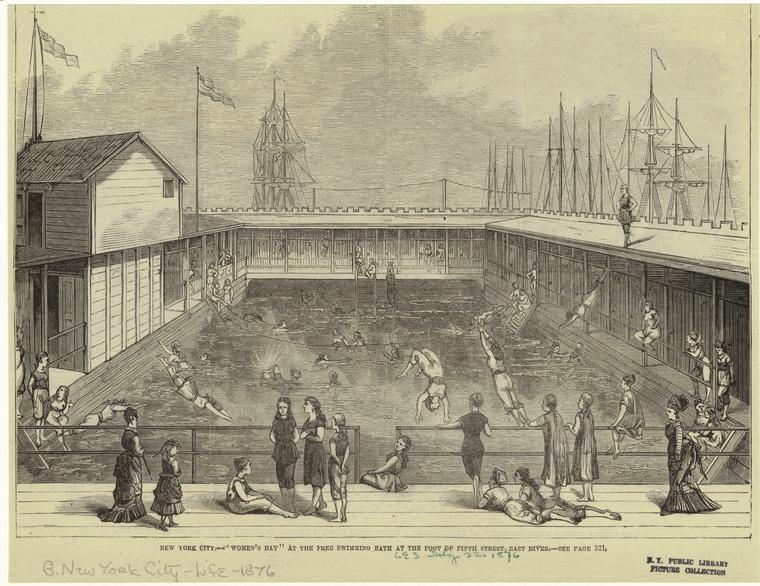
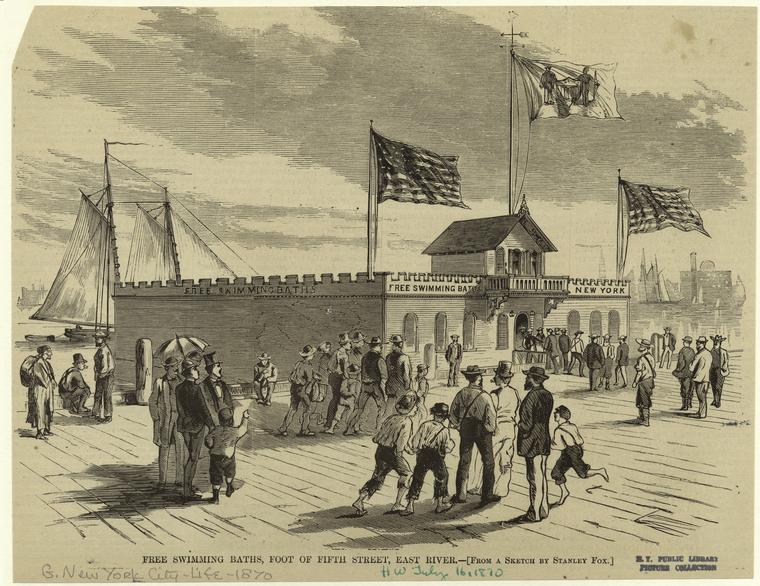
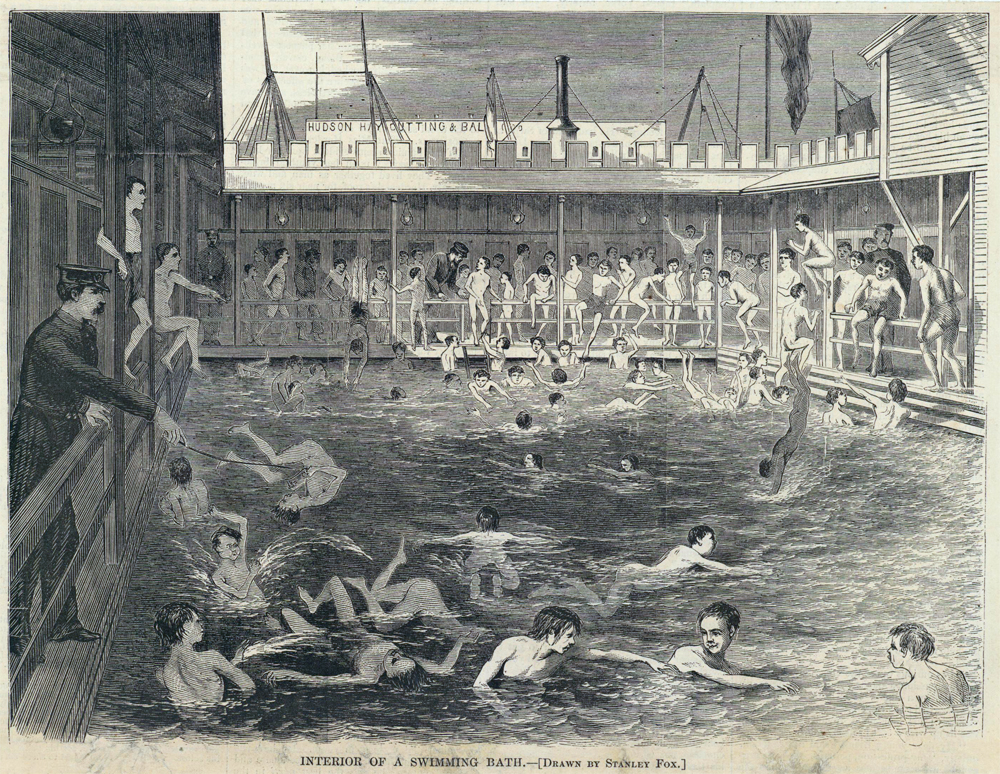
Temporary outdoor baths sprang up around the city during the summer such as this one off Fifth Street on the East River in 1870.
NYPL
NYPL

From Harper’s Weekly, August 20, 1870“We give on this page an illustration of the swimming bath at the foot of Charles Street. It contains 68 rooms, the water is four and a half deep and 200 bathers can be accommodated at one time. The success of these experiments should lead to the establishment of other baths in sufficient numbers to accommodate all who desire to avail themselves of these healthful privileges.”
New -York Historical Society

But the city’s objectives in opening public bath houses (starting in the 1880s) weren’t merely related to cleanliness. Most believed access to clean water promoted health and kept epidemics from spreading. This wasn’t strictly for the benefit of the poor, but for the wealthier classes who interacted with them in daily life.

From Gotham by Edwin G. Burrows & Mike Wallace: “[I]n the late 1880s, [German professor Simon] Baruch began a campaign stressing that baths, in addition to benefiting the poor and helping create “civic civilization” out of “urban barbarism,” were in the interest of “the better situated classes”: no longer unwashed, the employees, servants, laborers, and tradespeople next to whom they sat on crowded cars would not carry so many deadly germs. ”

Public baths also provided relief in hot summer months — air conditioning and affordable electric fans were decades away — and encouraged physical activity. The public bath, in effect, gave rise to the urban swimming pool movement, drawing children from dangerous piers and swimming holes and into carefully monitored (if incredibly crowded) water environments.

In 1888, New York installed several outdoor baths within the city, imposing 20 minute time limits on swimmers to keep the water clean. (No matter; adventurous children hopped from pool to pool to skirt the rules).

Public Bath #10 on the Hudson River
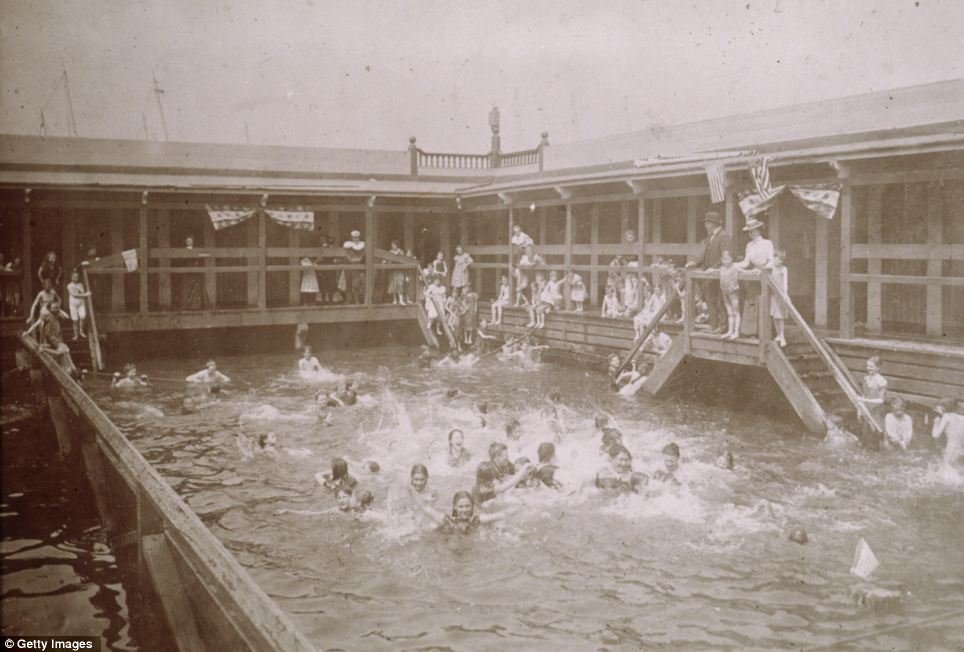
Three years later, a grand People’s Bath (at Grand Street and Centre Street) provided people with soap and towels for the modest admission of five cents.

In 1895, public bathing became a priority for Mayor William Strong who authorized a Sub-Committee on Baths and Lavatories which reported that “New York City was lagging far behind European and other American cities in the building of baths and urged that the city begin immediately to remedy the situation.” State government soon concurred, passing a mandatory bath law that year, “making the establishment of public baths mandatory for all first- and second-class cities in the state.” [source]
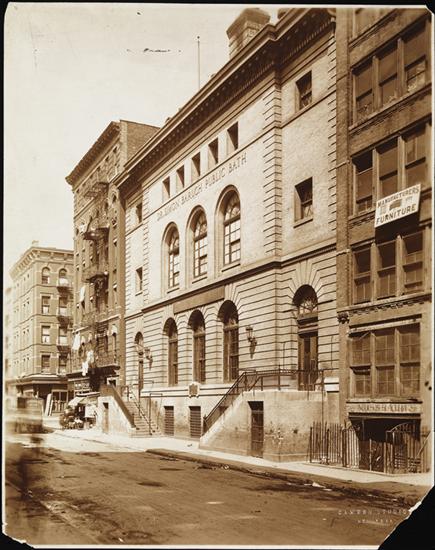
Museum of the City of New York

New public baths began opening by the new century, many in the Lower East Side; the first, Rivington Street Bath (pictured above), even had 91 showers and 10 bathtubs.

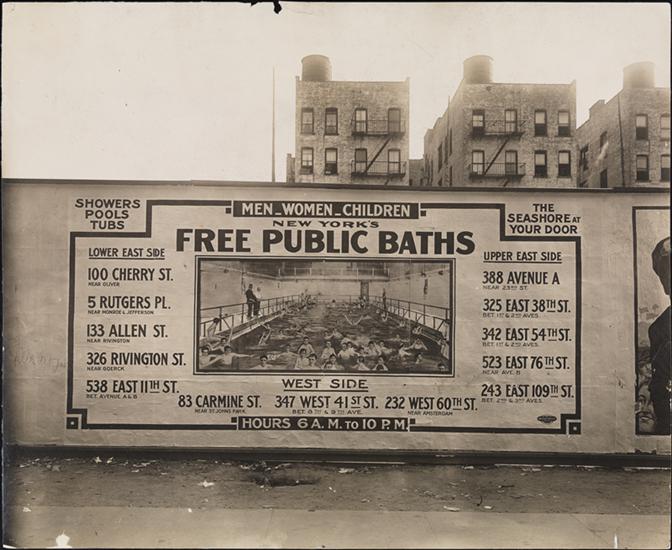
An advertisement for baths in 1935:
They’re mostly forgotten about today but a few remaining historical structures bear evidence of these important structures.

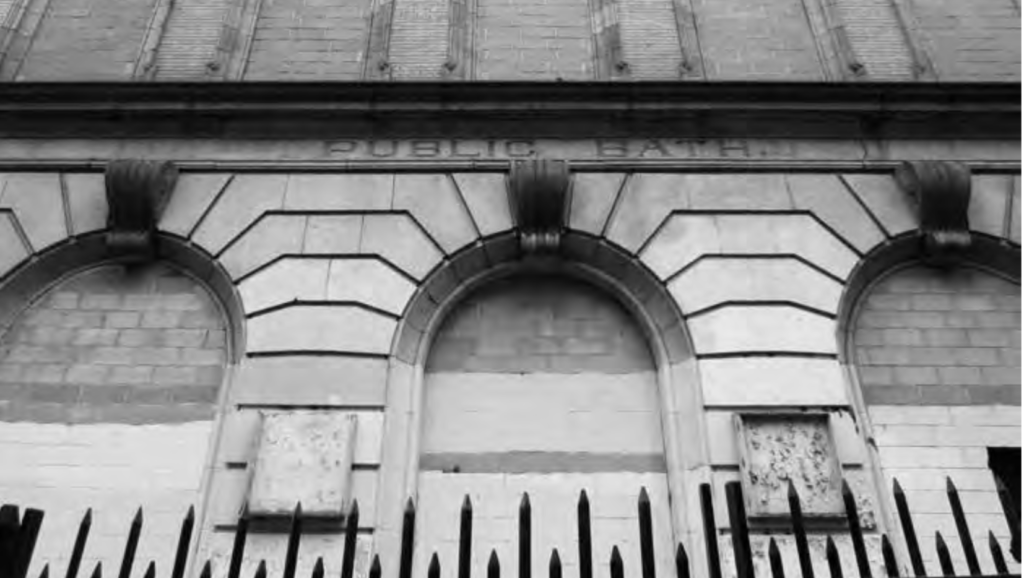
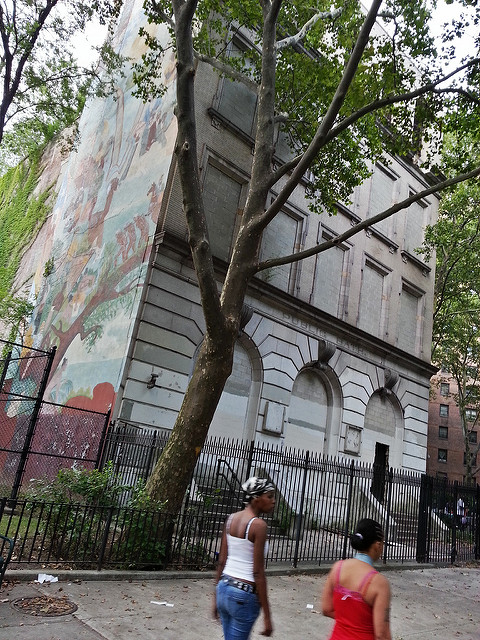
One such relic sits at Madison Street in the Lower East Side, within the La Guardia Houses development. (It’s listed in the above advertisement at 5 Rutgers Place.)
Matt Green/Flickr

Nicknamed the Whitehouse, the bathhouse opened on December 23, 1909, and was one of thirteen public bath facilities in New York at that time. By the 1940s indoor plumbing had rendered the public bath obsolete, and so it was converted into a public swimming pool and gymnasium. Today it sits unused, like many others throughout the city, a ruin from another time.

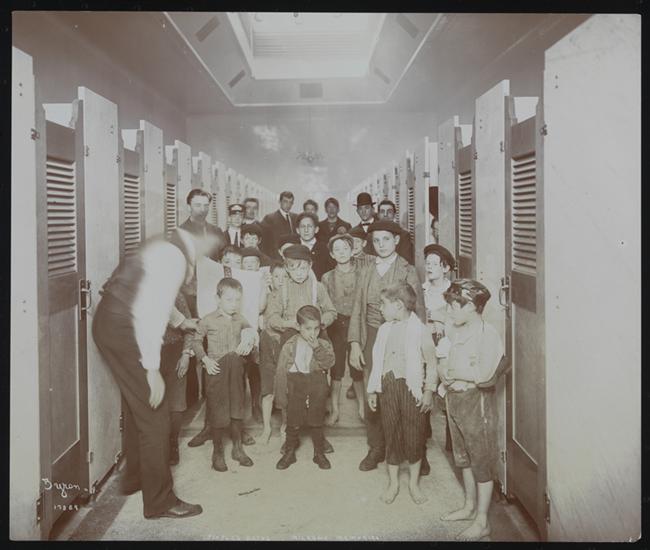
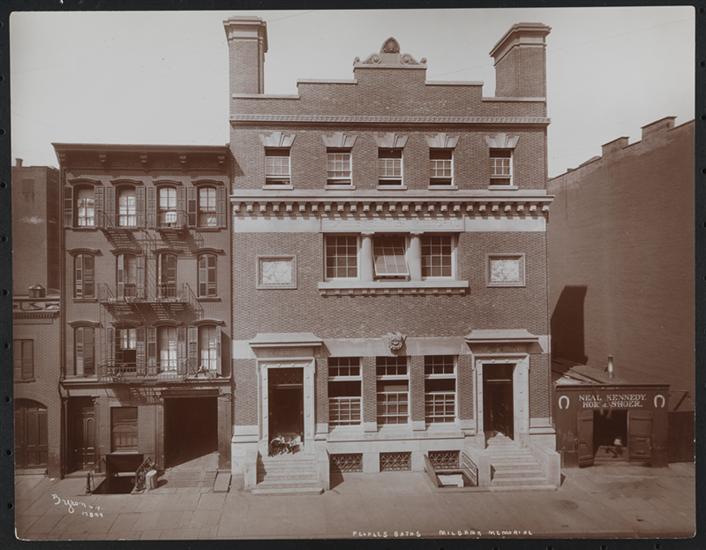
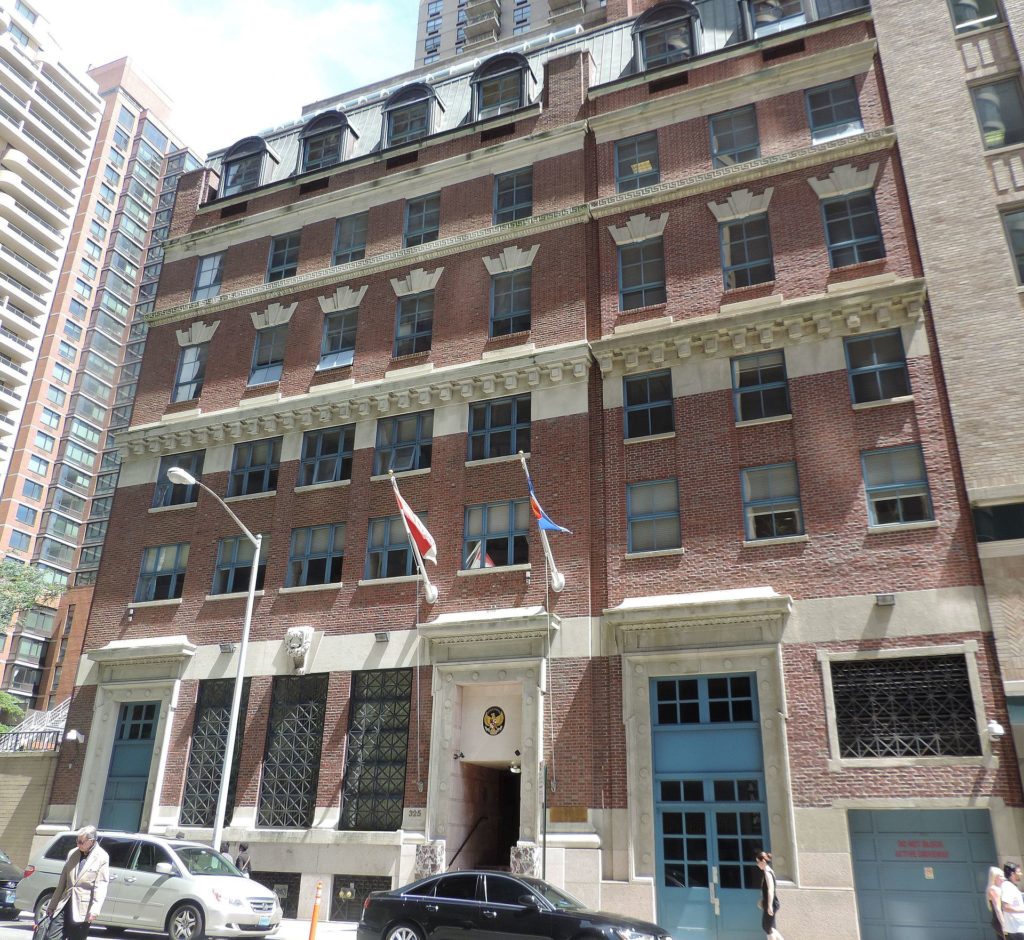
Others have been rescued and serve new purposes such as the Milbank Memorial Bath at 325-327 East 38th Street (pictured below)Today the structure is the Indonesian Mission to the United Nations, but when it opened, it was one of the biggest bathhouses in the city, serving up to 3,000 people.
MCNY
Jim Henderson/Wikimedia

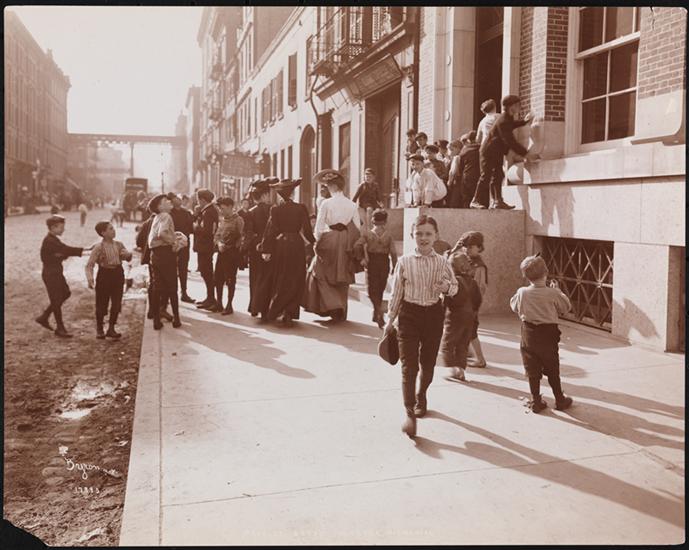
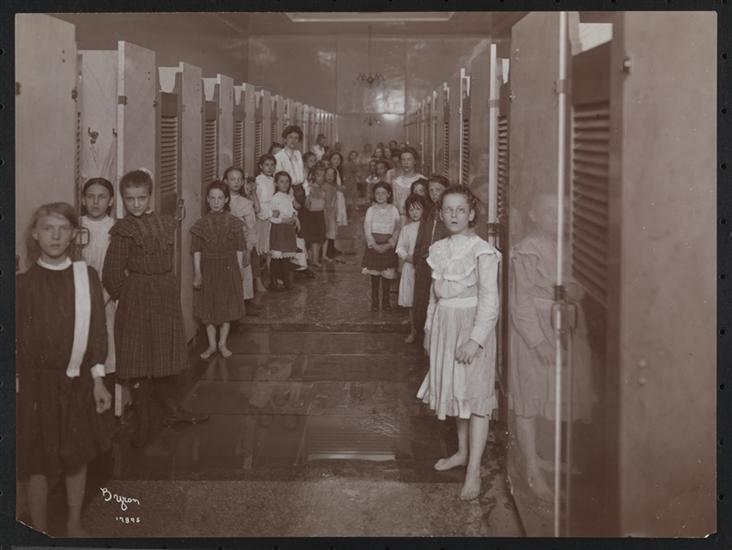
The grateful visitors of Milbank’s bath house:
MCNY
MCNY
MCNY

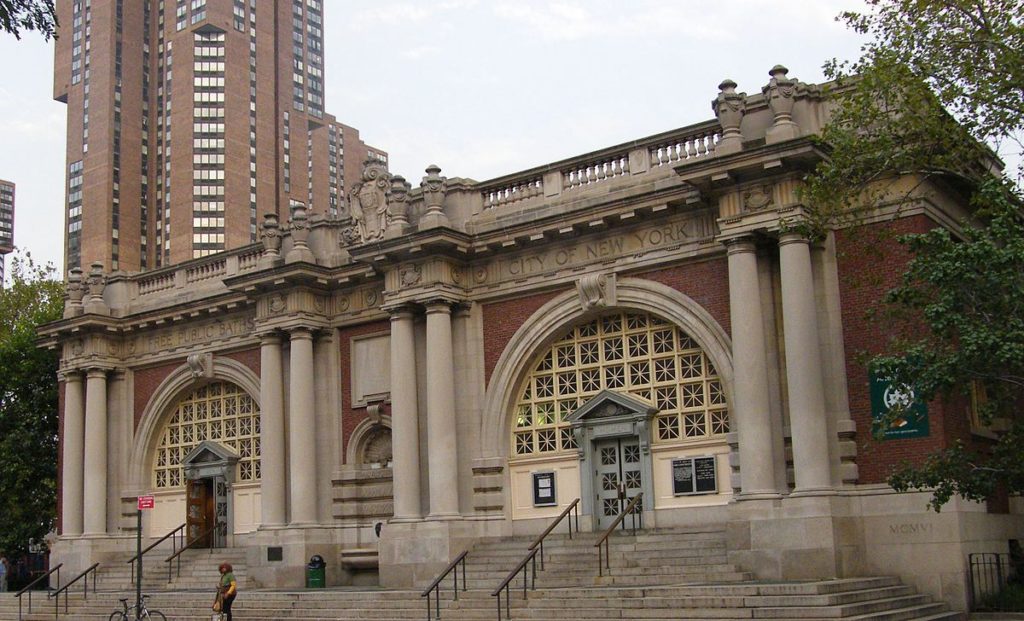
Perhaps the best known — and most beautiful — example of a public bath house standing in New York City today is the Asser Levy Public Bath in Kips Bay. (It’s also listed in the billboard image as 388 Avenue A.) Its unusual beauty is perhaps what saved it from demolition, and today it’s part of Asser Levy Recreation Center, serving in its original function — as a swimming pool for neighborhood children.
Wikimedia
Categories
The Alienist True Crime

The Alleged New York Murders of Jack the Ripper

HISTORY BEHIND THE SCENE What’s the real story behind that historical scene from your favorite TV show or feature film? A semi-regular feature on the Bowery Boys blog, we will be reviving this series as we follow along with TNT’s limited series The Alienist. Look for other articles here about other historically themed television shows (Mad MenThe KnickThe DeuceBoardwalk Empire and Copper). And follow along with the Bowery Boys on Twitter at @boweryboys for more historical context of your favorite shows. 

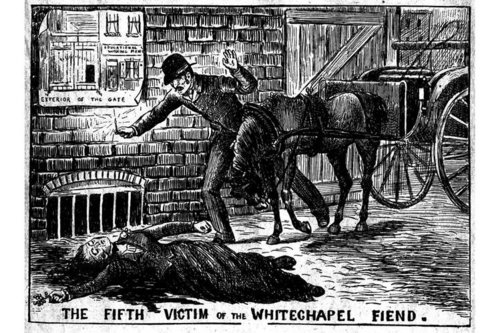
In 1888, a serial killer terrorized the Whitechapel district of London, leaving a set of disturbingly gory crime scenes which horrified the public and galvanized the press. It was soon believed at least five of the victims (and possibly many more) were killed by the same hand — a shadowy figure referred to as Jack the Ripper. The victims, all women, were Whitechapel prostitutes.

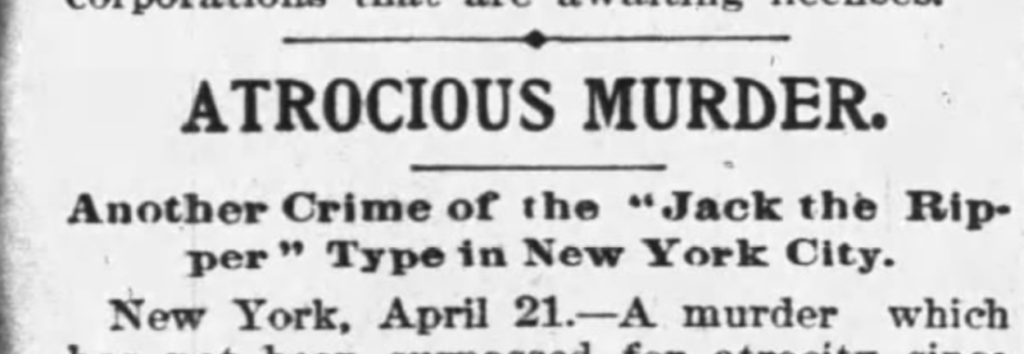
In 1891, the killer struck again in as gruesome a fashion as before. The victim was again a prostitute, a middle-aged woman “of dissolute and intemperate habits” named Carrie Brown who was found murdered in a lodging house on April 24, 1891. The only significant difference to the brutal crimes of 1888 was its location.
Carrie Brown was murdered in New York City.
Jack the Ripper’s alleged ‘New York City spree’ is the sinister pretext for the murder investigation depicted on The Alienist. Investigators in 1896, just five years after the death of Carrie Brown, would have had knowledge of Jack’s possible appearance on the streets of New York.

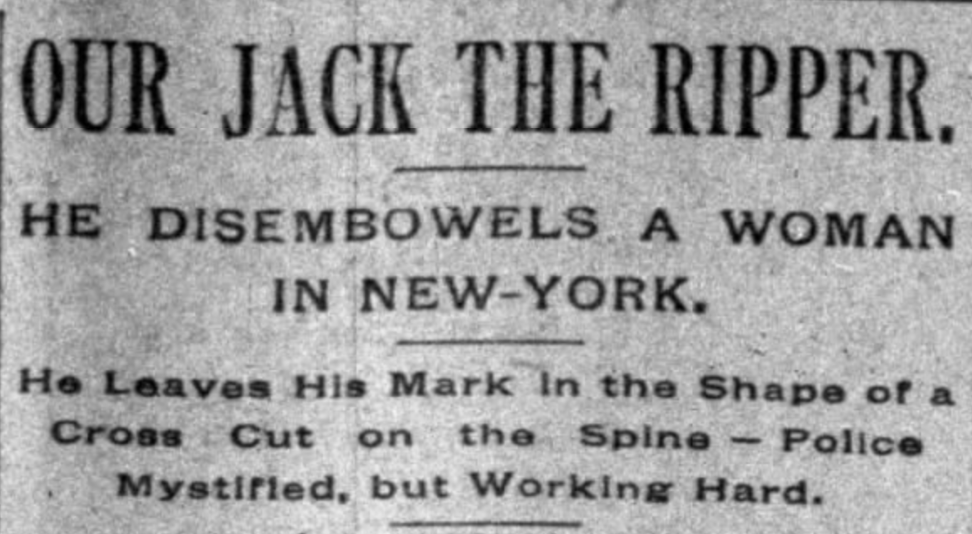
Of course, nothing has ever been proven that Brown’s death was associated in any way with the 1888 murders in Whitechapel. But that didn’t stop the press from speculating. After all, such twisted, grotesque crime sold newspapers.

The circumstances of Brown’s ghastly murder were indeed extraordinary.

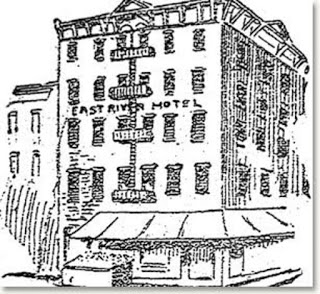
Let’s quote from that defining text of New York City crime folklore — Gangs of New York by Herbert Asbury. “The first Jack-the-Ripper murder in New York is said to have occurred [at the old East River Hotel at Catherine and Water streets] when an old hag known as Shakespeare was cut to pieces.”

Brown was known as Shakespeare for her habit of quoting the bard whenever possible. According to Asbury, “Shakespeare always claimed that she had come from an aristocratic family and that in her youth she had been a celebrated actress in England. She supported her contention by reciting, in return for a bottle of swan gin, every female role in HamletMacbeth and The Merchant of Venice.”

Her lifeless body was discovered the next morning, stabbed and repeatedly slashed with a cross cut into her thigh.

Below: Brown’s body wore mutilations similar to those found in the Whitechapel killings

Buffalo Morning Express, April 25, 1891

From the Evening World the day following her murder: “No crime which has been committed in this city for years has stirred the Police Department to such tremendous activity as the horrible butchery of Carrie Brown, alias ‘Old Shakespeare’ by ‘Jack the Ripper or his double, at the East River Hotel.”

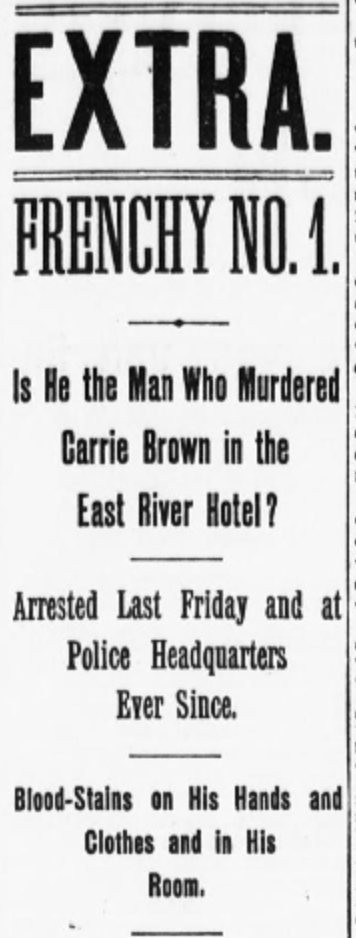
Police chief inspector Thomas F. Byrnes had previously chided Scotland Yard for their inability to catch a killer. Perhaps that’s why there was an immediate arrest in the case — an Algerian man named Ameer Ben Ali (nicknamed Frenchy). He was convicted of the crime and unjustly sent to prison, despite little evidence of his involvement in the murder. (He remained there for eleven years before he was eventually exonerated.)

Evening World, April 30, 1891

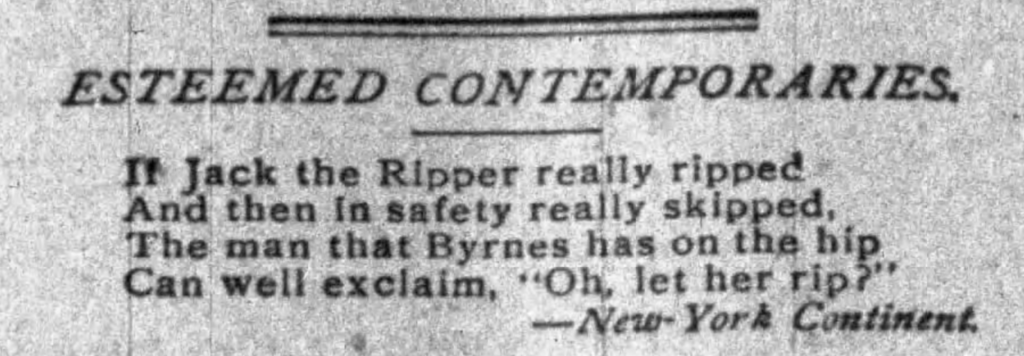
There were doubts about Ameer Ben Ali’s involvement with the murder from the very beginning — as evidenced by this poem in the Buffalo Morning Express, published a couple of weeks after the murder.

It didn’t matter that, in 1891, Jack seemed to have resumed his murder spree at the very same time in London. It’s unclear whether the London slayings attributed to this singular killer were related to the 1888 murders but newspapers made the assumption anyway. In total, eleven ‘Whitechapel murders’ from 1888 to 1891 are attributed to Jack.

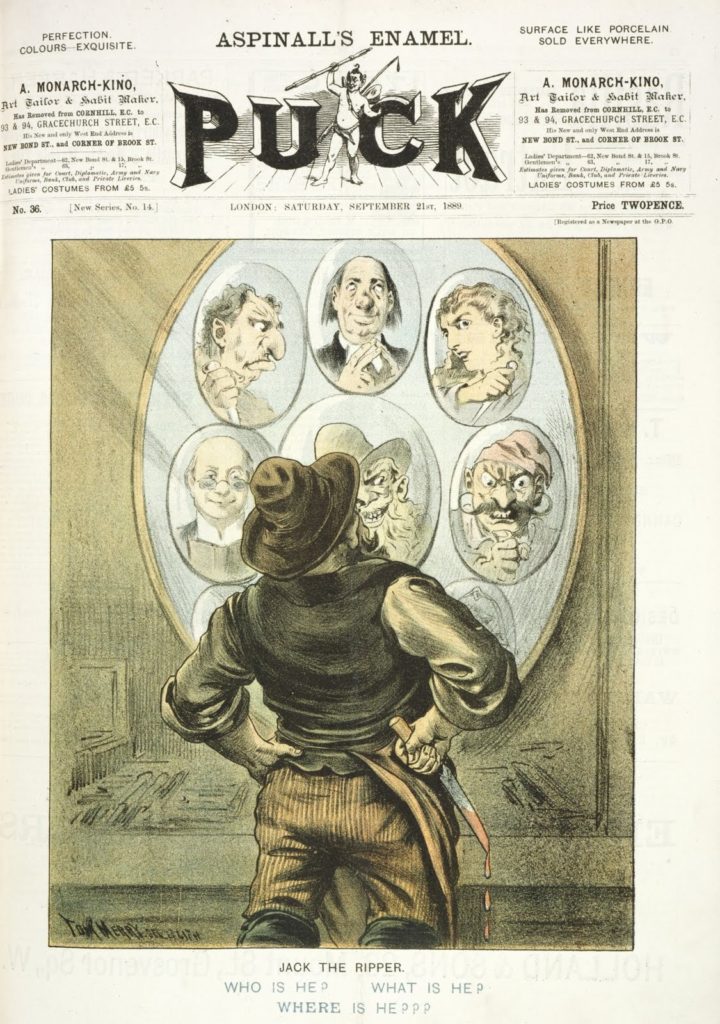
Below: Puck Magazine, published at the Puck Building on Houston Street, speculated on the Ripper’s identity in 1889.

Brown’s murder was not the only one eager newspaper publishers linked to the legend of Jack the Ripper. It happened with such frequency that Twentieth Century Magazine (published in May 1891) attempted to explain the phenomenon. “A little more than a month ago a homicide was committed in New York, the incidents of which were so like those attending the London homicides that the unknown perpetrator of the deed was also called Jack the Ripper. So that the name of Jack the Ripper stands for a person who kills a woman or women and afterword mutilates the body or bodies.”

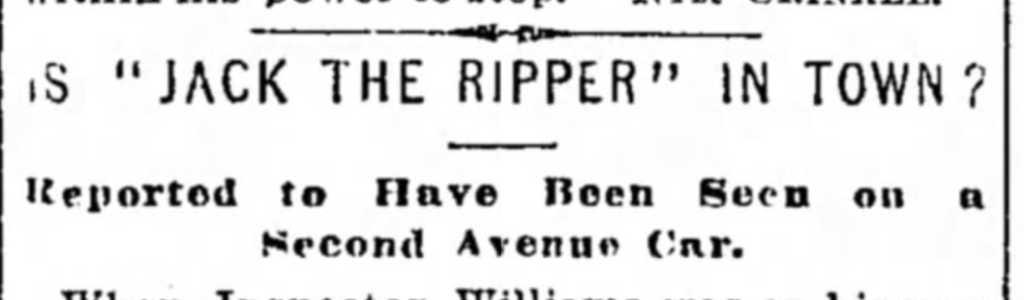
Jack the Ripper was reportedly seen throughout New York, due to the many eyewitness descriptions of both the London killer which ran in American newspapers and descriptions of the suspected New York killer.

Below: Such headlines ran in the newspapers even before the Carrie Brown murder (New York World, March 8, 1891)

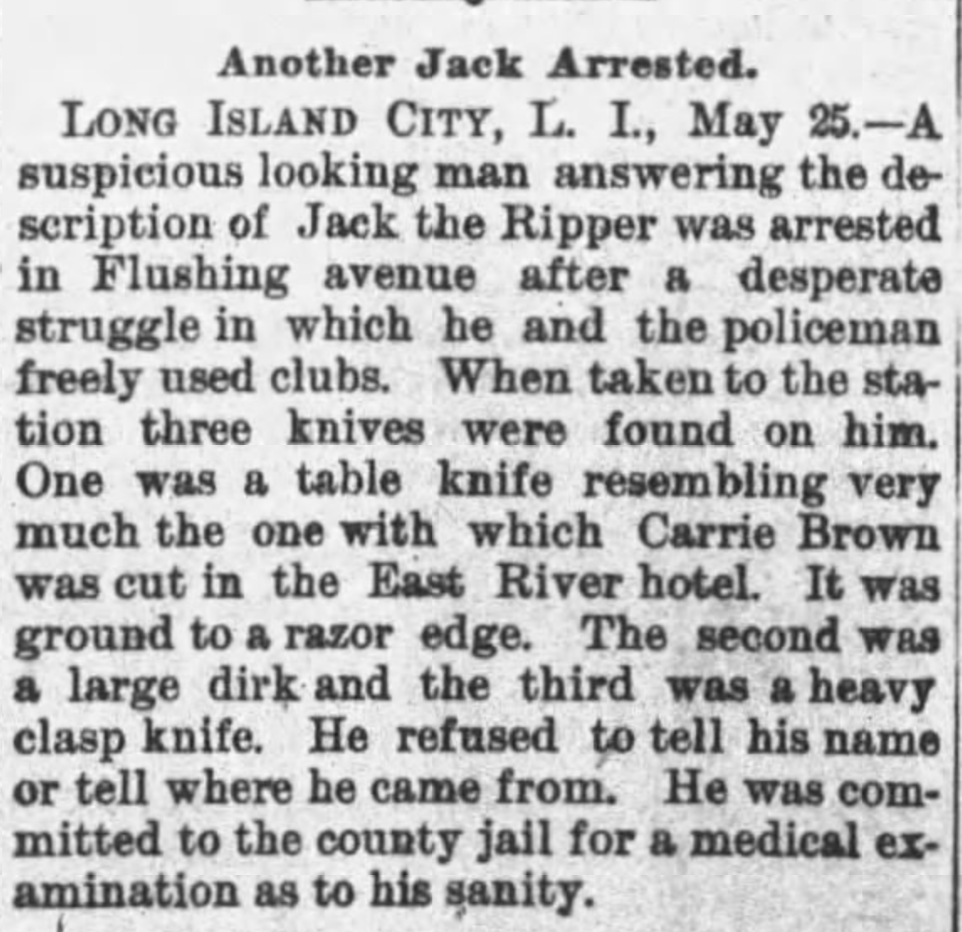
Below: From the Buffalo Evening News (May 25, 1891)

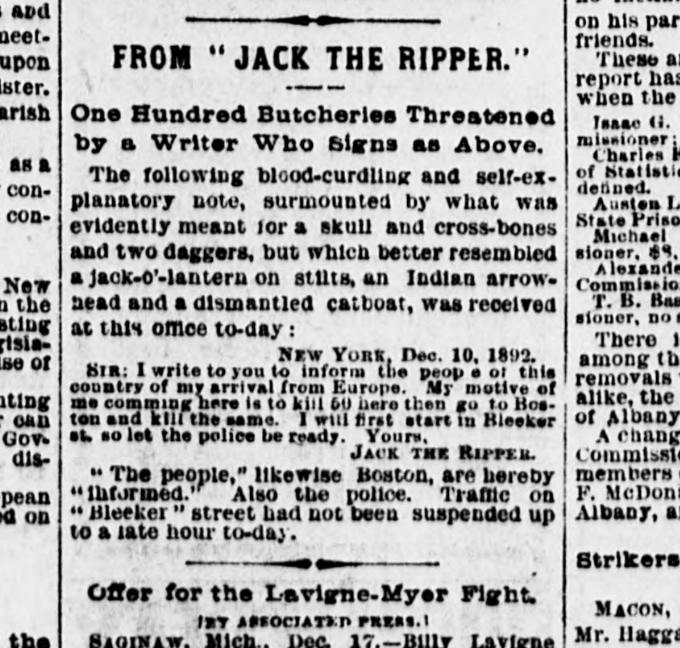
Publishers’ verve in linking any and all grisly murders to London’s killer might have inspired the following letter, sent to the New York Evening World offices on December 17, 1892:

(For those following The Alienist, Bleecker Street is also the destination of choice for that story’s killer.)

In the late fall of 1893, the body of a mutilated woman was found in the East River, and it too, for a time, was linked to Jack the Ripper. “On the hasty examination made last night some marks, taken to be somewhat similar, were discovered, but a thorough examination made this morning shows that they were simply bruises.”

By 1894 people stopped looking for Jack the Ripper in New York although several arrested murderers were described very explicitly as Ripper-style killers. One example from February 3, 1894: “Only a little over two years ago Henry G. Dowd rivaled the fiendish Jack the Ripper by slashing seven intoxicated, but inoffensive men in the Fourth Ward.”

Categories
Bridges The Alienist

The Construction of the Williamsburg Bridge — History Behind the Scene (The Alienist)

HISTORY BEHIND THE SCENE What’s the real story behind that historical scene from your favorite TV show or feature film? A semi-regular feature on the Bowery Boys website, I’ll be reviving this series as we follow along with TNT’s limited series The Alienist. Look for other articles here about other historically themed television shows (Mad Men, The Knick, The Deuce, Boardwalk Empire and Copper). And follow along with the Bowery Boys on Twitter at @boweryboys for more historical context of your favorite shows. See the bottom of this article for more information on how to watch more episodes of The Alienist.

The Alienist begins — as it does in Caleb Carr‘s best-seller — with a bizarre and gruesome discovery one frozen evening in 1896: the violently mutilated body of a young man.

New Yorkers occasionally found such nasty sights along the waterfront; drunken sailors fell from their ships from time to time. But these human remains were seemingly displayed, laid upon “an elaborate maze of steel supports,” adjacent to the old creaking seaport.

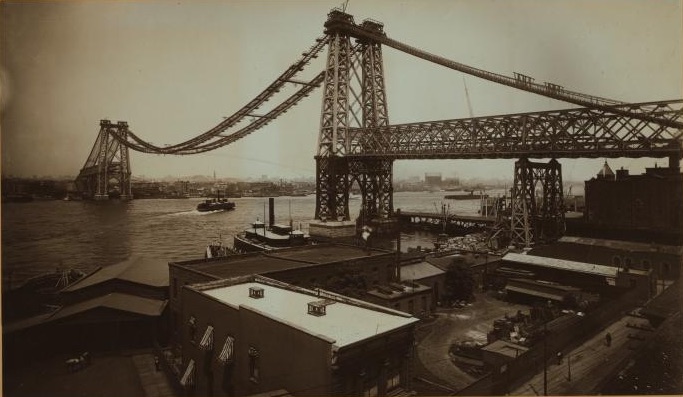
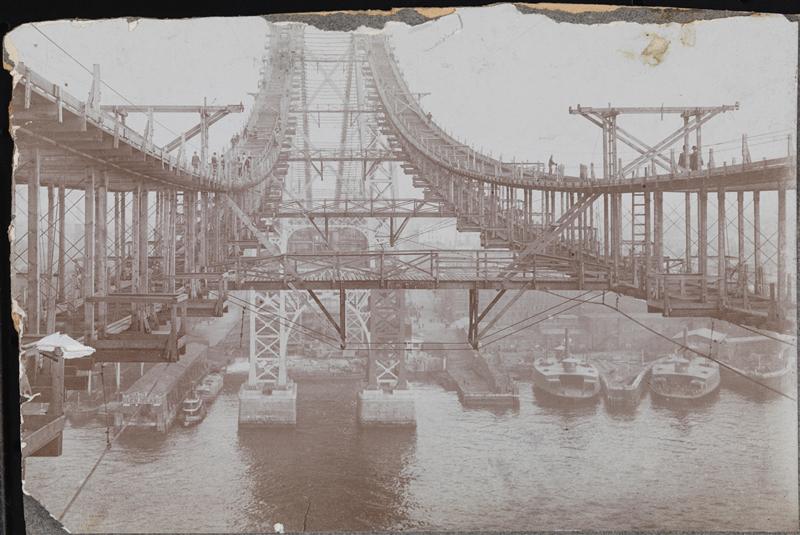
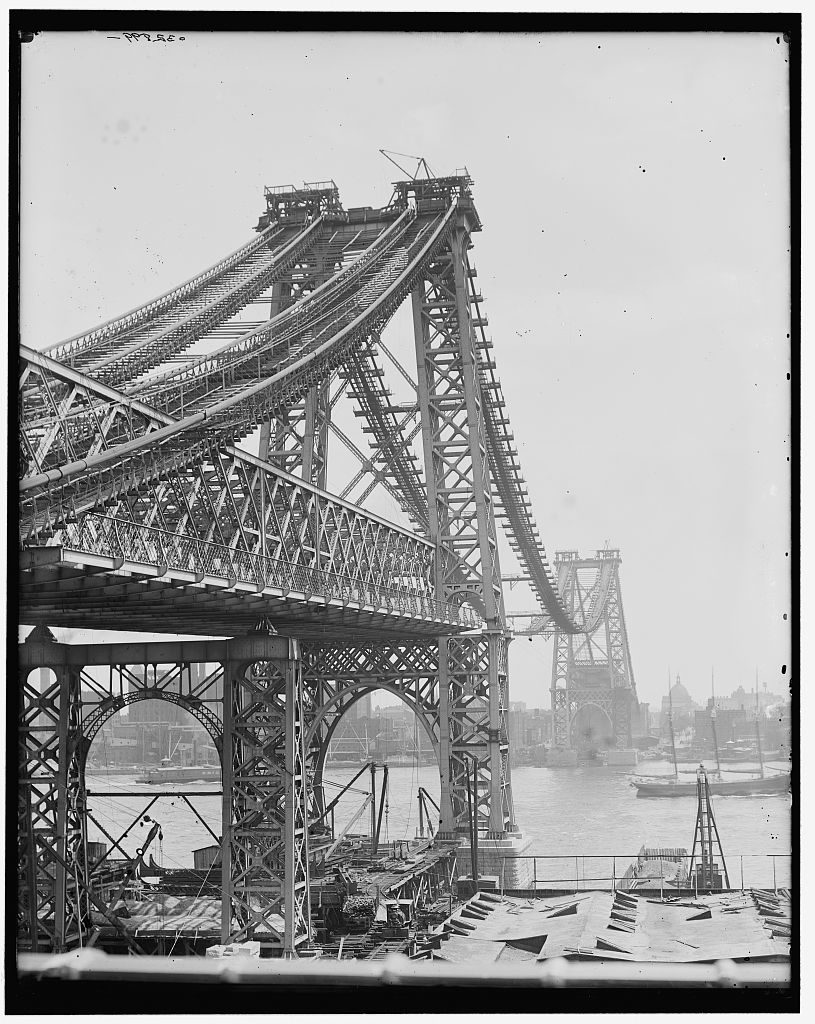
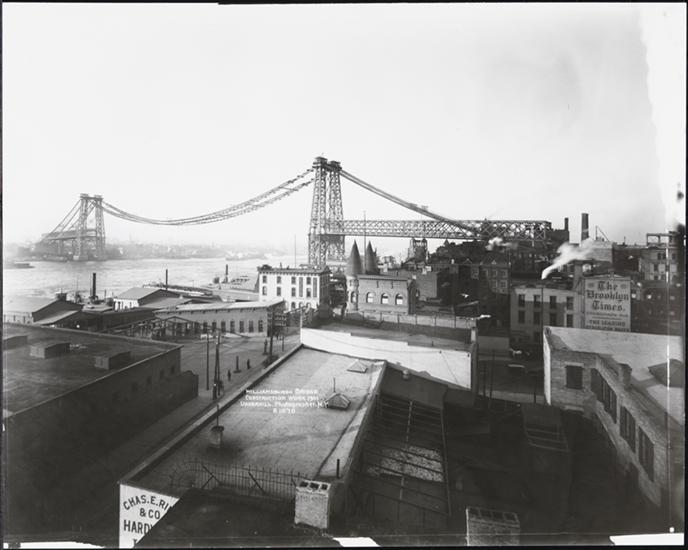
The supports depicted in this scene were but the first steps in the construction of one of New York’s last great engineering projects of the 19th century — the New East River Bridge a.k.a the Williamsburg Bridge.

This bridge, the second to ever span the East River, is truly under appreciated, dwarfed of course in architectural achievement by the first — the Brooklyn Bridge. But the start of its construction in the waning months of 1896 marked a bold and exciting turning point for the city of New York.

Here’s some details about the bridge:

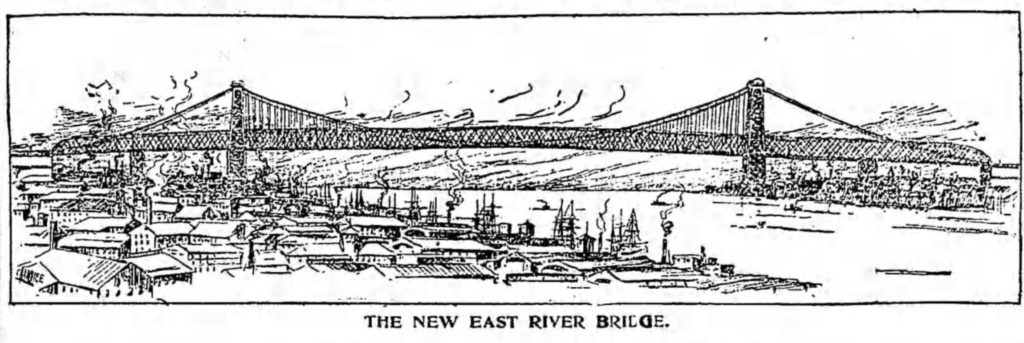
from the Brooklyn Daily Eagle, May 3, 1896

The bridge that would be called the Williamsburg Bridge was started (in 1896) when Brooklyn was an independent city and completed (in 1903) when Brooklyn was part of Greater New York.  When it opened in 1883, the Brooklyn Bridge linked two of America’s biggest cities — New York and Brooklyn.

But city planners like Andrew Haswell Green hoped to unite the entire region as one thriving metropolis, sharing vital resources.

Despite great resistance by many powerful Brooklynites, plans to unite the two cities — along with areas of Queens County, Richmond County (Staten Island) and portions of Westchester County (the Bronx) — were well in place by 1896. By January 1, 1898, it would all officially become Greater New York.

(For more information, listen to our podcast on the story of the Consolidation of 1898.)

Museum of the City of New York

But technically it was a bridge to yet another former city — Williamsburgh. In 1883, the Brooklyn Bridge linked the heart of New York civic life with the center of the City of Brooklyn — from New York City Hall to Brooklyn City Hall (what became Brooklyn Borough Hall). Upon its wildly successful opening, many began plotting a second bridge across the East River.

This second bridge, however, would link an area of Brooklyn north of the city’s center — in an area called the Eastern District.

Why was the eastern section of Brooklyn considered apart from the rest? Because at one point, for a brief period between 1852 to 1855, Williamsburg (or Williamsburgh, see below) was its own city, comprised of the modern neighborhoods of Williamsburg and Greenpoint. In 1855 it was absorbed — along with the Town of Bushwick — into the expanding city of Brooklyn and these new additions, more industrial and immigrant in nature, were referred to as the Eastern District.

(For more information, listen to our podcast on the history of Greenpoint, Brooklyn.)

Below: Above the East River, the bridge under construction, 1900

Museum of the City of New York

Brooklyn could thank one very powerful politician for the bridge. The namesake of Williamsburg’s popular McCarran Park — State Senator Patrick McCarran — is largely responsible for getting the new bridge placed in the Eastern District on the Williamsburg waterfront. According to one glowing eulogy, “The bridges, the parks, the improved means of transit, the better paved and lighted streets by which the Brooklyn of to-day is distinguished are due more to the legislative efficiency of Senator McCarren than to the influence of any other individual.” Of course he was also a bit of a corrupt scoundrel, but weren’t most politicians just a little bit dirty back then?

(Check out my article on rascally Mr. McCarren for more information.)

Library of Congress

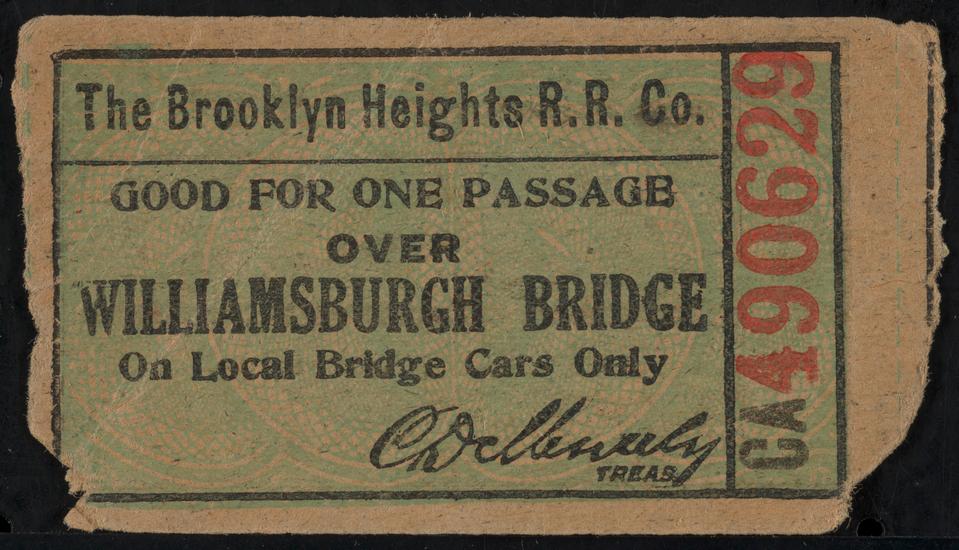
Excuse me, that’s the Williamsburgh Bridge (with an H) The original village of Williamsburgh was named after the esteemed Lt Col. Jonathan Williams, former Secretary of War and grand-nephew of Benjamin Franklin, who surveyed the land along the Bushwick shore. In its early days there was an H affixed to the area’s name, but by the completion of the bridge in 1903, many references to the neighborhood dropped it. Nobody really knows why this happened, but it probably has something to do with the better known Williamsburg in Virginia.

By the time the bridge was completed, it was commonly known as the Williamsburg Bridge although a plaque on the bridge preserves the original spelling.

Museum of the City of New York

On the New York side, planners were using the project as a way to clear away one of its most notorious districts –Corlears Hook.

Where Manhattan juts the furthest into the East River, Corlears Hook once had the greatest concentration of shipbuilding businesses in the nation, and the shoreline was completely obscured with piers, ships, and vessels of all sorts. In the 1830s, it had become a notorious red-light district, with “ladies of the night” setting up shop in the neighborhood’s saloons and cellars. (As popular legend would have it, the ladies of the Hook would give the oldest profession a new name: hookers.)

But by the 1880s, however, New York was in the throes of civic reform, clearing away slum neighborhoods and replacing them with parks or grand architectural projects. The old neighborhood of Five Points became Columbus Park and New York’s Civic Center. Even the Brooklyn Bridge cleared away the decrepit tenements of the old waterfront.

The bridge is central to the growth of New York’s immigrant (and particularly Jewish) communities. While its construction did displace thousands of people, the bridge would actually facilitate better living conditions for Lower East Side immigrant groups by encouraging migration to less populated Brooklyn neighborhoods.

The New York Herald even called it the “Jews Highway” as those of Eastern European and Russian Jewish heritage transplanted to Williamsburg.

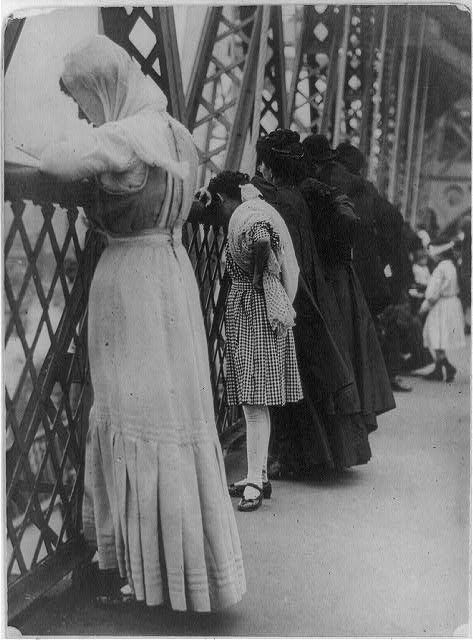
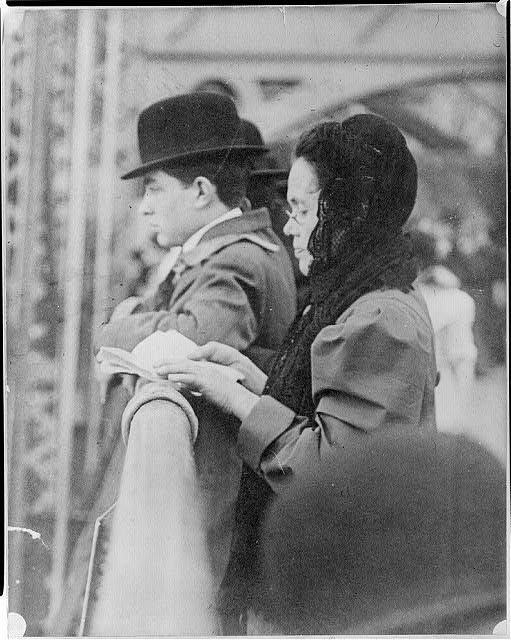
Below: Jewish women praying on the Williamsburg Bridge (1909)

Library of Congress

Library of Congress

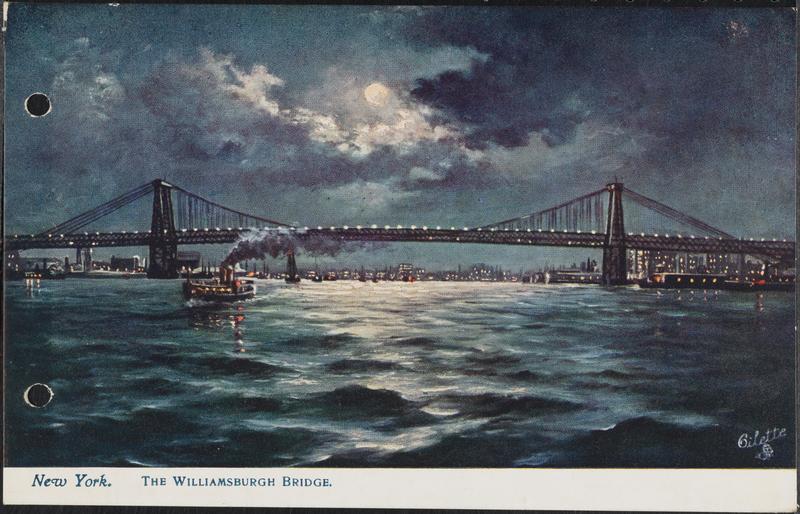
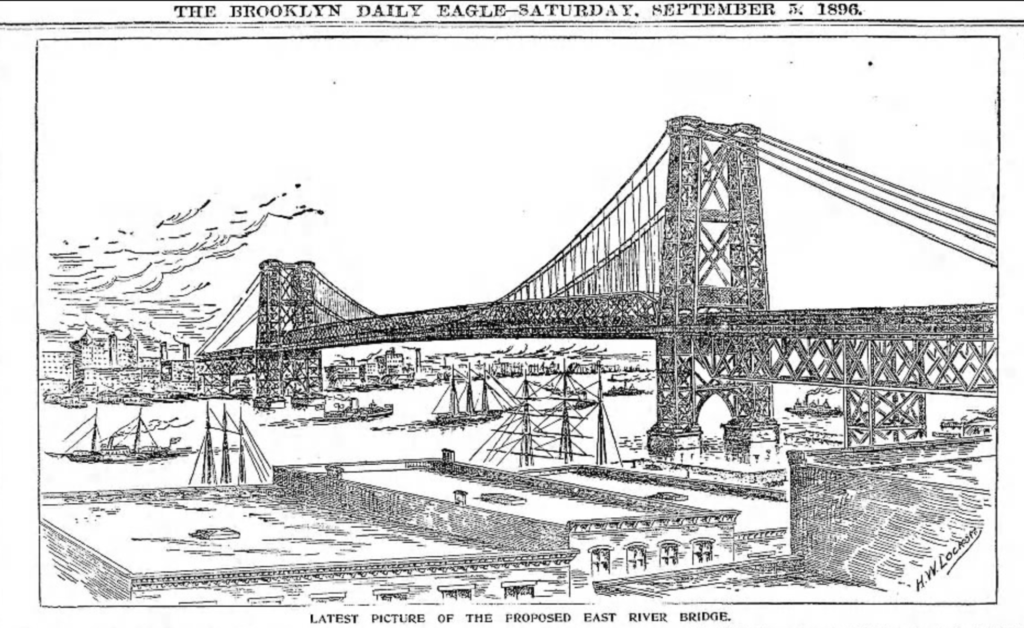
How they envisioned the bridge in the fall of 1896 ….

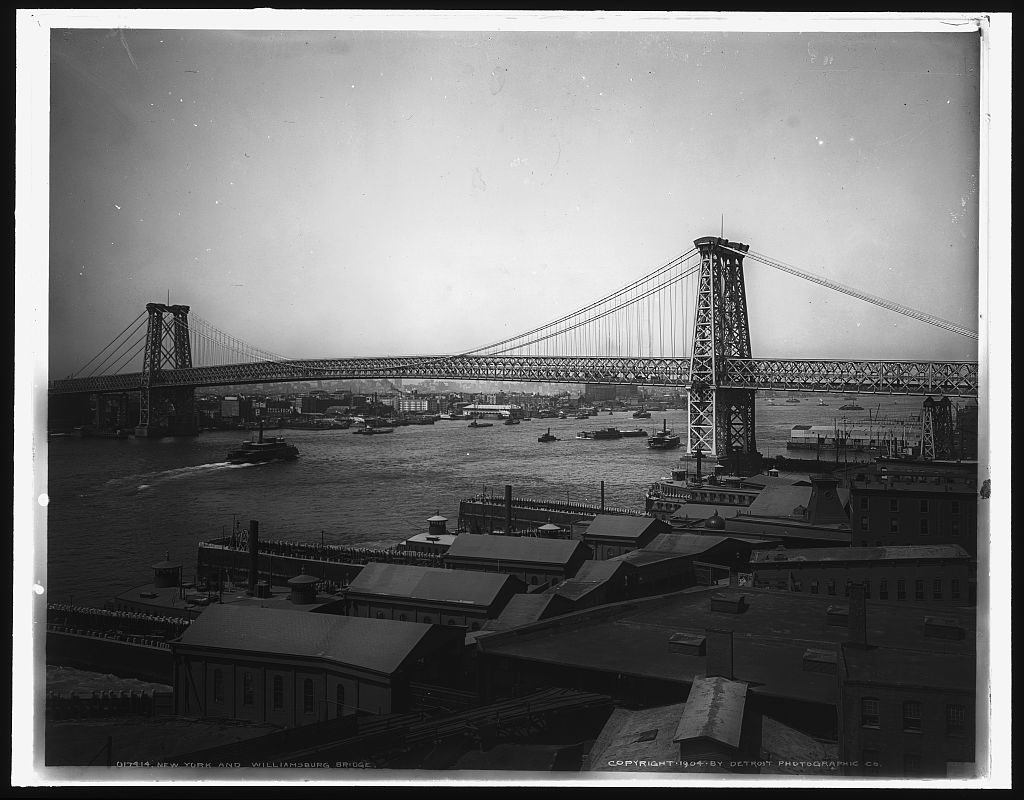
…and how it looked at completion.

Library of Congress

Believe it or not, the opening of the Williamsburg Bridge was actually captured on film by the Edison company.

Categories
The Alienist

The Alienist podcast takeover: Haunting historical tales to accompany the new TNT limited series

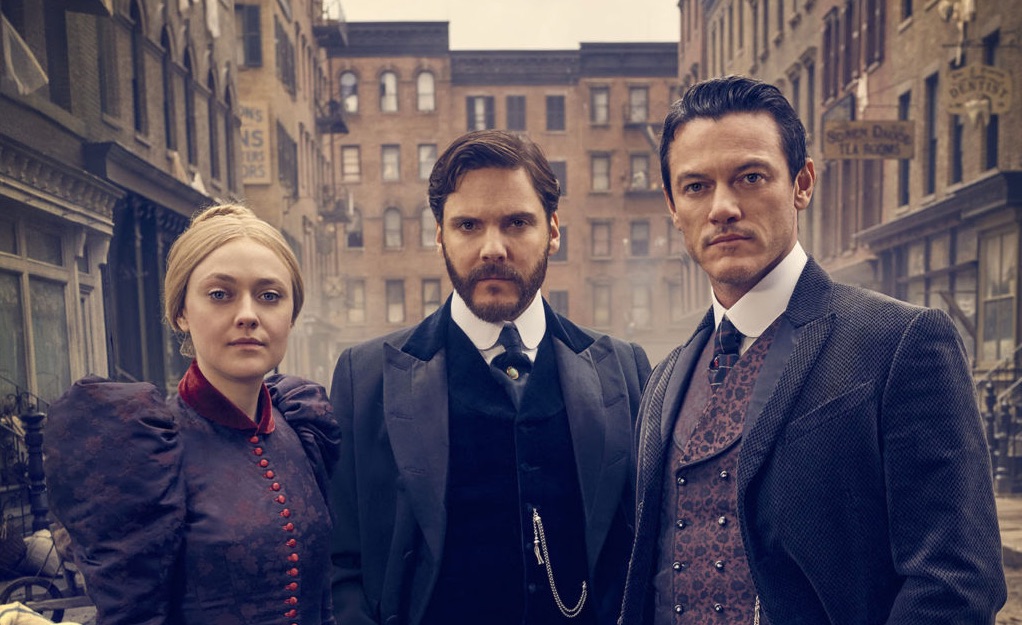
This weekend brings an absolute treat for New York City history lovers: the debut of the TNT limited series The Alienist, based on the classic Caleb Carr best seller, starring Daniel Bruhl, Luke Evans and Dakota Fanning. (The first episode debuts on Monday, January 22, although you can catch a sneak preview the night before after the Screen Actors Guild Awards.) This series will explore the grimy and often terrifying underbelly of New York’s Gilded Age in the 1890s, following a group of investigators who use unconventional methods to track a murderer through Old New York’s seedy back alleys.

Perhaps you know how much we love the original source material so we’re greatly looking forward to seeing it play out on television this winter. And what better way to prepare yourself for this television event than immersing yourself in haunting and unsettling historical stories of crime — in podcast form!

Throughout the week, several podcasts join in the fun as they participate in an ‘Alienist podcast takeover’, presenting fascinating and moody real-life tales of murder, mystery and mayhem, all inspired by the material in The Alienist.

Below is the full directory of podcasts releasing special Alienist-themed episodes. The Bowery Boys will finish the series with a brand new podcast episode (coming out on Friday) that delves into the disturbing side of the Bowery in the late 19th century.

Listen to these podcasts via the players below or look for these shows on your favorite podcast players.

SERIAL KILLERS
With hosts Greg Polcyn & Vanessa Richardson
Subject: Jane Toppan
“After a childhood filled with abuse, poverty, and shame, Jane Toppan (born Honora Kelley), left her foster home and pursued nursing. To many, she seemed like a loving nurse who cared deeply for her patients. But for years, she used her nursing skills to experiment with medicines…and kill the people who trusted her the most.”

Thinking Sideways Podcast
With hosts Devin, Joe and Steve
Subject: The Murder of Thomas Edwin Bartlett
“On January 1st 1886 Thomas Edwin Bartlett was found dead in bed. Doctors discovered chloroform in his stomach and determined it was the cause of death. How did it get there? Did he drink it willingly? Did his wife give it to him? Did her lover? To this day no one knows.”

Unsolved Murders: True Crime Stories
With hosts Carter Roy & Wendy Mackenzie
Subject: The Wall Street Bombing
“On September 16, 1920, an explosion went off at 23 Wall Street, killing 38 people and injuring hundreds more. But no one knew who set off the bomb, or why. We explore the political and financial turmoil that may have inspired the attack, and we look into the man who warned New Yorkers of the bombing beforehand with uncanny detail.”

CASEFILE: True Crime
Subject: The Lady In the Barrel
“September 15th, 1878 was a cooler than average day for Staten Island, New York. A cold north-westerly breeze blew as three young teenage boys tended cattle in the woods near Silver Lake…”

The Generation Why Podcast
With host Aaron and Justin
Subject: The Murders Of Thomas & Ann Farrow
“March 27, 1905. London, England. Thomas & Ann Farrow had been shopkeepers at Chapman’s Oil and Colour Shop in Deptford for more than two decades. On the morning of March 27, 1905 they were victims of a vicious attack. Thomas was in the shop on the floor having been bludgeoned to death. Ann, barely breathing, was still in her bed having been bludgeoned as well. Police took witness statements and examined both the shop and the Farrow’s flat for clues. In the early days of forensics it was not so easy to tie a crime to a person. The Farrow case would rest upon a new forensic science tool. One that would anger some who didn’t believe it to be a real science. If the right people could not be convinced, this crime would go unpunished.”

Last Podcast on the Left
With hosts Ben Kissel, Marcus Parks and Henry Zebrowski
Subject: The Thames Torso Murders
“Join us on this minisode as we extend our Jack the Ripper episodes past the official five Ripper victims to six mysterious headless torsos found around London between 1873 and 1889, pointing towards the possibility of a second unidentified serial killer apart from the Ripper.”

CRIMINAL
With host Phoebe Judge
Subject: Like A Page From A Book
In 1892, a gruesome murder took place in a small fishing village in Argentina. The police had a suspect who would not confess. What happened next would change the way murders were investigated around the world.

The Bowery Boys: New York City History
With Tom Meyers and Greg Young
Subject: McGurk’s Suicide Hall: The Bowery’s Most Notorious Dive
“In early March of 1899, a woman named Bess Levery climbed to one of the top floors of McGurk’s — floors given over to illegal behavior — and killed herself by drinking carbolic acid. Within a week, two more women had ventured to McGurk’s, attempting the same dire deed. By the end of 1899, the dance hall had received a truly grim reputation, and its proprietor, capitalizing on its reputation, began calling his joint McGurk’s Suicide Hall.”

Categories
Bowery Boys Bookshelf

The Alienist by Caleb Carr, released 20 years ago this week: Retracing the steps of this Gilded Age murder mystery

NOTE: This article has a few plot spoilers but no major twists are revealed or discussed.  I’ve tried to write the descriptions within the interactive map as vaguely as possible.

The Alienist by Caleb Carr was published 20 years ago this week, an instant best-seller in 1994 that has become a cult classic among history buffs.  Despite some creakiness uniquely inherent to early ’90s fiction thrillers, it remains today a page-turning and utterly spellbinding adventure.

Although the Jack the Ripper murders were an obvious inspiration for Carr, perhaps The Alienist‘s biggest influence is The Silence of the Lambs by Thomas Harris.  Carr completed his tale of serial murders in the Gilded Age just as a slew of Silence knockoffs began hitting the bookshelves.  The Alienist stands far above the pack, of course, but you can’t deny its success in 1994 was partially inspired by reader’s cravings for murderers with perverted tastes and body parts in formaldehyde jars.

The Alienist follows a quirky team of investigators in 1896 as they follow the bloody trail of a killer with a peculiar penchant for boy prostitutes, often dressed as girls to the delight of their clientele.  Dr. Laszlo Kreizler is the alienist (or psychologist) in charge of the case, stitching together a profile of the loathsome figure, conveniently using soon-to-be standard analytic techniques.

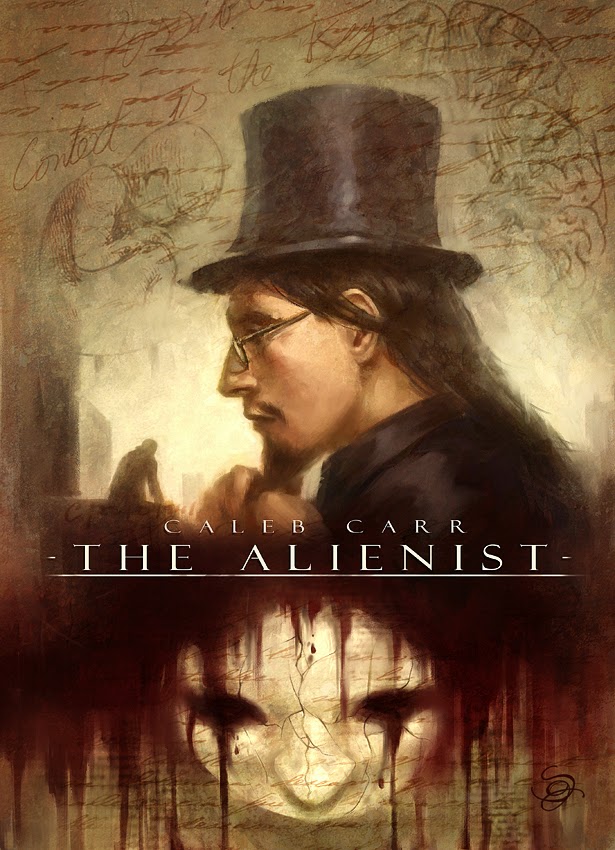
At right: Alternate artwork for The Alienist (Courtesy Nerd Blerp)

As protagonist John Schuyler Moore, a reporter for the New York Times, explains it “[W]e start with the prominent features of the killings themselves, as well as the personality traits of the victims, and from those we determine what kind of man might be at work. Then, using evidence that would otherwise have seemed meaningless, we begin to close in.”

Carr’s book is finely detailed, perhaps overly detailed, which won’t be a problem if you love New York City history.  There are over two dozen scenes at various notable landmarks throughout Manhattan, some in various states of construction.  Several real-life figures make appearances, although the most entertaining characters are Carr’s own, including the intrepid proto-policewoman Sara Howard and scrappy errand boy Stevie ‘Stovepipe’ Taggart.

When I first read The Alienist back in 1994, I was struck by its preciseness, an expertly placed breadcrumb trail through old Gotham.  There is no romantic gloss, as in another history classic Time and Again. He makes it seem possible to retrace almost every step of our heroes. (In researching this article, I tried to do so.)  The original New York Times review noted that “[y]ou can practically hear the clip-clop of horses’ hooves echoing down old Broadway.”  They’re still echoing.

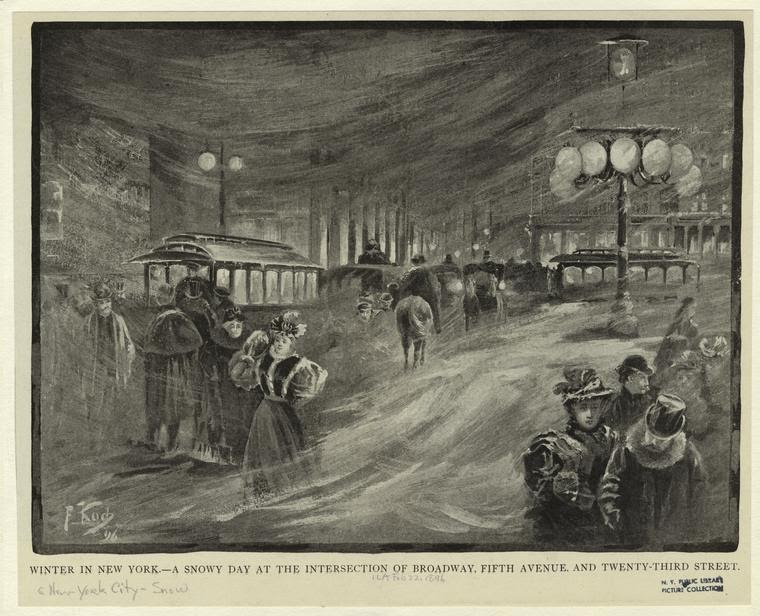
The story begins in the early months of 1896 during a robust winter. Below, from the Illustrated American, a depiction of a snowy Madison Square that year (NYPL):

His depiction of old New York is still glorious.  The book’s polite take on certain social issues, however, read a bit wobbly today.  To his credit, Carr tackles police corruption, gender discrimination, racial prejudice and the plight of homosexuals, all while elaborating on complicated psychological theories in service of an entertaining story.  He has stuffed a hidden epic of New York into the framework of a modern murder mystery.  That he chooses to handle hot-button social issues with kid gloves is not a misstep, but merely a symptom of its genre and day.

The Alienist is still greatly enjoyable, perhaps slightly more so now.  Thanks to renewed interest in New York City history, the details here are even more shimmering and vital.  This is not an old New York emerging from a mysterious fog, but a world that seems to exist alongside our own.

And to prove that — below you will find a detailed, interactive map of the pivotal locations used in the book.  You can click into various points for further details.  A few of these pins have pictures and other links. Just zoom in and choose a location!  (NOTE: Some locations are approximate and a couple are speculation.)


A little elaboration on certain elements of the book’s bigger places and themes:

Paresis Hall 
Most of the murder victims are boy prostitutes employed as several houses of ill repute throughout the city.  Paresis Hall, located steps from Cooper Union, sounds like it was both a place where gay men could congregate in private clubs and a place of sexual transaction, often (as in the book) with underage boys dressed up as girls.  This boy, Nathaniel ‘ The Kid’ Cullen, may have worked there, or may have just a habitue of the club. (He appears in this collection of photographs from Paresis Hill.)

Madison Square 
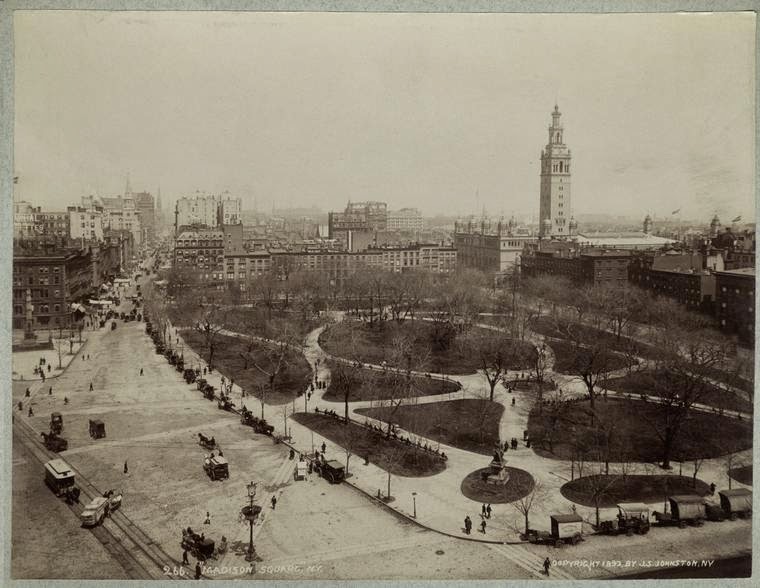
This was still a thriving center for culture and dignified entertainments in 1896. Many theaters clustered around the park, although newer stages were making their way up Broadway to Herald Square.  If Delmonico’s (on the northwest corner) is too crowded for you, head over to the tea room at Madison Square Garden on the northeast side.  Pictured here in 1893, three years before the events of the Alienist. (NYPL)

Murray Hill Distributing Reservoir
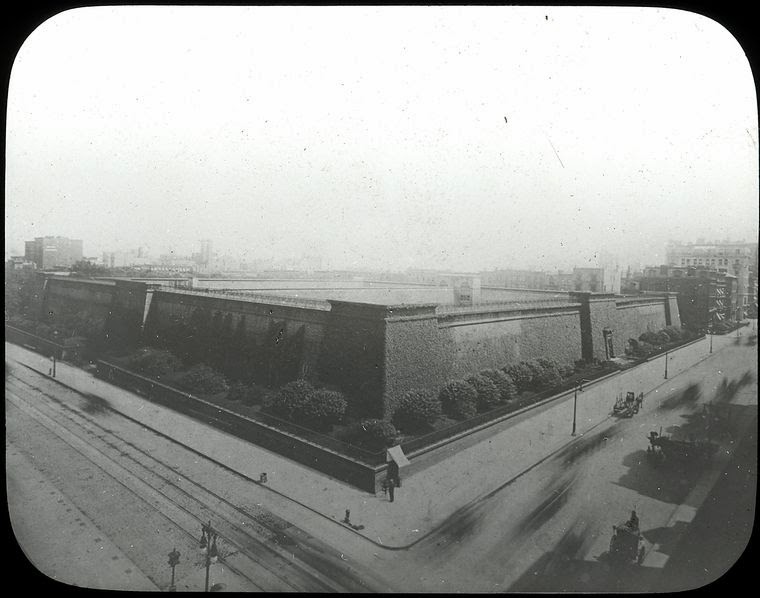
In 1896, New York still relied on this reservoir to provide most people with water.  But it was also a tourist destination in itself, with walking paths along the top.  Shortly after its appearance it the book, the Egyptian-inspired reservoir was torn down to make way for New York’s new public library. (NYPL)

Bellevue Hospital and Morgue
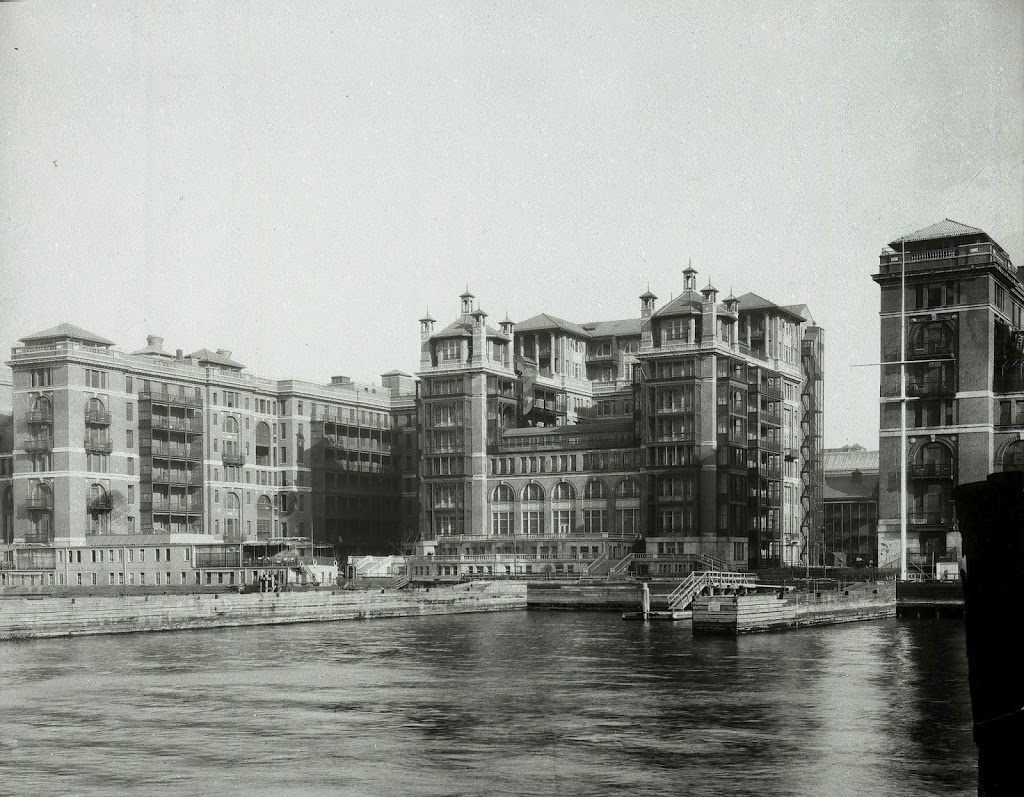
Check out our podcast and blog posting on the history of Bellevue Hospital, as many of the details mentioned there appear in this book.  Below: Bellevue in 1879.

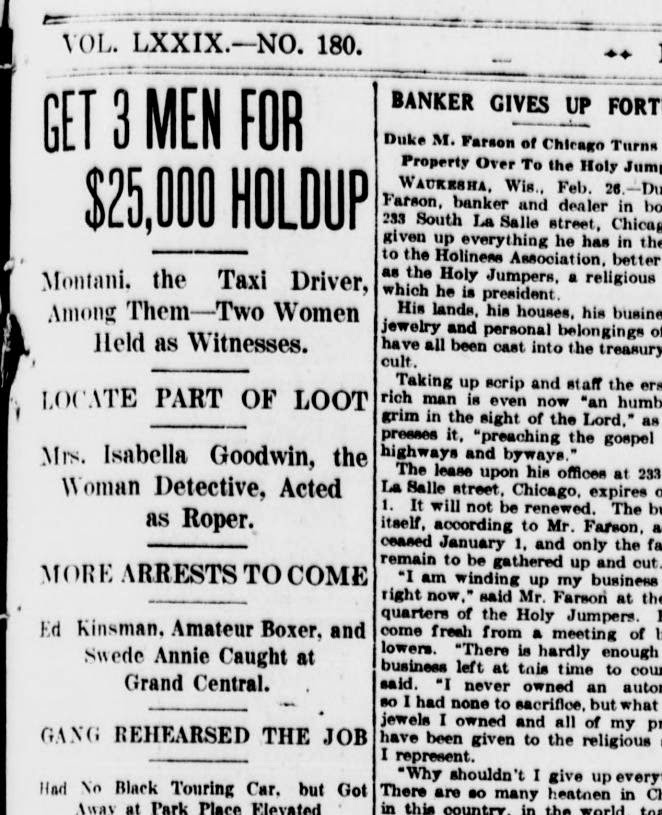
Isabella Goodwin
Sara Howard seems to be a little bit Nellie Bly, and a lot Isabella Goodwin, the first female office promoted to detective in 1896 (the year the book is set).  Below: A front-page case cracked by Goodwin from February 1912.

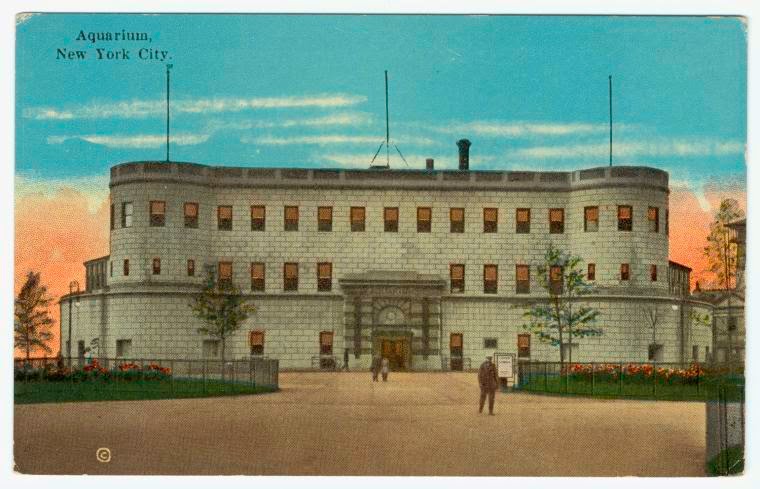
New York Aquarium
Carr’s narrative features several New York landmarks in construction.  Two of those places take a morbid center stage in the book — the Williamsburg Bridge and the nearly completed New York Aquarium (the former Castle Garden) (NYPL)

Theodore Roosevelt
Carr weaves several real life figures into the storyline, from J.P. Morgan (who comes off quite ominous) to Jacob Riis (not a flattering portrait of him either).  But future president Roosevelt gets a glowing supporting role as New York’s police commissioner who directs Dr. Kreizler, Moore and Howard to investigate the murders using powers of psychological deduction.

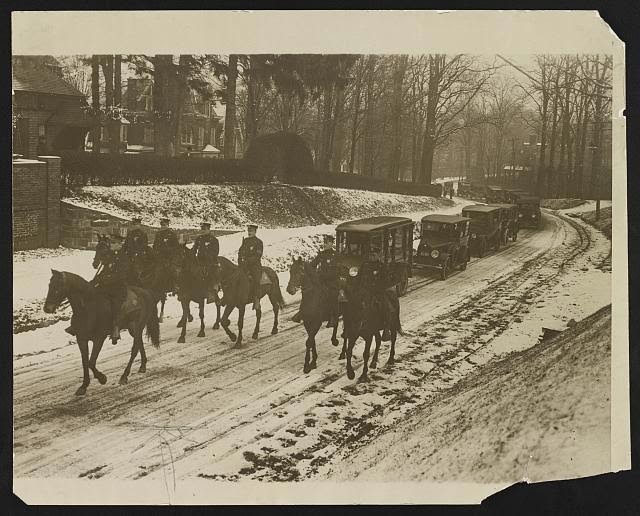
In fact, the book is actually a flashback by our hero Moore, recalled when he visits the Oyster Bay funeral of his dear friend in 1919 (pictured below). (LOC)

True Crime
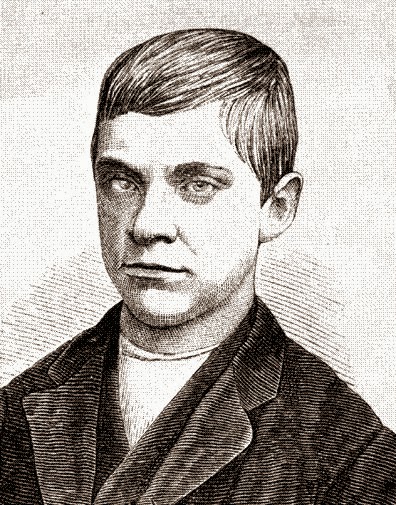
And there are a great many real-life figures from New York’s criminal underworld as well.  In fact, most of the lecherous and notorious figures depicted in the book are real folks, from early gangsters like Paul Kelly to brothel owners such as Biff Ellison.  Carr also finds a few disturbing mental cases to bring into the story, including the young killer Jesse Pomeroy (pictured below), considered one of the most brutal of murderers at a ripe age of 14.

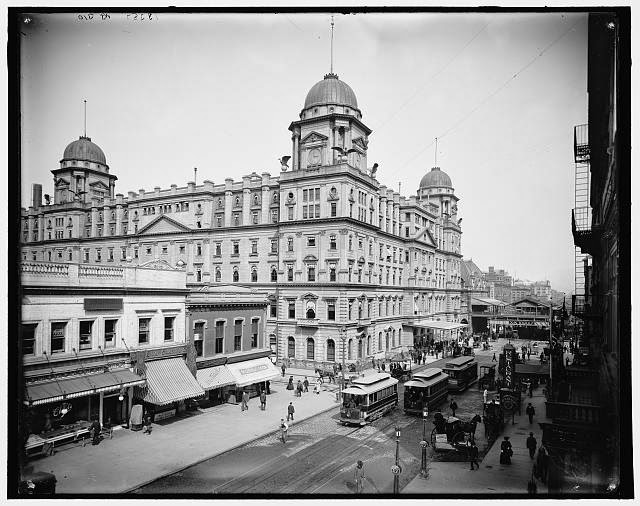
Grand Central Depot
The characters do venture to places outside the city for further clues, but they always come through Grand Central Depot, the most hectic place in New York.  (Pennsylvania Station had not yet been built.)  Within a few years, this too would be ripped down and replaced with the present Grand Central Terminal. (LOC)

And finally, there are three central locations from the book that are still around today:

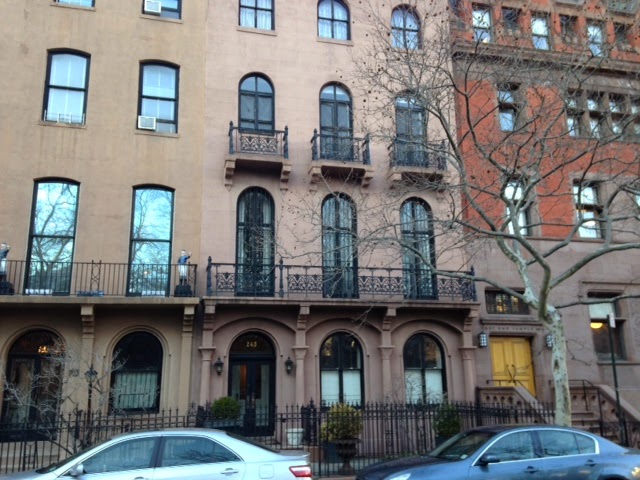
Dr. Laszlo’s residence at Stuyvesant Park. Actually the address in the book doesn’t really exist.  But based on a couple descriptions — and its proximity to St. George’s Church, which is mentioned as close by — this building at 237 East 17th Street may be what Carr had in mind:

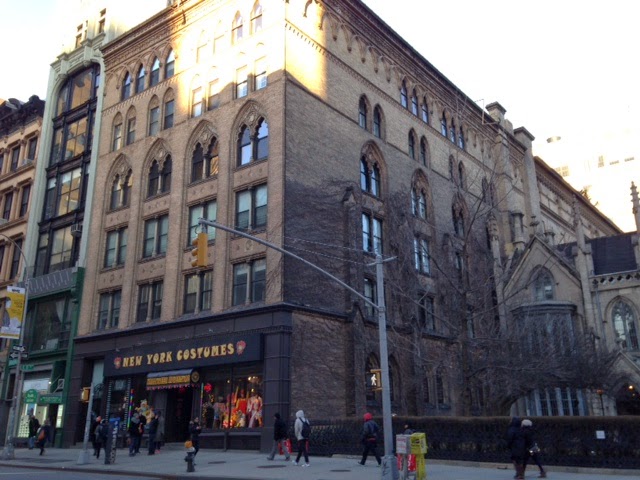
Murder headquarters at 808 Broadway — This exceptionally handsome building was constructed by James Renwick, playing nicely off its neighbor Grace Church.  It’s actually called the Renwick!  The team was located on the sixth floor.  Today, on the first floor, is one of New York’s most popular costume shops.

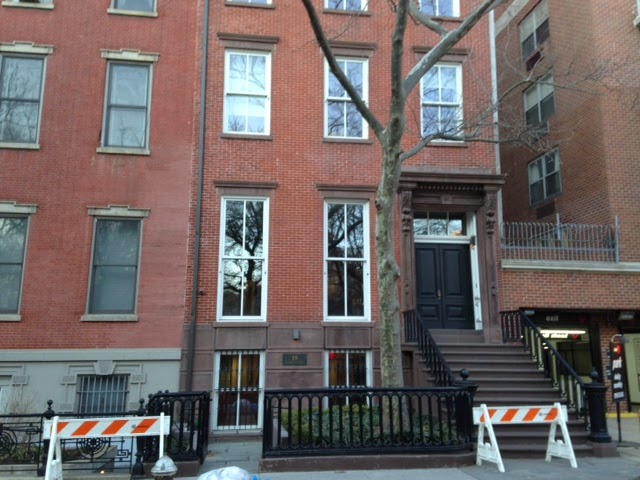
John Schuyler Moore’s home at Washington Square Park North, facing the park:


(My thanks to Dixie Roberts for the story idea!)