Categories
Brooklyn History On The Waterfront Podcasts

Behind the Domino Sign: The Story of Brooklyn’s Bittersweet Empire

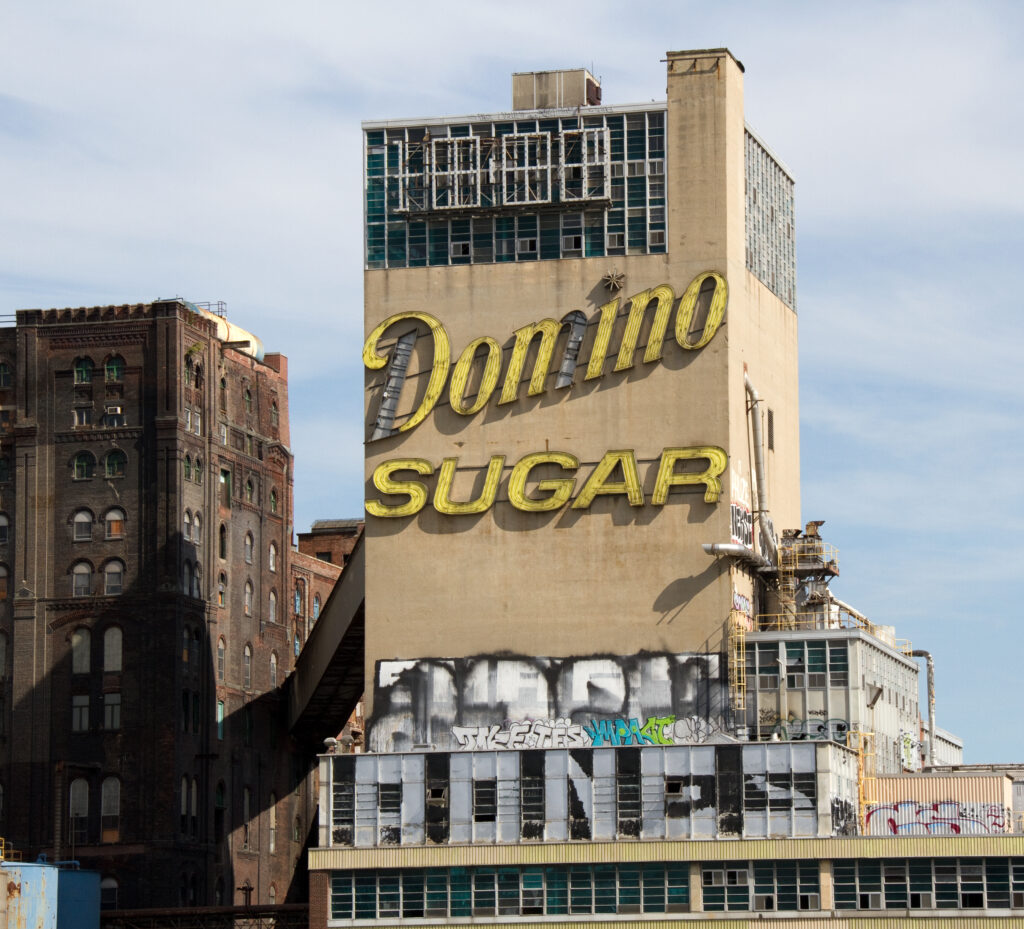
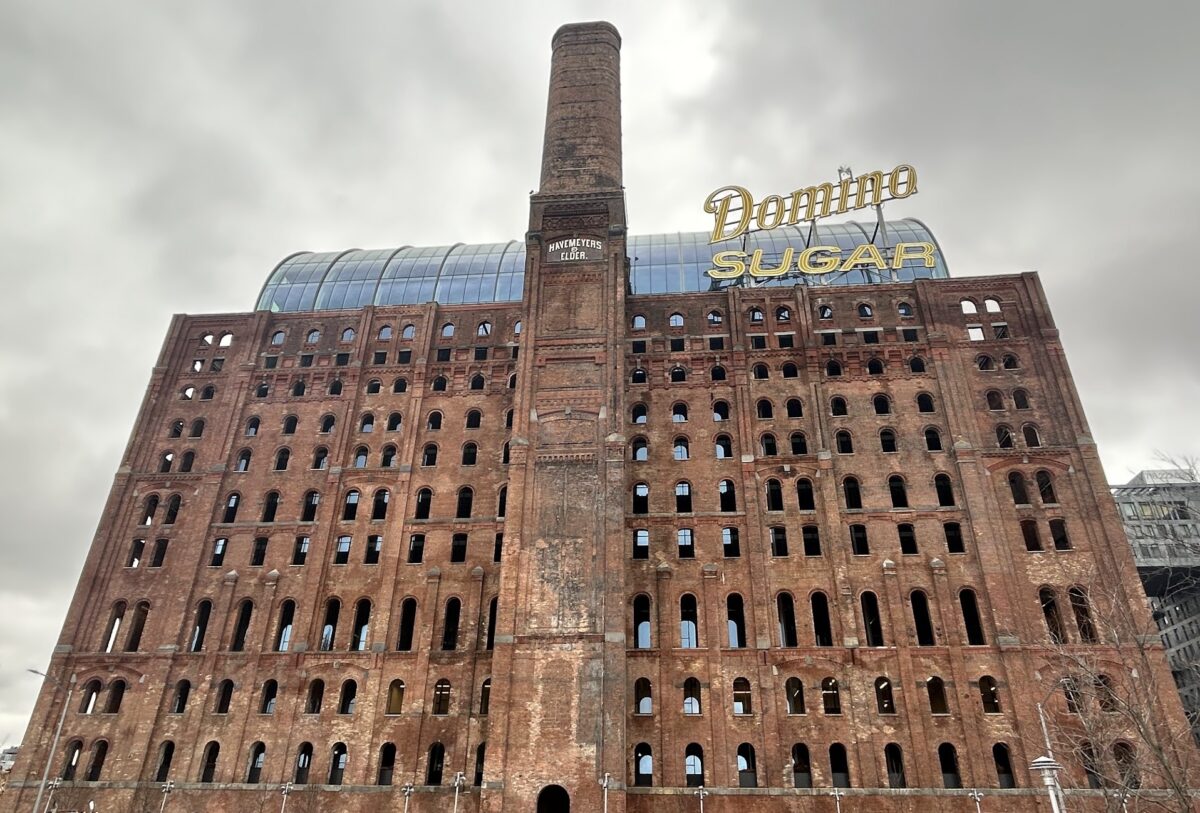
The Brooklyn waterfront was once decorated with a yellow Domino Sugar sign, affixed to an aging refinery along a row of deteriorating industrial structures facing the East River.

The Domino Sugar Refinery, completed in 1883 (after a devastating fire destroyed the original), was more than a factory. During the Gilded Age and into the 20th century, this Brooklyn industrial landmark was the center of America’s sugar manufacturing, helping to fuel the country’s hunger for sweet delights.

But the story goes further back in time — back hundreds of years in New York City history. The sugar trade was one of the most important industries in New York, and for many decades, if you used sugar to make anything, you were probably using sugar that had been refined in New York.
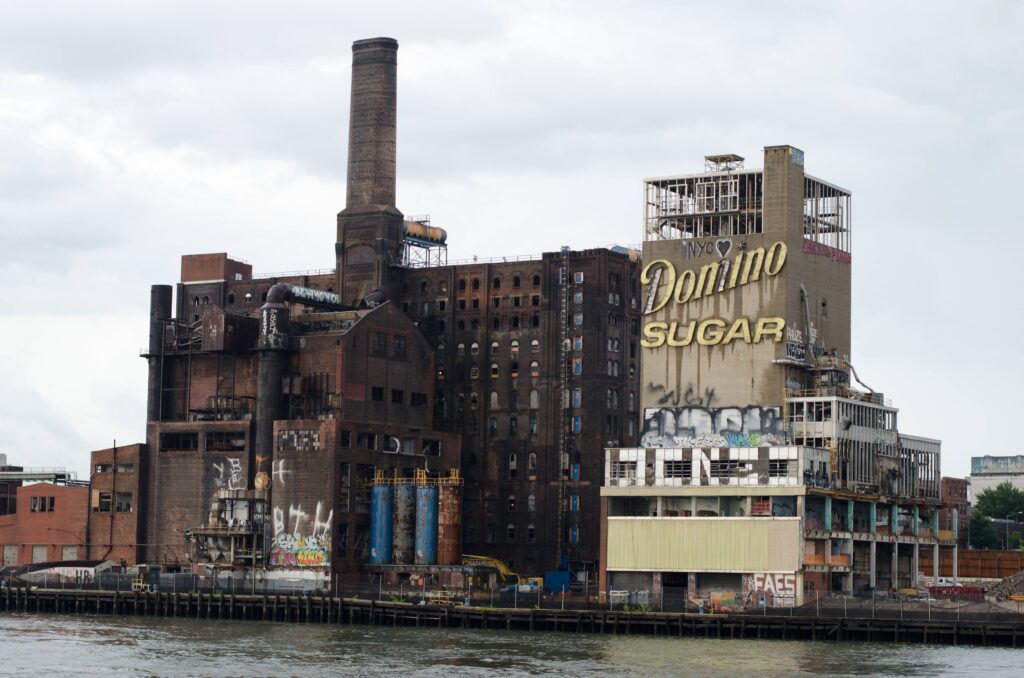
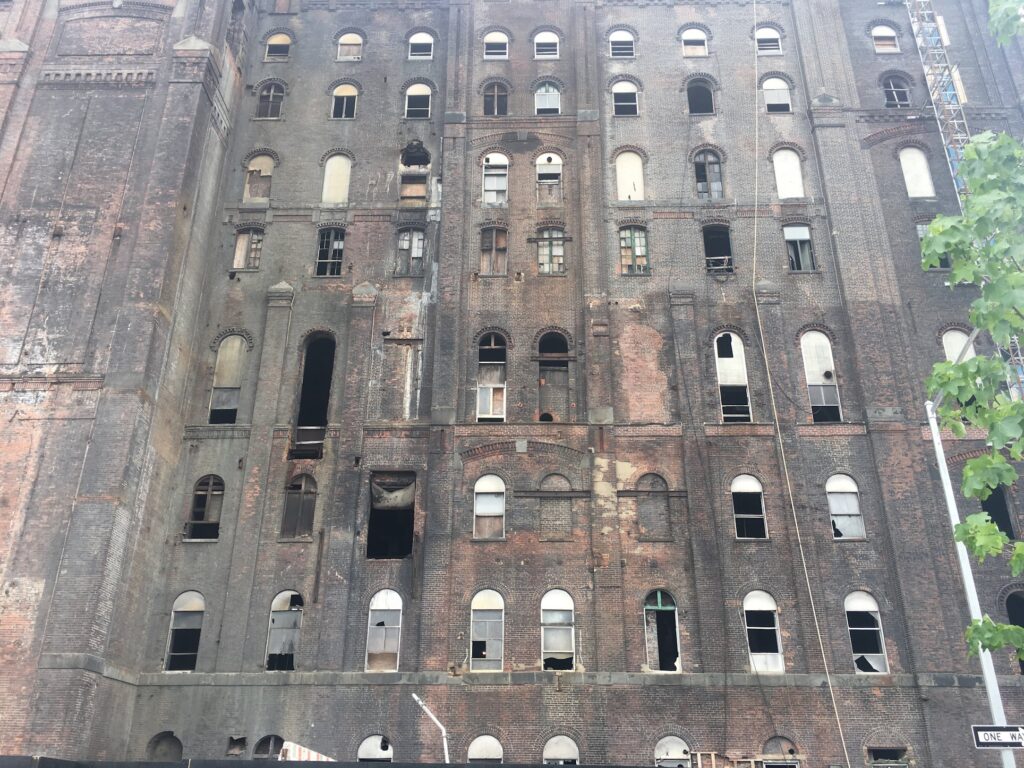
Domino Sugar Refinery in the 2010s/Photo mypene/reddit

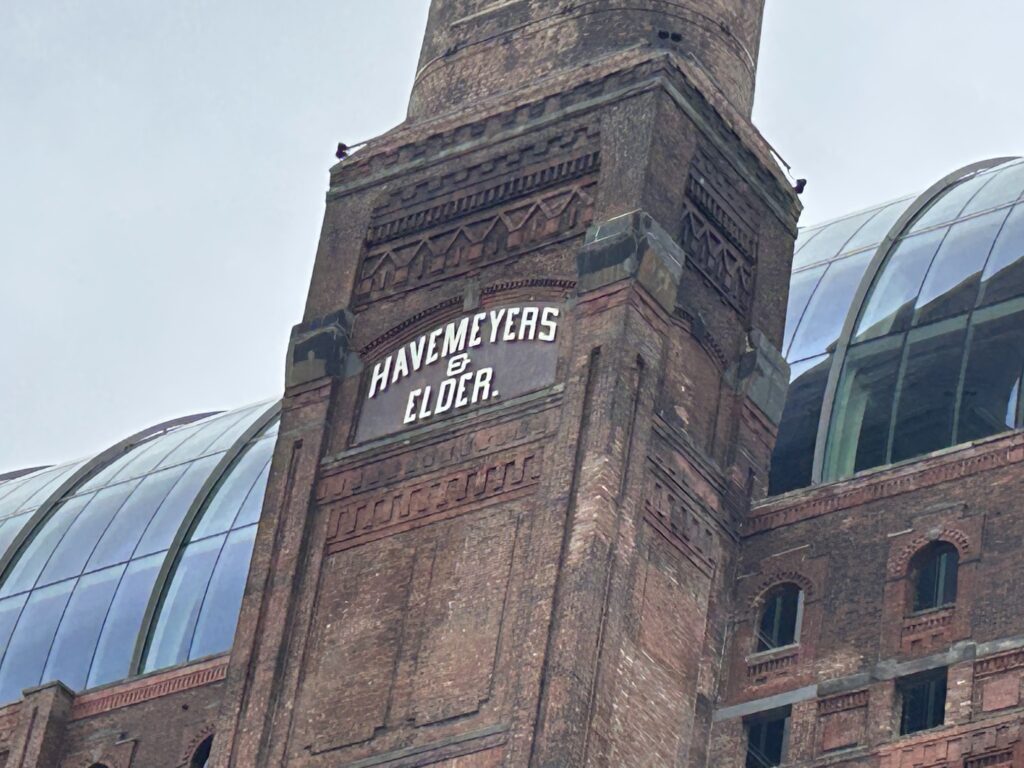
Sugar helped to build New York. Thousands and thousands of New Yorkers were employed in sugarhouses and refineries. And of all the sugar makers, there was one name that stood above the rest — Havemeyer!

The Havemeyers were America’s leading sugar titans. By the 1850s they had moved their empire to the Brooklyn waterfront – and the neighborhood of Williamsburg.

Their massive refinery helped establish the industrial nature of Williamsburg, leading to a rush of sugar manufacturers to Brooklyn, most of which would then be absorbed into the Havemeyer’s operation.
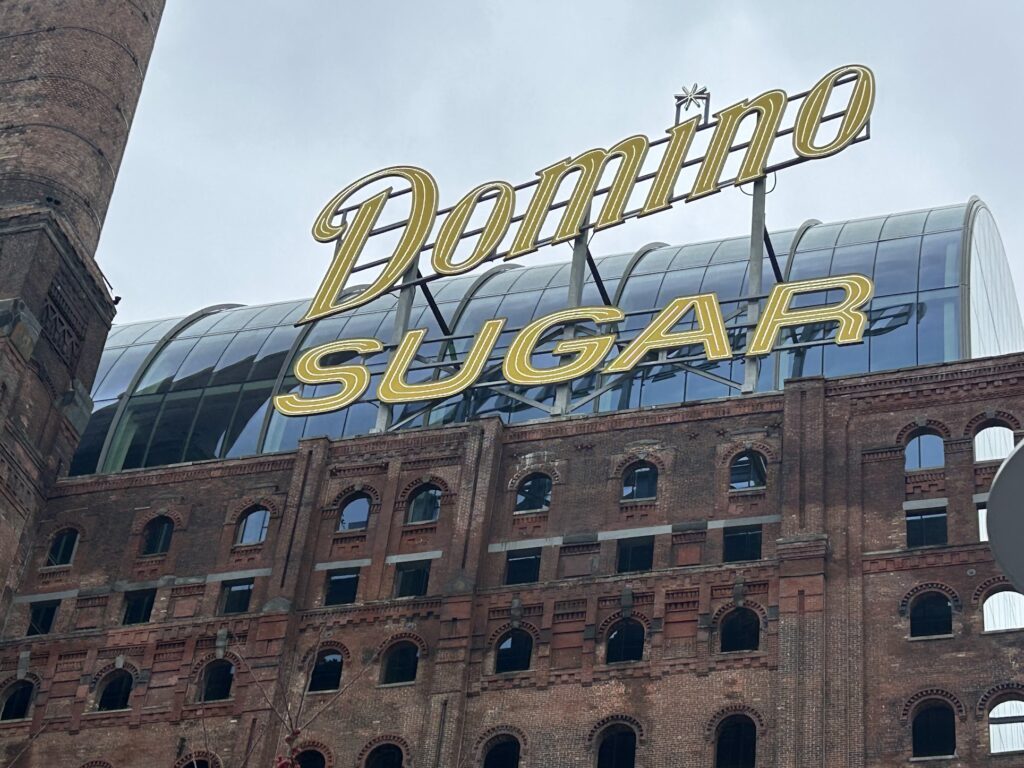
Photo by Greg Young

But this story is even larger than New York, of course. It encompasses the transatlantic slave trade, political influence in the Caribbean, Cuba-United States relations, and the sorry working conditions faced by Hayemeyer’s underpaid employees.

PLUS: It’s Dumbo vs Williamsburg in the Coffee and Sugar War of the 1890s!

LISTEN NOW: BEHIND THE DOMINO SIGN
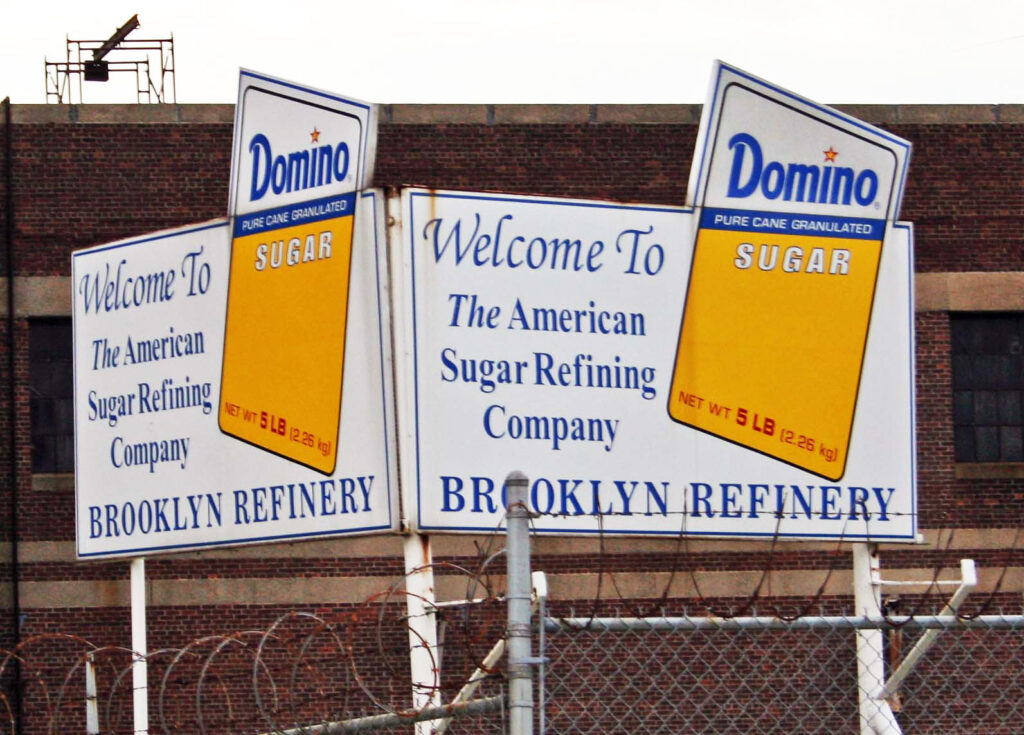

Photo taken 2010, courtesy wburg/Flickr
Tony Hisgett from Birmingham, UK 2011

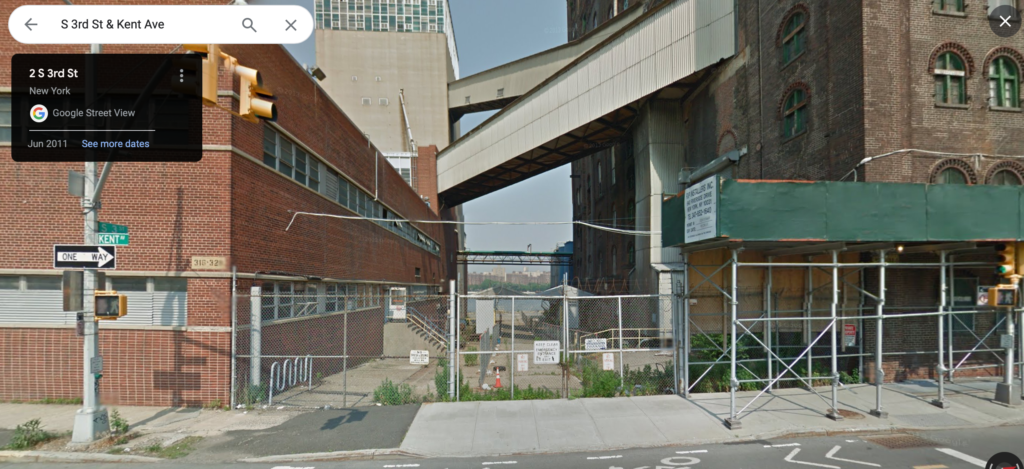
This view of South 3rd Street and Kent Avenue still pops up on Google Maps (as of Feb 15, 2024)
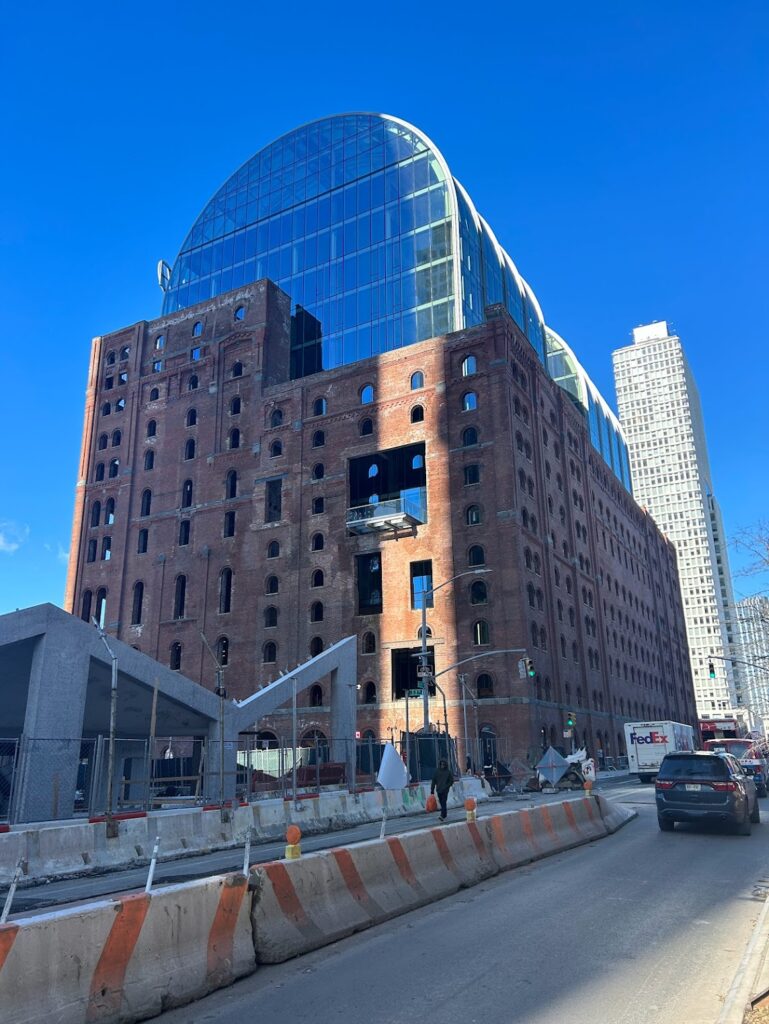
View of the same intersection in 2024

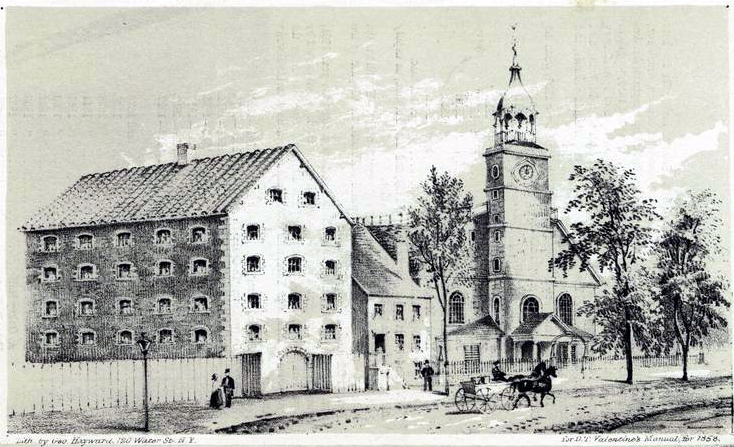
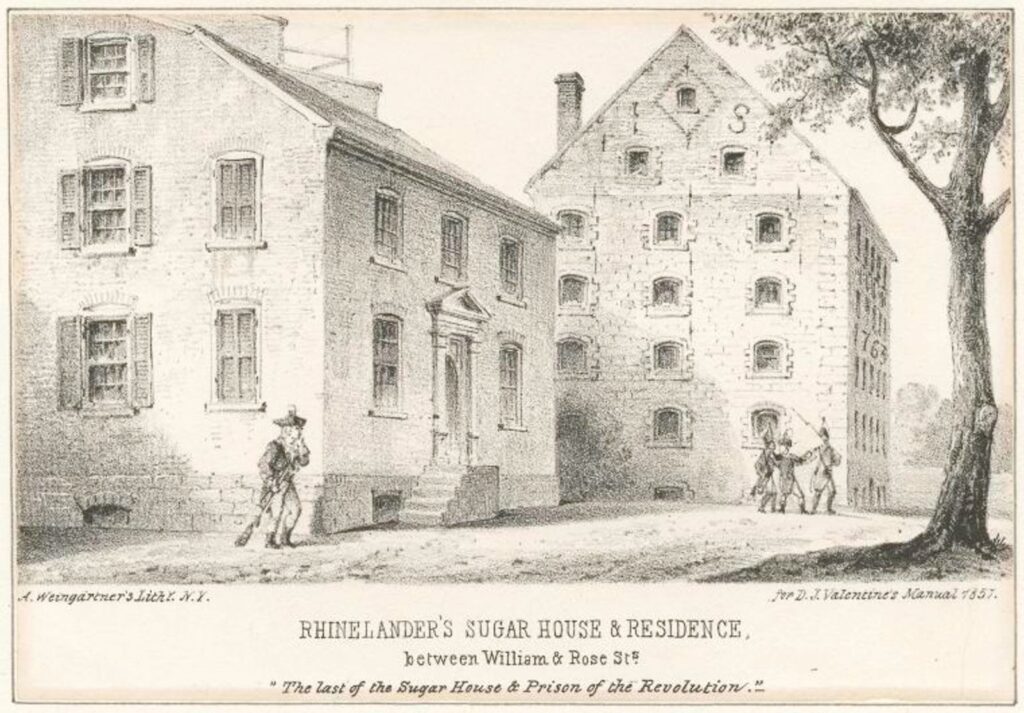
The Livingston Sugar House, on Liberty Street, and the Rhinelander Sugar House, between William & Duane Streets in New York. They were the city’s largest buildings which is why both were repurposed as prisons during the Revolutionary War.
NYPL

The original Havemeyer sugar refinery on the Brooklyn waterfront before the fire, 1876.
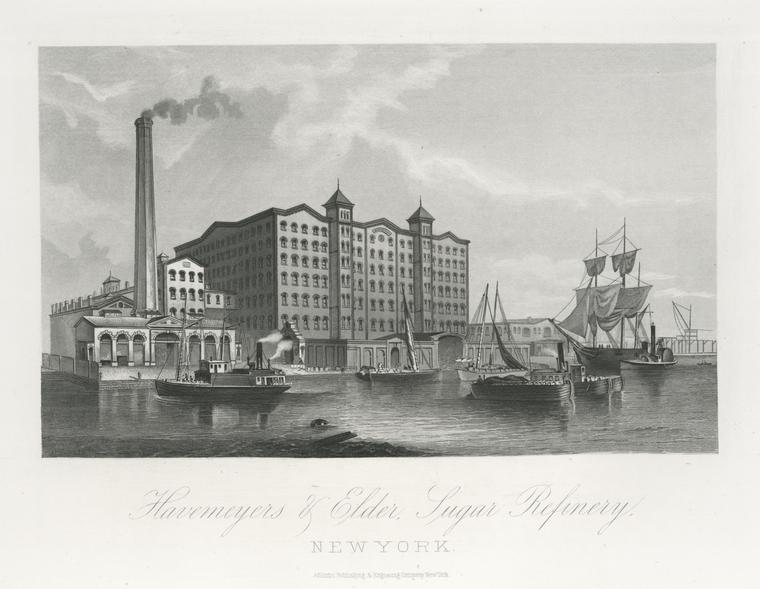
The original factory before the fire, 1876. New York Publc Library
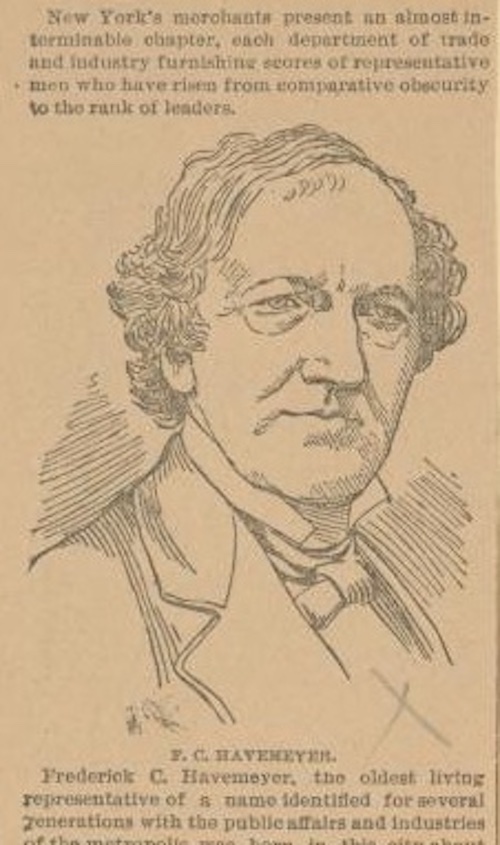
Frederick Havemeyer, NYPL
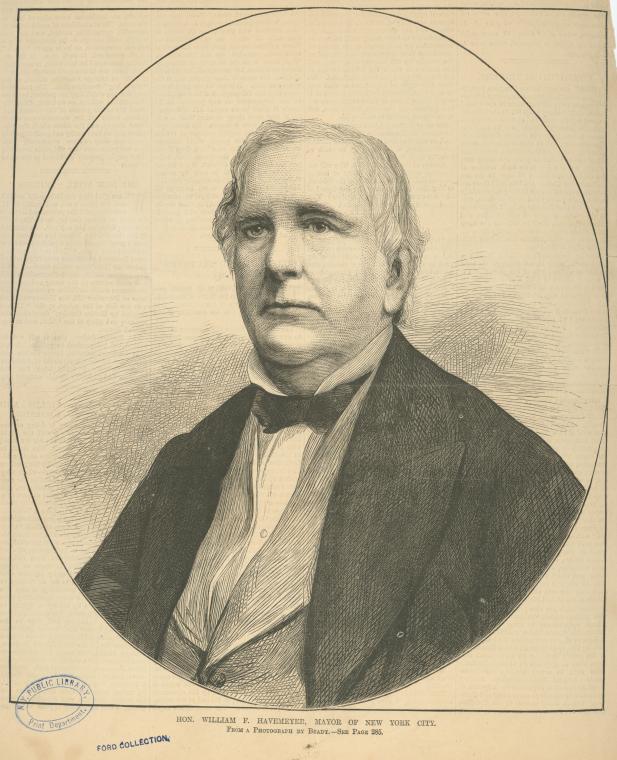
Frederick’s brother William, the mayor of New York for three separate terms (NYPL)
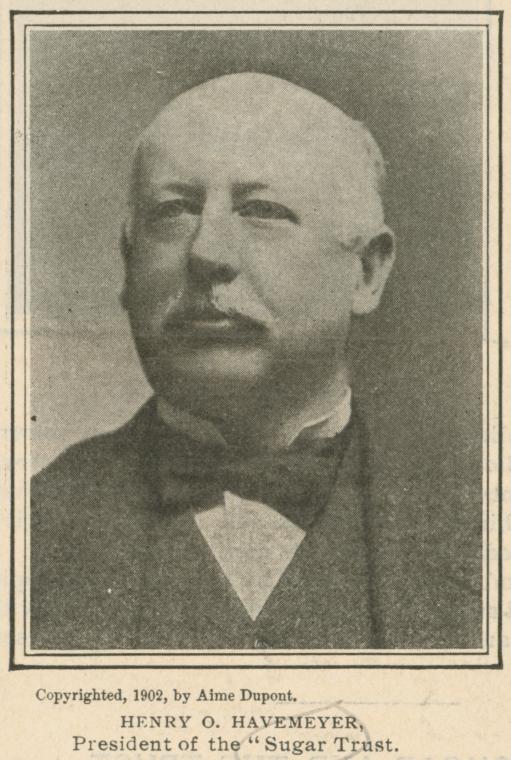
Henry (Harry) Havemeyer, “president of the Sugar Trust. Pic NYPL
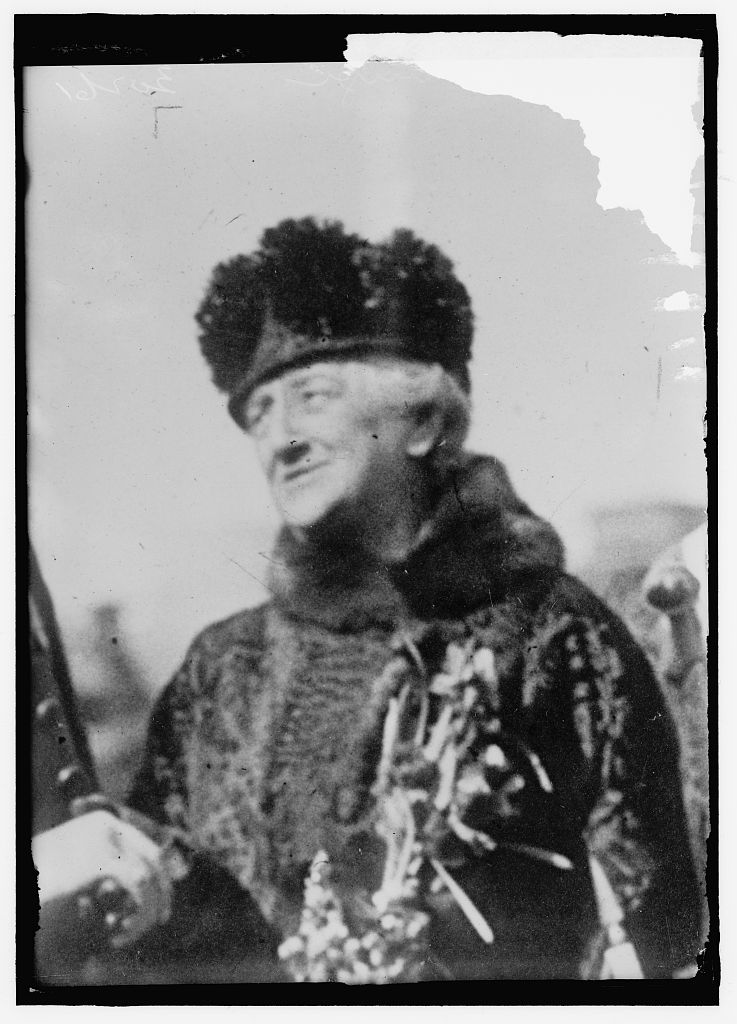
Louisine Havemeyer, 1919, in her suffragist phase (Library of Congress)

Havemeyer Hall on the Columbia University campus, built in 1897 and named for Frederick Havemeyer who moved the family’s sugar enterprise to Brooklyn. According to Untapped Cities, it happens to contain Hollywood’s favorite classroom.
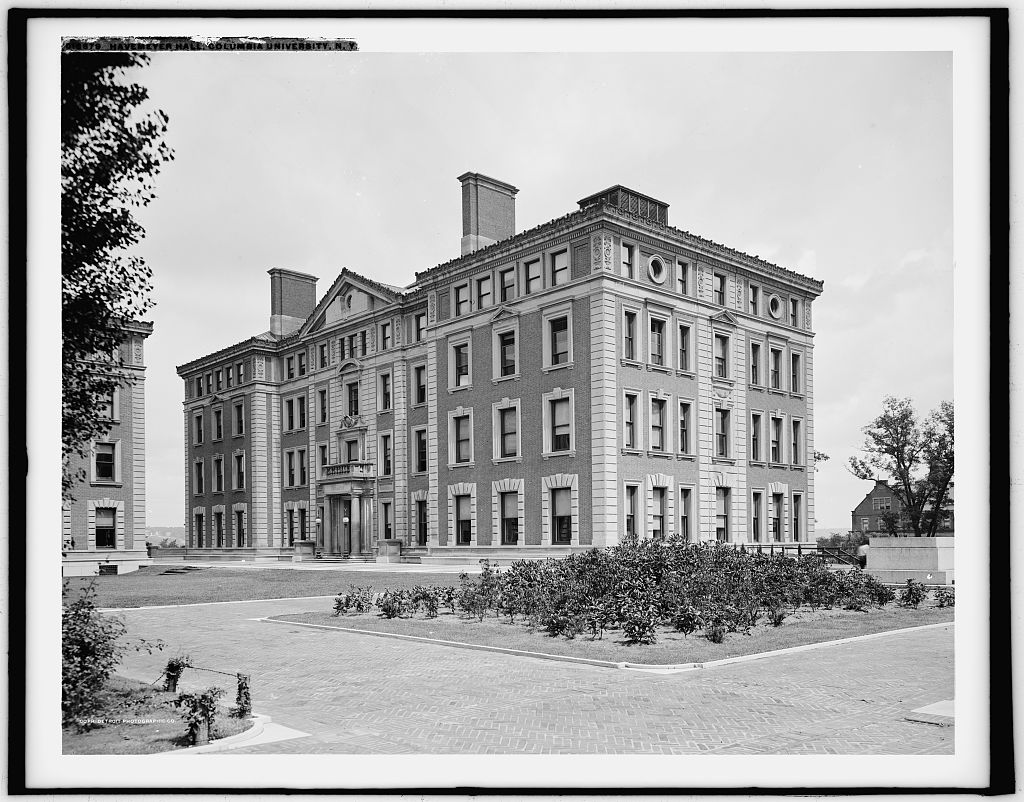
Library of Congress

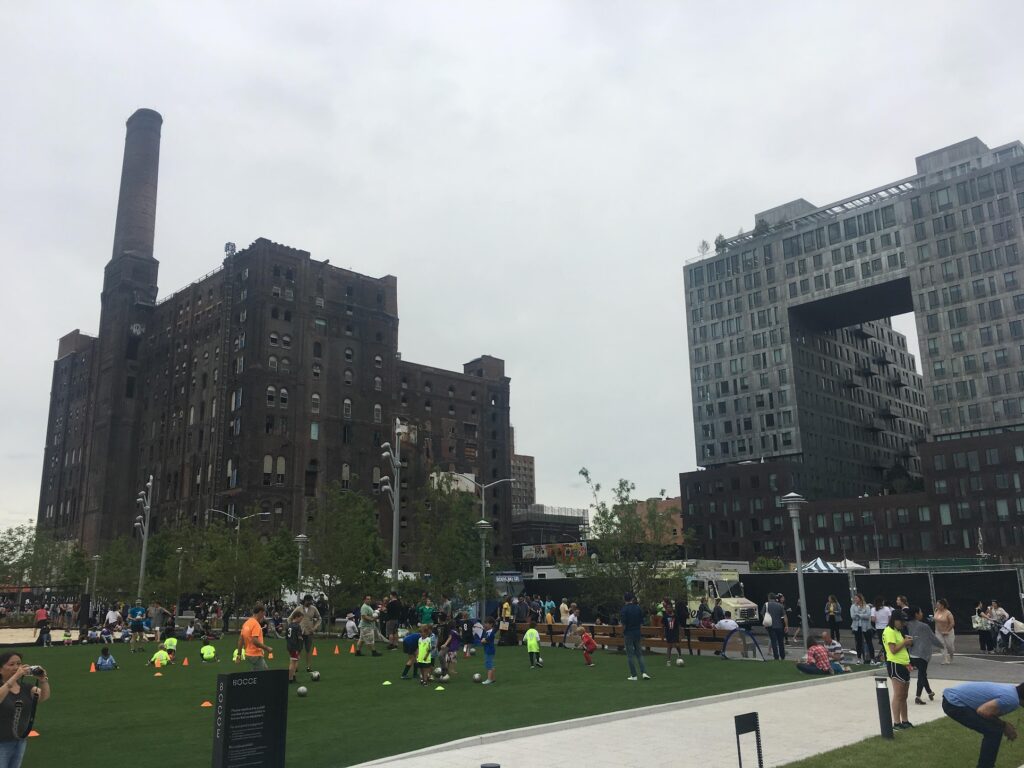
Taken by Greg June 2018, before the completion of The Refinery:
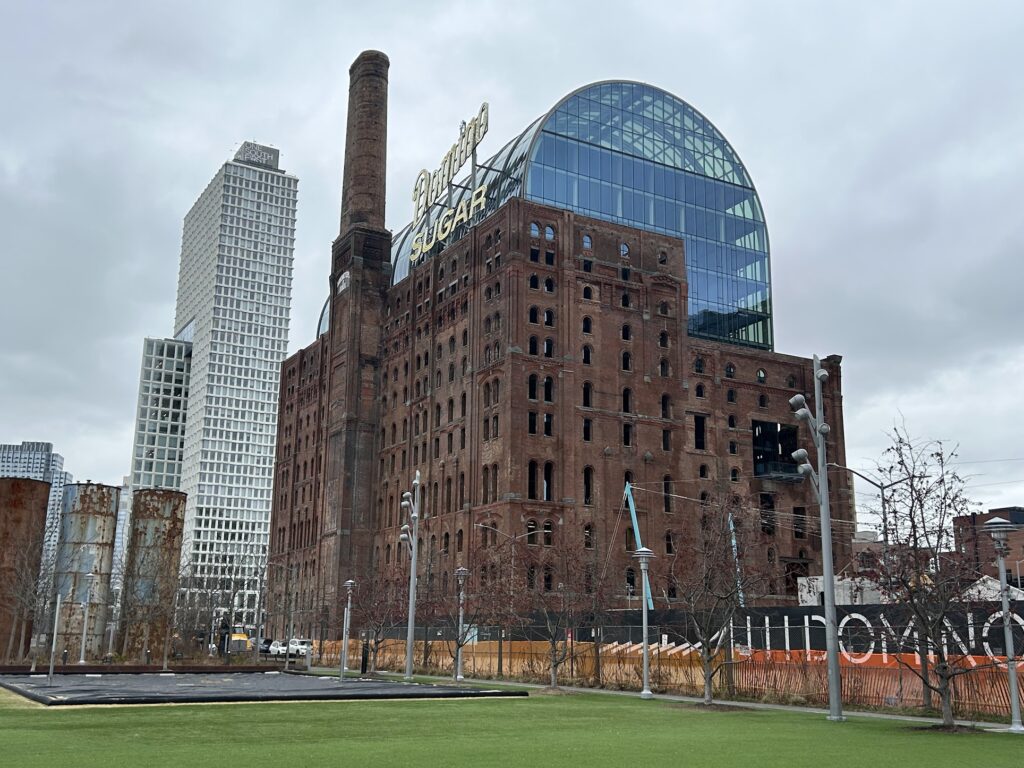
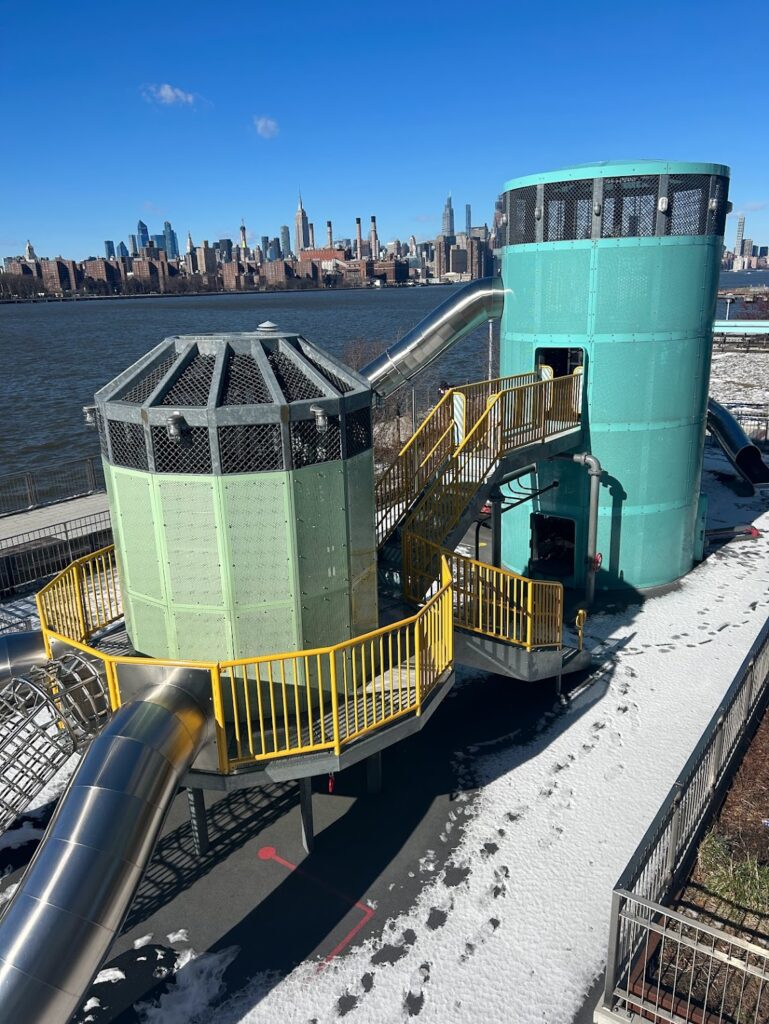
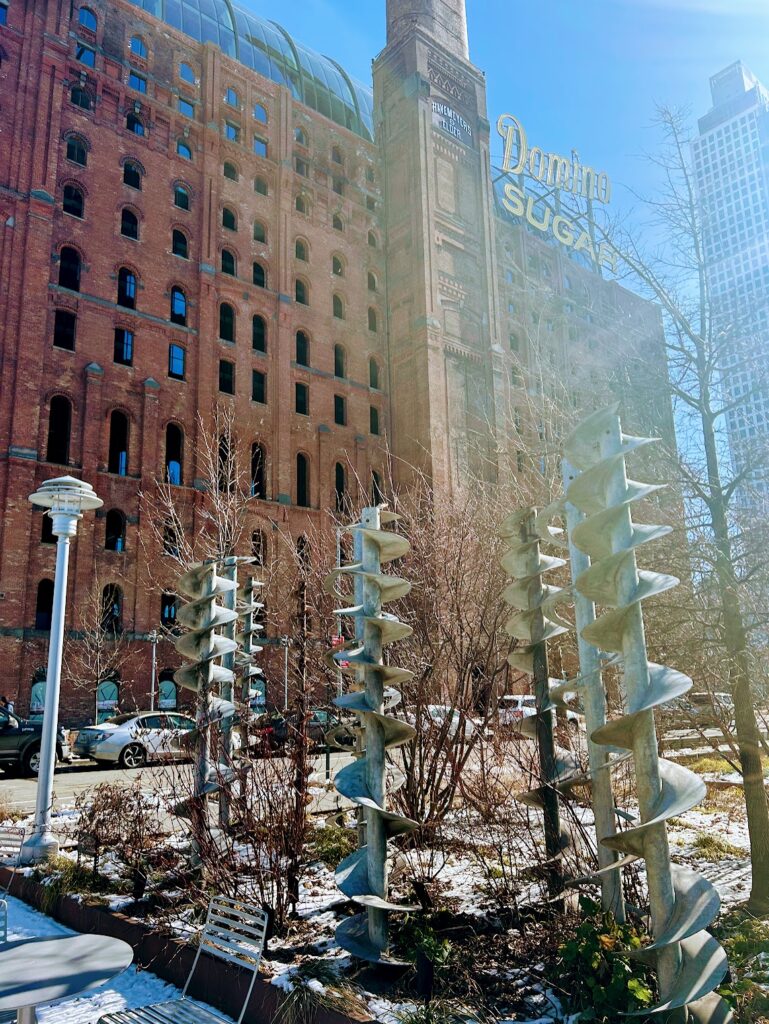
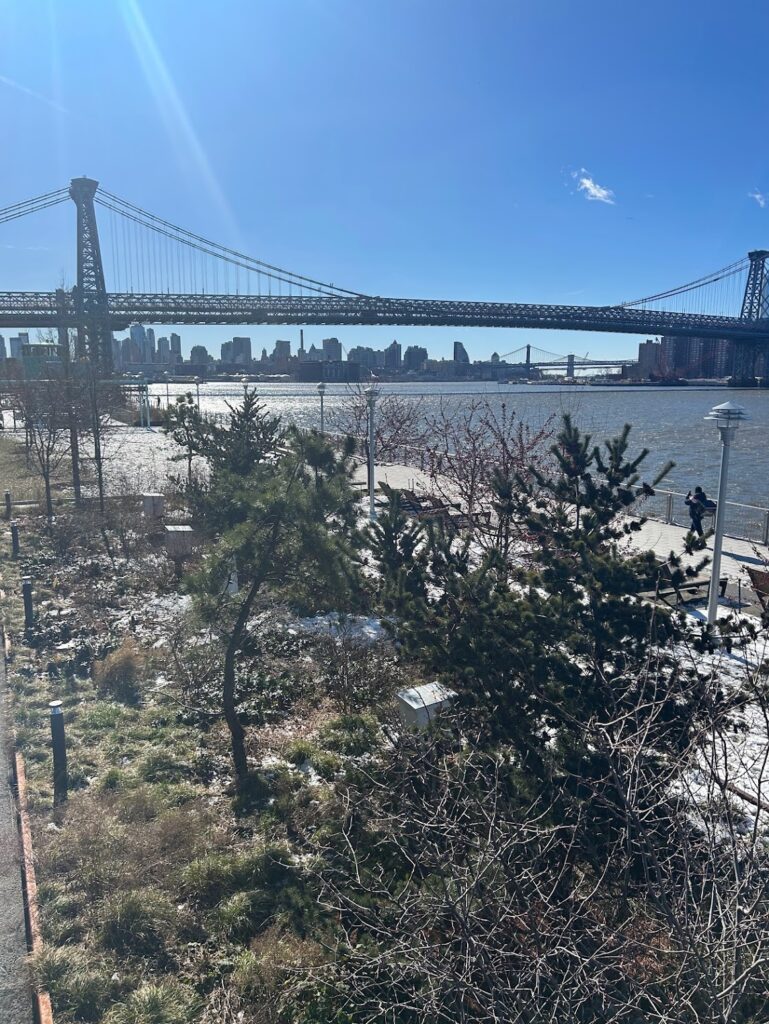
Current photos by Greg (circa January/February 2024)
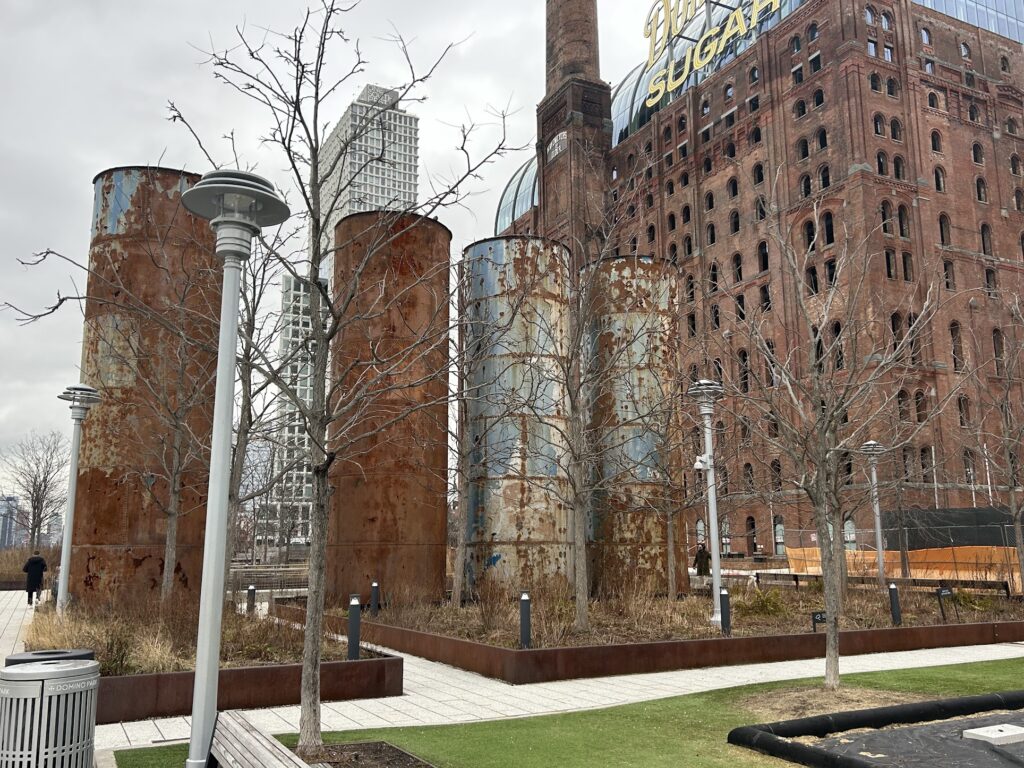
The playground pays homage to the sugar refining process.

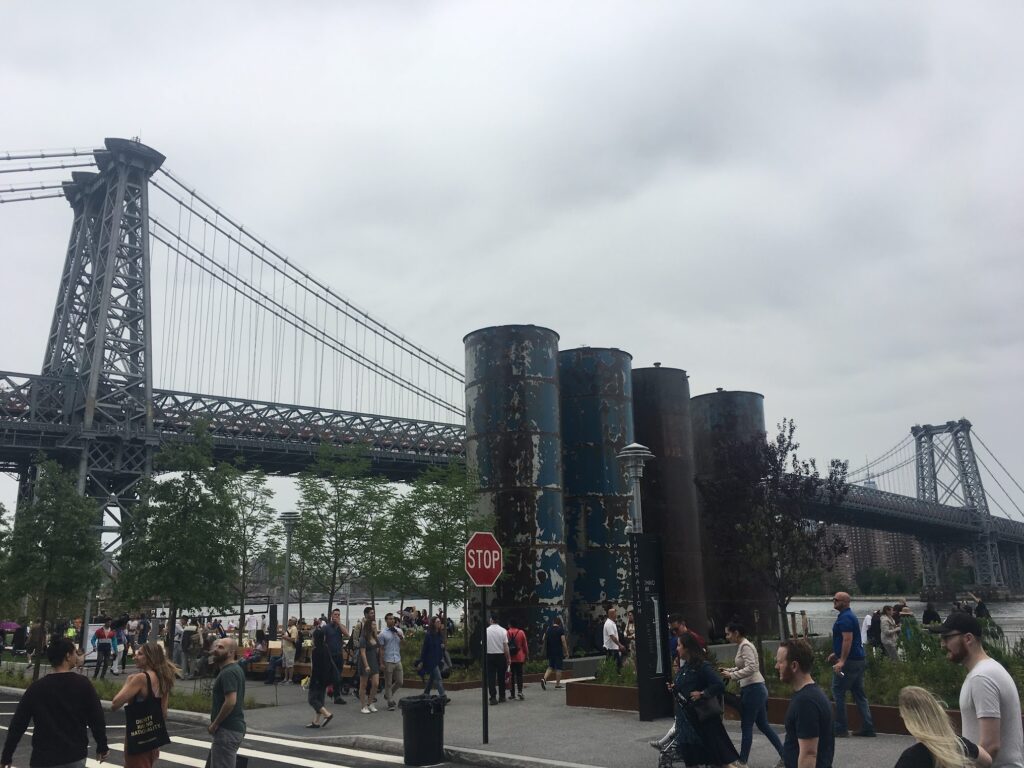
Site of the former wharves where ships docked with sugar cane product from destinations around the world.
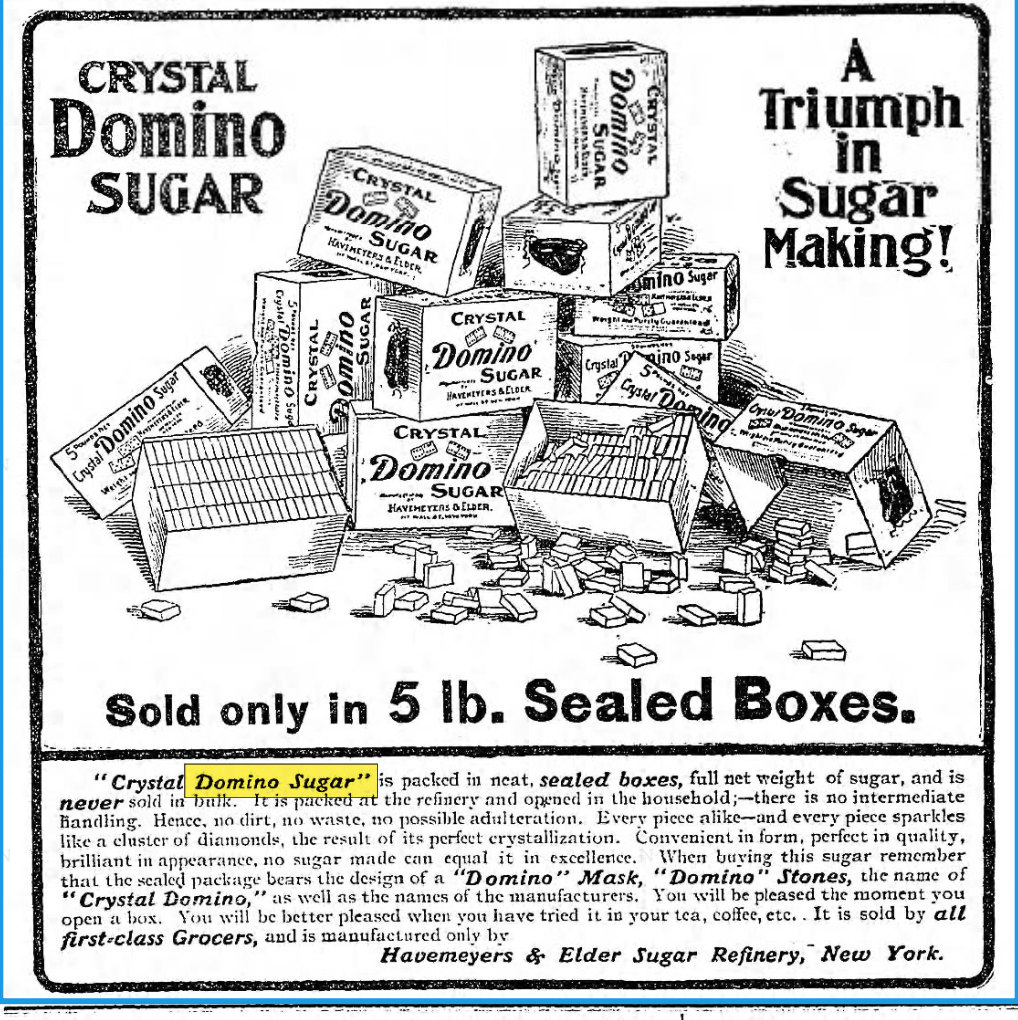
Where does the name Domino come from? Most likely from a kind of factory cut — the domino cut — name for the sugar appearing like little dominos. The box today is also rectangular like these ‘domino’ lumps.
FURTHER READING
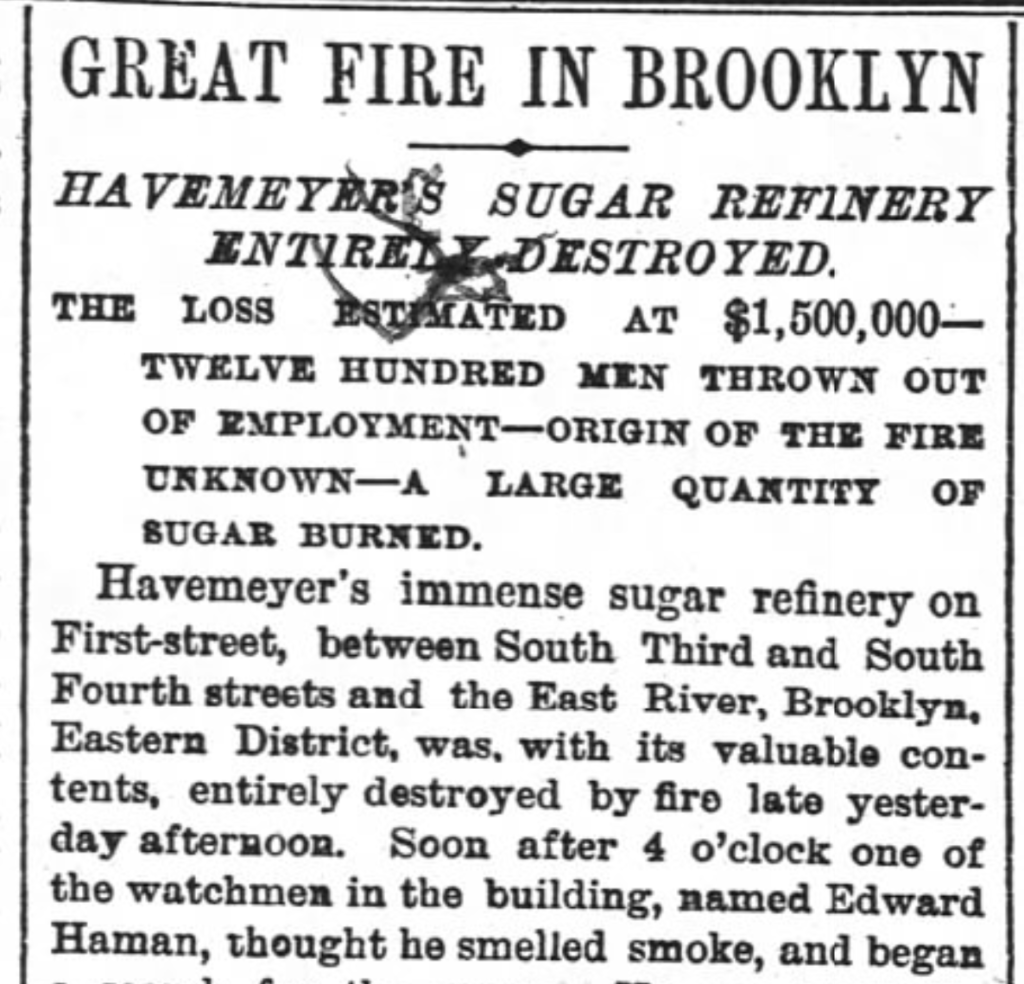
New York Times, January 9, 1882

Brooklyn’s Sweet Ruin: Relics and Stories of the Domino Sugar Refinery / Paul Raphaelson
Cuba: An American Story / Ada Ferrer
Food City: Four Centuries of Food-Making in New York / Joy Santlofer
Frederick Christian Havemeyer Jr: A Biography / Harry W. Havemeyer
Henry Osbourne Havemeyer: The Most Independent Mind / Harry W. Havemeyer
The Havemeyers: Impressionism Comes To America / Frances Weitzenhoffer
The Rise and Fall of the Sugar King / Geoffrey Cobb
Sugar: A Bittersweet History / Elizabeth Abbott
White Gold: A Brief History of the Louisiana Sugar Industry / Glenn R Conrad, Ray F. Lucas
The World of Sugar: How the Sweet Stuff Transformed Our Politics, Health, and Environment Over 2,000 Years / Ulbe Bosma

At the Domino Sugar Refinery, a Glass Egg in a Brick Shell” by Debra Kamin (New York Times)
Kara Walker’s Next Act” by Doreen St. Fèlix (Vulture)
The Last Grain Falls at a Sugar Factory” by William Yardley (New York Times)
Williamsburg. What Happened?” by Steven Kurutz (New York Times)

Landmark Designation Report: HAVEMEYERS & ELDER FILTER, PAN & FINISHING HOUSE
The Refinery At Domino

FURTHER LISTENING

Categories
Brooklyn History Podcasts

Crossing to Brooklyn: How the Williamsburg Bridge Changed New York City

PODCAST The story of the Williamsburg Bridge — poorly received when it was built but vital to the health of New York City

Sure, the Brooklyn Bridge gets all the praise, but the city’s second bridge of the East River has an exceptional story of its own.

In this episode, we’ll answer some interesting questions, including:

— Why is the bridge named for a 19th century industrial neighborhood in Brooklyn and why is it not, for instance, called the Manhattan Bridge (a name not in use yet in 1903) or the East River Bridge (which was its original name)?

— Why did everybody think the bridge looked so unusually ugly and how did the city belatedly try and solve the problem?

— Why did one population in the Lower East Side find the bridge more important than others?

— And why was the bridge is such terrible shape in the 20th century? Did it really almost collapse into the river?

PLUS: How the fate of the two neighborhoods linked by the Williamsburg Bridge would change radically in the 115 years since the bridge was opened.

Listen Now: Williamsburg Bridge Podcast

________________________________________________________

The Bowery Boys: New York City History podcast is brought to you …. by you!

We are now producing a new Bowery Boys podcast every other week.  We’re also looking to improve the show in other ways and expand in other ways as well — through publishing, social media, live events and other forms of media.  But we can only do this with your help!

We are now a member of Patreon, a patronage platform where you can support your favorite content creators for as little as a $1 a month.

Please visit our page on Patreon and watch a short video of us recording the show and talking about our expansion plans.  If you’d like to help out, there are five different pledge levels (and with clever names too — Mannahatta, New Amsterdam, Five Points, Gilded Age, Jazz Age and Empire State). Check them out and consider being a sponsor.

We greatly appreciate our listeners and readers and thank you for joining us on this journey so far. 

_________________________________________________________

We’d also like to thank WeWork for sponsoring the Bowery Boys podcast. Enter to win a 1-month hot desk membership to WeWork checking into this link. This contest only last a few more days and the winner will be announced on March 30.

we.co/boweryboyshotdesk

And we’d also like to thank our additional sponsors Hulu (and the gripping new thriller The Looming Tower) and Audible. For a free 30-day trial (and a free audiobook) go to audible.com/bowery or text the word BOWERY to 500-500

________________________________________________________________________

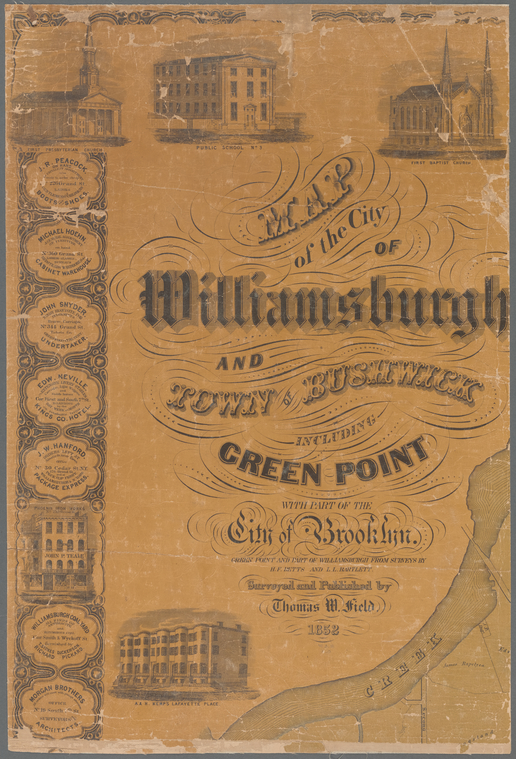
A map of the City of Williamsburgh and Town of Bushwick including Green Point, 1852

NYPL

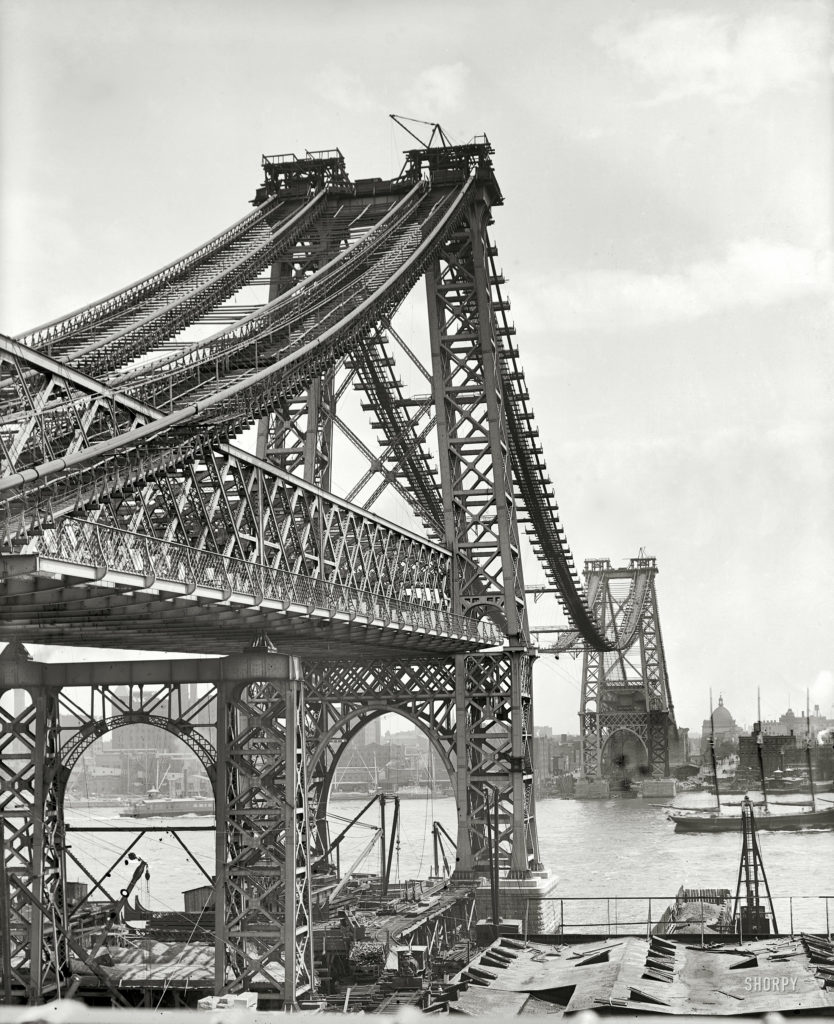
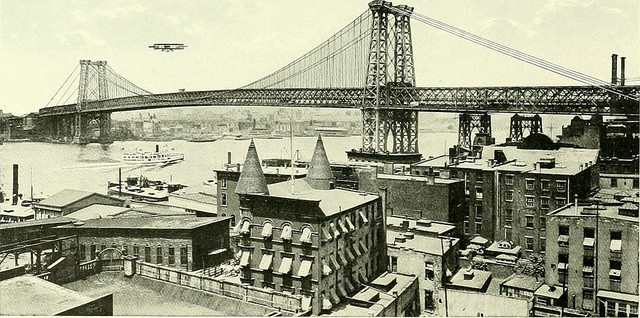
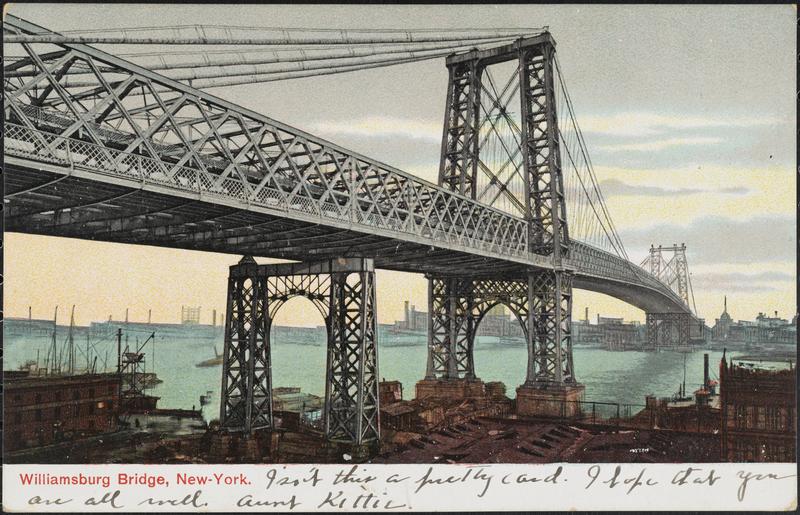
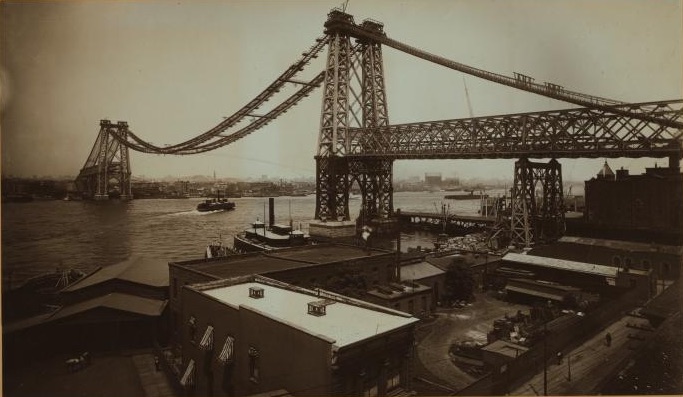
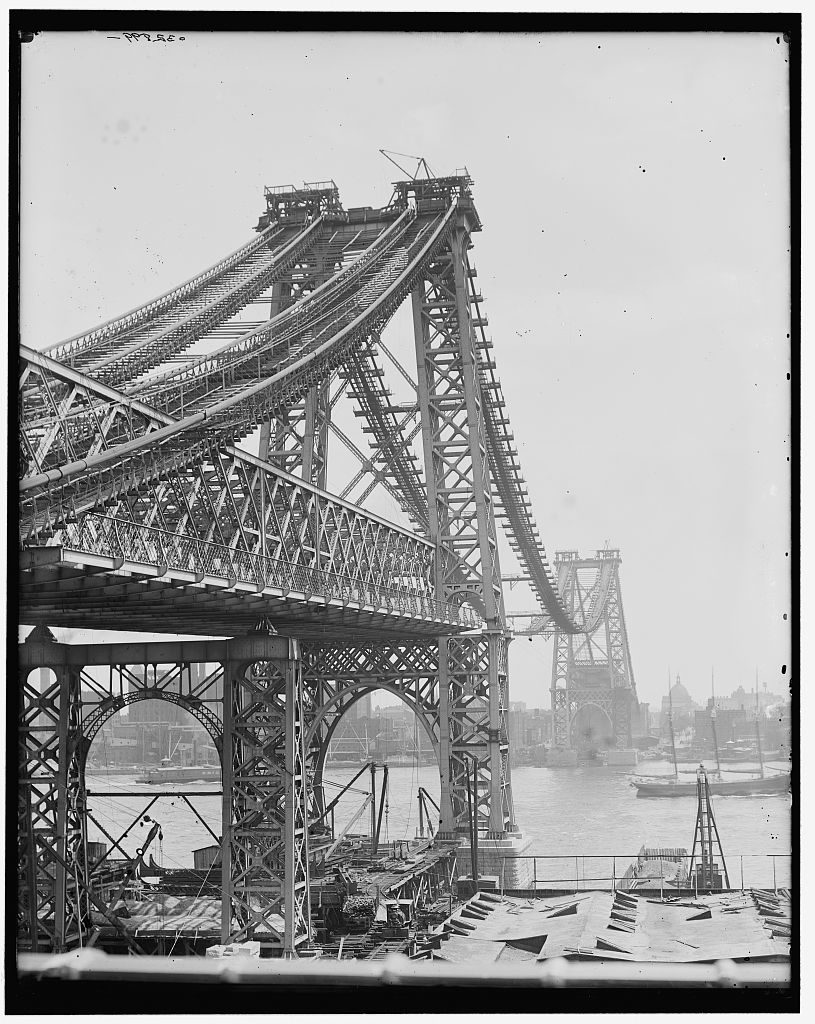
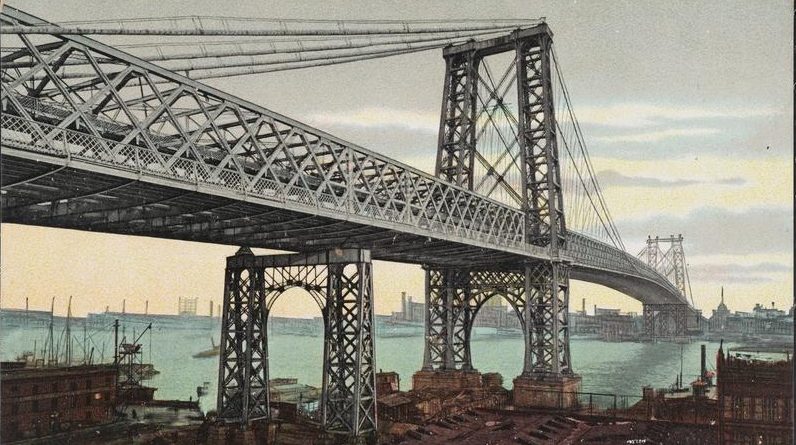
In 1902, the bridge was finally near completion, but many were worried about the bridge’s functional plainness.

Library of Congress/Cleaned up image courtesy Shorpy
New York Public Library

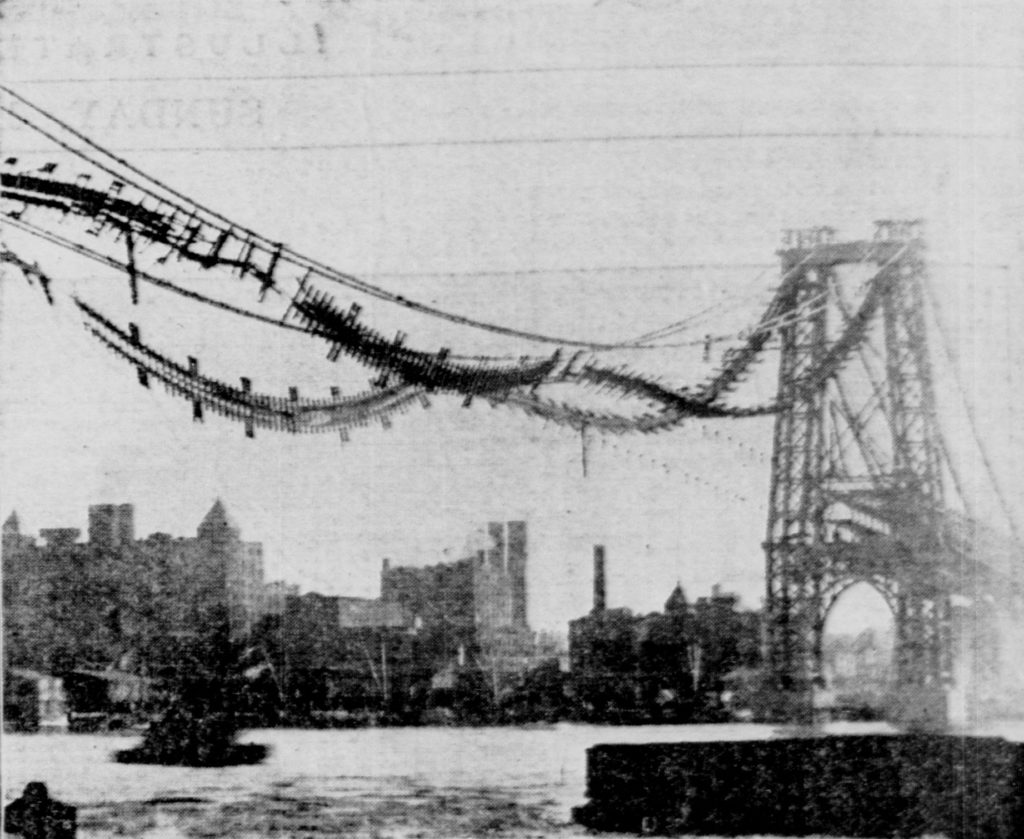
A 1903 fire on the bridge created a scary scene over the East River, but the cables and wires proved durable.

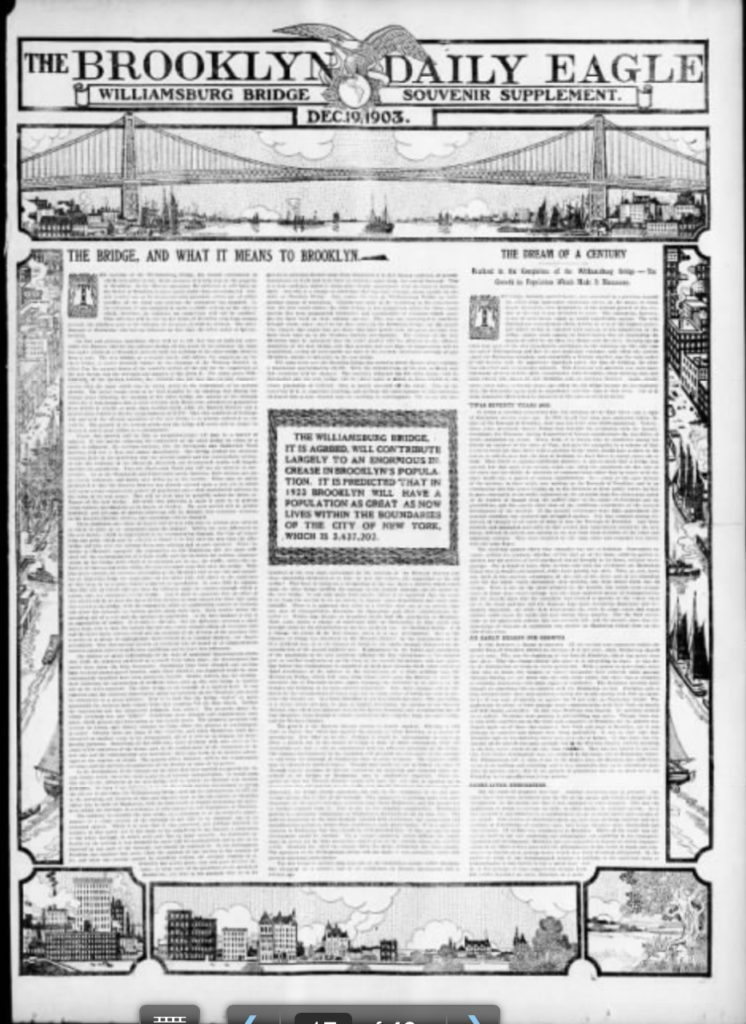
From the Brooklyn Daily Eagle souvenir section celebrating the opening of the bridge:

Bertrand Brown/MCNY

An illustration from the 1915 book New York: The Wonder City

Flickr commons

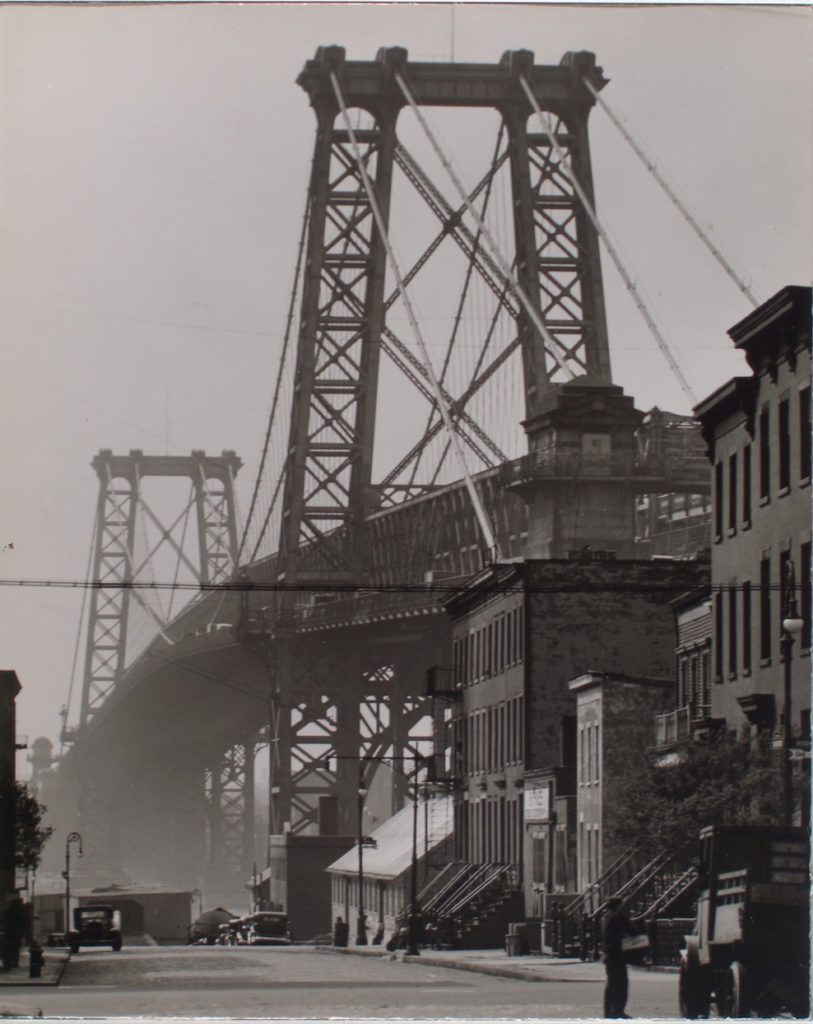
Seen from South Eighth and Berry Streets in Brooklyn, 1935.

Berenice Abbott/NYPL

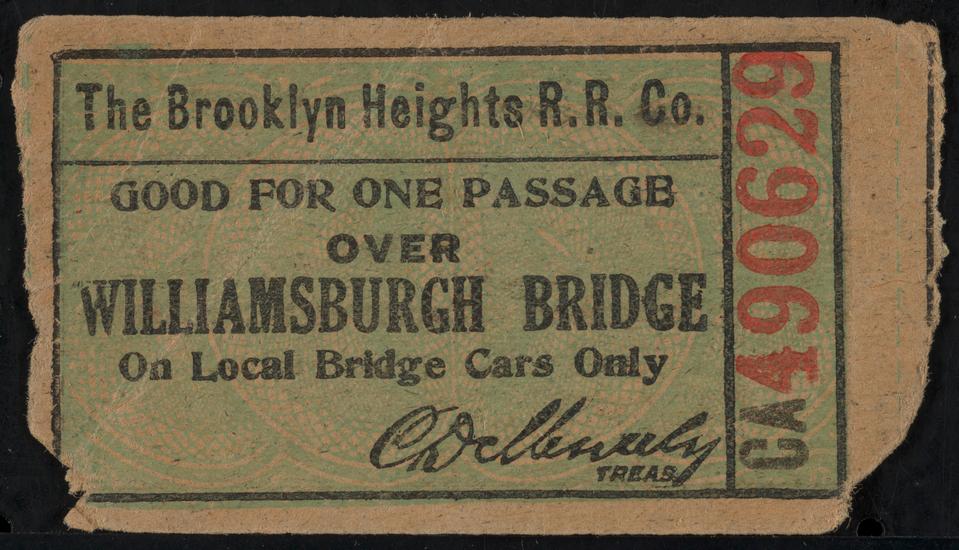
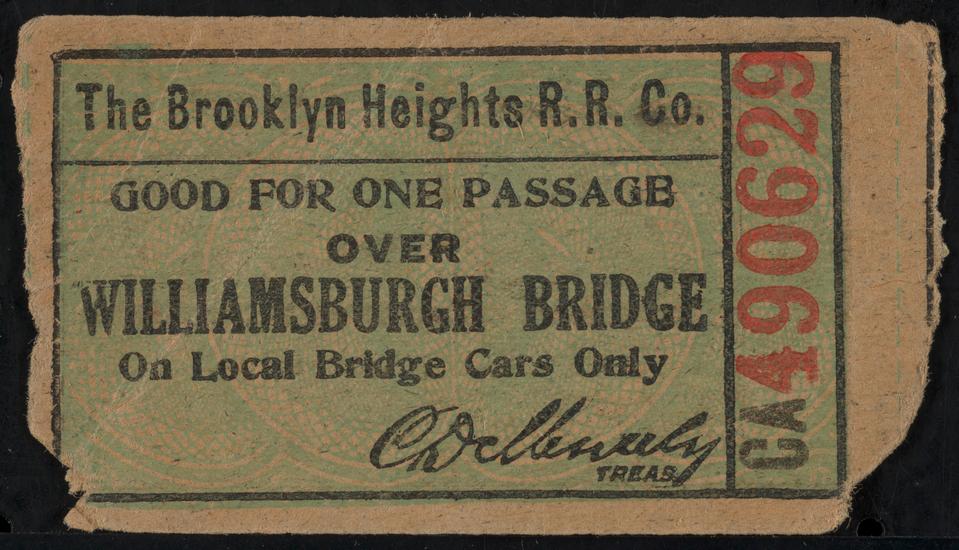
The old spelling of the name continually popped up in various places as late as the early 20th century. This passenger tickets dates to between 1903 and 1915.

MCNY

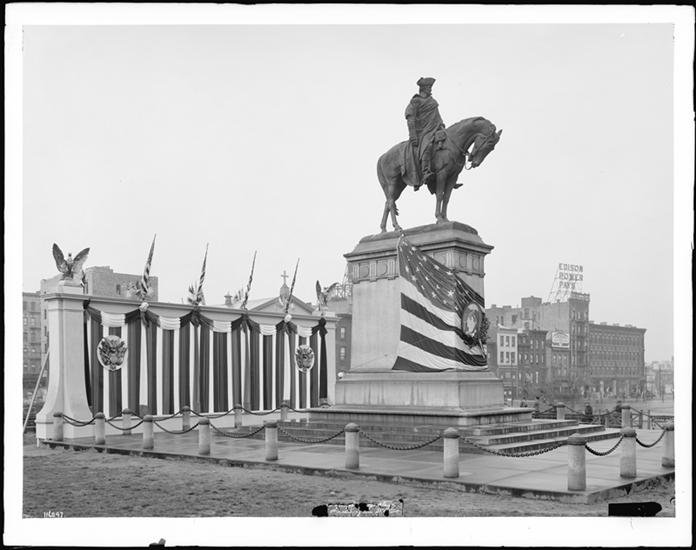
Williamsburg Bridge Plaza — and the handsome equestrian statue of George Washington — festooned with banners at the start of World War I.

MCNY

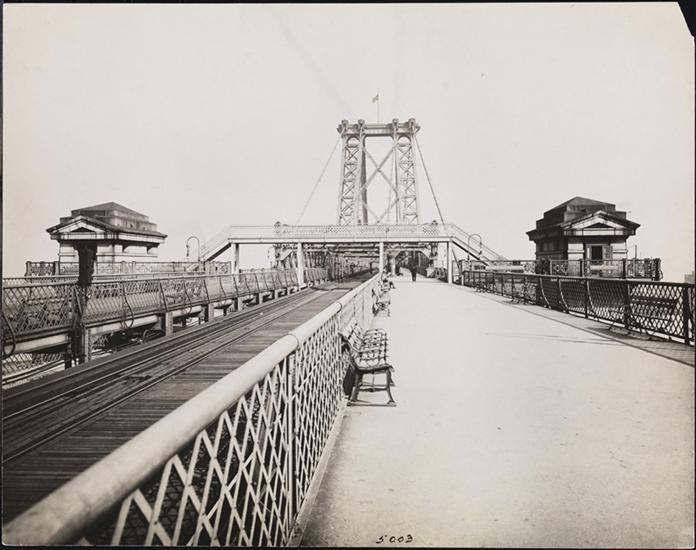
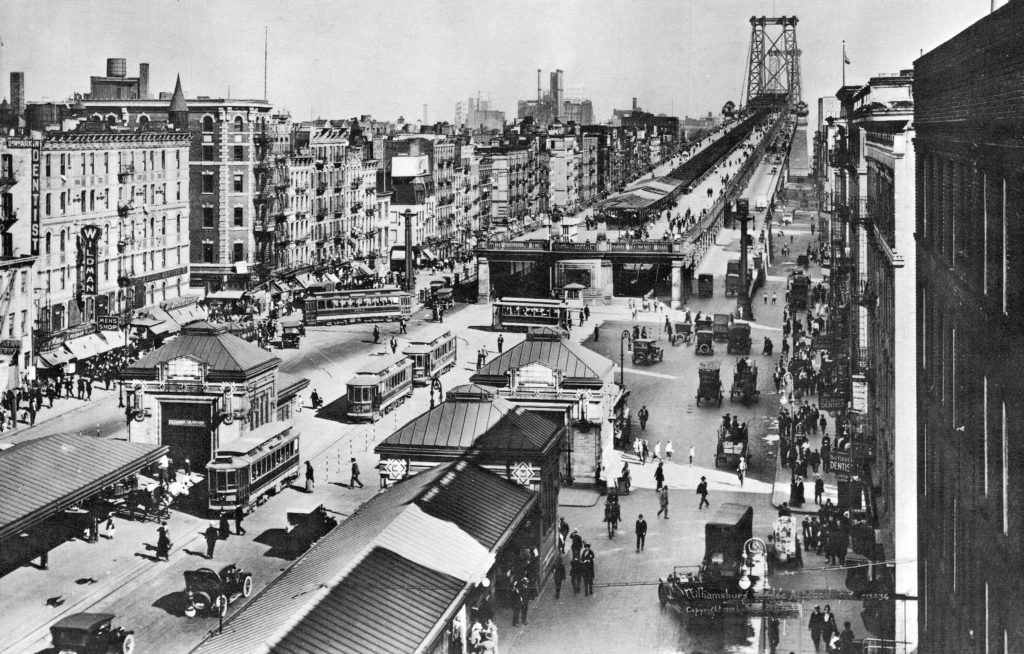
The approach to the Williamsburg Bridge from the Manhattan side. Delancey Street had to be widened to accommodate the influx of transportation options flooding onto the bridge.

The bridge is central to the growth of New York’s immigrant (and particularly Jewish) communities. While its construction did displace thousands of people, the bridge would actually facilitate better living conditions for Lower East Side immigrant groups by encouraging migration to less populated Brooklyn neighborhoods.  The New York Herald even called it the “Jews Highway” as those of Eastern European and Russian Jewish heritage transplanted to Williamsburg.

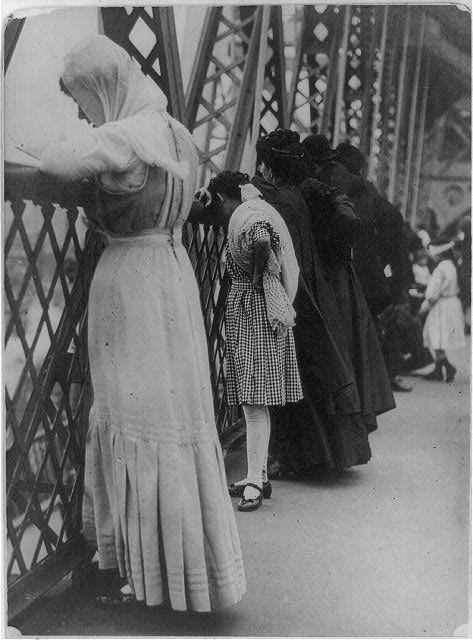
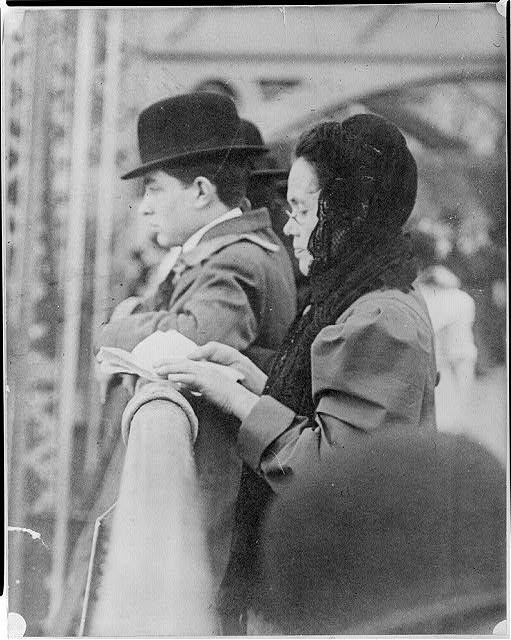
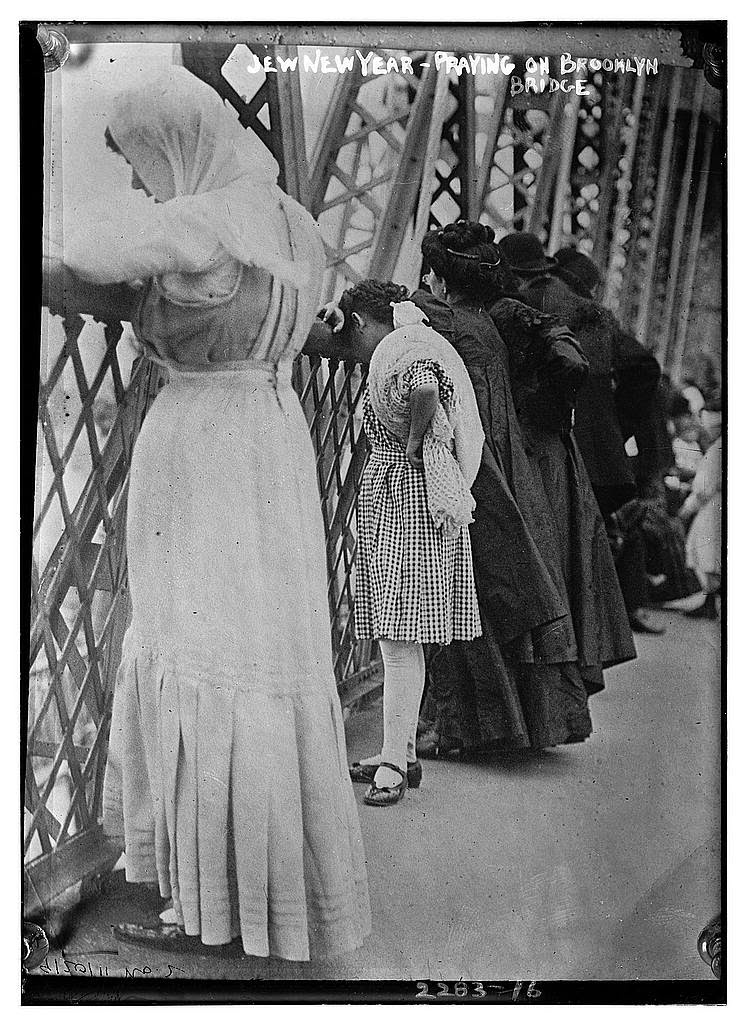
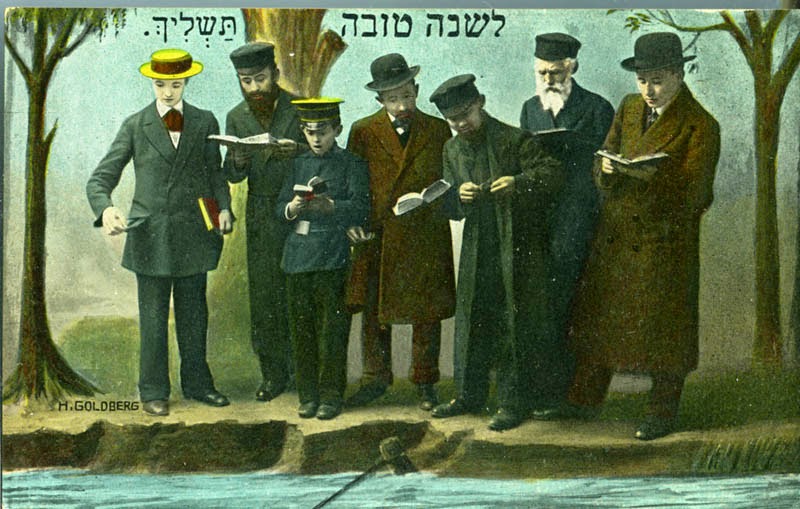
The ritual of tashlikh  תשליך‬‎ has often been performed on the bridge.

Library of Congress

From the film The Naked City

FURTHER LISTENING

These past episodes were mentioned in this week’s podcast. After finishing the Williamsburg Bridge show, go back and give these a listen:

Categories
Bridges The Alienist

The Construction of the Williamsburg Bridge — History Behind the Scene (The Alienist)

HISTORY BEHIND THE SCENE What’s the real story behind that historical scene from your favorite TV show or feature film? A semi-regular feature on the Bowery Boys website, I’ll be reviving this series as we follow along with TNT’s limited series The Alienist. Look for other articles here about other historically themed television shows (Mad Men, The Knick, The Deuce, Boardwalk Empire and Copper). And follow along with the Bowery Boys on Twitter at @boweryboys for more historical context of your favorite shows. See the bottom of this article for more information on how to watch more episodes of The Alienist.
The Alienist begins — as it does in Caleb Carr‘s best-seller — with a bizarre and gruesome discovery one frozen evening in 1896: the violently mutilated body of a young man.

New Yorkers occasionally found such nasty sights along the waterfront; drunken sailors fell from their ships from time to time. But these human remains were seemingly displayed, laid upon “an elaborate maze of steel supports,” adjacent to the old creaking seaport.

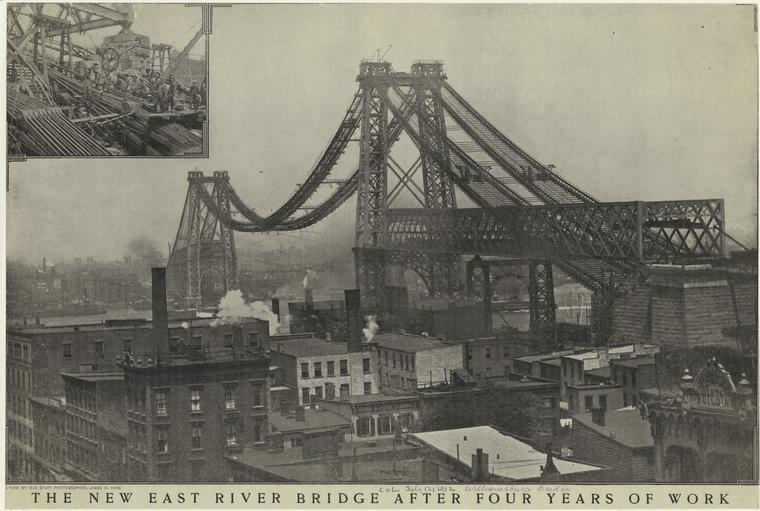
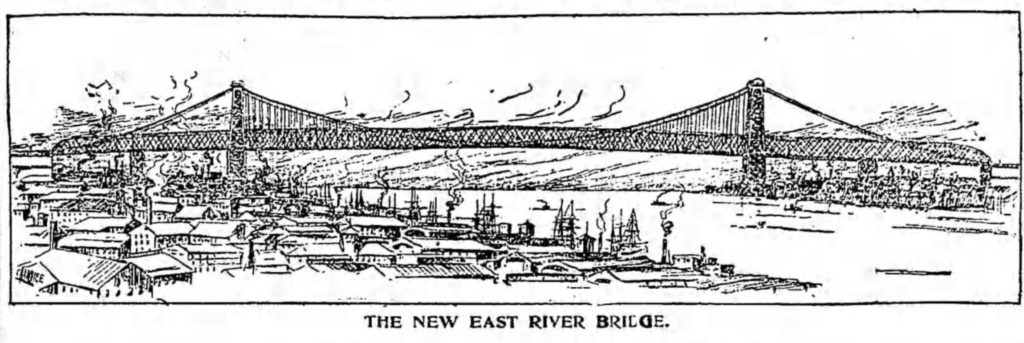
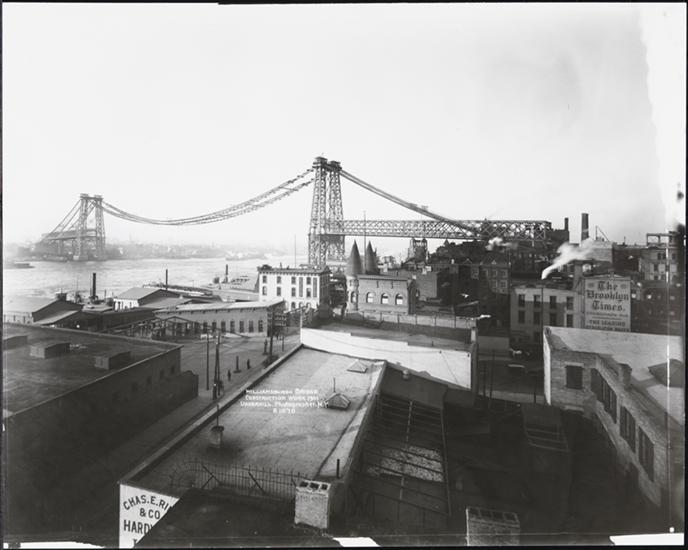
The supports depicted in this scene were but the first steps in the construction of one of New York’s last great engineering projects of the 19th century — the New East River Bridge a.k.a the Williamsburg Bridge.

This bridge, the second to ever span the East River, is truly under appreciated, dwarfed of course in architectural achievement by the first — the Brooklyn Bridge. But the start of its construction in the waning months of 1896 marked a bold and exciting turning point for the city of New York.

Here’s some details about the bridge:

from the Brooklyn Daily Eagle, May 3, 1896

The bridge that would be called the Williamsburg Bridge was started (in 1896) when Brooklyn was an independent city and completed (in 1903) when Brooklyn was part of Greater New York.  When it opened in 1883, the Brooklyn Bridge linked two of America’s biggest cities — New York and Brooklyn.

But city planners like Andrew Haswell Green hoped to unite the entire region as one thriving metropolis, sharing vital resources.

Despite great resistance by many powerful Brooklynites, plans to unite the two cities — along with areas of Queens County, Richmond County (Staten Island) and portions of Westchester County (the Bronx) — were well in place by 1896. By January 1, 1898, it would all officially become Greater New York.

(For more information, listen to our podcast on the story of the Consolidation of 1898.)

Museum of the City of New York

But technically it was a bridge to yet another former city — Williamsburgh. In 1883, the Brooklyn Bridge linked the heart of New York civic life with the center of the City of Brooklyn — from New York City Hall to Brooklyn City Hall (what became Brooklyn Borough Hall). Upon its wildly successful opening, many began plotting a second bridge across the East River.

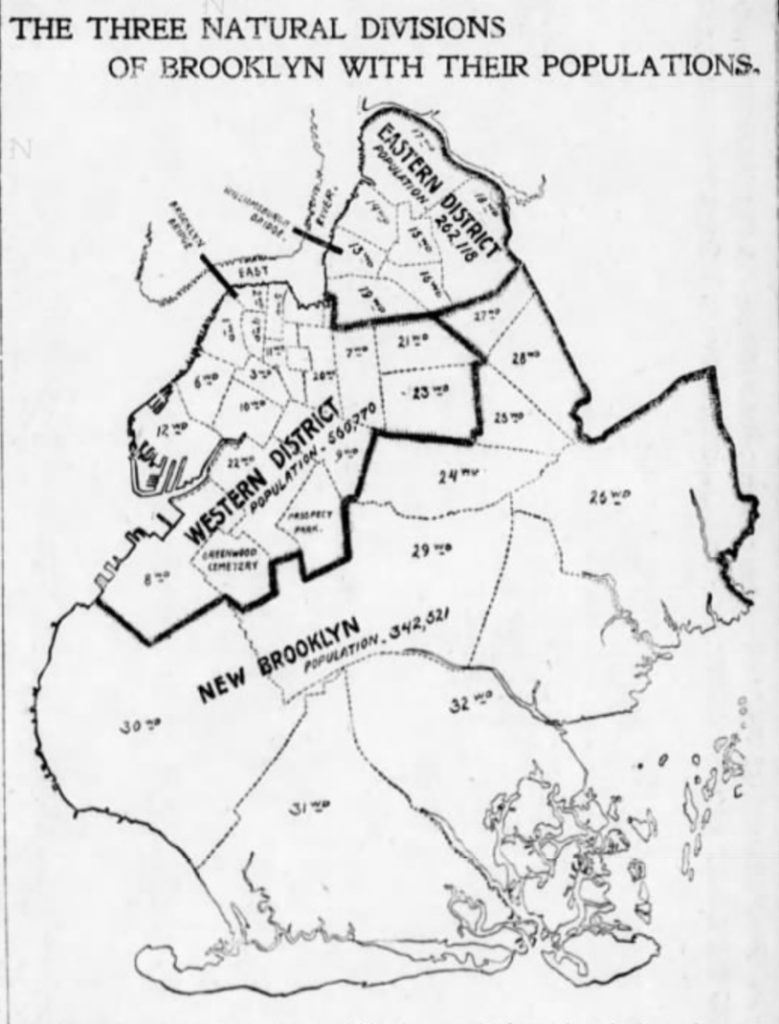
This second bridge, however, would link an area of Brooklyn north of the city’s center — in an area called the Eastern District.

Why was the eastern section of Brooklyn considered apart from the rest? Because at one point, for a brief period between 1852 to 1855, Williamsburg (or Williamsburgh, see below) was its own city, comprised of the modern neighborhoods of Williamsburg and Greenpoint. In 1855 it was absorbed — along with the Town of Bushwick — into the expanding city of Brooklyn and these new additions, more industrial and immigrant in nature, were referred to as the Eastern District.

(For more information, listen to our podcast on the history of Greenpoint, Brooklyn.)

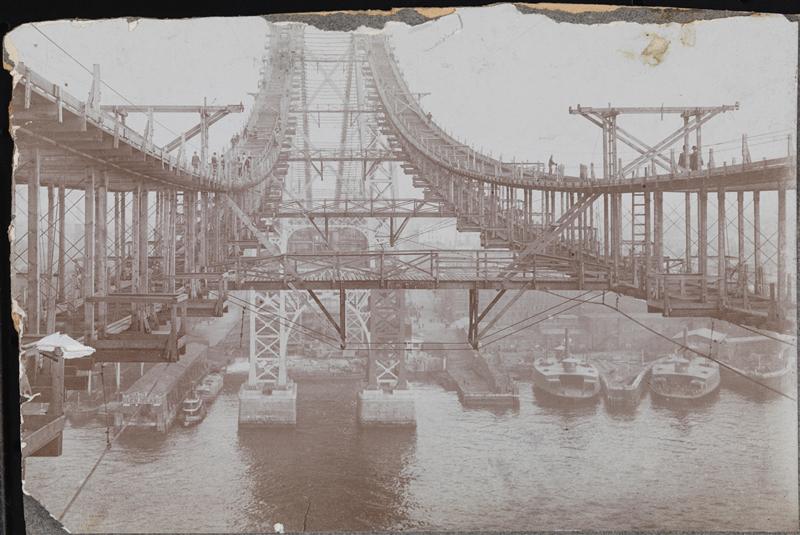
Below: Above the East River, the bridge under construction, 1900

Museum of the City of New York

Brooklyn could thank one very powerful politician for the bridge. The namesake of Williamsburg’s popular McCarran Park — State Senator Patrick McCarran — is largely responsible for getting the new bridge placed in the Eastern District on the Williamsburg waterfront. According to one glowing eulogy, “The bridges, the parks, the improved means of transit, the better paved and lighted streets by which the Brooklyn of to-day is distinguished are due more to the legislative efficiency of Senator McCarren than to the influence of any other individual.” Of course he was also a bit of a corrupt scoundrel, but weren’t most politicians just a little bit dirty back then?

(Check out my article on rascally Mr. McCarren for more information.)

Library of Congress

Excuse me, that’s the Williamsburgh Bridge (with an H) The original village of Williamsburgh was named after the esteemed Lt Col. Jonathan Williams, former Secretary of War and grand-nephew of Benjamin Franklin, who surveyed the land along the Bushwick shore. In its early days there was an H affixed to the area’s name, but by the completion of the bridge in 1903, many references to the neighborhood dropped it. Nobody really knows why this happened, but it probably has something to do with the better known Williamsburg in Virginia.

By the time the bridge was completed, it was commonly known as the Williamsburg Bridge although a plaque on the bridge preserves the original spelling.

Museum of the City of New York

On the New York side, planners were using the project as a way to clear away one of its most notorious districts –Corlears Hook.

Where Manhattan juts the furthest into the East River, Corlears Hook once had the greatest concentration of shipbuilding businesses in the nation, and the shoreline was completely obscured with piers, ships, and vessels of all sorts. In the 1830s, it had become a notorious red-light district, with “ladies of the night” setting up shop in the neighborhood’s saloons and cellars. (As popular legend would have it, the ladies of the Hook would give the oldest profession a new name: hookers.)

But by the 1880s, however, New York was in the throes of civic reform, clearing away slum neighborhoods and replacing them with parks or grand architectural projects. The old neighborhood of Five Points became Columbus Park and New York’s Civic Center. Even the Brooklyn Bridge cleared away the decrepit tenements of the old waterfront.

The bridge is central to the growth of New York’s immigrant (and particularly Jewish) communities. While its construction did displace thousands of people, the bridge would actually facilitate better living conditions for Lower East Side immigrant groups by encouraging migration to less populated Brooklyn neighborhoods.

The New York Herald even called it the “Jews Highway” as those of Eastern European and Russian Jewish heritage transplanted to Williamsburg.

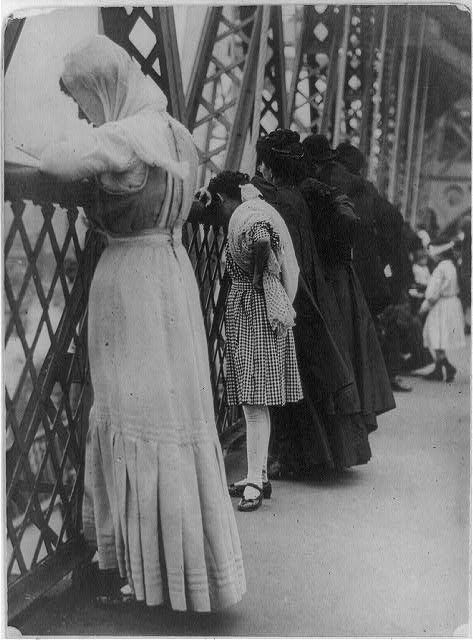
Below: Jewish women praying on the Williamsburg Bridge (1909)

Library of Congress

Library of Congress

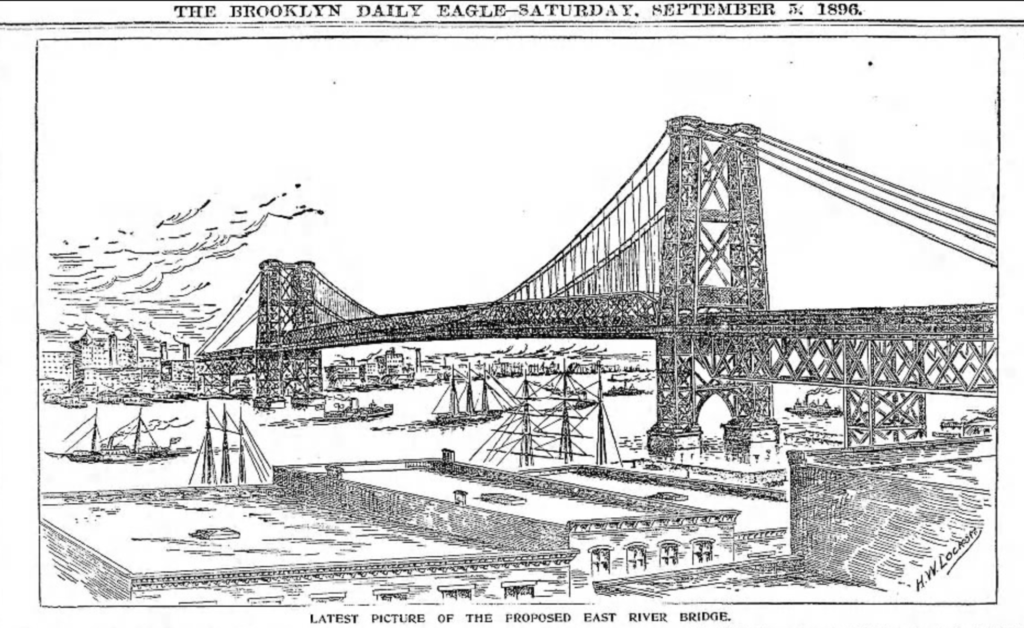
How they envisioned the bridge in the fall of 1896 ….

…and how it looked at completion.

Library of Congress

Believe it or not, the opening of the Williamsburg Bridge was actually captured on film by the Edison company.

Categories
Holidays

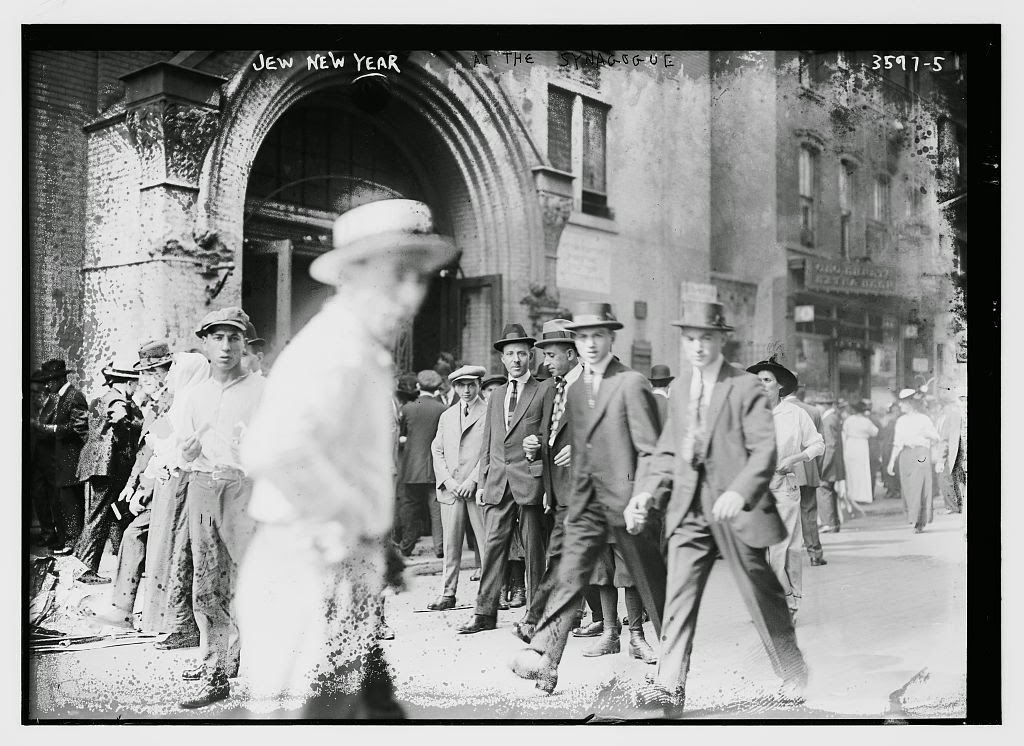
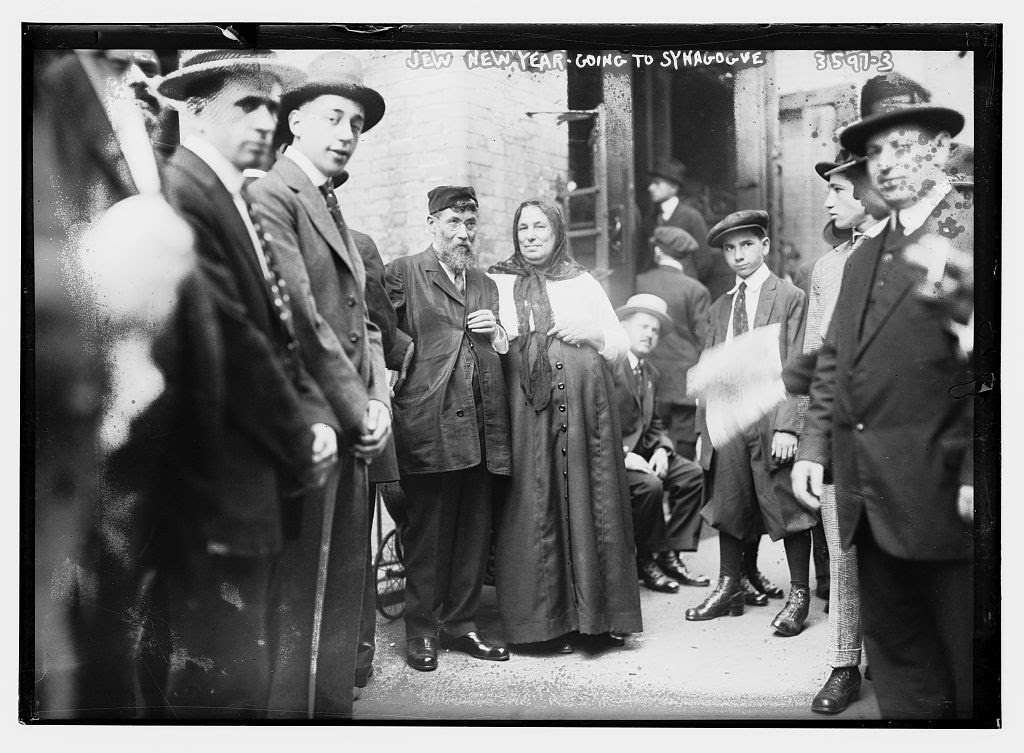
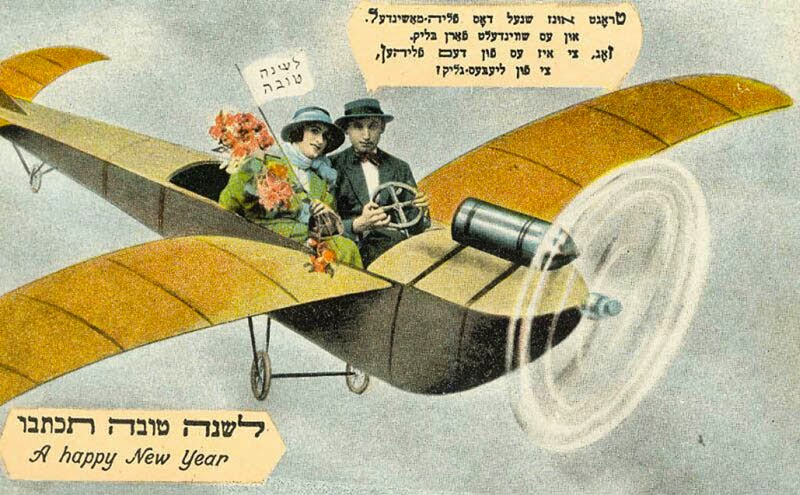
Happy Rosh Hashanah! Images of Jewish New Years’ past

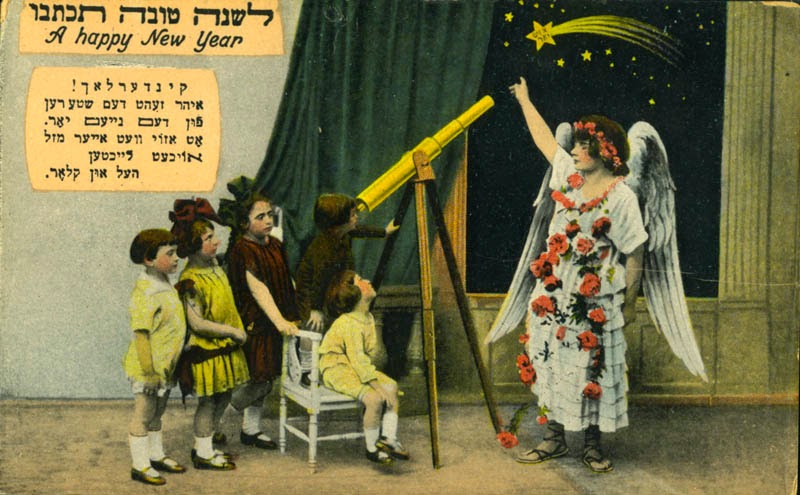
Look to the stars children! A vintage Rosh Hashanah card manufactured by the Williamsburg Art Company in the 1920s.

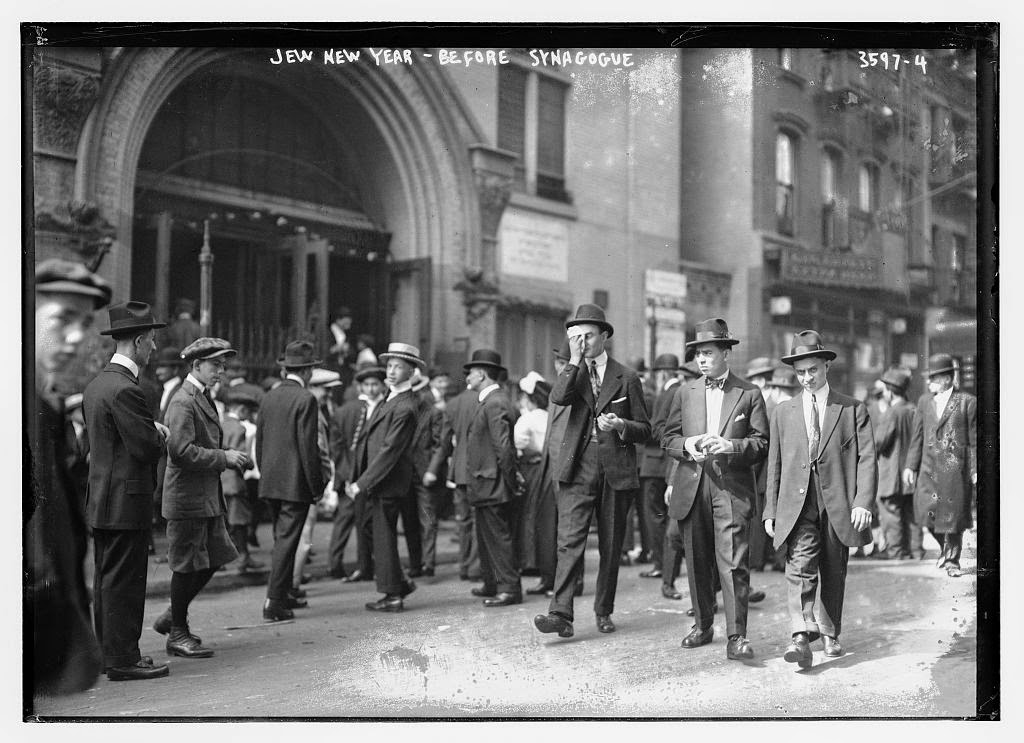
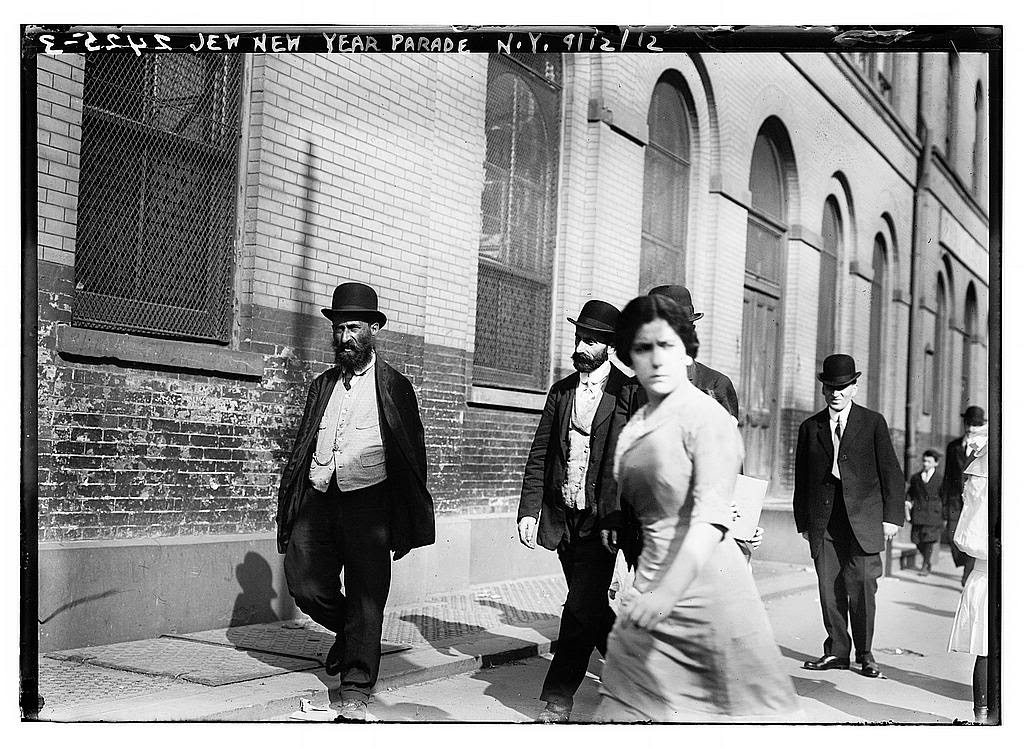
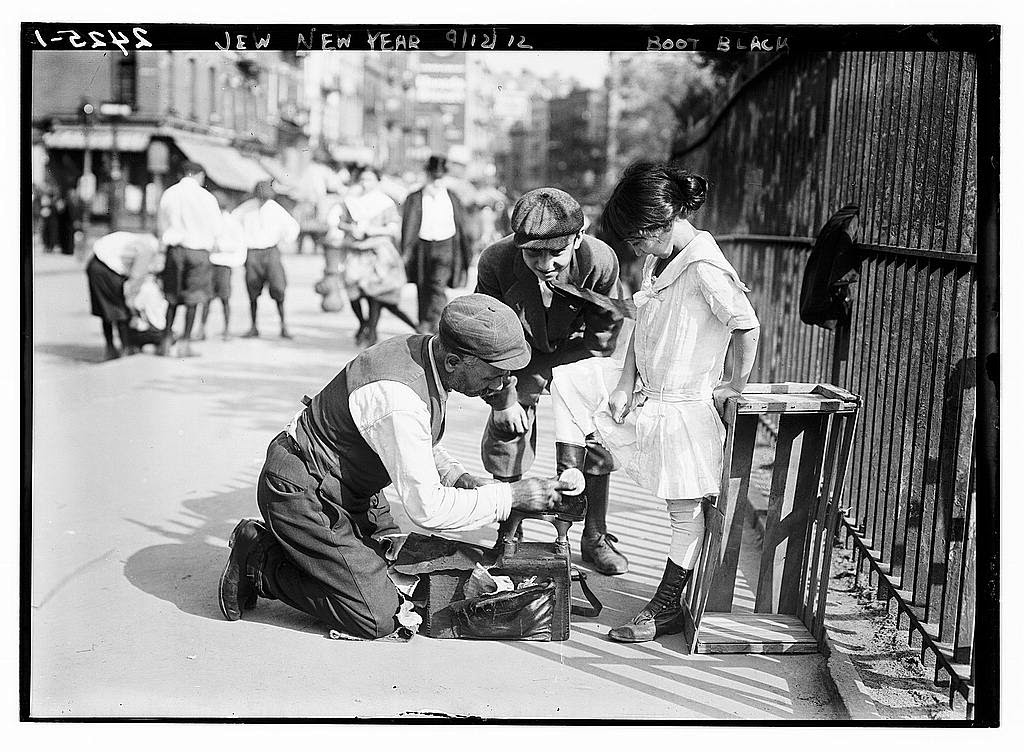
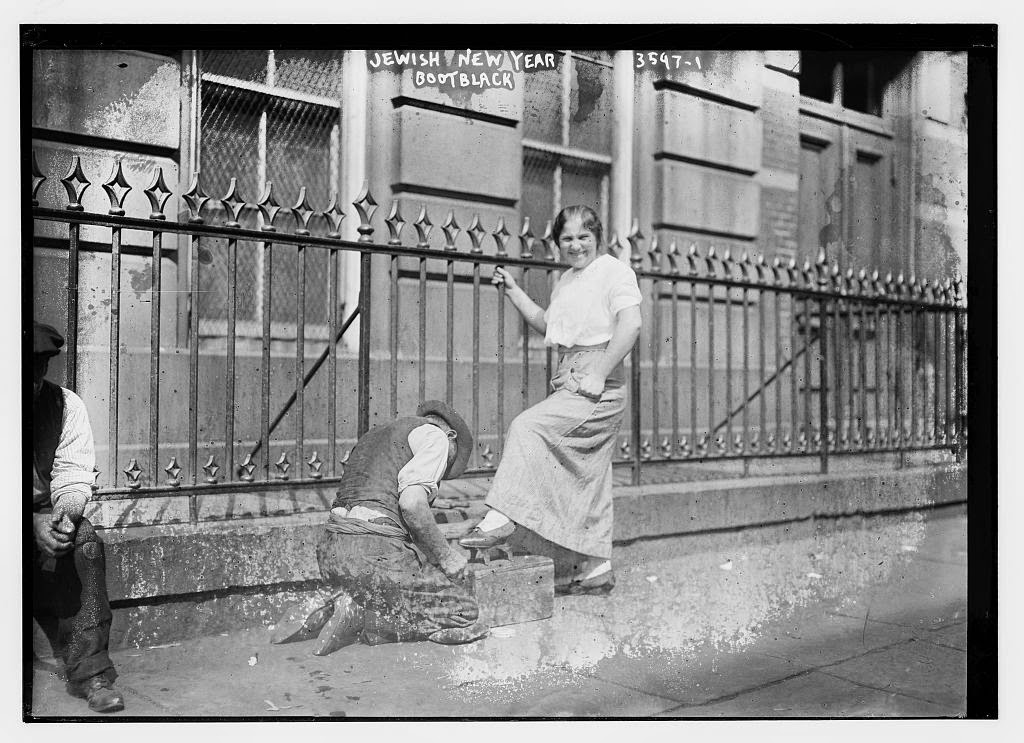
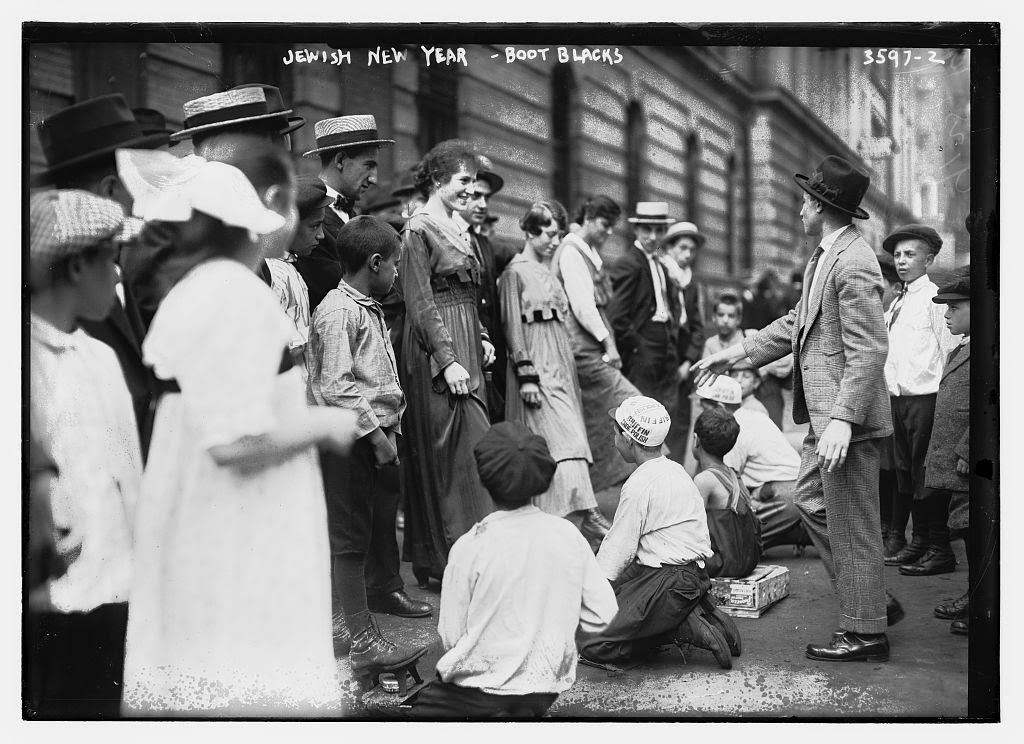
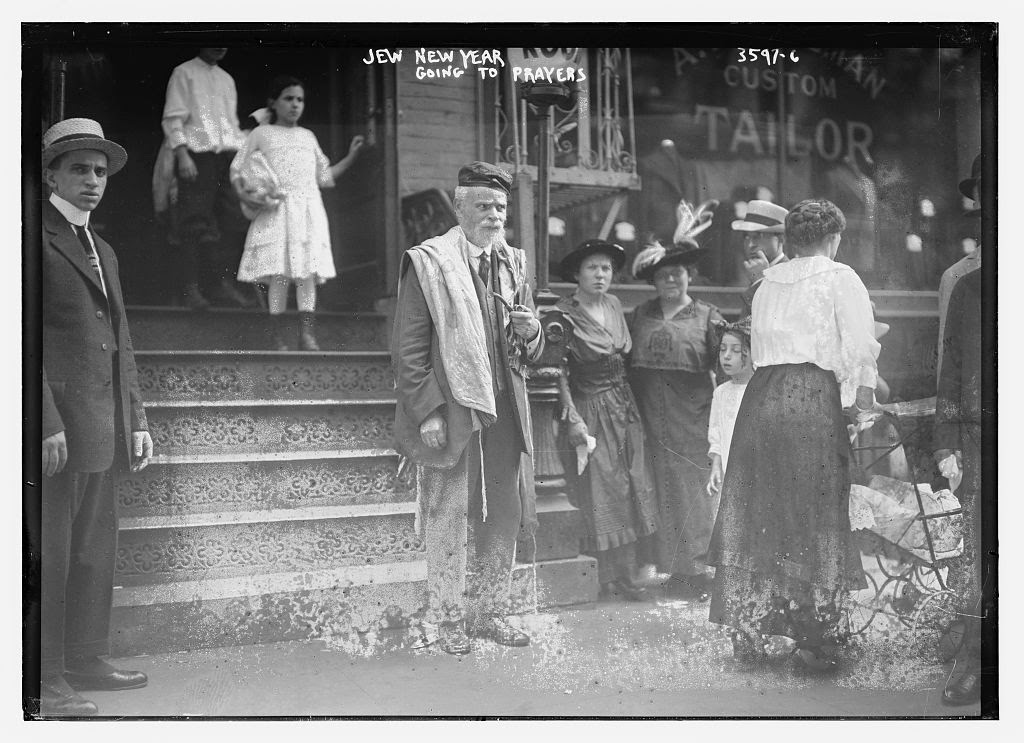
Rosh Hashanah is here — the first of Tishrei, year 5775.  Presented here are a selection of photographs from the Library of Congress depicting Jewish New Yorkers celebrating the new year (or, at least, on their way home to start the festivities).  These images date from 1909-1915, although most are 1912.  As most of these photographs were possibly taken (or labeled) by non-Jewish photographers, some of the meaning is a little lost.  If you have any insights into these images, please leave a comment!

And there’s some detective work to be done here. For instance, anyone recognize this synagogue?

One hundred years ago, Jewish New Year celebrations were especially fraught due to the events in Europe. Ethnics groups from embattled countries, in fear their rituals made them targets for local violence, made doubly sure to distance themselves for the politics of the day, while affirming their continuing connection to their Jewish brethren.

A leader of the reformed Jewish congregation proclaimed, “The conservative and patriotic citizenship of America refrains from endorsing the attitude of any country involved in the horrible European conflict. … [O]ur hearts go out to the 300,000 men in the Russian army who, having bled and suffered at the hands of their country on account of being Jews, are now suffering and dying for their country because as Jews they are loyal to the flag under which they live.” [source]

This one is dated September 1912 although there was not a “Jewish New Year Parade” and this is hardly an image of a parade anyway!

There appear to be a series of old Rosh Hashanah photographs focusing on boot blacks polishing the shoes of young ladies.  I doubt this was an actual custom but more a recognition of the fact that many young boot blacks came from Jewish families. (However, for Passover, people leave their shoes at the door.)

The smile of the girl at center is totally making my day:

Here’s a telling detail from 1914:  New Jersey decided to hold a statewide primary election on the same day as Rosh Hashanah that year, disenfranchising thousands of Jewish voters “who are prohibited from signing their name.” Registering to vote was quite different back in the day; luckily, there was an alternate date provided that fell before the holiday, but no attempts were made to actually move election day.  [source]

Then there’s this captivating image:

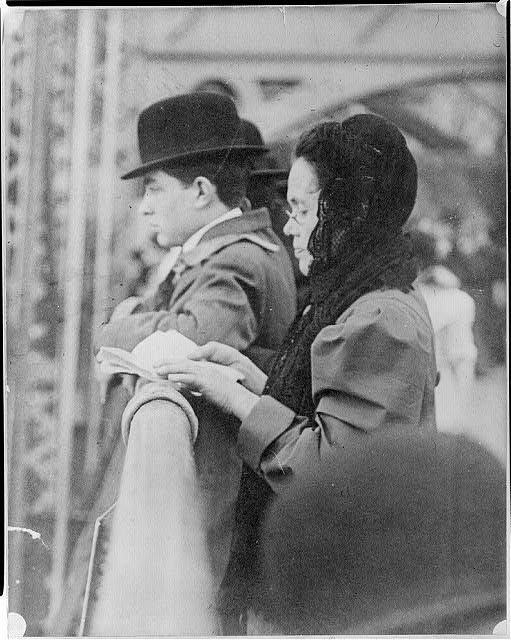
So what’s going on in the picture above, taken on the Williamsburg Bridge in 1909?  Per some commentary from a Library of Congress commenter:  “If this was photo was indeed taken around Rosh Hashanah (Jewish New Year) as the notation implies then these people are most likely taking part in a “tashlich” ceremony. The ceremony is when the previous year’s sins are symbolically “cast off” by throwing pieces of bread into a flowing body of water.”

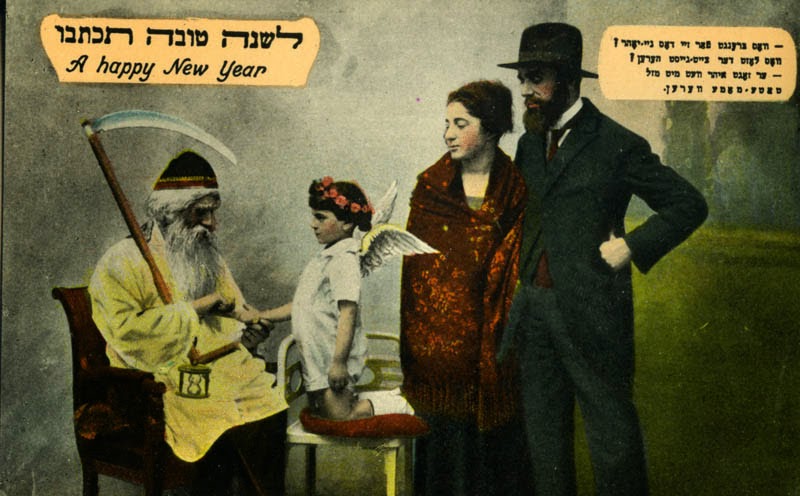
And finally here’s some rather imaginative Jewish New Year postcards that were manufactured by the Williamsburg Art Company sometime in the 1920s.  While the company was located in Brooklyn, all of these were actually manufactured in Germany. 


Categories
Amusements and Thrills Bridges

The ten greatest fireworks displays in New York City history

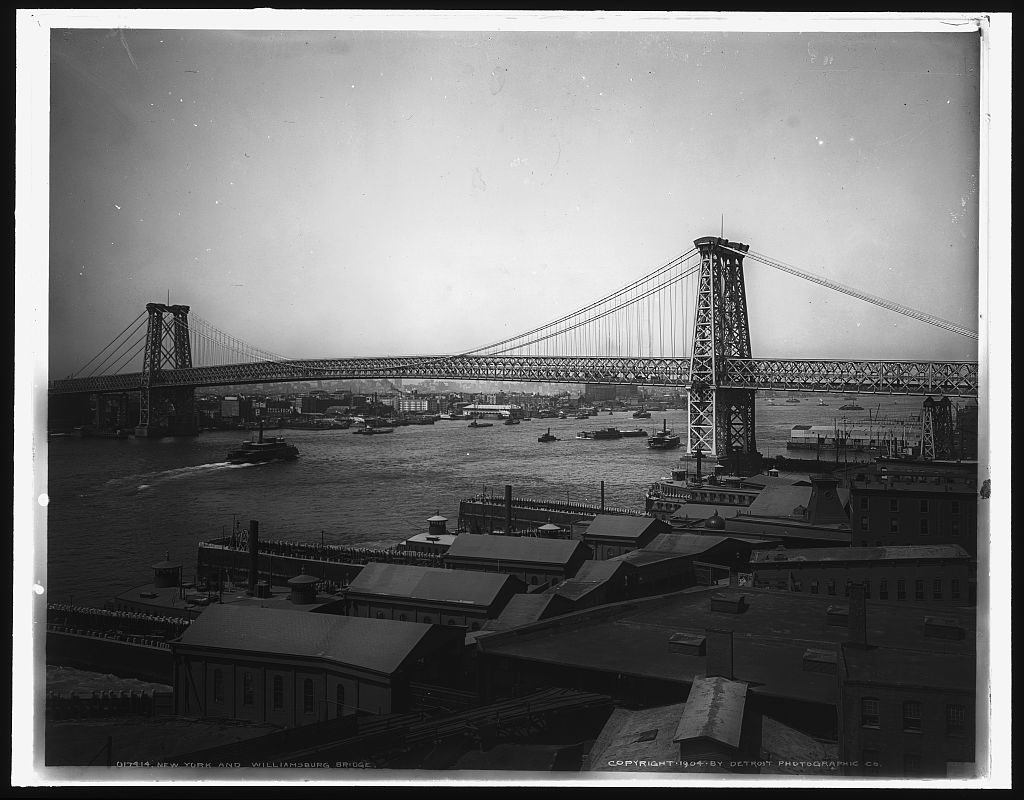
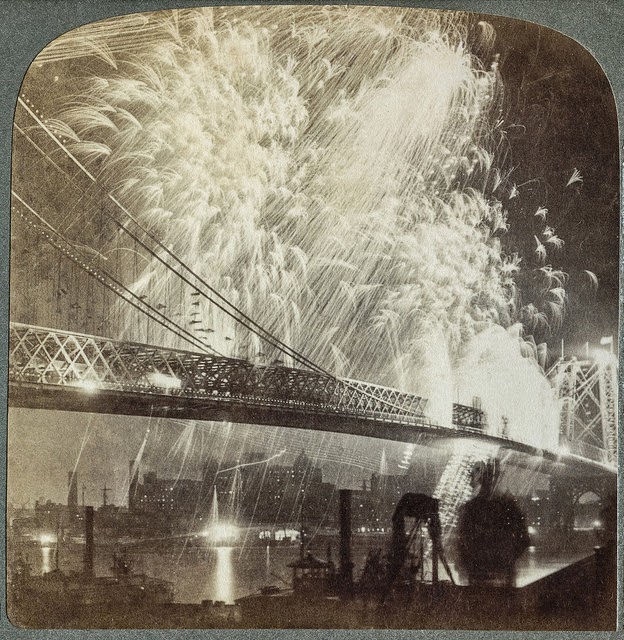
Above: One of my favorite pictures of the Williamsburg Bridge, at its opening in 1903
Nothing befits a fireworks display quite like a skyline to frame it, and no city has a skyline quite like New York City.  And so, despite the obvious dangers of setting off thousands of pounds of explosives in a crowded, flammable city, the city has been subject to some of the most beautiful feats of pyrotechnics in American history.
Here are ten of the greatest examples in the city’s history — celebrations not only of holidays, but vivid displays that highlighted the finest landmarks and accomplishments:

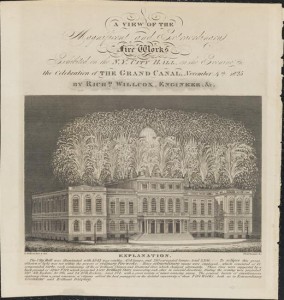
A View of the Magnificent and Extraordinary Fire Works Exhibited on the N.Y. City Hall

1. Opening of the Erie Canal — November 4, 1825
“On November 4, 1825, a spectacular extravaganza celebrated the just finished Erie Canal. City Hall, brilliantly illuminated, proudly overlooked a fireworks display in the park. There was good reason to celebrate:  the canal was the match that lit the fuse that detonated the boom of the 1830s” — Mark Caldwell, New York Night
(Illustration by John Francis Eugene Prod’Homme, Image courtesy MCNY)


2. Celebration for the Transatlantic Telegraph Cable — September 1-3, 1858
This called for a variety of elaborate pyrotechnic displays, including one 21-part program, which included “some new principles were attempted for the first time in the pyrotechnic art,” “two light houses connected by a line of rolling waters, on which the ships slowly moved towards their destination” and “all the splendor of the dazzling colors, assisted by all the mechanical contrivances of which the art is capable”. [source]

Incidentally, this fireworks festival caught City Hall on fire, burning down the cupola! (NYPL)


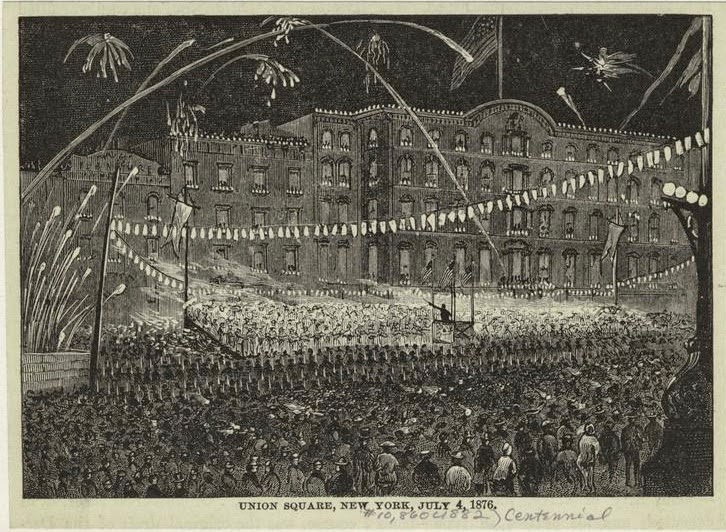
3. American Centennial — July 4, 1876
The all-day centennial celebration culminated in fireworks “representing the Goddess of Liberty sitting on a cloud in the act of greeting,” as well as several street-level “allegoric representations” illuminated in colorful fireworks. [source]


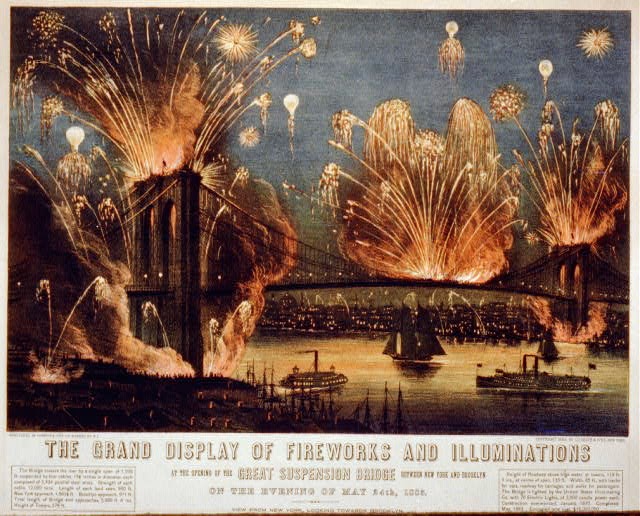
4. Opening of the Brooklyn Bridge — May 24, 1883
“Forty pyrotechnists superintended the display. There were 6,000 four-pound skyrockets, 400 bombshells and 125 fountains of colored lights.  Zinc bombshells of about ten inches in diameter were fired from mortars 500 feet in the air. Each bombshell held 600 stars of various colors.  A newly-invented rocket was displayed.  It held seven parachutes of cloth.  From these hung colored balls of fire.  The rockets burst, leaving the parachutes floating in the air. Five of these rockets were fired at once.  The result was thirty-five balls of colored fire floating in the air…..” [source]


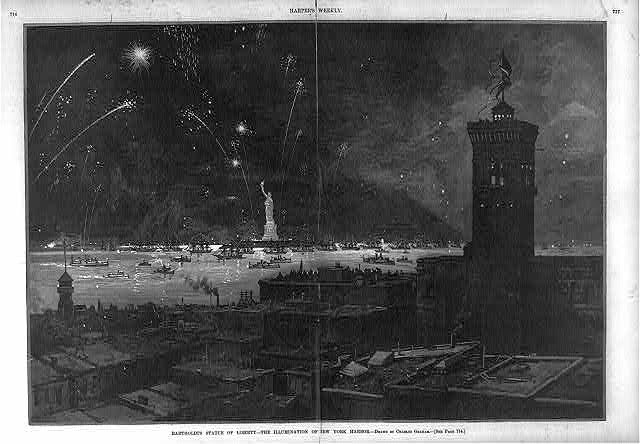
5. Dedication of the Statue of Liberty — October 28, 1886
Well, actually, three days later, on November 1.  A soggy day killed off the fireworks on the day of the statue’s dedication, but were finally launched the following Monday.

“At precisely the hour fixed there came a burst of kaleidoscopic lights from Bedlow’s and Governors Island, and in an instant the air was filled with flying fire balls of every color of the rainbow.”


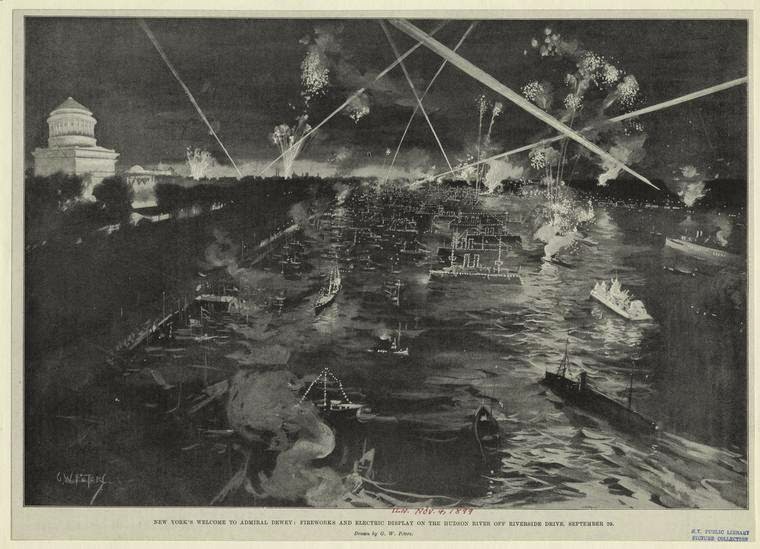
6. Hero’s Welcome for Admiral George Dewey — September 29, 1899
The arrival of Admiral Dewey, the face of the U.S.’s victory in the Spanish-American War,  inspired an exuberant celebration throughout the city.

“The day of Dewey celebration on the water ended in a roaring, popping, banging blaze of glory last night. Fireworks displays lit up the east side, the west side and all around the town. Not only did great boats loaded down with fireworks sweet down all the water-ways and circle about the lower Bay, but in the parks throughout the middle of the city the sky was painted red, white and blue and all the other shades of color known to the pyrotechnic art. ” [New York Sun]  (Illustration by GW Peters, courtesy NYPL)

7. Opening of the Williamsburg Bridge — December 19, 1903
“Then, without warning, the bridge was suddenly transformed into a sheet of flame.  From tower to tower the flames turned and writhed and flared high in the air, illuminating the waterfront for blocks.  Then came a kaleidoscopic medley of colors, red, green, purple, orange, violet — more colors than French ribbon dealer could enumerate — from huge rockets that sails two hundred feet above the bridge.” [source]

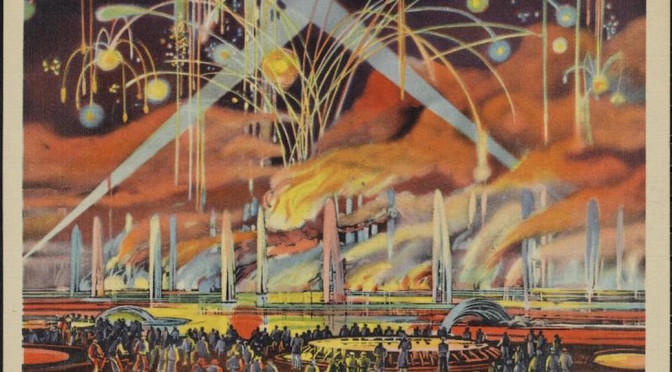
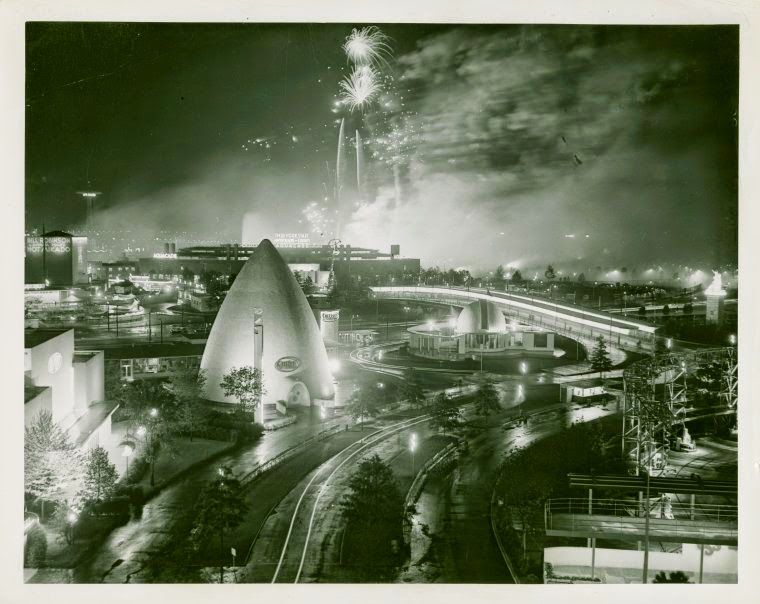
8. New York World’s Fair — July 4, 1939
“Fireworks colored the sky with the red, white and blue of the nation’s colors over the World’s Fair Grounds last night as two spectacular and elaborate displays of fire, water and music were set off, first from the Lagoon of Nations in the exhibit area and a short while later from Fountain Lake in the amusement area.”


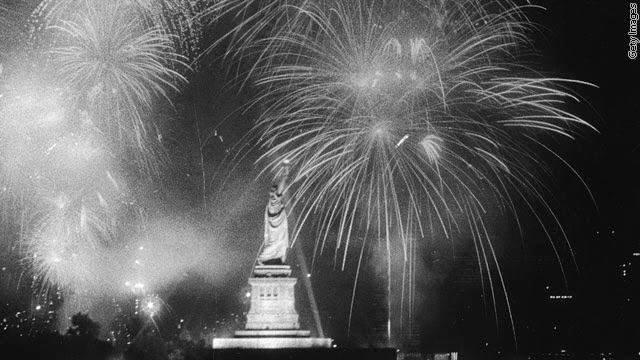
9. America’s Bicentennial — July 4, 1976
This event was notable not only for its visibility across the nation — thanks to a television special — but it was the first fireworks display sponsored by Macy’s.   “New York Harbor became more brilliant than Broadway last night as the biggest and most colorful fireworks display in the city’s history exploded for half an hour in celebration of the nation’s Bicentennial.” [NYT]


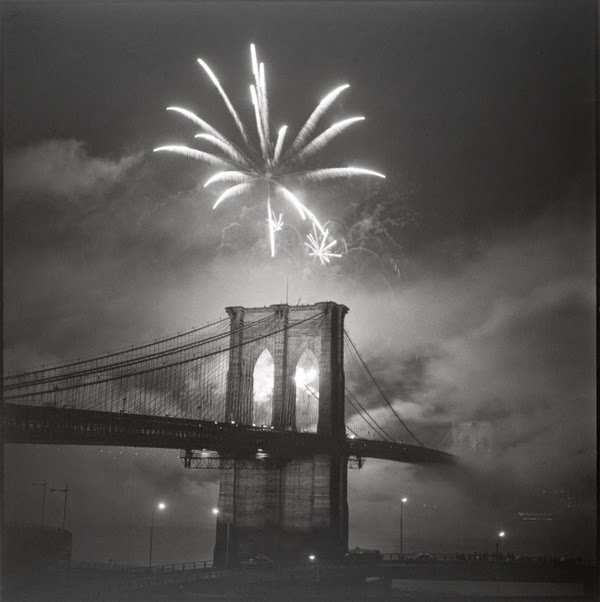
10. Brooklyn Bridge 100th Birthday — May 24, 1983
“Then the sky simply exploded with fireworks. Red, white and blue shells, golden comets changing to silver, crackling stars in red and green, appeared to fill the entire sky, while hundreds of thousands of people gasped at the sheer dazzle of it all.” [New York Times]
(Bruce Cratsley, courtesy Brooklyn Museum)