Categories
Gilded Age New York Parks and Recreation Podcasts Skyscrapers

It Happened at Madison Square Park: The Heart of New York During the Gilded Age

So much has happened in and around Madison Square Park — the leafy retreat at the intersections of Broadway, Fifth Avenue and 23rd Street — that telling its entire story requires an extra-sized show, in honor of the Bowery Boys 425th episode.

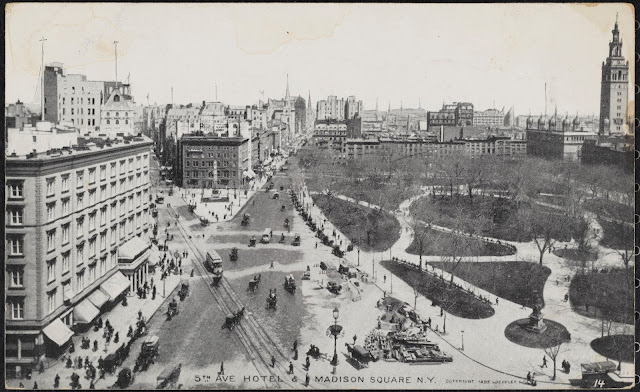
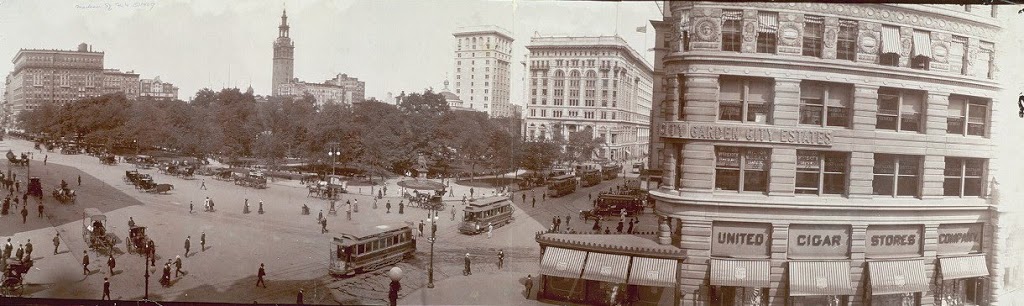
Madison Square Park was the epicenter of New York culture from the years following the Civil War to early 20th century. The park was really at the heart of Gilded Age New York, whether you were rushing to an upscale restaurant like Delmonico’s or a night of the theater or maybe just an evening at one of New York’s most luxurious hotels like the Fifth Avenue Hotel or the Hoffman House.

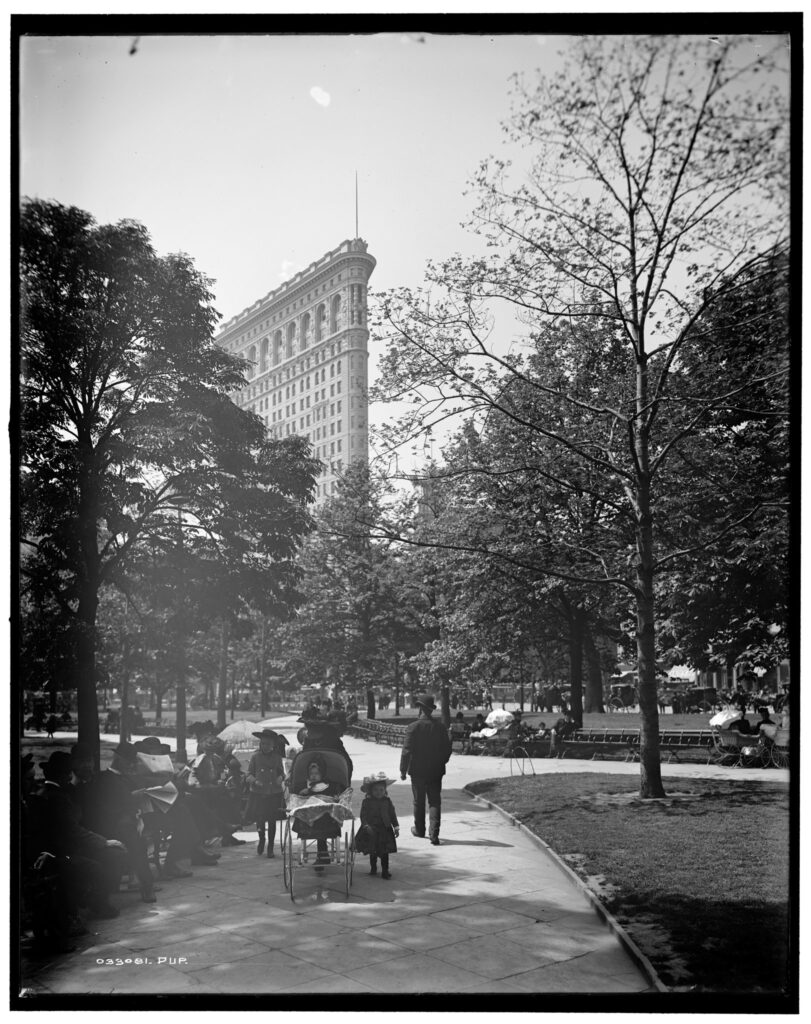
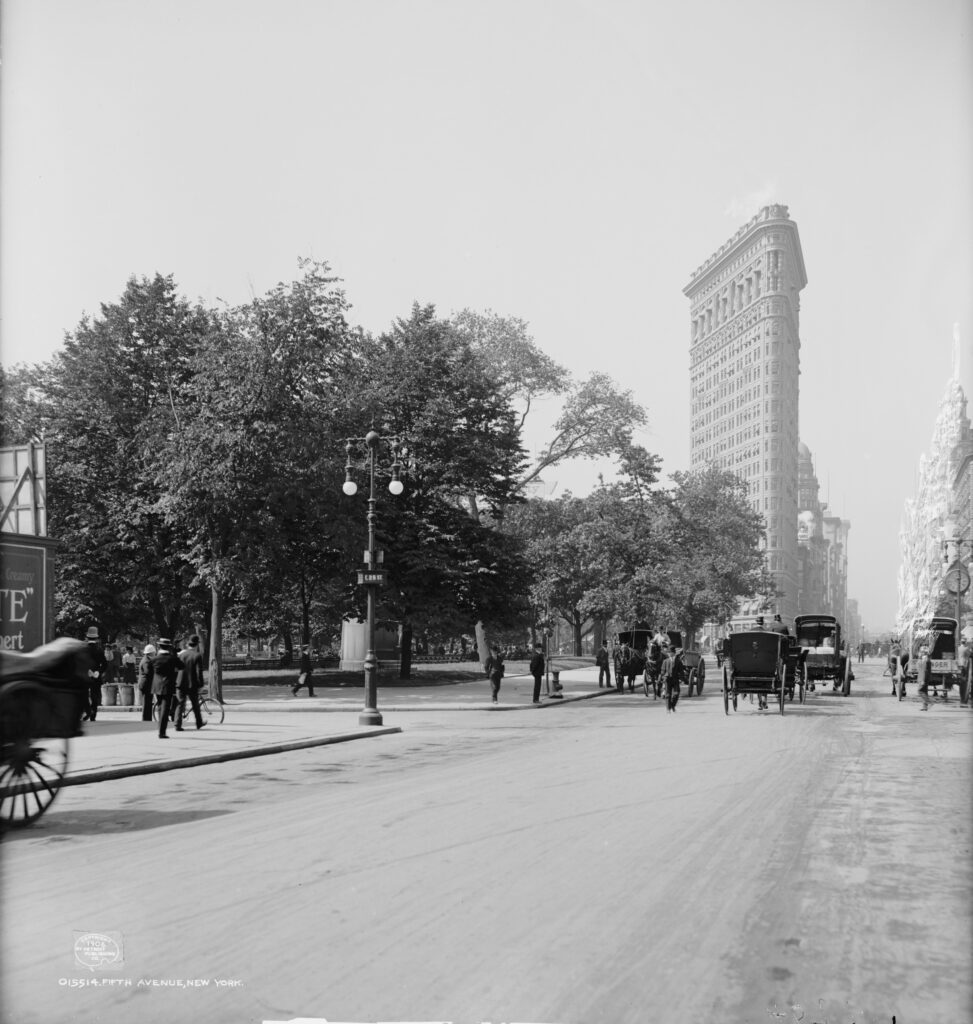
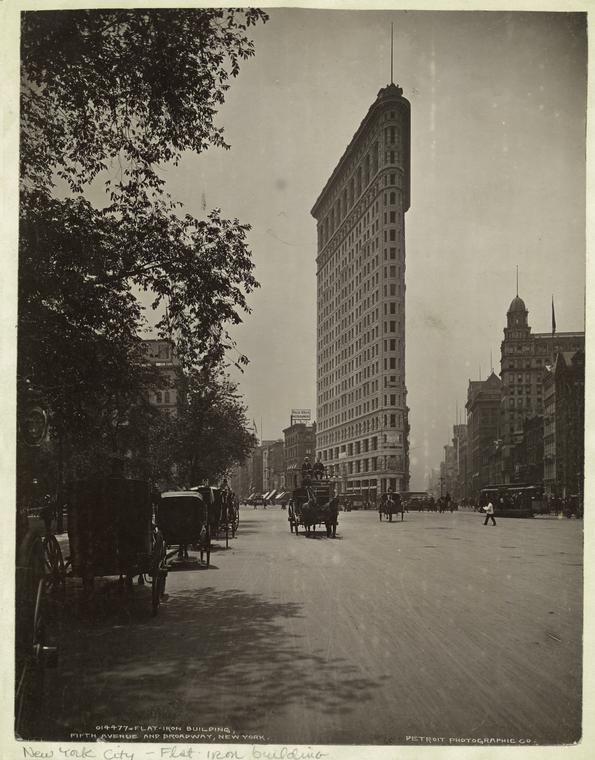
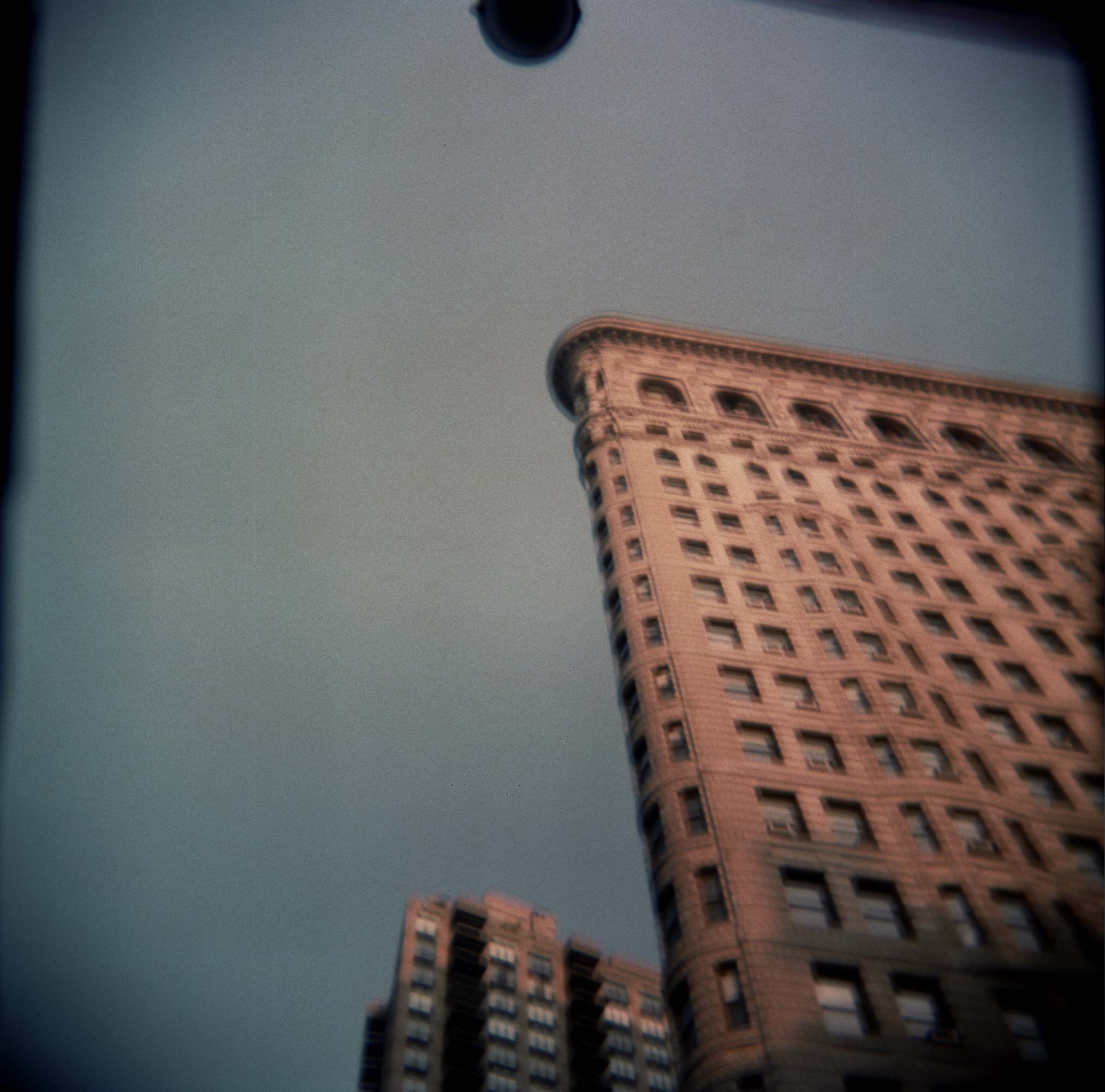
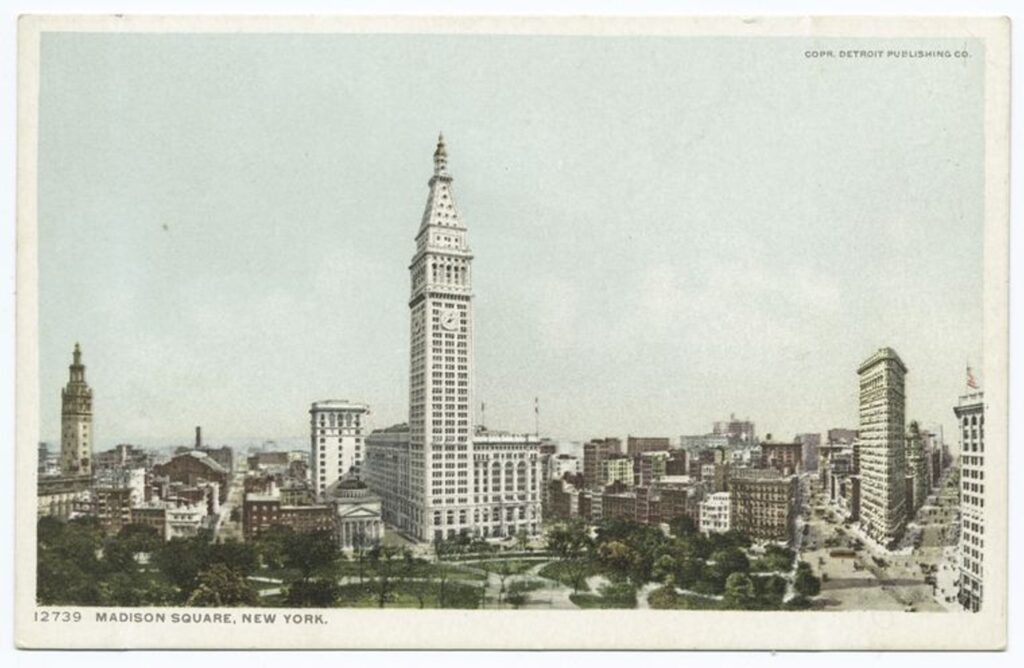
The park is surrounded by some of New York’s most renown architecture, from the famous Flatiron Building to the Metropolitan Life Insurance Tower, once the tallest building in the world.

The square also lends its name, of course, to one of the most famous sports and performing venues in the world – Madison Square Garden. Its origins begin at the northeast corner of the park on the spot of a former railroad depot and near the spot of the birthplace of an American institution — baseball.

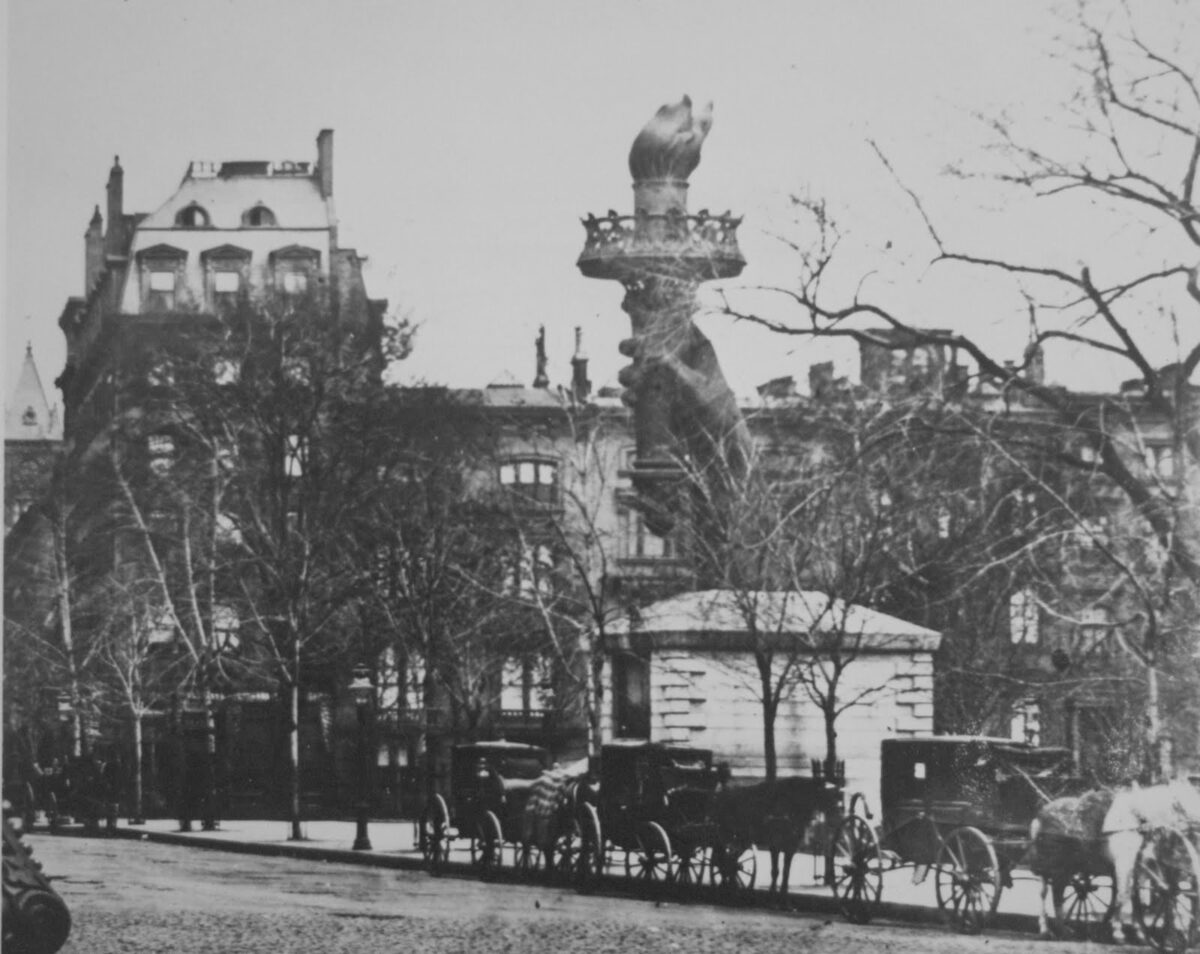
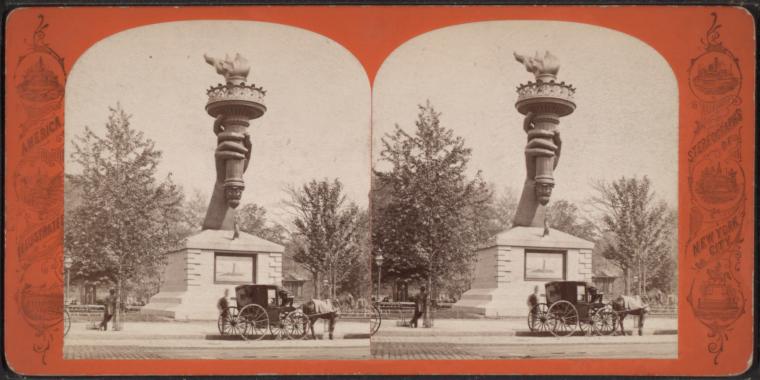
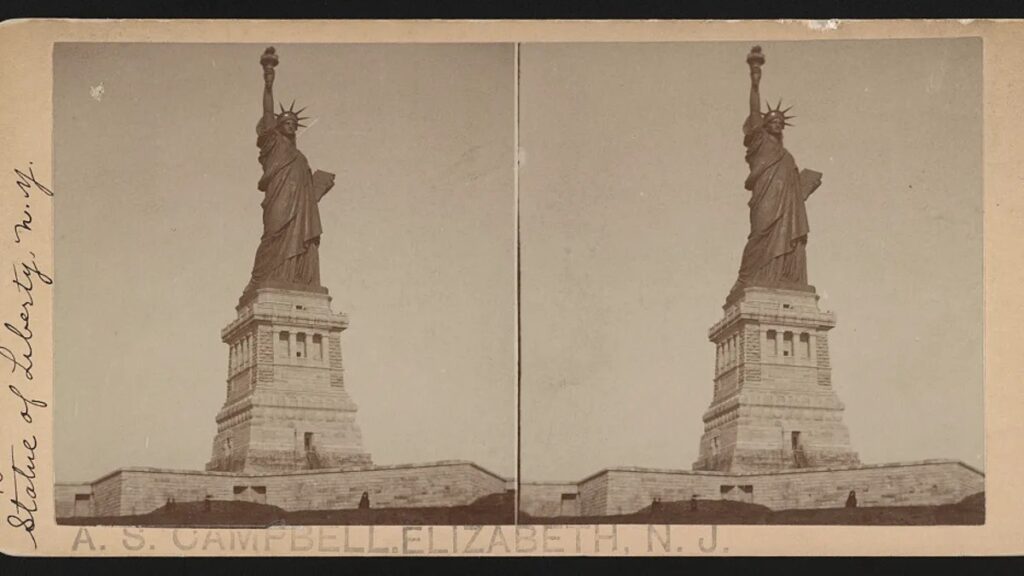
The park introduced New Yorkers to the Statue of Liberty … or at least her forearm and torch. It stood silently over the bustling park while prize-winning dogs were championed at the very first Westminster Kennel Club Dog Show nearby, held at Gilmore’s Gardens, the precursor to Madison Square Garden.

Today the region north of the park is referred to as NoMad, which recalls life around Madison Square during the Gilded Age with its high-end restaurant and hotel scene.

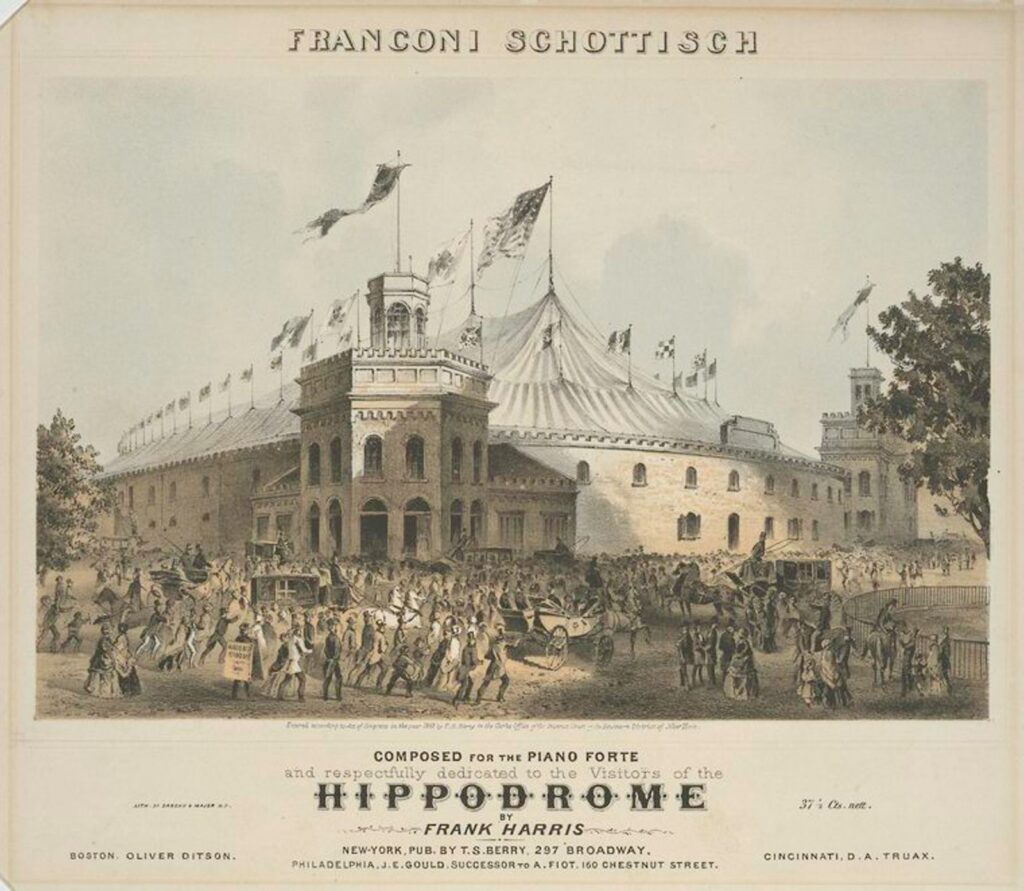
Tom and Greg invite you on this time-traveling escapade covering over 200 years of history. From the days of rustic creeks and cottages to the long lines at the Shake Shake. From Franconi’s Hippodrome to the dazzling colonge fountains of Leonard Jerome (Winston Churcill’s grandfather).

LISTEN HERE: IT HAPPENED AT MADISON SQUARE PARK

This episode’s title pays homage to one of favorite books about park history — It Happened On Washington Square by Emily Kies Folpe.


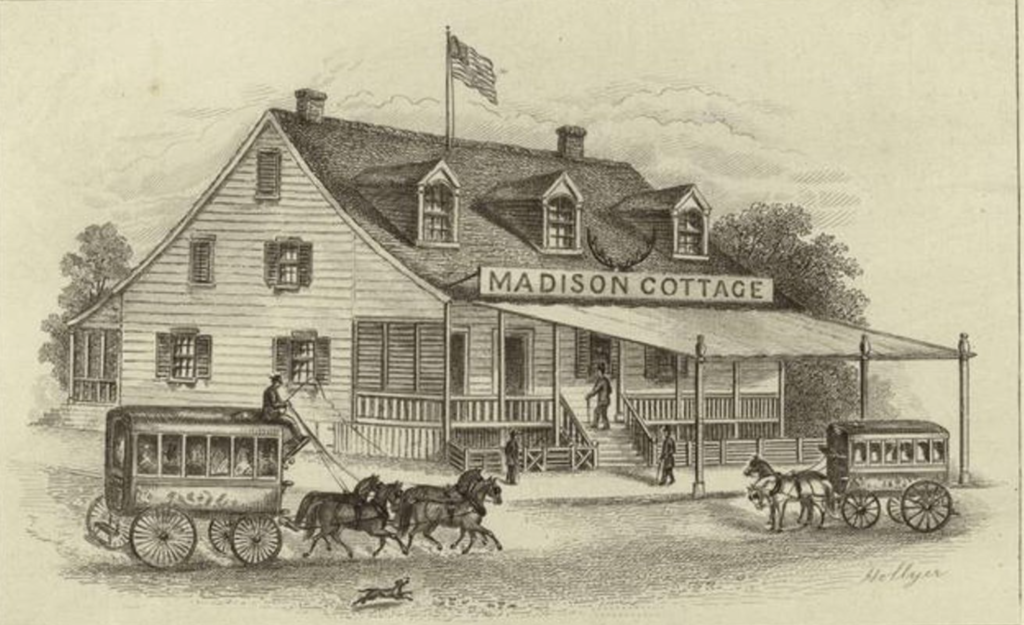
Madison Cottage, courtesy NYPL
Franconi’s Hippodrome, 1853, courtesy NYPL
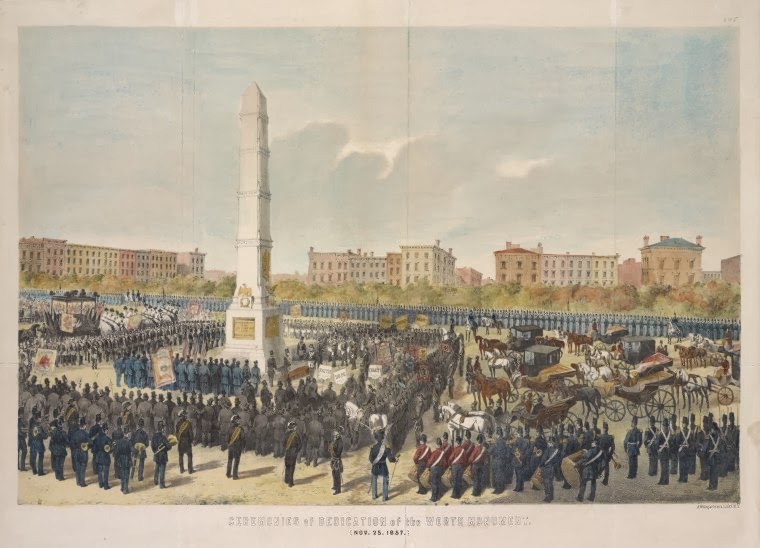
Dedication of the Worth Monument in 1857. In the background you can see the development of the surrounding area
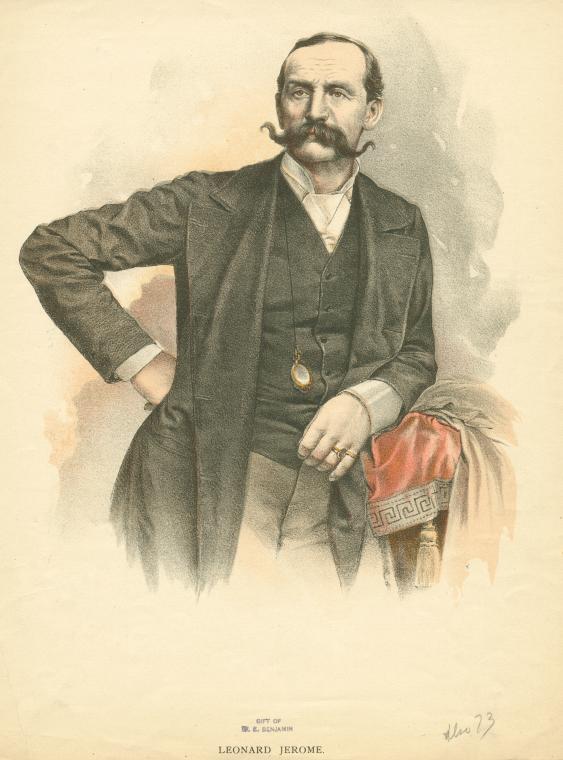
Leonard Jerome….
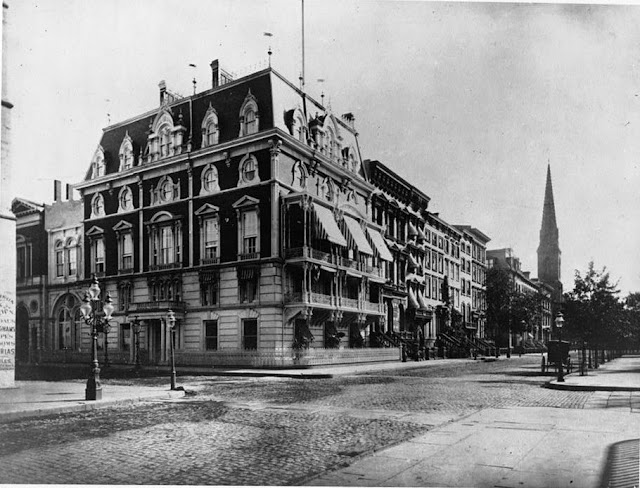
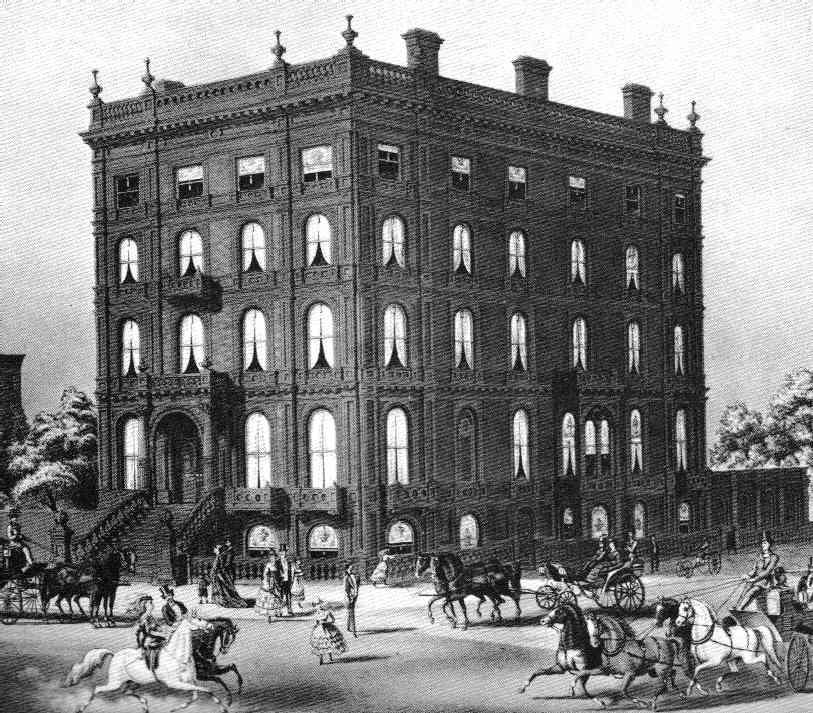
… and the Jerome Mansion. In the distance is the Madison Avenue Presbyterian Church.
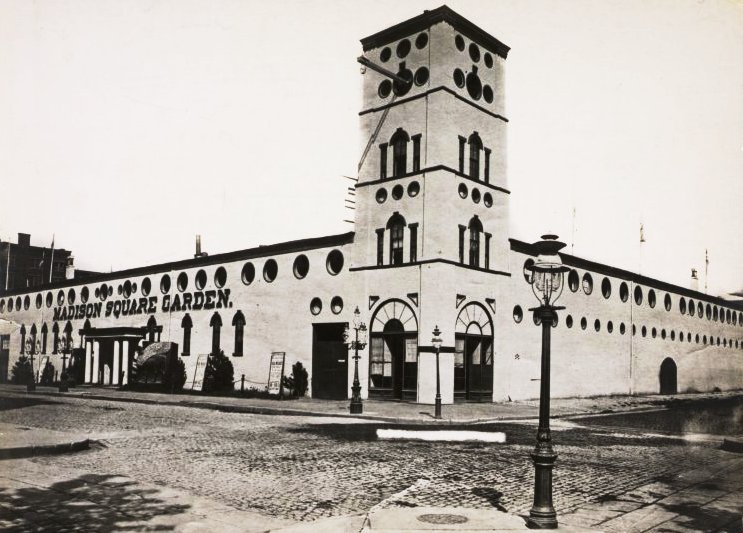
The former Gilmore’s Gardens, renamed Madison Square Garden
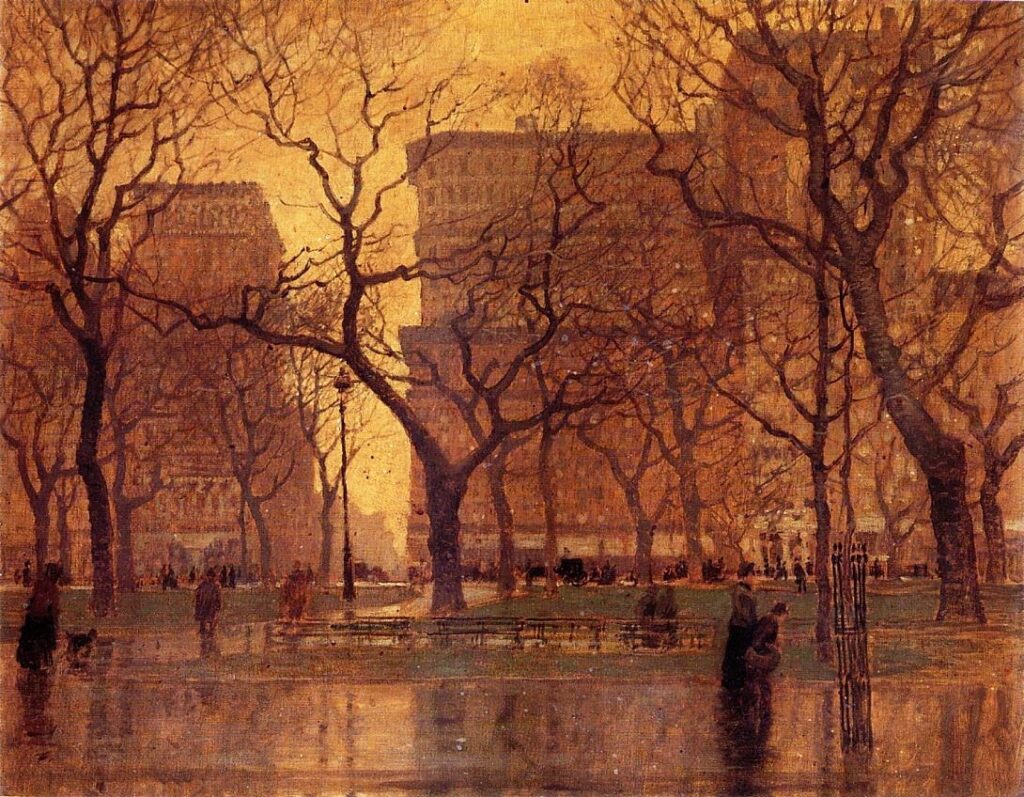
Rain on Madison Square, painting by Paul Cornoyer
Courtesy NYPL
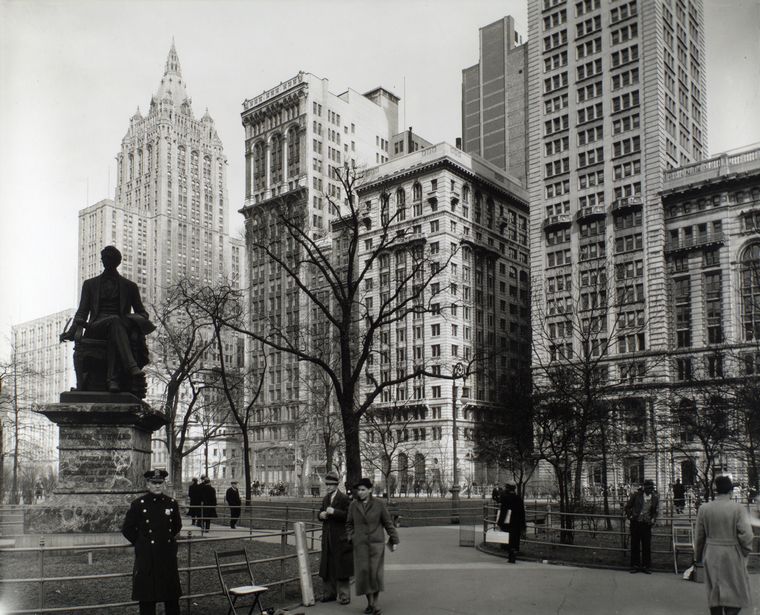
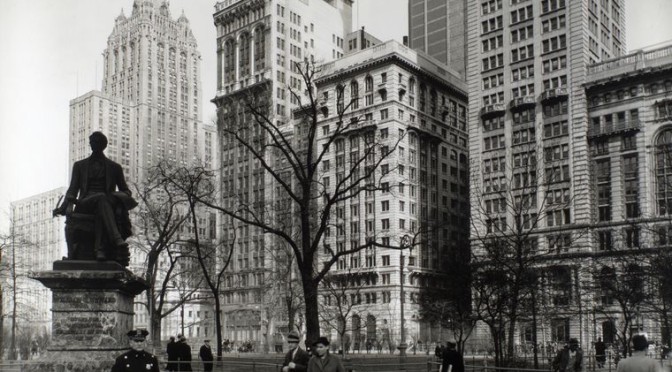
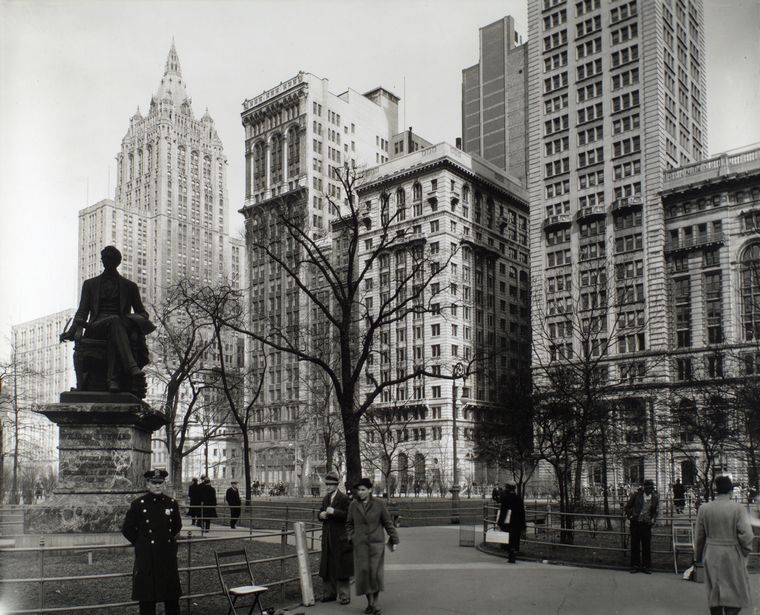
Madison Square 1936 , photo by Berenice Abbott
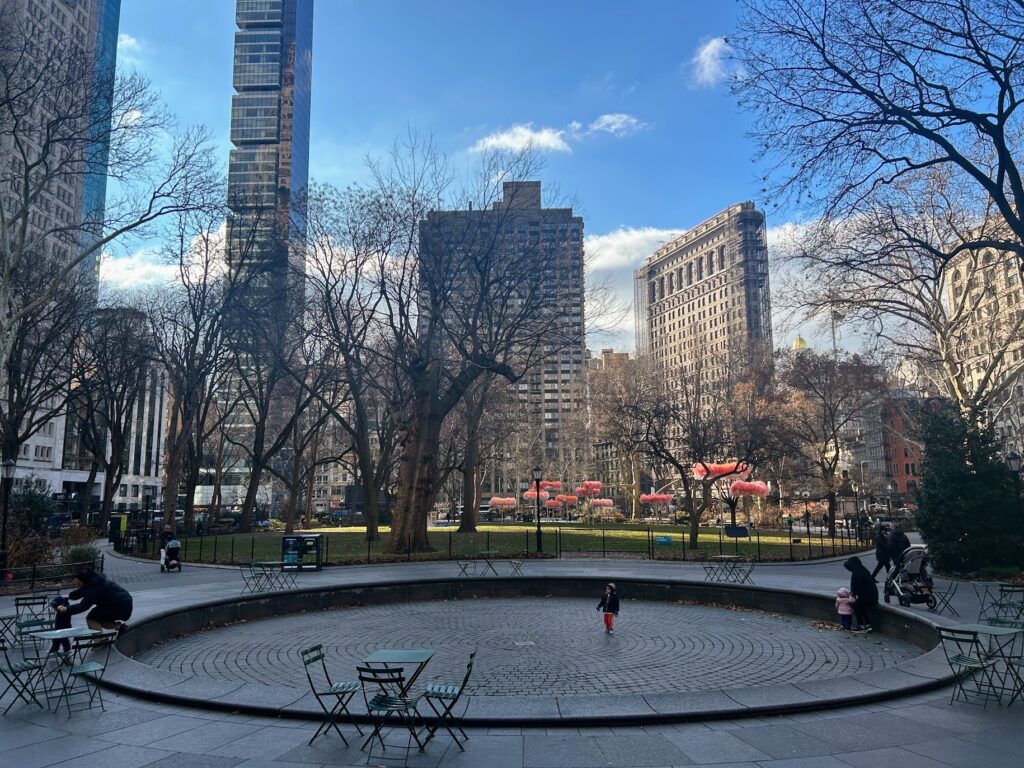
Northern pool in Madison Square Park. Photo by Greg Young
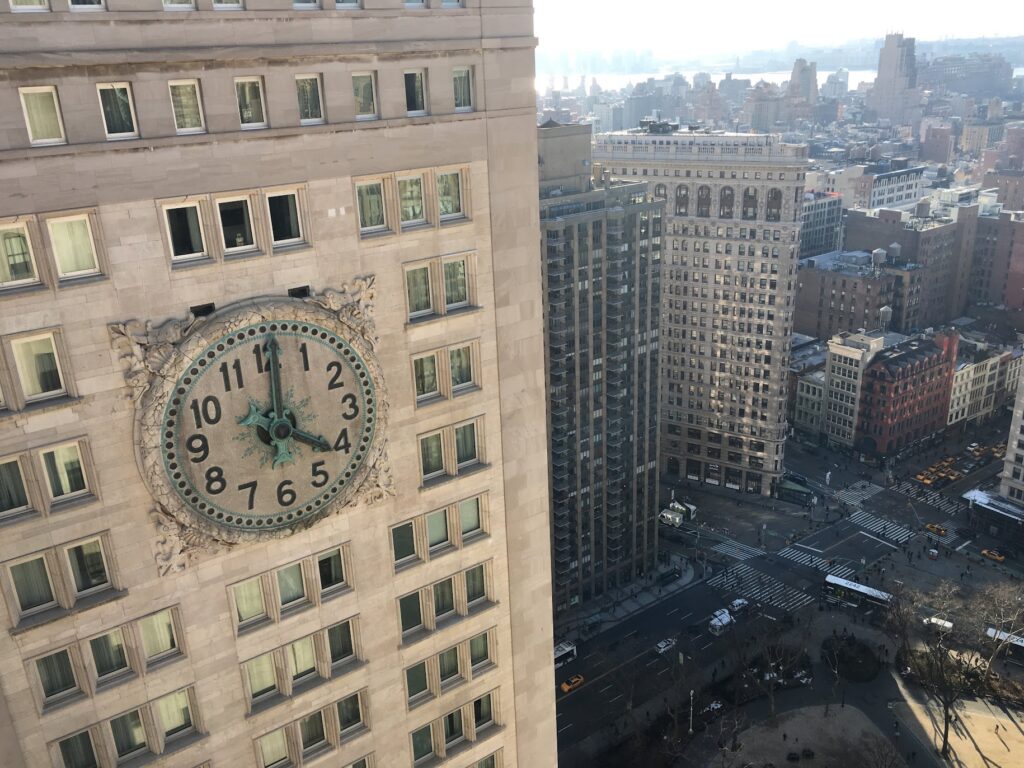
Looking down at the Metropolitan Life Tower and the Flatiron Building. Photo by Greg Young
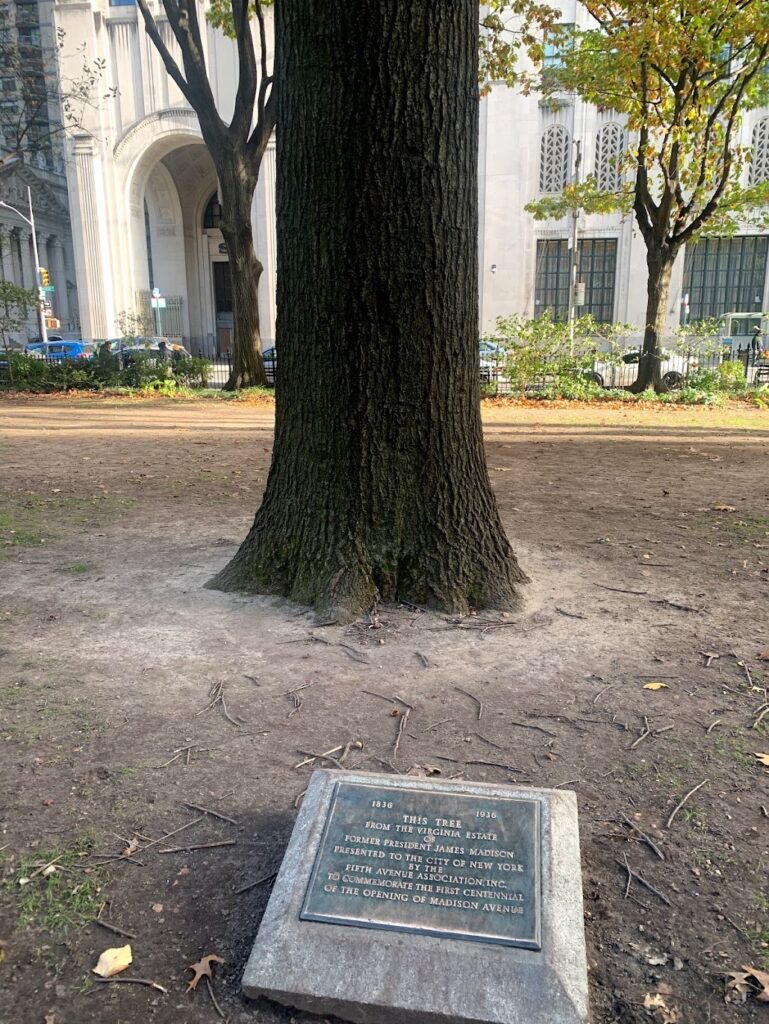
The park features a tree from James Madison’s Virginia plantation.

FURTHER READING

A Block in Time: A New York City History at the Corner of Fifth Avenue and Twenty-Third Street / Christiane Bird
The Flatiron: The New York Landmark and the Incomparable City That Arose with It / Alice Sparberg Alexiou
The Grandest Madison Square Garden: Art, Scandal, and Architecture in Gilded Age New York / Suzanne Hinman
Incredible New York: High Life and Low Life from 1850 to 1950 / Lloyd Morris
Liberty’s Torch: The Great Adventure to Build the Statue of Liberty / Elizabeth Mitchell
Madison Square: The Park and Its Celebrated Landmarks / Miriam Berman
Madison Square Garden, 100 Years of History / Joseph Durso

RELATED ARTICLES FROM THIS WEBSITE

Worth Square: Madison Square’s cemetery for one
Madison Square Snow Show: The first-ever film of a New York City blizzard
The Fifth Avenue Hotel: Opulence, glamour and power on Madison Square
When the Statue of Liberty left her arm in Madison Square
The Arches of Madison Square Park
The lights of Madison Square: A Christmas tree at night
Let’s go see the horses at Madison Square Garden!

FURTHER LISTENING

Categories
Those Were The Days

Madison Square Snow Show: The first-ever film of a New York City blizzard

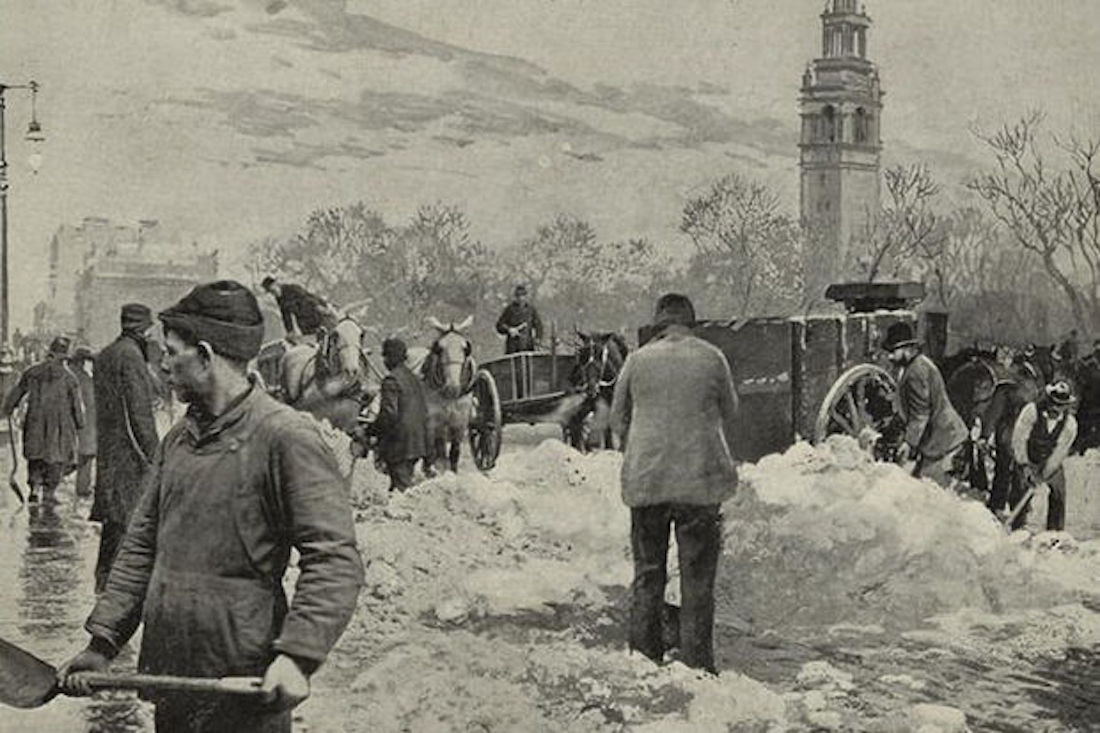
Missing a good old-fashioned New York City snowfall? Well, then, take in this unusual view from 1902:

What storm is this? The horrific blizzard that hit New York on February 17, 1902.  It would be considered the worst snowstorm to hit the metropolitan area since the Great Blizzard of 1888. (Read all about it here.)  I assume we’re actually in the aftermath of the blizzard here, as the snow shovels are out, and the kids are playing.

What area is being filmed?  Madison Square Park (near 23rd Street), with the Worth Memorial in the background of some angles

Who made this?  Edison Manufacturing Company. Their Manhattan studio was nearby, at 41 East 21st Street.

Who’s the director? The head of Edison’s film division Edwin S. Porter, considered by most to be the first real movie director, inventing basic techniques used by subsequent filmmakers.

What are we seeing?  Trolleys, cabs, carriages and other unusual vehicles, braving the icy conditions and dodging pedestrians at the intersection of Broadway, Fifth Avenue and 23rd Street.  At one point, you almost see a team of horses slide off the road!

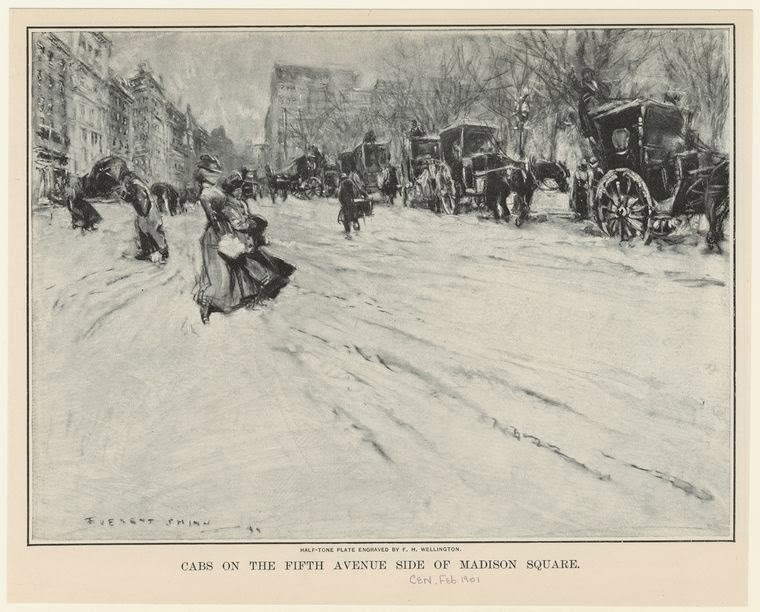
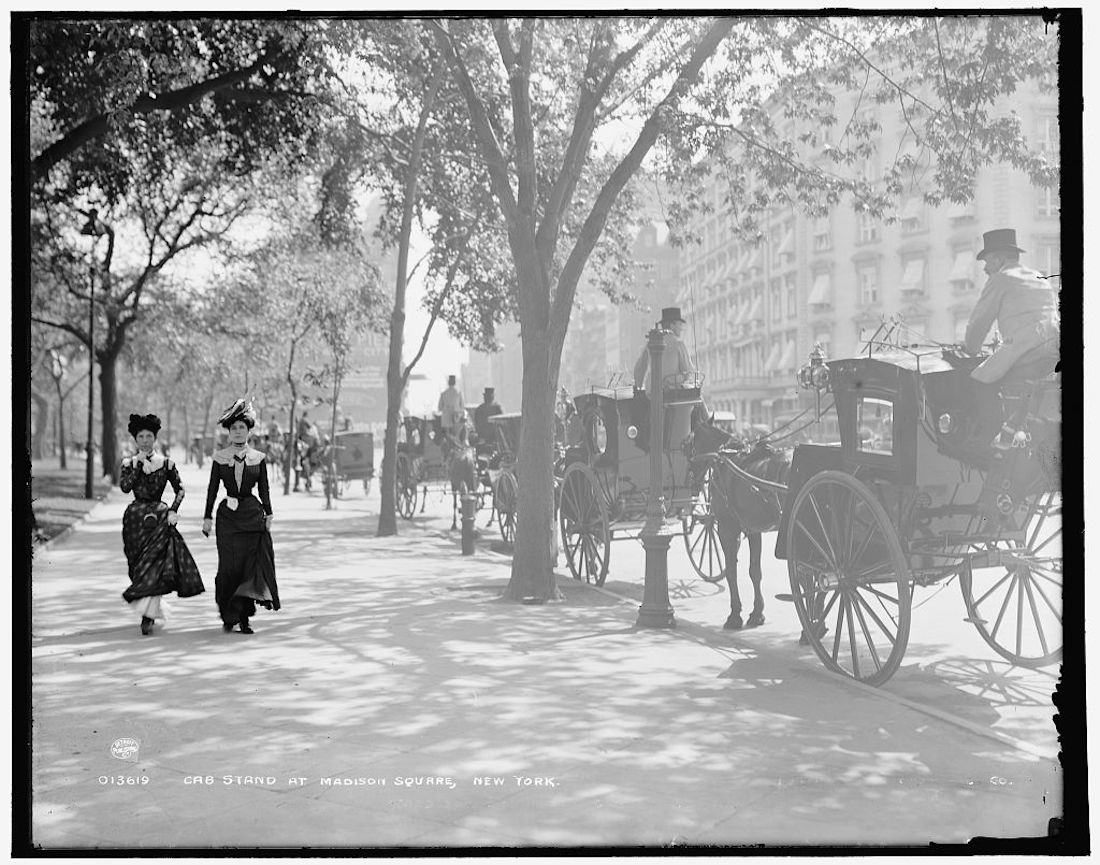
Below: An illustration from 1899, showing cabs parked along Madison Square (courtesy NYPL)

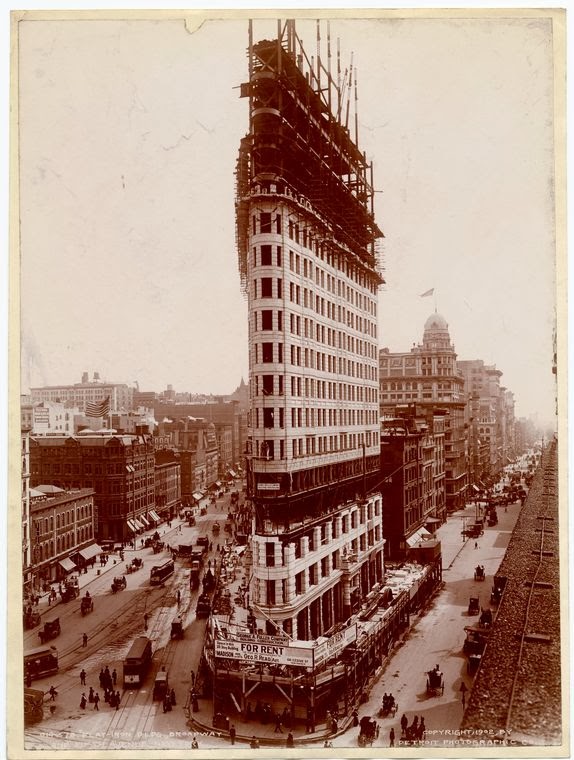
Why aren’t they showing the Flatiron Building?  It’s not completed yet!  The Daniel Burnham-designed office building would be opened by the summer, to great fanfare.  But as an open construction site, it would have been dangerous to linger anywhere around it.  I believe the slanted beams you see at the very end are part of the construction site.

It would have looked something like this (picture courtesy the New York Public Library):

This is the first film of a New York blizzard?  This is probably the first film of any American blizzard. Primitive film technology had only recently allowed for outdoor filming.  Porter and his crew would have been brave indeed dragging Edison’s equipment even two blocks through these conditions.

What’s that statue at the 1:15 mark?  The seated, snow-covered figure of William Seward.  The statue has sat at that corner since 1876. (More about that here.)

What’s that big building at the end?  The Fifth Avenue Hotel, once considered the greatest accommodation in New York City and a headquarters for backroom politics in the 1870s and 1880s.  Its glory days are long passed by the time of the blizzard.  Six years later, it would be torn down and replaced with the building that stands at that corner today — the International Toy Center.

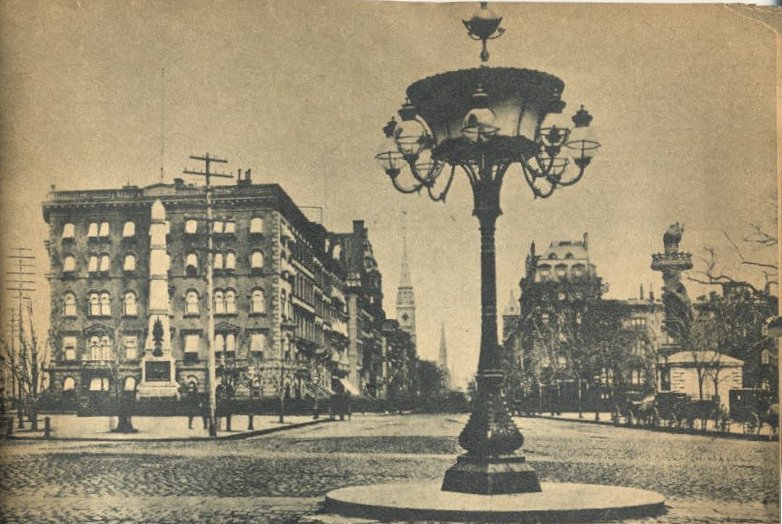
As the camera pans around, you can see the Fifth Avenue Hotel street clock, a replica of which still sits in that very spot.

Is this the first movie ever filmed in Madison Square?  No.  That distinction goes to a boxing match filmed seven years earlier at the top of Madison Square Garden between ‘Battling’ Charles Barnett and Young Griffo.

Categories
Amusements and Thrills The Gilded Gentleman

How The Gilded Age Played: A Sweet Summertime Show With Esther Crain

On the latest episode of The Gilded Gentleman, returning guest Esther Crain, author and creator of Ephemeral New York, joins Carl for a look at how New Yorkers stayed cool on summer days in the Gilded Age. 

As New York continued its march up the island of Manhattan, there were few places where New Yorkers that couldn’t escape to Newport could find somewhere to relax, play, stroll, and find some shade. 

The development of the Central Park provided some much-needed relief but it took some time for it to become a place that was accessible and viable for all of New York’s social classes. 

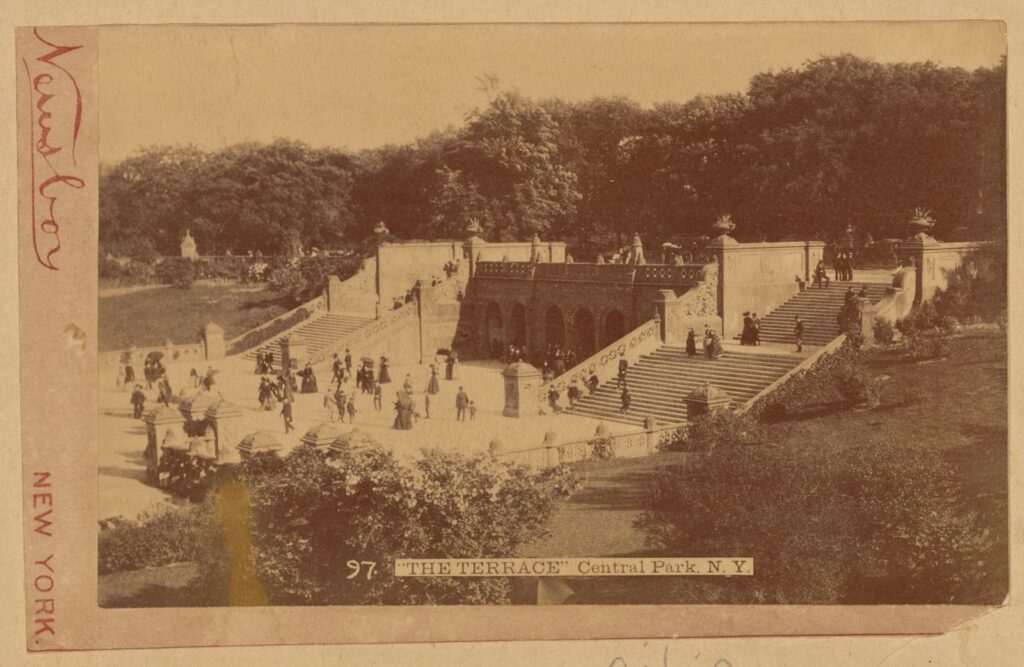
Bethesda Terrace, Central Park, 1890, courtesy the New York Public LIbrary, Irma and Paul Milstein Division of United States History, Local History and Genealogy

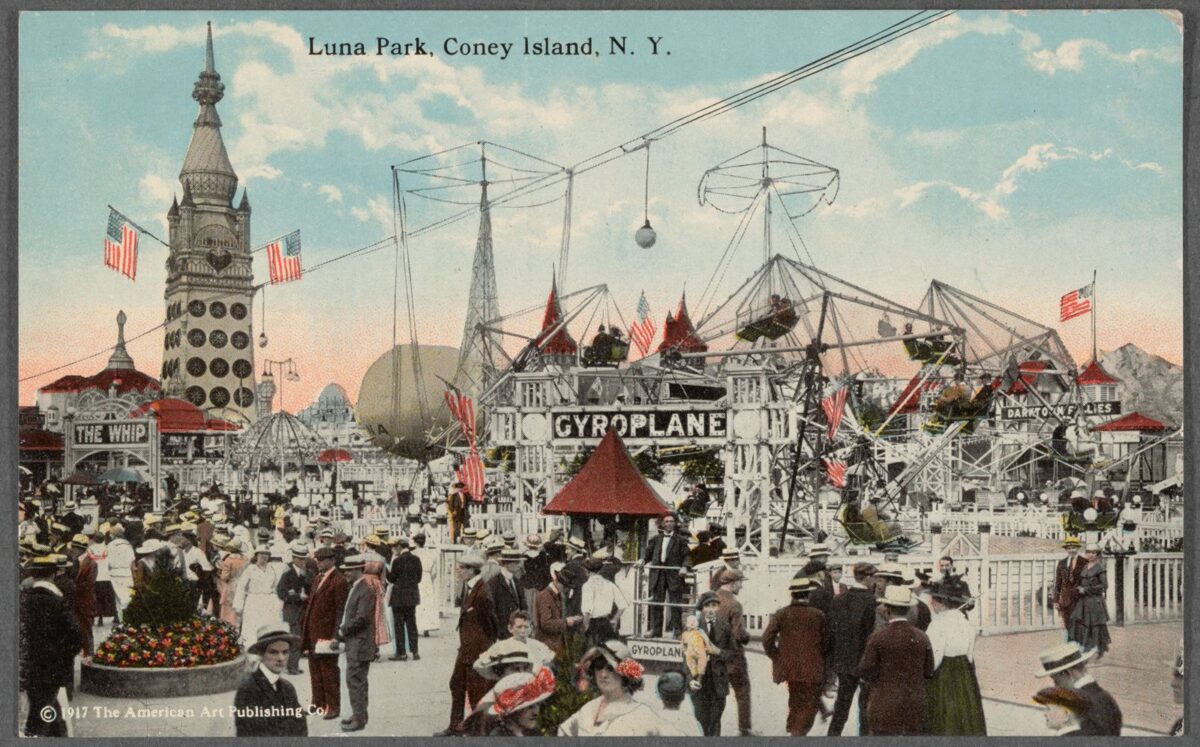
Meanwhile, out on the far coast of Brooklyn, the resort of Coney Island developed rapidly and became a truly great escape with its famous amusement parks where one could find adventure and perhaps a bit of romance. 

Esther takes us on a journey to visit these spots and spaces where Gilded Age New Yorkers could cool off, forget the realities of life for just a bit and have a really good time.  

LISTEN HERE OR ON YOUR FAVORITE PODCAST PLAYER:

And in two weeks on The Gilded Gentleman Podcast: Prepare for a history of the French Riviera

Categories
Gilded Age New York Landmarks

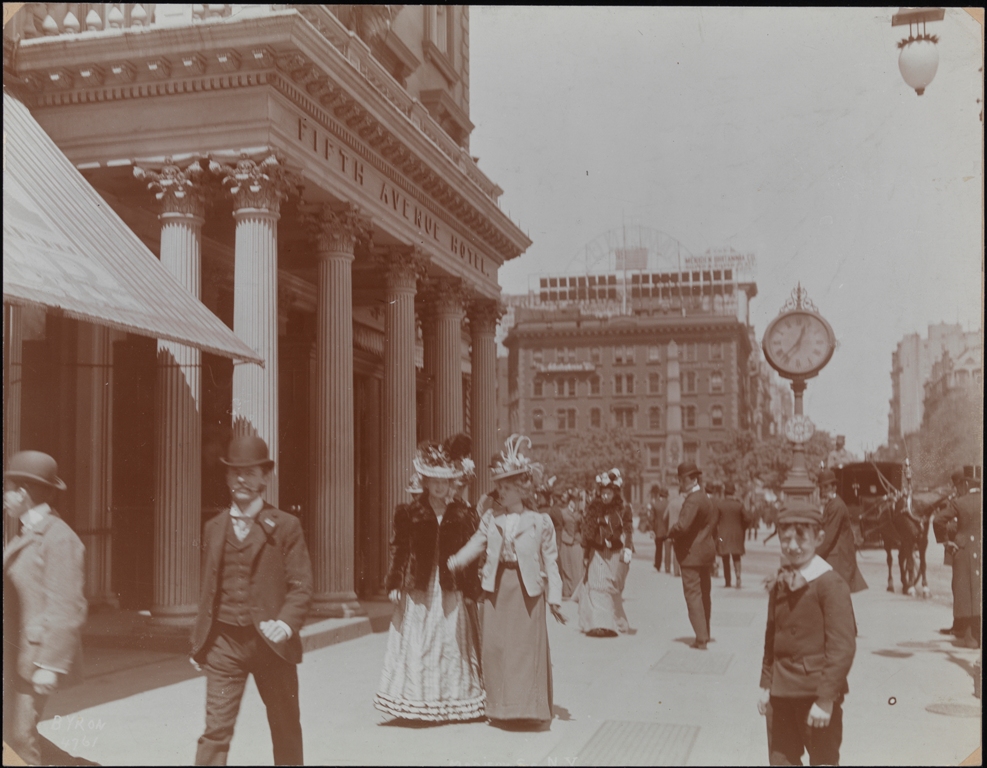
The Fifth Avenue Hotel: Opulence, glamour and power on Madison Square

The double-breasted, cigar-chewing gentlemen who gathered in the sumptuous rooms of the Fifth Avenue Hotel were occasional connoisseurs of New York City history, and in particular, these amateur historians spoke of the very street corner where their hotel stood.

Before Madison Square, when the area was a barren parade ground, one Corporal Thompson opened a roadhouse and stagecoach station in the area that was to become 23rd Street and and Fifth Avenue.

Many spoke fondly of Thompson’s establishment, called Madison Cottage, because they remembered the place as young boys. They recalled the area’s rural quality, with carved rectangular blocks carved into the land and a dirt-road Broadway meandering north.

But that was the 1840s.
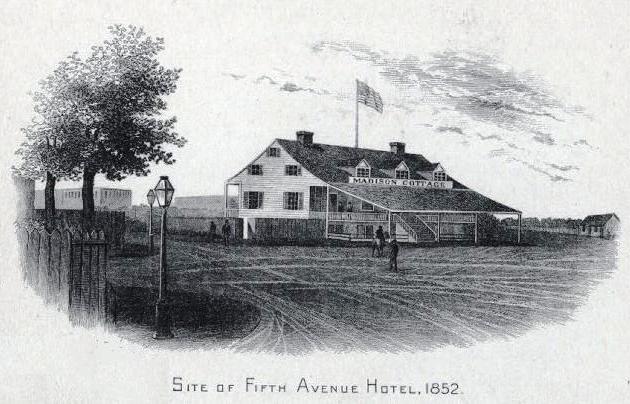
Madison Cottage, Hitchcock, Darling & Co.

Forty years later, Madison Square Park was the center of New York, a focal point of class, business and luxury that stretched south to Union Square, through that attractive collection of fine stores known as Ladies Mile, and up Fifth Avenue into the fabulous mansions of the rich.

And dead center of all that activity was the Fifth Avenue Hotel, not only the “finest [hotel] in this metropolis”, the “leading hotel of the world ,” but quite simply one of the most surprising stages for American politics of the mid and late 19th century.

New York’s Hotel Revolution

Hotels were fast becoming the center of New York life from at least the days of the Astor House, located near City Hall, in the 1830s. Within two decades, trendy new hotels (such as the St. Nicholas and the Metropolitan) spread up along Broadway and eventually clustered around Union Square.

By the Civil War, the thrust of New York society was so defined by them that Confederate conspirators tried setting fire to a several of them.

The Fifth Avenue Hotel opened in 1859, the venture of wealthy merchant Amos Richards Eno, who accurately gambled that the center of city commerce would soon settle at 23rd Street. So confident a speculator was Eno that he moved from his brownstone at 74 Broadway (the first New York brownstone, he claimed) to a massive home nearby the hotel.

Some thought it unwise to build so far north, and when workers unearthed dozens of skeletons during construction — the area once being a potter’s field — the corner was even considered cursed. Eno defied the naysayers, pouring his wealth into the hotel to make it the most modern, most luxurious accommodation of the day.
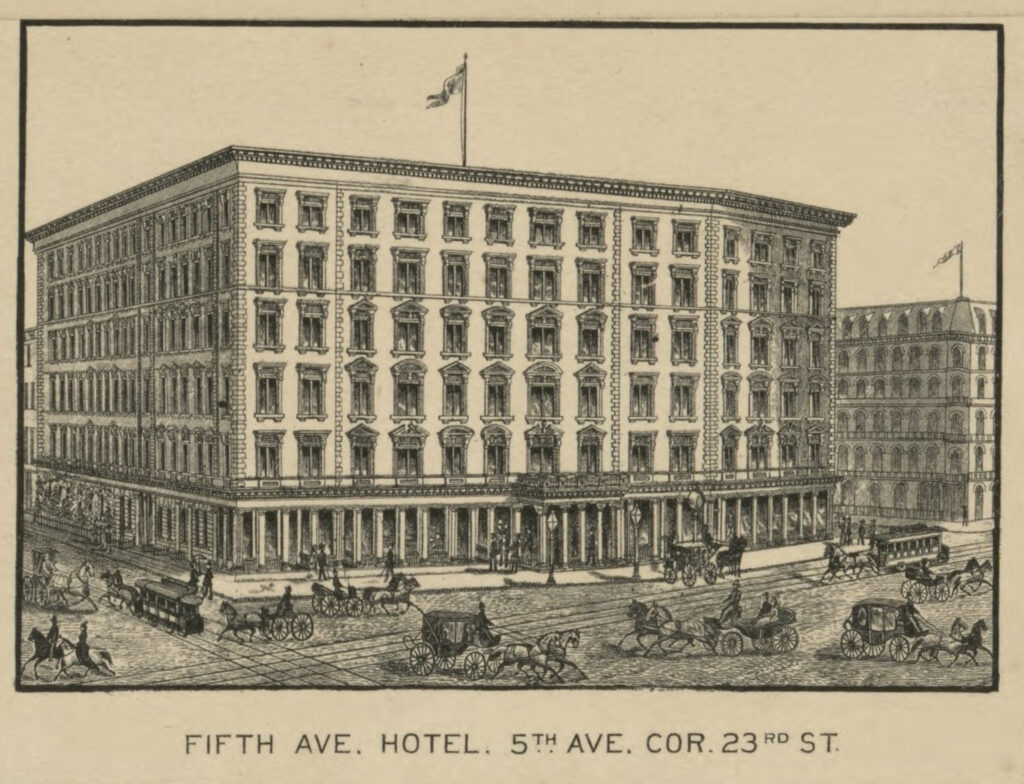
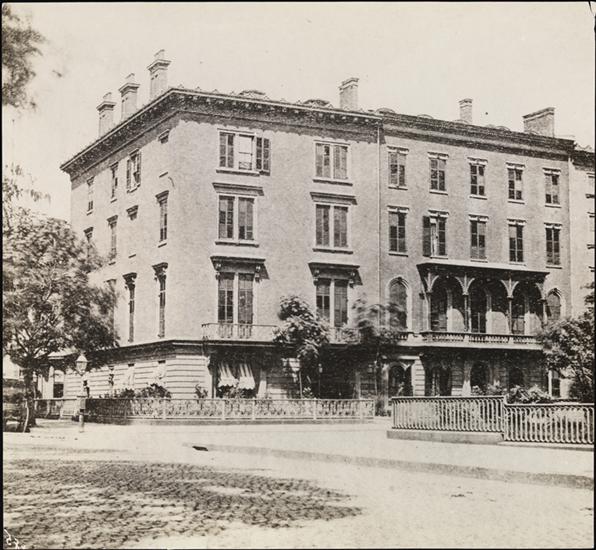
The Fifth Avenue Hotel, 1879. Courtesy Wikimedia Commons
A Gilded Age Confection

The Italian exterior was awash in five stories of imported marble, while austere, carpeted interiors of French design drew comparisons to European palaces.

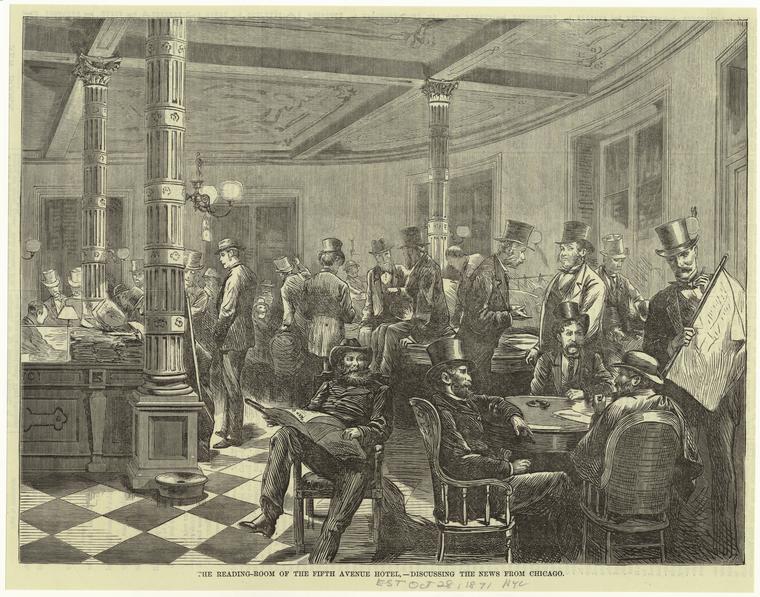
Guests enjoyed reading rooms, a luxurious bar, a barber shop, a dedicated telegraph office, and a variety of dining and drawing rooms, not to mention the first passenger elevator ever built in the United States, a steam-powered monstrosity whisking passengers to their floor.  

The private quarters were soundproofed, fixtured with the modern innovations in plumbing, and lavishly decorated, becoming to many “the safest, the most healthy and most comfortable hotel in the world.

The Fifth Avenue Hotel reading room, busy every weekend. (Boston: Fields, Osgood & Co.,)
Wheeling and Dealing

As the finest hotel in the city in the post Civil War years, it naturally became a magnet for politicians and financiers. Of all the ‘backrooms’ of American politics, none were as gleaming as the Fifth Avenue.

Bankers huddled in the legendary ‘parlor D. R.’ during the tense days of the financial panic of 1873. In particular, the hotel became a de facto headquarters for New York Republicans.

While often secondary to the city’s Democrats — this being the era of Tammany Hall‘s swelling power — Republicans were frequently in control of state government, and the Fifth Avenue Hotel became a smoky center of political wheeling and dealing.

During the 1870s, New York republicans became national power brokers and frequently hashed out crises here at the Fifth Avenue.

In the years before the Waldorf-Astoria, presidents and dignitaries all stayed here during visits. Seamier political maneuvers took place in the chambers of prominent politicians who held court here, including the inimitable Roscoe Conkling (at left), senator of New York and leader of the Republican faction known as the Stalwarts.

National Influence

When fractured Republicans at their convention in 1880 nominated non-Stalwart James Garfield for president, the nominee had to basically grovel for their support by symbolically ‘kissing the ring’ of the Stalwarts during a visit to the Fifth Avenue Hotel, partially agreeing to their system of patronage and taking Conkling ally Levi Morton as a member of his cabinet. (Garfield later backed out on this arrangement.)

Another frequent guest here was Chester A. Arthur, Garfield’s eventual vice president. When Arthur became president after Garfield’s assassination by Charles Guiteau (who had himself wandered the hotel’s hallways in delusion), he would set up his entire administration here during visits to his adopted city.

By the 1890s, a corridor of the hotel known as the ‘Amen Corner‘ was a famous congregation spot for Republican political bosses and reporters. As they frequently powwowed here on Sundays, gatherers would caustically shout ‘Amen!’ during heated discussions.
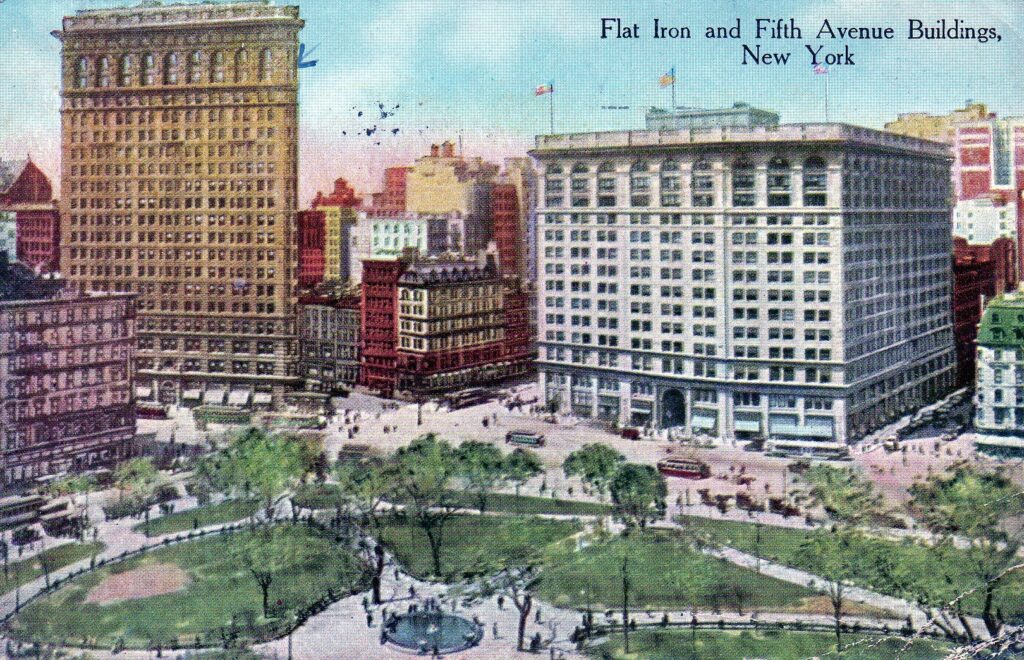
The Fifth Avenue Hotel in relation to the Flatiron Building
Checking Out

The hotel became a magnet for shenanigans of all varieties. In 1893, a couple hundred proponents of a U.S. monetary silver standard erupted into a riot that included two U.S. senators.

The bank robber Robert Montague was arrested here in 1896 thanks to a tip-off from a chambermaid. An early vestige of baseball’s National League met here annually, and the national pool competitions were held in the hotel’s billiard room.

By the new century, of course, the locus of New York activity was hastily moving uptown, and the Fifth Avenue Hotel was deemed a relic, even as a brand new structure across the street — the Flatiron Building — was being proclaimed the finest building in the city.

In 1908 the Fifth Avenue Hotel was torn down and replaced by the 16-story Toy Center (called the Fifth Avenue Building back in the day), the epicenter of toy manufacturing for much of the 20th century.
Categories
Landmarks Neighborhoods

When the Statue of Liberty left her arm in Madison Square

Above: The arm of the Statue of Liberty stood solitary in Madison Square for six years, from 1876 to 1882.

Eugene Emmanuel Viollet-le-Duc, one of the forgotten names in Statue of Liberty history was born in Paris.  As the godfather of historical restoration, Viollet-le-Duc would rescue countless medieval structures from decay, helping to preserve the spirit of French architecture through such buildings as Notre-Dame and Mont Sant-Michel.

But it’s through his association with his student Frédéric Bartholdi that Viollet-le-Duc would make his mark in America, as the original designer of the Statue of Liberty‘s brick-laden skeleton.  

Viollet-le-Duc would work with Bartholdi in creating both the head and the arm, parts that would then travel to the United States to raise funds for the completed structure.

In particular, the arm and torch would be displayed in the northwest corner of Madison Square Park, from 1876 to 1882.  On July 4th, 1876, a gigantic painting by Jean-Baptiste Lavastre of the completed statue was displayed on a building across the street from the arm.

Below: The arm would also make its way to the 1876 Philadelphia Centennial Exposition.

Sadly, Viollet-le-Duc would never again see these portions of the statue, as he died in 1879 before the entire structure was completely built.   Bartholdi then turned to another architect to complete the work — Gustave Eiffel.  It’s Eiffel’s redesigned interior that supports the statue today.

In 1889, three years after the Statue of Liberty finally made its home in New York harbor, Eiffel debuted his better known work — the Eiffel Tower — at the Paris World’s Fair.

But the somewhat radical theories of restoration espoused by Viollet-le-Duc would inspire American architects and inform the direction of modern historical preservation.

Categories
American History Landmarks

The Statue of Liberty turns 135 years old: Eleven facts about her 1886 dedication

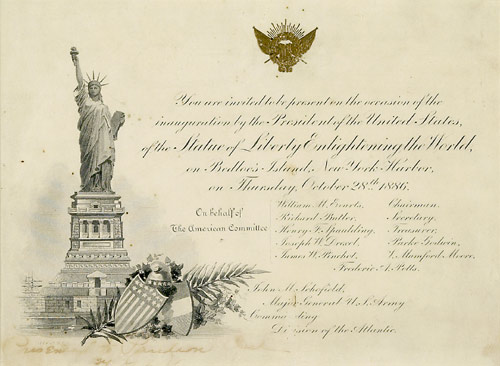
The Statue of Liberty celebrates her 135th birthday today. Technically, I suppose, it’s the anniversary of her dedication, a star-studded, pomp-laden ceremony that took place on Friday, October 28, 1886.

But for many months previous, she was a fierce presence in the harbor, as the copper monument was arduously stitched together from far flung pieces — including an arm which sat in Madison Square Park for many years — upon a contentious new pedestal by Richard Morris Hunt.

The dedication ceremony was not the sterling event of pure American patriotism that one might expect. The reality of her debut proved far more interesting:

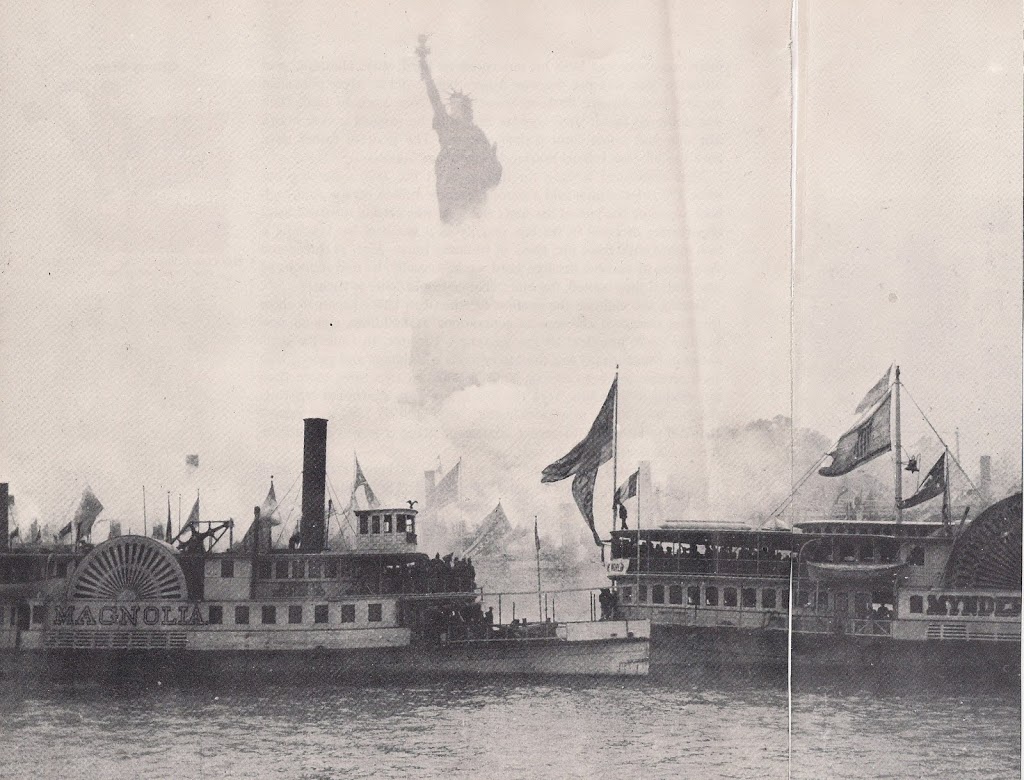
1) The weather was totally awful that day. Nasty weather, rainy and wet, nearly wrecked the day, with the statue surrounded in mist and then a ‘regular London fog.

2) It was as much a celebration of the French as it was of the statue. Despite the rain, a contingent of 20,000 men in French uniform marched down Fifth Avenue in the morning, and the French tricolor was waved alongside the flag of the United States from virtually every window and balcony.

3) The early action took place in Madison Square Park. The official ceremony began near the Worth Monument next to Madison Square Park, with President Grover Cleveland, the statue’s creator Frederic Bartholdi and other luminaries in a parade reviewing stand, enjoying marching bands in the pouring rain. Apparently, Cleveland stood in the downpour for over two hours without an umbrella. (This is most peculiar behavior, considering what is popularly believed to have happened to President William Henry Harrison a few decades previous.)

4) No respect for veterans! A minor controversy erupted involving the participation of the three remaining living veterans of the War of 1812. They had been slated to join the parade, but somebody neglected to send a carriage for them. “The Memorial Committee of the Grand Army forgot us three times. We will never appear on a public occasion again,” proclaimed 90-year-old General Abram Daly.

Below: The official invitation to the inauguration ceremony.

5) Lady Liberty was covered in a gigantic French flag. After the parade, all New Yorkers, en masse, rushed towards Battery Park, ostensibly to watch the dedication ceremony (but then, of course, it was too foggy to see anything).

The dignitaries, meanwhile, maneuvered a boat through crowded waters over to Bedloe’s Island. They were greeted by a looming, shadowy figure draped in a gigantic, wet French flag.

The effect, according to the newspapers, was one of mystery and eeriness. “[T]he nearest of the men-of-war could be seen floating like phantoms on what might either have been fog or water so far as the eye could see.” [source]

6) There’s only room for one Lady at this ceremony. Despite being a celebration of a large, glorious woman, there were less than a dozen actual women invited to the Bedloe’s Island ceremony, of the 2,500 or so that slowly made their way to their seats. (A boat of bold suffragists did navigate close to the island.)

In one way, it was for the best; it took hours for people to arrive at the island. The bandleader, the estimable Patrick Gilmore, played a bevy of marches and French folk songs until he and his musicians was soaking wet.

7) It was really too loud to be having a ceremony at all. Explosions and whistles, the “impish screech” of steamships and tugboats, filled the harbor in celebration, and nobody on Bedloe’s Island could really signal to anybody to get them to stop. The dedication prayer and several speeches were drowned out. Ferdinand de Lessups, developer of the Suez Canal and head of the French delegation, dryly remarked of the noisy steamships, “Steam, which has done so much good in the world, is just now doing us a good deal of injury.”

8) Unveiling fiasco! At the close of a very grand speech by New York senator William Evarts, a series of signals was to be sent to Bartholdi, holding a cord which would pull away the gigantic flag.

There was a miscommunication however — in the middle of Evarts speech — and the cover was pulled off of Lady Liberty too early. This elicited a deafening, celebratory cry of horns, cannons and shouts from all around the harbor.

Evarts, however, was still speaking. Nobody could hear him, and thus people at the ceremony actually began dispersing. Everts ended by turning to President Cleveland, who sat nearby, and uncomfortably finished his prepared remarks. Awkward!

9) No ‘Enlightening the World’ today. The weather was so bad that the Statue of Liberty’s torch could not be illuminated, so plans for an elaborate ‘pyrotechnic display’ were scrapped.

10) The disaster that almost was: There were so many boats in the water — with fog and mist still impeding visibility (as pictured above) — that it is actually quite incredible that President Cleveland and the French dignitaries made it off of Bedloe’s Island alive. In fact, the president had to transfer to a smaller boat which successfully got him to the Penn Railroad station on the New Jersey side.

11) Occupy Wall Street? The celebration didn’t stop there. Parades and marching bands marched well into the evening, with apparently little crowd control. At around Broadway and Wall Street and further south to Maiden Lane, streets were so clogged that there was literally no movement for over an hour.

Overhead, people shouted from rooftops and even shot off pistols. Meanwhile, further north on Canal Street, somebody actually had the wise idea of placing a cannon on a rooftop and firing it in celebration. (No word on any suspected damage.) The city’s grand fireworks display did eventually take place, on November 1st.

For more information on the history of the Statue of Liberty, check out our podcast on the story of Emma Lazarus and a very early show we recorded on the statue itself.

Photos courtesy Library of Congress digital archive

This article originally ran on the 125th anniversary of the statue’s dedication

Categories
Gilded Age New York Podcasts

The Rise of the Fifth Avenue Mansions: Revisiting Forgotten Architecture of New York’s Gilded Age

PODCAST At the heart of New York’s Gilded Age — the late 19th century era of unprecedented American wealth and excess — were families with the names Astor, Waldorf, Schermerhorn and Vanderbilt, alongside power players like A.T. Stewart, Jay Gould and William “Boss” Tweed.

They would all make their homes — and in the case of the Vanderbilts, their great many homes — on Manhattan’s Fifth Avenue.

The image of Fifth Avenue as a luxury retail destination today grew from the street’s aristocratic reputation in the 1800s. The rich were inextricably drawn to the avenue as early as the 1830s when rich merchants, anxious to be near the exquisite row houses of Washington Square Park, began turning it into an artery of expensive abodes.

In this podcast — the first of two parts — Tom and Greg present a world that’s somewhat hard to imagine — free-standing mansions in an exclusive corridor running right through the center of Manhattan. Why was Fifth Avenue fated to become the domain of the so-called “Upper Ten”? What were the rituals of daily life along such an unusual avenue? And what did these Beaux Arts palaces say about their ritzy occupants?

CO-STARRING: Mark Twain, Madame Restell, George Opdyke and “the Marrying Wilsons”.


The Bowery Boys: New York City History podcast is brought to you …. by you!

We are now producing a new Bowery Boys podcast every week. We’re also looking to improve the show in other ways and expand in other ways as well — through publishing, social media, live events and other forms of media. But we can only do this with your help!

We are now a member of Patreon, a patronage platform where you can support your favorite content creators — for as little as a $1 a month.

Please visit our page on Patreon and watch a short video of us recording the show and talking about our expansion plans. If you’d like to help out, there are five different pledge levels (and with clever names too — Mannahatta, New Amsterdam, Five Points, Gilded Age, Jazz Age and Empire State). Check them out and consider being a sponsor.

We greatly appreciate our listeners and readers and thank you for joining us on this journey so far.


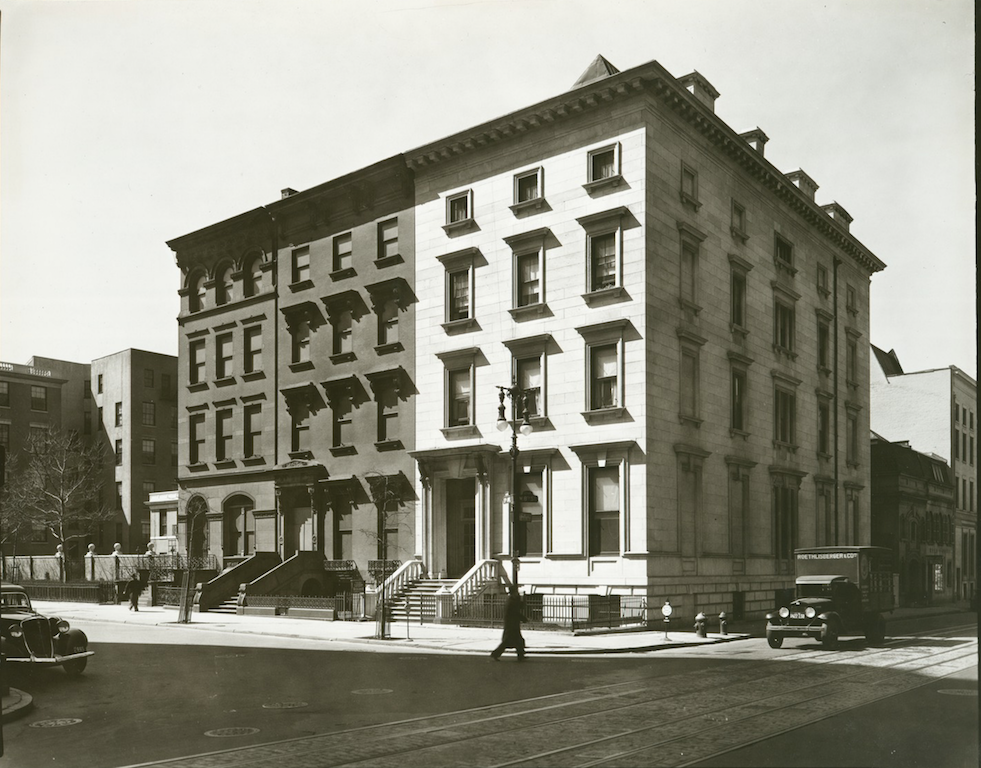
4-8 Fifth Avenue, buildings which were still standing in 1936 for photographer Berenice Abbott.

NYPL

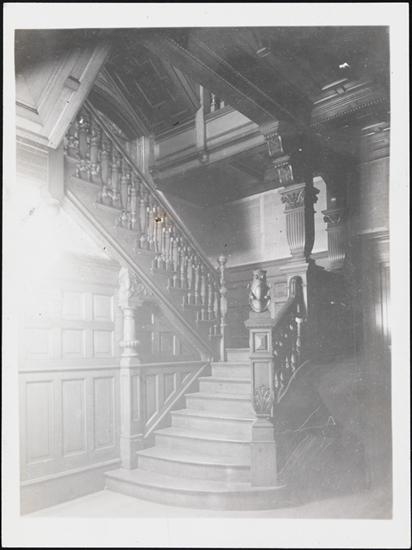
The stairway inside 4 Fifth Avenue, a beautiful relic of old living.

MCNY

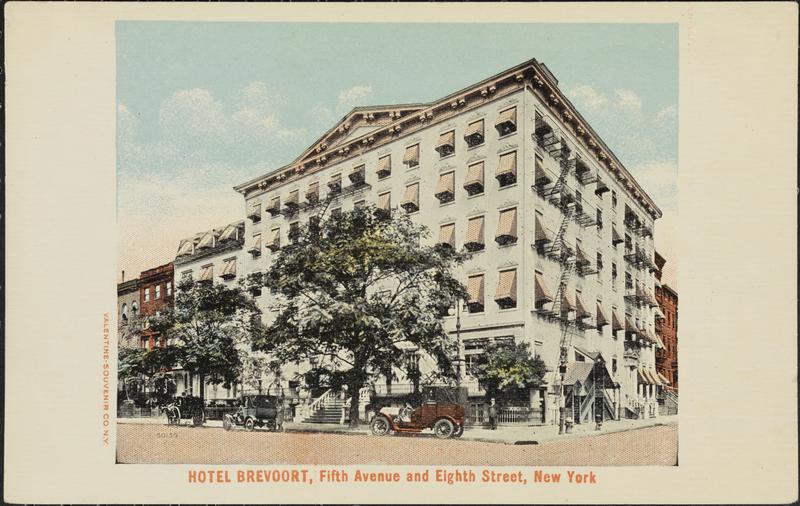
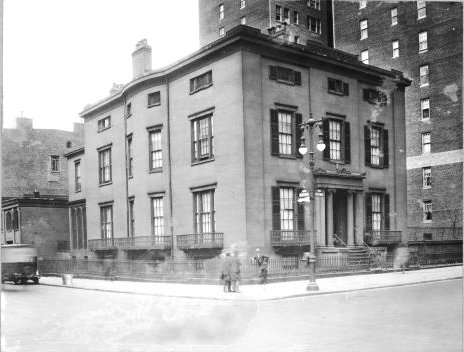
The Brevoort Hotel at Fifth Avenue and 8th Street and the Brevoort Mansion on 9th Street, circa 1925 (the year it was demolished)

NYPL

Delmonico’s Restaurant, pictured here in 1865, moved into an old mansion to serve its wealthy clients.

MCNY

A mansion at the southeast corner of Fifth Avenue and 15th Street. Note that by the date of this photograph (1898), the house has been abandoned and the upper floors are falling in.

MCNY

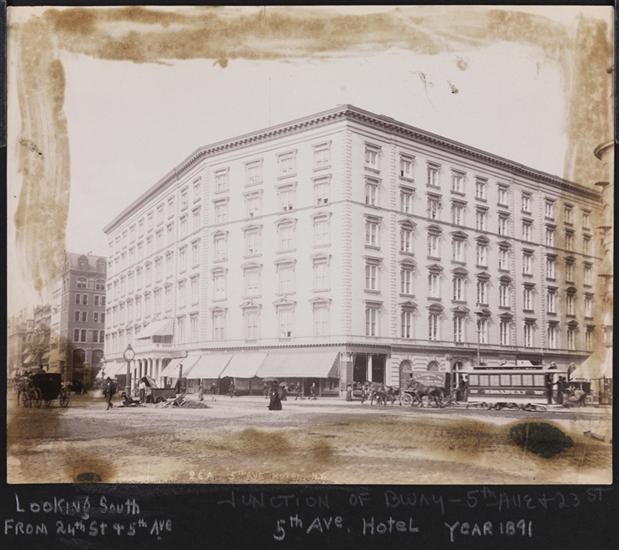
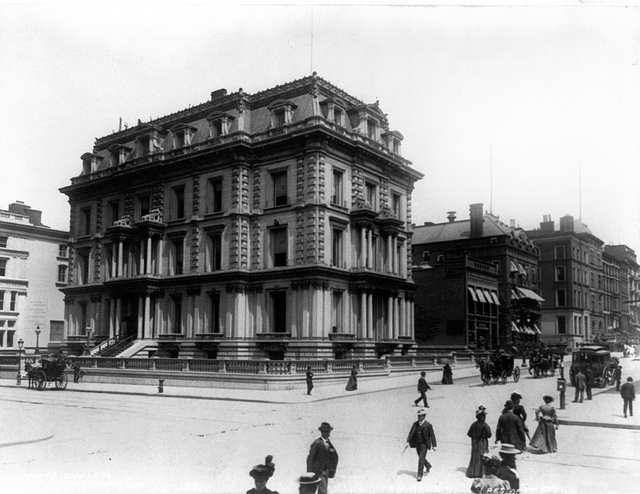
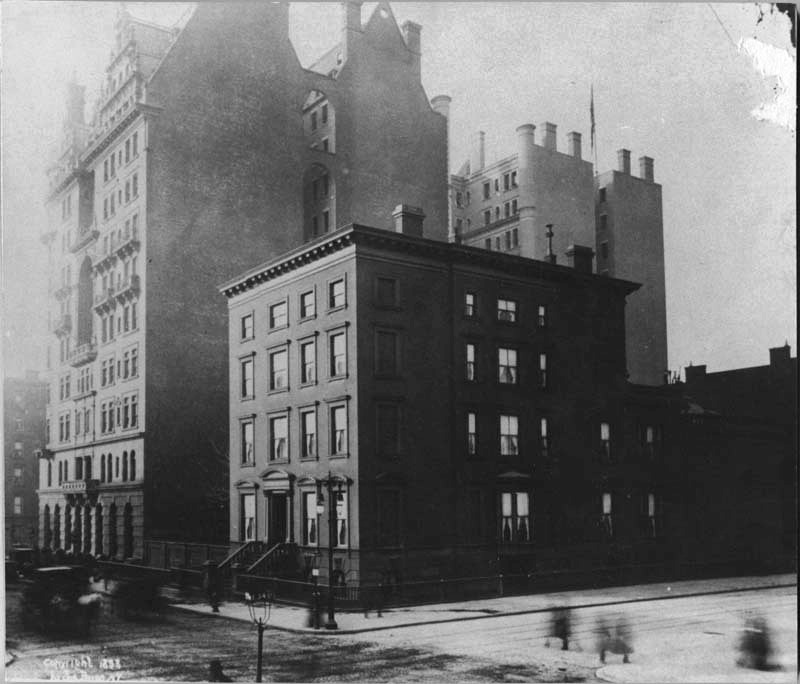
The Fifth Avenue Hotel at 23rd Street and Fifth Avenue, the anchor of the Madison Square area and the spot of great political machinations, especially in the 1870s and 80s.

MCNY

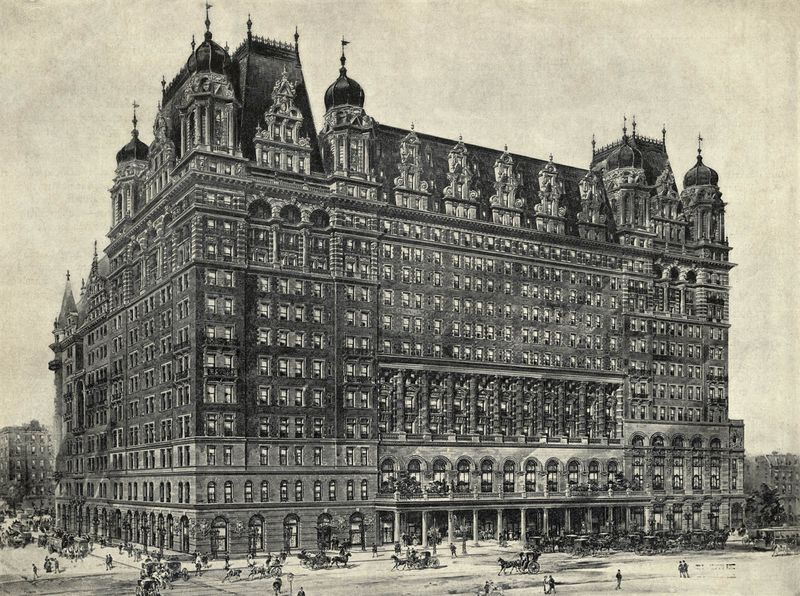
The Waldorf Hotel, rising next to the Astor mansion. Mrs. Astor eventually relented, moving from the house so that it could be demolished and replaced with a companion hotel.

Mina Rees Library, The Graduate Center, CUNY

The combined Waldorf-Astoria Hotel would become the center of high-society entertainment in the Gilded Age.

Library of Congress

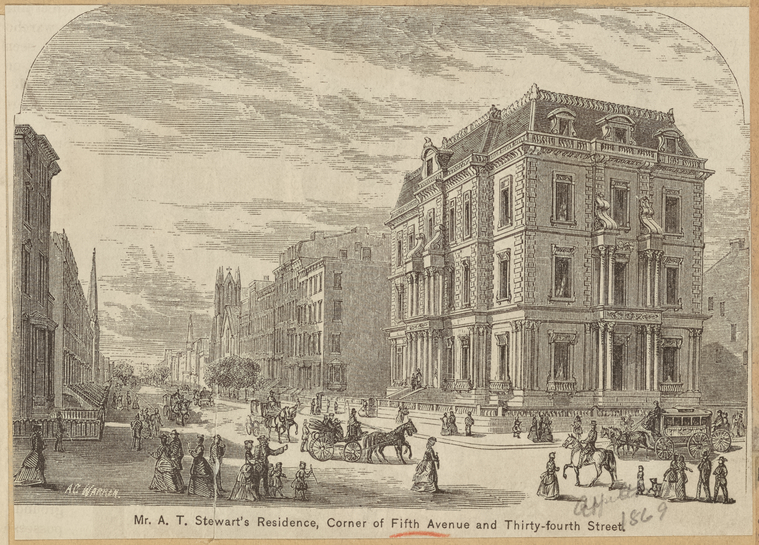
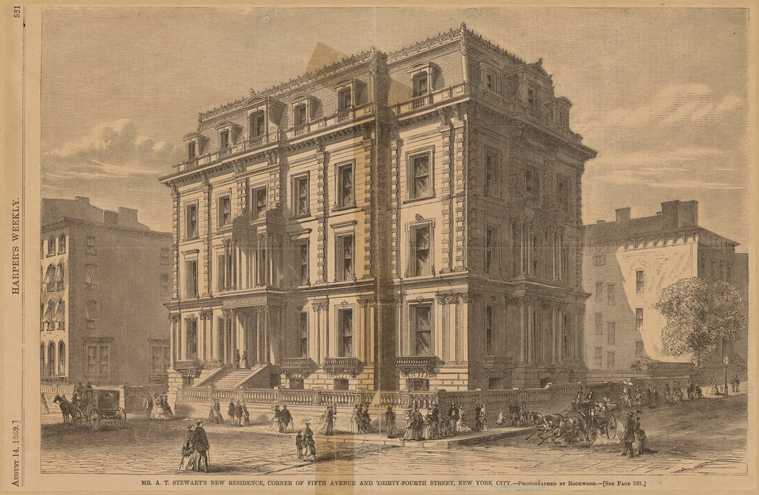
The home of A.T. Stewart — “the glorified shop clerk” — at the corner of Fifth Avenue and 34th Street, across the street from the Astors.

NYPL

The home of Jay Gould in later years.

Library of Congress

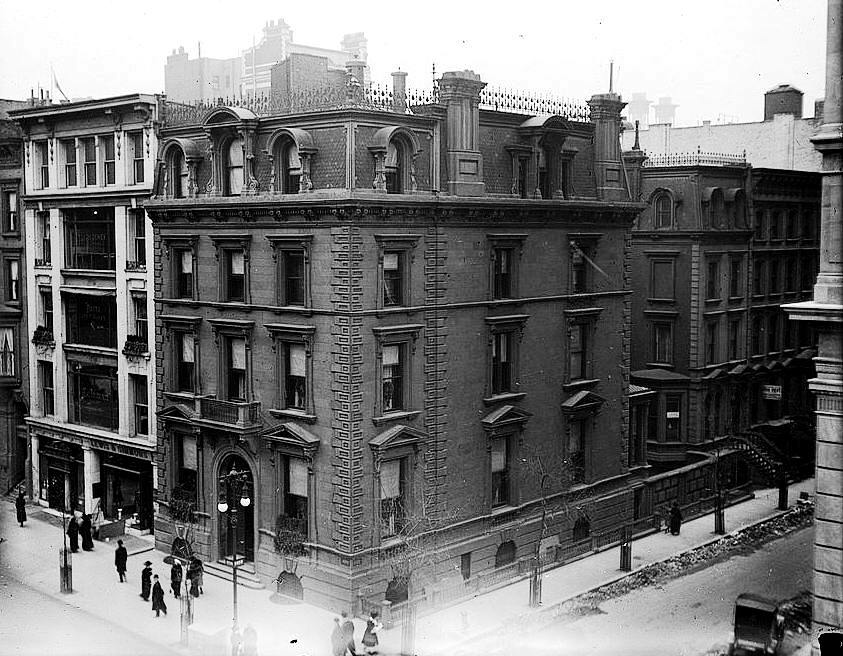
The home of the notorious Madame Restell.

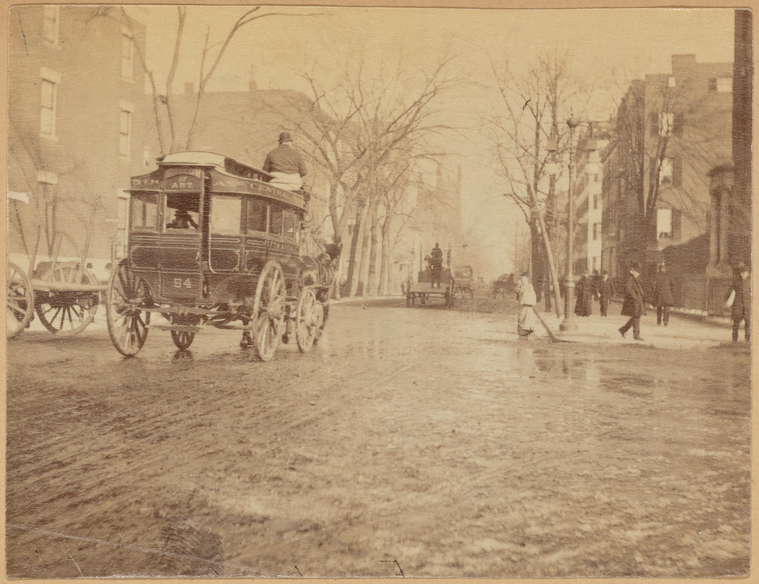
The Fifth Avenue Omnibus, circa 1890, a more elegant alternative to the dirty elevated train which ran just one avenue to the west.

NYPL

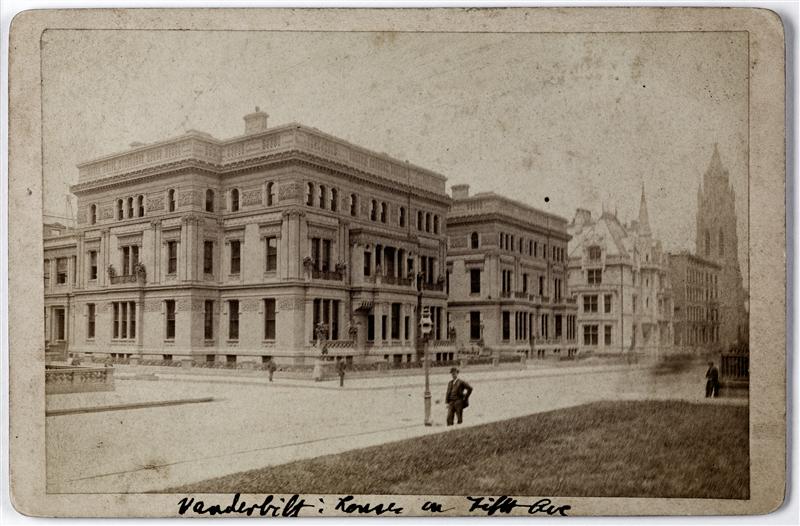
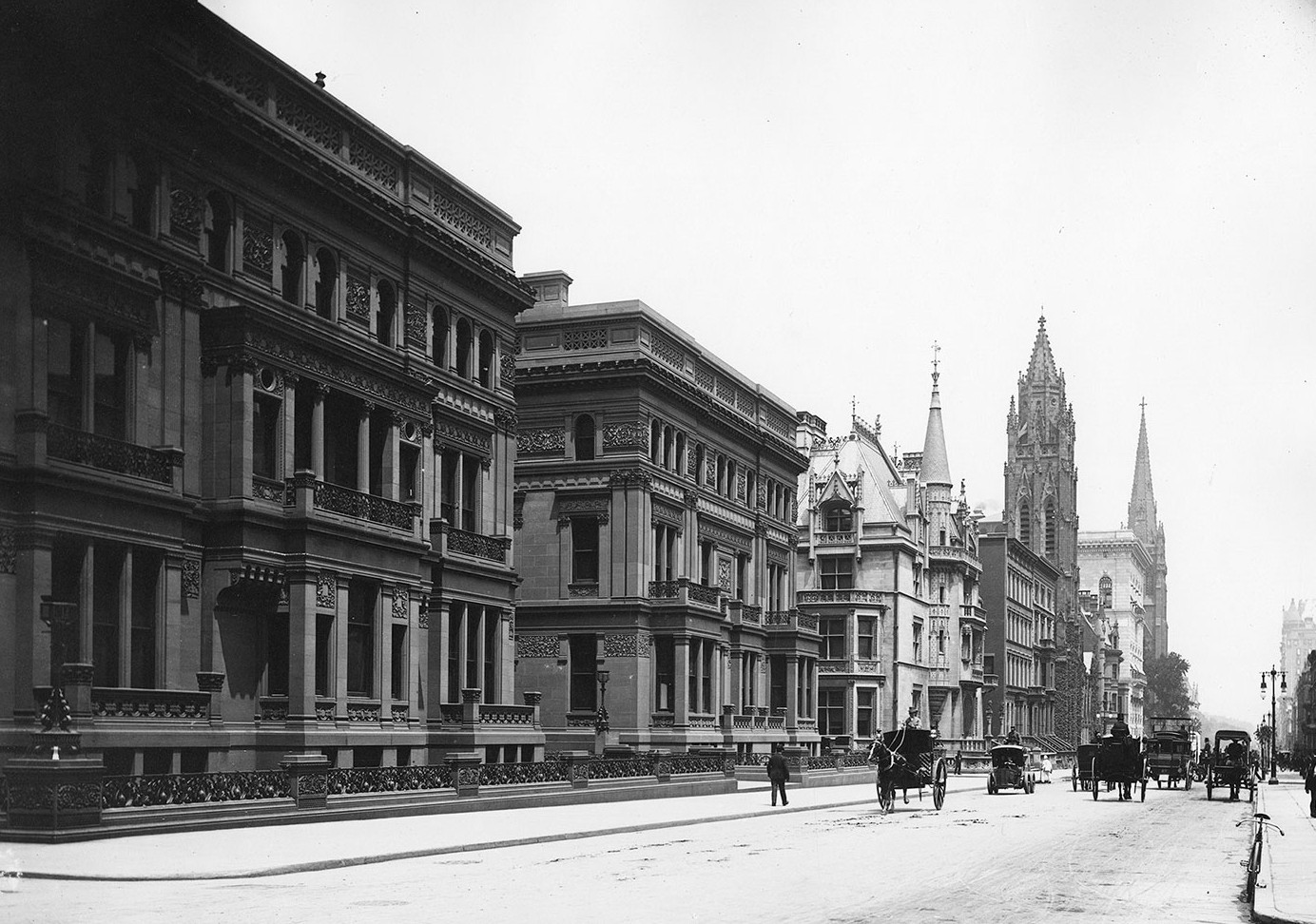
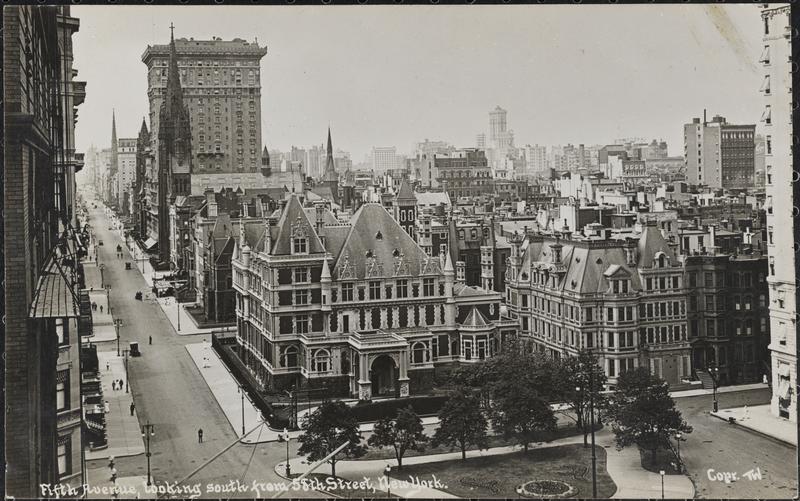
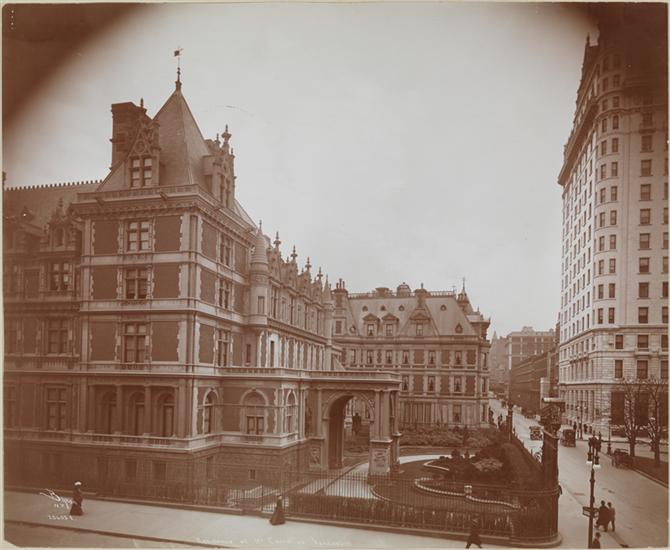
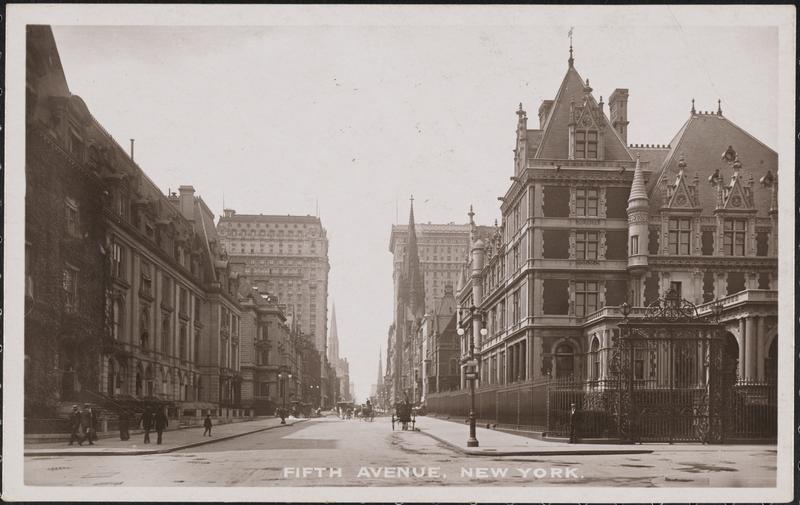
Vanderbilt Row in the 1890s. The family possessed the grandest homes on this stretch of Fifth Avenue from 51st Street to 58th.

NYPL
Vanderbilt University

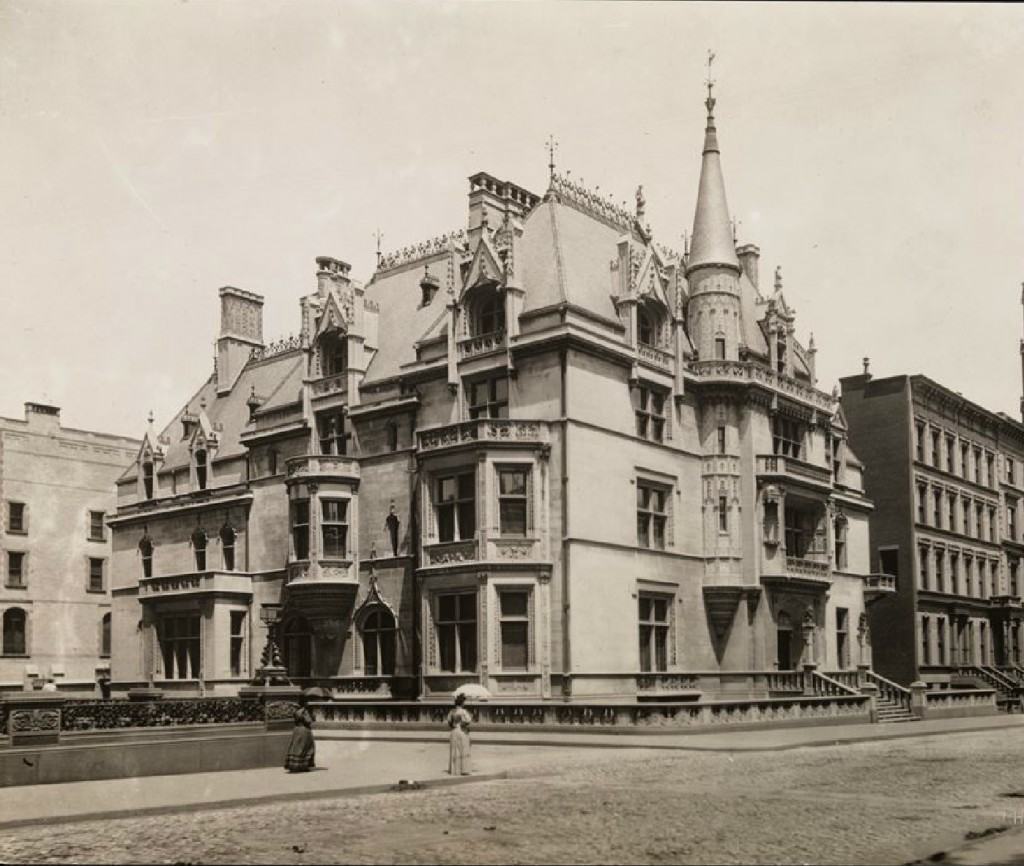
The mansion known as the Petite Chateau, next door to the Vanderbilt Triple Palace (pictured above)

The most insanely lavish of them all — the home of Cornelius Vanderbilt II — at Fifth Avenue between 57th and 58th Streets.

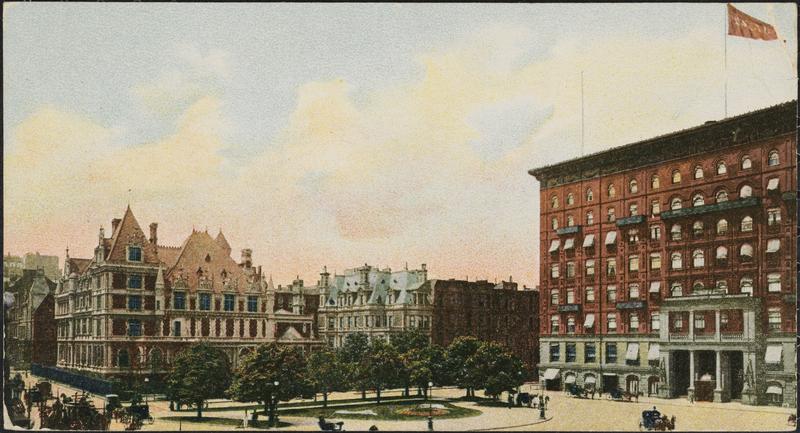
Note in the two images below (from 1901, 1905 and 1906) — both the first and second versions of the Plaza Hotel, in relation to the mansions surrounding it and Grand Army Plaza. All three courtesy Museum of the City of New York

MCNY

Fifth Avenue as seen in 1906, an avenue in transition by this time.

Categories
American History

Life in New York City 1935-1945: Heavenly images from Yale University

Yale University has sprung a beautiful present onto the Internet — a searchable database of over 170,000 public-domain photographs created by the United States Farm Security Administration and Office of War Information, documenting the aftermath of America of the Great Depression and World War II. The photos, dating from between the years 1935 to 1945, include of the greatest American photographers from the period (such as Gordon Parks, Walker Evans and Dorothea Lange).

These images aren’t really new; they’ve been available at the Library of Congress for many years. I’ve even ran a couple of these on the blog before.  But Yale has done an outstanding job of sorting and cataloging. Their site even comes with a map if you want to look at images from a particular area of the country.
Take a look at this particular images from New York City during this period, then head over to the database and lose yourself inside these captivating, sometimes harrowing pictures. Thank you Yale!


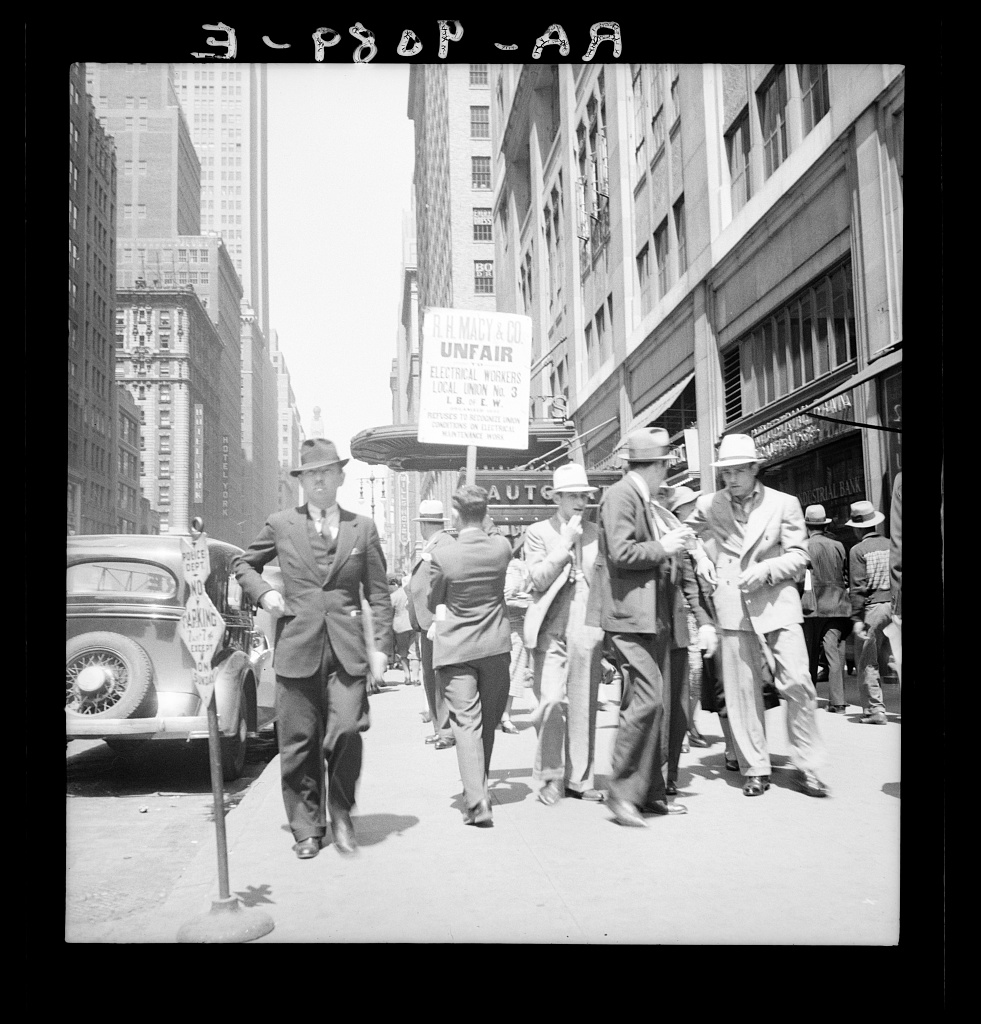
3

June 1936 “New York street scene: striking in front of Macy’s” Photographer Dorothea Lange


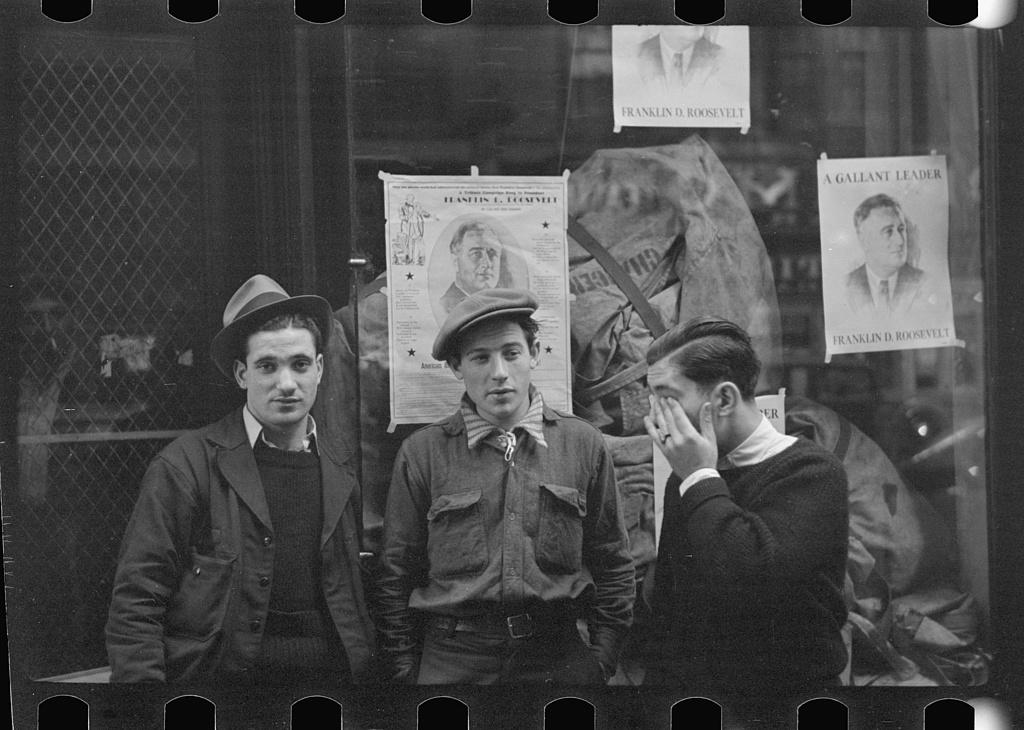
4

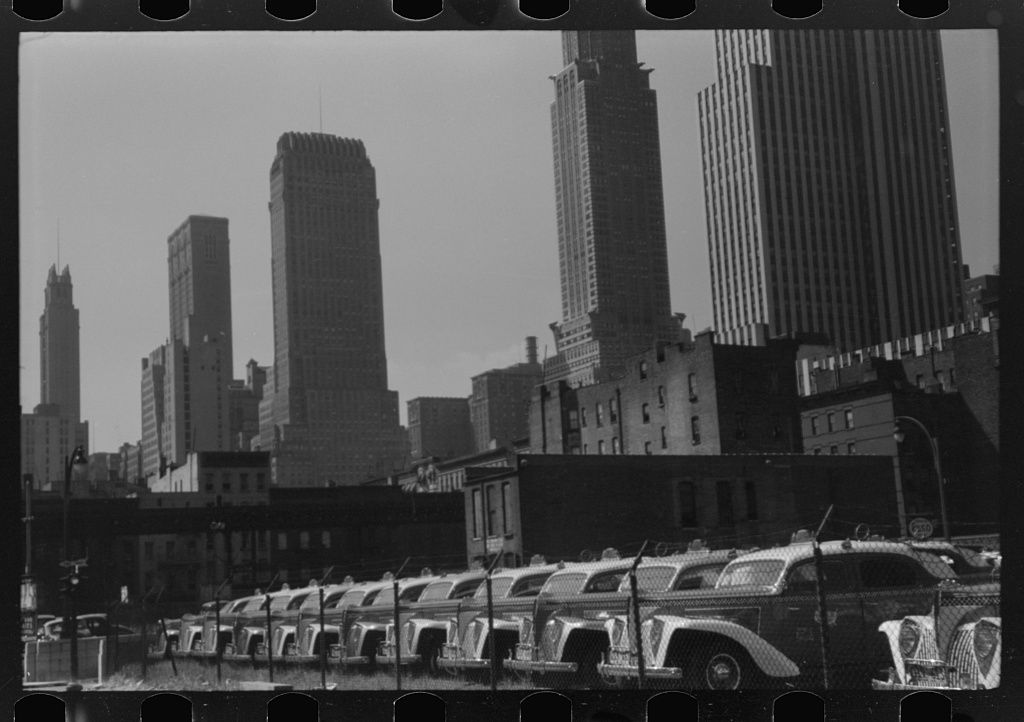
November 1936 “Street scene at 38th Street and 7th Avenue” Photographer Russell Lee


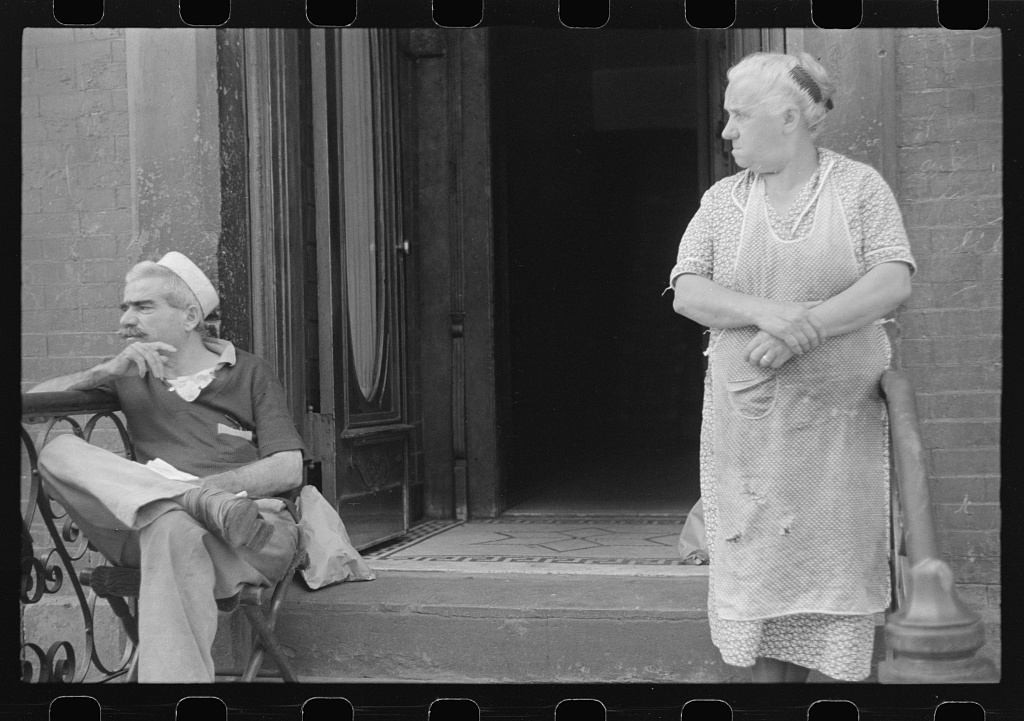
5

1938 “New York, New York. 61st Street between 1st and 3rd Avenues. Tenants” Photographs by Walker Evans


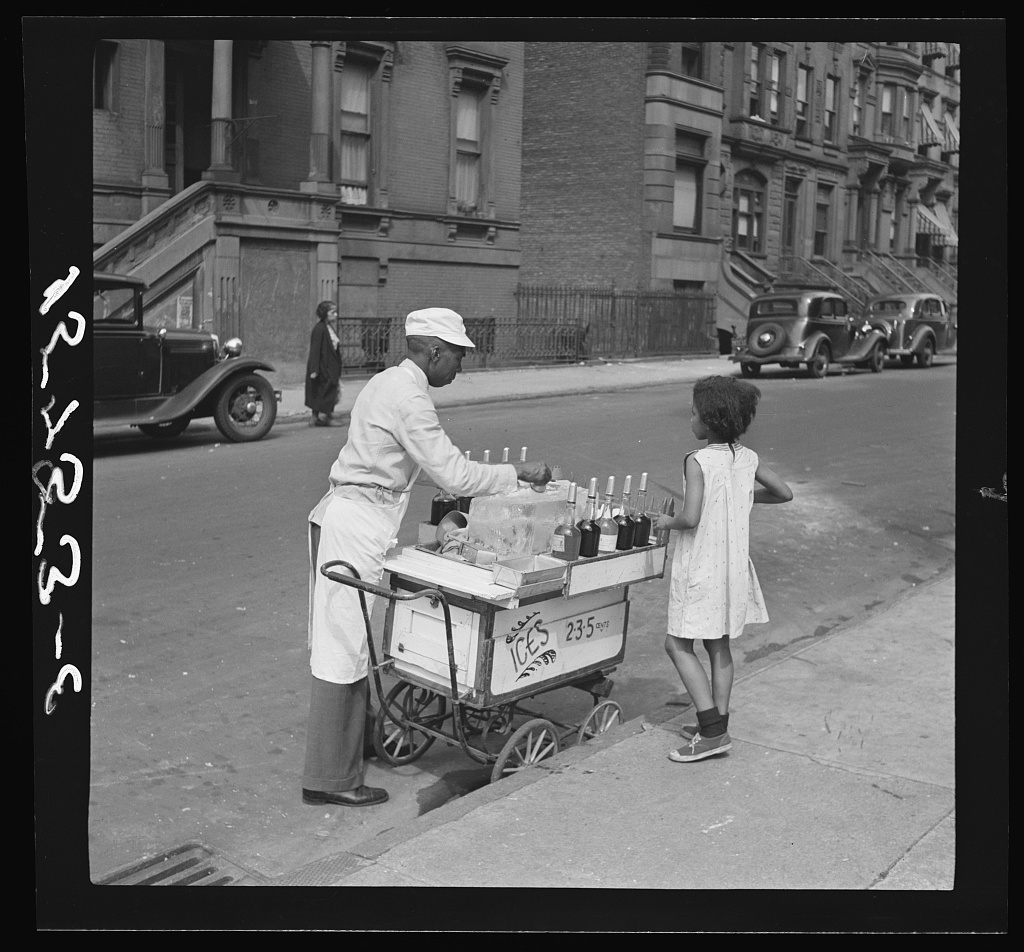
6

1938 Photographer Jack Allison (no caption on photo)


7

June 1941 New York City, East Side, Sunday morning, photographer Marion Post Walcott


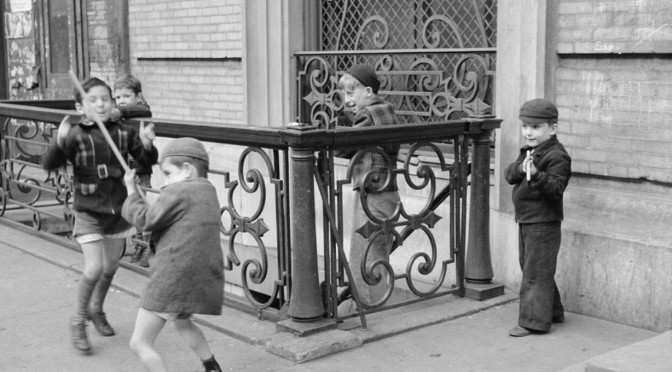
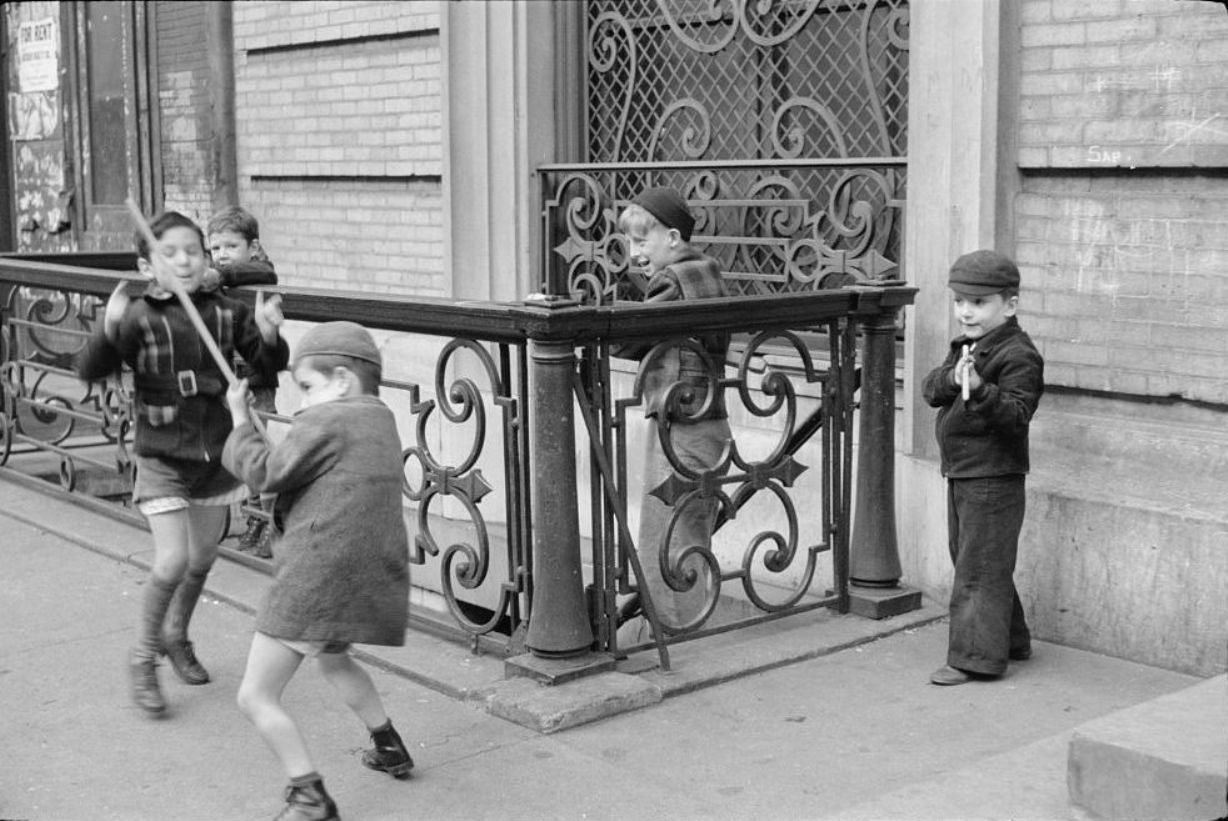
picDecember 1941 :Children playing, New York City: Photographer Arthur Rothstein


1

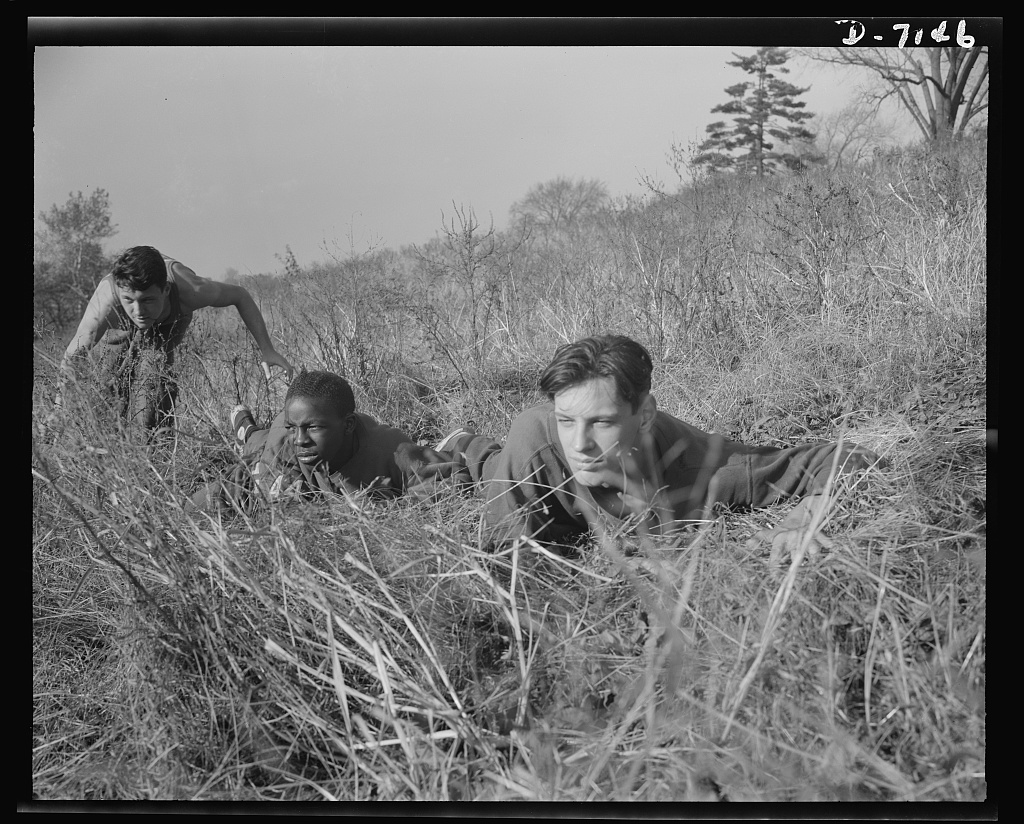
October 1942 “High school Victory Corps. Learning the rudiments of advancing on an enemy will prove valuable to these boys if they are called to join their older brothers in the armed forces. This is part of the “commando” training given in physical education courses at Flushing High School, Queens, New York” Photographer William Perlitch


2

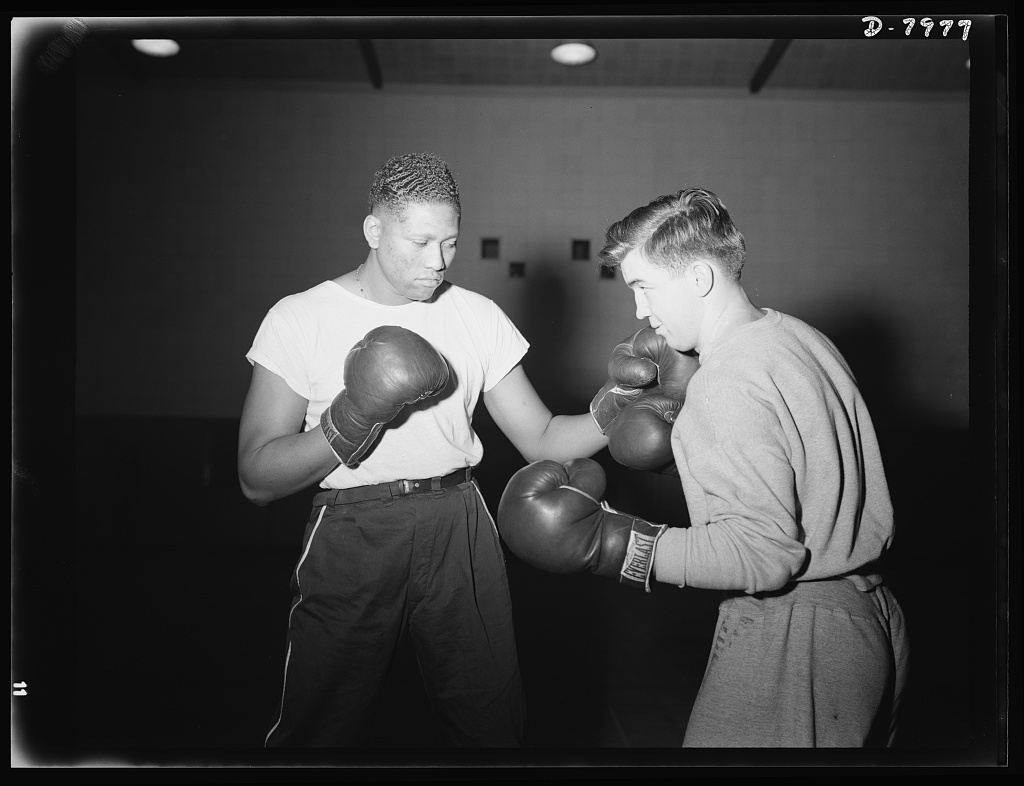
January 1943 “Manhattan Beach Coast Guard training station. The gymnasium is one of the busiest places at Manhattan Beach Coast Guard training station. The physical education program is handled by many noted exponents of boxing, wrestling, track and judo. Paul (Tiny) Wyatt, one-time leading contender for heavyweight boxing honors, is shown sparring with Hart Kraeten, former Golden Gloves champ.” Photographer Roger Smith


mott

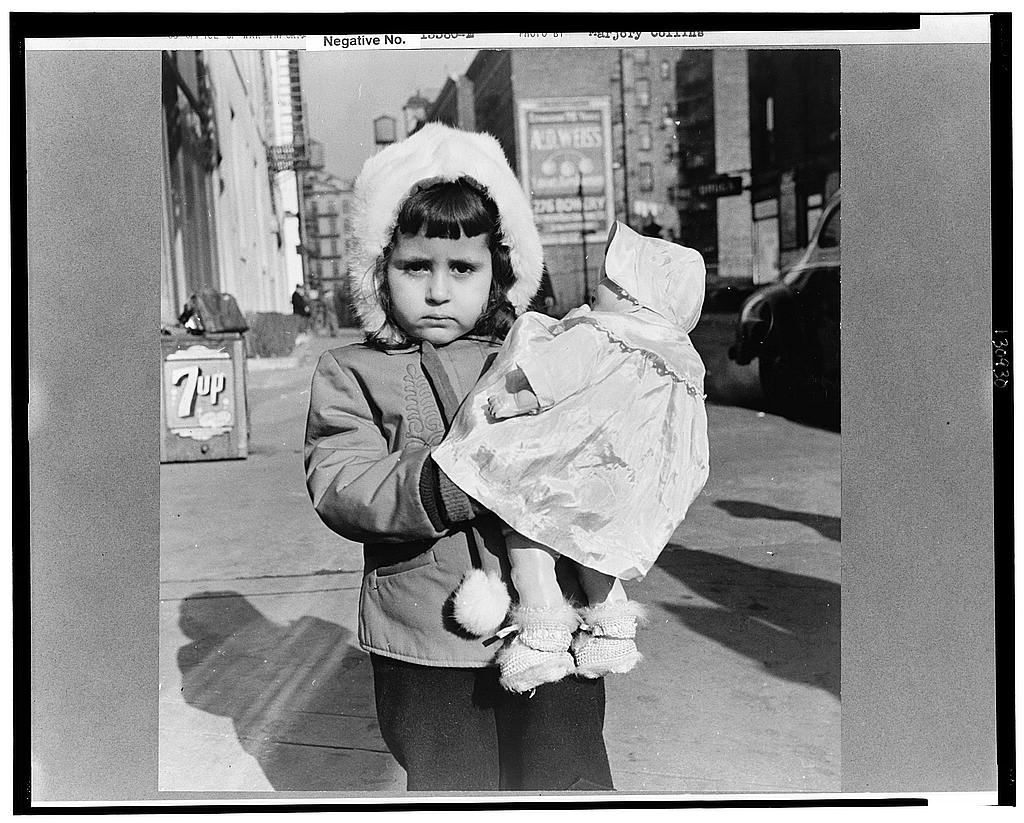
January 1943 “New York, New York. Child on Mott Street on Sunday” Photograph by Marjory Collins


8


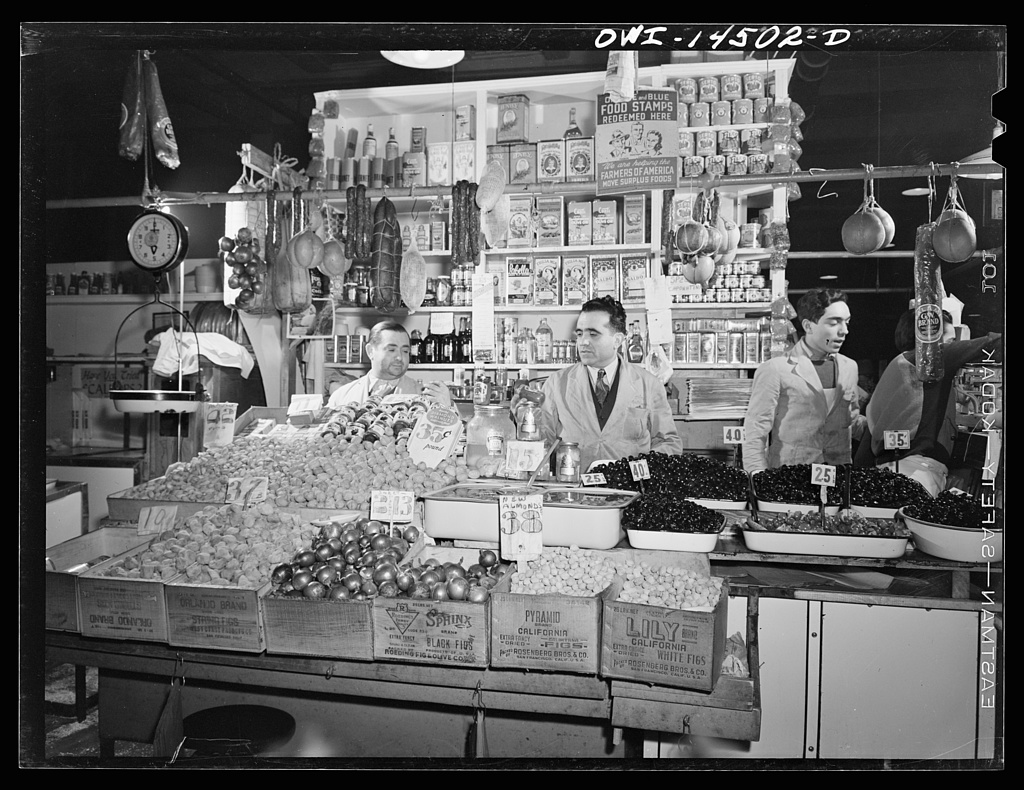
January 1943  “Italian grocer in the First Avenue market at Tenth Street” Photograph by Marjory Collins

10


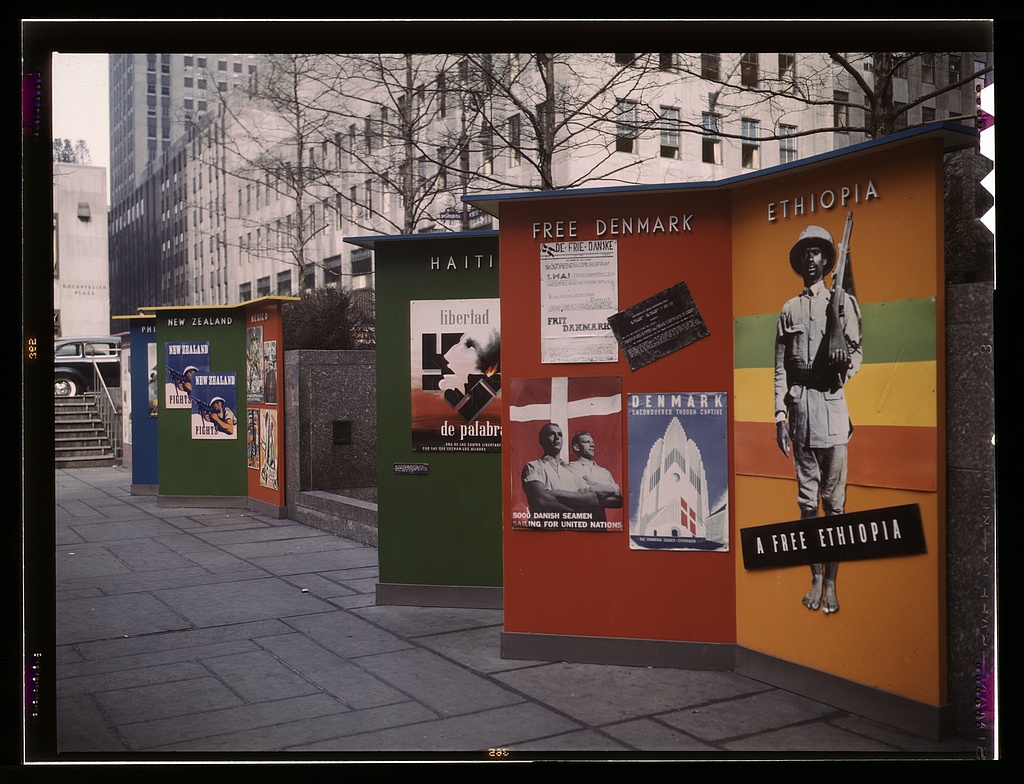
March 1943 “Rockefeller Plaza, exhibit [for] United Nations by OWI, New York, N.Y. Between photographic displays is [the] Atlantic charter in frame with transmitters at each end and where voices of Roosevelt, Churchill and Chiang Kai-Shek are heard each half hour; surrounded by statues of the four freedoms.” Photograph by Marjory Collins

times


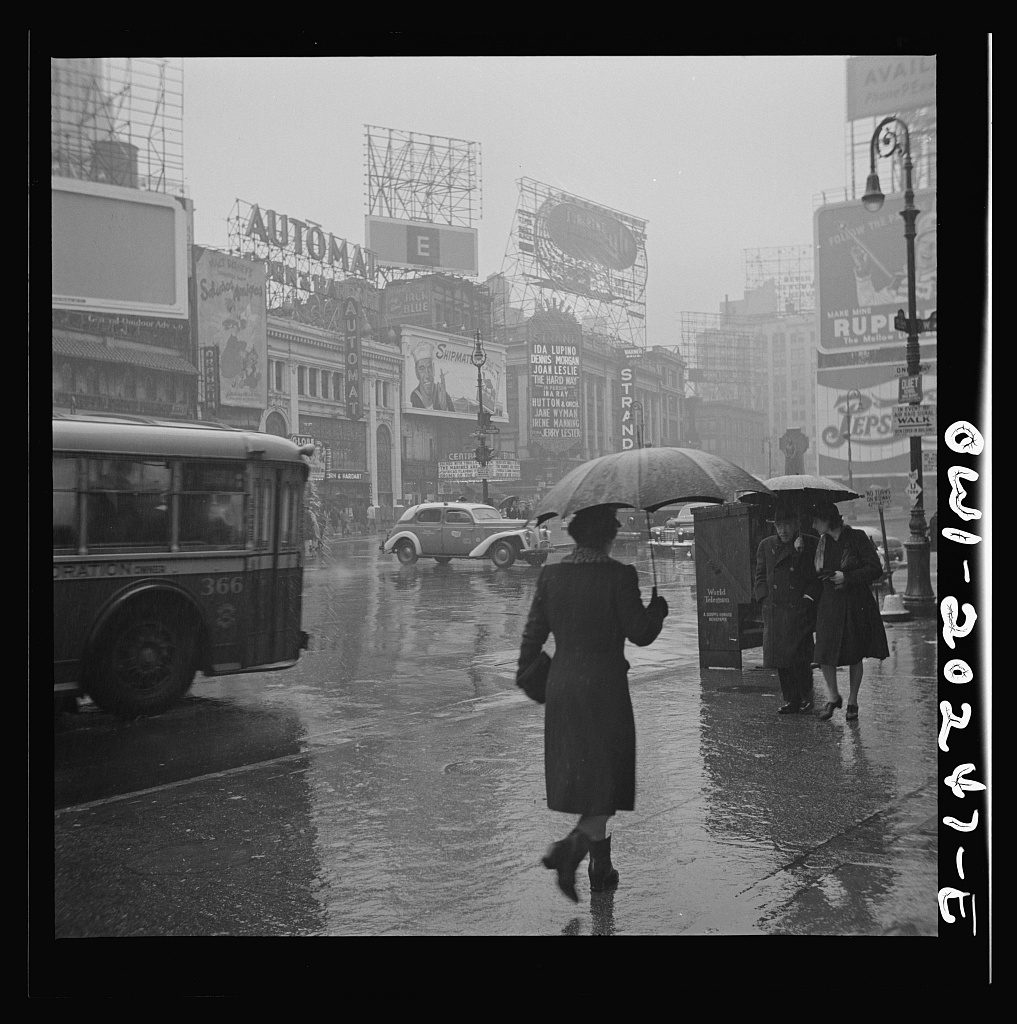
March 1943 “New York, New York. Times Square on a rainy day” Photographer John Vachon

last


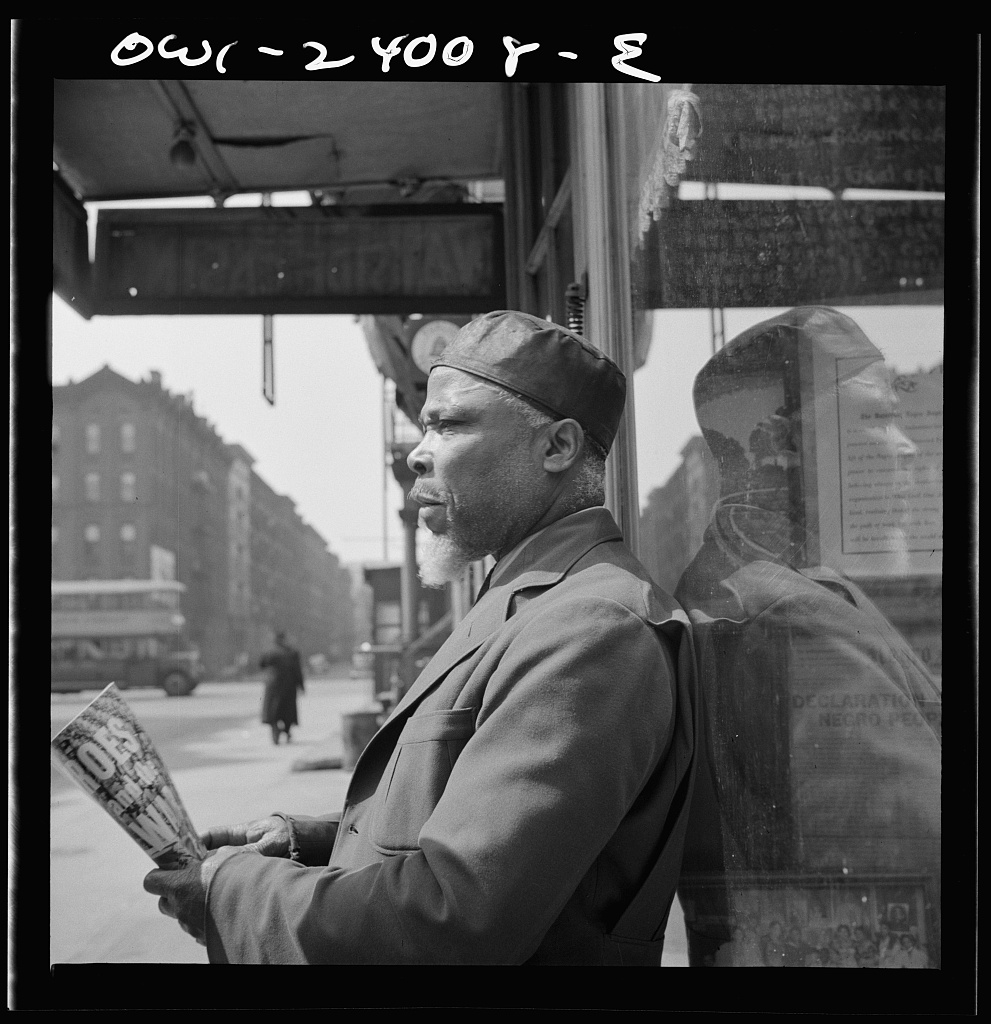
April 1943 “A follower of the late Marcus Garvey who started the “Back to Africa” movement” Photographer Gordon Parks

eye


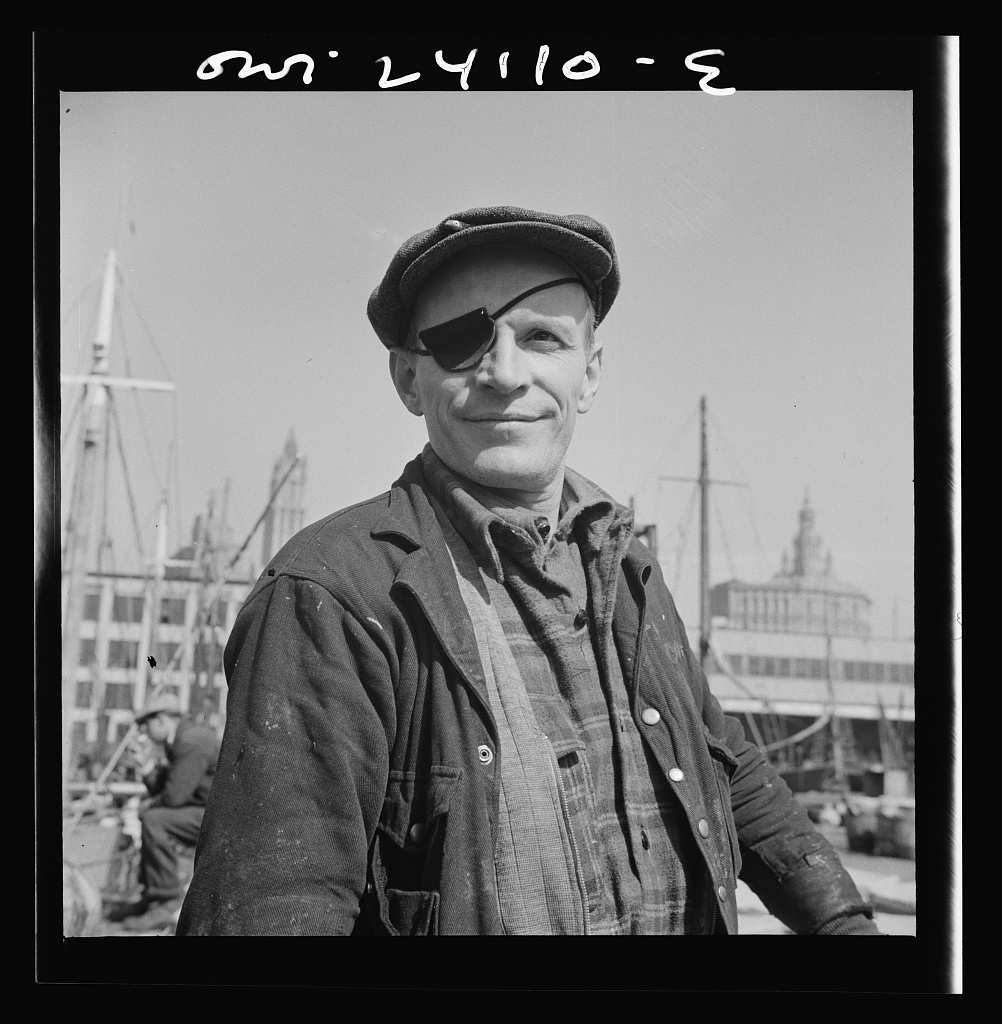
June 1943 “New York, New York. Dock stevedore at the Fulton fish market” Photographer Gordon Parks

victory


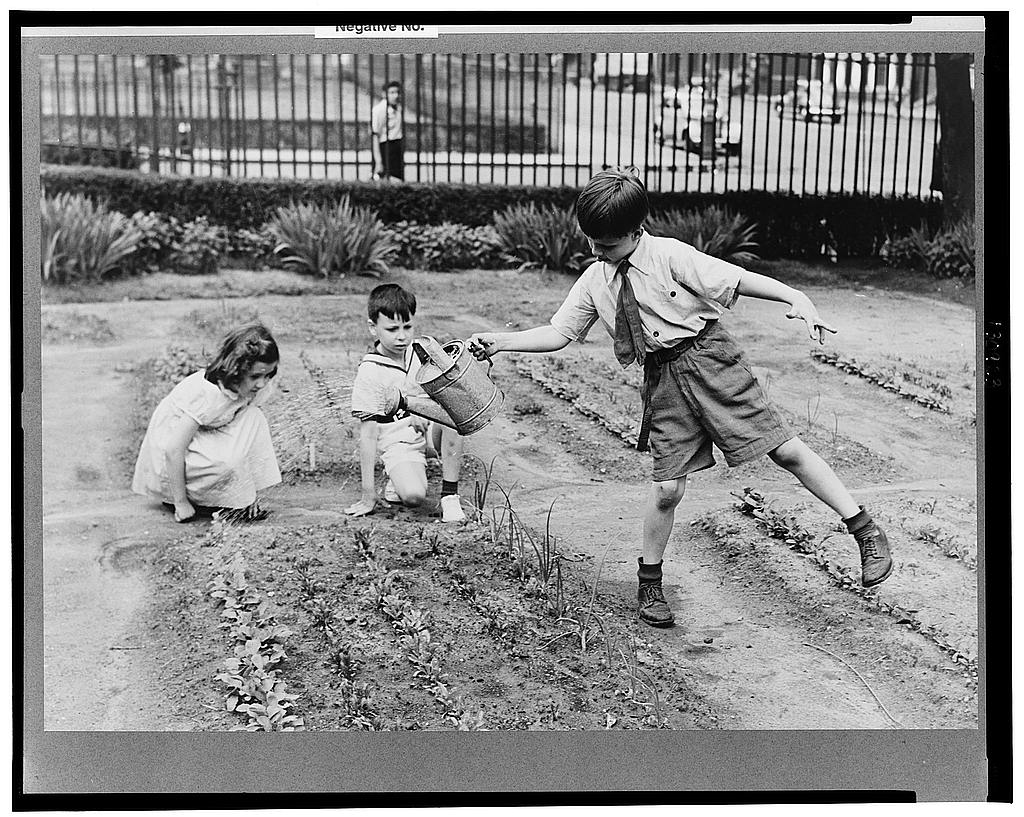
June 1944 “Children’s school victory gardens on First Avenue between Thirty-fifth and Thirty-sixth Streets” Photographer Edward Meyer


d-day

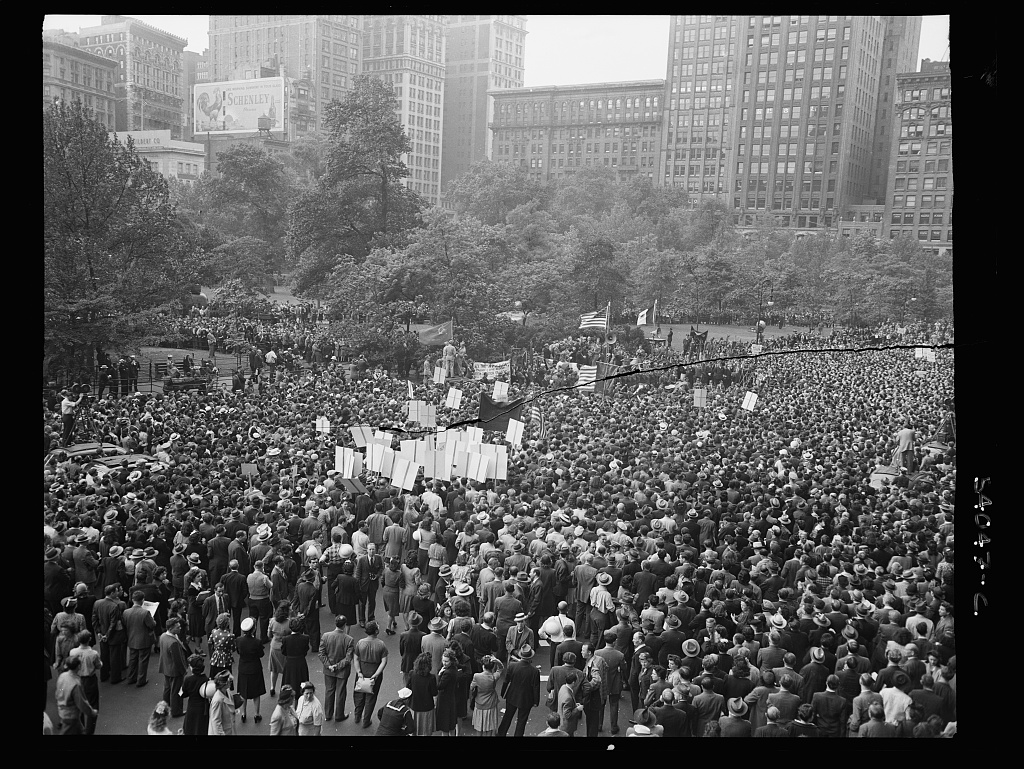
June 1944 “A crowd on D-Day in Madison Square” Photographer unknown

Categories
Landmarks Podcasts

Flatiron Building: A Three-Sided Story

PODCAST For our 8th anniversary episode, we’re revisiting one of New York City’s great treasures and a true architectural oddity — the Flatiron Building.

When they built this structure at the corner of Madison Square Park (and completed in 1902), did they realize it would be an architectural icon AND one of the most photographed buildings in New York City?

1

The George A. Fuller Company, one of the most powerful construction firms in Chicago, decided to locate their new New York office building in a flashy place — a neighborhood with no skyscrapers, on a plot of land that was thin and triangular in shape. They brought in Daniel Burnham, one of America’s greatest architects, to create a one-of-a-kind, three-sided marvel, presenting a romantic silhouette and a myriad of optical illusions.

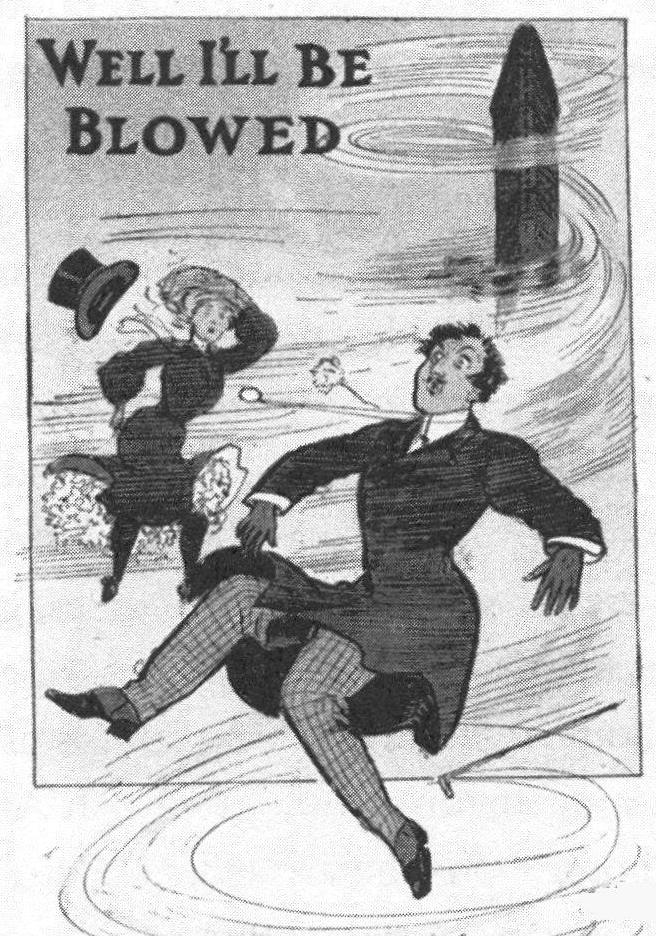
The Flatiron Building was also known for the turbulent winds which sometimes blew out its windows and tossed up the skirts of women strolling to Ladies Mile. It’s a subject of great art and a symbol of the glamorous side of Manhattan.

In this show, we bring you all sides of this structure’s incredible story.

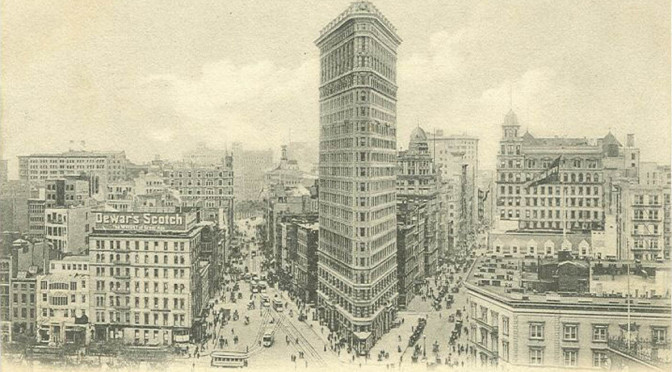
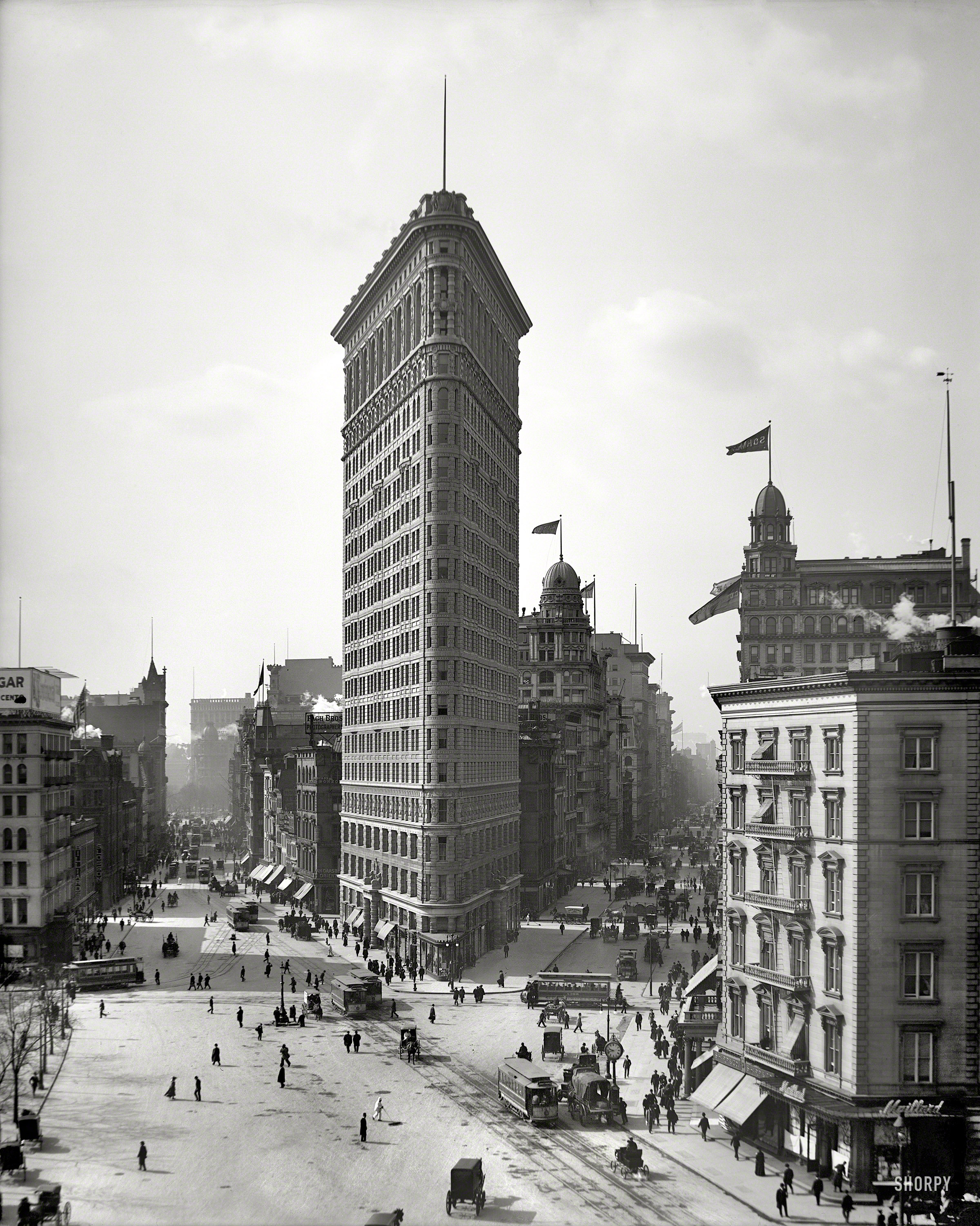
Below: A cleaned up look at the Flatiron Building, courtesy Shorpy. Click here for a look at the details!
Courtesy Shorpy
Courtesy Shorpy

The Bowery Boys: New York City History podcast is brought to you …. by you!

Starting this month, we are doubling our number of episodes per month. Now you’ll hear a new Bowery Boys podcast every two weeks. We’re also looking to improve the show in other ways and expand in other ways as well — through publishing, social media, live events and other forms of media. But we can only do this with your help!

We are now a member of Patreon, a patronage platform where you can support your favorite content creators for as little as a $1 a month.

Please visit our page on Patreon and watch a short video of us recording the show and talking about our expansion plans. If you’d like to help out, there are five different pledge levels (and with clever names too — Mannahatta, New Amsterdam, Five Points, Gilded Age, Jazz Age and Empire State). Check them out and consider being a sponsor.

We greatly appreciate our listeners and readers and thank you for joining us on this journey so far. And the best is yet to come!


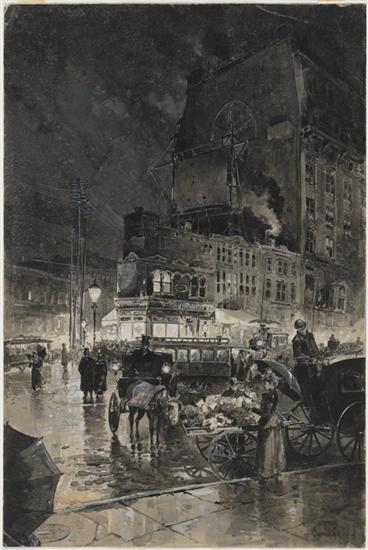
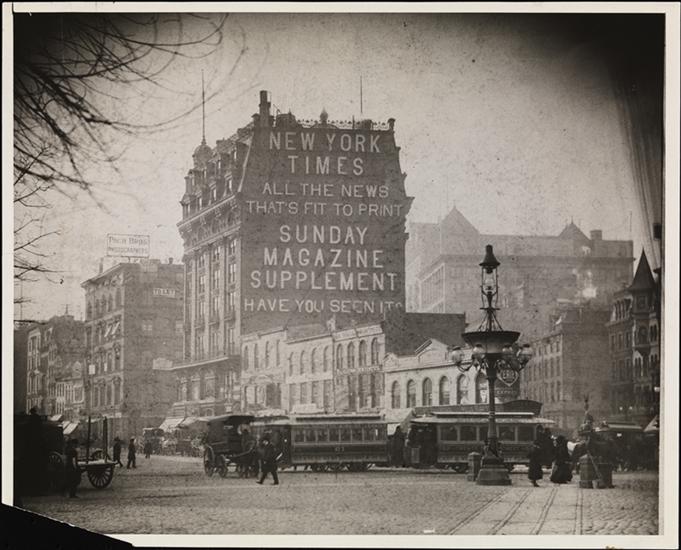
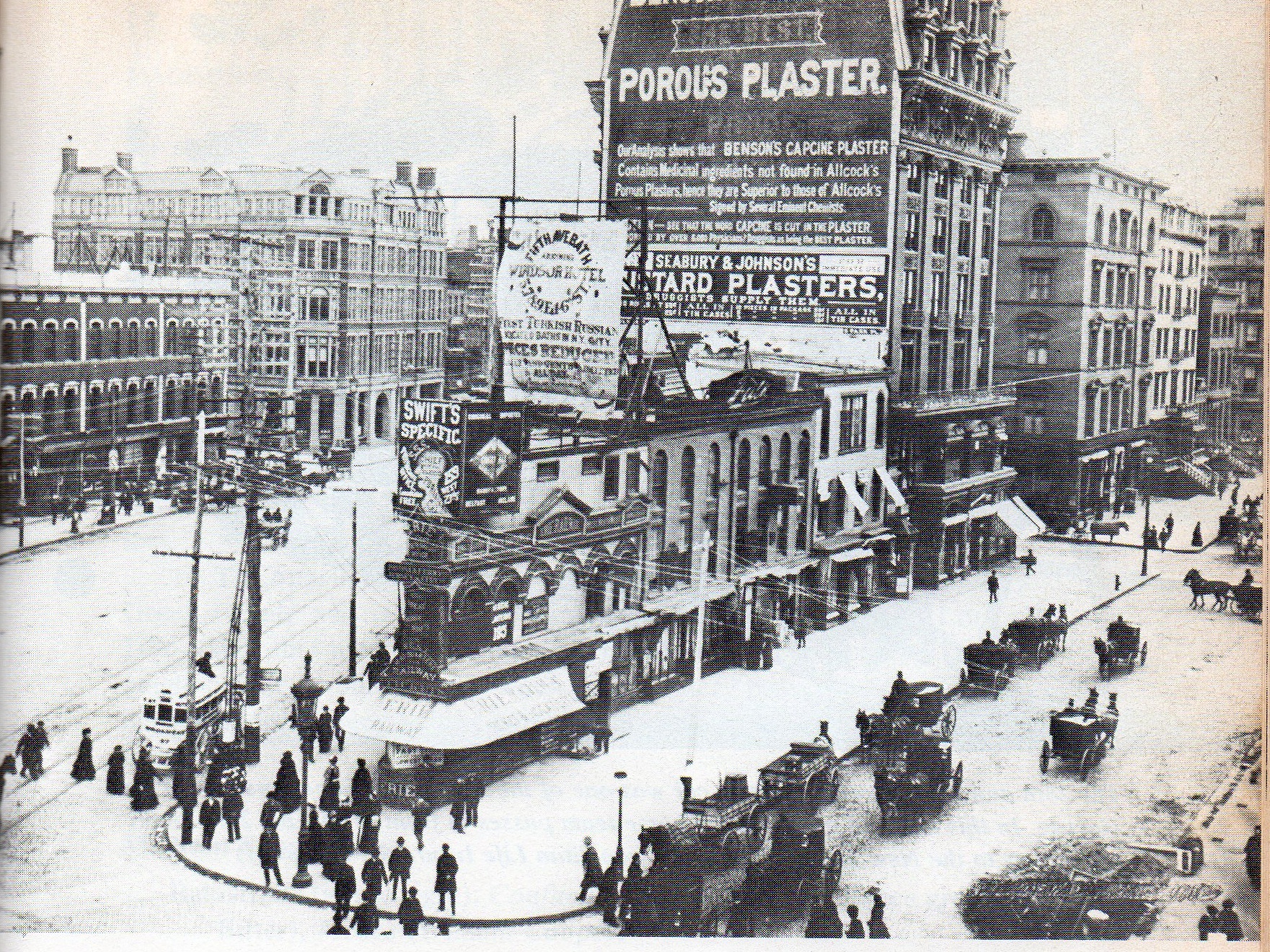
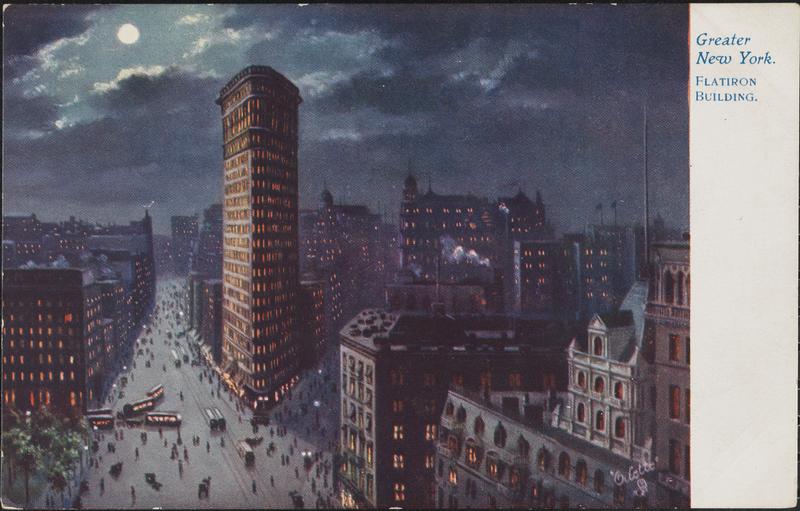
A dramatic illustration of 23rd Street and Fifth Avenue, where the Flatiron Building would soon stand. From here you can see the taller Cumberland building which would be used for billboards.

5

The structures that pre-dated the Flatiron Building, pictured here in 1897.

Courtesy Museum of City of New York
1

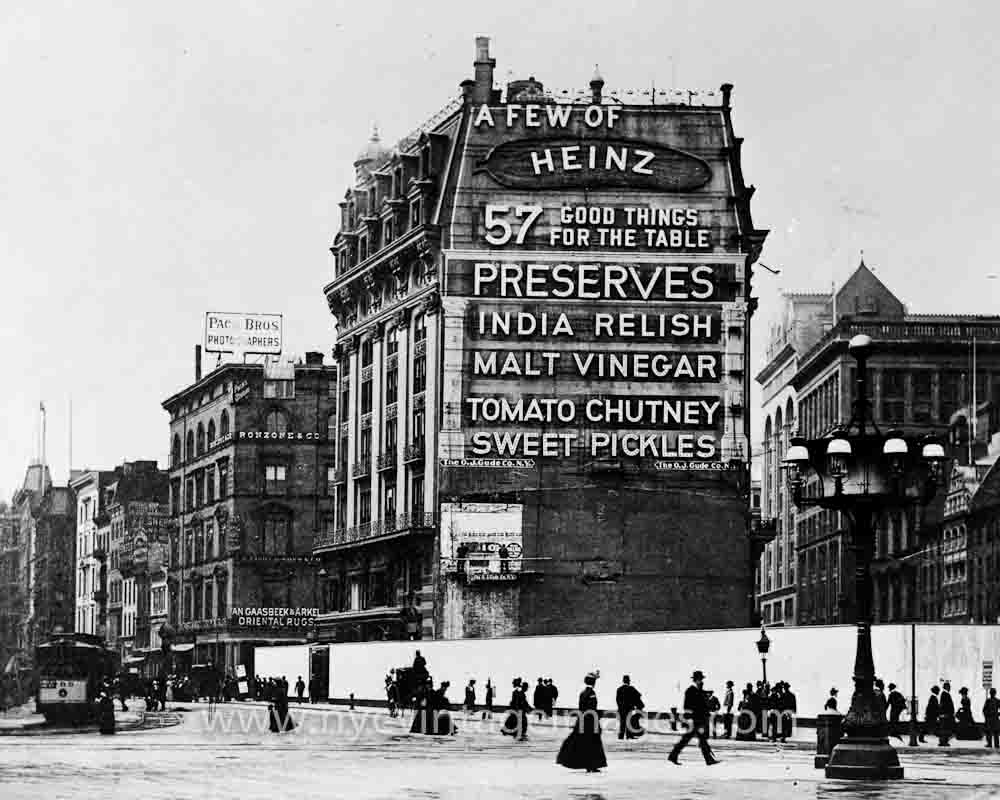
The smaller buildings have already been cleared away for the construction of the Fuller/Flatiron Building, but the taller building remains to some promotion of Heinz products.

Courtesy vintageimages.com

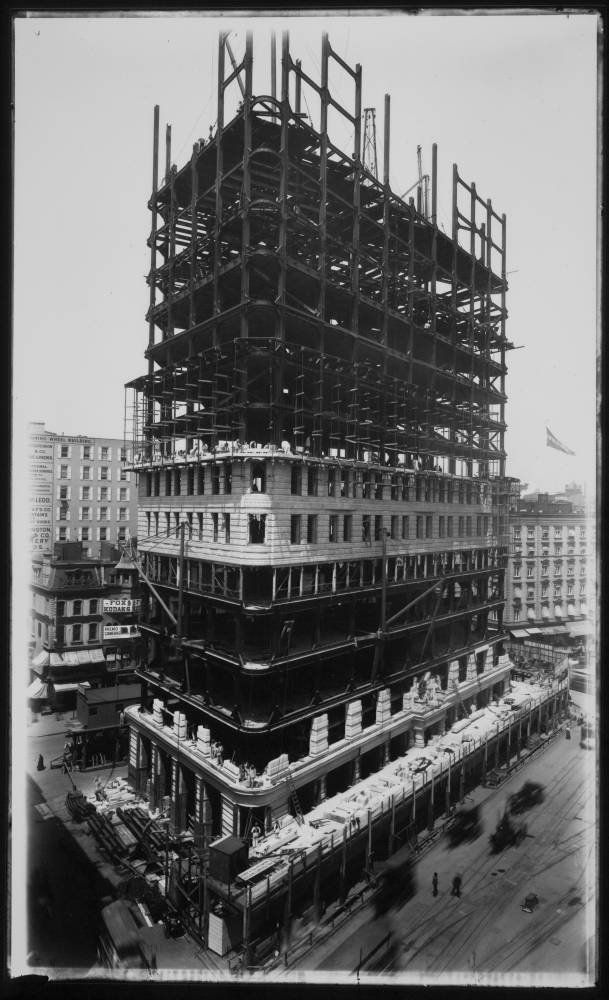
Construction of the Flatiron, picture from late 1901 or early 1902.

6
Courtesy Library of Congress

From every angle, the Flatiron takes on a new shape…..

Courtesy New York Public LIbrary

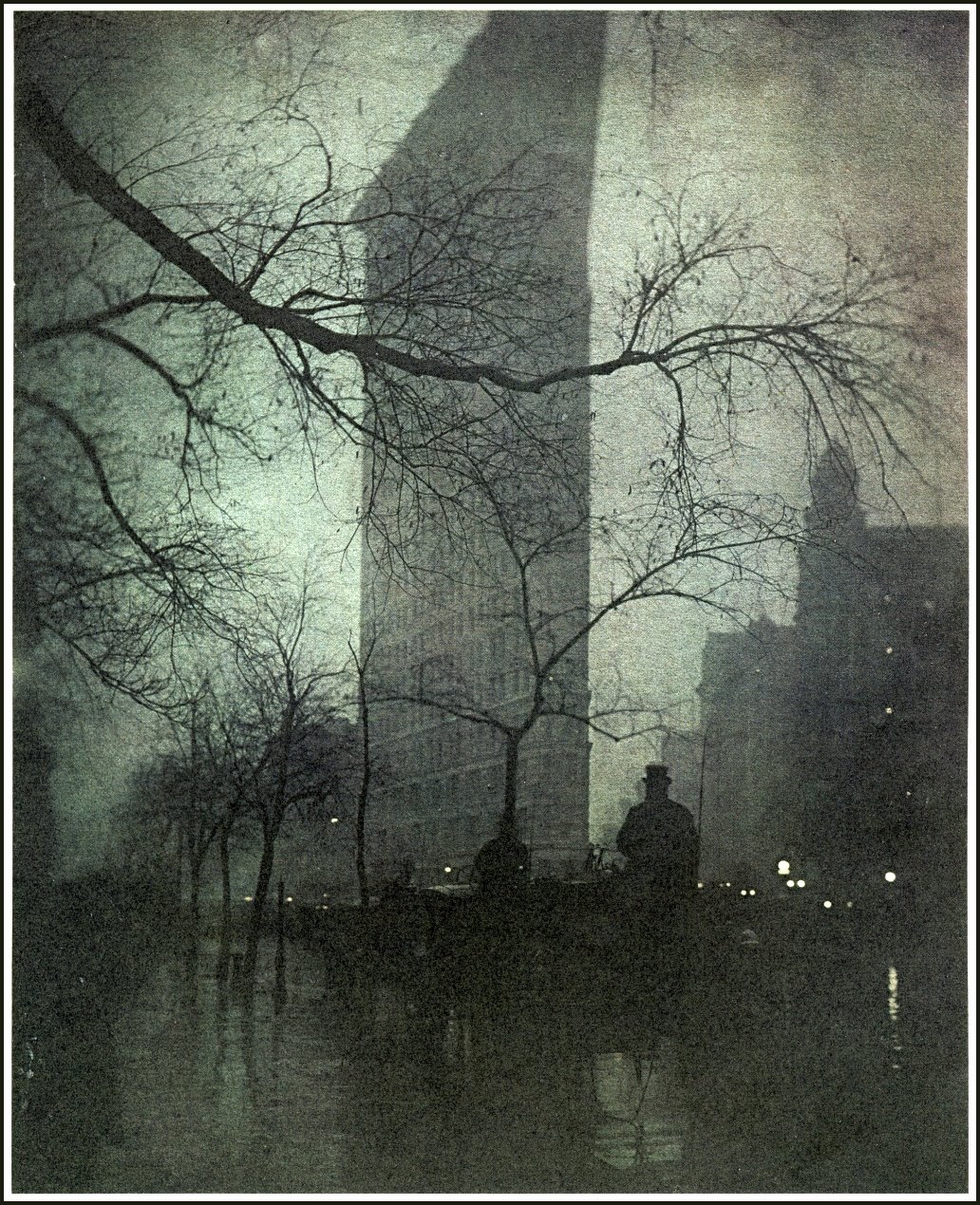
…inspiring artists like Edward Steichen to frame the building in romantic and even mysterious ways (such as his iconic shot from 1904)

edward

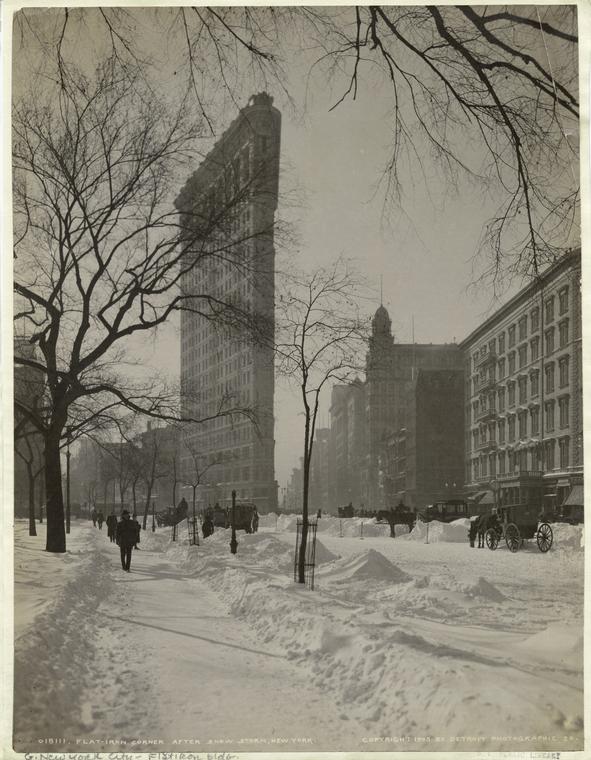
A view, similar to the classic one above, of the Flatiron after a snowstorm in 1905

Courtesy New York Public Library

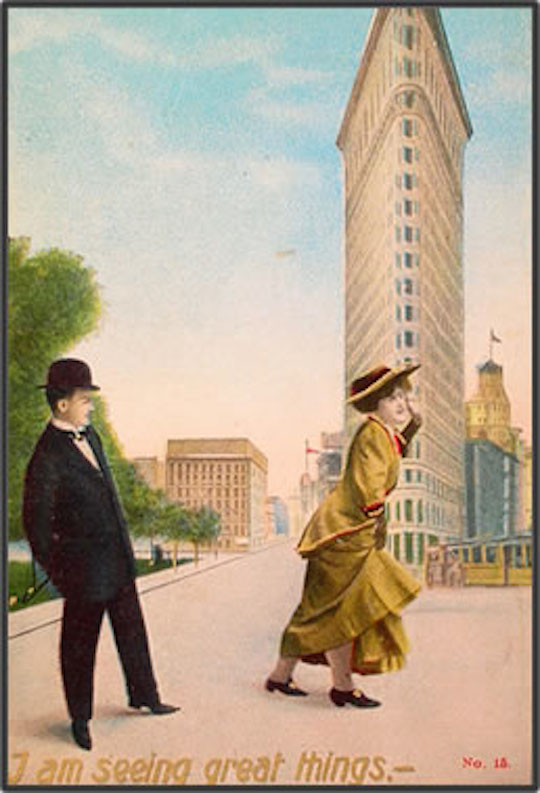
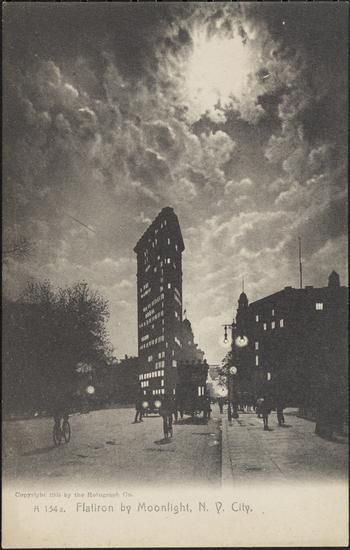
The Flatiron has inspired thousands of photo-mechanical post cards back in the day, highlighting its alluring shape-shifting form upon the changing New  York skyline.

2
Courtesy Museum of the City of New York

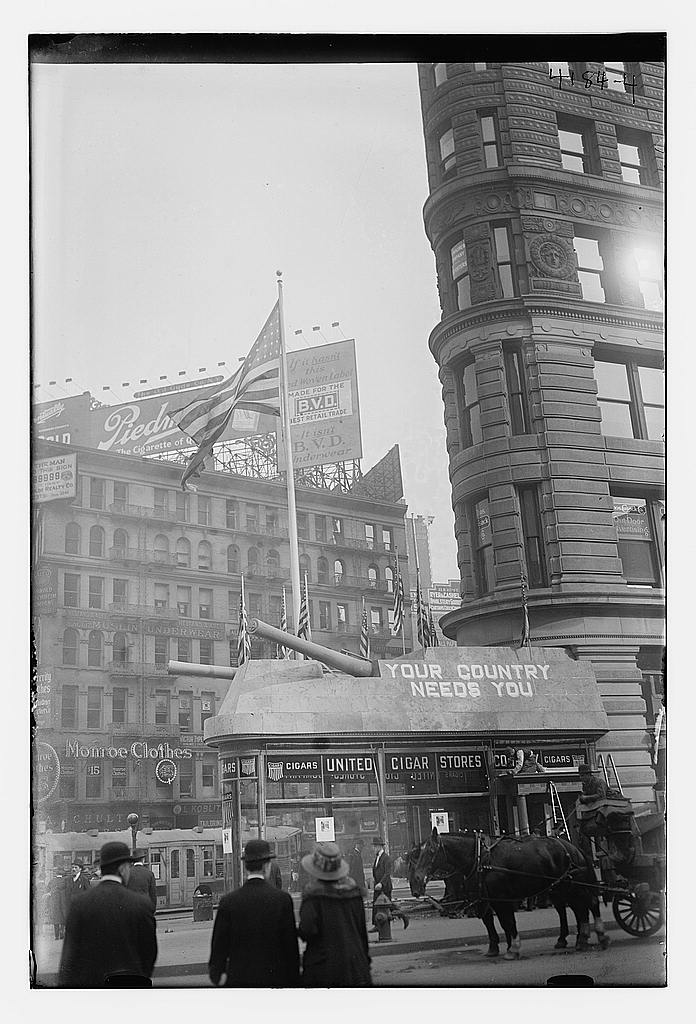
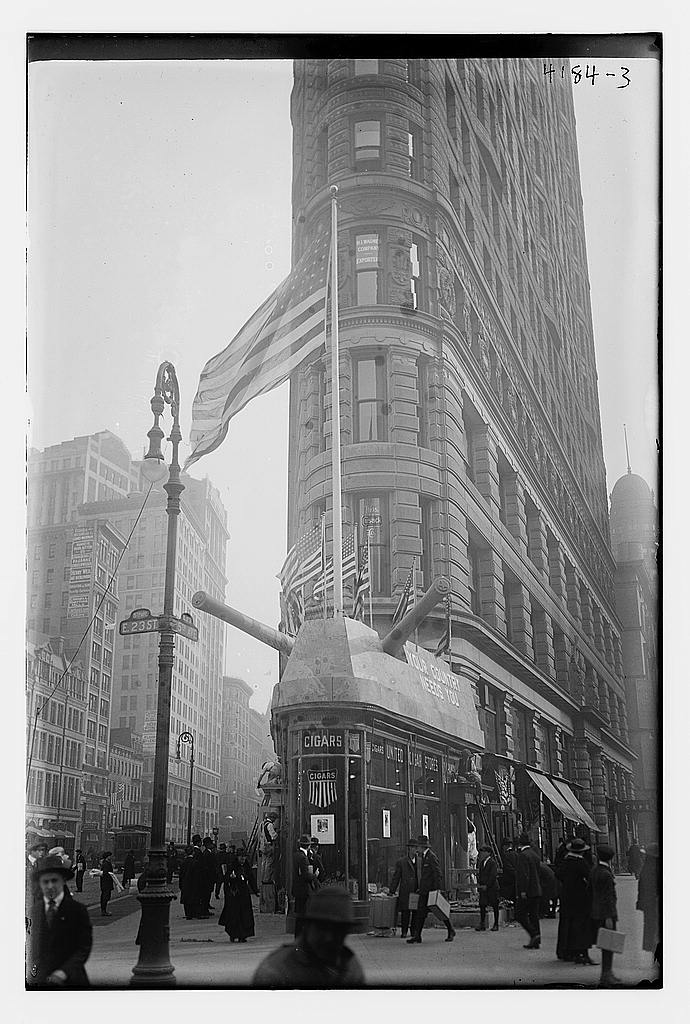
The cigar store in the narrow ‘cowcatcher’ served as a recruitment office during World War I, topped with military weaponry.
Courtesy Library of Congress

Another postcard focused on the Flatiron’s particularly windy properties!

wind

American Mutoscope and Biography Co. filmed this humorous look at ladies in the wind on October 26, 1903:

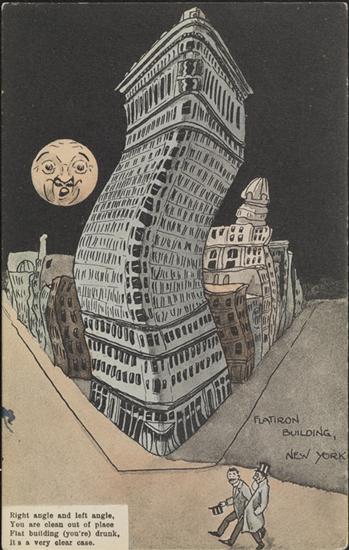
A Max Ettlinger illustration from 1915 — Flatiron, you’re drunk!

Courtesy Museum of City of New York

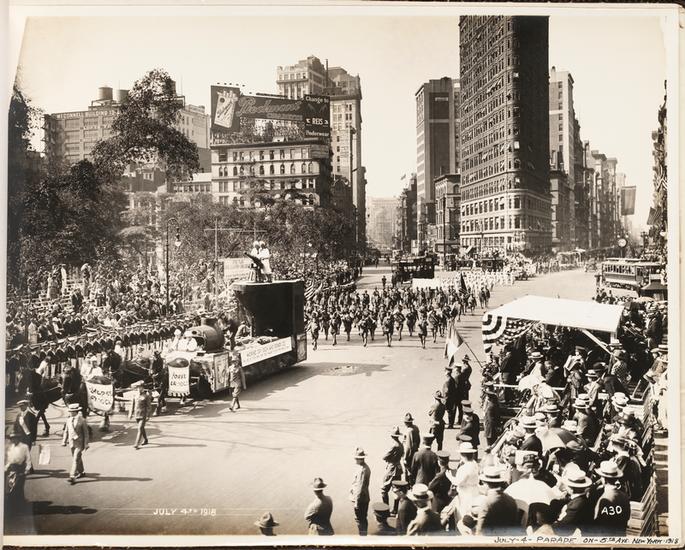
A July 4th parade, passing up Fifth Avenue.

Courtesy Museum of the City of New York

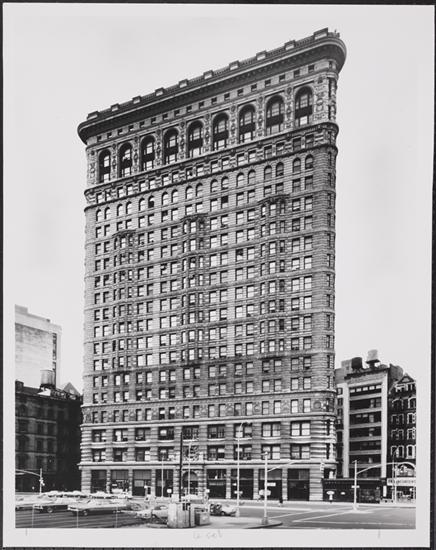
The Flatiron in 1935, from an angle that makes it appear almost two dimensional.

1935

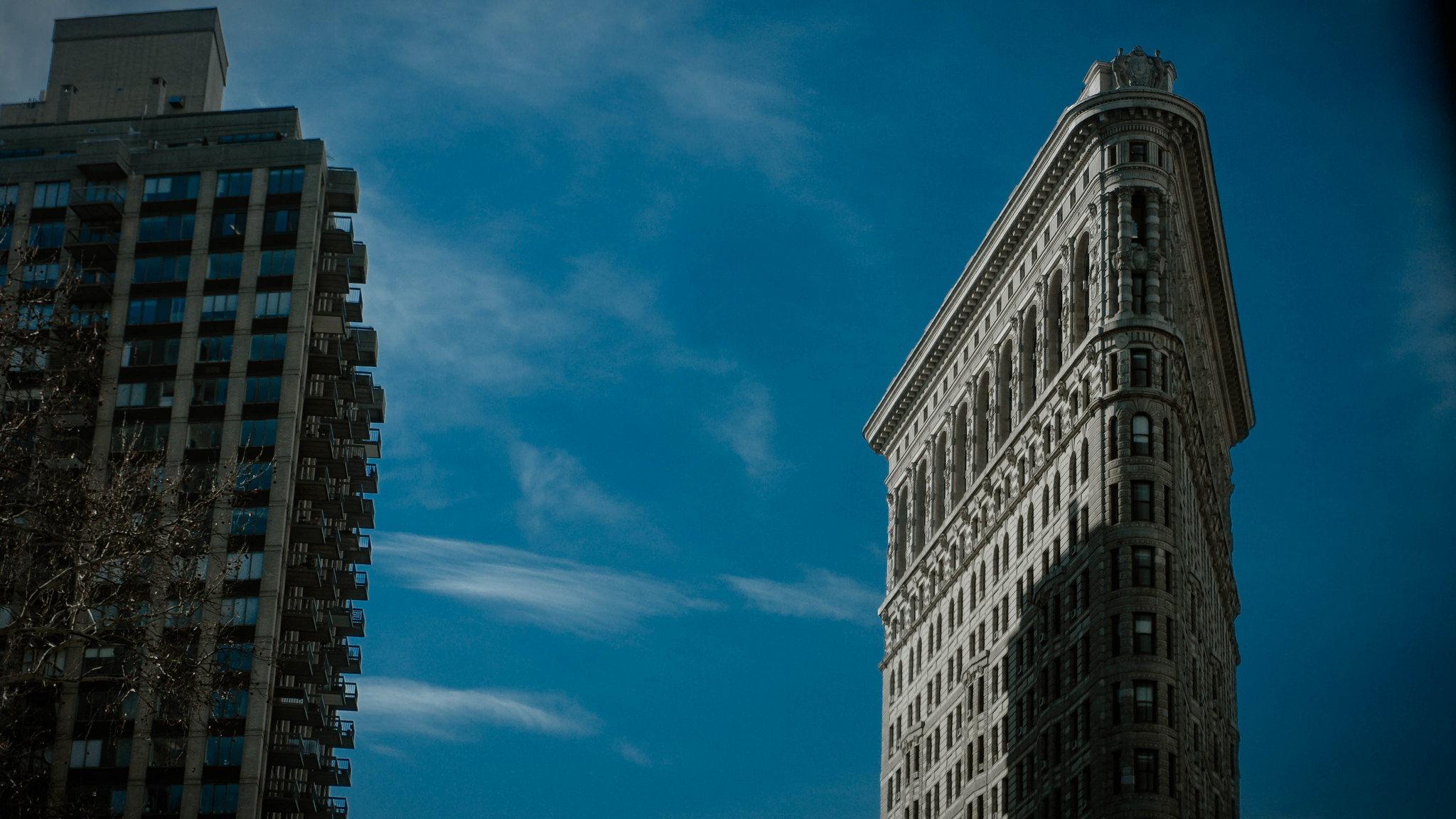
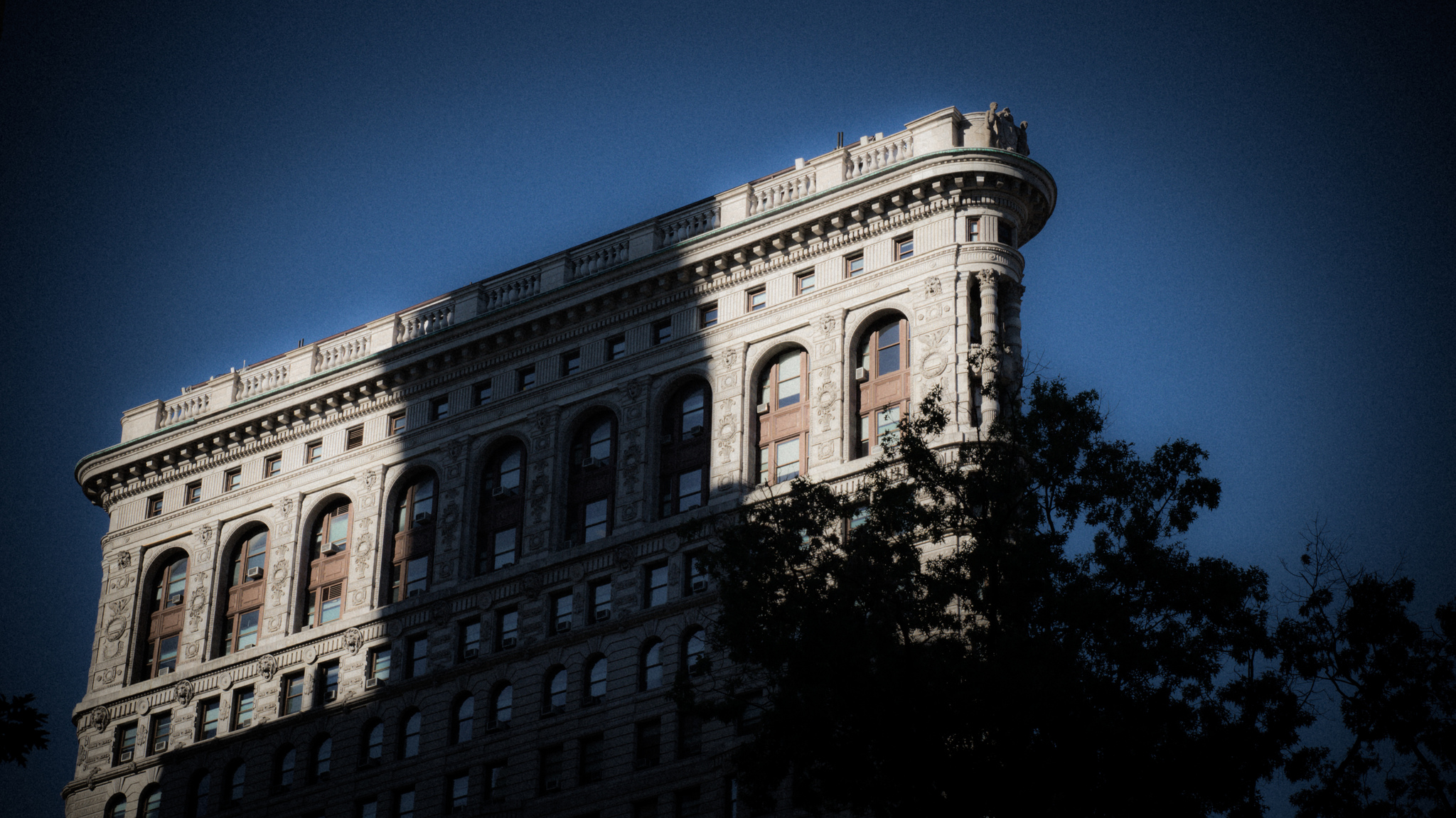
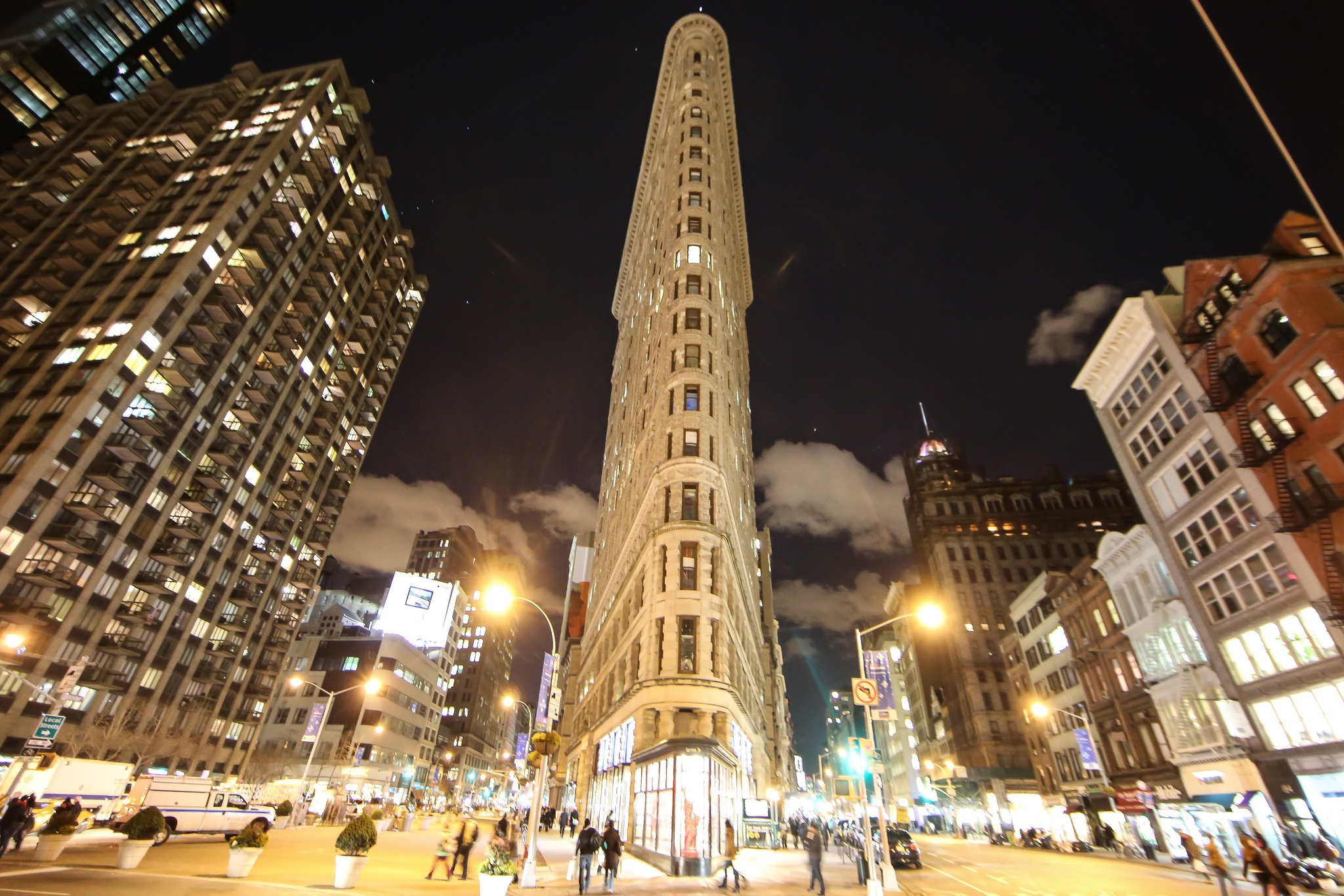
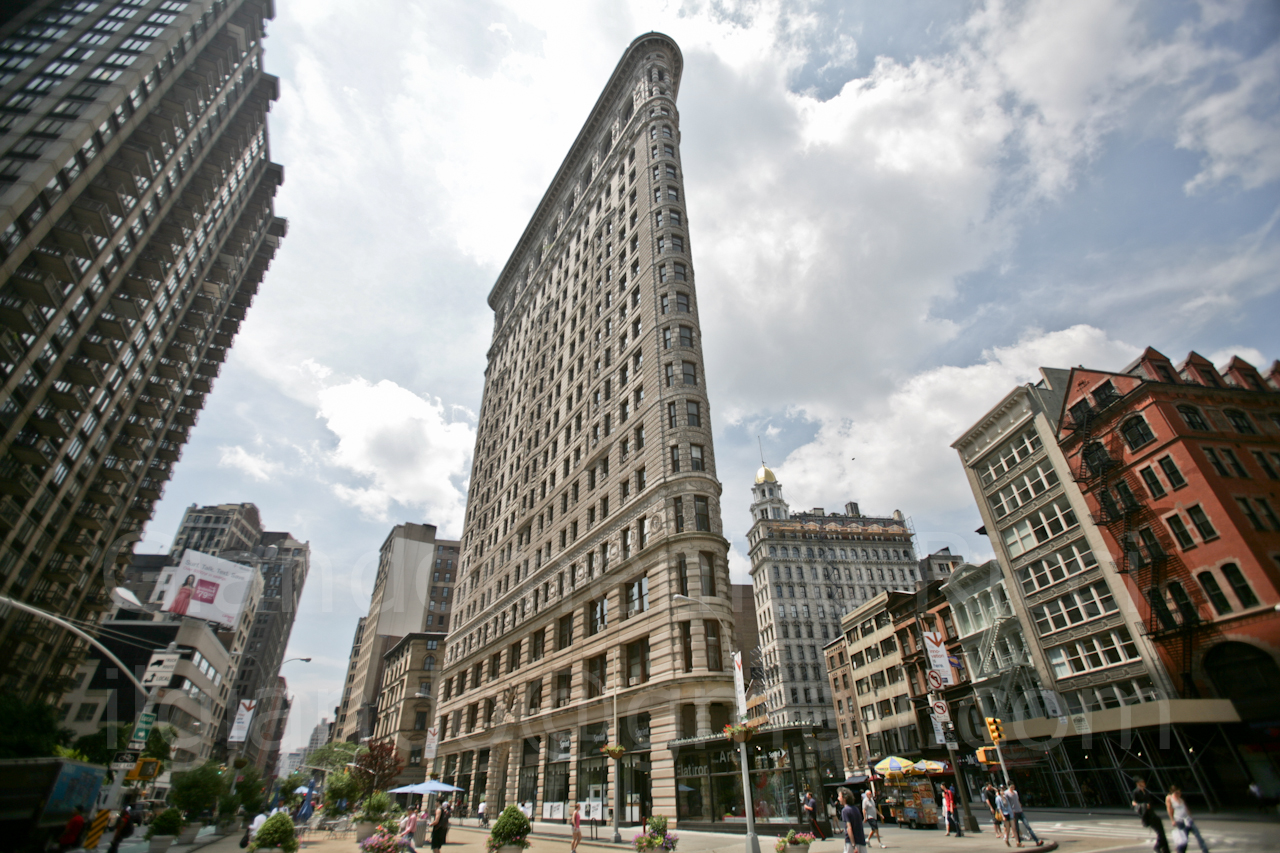
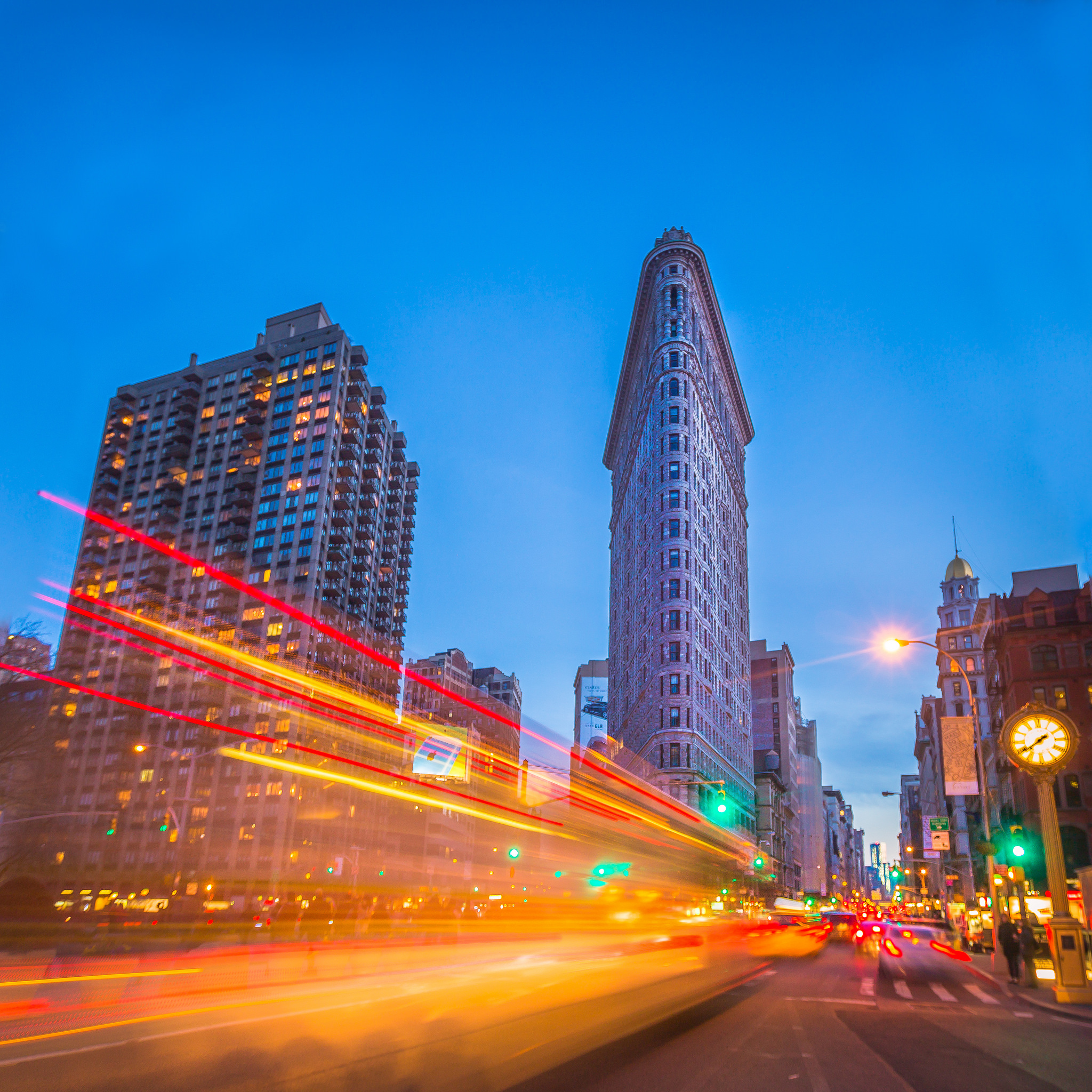
The Flatiron — still a magnet for budding photographers everywhere! Here a couple modern images from photographers Jeffrey Zeldman, Thomas Hawk, Giandomenico Ricci, Anurag Yagnik, and eric molina.

Courtesy Jeffrey Zeldman/Flickr
Courtesy Thomas Hawk/flickr
Courtesy Giandomenico Ricci/Flickr
Courtesy Anurag Yagnik/Flickr
Autosave-File vom d-lab2/3 der AgfaPhoto GmbH

CORRECTION: A small correction to this week’s show. The beautiful Madison Square Garden tower — with the nude Diana statue — is actually in a Spanish style, not an Italian style.

Categories
Wartime New York

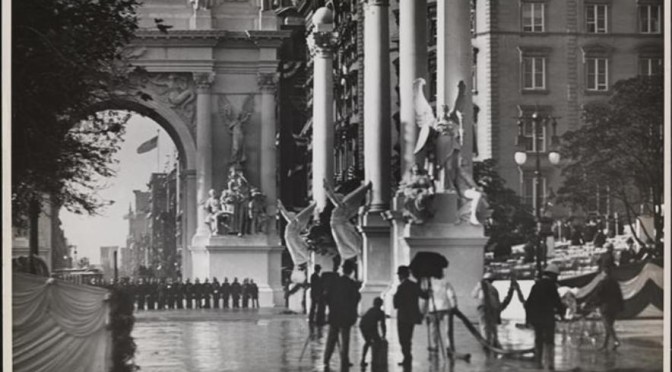
The Arches of Madison Square Park

Memorial arches have been a dramatic way to honor military victories, dating back to the Roman times. Naturally, in a city with abundant Beaux-Arts classical-style architecture, New York has erected its share of grand archways. Two spectacular examples exist today — the Washington Square Arch and the Soldiers and Sailors and Sailors Memorial Arch in Brooklyn.

But the area which has been host to the most arches has been Madison Square Park. Sadly the only arches you can find near here are McDonalds Golden Arches on 23rd Street and Madison.

There are been four total arches here, all of them on Fifth Avenue near the park:

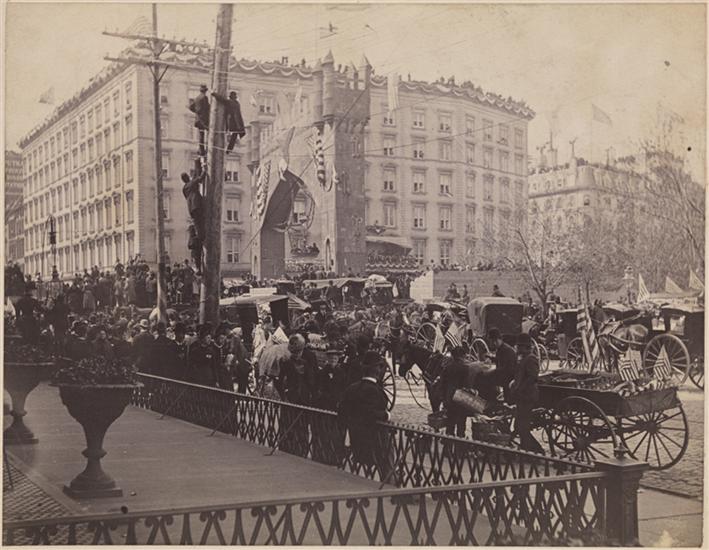
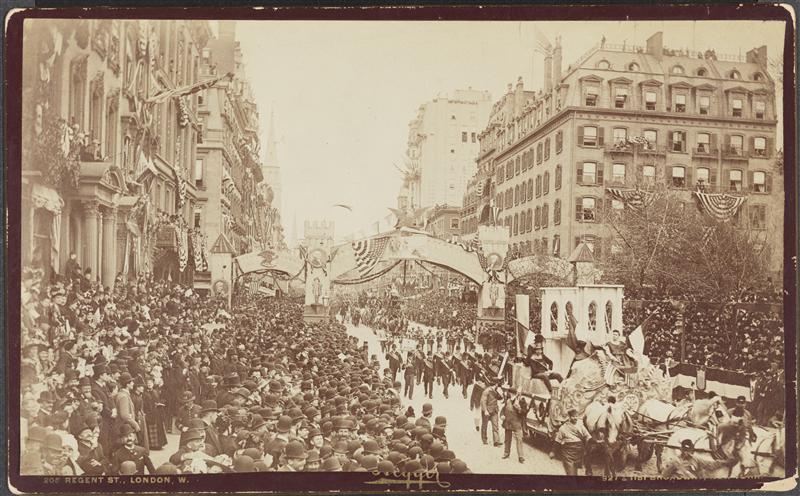
The George Washington Arches – 1889

Courtesy the Museum of the City of New York

Two arches celebrating the 100th anniversary of George Washington’s inauguration were on Fifth Avenue — one at 23rd Street at the southern side of the park, and another at 26th Street at the northern side.

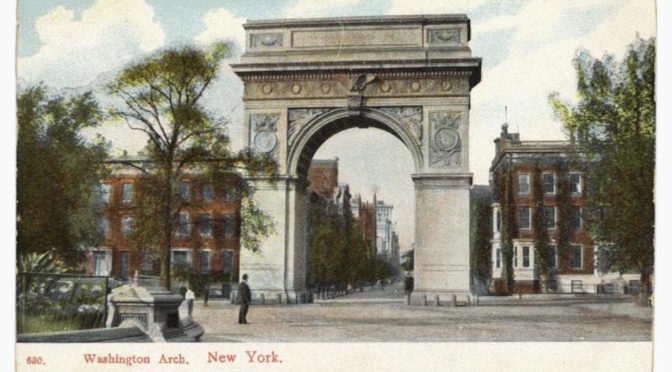
These, of course, were accompanied by another arch further down Fifth Avenue at Washington Square Park. That arch, designed by Stanford White, was considerably better received than the Madison Square versions, so much so that White designed a permanent one in 1893.

Below: The 1889 arch up at the northern corner of Fifth Avenue and 26th Street

Courtesy the Museum of the City of New York

Courtesy Museum of the City of New York

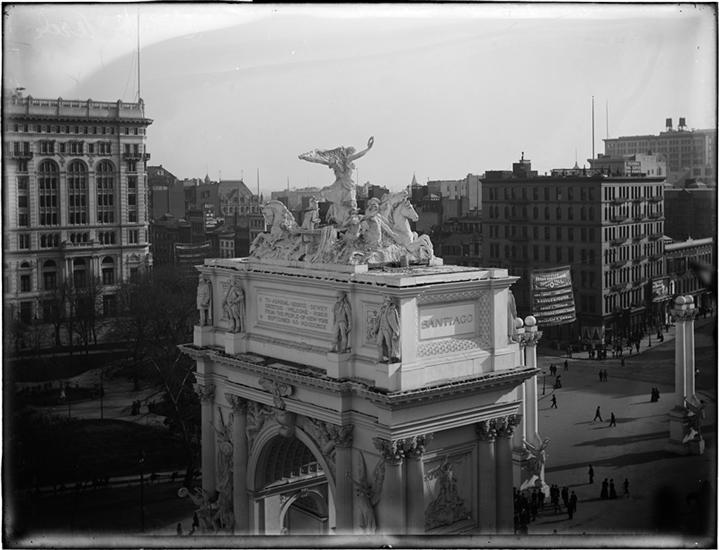
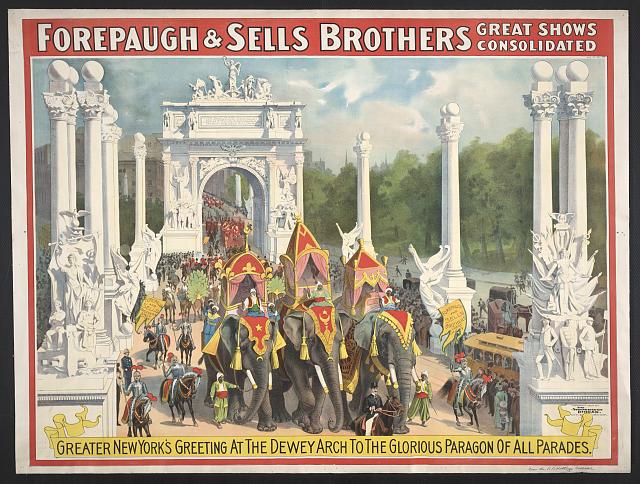
The Dewey Arch – 1899-1900

This ornate and exceptionally lavish structure was built to commemorate a then-recent event — the victory of Admiral George Dewey at the Battle of Manila Bay, which took place on May 1, 1898.

The Dewey Arch was far showier than the earlier arches: “The great triumphal arch to be erected in this city in honor of the return of Admiral Dewey will not only be worthy of the occasion, but will be the most elaborate and artistic structure of its kind ever attempted here or in Europe.” [NYT]

4

Madison Square Garden, just on the other corner of the park, was closed to construct the statue. For Dewey’s triumphant arrival in New York in late September 1899, the entire city was lit up with ‘fairy lamps‘ to greet the procession. The fireworks display for the event would be the greatest the city has ever seen.

It seems, however, that the Dewey Arch was massively rushed, built in hot haste according to reports. Although a great many petitioned for a permanent Dewey Arch in its place that winter, people had moved on by the winter of 1900 when it was unceremoniously torn down.

Courtesy Library of Congress

Courtesy of Museum of City of New York

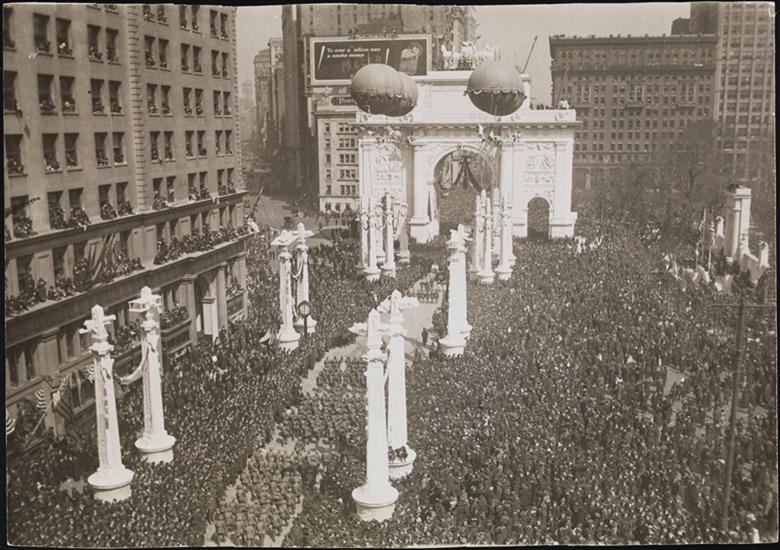
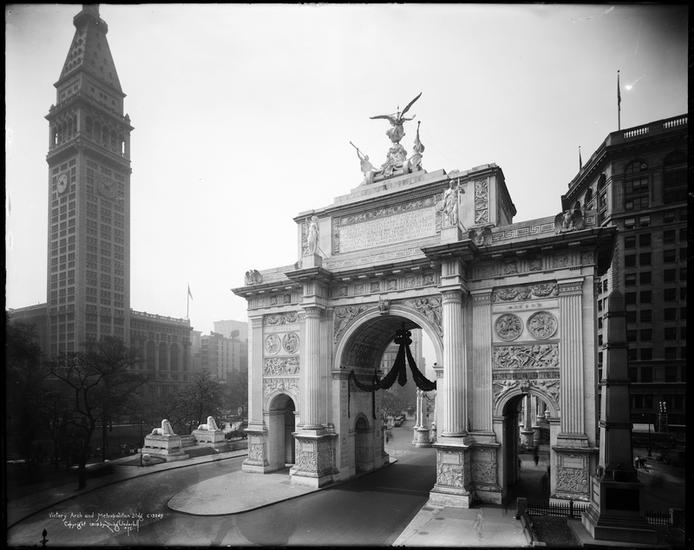
Victory Arch — 1918-20

By 1918, the area around Madison Square Park was quite a transformed place with the Metropolitan Life Insurance Company Tower and the Flatiron Building now in attendance to witness the fourth arch, built to honor those in New York who had died thus far in the battles of World War I.

This arch was equally as ornate as the previous arch occupant, designed by Thomas Hastings (co-architect of the New York Public Library). It was built in wood and plaster and also, apparently, in haste.

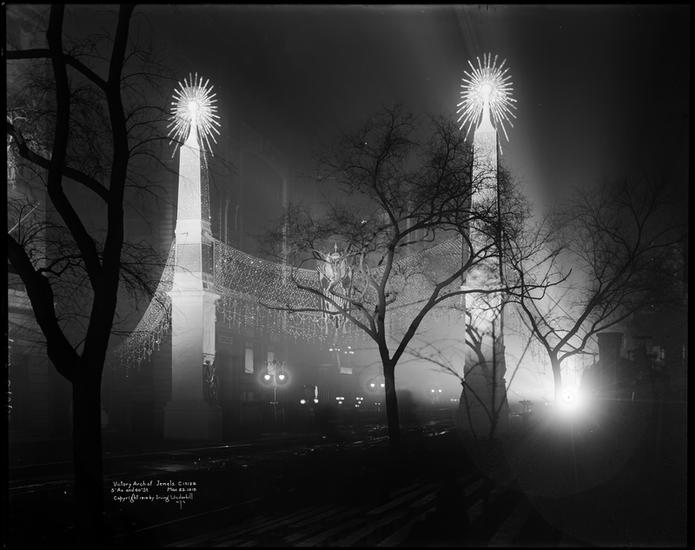
Below: The ‘Altar of Jewels’ glowing to signal victory

6

At the completion of the war, It was the focal point of a gigantic parade greeting arriving troops on March 25, 1919, a parade which turned quite rowdy. “The greatest crowd that ever gathered in New York City upon any occasion, and the most difficult to handle,” was how the New York Times described it. “The worst point of disorder was the district around the Victory Arch at Twenty-Third Street, where thousands and thousands fought among themselves or combined against the police in an effort to get a vantage point.” [source]
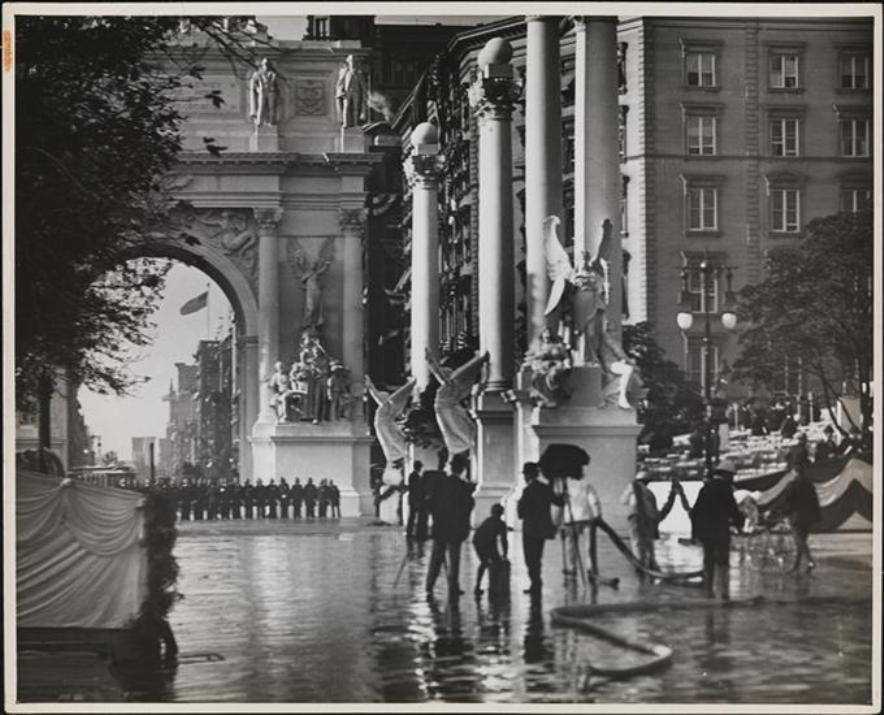
This arch was not spared either. It was soon villified as an icon of wasteful spending by no less than future mayor Fiorello LaGuardia. “The Altar of Liberty was renamed the “Altar of Extravagance,” the Victory Arch “Wasteful Arch,” and the Altar of Jewels — the “Arch of Folly.”

It was ripped down in the summer of 1920, although the damage to the park would last throughout the year. [source]

Courtesy Museum of the City of New York

Categories
Bowery Boys Bookshelf

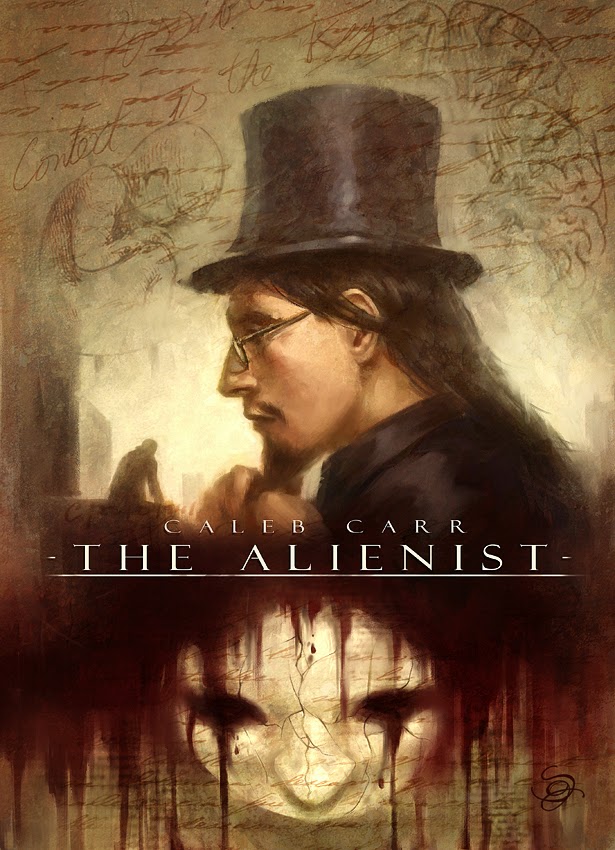
The Alienist by Caleb Carr, released 20 years ago this week: Retracing the steps of this Gilded Age murder mystery

NOTE: This article has a few plot spoilers but no major twists are revealed or discussed.  I’ve tried to write the descriptions within the interactive map as vaguely as possible.

The Alienist by Caleb Carr was published 20 years ago this week, an instant best-seller in 1994 that has become a cult classic among history buffs.  Despite some creakiness uniquely inherent to early ’90s fiction thrillers, it remains today a page-turning and utterly spellbinding adventure.

Although the Jack the Ripper murders were an obvious inspiration for Carr, perhaps The Alienist‘s biggest influence is The Silence of the Lambs by Thomas Harris.  Carr completed his tale of serial murders in the Gilded Age just as a slew of Silence knockoffs began hitting the bookshelves.  The Alienist stands far above the pack, of course, but you can’t deny its success in 1994 was partially inspired by reader’s cravings for murderers with perverted tastes and body parts in formaldehyde jars.

The Alienist follows a quirky team of investigators in 1896 as they follow the bloody trail of a killer with a peculiar penchant for boy prostitutes, often dressed as girls to the delight of their clientele.  Dr. Laszlo Kreizler is the alienist (or psychologist) in charge of the case, stitching together a profile of the loathsome figure, conveniently using soon-to-be standard analytic techniques.

At right: Alternate artwork for The Alienist (Courtesy Nerd Blerp)

As protagonist John Schuyler Moore, a reporter for the New York Times, explains it “[W]e start with the prominent features of the killings themselves, as well as the personality traits of the victims, and from those we determine what kind of man might be at work. Then, using evidence that would otherwise have seemed meaningless, we begin to close in.”

Carr’s book is finely detailed, perhaps overly detailed, which won’t be a problem if you love New York City history.  There are over two dozen scenes at various notable landmarks throughout Manhattan, some in various states of construction.  Several real-life figures make appearances, although the most entertaining characters are Carr’s own, including the intrepid proto-policewoman Sara Howard and scrappy errand boy Stevie ‘Stovepipe’ Taggart.

When I first read The Alienist back in 1994, I was struck by its preciseness, an expertly placed breadcrumb trail through old Gotham.  There is no romantic gloss, as in another history classic Time and Again. He makes it seem possible to retrace almost every step of our heroes. (In researching this article, I tried to do so.)  The original New York Times review noted that “[y]ou can practically hear the clip-clop of horses’ hooves echoing down old Broadway.”  They’re still echoing.

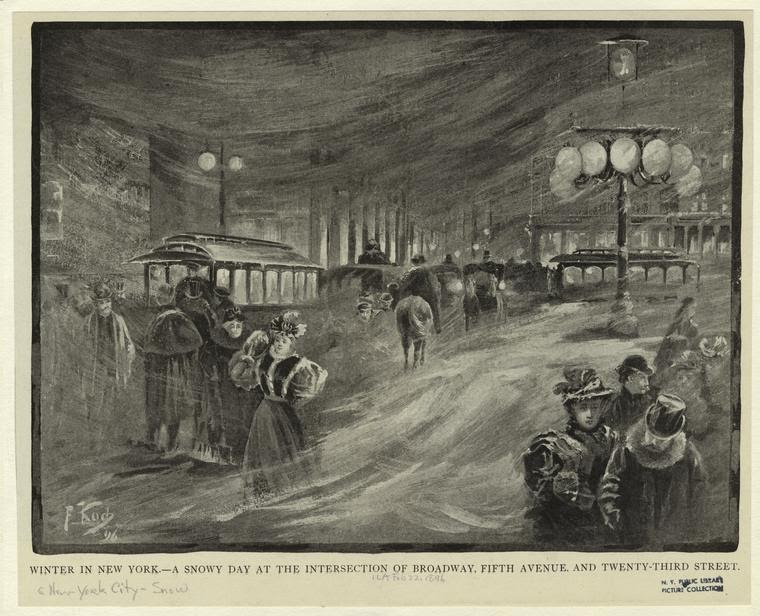
The story begins in the early months of 1896 during a robust winter. Below, from the Illustrated American, a depiction of a snowy Madison Square that year (NYPL):

His depiction of old New York is still glorious.  The book’s polite take on certain social issues, however, read a bit wobbly today.  To his credit, Carr tackles police corruption, gender discrimination, racial prejudice and the plight of homosexuals, all while elaborating on complicated psychological theories in service of an entertaining story.  He has stuffed a hidden epic of New York into the framework of a modern murder mystery.  That he chooses to handle hot-button social issues with kid gloves is not a misstep, but merely a symptom of its genre and day.

The Alienist is still greatly enjoyable, perhaps slightly more so now.  Thanks to renewed interest in New York City history, the details here are even more shimmering and vital.  This is not an old New York emerging from a mysterious fog, but a world that seems to exist alongside our own.

And to prove that — below you will find a detailed, interactive map of the pivotal locations used in the book.  You can click into various points for further details.  A few of these pins have pictures and other links. Just zoom in and choose a location!  (NOTE: Some locations are approximate and a couple are speculation.)


A little elaboration on certain elements of the book’s bigger places and themes:

Paresis Hall 
Most of the murder victims are boy prostitutes employed as several houses of ill repute throughout the city.  Paresis Hall, located steps from Cooper Union, sounds like it was both a place where gay men could congregate in private clubs and a place of sexual transaction, often (as in the book) with underage boys dressed up as girls.  This boy, Nathaniel ‘ The Kid’ Cullen, may have worked there, or may have just a habitue of the club. (He appears in this collection of photographs from Paresis Hill.)

Madison Square 
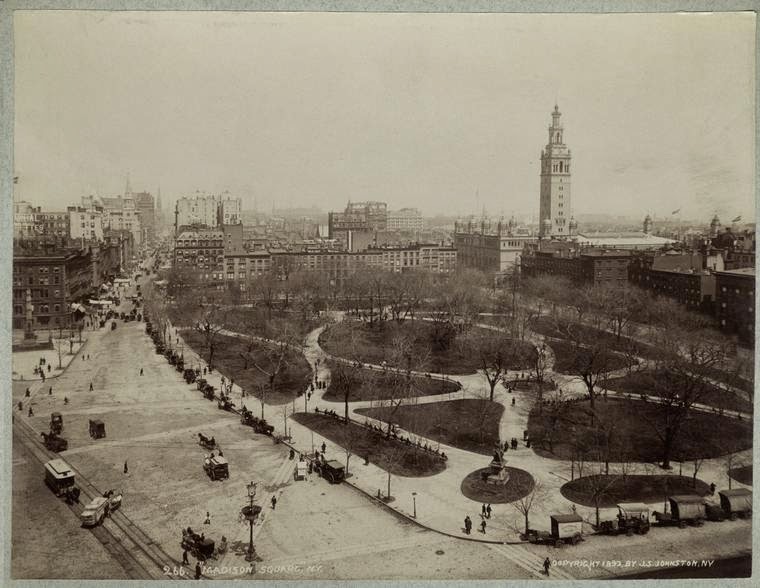
This was still a thriving center for culture and dignified entertainments in 1896. Many theaters clustered around the park, although newer stages were making their way up Broadway to Herald Square.  If Delmonico’s (on the northwest corner) is too crowded for you, head over to the tea room at Madison Square Garden on the northeast side.  Pictured here in 1893, three years before the events of the Alienist. (NYPL)

Murray Hill Distributing Reservoir
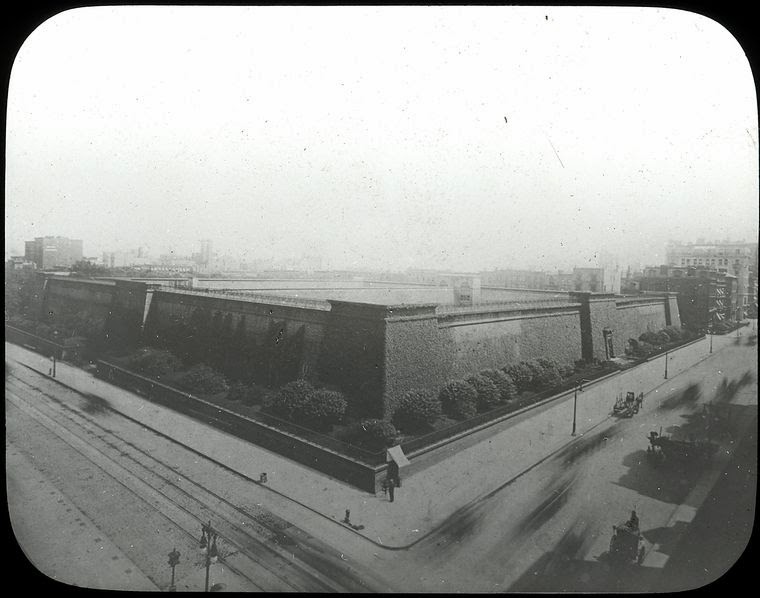
In 1896, New York still relied on this reservoir to provide most people with water.  But it was also a tourist destination in itself, with walking paths along the top.  Shortly after its appearance it the book, the Egyptian-inspired reservoir was torn down to make way for New York’s new public library. (NYPL)

Bellevue Hospital and Morgue
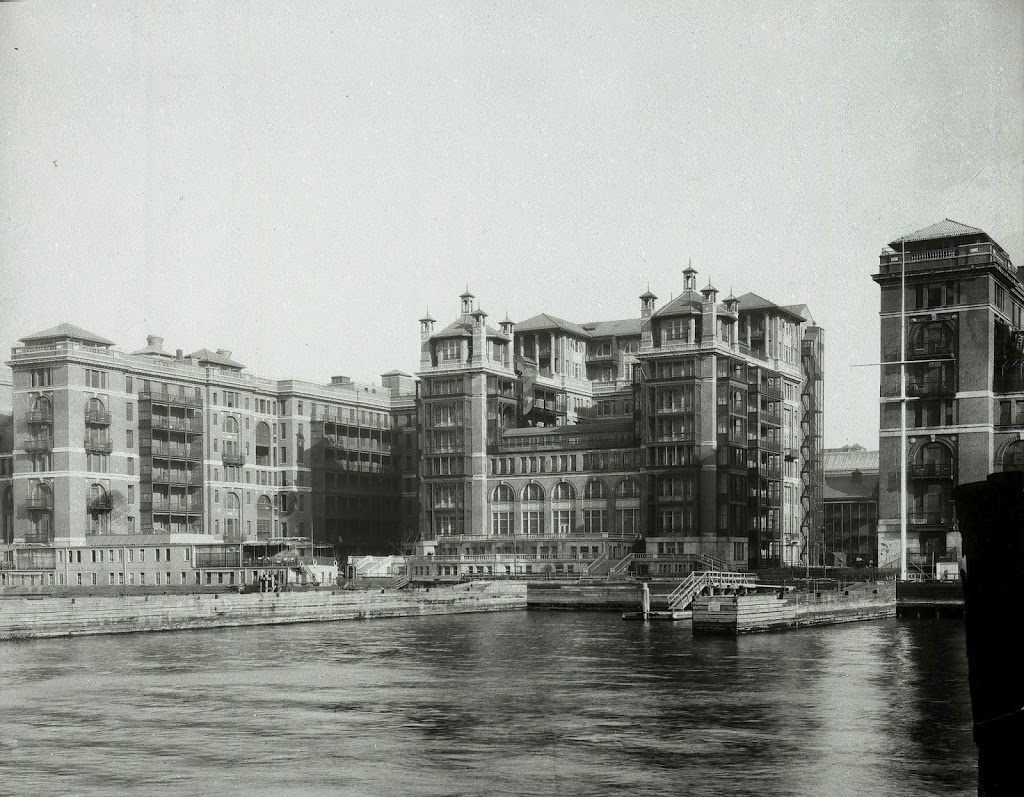
Check out our podcast and blog posting on the history of Bellevue Hospital, as many of the details mentioned there appear in this book.  Below: Bellevue in 1879.

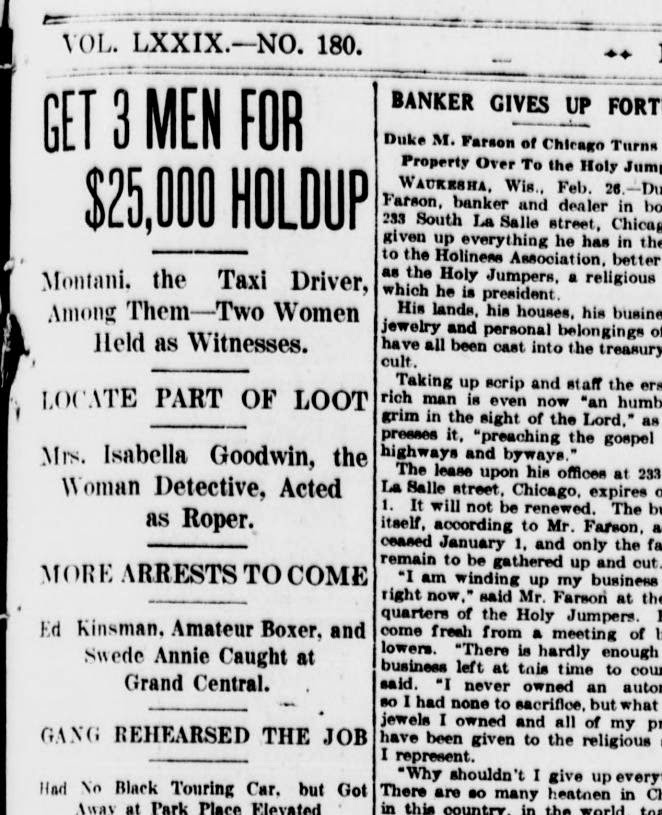
Isabella Goodwin
Sara Howard seems to be a little bit Nellie Bly, and a lot Isabella Goodwin, the first female office promoted to detective in 1896 (the year the book is set).  Below: A front-page case cracked by Goodwin from February 1912.

New York Aquarium
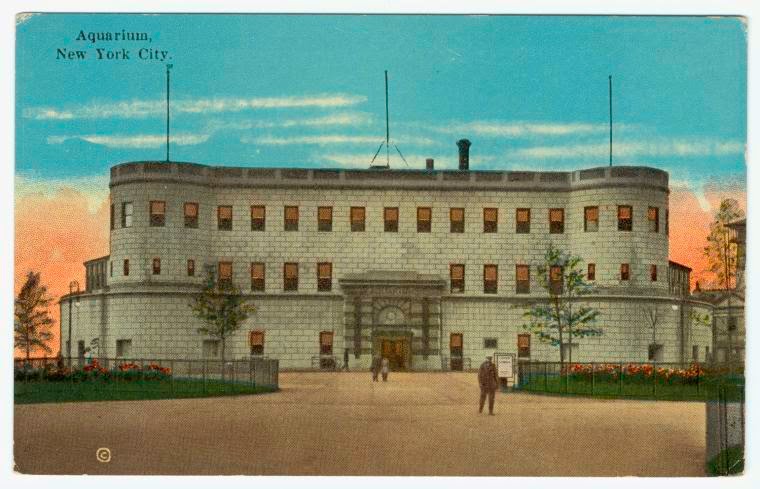
Carr’s narrative features several New York landmarks in construction.  Two of those places take a morbid center stage in the book — the Williamsburg Bridge and the nearly completed New York Aquarium (the former Castle Garden) (NYPL)

Theodore Roosevelt
Carr weaves several real life figures into the storyline, from J.P. Morgan (who comes off quite ominous) to Jacob Riis (not a flattering portrait of him either).  But future president Roosevelt gets a glowing supporting role as New York’s police commissioner who directs Dr. Kreizler, Moore and Howard to investigate the murders using powers of psychological deduction.

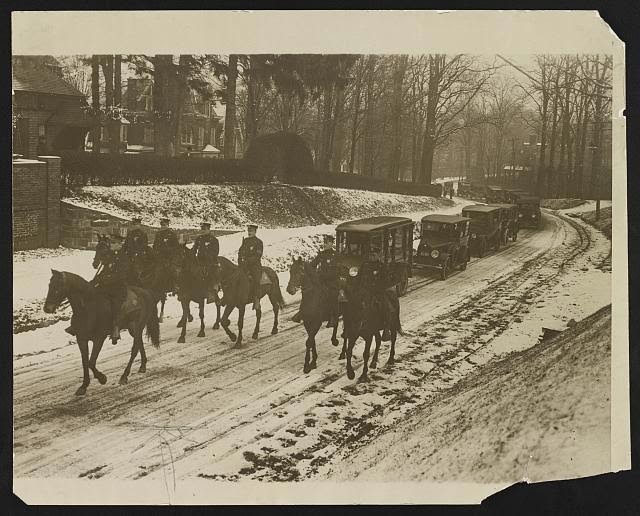
In fact, the book is actually a flashback by our hero Moore, recalled when he visits the Oyster Bay funeral of his dear friend in 1919 (pictured below). (LOC)

True Crime
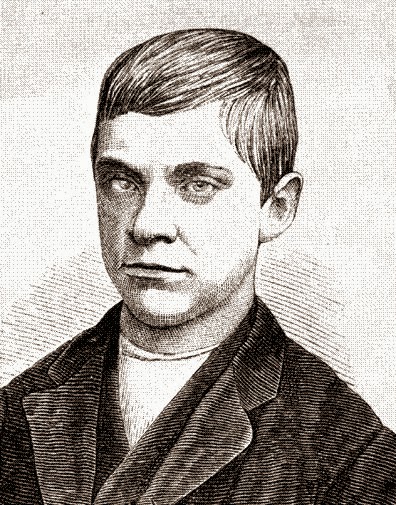
And there are a great many real-life figures from New York’s criminal underworld as well.  In fact, most of the lecherous and notorious figures depicted in the book are real folks, from early gangsters like Paul Kelly to brothel owners such as Biff Ellison.  Carr also finds a few disturbing mental cases to bring into the story, including the young killer Jesse Pomeroy (pictured below), considered one of the most brutal of murderers at a ripe age of 14.

Grand Central Depot
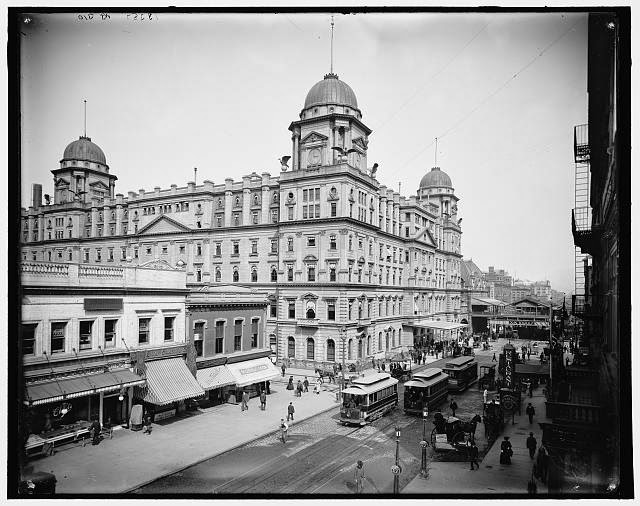
The characters do venture to places outside the city for further clues, but they always come through Grand Central Depot, the most hectic place in New York.  (Pennsylvania Station had not yet been built.)  Within a few years, this too would be ripped down and replaced with the present Grand Central Terminal. (LOC)

And finally, there are three central locations from the book that are still around today:

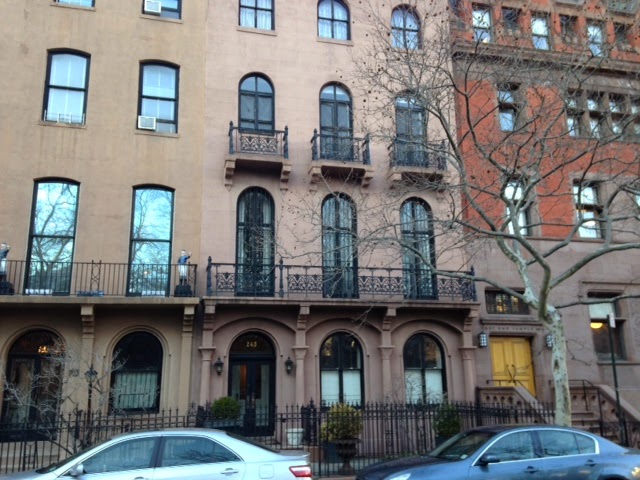
Dr. Laszlo’s residence at Stuyvesant Park. Actually the address in the book doesn’t really exist.  But based on a couple descriptions — and its proximity to St. George’s Church, which is mentioned as close by — this building at 237 East 17th Street may be what Carr had in mind:

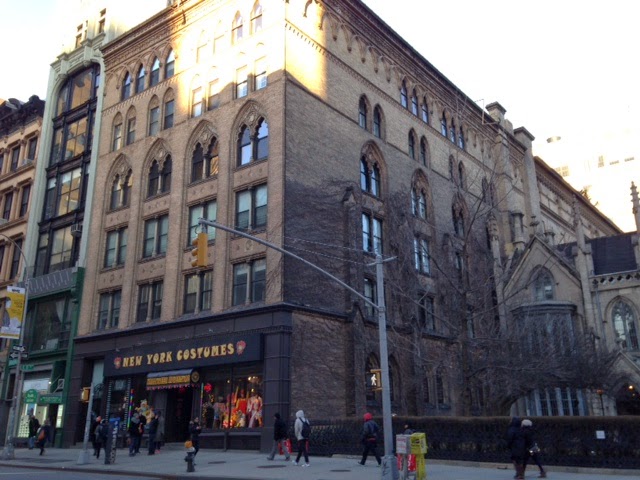
Murder headquarters at 808 Broadway — This exceptionally handsome building was constructed by James Renwick, playing nicely off its neighbor Grace Church.  It’s actually called the Renwick!  The team was located on the sixth floor.  Today, on the first floor, is one of New York’s most popular costume shops.

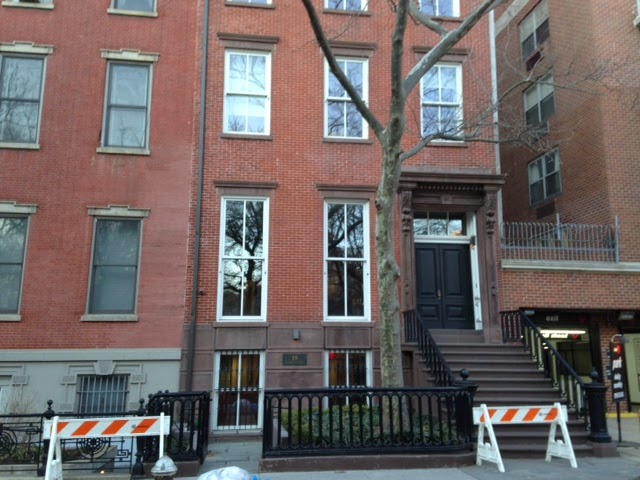
John Schuyler Moore’s home at Washington Square Park North, facing the park:


(My thanks to Dixie Roberts for the story idea!)

Categories
Those Were The Days

Where did New Yorkers first buy recorded music?

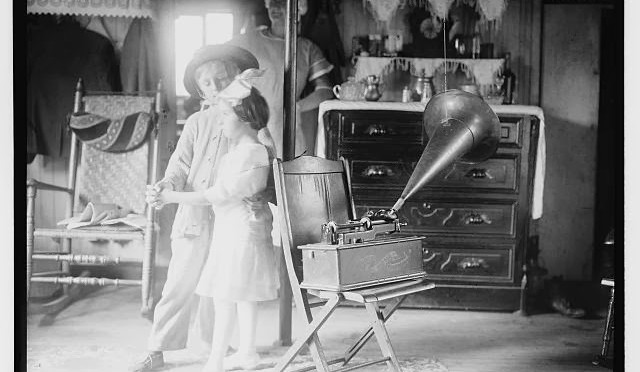
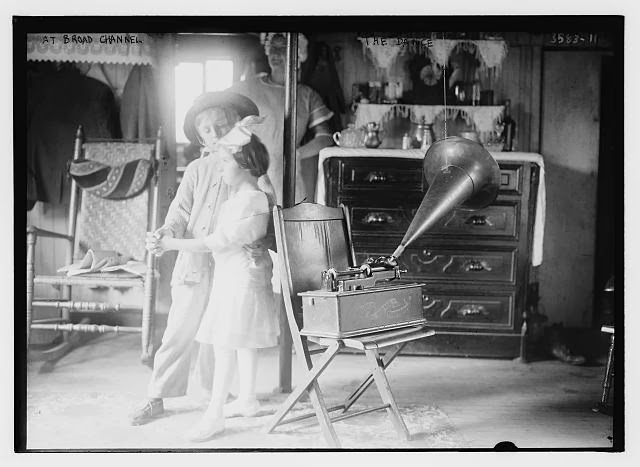
“Photograph shows a boy and a girl dancing while an Edison Home Phonograph plays in a house in Broad Channel, Queens, New York City.” — taken between 1910-1915

Here’s something many people thought they’d never see again in New York City — the opening of a new record store.  Rough Trade, known for their famous London record shop, will open an awesomely spacious new store in Williamsburg this week, with vinyl-record listening stations, a coffee shop, live performances and a heap of nostalgia on its shoulders.

Remember Tower Records on Broadway?  Virgin Records in Times Square?  The old subway Record Mart? The long-vanished Commodore Record Shop?  The past is littered with the ghosts of music stores long gone.

But where did people first buy recorded music in New York City?  The first recordings came on phonograph cylinders, long tubes with the grooves etched along the front, often made with wax.  Essentially, they looked like — and probably smelled like — big, decorative candles.

They were soon in competition with phonographs in a flat, wax disc form, the musical delivery device which eventually won out and became the standard for decades.

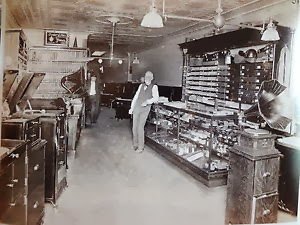
In the beginning, recorded music was played in exhibition halls, not available for home use.  By the 1890s, the first musical devices were available for purchase, and phonographs were sold in establishments that offered instruments, music boxes or early electronics — Broadway piano stores (like the one above, in 1910) or the places down on the soon-to-be-named Radio Row which offered New Yorkers the latest technology.

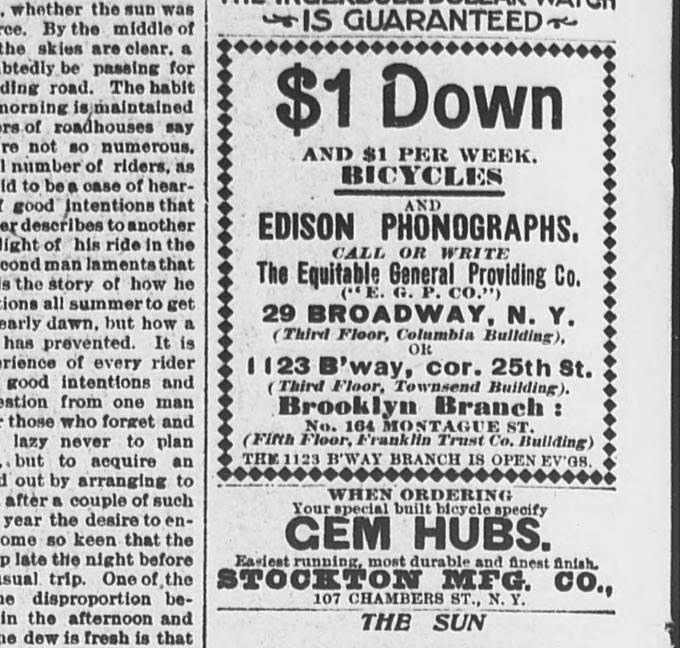
Naturally, the first records were made to play on Edison machines, pricey novelties in the late 1890s.  Here, in 1898, you could put a down-payment on the purchase of a phonograph machine and a bicycle — a real hipster double-play today!

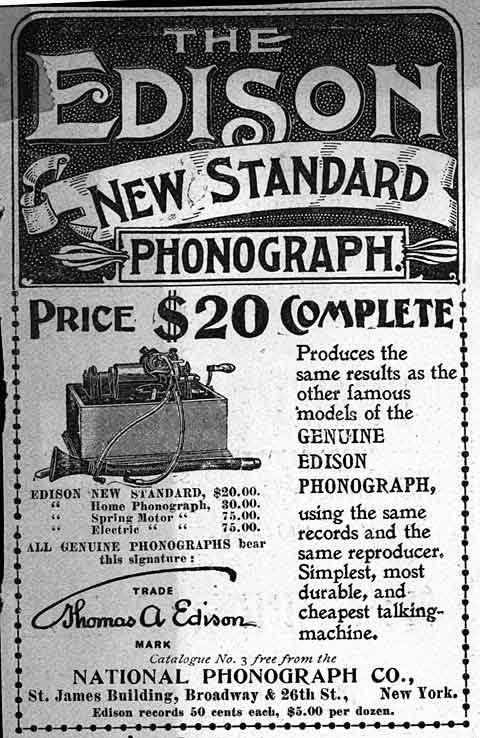
Another advertisement from 1898 presents Edison records at just “$5.00 a dozen”, found at the St. James Building at Broadway and 26th Street.  Of course, a great many of these records were spoken word, not music;  after all, they were nicknamed ‘talking machines’ at this time.

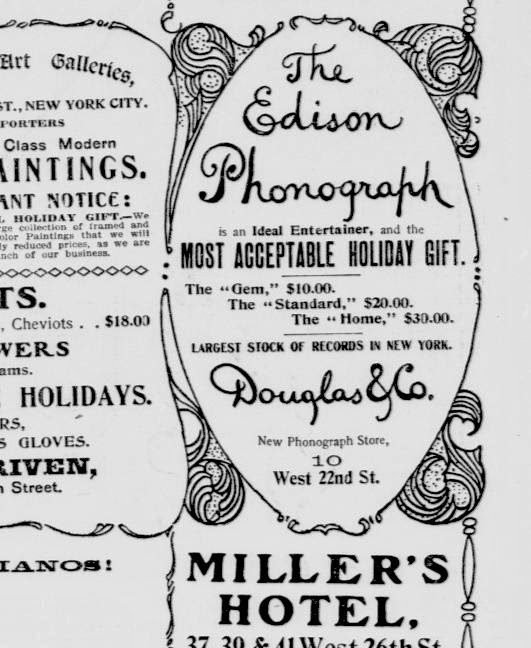
I was able to find a few other early photographer retailers in old newspaper advertisements.  For instance, Douglas & Co., at 10 West 22nd Street, appears to be one of New York’s earliest retailers specializing in recorded sound.  From Dec 16, 1900:

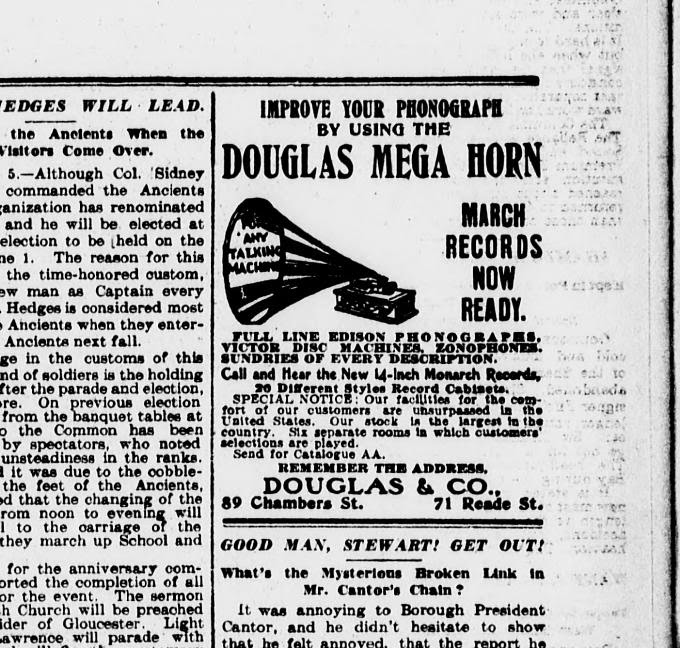
By 1903, Douglas & Co. had moved downtown, closer to the electronic retailers that would later specialize in radio and televisions:

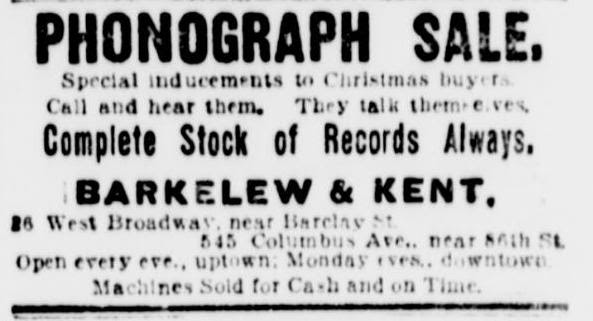
Another early phonograph retailer I was able to locate was A.B Barkelew & Kent.  “Call and hear them. They talk themselves.”  They would eventually move to Vesey Street and, in 1902, claim “the largest stock in New York.”

As early in 1899, Barkelew & Kent could claim to be one of New York’s first used record stores.  From a trade ad: “We exchange records you tire of and do not like.”

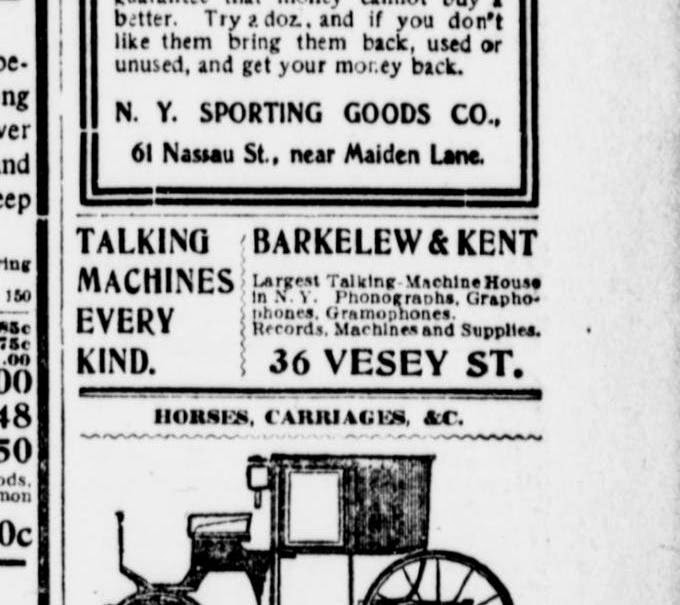
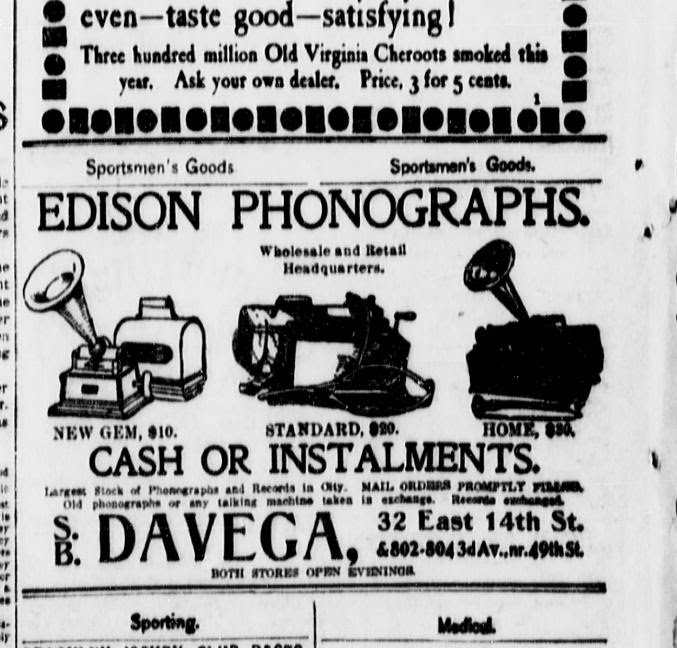
Interestingly, early record stores were listed alongside advertisements for sporting goods.  This ad is from May 1902:

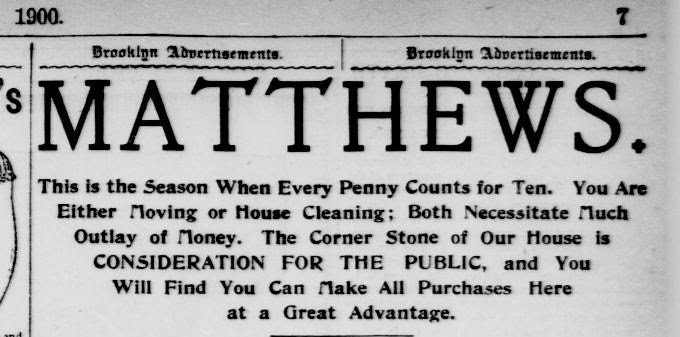
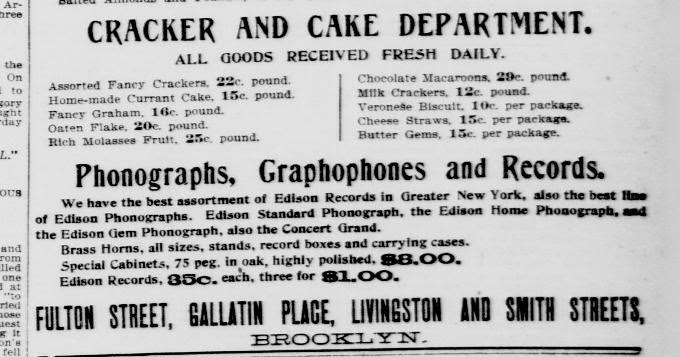
And since we’re celebrating the opening of a new record store in Brooklyn, I should add that one of Brooklyn’s first major record stores was at A.D. Matthews Department Store on Fulton Street.

From an April 1900 advertisement:

William Seward: a park in his honor, while sitting in another

Mr. Seward, with the best seat in the park in 1934. He does seem awfully thin though, almost like a certain president. (At least, some people thought so.)

This month marks the 135th anniversary of an extraordinary gift endowed to Madison Square Park — the statue of William Seward. the former New York governor and Secretary of State under Abraham Lincoln. Indeed, he’s easily one of the most influential New York politicians ever upon the national stage. A master of backroom politics and a proponent of American expansion (best known for negotiationg the purchase of Alaska from the Russians in 1867), Seward died a revered figure, and monuments to his legacy sprouted up throughout the nation, from shore to shore.

In New York City, there are two key landmarks named after him, and they could not be more different.

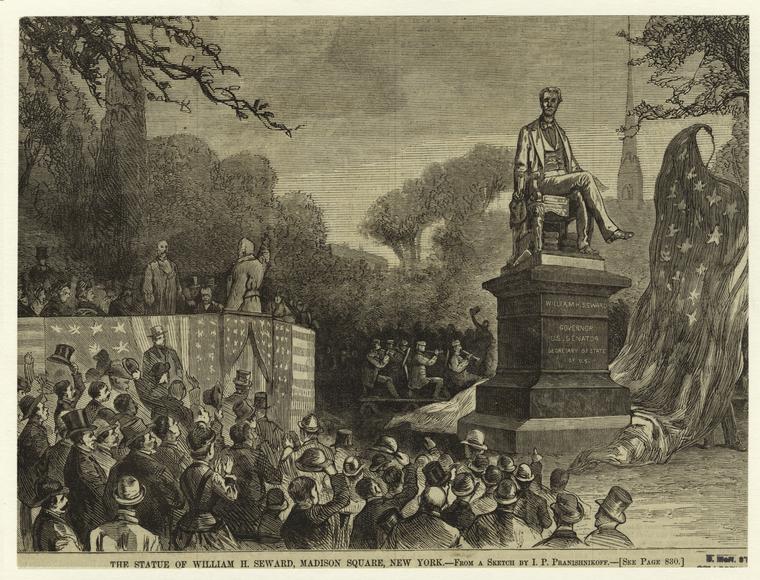
The aforementioned bronze statue at the southwest corner of Madison Square Park was presented with the maximum of pomp and circumstance in September of 1876. The work, by Randolph Rogers, depicts Seward in a seated, almost languid pose, with unusual proportions. As has been frequently speculated, Rogers might have adapted an earlier seated statue of his, depicting Abraham Lincoln, and simply slapped Seward’s head onto it. This is unproven, of course, but since Lincoln was Seward’s old boss, it makes for amusing symmetry.

But the gathering admirers on the afternoon of its unveiling scarcely seemed to notice. Present at its debut was future U.S. president Chester A. Arthur, who would be graced with his own statue in Madison Square Park 23 years later.

Further downtown, in the Lower East Side, at the convergence of Essex Street, Canal Street and East Broadway, lies Seward Park, also named for the venerated politician. In 1897, in a neighborhood desperate for breathing room, the city condemned a cluster of tenements lining the east side of Essex Street. The fenced-in park was pretty much developed by private groups until the city intervened in 1903, equipping the grounds with a sporting pavilion and leveling areas for a playground.

But the real jewel of this park came in 1909 when the Carnegie Foundation placed one of its most stunning libraries here. By the way, Jefferson Street used to separate the library from the park (as evidenced in the picture above). Today, the road has been closed off and the space has been become part of the park itself.

So the development of this park came well after Seward (or the head of Seward, on Lincoln) was placed uptown. And really, they weren’t going to place so a lavish memorial in the midst of so many tenements, were they?

However, Seward himself might have considered Seward Park the far greater honor. During his years as governor (1839-42) and many years following as a New York senator, he supported many pro-immigration policies that were considered extraordinarily progressive for the day. Naming the park after him was a tip-of-the-hat to these early risky political stances.

Pictures courtesy NYPL. (link to top photo here)

A Christmas Tree for the ages in Madison Square Park


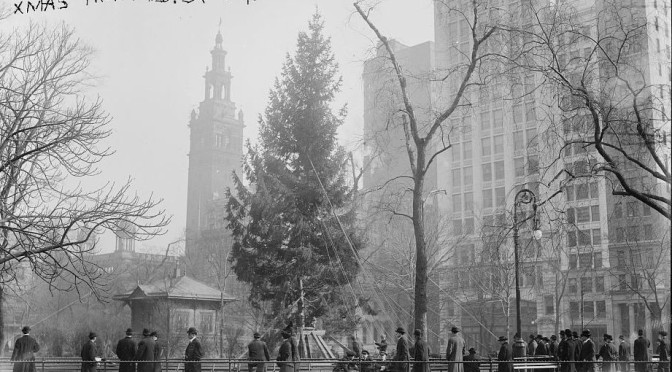
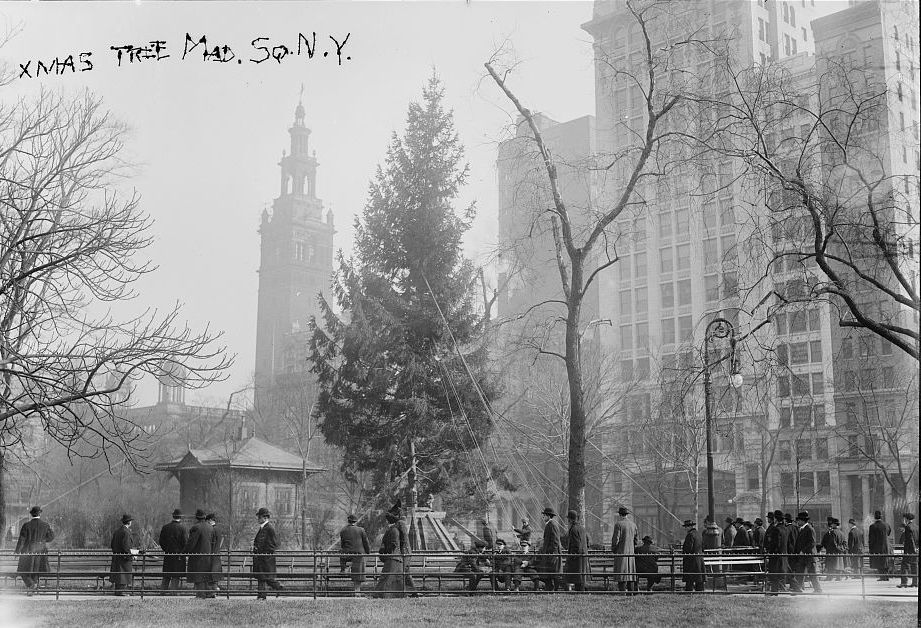
The misty Madison Square Garden greets a stranger to the park: America’s first community Christmas tree. (Courtesy LOC)

HOW NEW YORK SAVED CHRISTMAS Throughout the week I’ll spotlight a few more events in New York history that actually helped establish the standard Christmas traditions many Americans celebrate today. Not just New York-centric events like the Rockefeller Christmas Tree or the Rockettes, but actual components of the holiday festivities that are practiced in America and around the world today. We started this series last year; click here to read past entries.

The New York Tribune from Christmas Eve 1912 cheerfully attempted to use the symbol of the Christmas tree as totem for class struggles between the rich and poor. In case you missed what they were doing, the headline proclaimed: “HOW THE CHILDREN OF THE RICH AND POOR ENJOYED XMAS TREES — BUT IN DIFFERENT WAYS.”

The story recounts two Christmas events. On Ellis Island, children sang carols and patriotic anthems in glee and appreciation around two large trees bedecked with candles. Meanwhile, at the newly opened Ritz-Carlton at 46th and Madison, the children of wealthy New Yorkers gathered around an opulent tree with what is being described as holiday malaise. “Children in broadcloth and furs, accompanied by their mammas in silks and velvets and sables, smiled in well bred manner when something pleased them, but showed no other emotion.”

But it’s the Christmas tree mentioned in an adjoining article that would be more historically relevant. “2,300 LIGHTS ON CHRISTMAS TREE, FINE PROGRAMME IN MADISON SQUARE FROM 4:30 TILL MIDNIGHT, FREE TO MULTITUDE.”

The Christmas Eve Madison Square celebration was derived from the well-meaning progressive push by social activists to care for the city’s poor. Plans for an outdoor public Christmas tree were devised by Emilie Herreshoff, wife of the prominent chemical scientist J.B.F. Herreshoff, in emulation of European civic customs. (Mrs. Herreshoff’s other claim to fame would be her messy divorce from Mr. Herreshoff just a few years later.)

It would be a clean, proper, somber affair, closely tied to Jacob Riis’s equally non-riotous New Years Eve celebration scheduled the week after — righteous counter-programming to the Times Square celebration. Riis believed that the holidays were not a time wild behavior, and these events would provide the poor with ‘acceptable’ alternatives.

Below: Madison Square, how it looked in 1907 (with the Flatiron to the right. (Courtesy LOC)

The organizers knew they were doing something unique, but probably did not realize the special significance of the event. Their 70-foot-tall imported tree from the Adirondacks, festooned with lights from the Edison Company, would be the first outdoor community Christmas tree in the United States.**

This is not an insignificant milestone, especially today in a age where public displays of holiday expression and religious belief are constantly being debated. This ‘Tree of Light’, mounted in cement, was such a novelty that almost 25,000 people showed up that night to witness it and enjoy an evening-long slate of choral entertainment.

The location was significant as well, as the nearby Madison Square Garden sometimes hosted Christmas celebrations. Those mostly charged an admission price, however, and certainly left the poorest of New Yorkers out in the cold.

The New York Times laid it on thick the following day, reporting, ‘”The Almighty put snow on the tree to make it prosper,” said an old lady who hobbled along in crutches.’

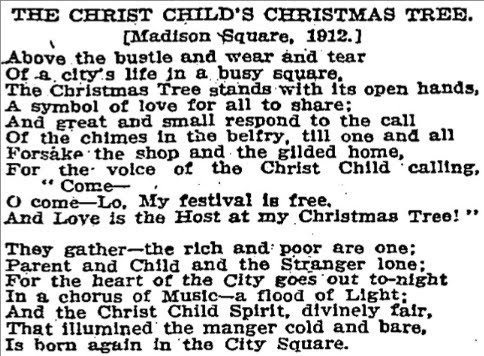
They also ran this poem about the Madison Square tree:

By the following year, the Salvation Army would take the reins of the popular event, offering up “10,000 hot sausages and 10,000 cups of hot coffee” for arriving crowds. According to the same article, ‘moving pictures’ were even shown in a different area of the park.

Today the Star of Hope monument in the park commemorates these early Madison Square celebrations.

**The Tribune article says that “Boston and Hartford, Conn., following the example set here, will have public trees to-day,” so one could generously say at least that the honor is shared.

Categories
Mysterious Stories

I Sit On Your Grave: New York’s Hidden Burial Plots

Here’s a chilling thought for the Halloween season: if you’re visiting one of New York’s many amazing parks and squares, most likely you’re standing on land that was formerly used as a cemetery or potter’s field. And in some cases they even left the bodies behind!

If you’re fluent in your New York history, you probably know a couple of these. Most of these burial plots date from before 1851, when the city passed an ordinance forbidding further burials (without explicit permission) below 86th Street. Historical cemeteries (like those at Trinity Church and Old St. Patrick’s) and land with private vaults (such as the East Village marble cemeteries) were allowed to remain, and unique exceptions have been made, such as the singular grave of William Jenkins Worth at Madison Square.


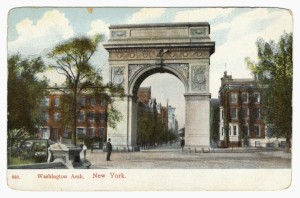
Washington Square Park, Manhattan
1797-1825
“Where now are asphalt walks, flowers, fountains, the Washington arch, and aristocratic homes, the poor were once buried by the thousands in nameless graves.” (Kings Handbook of New York, 1893) When fashionable New Yorkers moved from the confines of lower Manhattan to the area of Greenwich Village, the burial ground was closed for business and a lovely park placed on top of it.

While this might seem truly morbid, in fact the city considered this a preventative and sanitary option. According to city records, a recommendation was made that “the present burial ground might serve extremely well for plantations of grove and forest trees, and thereby, instead of remaining receptacles of putrefying matter and hot beds of miasmata.”

Today, that ‘hot bed of miasmata’ serves as one of New York’s most bustling and vibrant outdoor spaces. But the city simply built over the burial ground. It was claimed during the 19th century that a blue mist could be seen hanging over the park at night, the creepy vapor of the remains underground.

Are the bodies still here? Oh yes.
How many? Definitely over 20,000 (and they’re constantly turning up in excavation work). There were once as many as 125,000 people buried here

Leverish Street and 71st Street, Queens
1765-1818?
A private cemetery once used by the Leverish family, a prosperous Long Island clan descended from English minister, the Rev. William Leverich. According to a family genealogy site: “The contemporary location of the burial ground is a rectangular plot located immediately behind the rear yards of several private residences that face on Leverich Street, and on the other side immediately behind a parking lot behind several apartment buildings that face on 35th Avenue at the intersection of 71st Street.”

Are the bodies still there? According to author Carolee Inskeep, “there is no evidence to suggest that the bodies were removed.”
How many? Unknown

Liberty Place (at Maiden Lane), Manhattan
1700-1823
This burial ground served New York’s first Quaker congregation, formerly called the Little Green Street Burial Ground of the Society of Friends (Liberty Place was once known as Little Green Street). Its location is currently in the shadow of the New York Federal Reserve.

Are the bodies still there? Probably not, but the city gave them only six short months to move all the remains to a new location, so you never know what they might have left behind.

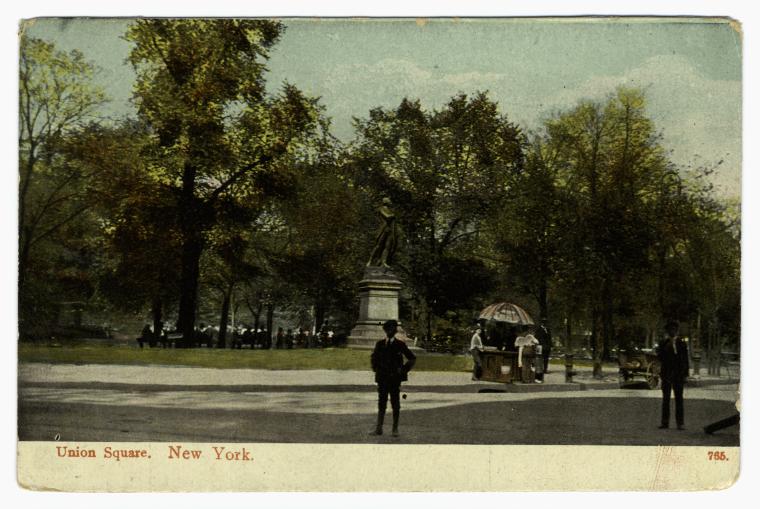
union
Union Square, Manhattan (above)
?-1807
Potter’s fields — where the poor or unclaimed were buried — moved frequently around the city as land values improved with the city’s growth. This particular area at 14th Street was once comfortably outside of town, but its proximity near Bloomingdale Road (the future Broadway) soon required its functions as a burial plot be transferred to other usable fields, like Washingon Square. The land here was transformed into the ellipse-shaped Union Place, a strolling park surrounded by an iron fence. By the 1830s, Samuel Ruggles would modify it further into New York’s toniest park Union Square, luring the wealthy who quickly built homes of ‘costly magnificence’ around it.

Are the bodies still there? Certainly not, given the park’s frequent renovations and the subway station right underneath.

Madison Square Cemetery, Manhattan
1794-1797
The short duration of this burial ground stems from the fact that it was used only to inter those who died at nearby Bellevue Hospital and the local almshouse during a devastating yellow fever epidemic. Later, with fears of a new war with England looming, the land was given to the U.S. Army as an arsenal, and the land that was later Washington Square became the official place to bury the dead.

Are the bodies still there? There’s some evidence to suggest that some of the remains were never moved.

How many? Unknown, although the epidemic took hundreds in the 1790s, and according to my estimation, there could be up to 1,000 buried here.

New York City Farm Colony Cemetery (Castleton Corners), Staten Island
1830-1910
This land served New York’s Farm Colony, an occupational asylum for the elderly and orphaned, and later a convalescent home for those with tuberculosis. The cemetery was once well kept, but today most of the tombstones are gone, and the land is virtually unmarked. Part of the farm colony has become part of the Greenbelt. The ruins of the Farm Colony are, frankly, unbelievable.

Are the bodies still there? Yes, the plots simply stopped being maintained
How many? Hundreds

Old Newtown Cemetery (92th Street and 56th Avenue), Queens
Off and on between 1652-1880
A family cemetery that became a horse pasture in the 19th century, cut through with cross streets, then designated a New York city park in 1932. Today, it’s the Newtown Playground.

Are the bodies still there? Many (notably from reputable families) were moved piecemeal to family plots or to Hart Island, but it’s not clear that the city ever methodically moved all the bodies. But something else is definitely there. A Queens Annual Report from 1927, as referenced by the parks department, claims “[a]ll the old headstones, which stuck up like eyesores, were laid flat and covered with soil.” So enjoy that swing set, kids!

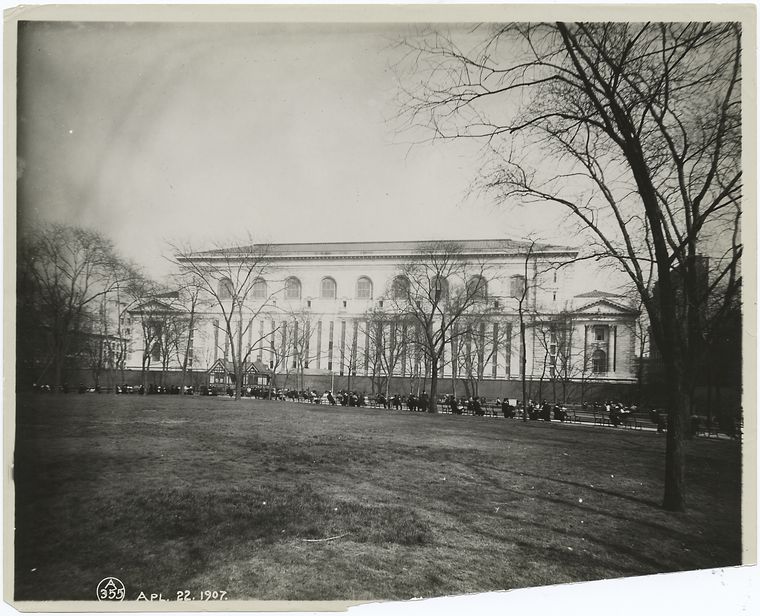
bryant
Bryant Park, Manhattan (above, from 1907)
1823-40 but possibly used as late as 1847
Yet another burial plot for paupers, still further north of city center. Soon however the adjoining land became an ideal spot to put the Croton Reservoir, supplying the city with drinking water. And it wouldn’t do to have a bunch of gravaes next to it, right? Following a short time as the location of the Crystal Palace, the land was turned into a park, named after William Cullen Bryant.

Are the bodies still there? The only thing you’re going to find under Bryant Park are miles and miles of library books, in tunnels owned by the New York Public Library.

Park Avenue and 49th Street, Manhattan
1822-1859
In the early 18th century, the area soon to become known as the richest street in America was home to railroad tracks, cattle yards, various grim asylums and, yes, Manhattan’s last potter’s field. When Columbia University moved uptown, it sat near the shoddy field, so decrepitly maintained that “the ends of coffins still protruded from the ground,” according to Edward Sandford Martin “a malodorous neighbor much in evidence and disrepute.”

In the late 1850s, the city forced the potter’s field off the island entirely and the bodies were slated for removal to Ward’s Island. Given municipal corruption and delays, however, the project took years, with train passengers often greeted with the sight of coffin stacks and grisly open pits.

Today, that former burial plot is occupied by the Waldorf=Astoria Hotel, built on the property in 1929, long since transformed by the Central Railroad and burial of tracks into Grand Central Station.

Are the bodies still there? Given the deep excavations underneath Park Avenue to accommodate trains and skyscrapers, I don’t imagine anything remains.

NOTE: Some of the dates above are estimates as record keeping for these kinds of things were hit and miss. Many dates are from Carolee Inskeep’s exhaustive survey of old New York burial grounds The Graveyard Shift.

Pics courtesy New York Public Library [Union Square] [Washington Square] [Bryant Park]