Categories
Roaring 20s Skyscrapers The Jazz Age

The Chrysler Building and the Great Skyscraper Race

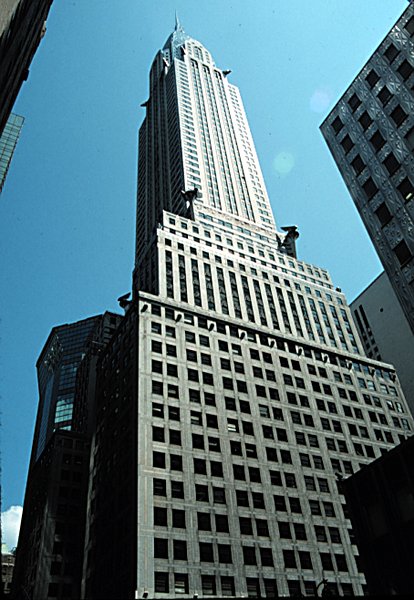
The Chrysler Building remains one of America’s most beautiful skyscrapers and a grand evocation of Jazz Age New York. But this architectural tribute to the automobile is also the greatest reminder of a furious construction surge that transformed the city in the 1920s.

After World War I, New York became newly prosperous, one of the undisputed business capitals of the world. The tallest building was the Woolworth Building, but the city’s rise in prominence demanded new, taller towers, taking advantage of improvements in steel-frame construction and a clever ‘wedding cake’ zoning law that allowed for ever-higher buildings.

Into this world came William Van Alen and H. Craig Severance, two former architectural partners who had unamicably separated and were now designing rival skyscrapers. Each man wanted to make the tallest building in the world.

But Van Alan had the upper hand, backed by one of America’s most famous businessmen — Walter Chrysler. His automobiles were the coolest, sleekest vehicles in the marketplace. His brand required a skyscraper of radical design and surprising height.
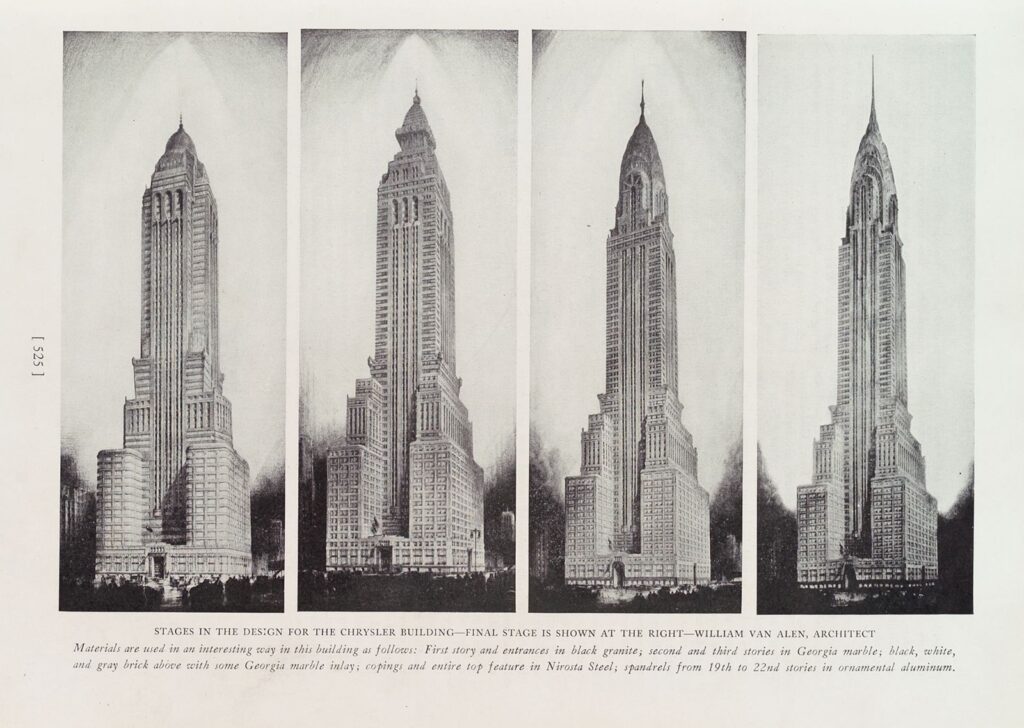
Stages in the design for the Chrysler building, 1929 (courtesy NYPL)

In 1930, the Chrysler became the tallest building in the world, a title it held until the Empire State Building.

Just ten years ago, the Chrysler Building was the fourth tallest in New York City. Today, however, it’s the thirteenth tallest building in the city. And that’s because of a new skyscraper surge shaping the city’s skyline, with supertalls making the skyscrapers of old feel very small in comparison.

It can be bewildering to see the skyline change so rapidly. But that’s exactly how New Yorkers felt exactly one century ago.

LISTEN NOW: THE CHRYSLER BUILDING
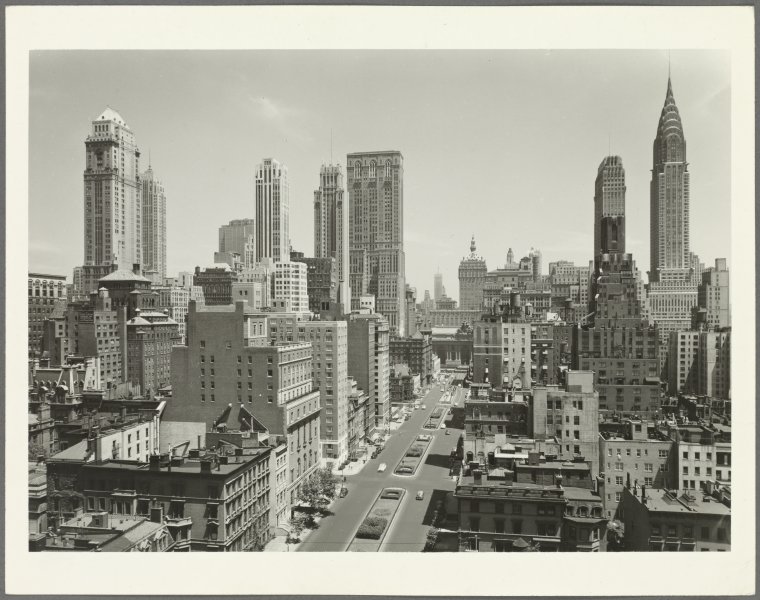

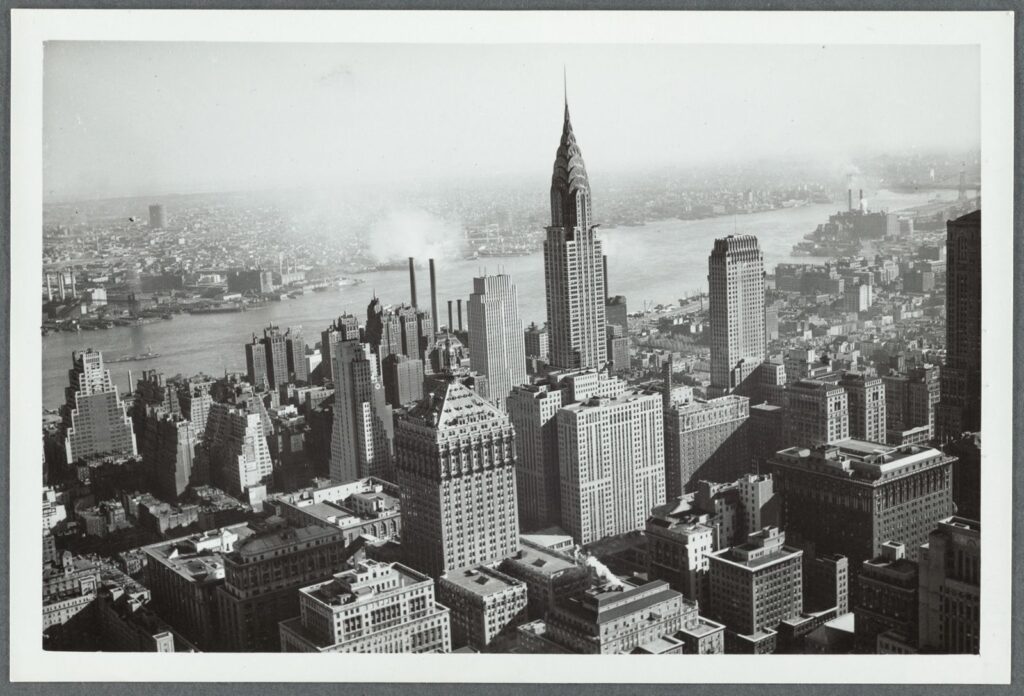
Midtown Manhattan, 1930s, around Grand Central, courtesy NYPL
A view of the Chrysler Building from the RCA Building, 1946, courtesy NYPL
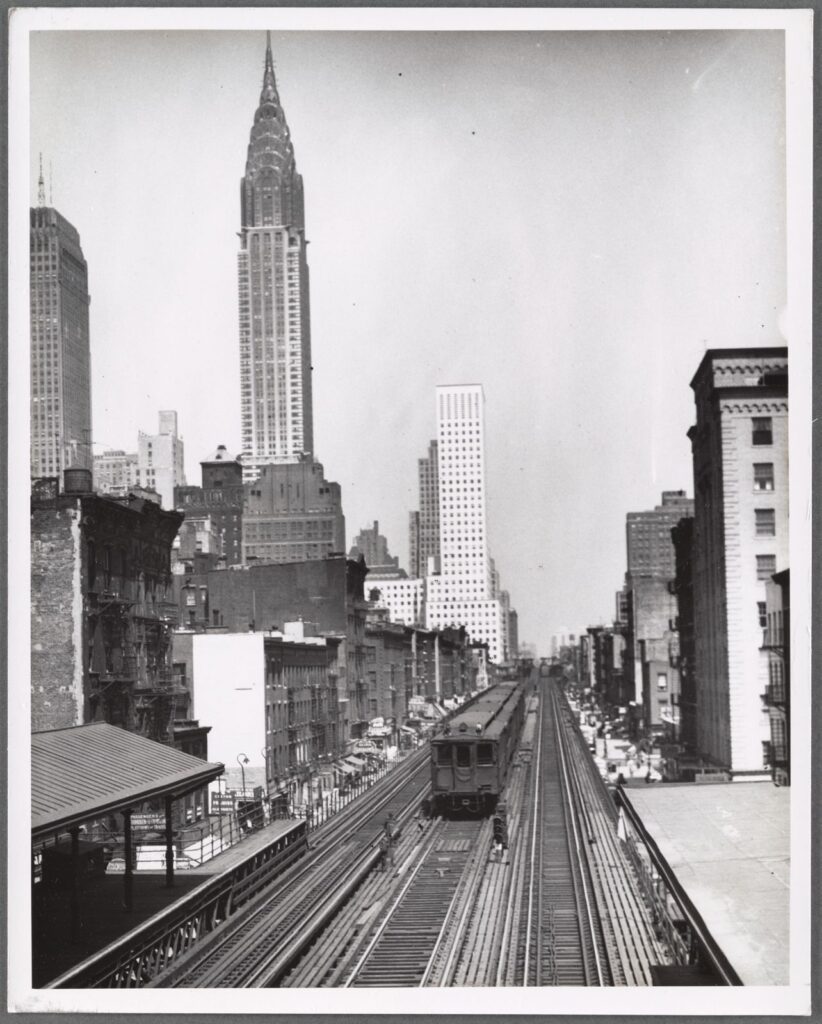
The Chrysler Building as seen from the Third Avenue El, 1952, courtesy NYPL
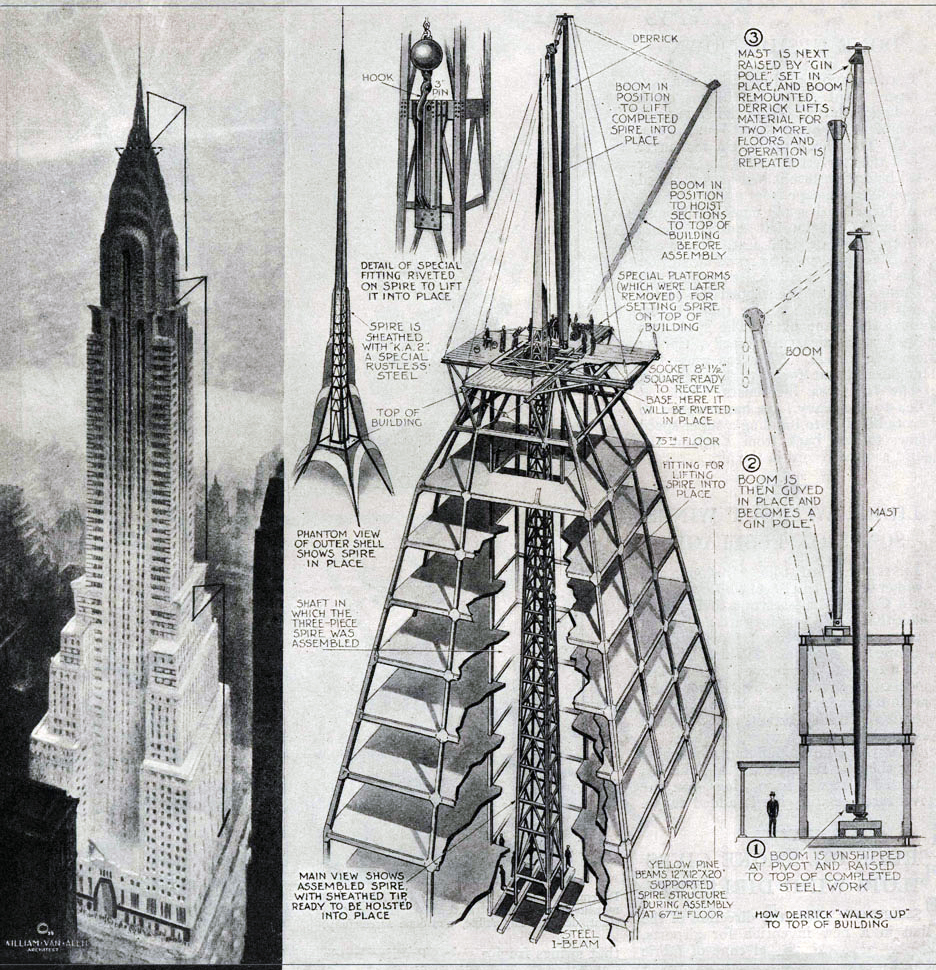
From Popular Science Monthly 1930
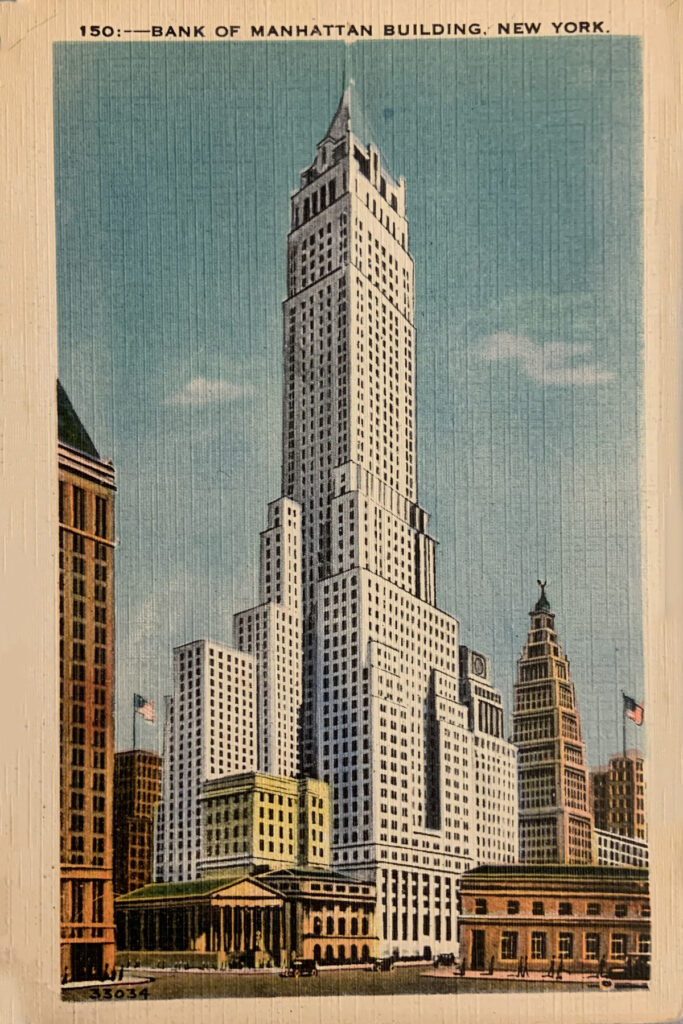
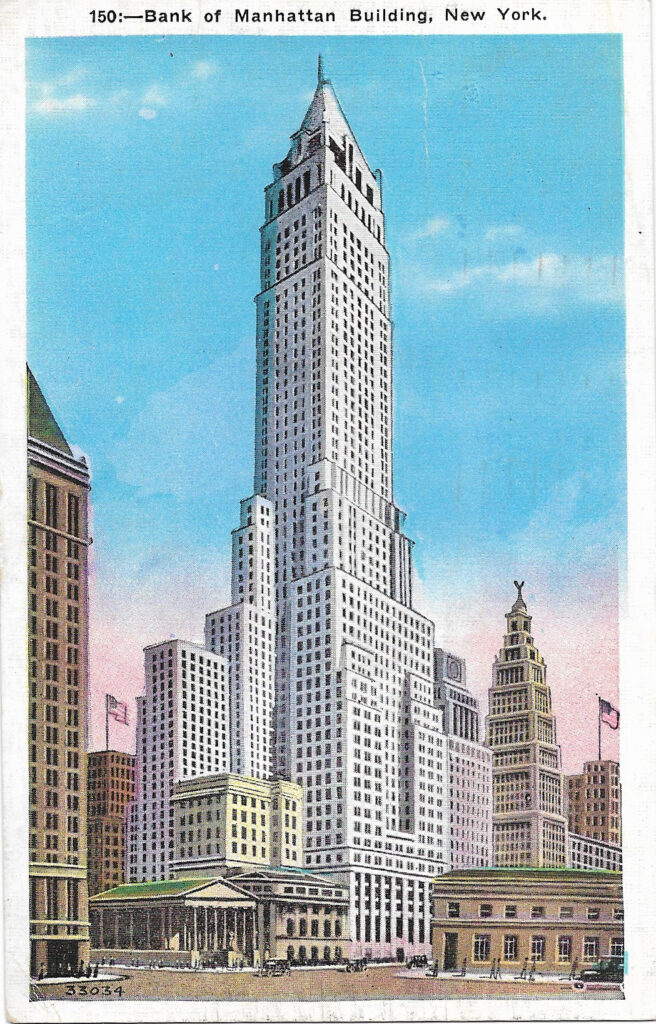
40 Wall Street, from a postcard illustration, courtesy Skyscraper Museum
….and another.
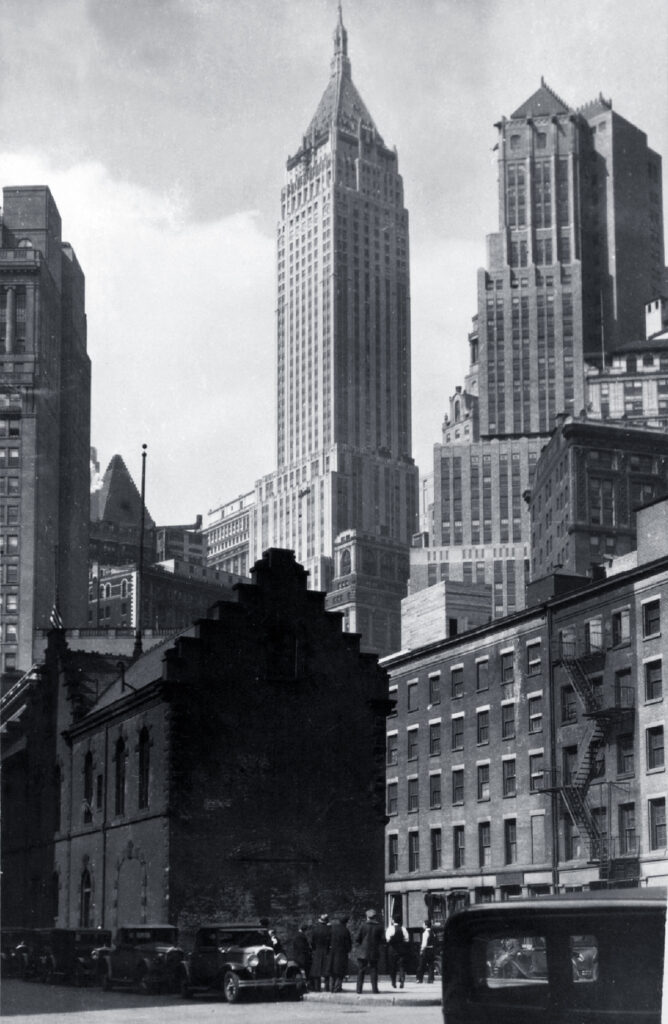
40 Wall Street in 1930 from the Seaport, photo by Ewing Galloway, courtesy NYPL

FURTHER LISTENING


FURTHER READING

American Rhapsody : Writers, Musicians, Millionaires, Movie Stars and One Great Building / Claudia Roth Pierpont
Billionaires’ Row: Tycoons, High Rollers, and the Epic Race to Build the World’s Most Exclusive Skyscrapers / Katherine Clarke
Capital of the World: A Portrait of New York in the Roaring 20s / David Wallace
The Chrysler Building : Creating a New York Icon, Day By Day / David Stravitz
Higher: A Historic Race to the Sky and the Making of a City / Neal Bascomb
Skyscraper: The Politics and Power of Building New York City in the Twentieth Century / Benjamin Flowers
Supreme City: How Jazz Age Manhattan Gave Birth to Modern America / Donald Miller
Categories
Gilded Age New York Parks and Recreation Podcasts Skyscrapers

It Happened at Madison Square Park: The Heart of New York During the Gilded Age

So much has happened in and around Madison Square Park — the leafy retreat at the intersections of Broadway, Fifth Avenue and 23rd Street — that telling its entire story requires an extra-sized show, in honor of the Bowery Boys 425th episode.

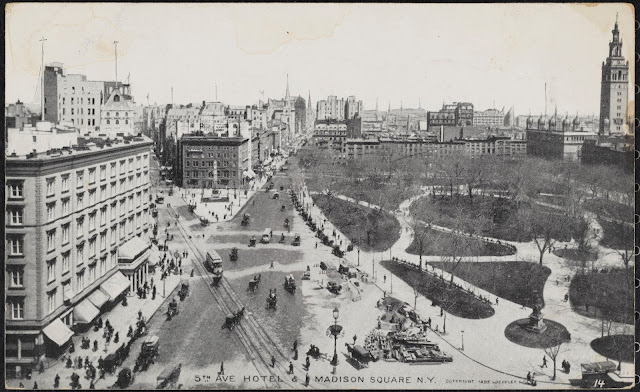
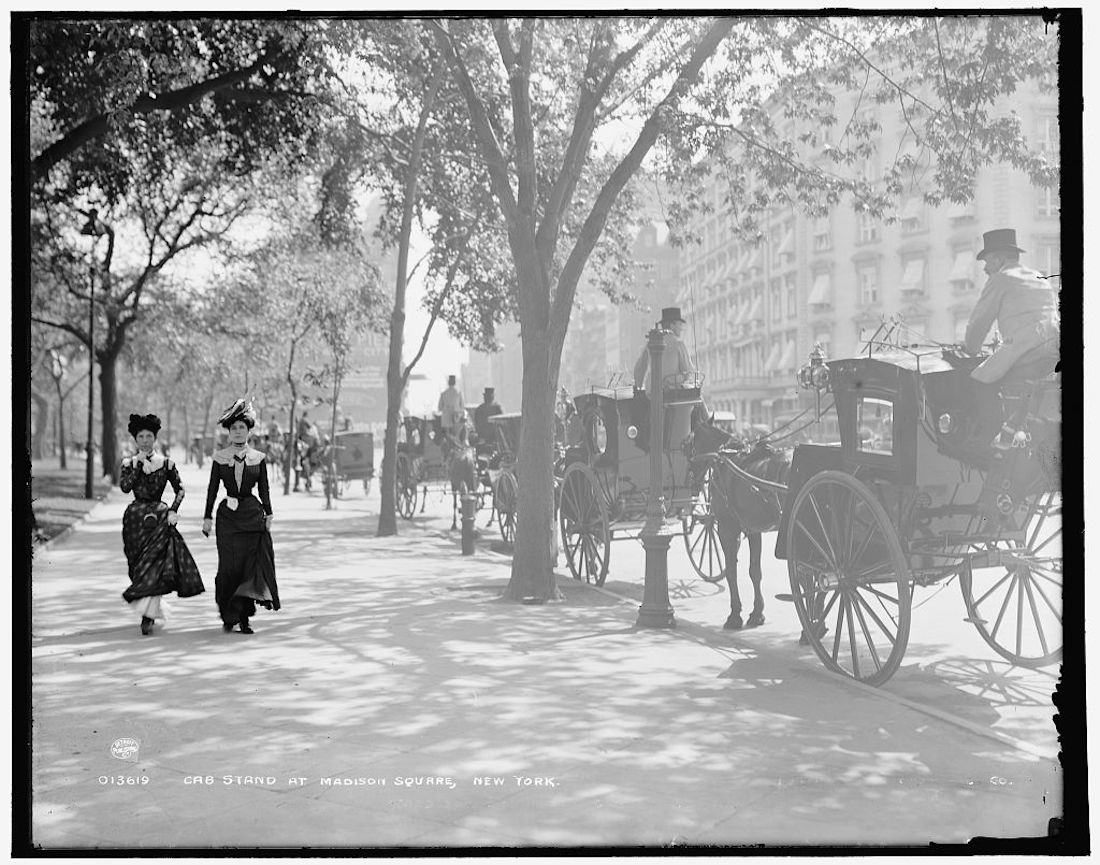
Madison Square Park was the epicenter of New York culture from the years following the Civil War to early 20th century. The park was really at the heart of Gilded Age New York, whether you were rushing to an upscale restaurant like Delmonico’s or a night of the theater or maybe just an evening at one of New York’s most luxurious hotels like the Fifth Avenue Hotel or the Hoffman House.

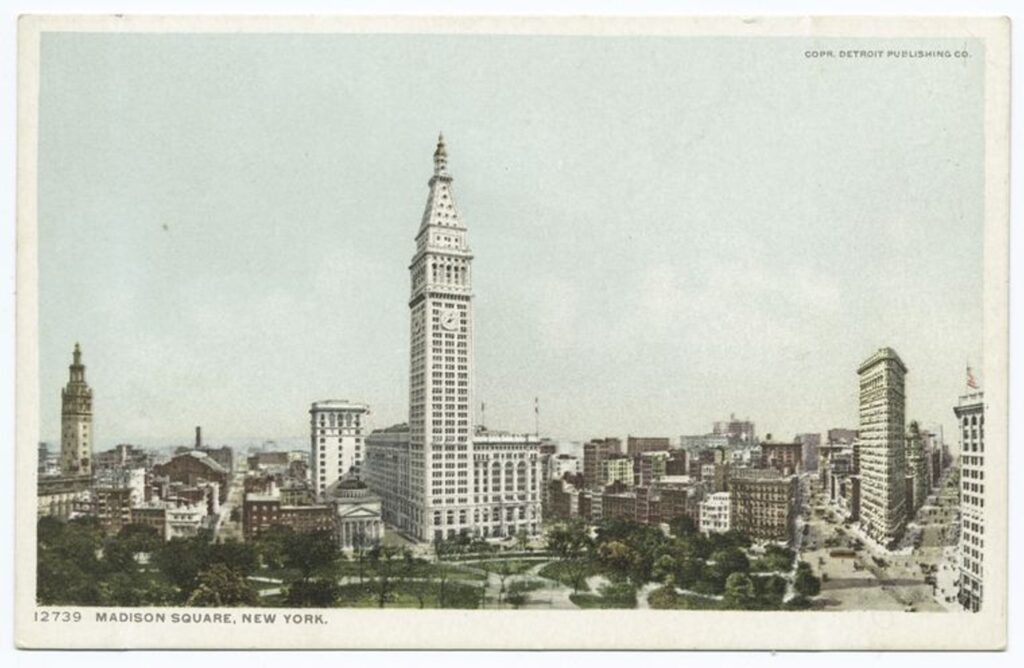
The park is surrounded by some of New York’s most renown architecture, from the famous Flatiron Building to the Metropolitan Life Insurance Tower, once the tallest building in the world.

The square also lends its name, of course, to one of the most famous sports and performing venues in the world – Madison Square Garden. Its origins begin at the northeast corner of the park on the spot of a former railroad depot and near the spot of the birthplace of an American institution — baseball.

The park introduced New Yorkers to the Statue of Liberty … or at least her forearm and torch. It stood silently over the bustling park while prize-winning dogs were championed at the very first Westminster Kennel Club Dog Show nearby, held at Gilmore’s Gardens, the precursor to Madison Square Garden.

Today the region north of the park is referred to as NoMad, which recalls life around Madison Square during the Gilded Age with its high-end restaurant and hotel scene.

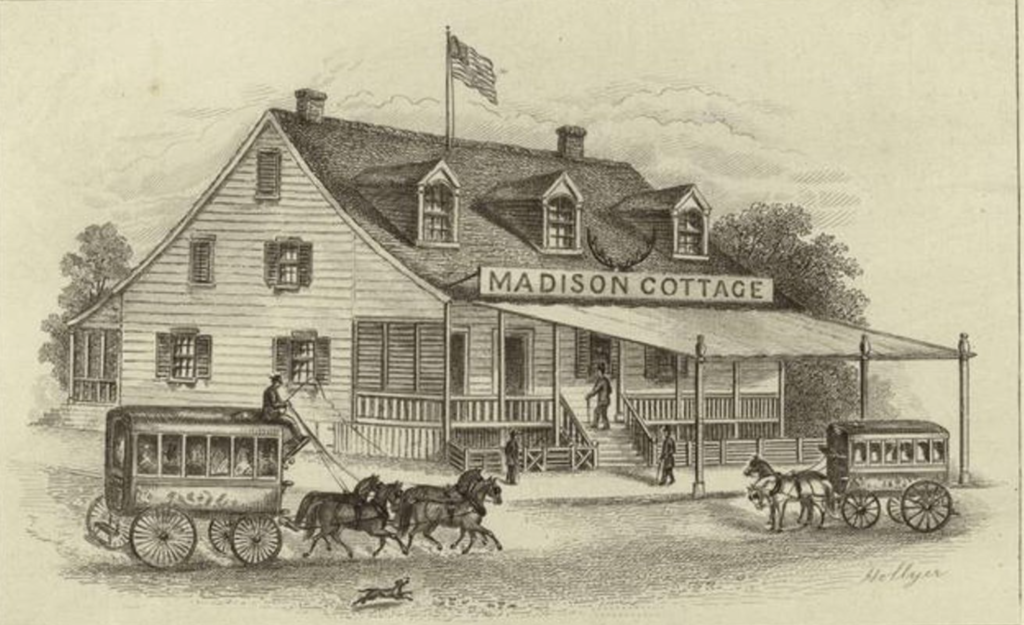
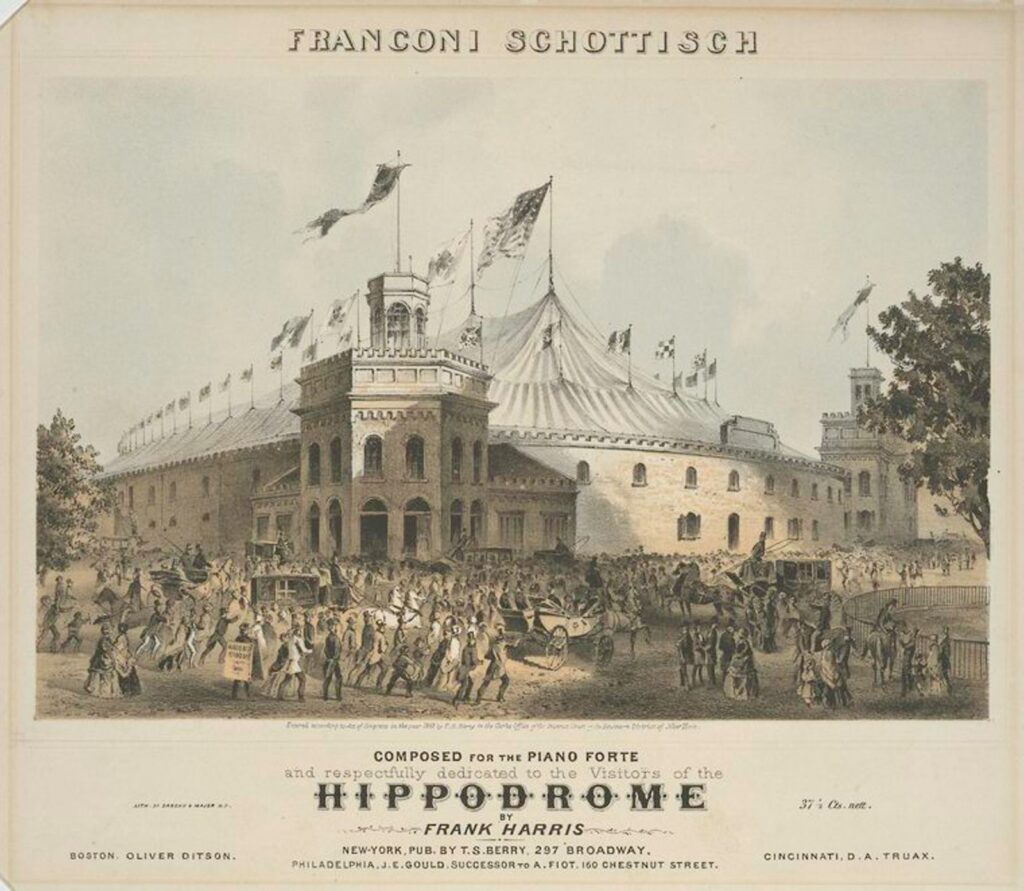
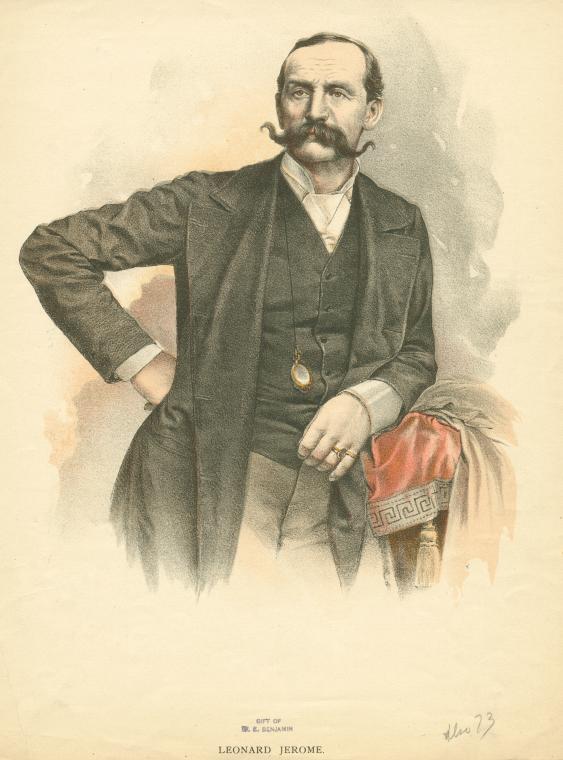
Tom and Greg invite you on this time-traveling escapade covering over 200 years of history. From the days of rustic creeks and cottages to the long lines at the Shake Shake. From Franconi’s Hippodrome to the dazzling colonge fountains of Leonard Jerome (Winston Churcill’s grandfather).

LISTEN HERE: IT HAPPENED AT MADISON SQUARE PARK

This episode’s title pays homage to one of favorite books about park history — It Happened On Washington Square by Emily Kies Folpe.


Madison Cottage, courtesy NYPL
Franconi’s Hippodrome, 1853, courtesy NYPL
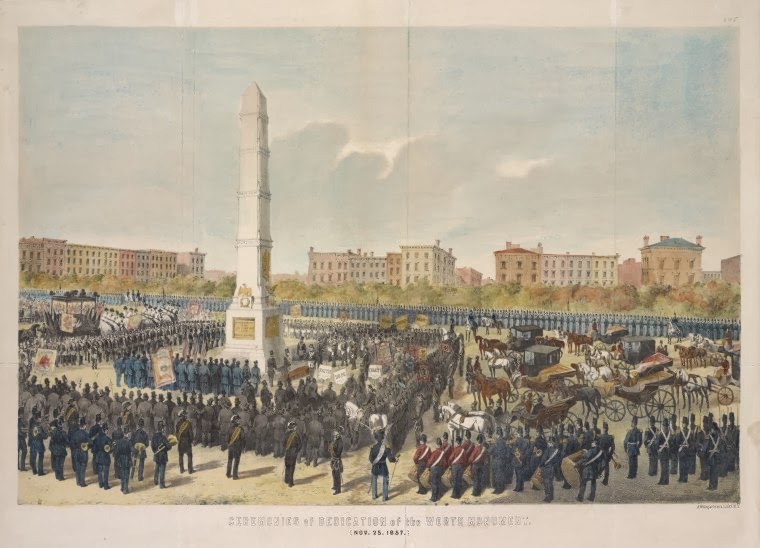
Dedication of the Worth Monument in 1857. In the background you can see the development of the surrounding area
Leonard Jerome….
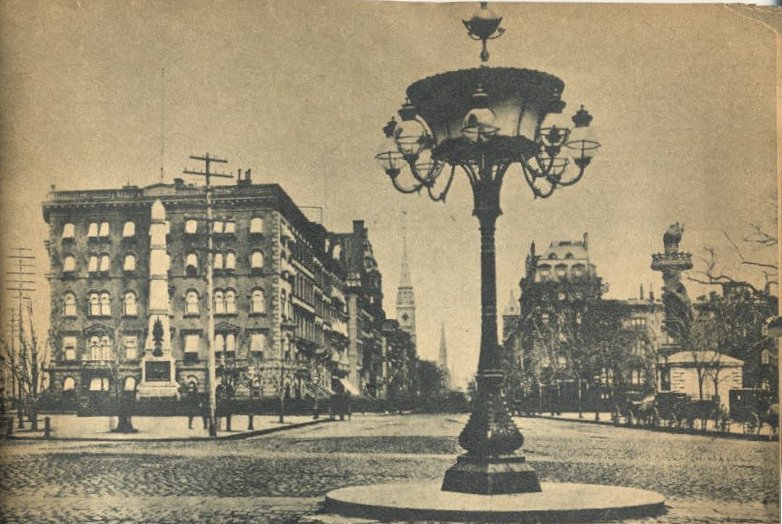
… and the Jerome Mansion. In the distance is the Madison Avenue Presbyterian Church.
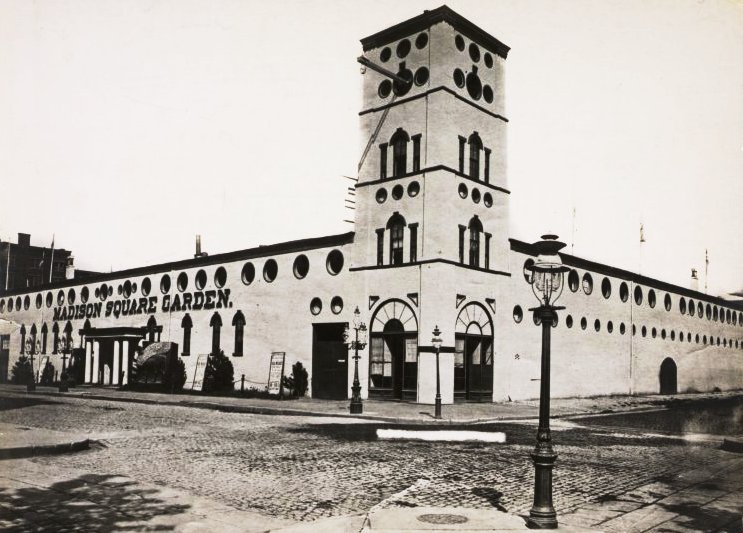
The former Gilmore’s Gardens, renamed Madison Square Garden
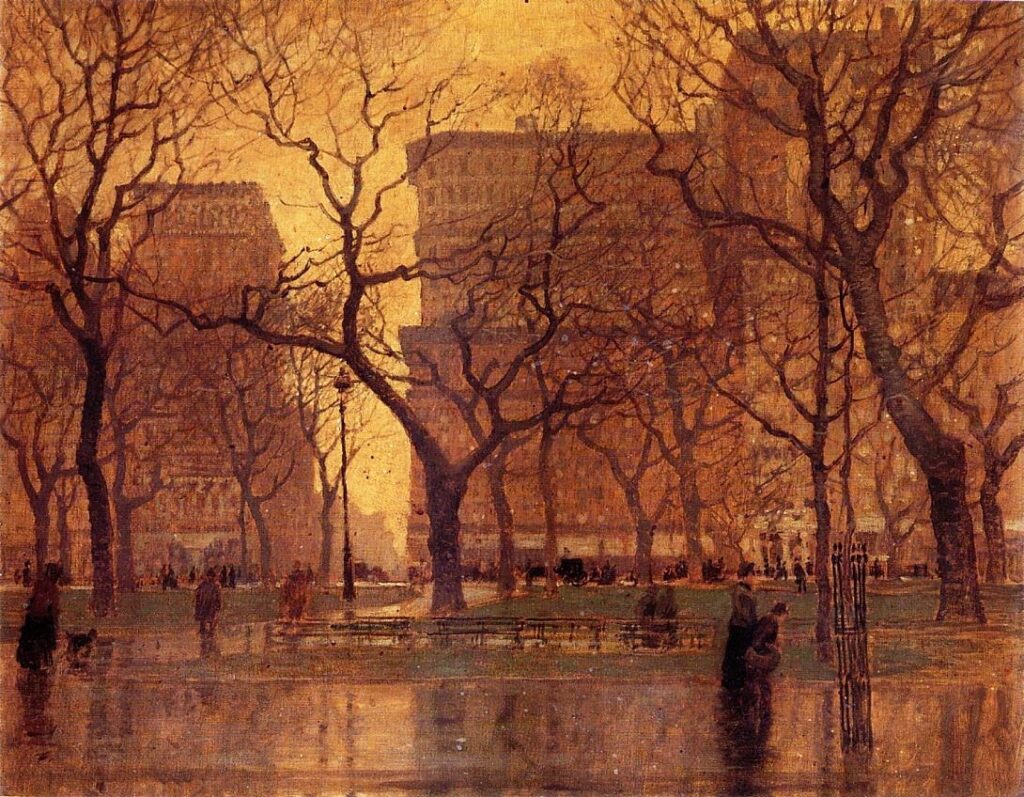
Rain on Madison Square, painting by Paul Cornoyer
Courtesy NYPL
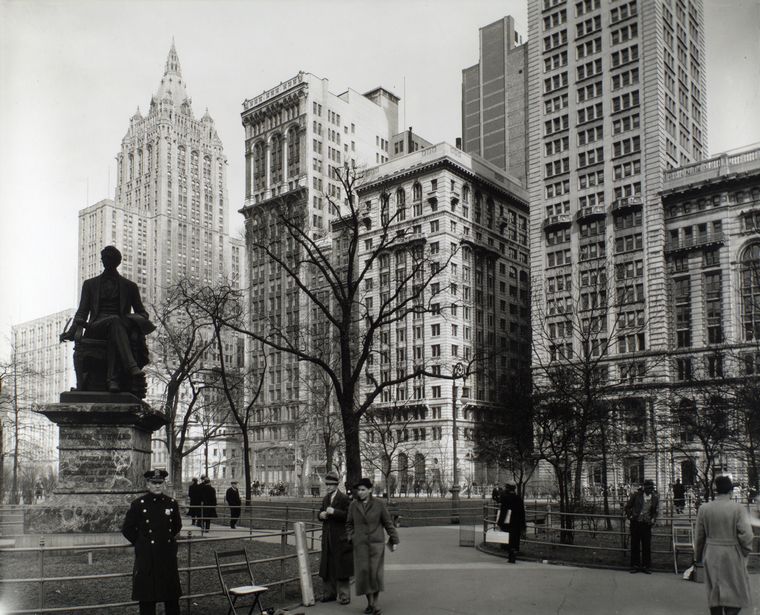
Madison Square 1936 , photo by Berenice Abbott
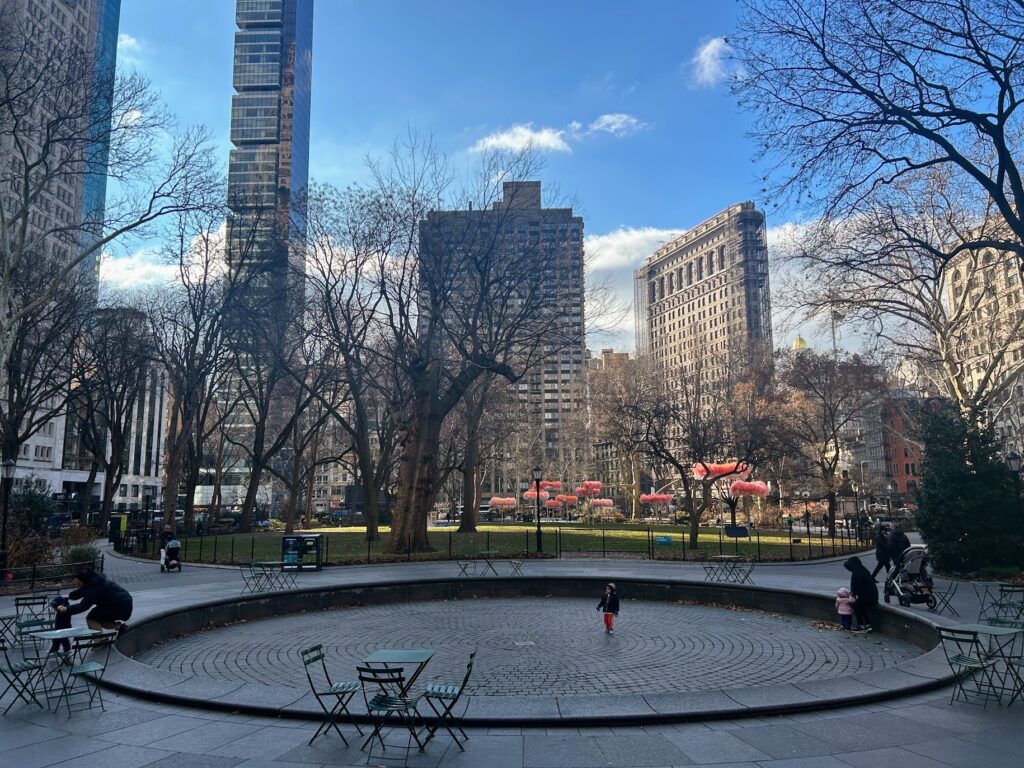
Northern pool in Madison Square Park. Photo by Greg Young
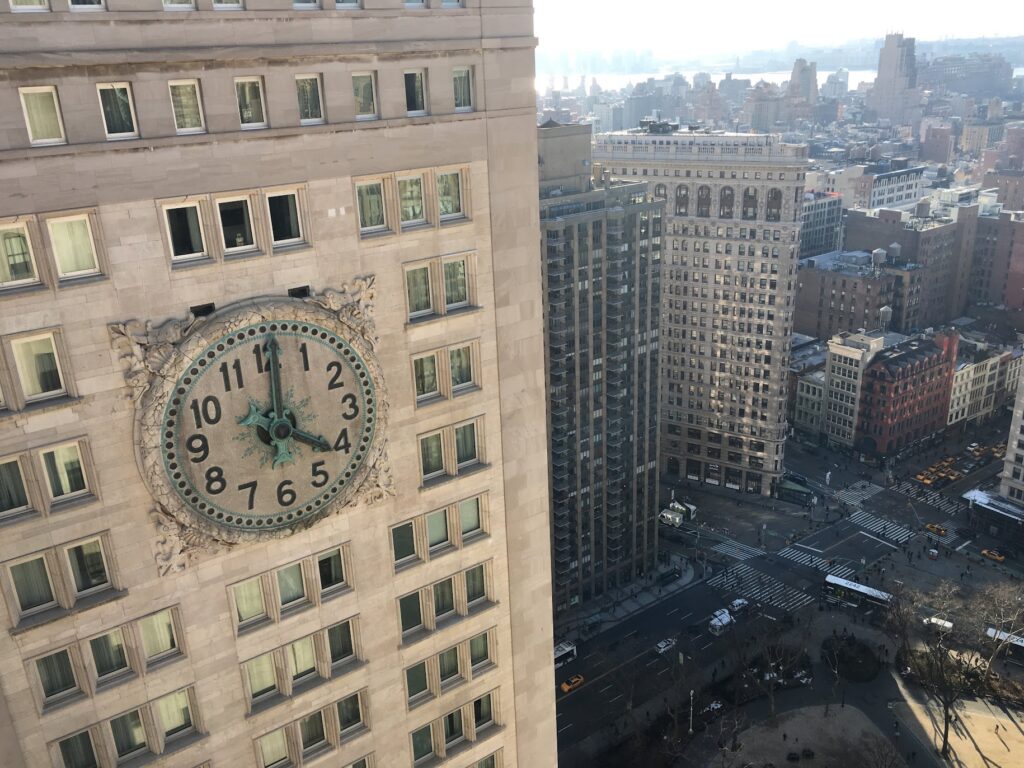
Looking down at the Metropolitan Life Tower and the Flatiron Building. Photo by Greg Young
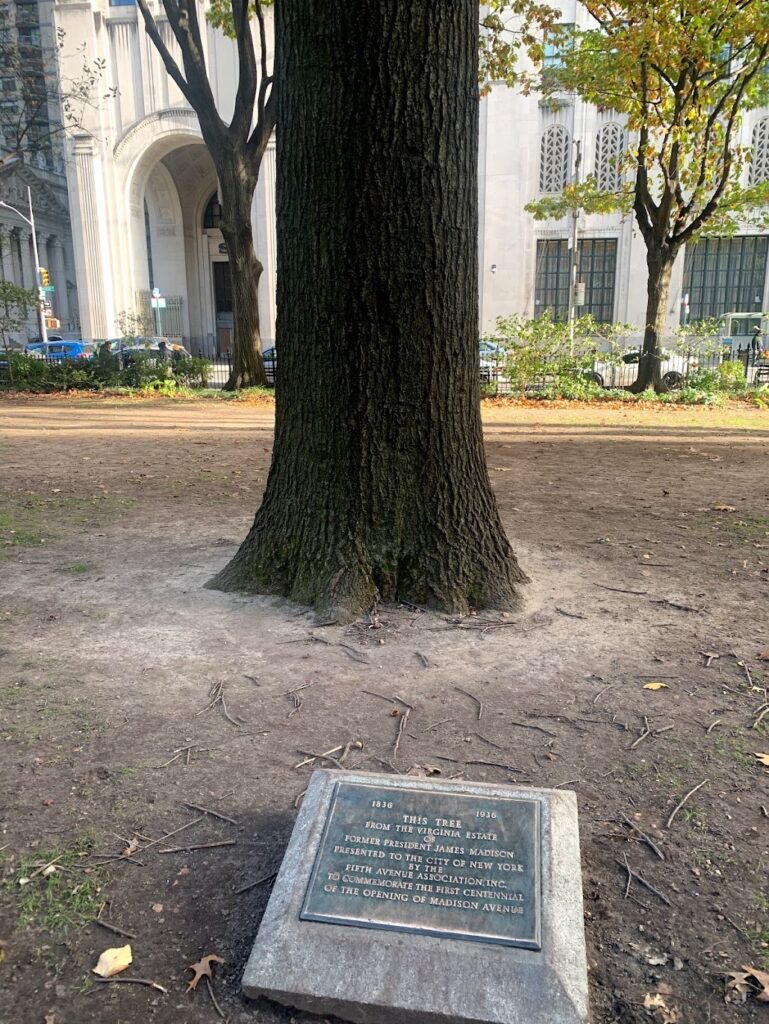
The park features a tree from James Madison’s Virginia plantation.

FURTHER READING

A Block in Time: A New York City History at the Corner of Fifth Avenue and Twenty-Third Street / Christiane Bird
The Flatiron: The New York Landmark and the Incomparable City That Arose with It / Alice Sparberg Alexiou
The Grandest Madison Square Garden: Art, Scandal, and Architecture in Gilded Age New York / Suzanne Hinman
Incredible New York: High Life and Low Life from 1850 to 1950 / Lloyd Morris
Liberty’s Torch: The Great Adventure to Build the Statue of Liberty / Elizabeth Mitchell
Madison Square: The Park and Its Celebrated Landmarks / Miriam Berman
Madison Square Garden, 100 Years of History / Joseph Durso

RELATED ARTICLES FROM THIS WEBSITE

Worth Square: Madison Square’s cemetery for one
Madison Square Snow Show: The first-ever film of a New York City blizzard
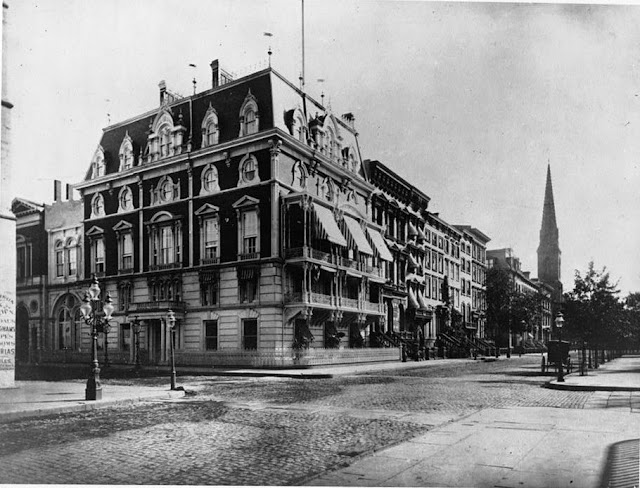
The Fifth Avenue Hotel: Opulence, glamour and power on Madison Square
When the Statue of Liberty left her arm in Madison Square
The Arches of Madison Square Park
The lights of Madison Square: A Christmas tree at night
Let’s go see the horses at Madison Square Garden!

FURTHER LISTENING

Categories
Landmarks Podcasts

Flatiron Building: A Three-Sided Story

PODCAST For our 8th anniversary episode, we’re revisiting one of New York City’s great treasures and a true architectural oddity — the Flatiron Building.

When they built this structure at the corner of Madison Square Park (and completed in 1902), did they realize it would be an architectural icon AND one of the most photographed buildings in New York City?

1

The George A. Fuller Company, one of the most powerful construction firms in Chicago, decided to locate their new New York office building in a flashy place — a neighborhood with no skyscrapers, on a plot of land that was thin and triangular in shape. They brought in Daniel Burnham, one of America’s greatest architects, to create a one-of-a-kind, three-sided marvel, presenting a romantic silhouette and a myriad of optical illusions.
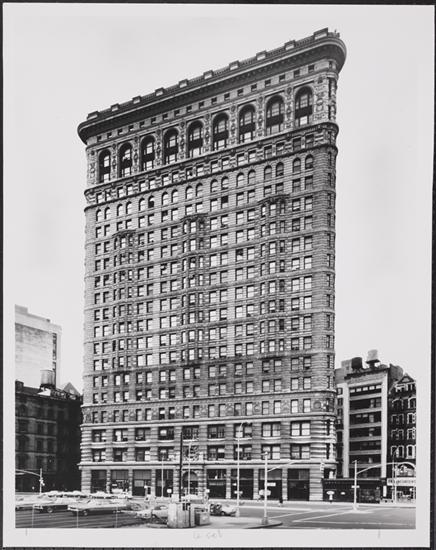
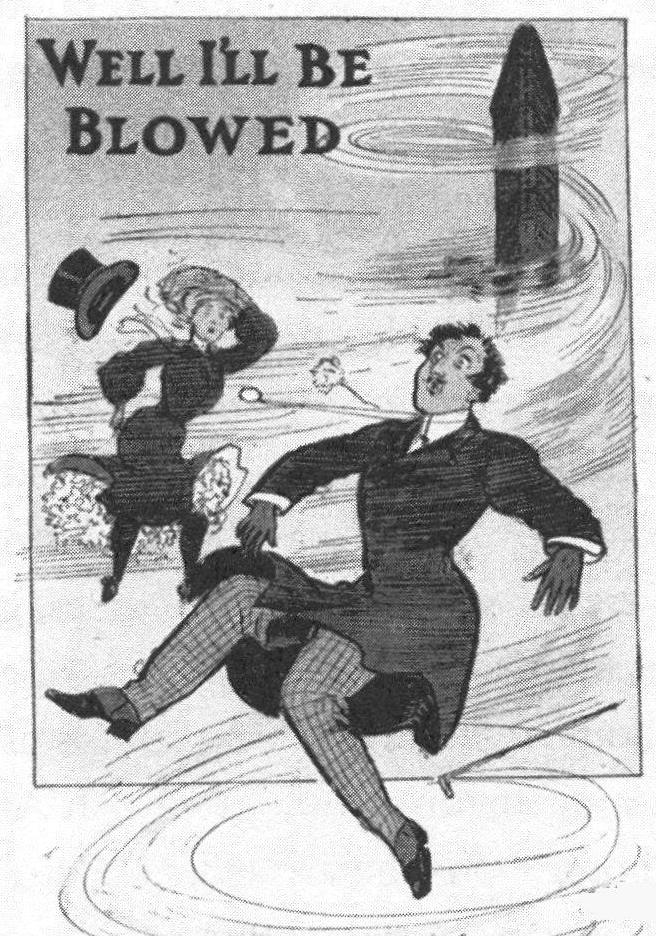
The Flatiron Building was also known for the turbulent winds which sometimes blew out its windows and tossed up the skirts of women strolling to Ladies Mile. It’s a subject of great art and a symbol of the glamorous side of Manhattan.

In this show, we bring you all sides of this structure’s incredible story.


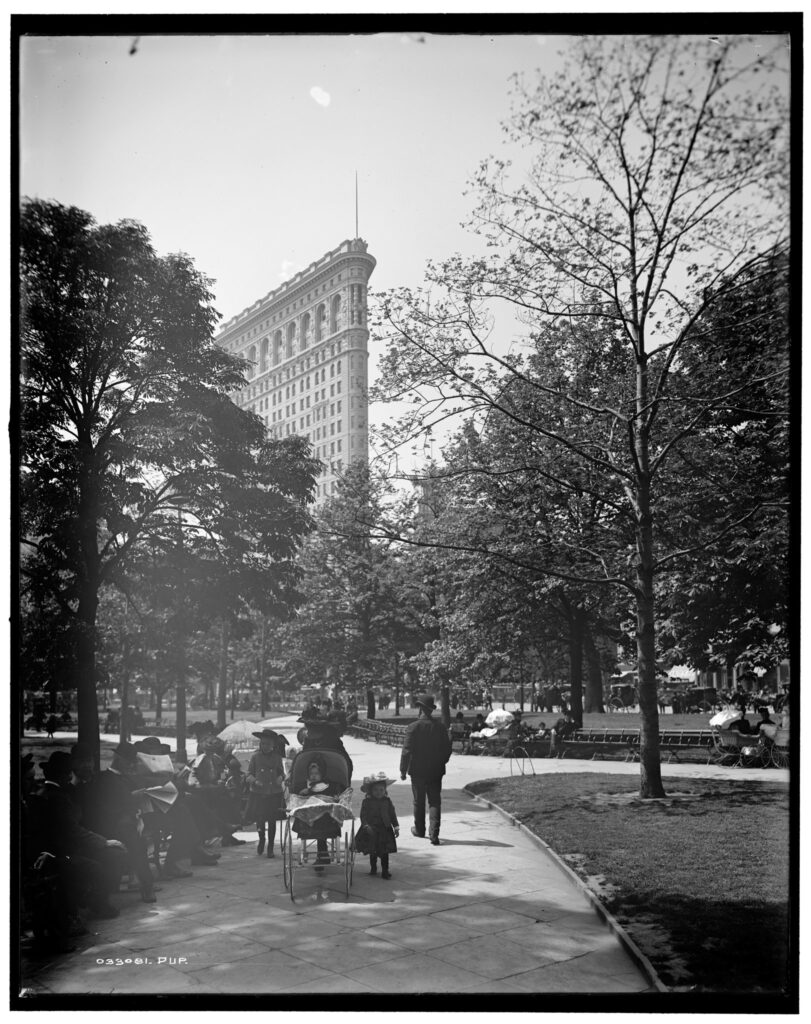
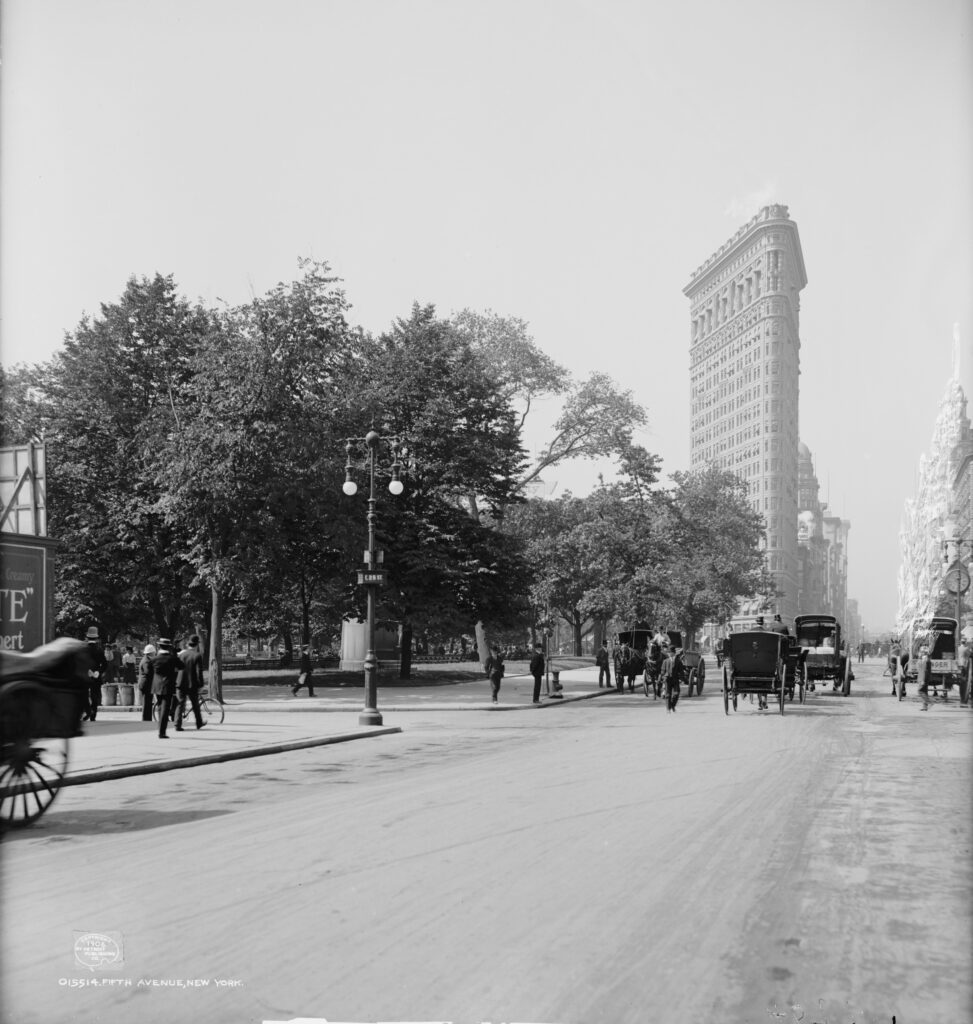
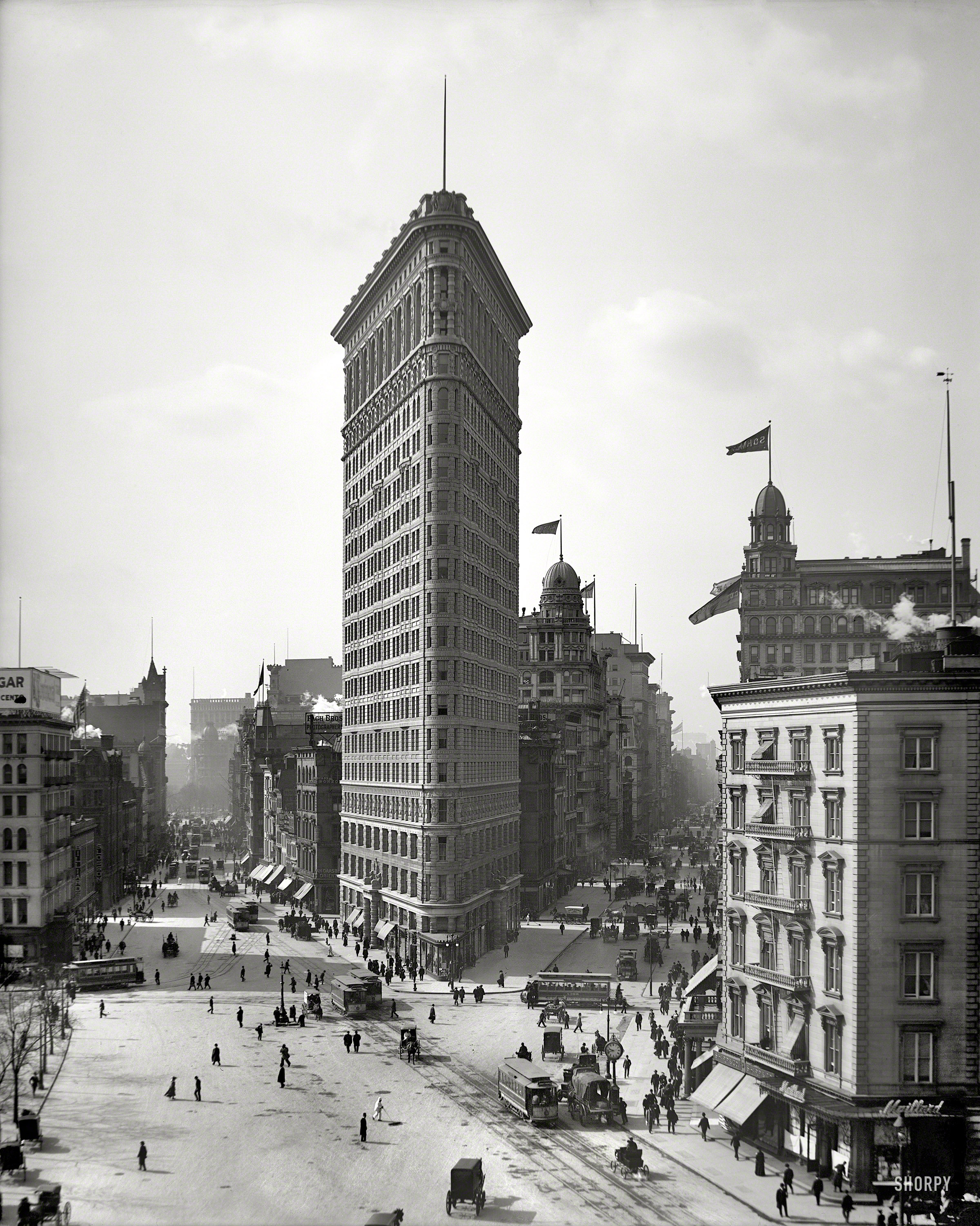
Below: A cleaned up look at the Flatiron Building, courtesy Shorpy. Click here for a look at the details!

Courtesy Shorpy
Courtesy Shorpy

The Bowery Boys: New York City History podcast is brought to you …. by you!

Starting this month, we are doubling our number of episodes per month. Now you’ll hear a new Bowery Boys podcast every two weeks. We’re also looking to improve the show in other ways and expand in other ways as well — through publishing, social media, live events and other forms of media. But we can only do this with your help!

We are now a member of Patreon, a patronage platform where you can support your favorite content creators for as little as a $1 a month.

Please visit our page on Patreon and watch a short video of us recording the show and talking about our expansion plans. If you’d like to help out, there are five different pledge levels (and with clever names too — Mannahatta, New Amsterdam, Five Points, Gilded Age, Jazz Age and Empire State). Check them out and consider being a sponsor.

We greatly appreciate our listeners and readers and thank you for joining us on this journey so far. And the best is yet to come!


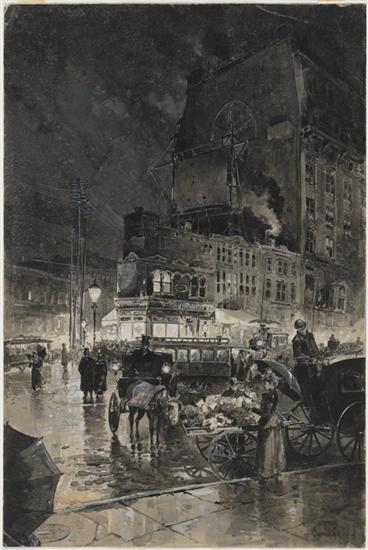
A dramatic illustration of 23rd Street and Fifth Avenue, where the Flatiron Building would soon stand. From here you can see the taller Cumberland building which would be used for billboards.
5

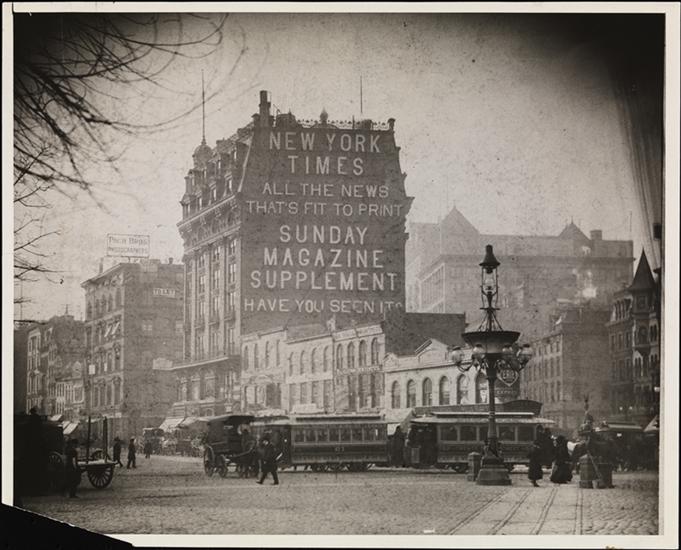
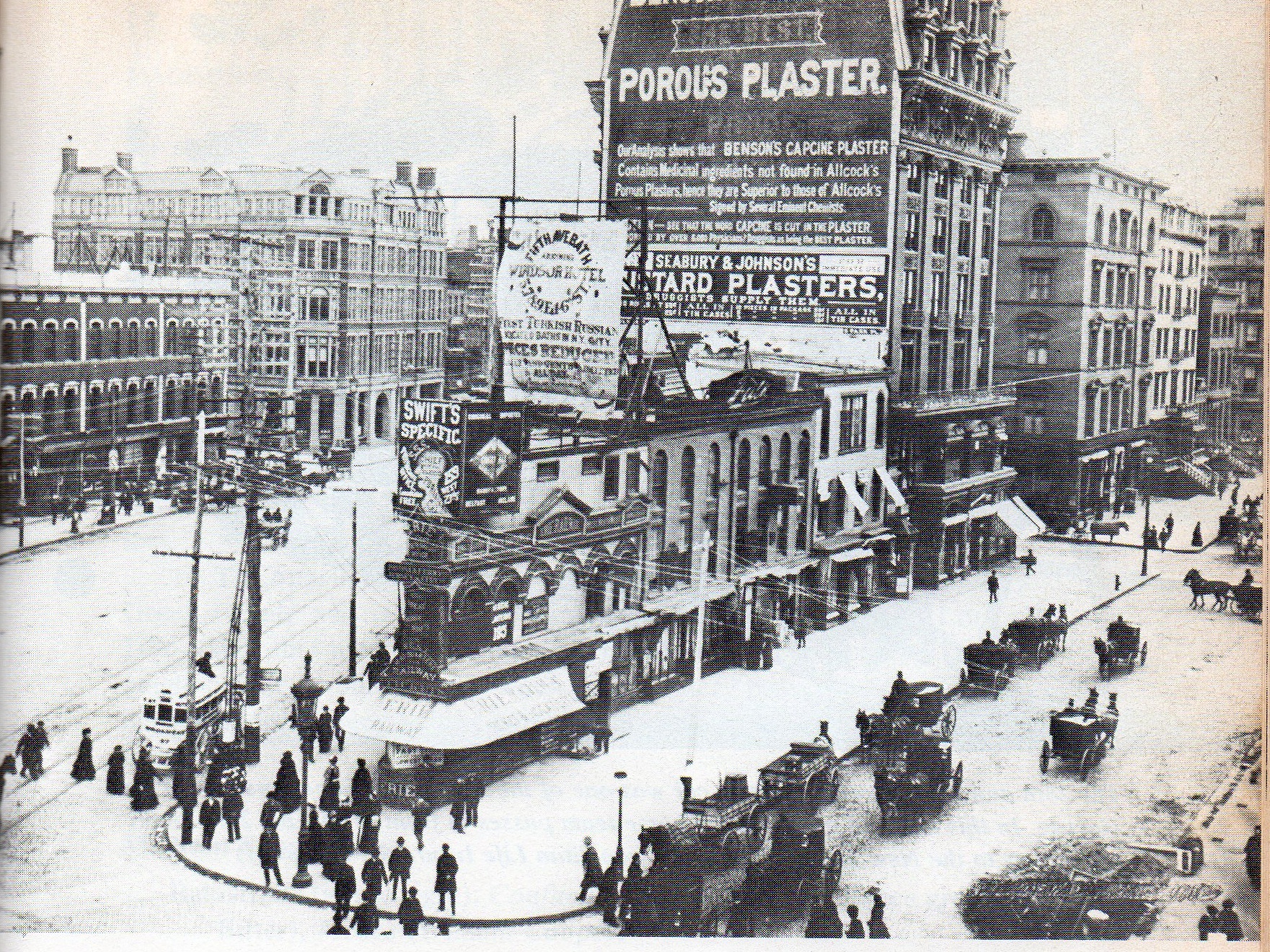
The structures that pre-dated the Flatiron Building, pictured here in 1897.

Courtesy Museum of City of New York
1

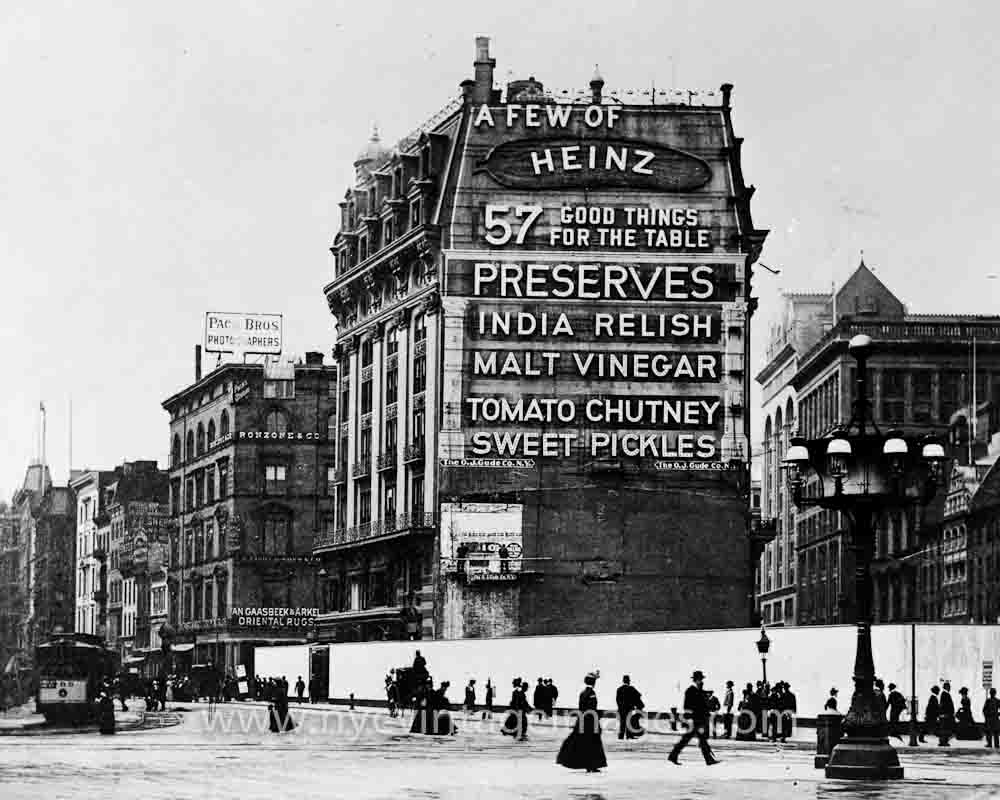
The smaller buildings have already been cleared away for the construction of the Fuller/Flatiron Building, but the taller building remains to some promotion of Heinz products.
Courtesy vintageimages.com

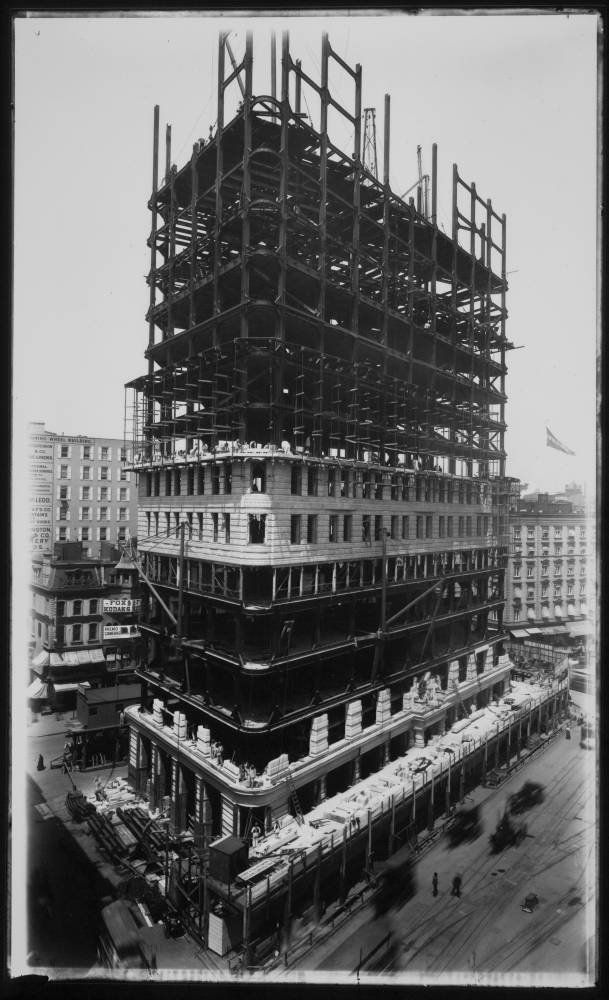
Construction of the Flatiron, picture from late 1901 or early 1902.

6
Courtesy Library of Congress

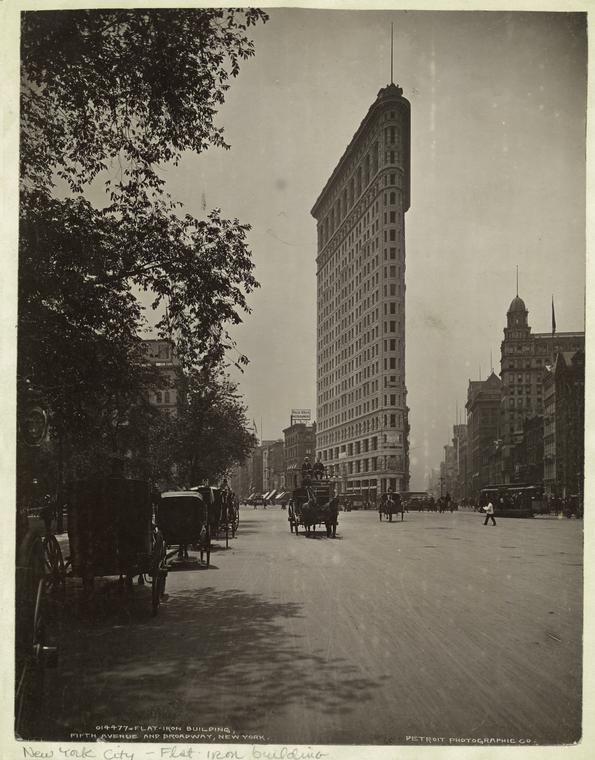
From every angle, the Flatiron takes on a new shape…..

Courtesy New York Public LIbrary

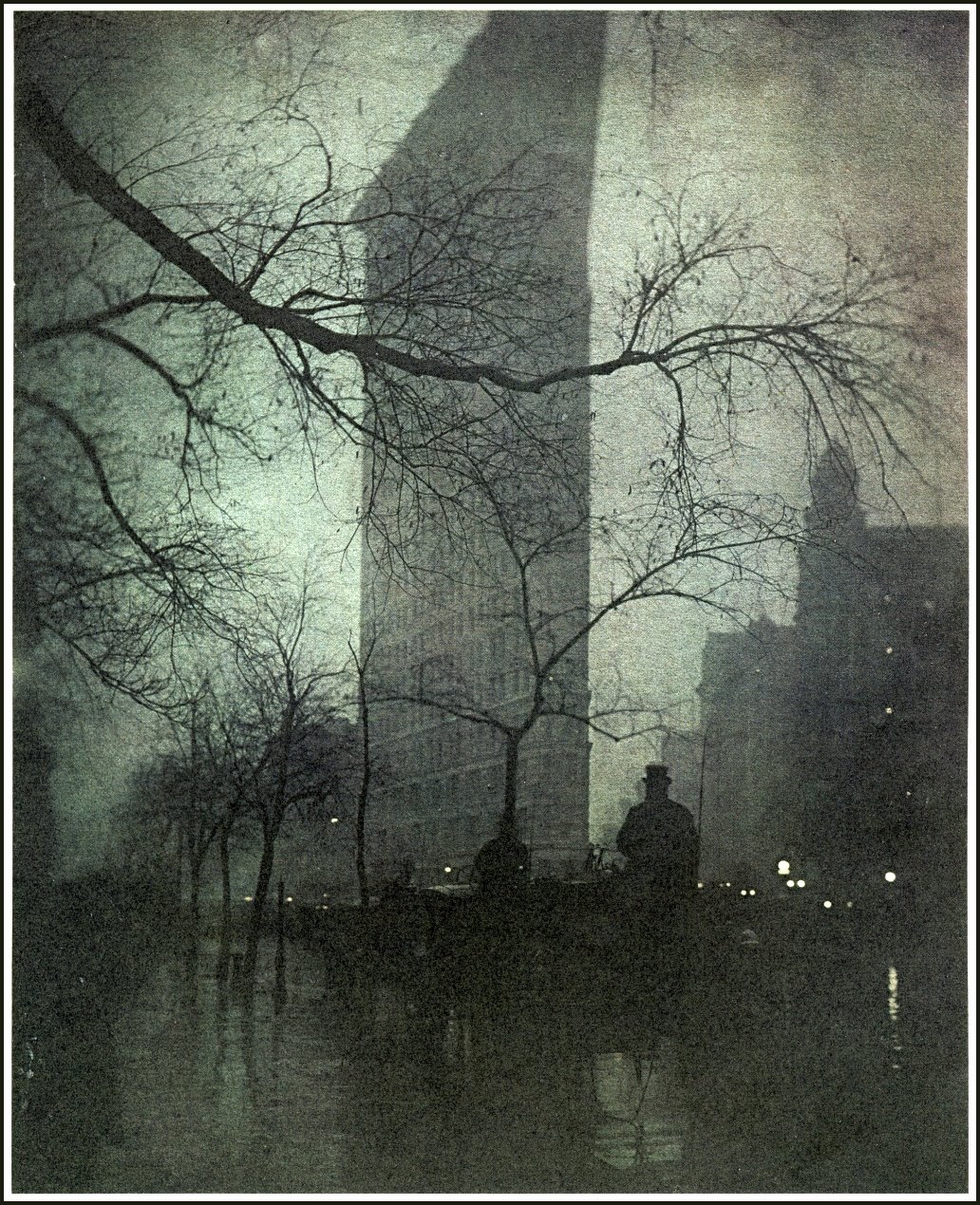
…inspiring artists like Edward Steichen to frame the building in romantic and even mysterious ways (such as his iconic shot from 1904)

edward

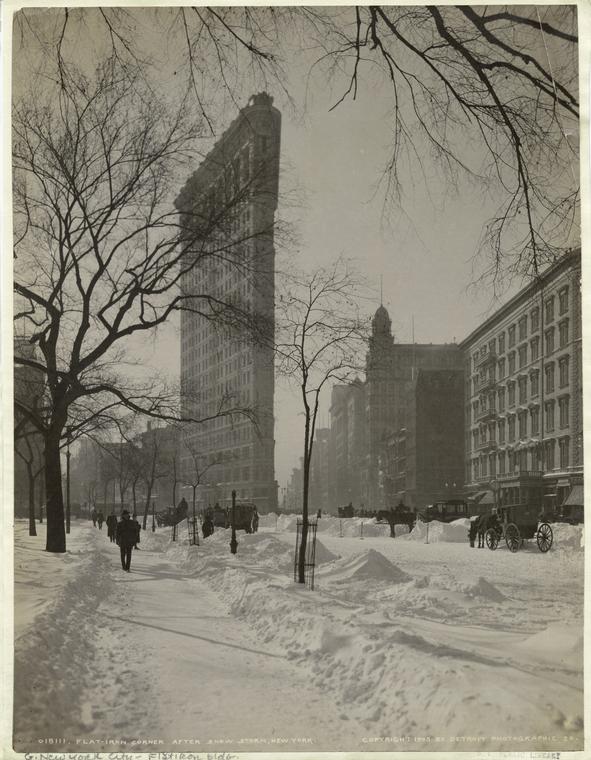
A view, similar to the classic one above, of the Flatiron after a snowstorm in 1905

Courtesy New York Public Library

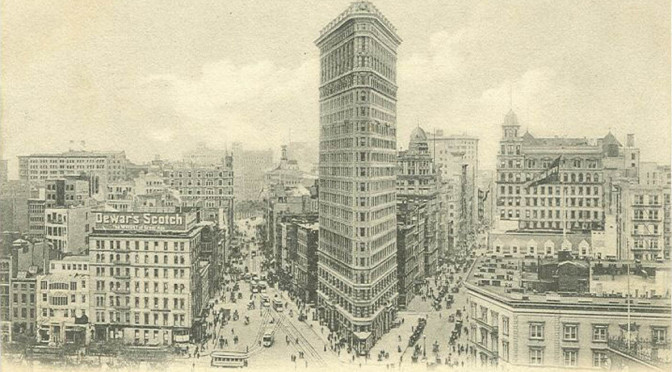
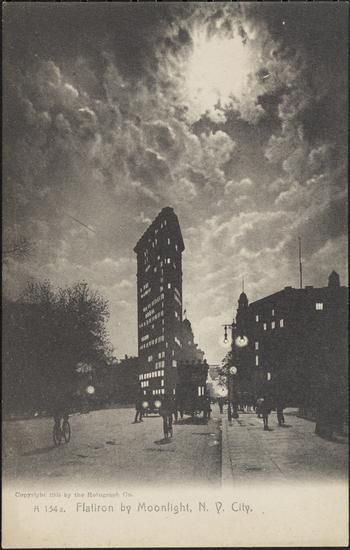
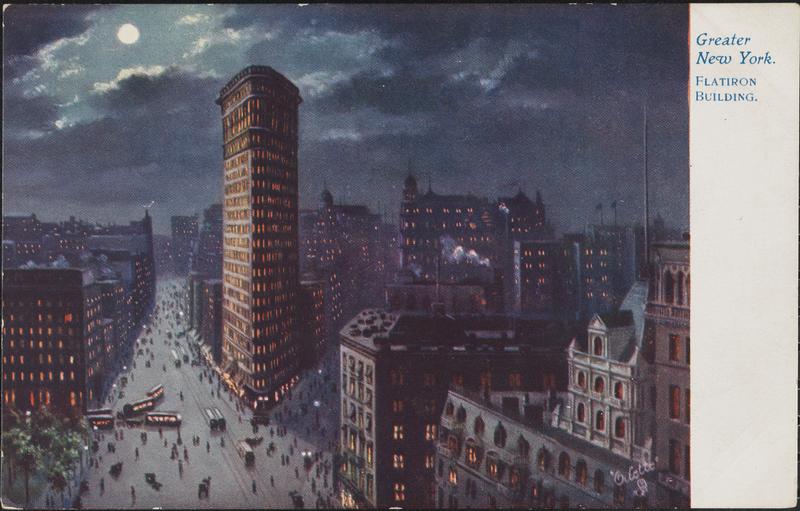
The Flatiron has inspired thousands of photo-mechanical post cards back in the day, highlighting its alluring shape-shifting form upon the changing New  York skyline.

2
Courtesy Museum of the City of New York

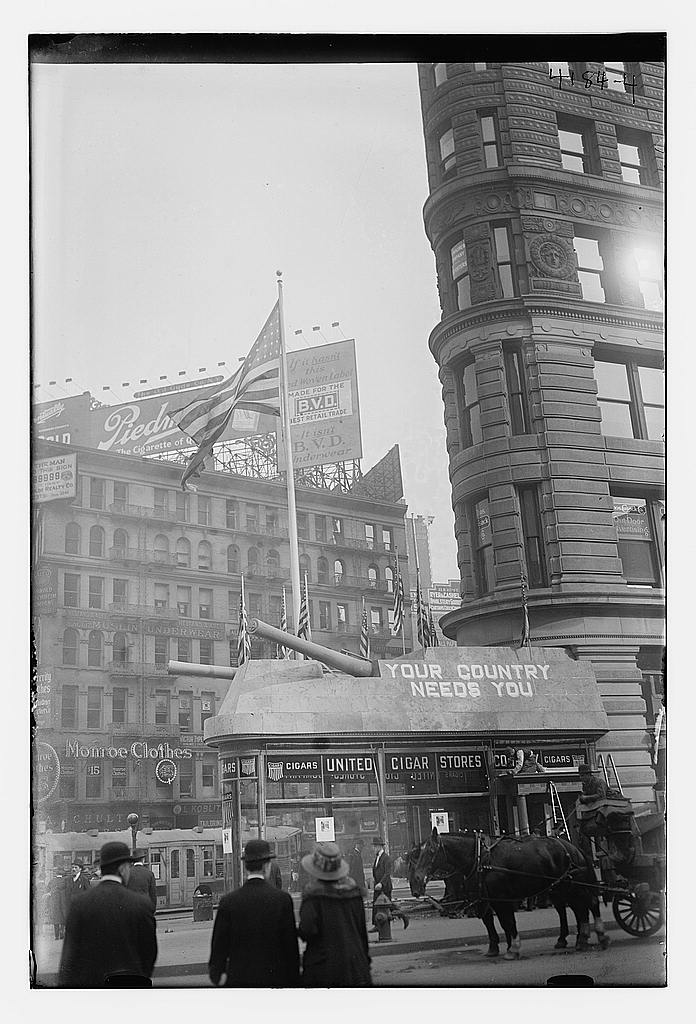
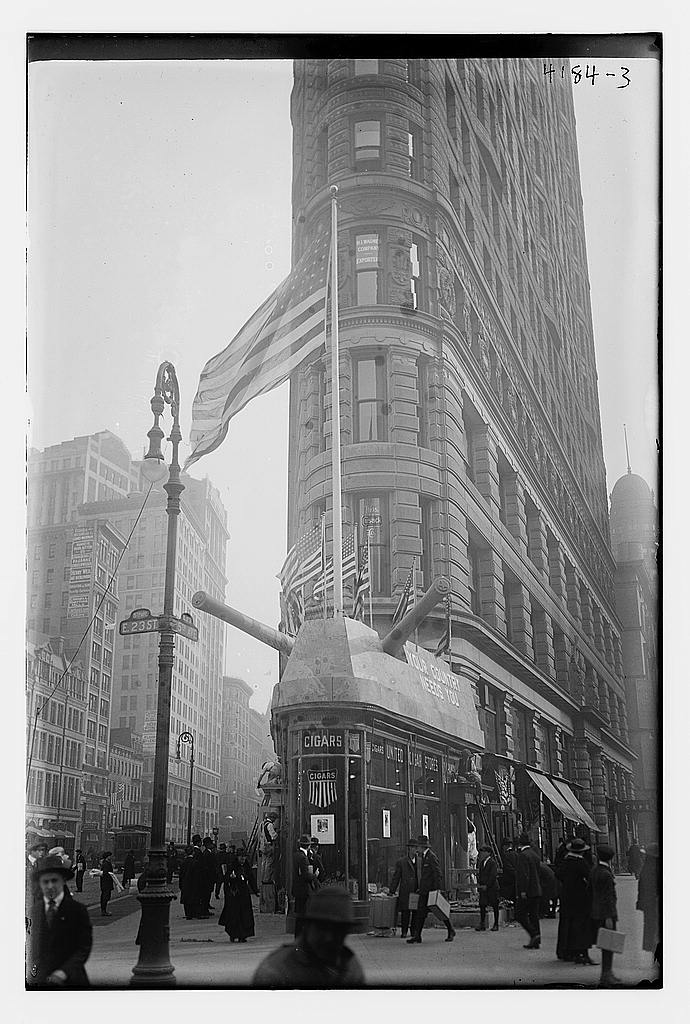
The cigar store in the narrow ‘cowcatcher’ served as a recruitment office during World War I, topped with military weaponry.

Courtesy Library of Congress

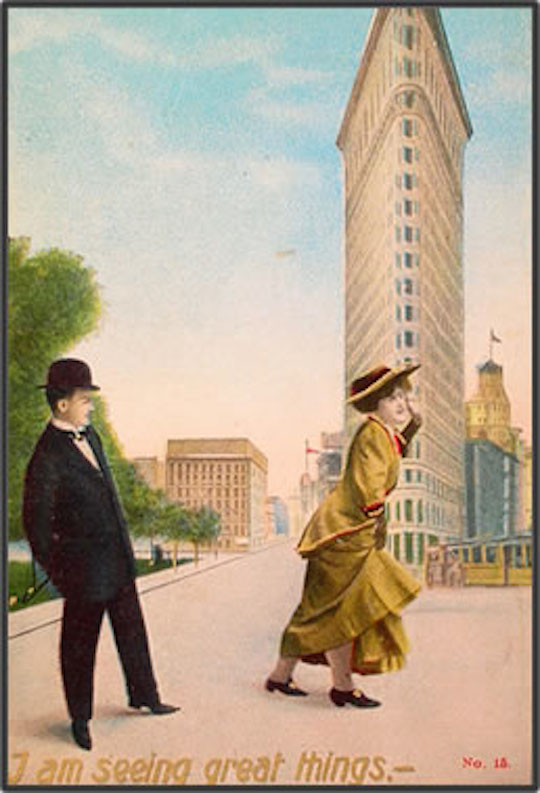
Another postcard focused on the Flatiron’s particularly windy properties!

wind

American Mutoscope and Biography Co. filmed this humorous look at ladies in the wind on October 26, 1903:

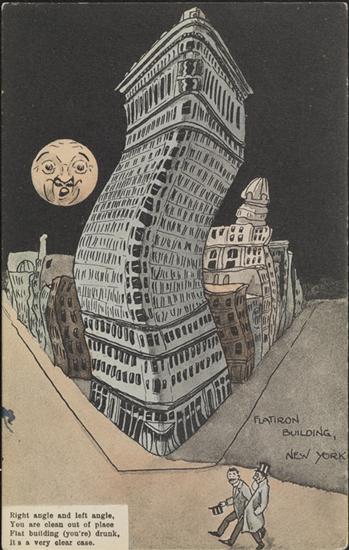
A Max Ettlinger illustration from 1915 — Flatiron, you’re drunk!

Courtesy Museum of City of New York

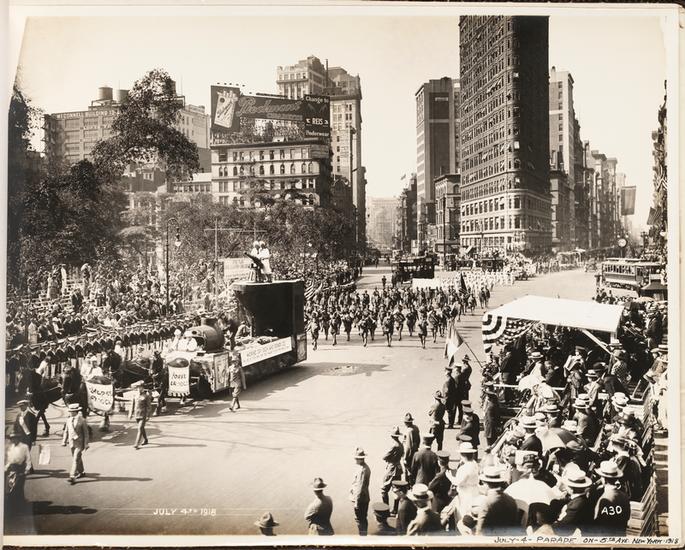
A July 4th parade, passing up Fifth Avenue.

Courtesy Museum of the City of New York

The Flatiron in 1935, from an angle that makes it appear almost two dimensional.

1935

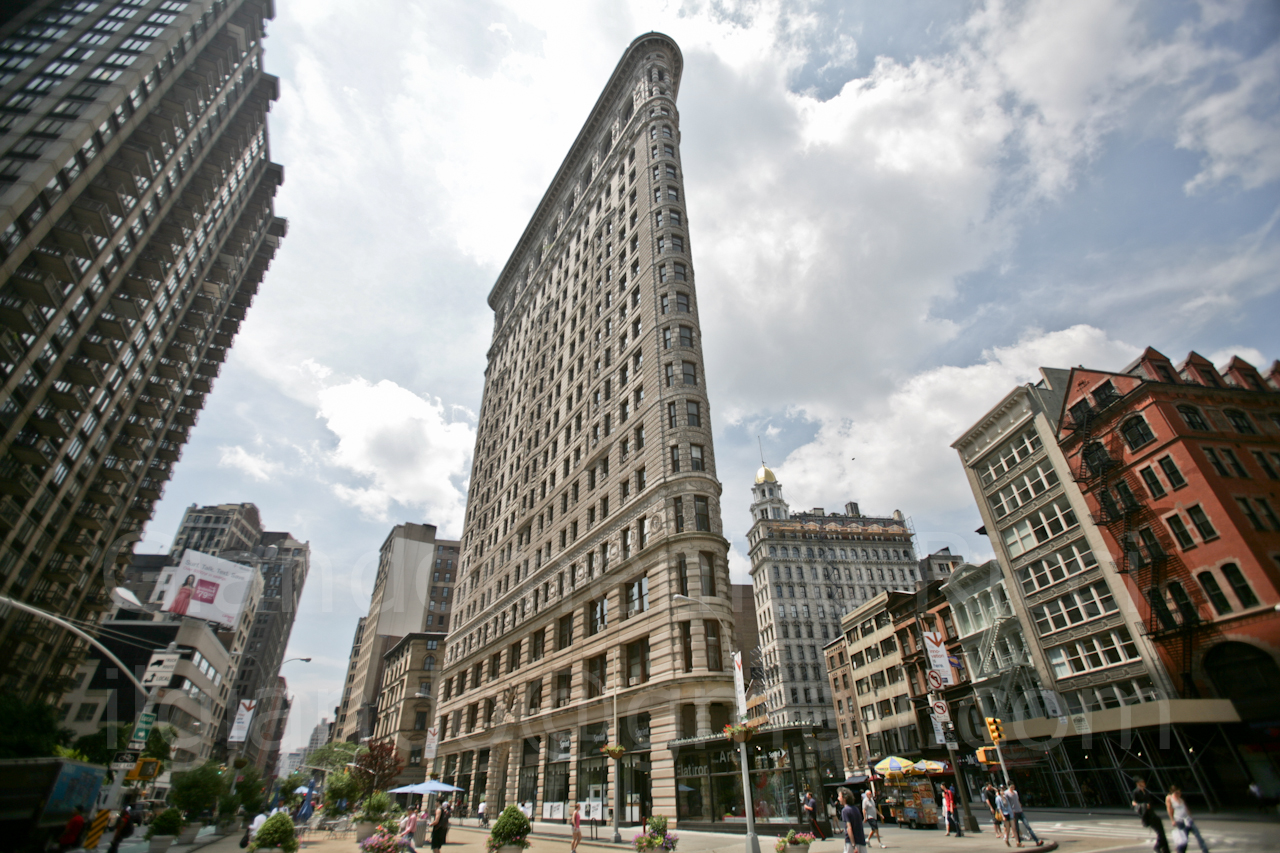
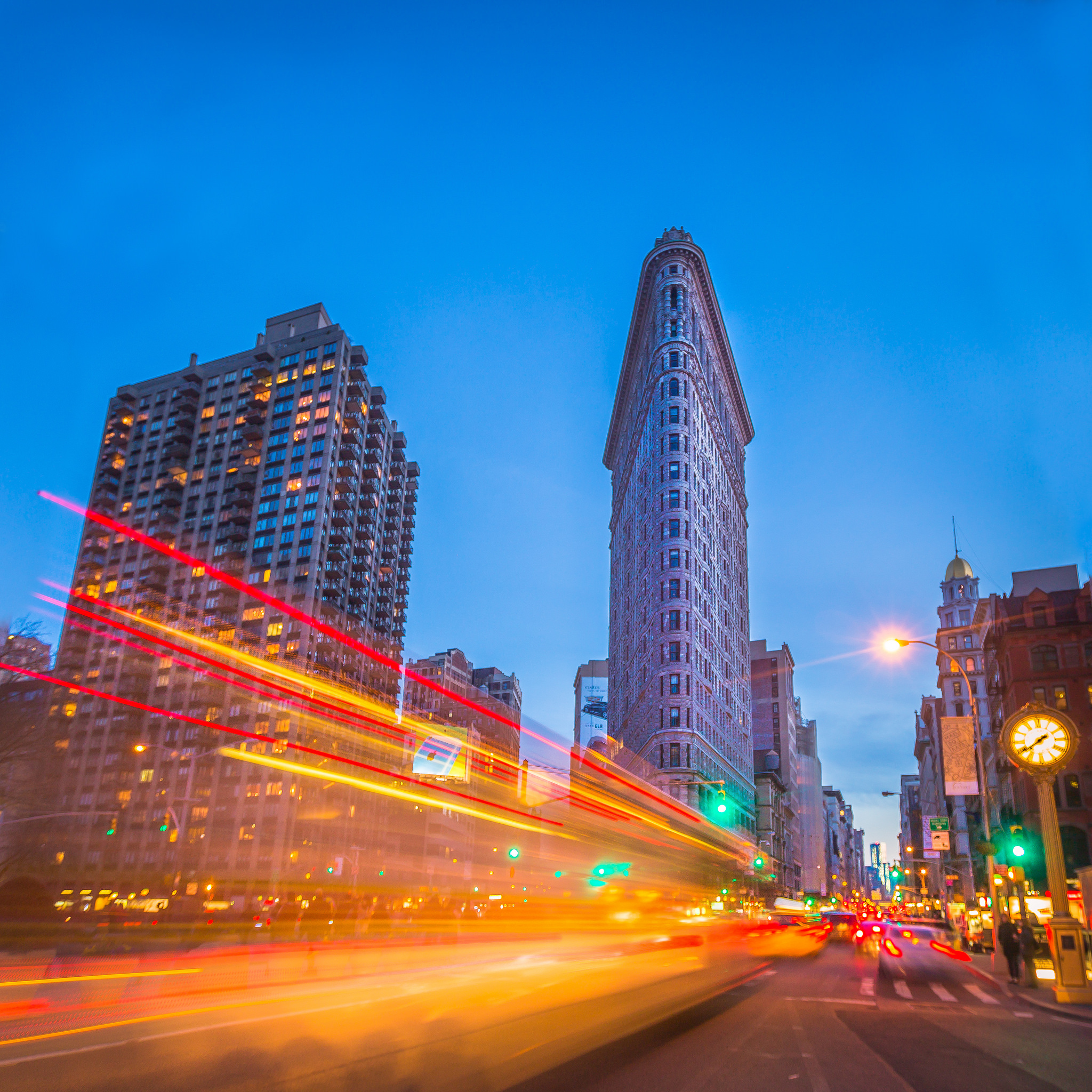
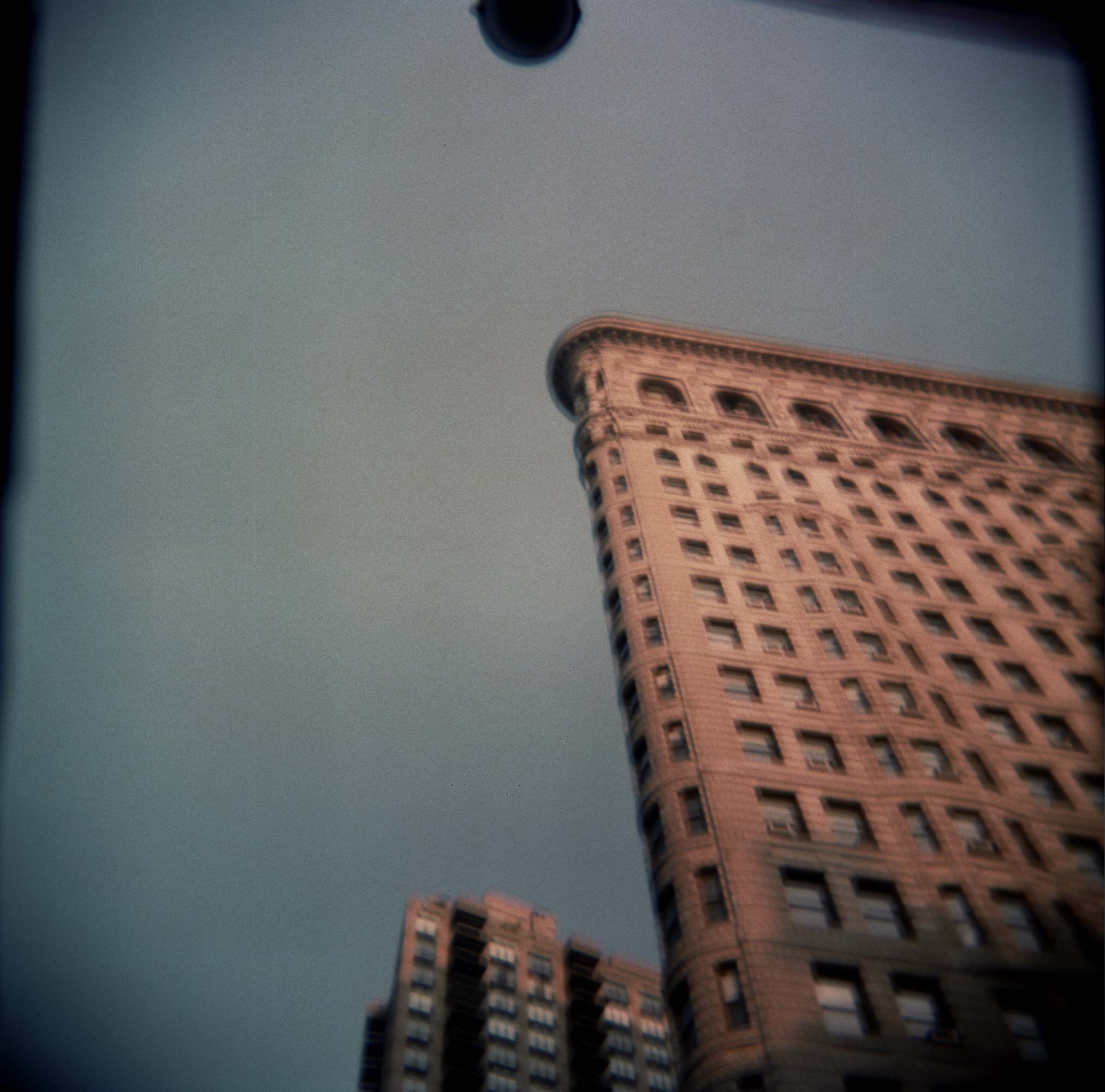
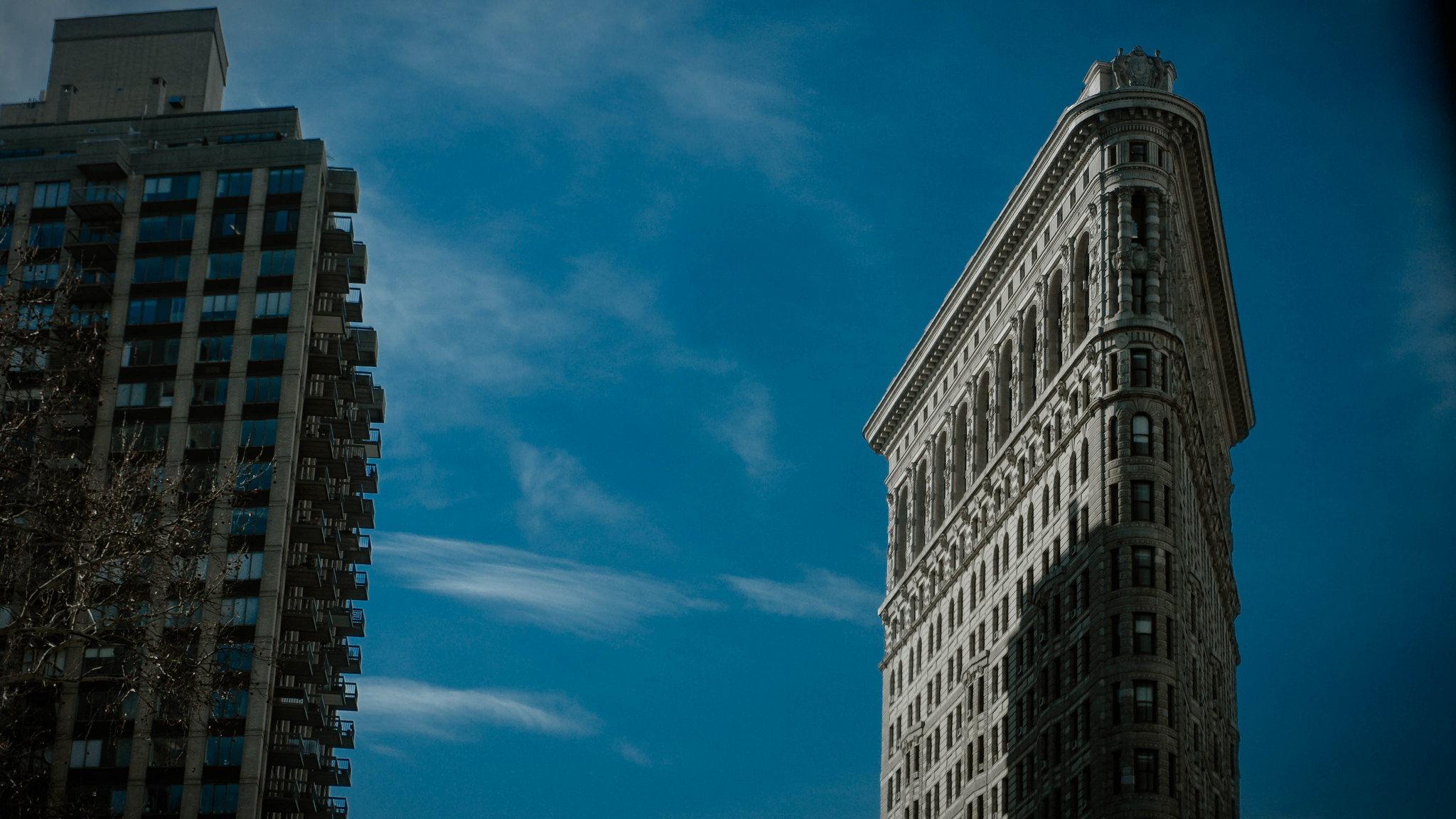
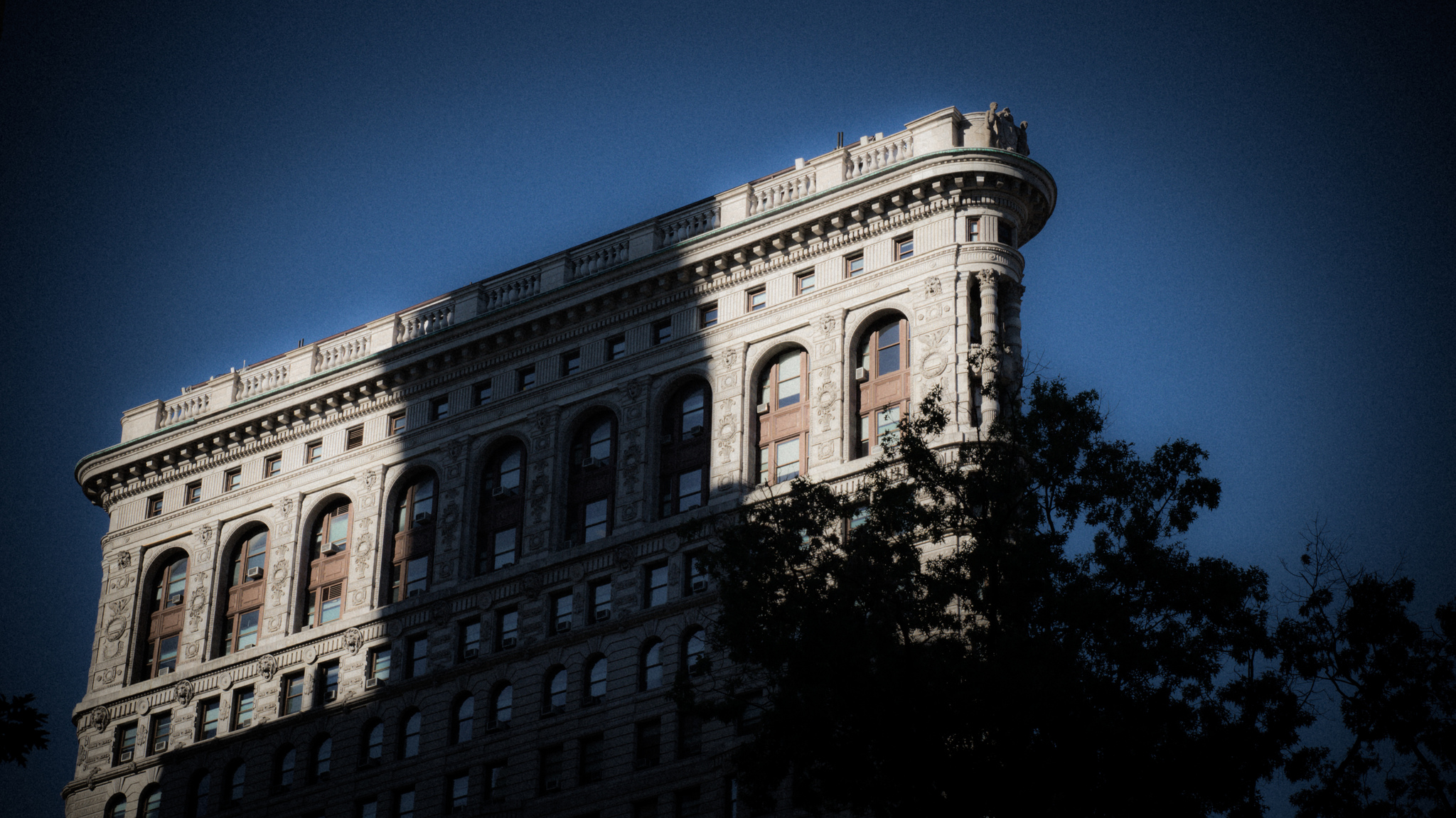
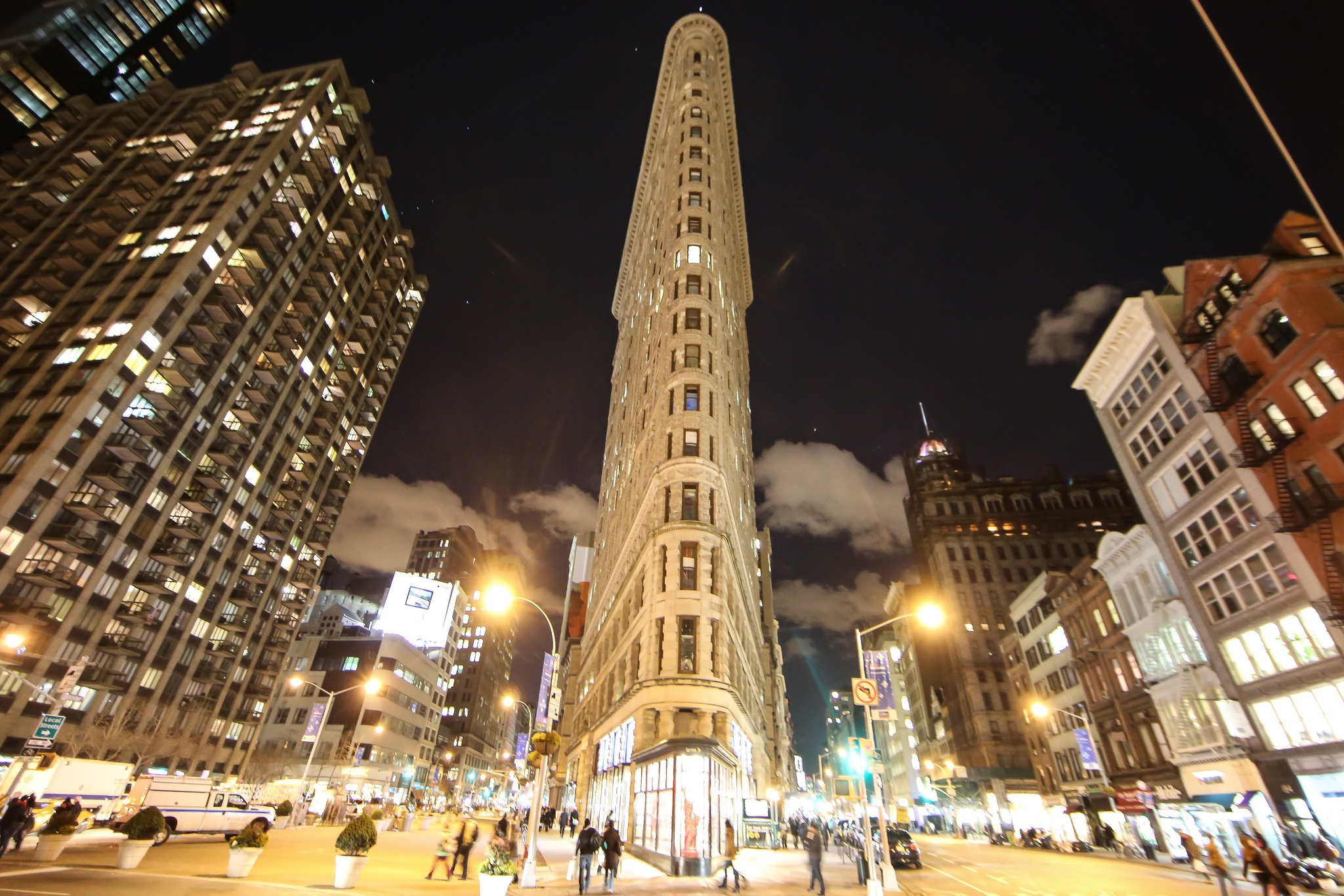
The Flatiron — still a magnet for budding photographers everywhere! Here a couple modern images from photographers Jeffrey Zeldman, Thomas Hawk, Giandomenico Ricci, Anurag Yagnik, and eric molina.

Courtesy Jeffrey Zeldman/Flickr
Courtesy Thomas Hawk/flickr
Courtesy Giandomenico Ricci/Flickr
Courtesy Anurag Yagnik/Flickr
Autosave-File vom d-lab2/3 der AgfaPhoto GmbH

CORRECTION: A small correction to this week’s show. The beautiful Madison Square Garden tower — with the nude Diana statue — is actually in a Spanish style, not an Italian style.

Categories
Podcasts

PODCAST: The Chrysler Building

Ah, the classic Chrysler Building! She’s got style, glamour and all that jazz. But what magical surprise did she spring on New York in October of 1929? Join us as we tell the story of New York’s most beautiful art deco treasure.

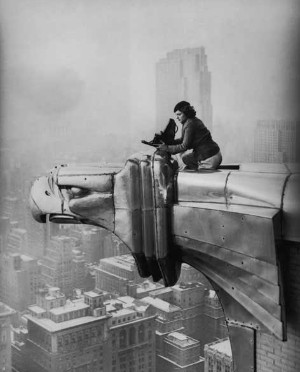
The picture above is of famed photographer Margaret Bourke-White, who had an studio on the 61st floor of the Chrysler. Her iconic photographs of the building helped create the building’s mystique as a sleek, magical tower. Of course later, as a correspondent for Life Magazine, she became one of the most intregal documenters of World War II, particularly the bombing of Moscow.

One unusual aspect of the Chrysler building is that it’s ‘something you look up at’. At street level and for several floors up, its a rather drab structure. In fact there are many buildings nearby that exhibit a far more striking art-deco style at street level, including the Chanin Building just across the street, and the Daily News Building a block away.

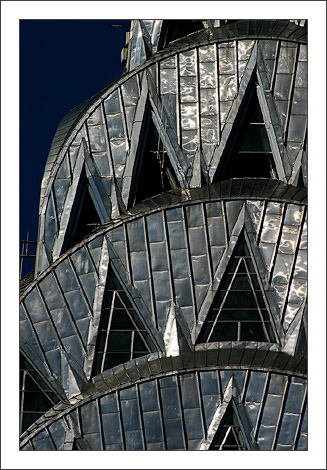
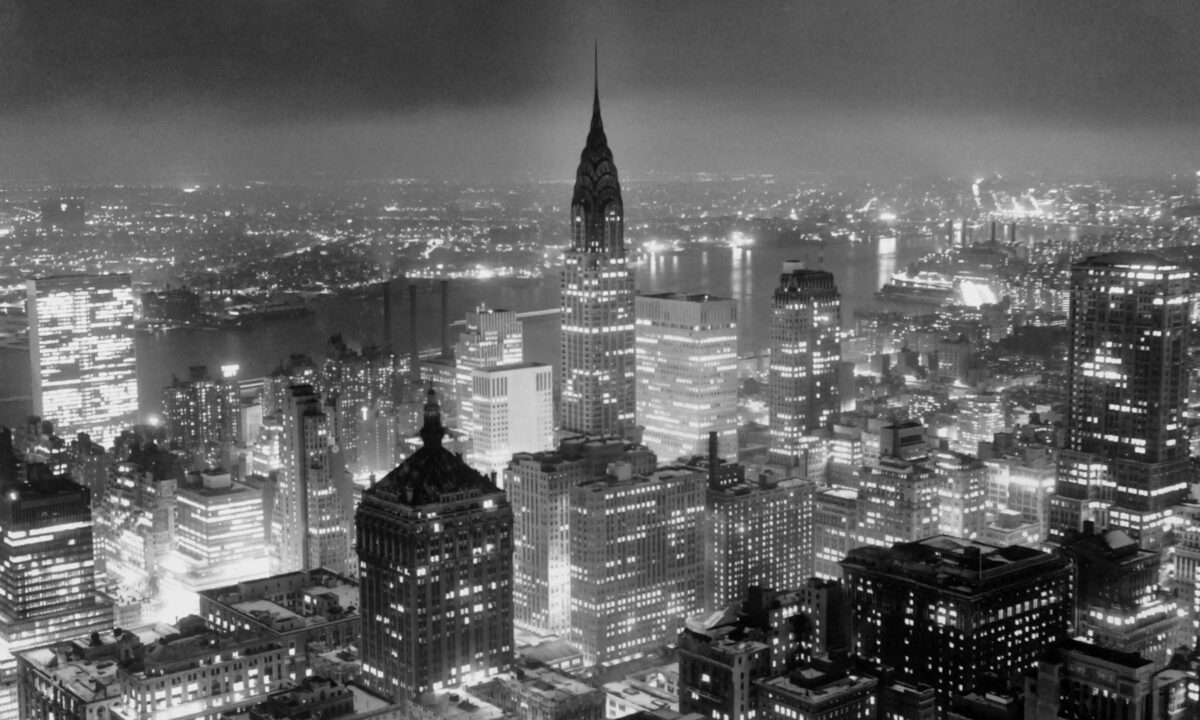
But the top of the Chrysler more than makes up for it, with its silver spire and repetitions of triangular sunbursts draped in silver nickel steel (a specialty metal called Nirosta designed by the German company Krupp). The real punch of the Chrysler at night comes with these triangular windows, with their almost crown-like appearance, which pierce the night and create truly dramatic scenes on foggy evenings.

Photo at right: Courtesy Frank Jermann, Voelzberg, Germany

The Cloud Room, a swanky nightclub and speakeasy in the 30s, occupied the top floors until the 1970s. As with many things in New York at that time, the building fell into disrepair in the 70s and 80s; thankfully much of its luster has been returned thanks to the current owners Tishman Speyer. Given the recent trend of restoring New York landmarks to their former glory, might we see a return of the Cloud Room in the near future?

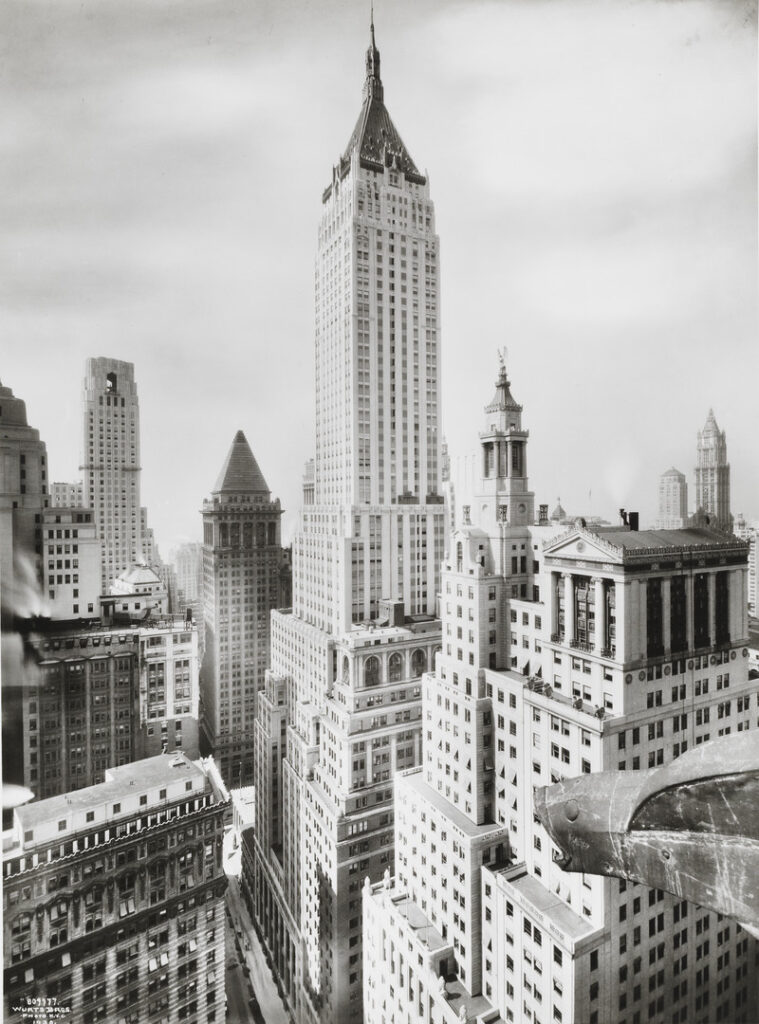
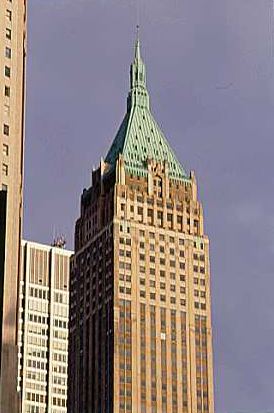
Van Alen was racing to build the Chrysler Building before his former estranged business partner H. Craig Severance finished with the building down at 40 Wall Street. Severance finished first, but Van Alen stole his thunder by erecting the Chrysler spire which pushed its height above 1,000 feet.

The 40 Wall Street building, still impressive but far less ornate, has had a rather rocky history. Referred to as the “Crown Jewel of Wall Street,” it held the title of world’s tallest building for all of four days. At one time known as the Bank of Manhattan Trust Building, it was hit by a Coast Guard plane in 1946, killing four people. In the 90s it was bought by Donald Trump, who funded extensive renovations and turned it all to commercial space. It’s actually called The Trump Building now. The American Express headquarters is housed here. According to Real Estate Weekly, 40 Wall Street is the tallest mid-block building in the world, which I guess has some sort of cache.

Incidentally, a former 40 Wall Street building which stood in its spot was office to the first president of the New York Stock and Exchange Board when it was first organized in 1817.

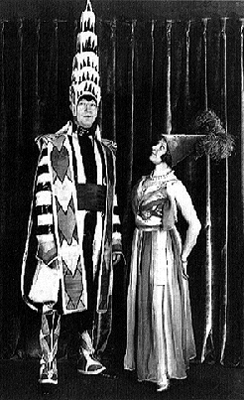
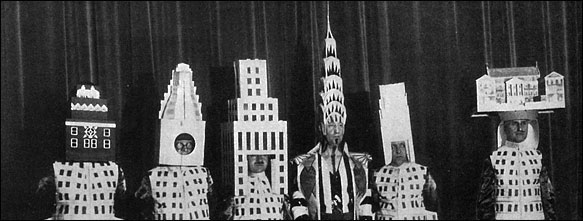
As for the Severance’s former partner, Van Alen did bask in a brief fame as architect of the Chrysler, despite Walter Chrysler’s refusal to pay him the remainer of his commission for the project due to bribery. Perhaps strangely, his most circulated photograph actually has him dressed up as the Chrysler Building. The event was the 1931 Beaux-Arts Ball for the Society of Beaux-Arts Architects. Van Alen was a student in Paris’ École des Beaux-Arts and was a regular attendent at these high-class and often rowdy functions. This New York Times article gives a thorough recap of the event. But just to put it in perspective, many architects came that year dressed as the buildings they created, including William F. Lamb as his newly constructed Empire State Building. The jovial bunch is featured below:

And finally, I apologize for giving short shrift on the podcast to the work of Edward Turnbull, who painted the brilliantly colored ceiling mural in the lobby of the Chrysler Building.

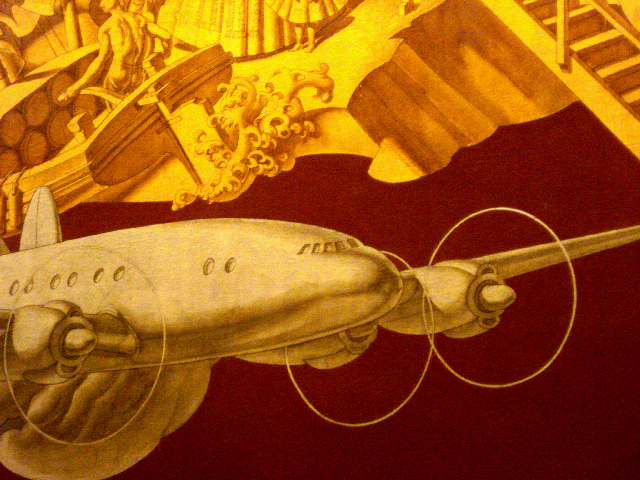
A mixture of Sistine Chapel magnificence and perhaps a bit of prescient Communist-esque propaganda, “Transport and Human Endeavor” is actually one of the largest indoor murals in the world, displaying an enthusiasm for American progress and mechanical ingenuity. Lit in the warm glow bouncing off the marbled wall and oak floor, the mural hides many fascinating details full of blimps, airplanes and automobiles. Just make sure you dont stumble over one of the building security guards as you look upwards.

You can find another lovely picture of it here

All-Blogs.net directory