Categories
Gilded Age New York Parks and Recreation Podcasts Skyscrapers

It Happened at Madison Square Park: The Heart of New York During the Gilded Age

So much has happened in and around Madison Square Park — the leafy retreat at the intersections of Broadway, Fifth Avenue and 23rd Street — that telling its entire story requires an extra-sized show, in honor of the Bowery Boys 425th episode.
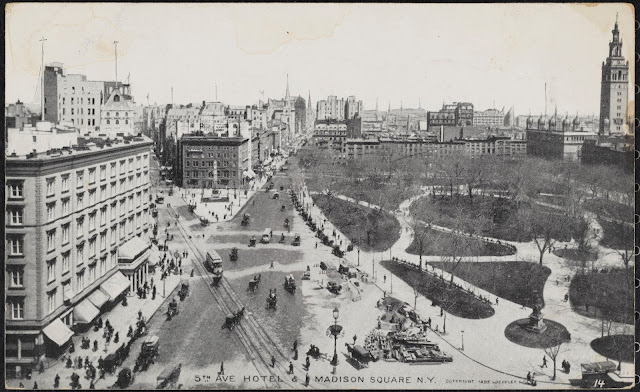
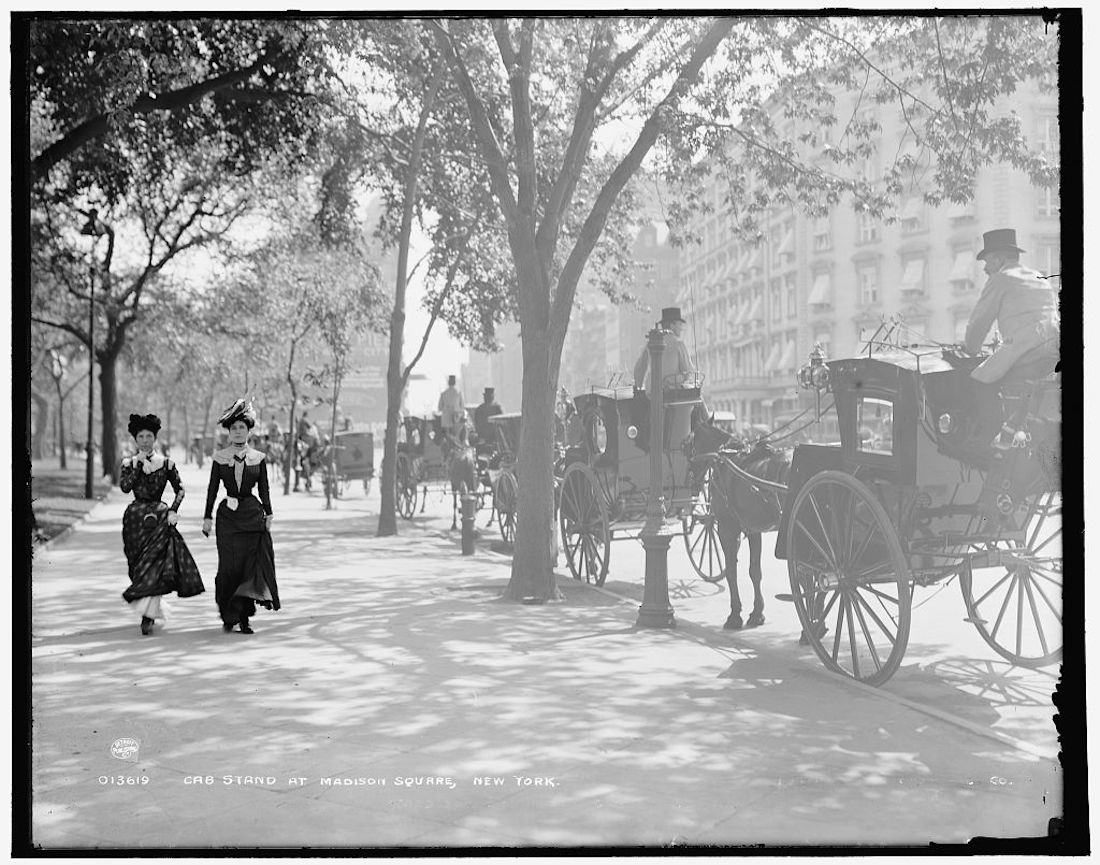
Madison Square Park was the epicenter of New York culture from the years following the Civil War to early 20th century. The park was really at the heart of Gilded Age New York, whether you were rushing to an upscale restaurant like Delmonico’s or a night of the theater or maybe just an evening at one of New York’s most luxurious hotels like the Fifth Avenue Hotel or the Hoffman House.

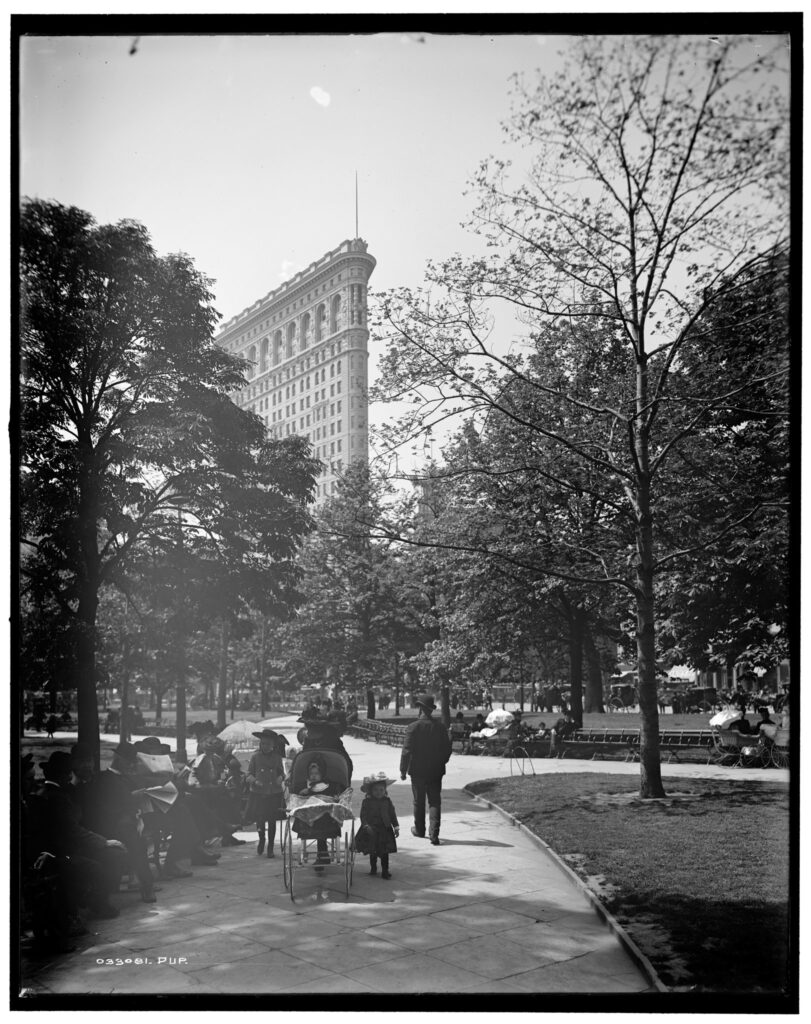
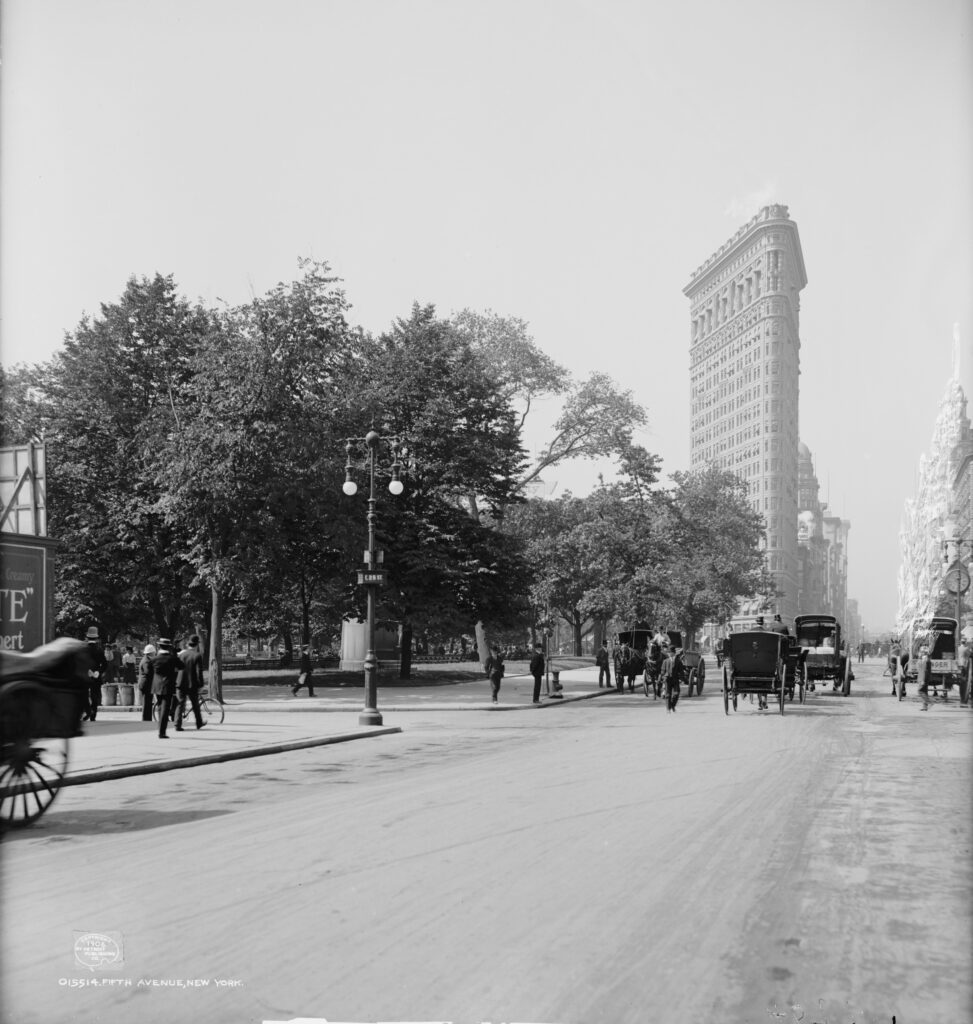
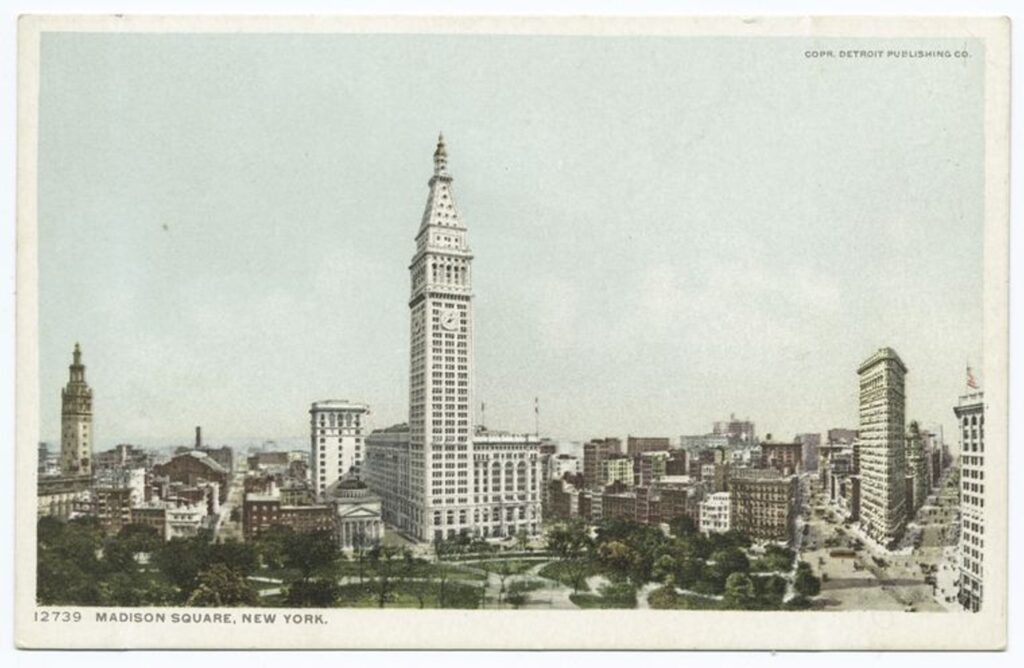
The park is surrounded by some of New York’s most renown architecture, from the famous Flatiron Building to the Metropolitan Life Insurance Tower, once the tallest building in the world.

The square also lends its name, of course, to one of the most famous sports and performing venues in the world – Madison Square Garden. Its origins begin at the northeast corner of the park on the spot of a former railroad depot and near the spot of the birthplace of an American institution — baseball.
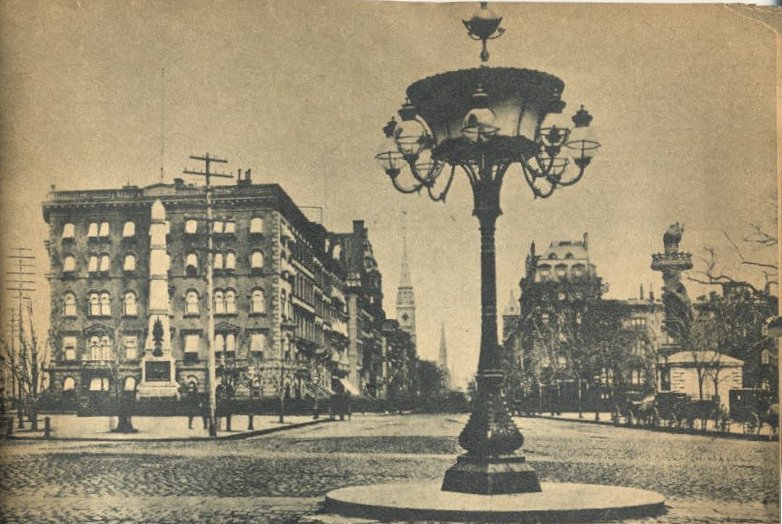
The park introduced New Yorkers to the Statue of Liberty … or at least her forearm and torch. It stood silently over the bustling park while prize-winning dogs were championed at the very first Westminster Kennel Club Dog Show nearby, held at Gilmore’s Gardens, the precursor to Madison Square Garden.

Today the region north of the park is referred to as NoMad, which recalls life around Madison Square during the Gilded Age with its high-end restaurant and hotel scene.

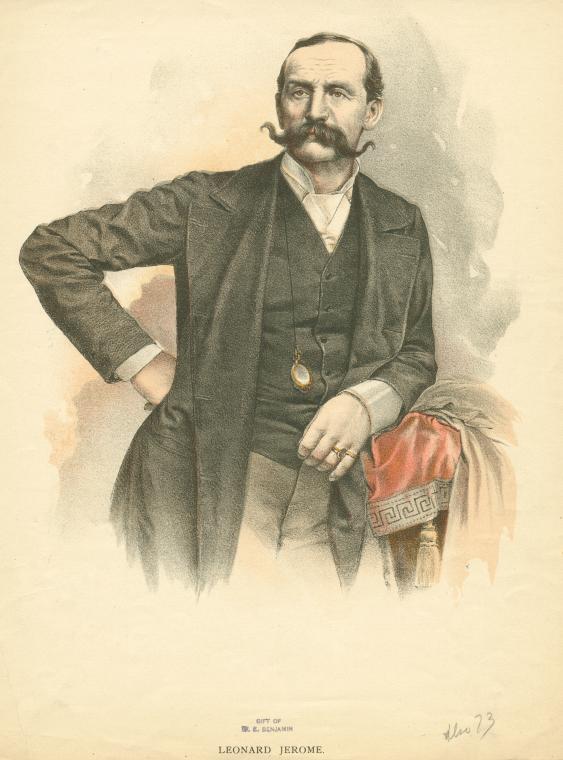
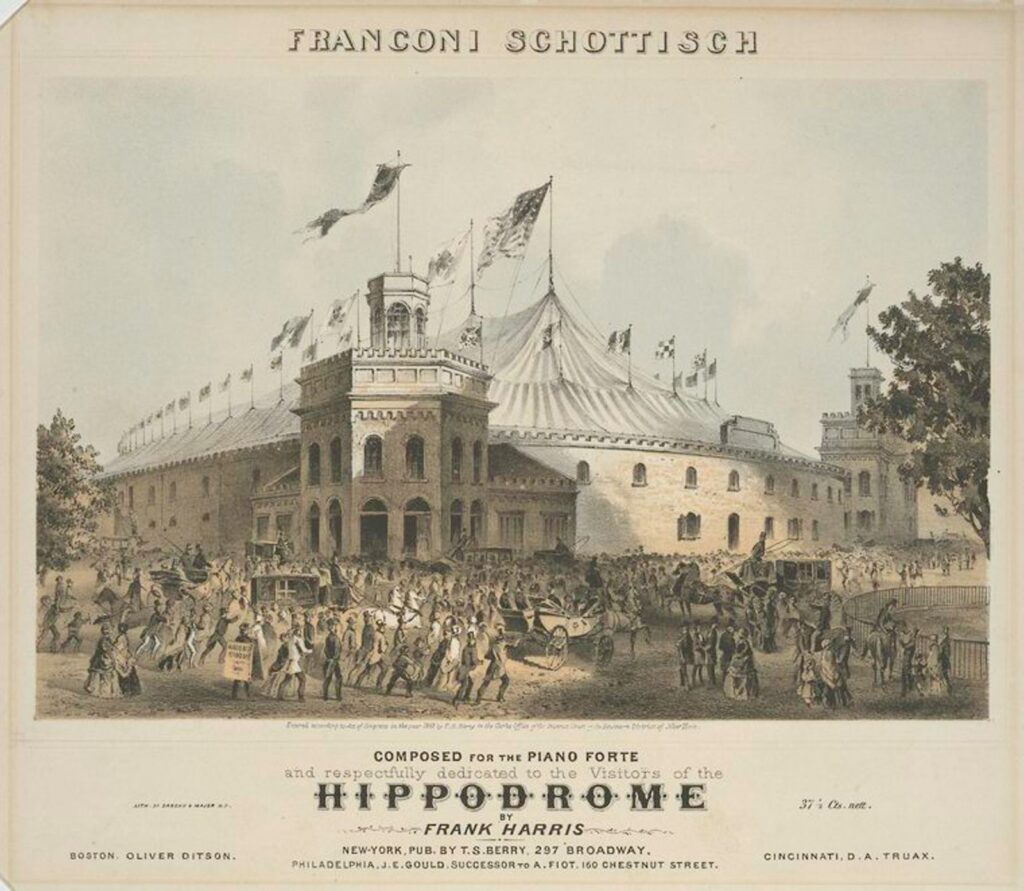
Tom and Greg invite you on this time-traveling escapade covering over 200 years of history. From the days of rustic creeks and cottages to the long lines at the Shake Shake. From Franconi’s Hippodrome to the dazzling colonge fountains of Leonard Jerome (Winston Churcill’s grandfather).

LISTEN HERE: IT HAPPENED AT MADISON SQUARE PARK

This episode’s title pays homage to one of favorite books about park history — It Happened On Washington Square by Emily Kies Folpe.
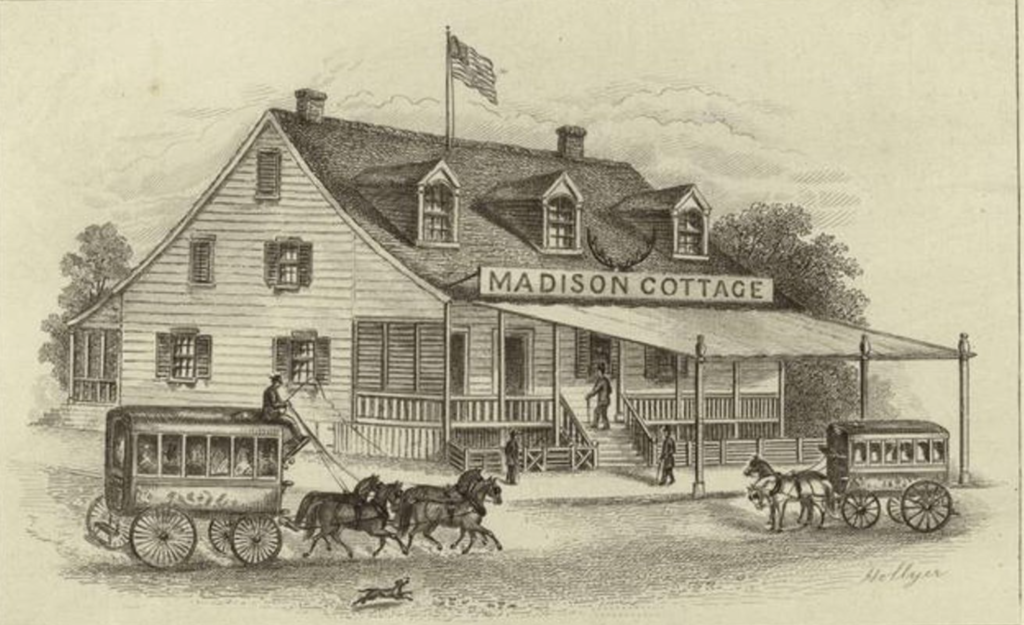
Madison Cottage, courtesy NYPL
Franconi’s Hippodrome, 1853, courtesy NYPL
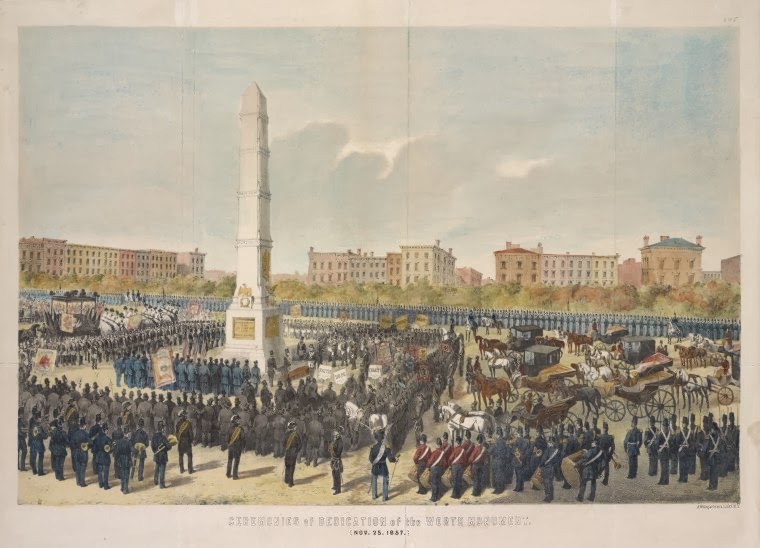
Dedication of the Worth Monument in 1857. In the background you can see the development of the surrounding area
Leonard Jerome….
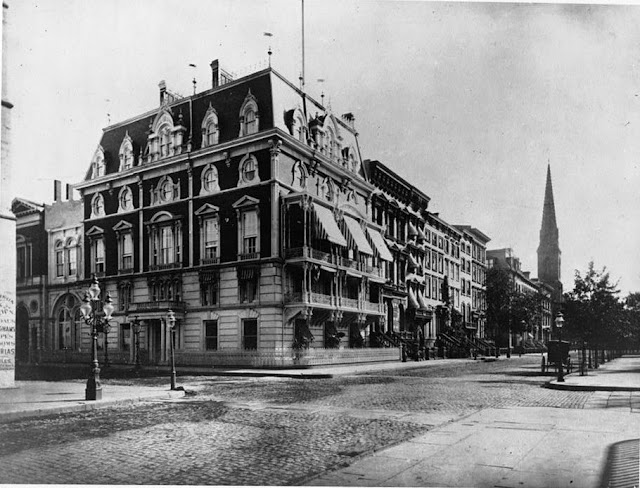
… and the Jerome Mansion. In the distance is the Madison Avenue Presbyterian Church.
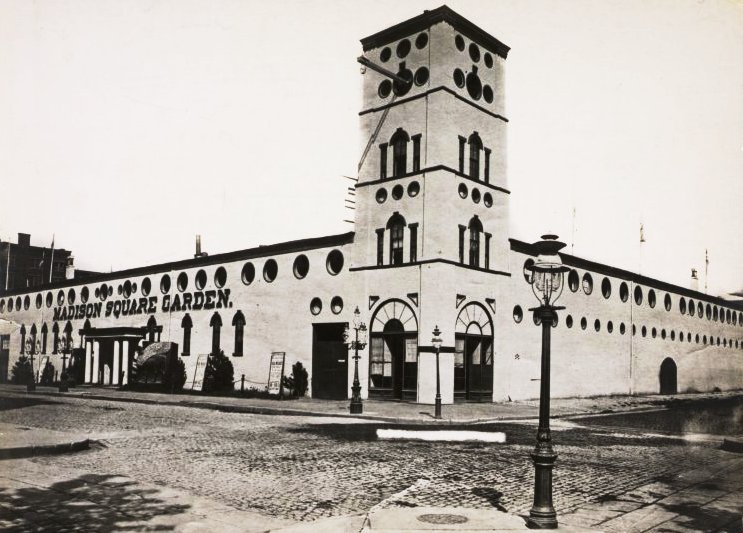
The former Gilmore’s Gardens, renamed Madison Square Garden
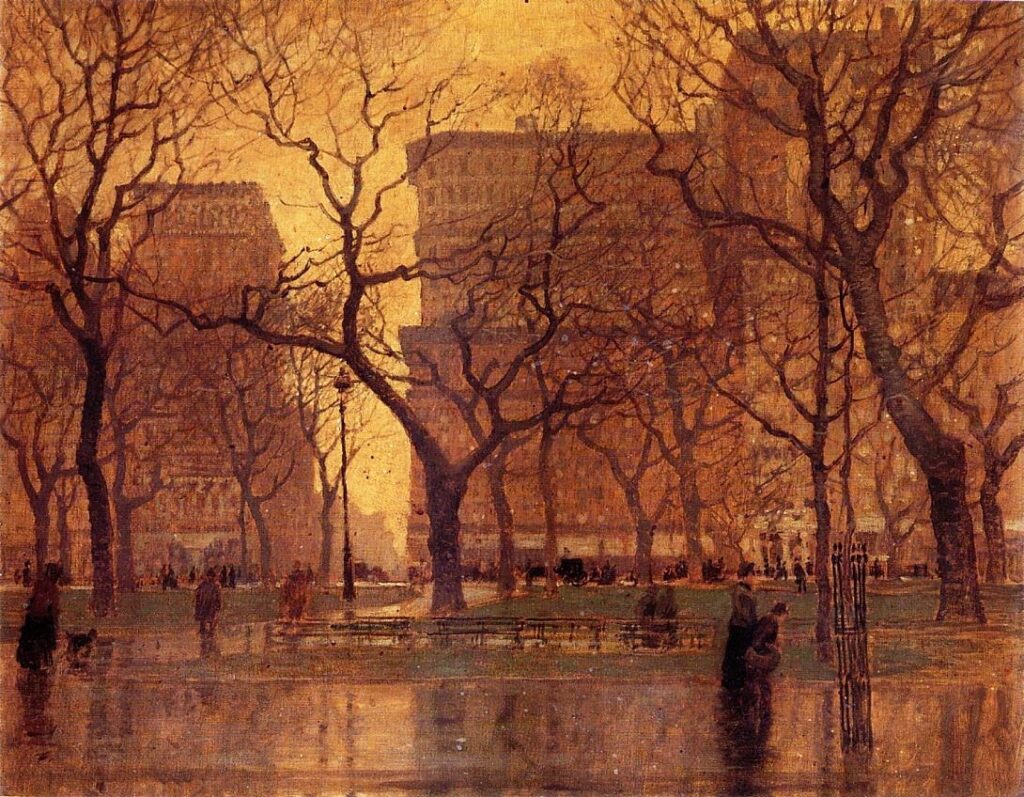
Rain on Madison Square, painting by Paul Cornoyer
Courtesy NYPL
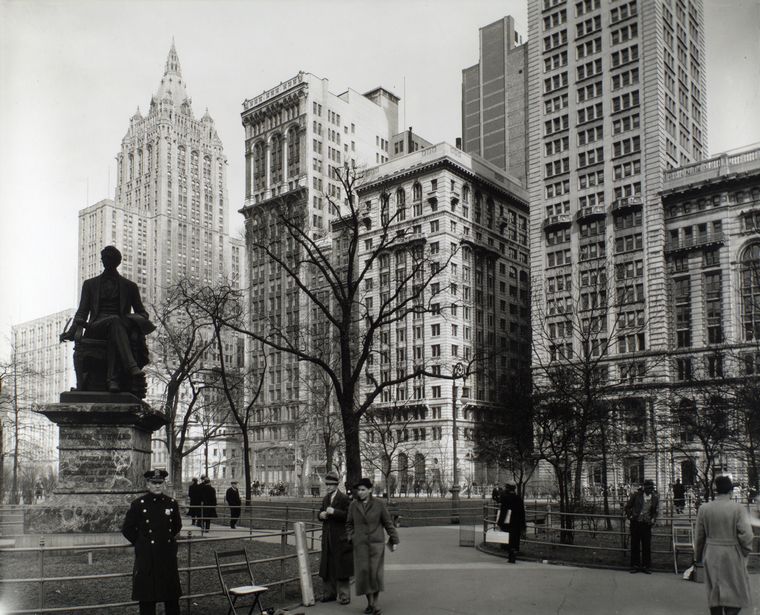
Madison Square 1936 , photo by Berenice Abbott
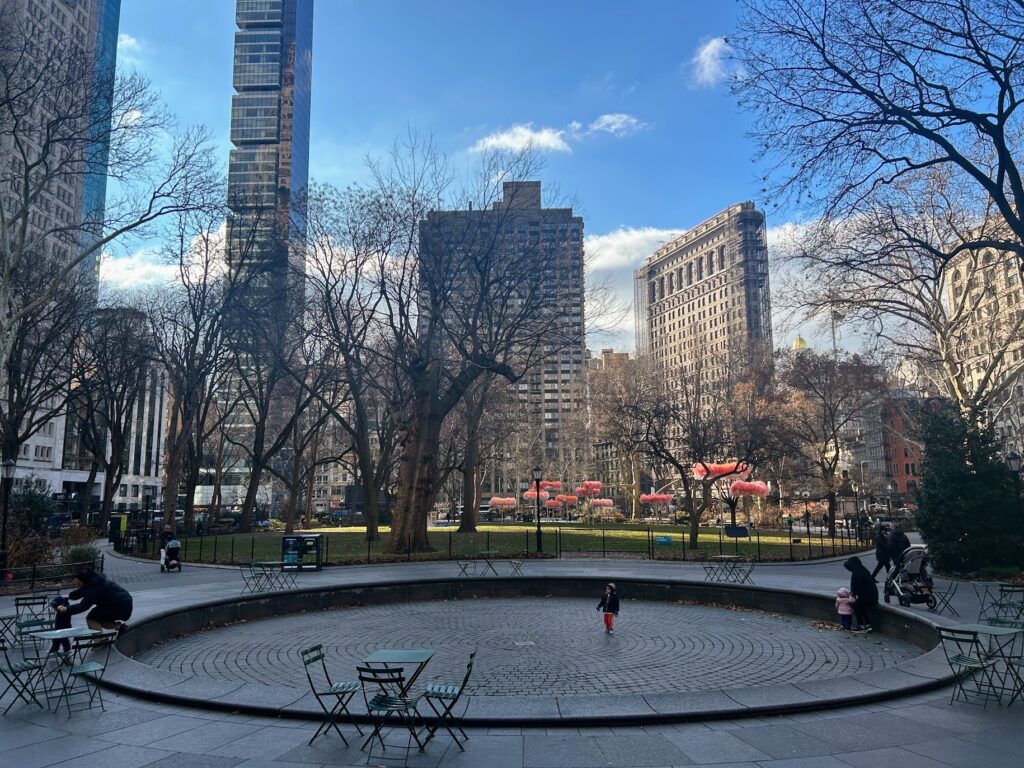
Northern pool in Madison Square Park. Photo by Greg Young
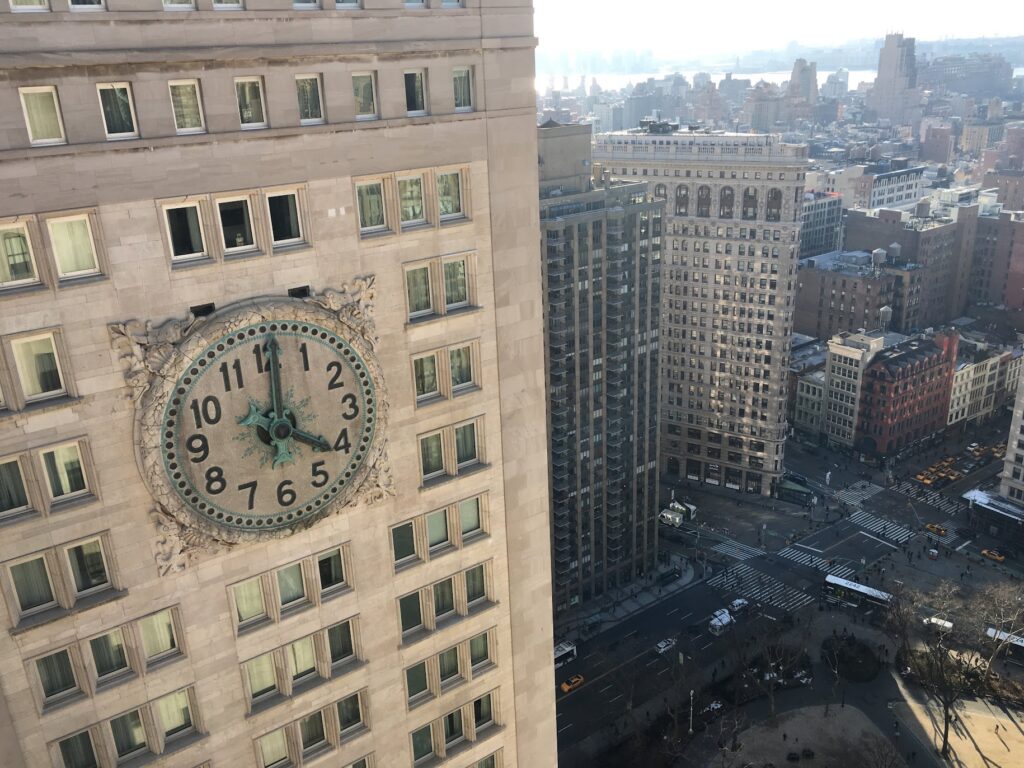
Looking down at the Metropolitan Life Tower and the Flatiron Building. Photo by Greg Young
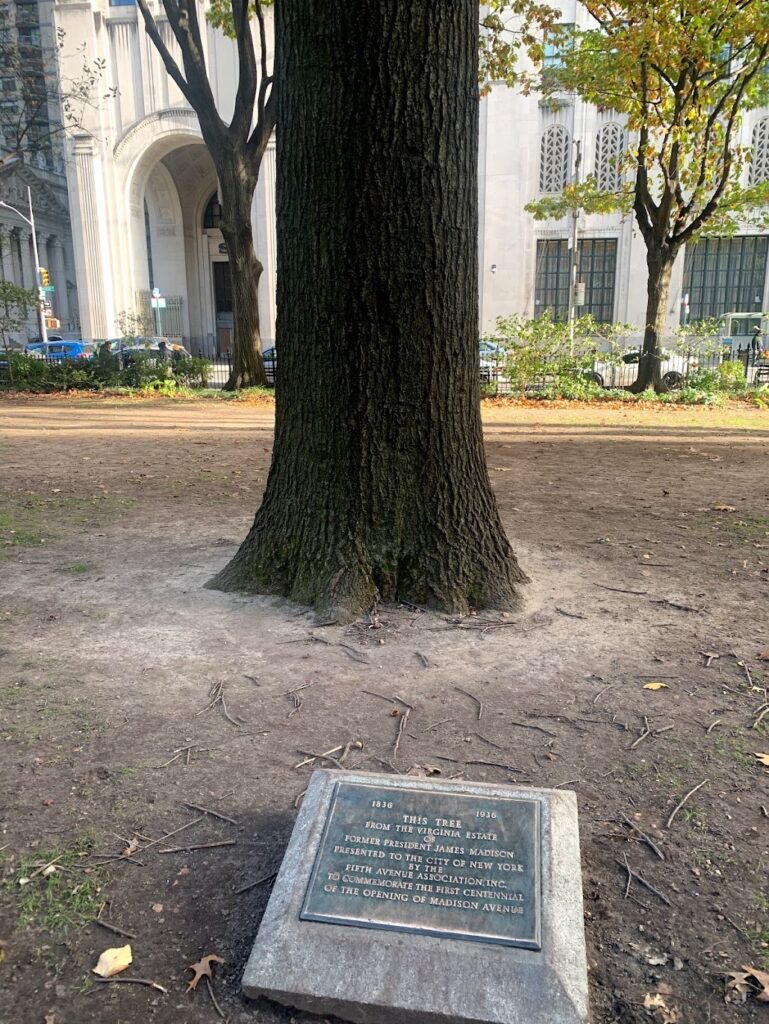
The park features a tree from James Madison’s Virginia plantation.

FURTHER READING

A Block in Time: A New York City History at the Corner of Fifth Avenue and Twenty-Third Street / Christiane Bird
The Flatiron: The New York Landmark and the Incomparable City That Arose with It / Alice Sparberg Alexiou
The Grandest Madison Square Garden: Art, Scandal, and Architecture in Gilded Age New York / Suzanne Hinman
Incredible New York: High Life and Low Life from 1850 to 1950 / Lloyd Morris
Liberty’s Torch: The Great Adventure to Build the Statue of Liberty / Elizabeth Mitchell
Madison Square: The Park and Its Celebrated Landmarks / Miriam Berman
Madison Square Garden, 100 Years of History / Joseph Durso

RELATED ARTICLES FROM THIS WEBSITE

Worth Square: Madison Square’s cemetery for one
Madison Square Snow Show: The first-ever film of a New York City blizzard
The Fifth Avenue Hotel: Opulence, glamour and power on Madison Square
When the Statue of Liberty left her arm in Madison Square
The Arches of Madison Square Park
The lights of Madison Square: A Christmas tree at night
Let’s go see the horses at Madison Square Garden!
FURTHER LISTENING

Spicy Bit, My Own Brucie and other odd Best In Show dog names


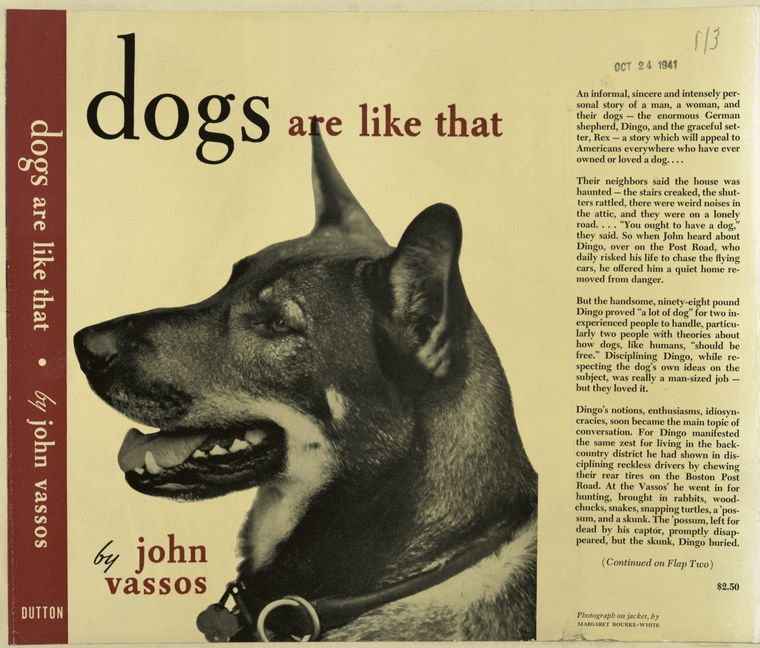
Yes, they are: from a book by noted New York graphic designer and dog breeder John Vassos. [source]

Hickory, the winner of last night’s Westminster Kennel Club dog show, might seem to embody a refreshing return to normalcy when it comes to dog names. In fact, the deerhound’s full name is a bit more exotic — Foxcliffe Hickory Wind.

When I was kid, I had dogs named Snoopy, Max and Dutch. Clearly, these common, pedestrian names would never have got these pets into the storied Westminster Kennel Club dog show, where the finest of animals are given the most extraordinary and absurd names.

The Westminster show seems like it might have connections to the British Isles, but in fact the annual canine carnival got its start in New York City in December 1877, amongst a group of wealthy sportsmen who gathered at the Westminster Hotel. An old train shed owned by musician Patrick Gilmore (and formerly run by P.T. Barnum) became their first home. When it changed owners and its name — to Madison Square Garden — the dogs and the purple ribbons remained, tagging along through the Garden’s various locations.

Below: St. Bernards on display at the Westminster show in 1908. No representative of that breed has ever won Best In Show, but they’ve gotten close many times.

Thousands of dogs have graced the competition floor, sparring for group prizes and the coveted Best In Show. For some reason, these prized dogs are given wildly strange, humorous or even mysterious names. These are not rock stars, action heroes or drag queens; they are Westminster’s Best In Show. Amongst the hundreds of victories won at Madison Square Garden over the years in a variety of sports, these are some of my favorites of the most unusually named winners in its history:

1907-09: Warren Remedy — I wrote about this dog last year, a female fox terrier from New Jersey who won three years in a row, “the fantastic bitch whose major achievement has yet to be duplicated.

1910 Sabine Rarebit — Animals were frequently referred to by the kennel in which they were raised. The first male winner came from Sabine Kennels in Orange, Texas.

1911 Tickle-Em-Jock — Not every dog went the dignified route. This terrier was a butcher’s dog in London and was literally scouted out by an English dog breeder. No word on whether he barked with a cockney accent.

1917, 1920 Wycollar Boy — The most extraordinary comeback in the dog world, this terrier crawled back to the winner’s circle three years after his first win, at a relatively old six years of age.

1922 Barkentine — Named for a type of ship but sounds like a Westminster pun.

1924 Bootlegger — In the age of Prohibition, Bootlegger really did beat out other dogs named Home Brew and Tom Collins.

1925 Governor Moscow — From Pittsburgh, not Moscow, he was the first Pointer to win in the history of the show.
1934 Spicy Bit — Lived up to her name when, after her victory, “she slipped her leash and frisked across the ring as saucily as though her name were Gyp.” [Time]

1940, 1941 My Own Brucie — With war ensuing, people clung to their pets ever tighter. Thus, Brucie, a ‘silky cocker spaniel’, was proclaimed as the most popular dog in America by Time Magazine.

1951 Bang Away of Sirrah Crest — The most influential boxer in the history of dogs (if breeding websites are to be believed), Bang Away won a total of 121 Best in Shows worldwide and even caused a small riot at the one show he lost. The judge that delivered that negative verdict was permanently banned from the Kennel Club.

1965 Carmichael’s Fanfare — But for some reason, the Scottish terrier’s nickname was ‘Mamie’.

1975 Sir Lancelot of Barvan — A lovely sheepdog, Sir Lancelot made the cover of Sports Illustrated after his win: ‘Big Itch In the Dog World’

1987 Covy Tucker Hill’s Manhattan — Despite the name, the Westminster’s first German Shepherd winner and the ‘winningest German Shepherd in history’ has a Long Island owner, and the Covy Tucker Hill Kennel is in California.

1999 Supernatural Being — A tiny, successful Papillon along the dog circuit, his official name is actually quite average compared to his parents (Supercharger and Denzel Fortuneteller). Supernatural Being would also answer to ‘Kirby’.

Thanks to William Stifel’s ‘The Dog Show: 125 of Westminster’ for some of the info.

Stars of MSG: Warren Remedy, the winningest dog

STARS OF MADISON SQUARE GARDEN: Warren Remedy
LOCATION: MSG II
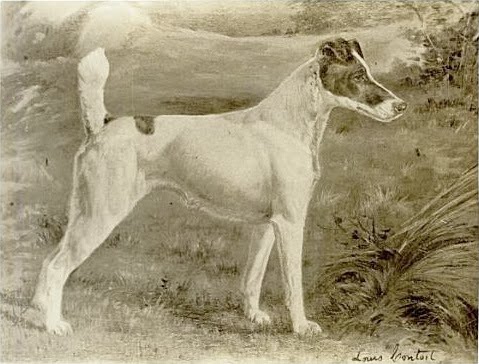
The picture above is of the Katharine Hepburn of dogs, Warren Remedy, the only dog to ever win the Westminster Kennel Club Dog Show three times in a row.  Despite the name, this smooth-haired Fox Terrier canine superstar was female.

She also kicked off the storied Best In Show competition, which was held for the first time in 1907 and chosen from the winning dogs in other categories by a panel of ten judges.  The annual dog show, of course, predates all incarnations of Madison Square Garden, with the first one on May 8, 1877 — easily the oldest continuing sporting event in New York City.

Warren Remedy, “the fantastic bitch whose major achievement has yet to be duplicated” according to Harold Nedell, was owned by the appropriately named Winthrop Rutherfurd.  She’s the only dog to win Best In Show in successive years, and given the highly political nature of the dog show today, I can’t imagine this ever happening again.

According to the Times, “The little white twenty-month-old son of Sabine Resist … was handed out of the ring to the attendant who had handled him [sic] since his birth on Mr Rutherford’s New Jersey farm and was wild with exultation. He hugged the little champion ecstatically and hurried off to the dong’s bench, where he and the winner held an improptu reception that continued most of the afternoon and evening.”

The New York Tribune gives a fuller desciption of the little girl’s charms:  “Warren Remedy is practically true to type. She is tan marked, with strong head, keen expression, good outline and grand ribs. She was in fine coat also, and should be worthy of winning in the best company in England.”

Apparently, the spirited dog barked herself hoarse — although that was more likely a bit of anthropomorthism by the Tribune reporter.

Her owner Rutherfurd, with kennels in Allamuchy, NJ, got in the Fox Terrier breeding business quite suspiciously; their first terrier was from an English lot stolen in Liverpool and smuggled over.  It is unclear whether Warren Remedy is from this pirated lot.

Above illustration by Gustav Muss-Arnolt, a New York illustrator who actually specialized in dog portraits, drawing over 170 portraits for American Kennel Club Gazette.

Previously: My article “Who Let The Dogs In?” on the first dog show. And for the truly adventurous of you, my very first solo podcast, from way back in 2007 — the Famous Dogs of New York.