Categories
Gilded Age New York Parks and Recreation Podcasts Skyscrapers

It Happened at Madison Square Park: The Heart of New York During the Gilded Age

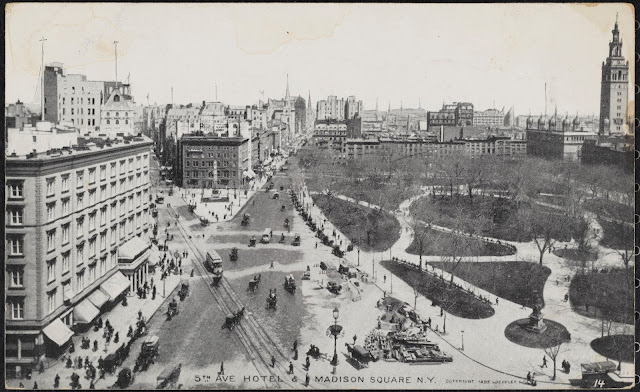
So much has happened in and around Madison Square Park — the leafy retreat at the intersections of Broadway, Fifth Avenue and 23rd Street — that telling its entire story requires an extra-sized show, in honor of the Bowery Boys 425th episode.

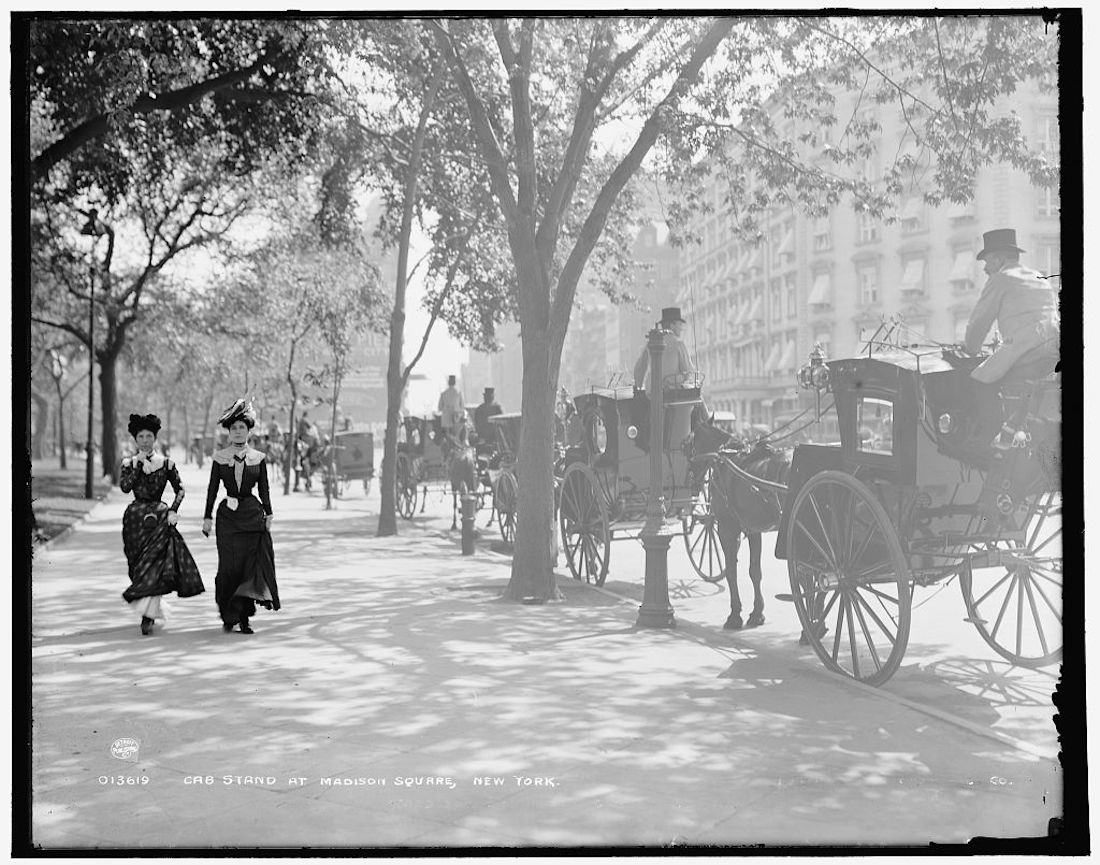
Madison Square Park was the epicenter of New York culture from the years following the Civil War to early 20th century. The park was really at the heart of Gilded Age New York, whether you were rushing to an upscale restaurant like Delmonico’s or a night of the theater or maybe just an evening at one of New York’s most luxurious hotels like the Fifth Avenue Hotel or the Hoffman House.

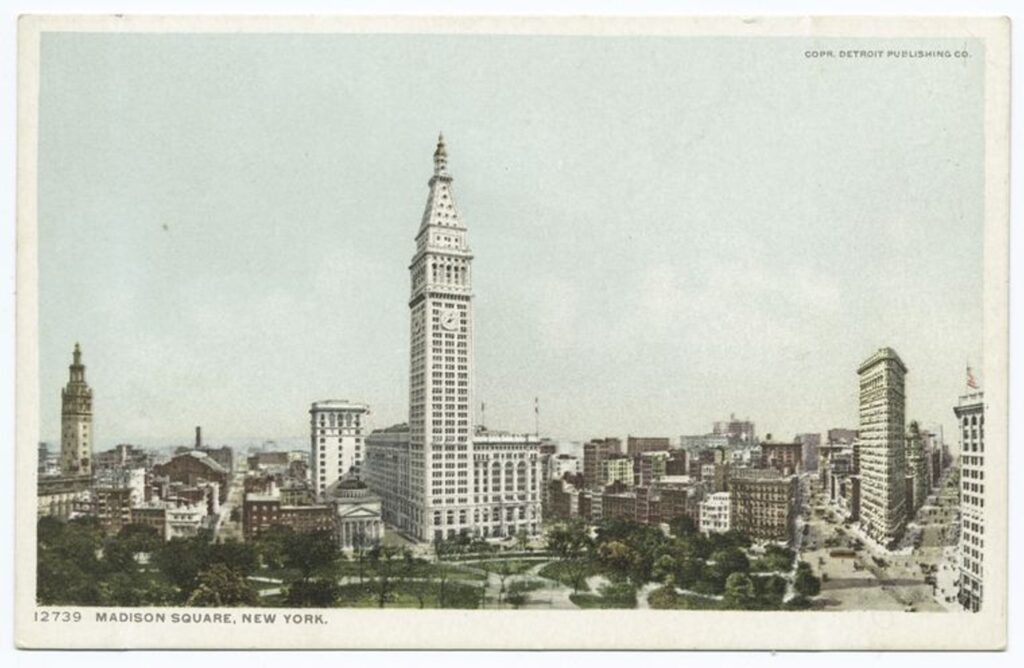
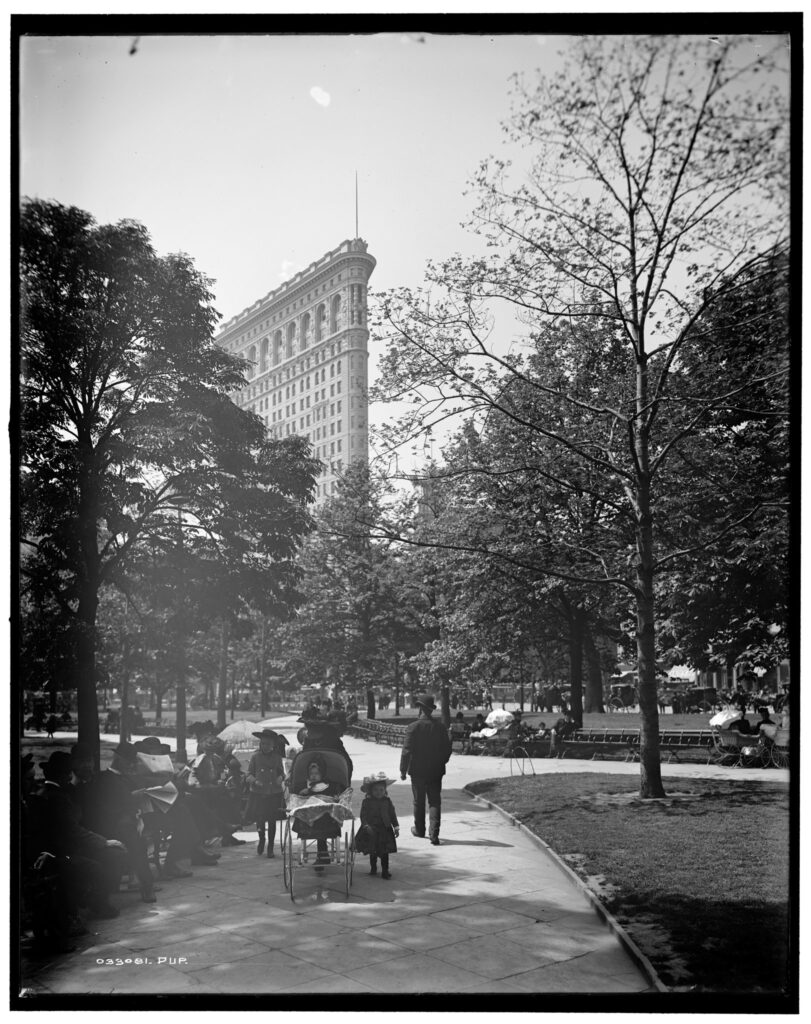
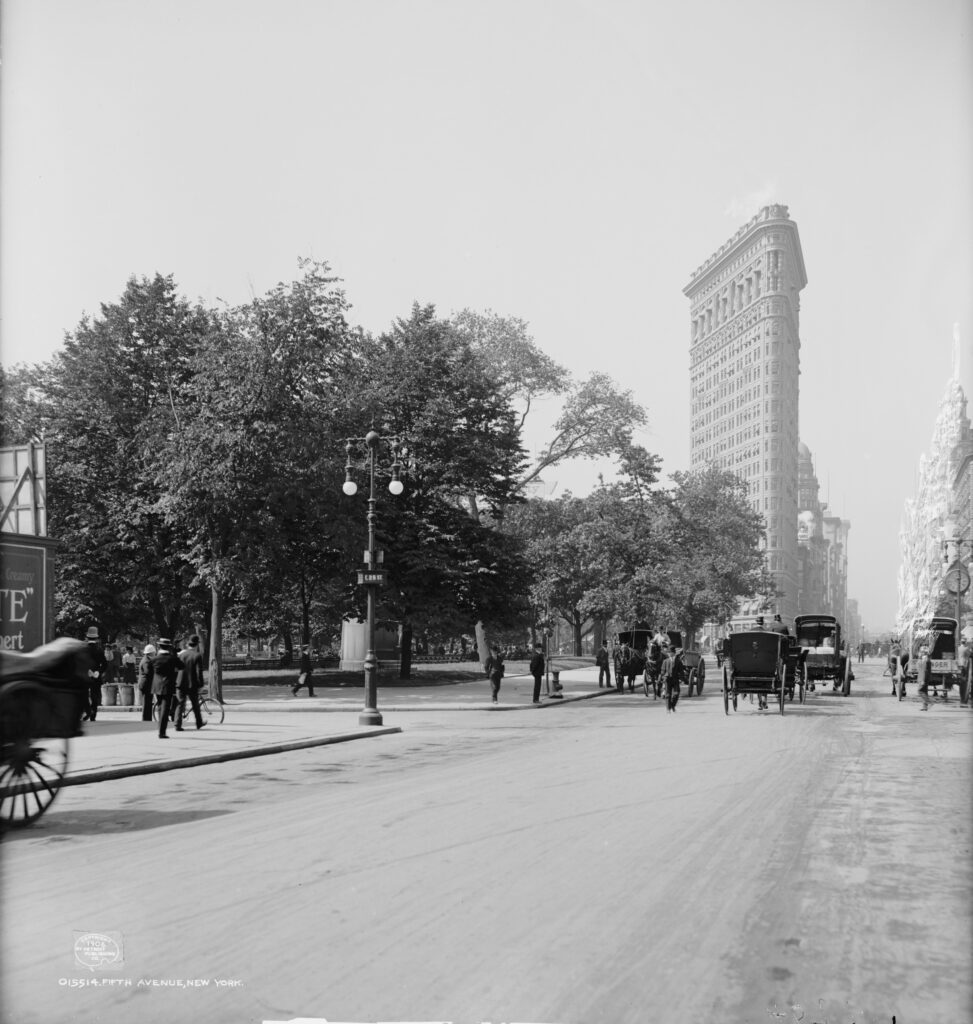
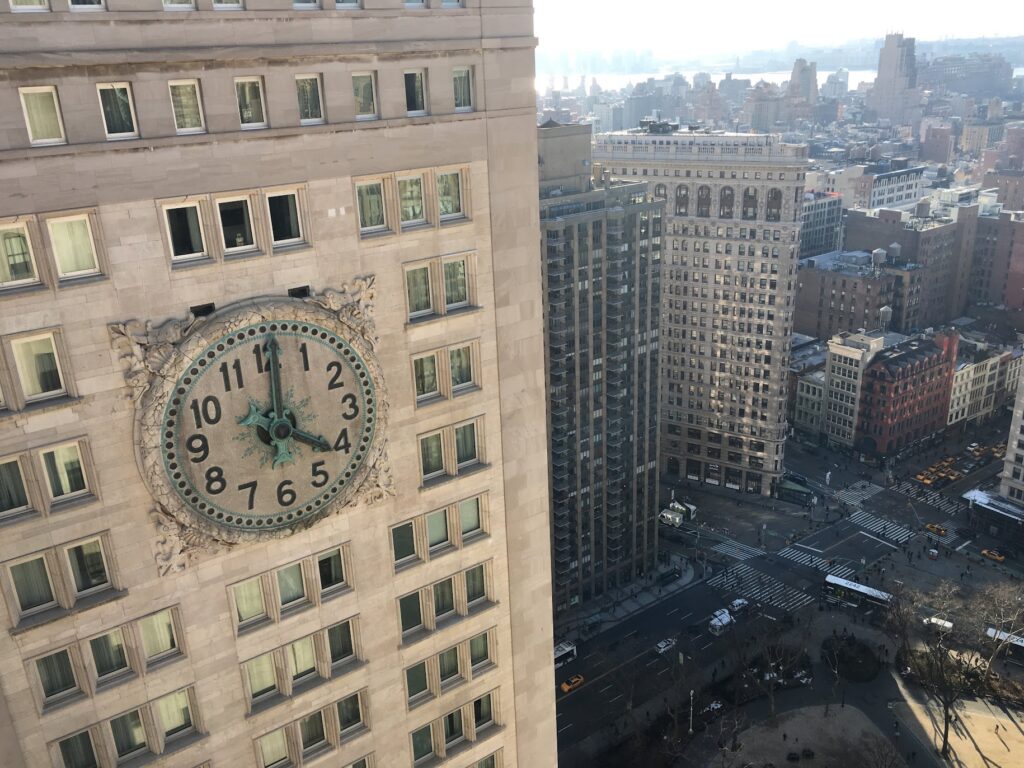
The park is surrounded by some of New York’s most renown architecture, from the famous Flatiron Building to the Metropolitan Life Insurance Tower, once the tallest building in the world.

The square also lends its name, of course, to one of the most famous sports and performing venues in the world – Madison Square Garden. Its origins begin at the northeast corner of the park on the spot of a former railroad depot and near the spot of the birthplace of an American institution — baseball.

The park introduced New Yorkers to the Statue of Liberty … or at least her forearm and torch. It stood silently over the bustling park while prize-winning dogs were championed at the very first Westminster Kennel Club Dog Show nearby, held at Gilmore’s Gardens, the precursor to Madison Square Garden.

Today the region north of the park is referred to as NoMad, which recalls life around Madison Square during the Gilded Age with its high-end restaurant and hotel scene.

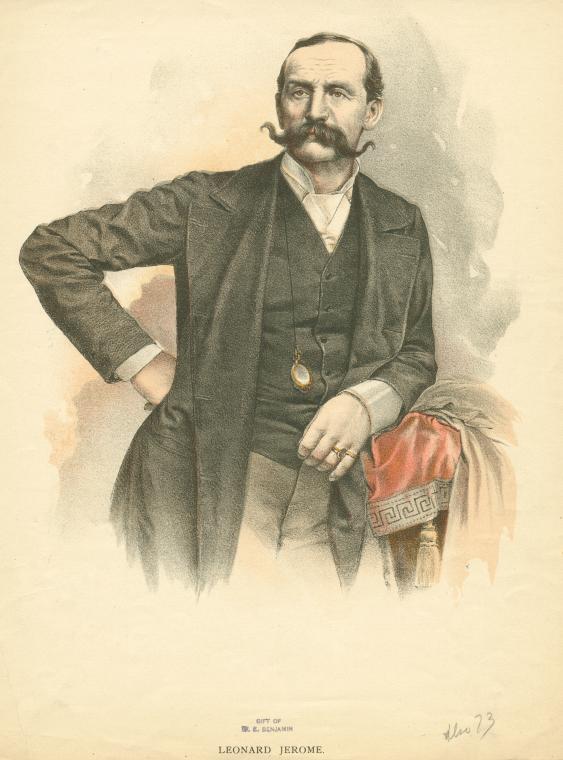
Tom and Greg invite you on this time-traveling escapade covering over 200 years of history. From the days of rustic creeks and cottages to the long lines at the Shake Shake. From Franconi’s Hippodrome to the dazzling colonge fountains of Leonard Jerome (Winston Churcill’s grandfather).

LISTEN HERE: IT HAPPENED AT MADISON SQUARE PARK

This episode’s title pays homage to one of favorite books about park history — It Happened On Washington Square by Emily Kies Folpe.


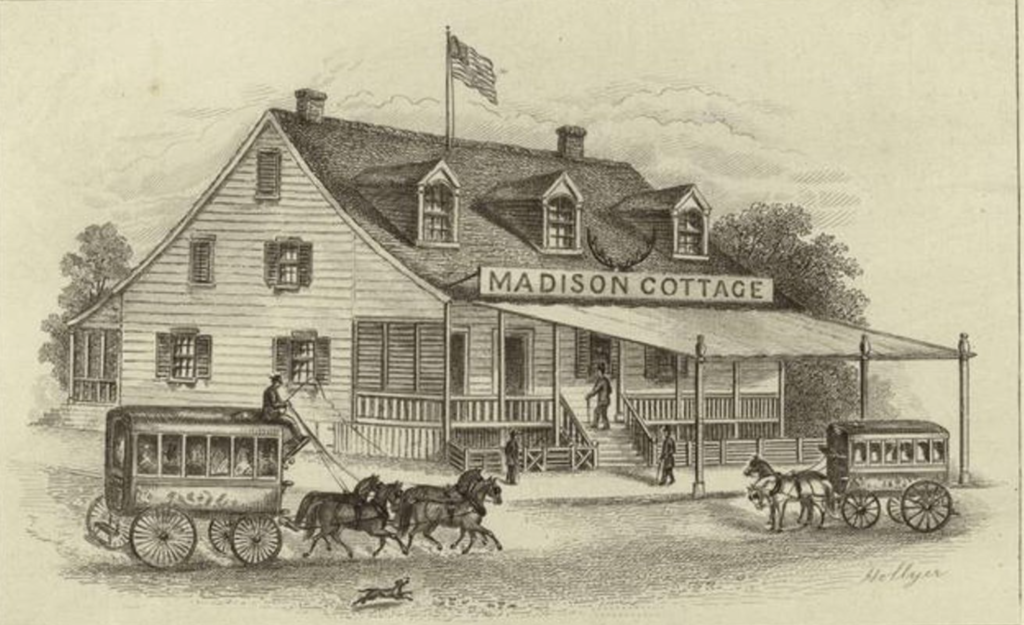
Madison Cottage, courtesy NYPL
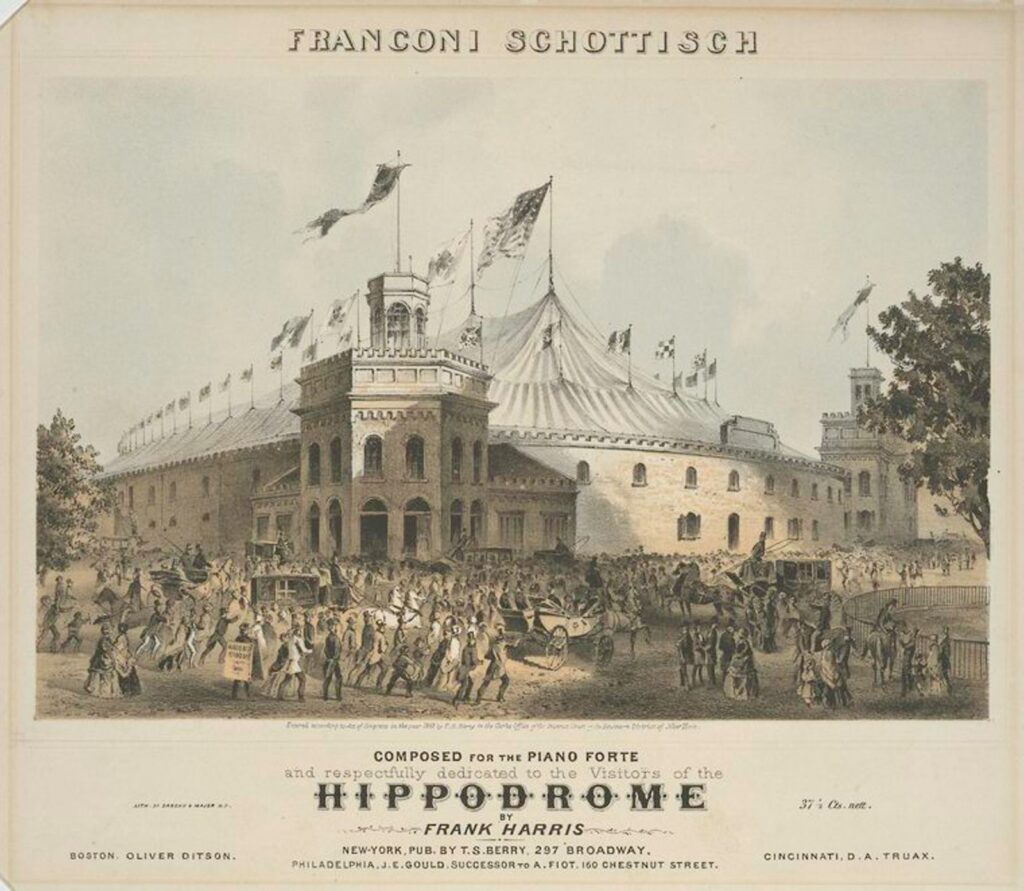
Franconi’s Hippodrome, 1853, courtesy NYPL
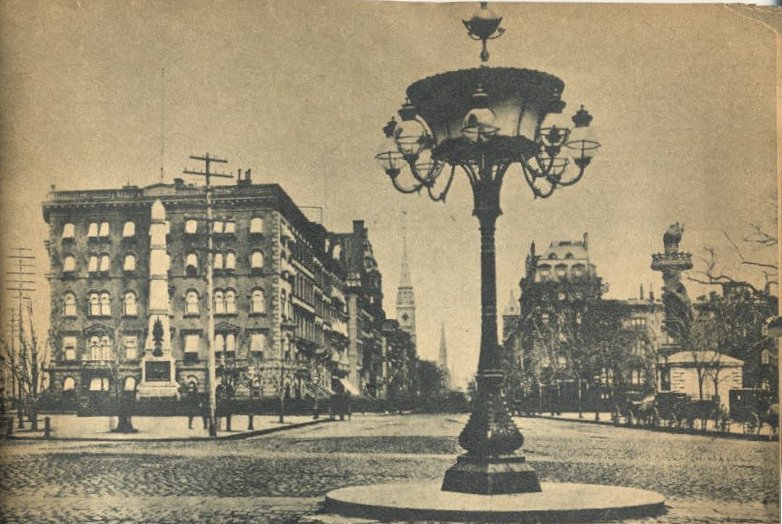
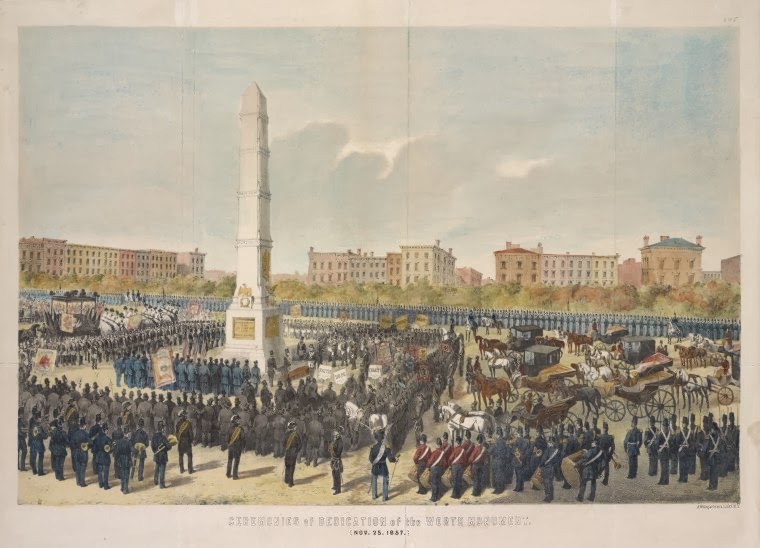
Dedication of the Worth Monument in 1857. In the background you can see the development of the surrounding area
Leonard Jerome….
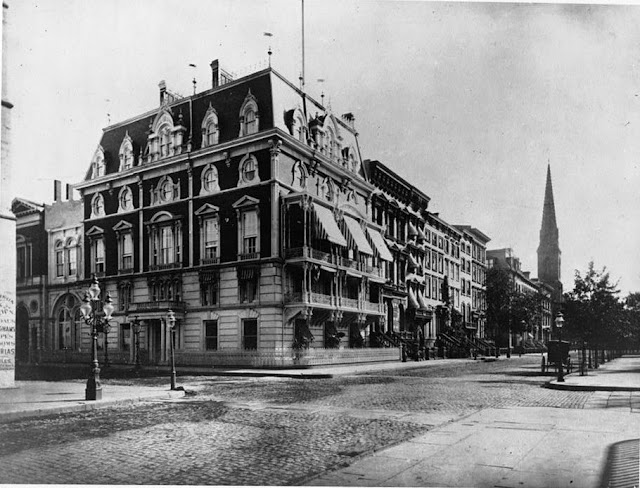
… and the Jerome Mansion. In the distance is the Madison Avenue Presbyterian Church.
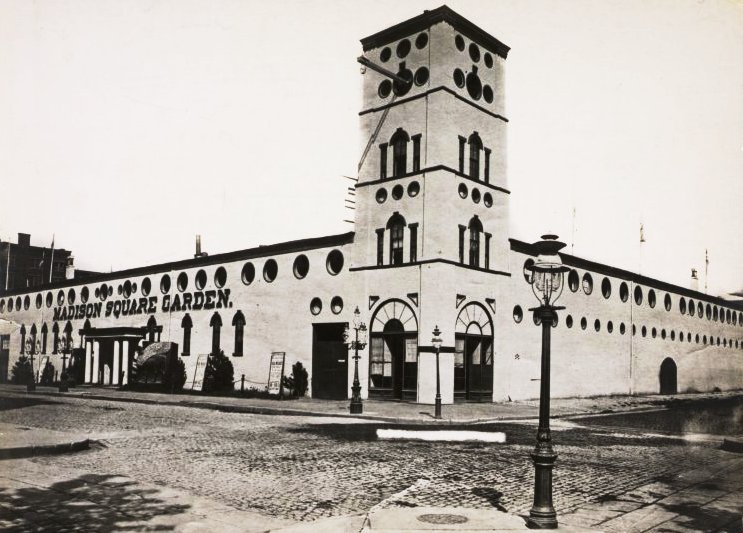
The former Gilmore’s Gardens, renamed Madison Square Garden
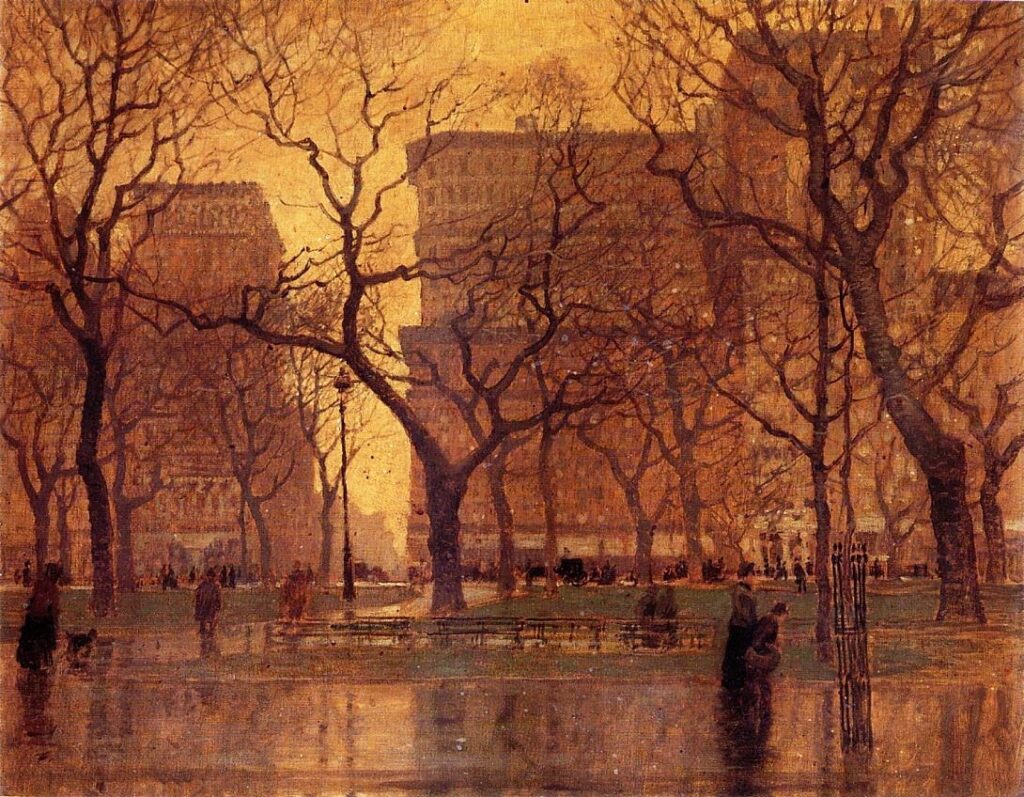
Rain on Madison Square, painting by Paul Cornoyer
Courtesy NYPL
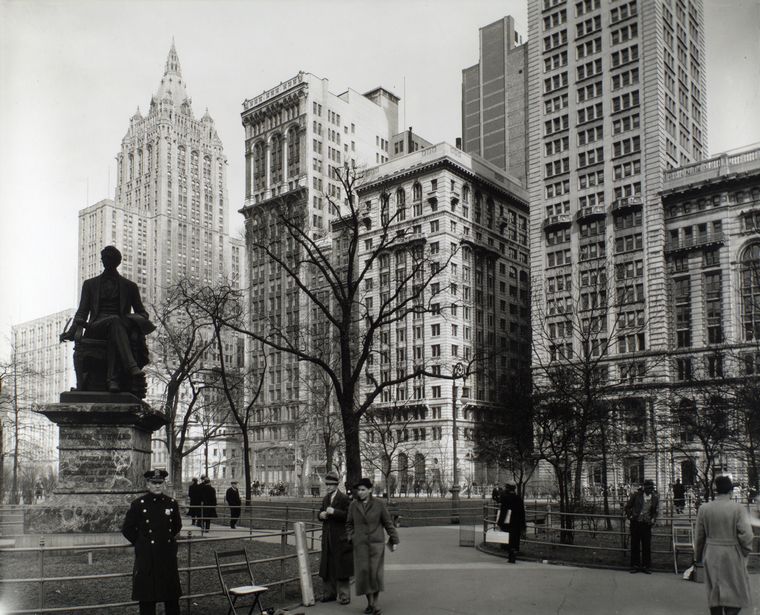
Madison Square 1936 , photo by Berenice Abbott
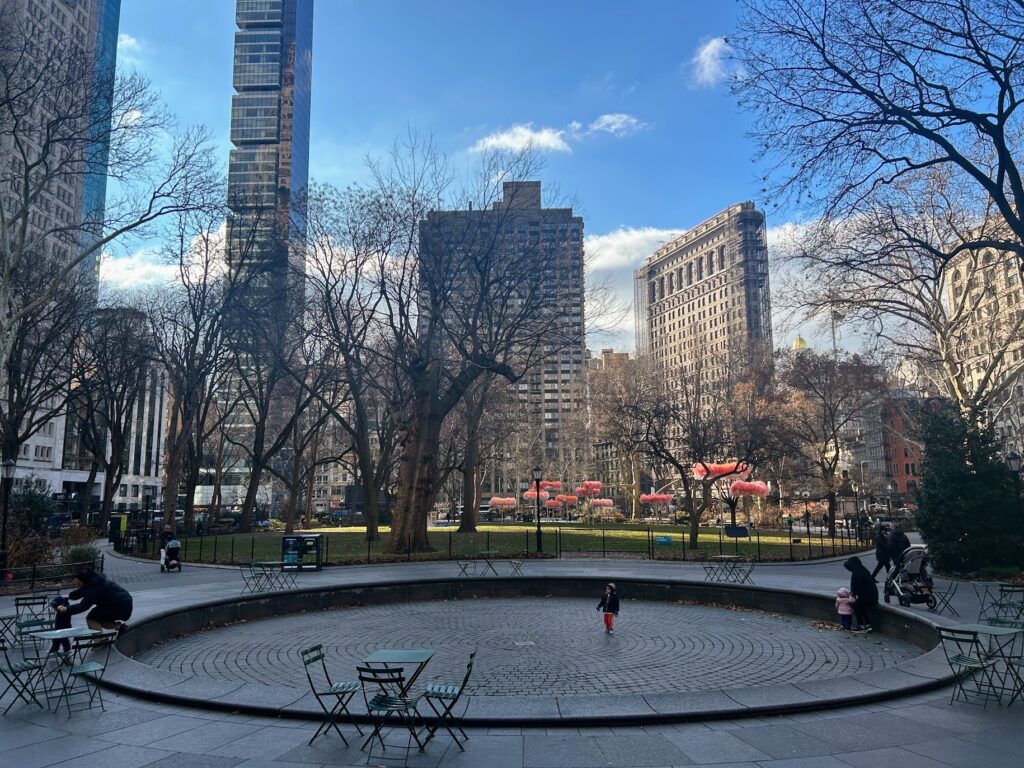
Northern pool in Madison Square Park. Photo by Greg Young
Looking down at the Metropolitan Life Tower and the Flatiron Building. Photo by Greg Young
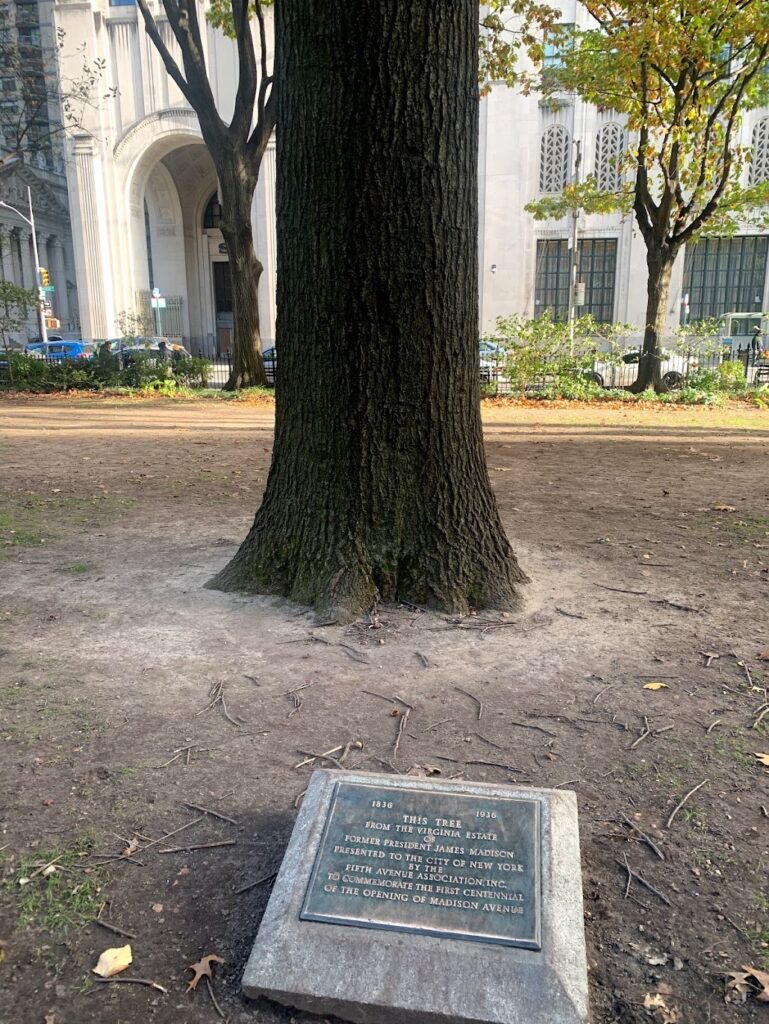
The park features a tree from James Madison’s Virginia plantation.

FURTHER READING

A Block in Time: A New York City History at the Corner of Fifth Avenue and Twenty-Third Street / Christiane Bird
The Flatiron: The New York Landmark and the Incomparable City That Arose with It / Alice Sparberg Alexiou
The Grandest Madison Square Garden: Art, Scandal, and Architecture in Gilded Age New York / Suzanne Hinman
Incredible New York: High Life and Low Life from 1850 to 1950 / Lloyd Morris
Liberty’s Torch: The Great Adventure to Build the Statue of Liberty / Elizabeth Mitchell
Madison Square: The Park and Its Celebrated Landmarks / Miriam Berman
Madison Square Garden, 100 Years of History / Joseph Durso

RELATED ARTICLES FROM THIS WEBSITE

Worth Square: Madison Square’s cemetery for one
Madison Square Snow Show: The first-ever film of a New York City blizzard
The Fifth Avenue Hotel: Opulence, glamour and power on Madison Square
When the Statue of Liberty left her arm in Madison Square
The Arches of Madison Square Park
The lights of Madison Square: A Christmas tree at night
Let’s go see the horses at Madison Square Garden!

FURTHER LISTENING

Categories
Skyscrapers

The Big Wind of 1912: New York skyscrapers in peril, as monster gales hurl “men and women down city streets”

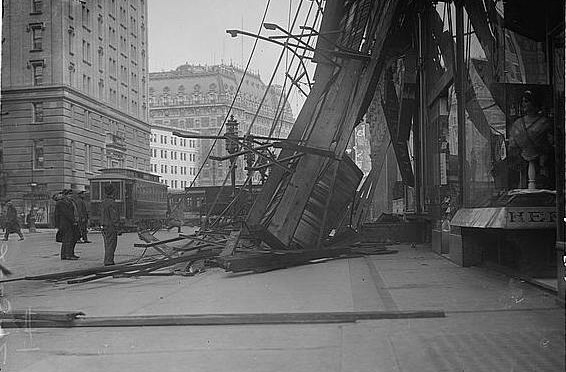
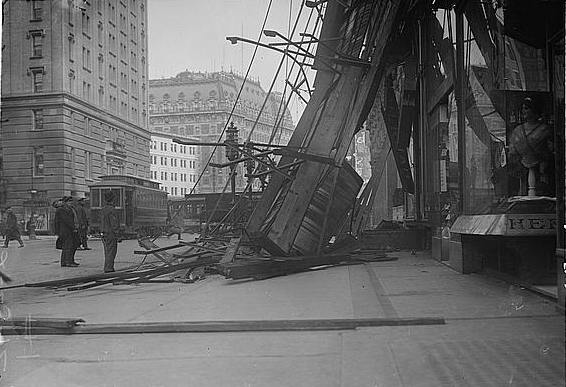
Trauma in Times Square: An electrical sign destroyed by the massive windstorm of February 22, 1912. One Times Square sits to the left, and the Hotel Astor is in the distance. [LOC] Shorpy has an another angle of this damaged storefront.

“The great gale that blew in with Washington’s birthday will not soon be forgotten. It was the biggest New York ever knew.” — New York Evening World, Feb. 23, 1912

 On February 22, 1912, a catastrophic weather anomaly occurred in New York City, an event the New York Times referred to as ‘The Big Wind’.

This particular day has also been called “a significant day in the history of tall buildings,” although I doubt anybody today will be celebrating this rather vicious and sudden test of architectural endurance.

New Yorkers thought it might be worse. The storm system began the previous day as a blinding Midwestern blizzard, paralyzing the railroad and killing cattle. St. Louis received its greatest snowfall ever up to that time from this churning storm, and Chicago reported winds of up to 50 miles per hour.

If it held this pattern by the time it hit the East, New Yorkers feared another storm of the level of the Blizzard of 1888, which buried the city in snow, rendered transportation useless, and killed more than 200 people.

In one respect, the city was fortunate that snowfall was relegated to upstate New York. The grim meteorological trade off, unfortunately, was a day of powerful, otherworldly wind gusts, almost double the strength of those during the infamous 1888 storm.

The worst of it came after midnight, when a terrifying frozen bluster “swooped down on the city with all its length and breadth” at speeds of 96 miles per hour.

At one point, devices in Central Park registered an unthinkable 110 miles per hour. By morning it had settled to 70 miles per hour and held that speed steady for much of the day. [source]

Some called this “giant among gales” a day-long cyclone, and it certainly acted like one — uprooting trees, destroying rooftops and even depositing whole houses into the river. People were blown off their feet, carts went flying and pedestrians dodged falling telephone poles in terror.

Most leaving home wearing hats ran back inside without them.  If any of those women from yesterday’s Astor Place post were trekking through the plaza with their home-work today, they most likely lost it to the wind.

Foremost on the minds of most New Yorkers was the fate of its skyline. In 1888, during the last harsh storm, there were no skyscrapers. In 1912, there were several over 30 floors, including the city’s tallest, the 50-floor Metropolitan Life Insurance Tower off Madison Square.

Although most buildings were designed to withstand significant wind trauma, none of them were prepared for winds above 70 miles per hour. And the building slated to become the next tallest in New York — the Woolworth Buildingwas still under construction, its metal skeleton now a potential arsenal of deadly debris.

Panes of glass shattered throughout the city, but it appears most of New York’s tallest structures survived without significant damage. In fact, it was the shorter, older structures that fared worst, many of them designed with little protection from powerful winds.

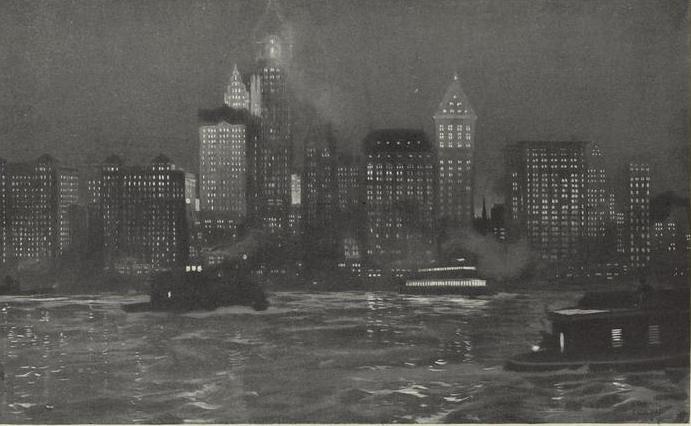
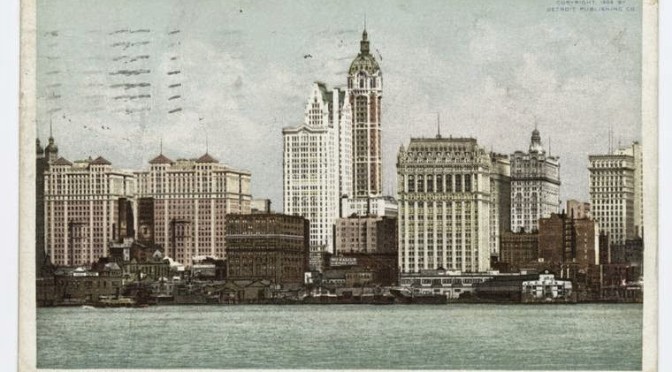
Below: the downtown Manhattan skyline in 1912. Most of these buildings survived the ‘Big Wind’ with only damage to their windows. [pic]

Not that modern invention came away unscathed that day. The electrical signs of Times Square, many no more than a few months old, were no match for the powerful gusts. Several were destroyed, including a one provocative sign at 47th Street, featuring “two scantily clad electric boys who box nightly in Summer underwear.” [source]

Next to the Hotel Knickerbocker, a 200-foot electric sign crumbled to the sidewalk below in front of Hepners Hair Emporium, a police officer racing into the establishment a minute before the sign crashed into the plate glass window of the railroad ticket office next door.

Across the street, at the Times Building, a drug store window exploded, and “many bottles of perfume and drugs” were hurled at passers-by.

Most boats all along the waterfront were either damaged or untethered. Predictably, beach houses on Rockaway Beach and other quieter locales fared the worst. The luckiest structures survived with nary a window remaining; those less fortunate were found floating offshore. In Astoria, Queens, the roof to the jail was taken off, to the fright of the occupants inside.

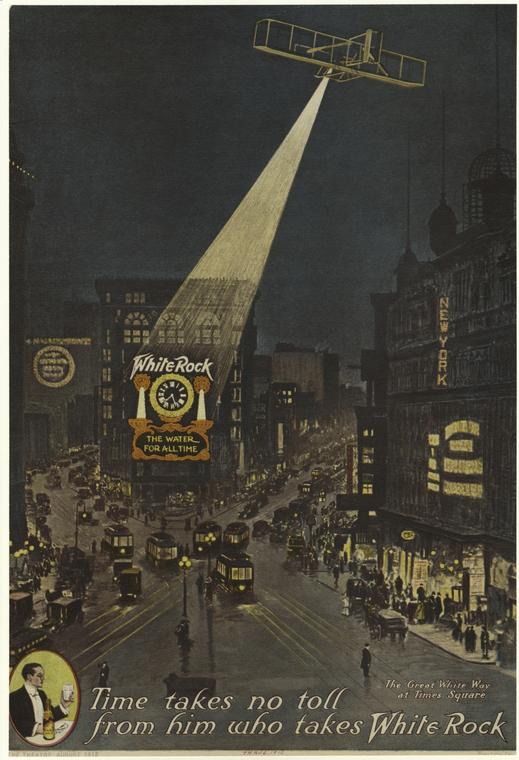
At right: Times Square in August 1912. The White Rock sign was probably not around for the February wind storm. The ‘electric boys’ sign described above sat at this intersection.

In Red Hook, Brooklyn, turbulent winds kept a raging fire alive at a brick manufacturing plant, distributing flaming pitch shrapnel to several buildings across the street, including a hay and horse feed dealership! (One of many reasons they don’t keep hay dealerships in crowded cities today.) The brick factory, which took several hours to control, was about three blocks from the location of today’s IKEA store.

February 22, 1912, happened to be the 180th anniversary of George Washington‘s birth, and hundreds of veterans tried marching from Jefferson Market to Union Square. Flags raised aloft in celebration were torn to ribbons. Nobody was injured, although the gusts caused major inconvenience, “Salvation Army object lessons and banner bearers bowled over by the wind.”  [source]

Others were not as fortunate. The Times attributed at least one death to the storm and over a dozen concussions from flying debris, messenger boys and seamstresses blown into windows or railings or hit by signs or dislodged cornices.

One man, waiting for his wife at St. Patrick’s Cathedral, had his neck slashed by flying glass. Where physical harm was avoided, humiliation took its place. A society woman on Riverside Drive, wearing “superabundantly costly furs,” was picked up and thrown into a horse.

Meanwhile, down at the Battery, Frank Coffyn was preparing for another takeoff off the water on his pontoon-equipped airplane. The wind had other plans, ripping the wings off the plane and spoiling Coffyn’s flight. Later that day, Coffyn wired his old boss Wilbur Wright for replacement parts. (See my previous post for more information of Coffyn’s harbor flights..)

By the late evening, winds had died down to a mere 44 miles per hour. (For comparison, New York City’s average wind speed today is just 12.2 miles per hour.) In the morning, things were back to normal — except for huge mess of metal and glass left scattered on the streets.

Categories
Podcasts Skyscrapers

The Tallest Building In New York: A Short History


PODCAST One World Trade Center was declared last year the tallest building in America, but it’s a very different structure from the other skyscrapers who have once held that title. In New York, owning the tallest building has often been like possessing a valuable trophy, a symbol of commercial and social superiority. In a city driven by commerce, size matters.

In this special show, I give you a rundown of the history of being tall in New York City, short profiles of the 12 structures (11 skyscrapers and one church!) that have held this title.  In several cases, these weren’t just the tallest buildings in the city; they were the tallest in the world.

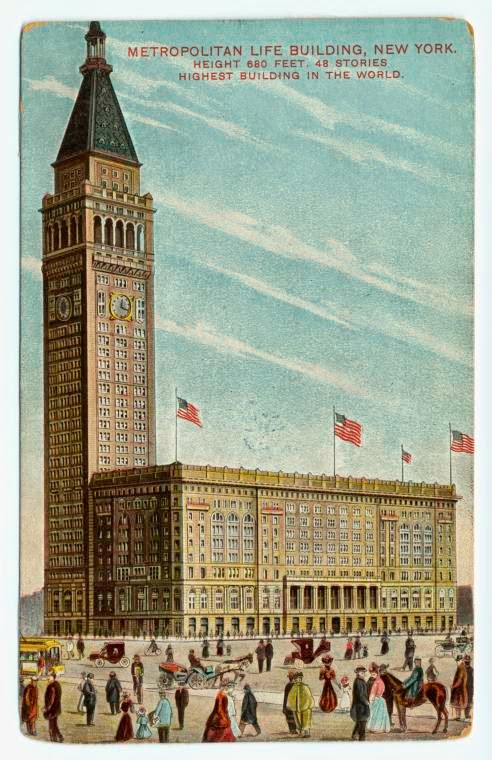
At right: The Metropolitan Life Building, the tallest building in the world in 1909

Skyscrapers were not always well received.  New York’s tallest building in 1899 was derisively referred to as a “horned monster.”  Lower Manhattan became defined by this particular kind of structure, creating a canyon of claustrophobic, darkened streets.  But a new destination for these sorts of spectacular towers beckoned in the 1920s — 42nd Street.
You’ll be familiar with a great number of these — the Woolworth, the Chrysler, the Empire State.  But in the early days of skyscrapers, an odd assortment of buildings took the crown as New York’s tallest, from the vanity project of a newspaper publisher to a turtle-like tower made for a sewing machine company.

At stake in the race for the tallest is dominance in the New York City skyline.  With brand new towers popping up now all over the five boroughs, should be worried that they’ll overshadow the classics? Or should the skyline always be in a constant state of flux?

ALSO: New York’s very first tall buildings and the ominous purpose they were used for during the Revolutionary War!


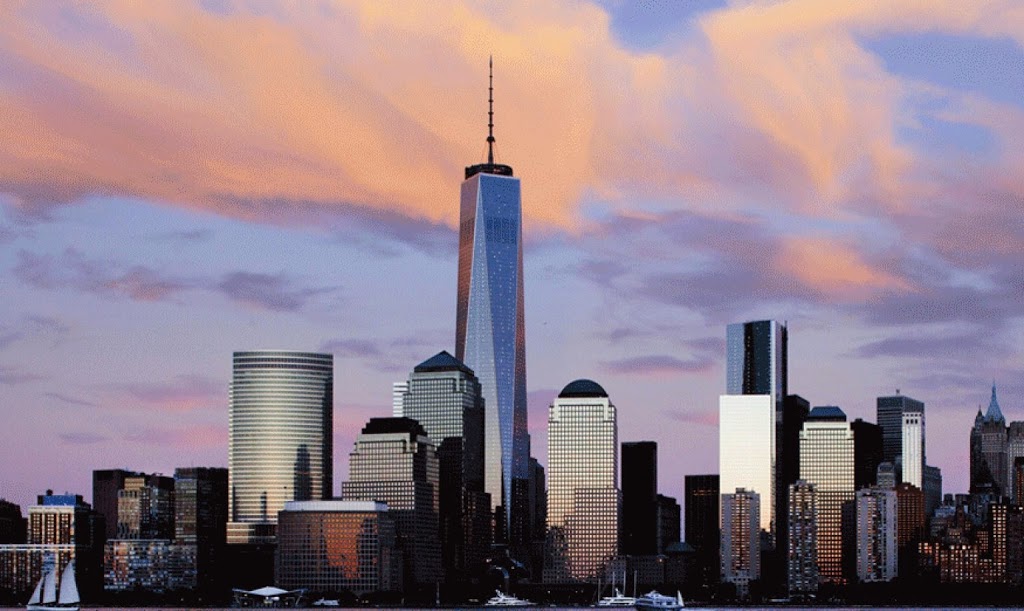
Photo courtesy Huffington Post

The current tallest buildings in New York City (as of 2020) are

1) One World Trade Center — 1,776 feet
2) Central Park Tower (225 West 57th Street) — 1,550 feet
3) 111 West 57th Street — 1,428 feet
4) One Vanderbilt — 1,401 feet
5) 432 Park Avenue — 1,394 feet
6) 30 Hudson Yards — 1,268 feet
7) Empire State Building — 1,250 feet
8) Bank of America Tower — 1,200 feet
9) Three World Trade Center — 1,171 feet
10) 53W53 (MoMA Tower) — 1,050 feet
11 tie) Chrysler Building — 1,046 feet
11 tie) New York Times Tower — 1,046 feet
12) One57 — 1,005 feet

Statistics courtesy Property Nest


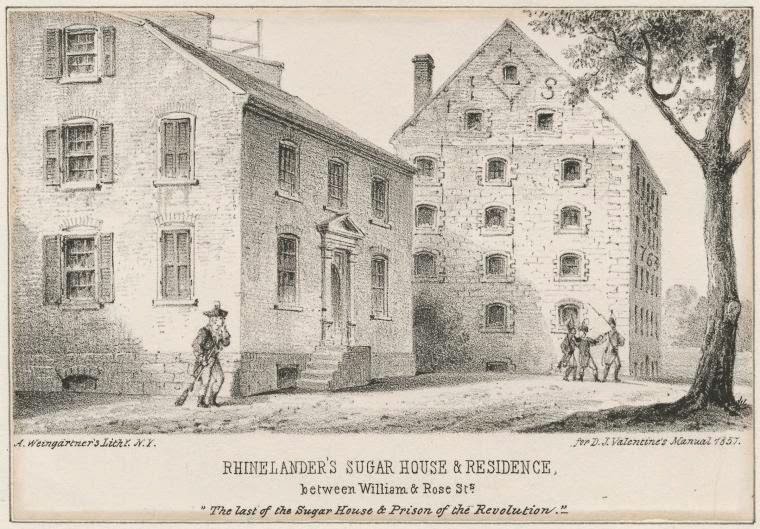
The sugar houses owned by the Rhinelander family. Others owned by the Van Cortlandts and the Livingstons would have all been the tallest structures in the city.

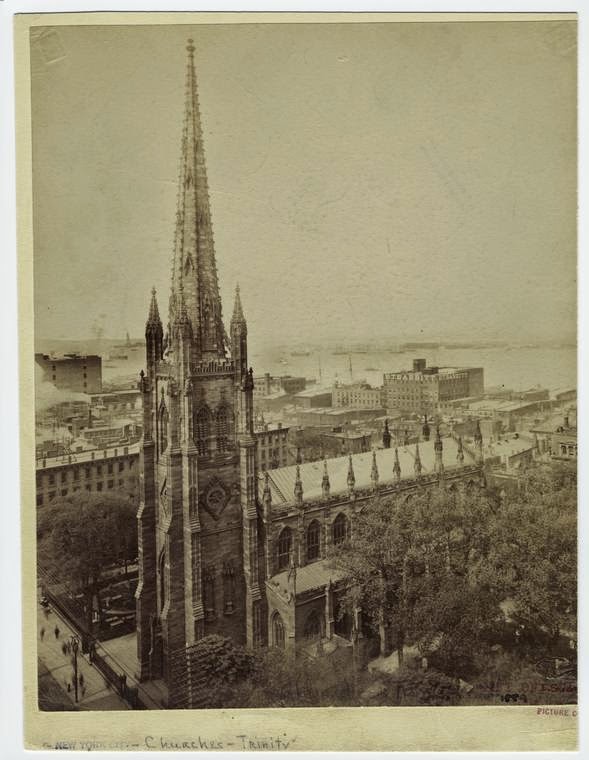
Trinity Church in 1889, the final year that it was the tallest permanent structure in New York City. (NYPL)

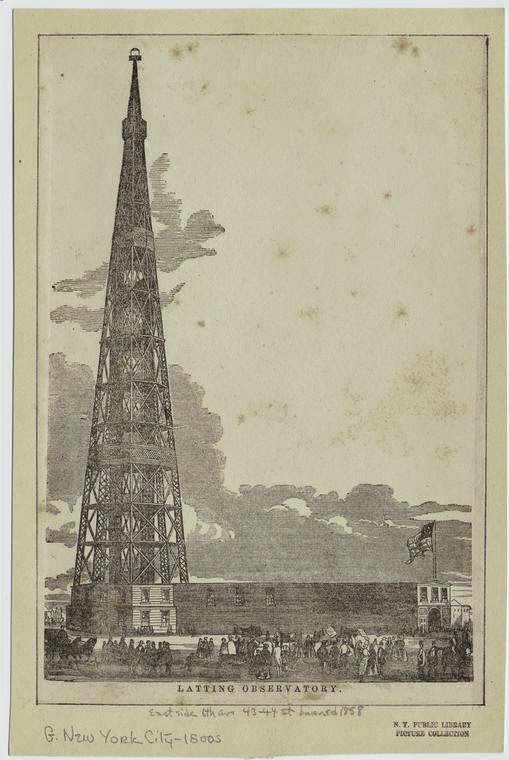
Trinity would be unparalleled in the New York skyline by any permanent buildings for almost 46 years.  But the Latting Observatory at the Crystal Palace Exhibition for a short time allowed New Yorkers the highest vantage on the island.
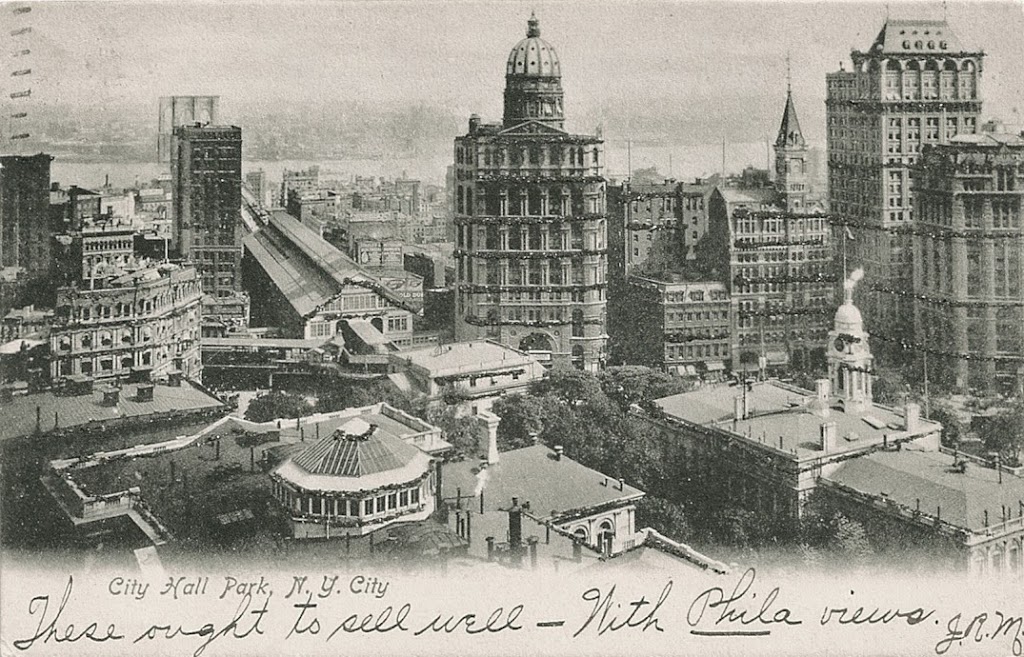
Joseph Pulitzer’s New York World Building, in context with its surroundings, including its proximity to the Brooklyn Bridge. This location would be its undoing, as the building was demolished later to make way for an automobile ramp. (Courtesy Rotograph Project)

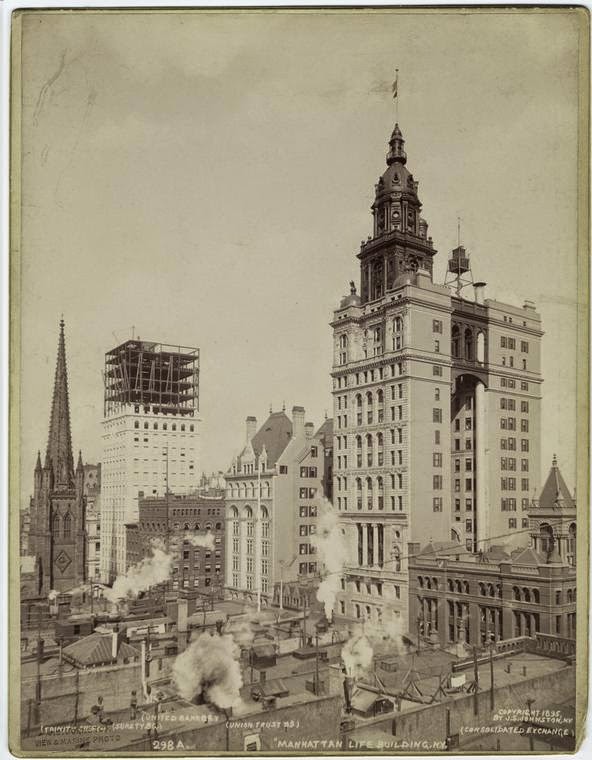
The Manhattan Life Insurance Building became a new neighbor for Trinity Church in 1894.  Its lantern top served as a lighthouse and an office for the New York Weather Bureau. (NYPL)

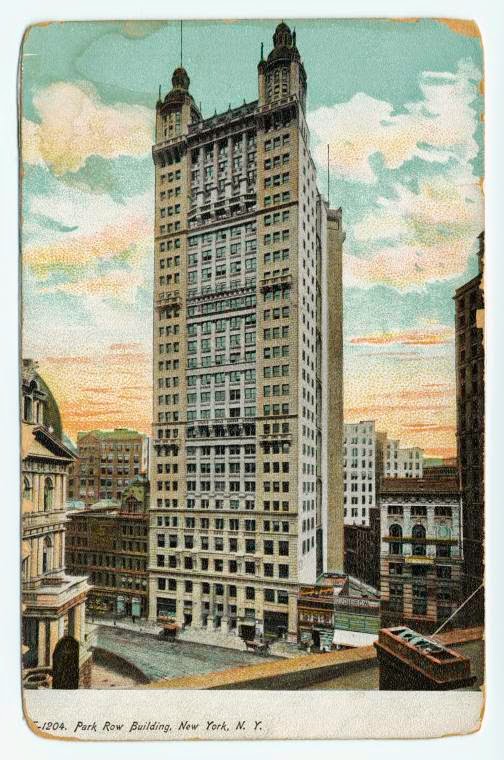
The Park Row Building, the original ‘twin towers’ of lower Manhattan, was criticized for its two-dimensional design but it’s managed to survive into modern times.  It used to host J&R Music World on its ground floor until that business closed last year.

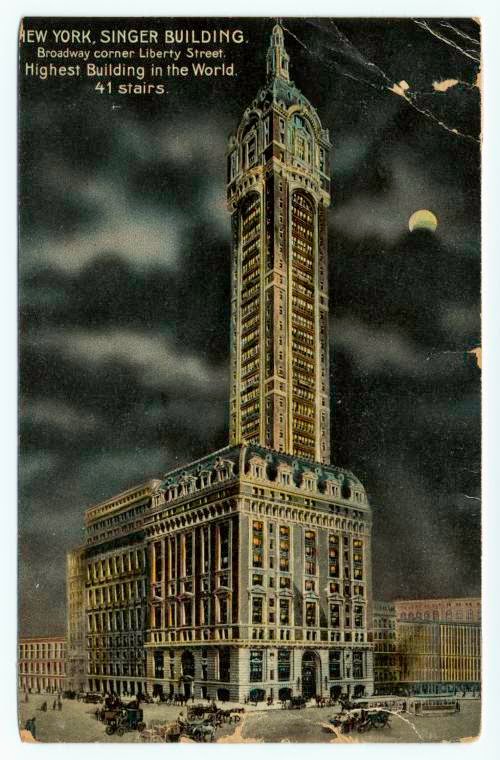
The extraordinarily unusual headquarters for the Singer Sewing Machine Company.  The Singer Building has the rare distinction of being the tallest building every purposefully torn down when it was demolished in the 1960s.

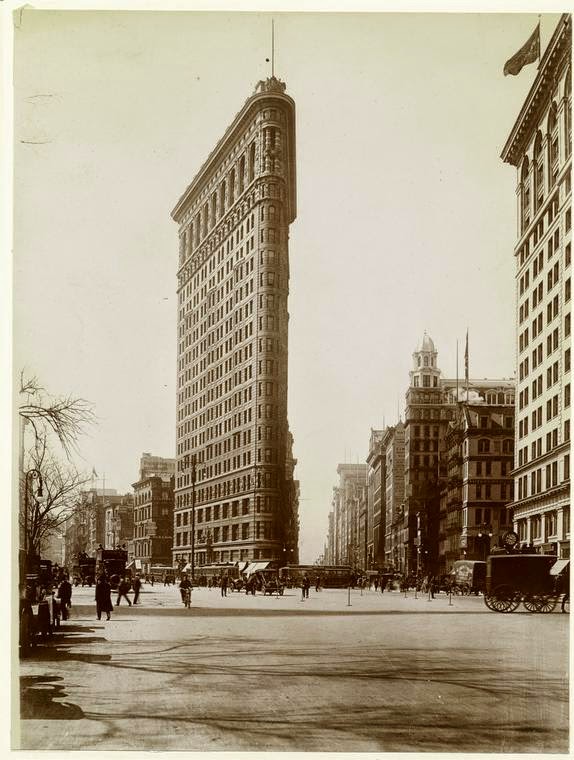
Madison Square was already graced with both the Flatiron Building (below) and Madison Square Garden when it finally got its tallest skyscraper….. (NYPL)

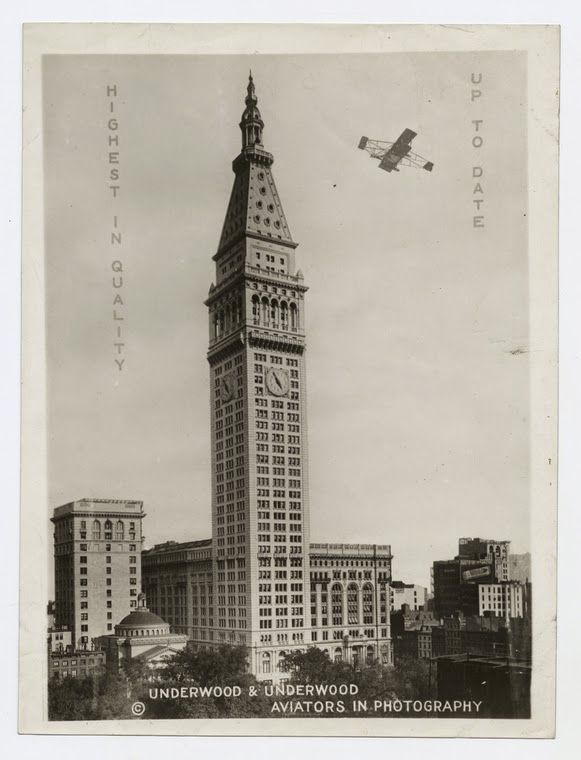
…the Metropolitan Life Insurance Tower, pictured here with an early airplane above it, in a postcard produced by Underwood & Underwood. (NYPL)

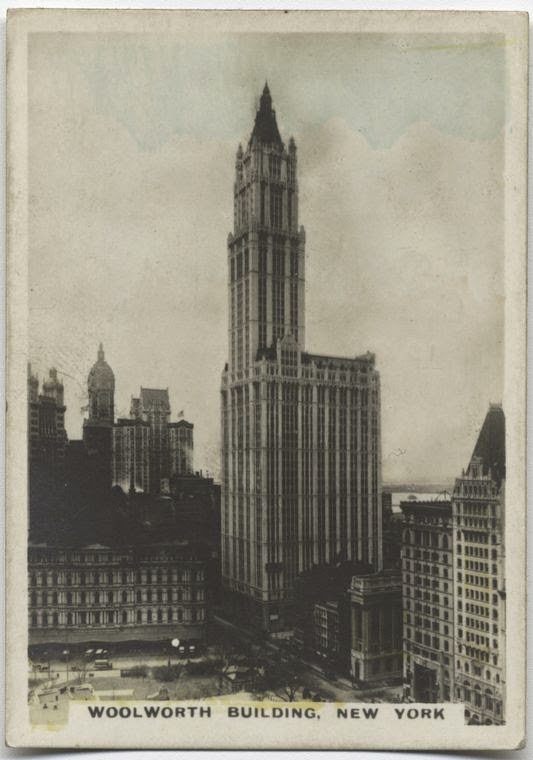
The Woolworth Building (featured here on a cigarette card) is one of the greatest extant examples of pre-zoning law construction with no setbacks along the front side.

 
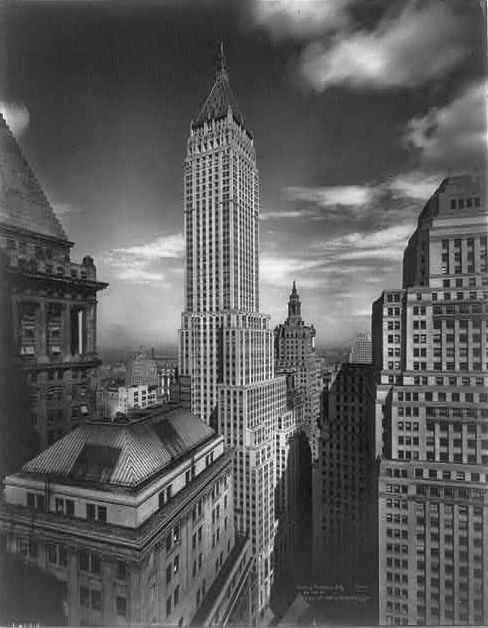
The Manhattan Company Building (or 40 Wall Street) sat among a host of other skyscrapers and was only briefly the city’s tallest building until Walter Chrysler and William Van Alen debuted their surprise uptown.
 

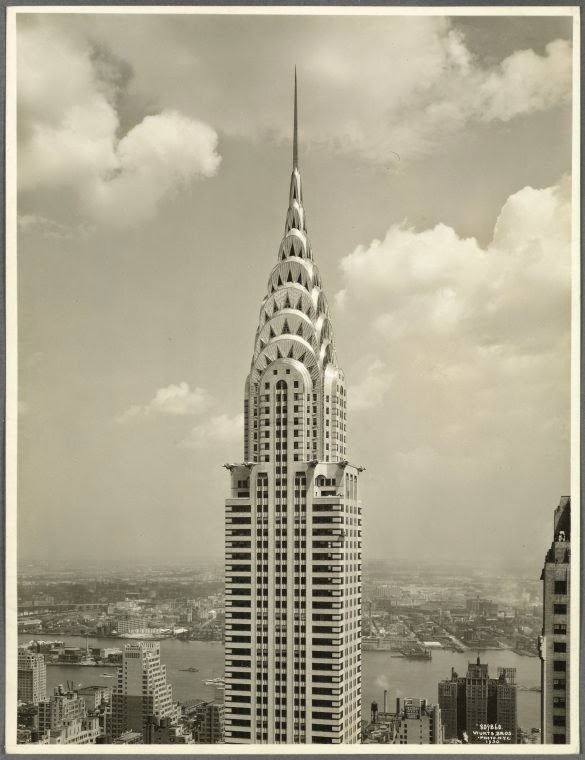
The Chrysler Building in 1930 with its spire freshly attached to the top, making it (for a little over a year) the tallest building in the world.

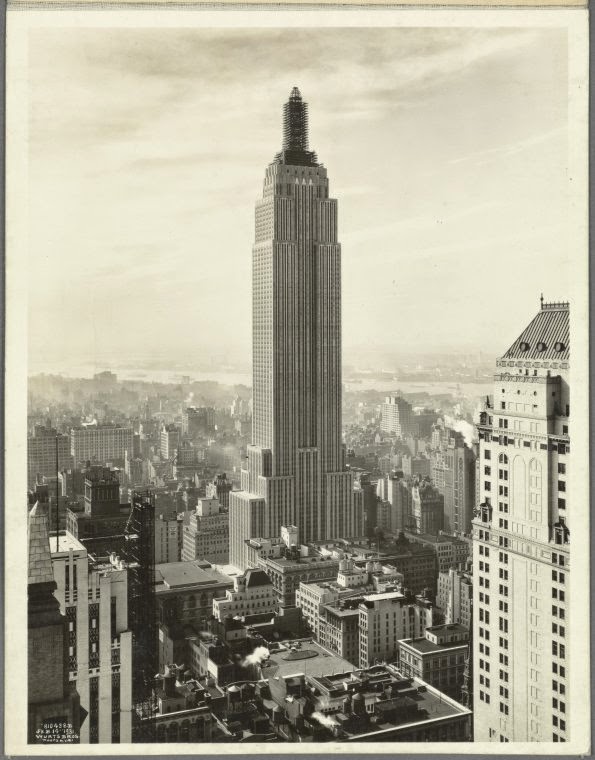
The Empire State Building became the tallest building — and the defining symbol of New York City — thanks to a determined executive from General Motors and Al Smith, the former governor of New York.

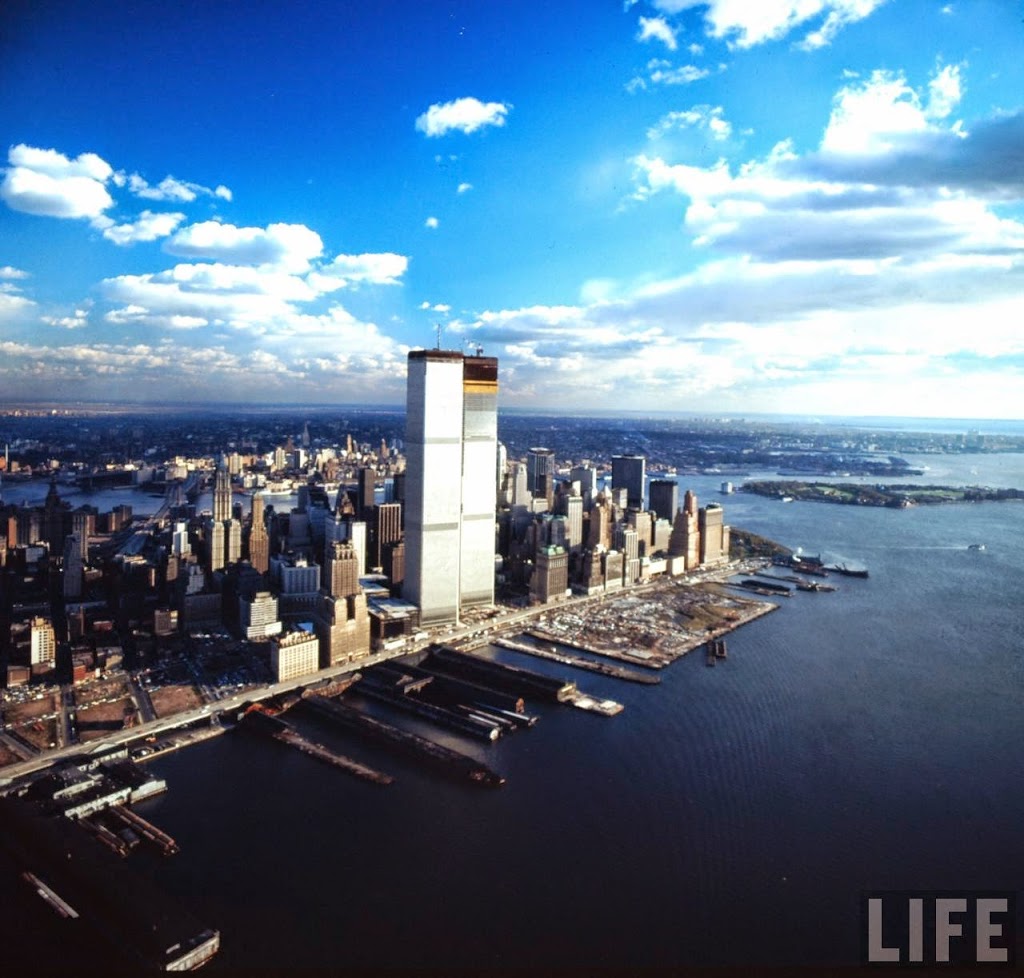
The World Trade Center returned attention to lower Manhattan and set a new record for height, literally leaving other former record holders in its shadow. (Photo courtesy Life Magazine)

SOURCES and RECOMMENDED READING

AIA Guide To New York City 2014
Empire State Building: The Making Of A Landmark — John Tauranac
Higher: A Historic Race to the Sky and the Making of a City — Neal Bascomb
Manhattan Manners — M. Christine Boyer
Pulitzer: A Life In Politics, Print and Power — James McGrath Morris
Rise of the New York Skyscraper — Sarah Bradford Landau
Skyscrapers:A Social History of the Very Tall Building In America — George H. Douglas
Supreme City — Donald Miller
and resources from the Landmark Preservation Commission and the New York Skyscraper Museum

Pictures courtesy New York Public Library