Categories
Gilded Age New York Podcasts

Frozen In Time: The Great Blizzard of 1888

PODCAST The story of the devastating snowstorm that changed New York City forever.

Every winter, as forecasters gaze upon a gruesome impending storm, they always mention one of the worst storms to ever wreak havoc upon New York City, the now-legendary mix of wind and snow called the Great Blizzard of 1888.

The battering snow-hurricane of 1888, with its freezing temperatures and crazy drifts three stories high, was made worse by the condition of New York’s transportation and communication systems, all completely unprepared for 36 hours of continual snow.

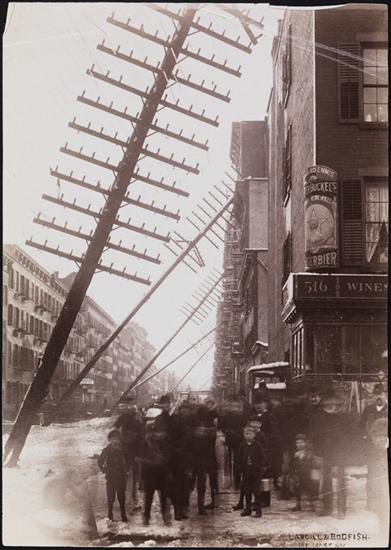
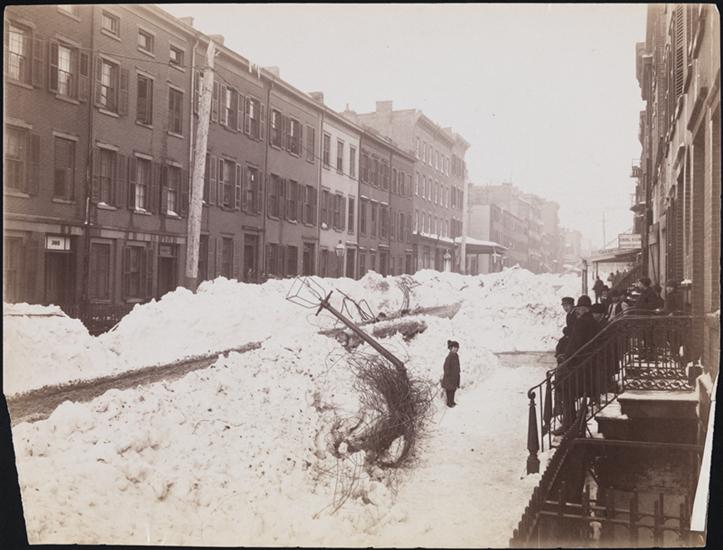
The storm struck on Monday, March 12, 1888, but many thousands attempted to make their way to work anyway, not knowing how severe the storm would be. It would be the worst commute in New York City history. Fallen telephone and telegraph poles became a hidden threat under the quickly accumulating drifts.

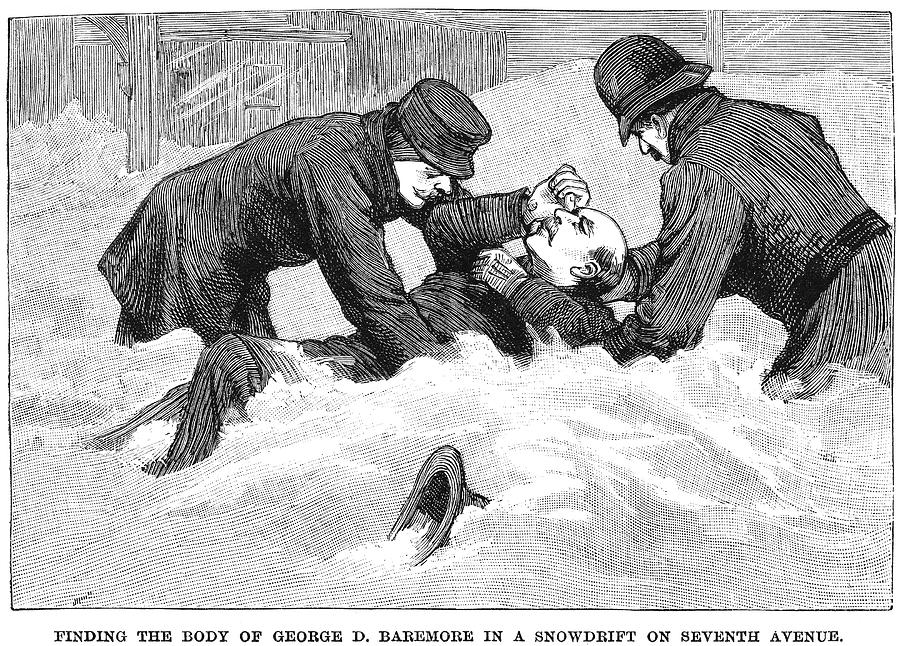
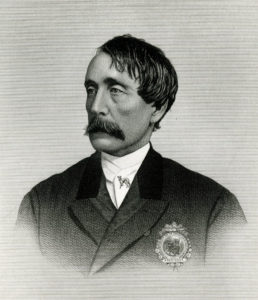
Elevated trains were frozen in place, their passengers unable to get out for hours. Many died simply trying to make their way back home on foot, including Roscoe Conkling (at right), a power broker of New York’s Republican Party.

But there were moments of amusement too. Saloons thrived, and actors trudged through to the snow in time for their performances, And for P.T. Barnum, the show must always go on!

This show was originally recorded back in 2013, just a few months after Hurricane Sandy. We think the comparisons to Sandy that were made in that show feel even more relevant today.

Listen Now: Blizzard of 1888 Podcast

__________________________________________________________

The Bowery Boys: New York City History podcast is brought to you …. by patrons of the Bowery Boys podcast over at Patreon.com.

And for 2026, we’ve added a bunch of new exclusive features to our membership levels — on top of our regular behind the scenes podcast called Side Streets, which we are also recording on video, we’re also releasing classic episodes of the Bowery Boys each week, ad-free. Patrons can now hear this show (The Blizzard of 1888) ad-free.

On top of that, of course, we have exclusive merchandise made just for patron, you also get first dibs on tickets for upcoming live appearances – and so much more!

So please join the fun over at Patreon.com/boweryboys and thank you for helping support the Bowery Boys podcast.

We greatly appreciate our listeners and readers and thank you for joining us on this journey so far. 

___________________________________________________________

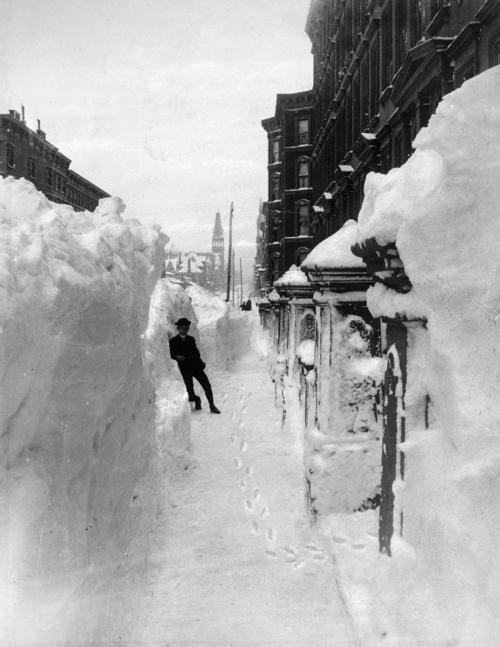
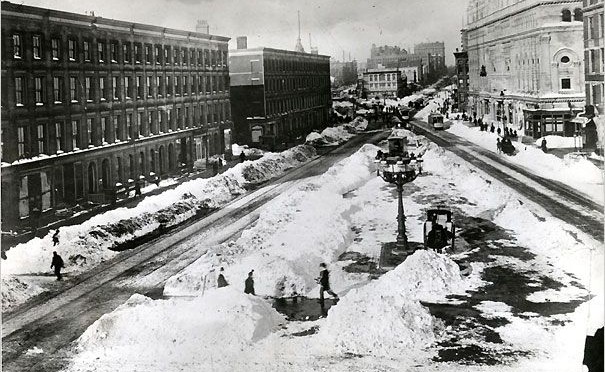
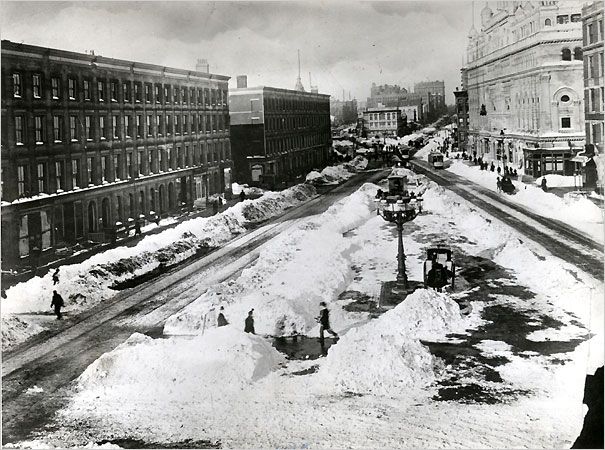
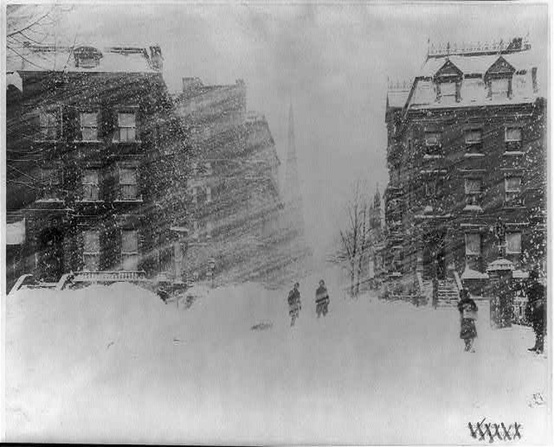
In the blizzard of 1888, the streets disappeared and the snow came down almost horizontally. Imagine being trapped at work, several miles from your home. This was the plight experienced by thousands of New Yorkers (and others throughout the northeast) that Monday. (Library of Congress)
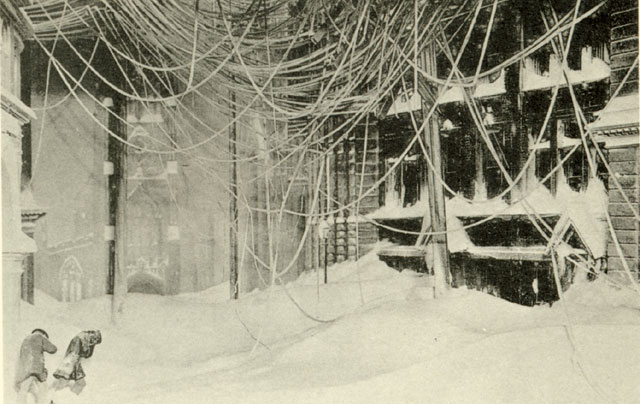
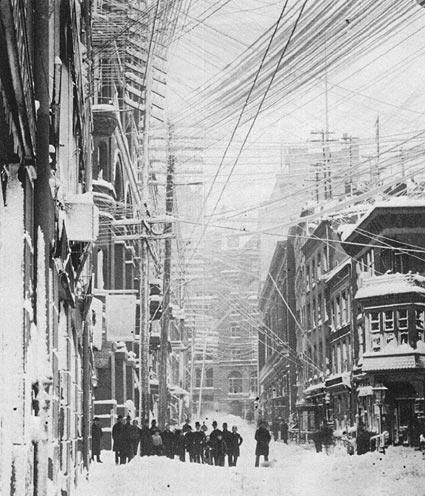
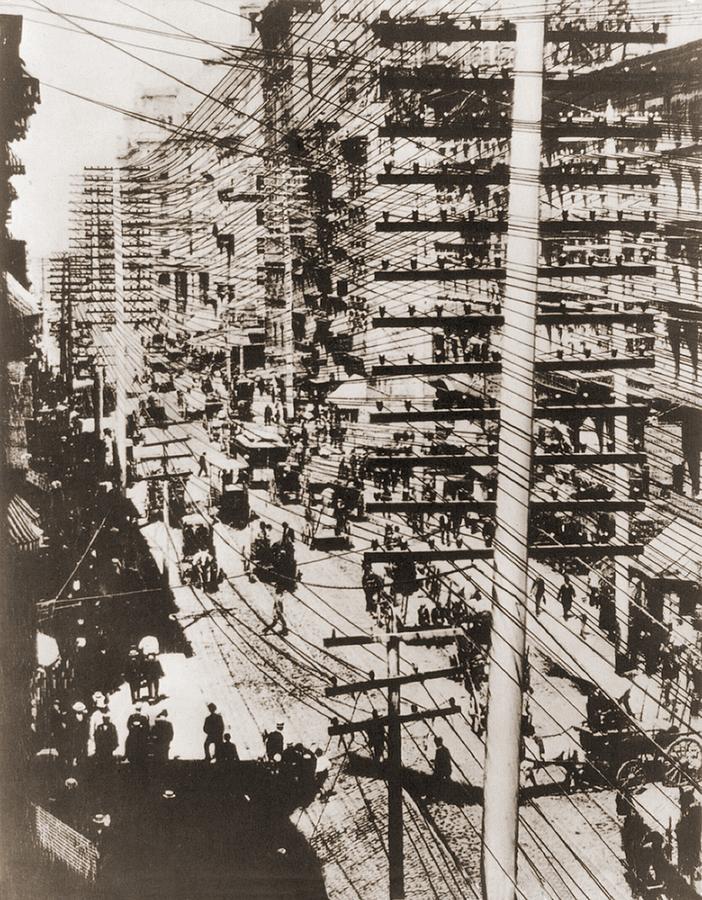
Why did the 1888 blizzard become such a hazard for New Yorkers? Let this picture be your first clue. The city was a cobweb of elevated telegraph, telephone and electric wires.  This picture is from 1887. (LOC)
Langill & Bodfish/Museum of the City of New York
Museum of City of New York

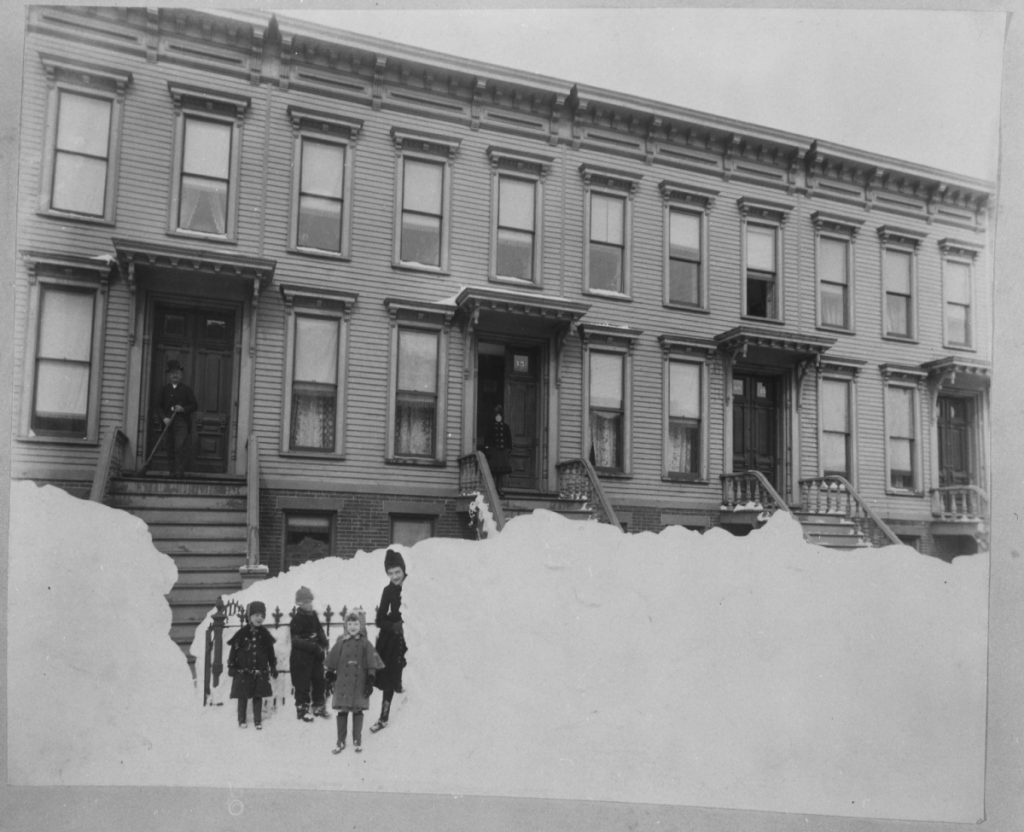
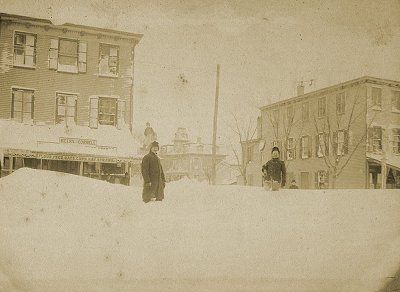
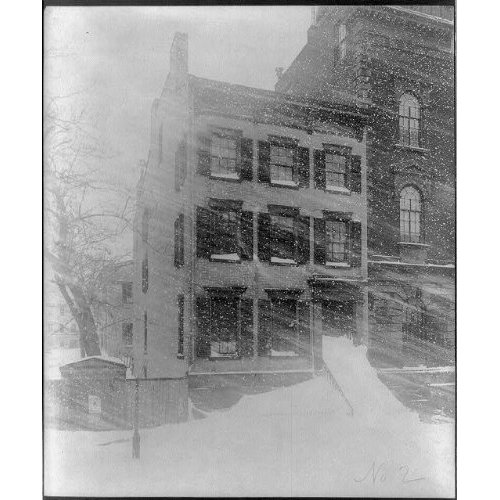
One example of a terrible (although minor) snow drift that might have kept this family in their home all day.  Because of the unpredictable changes in wind, some houses might have been drift-free, while others close by completely locked in with snow. (LOC)
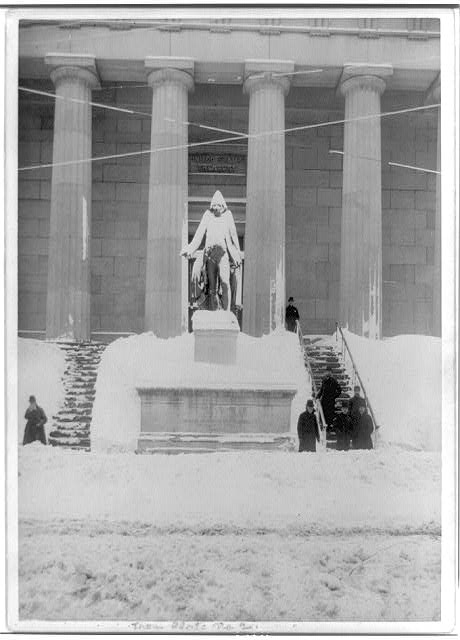
George Washington at the Sub-Treasury Building (today Federal Hall).
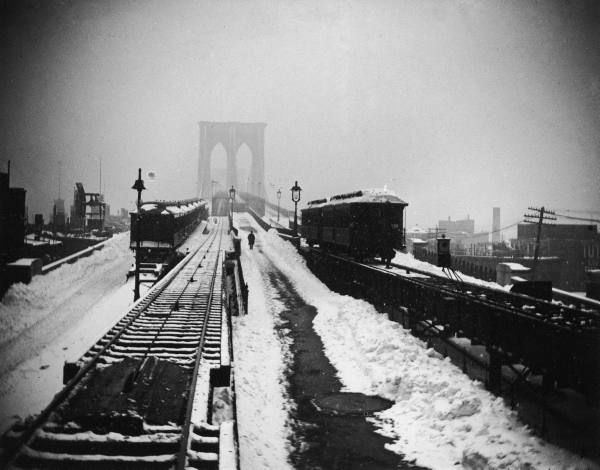
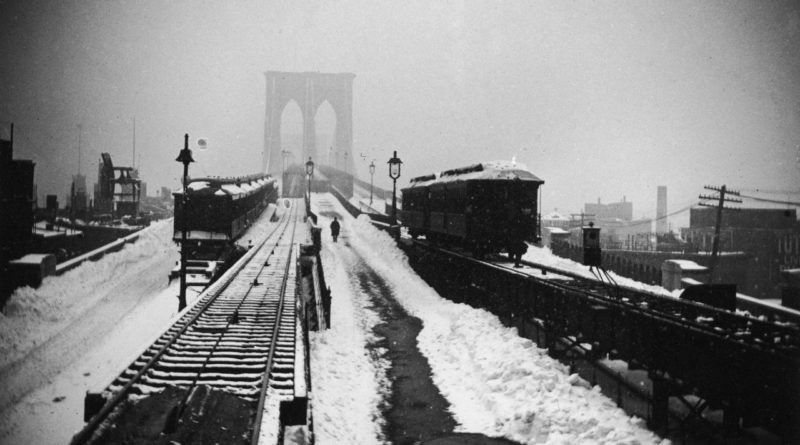
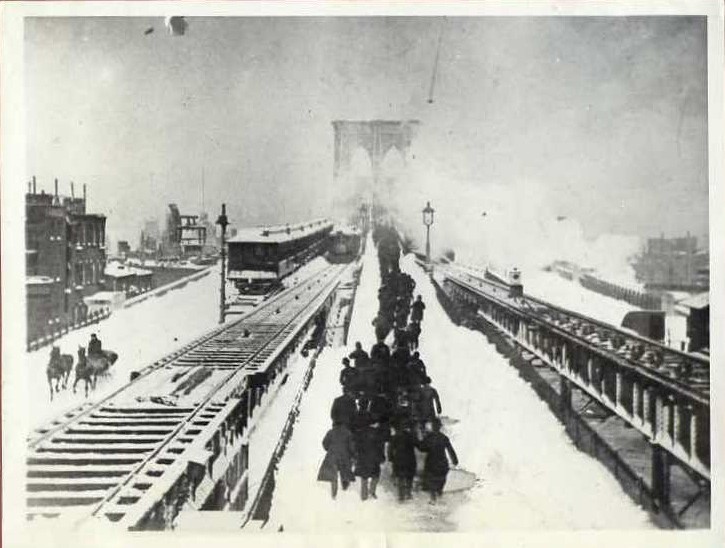
The Brooklyn Bridge, not even five years old, weathered the winds quite well, but became a hazard due to ice. In this picture, people are crossing over as there was no other way to get between Manhattan and Brooklyn.  It’s not clear if any of the trains are operating in this picture.
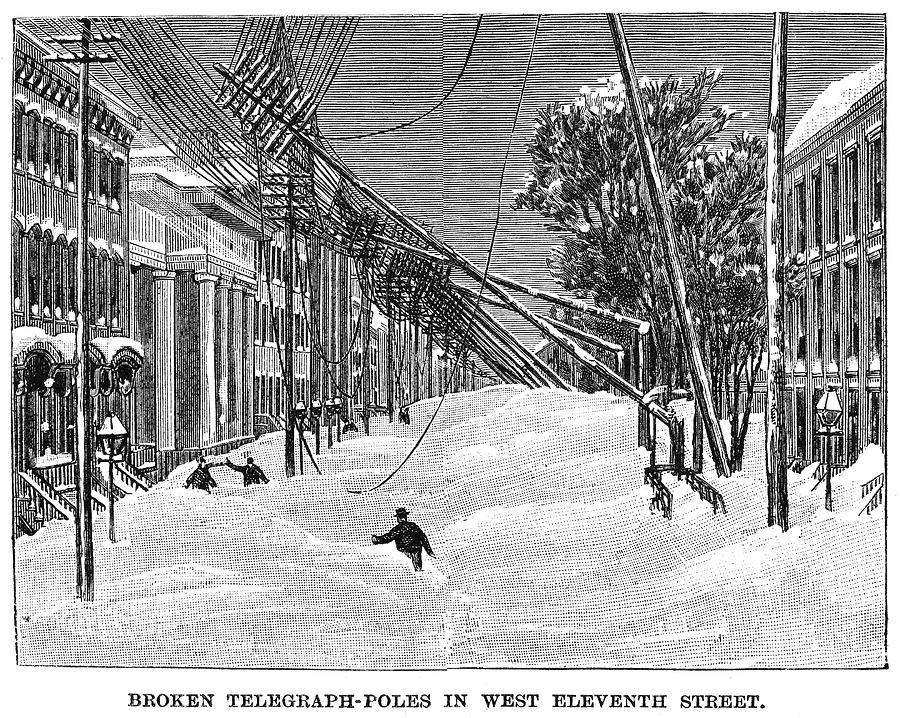
The biggest danger for those venturing outside were the hundreds of downed telegraph, telephone and electrical poles, no match for the intense gusts.  The poles would quickly fall then get covered with snow, creating deadly hazards for people walking past.  The snow would just as quickly cover over an unconscious individual; many New Yorkers froze to death when they fell and were instantly shrouded.
Henry Bergh, founder of the American Society for the Prevention of Cruelty to Animals. He did not survive the blizzard. (NYHS)
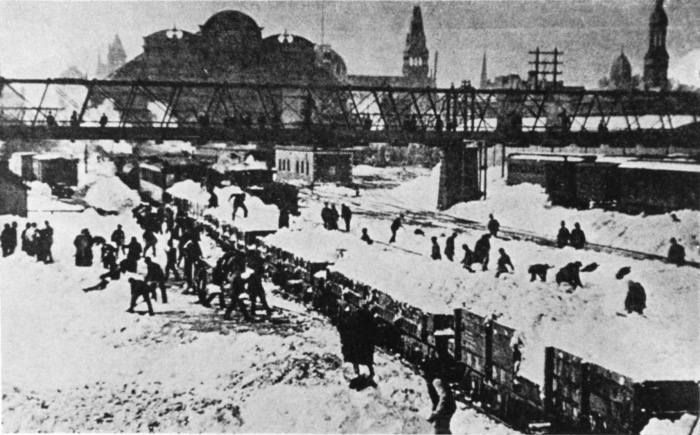
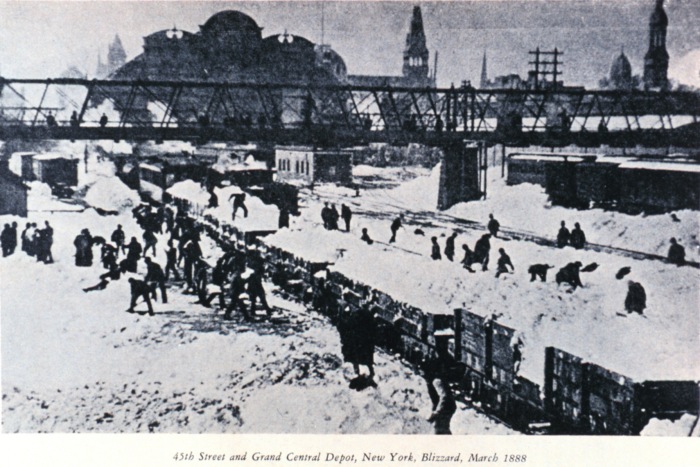
Transportation in and out of the city was at a complete standstill for half the week.  Here workers frantically try to clear the way for trains going into Grand Central Depot.
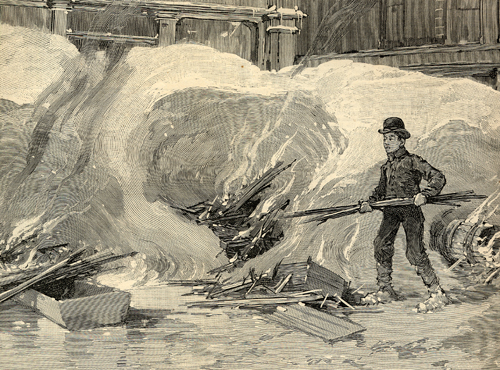
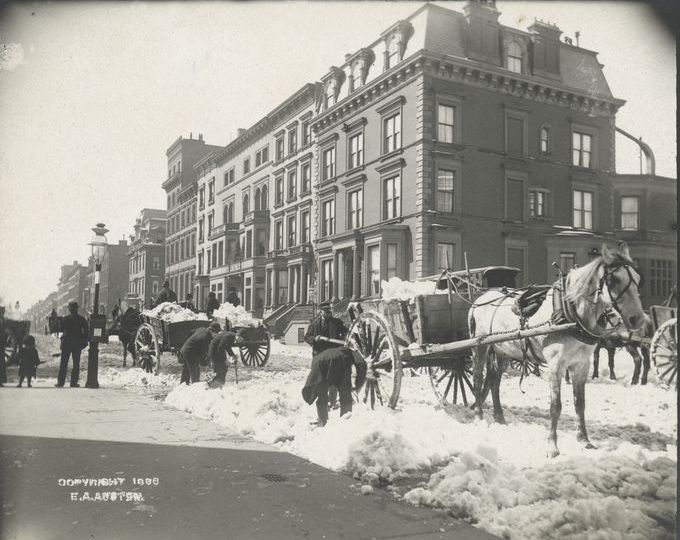
Clean-up was truly chaotic, a feeble effort by the city paired with private contractors with horses, shovels and carts. The piles of snow were taken to water’s edge and dumped, or, in a few less preferred cases, people just started bonfires and melted it away. (For a great picture of a snow dump in the river, see this photo at Shorpy of a blizzard from 1899.) Top pic courtesy LOC, at bottom Maggie Blanck.
The cover of Frank Leslie’s Illustrated Newspaper, usually one of the more sensational pieces of journalism people might have found at their newsstand.

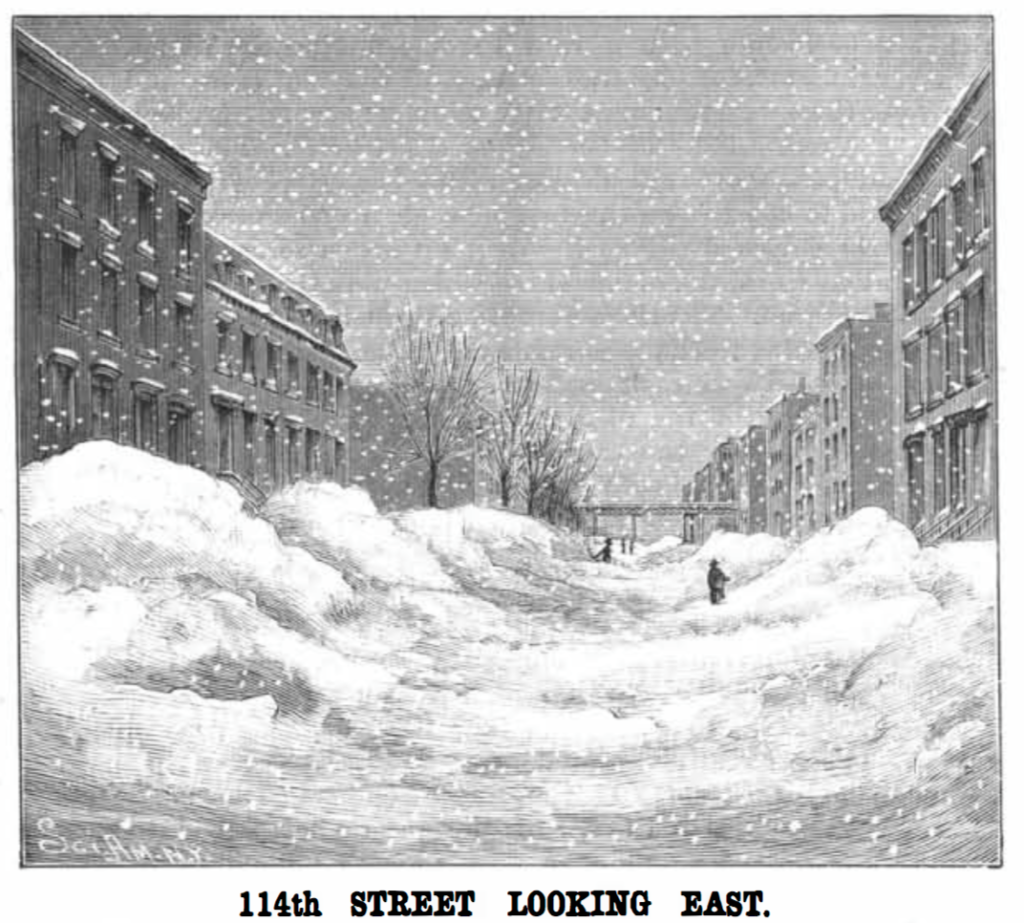
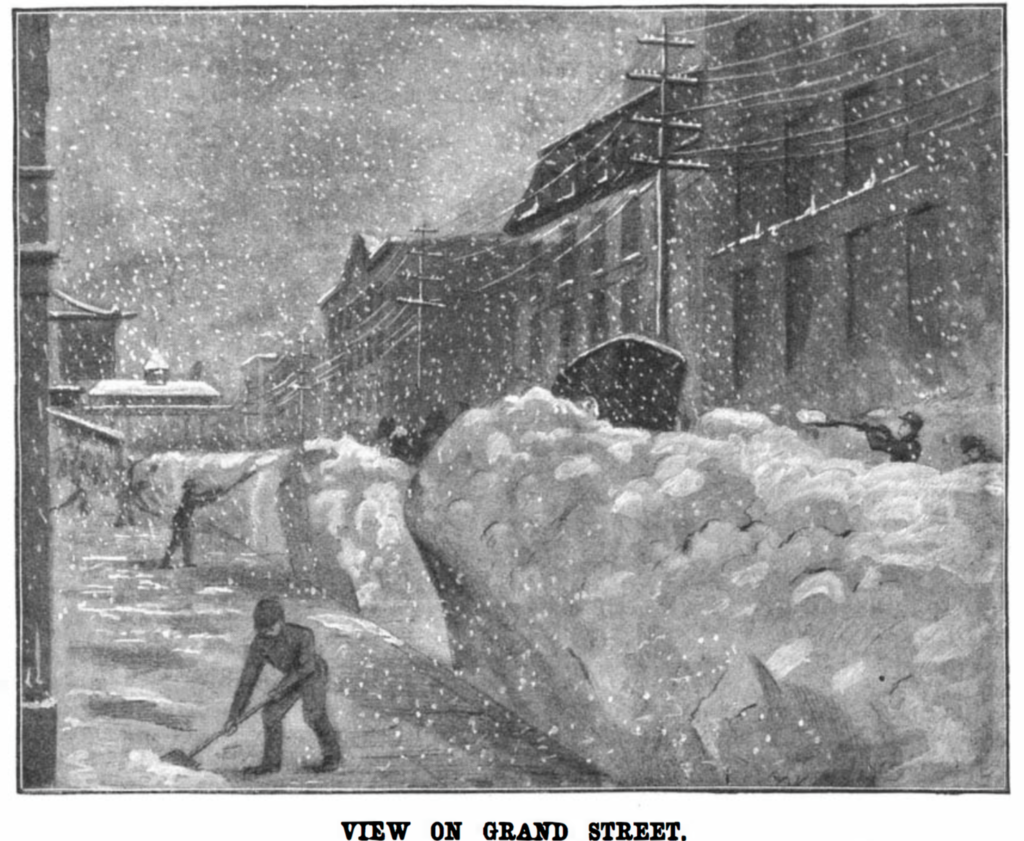
Illustrations from Scientific American, March 24, 1888
Breading G. Way
Categories
Skyscrapers

The Big Wind of 1912: New York skyscrapers in peril, as monster gales hurl “men and women down city streets”

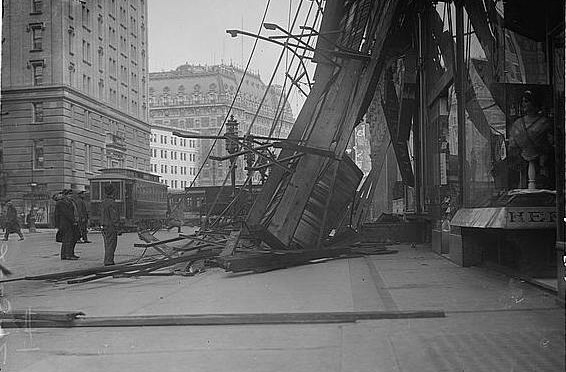
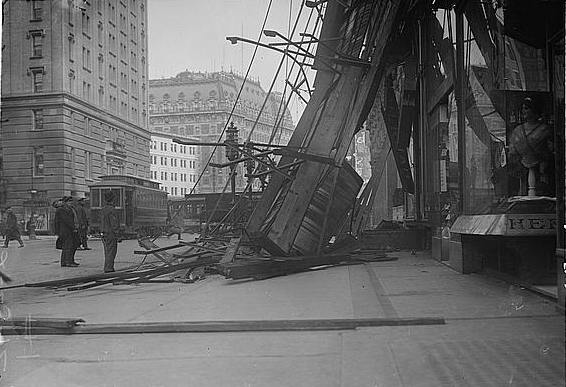
Trauma in Times Square: An electrical sign destroyed by the massive windstorm of February 22, 1912. One Times Square sits to the left, and the Hotel Astor is in the distance. [LOC] Shorpy has an another angle of this damaged storefront.

“The great gale that blew in with Washington’s birthday will not soon be forgotten. It was the biggest New York ever knew.” — New York Evening World, Feb. 23, 1912

 On February 22, 1912, a catastrophic weather anomaly occurred in New York City, an event the New York Times referred to as ‘The Big Wind’.

This particular day has also been called “a significant day in the history of tall buildings,” although I doubt anybody today will be celebrating this rather vicious and sudden test of architectural endurance.

New Yorkers thought it might be worse. The storm system began the previous day as a blinding Midwestern blizzard, paralyzing the railroad and killing cattle. St. Louis received its greatest snowfall ever up to that time from this churning storm, and Chicago reported winds of up to 50 miles per hour.

If it held this pattern by the time it hit the East, New Yorkers feared another storm of the level of the Blizzard of 1888, which buried the city in snow, rendered transportation useless, and killed more than 200 people.

In one respect, the city was fortunate that snowfall was relegated to upstate New York. The grim meteorological trade off, unfortunately, was a day of powerful, otherworldly wind gusts, almost double the strength of those during the infamous 1888 storm.

The worst of it came after midnight, when a terrifying frozen bluster “swooped down on the city with all its length and breadth” at speeds of 96 miles per hour.

At one point, devices in Central Park registered an unthinkable 110 miles per hour. By morning it had settled to 70 miles per hour and held that speed steady for much of the day. [source]

Some called this “giant among gales” a day-long cyclone, and it certainly acted like one — uprooting trees, destroying rooftops and even depositing whole houses into the river. People were blown off their feet, carts went flying and pedestrians dodged falling telephone poles in terror.

Most leaving home wearing hats ran back inside without them.  If any of those women from yesterday’s Astor Place post were trekking through the plaza with their home-work today, they most likely lost it to the wind.

Foremost on the minds of most New Yorkers was the fate of its skyline. In 1888, during the last harsh storm, there were no skyscrapers. In 1912, there were several over 30 floors, including the city’s tallest, the 50-floor Metropolitan Life Insurance Tower off Madison Square.

Although most buildings were designed to withstand significant wind trauma, none of them were prepared for winds above 70 miles per hour. And the building slated to become the next tallest in New York — the Woolworth Buildingwas still under construction, its metal skeleton now a potential arsenal of deadly debris.

Panes of glass shattered throughout the city, but it appears most of New York’s tallest structures survived without significant damage. In fact, it was the shorter, older structures that fared worst, many of them designed with little protection from powerful winds.

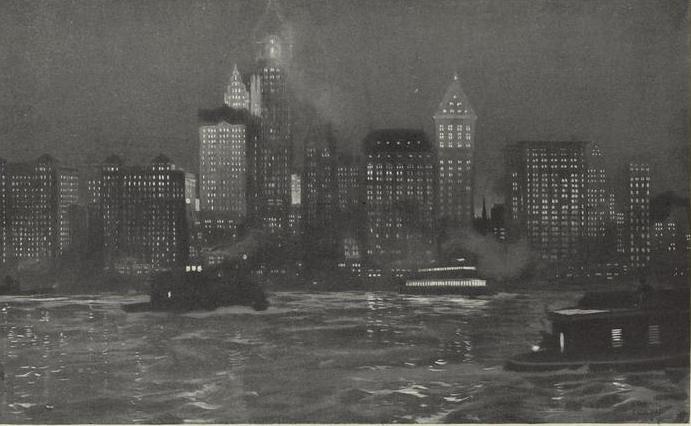
Below: the downtown Manhattan skyline in 1912. Most of these buildings survived the ‘Big Wind’ with only damage to their windows. [pic]

Not that modern invention came away unscathed that day. The electrical signs of Times Square, many no more than a few months old, were no match for the powerful gusts. Several were destroyed, including a one provocative sign at 47th Street, featuring “two scantily clad electric boys who box nightly in Summer underwear.” [source]

Next to the Hotel Knickerbocker, a 200-foot electric sign crumbled to the sidewalk below in front of Hepners Hair Emporium, a police officer racing into the establishment a minute before the sign crashed into the plate glass window of the railroad ticket office next door.

Across the street, at the Times Building, a drug store window exploded, and “many bottles of perfume and drugs” were hurled at passers-by.

Most boats all along the waterfront were either damaged or untethered. Predictably, beach houses on Rockaway Beach and other quieter locales fared the worst. The luckiest structures survived with nary a window remaining; those less fortunate were found floating offshore. In Astoria, Queens, the roof to the jail was taken off, to the fright of the occupants inside.

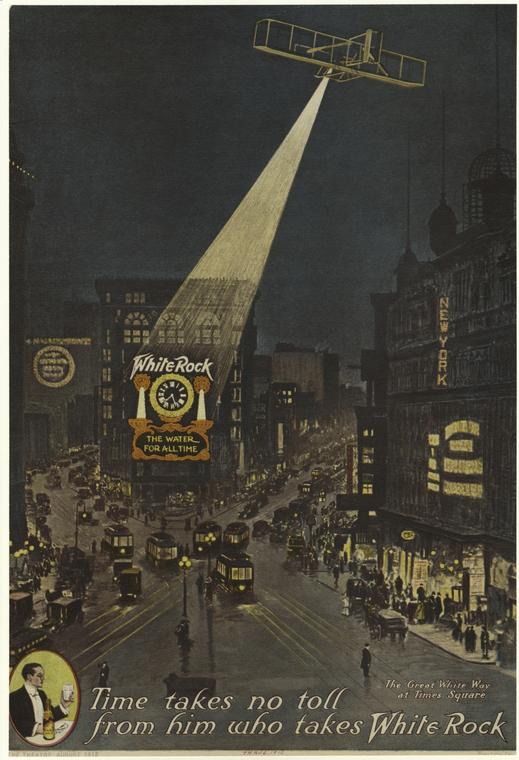
At right: Times Square in August 1912. The White Rock sign was probably not around for the February wind storm. The ‘electric boys’ sign described above sat at this intersection.

In Red Hook, Brooklyn, turbulent winds kept a raging fire alive at a brick manufacturing plant, distributing flaming pitch shrapnel to several buildings across the street, including a hay and horse feed dealership! (One of many reasons they don’t keep hay dealerships in crowded cities today.) The brick factory, which took several hours to control, was about three blocks from the location of today’s IKEA store.

February 22, 1912, happened to be the 180th anniversary of George Washington‘s birth, and hundreds of veterans tried marching from Jefferson Market to Union Square. Flags raised aloft in celebration were torn to ribbons. Nobody was injured, although the gusts caused major inconvenience, “Salvation Army object lessons and banner bearers bowled over by the wind.”  [source]

Others were not as fortunate. The Times attributed at least one death to the storm and over a dozen concussions from flying debris, messenger boys and seamstresses blown into windows or railings or hit by signs or dislodged cornices.

One man, waiting for his wife at St. Patrick’s Cathedral, had his neck slashed by flying glass. Where physical harm was avoided, humiliation took its place. A society woman on Riverside Drive, wearing “superabundantly costly furs,” was picked up and thrown into a horse.

Meanwhile, down at the Battery, Frank Coffyn was preparing for another takeoff off the water on his pontoon-equipped airplane. The wind had other plans, ripping the wings off the plane and spoiling Coffyn’s flight. Later that day, Coffyn wired his old boss Wilbur Wright for replacement parts. (See my previous post for more information of Coffyn’s harbor flights..)

By the late evening, winds had died down to a mere 44 miles per hour. (For comparison, New York City’s average wind speed today is just 12.2 miles per hour.) In the morning, things were back to normal — except for huge mess of metal and glass left scattered on the streets.

Categories
Gilded Age New York

Before Al Roker and Sam Champion, there was Farmer Dunn, New York’s weather guru of the late 19th century

How did New Yorkers know to panic over the weather in the 19th century? How could they know to run through the streets in terror at the upcoming snowpocylpse/blizzardtastrophe if there was no brightly colored Accuweather radar or a friendly weather person with perfectly coiffed hair?

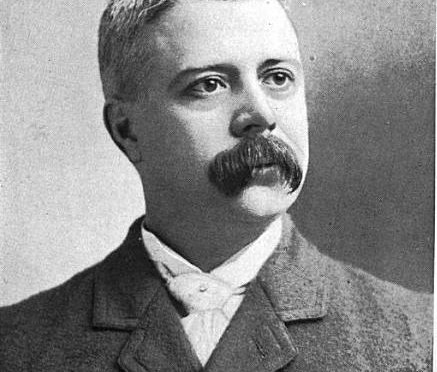
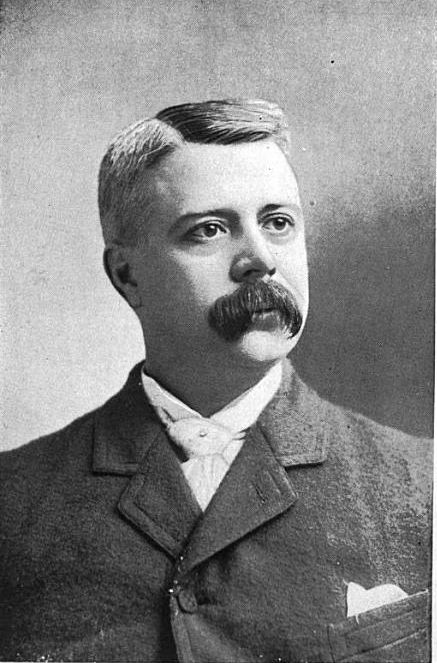
In the 1880s, New Yorkers turned to one man — the Brooklyn-born Sergeant Elias B. Dunn (at right, with his dashing moustache, 1902).  He was so trusted for his weather predictions — more accurate than an almanac! — that he was given the almost devout nickname of Farmer Dunn.

Nationwide weather forecasts had been steadily compiled by the federal government since 1814, but such  prognostications — or “probabilities” as there was sometimes called — were never taken very seriously until the late 19th century.

With the invention of the telegraph, a national signal office was established in 1870 and placed under the auspice of the Secretary of War as it was believed that “military discipline would probably secure the greatest promptness, regularity and accuracy in the required observations.”  Members of the military were enlisted throughout the United States to telegraph current weather conditions to the Washington D.C. signal office, where meteorologists could piece together the information and make more accurate predictions.  In 1890, this responsibility was moved to the Department of Agriculture.  (This is where Dunn got his unique nickname.)

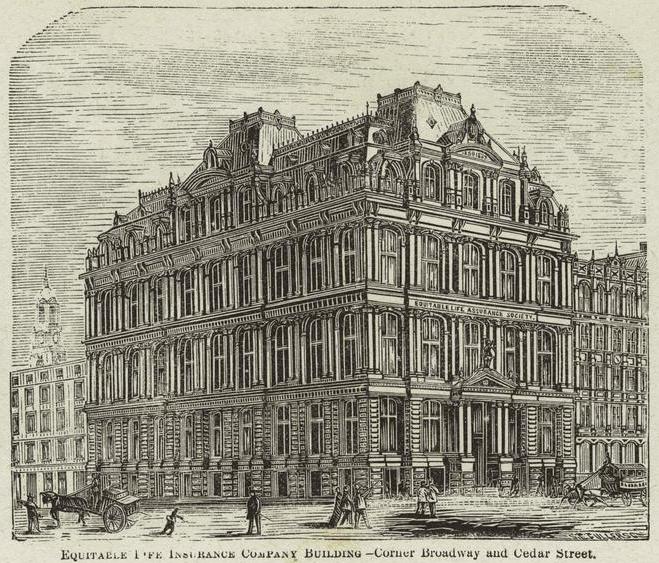
New York’s weather conditions were assigned to Dunn, a decorated sergeant, and a four-man team, set up in a telegraph office located in the 1880s at the old Equitable Building at 120 Broadway. (In 1894, they moved to the taller Manhattan Life Building at 64-66 Broadway.)  The team would telegraph present conditions by using barometric instruments located on the roof.  They would then report statements from the D.C. signal office to the press.

Below: the original Equitable Building, headquarters for Farmer Dunn and his telegraph crew. The ornate structure famous burnt down in 1912 during a frightfully chilly evening. (courtesy NYPL)

Dunn “is one of the very best known men in the city.” according to an 1894 New York Times article.  “His popularity, except with his legion of friends, is of a varying quality.”  Farmer Dunn would embody the weather for many New Yorkers;  his name would be cursed when it rained and praised on sunny days.

When his predictions failed, he was jovially mocked in the press. “ELIAS IS NOT A PROPHET,” declared the Times in 1895 after a sudden rain dampened spirits on Independence Day.

He was a man of science, eschewing folk traditions of predicting weather. “We made a list of all the farmers’ beliefs and the sailors’ beliefs, and we submitted them to investigation,” Dunn told the New York Sun.  “The result that we found was that they just don’t work out.  The study of weather is an exact science which cannot be left to squirrels and nuts.”

Dunn was on hand during one of the worst weather events in New York City history — the Blizzard of 1888, which struck the city just after midnight on Monday, March 12.  He and his team frantically sent telegraphs to DC and received no response, as most of the telegraph poles further south had been dismantled by the storm’s brutal winds.  In fact, it was only when he received a message from London — via the Atlantic Cable, buried under the ocean — that he realized the full impact of the blizzard.

Later in life, Farmer Dunn became a published author, spilling his meteorological secrets in books such as “The Weather and Practical Methods of Forecasting It.”  He must  have inspired an entire generation of buddy weather enthusiasts, describing technical terms in a plain manner and even recommending equipment.  For instance, if you were looking for a polymeter (it “gives the relative and absolute humidity”), Dunn recommends purchasing one from “Gall & Lemlike, 21 Union Square.”

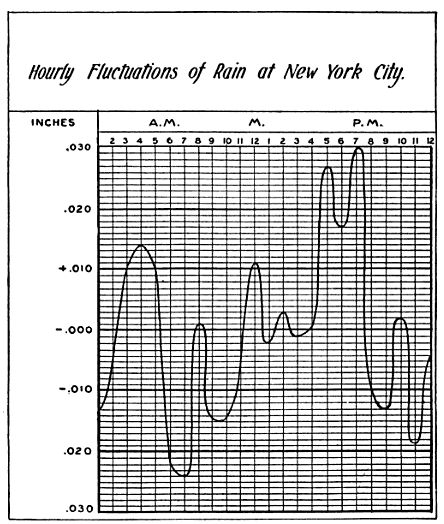
At right: An illustration from Dunn’s book, 1902

He also became a popular newspaper columnist, distributing such wisdoms in 1900 as “the popular idea that the spots on the sun produce excessive heat on the Earth is erroneous.” (source)

It seems he also got into the “moving picture” business, although I can find no other information on this other than the fact that he sued Thomas Edison in 1900!

Later in life, Farmer Dunn ran as a Republican for a seat in the U.S. Congress. He was touted for his six-word platform: “Americanism; local option; no entangling alliances.”  He lost, which he did not predict.  The weather guru died in 1943, enjoying many years of retirement in Miami.

Categories
Uncategorized

Snow shocked: The Blizzard of 1888

Longacre Square — the future Times Square — after the Blizzard

A March blizzard like the one today is discouraging as we’re so close to ridding ourselves of winter forever. But putting it all in perspective, it’ll never top the absolute worst March snowstorm of all time, a snowy catastrophe that completely shut down the city — the Blizzard of 1888.

In an age before radio and television, in a city with elevated trains and few effective snow-clearing techniques, New York was held hostage as the blizzard pelted New England, starting as freezing rain on March 11, then building to a 36-hour deluge of wind and snow from March 12-13, winding up the next day. The East River became a solid floor of ice, destroying dozens of boats and ferries. Telegraph poles and rudimentary electrical wires crumbled under ice and wind. Food deliveries stopped, supplies of fresh water froze up; many in downtown tenements froze to death in their rooms.

The storm also underscored the city’s need for an underground transit system. One unfortunate reporter for the New York Sun was on a packed morning Sixth Avenue elevated and observed: “The train moved down a little below Seventeenth street and stopped. It stayed there more than two hours. Then it moved ten feet and stopped another hour; ten feet more and another hour; finally to a little below Sixteenth street, and there it stuck until 5 minutes before 3 o’clock.”

Here’s a few more images from that horrific event. See, today isn’t so bad:

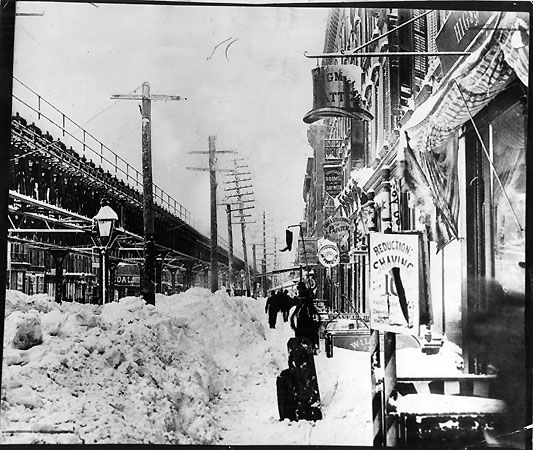
Aftermath along the elevated trains. Within ten years, New York would begin work on underground tunnels to accomodate a more convenient mode of transportation

Not having the luxury of ‘sick days’ or lenient work environment, most New Yorkers braved the awful weather to go into work that day. What greeted them were a death-defying latticework of icy wires and downed telegraph poles.

The scene behind the Grand Central Depot at 43rd street — essentially paralyzed

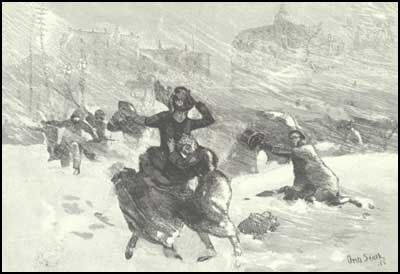
A Harpers Weekly illustration summing up the scene at Union Square. Not a day to hit the Ladies Mile shops!

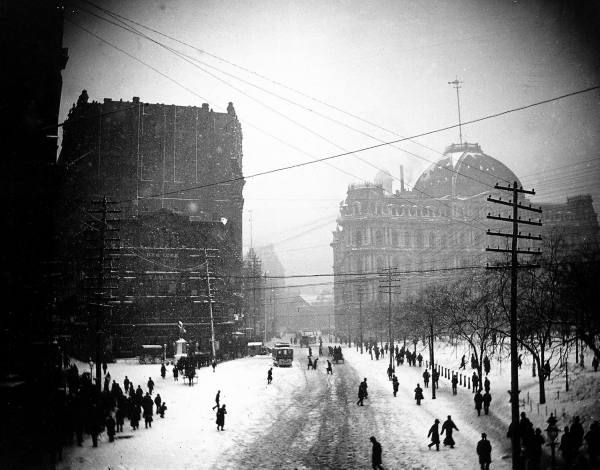
The view of Park Row in front of the Brooklyn Bridge entrance in Manhattan, with the old post office to the right. Again, just invision sliding down one of these sidewalks, dodging uncontrollable trollies and the risk of falling poles and wires

The Brooklyn Bridge, barely a few years old, aches under the burden of tons of snow and violent winds
(Life archive images)

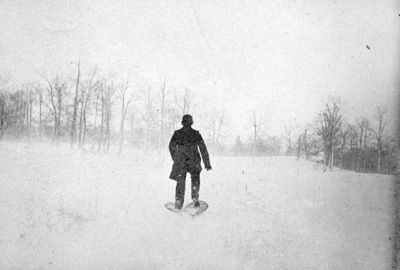
The truly adventurous, however, were well prepared, such as this man in Prospect Park, armed with snow shoes. (Pic courtesy the Brooklyn Historical Society)

And the scene was certainly no better in the town of Jamaica (Union Avenue is pictured here), which would be incorporated as a part of the borough of Queens just ten years later (pic courtesy wintercenter)