PODCAST The story of the devastating snowstorm that changed New York City forever.
Every winter, as forecasters gaze upon a gruesome impending storm, they always mention one of the worst storms to ever wreak havoc upon New York City, the now-legendary mix of wind and snow called the Great Blizzard of 1888.
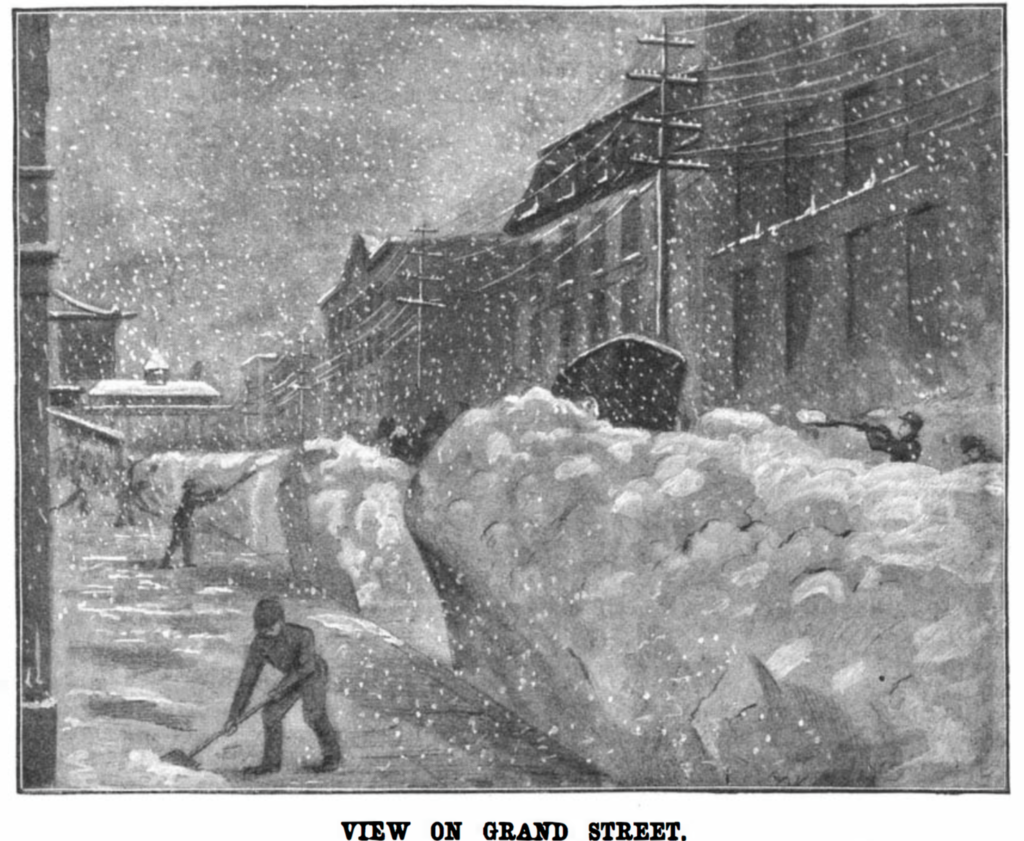
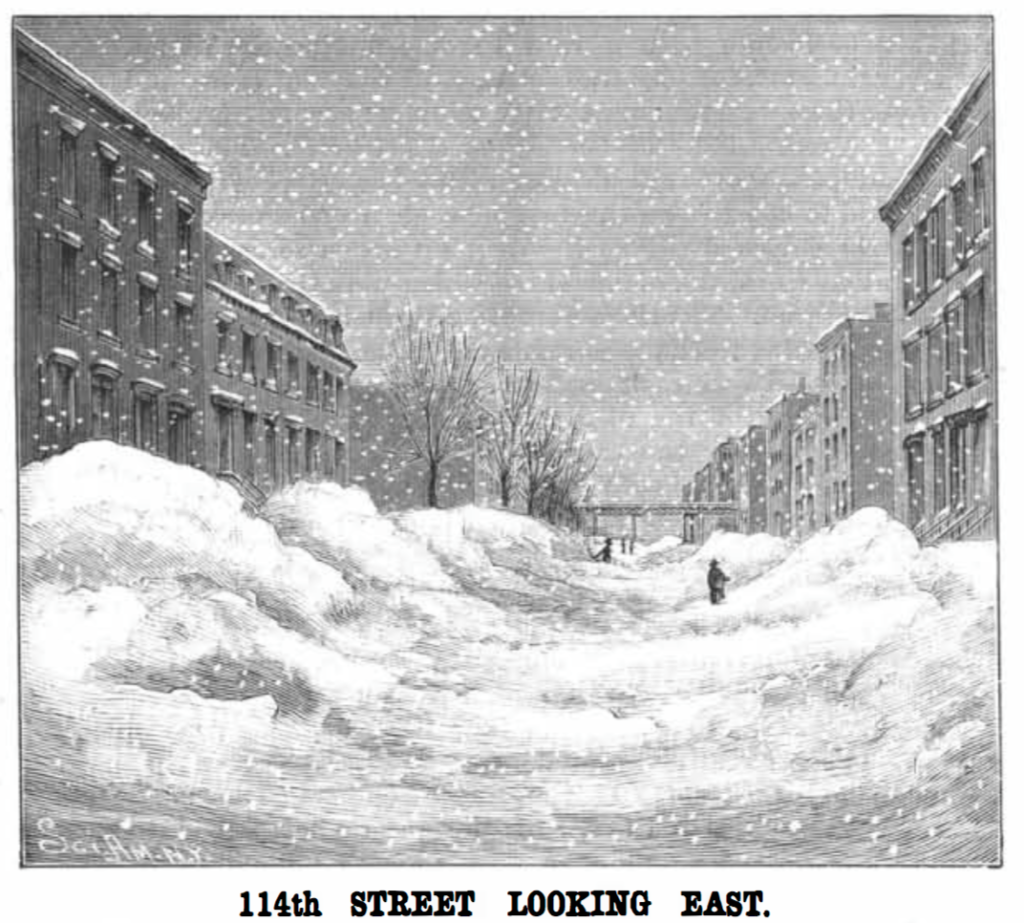
The battering snow-hurricane of 1888, with its freezing temperatures and crazy drifts three stories high, was made worse by the condition of New York’s transportation and communication systems, all completely unprepared for 36 hours of continual snow.
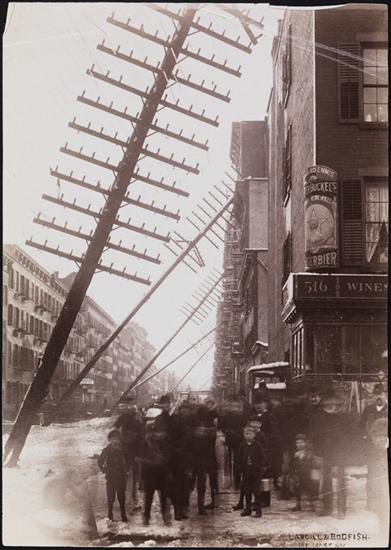
The storm struck on Monday, March 12, 1888, but many thousands attempted to make their way to work anyway, not knowing how severe the storm would be. It would be the worst commute in New York City history. Fallen telephone and telegraph poles became a hidden threat under the quickly accumulating drifts.
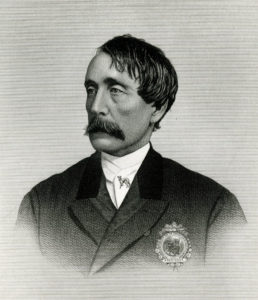
Elevated trains were frozen in place, their passengers unable to get out for hours. Many died simply trying to make their way back home on foot, including Roscoe Conkling (at right), a power broker of New York’s Republican Party.
But there were moments of amusement too. Saloons thrived, and actors trudged through to the snow in time for their performances, And for P.T. Barnum, the show must always go on!
This show was originally recorded back in 2013, just a few months after Hurricane Sandy. We think the comparisons to Sandy that were made in that show feel even more relevant today.
Listen Now: Blizzard of 1888 Podcast
__________________________________________________________
The Bowery Boys: New York City History podcast is brought to you …. by patrons of the Bowery Boys podcast over at Patreon.com.
And for 2026, we’ve added a bunch of new exclusive features to our membership levels — on top of our regular behind the scenes podcast called Side Streets, which we are also recording on video, we’re also releasing classic episodes of the Bowery Boys each week, ad-free. Patrons can now hear this show (The Blizzard of 1888) ad-free.
On top of that, of course, we have exclusive merchandise made just for patron, you also get first dibs on tickets for upcoming live appearances – and so much more!
So please join the fun over at Patreon.com/boweryboys and thank you for helping support the Bowery Boys podcast.
We greatly appreciate our listeners and readers and thank you for joining us on this journey so far.
___________________________________________________________
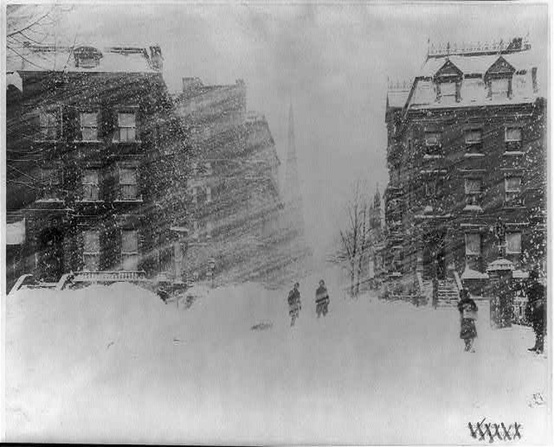
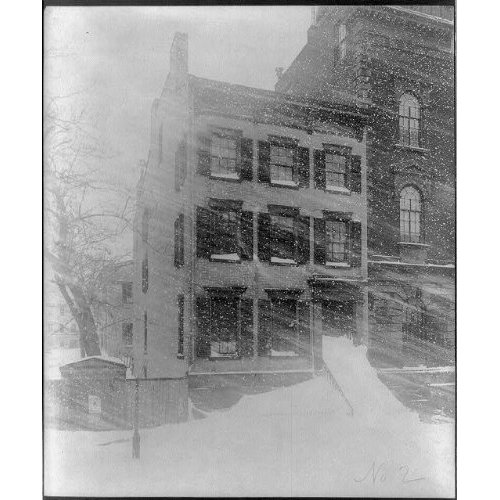
In the blizzard of 1888, the streets disappeared and the snow came down almost horizontally. Imagine being trapped at work, several miles from your home. This was the plight experienced by thousands of New Yorkers (and others throughout the northeast) that Monday. (Library of Congress)
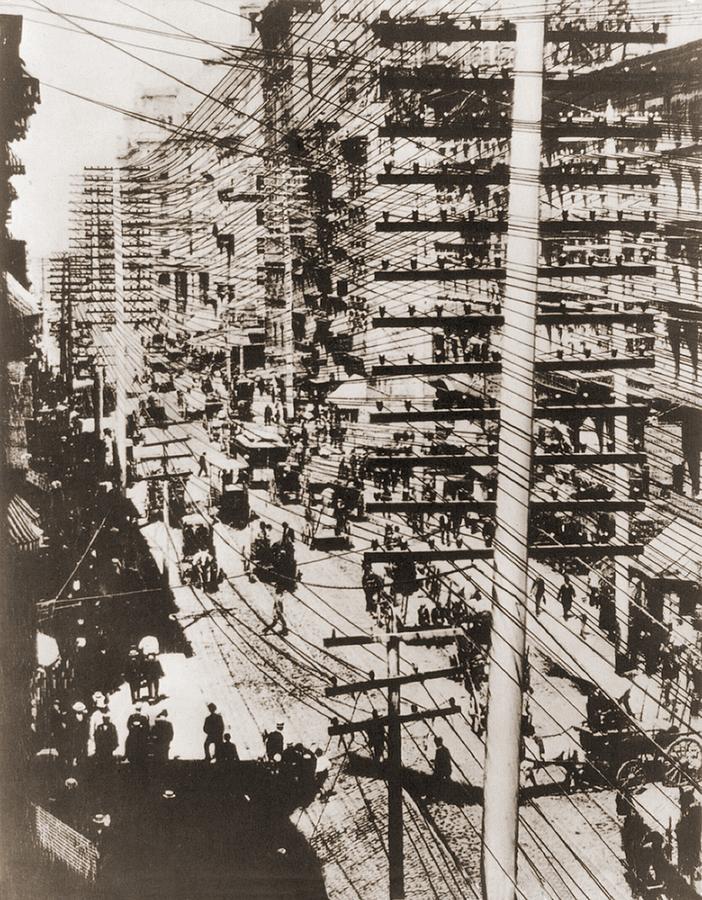
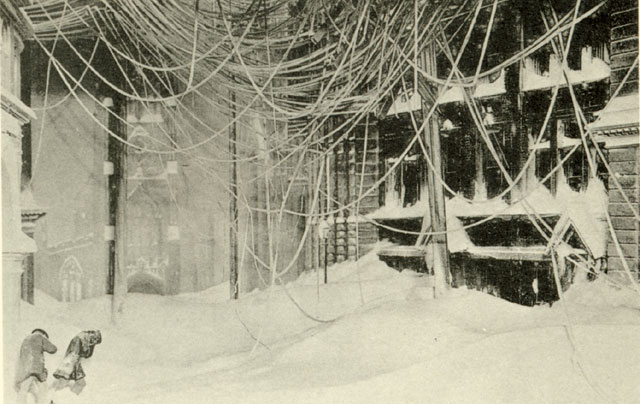
Why did the 1888 blizzard become such a hazard for New Yorkers? Let this picture be your first clue. The city was a cobweb of elevated telegraph, telephone and electric wires. This picture is from 1887. (LOC)
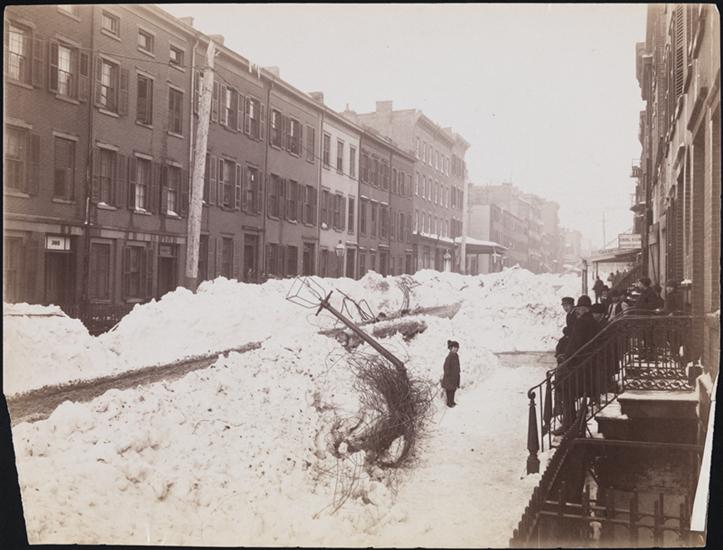
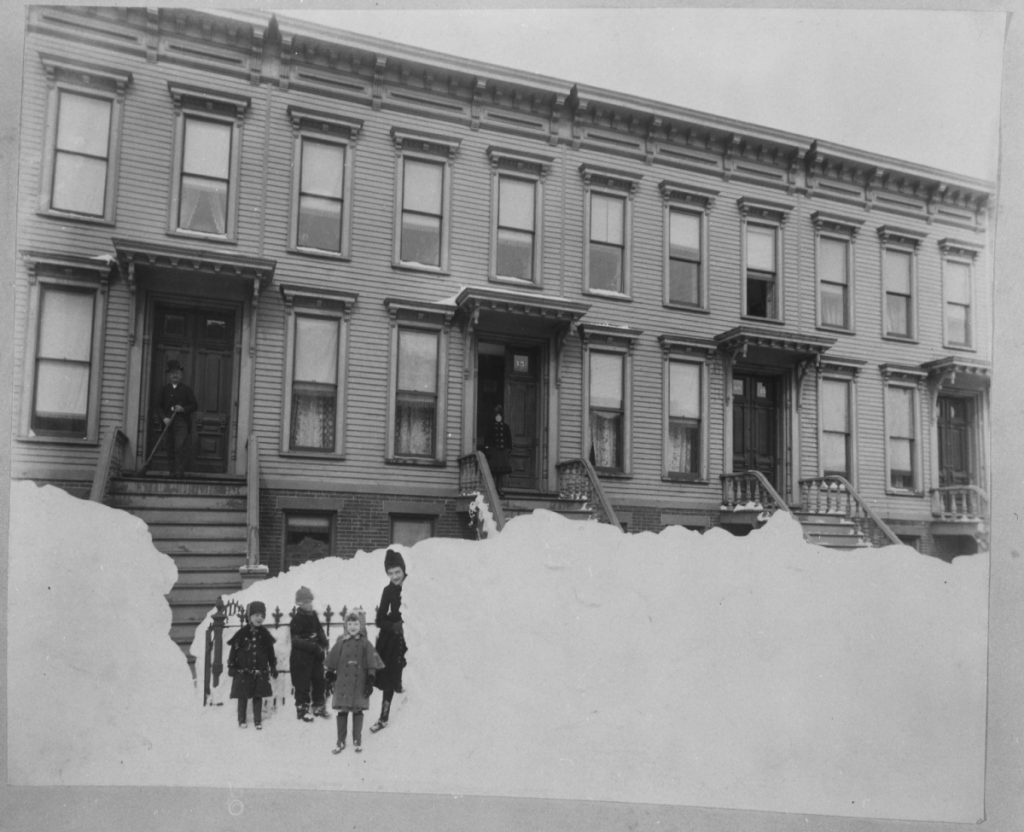
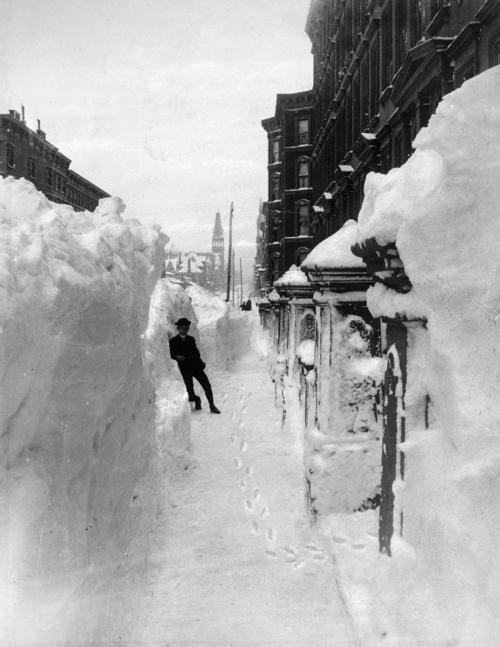
One example of a terrible (although minor) snow drift that might have kept this family in their home all day. Because of the unpredictable changes in wind, some houses might have been drift-free, while others close by completely locked in with snow. (LOC)
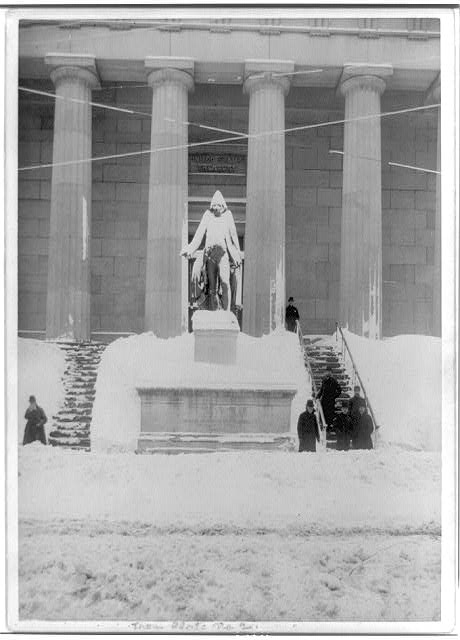
George Washington at the Sub-Treasury Building (today Federal Hall).
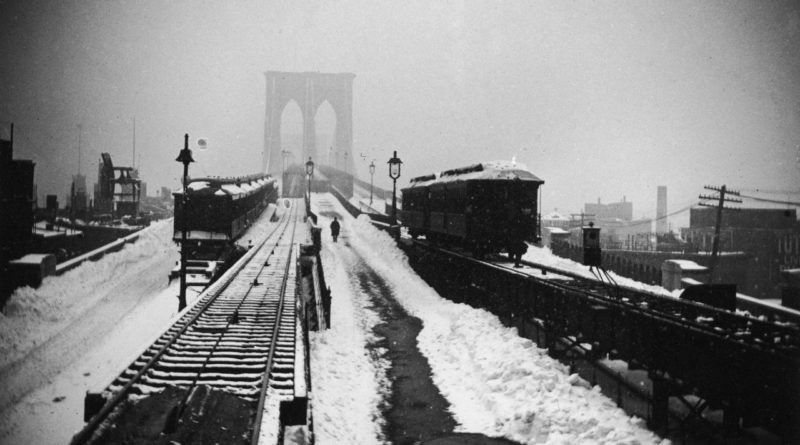
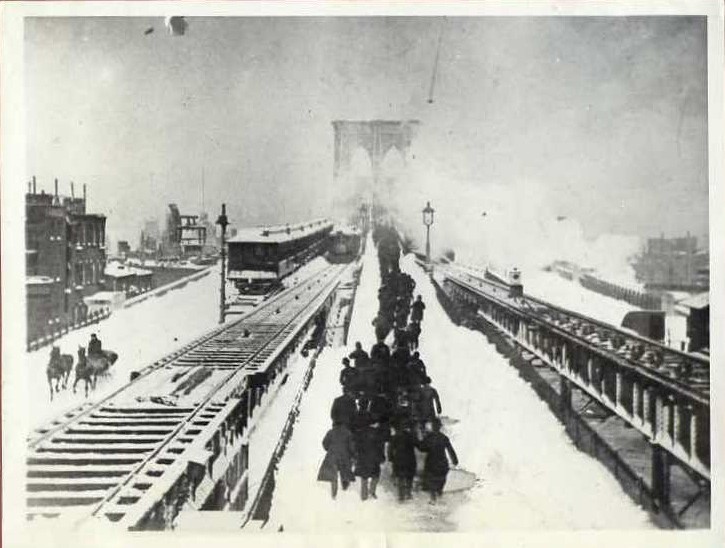
The Brooklyn Bridge, not even five years old, weathered the winds quite well, but became a hazard due to ice. In this picture, people are crossing over as there was no other way to get between Manhattan and Brooklyn. It’s not clear if any of the trains are operating in this picture.
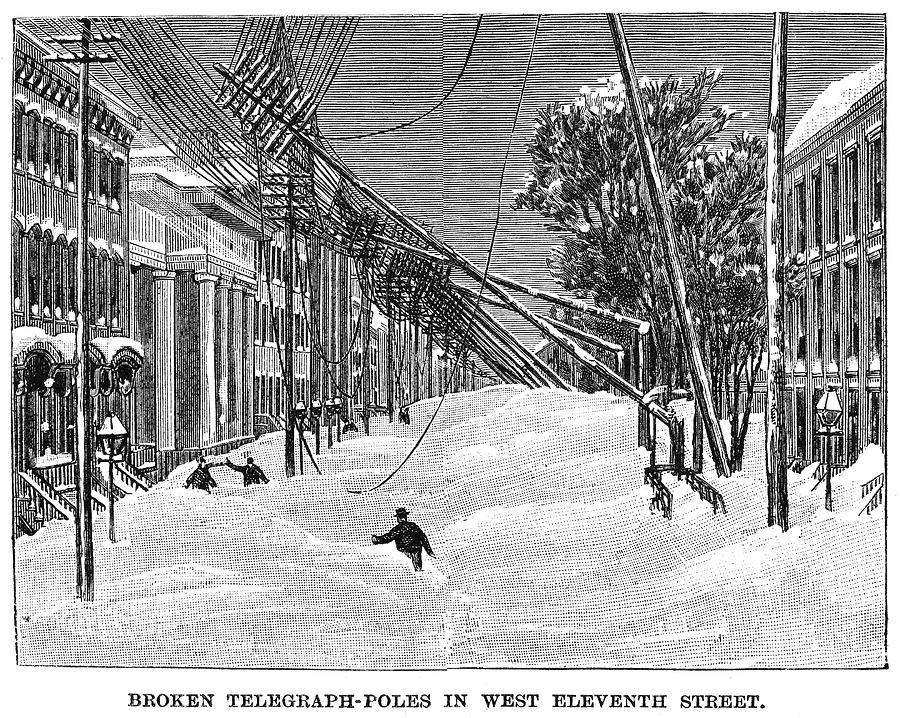
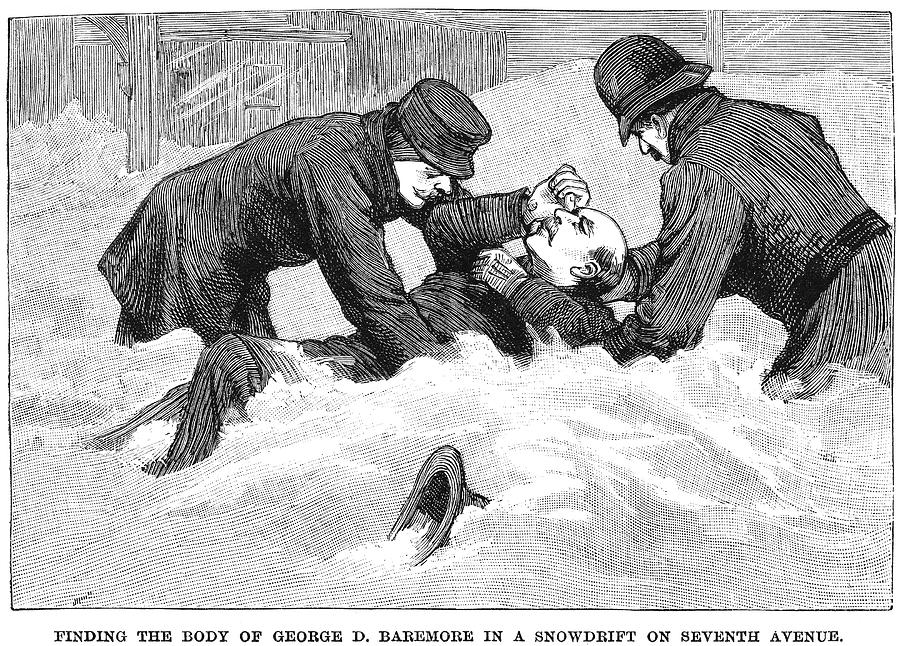
The biggest danger for those venturing outside were the hundreds of downed telegraph, telephone and electrical poles, no match for the intense gusts. The poles would quickly fall then get covered with snow, creating deadly hazards for people walking past. The snow would just as quickly cover over an unconscious individual; many New Yorkers froze to death when they fell and were instantly shrouded.
Henry Bergh, founder of the American Society for the Prevention of Cruelty to Animals. He did not survive the blizzard. (NYHS)
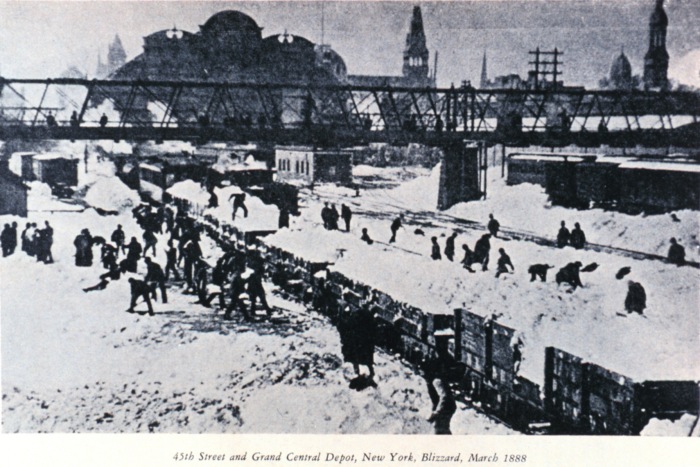
Transportation in and out of the city was at a complete standstill for half the week. Here workers frantically try to clear the way for trains going into Grand Central Depot.
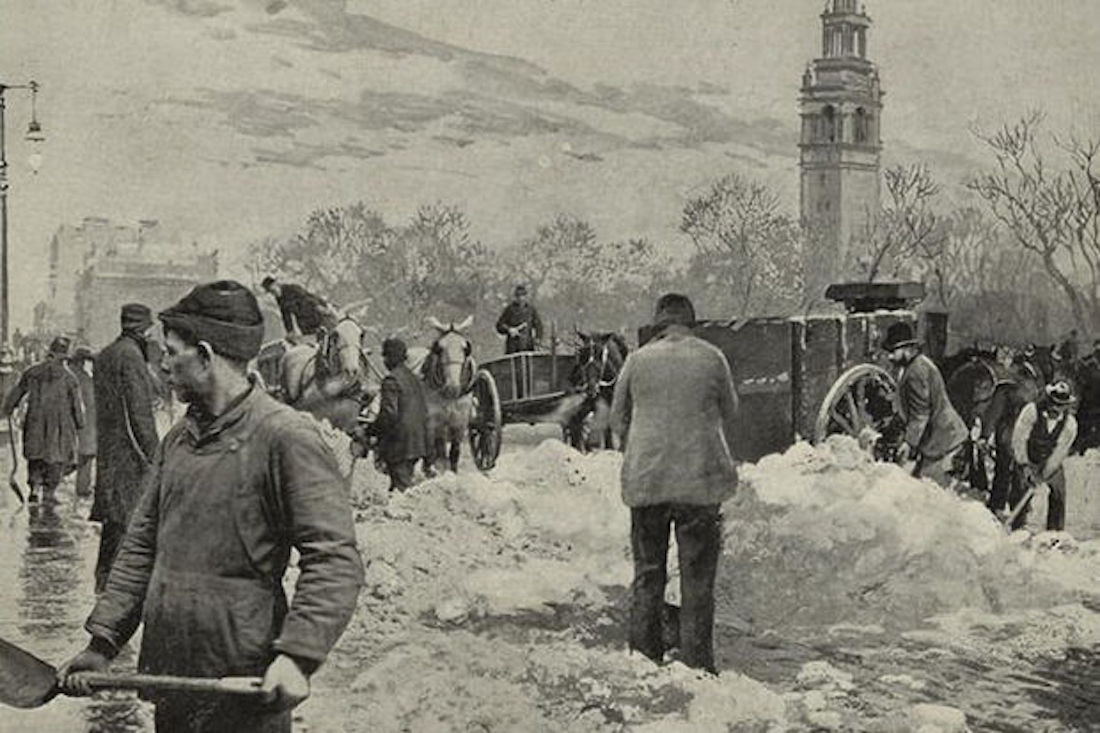
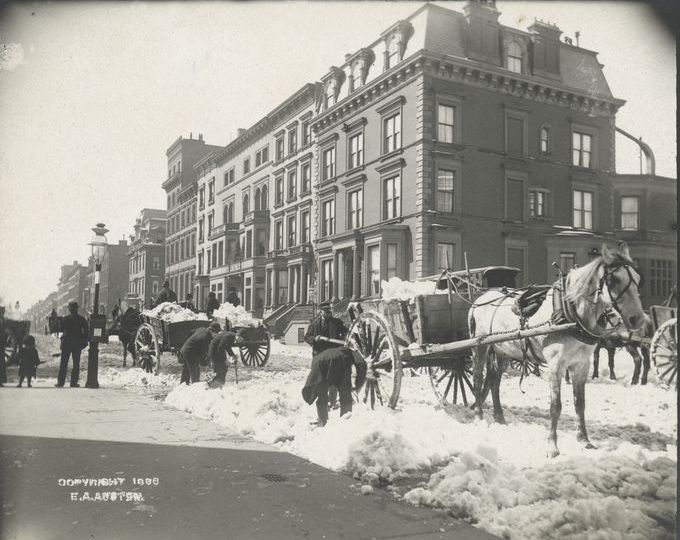
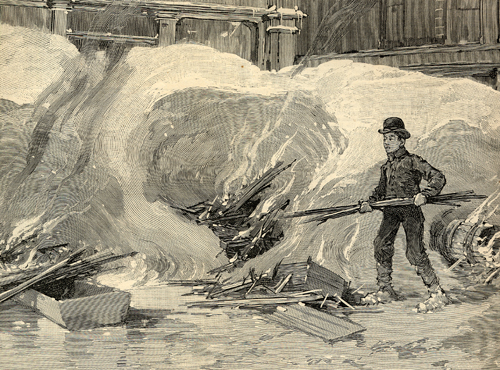
Clean-up was truly chaotic, a feeble effort by the city paired with private contractors with horses, shovels and carts. The piles of snow were taken to water’s edge and dumped, or, in a few less preferred cases, people just started bonfires and melted it away. (For a great picture of a snow dump in the river, see this photo at Shorpy of a blizzard from 1899.) Top pic courtesy LOC, at bottom Maggie Blanck.
The cover of Frank Leslie’s Illustrated Newspaper, usually one of the more sensational pieces of journalism people might have found at their newsstand.
Illustrations from Scientific American, March 24, 1888