Categories
Skyscrapers

The Big Wind of 1912: New York skyscrapers in peril, as monster gales hurl “men and women down city streets”

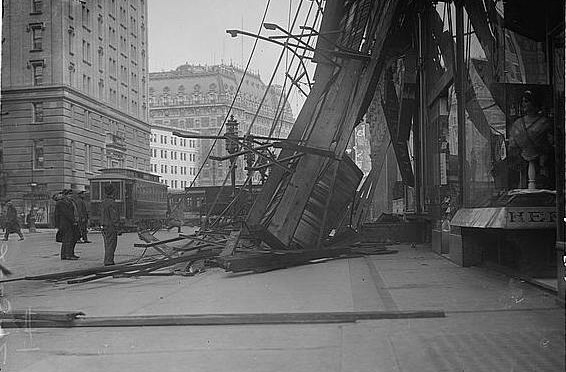
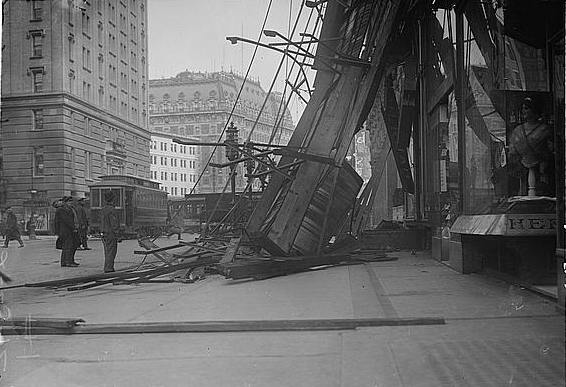
Trauma in Times Square: An electrical sign destroyed by the massive windstorm of February 22, 1912. One Times Square sits to the left, and the Hotel Astor is in the distance. [LOC] Shorpy has an another angle of this damaged storefront.

“The great gale that blew in with Washington’s birthday will not soon be forgotten. It was the biggest New York ever knew.” — New York Evening World, Feb. 23, 1912

 On February 22, 1912, a catastrophic weather anomaly occurred in New York City, an event the New York Times referred to as ‘The Big Wind’.

This particular day has also been called “a significant day in the history of tall buildings,” although I doubt anybody today will be celebrating this rather vicious and sudden test of architectural endurance.

New Yorkers thought it might be worse. The storm system began the previous day as a blinding Midwestern blizzard, paralyzing the railroad and killing cattle. St. Louis received its greatest snowfall ever up to that time from this churning storm, and Chicago reported winds of up to 50 miles per hour.

If it held this pattern by the time it hit the East, New Yorkers feared another storm of the level of the Blizzard of 1888, which buried the city in snow, rendered transportation useless, and killed more than 200 people.

In one respect, the city was fortunate that snowfall was relegated to upstate New York. The grim meteorological trade off, unfortunately, was a day of powerful, otherworldly wind gusts, almost double the strength of those during the infamous 1888 storm.

The worst of it came after midnight, when a terrifying frozen bluster “swooped down on the city with all its length and breadth” at speeds of 96 miles per hour.

At one point, devices in Central Park registered an unthinkable 110 miles per hour. By morning it had settled to 70 miles per hour and held that speed steady for much of the day. [source]

Some called this “giant among gales” a day-long cyclone, and it certainly acted like one — uprooting trees, destroying rooftops and even depositing whole houses into the river. People were blown off their feet, carts went flying and pedestrians dodged falling telephone poles in terror.

Most leaving home wearing hats ran back inside without them.  If any of those women from yesterday’s Astor Place post were trekking through the plaza with their home-work today, they most likely lost it to the wind.

Foremost on the minds of most New Yorkers was the fate of its skyline. In 1888, during the last harsh storm, there were no skyscrapers. In 1912, there were several over 30 floors, including the city’s tallest, the 50-floor Metropolitan Life Insurance Tower off Madison Square.

Although most buildings were designed to withstand significant wind trauma, none of them were prepared for winds above 70 miles per hour. And the building slated to become the next tallest in New York — the Woolworth Buildingwas still under construction, its metal skeleton now a potential arsenal of deadly debris.

Panes of glass shattered throughout the city, but it appears most of New York’s tallest structures survived without significant damage. In fact, it was the shorter, older structures that fared worst, many of them designed with little protection from powerful winds.

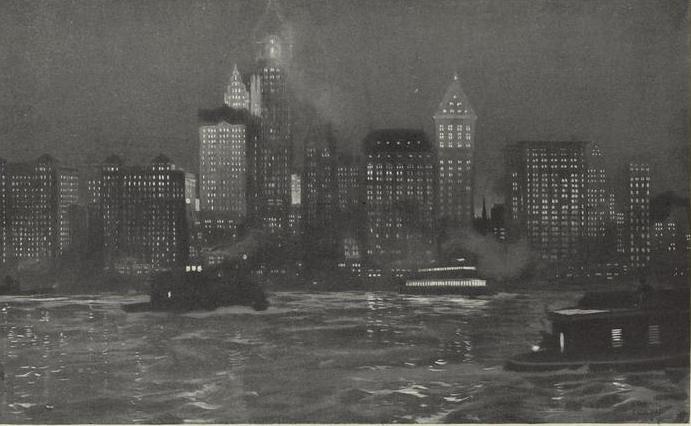
Below: the downtown Manhattan skyline in 1912. Most of these buildings survived the ‘Big Wind’ with only damage to their windows. [pic]

Not that modern invention came away unscathed that day. The electrical signs of Times Square, many no more than a few months old, were no match for the powerful gusts. Several were destroyed, including a one provocative sign at 47th Street, featuring “two scantily clad electric boys who box nightly in Summer underwear.” [source]

Next to the Hotel Knickerbocker, a 200-foot electric sign crumbled to the sidewalk below in front of Hepners Hair Emporium, a police officer racing into the establishment a minute before the sign crashed into the plate glass window of the railroad ticket office next door.

Across the street, at the Times Building, a drug store window exploded, and “many bottles of perfume and drugs” were hurled at passers-by.

Most boats all along the waterfront were either damaged or untethered. Predictably, beach houses on Rockaway Beach and other quieter locales fared the worst. The luckiest structures survived with nary a window remaining; those less fortunate were found floating offshore. In Astoria, Queens, the roof to the jail was taken off, to the fright of the occupants inside.

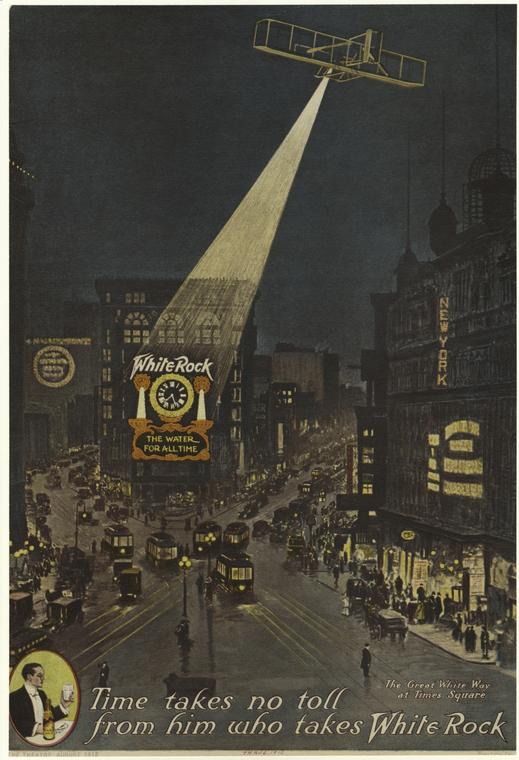
At right: Times Square in August 1912. The White Rock sign was probably not around for the February wind storm. The ‘electric boys’ sign described above sat at this intersection.

In Red Hook, Brooklyn, turbulent winds kept a raging fire alive at a brick manufacturing plant, distributing flaming pitch shrapnel to several buildings across the street, including a hay and horse feed dealership! (One of many reasons they don’t keep hay dealerships in crowded cities today.) The brick factory, which took several hours to control, was about three blocks from the location of today’s IKEA store.

February 22, 1912, happened to be the 180th anniversary of George Washington‘s birth, and hundreds of veterans tried marching from Jefferson Market to Union Square. Flags raised aloft in celebration were torn to ribbons. Nobody was injured, although the gusts caused major inconvenience, “Salvation Army object lessons and banner bearers bowled over by the wind.”  [source]

Others were not as fortunate. The Times attributed at least one death to the storm and over a dozen concussions from flying debris, messenger boys and seamstresses blown into windows or railings or hit by signs or dislodged cornices.

One man, waiting for his wife at St. Patrick’s Cathedral, had his neck slashed by flying glass. Where physical harm was avoided, humiliation took its place. A society woman on Riverside Drive, wearing “superabundantly costly furs,” was picked up and thrown into a horse.

Meanwhile, down at the Battery, Frank Coffyn was preparing for another takeoff off the water on his pontoon-equipped airplane. The wind had other plans, ripping the wings off the plane and spoiling Coffyn’s flight. Later that day, Coffyn wired his old boss Wilbur Wright for replacement parts. (See my previous post for more information of Coffyn’s harbor flights..)

By the late evening, winds had died down to a mere 44 miles per hour. (For comparison, New York City’s average wind speed today is just 12.2 miles per hour.) In the morning, things were back to normal — except for huge mess of metal and glass left scattered on the streets.

Categories
Neighborhoods

H.P Lovecraft’s very bizarre hatred of Red Hook and Brooklyn Heights

Howard Philip Lovecraft — aka H.P. Lovecraft — was born 130 years ago this week (on August 20, 1890) in Providence, Rhode Island.  

The pulp-fiction storyteller, known for claustrophobic tales of the occult, lived for a time in Brooklyn. He did not enjoy it.

In 1924, he moved to  259 Parkside Avenue in Flatbush, Brooklyn, close to Ebbets Field and Prospect Park. When his new wife relocated for work in Cincinnati, Lovecraft moved from the pleasant Flatbush neighborhood to a small flat at 169 Clinton Street in Brooklyn. He only lived here until 1926 but during his stay, possessed of anxiety and neurosis, he practically starved himself.

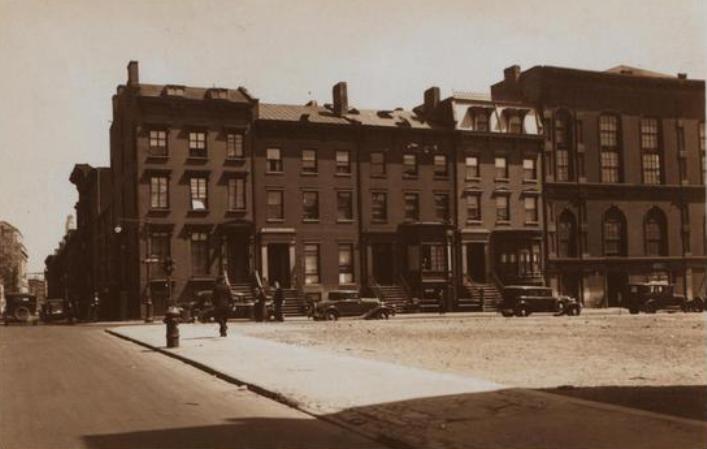
Below: The boardinghouse at 169 Clinton Street, pictured here at left, from 1935. The first four buildings still exist. The building at the far right is the old Brooklyn Athenaeum.

Courtesy New York Public Library

Lovecraft had contempt for New York’s thriving immigrant population and those workers who sustained Brooklyn waterfront in the 1920s.  In particular he negatively interacted with the residents of Brooklyn’s so-called “Little Syria” on Atlantic Avenue.

I find his invective ugly and even a little obsessive, but it illustrates that occasional truth that the culture of New York City is simply not for everybody, especially if you have certain racist dispositions mixed with a little mental instability.

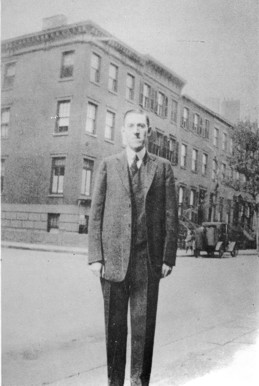
Below: Lovecraft in Brooklyn Heights in 1925. The house behind him may be his Clinton Street boarding house. Compare to the image above and the current view here. (Photo courtesy HPL.com)

1925-C

In a comparison with Philadelphia, Lovecraft wrote “[Philadelphia has] none of the crude, foreign hostility and underbreeding of New York — none of the vulgar trade spirit and plebian hustle.” He further described New York as “an Asiatic hell’s huddle of the world’s cowed, broken, inartistic, and unfit.” [source]

According to author Donald Tyson, “when [H.P.’s wife Sonia] and Lovecraft were walking the streets of New York and encountered a group of immigrants, Lovecraft would become so animated and enraged that she feared for his sanity.”

The renovated, wealthy houses of today’s Brooklyn Heights were often working-class housing in the 1920s, many turned into affordable boarding houses. Lovecraft disliked his ethnic neighbors and held particular scorn for his Irish landlady. “Only later was I to learn of her shrewish tongue, desperate household negligence, miserly watchfulness of lights and unwatchfulness of repairs, and reckless indifference to the class of lodger she admitted.” [source]

He would have lived with mostly single men of differing ethnicity, many employed along the congested docks that lined the waterfront all the way down to Red Hook, culminating in two self-contained shipping areas — the Atlantic and Erie basins. Back in the 1920s, it was the busiest freight port in the entire world.

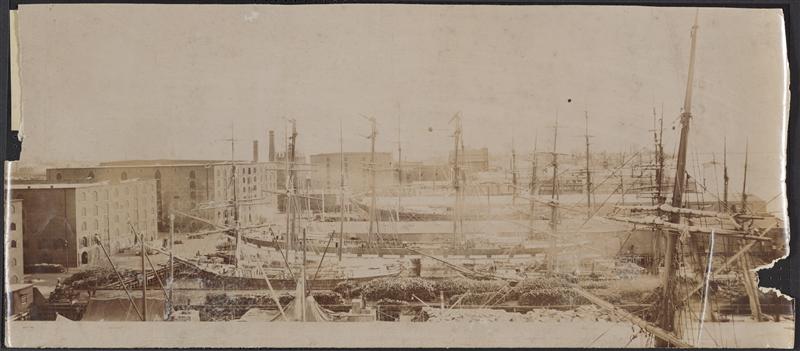
Below: Ships along the waterfront heading towards Red Hook, circa 1890

Courtesy Museum of the City of New York

He seemed to filter all his untethered anxiety into the very building at 169 Clinton Street. “I conceived the idea that the great brownstone house was a malignly sentient thing — a dead, vampire creature which sucked something out of those within it and implanted in them the seeds of some horrible and immaterial psychic growth.”

Yet Lovecraft saved his greater fantasies for the neighborhood south of here. He eventually funneled all this tortured and deranged hysteria into his horror writing with the publication of “The Horror at Red Hook,” a story that literally depicts the neighborhood as a gateway to Hell. Naturally he wrote it over a two-day period from the Brooklyn Heights boardinghouse.

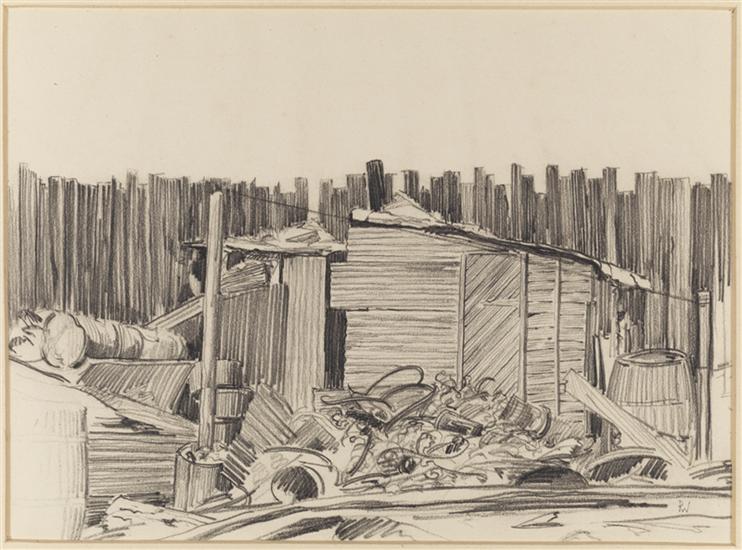
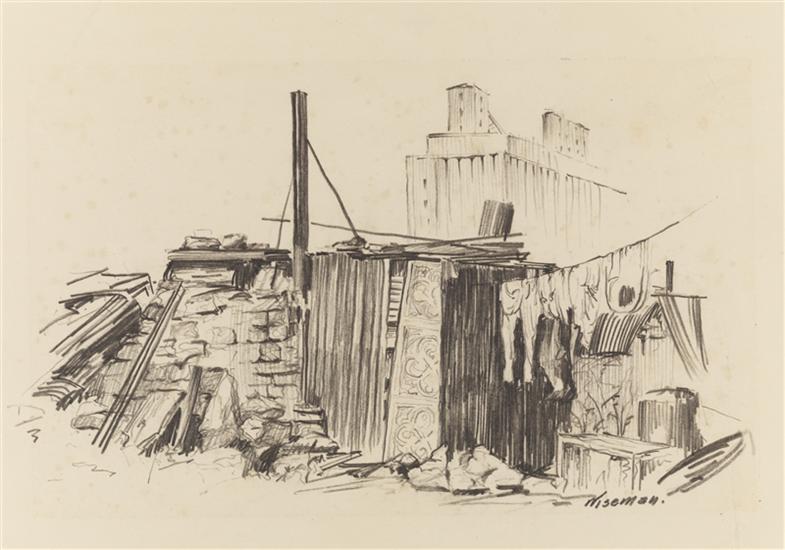
Below (the next two pictures): Some striking illustrations by Robert Cummings Wiseman of shanties around the Atlantic Basin in 1930, courtesy the Museum of the City of New York

MNY118666

The short story, one of his best known, is an amusing curiosity to read today.  Its a muddled, sometimes incomprehensible work with some occasional flashes of creepy description. Clearly the story is self-therapy as much as it is an actual story, an early 20th century entry in the field of conspiratorial fiction. It’s undeniably haunting if you manage to forgive the vast amount of virulent, anti-immigrant description:

“Red Hook is a maze of hybrid squalor near the ancient waterfront opposite Governor’s Island, with dirty highways climbing the hill from the wharves to that higher ground where the decayed lengths of Clinton and Court Streets lead off toward the Borough Hall. Its houses are mostly of brick, dating from the first quarter to the middle of the nineteenth century, and some of the obscurer alleys and byways have that alluring antique flavour which conventional reading leads us to call “Dickensian”.

The population is a hopeless tangle and enigma; Syrian, Spanish, Italian, and negro elements impinging upon one another, and fragments of Scandinavian and American belts lying not far distant. It is a babel of sound and filth, and sends out strange cries to answer the lapping of oily waves at its grimy piers and the monstrous organ litanies of the harbour whistles.”

Courtesy Museum of the City of New York

I won’t spoil any of the plot points of the story. (If you’re interested in reading ‘The Horror At Red Hook’, you can check it out here. ) But let’s just say the author confirms his suspicions — the street gangs and liquor rackets of the Prohibition era are really just dens of age-old evil:

“The soul of the beast is omnipresent and triumphant, and Red Hook’s legions of blear-eyed, pockmarked youths still chant and curse and howl as they file from abyss to abyss, none knows whence or whither, pushed on by blind laws of biology which they may never understand. As of old, more people enter Red Hook than leave it on the landward side, and there are already rumours of new canals running underground to certain centres of traffic in liquor and less mentionable things.”

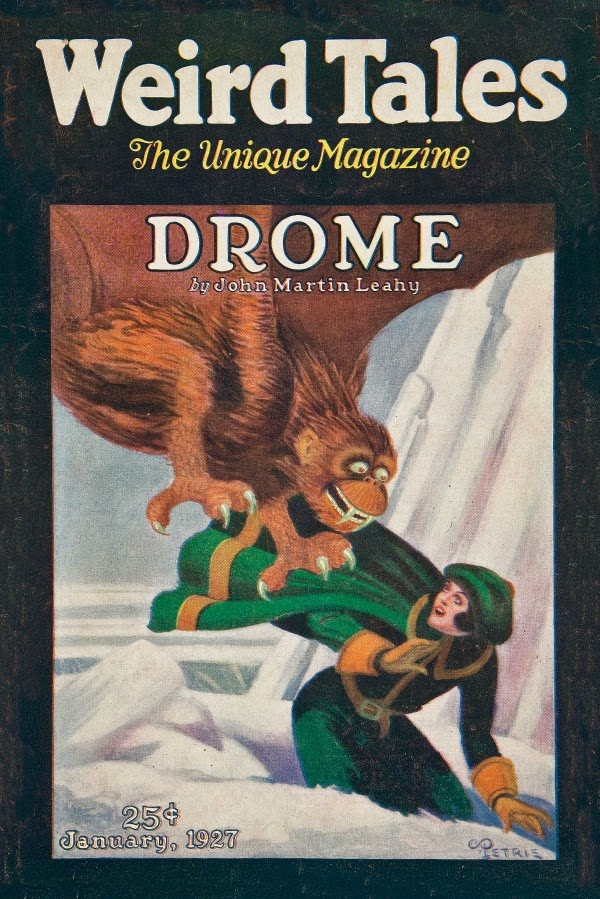
The story would be published in 1927 in the pulp magazine Weird Tales. Notably, their offices were in Chicago, not in New York

1

Once he left New York, he pursued some of his more famous writing projects, using his anxiety to more disturbing effect in runic, terror-filled stories of the occult. He died in 1937, revered by many as a truly boundary-breaking writer, greatly inspiring writers like Stephen King.

It would be almost fifty years before an author attempted to look at south Brooklyn with similar monstrous intent — in the 1970s horror novels The Sentinel and The Guardian by Jeffrey Konvitz.

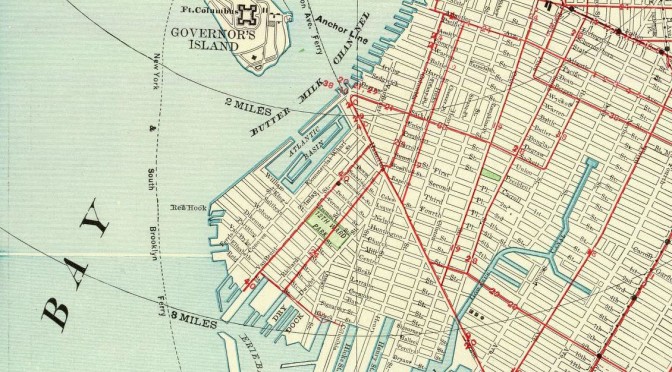
Top picture: Detail from a 1897 Rand McNally map of Brooklyn

Categories
Bowery Boys Bookshelf Wartime New York

The marks of World War I, scattered throughout the five boroughs

Echoes of the first World War, one hundred years behind us, can still be found in virtually every neighborhood of New York City.

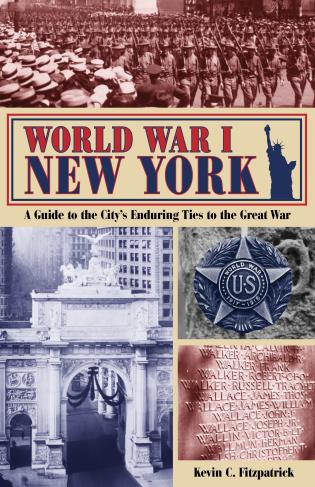
In Kevin C. Fitzpatrick’s revealing and compact guidebook World War I New York: A Guide to the City’s Enduring Ties to the Great War, these memories linger in familiar landmarks and obscure monuments alike. The effect of assembling these reminders in one book is eye-opening; collecting them brings a new sense of poignancy to markers often ignored.

Fitzpatrick organizes these marvelous finds by subject, but in my opinion the most helpful section is near the end, where all entries are arranged by borough and neighborhood.  It’s a book designed for American history buffs and locals who just want to make new connections with their neighborhoods. (There’s even a few maps for those who enjoy self-guided walking tours.)

A few of my favorite World War I related artifacts featured in the book:

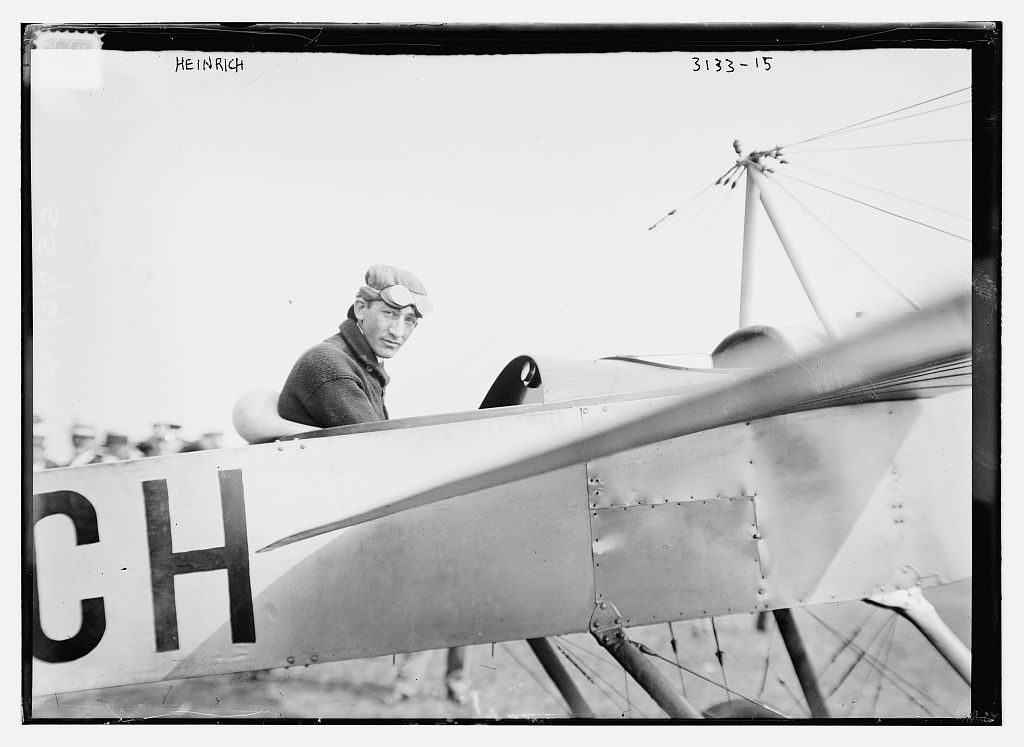
Pilot Albert S. Heinrich on Governors Island July 4, 1914. Heinrich built airplanes for the war effort during WWI. (Library of Congress)

Fort Jay Airfield and the Early Birds

Sure, Governors Island is a veritable pleasure garden now, but back in 1916-17, it was a pivotal location for wartime flight training, the spot of one of America’s first airfields.

Writes Fitzpatrick: “More than two dozen pioneer aviators trained here, and many shipped out as America’s first combat pilots.”

Library of Congress

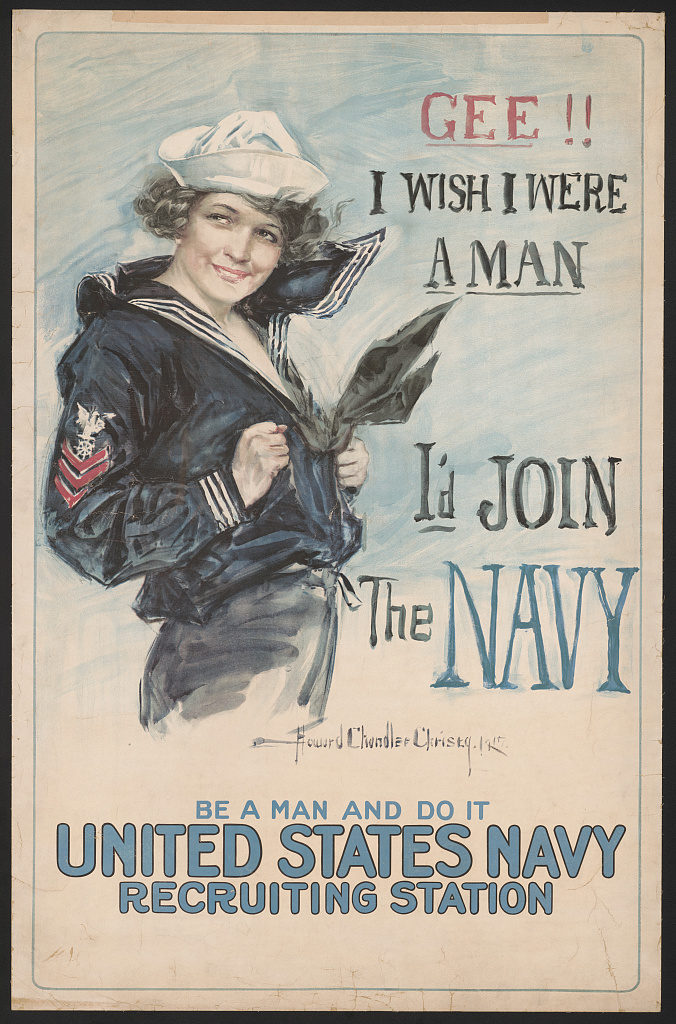
James Montgomery Flagg and Howard Chandler Christy Studios

Two artists most associated with the war propaganda effort worked and lived on the same block on the Upper West Side.

Fitzpatrick: “Christy is remembered for his luscious palette and fetching women, often dressed in men’s uniforms, next to slogans such as ‘Gee! If I Were A Man I’d Join The Navy.’ But Flagg created the real icon, instantly recognizable a century later: Uncle Sam pointing to the viewer over ‘I Want You.'”

Photo by Jim Henderson/Wikimedia

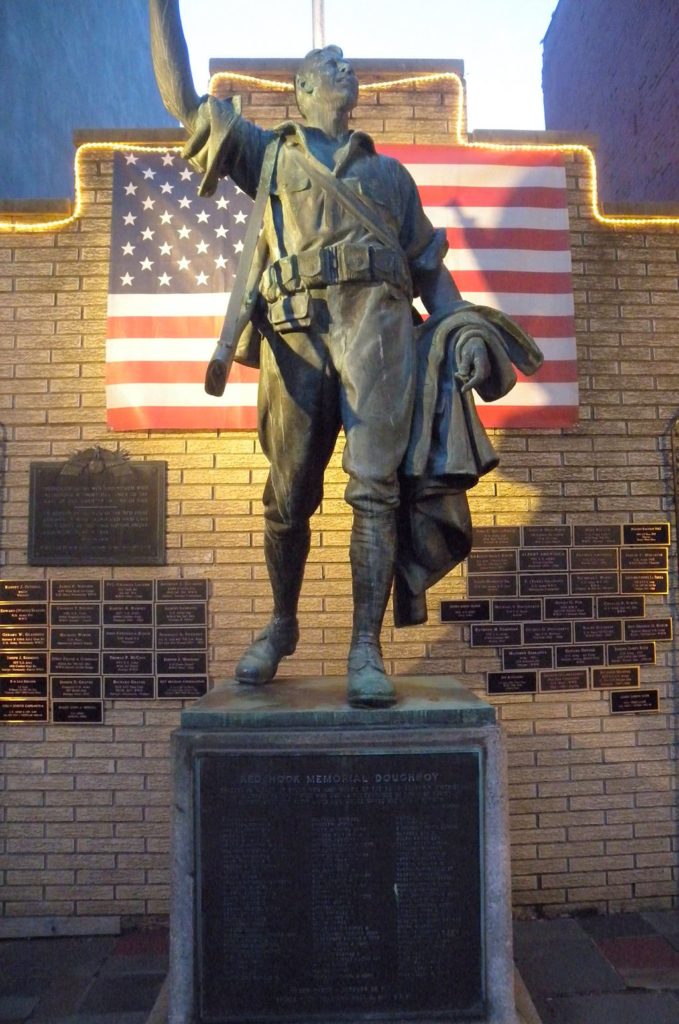
The Red Hook Doughboy

There are Doughboy statues all over New York but they are not always well highlighted. The Brooklyn neighborhood of Red Hook holds one of these treasures which once sat in a local park.

Fitzpatrick: “It was vandalized, the bronze plaques stolen, and the memorial ruined. In 1972 it was hauled to Veterans of Foreign Wars Post 5195, where today it is locked up behind a steel fence next to 325 Van Brunt Street. It was repaired and memorial plaques replaced.”

World War I New York:
A Guide to the City’s Enduring Ties to the Great War
Kevin C. Fitzpatrick
Globe Pequot Press


NOTE: Fitzpatrick also has a book on the Algonquin Round Table and joined us for our podcast on the subject back in March.

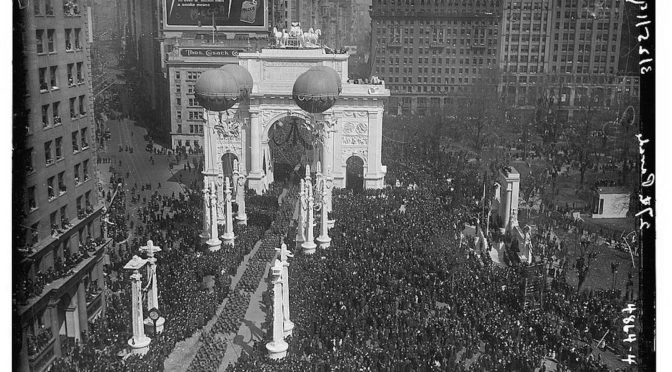
AT TOP: The Victory Arch which once sat astride Madison Square Park. While the arch is no longer there, dozens of other memorials still grace the streets of the city.

Categories
Parks and Recreation

Book Review: A History of Brooklyn Bridge Park

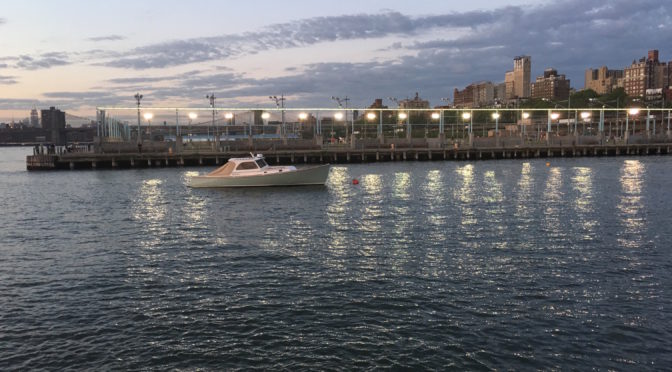
A stroll at dusk along the waterfront paths of Brooklyn Bridge Park presents a look at New York City like no other — the fading skies over Liberty Island and New Jersey, the silhouettes of downtown Manhattan as the lights flicker on, the bridges of the East River awakening for another beautiful night.

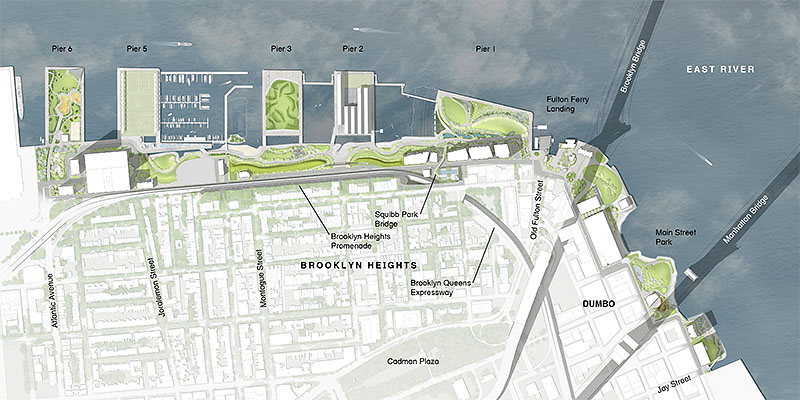
You can be forgiven for not liking every element of this 85 acre park along the western waterfront, from Brooklyn Heights to DUMBO. Some aspects are breathtaking, others a bit too phony. Construction began almost nine years ago and bits and peaces have slowly opened to the public.

It’s ravishing but does not as of yet feel comfortable. The interruptions of the BQE, separating the park from Brooklyn Heights, may have something to do with that. See also: the luxury condos, the closed Squibb Park bridge, etc.

9780231171229

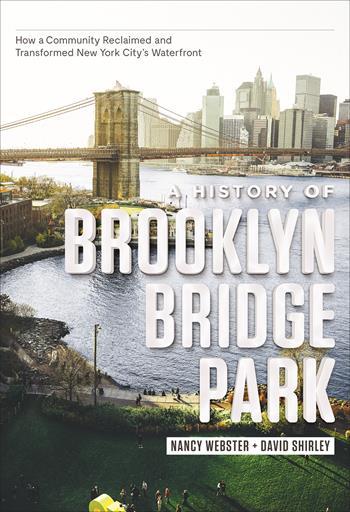
But after reading A History of Brooklyn Bridge Park by Nancy Webster and David Shirley, I’ve gained a new appreciation for this  varied and well-sculpted public space. The decades-long struggle to get it constructed is emblematic of modern New York, and the fact that succeeds for the most part is, in fact, a miracle.

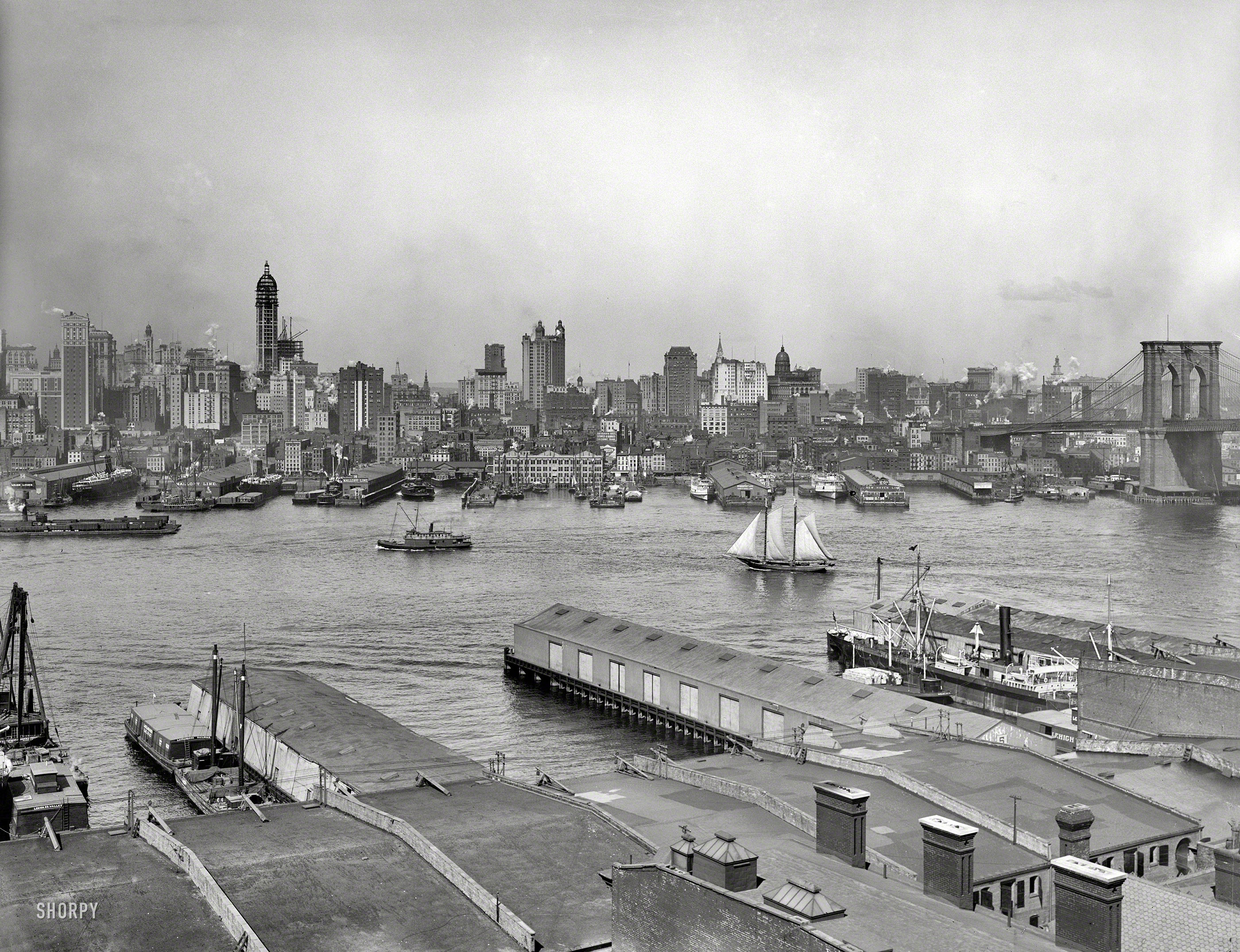
Below: The Brooklyn waterfront sometime in the 1900s.

Courtesy Shorpy
Courtesy Shorpy

The waterfront has served two purposes — as a thriving port until the mid-20th century (when container shipping effectively destroyed Brooklyn’s pier industries), and as an unobtrusive platform for those that enjoy the gorgeous views of Manhattan from the vantages of the Brooklyn Promenade and the neighborhood of Brooklyn Heights.
In 1965 the waterfront was designated a LH-1 (Limited Height) district, meaning that buildings couldn’t be constructed here that were higher than 50 feet. Of course, it didn’t specify the purpose of those buildings.
For a moment in the 1980s, it seemed both of those original purposes would disappear as Port Authority considered selling the piers to private developers. An interesting struggle between the city and neighborhood activists exposed a litany of complicated issues.
Courtesy Michael Van Valkenburgh Associates

The community activists of Brooklyn Heights seemed to be working in support of the public’s interest in fighting to transform the waterfront into parkland. (The project’s original name was Harbor Park.) But weren’t they also preserving the values of their cliffside homes along the Promenade? Was this really in the best interest of all New Yorkers?

Webster and Shirley take you through every contentious step of the park’s evolution from the 1980s until today. This book places the park alongside an interesting continuum of long-gestating New York projects, from the Second Avenue Subway to the One World Trade Center plaza.

Courtesy Bowery Boys

They also give a pointed impression of Brooklyn Bridge Park’s most unique quality — its location to the Heights which has protected it from routine development.  In comparison, further north in Brooklyn, the waterfronts of Williamsburg and Greenpoint have been swallowed up with condominiums of massive height.

Along the way, Brooklyn Bridge Park paints a fascinating portrait of Brooklyn Heights and its residents who first came together in 1986 as part of a Piers Committee to find use for the land.  For instance, of the neighborhood’s deep social roots, one chair of the committee remarked, “There was nobody you couldn’t get to by knowing somebody in Brooklyn Heights.”

A History of Brooklyn Bridge Park
How A Community Reclaimed and Transformed New York City’s Waterfront
Nancy Webster and David Shirley
Columbia University Press


Categories
Brooklyn History Neighborhoods Podcasts

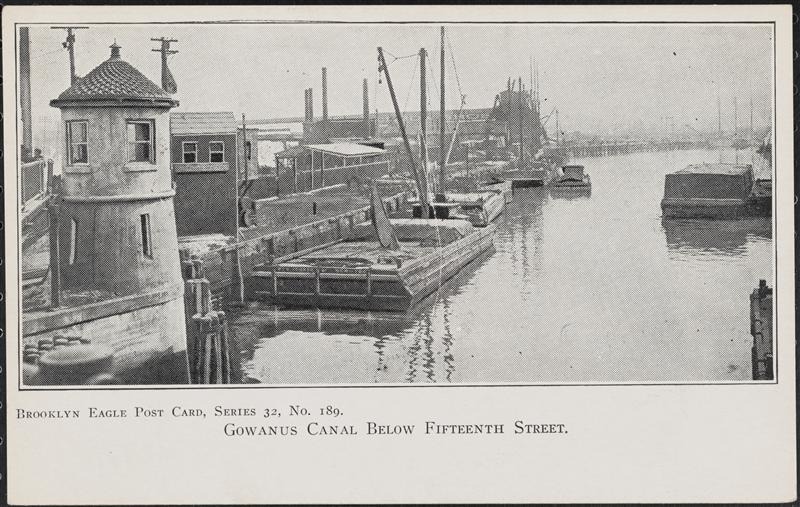
GOWANUS! Brooklyn’s Troubled Waters

PODCAST The history of the Gowanus Canal, at the heart of a trendy Brooklyn neighborhood today, once used to be quite beautiful and non-toxic.

Brooklyn’s Gowanus — both the creek and the canal — is one of the most mysterious and historically important waterways in New York City. By coincidence, it also happens to be among its most polluted, shrouded in frightening tales of dead animals (and a few unfortunate humans) floating along its canal shores. Its toxic mix is the stuff of urban legends (most of which are actually true).

But this was once the land of delicious oysters. This was the site of an important Revolutionary War battle. This was part of the property of the man who later developed Park Slope.

But, in current times, it ALSO happens to be one of New York City’s hottest neighborhoods for real estate development. How does a neighborhood go from a canal of deadly constitution to a Whole Foods, condos and shuffleboard courts?

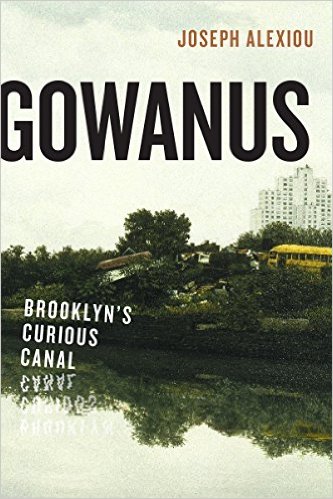
With the Gowanus’ many personalities (and with Tom gone this week) I needed a special guide for this fraught and twisted journey — writer and historian Joseph Alexiou, author of Gowanus: Brooklyn’s Curious Canal, bringing his expertise to help me wade through the most toxic portion of the show.


The Bowery Boys: New York City History podcast is brought to you …. by you!

We are now producing a new Bowery Boys podcast every two weeks. We’re also looking to improve the show in other ways and expand in other ways as well — through publishing, social media, live events and other forms of media. But we can only do this with your help!

We are now a member of Patreon, a patronage platform where you can support your favorite content creators for as little as a $1 a month.

Please visit our page on Patreon and watch a short video of us recording the show and talking about our expansion plans. If you’d like to help out, there are five different pledge levels (and with clever names too — Mannahatta, New Amsterdam, Five Points, Gilded Age, Jazz Age and Empire State). Check them out and consider being a sponsor.

We greatly appreciate our listeners and readers and thank you for joining us on this journey so far. And the best is yet to come!


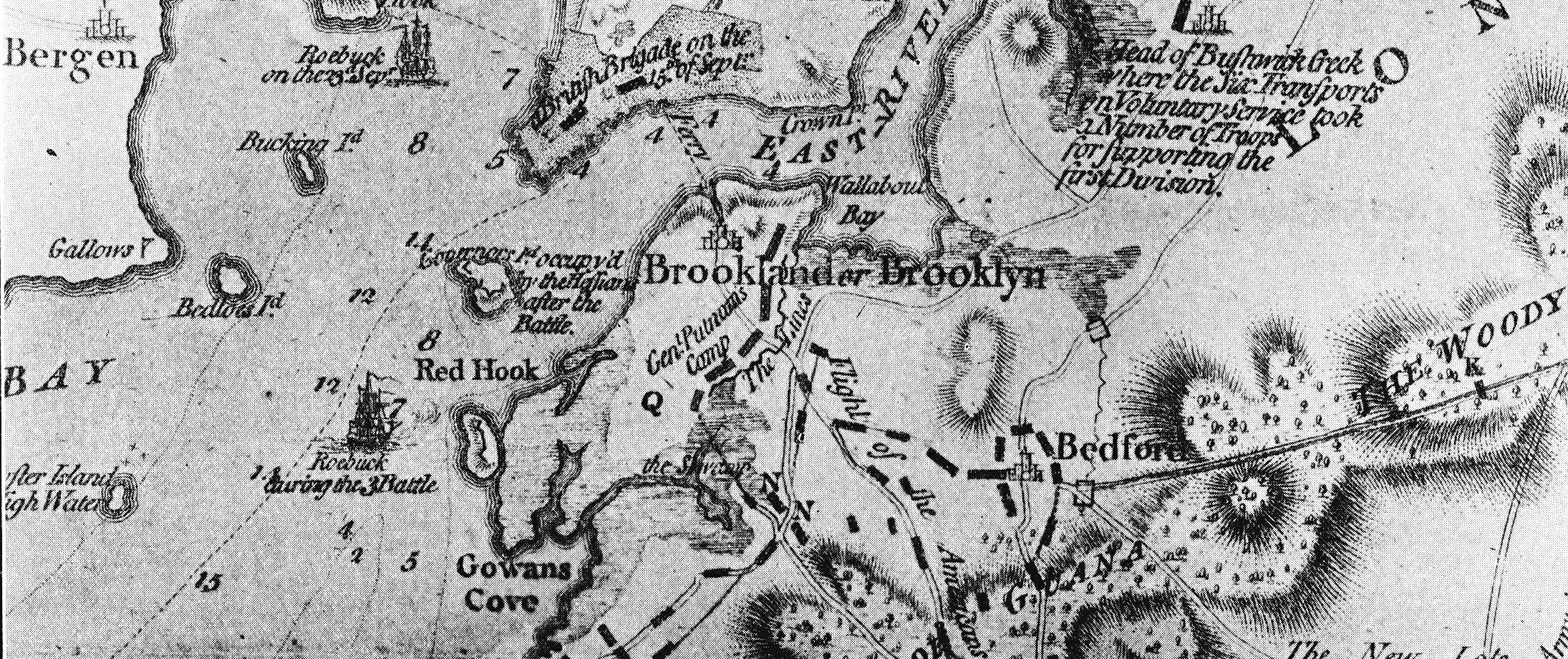
Further to that Lord of the Rings comparison, here’s a map from a 1909 history of the Old Stone House, documenting the moves of British troops in the summer of 1776.

3


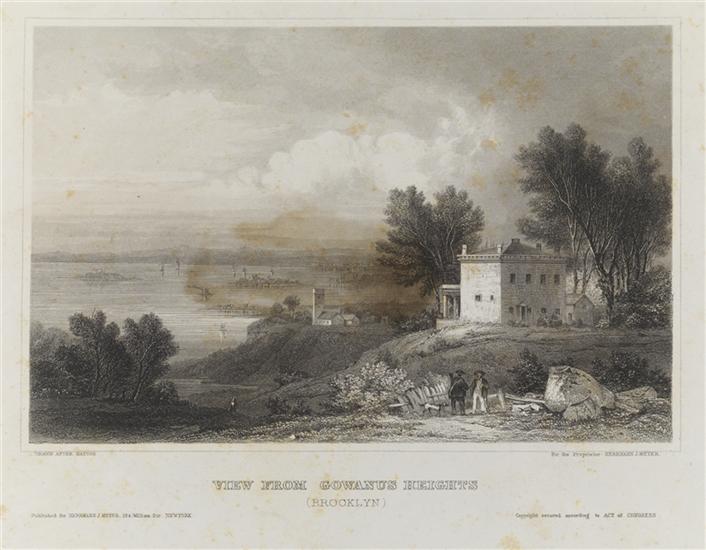
The view from Gowanus Heights, or the Heights of Guan. Print by Hermann Julius Meyer, 1840.

Courtesy Museum of the city of New York

By 1910, the banks of the Gowanus were no more natural than the dankest tenement slum.

Courtesy Museum of the City of New York

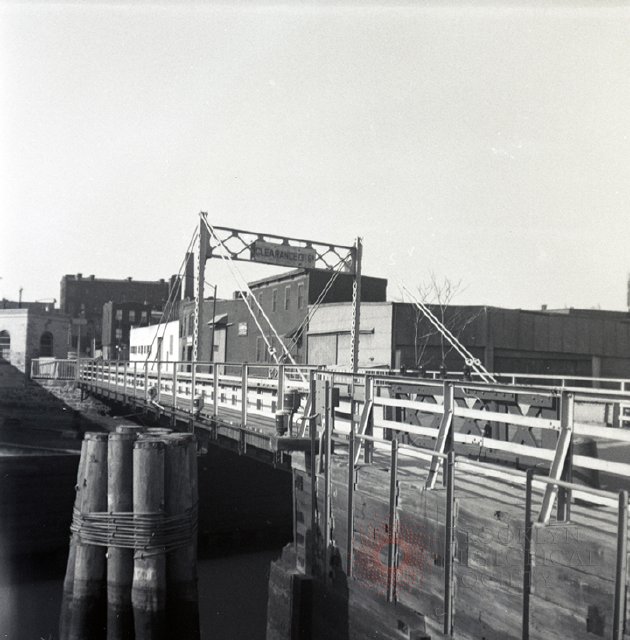
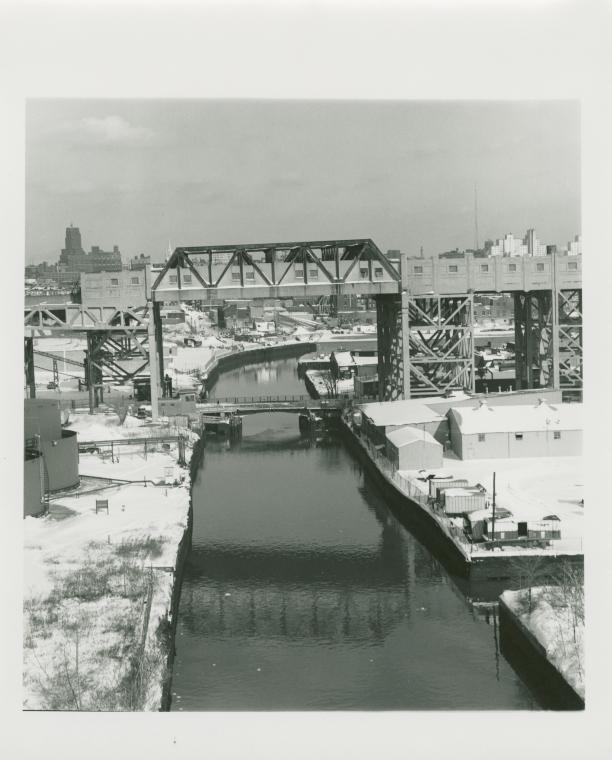
The Carroll Street Bridge, pictured here in 1960, originally built in 1889. It’s one of only two retractable bridges in New York City.

Courtesy Brooklyn Historical Society

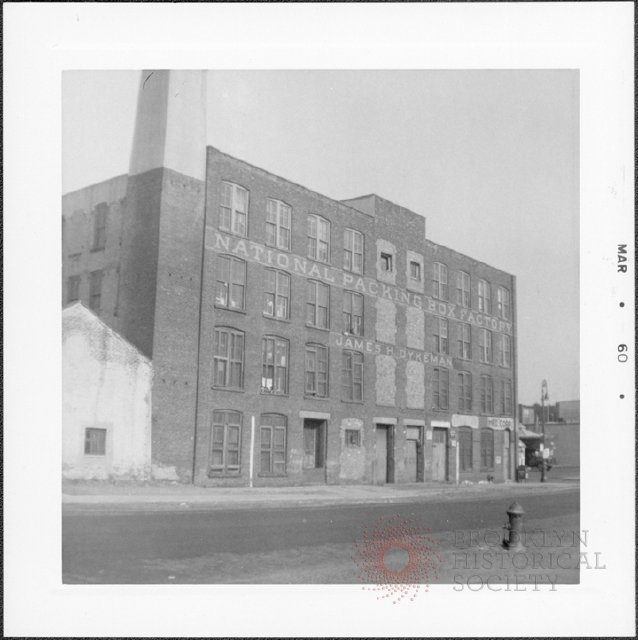
National Packing Box Factory at Union and Nevins Streets, pictured here in 1960.

courtesy Brooklyn Historical Society

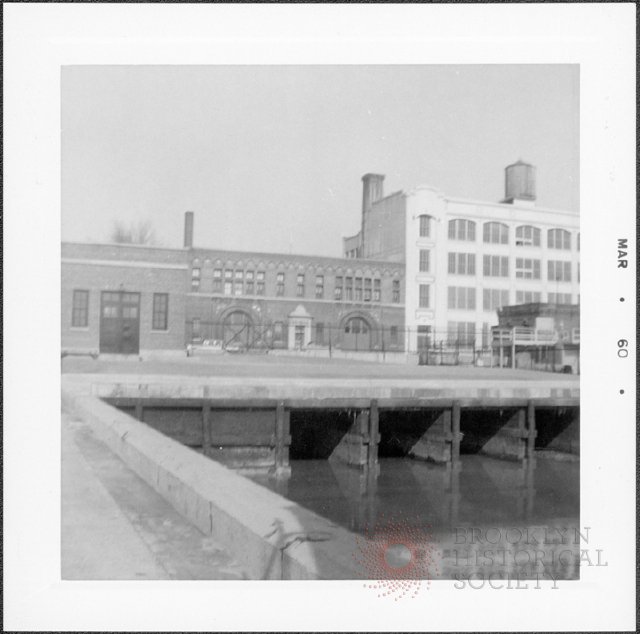
The site of the ‘flushing tunnel’ at Butler Street in 1960.

Brooklyn Historical Society

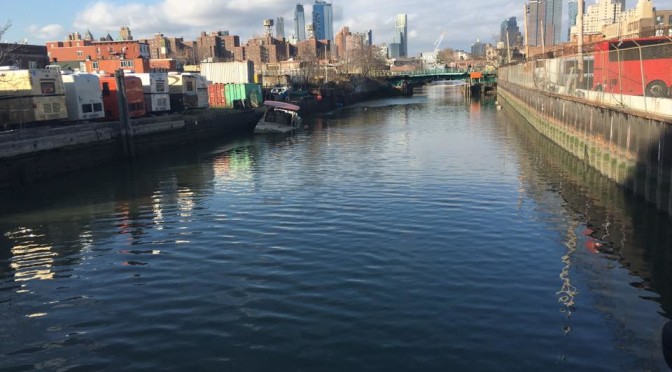
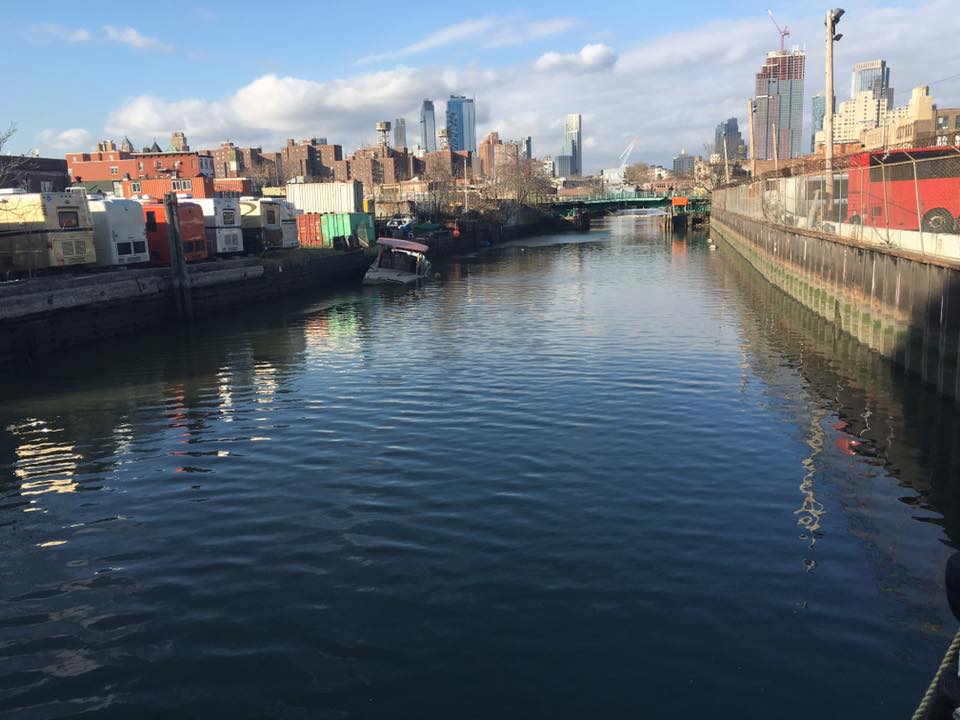
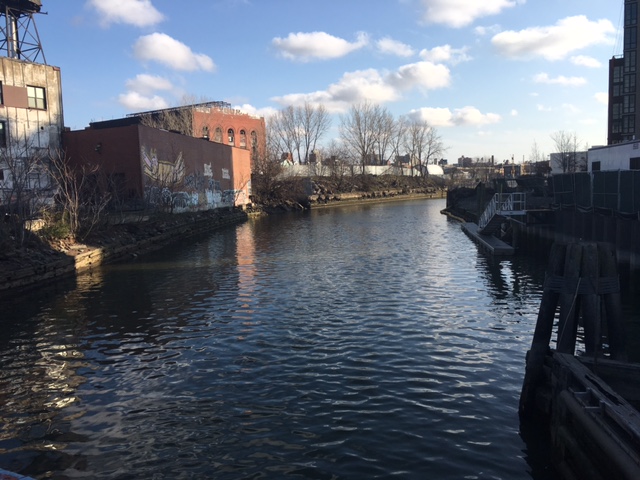
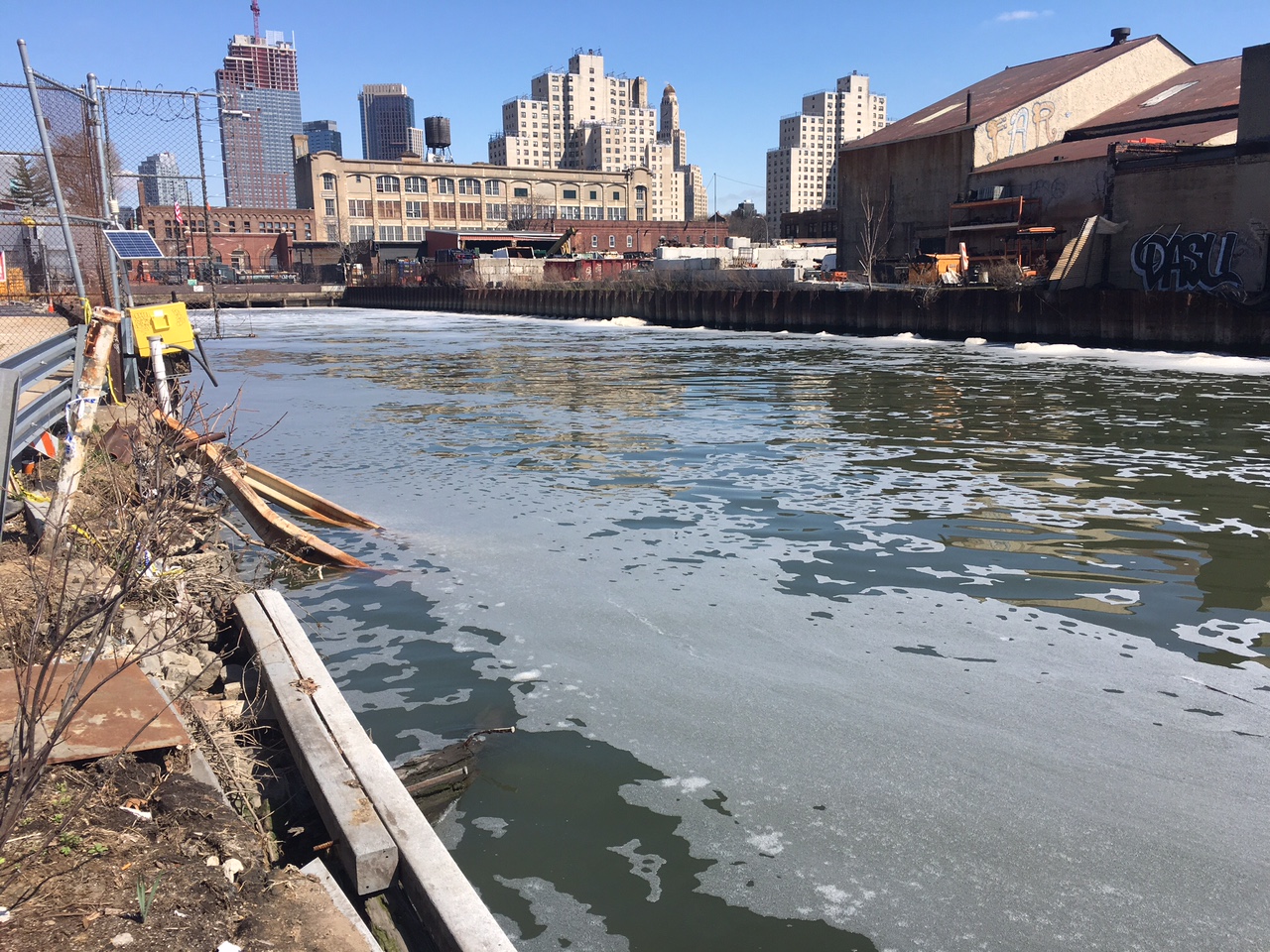
Here’s the view from the other side, looking south, taken last weekend:

1

IMG_9018


The Gowanus at Smith and Ninth Street, 1978. (Photograph by Dinanda Nooney

New York Public Library

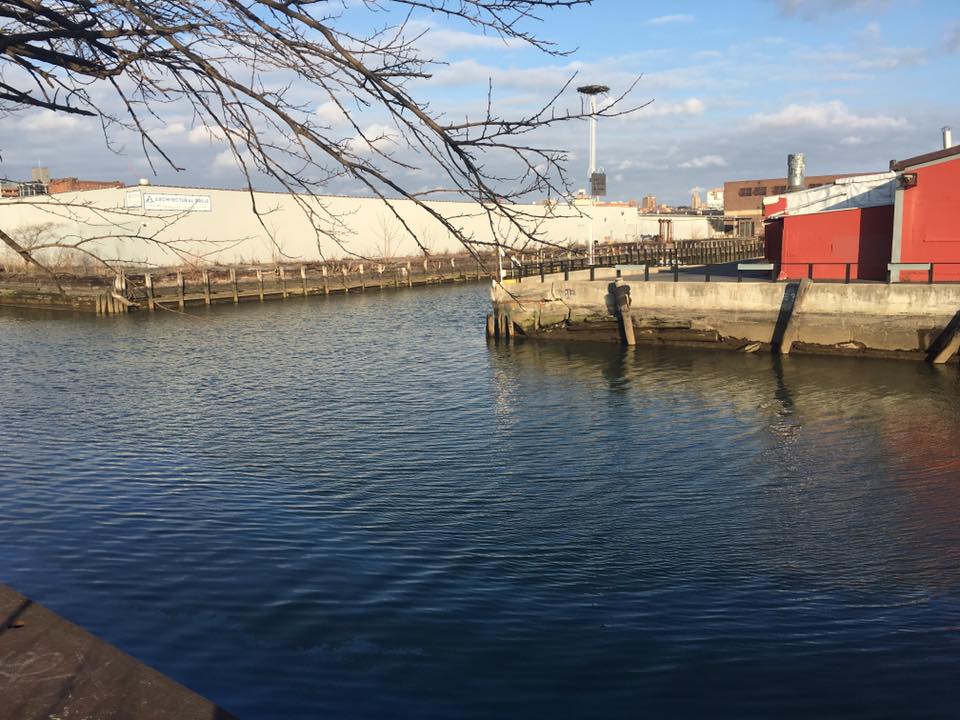
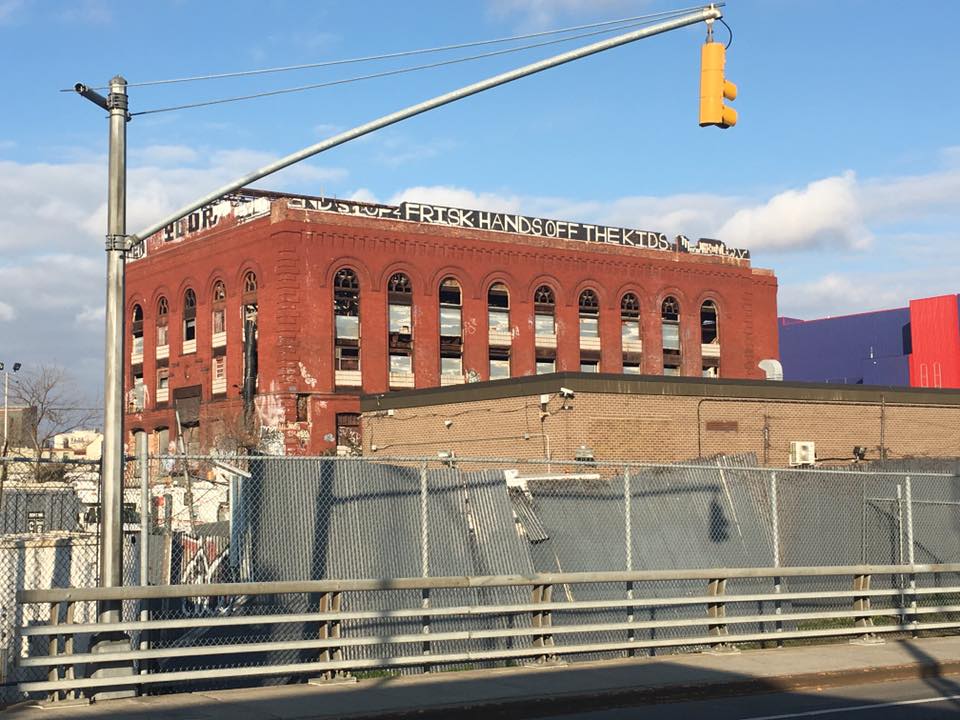
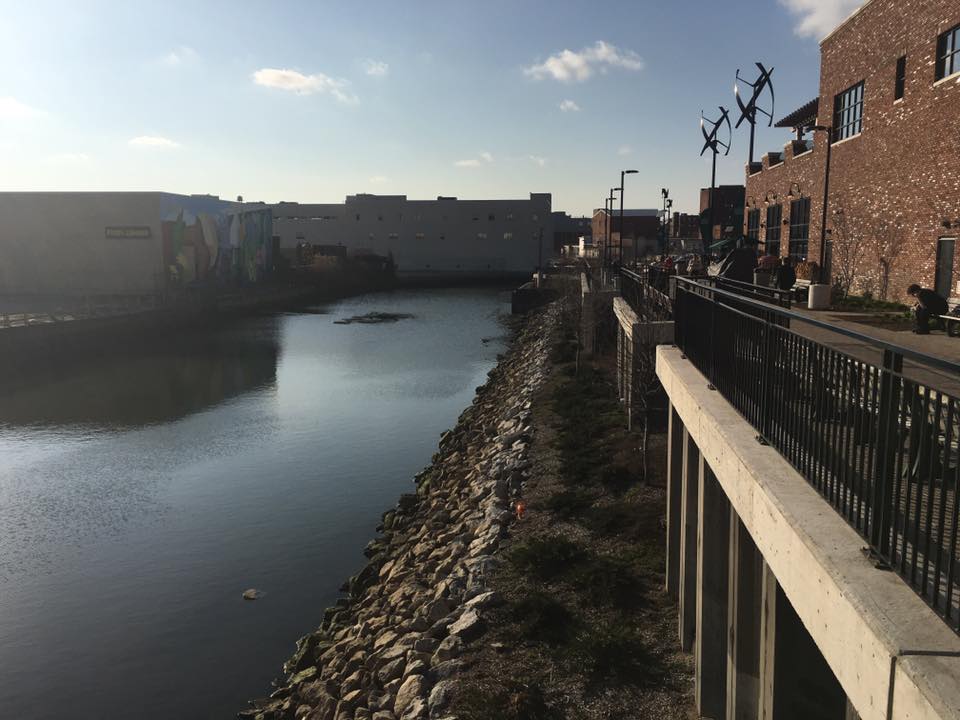
Some views along the Gowanus from last weekend, admiring the glory of its dingy, busted architecture.
2 3 4 5 6 7 8 9

IMG_8965

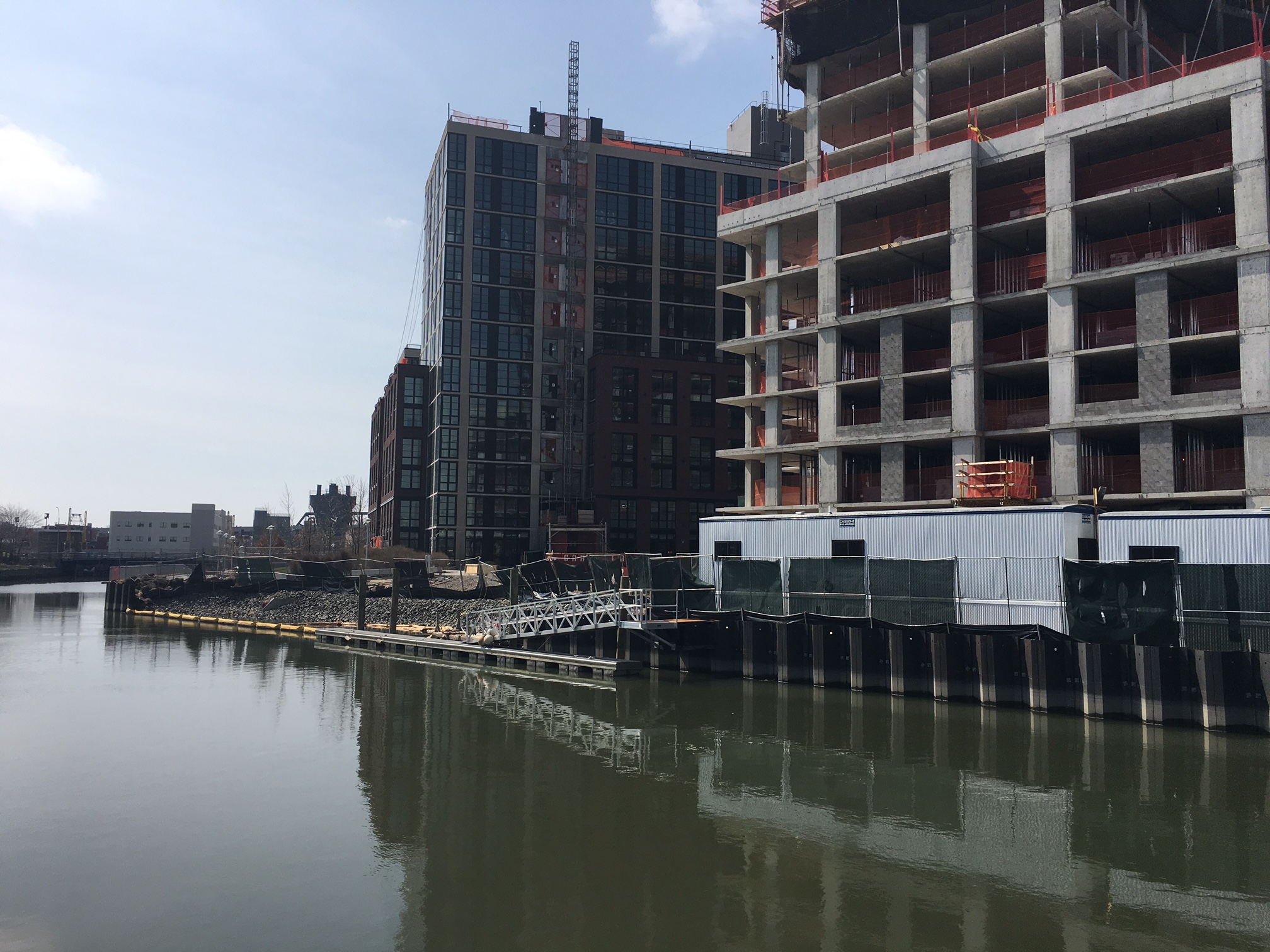
Current residential construction, right along the Gowanus.

IMG_9029

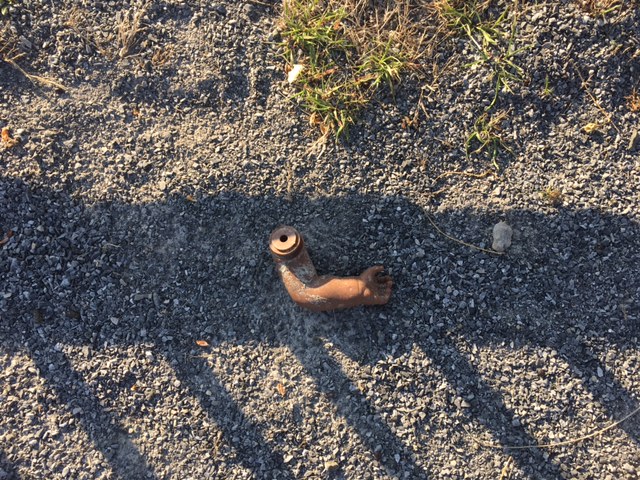
I wasn’t joking about the doll parts. There’s a whole motley collection of weird junk around the Gowanus. Luckily, no deformed Gowanus rats in sight.

IMG_8991

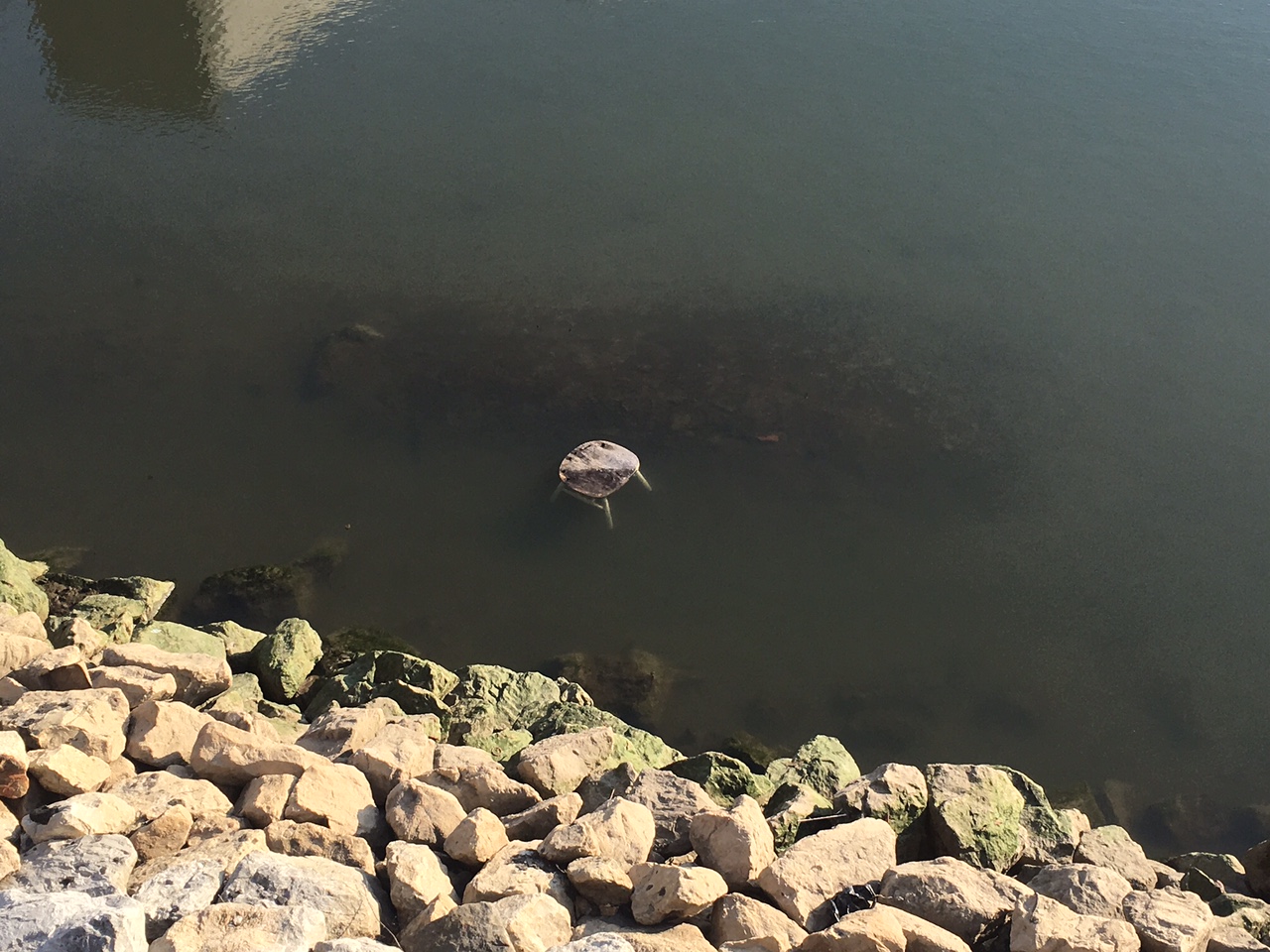
Here’s a four legged fellow in the Gowanus — a table.

IMG_8970

IMG_8958

A couple views of the Gowanus from the Bowery Boys Instagram page:


Out exploring in strange places for next week’s new podcast! #boweryboys

A photo posted by Gregory Young (@boweryboysnyc) on


Gowanus alleyway on Nevins Street. #boweryboys

A photo posted by Gregory Young (@boweryboysnyc) on


For more information on the happy, shiny of the Gowanus Canal, check out Alexiou’s new book Gowanus: Brooklyn’s Curious Canal from NYU Press. Here’s the interview I did with Joseph on the blog a few weeks ago.

51qsMSqTVBL._SX331_BO1,204,203,200_


Categories
Neighborhoods

H.P Lovecraft’s very bizarre hatred of Red Hook and Brooklyn Heights

Howard Philip Lovecraft — aka H.P. Lovecraft — was born 125 years ago today in Providence, Rhode Island.

The pulp-fiction storyteller, known for claustrophobic tales of the occult, lived for a time in Brooklyn. He did not enjoy it.

In 1924, he moved to  259 Parkside Avenue in Flatbush, Brooklyn, close to Ebbets Field and Prospect Park. When his new wife relocated for work in Cincinnati, Lovecraft moved from the pleasant Flatbush neighborhood to a small flat at 169 Clinton Street in Brooklyn. He only lived here until 1926 but during his stay, possessed of anxiety and neurosis, he practically starved himself.

Below: The boardinghouse at 169 Clinton Street, pictured here at left, from 1935. The first four buildings still exist. The building at the far right is the old Brooklyn Athenaeum.

Courtesy New York Public Library

Lovecraft had contempt for New York’s thriving immigrant population and those workers who sustained Brooklyn waterfront in the 1920s.

In particular he negatively interacted with the residents of Brooklyn’s so-called “Little Syria” on Atlantic Avenue.

I find his invective ugly and even a little obsessive, but it illustrates that occasional truth that the culture of New York City is simply not for everybody, especially if you have certain racist dispositions mixed with a little mental instability.

Below: Lovecraft in Brooklyn Heights in 1925. The house behind him may be his Clinton Street boarding house. Compare to the image above and the current view here. (Photo courtesy HPL.com)

1925-C

In a comparison with Philadelphia, Lovecraft wrote “[Philadelphia has] none of the crude, foreign hostility and underbreeding of New York — none of the vulgar trade spirit and plebian hustle.” He further described New York as “an Asiatic hell’s huddle of the world’s cowed, broken, inartistic, and unfit.” [source]

According to author Donald Tyson, “when [H.P.’s wife Sonia] and Lovecraft were walking the streets of New York and encountered a group of immigrants, Lovecraft would become so animated and enraged that she feared for his sanity.”

The renovated, wealthy houses of today’s Brooklyn Heights were often working-class housing in the 1920s, many turned into affordable boarding houses. Lovecraft disliked his ethnic neighbors and held particular scorn for his Irish landlady. “Only later was I to learn of her shrewish tongue, desperate household negligence, miserly watchfulness of lights and unwatchfulness of repairs, and reckless indifference to the class of lodger she admitted.” [source]

He would have lived with mostly single men of differing ethnicity, many employed along the congested docks that lined the waterfront all the way down to Red Hook, culminating in two self-contained shipping areas — the Atlantic and Erie basins. Back in the 1920s, it was the busiest freight port in the entire world.

Below: Ships along the waterfront heading towards Red Hook, circa 1890

Courtesy Museum of the City of New York

He seemed to filter all his untethered anxiety into the very building at 169 Clinton Street. “I conceived the idea that the great brownstone house was a malignly sentient thing — a dead, vampire creature which sucked something out of those within it and implanted in them the seeds of some horrible and immaterial psychic growth.”

Yet Lovecraft saved his greater fantasies for the neighborhood south of here. He eventually funneled all this tortured and deranged hysteria into his horror writing with the publication of “The Horror at Red Hook,” a story that literally depicts the neighborhood as a gateway to Hell.

Naturally he wrote it over a two-day period from the Brooklyn Heights boardinghouse.

Below (the next two pictures): Some striking illustrations by Robert Cummings Wiseman of shanties around the Atlantic Basin in 1930, courtesy the Museum of the City of New York

MNY118666

The short story, one of his best known, is an amusing curiosity to read today.

Its a muddled, sometimes incomprehensible work with some occasional flashes of creepy description. Clearly the story is self-therapy as much as it is an actual story, an early 20th century entry in the field of conspiratorial fiction. It’s undeniably haunting if you manage to forgive the vast amount of virulent, anti-immigrant description:

“Red Hook is a maze of hybrid squalor near the ancient waterfront opposite Governor’s Island, with dirty highways climbing the hill from the wharves to that higher ground where the decayed lengths of Clinton and Court Streets lead off toward the Borough Hall. Its houses are mostly of brick, dating from the first quarter to the middle of the nineteenth century, and some of the obscurer alleys and byways have that alluring antique flavour which conventional reading leads us to call “Dickensianâ.”

The population is a hopeless tangle and enigma; Syrian, Spanish, Italian, and negro elements impinging upon one another, and fragments of Scandinavian and American belts lying not far distant. It is a babel of sound and filth, and sends out strange cries to answer the lapping of oily waves at its grimy piers and the monstrous organ litanies of the harbour whistles.”

Courtesy Museum of the City of New York

I won’t spoil any of the plot points of the story. (If you’re interested in reading ‘The Horror At Red Hook’, you can check it out here. ) But let’s just say the author confirms his suspicions — the street gangs and liquor rackets of the Prohibition era are really just dens of age-old evil:

“The soul of the beast is omnipresent and triumphant, and Red Hook’s legions of blear-eyed, pockmarked youths still chant and curse and howl as they file from abyss to abyss, none knows whence or whither, pushed on by blind laws of biology which they may never understand. As of old, more people enter Red Hook than leave it on the landward side, and there are already rumours of new canals running underground to certain centres of traffic in liquor and less mentionable things.”

The story would be published in 1927 in the pulp magazine Weird Tales. Notably, their offices were in Chicago, not in New York

1

Once he left New York, he pursued some of his more famous writing projects, using his anxiety to more disturbing effect in runic, terror-filled stories of the occult. He died in 1937, revered by many as a truly boundary-breaking writer, greatly inspiring writers like Stephen King.

It would be almost fifty years before an author attempted to look at south Brooklyn with similar monstrous intent — in the 1970s horror novels The Sentinel and The Guardian by Jeffrey Konvitz.

Top picture: Detail from a 1897 Rand McNally map of Brooklyn

Categories
Brooklyn History On The Waterfront Podcasts

Notes from the podcast (#133): Red Hook, Brooklyn

A haunting snapshot of the Atlantic Docks, circa 1870-80s (possibly as early as 1872) photo by George Bradford Brainerd (courtesy the Brooklyn Museum

Quite a few notes on the podcast this week! There were a lot of little details I found interesting that didn’t make the cut:

Before the Water Taxi: One of the more enlightening tales left on the cutting-room floor was that of the Hamilton Avenue Ferry, the 1846 Atlantic Docks ferry line that linked Red Hook with downtown Manhattan in much the same way the IKEA Water Taxi does today. As the ferry made “the shortest and most direct route from New York” to the newly constructed Green-Wood Cemetery, it also became the method by which many bodies were transported there.

Fiery renovation: A stalwart of the old community is Visitation of the Blessed Virgin Mary Roman Catholic Church (built in 1896) right off of Coffey Park, the third incarnation after the congregation grew out of the first building (originally built in 1855) and fire destroyed the second. That fire, incidentally, was allegedly caused by combustible materials workers were using to renovate the structure.

Goodbye Vienna: A vestige of World War I hysteria exists within the name of Red Hook’s Lorraine Street. According to Brooklyn By Name, the street was once named Vienna Street but was deemed ‘offensive’ during the war and was changed to reflect the area of Alsace-Lorraine, which entered French possession after the war.

What’s My Name?: I mentioned a couple facts about the neighborhood of Carroll Gardens (once considered a part of Red Hook), although we hope to elaborate further one day on a show on South Brooklyn. The name Carroll Gardens, like that of its neighbors Cobble Hill and Boerum Hill, was a real-estate invention which the community quickly embraced. (Contrast this with modern failures of real-estate re-branding, like ChumboBelDel and LoDel.) You might be interested in reading Carroll Garden’s original 1973 historic designation.

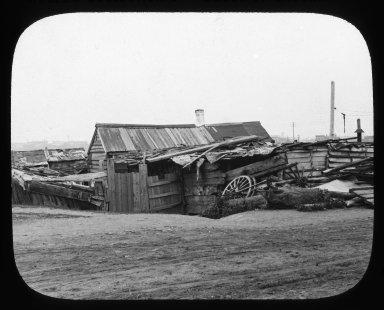
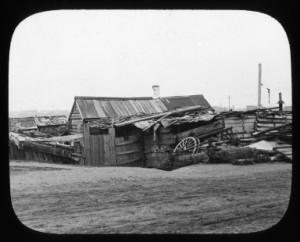
Below: I’m not quite sure of the story behind this sunken squatters home, taken on Van Brunt Street from the year 1900 (courtesy the Brooklyn Museum

Brooklyn Museum: Brooklyn scenes; buildings


Further reading: For more information on the corruption of the  New York and Brooklyn waterfronts , I highly endorse Nathan Ward‘s ‘Dark Harbor’. It’s brilliantly lucid and immediate. In particular, he focuses some attention on the disappearance of Columbia Street longshoreman Pietro Panto and vividly describes a mob hit that took place in a building in Manhattan’s West Village, in a building next door to the treasured piano bar Marie’s Crisis. There are several books that feature chapters on Red Hook history, but a dedicated book on the subject is sorely needed. In the meantime, I recommend the short essay by Jerry Nachman that appears in “Brooklyn: A State of Mind,” about, of all things, an air conditioning crisis!

Maggie Blanck has an extraordinary web resource that begins as a genealogy of her family and elaborates into a history of Red Hook’s industrial giants. And for those of you who are fascinated by late-century street-gang history, the website Stone Greasers has an exhaustive list of gang names, many more unusual than anything you’d find in the movie The Warriors.

Red Hook as inspiration: Several sources, both on Brooklyn history and film history, discuss Red Hook’s impact on the work of both Arthur Miller and Budd Schulberg, the screenwriter of ‘On The Waterfront’.

 In 2009, a unique restaging of ‘On The Waterfront’ took place aboard the Waterfront Barge Museum in Red Hook, a production that then floated to Manhattan and Hoboken waterfronts for further performances, “all places whose dock wars echoed in Terry [Malloy’s] story,” according to Ward.

Elia Kazan’s Oscar-winning film is embedded with influences from the entire New York waterfront struggle. For instance, Karl Malden‘s Father Barry is transparently inspired by Father Corridan, an activist waterfront priest from Manhattan’s west side. (Author J.T. Fisher focuses on Corridan’s contribution in his new book ‘On The Irish Waterfront’.) Of course no inspiration was greater than Malcolm Johnson‘s now classic series of articles for the New York Sun in the late 1940s, a series which won the Pulitzer Prize in 1949 — coincidentally the same year that Miller won for ‘Death of A Salesman’!

I suppose there is some controversy in some circles regarding whether Schulberg and Kazan ‘stole’ the idea of ‘Waterfront’ from Miller’s ‘The Hook’, but I’m not touching that. However you can read about it yourself in Stephen Schwartz’s argumentative 2005 article.

Thanks to commenter Rob Hill who calls to attention another fascinating literary Red Hook reference. In 1957, Harlon Ellison, one of America’s great science fiction and crime novelists, literally went undercover with a Red Hook street gang called The Barons to find inspiration for his book ‘Web of the City’ and, later, in the non-fictional account Memos From Purgatory. Ellison’s entire life would probably make a good subject for a podcast one day. Thanks Rob!

Further listening: This show shares many similar themes with our past shows on Williamsburg, Brooklyn and Corlears Hook and the Pirates of the East River. Hmm, and let’s just say, we’re probably coming back to the waterfront sooner than later this year….

Community vs Neighborhood: One listener Carolina from PortSide NY had some strong objections to my characterization of Red Hook, particularly my focus on the neighborhood’s crime and gang activity. I’m excerpting part of her letter, as it highlights a challenge that Tom and I often tackle with our podcast:

“Red Hook housed great poverty, but for decades was more mixed economically than your focus on gangland stories describes. Personally, I find what is most distinctive about Red Hook over the years is the capacity of this small place to hold AT THE SAME TIME a striking economic range in its residents and a striking range of land use from major industry to residences.

That is an undoubtedly true statement, especially when you compare it to the fate of other dockside neighborhoods, like Corlears Hook and Water Street in Manhattan. I find there are two ways to accurately tell a story of a place like Red Hook — from an organic, street-level or ‘ground up’ perspective (what I call ‘a community history’) and from a macro-view, as a component of the larger forces of the city which contain it (or ‘a neighborhood history’).

As the creators of a New York City history podcast, we opt to recount neighborhood histories, as New Yorkers and those who love this city are familiar with the mechanisms of change that have influenced it. In this decision, we understand that the normalcy of a place can get sometimes overlooked. (After all, not every person in Five Points was a gang member or a prostitute either.)

However, the sad truth is, Red Hook was for many years nationally known as a blighted neighborhood, and it was important to inspect both how it got that way and how that condition demanded some very unique revitalization plans.  I hope I have shown how essential Red Hook was to New York, and continues to be.  We encourage you to wander around the waterfront on a sunny afternoon sometime and, in particular, check out places like the Waterfront Barge Museum.

Categories
Brooklyn History On The Waterfront Podcasts

Red Hook, Brooklyn: A rich seafaring history, organized crime and the isolation of a beleaguered neighborhood

PODCAST Red Hook, Brooklyn, the neighborhood called by the Dutch ‘Roode Hoek’ for its red soil, became a key port during the 19th century, a stopping point for vessels carry a vast array of raw goods from the interior of the United States along the Erie Canal.

In particular, two manmade harbors were among the greatest developments in Brooklyn history, stepping in when Manhattan’s own decaying wharves became too overcrowded.

With these basins came a mix of ethnicities to Brooklyn, and along with new styles of row houses came the usual assortment of vices — saloons and brothels along Hamilton Avenue. This fostered the development of crime along the docks, and Red Hook soon witnessed firsthand the opening salvos of 20th Century organized crime.

How did the history-rich, nautical neighborhood go from a booming center of employment to one of the worst neighborhoods in the United States by the 1990s? And can some surprising twists of fate from the last twenty years help Red Hook return to its glory days?

Featuring: Revolutionary War forts, shantytowns, Vaseline factories, famous gangsters, the gateway to Hell, and cheap Swedish furniture!

Photo above: Taken on Van Brunt street, 1/11/2012

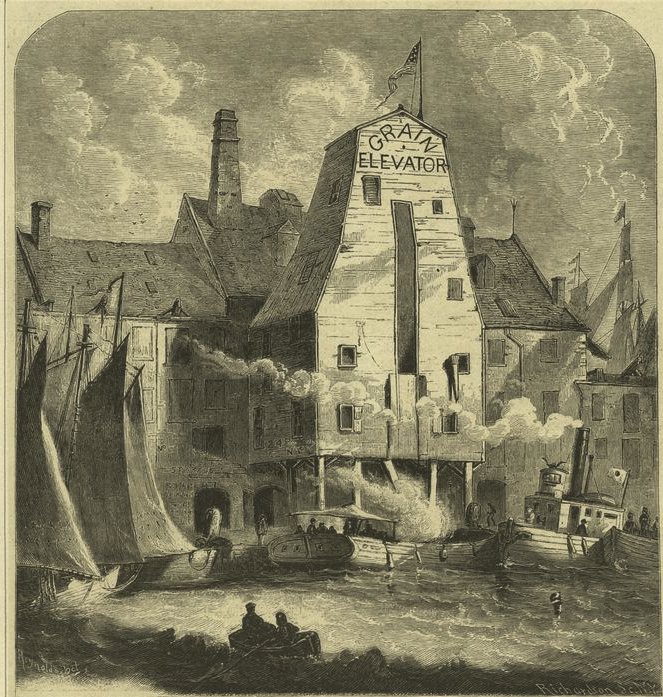
The Atlantic Docks, illustration taken from Booth’s History of New York. (care of NYPL)

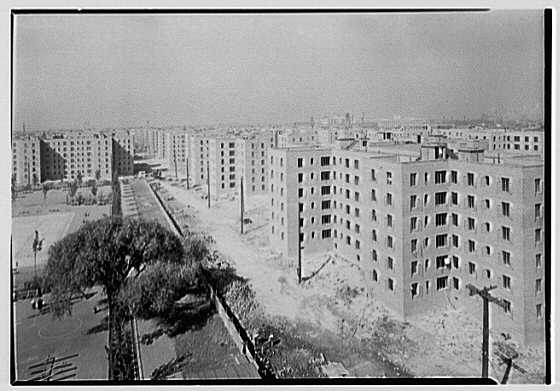
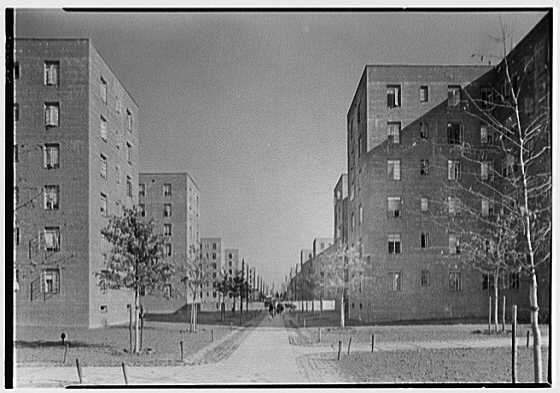
Modern living, circa 1939. The Red Hook Houses at their debut. Although the housing development cleared away a great many dilapidated homes — following a common model of urban redevelopment — the uninspired uniformity would put a dent in the neighborhood’s original character. (Courtesy LOC)

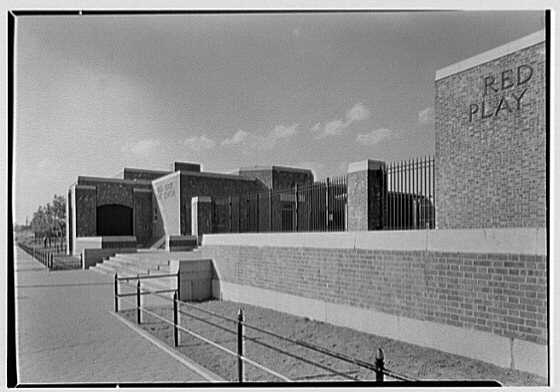
The Red Hook Play Center opened in 1936, the final of 11 swimming pools Robert Moses built during his early years as parks commissioner. Its Art Moderne style made it a beautiful if curious addition to the neighborhood.

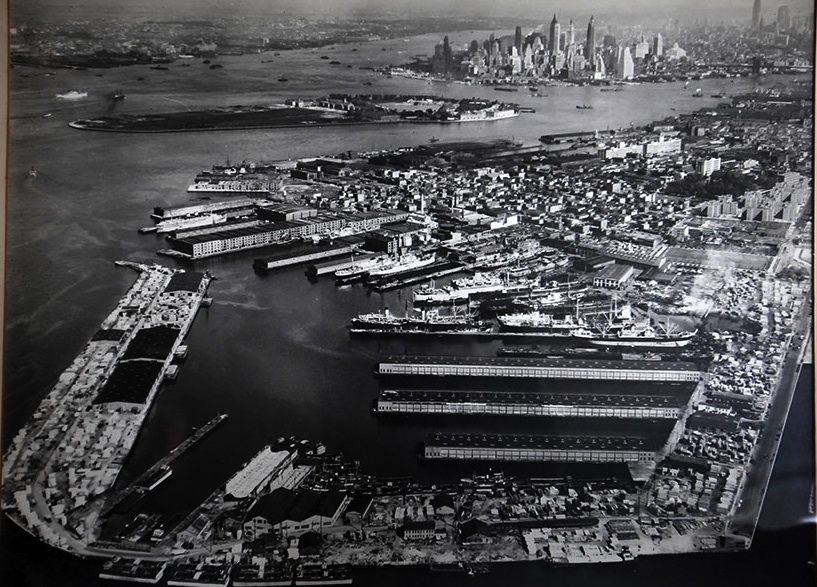
The Erie Basin, a clutter of vessels and piers, is strangely beautiful from overhead in relation to the Manhattan skyline. (Pic courtesy Wired NY)

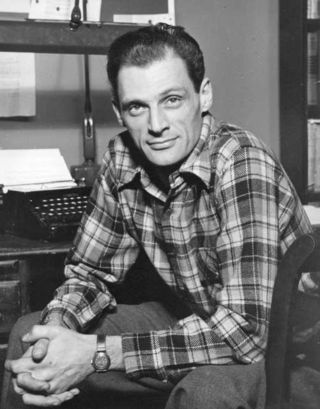
The crisis of organized crime and corruption within the longshoreman’s union along the Brooklyn waterfront was an inspiration for many writers, including Arthur Miller (below) in his unproduced screenplay ‘The Hook‘ — referring both to the neighborhood and the longshoreman’s “ever-present baling hook“. Later, Elia Kazan and screenwriter Budd Schulberg found similar inspiration for the Oscar winning film ‘On The Waterfront’, loosely basing events on situations that took place along the entire New York and Brooklyn waterfront. (The film was made in Hoboken, but there are of course famous shots of the Manhattan skyline.)

Categories
Mysterious Stories

The Plastic Faces of Ben Cooper, Brooklyn King of Masks

Kids these days! With their fancy selection of Halloween costumes, with ornate detailing and comfort, with their diversity and realism.

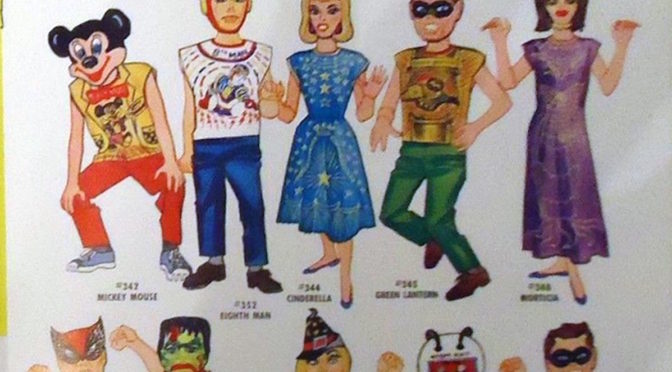
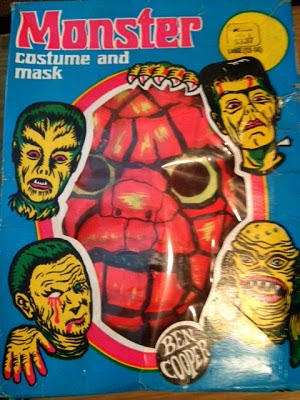
For thrifty parents in the 1970s and 80s, the decision to costume their children usually led to the rows of Ben Cooper Halloween smocks and plastic body garb, topped with a mask (held to the head with a rubber band) looking vaguely like the character it alleged to embody. On top of the standard fair Draculas and Frankensteins, one could often find Chewbaccas, Spider-Mans, Mickey Mouses and other, non-traditional creations.
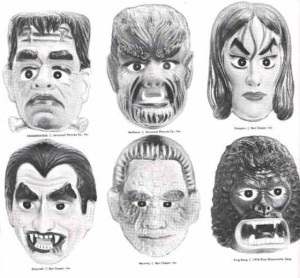
The many visages of the Ben Cooper brand: faces from a 1980 product catalog. (You can check out the whole catalog at Plaid Stallions)

They reeked strongly of plastic and were one-size-fits-all. Still, throw in a plastic jack-o-lantern to hold your candy and a flashlight, and you were set for trick-or-treating every October 31st.

Halloween was synonymous with Ben Cooper products for many children. The variety and simplicity of the little synthetic outfits — paired with the company’s savvy licensing division — made them staples of the season, until an early ’80s damper that brought on a decade of financial woes and eventually bankrupted the company.

Ben Cooper Inc., the company that manufactured these tiny costumes, was a homegrown New York company through and through. The headquarters for this magical, mystical place of costumes was located near the edge of Sunset Park (a couple blocks away from Green-wood Cemetery), at 33 34th Street, Brooklyn, New York, among the nondescript warehouses and storage facilities that face into the Gowanus Bay, not far from the very first settlement (in 1636) in a region that would become Breukelen. If only the Ben Cooper company had known! He could have made Dutch Walloon masks and smocks.

The man behind the cheap costume empire, Benjamin Cooper, was born in 1906 in the Lower East Side and was given his first costume (a little devil suit) at age 7. After a brief stint as a songwriter on Tin Pan Alley, Cooper segued into the theatrical costume business in 1927 when he was 21, making costumes for chorus girls at the Cotton Club in Harlem and even a few latter-year Ziegfeld Follies.

Cooper pretty much fell into the Halloween regalia business. American businesses were turning holidays into retail opportunities, upgrading obscure traditions and inventing new ones. Religious iconography and culture-specific celebrations were forced to share its holidays with mainstream, family-friendly motifs. The practices of Hallowe’en, with its Celtic, Christian and medieval origins, were melded with newer modified customs that were, conveniently, fueled by American retail products.

Namely, trick-or-treating, which was not a widespread component of the holiday until the 1930s. One source I read theorizes that the organized custom of going house to house for a candy treat developed as a way to control late-night Halloween vandalism like egging and papering houses — although, of course, it’s hardly stopped those practices. (I can’t find any reference to ‘trick-or-treating’ in the New York Times before the 1940s)

The growing popularity of trick-or-treating facilitated a need for mass-produced costumes, and Cooper was there to make them. He left theatrical costuming entirely and started his new company, Ben Cooper Inc., in Red Hook in 1937.

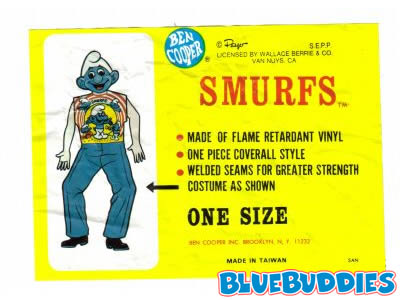
The secret to his success was licensing. During his first year, he merged with a company that held the merchandising rights to Walt Disney’s characters and would soon define his business using the imagery of pop culture favorites. (At right: Smurfs rendered in the Ben Cooper aesthetic, courtesy the Smurf website Blue Buddies.)

Cooper dominated this market for most of the mid century with few competitors, offering children of the 1950s ensembles like Davy Crockett and Raggedy Ann. Real humans entered the mix in the 1960s with a popular set of Beatles costumes. (Less popular in 1963 was the unfortunate manufacture of JFK and Jackie costumes.) Film and television stars dominated the 1970s, with characters from Star Wars, Sesame Street, even (controversially) the monster from Alien. And most manufactured here in Red Hook.

“The entire line of flame-retardant capes, playsuits (sizes 4-14), ponchos and masks sells for $2 to $5 in K marts, Kresge’s, Woolworth’s and other chain stores across the U.S.” says a 1979 People Magazine profile of Ben Cooper.

Ben Cooper Inc. fell upon hard times in the 1980s, when the Tylenol cyanide fear spread to paranoia about poisoned Halloween candy, for a time curtailing the yearly ritual and sending profits plummeting. Costumes by rival companies were also getting more sophisticated; they already had to fend off the likes of Collegeville and Don Post, who cornered the rubber-mask market.

The company declared bankruptcy and moved out of New York in 1991 and was swiftly folded into another rival Rubies Costumes. Ben Cooper remains one of New York’s greatest contributions to the Halloween tradition and is fondly remembered today, even if nobody will ever admit to being very comfortable wearing the nostalgic, plastic garb.

Trick or treating, by the way, didn’t shoehorn its way into the practices of American children without a fight. Indeed, in 1948, members of the Madison Square Boys Club, most likely encouraged by their adult members, marched in a city parade protesting the practice of going to strangers’ houses and asking for candy. Their banner? “American Boys Don’t Beg.”