Categories
It's Showtime

The first Shakespeare performance, recorded by Edwin Booth

The plays and sonnets of William Shakespeare, as the finest examples of the English written word, were also the first recorded sounds ever made.  The first recording ever made at Alexander Graham Bell‘s Volta Laboratory in Washington DC in 1881 was that of Bell’s very own voice reading Shakespeare’s Hamlet.

Here’s another recording of Bell’s voice from 1885, running through a series of numbers as a sort of ‘test pattern’ for Bell’s new Graphophone:

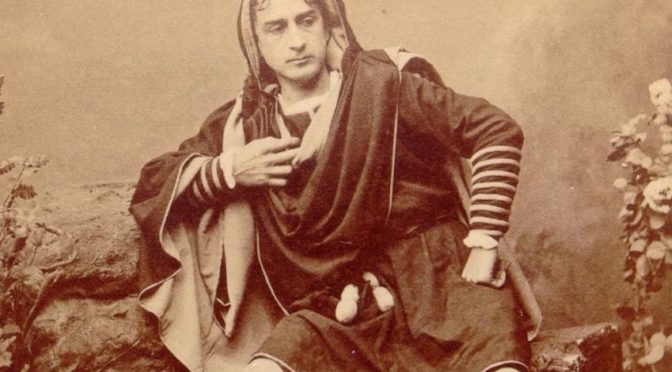
But Bell, visionary and genius, was no actor.  The first audio of Shakespeare performance by an actor — the greatest actor, in fact – Edwin Booth, also known among the creative set in New York for The Players Club in Gramercy Park.
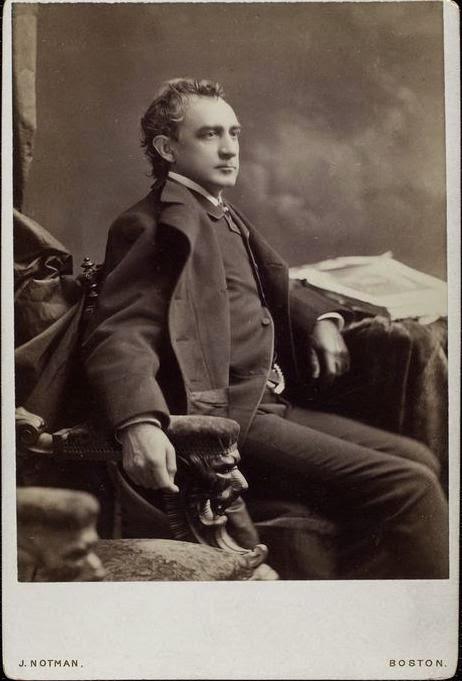
The recordings were made in Chicago in March 1890, of Hamlet and Othello (heard below):

Booth has a couple tie-ins to the subject of our last podcast, the Astor Place Riot.  He was named for the early American tragedian Edwin Forrest whose rivalry with the British actor William Macready incited the bloody conflict at the crossroads of Broadway and the Bowery on May 10, 1849.

And, of course, Edwin Booth has a serious connection with another 19th century theater tragedy — the assassination of Abraham Lincoln by Edwin’s brother (and acting partner) John Wilkes Booth.  The assassin was actually known for his own aggressive version of Othello; during one performance, he almost strangled the life out of the actress playing Desdemona!

Listen to Edwin Booth’s recorded performance.  You’re listening to the world’s most well-regarded actor of the 19th century.  He’s at the end of his career here.  One year later, in 1891, he would give his last performance at the Brooklyn Academy of Music. In the role of Hamlet, naturally.

The recordings, using Thomas Edison’s equipment, were never meant for public performance, but rather at the behest of his daughter Edwina.
Categories
Brooklyn History Those Were The Days

The hottest place to listen to records in Brooklyn

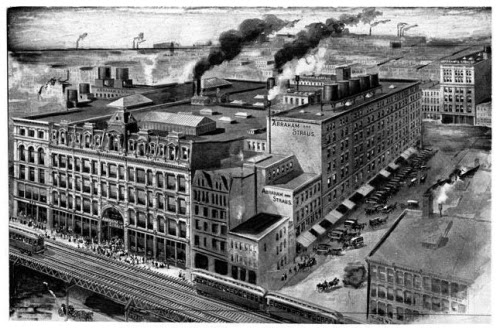
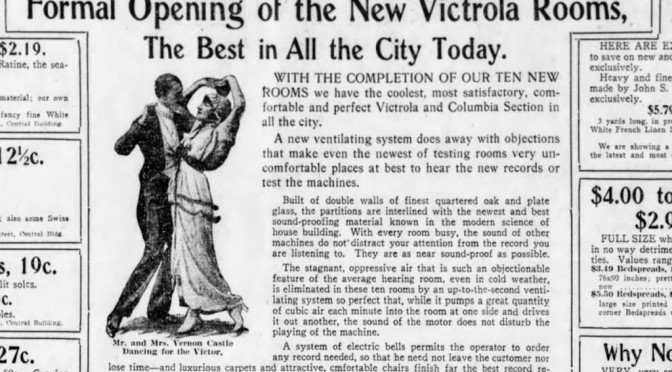
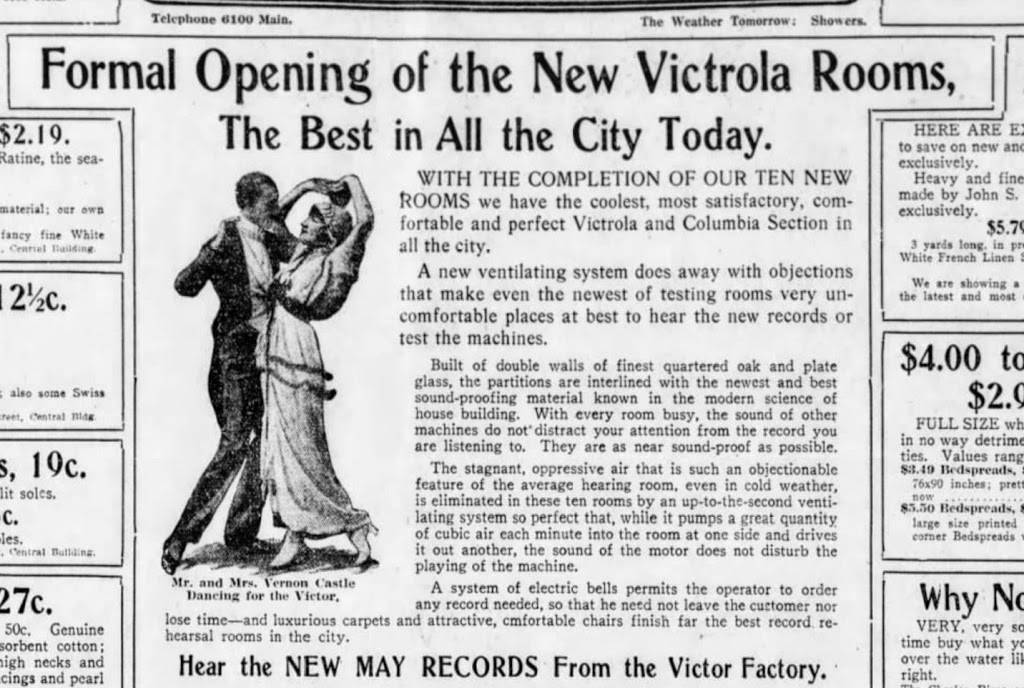
One hundred years ago today, the Abraham & Straus department store on Fulton Street (today’s Brooklyn Macy’s location) kicks off the borough’s deep affection for record albums with newly designed listening stations, touted in this Brooklyn Daily Eagle advertisement as the best in the city (and it probably was).

As the advertisement proclaims: “With the completion of our ten new rooms we have the coolest, most satisfactory, comfortable and perfect Victrola and Columbia Section in all the city.

A new ventilating system does away with objections that make every the newest of testing rooms very uncomfortable places at best to hear new records or test the machines.

Built of double walls of finest quartered oak and plate glass, the partitions are interlined with the newest and best sound-proofing material known in the modern science of house building….. They are as near sound-proof as possible.”

Below: Abraham & Straus on Fulton Street, 1904 (courtesy Brooklyn Public Library)

By 1914, many discs could be played on both Victor Talking Machines and Columbia Grafonolas, so no CD-vs-vinyl format decisions to make!

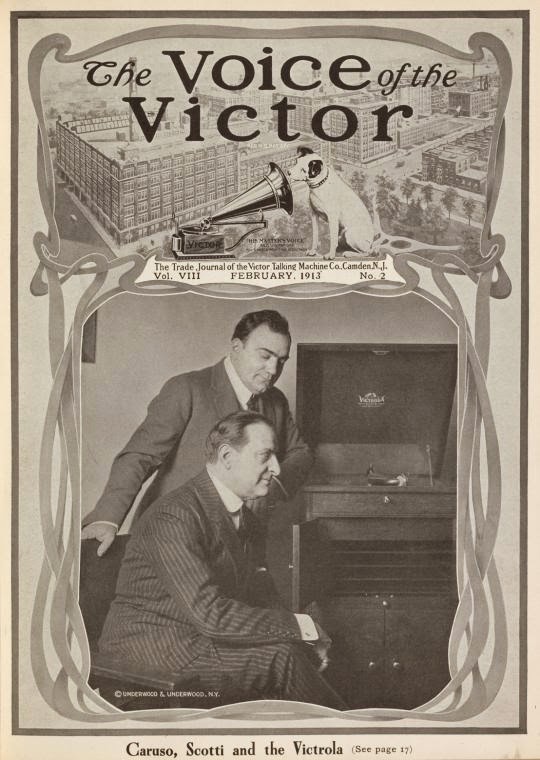
Among the newest album releases that month were instructional dance albums by Vernon and Irene Castle, starring later that year in the hit Broadway musical Watch Your Step, written by Irving Berlin.  There’s also a new album by Victor favorite Enrico Caruso (pictured below on the cover of a 1913 trade magazine):

You can find the advertisement above in the Brooklyn Daily Eagle (April 28, 1914 issue).

Categories
Those Were The Days

Where did New Yorkers first buy recorded music?

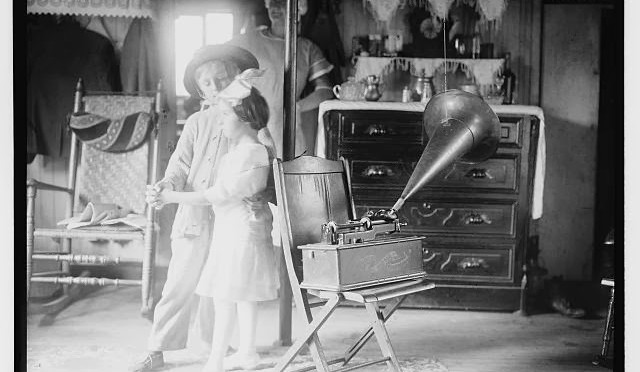
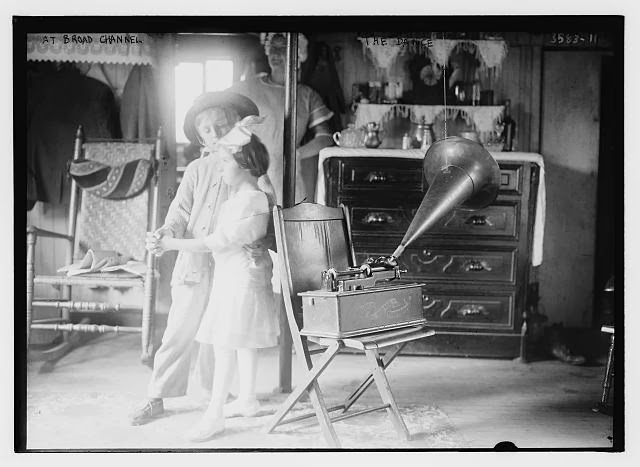
“Photograph shows a boy and a girl dancing while an Edison Home Phonograph plays in a house in Broad Channel, Queens, New York City.” — taken between 1910-1915

Here’s something many people thought they’d never see again in New York City — the opening of a new record store.  Rough Trade, known for their famous London record shop, will open an awesomely spacious new store in Williamsburg this week, with vinyl-record listening stations, a coffee shop, live performances and a heap of nostalgia on its shoulders.

Remember Tower Records on Broadway?  Virgin Records in Times Square?  The old subway Record Mart? The long-vanished Commodore Record Shop?  The past is littered with the ghosts of music stores long gone.

But where did people first buy recorded music in New York City?  The first recordings came on phonograph cylinders, long tubes with the grooves etched along the front, often made with wax.  Essentially, they looked like — and probably smelled like — big, decorative candles.

They were soon in competition with phonographs in a flat, wax disc form, the musical delivery device which eventually won out and became the standard for decades.

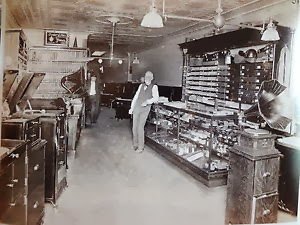
In the beginning, recorded music was played in exhibition halls, not available for home use.  By the 1890s, the first musical devices were available for purchase, and phonographs were sold in establishments that offered instruments, music boxes or early electronics — Broadway piano stores (like the one above, in 1910) or the places down on the soon-to-be-named Radio Row which offered New Yorkers the latest technology.

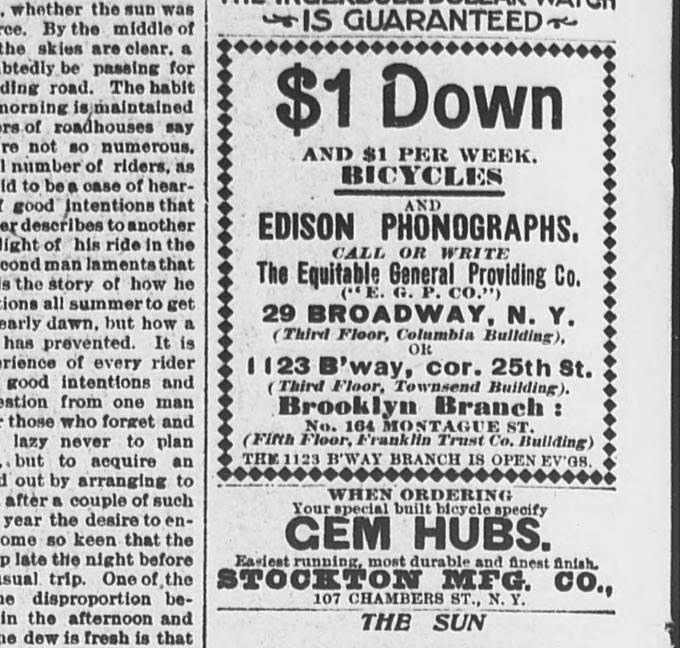
Naturally, the first records were made to play on Edison machines, pricey novelties in the late 1890s.  Here, in 1898, you could put a down-payment on the purchase of a phonograph machine and a bicycle — a real hipster double-play today!

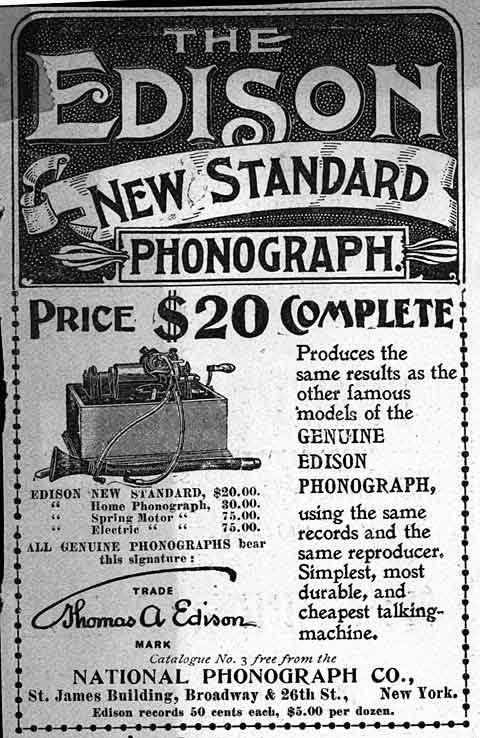
Another advertisement from 1898 presents Edison records at just “$5.00 a dozen”, found at the St. James Building at Broadway and 26th Street.  Of course, a great many of these records were spoken word, not music;  after all, they were nicknamed ‘talking machines’ at this time.

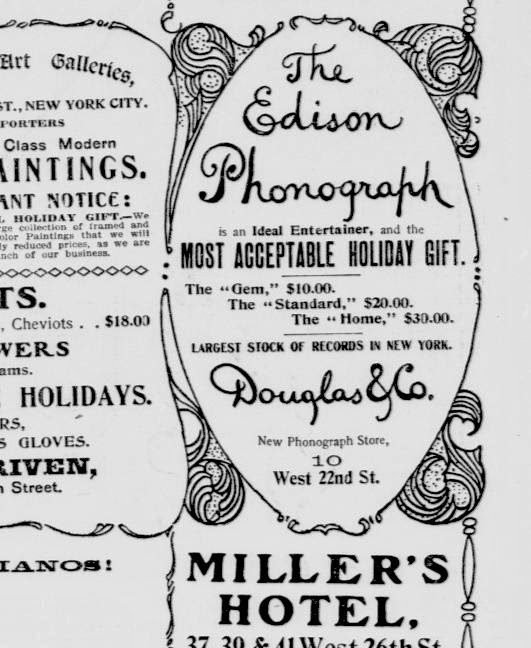
I was able to find a few other early photographer retailers in old newspaper advertisements.  For instance, Douglas & Co., at 10 West 22nd Street, appears to be one of New York’s earliest retailers specializing in recorded sound.  From Dec 16, 1900:

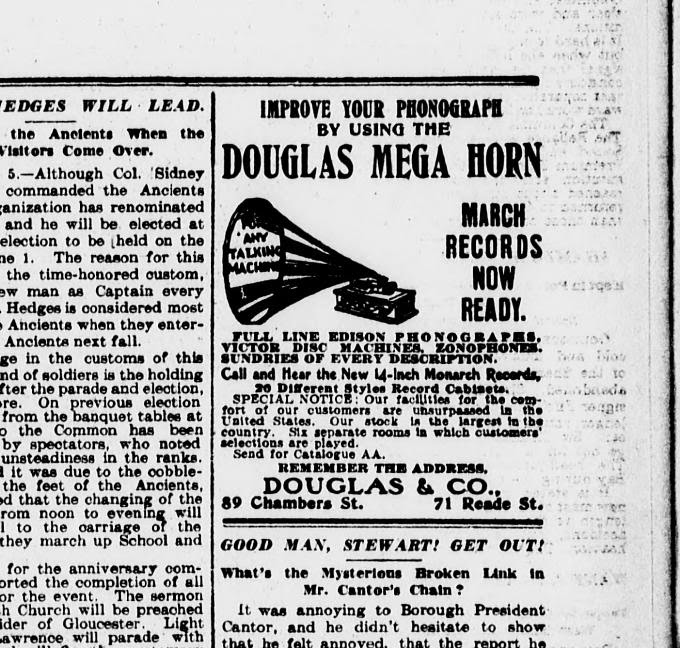
By 1903, Douglas & Co. had moved downtown, closer to the electronic retailers that would later specialize in radio and televisions:

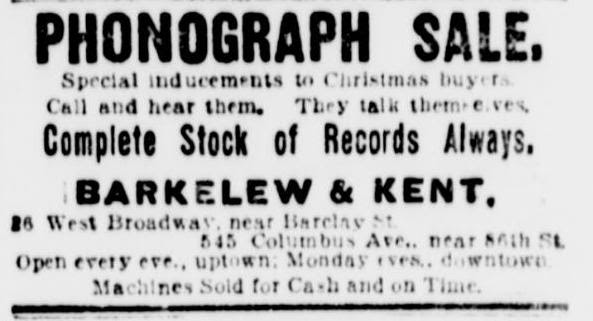
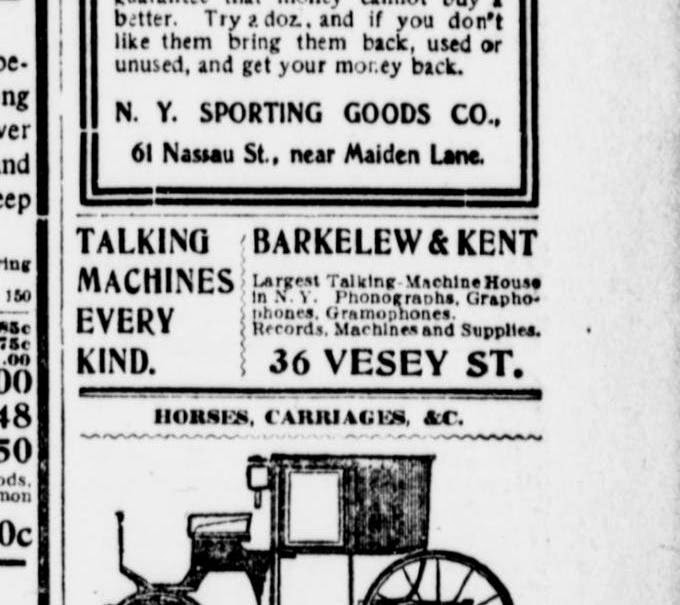
Another early phonograph retailer I was able to locate was A.B Barkelew & Kent.  “Call and hear them. They talk themselves.”  They would eventually move to Vesey Street and, in 1902, claim “the largest stock in New York.”

As early in 1899, Barkelew & Kent could claim to be one of New York’s first used record stores.  From a trade ad: “We exchange records you tire of and do not like.”

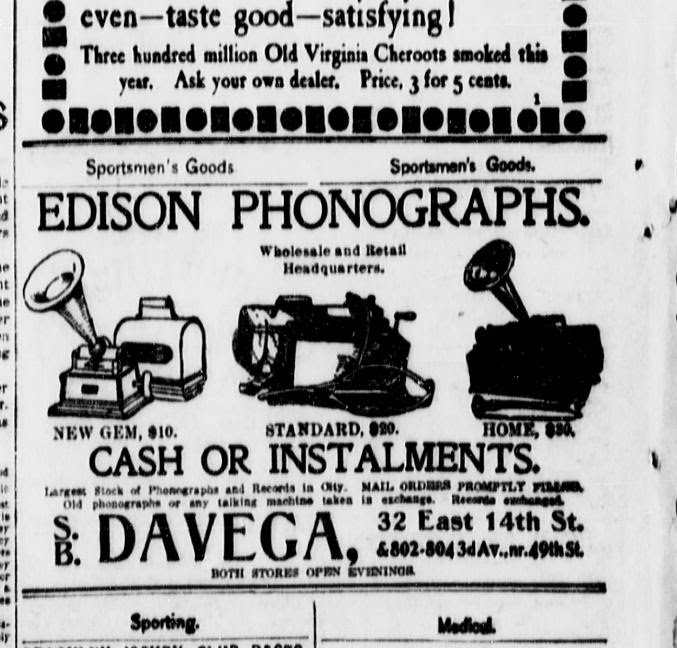
Interestingly, early record stores were listed alongside advertisements for sporting goods.  This ad is from May 1902:

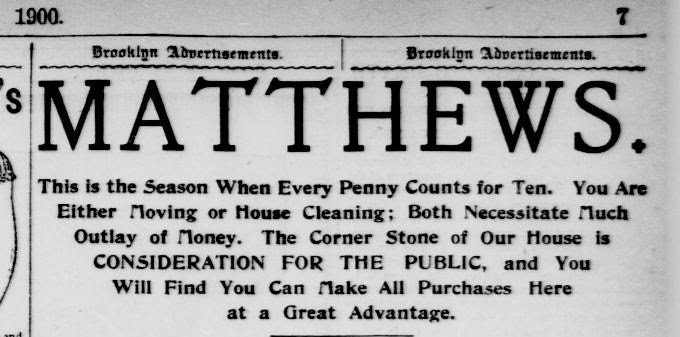
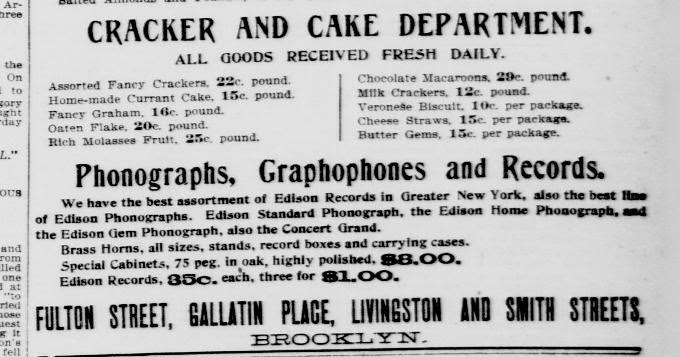
And since we’re celebrating the opening of a new record store in Brooklyn, I should add that one of Brooklyn’s first major record stores was at A.D. Matthews Department Store on Fulton Street.

From an April 1900 advertisement: