Yale University has sprung a beautiful present onto the Internet — a searchable database of over 170,000 public-domain photographs created by the United States Farm Security Administration and Office of War Information, documenting the aftermath of America of the Great Depression and World War II. The photos, dating from between the years 1935 to 1945, include of the greatest American photographers from the period (such as Gordon Parks, Walker Evans and Dorothea Lange).
These images aren’t really new; they’ve been available at the Library of Congress for many years. I’ve even ran a couple of these on the blog before. Â But Yale has done an outstanding job of sorting and cataloging. Their site even comes with a map if you want to look at images from a particular area of the country.
Take a look at this particular images from New York City during this period, then head over to the database and lose yourself inside these captivating, sometimes harrowing pictures. Thank you Yale!
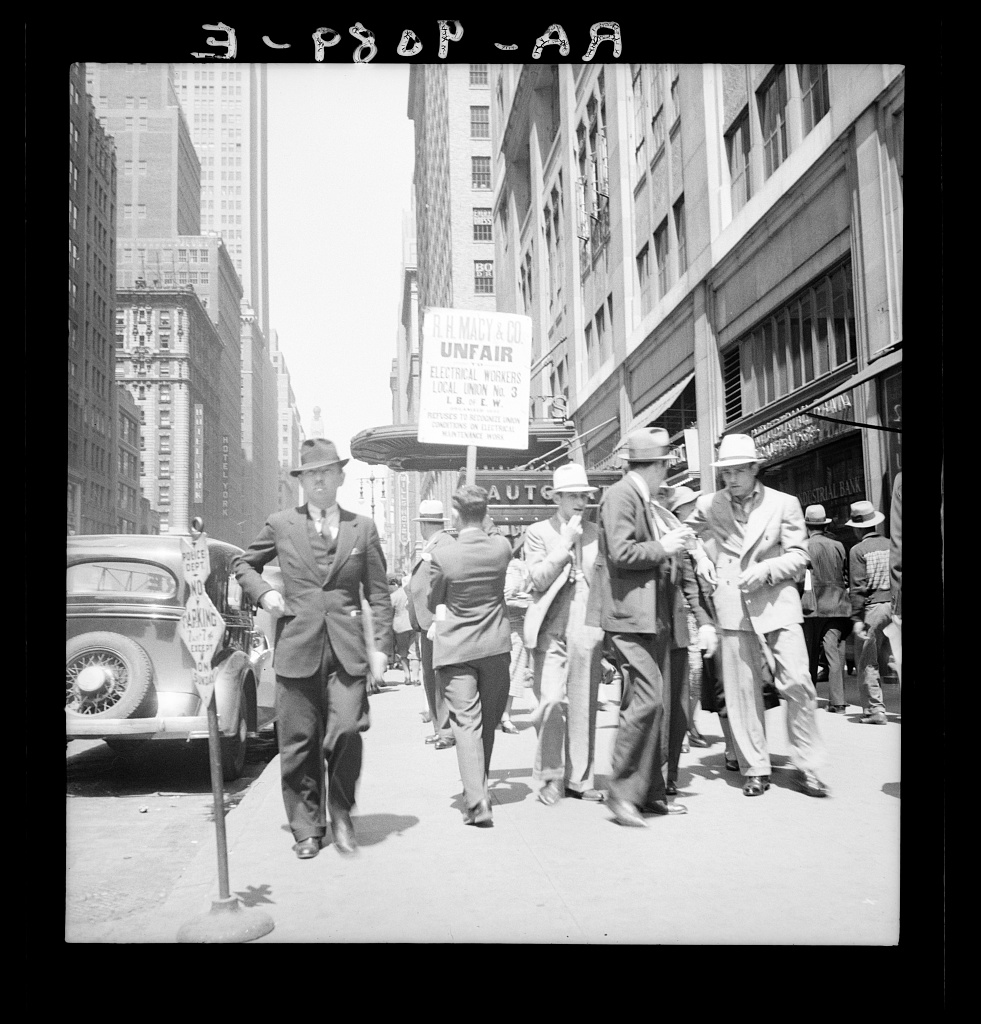
June 1936 “New York street scene: striking in front of Macy’s” Photographer Dorothea Lange
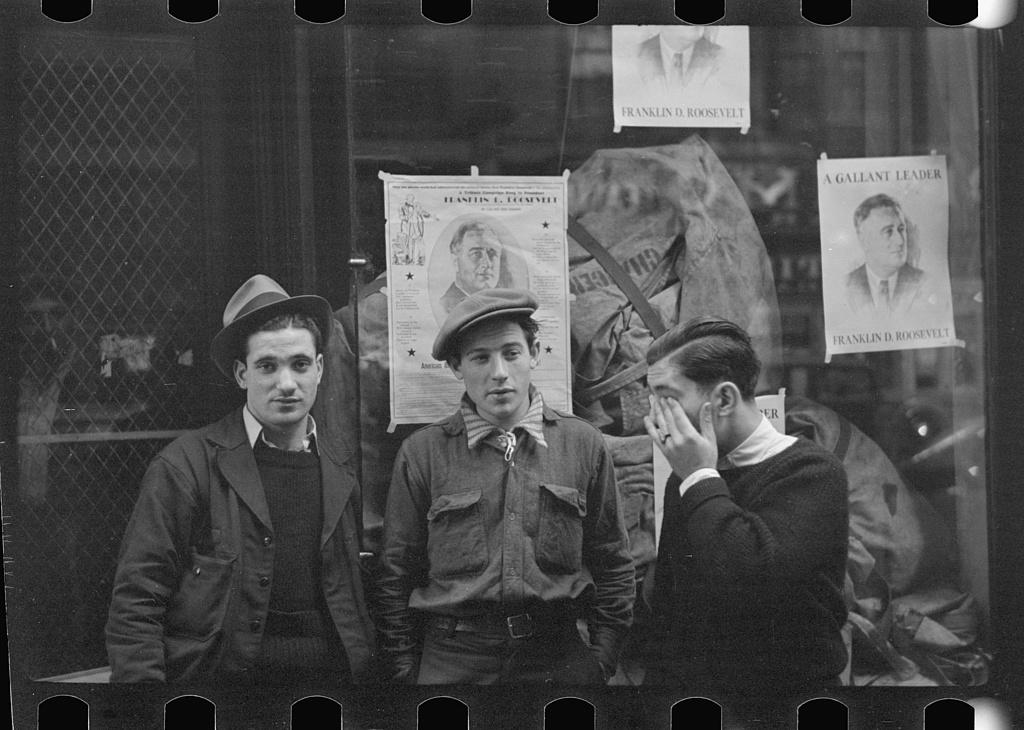
November 1936 “Street scene at 38th Street and 7th Avenue” Photographer Russell Lee
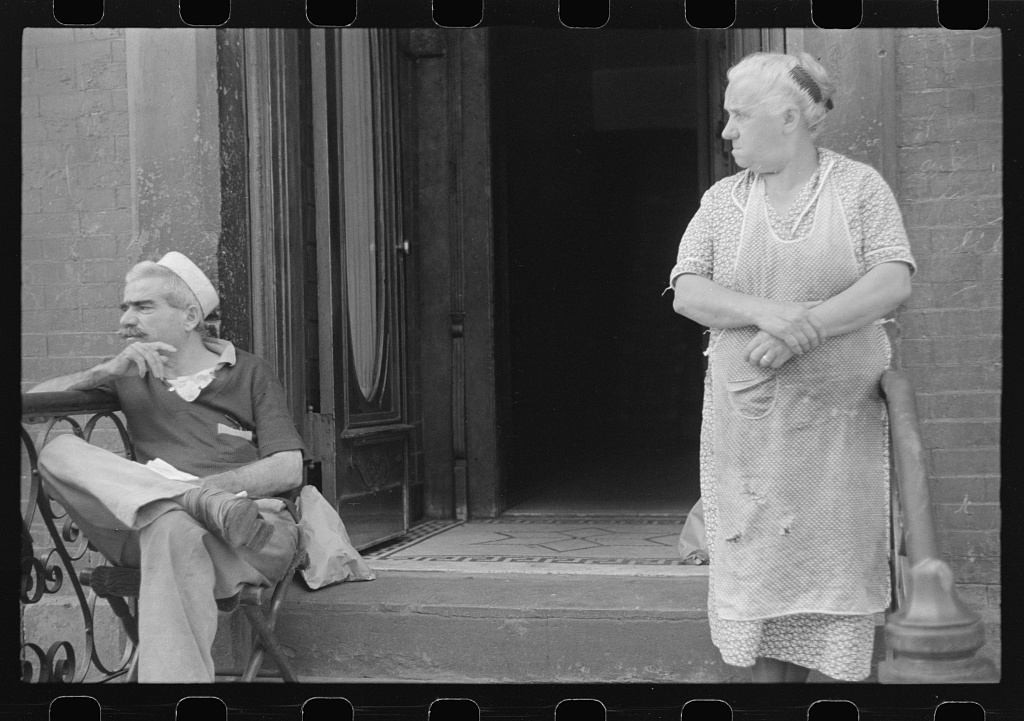
1938 “New York, New York. 61st Street between 1st and 3rd Avenues. Tenants” Photographs by Walker Evans
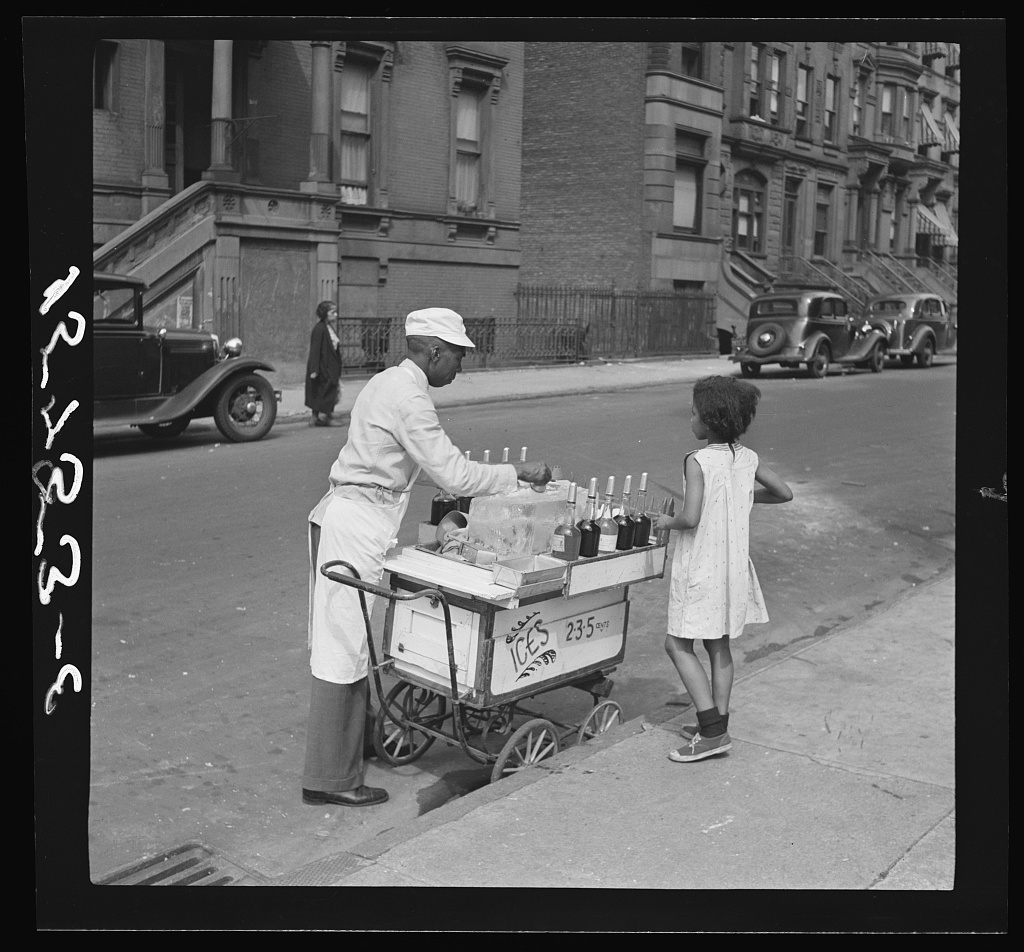
1938 Photographer Jack Allison (no caption on photo)
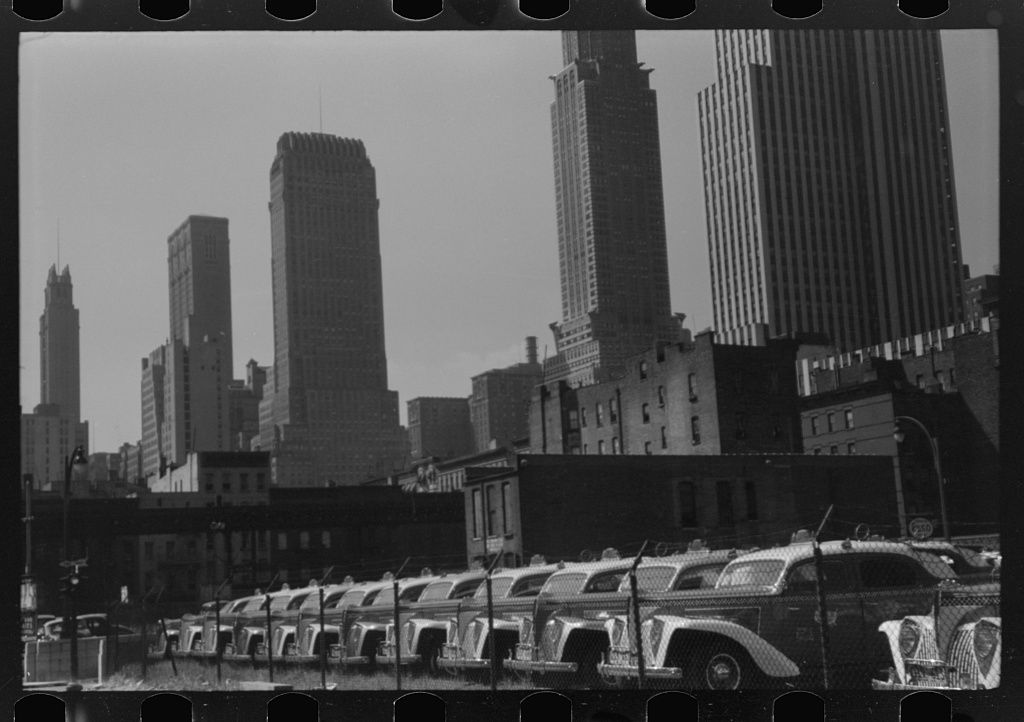
June 1941 New York City, East Side, Sunday morning, photographer Marion Post Walcott
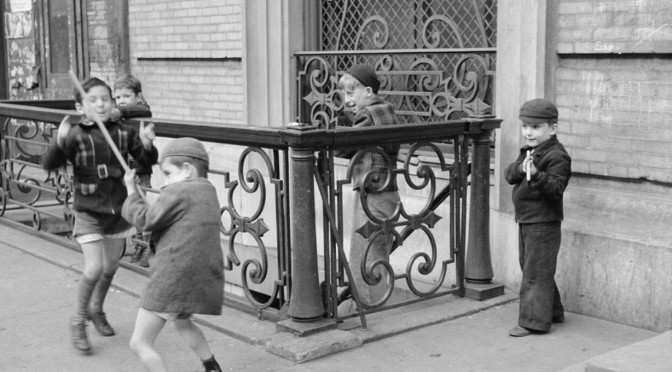
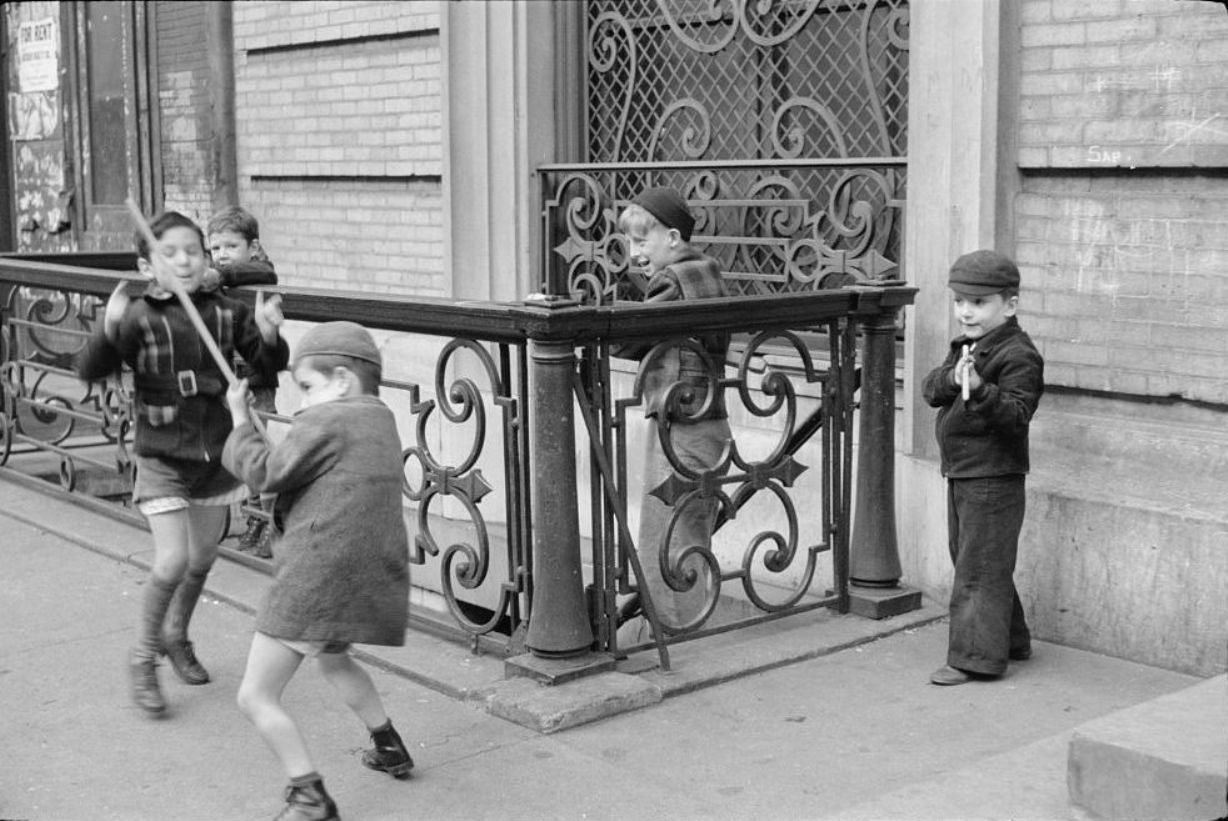 December 1941Â :Children playing, New York City: Photographer Arthur Rothstein
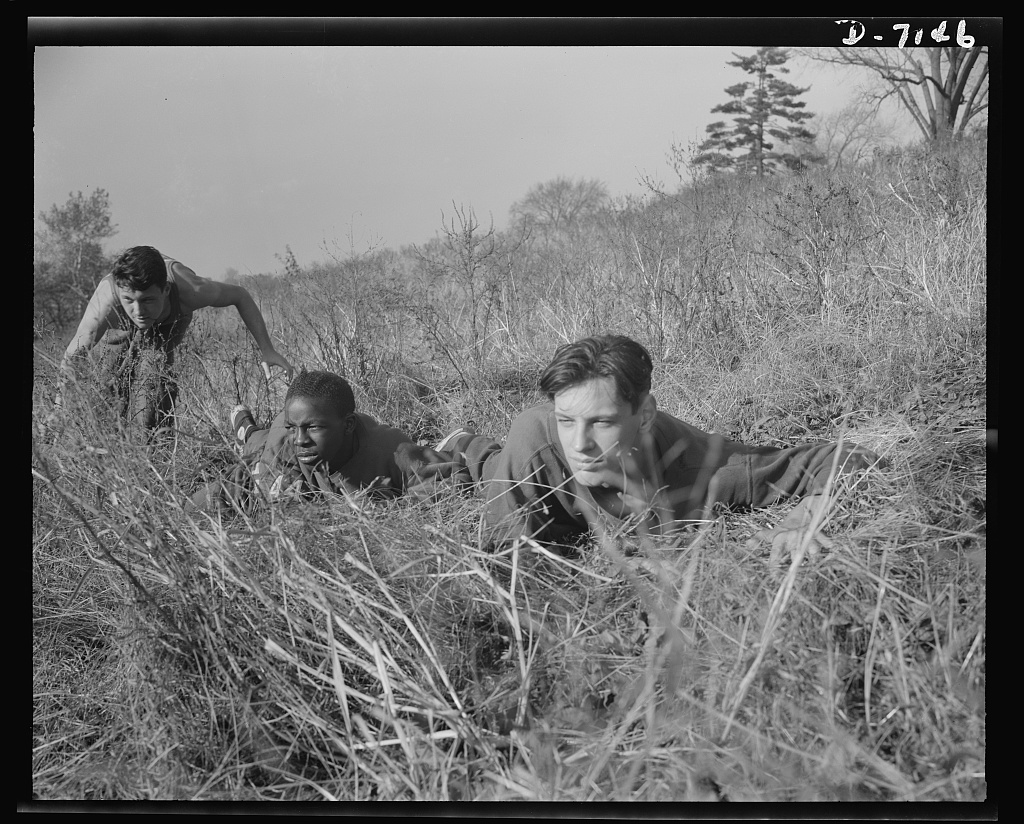
October 1942 “High school Victory Corps. Learning the rudiments of advancing on an enemy will prove valuable to these boys if they are called to join their older brothers in the armed forces. This is part of the “commando” training given in physical education courses at Flushing High School, Queens, New York” Photographer William Perlitch
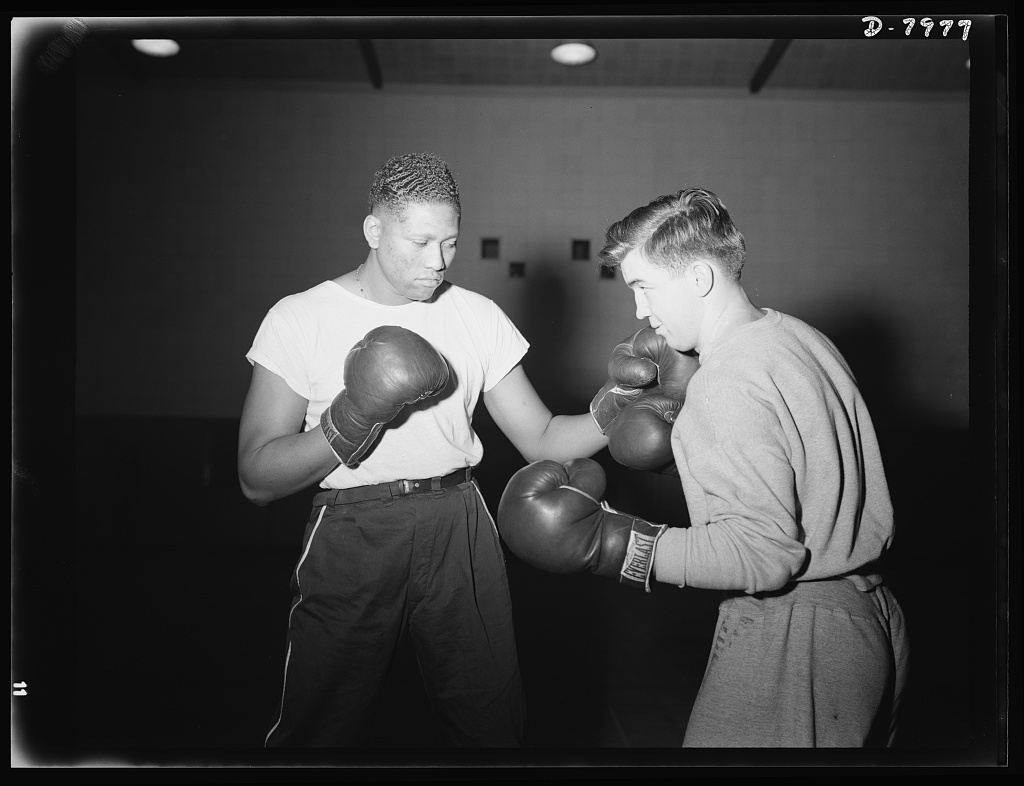
January 1943 “Manhattan Beach Coast Guard training station. The gymnasium is one of the busiest places at Manhattan Beach Coast Guard training station. The physical education program is handled by many noted exponents of boxing, wrestling, track and judo. Paul (Tiny) Wyatt, one-time leading contender for heavyweight boxing honors, is shown sparring with Hart Kraeten, former Golden Gloves champ.” Photographer Roger Smith
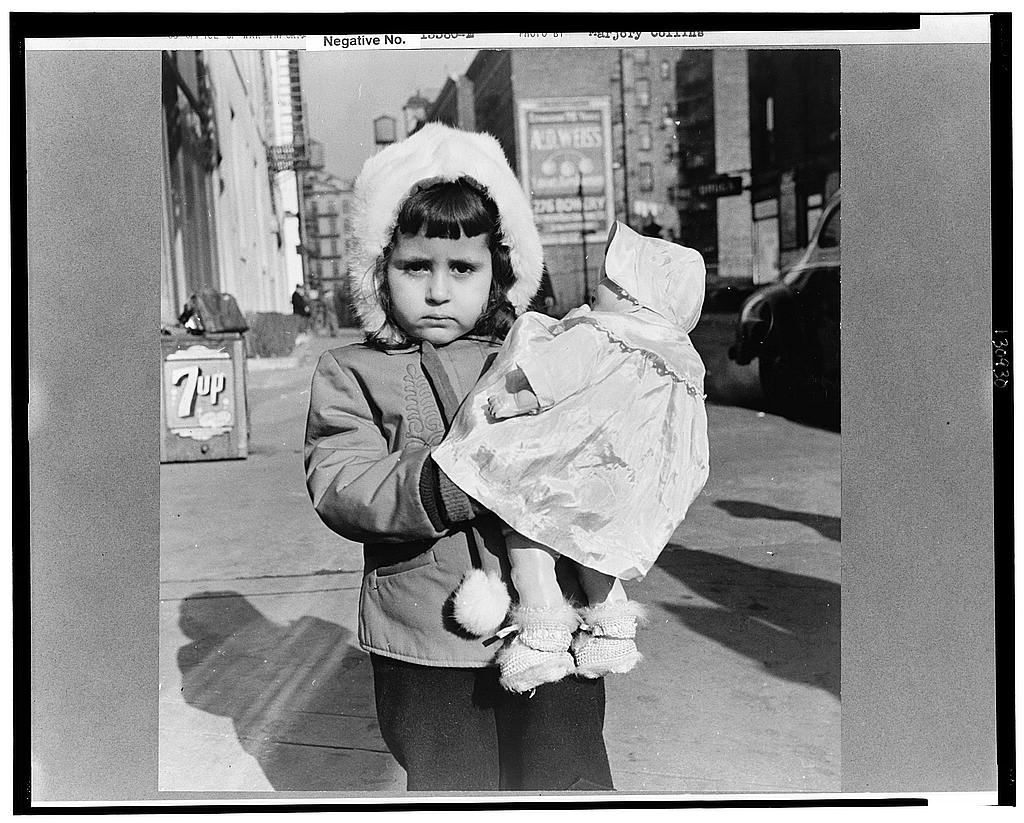
January 1943 “New York, New York. Child on Mott Street on Sunday” Photograph by Marjory Collins
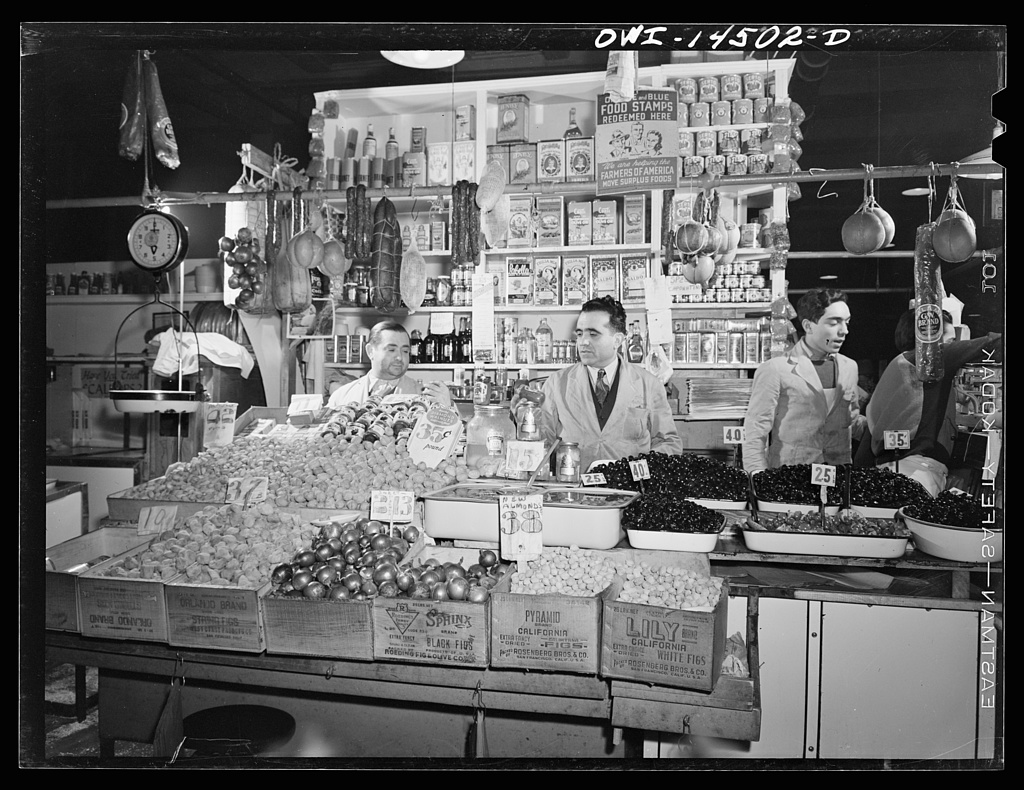
January 1943Â Â “Italian grocer in the First Avenue market at Tenth Street” Photograph by Marjory Collins
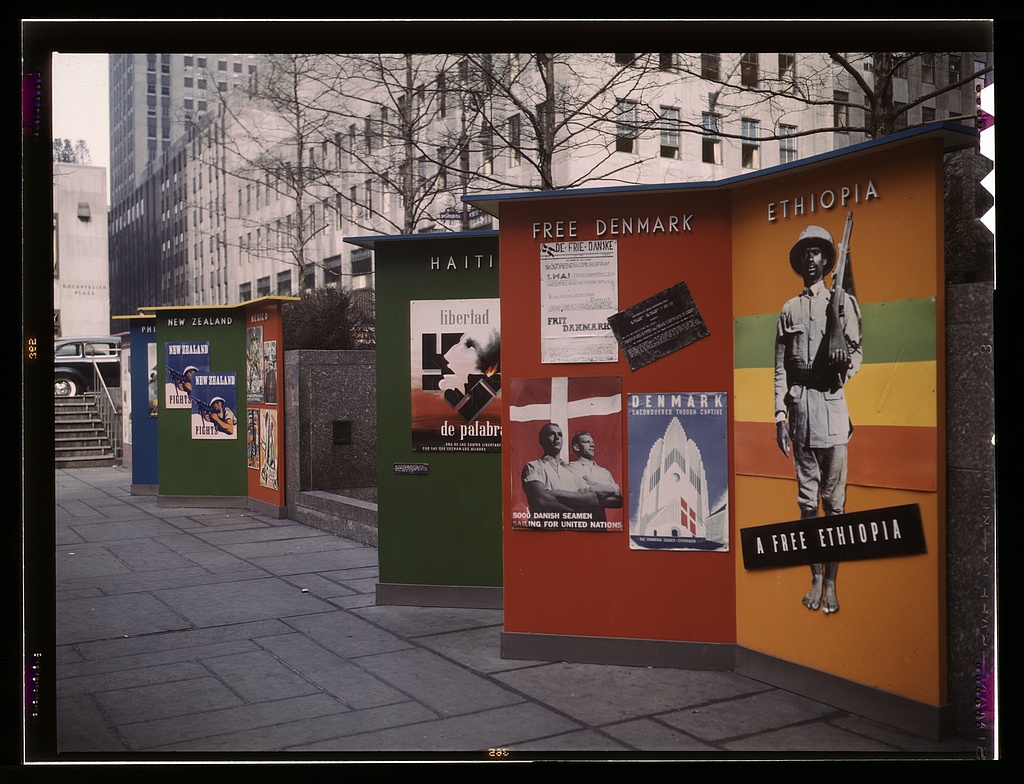
March 1943 “Rockefeller Plaza, exhibit [for] United Nations by OWI, New York, N.Y. Between photographic displays is [the] Atlantic charter in frame with transmitters at each end and where voices of Roosevelt, Churchill and Chiang Kai-Shek are heard each half hour; surrounded by statues of the four freedoms.” Photograph by Marjory Collins
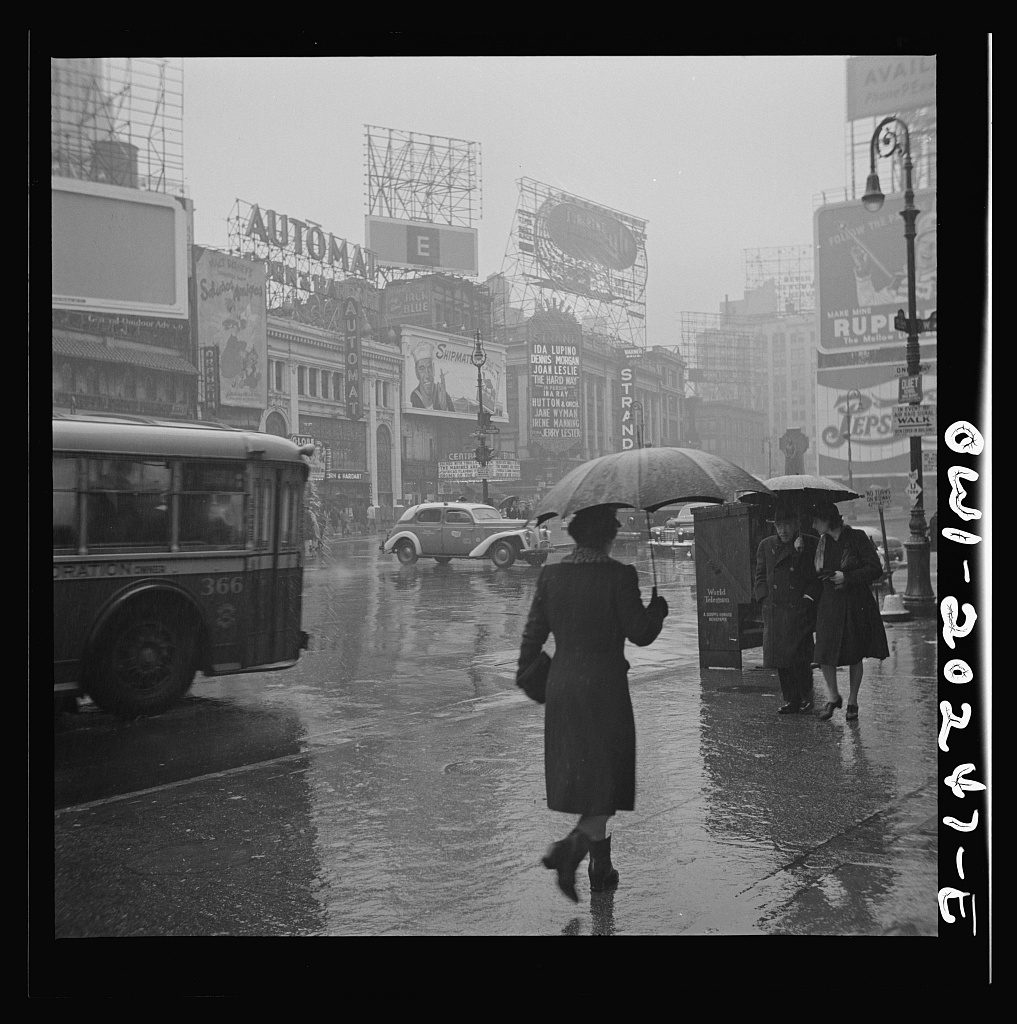
March 1943 “New York, New York. Times Square on a rainy day” Photographer John Vachon
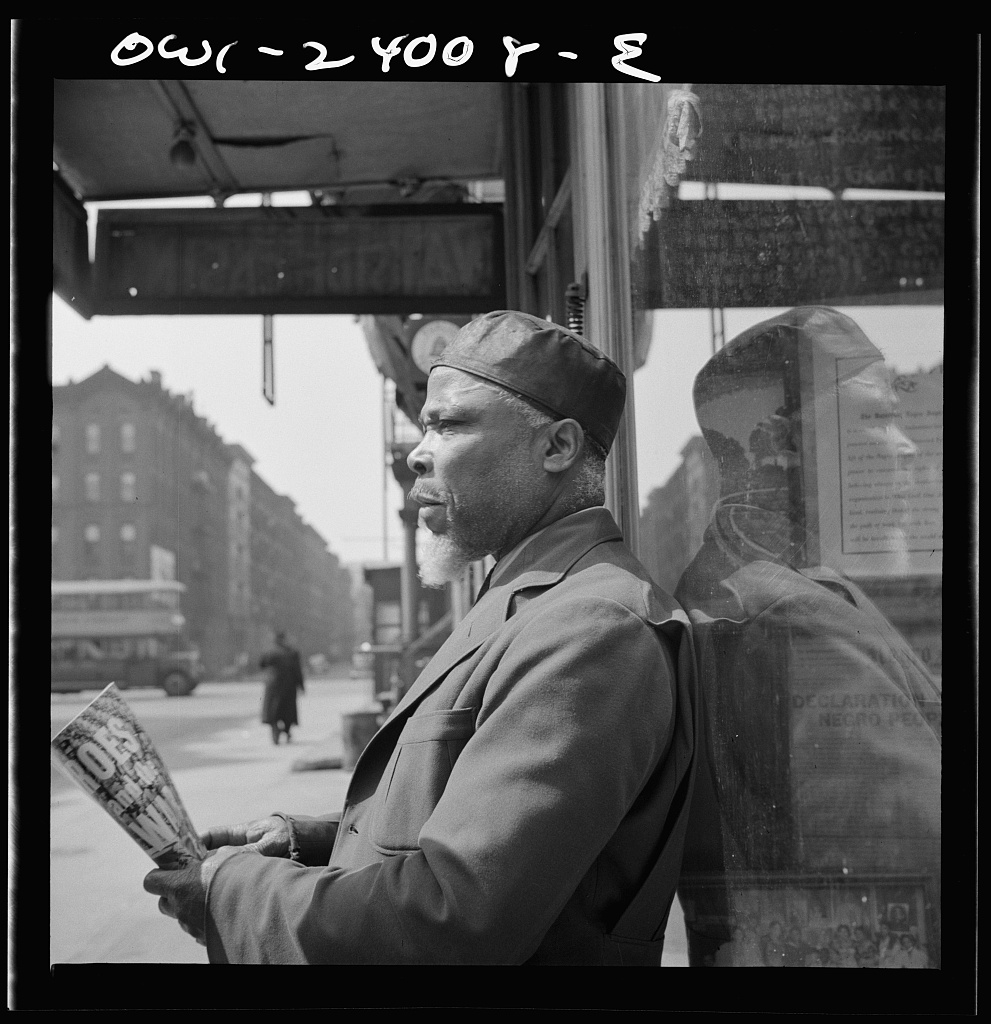
April 1943 “A follower of the late Marcus Garvey who started the “Back to Africa” movement” Photographer Gordon Parks
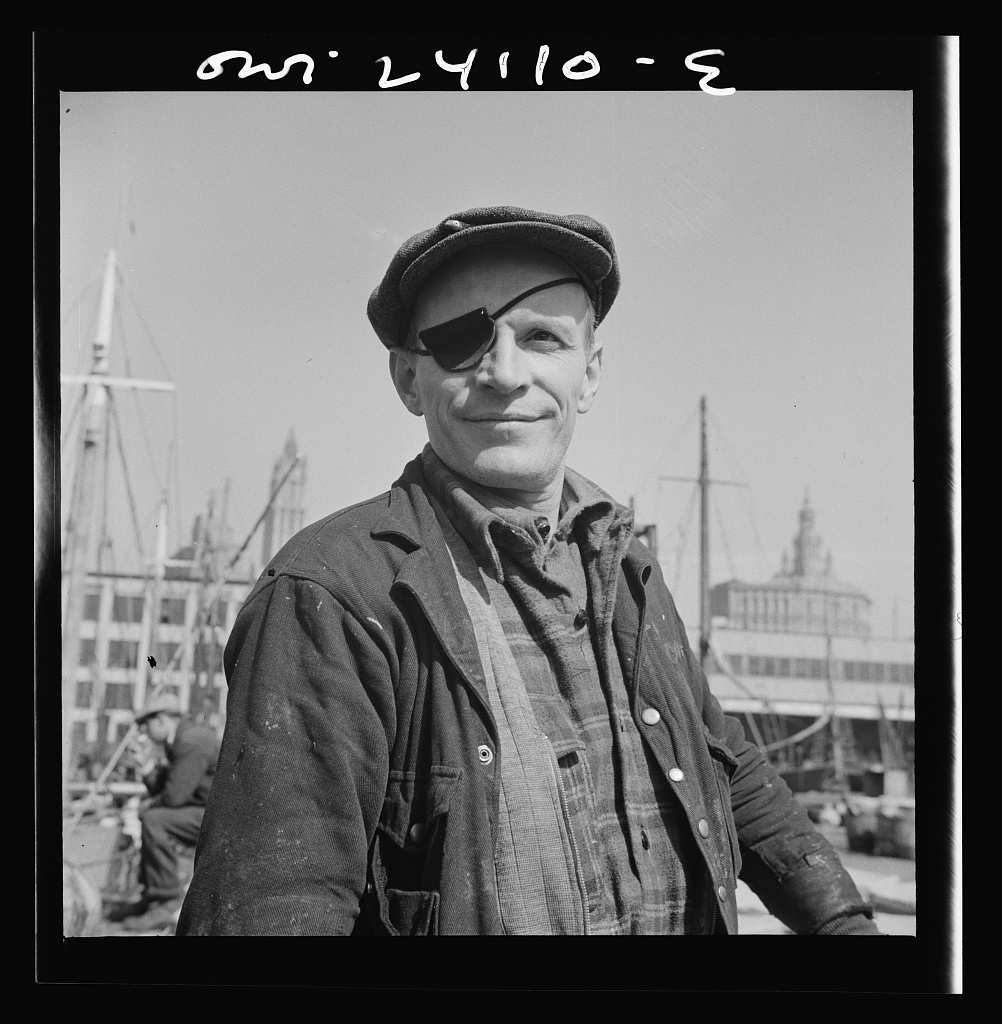
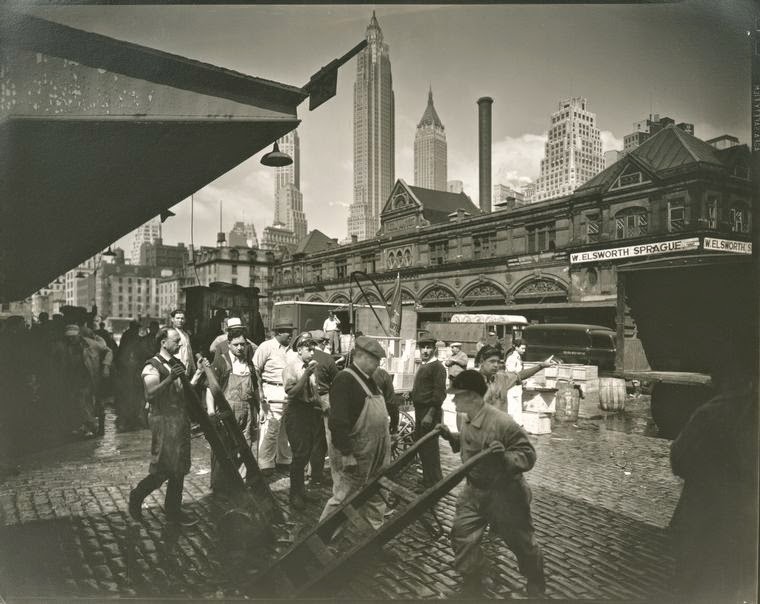
June 1943 “New York, New York. Dock stevedore at the Fulton fish market” Photographer Gordon Parks
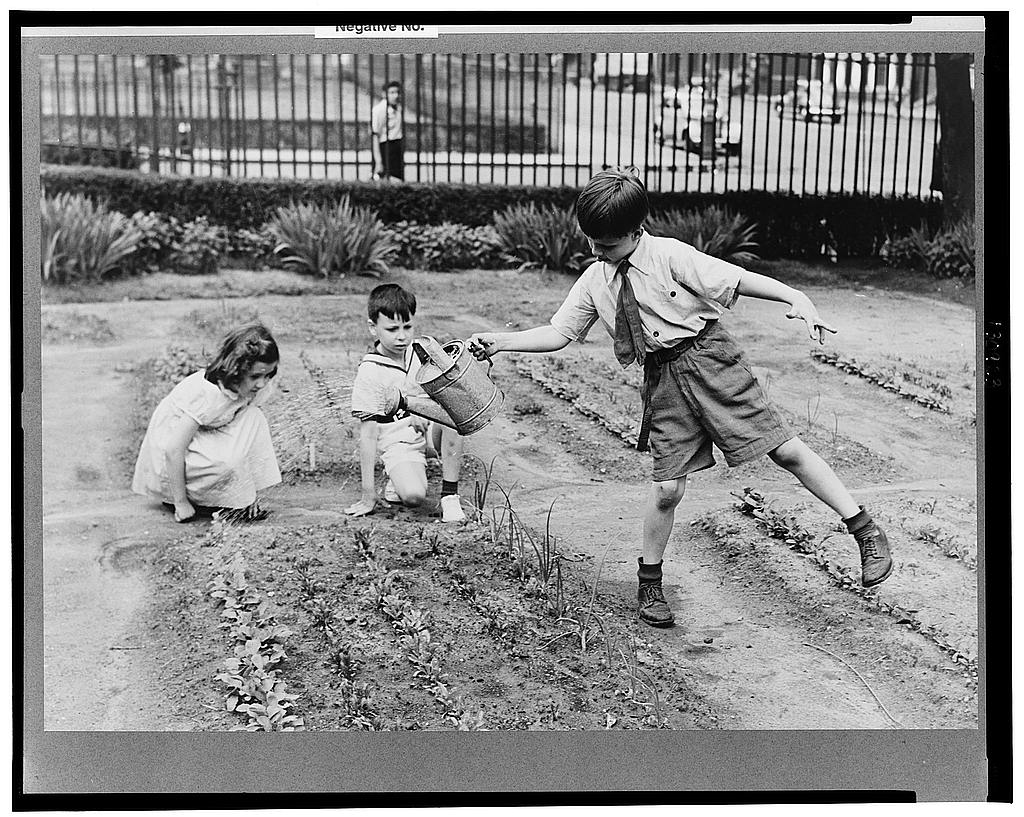
June 1944 “Children’s school victory gardens on First Avenue between Thirty-fifth and Thirty-sixth Streets” Photographer Edward Meyer
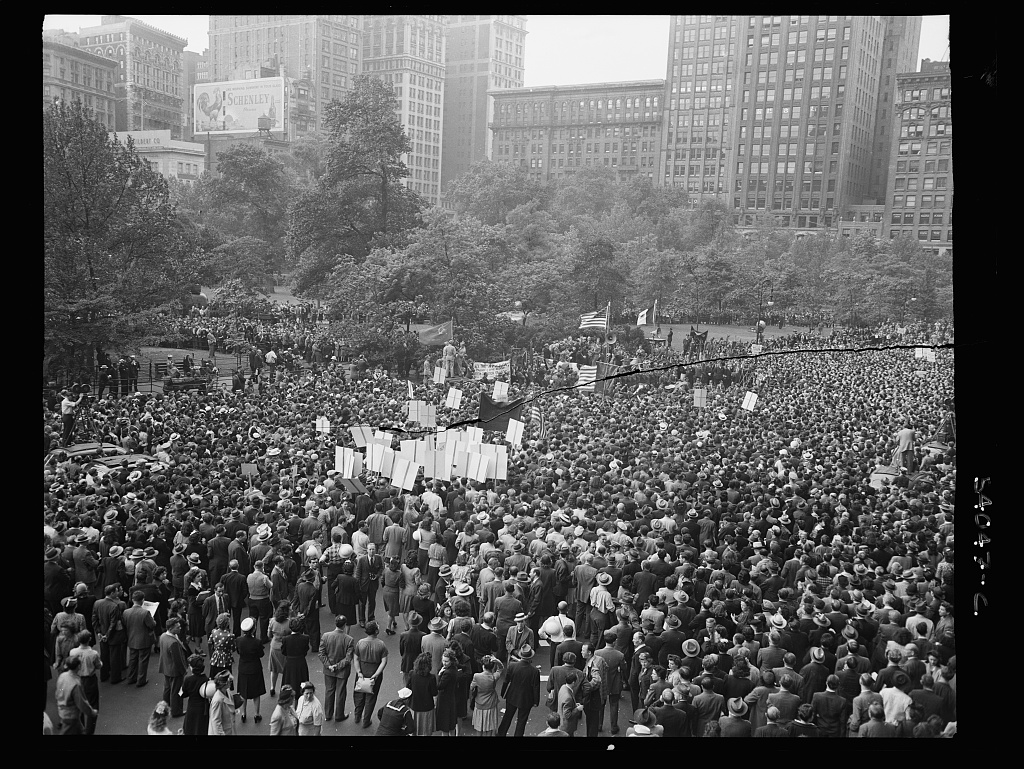
June 1944 “A crowd on D-Day in Madison Square” Photographer unknown
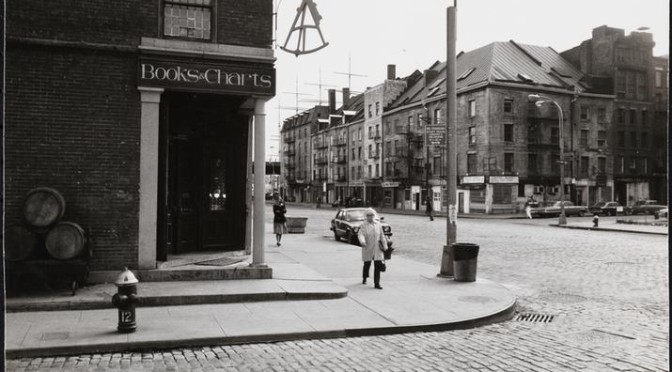
![[Fulton and Water Streets.]](https://www.boweryboyshistory.com/wp-content/uploads/2014/04/MN112997-300x231.jpg)
![[Trompe l'oeil concealing a Con Ed substation at 237-257 Front Street, and the Jasper Ward house, 45 Peck Slip.]](https://www.boweryboyshistory.com/wp-content/uploads/2014/04/MN113001-300x243.jpg)