The Bowery Boys Obsessive Guides look very, very closely at a classic movie filmed in New York City, finding buried history, additional context and a few secrets within various scenes and plot points. Filled with film spoilers so read this after you’ve seen the movie — or use it to follow along as you watch it! Check out my previous guides for Midnight Cowboy, Ghostbusters and The Muppets Take Manhattan.
“Oh, Christmas isn’t just a day, it’s a frame of mind… and that’s what’s been changing. That’s why I’m glad I’m here, maybe I can do something about it.”
— Kris Kringle (Edmund Gwynn)
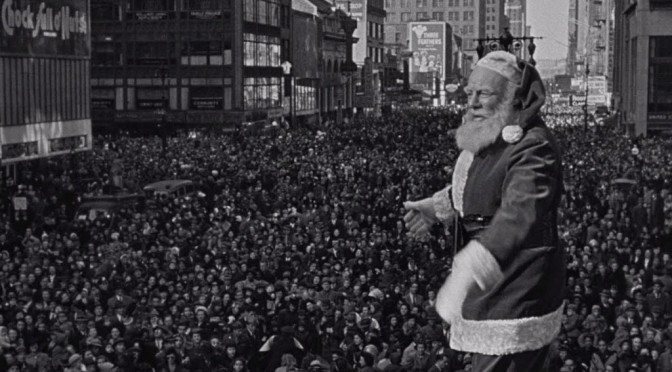
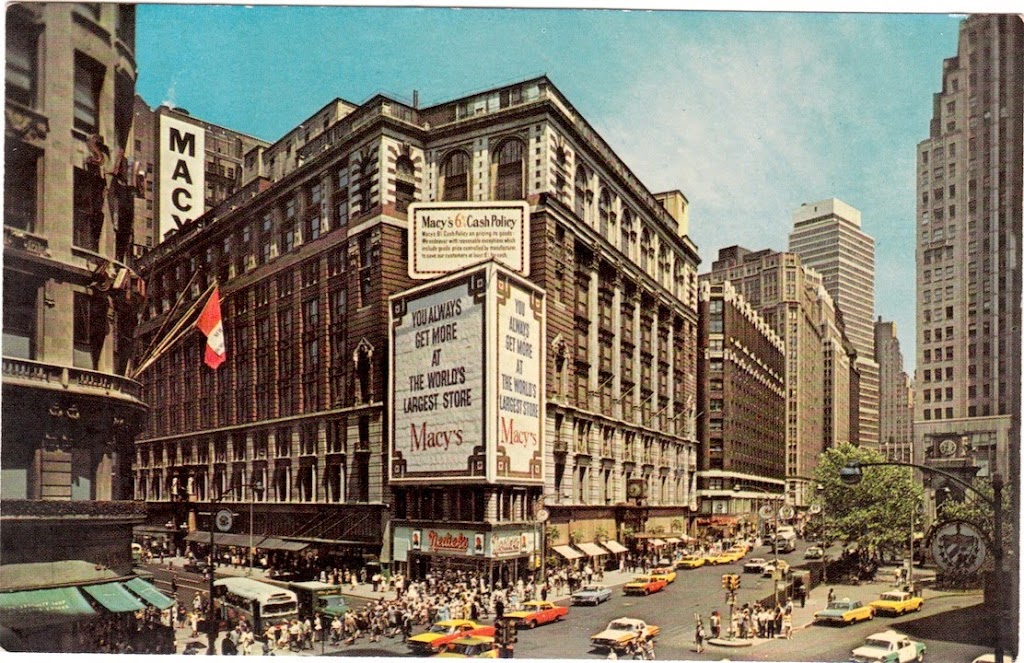
Miracle on 34th Street is the most famous New York City Christmas movie ever made, a celebration of post-war prosperity that happily substitutes Herald Square for the North Pole.
The movie is a complete inventory of the commercial Christmas experience. It treats the Macy’s Thanksgiving Day Parade like a starting gate — Thanksgiving? What’s that? — and, like many Americans, spends much of its entire running time in department stores.
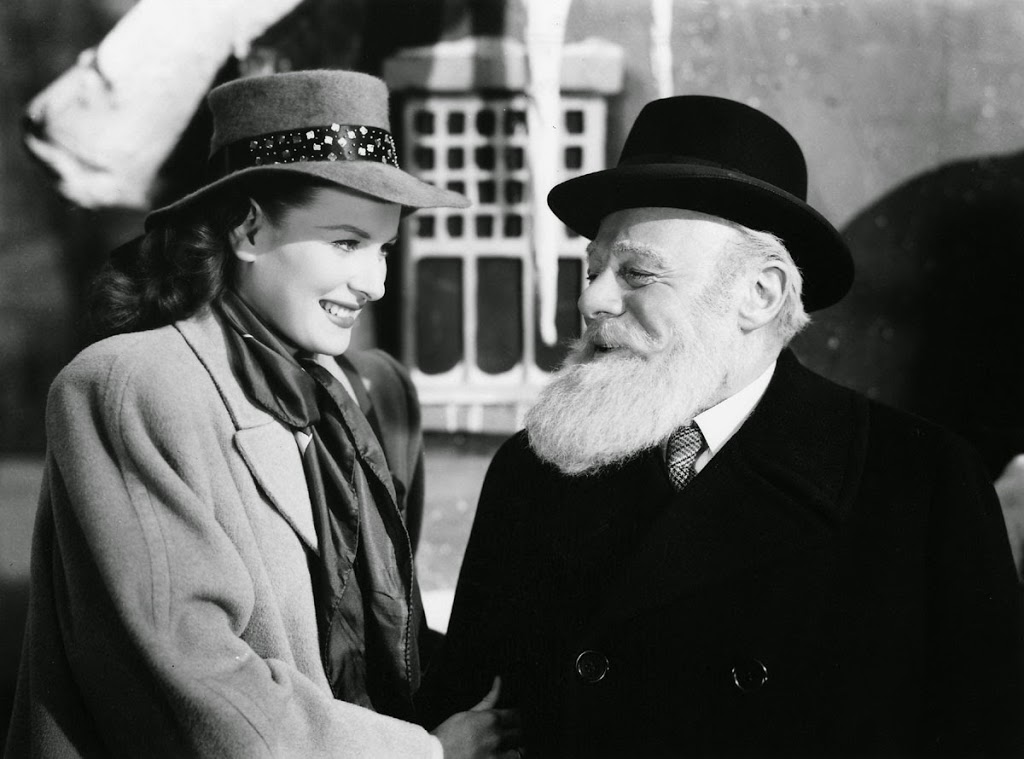
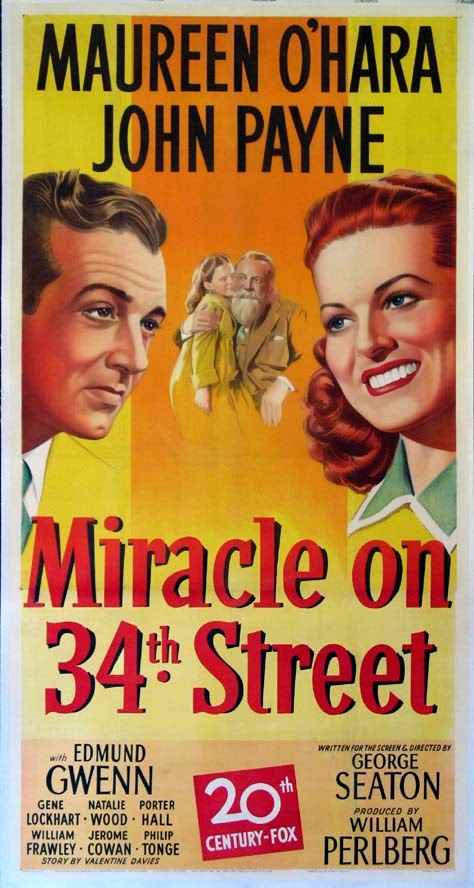
The central question posed by this 1947 classic is whether Macy’s newly hired Santa Claus (played by Edmund Gwenn) is actually the Santa Claus or just some crazy person. At stake is not only the entire world’s celebration of Christmas, but the heart of young Susan (played by Natalie Wood) who never believed in Santa, thanks to her mother Doris (Maureen O’Hara).
Manhattan is perpetually bustling, from the Upper West Side down to Foley Square. Despite its reputation as a saccharine sweet take on the materialistic component of the holiday, the film is really quite cynical, even dark, at times. Throwing an old man into the Bellevue Hospital psychiatric ward in the 1940s is hardly what I call a warm and fuzzy image.
I recently dug deep into the film and found a great many fascinating details, many involving people and places that lived in New York City at that time. Here’s my obsessive guide to what normally stuffy critic Bosley Crowther originally called “the freshest little picture in a long time and maybe even the best comedy of the year.”
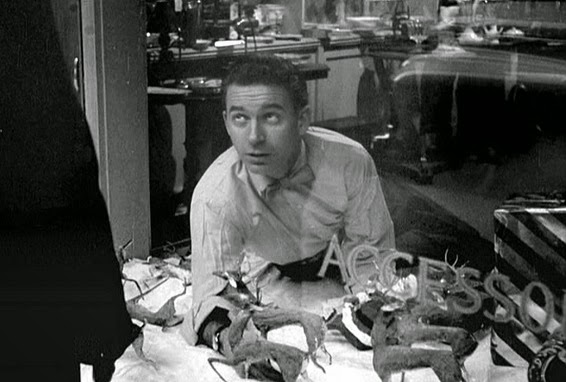
1) Arranging Reindeer The film opens with Kris Kringle walking south down Madison Avenue. Get it? He’s Santa. He’s from the north! Along the way he passes several long-vanished New York businesses — Rosenberg & Grief furrier, Janice Carol salon, Liszt jeweler (or possibly pawn shop?)
He stops to chastise a store clerk on 19 East 61st Street about the placement of reindeer in the shop windows. That shop belonged to the interior designer Lillian Schary Waldman, often employed by high society and responsible for the homes of a few celebrities including Danny Kaye.
By the way, you’ll notice there’s no Rudolph in the Christmas display. The red nosed reindeer was created in 1939, within a coloring book produced by Montgomery Ward (at right), but not popularly considered part of Santa’s team until the 1964 Rankin-Bass animated special. (EDIT: Thanks to the commenter for reminding me of Rudolph’s real coming out –the song “Rudolph the Red-Nosed Reindeer,” recorded by Gene Autry and Bing Crosby in successive years.)
2) Old Newsprint The film occasionally uses the technique of turning newspaper pages as a way of setting the scene. Notice the first time this is used, before the parade. The prop designer constructed a phony newspaper but used real news articles from the New York Times. Here’s the catch — most of the stories are well over a decade old! Some examples: “NEW FRENCH CABINET UPHELD BY DEPUTIES” – Dec 23, 1932, “OUR SPEED PRAISED IN CHILD LABOR BAN” – July 20, 1933, and “EARTHS FORCES LAID TO COSMIC IMPULSE” – July 24, 1933
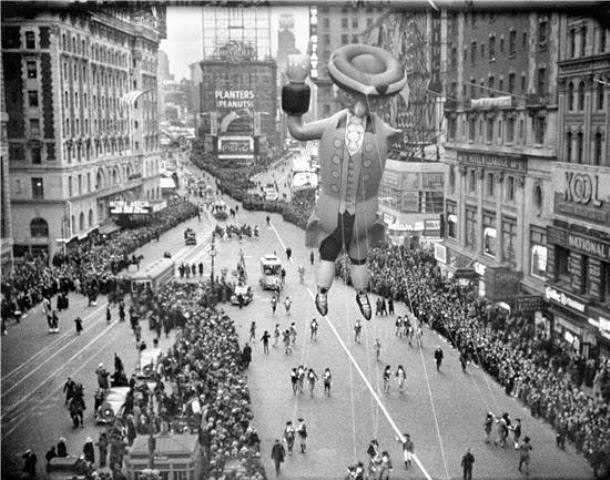
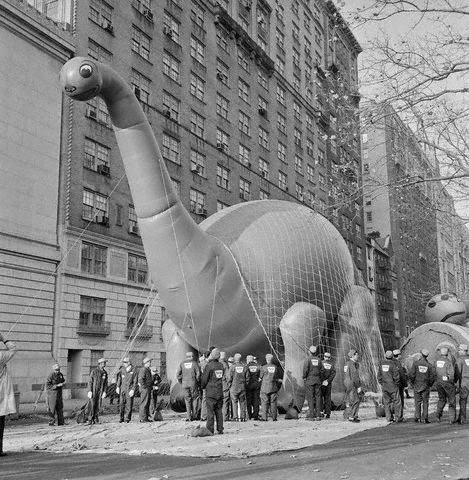
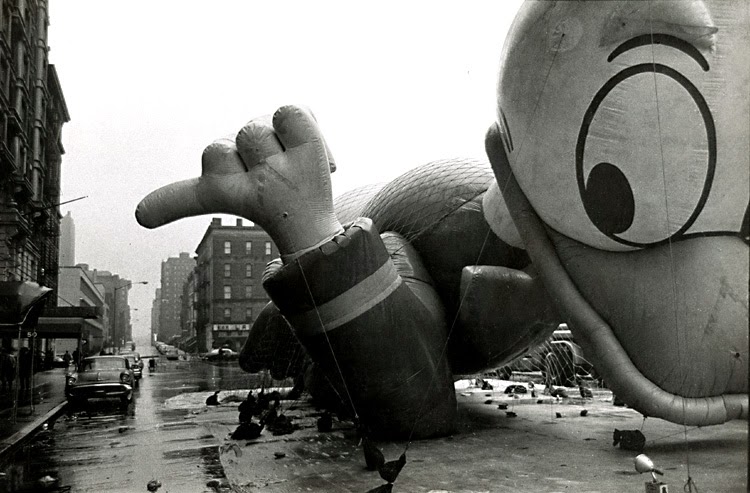
The curious Deitrich Knickerbocker balloon from the 1936 parade. (Courtesy Smithsonian)
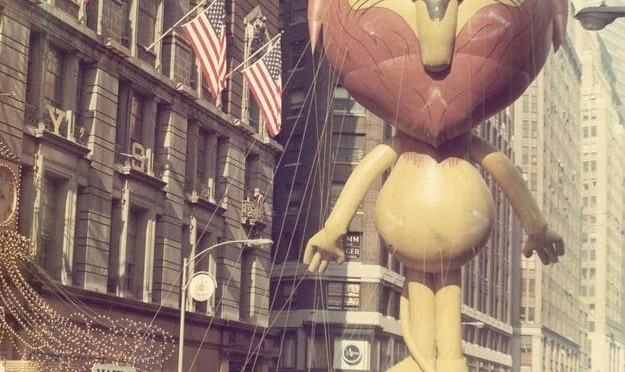
3) The Real Parade Santa Claus has appeared in the Macy’s Thanksgiving Day Parade since the very first parade in 1924. One detail that did not quite make it into the modern era — knights in shining armor. Santa arrived in Herald Square “in state. The float upon which he rode was in the form of a sled driven by reindeer over a mountain of ice. Preceding him were men dressed like the knights of old, their spears shining in the sunlight.” [source]
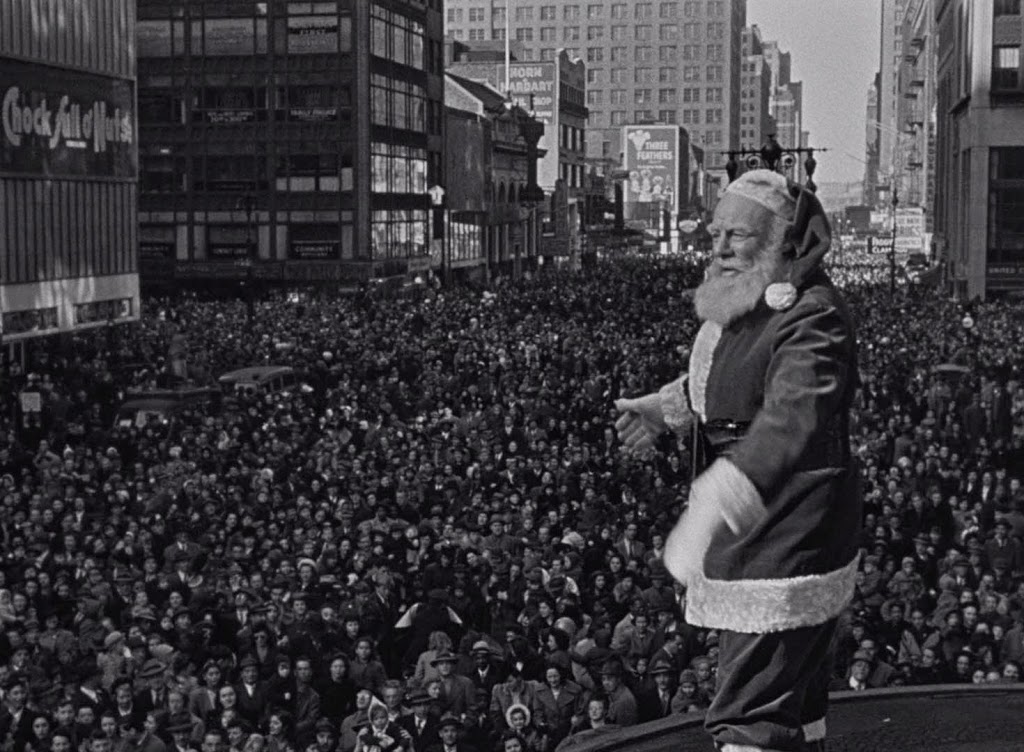
The scenes of the Thanksgiving Day parade in Miracle are real, taken from the 1946 parade. This mixing of live events and fictional set pieces (filmed in Hollywood) was rather unusual for the day. “Scenes shot in actual New York settings add credibility to the film,” said Crowther. Gwenn was even the parade’s real Santa! “A somewhat frostbitten Santa Claus, in the person of Edmund Gwenn, the actor, gingerly climbed off his high perch and unveiled Macy’s mechanical windows….” [source]
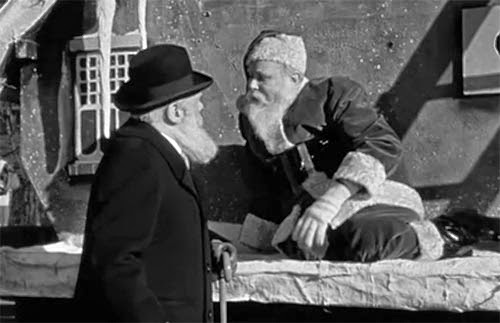
4) Bad Santas “These pants are gonna fall off in the midst of Columbus Circle,” said the unfortunately inebriated Santa, who is relieved of his duties and replaced by Gwenn’s Santa. Several decades before Santacon, newspapers would occasionally make note of a Santa who would come to work “with liquor on his breath.” It seems there were all sorts of lecherous Santas! In 1948, the year after Miracle, the New York Times Magazine notes a Santa who “grabbed a trim young mother, set her on his knee and suggested that they both go out and have a drink.”
5) Behind The Beard Edmund Gwenn, the film’s jovial Kris Kringle, went on to win the Academy Award for Best Supporting Actor. (Unfortunately, he beat Richard Widmark‘s work in the film Kiss of Death, widely considered to be one of the greatest film noir performances.)
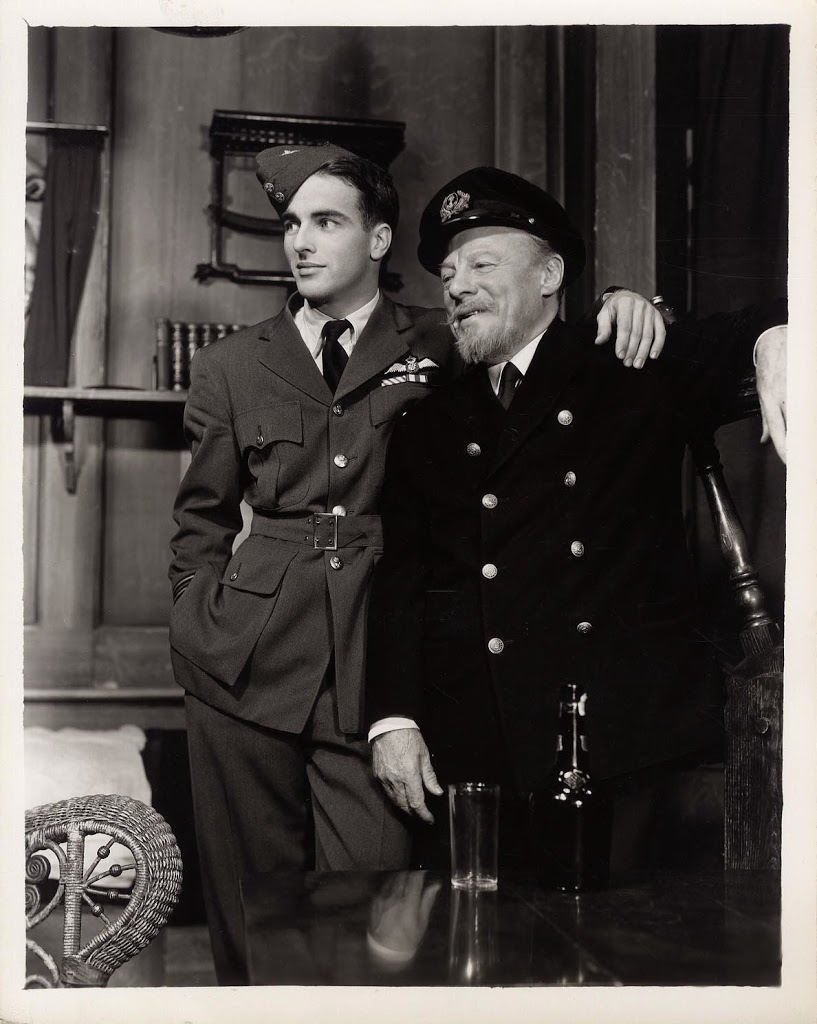
Although he had made dozens of films, the British actor was known for his work on the stage. In fact, right before starting work on Miracle, he gave what would be his last performance on the New York stage — the play You Touched Me with upcoming young star Montgomery Clift.
Above: Clift and Gwenn from their Broadway production of You Touched Me (Courtesy WalterFilm)
6) D-I-V-O-R-C-E Â Miracle is unique in that its heroine is a divorced woman, but she’s badly treated by the film’s screenplay. Note the look of shock on the face of Fred Galley (John Payne) when little Susan casually mentions that her mother and father are divorced.
After World War II, divorce rates skyrocketed in America as servicemen returned from war to changed domestic situations. Divorces were only “fault-based” at the time; “typical grounds were adultery, desertion, habitual drunkenness, conviction of a felony, impotence … and, most used by divorcing parties, ‘cruel and inhuman treatment’.” [source]
The film makes some unsubtle commentary — Doris (which even sounds like divorce) is depicted as a cold, cynical woman, lacking little joy. I mean, she’s the director of the Macy’s Thanksgiving Day Parade and she doesn’t even bother to stay and watch it?
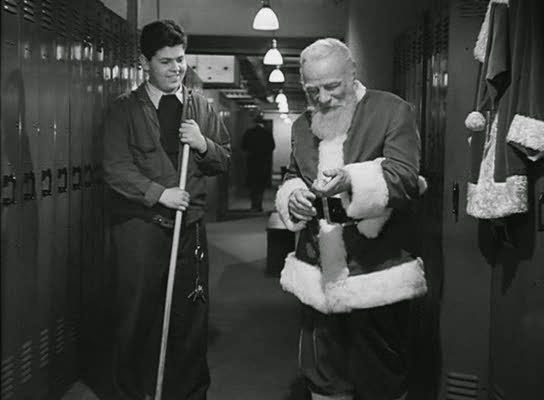
7) Locker Room Talk We’re granted many scenes of Macy’s work spaces that customers don’t get to see, such as the locker room, where Kringle meets Alfred, the sometimes store Santa “with extra padding” and a thick Brooklyn accent — “just troo ’em on the floor!”
Macy’s was actually once renown for its locker room! From a report in 1913: “At Macy’s there are vast locker rooms containing expanded individual metal lockers for the majority of the employees and some smaller ones for certain groups. Never are two required to use one locker, except during Christmas rush. This is an exceedingly liberal policy, considering the size of the establishment, and a most desirable one.”
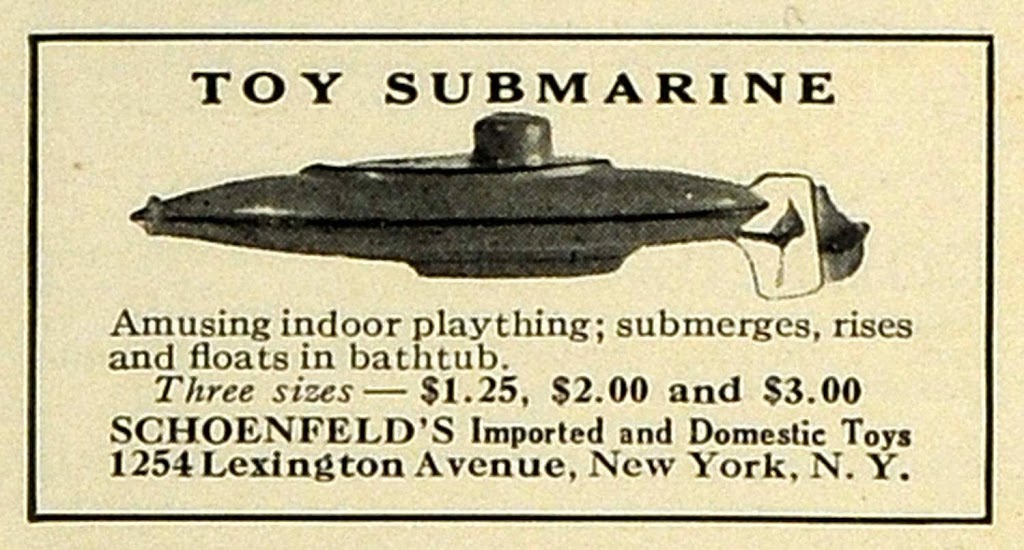
8)Â Toy Stores We get to the crux of the tale when Kringle, now hired as Macy’s Santa, begins sending customers to other department stores in the city. Most notably he sends a thankful mother (played by Thelma Ritter, in her debut film role) to Macy’s big rival Gimbels and another to a toy store called Schoenfeld’s, in Yorkville, at 1254 Lexington Avenue.
Here’s an ad for a toy submarine that was sold at Schoenfeld’s in 1927.
9) Cutthroat Business Macy’s and Gimbel’s were the two biggest department stores in Herald Square and one of New York’s best known rivalries. “Would Macy’s tell Gimbels?” was a popular expression of the time, expressing the fierce secrecy in sales and marketing practices. In Miracle, after Macy’s embraces Kringle’s policy of recommending items for sale at other stores, Gimbals tries to one-up their rival by adhering to the same policy and spread it to their stores across the country.
According to Gimbels lore, the company chairman Bernard Gimbel was asked to take the role of Kringle in Miracle. (I personally find this very hard to believe.) Such a request would not have been made of Macy’s founder Rowland Hussey Macy as he had died almost 70 years before.
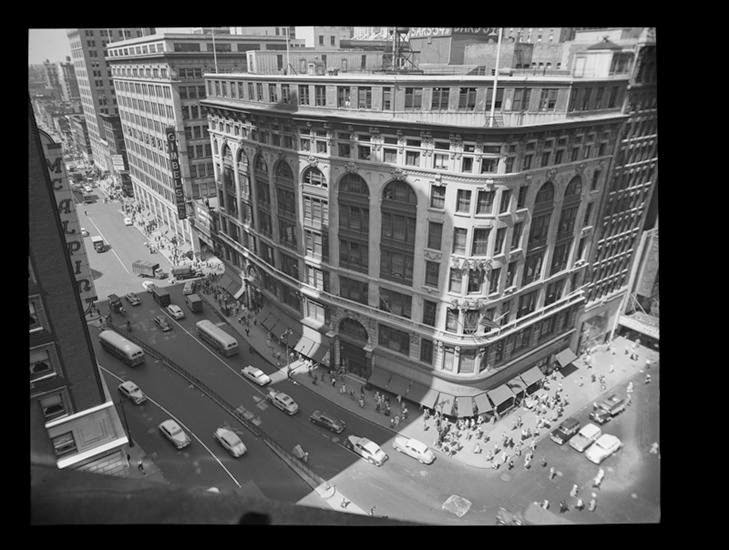
Below: Gimbels Department Store in Harold Square, taken in 1915, from the vantage of the Marbridge Building (Photo by the Wurts Brothers, courtesy Museum of City of New York)
10) Home Away From Home When not at the North Pole, Kris Kringle resides at Brooks Memorial Home for the Aged at 126 Maplewood Dr, Great Neck, Long Island. That’s a real address although you won’t find the grand exterior that was used in the film. Why would they put Kringle in a nursing home in Great Neck? Perhaps it was a literary illusion to another great New York City fictional tale — Great Neck is called West Egg in The Great Gatsby, written only twenty-two years previous.
11) Santa Gets It Wrong Kringle is taken in for a psychological evaluation to prove his competence. He’s fully prepared, of course, seeing as he’s frequently accused of being crazy.
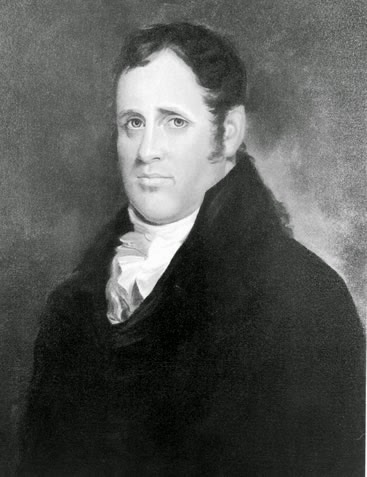
He rattles off a list of questions that might be thrown his direction during the mental examination. The trickiest? “Who was the vice president under John Quincy Adams? Daniel D Tompkins. And I’ll bet your Mr Sawyer doesn’t know that!”
Tompkins was a great many things in his day. Today he’s the namesake of Tompkins Square Park and Tompkinsville, Staten Island. But one thing he was not — he was never vice president under John Quincy Adams. That was John C. Calhoun. Tompkins served under President James Monroe.
So what accounts for this obvious error? Is it a true gaffe or an insight into Kringle’s character? Maybe he was crazy! Or just in need of an encyclopedia.
By the way, the psychiatrist Sawyer is taking his examination cues from a 1946 book called Mastering Your Nerves: How To Relax Through Action.
12) Working Delusion The handsome Doctor Pierce from the Brooks Memorial Home is sure the old man is suffering from a deeply held delusion. But so what?
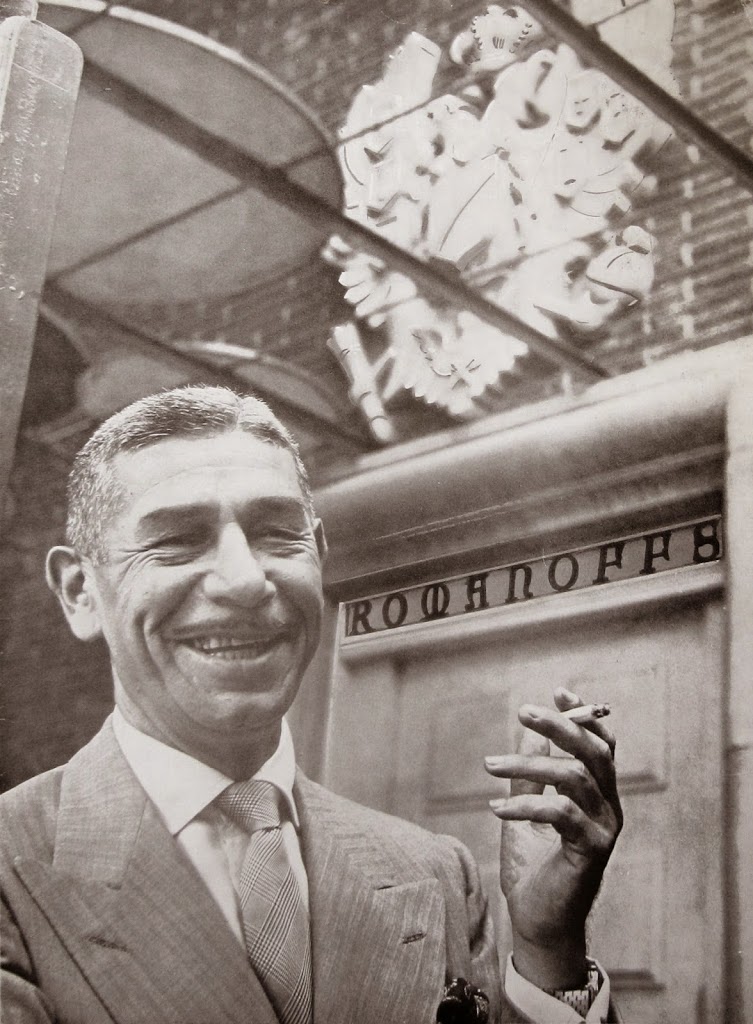
“Why there are thousands of people walking around with similar delusions, living perfectly normal lives in every other respect. A famous example is that fellow — I cant think of his name — but for years he’s insisted he’s a Russian prince. He owns a famous restaurant in Hollywood and is a highly respected citizen.”
Pierce is referencing an actual person named Michael Romanoff (at right), a noted ‘professional imposter’, who once walked the streets of New York City claiming he was Prince Michael Dimitri Alexandrovich Obolensky-Romanoff, nephew of Tsar Nicholas II.
In 1941 he opened the restaurant Romanoff’s in Los Angeles on North Rodeo Drive, enjoying newly found success in a town noted for its impostors. The famous photograph of Sophia Loren and Jayne Mansfield is taken at Romanoff’s.
13) Martini Time! In a delightfully throw-away scene, Shellhammer, the head of Macy’s toy department, tries to convince his wife to let Kringle stay at their home. In order to get her to agree, he gets her wasted on martinis. “We always have martinis before dinner. I’ll make them double-strength tonight.”
We have Prohibition to thank for martini hour in many American homes. Driving alcohol consumption into private dwellings, the cocktail hour was firmly entrenched by the 1930s. It was properly solidified by the world’s most famous martini drinker after James Bond — Franklin Delano Roosevelt. “Before dinner we usually had martini cocktails made by the President’s own hands,” said one cabinet member. Many remembered that Roosevelt made very, very bad martinis, preferring to enhance them with a few drops of absinthe.
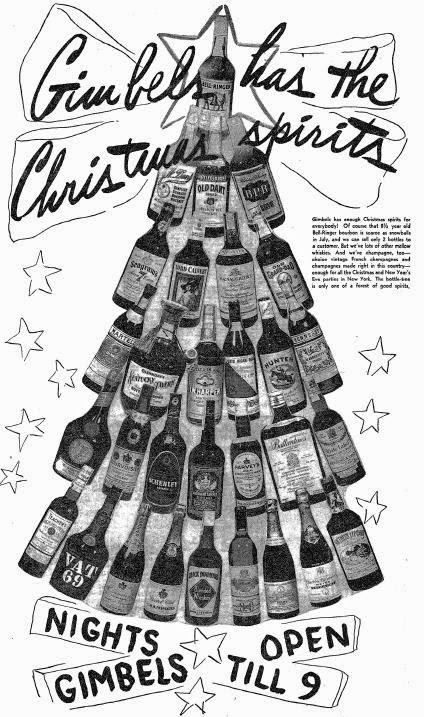
At right: A festive Gimbels ad which ran in the New York Times in 1946
14) Advertising Blitz Macy’s fully embraces the altruistic policy of directing shoppers to other stores if they are looking for an item that is not stocked. In a montage, we get to see some of the other department stores benefiting from Macy’s new rules — Bloomingdales, Hearn’s, Gimbels, Stern’s and McCreery’s.
These stores were situated very close to one another during the 1940s and had followed each other up the island of Manhattan, beginning their existence in lower Manhattan, then moving to Ladies Mile in the late 19th century, then to Midtown by the new century. For instance, Hearn’s went from Broadway and 8th Street, then to 14th Street between Fifth and Sixth Avenue (very near Macy’s old home).
McCreery’s made its Ladies Mile home at Sixth Avenue and 23rd Street. Today it’s occupied by another building with a Best Buy on the bottom floor. It later moved to 34th Street and Fifth Avenue.
For more information about the department store scene, check out our podcast on Ladies Mile.
15) Vintage Lunch We see Alfred and Kris Kringle in another space for Macy’s employee’s — the cafeteria. This was obviously filmed on location as evidenced by this picture of the cafeteria from 1948 (photo by Nina Leen):
16) The Nut House Kris Kringle purposefully fails a mental exam — heartbroken by what he believes is a betrayal by Doris — and gets thrown into Bellevue Hospital for a few days. Kringle is seen in a relatively safe environment although the hospital’s reputation was less than rosy during this period. This is the era of shock therapy and other controversial treatments. In one experiment at Bellevue from the mid-1940s, almost one hundred children with diagnosed schizophrenia were given shock treatments six days a week.
Bellevue was also famous during this period for its alcohol rehabilitation center. In 1945, the film The Lost Weekend detailed one alcoholic’s “staggering ugly treatment” here.
17) Kooky Headlines In another swirl of headlines, we’re alerted to Kringle’s upcoming court trial to determine his true status. Among the many headlines we see is one that makes a total assault upon the English language — KRIS KRINGLE KRAZY? KOURT KASE KOMNG “KALAMITY” KRY KIDDIES
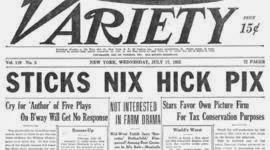 This is a gag directed squarely at Daily Variety, who specialized in absurdist headlines as early as the 1930s. In 1935 they went with the mind-boggling STICKS NIX HICK PIX, a headline later made famous in the 1942 film Yankee Doodle Dandy.
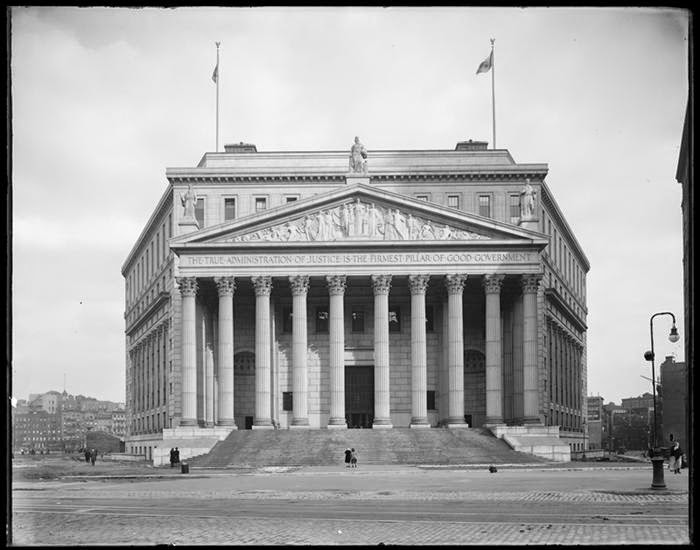
18) Historical Spot The climax of the film arrives at a peculiar place — Foley Square and the New York County Courthouse, one of the pillars of this civic district. The building was a little over 20 years old at the time of this film, and it looks pretty much the same as it does today. Along the top of the structure you can make out a carving of a 1789 quotation by George Washington — “The True Administration of Justice is the Firmest Pillar of Good Government.”
This building sets near the infamous intersection of Five Points and almost exactly on the spot were old Collect Pond once sat!
Below: New York County Courthouse, where Kringle’s fate is decided. (Photo from 1927, Wurts Brothers, courtesy Museum of the City of New York)
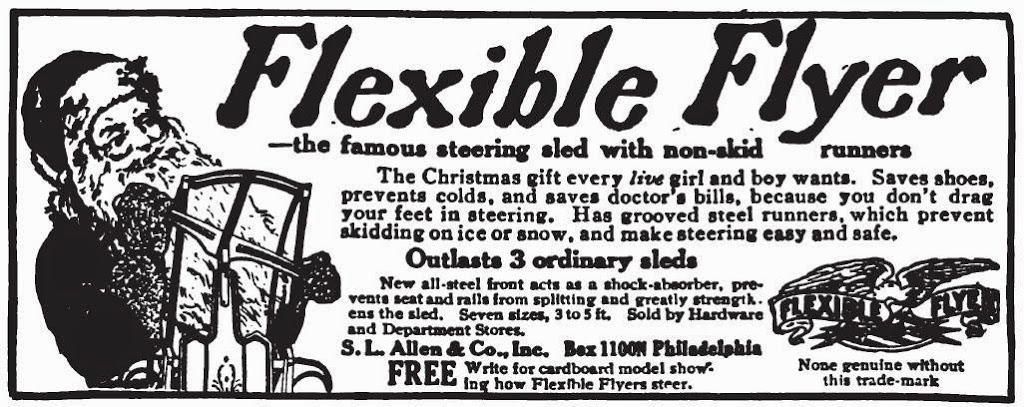
19) Kids Court In an effort to prove the existence of Santa Claus, the son of the prosecutor is called to the stand. His name is Tom Marrah (you know, because he’s the future — tomorrow) and he is questioned about his beliefs on Old Saint Nick. “He gave me a brand-new flexible flyer sled last year,” he proclaims, then proceeds to point out Kringle from the stand.
The scene is an amusing twist on the great tale of “Yes Virginia there is a Santa Claus,” the famous confirmation of Santa’s existence that was published in the New York Sun fifty years earlier. The Virginia in question was also the child of a city employee — the coroner’s assistant — whose letter was answered by Sun editor Francis Pharcellus Church. In the case of Miracle, it is a more assured child that confirms his identity. Judge Henry X Harper — a Democrat, we learn — affirms Kringle’s existence to curry favor from the electorate.
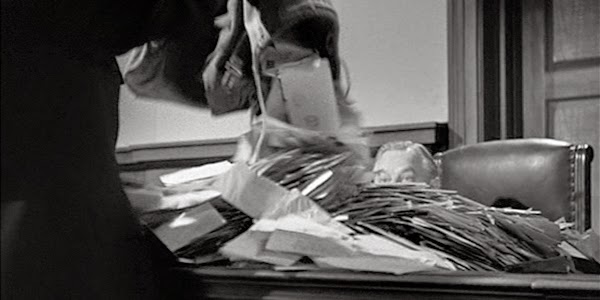
20) Dear Santa The final proof arrives, deus ex machina style, in the form of thousands of letters, re-routed from New York’s mail processing center to Foley Square. Kringle’s lawyer Galley then proceeds to regale the hall with a brief history of the U.S. post office. Galley informs the judge that the mail service was created in 1776 — technically it was 1775 — by the Second Continental Congress. Benjamin Franklin was indeed the first postmaster general.
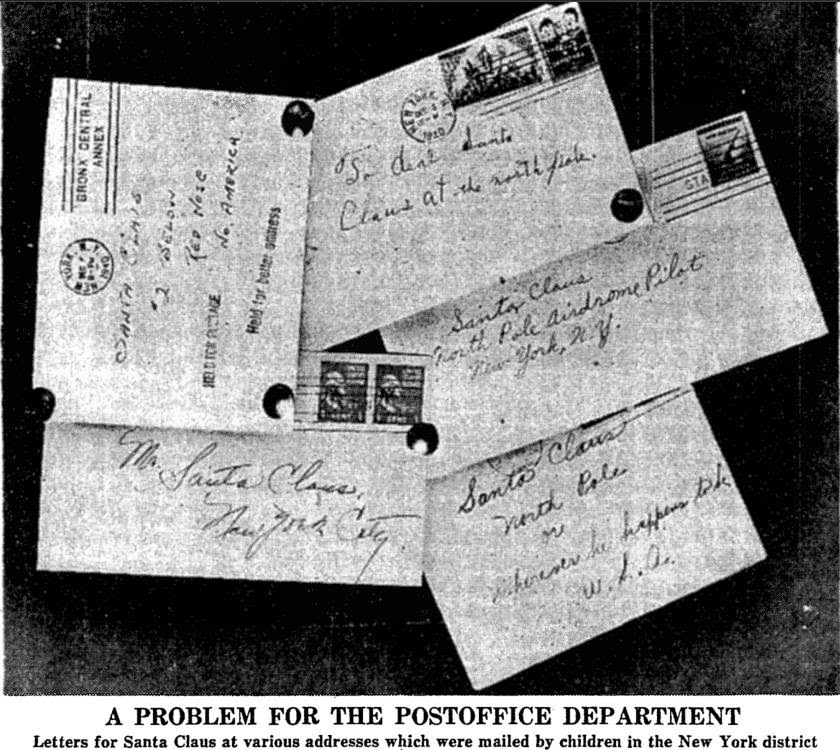
So how many letters does Santa really get a year? In 2013 — even in the era of emails — there were over one million letters from American children alone. [source] Back in 1940, the postmaster’s office was inundated with correspondence. Letters address to Santa were “opened and read so that ‘the real worthy ones’ can be set aside from those which were childish requests.” Because how dare a child ask Santa a childish request.
The film may have played a hand into an increase of Dear Santa letters in 1947 — “up 25% over 1946,” according to reports.
From the 1940s article:
21) Christmas In June Miracle on 34th Street may be set during Christmastime, but it was originally released in the late spring, June 2, 1947. The film made its New York debut at
the Roxy Theatre in a program that also featured comedian Jerry Lester, singer Art Lund, a puppet show and “the Gae Foster Roxyettes,” which replaced the original Roxyettes after they moved to Radio City Music Hall.
As part of the promotion for the film, Macy’s sent an undercover shopper into Gimbel’s to report for Macy’s-owned radio station WOR. It’s doubtful that either department store took Santa’s advice and recommended visiting their competitor.