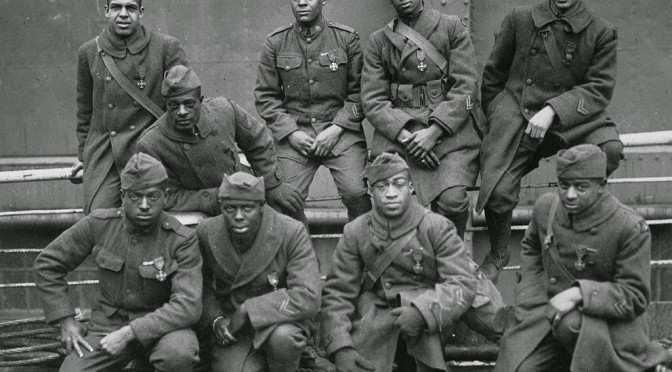

The men of the 369th who were awarded France’s Criox de Guerre for distinguished acts of heroism: Â Pvt. Ed Williams, Herbert Taylor, Pvt. Leon Fraitor, Pvt. Ralph Hawkins. Back Row: Sgt. H. D. Prinas, Sgt. Dan Strorms, Pvt. Joe Williams, Pvt. Alfred Hanley, and Cpl. T. W. Taylor
New York’s 369th Infantry Regiment was America’s first African-American regiment engaged in World War I. Â While many white American soldiers would have been happy to serve next to trained regiments of any color, intense racial prejudice in the United States forced many who signed up to fight for their country to instead be assigned to the French army.

Nicknamed the Harlem Hellfighters, the regiment served alongside the French during the summer and fall of 1918.  Perhaps the most famous soldier of the 369th was Private Henry Lincoln Johnson (at right) whose deadly efficiency on the battlefield earned him the grim nickname Black Death.  He became the first of dozens from the 369th to receive the prestigious Criox de Guerre, the equivalent of the American Medal of Honor.
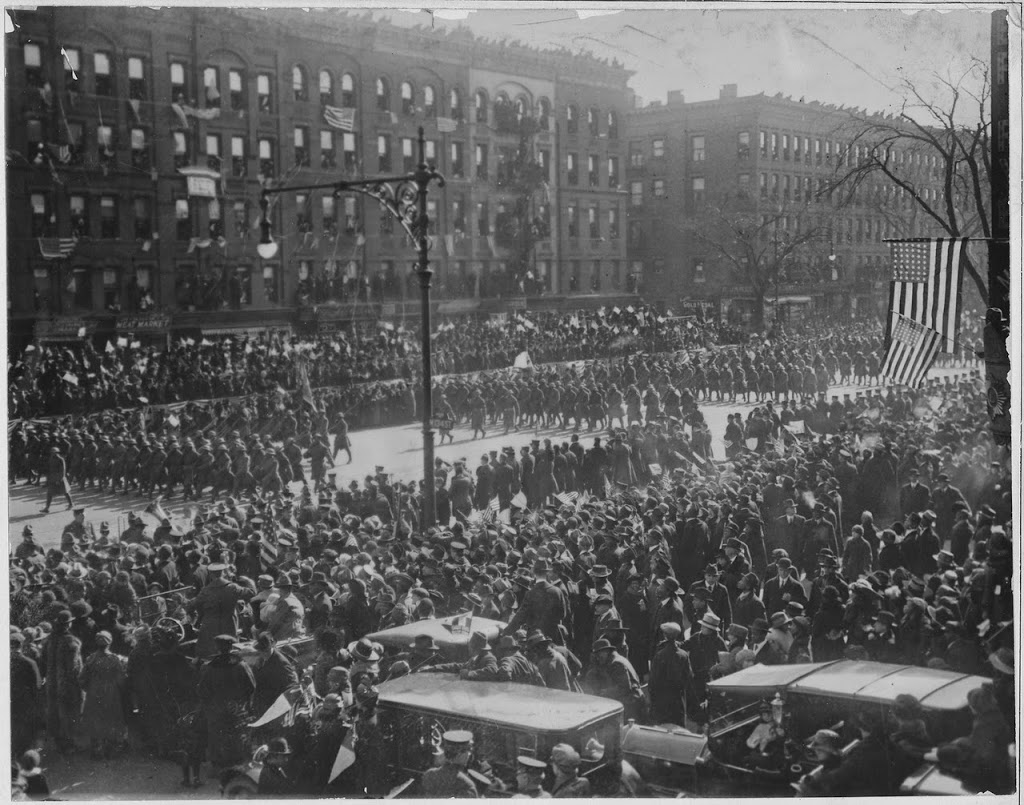
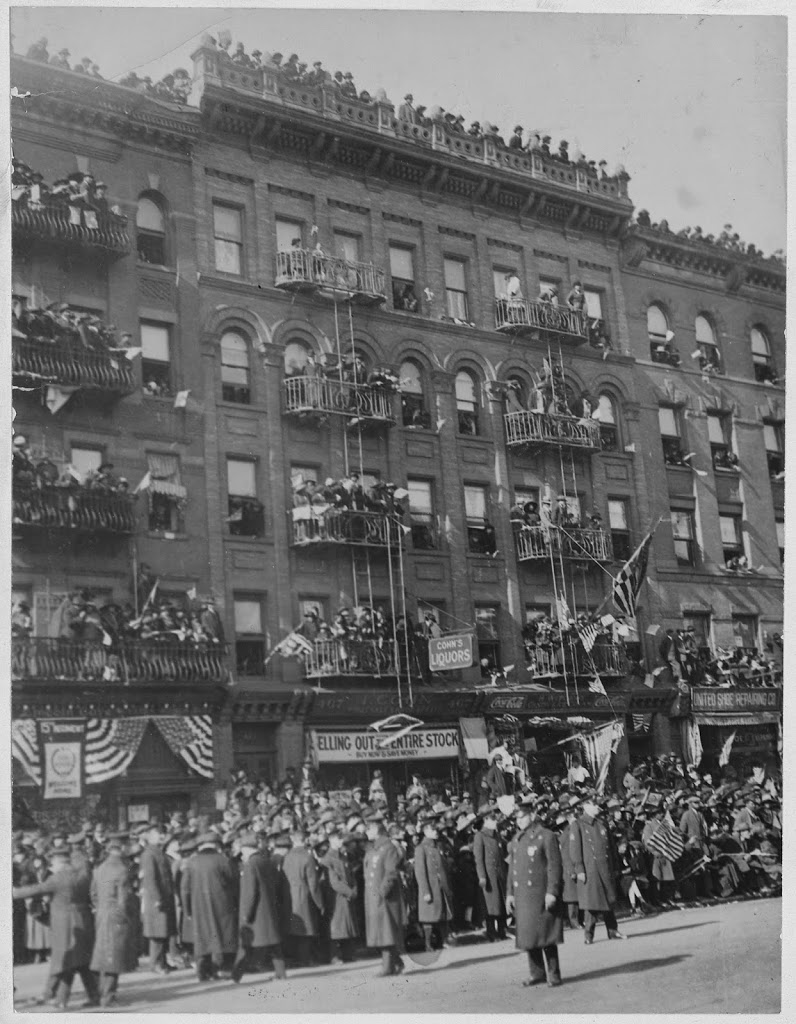
They returned to New York in February 1919 and marched through the streets of Manhattan on February 17 — from Greenwich Village to Harlem, in triumph.
From the New York Times the following day:
“New York’s negro soldiers, bringing with them from France one of the bravest records achieved by any organization in the war, marched amidst waving flags and cheering crowds yesterday from Twenty-third Street and Fifth Avenue to 145th Street and Lenox Avenue.”
“At Thirty-Fourth Street the men marched under a shower of cigarettes and candy, and such tokens were pitched at them at other points in the line, but the files did not waver for an instant.”
The men of the 369th photographed as they arrive back in New York City, 1919
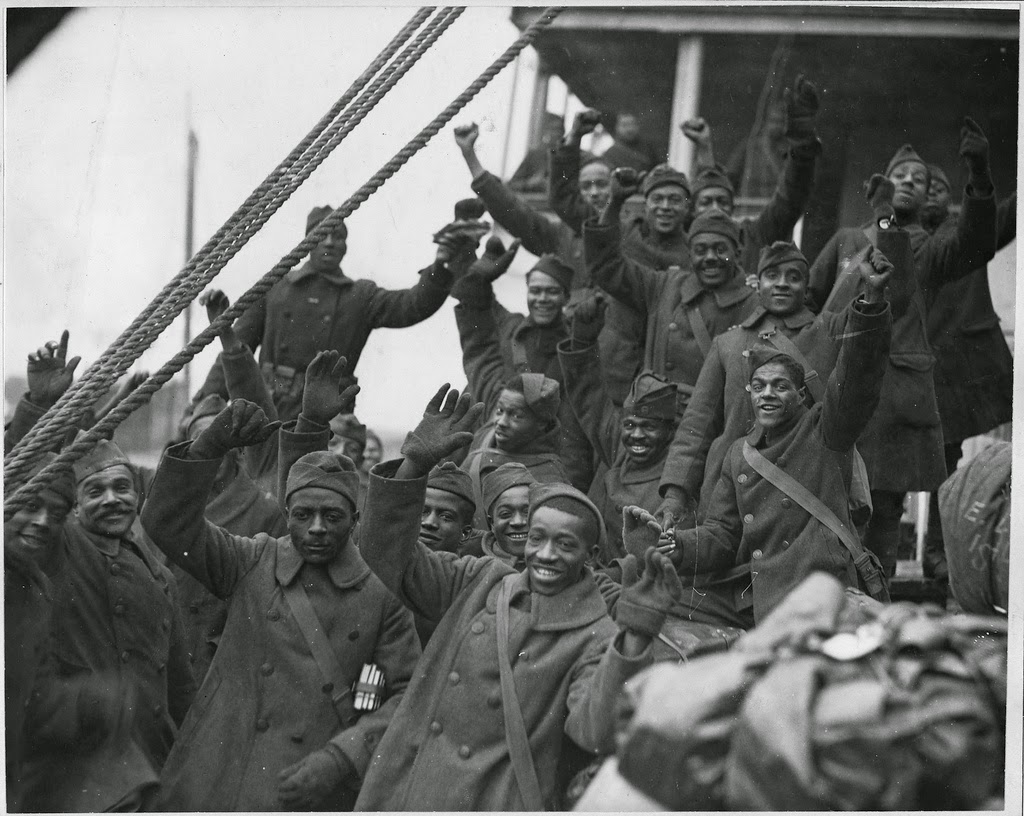
From original caption (courtesy US National Archies): Â “[The] 369th New York City Infantry (old 15th) [African American] troops and some of the 370th Infantry, Illinois [African American] troops, one of the most decorated regiments in the United States Army return to New York City. They saw [the] longest service of any American regiment as part of a foreign army, and had less training than any before going into action. They were never in an American division or brigade always being with the French.”

The 369th marching up Fifth Avenue.
The men are shown here in this assortment of newsreel footage from the war:
Pictures from the U.S. National Archives