Categories
Health and Living

Hot as Hell: Surviving the deadly heat wave of July 1911

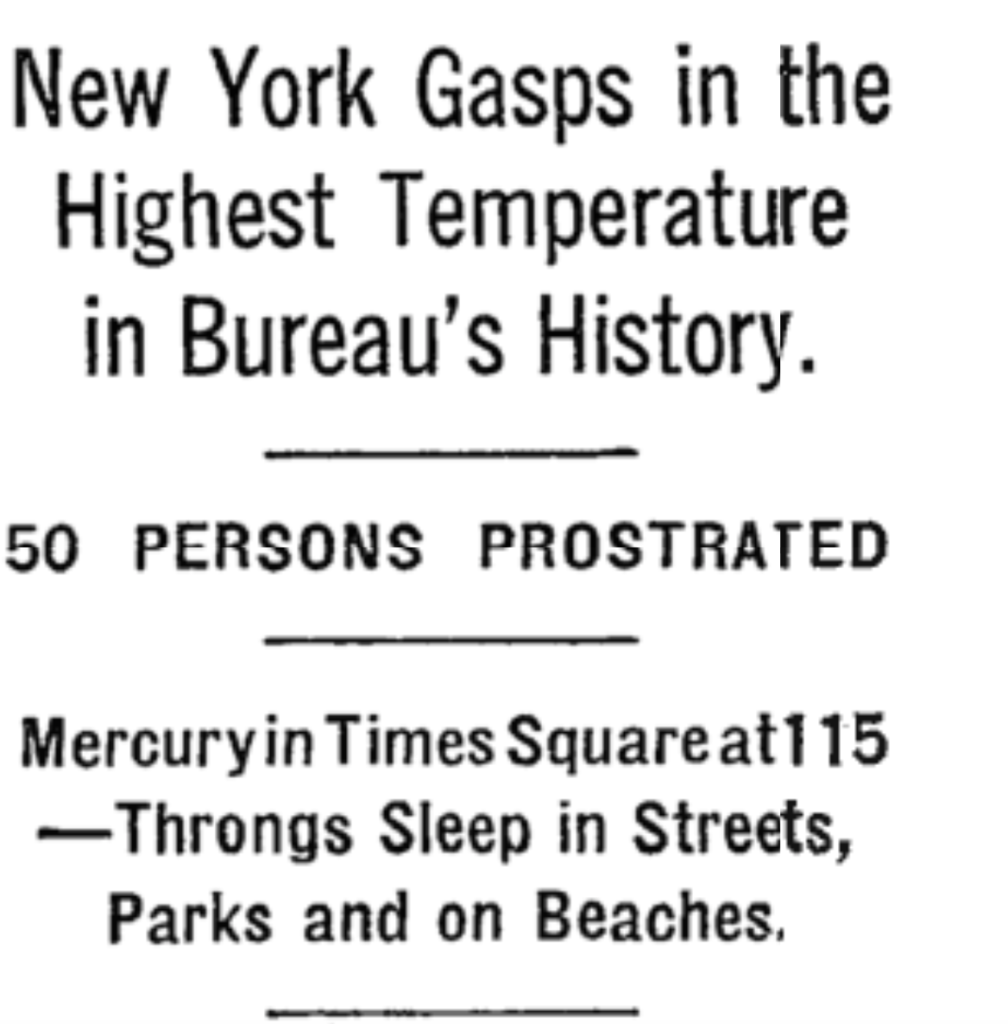
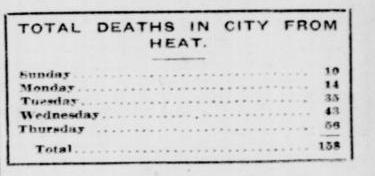
The New York Tribune of July 7, 1911, says it all: “Heat’s Scythe Mows Down 56 On Fifth Day.”

The city was in the midst of a devastating heatwave gripping in the entire Northeast during the first two weeks of July 1911. There was little escape from the scorching temperatures among the cramped tenements. New York’s beaches offered some respite, but you had to cram into a sweltering train cabin to get there. Rudimentary air conditioning had only been invented a few years before and was hardly widespread.

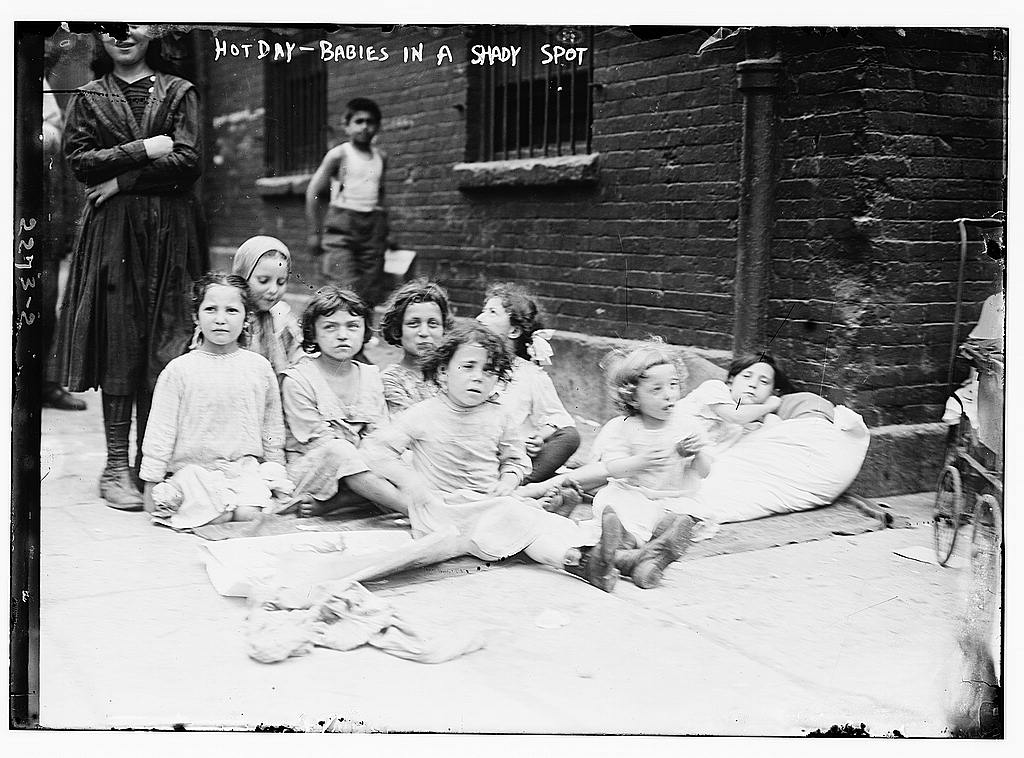
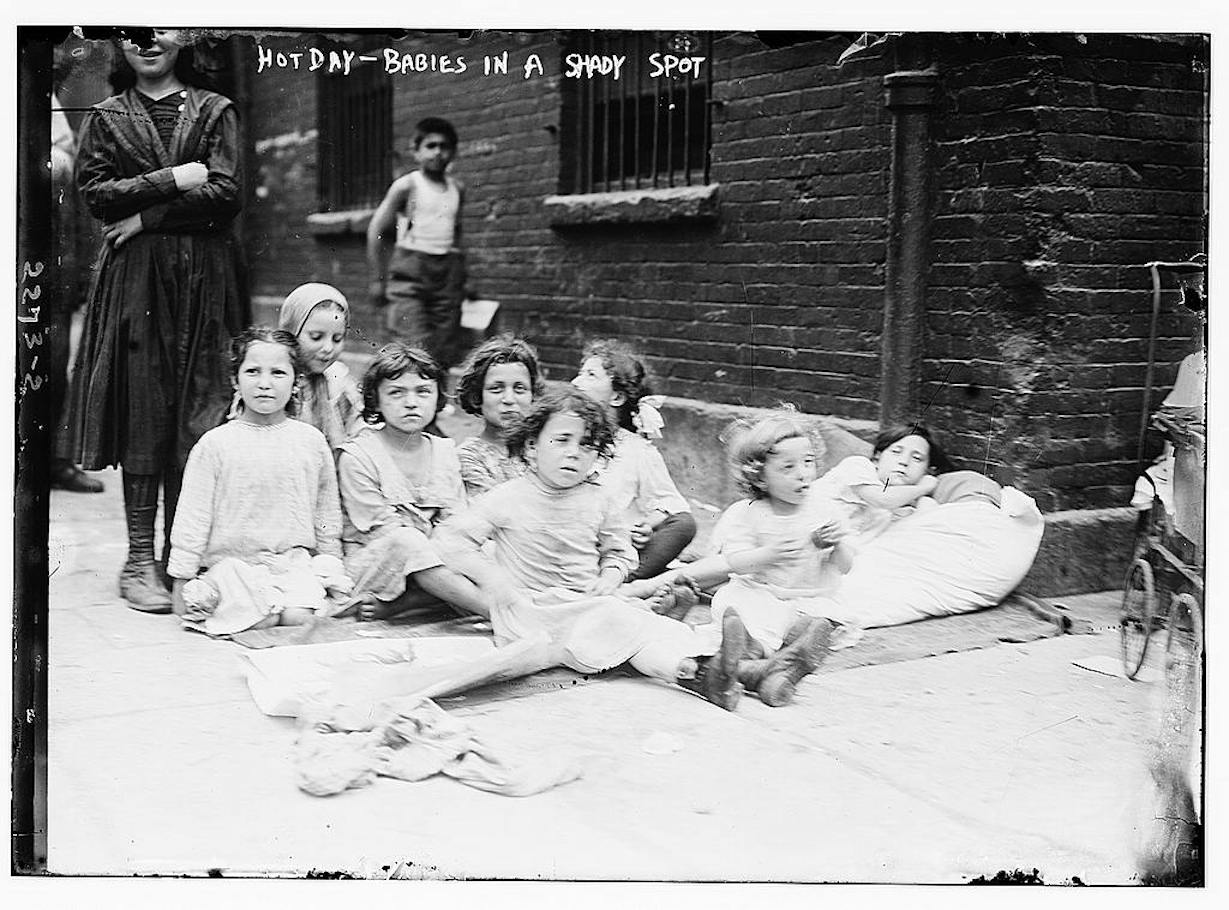
Oh baby, it’s hot! Some tots seek shady shelter during the July 1911 heat wave.
2162903407_9870683c8a_o

In New York, the thermometer never broke a 100 degreeslike it did in Washington or Boston. But the humidity was deadly, and the city too crowded and ill-prepared for such withering conditions.

Below: A disturbing infographic from the Tribune
Naturally, the brand new subway was not the place to be either.

Riders going from the Brooklyn Bridge to Grand Central suffered a 45 minute ride, and a few passengers passed out. But others underground found relief from the heat; workers drilling the Penn Railroad tunnels under the Hudson River reported luxuriously cool temperatures in the 60s.

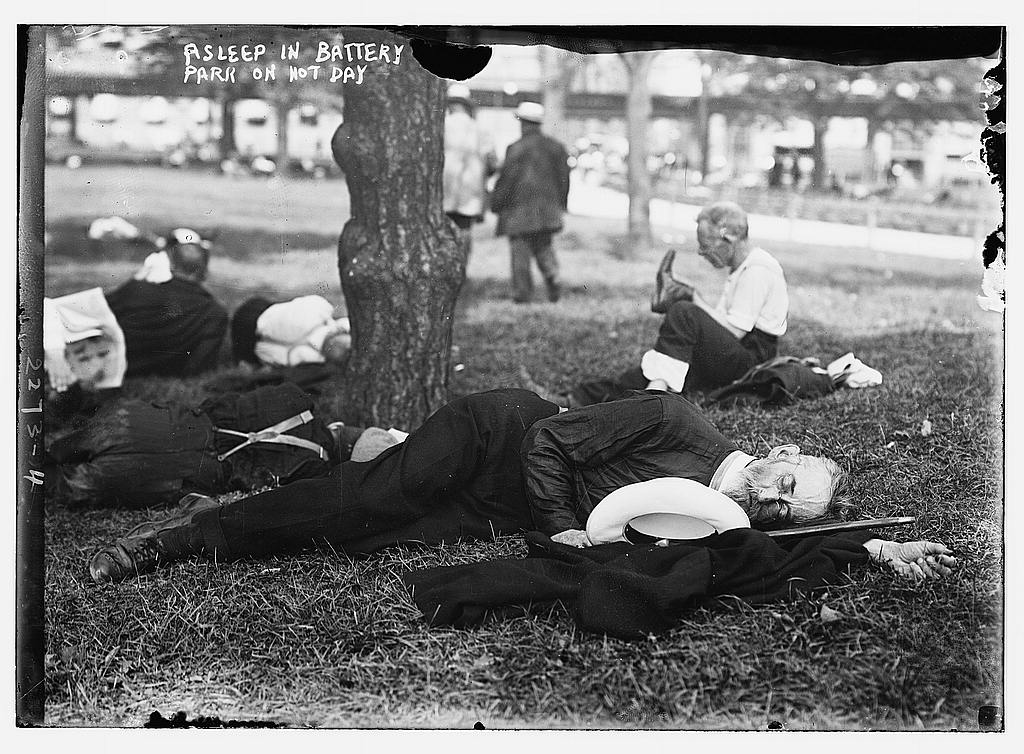
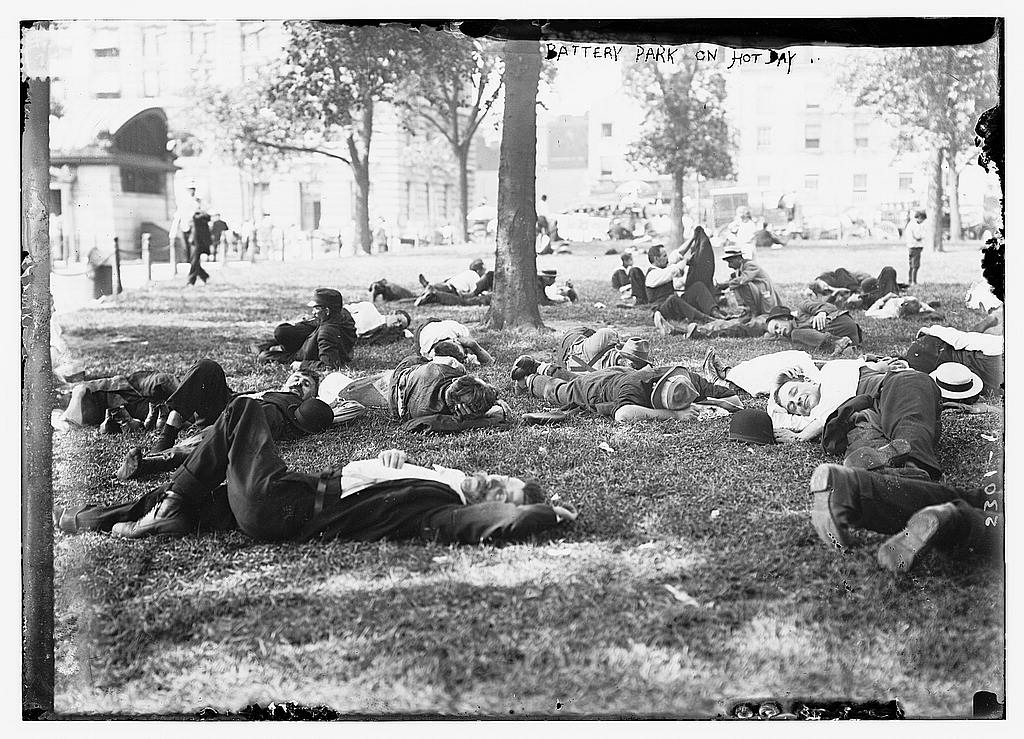
Below: Dozens slept underneath the shady trees in Battery Park at the hottest point of the heat wave.
2163750192_c76e025d7a_o
2162903889_5e1bb9b58b_o

The sizzling conditions literally drove people insane.

One drunken fool, “partly crazed by the heat,” attacked a policeman with a meat clever. A child on Tenth Avenue, escaping to the rooftop for relief, tumbled down an air shaft. The hospital was filled to capacity. Staten Island’s fire commissioner succumbed to the heat and died in his home.

Some levity as a boy takes off his cap to cool off in a park fountain:
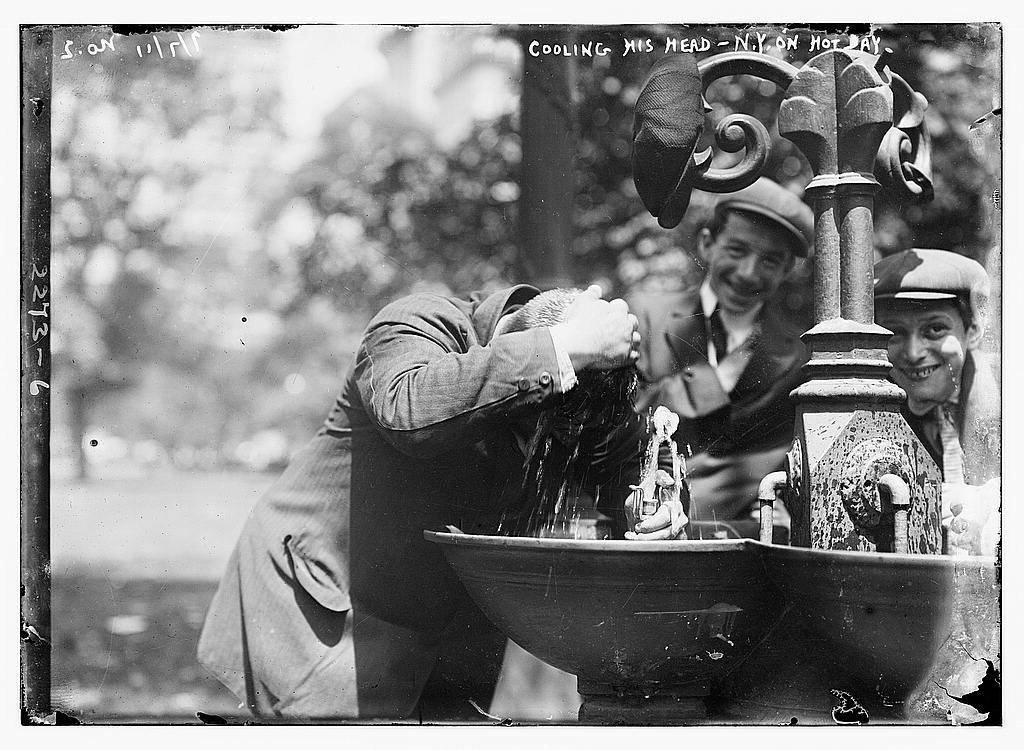
Library of Congress
Library of Congress

After July 7th, the temperatures dipped to normal levels but the humidity kept the city in sweaty discomfort. Or as the Tribune dramatically states: “The monstrous devil that had pressed New York under his burning thumb for five days could not go without one last curse, and when the temperature dropped called humidity to its aid.”

By the time rain came to relieve the city, a reported 211 people had fallen to heat-related deaths. But the largest number of victims came from New York’s army of horses, trudging by the thousands through the city’s busy, stagnant streets.

The New York Times estimates that over 600 animals died during the heat wave, so many that the city was unable to pick up all the bodies from the streets. Frequently seen were dead animals pushed to the sides of the road. Add in the oppressive humidity, and I’ll leave you to imagine how horrific it would have been to experience.

Under better care were the deer of Central Park. (Yes, Central Park once had deer wandering around.) When two deer collapsed of sunstroke, the animals were taken inside and given brandy to drink.

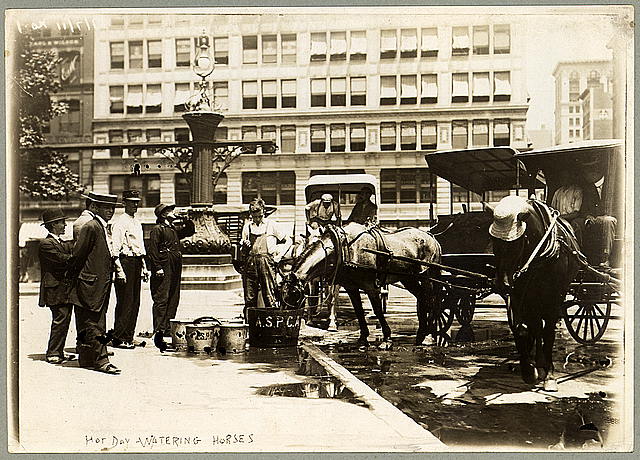
Below: Not all horses suffered that July. Henry Burgh’s American Society for the Prevention of Cruelty to Animals was out in force with water buckets. Picture courtesy NYPL
Categories
Health and Living Newspapers and Newsies

The hottest day in New York City history

These days of low-to-mid 90s F, high humidity temperatures got you down? Why that’s nothing!

The hottest day in New York City history was eighty-five years ago last week — on July 9, 1936, when temperatures reached an agonizing 106 degrees, measured from the Central Park weather observatory.

New York Times, July 19, 1936

This broke the record set on August 7, 1918 when New Yorkers experienced a catastrophic 104 degrees. (As if World War One and the Spanish Flu weren’t enough to suffer through that year.)

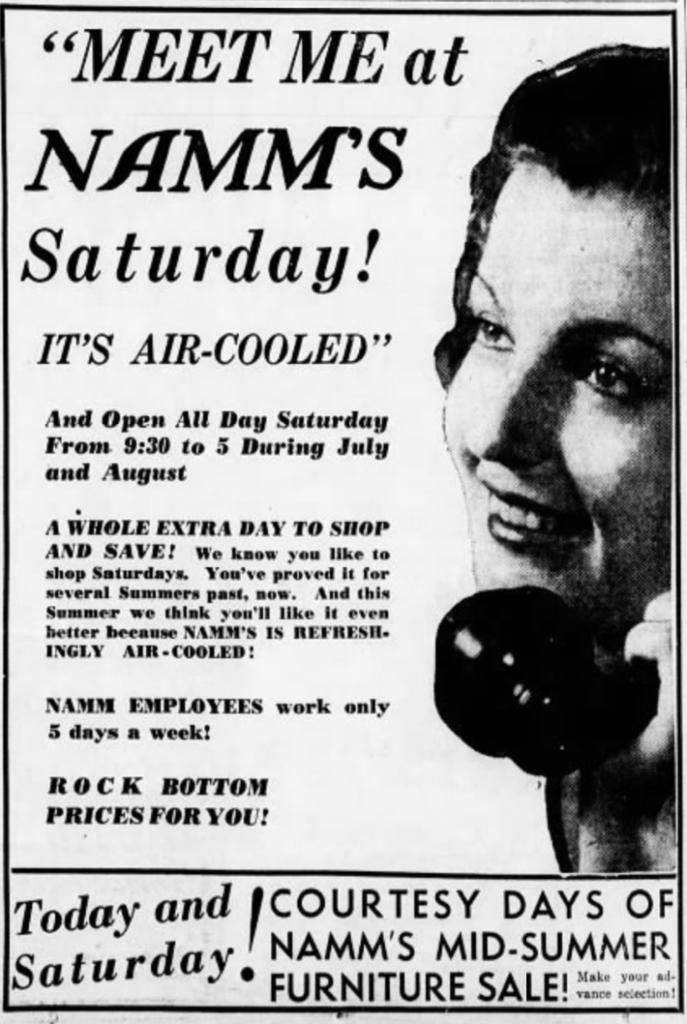
In neither of these years was there widespread air conditioning although the concept was quite familiar to those during the Great Depression. Upscale movie theaters and restaurants had a form of air conditioning by the mid 1930s but home use was too expensive at this time.

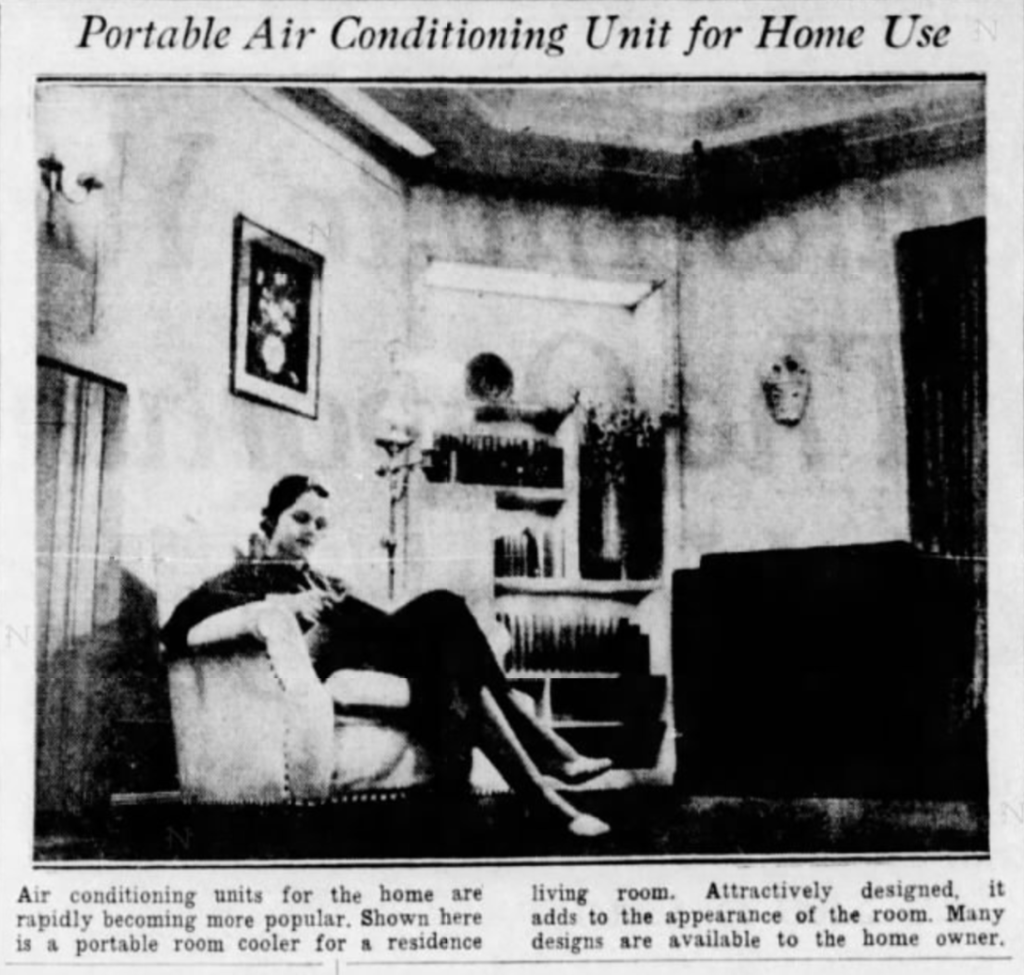
This photograph from 1935 accompanied an article about the novel concept of home air conditioning, making sure to point out that air conditioners can look ‘attractive’.
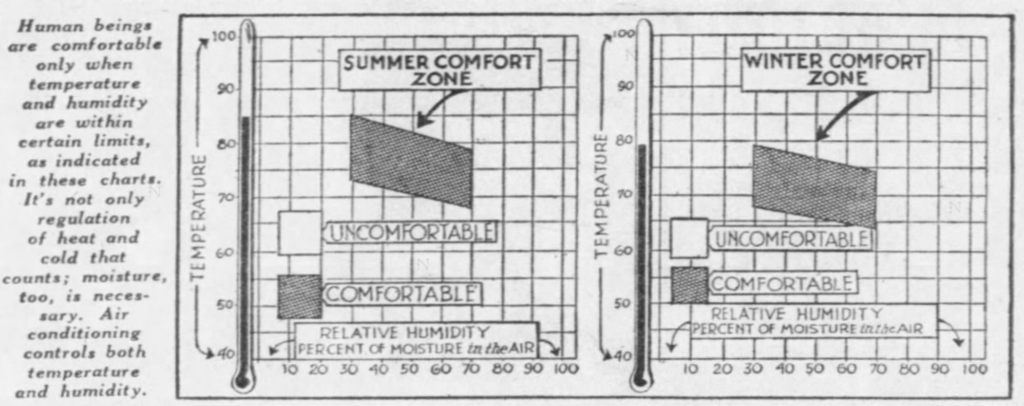
In 1937 the New York Daily News ran this unusual graphic about the newly emerging innovation of air conditioning.

So on the hottest day in New York City history, most people had to forge through the day anyway they could — without the luxury of artificially cooled air.

That 106 number was hit after a series of thermometer-breaking days that week.

According to the New York Daily News, “heat was humanly bearable only because the humidity, at 44 percent, was low. If it were twice as high … human life would be almost impossible.”

And the New York Times chimed in with a startling visual. “In the canyons of the financial district men and women reported the heat waves visible.”

The Brooklyn Daily Eagle, July 9, 1936

Hundreds did die throughout the northeast United States that week due to the heat as well as several in the city, including two boys who drowned in the park lakes on July 10.

It was so hot that Mayor Fiorello La Guardia let out all city employees from work at 1:45 pm and thousands of WPA workers were given a half-day.

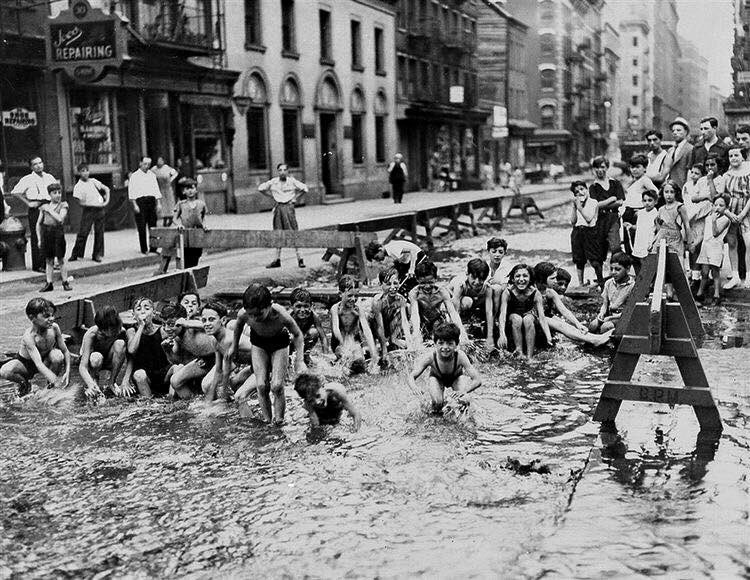
Fire hydrants were pried open in every neighborhood. In Red Hook, Brooklyn and in many other places, the hydrants lowered the water pressure so much that residents above the second floor were unable to get water in their homes.

And on Park Avenue “so many hydrants were in emergency use that the waters mounted above the curb and the cars splashed through six and eight inches of it.” [Times]

“In the great shopping districts in the Thirties [Herald Square], the pavements became so soft in the late afternoon that the crosswalks were dotted with rubber heals that were caught in the asphalt and tar as women passed by. In some spots the asphalt blistered.” [Times, 9/10/36]

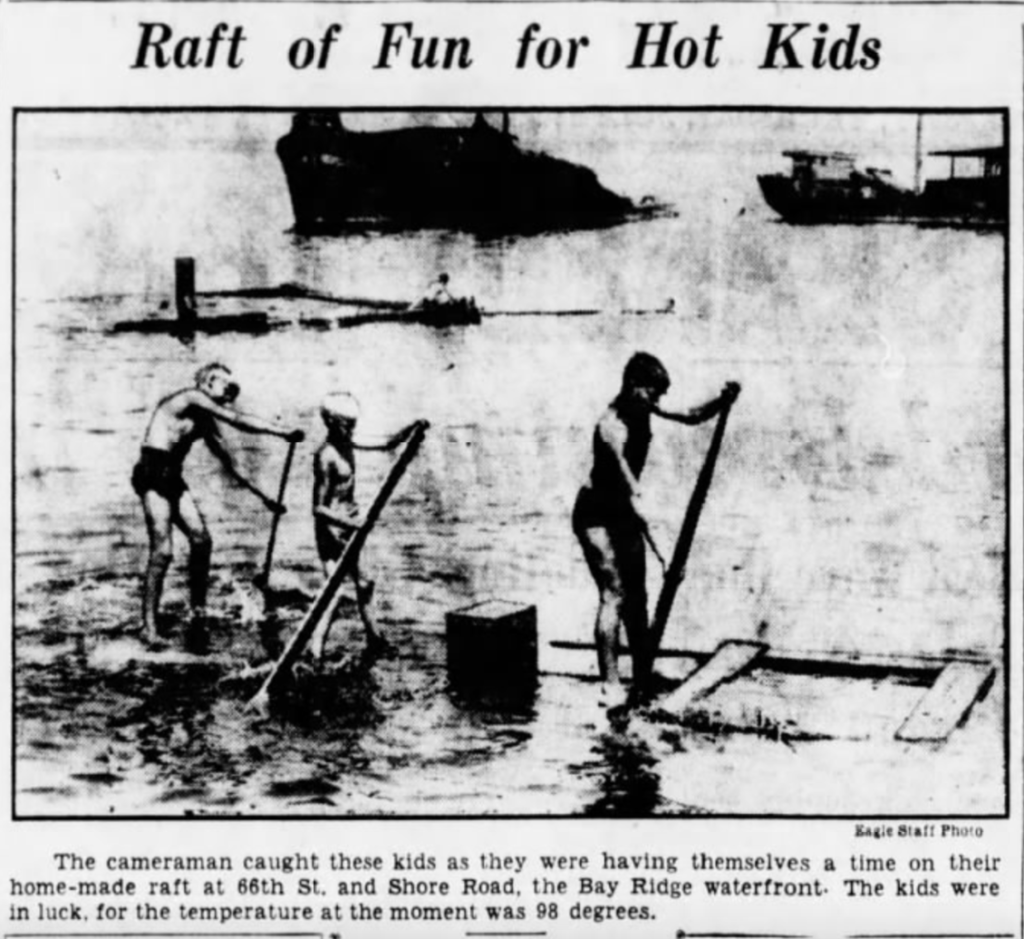
From the July 10, 1936 issues of the Brooklyn Daily Eagle

The only relief seemed to be the city parks and beaches which people duly exploited — day or night. “Coney Island, the Rockaways and other metropolitan beaches again had their hundreds of thousands of city folks cooling off in salt water, and they including thousands who had remained all night on the Bach sand.”

In fact tens of thousands of New Yorkers, looking for relief, slept in city parks throughout the night. The mayor authorized most parks to remain open and police were directed not to harass people who slept on benches or on the ground.

And even Robert Moses flew in for the rescue, authorizing that all city swimming pools remain open until midnight.

From the July 10, 1936 issues of the Brooklyn Daily Eagle

From the Times: “On the Lower East Side traffic was seriously impeded as small armies of persons emerged from tenement houses with chairs, boxes and even beds which they set up in the streets. Other thousands, including young children usually in bed by 9 o’clock, lined the East River waterfront.”

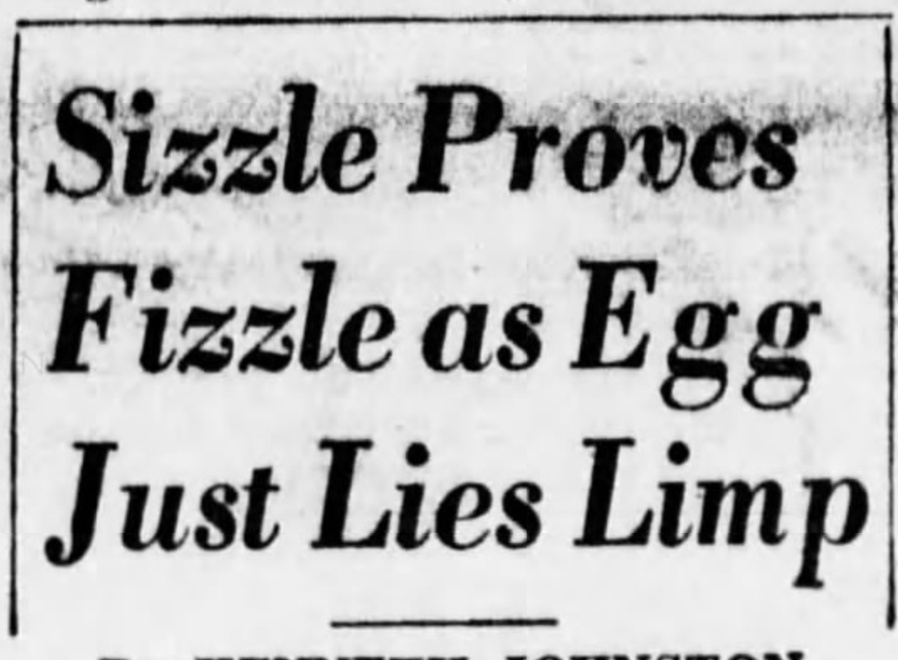
One jokester at the Daily News tried a bit of stunt journalism on that hot day by trying to fry an egg on the sidewalk in front of Queens Borough Hall. After watching the broken egg on the sidewalk for 15 minutes — runny and uncooked — the crowd left dejected.