Categories
Bowery Boys Bookshelf

Romare Bearden: ‘An American Odyssey’ through the Harlem Renaissance and the SoHo art scene

Sometimes an artist’s biography can work on two levels, providing both the sweep of history within the subject matter of the artist’s own output and a grand view of American art history in the artist’s working life.

In Mary Schmidt Campbell’s absorbing biography of the painter, illustrator and collagist Romare Bearden, we get to look at the New York City art world of the 20th century with insights into the life of an African-American painter who managed to remain relevant in a career of almost 60 years.

In An American Odyssey: The Life and Work of Romare Bearden, Campbell emphasizes Bearden’s role as a seminal New York City figure — an artist who projected the city’s vitality and sometimes even its geography into his work.

Campbell, currently the president of Spelman College, knew Bearden leading up to her role as executive director of the Studio Museum in Harlem in the 1970s and 80s. (The appendix features copies of handwritten letters from Bearden written on stationary from his Canal Street studio. That alone gave me chills.)

Bearden’s body of work is unique in that it reflects, in its longevity, both the changing tides of 20th century art and his own conflicts with depicting the American black experience on his canvas.

He came of age in Harlem in the 1920s, among the creative swirl of the Harlem Renaissance, even as his formal training came from the famed Art Students League in Midtown Manhattan. His mother Bessye Bearden was a noted journalist whose connections to such Harlem figures as Duke Ellington and A’Lelia Walker introduced Romare to a new world of possibilities for black creators. “She not only found her way into Harlem’s inner circle,” writes Campbell, “but she also helped define and expand its perimeter.”
Young Students – Romare Bearden, 1964 – Romare Bearden Foundation

Romare developed into both an renowned artist and an insightful critic of the art world, setting up a studio right above the most famous place in Harlem — the Apollo Theater. It was here that he later pivoted his style away from concrete representational forms, finding his own path into the world of abstract modernism.
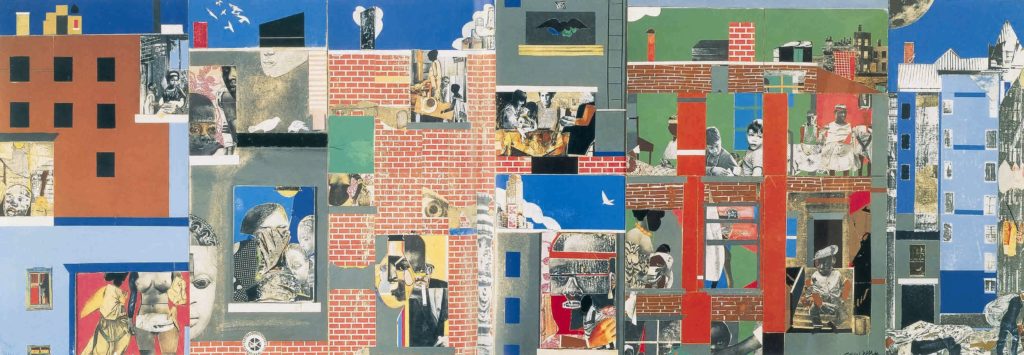
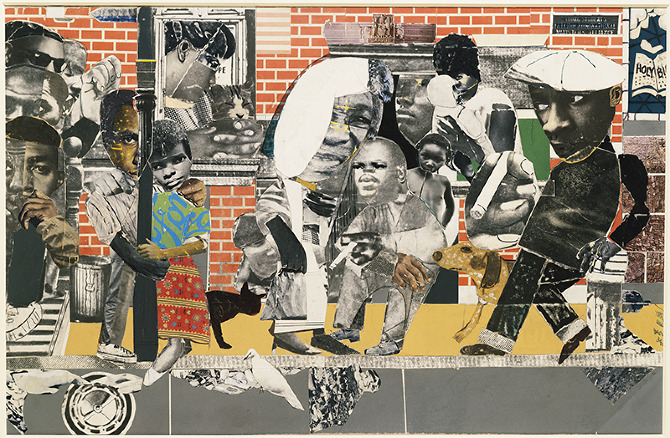
The Block by Romare Bearden, 1971 — Romare Bearden Foundation

By the late 1940s he oddly found himself an outsider — wanting to break out from shows that only featured black artists but eventually excluded from mainstream galleries for not being sufficiently abstract.

It took a revitalizing intellectual journey to Paris, a change of scenery within New York City (to the newly developed artists’ enclave in SoHo) and a shift to collage work to reinvent Bearden’s role in the art world. His groundbreaking 1964 show Projections also established him as an artist in conversation with the American civil rights movement.
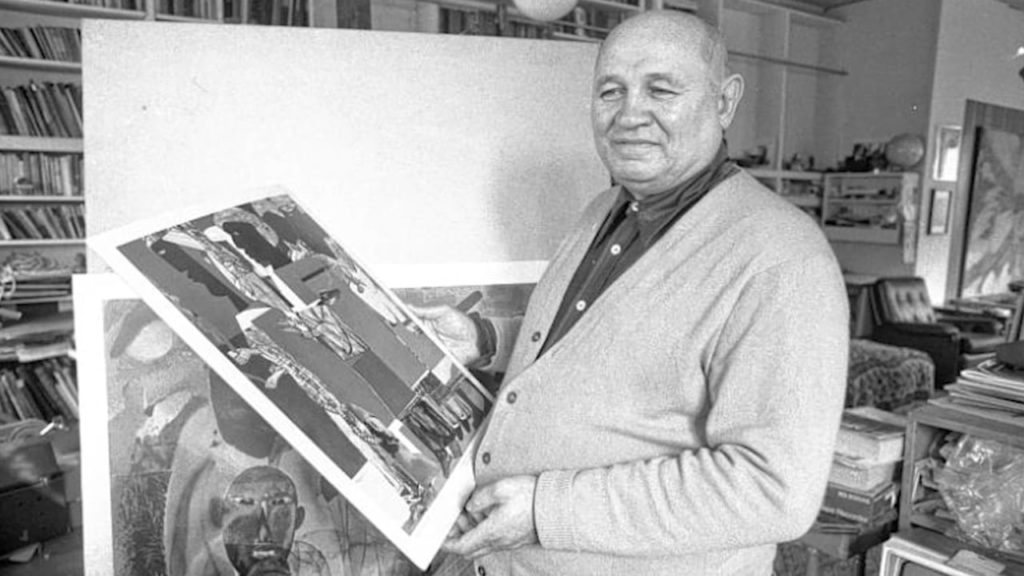
Bearden in his Long Island City studio

By 1987, when Ronald Reagan awarded Bearden the National Medal of the Arts, the artist had secured his legacy. Yet today his body of work — including some of his most profound collages — often remains unseen.

As Campbell explains, “Despite Bearden’s care in the assemblage of materials, his collages with their multitude of different materials are a preservationist’s nightmare. Major museums exhibit his works infrequently because they are so perishable.”

“Bearden’s legacy is as complicated as his art; he would become many things to many people — all at once.”

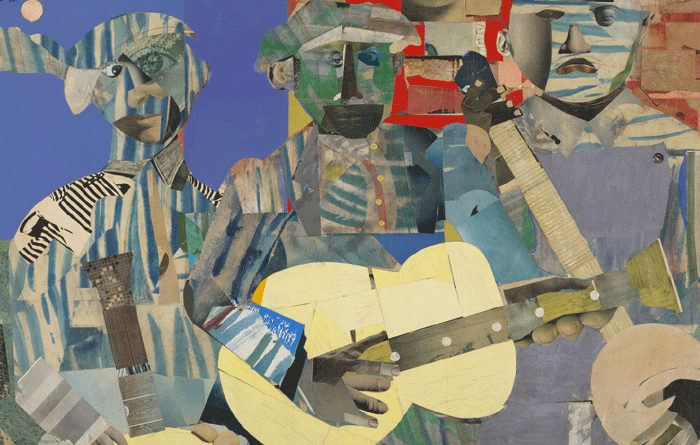
At top: Three Folk Musiciansby Romare Bearden / Virginia Museum of Fine Arts
Categories
It's Showtime Podcasts

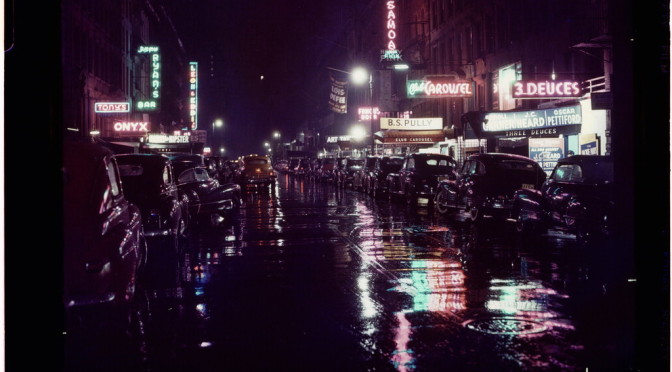
Billie Holiday’s New York: Here’s to Swing Street, Harlem’s 133rd Street and other landmarks of jazz

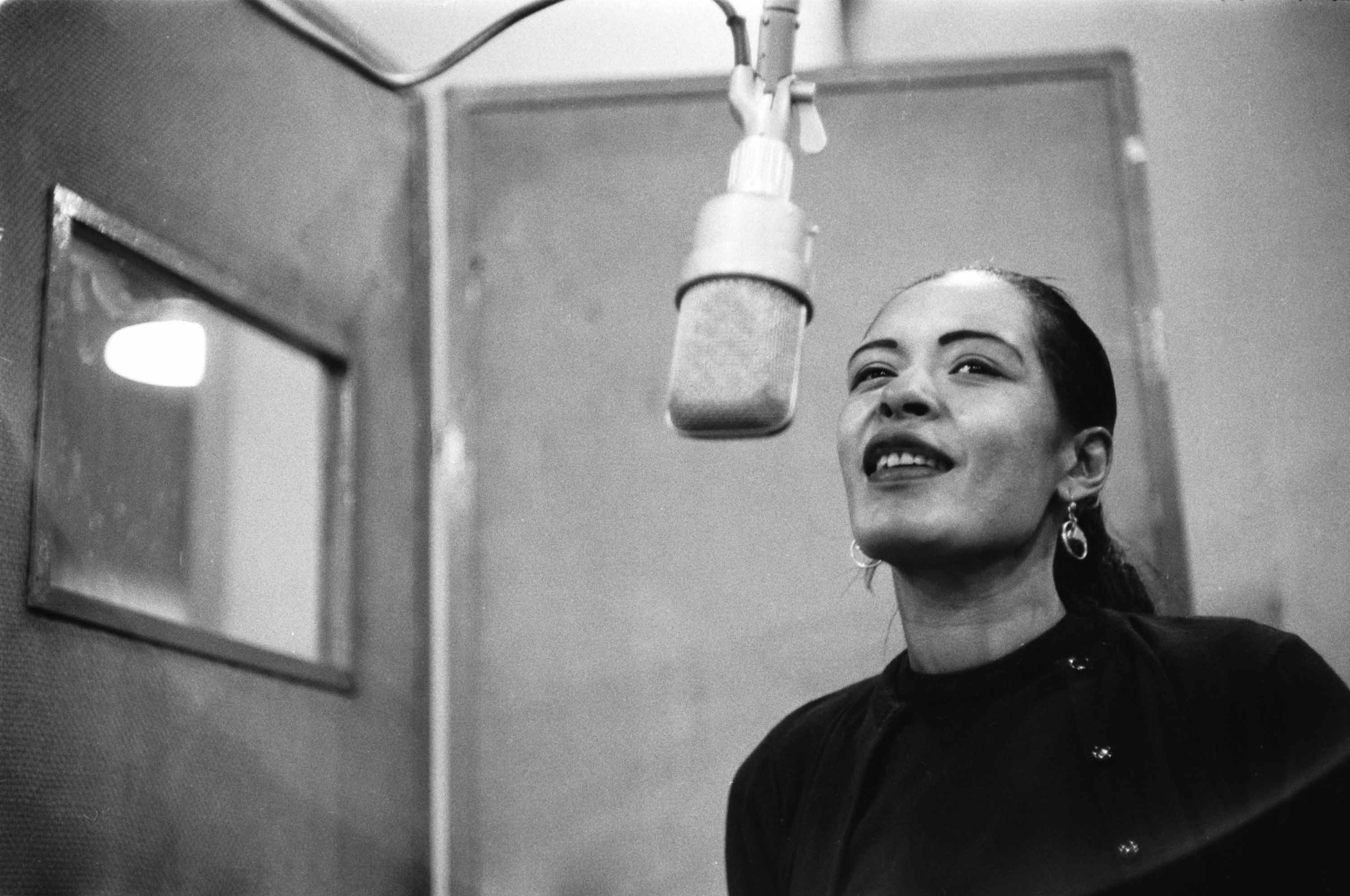
Courtesy Columbia Records

PODCAST Grab your fedora and take a trip with the Bowery Boys into the heart of New York City’s jazz scene — late nights, smoky bars, neon signs — through the eyes of one of the greatest American vocalists who ever lived here — Billie Holiday.

Eleanora Fagan walked out of Pennsylvania Station in 1929 and into the city that would help make her a superstar. Her early years were bleak, arrested for prostitution and thrown into the Welfare Island workhouse. But music would be her savior, breaking out in Harlem first in the nightclubs on 133rd Street, then in the basement clubs of ‘Swing Street’ on 52nd Street.

Her recordings make her an international star, but the venues of New York helped solidify her talents — from the Apollo Theater to Carnegie Hall. But one particular club in the West Village would provide her with a signature song, one that reflected the horrible realities of racism in the mid 20th century.


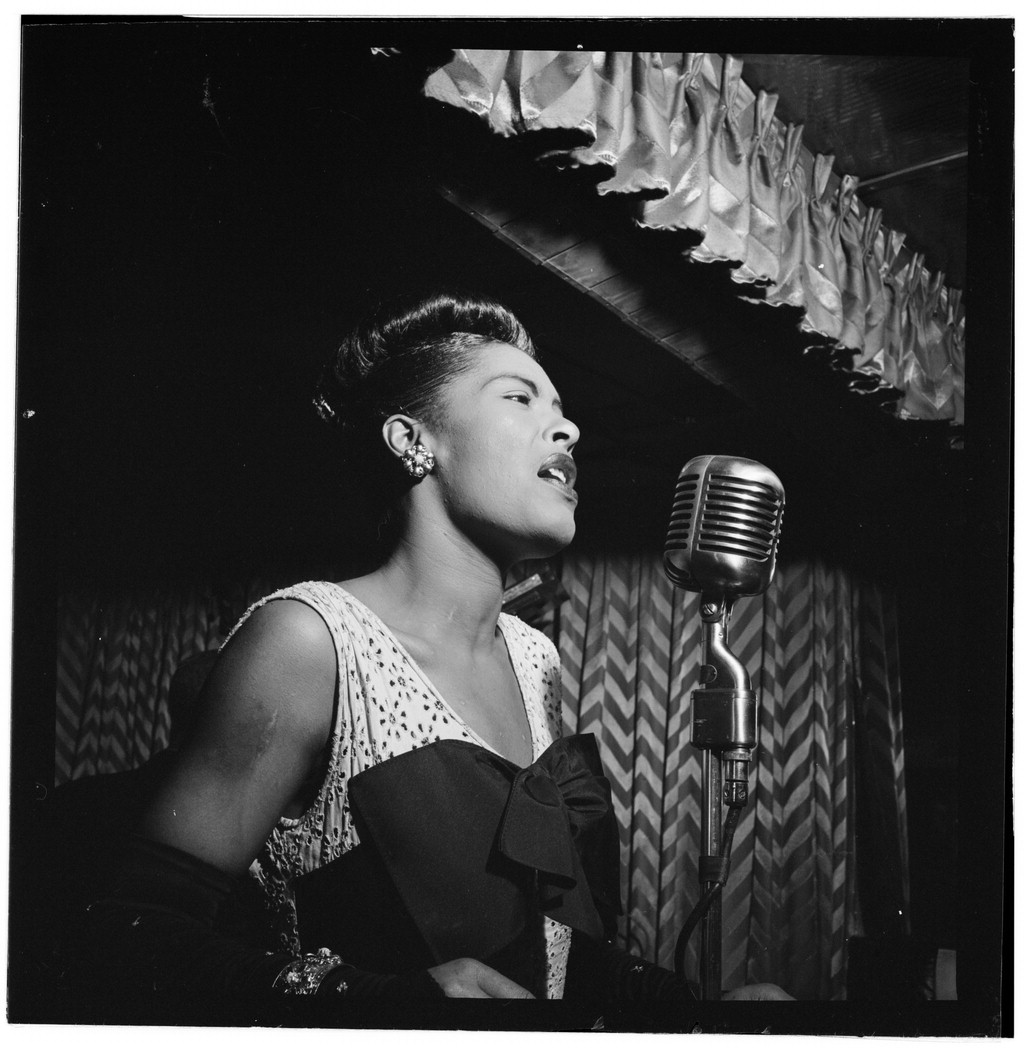
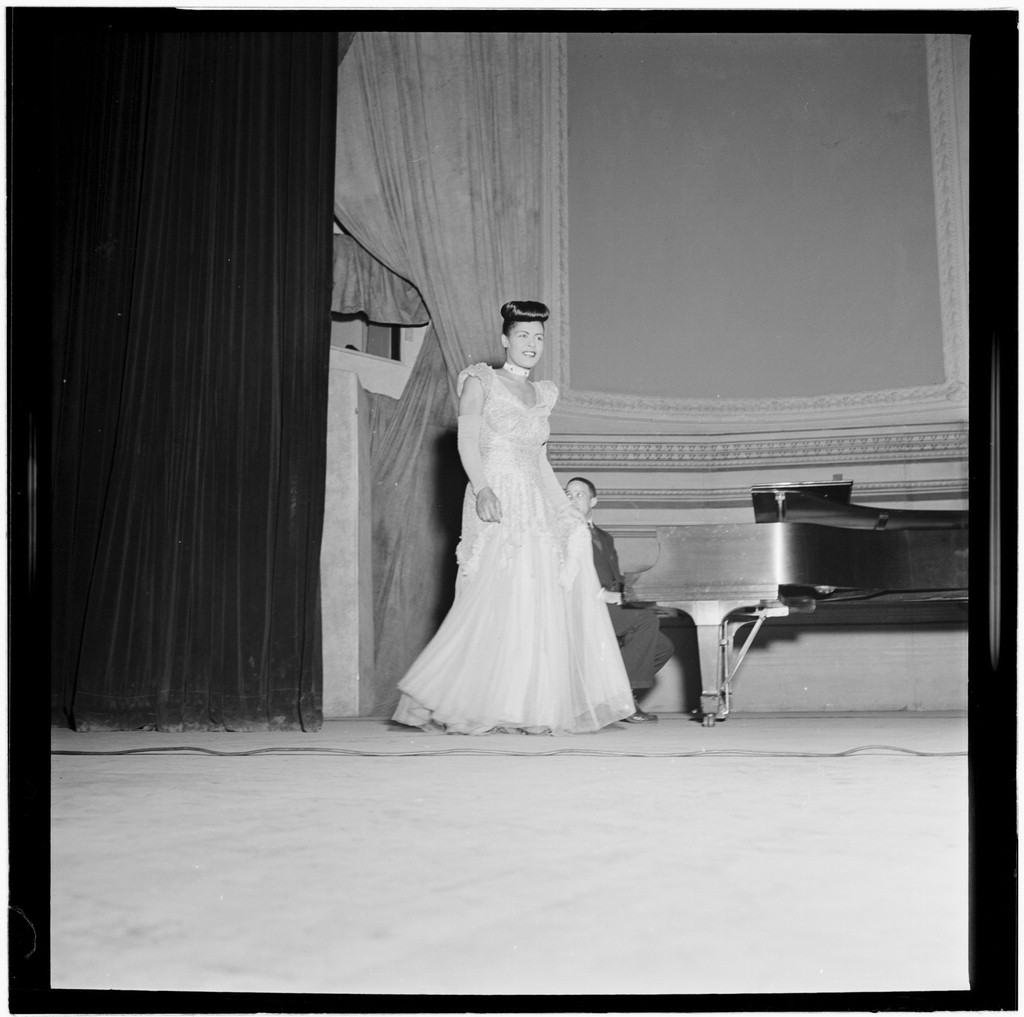
Billie Holiday at Club Downbeat, 1947

5020399920_ccd948ba9c_o

Locations featured in this episode:

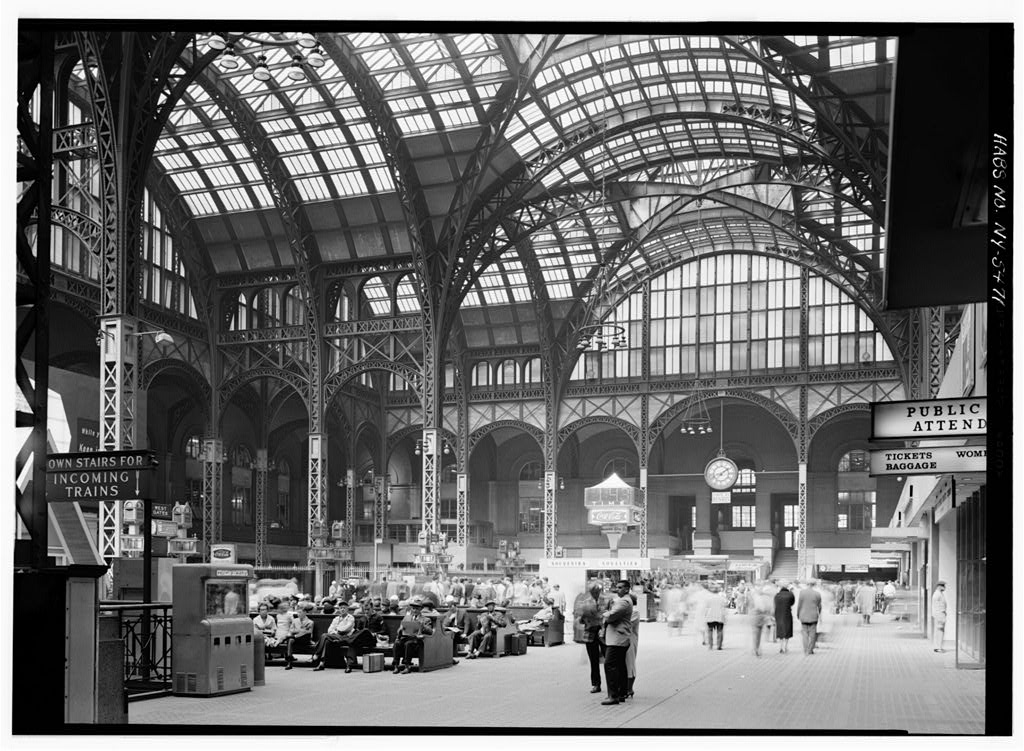
1) Pennsylvania Station (circa 1930s-40s)

Courtesy Library of Congress

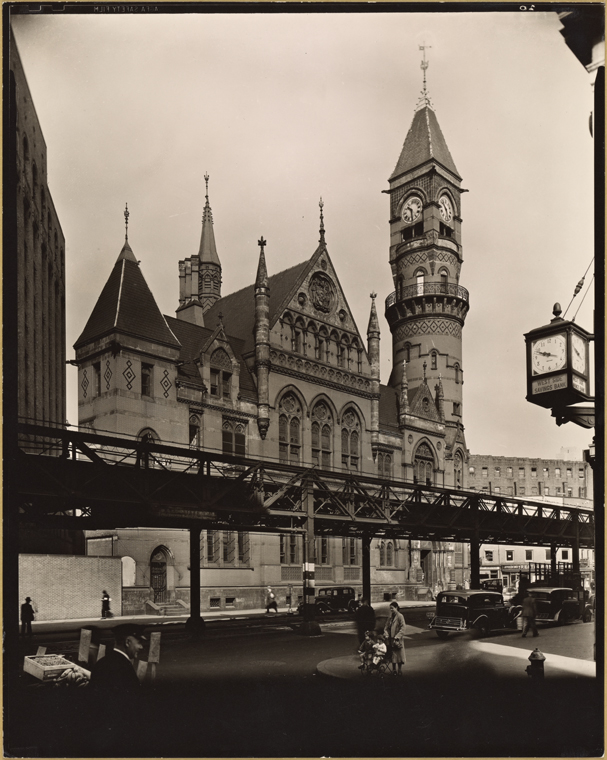
2) Jefferson Market Courthouse, pictured here in 1935

1
Photographed by Berenice Abbott, courtesy New York Public Library

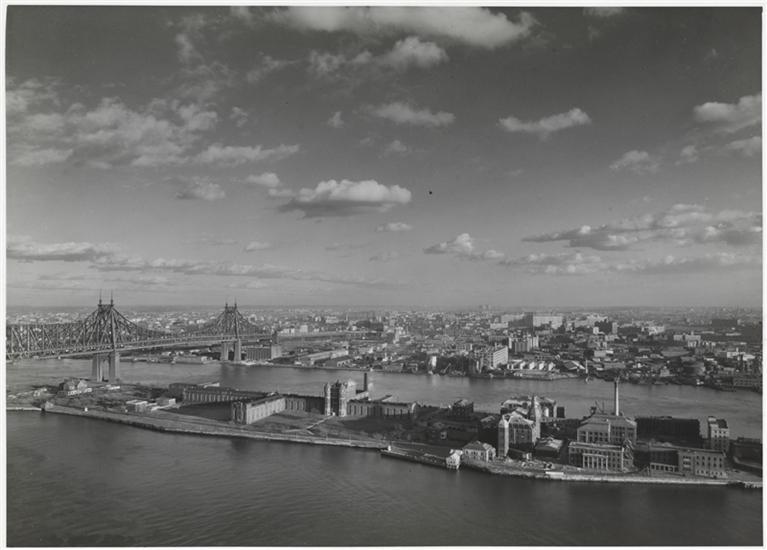
3) Welfare Island, pictured here in 1931

Photographed by Samuel H Gottscho, courtesy Museum of City of New York

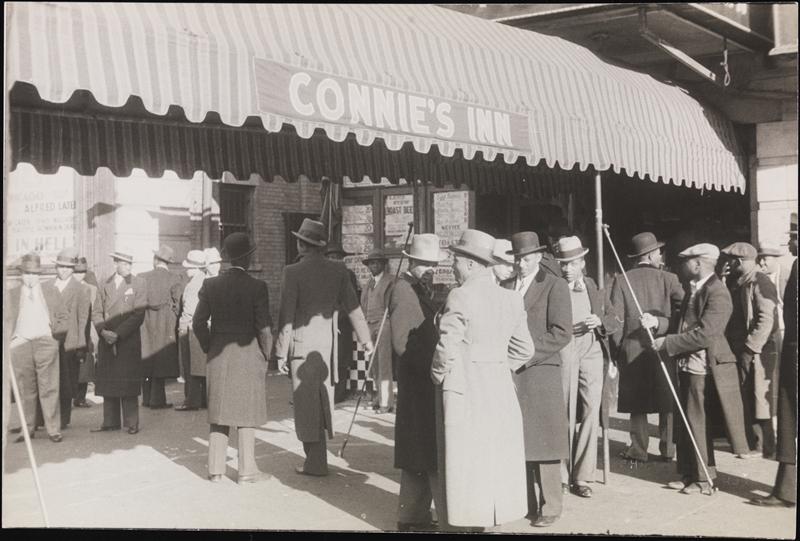
4) 133rd Street — “Jungle Alley” or The Street — outside Connie’s Inn

Courtesy Museum of the City of New York

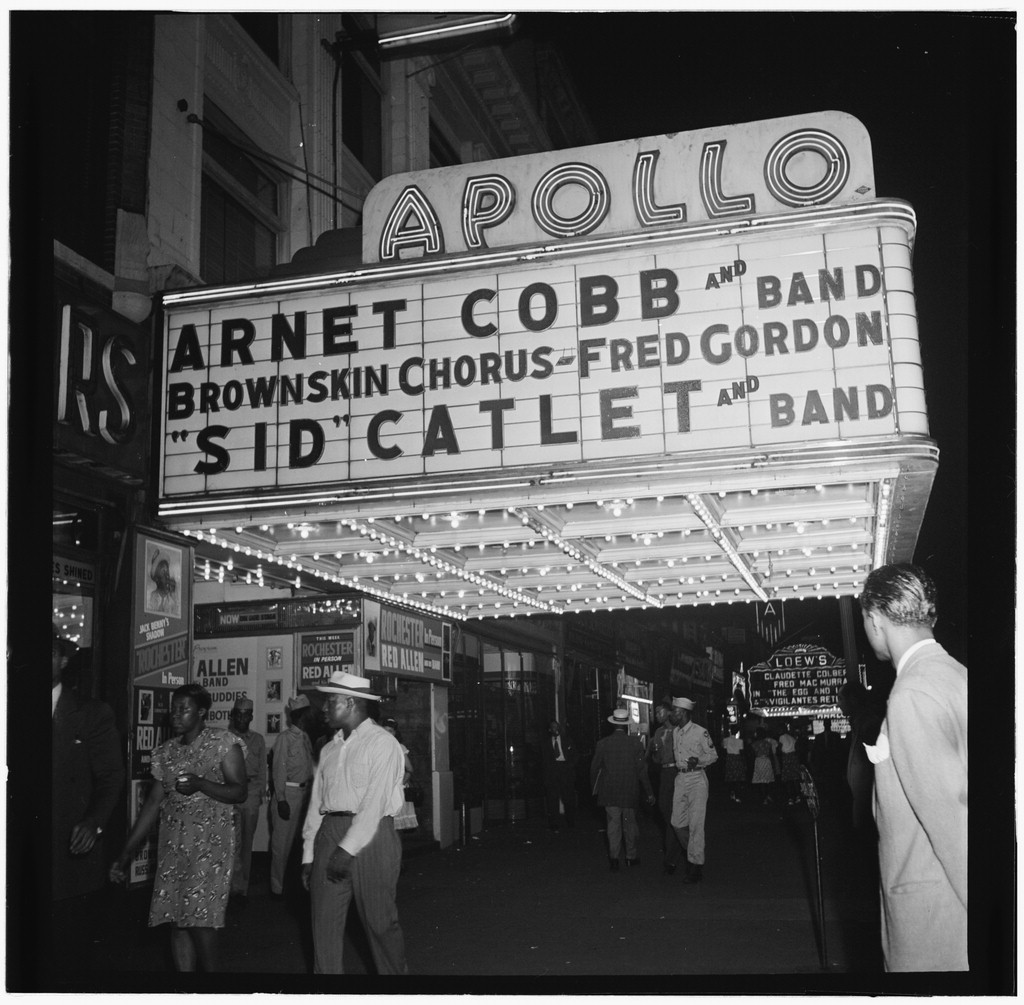
5) Apollo Theater, pictured here in the mid 1940s

Courtesy Library of Congress, photographer William Gottlieb

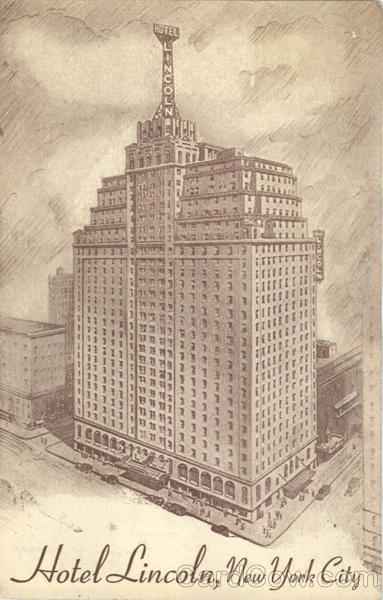
6) Lincoln Hotel

Hotel Lincoln, 44th to 45th Street at 8th Avenue New York City

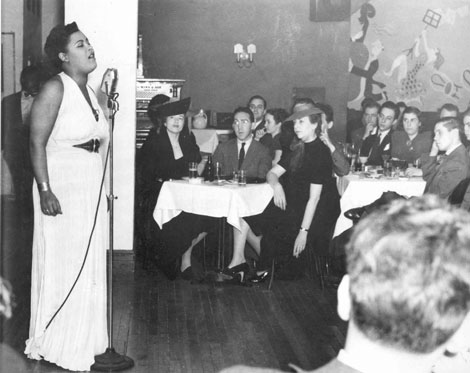
7) Billie Holiday at Cafe Society 1939

Photo by Charles B. Nadell

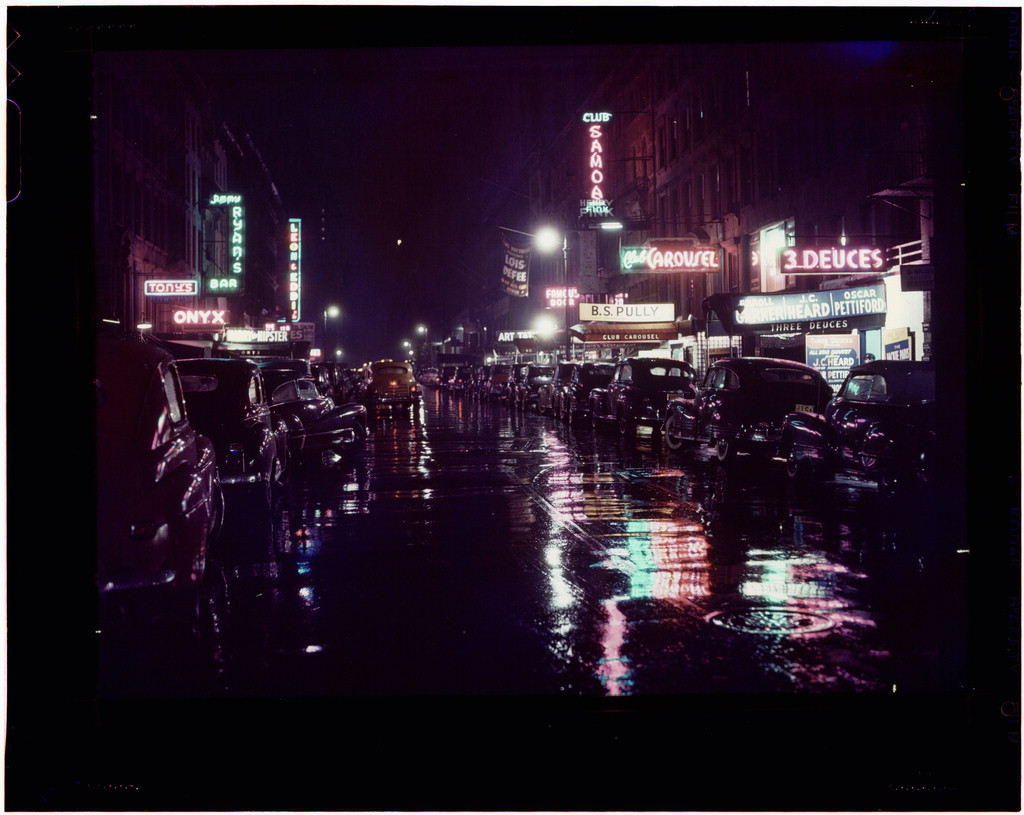
8) 52nd Street aka Swing Street

5268914553_ca77a01af0_o

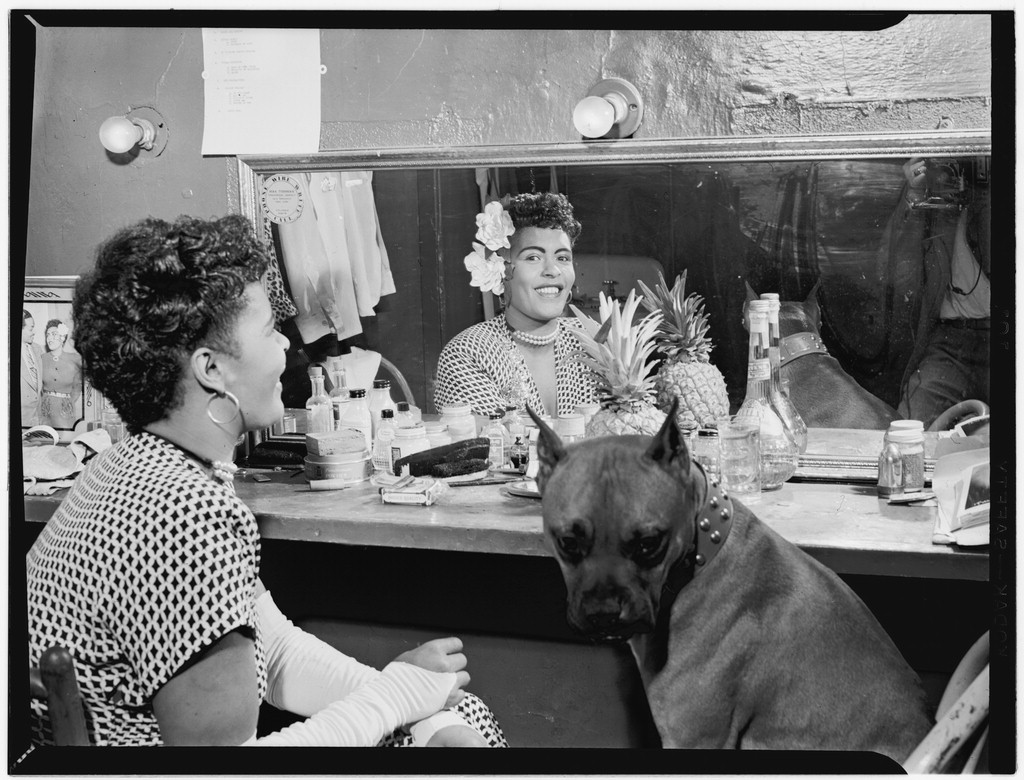
Billie at Club Downbeat (with her dog Mister) — June 1946

Courtesy Library of Congress

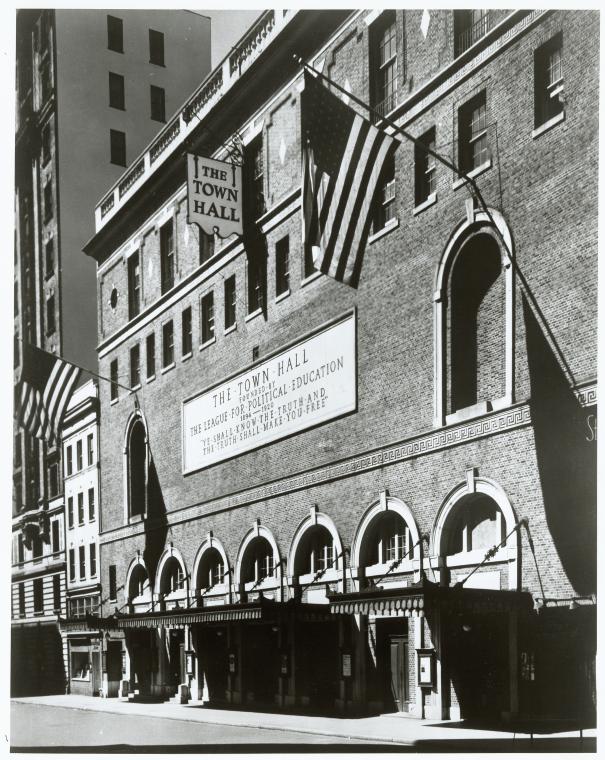
9) Town Hall, sometime in the 1940s

Exterior view of The Town Hall, courtesy New York Public Library

10) Billie Holiday at Carnegie Hall for her rave 1948 concert

Courtesy Library of Congress

An extraordinary performance of ‘Strange Fruit’, performed in February 1959, months before she died. This was recorded for a British television show called ‘Chelsea At Nine’.

https://www.youtube.com/watch?v=h4ZyuULy9zs

Billie Holiday — playing a maid — in the 1947 film New Orleans

And a live performance of one of her greatest songs — well, really, one of the greatest songs — “God Bless The Child”

http://youtu.be/U-3O-X6UUpY

Categories
It's Showtime

Harlem on a high note: The grand Harlem Opera House

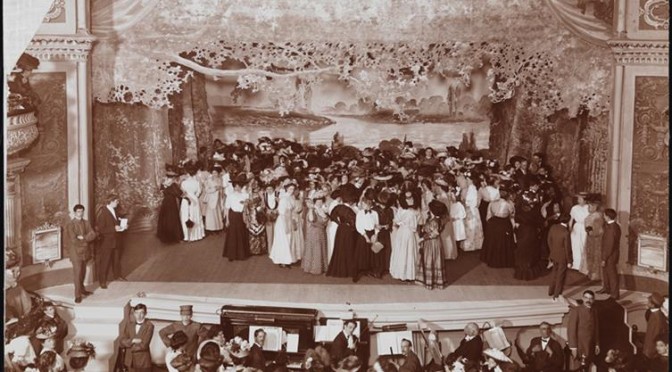
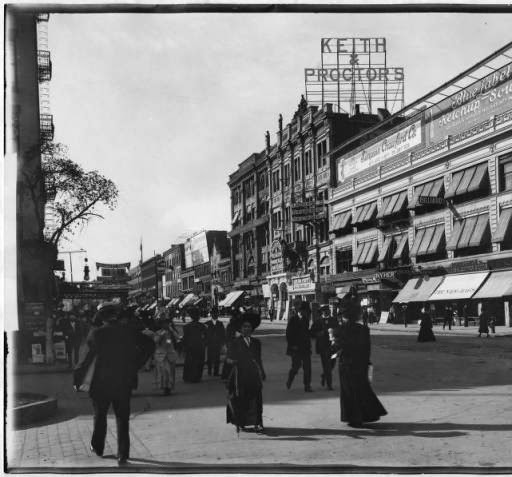
Proctor's Harlem Opera House.

A ton of people on-stage at the Harlem Opera House in 1907. During this period, it was owned by vaudeville impresario Keith Proctor and called Proctor’s Harlem Opera House. Pictures courtesy the Museum of the City of New York 

 The Hotel Theresa, subject of this week’s podcast, had a rather unusual neighbor in its early years.

Harlem is known for a rich musical heritage in a variety of genres, but did you know it also had very old ties to world of opera, from as far back as the 19th century?

Oscar Hammerstein was a wealthy New York cigar maker who decided to dip his toe into real estate ventures, and in a most surprising neighborhood.  Thanks to the construction of the elevated railroads in the 1880s, the once-distant Harlem was now linked to the heart of the city, and thousands began moving there, particularly European Jewish immigrants.

Theatre, Harlem Opera House 125th St. & 8th Ave.Hammerstein built dozens of rowhouses for prospective residents, but his real vision was the Harlem Opera House (at right), constructed in 1889 and located at 207 West 125th Street, on the other side of the street from the Hotel Winthrop (later the Hotel Theresa).

For a time, it really did just showcase operatic productions, of both the severe and light varieties.  According to author Jonathan Gill, “Hammerstein had a broad vision of what uptown theatergoers wanted, and he produced both popular and genteel drama and opera in English translation, an experiment that proved attractive to audiences who were willing to pay up to $2.50 a ticket.”

Famous stars were drawn here from the stages of Herald Square.  For instance, Edwin Booth performed Shakespeare here in 1889, a few years before his death.  Lillian Russell, a favorite of the New York pressperformed the show ‘An American Beauty’ here in March 1897.

The Opera House helped create a miniature theater district here along 125th Street.  Hammerstein himself built the Columbus Theatre the following year, bringing more popular fare — namely, vaudeville.  Soon the street would become one of New York’s great centers of burlesque entertainment.  Many years later, Hurtig & Seamon’s New Burlesque Theater would open a couple doors down from the opera house, later changing its name to the Apollo Theatre.

Hammerstein, however, could not make the Harlem Opera House a financial success, and he was soon lured downtown to build his most renown theaters (and places that would later inspire his grandson Oscar Hammerstein II.)  The Harlem Opera House was sold and transformed into a more traditional vaudeville house.  By the 1930s, to compete with the thriving amateur nights over at the Apollo, the Harlem Opera House had its own amateur nights.  Its most notable discovery is one of the greatest names in music — Ella Fitzgerald.

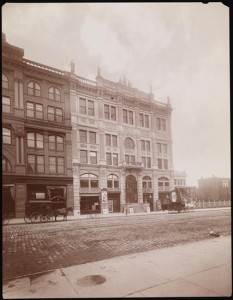
Below: Another view of the Opera House, here as Proctor’s Opera House, courtesy NYHS.  The balconies to the left belong to the Winthrop Hotel — compare this picture to the Winthrop photo here — to be replaced in a few years by the Theresa.


The Opera House was torn down in 1959.  Surprisingly, it appears there was the possibility of a new opera house in Harlem being built in the late 1960s, under the guidance of Gian Carlo Menotti, but that never panned out.  However, the operatic tradition lives on today with the Harlem Opera Theater, founded in 2001.

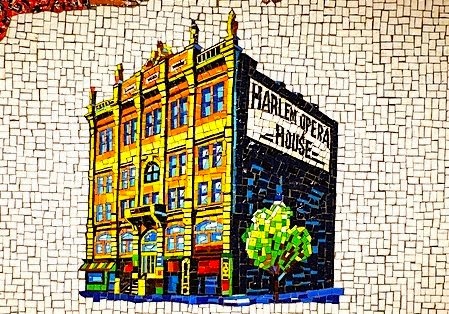
Below: You can still find the Harlem Opera House in Harlem — on the walls of the 125th subway station, in mosaic form!

Four New York City landmarks turn 100 years old this year

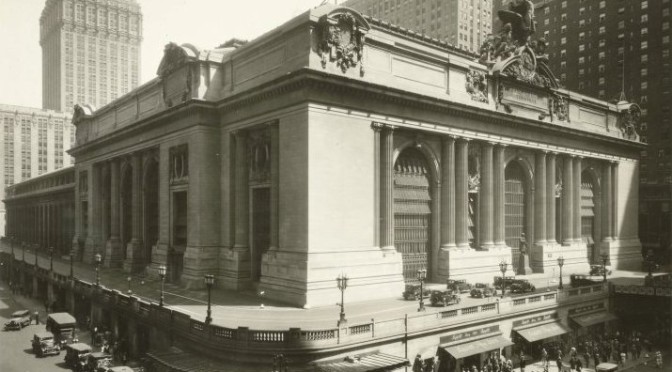
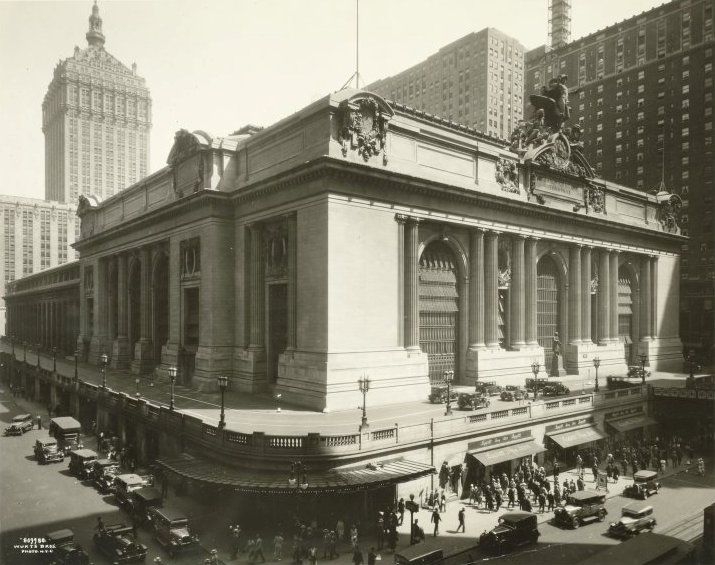
1) Grand Central Terminal
The Grand Central Depot was first built at 42nd Street in 1871 as a hub for Cornelius Vanderbilt’s railroad operations. It was greatly expanded at the turn of the century. and by this time, the tracks headed north were electrified and buried, creating Park Avenue.

The present terminal was conceived in 1903 by two teams of architects and took a decade to construct. Meanwhile, the tracks heading north, now sunken and electrified, were covered with a new street and its air rights sold to become Park Avenue.

The ne plus ultra of Beaux-Arts New York opened in February 1, 1913, and its first train, the Boston Express, left the station two days later.
For more information, listen to our podcast on Grand Central Terminal (Episode #45)

2) Woolworth Building
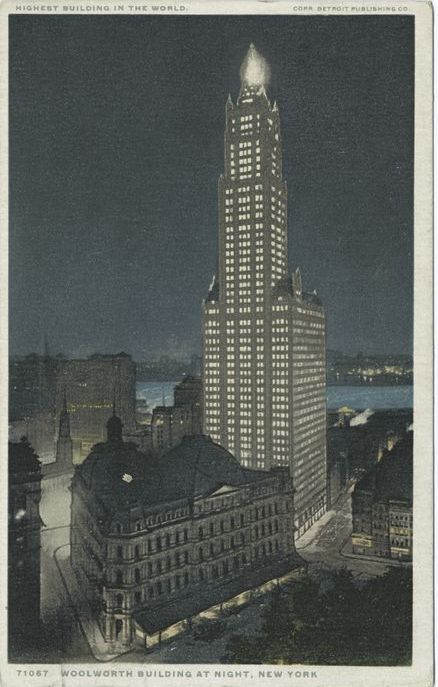
The Woolworth Building and the current One World Trade Center are separated by a couple blocks — and one century. Just as New Yorkers marveled last year at what will be the city’s tallest building as it began to tower over downtown Manhattan, so too did the New Yorkers of 1912, at the ornate Cass Gilbert structure rising near City Hall. In January of 1912, newspapers were already proclaiming Woolworth the crown of “:the world’s greatest construction era.”

One World Trade Center will open later in 2013. The Woolworth opened on April 24, 1913 as New York’s tallest building until 1930. As you can tell from the 1910s postcard above, it rose next to the garish old New York Post Office at the foot of City Hall Park.

For more information, listen to our podcast on the Woolworth Building (Episode #76)

3) The Apollo Theatre
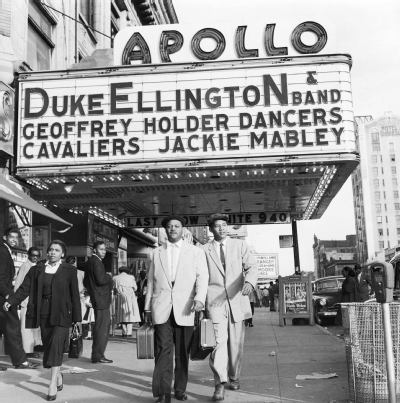
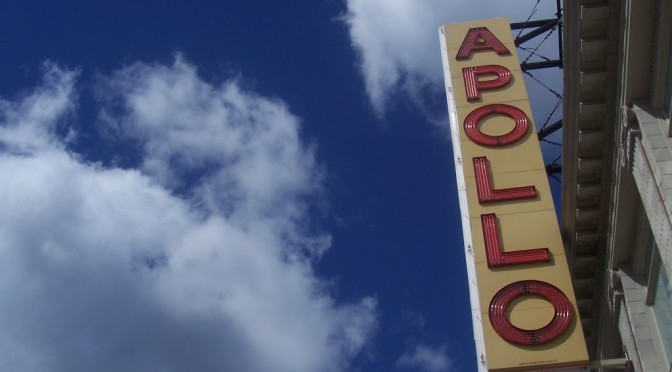
The theater that eventually became one of America’s top spotlight for new entertainers was constructed in 1913 — its architect, George Keister, designed many great theaters of the day, including the Belasco — and quickly became a home for Harlem burlesque acts under the name Hurtig and Seamon’s New Burlesque Theater.  While far from Times Square’s Broadway district, its stage has actually outlasted most of the theaters there.

It reopened in 1933 as the 125th Street Apollo Theater. It was around this time that the doors were opened to African-American entertainers.  Its ‘amateur nights’ would soon become world-famous for discovering major talent.

For more information, listen to our podcast on the Apollo Theatre (Episode #15)

4) Hotel McAlpin
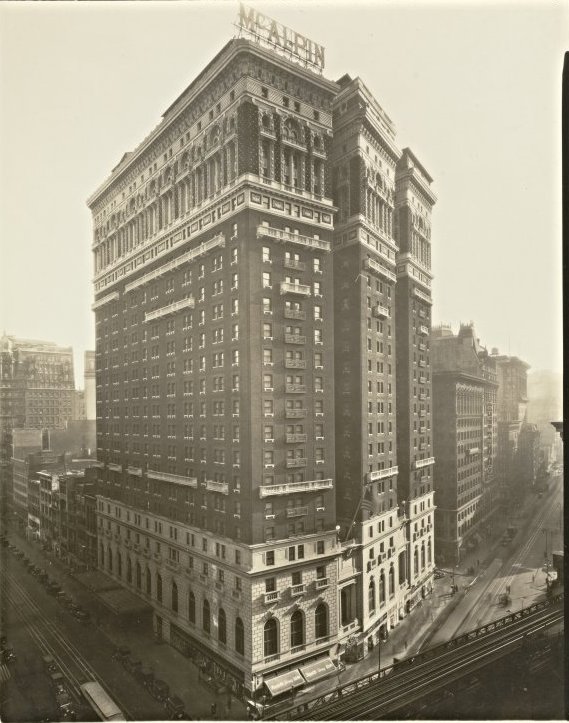
New Yorkers got a look at Herald Square’s Hotel McAlpin — the tallest hotel in the world at the time — in a lavish open house on December 29, 1912.  Thousands marveled at its almost absurd size, suitable for 2,500 guests and 1,500 employees.  It was ready to welcome guests with the new year.

“The McAlpin has many features peculiar to it among hotels,” proclaimed the New York Times. “For one thing there is a woman’s floor to which no men are permitted and where even the clerks are women …The twenty-second floor is devoted exclusively to men.” And the 16th floor was known as the ‘Sleepy Sixteenth’, the silent floor.

Today the Hotel McAlpin is an apartment complex, the Herald Towers.

For more information, listen to our last podcast on the history of Herald Square (Episode #146)

Note: I don’t think the McAlpin is officially landmarked, only one in the historical sense.

Courtesy 1) Wurts Brother/NYPL; 2) NYPL; 3) Long Wharf Theatre; 4) NYPL
Categories
Podcasts

PODCAST: The Apollo Theater

Harlem’s jewel, the Apollo Theater, has more than lived up to its promise as a place “where stars are born and legends are made.” It’s been the cultural centerpiece of New York for more than seven decades, not bad for a former burlesque theater. And find out which icon made his name — and held his funeral — on the same stage.

Listen to it for free on iTunes or other podcasting services. Or you can download or listen to it HERE

First, a clarification from our podcast: the building of the Lenox Avenue line did greatly increase development in the Harlem area, and a great many of Harlem’s most beautiful blocks were developed at or near this time. But this boom did not benefit the increasing African-American members of the neighborhood. In a twist of absurd racism that just seems not only ridiculous but economically short-sighted, owners would let buildings sit vacant, waiting for white tenants, rather than rent them out to black ones.

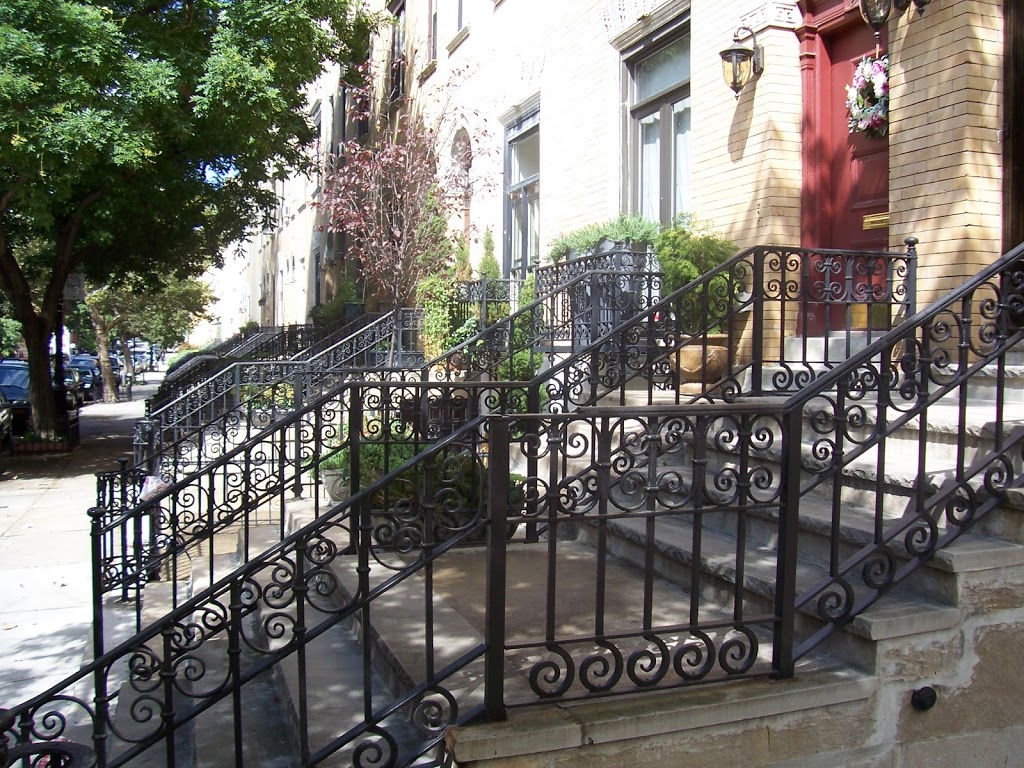
Luckily, areas like Strivers Row (pictured below, located about ten blocks north of the Apollo) soon dissolved that color barrier, and it was in neighborhoods like these that the community flourished.

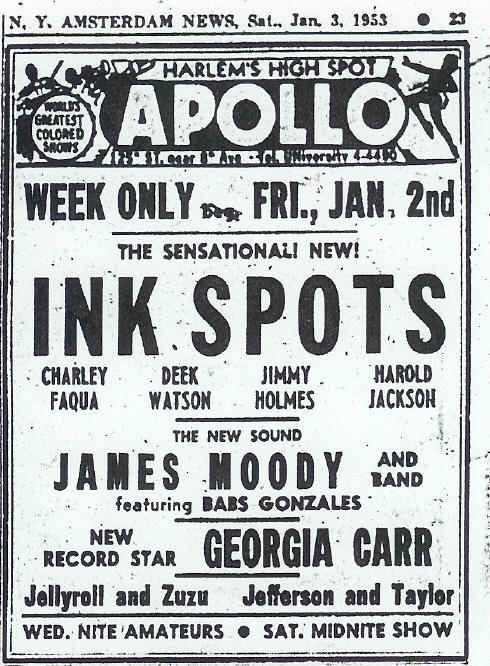
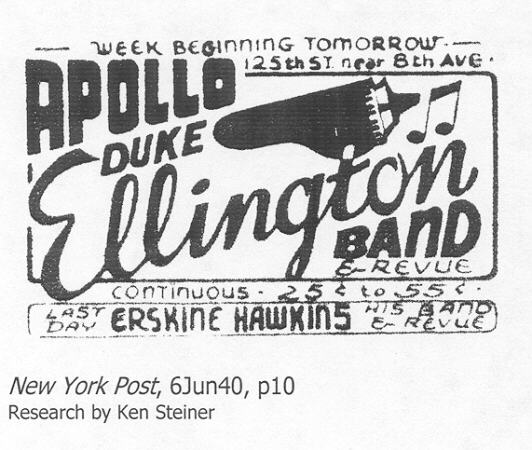
The Apollo would see dozens of major names in R&B, jazz and pop hit its stage in just a few months, as acts would be stacked on top of each other, giving audiences an opportunity to sample lists of artists topping the charts, all at once.

However, what would often set the Apollo apart from other venues was not its talent, but its audiences. I love this quote from Ozzie Davis, about a play that he and his wife Ruby Dee performed on the stage of the Apollo: “The play lasted 15 to 20 minutes longer at the Apollo because the people laughed at everything and their laughter would stop the show. It was like having a show and a prayer meeting at the same time. It was wonderful.”

Near the height of her fame, Aretha Franklin returned to Apollo, a place that had seen many of her early performances. She performed a string of performances in 1971, all of them sold out, to a marquee outside that pronounced ‘She’s Home’. In the 60s, comedians like Bill Cosby, Redd Foxx and Richard Pryor built their stand-up followings at the Apollo. Before them, however it was Moms Mabley, one of the first female comedians to grace the Apollo stage, taking up a virtual residence there that lasted from the late 30s to the 60s. She would perform at the Apollo more than any other performer in its history, making up to $10,000 a week in her heyday. (That’s an awful lot of dough in 1950s money.)

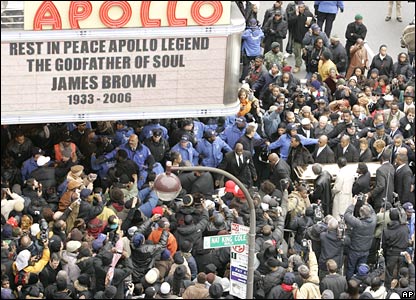
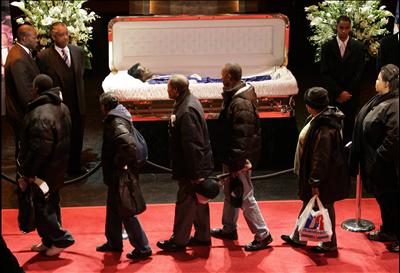
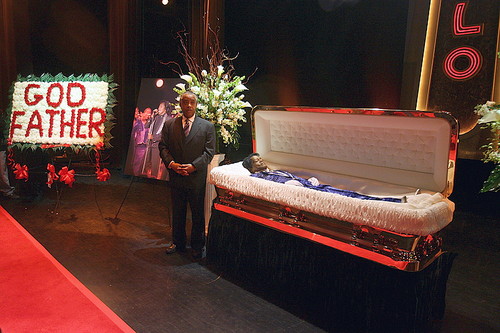
When James Brown died, the Apollo lost its leading light, the man that typified the world-class entertainment it had come to be known for. His funeral was attended by thousands of fans, who traipsed up to the stage to see the King of Soul a final time.


I can’t help but find this picture of Al Sharpton and the body of James Brown on the stage of the Apollo a little strange, however.

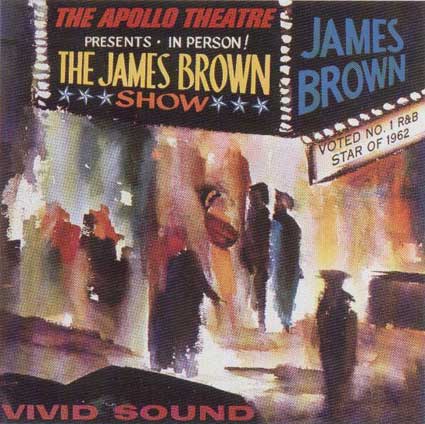
Al Sharpton, a close friend of Brown’s, was quoted as saying, “I don’t think any of us could think James Brown could die. It didn’t seem possible.” James is very much living and breathing on his pivotal recording ‘Live At The Apollo’, which Rolling Stone called the most important live album ever recorded. Listening to this, he does seem to have an air of immortality and boundless talent and energy.

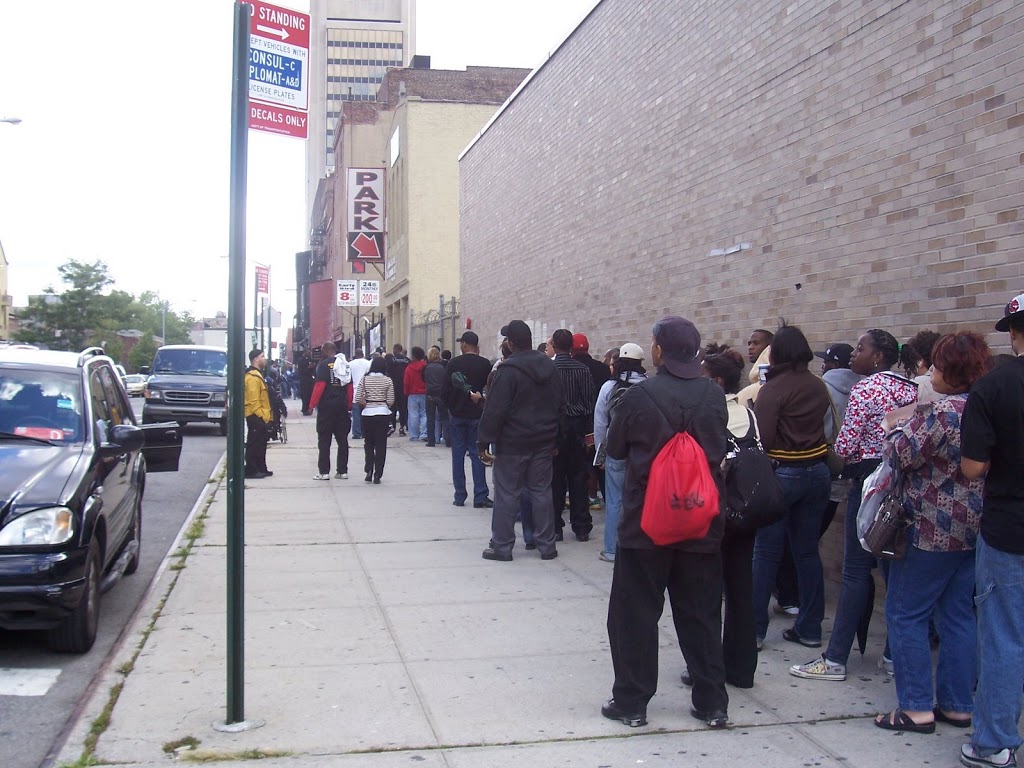
This past Saturday, I happened to be sauntering by the Apollo and caught this line of auditioners for Amateur Night filing into the back of the building to try out. Behold, for the chances are very good that what you are looking at is surely the backside of a major future star!

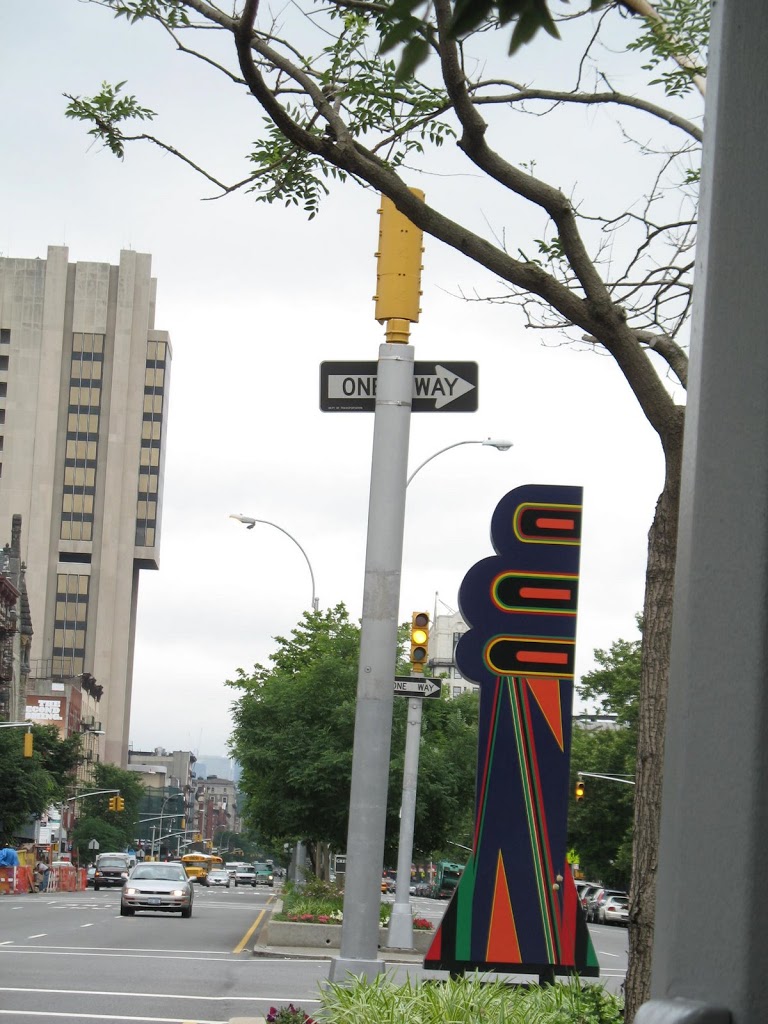
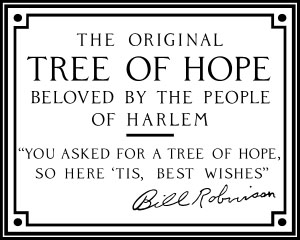
Those who gave a little rub to the sliver of the Tree of Hope have given better performances, at least according to legend. And given the Apollo’s track record, who can balk? Down the street at 131st and Adam Clayton Blvd,, near the original location of the Tree of Hope, you can find a sculpture by Al Miller commemorating the original tree, as well plaque laid in 1941 in a ceremony by mayor Fiorello LaGuardia and entertainer Bill ‘Bojangles’ Robinson. Robinson, naturally, was a frequenter of the stage of the Apollo. Like many performers of his era, he would sometimes perform up to 3 to 5 times a day to soldout shows.

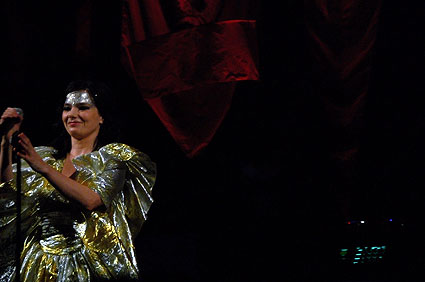
The Apollo is considered one of the most prestigious venues in the city and is host to musicians covering a wide swath of genres — gospel, hip hop, alternative. Below, it’s Bjork that takes the stage:

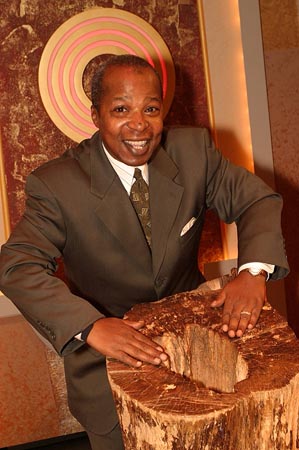
The Apollo Theater currently has tours for groups, led by longtime Apollo employee and ultimate historian Billy Mitchell. You can go to their official website for information, and you can go here for info on getting tickets to Showtime At The Apollo. (Billy and the Apollo’s slice of the Tree of Hope is at right.)

Please go here for some information on another Harlem music icon The Cotton Club, and here for all entries in our Friday Night Fever series.