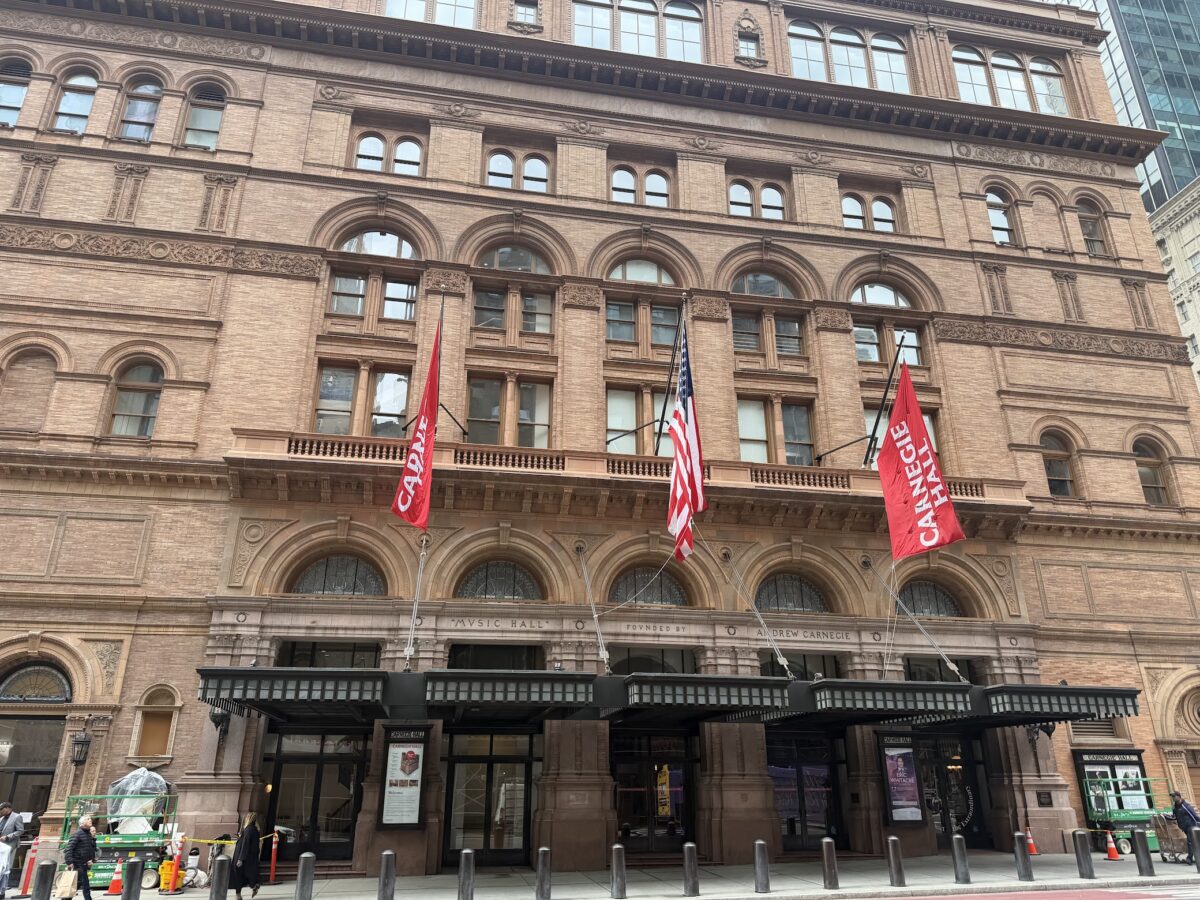
Carnegie Hall is one of America’s greatest and most enduring cultural landmarks, enchanting audiences and making history since its opening night on May 5, 1891, when Pyotr Ilyich Tchaikovsky appeared there in his first performance in the United States.
This groundbreaking performance space (originally known simply as “Music Hall”) is in fact a trio of distinct venues, all nestled within a single, opulent Italian Renaissance–style building.
Although its benefactor Andrew Carnegie and his fellow Gilded Age elites had moved their grand residences farther up Fifth Avenue, New York’s established cultural institutions, like the venerable Academy of Music, still lingered well to the south. Carnegie Hall helped shift that center of gravity uptown.
Yet the true history of Carnegie Hall lives inside its walls—within the experiences of the audiences and the artists, and, for this week’s show, within the archives themselves. Tom and Greg have been invited into the Carnegie Hall archives for an exclusive, unprecedented encounter with the story of American music.
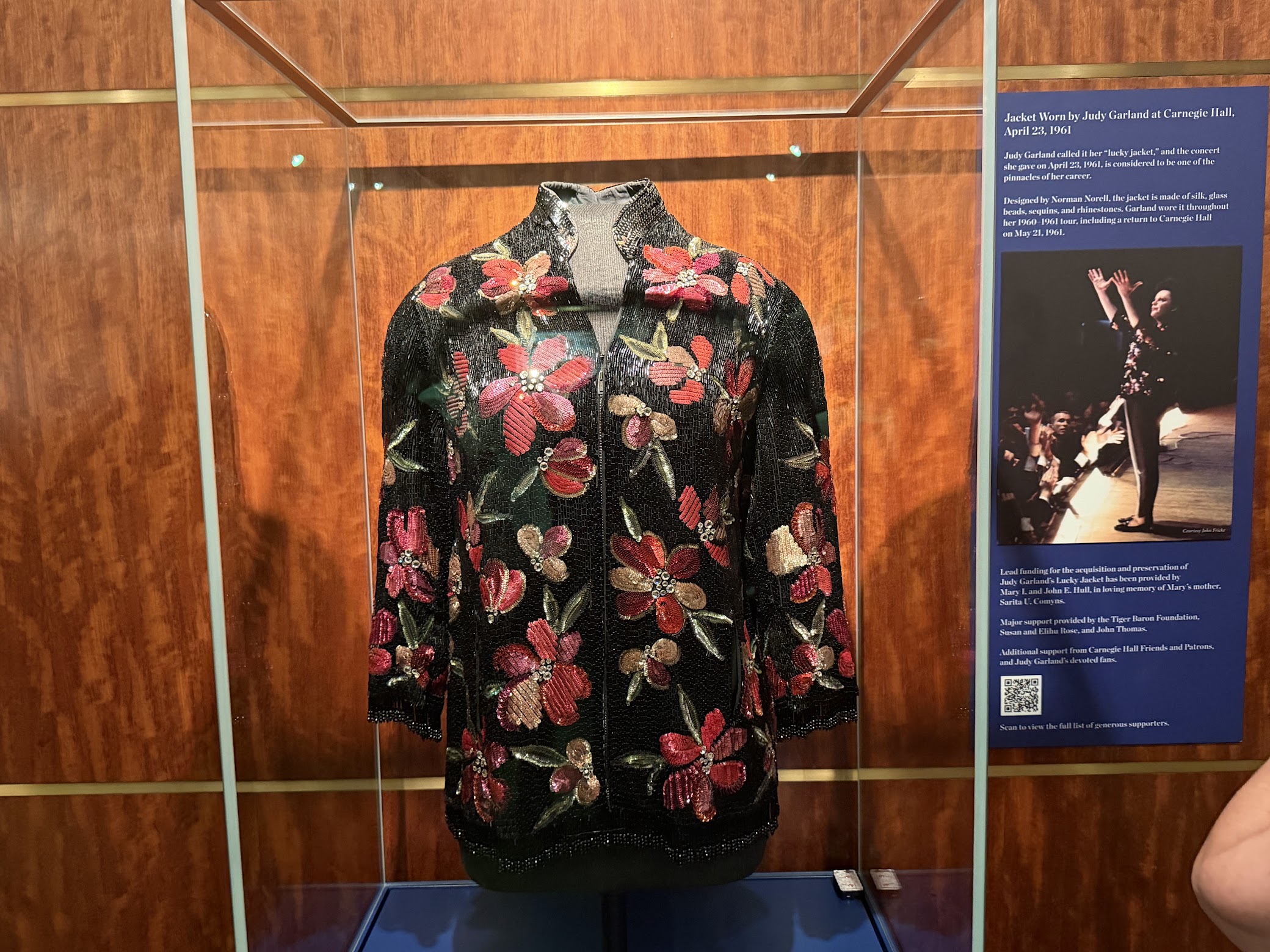
Kathleen Sabogal and Robert Hudson of the Rose Museum & Archives guide the Bowery Boys through the Hall’s past, using some of their collection’s most cherished artifacts: a clarinet, mysterious locks, ledger books, stickpins, suffrage buttons, beaded jackets, photographs, and autograph books that together bring the spirit of Carnegie Hall vividly to life.
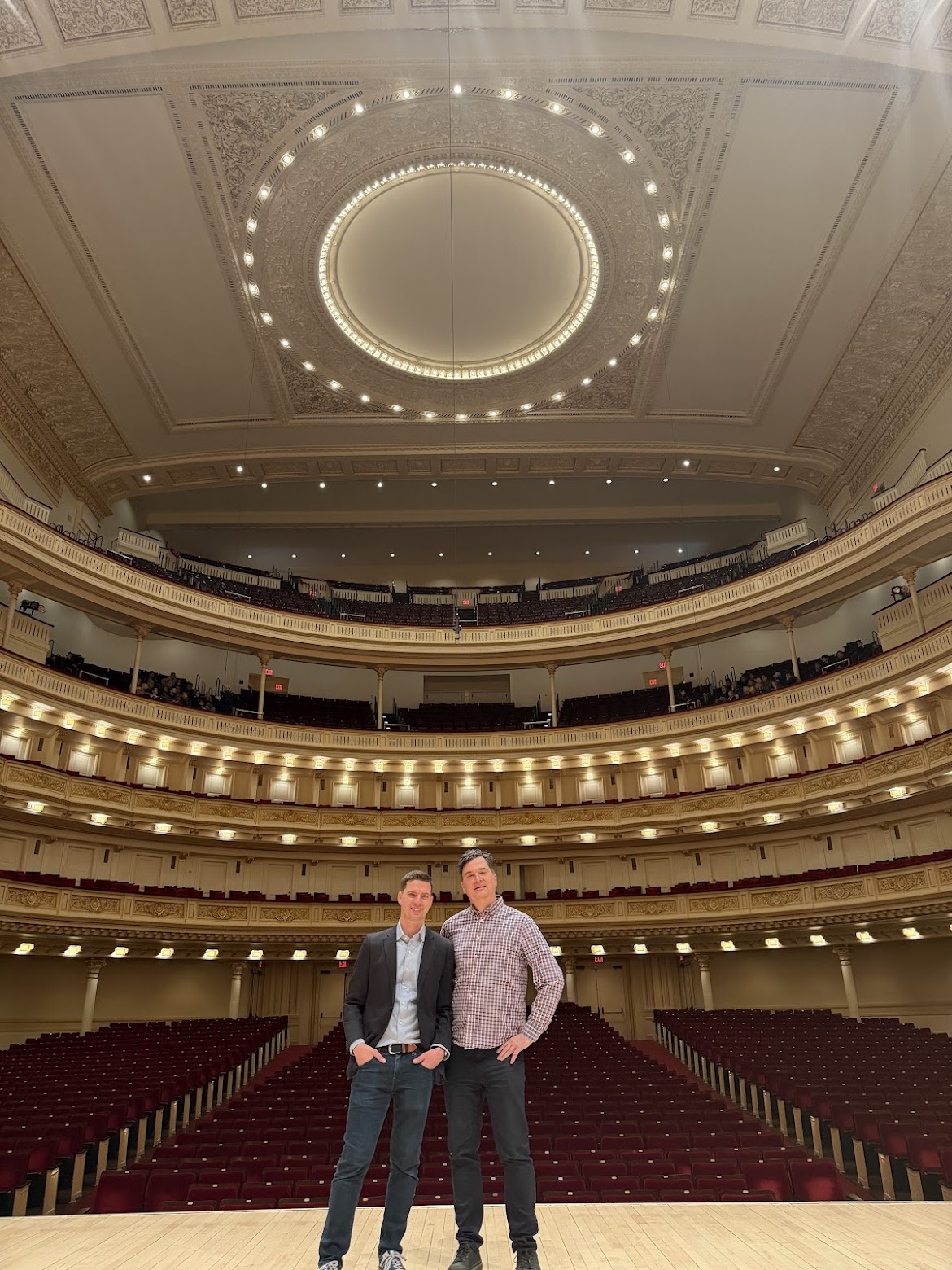
And in the end — they even take to the stage!
This episode was proudly sponsored by Carnegie Hall. Visit CarnegieHall.org for information on upcoming shows, including the United in Sound: America at 250festival, a multifaceted reflection of the United States 250 years since the signing of the Declaration of Independence.
Carnegie Hall’s 2025–2026 season festival is a multifaceted reflection of the United States 250 years since the signing of the Declaration of Independence.
In more than 35 concerts at the Hall, audiences will experience Broadway, jazz, film music, rock ‘n’ roll, hip-hop, bluegrass, classical, and so much more, showcasing the very best of the American spirit through music.
Events at top cultural institutions across New York further expand the festival’s scope, offering new avenues for discovery as we explore our nation’s vibrant and complex past, present, and future.
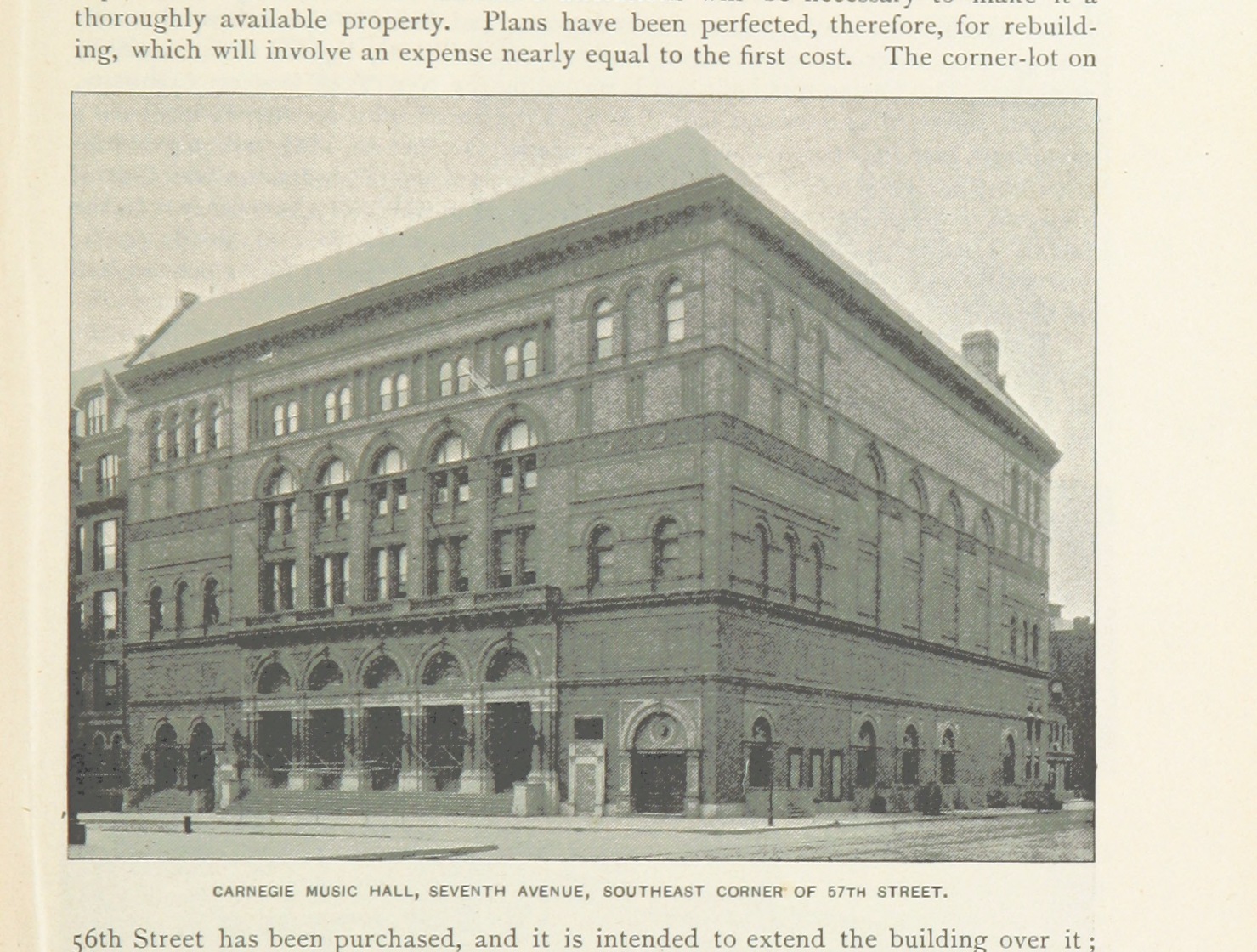
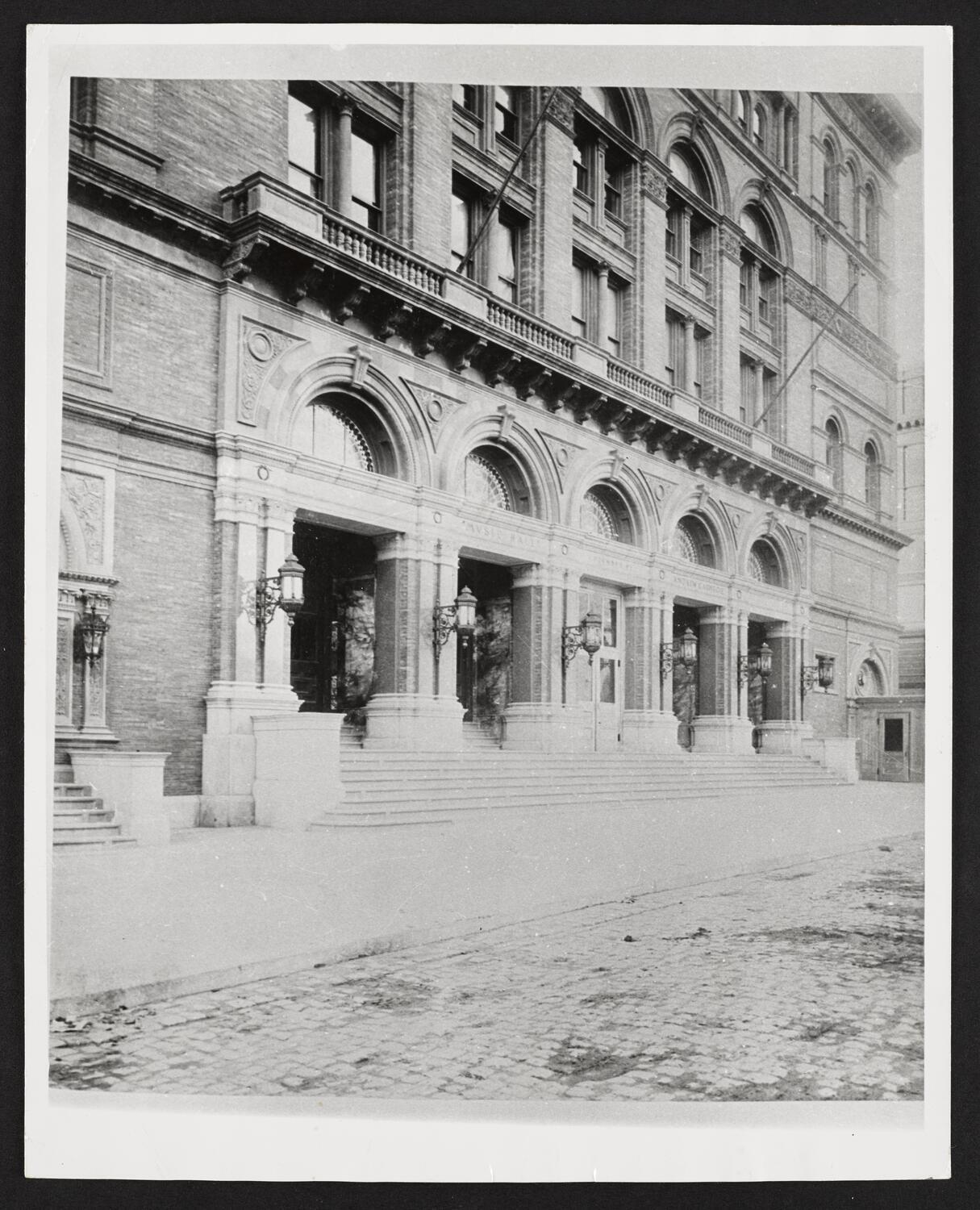
Carnegie Hall, 1891. Main entrance to Carnegie Hall on 57th street. The front stairs were removed in 1920 when 57th street was widened to add two additional traffic lanes.
Courtesy Carnegie Hall Rose Archives
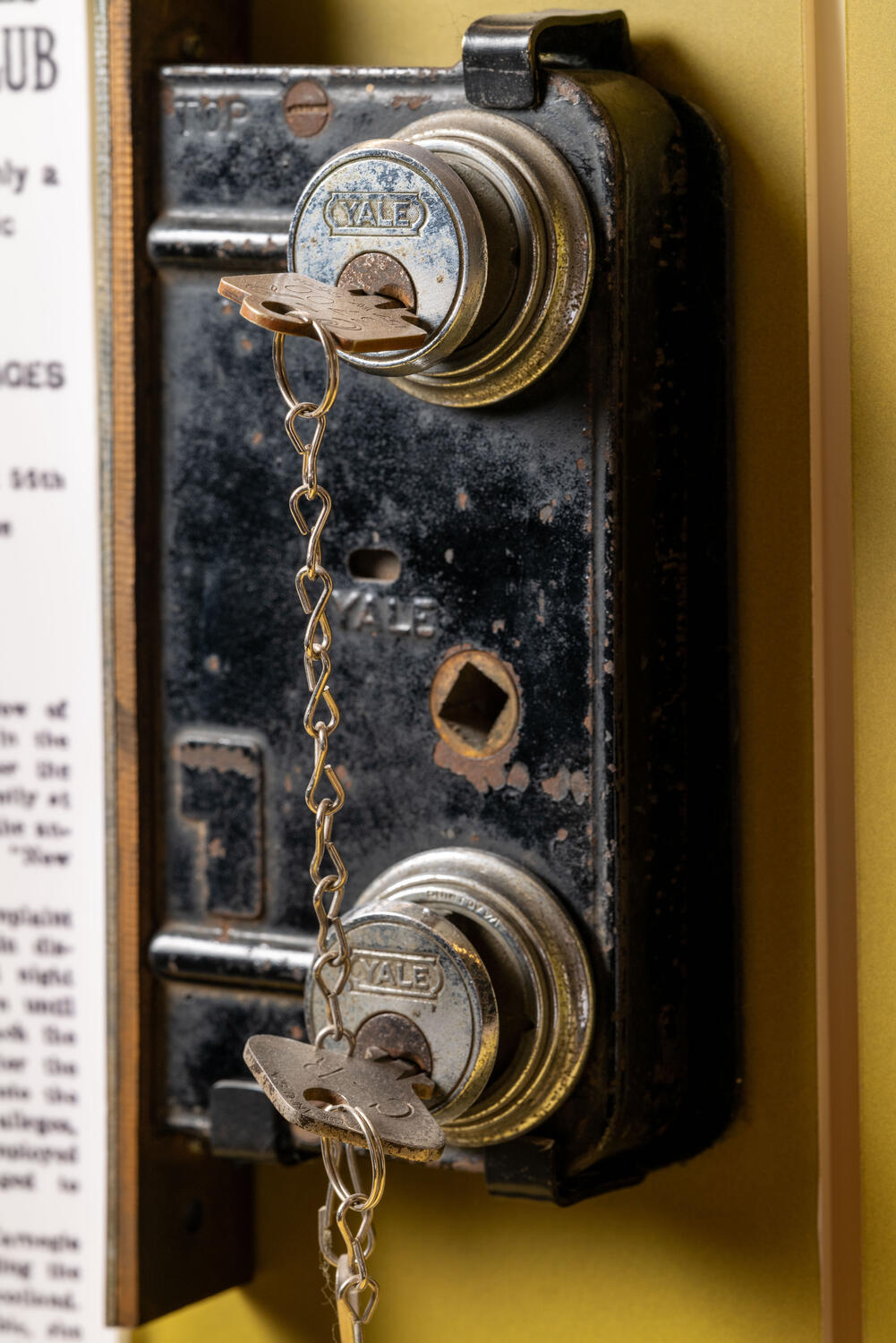
The speakeasy lock! Double-lock used to gain entry to Club Richman, a speakeasy located on the Carnegie Hall property, 1924
Courtesy of Carnegie Hall Rose Archives
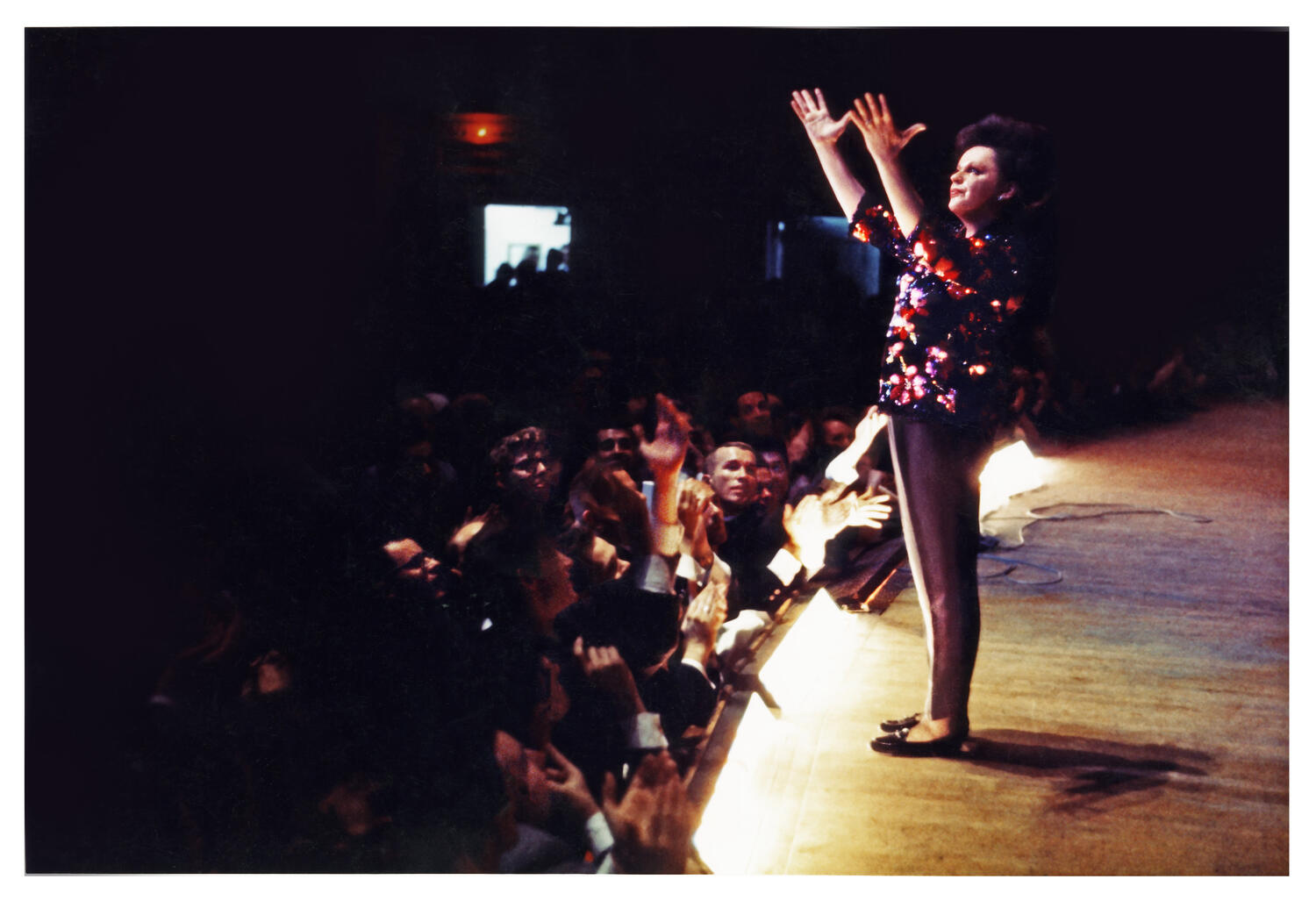
Judy Garland at Carnegie Hall 1961
Courtesy of John FrickeCourtesy Bowery Boys
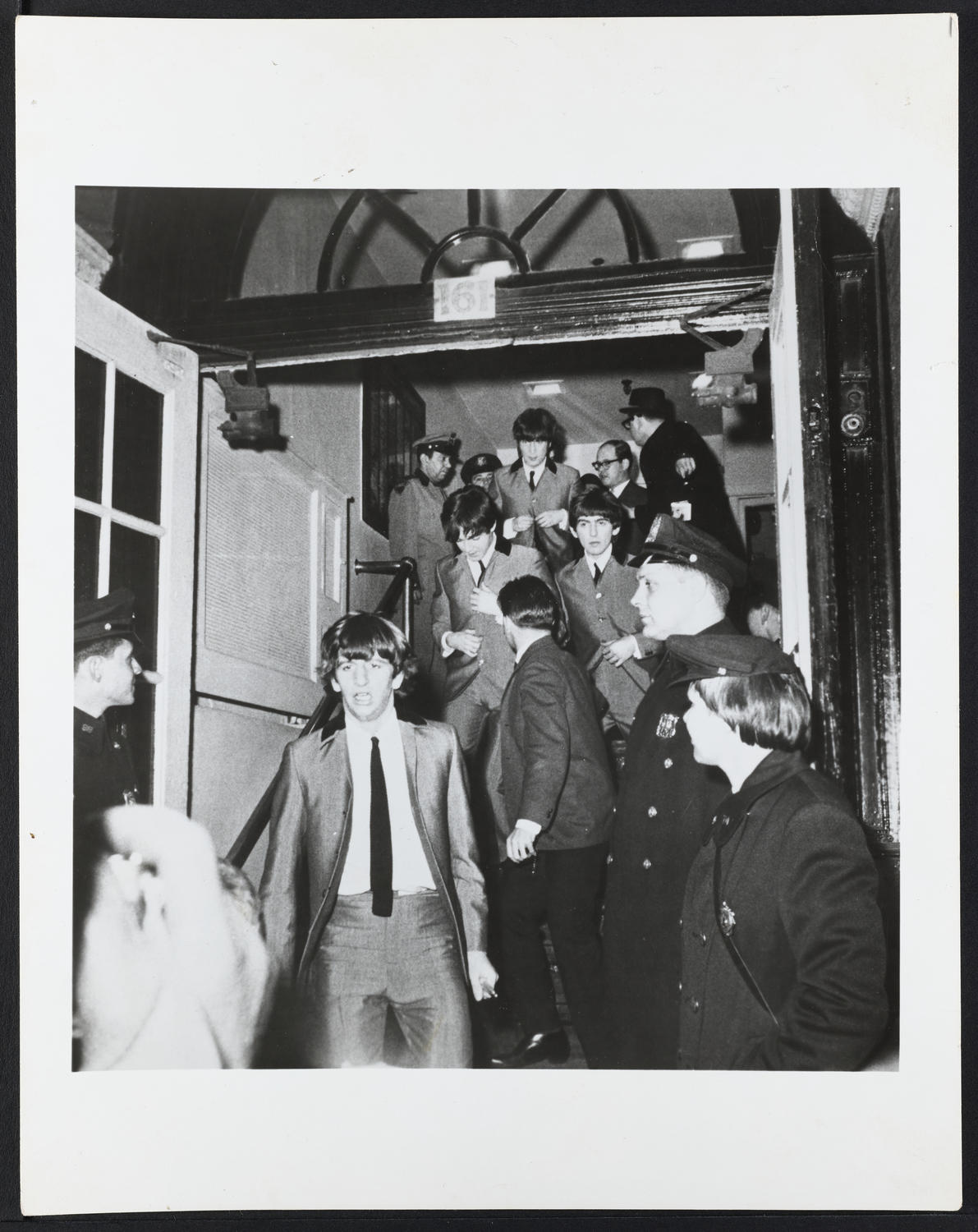
The Beatles at Carnegie Hall, February 12, 1964
Courtesy of Carnegie Hall Rose Archives
FURTHER LISTENING
After taking in the story of Carnegie Hall, take a dive into these past Bowery Boys episodes to learn more about some of the topics mentioned in the show, including some forays into New York City musical history
When the Academy of Music opened in 1854, New York City was just about to become the richest, most powerful city in the nation. It was, in fact, almost there.
With the construction of the Erie Canal (which opened in 1825), the port city at the mouth of the Hudson River benefited greatly from the proximity.
The city grew in marvelous ways in the three decades after its opening with a new Croton water system, expanding gaslighting, and a growing grid plan, pushing the city north up the island of Manhattan.
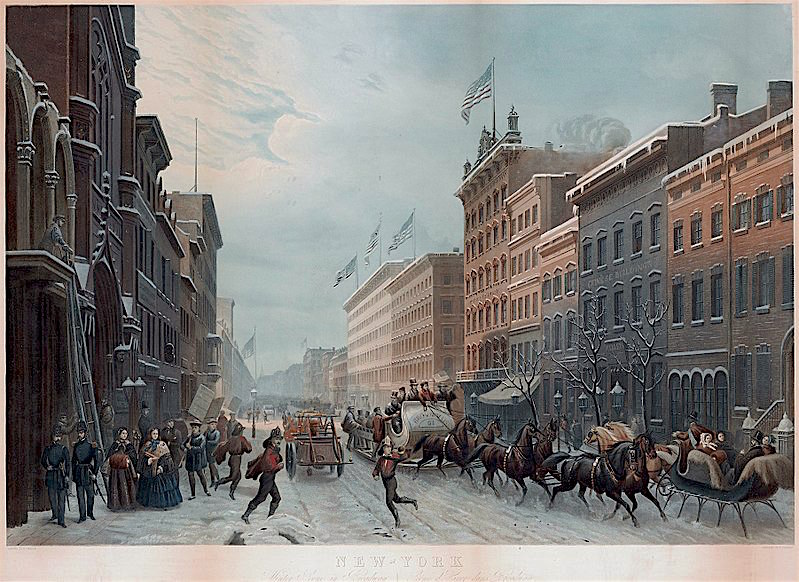
New York winter scene in Broadway, 1857 Eno, Amos F., 1836-1915 (Collector) Girardet, Paul, 1821-1893 (Engraver) Sebron, Hippolyte Victor Valentin, 1801-1879 (Artist); courtesy New York Public Library
The city’s old-money elites soon made room — with an upturned nose, naturally — for the new-money families enriched by both New York real estate and burgeoning American industries fueled by the growth of the railroad. The New York Stock Exchange, re-built after the Great Fire of 1835, was thriving with the nation’s booming (if often volitile) economy.
And so New York society, modeling itself after English and French elites, began importing high cultural venues in which to flaunt their love of the arts — and, more importantly, their money and station in the social pecking order.
The Astor Place Opera House, opening in 1847, had briefly been the center for upper-class entertainments, but the deadly Astor Place Riots a couple years later signaled the end of that venue.
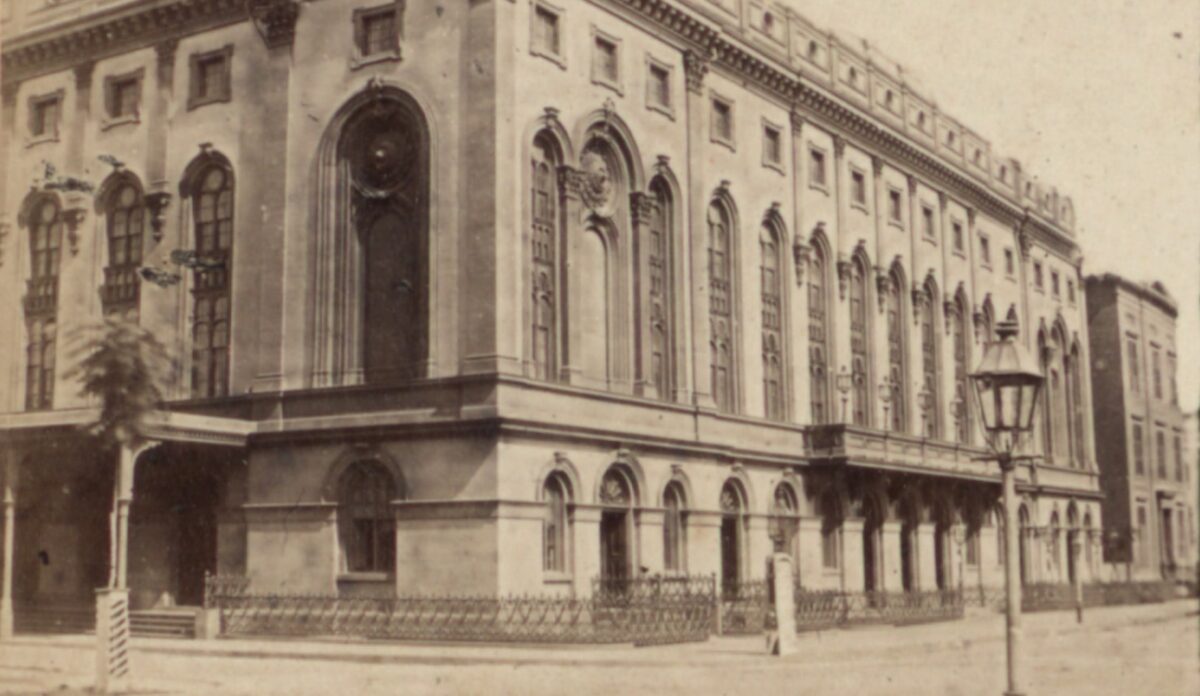
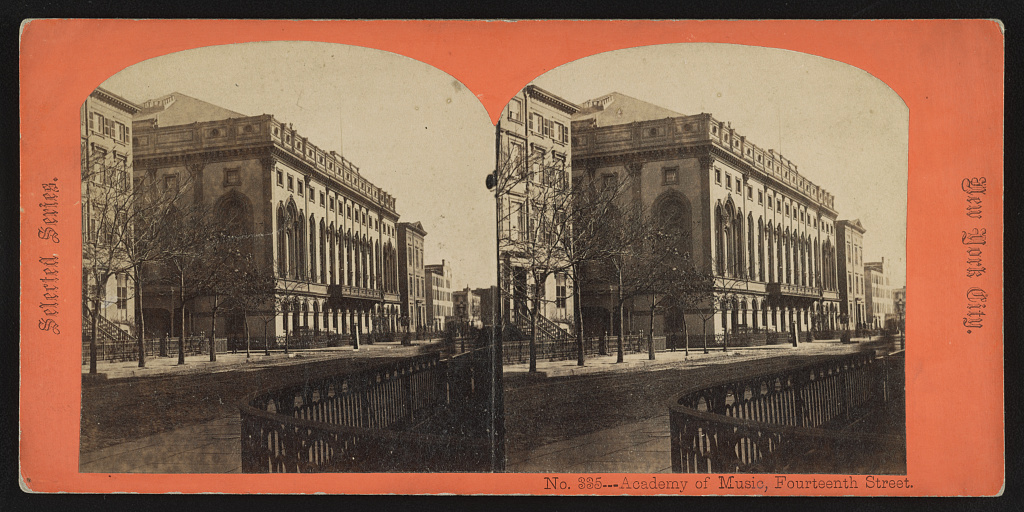
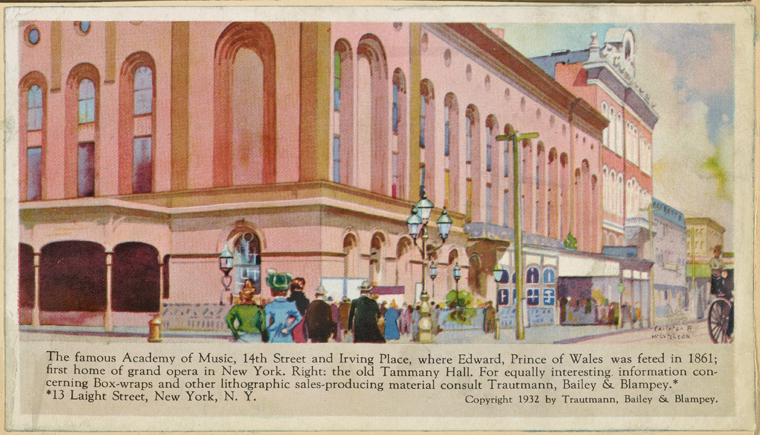
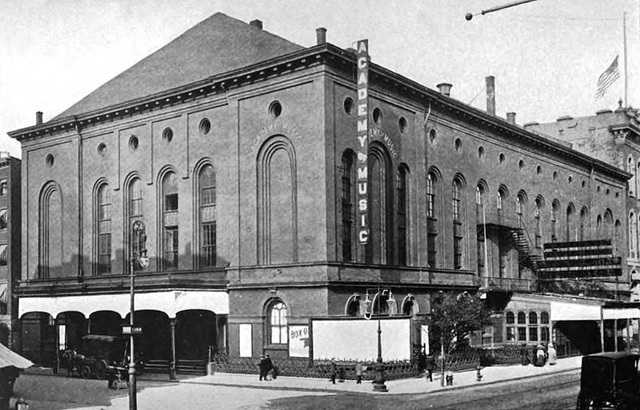
Early photograph of the Academy of Music, NYPL
And thus New York got the Academy of Music in 1854. Located on 14th Street and Irving Place, the new music house was uniquely situated near both Gramercy Park and Union Square, both havens for the elite in the 1850s. (NOTE: The Academy of Music was only a few blocks north from the old Astor Place Opera House.)
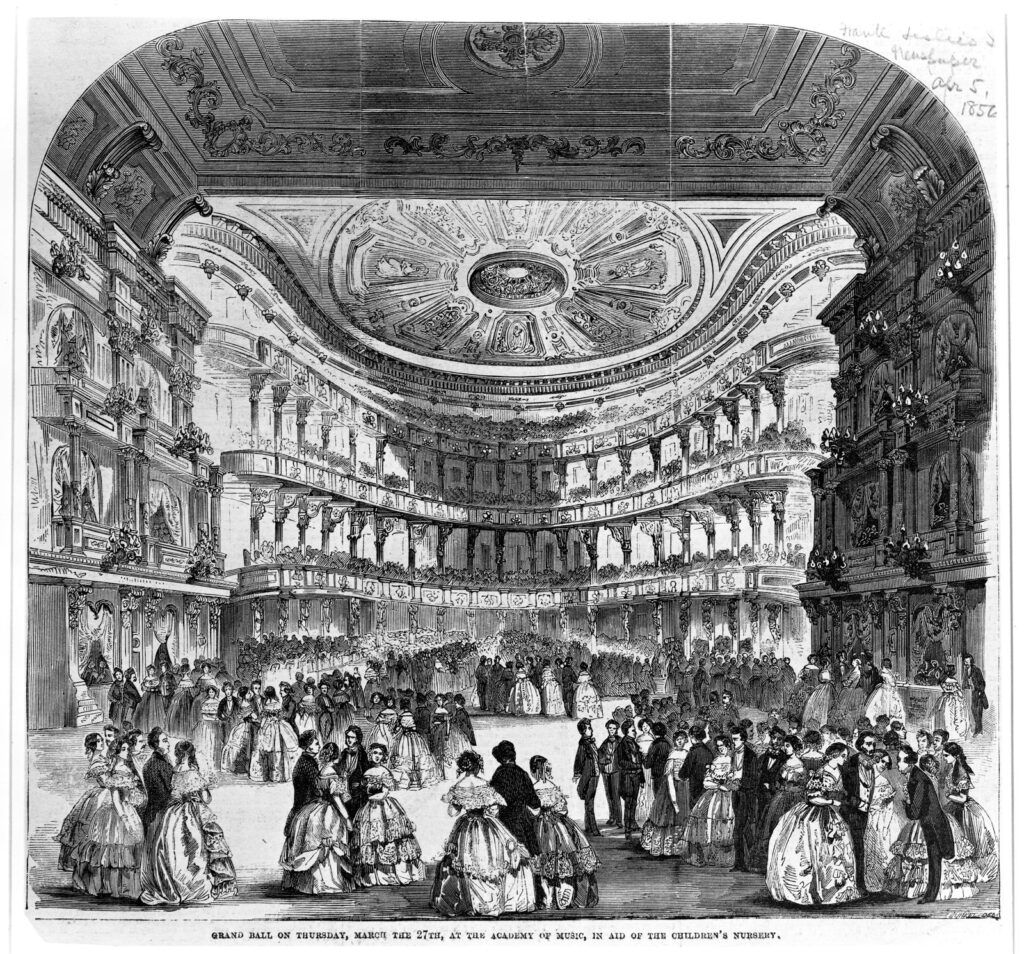
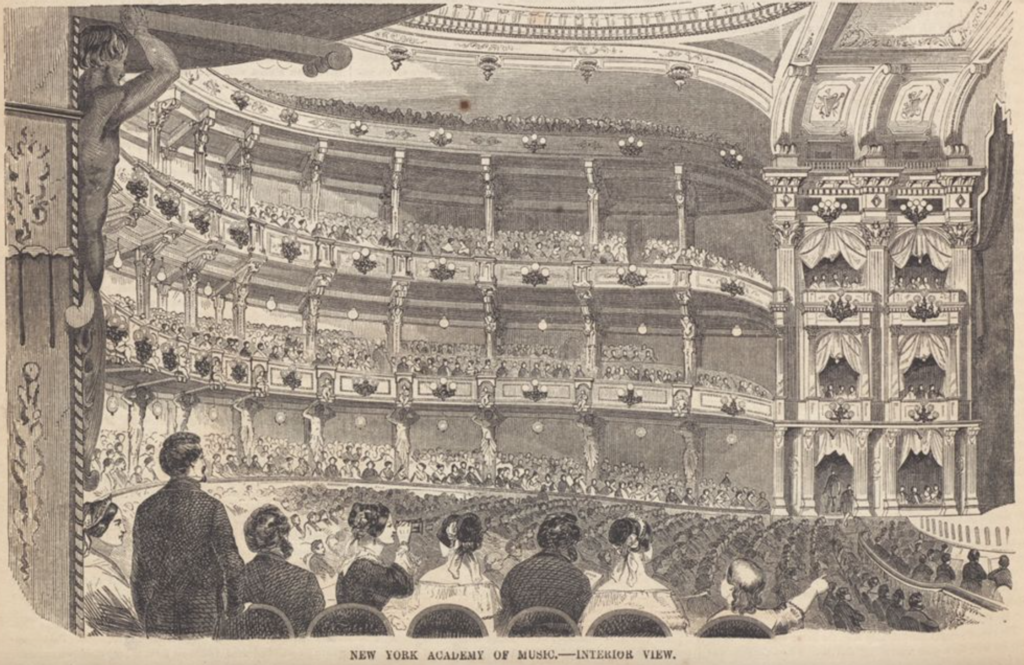
Inside the Academy of Music, 1856, NYPL
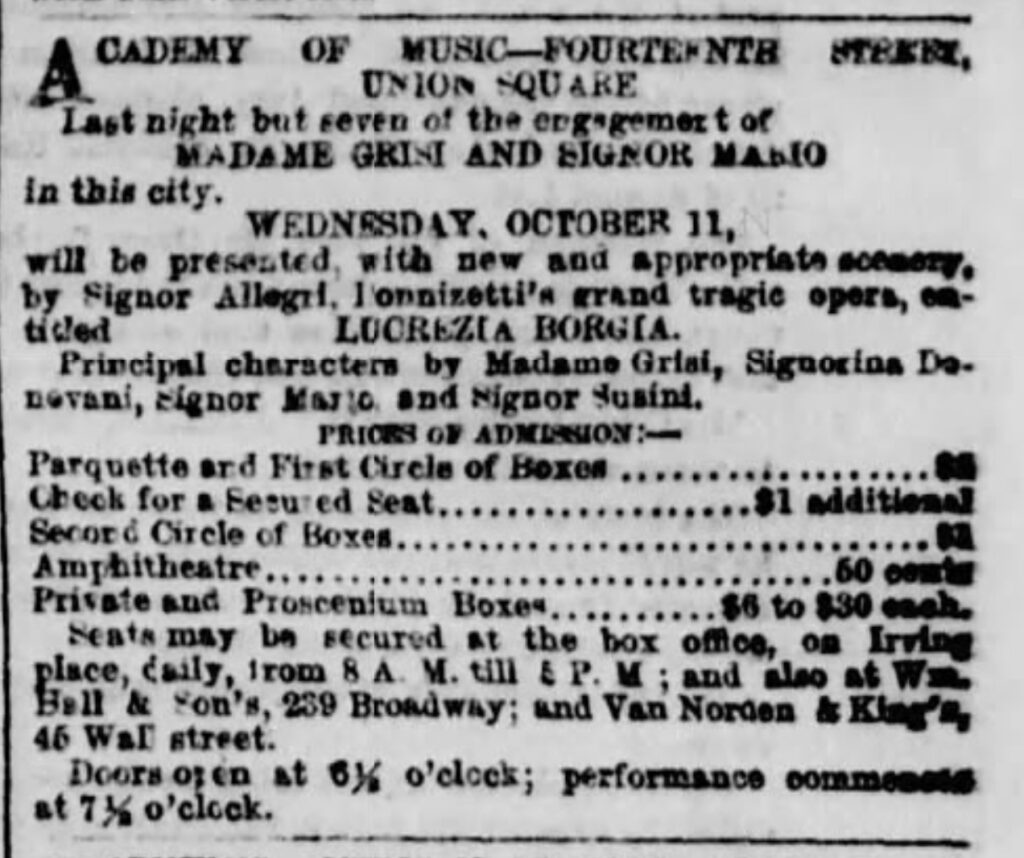
The opening bill on October 2 featured a performance of Vincenzo Bellini’s Norma featuring acclaimed Italian soprano Giulia Grisi. (America had very little homegrown talent in these days.) Underscoring its almost immediate dominance in the Americas cultural scene, the operas Rigoletto, La Traviata, Aida, Die Walküre and Carmen made their American debuts upon this stage.
The growing rival city of Brooklyn followed suit — had to follow suit, to satisfy its own elites who were situated mostly around the area of today’s Brooklyn Heights. The first Brooklyn Academy of Music opened there in 1861; after it was destroyed in fire in 1903, it moved to its present location. [More on its history here.]
Brooklyn’s original opera house was beautiful, sure, but it was no match in opulence for New York’s Academy of Music which was the largest opera venue in the world when it opened.
Interior of the Academy of Music 1856
But it designed to be so much more, a multi-purpose building which needed more space befitting the city’s growth. According to this announcement on August 28, 1854, “The New York Academy of Music will be used occasionally for concerts, balls, public meetings and theatrical performances.”
Perhaps due to its many purposes, the reputation of the Academy of Music became tainted by rowdy “French balls” which took place here off season.
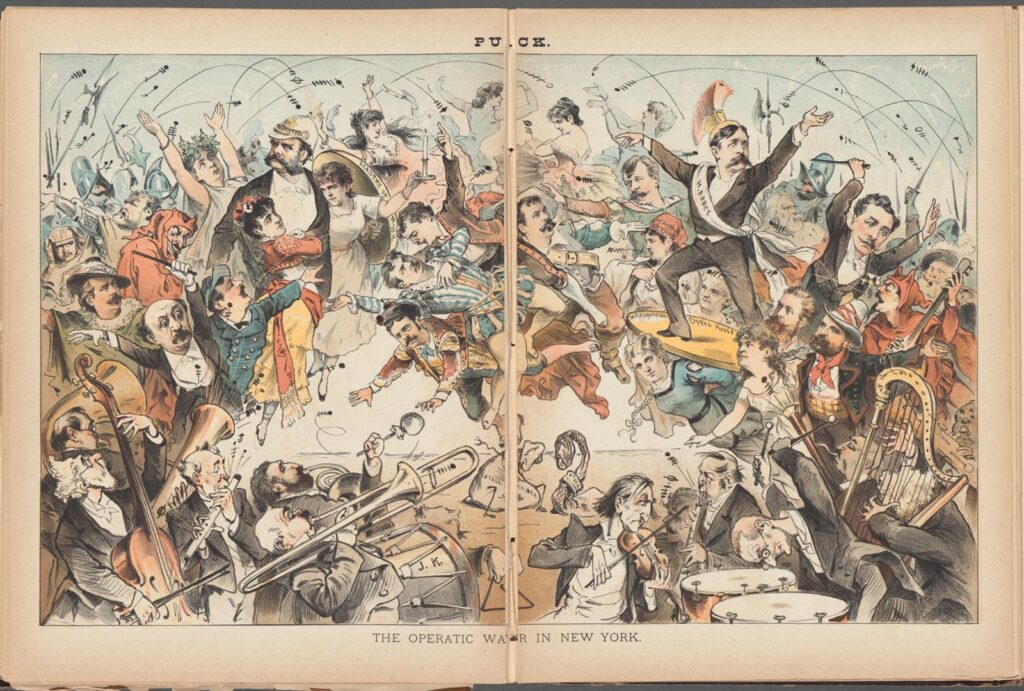
In 1883 Puck Magazine festively lampooned the ‘opera wars’ between the Academy of Music and the Met Opera house.
However it wasn’t until New York’s next wave of moneyed elites — its nouveau riche — opened the Metropolitan Opera House in 1883 further north that opera (and respectability) finally vacated the Academy of Music.
By that time, Union Square was the city’s destination for a more lowbrow entertainment — vaudeville! — and so the Academy welcomed that entertainment form onto its stage. But it could never recapture its glory, and the building was demolished to make way for a skyscraper owned by Consolidated Edison (which still remains).
The Academy of Music from the vaudeville years
But the name would not leave the neighborhood! A movie palace opened across the street (eventually owned by William Fox) with the name the Academy of Music. During the 1970s it hosted rock music performances and, by the 1980s, had transformed into the seminal dance club the Palladium.
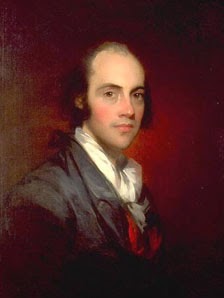
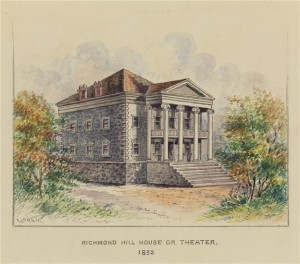
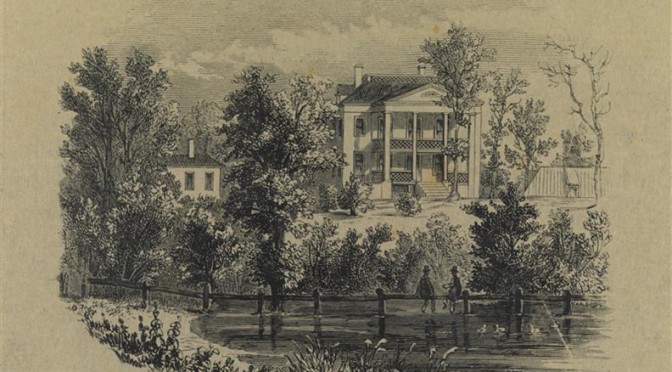
Richmond Hill, the spacious mansion and 26-acre estate on the outskirts of town that had once been George Washington‘s headquarters and later the home of John Adams, was also home to another vice president — Aaron Burr. This was the place he lived on that fateful day, July 11, 1804, when he entered into a duel with Alexander Hamilton. Here’s a lovely description of the home from an 1861 biography of Burr by author James Parton:
“[Burr’s] style of living kept pace with his increasing income. In a few years we find him master of Richmond Hill, the mansion where Washington had lived in 1776, with grounds reaching to the Hudson, with ample gardens, and a considerable extent of grove and farm. Here he maintained a liberal establishment and exercised the hospitality which was then in vogue.
The one particular in which Richmond Hill surpassed the other houses of equal pretensions, was its library. From his college days, Colonel Burr had been a zealous buyer of books, and his stock had gone on increasing till, on attaining to the dignity of householder, he was able to give to his miscellaneous collection something of the completeness of a library.
It is evident enough, from his correspondence, that his favorite ethos were still those whom the ‘well-constituted minds’ of that day regarded with admiring horror. The volumes of Gibbon’s History [The Decline And Fall of the Roman Empire] were appearing in those years, striking the orthodox world with wonder and dismay. They had a very hearty welcome in the circle at Richmond Hill.”
After the duel, Burr liquidated his assets, selling Richmond Hill to John Jacob Astor. With the grounds heavily cut up and sold, he had the mansion rolled on logs to the newly carved street corner and turned into a theater and opera house. At this time, he also moved the carriage house further north, where it was later re-purposed and today houses the romantic restaurant One If By Land, Two If By Sea.
It made for a very sumptuous opera house, it appears. According to author Eric Homberger, “Boxes at the Richmond Hill were furnished as though they were an extension of the elegant parlors of St. John’s Park, with ‘light blue hangings, gilded panels and cornice, arm-chairs, and a sofa.'”
It was parallel in style, perhaps, to the Astor Place Opera House across town. Eventually it deteriorated into a lowly roadhouse and saloon — but certainly, the most gorgeous one in town — called the Tivoli Saloon before being torn down in 1849.
Today the site of Richmond Hill and its former ground are occupied by this building, currently the home of WNYC, and the surrounding blocks of this area of the far West Village.
Top image courtesy the Museum of the City of New York
PODCAST Steven Spielberg’s new version of West Side Story is here — and it’s fantastic — so we’re re-visiting our 2016 show on the history of Lincoln Center, with a new show introduction discussing the film and the passing of musical icon Stephen Sondheim.
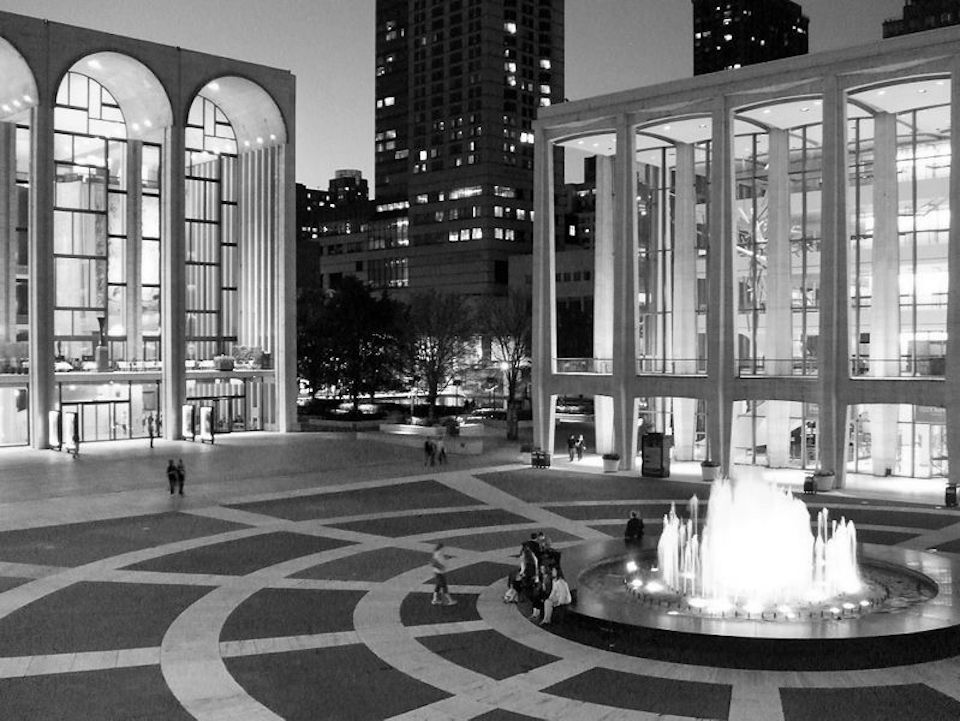
Warm up the orchestra, lace up your dance slippers, and bring the diva to the stage! For our latest show we’re telling the origin story of Lincoln Center, the fine arts campus which assembles some of the city’s finest music and theatrical institutions to create the classiest 16.3 acres in New York City.
However this tale of Robert Moses urban renewal philosophies and the survival of storied institutions has a tragic twist. The campus sits on the site of a former neighborhood named San Juan Hill, home to thousands of African American and Puerto Rican families in the mid 20th century. No trace of this neighborhood exists today.
Or, should we say, ALMOST no trace. San Juan Hill exists, at least briefly, within a part of classic American cinema.
The Oscar-winning film West Side Story, based on the celebrated musical, was partially filmed here. The movie reflects many realities of the neighborhood and involves talents who would be, ahem, instrumental in Lincoln Center’s continued successes.
FEATURINGLeonard Bernstein, Leontyne Price, James Earl Jones, Imelda Marcos, David Geffen and, naturally, the Nutcracker!
The Bowery Boys: New York City History podcast is brought to you …. by you!
We are now producing a new Bowery Boys podcast every other week. We’re also looking to improve and expand the show in other ways — publishing, social media, live events and other forms of media. But we can only do this with your help!
We are now a creator on Patreon, a patronage platform where you can support your favorite content creators.
Please visit our page on Patreon and watch a short video of us recording the show and talking about our expansion plans. If you’d like to help out, there are several different pledge levels. Check them out and consider being a sponsor.
We greatly appreciate our listeners and readers and thank you for joining us on this journey so far.
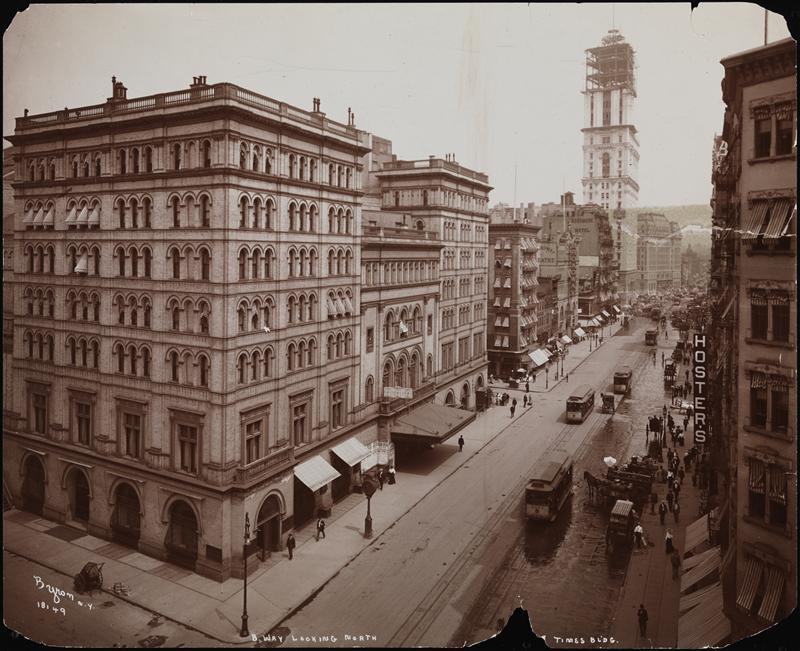
The Metropolitan Opera House, in 1904. In the far distance, you see One Times Square being constructed in Longacre Square.
Courtesy MCNY
The New York City Ballet had its first home at City Center while the New York Philharmonic was housed for decades at Carnegie Hall.
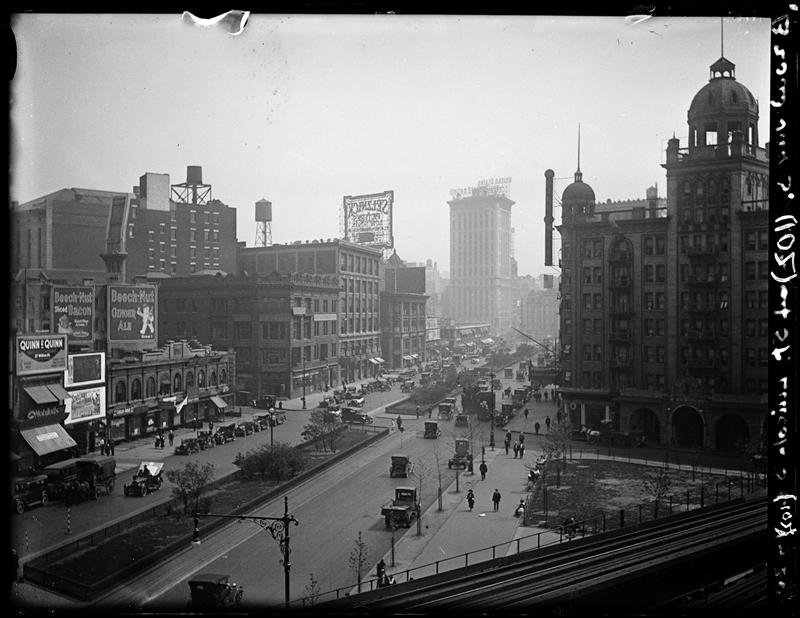
Below: Lincoln Square, 1920. This picture is actually taken from the spot where Lincoln Center stands today.
The triangular plaza pictured here would later be called Dante Park (a statue to the Italian writer would be placed here a year after this photo was taken). Take note of the 9th Avenue elevated streaking up Columbus Avenue at the bottom of this image.
Arthur Hosking/Museum of the City of New York
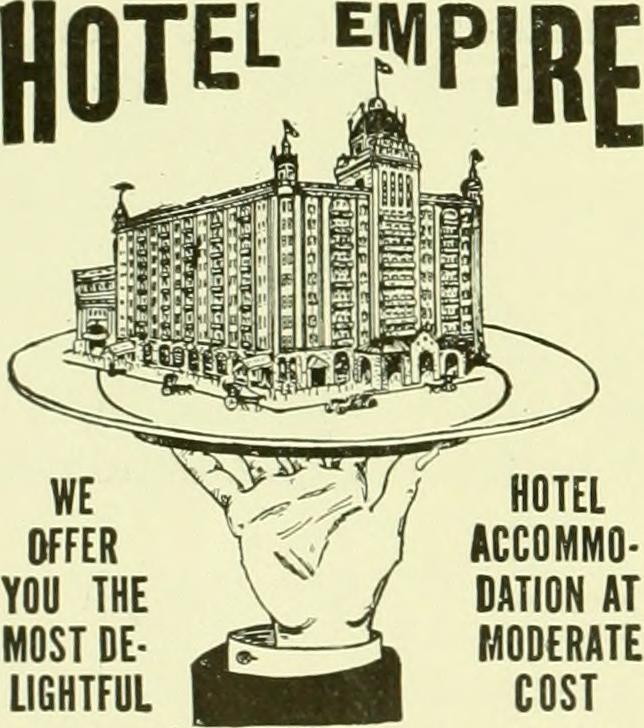
And that building to the right? That’s the Hotel Empire which is still standing there today (albeit in a greatly modified form). Here’s an ad for the Empire from 1909.
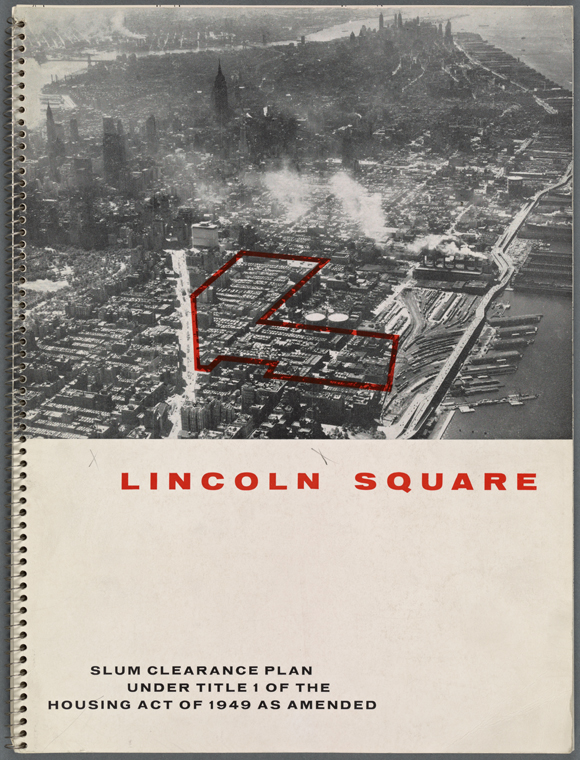
Robert Moses’ slum clearance plan for San Juan Hill, published in 1956.
Scenes from old San Juan Hill — 1932, 65th Street and Amsterdam Avenue
Charles Von Urban/MCNY
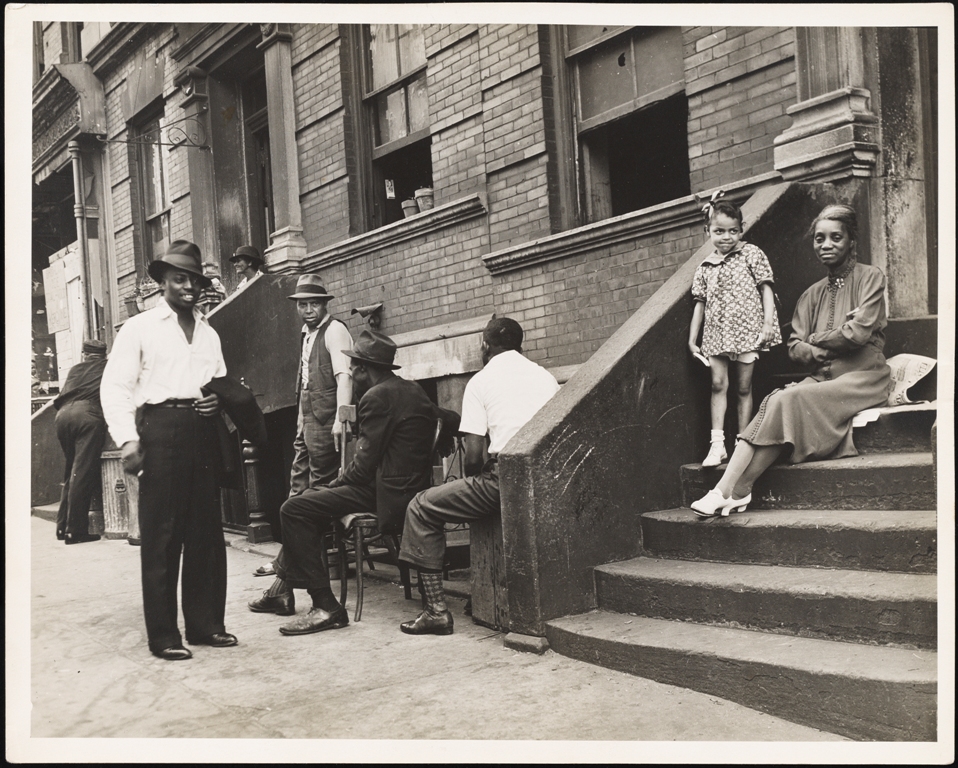
1939 — the stoop scene in San Juan Hill, street unknown
Courtesy MCNY Lee Sievan (1907-1990). San Juan Hill. 1939
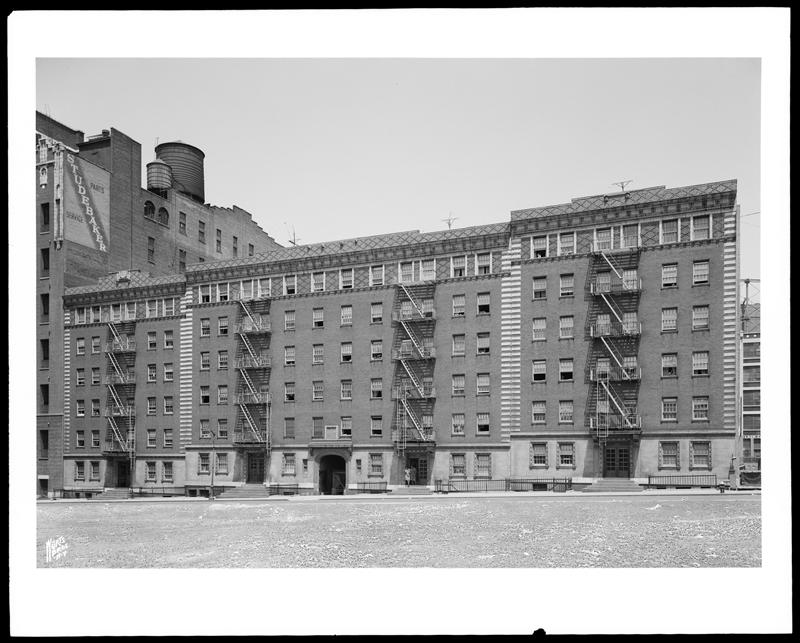
Below: An early effort to improve the housing quality in the neighborhood — the Phipps Houses, built in 1906.
An interesting New York Times article describes a few residents: “A typical tenant was the steamboat steward Joseph Craig, 36, classed as ‘mulatto’, who was born in Trinidad and arrived in the United States in 1891. Another was the horse breeder Daniel Moore, 43, born in Missouri and married for six years to Tilly Moore, 30, born in Cuba and in the United States since 1892; she worked as a domestic.”
MCNY
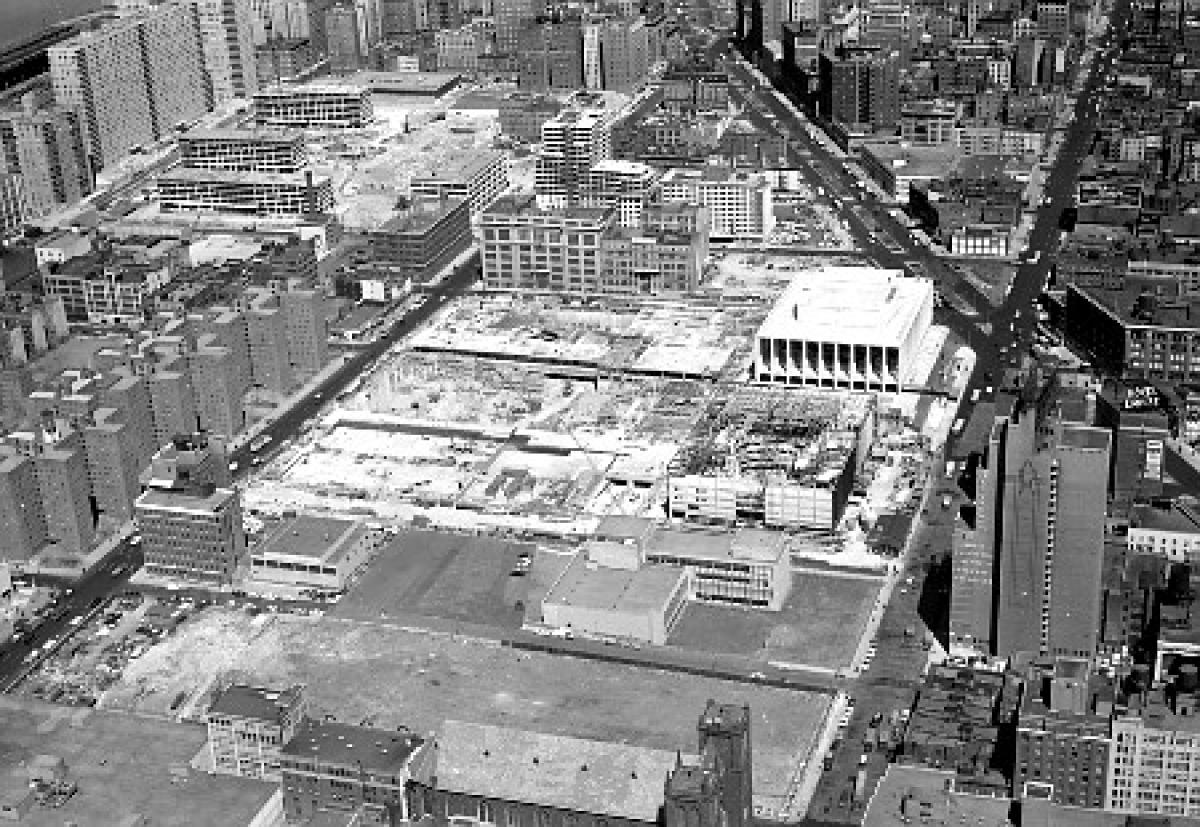
The scene in April of 1963. The Philharmonic Hall was already opened by this point. This really brings home the fact that there must have been so much noise pollution due to construction which must have perturbed the organizers of the Philharmonic greatly!
(MATTSON/DAILYNEWS)
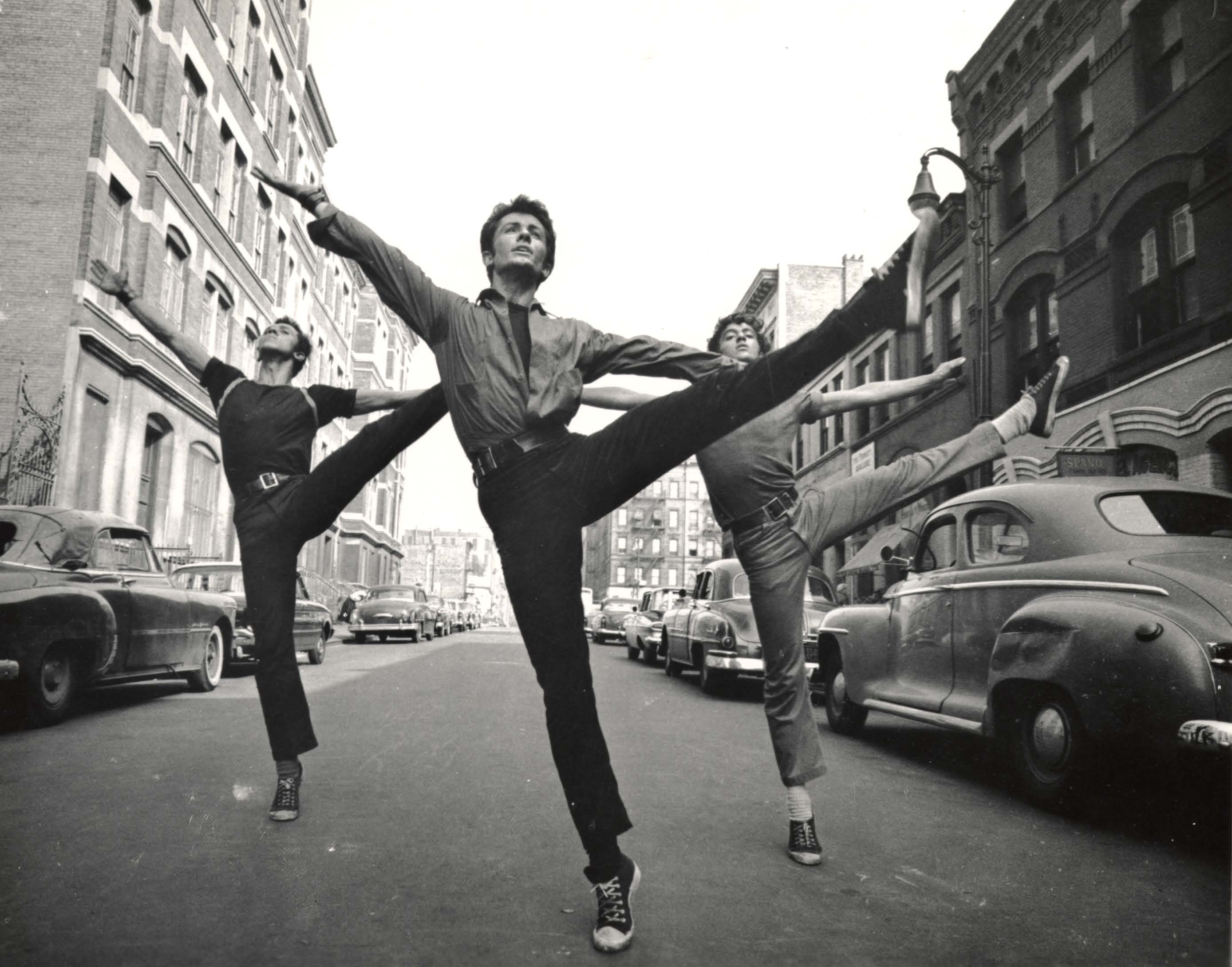
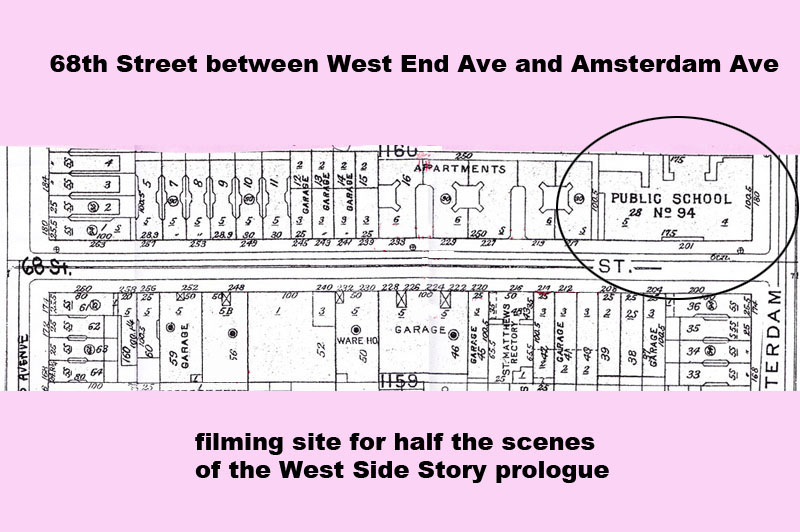
The opening sequence of the Oscar-winning film West Side Story was filmed on the streets of San Juan Hill, the structures around the actors clearly boarded up and ready for demolition.
(The website Tom mentioned on the show — Pop Spots NYC — shows a very detailed comparison of film scenes with maps and old photographs. Highly recommended!)
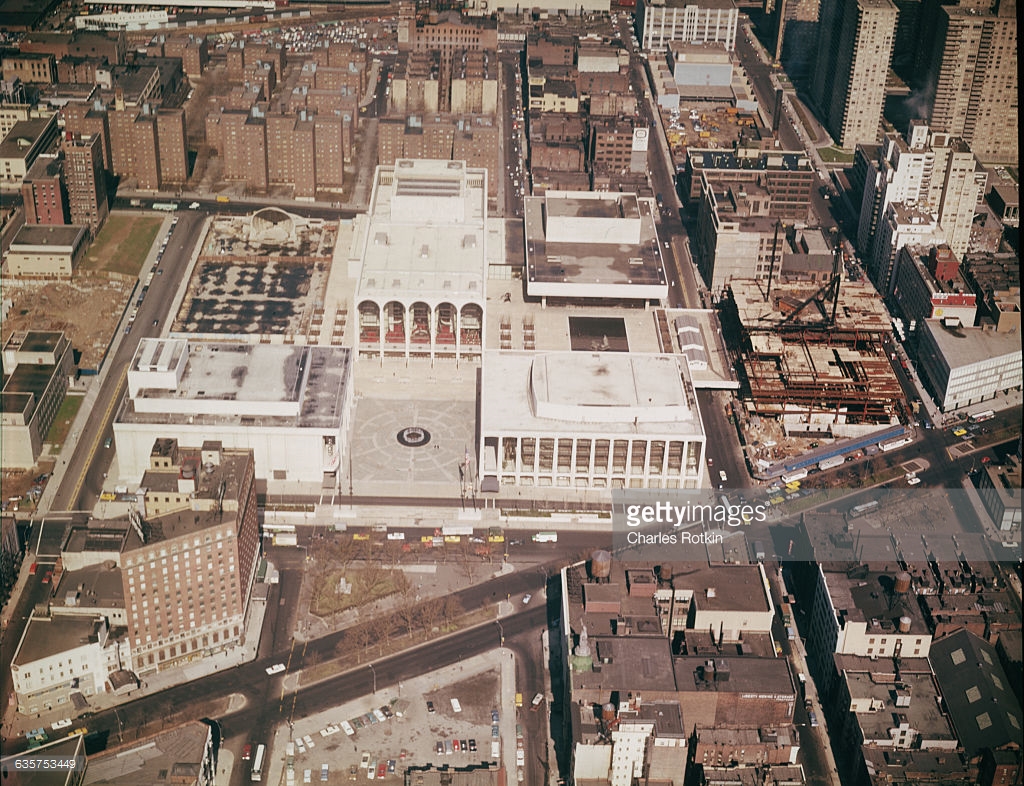
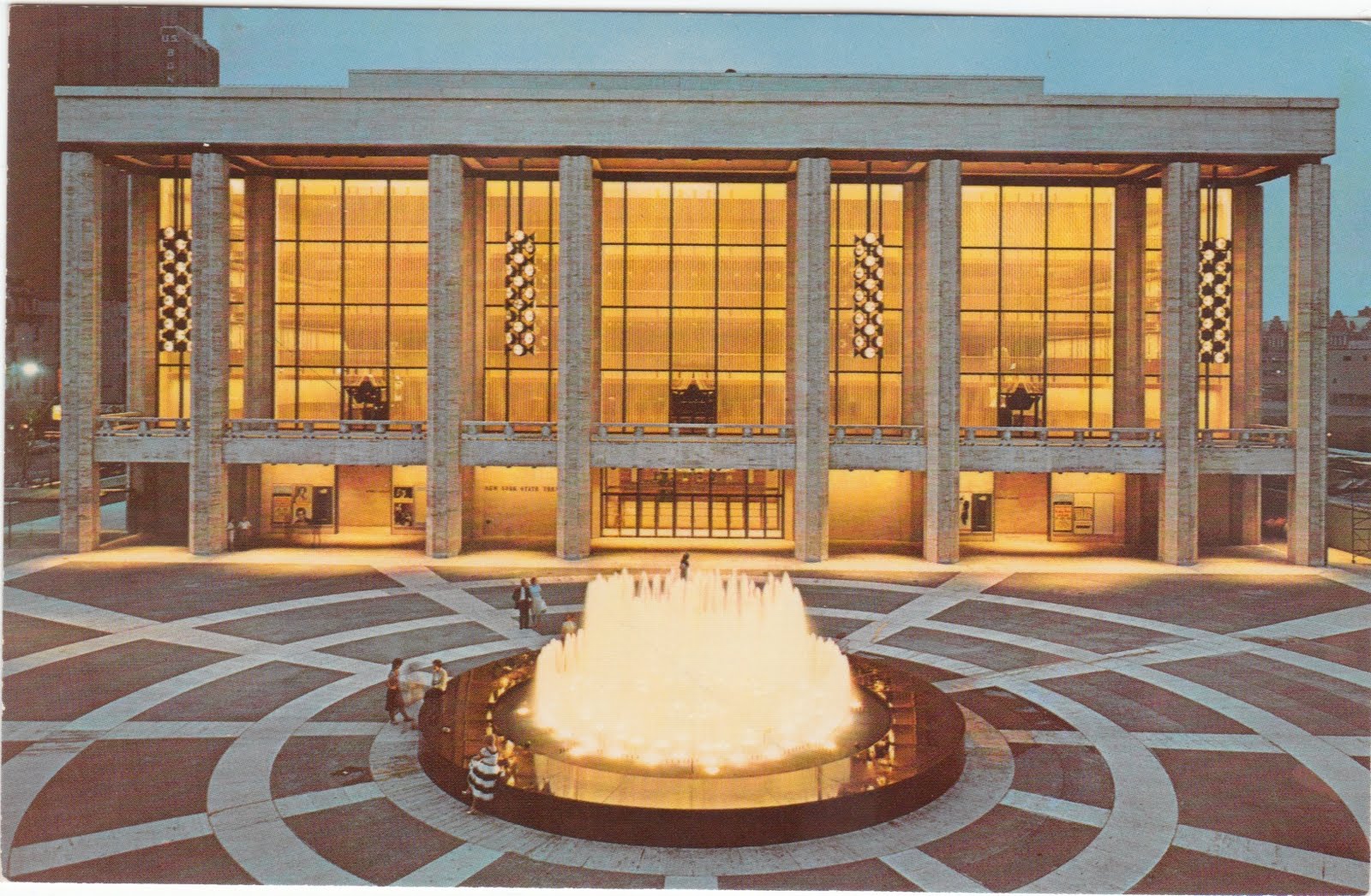
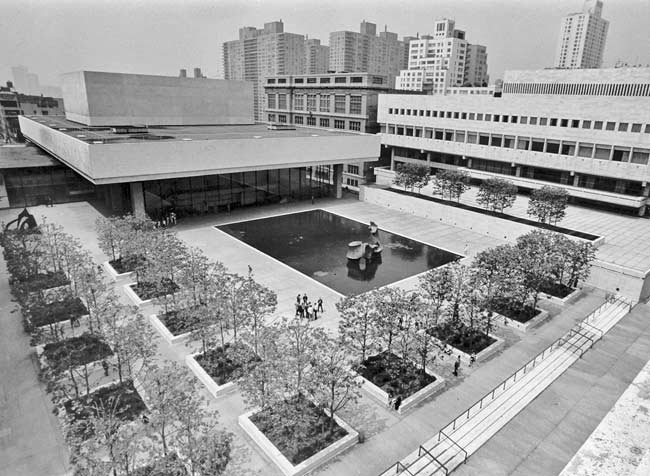
An overhead view of Lincoln Center in 1969 with most of the major venues completed by this point. At the bottom right you see the Empire Hotel, then (moving clockwise around the fountain): the New York State Theater, Damrosch Park, the Metropolitan Opera House, the library and the Vivian Beaumont Theater and Philharmonic Hall.
Getty Images
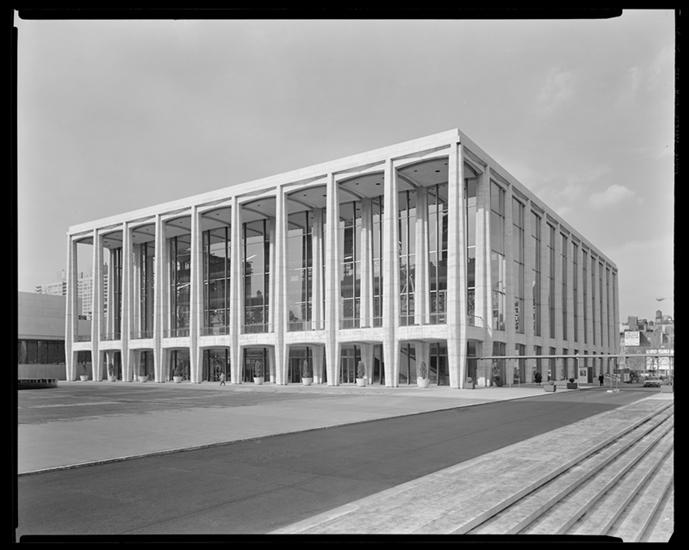
Philharmonic Hall, later Avery Fisher Hall, then David Geffen Hall — designed by Max Abramovitz.
MCNY
The Metropolitan Opera House, designed by Wallace Harrison.
MCNY/Edmund Vincent Gillon
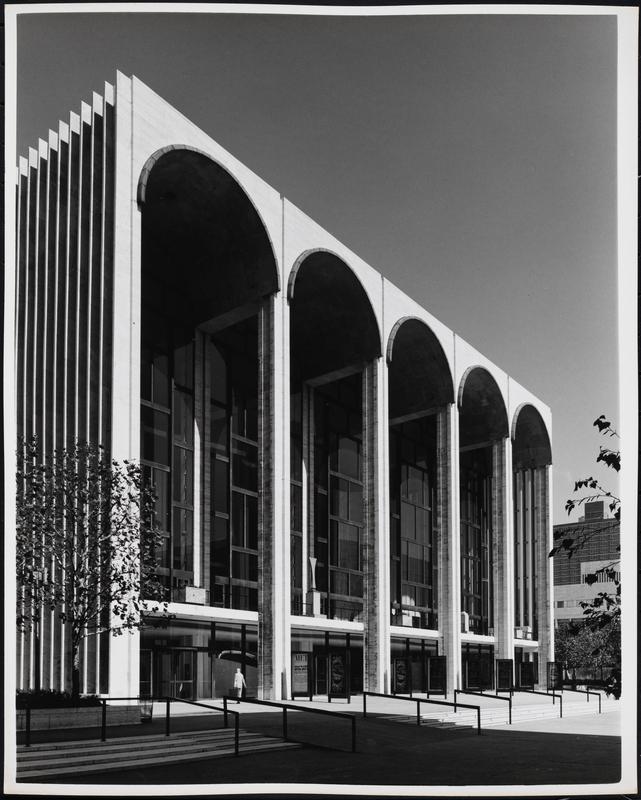
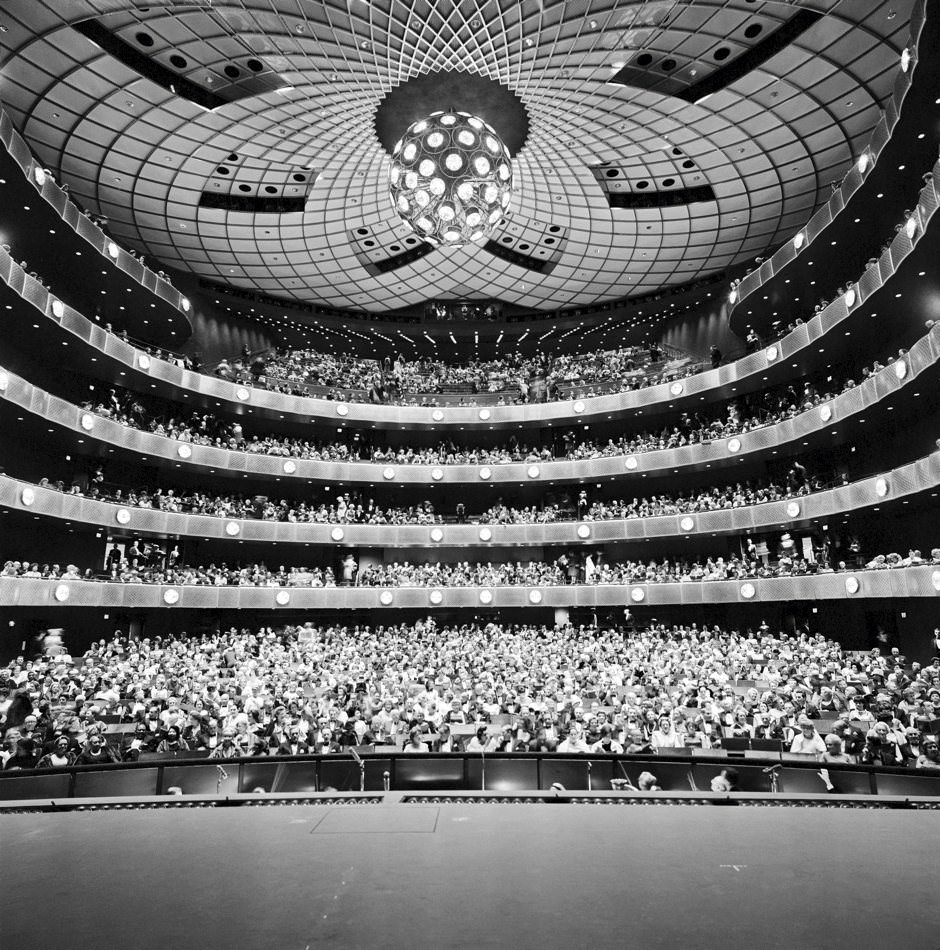
The New York State Theater, later the David H. Koch Theater.
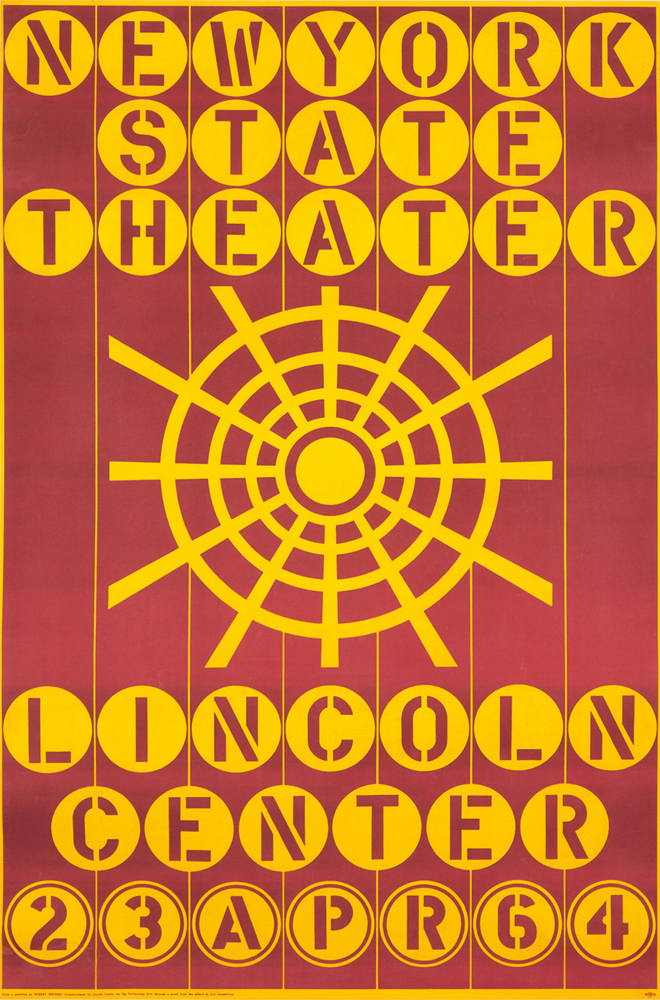
Opening night at the New York State Theater, April 24, 1964
Bettman/Corbis
Eero Saarinen’s Vivian Beaumont Theater, the reflecting pool featuring a sculpture by Henry Moore, and the Julliard School, designed by Pietro Belluschi.
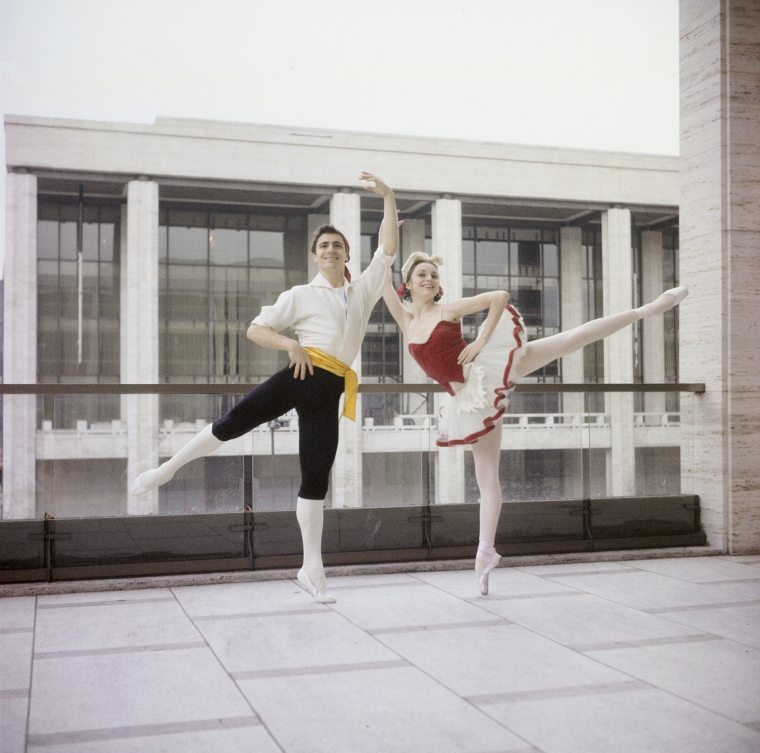
Patricia McBride and Edward Villella in front of the unfinished New York State Theater at Lincoln Center, in Tarantella costume, choreography by George Balanchine, 1964
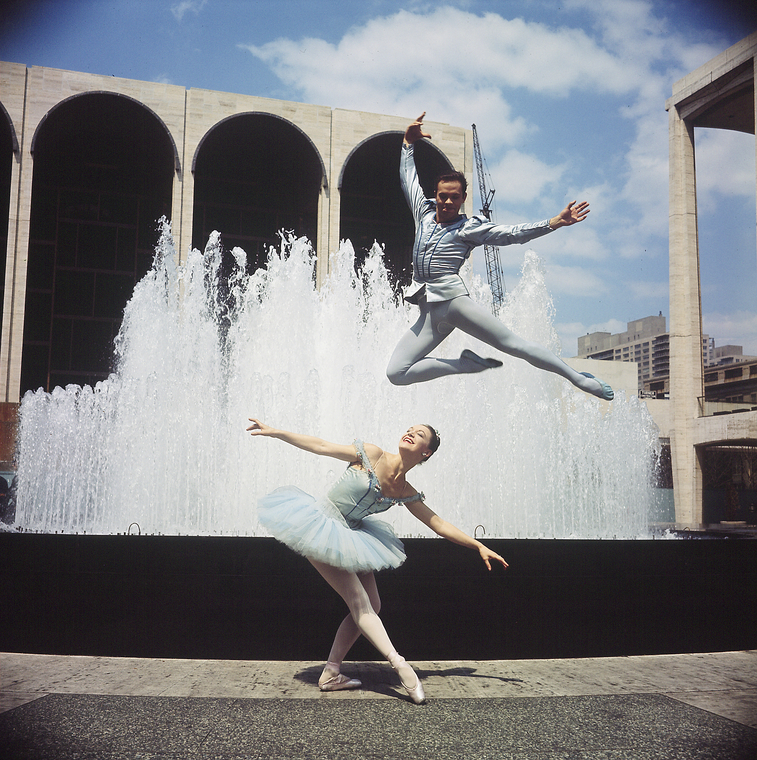
Patricia Wilde and Andre Prokovsky in Raymonda posing in front of fountain in plaza at Lincoln Center, choreography by George Balanchine, 1965
Courtesy NYPL
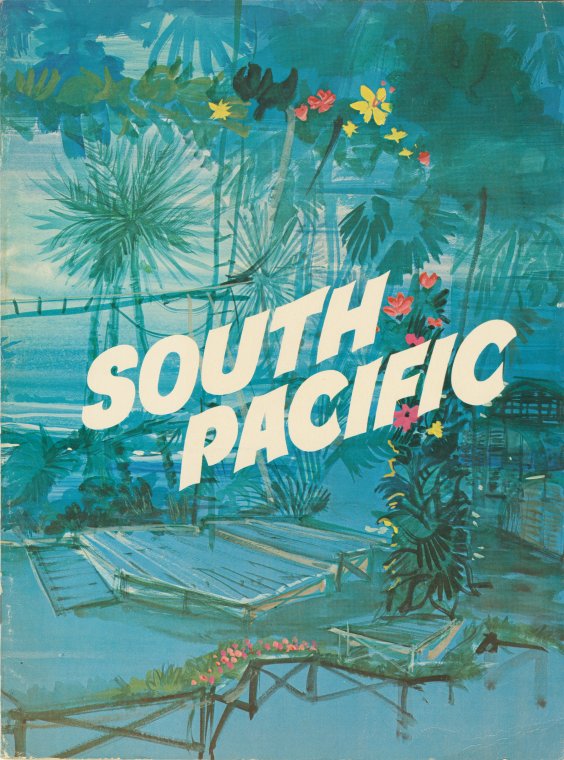
Program from the 1967 revival of South Pacific which played at the New York State Theatre……
NYPL
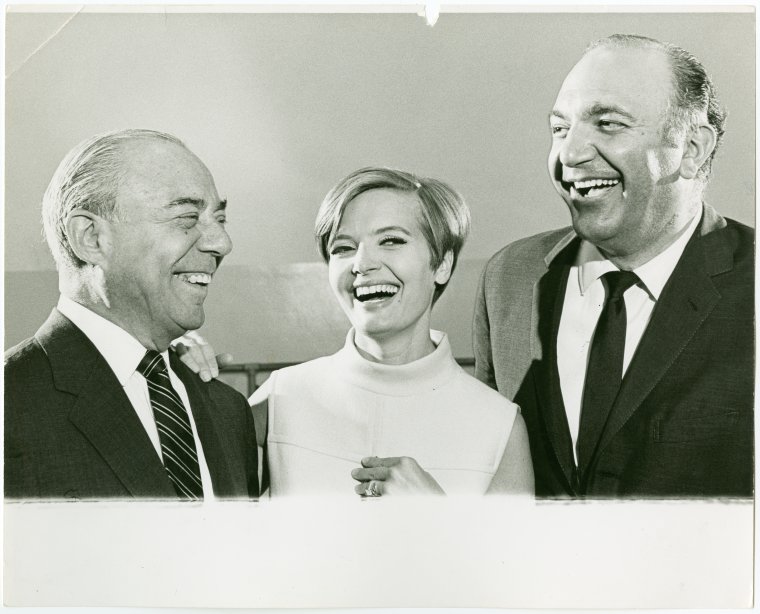
….starring Florence Henderson as Nellie Forbush! Here she is with Richard Rodgers and Georgio Tozzi (who played Emile de Becque).
NYPL
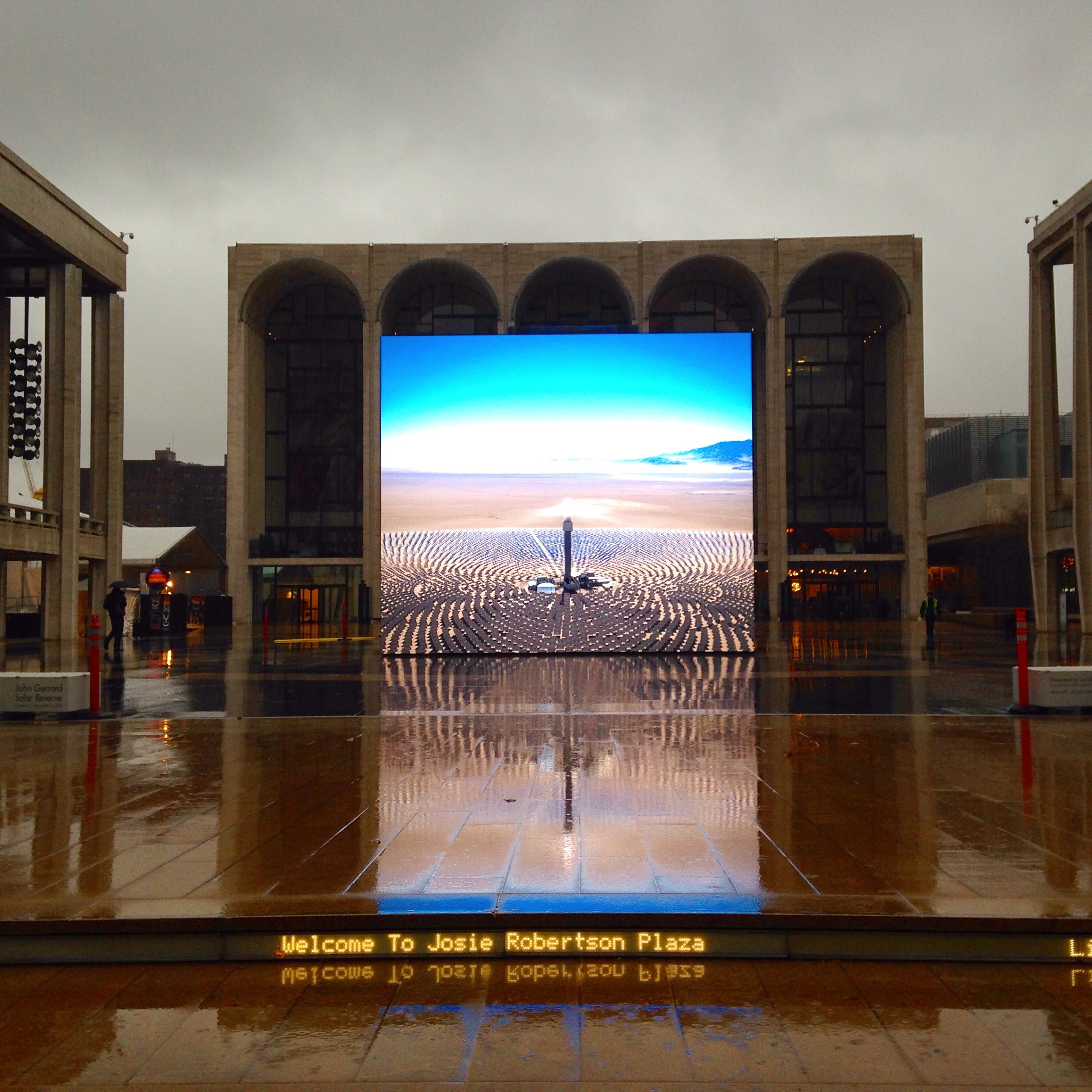
The plaza at Lincoln Center is always a place where surprises greet visitors. Here’s an image from a couple years ago of a video installation which sat in front of the fountain:
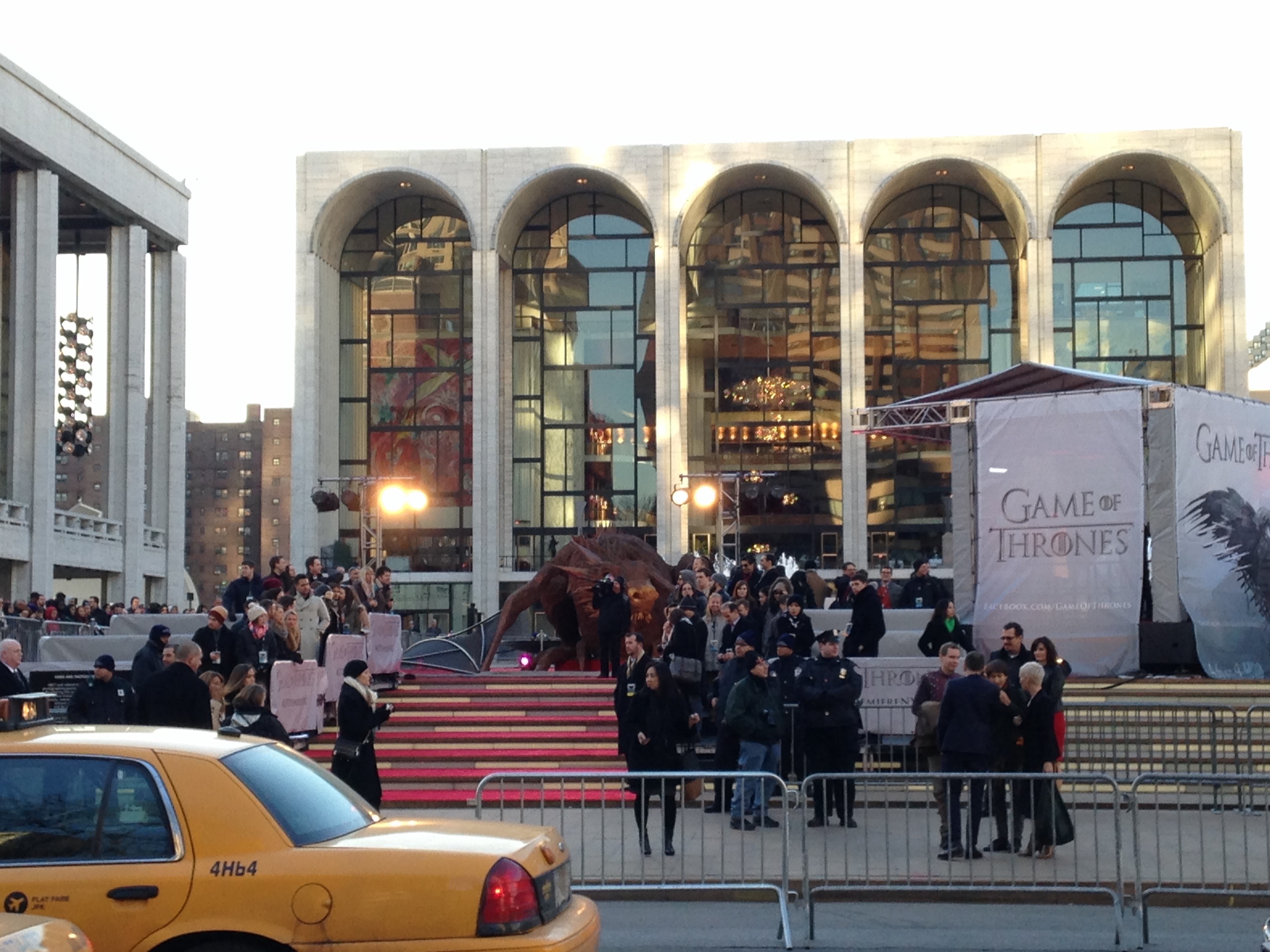
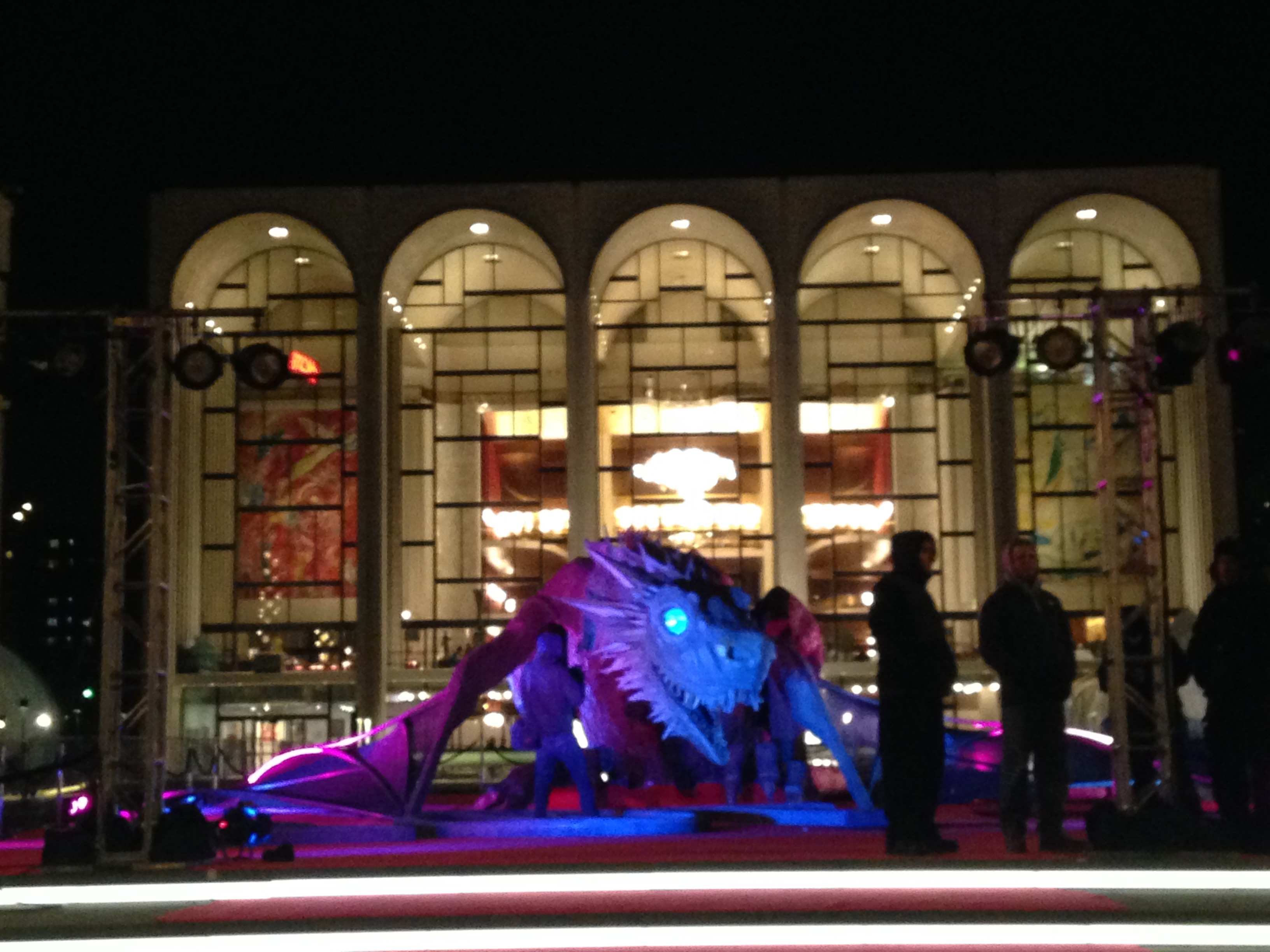
And 2019 when they hosted the premiere of Game of Thrones. With a life-size dragon!
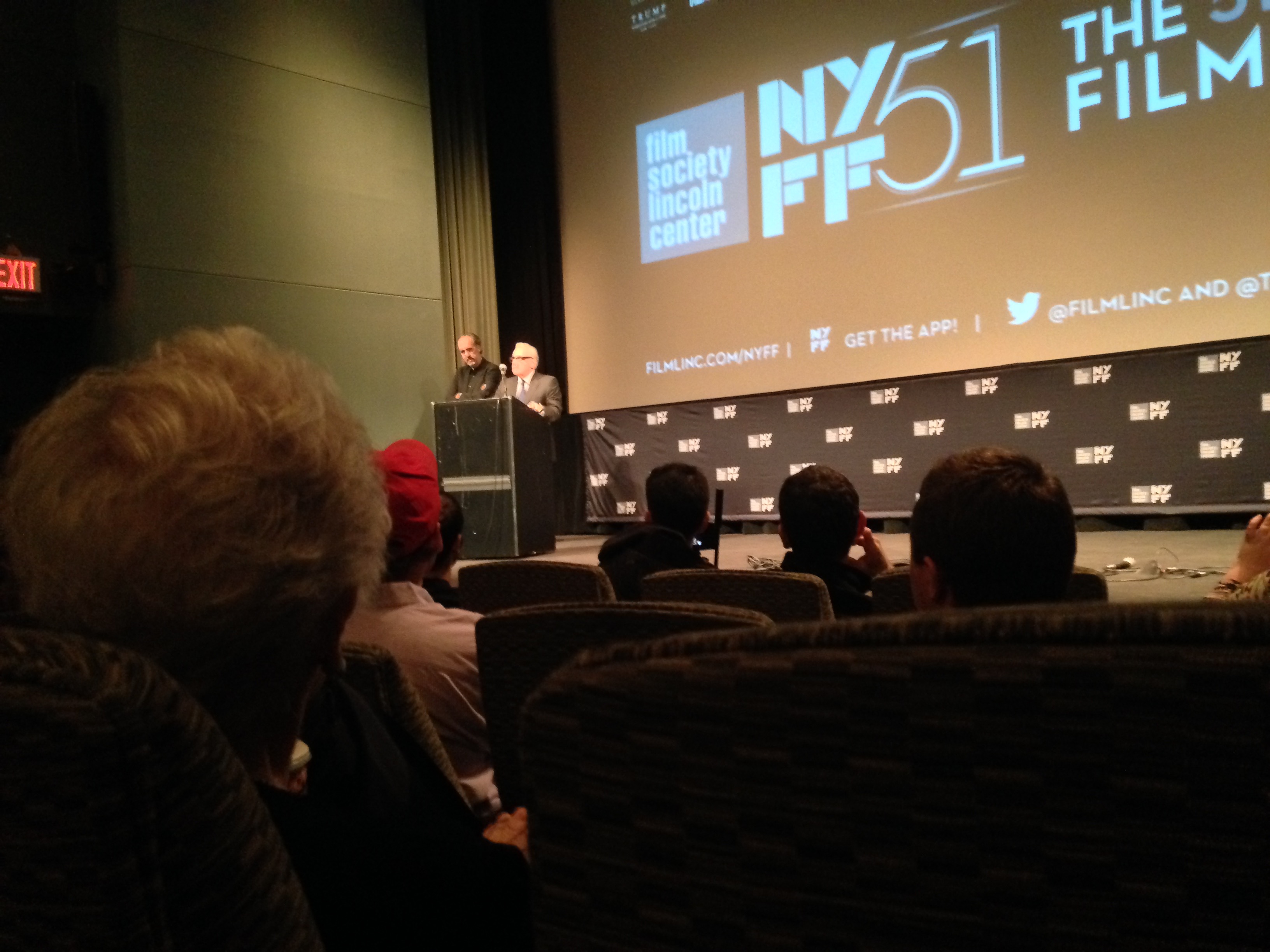
Martin Scorsese! He introduced a screening of his film The Age of Innocence at the New York Film Festival.
FURTHER LISTENING
Back catalog episodes mentioned on show or shows with similar themes that we think you’ll enjoy.
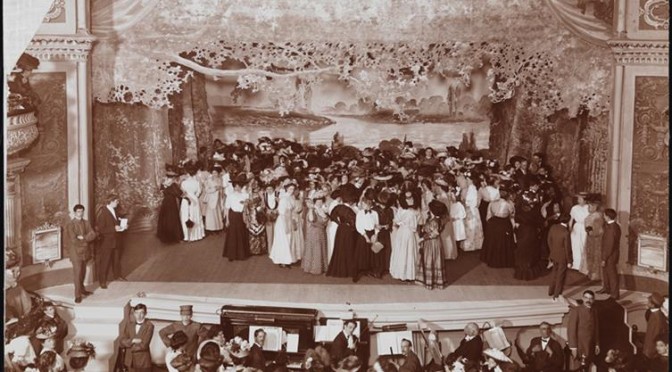
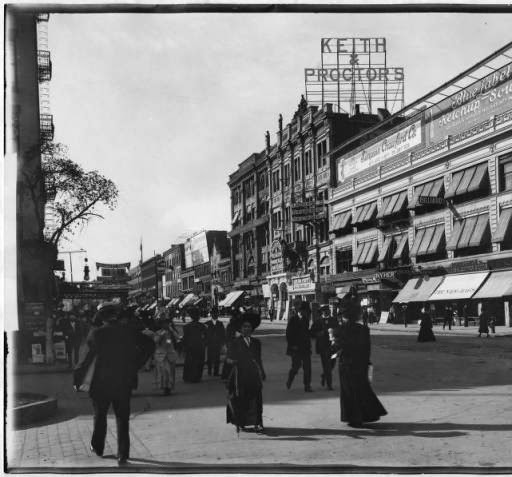
A ton of people on-stage at the Harlem Opera House in 1907. During this period, it was owned by vaudeville impresario Keith Proctor and called Proctor’s Harlem Opera House. Pictures courtesy the Museum of the City of New York
Harlem is known for a rich musical heritage in a variety of genres, but did you know it also had very old ties to world of opera, from as far back as the 19th century?
Oscar Hammerstein was a wealthy New York cigar maker who decided to dip his toe into real estate ventures, and in a most surprising neighborhood. Thanks to the construction of the elevated railroads in the 1880s, the once-distant Harlem was now linked to the heart of the city, and thousands began moving there, particularly European Jewish immigrants.
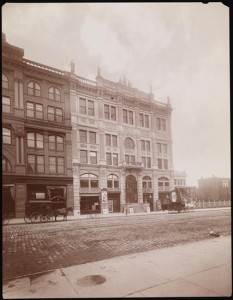
Hammerstein built dozens of rowhouses for prospective residents, but his real vision was the Harlem Opera House (at right), constructed in 1889 and located at 207 West 125th Street, on the other side of the street from the Hotel Winthrop (later the Hotel Theresa).
For a time, it really did just showcase operatic productions, of both the severe and light varieties. According to author Jonathan Gill, “Hammerstein had a broad vision of what uptown theatergoers wanted, and he produced both popular and genteel drama and opera in English translation, an experiment that proved attractive to audiences who were willing to pay up to $2.50 a ticket.”
Famous stars were drawn here from the stages of Herald Square. For instance, Edwin Booth performed Shakespeare here in 1889, a few years before his death. Lillian Russell, a favorite of the New York press, performed the show ‘An American Beauty’ here in March 1897.
The Opera House helped create a miniature theater district here along 125th Street. Hammerstein himself built the Columbus Theatre the following year, bringing more popular fare — namely, vaudeville. Soon the street would become one of New York’s great centers of burlesque entertainment. Many years later, Hurtig & Seamon’s New Burlesque Theater would open a couple doors down from the opera house, later changing its name to the Apollo Theatre.
Hammerstein, however, could not make the Harlem Opera House a financial success, and he was soon lured downtown to build his most renown theaters (and places that would later inspire his grandson Oscar Hammerstein II.) The Harlem Opera House was sold and transformed into a more traditional vaudeville house. By the 1930s, to compete with the thriving amateur nights over at the Apollo, the Harlem Opera House had its own amateur nights. Its most notable discovery is one of the greatest names in music — Ella Fitzgerald. Below: Another view of the Opera House, here as Proctor’s Opera House, courtesy NYHS. The balconies to the left belong to the Winthrop Hotel — compare this picture to the Winthrop photo here — to be replaced in a few years by the Theresa.
The Opera House was torn down in 1959. Surprisingly, it appears there was the possibility of a new opera house in Harlem being built in the late 1960s, under the guidance of Gian Carlo Menotti, but that never panned out. However, the operatic tradition lives on today with the Harlem Opera Theater, founded in 2001.
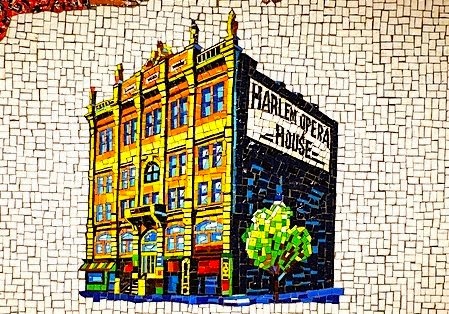
Below: You can still find the Harlem Opera House in Harlem — on the walls of the 125th subway station, in mosaic form!

![[Richmond Hill, residence of Aaron Burr.]](https://boweryboyshistory.com/wp-content/uploads/2014/07/M3Y29313-300x208.jpg)