Categories
Landmarks Music History Podcasts

The Treasures of Carnegie Hall

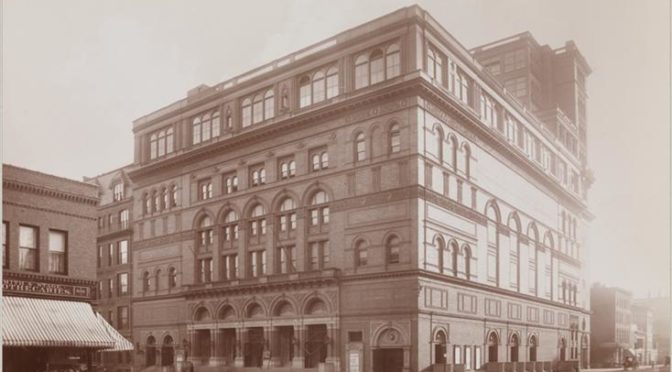
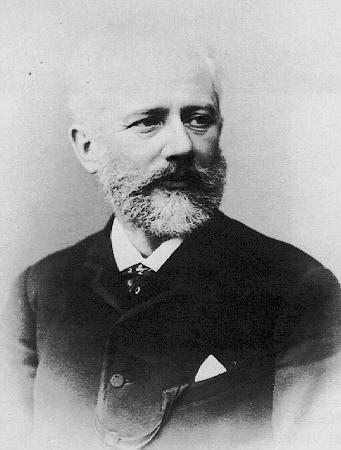
Carnegie Hall is one of America’s greatest and most enduring cultural landmarks, enchanting audiences and making history since its opening night on May 5, 1891, when Pyotr Ilyich Tchaikovsky appeared there in his first performance in the United States.

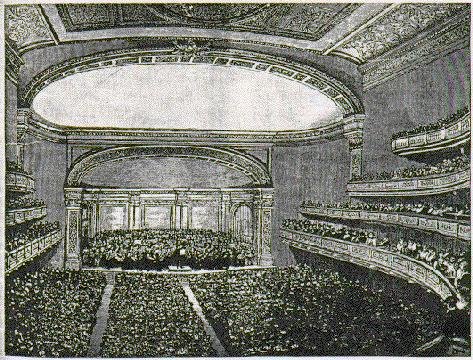
This groundbreaking performance space (originally known simply as “Music Hall”) is in fact a trio of distinct venues, all nestled within a single, opulent Italian Renaissance–style building.

Although its benefactor Andrew Carnegie and his fellow Gilded Age elites had moved their grand residences farther up Fifth Avenue, New York’s established cultural institutions, like the venerable Academy of Music, still lingered well to the south. Carnegie Hall helped shift that center of gravity uptown.

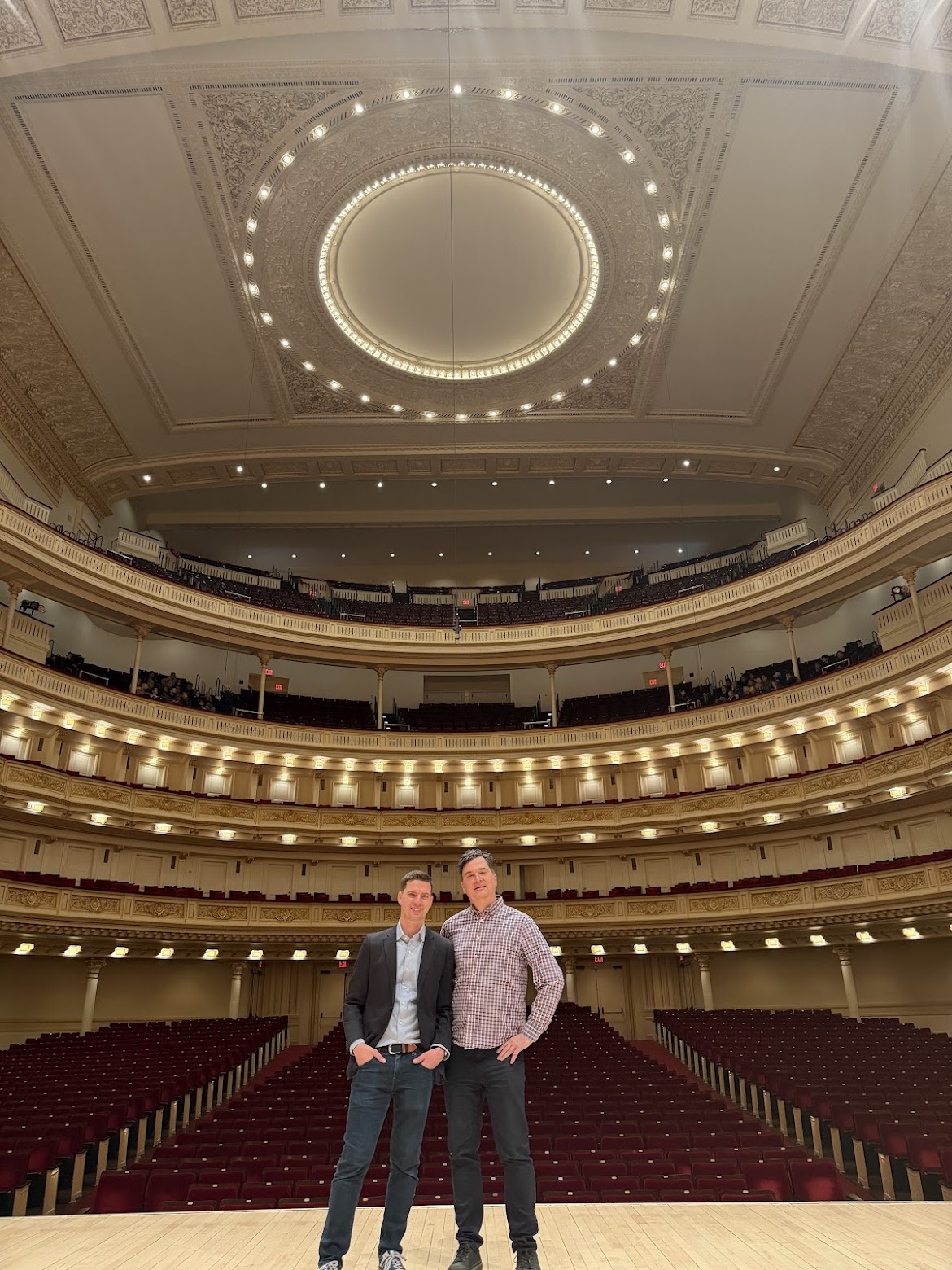
Yet the true history of Carnegie Hall lives inside its walls—within the experiences of the audiences and the artists, and, for this week’s show, within the archives themselves. Tom and Greg have been invited into the Carnegie Hall archives for an exclusive, unprecedented encounter with the story of American music.

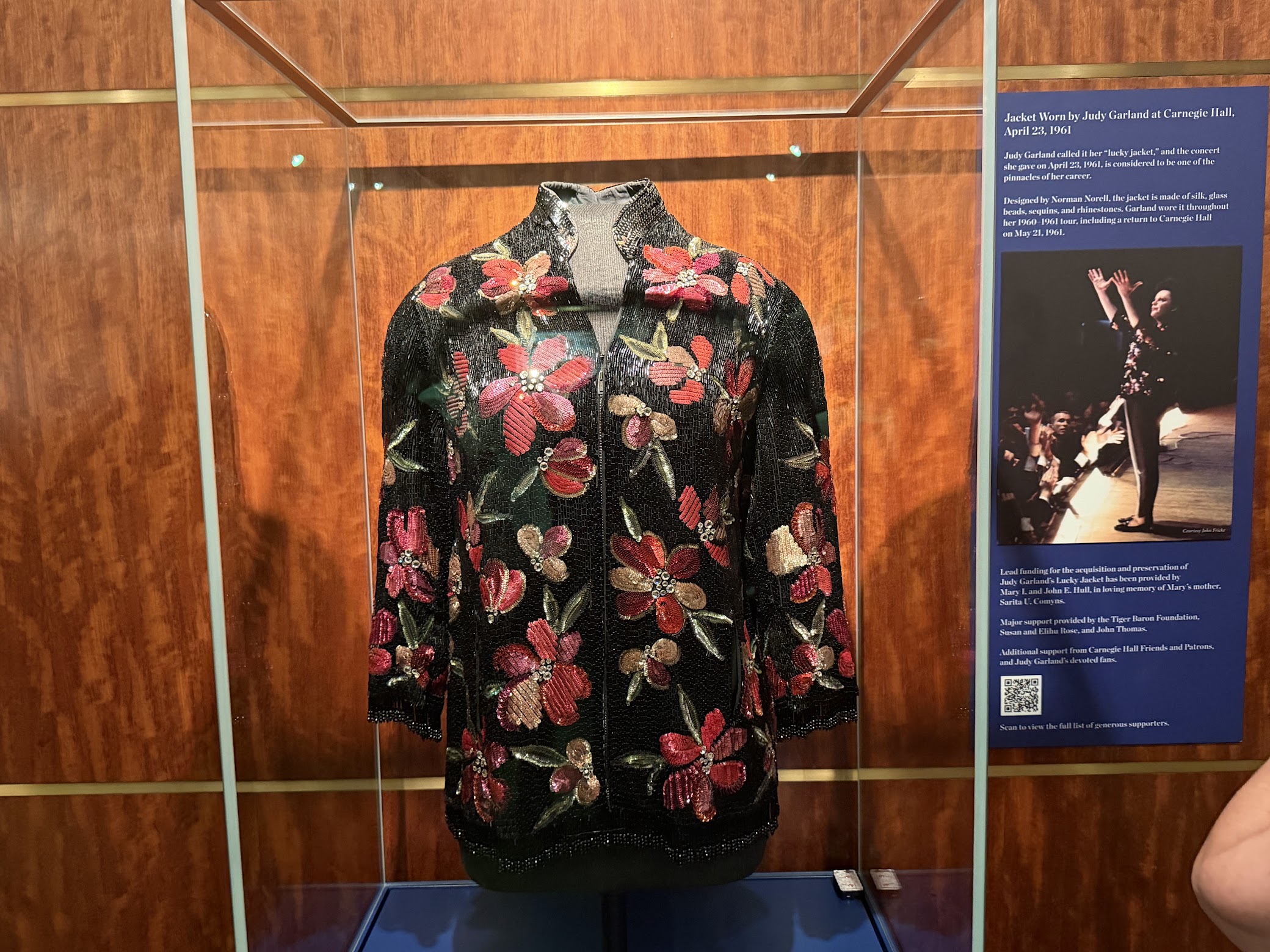
Kathleen Sabogal and Robert Hudson of the Rose Museum & Archives guide the Bowery Boys through the Hall’s past, using some of their collection’s most cherished artifacts: a clarinet, mysterious locks, ledger books, stickpins, suffrage buttons, beaded jackets, photographs, and autograph books that together bring the spirit of Carnegie Hall vividly to life.

And in the end — they even take to the stage!

This episode was proudly sponsored by Carnegie Hall. Visit CarnegieHall.org for information on upcoming shows, including the United in Sound: America at 250festival, a multifaceted reflection of the United States 250 years since the signing of the Declaration of Independence.

LISTEN TODAY: THE TREASURES OF CARNEGIE HALL


United in Sound: America at 250

Carnegie Hall’s 2025–2026 season festival is a multifaceted reflection of the United States 250 years since the signing of the Declaration of Independence.

In more than 35 concerts at the Hall, audiences will experience Broadway, jazz, film music, rock ‘n’ roll, hip-hop, bluegrass, classical, and so much more, showcasing the very best of the American spirit through music.

Events at top cultural institutions across New York further expand the festival’s scope, offering new avenues for discovery as we explore our nation’s vibrant and complex past, present, and future.

Visit their website to find a list of current events and locations.

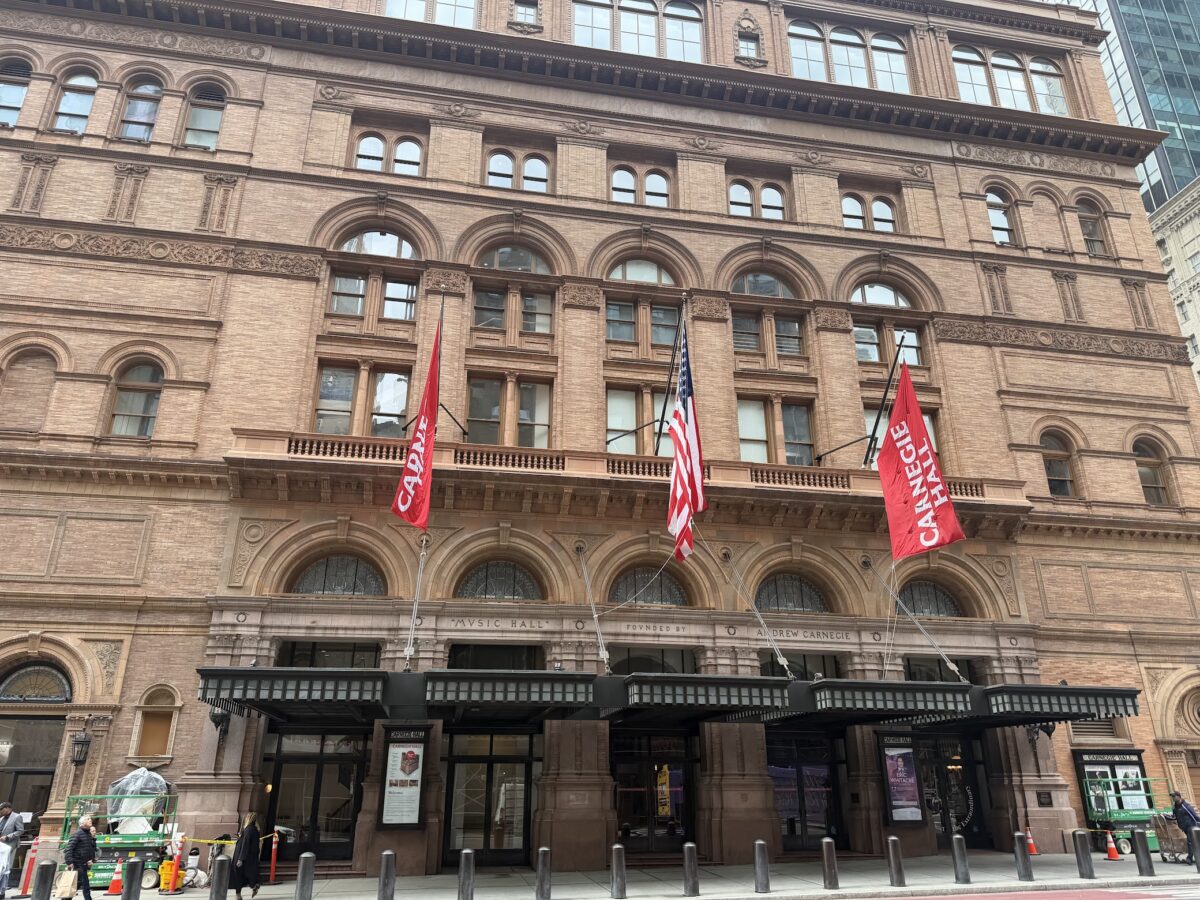
Carnegie Hall, 1891. Main entrance to Carnegie Hall on 57th street. The front stairs were removed in 1920 when 57th street was widened to add two additional traffic lanes.
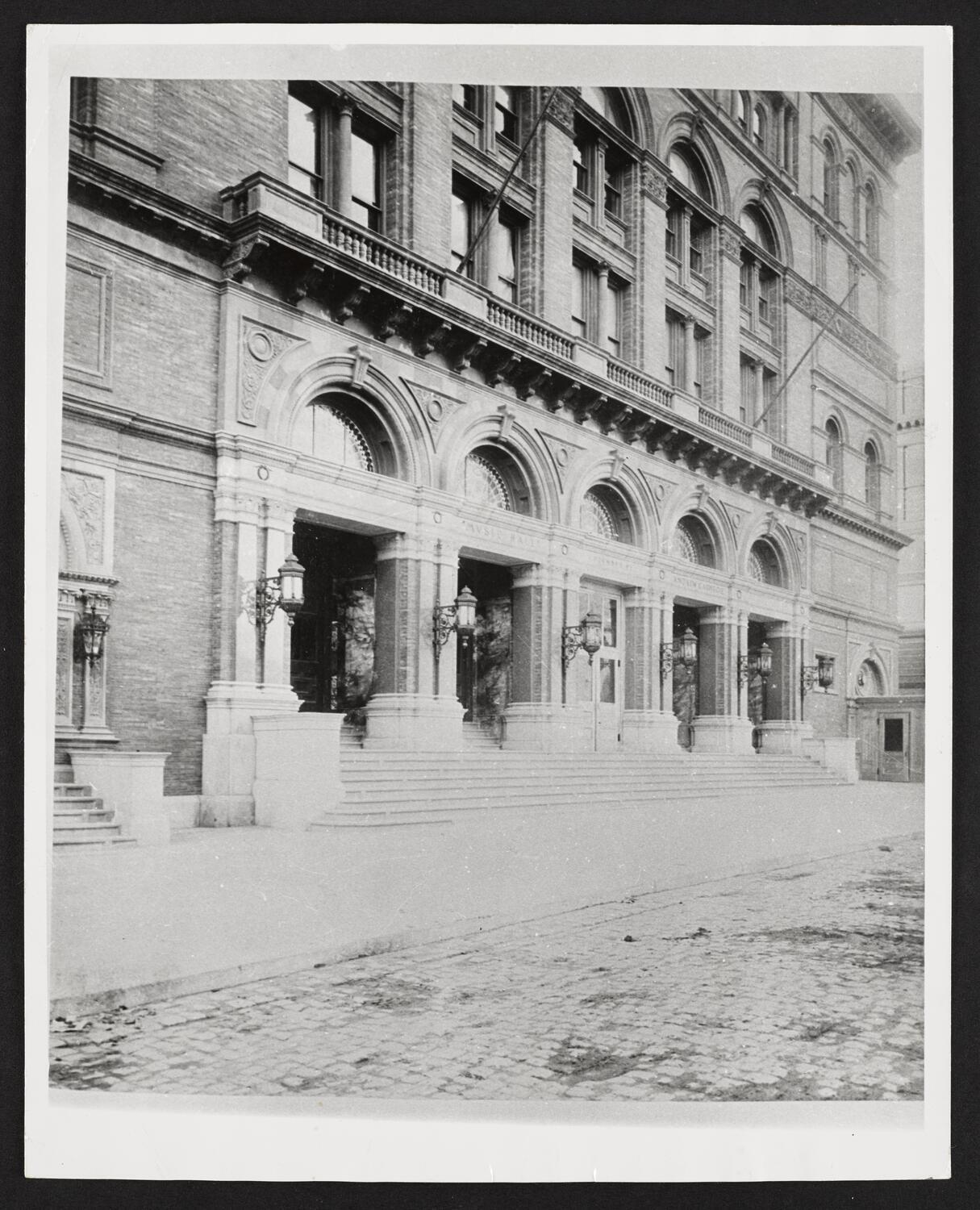
Courtesy Carnegie Hall Rose Archives

The speakeasy lock! Double-lock used to gain entry to Club Richman, a speakeasy located on the Carnegie Hall property, 1924
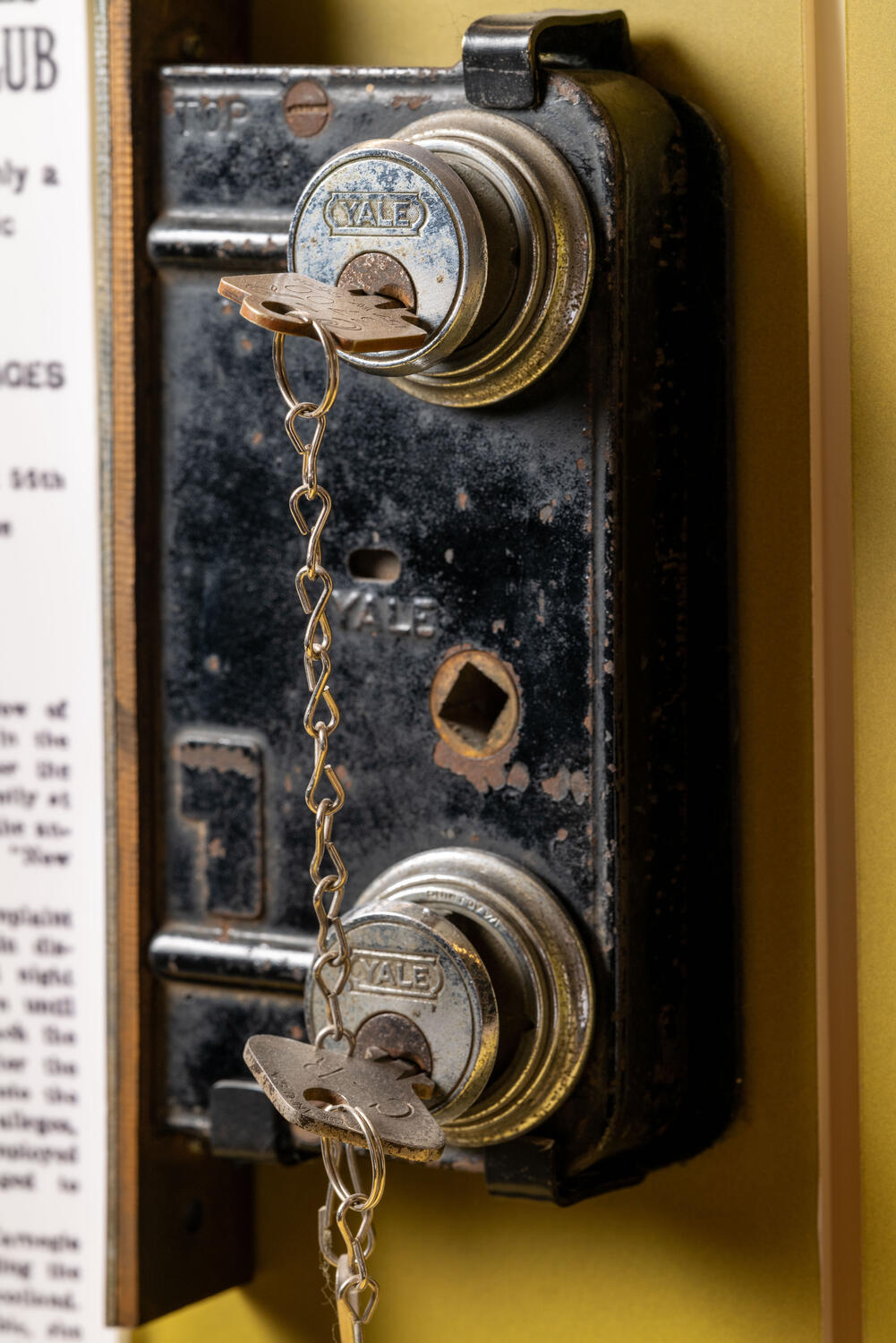
Courtesy of Carnegie Hall Rose Archives

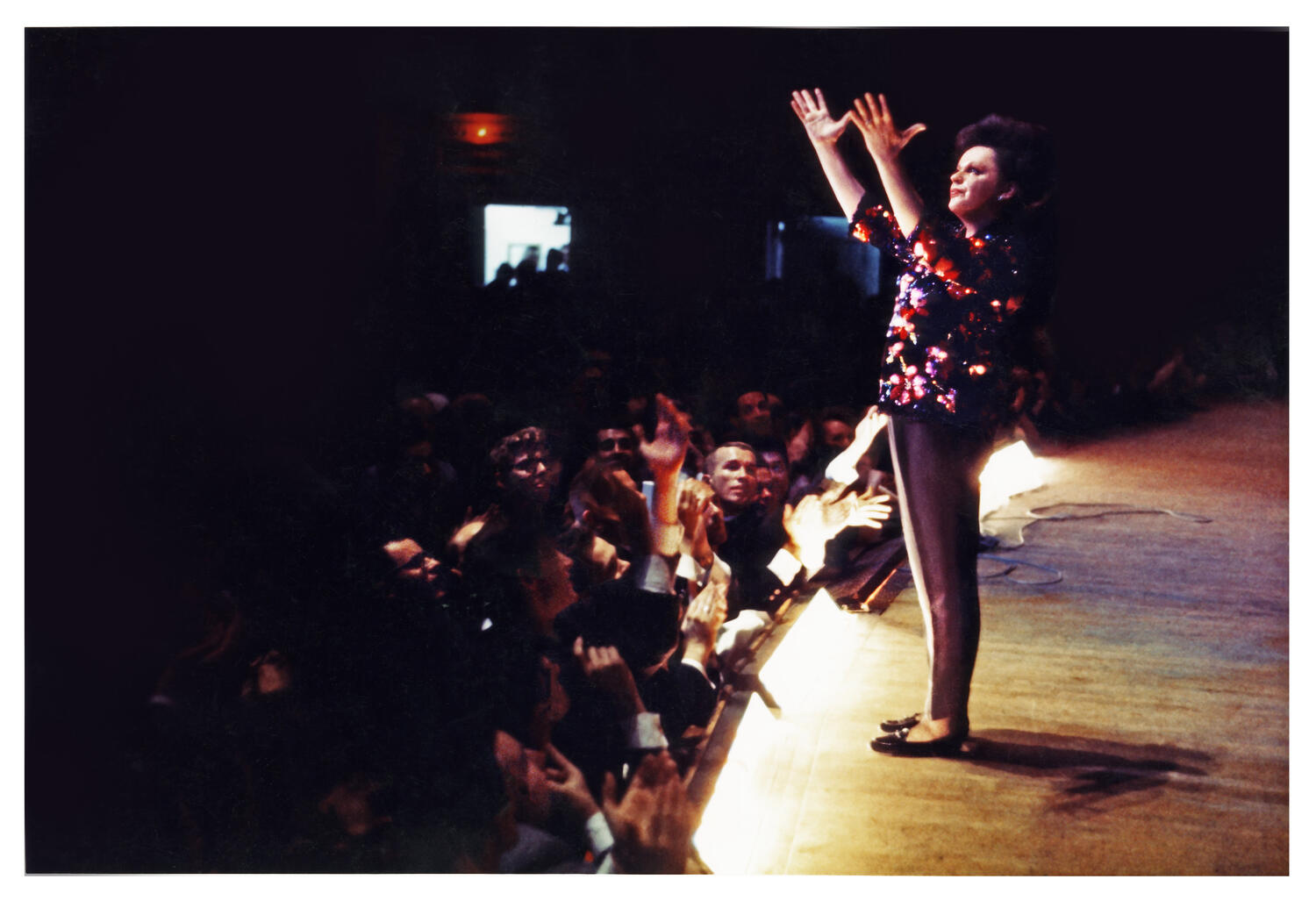
Judy Garland at Carnegie Hall 1961

Courtesy of John Fricke
Courtesy Bowery Boys

The Beatles at Carnegie Hall, February 12, 1964
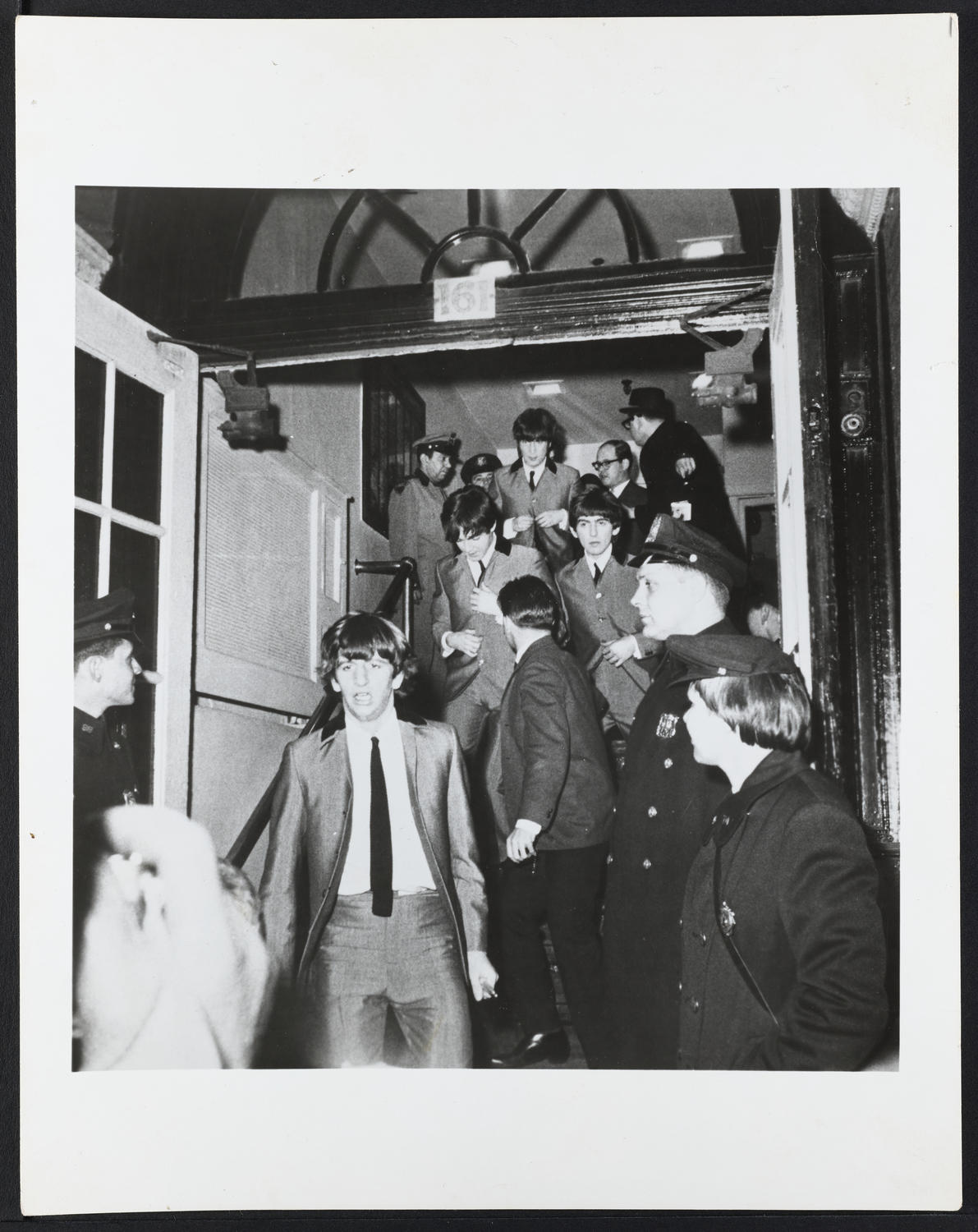
Courtesy of Carnegie Hall Rose Archives

FURTHER LISTENING

After taking in the story of Carnegie Hall, take a dive into these past Bowery Boys episodes to learn more about some of the topics mentioned in the show, including some forays into New York City musical history
Categories
Gilded Age New York Podcasts

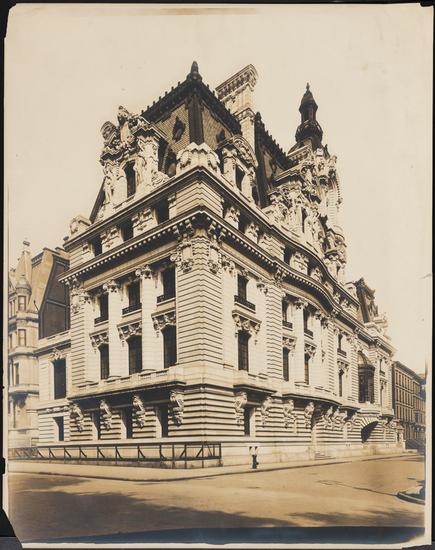
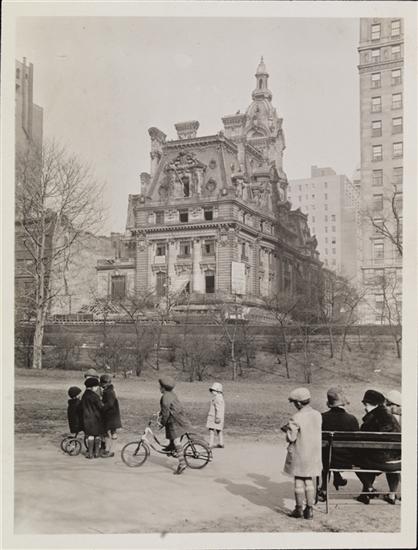
The Fall of the Fifth Avenue Mansions: Where to find the remnants of an opulent past

PODCAST The story of how Fifth Avenue, once the ritziest residential address in America, became an upscale retail strip and the home of some of New York’s finest cultural institutions.

LISTEN HERE:

In this episode, the symbols of the Gilded Age are dismantled.

During the late 19th century, New York’s most esteemed families built extravagant mansions along Fifth Avenue, turning it into one of the most desired residential streets in the United States. The ‘well-connected’ families, along with the nouveau riche, planted their homes here, even as the realities of the city encroached around them.

By 1925 most of the mansions below 59th Street were gone, victims of changing tastes and alterations to the city landscape. Clothing manufacturing plants swept through Greenwich Village, and such ‘common’ purposes threatened the identity of Fifth Avenue. To the west, the dazzling delights of Times Square seemed certain to wring any respectability out of Midtown Manhattan’s reputation.

But near Central Park, families of newer wealth filled Fifth Avenue with their own opulent homes — Carnegies, Dukes, Fricks — as though oblivious to the changes occurring down south.

Most of these habitats of old wealth are gone today. There’s no place for a 100-room mansion on one of New York City’s busiest streets. Yet a few of these mansions managed to survive by taking on very different identities — from clothing boutiques to museums.

PLUS: The building that was bought for a necklace!

To download this episode and subscribe to our show for free, visit iTunes or other podcasting services or get it straight from our satellite site.

You can also listen to the show on Google Music, Stitcher streaming radio and TuneIn streaming radio from your mobile devices.

___________________________________________________________________________

The Bowery Boys: New York City History podcast is brought to you …. by you!

We are now producing a new Bowery Boys podcast every week.  We’re also looking to improve the show in other ways and expand in other ways as well — through publishing, social media, live events and other forms of media.  But we can only do this with your help!

We are now a member of Patreon, a patronage platform where you can support your favorite content creators for as little as a $1 a month.

Please visit our page on Patreon and watch a short video of us recording the show and talking about our expansion plans.  If you’d like to help out, there are five different pledge levels (and with clever names too — Mannahatta, New Amsterdam, Five Points, Gilded Age, Jazz Age and Empire State). Check them out and consider being a sponsor.

We greatly appreciate our listeners and readers and thank you for joining us on this journey so far. 

________________________________________________________________________

Artistic representations of a changing Fifth Avenue —

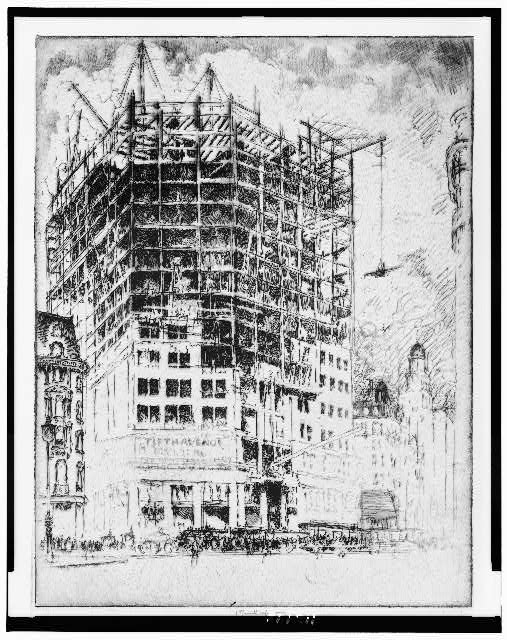
A 1908 illustration by Joseph Pennell titled Rebuilding Fifth Avenue.

Library of Congress

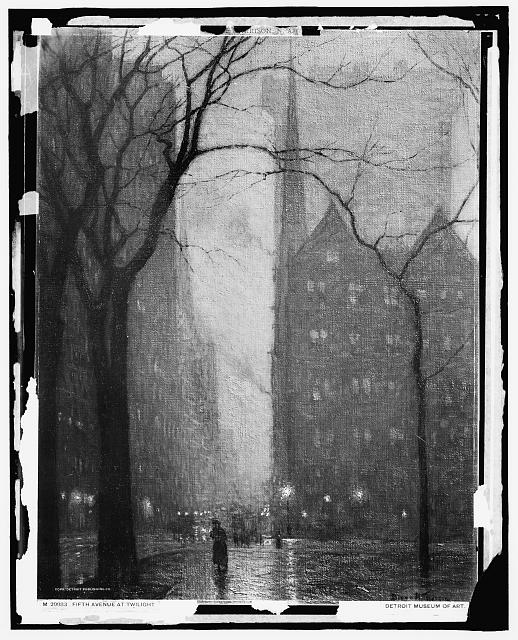
Fifth Avenue at Twilight, an illustration (c. 1910) by artist Birge Harrison, depicting Grand Army Plaza and Vanderbilt’s mansion, with Fifth Avenue Presbyterian and the Gotham Hotel behind it.

Library of Congress

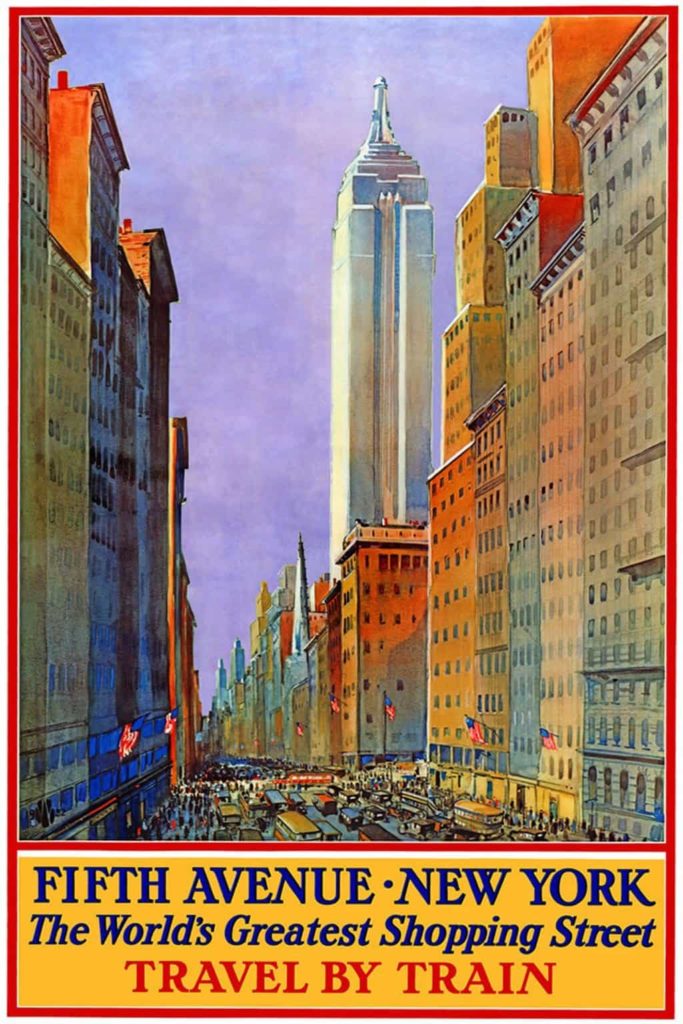
By 1932, the transition to a retail district was virtually complete. Almost no single-family houses remained on Fifth Avenue below 59th Street.

Latham Litho. & Ptg. Co., 1932, Library of Congress

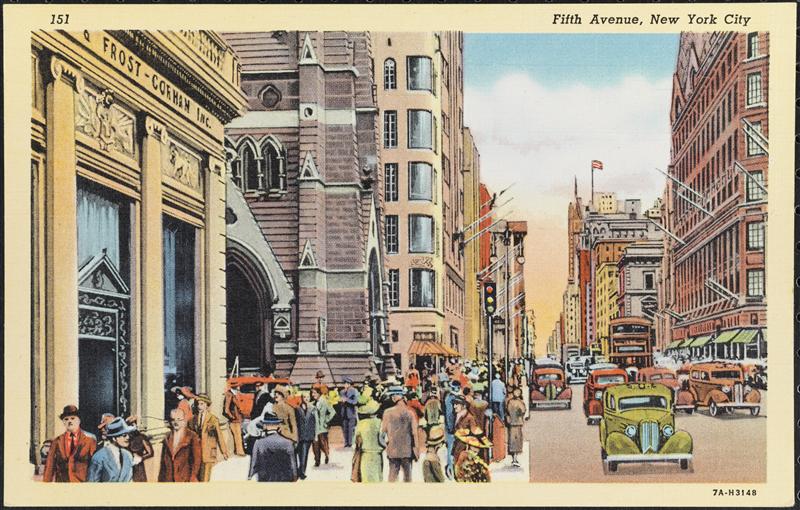
Postcard caption (from 1935): “A view of Fifth Avenue, the parade ground of the nation, looking south from 48th St., famous for its smart shops and double-decked buses.”


The New Century —

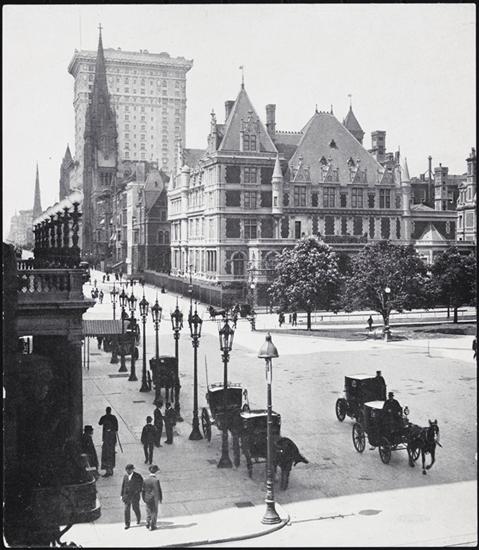
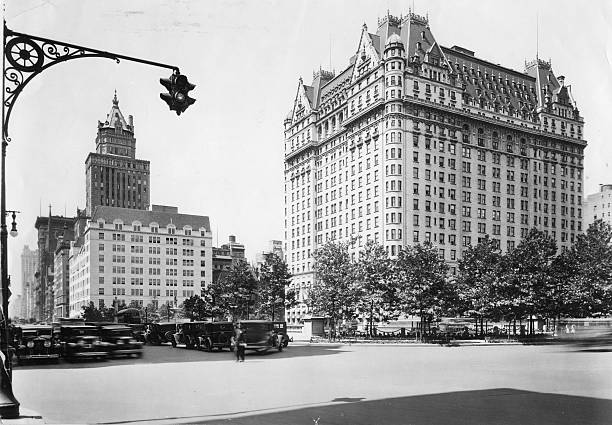
The corner of 59th Street and Fifth Avenue. Within 30 years this view would be completely transformed.

Museum of the City of New York


The new mansion ‘bonanza’ sprouted above 59th Street, a row of fine single-family palaces that would help create the ritzy reputation of the Upper East Side.

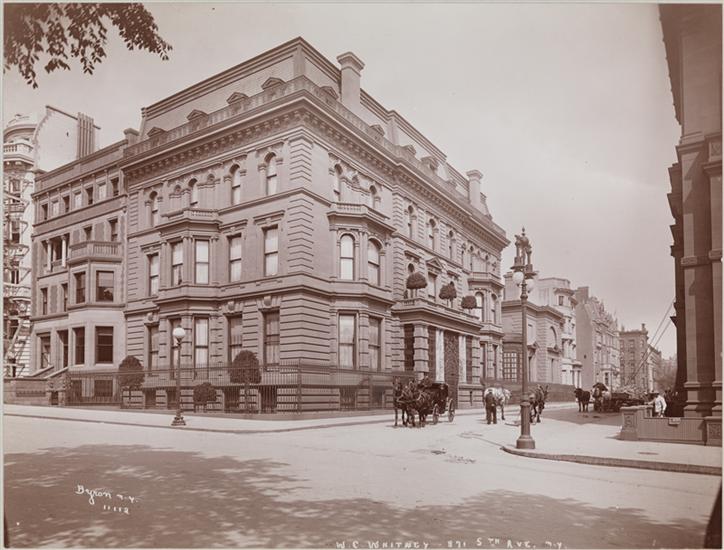
The home of W.C. Whitney (68th Street), 1900:

Museum of the City of New York


The home of George Gould (son of Jay), at Fifth Avenue and 89th Street

New York Public Library


The mansion of William Clark at E. 77th Street — in 1918 and 1927 (note the boarded up windows).

Wurts Brothers/Museum of the City of New York

Phillip Bartlett/Museum of the City of New York


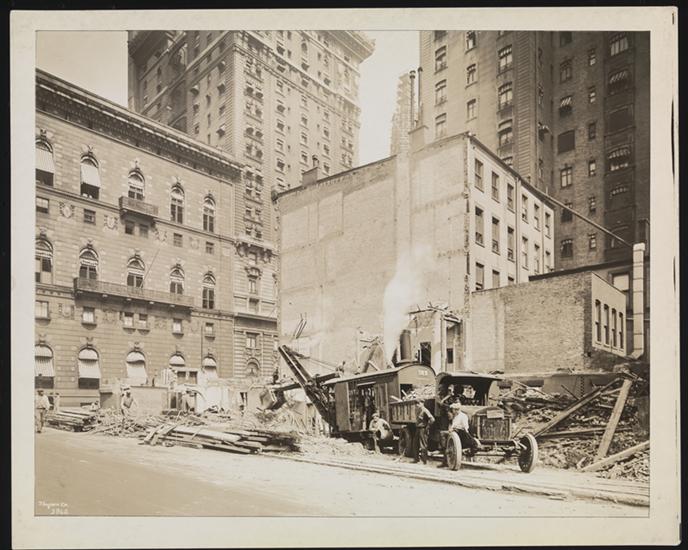
Demolition on Fifth Avenue was an extraordinarily common site in the first quarter of the 20th century.  This is the northeast corner of Fifth Avenue and 54th Street in 1925.

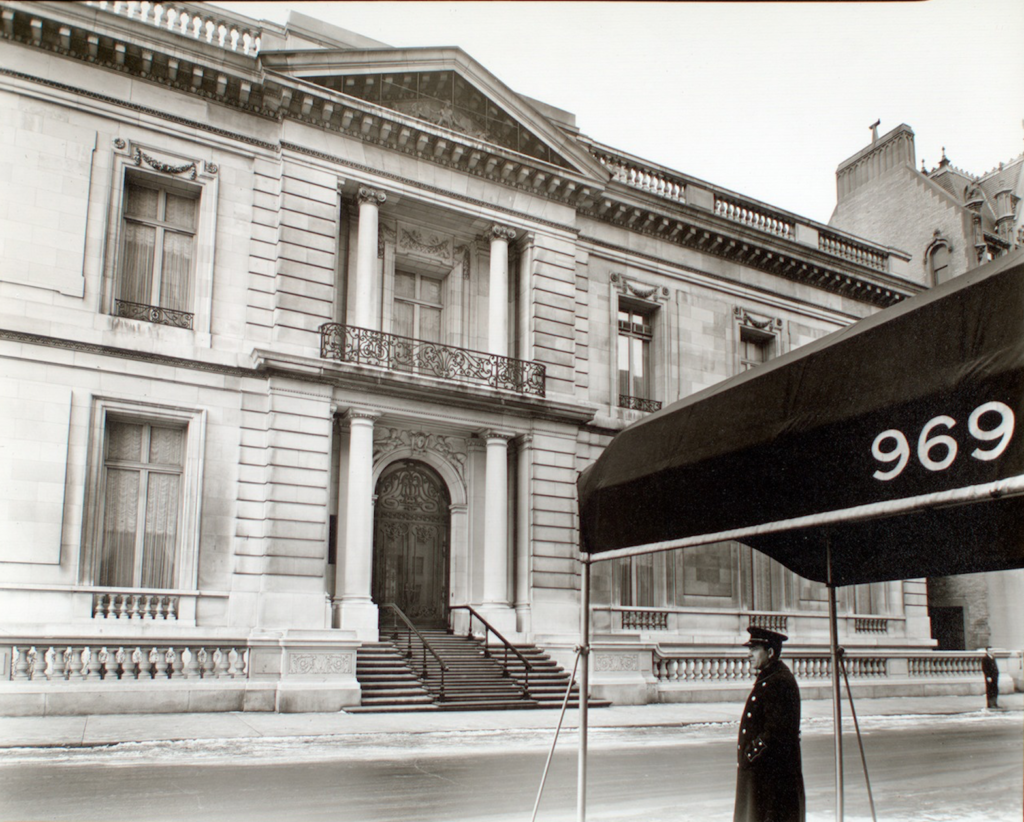
The mansion of James B Duke, 1938. The house still exists, as does the apartment complex (and its awning) across the street.


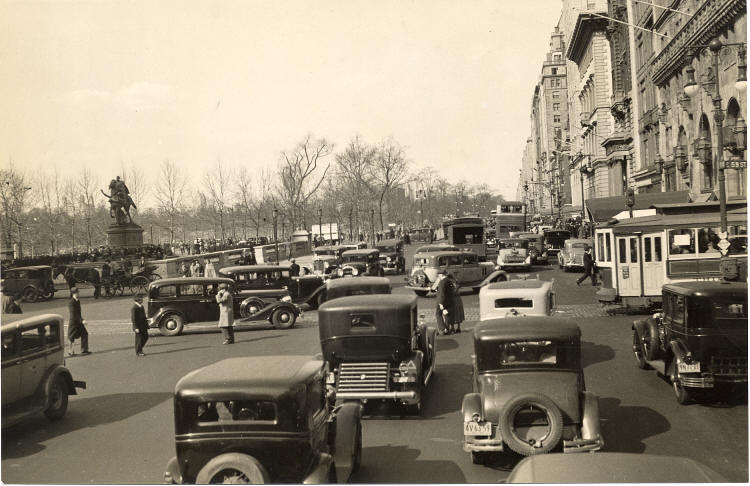
A confusion of automobile traffic along Grand Army Plaza, 1930

The new Bergdorf Goodman in 1930, replacing the old Vanderbilt mansion.


OTHER PODCAST LISTENING related to this show:

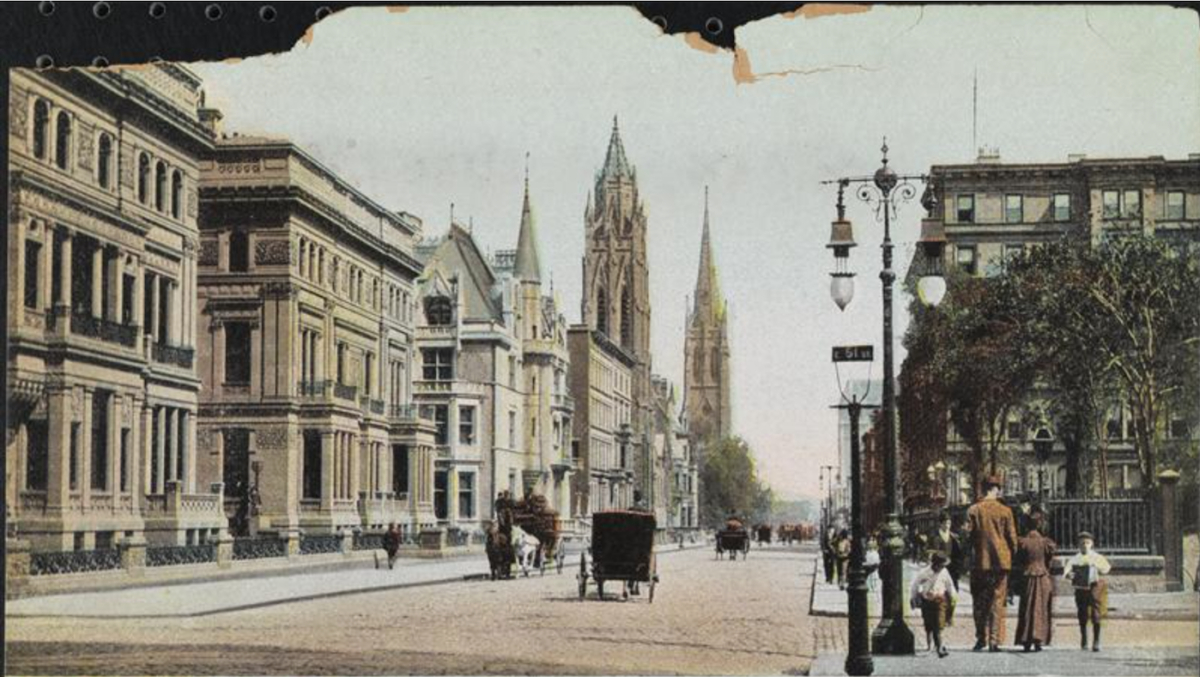
At top: A colorized image of Fifth Avenue from 1908 from Shorpy. Click here to see the original in deeper detail

Thank you, Tooth Brush Lady! Newsies get their teeth fixed

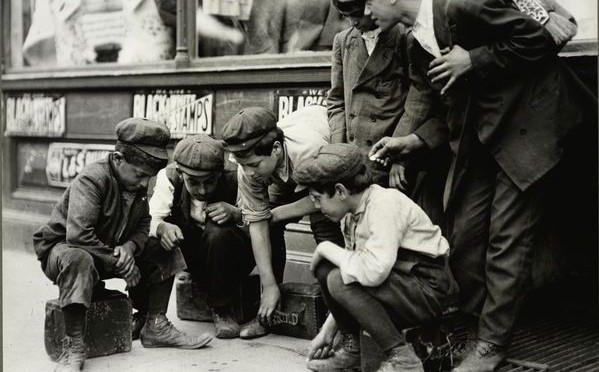
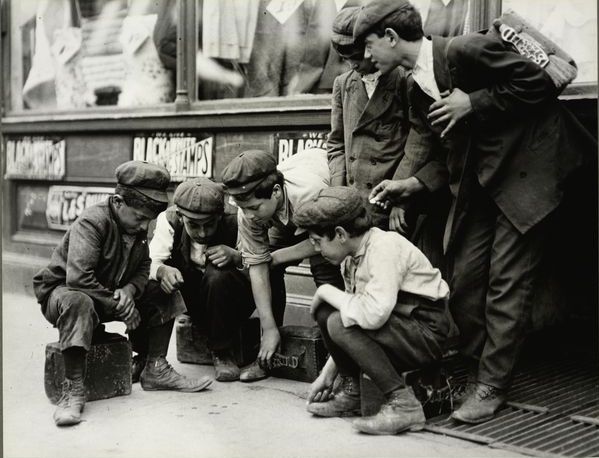
Above: Newsboys and bootblacks playing craps, photographed by Lewis Hines in 1912.  Some of these were most likely recipients of free dental care, provided at the Second Avenue newsie’s lodging house in that year by the Society of Good Cheer.

Newsboys with poor teeth one hundred years ago — I’m guessing this would be most of them — had something to smile about in 1912 in the form of Miss Theora Carter and the Society of Good Cheer.

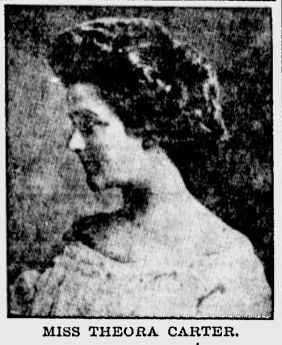
Miss Carter, a native of Seattle, was an inventive social activist and lecturer, focusing on generating an overall sense of good will among the poorest in New York, uplift and cleanliness as a way of promoting health.  An “advocate of good cheer” and a woman of “ample income“, Carter moved to New York and formed the Society of Good Cheer as a method of spreading healthful calm and tranquility. Joining her at the Society’s headquarters at 258 West 74th Street on the Upper West Side were two dozen like-minded young women, many of whom lived at that address. (Carter may also have lived here, although one news clipping claimed she lived in Park Slope.)

At right: A photo of Miss Carter from a Toledo newspaper [source]

The ladies of the Society of Good Cheer canvassed New York’s many hospitals, “seek[ing] out those patients with few or no friends and cheer[ing] them up by reading or talking to them.” During the holidays, the Society provided homes and hospital rooms in New York and Boston with Christmas trees; in many ways, Miss Carter’s holiday work might have inspired another society lady, Emilie Herreshoff, when she provided Madison Square with the very first public Christmas tree in 1912


In 1911, Carter expanded their crusade to noise prevention. After all, the streets were now rapidly filling with automobiles, adding to the noise of streetcars and elevated trains. She focused her wrath at noisemakers outside of children’s hospitals, handing out “cards of human appeal” to “truck drivers, the drivers of automobiles and other noise-making vehicles.” [source]


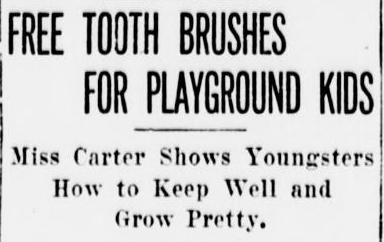
The following year, inspired by her noise-squelching hospital visits, Miss Carter turned her attentions to the orthodontic needs of poor children, in particular, the many thousands of newsies. ‘The upbuilding of character and the overcoming of physical imperfections through remedying irregularities of children’s teeth’ was Miss Carter’s stated goal. Another article further described her intentions as “good teeth, clean teeth and straight teeth.”


The Childrens Aid Society was already providing free dental inspections to hundreds of children by this time,  so Miss Carter decided to focus one some of the most neglected, most independently minded children, the inhabitants of the Newsboys Home at 170 Second Avenue (at 11th Street). A New York Times editorial from July10, 1912, proclaimed that ‘the teeth, jaws and mouths of some 2,000 newsboys’ would benefit from the new clinic.

Above: A headline from the New York Sun, September 28, 1912

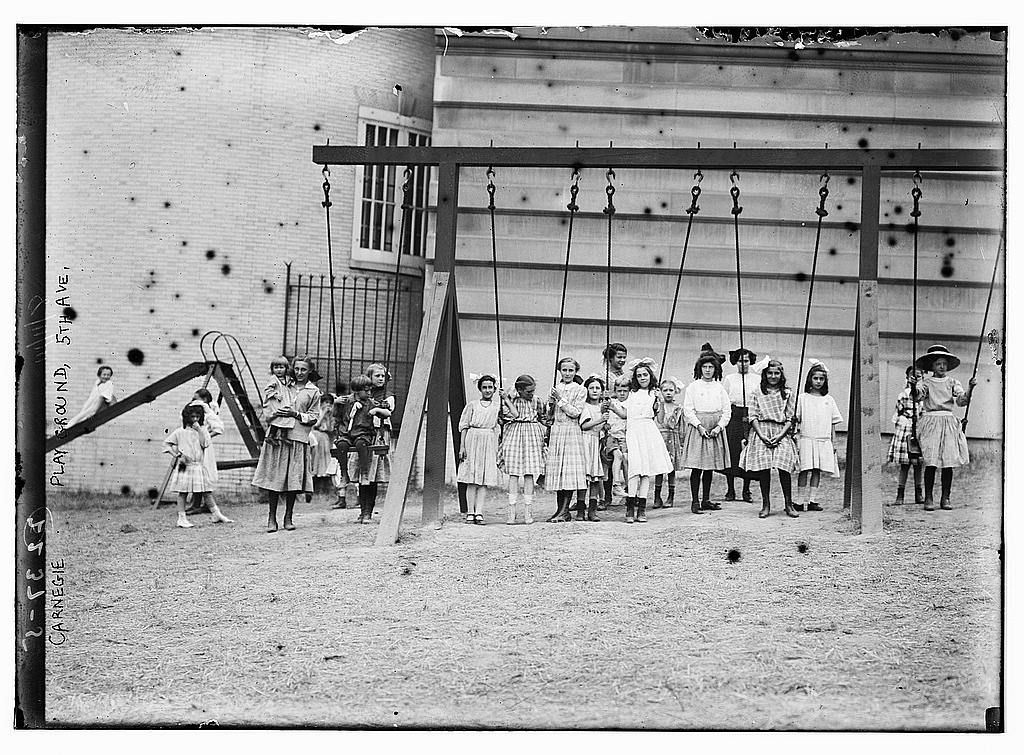
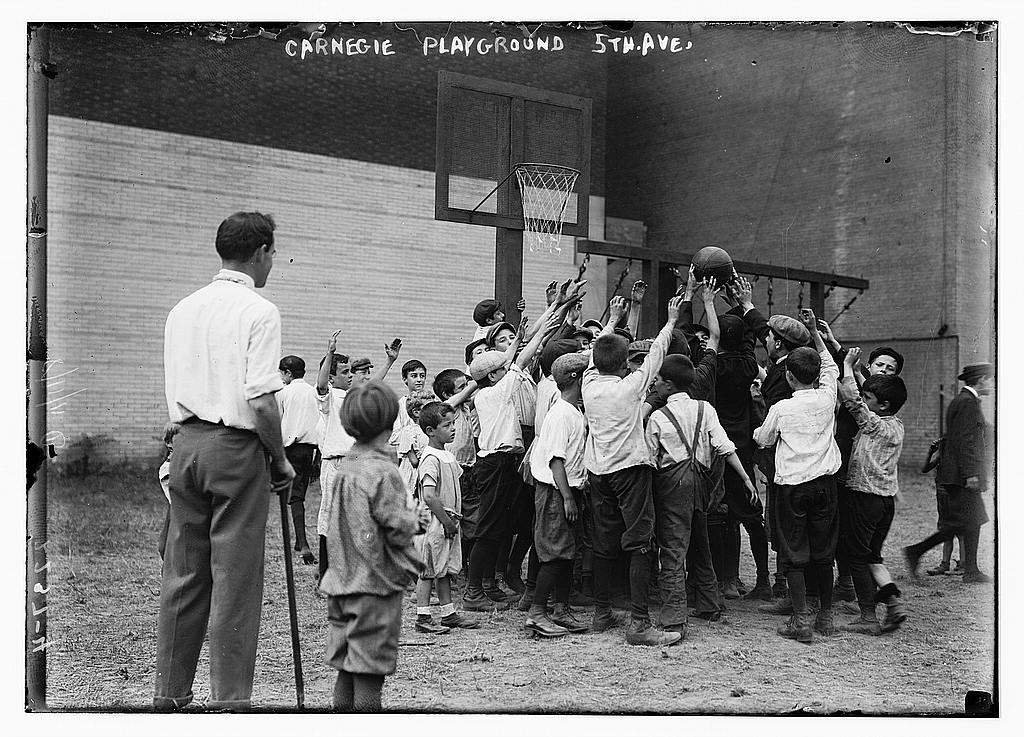
Carter, now fully invested in children’s dental practices, lectured to children on the Carnegie Playground at 91st Street and Fifth Avenue (near the palatial mansion of Andrew Carnegie), providing them with free toothbrushes while underscoring the social advantages of a healthy mouth. “[Y]ou see if you want to be good looking you must clean your teeth.” [source]

Miss Carter, known as the Tooth Brush Lady or ‘the Apostle of the Toothbrush‘, spent the next decade treating New York’s youngest unfortunates to her trademark ‘good cheer’. In 1916, the Society brought Christmas presents to the infirm young patients at the Hospital For Ruptured And Crippled Children — yes, that was its actual name — at 321 East 42nd Street (where the Ford Foundation stands today).

The New York Sun gives an interesting description of the ravishing Miss Carter: “She is slim and svelte, with dusky hair, big hazel eyes and a perfectly straight nose.”

Apparently the Society was so successful that Miss Carter formed a junior off-shoot in Brooklyn called the Little Cheerfuls, which allowed young children from wealthier households to help in the spreading of ‘good cheer’ in local hospitals.

By the way, I have officially fallen in love with Miss Theora Carter.

Below: Children at the Carnegie Playground at 91st and Fifth Avenue. It’s likely that these photographs were taken during Miss Carter’s visit to the playground, as news reports all state that photographers were present during her visit.

Photos courtesy the Library of Congress

What a view! Library roof gardens in the Lower East Side


Click picture for greater detail

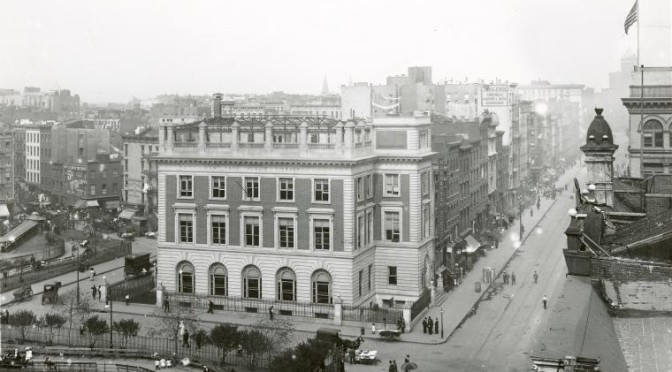
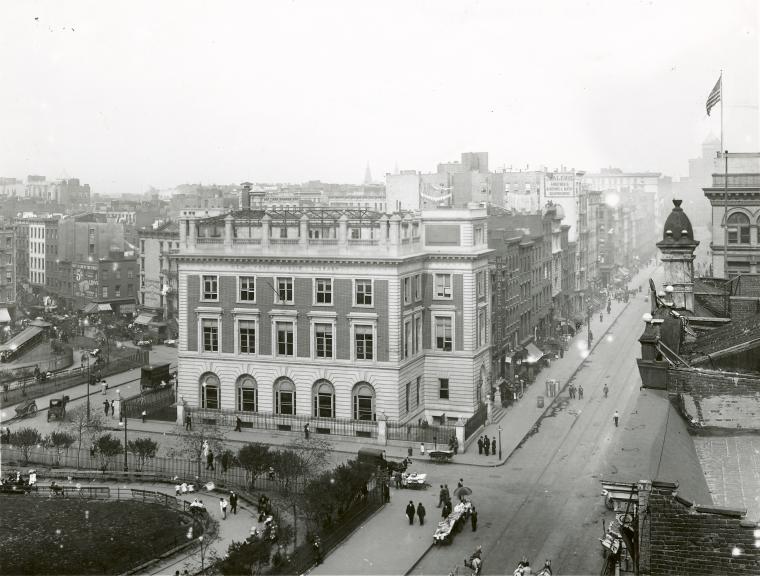
Above is a picture, facing east, of Seward Park Library in the ‘lower’ Lower East Side at 192 E. Broadway (picture taken in 1911). This spectacular branch library, funded by Andrew Carnegie, opened in November 1909, two years before the 42nd Street main branch opened.  All of the housing behind the library to the east has since been demolished.

The nearby park in the foreground is still there, but the small extension of Jefferson Street which separate them has been turned into a paved, closed off pedestrian plaza. The streets seen in the left of the photograph are completely gone.

The library was built by the firm Babb, Cook and Welch, whose accomplishments from the Gilded Age are seldomly still found today. But, in fact, one of the firm’s lead architects William Cook was part of a committee which included Charles McKim (of McKim, Mead and White) and John Carerre (of Carerre and Hastings, who ultimately designed the famous 42nd Street branch) to standardize library designs in the city. Those two better known firms got most of the commissions; however the Seward Park library remains one of Babb, Cook and Welch’s best known remaining public works.

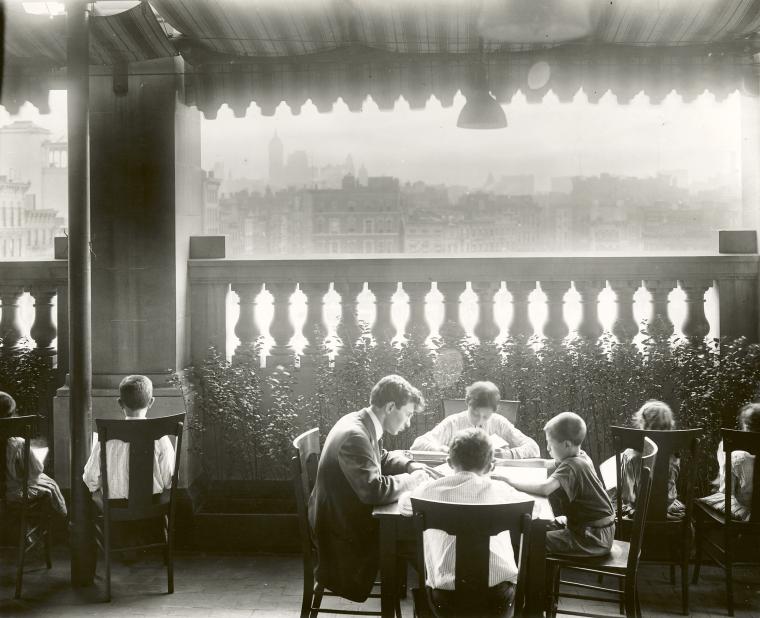
During the library’s first years, readers were actually allowed onto a “roof garden.” According to a New York Times article from 1910, “There will be awnings over the top to shield from sun and the occasional shower; tables around which the readers can congregate, and a network of electric bulbs strung over the top so that there will be plenty of light for the industrious who wish to study.”

Below: children and adults alike on Seward Park’s roof garden

Adults were even allowed onto the roof late into the evening, including “mothers who wish to do their sewing out of doors.”

Although this grand structure was placed here in 1909, it was certainly not the neighborhood’s first library. Once the domain of the private sector, libraries were provided by philanthropic organizations such as the Aguilar Free Library Society, which began offering a reading room for New Yorkers at this very address starting in 1891.

Aguilar’s East Broadway library, “where the readers are nearly all Hebrew,” featured over 140,000 thousands books, the most popular being ‘Uncle Tom’s Cabin’ and ‘Around The World In 80 Days”. This library was sold in 1902 and remade as the building which stands there today.

The Seward Park Library has gone through two major renovations, the most recent in 2004, bringing back most of the building’s original lustre. As evidenced by this photo, little around it remains from its original condition.

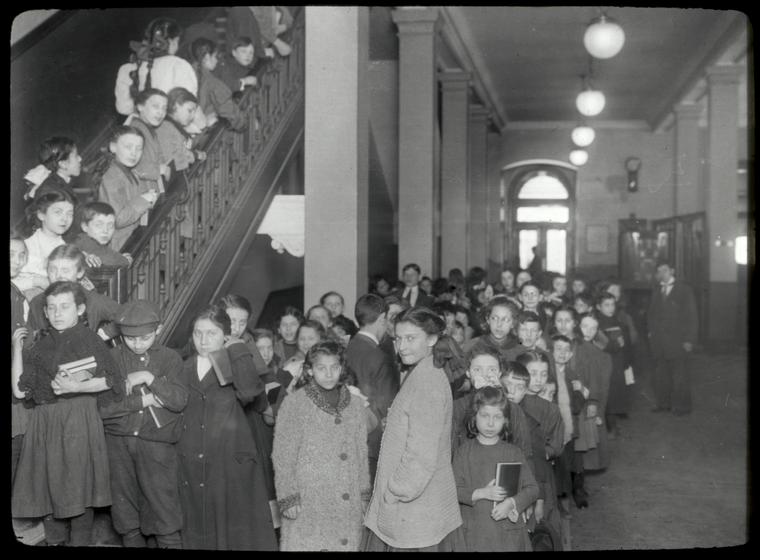
Of course, children have changed as well. Outside of a reading by Stephenie Meyer, can you imagine this mob scene at a library today? (Photo by Lewis Wickes Hine)

Pictures courtesy NYPL

Categories
It's Showtime Podcasts

PODCAST: The Glory of Carnegie Hall

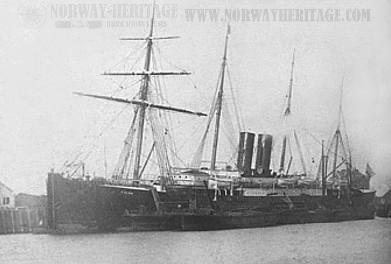
How do you get to Carnegie Hall? Well, we can at least show you the way through its tumultuous history, from a fortunate meeting on a Norwegian cruise ship, passed a symphonic rivalry, and into the 20th Century with some of the biggest names in classical and popular music.

Listen to it for free on iTunes or other podcasting services. Or you can download or listen to it HERE

The Hall in 1895

A crude sketch of Carnegie Hall on opening night, illustrating how simply packed it was

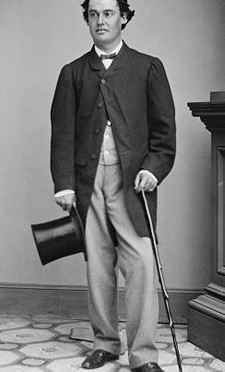
Walter Damrosch

Andrew and Louise Carnegie in 1914

The steamship Fulda, where Damrosch and Carnegie had their fateful meeting

Pyotr Ilyich Tchaikovsky, ‘nervous’ but head intact, who gave one of his final performances on Carnegie Hall’s opening night

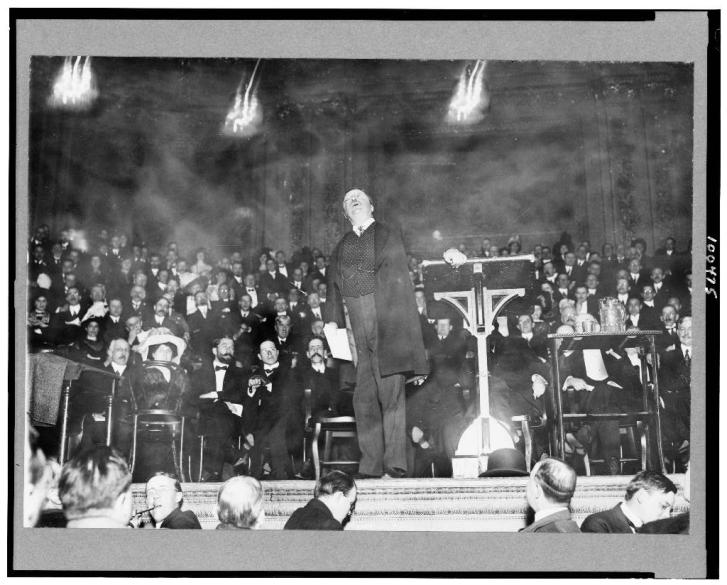
Teddy Roosevelt grandstands to a captive audience in 1912

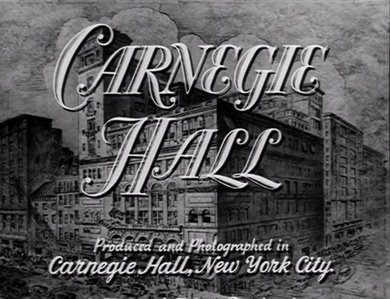
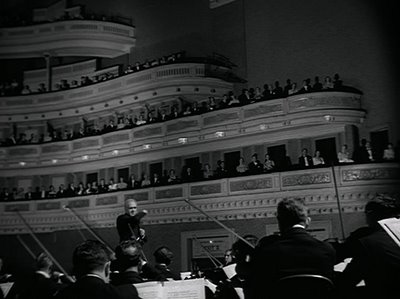
The interior, taken in 1947, for a feature film by Edgar G Ulmer titled Carnegie Hall, which featured performances by Artur Rubinstein and Lily Pons. Walter Damrosch makes a cameo in the film!

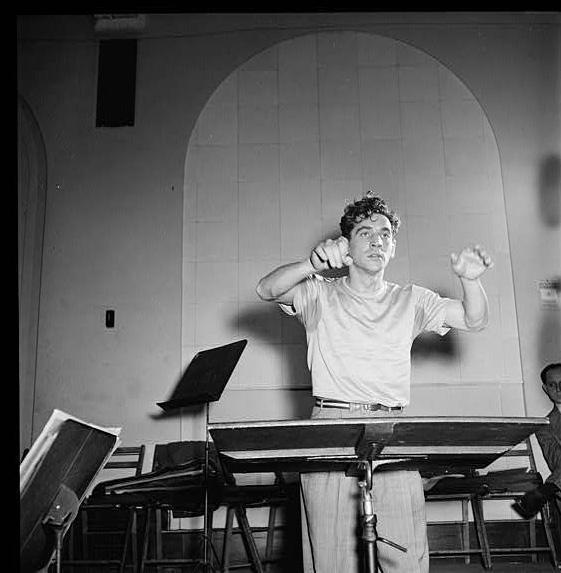
Leonard Bernstein, one of Carngie’s most enduring figures, seen here in a shot between 1946-48

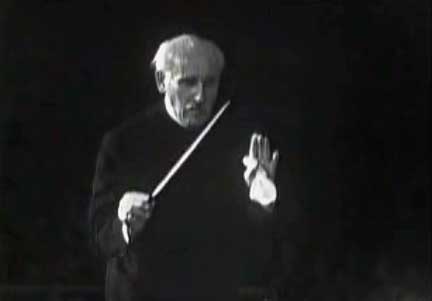
Arturo Toscanini was a regular here, in particular performing with the NBC Orchestra, bringing classical music to the new medium of television

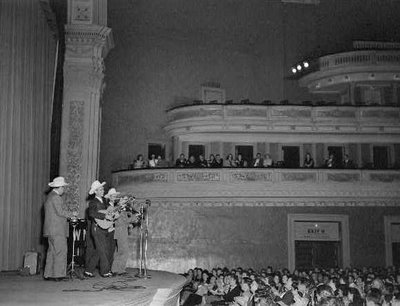
A long way from the Grand Ole Opry! Bob McCoy and Ernest Tubb brought country music to Carnegie back in 1947

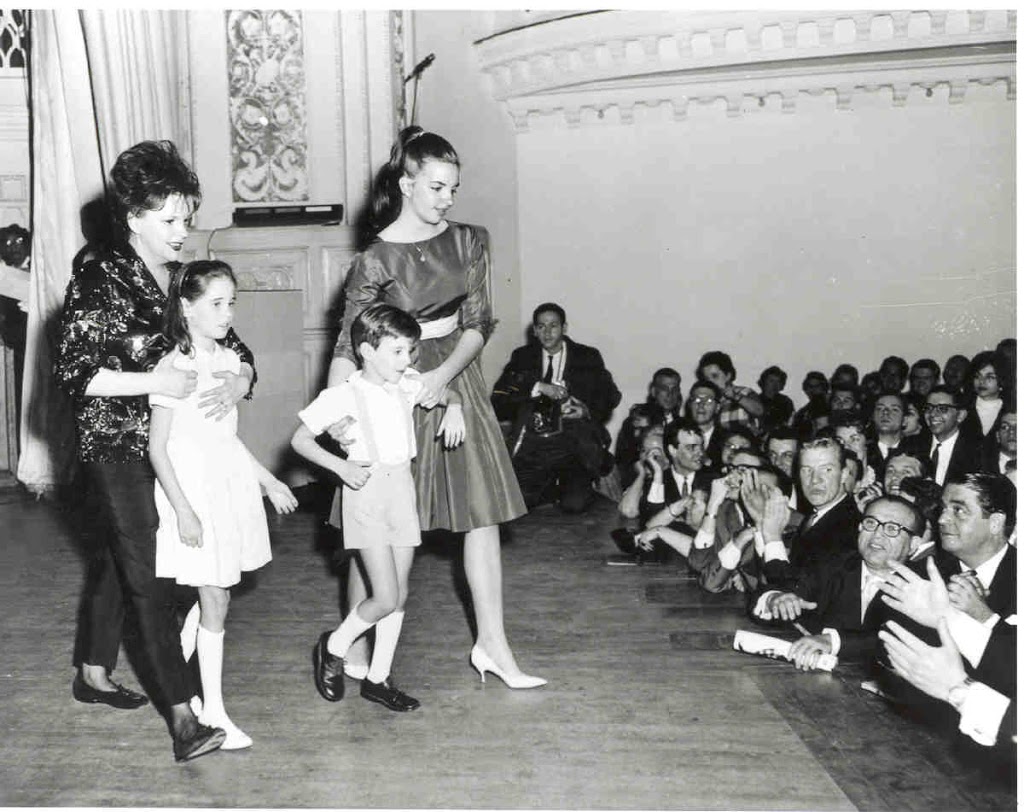
Judy Garland brings her family on stage. Young Liza would grow up and perform here as a superstar in her own right.

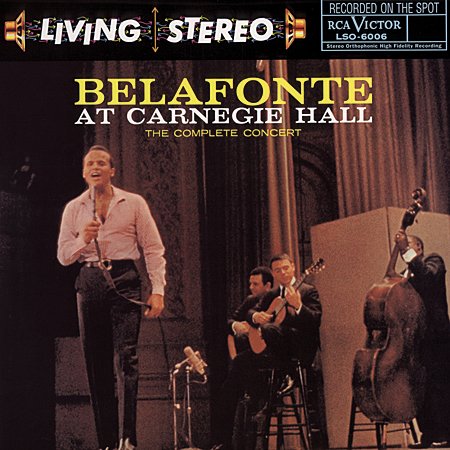
Dozens of performance have recorded live albums here, including Harry Belafonte, whose 1959 album (below) was such a success, he recorded another one the next year

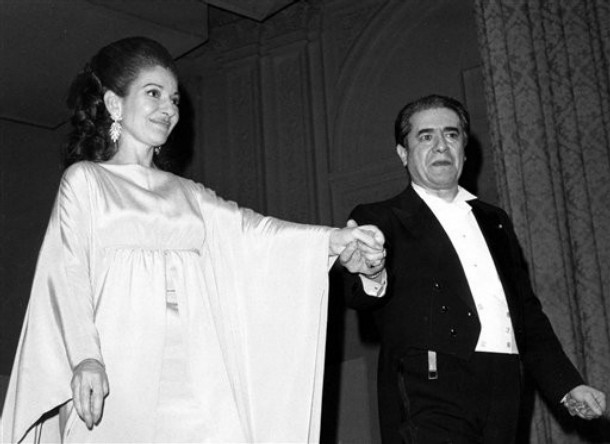
Maria Callas and Giuseppe di Stefano perform at a Carnegie Hall benefit in 1974. Callas would give a farewell performance on this stage.

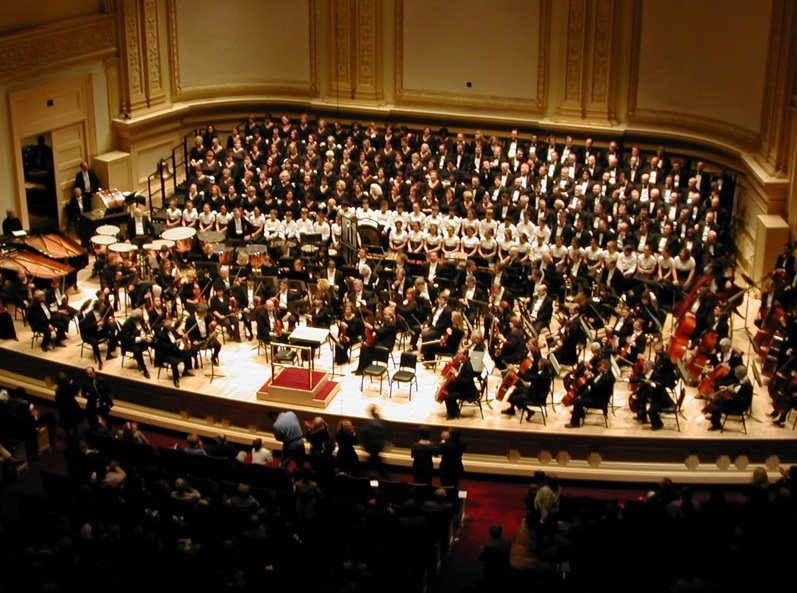
The Dallas Symphony and Chorus, in 2005. Most major-city symphonic and choral groups have made their way to the Carnegie Hall stage at one time or another

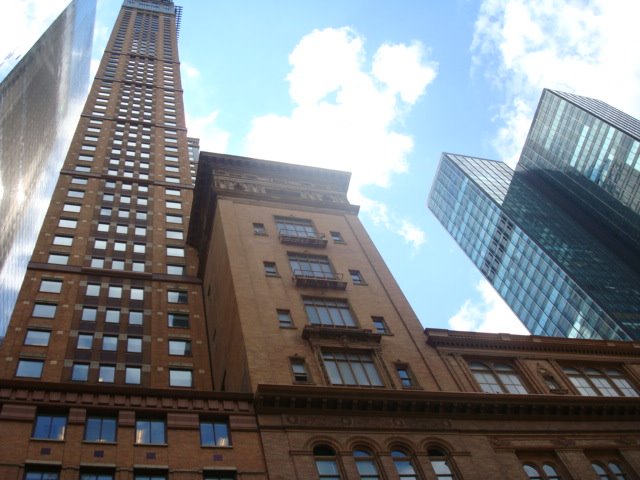
The Carnegie Hall Towers, rising nearby, were built in the late 1980s

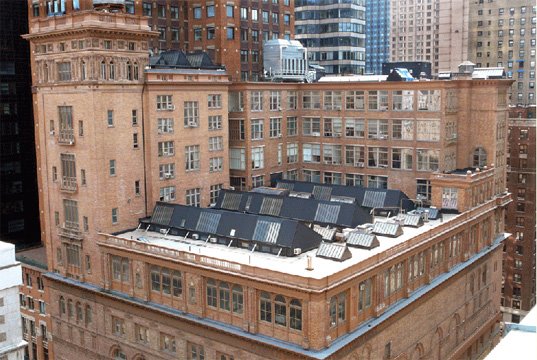
The top of the building, looking down at the famed Carnegie Hall Studios. A haven for artists, Carnegie Hall recently announced the studios were being transformed into music education facilities, an announcement not greeted kindly by some.

Know Your Mayors: Abram S. Hewitt

Our modest little series about some of the greatest, notorious, most important, even most useless, mayors of New York City. Other entrants in our mayoral survey can be found here.

Abram Hewitt could easily be considered a very pivotal mayor in New York City, given the significant development and personal connections he had to the heart of the city. However a shipwreck very nearly did him in before he could even get started.

Hewitt, born upstate in Haverstraw, attended Columbia and taught mathmatics, where he became friendly with a student he was tutoring, Edward Cooper. The two of them later voyaged to Europe in 1844, but on the way back to America, their ship capsized off the coast of Cape May.

He, Edward and the crew were later rescued, but the experience affected Hewitt deeply (and rather vaingloriously): “It taught me…that my life which had been miraculously rescued belonged not to me, and from that hour I gave it to the work which from that time has been in my thoughts — the welfare of my fellow-citizens.”

It had a more lucrative effect as well; for Edward Cooper happened to be the only son of industrialist Peter Cooper. Hewitt’s bravery bonded him with the Cooper family, becoming lifelong friends with Edward and marrying Edward’s sister Sarah.

He helped found Trenton Iron Company with the Coopers and became the first to experiment with the inexpensive steel-producing Bessemer process in the United States.

But politics was soon in Abram’s sights, especially with the crumbling of Boss Tweed’s Tammany Hall after his fall in 1871. Hewitt reorganized that once-corrupt Democratic political machine with political rewards for himself, elected to the U.S. House of Representatives in 1874.

He even tried his hand at national politics, managing Samuel Tilden’s nearly-successful quest for the White House in 1876. Remember this from history class? Despite Tilden winning the popular vote, an electoral fiaso gave the election to Rutherford B Hayes.
As Hewitt held court in Washington — becoming, in Henry Adams’ words “the most useful public man in Washington” — his close friend and brother-in-law Edward Cooper would be elected mayor of New York in 1879.
Hewitt’s connections in Washington would assist in getting the neccessary attentions brought to the building of the Brooklyn Bridge. Although David McCullough dryly notes that Hewitt might have inadvertantly helped weaken the Bridge by helping deliever the wire bid to Brooklyn native (and total fraud) J. Lloyd Haugh. (More about him in last week’s podcast.) Hewitt would give a most stirring speech during the Bridge opening ceremony in 1883.
Finally, Hewitt himself would become mayor of New York City in 1886 during a heated election in which a candidate by the name of Theodore Roosevelt would place third.

Hewitt strong distain for corruption in city politics ran him against his old organization Tammany Hall. He also had strong moral convictions, fighting to keep city saloons closed on Sunday. (This did not endear him to many people.) However, he strongly advocated the creation of new city parks and began work on a much-delayed underground train system — which Tweed’s machine had stalled for years. In fact, Hewitt is considered the “Father of the New York Subway.”

He was defeated in 1888, partially due to angering the Irish community because he refused to attend the St Patricks Day Parade. (Hewitt tended to be of a more nativist stripe; among other demands, he required all immigrants take a literacy test.)

He spent his later years as a philanthropist, on the boards of the Carnegie Institution and the Museum of Natural History. When he died in 1903, Andrew Carnegie himself claimed the former mayor was “America’s foremost private citizen“.