Why is the West Village both historically important and incredibly expensive?
In the final part of our West Village mini-series, we look at the elements that define the modern neighborhood — from battles with Robert Moses to the protests that galvanized the gay-rights movement.
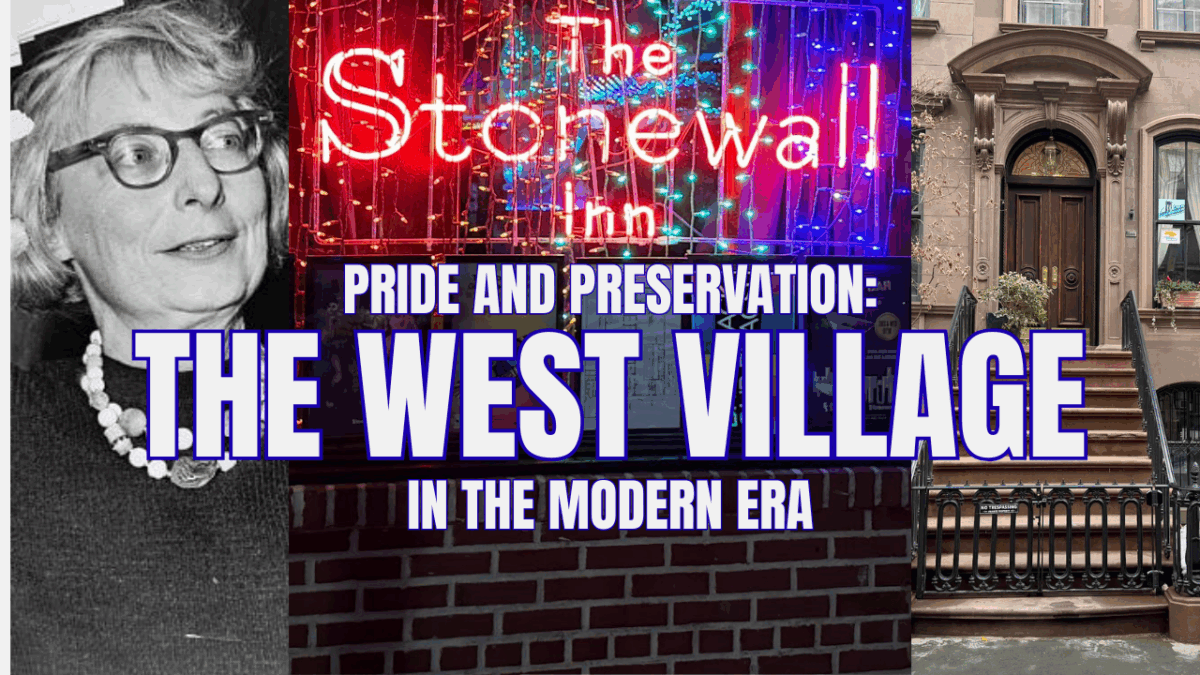
The 19th-century charms of the old Village seem timeless, but they survive thanks to the 1969 Greenwich Village Historic District. The fight to save the neighborhood, however, began two decades earlier, and those early conflicts even popularized the name “West Village.”
Jane Jacobs, fresh off the publication of her landmark book The Death and Life of Great American Cities, would become the leading voice in protecting this uniquely New York enclave.
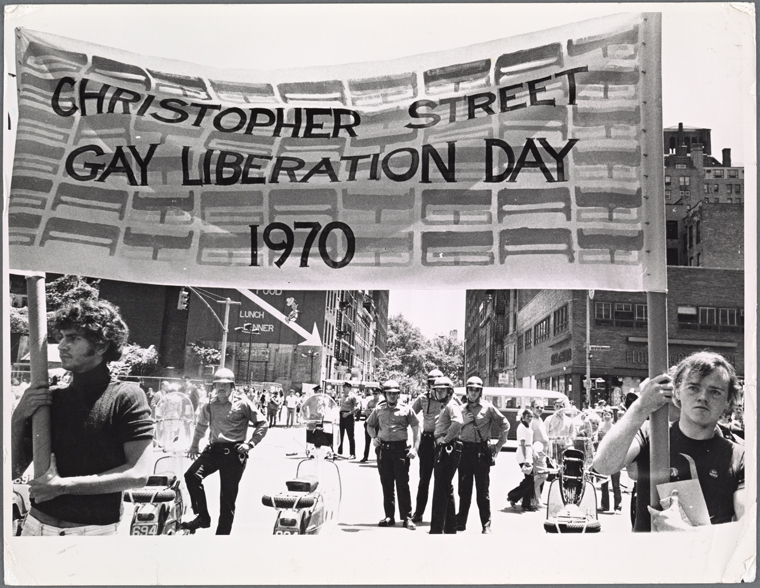
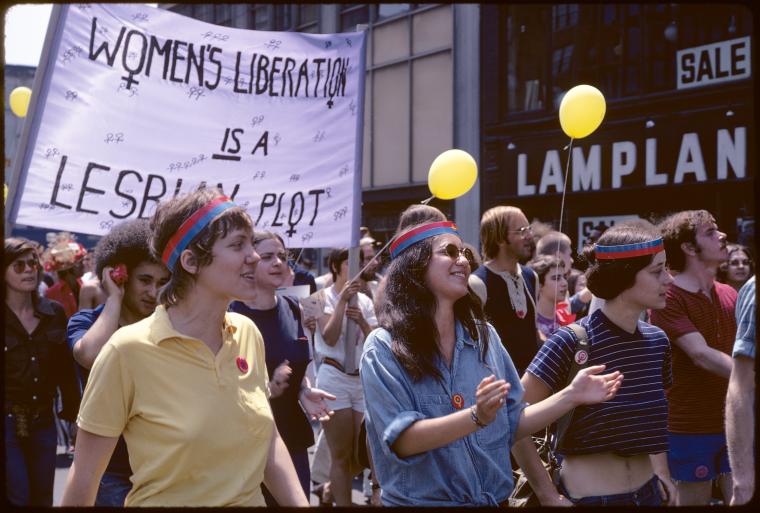
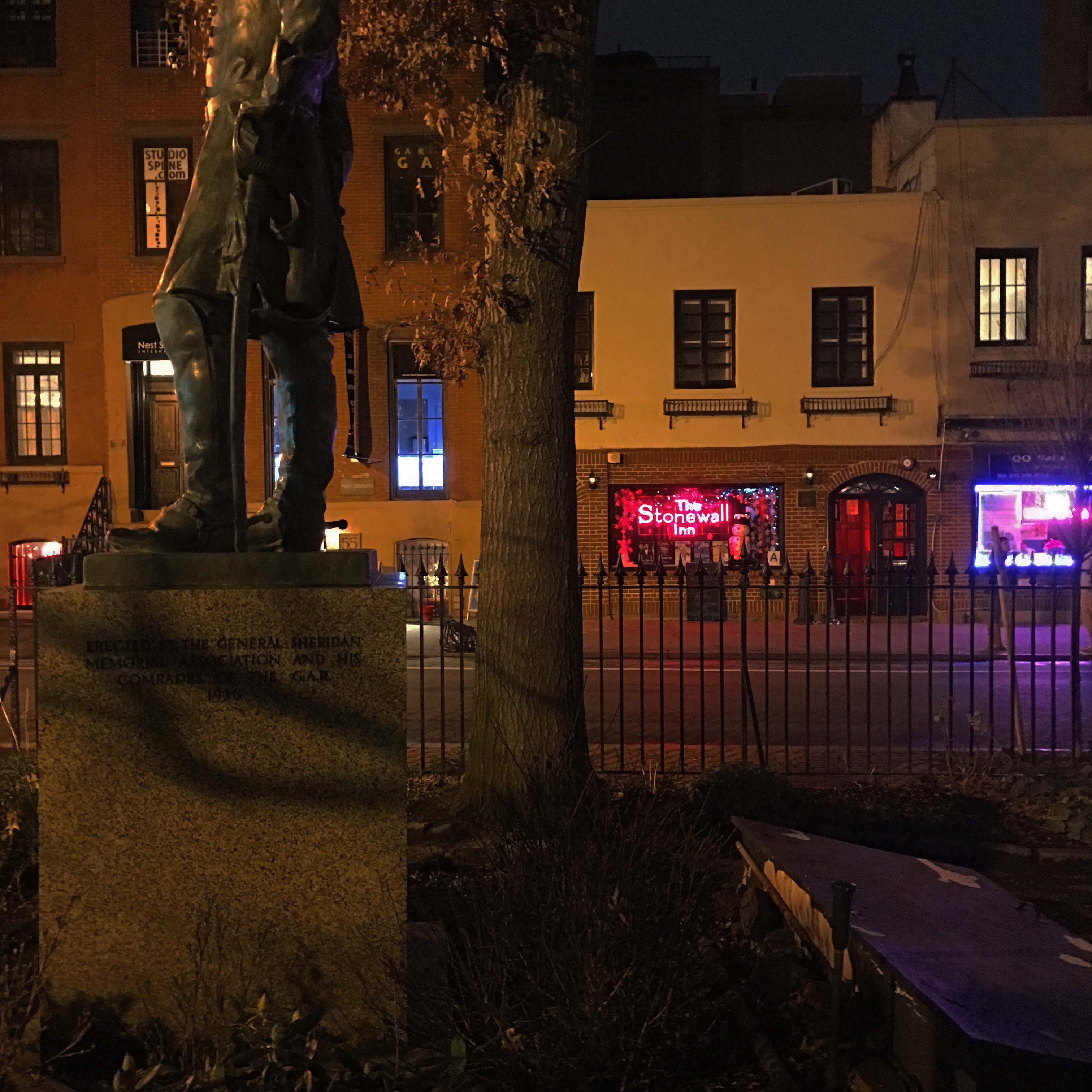
That same year, clashes between police and patrons at the Stonewall Inn united the area’s LGBT residents, culminating in the first Christopher Street Liberation Day Parade (today’s NYC Pride March).
A vibrant, radical queer culture flourished — from leather bars to the Christopher Street Pier.
In the 1980s, thousands of New Yorkers died of AIDS, and St. Vincent’s Hospital became known for its pioneering care. Today, long-running establishments like the Monster and Julius’ form a kind of “legacy cultural district,” linking present-day nightlife to those transformative years.
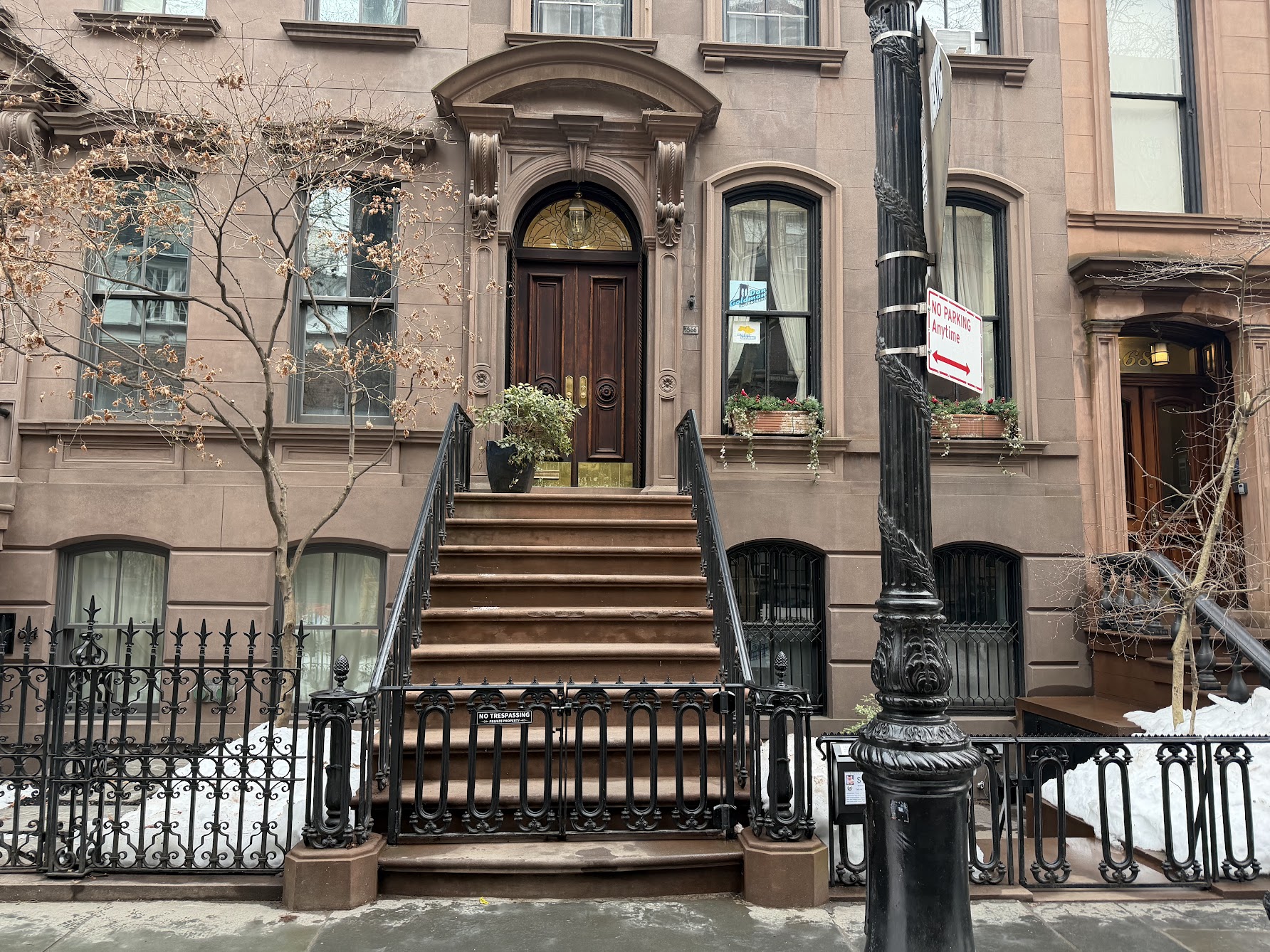
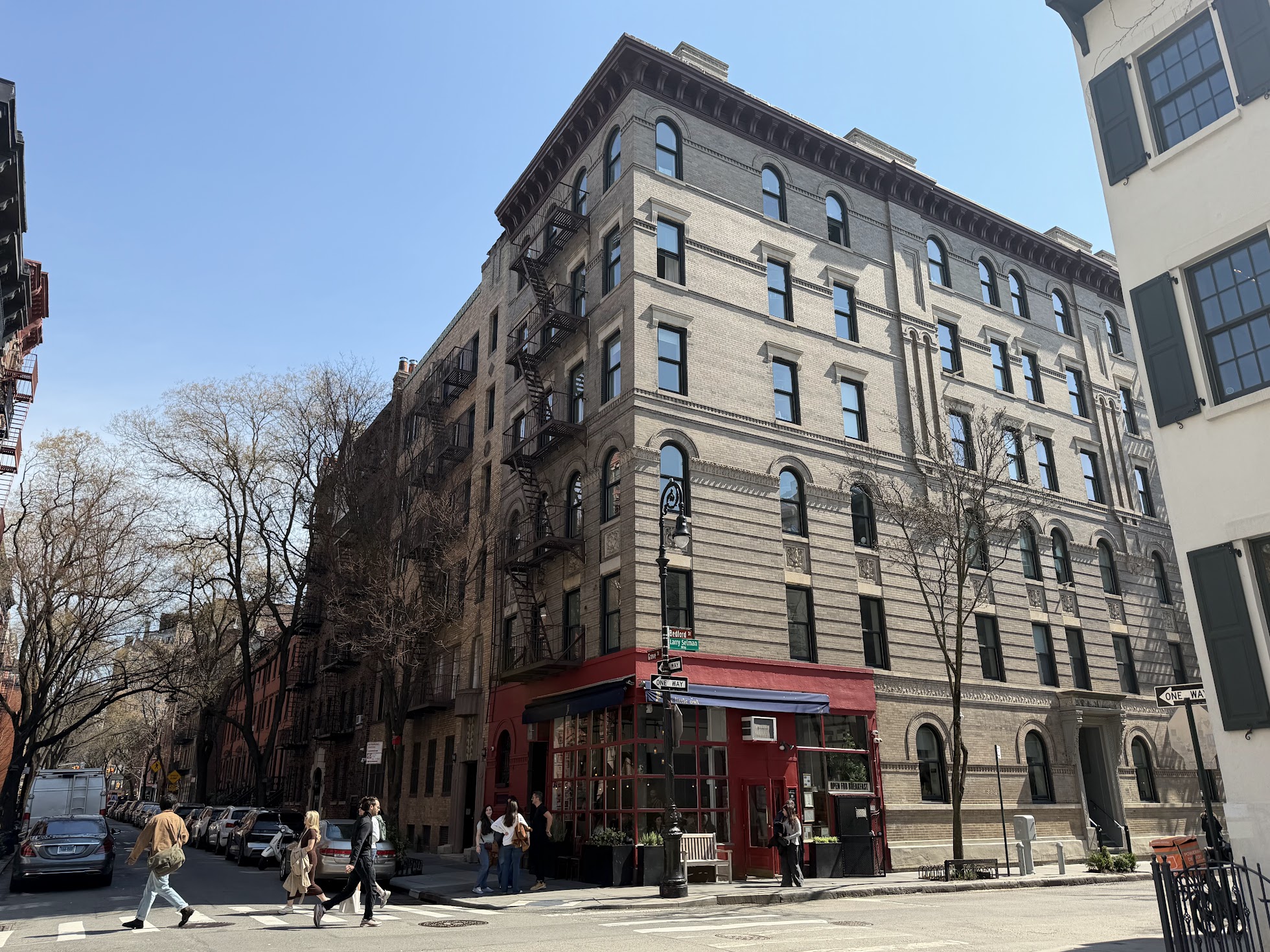
In the 1990s, pop-cultural phenomena Friends and Sex and the City (which made one Perry Street brownstone famous) brought international attention to the neighborhood.
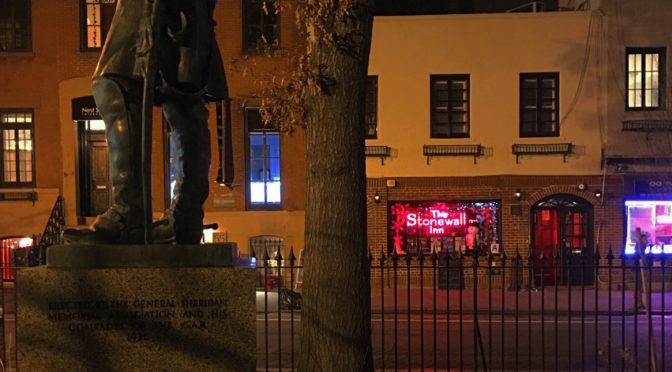
By the 21st century, the West Village had become a luxury enclave, even as its history was further elevated with Stonewall’s designation as a U.S. National Monument.
What has the West Village become in 2026?
LISTEN NOW: PRIDE AND PRESERVATION: THE STREETS OF THE WEST VILLAGE
All episodes of The Streets of the West Village mini-series are now available.
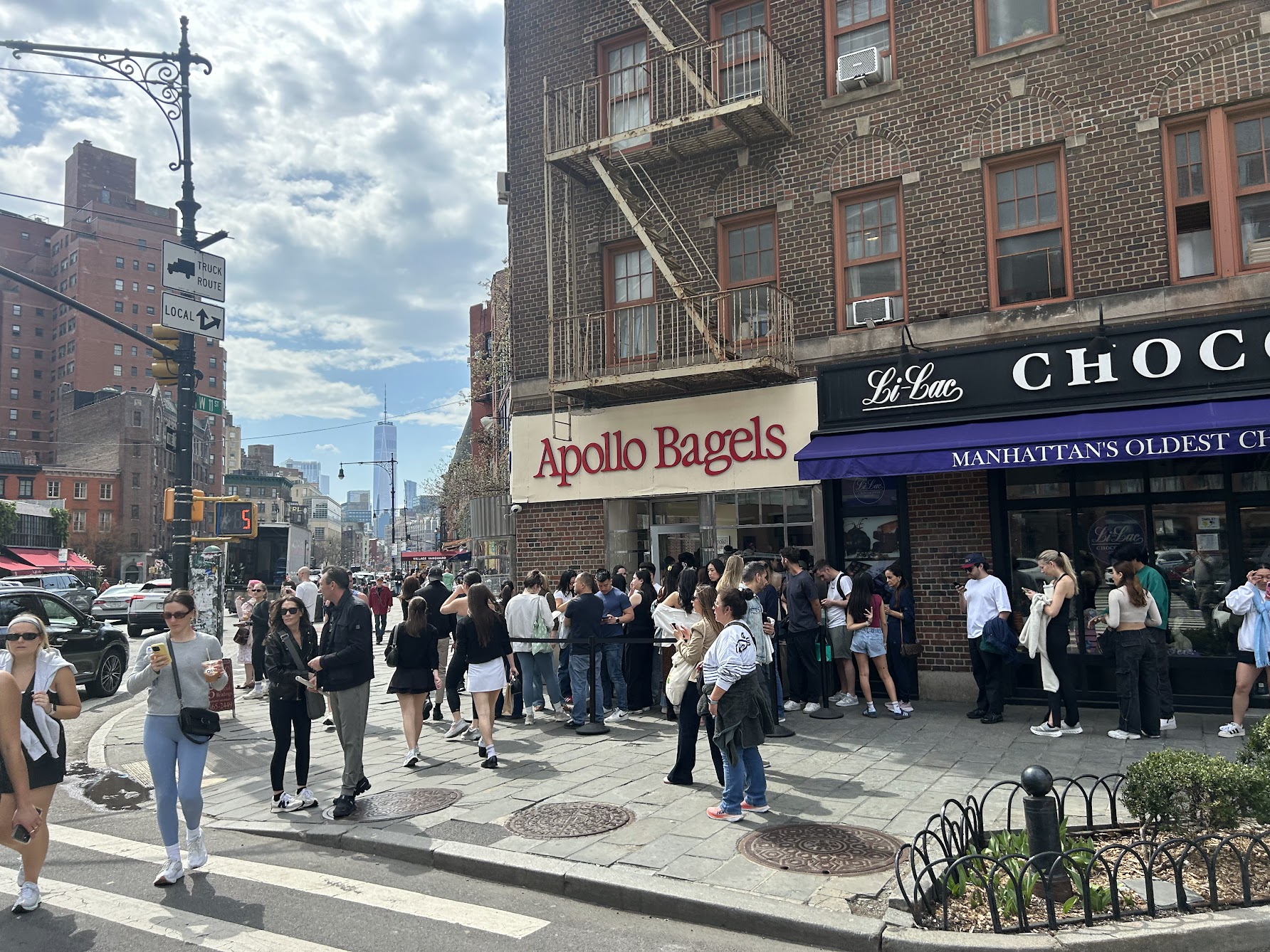
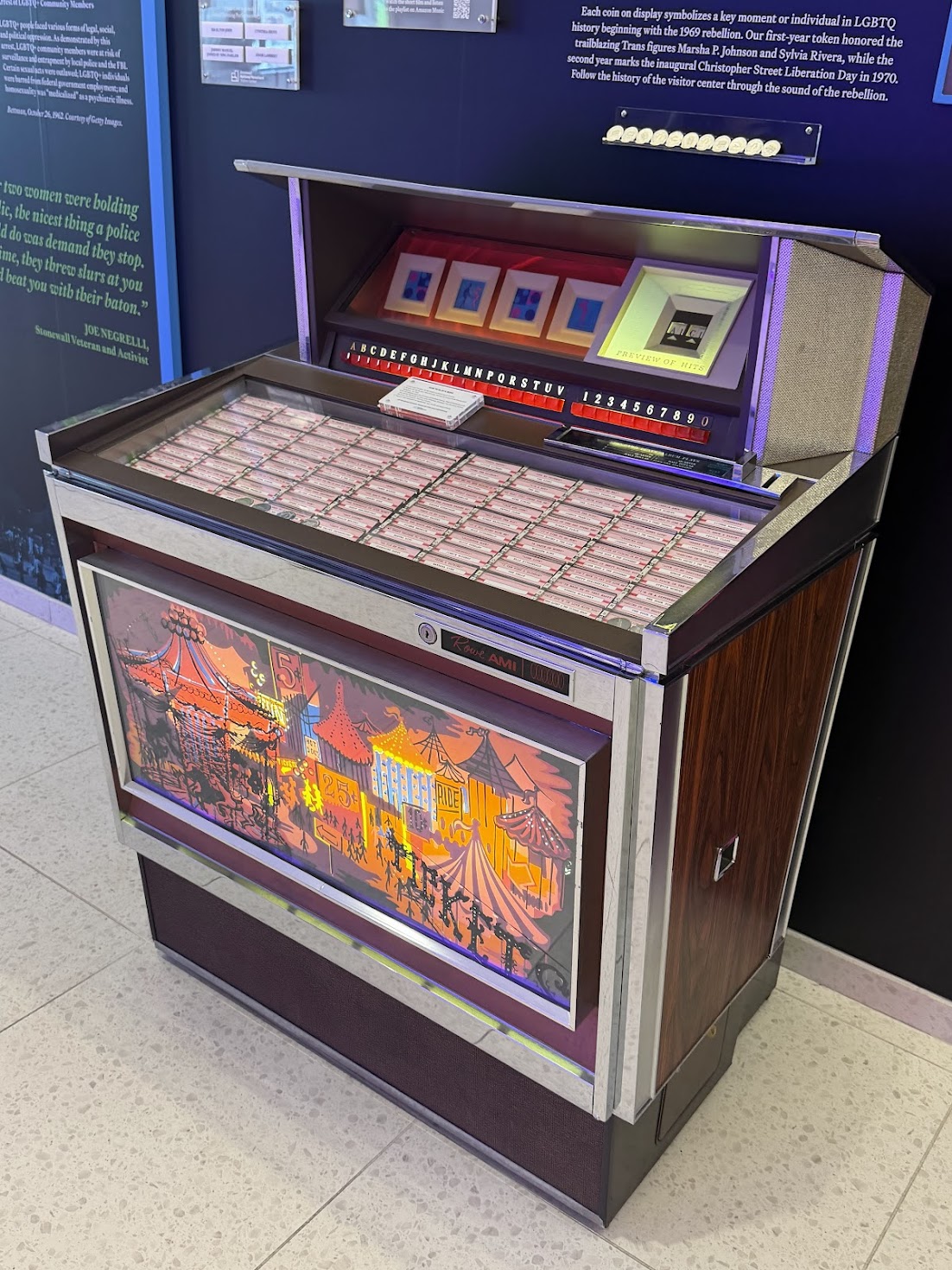
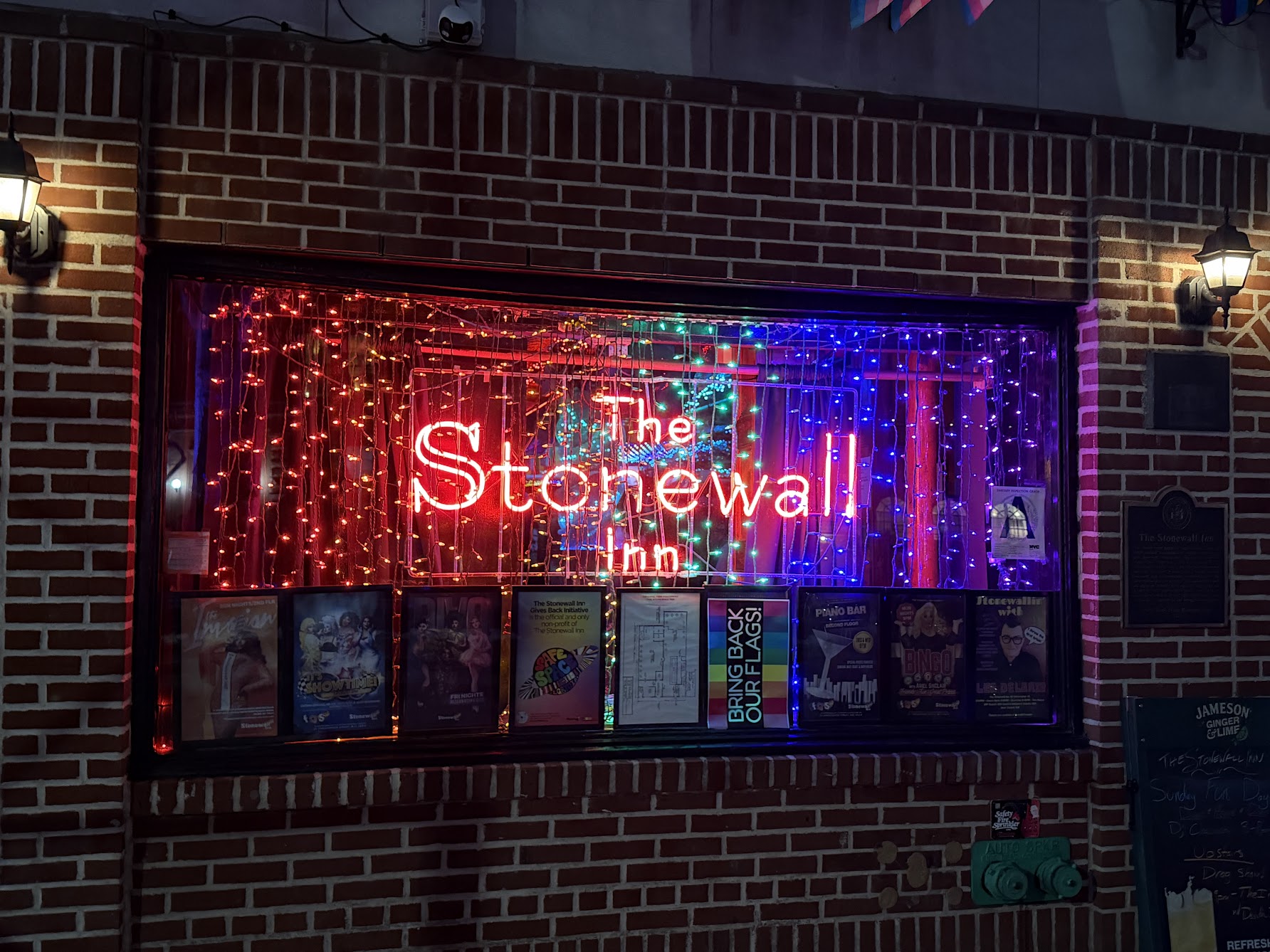
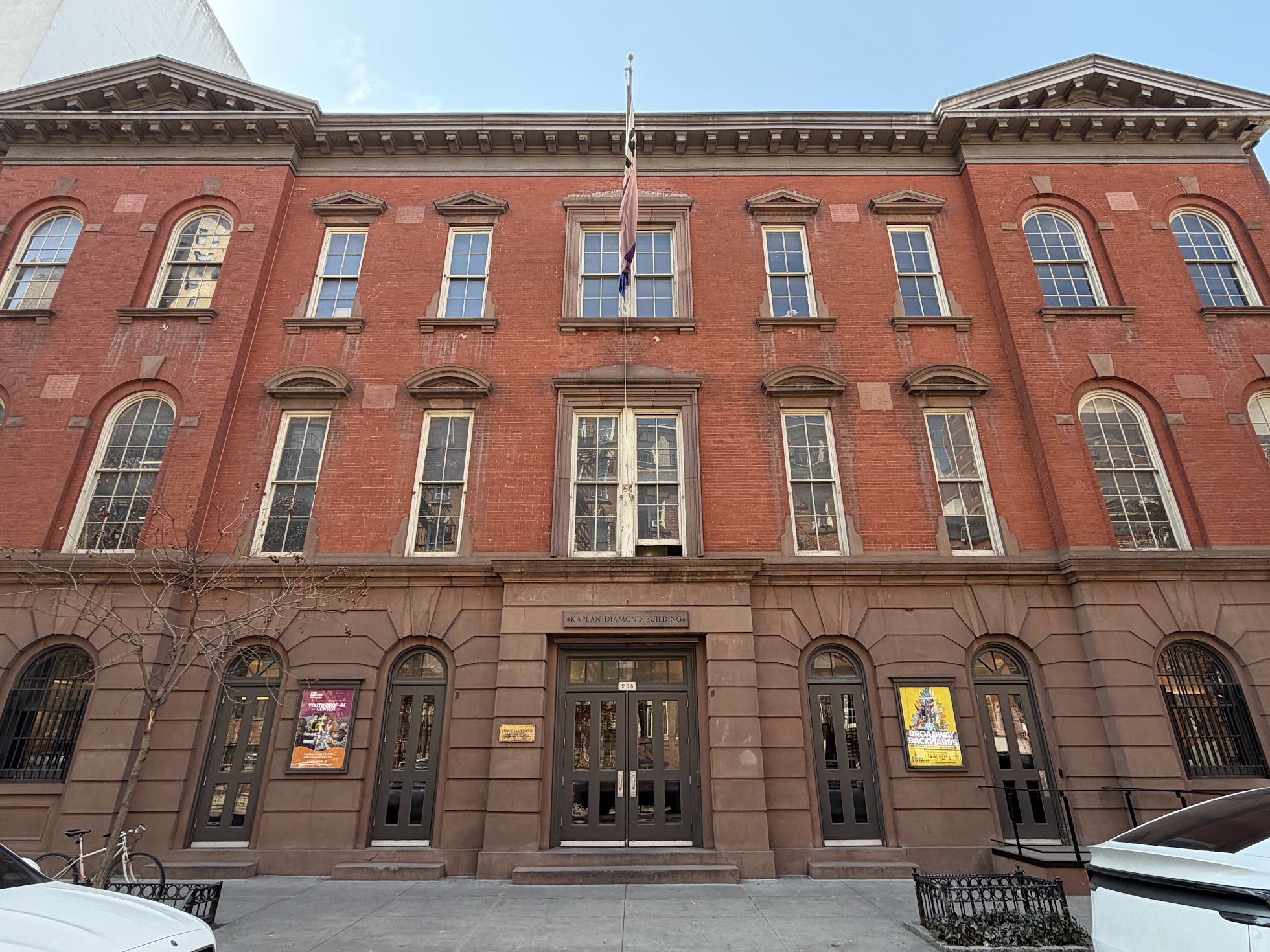
Before the 1910s, Seventh Avenue once stopped right at this intersection with Greenwich Avenue. Today people flock to this corner for trendy bagels. Photo by Greg Young66 Perry Street, made famous for its appearance on Sex and the City. Photo by Greg YoungInside the Stonewall National Monument Visitors Center. Photo by Greg YoungAlthough part of a National Monument, the Stonewall Inn is still an active bar. Photo by Greg YoungThe Center — aka the Lesbian, Gay, Bisexual & Transgender Community Center. Photo by Greg YoungThe New York City AIDS Memorial, opposite the former site of St. Vincent’s Hospital. Photo by Greg YoungThe “Friends” apartment building
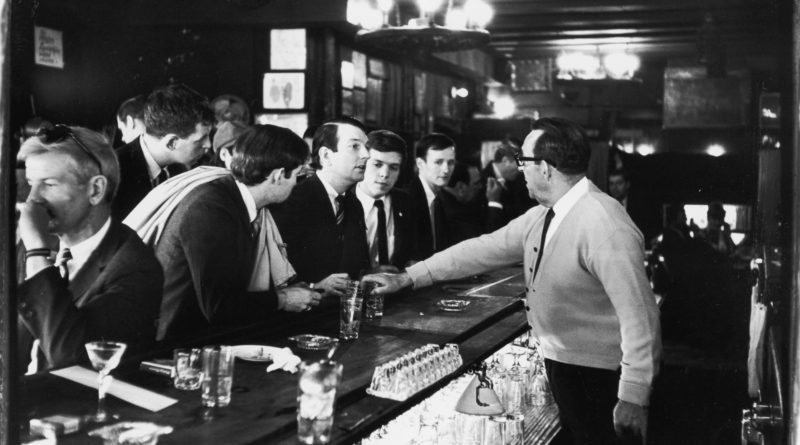
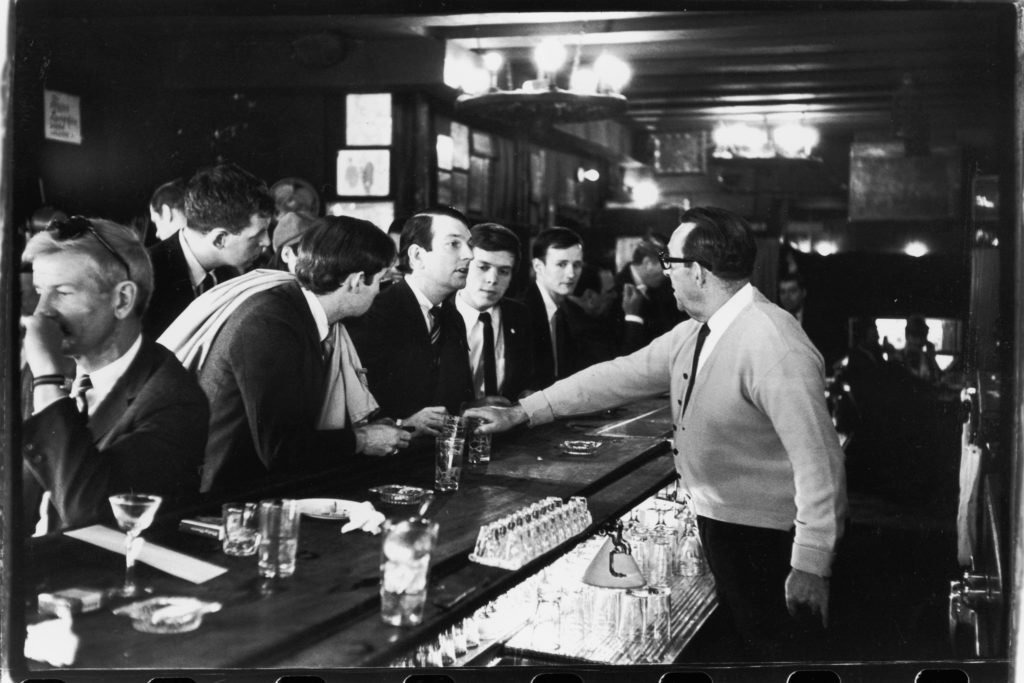
After pouring their drinks, a bartender in Julius's Bar refuses to serve John Timmins, Dick Leitsch, Craig Rodwell (1940 - 1993), and Randy Wicker, members of the Mattachine Society, an early American gay rights group, who were protesting New York liquor laws that prevented serving gay customers, New York, New York, April 21, 1966. (Photo by Fred W. McDarrah/Getty Images)
It’s here that one moment of protest (the Sip-In of 1966) set the stage for a political revolution, “a signature event in the battle for LGBTQ+ people to gather, socialize, and celebrate openly in bars, restaurants, and other public places.”
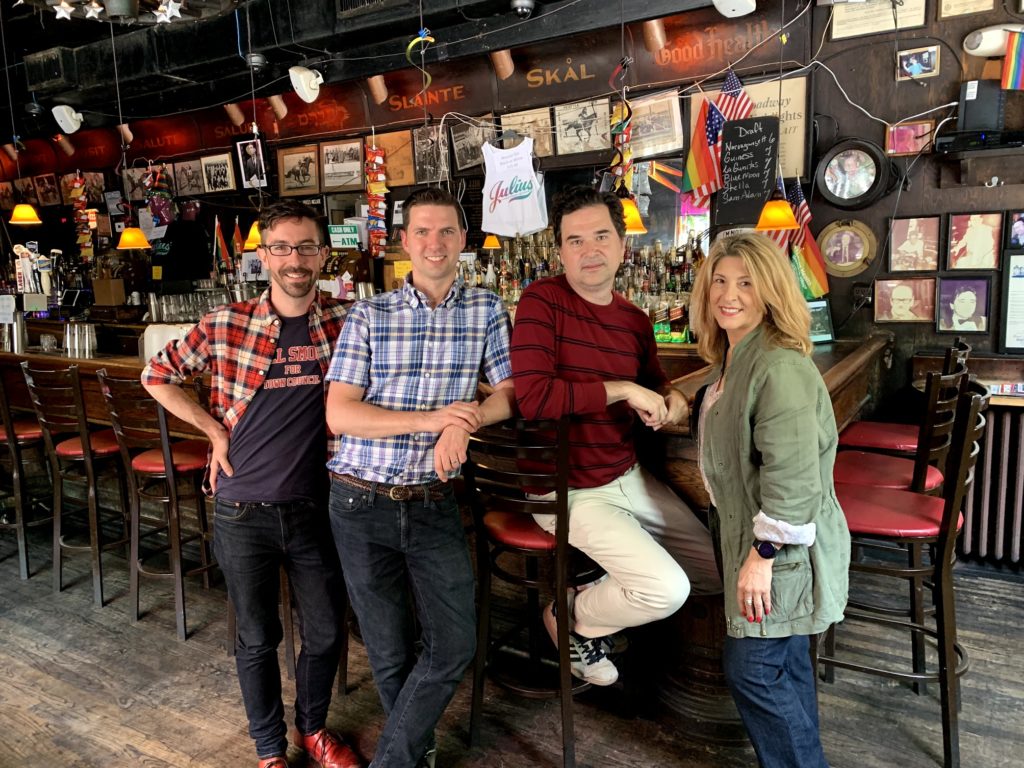
So we thought it would be a great time to revisit our 2019 show on the history of Julius’ and a look at the life of gays and lesbians in the mid 20th century.
The now-iconic photograph by Fred W. McDarrah (Courtesy Getty Images)
PODCAST Many Americans may now be familiar with Stonewall Uprising, a combative altercation in 1969 between police and bar patrons at the Stonewall Inn in the West Village. It was this event that gave rise to the modern LGBT movement.
But in a way, the Stonewall Riots were simply the start of a new chapter for the gay rights movement. The road leading to Stonewall is often glossed over or forgotten.
By the 1960s, a lively gay scene that traced back to the 19th century — drag balls! lesbian teahouses! — had been effectively buried by decades of cultural and legal oppression.
A few brave individuals, however, were tired of living in the shadows.
In this episode, we’ll be zeroing in on the efforts of a handful of
young New Yorkers who, in 1966, took a page from the civil rights
movement to stage an unusual demonstration in a small bar in the West Village. This event, called the Sip-In at Julius‘, was a tiny but significant step towards the fair treatment of gay and lesbians in the United States.
IN ADDITION: We’ll be joined by Hugh Ryan, author of When Brooklyn Was Queer, at the bar at Julius’ to talk about the forgotten lives of queer people in the ever-changing borough of Brooklyn.
Listen Now — Sip-In at Julius’ Bar: Celebrating New York’s Newest Landmark
This episode features an audio interview clip from the podcast Making Gay History, an excellent source for gay history. Be sure you check out their coverage of Stonewall 50.
We also feature a musical clip of ‘I Hear A Symphony’ by The Supremes
(Motown). The song hit Number #1 on the Billboard charts in November of
1965. The most popular song in the nation at the moment of the Julius’
Sip-In? The Righteous Brothers’ “(You’re My) Soul and Inspiration.”
Julius’ Bar: A Short History
This month is the 50th anniversary of the Stonewall Riots, a
chaotic, rowdy altercation that bloomed over the course of the weekend
to energize the New York’s LGBT movement. (If you haven’t already, give our podcast on the history of the Stonewall riots a listen.) But despite its reputation, Stonewall is not the oldest gay bar in New York. Not even close.
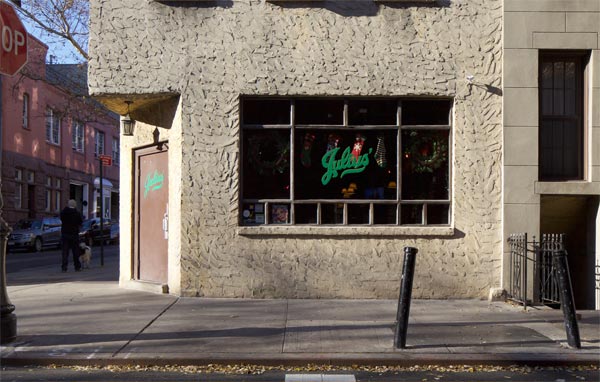
For that honor, you need only march a few steps to Waverly Place and 10th Street to that beloved old institution Julius (159
W. 10th St). It also happens to be the location of a pre-Stonewall
protest of angered gay activists, an event both revolutionary and even
occasionally amusing.
Julius is truly an old bar although nobody seems to know exactly how old. The bar itself settles on the year 1864, easily making it one of the oldest bars in New York, just a tad younger than McSorley’s Old Ale House.
The building itself is even older, dating from 1826, becoming a grocer
in 1840 before transforming to its current, more jovial purposes.
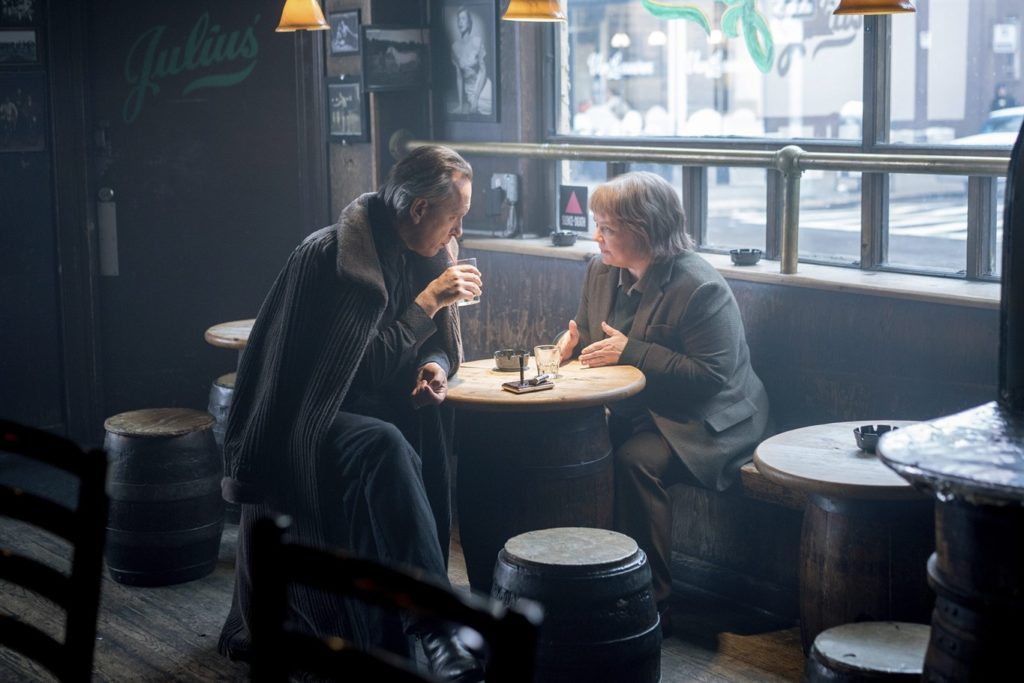
It has many things in common with McSorley’s. The walls are plastered with memorabilia from days gone by. The bar is a well-worn relic, the tables and benches made of old beer barrels.
Like McSorley’s, they even serve burgers, and really, really good
ones at that. Its history is a tad more shrouded than McSorley’s but
equally studded with famous clientele.
Courtesy the National Park Service
Surviving the 20th century
It was a popular speakeasy throughout the 1920s, evidenced today by Julius’ still existing sidedoor with a peephole. Both Fats Waller and Billie Holiday are rumored to have performed in the backroom, quite likely as Holiday worked at the nearby nightclub Cafe Societyduring the 1930s.
In subsequent years the clientele was decidedly a mixed lot and Julius would ply writers like Edward Albee, Tennessee Williams and Truman Capote with drink and companionship.
By the 1960s Julius had become a low-key staple of the West Village
gay scene. However, it appears that it was ‘straight enough’ that it
survived Mayor Robert Wagner’s cleanup of the city in preparation of the1964 World’s Fair, a wholesale shutdown of West Village gay bars and other ‘undesirable’ places.
The
film Can You Ever Forgive Me?, set in the early 1990s, has several
scenes set and filmed at Julius’. (Courtesy Fox Searchlight)
Julius’ Bar in the 1960s
Even through this Julius lived on, although patrons and management
alike had to maneuver through rather arcane and sometimes humiliating
rituals.
According to writer Edmund White,
“There was even a period when we weren’t allowed to face the bar but
had to stand absurdly with our back to it to prove, I suppose, that we
had nothing to hide.”
It gets even more absurd. The New York State Liquor Authority banned
bars from serving drinks to gays and lesbians. This rule was sometimes
ignored by brazen Village bartenders, but the constant fear of such a
twisted regulation being suddenly enforced by an undercover cop
eventually drew action from a burgeoning group of young gay activists.
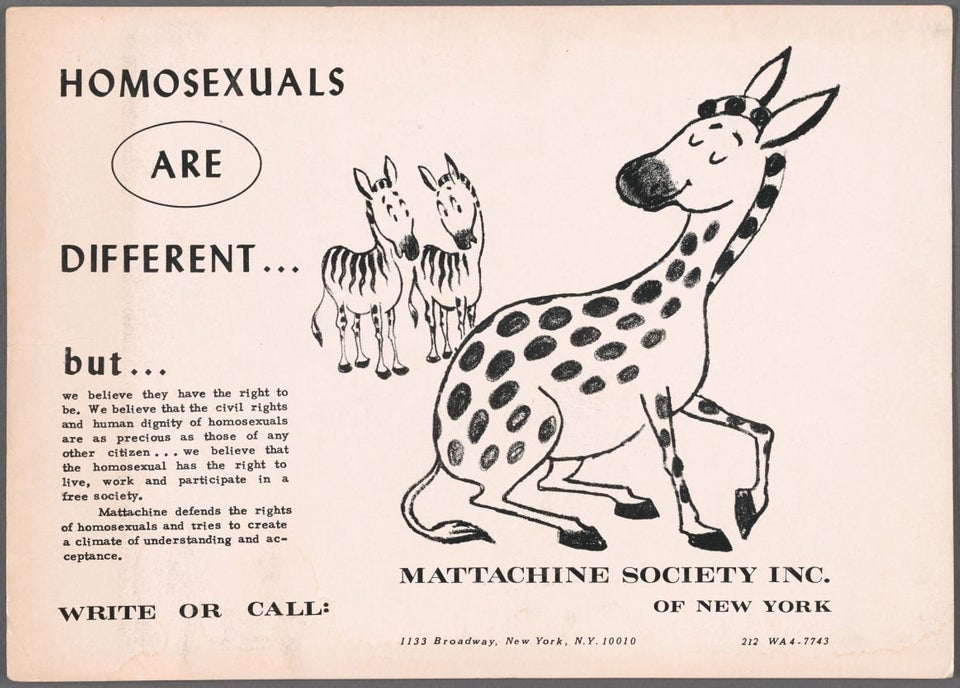
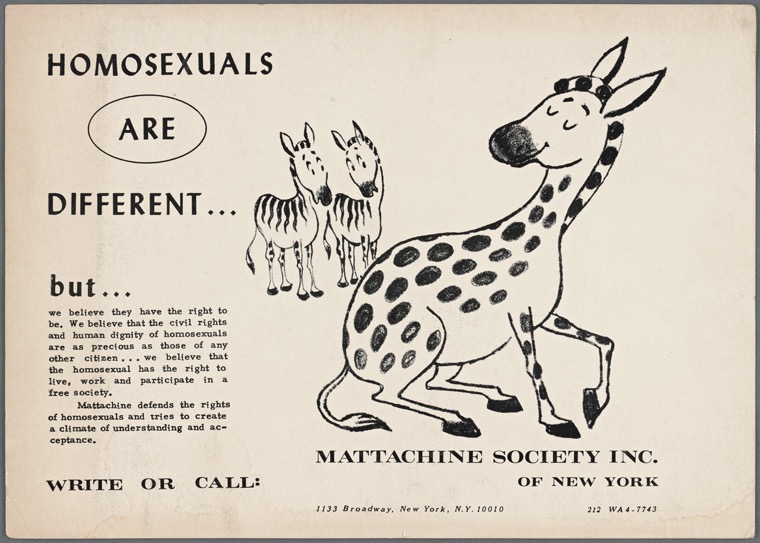
A curious ad for tolerance distributed by the Mattachine Society in 1960.
Members of the Mattachine Society, one of New York’s earliest
gay organizations, planned on challenging the rule by going into bars,
loudly announcing their homosexuality and ordering a drink.
Their statement at the bar would be calm and simple: “We are
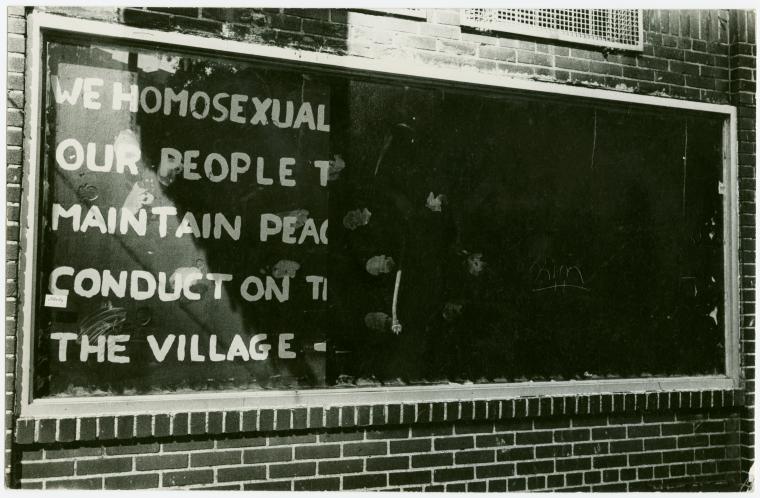
homosexuals. We are orderly, we intend to remain orderly, and we are
asking for service.”
The key would be that they were followed around by a phalanx of press
representatives. So, when the bar refused to serve them, the Mattachine
Society would have their moment, captured and ready for print.
More Than Just A Drink
The challenge came on April 21, 1966, more than three years before
the Stonewall riots. They told members of the press to meet them at the Ukrainian-American Village Restaurant but management closed shop before they arrived. They tried two other bars, a Howard Johnson’s and a place called Waikiki, and each time they were served without incident.
But of course, the organizers were looking for an incident. They arrived at Julius for their big moment.
The now-legendary Julius Sip-In, as the event as come to be called,
was a carefully engineered event with a few unexpected detours, yet it
served its purpose. The New York Times even ran the story, under the
rather backhanded headline, “3 Deviates Invite Exclusion by Bars.” The law was successfully challenged in court.
Since then, Julius has quietly sat on the sidelines, ceding the
historical spotlight to Stonewall around the corner, observing both the
curious changes to the neighborhood and the development of a viable and
open gay community in the Village and elsewhere.
You don’t have to be gay to appreciate its unique place in New York
City history. Just grab a stool and spend awhile admiring the bar’s
warm, lived-in details.
Oh, and you really must try the burgers. Did I say that already?
By the way, who the heck is Julius? According to one speculation, Julius was the name of the original owner’s basset hound.
FURTHER READING Stonewall: The Riots That Sparked The Gay Revolution by David Carter Gay New York by George Chauncey Stonewall: The Definitive Story of the LGBTQ Rights Uprising that Changed America by Martin Duberman Odd Girls and Twilight Lovers by Lillian Faderman Greater Gotham by Mike Wallace
and of course Hugh Ryan‘s When Brooklyn Was Queer. Thanks to Hugh for coming on the show and joining us at Julius Bar!
Hugh Ryan, Tom Meyers, Greg Young and Julius’ owner Helen Buford
FURTHER LISTENING
Three companion shows to this episode that you’ll definitely want to listen (or re-listen to) after Sip-In At Julius: Gay New York in the 1960s:
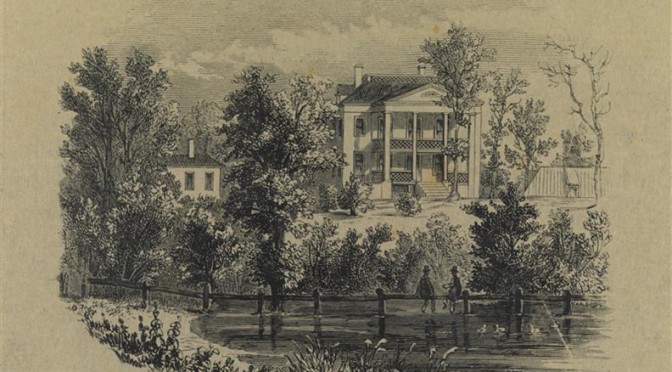
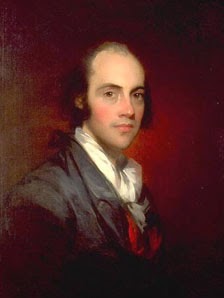
Richmond Hill, the spacious mansion and 26-acre estate on the outskirts of town that had once been George Washington‘s headquarters and later the home of John Adams, was also home to another vice president — Aaron Burr. This was the place he lived on that fateful day, July 11, 1804, when he entered into a duel with Alexander Hamilton. Here’s a lovely description of the home from an 1861 biography of Burr by author James Parton:
“[Burr’s] style of living kept pace with his increasing income. In a few years we find him master of Richmond Hill, the mansion where Washington had lived in 1776, with grounds reaching to the Hudson, with ample gardens, and a considerable extent of grove and farm. Here he maintained a liberal establishment and exercised the hospitality which was then in vogue.
The one particular in which Richmond Hill surpassed the other houses of equal pretensions, was its library. From his college days, Colonel Burr had been a zealous buyer of books, and his stock had gone on increasing till, on attaining to the dignity of householder, he was able to give to his miscellaneous collection something of the completeness of a library.
It is evident enough, from his correspondence, that his favorite ethos were still those whom the ‘well-constituted minds’ of that day regarded with admiring horror. The volumes of Gibbon’s History [The Decline And Fall of the Roman Empire] were appearing in those years, striking the orthodox world with wonder and dismay. They had a very hearty welcome in the circle at Richmond Hill.”
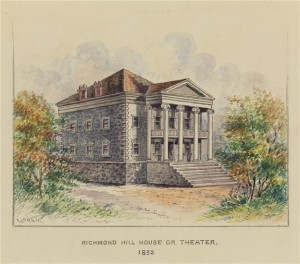
After the duel, Burr liquidated his assets, selling Richmond Hill to John Jacob Astor. With the grounds heavily cut up and sold, he had the mansion rolled on logs to the newly carved street corner and turned into a theater and opera house. At this time, he also moved the carriage house further north, where it was later re-purposed and today houses the romantic restaurant One If By Land, Two If By Sea.
It made for a very sumptuous opera house, it appears. According to author Eric Homberger, “Boxes at the Richmond Hill were furnished as though they were an extension of the elegant parlors of St. John’s Park, with ‘light blue hangings, gilded panels and cornice, arm-chairs, and a sofa.'”
It was parallel in style, perhaps, to the Astor Place Opera House across town. Eventually it deteriorated into a lowly roadhouse and saloon — but certainly, the most gorgeous one in town — called the Tivoli Saloon before being torn down in 1849.
Today the site of Richmond Hill and its former ground are occupied by this building, currently the home of WNYC, and the surrounding blocks of this area of the far West Village.
Top image courtesy the Museum of the City of New York
PODCAST The legacy of the Stonewall Riots and their aftermath, in a podcast history told over nine years apart (May 2008, June 2017).
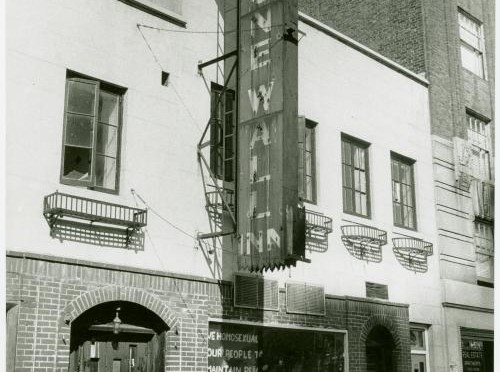
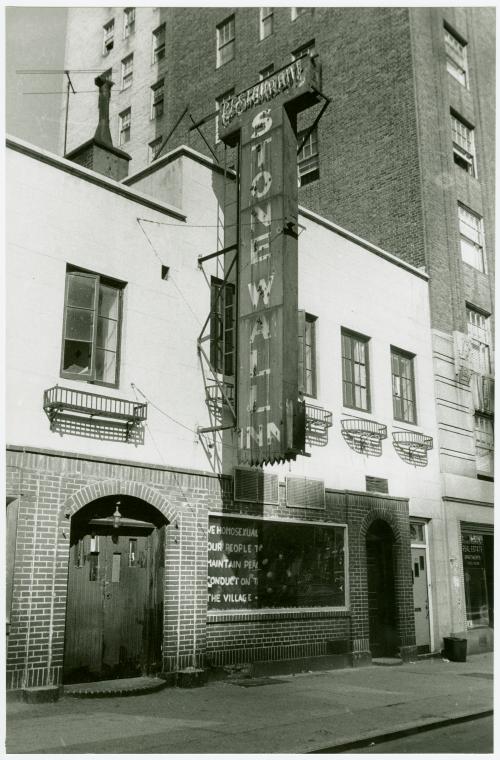
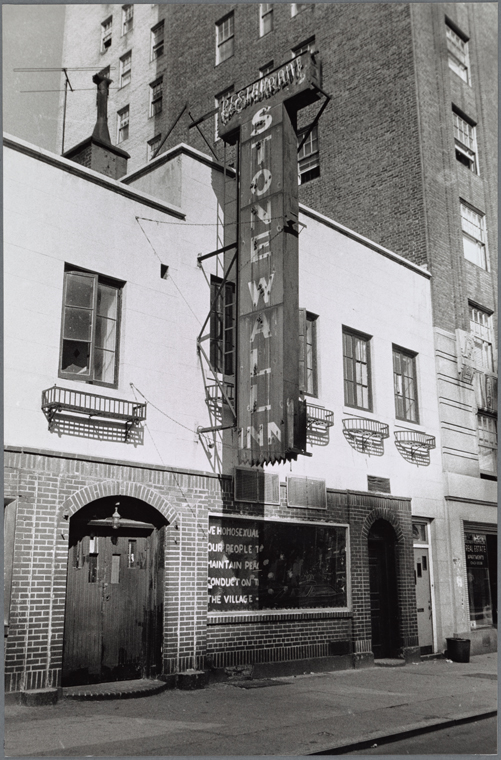
In the early morning hours of June 28, 1969, undercover police officers attempting to raid the Stonewall Inn, a mob-controlled gay bar with darkened windows on Christopher Street, were met with something unexpected — resistance.
That ‘altercation’ was a messy affair indeed — chaotic, violent, dangerous for all. Homeless youth fought against riot police along the twisting, crooked streets of the West Village. And yet, by the end, thousands from all walks of life met on those very same streets in the days and weeks to come in a new sense of empowerment.
In May of 2008, we recorded a podcast on the Stonewall Riots, an event that galvanized the LGBTQ community, giving birth to political organizations and a sense of unity and pride.
So much has changed within the LGBTQ community — and so much was left out of our original show — that’s we’ve decided to do something unique. In the first half, we present to you our original 2008 history on the Stonewall Riots, warts and all. In the second half, we present newly recorded material, exploring the effects of Stonewall on the crises that faced the gay community in the 1980s and 90s.
Now an official U.S. National Monument maintained by the National Park Service, the Stonewall National Monument preserves New York City’s role in the birth of the international LGBT movement.
And please forgive us in advance for being extra personal in this show near the end.
The Bowery Boys: New York City History podcast is brought to you …. by you!
We are now producing a new Bowery Boys podcast every two weeks. We’re also looking to improve the show in other ways and expand in other ways as well — through publishing, social media, live events and other forms of media. But we can only do this with your help!
We are now a member of Patreon, a patronage platform where you can support your favorite content creators for as little as a $1 a month.
Please visitour page on Patreon and watch a short video of us recording the show and talking about our expansion plans. If you’d like to help out, there are five different pledge levels (and with clever names too — Mannahatta, New Amsterdam, Five Points, Gilded Age, Jazz Age and Empire State). Check them out and consider being a sponsor.
We greatly appreciate our listeners and readers and thank you for joining us on this journey so far. And the best is yet to come!
This show is brought to you by Audible. Listen anytime, anywhere to an unmatched selection of audiobooks, original premium podcasts and more.
An early advertisement put out by the Mattachine Society, urging people to look at homosexuals different.
NYPL
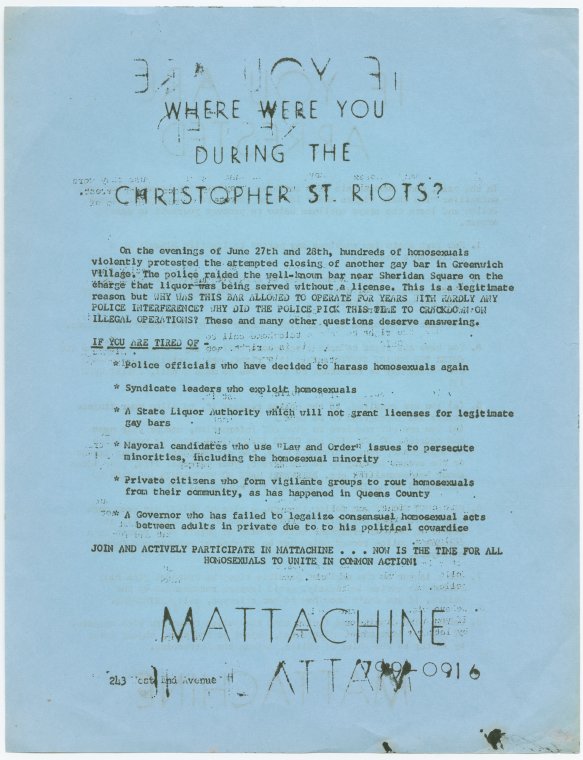
An example of the types of flyers circulating in the West Village following the Stonewall incident.
NYPL
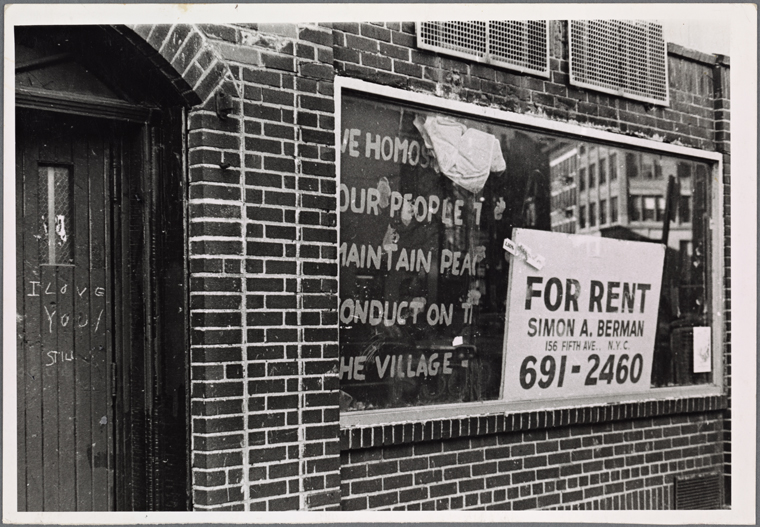
The Stonewall Inn was closed shortly after the battle with police, not to be reopened again until 1990.
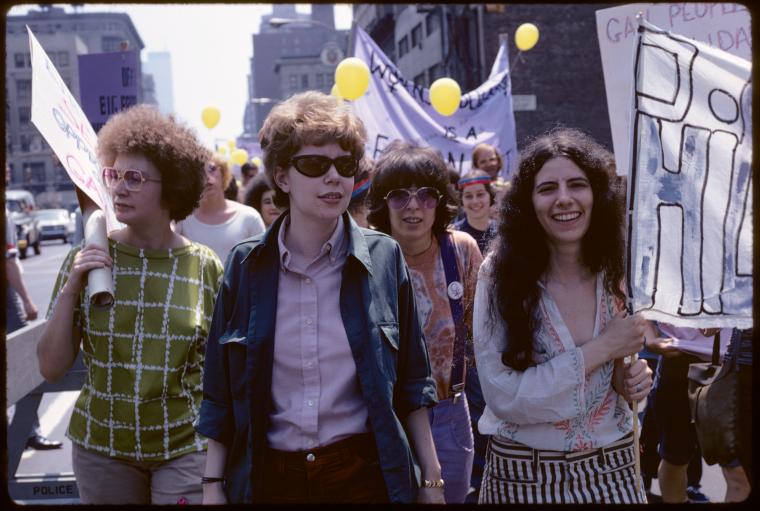
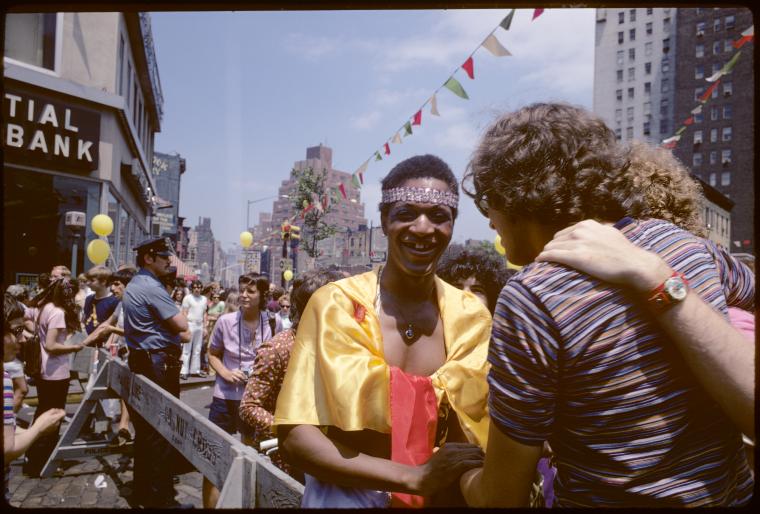
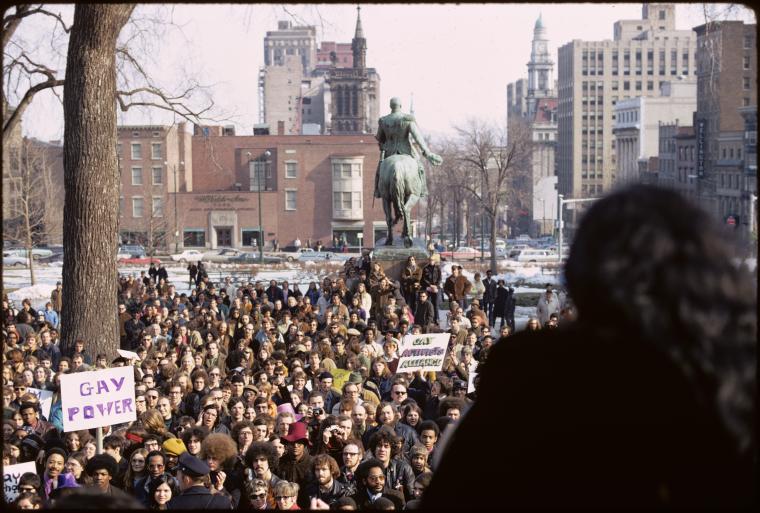
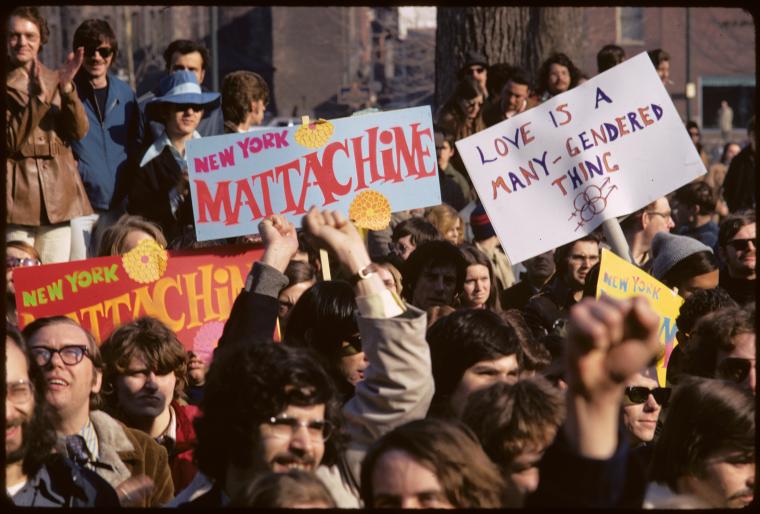
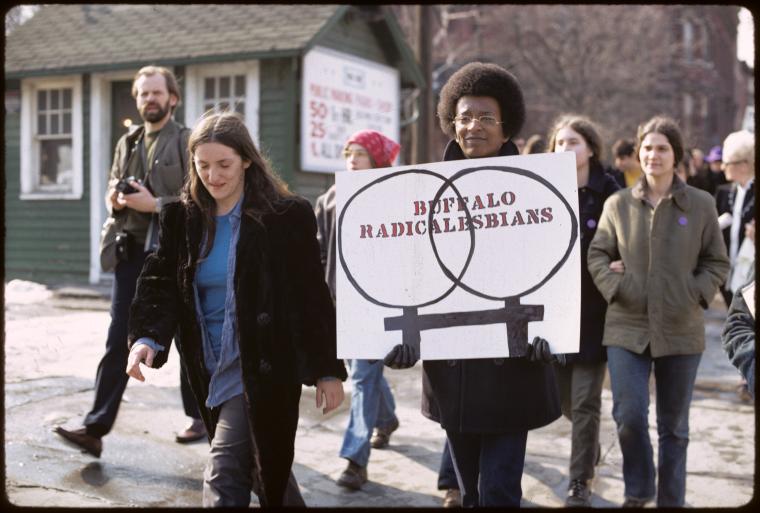
From the first parade (in 1970) to Central Park, the first of what would later be called the Pride Parade.
Diana Davies/NYPL
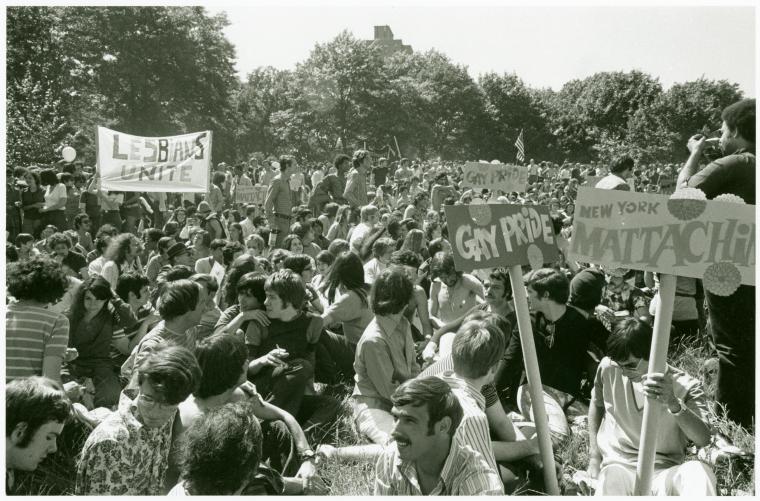
The parade ended with a gigantic rally in Sheep Meadow in Central Park.
Diana Davies/NYPL
From the parade the following year:
NYPL
NYPL
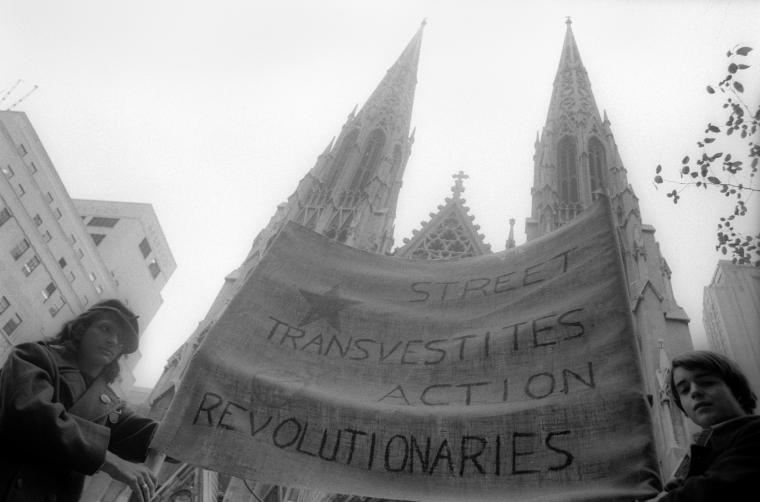
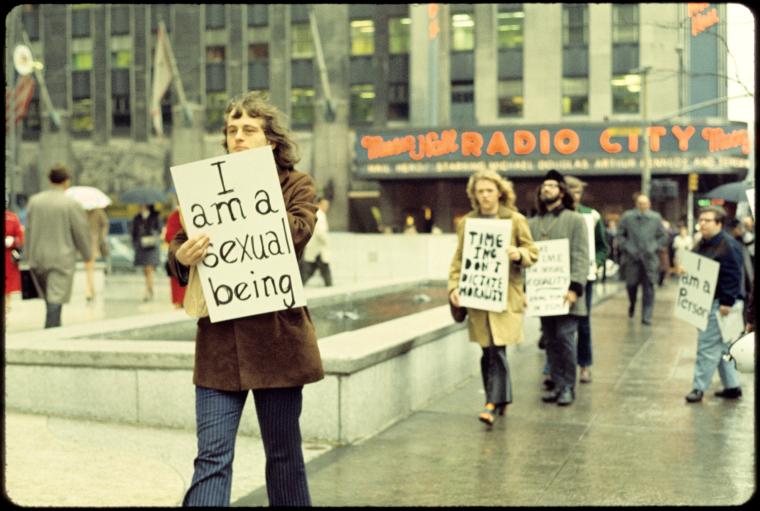
From a 1971 demonstration in front of St. Patrick’s Cathedral.
NYPL
….and another near Radio City Music Hall.
NYPL
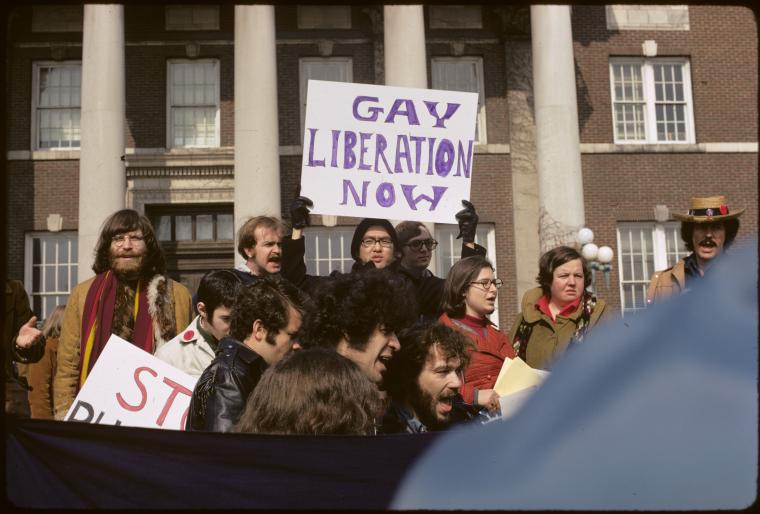
Gay rights demonstrations from 1971 at the state capitol in Albany, NY, from an incredible collection of pictures by Diane Davies, courtesy the New York Public Library.
NYPL
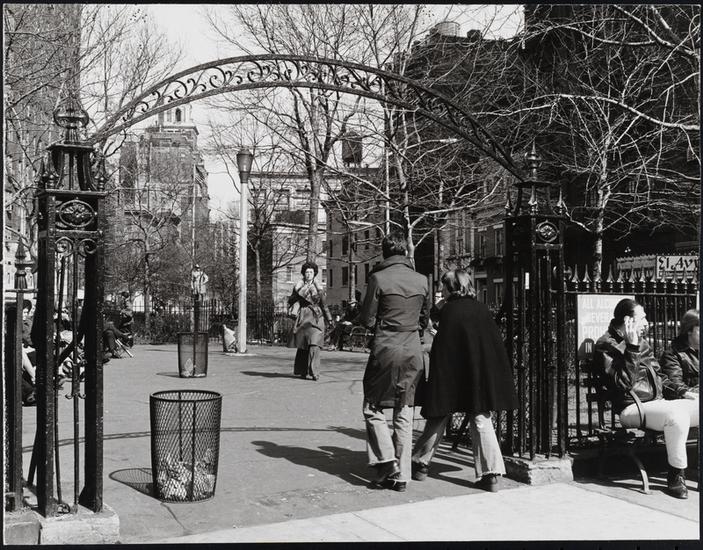
The entrance to Christopher Park in 1975, photo by Edmund Vincent Gillon
MCNY
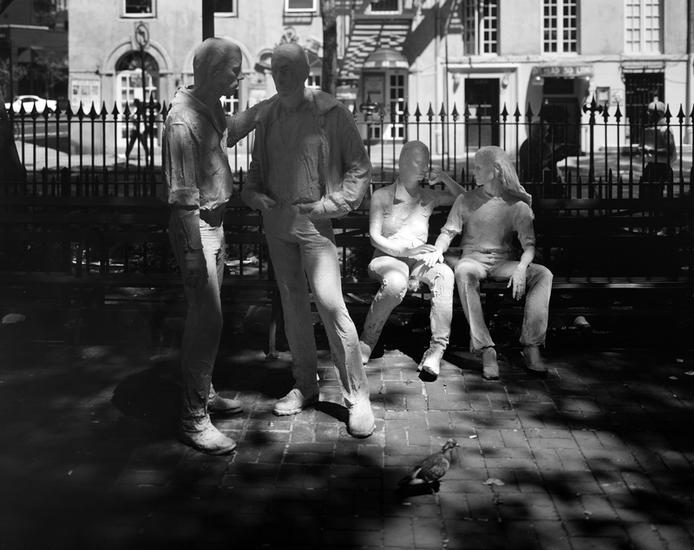
Gay Liberation, how the statues looked when they were first installed in 1992.
Edmund Gillon/MCNY
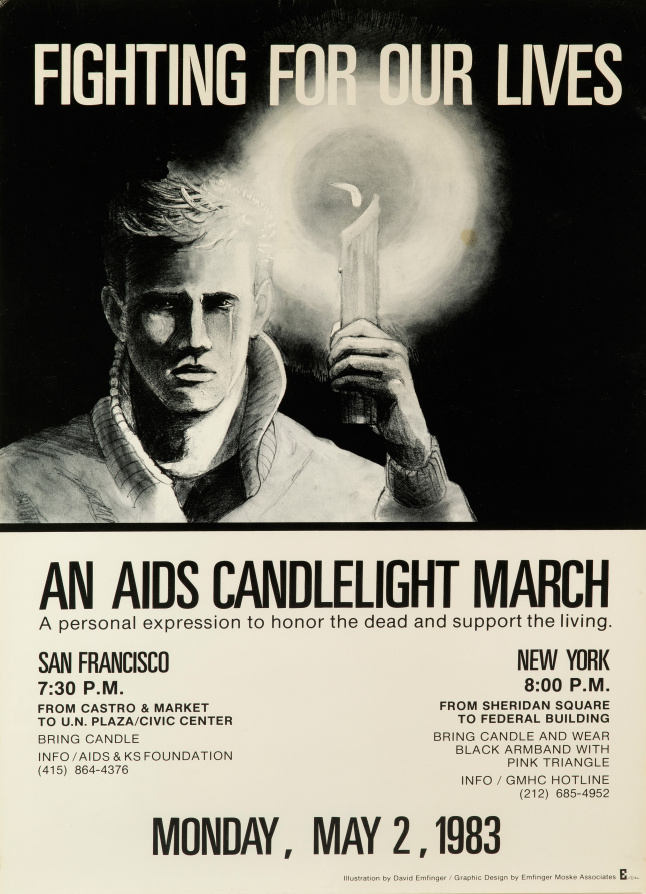
An early AIDS march from 1983 which began near Stonewall in Sheridan Square.
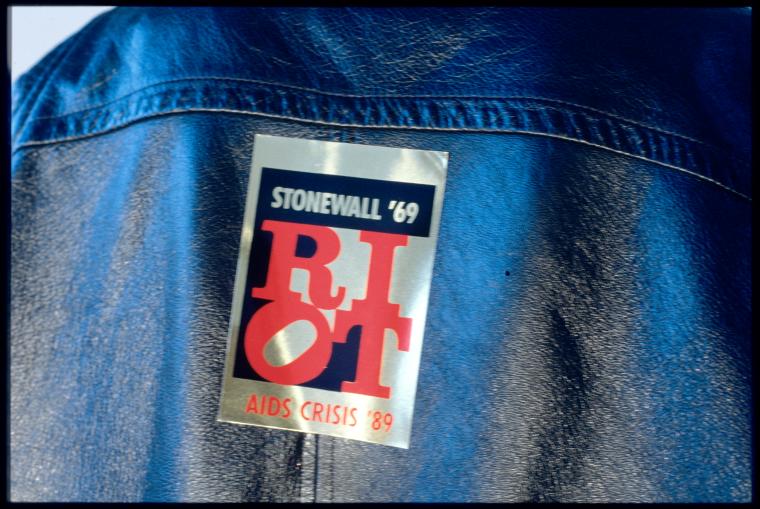
During the AIDS crisis of the 1980s and 90s, many turned to the example of Stonewall as a way to unite the community and fight back against homophobia.
Photographer Gran Fury, Courtesy NYPL
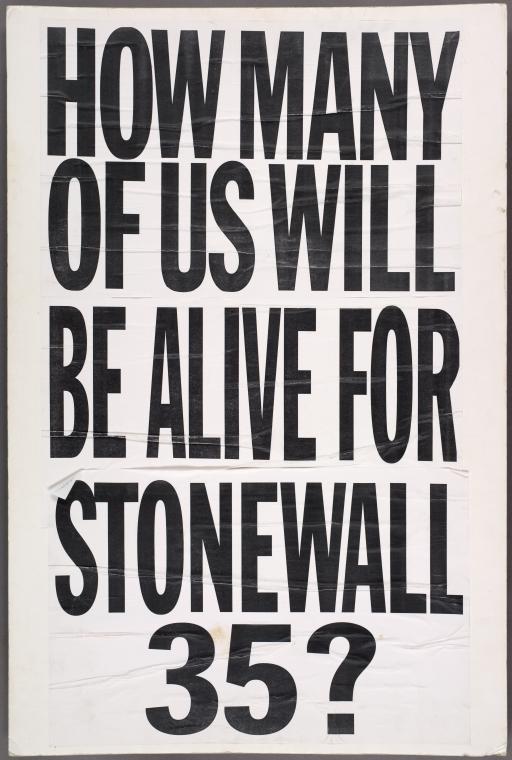
An ACT UP sign for the Stonewall 25 parade and rally “How many of us will be alive for Stonewall 35?” On the opposite side: “AIDS. Where is your rage? ACT UP.”
NYPL
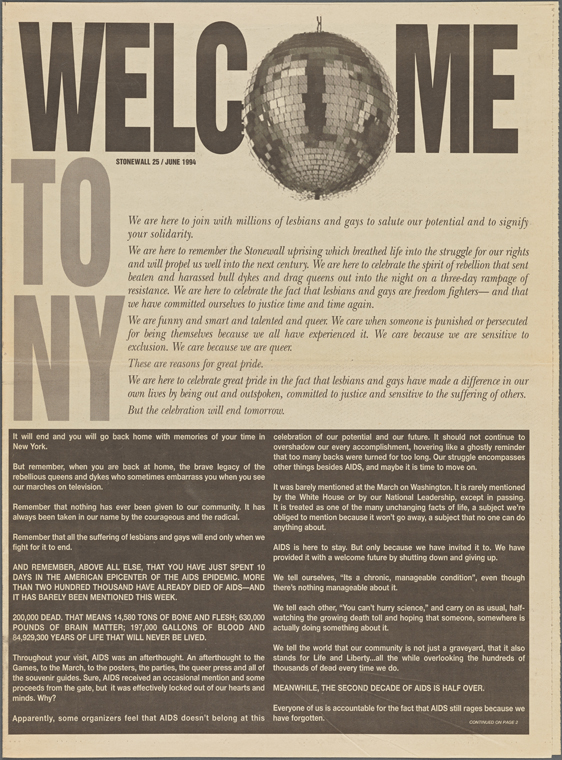
A sobering ACT UP ‘welcome wagon’ message. “But remember, when you are back at home, the brave legacy of the rebellious queens and dykes who sometimes embarrass you when you see our marches on television.”
NYPL
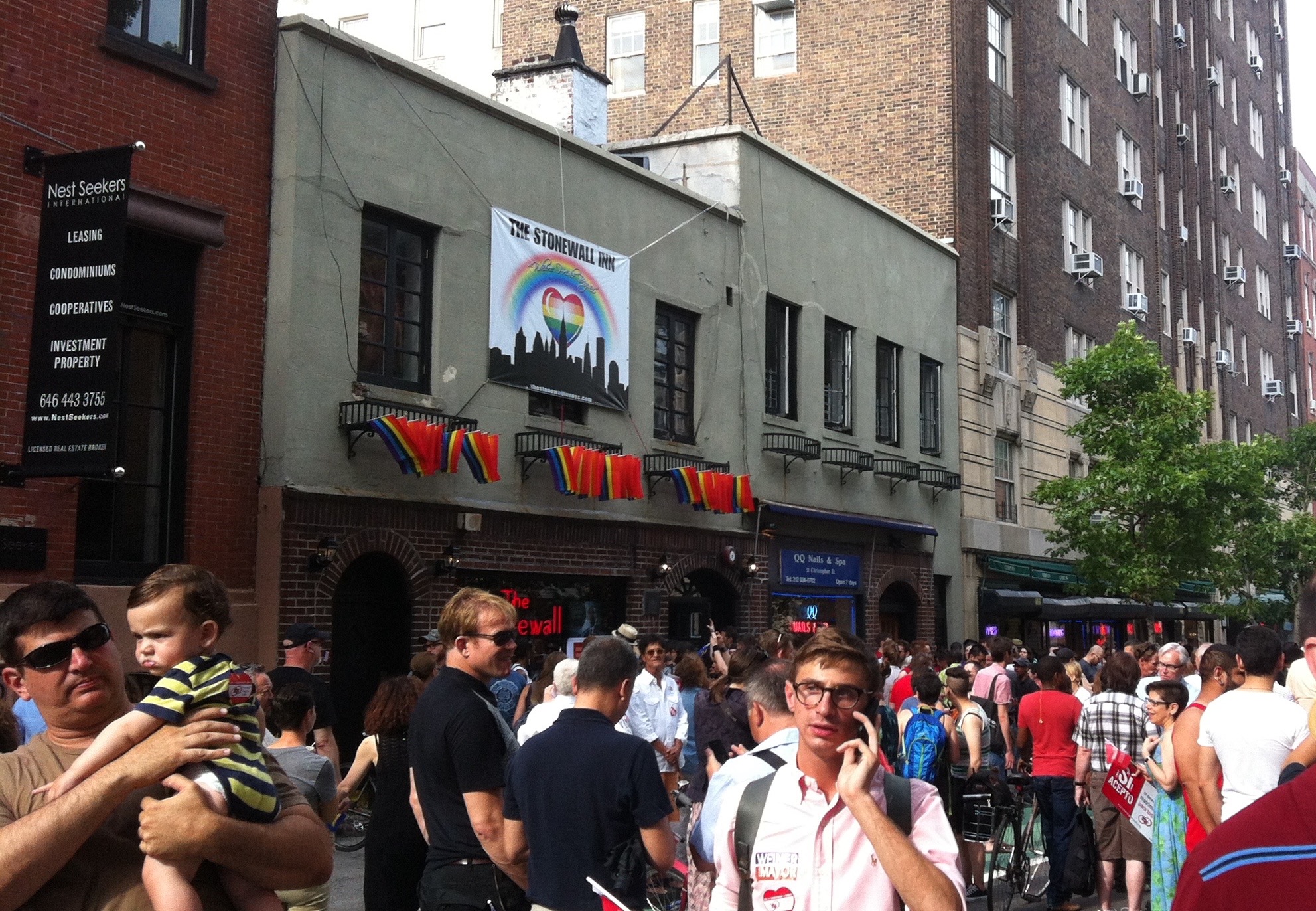
In front of Stonewall in 2013 after the announcement of the Supreme Court verdict in United States v. Windsor, overturning the Defense of Marriage Act.
Photo by Greg Young
Stonewall Inn and Christopher Park, 2015
Photo by Greg Young
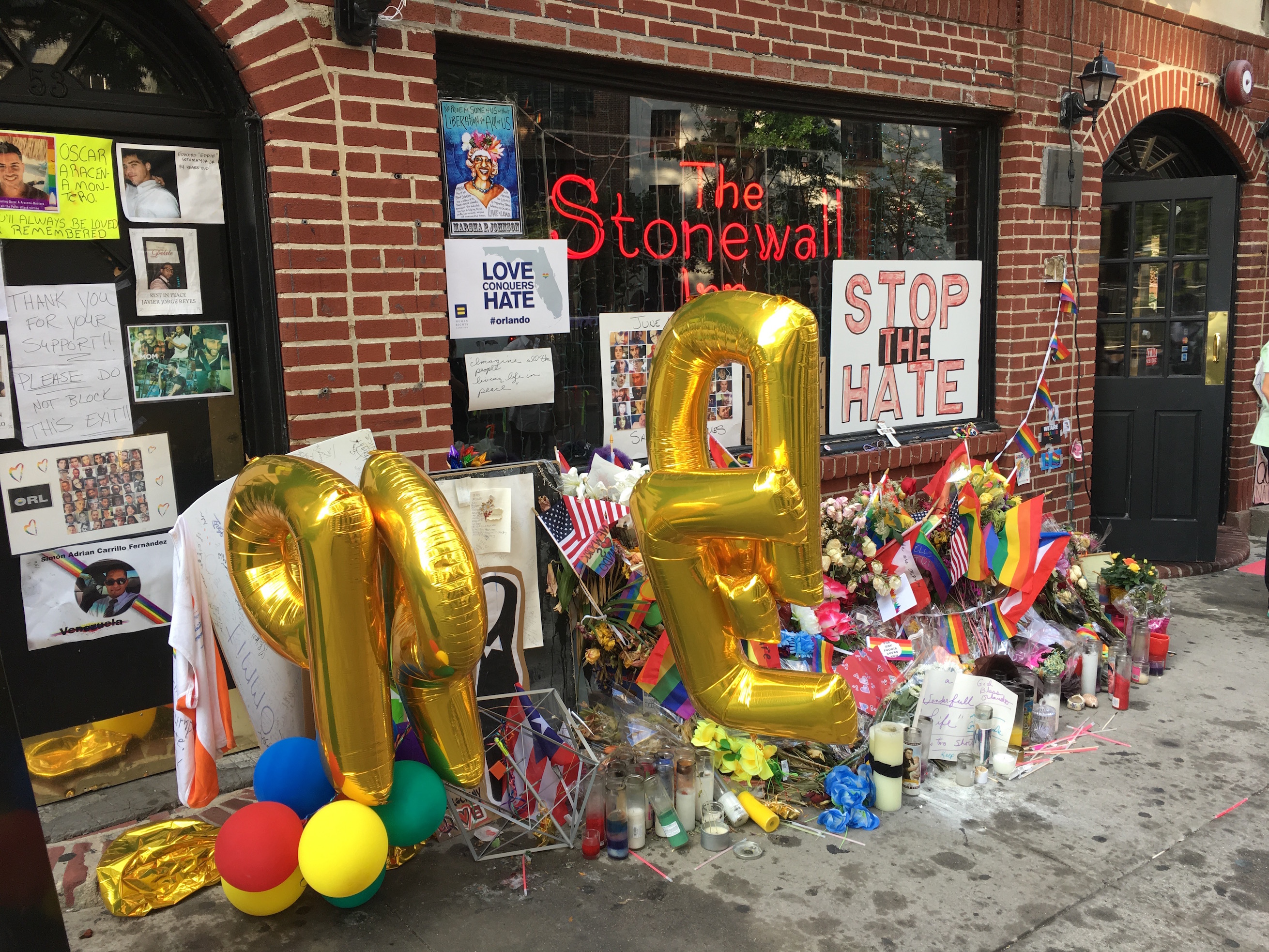
Outside the Stonewall in 2016, following the Pulse nightclub shooting in Orlando, Florida.
Photo by Greg Young
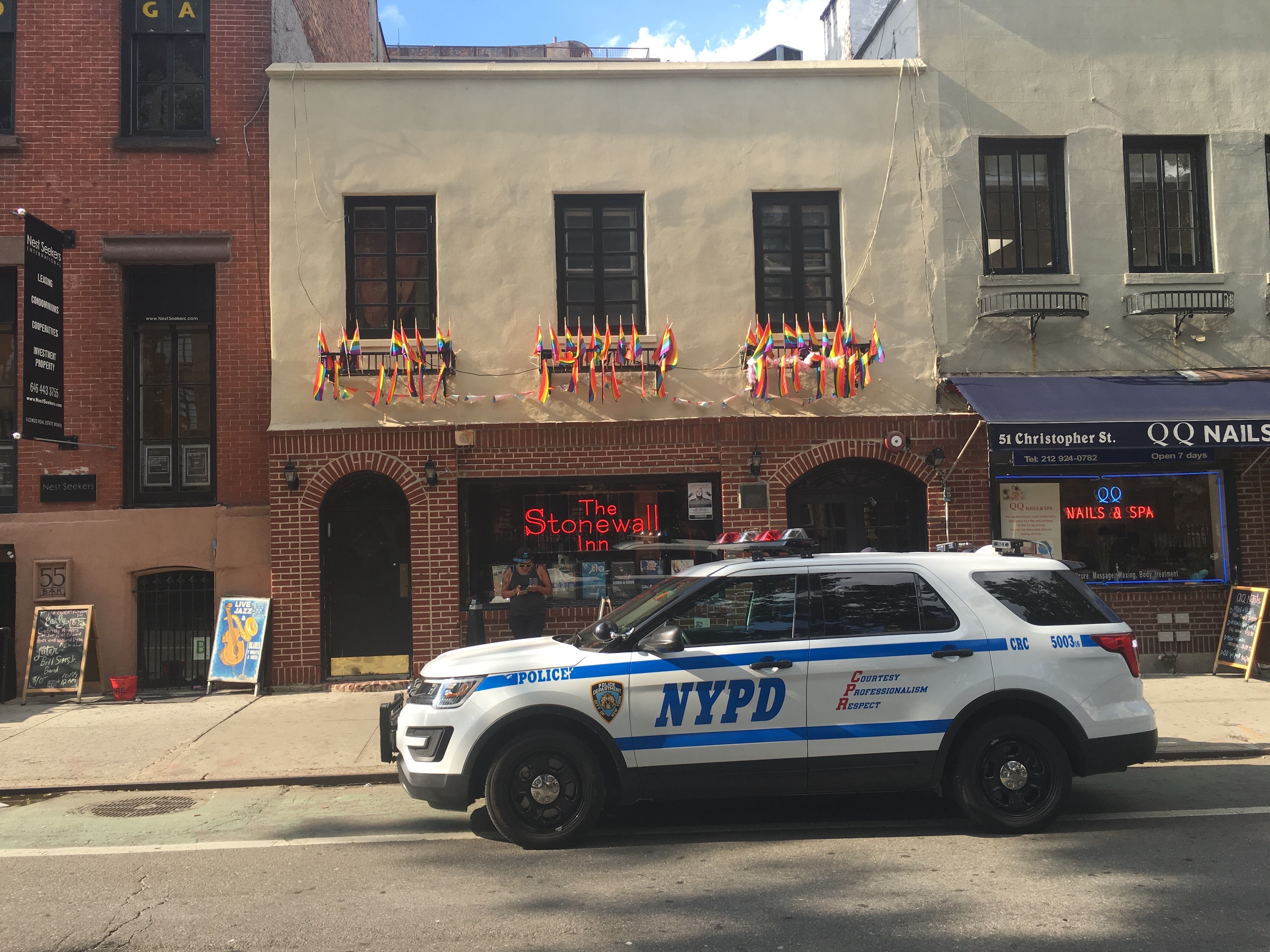
Stonewall 2016, now with police protection! Taken in August 2016, following the announcement of Stonewall as a National Monument.
Writer and photographer Bill Hayes moved to New York in 2009 and experienced what many of us have already learned: Â the nights are magic and the subway is a wilderness.
He began jotting down his observations of peculiar experiences, the strange behaviors of others existing in their own little New Yorks. “Every car on every train on every line holds a surprise,” writes Hayes, “a random sampling of humanity brought together in a confined space for a minute or two — a living Rubik’s Cube.”
Above and below: A couple of the many strange and captivating photographs by Bill Hayes featured in the book.
During the day he would aim a friendly camera towards New Yorkers of all shapes and affinities. Hayes left San Francisco after the tragic death of his partner and fortunately seems to have fallen into New York like one of its many prodigal souls. His experiences aren’t unique; they mirror yours and mine.
Except for the fact that, oh yes, he falls in love with a noted British neurologist and author — the late and dearly missed Oliver Sacks.
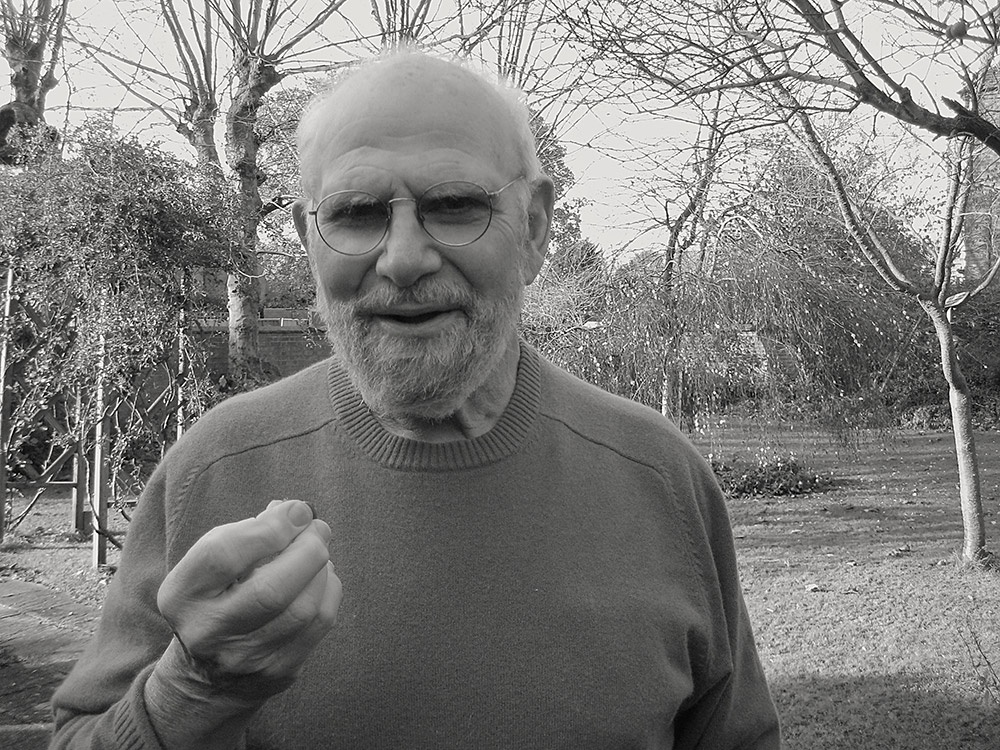
Oliver Sacks, photographed by Bill Hayes
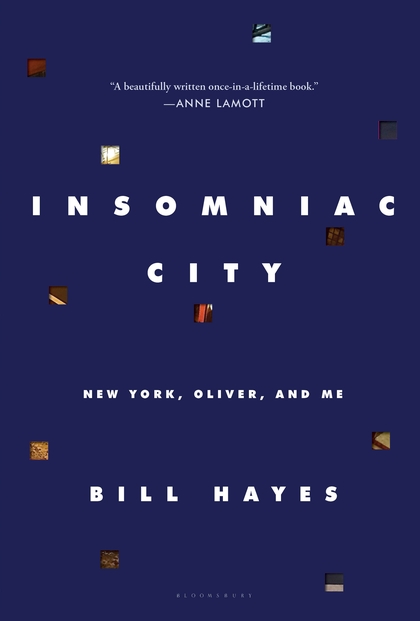
In Insomniac City: New York, Oliver and Me, Hayes’ new memoir and urban rumination, we’re presented with a bird’s eye view of New York’s universal appeal to outsiders, paired with a microscopic look at two of those outsiders.
Sacks, a celebrated author of The Man Who Mistook His Wife For A Hatand Awakenings (the basis of the Robert De Niro/Robin Williams film), was a guarded individual, coming out to himself late in life and socially removed from non-professional affairs.
Hayes introduces us to Sacks’ extraordinary worldview, an intellectual who brought critical thinking into the slightest of gestures and loved going to the roof to drink wine out of the bottle. The love and reverence Hayes has for Sacks is clear, referring to him throughout the text as just ‘O’, giving us their intimate moments only when they illuminate something of his genius.
Insomniac City is a fragmentary, often poetic look at love of a city and of an individual, told in notes and journal entries. It’s a book one could easily devour in a single sitting but I suggest prolonging the experience, reading a little at a time, allowing the individual anecdotes to inform your own adventures out in the big city.
It take on a set of colossal tasks; it can be poem, a documentary and a tribute on just a single page. Hayes is giving us permission to stare into his life — and into the lives of others — in the same durations of time that we experience each other in our daily lives. Â In those flash moments of bonding on mass transit or on the street, where we may imagine what another person is thinking and feeling before they vanish.
And knowing, in his vignettes, that he’s exposed an intimacy with strangers, he then bares his own to us, his unabashed mix of love, friendship and bewilderment to a wonderful, complicated man, who also came and went.
INSOMNIAC CITY New York, Oliver and Me Bloomsbury Publishing
PODCAST The story of Jane Jacobs, the urban activist and writer who changed the way we live in cities and her fights to preserve Greenwich Village in the 1950s and ’60s.
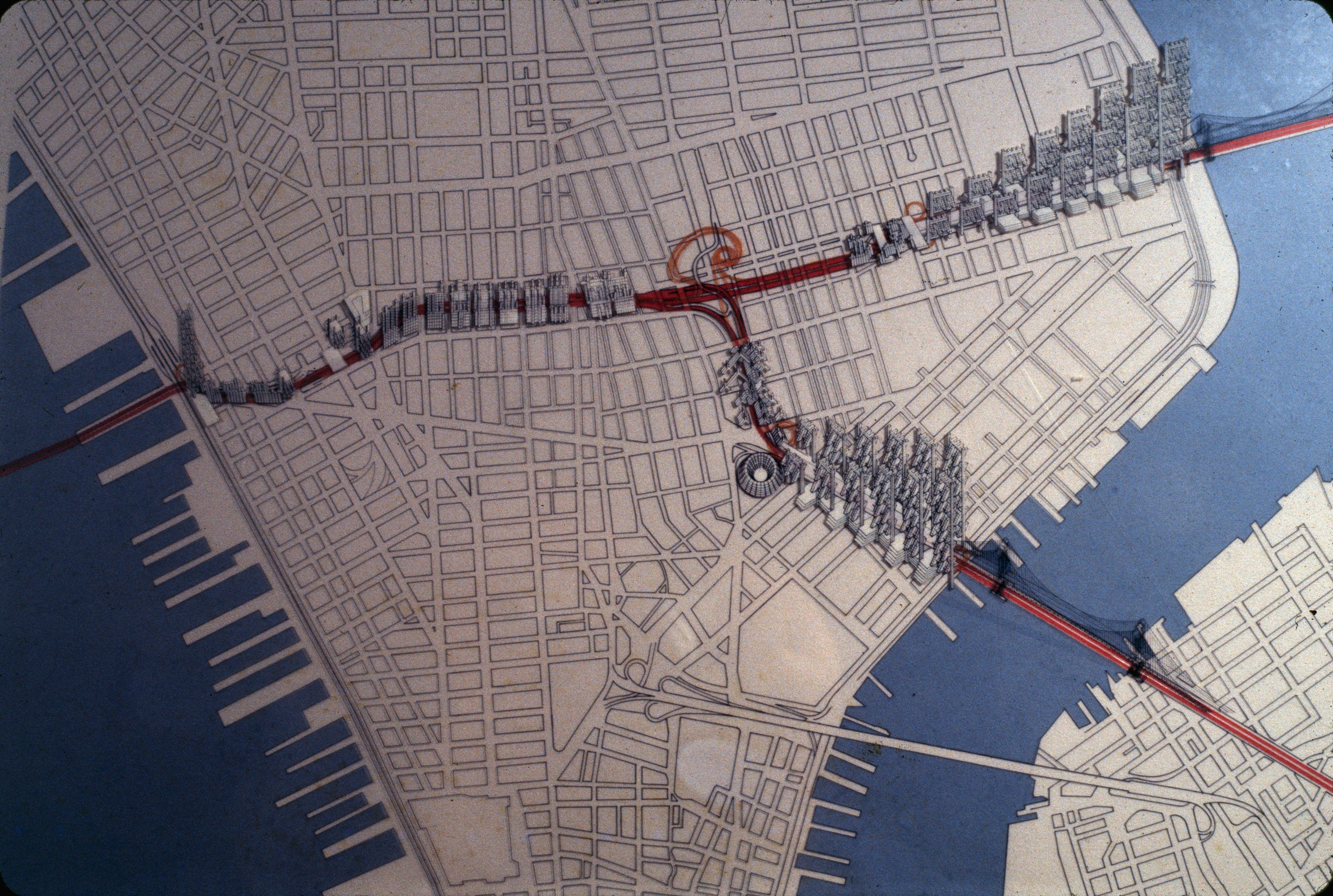
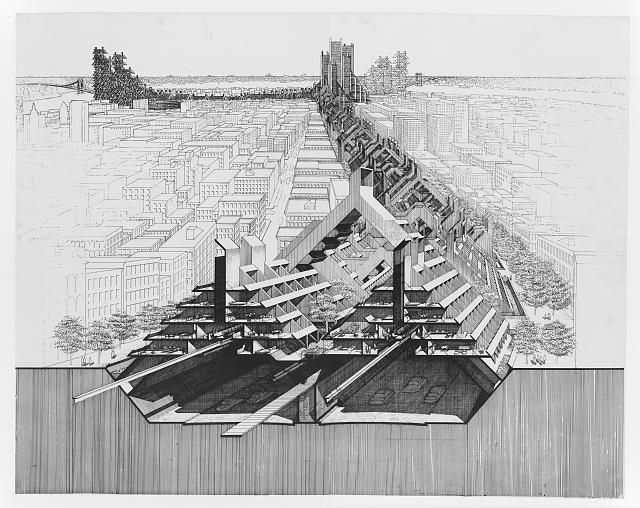
Washington Square Park torn in two. The West Village erased and re-written. Soho, Little Italy and the Lower East Side ripped asunder by an elevated highway. This is what would have happened in New York City in the 1950s and 60s if not for enraged residents and community activists, lead and inspired by a woman from Scranton, Pennsylvania.
Jane Jacobs is one of the most important urban thinkers of the 20th century. As a young woman, she fell in love with Greenwich Village (and met her husband there) which contained a unique alchemy of life and culture that one could only find in an urban area. As an adroit and intuitive architectural writer, she formed ideas about urban development that flew in the face of mainstream city planning. As a community activist, she fought for her own neighborhood and set an example for other embattled districts in New York City.
Her legacy is fascinating, often radical and not always positive for cities in 2016. But she is an extraordinary New Yorker, and for our 200th episode, we had to celebrate this remarkable woman on the 100th anniversary of her birth.
FEATURING: Mrs. Jacobs herself in clips interspersed through the show.
PLUS: ROOOOBERT MOOOOSES!
The Bowery Boys: New York City History podcast is brought to you …. by you!
We are now producing a new Bowery Boys podcast every two weeks. We’re also looking to improve the show in other ways and expand in other ways as well — through publishing, social media, live events and other forms of media. But we can only do this with your help!
We are now a member of Patreon, a patronage platform where you can support your favorite content creators for as little as a $1 a month.
Please visitour page on Patreon and watch a short video of us recording the show and talking about our expansion plans. If you’d like to help out, there are five different pledge levels (and with clever names too — Mannahatta, New Amsterdam, Five Points, Gilded Age, Jazz Age and Empire State). Check them out and consider being a sponsor.
We greatly appreciate our listeners and readers and thank you for joining us on this journey so far. And the best is yet to come!
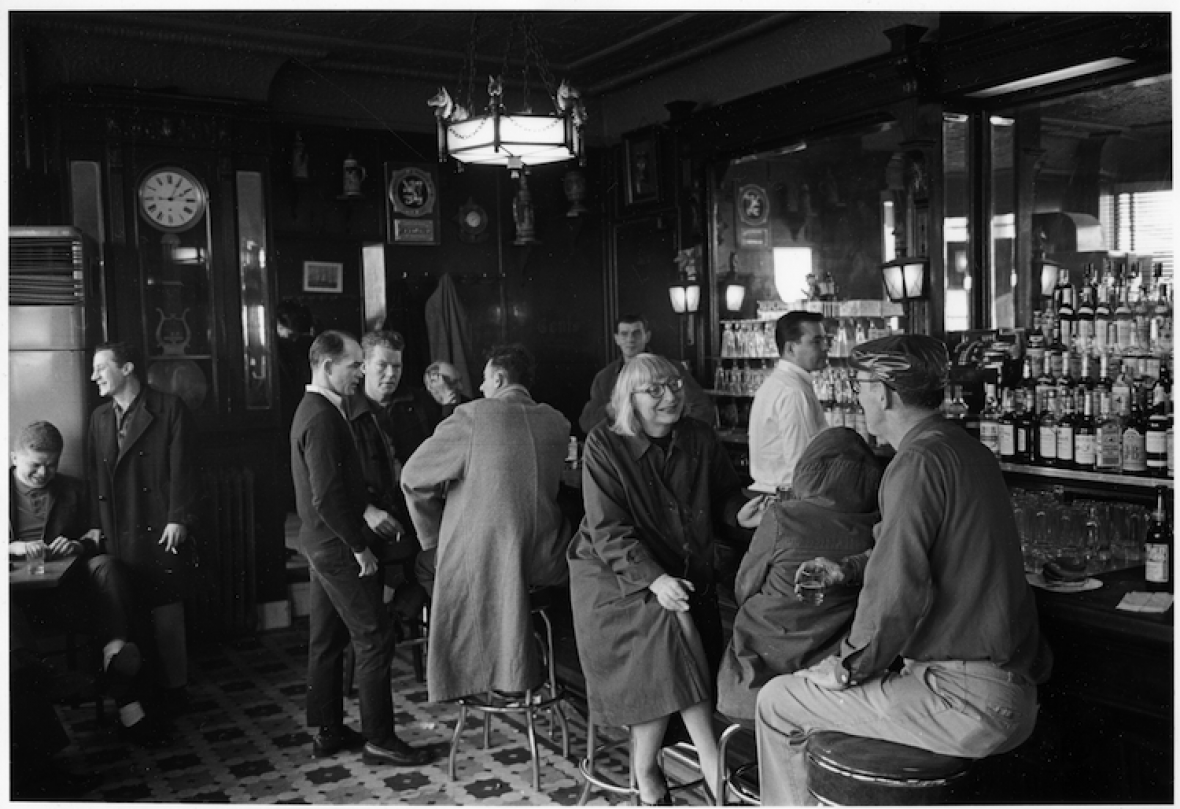
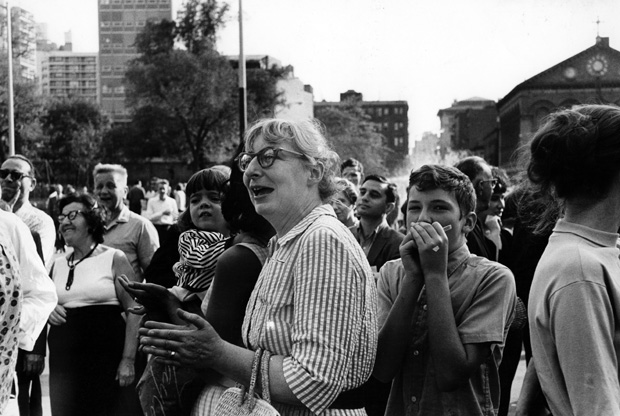
Jacobs at the White Horse Tavern, sometime in the 1960s. Jane lived on the block!
Photography by Cervin Robinson/New York Times. Visit his website for more extraordinary images of New York City (http://cervinrobinson.com/)
Jacobs in Washington Square Park (though I believe this is 1963 and not during the 1958 protest).
Fred W. McDarrah/Getty Images
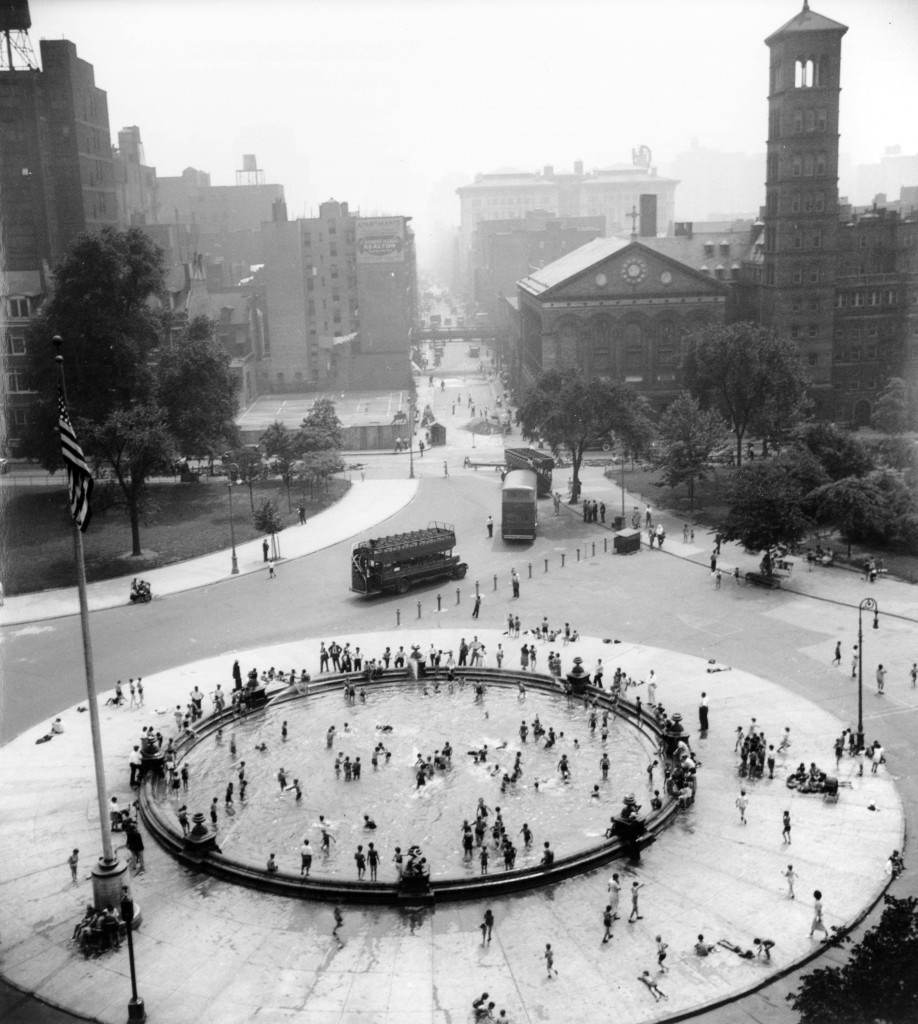
Washington Square Park in 1935. The 1958 activists were so successful in their goal of saving the park that they were able to banish automobile traffic from it entirely.
New York Parks Department
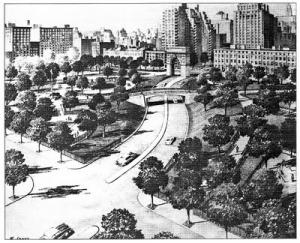
What Moses had planned for the park:
NYPL
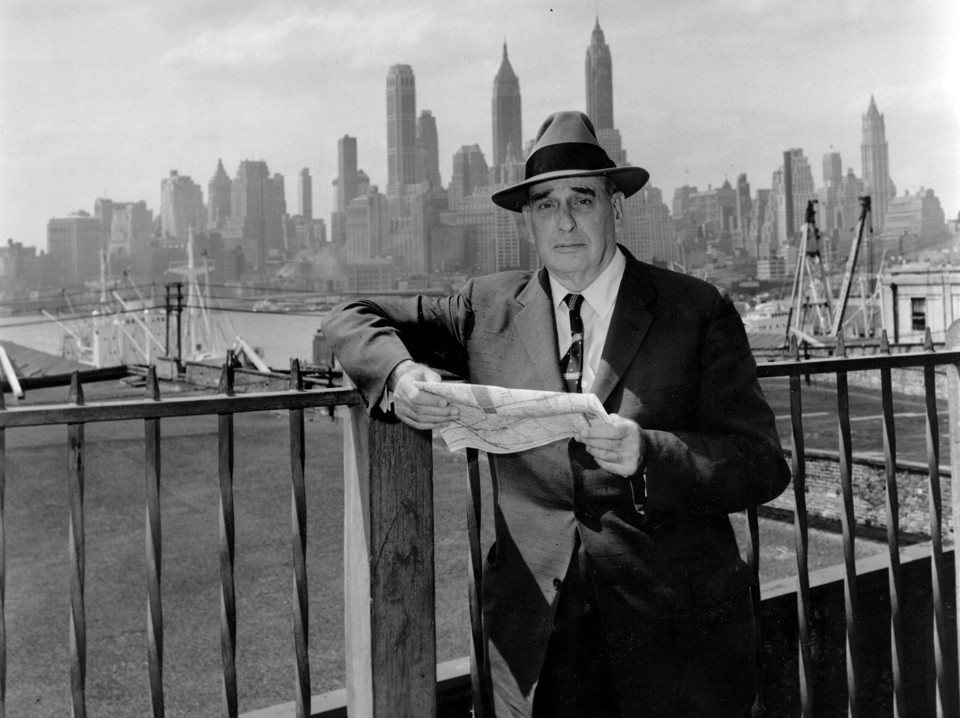
Robert Moses, pictured here in Brooklyn in 1956. Although he frequently situated as the arch-nemesis to Jane Jacobs, in fact they were rarely in the same room together. Their battles were fought in the press and in City Hall.
AP
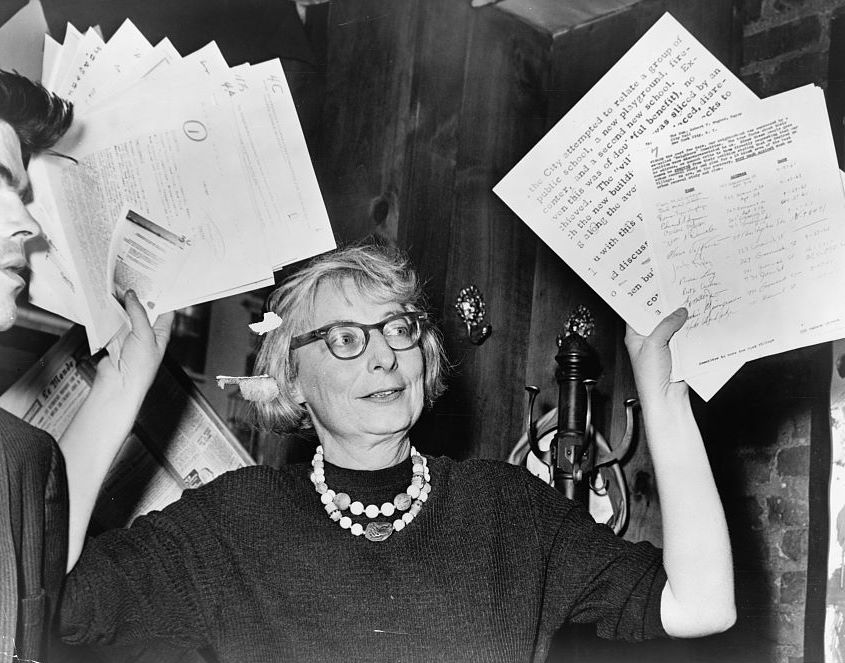
Jacobs presenting damning evidence about the proposed West Village demolition, taken at their main headquarters the Lion’s Head, in 1961 at the corner of Hudson and Charles Streets.
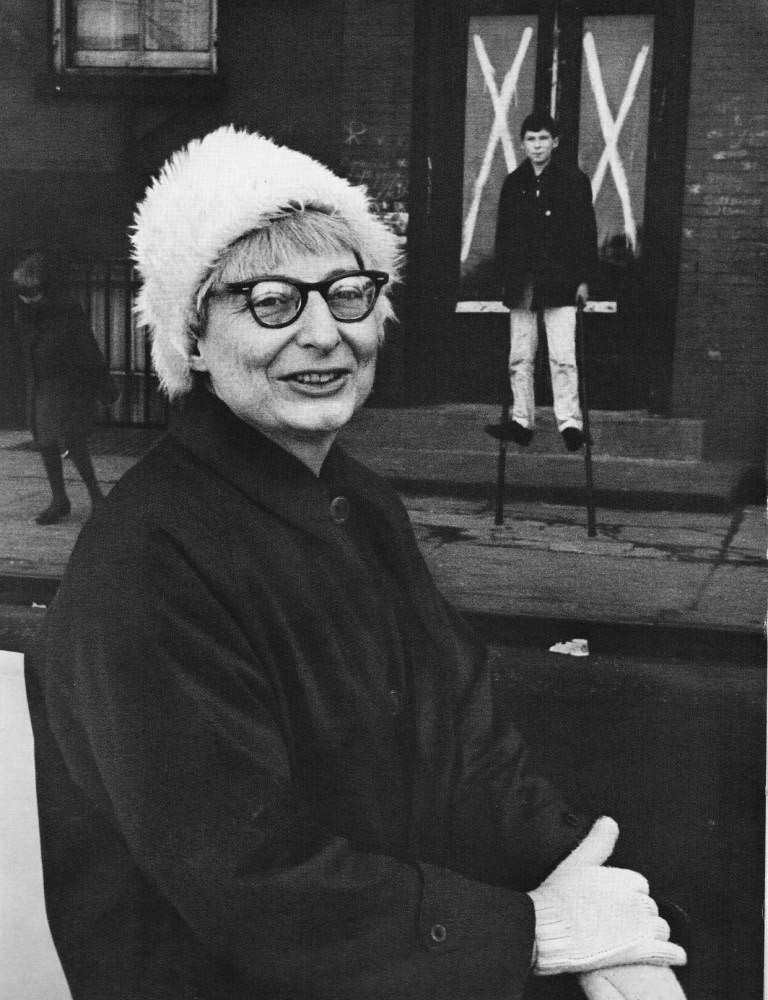
Jane Jacobs and her son Ned in 1961, during the West Village protests. The Xs were placed on buildings to be condemned. Activists wore sunglasses with Xs on the lenses in protest.
Photo courtesy Aesthetic Realism
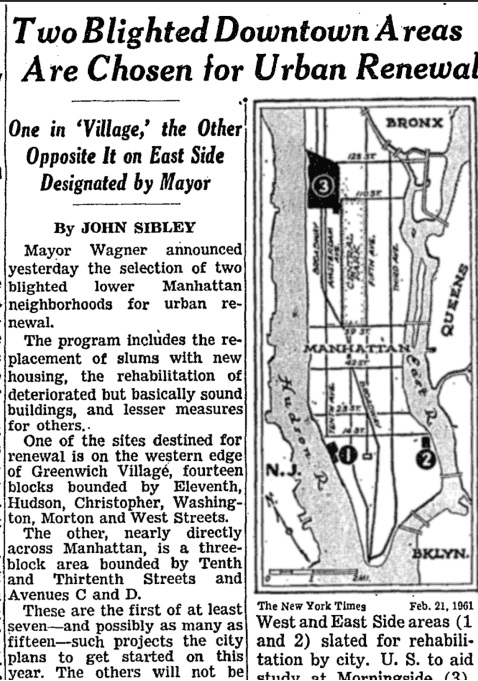
The February 21, 1961, article from the New York Times which riled up the West Village. The East Side project would eventually become Haven Plaza Apartments, but residents would fight off the designation in the West Village.
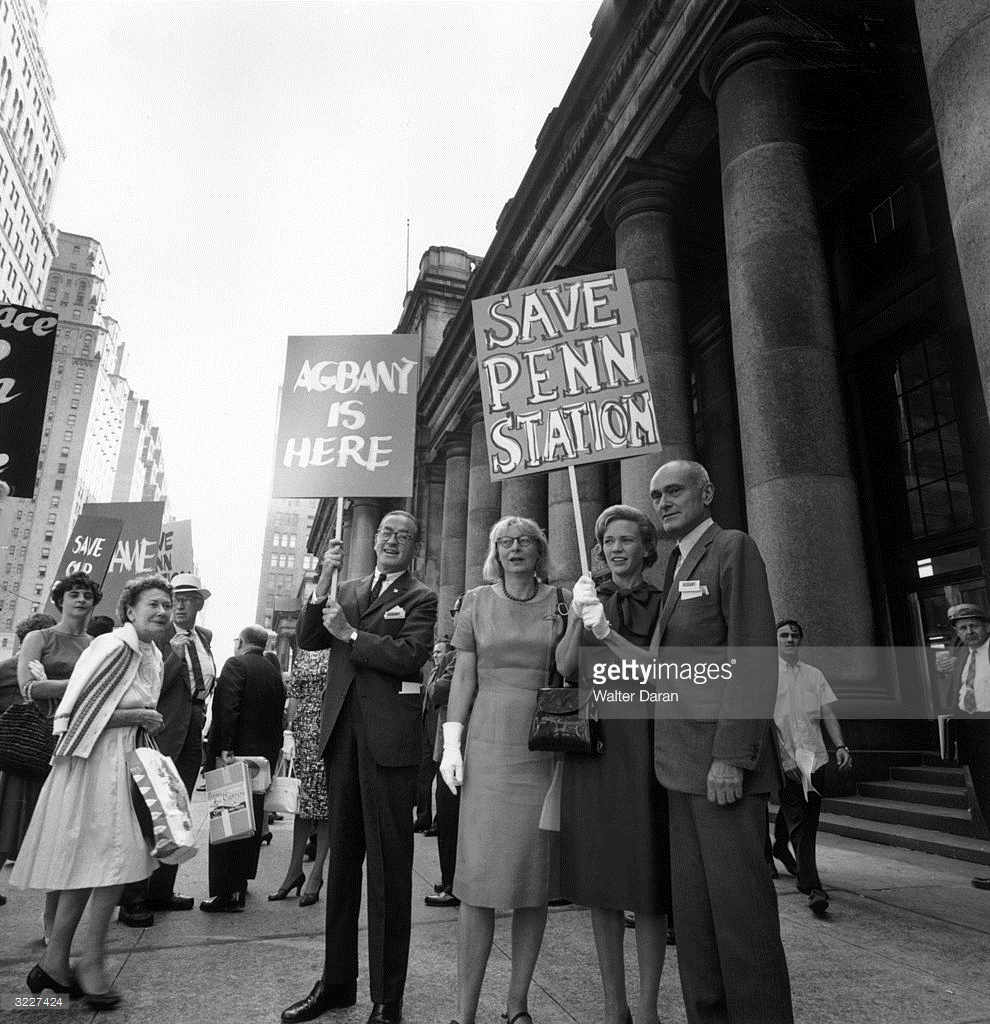
January 01, 1963 — Jacobs protests the destruction of Pennsylvania Station with architect Philip Johnson.
A map of the Lower Manhattan Expressway. Although this plan never came to fruition, the stack of buildings near the bridges seems to be coming to pass — on the Brooklyn side!
Library of Congress
Another sketch by Paul Rudolph of the Lower Manhattan Expressway, showing the new construction from the Holland Tunnel as it enters through Manhattan.
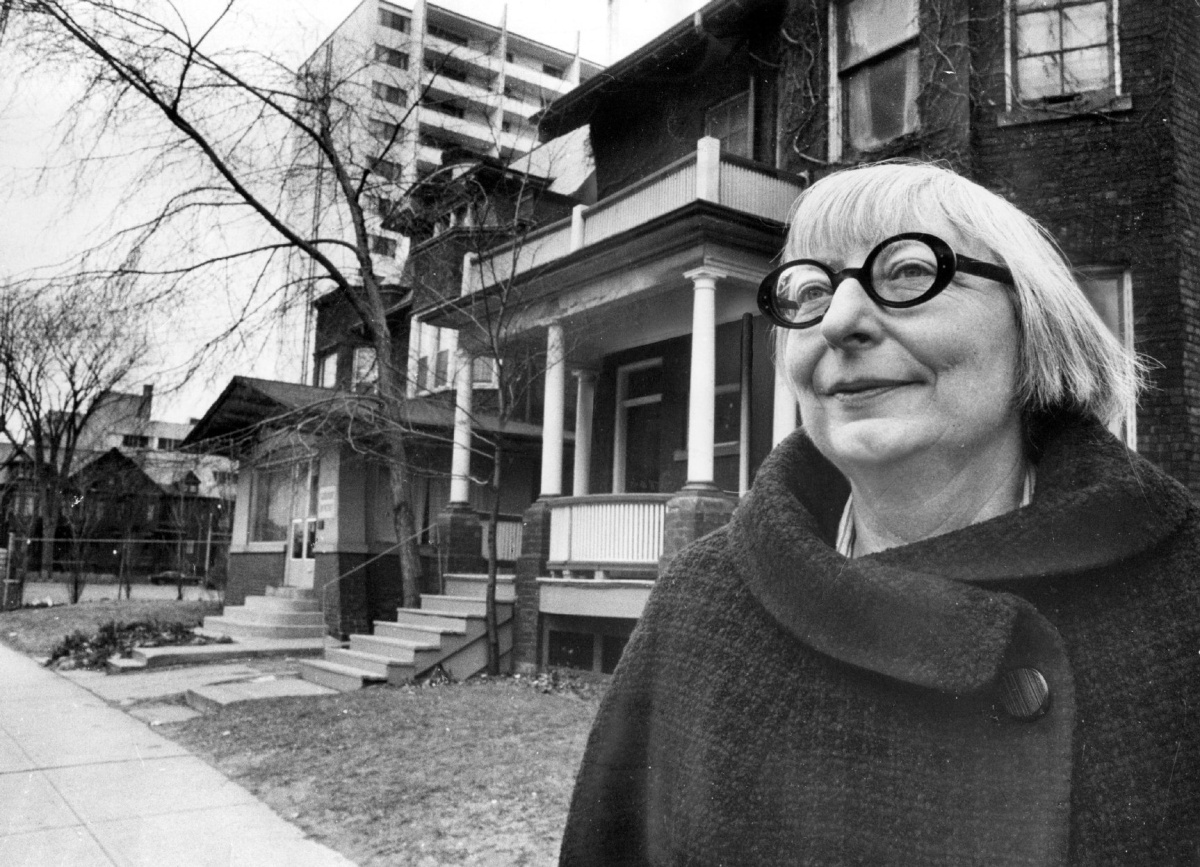
Jane Jacobs in Toronto, Dec. 21, 1968. She would continue her activism there, helping other community activists in foiling plans to build the Spadina Expressway.
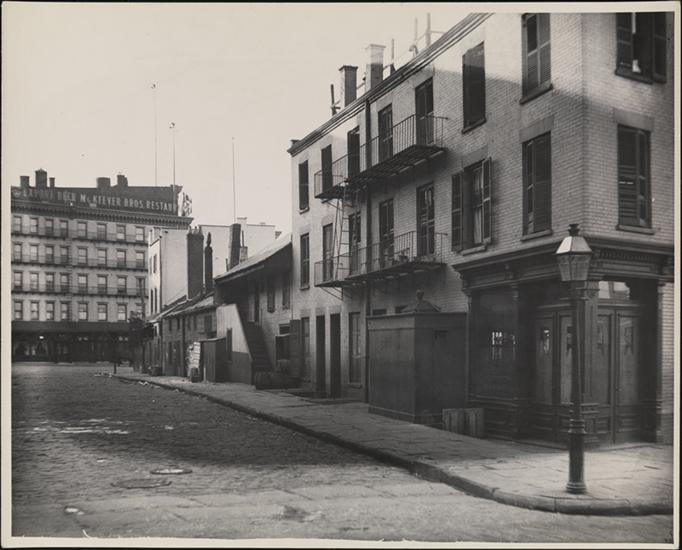
You really should take a stroll down here. It will take you all of one minute; the street is approximately 63 feet long.
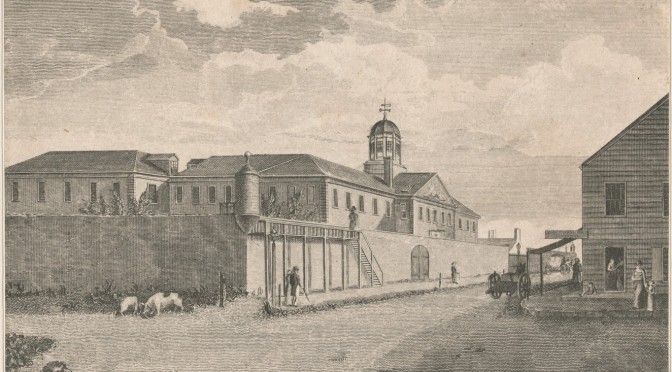
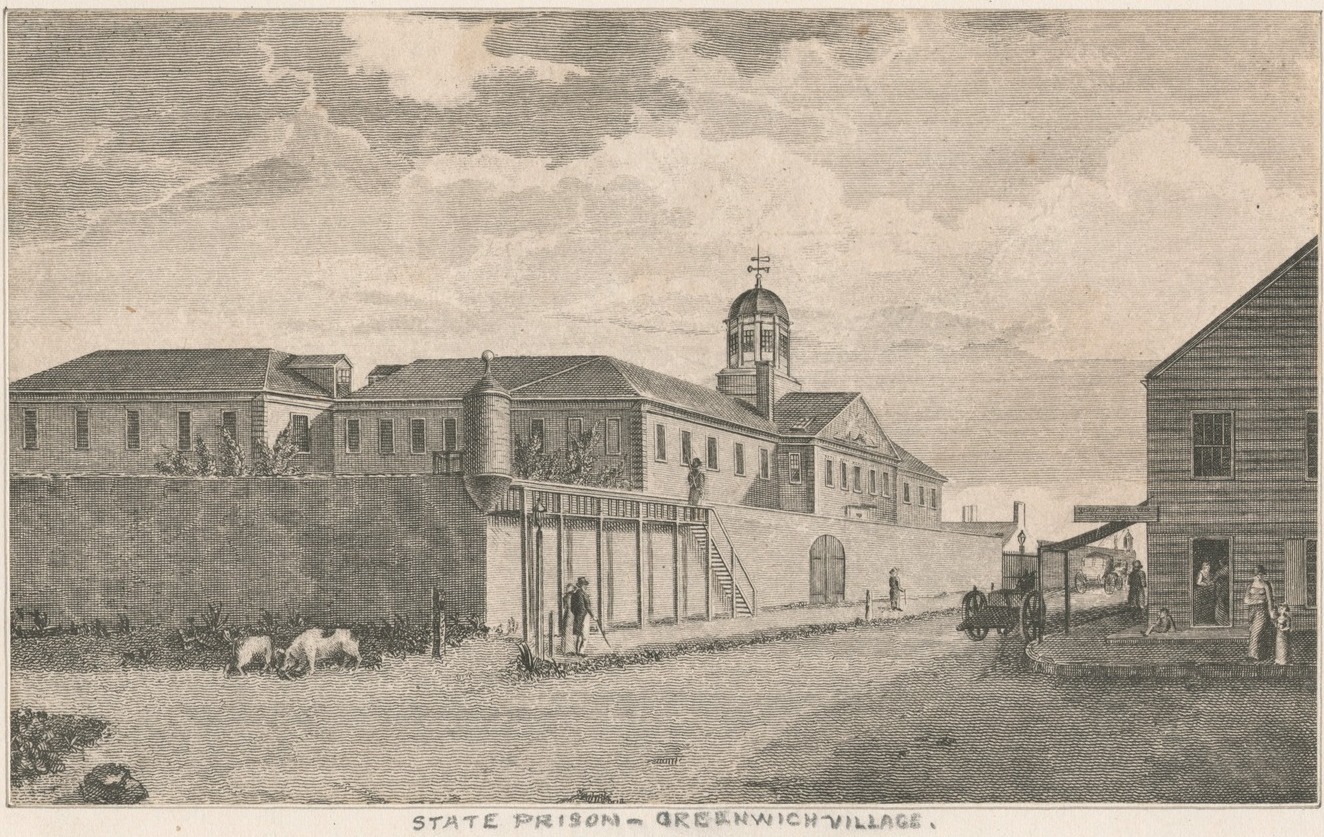
But a surprising structure once sat on this very spot two hundred years ago — Newgate Prison, the official state prison of New York from 1796 to 1828.
The city of New York was still very much confined to the area below today’s Canal Street. The new prison lay on the outskirts of Greenwich Village, a hamlet of farms and estates that served as New York’s first suburb of sorts.
Just a few feet from Newgate was the Greenwich Market, south of Christopher Street (on the spot of the big red,Federal Archives Building).
The prison was considered a progressive upgrade to New York’s dreadful Bridewell Prison, which sat near the area of today’s City Hall.
Built before the Revolutionary War, Bridewell had no windows and wretched facilities; prolonged incarceration here often met death.
Courtesy New York Public Library
With Newgate, enlightened reformers moved the prison out of the middle of town — always a good thing — and nearest the water, providing better ventilation and access to ferry transportation. “A more pleasant, airy, and salubrious spot could not have been selected in the vicinity of New York,” said one writer in 1801.*
Newgate was named (or rather nicknamed) for its larger, more infamous counterpart in London which became a favorite setting in Charles Dickens novels. New York’s Newgate was similarly ominous, with high stone walls mirroring the shape of forts along the waterfront. Â
Indeed Fort Gansevoort, in the area of today’s Meat-Packing District, was built several years after Newgate.
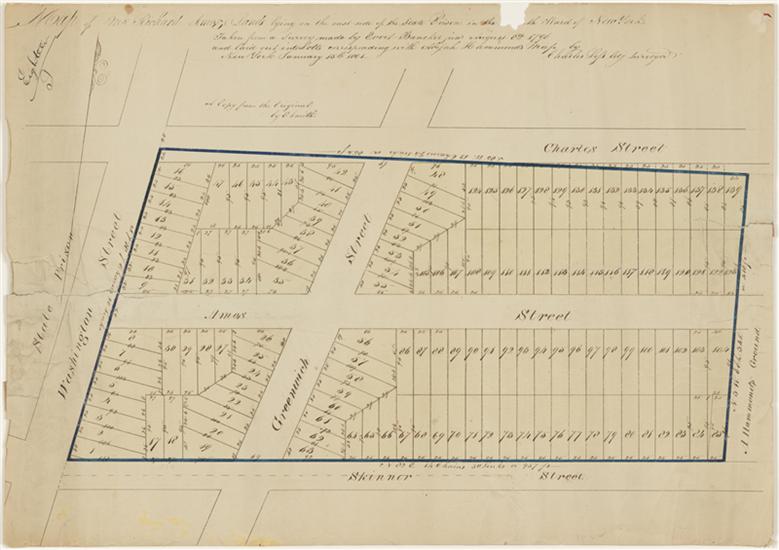
Below: From the original 1796 survey of the spot where Newgate was constructed. Today’s Weehawken Street would have been later laid at the spot of the prison’s western border. Skinner Street would later be known as Christopher Street. Amos Street is now West 10th Street.
Courtesy Museum of the City of New York
This soon proved an inadequate and ill-placed facility. Overcrowding led to prison riots and jail breaks, hardly the behavior you want to see across the street from a civilized public market. By the 1820s, the area of Greenwich Village became desirable real estate as the boundaries of New York — bolstered by the slow development of the 1811 Grid Plan — moved northward.
The western edge of Greenwich Village would be spared from the installing the grid thanks to tenacious land-owners. But it certainly wouldn’t do to have a wily prison sitting next to a developing neighborhood. In 1824, former New York mayor Stephen Allen (technically the first elected mayor) was put in charge of relocating the state prison to someplace more remote. And so, in 1828, Newgate’s prisoners were transferred to a new facility — in Sing Sing.
The hefty walls of Newgate were torn down, and l’il Weehawken Street — all 63 feet of it — was then created and paved in 1830.
By the way, Weehawken Street did get its name from the town of Weehawken, as it was the dock of a colonial ferry that connected with the picturesque New Jersey town. Weehawken was the site of the famous duel between Alexander Hamilton and Aaron Burr in 1804.
They both get their name from the same Lenape Indian source meaning either “place of gulls” or “place of rocks that look like trees.”
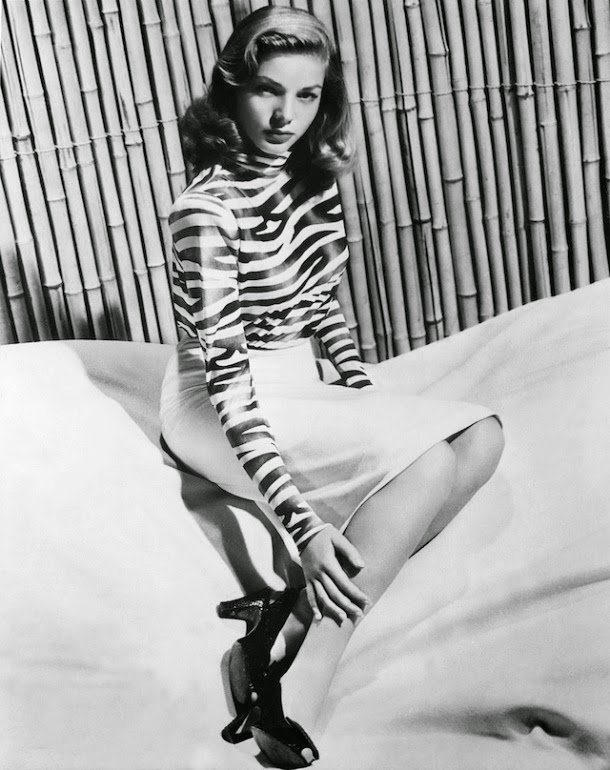
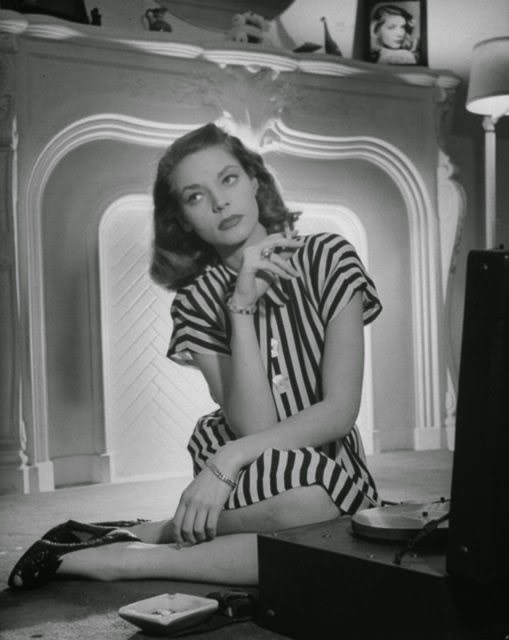
Lauren Bacall, the cinema and stage legend who died yesterday at age 89, was once the less enigmatic Betty Joan Perske, a New York girl with a lot of moxie. As a sixteen year old, she ventured downtown from her home on the Upper West Side (84th Street, under the elevated train) to look for work as a model and actress.
In her great autobiography By Myself, she recounts her experiences as a teen model. Go back in time and take her valuable advice on how to make it in the cutthroat world of the Garment District in 1941!
Know the finer places: “I asked a couple other girls how to find work modeling clothes on Seventh Avenue. They said I should … go down to certain Seventh Avenue buildings — nothing really below 500 Seventh Avenue. The best houses were in 550 or 530 and you could squeeze in 495, but that was it — anything below that was tacky.”
Lie a little: At 498 Seventh Avenue, “[a] woman came out, looked at me, asked me about my experience — I told her I had been a photographic model for several years (a white lie), that I was an actress, that I knew how to move and would certainly be a very good model.”
Play act: “I kept telling myself, ‘It’s a part — play it….’ Finally the woman asked me if I would try on one of the model dresses….I walked through the curtains. Mr. Crystal asked me to turn — I did, without falling down or getting dizzy…”
Dress the part: “I spent the next week going through my scant wardrobe to make certain I had enough to wear to work. Then a trip to Loehmann’s in Brooklyn. Loehmann’s was a large store that stocked clothes from all the Seventh Avenue houses — lower-priced clothes of unknown designers as well as the most expensive…. There were no dressing rooms in the store. Women ran around in their slips, girdles and bras — all shapes and sizes — grabbing things from saleswomen as they brought them down. A madhouse.”
Watch and learn: At Crystal’s, her first modeling house, “you undressed and either sat in a slip or put on a cotton smock. There was a long make-up table with a chair for each of us….I watched [the older models] as they applied their make-up — a base, then full eye make-up. It didn’t look heavy, but it was there. I did the best I could do with the face confronting me in the mirror.”
Composure: “When I showed a dress and a buyer would ask to see it close to, I’d be motioned forward. The buyer, male or female, would then feel the fabric, discuss it — I’d stand there until I was dismissed. An occasional male buyer would feel the goods a bit more than necessary and I never knew what to do. I was petrified, though no one ever was really fresh, just suggestive — just enough to make me aware that I’d better keep on my toes, protect myself.”
Build from rejection: She was laid off at Crystal’s for being too thin (can you imagine?) but promptly got a job modeling evening gowns. “I was much happier at Friedlander’s than at Crystal’s. He laughed at all my little jokes, the other models were good girls (there were only two of them), the feeling was much cozier.”
Plan your escape route: “The other girls seemed fairly uncomplicated to me — they would keep on modeling until Mr. Right came along and then they’d get married and be all set.” But Betty wanted to be an actress. On her lunch breaks, she would go up to Walgreen’s at 44th and Broadway. Then this happened.
After six months she quit — “I was not getting any closer to the stage in the Garment District” — and eventually moved with her mother to 77 Bank Street in the West Village. This allowed her a full time foray into theater work, first as an usher, then as a extra and bit part player.
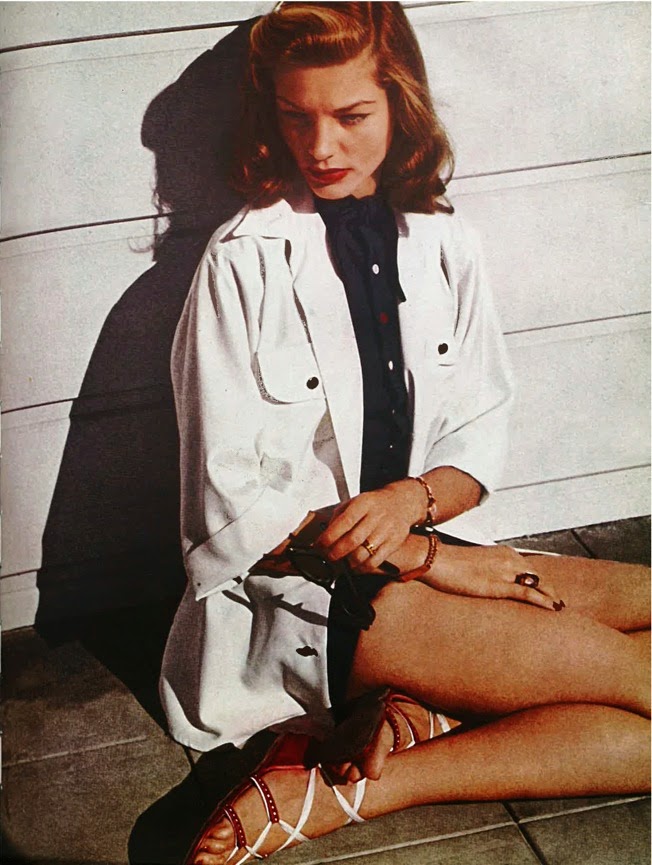
But she still modeled for extra money, including a stint as a Montgomery Ward catalog model. Although would soon move on to full-time acting, her experience as a model was invaluable once she was put in front of a movie camera. Her cover work for Harper’s Bazaar even got her noticed by director Howard Hawks.
Her debut inTo Have And Have Not with future husband Humphrey Bogart electrified audiences. Now as Lauren Bacall, she seemed to instantly generate magnetism. “Slumberous of eye and softly reedy along the lines of Veronica Lake,” wrote Bosley Crowther for the New York Times, in her first film review,” she acts in the quiet way of catnip and sings a song from deep down in her throat.”
Or, Bacall might have said, she did the best she could do with the face confronting her in the mirror.
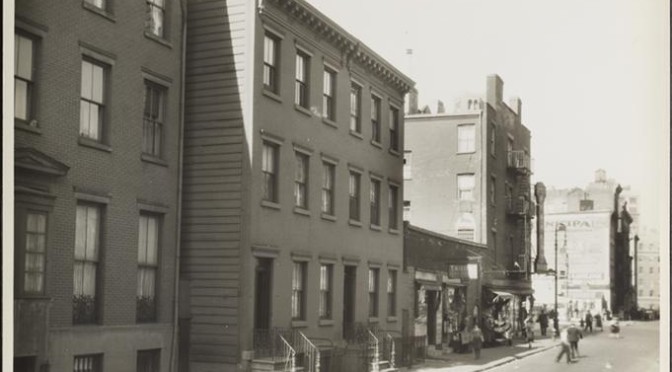
A 1932 photo of 34-36 Barrow Street by Charles Von Urban, courtesy the Museum of the City of New York. Click here to see what this section of the street looks like today
In this week’s Ghost Stories of Old New York podcast, Tom speaks of the ghosts at romantic restaurant One If By Land, Two If By Sea, located in an old carriage house that was moved from its original location to its present home on Barrow Street in today’s West Village.
Barrow Street is a quiet hook of a path, emanating from the southeast side of Sheridan Square, bending west when it meets odd, little Commerce Street, then wanders westward to the water’s edge. If you’ve ever been lost amid the crooked streets of the West Village — and who hasn’t, at some point — then you’ve certainly stumbled onto Barrow.
The road that became Barrow was close to the estate of Richmond Hill, the esteemed manor that was once home to America’s first two vice presidents, John Adams and Aaron Burr. In the heady post-Revolution period, this path was originally named Reason Street, for Thomas Paine‘s ‘The Age of Reason’. Indeed, Paine once lived at a couple nearly locations, at 309 Bleecker Street and 59 Grove Street (where he died).
As legend has it, however, residents soon took to calling it Raisin Street, both as an accented corruption of the original name and a possible insult to Paine (who was not beloved at the time of his death in 1809).
Raisin Street, most notably, became the home of New York’s first ‘Orphan Asylum’ in 1805. Six orphaned children were placed here under the care “of a pious and respectable man and wife.” [source]
While many streets in New York City are named for healthy fruits — Brooklyn produces Pineapple, Orange and Cranberry Streets, for instance— few are named for shriveled ones. In 1807, Trinity Church, the principal landowner of Reason/Raisin Street, directed that the street be renamed for Thomas Barrow, a vestryman and agent for the church.
I’m sure it is a happy accident that a principal character in Downton Abbey is also named Thomas Barrow.
As many others today are ruminating on the symbolic and historic implications of yesterday’s presidential inaugural ceremony, allow me to dwell a little on a curious milestone of far lesser importance.
Until yesterday, no place in New York City has ever been mentioned in a presidential inaugural speech. Â Not Ellis Island, not the Statue of Liberty, not Wall Street, not the World Trade Center, none of our fortresses or other towering landmarks.
In fact, New York as a city has actually been name-checked only once. (See below.) Â But no individual place has ever been mentioned in what are considered to be the most memorable set of presidential speeches.
That is, until yesterday, when President Barack Obama referenced the name of a West Village gay bar — Stonewall Inn.
“We, the people, declare today that the most evident of truths – that all of us are created equal – is the star that guides us still; just as it guided our forebears through Seneca Falls, and Selma, and Stonewall; just as it guided all those men and women, sung and unsung, who left footprints along this great Mall, to hear a preacher say that we cannot walk alone; to hear a King proclaim that our individual freedom is inextricably bound to the freedom of every soul on Earth.”
“Seneca Falls, and Selma, and Stonewall” represent flashpoints of various American social movements. Â With his mention of Stonewall — representing the Stonewall riots and subsequent street gatherings of June-July 1969, considered the birthplace of the gay-rights movement — the president has elevated the struggles of gay Americans to those of the women’s movement (the Seneca Falls Conventionof 1848) and the African-American civil rights movement of the 1960s (theSelma to Montgomery marches in 1965).
The rhetorical flourish of alliteration unites these movements by the places in which they occurred. Â Stonewall thus becomes shorthand for the gay rights movement. Â But as it is the actual name of a bar — still very much in operation, right off Christopher Park — Stonewall Inn now holds another very special place in history.
The United Nations, of course, has been mentioned a few times, mostly in the 1940s and 50s. (Without surprise, mentions of the international body literally drop off to nothing after that.) Â But all references relate only to the legislative body, not the actual place. Â In fact, when it was first mentioned in 1949, by President Harry S. Truman — “We have constantly and vigorously supported the United Nations and related agencies as a means of applying democratic principles to international relations” — its headquarters in Manhattan had not even been completed.
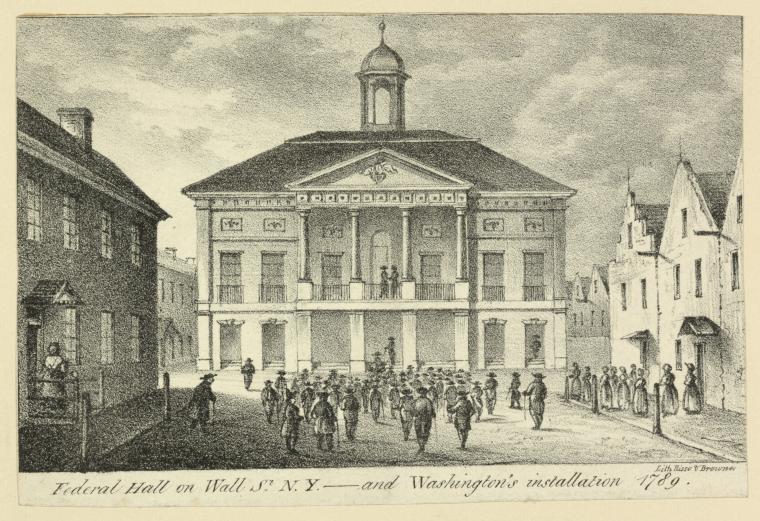
Below: Federal Hall on Wall Street, site of the first American government and the inauguration of George Washington in 1789
“This occasion derives peculiar interest from the fact that the Presidential term which begins this day is the twenty-sixth under our Constitution,” Benjamin Harrison remarked in his 1889 speech. Â “The first inauguration of President Washington took place in New York, where Congress was then sitting, on the 30th day of April, 1789, having been deferred by reason of delays attending the organization of the Congress and the canvass of the electoral vote.”
George H.W. Bush makes specific mention of Washington’s inauguration in 1989, which happened to be the 200th anniversary of that event. “I have just repeated word for word the oath taken by George Washington 200 years ago, and the Bible on which I placed my hand is the Bible on which he placed his. Â It is right that the memory of Washington be with us today, not only because this is our Bicentennial Inauguration, but because Washington remains the Father of our Country.”
While this means very little in terms of the city’s historical stature, it means a great deal to the gay rights movement, and certainly to the bar itself. Or as Stonewall Inn owner Stacey Lentz recently said: “We’re not just a bar. We’re the Stonewall. It’s like owning Rosa Parks’s bus. We don’t own the movement, but we own the bus.”
For more information on Stonewall Inn, check out our podcast #48 The Stonewall Riots (download here or on iTunes.) Â
The events of the Stonewall Riots so reverberate within the international gay community that the thousands-strong Pride Parade every June ends here every year, while over in Europe (specifically major cities in Germany), their annual celebration is actually called Christopher Street Day. But the Christopher of Christopher Street would most likely be scandalized to learn the how his name is being used.
As we mentioned in this week’s podcast, the quirky street patterns of the West Village are a preservation of many original footpaths from the neighborhood’s early days as farm land. When the 1811 Commissioners’ Plan neatly divided the city into an easily navigable grid, the citizens of the village bucked the city’s advances and kept most of its jagged character intact.
The path that would become Christopher Street passed along the edge of the estate of British admiral Sir Peter Warren, an Irish daring-do from the early 18th Century whose fervid support of imperial England belied a equal love for the town of New York. He also owned one of the largest mansions in New York’s rich countryside, i.e. today’s Greenwich Village.
Warren’s wife kept reign over the manor (and their many slave holdings) while Warren was away on war adventures, and her daughters married well, including her youngest who was betrothed to another Manhattan landowner James De Lancey, who provides his name to Delancey Street today. Another daughter married a British colonel William Skinner, and the Warrens honored the engagement by naming the path that bordered their property Skinner Road.
The descendants of Warren clan kept their countryside property even in post-Revolutionary New York, but as the city crept past its original border, their lands became more valuable and they were eventually parceled into smaller lots. In 1799 the property that included Skinner Road fell into the hands of a trustee of the Warren estate Richard Amos.
Amos was quick to lob off sections of the property and sell to others. But he kept a sizable portion and passed it to his relative Charles Christopher Amos, who then apparently took to the unoriginal idea of giving the roads on his property various parts of his own name — Amos Street (today’s 10th Street), Charles Street (which still exists today), and the former Skinner Road, now newly named Christopher Street. By the 1820s, the former farmland had lost its bucolic character and became a part of the New York urban landscape, with Christopher Street, lined with businesses, the Village’s commercial center.
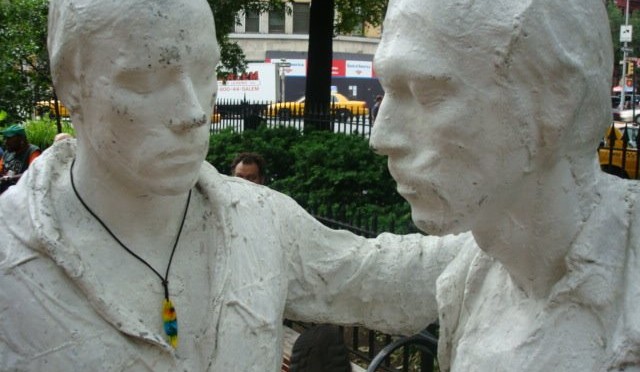
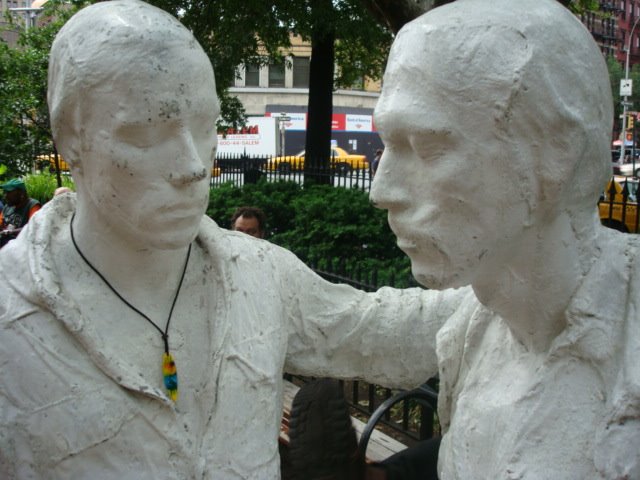
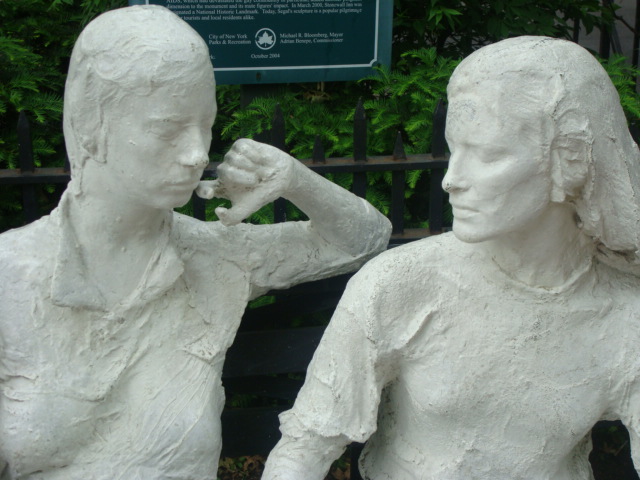
By the way, the white sculpture of Christopher Park are designed by George Segal and were placed in the park in 1992. The piece entitled Gay Liberation features two gay male figures standing next two seated lesbians. Depending on the time of day, the sculptures are either extremely charming or a little creepy.


![[Richmond Hill, residence of Aaron Burr.]](https://boweryboyshistory.com/wp-content/uploads/2014/07/M3Y29313-300x208.jpg)

![[34-36 Barrow Street]](https://www.boweryboyshistory.com/wp-content/uploads/2013/10/MNY79988-300x242.jpg)