Categories
Neighborhoods Podcasts

The Garment District: Where New York Fashion Is Made

The history of the New York City fashion industry and how it found its home south of Times Square aka The Garment District.

The Garment District in Midtown Manhattan has been the center of American fashion for almost one hundred years. The lofts and office buildings here still buzz with the business of making clothing — from design to distribution.

But the district has become endangered today as clothing manufacturers move out and the entire industry faces new challenges from online sales and overseas production.

During the mid-19th century, garment production thrived in New York thanks to thousands of arriving immigrants skilled in making clothes. Most clothing in the United States was made below 14th Street, in the city’s tenement neighborhoods, especially the Lower East Side.

As the industry grew more prominent, the residents and merchants of Fifth Avenue feared it would overtake their fashionable street. So, by the 1930s, a new district was born. Hardly a stitch was sewn in the United States without passing through the blocks between 34th Street and 42nd Street, west of Sixth Avenue.

Listen in as we describe the Garment District’s chaotic flurry of activity — from the fabulous showrooms of the world’s greatest designers to the nitty-gritty bustle of its crowded streets.

In celebration of Made In NYC Week, we present our tribute to New York City’s active and thriving garment industry. A version of this show was originally presented in January 2016. Now with a new introduction and ending, this show was reedited by Kieran Gannon.


The Bowery Boys: New York City History podcast is brought to you …. by you!

We are now producing a new Bowery Boys podcast every two weeks. We’re also looking to improve the show in other ways and expand in other ways as well — through publishing, social media, live events and other forms of media. But we can only do this with your help!

We are now a member of Patreon, a patronage platform where you can support your favorite content creators for as little as a $1 a month.

Please visit our page on Patreon and watch a short video of us recording the show and talking about our expansion plans. If you’d like to help out, there are five different pledge levels (and with clever names too — Mannahatta, New Amsterdam, Five Points, Gilded Age, Jazz Age and Empire State). Check them out and consider being a sponsor.

We greatly appreciate our listeners and readers and thank you for joining us on this journey so far. And the best is yet to come!


Fashionable streets: hats in the Garment District, photo by Margaret Bourke White
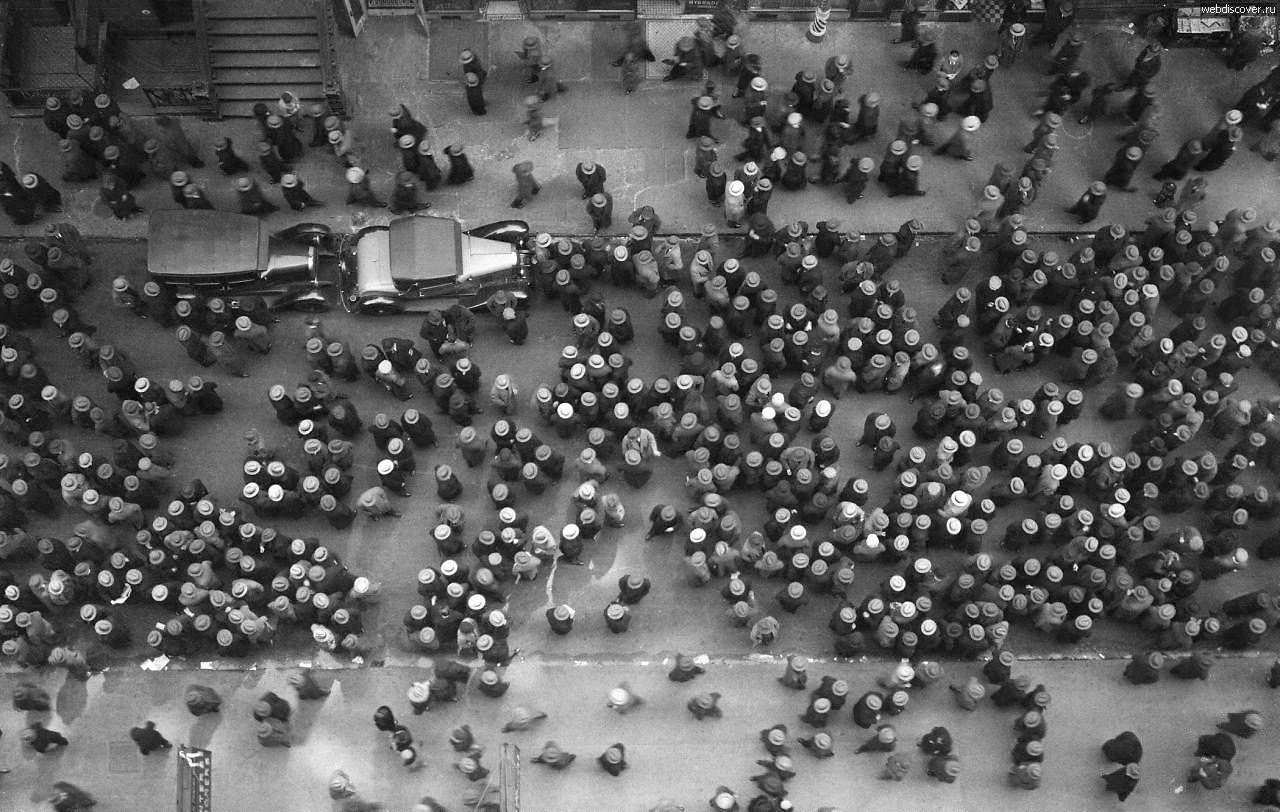
Courtesy Life Magazine

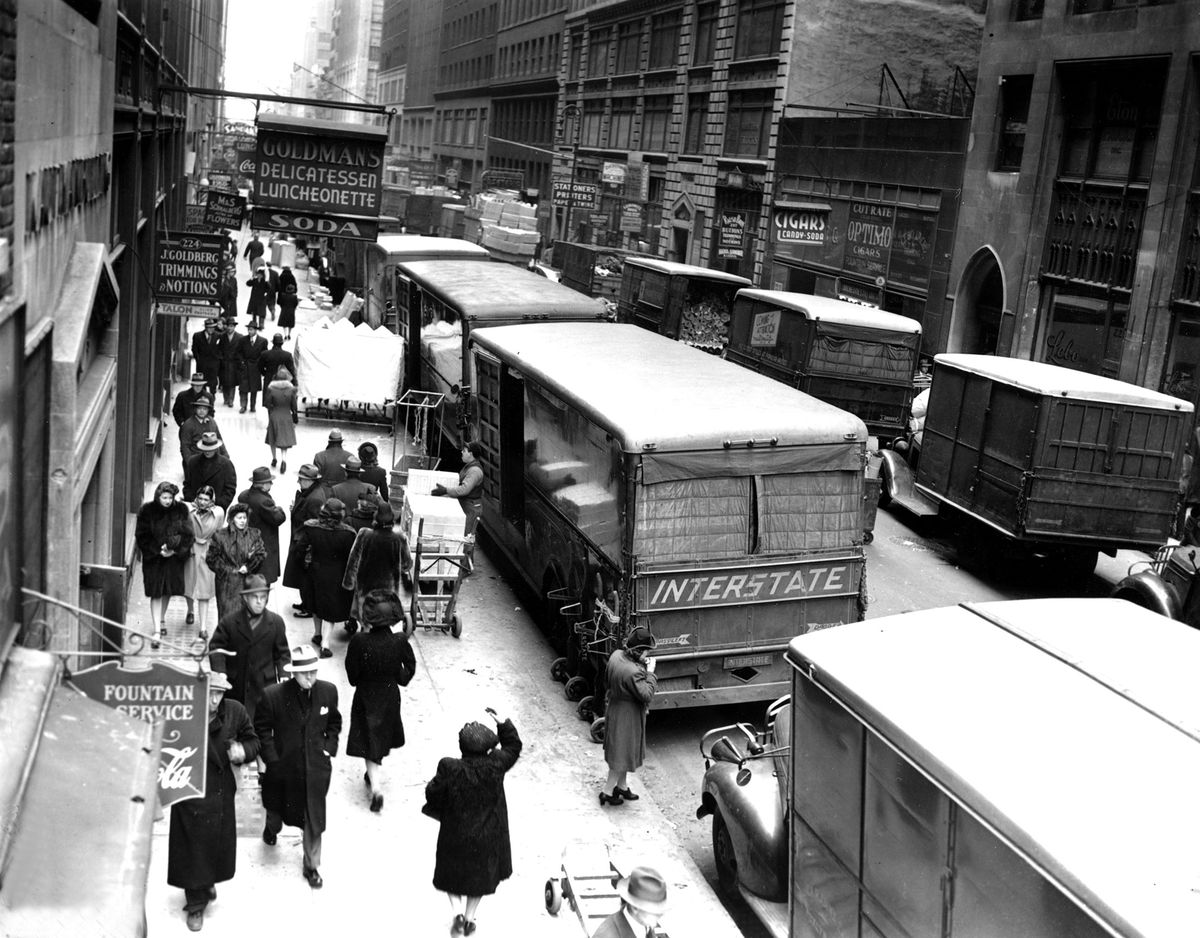
There were as many trucks in the Garment District as models, taking supplies to the busy workshops and finished garments to retailers. Photo is from Nov. 29, 1943.
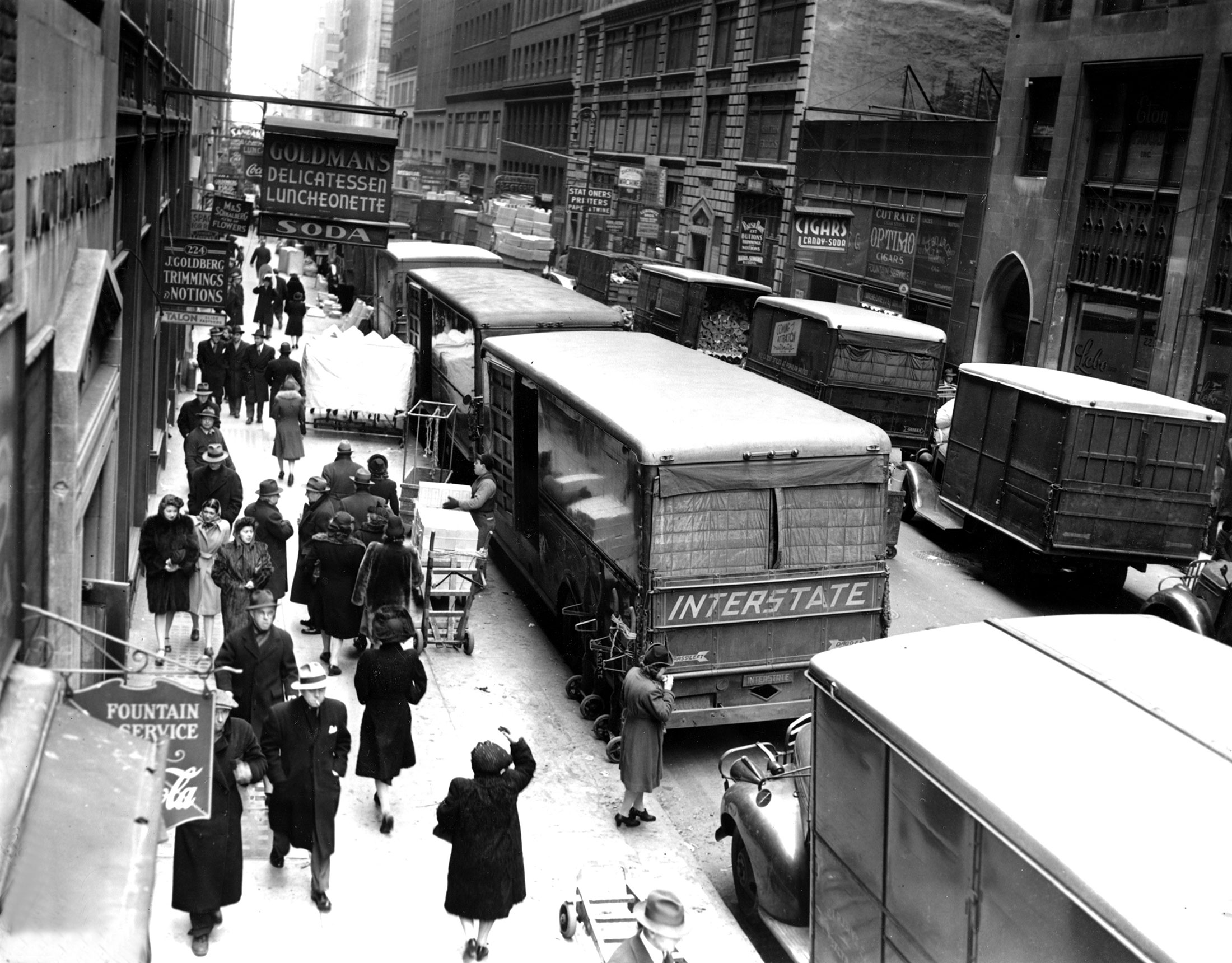
Courtesy AP Photo
Courtesy AP Photo

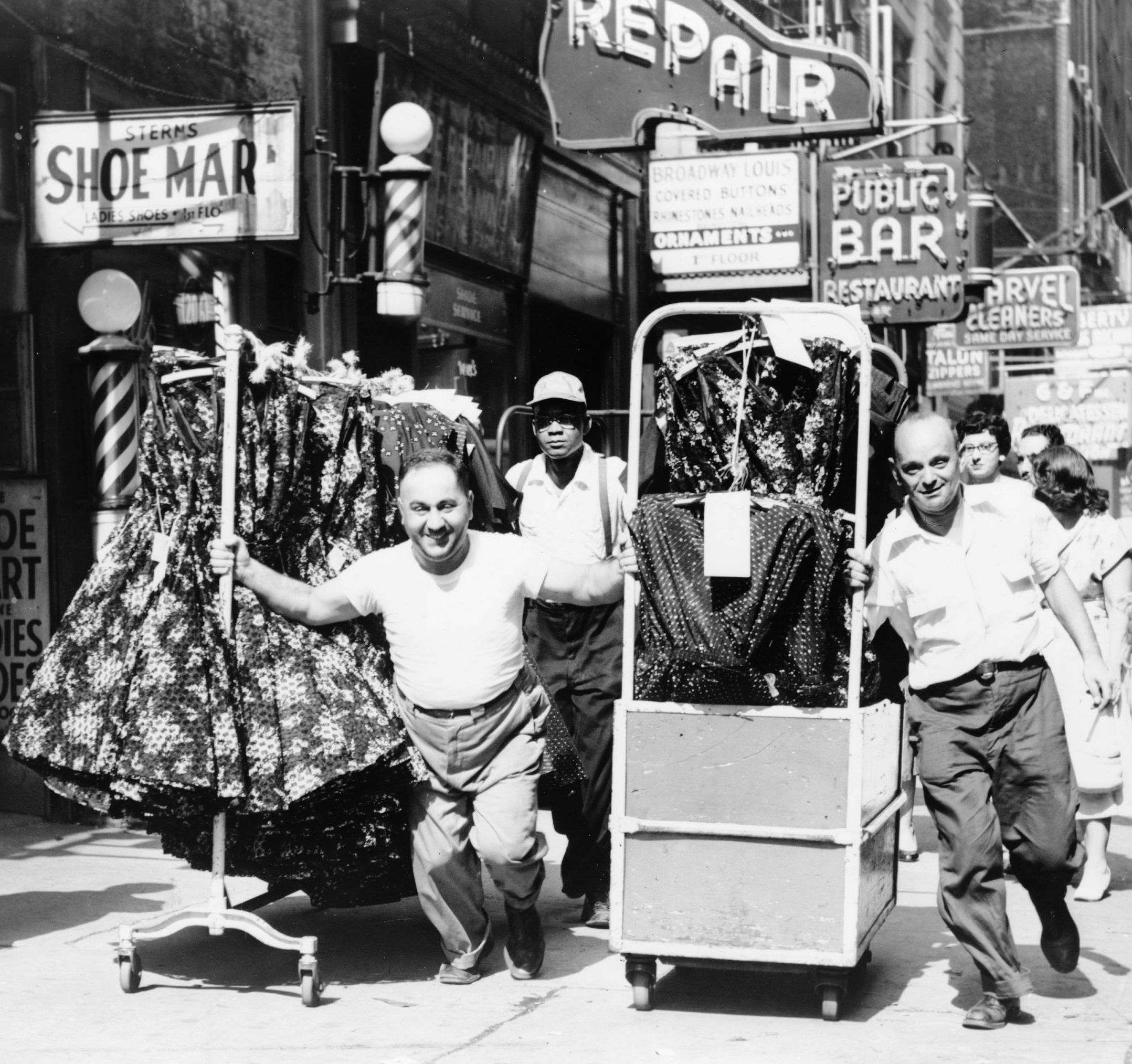
Another common site — racks of clothing being pushed down the street.
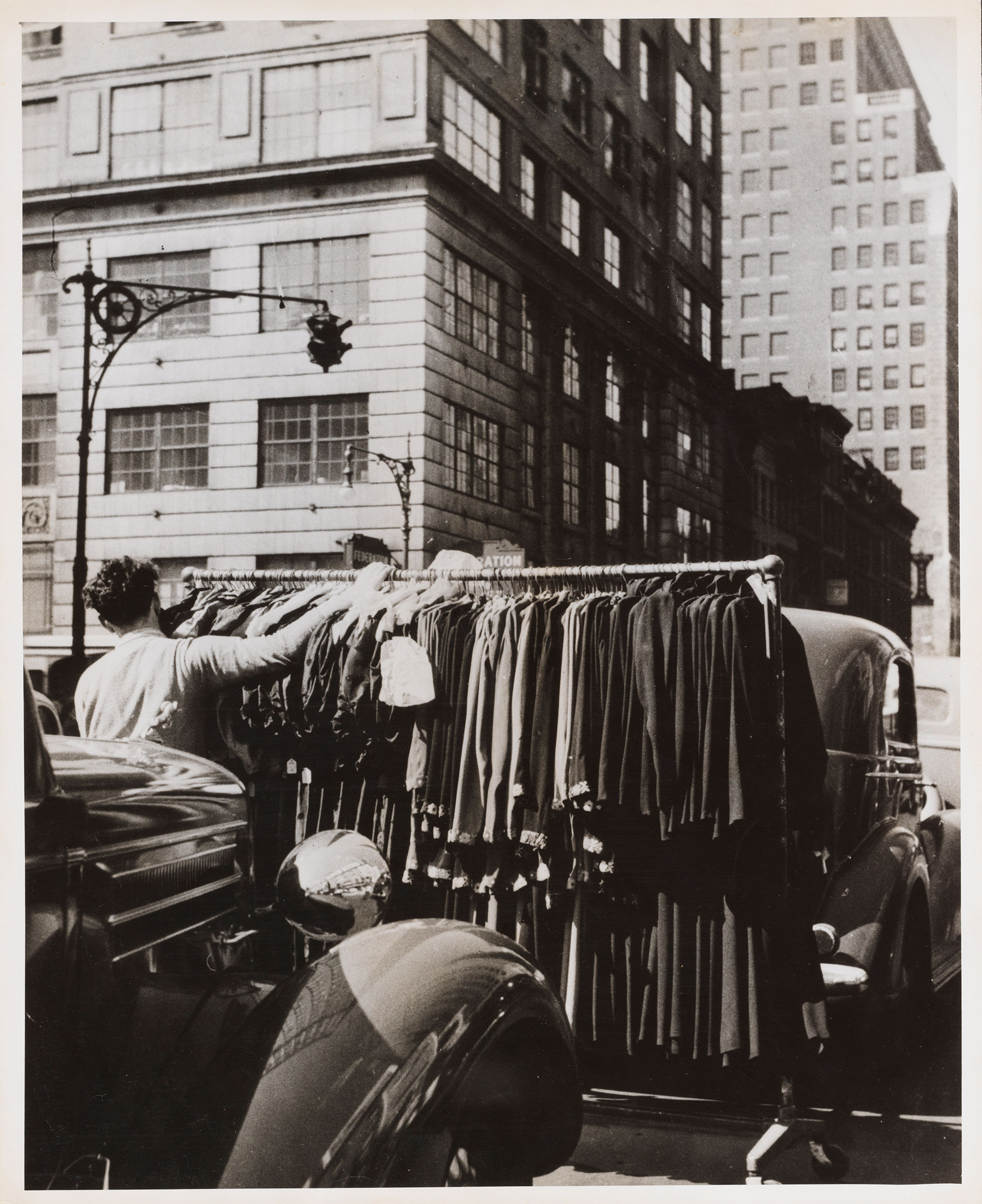
Museum of the City of New York

The Garment District at lunchtime, 1944. We told you it was insane!
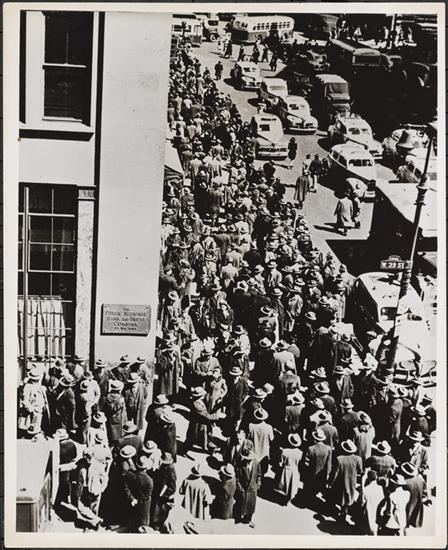
Museum of the City of New York
Museum of the City of New York/US Office of War Information

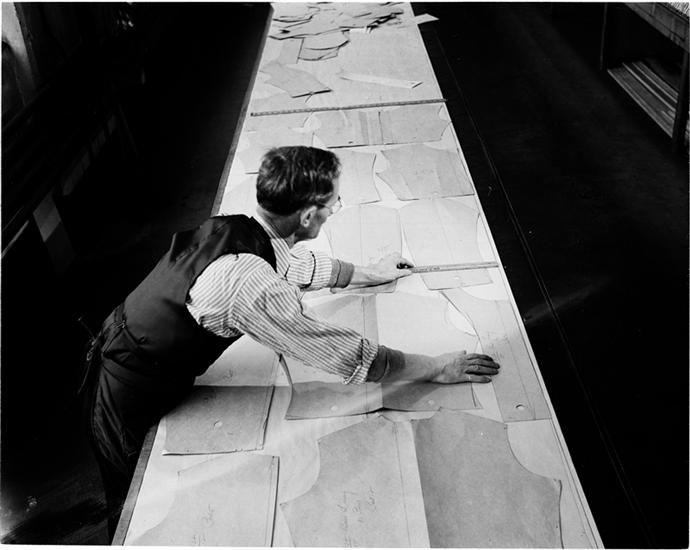
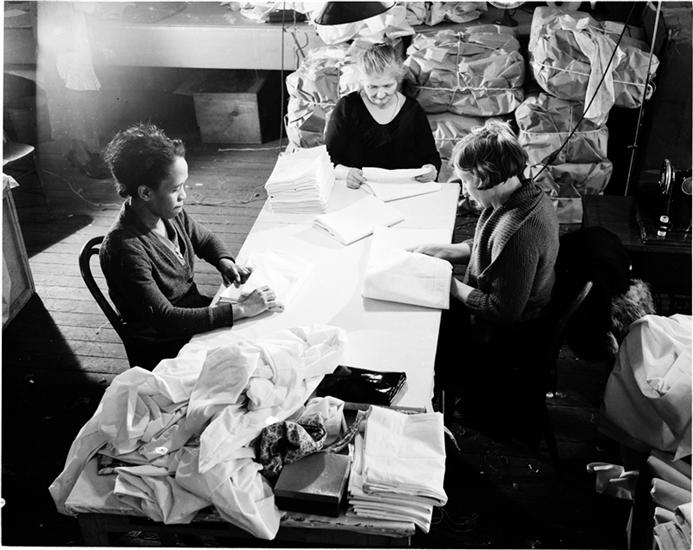
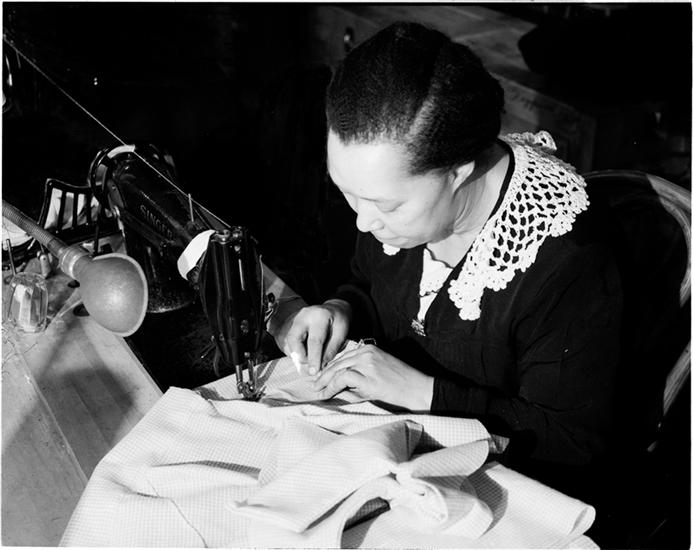
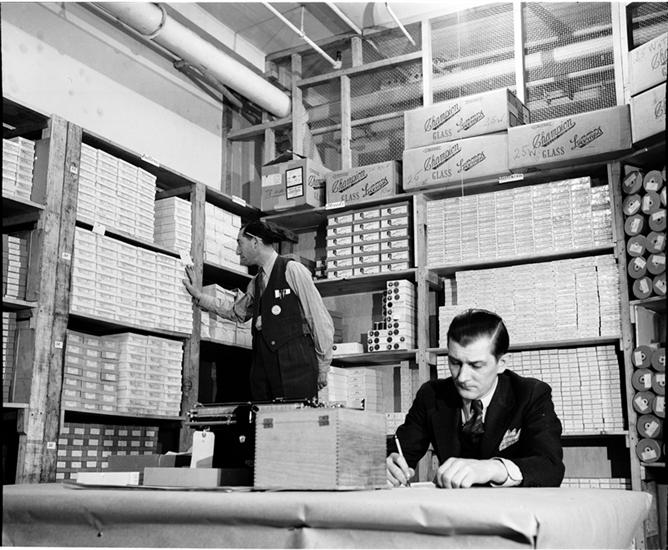
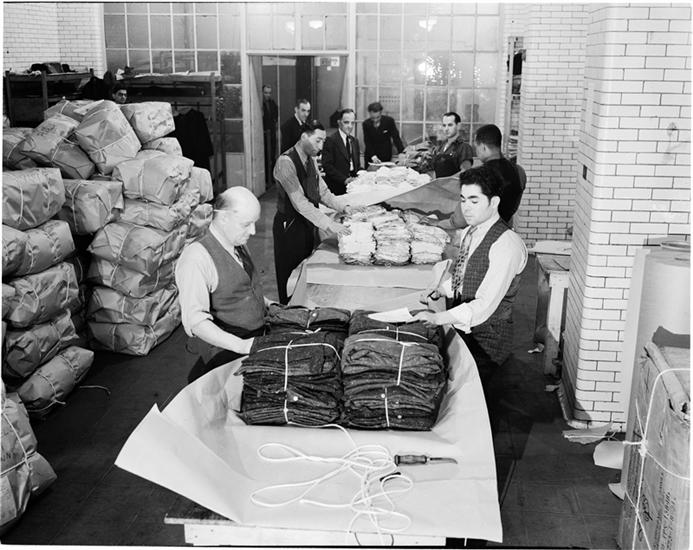
The following are a series of pictures capturing workers in a clothing factory on 36th Street and Tenth Avenue, 1937
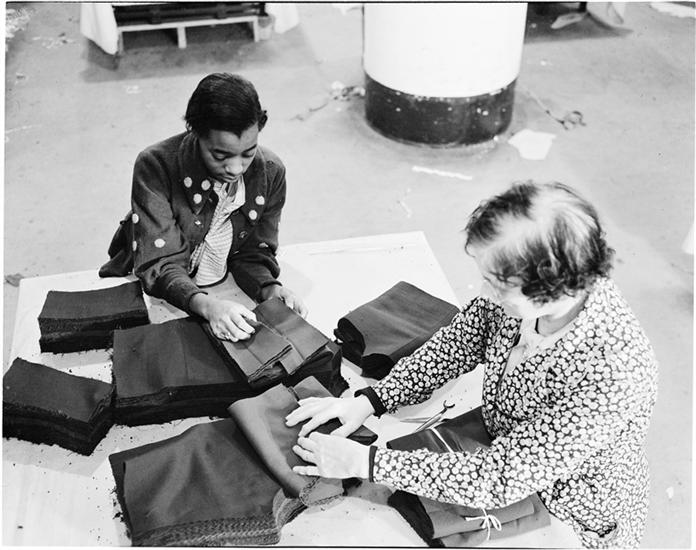
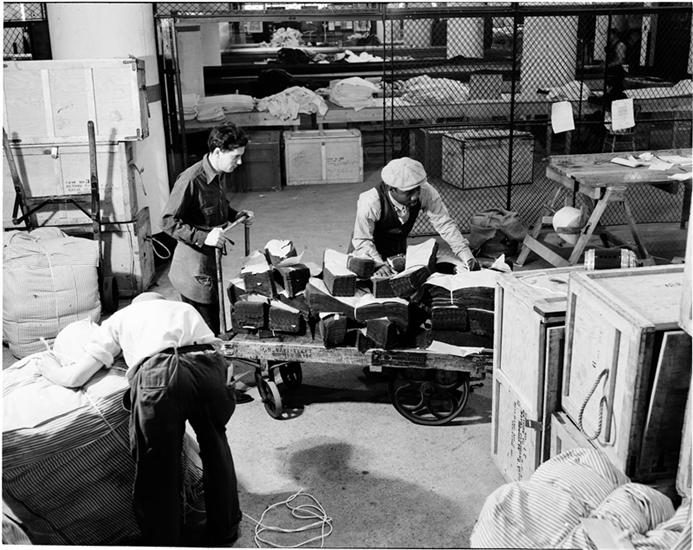
Museum of City of New York/Federal Art Project
4
5
6
7
8
9
10

Behind the scenes at a Gimbels Fashion Show, 1949
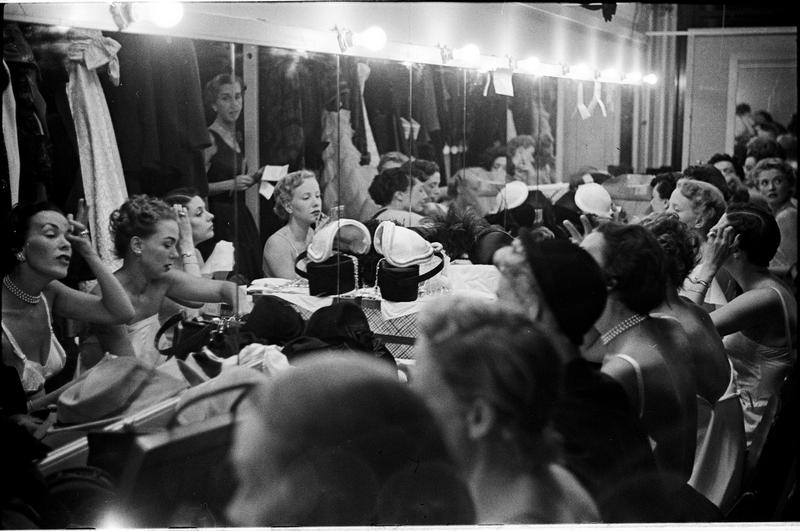
Photo by Stanley Kubrick/Museum of the City of New York

Racks of clothing, 1955

Library of Congress/WikiMedia

The unique brutalist architecture of the Fashion Institute of Technology 1964
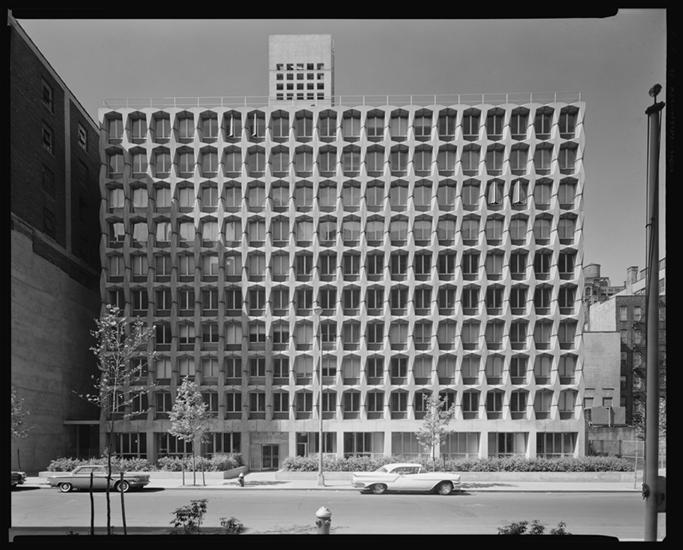
Wurts Brothers/Museum of the City of New York

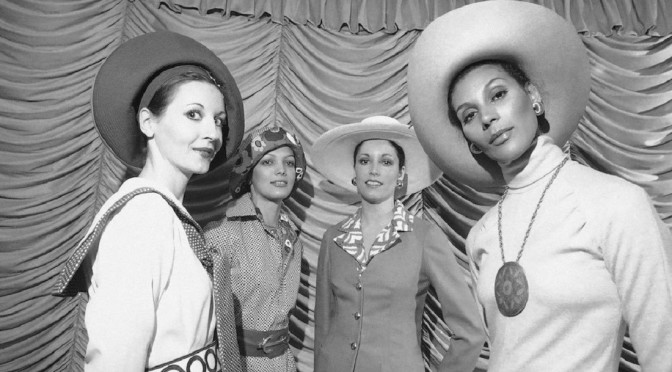
From ‘Press Week’ aka Fashion Week,  Jan. 7, 1972. (AP Photo/Ray Stubblebine)
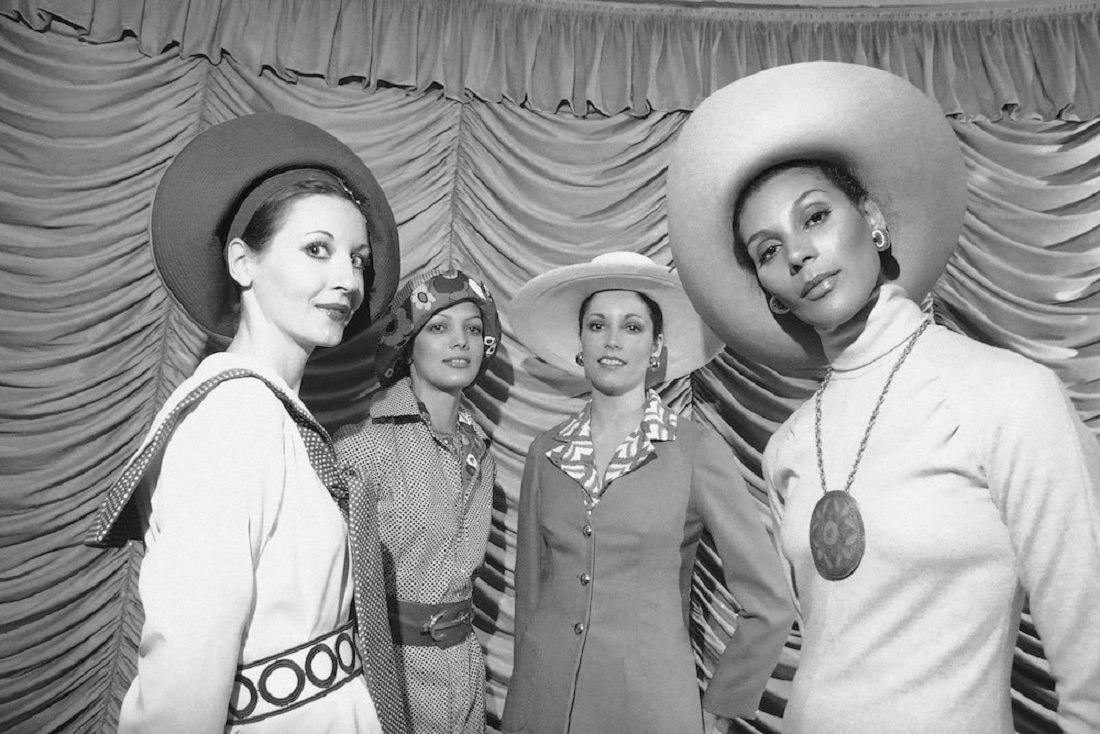
Fashion Hats


The naming of “Project Runway Avenue” 2012
Categories
A Most Violent Year Bowery Boys Bookshelf

‘Murder in the Garment District’: Unraveling the labor unions in mob-controlled Manhattan

By the 1930s, New York City’s thriving garment industry had moved from the Lower East Side to Midtown Manhattan*, housed within nondescript buildings with hundreds of showrooms and shop floors.

The streets were lined with idling trucks, racks of dresses pulled along the sidewalk by loaders and truck men. The streets where American fashion was made, were decidedly unglamorous.

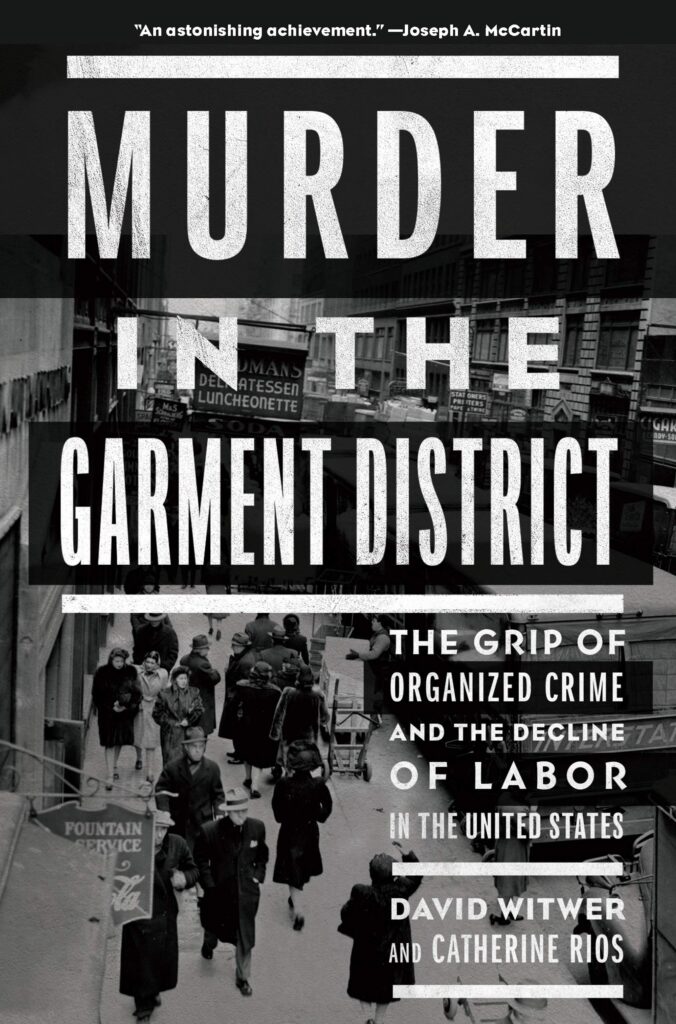
MURDER IN THE GARMENT DISTRICT
The Grip of Organized Crime and the Decline of Labor in the United States

David Witwer and Catherine Rios
The New Press

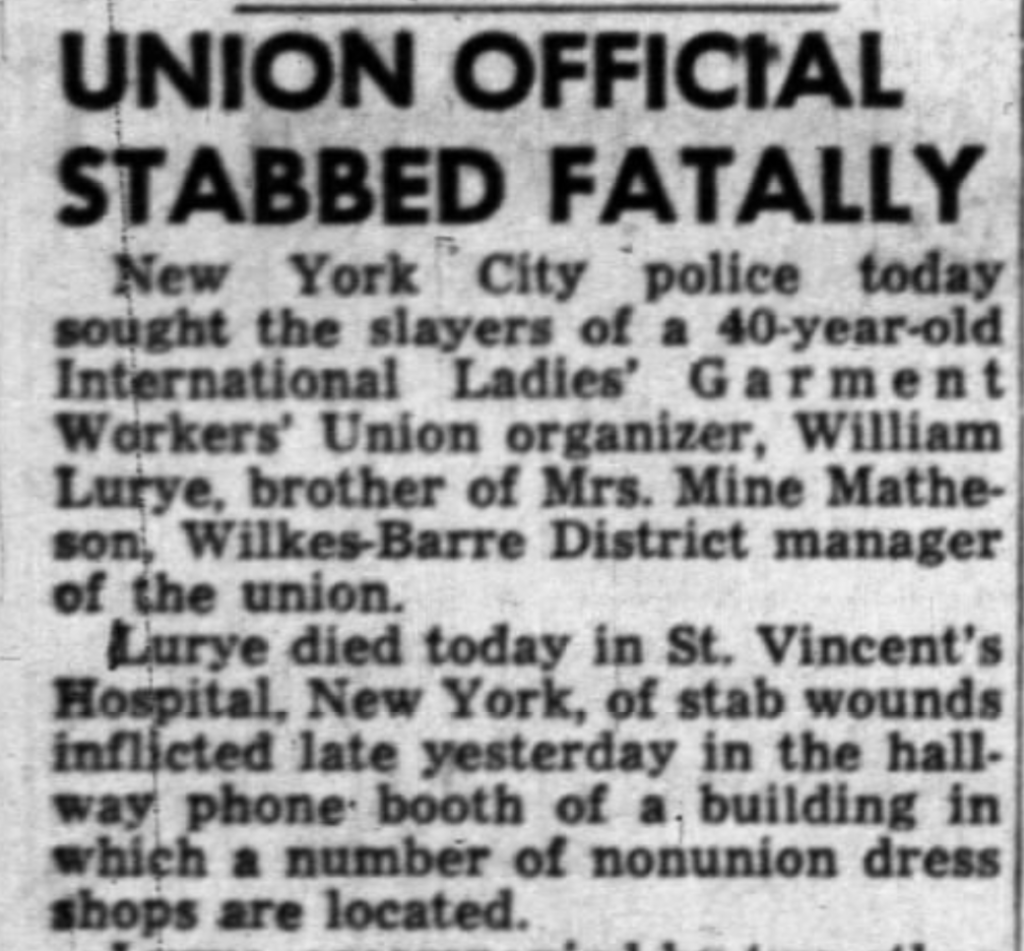
But on May 9, 1949, the Garment District borrowed a terrifying plot line from a Hollywood film noir. That afternoon, labor organizer Will Lurye was brutally stabbed by two assailants while making a call in a phone booth.

“Staged in the midst of a busy workday, in the crowded center of the Garment District, Lurye’s murder was designed to send a message to the union and its supporters,” writes David Witwer and Catherine Rios in Murder in the Garment District, an insightful exploration into labor unions’ mid-century battles with the mob.

The Times-Tribune. Scranton PA, May 10, 1949 (newspapers.com)

Fans of Martin Scorsese’s The Irishman or perhaps even the garment subplots in The Marvelous Mrs. Maisel will find great intrigue with this hardboiled look at racketeering and the mob’s gradual influence over labor unions.

Organized crime’s growing control over the literal streets of the Garment District — via mob-controlled truck services — heightened the challenges had by union-run shops. Many shop owners were forced into relationships with the mob in order to survive.

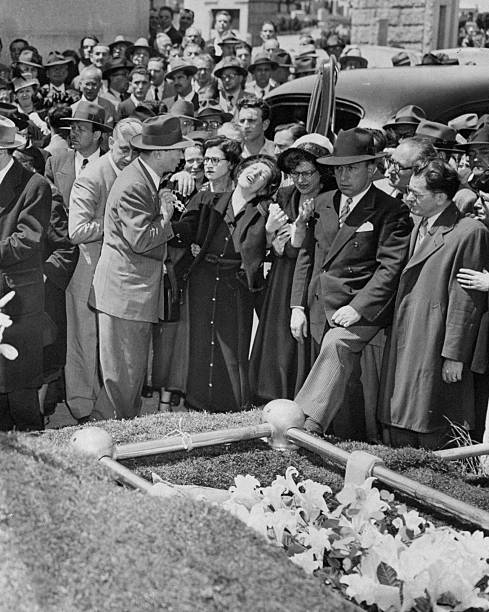
The wife of slain garment district worker William Lurye breaks down at his funeral in the Carmel Cemetery in Cypress Hills, Queens. She is supported by David Dubinsky, President of the International Ladies Garment Workers Union. (Photo by George Torrie/NY Daily News Archive via Getty Images)

In addition, police departments would often feign interest in crimes aimed at labor organizers (who were often at odds with law enforcement in their daily routine). As a result, endangered labor groups “would turn elsewhere [for protection], and in doing so the union’s leadership chose to make an accommodation with organized crime.”

But this association would soil the reputation of American labor unions, built fifty years before in the sweatshops of major cities by most immigrant workforces.

David Dubinsky, president of the International Ladies’ Garment Workers’ Union, even called this form of racketeering “a cancer that almost destroyed the American labor movement.”

Murder isn’t much of a mystery but its observations of 20th century organized crime in New York City — and its oppressive hold on a vital industry — are truly chilling.

*For more information on the Garment Industry’s move to Midtown Manhattan, check out our back-catalog show on the history of the Garment District:

Categories
Pop Culture

Lauren Bacall’s Guide on How To Become A Successful Model in New York City, 1941

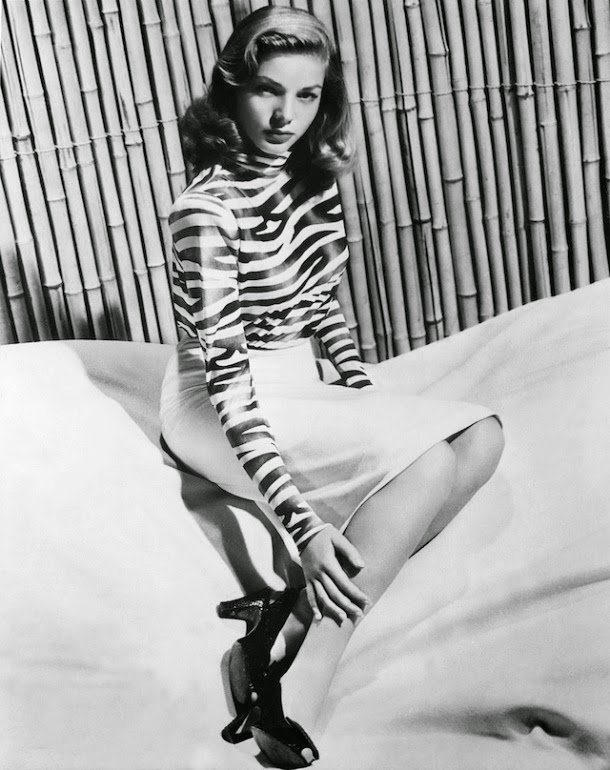
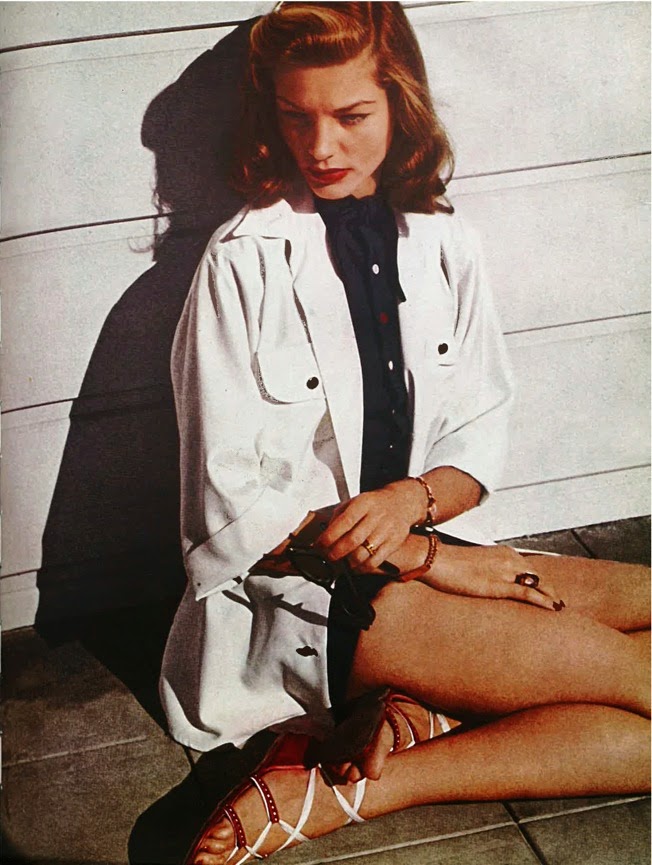
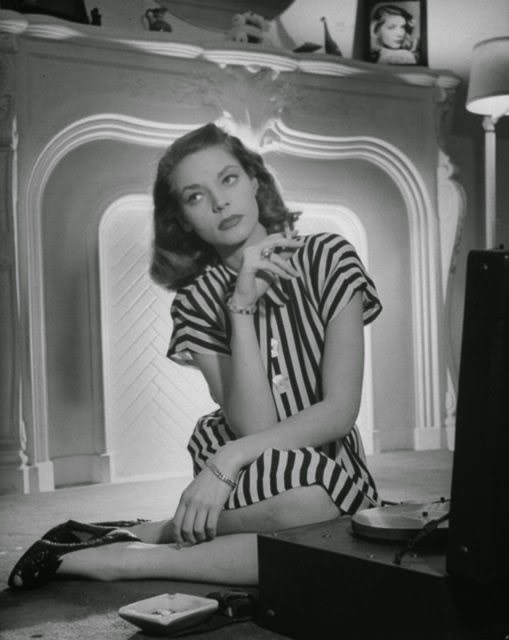
Lauren Bacall, the cinema and stage legend who died yesterday at age 89, was once the less enigmatic Betty Joan Perske, a New York girl with a lot of moxie.  As a sixteen year old, she ventured downtown from her home on the Upper West Side (84th Street, under the elevated train) to look for work as a model and actress.

In her great autobiography By Myself, she recounts her experiences as a teen model.  Go back in time and take her valuable advice on how to make it in the cutthroat world of the Garment District in 1941!

Know the finer places: “I asked a couple other girls how to find work modeling clothes on Seventh Avenue.  They said I should … go down to certain Seventh Avenue buildings — nothing really below 500 Seventh Avenue. The best houses were in 550 or 530 and you could squeeze in 495, but that was it — anything below that was tacky.”

Lie a little: At 498 Seventh Avenue, “[a] woman came out, looked at me, asked me about my experience — I told her I had been a photographic model for several years (a white lie), that I was an actress, that I knew how to move and would certainly be a very good model.”

Play act: “I kept telling myself, ‘It’s a part — play it….’  Finally the woman asked me if I would try on one of the model dresses….I walked through the curtains.  Mr. Crystal asked me to turn — I did, without falling down or getting dizzy…”

Dress the part:  “I spent the next week going through my scant wardrobe to make certain I had enough to wear to work.  Then a trip to Loehmann’s in Brooklyn.  Loehmann’s was a large store that stocked clothes from all the Seventh Avenue houses — lower-priced clothes of unknown designers as well as the most expensive…. There were no dressing rooms in the store.  Women ran around in their slips, girdles and bras — all shapes and sizes — grabbing things from saleswomen as they brought them down. A madhouse.”

Watch and learn:  At Crystal’s, her first modeling house, “you undressed and either sat in a slip or put on a cotton smock.  There was a long make-up table with a chair for each of us….I watched [the older models] as they applied their make-up — a base, then full eye make-up.  It didn’t look heavy, but it was there. I did the best I could do with the face confronting me in the mirror.”

Composure: “When I showed a dress and a buyer would ask to see it close to, I’d be motioned forward.  The buyer, male or female, would then feel the fabric, discuss it — I’d stand there until I was dismissed.  An occasional male buyer would feel the goods a bit more than necessary and I never knew what to do.  I was petrified, though no one ever was really fresh, just suggestive — just enough to make me aware that I’d better keep on my toes, protect myself.”

Build from rejection:  She was laid off at Crystal’s for being too thin (can you imagine?) but promptly got a job modeling evening gowns.  “I was much happier at Friedlander’s than at Crystal’s.  He laughed at all my little jokes, the other models were good girls (there were only two of them), the feeling was much cozier.”

Plan your escape route: “The other girls seemed fairly uncomplicated to me — they would keep on modeling until Mr. Right came along and then they’d get married and be all set.”  But Betty wanted to be an actress.  On her lunch breaks, she would go up to Walgreen’s at 44th and Broadway. Then this happened.

After six months she quit — “I was not getting any closer to the stage in the Garment District” — and eventually moved with her mother to 77 Bank Street in the West Village.  This allowed her a full time foray into theater work, first as an usher, then as a extra and bit part player.

But she still modeled for extra money, including a stint as a Montgomery Ward catalog model.   Although would soon move on to full-time acting, her experience as a model was invaluable once she was put in front of a movie camera.  Her cover work for Harper’s Bazaar even got her noticed by director Howard Hawks.

Her debut in To Have And Have Not with future husband Humphrey Bogart electrified audiences.  Now as Lauren Bacall, she seemed to instantly generate magnetism. “Slumberous of eye and softly reedy along the lines of Veronica Lake,” wrote Bosley Crowther for the New York Times, in her first film review,” she acts in the quiet way of catnip and sings a song from deep down in her throat.”

Or, Bacall might have said, she did the best she could do with the face confronting her in the mirror.