Why is the West Village both historically important and incredibly expensive?
In the final part of our West Village mini-series, we look at the elements that define the modern neighborhood — from battles with Robert Moses to the protests that galvanized the gay-rights movement.
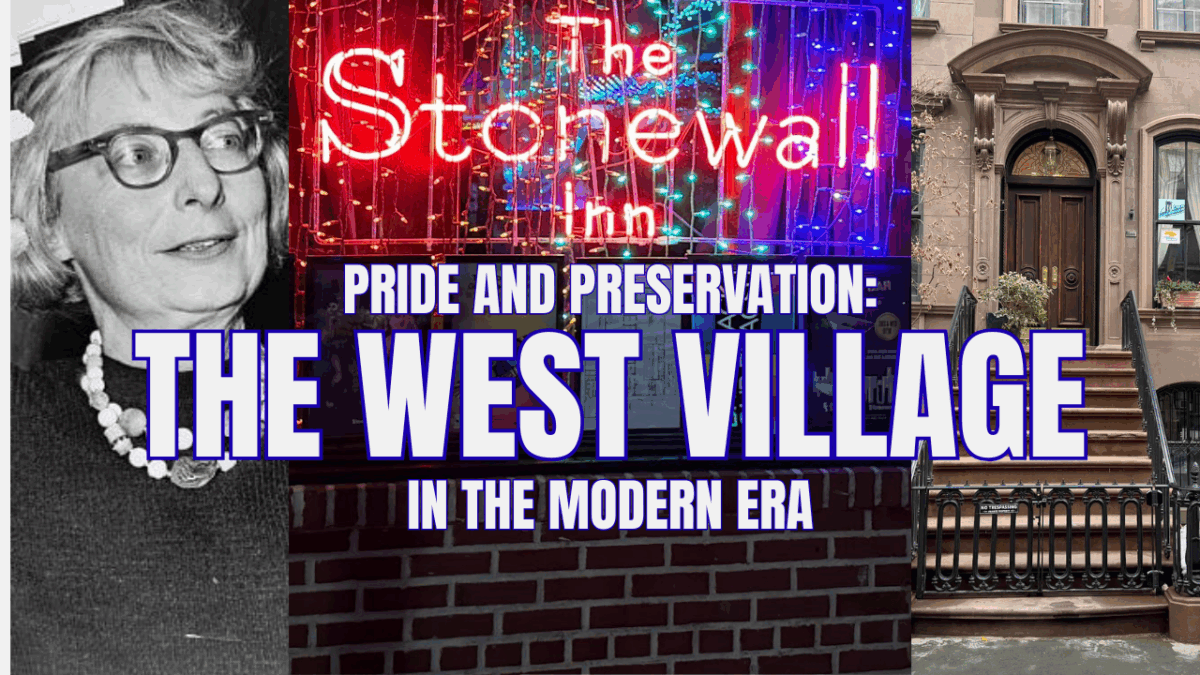
The 19th-century charms of the old Village seem timeless, but they survive thanks to the 1969 Greenwich Village Historic District. The fight to save the neighborhood, however, began two decades earlier, and those early conflicts even popularized the name “West Village.”
Jane Jacobs, fresh off the publication of her landmark book The Death and Life of Great American Cities, would become the leading voice in protecting this uniquely New York enclave.
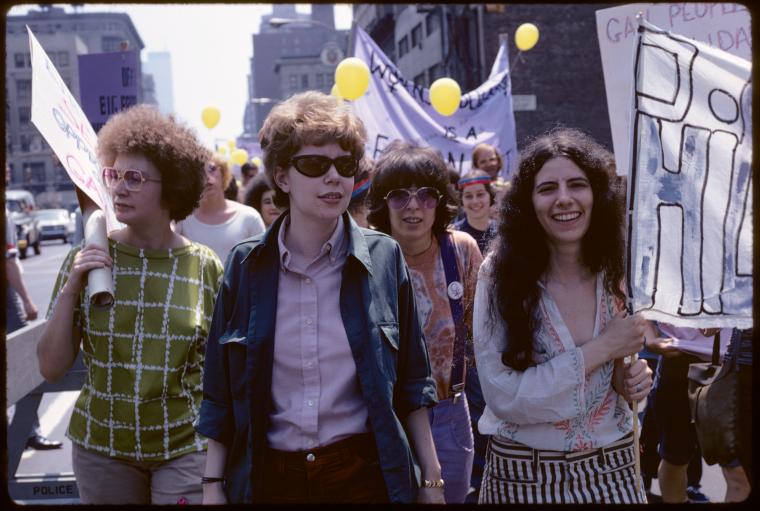
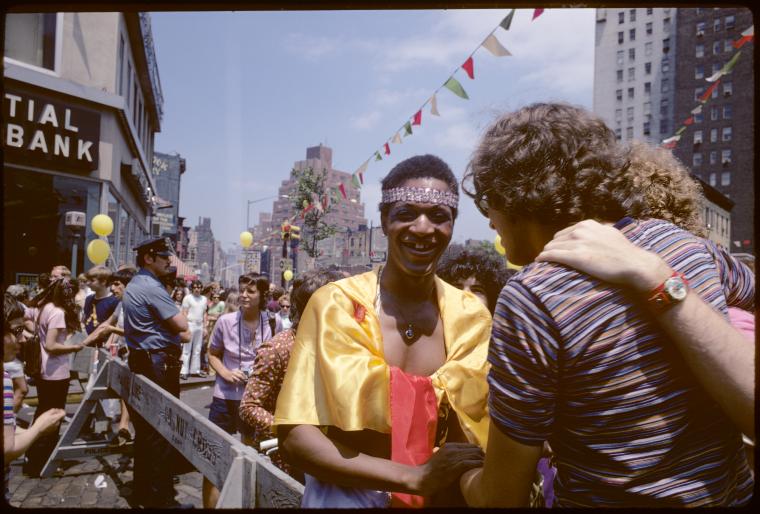
That same year, clashes between police and patrons at the Stonewall Inn united the area’s LGBT residents, culminating in the first Christopher Street Liberation Day Parade (today’s NYC Pride March).
A vibrant, radical queer culture flourished — from leather bars to the Christopher Street Pier.
In the 1980s, thousands of New Yorkers died of AIDS, and St. Vincent’s Hospital became known for its pioneering care. Today, long-running establishments like the Monster and Julius’ form a kind of “legacy cultural district,” linking present-day nightlife to those transformative years.
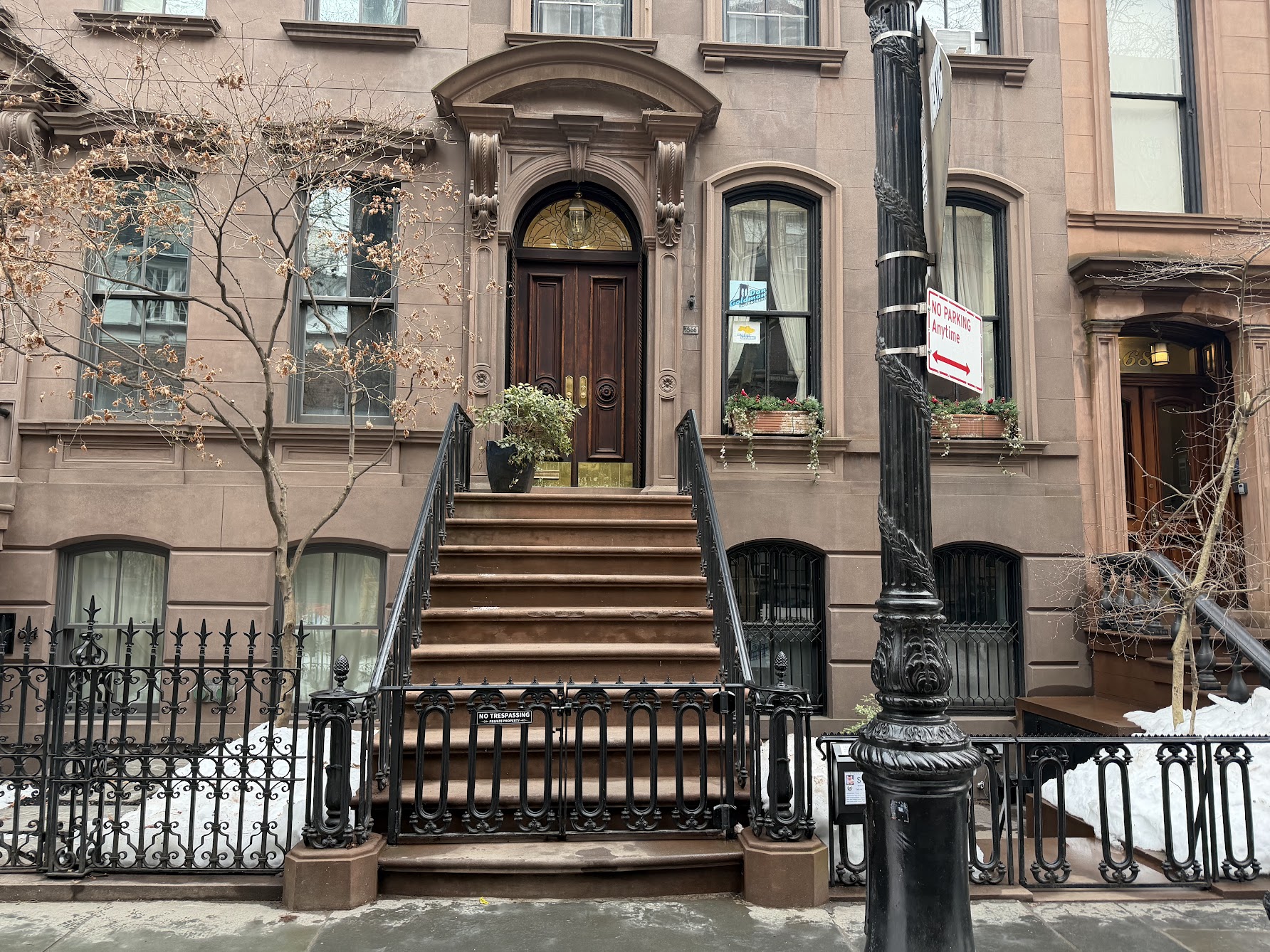
In the 1990s, pop-cultural phenomena Friends and Sex and the City (which made one Perry Street brownstone famous) brought international attention to the neighborhood.
By the 21st century, the West Village had become a luxury enclave, even as its history was further elevated with Stonewall’s designation as a U.S. National Monument.
What has the West Village become in 2026?
LISTEN NOW: PRIDE AND PRESERVATION: THE STREETS OF THE WEST VILLAGE
All episodes of The Streets of the West Village mini-series are now available.
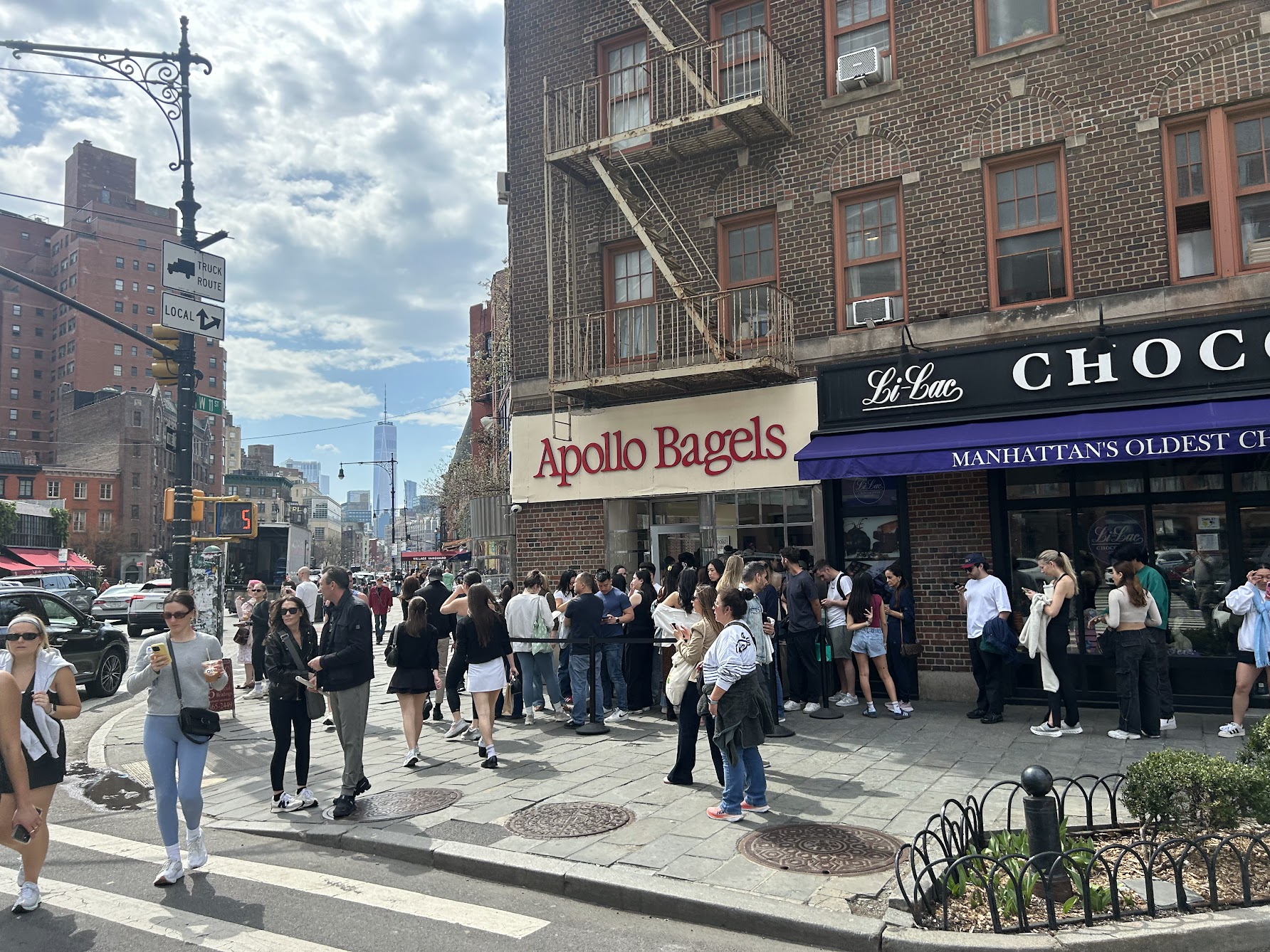
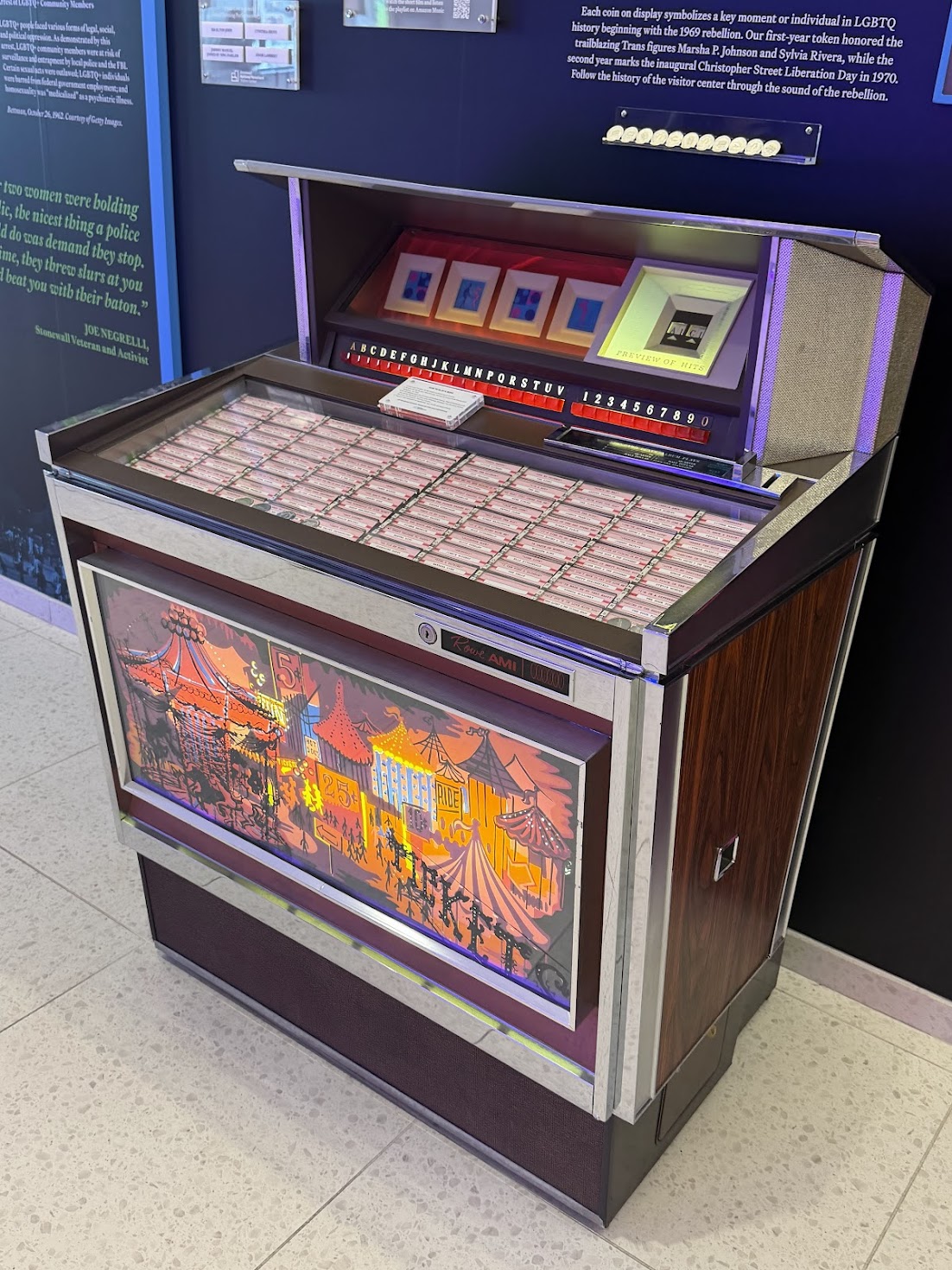
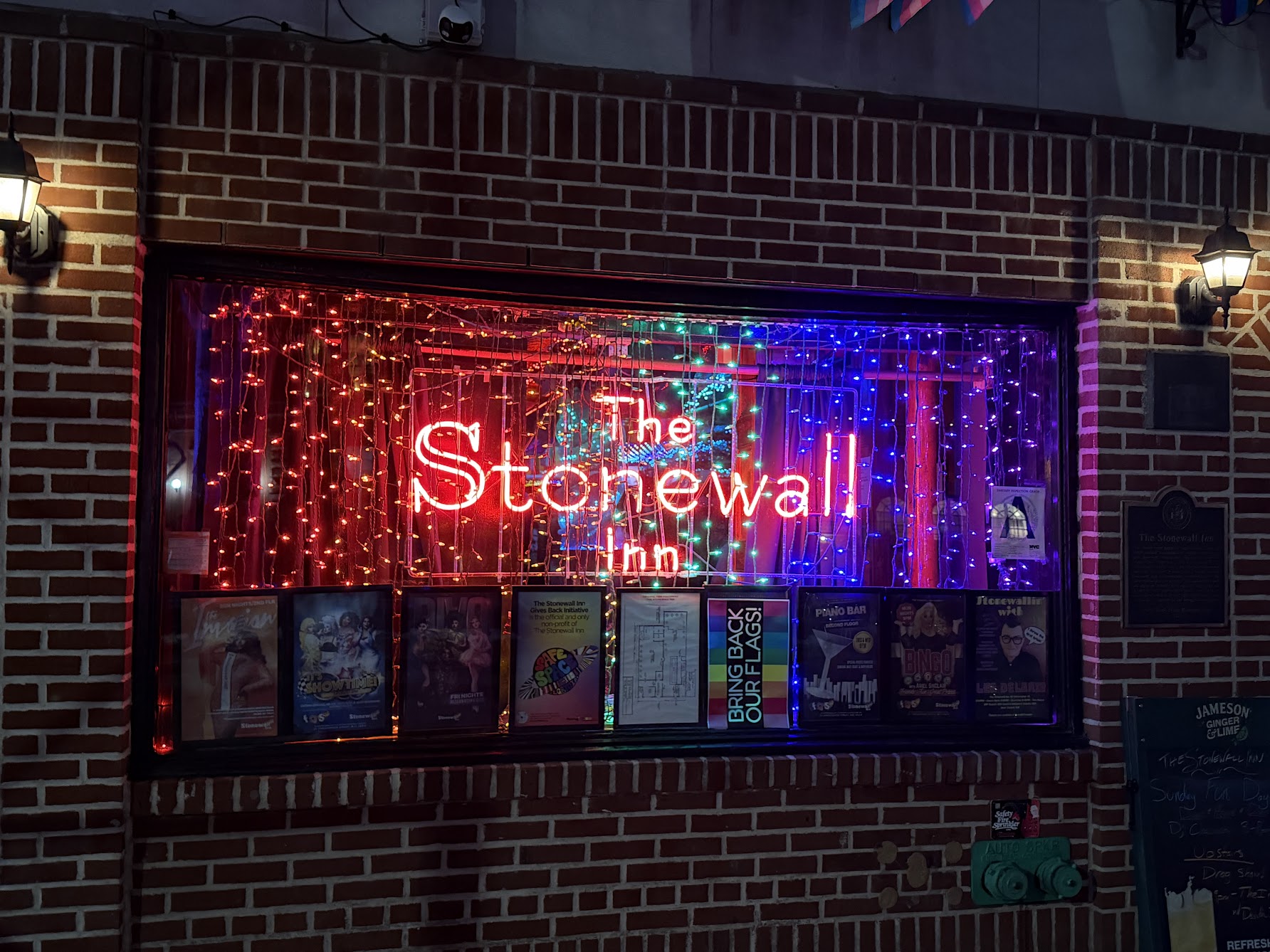
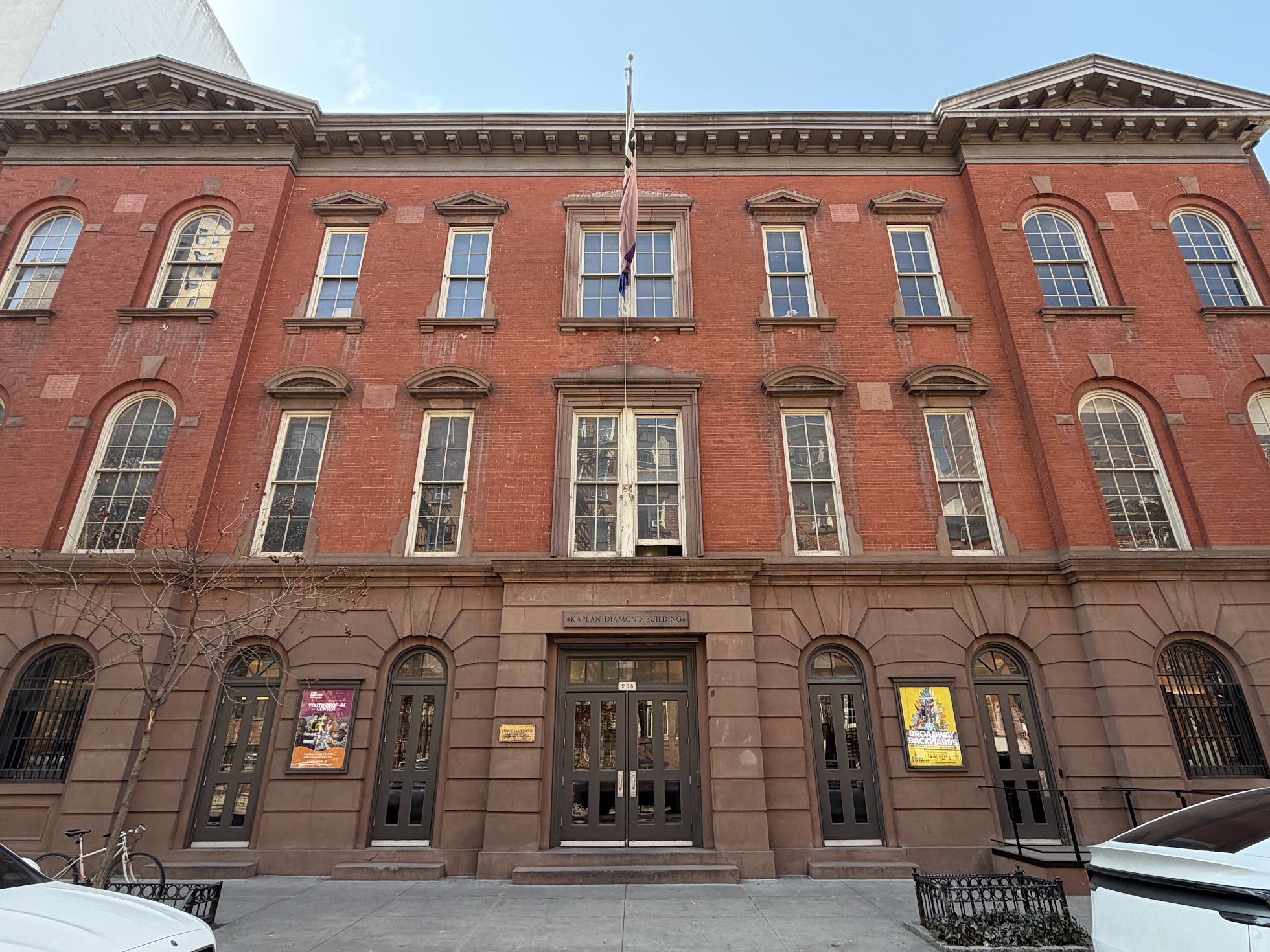
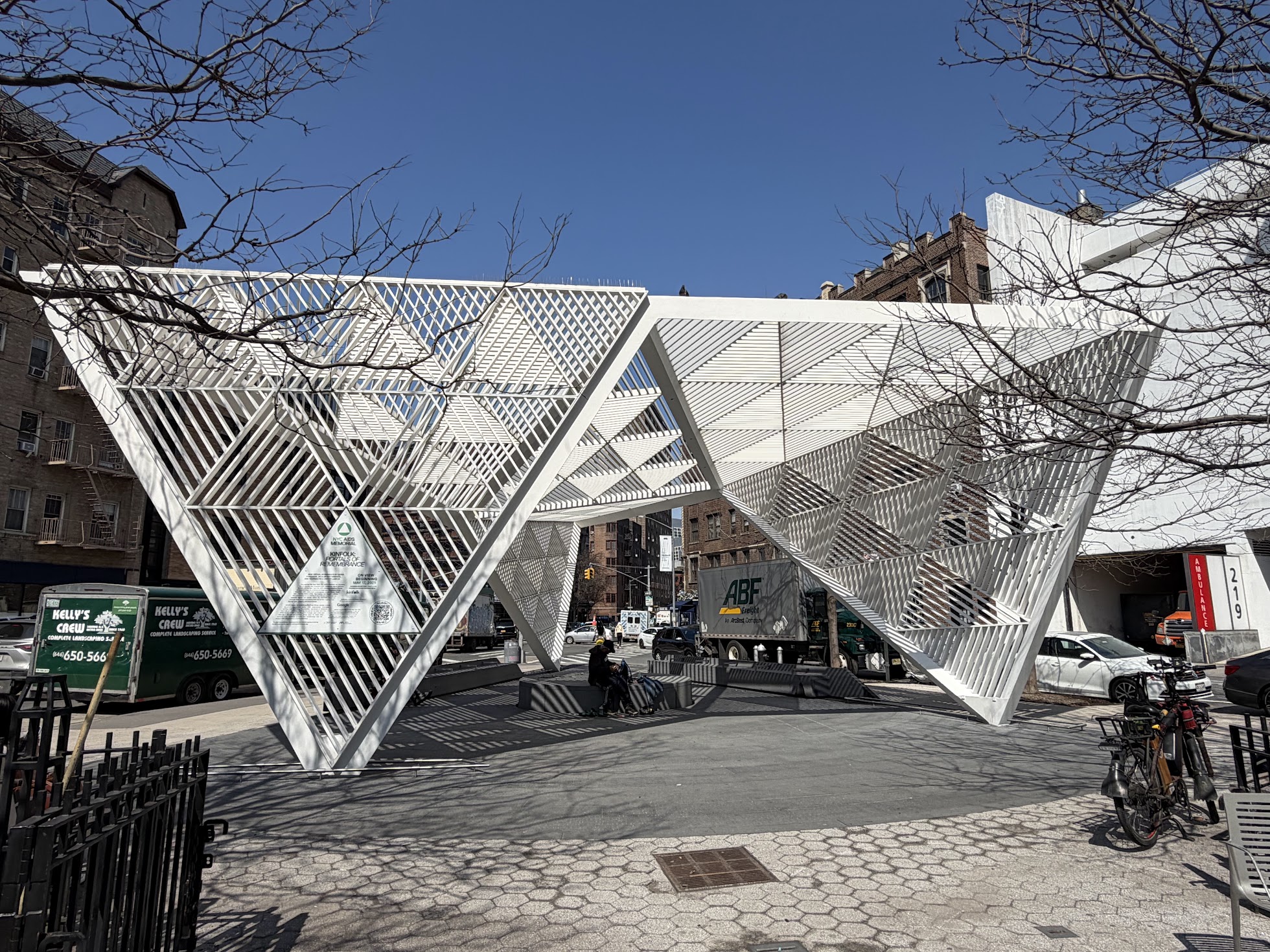
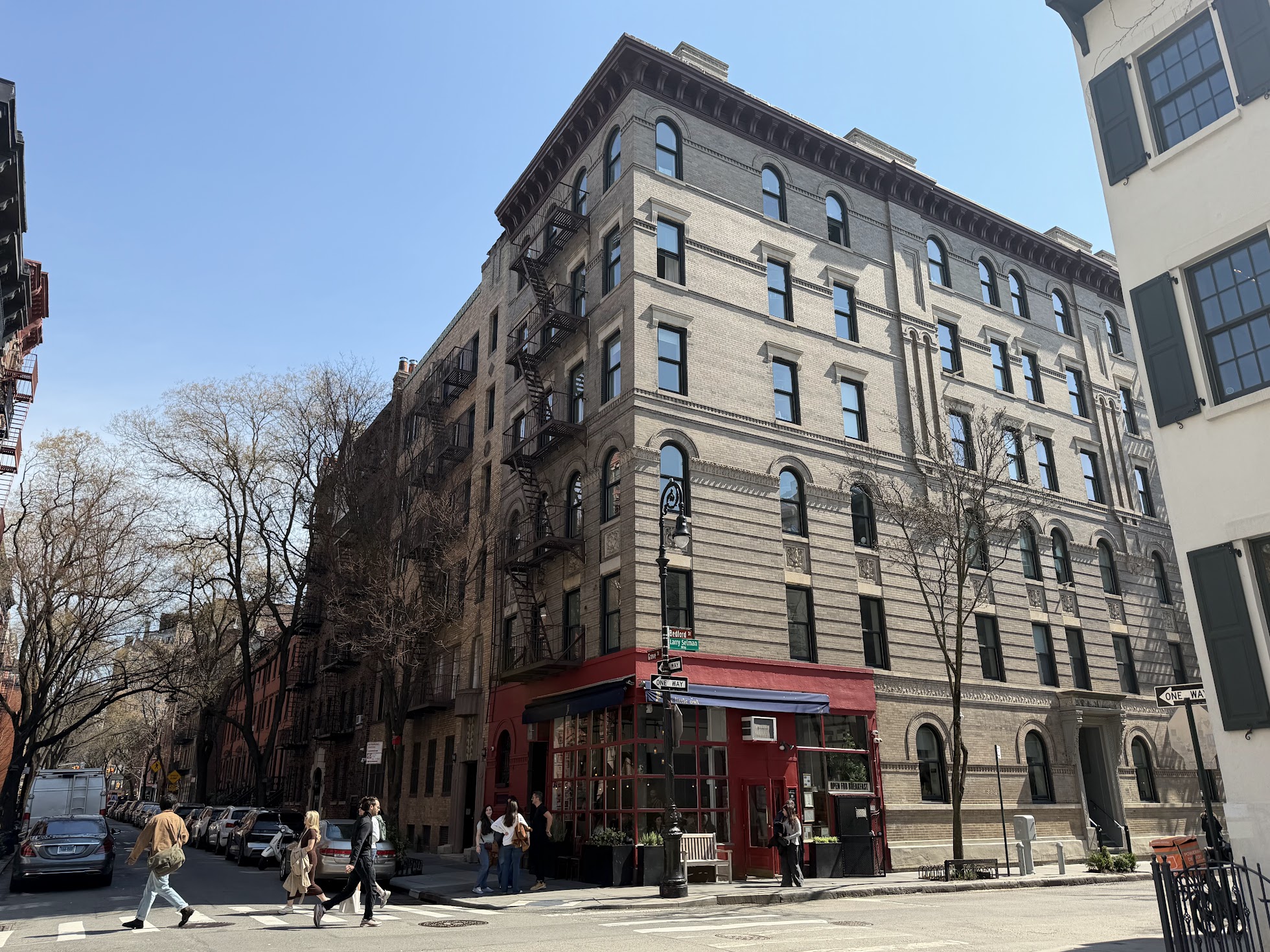
Before the 1910s, Seventh Avenue once stopped right at this intersection with Greenwich Avenue. Today people flock to this corner for trendy bagels. Photo by Greg Young66 Perry Street, made famous for its appearance on Sex and the City. Photo by Greg YoungInside the Stonewall National Monument Visitors Center. Photo by Greg YoungAlthough part of a National Monument, the Stonewall Inn is still an active bar. Photo by Greg YoungThe Center — aka the Lesbian, Gay, Bisexual & Transgender Community Center. Photo by Greg YoungThe New York City AIDS Memorial, opposite the former site of St. Vincent’s Hospital. Photo by Greg YoungThe “Friends” apartment building
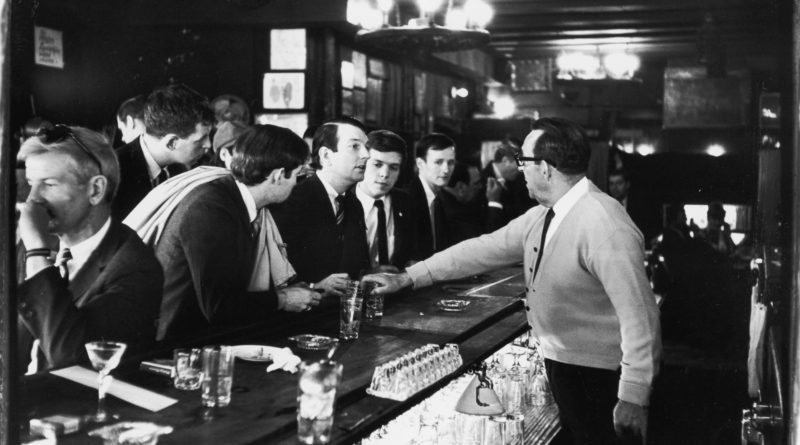
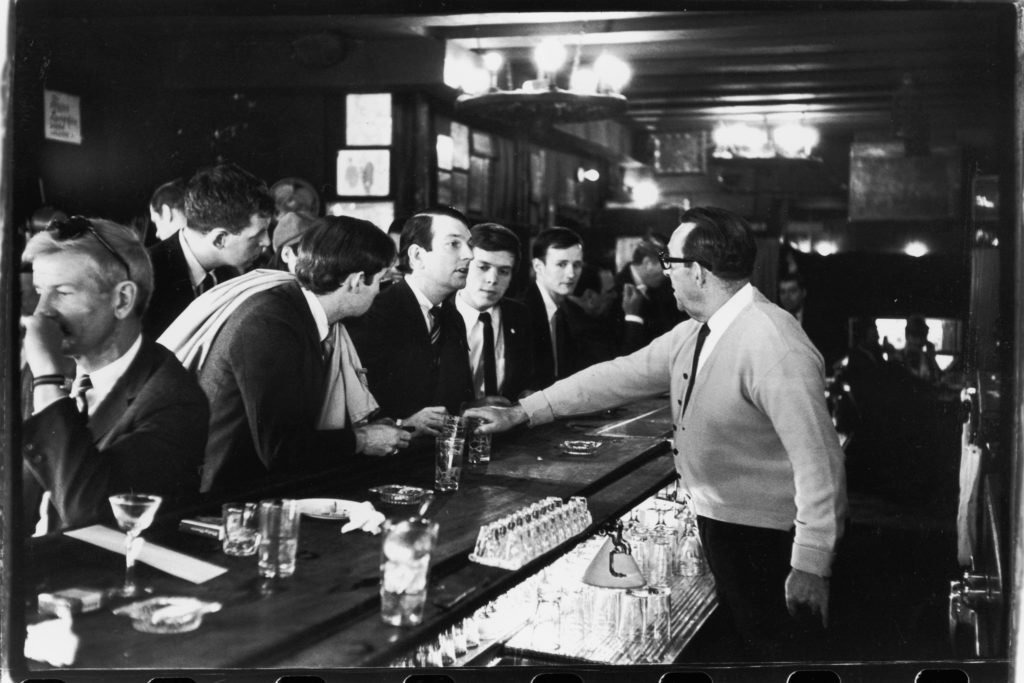
After pouring their drinks, a bartender in Julius's Bar refuses to serve John Timmins, Dick Leitsch, Craig Rodwell (1940 - 1993), and Randy Wicker, members of the Mattachine Society, an early American gay rights group, who were protesting New York liquor laws that prevented serving gay customers, New York, New York, April 21, 1966. (Photo by Fred W. McDarrah/Getty Images)
It’s here that one moment of protest (the Sip-In of 1966) set the stage for a political revolution, “a signature event in the battle for LGBTQ+ people to gather, socialize, and celebrate openly in bars, restaurants, and other public places.”
So we thought it would be a great time to revisit our 2019 show on the history of Julius’ and a look at the life of gays and lesbians in the mid 20th century.
The now-iconic photograph by Fred W. McDarrah (Courtesy Getty Images)
PODCAST Many Americans may now be familiar with Stonewall Uprising, a combative altercation in 1969 between police and bar patrons at the Stonewall Inn in the West Village. It was this event that gave rise to the modern LGBT movement.
But in a way, the Stonewall Riots were simply the start of a new chapter for the gay rights movement. The road leading to Stonewall is often glossed over or forgotten.
By the 1960s, a lively gay scene that traced back to the 19th century — drag balls! lesbian teahouses! — had been effectively buried by decades of cultural and legal oppression.
A few brave individuals, however, were tired of living in the shadows.
In this episode, we’ll be zeroing in on the efforts of a handful of
young New Yorkers who, in 1966, took a page from the civil rights
movement to stage an unusual demonstration in a small bar in the West Village. This event, called the Sip-In at Julius‘, was a tiny but significant step towards the fair treatment of gay and lesbians in the United States.
IN ADDITION: We’ll be joined by Hugh Ryan, author of When Brooklyn Was Queer, at the bar at Julius’ to talk about the forgotten lives of queer people in the ever-changing borough of Brooklyn.
Listen Now — Sip-In at Julius’ Bar: Celebrating New York’s Newest Landmark
This episode features an audio interview clip from the podcast Making Gay History, an excellent source for gay history. Be sure you check out their coverage of Stonewall 50.
We also feature a musical clip of ‘I Hear A Symphony’ by The Supremes
(Motown). The song hit Number #1 on the Billboard charts in November of
1965. The most popular song in the nation at the moment of the Julius’
Sip-In? The Righteous Brothers’ “(You’re My) Soul and Inspiration.”
Julius’ Bar: A Short History
This month is the 50th anniversary of the Stonewall Riots, a
chaotic, rowdy altercation that bloomed over the course of the weekend
to energize the New York’s LGBT movement. (If you haven’t already, give our podcast on the history of the Stonewall riots a listen.) But despite its reputation, Stonewall is not the oldest gay bar in New York. Not even close.
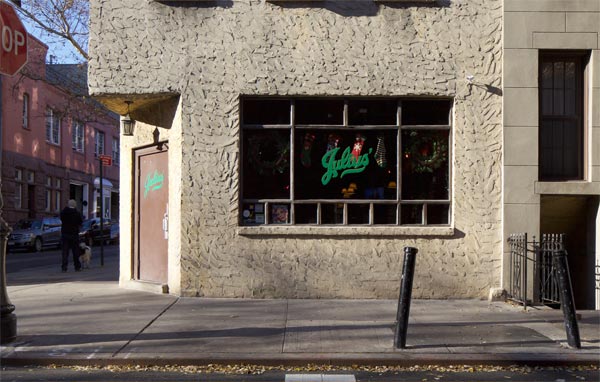
For that honor, you need only march a few steps to Waverly Place and 10th Street to that beloved old institution Julius (159
W. 10th St). It also happens to be the location of a pre-Stonewall
protest of angered gay activists, an event both revolutionary and even
occasionally amusing.
Julius is truly an old bar although nobody seems to know exactly how old. The bar itself settles on the year 1864, easily making it one of the oldest bars in New York, just a tad younger than McSorley’s Old Ale House.
The building itself is even older, dating from 1826, becoming a grocer
in 1840 before transforming to its current, more jovial purposes.
It has many things in common with McSorley’s. The walls are plastered with memorabilia from days gone by. The bar is a well-worn relic, the tables and benches made of old beer barrels.
Like McSorley’s, they even serve burgers, and really, really good
ones at that. Its history is a tad more shrouded than McSorley’s but
equally studded with famous clientele.
Courtesy the National Park Service
Surviving the 20th century
It was a popular speakeasy throughout the 1920s, evidenced today by Julius’ still existing sidedoor with a peephole. Both Fats Waller and Billie Holiday are rumored to have performed in the backroom, quite likely as Holiday worked at the nearby nightclub Cafe Societyduring the 1930s.
In subsequent years the clientele was decidedly a mixed lot and Julius would ply writers like Edward Albee, Tennessee Williams and Truman Capote with drink and companionship.
By the 1960s Julius had become a low-key staple of the West Village
gay scene. However, it appears that it was ‘straight enough’ that it
survived Mayor Robert Wagner’s cleanup of the city in preparation of the1964 World’s Fair, a wholesale shutdown of West Village gay bars and other ‘undesirable’ places.
The
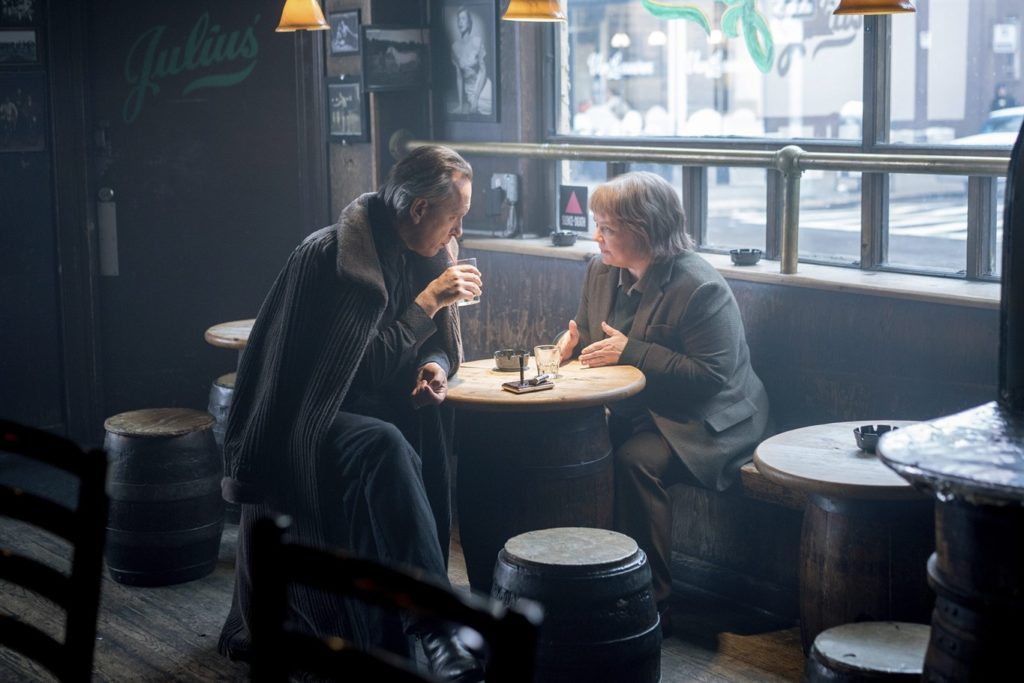
film Can You Ever Forgive Me?, set in the early 1990s, has several
scenes set and filmed at Julius’. (Courtesy Fox Searchlight)
Julius’ Bar in the 1960s
Even through this Julius lived on, although patrons and management
alike had to maneuver through rather arcane and sometimes humiliating
rituals.
According to writer Edmund White,
“There was even a period when we weren’t allowed to face the bar but
had to stand absurdly with our back to it to prove, I suppose, that we
had nothing to hide.”
It gets even more absurd. The New York State Liquor Authority banned
bars from serving drinks to gays and lesbians. This rule was sometimes
ignored by brazen Village bartenders, but the constant fear of such a
twisted regulation being suddenly enforced by an undercover cop
eventually drew action from a burgeoning group of young gay activists.
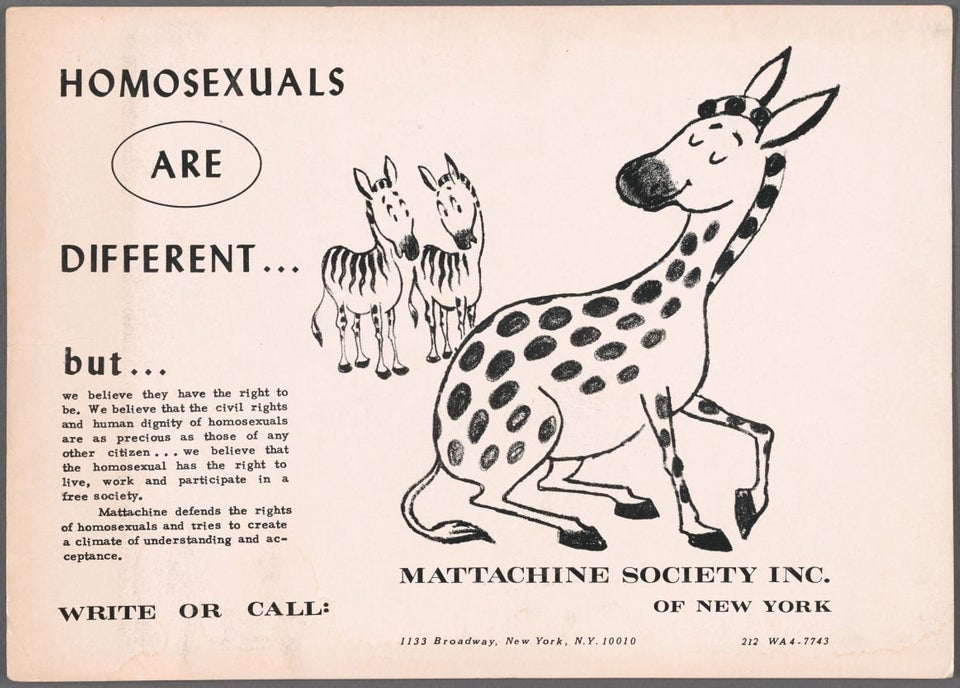
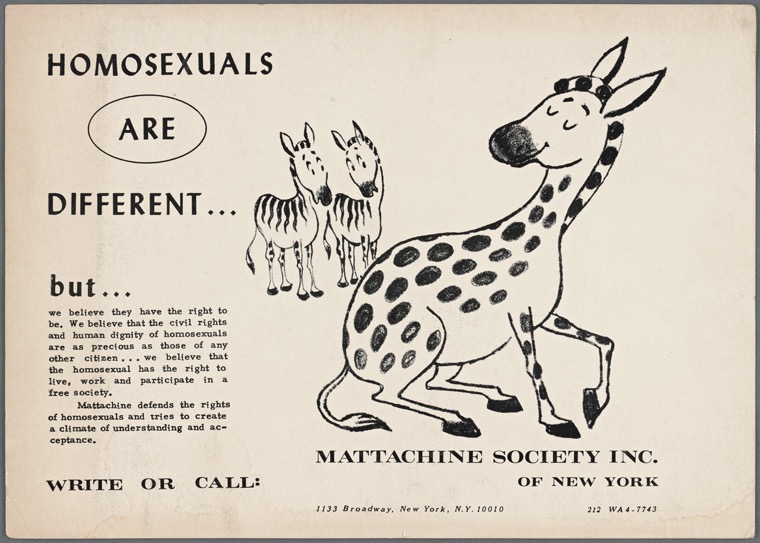
A curious ad for tolerance distributed by the Mattachine Society in 1960.
Members of the Mattachine Society, one of New York’s earliest
gay organizations, planned on challenging the rule by going into bars,
loudly announcing their homosexuality and ordering a drink.
Their statement at the bar would be calm and simple: “We are
homosexuals. We are orderly, we intend to remain orderly, and we are
asking for service.”
The key would be that they were followed around by a phalanx of press
representatives. So, when the bar refused to serve them, the Mattachine
Society would have their moment, captured and ready for print.
More Than Just A Drink
The challenge came on April 21, 1966, more than three years before
the Stonewall riots. They told members of the press to meet them at the Ukrainian-American Village Restaurant but management closed shop before they arrived. They tried two other bars, a Howard Johnson’s and a place called Waikiki, and each time they were served without incident.
But of course, the organizers were looking for an incident. They arrived at Julius for their big moment.
The now-legendary Julius Sip-In, as the event as come to be called,
was a carefully engineered event with a few unexpected detours, yet it
served its purpose. The New York Times even ran the story, under the
rather backhanded headline, “3 Deviates Invite Exclusion by Bars.” The law was successfully challenged in court.
Since then, Julius has quietly sat on the sidelines, ceding the
historical spotlight to Stonewall around the corner, observing both the
curious changes to the neighborhood and the development of a viable and
open gay community in the Village and elsewhere.
You don’t have to be gay to appreciate its unique place in New York
City history. Just grab a stool and spend awhile admiring the bar’s
warm, lived-in details.
Oh, and you really must try the burgers. Did I say that already?
By the way, who the heck is Julius? According to one speculation, Julius was the name of the original owner’s basset hound.
FURTHER READING Stonewall: The Riots That Sparked The Gay Revolution by David Carter Gay New York by George Chauncey Stonewall: The Definitive Story of the LGBTQ Rights Uprising that Changed America by Martin Duberman Odd Girls and Twilight Lovers by Lillian Faderman Greater Gotham by Mike Wallace
and of course Hugh Ryan‘s When Brooklyn Was Queer. Thanks to Hugh for coming on the show and joining us at Julius Bar!
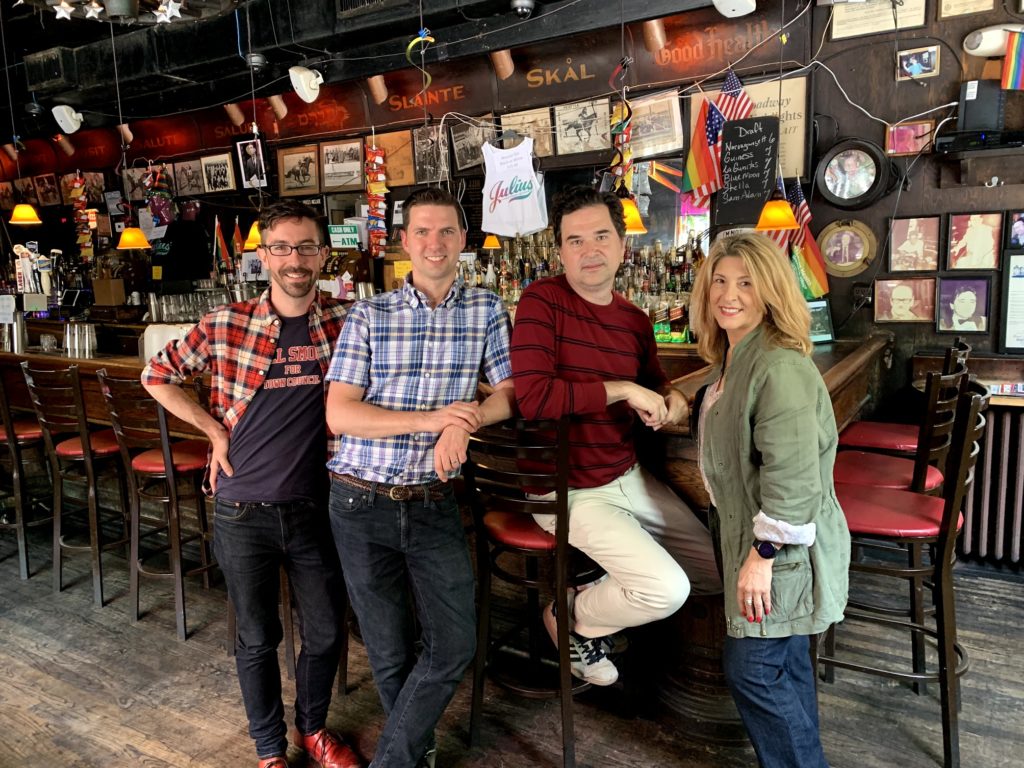
Hugh Ryan, Tom Meyers, Greg Young and Julius’ owner Helen Buford
FURTHER LISTENING
Three companion shows to this episode that you’ll definitely want to listen (or re-listen to) after Sip-In At Julius: Gay New York in the 1960s:
PODCAST The legacy of the Stonewall Riots and their aftermath, in a podcast history told over nine years apart (May 2008, June 2017).
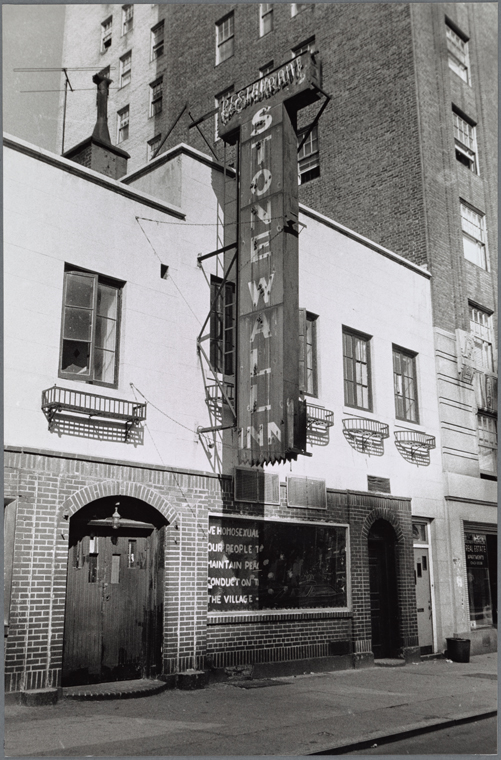
In the early morning hours of June 28, 1969, undercover police officers attempting to raid the Stonewall Inn, a mob-controlled gay bar with darkened windows on Christopher Street, were met with something unexpected — resistance.
That ‘altercation’ was a messy affair indeed — chaotic, violent, dangerous for all. Homeless youth fought against riot police along the twisting, crooked streets of the West Village. And yet, by the end, thousands from all walks of life met on those very same streets in the days and weeks to come in a new sense of empowerment.
In May of 2008, we recorded a podcast on the Stonewall Riots, an event that galvanized the LGBTQ community, giving birth to political organizations and a sense of unity and pride.
So much has changed within the LGBTQ community — and so much was left out of our original show — that’s we’ve decided to do something unique. In the first half, we present to you our original 2008 history on the Stonewall Riots, warts and all. In the second half, we present newly recorded material, exploring the effects of Stonewall on the crises that faced the gay community in the 1980s and 90s.
Now an official U.S. National Monument maintained by the National Park Service, the Stonewall National Monument preserves New York City’s role in the birth of the international LGBT movement.
And please forgive us in advance for being extra personal in this show near the end.
The Bowery Boys: New York City History podcast is brought to you …. by you!
We are now producing a new Bowery Boys podcast every two weeks. We’re also looking to improve the show in other ways and expand in other ways as well — through publishing, social media, live events and other forms of media. But we can only do this with your help!
We are now a member of Patreon, a patronage platform where you can support your favorite content creators for as little as a $1 a month.
Please visitour page on Patreon and watch a short video of us recording the show and talking about our expansion plans. If you’d like to help out, there are five different pledge levels (and with clever names too — Mannahatta, New Amsterdam, Five Points, Gilded Age, Jazz Age and Empire State). Check them out and consider being a sponsor.
We greatly appreciate our listeners and readers and thank you for joining us on this journey so far. And the best is yet to come!
This show is brought to you by Audible. Listen anytime, anywhere to an unmatched selection of audiobooks, original premium podcasts and more.
An early advertisement put out by the Mattachine Society, urging people to look at homosexuals different.
NYPL
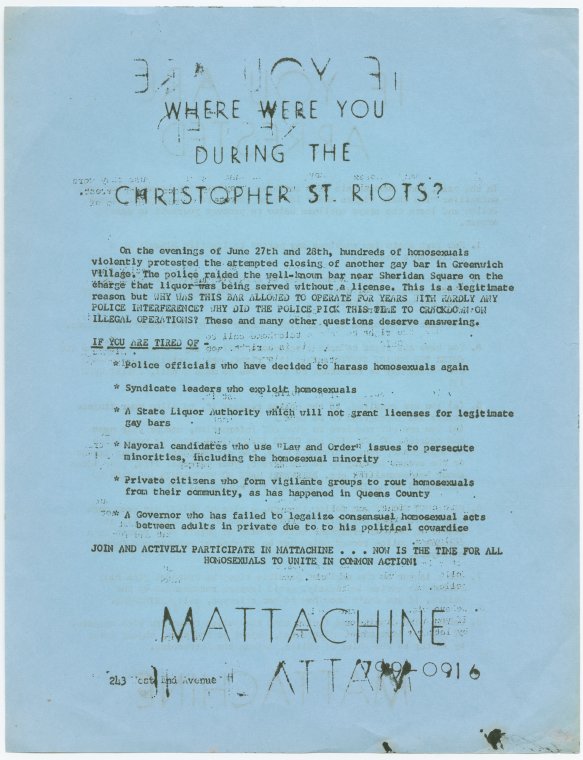
An example of the types of flyers circulating in the West Village following the Stonewall incident.
NYPL
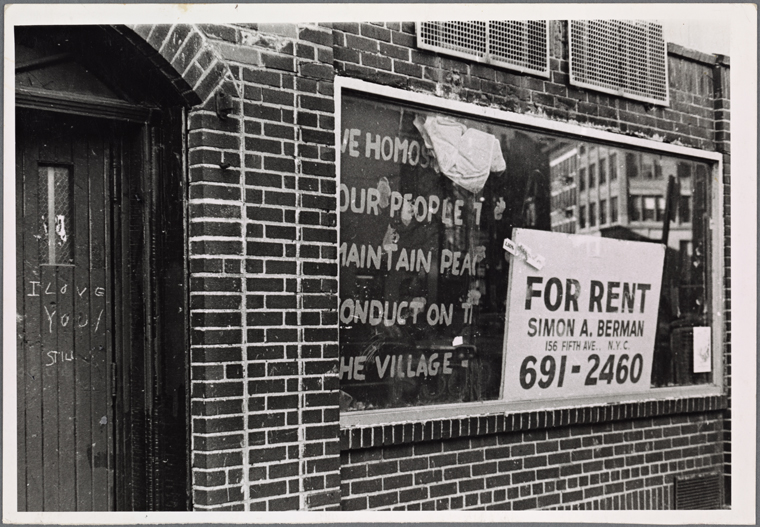
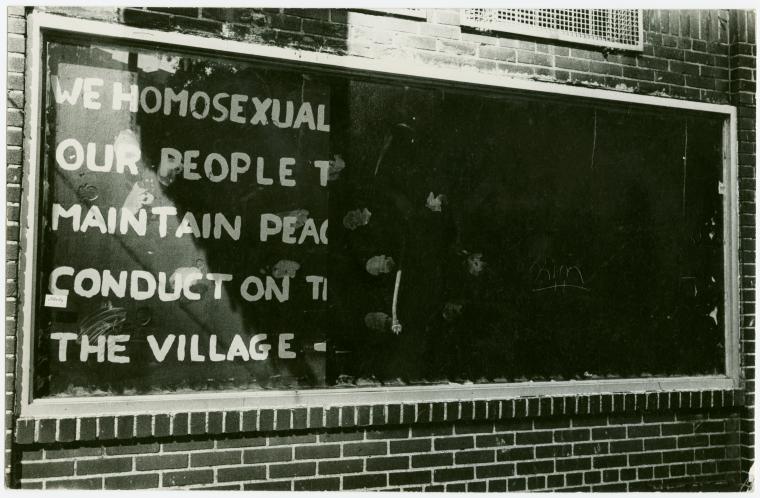
The Stonewall Inn was closed shortly after the battle with police, not to be reopened again until 1990.
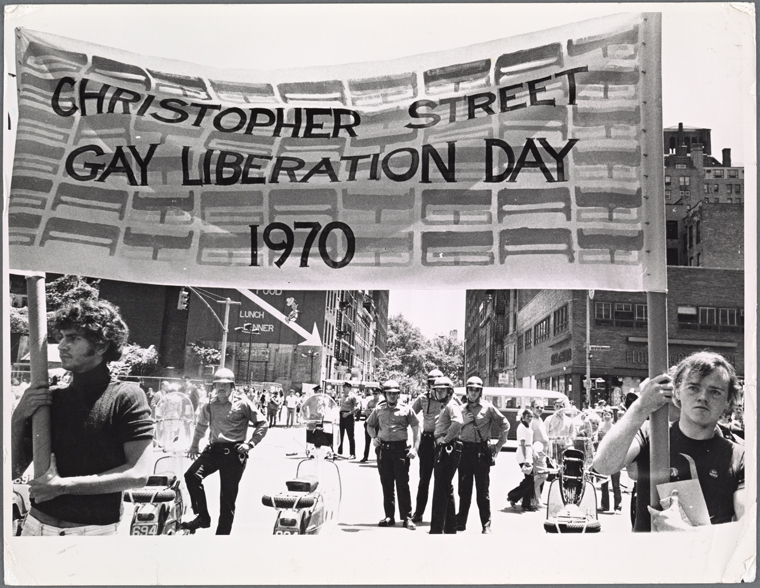
From the first parade (in 1970) to Central Park, the first of what would later be called the Pride Parade.
Diana Davies/NYPL
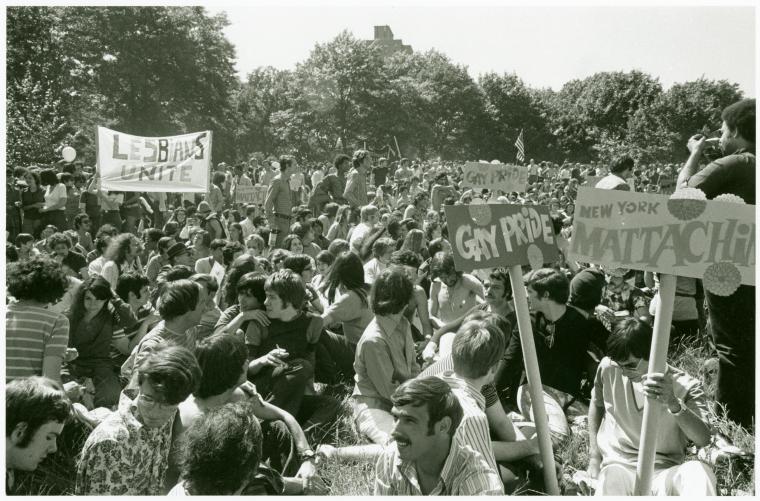
The parade ended with a gigantic rally in Sheep Meadow in Central Park.
Diana Davies/NYPL
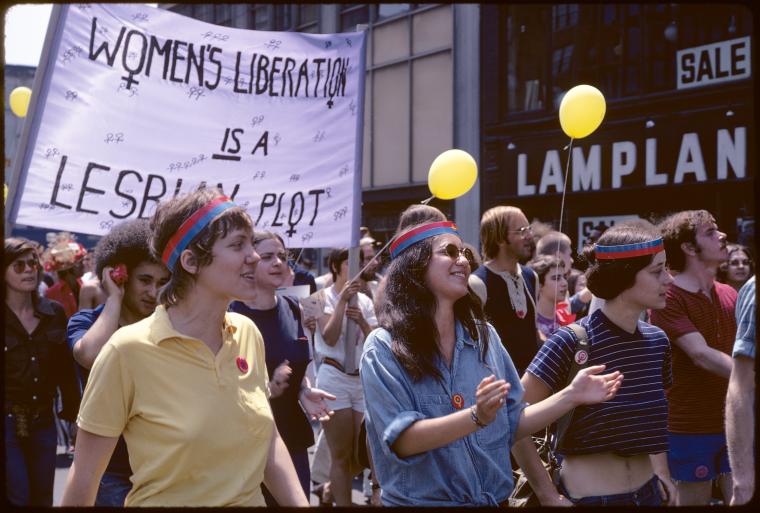
From the parade the following year:
NYPL
NYPL
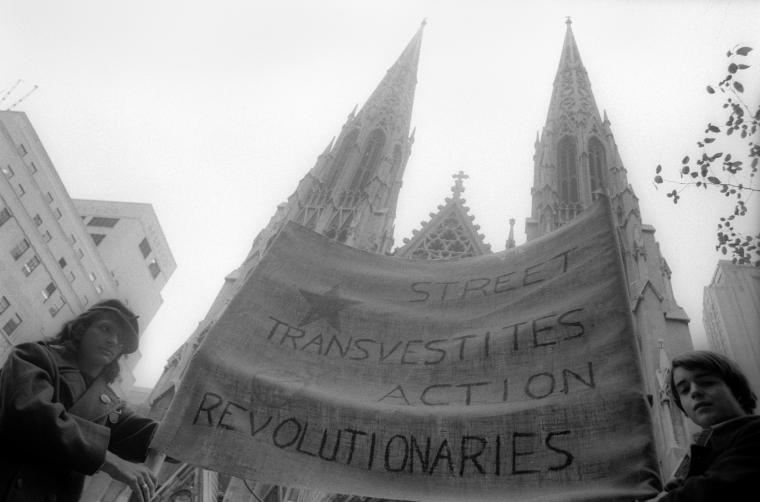
From a 1971 demonstration in front of St. Patrick’s Cathedral.
NYPL
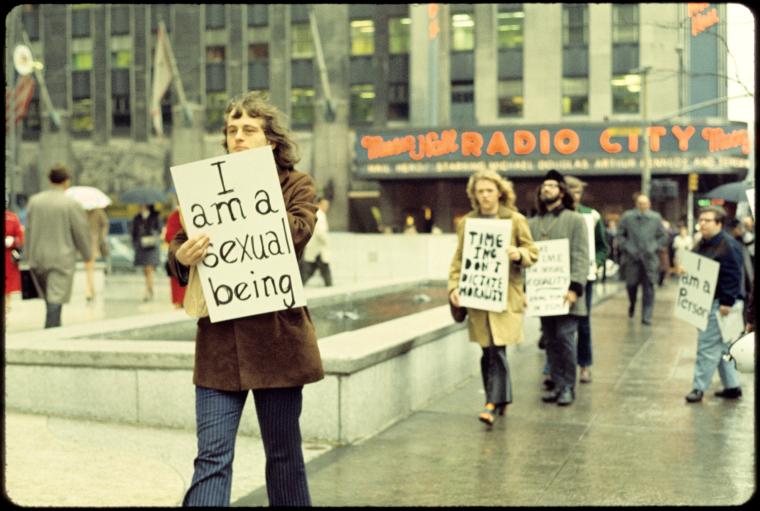
….and another near Radio City Music Hall.
NYPL
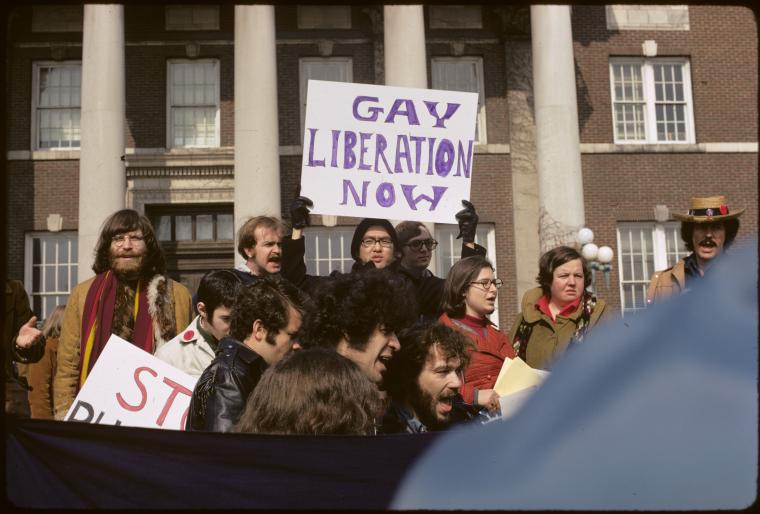
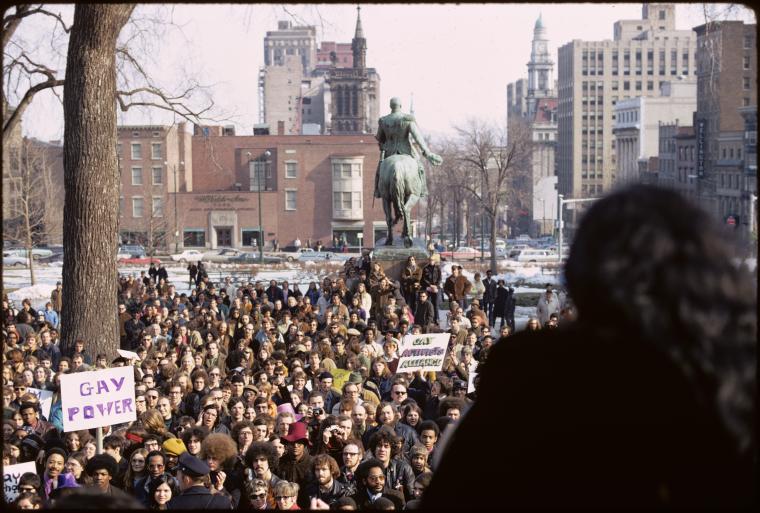
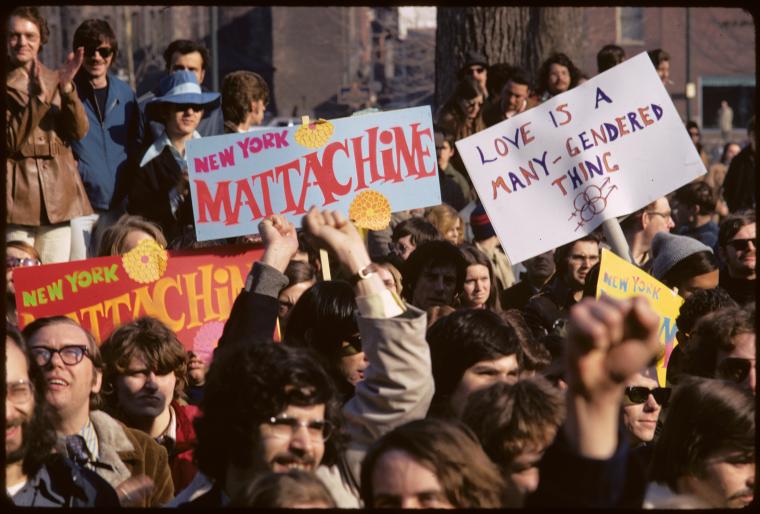
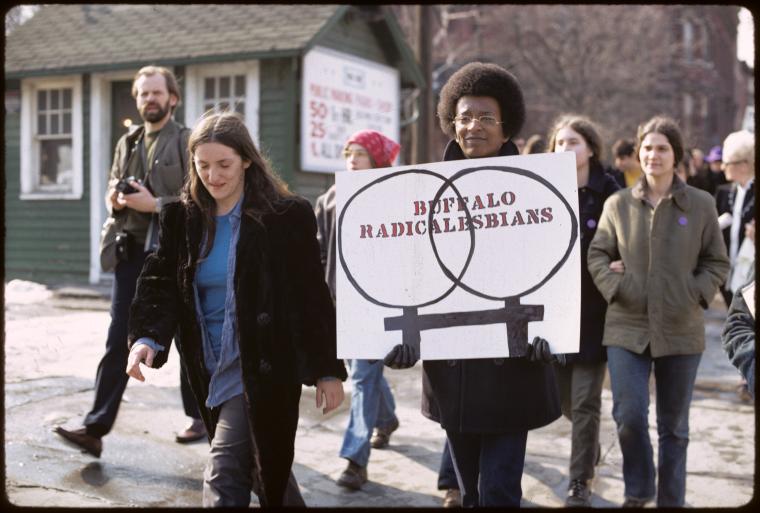
Gay rights demonstrations from 1971 at the state capitol in Albany, NY, from an incredible collection of pictures by Diane Davies, courtesy the New York Public Library.
NYPL
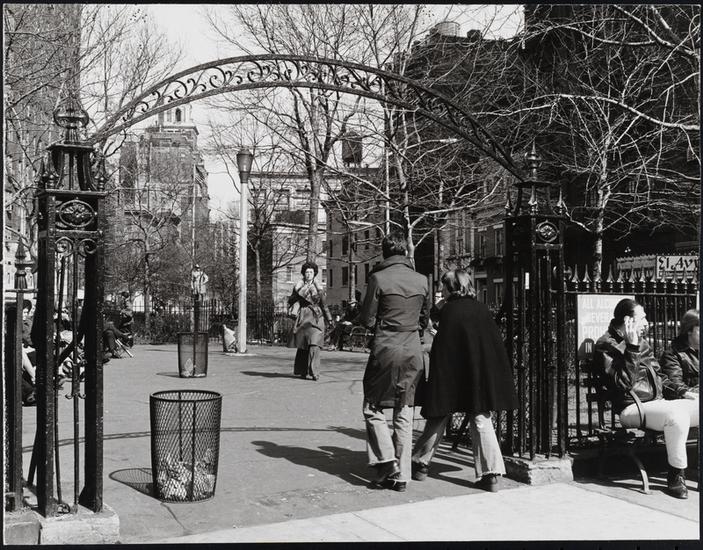
The entrance to Christopher Park in 1975, photo by Edmund Vincent Gillon
MCNY
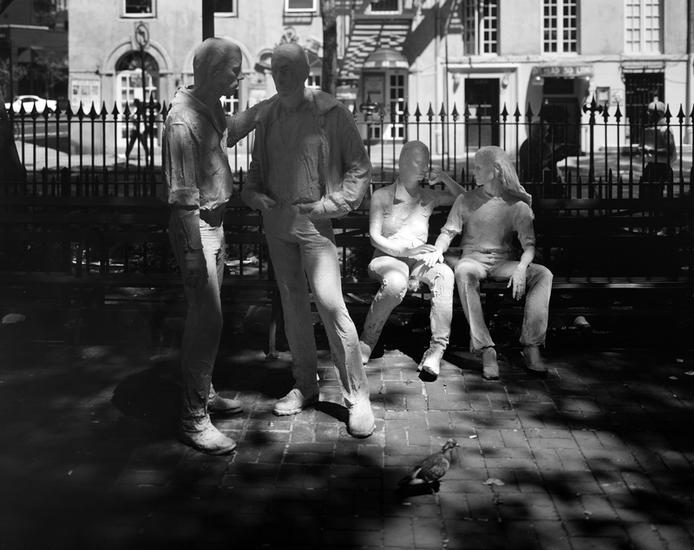
Gay Liberation, how the statues looked when they were first installed in 1992.
Edmund Gillon/MCNY
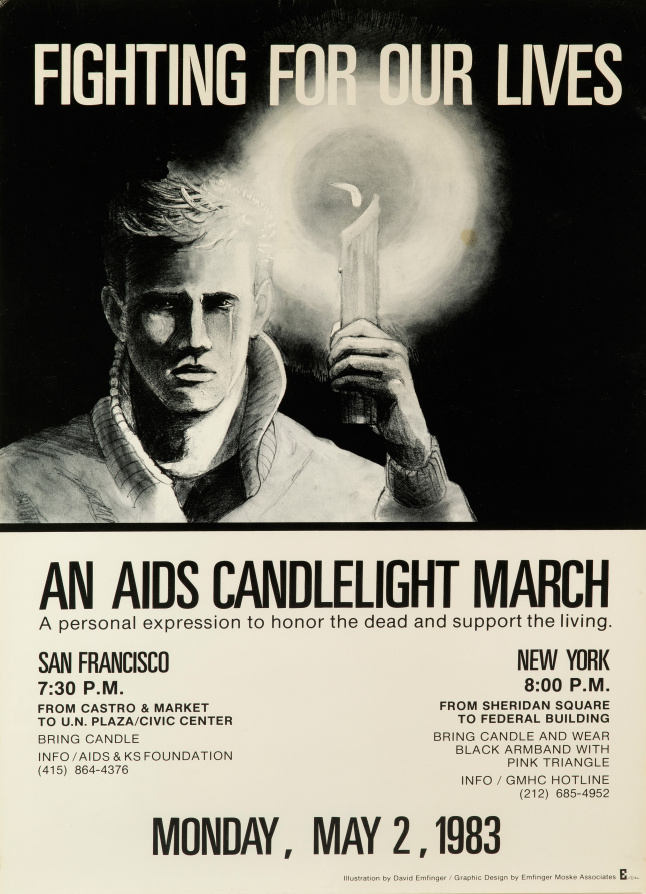
An early AIDS march from 1983 which began near Stonewall in Sheridan Square.
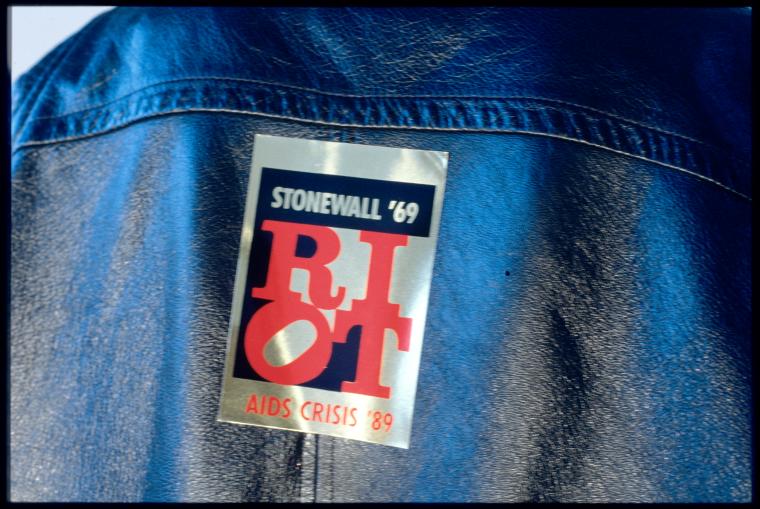
During the AIDS crisis of the 1980s and 90s, many turned to the example of Stonewall as a way to unite the community and fight back against homophobia.
Photographer Gran Fury, Courtesy NYPL
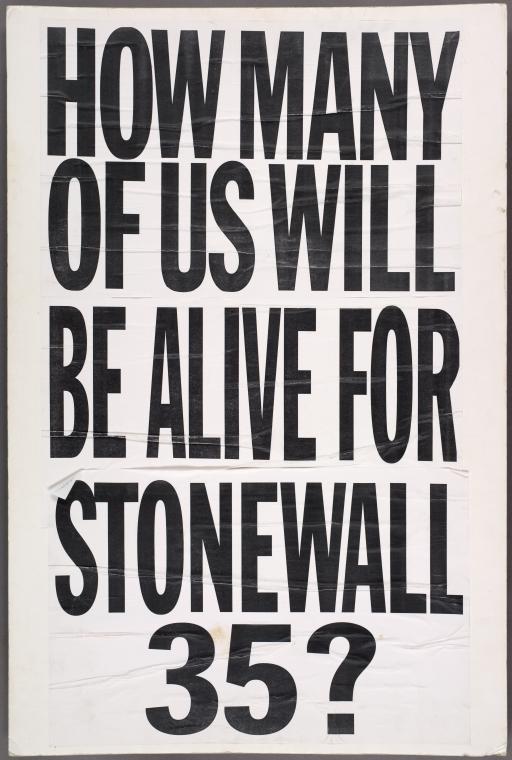
An ACT UP sign for the Stonewall 25 parade and rally “How many of us will be alive for Stonewall 35?” On the opposite side: “AIDS. Where is your rage? ACT UP.”
NYPL
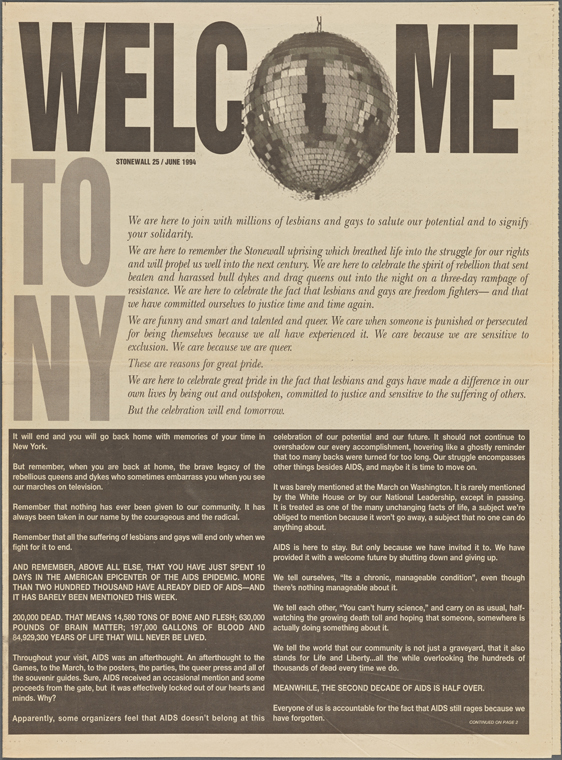
A sobering ACT UP ‘welcome wagon’ message. “But remember, when you are back at home, the brave legacy of the rebellious queens and dykes who sometimes embarrass you when you see our marches on television.”
NYPL
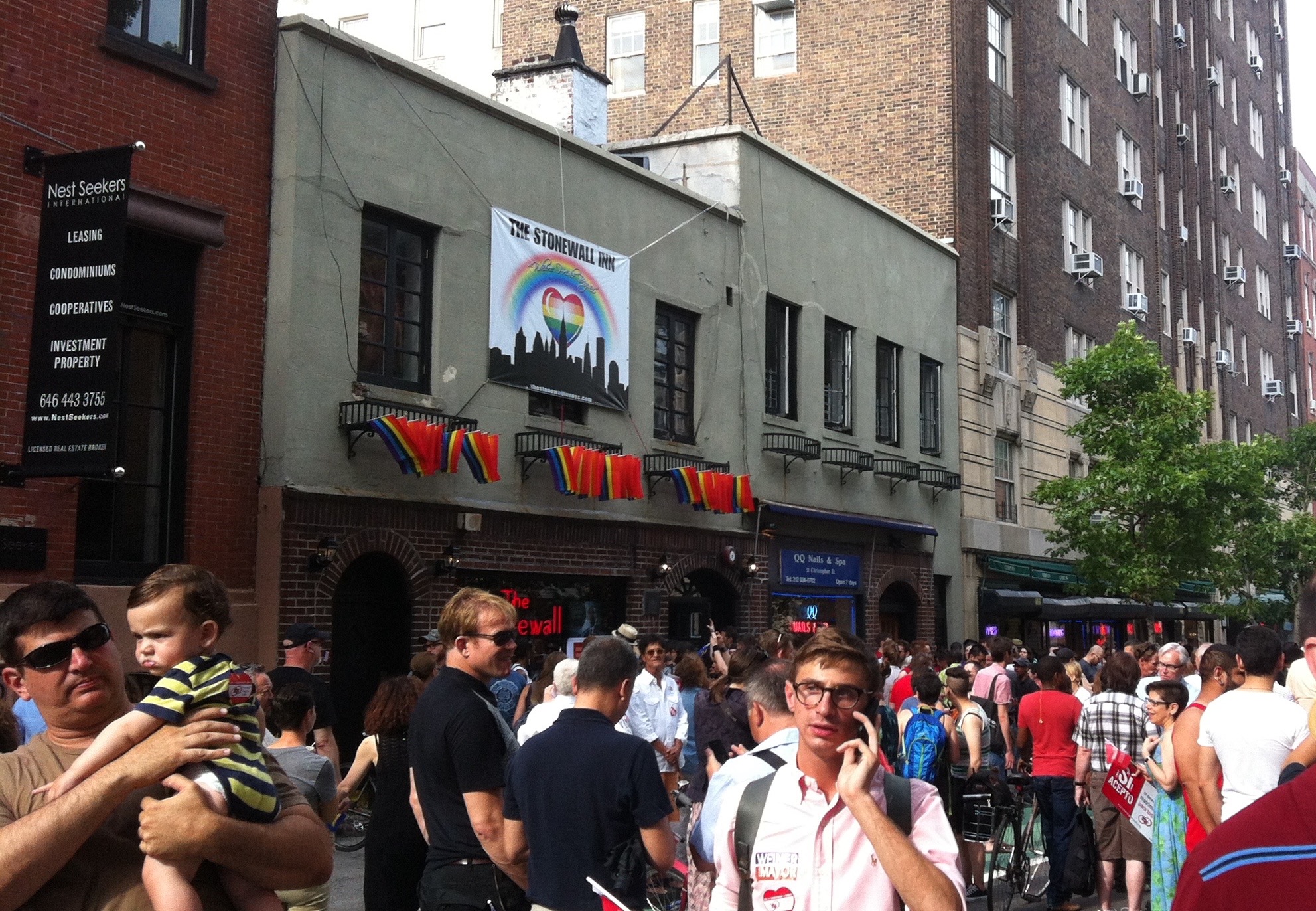
In front of Stonewall in 2013 after the announcement of the Supreme Court verdict in United States v. Windsor, overturning the Defense of Marriage Act.
Photo by Greg Young
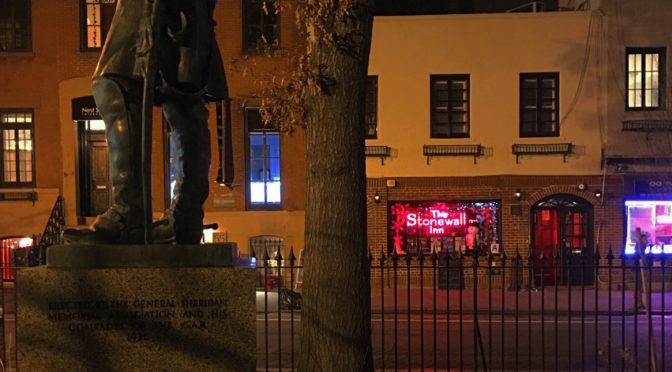
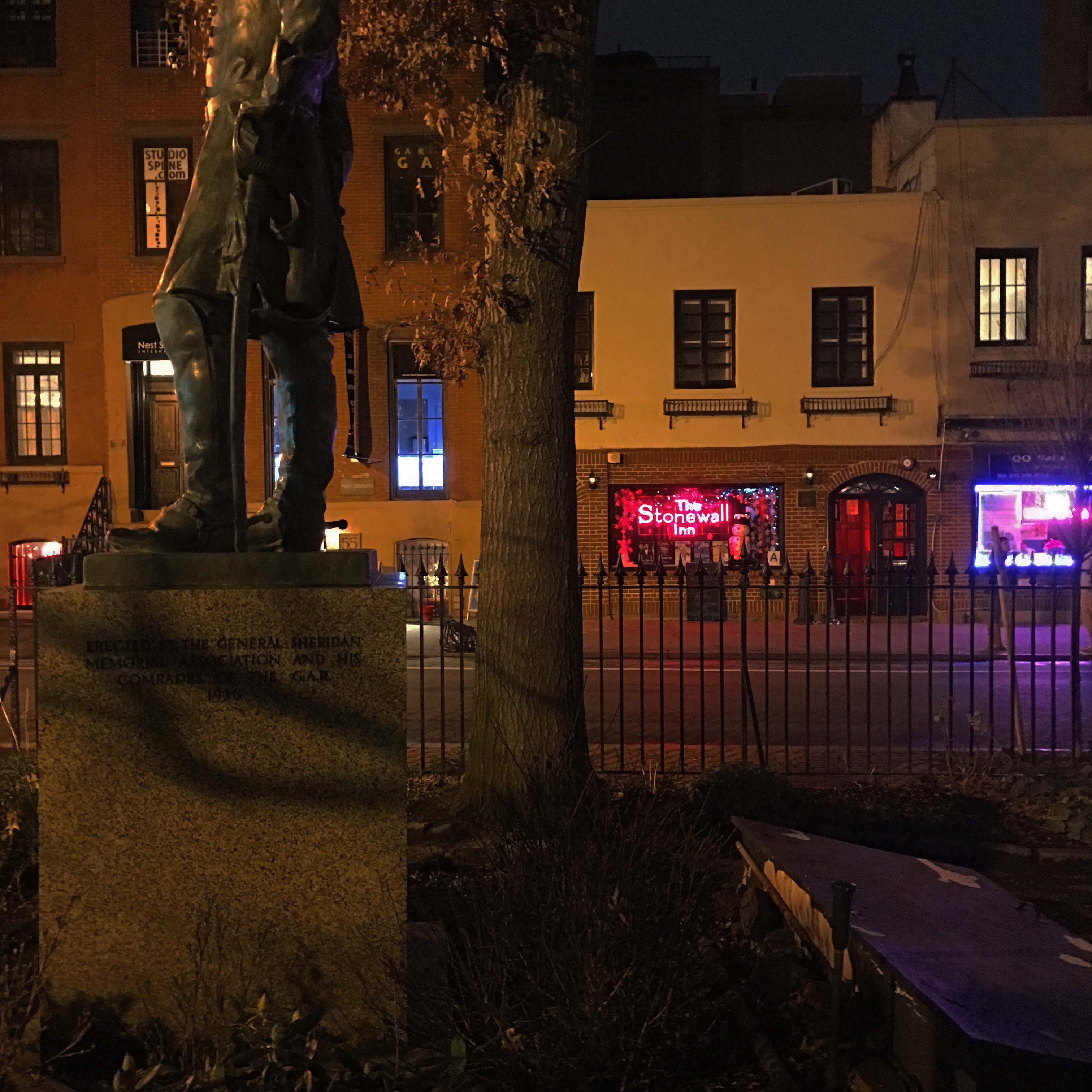
Stonewall Inn and Christopher Park, 2015
Photo by Greg Young
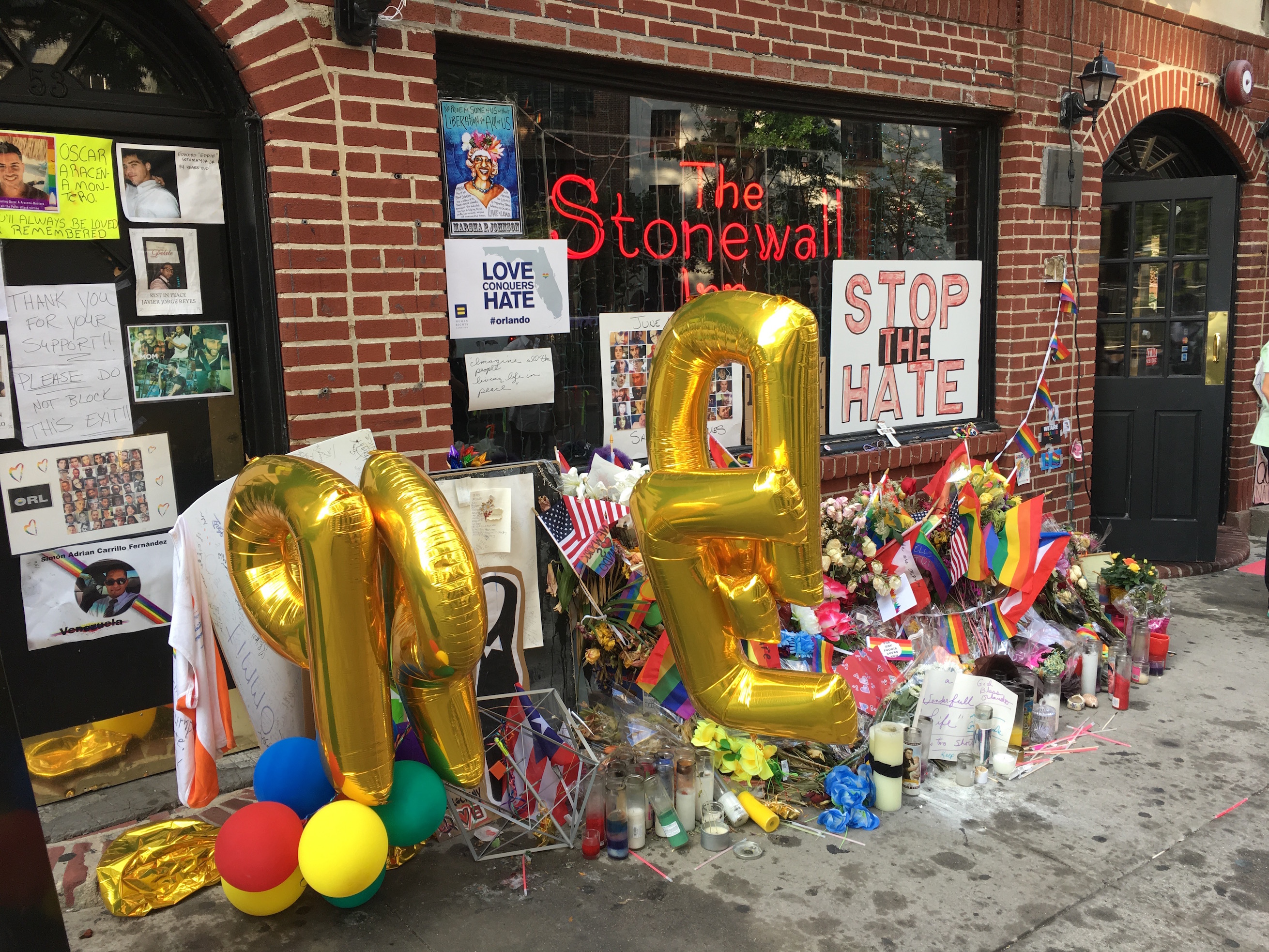
Outside the Stonewall in 2016, following the Pulse nightclub shooting in Orlando, Florida.
Photo by Greg Young
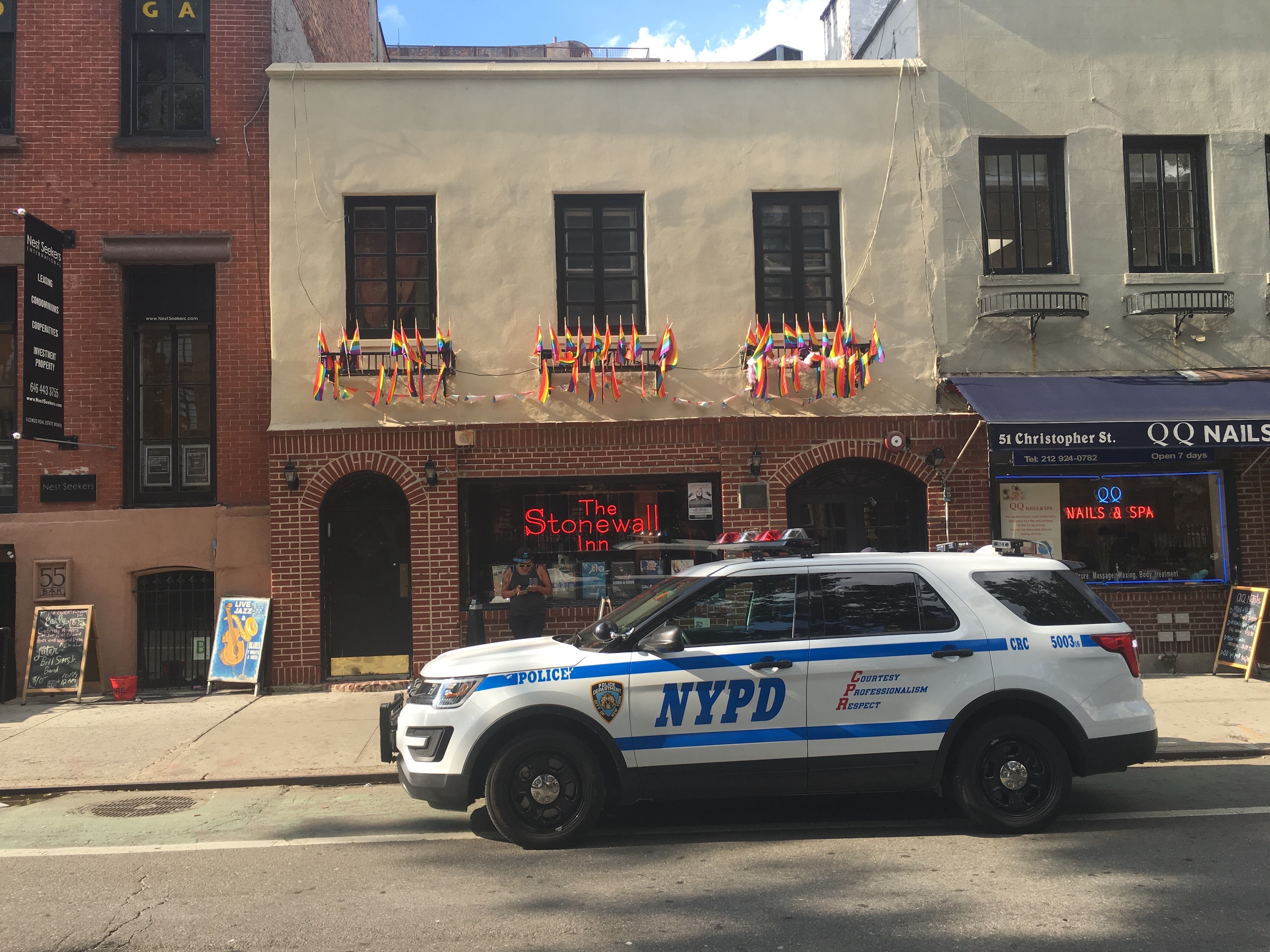
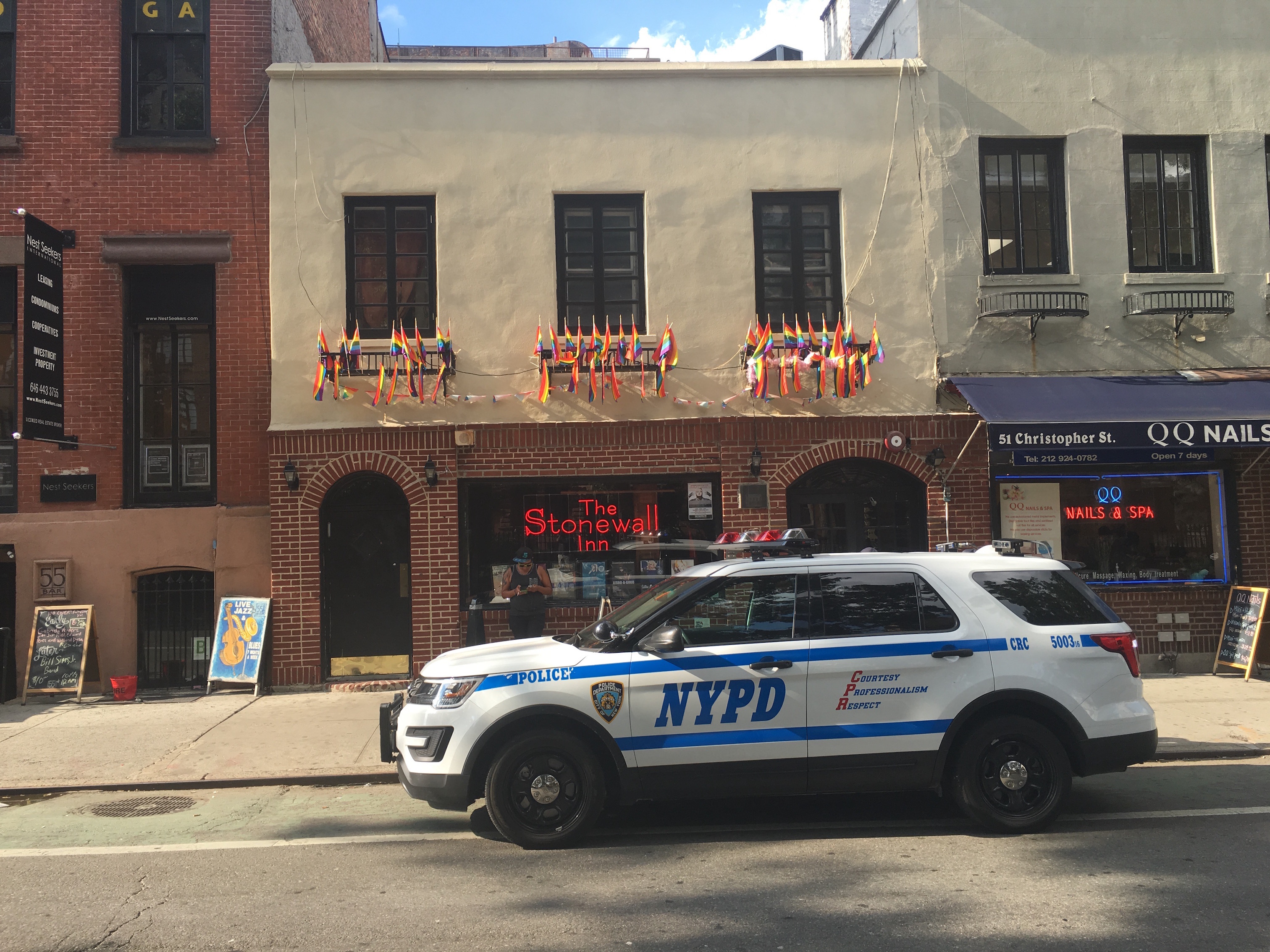
Stonewall 2016, now with police protection! Taken in August 2016, following the announcement of Stonewall as a National Monument.
This month America celebrates the 100th anniversary of the National Park Service, the organization which protects the great natural and historical treasures of the United States. There are a number of NPS locations in the five borough areas. Throughout the next few weeks, we will focus on a few of our favorites.
For more information, you can visit National Parks Centennial for a complete list of parks and monuments throughout the country. For more blog posts in this series, click here.
And listen to our podcast on this subject here:
STONEWALL NATIONAL MONUMENT CHRISTOPHER STREET, WEST VILLAGE, MANHATTAN
On June 24, 2016, President Obama — who had conjured the name of Stonewall Inn in his 2013 inaugural speech — designated the location of the 1969 Stonewall Riots as a National Monument, to be overseen by the National Park Service.
Twelve days earlier, a gunman walked into a gay nightclub in Orlando, Florida, and killed 49 people. It was the deadliest terrorist attack since September 11, 2001, and certainly the greatest single attack upon the American LGBT community in history.
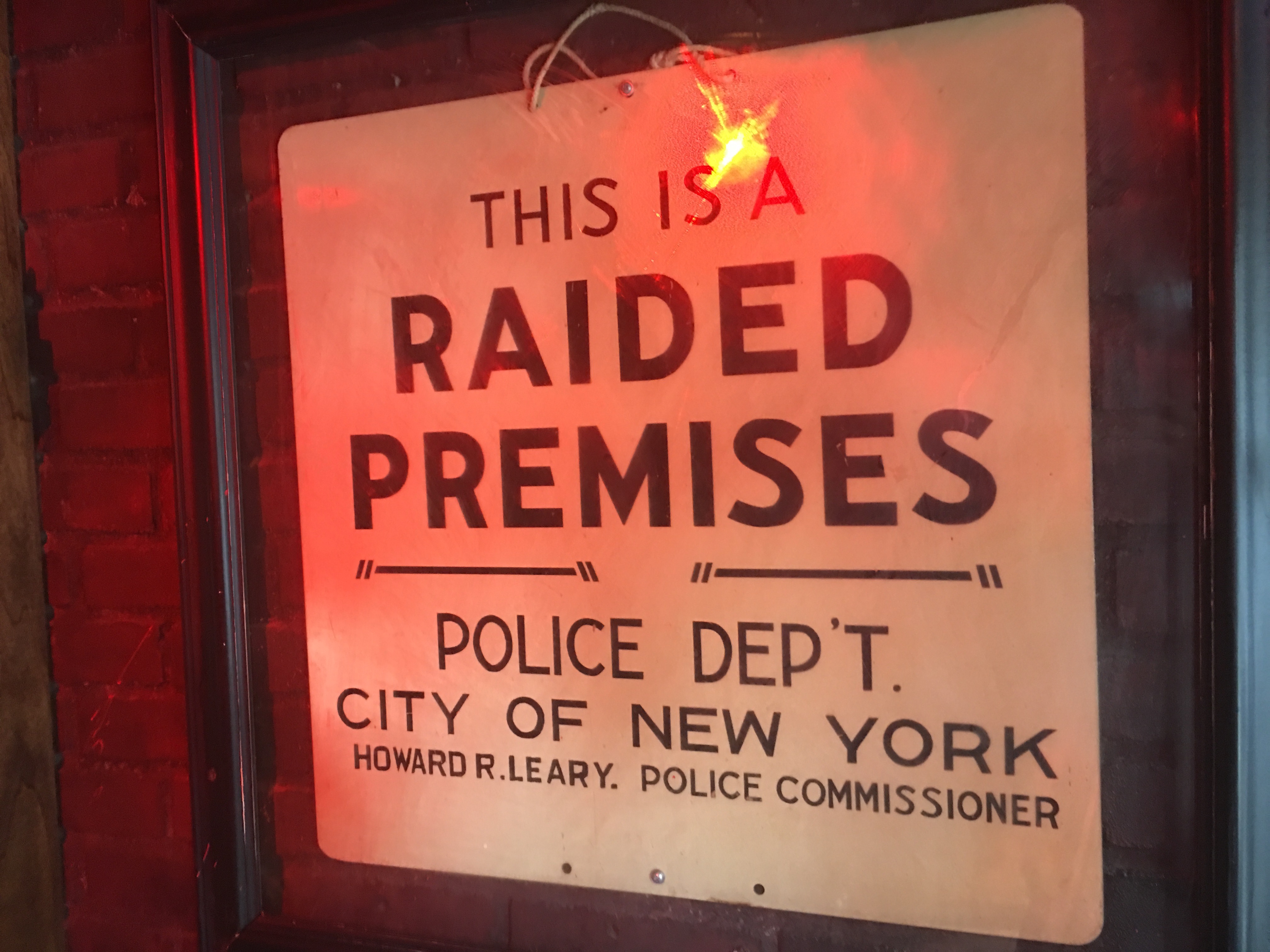
For days after, a makeshift memorial to the Orlando victims sat in front of Stonewall Inn. Even today, as you enter the building, a list of their names greets you upon the wall, next to an older sign that states ‘THIS IS A RAIDED PREMISES’, a vestige of a time when gay bars were diminished, not decorated.
Thus is the power of Stonewall’s symbolism, the dignity and community represented in the air around this stumpy, architecturally unspectacular structure.
Recognizing the enigmatic atmosphere of this place, Stonewall National Monument is actually the building proper and the portion of Christopher Street which sits in front of it, as well as the entirety of triangular Christopher Park.
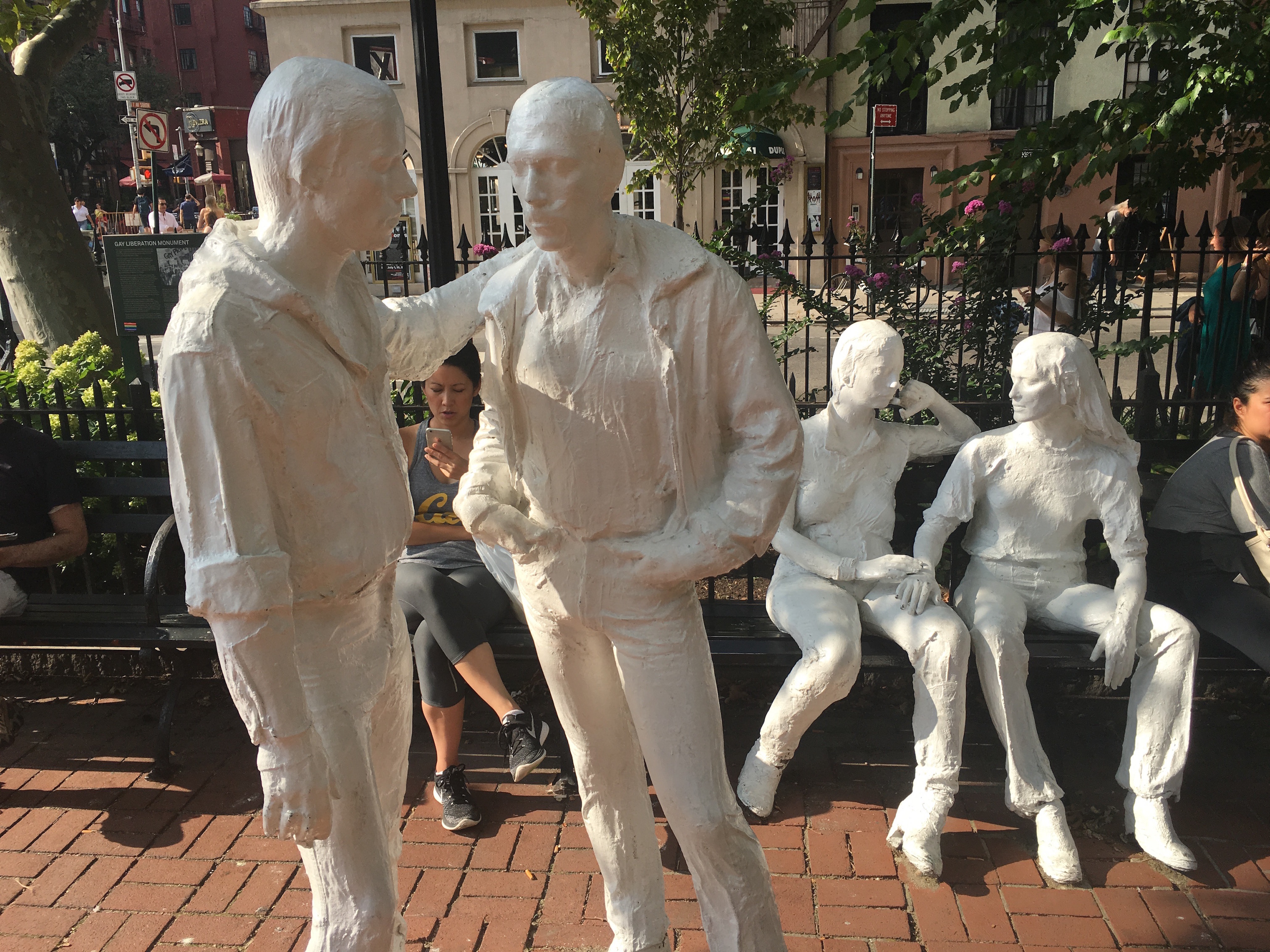
This includes one very relevant piece of art — the four human statues known as the Gay Liberation Monument (placed here in 1992) — and one somewhat random inclusion — a statue to Union general Philip Sheridan.
But perhaps the most unusual aspect to the National Park Service’s newest acquisition is that Stonewall Inn is still very much an active bar, even more so now for its fame. Its Big Gay Happy Hours are but one of many things which sets this NPS site apart from, say, Grant’s Tomb.
There’s a constant police presence in front of Stonewall Inn. On a given night you may even see armed guards out in front, a curious dichotomy with the drag queens who perform on the second floor. I cannot wait to see how they incorporate a temporary ranger station and a visitor center.
It’s unfortunate that Stonewall — a historic symbol of safe space — should feel like slightly less of one because of current events. But this situation does provide another, more hopeful optic: the image of an alert and engaged law enforcement, entrusted in keeping a gay bar safe and secure.
If you could somehow go back in time to tell the men and women who were arrested in the early morning hours of June 28, 1969, about this, they would have laughed (and maybe spit) in your face.
In the 1960s the mob had a veritable monopoly on the Greenwich Village gay scene, tucked invisibly down the neighborhood’s side streets.
No bar catering to gays and lesbians could stay open without paying bribes (to both the mob and the police), and complaining bar owners had a funny way of finding themselves arrested or worse. Indeed, police detectives sometimes posed as gay men to corner alleged homophiles.
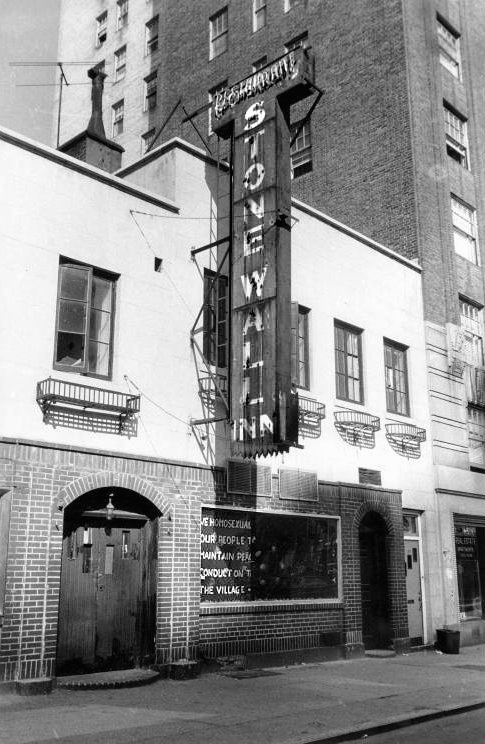
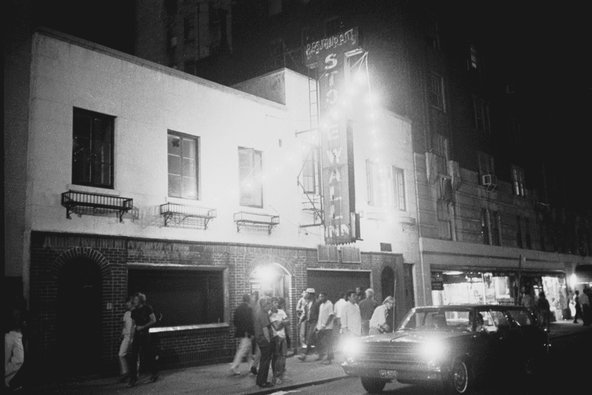
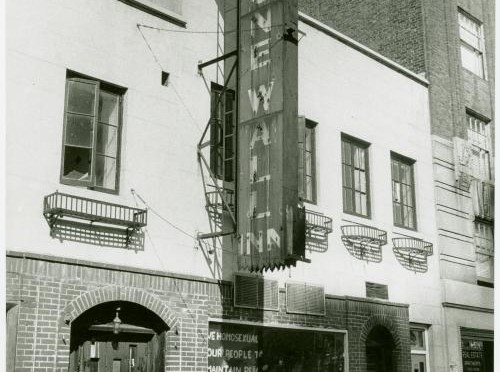
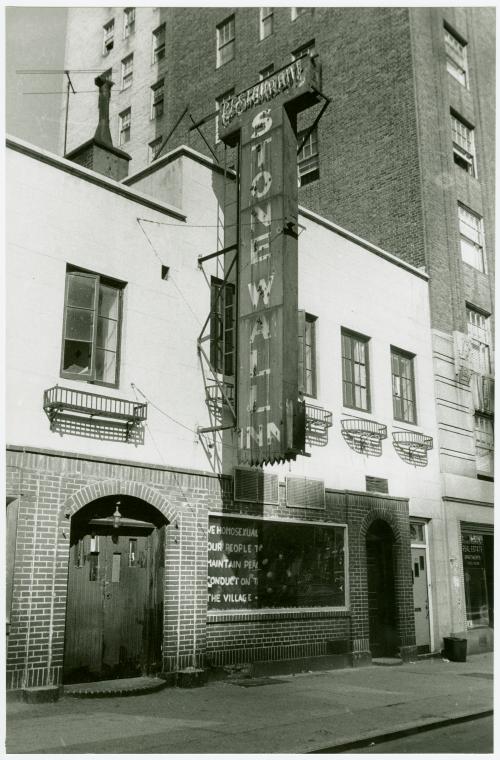
One of these dank and unappealing bars on Christopher Street was the Stonewall Inn. Its history was long and colorful: A former stable, it became a notorious teahouse 1930, then a somewhat respectable restaurant, then was gutted in a fire before becoming a darkened-window dive bar catering to homosexuals in 1967.
There was nothing especially notable about the Stonewall, with its watered- down drinks and its hat-and-coat check. There was dancing and a jukebox and a good mix of white, African American, and Hispanic patrons just looking to have fun. Wouldn’t you be upset if they kept shutting you down for no good reason?
This is precisely what the police attempted just after 1 a.m. on June 28, 1969, when uniformed and undercover cops raided the packed bar and prepared to arrest the patrons.
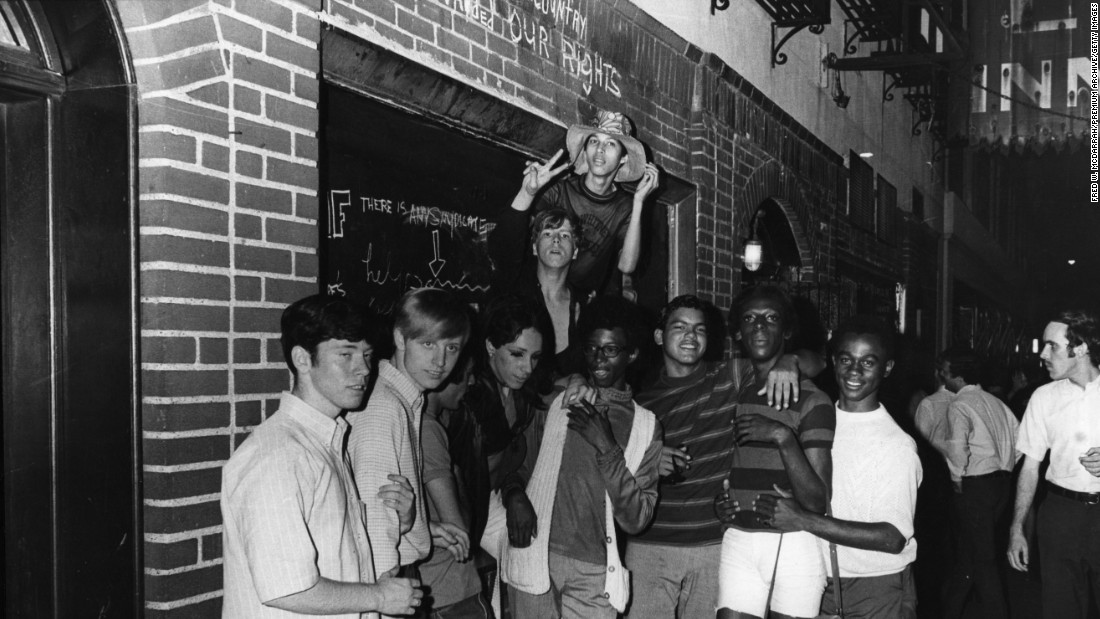
Protesters gathered in the streets outside the Stonewall Inn in the days following the riots on June 28.
Courtesy CNN
But people were not having it. A crowd outside the bar began heckling the officers as they started their arrests, pulling patrons from the bar and loading them into wagons.
One woman in handcuffs fought fiercely, inspiring an extraordinary coalition of street youths and drag queens to push back against restraint. The crowds swelled as patrons from other bars joined the fracas, filling Christopher Street and pushing back against police harassment until well after four in the morning.
What began as proper rioting aimless anger in the streets grew more focused over the next several days, as hundreds of marginalized New Yorkers returned to the street in front of the Stonewall with a newfound sense of solidarity. Their example inspired people throughout the city and around the country.
One year after the raid, activists would gather in front of the Stonewall and march up to Central Park, an event that would become the city’s annual LGBT Pride March.
Today gay pride celebrations and parades in many European countries are referred to as Christopher Street Day celebrations. Although Stonewall Inn has gained national importance today, it is Christopher Street itself that retains the symbolism for many.
And that is why a very small portion of that street — forever associated with struggle — is America’s newest National Monument.
As many others today are ruminating on the symbolic and historic implications of yesterday’s presidential inaugural ceremony, allow me to dwell a little on a curious milestone of far lesser importance.
Until yesterday, no place in New York City has ever been mentioned in a presidential inaugural speech. Â Not Ellis Island, not the Statue of Liberty, not Wall Street, not the World Trade Center, none of our fortresses or other towering landmarks.
In fact, New York as a city has actually been name-checked only once. (See below.) Â But no individual place has ever been mentioned in what are considered to be the most memorable set of presidential speeches.
That is, until yesterday, when President Barack Obama referenced the name of a West Village gay bar — Stonewall Inn.
“We, the people, declare today that the most evident of truths – that all of us are created equal – is the star that guides us still; just as it guided our forebears through Seneca Falls, and Selma, and Stonewall; just as it guided all those men and women, sung and unsung, who left footprints along this great Mall, to hear a preacher say that we cannot walk alone; to hear a King proclaim that our individual freedom is inextricably bound to the freedom of every soul on Earth.”
“Seneca Falls, and Selma, and Stonewall” represent flashpoints of various American social movements. Â With his mention of Stonewall — representing the Stonewall riots and subsequent street gatherings of June-July 1969, considered the birthplace of the gay-rights movement — the president has elevated the struggles of gay Americans to those of the women’s movement (the Seneca Falls Conventionof 1848) and the African-American civil rights movement of the 1960s (theSelma to Montgomery marches in 1965).
The rhetorical flourish of alliteration unites these movements by the places in which they occurred. Â Stonewall thus becomes shorthand for the gay rights movement. Â But as it is the actual name of a bar — still very much in operation, right off Christopher Park — Stonewall Inn now holds another very special place in history.
The United Nations, of course, has been mentioned a few times, mostly in the 1940s and 50s. (Without surprise, mentions of the international body literally drop off to nothing after that.) Â But all references relate only to the legislative body, not the actual place. Â In fact, when it was first mentioned in 1949, by President Harry S. Truman — “We have constantly and vigorously supported the United Nations and related agencies as a means of applying democratic principles to international relations” — its headquarters in Manhattan had not even been completed.
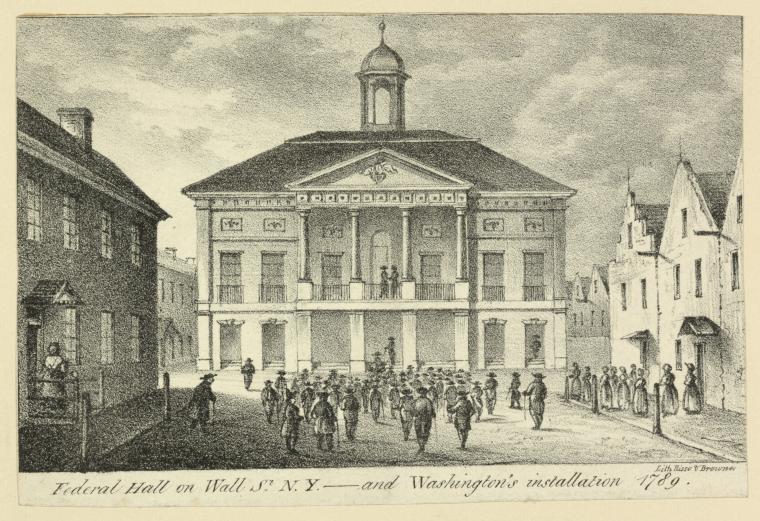
Below: Federal Hall on Wall Street, site of the first American government and the inauguration of George Washington in 1789
“This occasion derives peculiar interest from the fact that the Presidential term which begins this day is the twenty-sixth under our Constitution,” Benjamin Harrison remarked in his 1889 speech. Â “The first inauguration of President Washington took place in New York, where Congress was then sitting, on the 30th day of April, 1789, having been deferred by reason of delays attending the organization of the Congress and the canvass of the electoral vote.”
George H.W. Bush makes specific mention of Washington’s inauguration in 1989, which happened to be the 200th anniversary of that event. “I have just repeated word for word the oath taken by George Washington 200 years ago, and the Bible on which I placed my hand is the Bible on which he placed his. Â It is right that the memory of Washington be with us today, not only because this is our Bicentennial Inauguration, but because Washington remains the Father of our Country.”
While this means very little in terms of the city’s historical stature, it means a great deal to the gay rights movement, and certainly to the bar itself. Or as Stonewall Inn owner Stacey Lentz recently said: “We’re not just a bar. We’re the Stonewall. It’s like owning Rosa Parks’s bus. We don’t own the movement, but we own the bus.”
For more information on Stonewall Inn, check out our podcast #48 The Stonewall Riots (download here or on iTunes.) Â