Why is the West Village both historically important and incredibly expensive?
In the final part of our West Village mini-series, we look at the elements that define the modern neighborhood — from battles with Robert Moses to the protests that galvanized the gay-rights movement.
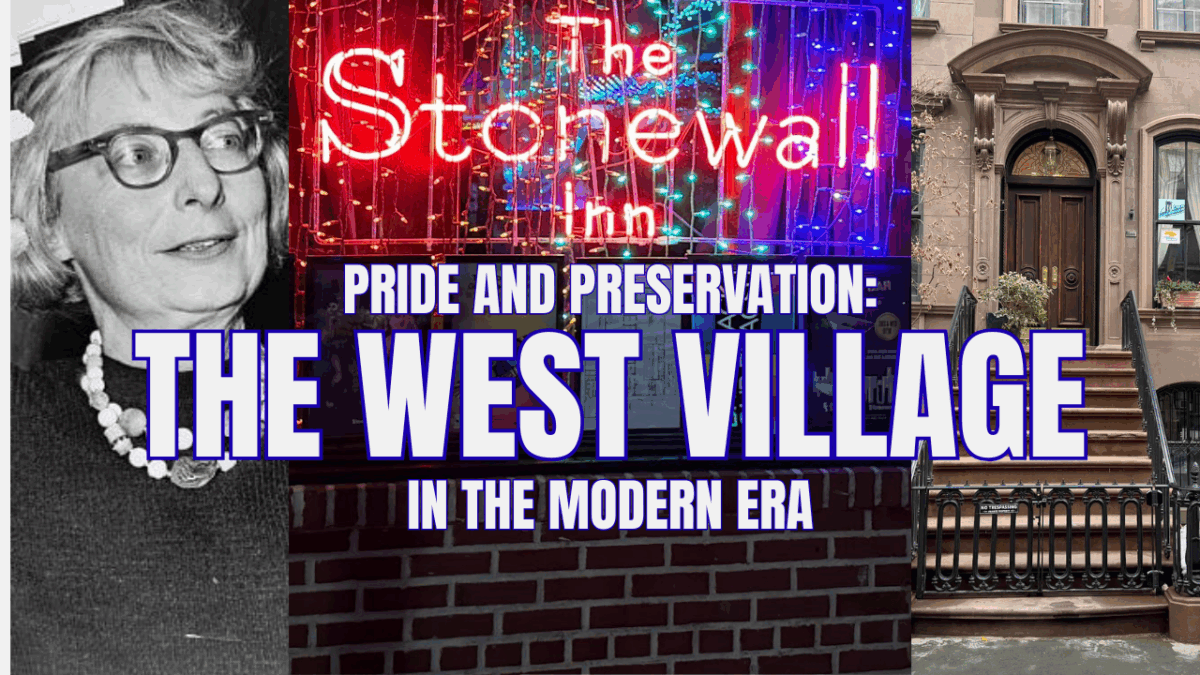
The 19th-century charms of the old Village seem timeless, but they survive thanks to the 1969 Greenwich Village Historic District. The fight to save the neighborhood, however, began two decades earlier, and those early conflicts even popularized the name “West Village.”
Jane Jacobs, fresh off the publication of her landmark book The Death and Life of Great American Cities, would become the leading voice in protecting this uniquely New York enclave.
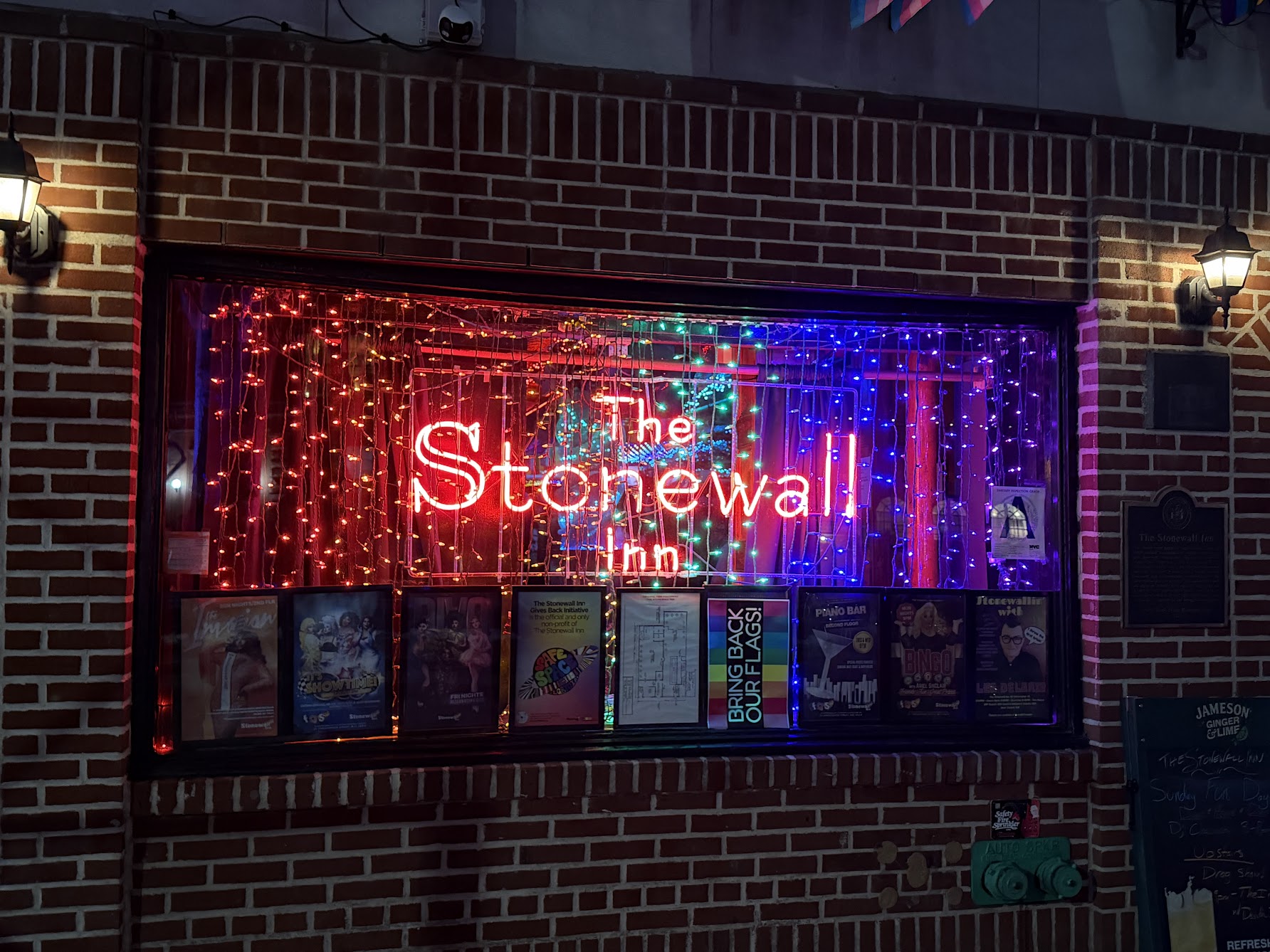
That same year, clashes between police and patrons at the Stonewall Inn united the area’s LGBT residents, culminating in the first Christopher Street Liberation Day Parade (today’s NYC Pride March).
A vibrant, radical queer culture flourished — from leather bars to the Christopher Street Pier.
In the 1980s, thousands of New Yorkers died of AIDS, and St. Vincent’s Hospital became known for its pioneering care. Today, long-running establishments like the Monster and Julius’ form a kind of “legacy cultural district,” linking present-day nightlife to those transformative years.
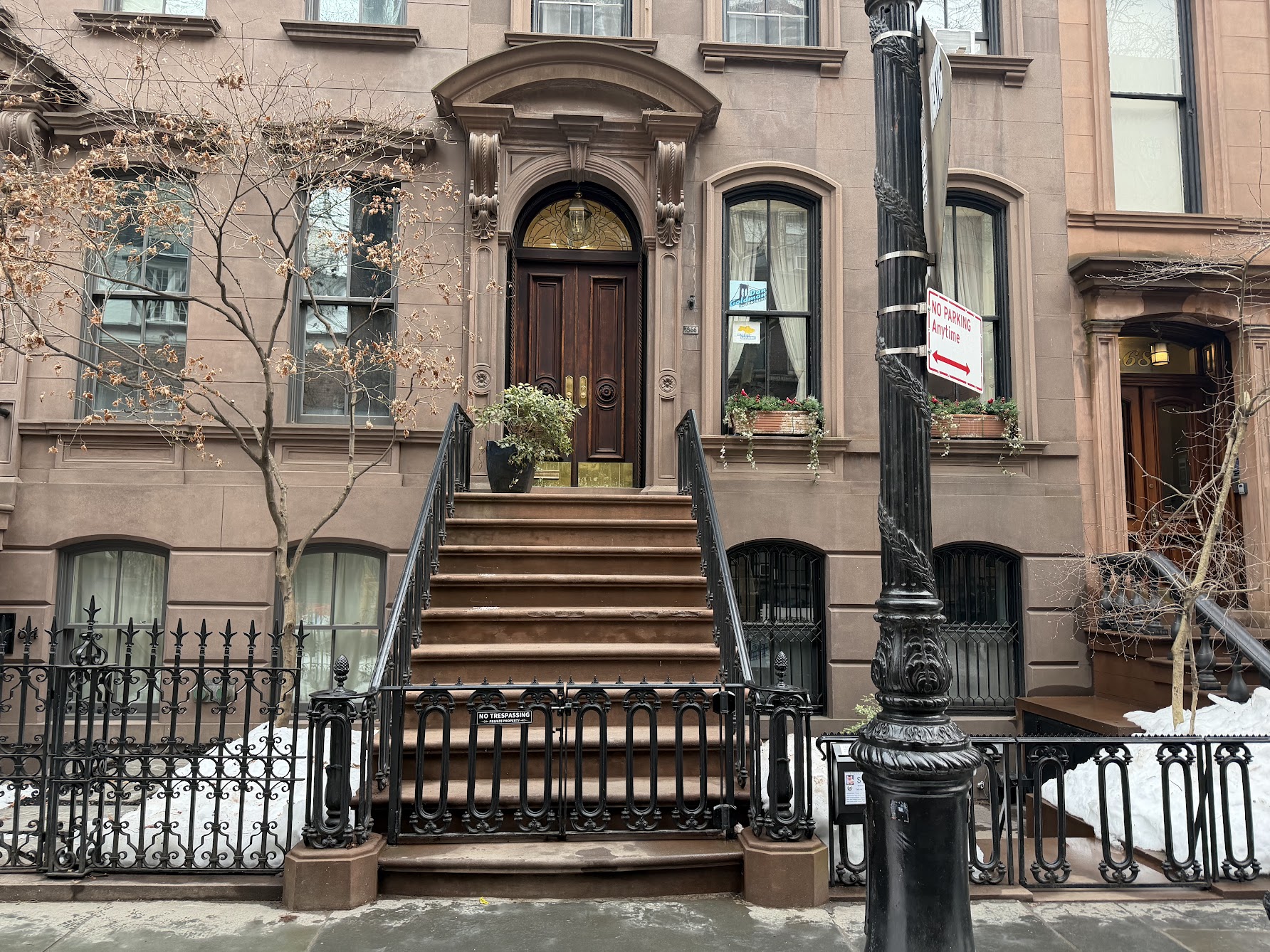
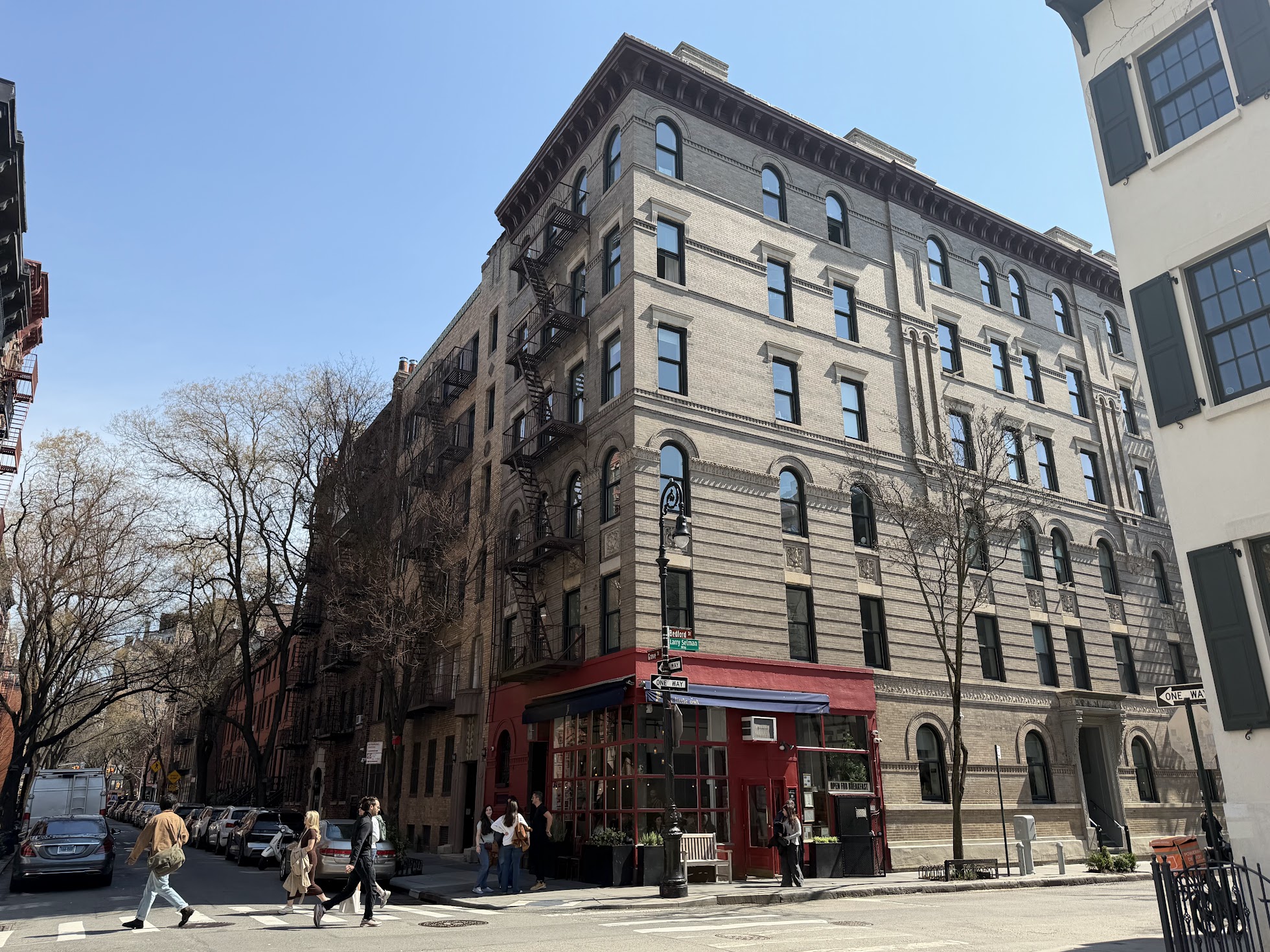
In the 1990s, pop-cultural phenomena Friends and Sex and the City (which made one Perry Street brownstone famous) brought international attention to the neighborhood.
By the 21st century, the West Village had become a luxury enclave, even as its history was further elevated with Stonewall’s designation as a U.S. National Monument.
What has the West Village become in 2026?
LISTEN NOW: PRIDE AND PRESERVATION: THE STREETS OF THE WEST VILLAGE
All episodes of The Streets of the West Village mini-series are now available.
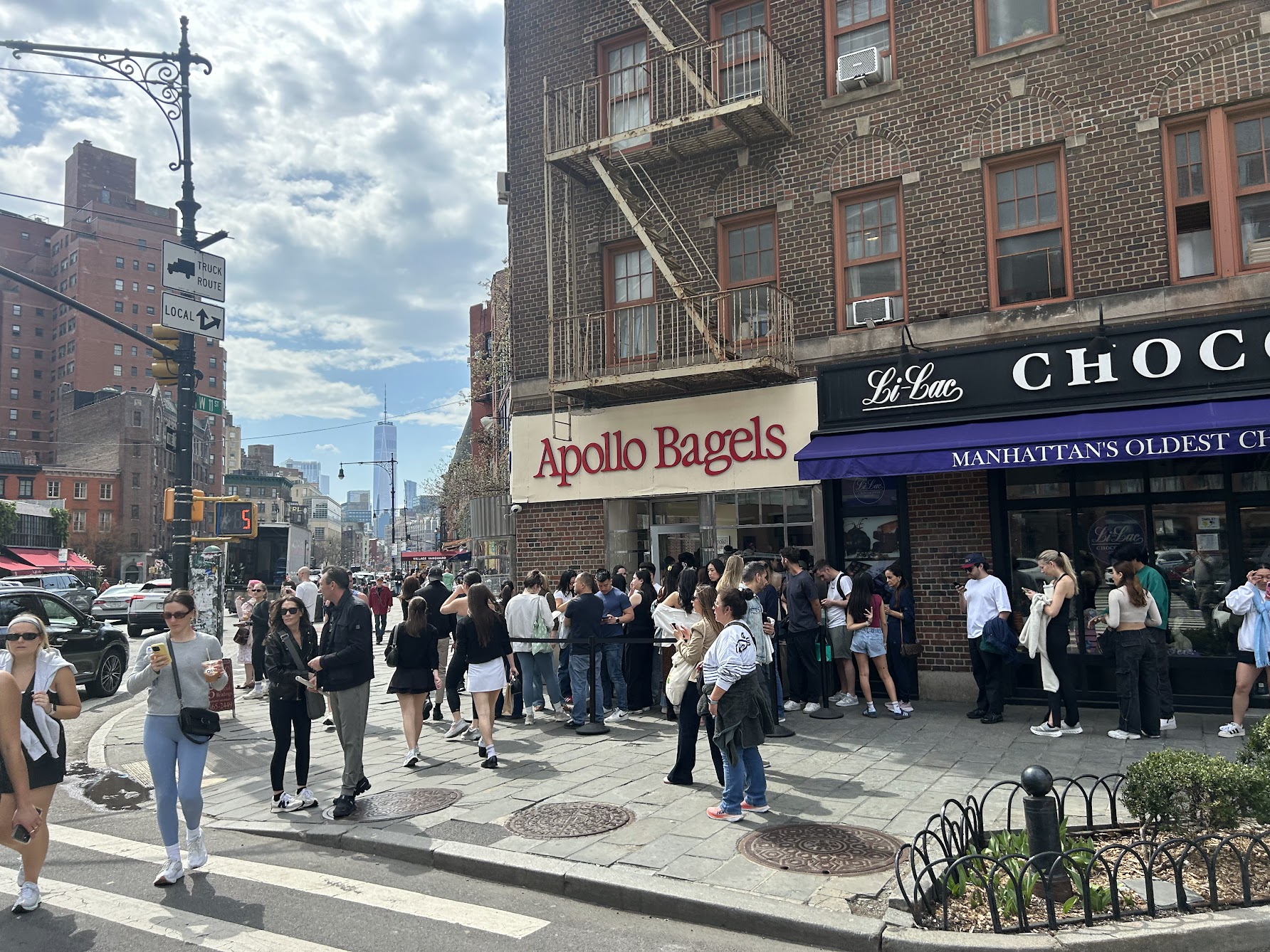
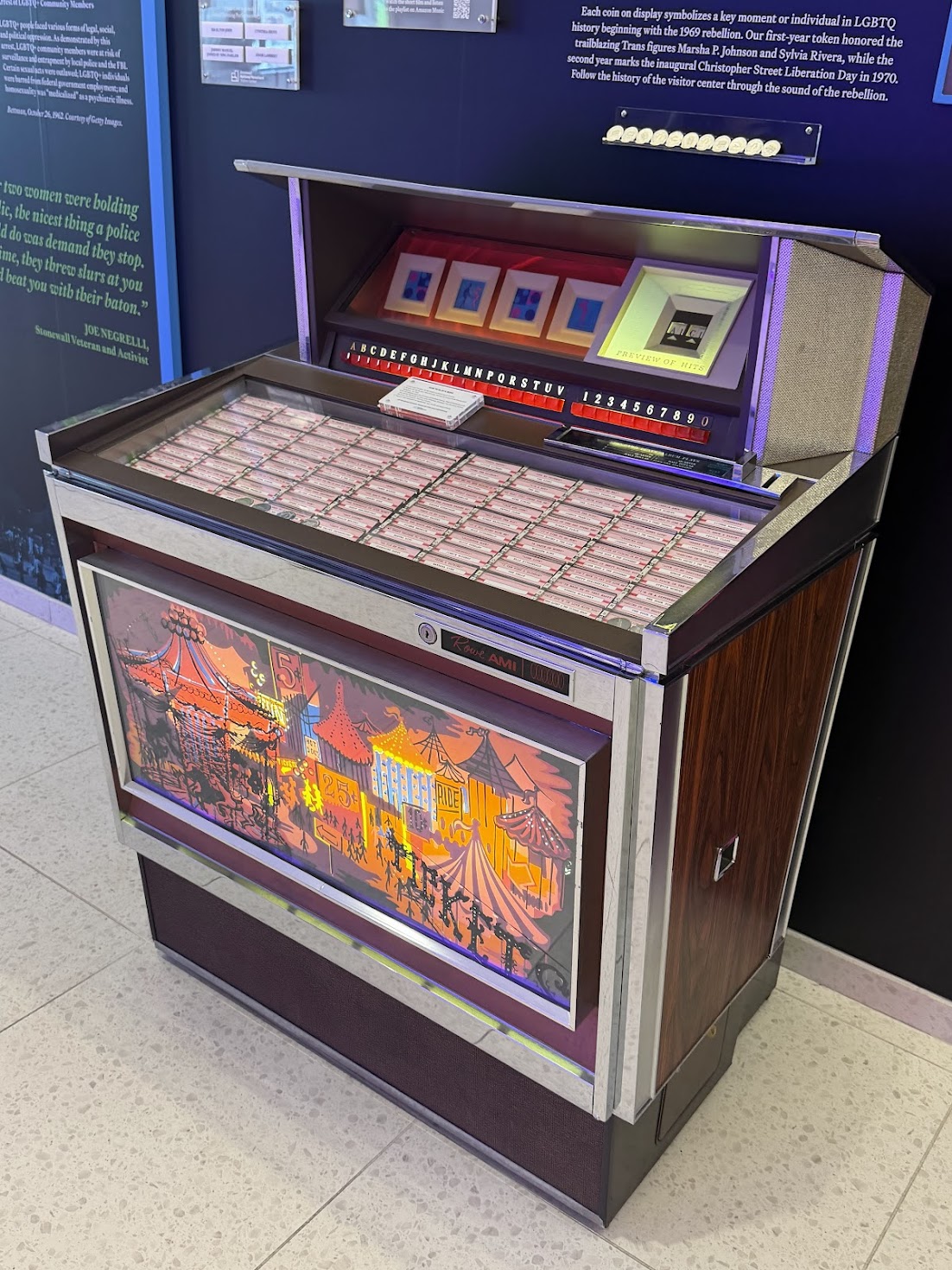
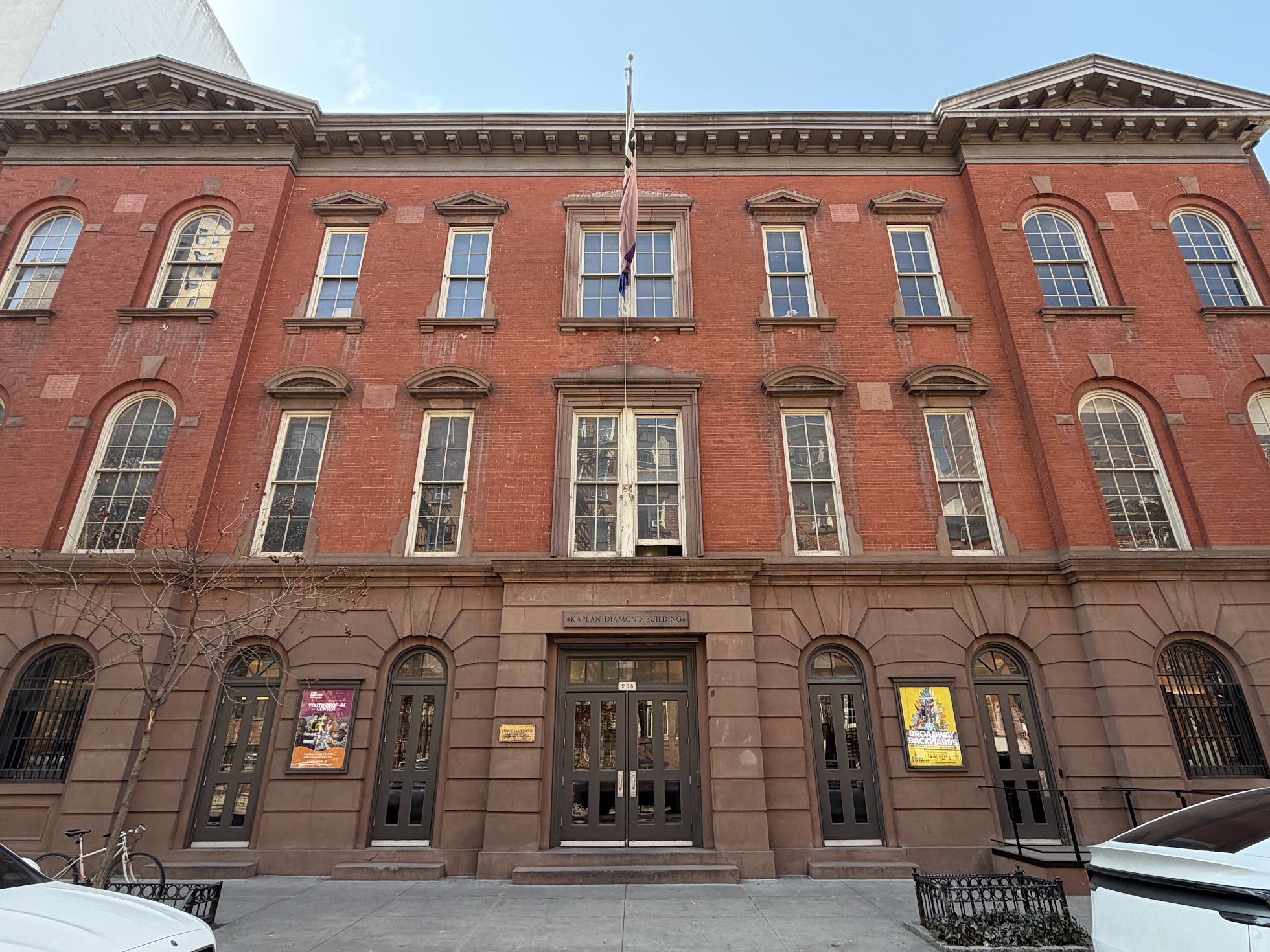
Before the 1910s, Seventh Avenue once stopped right at this intersection with Greenwich Avenue. Today people flock to this corner for trendy bagels. Photo by Greg Young66 Perry Street, made famous for its appearance on Sex and the City. Photo by Greg YoungInside the Stonewall National Monument Visitors Center. Photo by Greg YoungAlthough part of a National Monument, the Stonewall Inn is still an active bar. Photo by Greg YoungThe Center — aka the Lesbian, Gay, Bisexual & Transgender Community Center. Photo by Greg YoungThe New York City AIDS Memorial, opposite the former site of St. Vincent’s Hospital. Photo by Greg YoungThe “Friends” apartment building
Jane Butzner was born 100 years ago in Scranton, Pennsylvania.  Jane Jacobs died on April 25, 2006, in Toronto, Canada. But for much of her life in between, she changed the way people thought about cities from her perch in North America’s largest — New York City.
Jane Jacobs was a revolutionary thinker in an age where ‘big ideas’ shaped cities. City planners thought about grand plans, not street corners. Jacobs became a breakout philosopher on everyday urban living, revealing practical realities that were completely misunderstood by those making real decisions.
Without Jacobs — and the countless activists and preservationists before and after her — we would not have New York City 2016. (You can take that statement both as a tribute and perhaps as a sly criticism as well.)
Now I didn’t know Jane, but I’m pretty sure she would like you to celebrate her birthday in one of the two following ways:  1) Go to your favorite neighborhood in New York City and spend money there at local businesses, or 2) Go to a neighborhood you’ve never been to before and learn everything you can about it.Â
If you’re looking for something to read today about Jacobs, by all means, jump into Death and Life or perhaps one of these books.
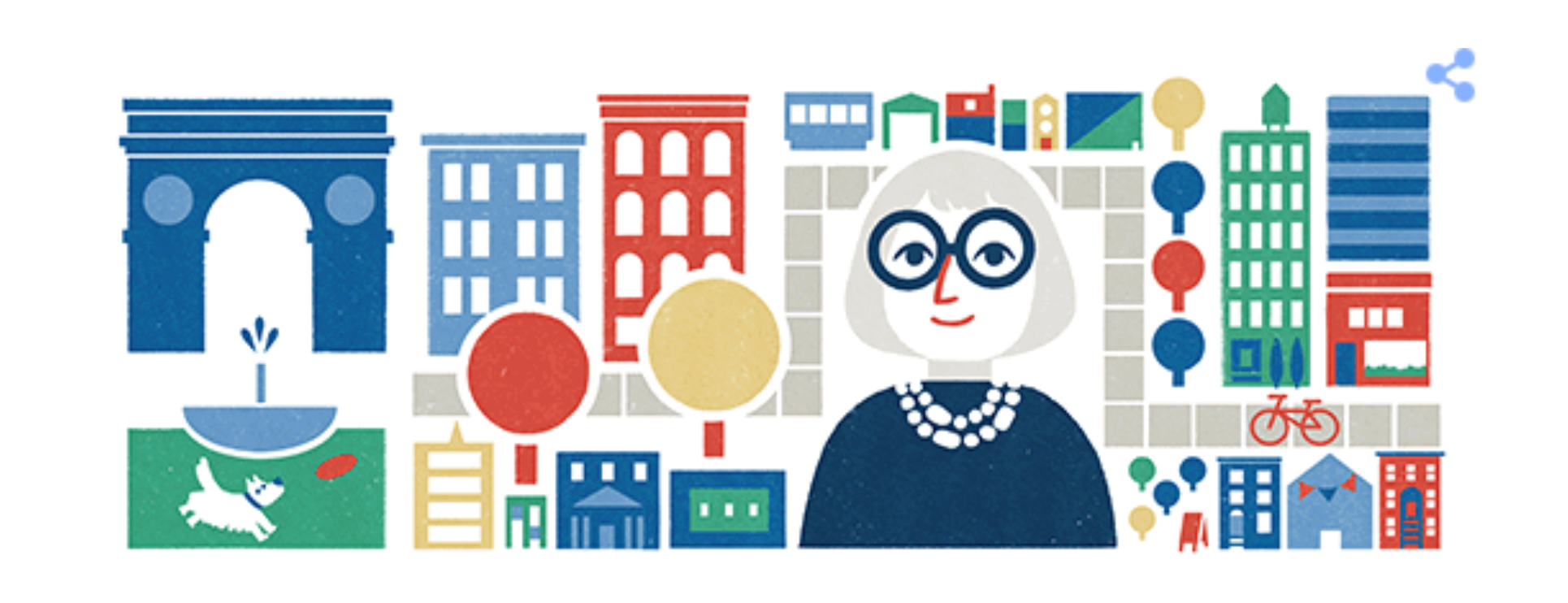
Today’s Google Doodle, celebrating Jane’s 100th birthday:
After that, plan on joining one of the many Jane’s Walks this weekend, sponsored by the Municipal Art Society of New York. There are dozens and dozens of free walking tours, from May 6-8, that you’re sure to find one right in your back yard. (Maybe literally your back yard if you live somewhere historic!)
Check out the entire list right here and plan out a whole weekend of adventures.  Below is a list of ten notable tours that caught my eye and sound like exceptionally unique ways to spend an afternoon.  Plus an extra one that I’m personally invested in:
Times Square 1975. Courtesy Getty Images via Gothamist
DIRTY OLD TIMES SQUARE
Manhattan, Meet at Duffy Square
Friday, May 6, at 1pm, 2 hours Details here
Tag line: “Most of old Times Square has been carefully obliterated by generic hotels and office buildings, but there are still vestiges of its seedy past—if you know where to look.”
Led by Robert Brenner
HOW AUDUBON PARK DISRUPTED MANHATTAN’S GRID
Manhattan, Meet at Audubon Monument, 550 West 155th Street
Friday, May 6, at 6pm, 1.5 hours
Saturday, May 7, 1:30pm
Sunday, May 8, 11am and 2pm Details here
Tag line: “The distinctive footprint that disrupts Manhattan’s grid west of Broadway between 155th and 158th Streets—the Audubon Park Historic District—did not come about by accident or from the demands of local topography.”
Led by Matthew Spady
Photograph by Helen Barksy, 1971. Courtesy the Museum of the City of New York
EL BARRIO DREAMS: FOOD, ART, CULTURE (AND CHANGE)
Manhattan, Meet at Vendy Plaza (Park Avenue and 116th Street
Sunday, May 8, 1pm Details here
Led by Flaco Navaja
Tag line: “Our walking tour will explore the dynamics of a community in flux, looking at the history of East Harlem and the political and cultural significance of that history, as well as examining competing visions for the neighborhood’s future. ”
THE LOST HIGH LINE
Manhattan, Meet at NW corner of Washington & Houston Streets
Saturday, May 7, 11am Details here
Tag line: “Today, that remaining section of the High Line has become one of the city’s major attractions. But what about the ghosts of the past along its southern route?”
Led by Joan Schechter
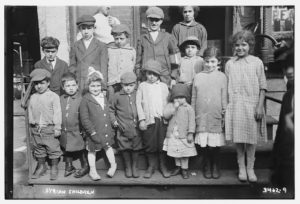
The littlest residents of former Little Syria. Courtesy Library of Congress
MANHATTAN’S LITTLE SYRIA: THE HEART OF ARAB AMERICA
Manhattan, Meet at St. George’s Syrian Catholic Church
Sunday, May 8, at 10:30am Details here
Tag line: “Immigration to the United States from the territories of Greater Syria — now Lebanon, Syria, and Palestine — began in the 1870s and 1880s. The most important neighborhood of the immigration — and its economic and cultural heart — was along Washington Street in the Lower West Side of Manhattan.”
Led by Todd Fine
THE BRONX’S MAIN STREET: WALKING THE GRAND CONCOURSE
The Bronx, Meet at the Bronx Museum of the Arts, North Wing Lobby
Saturday, May 7, 11am Details hereÂ
Tag line: “While visiting key sites along this major thoroughfare, Goodman will provide a brief history of the Grand Concourse and explain the development of its diverse neighborhoods and communities.”
Led by Sam Goodman
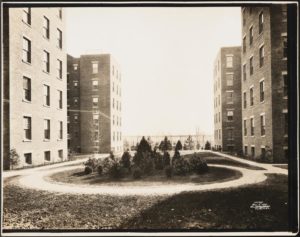
Courtesy Museum of the City of New York
HISTORIC JACKSON HEIGHTS – AMERICA’S FIRST GARDEN APARTMENTS
Queens, Meet at the Chase Bank @ 75th Street and Roosevelt
Saturday, May 7, 11:30am
Sunday, May 8, 11:30 am Details here
Tag line: “We’ll explore the architectural qualities of Jackson Heights, developed by Edward A. MacDougall of the Queensboro Corporation in 1916. The neighborhood contains a variety of architectural styles with private gardens at the center of each city block.”
Led by Michael Limaco
ON LOCATION: THE VITAGRAPH STUDIOS AND THE HISTORY OF FILM IN MIDLAND BROOKLYN
Brooklyn, meet at Midwood Development Corporation
Sunday, May 8, 3PM Details here
Tag line: “At Avenue M and 14th street, The Vitagraph Company of America built the nation’s first modern film studio in 1906, where it operated until 1925 as one of the most prolific moving picture companies in the world, making Brooklyn the epicenter of film production long before Hollywood.”
Led By Nellie Perera and Melissa Frizzling
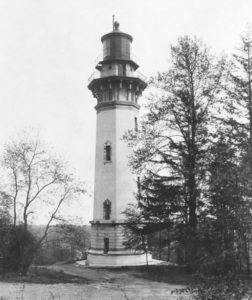
Photo courtesy the US Coast Guard
TIBET, OPERA, AND THE LUCKY CHARMS LEPRECHAUN: EXPLORING THE HIDDEN GEMS OF LIGHTHOUSE HILL
Staten Island, meet at the clubhouse of Latourette Golf Course on Edinboro Road
Saturday, May 7, 3PM Details here
Tag line: “Himalayan Buildings, a working lighthouse, a golf course and a widow’s walk are just some of the interesting sights we will see. Some of the historical tidbits include “Why is the neighborhood called Lighthouse Hill?” and “Why are the streets named after places in the UK?” and “What notable people lived here?””
Led By Meg Ventrudo
THE HILLS ARE ALIVE!
Governors Island, meet at the Battery Maritime Building
Friday, May 6, at noon Details here
Tag line: “See New York Harbor from a breathtaking new vantage point 70 feet in the air. Here is your chance to have a sneak peek at the newly planted Hills on Governors Island before they open to the public this summer.”
Led By Ellen Cavanagh
And finally, if you happen to be around Chelsea and the West Village on Saturday, check into the fascinatng tour below led by Kyle Supley. If all goes according to plane, I’ll be making a guest appearance during the tour, speaking at one particular location. Unfortunately, I will not be wearing chaps to this event!
GAY BARS THAT ARE GONE
Manhattan, meet at 515 West 18th Street
Saturday, May 7, 7pm Details here
Led by Kyle Supley
Tag line: “Past patrons, NYC history buffs, and those just looking for a good time, take note! From ballrooms to discos to piano bars, we’ll observe the shifting typology of the gay bar. Together, we’ll cover everything from the raids to the raves.”
We hope you enjoyed our 200th Bowery Boys podcast on Jane Jacobs. For further reading on her life, philosophy and work, we recommend the following books, most of which we used as source material for this show.
The Death and Life of Great American Cities by Jane Jacobs — Obviously you should start with Jacobs’ opus on how the American city works (well, at least the city of the 1960s). Â She has a clear, approachable and pragmatic way of looking at urban problems. You’ll also notice immediately how modern city planners have used some of the ideas she’s described.
Wrestling With Moses by Anthony Flint — Perhaps the most succinct book on the specific crises which pitted Robert Moses with Jacobs, a breezy and engaging tale of New York City in the 1950s and ’60s.
Jane Jacobs: Urban Visionary by Alice Sparberg Alexiou — If you’d like a good biography on Jacobs, try this enjoyable read (published in 2006, the year of Jacobs’ death) that gives an overview of her life and career.
Becoming Jane Jacobs by Peter Laurence — If you’re looking for something more recent, this brand new biography uniquely explores the origins of how she developed her ideas of urban places. Even if you’ve read any of the books listed above, Laurence’s book goes more deeply into her many influences.
The Battle For Gotham by Roberta Brandes Gratz — For even more expansive look at the legacies of both Moses and Jacobs, especially in the proceeding decades. Gratz takes specific aim at more recent projects in New York in a very personalized way.
The Village by John Strausbaugh — A wide-lens history of Greenwich Village, Strausbaugh spends a great amount of time looking at how Jacobs assisted in the salvation of her neighborhood, and how these preservation battles interlocked with the culture of the day.
The Power Broker by Robert Caro — Jacobs famously doesn’t even make an appearance in Caro’s legendary, barn-burning biography, but the book remains essential reading for anybody interested in mid-century America.
————–
Or burrow your way through the New York Times archives of material on the battles waged by Jane Jacobs and Village community activists against the city. Â Start with these:
Shopping Scarce In City Projects “Most of the 350,000 New Yorkers living in public housing must go outside the projects for the loaf of bread, the quart of milk, the daily newspaper and the sociability of the candy store, coffee shop or tavern.” (June 16, 1957)
To celebrate the 100th anniversary of her birth (May 4), the Municipal Art Society, with funding by the Rockefeller Foundation, has been hosting a series of events this year. From the website #JJ100:
“The celebration will pay tribute to Jane Jacobs on the 100-year anniversary of her birth by highlighting self-organized activities and events that embody Jane’s lasting legacy in cities around the world.”
Starting with Jane’s Walk in May, and culminating at the Habitat III Conference in Quito, Ecuador, Jane Jacobs at 100 will promote self-organized Jacobsian programming and projects taking place in New York and in cities around the world.” Â Keep checking in at their website for more information. And of course Jane’s Walk arrives in May!
————–
Meanwhile The Center for the Living City is taking a fascinating approach to their celebration of Jacobs’ legacy. Check out their dedicated page Jane’s 100th for a list of events and unique objectives. Including getting Jane Jacobs on a postage stamp! (How is she not on a postage stamp? Harry Potter has a postage stamp!)  Author Peter Laurence has set up a petition for this that you obviously must sign.
You also may be interested in their new project being launched as part of their Jacobs celebrations —the Urban Acupuncture Network.
————–
By the way, if you’re interested in hearing the entire 1962 chat by Jane Jacobs that we featured in our show, you can hear it here.
Or perhaps you’d like to catch the new Robert Moses/Jane Jacobs opera — A Marvelous Order!
PODCAST The story of Jane Jacobs, the urban activist and writer who changed the way we live in cities and her fights to preserve Greenwich Village in the 1950s and ’60s.
Washington Square Park torn in two. The West Village erased and re-written. Soho, Little Italy and the Lower East Side ripped asunder by an elevated highway. This is what would have happened in New York City in the 1950s and 60s if not for enraged residents and community activists, lead and inspired by a woman from Scranton, Pennsylvania.
Jane Jacobs is one of the most important urban thinkers of the 20th century. As a young woman, she fell in love with Greenwich Village (and met her husband there) which contained a unique alchemy of life and culture that one could only find in an urban area. As an adroit and intuitive architectural writer, she formed ideas about urban development that flew in the face of mainstream city planning. As a community activist, she fought for her own neighborhood and set an example for other embattled districts in New York City.
Her legacy is fascinating, often radical and not always positive for cities in 2016. But she is an extraordinary New Yorker, and for our 200th episode, we had to celebrate this remarkable woman on the 100th anniversary of her birth.
FEATURING: Mrs. Jacobs herself in clips interspersed through the show.
PLUS: ROOOOBERT MOOOOSES!
The Bowery Boys: New York City History podcast is brought to you …. by you!
We are now producing a new Bowery Boys podcast every two weeks. We’re also looking to improve the show in other ways and expand in other ways as well — through publishing, social media, live events and other forms of media. But we can only do this with your help!
We are now a member of Patreon, a patronage platform where you can support your favorite content creators for as little as a $1 a month.
Please visitour page on Patreon and watch a short video of us recording the show and talking about our expansion plans. If you’d like to help out, there are five different pledge levels (and with clever names too — Mannahatta, New Amsterdam, Five Points, Gilded Age, Jazz Age and Empire State). Check them out and consider being a sponsor.
We greatly appreciate our listeners and readers and thank you for joining us on this journey so far. And the best is yet to come!
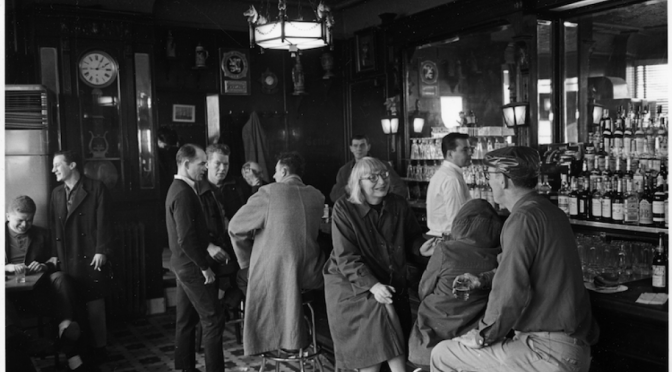
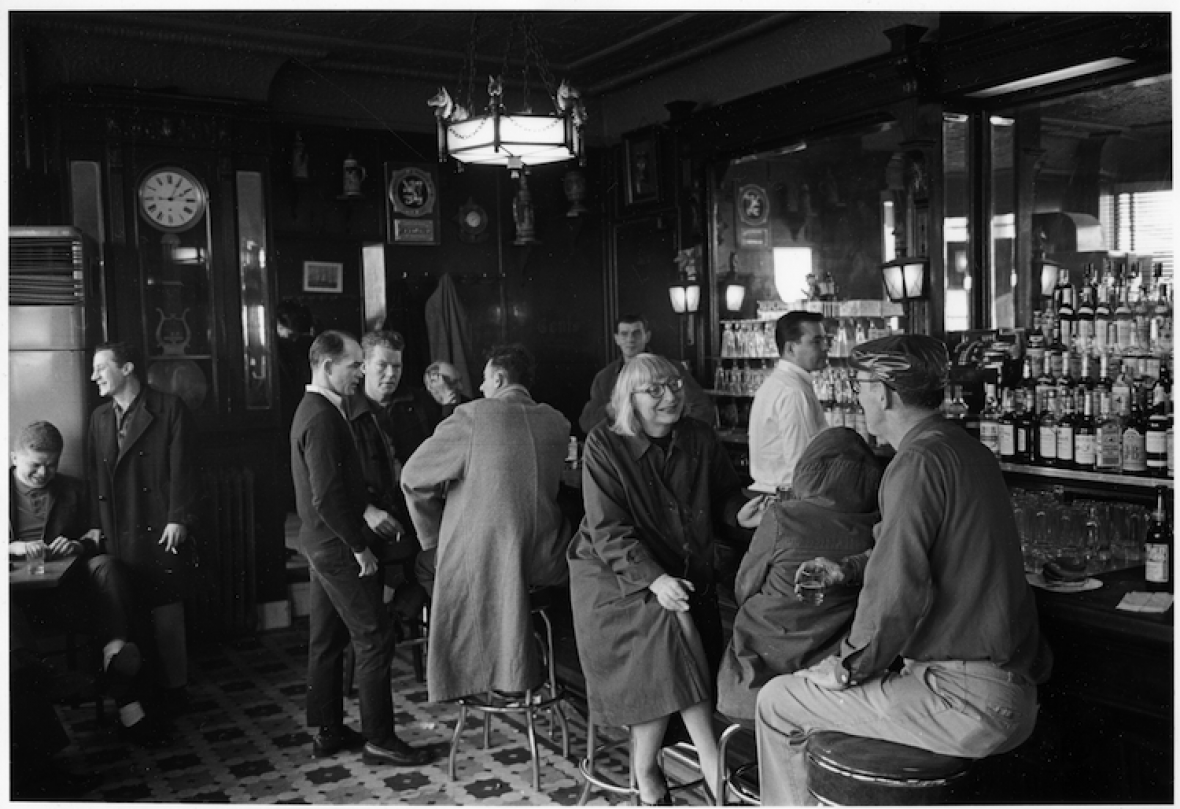
Jacobs at the White Horse Tavern, sometime in the 1960s. Jane lived on the block!
Photography by Cervin Robinson/New York Times. Visit his website for more extraordinary images of New York City (http://cervinrobinson.com/)
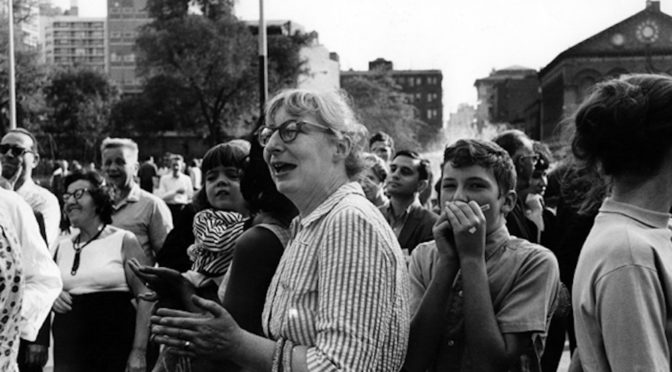
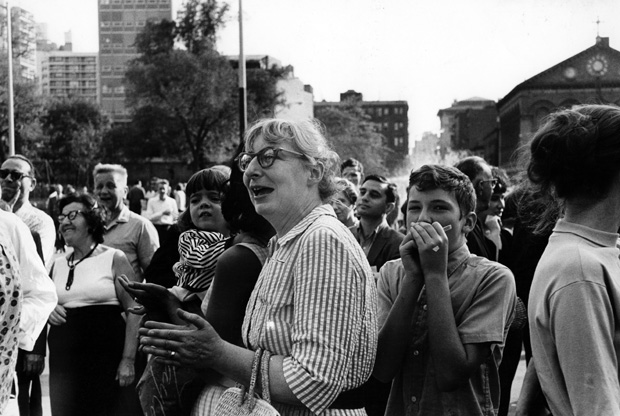
Jacobs in Washington Square Park (though I believe this is 1963 and not during the 1958 protest).
Fred W. McDarrah/Getty Images
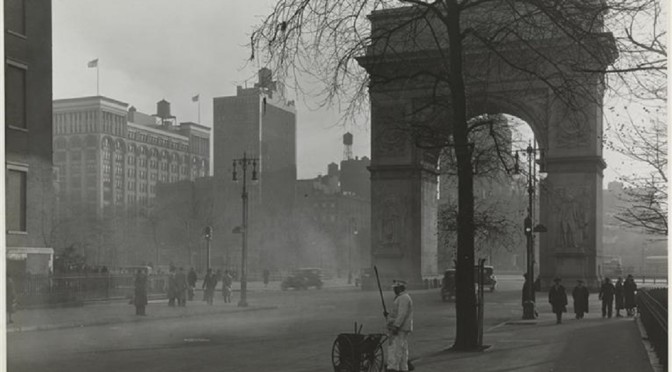
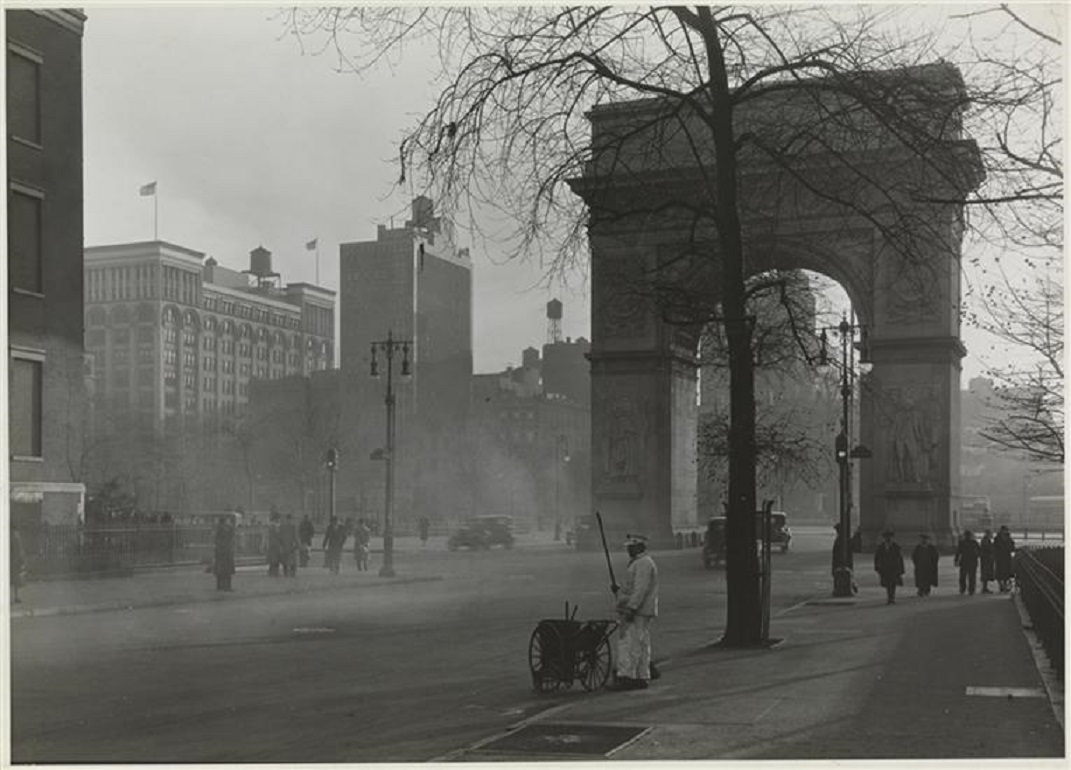
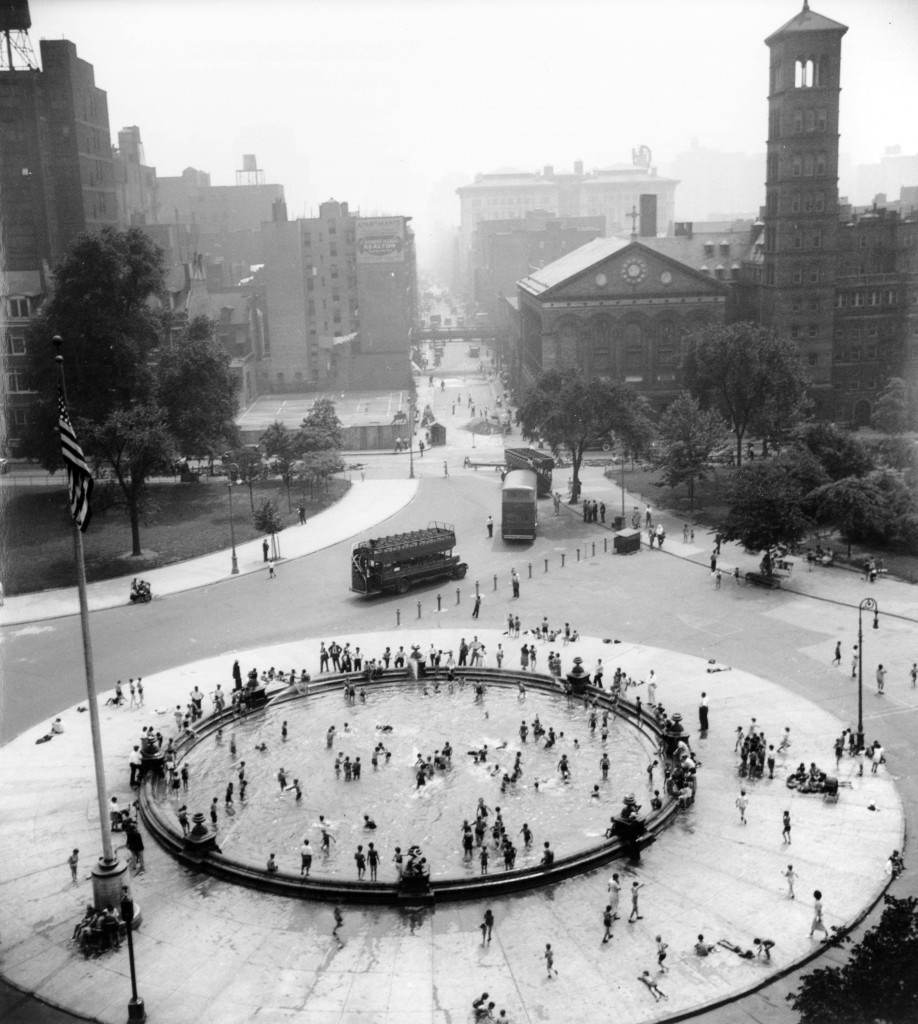
Washington Square Park in 1935. The 1958 activists were so successful in their goal of saving the park that they were able to banish automobile traffic from it entirely.
New York Parks Department
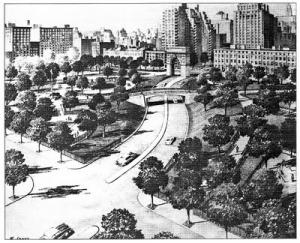
What Moses had planned for the park:
NYPL
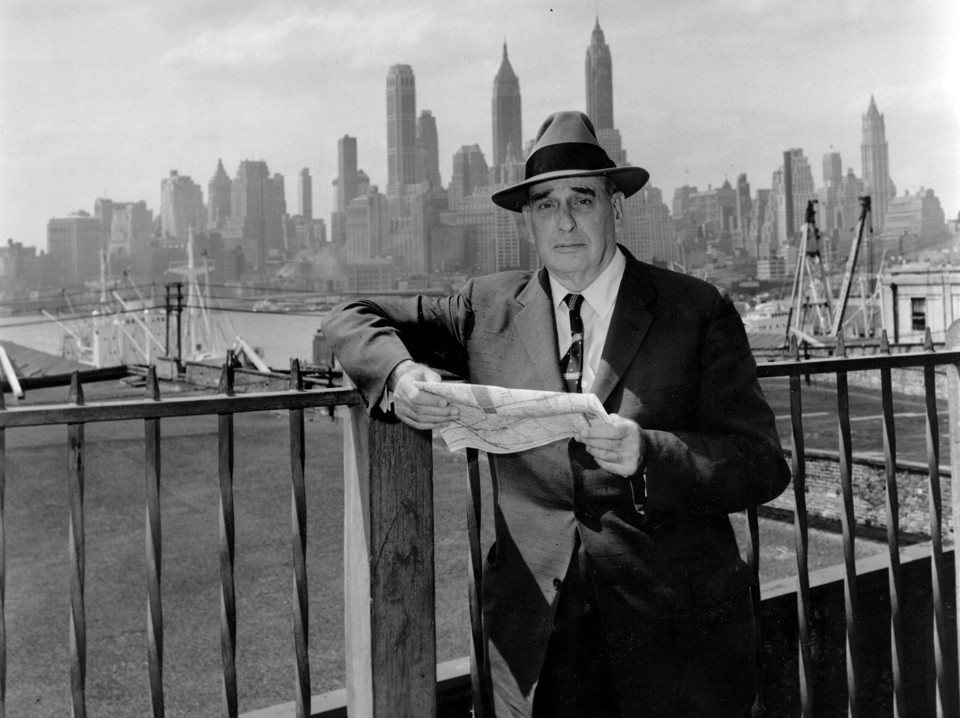
Robert Moses, pictured here in Brooklyn in 1956. Although he frequently situated as the arch-nemesis to Jane Jacobs, in fact they were rarely in the same room together. Their battles were fought in the press and in City Hall.
AP
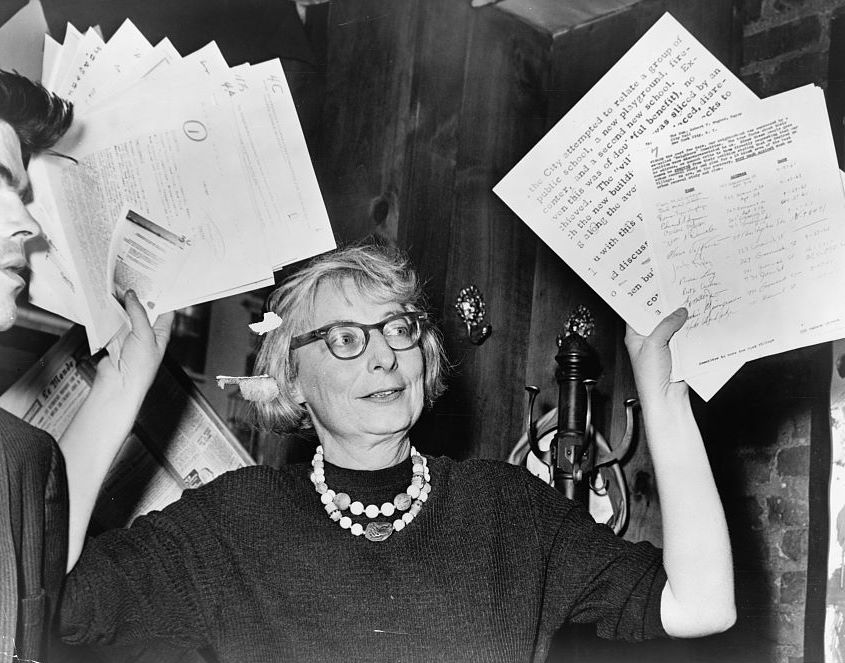
Jacobs presenting damning evidence about the proposed West Village demolition, taken at their main headquarters the Lion’s Head, in 1961 at the corner of Hudson and Charles Streets.
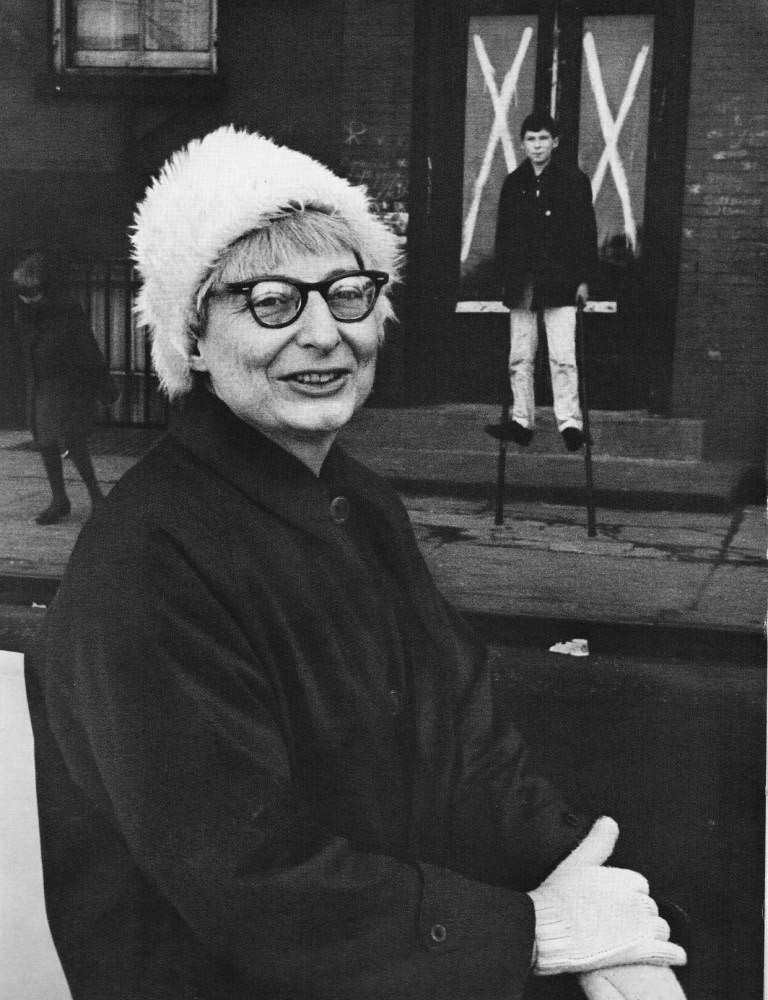
Jane Jacobs and her son Ned in 1961, during the West Village protests. The Xs were placed on buildings to be condemned. Activists wore sunglasses with Xs on the lenses in protest.
Photo courtesy Aesthetic Realism
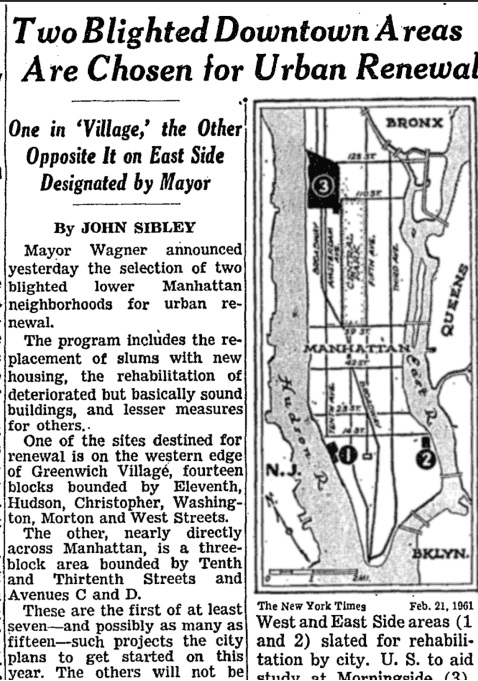
The February 21, 1961, article from the New York Times which riled up the West Village. The East Side project would eventually become Haven Plaza Apartments, but residents would fight off the designation in the West Village.
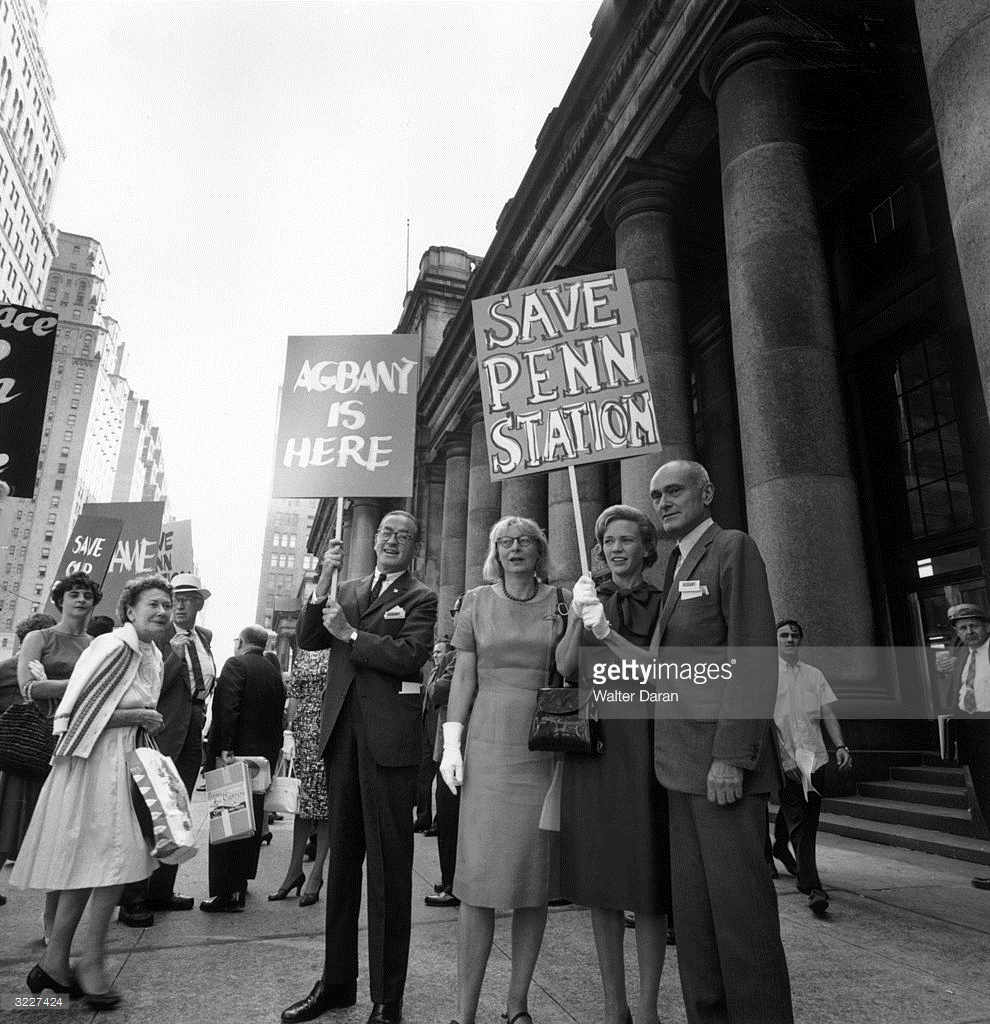
January 01, 1963 — Jacobs protests the destruction of Pennsylvania Station with architect Philip Johnson.
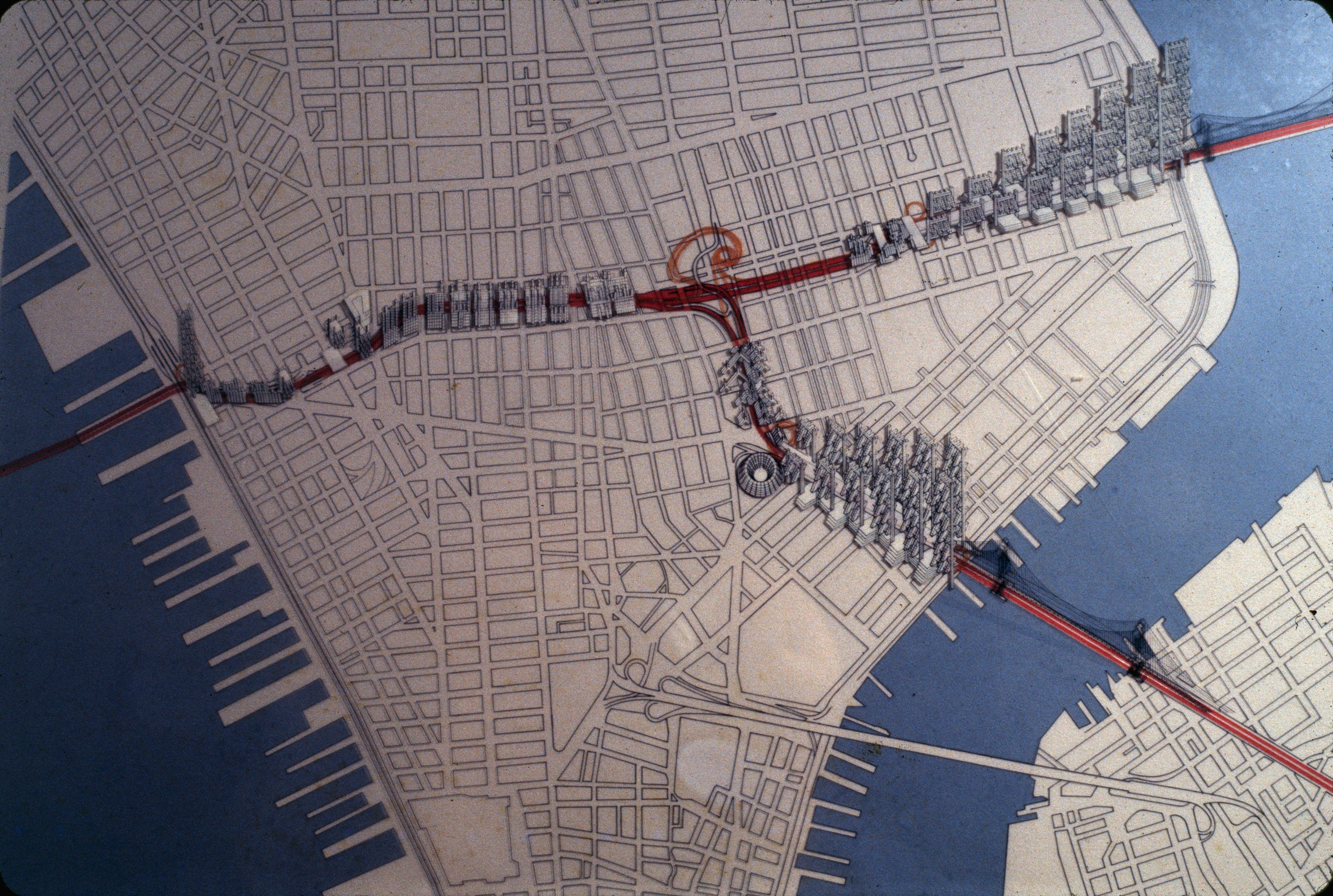
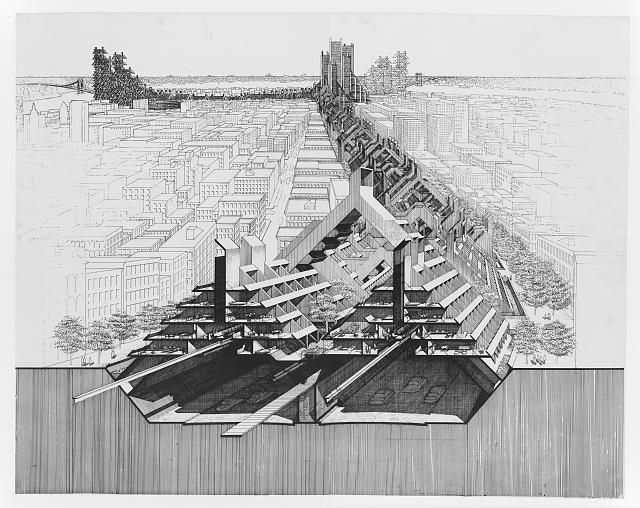
A map of the Lower Manhattan Expressway. Although this plan never came to fruition, the stack of buildings near the bridges seems to be coming to pass — on the Brooklyn side!
Library of Congress
Another sketch by Paul Rudolph of the Lower Manhattan Expressway, showing the new construction from the Holland Tunnel as it enters through Manhattan.
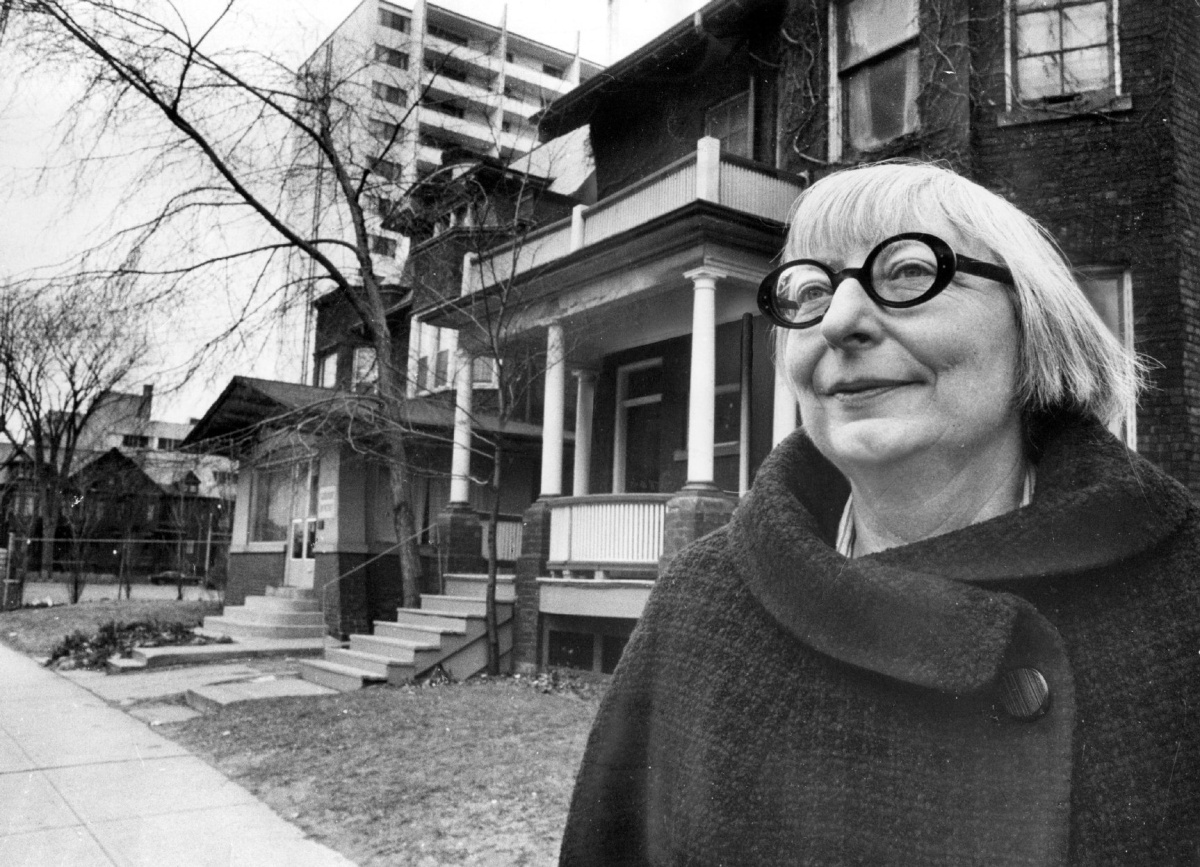
Jane Jacobs in Toronto, Dec. 21, 1968. She would continue her activism there, helping other community activists in foiling plans to build the Spadina Expressway.